Reading Lists
10 Books About African Americans Reclaiming the South
From migration to reverse migration, these books explore home, heritage, and finding freedom in placemaking
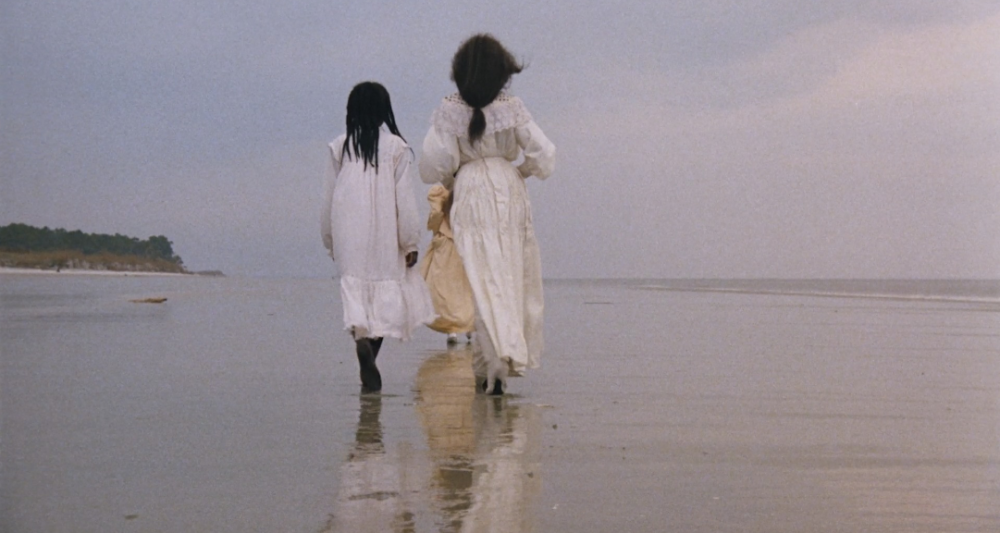
Between 1910 to 1970, millions of African Americans left the South in search of greater opportunities for freedom, rights, and economic mobility. Due to sheer scale, this human movement became known as the Great Migration. Richard Wright, one of the twentieth century’s seminal writers, was among those millions and described the experience in his 1945 memoir, Black Boy: “I was taking a part of the South to transplant in alien soil, to see if it could grow differently, if it could drink of new and cool rains, bend in strange winds, respond to the warmth of other suns and, perhaps, to bloom.” Over 50 years post-Great Migration, many of its core questions remain resonant for Black people: Where can we build a better future? Where can we gain a sense of security and belonging? Where are there well-paying jobs and economic opportunities? Where can we live a bit more free?
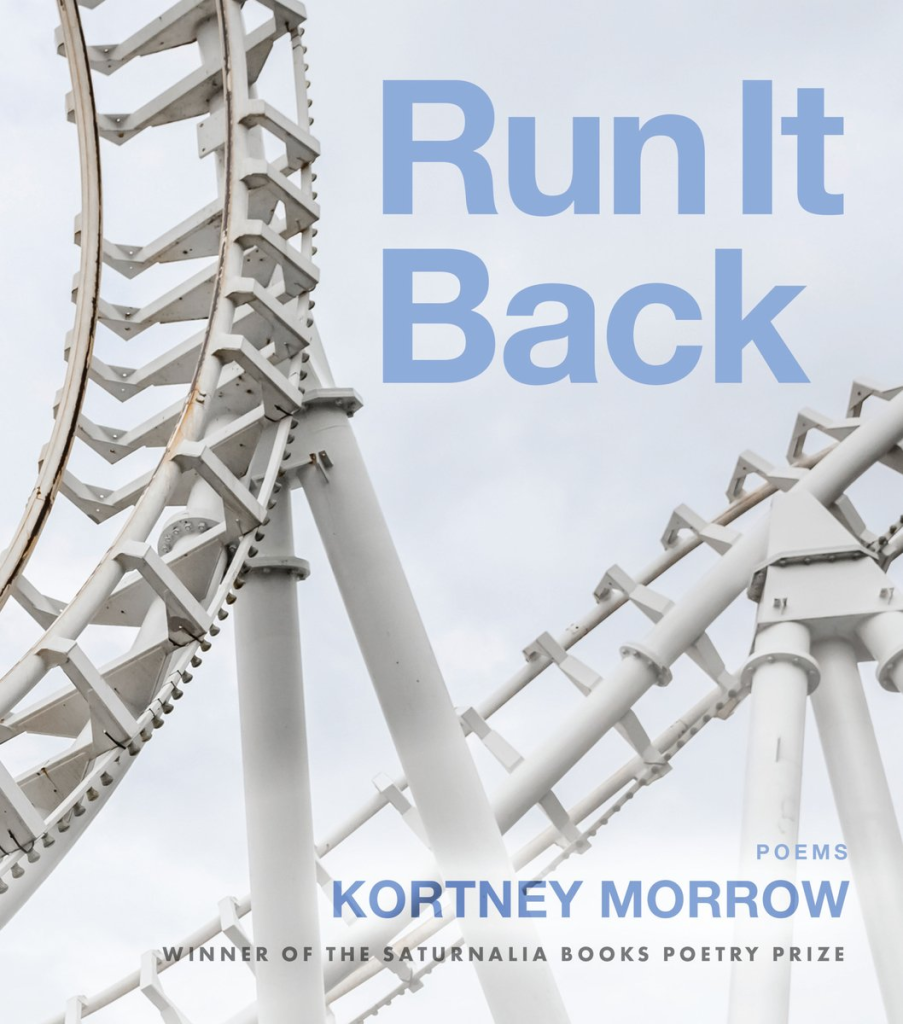
Given this long history of Black people leaving the South, it’s striking that moving to the South catalyzed my creative work. Run It Back, my debut poetry collection, loosely follows my journey as a middle-class Black “transplant” moving from the Midwest to the South and then back home again. On the eve of the 2016 presidential election, I moved from Illinois to Louisiana to help open up a youth writing center in the 7th Ward of New Orleans. Two generations removed from the Great Migration, I was eager to be in a majority-black city where I could gain propinquity to Southern culture and traditions that I imagined were lost or diluted with each generation before me anchoring in the North. This is an impulse felt by many—according to census data, Black populations in the Northeast and Midwest have seen a steady decline since the 1990s, while the percentage of Black people living in the South has steadily increased during that same period. De-industrialization and the false promise of Northern city centers have co-produced a new trend—the Great Reverse Migration.
The two years I spent in the South were both harrowing and mobilizing. I experienced how Black Southern culture has shaped so much of the vibrancy of this nation, but I also witnessed how many of the conversations sparking division across the nation are proximate to the people of New Orleans—disaster capitalism, climate crisis, mass incarceration, immigration and labor rights, the takedown of confederate monuments, and larger racial inequities all float on the surface of this Black, Southern city. To see the touristic flattening of its rich culture and history was to witness a version of Jamaica Kincaid’s A Small Place in real-time. Being in the South taught me that freedom is a practice that can become a place, but cannot be a place without the praxis. The books below guided my thinking around place-based liberation, the hopes we put into geography, and the complexities of reclaiming an ever-changing place in search of freedom.
Jacob Lawrence: The Migration Series by Jacob Lawrence
Jacob Lawrence: The Migration Series compiles Lawrence’s iconic 60-panel series documenting the Great Migration alongside the paintings’ original captions, which reflect months of primary research conducted at the 135th Street Library. The captions give depth and complexity to the reasons for the Great Migration: labor shortages in the North, increasing racial violence in the South, and climate and crop devastation that made sharecropping fruitless. Arrival in the North also meant new forms of discrimination and the loss of a Southern way of life—a life rooted in soil and earth shifted toward industry. The book ends with a suite of ekphrastic poems written by acclaimed poets ranging from Rita Dove to Lyrae Van Clief-Stefanon. This contemporary chorus brings Lawrence’s panels to the present day, weaving in personal histories, meditations that illuminate the intimacies of this mass movement, and the implications of what was lost and which direction are we heading in now.
Harlem is Nowhere: A Journey to the Mecca of Black America by Sharifa Rhodes-Pitts
During the Great Migration, hundreds of thousands of African-Americans moved to Harlem, making the three-square-mile neighborhood the largest concentration of Black people in the world, according to the National Museum of African American History and Culture. In Harlem is Nowhere, Rhodes-Pitts, a native Texan, moves to Harlem in search of what was once known as the capital of Black America and a quasi-mecca and safe-haven for Black liberation, creative expression, and freedom rights. As culture-altering gentrification seeps into the neighborhood, Rhodes-Pitts documents Harlem at a threshold moment in history. With a mix of reporting, historical documentation, and personal narrative, Rhodes-Pitts asks: How did Harlem become a dreamscape in the minds of many? What happens when a place can no longer live up to the promise of what it once symbolized? How do we inhabit and move through communities that are not our own? And how do we both preserve the Black cities that hold our histories while also moving forward into the future?
Negroland by Margo Jefferson
Margo Jefferson expands the memoir genre by blending a historical documentation of the rise of the Black elite in America with her own personal narrative of growing up in Chicago’s Black upper class. Jefferson coins the term “Negroland” to help describe the pre-civil rights wealthy enclave she was born into and raised within. By her definition, “Negroland” is a particular demographic of upper socio-economic Black people who are hyper-concerned with perceptions and ascension. Jefferson explores Black respectability, exclusivity, and the false promise of both—using personal narrative to describe the psychological challenges of forming a sense of self and community while entrenched in Negroland. This is a must-read to better understand how distancing—geographically from the South and categorically via class—served as a type of escape but not quite a freedom.
Blood Dazzler by Patricia Smith
These poems tell the story of Hurricane Katrina in minute-by-minute detail through a myriad of voices, including the storm itself. Smith looks at the wake of the storm, the lack of relief or repair, and bears witness to the racial and class violence of that historical moment. It’s important to remember that Smith isn’t a native daughter writing about her home, but a poet who took up the work of documenting this particular place in this particular moment in history with grave responsibility. Should a poet write solely from their own experiences or bear witness to the world? Smith’s book wrestles with these ethical questions about place, geography, and ownership. Blood Dazzler is a lesson to emerging writers that writing the record requires immense specificity and care. In doing so, Smith honors geography and then transcends it—revealing the intimacy of community and catastrophe in a new light.
I Can’t Talk About the Trees Without the Blood by Tiana Clark
Tiana Clark’s debut served as a North Star during the writing of Run It Back. I Can’t Talk About the Trees Without the Blood probes contemporary Nashville for historical echoes of racial violence, giving gravitas to 21st century racial traumas and touristic voyeurism rooted in the surface-level consumption of Black culture. Here we see Tennessee landscapes superimposed atop one another across time in order to confront exactly what it means to navigate race, class, sexuality, and girlhood in the present.
South to America: A Journey Below the Mason-Dixon to Understand the Soul of a Nation by Imani Perry
In South to America, Imani Perry strengthens the ties between American history and Southern history in a travelogue-style book partly inspired by Albert Murray’s 1971 travel narrative South to a Very Old Place. Perry, originally from Alabama, journeys across the South to document its complex culture, history, and landscapes. From Appalachia to New Orleans, Perry is our guide, documenting race and place through in-depth research, on-the-ground interactions, and personal narrative. The South becomes the central character, and Perry unveils its contours—the beauties and struggles that reveal how far we’ve come and how far we have to go as a nation.
The Devil You Know: A Black Power Manifesto by Charles M. Blow
In 2020, Charles M. Blow faced a reckoning. In the wake of George Floyd, Blow felt called toward urgent radical action instead of the ongoing incremental movement toward freedom rights.. Blow moved from Brooklyn to Atlanta and wrote The Devil You Know, a manifesto encouraging Black people to move back down South as a pathway toward reclamation and equity. Inspired by the 1970s liberal call-to-action take over of Vermont, which led hundreds of thousands of liberals from New York and Massachusetts to move and flip the political status of an entire state, Blow suggests a mirror movement in which hundreds of thousands of Black people move to Southern states to flip the political majority. Similar to Lawrence’s contextualizing captions, Blow’s bold proposition posited political consolidation as yet another reason to fuel the Reverse Great Migration.
The Yellow House by Sarah M. Broom
Broom’s debut memoir, The Yellow House, recounts the post-Katrina transformation of New Orleans East through the material history of her titular family house. On and off again, Broom returns to, journeys away, against, from, and towards the mythology of her city, her family, and the South. When Hurricane Katrina displaces Broom’s family—going from 24 family members in New Orleans to two brothers in all of Louisiana—her family’s house receives a letter from the city government announcing its demolition. Broom is forced to come to a new understanding of home beyond materiality. The Yellow House ends with the line “the story of our house was the only thing left.” In doing so, it becomes clear that the stories we hold and share can act as an embodiment and a transference of memory, of foundation, and shelter.
Rooted: The American Legacy of Land Theft and the Modern Movement for Black Land Ownership by Brea Baker
Those with ties to the Great Migration know that the lore of the family farm is strong. Those who are lucky still have memories of summers down South or, even better, still have family living on those acres. In Rooted, Brea Baker documents her family’s history of land loss and ownership—sharing how her family farm has served as a safe harbor across multiple generations. In telling her family’s story, Baker reveals the larger history of land theft, including forced indigenous removal and rising barriers to successful Black land stewardship, which led to Black Americans losing about 90 percent of their farmland. Baker argues that reclaiming family property and returning to stewardship of land is one way Black people can heal the earth and racial wounds.
Abolition Geography: Essays Towards Liberation by Ruth Wilson Gilmore
Ruth Wilson Gilmore is a pioneer in the field of carceral geography—a term she helped coin—which explores how racial capitalism infuses itself into placemaking, resulting in landscapes and cityscapes that confine. Abolition Geography is a compilation of Gilmore’s essays, written over the span of 30 years, documenting her abolitionist ideologies. This book is a masterclass, weaving post-reconstruction ideas with contemporary lessons on the limits of decarceration, ultimately presenting a vision of abolition that is synonymous with freedom-making and placemaking. Gilmore wants us all to reflect on our role not just inhabiting place, but building place. She argues that it’s our daily actions in place that move us all towards freedom.