Reading Lists
7 Books About Mothers with Voracious Interior Lives
Exploring theology, translation, and physical risk, these seven titles reveal the unstoppable intellectual and emotional appetites of mothers
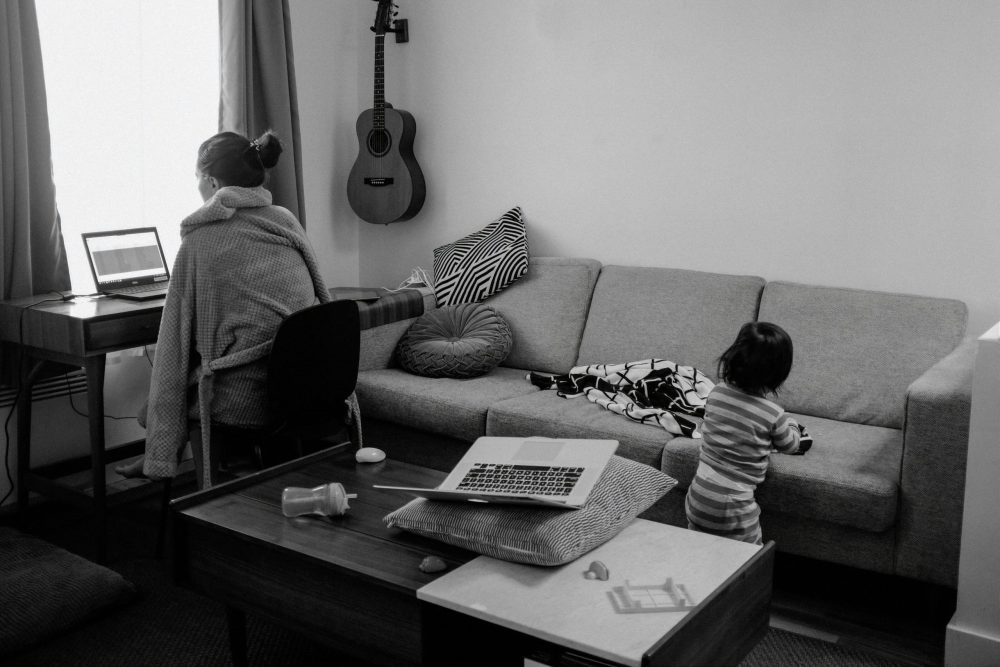
The political project constraining American women, the one that gave us Dobbs, rests on a picture of motherhood as a woman’s entirety. Instinctive, total, self-abnegating, and therefore requiring no compensation, no consent, and no interior life. A reader of feminist theory may hear Silvia Federici’s “Wages Against Housework”: Housework “transformed into a natural attribute of our female physique and personality” so that it could go unpaid. “They say it is love. We say it is unwaged work.” Fifty years ago, Adrienne Rich named it the institution of motherhood—distinct from the experience—and the institution now has a legislative program foisted on us by predators.
Every book on this list documents a mother who is also something else. Voracious. Desiring. Fixated on a dead poet, a diary, a theology, a body’s capacity for harm. Sometimes in psychosis. Sometimes distracted by thoughts which have nothing to do with the baby. The obsession is evidence of an interior life beyond motherhood, whatever its perils.
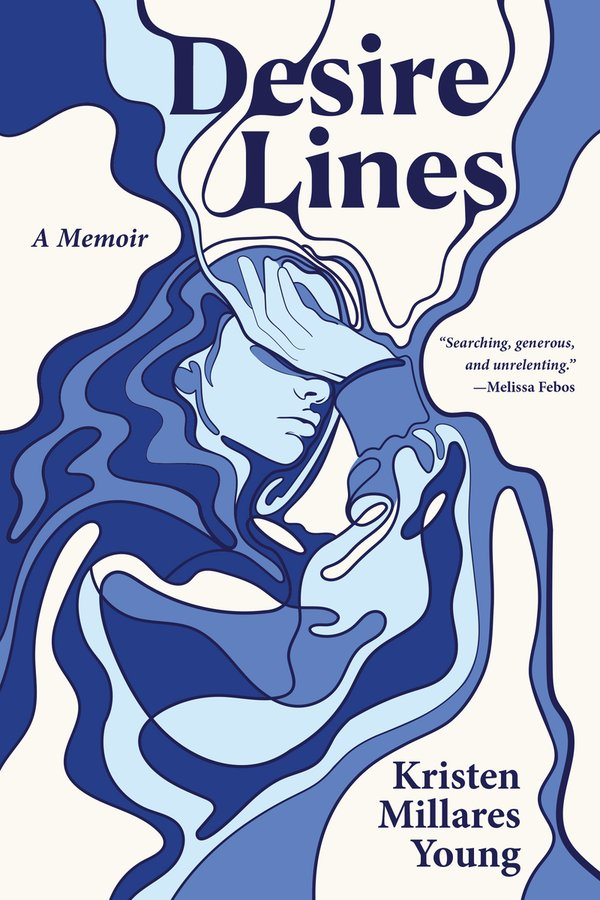
I know this fixation from the inside. Sleepless with an infant, I became obsessed with an ancient mother goddess named Cybele, and I followed her from Galicia to the archives of the Louvre while examining my own Cuban matrilineage. The memoir that came of it is Desire Lines.
Whether memoir, or essay, or confession, or autotheory, or hybrid of essay and autofiction, every one of these books is a mother’s account of a life that did not stop with the arrival of her child. They are literature first. Their political force follows from their craft. Propaganda simplifies to persuade; these books complicate. The politics arrive because a woman rendered in full is incompatible with a society that requires her to be a function.
Ongoingness by Sarah Manguso
Sarah Manguso kept a diary for 25 years. It ran to 800,000 words. Why? “I couldn’t face the end of a day without a record of everything that had ever happened,” she writes, less ambitious than fearful that whatever went unwritten would be lost, and she with it. Ongoingness is the book the poet and essayist wrote instead: pages of white space and aphorism, as if the compulsion had been pressed flat by a child. Pregnancy and birth did what the diary existed to prevent. They made her forget. Her compulsion met something she could not outrun, a being who consumed the hours the record required and changed faster than she could write. Manguso calls this neither a cure nor a loss. She calls it ongoingness, the present tense she had spent her adult life refusing. A Guggenheim fellow and a winner of the Rome Prize, Manguso shows what forgetting costs a woman built to remember everything, but also what it gains her.
A Ghost in the Throat by Doireann Ní Ghríofa
First published in Dublin by Tramp Press in 2020, A Ghost in the Throat opens on the sentence that becomes its refrain: “THIS IS A FEMALE TEXT.” Doireann Ní Ghríofa, who bore four children in six years, made her name as a poet in Irish, or Gaeilge. Ní Ghríofa is nursing an infant when she is consumed by Eibhlín Dubh Ní Chonaill, who in 1773 found her husband shot dead, drank his blood, and composed the Caoineadh Airt Uí Laoghaire, the lament Peter Levi judged as that century’s greatest poem in Ireland or Britain. The record barely holds Ní Chonaill: a wife and an aunt in the papers of men, written out by her own son. Ní Ghríofa pursues her through the archives in hours a household does not concede it has while pumping milk for a donor bank and translating the poem herself. What does a mind do while “folding someone else’s clothes”? Winner of the Irish Book of the Year and the James Tait Black Prize, this hybrid of essay and autofiction goes elsewhere on purpose. Check out her newest work of speculative nonfiction, Said the Dead. She is sui generis.
The Argonauts by Maggie Nelson
Two bodies change in one house. Maggie Nelson is pregnant with her son; her partner, the artist Harry Dodge, is on testosterone and, four months into Nelson’s pregnancy, recovering from top surgery. Nelson writes, “On the surface, it may have seemed as though your body was becoming more and more ‘male,’ mine more and more ‘female.’” Neither reading is the point. Nelson, a poet and critic, later a MacArthur fellow, braids the story with theory. With Winnicott and Sedgwick in the margins, the braid is the argument: Thinking is also mothering. Famous for its frankness, The Argonauts should be read for its refusals. Nelson declines both the premise that the family is a natural form with fixed roles and that domestic life is an unserious site of scholarship and inquiry. She wants the stepson and the marriage and the marginalia. Winner of the National Book Critics Circle Award in Criticism, The Argonauts is driven by an appetite for living and knowing what the official picture of motherhood rarely holds.
Inferno by Catherine Cho
Catherine Cho, a Korean American literary agent living in London, flew with her husband and newborn son to the United States to meet his family, a tour ending in New Jersey with his hundred-day celebration, the Korean milestone marking survival. Eight days short of it, she “started to see devils in his eyes,” and she was hospitalized for 12 days, eight of them in a psychiatric ward. Inferno is postpartum psychosis rendered from inside by a writer who could no longer recognize the faces in her husband’s family photographs and who came home feeling like she was a stranger who had taken the place of her son’s mother. The ideology holds that maternal love is automatic. Cho documents a medical and material condition instead: a mind unmade three months after giving birth, in a country where most pregnancy-related deaths are preventable and the people holding the keys were unknown to her. She threads her parents’ immigration and her past through the ward, so the madness arrives with a lineage. How does a woman become a mother again? Cho survived to say.
Brutalities by Margo Steines
Margo Steines is 37, pregnant, and locked down in Tucson in 2020 when she begins to account for her body. The inventory is long: a decade as a dominatrix from 17, her own dungeon, a violent man on an isolated farm, the self-harm and eating disorder beneath it, 10 years as a union ironworker and its “collection of small second-degree burns and knife slices,” and manganese poisoning. Violence, she writes, was not given to her. She “set out to find it.” Organized by association and dual chronologies, past and present, each essay of Brutalities asks what a body can be driven to absorb. Pregnancy makes the accounting urgent: Another body is now inside the one she spent her life testing. The partner she chose is a mixed martial artist, and a gentle man. When jurisdiction over the reproductive body is contested, a memoir about deliberately chosen bodily risk reads as a claim of sovereignty. Steines does not ask permission for what she did to herself. She asks what it was for.
Motherhood by Natalie Carnes
Augustine wrote his Confessions to God in 13 books. In them, his mother, Monica, weeps, prays, and leads her son closer to conversion. Natalie Carnes, a theologian at Duke Divinity School, answers in 13 chapters, the first nine addressed not to God but to her daughter. Only at the end does she turn to God. While the child once inside her grows more separate with each year, she argues with Augustine across 16 centuries about bodies, wanting, and what a mother is for. “I am called to a twoness that never dissolves,” she writes, “and desires that frequently do.” Is that theology or a diary? Both, Carnes insists. The body is where the work happens; motherhood is its most demanding curriculum. The movement constraining American women draws much of its authority from Christian tradition. Carnes contests that tradition from within its own forms, with its own saint.
The Breaks by Julietta Singh
Julietta Singh writes to her six-year-old daughter, in a letter the child cannot read yet, about inheritance, race, and a future the writer will not live to see. The household is already an argument. Singh, who teaches gender and sexuality studies at the University of Richmond, and the girl’s father are, to borrow their phrase, “friends-in-love.” They raise their child in adjacent households in Richmond, Virginia, where she learns to be American through “a manicured version of history” and a Brown girl in a country that collapses race into two colors. Singh’s own mother was an activist; about her mother, Singh writes, “If I have consciously and unconsciously followed in her maternal footsteps by bursting the liberal sheen of social harmony and ecological sustainability in your youth, I do so in the spirit of survival. Yours and mine and everyone else’s.” Singh’s daughter has to remake her mother’s world, but breaking with the past is distinct from leaving her mother behind. Drawing upon Saidiya Hartman’s Lose Your Mother, Singh’s “most intimate desire” is for her daughter to “find a way to break with me rather than to break from me.” That rupture is a shared intent which is enacted as Singh’s greatest legacy: motherhood as politics put into practice. “I desire never to lose you,” Singh tells her, “but for the sake of life itself, I need you to lose me.”