Reading Lists
7 Books About Writing the Writer
These authors turned the lives of their friends, lovers, and collaborators into literature
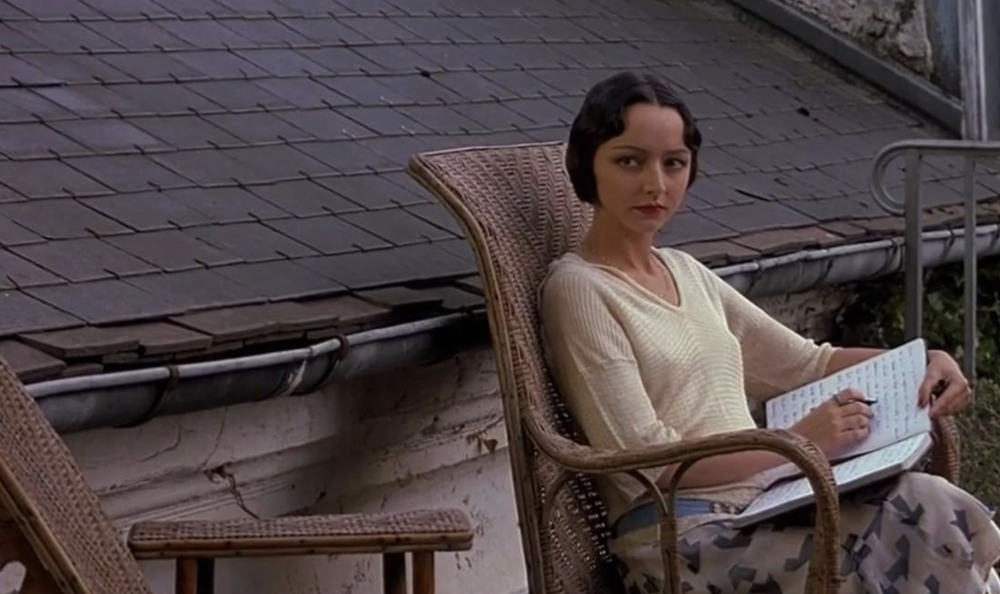
We usually think of the writer as a solitary being, whereas if you actually look at the record, books spring up from complex ecosystems. As the great writer Juan Rulfo said when questioned about his inability to publish a new book, “My uncle died.” Meaning, all of his stories came from his uncle. So books are more like films or music in that way. They’re produced by a gathering. Wives, husbands, friends, finances, and housing are all responsible for creating these communal objects. Even to write a bad book, you need a warm place to shit.
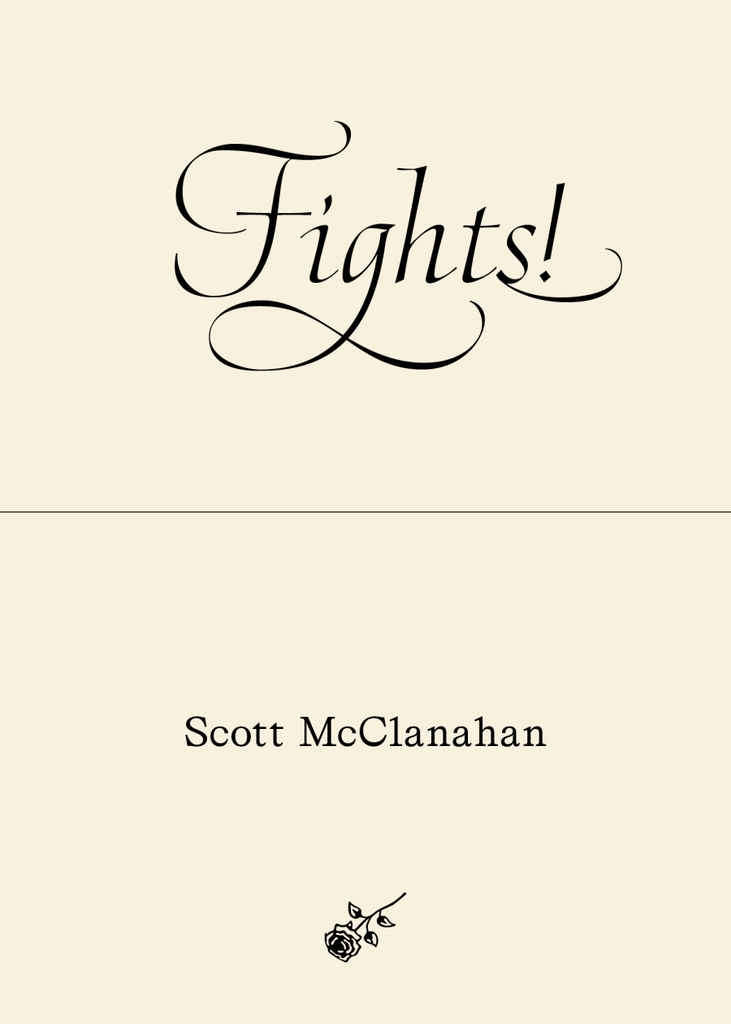
Typically, books fall into two categories for me: commercial fiction or nonfiction—what I think of as state literature—and an ugly little twin that I love best: personal books. In these books, the author could care less about the market; they’re preoccupied with the community that helped produce the words, remembering people they care about, and making stories out of what they know: the people they married; the friends they wrote with; everyone they loved. My novel Fights! is one of these remembrances. It’s about Tyrant Books. Specifically, it is a remembrance about two married writers and an editor, all making a book together.
Of course, all writers commit larceny against life. But this is a list of books written by writers who saw that their subject matter wasn’t some imagined character but the writers and artists they knew. I was thinking about these texts, and more importantly, stealing from these texts, as I wrote my own. Because it takes a thief to catch a thief.
Recollections of the Lakes and the Lake Poets by Thomas De Quincey
I’m a sucker for reminiscences from the Romantic era. One of the strangest is by noted drug nut Thomas De Quincey, best known for his classic text Confessions of an English Opium-Eater. In Recollections of the Lakes and the Lake Poets we see De Quincey’s friendship with Samuel Taylor Coleridge, William Wordsworth, and Dorothy Wordsworth. This is a pastoral reminiscence about a time when Coleridge and De Quincy were consuming around two quarts of laudanum per week and undergoing forced enemas. The book is famous for talking about how short and stumpy Wordsworth’s legs were. Its publication effectively ended any friendships in it. Wordsworth called De Quincy “a pest in society and one of the most worthless of mankind.” However, when told that De Quincy described Mary Hutchinson as “a better wife” than Wordsworth deserved, Wordsworth replied, “Did he really say that? This is so true that I can forgive him almost anything else he says.”
Memoir of Italo Svevo by Livia Veneziani Svevo
This book falls into one of my favorite literary sub genres: Books written by a famous writer’s spouse who may be the better writer. As a confessed Italo Svevo nut (keep your Kafka, Musil, Joyce, Woolf, Proust, but give me the Italian who just wants to quit smoking), I picked up Livia Svevo’s book about her husband expecting little. But like Nadezhda Mandelstam’s Hope Against Hope, Livia Svevo’s memoir is a masterpiece. Her central event is perhaps the strangest meeting in all of literature: Imagine you are a fly on the wall in Trieste café. An Italian businessman is meeting a young Irishman he has hired to tutor him in English. The two converse and ultimately the tutor admits he is a wannabe writer. The Italian businessman says he was once a writer too but gave it up to support his family. The tutor is named James Joyce. The Italian businessman is Italo Svevo. Of course, this naive Irishman is the reason Livia’s husband becomes famous. Livia observes her husband transform from depressed businessman to avant-garde literary celebrity, even finding her own name in Finnegans Wake and her long flowing hair described at length.
Confessions of a Young Man by George Augustus Moore
Moore was a lace doily Irishman, an Anglophile, Francophile, gay man who loved having sex with women, and a trail blazer in autobiographical fiction. So why is he forgotten? Because he possessed one of the most noxious personalities in literature. Asked about the innovations of the much younger Joyce, Moore said, “But why would anyone read him, when I have done it so much better.” So I picked up Confessions of a Young Man expecting to find a dated book from the 1880s and discovered just the opposite. Moore was right about himself. It’s a book about Moore moving to Paris as a young man, more interested in people thinking of him as an artist than possessing artistic skill. It’s a book where you see 20th century writing taking shape. The narrator hangs with famous painters and ponders whether there are no great writers anymore because of the leather arm chairs in London literary clubs. He states, “What is wanted is enthusiasm and devil may careism; and the very aspect of a tavern is a snort of defiance at…leather arm chairs.” Change the chair you’re sitting on, and you change the world.
The Life of Charlotte Brontë by Elizabeth Gaskell
This is the urtext of the Brontë myth and, in my mind, one of the great books in all of personal literature. Gaskell became friends with Brontë during the last five years of Charlotte’s life. After her death, Charlotte’s father commissioned Gaskell to write the biography. What did she produce? A book of mourning about how an entire literature was made by a group of sisters inside the walls of their father’s house. A book full of anecdotes. For instance, Charlotte was the size of a child and may have been only a little more than four and a half feet (her shoes could be mistaken for those of a baby doll). The first edition was withdrawn for various threats of libel and became a disaster because Gaskell shows the Brontës not as the dusty old sisters of high school English classes, but as they truly were: revolutionaries.
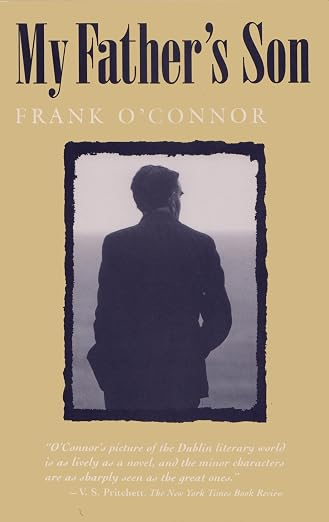
My Father’s Son by Frank O’Connor
My Father’s Son is all about the Dublin literary boom called The Celtic Twilight. A young O’Connor goes from imprisoned IRA member to running the Abbey Theater alongside William Butler Yeats. It’s a group portrait of a whole generation of Irish writers: George Russell (known as AE) JM Synge, Lady Gregory, Sean O’Casey, but O’Connor’s Yeats is the heart and spine of the book. Here we have Yeats as a great bully and an “outrageous flatterer.” O’Connor writes, “After my father, I never quarreled with another so much.” We also see Yeats’ charming megalomania. O’Connor argues with him about the inclusion of a bad poet Yeats wants to put into an anthology they are editing, and Yeats replies, “Why worry about literary eminence? You and I will provide that.” In another example, Yeats’ wife is ill and so Yeats stays at his club to avoid getting sick. O’Connor writes, “I, thinking of George (Yeats’ wife) by herself in the house, said, ‘Oh that’s awful’ and Yeats replied mournfully, ‘Yes, it is. You see I can’t even get to my books.’”

Stars from Another Sky by Saadat Hasan Manto
About seven years ago I discovered the films of Guru Dutt and became obsessed with the Bombay/Mumbai film world of the mid-20th century. I also discovered my ignorance of Indian literature. I loved RK Narayan but had no idea who Raja Roja and Rabindranath Tagore were. I had no clue about Kamala Das, Ismat Chughtai, Bibhutibhushan Bandyopadhyay. And I did not know one of my favorite writers yet, Sadaat Hasan Manto. Manto has, to me, the most modern sensibility of any 20th century writer. He can be read alongside Annie Ernaux or the excellent Substack of Harold Rogers. His stories of Partition and Bombay pimps and sex workers are famous, but Stars from Another Sky is the perfect entry point to his work. Here he’s writing about the most sophisticated subject matter available to any writer: his friends. It’s a book that feels like gossip, like a screenwriter telling you something he shouldn’t about the business. Someone writing about film stars not as illusions, but as people he knew. And by writing about his people, he is telling us about himself.
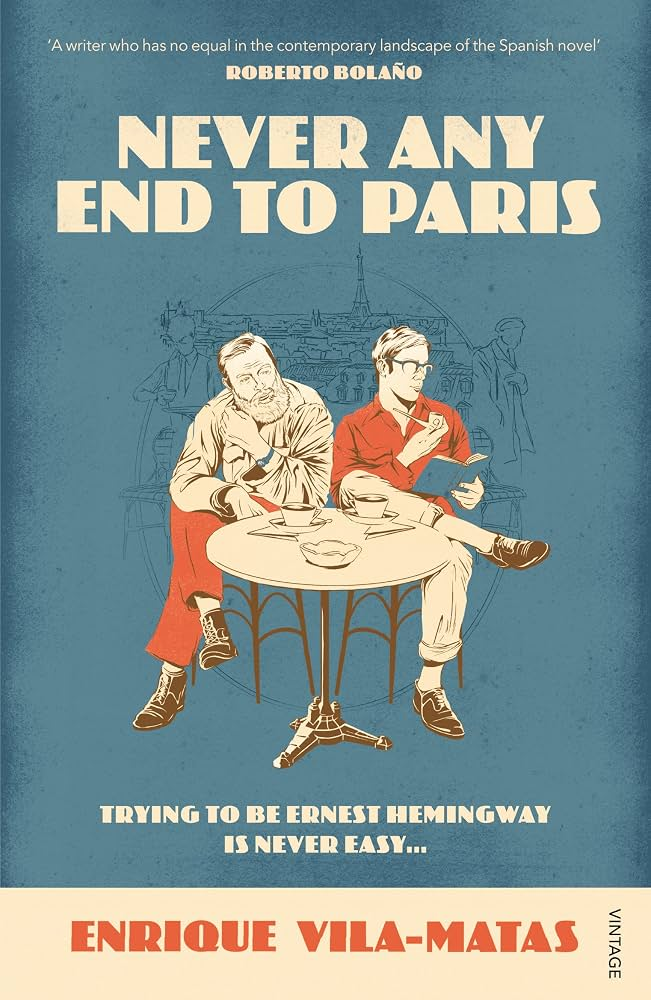
Never Any End to Paris by Enrique Vila-Matas
I ripped off the idea for Fights! from Dark Back of Time, which is about the writing of a previous book called All Souls, both by Javier Marías. They should have won him a Nobel, but Marías died before that could happen. Thankfully, his friend Enrique Vila-Matas is still among the living. His novel, Never Any End to Paris, is about the time he spent in Paris in the 1970s renting a room from a woman named Marguerite Duras. Can you imagine Marguerite Duras as your landlord? Vila-Matas attends a Georges Perec reading, only to realize that Perec sent someone in his place who is pretending to be Georges Perec. Vila-Matas is working on his first novel, a book he wishes to be so powerful that it kills any reader who reads it. Fortunately, he finally understands that killing readers is unnecessary. The writer must do just the opposite. The writer must bring the reader to life.