Reading Lists
7 Books That Blur the Boundary Between Fact and Fiction
These works contend with the instability of perception and the shifting nature of truth
Once, very stoned around a campfire, I asked my friends what fire was. One scientifically minded member of the group offered a dutiful-if-also-stoned explanation about chemical bonds and oxidation; it left me totally unsatisfied. “No,” I said. “But what is it?”
Everyone laughed. The whole thing became a long-running joke, and rightly so. But I stand by my original question. It brings to mind a line from John Berger’s Ways of Seeing: “The relation between what we see and what we know is never settled. Each evening we see the sun set. We know that the earth is turning away from it. Yet the knowledge, the explanation, never quite fits the sight.” The raw material of reality will always elude perfect description. Capturing the world—into image or language—is to filter it through our own matrices of meaning, which themselves are always in flux. Try as we might, we can never land on a perspective that is perfectly constant or complete or objective.
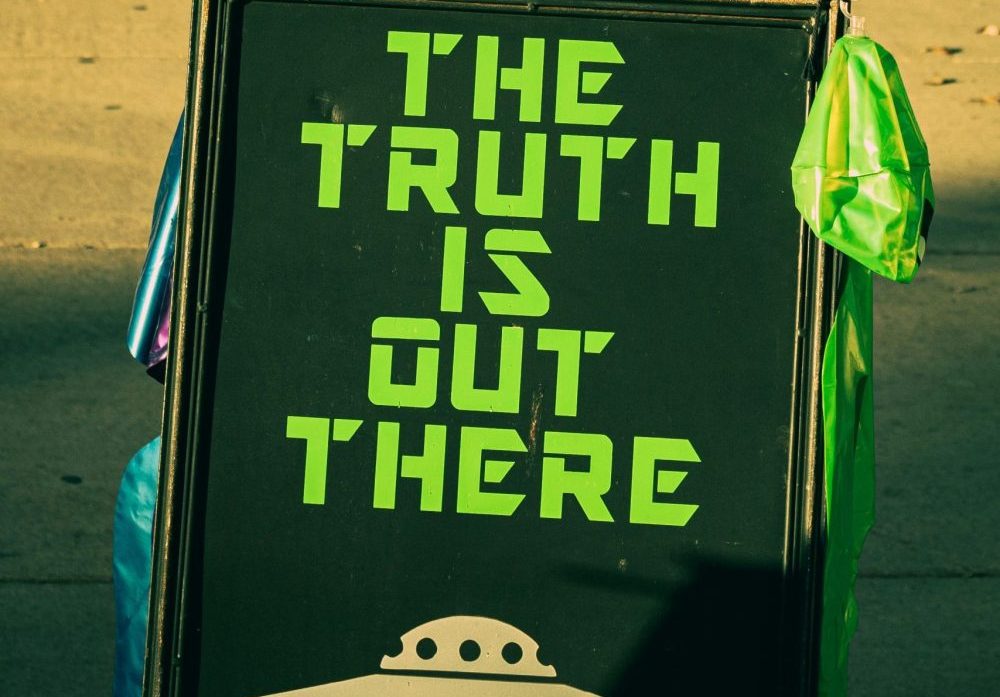
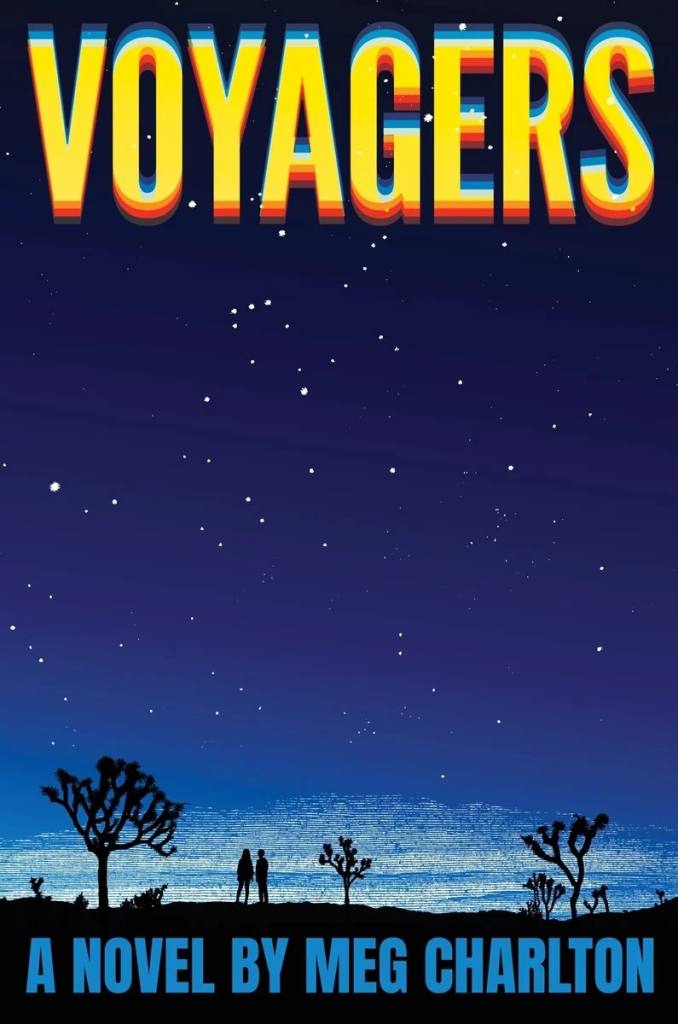
It was this unsettled relationship between explanation and experience that got me interested in UFOs, an interest that ultimately grew into my novel, Voyagers. My protagonists, Alex and Ana, go through an experience as children that is quickly interpreted as an alien abduction. But as Alex grows up, he begins to question the completeness of that story, convinced there is some darker truth beneath it. Ana, meanwhile, profits off their childhood experience and finds herself unable to challenge that interpretation of events, even if she wanted to. Their divergent opinions over what actually happened to them might appear, on their surface, to fall into the classic Mulder-Scully binary of believer versus skeptic. But for me, Ana and Alex’s conflict is actually about something far more fundamental. They disagree not about whether or not “the truth is out there” but about the nature of truth itself. The questions they ask are relevant to all of us, even those who haven’t had a close encounter of their own: What happens when an experience is overtaken by the story we tell about it? Which memories do we trust when two people’s recollections diverge? How do we accept that some mysteries in our lives will remain unsolvable, some facts uncertain, no matter how much digging and analyzing we do? And when do we give up the search for the truth, full stop?
The books in this list all live in that borderland of uncertainty, peering over the edge of consensus reality into the irresolvable. Whether novel, memoir, or (yes, stay with me) museum catalogue, each contends with the instability of our own perceptions, the shifting nature of truth, and the ways we try—and fail—to face up to the unknown and indescribable.
Picnic at Hanging Rock by Joan Lindsay
On a boarding school picnic to the titular rock, a group of students and one teacher vanish into thin air. The remaining characters unravel in the girls’ absence, unable to tolerate the blank void of an unsolvable mystery. Those who have only seen the film might be expecting a languorous, sensual story full of Lisbon-sister predecessors, but Lindsay’s novel is far darker and funnier than its adaptation. The story toys not just with its characters’ tolerance of uncertainty but with its readers’, too: “Whether Picnic at Hanging Rock is fact or fiction, my readers must decide for themselves,” the prologue reads, before concluding tartly: “As the fateful picnic took place in the year nineteen hundred, and all the characters who appear in this book are long since dead, it hardly seems important.” Lindsay did posthumously publish a version of the novel that ends with a depiction of what happened to the women at the top of Hanging Rock, but it is more satisfying (for me at least) to sit in the same unknown as those who were left behind.
Self-Portrait in Green by Marie NDiaye, translated by Jordan Stump
If I hadn’t known Self-Portrait in Green was a memoir, I don’t think I would have guessed. It is exceedingly slender and hypnotically bizarre, full of ghosts and doppelgangers and shocking reveals dispensed as casual asides. There is no attempt to build the steady foundation of self that memoirs are typically built on. The persona that NDiaye constructs on the page questions her perception of nearly everything—from her father’s profession to a friend’s identity to a glimpse of a mysterious woman in green standing beneath a banana tree. Every paragraph seems to double back on itself, swinging between bell-clear certainty and unchecked self-doubt, sometimes in the space of a sentence: “Oh she’ll be back—but in what form? She’ll be back—how can I know that?”
Fever Dream by Samanta Schweblin, translated by Megan McDowell
Structured as a kind of cross-examination between a dying woman named Amanda and a young boy named David, Fever Dream retraces the events that led to Amanda’s mysterious illness. “Keep going, don’t forget the details,” David urges. But as the details accrete, the investigation grows only more unsettling and irresolvable. Why does David insist certain seemingly minor moments are essential while others are deemed irrelevant? Is David’s interrogation even real? Or is it all in Amanda’s head? And what, exactly, has poisoned David and Amanda both? Ultimately a horror story about parenting, Fever Dream is about the terror of trying to protect a child from the most frightening dangers of all: those you didn’t even know existed.
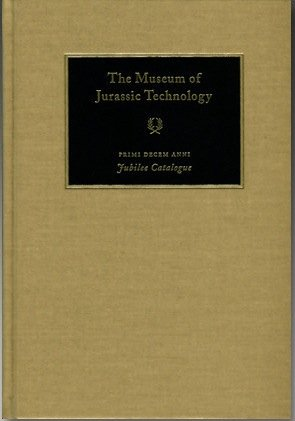
The Museum of Jurassic Technology Jubilee Catalogue
For those not blessed to be in the Culver City area of Los Angeles in the odd pockets of time this museum is open, the catalogue of its exhibits is a delightful substitute. Created by David Wilson, the Museum of Jurassic Technology is a museum, in some sense, about museums: Exhibitions on the real (fungally-infected ants) sit alongside those on the unreal (bats that pass through walls), with no winks at the visitor about which is which. The voice of authority pervades all things equally and the effect is mesmerizing and weirdly moving. In a Story Corps piece on the Museum, we hear of one patron who wept after his first visit, saying it was “like a church.” Maybe it’s the attention the conceit inspires, reading each entry carefully to see if we’ve been tricked. Or maybe it’s the awe, seeing real things we’d otherwise have overlooked elevated to the level of imagination.
When We Cease to Understand the World by Benjamin Labatut, translated by Adrian Nathan West
A book about discovery and horror in (mostly) the 20th century, When We Cease to Understand the World leads readers through six stories of scientific breakthroughs and the personal and political atrocities they unleash. But the structure of the book is an unsettling breakthrough of its own: The first story, “Prussian Blue” contains (according to Labatut) only a single paragraph of fiction, while the last story is fiction from beginning to end. The cross-fade transition from real to unreal happens slowly but perceptibly and is unnerving in its own way. It is the non-fiction, however, that I found the most terrifying: mass suicides and cyanide capsules, black holes and the uncertainty principle, the quest to comprehend reality leading—inexorably, in Labatut’s view—to ruin.
A Canticle for Leibowitz by Walter M. Miller Jr.
The most charming book you will ever read about nuclear apocalypse, A Canticle for Leibowitz follows life at a Catholic abbey in New Mexico, where monks are tasked with preserving knowledge from before “The Flame Deluge.” Each of the novel’s three sections—really, interconnected short stories—take place hundreds of years apart, moving from a civilization that seems blasted back to the Middle Ages to one capable of space travel. But however much the world changes around the Albertian Order of Saint Leibowitz, we never leave the small orbit of the abbey, where monks struggle to understand and protect the mysterious, dangerous artifacts they’ve been entrusted with conserving. Funny and frightening, the book becomes a meditation on the astonishingly inefficient, maddeningly incomplete ways that knowledge (and, more rarely, wisdom) gets passed down through time.
Beings by Ilana Masad
A nesting doll of a book, concerned with the stories we tell about aliens and the moral responsibilities of storytelling itself. The three plotlines in Beings all circle questions of fact and fiction: The first follows Betty and Barney Hill, real American abductees, but speculates on their inner lives; the second concerns a fictional sci-fi writer, but presents her through the authority of letters and archival documentation; and the third takes us to the archivist themself, who is being hounded by an overeager documentary producer about a childhood UFO sighting. These three worlds overlap in ways I did not see coming, calling attention to the constructed nature of all stories. We try to document our lives, to fact check our own memories, to keep careful records we (or others) can come back to later. But there will always be a gap, some terra incognita, whether we are trying to remember our lives or imagine our way into the lives of others.