Reading Lists
7 Books That Explore Whiteness in Intimate Relationships
These cross-genre books explore interracial relationships by inverting the white gaze

This article is free to read. So is every article Electric Literature publishes. No limits, no paywalls—now or ever. But we rely on your support to keep it that way.
We need to raise $35,000 by April 15 to keep the lights on, and time is running out. Donate today.
—————
White partners in interracial relationships—especially white boyfriends and husbands—are a huge fixture in TV shows and movies. However, their race is often ignored or glossed over. They just happen to be white, unlike their racialized counterparts. When whiteness does get airtime, it’s usually in the context of more distant relationships, like between strangers or neighbors, teachers/students, coworkers, or even friends, rather than significant others. For these and other reasons, I love books that look directly at whiteness in romantic partnerships.
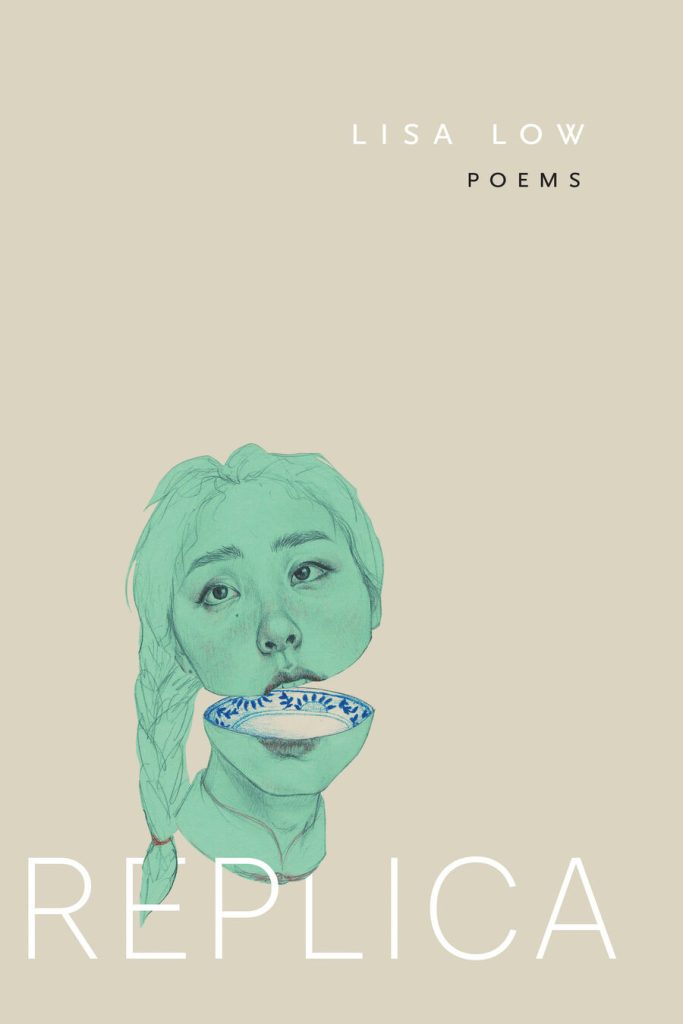
In part of my poetry collection, Replica, I write about being in a white male–Asian female relationship, a common interracial pairing that comes with its own stereotypes, acronym (WMAF), and memes. Besides being interested in the power dynamics—which of course vary in individual relationships—I initially wrote out of defensiveness: I too am with a white guy but am still my own person. I thought writing about my relationship could be a protective measure against being stereotyped—a strategy I still embrace. But the more I wrote about it, the more I saw how it matched the larger project of my book, especially the idea that poetry is an imperfect form for representing yourself.
Representation is a tricky endeavor. It helped me to read other writers who were also exploring whiteness in intimate relationships, even if representation wasn’t their main goal—or goal at all. In these genre-spanning books, power imbalances play out on small and large scales: at home, on social media, in pop culture, in the workplace. There are fantasies of ideal white partners, dating horror stories, an incel, and woke white boyfriends with questionable pasts. There are moments to look away from, and moments that make me look deeper within. These seven books zoom in on whiteness, as close as we can get to it.
Blob by Maggie Su
A sentient blob found in an alleyway becomes 20-something-year-old Vi Liu’s pet experiment. As soon as she realizes Bob the blob can grow a human body, she prints out screenshots of movie stars for him to aspire to: “I don’t notice that all the pictures are white dudes until I’m done. But Bob’s hand is already white, and who am I to tell him he can’t be a white man?” Not only does he grow washboard abs, he also develops human desires. We watch him learn how to play frisbee, befriend frat bros, be what he wants to be. Bob as a brand-new, picture-perfect white boyfriend clashes with Vi as she reels from a breakup and reckons with the hotel job she hates, growing up half-Taiwanese, and the ideas of love and self-love.
Field Study by Chet’la Sebree
In a category-defying hybrid poetry book, Sebree redefines field research in the aftermath of her relationship with a white man. The field in question is herself, with “maps made of men, of finger pads, of scrotal sacs.” Her study references everything from bell hooks to conversations with other black women to movies like The Avengers and Inception. Short sections, usually only a few sentences long, create a kaleidoscopic whole, asking us to look closer: “I can’t figure out the line between love and want, need and desire. // But it’s fishing-line thin, made of polyethylene fiber.”
When the Harvest Comes by Denne Michele Norris
We meet the main characters, a young Black gay man named Davis and his white boyfriend, Everett, twenty-four hours before their wedding day in the rapture and safety of sex. In their bubble, the two are “wildly, indescribably, incandescently in love.” Things take a turn when family members do (Everett’s) and don’t (Davis’s) arrive at Everett’s family’s Hamptons beach house for the wedding, and later, when news reaches them that Davis’s estranged father has been in a horrible car accident. Their newly minted marriage is tested by internal and external forces—Davis’s unprocessed childhood trauma, their families’ ideas on race, gender, and sexuality—that bubble up in the wake of the bad news.
Good Talk: A Memoir in Conversations by Mira Jacob
Jacob’s graphic memoir opens with her six-year-old son’s obsession with Michael Jackson, a fixation that generates endless questions about race and identity—both the pop star’s and his own. Conversations with Z, who is half-Jewish and half-Indian, ramp up as the 2016 election approaches, prompting Jacob to self-reflect. Colorism in Indian culture, her childhood, her parents’ arranged marriage, even her own love life gets reconsidered. We encounter weird white guys, women across races, her first real boyfriend, who is Black, and Jed, a white classmate from childhood who becomes her husband and Z’s dad. Jacob’s relationship with Jed is only one of the threads followed, but their conversations on mixed-race parenting and Trump-supporting family members are some of the most salient and complicated in the book.
Just Us: An American Conversation by Claudia Rankine
Rankine challenges herself to ask white men what they think of their privilege early on in Just Us, a hybrid text containing essays, poems, images, and research, in the lineage of her 2014 collection Citizen. Several airport/airplane interactions later, Rankine recounts her findings to her white husband, who “believes he understands and recognizes his own privilege. Certainly he knows the right terminology to use, even when these agreed-upon terms prevent us from stumbling into moments of real recognition.” This white husband is a minor character in a book that advocates for messiness, that probes the intimacy of conversations on whiteness with strangers and friends alike. But “lemonade,” a small section on their relationship and a session with a marriage counselor, deepens previous and subsequent conversations in the book and adds meaning to the title “just us.”
Such a Fun Age by Kiley Reid
Emira Tucker is at a fancy grocery store with two-year-old Briar Chamberlain, whom she regularly babysits, when she is accosted for being Black while babysitting and accused of kidnapping Briar. Not only is this when Emira meets Kelley Copeland, a bystander who records the whole thing and later becomes her boyfriend, the incident also sparks complicated feelings in Emira’s boss (and Briar’s mom), Alix, whose white feminism turns into an infatuation with Emira as a younger Black woman. On the other hand, Kelley is charming, professionally stable, and fits the woke white boyfriend prototype, complete with his own crew of Black friends. Emira and Kelley are a fascinating case study of an interracial relationship and what it means to fetishize Blackness, but it becomes even more interesting as Kelley and Alix become foils for each other.
Rejection by Tony Tulathimutte
Across seven stories, Tulathimutte explores rejection—romantic, sexual, racial, societal—in its most intimate forms, as it intersects with whiteness, identity, and our online selves. In “The Feminist,” the first short story in Rejection, an unnamed white protagonist evolves from the eponymous “feminist” to an incel by the story’s end. A self-identified “narrow-shouldered man,” he gets friendzoned time and time again while preaching—and overperforming—feminism. He starts to believe, like the forums he frequents, “that narrow-shouldered feminist men are in truth the most oppressed subaltern group . . . a marginalization far worse than those based in race or gender, which were mere constructs, as opposed to the material fact of narrow shoulders.” In “Pics,” Alison struggles to get over a one night stand with her best friend, Neil. The story is about many other things, but we get a slice of Alison’s perspective on a WMAF relationship: “I can’t get over the absolute GALL of [Neil] trotting out his new hairless Asian child bride in front of me,” she texts her group chat.