Reading Lists
7 Contemporary Gothic Novels by African American Authors
These books argue that Blackness in America and its socio-economic trappings are inherently gothic

This article is free to read. So is every article Electric Literature publishes. No limits, no paywalls—now or ever. Support from readers like you makes that possible.
Electric Literature is proud to be a space where writers are always paid and reading is always free, and we plan to keep it that way.
Donate now to our spring fundraiser to help ensure the future of free, accessible literature for all.
—————
I once had the pleasure and good fortune of interviewing self-proclaimed Afro-gothicist Leila Taylor about her book, Darkly: Black History and America’s Gothic Soul, a poignant text that is part memoir and part cultural critique. Our discussion was eye-opening for me because Taylor and I both grew up in Detroit, Michigan, and our talk centered on the ways that the gothic in America is viewed as a predominantly white space, when Blackness in America and all its forced socio-economic trappings are inherently gothic—blighted homes in the middle of a residential street, boarded up housing projects, rusted vehicles, overgrown grass, potholes, abandoned storefronts, dilapidated schools, unclean drinking water. Adding violence and horror to the mix, I’d say urban ghettos have cornered the market on the gothic, and yet.
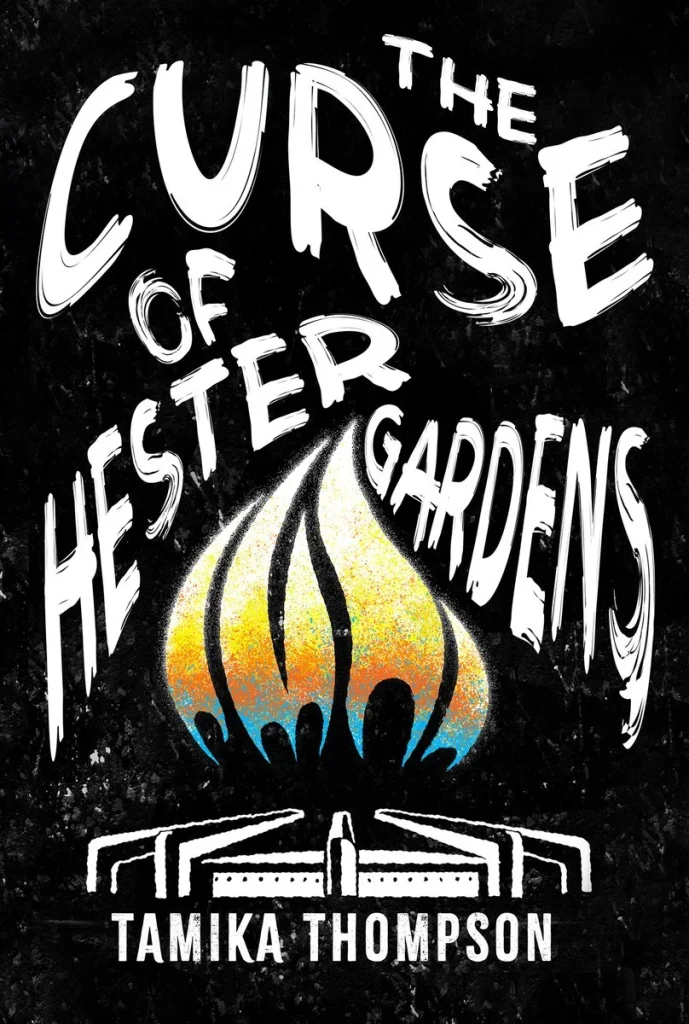
In recent years, I’ve been returning to my conversation with Taylor because my debut novel, The Curse of Hester Gardens, is a gothic horror set in a public housing project built in a fictional midwestern city with similarities to Detroit and Flint, Michigan. Like the abandoned homes in Detroit and the poisonous water in Flint, in Hester Gardens the trash is rarely collected, and residents must contend with mountains of garbage and a stench that permeates their lives and weaves itself into the fabric of their clothes.
So, Taylor was definitely onto something. With an eye towards the gothic as a literary genre, I’ve noticed recent growth in popularity and readership for gothic works written by Black authors, particularly of the Black Southern gothic in the vein of Ryan Coogler’s Sinners, which smashed 2025 box office records. I sense that this trend is here to stay.
I’ll always recommend classic Black gothic works like Toni Morrison’s Beloved, Octavia Butler’s Kindred, and Gloria Naylor’s Linden Hills, but here are seven contemporary gothic novels written by African American authors that will shatter your heart and make you think.
The Reformatory by Tananarive Due
Award-winning author Tananarive Due’s entire body of work is stellar, and you can’t go wrong picking up any one of her books, from her debut The Between, to The Good House, to her African Immortals series beginning with My Soul to Keep. Due has the distinction of being an author who can pen both acclaimed novels and short fiction, and I highly recommend her collections Ghost Summer and The Wishing Pool as well.
But I came here to talk about her celebrated gothic work.
The Reformatory is a master class in American literature that rightly won several awards and was lavished with critical praise. Set in 1950s Florida at the Gracetown School for Boys, which is based on the real-life Dozier School for Boys, where Due’s great uncle lost his life, the text follows 12-year-old Robert “Robbie” Stephens Jr., a Black boy who is sentenced to six months at the de facto children’s prison for protecting his sister Gloria from a white boy’s advances.
With the building’s ivy-adorned redbrick, sweltering heat, iron entry gates featuring barbed wire, and a landscape filled with revenants of murdered boys, Due builds a visceral gothic setting as she stares down the reformatory’s racist and brutal history.
This Cursed House by Del Sandeen
This critically acclaimed book deftly tackles multiple taboo topics in a story both compelling and haunting. It tells the story of Jemma Barker, who leaves Chicago for a job at the Duchon residence in New Orleans, a white Antebellum home with pillars, black shutters, a wide porch, and oak trees. A house in need of repair that the locals warn her off of. An abode of neglect, with loose tiles on the roof, weeds, and, apparently, spirits.
Both the family and the home are hiding secrets, and soon Jemma learns the Duchons are locked in a curse that only she can break. With this powerful book full of unforgettable characters—I will never shake Honorine Duchon and her icy gaze—Sandeen takes on colorism, incest, passing, classism, sexism, slut-shaming, and passed-down generational curses.
Grievers by adrienne maree brown
adrienne maree brown channels Octavia E. Butler in this debut novella, the first in brown’s Detroit-set Black Dawn series. In Grievers, we have a city plagued by an illness with no cure that stops the sick in the middle of living, rendering them catatonic. Lyrically told, the story follows Dune, whose mother has the affliction, and, in fact, is patient zero. As Dune investigates the cause of the illness, she must navigate a hollowed out city of the dead and near-dead, filled with graveyards and dilapidated homes, in a text both gothic and suspenseful in its telling.
In Grievers, the gothic manor isn’t a home, rather an entire city (really country), where, even before the illness, the city rationed water due to greed, and the country was filled with fear, racism, poor education, corruption, and war. A “crumbling age” that readers might find eerily familiar.
The Spite House by Johnny Compton
Compton’s critically acclaimed debut takes the reader to Texas, with the titular house providing gothic angst and a look at trauma, grief, and the past that haunts. The text follows Eric Ross, a down-on-his-luck father of two who arrives in Degener after leaving his wife and life in Maryland. He becomes caretaker of Masson House, a spite house that once overlooked an orphanage, and is tasked with recording the four-story home’s suspected paranormal activity, events so sinister it drove the previous caretakers mad.
The story brings to mind Tananarive Due’s The Good House and Stephen King’s The Shining, and it speaks to Compton’s brilliance that even with those associations, this book feels fresh and singular.
In keeping with the gothic tradition, Masson House is a character itself, described in the opening sentence as akin to the “corpse of an old monster.” Throughout this powerful thriller, the sinister structure feels alive, with its rectangular windows, gaunt and gray facade, and the local lore that engenders fear in the town.
House of Hunger by Alexis Henderson
Like in Sandeen’s work, House of Hunger opens with a character embarking on a new job in a mysterious manor. In this case, Marion, who lives in a slum, pursues a job as a bloodmaid in a fictional north run by a waning nobility. And although the setting and location might not be an American city, Henderson’s text makes salient points about a failing empire in the north, where power has shifted away to the industrial south with its democratically elected parliament of factory owners, oil barons, and politicians. The House of Hunger is the first and grandest of 27 houses in the north, and it is only one of four still with any power.
Marion arrives at the six-foot structure, “a fearsome thing,” to find windows glowing with candlelight, a dying garden, and gargoyles covered in moss. The nobles want Marion’s blood to survive, and Marion is desperate for the pay and the lifestyle, but quickly learns there are dangerous secrets in being a bloodmaid, and the truth of the hunger comes at a price.
The Ballad of Black Tom by Victor LaValle
LaValle’s award-winning novella always comes to mind when I think of contemporary gothic works for its use of setting to evoke dread in the reader. A must-read reimagining of H.P. Lovecraft’s “Horror at Red Hook,” LaValle’s The Ballad of Black Tom tells the story of Charles Thomas Tester, who lives in Harlem and one day delivers an occult tome to a sorceress in Queens, an event that opens a door to magic and mayhem Tester wishes he could close.
Set in 1924, the book offers social commentary on white supremacy, institutional anti-Black racism, and manages to also be a work of cosmic horror that both honors and critiques Lovecraft. The landscape Tester navigates drips with gothic horror. The New York streets, the subway, the perilous path from Black Harlem to the Flushing Queens of German and Irish immigrants, and the reclusive sorceress’s manor all work together to give the impression that something sinister is lurking within every person, building, and object.
When the Reckoning Comes by LaTanya McQueen
In her Southern gothic, LaTanya McQueen takes down a controversial practice in the American South of turning former slave plantations into tourist spots. The book follows Mira, a Black woman who returns to her North Carolina hometown for a friend’s wedding on a renovated tobacco plantation that is rumored to be haunted by former enslaved people.
The gothic horror comes alive in the plantation setting, where Woodsman House sits three stories tall, with several Greek columns, and hundred-year-old maples. A glimpse at the disrepair the property falls into in Mira’s youth, with peeling paint, weeds, and columns that look like they’ll collapse, coupled with her arrival for the wedding, when the grounds have been turned into a luxury resort and wedding venue, featuring reenactments of the enslaved people picking tobacco, McQueen’s work offers strong social commentary and a reckoning with this country’s barbaric past.