Reading Lists
7 Hybrid Memoirs That Merge Art and Family
These books consider the web of inspiration and creativity that refracts in writers from artistic homes
This article is free to read. So is every article Electric Literature publishes. No limits, no paywalls—now or ever. But we rely on your support to keep it that way.
We need to raise $35,000 by April 15 to keep the lights on, and time is running out.
Help us reach the next milestone—$7,500 by Friday—by donating now.
—————
Coming of age is a lifelong creative act. So, too, is the act of making a family—biological, found, or some amalgam of the two. For writers who grow up with artistic parents or parent-figures—immersed in the worlds of literature or theater, photography, or sculpture from a young age—family is often tethered to an impulse to create. Subsequently, engagement with, or appreciation of, the media that informs our identities and family narratives can lend itself to experimentation: with collage essays and associative thinking, borrowed forms, fragmentation or compression.
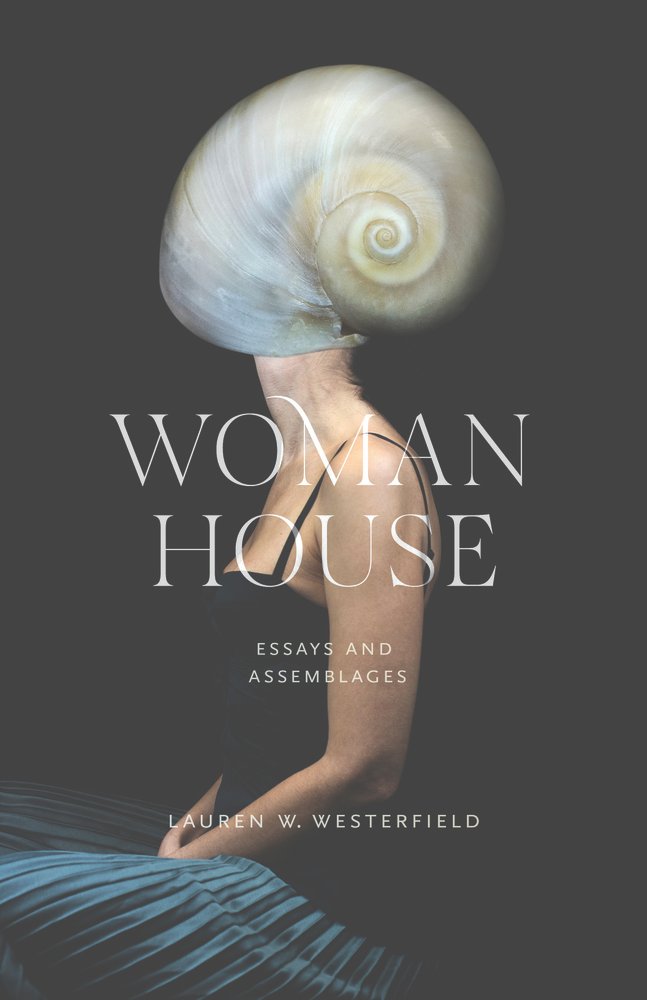
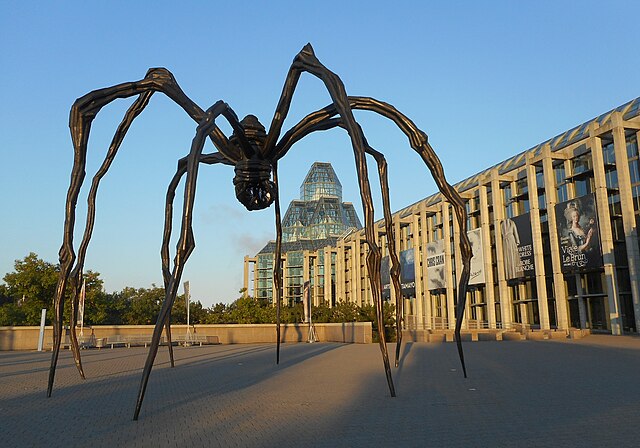
While writing my second book, Woman House, a memoir in essays and flash interludes I call “assemblages,” I repeatedly turned to visual art, literature, and cinema to help understand my relationship with my mother, and to catch a glimpse of the woman and artist she was in her younger life, before I was born. She raised me on classic movies and trips to the museum, to appreciate fine art and messy, amateur experimentation alike. Art was something we shared—and yet, as I matured into an adult who sought out expressionistic or surreal work for its bodily frankness (Louise Bourgeois’ femme maisons, for example), my mother often reviled my taste. Where she favored classical, conventionally “tasteful” work demonstrating technical skill, I found myself drawn to images that moved more freely upon the canvas than I felt safe to in my body. In Woman House, form and content alike reflect the act of making—a body, a work of art—to channel control; the act of seeing as a release and opening to feeling.
The following reading list includes experiments in nonfiction, essay, and memoir that engage with art and coming-of-age narratives simultaneously. These books unpack the ways in which family, media, and story shape and change us. Each author bends form in a manner reflective not only of their influences and inheritance, but of their own artistic evolution, uniquely capturing a glimpse into their ongoing, ever-changing creative and personal lives.
The Faraway Nearby by Rebecca Solnit
Rebecca Solnit is perhaps most well known for her fiery, insightful activism and place-based environmental writings. But in this 2013 experimental memoir of mothers and daughters, illness and memory, travel and story, Solnit weaves a remarkable tale of identity through narrative and association, mapping her life via objects and symbols—apricots, mirrors, ice, breath—alongside the literature that shaped her approach to writing and living alike. At once a travelogue, a reflection on Frankenstein and the fairy tales of her youth, a reckoning with her mother’s memory loss and the vicissitudes of the body, The Faraway Nearby is a storyteller’s memoir that defies chronology in favor of a kind of nesting doll structure, or perhaps that of a tapestry woven and unraveled with masterful precision.
The Fluency of Light by Aisha Sabatini Sloan
“Coming of age in a theater of black and white,” the subtitle to Sloan’s debut essay collection, perfectly encapsulates the author’s pseudo-frauenroman as a mixed-race woman growing up against a backdrop of cinema, photography, literature, music, and art in late 20th century Los Angeles. These essays employ fragmentation, numbered sections, and associative leaps to explore the artistic influences that defined her young life, from Thelonius Monk and her father’s photographs to Italian neorealism and the New York art gallery scene. Meanwhile, each essay honors and explores her parents’ interracial love story (set in Detroit, a second home that Sloan returns to repeatedly in her writing), and its aftermath. Throughout, Sloan reflects on racism, bigotry, Blackness, history, and family, always seeking great depths of understanding and evolution in her relationship to art and to the world.
Book of Mutter by Kate Zambreno
A meditation, a list, a scrapbook, a sculpture. All of these and more might describe Zambreno’s Book of Mutter, a work of memory, testament, art, and grief making sense of her mother’s life and legacy. Written over thirteen years, the book borrows form from artist Louise Bourgeois’ Cells series of sculptures, and blends critical reflections on the works of Bourgeois and other artists and writers (including Theresa Hak Kyung Cha, Henry Darger, Anne Carson, and Roland Barthes) with the narrative of her mother’s illness and passing, investigating the difficult work of loving and losing a mother with whom one shares both intimacy and animosity. At once spare and sprawling, making frequent use of white space and yet spilling over into Zambreno’s companion text, Appendix Project, the materials and forms that make up Book of Mutter constitute a singular approach to the mother/daughter narrative.
Brown Neon by Raquel Gutiérrez
Brown Neon is a revolutionary experiment in place-based writing. Operating as a memoir of queer family-making and cultural influence up and down California and across the Southwest, the book also explores the evolution of the author’s critical, racial, community, and class consciousness. The result is a travelogue as stunning in its depictions of landscape as it is articulate in challenging the colonial status quo. Throughout these essays, Gutiérrez blends critical perspectives on art, immigration, and performance with moving, richly detailed family dynamics of all kinds: from the love and sartorial tutelage of her mentor and “father”—butch activist Jeanne Córdova (or Big Poppa, as she is known to Gutiérrez)—to stories of her biological parents, youth, and found family of fellow punk rock fans and artists in 1990s San Diego. Described by Myriam Gurba as a work of “Latinx mysticism,” Brown Neon is singular in its perspective on intergenerational memory, identity, and ecology.
The Red Parts: Autobiography of a Trial by Maggie Nelson
In 1969, Maggie Nelson’s aunt Jane was horrifically murdered. Her killer remained a mystery, and her violent death haunted Nelson’s family. In Nelson’s hands, the story of Jane’s death became the subject of a beautiful, genre-blurring work shapeshifting from page to page: now lyric, now historical record, now speculative reimaging—titled simply Jane: A Murder. But just before Jane was published, new DNA evidence pointed to a new possible suspect. Thirty-five years after Jane’s death, Maggie Nelson and her mother find themselves witnessing the suspect’s trial—and with it, the excavation of family ghosts. The Red Parts is one of Nelson’s more narrative prose works, though one wouldn’t go so far as to call it “conventional memoir” (or, as far as Nelson is concerned, “memoir” at all). Anchored by the true-crime story of the trial, and the family stories evinced by its drama, Nelson’s book also investigates media and society’s fixation on murder—especially the murders of young white women—as well as her own.
Wrong Is Not My Name: Notes on (Black) Art by Erica N. Cardwell
Wrong is Not My Name opens with a kitchen table, a tragic loss, and an inherited diary. “Was my mother an artist?” Cardwell asks, recollecting the kitchen in her childhood home and her mother’s many ways of making and creating within that space. From here, the book—a memoir, a work of art criticism, an activist’s record of Black, queer, and feminist identities recalling the works of bell hooks—unfurls into streams of memory and making. In grieving her mother, Cardwell crafts a singular work of hybrid art writing.
The White Dress by Nathalie Léger, translated by Natasha Lehrer
Léger’s trio of prose works exploring her mother’s story alongside those of three well-known women—artists at once operating as subject and object, active maker and passive muse—concludes with The White Dress, a haunting examination of the female body and mind striving for creative agency. Léger shifts back and forth between childhood memories, scenes of conversation with her mother, and researched details unpacking the art and death of Pippa Bacca, a wedding-dress-clad performance artist who was killed during her attempt to travel on foot across Italy and the Middle East. As Léger’s research into Bacca’s motivations unfurls, so too does her understanding of her lineage—as a woman, as a daughter. “Whatever it is that you’re touching with your fingertips is filled with history,” she writes, “ordered, as ancient and familiar as our origins.”