Reading Lists
7 Novels About Women Becoming Beasts
In these books, women turn monstrous to reclaim their humanity
This article is free to read. So is every article Electric Literature publishes. No limits, no paywalls—now or ever. But we rely on your support to keep it that way.
We need to raise $35,000 by April 15 to keep the lights on, and time is running out.
Help us reach the next milestone—$15,000 by Wednesday—by donating now.
—————
There are days lately when my body feels too small for everything I’m feeling. Maybe you know the sensation. That hot, tight coil of frustration that won’t unwind. The pressure of trying to stay pleasant while the world around you keeps insisting you should be grateful it’s not worse. It’s a strange kind of claustrophobia: emotional, physical, psychic. A sense that your skin has become a jar with the lid screwed on too tight. In those moments, I want stories that blow the lid off. Tales where women reach the point where their human shape can’t contain them anymore and something in them refuses to stay small. Stories where metamorphosis isn’t a curse, but a way out. A widening of the self, an unfurling, a reclamation of the things women are told to suppress: anger, appetite, selfish desires.
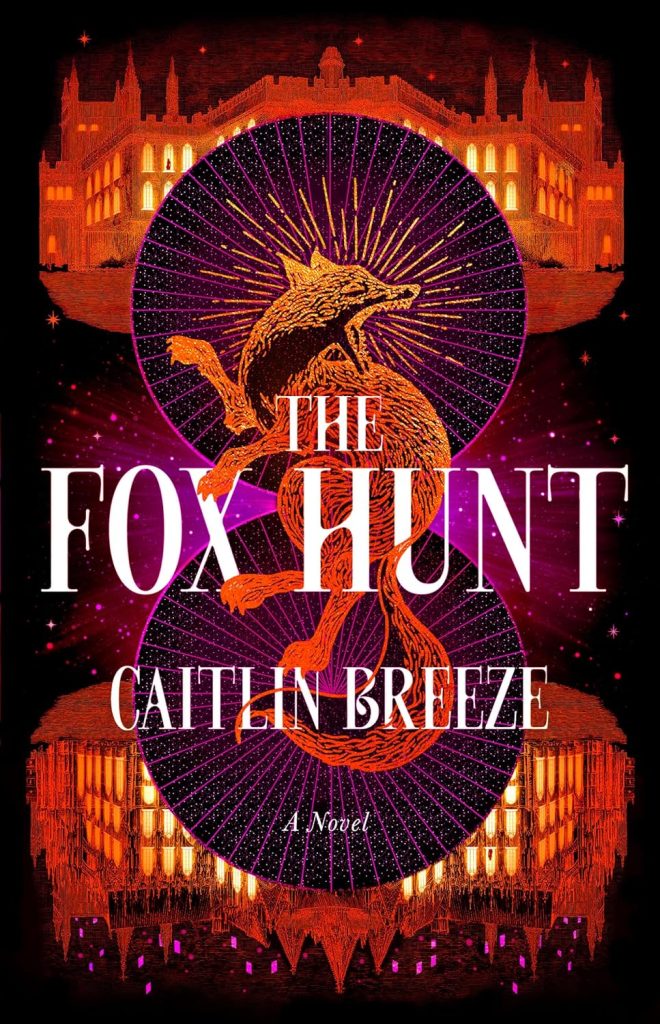
When I was working on my own book, The Fox Hunt, I found that my heroine’s leap into fox-form allowed her to escape the clutches of the boys hunting her: a secret society of young men whose wealth, power and privilege would usually secure their every whim. But I also found that this transformation let her slip free from the expectations the world had taught her about herself. Be quiet. Be gentle. Don’t bare your teeth. Don’t take up too much space. Don’t want too much. Her new shape gives her the path to revenge, to freedom, and to justice. Transforming my heroine in was a way of letting her find her power, rewrite her story, and bare her teeth without apology.
In the seven books below, we see that the monstrous woman isn’t a cautionary tale. She’s a reclamation. She’s what happens when we stop asking permission to feel angry or hungry or alive. She is the sum of the wildness, defiance, and power that lives in all of us. When we embrace our wild side, we don’t lose our humanity. We shed everything that strangles it. Because the beast is not the enemy. The beast is the way out.
The Bloody Chamber by Angela Carter
The Bloody Chamber is the quintessential feminist reimagining of fairy tales. In this collection of short tales, Angela Carter exposes the teeth and passion beneath bedtime stories we know well. “The Tiger’s Bride” is a standout. Carter flips the whole Beauty and the Beast script inside out: Gentleness isn’t rewarded, obedience isn’t the moral. Instead of taming the Beast into becoming human, this Beauty sheds the skin that made her acceptable and chooses the one that lets her finally breathe. And when the Beast licks the human skin from Beauty’s body to reveal the beautiful, rippling, tiger-striped fur beneath, it is a joyful consummation. Becoming an animal is an escape from the roles that hemmed her in: virgin, daughter, object. Her beastly body holds her true self in a way that her fragile human form could not. I love this transformation story because it tells us that the wild versions of ourselves may actually be the most honest.
Paladin’s Strength by T. Kingfisher
Clara is a nun, warrior, and unapologetic werebear. Yes, werebear. But her bear-self isn’t a shameful secret: It’s simply a part of her, and one she carries with matter-of-fact pride. Kingfisher’s world treats female strength with affectionate irreverence. Clara is powerful enough to break a man in half and tender enough to worry about rude table manners in between battles. Her transformation doesn’t make her less human, it makes her more wholly herself, refusing every attempt to shrink her. Sometimes the only way to carve out space in a world built to contain you is to become something too large to hold.
Nightbitch by Rachel Yoder
Nightbitch captures the feral underside of motherhood with unnerving sharpness. The protagonist, overwhelmed by childcare and isolation, begins noticing changes. She’s finding patches of fur, craving raw meat, and sniffing the air like a hound. Is she transforming into a dog? There’s an ambiguity there. But what matters is how the possibility lets her entertain feelings and thoughts we’re taught women shouldn’t give in to. Her emerging dog-self becomes a counter-spell against the expectation that mothers should be endlessly self-sacrificing and sweet. It makes for a funny, unsettling, and liberating story. When the world demands you be patient, tender, endlessly pleasant, this book hands you permission to growl.
Lady Into Fox by David Garnett
Published in 1922 and still astonishingly modern, Garnett’s novella begins as a domestic oddity and spirals into something far wilder. Silvia Tebrick, once a perfectly respectable English wife, abruptly transforms into a fox and refuses to be forced back into the shape expected of her. Her husband tries to dress her, feed her at the table, keep her in the house. But Silvia’s instincts overwhelm the rigid etiquette of their marriage. She scratches at the door. She bolts into the forest. She chooses foxhood, with its mates, cubs, and danger, over the suffocating politeness of traditional womanhood. The more her husband clings to propriety, the more Silvia slips away. Until it is clear that there is only one loving outcome: He must free her. It is a story where transformation is a vessel of freedom for a woman trapped by the smothering confines of domestic ideals.
Wild Seed by Octavia Butler
Anyanwu, the immortal shapeshifter at the heart of Wild Seed, can analyze a creature’s entire genome by consuming a small fragment of its flesh. This power lets her transform her body down to the smallest detail: paws or fins or wings. More than that, she can alter her own age and sex, and heal others. Butler contrasts Anyanwu’s self-crafted power against Doro, an immortal man who steals bodies for survival, killing those he decides to inhabit. One builds her shape carefully, with minimal destruction; the other consumes bodies without thought. As the two clash in a toxic relationship, the novel shows another facet of transformation: that Anyanwu’s ethical, careful approach to taking other forms can have its own transformative, improving effect on even the most violent elements of the world around her.
The Brides of Rollrock Island by Margo Lanagan
In Margo Lanagan’s take on selkie folklore, the women of Rollrock Island are seal-wives. They have been called from the sea and trapped in human skins so that men can claim them as brides. These seal-women are not cheerful wives, but exiles aching for the water. Their marriages are abductions, separating them from their true selves. In prose that stings like wind off the sea, Lanagan paints the domesticity the brides are forced to wear by hopeful husbands, and their unabating longing for the cold, deep water and their true forms. In this story, beast form is a lost dream of freedom: a utopia of female existence, freed from civilization, in which women’s original forms are sleek, powerful, and magical. It is a haunting and beautiful read suggesting that women do not want to turn beastly, so much as to return to their rightful beastly selves.
The Daughter of Doctor Moreau by Silvia Moreno-Garcia
Moreno-Garcia’s reimagining of The Island of Dr. Moreau centers on Carlota, raised among her father’s hybrid creations. These are human-animal beings, stitched together through cruelty disguised as science. As Carlota uncovers the truth of her origins, her own body becomes a site of revelation and rebellion. Her animal inheritance pushes her toward a freedom her father never intended her to have. This novel understands that monstrousness is often defined by whoever holds the power. It reminds us that embracing the “beastly” parts of yourself might be the only way to survive a world built on exploitation. This is a story for anyone who senses that the thing they’ve been taught to fear in themselves might actually be their own strength.