Reading Lists
9 Novels About Women in the Wild
When these characters escape into the wilderness, it redefines their relationship to the land and to themselves
This article is free to read. So is every article Electric Literature publishes. No limits, no paywalls—now or ever. Support from readers like you makes that possible.
Electric Literature is proud to be a space where writers are always paid and reading is always free, and we plan to keep it that way.
Donate now to our spring fundraiser to help ensure the future of free, accessible literature for all.
—————
On a fishing trip to Yellowstone National Park some years back, I was thinking more about lures than the wilderness beyond the banks of the crowded streams. Nothing felt tamer than casting into the Yellowstone River while kids swam nearby and parents shouted out cautions and calls for lunch. But one morning, as I was reeling my line in, an enormous splash almost overtopped my waders. Annoyed, I turned to see which kid had cannonballed so close to me. Staring back at me was not a rambunctious child, but the cold, threatening eye of a massive bison, just the type that park rangers had warned us to stay well away from. This bison had dunked so close I could have patted the wooly fur around its muscular neck. All at once, I was plunged into a danger I should have expected but took me completely by surprise.
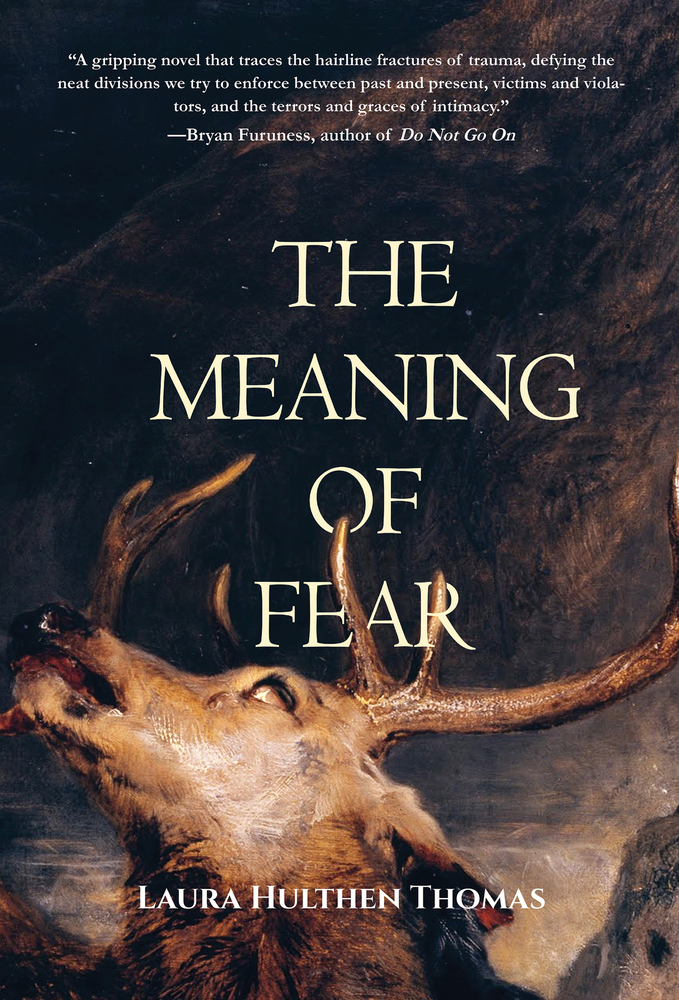
My close call with the bison—yes, he swam on past with that bottomless eye on me the whole time—helped inspire my main character Lea Johnson’s tumble into the wilds just outside her own front door. In my novel The Meaning of Fear, Lea, a behavioral researcher, relocates to rural Michigan in the wake of a violent attack on her husband. Despite being an expert in the fear response, Lea finds herself fearing the “wilds.” Sharpshooters take to the trees at night in her yard for an annual deer cull, while new friends and neighbors, and even her own husband, volunteer to help trim the herd. When a teenage trespasser on her property goes missing one night, even the local sheriff doesn’t seem concerned that the young man could be lost or mistaken for a deer. Are these folks’ values wildly different from hers, or is Lea out of step with a natural order she didn’t realize existed on the outskirts of her beloved town?
These nine novels tell the stories of women who find themselves battling their own wilds. Some women are thrust unexpectedly into a wilderness that calls for new survival skills and instincts. Some women are escaping from brutal captivity, preferring the possibility of death to servitude. Still others find the wilds in places that seem tame. These novels bring an unsparing eye to suffering, deprivation, and grief. But these stories also celebrate the land’s beauty, the joy of freedom even in the harshest places, and the revelatory sense of self that comes when a woman only has herself to depend on.
The Natural Way of Things by Charlotte Wood
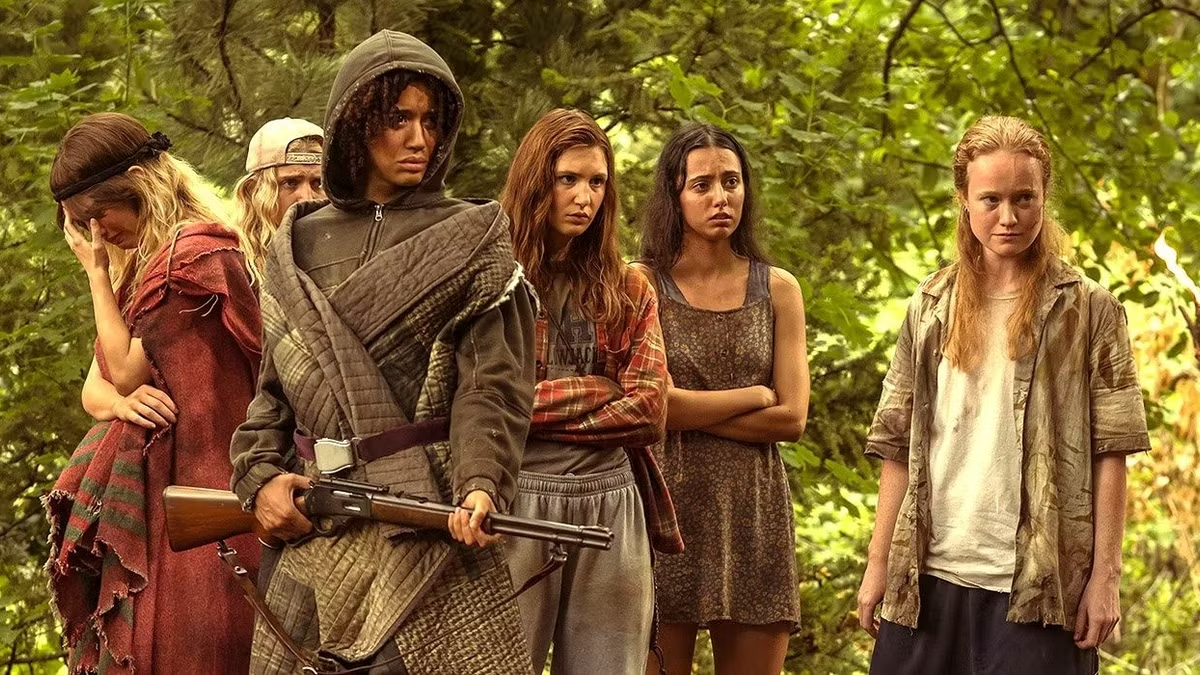
When the women of The Natural Way of Things awaken, drugged and locked in a remote compound, the squeals of kookaburras are the first tell that they have been snatched to the wilds of the Australian Outback. The ten women soon recognize each other as having made public accusations of sexual violence against prominent men. Despite deprivation and violence—their male jailers force them to labor in tunics and bonnets made from the bones of birds—Yolanda’s comrades cling to stubborn hopes of rescue, while she protects the women from hunger by learning to trap game. The bloody work takes its toll: “By the end she wore a ragged skirt of rabbit bodies and clinking steel traps . . . the flesh soon glued to the belt with blood . . . ” To survive the wilderness of men’s violence, Yolanda transforms from woman to feral animal guided by pure instinct to embrace nature’s refuge.
The Vaster Wilds by Lauren Groff
The Vaster Wilds pits woman against the wilds from its first lines. Set in 1609, young Lamentations flees from Virginia’s Jamestown colony into the “great and terrible wilderness” to escape starvation and a crime that deprivation drove her to commit. More Lot’s wife than Robinson Crusoe, the girl flees north through the dense forest without looking back. As she fights the cold, malnutrition, and the toll of past trauma, Lamentations chops fish from the ice and shelters in fallen logs. At first, survival means outrunning the men who pursue her. Later, as her health and stamina slip, true survival means learning when to flee and when to shelter in “one of the quiet good places of this new land.” Throughout the novel, Groff cuts to the nearby Powhatan gathering food and building communities as a reminder that this world is only wild to the woman not born to it.
The Pesthouse by Jim Crace
In The Pesthouse, a woman’s refuge in the wilderness might turn out to be her only hope for a civilized life. After a contagion transforms America into an industrial wasteland populated by lawless bands of enslaving men, Margaret’s quarantine in a remote pesthouse in the hills is her first proof that survival can only be achieved in untouched places. She is a true woman of the wild, trapping birds, flinting fires, and fashioning peace from fear and loneliness. Her ease is reflected in nature’s easy reclaiming of the ruined land. Forests are overtaking farmlands and rivers tear at the roads “with the undramatic patience of water.” The closer Margaret draws to the seaside and passage to Europe that’s anything but safe, the more she questions whether her salvation lies in turning back to the wilderness, away from the wilds men have made of their tattered civilization.

Amphibian by Christina Neuwirth
Sometimes the wilds take over the office with the same inexorable creep as the latest policy directive flowing from the executive suite. Until she steps off the elevator onto a decidedly squishy carpet, Rose, a young sales associate in Edinburgh, never dreamed that when her boss said the firm was “going under” due to poor sales, she was being literal. As the water level rises by the day, productivity increases and pleas to leadership to stem the flood are met with policies preventing swimming. The staff jerry rig computer mice to function underwater while Rose wonders whether management, perfectly dry in their suites on the upper floors, will expect their employees to work fully submerged. At home, her clothes never quite shed the damp before she must plunge again into the aquarium of work. Amphibian forces Rose and her co-workers to absorb an absurd corporate culture and ever-changing sales quotas with their every breath without drowning.
Absolution by Alice McDermott
Absolution takes place partly in 1963 Saigon, a city that has long tamed the wilds. At least that’s what Tricia and Charlene, who live in the grand villas reserved for their military advisor husbands, believe. Living a cloistered life with artillery fire just beyond the stucco walls, the ladies hold cocktail parties and perform charity work for Vietnamese children. When Charlene arranges a charity mission on the South Sea coast, Tricia is excited to swap her pedal pushers for fatigues. But when their army transport vehicle breaks down in a wilderness of jungle, rice paddies, and Vietcong raids, the women are thrust into the wilds for the first time. Being stranded reveals the foolishness of charity that bestows Barbies and licorice in a Vietnamese wilderness populated by the wounded in an already raging war.
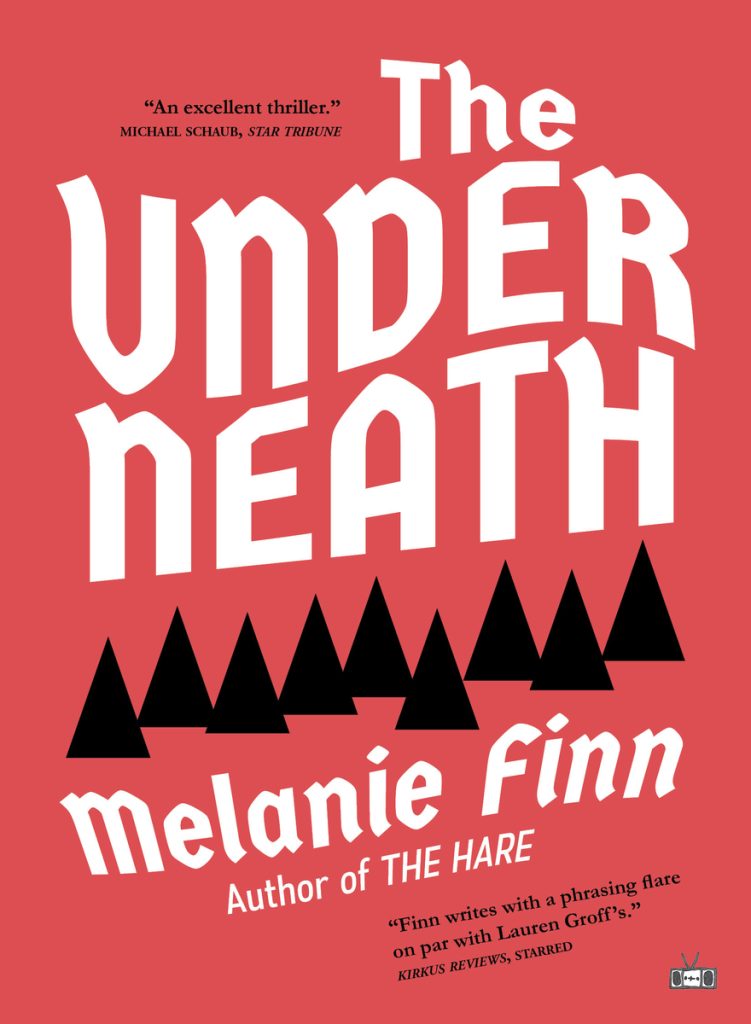
The Underneath by Melanie Finn
The Underneath turns the woman in the wild narrative on its head. Here the wilderness is a place in need of rescue. When Kay Ward takes a break from her journalism career to mother her two young children, the hilly Northern Vermont forests that surround their rented farmhouse feel as safe as they are scenic. Kate soon finds herself lost in the wilderness of her children’s needs, oblivious to the ravaged wilderness just beyond the beauty she can see. The disturbing secrets the farmhouse reveals draw her to Ben Comeau, a heroin dealer whose logging scam is destroying the wilds just as the drug epidemic he feeds is threatening his town. The Underneath is a portrait of the American wilderness that, much like the human communities on its margins, is being razed to its roots.
The Lowland by Jhumpa Lahiri
In The Lowland, grief and loss bind three generations of women to one wild place and the family home that overlooks it. By the time Bijoli gives birth to two sons amidst the turbulent revolutionary movements of 1960s Calcutta, modern houses, including her own, ring the fetid lowland that was once an ancient seabed. Tragedy strikes one of her sons in the lowland’s flooded waters, causing the family to splinter and setting Bijoli loose into the grief-stricken wilds of her mind. Meanwhile Bijoli’s now adult granddaughter, Bela, roams freely across the American Midwest, working itinerant farming jobs while unknowingly re-enacting her grandmother’s fruitless care for the lowland. Late in life, Bijoli’s daughter-in-law, Gauri, will herself return to the lowland to confront her own secrets surrounding her husband’s death. This portrait of shared loss connected to a place that was never meant to be tamed reminds us that women can be cast into the wilderness just by stepping out their front doors.
I Who Have Never Known Men by Jacqueline Harpman
First published in French in 1995, under the title The Mistress of Silence, I Who Have Never Known Men has of late attracted the literary spotlight. The story of a girl born in a cage holding thirty-nine other women, guarded by men who feed but never speak to them, resonates with its stark, eerily calm portrayal of systemic dehumanization. The women lack privacy for basic bodily functions and have no memory of how they came to be captured. When a catastrophe befalls the men, the women are freed into the jarring reality of a barren place. Here the wilds are vast, empty plains, with the occasional river. The girl herself, born ignorant, could be expected to be the novel’s wildest thing. But her restlessness, curiosity, and practicality ground her in this mysterious land as she wanders, forages, and eventually faces being alone in the unknown and the unknowable.
The God of the Woods by Liz Moore
The God of the Woods opens with the epigraph, “How quickly . . . peril could be followed by beauty in the wilderness . . . ” It’s 1975 and teen Barbara Van Laar has disappeared from a summer camp her family owns in the Adirondack woods, exactly 14 years after the mysterious disappearance of her brother, Bear. From there, the narrative dips back in time to show Barbara’s mother, Alice, trapped in an oppressive marriage, drugged during childbirth, forbidden to nurse, and isolated from everything natural about raising her kids. In the present, the search for Barbara in wild places slowly reveals Van Laar family’s secrets that never quite disappeared. Upon arriving to Camp Emerson, girls are taught to “sit down and yell” should they find themselves lost in the forest. The mystery of what happened to Barbara may prove that staying in one place and crying for help is exactly what women determined to survive should never do.