Reading Lists
9 Books That Practice Queer Ecology
For these writers, queerness is an integral part of glaciers, fjords, retention ponds, and every other environment that makes life possible
I grew up in a small southern town. The models I had for queerness were people on television, living glamorous lives in New York City—lives totally removed from the farmlands, marshes, and forests that surrounded my home. One day, desperate for a nearer, more intimate model, I went online and searched, “Can animals be queer?” This search eventually led me to Bruce Bagemihl’s Biological Exuberance. Clocking in at over 700 pages, this behemoth encyclopedia of “gay animal sex” was comprehensive, explicit, and exactly what I needed. With time, I created meaningful queer relationships with humans and outgrew the book, but I never forgot its evidence for queerness as natural.
Queer ecology is an emerging academic field that insists on queer and trans realities as a fundamental part of nature, ecology, and environmental politics. For me, the phrase highlights the necessary work of charting stories of queer and trans lives in wilderness spaces, but also encompasses literature that is queer in its refusal to enshrine borders and categories, and ecological in its focus on the relationships that make life possible.
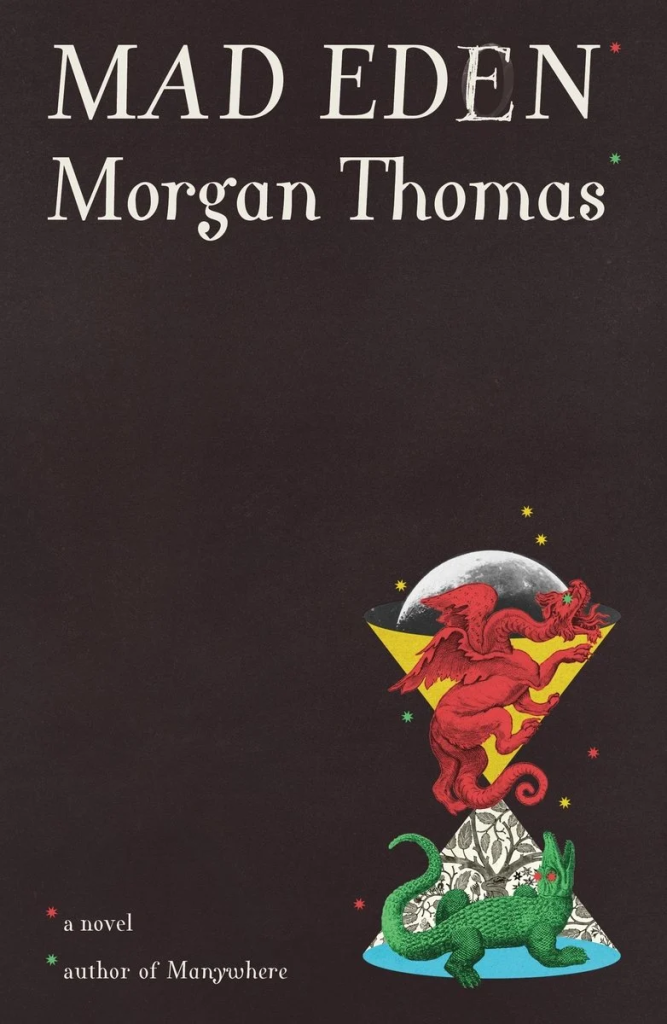
In my forthcoming novel Mad Eden, the narrator, Ro, has difficulty with communication. In one scene, after sex leaves them temporarily unable to speak, they wander away from their partner, out into the Florida backwoods, and spend a while observing an alligator. Ro doesn’t know that male alligators sometimes show a distinct preference for other male alligators. But their time with the alligator helps. They return to their partner better able to communicate.
I was struck, writing this scene, by how easy it felt to put this genderqueer character on the edge of a secluded Florida retention pond, miles from the nearest town. Such a setting hasn’t always felt easy to imagine. For a long time, my queer characters were alienated from rural spaces, as I was myself after coming out. But the idea of queer and trans characters finding refuge in forests and swamps feels straightforward now, thanks to a growing lineage of writers who are challenging ideas of queerness as a strictly urban (or strictly human) experience. From sea-creature-mediated gender transition to metafictional musings on the natural state of romance, each book below offers a taste of this expansive (and expanding!) queer ecological literature.
Nature Poem by Tommy Pico
Tommy Pico’s Nature Poem is, emphatically, not a nature poem. The poem’s speaker, a member of the Kumeyaay Nation, can’t write a nature poem “bc it’s fodder for the noble savage / narrative” and because “nature is kind of over my head.” Marked by negation, allusion, and spillage—“it seems foolish to discuss nature w/o talking about endemic poverty / which seems foolish to discuss w/o talking about corporations given / human agency which seems foolish to discuss w/o talking about / colonialism”—this book-length poem subverts stereotypes of queerness and Indigeneity with sharp observations and humor. Nature is alternately distant and intimate, a lover with whom “every date feels like the final date bc we always find small ways of being / extremely rude to each other like mosquito bites or deforestation.” Nature in this poem is “reading the stars,” “sand crabs n shit.” It is queer, defiant, and all around us.
A Natural History of Transition by Callum Angus
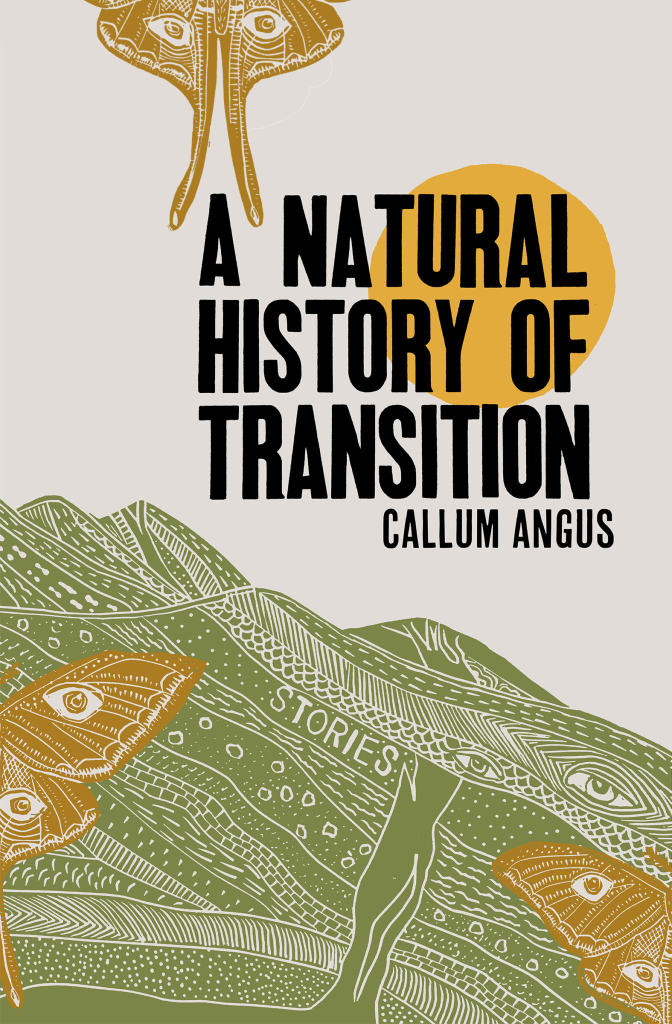
In this collection of stories, stasis is the exception, transition and change are the rule. In one story, gender transition is followed by geological transition, in which a person becomes a mountain. In another, a trans man births a mysterious cocoon and nervously awaits his child’s next metamorphosis. By insisting on transition as the most natural thing, these stories reinforce the innate sovereignty of trans people. They also make a case for the importance of family (biological or chosen) and community (with human and more-than-human creatures). At the end of one story, a trans man imagines his mother saying to him with excitement, “let’s see what’s at the end of all this, even though it’s probably just another beginning.”
The Thirty Names of Night by Zeyn Joukhadar
Beginning with a scene in which 48 white-throated sparrows fall from the sky in New York City, this book depicts disorientation (whether caused by personal loss, gentrification, closeted trans identity, or the ongoing ecological crisis) alongside a strong desire for belonging. Gender dysphoria is an urge to “return my body and slip myself into a different softness: the stems of orchids, maybe.” A mother’s haunting takes the form of strange birds, whose names the narrator knows best in Arabic. When the narrator discovers a journal in an abandoned building, the tangled threads of art-marking, migration, displacement, and peculiar avian ecologies come together in a resounding cry for the power of queer community and resistance. This is queerness across generations, across continents, and across ecologies.
Borealis by Aisha Sabatini Sloan
This narrative collage is an associative and highly allusory meditation on glaciers, art, incarceration, gun violence, lesbian dating, and the alternating boredom and terror of being a Black woman alone in Homer, Alaska. Intimate (and often frightening) interactions with moose, dogs, and eagles are set alongside vignettes about ex-girlfriends who have moved toward and through Alaska’s landscape, and then moved on. Invoking Fred Moten, Lorna Simpson, Anne Carson, Samiya Bashir, Sadiya Hartman, and many other artists and thinkers, Sloan captures the alienation felt in a landscape marked by colonization, whiteness, and homogeneity, and the mingled promise and threat of other-than-human companionship. “Our strangeness,” she writes, is “an attempt to smash back into the natural world.”
Voice of the Fish by Lars Horn
This lyric essay spans strange histories of the modern-day aquarium, complicated parent-child dynamics, myth, and detailed descriptions of various aquatic creatures. It braids these threads together to chronicle the speaker’s complicated relationship with their own body, which is not merely flesh. Algae blooms in the right lung, a stickleback guards the throat, the wings of pileated woodpeckers beat in the chest. This patchwork animal embodiment offers both discomfort and promise. After describing the sex-shifting qualities of clownfish, parrotfish, and ribbon eel, Horn writes that “seeing how regularly sex cannot be reduced to a simple binary in other species . . . I feel so much more human.” In this shape-shifting book, the form and boundary of the body are always changing. “These beasts have come to you,” the prose intones. “You will house them.”
Jonny Appleseed by Joshua Whitehead
In this intimate novel “all the land is horny as fuck.” For the book’s narrator, Jonny, the river is “an orgy of kissing streams, a hub of sex.” The land makes space for both queerness and expansive notions of gender. When Jonny’s kokum translates the Cree word manitowapow, after which Manitoba was named, to “the strait of the spirit,” Jonny riffs: “Why would the water want to straighten my spirit?” Drunk boys flock to Jonny “like leeches to a pickerel,” but he sees himself in the leech as well: “I too felt like a hermaphrodite,” Jonny says, “part boy, part girl.” As Jonny travels from Winnipeg to the lands of the Peguis First Nation, the novel attends to queerness and gender across different landscapes, and to the familial ecologies that, in spite of distance and difficulty, continue to endure.
My Lesbian Novel by Renee Gladman
This book takes the form of a conversation between “Renee” (a character? the author? both?) and an interviewer. This fundamentally ecological form guides the book as it sketches relationships between people and other people, books and people, landscapes and people, and landscapes and books, all in their boundaryless multitudes. It is a romance. It is a meditation on the architectures of romance. And it is a record of the book’s own creation, which feels more like a form of natural growth than human construction. Memory is fungal, conflict is weather, the brain is a mutinous landscape. When asked, “How do you feel?” Renee responds, “Like I need to stare up into the trees for a long time. That’s how I think.”
Madder by Marco Wilkinson
Madder is a lyric exploration of migration, queerness, and borders of all kinds through the metaphor of weeds. Like weeds, the narrator has been called inútil and unwanted. Juxtaposing descriptions of “useless” (though often edible and medicinal) weeds with descriptions of growing up as a queer child who was “seedy and anxious to germinate,” the book attends to the flourishing of life in spite of hostility or oppression. One scene of possible adolescent cruising ends in the discovery of “a million bells,” spring peeper frogs, calling from a nearby pond. Structurally expansive—the book includes family trees, plant taxonomies, poems, illustrations, and sections of delightful wordplay—this memoir pairs loss (an absence) with life (in abundance) to suggest that whatever our pain or need, we can find solace among the generous and irrepressible weeds of this planet, who remind us “there is always enough.”
How Far the Light Reaches by Sabrina Imbler
Each of the 10 chapters in this memoir juxtaposes the life history of a sea creature with human life in all its complexity. A whale necropsy turns into a detailed analysis of a failed relationship. The oasis of a hydrothermal vent in the deepest ocean becomes the oasis of a queer POC dance party. Mixed race identity is, with useful nuance, set alongside the taxonomic ambiguity of a hybrid butterflyfish. Gender exploration is guided and supported by the transcendent morphing of a cuttlefish. Meticulously researched and written with gentle humor, each of these juxtapositions brings us closer to the narrator’s realization of self. And beyond that, to the recognition that resistance and continued existence in the face of hostility is something not specific to queerness, or even to humanness, but shared among all species.