Reading Lists
9 Venezuelan Books That Imagine Home from Abroad
These diaspora authors capture the intimate history and complex reality of Venezuela
This article is free to read. So is every article Electric Literature publishes. No limits, no paywalls—now or ever. But we rely on your support to keep it that way.
We need to raise $35,000 by April 15 to keep the lights on, and time is running out. Donate today.
—————
Growing up in Caracas in the ‘90s, I remember seeing a series of posters advertising Venezuela’s most important tourist destinations, such as El Salto Ángel, Canaima National Park, and the Los Roques archipelago. The caption “Venezuela, el secreto mejor guardado del Caribe”—“the best kept secret of the Caribbean”—was written beneath each picture. The message was clear: Despite its breathtaking and diverse landscapes, our country wasn’t as well known or appreciated as other Caribbean destinations. Somehow, we were invisible. Undiscovered.
Perhaps the same holds true for Venezuelan literature today. Although Venezuela was once one of the biggest publishing hubs in Latin America, ours remains one of the least-recognized voices within the region’s rich literary tradition. The reasons for this invisibility are difficult to pinpoint, but they may stem from our country’s long-standing role as an international importer. With oil exports as its main source of income, Venezuela positioned itself as an avid consumer of foreign goods and culture.
In a famous interview, Venezuelan playwright and journalist José Ignacio Cabrujas argued that our internationally oriented tastes made us into global citizens avant la lettre, as we experienced the world’s diversity as if it were our own. However, Cabrujas overlooked the downside: our tendency to neglect our own cultural production. In a sense, Chavismo emerged as a response to this phenomenon—a tragic and catastrophic response.
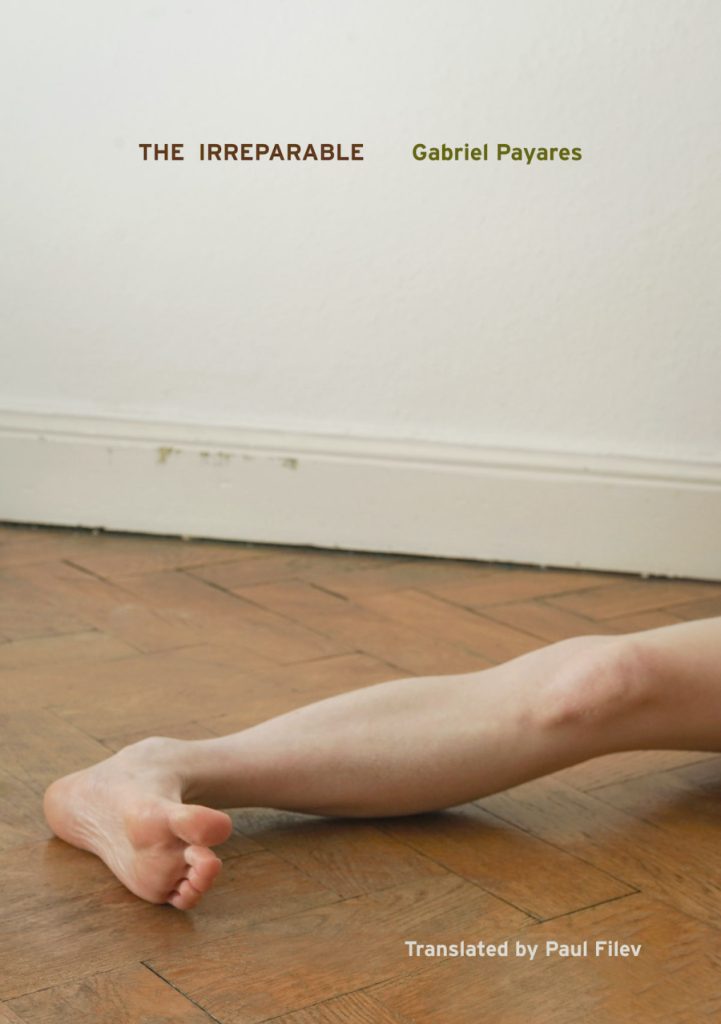
Now, with more than eight million people—out of a population of roughly thirty million—having fled the country, including many of our writers, we Venezuelans are finally looking inward, albeit from abroad. Most of the short stories that make up The Irreparable, which has just been translated into English for the first time, were written during my first years in Buenos Aires. The following reading list features nine Venezuelan books from the diaspora that are available in English. Each book is devoted to what Honoré de Balzac once called “the intimate history of nations.”
—This list was translated from Spanish to English by Paul Filev
The Sickness / La enfermedad by Alberto Barrera Tyzska, translated by Margaret Jull Costa
This novel, which won the prestigious Herralde Prize in 2006, before its author permanently left Venezuela for Mexico, explores the metaphor linking an ailing individual with the moral and social decay of the country. Two narratives intertwine within its pages: One follows Javier Miranda, a doctor whose father is suddenly diagnosed with terminal cancer, forcing Miranda to deal with his own profession from the patient’s perspective; the other centers on Ernesto Durán, a local incarnation of Molière’s imaginary invalid, who is tormented by the persistent feeling of being gravely ill. In retrospect, The Sickness can be read as a literary premonition of the long, painful decay of Chavismo—a process that began, ironically, around 2013, with Comandante Hugo Chávez’s own illness and death.
The Lisbon Syndrome / El síndrome de Lisboa by Eduardo Sánchez Rugeles, translated by Paul Filev
A natural disaster ravages Portugal, destroying the city of Lisbon, and signaling that humanity has entered a dangerous and challenging era. While the world confronts its seemingly imminent doom, Venezuela remains trapped in an endless cycle of poverty, corruption, social unrest, and brutal military repression. Against this backdrop—of a dystopian Portugal and a tragically realistic Venezuela—a literature teacher struggles with his crumbling marriage and an ever-deepening sense of futility. His only hope lies in guiding his young students towards beauty, meaning, and transcendence. Paradoxically, the Portuguese literary tradition becomes his greatest ally in this endeavor. This tradition is embodied by Mr. Moreira, an elderly Portuguese immigrant who fled Salazar’s regime in the mid-20th century and settled in Caracas. Written in Spain, where Eduardo Sánchez Rugeles has lived since 2007, this novel is a meditation on loss, melancholy, and hope.
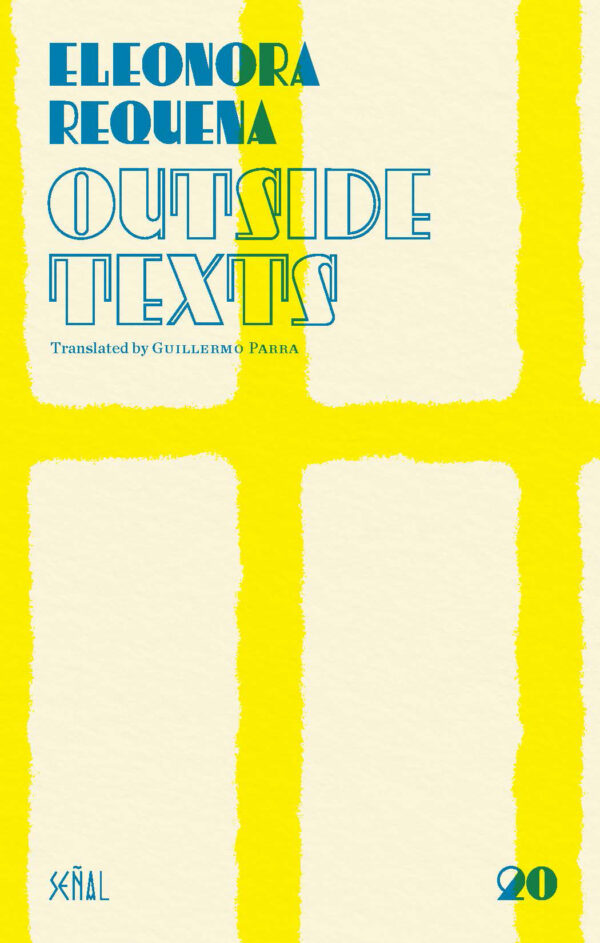
Outside Texts / Textos por fuera by Eleonora Requena, translated by Guillermo Parra
“Write with strength and clarity / now that no one will read you,” Venezuelan poet Eleonora Requena commands herself in this book of poetry written in Argentina. Her verses—presented in both Spanish and English in this edition, thanks to the work of American-Venezuelan translator Guillermo Parra—grapple with the overwhelming silence that sometimes accompanies emigrant poets to their new homes. For whom shall I write now? Who will read me? What possibility is there for literary dialogue? These are the underlying questions in Requena’s book, to which she seeks answers in Venezuelan and global literary traditions: Alejandro Oliveros, Reinaldo Arenas, and Cesare Pavese respond to her call. The result is an intense and moving collection of short poems from the Venezuelan diaspora.
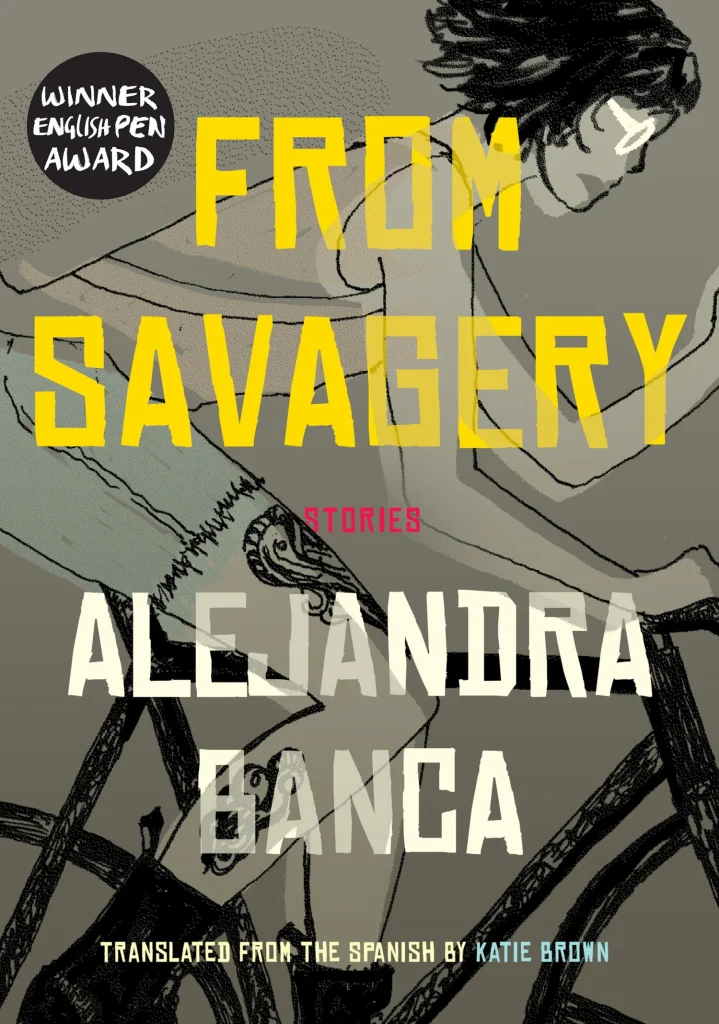
From Savagery / Desde la salvajada by Alejandra Banca, translated by Katie Brown
Alejandra Banca is the youngest author in this reading list. She moved to Spain in 2016 and wrote and published her first short story collection there. From Savagery portrays the feeling of dissatisfaction and bleak prospects faced by Venezuela’s youth. Her characters are trapped in a double bind: poverty and chaos in Venezuela, and false promises of opportunity elsewhere. Written mostly in the first person, this vibrant and ferocious collection of stories explores the tension between what is gained and lost through emigration; precarious work, prostitution, and marginality are juxtaposed with hope, sexual freedom, and the opportunity to honor their painful obligations towards those left behind.

Adriatic / Adriático by Gina Saraceni, translated by Rowena Hill
In a very well-known poem by Venezuelan author Eugenio Montejo, the poet dreams of folding the world map like a piece of paper, to bring Iceland and Venezuela together and allow palm trees to spread across Nordic fjords. Decades later, poet, teacher and translator Gina Saraceni makes a similar gesture in her fifth poetry collection, in which the Caribbean and Adriatic Seas converge around the image of her aging parents. A descendant of Italian immigrants to Venezuela—now once again living in Europe—Saraceni’s work remains faithful to Venezuela’s diverse cultural identity, weaving together two traditions in her verses. Venezuelan poet Margara Russotto and European poets Amos Oz and Eugenio Montale find their place in Adriatic. Language, memory, longing, and the role poetry plays in the poet’s life emerge as central themes in this luminous book, written from Saraceni’s new home in Colombia.
The Animal Days / Los días animales by Keila Vall de la Ville, translated by Robin Myers
Based in New York City since 2011, Venezuelan writer and anthropologist Keila Vall de la Ville explores a universal truth in her first novel: that travel allows for the discovery of unsuspected parts of oneself. She takes this idea to an extreme with Julia, a tenacious mountain climber who journeys across three different continents, pursuing not only mountain summits, but also her own personal transformation. Ultimately, Julia seeks self-acceptance, serenity, and clarity enough to break free from the toxic patterns of her relationships. Within the context of this reading list, however, Keila’s novel offers an entirely different perspective on foreignness: the world becomes the stage for a personal adventure and provides the protagonist with refuge from her family and its burdensome dynamics. An undertone of profound, almost mystical optimism runs through Julia’s realization that “Everything is always beginning.”
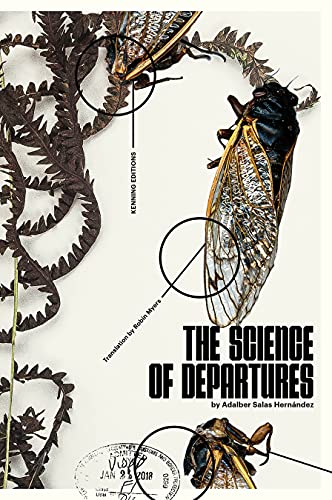
The Science of Departures / La ciencia de las despedidas by Adalber Salas Hernández, translated by Robin Myers
Since leaving Venezuela, poet, essayist, and translator Adalber Salas Hernández has lived in the United States, Spain, and now Mexico. His experience abroad may explain why themes of exile, loss, and migration recur throughout his work, and make The Science of Departure a natural exploration for him. Composed of raw, sometimes cacophonous verses, the book attempts to map the transience of human existence from antiquity to present-day Venezuela. The title is a nod to Russian poet Osip Mandelstam—a symbol of artistic resistance to totalitarianism who died in a Soviet gulag—while various poems invoke other persecuted figures, including Federico García Lorca. The book also pays homage to Roman citizens who perished in Pompeii, and even to Salas’ own late father. As the poet writes, “distance is measured not in meters but in vanishings.”

Briefcases from Caracas / Los maletines by Juan Carlos Méndez Guédez, translated by Barbara Riess and Suzanne Corley
In 2007, Argentine custom officials in Buenos Aires confiscated a briefcase containing nearly $800,000 in undeclared cash belonging to Venezuelan businessman Guido Antonini Wilson. When questioned, Antonini Wilson admitted that the money, drawn from Venezuelan state oil revenues, was intended to finance Argentine President Cristina Fernández de Kirchner’s campaign. The incident quickly became one of the most scandalous international corruption cases linked to Hugo Chávez’s government. Inspired by this real-life story, Juan Carlos Méndez Guédez—a prominent Venezuelan writer who has lived in Spain since the 1990s—wrote a novel blending elements of an international political thriller and a detective story. Briefcases from Caracas serves as evidence of his sharp narrative instincts and provides a meticulous portrayal of Venezuela’s moral decay during the oil prices boom of the early years of Chavismo.

The Blind Plain / El llano ciego by Igor Barreto, translated by Rowena Hill
Igor Barreto is the only author on this list that still lives in Venezuela. Nevertheless, his powerful poetry deserves a place in any exploration of contemporary Venezuelan literature. This is particularly evident in this book, in which the poet ponders the essence of exile through a blend of verse and prose. Barreto considers exile’s ties to landscapes and places, to what has vanished and survives only in memory, and to the idea that exile is not limited to physical distance from home. It also encompasses those who feel estranged within their own country, a condition often described as “inner exile” or “insile.” For Barreto, exile is ultimately a spiritual category. His “insile” unfolds in Venezuela’s inland plains, a place that nineteenth-century Venezuelan poet Enriqueta Arvelo Larriva once described as being “blind”—that is, barren, desolate—in her correspondence. Hence the title of the book. Barreto reflects on poetry, painting, and humanity’s alienation from nature, while striving to understand “ . . . the nature of exile, / a river of nothing.”