In my first letter as Electric Literature’s incoming Director of Operations and Fiction Editor, I am tempted to dazzle you with numbers. EL has such an impressive array of them—3.5 million readers! 300,000 social media followers! Upwards of 6,000 published writers!—and numbers are an easy way to quantify success.
But as I sit down to write, it isn’t the big numbers I want to talk about. They’re not why I’m here, and I don’t believe they’re what make Electric Lit special. The real numbers—the numbers that matter—are much smaller.
For me, the most important number is the smallest. Zero is the number EL is committed to protecting. It’s the number driving every fundraiser, and the number every donation supports.
Many other magazines charge readers, levy submission fees, or pay writers less (or not at all). Frankly, it would be easier for Electric Lit to do any one of those things. But without access points, without opportunities to read and fall in love with literature free of charge, our community suffers. It becomes less inclusive, less relevant, less exciting. Electric Literature was built on the dream of a vibrant literary ecosystem; by giving literature away for free, we ensure it remains vital and valued.
Electric Literature must raise $35,000 by April 15 to cover our expenses, and we need to reach $10,000 by Monday to stay on track. I hope you’ll donate what you can, and I hope you’ll spread the word. Tell your friends! Share on social media. Fight for writers and readers and free access to literature. And, of course, keep reading.
Gratefully yours,
Wynter K. Miller Incoming Director of Operations and Fiction Editor
We don’t choose our siblings, yet we spend most of our early lives with them. They’re our first intimate experience of the mystery of another person: Why are you like that? What are you thinking? These questions become more confusing when the world pits us against each other, when the questions turn back on us: Why are you not more like your brother, your sister? Why can’t you do what they do?
When we’re children, we’re thrust into a familial world whose history is opaque to us, and we have to figure out how to live in it. My own brother and I wandered side by side through this bewildering landscape, watching each other stumble over the rubble of our parents’ ambitions, each trying to be just like the other and trying to be the exact opposite. We could have helped each other more, is what I think now, if we hadn’t each been busy trying to prove that we were better at navigating this world than the other was. The tragedy of childhood is that such insights arrive only in retrospect. These two children, myself and my brother, each wanted to be understood and believed that no one could understand them. I want to tell them to listen to each other.
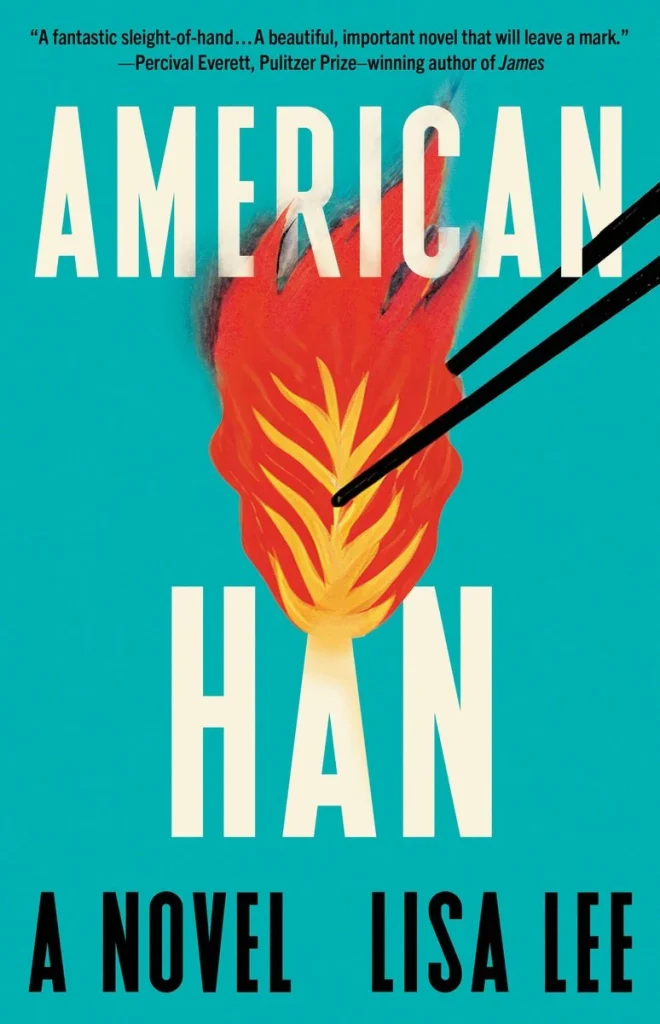
In my novel American Han, siblings Jane and Kevin Kim come of age in America feeling this same bewilderment and this same needless isolation, something Jane only begins to recognize long after it feels too late to change it. I wanted to explore this and the feeling that even though siblings don’t choose each other, we owe each other parts of ourselves and are implicated in each other’s actions.
The relationship between siblings has a literary history as long and varied as any other kind of relationship, though it seems to me that these stories are less noticed than the tragic romances and the endless stalemates between fathers and sons, mothers and daughters. In the seven books below, we see characters who look to their brothers and sisters with uncertainty, envy, and love, looking for clues as to who and how they should be.
East of Eden is a multigenerational saga set in California’s Salinas Valley. The story focuses on two pairs of brothers—Adam and Charles; Aron and Caleb—in two generations of the Trask family. The brothers are derived from the biblical story of Abel and Cain, in which Cain is so jealous of his brother that he kills him—the original murder, for which Cain is punished with a long life of utter solitude. In East of Eden, Charles frequently erupts in violent rage at his half-brother Adam, convinced that their father loves Adam more, just as Cain was convinced that God valued his brother above himself. In the next generation, Caleb Trask is so envious of the love his twin brother Aron seems to receive without effort that he drives his brother to certain death. Across generations, Charles and Caleb find themselves in the ancient predicament of Cain: unable to understand why they are not loved as their sibling is, and unable to accept it.
Sisters Ruthie and Lucille Stone spend their childhoods moving among guardians after their mother dies. Eventually, their aunt Sylvie, a wanderer, moves back to the sisters’ tiny hometown of Fingerbone, Idaho and decides to raise them. Their home reflects Sylvie’s transient nature, full of stacks of old newspapers, cobwebs, and assorted debris. The sisters are inseparable, but soon Ruthie starts to take after her aunt, while Lucille longs for a different life, one that mirrors the aspirations of the people around them. Lucille tries to convince Ruthie to build a life around the values of respectability and cleanliness, but Ruthie feels bonded to their aunt. Ruthie has to choose between Sylvie’s itinerant freedom and the more conventional (and safer) life her sister pursues. While the clash between sisters is quiet, it offers a deep exploration of the sibling as a mirror of the self, as each sister looks to the other as a model of who they want (and don’t want) to be.
This hilarious satirical novel takes on a publishing industry whose narrow and condescending expectations of the Black experience limit the kinds of stories that are published and valued. In addition to the razor-sharp satire, I was drawn to the family story: Monk’s strained relationships with his parents, brother, and sister. Monk is the favored child, the one born naturally gifted, even though his sister, Lisa, is the responsible one—a successful doctor who looks after their mother as she struggles with Alzheimer’s disease. Like Aron Trask in East of Eden, Monk basks in parental adoration without doing much of anything to earn it, while Lisa does everything expected of her only to be ignored or taken for granted. Their relationship captures the sense of intractable and even incomprehensible unfairness that has been at the core of sibling rivalry at least since the story of Cain and Abel.
Danny Conroy and his older sister Maeve are kicked out of their childhood home—a sprawling mansion on the outskirts of Philadelphia—by their stepmother after their father’s death. From the age of 10 until her death, Maeve is a mother figure to Danny, assuming all responsibility for raising him. Hellbent on getting revenge on their stepmother, who inherited everything except an educational trust set aside for the children, Maeve encourages Danny to attend an expensive boarding school, then Columbia, and eventually medical school. Danny does as Maeve wishes even though his interests lie elsewhere. Like nothing else I’ve read, this novel conveys the slow accretion of choices by which one sibling’s life, almost imperceptibly, can be subsumed by the other’s obsessions.
Identical twins Desiree and Stella Vignes grow up in Mallard, Louisiana in the 1970s, in a Black community where light skin confers status and a modicum of protection from the virulent racism that surrounds the community. At age 16, the Vignes twins run away to New Orleans to chase their dreams. Over a decade later, their lives have completely diverged. Desiree is back in Mallard with her dark-skinned daughter after fleeing an abusive husband. Stella is passing as a white woman in California, where she lives with her businessman husband and their daughter. Stella chose to abandon her sister and give up her history and identity for a chance to claim the privilege that comes with whiteness. Desiree spends much of her life searching for her missing sister, who has vanished into whiteness as much as she has physically vanished from the sisters’ Louisiana home. In the divergent fates of Desiree and Stella, Bennett traces how race and racism shape the possibilities of life in America.
In this funny, deeply moving debut novel, a young woman’s life in Los Angeles begins to unravel when her toxic relationship with older sister, Debbie, implodes after a chaotic night of drugs and violence ends with Debbie’s disappearance. The unnamed narrator, cautious by nature, has always been drawn to the alluring and reckless Debbie, and has often emulated her against her own better judgment. Now, in Debbie’s absence, she spirals into addiction and a blurry relationship with Sasha, a Jewish refugee from the former Soviet Union who claims to be a psychic. Will she try to find her missing sister, or find a new freedom by keeping her in the past? As she wrestles with her conscience, she confronts the same question Cain asked of God: “Am I my [sister’s] keeper?”
Another riveting debut, The Original Daughter explores family bonds and ambition in a rapidly changing 1990s and 2000s Singapore. The story follows Genevieve Yang, whose life is upended when her family takes in Genevieve’s long-lost cousin Arin. Genevieve and Arin grow up together in government-subsidized housing, navigating adolescence and precarious circumstances amid a hyper-competitive academic culture and an economic boom that only exacerbates inequality. The two grow close, forming a sisterly bond as they both give up having a social life in the quest for a successful future. A betrayal causes a rift between them, forcing Genevieve to choose what is important to her: personal ambitions or family bonds?
Back when Betsy Sussler founded the legendary BOMB Magazine in 1981, downtown New York was synonymous with DIY interdisciplinary artistic effervescence (rather than the commodification of lifestyle). Betsy has carried that maverick spirit into everything she does, including her distinct approach to crafting the interviews between artists that BOMB has published since its inception. These are vibrant exchanges that are as spirited and lively as they are focused and serious, eschewing the ums and ahs that epitomize Warholian cool. They drop the reader into the intimate space of a conversation between peers, a conversation whose meanderings allow for the interlocutors’ characters to reveal themselves gradually in the process of articulating their own narratives.
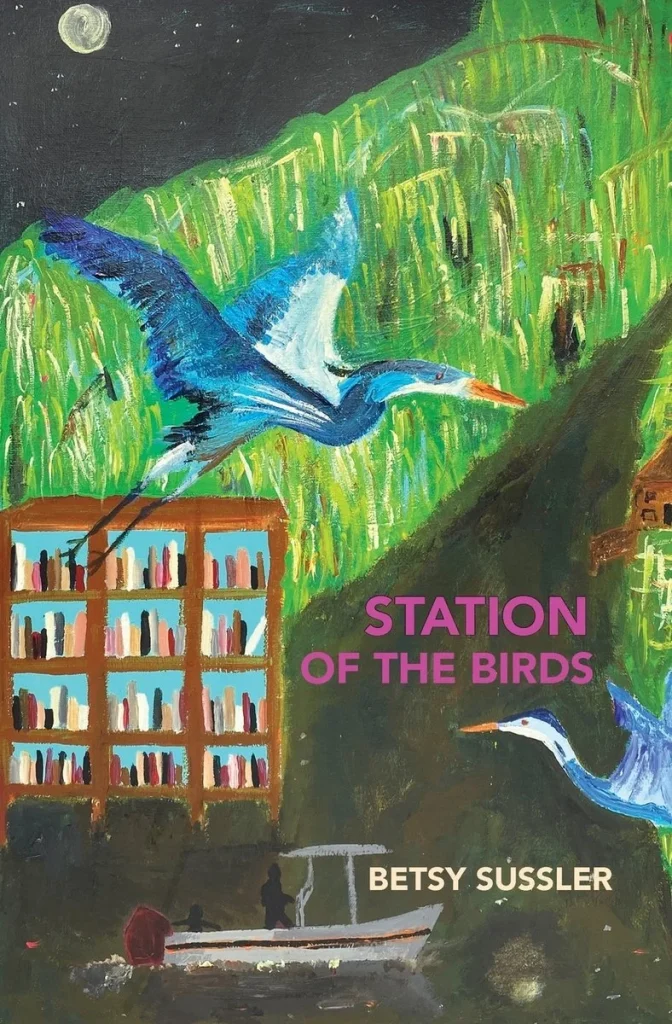
I served as senior editor of BOMB for nearly a decade starting in 2006, but only after having read Betsy’s stunning debut novel, Station of the Birds, did I realize that her talent at creating evocative atmospheres and complex characters, at stripping dialogue to its most resonant bits, had outlets beyond the editing of BOMB and her occasional writing for the magazine. Station of the Birds opens in New Orleans and immerses the reader in Louisiana’s Atchafalaya swamp, in its layered history and its many stories, to simply delirious effect.
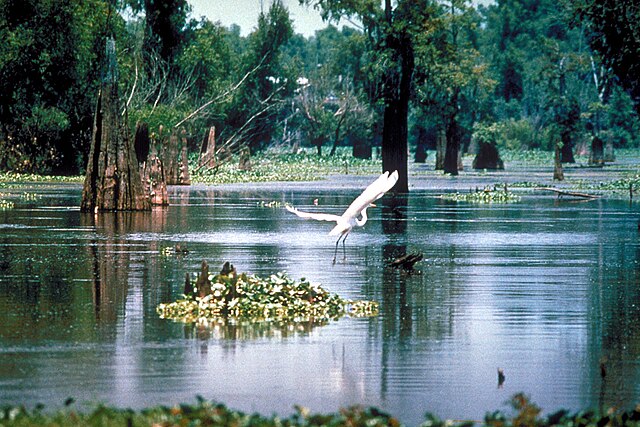
We met on Zoom one Sunday in late February, during a snowstorm. She was in Brooklyn and I was in Queens, but for the duration of our 45-minute conversation we were transported to the balmier realm in which her book is set. Briefly outside time and place—like in the Atchafalaya, where the “the world below the waters, as the world above, lies suspended, murky with tree trunks, dense with moisture”—we delved into her novel’s palimpsestic layers.
Mónica de la Torre: Betsy, what an incredible book you’ve written! I didn’t know that you had a story like this in you. The last time we spoke about your writing, quite a bit ago, you were working on a family saga.
Betsy Sussler: I am writing a family saga, and I have just finished it. Station of the Birds is my first novel, which I wrote 30 years ago. It started as a screenplay, but when I took it out to Hollywood, they all said, “Wow, this is beautiful. Why don’t you make it into a novel?” And I thought, “Silly Hollywood!” I came back home and tossed the screenplay into a drawer. Then, about eight years later, my grandfather asked me to write a novel based on the story of his life. I decided that I’d write Station of the Birds first and use the screenplay as an outline to teach myself how to write a novel.
MDLT: What was the impetus for it?
BS: The kernel for Station started in the late ’80s. Two dear friends—Dickie Landry, the jazz musician, and Tina Girouard, the artist—had gone back to their hometown of Cecilia, Louisiana to be with their people. Dickie’s youngest son was in college at the time, and something horrible happened. While working at a gas station during summer vacation, he was murdered. It was a truly senseless act of violence. Then these crazy rumors started flying around. “He must have been selling drugs,” some said. “His father is a jazz musician who has played with musicians on both sides of the color line,” which in Louisiana in those days was forbidden. Dickie played with Black jazz musicians, Black zydeco musicians, and white musicians. Some thought that it must have been his fault, that he set the stage for wrongdoing.
I walk with my characters, I talk to them, they inhabit me, I inhabit them.
I had gone to college in New Orleans but I had not been to the Atchafalaya Swamp basin where Cecilia is located until I went down to visit Dickie and Tina a few years after the murder. I listened to everyone’s stories, everyone being Dickie and Tina and their friends. They were very generous with me. I took all these stories back home to New York and I let them gestate. Southern storytelling is almost mythological, dense and deep, so I started doing research into Jungian archetypes as well as the spiritual and religious influences that pervade the South. I wove the narrative from all of these elements.
MDLT: One of my favorite things about Station of the Birds is that it’s definitely not autofiction.
BS: The South, for me, has always been an enigma mitigated by the close friendships I made and still have there. The culture is utterly fascinating because of its complexity and divisiveness. How do I say this? The racism in the South—all across the United States—bears the seeds of its own destruction. When we work through that, we will become a better, stronger people. Everybody down South knows that the Black culture is the most vibrant and important source they have. They take from it all of the time.
MDLT: So you gathered all this material in the early ’80s for a screenplay.
BS: Because the Atchafalaya Basin is so mysterious and beautiful, I thought it would make an extremely provocative setting for a film.
MDLT: No wonder when I was reading the novel I kept seeing it unfold as a film in my mind’s eye. Everything is bustling in the landscape; no detail is inert. The writing displays this exquisite marriage of a vivid imagination and superlative powers of observation. It’s rare to strike such balance between the cinematic and the lyric—you’ve got an intricate plot, lots of visual details, and dense, writerly textures. And I love what you do with the birds. They’re ominous, alive, always lurking around. The taxidermized ones in the library are particularly animated.How did you manage to recreate the atmosphere of the place with such an incredible degree of detail?
BS: I wasn’t in the Atchafalaya for that long, but it had an effect on me. It didn’t leave me; it inhabited my imagination. When I was there I felt that I was breathing in all the collective stories embedded in the swamp; they entered through my breath.
But let me address a couple of things that you bring up. I came to writing from acting. I was married to a theater director who cast me in his plays because he wanted that second paycheck. I wasn’t a bad actress. I wasn’t a great actress, but I viewed it as an apprenticeship that would provide me with a better understanding of dialogue and character. And it did: I call it a kind of method writing. I walk with my characters, I talk to them, they inhabit me, I inhabit them. And it also affected the way I came to edit BOMB. Of course, when I edit, I am reading dialogues that are already on the page. I am looking to see where the narrative threads lead, if the participants have sufficiently explained their thoughts. I push things back, pull things forward, and see what’s missing. Writing a novel starts with a blank page and relies on the imagination, memory, and whatever observations or research you want to toss in there. It’s building a world that I’m making up as I go along.
Back to the birds. A blue heron in the Atchafalaya perched where Garland Frederick, my guide, docked his boat. He would ask, “Where do you wanna go?” And I would say, “Let’s just follow the blue heron.” We would literally track this amazing bird as it swooped through the swamp; that’s how we found one of the main settings, the outpost called Cane Island. For me, the heron became a character in the narrative. Later, when I was researching, I happened upon Aristophanes’ play, The Birds. It’s a satire where flocks create a city for birds, and they plan to charge a toll for messages sent from humans to their gods. So I lifted some of that. It worked rather nicely as a chorus.
Other influences: James Hillman, the Jungian psychologist has an interesting theory about the Oedipus complex. He posits that the most vital psychological component of the myth is that his father, after hearing the oracle proclaim that Oedipus would ultimately kill him and usurp his power, had his infant son abandoned on a mountain side. The father wanted to kill his son.
MDLT: That angle hardly gets any play.
BS: Exactly. There is another author who influenced me. Luigi Zoya writes about drugs and addiction. His theory is that addicts are practicing initiation rites but backwards. In other words, in an initiation right, you die and then you’re reborn. But in addiction, because of the high, you’re re-born and then, with withdrawal, you die. It’s a perpetual banging at the gate.
MDLT: So for the addict, paradoxically, sobriety equals death.
BS: Coming down off of the drugs, you die. You’re constantly hitting a wall.
MDLT: I suppose as a student at Tulane, you came across some folks who might have been a little bit like your protagonist, Daryl, right? I’ve spent some time in New Orleans, and the contrast between Uptown, where Tulane is, with its mansions and former plantations, and other parts of town, like, say, the Tremé, historically inhabited by free people of color, is pretty stark.
The racism in the South bears the seeds of its own destruction. When we work through that, we will become a better, stronger people.
BS: Yes, but I also had distant cousins who were lost boys: entitled, spoiled, and searching because their family fortunes were depleted. They didn’t know how to maintain the lifestyle they assumed would always be theirs. One of them in particular, rumor had it, became a drug dealer. I melded some of him into the novel’s protagonist, Daryl Monroe. This is where, as a writer, you transform a fantasy world into a real world and vice versa.
New Orleans, even though it’s a Catholic city, or perhaps because it’s a Catholic city, is incredibly decadent. To their credit, New Orleanians know how to live well. And then there’s this: when a Louisiana native starts telling you a story, they start in the middle. And maybe they meander and get to the end. And maybe they don’t. But they do not tell you the beginning. Because if you don’t know the beginning, that means you don’t belong and aren’t meant to know. So that alone was impetus enough to create these stories, to figure out the backstories, or make them up as in, “What if . . . ”
MDLT:In terms of your process, when did you rework the drafts that became the novel?
BS: The novel was written during the ’90s and since then I have periodically gone back into it. It was a first novel, and as such it was kind of over-the-top lyrical. It was turned down by many, many publishers, many of whom said, “Beautiful writing, send us anything else. We’re not doing this because it’s too dark, too dense, too difficult.” Over the years, I would go back into it and get rid of some of the meanders that weren’t guiding the reader or weren’t serving the story.
Once Spuyten Duyvil accepted it, thanks to my literary agent, the brilliant Madison Smartt Bell, I wanted to lose, not the nature of a first-novel, but get rid of the frills. I wanted to make it a more thrilling read. For instance, I would take a look at a word’s etymology and find one that worked more explicitly or contained a double entendre. What I call a spit and a shave edit. Before that, in the making of the novel, the drafts were rewrites. It would be like mushing it together: You weave, you meld, you see how things work together and, if they do, how they feed each other and my perception of what’s happening and why. Which takes me forever.
MDLT: You used the word thrilling. Plotwise, the novel is a bit of an action thriller. But you also bring a lot of psychological insight into describing the shifting relationships between characters. You used the phrase “push and pull” for your method of editing but it applies too to the relationship between Beau, the jazz musician, and his son Michael, Daryl’s partner in crime, not to mention between Daryl and Monique, his lover. You explore desire and attraction, hatred and manipulation, dependency and resentment, in racial, familial, and erotic terms. You even engage magical realism to a slight degree.
BS: Thank you, Monica. I trust the book lives up to your incisive description. In terms of magical realism, New Orleans really is a Caribbean city. Carlos Fuentes noted this, and he’s right.
MDLT: Yeah, and magical realism owes an enormous debt to Southern Gothic. García Márquez was heavily influenced by Faulkner, who appears at the beginning of Station of the Birds.
BS: Daryl reads Faulkner, and Ovid. That was my entrance into the South. When I first got down there as a 17-year-old northerner not knowing how to navigate the society, I skipped too many classes because I didn’t want to stop reading whichever Faulkner I was immersed in. And then in theater classes, they made us workshop an enormous amount of Tennessee Williams.
MDLT: What were your thoughts around genre when you were writing the novel then?
BS: I thought of the novel as containing endless entanglements influenced by the culture, by the characters’ desires, and by their psychology. I let the characters do what they needed to do. I’d watch them and then push my way into their psyches. I’m going to read something to you. Peter Cole is a wonderful poet, as you no doubt know. And also a translator. This is from his book Things on Which I’ve Stumbled. The first poem is called “Improvisation on Lines by Isaac the Blind.” Isaac the Blind (born 1160) was a rabbi and Kabbalist who lived in Provence. This is the first stanza: “Only by sucking, not by knowing,/ can the subtle essence be conveyed—/ sap of the word and the world’s flowing.” This has been a most influential piece of knowledge for me, only by sucking, not by knowing.
MDLT:Wow! Tell me more about what it does for you.
BS: Although I did lots of research, I really just wanted to suck it up and meander and see where it would lead. I tried constantly moving descriptions around to see how they related to the action.
MDLT: And the meanderings are key to the storytelling—you slow down and then speed up the pace very intentionally throughout.
BS: I’m very proud of being called a storyteller. That’s what I do. I tell stories.
MDLT: The pleasure is multiplied when you tell stories within stories. There’s another book that was also important to the writing of Station of the Birds thatwe haven’t spoken about: The Arabian Nights. You reference it when Daryl is trying to keep Michael alive by telling him a story.
BS: Well, it’s really interesting you bring that up because it’s just plopped right in the center of the chapter, that story from Arabian Nights.
MDLT: Oh, it is straight from The Arabian Nights?
BS: I mean, it’s reworked, I condensed it. It’s from a beautiful leather-bound edition that I have since lost.
MDLT: I wouldn’t worry too much about finding it since there’s no definitive corpus of The Arabian Nights. The collection of stories that we’ve come to know is the collective result of centuries of narrating, compiling, editing, and translating stories that were being shaped and transformed as they were circulating.
Southern storytelling is almost mythological, dense and deep.
BS: There are some stories that are so important to our psyches that they come back again and again, transformed. Those are the stories I’m interested in telling.
MDLT:The story of violence. The story of finding a scapegoat or someone to sacrifice so others can go on living their lives and doing “business as usual” happens with your Jorge character.
BS: Thank you for bringing this up. That was a big part of the plot line. Look what’s happening now in the United States. The cruelty and the vicious incarcerations and attacks, as if we’re all vigilantes. This scapegoating, projecting blame, sadly, has been going on for centuries.
MDLT: Jorge is not white, he is not Black, so he ends up taking the brunt of the violence. That he doesn’t speak English makes it easy for others to blame him.
BS: Daryl frequents his father’s library, and that’s where I was able to catalog many of my references from Ovid’s Metamorphosis to Aristophanes, to the Greek gods. But yes, scapegoating really is an age old tactic.
MDLT: I wonder if there’s a relationship between the play by Aristophanes and the Sufi poem The Conference of the Birds.
BS: I am not familiar with the Sufi poem. In Aristophanes, the Station of the Birds—now the novel’s title—was meant to become a city state built and occupied by birds. But men intervened and the birds became their subjects. The birds are, in my mind, messengers to the gods.
“Fairy tales since the beginning of recorded time, and perhaps earlier, have been a means to conquer the terrors of mankind through metaphor.” – Jack Zipes, folklorist
“For me, it is far better to grasp the Universe as it really is than to persist in delusion, however satisfying and reassuring.” – Carl Sagan, scientist
Wind brushed the trees, like a mother brushing the long flowy hair of a can’t-sit-still little one. My baby daughter, who was born deaf, and I lay on the soft carpeted floor of our townhouse and watched through the sliding glass door. The sight was peaceful, hushed (for me) by the glass, the slim waving branches like arms conducting a silent orchestra. I said to my daughter (out loud, out of habit; I was still learning her language): “Is this what the world is like for you?”
Later I stood and slid open the door. As a hearing person, accustomed to thinking of sound as beautiful, I wanted to sense the wind in this way, too. I pushed aside the glass and let it in. The roar seemed angry, agitated. I thought of giants from fairy tales, the tiger-headed guardian at the Cave of Wonders where the genie resides. “Who dares disturb my slumber?”
The Princess and the Frog
When a child arrives outside the norm—a selkie, a fae changeling; or, to be more mundane, a baby with a disability—some parents cling to facts. These feel like grip-holds as you scale a sheer cliff face, as your fingertips pinken and pulse, as your foot slips and sparkling rock dust scatters far below.
Fact: The medical community uses the caduceus as its symbol, two snakes twined around a winged staff. Even though there’s a snake, its members take an oath: “First, do no harm.”
We brought our daughter in for the six-hour cochlear-implants surgery when she was 13 months old. Tiny blue hospital gown, treaded socks in the smallest size that were still comically large on her. She carried her frog puppet into the operating room with her. She wasn’t supposed to, but the doctors broke protocol because she was scared.
After the surgery, as my husband and I hurried through antiseptic halls to see her, I heard a foreign, ragged cry. “Whose baby is that?” I thought. I saw a drugged, hungry baby flailing in the arms of a nurse who was not her mother. The tight-wrapped gauze bandage pushed down on my daughter’s brow so she looked like a tiny Neanderthal. My first, irrational thought: “What have you done to my baby?”
We spent the night at the hospital. A sweet nurse turned the TV to a station that just shows digital stars after 9:30 p.m., white specks zooming through blackness. The bandage on my daughter’s head was tied in a way that gave her Princess Leia buns, one over each side where her brain had been invaded.
Villainy
From Aladdin’s Jafar and the thumb-sucking lion king of Robin Hood to latter-day Slytherin, snakes are aligned with villains. When Harry Potter’s friends realize he’s a Parselmouth, fluent in the language of serpents, they regard him with suspicion and fear.
The old ASL sign for “cochlear implant,” I’m told, was a snake sinking its fangs into a person’s skull. This is how maligned the devices once were in the Deaf community, and still are for some. Far more than hearing aids, which do not require surgery, cochlear implants are seen as brain-damagers (even as the technology has improved) and culture-erasers (especially since the technology has improved, and the devices have become more common, leaving fewer people reliant on ASL).
The current sign for “cochlear implants” still looks like this to me, although supposedly it has changed. To make both signs, you crook two fingers and stab them at your head. In one case, the handshape simply replicates the bent-over-the-ear device. In the other, it’s a deadly bite.
The difference in meaning depends on how you interpret it.
Quest
Before my daughter’s surgery, I searched. I wanted to make sure we were making the right choice.
Fact: A Google search for the terms “cochlear implants” and “child abuse” brings up many articles that contain both.
Years ago, while walking to my then-workplace in Washington, DC, I saw a protest: Deaf people with signs saying deafness is not a disability, not a flaw to be fixed. I mentioned this to people at the time, mystified. Now I’m not mystified. I get it: They say the issue is systemic; they are a linguistic minority who are rarely accommodated.
After all, deafness does not hurt. Deafness does not cut your life short. In this way it’s separate from other abnormalities—minorities—of the body. Your deaf kid could live a happy life if the world would just cooperate. No need to get a scalpel involved.
Fact: A Google search for the terms “cochlear implants” and “cultural genocide” brings up many articles that contain both.
After the surgery, as my husband and I hurried through antiseptic halls to see her, I heard a foreign, ragged cry.
When our daughter was six months old—before the surgery—my husband and I brought her to an ASL-immersive program for deaf babies and their parents at Gallaudet, a university humming with deaf students and staff. We stayed in this program for two years, including after the surgery. Some of the deaf babies got “the surgery,” others did not. Some families chose not to get the surgery; a few babies weren’t eligible for medical reasons (no auditory nerves to make the devices work). It was an omnipresent topic for the parents.
Three of my daughter’s classmates had two deaf parents each, entirely deaf families, some with deaf siblings. A classmate’s father told us—through an interpreter—that he and his wife had emphatically told their doctor: “No surgery.” They had the doctor put a note in their daughter’s file. The father was a professor at Gallaudet; his wife was an administrator there.
Fact: ASL uses different syntax than English; typically, the most urgent item in a sentence comes first. I’ll try to approximate it here: Surgery, all Deaf people? = Deaf people—all-gone. Deaf people all-gone? = Deaf culture all-gone. Gallaudet all-gone. Home all-gone.
Realms
One of the first things my husband and I learned about after our daughter’s diagnosis was “big-D Deaf” versus “little-d deaf.” “Big-D Deaf” refers to a culture, a language that’s signed. A hearing child of Deaf parents who use sign language at home would be considered Deaf—that hearing child is part of the Deaf world, a citizen of the Deaf community. “Little-d deaf” is a medical term. You could be medically deaf but raised apart from the Deaf community, using your voice and devices, and no signs—you are deaf, but not Deaf.
You could be both. These can overlap. My daughter is deaf—in the paperwork at her “mainstream” school, where all of her classmates are hearing; at the audiologist’s office, where the focus is on the sounds she’s able to perceive with her devices. And, as someone who relies on sign language for part of the day, when her devices give her fatigue; as someone who’s connected to the local Deaf community, thanks to various programs we’ve participated in—she’s also Deaf, even though she has cochlear implants and chatters away vocally like any hearing child.
As a hearing parent who has spent my life in the hearing world, and still has my hearing, I will never be Deaf. Unless one day I am deaf—if, say, I lose my hearing in old age, and switch over to sign language. (A “CODA” is a hearing Child of Deaf Adults. According to the comments sections of Deaf influencers I follow on Instagram, there is no such term for parents of a Deaf child.)
At times it all sounds like a riddle, or the baseball joke about “Who’s on first?”
In this way, my daughter and I will always be native citizens of two different worlds.
Instruction Manual
At the heart of this divide are these banal devices. Pieces of them sit in our kitchen right now, their batteries screwed into a charger, on a shelf that also holds cookbooks and bags of chips—part of a domestic tableau, as unassuming as a block of knives.
The devices are ugly, if you go by sight alone. They would look at home encased in glass at a drab museum about some closed-down sanitarium. Band-Aid beige, the color of old nurse shoes and grandma undergarments. Yet in one way they’re beautiful: We chose the color that most closely matches my daughter’s hair. (Viewed in this light, they take on the color of sandcastles, or a butterscotch-topped treat on a summer day.)
They’re clunky, on her head, as she goes about her day; in the age of nanotechnology, you would think we’d have a stealthier design. Inspector Gadget head, especially when she was a baby, before her hair grew out to hide them. Too many components, like something you’d need a thick instruction manual for—we needed an instruction manual, when they were new to our household.
Three of my daughter’s classmates had two deaf parents each, entirely deaf families, some with deaf siblings.
The parts that conspire to bring my daughter sound: A flat, round outer magnet like a poker chip, connected to a short cord. The other end of the cord connects to the “processor,” a vaguely snail-shaped hunk of plastic that hooks over the ear; this is the part a medical expert must program, the part that costs a million bucks, give or take, if you lose it, say, in the ocean. Attached to that is a chunky battery you screw on.
And there’s the part you can’t see, another flat, round magnet under the skin on either side of my daughter’s skull. Over the years her hair has grown over these places, like a maiden whose locks conceal an enchantment. Rapunzel, Rapunzel, let down your hair.
Consumer Facts
Sometimes I lean down to kiss my daughter’s hair and kiss beige plastic instead.
I visit the website of the company that makes these devices. I try to read the most basic, dumbed-down articles explaining how they work. This is where I should find reassurance in scientific terms, the language of progress. Instead, I glaze over. Electricity and magic, I conclude. Lightning and pixie dust.
The lights on her processors blink green when they’re working. This is what I need to know. I see the green flashes when she runs around her grandparents’ yard with cousins at night. The others sometimes hold glow sticks and sometimes hold sparklers, depending on the occasion, but my daughter is the one I can always find in the dark. There she is.My firefly.
What do the devices feel like, to me? Smooth, like a life made easier. What do they smell like? Audiologist waiting rooms, scenes of cheerful complicity. I try to discern a scent other than “plastic,” but my brain gets rerouted and ends up at abstraction. If I try to assign them a personality, they come up void. They’re android by nature. My husband, a computer engineer, says with pride that our daughter has “bionic ears.”
Fact: Vicki, the child robot from a 1980s sitcom called Small Wonder, could shoot electricity into a car to jump-start its engine. She could jump-start a human heart.
Fact: If you ask Google whether a robot can get an MRI, the answer is no, because a typical robot contains ferromagnetic parts, and an MRI machine’s powerful magnet would rip the robot apart in a process troublingly called “the missile effect.”
My husband, a computer engineer, says with pride that our daughter has ‘bionic ears.’
Fact: On the seat-belt strap that goes across my daughter’s car seat is a sleeve that says: “No MRI! I have a cochlear implant.” It’s for a potential ambulance crew. She has magnets in her head; an MRI machine could be disastrous, although scientists are now creating implants that are MRI-safe.
Fact: An MRI machine is not the only hostile environment for cochlear implants. When entering water, such as a pool or the ocean, the devices must be shielded inside a case made of plastic.
Fact: Plastic is not natural; the Great Pacific Garbage Patch is a “soup” of microplastics about twice the size of Texas or three times the size of France.
“I Want” Songs
I’ve heard that every Disney princess has a song about what she wants.
A “Faustian bargain” is when a character gives their soul to the devil in exchange for something worldly, and the deal ends in tragedy.
Fact: In the movie The Sound of Metal, a drummer named Ruben loses his hearing and joins a Deaf community that rejects the notion of deafness as a disability. When Ruben secretly undergoes surgery for cochlear implants, to restore the hearing he lost to years of harsh decibels—the community leader, a beloved friend named Joe, asks Ruben to leave.
Fact: At the end of Disney’s animated The Little Mermaid, Ariel stands with Prince Eric on his ship. She’s wearing a wedding dress, waving goodbye to the mer-people she’s left behind, her father and sisters and others. This makes me think of the surgery, of transformation, of realms entered and abandoned. In this light, Ariel appears to me as a traitor.
I realize sirens are associated with their songs, and Ariel bargains her voice for love, going silent to join the human world (not the reverse)—but the mer-folks’ way of life outside the mainstream/human world makes me think of the ocean dwellers as Deaf, the sea witch an unscrupulous surgeon:“Don’t you want to be part of that world? No matter the cost?”
Either way you look at it—when my daughter and I watch the movie, as Prince Eric and Ariel struggle to communicate on their boat date, the dire consequences and ticking clock, we always say: “This could have all been solved if they’d just learned sign language.”
Red Rover
My daughter makes up songs. “Never take our clubhouse away!” she used to caterwaul as a toddler, to the tune of “You Are My Sunshine,” standing guard over her couch-pillow fort in a cowgirl hat and diaper.
Before her surgery, our family went to a Gallaudet homecoming football game. We wanted to immerse our daughter in her culture. One of our ASL teachers, a Texan who had wed his husband in matching cowboy hats, beamed down at my daughter in her stroller and greeted her in their language. They were members of the same tribe, and not just because of the cowboy hats.
In my daughter’s preschool class for deaf children, she had a little boyfriend named Sami. At recess, he took her hand and gallantly escorted her to the slides, like a prince charming. They held hands and ran laps around the playground, giddily paired up as if in a happily-ever-after. Sami also had the surgery but hated the devices. His parents, both Deaf, signed to him instead of forcing their child to adapt to a world that didn’t feel like home.
His parents, both Deaf, signed to him instead of forcing their child to adapt to a world that didn’t feel like home.
Starting in kindergarten, my daughter and Sami attended separate schools—my daughter in a class with hearing kids, Sami at a school for Deaf students. We see Sami’s family each year at an annual picnic for the local Deaf community. For the last two years that we’ve gone to the picnic, my daughter and Sami haven’t recognized each other. They speak different languages now; my husband and I sign to our daughter when her devices are off, but she replies with her voice, knowing we can hear her. She signed as a toddler but has lost her muscle memory.
Fact: In the children’s game “Red Rover,” one team chants for a player from the opposite team to “come over” and break the chain formed by children’s linked hands or arms. The object: You try and cross over to the other side. You try to break through.
Thumbs-Up
A scene: My daughter’s nursery when she was a toddler, bedtime. It’s the weekend, and the neighbors in the townhouse next door are having a party on their back patio. They talk and laugh at a respectable decibel level. My daughter has declined to remove her cochlear-implant processors, not finished hearing for the night. She stands at the backyard-facing nursery window in footie pajamas and the pink-bowed bonnet we use to keep the processors on. She scowls down at the audible mirth below, which she can hear even through the closed window. She looms, disapproving, like the world’s tiniest “Karen,” as if she’s going to report them to the HOA for a noise-ordinance violation.
Another: “Mama, I hear a woodpecker,” my daughter says, registering the percussive drill through hollow wood that resonates through the woods we’re walking through. She’s correct.
Another: While playing with blocks, my daughter shows me a new accessory she’s built for some angular, Lego-dimension character. I say, “Oh, cool pirate hat!” She says: “It’s a pilot hat,” detecting the minuscule difference.
One more: When getting dressed for school in her room upstairs, I hear my daughter sing: “You’re my soda pop! My little soda pop!” I think: From down here, I’d never have known if she’d been signing the song instead.
I share these scenes on Facebook. They’re easy for my hearing friends to like. People click on the thumbs-up, they click on the heart. Sometimes they even click on the laughing face.
Deaf Like Me
But there are things I mostly keep to myself, not wanting to seem ungrateful.
Such as: Sometimes I hate this.
How her brain has to work harder than other kids’ to process every word and sound, so that by the end of the schoolday, she’s as tired as if she’s crammed for college exams.
She removes her devices and dives in, able to breathe there.
Seeing her run on Field Day, the devices falling off, tripping her up, holding her back. Knowing that having the devices in her life means special equipment forever: Special headbands for P.E., sports, theme-park rides, bounce houses. Special waterproof cases for the beach. A special lanyard with a microphone for her teachers to wear. Everything “special,” like “special education.” My daughter has a sort of extra report card—an IEP—that grades how she’s doing with her disability (if you consider deafness to be one). One category is “self-advocacy.” This means: Does she speak up if she can’t hear?
The constant attention to battery power—are the lights blinking green, or orange? Are her batteries charged? Away from home—did we bring the charger? Forget about living off the grid. Power outages that go on for more than a few hours are cause for panic. We are a family powered by electricity. A modern family. Meet the Jetsons.
Yet, technical frustrations aside—my daughter seems proud to be Deaf. She says that she’s “rare.” She wants a puppy—a Dalmatian, because so many are deaf. She wants a deaf one. “He’ll be Deaf like me! I can teach him sign language.”
Fact: A 2020 study presented in the Journal of Veterinary Internal Medicine showed that deafness among Dalmatians in the United Kingdom is in decline “thanks to careful breeding decisions,” which include selecting only hearing dogs to produce puppies.
The Ballad of Land and Sea
There are times my daughter goes to a place I’m unable to go, even to visit. I can never truly know it as she does. She removes her devices and dives in, able to breathe there. It’s a place beyond foghorn, beyond the churn of waves, beyond whalesong. It’s a slippery place of gestures. I can only reach her through gestures. There was a time when this scared me.
The lights on her devices blink orange when the batteries need to be changed. I used to bolt to the charger for fresh batteries—twist, twist off the old ones; twist, twist on the new ones. Each second in between felt like holding my breath underwater. I wanted to save her from that dark place that was so unknowable for me. It was the only choice I knew.
Now I know she’s okay there. It’s her natural environment. Like an empty nester, I only hope she visits me.
Now I see that in addition to facts, I’ve been clinging to fairy tales. Conquering my terrors through metaphor.
A metaphor: I stand on the shore and wave as my daughter plays in the ocean with others born like her. I can’t join them; I’m a landlubber, a dry-lander. Born with legs instead of a shimmering tail. I stand and hold a big fluffy towel for when she decides to come out. When she emerges—a shape-shifter, thanks to our deal with a sea witch—ready to join me, we wave to those who remain in the water, free from devices and noise. We snap on the devices, nestle them in her sand-colored hair. Her eyes are still blue like the sea. She is sand and sea; she is both.
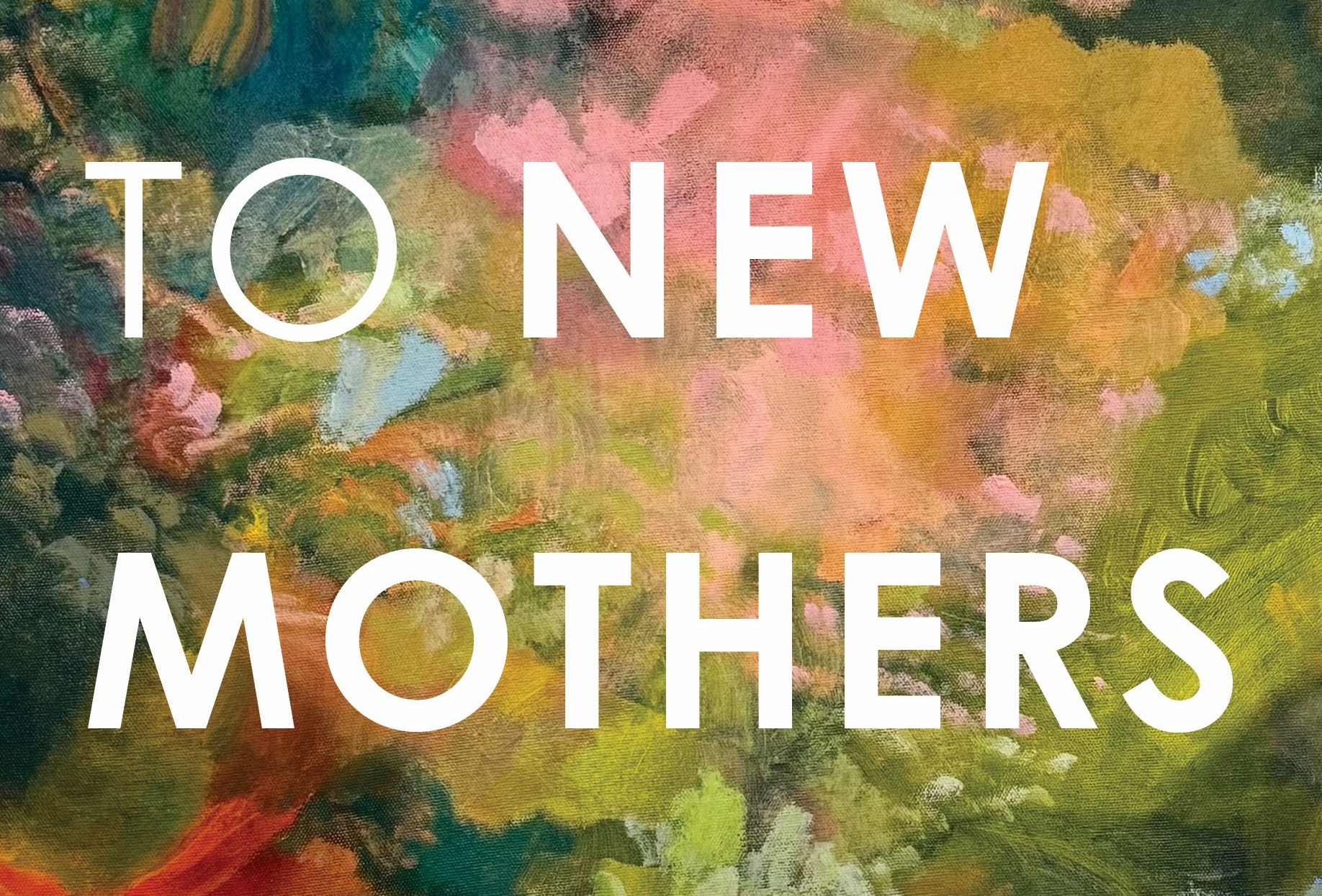
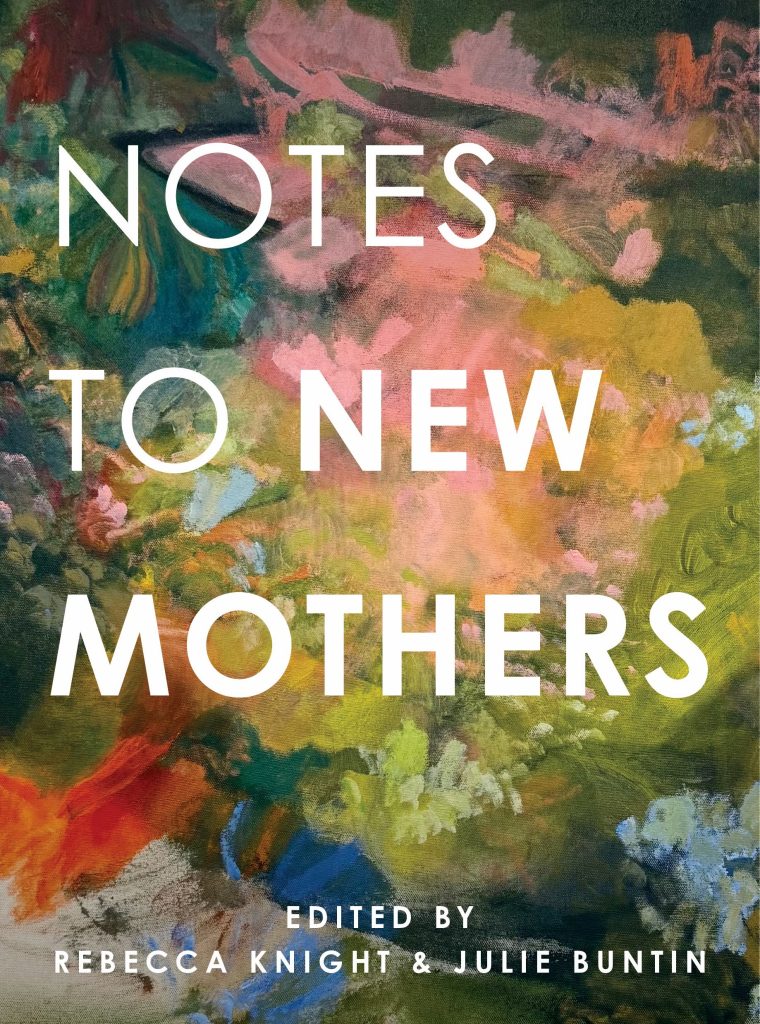
Electric Literature is pleased to reveal the cover of Notes to New Mothersedited by Rebecca Knight and Julie Buntin, which will be published on September 1st, 2026 by Norton. You can pre-order your copyhere.
65 writers and artists (many of whom are EL contributors whose work you can find here, here, and here) capture early motherhood in scenes and revelations: a vulnerable, kaleidoscopic record of postpartum life.
In the early days with their first babies, two friends began comparing notes on what, exactly, was going on in their postpartum bodies and minds. What was a wake window? How could anyone function under the weight of so much love? All their new-mom friends were overwhelmed too. In search of the book they needed, editors Rebecca Knight and Julie Buntin invited 65 acclaimed writers and artists—Julia Phillips, Kirstin Valdez Quade, Liana Finck, Jenny Slate, Naima Coster, and more—to riff on shared concerns: burp volcanoes, career shifts, breastfeeding logs, partnership dynamics, minor victories and major insecurities. Here is a bedside table companion for every mother who has wondered how she’ll make it through the wilderness of early parenthood, and a window into her experience for the family and friends desperate to better care for their beloved moms-to-be. Brave, unexpected, and revelatory, Notes to New Mothers offers a new map of motherhood as both a singular and communal experience.
Here is the cover, designed by Sarahmay Wilkinson, with original artwork by Kristen Diederich:
Rebecca Knight: It took us a long time to find the right cover art for Notes to New Mothers because the structure of the book is so unusual. It’s a new form: a 60-writer chorus singing 582 tiny notes, in and out of harmony. It’s a juicy giftable item and an experimental, literary text. What kind of cover could cover both bases? It couldn’t be too literal (stock photo of pacifier stack) or too droopy (Mother’s-Day-Monet) or too floral or not floral enough or too feminine or too Gothic or too discouraging or too perky. We wanted it to be an accomplished aesthetic object in its own right, a soothing visual companion to house the warm community of voices inside. We wanted it to be elegant, energetic, timeless, simple, strong. We came up with a million almosts. And then, perusing the L.A. gallery LOBSTER CLUB’s 2026 Frieze Week group show, we discovered the work of painter Kristen Diederich.
Diederich’s paintings and our book are devoted to polyphony. She too is building up her images from the innumerable contributions of small strokes. Her instincts as a colorist, and as an abstract scribe of the natural world, are as various, understated, rapturous, and surprising as the prose stylings of our disparate, acclaimed writers. Looking at a Diederich painting is an invitation to investigate, to think and look again, all while relishing in the physical, the sumptuous. We came full circle with the project when we learned that Kristen attributes her painting practice to her own mother, also a painter, who found a way to combine creative output and childrearing. This is the very balance our contributors are in the midst of calibrating. We have been giddy about our cover ever since Kristen agreed to come on board. Norton’s Design Director Sarahmay Wilkinson, herself a new mother, created the cover with expert composition and iconic typography, all while tending to her own young son. We can’t imagine a fuller, finer, or more fitting artwork to invite readers into Notes to New Mothers.
Julie Buntin: Rebecca has captured exactly how I feel about Kristen’s artwork and how it evokes our book! I’ll just add that in addition to suggesting, via the swirls and blooms of color, the polyphony of the contents, the painting evokes such a tangible sense of transformation—the way the pink seems to be an almost reconfigured version of the green, the interrupting red, the moody, textural slashes of blue. For me, it speaks, in some nonverbal and very true-feeling way, to the murky, vibrant, and wildly complex early postpartum period.
Rebecca and I worked on this book together for years, and even when it was just an inkling, our vision for it was that however we collected these voices, the object—the book itself—would have to be distinct and beautiful. Something you’d want to put on your bedside table, that you’d be drawn to pick up even when dead tired, that would offer some sensory respite from all the glop and goo of newborn life. I have very precise memories of a book I read to both my children as tiny babies—one they loved—that had this gargantuan dust jacket that was always slipping off or getting folded up or in the wrong place, one more tiny thing I had to track and take care of. One day, it got half stuck under my nursing chair and partially ripped when I tried to pull it out, bending over my infant, which made her cry—and then I was crying, because what if I’d hurt her, and also why was the fucking dust jacket never where it was supposed to be? And wasn’t that my fault somehow? Those days are tough. Notes to New Mothers will have no dust jacket. The tactility of Kristen’s painting will work so brilliantly as paper-over-board, and Sarahmay’s sensitive way of setting off the type means that no amount of baby drool or sticky fingerprints or spilt milk will obscure the title. The book can take it, just as the mother can (even if she thinks she sometimes can’t).
Sarahmay Wilkinson: It was such a pleasure to collaborate with authors Rebecca Knight and Julie Buntin in the creative process for their cover. It was important to our team to create something intimate and elevated while also lasting and durable; a gift that would live happily on a new parent’s chaotic nightstand. Kristen Diederich’s painting brought a sense of tenderness, atmosphere, and complexity that felt exactly right for the project. As a new-ish mum, I devoured this book, but really, truly, anyone who has ever been born should read this book.
Kristen Diederich: While painting, I often recall all the times I must have been held as a child, how these levels of care are linked and inseparable from the creative process, which itself is an act of mothering an idea into the world. In my case, these aspects of care are reflected in the image itself through the materiality of paint and mark making.
Growing up surrounded by creative women—a grandmother who crafted with her hands, an aunt who was a literature and theater teacher, and a mother, Tammy, who is a committed painter—gave rise to my interest in the arts.
For the past 10 years, I have been writing a single, continuous poem whose lines become titles for my paintings—among them, “Fuchsia is Slain by Observable Facts,” an abstract landscape of saturated pinks, blues, and greens, floral elements rising and dissolving through layers of glaze. I was delighted that this painting was chosen for this project because the story of my art practice is so deeply linked to my own mother.
You catch your reflection and think: What the fuck? Is that a new bone?
You’d liked it when you were younger—flaunted it, even—the prominent collarbone of a thinner woman. Then came your mother’s fugue summer, when amid all the worry and perplexity and frantic travel, your pulse became visible at the base of your throat.
Maybe something, the doctor said, maybe just underlying structures uncommonly close to the surface. You hadn’t thought of it that way before, but they were, weren’t they? All that visible rigging. Was it grisly? Did it make people squeamish? It struck you as unseemly, indecent, something meant to be private and internal out there for all to see. You became self-conscious. You began to amass a collection of high-necked tops. You began scrutinizing the necks and shoulders of other women during warm months, in exercise classes, in red carpet photos of actresses in strapless gowns. You were trying to understand what’s normal, where you fall in relation.
Next was the emergence of the outer tips of your clavicle and knobs that must be the heads of your humeri. You suspected bone spurs, then looked up “bone spurs” and decided, probably not. No one has been able to explain it. Perhaps it’s premature aging, or another scoliotic disfiguration, a byproduct of your terminally terrible posture, something that might have been stopped had you noticed and course corrected in time. Which is to say: your fault.
It’s hard to know when more tendons in your neck and more mystery bones in your chest and shoulders have emerged, and when you’re just looking too closely, obsessing, growing more and more paranoid. It puts you in mind of that French show where a lake drained to slowly reveal a sunken town.
You imagine being able to wrap your fingers all the way around your clavicle. You imagine rainwater collecting in the hollows, hummingbirds alighting to bathe there. Ha, startle reflex like yours, you’d like to see them try. (A jest! Dear Universe, please do not send birds.)
At night while drifting off to sleep, you begin to observe stirrings. Lying on your belly, arm folded under your chest, you feel a delicate tickle against your palm. You flick on the light, rush to the mirror, and pull aside the collar of your T, but see nothing. This occurs several times before you finally catch a glimpse: something squirming underneath, like your galloping pulse did, but freer, more erratic.
It remains dormant during the day but grows bold at night. Stand still long enough before the mirror and you’ll see tiny bulges probing your skin from inside. You imagine hundreds of feathery legs, like a millipede. You poke your collarbone and it dives away in the other direction, testing the outer limits of your body, or further within, becoming, for once, discreet.
It wants, you think, to be free. Don’t we all.
To entrap that which would be rid of you, to ensnarl, to imprison, is ethically indefensible, it is morally repugnant. So you go to the kitchen, open the drawer. Your hand hovers: carving knife, paring knife, boning knife. The last of these sounds most appropriate, but you quail before the sharp edge and settle instead for a butter knife.
What will you become without it? Compressible, you suppose. The way rats can squeeze down their ribs for any point of ingress and octopuses can ooze through any hole not smaller than their eye. This could be the start of a whole new chapter of your life, one featuring cave exploration, wreck diving, and other claustrophobic pursuits.
Before the bathroom mirror, you wedge the butter knife behind your clavicle and begin to pry. At first, it bows and writhes in distress, but you pause to pet it, humming lullabies, and it calms enough to proceed. This hurts more than anticipated. The shaking hands and sobs aren’t helping. Nor is the blood, obscuring everything, making it slick and difficult to gain purchase. No longer able to make out much in the mirror, you might as well stumble into the bathtub, finish this curled up against cool porcelain.
Twang twang twang snap the tendons. Through the carnage slices something thin, pliable, and coated in gore. A wing! Of course, why didn’t you see it before: it wants to fly. You drop the knife, try to relax, just be open and unresisting. Your part here is done; like a butterfly emerging from a chrysalis, this struggle may be crucial to its becoming.
It surges, twists. You wonder how much will go, whether just the clavicle or a larger mess of tendon and bone is about to claw free of you. It is so close now.
You try to skip ahead to when the horror will be over, the pain. Not so far in the future, it’s scaling the wall, smearing the white with blood and gristle. You’re tempting it down with a bowl of milk, or sugar water, or raw liver, gently dislodging it from the crown molding with a broom. Assuming you still have control over your arms. Assuming you come out of this as more than abandoned meat, a lonely shell, hollowed and bereft. Be generous, you tell yourself. Be easy and selfless and kind. But when it looses a victorious, breastbone-rattling screech, recognition: this is more than you are willing to give away.
So you clamp your hands over it and cry, “Don’t leave me, don’t go!” You feel it fighting, as desperate to get away as you are to crush it to yourself. It’s a fierce struggle that carries on for several terrifying, heartbreaking minutes. At last, over your pants of “please, please, please,” you feel it subside, go still once more, and surrender under your bloody, trembling hands.
Coming of age is a lifelong creative act. So, too, is the act of making a family—biological, found, or some amalgam of the two. For writers who grow up with artistic parents or parent-figures—immersed in the worlds of literature or theater, photography, or sculpture from a young age—family is often tethered to an impulse to create. Subsequently, engagement with, or appreciation of, the media that informs our identities and family narratives can lend itself to experimentation: with collage essays and associative thinking, borrowed forms, fragmentation or compression.
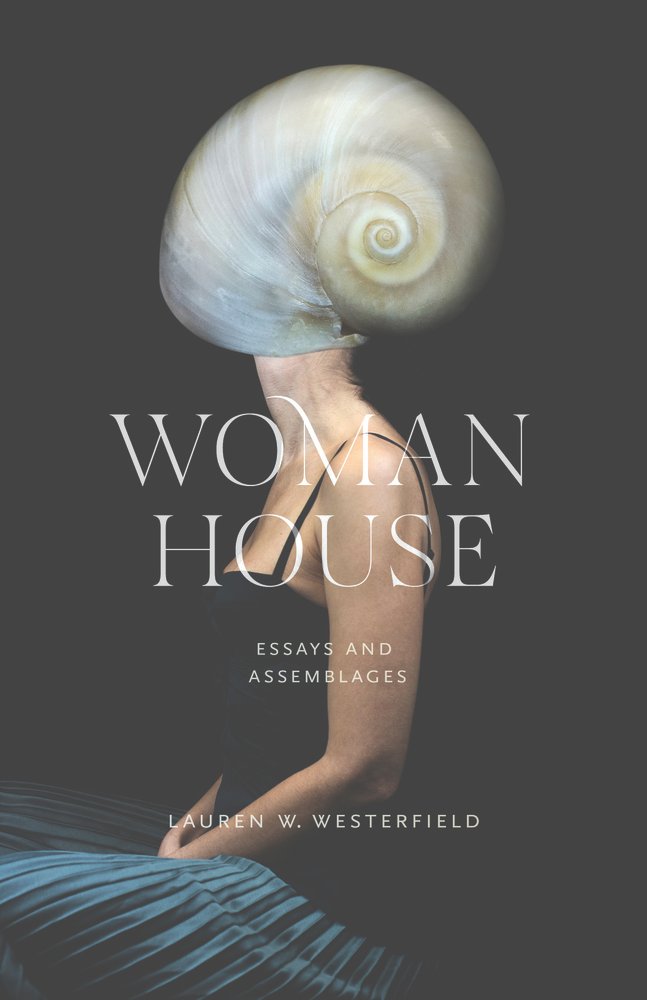
While writing my second book, Woman House, a memoir in essays and flash interludes I call “assemblages,” I repeatedly turned to visual art, literature, and cinema to help understand my relationship with my mother, and to catch a glimpse of the woman and artist she was in her younger life, before I was born. She raised me on classic movies and trips to the museum, to appreciate fine art and messy, amateur experimentation alike. Art was something we shared—and yet, as I matured into an adult who sought out expressionistic or surreal work for its bodily frankness (Louise Bourgeois’ femme maisons, for example), my mother often reviled my taste. Where she favored classical, conventionally “tasteful” work demonstrating technical skill, I found myself drawn to images that moved more freely upon the canvas than I felt safe to in my body. In Woman House, form and content alike reflect the act of making—a body, a work of art—to channel control; the act of seeing as a release and opening to feeling.
The following reading list includes experiments in nonfiction, essay, and memoir that engage with art and coming-of-age narratives simultaneously. These books unpack the ways in which family, media, and story shape and change us. Each author bends form in a manner reflective not only of their influences and inheritance, but of their own artistic evolution, uniquely capturing a glimpse into their ongoing, ever-changing creative and personal lives.
Rebecca Solnit is perhaps most well known for her fiery, insightful activism and place-based environmental writings. But in this 2013 experimental memoir of mothers and daughters, illness and memory, travel and story, Solnit weaves a remarkable tale of identity through narrative and association, mapping her life via objects and symbols—apricots, mirrors, ice, breath—alongside the literature that shaped her approach to writing and living alike. At once a travelogue, a reflection on Frankenstein and the fairy tales of her youth, a reckoning with her mother’s memory loss and the vicissitudes of the body, The Faraway Nearby is a storyteller’s memoir that defies chronology in favor of a kind of nesting doll structure, or perhaps that of a tapestry woven and unraveled with masterful precision.
“Coming of age in a theater of black and white,” the subtitle to Sloan’s debut essay collection, perfectly encapsulates the author’s pseudo-frauenroman as a mixed-race woman growing up against a backdrop of cinema, photography, literature, music, and art in late 20th century Los Angeles. These essays employ fragmentation, numbered sections, and associative leaps to explore the artistic influences that defined her young life, from Thelonius Monk and her father’s photographs to Italian neorealism and the New York art gallery scene. Meanwhile, each essay honors and explores her parents’ interracial love story (set in Detroit, a second home that Sloan returns to repeatedly in her writing), and its aftermath. Throughout, Sloan reflects on racism, bigotry, Blackness, history, and family, always seeking great depths of understanding and evolution in her relationship to art and to the world.
A meditation, a list, a scrapbook, a sculpture. All of these and more might describe Zambreno’s Book of Mutter, a work of memory, testament, art, and grief making sense of her mother’s life and legacy. Written over thirteen years, the book borrows form from artist Louise Bourgeois’ Cells series of sculptures, and blends critical reflections on the works of Bourgeois and other artists and writers (including Theresa Hak Kyung Cha, Henry Darger, Anne Carson, and Roland Barthes) with the narrative of her mother’s illness and passing, investigating the difficult work of loving and losing a mother with whom one shares both intimacy and animosity. At once spare and sprawling, making frequent use of white space and yet spilling over into Zambreno’s companion text, Appendix Project, the materials and forms that make up Book of Mutter constitute a singular approach to the mother/daughter narrative.
Brown Neon is a revolutionary experiment in place-based writing. Operating as a memoir of queer family-making and cultural influence up and down California and across the Southwest, the book also explores the evolution of the author’s critical, racial, community, and class consciousness. The result is a travelogue as stunning in its depictions of landscape as it is articulate in challenging the colonial status quo. Throughout these essays, Gutiérrez blends critical perspectives on art, immigration, and performance with moving, richly detailed family dynamics of all kinds: from the love and sartorial tutelage of her mentor and “father”—butch activist Jeanne Córdova (or Big Poppa, as she is known to Gutiérrez)—to stories of her biological parents, youth, and found family of fellow punk rock fans and artists in 1990s San Diego. Described by Myriam Gurba as a work of “Latinx mysticism,” Brown Neon is singular in its perspective on intergenerational memory, identity, and ecology.
In 1969, Maggie Nelson’s aunt Jane was horrifically murdered. Her killer remained a mystery, and her violent death haunted Nelson’s family. In Nelson’s hands, the story of Jane’s death became the subject of a beautiful, genre-blurring work shapeshifting from page to page: now lyric, now historical record, now speculative reimaging—titled simply Jane: A Murder. But just before Jane was published, new DNA evidence pointed to a new possible suspect. Thirty-five years after Jane’s death, Maggie Nelson and her mother find themselves witnessing the suspect’s trial—and with it, the excavation of family ghosts. The Red Parts is one of Nelson’s more narrative prose works, though one wouldn’t go so far as to call it “conventional memoir” (or, as far as Nelson is concerned, “memoir” at all). Anchored by the true-crime story of the trial, and the family stories evinced by its drama, Nelson’s book also investigates media and society’s fixation on murder—especially the murders of young white women—as well as her own.
Wrong is Not My Name opens with a kitchen table, a tragic loss, and an inherited diary. “Was my mother an artist?” Cardwell asks, recollecting the kitchen in her childhood home and her mother’s many ways of making and creating within that space. From here, the book—a memoir, a work of art criticism, an activist’s record of Black, queer, and feminist identities recalling the works of bell hooks—unfurls into streams of memory and making. In grieving her mother, Cardwell crafts a singular work of hybrid art writing.
The White Dress by Nathalie Léger, translated by Natasha Lehrer
Léger’s trio of prose works exploring her mother’s story alongside those of three well-known women—artists at once operating as subject and object, active maker and passive muse—concludes with The White Dress, a haunting examination of the female body and mind striving for creative agency. Léger shifts back and forth between childhood memories, scenes of conversation with her mother, and researched details unpacking the art and death of Pippa Bacca, a wedding-dress-clad performance artist who was killed during her attempt to travel on foot across Italy and the Middle East. As Léger’s research into Bacca’s motivations unfurls, so too does her understanding of her lineage—as a woman, as a daughter. “Whatever it is that you’re touching with your fingertips is filled with history,” she writes, “ordered, as ancient and familiar as our origins.”
I always seem to find one of Louise Erdrich’s books exactly when I need them most, thanks to some combination of a trusted recommender and fate. A dear friend texted me in the middle of reading Love Medicine, Erdrich’s first novel, to tell me that I absolutely had to go pick it up. I discovered Future Home of a Living Godafter an old boss could not stop gushing over it.The Sentencecame into my possession during a “book fishing” event run by my local independent bookstore, Brookline Booksmith: You describe your literary taste, and an astute bookseller—hidden behind a large sheet of paper made to look like water—attaches a title they think you would like to a faux fishing rod for you to “catch.” I can’t recall now how I explained what I love most in a book (there are a great many things), but I’m not at all surprised that a Louise Erdrich title was what I reeled in.
Erdrich is an absolute master of fiction. Her characters come alive on the page, each of their voices as distinct and consuming as the last. Her work is infused with an incredible depth of humanity—both piercingly clear-eyed and deeply empathetic—that is, to me, the very best of what fiction can do.
The Pulitzer Prize-winning author is back this spring with a collection of short stories, Python’s Kiss. I couldn’t be more thrilled that she took the time ahead of the book’s publication to answer Electric Lit’s 23 Questions.
– Katie Henken Robinson Senior Editor
1. Describe the process of writing Python’s Kiss in a six-word story.
Louise Erdrich: Duck, Duck, Duck, Duck, Goose. Run!
2. What book should everyone read growing up?
LE: Charlotte’s Web. Tension, death, kindness, hope, and regeneration somehow squeeze effortlessly into this book. When a young child learns about death it is a betrayal. This book is consoling.
3. Write alone or in community?
LE: Alone, for as long as possible.
4. How do you start from scratch?
LE: I rummage around in the notebooks I keep for random ideas and follow the most interesting thread.
5. Three presses you’ll read anything from:
LE: I’m not taking this literally, as I can’t read everything, but Coffee House, Milkweed, and Graywolf are local presses that publish thought provoking books that go around the world.
6. Hardcover, paperback, or e-reader?
LE: Hardcover, ideally, for favorite books. If I can’t get a hardcover, then a well made trade paperback. And I do love a book with French flaps.
7. Describe your ideal writing day.
LE: It is a day in summer by Lake Superior and I am completely engaged with my narrative. Every so often I leave my desk and jump into the water, which is very cold and pure. I sit in the sun until I am warm. Then start writing again.
8. Typing or longhand?
LE: Longhand.
9. What’s a piece of writing advice you never want to hear again?
LE: From a book reviewer reading a book of mine set in a small town—Louise Erdrich should go back to the reservation.
10. What’s a piece of writing advice you think everyone needs to hear?
LE: If you try to defend your writing to someone by saying what you meant, you failed to get what you meant across. You might as well stop talking, go back, and try again.
11. Realism or surrealism?
LE: Quite often there is no difference.
12. How did you meet your agent?
LE: Through a friend who was looking out for me.
13. Best advice for pushing through writer’s block?
LE: Do some tangential research around your subject and eat some ice cream.
14. What’s your relationship to being edited?
LE: When I started writing I decided that criticism would be my friend. I appreciate any response to my suffering manuscript. I pay attention to every suggestion although I might not ultimately make a change. Trent Duffy, my longtime copyeditor/editor, is a sort of guardian angel. Terry Karten has been a staunch friend and guide. Jonathan Burnham is brilliant, fearless, exacting. Deborah Triesman is a passionate expert. I have been lucky.
15. Write every day or write when inspired?
LE: Joseph Albers gave the best advice: Leave the door open. So every day.
16. What other art forms and literary genres inspire you?
LE: Art Heist books—fiction or non-fiction.
17. Book club or writing group?
LE: Family.
18. The writer who made you want to write.
LE: George Orwell.
19. How do you know when you’ve reached the end?
LE: A sensation of inevitability.
20. Writing with music or in silence?
LE: A gently snoring dog.
21. What’s the last indie bookstore you went to.
LE: Birchbark Books—I like sitting in the office with anyone on our peerless staff (my daughter Pallas is a manager) and working out problems. I also like browsing through the latest as chosen by our buyer, Nate Pederson, who does a tremendous job and has been there nearly as long I have. This is our 25th year.
22. Activity when you need to take a writing break:
LE: Walking around outside, or, with a sense of aggrieved resignation, cleaning the house.
The sound in the large room was subdued, kind of muffled. There was a worn gray wall-to-wall carpet, and the ceiling was covered with spongy polystyrene tiles, tiles that absorbed the hundreds of telephone conversations that took place every evening between people who would much rather be doing something else.
I logged on to the computer. The system was old, the text large and pixelated, and the graphics were simple and clumsy, only two colors. I put on my headset, adjusted the microphone and clicked on the first call. It rang out for quite some time before anyone answered.
“Sundström,” said a female voice.
“Hi,” I said. “My name is Hanna and I’m calling from VQS, Vision Quest and Survey in Gothenburg. I was hoping to speak to Yvonne Sundström.”
“That’s me,” she said in the slightly wary tone almost everyone adopted when I had introduced myself.
“Great! We’re currently conducting an investigation into consumer habits, and you have been chosen at random to take part. So I was wondering if you have a few minutes to answer some questions?”
A few minutes was a deliberately vague statement, it rarely took less than fifteen minutes, sometimes twenty or more.
“Is it about how I vote?” she asked.
“No, we’re looking into consumer habits and product knowledge. It’s mainly concerned with groceries and household products.”
“Do I get paid?”
“Unfortunately there is no payment for this particular investigation, but your answers are important for the statistical analysis.”
This was a cunning formulation, designed to evoke a sense of obligation and responsibility, and I was slightly ashamed every time I had to come out with it. She sighed with an air of resignation. The power of the telephone was remarkable—older people seemed to feel that they had to answer and then cooperate when someone called them. Presumably things would soon change, when the sought-after consumers came from a younger generation with a more careless attitude toward the telephone.
“Well, I was just about to make a start on dinner, but . . . okay.”
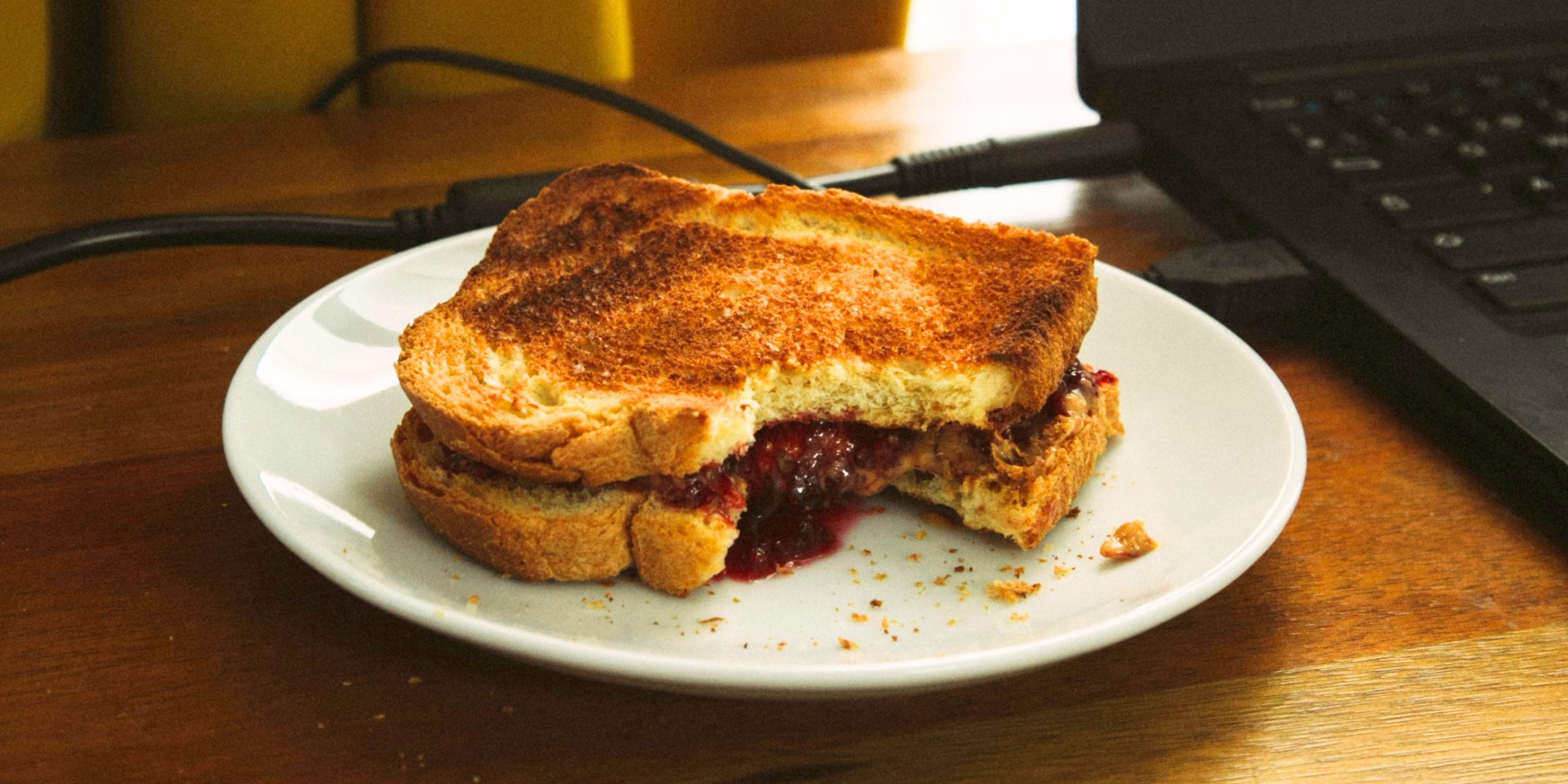
“Perfect. First question: How often do you eat jelly?”
She was silent for a moment, confused perhaps by the contrast between my formal introduction and the banality of the question.
“How often do I eat jelly?” she said suspiciously.
“That’s right.”
“Do you mean ordinary jelly? Like . . . strawberry jelly and . . . lingonberry jelly, that kind of thing?”
“Yes, ordinary jelly.”
She laughed. “I guess . . . a few times a week.”
“Would you say once or twice a week, three to five times a week, or more than five times a week?”
Another silence.
“Well, I mostly have it with my porridge, so that’s maybe three times a week. So I’ll go for three to five times a week.”
“Excellent. So my next question: How often do you buy jelly?”
“I sometimes make it myself, but maybe that doesn’t count?”
“This particular question is about jelly you buy from a store. But I bet your own jelly is delicious!” I added.
She laughed again. “Let’s see . . . I’d say I buy jelly a few times a year.”
“Would you say once or twice a year, three to five times a year, or more than five times a year?”
“I guess that would be three to five times as well. The children eat quite a bit.”
“I understand. Now, what brands of jelly are you familiar with?”
She sighed. “Let me think . . . Bob, I guess.”
I selected Bob from the options on my screen.
“Can you think of any other brands?”
“Er . . . Önos, maybe?”
“Önos, good. Any more?”
“Felix?” she said hesitantly. “Or is that mainly peas and that kind of thing?”
“I’ll add it to the list. Any more?”
Silence. “Coop, I suppose, if they have their own brand? I’m not sure. And ICA too.” She suddenly sounded enthusiastic. “And maybe Willy’s? And Hemköp?”
“Perfect. Can you think of any more?”
She fell silent again. She really was taking this seriously.
“No, that’s it I think.”
“Excellent. Can you tell me what brands of jelly you’ve bought in the last fourteen days?”
“I haven’t bought any jelly lately.” She sounded a little defensive now. “We’ve just been eating the lingonberry jelly we’ve already got.”
“No problem, I’ll make a note of that.” The fact that she hadn’t bought any jelly meant that I didn’t need to ask her what brand she had bought, which would speed things up a little. “Next question: what brands of jelly have you seen advertised during the last fourteen days?”
“Advertised . . . Do you mean like leaflets through the door?”
“We’re thinking of all kinds of advertising. For example, leaflets through the door, ads in newspapers and magazines, on public transport, at the cinema, on TV or the radio.”
She laughed. “I don’t think I’ve ever heard jelly advertised on the radio!”
“No, maybe jelly doesn’t come up too much on the radio,” I said in a friendly tone of voice. “But how about the other types of advertising I mentioned?”
This time the silence went on for quite a while.
“I think I might have seen something on TV.”
“Do you remember what brand it was?”
“These are difficult questions.”
“There’s no hurry.”
“Can you help me out with some brands?”
Her desire to get it right was touching.
“I’m afraid I’m not allowed to do that. This investigation is concerned with what you have seen and what you remember.”
She sighed. This was going to take some time.
“Think about the brands you mentioned just now,” I prompted her. This was actually off-script, but I wanted to move on. “Have you maybe seen an advertisement for one of those?”
“I might have seen Bob advertised,” she said eventually. “On TV4.”
“Fantastic.”
Neither of us said anything while I filled in her responses, then clicked through to the next segment.
“Is that it?” she said optimistically.
“Not quite. The next question is about ready-made and frozen pizza. How often do you eat ready-made or frozen pizza?”
It started raining as I headed toward Korsvägen. According to the display the number five was due in seven minutes, so I went into the newsagent’s and flicked through a few magazines to pass the time. When the tram came rattling along, the rear section was full of young guys in expensive clothes on their way from Örgryte into the city as usual.
I usually tried to avoid walking to the tram stop with anyone from work, I hurried away quickly after the last call of the evening. Sometimes I failed, but if it was someone who talked so much that I didn’t really need to contribute, it wasn’t too taxing: Samir, who usually babbled about some new sci-fi movie, or Tilde, who would tell me all about the party she’d been to over the weekend and the party she was going to next weekend. It was more difficult if I ended up with someone who wasn’t as chatty as them, because a conversation that demanded input from me was almost painful. After five hours on the phone my brain was anesthetized. Sometimes I thought it might have been different if the surveys I was conducting were about politics or social issues, if they were genuine opinion polls where people gave genuine, well-thought-out answers. At the same time, it was quite appealing to do something that didn’t require me to think at all, to sit there almost like a robot typing in witless answers to equally witless questions. Sometimes I really got into it, regarded it as a challenge to lead the interviewees through the conversations, tease out the next product name, make them feel important. Maybe I ought to work in a similar field, I thought occasionally, but for real: become some kind of counselor, listening patiently to people struggling with their bad relationships, nodding and making appropriate comments, giving simple advice that was seen as meaningful, because people who ask for advice on that kind of thing are ready to believe that any opinion on their situation could carry a truth within it.
It was quite appealing to do something that didn’t require me to think at all, to sit there almost like a robot typing in witless answers to equally witless questions.
Vision Quest and Survey was a company where you worked until you found something better, or something you would rather do. Most employees were students just like me, sitting there for several evenings a week to supplement their student loan. Some were middle-aged or older, I felt sorry for them because the reasons why they were there were never positive. Some had lost a better job because of downsizing or disagreements, and hadn’t yet managed to find anything else. One had suffered burnout and was easing himself back into work. One man who must have been in his fifties had worked there for many years, and still believed he would soon get his breakthrough as a composer. Most of this older group worked days, the shifts were longer and presumably quieter, because fewer people would answer the phone. My nightmare was that I would end up like them, that I would be sitting in the same staff kitchen in ten years, waiting for the career as an artist that had never taken off, working long shifts to pay for a studio that led precisely nowhere, but I couldn’t let it go because that would mean the final failure. As long as I had my studio, there was still some hope of success.
The calls were generated at random by the computer, and every time I hoped that a man in Stockholm wouldn’t answer. Men in Stockholm were just the worst—always stressed, often condescending. “Don’t you have anything better to do?” was a frequent question, and it always got to me. Of course I have, I would think, and then: Do I really? And I would get angry, because it felt as if they had won. I pictured their lives as a distant and exotic image of success, a fantastic career and beautifully ironed shirts, a suntan that lasted well into the fall, a big house and a wife and children, maybe a mistress, an impressive golf handicap, overseas vacations, and a rich social life with others who shared the same status in society. And then someone calls from Vision Quest and Survey in Gothenburg, making demands on their time to ask questions about their cell-phone contract, what a joke. “Fifteen minutes?” they would sometimes yell after they’d asked how long it was going to take, and of course I was lying anyway, because if they answered in a particular way there would be more questions, questions that would require them to fetch a pen and paper and write down support words and rate their phone operator. I always hoped they would say no to the survey, because if they said yes I would hear their frustration increasing after only a few minutes. Sometimes we had only gotten halfway through after the promised fifteen minutes and it was already seven thirty, they were having a barbecue, they were going out, they had to put the kids to bed. I would miss out a question or fill in the wrong answer to avoid the need for a follow-up question, always aware that a supervisor could be listening in to our conversation, I might be called in and told in a stern voice that I was endangering the statistics, and that if this happened again I might lose my job.
I was invited to a party at Tilde’s on Saturday. I rarely went out with my coworkers on the weekend, the parties my fellow students organized were always more fun, but she had made it seem as if it were important to her that I went. Her apartment was on a street off Linnégatan, which made no sense at all to me. How could she live there, when she was studying and had a badly paid part-time job, just like me? Then I realized there were parents who could help out financially, that the hundreds of thousands of kronor that made no sense to me obviously didn’t come from her job as a market researcher.
Tilde was studying Education and was going to be a teacher, which sounded stable and well-considered. I found it slightly embarrassing to say that I was doing an art foundation course, it sounded more like a hobby than something you could actually live on. Maybe I should stop thinking that was a possibility, and become a teacher too, an art teacher, it might even be enjoyable. Encouraging a particularly gifted pupil to pursue art, making a difference to another person’s life.
Tilde provided box wine, Franz Ferdinand was playing in the living room, some people were already planning to go on to Pustervik later. Samir was talking to a girl I didn’t recognize, maybe one of Tilde’s fellow students, they were standing close together, closer and closer as the evening progressed.
I sometimes wondered when love would come to me. As if love were a resource that was shared out through the providence of someone else. Like the tax declaration form from the IRS or a summons to the dentist: if it didn’t show up there must have been a hitch at a higher level where these things were dealt with.
I thought that was how it seemed to work, people around me got together in an almost mechanical way that maybe didn’t always have much to do with love, it was more a sense of responsibility or duty, a need to fulfill the task of being part of a nice couple who enjoy long, lazy breakfasts on the weekends, go for a walk in the botanical gardens, measure a wall in order to put up a shelf they’ve driven to IKEA to buy. There was something irritatingly fabulous about this togetherness, and I often wondered to what extent those involved really wanted to be there. They didn’t seem excessively happy, but they weren’t unhappy either, they accepted their relationship with stoical equanimity: This is what you do, this is how you create a grown-up life. After spending several years doing everything to break away from exactly that kind of life, represented by their parents, they suddenly performed a U-turn and accepted that they ought to become exactly like them, accepting their money for the deposit on a place to live, buying their IKEA shelf, having cozy dinners at home instead of going out partying, maybe getting a dog, eventually upgrading to a child.
Personally I half-heartedly went back to someone’s apartment from time to time, without imagining that it would generate anything other than a brief closeness, or lead to anything else. What did I want from life? It stressed me out that I didn’t actually know.
I often dreamed of Erik at night. Sometimes we were children again, lengthy dreams with no clear action or content, when the endless summers of our childhood played out in my mind like idyllic postcards from the past: Erik and I trying to paddle a canoe, Erik and I picking wild strawberries in the cow pasture at Grandpa’s summer cottage, our hearts in our mouths, Erik and I fighting for space on a Lilo in a forest pool, the warm, amber-colored water all around us, gray mountains and tall, straight pine trees lined up against the backdrop of a completely cloudless sky.
Sometimes the dreams were different. In one I was in the forest, on the track leading up to the railway, when a deer suddenly appeared in front of me. It looked straight at me, and I got the feeling that the deer was in fact Erik, that he had come back, in the form of a deer for some reason, but that didn’t matter, the important thing was that he had come back.
“Don’t go,” I said, but when I cautiously took a step closer I trod on a twig that snapped. The deer stiffened for a second, then turned like lightning and fled through the forest.
In another dream I was at Mount Verity searching for him, and as I stood in the cave I saw an opening in one corner, with light pouring from it. How strange that no one has seen this opening before, I thought and stepped inside. I found myself in an enormous hall, like in a fairy-tale palace: columns and crystal chandeliers, gold and jewels, everything sparkled and shone. Erik was sitting at a table. He was wearing brightly colored clothes, he was older, and his hair had grown into a golden pageboy, the same style he had had when he was little. He looked like a handsome prince in a painting by John Bauer.
“Have you been here all the time?” I asked him.
He nodded.
“Won’t you come home with me?” I said.
I felt as if I had been tasked with living in a certain way, that this would compensate for the fact that Erik never got to grow up.
“I have to stay down here,” he replied.
I always woke up with a strange feeling in my body, simultaneously sad and comforted, everything felt kind of woozy, like a slight hangover, and I would try to cure it in the same way: a long shower, coffee, a walk. But however far I walked I couldn’t forget that I was the one who had been allowed to live, that I was walking around, I was alive, while Erik was still missing. I ought to be more grateful, I thought, I ought to take better care of my life, but how do you do that? I felt as if I had been tasked with living in a certain way so that justice would be done, so that this would somehow compensate for the fact that Erik never got to grow up. It was a debilitating thought. Nothing I could do would ever compensate for that.
I ate at work on the evenings when I was there. I had a thirty-minute break, I would heat up a frozen ready meal in the windowless staff kitchen, where lamps hung from the low ceiling and spread their artificial light on the plants that just about survived in there, like we all did. I ate Findus cheese schnitzel with béarnaise sauce and fried potatoes, or rissoles with potato croquettes, herb butter, and cherry tomatoes. Both dishes were salty and greasy, with a few obligatory green beans. I often thought that I ought to make myself a packed dinner to bring in, I ought to start eating better, but it never happened. I also hated the idea of my coworkers taking an interest in what I had, with curious looks and comments. That’s the way they behaved with one another, especially the slightly older colleagues who clearly cooked delicious and nutritious dinners and brought in the leftovers. It felt personal, private: as long as I ate ready meals, I wasn’t responsible for what was in them.
If I was going straight home from my art class I often bought something tasty for dinner, usually from the Chinese restaurant on the way. It was like a throwback to Sweden as it used to be, with old men drinking beer and reading the evening papers in a big restaurant where I had never seen more than a handful of customers. A neglected aquarium stood in one corner, while a TV mounted on the wall was showing the day’s lottery draw.
The man at the till recognized me and was always pleasant. I usually ordered chicken with cashew nuts, or occasionally a chicken dish flavored with ginger, maybe beef in a dark soy sauce with onions or bamboo shoots, it was perfectly ordinary food, delicious in a perfectly ordinary way that I liked. The portions were generous, there was always enough for at least two meals, so even though I was buying takeout pretty often, it wasn’t really expensive.
I would sit at a table and leaf through Expressen while I waited, glancing at one or two album reviews. Then I would collect my bag containing the warm plastic boxes and cut across the square to my apartment. Winter was almost over and you could sense spring in the twilight now, it was cold outside, there were still gritty patches of ice on the ground, but the thin strip of light that clung to the horizon lingered for a little bit longer each day.
Home was a sublet in one of the big blocks on Wieselgrensplatsen. It was close to the tram stop and several large grocery stores, sometimes there was a florist’s stall in the square selling cheap, lovely plants, I filled both the apartment and the glassed-in balcony with them because it wasn’t particularly cozy, it was an impersonal mixture of IKEA and old stuff that seemed to have finished up there by chance, nothing really went together. And yet I was happy there, the location suited me very well: the big building on the modest square that had a small-town feel, it managed to be magnificent and unassuming at the same time, carefully and benevolently designed in the finest tradition of the Swedish welfare state.
Otherwise I wasn’t too fond of Gothenburg, I thought it was oddly planned, a collection of different parts of the city randomly thrown together, a kind of limbo where you waited for life to begin for real, hopefully somewhere that wasn’t Gothenburg. In fact the entire city was like an enlarged version of my workplace: a temporary stop on the way to something else. It didn’t feel as if anything was really real in Gothenburg, I always thought: it’s cool that you have a morning paper, but it isn’t a real morning paper. Cool that you have art schools, but they’re not real art schools. Cool that you have a city, but it’s not a real city.
Hisingen was also a weird place, the suburbs were sort of eating their way into the city center but were hindered by a bridge that could actually be opened; if they wanted to they could stop us from getting into the city, raise the drawbridge and shut us out. Hisingen was city yet not city, it was intersections and suburbs and large grocery stores, a place to catch a bus that would take you even farther away, McDonald’s at Backaplan shopping center that was a fragment of the real world, between old men boozing and parking lots and superstores.
My hallway was small and dark, I picked up the mail: mostly advertising leaflets, a bill, and then a window envelope that looked both formal and fun at the same time. The edges were decorated with a border of balloons.
“Where does the time go? It’s crazy, right?” it said in a cheery typeface on the piece of paper inside. “It’s ten years since you left high school, and to celebrate Reunions R Us are inviting you and everyone else who graduated from your school in 1994 to a party. A party that will go on all night long! With music from back in the day, of course—will you have the nerve to ask the person you had a crush on to join you in a slow dance this time?”
I didn’t want my food to go cold, so I tipped one portion onto a plate and sat down at the table with the invitation in front of me. The party was to be held in the school dining hall, a simple three-course menu would be served, drinks at cost price, please inform the organizers of any food intolerances or allergies.
I was no longer in touch with anyone from Kolmården, not even Marcus. After graduating he had moved to Lund and I had come to Gothenburg, and we had stopped communicating. I googled him occasionally, he had already achieved a doctorate in theology. There was a small picture of him next to the presentation of his research on the university’s home page, and he looked just the same, but older, more serious. He had written essays and articles with titles such as “Imagining the apocalypse—revealing the revelations of Nordic folk tales,” and “Does God live in the forest? Animalistic features in 20th-century Swedish literature.” It all looked very highbrow, it made me feel inferior to him in a way that I found frustrating.
Throughout high school I had thought that I would make something special of my life. It had annoyed me that many of my classmates had such a casual attitude, bordering on indifference, to the future at the age of fifteen. Didn’t they have any dreams? My grades were good, I was going to study, move far away, maybe overseas. I would live in a place where no one knew who I was, where my life was not tainted by my past.
I often thought of the evening when Marcus and I were at The Burger King on Drottninggatan, when it felt as though we had sealed an unspoken pact. “I’m going to leave too,” I had said, it was as if it became possible when I spoke those words. “Of course you are,” he’d said, and we both did it, we left Kolmården, but for what purpose? Those who stayed probably had better lives than me, who couldn’t get into a proper art school and spent the evenings asking people what brands of jelly they were familiar with. Not exactly something to boast about at a school reunion. I could imagine the surprise on their faces, the way they had to bite their tongues to stop themselves from saying what they were thinking: that they had expected me to be doing something considerably more impressive by this stage.
I had started running in the evenings, and as the spring progressed, I ran more and more. Every evening when I wasn’t working, because there was nothing I liked more than spring evenings, and at the same time nothing I liked less. I ran to be absorbed by the atmosphere, the shimmering magic of the blue hour along the quaysides of Eriksberg, then through the residential areas where everything was bursting into life, a suburbia with rhubarb leaves like ears directed at space, perhaps the rustle of a hedgehog moving through last year’s brown leaves, it was like running straight back to my childhood.
Running was a solitary pastime, anonymous in a way that appealed to me. It was one of the few situations where I felt as if I were no one. No one took any notice of a runner who was out when everyone else was out running too, and even though the quaysides and the shopping mall parking lots were busy in the evenings, I could run there without anyone paying attention to me, a body among other bodies, without a specific errand, with no goal other than to keep moving. I particularly liked mild, misty evenings, it was as if I became one with them, dissolved and became part of them, I turned up the volume in my earbuds and increased my speed, felt my heart pounding, felt the blood pumping through my veins, felt that I was alive.
At the same time it was those spring evenings I was trying to run away from, because they were revolting, the misleading hope of the lighter evening, the false promise that everything would return. Sometimes the memory of Erik seemed so distant that I began to doubt whether it had really happened. Whether I had actually had a brother. Maybe it was just something I had dreamed, an intense dream full of details, but a dream nevertheless. I had absorbed the memory, just as a mussel places layer after layer of mother-of-pearl over a grain of sand, I had buried it inside me, turned it into a hard, shimmering sorrow deep, deep inside. It was like an echo from eternity, a myth from ancient times, a whisper from space: Once upon a time I was a part of something else, something bigger. Once upon a time I was whole. Once upon a time I had a brother.
Down Time, Andrew Martin’s second novel, is a hilarious, unconventional, and thought-provoking millennial coming-of-middle-age page-turner, and one of the first great novels to directly engage with the 2020 pandemic and its unresolved tremors. This is the kind of juicy, zippy, compulsively readable book that goes down easy but will leave you chewing on its questions—how to be honest with oneself and others, how to exist in a world burning beneath our feet without self-immolating, how to balance passion with responsibility and doubt, how to love and be loved despite ourselves—long afterward.
When Martin’s much-lauded debut novel, Early Work, appeared in 2018, I hesitated at first to read it. The book seemed practically concocted for me specifically to enjoy, and I was struck by the same uncanny parasocial feeling as receiving a friend request from someone the algorithm had been pushing for months, a People You May Know But Haven’t Bothered To Yet. When I finally picked up a copy, I couldn’t tell if I’d love it or hate it, but I felt certain whatever reaction I had would be a strong one. Early Work turned out to be the rare book I inhaled in a single cackling sitting. In Martin’s sharp, sly, and self-implicating prose, I found an unsparing portrait of a certain kind of callow, ambitious creative, equal parts fuck-up and artist, that I recognized from dive bars and dating apps and my own mirror. I was jealous I hadn’t written it myself.
Little did I know that when I began my own writing life in earnest, it would be Andrew Martin guiding my first MFA workshop, and my suspicion that I’d want to be friends with whoever wrote Early Work would be confirmed. In contrast to the characters he puts on the page, Andrew is a warm, unassuming presence whose generosity and gentleness soften the exacting precision of his craft, though he’s every bit as witty and observant as his work.
I sat down with Andrew in a quiet Brooklyn café to discuss sex, drugs, and lockdown; the stickiness of writing about relationship dynamics; and how narrative instability might conquer AI.
Sarah Bess Jaffe: Not that the characters in Down Time are having a good time in any conventional sense of the term, but I found myself envious of the pandemic they’re having. They’re indulging in really plush, luxurious depressions and substance abuse and weird sex stuff. I wasn’t doing any of that shit. But they’re socializing. They’re having affairs. Was it the pandemic setting that coalesced these characters around this particular novel?
Andrew Martin: Yeah, the pandemic really brought them together! I wrote this book in an unhelpfully abstruse, totally all-over-the-place way over many years, and it was exciting to see the pieces eventually coalesce around certain themes and around a certain period. The way I wrote the book accidentally ended up working well with the subject matter, because it ended up simulating the way that time slowed down during the pandemic years, but also that when things did happen, they felt so sudden and extreme. When the characters in the book do interact with other people, it’s almost always a crisis.
SBJ:The form kind of echoes the content, mimicking a lot of how we maintain friendships.
AM: Especially now. In the previous decade of my life, I moved around a lot, and then with the pandemic, I didn’t see some people for years. When we emerged, I was suddenly seeing them for the first time in forever, and it felt very weird.
A lot of the formal features of the book also ended up echoing some of my dissatisfactions with contemporary social life more broadly. Early Work is certainly not utopian, but it’s also a certain vision of life lived IRL, where everyone’s just hanging out all the time. That was sort of what life in grad school and the years after was like for me. And Down Time feels much more like what my 30s were, much more diffuse and discursive. Harder to pin anybody down, harder to pin yourself down.
SBJ:One of the things I admired about this book is that it gets at this idea that you can be living through historic, unprecedented times, and you’re still completely obsessed with the narcissistic minutiae of being a person.
AM: It’s true, I think! The novel probably plays down the degree to which I was in a total panic about the pandemic for at least a year, sometimes in ways that didn’t even make sense in retrospect. I tried to capture that a little bit: the abstract fear of doing the wrong thing and getting in trouble for being bad. For me that became more present than actually being afraid of getting sick. Before the vaccine, I also didn’t want to get COVID, obviously, but it became clear at a certain point that it probably wasn’t going to kill me. It did kill my grandmother, and other people in my life. So the worry was warranted, but the worrying didn’t change anything. But life was also going on. I got married during the pandemic. Other people I know got married or had kids during those years because we were in our mid-to-late 30s and if it was going to happen, it had to happen. A few people I knew were giving birth in, like, April 2020. It was just a mess. I felt like there hadn’t been much written about how life had to just keep happening and people had to figure out ways to make it work.
The world I want to live in is one where people are much more fluid.
SBJ:The novel has three third-person POVs and one first-person POV, which creates interesting gaps in reliability.
AM: The one first-person character, Malcolm, is sort of anchoring the novel as the only direct speaker. The implication is not necessarily that he’s writing the whole thing, but I think the fact that he’s a novelist made it make sense to have him be the one narrating voice, because he’s the guy who fancies himself the storyteller, in a fairly egotistical way. He’s the most obnoxious person in the book, and also the character who looks the most like me from the outside, so I was willing to let him take the fall as the bad guy.
My other thought was that having one first person narrator does something to unbalance the smoothness of a traditional third person roundelay, and maybe it’s more interesting if there’s this weird thing sticking out of it, to make you realize it’s a written piece, and forcing you to switch gears while you’re reading.
SBJ:It also allows a nice window into being able to write about his partner Violet’s experience as a doctor during the pandemic without having to inhabit that character.
AM: I can’t decide yet whether it’s a failure of nerve not to have narrated the doctor from inside the hospital. Full disclosure: My wife is a doctor who was in the hospitals during the height of COVID, and had an experience not unlike Violet’s experience. Even being that close to it—probably because I was that close to it—I felt like I couldn’t narrate it. It didn’t feel like a violation, exactly, but it was something I couldn’t quite get my head around inhabiting. It’s not a perfectly balanced novel, and I tried to embrace that imperfection as a feature rather than a bug. I did think for a while, Oh, gosh, I really need to do Violet’s POV. And then I just couldn’t make it work on a technical level.
SBJ:In addition to being a doctor, your wife [Laura Kolbe] is also a writer. It’s a very sensitive thing to use somebody else’s material.
AM: She’s written beautifully and extensively about her experience being in the hospitals during that time. And so, right, my book creeps up on “her material,” but I ended up writing it from the me-character’s side of things. I haven’t seen this perspective as much, what it’s like to be at home worrying while your partner is out there on the front lines. I thought it was territory that was sort of unclaimed.
For whatever reason I find it more interesting to write more cowardly, more unkind, less talented versions of myself.
SBJ:What was that like, to write through that relationship while living your real relationship?
AM: I mean, we’re both writers, as you noted, and we very much believe we should write whatever we need to write. We also read each other’s work and give critiques of it on what is, theoretically, a craft level. But then we’re also humans who have feelings. And so one finds oneself in a very strange position where she might say, You know, I think you need to beef up Violet’s character a little bit. And we both try to sort through the craft side of a note from the personal side. She writes poetry that’s sometimes about me, about our relationship, and at a certain point the ability to judge it on a pure craft level becomes pretty much impossible. At certain points we’ve both had to say, “This isn’t how I see it, but I bless the work.” It’s messy. I feel like it would be harder if we weren’t both writers, because at least we both understand fundamentally what’s going on. To me, it’s exciting and interesting and ultimately good to have to work through those things.
SBJ:You mentioned the fear that I think we all had during the pandemic: I don’t want to do the wrong thing, it feels like we have this group project and I don’t want to fuck it up for everybody. But the characters are so not concerned about doing the right thing interpersonally.
AM: Maybe this is the millennial condition. Very worried about how it’s all gonna look, but not that worried about fucking each other over.
SBJ:Speaking of fucking each other, there’s so much interesting stuff going on in the book about gender and sex and power. Can you talk a little bit about how you see that working?
AM: I used the word utopian when I was talking about Early Work, and though there’s very little in Down Time that feels utopian on the surface, the book is messing around with gender binaries and sexuality binaries. The world I want to live in is one where people are much more fluid. That’s something I’m interested in putting on the page and trying to will into existence through the writing. It’s aspirational for a lot of the characters, as it is for many humans; actually acting upon it is harder. The reality of other people, the reality of trying to pin down your identity or define it, is quite hard. Most of the characters are lapsed Catholics and have all kinds of shame and guilt and fucked-up feelings about their desires that’s affecting everyone’s ability to act on what they want.
SBJ: These are all characters who are grappling with their ambition and self-worth and identity during a time of widespread breakdown between public and private personae.
AM: And spoiler alert: one of the characters comes into his sexuality as, at least, bisexual over the course of the novel. Part of it is prompted by him being in rehab, but then him trying to figure out how to be out, or the degree to which to embrace that, gets very tied up in pandemic logic. Like, he can’t really go out, he has this relationship with a guy that is almost entirely over text. A lot of the relationships in the book get very tangled in being stuck together versus wanting to be able to explore other possibilities. I do think sometimes that if only everyone had a fully transparent picture of each other’s feelings, we’d all be in a better place.
SBJ:Hearing you talk about it, there’s so much optimism and desire for utopia. And a lot of your writing is so pessimistic.
AM: It’s really dark, I know. But I think I’m trying to show the obverse, or I’m showing the failures of communication that lead to so much of the unhappiness, I guess. Maybe it’s a fantasy of what I wish were possible.
SBJ: There’s also the fantasy element of making people behave so unbelievably badly in fiction, in ways the writer would never do.
AM: So you think.
SBJ: Right. Obviously there’s some kind of latent desire to behave badly or you wouldn’t write about it.
AM: I feel like this is a real Philip Roth thing. He talks about this very eloquently in some interviews. What does a writer get off on (metaphorically speaking)? For some writers, it’s imagining a worse version of themselves; for some, it’s imagining a better version of themselves. This is an extreme example, but [Roth] talks about Céline, who was an anti-Semite and fascist, but apparently, according to Roth, quite a good and compassionate doctor. But in his writings, he’s an evil, bad doctor, because he gets off on being evil. And William Carlos Williams, for whatever reason, is inspired to make himself a good doctor. He was, apparently, a pretty good doctor, but the image of himself in his work is heroic. There’s no reason I couldn’t write more heroic versions of myself. For whatever reason I find it more interesting to write more cowardly, more unkind, less talented versions of myself.
SBJ: The book is almost a Rube Goldberg machine of trapping these characters in a momentum of worse and worse decisions.
AM: That’s what I like to see! In books, that is, not in real life. This comes up with my students a lot. One in ten fledgling novelists is too protective of their characters, and I find myself arguing that they need to be harder on them. You need to let them do something worse or have something bad happen to them. You can’t protect them. And they might say, Well, but in real life, everything kind of worked out. Yeah, this is why we have an opportunity here.
I understand the instinct. Even saying that, I’m probably still not hard enough on my characters sometimes. What Aaron is doing to himself early in the novel is suicidal. It’s very self-destructive, this kind of drinking, this kind of drug use, this kind of total recklessness with your being. I’ve seen a decent amount of that up close, and so I feel comfortable—I mean, not comfortable—but I feel like I can write about that with confidence.
If it’s not made by a human, it’s not good.
Some things in the book were very hard to write, because they’re inchoate, hard-to-talk-about things. Aaron and his relationship with his father is one example. He’s trying to figure out how to talk to this man of another generation about his complicated sexuality and complicated desires: To me, that’s really interesting, this intergenerational stuff. It’s hot material because I genuinely don’t know if they can understand each other.
SBJ:If you’ve created characters who feel like they’re really living on the page, you can kind of do social experiments with them.
AM: Right. I’m always having characters that are sort of like me or sort of like my friends think or do things that I or they didn’t do. But: What if they did? It can get hard to keep track of what actually happened versus what you make up, especially with a book like this that I’ve lived inside of off and on for, like, six, seven years. Some of it feels more real to me than my real life. And my books all sort of take place in the same world and are speaking to each other in all these ways. The timelines, if you tried to make them, would not make any sense. Bolaño is one of the writers I love who does this—characters across his books might even have the same names, but they’re clearly different people. I like the instability of these doppelgangers and narrative dead ends. I like an unstable text.
SBJ:An unstable universe or an unstable work of fiction and unstable work of art is maybe something that is fundamentally human.
AM: The tech may reach a point soon where it figures out that what makes something great is having some weird flaws in it. Like if you keep telling the AI that Moby Dick is the greatest novel written in English, it’s like, okay, so great novels involve narrative instability, monologues that the point of view character couldn’t have heard, digressions about marine biology . . . I’m a full techno-pessimist, but maybe part of my full techno-pessimism is that, yeah, of course the machines are going to figure it out. To me, it’s almost religious, the degree to which you just have to reject it. I don’t care if it’s better. Or, you know, “better.” It doesn’t fucking matter. If it’s not made by a human, it’s not good. You just have to take it on faith. I know it’s kind of stupid to say that, to say, I will reject work that is objectively better; if the machine makes something better than Tolstoy, I will refuse it. But you just gotta be stupid.
SBJ: I mean, you have to be stupid to make anything, too.
AM: You have to. I remember when I was younger somebody asked me what my goal was as a writer. I was like, I want to write Anna Karenina. And they were like, Well, you’re not going to. Yeah, I know. But if you’re not trying to do that, what are you doing here?
DON’T MISS OUT
Sign up for our newsletter to get submission announcements and stay on top of our best work.
YOUR INBOX IS LIT
Enjoy strange, diverting work from The Commuter on Mondays, absorbing fiction from Recommended Reading on Wednesdays, and a roundup of our best work of the week on Fridays. Personalize your subscription preferences here.