Interviews
A Novel That Probes Parasocial Relationships Between Fan and Artist
"Superfan" author Jenny Tinghui Zhang discusses what happens when fan culture crosses the line from appreciation into ownership

The first thing Jenny Tinghui Zhang and I bonded over when we met at the Sewanee Writers’ Conference, aside from both being writers, was that we were both devoted Lorde fans. Every time I meet someone who enjoys her music, it’s almost guaranteed that we immediately have a great friendship. A couple hours later, Zhang and I sang karaoke to one of Lorde’s biggest hits before the rest of the conference’s attendees. A couple months after that, I drove over 400 miles to see the pop star in concert—the same show Jenny attended too. Leading up to and following the show, we both couldn’t help ourselves; so many conversations, theorizing who Lorde was behind the music, what she spent her days doing when she wasn’t on stage, and why she made this or that artistic decision. Sometimes, we’d dare to say that we knew the answers. That we knew Lorde.
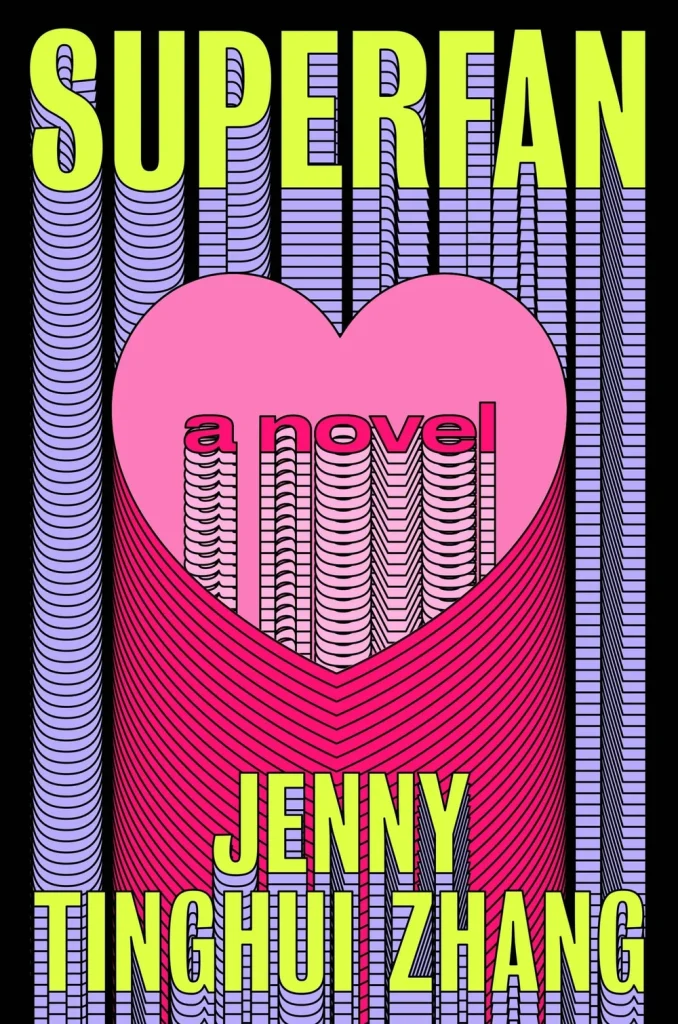
Jenny Tinghui Zhang’s electrifying sophomore novel, Superfan, asks stans and fans alike to stop and question these impulses. Following college student Minnie, we see her go from listless and lonely to passionate and obsessive once she discovers the American-born, K-pop-trained boy band HOURglass. Every dance move on stage, every lyric in their songs, even intimate livestreams from their hotel—it all feels like they were tailor-made just for her. Is she wrong for believing in their closeness?
Uniquely empathetic for both the fan and the artist, Superfan critiques fandom culture and parasocial relationships during a time when intimacy is manufactured for economic gain. Zhang and I discuss fandom culture’s shift from shame to pride, ownership and authenticity in fan-artist relationships, and Heated Rivalry as proof of our human need for connection.
Jalen Giovanni Jones: It’s so exciting to see Superfan out in the world, especially after the success of your debut. What has the publishing process been like the second time around?
Jenny Tinghui Zhang: When my first book was coming out I didn’t know anything. You’re just happy to be there, getting your book published. I’ve gone through the publication process before, and now that it’s happening again it’s almost like I know too much. I feel more vulnerable as a result. Debuts are inherently exciting, but for follow-ups you’re asking, “Will this measure up? How does this reflect upon me as a writer in my career?”
Now you have the critics, the reviewers, and your publisher, whereas with the first book, most of the time you’re kind of just writing for your own happiness. You’re barely thinking about audience, or the market. I think you just know too much after the first book, and sometimes knowing too much is a bad thing for art.
JGJ: I found that the relationship between the audience and the artist is actually a big part of Superfan. Did having a more formal, defined audience following Four Treasures of the Sky change your process when approaching your second novel?
JTZ: Weirdly with both of my books, audience was one of the last things that I thought about. A lot of the time I am thinking of a hypothetical one person that I would like to be writing to, and whom I would like to be read by. But I don’t approach the writing of the novel like there is this one specific target, in terms of readership. It sounds very narcissistic to say this, but I always feel I am my audience, first and foremost. I think: Is it interesting to me? Is it something that I would want to read? Because if it’s not, then what’s the point in me pursuing it?
Sometimes knowing too much is a bad thing for art.
JGJ: What immediately made Superfan stand out to me was its use of a dual perspective narration, between Minnie’s point of view and that of HOURglass member Eason. What made you realize that that dual perspective was necessary for this story?
JTZ: With Four Treasures, it’s very much a strictly first person novel. With [Superfan], I wanted to challenge myself to do things that were outside of my comfort zone, and writing in the third person was just that. Following two narrators and seeing if I could develop those characters the same way that I would develop just one character was also another way to challenge myself.
I initially thought we could just follow the fan. But as I was writing into Minnie’s story, I just found it so interesting, how so much of being a fan is kind of assuming someone’s life, making up stories about that artist and [the] motivations behind their actions. Because I wanted to play with the inaccuracies of that, I brought in Eason. Having both perspectives was a way to showcase just how wrong, or maybe sometimes right, someone could be when they’re making all these assumptions about someone else that they don’t really know. Superfan is really interested in unpacking what it means to be your authentic self, and asking how much of that authentic self you owe to an audience.
JGJ: Often in popular discourse, fans are treated as this invasive mob, but Superfan very much humanizes Minnie and fans in general. The book shows that Minnie has a reason for acting in her fanatical ways. She’s gone through her own pain, and HOURglass does a lot of good for her.
JTZ: I’m so glad you said that. A lot of how we talk about fan girls today is with a patronizing tone. “Oh, they’re crazy,” and that’s the end of their story. But having been in many fandoms in my life, I’ve seen that there’s also a lot of community to be found in those spaces. And there’s a reason why superfans are drawn to things to the extent with which they are. I wanted to show empathy for that.
JGJ: When it comes to the fan-artist relationship, at what point would you say the fan might be crossing the line?
Many fans feel like they have ownership over this person that they’re a fan of.
JTZ: Usually we as a society cross that line when there’s an aspect of ownership to the fan-artist relationship. Many fans feel like they have ownership over this person that they’re a fan of and believe they get a say in the choices that this person is making, get to rebuke or celebrate the person that their celebrity is dating, etc. There’s this increasing feeling of ownership, almost like “I’m your fan, and you owe me certain things.” Where we start to cross the line is when that belief system takes over, where you’re no longer seeing the humanity in that artist, are no longer treating them as a human who can make their own decisions and who exists outside of this persona, but instead only seeing them as the object of your fandom and of your ownership.
JGJ: You paint this relationship between artist and fan as a two way street. Most thinking and writing around these types of parasocial relationships show that relationship as one directional. This novel shows that the artist, too, can feel partial to the relationship. Eason is deeply attached to his fans.
JTZ: That’s exactly what I was trying to get at. This is becoming more of a thing in Western music marketing and promotion, and it is for sure a strategy in the K-pop industry—there’s encouragement for K-pop idols to cultivate very close and personal-seeming relationships with their fans. In the book, this is shown through Eason’s live streaming. Live streaming is huge in K-pop. Fans hit the notification that they’re live, and they’re instantly taken to the idol, so close to the camera, and they’re bare faced and without makeup. They’re in a hotel room after a concert. They’re dressed in normal people clothes, just talking to their cameras. It really feels like you’re on FaceTime with your BFF or boyfriend. I’m trying to point out that there is kind of a benefit to establishing this kind of relationship with your fans as well. The companies stand to benefit from it too, because they want for people to buy the albums, buy the merchandise, and establishing this very intimate relationship is one of the ways to guarantee that. But we should also be talking about how celebrities benefit from this relationship as well.
JGJ: I want to question that a bit more. Eason’s live streaming, for example, is an attempt to get closer to his fans—can that come from an authentic place, or is that always a way to make more money? Is it always capitalizing off of that perceived intimacy, or can the artist genuinely want to just hang out and have such intimate moments?
JTZ: I think it could be both. In our world, someone like Lorde or even Taylor Swift, they do love their fans, and they give a lot to their fans. But if we’re talking about the industry, all of these big record companies also know that there is money to be mined from that relationship. That’s always going to loom over.
JGJ: You mentioned that American music is starting to take from K-pop industry practices, and that is the formula that HOURglass follows in the novel. We’re really seeing that now, especially with examples like KATSEYE, who just performed at the Grammys. Why do you think this mix of Western and Eastern popular culture is becoming so prominent today?
JTZ: I would like to believe that the powers that be are seeing a diverse mix of members with diverse backgrounds as what is most interesting and appealing to the audiences that exist today. But in band-making shows, producers and executives discuss the marketability of each person. Part of me wants to believe that the industry is realizing it doesn’t have to be just one type of person that can be a star. At the same time, part of me is skeptical. Is it coming from an authentic place, or is it just that there’s more money to be made by appealing to more groups of people?
In general, my suspicion is around the industry at large that pulls the strings, and that’s reflected in the book. Most artists just want to showcase their talent, their art, to perform, and to connect with the fans. But there’s always this larger schema at play, that maybe they aren’t always in control of.
We’re just inquisitive creatures who want to connect, to know more. We’re like puppies out here.
JGJ: The internet definitely has a strong presence in Superfan, especially through the blog post sections that we’re given throughout. How has the internet changed the way fandom culture operates, compared to how it did in a pre-internet age?
JTZ: Growing up, I was part of many, many fandoms. In middle school I was really into Lord of the Rings. But there weren’t a lot of spaces online for me to vent out my obsession. There was no way for me to be a fan more than simply loving it and writing in my journal about it. Fast forward to when Lost was on air and became super popular, I remember how that was the first time there was a whole community on LiveJournal dedicated to a fandom. Every week, people would discuss the episodes, post their theories, and talk amongst themselves. Today, fan spaces are everywhere—whether it’s on Reddit, Twitter, or wherever, it’s just easier than ever to be a fan. The internet has made it easier to connect with everyone, but also it’s made it easier to kind of create your own little silos and havens in community. Before, it was almost an embarrassing thing to be a huge fan of something. When I was growing up, there was some shame attached to it, and you weren’t out there constantly advertising you were part of a fandom. Now, people are so happy and eager to express their fandom, and to partake in fanning. That shift has been really interesting to witness.
In writing this book, I was thinking about how disingenuous it would be to not include the voice of the internet. I wanted to give a voice to the way that people speak in fandom spaces online. You could call those posts another “voice” or perspective in the novel, in addition to Minnie and Eason. I wanted to give this sense that there is a larger collective, a larger community. We never really know who is behind those posts, or if those are all posts from various people. We are just hearing from a mysterious collective that kind of has a presence over the events of the novel.
JGJ: How do we mediate our relationships with our favorite celebrities, pop stars, artists and the like, and make sure they don’t get out of control like they might in Superfan?
JTZ: Have you seen Heated Rivalry?
JGJ: I haven’t watched it, but I’ve heard and read a lot about it.
JTZ: Like with HOURglass, the actors of that show had a meteoric rise to fame overnight. Their teams are doing so well with pumping out content and making sure they’re going to all the fashion shows, doing all these interviews, there’s always more and more content. That seems to happen for any celebrity that’s hot off the presses. We all just want to know more about them. I actually don’t know what the answer is in terms of mediating our relationships, because I feel like everything right now is geared towards making sure that we have a kind of parasocial relationship with the things that are out there.
Whenever I finish something I have to go on Google and search for the entire cast. I have to know about their lives. I have to see what other projects they’ve been in, or are going to be in. There is this drive to know more. That inquisitiveness and curiosity slowly morphs into a feeling of intimacy that morphs into a deeper parasocial relationship, which can then be taken to the extreme. Ultimately, what it all is is our human need for connection. We’re just inquisitive creatures who want to connect, to know more. We’re like puppies out here.