
Interviews
Nafissa Thompson-Spires’ Debut Novel Satirizes the Idea That Black Men Are Invincible
The author of THE FOUR WIVES AND FIVE DEATHS OF RICHARD MILFORD on metafiction, collective voice, and overcoming the sophomore slump
Rumor has it that now—in our world of alternative facts, of journalists replaced by influencers, experts replaced by AI, and of news constantly deemed fake—we’ve finally, finally done away with that dastardly thing called “truth.” Hard data is tough to come by, since sensationalism’s better for algorithms. It’s difficult to tell if any given video is secretly an ad. Not even our Google searches can be trusted. They’re calling it a “post-truth society,” and here we are, left in constant skepticism over the fabric of our reality. Did we really have a White House Press Secretary between October 12th and October 16th, 2026? Is Manon of KATSEYE really on “hiatus”? Could we really “see everything”? Ugh. We can’t even trust our documentaries anymore.
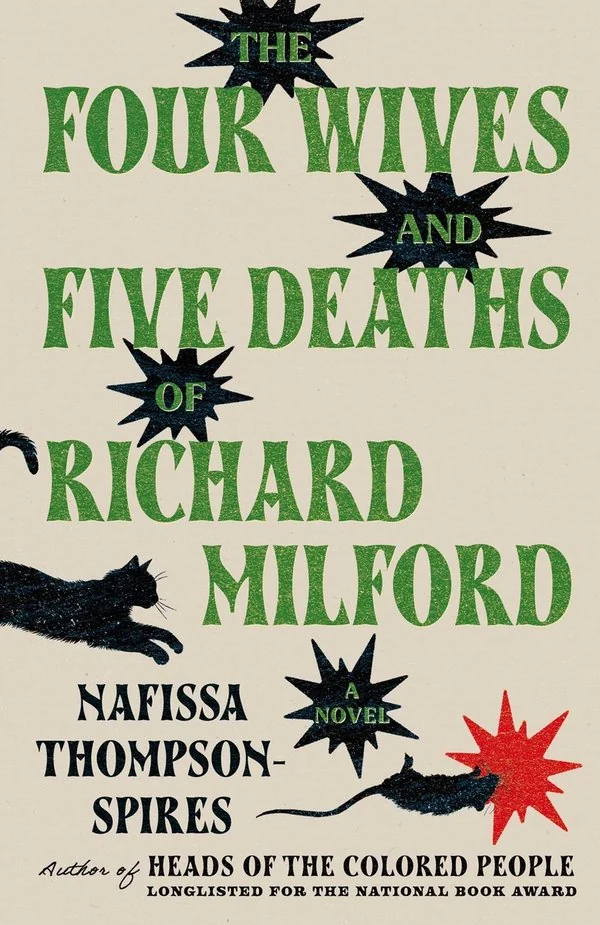
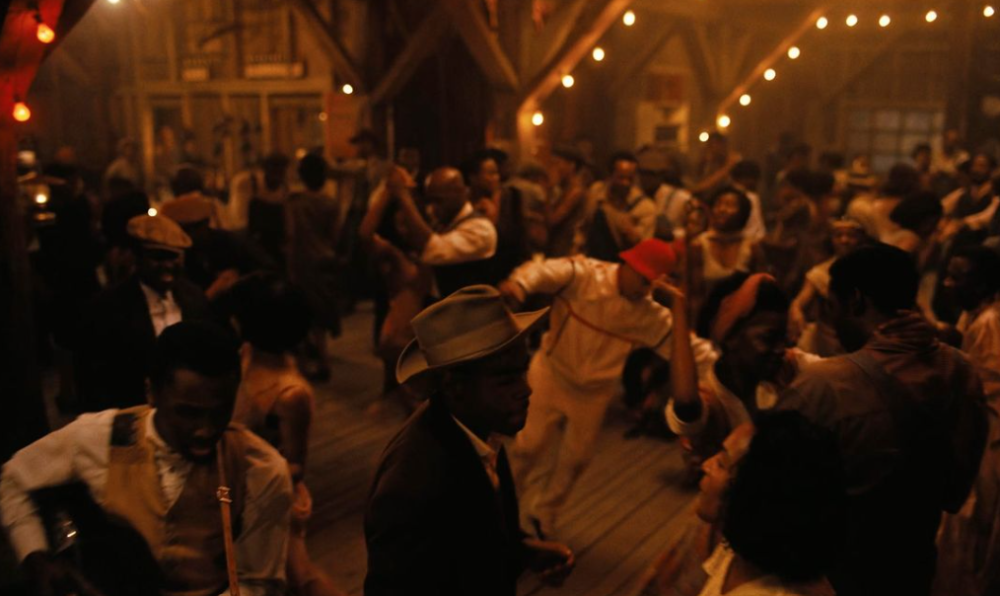
Multi-award-winning, National Book Award longlisted author Nafissa Thompson-Spires knows none of this is new. Her second book and debut novel, The Four Wives and Five Deaths of Richard Milford (a current First Novel Prize finalist) is set in the all-Black town of 1920s Newville, where the town has finally, finally done away with that dastardly thing called “Richard Milford.” An infamous moonshiner, an unloyal womanizer, and just plain mean, the town will tell you—collectively—that this is good riddance. That is, except for his four wives and his beloved housekeeper Alberta. They’d surely remember him differently, right? Unless they somehow had reason to kill him . . . Wait, how many times did Rich die?
With slick wit, a wry sense of dark humor, and a hefty dose of whimsy, Thompson-Spires deconstructs the idea of truth before our very eyes in this tightly wrapped satire/whodunnit. Over Zoom, the author and I discussed how our imaginations can deceive us, the careful game of Black satire, John Edgar Wideman’s concept of “Great Time,” and how she brought herself back to play after years of fearing the sophomore slump.
Jalen Giovanni Jones: Your previous book, the short story collection Heads of the Colored People, grappled with being Black in a world that constantly gaslights you. Given that The Four Wives and Five Deaths of Richard Milford interrogates our notion of a concrete truth, I’m curious to know if you were expanding on those ideas that you set up in your first book.
Nafissa Thompson-Spires: You know, I was. All these women in the book have been gaslit in many different ways. The town of Newville is gaslighting, too, when it comes to how they approach Rich—how they think about his trauma, and how they see him as this cursed, evil figure that they’re happy to be rid of. And gaslighting plays a huge part in how the book’s climax manifests. My writing is still interested in that overall project.
JGJ: What was your experience like, transitioning from short story writing to novel writing? Do you find your approach to be vastly different between each form?
Once I have the structure, then I know what I’m doing.
NTS: They were very different at first. I found novel writing really difficult. God bless all the people who can write novels, who can just pop them out so quickly. This book took me five years. It’s a slim book, but ultimately my editors gave me some good advice—to lean into my talents as a short story writer, and to lean into what made Heads work, in order to write this book. That’s why the book consists of short chapters that are almost standalone, yet are all linked in their own way.
The process for me involved a lot of prayer, a lot of worrying, a lot of fretting. Things really crystallized, though, when I told RO Kwon that I really wanted to make Richard Milford die in five different ways. I was really stuck on the structure, but she was like “well why don’t you make him die five different ways?” After those deaths dictated the structure, everything else came together. That’s true for my stories in general—once I have the structure, then I know what I’m doing.
JGJ: Speaking of structure, you take on many different POVs throughout the novel—six perspectives, which is impressive in under 200 pages. How’d you know which perspectives to include, and when?
NTS: I knew I wanted all of the women to have a part, including the housekeeper Alberta. I organized it by each death—who held the first baton in the murder-relay race, and then who passed it off to the next person, and to the next. Alberta specifically is central to the book because she’s known Rich all his life. She can speak to how he was as a child in the same way that the town of Newville can, but with more intimacy and perhaps more honesty, because I think Newville gets a lot of things wrong.
Newville brought a tall tale quality to the novel’s structure, which built out as I thought more about who I wanted Rich to be. Initially he started as an attempt to satirize the traditional trauma plot. But I wanted to write his traumas without limiting his backstory to solely those experiences. He has so many different things that you can blame for his bad behavior, all of them outlandish: getting thrown from a horse, getting struck by lightning, the murder-suicide of his parents, being double dipped during his baptism, and so on. I wanted to play with origin stories, to question how we become who we are.
JGJ: I took note of the novel’s tall-tale quality. Even though I’d call it realist, it still has elements of the fantastical and surreal. There’s lightning strikes, visions that people are having, and Rich just refuses to actually die. Were you intentionally turning away from realism with this novel?
NTS: I’m not sure it was an intentional turn away from realism, but I knew that I wanted the realism to be spiced and peppered with that magic. I was really thinking of tall tales and fables, and how somebody can grow so big in your mind that they’re no longer a real person to you. I was hesitant to do that with Rich at first, because I didn’t want to feed into the idea of an “invincible Black man who can’t be killed, can’t be tamed.” I wanted to write a Black man who was a real person, as much as he was a figment of people’s imaginations. That’s part of what the book is satirizing—how we think about Black men as indestructible. Why do police have to shoot Black men at all? Why so many times? Why taze and shoot and kick? All of those mini-deaths that Rich dies are part of that commentary. The way that he won’t die is part of this questioning of why the Black man lives this way in the figments of our imagination.
JGJ: The idea of a person can end up becoming something entirely separate from who they are in reality. I see that manifesting a lot in today’s world especially. So what was it that made you want to set this novel in the 1920s?
That’s part of what the book is satirizing—how we think about Black men as indestructible.
NTS: I wanted an all-Black town. I knew that from the very beginning. This story is based on my real life great-grandfather, who grew up in the 30s and 40s, had 40 children and three wives, and beat them all with a horse whip. I wanted to see what it would be like for the women in his life to get revenge on him. My great grandfather was known as both a menace in his town, as well as this beloved figure. I wanted to hold space for both of those things, and setting the story in an all-Black town had the locale that could.
Oklahoma made the most sense because it historically had 50 all-Black towns, and only 13 of them remain. That’s where Newville’s goal for self-preservation came into play—the idea that people are competing for versions of the truth, because they’re competing to be historicized, to make sure that they’re remembered and have a legacy. I wanted to draw attention to the legacies of these real-life towns as well, because so many of them—while remembered by the people who live near them—are forgotten by history in so many ways.
JGJ: While the Newville sections of the novel capture more widely held beliefs of the townpeople, those sections also feel very biased and gossipy. What was your process in determining Newville as a collective narrator “character?”
NTS: Newville represents the messiest and worst people of the town, and also demonstrates all of the civic engagement of real life Black people during this time period. These small towns were involved in projects of civic engagement, grappling with real questions: What should Blackness look like? What should a Black Nationalist project look like? What kind of Black Nationalism should we practice? How do we have our own spaces without white interference, how should we run our own towns, our own governments, and our own finances as much as possible? It had to be a made-up town so that I could play with history a little bit, but there are real nods to historic moments at that time—like Booker T Washington passing through on his way to Boley. Obviously, Tulsa’s in the book, and then there is the anti-lynching committee, which would have been like so many other committees in other towns. All of those things were meant to draw both attention to the real towns, and to allow me space to play.
JGJ: One aspect that I really loved in this book was this meta quality of the narration. What do you find useful about the more meta qualities in your writing?
NTS: I love metafiction because most people get it. With satire, some things are hard for everyone to be in on the joke about. Metafiction is not like that most of the time. You can see when a book is commenting on the act of writing or the art of storytelling pretty easily. And I’m always really interested in literary allusion. Postmodernist writers really inform my work. Ishmael Reed and the way that he plays with time and history. John Edgar Wideman talks about Great Time in his work, which describes how for Black people, time is a circle. Everything is happening at the same time and at a different time, and it’s repetitive. I wanted to think about that with storytelling. All texts are related to each other in some way or another. Newville is both a Greek chorus, and it’s specific to these Black people in this 1920s space.
JGJ: You’ve stated that you write for expository reasons—to expose things going on in the world, sometimes to shame people for doing them, but also to work things out and disarm people. What were you trying to expose or disarm in this novel?
I wanted to expose how time is cyclical, and for Black people, the same things are going on now that have been going on ad nauseum.
NTS: I wanted to expose how time is cyclical, and for Black people, the same things are going on now that have been going on ad nauseum. This story could very well apply to the now. We still have real-life lynchings happening often.
There’s a really horrible story in my family, where I walked up to people who lynched one of my relatives when I was two. We were in a Dairy Queen in Texas, and everybody knew about it. Everyone knew that these were the loved ones of this person who had lynched my relative. You could be a two-year-old innocent child just trying to get an ice cream cone, friendly enough to walk up to some people, and those very people could be the perpetrators of this horrific crime, unpunished. That story has always stuck with me as a reminder of Great Time—that nothing is new under the sun. I wanted to think about that, expose that.
JGJ: I want to ask how you imagined your audience as you were writing this. Especially since Four Wives is your second book, I’m wondering if you had to reimagine who was going to be reading this new project.
NTS: I thought a lot more about audience with this book than I did with the previous one. With the first one, I was just playing. I was pissed that I had a revise and resubmit from some agent who hadn’t agreed to represent me, and I wrote Heads of the Colored People really, really fast (instead of the book that I was supposed to be revising and resubmitting). I call it naughty writing—when you get stuff done, because you’re not supposed to be getting it done. This new book was not naughty writing. There was a machine and pressure behind it.
A lot of people talk about the sophomore slump—this idea that the second book is just so much harder. I had so much fear that I was going to fall into a sophomore slump, that I was going to have a really trepidatious time writing it. And so I had a trepidatious time writing it. It was really, really difficult to write this book.
I thought about audience in that I wanted my old audience to be pleased with it, to still want to read me. I was very afraid of how the book would be received because it’s very different from Heads. I had some people in my life who were saying that succeeding projects were “just not like Heads! Just not the same as Heads!” That put a lot of pressure on me. It made it difficult to go forward. I had to overcome a lot of fear in order to really engage with audience in this book.
JGJ: Knowing that, I want to know how you came back to your sense of play. Reading it, there’s plenty of playfulness: the humor, the metafiction, the satire, the sly voice. How did you make sure to keep those qualities that are true to your writing style still embedded in this novel?
NTS: I had to keep reminding myself of what I tell my students, which is that play always has to come back into the picture. If you’re stuck, play. If you don’t know where to go, play. If you’re not playing, you’re not doing it; you’ve forgotten part of your motivation for writing—and I had forgotten that, momentarily. At one point I had done something funny, and my editor left a note saying “Oh, can we see more whimsy?” I know everybody’s saying whimsy lately, but that was literally her note. As soon as I felt like I had permission to be playful, I ran with it. Like the line dances that structure the book—slide to the left, slide to the right. I created this Goddess Rosemary. All these things that were more interesting, and more in line with my own aesthetic. It felt good to get back to play.