Interviews
Evangelical Purity Culture Affects Us All
"Famished” author Anna Rollins discusses how evangelical scriptures impact women and trickle down into American politics
Electric Literature must raise $35,000 to fund our next chapter. EL’s incoming Executive Director and Publisher, Denne Michele Norris, plans to grow EL’s reach and influence by every measure, while maintaining our sharp, independent spirit. We need your help to ensure our continued success.
Donate now to join us in building EL’s future.
In the opening of Anna Rollins’ debut memoir, Famished: On Food, Sex, and Growing Up a Good Girl, Rollins is in the ICU with a sick child, but all she can think about is how she’s going to work off the pasta she’d eaten the night before. At the time, Rollins “knew it was a coping mechanism . . . what you’ve done your whole life to distract yourself from anything that feels out of control or scary,” as she told me, but conversely, she felt guilt: for being a working mom, for putting her son in daycare. At that moment it became clear to Rollins, who told me, “There’s so much bound up in this [disordered eating] and I want to be able to move on.”
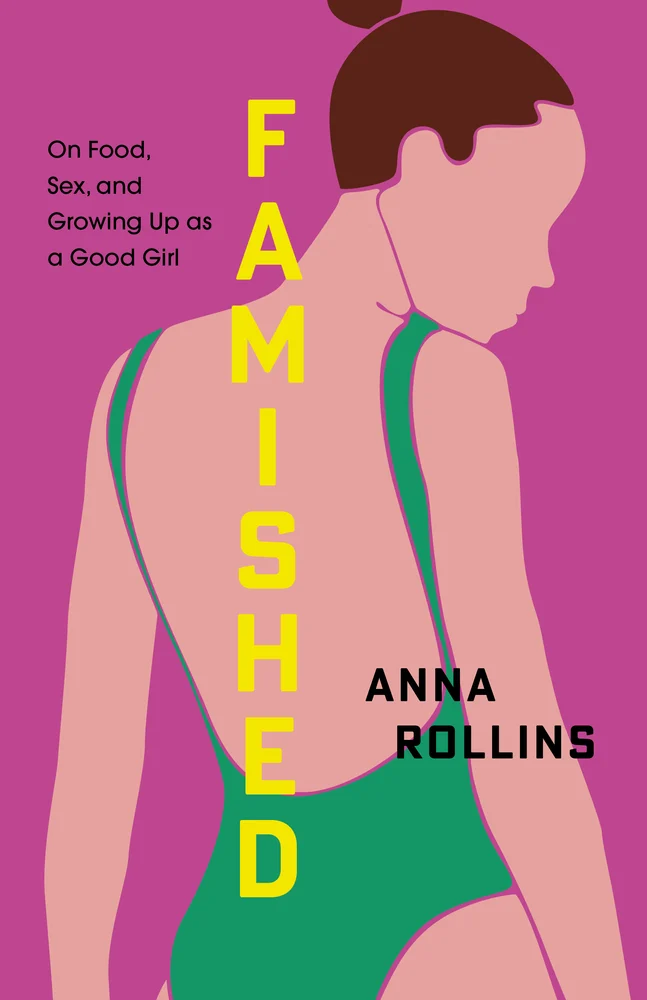
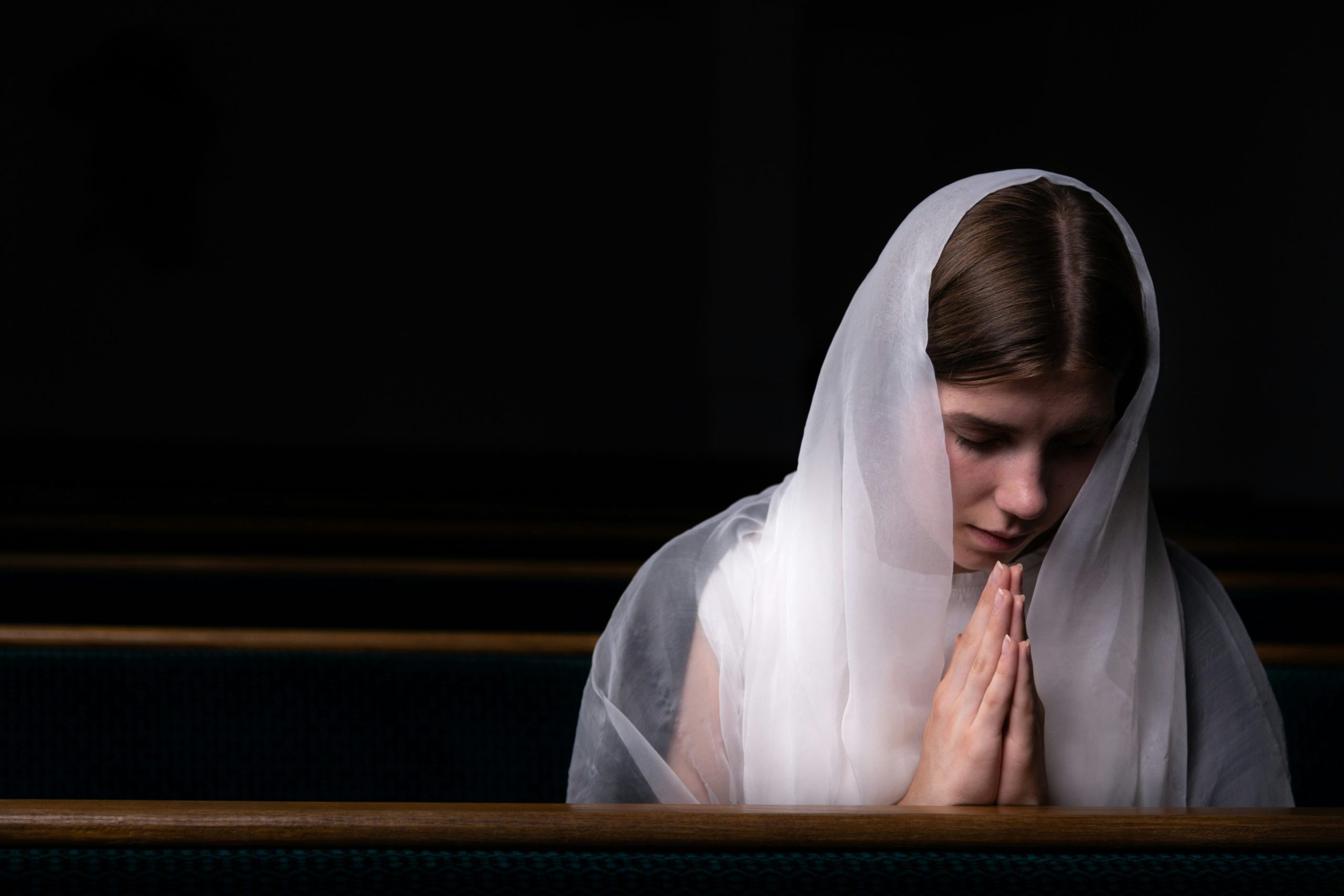
Growing up Southern Baptist in small town Appalachia, Rollins learned early that a woman’s main role was controlling her body. Part of this was millennial diet culture, which encouraged calorie counting and constant exercise, but part of it was the evangelical purity culture she was exposed to in church and at school, which taught that women don’t feel the same sexual desire as men, making them the “gatekeepers” of morality. Purity culture has always been part of society, but it reached a fever pitch during Rollins’ youth in the 1990s and 2000s, due to the rising influence of organizations like the Institute of Basic Life Principles and Focus on the Family. In Famished, Rollins illustrates how these teachings influence everything from sexual agency to a woman’s ability to recognize when she is being preyed upon.
Rollins and I spoke about the far-reaching implications of these teachings, including how purity culture impacts women’s sexuality, the racialization of fatphobia during Reconstruction, and why the most powerful critiques of fundamentalism often come from those who grew up within it.
Deirdre Sugiuchi: I’m Gen X, I grew up evangelical, and while reading Famished, it was fascinating to see millennial diet culture and millennial evangelism colliding, and how the consequences were even worse for you than for Gen X.
Anna Rollins: I’m a huge fan of Sophie Gilbert’s Girl on Girl, and she talks about how, in the nineties, the reaction to the AIDS crisis was this huge fear of sex. People swung one of two ways—it led to hookup culture, but then it also led to purity culture.
At the same time, the surgeon general declared this war on obesity. So, there’s all this stuff going on politically that’s influencing how we feel about bodies and appetites, and there are extreme reactions on both sides. And then you’re growing up, trying to figure out how to become a woman in the middle of that.
DS: The book is addressing women raised in evangelical culture, but how do you think this mindset impacts women in America?
AR: We see it in our lack of social safety nets for women, like with paid family leave. The reason we don’t have it is because of [fundamentalist] scripts about traditional womanhood and motherhood—how you are subordinate to a man and you should rely on that person—that is why we won’t fund this thing that would help so many people. It leaves people in such precarious states. Even if you’re not in purity culture, you’re being affected by it—things are not happening politically because of that belief system.
I’m interested in conversations where we can show up with authenticity.
There’s this idea in purity culture that if you are good, if you dress modestly, and you don’t hang out in the wrong spaces, you won’t be taken advantage of in any way. And if something does happen to you somehow, you must have done something wrong. It’s your fault. It’s never the perpetrator. It’s the victim.
That affects the larger culture too, in the way that we see certain people believed and other people not believed. So even though it may seem like it’s just happening in this insular space, it’s affecting all of our lives through policy.
DS: You interrogate the misogynistic mindset of the church, albeit gently, throughout the book. You give these instances of how the church, and also society, wants women to stay small, by encouraging them to tamp down their sex drives, making sure they don’t lead men into sin, or by staying physically small or physically quiet. And again, as someone who grew up in this culture, this is all so familiar. How do you think women in the church will respond? What type of conversations would you hope that this would spark?
AR: I grew up in fundamentalism, and it was extreme black and white thinking. We were supposed to have thought purity. We were all supposed to be the same. I’m interrogating these limiting scripts that require sameness. I’m hoping that we can talk about new ways forward for women that aren’t just extreme.
I had the hardest time expressing myself for the longest time because I always felt like there was some judge looking at my opinions, waiting to come down on me. In writing this, I realized, Oh, I can show up imperfectly in the world. I can change my mind. I don’t have to live under this belief that there’s always this ever watchful presence ready to pounce on any wrong move that I make. And I certainly learned that in the church, but I also see that in the larger culture too.
I think social media does a lot of that—we’re monitoring people’s beliefs and their purity of beliefs, and we don’t give much forgiveness for people whenever they stray or make a misstatement. I’m interested in conversations where we can show up with authenticity. But also imperfectly so we can have more agency.
DS: Even though I grew up in the faith, I never understood the tie between purity culture and penis-themed party favors for bachelorette parties until I read your book.
AR: Growing up, I remember hearing pastors talk about how women were less visual creatures than men. And because of that we didn’t want sex as much. “Men really want it. They’re a bunch of animals, but you all are closer to angelic beings, so you all need to keep them in line.”
You’re almost praised for not acknowledging what your body needs.
This was told as both a compliment, like you have the moral high ground, but it’s also an insult, because sex is power.
Growing up I went to a private Christian school. I really didn’t have friends who weren’t Christian until I got to college. [My Christian friends and I] were all saving ourselves for marriage, whether everyone was or not—that was what we all said. But we also wanted to prove that we weren’t prudes, like, “We have this power too.”
All the bachelorette parties I went to with girls who grew up in evangelical culture, the trend was penis everything. We ordered a mold to bake a penis cake and we had penis confetti and pin the penis on the guy without a shirt on. It was stupid, but it was also just this assertion of saying “Yeah, we’ve got something too.”
I didn’t realize how weird evangelical purity culture bachelorette parties are until I invited some of my friends who weren’t in that culture to my bachelorette party.
DS: Can you discuss how the hyperfocus on purity has lifelong impacts on women’s sexuality?
AR: Many women suffer from vaginismus, which is sexual dysfunction. You have involuntary contractions of the pelvic floor, and it makes penetrative sex either impossible or incredibly painful. I struggled with it when I got married. I’d saved myself until marriage, and I had no clue what was going on. I’d been taught nothing about my body. I just assumed I was a total failure. I went to a doctor at one point and they dismissed me. Then finally I got some help and it got better, but it took an excruciatingly long time.
I did research on the condition, and women in religious cultures suffer from this double the number of women outside of those culture—one in four women.
You’ve been taught your whole life [sex] is bad. Control yourself and control these others. And then your body just learns, this is what we’re supposed to do.
I can’t stay silent—this was my only way forward.
You’re almost praised for not acknowledging what your body needs. This is seen with the Protestant work ethic too—the more compulsive you are, the more you push past your physical limits, transcend your physical constraints—that is what is good. The body is bad. Having needs is bad.
The political party that aligns itself with Christianity, so many of their positions demonizes people who have needs. I don’t think it’s something that people are consciously aware of, but I think it’s rooted in this idea that good people transcend their bodies. Good people work hard and good people control themselves. It’s all connected.
DS: I really enjoyed the research you shared illustrating how fatphobia was racialized during Reconstruction.
AR: Thin bodies weren’t always the ideal beauty type [until] right around Reconstruction. It was a way for white, Victorian women to distinguish themselves, a way of asserting whiteness. And that has become the standard—this childlike, frail, prepubescent woman.
DS: You discuss how white supremacist patriarchy made white women smaller, but also gave white women power. I’ve read one book you mentioned, The Wisdom of Your Body by Hillary McBride.
AR: Also Fearing the Black Body by Sabrina Strings. Unshrinking by Kate Manne is excellent—she’s a philosopher and she unpacks fatphobia, where it came from, how it influences our policies. Anti-fat bias is the one bias that’s grown rather than shrunk.
I don’t know who said this, but when women’s rights shrink, women’s bodies shrink. I think it’s interesting that the backlash to body positivity is #skinnytok.
DS: Famished questions a lot of the tenets of fundamentalist culture. Can you talk about why there’s a need to have this conversation?
AR: I’m still a Christian, and I’m still in church. There’s a lot that I think is beautiful in the church . . . but I also can’t stay silent about the things that are harming people and are honestly against what Christianity has to say. I really do think that what I’m saying is not extreme or the minority opinion even in the church. More people need to speak out. I can’t stay silent—this was my only way forward. I think that Christianity has a lot of beauty—it has a lot to offer our culture and I don’t want to reject it. But so much that’s done in the name of Christianity really hurts people. It’s really ugly and it’s really anti-Christian. And if we don’t talk about that, it’s hurting the people that Jesus called upon us to help the most.