Lit Mags
Every Generation Battles Its Own Doom
Two poems by Nicole Cooley
Every Generation Battles Its Own Doom
This article is free to read. So is every article Electric Literature publishes. No limits, no paywalls—now or ever. But we rely on your support to keep it that way.
We need to raise $35,000 by April 15 to keep the lights on, and time is running out.
Help us reach the next milestone—$15,000 by Wednesday—by donating now.
—————
Self-Portrait with 80s Trash
We’ve ruined the planet, I say as I drive my daughter to piano, remembering
my sister and I fighting about who sat in the front seat

in our rusted car the color of menstrual blood where you could watch the road
through the floor, fighting for the chance to choose the music

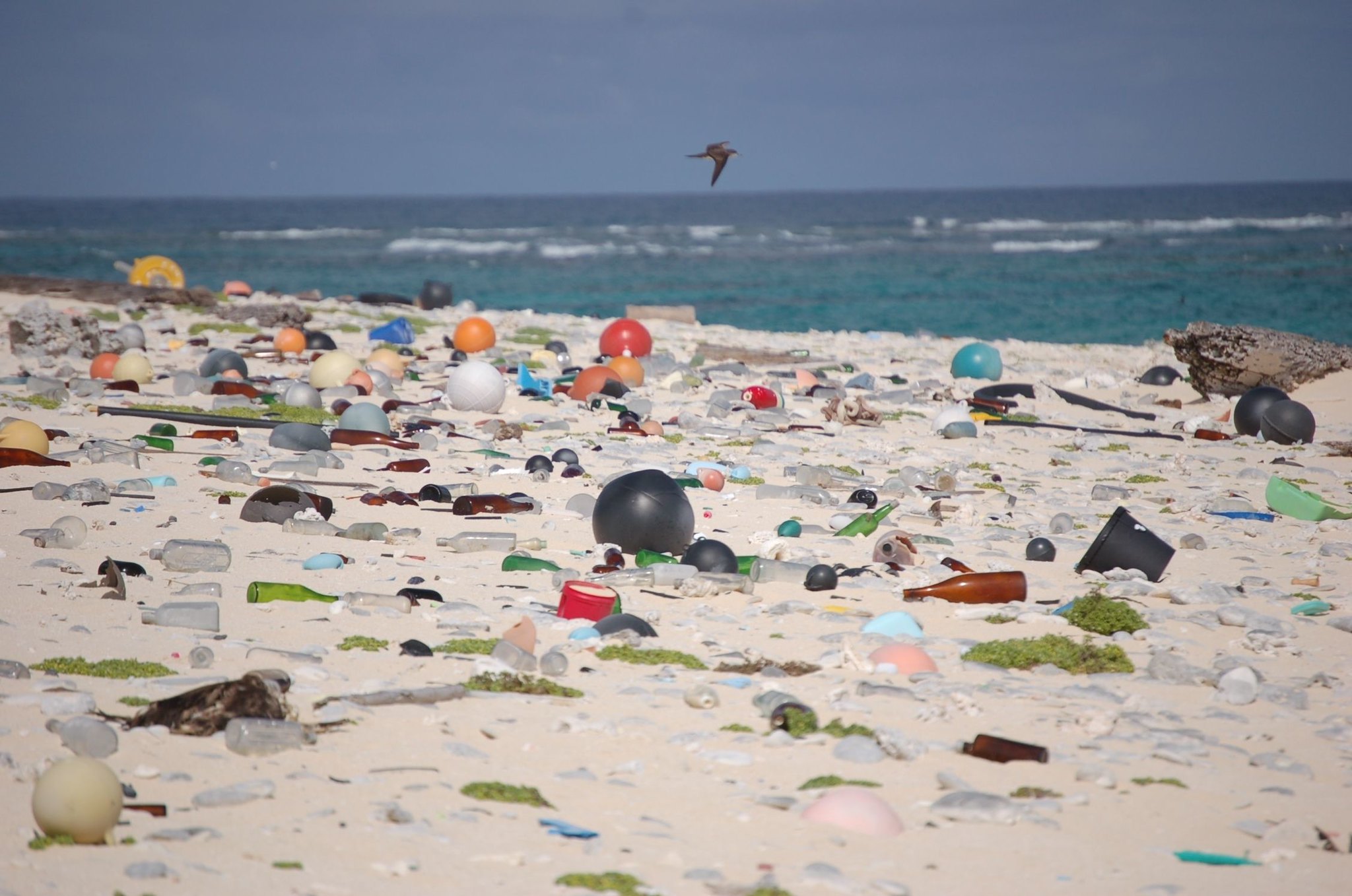
on the tape deck, and then I see it: island of plastic bags the size of Texas
I’ve read about, but this time: 8 track players, rotary phones with blank faces,

an IBM Selectric, floppy disks each the size of a man’s open hand
about to slap a girl. That’s my childhood, I’d say, on the tour of my life,

as the girls and I drive through my past, along the Gulf,
watching chrome and bad plastic floating in too-warm waters.

Meanwhile I’m still fourteen in New Orleans and a man drives a truck
alongside, keeping pace with me, as I walk faster, truck the color of green

hospital scrubs, man calling out, over and over,
Hey, baby, do you want a ride?
Of Resist
I want to tell my daughter about the suicide pills—

when in the car, on the way home from school, she explains
seventh-grade science. She says proudly, nuclear fission,

and we both agree: it is a beautiful phrase.
She names isotopes. Uranium-238. She explains

a nuclear chain reaction and I remember my first week of college,
when students in the mailroom gave us ballots to vote:

Should the university health services stock suicide pills in case of nuclear war?
Student organizers insisted we should have the option to die.

Suicide after a nuclear war would take on a whole different context than it has in this life.

Cyanide was the poison. I imagined us, seventeen-year-olds, lining up to drink a vodka-
colored poison from a shot glass, then one by one, dropping to the ground.

A student said he would vote for the referendum “just as an idea—just to put the word
“suicide” beside “nuclear holocaust.”

I could only imagine it as a scene from Sylvia Plath’s Bell Jar, my favorite book at
thirteen. I would swallow the pills as Esther Greenwood did and secret myself
away, in a cellar or somewhere beneath the earth, where no one would find me.

*

To put the word beside:  daughter   death   war

To put the mother back in the girl’s body

in the car    in the mailroom    on the college green

in the cellar

*

I  used  to  think  motherhood  was  the  gradual  extinction  of  self  because  I  knew  nothing
about  extinction  and  I  had  a  new  baby  and  I  wanted  to  be  alone—and  putting  the  baby
down  early  meant  we  are  burying  her  in  the  dirt,  we’re  tumbling  her  small  body  in  an
empty  grave,  she’s  a  swaddle  of  cotton,  deep  into  the  ground,  the  place  she’ll  go  years
from now though she doesn’t know it and I can’t bear to think of her death, and although
I strive to keep the knowledge of my death from her, though she knows, she knows, and
as she gets older, she brings it up, especially at bedtime—