Cover Reveals
Exclusive Cover Reveal of “Blow Yourself Up” by Ankur Thakkar
An obscured, staticky figure conveys a growing tension between digital and analog life
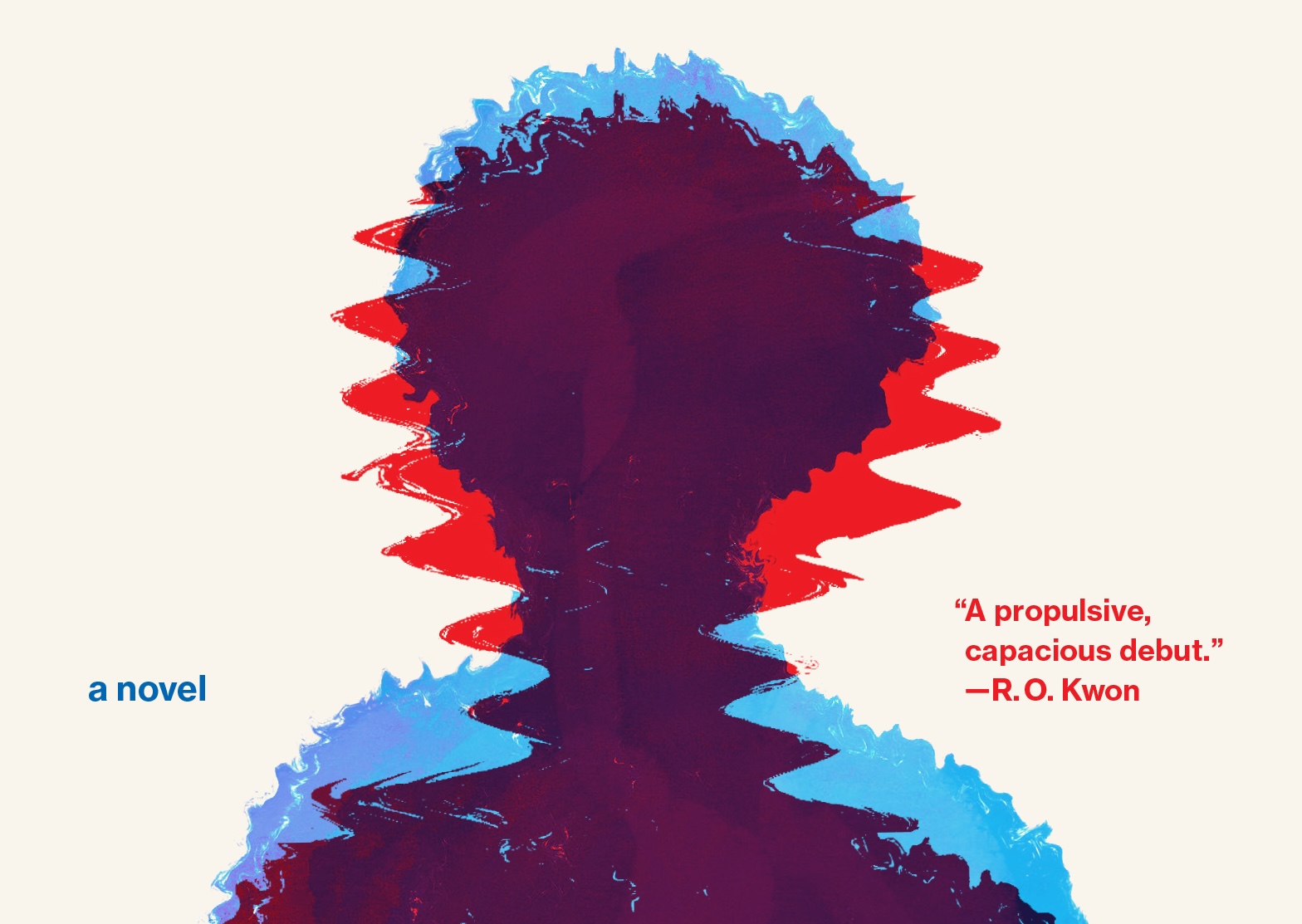
Electric Literature is pleased to reveal the cover of Blow Yourself Up by Ankur Thakkar, which will be published on September 15th, 2026 by Triquarterly Books. You can pre-order your copy here.
Blow Yourself Up is a story of first love across cities, spanning the decade that transformed the internet.
In the halls of an elite East Coast high school, Arjun and Payal fall in love as the world begins to tilt toward the digital. Over the next eight years, their trajectories diverge as sharply as the fractured internet itself. Payal ascends to the dizzying, dopamine-fueled heights of New York’s influencer economy, finding fame on Boost, a looping video app that is as rewarding as it is demanding. Meanwhile, in a cavernous office in Chicago, Arjun, a musician whose dreams have quieted, now cleans up the same platform’s debris, moderating the internet’s darkest videos. When a brutal act of political violence against a beloved musician goes viral, this rip in reality forces the pair to confront the motivations of the platforms they inhabit. A sharp exploration of creative ambition and the multifarious nature of identity, this is a story of love in the time of infinite scroll and a look at what we sacrifice to be seen.
Here is the cover, designed by Matt Avery:
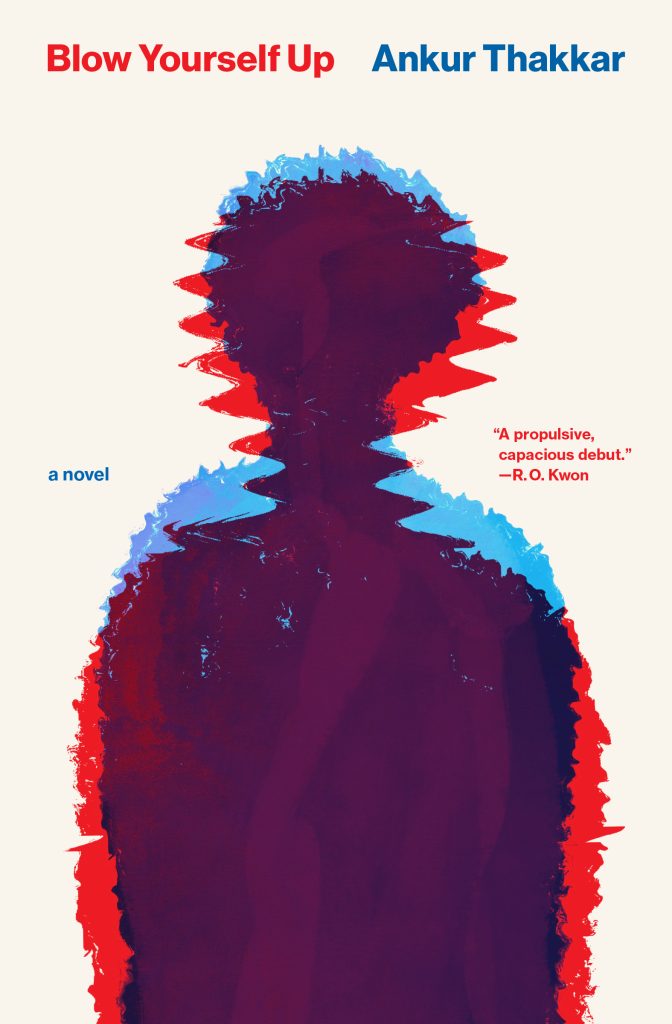
Ankur Thakkar: This novel is a love story (and so, a ghost story), told from both characters’ perspectives, a will-they-won’t-they narrative spanning from the era of the first smartphones to when the internet scrambled our brains. It’s about making a creative life as the internet changed what creativity means. There aren’t obvious visuals for this story—rather, there are, but I wasn’t interested in them. The designer provided several great directions, but this figure immediately stood out. I couldn’t have dreamt it up myself, but it felt so right. There’s the tension between digital and analog life, of identities coming into being, and the undercurrent of yearning that guides both characters. I would have been equally drawn to the figure if it were stenciled on a wall, used as an album cover, or as a posthumous symbol. I’m so grateful to have this horny emo book reflected through Matt Avery’s palette.
Matt Avery: For this cover, we wanted to convey a few themes. The novel has two main characters that are very much online. But we didn’t want any overt references to social media or the internet. Another question was how to channel or play off the main title (without actually illustrating a “blow up”). The author and publisher provided a lot of promising suggestions and I was able to create or find a good number of options that felt like they resonated with the text. During that process, I remembered a couple figures I had drawn previously that I might be able to work with to suggest the characters’s grappling with identity—as well as their online experience. However, an expressed preference at the outset was for “no people/figures.” I understood why—and at the same time felt that by layering the drawings we wouldn’t depict a fixed identity and would provide a sufficiently open-ended reading. Are we seeing two people? One person transmogrifying? Or a digital will-o’-the-wisp? You’ll have to read the novel to (not) find out.