Cover Reveals
Exclusive Cover Reveal of SECRETS AND OTHER HOBBIES by Mary Hannah Terzino
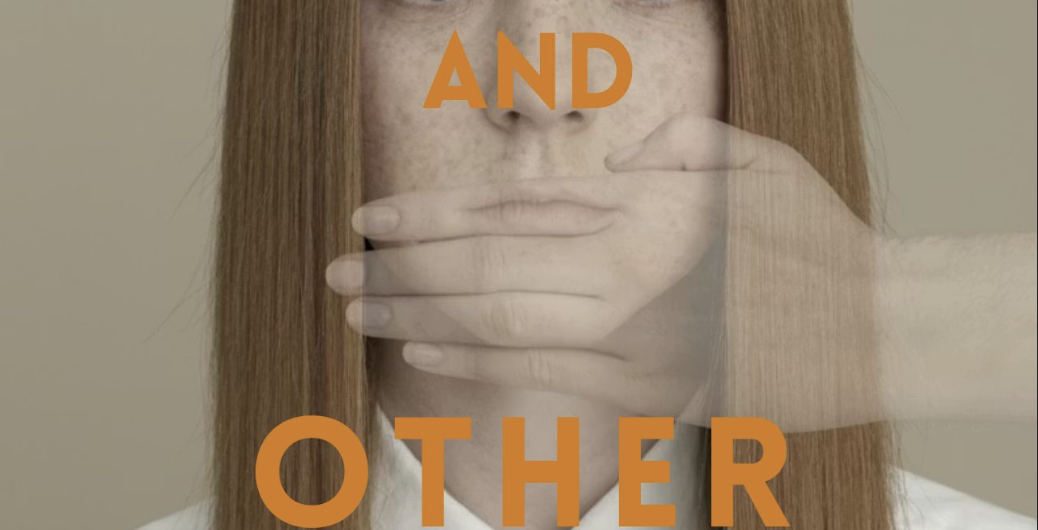
The shadowed hand over a young woman’s mouth reflects the secrets carried in these stories
Electric Literature is pleased to reveal the cover of Secrets and Other Hobbies by Mary Hannah Terzino, which will be published on October 20, 2026 by Cornerstone Press. You can pre-order your copy here.
In this collection of stories exploring the experiences of women—and sometimes men—of all ages, at pivotal moments in their lives, a child spies two women kissing at her mother’s bridge club. A young girl unwittingly contributes to terrible loss as she tries to honor her friend’s deepest wishes. A late-night drowning at a high school graduation party is mired in secrets. An older woman compulsively attends the town’s funerals, believing her presence there to be God’s calling. A retired woman finally harvests insights and breaks old habits through revelations from her daughter’s experiences. The stories in Secrets and Other Hobbies are layered with purposeful deception and poignant, hidden yearnings that cause their characters to stumble before they rise, if they rise at all. Serious and darkly humorous, noble and morally ambiguous, achingly vulnerable and always memorable, Mary Hannah Terzino’s debut lays bare an indelible and realistic Midwest.
Here is the cover, designed by Abby Paulson, with artwork by Juli Balla:

Mary Hannah Terzino: I’m a character-driven writer, and I found inspiration for the characters in Secrets and Other Hobbies in both the people I grew up with in northwestern Indiana and folks I know as an adult living in the upper Midwest. We Midwesterners are polite, simple-appearing folks who often pulse with secrets, obsessions, or eccentricities below the surface. The people in my stories yearn for redemption from loss, disappointment, or their own imperfections and bad habits. These poignant yearnings cause them to stumble before they rise—if they rise at all. In many of the stories, life-changing secrets threaten to inhibit their redemption. This is true especially for the young women in “Bridge Club,” “Wept the River,” “Suitcase Twins,” and the anchor story, “Three Seasons of Judy Mitchell.” Some protagonists live in the present, while others navigate the cultural values of the mid-twentieth century. I write about the mid-century in part to dispel the notion that it was a golden era about which we should feel nostalgic. Those characters led messy lives, too! Their stories explore the effects of hidden sexual identities, abuse, or economic class divisions—dilemmas unresolved in contemporary times. Yet I’m a writer who cannot shed the need for humor to lighten our loads, and I’ve tried to include funny or absurd moments in everything I write, even the heavier stuff.
When I saw the striking photograph of this young woman with a shadowed hand over her mouth, I was struck instantly by how well she represented the notion of secrets as used in my stories. About a third of the stories in the collection feature young female protagonists, some from the 1960s or ‘70s and some from the present. The solemn look of the young woman in the photo, and her neutral attire, made her an ideal representative for these fictional women. I was excited to see what Abby Paulson, the cover designer, could come up with to amplify the sense of tension I perceived when I looked at her. The designer’s bold font and suggestion of orange for the title sealed the deal. Orange is the color of warning signs, a great amplifier of tension. It was like a shout set against the stillness of the photo.
Abby Paulson: Working with Mary on the cover was a process of vision. At Cornerstone Press, we work with our authors to develop covers that speak to them and their work, and Mary’s cover is no exception.
The image Mary wanted worked incredibly well for a cover, and by adding a splash of color with the orange palette, we were able to convey warmth and danger, light and dark, stark and complex.
Another important move was figuring out text placement, given the standalone strength of the image. Spreading the title out vertically pulls the eye from top to bottom, forcing them to confront the silencing of the woman on the cover.
Altogether, these elements make for a vibrant, atmospheric, and striking cover.