Interviews
How to Write Poetry in the Era of Face-Eating Algorithms
Author of "/face" William Lessard on facial recognition, surveillance, and the myth of the analog poet
In December 2024 (adjusted for the present rate of dystopic acceleration, several eons ago), T. M. Brown published an essay in The Atlantic whose title “You Might Be Worried About the Wrong Algorithms,” could double as a subtitle for William Lessard’s /face. Therein, Brown argues that our tendency to depersonalize the algorithms feeding us recommendations—that is, regard them as inherently abstract and abstracted from human influence—prevents us from resisting the actual people laboring to transform their personal preferences, prejudices, and profit motives into institutions. But how are we to tear the veil of corporatization and identify the individual actors who so carefully preserve their facelessness?
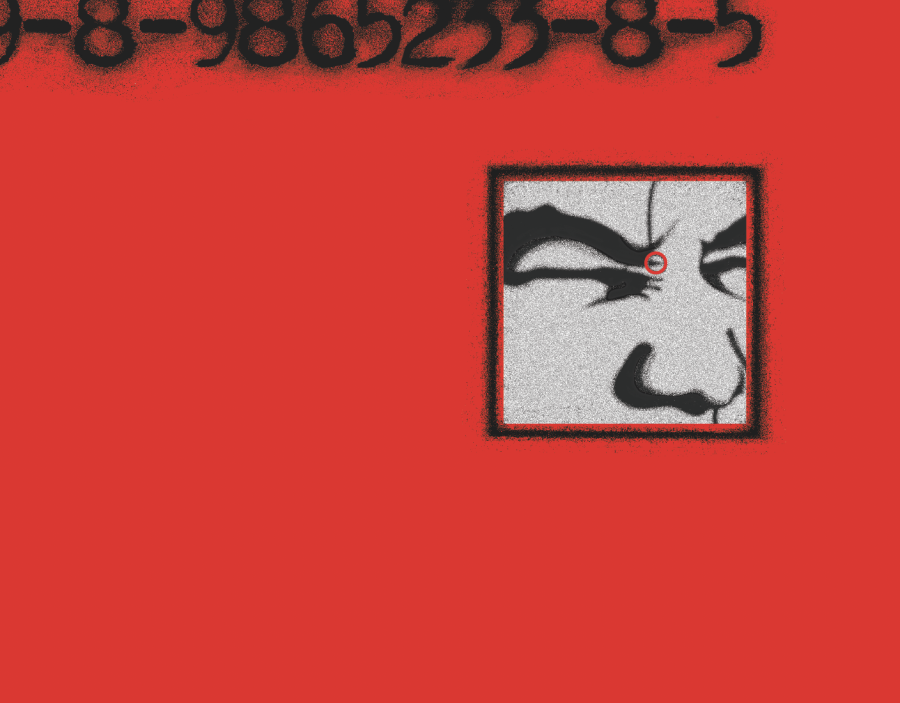
Via a lyrical and grotesque collage of patent drawings, PowerPoint templates, tables, corporate jargon that feels less appropriated than leaned into, flash fiction, and Barthesian semiotics, /face proposes that first we first need to look in the mirror, then stop conflating looking inward with knowledge of ourselves. For instance, given that every smart phone camera and photo app is now a weapon of surveillance, self-portraiture no longer means what it has long meant in the realms of art, history, and global culture.
Happily, /face’s hybridity doesn’t feel like the product of a project or a dissertated hypothesis. The more one reads, the more /face reveals itself to be a piece of speculative software neither wholly analog nor digital in origin. Like any work of literature, it requires input from readers to make meaning. That /face asks for so much input, and that it activates routines and protocols that feel very different from those employed by other hybrid forms is the most tangible innovation it risks.
Using our own personal modern-day memexes, William Lessard and I spoke via email, Zoom and DMs about day jobs, MAGA plastic surgery disasters, barn poems, predictive algorithms, Billie Holiday, and the architecture of /face.
Joe Milazzo: /face opens with a dedication that also serves as a gentle, maybe even affectionate, provocation: “To Judith and all the readers and poets that know what century this is.” How would you define this century, and how would you say some readers and writers are failing to recognize the times we’re inhabiting?
William Lessard: I think we’re living in a very retrograde time. I don’t think anybody wants the future. While we’ve embraced the efficiencies of technology for the past 30 years, we have resisted the deeper implications. You have people saying, “I don’t want any AI in anything I consume.” But the truth of the matter is that we’ve all been using AI for years; we just haven’t thought of it as such. Spell check, autocomplete, automatic login when you’re buying something online in the middle of the night (or when you’re half in the bag). This is all AI.
I don’t think anybody wants the future.
When it comes to poetry, as I’ve discussed in a series of essays I’ve written for Jacket2, I don’t see poets giving much thought to the materials they’re using. Even if they’re typing on a laptop, they might as well be composing with a quill by candlelight. And so much poetry gives no thought to experiences or occasions like: “I spent my entire day bouncing between, you know, X/Twitter updates and text messages and all this hypermediated hybrid content.” But, if you have any type of algorithmic intelligence responding to what you’re doing, you’re collaborating with technology. And even if you are the most analog, crunchy, academic poet and you’re writing poems about barns, you’re going to want to show it off. So what do you do? You take a screenshot of it, and you post it on Instagram or Facebook, and guess what? As soon as you do that, your barn poem or your erasure or your Matthew Arnold poem becomes part of the monster that you supposedly hate.
JM: I’d wager that most people who open to the first page of /face would say to themselves, “I am in the presence of an experimental text.” But do you believe the kind of 21st century poetry you’re describing is necessarily experimental? And is that experimentation necessarily self-reflexive?
WL: The impulse for the book comes out of my day job. For most of my career, I’ve worked as a technology publicist. Anybody who’s ever worked as a publicist, anybody who has been in media knows something about the sixth “w.” On top of who, what, where, when, why, why now. How and why do we continue writing poetry in the age of surveillance capitalism? Experimentation is one way to answer that question. But here’s how I think about experimentation: it just means that I’m going to do something even though I’m not sure it’s going to work out. I don’t see a lot of enthusiasm for experimentation in that sense because of all the precarity in the poetry world—in publishing, in getting acclaim, in landing a teaching job. Creativity seems to be sublimated to those careerist impulses rather than the kind of defiance you find in experimental work.
JM: I feel that defiance most in how visceral /face’s language is. On page 14 alone, we encounter knuckles, fists, chin, cheek, eyes, lips. All of which makes sense from a narrative perspective, as the book is a kind of gloss on the synecdochical violence (and violation) that is facial recognition technology. Can you talk about where the book’s language comes from?
With AI, language is being disrupted more than any other technology or medium.
WL: The language in the book is an attempt to capture the texture of contemporary life in a realistic way. And I think the reality that we’re dealing with here is that language isn’t expression in the poetic sense so much as it’s a mediated object. Language is something that inhabits us rather than we inhabit it. With AI, language is being disrupted more than any other technology or medium right now.
As Americans and people who grew up on democracy, we tend to view speech as sacred. But I don’t think speech is necessarily sacred. I think speech likes to be commodified, and that’s been true for a long time. Take search engine optimization (SEO). Certain words are worth more than other words. Certain words will appear at the top of this algorithm and others won’t. Now we have AI summaries and GEO, which is generative engine optimization which, in a lot of ways, feels like a further advancement or devolution if you will of that concept. Certain language is privileged over other language, and when you see that privilege you understand that language is outside of us. We borrow it for a little while, maybe we move it around a little bit. But how do we make the language matter? I think keeping the language concrete is essential to it mattering.
JM: In a strange way, you see this in the technical documentation that supplies much of the language that creates friction with /face’s visceral, embodied language. What was the poetic potential you saw in that technical documentation?
WL: I’ve been obsessed with documents and technology for a long time. Back in the Web 1.0 era, when you had all of these dot coms that were exaggerating their value, I would read S-1 filings on the SEC website. Because in those documents, companies were legally compelled to tell the truth. And, in so many words, that’s where you would find companies confessing that they had no business model and didn’t foresee making any kind of profit anytime soon. Similarly, later in my career, I was working with a company that was doing real-time animation software. The idea was you would hold your cell phone to your face and it would capture your expressions. So I started looking up all of the Google patents related to facial surveillance. And in those documents, just like in those S-1 filings, the companies would plainly state their intentions: that breaking facial expressions down to micro-expressions is a way of monetizing human subjectivity. The whole idea that we’re each just a series of preferences and behaviors looks really nice if you’re doing some sort of analytics presentation. But the reality is that we are still people. And there are people attached to all of this technology.
JM: /face is, in part, a sampling of the text and imagery from patent documents. How would you describe the different formal elements of /face, and how did they help you make a book out of the themes and concerns you wanted to address?
WL: The book is structured in three parts. There’s the first part, “techniques for creating facial animation using a face mesh,” which is the documentation. Then there’s this hybrid section, “do we have a plan B?(*),” that I wrote during the pandemic. Here, I took PowerPoint templates and improvised language around them. Then there’s a final section, “head template,” where I took a single PowerPoint slide that I worked variations on, changing the colors and tag lines. The idea is that you start with the theoretical, but you always end with the individual.
Lately, everybody’s been talking about looksmaxxing. To me, this situation exposes just how much the romantic self no longer exists.
JM: That’s also a journey from the face—which we believe gives us insight into what someone is feeling and thinking—to the mind, which we view as the seat of thinking and feeling.
WL: We start with the front of the head and end at the back. That’s the path of the book. But in terms of form, /face is also meant as a satire of how blind we are to our social vigilance. So many of us can’t live without taking pictures of ourselves. We take those selfies without thinking about how much damage that does to the environment. And it doesn’t matter how socially vigilant we are. All we care about is our personal brand.
JM: Yet, at the same time, what is a self these days? Is it, to build on the title of a recent essay by Oxana Timofeeva, “The Soul: A Vintage Concept”?
WL: The “Subject Comments” in the book speak to that. If you think of this book as reimagining a social media feed where there’s received language and ads and algorithmic language, the “Subject Comments” were intended to give it some personal heat and show the physical consequences of using technology.
JM: Right. The “mesh” in “facial mesh” isn’t diaphanous or easily escaped. And, even though it’s surgical, this mesh doesn’t heal. This is what the machine is using to analyze people so the people who operate it can predict behaviors and therefore guide those behaviors more efficiently.
WL: I was drawn to “mesh” because, of all the technology buzzwords, it seemed the most organic. You could create a virtual version of yourself or you could compile every one of your preferences into some sort of agentic AI or bot, but it would never really capture the perversity of who you are. At the same time, there’s this impulse of wanting to get beyond the limitations of subjectivity driving technology like this. We now have the monetization of the face down to micro-expressions. We can turn ourselves into revenue streams in ways never before possible. But that only exaggerates every insecurity that we have.
Lately, everybody’s been talking about looksmaxxing and Scott Galloway’s new nose and Jim Carrey’s new face. To me, this situation exposes just how much the romantic self no longer exists. You could make the argument that it hasn’t existed for at least 60 or 70 years. Meanwhile, people have always wanted to change into something other than human that somehow feels more like themselves.
JM: It seems to me that /face understands that. It’s poetic in that it’s smart enough to allow a reader to do what readers do: occupy an imaginative space where languages (theirs, the book’s) can meld into something I’d call an intelligence, even if it’s ephemeral. But the artificial intelligence /face defies can’t understand it. It can’t really read the personal stories in those “Subject Comments” and know how life experience shapes a face.
WL: Your face is something that you earn and the whole idea that you should erase it in order to make it more monetizable—or in the case of MAGA face, in order make it more appealing to some great leader—is a bad deal. It utterly destroys your face’s value. I was watching a video of Billie Holiday recently. It’s from near the end of her life, and she’s singing some really sad stuff. When she stops singing, you get to watch her listen to the other musicians: Ben Webster, Roy Eldridge, Lester Young. You see her smiling and bobbing her head. And you can’t help but think about her face, her ruined face, like the ruined face of Chet Baker. I think that’s the whole story right there. The human truth is far more complicated and beautiful and joyously inexplicable if you only accept it.