Personal Narrative
In the Midst of Bingeing and Purging, My Job Theft Was A Silent Cry for Help
I knew I was doing something wrong because I was hiding it. A good secret both legitimizes and requires loneliness
Stealing Space by Dayna Mahannah
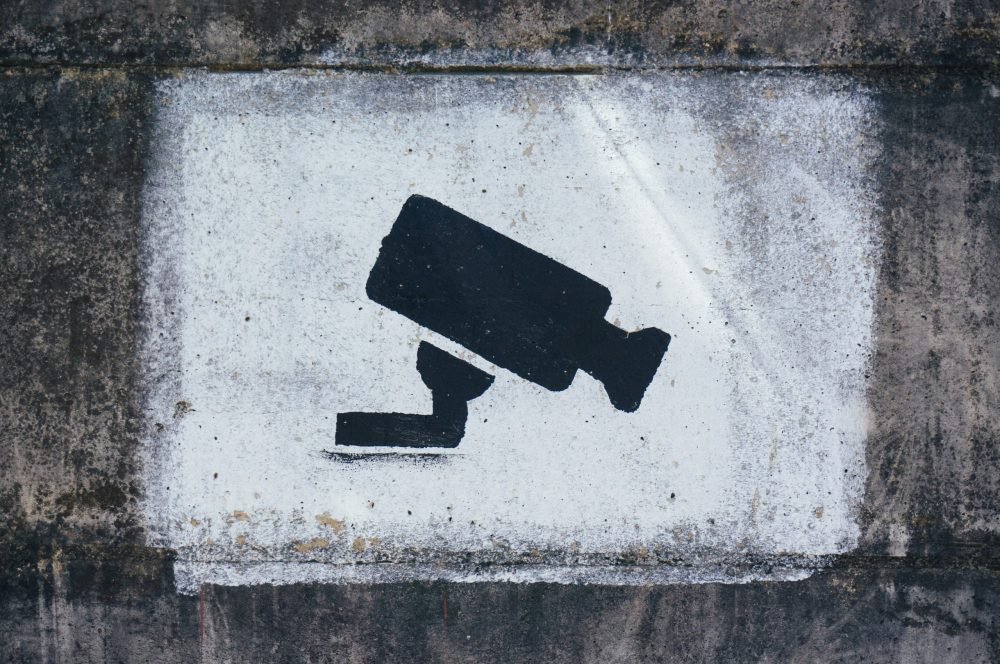
The gas station’s fluorescent lights glowed as I waited for the vehicles to clear their pumps. When the lot had emptied, I abandoned the till. I roamed the aisles, straightening candy products and rearranging the Hungry Man sub sandwiches in the fridge. The security camera had a blind spot where I could wedge myself, right up against the counter. I snuck a Danish, the syrupy glaze clinging to the wrapper like mucus. I chewed fast, facing the wall, and stuffed the packaging in the coffee station trash.
After pretending to organize the chocolate bar display in front of the till, I swiped a Mr. Big off the shelf, tucking it under the edge of my work shirt, and pushed open the side exit into the garage. Light beamed into the defunct repair shop. Dust motes glimmered, floating in the dark like phosphorescent plankton. Then the door shut, severing the shaft of light. Petroleum wafted up from the concrete floor. Standing on the stoop, my skin hot despite the frigid shop, I tore through the serrated edge of the candy wrapper, scarfing the chewy mess. I jammed the yellow wrapper underneath used oil containers in the recycling drum.
We experimented with tiny crimes like egging houses and stealing makeup from Zellers.
Back inside the station, a cursory check out the window showed no customers gassing up. I flipped the Back in 5 Minutes sign on the front door, turned the lock, raced for the bathroom, and drove my fingers down my esophagus until everything pushed out into the open.
I’d started working at the gas station in June, just as grade 10 was petering off and the warmer Okanagan days were stretching out like a promise. That first year of high school my friends and I cemented ourselves together with secrets and sleepovers and the second-last season of The O.C. We broke loose in the summer, splintered into new alliances, graduated from gossiping about crushes to hooking up in the dark at bush parties. We experimented with tiny crimes like egging houses and stealing makeup from Zellers. I pulled my first all-nighter and showed up to my Saturday shift at the station, appalled at how great I felt. Hangovers didn’t catch up to 16-year-olds.
My boss, Kevin, owned the gas station, which stood on a busy corner in Westbank (now West Kelowna) where the old highway intersected the new highway that funneled people out of town. Kevin, curly-haired and stocky, must have been in his 30s—maybe even the same age I am now, 36. Really nice guy. Organized. Good-natured and even-keeled but took his business seriously. Always looked like he’d just polished off a great cup of coffee.
Kevin trained me behind the till. He taught me to make eye contact with every customer who drove into the lot. This helped prevent fill ‘n’ runs, since in 2006 you filled first, paid second. He told me that people were less likely to act on a bad intention when they felt acknowledged.
When a customer forgot their points card, we were to instruct them to bring the receipt on their next visit. Kevin showed me how to manually add points to a customer’s card by typing in the dollar total, scanning the points card, then deleting the amount from the computer. Using the clunky Knuckle Buster, we’d imprint the points card on carbon paper. Initial the customer’s receipt so they couldn’t double back for points. People didn’t forget their cards often, but they forgot them regularly.
The points system worked like most: spend money, rack up points, redeem for goods—slurpees, propane, firewood, fuel. On the counter next to the rack of wraparound sunglasses stood a turnstile bejewelled with shiny plastic gift cards glued to cardboard backings, their denominations printed in white in the top corner. Each rotation revealed a higher number.
$25.
$50.
$100.
“How long does it take to save up for something like that?” I had asked when Kevin explained that points could even be redeemed for gift cards.
A long time, was all he said.
To me, that meant years. A unit of time that adults measured life by. My social studies teacher talked about the world in years and it seemed so irrelevant that I skipped that class the most. I could see only as far ahead as the end of the next work schedule.
When grade 11 started that fall, I switched to evening and weekend shifts and often worked alone for hours at a time. I would show up for my shift at 4:00 PM. At 5:00 PM, my coworker Janice pulled a sweater over her uniform, lighter and cigarette in hand as she waved goodbye. The shift commenced in sales: Coke slushies and tanks of diesel to long-haul truckers, Lotto Max tickets and regular fuel to moms in Von Dutch trucker hats and frosted lip gloss. But there was the space between sales, too.
All that alone time.
Crispy Crunch.
Old Dutch BBQ chips.
At a low point, I gobbled one of the Hungry Mans, a sandwich more self-assured than I dreamed of being.
Grade 10 had been an excellent year for my eating disorder. I’d been so vigilant, eating privately within a restricted time frame, followed by an immediate purge. I became skinny enough that people started asking if I was okay. The goal was not to take up less space, but to accumulate space—between my thighs, between my stomach and waistband. Indiscriminate, space started to wedge itself between everything: me and other people, me and myself. The space was my secret. And all I wanted was more and more space.
Now, in grade 11, I was getting sloppy. I ate in less controlled environments: here at work, surrounded by food, where variables such as cleaning duties and paying customers disrupted the conditions necessary for my carefully orchestrated process. Over the winter, my body revolted. Chided by sandwich displays and endless rows of bright packaging, it sneaked and snatched and stuffed and swallowed. Then I’d ring in Paydays and Gold Rush tickets and cartons of Export A Gold, smiling at customers through the silent horror of the digestive process occurring in my body, the calories accumulating, absorbing, storing.
I’d lost control—every chip and Danish transmuting into extra flesh. Bubbling over the waistband of my Lululemon tights. The spaces that I coveted shrank. People stopped asking if I was okay. Still, my secret flourished.
Snow melted on sidewalks the day I took an imprint of a customer’s points card and entered the dollar amount into the computer. I did it twice—once to load the points onto their card. A second time, after they left, to load the same amount onto my own. I recall thinking that a double charge of the same figure could be called a mistake if it showed on the records. Which it wouldn’t—no imprint, no record. Only when a customer redeemed points did their card show up in the system.
Since I wasn’t totally reckless, I didn’t swipe points again for a long time. Instead, I ate. And I hid. And I hid and I ate. I felt just as nervous about the prospect of being caught sneaking points as I did being caught with my mouth muddied with chocolate. But the former transgression only made me feel guilty. The latter? Shame. My hunger had greater control over me than I had over it.
Swiping the points, however, felt deliberate, calculated. No sloppiness here. Another secret, but a case over which I held jurisdiction.
After a couple weeks, Kevin had still made no mention of the unaccounted-for points. He greeted me the same as usual each shift. A warm smile. Eye contact. Occasionally, a dad joke. When Kevin headed for the garage where he parked his car, I looked him in the eye and wished him a good night.
I began to match points on my own card every time a customer handed me their receipt from a day they had forgotten theirs. Twenty or, if I was lucky, 50 bucks a pop. But they didn’t forget often enough. The gift cards hung next to the till on their cardboard backings.
Free money.
Awaiting activation.
One day, I arrived at work and the skin on Kevin’s face looked taut, like he had a sunburn. He only offered a clipped, joyless ’lo as he stormed up to his office, door swinging shut behind him, the hollow thwomp of his footfalls on the stairs ebbing away. In his absence, the pervasive drone of the refrigerators hummed on.
Janice, my coworker, put a hand on her hip and gave a subtle nod to the closed door. Break-in, she said.
My hunger had greater control over me than I had over it.
Janice had cropped brown hair shot through with silver. Big blue eyes. A voice characterized by sooty lungs. I liked Janice a lot. Someone had broken into the station in the middle of the night, she informed me, and stole the safe right out of the office. This, only weeks after a guy had driven off in his SUV with a full tank of gas, despite the prevention tactics Kevin had taught us.
Kevin was furious for a long time after that. Which meant he was quiet.
That didn’t stop me from loading points onto my card. Kevin was obviously preoccupied with bigger issues and, besides, it could hardly be called theft—they were just points. It was costing no one. I even stopped relying on the forgetfulness of customers. I learned that by using the “unpriced item” button, I could input any dollar amount onto the computer, swipe the points, then delete the item. No trace. I did this in random amounts—$53, $45, $62, $98—nearly every shift.
But no matter how I justified it to myself, I knew I was doing something wrong because I was hiding it. A good secret both legitimizes and requires loneliness. I had found a new way to create the space I craved.
It was a weekend, a Friday, I believe. The weather was still cool, but the first nudges of spring meant I could get away with skimpier clothes at night. I approached weekend parties with mounting fervor and the acerbic desperation of an insecure 16-year-old trying to be liked. The sun was setting, dusk moving in quick. I had just finished my shift. The new guy, a towering, dopey twenty-whatever, rang me through. He said something along the lines of nice when I unhooked a $100 gift card from the tall carousel next to the shelf of candy. A beep sounded as he scanned the gift card, typed a code to activate it. A ringing as the computer siphoned my points. He ran through my trove of goods: a bottle of Simply Orange juice to mix with the Bombay Sapphire I’d buy from a boot outside the liquor store later that night; a Red Bull, because my friends liked to do Jägerbombs. I threw in a tub of Dentyne Ice—the 60 pack—and a green BiC lighter—the big one—at the last minute. My purse was lined with half-used lighters and packs of gum, but the drinks alone seemed like too little. The amount had to be over $10, at least. My coworker subtracted the total from the freshly minted gift card and handed me the difference in cash—another loophole I’d known about. Eighty-something dollars. More than 90 would have seemed felonious.
The paper bills were thick and dry in my moist hand, and I felt flighty, terrified, avoiding even a wayward glance at the camera above the counter as I folded the cash and stuffed it into my wallet. Heat flooded my face as the zipper struggled over the bulge. I got it half-closed before shoving it in my pocket, waving goodbye to my coworker, and heading out to the lot where my mom waited in our turquoise Ford Windstar. My seatbelt clicked into place. Mom kissed my cheek. That night, I partied.
The next day, I went to my friend Zoë’s house. We listened to Kanye West’s new Graduation album in her basement after inhaling bowls of Ichiban noodles slathered with mayonnaise. I had spent all the money—between booze for me and my friends, a pack of Prime Times and snacks, 80-odd bucks didn’t last long. But it didn’t matter because it hadn’t cost me anything.
My phone rang. I recognized the number radiating from my all-black Samsung flip phone. I told Zoë I’d be right back and closed her bedroom door to take the call on the staircase. For a second, I considered running to the bathroom. Then I flipped the phone open.
Kevin’s voice sounded sing-songy on the other end, or at least it does in my memory. He had been going through the transaction records from the previous week. He said, I just want to know how you managed to collect enough points to get a $100 gift card.
Kevin had each employee’s points card number on file. I knew this, since Kevin himself had covered it in my training. I knew Kevin checked the records each week. I knew that, had I exercised more patience, I surely could have gotten away with my scheme simply by redeeming points at a different location. Looking back, this makes me wonder where my impatience as justification for willfully ignoring those facts ends, and where some unconscious desire to be found out starts sneaking in. I cringe at the cliché this begs: Was this a cry for help, a call for attention? Or something far more banal and just as likely, such as teenaged carelessness?
The lie bubbled up quick and hot, much like a great idea. It’s my grandpa’s card, I said into the phone. He’s had it for a long time, but he gave it to me a while ago because he doesn’t use it anymore.
Based on my training, I figured my grandpa had enough years on him to account for a bill’s worth of points. I didn’t bother doing the math back then, but it turns out that to collect the number of points necessary to redeem a $100 gift card, he would have had to have spent around $10,000. My grandpa drove a blue Chrysler LeBaron, not an 18-wheeler.
My seatbelt clicked into place. Mom kissed my cheek. That night, I partied.
Okay, Kevin responded brightly. I just need a handwritten note from your grandfather explaining that. And I’d like to speak with him on the phone.
The noodles lurched in my stomach. I told Kevin I’d bring the note to my next shift. Then I said goodbye and snapped my phone shut as though it was about to end my life.
Silence followed first, then a shallow breath grating in my chest. My eyes slid from the pile of shoes on the linoleum to the frosted window framing the front door. Sound rushed up from my feet and over my head the way water moves when pencil-diving into a pool. The beat of “Stronger” thumped through the wall, filled the stairwell. I glanced at the closed bedroom door. I wanted to be back on my friend’s carpet, smoking weed and shouting along to Kanye.
I called my mom. She answered instantaneously, as she always did, as though expecting me to call. I told her what I’d done. She didn’t get mad or admonish me or even express surprise. Her voice remained steady, as though I had only asked if I could stay late at Zoë’s to finish homework. She told me to call Kevin back and apologize.
Just tell him the truth, she said. If I were you, I’d say, this is what happened; you can take the $100 off my paycheck. I’m so sorry and I’ll never do it again.
I often laugh off this quintessential way my mom gives advice—too simplistic, I think, lacking in nuance. Like every problem is so easily solved. At the time, no such critical lens shrouded my vision. A criminal’s clarity, perhaps. I told her I would, and hung up.
Alone again on the carpeted staircase, mayonnaise greasing my throat, full of sodium and fear and a mother’s advice, I called Kevin. The phone rang once.
I was lying, I told him. I didn’t use my grandpa’s card. I stole the points and used them to buy the gift card. You can take the $100 off my next paycheck and I’m really sorry and I will never do it again.
The words spewed from my mouth and left me feeling very close to how I felt after purging: relieved and disgusted.
It took 10 full Mississippis for Kevin to speak again. I stared at the translucent window above the pile of shoes, feeling strange. I hadn’t told anyone about the gift card, about stealing points. Not even my friends. Even though it’s the exact sort of secret that friends are supposed to share. The kind they’d be impressed by. Instead, I was telling this secret to my boss.
No longer all that alone on the staircase.
Dayna, Kevin finally said.
My name hung there like a sentence.
Then: That is the best thing you could have said to me. I was prepared to charge you to the full extent of the law.
A chunk of old paint from the banister loosened under my fingernail and floated to the carpet.
Kevin had it in mind to make an example out of me because he was fed up with people taking advantage of him. Fill ‘n’ runs. The robbery of the safe, which, he reminded me, wasn’t the first time. Constant petty theft. The money would be docked off my paycheck. I was to show up for my regular Sunday shift the following day, and I should come prepared to do some cleaning tasks that would not be fun. A little punishment, which was a relief, because though I didn’t know it then, penance lived in my bones. It’s no coincidence I also had an eating disorder. That I stole chocolate bars and, before they had time to digest into a lump in my conscience, purged myself clean.
The next morning, Janice stood behind the till.
Well, she said by way of greeting.
I walked around the counter and stuffed my sweater underneath.
I am really surprised. She crossed her arms. I wouldn’t have guessed you would do something like that.
Janice looked like she’d seen some shit. Now she was looking at me. I wanted to put my sweater back on.
For six hours, I hauled firewood stacks off the outdoor shelving unit, piled dusty four-litre bottles of windshield washer fluid and antifreeze onto the sidewalk, cleaned out the dirt and spiderwebs and insect gunk from the far corners. My knees dug into the concrete and it felt good. I ignored my thirst and my bladder, happy to have a pane of glass between me and the people I’d disappointed, even with Janice pursing her lips through it every so often. I hated the way she had looked at me, that she’d been so shocked. Didn’t she know this was how teenagers acted? She was the idiot for not expecting it.
Finally, the Windstar crunched through the lot and parked on the side. Pebbles fell from my knees as I stood, and Kevin popped out of the station to say I should meet him upstairs before I left. I signalled to my mom, holding up a couple fingers. Two minutes.
The office smelled like old bread. Light slanting through the blinds had a second-hand quality. Kevin sat in an office chair, elbows resting on his desk. To his right, I spotted a chalk-grey safe the size of a milk crate—the replacement. I sat opposite in a cheap computer chair, thinking about the theft prevention tactics, so I looked him in the eye but it was hard. The space we shared felt cramped. His eyes were clear and kind and I was a thief.
You realize I have to let you go, unfortunately, Kevin said. He was almost smiling, but in a way that assured me he wasn’t angry.
I nodded, but I had not realized that. Stupidly, I figured there was some sort of exception for semi-forthcoming delinquents.
The $100 will be deducted from your final paycheck, he continued. But I won’t mention this to anyone else. You can still put my name on your resumé and I’ll give you a good reference.
A little punishment, which was a relief, because though I didn’t know it then, penance lived in my bones.
Kevin told me that my honesty counted for a lot. That I was a good kid, and he didn’t want this mistake to screw up my chances of getting another job.
A mistake.
Just a mistake.
My mistake, Kevin’s livelihood.
Thank you, I said. I could hear the remorse in my own voice, but my emotions surpassed that. All the space I’d cultivated around me deflated, shrank. Breathing came a little bit easier.
Then Kevin tapped his desk. Surely, I’d made more mistakes than stealing $100, he suggested.
Bits of sun struggled through the window slats and landed across his hands planted on the oak surface.
Is there anything else you’ve stolen from me? he asked, his face open, expectant. About how much, would you guess?
Vehicles whooshed by outside.
I’m not going to tell your parents, he continued. Just give me your best estimate and I’ll deduct that from your final paycheck, too.
My body started to twist, trying to hide itself. Had he seen me on the cameras, squirreling away chocolate bars? Had I been so obvious? Maybe he found the wrappers stuffed under the recycled motor oil jugs in the garage. That theft felt out of my control—the most humiliating thing to be. I hadn’t been trying to hide the stolen goods so much as I was hiding my eating disorder. And yet, it was more embarrassing to imagine that Kevin thought I had eaten so much junk food without throwing it up.
In any case, I don’t know if Kevin had evidence of any of this, or if he simply assumed that there must be more to it. I’d been stealing junk food for months. It was April now, and I could trace it back to the previous October, maybe even September.
Umm . . . I scrunched my face toward my nose, looked hard at the thin brown carpet. Maybe . . . another $100? Altogether?
He nodded. Okay, was all he said. Then he wrote it down on a notepad.
But it had definitely been more than that.
When Kevin held out his hand, I shook it.
When he looked me in the eye, I looked back.
A liar.
The lie stung the back of my throat, tasting like the packaged Danish did on the way up, sickly sweet and acidic. I could still taste the sugary burn after I waved my final goodbye to Janice at the till. It lingered after I climbed into the front seat of the Windstar, partially relieved to see my mom, beacon of honesty, who had saved me from some court-ordered punishment I wouldn’t allow myself to imagine, who would never know about the secondary theft. As I buckled my seatbelt, sunlight tilting onto the backs of my hands, she asked about my shift, how it had gone with Kevin. She didn’t yet know about the vile secret I held in my mouth—the kind of secret that tastes just as bad as a lie. She would only find out months later, when I became careless enough about hiding the traces of my bingeing and purging, when the space between things became too wide. Which makes me realize that it was never carelessness, but my way of calling for help without calling.