Lit Mags
How to Audit a Capitalist Nightmare
An excerpt from JONATHAN ABERNATHY YOU ARE KIND by Molly McGhee, recommended by Hilary Leichter
Introduction by Hilary Leichter
The first time I read Molly McGhee’s writing, it was her nonfiction in The Paris Review, a heartbreaking real-life horror story called “America’s Dead Souls,” about inherited debt, Gogol, and the perplexing bureaucracy of love. Interest can be compounded, but in McGhee’s prose, it is grief that has the highest APR, growing exponentially, until life has irrevocably tethered itself—painfully, hopefully—to the promise of whatever lies beyond. She writes with obliterating clarity about a fiduciary system that is purposefully opaque. But in this opacity lie the textures and surprises of surrealism. There is something lurking in our debt, and McGhee chases it down, invites it onto the page, teases it out into truth.

The ethics and warmth of McGhee’s writing have now taken fictional shape in her gripping debut novel, Jonathan Abernathy You Are Kind. Abernathy, who is an orphan, whose “debt is one of the most prosperous ecosystems in the world,” has been hired as an auditor of dreams. In this excerpt, he begins his official onboarding for this strange and dreadful work. Every evening, he puts on a protective suit and enters the nightmares of the workforce, editing their anxiety, their sources of pain, the shadowy regions of America’s collective subconscious. Doppelgängers abound, along with the sludge of terror, the attics and hallways where things always go wrong. The landscape of slumber curiously folds into the landscape of the workweek. But all is not what it seems: this is true for fiction, for dreams, and for predatory loans. Jonathan Abernathy is a novel that is invested in the fine print of contemporary life, how if we don’t read carefully, it will empty our pockets and our souls. But who can read carefully under the exhausting thumb of debt? Who has time to be awake, when it is so much easier to go to sleep?
Crushing social problems are crushing narrative problems, too. Every company has more than one stream of income, we learn, looking over our shoulders. The financial “sins” of the father are often the financial ruin of the son. “In the infinity of slumber—and labor—life disappears,” McGhee writes. Despite this bleak reality, Jonathan Abernathy makes a case for generosity, for the surplus of everyday life, the kind of savings that cannot be bought or sold. The book’s essential morality leads us through its devastating final moments. Debt can take on a life of its own, but when it’s really good—like Jonathan Abernathy—so can art.
How to Audit a Capitalist Nightmare
Molly McGhee
Share article
This article is free to read. So is every article Electric Literature publishes. No limits, no paywalls—now or ever. Support from readers like you makes that possible.
Electric Literature is proud to be a space where writers are always paid and reading is always free, and we plan to keep it that way.
Donate now to our spring fundraiser to help ensure the future of free, accessible literature for all.
—————
An excerpt from Jonathan Abernathy You Are Kind by Molly McGhee
Abernathy arrives at the office late by three minutes. A harried woman leads him through the cold foyer, down a set of carpeted stairs, into a small basement recently refurbished. The woman deposits him next to a table of bagels, pastries, and the like.
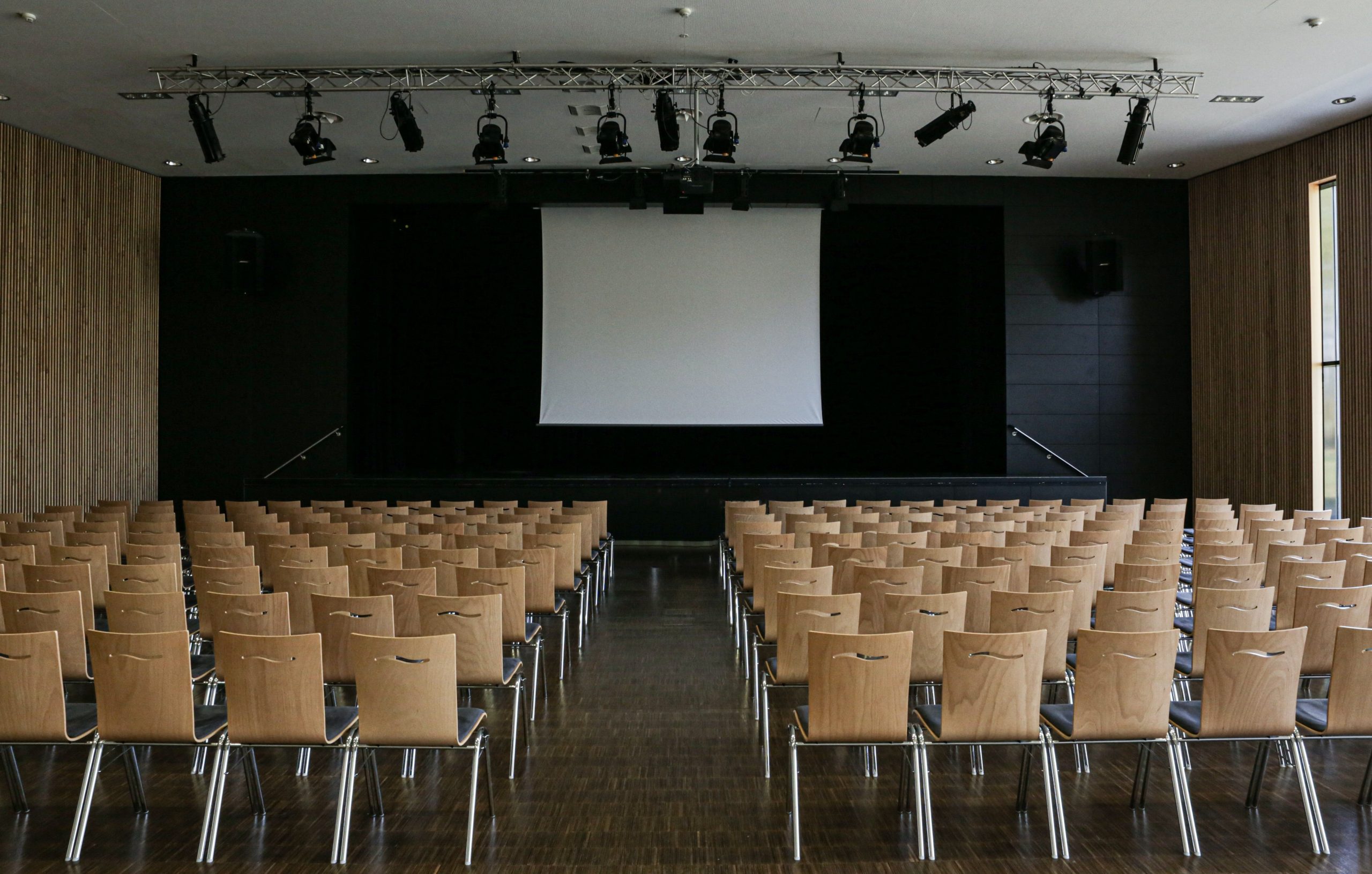
The room is low-ceilinged and has green industrial carpet. In the middle of the room, forty folding chairs are broken into five rows. A white projector screen has been pinned to the wall.
A group of dream collectors, looking superior, chat in the opposite corner with their arms crossed. There’s about ten of them. They talk conspiratorially amongst themselves.
The other people in the room are dispersed in depressed clusters and, like Abernathy, are there for training. They clutch plastic cups of water, murmuring. There are fewer than twenty of them, the auditors. They do not resemble the officers. Most look like Abernathy—dark under-eye bags, rounded bad-posture shoulders. The whole group appears to be stooped low by a potent, subconscious self-hatred. Their lives are too compacted by work (or the search for work) to contain skin-care routines, yoga practices, self-maintenance, or pride. They wear uniforms of varying colors or, if they are not uniformed, they wear ill-fitting clothes that indicate thrift. Most of them carry weight around their gut. They look nice but outdated. These are Abernathy’s people. Immediately, Abernathy is filled with love for them.
There are about thirty souls in the room, total.
“The holidays are our busiest season.” Kai says, coming up behind Abernathy. She surprises him, and to his horror, he jumps, knocking into the table of bagels. A few plastic forks go wonky.
“Kai,” he says, attempting a smile as he straightens the forks. “You surprised me. Hi. How are you?”
“‘Why am I here again,’ you might find yourself asking.” She reaches over Abernathy to take a strawberry. “Why call me back at all? Any guesses?”
“Your team couldn’t resist my charm?”
“No,” says Kai, popping the strawberry in her mouth. “Not your charm. Try again.”
“Your love for me?”
“. . .”
“I have skills the company values?”
“Holiday cycle,” she says. “Noticeable uptick in depressive episodes across the country.”
“Ah.”
“Depressive episodes mean a downturn in productivity. Downturn in productivity means an increased demand for our services hither-to unprecedented during other fiscal quarters. Hence”—she takes another strawberry—“why you are here.”
Simple stuff like saying “hello” would be beneath her, Abernathy thinks.
This, like most of Jonathan Abernathy’s assumptions about other people, is incorrect.
Abernathy does not understand Kai, Kai’s personality, Kai’s life, what Kai has done to get here, or what she has lost to be in this room, standing on a Tuesday morning next to a bagel platter with a lanky new recruit whose doe-eyed excitement just about stabs her in the gut every time she gets near him.
Jonathan Abernathy has no idea how he comes across.
It might not look like it, but Kai is putting in a lot of effort right now. She is trying her best, despite the fact that Abernathy shouldn’t be here at all, really, and that dumbasses like him are shipped in every year by the Archive in an attempt to replace Kai, who, so far, has proven to be irreplaceable. None of these dudes last more than, like, nine months. Do you know what that does to a person? Having to train a new guy exactly like the last guy every nine months?
Abernathy’s lucky Kai remembers his name.
“Right,” he says. “Who doesn’t get a little blue this time of the year. I know I always feel worse.” Abernathy decides not to take her rudeness (it’s not rudeness, but we’ll let him have this one) personally, even though he thinks her eyes are a little too glinty and aggressive for his comfort.
Mostly, he tries to feel lucky to be here.
“That’s why we bring assholes like you back into the fold.” She takes a sip from her tiny cup of water and smiles, tight-lipped. “Even though it’s apparent to anyone who’s met you that you’ve never understood another human being in your life.”
“I’m grateful for the growth opportunity you’ve provided. I know I’ve only completed two night cycles, but both were an honor to audit.”
Kai snorts. “Do you always talk like this?”
“Like what?”
She stares at him.
Abernathy doesn’t understand what she means.
“Are you always so—” she gestures up and down his figure—“earnest?”
They stand next to a beige and buttery pastry platter, a sin of croissants and stale scones. Abernathy has been eyeing the precut bagels and their exposed bellies with some interest for several minutes. There is silence, which Abernathy spends deciding whether or not the platter is only there for show. Is it socially acceptable to disturb the platter by touching one of the croissants? Having skipped breakfast to make it here on time, Abernathy is hungry. No one else has disturbed the platter of bagels. The same is not true for the fruit plate, now mostly melons. Abernathy does not want to be the first to break the pastry seal.
“Can I ask you a delicate question, Kai?” He turns with regret away from the bagels. He is hungry, but not hungry enough to risk shame.
He is hungry, but not hungry enough to risk shame.
“Fine.”
“Are you paid a salary? You mentioned pay grades, when we first met. I’m just wondering if now that I’m being brought on . . . that I might . . . well . . .”
She looks at him as if he is a silverfish. Examining him. Determining whether she should stomp on him or help him escape. He is very stompable. Abernathy’s comfortable acknowledging that.
“You don’t understand what this is, do you?”
“What?” Abernathy has, against his will, reached for a bagel and is now spreading butter across the top. Except the butter is not soft, so it really takes elbow grease to cover the bagel’s surface. He is destroying the bagel he did not consciously decide to eat and he feels horror, a sort of grim defeat and resignation, as crumbs fall like little pebbles from a cliff face to scatter across the table and the floor.
Kai watches him. She chooses her words carefully. “This isn’t corporate employment.”
“Yeah,” says Abernathy. He corrects himself: “Yes. I get that.”
Kai is at the precipice of realizing Abernathy is not the person she expected him to be, either. She baits him. “It’s not an internship to collect on your way to your big-boy job.”
Abernathy is confused. Does she think this is just a first step for him? To him, this is the final goal. The big break.
“I don’t think of this as an internship,” he says. He tries to sound earnest. He is earnest, but he tries to sound earnest, too. He tries to make his eyes sparkle. Usually women like when he does that. “I take my work here very seriously. I’m honored to have been chosen for training.”
Kai stops watching him attack the bagel. She pulls her eyes up to his. “I’m incarcerated,” she says. It’s more like a confession. A very blunt confession. “Formerly, once I finish this program. My pay grade is my freedom.”
Abernathy straightens up, trying to figure out where this conversation is going. The mauled bagel looks less appetizing now.
“Oh,” he says. “That’s cool?”
Kai raises an eyebrow.
“I had a cousin,” Abernathy says. “It took him like twenty years to get out. I met him as a full adult only after I had heard all these stories about him. I bet your family is really relieved.”
Kai stares at Abernathy blankly. In the silence that stretches out awkwardly between them, Kai appears to realize something about him—
“You know what this is, right? I’m working off the remainder of my sentence. Everyone in this room is working something off.” She gestures to the group of people scattered and small-talking throughout the room. “It’s not,” her voice is firm, like she’s explaining something really important, “like, a ‘feel-good’ opportunity—this job.”
“Right, right,” says Abernathy, not sure if this is the appropriate thing to say. He must have hit a nerve.
He smiles at her gently, trying to placate her. Comfort her. “Well, it’s no wonder you’re so good at this,” he says. “You really want it, I bet.” He takes a bite of his bagel. It’s not good. “Do you think,” he ventures, “you might be paid . . . afterwards? Like after you finish working off your sentence?”
“Oh my god,” Kai says. Her eyebrows have ascended even higher. They are now closer to her hairline than Abernathy thought possible. She sounds almost awed. “You are being completely serious.”
“I have a lot to learn still, yes,” Abernathy agrees. He doesn’t want to lay it on too thick, but he wants her to understand he really needs this. “But I am really excited to take on that challenge with you! I think our working relationship has so much potential.”
Before she can answer, the lights dim. A projector light flickers. The screen on the wall is illuminated. So that’s what it’s for.
“Ope,” says Abernathy. “And that’s our cue.”
He salutes her, hand to head, and Kai looks—frankly—astonished. That or completely disbelieving. Hard to know the difference sometimes. Abernathy’s not sure why he saluted, but no time to think about that now. Quickly he shuffles toward one of the empty middle seats, excusing his way across the legs of those already sitting. He comes to rest comfortably on a metal chair positioned between a very angry-looking man and a teenage (or maybe not teenage; Abernathy has a hard time telling) girl in a fast-food uniform.
Kai believes Abernathy to be entitled. Full of himself. Destined to swoop in and boss her to death. She does not realize, yet, that he is a well-meaning dumbass, and that he has no idea of the risks he agrees to by being here and working in this office.
Abernathy, on his part, does not realize the severity of the situation he is in. Nor does he realize that for Kai, as for him, this job is life or death. He thinks she is rude and blunt. He panders to her in an attempt to ignore these elements of her personality, which in turn exacerbates Kai’s assumption that he is a kiss-ass who will throw her under the bus at the first moment of inconvenience. To Abernathy, Kai is simply saying the things everyone thinks about him out loud. Though he finds her honesty grating, he also finds it comforting. In his heart of hearts, Jonathan Abernathy believes that he is a waste of human life.
In his heart of hearts, Jonathan Abernathy believes that he is a waste of human life.
The projector flickers.
Abernathy settles into his seat.
A black-and-white man in a much better astronaut suit than Abernathy’s struts onto the screen. He looks . . . very strapping. He takes off his helmet like an aviator returning from war. Hair shake. Gleaming smile. Very “ta-da, I am here.” I am here, I am a man, I will get things done. Abernathy would like to have a smile like that. Abernathy thinks it is very easy to trust a man whose appearance is that beautiful.
The man on the screen begins to talk.
“So you’re the brave souls who wish to colonize”—the fast food worker next to Abernathy snorts—“the next great beyond. Man’s final frontier: his dreams.”
“Wowww,” says the could-be teenager. The food worker next to him is the youngest in the room by far. Nineteen, maybe? There’s something sad about her that seems nineteen to Abernathy. She is one of maybe four women in the room, including Kai. Her hair is in two long braids and her mouth is set into a hard, unfavorable line. The food worker keeps glancing over at Kai. She’s not the type of teenager who starts smoking due to social pressure. She’s the type of teenager who starts smoking because she wants to die early and soon.
Will Timmy carry this sadness herself in ten years? That’s hard for Abernathy to imagine. Like, hard as in actually painful. He was a smoker, at that age. He desperately wanted to fit in, to have an excuse to stand in little groups. He never inhaled, but it became a habit anyway. He gave up at the request of his first college girlfriend. They dated for three months. She said his mouth tasted like ash. Ash reminds Abernathy of crematoriums. Crematoriums are where dead people are taken. Like his family. It’s not hot to think about family members while you kiss.
The fast-food worker has a notebook and isn’t even looking at the screen.
The man in the projection is walking toward the camera now. He’s saying stuff. (Abernathy is having a hard time turning off his thoughts long enough to pay attention, but the informational video thing has been going on for several minutes now and the man on the screen is talking very assuredly about things like “futures” and “employment” and “personal growth.” Really boring stuff.).
The girl is writing with determination in her notebook as the projection plays. A bunch of dangly bracelets on her left wrist click together as she does so. Click click click click. Of everyone in the room, she’s making the most noise by a pretty big margin. It is very distracting. The rest of the would-be auditors are hushed. What’s the guy on the screen saying? Something about safety. Safety and self-protection and liability. Boring stuff, still. In the dim glow of the
projector, the people in the room are simply a bunch of shadows together, upright in the dark.
Abernathy can’t help himself—he tries to look at what the food worker is writing. He manages to catch a few words at the top of the page before she shoots him a nasty look and scooches as far away from him as she can. The chair seats are not wide at all, so Abernathy decides this must be more for show than an actual desire to get away. Abernathy’s not sure why she does this. In her notebook she only wrote one phrase and it wasn’t exactly illuminating: government sponsored indentured servitude. Very foreboding, except she has doodled little hearts around the sentence.
♥♥♥ government sponsored indentured servitude ♥♥♥
What does that even mean? His neighbor closes the notebook before Abernathy can get a better look.
Was he like this when he was nineteen?
Not really.
He mostly just felt bad for his parents. They were really poor and had outsized personalities that could swing high and low without much notice. As a kid he was too busy navigating their moods to have much of a personality of his own. Jonathan Abernathy never doodled hearts on anything.
In a whisper he asks the teen what she’s writing. The teen ignores him. Another auditor-in-training shushes them from behind.
Abernathy has no choice. He must watch the informational video. The film is boring, in a twentieth-century way. A lot of glamour shots of employees talking about the importance of their job in that slow “I am teaching you” voice. Very official language. Not like how people actually talk at all. Dolly shots as they walk down long corridors. Rigid smiles of enthusiasm from all in the production. A dedication to a false idea of reality that isn’t realistic at all. Merely set pieces. Abernathy suffers through the film, bouncing his leg and occasionally glancing at the food worker, who has since put her journal away. Abernathy has never been one to excel in applying prolonged attention. From what he could gather, the video can be summed up as basically this:
What the dream auditors, officers, and servicemen do in the dreams has real-world impact on their customers. Like any service job, one should conduct oneself with the utmost integrity in the assistance of one’s client. While the technology is still new and there are some difficulties, it is important that one takes every precaution to . . . yadda yadda yadda; Abernathy stopped paying attention at this part.
After what feels like the third excruciatingly long segment about personal liability, which would be particularly illuminating if Abernathy chose to listen, the room’s lights turn back on. The projection whirs off. Abernathy is not really sure what it is he’s supposed to take away from this whole thing. Maybe: be confident in all that you do and you will go a long way to improving your dreamer’s life and, by extension, the economy, and thus yourself.
Abernathy’s colleagues stand up and begin to stretch. He stands with them, cracks one shoulder, then the other. The customary post-video mingling begins. An opportunity to network means it is now the time where Abernathy can assuage his curiosity. Abernathy turns to his seatmate to ask about her notebook again, but she is gone. Quickly he scans the rooms and sees she’s already at the exit shrugging into a jacket.
Abernathy knows this is ridiculous, but he hops over a chair to reach her—not trying to be dramatic, just trying to be efficient—but in the process he knocks the chair over.
Lots of folks turn to look at him.
“Hey,” he calls to the service worker, righting the chair. He is flushed red. “Hey, wait!”
She is already out the door. He rushes to follow, ignoring the stares, but Kai grabs him by the arm. Her grip is surprisingly firm.
“Did you pay attention?” she asks him, searching his eyes. Her glasses are the greenest of green. Something about the way she looks at Abernathy makes him think that her question is important. Maybe, like, really important.
“What?”
“Did you pay attention to the film?”
“Oh,” he says, “right. Right. Very informative. It’s just that I—”
“Good,” she says, relieved. “Follow me.”
She lets go of his arm, turns, and exits through a small door at the back of the room that swings shut behind her. Abernathy did not see the door before. It is hidden partially behind a half-full rack of metal chairs. He hesitates.
All the other folks are putting on their jackets.
A few of the more impressive dream collectors even mingle with the new recruits.
Abernathy looks towards the exiting crowd. Right now really is the perfect opportunity to show his worth to his colleagues, to prove himself capable, to shine, but the fast-food worker is already gone, and besides, Kai has a task for him. A task is good. A task means she must trust him. If she trusts him, that’s a good sign, right?
Abernathy opens the door.
A long hallway awaits.