I grew up in a small southern town. The models I had for queerness were people on television, living glamorous lives in New York City—lives totally removed from the farmlands, marshes, and forests that surrounded my home. One day, desperate for a nearer, more intimate model, I went online and searched, “Can animals be queer?” This search eventually led me to Bruce Bagemihl’s Biological Exuberance. Clocking in at over 700 pages, this behemoth encyclopedia of “gay animal sex” was comprehensive, explicit, and exactly what I needed. With time, I created meaningful queer relationships with humans and outgrew the book, but I never forgot its evidence for queerness as natural.
Queer ecology is an emerging academic field that insists on queer and trans realities as a fundamental part of nature, ecology, and environmental politics. For me, the phrase highlights the necessary work of charting stories of queer and trans lives in wilderness spaces, but also encompasses literature that is queer in its refusal to enshrine borders and categories, and ecological in its focus on the relationships that make life possible.
In my forthcoming novel Mad Eden, the narrator, Ro, has difficulty with communication. In one scene, after sex leaves them temporarily unable to speak, they wander away from their partner, out into the Florida backwoods, and spend a while observing an alligator. Ro doesn’t know that male alligators sometimes show a distinct preference for other male alligators. But their time with the alligator helps. They return to their partner better able to communicate.
I was struck, writing this scene, by how easy it felt to put this genderqueer character on the edge of a secluded Florida retention pond, miles from the nearest town. Such a setting hasn’t always felt easy to imagine. For a long time, my queer characters were alienated from rural spaces, as I was myself after coming out. But the idea of queer and trans characters finding refuge in forests and swamps feels straightforward now, thanks to a growing lineage of writers who are challenging ideas of queerness as a strictly urban (or strictly human) experience. From sea-creature-mediated gender transition to metafictional musings on the natural state of romance, each book below offers a taste of this expansive (and expanding!) queer ecological literature.
Tommy Pico’s Nature Poem is, emphatically, not a nature poem. The poem’s speaker, a member of the Kumeyaay Nation, can’t write a nature poem “bc it’s fodder for the noble savage / narrative” and because “nature is kind of over my head.” Marked by negation, allusion, and spillage—“it seems foolish to discuss nature w/o talking about endemic poverty / which seems foolish to discuss w/o talking about corporations given / human agency which seems foolish to discuss w/o talking about / colonialism”—this book-length poem subverts stereotypes of queerness and Indigeneity with sharp observations and humor. Nature is alternately distant and intimate, a lover with whom “every date feels like the final date bc we always find small ways of being / extremely rude to each other like mosquito bites or deforestation.” Nature in this poem is “reading the stars,” “sand crabs n shit.” It is queer, defiant, and all around us.
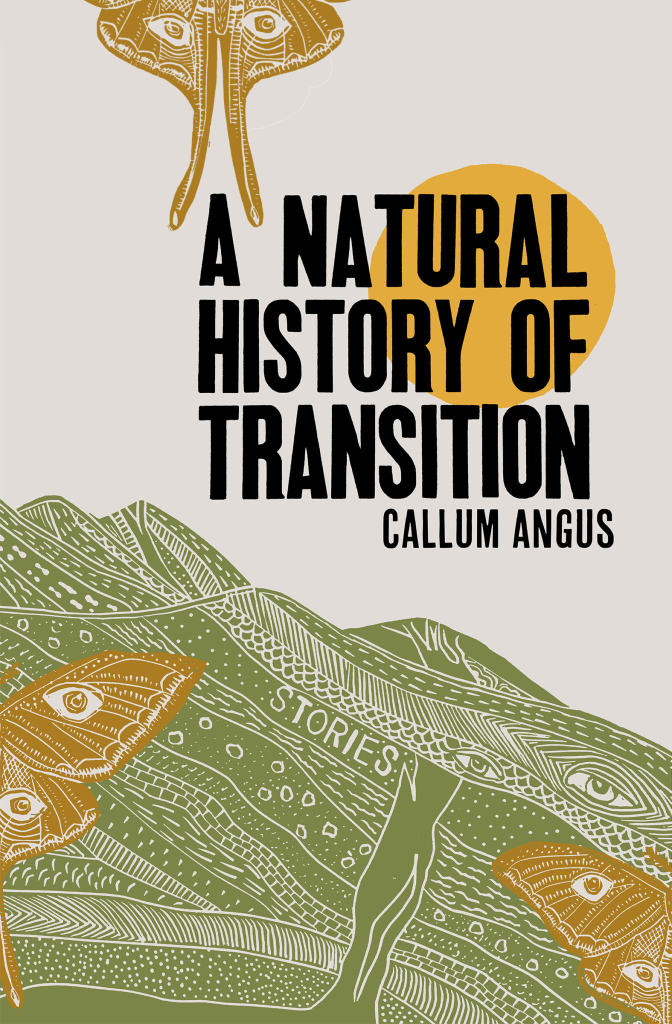
In this collection of stories, stasis is the exception, transition and change are the rule. In one story, gender transition is followed by geological transition, in which a person becomes a mountain. In another, a trans man births a mysterious cocoon and nervously awaits his child’s next metamorphosis. By insisting on transition as the most natural thing, these stories reinforce the innate sovereignty of trans people. They also make a case for the importance of family (biological or chosen) and community (with human and more-than-human creatures). At the end of one story, a trans man imagines his mother saying to him with excitement, “let’s see what’s at the end of all this, even though it’s probably just another beginning.”
Beginning with a scene in which 48 white-throated sparrows fall from the sky in New York City, this book depicts disorientation (whether caused by personal loss, gentrification, closeted trans identity, or the ongoing ecological crisis) alongside a strong desire for belonging. Gender dysphoria is an urge to “return my body and slip myself into a different softness: the stems of orchids, maybe.” A mother’s haunting takes the form of strange birds, whose names the narrator knows best in Arabic. When the narrator discovers a journal in an abandoned building, the tangled threads of art-marking, migration, displacement, and peculiar avian ecologies come together in a resounding cry for the power of queer community and resistance. This is queerness across generations, across continents, and across ecologies.
This narrative collage is an associative and highly allusory meditation on glaciers, art, incarceration, gun violence, lesbian dating, and the alternating boredom and terror of being a Black woman alone in Homer, Alaska. Intimate (and often frightening) interactions with moose, dogs, and eagles are set alongside vignettes about ex-girlfriends who have moved toward and through Alaska’s landscape, and then moved on. Invoking Fred Moten, Lorna Simpson, Anne Carson, Samiya Bashir, Sadiya Hartman, and many other artists and thinkers, Sloan captures the alienation felt in a landscape marked by colonization, whiteness, and homogeneity, and the mingled promise and threat of other-than-human companionship. “Our strangeness,” she writes, is “an attempt to smash back into the natural world.”
This lyric essay spans strange histories of the modern-day aquarium, complicated parent-child dynamics, myth, and detailed descriptions of various aquatic creatures. It braids these threads together to chronicle the speaker’s complicated relationship with their own body, which is not merely flesh. Algae blooms in the right lung, a stickleback guards the throat, the wings of pileated woodpeckers beat in the chest. This patchwork animal embodiment offers both discomfort and promise. After describing the sex-shifting qualities of clownfish, parrotfish, and ribbon eel, Horn writes that “seeing how regularly sex cannot be reduced to a simple binary in other species . . . I feel so much more human.” In this shape-shifting book, the form and boundary of the body are always changing. “These beasts have come to you,” the prose intones. “You will house them.”
In this intimate novel “all the land is horny as fuck.” For the book’s narrator, Jonny, the river is “an orgy of kissing streams, a hub of sex.” The land makes space for both queerness and expansive notions of gender. When Jonny’s kokum translates the Cree word manitowapow, after which Manitoba was named, to “the strait of the spirit,” Jonny riffs: “Why would the water want to straighten my spirit?” Drunk boys flock to Jonny “like leeches to a pickerel,” but he sees himself in the leech as well: “I too felt like a hermaphrodite,” Jonny says, “part boy, part girl.” As Jonny travels from Winnipeg to the lands of the Peguis First Nation, the novel attends to queerness and gender across different landscapes, and to the familial ecologies that, in spite of distance and difficulty, continue to endure.
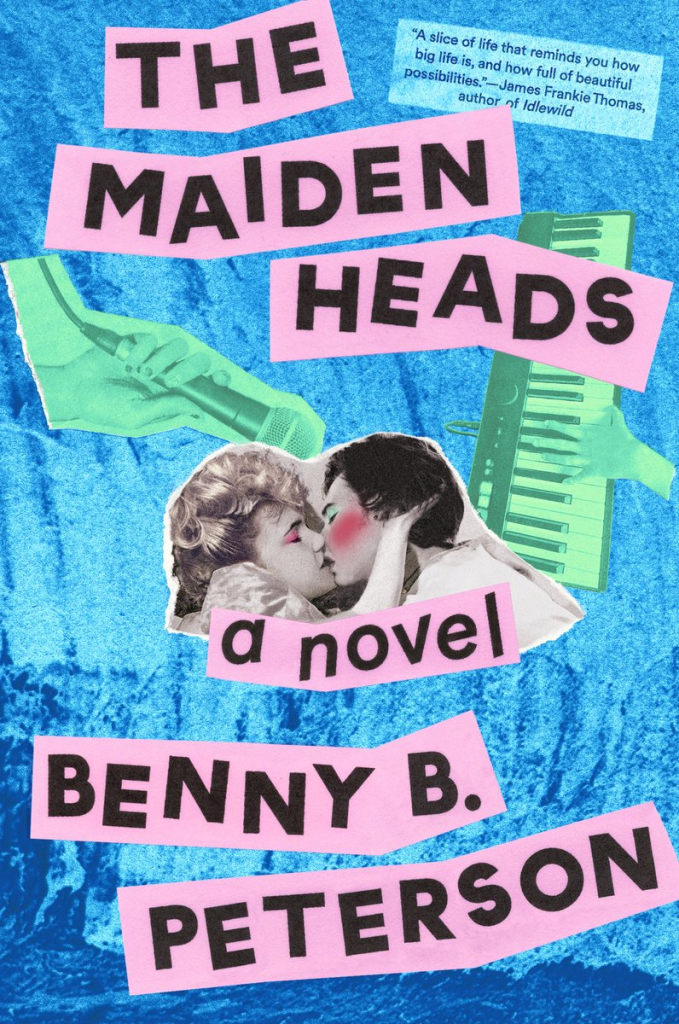
This book takes the form of a conversation between “Renee” (a character? the author? both?) and an interviewer. This fundamentally ecological form guides the book as it sketches relationships between people and other people, books and people, landscapes and people, and landscapes and books, all in their boundaryless multitudes. It is a romance. It is a meditation on the architectures of romance. And it is a record of the book’s own creation, which feels more like a form of natural growth than human construction. Memory is fungal, conflict is weather, the brain is a mutinous landscape. When asked, “How do you feel?” Renee responds, “Like I need to stare up into the trees for a long time. That’s how I think.”
Madder is a lyric exploration of migration, queerness, and borders of all kinds through the metaphor of weeds. Like weeds, the narrator has been called inútil and unwanted. Juxtaposing descriptions of “useless” (though often edible and medicinal) weeds with descriptions of growing up as a queer child who was “seedy and anxious to germinate,” the book attends to the flourishing of life in spite of hostility or oppression. One scene of possible adolescent cruising ends in the discovery of “a million bells,” spring peeper frogs, calling from a nearby pond. Structurally expansive—the book includes family trees, plant taxonomies, poems, illustrations, and sections of delightful wordplay—this memoir pairs loss (an absence) with life (in abundance) to suggest that whatever our pain or need, we can find solace among the generous and irrepressible weeds of this planet, who remind us “there is always enough.”
Each of the 10 chapters in this memoir juxtaposes the life history of a sea creature with human life in all its complexity. A whale necropsy turns into a detailed analysis of a failed relationship. The oasis of a hydrothermal vent in the deepest ocean becomes the oasis of a queer POC dance party. Mixed race identity is, with useful nuance, set alongside the taxonomic ambiguity of a hybrid butterflyfish. Gender exploration is guided and supported by the transcendent morphing of a cuttlefish. Meticulously researched and written with gentle humor, each of these juxtapositions brings us closer to the narrator’s realization of self. And beyond that, to the recognition that resistance and continued existence in the face of hostility is something not specific to queerness, or even to humanness, but shared among all species.
An excerpt from Fancy Meeting You by Louise Marburg
On the splintery old dock where we wait for the flotilla of Zodiacs that will ferry us out to the Galapagos Magic, a sea lion lazes in the sun, apparently fast asleep. “Aw,” someone says, “isn’t he cute?” There is a flurry of picture taking, both with cell phones and cameras, then a moment of silence as everyone checks how their pictures came out. No one else seems to notice the animal’s unbelievable stench. The thing smells like a Bowery bum. I gag and face the breeze.
I’m still queasy from the turbulent plane ride from Guayaquil, a city I will never step foot in again. The doorman at the hotel where I spent the night wore a Kevlar vest, and from the smeared windows of the airport van I saw soldiers with machine guns guarding the gas stations. When I tried to venture out into the suffocating heat to see what sights there were, I was warned by the concierge that I would certainly be mugged, possibly kidnapped, and if kidnapped then definitely raped. Instead, I went to the rooftop pool and practiced using my new mask and snorkel. I have a new wet suit too, purple with black chevrons on its arms, that hugs my body in a way that makes me look sexy and badass, yet still, I hope, attainable.
I am forty-nine and will turn fifty in a few days. Originally, I planned to take this cruise with a man I’d been dating, but inconveniently he broke up with me the very day, mere hours after I paid the hefty Galapagos Magic deposit. So here I am by myself on the equator with a duffle bag full of TravelSmith clothes and a copy of Darwin’s Finches.
The Zodiacs arrive. I am helped into one of them by a woman who wears a vaguely nautical uniform with a logo above her breast, the silhouette of a dolphin leaping across an orange disk. From the shore, the distance between the dock and the ship doesn’t look very far, but somehow from the boat it looks farther, and the sea seems choppier, slapping my face with a cold, salty mist.
“Hello,” says a man sitting next to me. Sixtyish, gray, and bespectacled. “I’m Bill Lutz and this is my wife, Matilda.”
Matilda pokes her head around Bill and points to two young women who are sitting on the side of the boat, their long blond hair flying around their heads in the wind. They’re identical except for their clothes, one wearing shorts, the other jeans. I’m glad they’re not dressed alike; I think it’s creepy when twins wear the same thing, as if there’s no difference between them at all. “And those two over there are our daughters, Hopie and Pat. We’re celebrating their college graduation by taking this cruise.” She is twinkly eyed and younger than Bill. She has teeth like a horse’s, protruding and yellow.
A black-and-red frigate bird flies over our heads, dipping and rising, gliding on layers of air. I have a handy little point-and-shoot that I bought for the trip. I take it out of my bag and snap what turns out to be a photo of the sky.
“There are a lot of families on this trip,” Matilda says. “Practically everyone we met at our hotel in Quito was a Galapagos Magic passenger.”
“I traveled through Guayaquil,” I say.
“Quito is the best route through Ecuador,” Bill says. “Stunning city. I hear Guayaquil is a dump.”
“Oh no, it’s gorgeous,” I say. I don’t like his attitude. “Beautiful weather.”
The boats draw up to the side of the ship. Ladders are dropped down and luggage hauled up. I climb to the deck as nimbly as I can in the wake of another passenger’s broad denim ass. We are herded into a carpeted lounge. According to the Galapagos Magic brochure, there are thirty passengers on board. Each of them appears to be attached to at least one other person.
“I hope I’m not the only passenger traveling alone,” I say to a crew member who’s doling out stateroom assignments. Her name is Estefania, according to a tag on her chest.
Estefania consults her clipboard. “You are,” she says in a surprisingly unaccented voice. She could be a news anchor in Des Moines. “If you wanted a singles’ trip you should have signed on with one of the Eclipse cruises.”
I fake a laugh. “A singles trip! God, no, I’m married. My husband was held back by business at the last minute.”
I find my stateroom and let myself in. It’s half the size of my bedroom at home and smells like an Airbnb at the beach. I peer out the single porthole. The shore appears to be moving, rather than the ship. The land slides past, barren as Mars, and gradually sinks into the sea. In the far distance is a mountain shaped like a pyramid. I didn’t know where the Galapagos Islands were until my ex-beau suggested this trip. That he asked me to take a vacation with him led me to believe we were on a path to marriage. I’ve thought that before with other men. Stupidly. I see signs where there are none. If you had told me thirty years ago that I wouldn’t be married by now, I would have laughed you out of the room. I had multiple boyfriends, often overlapping. Because marriage seemed like an inevitable destination, I didn’t give it much thought until one of those many boyfriends remarked in an offhand way that I wasn’t the kind of woman men wanted to marry. “You’re the woman they want to fuck, Laura,” he said. “You’re the temptress, not the wife.” I didn’t know whether to be offended or flattered.
Three notes sound, ding-dang-dong, like a theater tone at intermission. According to the printed schedule I was given, there is a nightly cocktail reception in the lounge. I switch my late mother’s ruby band from my right ring finger to my left. I consider a handful of names for my fake husband until I land on Alistair, which sounds like someone I would never encounter.
There is a very small shark swimming beneath me, and I am okay with it. I feel brave and nonchalant. Later, at lunch, I tell Bill and Matilda that a shark was the very first creature I saw on the very first day I ever snorkeled.
“Snorkeled?” I say. “Is that even a word?” I laugh. I love snorkeling, it’s my new favorite thing. After the shark, a sea lion swam up and did a backflip for my entertainment, and I followed a sea turtle until it sank into the depths. Black spiny sea urchins carpeted the ocean floor like a garden of lethal flowers. I thought I saw a whale-shaped shadow move through the water, but it disappeared almost instantly, a moment of artificial excitement. I was the last passenger to return to the Zodiac, which earned me a dark look from our guide Alejandro. We are not supposed to swim by ourselves.
“Did the shark have a white spot on its back?” Bill says through a mouthful of salad. Though it did have a white spot, I say it didn’t. “Because if it had a white spot, it was a Galapagos shark, and they’re perfectly harmless.”
“It was dark gray and quite large. Twice as long as you are tall.”
“Are you sure it was a shark? Sounds more like a whale,” he says.
“I would have been terrified,” a woman named Celia says. She and her husband Neal know Bill and Matilda from their hotel in Quito. We are eating on an open deck, frigate birds overhead like a squadron of hovercrafts. Hopie and Pat are sitting a few tables away with a gaggle of kids their own age. Everyone has an age they imagine themselves to be, and in my mind, I am twenty-five. Celia is in her forties, I guess, but she has gray streaks in her hair and fat upper arms, and I feel decades younger than her.
Everyone has an age they imagine themselves to be, and in my mind, I am twenty-five.
“Alistair would have loved it,” I say. “He’s very intrepid, nothing scares him. It’s a shame he had to miss it.”
“What does Alistair do?” Neal says. He has a camera with a lens as long as my forearm that he carries around with a preoccupied look on his face, as if he’s on assignment for National Geographic.
“He’s a surgeon,” I say. I was in love with a surgeon a few years ago.
“Do you have children?” Celia says.
“She has four,” Matilda tells everyone before I can speak. “A fifteen-year-old, a thirteen-year-old, an eleven-year-old, and an eight-year-old. All boys. Can you imagine?”
Apparently, this was what I said at the cocktail reception last night. I’m glad she spoke up because I had forgotten. I drank too much, which is something I often do and part of the reason my ex-beau defected; he thinks I’m an alcoholic. I might be. I’m not dismissing the idea, but what difference does it make if I am?
“I guess you don’t work outside the home with such a large family to take care of,” Celia says.
“I’m a doctor too, a psychiatrist,” I say, which creates a well of quiet. Probably they’re afraid of shrinks or don’t believe in psychotherapy. But I bet at least one of them will seek me out later in the trip and tell me their darkest secret.
“I’ve never met a psychiatrist,” Matilda says. You’re not meeting one now, I think. I work as a fact-checker for a textbook publisher in Baltimore. It’s an incredibly boring job. I keep meaning to quit and do something I love, but I haven’t thought of anything I would particularly love to do other than not work at all. I signal the waiter by waving my empty wine glass over my head. I’m not drunk, but I’m not sober. He brings me another glass rather than pouring the wine from a bottle, so I really don’t know what I’m drinking.
After lunch we all go to our staterooms to rest before the afternoon excursion to see the giant tortoises. I lie on my bed looking at old texts on my phone. There’s no Wi-Fi or cell service, so I can’t scroll through Facebook or Google random questions. Had I known I wouldn’t have civilized amenities with which to entertain myself, I would have brought some magazines. I look at a months-old text from my ex-beau, a funny video I try to access and can’t. I search for something substantive, but our texts consist of emojis and memes and shards of sentences. The only compliment I remember him giving me was that I was a “good egg,” clapping me on the back as he said it, but I don’t recall what made him say it. It’s not something you say to the woman you love. I realize now that he didn’t fall out of love with me, which was what I told myself; he was never in love with me. This should not be a revelation because he never said he was, but it is, and I’m shocked. How fucking stupid is that?
The tortoises are milling around in enclosures like cattle, each with a big number painted on its shell. They are gigantic and look inexpressibly sad. They have wrinkled, gray faces and drooping wattles and move with aching slowness, raising one huge foot and putting it stolidly down, then raising the opposite and so on, moving inch by inch to nowhere because there is literally nowhere for them to go. I expected to see them in the wild, but Alejandro tells me that they are difficult to spot in their habitat—we’d be searching the island all day. I am stunned by the heat; sweat pours from my face and body. The KoolSorb fabric that my shorts and shirt are made of is neither, as advertised, absorbent nor cool.
“How cruel, keeping them penned up like this,” Hopie says to Pat, or vice versa—I can’t tell them apart. As I am standing beside them, I make a sound of agreement.
“Wow, you’re sweating a lot,” Hopie or Pat says, as if I hadn’t noticed. Her face is pale and dry; she has a saddle of freckles over her nose. You’ll sweat when you’re fifty, I’d like to tell her.
“Sweating is healthy,” I say. I wipe my forehead and come away with a sopping hand. “I love sweating. It releases the toxins in your body.”
“I’ve heard that,” says the other one, Pat or Hopie. They have the same voice, the same face, the same bodies, the same hair. I would hate to look like someone else. I have been told all my life I’m unusual looking because of my eyes, which are swimming pool blue in contrast to my dark eyebrows and hair. No one has ever said I remind them of their cousin or friend or whoever. I’m never mistaken for a different person. I have an older sister, Nadine, who is my opposite, physically and philosophically. We don’t get along. I think how nice it would be to have a sister I enjoy as I watch Hopie and Pat put their heads together and giggle.
“What’s so funny?” I say. They look surprised. They’ve forgotten I’m here in under a minute. They don’t bother to reply.
Once we’ve seen the tortoises, we trudge off to look at birds, walking through a landscape of stunted, leafless trees. Alejandro tells us that most of the shrubs and trees will only grow leaves a couple of weeks out of the year, the rest of the time they’re bare.
“A very brief summer,” he says cheerfully. “Then the leaves fall. Ah, look, a finch!”
Everybody reaches for their binoculars. I don’t have binoculars, but I can see the bird—it’s small and brown, nothing special. Neal raises his long lens and takes several pictures while Alejandro tells us this finch has developed a beak that can crack seeds, unlike finches on the other islands. I already know about the finches and their various beaks, and I know that each island has a distinct ecosystem because I’ve read thirty excruciatingly dull pages of Darwin’s Finches and am in the process of skimming through the rest. But the two-week summer is news to me. It seems like something that would happen on another planet. I look at the pyramid-shaped mountain, which is so huge it’s visible wherever we go. It is treeless and buff-colored, shrouded in torn strips of cloud. It, too, seems eerily not of this earth.
“What is that mountain called?” I say to Alejandro.
He smiles at me as if I am a child. I wish I hadn’t asked. “It’s not a mountain. It’s the largest volcano in the islands. We call it Volcán Wolf. The Galapagos Islands were formed by volcanoes. Tomorrow we will go to a lava field, and you’ll see.”
A brilliantly colored lizard lumbers into our path. It’s the size of a large rat and looks immensely pleased.
“That’s a marine iguana,” someone’s teenage son says.
“Correct!” Alejandro says. “It’s mating season. He is looking for a wife.”
“How did you know that?” Celia asks the kid.
He holds up a paperback guide to the Galapagos. “Preparedness is the key to success,” he says. Teacher’s pet, I think. When I was his age, I was smoking pot and screwing random guys, prepared for absolutely nothing. I would have a thirty-four-year-old child now if I hadn’t had an abortion when I was sixteen. Thinking about having an adult child is the only thing that makes me feel as old as I am.
Alejandro leads us down a steep path to a cove where the Zodiacs are waiting on the shore. I’m so hot that I kick off my shoes and wade into the cool water. Hopie and Pat follow me in as Matilda warns in a scolding voice that their clothing will get wet. Then the rest of the young people rush in. They shout and dive and splash each other to the annoyance of everyone else. No one is paying attention to me, but I’m the one who started it.
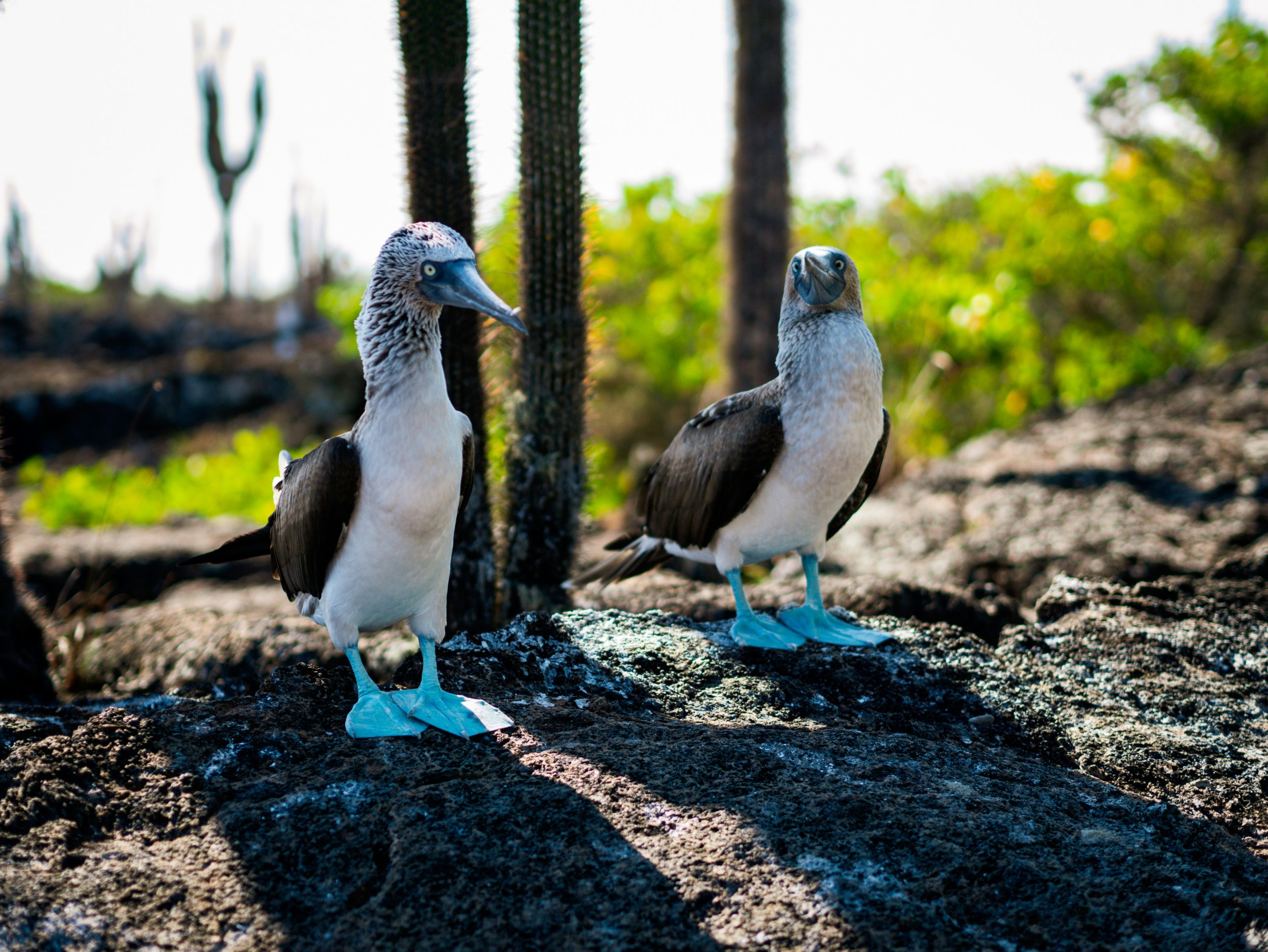
The lava field is a tar-black sea. The heat is indescribable. The sun beats down, and the lava sucks it in. I feel like I’m being cooked. We pick our way over petrified ripples and waves toward aqua green tidal pools that look like pieces of heaven. There are boobies everywhere, taking off and landing and stamping their cobalt blue feet, while armies of orange crabs scuttle around as if they are seeking something they lost. Utterly undisturbed by us tramping past them are orgiastic heaps of charcoal-colored iguanas. I think I see a penguin, but I don’t believe my eyes until somebody calls out that they see a penguin and suddenly a whole flock of them appears.
I am an impetuous liar; I don’t think things through.
The boobies regard us with mild interest. I wouldn’t be surprised if they began to talk. I stop for a moment to take it all in. This is the strangest place I’ve ever been.
Alejandro comes up behind me. “Laura,” he says in an urgent voice. He pronounces my name “Lowra.” “Esther is very upset. She says she won’t walk any further.” Esther is an old lady who is traveling with her husband Donald. They are like Jack Sprat and his wife: He’s a stick and she’s a marshmallow. They spend a lot of time at the bar on the ship, which I know because I spend as much time there myself.
“What does that have to do with me?” I say.
Alejandro puts his hands together as if in prayer. “You’re a doctor.”
I wonder who told him that. Matilda, I bet; she’d talk to a wall. “I’m a psychiatrist,” I say. “Not a doctor doctor.”
“I need you to go to her. She’s very upset.”
I wish I hadn’t said I’m a shrink. I am an impetuous liar; I don’t think things through. It’s gotten me into trouble before. I look longingly at the tidal pools and the glassy sea beyond. I am mere yards from reaching them.
“Oh, fine,” I say. I walk back, retracing my steps so I don’t trip and fall on the hard, scorching ground. Esther is sitting on a rock in the meager shade of a bare tree that is hardly more than a shrub. She is wearing a pair of madras Bermuda shorts I admire, and a pink polo shirt that goes nicely. Her white hair is set in short corkscrew curls. You wouldn’t know she’s in distress. I make her scoot over a couple of inches so I can sit on the rock with her.
“I wish I’d never come on this cruise,” she says. “I had no idea it would be so strenuous and hot.”
“The snorkeling is nice,” I say.
She sighs. “Well. I’m afraid of sharks, so I haven’t been snorkeling.”
“Don’t worry about the sharks,” I say. “They’re little and harmless, nothing to be afraid of.”
She draws back and looks at me. “I heard you saw a shark that was bigger than a man!”
I stretch out my legs and turn my face toward a small breeze for which I am pathetically grateful. “I was just bullshitting when I said that. You know who Bill is?” Esther nods. “He’s a know-it-all. I just said it to shut him up.”
Esther smiles. “He is a know-it-all, isn’t he!”
“Where is Donald?” I say.
“He was smart and stayed behind,” she says. “I called him a fuddy-duddy but look at me now.”
“You don’t have to go out onto the lava field,” I say. “In fact, I wouldn’t recommend it. But you are going to have to walk back to the Zodiacs.”
“I can’t,” she says. Tears come to her eyes. “It’s too far. I have arthritis in my hips. I hardly made it here.”
I nod as if I understand. I know nothing about arthritis except what I’ve seen in television ads. “You can’t just sit on this rock forever. I tell you what. I will personally escort you, and we can go as slowly as you like. In fact, let’s get a head start now.”
“No, I couldn’t ask you to do that,” she says. “Go on and enjoy yourself.”
If I were an old lady in need, I’d want someone to help me out. My mother has been dead for ages, so there aren’t any old ladies in my life. There is a deep nest of wrinkles where Esther’s neck meets her chest. Shallow creases crisscross her cheeks. I wonder what I’ll look like when I’m Esther’s age. My mother didn’t have the chance to get old, so I can’t refer to her example, but Nadine has vertical lines above her upper lip that I’m hoping to escape.
I stand and extend my hand. “I am your lifeline, Esther. Take it or leave it.”
She puts her hand in mine, and I pull her up off the rock. “I bet you’re a good psychiatrist,” she says.
“You’d lose that bet,” I say.
By the time we all get back to the ship and clamber up the ladder from the Zodiacs, Esther is her jolly old self. Donald is sitting on a stool at the bar, and she joins him for a prelunch snort. I wouldn’t mind having a drink too, but they seem so happy to be reunited that I leave them to their sherries and go out to the deck. I sit all alone in a patch of shade on a big metal box where the wet suits are stored.
It’s my birthday today, and I’ve been thinking about the fact since I woke up this morning. Of course, no one has wished me a happy birthday, and I feel sorry for myself about that. My fantasy was that my ex-beau would propose to me today with a diamond ring of considerable size just as we crossed the equator, and I would be engaged in two hemispheres. Where did I get such an idea? How would he even know where the equator is? It’s not as if there is a line with the word EQUATOR on it; we are not sailing a Rand McNally map. I go to the railing and gaze out at the sea, which looks strangely reddish in the flat noon light. Every day, I have been hoping to see a whale, but none has appeared. The cruise brochure specifically mentions whales, and I was looking forward to that one thing above all. A minute after I think this, the sea breaks open and a whale the size of a building explodes through the water. It is mottled gray on its back and white underneath and has a head as blunt as a prehistoric club. It pivots and allows itself to fall backward with a splash so enormous I involuntarily step back.
“Look!” I yell to no one. Everyone is at lunch. The whale sinks into the sea, leaving a pond of foam.
I go to the box and open its hinged lid, find my purple wet suit and pull it out from under all the others. I strip to my underwear and put on the wetsuit. I grab a mask and snorkel and a pair of fins and climb down the ladder we use to board the Zodiacs. On the bottom rung I hesitate before I drop into the sea. The water is soupy with plankton and smells like dead fish. I plan to swim out to where I saw the whale surface and be there when he rises again.
I hear my name. “Lowra!” Alejandro is standing on the deck. “Lowra, come back! No swimming alone!” I ignore him, but he keeps on calling. “Lowra, please!” Matilda joins him and waves at me with both arms. Bill appears and yells something I don’t understand as the twins rush out behind him. Celia and Neal, Esther and Donald—a crowd gathers around Alejandro.
“It’s my birthday,” I shout. I can’t tell if they hear me. I put the mouthpiece of my snorkel between my teeth and tighten the straps of my mask.
Hopie or Pat leans out and cups her hands around her mouth. “Happy birthday, Laura!” she calls. Her voice is reedy and joyful, as if she really means it.
I don’t think either girl has said my name before. It feels good to hear it, to watch the crowd swell. I have seen a whale on my birthday, and everyone knows who I am.
For the last several years as Electric Literature’s Managing Editor, grant writing has been a component of my job description. For those unfamiliar with the work, it is almost entirely an exercise in articulating and appropriately packaging the organization’s best features. As a result, I can, upon request, reel off a list of Electric Lit’s accomplishments. There are many. More than you might reasonably expect of what is, essentially, a small arts nonprofit. We send over 500 pieces out into the world every year, publish more than 400 authors, reach more than 3 million readers. The combined catalog of our magazines—Recommended Reading and The Commuter—constitutes the largest free archive of contemporary literature outside a library system. Our work has been recognized by nearly every major industry award. I could go on.
When Halimah Marcus told me earlier this year that she would be stepping down as Executive Director, I was surprised. (There has, perhaps, never been a greater understatement.) It was—in that moment and still now, months later—difficult to imagine EL without Halimah. After 10 years as Executive Director and 16 years on staff, all of the successes I spend so much time writing about are also, unarguably, Halimah’s. Electric Literature would not be what it is today without her.
But in addition to my gratitude to Halimah for creating the place where I eagerly spend all of my working days, I also feel compelled to thank her for something more. It should be obvious to any writer who has worked with her, or any editor who has sat in an editorial meeting with her, that Halimah has a preternatural ability to see what a story is trying to be—to identify what’s working, to believe in what the writer is trying to do. What is less obvious, I think, is that she does this with people too. As a leader, Halimah had high expectations. She challenged me, every single day, to do my best work—and then she paid me the enormous compliment of believing I could do it. As far as I can tell, she did this for everyone on staff, and for countless other editors and writers. Halimah sees in others what most people miss and she generously uses that insight to cultivate talent. Like the organization she led for so many years, Halimah has had a catalyzing effect on those lucky enough to be near her—and so many of us have been lucky . . . .
– Wynter K. Miller, Director of Operations & Fiction Editor, Electric Literature
As a writer and an editor, I’ve worked with many editors, and many writers, and Halimah, you’re the epitome of excellence in both regards. I simply can’t thank you enough for choosing me, first to be editor-in-chief, and now, to assume full leadership of Electric Literature. I’ve learned so much from you about how to build and lead a team, about patience, about always finding room in a packed schedule to take that little bit of extra time to think something through before coming to a decision. I’ve also learned a lot about commitment, about saying what you mean and standing on business for the people and causes you support. I’ve learned about the unwavering pursuit of excellence, and about taking up space in a chaotic world by providing talented writers with a home for their incredible, and sometimes groundbreaking, work. Their voices are beacons for us all.
So much of being an editor is about stepping out on faith. We operate behind the writer, quietly by their side in the trenches of art-making. We are tasked with maintaining unwavering belief in our writers and their work. We invest time and energy, and that investment is a labor of love. All of this is centered on our faith: in writers, in readers, in art, and in humanity. Thank you for your faith, your friendship, and for lighting my way. You’ve built a legacy with Electric Lit, and it’s my honor to carry the mantle. I’ll be seeing you real soon, friend.
– Denne Michele Norris, Executive Director & Publisher, Electric Literature
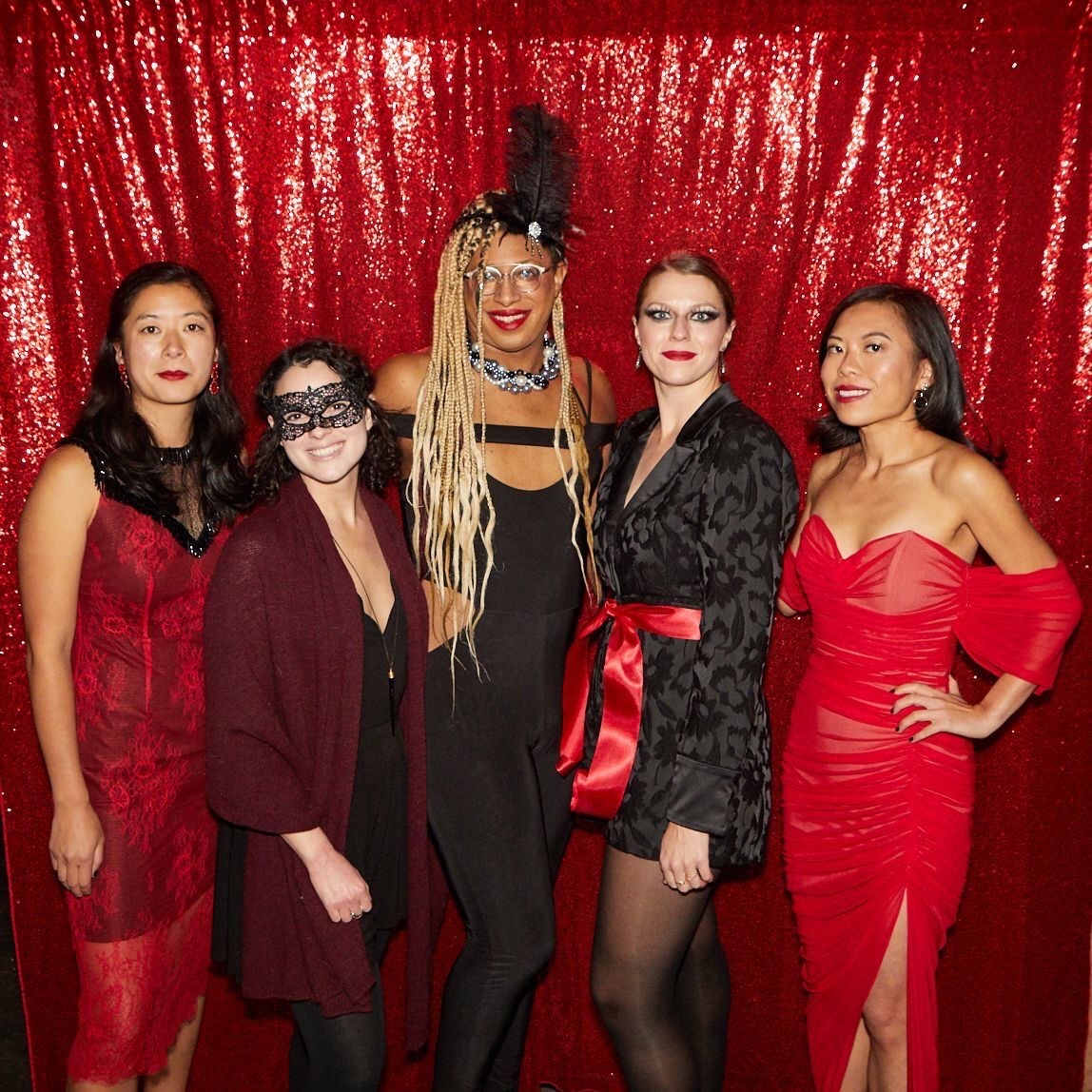
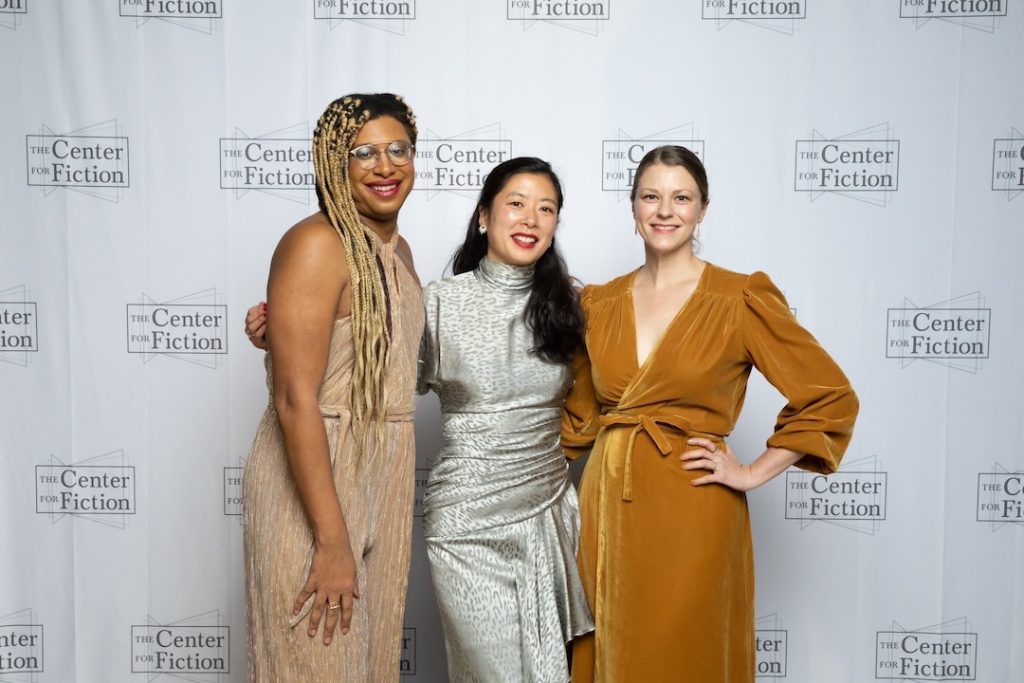
Left to right: Alyssa Songsiridej, Katie Henken Robinson, Denne Michele Norris, Halimah Marcus, Jo Lou
When I first started working for Electric Literature, I was nervous. Not just because it was such a huge opportunity, but because my first week of the job was AWP. I was about to have to hang out with my new bosses at staff dinners and offsite parties, trying to play it cool and not give away how surreal and thrilling it was to be in those spaces. But it turned out I needn’t have worried, because my new boss was Halimah, and she made me feel instantly welcomed: a true part of the team and not, as I’d anticipated, like an outsider who needed to pretend I belonged.
I discovered that weekend that Halimah is kind, knowledgeable, impeccably organized, and just fun to be around. Lucky for me, I’ve also gotten to spend the last four years getting to know her better and finding out just how true that first impression was. I’ve seen how all of those traits have shaped EL both inside and out: creating a work environment where everyone feels heard and respected, always keeping the ship running smoothly, and publishing work that’s as smart as it is fun. I’ve learned so much from Halimah’s leadership over the years, and while it won’t be the same around here without her, it’s thanks to her wisdom and guidance that we’re ready for it. Her influence over EL’s culture, mission, and voice will always be visible—and I wouldn’t want it any other way.
– Katie Henken Robinson, Deputy Editor, Electric Literature
After 11 years of working together, it’s hard to imagine Electric Lit without Halimah’s calm, fair-minded leadership and her belief in both EL’s mission and the people behind it. Hundreds of writers have benefited from her support, her editorial skill, and her vision. And so much of our success and growth, and so much of what we’ll carry forward, exists because of the wisdom, humor, and heart she gave to this work for so many years. If life is a book (and I think we’re all partial to this metaphor) then I’m wishing her the very best next chapter.
– Kelly Luce, Editor of The Commuter, Electric Literature
There isn’t a day, in my three years working at Electric Literature under Halimah Marcus’s leadership, that I haven’t looked forward to logging into work. Each one is calm, orderly, and rigorous. Each has made me a better writer, editor, and artist. Halimah has a brilliant knack for choosing a staff who work well together and respect one another, who are passionate about literature and good at what we do. She is exacting in her own aesthetic tastes, and it has been a privilege to hone mine under her direction. There is nothing more rewarding than finding a new story the whole team loves, capturing its essential paradoxes in a clever and precisely-honed headline, nailing its vibes with the perfect image pairing; Halimah pushes us in these things always, so that we excel often enough. Lucky all of us, that she has written a debut novel about working at a literary magazine, and we will get to read it soon. I can never thank her enough for making Electric Literature what it is today, and for trusting me to be a part of it. I can’t wait to see what she does next.
– Preety Sidhu, Associate Editor, Electric Literature
Halimah was an inspiration before I knew Halimah. Like so many, I was reading Recommended Reading on my high school commute, a student figuring out how to connect the dots between stories, novels, the writers writing them, the readers reading them. Halimah opened a door to the nebulous universe of literature in the peculiar way that only brilliant publishers can; and then again, when she hired me to join RR’s editorial team. Now that I know Halimah, she’s even more of an inspiration—a generous, decisive leader, a phenomenal editor everyone should be so lucky to share an editorial meeting with. These adjectives only begin to do her justice. Halimah leaving Electric Literature feels seismic, and yet she is a rising tide that will continue to lift our literary boats. I can’t wait for SLUSH and many more years of being inspired by her.
– Willem Marx, Associate Editor, Electric Literature
For years, I’ve watched Electric Lit grow and evolve from afar, always admiring the expansiveness of its vision and the community it cultivated under Halimah’s leadership. So it has felt especially meaningful to begin first as an intern and now as a member of the team during this moment of transition. In the time under her leadership, I’ve witnessed firsthand the generosity and care she brings to both the magazine and the people around her. I feel very lucky to have experienced it up close. Her influence is deeply woven into Electric Lit’s culture and community, and it’s a legacy that will continue to shape the magazine and everyone it reaches for years to come.
– Evander James Reyes, Communications Manager, Electric Literature
Halimah and I met at the Brooklyn College MFA program, and we worked together at Electric Literature for several years—I’d call them formative years, but that would make us sound too old. During that time, we made some great decisions, like establishing the organization as a nonprofit, and some questionable ones, like launching a novel with a Valentine’s Day sexting campaign, but we always worked to keep Electric Literature a free, accessible, and essential part of popular culture. A lot has changed since those days, but Halimah remained dedicated to those values as she guided Electric Literature into a new era of innovation, growth, and resiliency. Her work and leadership at EL has left an indelible impression on the literary landscape, one that will deepen and grow as she moves into her next chapter.
– Benjamin Samuel, former Co-Editor of Recommended Reading, Electric Literature
Left to right: Benjamin Samuel, Halimah Marcus
Before I worked at EL I thought literature was a solitary activity, something you did locked alone in a room. And, well, I started at the height of the pandemic, so I was technically locked alone in a room! But Halimah never made it feel that way. She knows how to turn literature into a social event, a space where all of your favorite people, past and future, are working together on a project that is greater than anything you could achieve on your own. I learned from her that being an editor means developing a kind of emotional sensitivity, an intelligence that hasn’t just improved my writing, but also my life. Her stamp on the literary world is indelible, and I’m so grateful to have gotten the chance to work with her.
– Alyssa Songsiridej, former Managing Editor, Electric Literature
On Recommended Reading editorial calls, we often discussed the difference between a situation and a story. A situation was an idea that hadn’t found its footing in the world yet. But a story—what was it exactly? I spent some of the luckiest hours of my writing life listening to Halimah pinpoint not only where the story was, but how to make each one better. Halimah knows how to make life stories better, too. Through dream editing gigs, sage leather jacket advice, and a weekly conversation about stories I never wanted to end, she helped me find my footing in the world. I’m so grateful she’s part of my story. I can’t wait to see where hers goes next.
– Erin Bartnett, former Senior Editor of Recommended Reading, Electric Literature
How can I ever properly thank Halimah for giving me the opportunity to work alongside her, a fellow cycling fanatic? It must have been the Tour’s legendary Alpe D’Huez that we watched on a summer evening in her Brooklyn home with a chilled glass of French rosé. What an invitation for the new kid on the team! What an honor to spend such time with one of the great literary minds of our era. Halimah’s impact on contemporary literature can’t be overstated. We’re so online now that digital publishing is taken for granted but Halimah saw before many others that top-quality writing could exist in the digital realm, and flourish there. We wouldn’t have the literary discourse and platforms we have today with Halimah’s vision, her Electric Literature. She is one of the most agile thinkers and creative editors that we’ve been lucky enough to have in our lifetime. She is the best mentor, the most loyal friend, the most equanimous leader. Halimah, all I can offer is the deepest gratitude for your work and friendship, and excitement for what’s forthcoming.
– Lucie Shelly, former Senior Editor of Recommended Reading, Electric Literature
Halimah’s deep knowledge of the craft of fiction, her brilliant savvy, her generosity, and her sheer belief in the power of a well-told story made EL/Recommended Reading both a special place to be a young editorial assistant, and what it is today. I’m grateful to have been even briefly in her orbit years ago, and know that whatever she does and makes next will be a tremendous gift to all of us.”
– Peter Kispert, former Editorial Assistant, Electric Literature
I’m part of the Electric Literature family because of Halimah Marcus. It’s because of her outreach and attentiveness to many of the writers/advocates across backgrounds that many of us have been able to call EL home and remain part of a growing community. Electric Literature has always believed in the transformative and galvanizing power of the written word to elevate conversations, call out systemic inequities, and revel in the beauty of work that brings us together on a continuum. And that belief has been held firm by those, like Halimah, who’ve been at the helm of EL over the years. Also, let’s keep it real that Halimah has a great knack for bringing many of us together; encouraging an atmosphere of openness, experimentation, and humility; as well as forging a signature presence in the way Electric Literature shows up in partnership with many brilliant editors, interns, administrators, and creatives. It’s hard to believe that the lynchpin of this publication—no EL is an entity unto itself—is departing. But we all know that her imprint will forever be part of what Electric Literature, and Halimah, means to the literature world at large.
– Jennifer Baker, former Contributing Editor, Electric Literature
Halimah has been my rock this past decade. One Story published her in 2013, but sometime later, after she became the Executive Director of EL, we began meeting (along with the amazing Karen Phillips), to talk about what it was to lead a scrappy nonprofit. The job brings, of course, a lot of joy, but it also comes with dark times and freakishly boring administrative puzzles to solve. Having someone who knew exactly what I was going through—a true peer—was a bit of magic. When things felt grim, when we got a grant or didn’t get a grant, when we faced cash flow challenges, had staffing changes, fundraising questions, or some unexpected bureaucratic nightmare, I knew I could call for a whine session, and Halimah would be there to listen, to laugh, and to help think of a better way to do things. I am so excited to see her shifting into the next phase of her professional life. I’m confident that she’ll remain both a friend and a stellar literary citizen. I know I’ve been lucky to have such a trusted and brilliant peer, and I know this isn’t goodbye, but damn, I’m going to miss her.
– Maribeth Batcha, Co-Founder & Publisher, One Story
Long ago, I met up with Halimah Marcus and Benjamin Samuel for coffee to discuss the launch of Recommended Reading. At the time I knew Halimah as a student (from Brooklyn’s MFA program) and as an author (we published her fantastic piece “Running Alone” in One Story). The advice I gave that day was: most lit mags only last two to three years. You’ve got to figure out how to exist past the passion project phase if you want to make something that lasts. Issue No. 1 of Recommended Reading launched in 2012. It is now on Issue No. 730(!) and has not only survived but thrived, with dedicated readers around the world. A key ingredient to this success (and longevity) was Halimah. She was promoted to Executive Director of Electric Literature in 2016, and solidified the organization’s role as a leader in the indie publishing world, supporting and mentoring the next generation of writers in creating thoughtful, expressive, and vital literary art. It’s impossible to overemphasize the importance of the work she did while guiding Electric Lit over the past 10 years. I’m honored to call her both a literary colleague and friend, and am looking forward to watching her shift into her most exciting position yet, with the publication of her debut novel, SLUSH, in 2027. This is just the beginning for Halimah Marcus, and lucky us, we get to watch her shine.
– Hannah Tinti, Co-Founder & Executive Editor, One Story
As someone who has worked at literary organizations, I know all the behind-the-scenes work that goes on to make them run day-to-day and am in awe of what Halimah has built at Electric Literature. I’m grateful, too, for the visibility she’s given me as an author in the pages of Recommended Reading and The Commuter. It’s been such an inspiration to watch her career trajectory and I’m looking forward to cheering her on as she publishes her debut next year.
– Lena Valencia, Director of Educational Programming, One Story
Left to right: Denne Michele Norris, Alyssa Songsiridej, Halimah Marcus
I submitted a risky short story to Halimah back in late 2014. Even though it was an anemic mashup of sentimentality and broken imagery, Halimah somehow divined what I was trying to do, and with signal patience, guided me through a revision. A story started to resolve from the chaos, and it appeared in Recommended Reading in February 2015. Three others followed over 10 years; Halimah performed variable editorial conjures on each, transforming them into real stories. I still don’t know how she does this. I just know I’ll truly miss Halimah’s sage blue-pencil sorcery, not to mention her kindness and affable brilliance. But soon the world will get to see Halimah as a novelist—I, for one, cannot wait for her debut novel, SLUSH, next year.
– Bill Cotter, writer & author of Recommended Reading’s “The Promise of Hotels,” “Collision,” “The Good Room,” and “The Long Walk North”
As an editor, Halimah has a broad understanding of what makes a “good” story and maintains full-throated and generous support of EL’s vast stable (horse reference) of writers long after they appear in its pages. I’m fortunate to be one of them. EL published my story “North Of” 15 years ago, and they’ve supported me in big and small ways ever since. As a friend, Halimah shows up when you need her prepared with some additive accoutrement I didn’t know the event needed. We sometimes race to the perfect one-liner but she always wins because she runs and bikes like a thousand miles a day. I thank my stars for folks like her, who with their elegant ethics make the publishing industry a better, brighter place.
– Marie-Helene Bertino, writer & author of Recommended Reading’s “Lottie Woodside and the Diamond Dust Cher,” “Beautyland,”“Parakeet,” and “North Of”
Halimah is the kind of thoughtful, assiduous reader every writer hopes for. I think that comes both from her own talents as a writer and her compassion as a person. She sees the emotional life of the story and, with great kindness, great sensitivity tells you how to lift that emotional life into being. And that’s what stories are! Emotional life intensified into a singular moment. Working with her is a joy and a revelation.
– Leigh Newman, writer & author of Recommended Reading’s “Valley of the Moon” and “An Extravaganza in Two Acts”
Halimah served as my editor on two EL stories, most memorably on “Lockdown,” about the response to an active shooter incident at a high school (which is what “lockdown” meant back then). “Lockdown” is preoccupied with fear and uncertainty, but Halimah saw deeper themes at play, particularly in the power dynamics between the group of girls at the center of the story. Her sense of how to use these dynamics to tighten the structure, deepen the tension, and enhance the emotional connection between the girls took the story from good to great, and is just one example of Halimah’s remarkable skill as an editor and guide dragging fragile writerly egos toward their best selves.
– Mark Jacquemain, writer & author of Recommended Reading’s “Lockdown” and “Island”
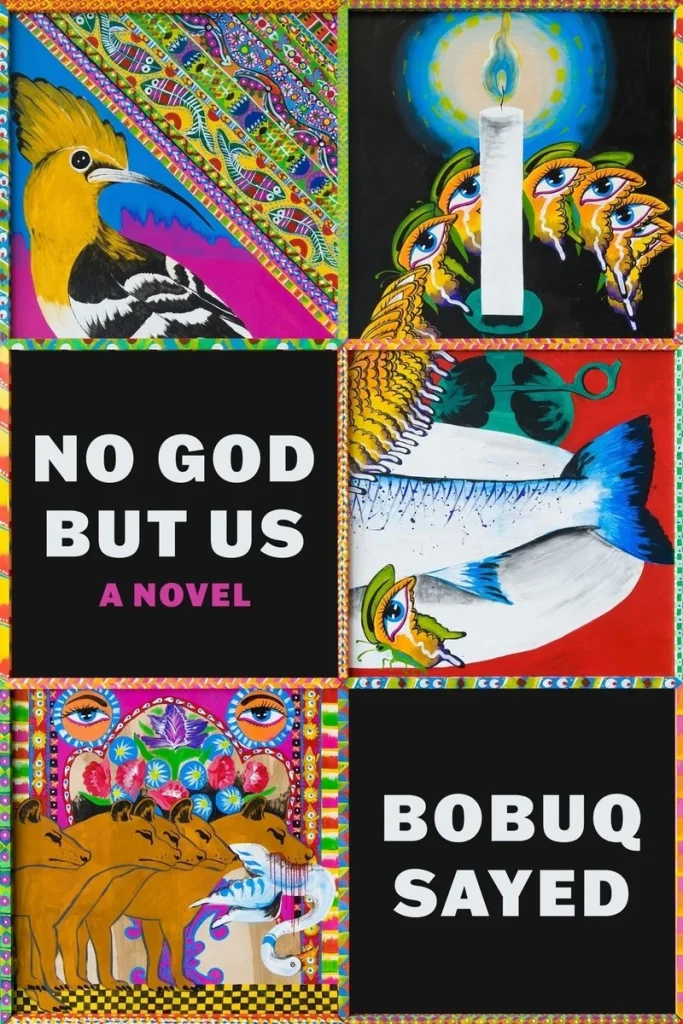
Bobuq Sayed’s début, No God but Us, reinvents the modern American Abroad novel––the story, now over a century old, of Americans departing the US and crossing an ocean to find freedom and growth that they could not access at home. From Langston Hughes to Ernest Hemingway, James Baldwin to Garth Greenwell, the American Abroad novel follows the solo expatriate moving through a foreign land, usually a European city, seeking reinvention while reckoning with the racial inequality, sexual prohibitions, or moral repressions of American culture. In none of the canonical examples, however, is the protagonist both queer and racialized. Baldwin famously conceded that he was unable to create a character who was both Black and queer in Giovanni’s Room.
In No God but Us,the voyager, Delbar, is an American by birth but also the child of Afghan refugees, making his belonging in the US more contested than his literary predecessors. And he journeys eastward not to escape America but to run away from the fallout of being outed to his DC-area diaspora. He lands in a different kind of European city, Istanbul, just as the city’s regressive forces are turning against dissident communities. There, he meets Mansur, an Afghan refugee who has fled Tehran, a character who Sayed gives his own first-person narration, further subverting the Americans Abroad frame. The narratives of these two queer, displaced Afghan men intertwine, as does their desire for each other. Delbar’s narration is a story of love and self-becoming. Mansur’s is a story of the search for security and a path out of statelessness. Through their interweaving, the American Abroad novel is reimagined as a story in which characters displaced by imperial war confront the limits of a seemingly shared identity and contend with their differing relationships to love, desire, and relative privilege or devastation within the diaspora. No God but Us is a necessary and powerful intervention in American literary history––a novel that challenges tradition with new narrative form to show how the US’s imperial wars are carried within us wherever we go, shaping our loves and imaginations on the most intimate and psychic levels.
Sayed is a Steinbeck Fellow, Lambda Literary scholar, and award-winning MFA graduate of the University of Miami. We spoke over Zoom in April, less than half a year before the 25th anniversary of the US’s invasion of Afghanistan on October 7, 2001.
Leila C. Nadir: Let’s start with how your novel participates in but ultimately disrupts the literary tradition of Americans abroad, and also conventions of immigrant literature. Delbar and Mansur are neither contending with their lack of belonging in the US nor questioning their place in their ancestral homeland. So why Turkey? Why this third space for their stories?
Bobuq Sayed: I guess there was a sense of fatigue with this way that a lot of immigrant literature has been stalled by rudimentary questions of belonging. “Woe is me, I feel left out.” Boohoo, you know? We do the complexity of our experience a disservice when we fetishize trauma and permit narratives that overly self-victimize. We fail to account for the vastness of our power and, in many cases, our complicity in empire.
I didn’t want to write a domestic story about a gay child of immigrants questioning his belonging. This third space you’re mentioning, Turkey, was a sort of undressing of the strictures of identity and language, because Turkey is neither origin nor destination. In Turkey you have this cosmopolitan community of refugees and asylum seekers who make huge sacrifices to reach Istanbul since the borders from West Asia and North Africa up until Europe are more porous. They’re sometimes waiting years for their new homes and permanent stability to materialize.
I wanted the third space to present other identity formations and relationship types. When we rid ourselves of this language of who am I and where do I belong, when we begin from the premise that none of us belong here, what other indexes of power emerge? What are the subterranean tensions and motivations that are hidden until that undressing takes place?
LCN: Delbar imagines the identity he shares with Mansur grants him some great vault of access to Mansur’s life experience. Over the course of the book, we see the evolution of that hubristic assumption. In Turkey, Delbar’s American-ness becomes painfully obvious, and it becomes a barrier to genuinely understanding Mansur.
BS: Totally. The first chapter begins with Delbar presenting himself as an educated authority on the Middle East and on representations of the SWANA diaspora. And maybe in the American context he is, or he has some discernment, he gets away with the woe-is-me thing.
Unlike Mansur, who reaches Istanbul via smugglers, on foot, and in the hulls of passenger buses, Delbar is accessing the city via frequent flyer points, airplanes, and his expat aunt. We see the flattening effect of language and identity. These two people are, in fact, worlds apart. What do love and family look like in this context? Where are the fault lines of power?
At the social support dinner for queer and trans refugees and asylum seekers in Turkey, Delbar displays an acute understanding of his lack of authority, right? No one has to tell him that his Afghanness is not the same as Mansur’s. Delbar’s supposed cultural authority is also a chronic delusion about the integrity of his point of view, which the reader comes to learn.
This book would’ve been much easier to write as an exclusively single-subjectivity, diaspora story, but then it wouldn’t be taking any swings. There would be no risk involved.
We get to see the ugliness of the American subjectivity, how much it excuses, and how much it gets away with.
LCN: Did this inform how you structured the book? The novel alternates between Delbar and Mansur’s first-person narration, yet their timelines are not synchronous. Delbar’s begins with meeting Mansur shortly after his arrival in Turkey while Mansur’s is longer, and begins earlier, showing his struggle to get on his feet while awaiting review of his case in Turkey. The stories don’t link up until the last third of the novel.
BS: I wanted to trap the reader in identification with Delbar, who’s this edgy, urban, queer snarky, counter-cultural beatnik figure that you want to go to bat for. And with those single subjectivity, autofiction storylines, you do. You start with the Gary Indiana and you end with the Gary Indiana. Wherein, he’s not necessarily good, he’s not necessarily likable the whole time, he’s certainly not making fantastic decisions, but beginning to end he remains your guy.
I was interested in what happens if he starts as your guy and then, by the end, it’s not that this guy sucks necessarily, but that in the grand context of history, and interspersed with this other point of view, we get to see the ugliness of the American subjectivity, how much it excuses, and how much it gets away with. Who are the casualties of that subjectivity? Who is obfuscated?
This also relates to the writer abroad thing, all these American and British authors across history who’ve written these authoritative accounts of the cultures they transplant into.
LCN: I feel that––how Delbar’s narrative implicates the reader. They’ve become emotionally invested in his self-becoming, in his search for self-expression and identity partly through his pursuit of drag performance. We get a lot of Delbar’s romantic pursuit of Mansur, the play by play, while Mansur’s narration is focused on seeking material security and negotiating with power to find some kind of base line of freedom.
BS: Delbar is having this profound, heated, romantic love story. And it is a love story from Delbar’s perspective. But from Mansur’s perspective, that love story looks very different. A central tension here is between love and security in a queer contemporary migrant context.
Like, arranged marriage is frowned upon, certainly among queer people. This idea that you could match people because they’re from a good family or they have a good job. We’re fed this idea that “all you need is love.” But, for someone like Mansur, pursuing a relationship for love destroyed his whole life in Iran. He never had the luxury of choosing love. What is the class context, and what are the historical conditions, of who gets to choose a partner based on the whimsy of the human heart?
Delbar isn’t yet burnt by the sharp edges of love; he has the privileges of native fluency in English, American citizenship, and ultimately a family that will not abandon him. His family is complicated but there is no abandonment. His mother crosses the ocean to reiterate that refusal. And it’s not that Mansur’s family abandoned him, but the book is concerned with how nationality, class, and visa status inform things like love and family estrangement that we don’t often associate with border violence.
LCN: While writing about two queer Afghan men, how did you carry the legacy of the ways Afghan genders have been represented across history? Noble and fierce warriors of the British and Reagan periods, terrorists in the Bush era, cowards in the Biden era. And Afghan women always in need of saving. What kind of responsibility, burden, or freedom did you feel in writing against this legacy?
BS: I was definitely really careful about perpetuating stereotypes of Afghan women, refugees, and queer people as docile or in need of saving. I wanted to show how matriarchy looks in the American context and also in the Afghan-Iranian context, where Mansur’s mother has to secure her daughter’s future when there is a fear of deportation. In the end, everyone is making the best decisions they can based on their material circumstances and their worldview.
When Mansur’s little sister starts to veil, our tendency is to associate that with backwardness. She snaps back that it’s my body, don’t I have a right to choose? And indeed, isn’t it more misogynist to assume that Afghan women and girls have no free will? For eight years, Laura Bush made Afghan women her First Lady project. Eight of the first 26 years of the 21st century, American political consciousness revolved around the plight of Afghan women. Today, they are worse off than ever before.
These conversations we’re finally having now about where our tax dollars are going, what murderous wars they’re funding and to what end, are great questions. Susan Sontag was widely rebuked for making this same argument in 2001, even among liberal commentators. SNL threw Rage Against the Machine out onto the street for performing “Bulls on Parade.”
There has always been tremendous opposition to criticizing the American military and it still remains sort of taboo. But like, where did the $2 trillion spent on the war in Afghanistan go? Because, you know, in Afghanistan, it’s hard to find receipts for where that money was spent. A lot of it was used to line the pockets of defense contractors and weapons manufacturers in the DMV.
What is the class context, and what are the historical conditions, of who gets to choose a partner based on the whimsy of the human heart?
LCN: Mansur and Delbar navigate shifting operations of power across empire, state authoritarianism, anti-queerness, anti-transness, anti-immigration, and also the ways Islam is weaponized as a tool to control people on the state level or justify war. Trying to read this barometer of where queer immigrants fleeing imperial violence might be safe is a constant negotiation. As Mansur says, “Every promise of safety had come at a price.” I’m amazed at how this novel holds all these shifting borders, which are even more relentless in 2026.
BS: Part of Orientalism’s suffusion into our representations of the Middle East is that we have an enormous and compelling set of stereotypes for the Muslim world. I embarked on this novel to articulate something different. We’re writers, cultural workers, narrative shapers. That’s our role. We push back on dominant, hegemonic, harmful narratives. Novelists have the profound opportunity to showcase an alternative way the world might be, or already is today.
I felt it was important to register my dissent at the narratives we’ve inherited, both named and unnamed, at the explicit level of women taking charge of their lives, the passports and privileges that certain characters have and others don’t, but also at the level of what they’re afraid to say, the very subtle moments of protest and refusal.
The aid organization that several characters work for, Peacemeals, is led by this German guy, Leif, and it’s funded to build bridges by breaking bread, or whatever the slogan is. The reader is cringing a little bit at the out-of-touch nature of this organization, but they’re only doing that because of how we’re being told the story, and who’s telling it. In another accounting, Leif could easily be portrayed as a savior here, helping to evacuate queer and trans people from the Middle East. And in fact, that’s the person who has told this story across history. It’s Leif. I really wanted to shut him up because he’s also the mouthpiece of empire. He’s the one we’re primed to accept as the spokesman of this community.
The number of books written by white people about Afghanistan is astounding, and the sheer magnitude shows us that it’s not just an individual problem. We’re really dealing with a system of dehumanization here that indicts publishing, the aid sector, and the global image economy.
LCN: It’s like that time TheNew York Times assigned the review of Jamil Jan Kochai’s short story collection to a white military vet.
BS: Oh god, yeah. The review was tiny and the reviewer spent a good portion honing in on some minor irrelevant detail of how the book had inaccurately specified the rank of the airman who’d be flying a certain kind of warplane. These fuckers really have some nerve to reprimand Afghan writers for not expertly skilling themselves in the language of our own annihilation.
LCN: Let’s dwell with that a moment––how Afghan writers establish our authenticity for those audiences only if we submit to the West’s militarized representation of our culture and history. You blow right past that racism with this novel. I’d love to hear about literary inspirations you turned to in constructing Delbar and Mansur’s stories, which are counter-narratives to each other but also to that Orientalist militarized frame.
BS: A Burningby Megha Majumdar was a major inspiration in demanding that I bifurcate this narrative; the structural restraint of just Delbar’s perspective made it impossible to showcase his character. There are some things that could only be done via another character looking in and seeing this guy’s delusions, you know? Fatima Bhutto’s The Runaways was another inspiration.
There’s this common conceit of a main character obsessing over another person in their life who represents some shortcoming or perceived insecurity. I’m ugly, look at how beautiful she is. I’m unpopular, and I’m fixated on the cheerleader everyone loves. It’s a whole thing. By letting the subject of that obsession write back against the grain, we turn that conceit on its head. Suddenly, whole new tensions emerge. It’s part of why Delbar gets a three month timeline and Mansur’s is more like six years. I really wanted to complicate this idea of who receives more nuance, because the predominant tendency in books is for us to never get Mansur’s point of view at all.
Despite these conservative and queerphobic religious authorities, Islam belongs to us too.
LCN: Let’s close with your title. No God But Us reworks the shahada, the Islamic declaration of faith. There is no God but Allah and Mohammed is his Messenger. Neither Delbar nor Mansur are vehemently religious, yet they share that background. How does the title capture Delbar and Mansur’s relationships to Islam, gender, and sexuality?
BS: The idea was to suffuse this centerpiece of Islamic prayer with Attar’s Conference of Birds, which is central to Sufism. The Simorgh is this Sufi folktale of a huge trove of birds who go in search of the famed God of the birds. On their journey, they encounter various obstacles and endure mass casualties and, by the end, there are only 30 birds left.
They come across a reflective surface and the 30 birds who remain realize that they are the Simorgh they went in search of. Si-morgh translates to “30 birds” in Farsi. I interpolate that Sufi text to champion our people as divine.
In the Bible, Jesus loved the poor and a sex worker washed his feet. A foundational tenet of Islam is the anti-capitalist repudiation of collecting interest on loans. Even today, the Pope condemns conquest and deportations. Organized religion used to rail against the elite.
Part of the racialization of Islam is that you can never fully disavow it because the state, police, border guards, and case workers see you and read your name and see your thick facial hair and act accordingly. How you identify doesn’t materially inform how you’re treated. They look at you and they see a Muslim. So, despite these conservative and queerphobic religious authorities who would like to deny our claim to Islam, whether they like it or not, Islam belongs to us too.
When those 30 birds see their reflection, among them are queer and trans people, sex workers, drug users, immigrants, divorcees, feminists, criminals. That’s what the title gestures to.
I had a neighbor whose husband shouted. I suppose the husband was my neighbor too, but I didn’t want him to be.
Once home from work, he let loose, shouting between Hindi and a Garhwali dialect I couldn’t follow, a few phrases settling in my ear: the apathy of women, dinner criticism. Sometimes he read the newspaper outside on a grey metal chair. He shouted there, too. It’s possible he was capable of shouting and reading at the same time, but more likely the newspaper was a prop. When he went to sleep, the quiet was sudden. The clink of my neighbor washing her pots at the outdoor tap sounded spacious and free.
I was there—on a single street two miles above a small town in the foothills of the Himalayas—to teach for a few months in a village school run by a local NGO. I was also there in an attempt to tend to some mid-twenties grief and confusion. In New York, I had an unfinished dissertation, a fiancé, who would, in two years, be a husband, a waitressing job, a teaching job. I needed to remember something essential to myself and I thought living and working in service to children in the town of my grandmother’s raising, in the quiet of the world’s highest mountains, might help. My newly constructed rental apartment was last on the lane, a bicycle width’s space between it and my neighbor’s mud-walled home. I have never lived anywhere more glorious. But even surrounded by raucous monkeys and birds in dialogue and those glinting, snow-faced peaks, my neighbor’s husband shredded my peace. I slammed doors in protest, paced with vengeance, went to bed with headaches. And I wondered at my neighbor and her outward equanimity.
She moved through her days as if the husband was background to her story. From what I could tell, she and I differed in economics and education and aligned in gender, religion, and physicality: if I had taken off my glasses and dressed differently, we might have been mistaken for sisters.
Whenever we passed in the lane, she flicked her eyes at me in greeting. I would scan her face for bruises that did not exist. She was small and lithe and walked fast, her braid keeping time in the swale of her back. She looked too young to have children gone from the home and too old to be childless in India.
In the mornings, while I drank tea and reviewed lesson plans, she milked a beige cow. As an ingenious locating device, she had painted her cow’s horns hot pink. Even before I heard the sound of the bell around the cow’s neck, I would see her pink horns flashing through the trees. In the evenings, as I ate dinner, my neighbor appeared at the front of her home with chapatis for the local pack of wandering dogs. Sometimes the oldest dog—white with stretched-out teats and a patient face—pressed against my neighbor’s legs.
And still, the husband shouted.
She moved through her days as if the husband was background to her story.
I never heard my neighbor respond to him. In fact, in three months’ time, I never heard her voice at all. Once, I heard her laugh—a joyful, raspy sound like a spigot turned on, then off, in drought—as she watched the white dog flop on her back to scratch an itch. And once on a festival day, some women came by and collected her, bundling her into their fold. As they swept down the lane in a flood of bells and chatter, I thought I heard another voice added to their mix, but could not be sure.
Twenty-five years later, what I recall best is her clothing: gagra cholis, traditional blouses and skirts with simple cuts—her colors an insurrection. Every day, flaming from her home like the flag of her own private country. Declarative, amplified, insubordinate.
Two sets I remember:
-a skirt like a pile of limes on fire, with a canary yellow dupatta wrapped around a cotton candy blouse.
-A neon orange and purple skirt paired with a blouse like hammered metal, hemmed in a deep, ecstatic blue. The dupatta—poisonous-frog-green—knotted for efficiency.
At dusk, I would sit behind the apartments near the laundry line at the edge of the lane to watch the distant cloud-topped peaks as they soaked up the waning light. The mountains grew dark and hulking and upside-down triangles of sky slotted into the range, flooding with purple and orange. I felt the sunset all through me. Out there with my neighbor’s gagra cholis, her dupattas end to end, underlining horizon. Dimming the hibiscus. The husband inaudible.
One morning, as I left my apartment and walked to catch the bus to the village where I was teaching, I noticed the grey chair outside my neighbor’s door had been painted hot pink. My neighbor was sweeping her stoop. I said, “Aapki coursi acchi lag rahi hai.” Your chair is looking good. She dipped her head in agreement, kept sweeping. The white dog, panting in the shade, had a thick pink stripe along her flank as if she had made contact with my neighbor’s paintbrush or the drying chair.
I stayed at the school for two weeks, and when I returned to the lane, my neighbor’s husband was sitting on the chair. It had been re-painted grey. He was holding a newspaper in front of his face.
And shouting.
I kept still, dizzy from the effort of not hurling the grey chair with him on it.
There was a bird, singing. Mountain. Wind. Slash of sunlight through the tossing leaves of ancestral trees.
I saw my neighbor in her lime-on-fire gagra choli scorching the street in my direction. Vivid with silence, purposeful as a blade. When she passed by and flicked her eyes at me, the air between us rippled. The wind was oceanic, but suddenly it disappeared, as if I’d rounded a corner into an epic quiet. It was clear to me then that it wasn’t only the husband’s shouting that my neighbor would not allow to diminish her. It was also her dislike of his shouting. I understood her silence as an audacious choice to create her own peace. I understood her silence as a victory. Her voice and wildness, intact in color.
That dusk, I sat under the laundry at the edge of the lane, facing the high peaks. The sunset a golden rip in the sky. My neighbor’s clean clothes fluttering soft. I let what was outside, in. Peace as my heartbeat’s throughline. Chosen. Resolute.
A week later it was my last morning before going home to New York. When the husband left for work, I went over with my brightest wool shawl—spring leaf green. The white dog escorted me, trotting, her teats swinging, the streak along her flank still there, hot pink.
I let what was outside, in. Peace as my heartbeat’s throughline.
My neighbor was pounding dried corn. I asked her if she would like the shawl, saying it would be warm in winter; she evaluated the texture then draped it around her neck, dipping her head in acknowledgment. She went back to pounding—the semi-circle of deep yellow corn fanning around her—as I wished her health and happiness and thanked her for teaching me. I remember she looked at me with an amused kindness reserved for children or naughty housecats.
2.
There was a time in my thirties when I lived in a New York City hospital. I was not a patient but a caregiver for my husband who had acute leukemia. I slept next to his hospital bed on a camping cot I’d brought from home. I covered it with a set of hospital sheets, hospital blankets, one rare hospital pillow—all white. The walls of our many rooms over the years were a murky beige, as if color had been bleached out, along with, maybe, MRSA. C-diff.
In this hospital, down the center of each room, was a grey curtain dividing us from a roommate, and at the center of our side of the curtain was a wheeled plastic table with a faux wood-grain top that raised and lowered over my husband’s bed. The tabletop was crowded with things routinely supplied upon admission: a small blue and white box filled with credit card sized tissues that shredded when wet. A red satin eye shade stamped with the name of the hospital. A plastic bucket, plastic pitcher, and plastic kidney-shaped vomit basin that was useful as a pen holder (no one has ever vomited that little)—all the same shade of pale pink: a monopoly, purchased in bulk, easy to wipe.
Once, I removed everything hospital-issued from our tabletop, dumped it in a bag and shoved the bag under my cot. I left out our books, bandanas, radio, pens, water bottles so there was nothing that wasn’t ours visible. While I was helping my husband in the bathroom a few hours later, every hospital-issued item reappeared on the table, replaced with automatic, well-meaning, assassin swiftness.
During the first year of my husband’s illness, we lived in the hospital for stays of ten days to five weeks. We didn’t often get the window side of a room. In darkness, we marked time by medications, bags of blood, shift change. On slow, IV-tethered walks, we squinted in shafts of sunlight as if constantly exiting a movie theatre.
Mornings, I greeted the nurse’s aides with eagerness, asking about the weather, their breakfast and commutes. Knowing there had been delays on the 6, or the C had gone express made me feel like I was still a New Yorker. When an aide wore candy cane or tulip earrings, it helped me remember to say Merry Christmas or Happy Spring. I treasured the individualities of scrubs: teddy bears, rainbows, polka dots. And pins on scrubs: Pride flags, koalas, F#*K CANCER.
Conversations with staff went deep: a sister’s cheating boyfriend; a cat lost in the Haitian earthquake; voter turnout in Kerala. We all had a fondness for each other, a recognition of community in a hard place. Every day, I changed my husband’s sheets and towels, cleared his and his roommates’ meal trays, and scrubbed their bathroom, burning off some anxiety while easing the staff’s work. The nurse’s aides were tender with me and laughed big at my husband. Even when he was too ill to speak, he would hear them coming and ready the three parts of his body they required, timing his show to their entrance: right arm out from under the sheet for blood pressure; left index finger held aloft for pulse ox; mouth comedically open for thermometer.
The nurse’s aides were tender with me and laughed big at my husband.
Towards the end of our first year living mostly in the hospital, a churning of discontent infected the floor—a palpable current as we walked past the nurse’s station or quiet chats between aides. Then one day all the aides came to work wearing the same color scrubs: bright blue. All the nurses wore forest green. No one had any jewelry or pins.
I asked an aide what was going on. She said the hospital was conducting a trial week of scrubs color-coded by job—no accessories allowed. A uniform mandate. When I asked why she shook her head, pursed her lips. I said, “What about the doctors and PAs and pharmacologists?” “Nah,” she answered. “They can wear what they want.” We raised our eyebrows at each other. Some bureaucratic decision made by someone who had never actually worked or lived or suffered in a hospital, who didn’t understand what very ill people care about: who listens, who smiles, who gets the arterial blood gas needle in on the first try.
The rest of the week was bleak. Blue scrubs, green scrubs, no sparkly pins or funky earrings. An uneasy peace the day things returned to how they had been. Then, postings around the hospital: a permanent change of uniform would be implemented in one month’s time. Mandatory color-coded scrubs for nurses and nurse’s aides. No jewelry, no pins. An injunction. A squashing of identity. I remember, after a long stay inside, seeing the notices on our way out of the hospital, and feeling angry and glad to be leaving.
And then we were admitted again. For one of my husband’s neutropenic fevers, the fever of a person with leukemia whose white count has been purposefully decimated in hopes of a cure. It was the week the uniform mandate went into effect, though I had forgotten.
The first few days, not everyone complied. Some nurses wore their own scrubs. Some aides wore jewelry. Small revolts, soon quashed. One day, I saw nurses with pins attached to their ID lanyards. I complimented one and she shrugged, “Not on the scrubs so we think it’s okay.” The next time we saw each other her lanyard was bare. That dissent blocked, too.
More days passed. All aides in blue; all nurses in green, and a grim tightness in the staff.
My husband had been mainly sleeping and delirious that week, sweating through sheets and chucks, lost in his body full of broad-spectrum antibiotics, anti-virals, anti-fungals, chemo, Tylenol–and lacking in blood, plasma, platelets. A washcloth over his eyes that I ran under cold water every five minutes; the heat of his body dried it out so fast. I had been awake for days. On the seventh day, despair set in and I began to believe my husband would die of the fever. I felt heavy, buzzy, vigilant. It was close to midnight when our assigned nurse’s aide said she had to leave unexpectedly; someone from another floor would fill in for her.
I slept an hour or so and upon waking saw the new aide standing by my husband’s bed. Her back was to me but I heard her say, “I’m going to check your vitals now.” A Caribbean lilt, Guyanese or Trini. No comedy from my husband in his fevered state. He lay still. Parched and dazed. With gentleness, the aide fetched his arm and finger, placed the thermometer in his mouth. When she finished, she turned, and, stepping into the glow of the monitors, asked me if I needed anything.
I stared, not responding.
Her hair was dyed bright blue. To match her unimpeachably bright blue, rule-abiding scrubs. No jewelry or pins. Her eyebrows and sneakers—dyed the same bright blue. Nails, lips, eyeshadow: bright blue. Against her deep brown skin, in colored contacts, her eyes shone. Bright blue.
I sat up and laughed. She had taken that mandate and complied so hard she came out the other side into freedom. When she laughed back, one of her front teeth was revealed. Bright blue. A sticker shaped to the contours of her tooth. Shiny. Iridescent as trout. Glinting in her smile. I laughed so hard then I dipped into that place where laughter and tears overlap. I laughed and cried and the aide did the same, as if she had been waiting for someone to fully appreciate her protest, her style. Her genius. We clutched each other’s hands, cackling like old friends with a thousand private jokes.
I never saw her again. I think about her all the time.
3.
Still life, in memory: a grapefruit on a shelf of our fridge at West 16th Street.
I had always craved art. Realistic, figurative art. Sculptures, landscapes, portraits.
Honey-yellow with an undertone of pink, darkest in the dimpling. The mighty grapefruit’s enzymes interact with medications; I had bought that one to celebrate the end of my husband’s three-year course of heavy chemo. For two weeks, the grapefruit sat on the shelf. The day it needed to be eaten to stay delicious, my husband’s leukemia relapsed.
I remember the weight of it in my hand before releasing it into the compost; after weeks in the hospital, we returned home, the grapefruit once more verboten. I was thirty-nine. We had just been advised, again, that life—this life, our life—was too perilous for reproduction. I canceled my fertility appointments, took an open-ended leave of absence from work, borrowed money, and prepared to move us to Houston for a bone marrow transplant.
In Houston, we lived in the hospital for thirty days, then an apartment with shuttle service to the cancer center where we spent eight hours a day, six days a week for 150 days. My ability to cry had shriveled, disappeared. I was so efficient, present, and functional that I was given discounts at the hospital cafeteria, mistaken for permanent staff.
Once a week, I took a small break. I changed from sweats to bright colored dresses, dangly earrings.My cousin who lives in Houston picked me up and took me to a museum. I had always craved art. Realistic, figurative art. Sculptures, landscapes, portraits. Museum plaques meaty with information.
In Houston, my tastes shifted. I craved abstract art—color, shape, texture. Looking at it, I felt, for the first time, that you bring the whole of yourself to a painting as much as the painting brings itself to you. I stopped reading plaques. Standing in front of abstract art, I felt my feelings push against my skin. I witnessed the paintings. Was witnessed back.
Every Friday, my cousin and I visited a different museum for two hours. We started with the Rothko Chapel. Fourteen wall-sized paintings in various shades of black tinted greyish purple—in concert with the grackles flirting outside. A comforting space: coffin-dark; womb-cushioned. We pilgrimaged to two sets of James Turrell windows: light spilling past the melted edges of rectangles. Holy, sepulcher sky. We visited the Cy Twombly Gallery most often. That bone-whiteness. That clarity. Ferocious graphite scribbles. Fecund greens. The one painting like a wound, the pulpy red and purple: my chest throbbed in response. And my favorite: Say Goodbye Catullus, to the Shores of Asia Minor: 1994. The year my husband and I got together, when I was nineteen and he was twenty-two. The painting spans a gallery wall: 52 feet long, 13 feet high. Large-scale color explosions on a glowing white expanse. Back and forth in front of it, I walked, my steps intentional, devotional. Dedicated to me. Not matched to my husband’s in empathy or constraint. A gift to my body. The colors, distinct, even as they blended in hurricane swirls. Atom bomb clouds. Giant sneezes. I meditated on them, squinted at the scribbled words, memorizing imperfectly. At the east end: How to gaze beyond the bitter duration. At the west: Us the most fleeting, once for each thing, and we too, just once and never again.
One Friday, my cousin wasn’t able to join me. I decided to keep my appointment.
First, I did things to keep my husband alive. I ran magnesium through his IV, flushed and
Heparanized his port-lines, showered him, sterile-cleaned his wounds, applied steroid and Aquaphor to the entirety of his skin to soothe the GVHD. I sterilized dishes, sheets, towels, blankets, and fed my husband—a two-hour process of steely coaxing on my part and pained recalcitrance on his. We worked on a puzzle, read letters from friends and family. We walked to the parking garage and back: one hallway and two small stairs. An hour of tiny steps. I held him as he wept, settled him for a nap, then drove to the Menil.
It was empty. The New Yorker in me marveled, rejoiced. Then rankled ten minutes later when two other women entered the space, one of them speaking nonstop.
Domineering, theatrical. Blonde, blue-eyed with a bright pink sunburn across her cheeks and nose. Her companion was small-boned, androgynously dressed in grey, and moved with caution, her black hair cut close to her scalp. She walked in step with the white woman, not saying anything. I was trying to get lost in a Janet Sobel, a tangle and splatter of lavender-red-brown. Behind me, the blonde woman described a different piece in minute, specific detail, loud, as if her opinion on the art was worth more than anyone else’s. As if the Asian woman was not standing next to her, looking at the same thing. I sighed and as I walked closer to the women, the blonde still monologuing, I heard the Asian woman ask, “What’s at the top left corner?” Which confused me. She seemed to be already gazing at the top, left corner. I looked into her face. It was rapt with reverence and gratitude. She was listening deeply. She was blind.
For the next hour, I stayed behind them at a non-intrusive distance but close enough to hear the guided viewing. Paintings translated, paintings as narratives, paintings in words. When the blonde woman said, “The next one is a landscape,” or “This one’s a portrait,” the blind woman responded, “No, thank you. Just the abstract.”
We were kin.
I stayed behind them at a non-intrusive distance but close enough to hear the guided viewing.
I tailed them to a 3-D sculpture on canvas, a piece I had moved past earlier without interest. So much color but the blonde woman hardly mentioned it. She said “black,” “blue,” “yellow” the way I say “and” “the” “to.” She described intricate angles and curves in conversation. What juxtaposed and overlapped, crossed and paralleled. She used directional terms: “90 degrees southeast,” and, “on a longitudinal plane.” She didn’t describe the piece’s emotion or mood; she took those tones into her voice. Part actor, part historian, part scientist. About a section of crossed wooden slabs, she said there was a “brittle squishiness” as if the wood might feel like a dry sponge. Hearing her, I felt I had touched the painting.
They came to the Janet Sobel I had been trying to fall into. Mostly color to my eyes. The blonde woman described splatter shapes and brushstroke widths, giving precise measurements in centimeters. Instead of “red,” she said: “like biting into tomatoes.” Instead of green: “lying face-down in grass after rain.” Color as somatic simile. A kind of poetic, hardware store syntax. She said that Janet Sobel had been a New York housewife who started painting as a grandmother—self-taught. She pioneered the drip-spatter-technique that Jackson Pollock adopted and became famous for while Janet was forgotten, uncredited. Music had inspired her to paint.
The blind woman stood unmoving in front of the piece. Her face lit with attention and tenderness. I realized I had tears on my cheeks. The blind woman said, “I used to feel insulted in museums. Hurt. A public space that didn’t include me.”
The women hugged, merged with the painting.
As they wandered into the next room, I sat down on a bench and saw myself sitting there, an abstraction. Framed by bone and flesh. Letting what was outside, in. I wondered how the blonde woman might describe me. Metaphors, measurements? Shoelace squiggles. Limes on fire. East, west slashes. Blue as a metal railing in winter, thirty degrees off a five-centimeter gap shaped like a trampled daisy.
Electric Literature is pleased to reveal the cover of Upflow by Diego Gerard Morrison, which will be published on October 27, 2026 by Split/Lip Press. You can pre-order your copy here.
Mexico City’s water system is the costliest and most absurd on the planet. A series of dams in neighboring states hydro-elevate water past drought-stricken communities before water arrives, polluted and chemically treated, into the drained lakebed that used to be Tenochtitlan, heart of the Aztec Empire, and what is now the overgrown and arid metropolis of Mexico City. From there the water is used before black, residual wastewater finally filters back to the countryside to grow food for the city.
In Diego Gerard Morrison’s darkly funny, picaresque, and hydro-ethnological stories, Upflow follows the path of water in and out of Mexico City. Scarcity, pollution, corruption and even amplified earthquakes rise through the ghostly lakebed of Mexico City’s past to manifest in the present. Through surrealist and historical romps spanning the Spanish conquest, the subsequent desiccation of the lake, as well as modern stories warning of the near future, Upflow’s prescient fictions embody the fluid nature of water and how it often eludes those who need it most.
Here’s the cover, designed by David Wojciechowski:
Diego Gerard Morrison: Upflow is a collection of hydro-ethnological stories that maps the trajectory of water from its source and into the city, a calculated narrative that became a personal story for me as an author as well. Raised in one of the rural communities that houses a dam that feeds the city with water, and then moving to Mexico City, a metropolitan area that houses over 24 million people, I witnessed the chaos that the water supply system creates—including magnified earthquakes as collateral damage—and felt embodied and mirrored in the paradox. Throughout the daily beholding of a parched, thirsty landscape that only contains water which it can’t use, the cover of Upflow provides the ideal sensory experience of the communities that see the water bypass them on the way to the city—thirsty land that yearns for a green that can only arrive with water that is visible but far from grasp, that doesn’t belong to those who live in its midst.
When we talk about water in and around Mexico City, the first idea that comes to mind is scarcity and misuse, but perhaps also the imagined and utopian possibility of abundance as yearning, especially in a location that used to be a basin and a lake system that historically housed water. When it came to developing a cover for Upflow and its complexities, I was thinking about how a flat, bidimensional image could capture this odd dichotomy on paper, how its dry surface could also project the longing for wetness and its myriad manifestations. Split/Lip designer David Wojciechowski subtly, and seemingly telepathically, laid down these conflicting ideas even with the first drafts of his cover design. The shade of anemic green as background provided a subliminal potential for fertility, but at the same time felt reined in, a hue that still portrayed insufficiency, the perennial lack of the vital liquid, the inconvenient feeling of it’s never enough. In addition to color, David underlined the concept of scarcity by adding a texture to the image that mimics the furrows and cracks of soil in times of drought, figures that might be taken as rivers run dry, projecting the vanished water of some past. As a final layer, which anchors the aforementioned ideas, David added the shape of the country of Mexico as a single drop of water, which seems to pop from the page, tilting the visual odds in the favor of scarcity, which runs as the meandering thread throughout the collection. The magic of David’s cover lies in the nuanced and minimalist combination of promise, struggle, the feeling of being forever on the brink of hydric abundance and what it means for those living amidst this zeitgeist.
David Wojciechowski: Diego’s book is all about water (past, present, and future) as it relates to Mexico City, and, while I like the idea of avoiding the obvious, I felt that water needed to be on his cover. I explored a lot of possibilities from photographs to aquifer maps to abstractions. The trick was making sure the connection between water and Mexico was clear. The cover clicked when I stumbled upon the work of 3D modeler Hammad Khan. He had created these 3D maps of countries in different materials, so I approached him about making one of Mexico. What struck me about the finished map was, isolated by itself, it looked so small. The isolation and the lack of rippling on the water made it look like a drop of water in the shape of a country instead of, say, an ocean in the shape of a country. It really helped capture the scarcity aspect that Diego’s book explores. From there, it was a matter of making sure the text maintained that sense of minimalism and scale.
Heaven Being All Ice Now, Sing Me, Sister, Your Little Song of Fire
I.
The green bùbá of my country felt
silly in that spectral white of heaven. But it was
all Border Control would allow—the cloth
on my neck, futile against a fury
of snow that did not fall
like water off a duck’s back, but stuck
instead like leeches to my wine-
dark skin and sank
their hundred fangs of ice. I could not
speak of the inherent racism that followed
from earth, the obsidian jealousy.
On earth, birds-of-paradise have
long blue tails. What a shame
to have missed such brilliant foreshadowing.
The music of heaven is the blues.
No one here will hold
my frostbitten hands; no one here will pull me
back into the warm blanket of human viscera
I, in earthspeak, call a body—
a life. Heaven is the largest polar
desert of the afterlife, though you may think,
first, of hell. In this pleistocene epoch,
Prometheus, having burned in 27,760 degrees
of god's lightning bolt looks at humans
with no fucks or fennel fronds to give.
The light in the ice is the eye
of Abu Fanus. The mouth that opens
is of the black van of damnation named Maria.
Handcuffed, I am walking towards it.
Take a last look, sister—though this, I don't
say out loud because the big boss forbids,
above all, the evidence of the eye in his land.
II.
Pardon me, sir, but those wings
look ridiculous on you. This, I say
to the smallest angel, knowing he lacked
that righteous anger of god. Light
is what angels are made of,
but he's a white man in heaven, clad
in Armageddon's gear, so what else
to call him but that. An angel—
built too small, dodo-flightless,
he beats me down because he must. Duty-
bound, pathetic as one hand
of a glove—the blind obedience
as five fingers work their way
up its ass—he beats me down
with hands that have never felt god.
And this is where I tell him
of the kinder god that came before,
the greater lord who took the mud
that made us in his hands and reached
for no napkin after. Yes, I was born
in the old heaven—a tropical garden
west of the Nile. It was beautiful
before the bombs. No, there were no
angels in my history of joy. I earned
the destiny that led me here;
struck its stubborn cast-iron till it bent.
No, my dark skin does not mean I escaped
from hell. Or yes, yes it does.
But ask the big boss who made hell hell?
The first nature poem where white is good/night bad—but fear not, there are no ghosts in this one
The little bear jumps up and down; stands
on two hind legs; puffs itself big
and cuddly like a pink smoke
bomb; like a cute human baby saying
with all two feet of body, look,
I’m a big boy, raaahh! What a scene.
In the mirror of instinct, it must
look so scary and tough—intimidating
the small man that stood a few feet away
with his camera black as a gun. Imagine,
in the land of bears, a ramshackle
house of honey and bees, a mother
holding a lesson of survival in her mouth
like herbs—neem leaves, lemongrass—
chewed frantically to cud and waiting
to be spat into the mouth of her young—
those tiny vanities (forgive me),
evolutionary totems of our childhood
and then youth. Imagine then,
the same lesson we teach of bears
and survival, that odd lesson of
colors: If black, fight back. If brown,
lay down. If white, good night (you’re
already dead). The little bear makes
its home midair, running furiously
between the ground and sky.
And so, the hand that holds the flash
is black. And so, camera might
as well be clarinet and this
is nature’s jazz. Because, look again,
the bear is dancing; dancing
as it takes its first human steps,
and mama bear is watching;
watching from the trees, proud.
Between 1910 to 1970, millions of African Americans left the South in search of greater opportunities for freedom, rights, and economic mobility. Due to sheer scale, this human movement became known as the Great Migration. Richard Wright, one of the twentieth century’s seminal writers, was among those millions and described the experience in his 1945 memoir, Black Boy: “I was taking a part of the South to transplant in alien soil, to see if it could grow differently, if it could drink of new and cool rains, bend in strange winds, respond to the warmth of other suns and, perhaps, to bloom.” Over 50 years post-Great Migration, many of its core questions remain resonant for Black people: Where can we build a better future? Where can we gain a sense of security and belonging? Where are there well-paying jobs and economic opportunities? Where can we live a bit more free?
Given this long history of Black people leaving the South, it’s striking that moving to the South catalyzed my creative work. Run It Back, my debut poetry collection, loosely follows my journey as a middle-class Black “transplant” moving from the Midwest to the South and then back home again. On the eve of the 2016 presidential election, I moved from Illinois to Louisiana to help open up a youth writing center in the 7th Ward of New Orleans. Two generations removed from the Great Migration, I was eager to be in a majority-black city where I could gain propinquity to Southern culture and traditions that I imagined were lost or diluted with each generation before me anchoring in the North. This is an impulse felt by many—according to census data, Black populations in the Northeast and Midwest have seen a steady decline since the 1990s, while the percentage of Black people living in the South has steadily increased during that same period. De-industrialization and the false promise of Northern city centers have co-produced a new trend—the Great Reverse Migration.
The two years I spent in the South were both harrowing and mobilizing. I experienced how Black Southern culture has shaped so much of the vibrancy of this nation, but I also witnessed how many of the conversations sparking division across the nation are proximate to the people of New Orleans—disaster capitalism, climate crisis, mass incarceration, immigration and labor rights, the takedown of confederate monuments, and larger racial inequities all float on the surface of this Black, Southern city. To see the touristic flattening of its rich culture and history was to witness a version of Jamaica Kincaid’s A Small Place in real-time. Being in the South taught me that freedom is a practice that can become a place, but cannot be a place without the praxis. The books below guided my thinking around place-based liberation, the hopes we put into geography, and the complexities of reclaiming an ever-changing place in search of freedom.
Jacob Lawrence: The Migration Series compiles Lawrence’s iconic 60-panel series documenting the Great Migration alongside the paintings’ original captions, which reflect months of primary research conducted at the 135th Street Library. The captions give depth and complexity to the reasons for the Great Migration: labor shortages in the North, increasing racial violence in the South, and climate and crop devastation that made sharecropping fruitless. Arrival in the North also meant new forms of discrimination and the loss of a Southern way of life—a life rooted in soil and earth shifted toward industry. The book ends with a suite of ekphrastic poems written by acclaimed poets ranging from Rita Dove to Lyrae Van Clief-Stefanon. This contemporary chorus brings Lawrence’s panels to the present day, weaving in personal histories, meditations that illuminate the intimacies of this mass movement, and the implications of what was lost and which direction are we heading in now.
During the Great Migration, hundreds of thousands of African-Americans moved to Harlem, making the three-square-mile neighborhood the largest concentration of Black people in the world, according to the National Museum of African American History and Culture. In Harlem is Nowhere, Rhodes-Pitts, a native Texan, moves to Harlem in search of what was once known as the capital of Black America and a quasi-mecca and safe-haven for Black liberation, creative expression, and freedom rights. As culture-altering gentrification seeps into the neighborhood, Rhodes-Pitts documents Harlem at a threshold moment in history. With a mix of reporting, historical documentation, and personal narrative, Rhodes-Pitts asks: How did Harlem become a dreamscape in the minds of many? What happens when a place can no longer live up to the promise of what it once symbolized? How do we inhabit and move through communities that are not our own? And how do we both preserve the Black cities that hold our histories while also moving forward into the future?
Margo Jefferson expands the memoir genre by blending a historical documentation of the rise of the Black elite in America with her own personal narrative of growing up in Chicago’s Black upper class. Jefferson coins the term “Negroland” to help describe the pre-civil rights wealthy enclave she was born into and raised within. By her definition, “Negroland” is a particular demographic of upper socio-economic Black people who are hyper-concerned with perceptions and ascension. Jefferson explores Black respectability, exclusivity, and the false promise of both—using personal narrative to describe the psychological challenges of forming a sense of self and community while entrenched in Negroland. This is a must-read to better understand how distancing—geographically from the South and categorically via class—served as a type of escape but not quite a freedom.
These poemstell the story of Hurricane Katrina in minute-by-minute detail through a myriad of voices, including the storm itself. Smith looks at the wake of the storm, the lack of relief or repair, and bears witness to the racial and class violence of that historical moment. It’s important to remember that Smith isn’t a native daughter writing about her home, but a poet who took up the work of documenting this particular place in this particular moment in history with grave responsibility. Should a poet write solely from their own experiences or bear witness to the world? Smith’s book wrestles with these ethical questions about place, geography, and ownership. Blood Dazzler is a lesson to emerging writers that writing the record requires immense specificity and care. In doing so, Smith honors geography and then transcends it—revealing the intimacy of community and catastrophe in a new light.
Tiana Clark’s debut served as a North Star during the writing of Run It Back. I Can’t Talk About the Trees Without the Blood probes contemporary Nashville for historical echoes of racial violence, giving gravitas to 21st century racial traumas and touristic voyeurism rooted in the surface-level consumption of Black culture. Here we see Tennessee landscapes superimposed atop one another across time in order to confront exactly what it means to navigate race, class, sexuality, and girlhood in the present.
In South to America, Imani Perry strengthens the ties between American history and Southern history in a travelogue-style book partly inspired by Albert Murray’s 1971 travel narrative South to a Very Old Place. Perry, originally from Alabama, journeys across the South to document its complex culture, history, and landscapes. From Appalachia to New Orleans, Perry is our guide, documenting race and place through in-depth research, on-the-ground interactions, and personal narrative. The South becomes the central character, and Perry unveils its contours—the beauties and struggles that reveal how far we’ve come and how far we have to go as a nation.
In 2020, Charles M. Blow faced a reckoning. In the wake of George Floyd, Blow felt called toward urgent radical action instead of the ongoing incremental movement toward freedom rights.. Blow moved from Brooklyn to Atlanta and wrote The Devil You Know, a manifesto encouraging Black people to move back down South as a pathway toward reclamation and equity. Inspired by the 1970s liberal call-to-action take over of Vermont, which led hundreds of thousands of liberals from New York and Massachusetts to move and flip the political status of an entire state, Blow suggests a mirror movement in which hundreds of thousands of Black people move to Southern states to flip the political majority. Similar to Lawrence’s contextualizing captions, Blow’s bold proposition posited political consolidation as yet another reason to fuel the Reverse Great Migration.
Broom’s debut memoir, The Yellow House, recounts the post-Katrina transformation of New Orleans East through the material history of her titular family house. On and off again, Broom returns to, journeys away, against, from, and towards the mythology of her city, her family, and the South. When Hurricane Katrina displaces Broom’s family—going from 24 family members in New Orleans to two brothers in all of Louisiana—her family’s house receives a letter from the city government announcing its demolition. Broom is forced to come to a new understanding of home beyond materiality. The Yellow House ends with the line “the story of our house was the only thing left.” In doing so, it becomes clear that the stories we hold and share can act as an embodiment and a transference of memory, of foundation, and shelter.
Those with ties to the Great Migration know that the lore of the family farm is strong. Those who are lucky still have memories of summers down South or, even better, still have family living on those acres. In Rooted, Brea Baker documents her family’s history of land loss and ownership—sharing how her family farm has served as a safe harbor across multiple generations. In telling her family’s story, Baker reveals the larger history of land theft, including forced indigenous removal and rising barriers to successful Black land stewardship, which led to Black Americans losing about 90 percent of their farmland. Baker argues that reclaiming family property and returning to stewardship of land is one way Black people can heal the earth and racial wounds.
Ruth Wilson Gilmore is a pioneer in the field of carceral geography—a term she helped coin—which explores how racial capitalism infuses itself into placemaking, resulting in landscapes and cityscapes that confine. Abolition Geography is a compilation of Gilmore’s essays, written over the span of 30 years, documenting her abolitionist ideologies. This book is a masterclass, weaving post-reconstruction ideas with contemporary lessons on the limits of decarceration, ultimately presenting a vision of abolition that is synonymous with freedom-making and placemaking. Gilmore wants us all to reflect on our role not just inhabiting place, but building place. She argues that it’s our daily actions in place that move us all towards freedom.
Researching my debut novel, The Maidenheads, which is set in the DC music scene from the late 1990s until 2012, sent me down some curious rabbit holes. I toured backstage at venues in DC, read all I could about the DC punk scene of the 1980s and 1990s, and listened to so much music from the years when my book takes place. The ’00s were a period when guitar-heavy bands like the Strokes and the White Stripes existed alongside more electronic, Brit Pop-inspired groups like Interpol and MGMT; what held it all together was that you could dance to it. The bands I created for my novel—the Maidenheads, a raw but promising art-punk duo, and Les Somnambules, a more introspective and polished indie-folk group—are less pop-inflected, but they have some of the same influences.
As I immersed myself in this period of music, I also read books that felt in conversation with my own, which tells the story of two queer musicians falling in and out of love, repeatedly, over the course of about a decade. Specifically, I read novels about queer heartache. I was hungry for books that showed queer characters making morally complex choices around romance and experiencing the painful consequences. Over time, my playlist and my reading list agglomerated in my head, becoming a mutant beast of ’00s indie rock and sad gay novels.
Below is the unholy result: eight queer heartache novel recommendations, based on your favorite ’00s indie anthem. The protagonists of these novels aren’t always sympathetic—which is part of the pleasure—but we are still drawn into their struggle, even when it’s clearly their own fault, and cheering for them to emerge whole, if perhaps chastened, on the other side. In truth, whatever your musical preferences, you should just read them all.
If your favorite song is “Last Nite” by The Strokes, read Nevada by Imogen Binnie
This song is so fundamentally heterosexual, but reduced to its core elements (girlfriends not understanding and walking out the door) it’s a story of bolting when a relationship gets overwhelming—relatable to all! Nevada, first published in 2013 by Topside Press and reissued in 2022 by FSG, tells the story of Maria, a woman fleeing her cis girlfriend and bookstore job in New York to road trip out West, where she foists her intimacy issues onto a Walmart employee she has determined is an egg-phase trans woman. A classic bolter road trip novel (Maria even steals her ex-girlfriend’s car) as well as a seminal novel of messy trans lives.
I love the manic earnestness of this song so much, as well as the implication that holding yourself together and caring for the people around you can be an act of epic heroism. All This Could be Different conveys some of that same energy. The protagonist, Sneha, has moved to Milwaukee for a corporate job immediately after graduation, right in the depths of the 2008 recession. Overwhelmed by the strictures of her sketchy boss and her immigrant parents, Sneha cordons herself off from vulnerability, allowing a new girlfriend to believe that her parents have died when in fact, they self-deported home to India. The novel is a beautifully told story of how the slow, tentative opening of connection—with a partner, with family, with a community—can change lives, change the world.
The narrator of this song is deeply in love in a way he knows is going nowhere good; the object of his affection has another partner and only seems interested in him as a source of novelty. So, too, does the unnamed narrator of Mrs S find herself at the outset of this gorgeous, very sexy novel: working at a British girls’ school and helplessly in love with the headmaster’s wife, who may or may not be queer and is certainly married to a man. I’m fairly sure Jack White’s wasn’t intending to write about the mindfuckery of desiring girls who may be straight, but if any lyrics ever described the feeling better, I’ve not heard them.
Maybe you are familiar with the internet lore of this song, according to which “Maps” stands for “My Angus, please stay”: Karen O wrote the song for her then boyfriend Angus Andrew, the lead singer of the band Liars, expressing despair over how conflicting touring schedules were tearing them apart. I didn’t have that information 20 years ago, though, and just experienced this song as a pure, cathartic rip of pain. Similarly, Mac Crane’s A Sharp Endless Need, while on one level an expertly crafted basketball novel, is also a book-length wail of dogged hurt, the most elemental queer adolescent version: “they don’t love you like I love you,” when “they” is undeserving teen boys and “you” is your soul mate/best friend/sexual awakening, who again, may or may not be queer herself.
Tom Ripley, protagonist of this perfect novel, is the ultimate Modern Girl: happy, hungry, and angry all at once, fighting to construct a world that looks very much like “a sunny day” but in fact is a fabrication of his own dark desires. Both fueled by capitalism (his lust for the accoutrements of an elegant life) and doomed by it (because even with those accoutrements he’s still a working-class queer who will never, ever fit in, no matter how many people he murders), Ripley exemplifies the song’s lines about what money can and can’t buy, and the emptiness caused when we conflate the two.
Deduct points immediately for matching an Irish novel with a quintessentially English song, made famous by its inclusion in the quintessentially English film Bridget Jones’ Diary—apologies, Chloe! But hear me out: Sunburn is a paean to manic queer teen love, the kind of love that makes you sure you’ve met your soulmate when you’re in high school, the kind of love that makes you want to kiss someone every minute, every hour, and every day.
“Boy From School” is a classic peppy-sad song (maybe my favorite kind), and Bellies, Nicola Dinan’s debut novel, has some of that same poignant exuberance. It’s a very funny, very sad novel, the story of a couple who fall in love when they are, literally, boys from school, and then fall apart over years when one transitions. The no-fault defeat described in “Boy From School” echoes closely the ache of the central relationship in Bellies, in which both members of the couple are trying, but they just don’t belong.
Songs and novels about parties always feel sad to me. Why do we “party hard,” if not to pretend, briefly, that the world makes sense? Andrew WK’s most famous song is an almost mechanically enthusiastic tribute to good times, but we sense the insecurity and sorrow lurking underneath. So, too, in Andrew Holleran’s classic Gatsby-esque novel of Manhattan and Fire Island in the 1970s, do we experience the tragic emptiness beneath the glitter. There are dated aspects to this novel, but its campy mournfulness feels eternal.
We’ve been driving through Pennsylvania for almost two months. People give us stunned looks when we tell them: “How long?” When they ask what brings us through, we tell them we’re traveling children’s entertainers, or we’re land surveyors scoping out sites for a new mall, or we’re searching for our troubled niece Paula, she’s been missing since December, have you seen her? Sometimes they offer to buy us vodka sodas, flagging down the kid slinging drinks at the Best Western Plus. Sometimes they silently mouth the word “wow.” Sometimes they actually say the word “wow,” and each time I’m struck by its fundamental vacancy, its desolation. There is no true wonder at the core of “wow.” The core of “wow” is an IV bag filled with lemon-lime Gatorade. The core of “wow” is a dog eating grass to make itself vomit.
“It says here 16th-century Scots first used ‘wow’ as an exclamation of delight or amazement,” Derf says when we’re back in the car, thumbing through search results. I can picture with near certainty the precise mental image he’s conjured up, visions of Scottish hordes cresting the highlands in their fur and flannel, “wow”-ing at each other dementedly. By now, I don’t need to look at his face to know what he’s thinking.
Although the sky is still dark, the world outside the car is bright with gas stations and loading docks and fast casual restaurants. Beyond them, the faint outlines of foothills—never mountains, always foothills, sanded off on top like the glaciers couldn’t be bothered to finish the job.
“We’re getting there,” Derf says after a moment, quietly, when I don’t respond.
But I know we aren’t. We’ll be driving through Pennsylvania tomorrow, and the day after that, and the day after that. We’ll glide in our midsize sedan past the same hills, the same convenience stores. The same billboards, tucked into the far ends of sorghum fields, advertising Amish buffets and stump-grinding.
“We’re getting there,” he says again, not believing it either.
A little before lunchtime, we stop at a pull-off with a Walmart and a Panera Bread, and I get out to check on Trunk Girl. From afar, it looks like I’m digging around in the back of the vehicle, sorting through groceries or luggage. But really, I’m refilling her water, applying barrier cream to her pressure ulcers, manually repositioning the parts of her body that most closely resemble limbs. Today, Trunk Girl has a happy pinkish color about her, and when I rub in the lotion she relaxes further into her labrador-sized dog bed. “Hi, Trunk Girl,” I say. Trunk Girl never says anything.
Derf is already sitting when I go inside the Panera, bent into a goblin-like position over his Pick Two.
“This Panera Bread is a good Panera Bread,” he says. As he chews, the centipede-shaped scar beneath his earlobe wriggles. Derf’s name is really Fred, but he had it legally changed because he has a cousin in North Dakota who is also named Fred, except that Fred has curly red hair and sells Kias. Derf, on the other hand, has curly brown hair and steals Kias. Due to some clerical oversight on Derf/Fred’s part, the change was rendered effective only within Ohio state lines; at the federal level, he is still considered Fred.
“Her skin is getting dry back there,” I tell him. “Can we please buy some lotion that’s not from the dollar store?”
“Does she look uncomfortable?”
“Would you be uncomfortable?”
He ignores the bait and opens his turkey avocado melt, removes the turkey and the avocado, leaving only melt. I glance past his shoulder toward where the car is parked—it’s a hot day and I’ve left the trunk cracked open. A man walks by with no socks or shoes and a huge rolling suitcase, but he doesn’t seem to notice.
“I’ll pick up new lotion,” Derf says. “We’re low on root beer anyway.”
When we’re done, I duck into the women’s room and fill my empty soda cup with foaming handwash. I dump tampons out of the dispenser and reach into the metal box in one of the stalls to dislodge the toilet paper. There’s a back exit just outside leading to a dumpster area, followed by a huge garden center. Big enough, maybe, to slip inside and vanish among the ornamental grasses.
But just as I’m about to rise, the toilet paper box closes around my hand like a trap in a “Saw” movie. I contort myself into a series of Twister poses to avoid being degloved. When I finally get the roll loose, a tiny envelope slips out and lands on the tile floor.
RETURN TO YOUR VEHICLE, the note inside reads.
There’s a pair of American Express gift cards, both marked $200 and bearing the words Happy Birthday! As always, the message has a palm tree emblem stamped in the corner, and I stare at it, the image growing hazy as my eyes glaze over. Then, with a sigh, I tear the paper into strips, put each piece in my mouth, and swallow them.
I stopped trusting geography a long time ago. Maybe I never trusted it. The world can trick you, can expand and contract at will, sprout mystery appendages or fence you in like the invisible wall at the edge of a video game world. When I was younger, I’d sit in my bedroom gripping an N64 controller and fling my 1992 Dodge Viper into the ocean, while one floor up my mother watched “Judge Mathis” and slowly went insane. I’d watch as the car careened across the bay, holding my breath in anticipation before it inexplicably burst into flames. Maybe, soon, the same thing will happen to us. Out of nowhere we’ll collide with the boundaries of the rendered world, collapsing the car and our earthly selves with the hollow thwank! of a cartoon cat getting smacked in the head with a frying pan.
“They didn’t have A&W, I had to get Mug,” Derf says when I pick him up in front of Walmart.
“You forgot the lotion?”
“Oh, son of a bitch.” He hoists the 12-pack onto the roof of the car, groaning like it represents the great burden of his life. “I’ll go back in and get it.”
“It’s fine,” I tell him. “Just get in.”
The first few weeks hadn’t been so terrible. Each morning I’d cue up the song “Mr. Maybe” by the 1960s vocal group Fillmore Dave and His Tru-Vettes, from an old CD I’d had as a kid. There was something hopeful in the thin jangle of Eisenhower-era guitars, as if we were charting some unexplored northern territory instead of the necrotic rest stops along I-80.
I once was Mr. Maybe
I once was Mr. Sad
Baby, one thing you know for sure
You’ve made me Mr. Glad
But there were only so many repetitions until those breezy open chords began to feel like stasis, not momentum. Only so many half-acknowledged disquisitions on why Kevin Costner never produced a sequel to “Dances With Wolves” until they were exasperating, not endearing. And there was so much Pennsylvania. Days of Pennsylvania. Weeks of Pennsylvania. Pennsylvania silently unfolding itself, forming acres of new nerve and muscle and semi-rigid asphalt.
As we drive, there’s an occasional muffled thump-thump-pause, thump-thump-pause behind us—Trunk Girl communicating that her battery-operated portable fan needs new batteries. When we get to the next exit, we pull up to a tobacco store with a statue of a wooden Indian by the front door, and I walk to the back of the car.
“Everything okay, sweetie? Your fan need fixed?”
Trunk Girl doesn’t respond, just looks straight at me with her one watery blue eye. In it, I can see my own silhouette reflected back, bent into a funhouse shape. Pinched-in shoulders. A head like a swollen eggplant. The words repeat in my mind unbidden: Baby, one thing you know for sure.
One thing you know for sure.
You know.
You know.
And I hate that I do.
She was already in the car when we left Ohio. SILVER COROLLA, the text read when it came through, just before 5 AM. FRISCH’S BIG BOY. PENNSYLVANIA PLATES. Three sunny digital chirps from Derf’s phone, each bringing the edges of the room at the Duct Avenue Comfort Suites into sharper focus.
The car was waiting for us two parking lots over, the doors unlocked and a key fob with a metal palm tree charm tucked beneath the floor mat. A square of paper on the dash: KEEP HER ALIVE. EAT THE NOTES. WE ARE WATCHING.
“Definitely not a Lexus,” Derf said, and put it in reverse. “Lying fucks.”
He never told me who we were working for. Just that the connection had come from Geno P.—yes, he said, the Geno P. he used to owe a bunch of money—yes, the Geno P. who once kicked the shit out of him and poured gasoline all over his head, but like, that’s Macedonian humor for you, okay? Beyond that, he only offered a vague allusion to a pair of Polish gangsters called the Zjawiński brothers, who allegedly operated out of an abandoned glove factory in the Cleveland flats. Another time he told me there were bikers involved, which made even less sense. If we’ve been hired by bikers, I said, why are they willing to outsource anything involving long-haul transportation, especially when the cargo appears to be A) Illegal, B) Alive, C) Not thrilled about it?
I wondered what would happen when we got there—wherever “there” was. I pictured a generically distressed warehouse, a biker dude walking out with a duffel bag.
Instead of answering the question, Derf would just stare at me with a dyspeptic look, as if my skepticism about the opportunity—a Capital O Opportunity, he’d called it—was giving him heartburn. He’d stand there and scratch at the nape of his neck, waiting for me to press the case. I never did. And anyway, I had nowhere else to go.
It took me a few days to open the trunk. I’d heard the sounds as we were driving, of course—the taps, the thump-thump-pauses, and a wet, throaty noise that was almost like laughter. Usually Derf would ignore these sounds until we parked for the night, then he’d creep around to the back of the car with a bag of Pirate’s Booty, raise the hatch a couple of inches, and fling the bag inside, jerking his hand away like he was tossing a piece of trout into the crocodile habitat at the zoo.
At first, I’d ignored them too. The same way as a kid I’d ignored the room in the house where a pregnant opossum once chewed through the wall, returning night after night to scrabble and hiss in the dark. I’d hear it as I crept up to the attic to bring my mother saltine crackers and warmed-up cans of chicken and dumpling soup, and then again through the floorboards while I sat there to make sure she remembered to eat them. Eventually the opossum had babies, and I had to start sleeping in headphones so I wouldn’t hear their cries. I listened to my one CD, playing “Mr. Maybe” again and again until I couldn’t tell what was music and what was an opossum sound. After a few days I stopped hearing them at all; it was just Fillmore Dave and his golden sunshine voice.
Then, one morning, Derf was taking a shower at a Love’s Travel Stop when it happened again, louder than before—that half-exhale, half-whimpering laughter that wasn’t laughter. Opossum sounds, I thought—and in fact, they were distinctly opossum-like. Still, I turned off the radio and slipped through the door. I unlocked the trunk. I opened the trunk. I closed it. I opened it again.
I saw fingernails, but no fingers.
Kneecaps, but no knees.
A mouth, maybe.
I was frightened. I could tell she was too.
We wake up from a nap in front of the tobacco store, and beneath the wiper blades there’s a greeting card with a picture of an ice-skating cat and the words Meow-y Christmas! in big red letters. In the corner, the familiar palm tree stamp, rain-saturated and beginning to leach through the paper.
PROCEED ALONG THE ROUTE, the inside reads, and another clutch of Amex gift cards tumbles to the floor mat. Derf tears the message into strips but doesn’t swallow them. Instead, he balls them up and drops them out the window.
“I’m gonna go check on her,” I say, and open the door.
“Didn’t you just check? It’s been like 40 minutes.”
“I’m checking on her,” I say again. And I’m glad I do, because something is off with Trunk Girl. Her happy pinkish color has taken a pale cast. The parts that most closely resemble limbs are heavy and limp, like bags filled with pennies, but everywhere else her skin is bone taut. Her fingernails, I notice, have grown longer.
Something is off with Trunk Girl. Her happy pinkish color has taken a pale cast.
I ask her if she’s okay, reaching out. She’s warm to the touch. Trunk Girl doesn’t say anything.
“We have more Pirate’s Booty,” Derf calls out the window, not looking at me. His phone chimes with a text message, but as I’m walking back, he flips to a live video of a large, blindfolded man comparing brands of specialty barbecue sauce.
“Can you run in and see if they have Advil or something?”
He flicks his eyes toward the store, announced by its sign as FRANK’S SMOKS. A shirtless man in gym shorts comes out the door and rubs the wooden Indian’s neck in a sensual way, then flattens an empty can of Red Bull against its head. Derf glances back toward his phone, giving the barbecue sauce man a long look as he adjusts his bib. Then he sighs loudly and reaches for the door.
“It’s fine,” I tell him. My endless refrain. “I’ll do it. Leave the car running.”
The inside of Frank’s Smoks isn’t much more welcoming than the outside. There’s a single dark refrigerator filled with beer and energy drinks. A wall of tobacco and tobacco-adjacent products, CBD powders, kratom gummies. The floorboards have sunken in on one side, and when a nickel falls out of my pocket it rolls diagonally across the shop, past the fridge, and clinks against a back door where “Employees Only” has been etched into the glass in old west lettering.
“It’s unlocked,” says an elderly gentleman in a vest, perhaps Frank, who emerges from behind a rack of candy.
“What?” I hear myself reply. My voice sounds higher, more alarmed than I’d intended. It’s only then that I notice my hands are shaking and I’ve been staring at the rear exit.
“Sweetheart, listen,” Frank says, speaking softly. “There’s a path behind the shop. You follow it a half mile, you’ll hit 30A. There’s a police station. Or I can call someone for you. Here,” he says, reaching for the sign, “I’ll close up shop.”
“Are we near the end?” I ask, and this time Frank is the one who says “what?” He’s one of those old people with a face that’s both rugged and weirdly smooth, like it’s been sandblasted.
“Do you have Advil, Tylenol, something?”
He regards me for a moment, then flips the sign in the window back to “open.” “Right over here,” he says, and I follow him.
Here’s the thing about opossums: They’re committed, stubborn creatures. For months they scraped and slunk behind the closed door of the former sewing room, dozens of opossums proliferating through the space they’d adopted as their generational home. Occasionally I’d find my mother at night, nudging a shallow bowl of milk through the gap beneath the door. “Hungry babies need to eat,” she’d say in the strange, clotted voice she used the rare times she ventured out of her room. “Hungry babies get big and strong.” By then, she’d dropped almost 50 pounds, and her nightgown hung from her frame like a magenta parachute.
Gradually, the opossums migrated to the bathroom, then my bedroom, then took over the upper level entirely. When they expanded their territory downstairs, we moved into the unfinished basement, where we had an open-air bathroom configuration known as a Pittsburgh toilet. I came and left through the rusty cellar door, sleeping on a bag of fuel pellets, never entering the main part of the house. The house wasn’t our house anymore. The house was now—the words dissolved into view like a movie title—The House of the Opossums.
“That’s crazy,” Derf said when I told him about The House of the Opossums—he was still Fred then, before we started messing around, before he started stealing more than Kias. “Why didn’t you call an exterminator?”
I didn’t have an answer for him. Actually, the question had never occurred to me. An air of inevitability hung over the opossum situation, as grim and impenetrable as Midwest cloud cover.
“We did,” I lied, “They sealed the place off and did some kind of gas bomb thing, and all the opossums died.”
“Damn, that must have stank when you came back.”
“It wasn’t that bad. The team was very helpful and efficient.”
“You must’ve been pissed at your mom, though. For letting it get like that.”
“She did the best she could.”
Now, Derf is asleep in the passenger seat, his breath forming islands of condensation against the window. When he’s unconscious, it’s easy to see him again as Fred. His face has that slack, puppyish look, like he hasn’t quite grown into his own skin. Even the centipede-shaped scar has an innocent quality, like a playground injury instead of Geno P.’s Macedonian handiwork. Without thinking about it, I reach over and push his hair out of his face.
We pass a Hampton Inn by Hilton. We pass a Hilton Garden Inn. We pass a Hilton Extended Stay Homewood Suites. We pass a wastewater treatment plant. SHE DID THE BEST SHE COULD reads a billboard at the end of a sorghum field. LET BANKRUPTCY MANAGEMENT SOLUTIONS HANDLE THE REST.
In moments like this, I don’t mind so much that we’ll be driving through Pennsylvania tomorrow, and the day after that, and the day after that. As in The House of the Opossums, there’s a brittle comfort in knowing what the future holds. Tomorrow, there will be more opossums. Tomorrow, there will be more Pennsylvania. I will drink flat root beer. I will visualize Scottish hordes. My eyes will track the words written on the faces of mile markers as they glide into view, each stamped with the outline of a tiny palm tree:
KEEP
HER
ALIVE.
EAT
THE
NOTES.
WE
ARE
WATCHING.
There’s this one song by Fillmore Dave and His Tru-Vettes where they sing about a guy named Bill, who drives a Cadillac Coupe de Ville. In the song, Bill has a girlfriend named Sally, who’s always hanging ’round the alley, which I took to mean the arrangement between Bill and Sally is not so much romantic as transactional in nature. Anyway, Coupe de Ville Bill takes Sally from the alley to a drive-in movie, and after that they go to some kind of soda fountain/diner/non-alcoholic teen hangout-type place, where Bill catches Sally—the song assumes his version of the events—quote, “making eyes” at another man. So while Sally is in the bathroom, Bill decides, in the heavily sanitized language of early “beat” music, to kidnap her (“take her”), non-specifically violate her (“shake her”), and dispose of her body in an old oil drum (“dispose of her body in an old oil drum”). The song ends with Sally walking back to their table at the soda fountain, innocent of what the coming hours hold.
By the way, the name of the song is “Fun Times USA.”
Years ago, listening in my room, I’d go cotton-mouthed with dread as the song progressed from verse to chorus. By the time it reached its bridge section, the anxiety had become almost too much to bear: “Get out of there, Sally,” I’d scream in my mind. “Sally, he does not have your best interests at heart.” And I’d hit the skip button in anticipation of the song’s ending, unable to suffer the terrible knowledge of Sally’s fate. (The next track was called “Cheeseburgers,” and it was just about cheeseburgers.)
Now, though, I wonder: What if Sally knew something bad was coming? What if she sensed, as she studied her reflection in a cloudy bathroom mirror, that the world had quietly coiled against her? What if, though—what if she just didn’t care?
“Do you want a scratcher?” Derf says as he wanders out of a liquor store, his hands full of lotto cards and airplane bottles of coconut rum. “I just got a butt-load of scratchers.”
I don’t, but I take one anyway, not asking what he’s doing with six sheets worth of Double Buck Blowouts when we haven’t had to spend our own money in weeks, then realizing I’ve just answered my own question.
“Oh shit,” Derf says, rubbing a coin over the scratcher. “I won five dollars.”
MAINTAIN AMBIENT TEMPERATURE 70–73 F, the text reads on the card’s underlayer, after the wax has been rubbed away. MINIMIZE INTAKE: TERT-BUTYLHYDROQUINONE, PROPYL GALLATE, ANTI-CAKING AGENTS.
The Advil helps for a day or two. I crush it up with the palm tree charm and sprinkle it into cups of strawberry Ensure. For a few hours Trunk Girl’s color returns to normal, and the cold film of perspiration on her skin evaporates. She sinks back into her dog bed, deflating further with each exhalation, until finally she falls asleep.
That night, though, she goes feverish again. I sit on the lip of the trunk outside a Kwik Check, holding the straw up to her maybe-mouth as the wind bites my ears. She draws on it ferociously, glomming the stuff down with abandon. Then I feel something close around my wrist, and when I look down, I nearly drop the drink: not just fingernails, but fingers, attached to a hand, attached to something like an arm. “The core of ‘wow,’” I think. Her grip tightens, then releases. Her one blue eye stays fixed on mine.
“I’m telling you, something’s off,” I say to Derf. It’s late now, and we’re winding our way through another sawed-off foothill, the guardrail on the left side of the road punched open where a vehicle must have crashed through it to the valley below. “To be honest, it’s kind of freaking me out.”
“I promise you, there’s nothing to worry about.”
“You can’t know that.”
“Actually, I can,” he says, suddenly defensive. “Are you trying to piss me off? Because it’s working.”
He presses down on the accelerator. The engine groans, and the glove compartment’s bad latch rattles.
“Listen,” he says, a contrite note entering his voice. “I’m not trying to be a dick. I’m just saying, I’ve got the situation under control. The situation is my bitch. Okay?”
I almost say: Enough of the bullshit. I almost say: I think you’re lost here too. But instead, I drop it, and we drive in silence the rest of the night, both staring directly ahead at the next dim stretch of road. It’s dark enough that the dashboard casts the ghosts of our reflections against the windshield, and I’m reminded once more of the invisible wall and the 1992 Dodge Viper. Maybe, it occurs to me now, there would be no great eruption upon impact. Maybe I’d hit the wall months ago without even realizing it—before Fred became Derf, before the gray, wordless morning I left my mother to herself in The House of the Opossums and boarded an eastbound bus. I’d fallen asleep with my head pressed against the window, the sound of some kid’s iPhone game invading my dreams. When I woke up, I was in Ohio.
“I have to take a piss,” Derf says eventually, and eases the car onto the berm.
Moths flit back and forth in the twin beams of the headlights. I watch as he struggles over the guardrail and unzips in front of a half-collapsed farmhouse. He’s left his phone in the cupholder, and when a text comes in—ping!—dozens of bats erupt from a hole in the roof. For a moment, against the thin light of the moon, it almost looks as if they spell out some kind of message. But they don’t. They’re just bats.
It wasn’t so much that I made the active decision to leave. By the time I finally walked away from The House of the Opossums, I was on emotional autopilot—sleep-deprived, subsisting on boxes of expired breakfast cereal, ears ringing at a high-pitched marsupial frequency. If the Pittsburgh toilet wasn’t enough to produce lifelong trauma, there was also the reality of my mother’s diminishment, her physical and cognitive decline having finally intersected on the line chart of total collapse.
By then, she was almost entirely dwarfed by her nightgown, which lay around her on the cement floor like a fried egg. She rarely spoke. When she did, it was in response to whatever was playing on the ancient CRT TV I’d dragged out of deep storage and set up on a card table. I’d wake in the middle of the night to find her face awash in the screen’s hospital glow, murmuring over the sound of a “Jeopardy!” rerun.
Then I walked out of the house in my pajama pants, crossed the street, and never went back.
“What is tarmac?” she said. There was a strange urgency in her voice, a vinegary rasp of accusation. It was only when my pupils adjusted that I realized she wasn’t looking at the TV, but past it, straight at me. “What is tarmac?” she said again.
Instead of going back to sleep, I got up and wrapped her sweater around her shoulders.
“I’m up $200,” she said, her expression softening.
I rubbed her back. Her spine felt like a string of pearls. Then I walked out of the house in my pajama pants, crossed the street, and never went back.
The background image on Derf’s phone is an enormous, pixelated photo of Kevin Costner’s head. He has two browser tabs open, a porn clip (“Apolitical White Girl Sucks for SBA Debt Relief”), and the same taste test livestream he’d been watching three days earlier. “Please,” says the guy with the bib, still blindfolded and wiping barbecue sauce from the corner of his mouth. “I don’t want to do this anymore.”
The text message reads ENJOYING THE SCENERY?, followed by a series of photos, taken at a distance: Derf at a gas pump, smoking a cigarette. Derf in a Taco Bell, squeezing hot sauce onto a chalupa. And then, a Derf-free shot of the hood of the car, with a lone matchbook balanced on top.
I scroll backwards, past a series of increasingly arcane directives (41.19683731741196, -75.93131217837407 MISTY), past the note about Frisch’s Big Boy and the silver Corolla, to the start of the conversation. CONFIRM: TWO (2) PACKAGES, it says at the beginning of the chain. There’s no response from Derf, just an appended thumbs-up icon in the corner.
Two.
I see the same desolate warehouse, with the biker and the duffel bag. Derf stepping out of the car, opening the trunk. I picture myself staring straight forward while, in the background, the wet, throaty sound that’s almost like laughter slides a step higher, into a pitch that’s more like a scream. And then—
I don’t tell Derf I’ve looked at his phone. But as the days pass, I begin to have more reservations that the situation is, in fact, his bitch. He disappears into restrooms for extended periods and returns in a sweat, nervously scratching the back of his head. He leaves the radio on scan mode without noticing, letting it climb repeatedly to the snowy heights of the FM band. When we wake up in a Holiday Inn Express with the TV on and the words WRAP HER IN BLANKETS flashing against a palm tree background, he becomes agitated and throws his sneaker at the screen. It bounces off the edge, leaving a brown tread mark, and tumbles beneath a curtain.
“Could you get that?” he says. His phone buzzes again. He turns it upside down on the bedstand, groaning.
“Get your own fucking shoe,” I tell him, and walk off to the bathroom. Behind the door I hear him whining: Why do I have to be so mean to him, can I please give him a break, please? Then he starts to cry.
There was a time when I could overlook these moments. I thought about how, after the Geno P. incident, Derf sat in a bathtub with his knees tucked against his stomach, holding a fistful of sodden medical gauze against his jaw. “You’re gonna stick me with that thing,” he’d said, smiling, then grimacing as I held a lighter beneath the needle.
“It hurts to smile,” he’d said.
“Well, lucky for you,” I’d replied, “You won’t be smiling long.”
Now, sitting on the closed lid of the toilet, I kind of wish I’d stuck him after all. I hear him moving around outside the door, groaning and grunting. I turn the water on, and after a minute, I don’t hear him anymore. The lights buzz. The room fills with steam. I don’t hear anything at all.
After a few hours we leave the hotel room, take the stairwell down to the parking lot, and unlock the car. As we approach, I’m overcome by a sweet, chemical smell that burns my nostrils, and I rush to open the trunk.
Overnight, the not-limbs have resolved into actual ones: two arms and two legs, each terminating in a fully formed hand or foot. A flat purple scab has appeared a few inches from Trunk Girl’s eye, sealing over what had previously been a fold of skin. The sound of her breathing is no longer pinched, opossum-like. It sounds like mine.
Quickly, the sweat-soaked dog bed is discarded and replaced with a vinyl inflatable pool float shaped like a pineapple. In the afternoon I take the pineapple out of the trunk and hose it down at a truck stop, where a jellied buildup sloughs away and gathers in clumps around the floor drain.
Across the street there’s a squat, windowless medical building next to a Honey Baked Ham. I consider pulling into the pavement-patched cul-de-sac by the drop-off area, popping the trunk. “We’re gonna get you some help, okay?” I’d tell her. “I’ll be right back.”
Instead, we keep going—through service depots and toll roads and drive-thru windows. Through small towns. Through gridlocked traffic where, when we reach the choke point, there’s a nude man with a pillowcase over his head wandering blindly between lanes, holding his hands out in front of him.
“This is yours,” Derf says as he drives, handing me a greeting card with a picture of a winking cartoon gopher and the words Gopher it! in sparkle-foil letters. When I open it, a piece of paper falls into my lap. It’s blank, no note.
I stare at it for a long time.
“Are you going to eat it?” he says, and I sense him trying not to look at me.
“What happens if I don’t?”
“Well,” he says, putting on a dopey action hero affect. His Costner voice. “I’ll have to kill you.”
I think of the texts on his phone, and it occurs to me I’ve never seen what happens when Derf is cornered. I notice now how firmly he’s gripping the steering wheel, how tightly he’s clenching his jaw. I fold the paper twice and put it in my mouth.
The night before we left for Pennsylvania, in the vinyl-planked darkness of the Duct Avenue Comfort Suites, there was a moment—not even a moment, a matter of seconds—where I fluttered awake—not even awake, briefly, liminally alert—and realized Derf wasn’t asleep anymore. He was sitting in the overstuffed floral-print chair where, hours earlier, we’d thrown our two duffle bags in a pile. He was fully dressed even though it was the middle of the night, and he was looking at me the same hard way my mother had looked at me in the basement of The House of the Opossums. But unlike my mother’s, his gaze didn’t soften when he saw I was awake. “Go back to sleep,” he’d said instead, and after a few seconds I did. When I woke up again, he’d slung the duffle bags over his shoulders, and I remembered it was time to go.
It’s beginning to get dark when I notice we’re no longer on the highway. To our right, there’s some kind of vacant industrial site. RESIDENTIAL INFILL NOTICE: MISTY OAKS SUBDIVISION, a sign reads, zip-tied to a chain-link fence. A PALM TREE COMMUNITY.
Derf nudges us past the sign and around a pile of rebar, pulling onto a dirt track surrounded by the frames of unfinished one- and two-story homes. With a chill, I think once more of the imagined warehouse.
“Hey,” I say, and it’s then that I realize Derf looks edgier than I’ve ever seen him before. He’s drumming the fingers of one hand against the side of his seat, digging his nails into the soft part of the steering wheel with the other. When he turns his head toward me, I can’t tell if he’s about to throw up, or start crying, or both, and I almost—almost—put my hand on top of his.
“Where are we going, really?” I ask him, and as he opens his mouth the centipede scar twitches above his throat.
But then: a sound from the back of the car. Thump.
Thump thump.
“I’m not stopping,” Derf says preemptively. “So before you say anything—”
Thumpthumpthumpthumpthumpthumpthumpthump
thumpthumpthumpthumpthumpthumpthumpthump.
There’s a hollow thwank! as the latch of the trunk tears open, so loud, sharp, and sudden that I feel it in my teeth. I hear metal grind against metal, then a shriek from the car’s tires as we come lurching, swerving to a stop. As my head snaps forward, I shriek too.
I look at Derf, but he’s not looking at me. He’s staring, his eyes impossibly wide, at a faint outline about 20 feet behind us, near the mound of rebar. Or actually, two outlines. One is an inflatable pineapple. One is something else.
The core of “wow” is a dream of the house you grew up in, with its crabgrass lawn and spent shingles and portable TV playing “Judge Mathis” on repeat, and in the dream it’s late at night and you’re tiptoeing down the hallway, leaving a shallow bowl of milk at the foot of the bedroom, the bathroom, the narrow stairs leading to the attic. The core of “wow” is knowing your mother probably died in that house, alone, not understanding what was happening to her, while you were asleep in a motel three states away. The core of “wow” is realizing you never really woke up.
“Son of a bitch,” Derf says, stepping out of the car. It’s not just the rear latch that’s been destroyed. The entire trunk has been obliterated off its hinges, bent and steaming at the foot of a tree. The pineapple pool float slides listlessly along the road, still inflated, buoyed by the wind.
The something-else has vanished. I can see, in the light of the car’s emergency blinkers, a row of dark smudges in the dirt, headed toward the skeleton houses. Handprints.
“Son of a bitch,” Derf says again. I barely hear him. In my mind there’s only the idiot gallop of “Fun Times USA”—slap backed guitar chords and Fillmore Dave. Somewhere far away, Derf’s phone rings, rings again, and on the third, he slowly brings it to his ear, the color draining from his face.
“Yeah,” he says quietly, cupping the phone with his palm. And then, glancing at me: “Yeah, she’s here too.”
I don’t hear what he says after that. In the distance, at the edge of my vision, there’s a murky figure, not much taller than myself, slowly moving towards us.
Dark hair. Long, pale arms. With each flash of the car’s emergency lights, a clearer image forms in my mind. Shiny skin—still fresh, still fragile. A pair of bright blue eyes. A flicker of something like recognition.
I don’t speak as she silently places herself behind Derf, who’s bent over the trunk, still talking on the phone.
The emergency lights flash.
A shadow, a smeared thumbprint.
An opossum, a magenta parachute, the “Jeopardy!” theme song.
As she looks at me, moving closer to Derf, I realize there’s more than recognition in those eyes. There’s a question. One I already know the answer to.
A mouth, maybe, or many mouths.
“Wow,” I hear Derf say, ending the call. “I never realized, there’s like barely any storage in here.”
I take a step back. I look straight at Trunk Girl. And I think: Hungry babies need to eat. Hungry babies get big and strong.
“You must’ve been pissed at your mom, though. For letting it get like that.”
“She did the best she could.”
“Hell yeah, she did,” Fred says, turning on his elbow across from me. And then, to an imagined audience: “Let’s hear it for all the moms.”
Hear what? I almost ask him. Do you hear something?
I’ve been driving through Pennsylvania for nearly 22 hours. At first, I drove in silence, watching the rearview, holding my breath with every passing vehicle. Once, a white pickup truck hovered behind me for an exit, two exits, and I was seconds from flooring the gas when it pulled into a police turnaround and started heading the other way.
Eventually, I stopped glancing over my shoulder.
I take Fillmore Dave out of the disc player and turn on the radio, scanning through a jumble of pop and country before landing on an oldies station. After a while, I turn the music off and just listen to the high, hovering sound of the car’s wheels as they move against the pavement.
I pull off the interstate, drive a quarter mile past a strip of boarded-up pet stores, and double-park next to a hair salon. I reflexively walk back to check the trunk, held together with bungee cords and duct tape, before remembering there’s nothing in it. “I’ll be right back,” I say anyway.
It’s a cool evening and I feel like walking, so I follow the sidewalk one block, then another, until I arrive at a convenience store at the end of a cracked parking lot. Inside, I walk from aisle to aisle, pick up a bag of chips and a bottle of A&W root beer. I take my time, perusing each row. I catch a glimpse of my reflection in the beer fridge and briefly mistake it for someone else, mirroring my movements. But no. It’s just me.
“Twelve bucks,” the cashier says. She’s around 19 or 20, with a two-tone dye job and tired eyes.
I’ll take a scratcher too,” I say, nodding toward the back. She slides one across the counter and I take a dime out of my pocket, rub it against the thin wax coating.
“Look at that,” I say, holding the ticket up to the light. “I didn’t win anything.”
DON’T MISS OUT
Sign up for our newsletter to get submission announcements and stay on top of our best work.
YOUR INBOX IS LIT
Enjoy absorbing fiction from Recommended Reading on Mondays, strange, diverting work from The Commuter on Wednesdays, and a roundup of our best work of the week on Fridays. Personalize your subscription preferences here.
Thank You!
Manage Consent
To provide the best experiences, we use technologies like cookies to store and/or access device information. Consenting to these technologies will allow us to process data such as browsing behavior or unique IDs on this site. Not consenting or withdrawing consent, may adversely affect certain features and functions.
Functional
Always active
The technical storage or access is strictly necessary for the legitimate purpose of enabling the use of a specific service explicitly requested by the subscriber or user, or for the sole purpose of carrying out the transmission of a communication over an electronic communications network.
Preferences
The technical storage or access is necessary for the legitimate purpose of storing preferences that are not requested by the subscriber or user.
Statistics
The technical storage or access that is used exclusively for statistical purposes.The technical storage or access that is used exclusively for anonymous statistical purposes. Without a subpoena, voluntary compliance on the part of your Internet Service Provider, or additional records from a third party, information stored or retrieved for this purpose alone cannot usually be used to identify you.
Marketing
The technical storage or access is required to create user profiles to send advertising, or to track the user on a website or across several websites for similar marketing purposes.