7 Thrillers With Shocking Twists

Here’s the thing about thrillers: the surprise twists force readers to break their previous versions of “reality” and face a whole new version of the story. The best thriller writers build a world for you, and just as you’re getting comfortable, they flip it upside down—and maybe smash it too, for good measure. In life, these kinds of plot twists are difficult. Earth-shattering; life-shattering. But move them into thrillers? Pure fun. Writing Made for You, my debut novel, enabled me to take the horrific plot twist I had to walk through in real life, and put it on the page in a way that felt fun—fun to write and, I hope, fun to read.

The plot twist I never wanted was the death of my sister Heidi to cancer. It’s a wicked turn to the story of my life, as well as the lives of her children, husband, friends, and the rest of our family, that we are all still feeling the shock of, nearly two years later.

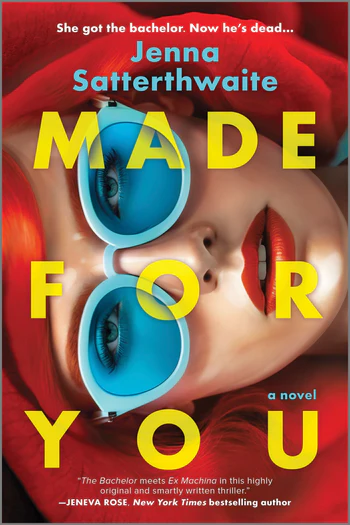
My novel came together when I was watching Love is Blind, the Netflix reality TV dating show, and I had just finished reading the extraordinary YA sci-fi novel The Ones We’re Meant to Find, which is about sisters and grief—and AI. Somehow, all of these elements fused in my brain and I thought—“What if I write a reality TV dating thriller, and the main character on her journey toward love is a synthetic woman?” That spark was all it took; my brain was off in a million directions. My main character, newly awake to the world, would have to learn not just about love, but about suffering, and how it’s inextricably entwined with love. She would have to confront the stark difference between the vision of ‘pretty’ love on reality TV and real-life heartbreak. She would experience the connection that shared suffering can bring–and the devastating loneliness of hitting rock bottom. She would build an entire vision of what life was–and then it would break. And there would be murder because—of course.

Listen for the Lie by Amy Tintera

Meet Lucy, who was found wandering the streets of her small Texas hometown covered in her best friend Savvy’s blood.

The hook for this twisty, darkly hilarious thriller is one of those concepts that burrows into your brain immediately and just won’t leave you alone: “What if you thought you murdered your best friend?”

Fast forward a few years, and she’s back, this time with (inconveniently attractive) true crime podcaster Ben Owens sniffing around the unsolved mystery of Savvy’s death. To everyone’s surprise, Lucy decides to cooperate with Ben. Believe it or not, she wants to find the truth just as much as anyone else–even if the truth is that she killed Savvy.

The Hollywood Assistant by May Cobb

May Cobb’s newest book is an impeccably plotted thriller that twists again and again, drawing you deeper with each turn into the layers of obsession and manipulation that writhe under the dazzling surface of Hollywood glamor.

Cassie Foster, insecure and strapped for cash, can’t believe her luck when she lands a job as a personal assistant for Hollywood power couple Nate and Marisol Sterling. It’s a dream job with a more-than generous paycheck, but Cassie doesn’t just get access to the luxuries of the pool or Marisol’s closet; she also gets access to the couples’ secrets. Their dreams. Their fights. Private moments, never meant to be witnessed.

Then, a murder investigation de-rails Cassie’s life. Worse, she becomes the prime suspect. Desperate to clear her name, Cassie has to figure out: why exactly was she hired in the first place?

The Act of Disappearing by Nathan Gower

This elegantly written debut novel weaves through multiple generations of women, examining what it means to be a woman and a mother, all with a compelling mystery at its center.

Julia White’s life is no piece of cake; her first book hasn’t sold well, and her bartending job is barely paying the bills. So when a famous photographer, Johnathan Aster, offers her a huge amount of money to investigate the mystery of a photograph taken in the 1960s, how can she refuse?

The picture is a never-before-seen image of a woman with a baby in her arms, jumping to her death off a train bridge. Who is the woman? What happened to the baby? And what kind of mother would take her own child to a watery grave? Julia dives deep into the story, and the answer is not what you expect. I promise that the hopeful yet devastating twist will leave you breathless.

The Resort by Sarah Ochs

Welcome to paradise. We hope you survive your stay…

Who doesn’t want to escape regular life and jet off to an idyllic, remote island in Thailand?

Well, ‘escape’ is exactly what the members of the expat community known as “the Permanents” are doing at the Koh Sang Resort. Except, they’re not escaping for fun. Each of the Permanents has a secret to hide and a past to flee from, including Cass, a local dive instructor who has found her own perfect escape and fresh start, not to mention, an amazing boyfriend and the promise of love in paradise.

When a dive student is found dead, suddenly the secrets that everyone has buried are swimming to the top, and Cass can’t help but realize–someone has figured out who she really is.

A Step Past Darkness by Vera Kurian

Brilliant, deep and chilling, this new slow-burn thriller from Vera Kurian is “The Breakfast Club” meets Kiersten White’s Hide, but with creepy mines and a cultish church.

Six high school students in the small mining town of Wesley Falls have to form an unlikely alliance for their capstone project. The six could not be more different: a bookworm, a purity culture Christian, a cynical burnout, a football player, a straight-A student, and a psychic. Then, during a wild party in the abandoned mine, they witness a horrifying crime and barely escape with their lives. After their investigations take a dangerous turn, the six agree never to speak of it again, and go their separate ways.

Twenty years later, one of them turns up dead under mysterious circumstances. The remaining five members of the Capstone Six return to Wesley Falls, now adults–but still scarred and shaped by what happened so long ago. They know they have to get to the bottom of their friend’s death, but to do that, they must return to the coal mine one more time…

Thicker than Water by Megan Collins

Yes, there is murder. Yes, there are twists. But I really can’t think of another book that shows the dimensionality and loveliness of a “soulmate friends” relationship between women like this.

Julia Larkin’s husband, Jason, is in a coma. But amidst her fear, devastation, and the long hours at the hospital, at least she has Sienna to lean on, her sister-in-law and best friend.

When Jason’s boss is found brutally murdered with his lips stitched together, Julia is of course shocked and saddened. But her shock turns to something darker when the police find evidence connecting the murder to Jason–her amazing husband who would never kill someone… right?

With Jason unconscious and unable to explain or defend himself, it’s up to Julia and Sienna to prove his innocence. Until Julia starts to realize that all the clues really do point to her husband…

Come for the satisfying murder mystery, but stay for the soulmate friends.

Watch It Burn by Kristen Bird

The small Texas town of Edenburg is practically ruled by personal development company Genetive, Inc, a cultish company that uses unorthodox methods to ‘coach’ its members.

When the founder’s wife Beverly is found in the Guadalupe River, drowned in two inches of water, three women must work together to uncover the secrets, lies and scandals that are simmering just under Genetive’s perfectly manicured appearance.

At its heart, this book is about the dangers of power, the need for truth, and the ways we cope with tragedy. Lots of potential discussion for book clubs here!

9 Books From Around the World About Grandmothers and Grandchildren

I have nothing against grandfathers. In fact I love my own, and it was my recent experience of cutting his toenails that prompted this list. My grandfather’s toenails had grown grotesquely long and become a fall risk. As I made attempts to cut them, he kept thanking me. Alternately he mistook me for a doctor, a nurse, and a stranger. What books had I read about this– about caring for grandparents as their bodies and memories become disobedient? Or the flipside: grandparents caring for or raising grandchildren?

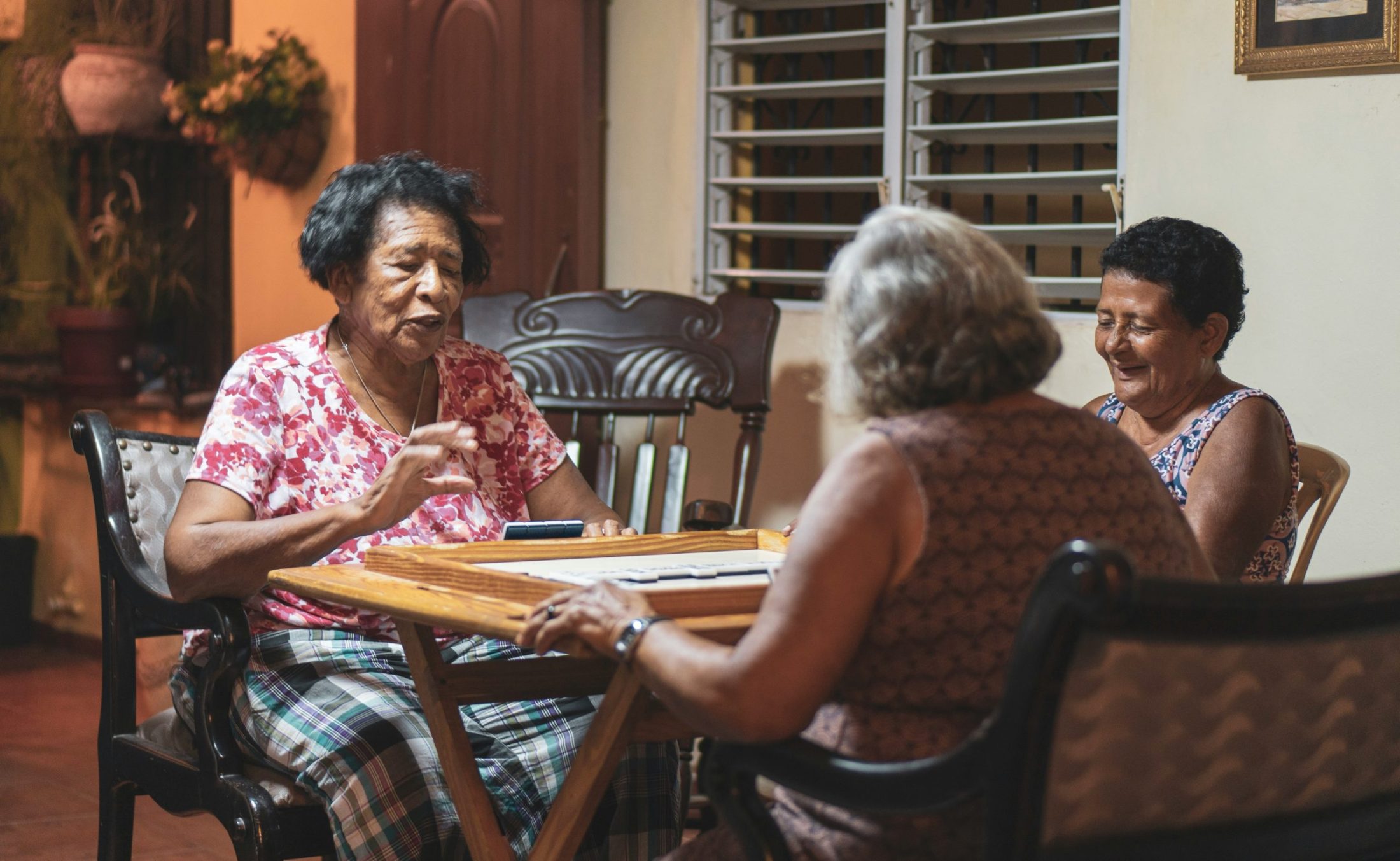
As I searched for books spotlighting grandparent-grandchild relationships, nearly all I found were grandmothers. There is something about grandmothers– or perhaps, the figure of the grandmother in our imaginations. Witty and wise, loving and hating, good and evil. Keeper of secrets, stories, and histories. In these books, grandmothers are often portals to places that are gone. To a past time in Turkey, Guadeloupe, or Palestine. Whether they intend to or not, these grandmothers keep those places and times alive.

These books bring together grandmothers and grandchildren. In uniting old and young, one clarified theme is care– the necessity of it in both directions. Who is to care for whom? There can be blurred, shifting boundaries between grandmothers and grandchildren. Across these books, we see the sharp edges of the caregiving work that accompanies dementia, forgotten names, harsh demands, falls, bedsores, death and its aftermath. And we see grandmothers as caregivers who dole out advice, cook elaborate meals, provide stories and other forms of nourishment.

The Summer Book by Tove Jannson, translated by Thomas Teal

In twenty-two vignettes as dreamy as summer, we see the tender and often funny adventures of six-year-old Sophia and her grandmother on a rustic island off of Finland. Sophia’s mother has died, and this grief laces the book as the pair talks (and shouts) about God, death, and angleworms. Grandmother sneaks cigarettes and teaches Sophia how to trespass, “increasing her knowledge of life considerably.” Sophia reminds Grandmother about her medications and retrieves her walking stick when it sinks in water. In one of my favorite vignettes, “The Crooks”, the pair is not invited to a boat party, and find a gift and note reading “Love and kisses to those too old and too young to come to the party.” There is something so poignant about Jannson’s narration, which is equally comfortable with the too old and too young: Grandmother with her stories and weariness, and Sophia with her creativity and searching questions about life.

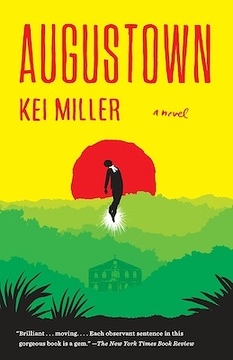
Augustown by Kei Miller

In this novel set in 1982 Jamaica, Ma Taffy is technically six-year-old Kaia’s great-aunt. But as the narration notes: “in this household and to everyone in Augustown, it seems an unnecessary distinction to make.” Ma Taffy is blind, and smells something wrong when Kaia comes home after a teacher has horrifyingly chopped off Kai’s dreadlocks. Sensing disaster, a coming autoclaps, Ma Taffy starts telling her grandson the story of the flying preacherman Bedford. She recounts how he “really did begin to fly. I telling you this because I did see it for myself.” Ma Taffy is a holder of old-time stories, of the history of Augustown. This novel is a capacious portrait of Augustown, with detailed sketches of its people, history, and landscape.

The Bridge of Beyond by Simone Schwarz-Bart, translated by Barbara Bray

This is an epic, beautiful novel! Told from the perspective of an older woman Telumee who is recollecting her life, this novel details five generations of women in the Lougandor family in Guadeloupe. I loved the fluid portrait of Telumee growing up from a child into a woman nearing the end of her life. It is moving how her stories thread her through her family history and back to her great-grandmother Minerva, who lived through slavery and into abolition. I was also moved by the steadfast, central relationship between Telumee and her grandmother Toussine, who raises her. This is a novel steeped in Creole oral tradition, and you can hear Toussine’s voice as clearly as you hear Telumee tell their stories. Toussine–called Queen Without A Name by the community– is full of care, wisdom, and proverbs for her granddaughter, such as: “Behind one pain there is another. Sorrow is a wave without end. But the horse mustn’t ride you, you must ride it.” We see these proverbs become meaningful for Telumee. When working in a white woman’s house, Telumee pictures Queen Without a Name’s smile and hears her proverb, “and that smile would put heart into me, and I would sing as I worked, and when I sang I diluted my pain, chopped it in pieces, and it flowed into the song, and I rode my horse.”

La Bastarda by Trifonia Melibea Obono translated by Lawrence Schimel

Trifonia Melibea Obono’s slim novel is the first by an Equatorial Guinean woman translated into English. In it, we follow Okomo, a young girl living with her strict grandmother and grandfather (who has newly taken a second wife, leading to complex grandparent dynamics all around). Okomo is a “bastarda”– a daughter of an unmarried Fang woman– who wants to find her father (who her grandparents denounce as a “scoundrel”). The novel traces Okomo as she moves from obedience to rebellion, joining the “Indecency Club”, a spiky, self-possessed group of girls who wander deep into the forest to have sex with each other. One girl draws Okomo in, saying: “You don’t need to obey your grandmother, she isn’t here watching your every move. Come on, try it. You’ll like it. You’re in the forest– the Fang forest is a free space. Now you’re free.” I loved following Okomo come of age into her self-identity as a lesbian as she searches for family, identity, and freedom.

Boat Number Five by Monika Kompaníková translated by Janet Livingstone

Here is another cranky, demanding grandma, who refuses that title. “Do I look like a Grandma to you?” she asks, insisting on being called Irena. This novel follows her granddaughter, Jarka, a twelve-year-old left to her own devices in Bratislava. Jarka describes her absent mother (who insists on being called Lucia) and grandmother as such: “They could easily have been two older babysitters. I could just as easily have been living with the neighbors.” Through Jarka’s young eyes, Kompaníková observes the unpleasant realities of Irena’s ageing: liver-spots, wheezing, and uncompromising commands given to Jarka. When Irena dies, Jarka and her mom inherit a garden, where Jarka begins to “live [her] other life.” She abducts twin babies outside a railway station, pushing their carriage to the garden and beginning a precarious life caring for them.

Everywhere You Don’t Belong by Gabriel Bump

This novel is hilarious and so, so tender. It is narrated by a Claude, a young Black boy growing up in South Shore. When his parents leave Chicago, Claude is raised by his grandmother and her perpetually-heartbroken friend Paul. He falls in love with Janice, his classmate at school. After they live through riots in South Shore, Claude decides to leave Chicago for college. I love the tone of this book: irreverently funny and surprising and brimming with love. One of my favorite moments is when– after his parents leave and Claude can’t stop crying– his grandma starts destroying objects. She steps on his dad’s favorite Temptations records, takes a weed whacker to his mom’s remaining clothes, and nearly burns a cardboard cutout of Dennis Rodman until Claude finally intervenes. Later Claude sees Grandma dancing with the cutout, “smiling, eyes closed, far away. That smile I hadn’t seen before. It was pure and light. For me, she was willing to burn her happiness. For her, I stopped crying.”

Rifqa by Mohammed El-Kurd

This poetry collection is named for the poet’s grandmother, Rifqa El-Kurd. The book is dedicated to her and to occupied Sheikh Jarrah in Jerusalem. Rifqa appears and reappears in the collection, bringing in her wit, humor, resilience, memories, and dreams of a free Palestine. I especially loved the poems that portrait Rifqa like “1948/1998” or “The Biggest Punch Line of All Time”, which describes how “Over the years her fingers thinned, veins like vines. Verandas required less wandering and Teta gave up the remote.” In the afterword, Mohammed El-Kurd details this further. He writes how even though Rifqa suffered from dementia and sometimes forgot his name, “her political conviction stuck. The atrocities she witnessed blanketed her subconscious, so much so that, amid her memory’s decay, her stories of the Nakba were still highly detailed, her comments hurled at the TV news coherent and complex.”

The Pachinko Parlor by Elisa Shua Dusapin, translated by Aneesa Abbas Higgins

Claire, a Swiss-Korean, is visiting Tokyo and her grandparents, who are Zainichis, members of the Korean community in Japan. While cohabitating with her grandmother – who is forgetting things, getting lost on the train– and her grandfather, who runs a pachinko parlor, Claire meanders through the summer. She tutors a young Japanese girl in French, she plays Monopoly with her grandmother, she probes about the pachinko parlor. And she plans for them to travel to Korea, where her grandparents haven’t returned in over fifty years. As the summer progresses and the trip to Korea looms, Elisa Shua Dupasin explores the complexities of identity, language, home, and family.

The Four Humors by Mina Seçkin

After her father’s death, Sebil travels to Istanbul for a summer to care for her grandmother, who has Parkinson’s. Sebil is to study for the MCAT and make sure her grandmother takes her daily dopamine pills. But as Sebil finds herself plagued by headaches and obsessed with the four humors of ancient medicine, her grandmother becomes the one looking after Sebil. In this patient exploration of care and grief, Mina Seçkin maps Sebil’s webbed relationships to her white American boyfriend who’s accompanied her to Turkey, her grandmother, her dead father, her sister who comes to visit, and a sprawling world of cousins and great-aunts. I loved how family stories crack open inside this book, and how Sebil’s mother and grandmothers become mirrors for each other and the past.

Helpless Rage Was the Driving Force Behind Gretchen Felker-Martin’s New Horror Novel

Horror writer Gretchen Felker-Martin’s sophomore novel Cuckoo follows a group of teens in the 1990s who have been abducted and abused in a remote desert camp all on their parent’s dime. What begins as a real-life nightmare quickly reveals itself to be something much more insidious, forcing these friends, forced by circumstance, to stop the cannibalization that seeks to destroy their minds, families, and communities with no end in sight. Amplifying the shame and discomfort of queer adolescence under the tyranny of violent, unchecked hegemony, Felker-Martin reveals through spine-straightening terror and whispered intimacy that the only hope is the action taken to protect those we love. Without it, we are all just waiting for our turn in the slaughterhouse. 

In Cuckoo, people are rarely as they seem. There can only be an “us” and a “them” if there is a way to know the difference. Safety can be found in someone you barely know and a threat in the face of a loved one. The kids of Camp Resolution reveal that the immutability of a child’s identity is as widespread as the instinct to control it through whatever means necessary. The power of each lies in its ability to fester unchecked, toward authenticity or conformity. Abused teens turned traumatized young adults reveal that sometimes the only choice to be made is the one you don’t want to make: the one that won’t fix your pain but maybe alleviate someone else’s. The world can’t be saved, but maybe one kid can be.

I spoke to Felker-Martin over Zoom ahead of the novel’s release to discuss the true meaning of community, the encumbered path of queer, adolescent discovery, and America’s hatred for its own children.


Christ: Where did the conceptualization for Cuckoo start?

Gretchen Felker-Martin: This book comes from a decade of helpless rage at watching people pointlessly abuse queer children. It’s not like it even does anything other than ruin our lives. You don’t get straight people out of it. You don’t fix anything or create any relationships. You’re just torturing human beings, out of a combination of willful ignorance and sheer sadism. Being a queer adult puts you in this uniquely powerless situation where you have to watch as this happens over and over, immediately around you and in the country at large. I needed somewhere to put those feelings. It’s a great big middle finger to all of these people doing this to children. 

C: The mechanisms of queer experience and the horror genre align so well in terms of the things we know but can’t admit or the things that we feel but can’t articulate. Did that play into your writing process? 

GFM: That’s always important to me when I’m writing. Horror is all about unspoken drives, desires, and fears. If you can sublimate that on the page, you can elicit a reaction from the reader, and you can give someone the relief of knowing that they’re not alone with their forbidden thoughts or shock someone into wondering why those thoughts are forbidden in the first place. You can push people into a space where they have to start questioning the architecture of their own mind and the world around them. 

C: The story starts with friends thrown together by the powers that be and ultimately sidesteps the cliche of “chosen family”. I was wondering what you think about the bonds formed within the core group of characters versus those that reach across generations.

GFM: Those bonds are vital. They’re very much of a piece with the connections that we have with our peers. I’m lucky enough to always have elders in my life. It’s informed so much of who I am and how I think about the world. People take it for granted so easily. We’re all expected to have some experience of our grandparents and their lives, but queer people don’t always get that luxury. And I think that even if you are forced into something like that by circumstance and cruelty, that doesn’t mean that there’s no meaning in it. 

C: The splintering among the core group, their resentments of one another comes through, but so does the commitment to showing up for one another. 

GFM: They’re there no more or less fractious than any real group of siblings. So often we group ourselves together in this overarching way. You hear a lot of people talk about the “queer community” or whatever, but that’s not a thing. You might not have anything in common with your local queers. You might not have any involvement with them. You might not share politics or beliefs. Your queer community is the people that you actually form a community with through actions. Who do you have material ties to? Who do you spend time with? Who supports you, and who do you support? Those things are community, and I really want to dig into that with the book. 

C: Much of the context for the book ahead of its release has to do with the idea of queer survival. Do you see this as a novel strictly about queer survival?

GFM: That’s certainly at play. Really, I’m getting at a fundamental rot in America. We hate our children, and you can watch it play out right now on college campuses all across the country. People with college-age children screaming and saying to have the National Guard go in and kill and beat people for protesting genocide. You have a generation of hardened, embittered political conservatives who are willing to do anything for seemingly any reason. And once they’ve started doing it, the suggestion that they should stop is so unthinkable that they’ll turn on their own young. 

C: Do you remember when you first learned about the cuckoo’s egg conceptually? 

Your queer community is the people that you actually form a community with through actions. Who supports you, and who do you support?

GFM: Oh, I was a kid. I was such a nature fanatic. And brood parasitism is such an interesting phenomenon. There’s just something so potent about it, you know? And we’re we’re so leery of it that we have thousands and thousands of cultural myths about it. Changelings and baby snatchers. It’s a frightening thought. It all boils down to this parental anxiety: what if my child’s not what I want? Which is ultimately such a selfish fantasy. 

C: Horror involves leveraging what is exposed against what is left unknown. How did you tow that line?

GFM: I’m on the side of leaving things unanswered. With the Cuckoo, we get to see snapshots of its existence as some sort of collective intelligence, but those are glimpses of something much bigger. Ultimately, that drives the fear and cosmic horror. You want your reader to feel like there is so much more just outside the scope of the page. You want to give them just enough information that they know how little they know. 

C: The same can be said about queer children in terms of access. You only can know as much as you have access to. How can you be something that you don’t know even exists? 

GFM: You usually can’t. Some kids have an abnormally strong sense of self, or they encounter some key image in childhood that unlocks something for them, but for most of us, you’re stuck in the box you’re given to a greater or lesser extent, and you might have urges, daydreams, and ideas about yourself, but you can’t place them in a context. 

C: There’s a recurring mechanism throughout the book where characters have thoughts seemingly beamed into their heads. One of the most striking is when a character realizes they’re trans. You are never able to consider it. Then one day it just becomes completely clear.

GFM: I also came out in the desert. I was out in the middle of nowhere. Having a mental breakdown. And one day I was just like, yeah, I’m not a guy. That’s what’s killing me. 

C: Yeah, I had a very similar experience. On the topic of discovering one’s own transness or living through the dull, lifeless experience of having not discovered it. Have you seen I Saw the TV Glow

Horror is all about unspoken drives, desires, and fears.

GFM: I did. That was a hammer to the solar plexus. What a film. I was blown away. I’ve been lucky enough to get to talk with Jane a bit, over the years. And I love their work. The image of this helpless, little boy child curled up in his room watching a TV show for girls and making it his whole identity. It’s so close to home for so many women in our generation. [That film] is a really incredible experience. I’m really happy to be alive at this moment in history, in spite of everything. 

C: One thing Cuckoo does so well is exploring the capital-A Authoritarianism that we live under through the lower-case authoritarianism that happens in the classroom, in the home. 

GFM: I was raised in a pretty strict religious setting. Pastor Eddie is based on a real guy that I knew. There’s a sadness to these people, looking back as an adult. To see someone so fixated on controlling children and so unable to understand them on a basic level. Any of the mechanisms by which you could actually hope to influence a child positively, these people have no interest in that. They’re incapable of accessing them. It’s just pure power. 

C: The book complicates the idea of “us versus them” and challenges the idea that those categories are even discrete, especially toward the end with the reveal of Pastor Eddie’s history and the final scene. It posits that even those in power are not always as empowered as they seem to be. 

GFM: They’re not. They’re trapped in their own worldview, too. At the end of his life, Fred Phelps, the Westboro Baptist guy, recanted a lot of his homophobic beliefs. He got ex-communicated from his church and wound up dying alone and impoverished. This is guy wasted decades on horrendous hate campaigns and came to the realization—whether it was through encroaching senility or some kind of moral awakening—that he had missed all that time. He had done all these awful things and tried, with what time he had left, to repair it, but it was too late. He was he was stuck in said the world he made. 

C: That echoes the experience of queer teenagers who are prisoner to the will of their surroundings. Later in the novel, you say the Cuckoo “hates work,”ultimately leaving the dirty work to humans. Especially frightening is that i’s not only outward bigots that end up playing into its plan, but also those who see themselves as compassionate. There’s the quote from her post on a Reddit-like forum from a concerned parent of a queer child asking “Am I the problem?” She’s so close to maybe seeing the light of understanding, but she can’t get there.

GFM: I find that stuff endlessly fascinating: the psychology of people who identify as alienated and abandoned parents. It’s so horrible, deeply self-victimizing, and sick. I’m shivering just thinking about it. 

C: There’s that idea of something being done to them when they are the ones with power. Cuckoo is not just about authoritarianism in relation to queerness, but also to gender, family roles and body politics. This web shows how all of those mechanisms for control ultimately lead to this absence of humanity. 

GFM: Yeah, I think that they do. Our participation in these systems of ostracization and oppression inevitably leads to a poorer, blander, more painful existence for all of us. 

C: What about queer teenagers makes fatness as an object of desire and disgust so ripe for exploration? 

I’m getting at a fundamental rot in America. We hate our children, and you can watch it play out right now on campuses across the country.

GFM: These are human beings who are just figuring out their sexuality and their body image. That is a messy process. There’s nothing clean about it. They are synthesizing their feelings with the way they’ve been treated and the things that they see or think they see in the people around them. Pop culture and religious backgrounds: all of these conflicting, intersecting things. The result is so nebulous. There’s still so much up in the air for them. With fatness especially, you have this sharply penalized state of existence where your body is both de-sexed and very, very hypersexualized. At the same time, you’re left totally alone and unable to contextualize your own experiences of sexuality. All this stuff is stripped away from you and taken from you. Desire for fat bodies is also so shamed and marginalized and can create a lot of conflicting feelings within everyone involved. It’s ugly and complicated and thorny. 

C: In the intimate connections, you see the revelation of desire for fatness fighting that external voice coming and forcing characters to ask questions like “Am I allowed to want this? What are other people going to think of if they know that I want this?”

GFM: Right, the shame. The chaser thoughts. 

C: I was wondering about the choice to make the ultimate revelation that the matriarch is pulling the strings. 

GFM: So often modern third-wave feminism has encouraged women to put the blame for culture’s ills on the shoulders of men. Certainly, that’s an understandable instinct. There is a tremendous amount of suffering that can be laid directly at the feet of men, and it should be addressed specifically in those terms. But in so doing, we often forget what women uphold. As a man has power over his wife and can abuse her and exploit her, women have that power over children for the same reason: they have culturally accepted authority. They have more strength. They’re larger physically. And what does someone who is systematically abused usually do? They abuse the people who are weaker than them. You create a pecking order. Women are very dangerous to children. They abused children very frequently. As a society, we largely choose not to see this or to consider it normal and not worth stopping or addressing. Women are just as prone to policing issues of sexuality or gender. They may even be more fanatical and intense than their male co-parent because of the limited scope of their own lives. Especially women in conservative situations who have a diminished social role. That certainly played a large part in my life. Luckily enough, not my mother. I was surrounded by very religious women who had an intense sort of psychosexual fixation on the lives and burgeoning sexualities of the children around them because those were the things that they could control, and they were the things that they had power over. 

C: There’s also just such a deep, deep irony in that trans women are portrayed as a huge and pressing danger to children constantly. 

GFM: This is one of the huge acts of transference that we accomplish as a culture when we have a real problem that’s so horrifying and so overwhelming. We just completely avoid the conflict, and we go ahead and create some sort of proxy for it. You know, we talk about violent video games instead of the fact that we have an imperialistic, expansionist military, and every American city is run and ruled by an armed gang. Instead of confronting the very real and very provable fact that children are most likely to be abused by their parents, we invent the specter of some Calabar lock-fingered drag queen. These are the willful delusions of painful, stupid people and unfortunately, those people often have a lot of power. 

C: In the final chapter, you interpolate lines from Lewis Carroll’s Jabberwocky. Aside from the obvious parallel of killing a monstrous creature, how do you see that work in conversation with the themes of Cuckoo

The cuckoo represents the straight world and the urge to assimilate and disappear into this all-consuming mass that gives you a recognizable identity and way of being.

GFM: It’s a very famous example of a nonsense poem, the creation of new language to evoke feelings that aren’t quite in the consciousness yet. We can kind of intuit what a jabberwocky is, what these movements mean, and what the descriptors that Lewis uses are meant to evoke by their similarity to other words taxonomically. It’s this sort of trying to make sense of senselessness. There’s an element of gobbledygook to it that was really important to me in my conception of the cuckoo, which is an incoherent creature, fundamentally. It’s a being of pure desire that exists and affects others based on these pure desires. 

C: The desirous nature of the cuckoo is at times in opposition to queer desire, but it also feels parallel to it in the way that it can’t be stopped or denied. 

GFM:  In a lot of ways, the cuckoo represents the straight world and the urge to assimilate and disappear into this huge, all-consuming mass that gives you—no matter how miserable, lonely, and unrealized you are—a recognizable identity and way of being. You know what to do. You have a script. You’re never technically alone. The cuckoo is like a giant, all-consuming suburb. It’s comfort, convenience, and ease. And those things can feel good temporarily, but really, they annihilate you and hollow you out from within.

C: There’s a phrase that comes up in Cuckoo, and I’m wondering how you think about the idea of “hoping against hope.”

GFM: I see it as necessary. I have spent my life watching the country where I was born do terrible, terrible things all around the world and at home. The cultivation, first of hope that things could be better, and then of material ways to try to manifest that change has been vital to my ability to exist as a human being without going totally insane. The more we can create that kind of latent subconscious and conscious desire for something better. The more we can start to pull it into reality. I hope that’s true. I probably won’t know in my lifetime, but you have to.

My Addiction Possessed Me Like a Demon

Possess Me, Demon, Please by Alexandra Dos Santos

With swollen eyes, I sit before a g​​roup of 18-20 somethings. The air is tense, dead silent. They stare at me expectantly, waiting for the train wreck to begin. I curse myself for not wearing more makeup to cover my humanity. They can see I’m struggling, can’t they? Last night I ugly-cried myself to sleep. My situationship and I broke it off, and my mom is dead. The latter isn’t new, but the former, like most young adult woes, is something I would’ve turned to her for. How inconsiderate of my brain—to keep me awake for all but one hour before I had to get up to plan the day’s lesson. As a college adjunct with two other jobs, I didn’t have much of a choice. 

I click around Outlook, pulling up a PowerPoint on thesis statements. My mouth dries and armpits gush. Even with two layers of deodorant, my top is soggy. When it’s time to start, the small, anxious self who wants to run out of the room leaves my body, making room for The Teacher to possess me. She opens her mouth. I have no idea what she’s going to say. 


Nobody wants to be possessed. The word alone speaks to the horror of helplessness—the victim’s inability to control their own body and thoughts, at the mercy of something that delights in causing pain. Demons make possession look easy; they slip under a host’s skin, infectious and contagious as the flu.

In The Exorcist, Reagan accidentally conjures Pazuzu using a Ouija Board. She doesn’t know what’s going to happen to her—that once inside, the demon will grow and expand until it bends her into back-breaking angles, forces her hand to stab her own flesh with a crucifix, vomits green goo. This is how we picture possession: a narrative where outside spirits are evil, and our solid selves, our flesh and blood, are good. The idea is that once a demon is exorcized, we’re relieved to return to our old life. Like we’re all too happy in it. Like we aren’t suffocated by our own skin.

But unlike demonic possession, the kind of possession I’m talking about requires practice. It isn’t something that binds itself to you through an occult item; it’s something you summon all on your own. Before I allowed myself to be possessed by The Teacher, being the center of attention made my blood run cold. As a kid, I watched my mom orchestrate a classroom with ease and fantasized about doing the same. But that wasn’t me. My whole life, I rushed to say my piece before the other person inevitably zoned out and turned away. I took up jobs and hobbies that allowed me to stifle my voice, hiding behind the curtain or a computer screen so I’d never have to see those bored, judgmental faces. You are who you are, I’d tell myself. Accept it.  

But even after years of trying to forget about teaching, it still called to me. So, at twenty-five, I left my desk job and taught my first class, English 101. To say I was scared at the podium is an understatement. I’d suffer panic attacks, stifle nausea. I never ate. Without fail, something would happen every class to validate my biggest insecurities: that I’m stupid, unqualified, and in over my head. Add a devastating break-up to the mix, and I was basically a walking breakdown. After that first semester, I needed to regroup. I couldn’t keep living like this. Something had to change. 

Unlike demonic possession, the kind of possession I’m talking about requires practice.

“Just think of it as doing your work,” another adjunct said when I confided in him. “Treat it like something you have to get done. A task.”

I liked the advice; it had notes of compartmentalization, disassociation. I wanted to teach. That much was clear. I wanted to share my love of stories and words, connect with those who were struggling, get my students excited about learning. But there was something standing in my way, and that was capital m Me. I wanted to tell that insecure voice in my head to shut up, but that wasn’t drastic enough. I wanted her to exit altogether—to slip out through my pores and leave an empty shell behind to be filled with something, someone, greater.

I’d been possessed before. Why not do it again?


The first time I was possessed was back in 2019, the year I worked at an office by day and haunted house at night. I was lonely post-college graduation: suffocated by the nine to five, drained from the packed commute on the Long Island Railroad, and out of character every time I had to use corporate lingo. The fun habit I’d picked up in undergrad, day drinking, was no longer socially acceptable. Working people drink at Happy Hour, so they have something to look forward to all day. So I drank Twisted Tea on the railroad home with a commuter friend. I drank at dinner, finishing off bottles of wine at home. I was still living with my mom, whose cancer was getting worse before my eyes. We bonded over wine and cocktails at first, a bittersweet milestone where the child is no longer a child and can meet the parent on the same adult plane of a buzz. But as time went on, I moved from having casual drinks after work to drinking cheap vodka in my room, hiding it from my mom and romanticizing the physical pain it caused in my throat and gut. I’d ritualize it, too, playing the song “Altar” by That Poppy every time I took the first drink. The song had no deep meaning for me; it just stuck after the first time, becoming a summoning bell to get obliterated. Looking back, using a song of that name to mark my transformation is so on the nose it almost seems made up. As the music’s shiny, plastic optimism jammed in the background, I torched the insecure voice in my head—burning it to ashes to make room for The Addict. 

Addiction begins as a possession closer to the demonic infestation kind. First, there are signs—scratches on the skin, knocks on the wall, shadows in the corner—that darkness is closing in. It dances in your periphery, creeping a little closer each day until it opens the door of you wide, inviting more of its own kind in. A demon needs a body to exist in our world, and so does addiction. That’s why they both sit in wait for the vulnerable: the grief-stricken, the lost, the genetically inclined. If addiction was Satan, then shame was Beelzebub: the second demon in command, the two of them fueling each other in an endless loop. There were others, too: hopelessness, numbness—more to join addiction’s hoard, swarming fresh meat. In The Bible, Jesus exorcizes a possessed man, driving the demons into swine. When they speak through the man, there is a contradiction of identity, a telling confession: “My name is Legion, for we are many,” (Mark 5:1-20).

Soon, anything I did sober felt wrong: dating, seeing friends, cooking, skateboarding, doing my hair, going to the beach, riding a train, sitting down, standing up, walking, breathing. If I wasn’t on something, I felt like an imposter. At work, light-hearted banter was like a foreign language to me. I couldn’t crack the code on my colleagues’ comfortability and was convinced they only kept me on because hiring a new assistant was a glacial process. When I got out of work, I wanted to forget my feelings of ineptitude. I would pull out that magic potion and down it to banish the day. The Addict would hang around in her vague fog with no real purpose other than relief. I liked handing over control. I liked not thinking for a while.

My high tolerance led to weight gain and general ill health, worsening my already terrible anxiety. I didn’t recognize myself: with my watery eyes, red face, empty expression. It horrified me, so I stopped looking in mirrors. The only thing that made me feel better was the thing that caused it all. When I gave into it, I felt like I became “myself” again. Like I’d woken up. The Addict simultaneously filled and drained me, another one of life’s contradictions. Two truths existing in one breath.

All I wanted to do was scream. If I could’ve peeled my skin off, I would have. A killer was living in my body. I was her, and I was her victim.


Around that same time, some friends told me about a seasonal haunted house that ran every year, and I decided to join. I needed somewhere I could behave as fucked up as I felt inside. It was a place where I could unleash my opposite, get far away from the imposter syndrome in my daytime life. I was even sick of my drunk self, who was affable and flirty to everyone else, and cruel to me. I felt a kinship with the haunters, who were all so unapologetic—weird, unpredictable, and funny. They expressed how they felt realer as the monsters they played than as who they were in the real world. I understood.

At the haunt, I was a sexless, uncontrollable thing. My character was a rag doll who’d been animated by a mad scientist or wizard or something (the plot-lines weren’t exactly airtight). I painted my face white with red cheeks, squeezed into a shabby coquette dress that’d been distressed with scissors and brown paint to look old. It reeked of last year’s sweat, but no one ever washed it. 

That’s when I got my first taste of a micro universe, a place completely under my control. My only instruction was to not touch the guests unless it was an extreme haunt night. Otherwise, what went on inside was entirely up to me. My room was the first in the haunt, with a rounded corner and small stage running alongside it. The combination of a blaring music box soundtrack, sauna-level temperature, and infrared lights made it feel like a fever dream. When I heard my first guests approaching, I ran to crouch behind the stage’s musty curtain. My mind went blank with fear; I hadn’t thought of what I was going to do. A half-ass performance would only make things more humiliating. I had to do something, and do it fully. So I closed my eyes and jumped.

I’d been possessed before. Why not do it again?

I leapt off the stage in front of guests, literally bouncing off the wall from the momentum. Splinters from the cheap plywood stabbed my skin; my muscles burned from knocking around. The physicality—quite frankly, the pain—dug me a deep ditch into the present moment. The wilder I got, the louder I laughed and screamed and accidentally misted guests’ faces with spit, the more I shifted into a flow state. When I put on the costume and makeup, I could make people run, turtle shell into their necks, cringe, scream. I could make them see me—or see someone, anyway. The invisible veil that divides and protects strangers had no power here; I tore it apart with my teeth.

During those nights, it was like The Evil Doll took over. Alexandra was gone, off somewhere in a deep sleep, waiting for her alarm to sound come Monday morning. I tried my best to be invisible during daylight hours. At the office, there was no costume or set to hide behind, no Evil Doll I could yield to. I’d apologize for mistakes, cry in the bathroom stall, stumble my way through cheery small talk. If haunting was a flow state, then office work was the opposite: a locked room of self-monitoring, where I had to whip myself to behave. I couldn’t let anything too real slip out. At the haunt, my laugh was as cathartic as a scream; I’d clench my stomach, constrict my throat, heave the sounds out. An expression of liberation, madness, or both. The Evil Doll knew this well.

It was in tune with the physical realm—so much so that when she possessed me, I never inhabited it more. Splits, high kicks, crawling, running, punching walls, pulling out strands of my own hair. Weekend nights were The Evil Doll’s time to slip beneath my skin, open my mouth, and gasp a breath of relief. It was a ritual, a summoning come the time I clocked in, and a banishing the time I clocked out. But when the haunt ended, The Evil Doll didn’t want to go so easy.

Without the proper outlet, it morphed into a darker, vindictive creature that loved to torture me now that it had no one else to inflict that power over. Merged with The Addict, it really did feel like a full-on demonic possession. Every place felt the same drunk. Nothing differentiated a depressed night drinking wine on the couch from a fun birthday celebration. My addiction was a moving room: a set state of existence that in truth was just as boring as it was painful.

The final straw was a horrible New Year’s Eve: I was in an Uber, heading home from the party I left early because I was already sick. Slumped against the window’s cold glass, the blur of the car’s radio cleared in my ears just in time for the three, two, one, Happy New Year! It felt like a bad omen, God pointing a finger at me and taunting, “This? You want more of this in 2020?”

The hangover and depression were so unbearable the next day, death felt preferable. Terrifying thoughts whirred around me, along with the spinning room. My mom, who’d left my dad because of his own alcoholism, watched me writhe. I didn’t feel comfort in her presence. Not in anyone’s or anything. Alcohol had utterly isolated me.

For a long time, I’d known I was spiraling but couldn’t say it out loud. I couldn’t even think it. A demon’s name holds all of its power. It will lie to you, tell you something else to misdirect you. Because once you have its name, you can command it out. That day, I named my demon for what it was, so I could send it back to hell. I decided to get sober.


The abyss demanded to be looked at, so I did. Without alcohol, I literally didn’t have a choice. I didn’t think I’d make it past the first week, let alone month, but somehow I kept going. Sobriety was like a drug of its own. It lit me on fire in a different way, an intense form of exposure therapy—and the thing I was exposed to was myself. The withered, neglected self, who never dared speak up before. When had I started beating up on her, and why?

Maybe there was some power in being the abuser, the first to the punch before anyone else could knock me down. In truth, I was confused: about where I was going in life, who I was, what I wanted. When the pandemic began a few months later, my external circumstances aligned with my internal, and the deep work of recovery began. There was nowhere to run, no distractions to be had during lockdown. The world would come to look like my insides: icy and separate and scared. Once I made it to the three-month mark, I developed a bit of self-trust. But there was also a new fear: that one day something would snap inside me, and I’d have no control over picking up and drinking again. That all this would be for nothing, and I was doomed to repeat the same patterns for the rest of my life. What possession movies don’t show is the victim’s struggle after the demon’s been exorcized: how parts of the newly unpossessed body become suspect, and their own minds feel unsafe, like a house with broken locks. The demon got in once—what’s to stop it from happening again?

There’s this saying in recovery that everyone knows: One day at a time. It sounds so simple, but it really does take the pressure off. I didn’t need to fix my entire life; I just needed to do my best that day. And days accumulated, with transformations so small, I almost didn’t see them until I looked back at how far I’d come. When I was sad, I didn’t give in to the demon’s call to get blackout drunk, burying that fragile inner voice’s cry for help. That voice told me exactly what I needed to do, what I knew deep down without all the bullshit excuses. It got stronger—strong enough to talk me down from taking that shot of vodka at 2 a.m. in my moonlit kitchen. That voice wanted the best for me, because it was me. She’d been there all along; I just couldn’t hear her.

This strength came in handy a couple years later when my mom passed away. At her wake, which I filled with colors and music and all the things she loved, there was a champagne toast. I remember that temptation. I considered joining it, wanting to be a part of this ritual just this one time, and that would be it. Then I remembered all the horror stories I heard in recovery groups. It’s never just one. The first drink is the incantation, the invitation. It calls to the legion of more, making it incredibly easy to find me. Maybe I could fight them off, but I wasn’t positive I could. I didn’t want to get possessed at my mother’s funeral, not after coming so far. So instead, I walked away. Out into the fresh air and sunlight.


When I stopped running from myself, I was able to do what my mother wanted for me: to live an authentic life, to follow my heart. I was in a loving relationship for the first time, and I was getting an MFA, which I would have written off a waste of money had I not seen how quickly life dissolves—and all your dreams along with it. Death I had no control over; life I did. But there was one major thing left: teaching. I decided to do what terrified me and inspired me the most, which was getting in front of a room and demanding attention. No liquid courage, no props. Another thing I learned in recovery: Feel the fear and do it anyway.

A demon needs a body to exist in our world, and so does addiction.

In 2023, I taught my first class. That blue-flamed burning I felt when resisting a drink or speaking in a Zoom meeting was amplified by one hundred before the start of each class. But I couldn’t leave—these students trusted me. It was the same kind of surrender to the moment that I’d practiced in so many other aspects of life. I thought back to the haunt: how I managed to command a room full of people without all that thinking getting in the way. How at the best of times, I banished fear and invited flow.

Only recently, in my second year of teaching, did it finally click: I needed to channel The Teacher. The one who was the stability, not the chaos. That trusted figure who leads students through a portal to another world—a liminal space in the pocket of their day where they could make mistakes and discoveries, like Virgil guiding Dante through Inferno. I wasn’t quite ready to do this on my own. But if I was just a vessel, a means through which a lesson could be taught—that I could believe.

I’m tempted to say that The Teacher was really me all along, that possession is just a useful metaphor to describe finding my confidence. But I don’t quite believe that. I don’t think possession deserves to be banished to the land of ideas—useful for analogies and scary stories, but not part of the real world. It’s rare to consider this and not cite religion or psychology. But possession exists outside of these contexts, too; it’s not just part of some doctrine, or only a symptom of a mental illness to be cured. There are ways we can interact with the world that honor all that we don’t know: the invisible forces living among us that, when acknowledged, grow stronger, and help us do the same. When I ask The Teacher to take over, I don’t do it just to hype myself up. I genuinely step to the side. I’m checking out, going home, and letting someone else do all the hard work for me. It almost feels like cheating. But she loves it, and I have stage fright, so why not? We don’t always have to be our own heroes; we don’t have to inhabit our bodies alone.


I come to in the middle of a sentence. I’m in front of the class, wondering how I got here, like a sleep walker waking up in a field. A lot of things can banish The Teacher prematurely—a tech issue, a spilled drink, a sudden discovery that my fly is unzipped. This time, it’s an iMessage that pops up on my laptop: the situationship is asking to hangout later. A freeze rises from my gut, but I close my laptop and try to carry on anyway, wondering if the students know that a completely different person sits before them now.  Somewhere in that split second, The Teacher did an Irish goodbye, abandoning me with ten minutes left of class. 

“I’ll let you guys out early,” I say. And like the many spirits soaring in and out of me, the students pour out of the classroom. I sit there for a minute, empty vessel in empty vessel, and smile at the abyss.

The Best Books of the Summer, According to Indie Booksellers

It’s been a blazing hot summer and we firmly believe that best remedy for beating the heat is to escape with a book. Fill up your tote bag, head to your nearest beach (or the cool comforts of an air-conditioned library) and immerse yourselves in these new releases, selected by booksellers from indie bookstores all over the country.

Is your preferred beach read a romance with the vibes of a Wes Anderson movie? We got you! Something darker? There’s a thriller set in a summer camp in the Adirondacks. Looking for some magic? How about a mythological novel set in precolonial Africa? Whatever your literary taste is, you’ll find the book for you to fill those long sunny days right here.

Editor’s note: If you’re a bookseller interested in participating in a future edition of this feature, please email books@electricliterature.com

Holy City by Henry Wise, June 4th

“This dark suspense thriller set in Southside Virginia brings to life the gritty underside of residual racism and prejudice lurking in the small communities dotting a region known mostly for tobacco and peanuts. A classic setup—white sheriff arrests the convenient Black suspect for murder—spirals to a more complicated story where no one is completely innocent—or guilty. The relationships cross political, generational, and cultural demographics to weave a tightly told tale that holds surprises until the final page. Hot reading for a hot summer.” —Doloris Vest, Book No Further, Roanoke, Virginia

The Garden Against Time by Olivia Laing, June 25th

“In The Garden Against Time, Laing takes us through a journey of historical and theoretical paradises, unearthing the elusive and dangerous dream of Eden: a utopian sanctuary, a haven of infinite pleasures. We often say we’re glad to be alive at the same time as such-and-such artist; it’s an incredible privilege to witness Laing’s evolution, book after book. She could write about any subject and I would read it, cherish it, and recommend it to everyone I know.”—Lorenzo Gerena, P&T Knitwear, New York, New York

Honey by Isabel Banta, June 25th

“Love, love, love this book! I was immediately drawn into the promise of a late ’90s/early ’00s dramatic story of love and rivalry between pop stars and this delivered above and beyond. In addition to beautiful prose and an enticing story, Banta’s depiction of women supporting women instead of tearing each other down stole my whole heart. This reimagines possibly true events and does it with a poignancy you’ll feel for days afterward.” —Andi Richardson, Fountain Bookstore, Richmond, Virginia

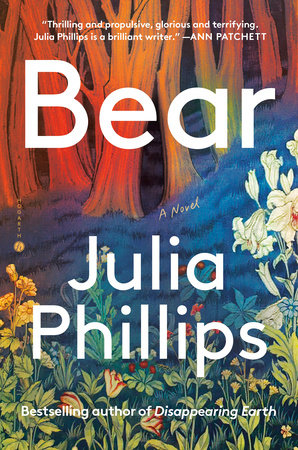
Bear by Julia Phillips, June 25th

Bear is a startling story about the signs we find meaning in, the selective nature of loving another person, and the lies we tell ourselves to survive. Mysterious and tense, this was everything I wanted from a Julia Phillips novel packaged in an unexpected way. Phillips is showing us that her writing skills can reach far while still delivering the incredible pacing, character development, and decadent descriptions of the natural world. Nature enthusiasts beware: you will want to yell at these characters everything you know about bear safety, but I promise that is the point. You will be deceived again and again until your heart just can’t take it anymore.” —Frances Metzger, Country Bookshelf, Bozeman, Montana

Bear is an absolutely jaw-dropping book. I started it at about 10pm one night, and not only did I stay up until 2am to finish it, I could barely sleep afterwards thinking about it. It’s the story of two sisters, Sam and Elena, who live on a small island off the coast of Washington, struggling to make ends meet and care for their terminally ill mother. When a bear swims ashore one day and starts making appearances around the island, they have very different reactions to it: Sam finds herself frightened, full of trepidation and anxiety, but Elena is somehow drawn to the bear, in all its wildness and beauty. This is gorgeous, raw, entirely engrossing tale of sisterhood, grief, and love in all its many flawed forms.” —Shannon Guinn-Collins, Bookworks, Albuquerque, New Mexico

Hombrecito by Santiago Jose Sanchez, June 25th

Hombrecito is a tender debut that follows Santiago as they grow up and migrate from Colombia to Miami to New York. This story feathers its wings with longing and captures the ache of being mid-flight, searching for home. Santiago’s personal experiences with immigration, queerness, and coming-of-age speak to universal yearnings for a place in the world and people to call your own. Sanchez’ writing is beautiful and behind every character, whether central or periphery, I could feel the heart aching within them. Sanchez is an author I will follow from now on; they understand how to bring light and shade and shadow to their writing and how much depth can be found in the gradients of each soul’s color.”—Mari Guzman, Politics and Prose Bookstore, Washington D.C.

Masquerade by O.O. Sangoyomi, July 2nd

“An incredibly impressive debut set in pre-colonial Africa and loosely (very loosely) following the Persephone/Hades myth. Òdòdó is a single woman, shunned along with her kin as witches, but she’s suddenly plucked from her life and whisked across the continent to take a seat as the bride of a warrior king. Political machinations ensue, enough to satisfy all those waiting for the next GoT novel while also pushing out the bounds of what kind of ‘historical’ narratives take precedence in our society. The novel is rich and Òdòdó is a thrilling main character—I hope we’ll be reading lots from Sangoyomi in the years to come.” —Drew Broussard, The Golden Notebook, Woodstock, New York

Evenings and Weekends by Oisin McKenna, July 2nd

“A masterclass in tension and character writing, Evenings & Weekends follows the messy interlocking lives of four individuals and takes place over the course of one sweltering summer weekend in London. This book is for literally anyone and everyone who loves long buried secrets, hard conversations, and complex characters.” —Kassie King, The Novel Neighbor, St. Louis, Missouri

Midnight Rooms by Donyae Coles, July 2nd

“Orabella Mumthrope stumbles into a marriage with the strange, wealthy Elias Blakersby. Orabella is an orphaned biracial woman, whose aunt and uncle never fail to make her feel like a burden. Orabella agrees and is whisked off to the Blakersby family estate—a decaying ancestral heap that’s rotting into its foundations, full of locked doors that she’s never meant to enter, a catatonic sister-in-law, and so much drugged tea. Nothing is as it seems. A gorgeous, rich, and claustrophobic gothic horror-mance that reads like a fever dream. This is a novel to be savored.” —Nino Cipri, Astoria Bookshop, Queens, New York, New York

The God of the Woods by Liz Moore, July 2nd

“This is a complex and haunting story that takes place over several time periods about two missing children, their family, and the privileged campers staying at Camp Emerson. The structure of the book is interesting, too. From chapter to chapter, the reader jumps from the 1950’s to 1975 to a particular day of the ‘final’ investigation. No worries, though – it is masterfully written and presented. Of all the characters represented in this tale, my absolute favorite was Judyta, or rather, Investigator Lupstack. I wouldn’t mind hearing more from her! Seriously delicious read!”—Joanne Berg, Mystery to Me, Madison, Wisconsin

“Set at a summer camp in the Adirondacks, The God of the Woods tells the story of the affluent Van Laar family and their not one but TWO children who go missing on the property—fourteen years apart. It’s part family drama and part sweeping mystery as the backstories and secrets of the Van Laars and their community unravel. This wildly captivating book boasts some of the most unpredictable twists, dynamic characters, immersive settings, and satisfying resolutions. Truly epic.” —Madeline Mooney, The Bookshop in Nashville, Tennessee

More, Please by Emma Specter, July 9th

“Our culture is at a body politics tipping point right now. After the gains of the last decade, the body positivity movement is slowing down, as our media re-centers thin, able, cis bodies. Could this book be the antidote? Emma Specter is a contributing writer for Vogue, and with More, Please, she offers a deep dive into her own personal history with binge-eating disorder, as well as her journey to fat acceptance and better health. The story is by turns intimate and rigorously researched.” —Aatia, Books Are Magic, Brooklyn, New York

The Heart in Winter by Kevin Barry, July 9th

“Kevin Barry’s newest novel, The Heart in Winter, is an outlaw romance that reads like a Wes Anderson film. It follows Tom Rourke, a down-and-out young Irish immigrant in a late-19th-century Montana mining town, who is making his drinking money writing love letters for marriage-seeking miners when he falls in love with another man’s wife and decides to run away with her. Barry’s remarkable sense of humor—witty, deadpan, and sometimes crass—and brief but poetic panoramas of the American West will keep you enthralled and make the 1890s feel like they were just yesterday.” —Camille Thornton, The Bookshop in Nashville, Tennessee

The Next Best Fling by Gabriella Gamez, July 9th

“When their respective first loves get engaged to one another, Marcela and Theo rebound by fake-dating in this hilarious and spicy debut that features a plus-size heroine, an ex-NFL hero, and a love of libraries and books. A perfect summer romance that packs an emotional punch!” —Stephanie Skees, The Novel Neighbor, St. Louis, Missouri

Catalina by Karla Cornejo Villavicencio, July 23rd

Catalina is such a delightful book: funny and quick-witted, but also complex and thoughtful and heart-rending. Catalina, the titular character, is on the precipice of graduation from Harvard, which should mean the beginning of an exciting new phase of life: but she is also an undocumented immigrant, and so many of the doors that ought to be open to her are very firmly shut and locked. When not in school, she lives with her grandparents in New York, both of whom are also undocumented, and with whom she has a deeply loving and even more deeply complicated relationship. I loved Catalina’s smart, singular voice— she is brilliant and ruthless and restless. This is a perfect read for lovers of Lily King’s Writers and Lovers, or fans of Sally Rooney’s work.” —Shannon Guinn-Collins, Bookworks, Albuquerque, New Mexico

The Deading by Nicholas Belardes, July 23rd

The Deading is a transformative new eco-horror and tense survival story following several characters experiencing an unknown outbreak in a small seaside town in California. Forced to isolate and bunker down in their homes, folks begin acting strangely, drifting into fugue states as the plague sweeps the town. This story was stifling, fantastical, and unnerving, exploring the strained relationship humans have with the natural world. A slow-burn with loads of payoff.” —Mallory Sutton, Bards Alley, Vienna, Virginia

The Wedding People by Alison Espach, July 30th

“Phoebe Stone is done: with her city, with her life, with her job, with her ex-husband and her ex-best friend who are now together. So when she walks away from it all and checks herself into a once-in-a-lifetime resort hotel in Rhode Island to end it, she’s annoyed to discover a hilarious cast of characters that pull her back into living. This novel is life-affirming, escapist, touching, and oh-so-funny.” —Maggie Robe, Flyleaf Books, Chapel Hill, North Carolina

Slow Dance by Rainbow Rowell, July 30th

“My default setting is to love anything and everything that Rainbow Rowell writes, and she knocked it out of the proverbial park with Slow Dance! I had intended to read it slowly (it’s not often that you get a new book by one of your favorite authors!) but I picked it up and did not move until I’d finished it, several hours later and well after bedtime. It’s the story of two old friends (or more?) reconnecting after many years apart, and it has everything I look to Rainbow’s books for, but with sharper edges than many of her previous novels: there is banter and longing and characters who are vivid and difficult and flawed and inevitably and exceedingly lovable. There are real-life challenges and gut-wrenching moments, but as her work so often does, it comes together in a way that leaves me feeling both incredibly satisfied with the outcome and a bit more hopeful about the world around me. What more can you ask for?” —Shannon Guinn-Collins, Bookworks, Albuquerque, New Mexico

The Pairing by Casey McQuiston, August 6th

The Pairing is a playful and sultry queer romance that emphasizes the beauty of new places and old connections. Kit and Theo are so lovably messy and stuck on each other; hearing both of their perspectives made my heart ache. I never expected a story with such an outrageous premise to hold multitudes of scenes that made me smile as I read, but here we are. CMQ captures the growing pains of your 20s and finding new understandings of queerness, self identity, and even renewed connections in the most lovely (and hot) way. It feels like peak summertime—so fiery and hazy and maybe a little tumultuous—yet you wouldn’t change a thing.” —Emma Holland, Flyleaf Books, Chapel Hill, North Carolina

The Seventh Veil of Salome by Silvia Moreno-Garcia, August 6th

“The realities and romance of 1950’s Hollywood collide as the Red Scare underscores the making of a film. A young ingenue must contest with the burden of becoming Salome: a biblical woman plagued with immense longing. Silvia Moreno-Garcia delivers electricity, desire, and tragedy. Salome is—without a doubt—”that girl”. She is a star and will shine until she burns out.” —Jacqueline Helgans, Flyleaf Books, Chapel Hill, North Carolina

There is a Rio Grande in Heaven by Ruben Reyes Jr., August 6th

“Ruben Reyes Jr.’s enters literature with a bang. His debut book presents a stunning collection of stories of migration and Central American voices fighting to be heard and, beyond heard, felt. He lyrically tells the experiences of Salvadoran immigrants in the United States or children of those immigrants with gripping care and inventiveness, whether with his realistic stories or with his more experimental tales. The cover is raw, the experiences are raw, and he leaves you feeling raw with his unfiltered honesty. Genuinely my mind is failing to capture the totality of Reyes’ writing in a short summary. I can only say that I will be recommending this to everyone, and I absolutely cannot wait to read anything and everything he writes.” —Summer Porter, Harvard Book Store, Cambridge, Massachusetts

Mammoth by Eva Baltasar; Translated by Julia Sanches, August 6th

“A young lesbian’s complicated path towards motherhood leads her to uprooting her city life to a provincial town in rural Spain. From there, this sparse-144-page novel twists into a gnarly, psychological folk-horror that left me speechless; Eva Baltasar has such a unique talent for crafting visceral sentences that absolutely rot your brain (affectionate). Mammoth is going to be the book of the late summer.”—Taylor Carlton, Brazos Bookstore, Houston, Texas

Mammoth is a deeply visceral tale following a young unnamed lesbian who yearns to belong, and ultimately her quest for motherhood. Upon lucking out and moving into an old farmhouse surrounded by stray animals, a shepherd, and nothing else, our narrator adjusts to this new way of living and continues her journey of potential parenthood. At times deeply unsettling yet cathartic, Mammoth is an unflinching, feminist voice I have never heard before and I cannot get enough. And three cheers for another exquisite translation from Julia Sanches!”—G Sullivan, Fountain Bookstore, Richmond, Virginia

Hum by Helen Phillips, August 6th

“A dystopian, futuristic hellscape just around the corner, Hum digs into our tenderest wounds. In an overly industrialized society devastated by climate change, May struggles to keep her family grounded in a world devoid of human connections and the lush, beautiful forests of her childhood. What starts out as a desperate attempt to reconnect with her husband and children without their devices quickly devolves into May’s worst nightmare—a real emergency without any way to call for help, in a world completely unforgiving of mistakes. Infuriating and enthralling, Hum rushes along with an undercurrent of panic about our own not-too-distant future.” —Melissa Sagendorph, Harvard Book Store, Cambridge, Massachusetts

“Speculative literary fiction at its best and most prescient. How far will we go as a society to integrate AI and technology into our everyday lives, and at what cost to our personal liberty and family structure? Hum explores these issues, as well as the limited tourist role of nature in a future city, in this taut, propulsive, well-written novel.” —Keith Vient, Politics and Prose Bookstore, Washington D.C.

Lady Macbeth by Ava Reid, August 13th

“Ava Reid has done it again! With her signature haunting prose and ability to conjure an unbelievable atmosphere, Lady Macbeth is one of my favorites of hers alongside Juniper & Thorn. This reimagining of Shakespeare’s Macbeth follows the villainess this time around, centering witchy themes in a gothic environment. Reid gives the reader a wholly unique story, expanding upon an almost universally despised character from classic literature; she gave Lady Macbeth her own personality, power, and motivations, and even expands the overarching plot without straying too far from the elements that made Macbeth such a beloved classic in the first place.” —Mallory Sutton, Bards Alley, Vienna, Virginia

Haunted Ever After by Jenn DeLuca, August 13th

“This is a delightful rom-com that absolutely screams “it’s fall, ya’ll!’ In a small Florida town, nothing is as it seems. Known for being the most haunted small town in America, Boneyard Key is a Stars Hollow meets Halloween Town (if it were full of ghosts, that is). Mix in an attractive coffee shop owner and a girl who may or may not be sharing her new home with a ghost (both of whom are definitely not interested in love at the moment, (thank you) and you’ve got a fun story that will help you bring in a cozy autumn.” —Hannah Davidson, Mystery to Me, Madison, Wisconsin

Daydream by Hannah Grace, August 27th

“In the latest novel in the Maple Hills series by Hannah Grace, Henry is the main character as the captain of the hockey team. He is failing a class and needs help with a certain professor. In comes Halle, who teaches him how to focus on the right information. After a breakup with a bad boyfriend, Halle realizes that she hasn’t really lived a romantic life so Henry gives back by treating her to novel-worthy dates.”—Haruka, The Ripped Bodice, Brooklyn, New York

Madwoman by Chelsea Bieker, September 3rd

Madwoman is at once a slow, creeping unraveling of a shiny-on-the-outside woman’s life and an un-put-down-able fever of a page-turner. Given the protagonist’s precise, sickening depictions of growing up mired in violence, I was saddened—though not surprised—to learn that author Chelsea Bieker had revisited her own traumatic memories in the service of writing this novel. How to explain that, despite its darkness, Madwoman is a novel I loved reading? Propulsive and twisty, I couldn’t put it down. I loved and continually cheered for our protagonist even as I watched her actively unravel her meticulously crafted #momlife. Five stars.”—Janet Geddis, Avid Bookshop, Athens, Georgia

Small Rain by Garth Greenwell, September 3rd

Small Rain by Garth Greenwell is magnificent! A book about healing, caregiving, and poetry. Set in the early days of the pandemic, and just after a derecho has swept across Iowa and destroyed his house, the narrator, a poet, suffers a medical emergency. While in the ICU, lonely, and undergoing tests, he finds solace through reciting his favorite poems. Small Rain is a beautiful book, one to read quietly while watching birds, contemplating life, and dipping into a poetry collection. One of my favorite books of 2024. Highly recommended!”—Caitlin L. Baker, Island Books, Mercer Island, Washington

Blue Sisters by Coco Mellors, September 3rd

Blue Sisters follows the lives of three sisters mourning the loss of their fourth sister, Nicky. When they find out they might lose their childhood home, they reunite to stop it and face their complicated past. Mellors’s new novel is a robust and raw picture of loss and family.” —Ashley Kilcullen, The Bookshop in Nashville, Tennessee

Colored Television by Danzy Senna, September 3rd

Colored Television is so, so good, bursting with hilarious (but firmly rooted in reality) social critiques. When Jane’s sophomore novel—one she’s spent years immersed in and is certain will be award worthy—is swiftly rejected by her agent and publisher, she turns her attention/obsession to pitching a television show to a (hilariously arrogant) producer. Jane lies, wants what she doesn’t have, and makes so many bad decisions. Yet, she’s still o-so relatable, and even as the dread mounts toward certain disaster, I still wanted her to be okay. Marriage, art, selling out (or not), family and societal pressures, the elusive “American Dream”: Colored Television offers much to savor, guffaw over, and ponder long after turning the last page.” —Joelle Herr, The Bookshop in Nashville, Tennessee

Dear Dickhead by Virginie Despentes; translated by Frank Wynne, September 10th

“When fragile mid-list author (and addict) Oscar insults tetchy middle-aged diva (and addict) Rebecca just as young feminist blogger Zoe goes public with the hell Oscar put her through years before, the stage is set for French firebrand Virginie Despentes’s Dear Dickhead, a punchy epistolary novel exploring the complications of dependence—on substances, on attention, on each other. It’s a messy story of screwups and growth and family and friendship, and of working towards doing better even when we can’t fix the bad we’ve done. Read it with a friend cause you’re gonna wanna talk about it.” —Greg Kornbluh, Downbound Books, Cincinnati, Ohio

Somewhere Beyond the Sea by TJ Klune, September 10th

“At long last, we get to spend more time with the incredible characters from House in the Cerulean Sea and some new ones who will instantly capture your heart. Filled with a familiar love and tenderness, Somewhere Beyond the Sea takes the narrative of acceptance from its predecessor in a radical, timely, and much needed direction. Klune delivers a well-thought out sequel that will have you giggling and tearing up in public.” —Frances Metzger, Country Bookshelf, Bozeman, Montana

A Sunny Place for Shady People by Mariana Enriquez; translated by Megan McDowell, September 17th

“Mariana Enriquez is an author who shows us the full breadth of what horror as a genre can accomplish. And her new collection, A Sunny Place for Shady People, shows us every facet of the diamond…as well as each cut left behind. Within, actions echo in hallways, they haunt, they watch, they grieve, and they chase. This collection is the softest side of Enriquez I’ve seen…but that doesn’t mean it’s not terrifying too. You just may find yourself as empathetic to the haunting as the haunted. Enriquez never shows us the same story twice. Each story gives you a window into a sprawling world where you never quite know which aspect of reality is going to give or where the true horror may lie. You don’t have to be a horror lover to love Mariana’s stories. You just have know that in her stories, much like in life, nothing is ever what it seems.”—Mari Guzman, Politics and Prose Bookstore, Washington D.C.

The Empusium by Olga Tokarczuk; translated by Antonia Lloyd-Jones, September 22nd

“Mieczysław, a young Polish engineering student, arrives at a health resort for tuberculosis patients, but something is not quite right in the magic mountains. Schwärmerei, a mossy local liqueur, seems to be causing hallucinations and blackouts. The conversation of the men in his guesthouse turns gradually more misogynistic and fatalistic. Mieczysław and his new friend Thilo begin to suspect that the landscape itself is watching them. In her most atmospheric and compelling novel yet, Nobel winner Olga Tokarczuk delves into the world of Thomas Mann—then tilts it on its axis.—Emma Williams, Politics & Prose, Washington D.C.

Julia Phillips’s New Novel is Inspired by a Fairytale About a Girl Who Falls in Love with a Bear

Based loosely on a Grimms’ fairytale, Bear is both enchanting and suspenseful. Sam, a concessions worker on a ferry, is terrified when a bear shows up at her family’s front door. Elena, instead, grows enchanted by the bear, seeking him out in the woods and bringing him food from her job at the local country club. As Sam panics over Elena’s behavior, and both sisters worry about their mother’s failing health, the novel hurtles toward a devastating conclusion.

The idea for Bear, the second novel from Julia Phillips, was born during Covid lockdown. Stuck in her New York apartment, Phillips tried to imagine “like the farthest-flung, most fantastical, most beautiful place I could imagine actually getting to” when travel became possible, and settled on the San Juan Islands, off the coast of Washington State. Her feelings of isolation became a novel about the financial impact of Covid on the working class, what we owe to our families, and finding liberation in the natural world.   

On our Zoom call, Phillips, a National Book Award nominee for her debut Disappearing Earth,  is thoughtful and introspective, speaking slowly and deliberately until she explodes into a burst of enthusiasm or laughter. Her book, she tells me cheerfully, is “like Jaws, but the part where they’re just in the water. And you’re like, Oh, God. At least, that’s the hope.”


Morgan Leigh Davies: In Disappearing Earth, many of the characters are isolated, but the structure of the book creates a community out of them. This book is all in the head of one person [Sam], and it’s a character who is really resistant to being in any kind of community or relationship with anyone but her family. How do you approach the shift between the two books?

Julia Phillips: To me, the message of Disappearing Earth was the idea that connection can save us: that when we come together, we can save each other. I think this book’s argument is that disconnection destroys us. We’re just in one person’s head and the willful isolation that she embraces ends up really hurting her situation. It keeps her from accessing help. It also created a lot of propulsion and fun. 

I think that I am always going to be preoccupied with subjects of survival and violence and womanhood and community. But I think I was pushing against the hopes I’d had more in this book. I was not so committed to a hopeful depiction as I was in the first one.

MLD: So much of the novel is driven by Sam’s fear. I wonder how fear functions in this book, and how it creates a sense of propulsion in the novel.

To be somebody’s everything is a real burden, although it can be joyful or validating.

JP: My own taste in reading is toward the page turner. I love to have a book where I don’t want to ever set it down. I felt the whole time writing Disappearing Earth that I was struggling against that foundational aspect of it—I really wanted to create a feeling of momentum and cohesion and the structure I’d chosen gave me some pushback. For this, I wanted to write a book that made me feel that way. I wanted to write something that feels like you just fall in the river and get swept along, like it just pulls you forward. 

The theory I had was that the more cohesive we are in feeling with Sam, the more we are behind Sam’s eyes and in Sam’s head and in her body, the more clear we are about what she wants and what she’s trying to do to get it, that that would create a feeling of total immersive momentum. I think it was challenging with her because she has so much fear and anger and defensiveness. It can be hard to sit inside that so much.

MLD: We should talk about the bear. It is one of the main characters of the book, and we don’t have access to what it is thinking, what it’s feeling, what’s motivating it besides eating. I was wondering what the appeals and challenges were of writing about forms of life that exist outside of our understanding in that way.

JP: This is a story of human reactions, human relationships, symbolic interpretation, and the animal is having his own experience to which we do not have access. Maybe Elena does have some sort of access… I think she’s able to sort of vibrate on the bear’s frequency sometimes, but Sam does not wish to vibrate on his frequency. Sam has a very, very human understanding of what [the bear] wants, what he’s doing, how he’s behaving. And it blocks her from any desire to even ask what he’s thinking. 

I found the portrayal of the bear in this book to be an absolute joy. I just loved writing this animal and I loved writing this animal from this exterior position. He’s a mystery to the characters. They don’t know why he’s behaving the way he is. They don’t know where he came from. He is his own thing in the world. It was so fun to play with this beast and say, here he is, he doesn’t obey your rules, he doesn’t do what you want him to do. He just is his own thing, and he’s beautiful, and he’s scary, and he’s stinky. I definitely felt like I was vibrating on his frequency. 

MLD: I think one of the places that the real tension comes from or for me, as a reader, is that both the sisters are right and wrong about the bear. Sam is obviously correct that her sister should not be feeding this bear in the middle of the woods.

[The Covid era] is extraordinarily influential on our lives today, and is continuing to shape our every day.

JP: Absolutely not. Do not, do not do that. But also…

MLD: But she’s so afraid that she can’t see what is wonderful about him, and Elena can see that. But Elena’s doing foolish things. I’m curious how you thought about balancing those two perspectives and the relationship between those characters as the book was coming along.

JP: I think Sam came out of a couple of feelings that I’ve had. I really love fiction as taking what’s in our own lives and turning it up two notches on the dial. And she is the turned-up version of some feelings that I’ve had, or relationships I’ve had in my own life. 

One of those feelings is a little sister feeling, where you are so admiring of the older sibling, or taking the older sibling as a model for the way to be for at least a certain amount of time in your life. But the older sibling’s world is bigger than yours, and they have more life, and you’re watching and following. I think that dynamic is very interesting and influential and hard. As a little sibling, especially in teenage-hood and my early twenties, I found it really hard to see my older brother, in my case, begin an adult life, leave the life of the nuclear family, and move on, in a way that I was not ready to yet. 

The other influential character-shaping feeling that went into Sam is around experiences that I’ve had in friendship. I’ve had some very, very close friendships in which one person says, I’m going to be your best friend. I’m going to meet my own high expectations for what friendship is, and I would like you to also meet those expectations. I’ve found those experiences to be challenging, because that level of dedication is really hard to maintain. To be somebody’s everything is a real burden, although it can be joyful or validating. 

Sam has decided because of her own experiences that Elena is going to be her everything, and Elena has been used to being someone’s everything. What does that do to the relationship? What space does that open up for dishonesty or disappointment or deceit? Or to be frustrated with the person because they’re not doing what you think they should do?

MLD: I was really taken with the framing of this as being from a Grimms’ story. How did you draw on that story, especially from the fact the originals of these stories are usually quite dark? In particular, the relationship between Elena and the bear is described as romantic pretty consistently throughout the book. At one point, Sam says, “You’re talking like you want to kiss it.”

JP: So the original fairy tale that in very broad strokes inspired this [is about] these two sisters in this cottage with their mother, and a bear comes to the door. This fairy tale from the Grimm Brothers is called “Snow White and Rose Red.” I was obsessed with this fairy tale in particular, and my whole collection of Grimms’ Fairy Tales, as a kid for a long time. I was obsessed with them for exactly that reason, that darkness.

In it, this bear shows up, and the bear is enchanted. At the end of it, the older sister ends up marrying this prince who had been enchanted to be a bear. So she marries the bear after he is un-beared on the other side of his magic spell. But before that they have this relationship where they were rolling on the floor together in this intense bond for months and months, and I thought, What is this? As a kid, I would try to rewrite versions of it and I could never make it work. So this was my big bite at the apple. I really wanted to try it and to see if I could retain those shocking and perverse elements, and that fairytale feeling, but take those elements and map them in a new way so they would feel more satisfying. 

The relationship that Elena has with the bear… Sam doesn’t understand it. She talks about it like a romance because that’s one way that she’s trying to make sense of it. She’s trying to say, Well, is it this? Is it this? Does it fit in this box? Does it fit in that box? Because it’s a very confusing thing to her. I think it is sort of unmappable and uncategorizable to Elena too. What I think the bear does for her is absolutely passionate and physical, but it’s not sexual. But it is very exciting.

When I was working on this manuscript, I read a lot of the genre of woman in relationship with animal, or woman in relationship with creature. Sometimes it is sexual, but sometimes it’s a friendship and sometimes it’s a self-negotiation, like an animal coming out from inside you. There are all these different relationships and all of them are reckoning with the idea of women whose roles have been super constrained in the human world who are not happy with the role they lead in society. Having this encounter, whatever the encounter is, lets them move out of the world that they were in. It lets them say, I get to be wild, I get to be free and the externalized animal is just a way for me to access the internalized animal and a way for me to leave the world that I’ve found so constraining and so stifling and see what else is out there. 

I think that is the experience Elena’s having. Her days were really limited and now something is changing the routine and it’s opening up her days in ways that she never anticipated before. Through encounter with this animal she gets to feel freed of her responsibilities, of her stresses, of her fears, of her worries, just feel free. Of course she’s chasing that.

MLD: I was really curious about the decision to include Covid in the book and in a meaningful way. A lot of recent novels take place in 2019, or conveniently avoid the topic. But it’s obviously had a really significant financial impact on the family here. It felt really real to me.

JP: It felt really important to me. I think we’re in an avoidant moment with our recent history, and we don’t want to talk about Covid, or write about Covid, or read about Covid, because we just lived it and we’re currently living in it, so maybe it feels too close or too painful or too raw. This era is extraordinarily influential on our lives today, and is continuing to shape our every day. Of course, we wish that were not the case.

I really enjoy contemporary fiction. I want to write contemporary fiction at this moment in my life. And if I’m writing something set right now, I just have not been able to make the leap to imagine someone who is not shaped by that experience. These are characters who have a mom who has lung and heart issues, who live in a tourist economy where the bottom dropped out in 2020, who were always having trouble making ends meet. The idea that by 2022 or 2023, they would be saying, “Oh, you know, Covid, that whole thing—never heard of it!” It just didn’t make sense to me. It wasn’t a two-week tough thing. These were years of their lives that were changed by this, and ripple effects that are going to go on forever for them. So I tried to put that in that way.

David Foster Wallace Rides the Amtrak 79 Carolinian

Following His Successful Cruise Ship Essay, David Foster Wallace Rides the Amtrak 79 Carolinian

I have now seen tetanus-laden rail yards in seven states and the District of Columbia. I have seen time suspended in a sunlit broadleaf forest while emergency services investigate reports of a vehicle on the tracks up ahead, and never known whether that vehicle actually existed. I have seen, and smelled, all 68 passengers inside car number 5. I have heard emphysema coughs, and endless renditions of “Baby Shark,” and a woman announce over the phone, “You better not let that raggedy bitch inside the house while I’m gone.” I have (very briefly) known the hope of arriving on time.

I have seen Confederate flags, and steel toilets with chemicals a very bright blue. I have discovered that nothing in the world, not even the pitch and yaw of the A-79 chugging along at 110 mph, can make the Y-chromosome-bearing passenger sit down to pee, and though I try to separate myself from the rest of the train’s bovine herd, I also end up pissing upon the restroom floor and walls a dreamy and vaporous sheen of urine, and leaving it for the next passenger to slick their unknowing feet.


I now know every conceivable rationale for somebody spending 14 hours of their life on a train slopping and heaving 704 miles down the Eastern Coast of the United States, and there is only one: it’s cheaper than flying. To be specific: I voluntarily, without pay, rode the Amtrak 79 Carolinian train departing from New York Penn Station with service to Newark, Philadelphia, Baltimore, Washington, Richmond, Raleigh, and finally Charlotte, with intermittent, and seemingly infinite, stops along the way. The vessel and facilities were, from what I understand of the industry’s standards, acceptable. The seats lacked lumbar support. [1] The air conditioning was spotty; likewise the Wi-Fi.

I have acquired and nurtured a lifelong grudge against the train conductor who told me to take my feet off the seat across from me, and whom I have now named Mr. Rail Chode, and a searing crush on the cafe car employee, Petra, she of the dimples and brassy box dye highlights, who always wears a polyester navy uniform and smells of Hebrew National hot dog grease.


Our horn is not planet-shattering; it probably should be louder for safety. We depart New York at 8:09 am, one hour and seventeen minutes behind schedule, but things proceed at a nice clip until we reach Washington. The conductor pronounces Washington with nasal precision: Waaaaah-shington is a scheduled smoke stop. In Waaaah-shington, we will have to switch engines because the South exists in a time loop where electrified rail has not yet been invented. The AC switches off. The temperature becomes uterine. I have purchased many beers from Petra, and now I learn with dismay and a spasmodic bladder that when the train loses power, the toilets do not flush. [2]


The Amtrak Carolinian brochure promises I will “discover a charming and welcoming blend of Southern hospitality,” but instead I discover a blend of stormy Southern weather and outdated Southern infrastructure, resulting in signal failures and track congestion. We clank and grind to another unscheduled stop outside a state prison festooned with wedding cake spirals of barbed wire. Beneath us, the soil where 30,000 wool-clad men bled and oozed gangrenously in 1863.

Angry Cell Phone Woman calls her sister, who has—just as she suspected!—spotted that raggedy bitch’s car outside her house. [3]


We’re stuck again somewhere near Cary, NC. I am powerless to describe, according to modern physics, how a train can take this long to get through the state of North Carolina. The semi-agoraphobe fears he will never escape the torment of coach class, and its 68 other passengers. [4] I have no choice but to face my own thoughts and all that mystical stuff. What if I’m just the guy Angela Mead let get to second base? Do we of course end up becoming ourselves? Am I not a wise old fish?? What is water??? I begin to spiral into a panic of rail-induced claustrophobia, then remember everything is OK because Jason Segal played me in a movie.


I buy another bag of potato chips from Petra and try to catch her eye. She turns to the next customer. I am suffering from a delusion, and I know it’s a delusion, this envy of another passenger who now has her complete, and might I say excessive, attention as he purchases one of Sandy’s Amazing Cookies (™) (chocolate chunk, pre-packaged, 55% Daily Value of saturated fat), but it is painful nonetheless. I return to my seat in car number 5, looking out the bug-spattered window, empty chip bags all around me and my shoes urine-soaked, feeling a little bit dulled to know that we are running three hours and forty minutes behind schedule, but mostly good, good to know that I would one day get off the Carolinian, and that a journey on American rail is every bit as bad as I had feared.


  1. Particularly aggravating when one has an old injury from being a Midwestern junior tennis star, see Derivative Sport in Tornado Alley. ↩︎
  2. Brainstorming titles for this essay to pass the time. Getting Railed? A Thing That Nobody Even Supposes Is Fun That I Will DEFINITELY Never Do Again? Consider the Shrink-Wrapped Sandwich? ↩︎
  3. One can’t help but notice that Angry Cell Phone Woman looks a bit raggedy herself. ↩︎
  4. I search for the observation car, where I can at least stand alone for a few minutes at the Carolinian’s gleaming dome and look pensively at the Carolinian rolling piedmont. Mr. Rail Chode, for whom I still harbor a terrified loathing, tells me there is no observation car on the Carolinian, and I will have to ride the California Zephyr for that. I feel an almost prurient envy for that opposite-coastal route, and imagine its seats have better lumbar support too. [*]
    *That tennis injury again. Can I even put a footnote inside a footnote? A meta-footnote? [**]
    **For the love of Alanis Morissette, get me off this fucking train. ↩︎

7 Books that Unpack A Complicated Family Inheritance

We inherit far more from our families than a surname. Our progenitors leave their mark on us in ways we often can’t understand until we pay our own rent. Some of these qualities, of course, are admirable or anodyne—a sense of justice, a fondness for a particular cuisine, our sparkling wit—and others less admirable—a poor reputation, gambling addiction, a penchant for shouting. 

Our families shape our beliefs about the world and our place in it, so I’ve always loved stories that explore how our first relationships—those with our family—end up affecting all of the ones that come later. 

My own novel, Pearce Oysters, tells the story of a family in the wake of a father’s death. The mother is bereft but also undergoing her own identity crisis. Two brothers, at odds since childhood, fight over the family business, the Pearce Oyster Company, which they’ve inherited as partners. The novel follows this family over the course of the 2010 BP Oil Spill. As oil approaches the Gulf Coast, and the family’s oyster reefs, the family is under one roof for the first time in years. 

The books in this list explore the emotional legacy of family life.

The Five Wounds by Kirstin Valdez Quade

The Five Wounds opens with a father, Amadeo Padilla, preparing to play the part of Jesus in a Good Friday procession, and in a turn that sets our plot in motion, he takes the part too seriously. It’s a fine opening for a novel, and in many ways the novel takes as its subject the repercussions of the father’s decisions—not just his ceremonial crucifixion but also mistakes that came much earlier. Amadeo’s daughter, Angel, is fifteen and newly pregnant. Her teen pregnancy signals family history repeating itself. This gorgeous novel explores the complex reasons that history does repeat itself and how families evolve over generations. 

Holding Pattern by Jenny Xie

On the heels of a breakup, Kathleen Cheng leaves her psychology PhD program, moves back in with her mom, and takes a job as a professional cuddler. When Kathleen returns home, though, she finds her mother has emerged from a decades-long holding pattern of her own. Her mother transformed her life and is engaged to Silicon Valley tech entrepreneur. After years of grief, longing to return to China, and alcoholism, Kathleen’s mother is now sober, social climbing, and sporting athleisure wear. Kathleen’s cuddling gig begins as an ironic curiosity, but it has an apt emotional resonance in her life. Snuggling safely with strangers seems a natural tendency after a childhood spent caretaking for her mother. This novel delights with humor and heart as it parses the mother-daughter relationship in the run-up to the mother’s wedding day. 

Absolution by Alice McDermott

Alice McDermott’s most recent novel is, like all her work, unparalleled in its emotional nuance and observation. It’s also the most difficult to summarize of the books on this list, weaving in epistolary form through the decades. The major events of the novel take place in 1963, Saigon. Two American women—the young idealistic Patricia and the worldly “dynamo” Charlene—are brought to Vietnam by their husbands’ work during the war. Together, the women concoct their own unofficial charity to raise money for a Vietnamese hospital. Now, sixty years later, Patricia begins writing Charlene’s grown daughter to revisit the past. They weigh the women’s well-meaning attempts at “inconsequential good.” And though the novel takes up far more than a mother-daughter relationship as its subject, the letters paint a vivid picture of Charlene as a mother. I read this novel in a gallop, mesmerized. 

Home by Marilynne Robinson

I would be remiss if I didn’t include Home, my favorite of Marylinne Robinson’s novels. An errant prodigal son returns to his rural Iowan home after two decades away. And we wonder if he’ll earn his pastor father’s forgiveness, or harder still, we wonder if he’ll forgive himself. The novel probes the long suffering of the town’s one-time hellion through the eyes of his endlessly loving sister, who is newly heartbroken and back in their childhood home to mind their aging father. It’s a capacious portrait of the Boughton family.

The Wren, the Wren by Anne Enright

This novel braids the point of views of a famous Irish poet grandfather, the daughter he abandoned as a child, and his floundering twenty-something granddaughter. Does the granddaughter’s bent for violent, coercive men have its roots in the relationship of her grandparents? I’ll leave that for you to unpack. This novel is such a singular work—the point of views so delightfully varied, true, and compelling. On every page, a gem of a sentence sings out and delivers psychological insights that I recognize but never found words for.

After the Funeral and Other Stories by Tessa Hadley

The only story collection on this list but every bit as deserving. I hear Tessa Hadley often compared to Alice Munro, and this is apt when one considers Hadley’s skill for clean, unaffected prose simmering with implications. The characters are so particular and varied and lived-in. She plumbs relationships romantic and familial with equal precision, but my favorite story in this collection, “Funny little snake,” is the story of a plain, emotionally stunted stepdaughter—a chess piece in her parents’ acrimonious divorce. The story takes place over the week in which the girl’s disinterested young stepmother must entertain her. The stepmother comes to understand the dire roots of the young girl’s temperament that week. The story had me at turns had me giggling and gasping.

So Long, See You Tomorrow by William Maxwell

William Maxwell was fiction editor at The New Yorker for forty years, and he was so renowned for his career-making influence that it risks overshadowing his magnificent writing. This slim novel, on its surface, unpacks a murder that took place in the early 1920s in rural Illinois. Our narrator is friends with the murderer’s son, so we learn early on in the novel. (This isn’t a spoiler.) But as much as this is this story of that murder—it’s about the narrator’s relationship to his widowed father. It also happens to be a perfect little novel. Written in elegantly spare prose, it’s the kind of book I’d recommend to a friend taking off for a long weekend. Read it in a few sittings and marvel. 

Which Looks Better, Hardcovers or Paperbacks?

There’s no question that turning the pages of a great book is a wonderful feeling—but is it more wonderful in a hardcover or a paperback? Aside from considering quality, durability, portability, size, price, or release date, many readers simply choose the cover with the more appealing design. At times, it’s a hard decision: One cover could be more eye-catching, while the other could appear more fitting for the book. Other times, a cover might stand out as remarkable (or remarkably disappointing), making comparison a no-brainer. Whether choosing the superior design is difficult or easy, it’s always fun. Continuing our Book Cover Contest series, we compared the hardcovers and paperbacks of 20 recently released books, asked our community on Instagram and X to vote for their favorite cover for each book, and compiled the results below. (Paperback images are featured on the left side; hardcovers are on the right.) See if your favorite covers won, and find new reads along the way! 

The Seaplane on the Final Approach by Rebecca Rukeyser

Rukeyser’s sensual, darkly funny novel follows a young woman fascinated with “sleaze” as she travels to the Kodiak Archipelago seeking new experiences. While the paperback design features two plump raspberries, indicative of the narrator’s overfull desire and erotic passion, the hardcover design displays the story’s strange wilderness setting. Our readers voted for the hardcover, as the remote Alaskan environment facilitates the narrative’s eccentric characters, unexpected plot twists, and eco-tourism commentary, while also nodding toward the wilderness of desire. 

WINNER: Hardcover

Open Throat by Henry Hoke

The narrator of Open Throat is a ravenous but lovable queer mountain lion who protects a homeless encampment, fascinated by human life. Lonely and vulnerable, they reflect on their memories and search for their identity. The lion appears vicious on the paperback, their open jaw exposing sharp teeth. On the hardcover, an ink-blot illustration suggests the novel’s psychological depth, and the lion’s fiery eyes hint at their menacing nature and mental turmoil. Our readers preferred the hardcover, more interested in the lion’s interiority than their monstrosity. 

WINNER: Hardcover

Old Enough by Haley Jakobson 

College sophomore Sav thinks she’s ready for her life to begin, but she can’t anticipate the crises that are to come. In the coming-of-age novel, Sav navigates queer love, heartbreak, growth, and friendship. The hardcover proves vague, but on the paperback, a bright red cocktail represents transitioning into adulthood, with all its fun, difficulties, and messiness. The font, which appears hastily hand-painted, appropriately suits the chaos and spontaneity of growing up. Its lack of perfection makes it perfect, which our readers appreciated: The paperback cover stood victorious.  

WINNER: Paperback

Acts of Desperation by Megan Nolan

Nolan’s gripping, provocative novel follows the narrator’s spiral into obsessive longing after the abrupt end of an enthralling romance. While probing love, power, and submission, the novel questions what we want, how we want it, and why we want it. The hardcover keeps the novel’s secrets, but the paperback displays the narrator’s vulnerability and of course, her “desperation,” whether lying on the bed in sexual submission or post-romance dejection. Unsurprisingly, our readers favored the paperback design. 

WINNER: Paperback

Old Flame by Molly Prentiss

Emily yearns for a fulfilling and balanced life—and when she faces an unplanned pregnancy, she is forced to make choices that will shift her old life into a new one. The hardcover embodies feeling pulled in different directions and striving for something that seems out of reach, and the paperback emphasizes tough decision-making. Despite the hardcover’s clever visual, the paperback’s sharp photo, urgent color scheme, and italicized text are even more enticing. They clearly enticed our readers, since they chose the paperback over the hardcover. 

WINNER: Paperback

A Spell of Good Things by Ayòbámi Adébáyò

In modern Nigeria, an ambitious boy supports his family during their financial struggles, and an overworked, young doctor is the “perfect child” in her wealthy family. Their lives collide during a political crisis, and a captivating tale of class inequity, gender inequity, violence, love, and humanity unfolds. Neither the hardcover nor the paperback reveal too much about the narrative, but the paperback’s beautiful design is unquestionably alluring. In our polls, the paperback triumphed.

WINNER: Paperback

Some of My Best Friends: And Other White Lies I’ve Been Told by Tajja Isen

Isen’s sharp, shrewd, and sometimes uneasy essays boldly critique present-day racial justice initiatives. They confront sensitive topics, from arts and entertainment to law and politics, interrogating the discrepancies between values, intentions, words, actions, and impact. While the hardcover is pretty, the paperback gets to the point: We say a lot, but we do a little. Featuring text-message bubbles, the potent subtitle, a fingers-crossed emoji, and a lot of blank space, the design fits Isen’s criticism. Accordingly, the paperback appealed to our readers more than the hardcover.

WINNER: Paperback

Family Lore by Elizabeth Acevedo

Flor can predict the exact day a person will die—and she isn’t the only person in her family with secrets. In an emotional epic, Family Lore traces the lives of Flor’s sisters, cousins, aunts, and nieces across generations, past and present, Santo Domingo and New York City, leading up to the day of Flor’s living wake. The hardcover and paperback are both colorful and beautiful, simple but intriguing. Ultimately, our readers voted for the hardcover: Its remarkable elegance is difficult to surpass. 

WINNER: Hardcover

Cursed Bread by Sophie Mackintosh

In a beautiful, spellbinding novel, Cursed Bread tells a haunting tale of small-town life, set in a 1951 postwar French village during a real-life unsolved mass poisoning, as madness, hysteria, and desire consume the town. While the paperback suggests that something might be a little off in the rural French village, the hardcover immediately grips readers with Cursed Bread’s unsettling eeriness and dark elegance. The hardcover draws readers into the book’s mystery, and our readers agreed, selecting the hardcover as the better design. 

WINNER: Hardcover 

Confidence by Rafael Frumkin

As two young men pursue a career of illegal scam artistry, their relationship, crimes, and greed become increasingly complicated. Frumkin’s novel presents a scathing take on capitalism, deception, and the American Dream with satirical absurdity and hilarious wit. The paperback keeps the most astute elements from the hardcover—the emphasis on “con,” money visual, and excluded head—and offers more cash, a more contemporary feel, and the leading duo in a more confident stance. According to our polls, the paperback won our readers’ favor.  

WINNER: Paperback

Excavations by Kate Myers

At an archeological site in Greece, four starkly different women encounter an unusual artifact—one that shouldn’t exist—and the head professor realizes that something went wrong. He tries to bury history, while the women work together to dig up the truth. The hardcover echoes the novel’s feminist angle, and the paperback highlights the setting, featuring a Greek-inspired font, hot summertime colors, and excavation site images. Our readers found the paperback more fitting. The playful cover mirrors the humor and wit that make Excavations such a fun read. 

WINNER: Paperback

Loot by Tania James

In the 18th century, a teenage woodcarver agrees to build a mechanical tiger for Tipu Sultan’s sons, leading to an epic adventure amidst colonialism, war, and displacement across India, Britain, and France. The hardcover’s vibrant colors are striking—but the paperback, featuring a building reminiscent of St. Paul’s Cathedral, a topsy-turvy tiger, and an 18th-century floral design, won our polls. The upside-down illustration reflects the impact of colonialism, which severely upended the world, and the woodcarver’s quest, which flipped his life out of its status quo.

WINNER: Paperback

Kairos by Jenny Erpenbeck

The story of a romance begun in East Berlin at the end of the 1980s, Kairos meditates on memory, change, and the passage of time to offer a powerful examination of history. Individual, collective, and national histories parallel and intersect in surprising ways. Both cover designs are artful and abstract, posing more questions than they answer. The creative and confounding artwork suits Erpenbeck’s complex narrative, but the hardcover might be a bit too difficult to interpret, as our readers preferred the paperback.

WINNER: Paperback

Central Places by Delia Cai

When Audrey returns from her dream life in Manhattan to visit her hometown in Illinois, she confronts her complicated connection to her roots. She reexamines family dynamics, past relationships, and cultural identity—urging her to reconsider her future. The paperback edition depicts Audrey, literally torn between big-city plans and small-town history with a ripped-paper-like division. This design feels too on-the-nose. Our readers voted for the hardcover, appreciating the gorgeous artwork and the partial transparency, which could represent looking inside the self. 

WINNER: Hardcover

American Mermaid by Julia Langbein

When a teacher adapts her feminist, eco-warrior, bestselling novel into a screenplay, she is directed to convert the empowered mermaid protagonist into a stereotypical mermaid designed for the male gaze. Strange things start to happen, and the teacher and her mermaid must fight to maintain their voices. Both the hardcover and paperback are intriguing, but our readers chose the hardcover as the winner. The fun and fantastical design reflects Langbien’s amusing, imaginative, spectacular storytelling.

WINNER: Hardcover

On Earth as it is on Television by Emily Jane

After alien spaceships briefly visit Earth, Blaine, Heather, and Oliver grapple with certainty, uncertainty, life, and doom. Through a hilariously absurd narrative, Jane’s exuberant debut novel tells a heartfelt, poignant story about what it means to be human in the contemporary universe. The hardcover is appropriately colorful and energetic, but the paperback turns it up a notch with brighter colors, a more energetic, tightly-packed layout, and a strange cat. The paperback cover—victorious in our polls—is loud and bizarre, just like Jane’s novel. 

WINNER: Paperback

The Dog of the North by Elizabeth McKenzie

In McKenzie’s quirky comedy, Penny—dealing with a number of life challenges—goes on a road trip in an odd-looking, barely-working van, embarking on an unpredictable journey that proves to be a charming, hopeful story. Both the hardcover and the paperback feature the teal van and adorable dog, but their designs are drastically different. The paperback grabs attention, but the hardcover better captures the eccentric, endearing, uplifting experience of following Penny on her quest. Our readers preferred the unique design on the hardcover. 

WINNER: Hardcover

Wellness by Nathan Hill

A couple of ’90s college sweethearts grow distant as they struggle with present-day marriage. New anxieties have emerged with the passage of time, from social media to potential polyamory, making their relationship a challenge to maintain. On the paperback, the formerly-young lovers face each other, separated and surrounded by a busy design, indicative of their busy world. On the hardcover, they stand together in the center of a triangle. The simple design and unified couple won over our readers, leading the hardcover to victory.

WINNER: Hardcover

The All-American by Joe Milan, Jr. 

Bucky has one goal—play college football—until he is deported to his birth country of South Korea, a place entirely foreign to him. A series of unpredictable mishaps test Bucky’s physical strength and inner character while he searches for his home and self. Between two contrasting cover designs, our readers favored the hardcover. They might have liked the serious feel, the focus on Bucky, or the aesthetic appeal—or they might have disliked the paperback’s middle finger. Regardless, the hardcover prevailed. 

WINNER: Hardcover

The List by Yomi Adegoke

A celebrated journalist navigates truth and trust after her fiancé is called out in a viral social media post. When online toxicity permeates offline life, it makes a mess—and Adegoke’s novel dives into the quagmire. The paperback’s goofy emoji minimizes the gravity of the book’s timely, complex issues. On the hardcover, a menacing storm of chat bubbles threaten growing terror, and the bright, fragmented text feels alarming—and intriguing. Our readers voted for the hardcover, which brilliantly frames The List’s riveting suspense, scary realities, and thrilling plot. 

WINNER: Hardcover

Emma Copley Eisenberg’s “Housemates” Is a Lone Departure From the Fatphobic Literary Hellscape

Recently, I was slung across the couch with my young daughter, both of us blissfully full from dinner, limbs intertwined as we read before her bedtime. Her face was hidden behind a beloved Phoebe Wahl picture book, and perched on my soft belly was Emma Copley Eisenberg’s Housemates, a road trip story about two friends in pursuit of art and purpose. While a small bony knee dug into my armpit, I braced myself as the author began describing her characters’ bodies. It’s a make-or-break moment for me as a plus-size reader, when a riveting plot or beloved character may spoil, tarnished by the slip of an author’s anti-fat bias.

Eisenberg doesn’t shy away from highlighting protagonist Leah’s size, rather she revels in it often: “She was big. Big breasts atop big stomach atop thighs in men’s khaki pants, big long legs that terminated in round-toed soccer sneakers.” At first this put me on high alert, waiting for this character’s size to become a flaw, a conflict, a source of tension. But I exhaled in relief when it quickly became apparent that Leah’s body would be presented neutrally, a stark departure from the literary representation I’ve grown accustomed to. Being barraged by anti-fat bias in an otherwise admirable novel is an experience that both Virgie Tovar and Eisenberg herself have written about in their respective Substacks, so while I needn’t have worried, this habit has developed out of necessity. Books have been letting me down with their representations of fatness since I started turning to them. 

I developed early as a kid: period at ten, tall enough to be mistaken for a teacher by fourth grade, boobs big enough to make the comparison realistic. With the concurrent influx of hormones, I was a hot, horny mess. I scavenged my mom’s bookshelves for romance novels, legal dramas, presidential biographies—anything that might include even a whiff of sex. The jackpot was Wally Lamb’s She’s Come Undone, chockful with nipple tweaks, dick pics, and “lovemaking.” Entranced, I hid it at the bottom of my backpack and brought it to my seventh grade history class to share the bounty. I pointed out passages I’d earmarked to my friends as they crowded around, nearly all of them thinner than me. Already, I was excruciatingly aware of my extra curves, and Lamb’s novel taught me to fear them. 

She’s Come Undone offers a cautionary tale, a “story of craving,” following Dolores as she reaches 257lb, a number that’s branded on my brain. In its nearly 500 pages, the novel details Dolores’ countless hardships: an abusive father, a rapist neighbor, the death of her mother, merciless teasing about her body—and on and on. Her body is presented as monstrous as it scares small children and horrifies doctors. I re-read the book recently and cackled at the near-slapstick presentation of it all: at one point Dolores can’t fit in a car, at another, she faints and shatters through a staircase. But I also felt bereft for my young, impressionable self who inhaled this book and hung on its every word, whose own weight gain was blighted by this book’s legacy. I’d found the book in a youthful search for smut, an attempt to connect with my changing body. But I came away untethered, frightened by my own flesh. 

I developed early as a kid: period at ten, tall enough to be mistaken for a teacher by fourth grade.

The beauty of fiction is that it gives authors space to explore and experiment and imagine and create. It’s the ultimate freedom. And yet, freedom still carries responsibilities. There has been a concerted recent effort to eradicate racism, ableism, ageism, classism, tokenism, anti-semitism, xenophobia, transphobia, and homophobia from literature, and yet anti-fat bias can still be found with abundance. It’s no surprise that literature of yore is rife with the issue—Don Quixote’s Sancho Panza, Piggy (RIP) in Lord of the Flies, and Stephen King seems to think that being fat is the scariest thing a woman can be—but the problem is just as rampant today.

Modern heavy-hitters like Otessa Moshfegh, Haruki Murakami, and Tess Gunty incorporate casual fatphobic descriptions in which a person’s larger size is meant to signal their unsavory personality. As highlighted in a recent installation of Delia Cai’s Hate Read, Lessons in Chemistry by Bonnie Garmus—a blockbuster bestseller—peddles gratuitously in this brand of anti-fat representation. But as a fat reader myself, my least favorite and most oft-encountered examples are the ones that are a little more insidious. A story without a single fat character can sometimes expose the author and their biases most of all. Per Carmen Maria Machado, “It’s like writers can’t imagine fat women having sex or agency or complex lives. They’re just bodies for thin people to bounce off of; funny and unserious as a whoopee cushion or unconsidered as a chair. If they’re even there at all.”

When multiple characters share the same discriminatory leanings, my hackles shoot up. This prevalence is found in She’s Come Undone. Dolores is “locked in fat and self-hatred,” but she isn’t the only person who despises bigger bodies: her college roommate would rather die than end up fat like her, she is ostracized widely by strangers, characters are celebrated for thin waists, and perhaps most telling, her mother “[grows] herself a big rear end,” as a warning signal for an impending mental health crisis. In Eisenberg’s excellent newsletter, she points out the anti-fat bias among several characters in Lauren Groff’s Fate and Furies, arguing that the fatphobia is, “endemic to the author rather than salient to any particular character’s development.” As a plus-sized reader—as so many of us are—my experience is spoiled when hostility toward big bodies is on the page, and especially if it becomes clear the author harbors these feelings themself.

A story without a single fat character can sometimes expose the author and their biases most of all.

Two of my favorite books in recent years are exquisite and tender and important except regarding one detail: they center characters harboring anti-fat bias. In one, the main character’s fatphobia prevents her from sexually pursuing the person that becomes her best friend. When she, herself, gains weight by the end, it’s up to the already-fat friend to comfort her. In the other book, one of the protagonists is plus-size as a teenager and observes an even fatter classmate bullied mercilessly for his size. When the characters become adults, they bond over making fun of a peer who’s joined their ranks by gaining weight. Both books are queer, nominated for prestigious awards, and deeply beloved—including by myself—and yet left me feeling uneasy. Anti-fat bias is, of course, accurate to both history and our present, but unless characters are allowed to realize their small-mindedness, then at best, many readers are alienated, and at worst, those with similar worldviews are affirmed. Research shows that while American attitudes have either improved or plateaued toward sexual orientation, skin tone, age, and disability, sentiments of anti-fat bias have worsened.

And yet, nearly half of Americans qualify as fat. These people realize goals, salvation, and great loves, all while being fat, all the time. Why don’t we see this in books? 

In Housemates, Leah doesn’t live in a bubble; they still encounter fatphobia. But what Eisenberg conveys so deftly is that the discrimination Leah faces doesn’t define them. Eisenberg allows the reader to witness some of the negativity Leah experiences, particularly through their parents and an incident with a malfunctioning diner chair. But these biases reflect much more on those putting it forth. Their father is stagnant and boring in his steadfast hatred of bigger bodies. The inadequate seating is the catalyst for Leah’s relationship with friend Bernie to progress into something deeper. The two enjoy a sex scene that includes self-consciousness on Leah’s part, but no more than any other person might harbor about their own corporeal hang-up. 

Housemates should be studied by every contemporary author as the finest departure from the fatphobic hellscape of fiction that exists yet. There are others out there (The Once and Future Witches by Alix E. Harrow, The Manor House Governess by C. A. Castle) that succeed in portraying fat bodies as neutral, but with secondary characters. Eisenberg gives a fat body the lead and allows nuance, heartache, foibles, and growth. This isn’t by accident. At one point, Eisenberg writes in the novel, “A shocking number of the books lefties loved revealed a plain hatred of fatness.” The books being published today are at such high caliber, but they can still do better on this point, with Eisenberg as their example. Authors can write exquisite prose and gripping narratives without alienating half of their readers. It is boring to tether a character, an arc, a life, to the irrelevance of size. It is lazy to look at a fat body and assume you already know the whole story. 

The freedom of fiction allows authors to opt out of participating in fatphobia, which doesn’t mean they can’t write fat characters—please, if anything, write more! An easy way to tell if the depiction is problematic is to look at the way a body is being presented: if it’s happenstance, that’s fine. A fat person can be a great villain. But if it’s a defining characteristic, if it’s what’s used to convey negativity, that author needs to do better. A fat person isn’t a villain because they’re fat. In Lindy West’s review of the somehow Oscar-winning film The Whale, she writes that, “Fat people are already trapped, suffocating, inside the stories the rest of you tell yourselves about us. We have plenty of your stories. What we don’t have is the space to forge untainted relationships with food and our bodies, to speak honestly about our lives without being abused, to explore our full potential…” When stories are written in which fat people are confined and limited, there are consequences. 

When stories are written in which fat people are confined and limited, there are consequences. 

Wally Lamb’s depiction of Dolores affected my self esteem for decades. In my twenties, I watched the scale creep past the dreaded number of 257 and steeled myself for impending devastation depicted by Lamb—but it never came, and if anything, my life has only improved. It wasn’t until I started reading expansive work by authors like Eisenberg, West, Machado, and others, that I began to remedy literature’s legacy of damage on my psyche.

I weigh more now than Dolores ever did, and spoiler alert, my life is great. I’m surrounded by people who love me, fulfilled by my work, and enjoy a marriage teeming with both joy and sex! I’ve never broken a chair, but if I did, I wouldn’t internalize it as personal failing, I’d understand it as neglect by an establishment to be inclusive in their seating. My weight is irrelevant to my worth. My body has always and will always be big; weight loss is not an element of my redemption. 

This past summer, I went whale watching, just as Dolores does at the end of She’s Come Undone. All I saw from the pitching boat was a quick slice of dorsal fin, just enough to convey something majestic and potent and big underneath. I remembered in that moment, as Eisenberg so clearly already knows: to be big is to be powerful. To be big is to be worthy of whole, nuanced representation.