The Best Books of the Summer, According to Indie Booksellers

It’s been a blazing hot summer and we firmly believe that best remedy for beating the heat is to escape with a book. Fill up your tote bag, head to your nearest beach (or the cool comforts of an air-conditioned library) and immerse yourselves in these new releases, selected by booksellers from indie bookstores all over the country.

Is your preferred beach read a romance with the vibes of a Wes Anderson movie? We got you! Something darker? There’s a thriller set in a summer camp in the Adirondacks. Looking for some magic? How about a mythological novel set in precolonial Africa? Whatever your literary taste is, you’ll find the book for you to fill those long sunny days right here.

Editor’s note: If you’re a bookseller interested in participating in a future edition of this feature, please email books@electricliterature.com

Holy City by Henry Wise, June 4th

“This dark suspense thriller set in Southside Virginia brings to life the gritty underside of residual racism and prejudice lurking in the small communities dotting a region known mostly for tobacco and peanuts. A classic setup—white sheriff arrests the convenient Black suspect for murder—spirals to a more complicated story where no one is completely innocent—or guilty. The relationships cross political, generational, and cultural demographics to weave a tightly told tale that holds surprises until the final page. Hot reading for a hot summer.” —Doloris Vest, Book No Further, Roanoke, Virginia

The Garden Against Time by Olivia Laing, June 25th

“In The Garden Against Time, Laing takes us through a journey of historical and theoretical paradises, unearthing the elusive and dangerous dream of Eden: a utopian sanctuary, a haven of infinite pleasures. We often say we’re glad to be alive at the same time as such-and-such artist; it’s an incredible privilege to witness Laing’s evolution, book after book. She could write about any subject and I would read it, cherish it, and recommend it to everyone I know.”—Lorenzo Gerena, P&T Knitwear, New York, New York

Honey by Isabel Banta, June 25th

“Love, love, love this book! I was immediately drawn into the promise of a late ’90s/early ’00s dramatic story of love and rivalry between pop stars and this delivered above and beyond. In addition to beautiful prose and an enticing story, Banta’s depiction of women supporting women instead of tearing each other down stole my whole heart. This reimagines possibly true events and does it with a poignancy you’ll feel for days afterward.” —Andi Richardson, Fountain Bookstore, Richmond, Virginia

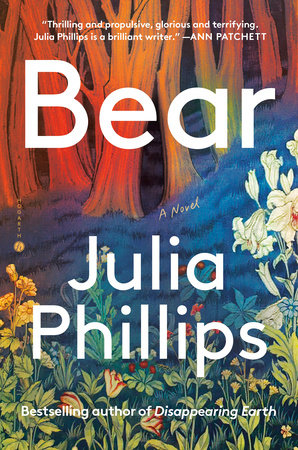
Bear by Julia Phillips, June 25th

Bear is a startling story about the signs we find meaning in, the selective nature of loving another person, and the lies we tell ourselves to survive. Mysterious and tense, this was everything I wanted from a Julia Phillips novel packaged in an unexpected way. Phillips is showing us that her writing skills can reach far while still delivering the incredible pacing, character development, and decadent descriptions of the natural world. Nature enthusiasts beware: you will want to yell at these characters everything you know about bear safety, but I promise that is the point. You will be deceived again and again until your heart just can’t take it anymore.” —Frances Metzger, Country Bookshelf, Bozeman, Montana

Bear is an absolutely jaw-dropping book. I started it at about 10pm one night, and not only did I stay up until 2am to finish it, I could barely sleep afterwards thinking about it. It’s the story of two sisters, Sam and Elena, who live on a small island off the coast of Washington, struggling to make ends meet and care for their terminally ill mother. When a bear swims ashore one day and starts making appearances around the island, they have very different reactions to it: Sam finds herself frightened, full of trepidation and anxiety, but Elena is somehow drawn to the bear, in all its wildness and beauty. This is gorgeous, raw, entirely engrossing tale of sisterhood, grief, and love in all its many flawed forms.” —Shannon Guinn-Collins, Bookworks, Albuquerque, New Mexico

Hombrecito by Santiago Jose Sanchez, June 25th

Hombrecito is a tender debut that follows Santiago as they grow up and migrate from Colombia to Miami to New York. This story feathers its wings with longing and captures the ache of being mid-flight, searching for home. Santiago’s personal experiences with immigration, queerness, and coming-of-age speak to universal yearnings for a place in the world and people to call your own. Sanchez’ writing is beautiful and behind every character, whether central or periphery, I could feel the heart aching within them. Sanchez is an author I will follow from now on; they understand how to bring light and shade and shadow to their writing and how much depth can be found in the gradients of each soul’s color.”—Mari Guzman, Politics and Prose Bookstore, Washington D.C.

Masquerade by O.O. Sangoyomi, July 2nd

“An incredibly impressive debut set in pre-colonial Africa and loosely (very loosely) following the Persephone/Hades myth. Òdòdó is a single woman, shunned along with her kin as witches, but she’s suddenly plucked from her life and whisked across the continent to take a seat as the bride of a warrior king. Political machinations ensue, enough to satisfy all those waiting for the next GoT novel while also pushing out the bounds of what kind of ‘historical’ narratives take precedence in our society. The novel is rich and Òdòdó is a thrilling main character—I hope we’ll be reading lots from Sangoyomi in the years to come.” —Drew Broussard, The Golden Notebook, Woodstock, New York

Evenings and Weekends by Oisin McKenna, July 2nd

“A masterclass in tension and character writing, Evenings & Weekends follows the messy interlocking lives of four individuals and takes place over the course of one sweltering summer weekend in London. This book is for literally anyone and everyone who loves long buried secrets, hard conversations, and complex characters.” —Kassie King, The Novel Neighbor, St. Louis, Missouri

Midnight Rooms by Donyae Coles, July 2nd

“Orabella Mumthrope stumbles into a marriage with the strange, wealthy Elias Blakersby. Orabella is an orphaned biracial woman, whose aunt and uncle never fail to make her feel like a burden. Orabella agrees and is whisked off to the Blakersby family estate—a decaying ancestral heap that’s rotting into its foundations, full of locked doors that she’s never meant to enter, a catatonic sister-in-law, and so much drugged tea. Nothing is as it seems. A gorgeous, rich, and claustrophobic gothic horror-mance that reads like a fever dream. This is a novel to be savored.” —Nino Cipri, Astoria Bookshop, Queens, New York, New York

The God of the Woods by Liz Moore, July 2nd

“This is a complex and haunting story that takes place over several time periods about two missing children, their family, and the privileged campers staying at Camp Emerson. The structure of the book is interesting, too. From chapter to chapter, the reader jumps from the 1950’s to 1975 to a particular day of the ‘final’ investigation. No worries, though – it is masterfully written and presented. Of all the characters represented in this tale, my absolute favorite was Judyta, or rather, Investigator Lupstack. I wouldn’t mind hearing more from her! Seriously delicious read!”—Joanne Berg, Mystery to Me, Madison, Wisconsin

“Set at a summer camp in the Adirondacks, The God of the Woods tells the story of the affluent Van Laar family and their not one but TWO children who go missing on the property—fourteen years apart. It’s part family drama and part sweeping mystery as the backstories and secrets of the Van Laars and their community unravel. This wildly captivating book boasts some of the most unpredictable twists, dynamic characters, immersive settings, and satisfying resolutions. Truly epic.” —Madeline Mooney, The Bookshop in Nashville, Tennessee

More, Please by Emma Specter, July 9th

“Our culture is at a body politics tipping point right now. After the gains of the last decade, the body positivity movement is slowing down, as our media re-centers thin, able, cis bodies. Could this book be the antidote? Emma Specter is a contributing writer for Vogue, and with More, Please, she offers a deep dive into her own personal history with binge-eating disorder, as well as her journey to fat acceptance and better health. The story is by turns intimate and rigorously researched.” —Aatia, Books Are Magic, Brooklyn, New York

The Heart in Winter by Kevin Barry, July 9th

“Kevin Barry’s newest novel, The Heart in Winter, is an outlaw romance that reads like a Wes Anderson film. It follows Tom Rourke, a down-and-out young Irish immigrant in a late-19th-century Montana mining town, who is making his drinking money writing love letters for marriage-seeking miners when he falls in love with another man’s wife and decides to run away with her. Barry’s remarkable sense of humor—witty, deadpan, and sometimes crass—and brief but poetic panoramas of the American West will keep you enthralled and make the 1890s feel like they were just yesterday.” —Camille Thornton, The Bookshop in Nashville, Tennessee

The Next Best Fling by Gabriella Gamez, July 9th

“When their respective first loves get engaged to one another, Marcela and Theo rebound by fake-dating in this hilarious and spicy debut that features a plus-size heroine, an ex-NFL hero, and a love of libraries and books. A perfect summer romance that packs an emotional punch!” —Stephanie Skees, The Novel Neighbor, St. Louis, Missouri

Catalina by Karla Cornejo Villavicencio, July 23rd

Catalina is such a delightful book: funny and quick-witted, but also complex and thoughtful and heart-rending. Catalina, the titular character, is on the precipice of graduation from Harvard, which should mean the beginning of an exciting new phase of life: but she is also an undocumented immigrant, and so many of the doors that ought to be open to her are very firmly shut and locked. When not in school, she lives with her grandparents in New York, both of whom are also undocumented, and with whom she has a deeply loving and even more deeply complicated relationship. I loved Catalina’s smart, singular voice— she is brilliant and ruthless and restless. This is a perfect read for lovers of Lily King’s Writers and Lovers, or fans of Sally Rooney’s work.” —Shannon Guinn-Collins, Bookworks, Albuquerque, New Mexico

The Deading by Nicholas Belardes, July 23rd

The Deading is a transformative new eco-horror and tense survival story following several characters experiencing an unknown outbreak in a small seaside town in California. Forced to isolate and bunker down in their homes, folks begin acting strangely, drifting into fugue states as the plague sweeps the town. This story was stifling, fantastical, and unnerving, exploring the strained relationship humans have with the natural world. A slow-burn with loads of payoff.” —Mallory Sutton, Bards Alley, Vienna, Virginia

The Wedding People by Alison Espach, July 30th

“Phoebe Stone is done: with her city, with her life, with her job, with her ex-husband and her ex-best friend who are now together. So when she walks away from it all and checks herself into a once-in-a-lifetime resort hotel in Rhode Island to end it, she’s annoyed to discover a hilarious cast of characters that pull her back into living. This novel is life-affirming, escapist, touching, and oh-so-funny.” —Maggie Robe, Flyleaf Books, Chapel Hill, North Carolina

Slow Dance by Rainbow Rowell, July 30th

“My default setting is to love anything and everything that Rainbow Rowell writes, and she knocked it out of the proverbial park with Slow Dance! I had intended to read it slowly (it’s not often that you get a new book by one of your favorite authors!) but I picked it up and did not move until I’d finished it, several hours later and well after bedtime. It’s the story of two old friends (or more?) reconnecting after many years apart, and it has everything I look to Rainbow’s books for, but with sharper edges than many of her previous novels: there is banter and longing and characters who are vivid and difficult and flawed and inevitably and exceedingly lovable. There are real-life challenges and gut-wrenching moments, but as her work so often does, it comes together in a way that leaves me feeling both incredibly satisfied with the outcome and a bit more hopeful about the world around me. What more can you ask for?” —Shannon Guinn-Collins, Bookworks, Albuquerque, New Mexico

The Pairing by Casey McQuiston, August 6th

The Pairing is a playful and sultry queer romance that emphasizes the beauty of new places and old connections. Kit and Theo are so lovably messy and stuck on each other; hearing both of their perspectives made my heart ache. I never expected a story with such an outrageous premise to hold multitudes of scenes that made me smile as I read, but here we are. CMQ captures the growing pains of your 20s and finding new understandings of queerness, self identity, and even renewed connections in the most lovely (and hot) way. It feels like peak summertime—so fiery and hazy and maybe a little tumultuous—yet you wouldn’t change a thing.” —Emma Holland, Flyleaf Books, Chapel Hill, North Carolina

The Seventh Veil of Salome by Silvia Moreno-Garcia, August 6th

“The realities and romance of 1950’s Hollywood collide as the Red Scare underscores the making of a film. A young ingenue must contest with the burden of becoming Salome: a biblical woman plagued with immense longing. Silvia Moreno-Garcia delivers electricity, desire, and tragedy. Salome is—without a doubt—”that girl”. She is a star and will shine until she burns out.” —Jacqueline Helgans, Flyleaf Books, Chapel Hill, North Carolina

There is a Rio Grande in Heaven by Ruben Reyes Jr., August 6th

“Ruben Reyes Jr.’s enters literature with a bang. His debut book presents a stunning collection of stories of migration and Central American voices fighting to be heard and, beyond heard, felt. He lyrically tells the experiences of Salvadoran immigrants in the United States or children of those immigrants with gripping care and inventiveness, whether with his realistic stories or with his more experimental tales. The cover is raw, the experiences are raw, and he leaves you feeling raw with his unfiltered honesty. Genuinely my mind is failing to capture the totality of Reyes’ writing in a short summary. I can only say that I will be recommending this to everyone, and I absolutely cannot wait to read anything and everything he writes.” —Summer Porter, Harvard Book Store, Cambridge, Massachusetts

Mammoth by Eva Baltasar; Translated by Julia Sanches, August 6th

“A young lesbian’s complicated path towards motherhood leads her to uprooting her city life to a provincial town in rural Spain. From there, this sparse-144-page novel twists into a gnarly, psychological folk-horror that left me speechless; Eva Baltasar has such a unique talent for crafting visceral sentences that absolutely rot your brain (affectionate). Mammoth is going to be the book of the late summer.”—Taylor Carlton, Brazos Bookstore, Houston, Texas

Mammoth is a deeply visceral tale following a young unnamed lesbian who yearns to belong, and ultimately her quest for motherhood. Upon lucking out and moving into an old farmhouse surrounded by stray animals, a shepherd, and nothing else, our narrator adjusts to this new way of living and continues her journey of potential parenthood. At times deeply unsettling yet cathartic, Mammoth is an unflinching, feminist voice I have never heard before and I cannot get enough. And three cheers for another exquisite translation from Julia Sanches!”—G Sullivan, Fountain Bookstore, Richmond, Virginia

Hum by Helen Phillips, August 6th

“A dystopian, futuristic hellscape just around the corner, Hum digs into our tenderest wounds. In an overly industrialized society devastated by climate change, May struggles to keep her family grounded in a world devoid of human connections and the lush, beautiful forests of her childhood. What starts out as a desperate attempt to reconnect with her husband and children without their devices quickly devolves into May’s worst nightmare—a real emergency without any way to call for help, in a world completely unforgiving of mistakes. Infuriating and enthralling, Hum rushes along with an undercurrent of panic about our own not-too-distant future.” —Melissa Sagendorph, Harvard Book Store, Cambridge, Massachusetts

“Speculative literary fiction at its best and most prescient. How far will we go as a society to integrate AI and technology into our everyday lives, and at what cost to our personal liberty and family structure? Hum explores these issues, as well as the limited tourist role of nature in a future city, in this taut, propulsive, well-written novel.” —Keith Vient, Politics and Prose Bookstore, Washington D.C.

Lady Macbeth by Ava Reid, August 13th

“Ava Reid has done it again! With her signature haunting prose and ability to conjure an unbelievable atmosphere, Lady Macbeth is one of my favorites of hers alongside Juniper & Thorn. This reimagining of Shakespeare’s Macbeth follows the villainess this time around, centering witchy themes in a gothic environment. Reid gives the reader a wholly unique story, expanding upon an almost universally despised character from classic literature; she gave Lady Macbeth her own personality, power, and motivations, and even expands the overarching plot without straying too far from the elements that made Macbeth such a beloved classic in the first place.” —Mallory Sutton, Bards Alley, Vienna, Virginia

Haunted Ever After by Jenn DeLuca, August 13th

“This is a delightful rom-com that absolutely screams “it’s fall, ya’ll!’ In a small Florida town, nothing is as it seems. Known for being the most haunted small town in America, Boneyard Key is a Stars Hollow meets Halloween Town (if it were full of ghosts, that is). Mix in an attractive coffee shop owner and a girl who may or may not be sharing her new home with a ghost (both of whom are definitely not interested in love at the moment, (thank you) and you’ve got a fun story that will help you bring in a cozy autumn.” —Hannah Davidson, Mystery to Me, Madison, Wisconsin

Daydream by Hannah Grace, August 27th

“In the latest novel in the Maple Hills series by Hannah Grace, Henry is the main character as the captain of the hockey team. He is failing a class and needs help with a certain professor. In comes Halle, who teaches him how to focus on the right information. After a breakup with a bad boyfriend, Halle realizes that she hasn’t really lived a romantic life so Henry gives back by treating her to novel-worthy dates.”—Haruka, The Ripped Bodice, Brooklyn, New York

Madwoman by Chelsea Bieker, September 3rd

Madwoman is at once a slow, creeping unraveling of a shiny-on-the-outside woman’s life and an un-put-down-able fever of a page-turner. Given the protagonist’s precise, sickening depictions of growing up mired in violence, I was saddened—though not surprised—to learn that author Chelsea Bieker had revisited her own traumatic memories in the service of writing this novel. How to explain that, despite its darkness, Madwoman is a novel I loved reading? Propulsive and twisty, I couldn’t put it down. I loved and continually cheered for our protagonist even as I watched her actively unravel her meticulously crafted #momlife. Five stars.”—Janet Geddis, Avid Bookshop, Athens, Georgia

Small Rain by Garth Greenwell, September 3rd

Small Rain by Garth Greenwell is magnificent! A book about healing, caregiving, and poetry. Set in the early days of the pandemic, and just after a derecho has swept across Iowa and destroyed his house, the narrator, a poet, suffers a medical emergency. While in the ICU, lonely, and undergoing tests, he finds solace through reciting his favorite poems. Small Rain is a beautiful book, one to read quietly while watching birds, contemplating life, and dipping into a poetry collection. One of my favorite books of 2024. Highly recommended!”—Caitlin L. Baker, Island Books, Mercer Island, Washington

Blue Sisters by Coco Mellors, September 3rd

Blue Sisters follows the lives of three sisters mourning the loss of their fourth sister, Nicky. When they find out they might lose their childhood home, they reunite to stop it and face their complicated past. Mellors’s new novel is a robust and raw picture of loss and family.” —Ashley Kilcullen, The Bookshop in Nashville, Tennessee

Colored Television by Danzy Senna, September 3rd

Colored Television is so, so good, bursting with hilarious (but firmly rooted in reality) social critiques. When Jane’s sophomore novel—one she’s spent years immersed in and is certain will be award worthy—is swiftly rejected by her agent and publisher, she turns her attention/obsession to pitching a television show to a (hilariously arrogant) producer. Jane lies, wants what she doesn’t have, and makes so many bad decisions. Yet, she’s still o-so relatable, and even as the dread mounts toward certain disaster, I still wanted her to be okay. Marriage, art, selling out (or not), family and societal pressures, the elusive “American Dream”: Colored Television offers much to savor, guffaw over, and ponder long after turning the last page.” —Joelle Herr, The Bookshop in Nashville, Tennessee

Dear Dickhead by Virginie Despentes; translated by Frank Wynne, September 10th

“When fragile mid-list author (and addict) Oscar insults tetchy middle-aged diva (and addict) Rebecca just as young feminist blogger Zoe goes public with the hell Oscar put her through years before, the stage is set for French firebrand Virginie Despentes’s Dear Dickhead, a punchy epistolary novel exploring the complications of dependence—on substances, on attention, on each other. It’s a messy story of screwups and growth and family and friendship, and of working towards doing better even when we can’t fix the bad we’ve done. Read it with a friend cause you’re gonna wanna talk about it.” —Greg Kornbluh, Downbound Books, Cincinnati, Ohio

Somewhere Beyond the Sea by TJ Klune, September 10th

“At long last, we get to spend more time with the incredible characters from House in the Cerulean Sea and some new ones who will instantly capture your heart. Filled with a familiar love and tenderness, Somewhere Beyond the Sea takes the narrative of acceptance from its predecessor in a radical, timely, and much needed direction. Klune delivers a well-thought out sequel that will have you giggling and tearing up in public.” —Frances Metzger, Country Bookshelf, Bozeman, Montana

A Sunny Place for Shady People by Mariana Enriquez; translated by Megan McDowell, September 17th

“Mariana Enriquez is an author who shows us the full breadth of what horror as a genre can accomplish. And her new collection, A Sunny Place for Shady People, shows us every facet of the diamond…as well as each cut left behind. Within, actions echo in hallways, they haunt, they watch, they grieve, and they chase. This collection is the softest side of Enriquez I’ve seen…but that doesn’t mean it’s not terrifying too. You just may find yourself as empathetic to the haunting as the haunted. Enriquez never shows us the same story twice. Each story gives you a window into a sprawling world where you never quite know which aspect of reality is going to give or where the true horror may lie. You don’t have to be a horror lover to love Mariana’s stories. You just have know that in her stories, much like in life, nothing is ever what it seems.”—Mari Guzman, Politics and Prose Bookstore, Washington D.C.

The Empusium by Olga Tokarczuk; translated by Antonia Lloyd-Jones, September 22nd

“Mieczysław, a young Polish engineering student, arrives at a health resort for tuberculosis patients, but something is not quite right in the magic mountains. Schwärmerei, a mossy local liqueur, seems to be causing hallucinations and blackouts. The conversation of the men in his guesthouse turns gradually more misogynistic and fatalistic. Mieczysław and his new friend Thilo begin to suspect that the landscape itself is watching them. In her most atmospheric and compelling novel yet, Nobel winner Olga Tokarczuk delves into the world of Thomas Mann—then tilts it on its axis.—Emma Williams, Politics & Prose, Washington D.C.
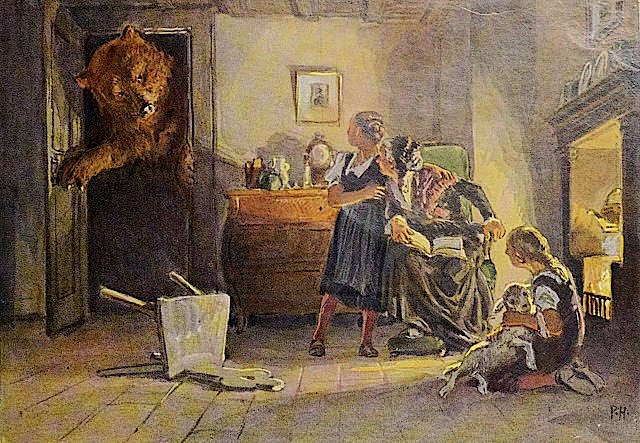
Julia Phillips’s New Novel is Inspired by a Fairytale About a Girl Who Falls in Love with a Bear

Based loosely on a Grimms’ fairytale, Bear is both enchanting and suspenseful. Sam, a concessions worker on a ferry, is terrified when a bear shows up at her family’s front door. Elena, instead, grows enchanted by the bear, seeking him out in the woods and bringing him food from her job at the local country club. As Sam panics over Elena’s behavior, and both sisters worry about their mother’s failing health, the novel hurtles toward a devastating conclusion.

The idea for Bear, the second novel from Julia Phillips, was born during Covid lockdown. Stuck in her New York apartment, Phillips tried to imagine “like the farthest-flung, most fantastical, most beautiful place I could imagine actually getting to” when travel became possible, and settled on the San Juan Islands, off the coast of Washington State. Her feelings of isolation became a novel about the financial impact of Covid on the working class, what we owe to our families, and finding liberation in the natural world.   

On our Zoom call, Phillips, a National Book Award nominee for her debut Disappearing Earth,  is thoughtful and introspective, speaking slowly and deliberately until she explodes into a burst of enthusiasm or laughter. Her book, she tells me cheerfully, is “like Jaws, but the part where they’re just in the water. And you’re like, Oh, God. At least, that’s the hope.”


Morgan Leigh Davies: In Disappearing Earth, many of the characters are isolated, but the structure of the book creates a community out of them. This book is all in the head of one person [Sam], and it’s a character who is really resistant to being in any kind of community or relationship with anyone but her family. How do you approach the shift between the two books?

Julia Phillips: To me, the message of Disappearing Earth was the idea that connection can save us: that when we come together, we can save each other. I think this book’s argument is that disconnection destroys us. We’re just in one person’s head and the willful isolation that she embraces ends up really hurting her situation. It keeps her from accessing help. It also created a lot of propulsion and fun. 

I think that I am always going to be preoccupied with subjects of survival and violence and womanhood and community. But I think I was pushing against the hopes I’d had more in this book. I was not so committed to a hopeful depiction as I was in the first one.

MLD: So much of the novel is driven by Sam’s fear. I wonder how fear functions in this book, and how it creates a sense of propulsion in the novel.

To be somebody’s everything is a real burden, although it can be joyful or validating.

JP: My own taste in reading is toward the page turner. I love to have a book where I don’t want to ever set it down. I felt the whole time writing Disappearing Earth that I was struggling against that foundational aspect of it—I really wanted to create a feeling of momentum and cohesion and the structure I’d chosen gave me some pushback. For this, I wanted to write a book that made me feel that way. I wanted to write something that feels like you just fall in the river and get swept along, like it just pulls you forward. 

The theory I had was that the more cohesive we are in feeling with Sam, the more we are behind Sam’s eyes and in Sam’s head and in her body, the more clear we are about what she wants and what she’s trying to do to get it, that that would create a feeling of total immersive momentum. I think it was challenging with her because she has so much fear and anger and defensiveness. It can be hard to sit inside that so much.

MLD: We should talk about the bear. It is one of the main characters of the book, and we don’t have access to what it is thinking, what it’s feeling, what’s motivating it besides eating. I was wondering what the appeals and challenges were of writing about forms of life that exist outside of our understanding in that way.

JP: This is a story of human reactions, human relationships, symbolic interpretation, and the animal is having his own experience to which we do not have access. Maybe Elena does have some sort of access… I think she’s able to sort of vibrate on the bear’s frequency sometimes, but Sam does not wish to vibrate on his frequency. Sam has a very, very human understanding of what [the bear] wants, what he’s doing, how he’s behaving. And it blocks her from any desire to even ask what he’s thinking. 

I found the portrayal of the bear in this book to be an absolute joy. I just loved writing this animal and I loved writing this animal from this exterior position. He’s a mystery to the characters. They don’t know why he’s behaving the way he is. They don’t know where he came from. He is his own thing in the world. It was so fun to play with this beast and say, here he is, he doesn’t obey your rules, he doesn’t do what you want him to do. He just is his own thing, and he’s beautiful, and he’s scary, and he’s stinky. I definitely felt like I was vibrating on his frequency. 

MLD: I think one of the places that the real tension comes from or for me, as a reader, is that both the sisters are right and wrong about the bear. Sam is obviously correct that her sister should not be feeding this bear in the middle of the woods.

[The Covid era] is extraordinarily influential on our lives today, and is continuing to shape our every day.

JP: Absolutely not. Do not, do not do that. But also…

MLD: But she’s so afraid that she can’t see what is wonderful about him, and Elena can see that. But Elena’s doing foolish things. I’m curious how you thought about balancing those two perspectives and the relationship between those characters as the book was coming along.

JP: I think Sam came out of a couple of feelings that I’ve had. I really love fiction as taking what’s in our own lives and turning it up two notches on the dial. And she is the turned-up version of some feelings that I’ve had, or relationships I’ve had in my own life. 

One of those feelings is a little sister feeling, where you are so admiring of the older sibling, or taking the older sibling as a model for the way to be for at least a certain amount of time in your life. But the older sibling’s world is bigger than yours, and they have more life, and you’re watching and following. I think that dynamic is very interesting and influential and hard. As a little sibling, especially in teenage-hood and my early twenties, I found it really hard to see my older brother, in my case, begin an adult life, leave the life of the nuclear family, and move on, in a way that I was not ready to yet. 

The other influential character-shaping feeling that went into Sam is around experiences that I’ve had in friendship. I’ve had some very, very close friendships in which one person says, I’m going to be your best friend. I’m going to meet my own high expectations for what friendship is, and I would like you to also meet those expectations. I’ve found those experiences to be challenging, because that level of dedication is really hard to maintain. To be somebody’s everything is a real burden, although it can be joyful or validating. 

Sam has decided because of her own experiences that Elena is going to be her everything, and Elena has been used to being someone’s everything. What does that do to the relationship? What space does that open up for dishonesty or disappointment or deceit? Or to be frustrated with the person because they’re not doing what you think they should do?

MLD: I was really taken with the framing of this as being from a Grimms’ story. How did you draw on that story, especially from the fact the originals of these stories are usually quite dark? In particular, the relationship between Elena and the bear is described as romantic pretty consistently throughout the book. At one point, Sam says, “You’re talking like you want to kiss it.”

JP: So the original fairy tale that in very broad strokes inspired this [is about] these two sisters in this cottage with their mother, and a bear comes to the door. This fairy tale from the Grimm Brothers is called “Snow White and Rose Red.” I was obsessed with this fairy tale in particular, and my whole collection of Grimms’ Fairy Tales, as a kid for a long time. I was obsessed with them for exactly that reason, that darkness.

In it, this bear shows up, and the bear is enchanted. At the end of it, the older sister ends up marrying this prince who had been enchanted to be a bear. So she marries the bear after he is un-beared on the other side of his magic spell. But before that they have this relationship where they were rolling on the floor together in this intense bond for months and months, and I thought, What is this? As a kid, I would try to rewrite versions of it and I could never make it work. So this was my big bite at the apple. I really wanted to try it and to see if I could retain those shocking and perverse elements, and that fairytale feeling, but take those elements and map them in a new way so they would feel more satisfying. 

The relationship that Elena has with the bear… Sam doesn’t understand it. She talks about it like a romance because that’s one way that she’s trying to make sense of it. She’s trying to say, Well, is it this? Is it this? Does it fit in this box? Does it fit in that box? Because it’s a very confusing thing to her. I think it is sort of unmappable and uncategorizable to Elena too. What I think the bear does for her is absolutely passionate and physical, but it’s not sexual. But it is very exciting.

When I was working on this manuscript, I read a lot of the genre of woman in relationship with animal, or woman in relationship with creature. Sometimes it is sexual, but sometimes it’s a friendship and sometimes it’s a self-negotiation, like an animal coming out from inside you. There are all these different relationships and all of them are reckoning with the idea of women whose roles have been super constrained in the human world who are not happy with the role they lead in society. Having this encounter, whatever the encounter is, lets them move out of the world that they were in. It lets them say, I get to be wild, I get to be free and the externalized animal is just a way for me to access the internalized animal and a way for me to leave the world that I’ve found so constraining and so stifling and see what else is out there. 

I think that is the experience Elena’s having. Her days were really limited and now something is changing the routine and it’s opening up her days in ways that she never anticipated before. Through encounter with this animal she gets to feel freed of her responsibilities, of her stresses, of her fears, of her worries, just feel free. Of course she’s chasing that.

MLD: I was really curious about the decision to include Covid in the book and in a meaningful way. A lot of recent novels take place in 2019, or conveniently avoid the topic. But it’s obviously had a really significant financial impact on the family here. It felt really real to me.

JP: It felt really important to me. I think we’re in an avoidant moment with our recent history, and we don’t want to talk about Covid, or write about Covid, or read about Covid, because we just lived it and we’re currently living in it, so maybe it feels too close or too painful or too raw. This era is extraordinarily influential on our lives today, and is continuing to shape our every day. Of course, we wish that were not the case.

I really enjoy contemporary fiction. I want to write contemporary fiction at this moment in my life. And if I’m writing something set right now, I just have not been able to make the leap to imagine someone who is not shaped by that experience. These are characters who have a mom who has lung and heart issues, who live in a tourist economy where the bottom dropped out in 2020, who were always having trouble making ends meet. The idea that by 2022 or 2023, they would be saying, “Oh, you know, Covid, that whole thing—never heard of it!” It just didn’t make sense to me. It wasn’t a two-week tough thing. These were years of their lives that were changed by this, and ripple effects that are going to go on forever for them. So I tried to put that in that way.

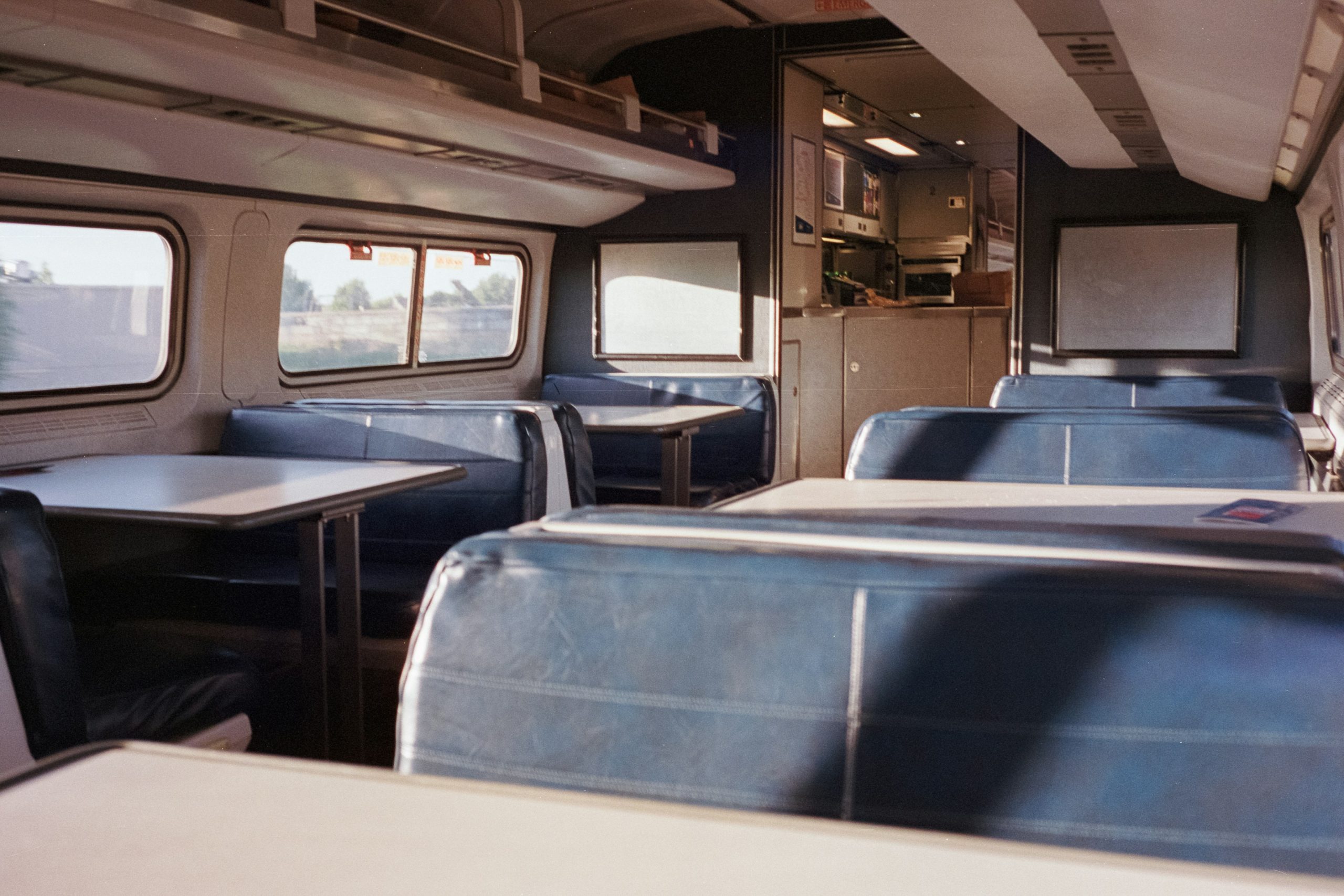
David Foster Wallace Rides the Amtrak 79 Carolinian

Following His Successful Cruise Ship Essay, David Foster Wallace Rides the Amtrak 79 Carolinian

I have now seen tetanus-laden rail yards in seven states and the District of Columbia. I have seen time suspended in a sunlit broadleaf forest while emergency services investigate reports of a vehicle on the tracks up ahead, and never known whether that vehicle actually existed. I have seen, and smelled, all 68 passengers inside car number 5. I have heard emphysema coughs, and endless renditions of “Baby Shark,” and a woman announce over the phone, “You better not let that raggedy bitch inside the house while I’m gone.” I have (very briefly) known the hope of arriving on time.

I have seen Confederate flags, and steel toilets with chemicals a very bright blue. I have discovered that nothing in the world, not even the pitch and yaw of the A-79 chugging along at 110 mph, can make the Y-chromosome-bearing passenger sit down to pee, and though I try to separate myself from the rest of the train’s bovine herd, I also end up pissing upon the restroom floor and walls a dreamy and vaporous sheen of urine, and leaving it for the next passenger to slick their unknowing feet.


I now know every conceivable rationale for somebody spending 14 hours of their life on a train slopping and heaving 704 miles down the Eastern Coast of the United States, and there is only one: it’s cheaper than flying. To be specific: I voluntarily, without pay, rode the Amtrak 79 Carolinian train departing from New York Penn Station with service to Newark, Philadelphia, Baltimore, Washington, Richmond, Raleigh, and finally Charlotte, with intermittent, and seemingly infinite, stops along the way. The vessel and facilities were, from what I understand of the industry’s standards, acceptable. The seats lacked lumbar support. [1] The air conditioning was spotty; likewise the Wi-Fi.

I have acquired and nurtured a lifelong grudge against the train conductor who told me to take my feet off the seat across from me, and whom I have now named Mr. Rail Chode, and a searing crush on the cafe car employee, Petra, she of the dimples and brassy box dye highlights, who always wears a polyester navy uniform and smells of Hebrew National hot dog grease.


Our horn is not planet-shattering; it probably should be louder for safety. We depart New York at 8:09 am, one hour and seventeen minutes behind schedule, but things proceed at a nice clip until we reach Washington. The conductor pronounces Washington with nasal precision: Waaaaah-shington is a scheduled smoke stop. In Waaaah-shington, we will have to switch engines because the South exists in a time loop where electrified rail has not yet been invented. The AC switches off. The temperature becomes uterine. I have purchased many beers from Petra, and now I learn with dismay and a spasmodic bladder that when the train loses power, the toilets do not flush. [2]


The Amtrak Carolinian brochure promises I will “discover a charming and welcoming blend of Southern hospitality,” but instead I discover a blend of stormy Southern weather and outdated Southern infrastructure, resulting in signal failures and track congestion. We clank and grind to another unscheduled stop outside a state prison festooned with wedding cake spirals of barbed wire. Beneath us, the soil where 30,000 wool-clad men bled and oozed gangrenously in 1863.

Angry Cell Phone Woman calls her sister, who has—just as she suspected!—spotted that raggedy bitch’s car outside her house. [3]


We’re stuck again somewhere near Cary, NC. I am powerless to describe, according to modern physics, how a train can take this long to get through the state of North Carolina. The semi-agoraphobe fears he will never escape the torment of coach class, and its 68 other passengers. [4] I have no choice but to face my own thoughts and all that mystical stuff. What if I’m just the guy Angela Mead let get to second base? Do we of course end up becoming ourselves? Am I not a wise old fish?? What is water??? I begin to spiral into a panic of rail-induced claustrophobia, then remember everything is OK because Jason Segal played me in a movie.


I buy another bag of potato chips from Petra and try to catch her eye. She turns to the next customer. I am suffering from a delusion, and I know it’s a delusion, this envy of another passenger who now has her complete, and might I say excessive, attention as he purchases one of Sandy’s Amazing Cookies (™) (chocolate chunk, pre-packaged, 55% Daily Value of saturated fat), but it is painful nonetheless. I return to my seat in car number 5, looking out the bug-spattered window, empty chip bags all around me and my shoes urine-soaked, feeling a little bit dulled to know that we are running three hours and forty minutes behind schedule, but mostly good, good to know that I would one day get off the Carolinian, and that a journey on American rail is every bit as bad as I had feared.


  1. Particularly aggravating when one has an old injury from being a Midwestern junior tennis star, see Derivative Sport in Tornado Alley. ↩︎
  2. Brainstorming titles for this essay to pass the time. Getting Railed? A Thing That Nobody Even Supposes Is Fun That I Will DEFINITELY Never Do Again? Consider the Shrink-Wrapped Sandwich? ↩︎
  3. One can’t help but notice that Angry Cell Phone Woman looks a bit raggedy herself. ↩︎
  4. I search for the observation car, where I can at least stand alone for a few minutes at the Carolinian’s gleaming dome and look pensively at the Carolinian rolling piedmont. Mr. Rail Chode, for whom I still harbor a terrified loathing, tells me there is no observation car on the Carolinian, and I will have to ride the California Zephyr for that. I feel an almost prurient envy for that opposite-coastal route, and imagine its seats have better lumbar support too. [*]
    *That tennis injury again. Can I even put a footnote inside a footnote? A meta-footnote? [**]
    **For the love of Alanis Morissette, get me off this fucking train. ↩︎

7 Books that Unpack A Complicated Family Inheritance

We inherit far more from our families than a surname. Our progenitors leave their mark on us in ways we often can’t understand until we pay our own rent. Some of these qualities, of course, are admirable or anodyne—a sense of justice, a fondness for a particular cuisine, our sparkling wit—and others less admirable—a poor reputation, gambling addiction, a penchant for shouting. 

Our families shape our beliefs about the world and our place in it, so I’ve always loved stories that explore how our first relationships—those with our family—end up affecting all of the ones that come later. 

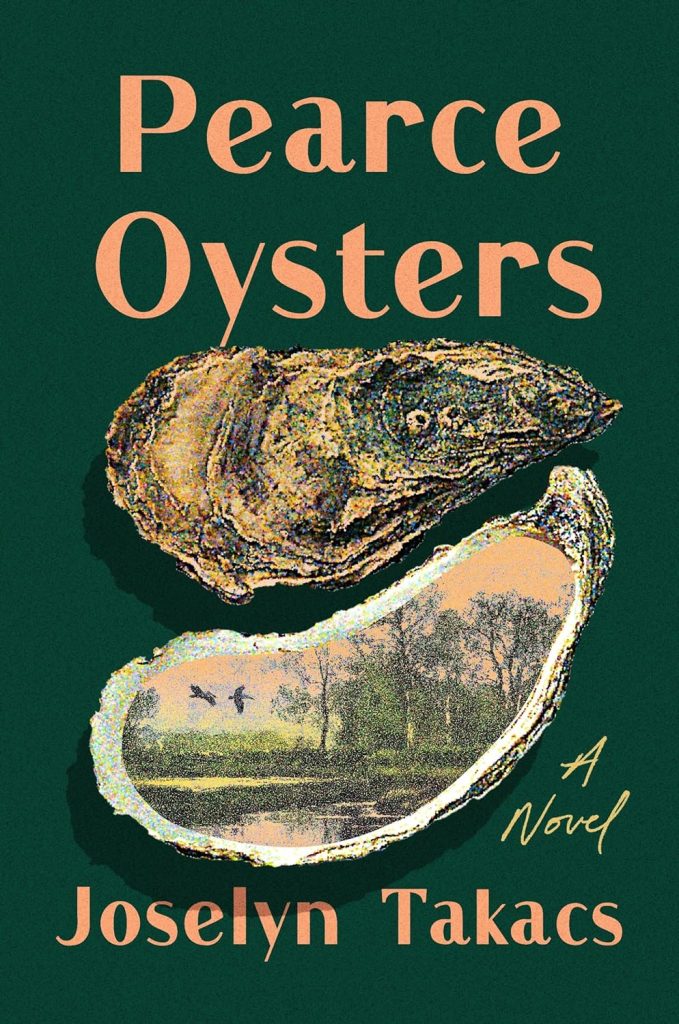
My own novel, Pearce Oysters, tells the story of a family in the wake of a father’s death. The mother is bereft but also undergoing her own identity crisis. Two brothers, at odds since childhood, fight over the family business, the Pearce Oyster Company, which they’ve inherited as partners. The novel follows this family over the course of the 2010 BP Oil Spill. As oil approaches the Gulf Coast, and the family’s oyster reefs, the family is under one roof for the first time in years. 

The books in this list explore the emotional legacy of family life.

The Five Wounds by Kirstin Valdez Quade

The Five Wounds opens with a father, Amadeo Padilla, preparing to play the part of Jesus in a Good Friday procession, and in a turn that sets our plot in motion, he takes the part too seriously. It’s a fine opening for a novel, and in many ways the novel takes as its subject the repercussions of the father’s decisions—not just his ceremonial crucifixion but also mistakes that came much earlier. Amadeo’s daughter, Angel, is fifteen and newly pregnant. Her teen pregnancy signals family history repeating itself. This gorgeous novel explores the complex reasons that history does repeat itself and how families evolve over generations. 

Holding Pattern by Jenny Xie

On the heels of a breakup, Kathleen Cheng leaves her psychology PhD program, moves back in with her mom, and takes a job as a professional cuddler. When Kathleen returns home, though, she finds her mother has emerged from a decades-long holding pattern of her own. Her mother transformed her life and is engaged to Silicon Valley tech entrepreneur. After years of grief, longing to return to China, and alcoholism, Kathleen’s mother is now sober, social climbing, and sporting athleisure wear. Kathleen’s cuddling gig begins as an ironic curiosity, but it has an apt emotional resonance in her life. Snuggling safely with strangers seems a natural tendency after a childhood spent caretaking for her mother. This novel delights with humor and heart as it parses the mother-daughter relationship in the run-up to the mother’s wedding day. 

Absolution by Alice McDermott

Alice McDermott’s most recent novel is, like all her work, unparalleled in its emotional nuance and observation. It’s also the most difficult to summarize of the books on this list, weaving in epistolary form through the decades. The major events of the novel take place in 1963, Saigon. Two American women—the young idealistic Patricia and the worldly “dynamo” Charlene—are brought to Vietnam by their husbands’ work during the war. Together, the women concoct their own unofficial charity to raise money for a Vietnamese hospital. Now, sixty years later, Patricia begins writing Charlene’s grown daughter to revisit the past. They weigh the women’s well-meaning attempts at “inconsequential good.” And though the novel takes up far more than a mother-daughter relationship as its subject, the letters paint a vivid picture of Charlene as a mother. I read this novel in a gallop, mesmerized. 

Home by Marilynne Robinson

I would be remiss if I didn’t include Home, my favorite of Marylinne Robinson’s novels. An errant prodigal son returns to his rural Iowan home after two decades away. And we wonder if he’ll earn his pastor father’s forgiveness, or harder still, we wonder if he’ll forgive himself. The novel probes the long suffering of the town’s one-time hellion through the eyes of his endlessly loving sister, who is newly heartbroken and back in their childhood home to mind their aging father. It’s a capacious portrait of the Boughton family.

The Wren, the Wren by Anne Enright

This novel braids the point of views of a famous Irish poet grandfather, the daughter he abandoned as a child, and his floundering twenty-something granddaughter. Does the granddaughter’s bent for violent, coercive men have its roots in the relationship of her grandparents? I’ll leave that for you to unpack. This novel is such a singular work—the point of views so delightfully varied, true, and compelling. On every page, a gem of a sentence sings out and delivers psychological insights that I recognize but never found words for.

After the Funeral and Other Stories by Tessa Hadley

The only story collection on this list but every bit as deserving. I hear Tessa Hadley often compared to Alice Munro, and this is apt when one considers Hadley’s skill for clean, unaffected prose simmering with implications. The characters are so particular and varied and lived-in. She plumbs relationships romantic and familial with equal precision, but my favorite story in this collection, “Funny little snake,” is the story of a plain, emotionally stunted stepdaughter—a chess piece in her parents’ acrimonious divorce. The story takes place over the week in which the girl’s disinterested young stepmother must entertain her. The stepmother comes to understand the dire roots of the young girl’s temperament that week. The story had me at turns had me giggling and gasping.

So Long, See You Tomorrow by William Maxwell

William Maxwell was fiction editor at The New Yorker for forty years, and he was so renowned for his career-making influence that it risks overshadowing his magnificent writing. This slim novel, on its surface, unpacks a murder that took place in the early 1920s in rural Illinois. Our narrator is friends with the murderer’s son, so we learn early on in the novel. (This isn’t a spoiler.) But as much as this is this story of that murder—it’s about the narrator’s relationship to his widowed father. It also happens to be a perfect little novel. Written in elegantly spare prose, it’s the kind of book I’d recommend to a friend taking off for a long weekend. Read it in a few sittings and marvel. 

Which Looks Better, Hardcovers or Paperbacks?

There’s no question that turning the pages of a great book is a wonderful feeling—but is it more wonderful in a hardcover or a paperback? Aside from considering quality, durability, portability, size, price, or release date, many readers simply choose the cover with the more appealing design. At times, it’s a hard decision: One cover could be more eye-catching, while the other could appear more fitting for the book. Other times, a cover might stand out as remarkable (or remarkably disappointing), making comparison a no-brainer. Whether choosing the superior design is difficult or easy, it’s always fun. Continuing our Book Cover Contest series, we compared the hardcovers and paperbacks of 20 recently released books, asked our community on Instagram and X to vote for their favorite cover for each book, and compiled the results below. (Paperback images are featured on the left side; hardcovers are on the right.) See if your favorite covers won, and find new reads along the way! 

The Seaplane on the Final Approach by Rebecca Rukeyser

Rukeyser’s sensual, darkly funny novel follows a young woman fascinated with “sleaze” as she travels to the Kodiak Archipelago seeking new experiences. While the paperback design features two plump raspberries, indicative of the narrator’s overfull desire and erotic passion, the hardcover design displays the story’s strange wilderness setting. Our readers voted for the hardcover, as the remote Alaskan environment facilitates the narrative’s eccentric characters, unexpected plot twists, and eco-tourism commentary, while also nodding toward the wilderness of desire. 

WINNER: Hardcover

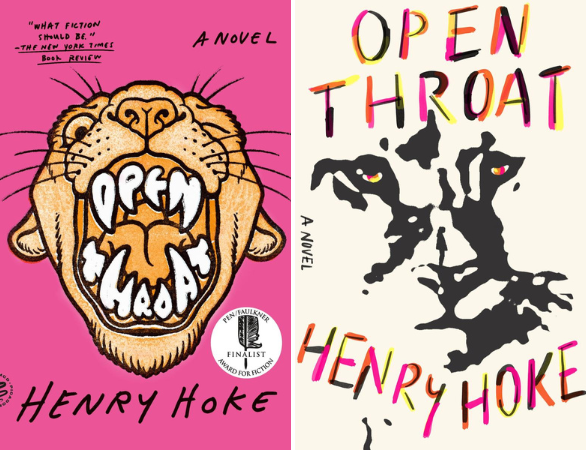
Open Throat by Henry Hoke

The narrator of Open Throat is a ravenous but lovable queer mountain lion who protects a homeless encampment, fascinated by human life. Lonely and vulnerable, they reflect on their memories and search for their identity. The lion appears vicious on the paperback, their open jaw exposing sharp teeth. On the hardcover, an ink-blot illustration suggests the novel’s psychological depth, and the lion’s fiery eyes hint at their menacing nature and mental turmoil. Our readers preferred the hardcover, more interested in the lion’s interiority than their monstrosity. 

WINNER: Hardcover

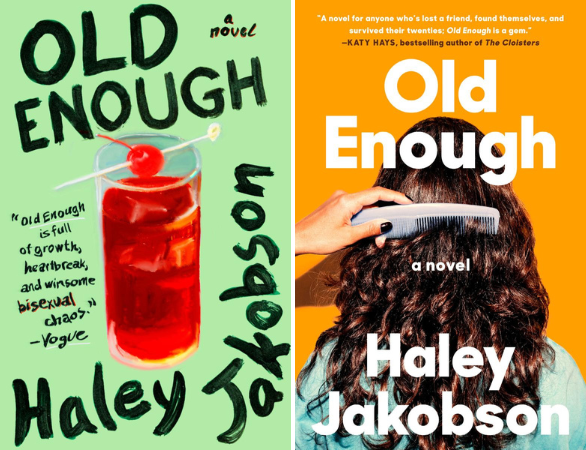
Old Enough by Haley Jakobson 

College sophomore Sav thinks she’s ready for her life to begin, but she can’t anticipate the crises that are to come. In the coming-of-age novel, Sav navigates queer love, heartbreak, growth, and friendship. The hardcover proves vague, but on the paperback, a bright red cocktail represents transitioning into adulthood, with all its fun, difficulties, and messiness. The font, which appears hastily hand-painted, appropriately suits the chaos and spontaneity of growing up. Its lack of perfection makes it perfect, which our readers appreciated: The paperback cover stood victorious.  

WINNER: Paperback

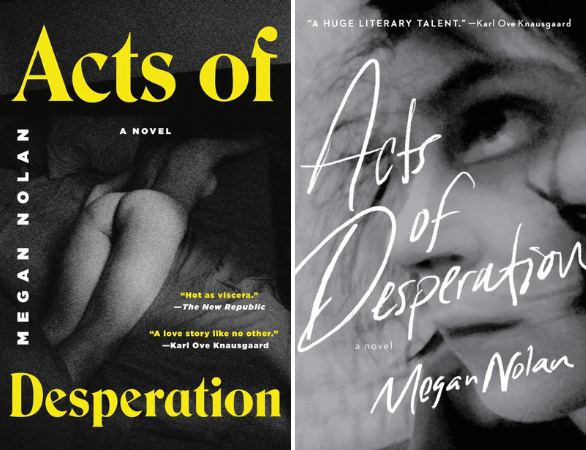
Acts of Desperation by Megan Nolan

Nolan’s gripping, provocative novel follows the narrator’s spiral into obsessive longing after the abrupt end of an enthralling romance. While probing love, power, and submission, the novel questions what we want, how we want it, and why we want it. The hardcover keeps the novel’s secrets, but the paperback displays the narrator’s vulnerability and of course, her “desperation,” whether lying on the bed in sexual submission or post-romance dejection. Unsurprisingly, our readers favored the paperback design. 

WINNER: Paperback

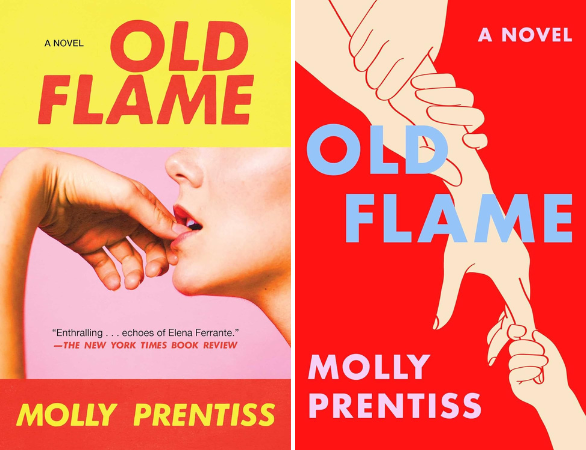
Old Flame by Molly Prentiss

Emily yearns for a fulfilling and balanced life—and when she faces an unplanned pregnancy, she is forced to make choices that will shift her old life into a new one. The hardcover embodies feeling pulled in different directions and striving for something that seems out of reach, and the paperback emphasizes tough decision-making. Despite the hardcover’s clever visual, the paperback’s sharp photo, urgent color scheme, and italicized text are even more enticing. They clearly enticed our readers, since they chose the paperback over the hardcover. 

WINNER: Paperback

A Spell of Good Things by Ayòbámi Adébáyò

In modern Nigeria, an ambitious boy supports his family during their financial struggles, and an overworked, young doctor is the “perfect child” in her wealthy family. Their lives collide during a political crisis, and a captivating tale of class inequity, gender inequity, violence, love, and humanity unfolds. Neither the hardcover nor the paperback reveal too much about the narrative, but the paperback’s beautiful design is unquestionably alluring. In our polls, the paperback triumphed.

WINNER: Paperback

Some of My Best Friends: And Other White Lies I’ve Been Told by Tajja Isen

Isen’s sharp, shrewd, and sometimes uneasy essays boldly critique present-day racial justice initiatives. They confront sensitive topics, from arts and entertainment to law and politics, interrogating the discrepancies between values, intentions, words, actions, and impact. While the hardcover is pretty, the paperback gets to the point: We say a lot, but we do a little. Featuring text-message bubbles, the potent subtitle, a fingers-crossed emoji, and a lot of blank space, the design fits Isen’s criticism. Accordingly, the paperback appealed to our readers more than the hardcover.

WINNER: Paperback

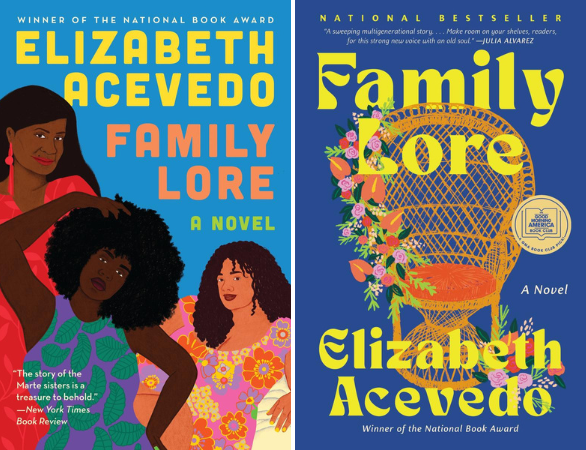
Family Lore by Elizabeth Acevedo

Flor can predict the exact day a person will die—and she isn’t the only person in her family with secrets. In an emotional epic, Family Lore traces the lives of Flor’s sisters, cousins, aunts, and nieces across generations, past and present, Santo Domingo and New York City, leading up to the day of Flor’s living wake. The hardcover and paperback are both colorful and beautiful, simple but intriguing. Ultimately, our readers voted for the hardcover: Its remarkable elegance is difficult to surpass. 

WINNER: Hardcover

Cursed Bread by Sophie Mackintosh

In a beautiful, spellbinding novel, Cursed Bread tells a haunting tale of small-town life, set in a 1951 postwar French village during a real-life unsolved mass poisoning, as madness, hysteria, and desire consume the town. While the paperback suggests that something might be a little off in the rural French village, the hardcover immediately grips readers with Cursed Bread’s unsettling eeriness and dark elegance. The hardcover draws readers into the book’s mystery, and our readers agreed, selecting the hardcover as the better design. 

WINNER: Hardcover 

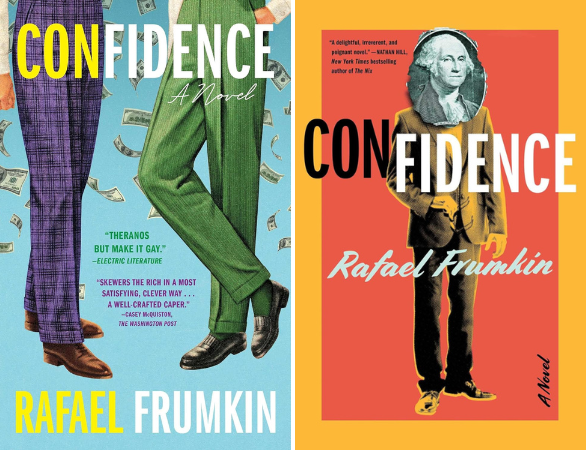
Confidence by Rafael Frumkin

As two young men pursue a career of illegal scam artistry, their relationship, crimes, and greed become increasingly complicated. Frumkin’s novel presents a scathing take on capitalism, deception, and the American Dream with satirical absurdity and hilarious wit. The paperback keeps the most astute elements from the hardcover—the emphasis on “con,” money visual, and excluded head—and offers more cash, a more contemporary feel, and the leading duo in a more confident stance. According to our polls, the paperback won our readers’ favor.  

WINNER: Paperback

Excavations by Kate Myers

At an archeological site in Greece, four starkly different women encounter an unusual artifact—one that shouldn’t exist—and the head professor realizes that something went wrong. He tries to bury history, while the women work together to dig up the truth. The hardcover echoes the novel’s feminist angle, and the paperback highlights the setting, featuring a Greek-inspired font, hot summertime colors, and excavation site images. Our readers found the paperback more fitting. The playful cover mirrors the humor and wit that make Excavations such a fun read. 

WINNER: Paperback

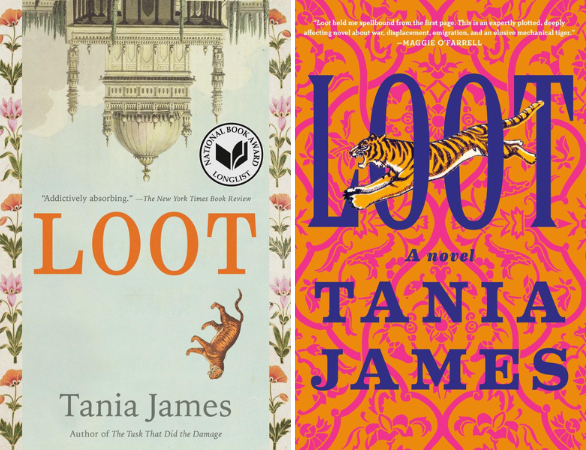
Loot by Tania James

In the 18th century, a teenage woodcarver agrees to build a mechanical tiger for Tipu Sultan’s sons, leading to an epic adventure amidst colonialism, war, and displacement across India, Britain, and France. The hardcover’s vibrant colors are striking—but the paperback, featuring a building reminiscent of St. Paul’s Cathedral, a topsy-turvy tiger, and an 18th-century floral design, won our polls. The upside-down illustration reflects the impact of colonialism, which severely upended the world, and the woodcarver’s quest, which flipped his life out of its status quo.

WINNER: Paperback

Kairos by Jenny Erpenbeck

The story of a romance begun in East Berlin at the end of the 1980s, Kairos meditates on memory, change, and the passage of time to offer a powerful examination of history. Individual, collective, and national histories parallel and intersect in surprising ways. Both cover designs are artful and abstract, posing more questions than they answer. The creative and confounding artwork suits Erpenbeck’s complex narrative, but the hardcover might be a bit too difficult to interpret, as our readers preferred the paperback.

WINNER: Paperback

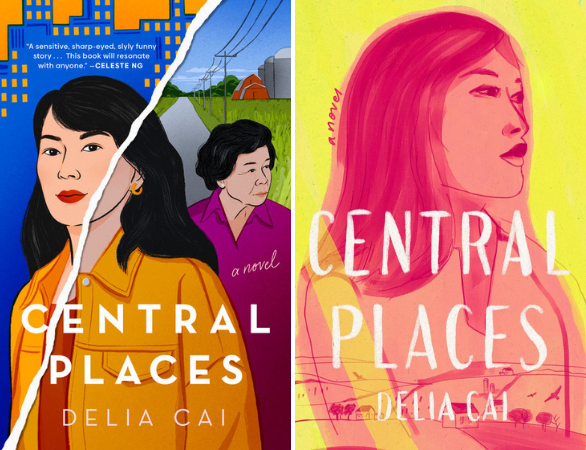
Central Places by Delia Cai

When Audrey returns from her dream life in Manhattan to visit her hometown in Illinois, she confronts her complicated connection to her roots. She reexamines family dynamics, past relationships, and cultural identity—urging her to reconsider her future. The paperback edition depicts Audrey, literally torn between big-city plans and small-town history with a ripped-paper-like division. This design feels too on-the-nose. Our readers voted for the hardcover, appreciating the gorgeous artwork and the partial transparency, which could represent looking inside the self. 

WINNER: Hardcover

American Mermaid by Julia Langbein

When a teacher adapts her feminist, eco-warrior, bestselling novel into a screenplay, she is directed to convert the empowered mermaid protagonist into a stereotypical mermaid designed for the male gaze. Strange things start to happen, and the teacher and her mermaid must fight to maintain their voices. Both the hardcover and paperback are intriguing, but our readers chose the hardcover as the winner. The fun and fantastical design reflects Langbien’s amusing, imaginative, spectacular storytelling.

WINNER: Hardcover

On Earth as it is on Television by Emily Jane

After alien spaceships briefly visit Earth, Blaine, Heather, and Oliver grapple with certainty, uncertainty, life, and doom. Through a hilariously absurd narrative, Jane’s exuberant debut novel tells a heartfelt, poignant story about what it means to be human in the contemporary universe. The hardcover is appropriately colorful and energetic, but the paperback turns it up a notch with brighter colors, a more energetic, tightly-packed layout, and a strange cat. The paperback cover—victorious in our polls—is loud and bizarre, just like Jane’s novel. 

WINNER: Paperback

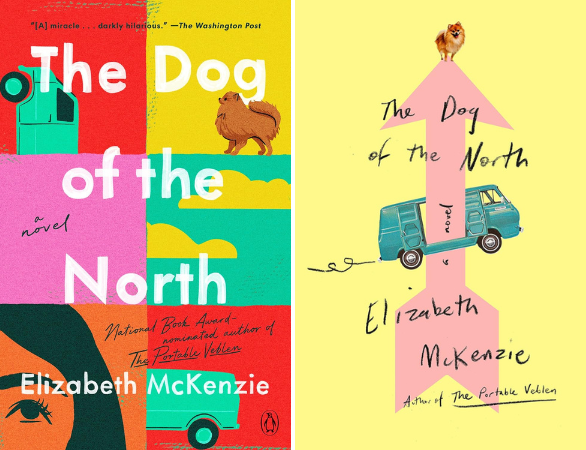
The Dog of the North by Elizabeth McKenzie

In McKenzie’s quirky comedy, Penny—dealing with a number of life challenges—goes on a road trip in an odd-looking, barely-working van, embarking on an unpredictable journey that proves to be a charming, hopeful story. Both the hardcover and the paperback feature the teal van and adorable dog, but their designs are drastically different. The paperback grabs attention, but the hardcover better captures the eccentric, endearing, uplifting experience of following Penny on her quest. Our readers preferred the unique design on the hardcover. 

WINNER: Hardcover

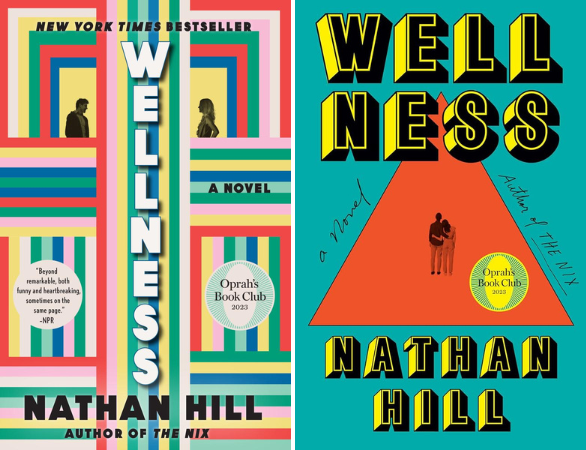
Wellness by Nathan Hill

A couple of ’90s college sweethearts grow distant as they struggle with present-day marriage. New anxieties have emerged with the passage of time, from social media to potential polyamory, making their relationship a challenge to maintain. On the paperback, the formerly-young lovers face each other, separated and surrounded by a busy design, indicative of their busy world. On the hardcover, they stand together in the center of a triangle. The simple design and unified couple won over our readers, leading the hardcover to victory.

WINNER: Hardcover

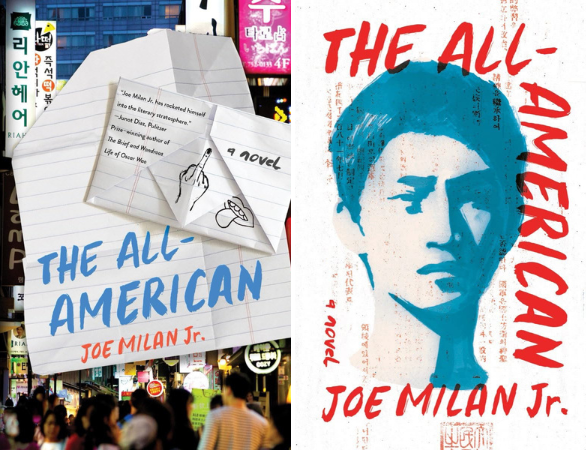
The All-American by Joe Milan, Jr. 

Bucky has one goal—play college football—until he is deported to his birth country of South Korea, a place entirely foreign to him. A series of unpredictable mishaps test Bucky’s physical strength and inner character while he searches for his home and self. Between two contrasting cover designs, our readers favored the hardcover. They might have liked the serious feel, the focus on Bucky, or the aesthetic appeal—or they might have disliked the paperback’s middle finger. Regardless, the hardcover prevailed. 

WINNER: Hardcover

The List by Yomi Adegoke

A celebrated journalist navigates truth and trust after her fiancé is called out in a viral social media post. When online toxicity permeates offline life, it makes a mess—and Adegoke’s novel dives into the quagmire. The paperback’s goofy emoji minimizes the gravity of the book’s timely, complex issues. On the hardcover, a menacing storm of chat bubbles threaten growing terror, and the bright, fragmented text feels alarming—and intriguing. Our readers voted for the hardcover, which brilliantly frames The List’s riveting suspense, scary realities, and thrilling plot. 

WINNER: Hardcover

Emma Copley Eisenberg’s “Housemates” Is a Lone Departure From the Fatphobic Literary Hellscape

Recently, I was slung across the couch with my young daughter, both of us blissfully full from dinner, limbs intertwined as we read before her bedtime. Her face was hidden behind a beloved Phoebe Wahl picture book, and perched on my soft belly was Emma Copley Eisenberg’s Housemates, a road trip story about two friends in pursuit of art and purpose. While a small bony knee dug into my armpit, I braced myself as the author began describing her characters’ bodies. It’s a make-or-break moment for me as a plus-size reader, when a riveting plot or beloved character may spoil, tarnished by the slip of an author’s anti-fat bias.

Eisenberg doesn’t shy away from highlighting protagonist Leah’s size, rather she revels in it often: “She was big. Big breasts atop big stomach atop thighs in men’s khaki pants, big long legs that terminated in round-toed soccer sneakers.” At first this put me on high alert, waiting for this character’s size to become a flaw, a conflict, a source of tension. But I exhaled in relief when it quickly became apparent that Leah’s body would be presented neutrally, a stark departure from the literary representation I’ve grown accustomed to. Being barraged by anti-fat bias in an otherwise admirable novel is an experience that both Virgie Tovar and Eisenberg herself have written about in their respective Substacks, so while I needn’t have worried, this habit has developed out of necessity. Books have been letting me down with their representations of fatness since I started turning to them. 

I developed early as a kid: period at ten, tall enough to be mistaken for a teacher by fourth grade, boobs big enough to make the comparison realistic. With the concurrent influx of hormones, I was a hot, horny mess. I scavenged my mom’s bookshelves for romance novels, legal dramas, presidential biographies—anything that might include even a whiff of sex. The jackpot was Wally Lamb’s She’s Come Undone, chockful with nipple tweaks, dick pics, and “lovemaking.” Entranced, I hid it at the bottom of my backpack and brought it to my seventh grade history class to share the bounty. I pointed out passages I’d earmarked to my friends as they crowded around, nearly all of them thinner than me. Already, I was excruciatingly aware of my extra curves, and Lamb’s novel taught me to fear them. 

She’s Come Undone offers a cautionary tale, a “story of craving,” following Dolores as she reaches 257lb, a number that’s branded on my brain. In its nearly 500 pages, the novel details Dolores’ countless hardships: an abusive father, a rapist neighbor, the death of her mother, merciless teasing about her body—and on and on. Her body is presented as monstrous as it scares small children and horrifies doctors. I re-read the book recently and cackled at the near-slapstick presentation of it all: at one point Dolores can’t fit in a car, at another, she faints and shatters through a staircase. But I also felt bereft for my young, impressionable self who inhaled this book and hung on its every word, whose own weight gain was blighted by this book’s legacy. I’d found the book in a youthful search for smut, an attempt to connect with my changing body. But I came away untethered, frightened by my own flesh. 

I developed early as a kid: period at ten, tall enough to be mistaken for a teacher by fourth grade.

The beauty of fiction is that it gives authors space to explore and experiment and imagine and create. It’s the ultimate freedom. And yet, freedom still carries responsibilities. There has been a concerted recent effort to eradicate racism, ableism, ageism, classism, tokenism, anti-semitism, xenophobia, transphobia, and homophobia from literature, and yet anti-fat bias can still be found with abundance. It’s no surprise that literature of yore is rife with the issue—Don Quixote’s Sancho Panza, Piggy (RIP) in Lord of the Flies, and Stephen King seems to think that being fat is the scariest thing a woman can be—but the problem is just as rampant today.

Modern heavy-hitters like Otessa Moshfegh, Haruki Murakami, and Tess Gunty incorporate casual fatphobic descriptions in which a person’s larger size is meant to signal their unsavory personality. As highlighted in a recent installation of Delia Cai’s Hate Read, Lessons in Chemistry by Bonnie Garmus—a blockbuster bestseller—peddles gratuitously in this brand of anti-fat representation. But as a fat reader myself, my least favorite and most oft-encountered examples are the ones that are a little more insidious. A story without a single fat character can sometimes expose the author and their biases most of all. Per Carmen Maria Machado, “It’s like writers can’t imagine fat women having sex or agency or complex lives. They’re just bodies for thin people to bounce off of; funny and unserious as a whoopee cushion or unconsidered as a chair. If they’re even there at all.”

When multiple characters share the same discriminatory leanings, my hackles shoot up. This prevalence is found in She’s Come Undone. Dolores is “locked in fat and self-hatred,” but she isn’t the only person who despises bigger bodies: her college roommate would rather die than end up fat like her, she is ostracized widely by strangers, characters are celebrated for thin waists, and perhaps most telling, her mother “[grows] herself a big rear end,” as a warning signal for an impending mental health crisis. In Eisenberg’s excellent newsletter, she points out the anti-fat bias among several characters in Lauren Groff’s Fate and Furies, arguing that the fatphobia is, “endemic to the author rather than salient to any particular character’s development.” As a plus-sized reader—as so many of us are—my experience is spoiled when hostility toward big bodies is on the page, and especially if it becomes clear the author harbors these feelings themself.

A story without a single fat character can sometimes expose the author and their biases most of all.

Two of my favorite books in recent years are exquisite and tender and important except regarding one detail: they center characters harboring anti-fat bias. In one, the main character’s fatphobia prevents her from sexually pursuing the person that becomes her best friend. When she, herself, gains weight by the end, it’s up to the already-fat friend to comfort her. In the other book, one of the protagonists is plus-size as a teenager and observes an even fatter classmate bullied mercilessly for his size. When the characters become adults, they bond over making fun of a peer who’s joined their ranks by gaining weight. Both books are queer, nominated for prestigious awards, and deeply beloved—including by myself—and yet left me feeling uneasy. Anti-fat bias is, of course, accurate to both history and our present, but unless characters are allowed to realize their small-mindedness, then at best, many readers are alienated, and at worst, those with similar worldviews are affirmed. Research shows that while American attitudes have either improved or plateaued toward sexual orientation, skin tone, age, and disability, sentiments of anti-fat bias have worsened.

And yet, nearly half of Americans qualify as fat. These people realize goals, salvation, and great loves, all while being fat, all the time. Why don’t we see this in books? 

In Housemates, Leah doesn’t live in a bubble; they still encounter fatphobia. But what Eisenberg conveys so deftly is that the discrimination Leah faces doesn’t define them. Eisenberg allows the reader to witness some of the negativity Leah experiences, particularly through their parents and an incident with a malfunctioning diner chair. But these biases reflect much more on those putting it forth. Their father is stagnant and boring in his steadfast hatred of bigger bodies. The inadequate seating is the catalyst for Leah’s relationship with friend Bernie to progress into something deeper. The two enjoy a sex scene that includes self-consciousness on Leah’s part, but no more than any other person might harbor about their own corporeal hang-up. 

Housemates should be studied by every contemporary author as the finest departure from the fatphobic hellscape of fiction that exists yet. There are others out there (The Once and Future Witches by Alix E. Harrow, The Manor House Governess by C. A. Castle) that succeed in portraying fat bodies as neutral, but with secondary characters. Eisenberg gives a fat body the lead and allows nuance, heartache, foibles, and growth. This isn’t by accident. At one point, Eisenberg writes in the novel, “A shocking number of the books lefties loved revealed a plain hatred of fatness.” The books being published today are at such high caliber, but they can still do better on this point, with Eisenberg as their example. Authors can write exquisite prose and gripping narratives without alienating half of their readers. It is boring to tether a character, an arc, a life, to the irrelevance of size. It is lazy to look at a fat body and assume you already know the whole story. 

The freedom of fiction allows authors to opt out of participating in fatphobia, which doesn’t mean they can’t write fat characters—please, if anything, write more! An easy way to tell if the depiction is problematic is to look at the way a body is being presented: if it’s happenstance, that’s fine. A fat person can be a great villain. But if it’s a defining characteristic, if it’s what’s used to convey negativity, that author needs to do better. A fat person isn’t a villain because they’re fat. In Lindy West’s review of the somehow Oscar-winning film The Whale, she writes that, “Fat people are already trapped, suffocating, inside the stories the rest of you tell yourselves about us. We have plenty of your stories. What we don’t have is the space to forge untainted relationships with food and our bodies, to speak honestly about our lives without being abused, to explore our full potential…” When stories are written in which fat people are confined and limited, there are consequences. 

When stories are written in which fat people are confined and limited, there are consequences. 

Wally Lamb’s depiction of Dolores affected my self esteem for decades. In my twenties, I watched the scale creep past the dreaded number of 257 and steeled myself for impending devastation depicted by Lamb—but it never came, and if anything, my life has only improved. It wasn’t until I started reading expansive work by authors like Eisenberg, West, Machado, and others, that I began to remedy literature’s legacy of damage on my psyche.

I weigh more now than Dolores ever did, and spoiler alert, my life is great. I’m surrounded by people who love me, fulfilled by my work, and enjoy a marriage teeming with both joy and sex! I’ve never broken a chair, but if I did, I wouldn’t internalize it as personal failing, I’d understand it as neglect by an establishment to be inclusive in their seating. My weight is irrelevant to my worth. My body has always and will always be big; weight loss is not an element of my redemption. 

This past summer, I went whale watching, just as Dolores does at the end of She’s Come Undone. All I saw from the pitching boat was a quick slice of dorsal fin, just enough to convey something majestic and potent and big underneath. I remembered in that moment, as Eisenberg so clearly already knows: to be big is to be powerful. To be big is to be worthy of whole, nuanced representation.

9 Experimental Books That Break Narrative Norms

There are rules for everything in life: how to speak corporate lingo, how to pray, how to dress at a wedding, and even how to blow the candles out at your own birthday (did you make a wish?). Storytelling is not exempt from its own ordinances. Writers in any genre face a myriad of craft to-do and not-to-do’s. As a writer, knowing the rules is important, especially if you’re going to break them.

I was tempted to stray from the norm when writing this reading list: maybe cut the intro or make the list like a game of hide and seek. But, I asked myself, would the experimental form serve the content here? Would it say something to the reader that can’t be said through a standard reading list? The answer was no.

As an experimental writer, you don’t break, bend, or bite into the rules just for the sake of doing it. You toy with them in service to that which cannot be conveyed through the ordinary. When words, plot and ordinary narrative fail, we use the experimental to speak.

The nine literary works I’ve gathered below show how talented writers break narrative norms in service to something greater. These works have inspired me tremendously, and they have also paved the way for my own novel to be digestible. From here on out, I’m going to refer to these works as “books” since most of them defy categorization.

No One Is Talking About This by Patricia Lockwood

A non-daunting book that gives you room to breathe around the anguish of loss, while simultaneously not taking its hands off your neck.

Words are containers, but what happens when traditional narrative cannot properly hold the amount of grief one feels? In this novel, an unnamed narrator famous for saying something ridiculous on “the portal,” a placeholder for any social media platform you want to imagine, narrates her day-to-day influencer life. Half-way through the book, her sister gives birth to a daughter with Proteus syndrome. The narrator spends time with the baby who cannot see or hear and who will, they all know, die soon.

This story knocks you off your feet by placing a mirror up to our society, juxtaposing our most shallow aspects with the deepest grief one can imagine, watching someone completely innocent be dealt the worst hand in the game. But Patricia Lockwood does this without lecturing us on how “bad” we are. Lockwood leaves ample white space on the page which allows for real-time reflection and processing: of grief, of unspeakable pain, and of our own shame.

Reality Hunger by David Shields

Nonfiction that acts as a manifesto for creativity and living alike.

Why write new sentences when we can repurpose the words of other writers who once said it better than we ever could? Made almost entirely from quotes said or written by someone else, this quotation-less book is at once a manifesto, a cultural snapshot, a critique of society, and a guidebook for future creatives. Split into chapters labeled from A-Z, which also have titles like, “trials by google,” “doubt,” and “let me tell you what your book is about,” David Shields’ work is one of brilliant montage that leaves a reader underlining almost every single sentence.

This is a must-read for any writer. I see it as the Bible for the metamodernist movement.

Voyage of the Sable Venus by Robin Coste Lewis 

Poetry that captures what is lost to history, and moreover what hatred is grown from history, when history is recounted by someone other.

Part of the experimental is about reframing what already exists to add layers of meaning to your work. Robin Coste Lewis’ poetry collection is titled after her long poem, “Voyage of the Sable Venus,” which sits at the center of the book, bookended by a series of her autobiographical poems. The long-form poem stands out as a phenomenal piece of research and experimental body of work crafted exclusively from titles of art made about the black female figure: sculptures, paintings, drawings, and more, dating back to prehistoric ages. From the titles, which are mostly disturbing, sometimes poetic or just straight up odd, Lewis montages the history of black female portrayal.

With this poetry collection, Lewis asks questions about race, history and who gets to tell our stories. It is a smart, biting poetry collection.

Invisible Cities by Italo Calvino, translated by William Weaver

A book that uses the experimental to take you on a journey inward.

To explore a certain topic, sometimes a writer has to forgo all notions of what a novel’s structure has to be. In Invisible Cities, an italicized conversation between Marco Polo and Kublai Khan, in which Polo is reporting to the grand emperor about his commissioned explorations, anchors the book. Most of the novel, however, is Polo’s accounts of cities he’s traveled to in Khan’s empire. Gorgeously written accounts. Each city takes up its own mini chapter, and each section has its own eerie header: Cities & Signs, Cities & The Dead, Cities & Eyes.

Recently, I’ve heard people are scared to pick this book up: as if it’s so highly regarded and therefore beyond their reach. I’m tempted to say don’t believe the hype, yet the hype is legitimate. This book is a masterpiece. My advice, however, is to let yourself experiencethis book. What it means for you. What it mirrors in your own mind. What it says about our world today. Take what you need from this book and let the critics rave, in their own corner, about what they think it means. This book has saved my life many times.

Bluets by Maggie Nelson

An essay-ish book that you can consume in a day.

Matters of the heart are not easy to convey through words. Narratives often fall short of capturing the complex alchemy of pleasure and pain, the weightlessness and simultaneous dense gravity, embedded in the act of loving. But in Bluets, Maggie Nelson explores love, longing and heartbreak through miniature meditations on the color blue. The prose combines facts, science, and anthropological research about blueness with the narrator’s phenomenological feelings about blue and their lover. It is a brilliant way to explore love through the written word, and Nelson, like always, pulls it off.

You’ll never look at the color blue, or any color for that matter, in the same way.

Citizen by Claudia Rankine

Non-fiction that explores the current sites and effects of racism in the United States of America.

Breaking narrative norms sometimes means collaging different mediums and forms to create a holistic body of work that operates as one. The cover of Citizen boldly displays a sweatshirt hood that is impossible to look at without thinking of Trayvon Martin, the Black teenage boy walking home when he was murdered by George Zimmerman. And that’s the point. Through essays, vignettes, photographs of art, and whatever other mediums necessary, Claudia Rankine peels back, page after page, the realities of living as a Black person and Black woman in the United States of America, a place that too many demand is a post-race society.

The microagressions and pervasive injustice that Rankine narrates can be felt like daggers through the books shiny pages and large font.

A Girl is a Half-Formed Thing by Eimear McBride

A book that uses the experimental to disorient you in the same way trauma does.

This novel is probably the most daunting on this list. The content is difficult, to say the least, and the form is even more off-putting. Trust me though: five pages in and you’ll forget that none of the words are spelled correctly. You learn to read this novel and, in turn, this novel rewards you with the aching experience of what it means to be fragmented, beginning from in utero when one is taken from the pool of their mother. Yes, it rewards you with pain.

Eimear McBride is a genius who uses the experimental to ward off the lazy reader and, then, slice into the throat of trauma.

The History of Love by Nicole Krauss

A light read about love and the power of storytelling.   

If you’re an experimental newcomer, this is a good gateway read. It’s digestible. It’s tender. It has a plot and everything is spelled correctly. Nicole Krauss grounds the novel in three story arcs: a young girl watching her lonely mother translate a book; an old man reminiscing about the woman who inspired him to write a novel; and Zvi Litvinoff, an author. Weaved into the pages of Krauss’s novel is, of course, the novel which the characters perceive as either a remedy for loneliness, proof of love and/or their demise.

The History of Love unravels itself page by page, moving characters closer and farther apart as if in an interpretive dance. 

Don Quixote by Miguel De Cervantes 

Fiction that highlights the tension between author, narrator, and character.

Like Invisible Cities, you may be scared to dive into this classic, especially since it’s a long one, but I see Don Quixote as a critical forefather to the canon of experimental literature. Don Quixote is split into two parts. Part One follows a man who has read too many tales of knights, and he’s trying, much to the reader’s humor, to play the part alongside Sancho Panza. He calls himself Don Quixote de La Mancha. Part Two gets even more interesting when characters in the novel have read Part One of the story. They see the wanna-be knight as famous, and each character messes with the plot, hoping to become part of the novel, which infuriates and frustrates the wanna-be knight.

But Miguel de Cervantes adds another layer of experimentation: there’s a character in the novel named Cide Hamete, the Arab historian responsible for writing the original biography of Don Quixote. There’s also another author, the narrator of this book, which is, one guesses, Cervantes. The two authors have different ways of telling the knight’s story, and the second author often comments on the first’s improper narration of events. But I remind you: they’re just characters! I know, it gets confusing, but it’s so good.

If you start reading, just promise me you’ll stick it out until Part Two which is where I think the magic of this book is most palpable. 

Writing About the Radicalism of the ’70s Helped Francine Prose Come to Grips With Who She Was And Who She Is Now 

To regard Francine Prose’s award-winning title list—she has written 23 works of fiction and nine nonfiction books—is to understand that some people really do know more, work longer, and write harder. Yet her first memoir, 1974: A Personal History, is imbued with an utter lack of self-importance. 

In 1974, the self is a lens through which the light of the world can pour, as well as its darkness. Prose pairs her merciless scrutiny of that era’s misogyny, moral compromise and sexual liberation with a keen inquiry into her own motivations for dating the whistleblower Tony Russo, an anti-war activist both celebrated and vilified for helping to leak the Pentagon Papers, whose publication proved that the federal government had lied about the length, scope and reasoning for American involvement in the Vietnam War.

Reflecting on the young woman that she had been, Prose wrote, “I tell myself that not everyone is born with a conscience, that our moral sense can develop at any age.” In an epoch characterized by both apathy and outrage, we need the reminders that her and Russo’s example provide: “Even if you couldn’t do much, even if the chances were that most of what you did would eventually be undone, you still had to try.” 


KMY: In 1974, you wrote that Tony followed Kennedy’s famous call to action. “Ask not what your country can do for you, but what you can do for your country.” Then as now, there are divergent, heated and contradictory notions of what it means to be a patriot. How do you think Tony’s example influences our current notions of what it means to be a patriot?

FP: Our current notions are wrong because they’re so malleable and distorted. If one would have asked Tony, he would have said, “The Constitution. Read the Constitution. Read the Bill of Rights. What is in there are the principles on which our country is founded.” But of course, there were a lot of horrible mistakes made. It was still a slave-holding society, and there were the massacres of Indigenous peoples. But nonetheless, the very existence of a Bill of Rights—which is a rare thing—is not in every country. He believed in the best of American democracy. And that’s what’s being lost.

KMY: It’s certainly a challenging time. I did not expect to see women’s rights to reproductive health care rolled back, though it was only 50 years ago that women needed to have a man countersign for a checking account. Did you time 1974 for its 50 year-anniversary? I wondered, what have you seen in those 50 years? Are you surprised by what you’re seeing happening to the rights of women?

FP: I shouldn’t be surprised, but I am. Misogyny has always been there, the oppression of women has always been there. But when things get better, you tend to think that they won’t get worse again. After Roe v. Wade, I thought, Well, that’s settled. In the book, I do talk about having to lie to the doctor to get birth control pills because it was illegal in Massachusetts to get birth control pills unless you were married. Now, shockingly, they’re trying to make it illegal in some states to get birth control pills. There were many things you had to pretend and lie and accept your subservience, which I thought was over. I really thought it was over. 

KMY: In 1974, you portray the constant stream of belittlement that you received as a woman, even from those who decided to uplift your work, like the publisher of your debut novel. You also highlight a certain disregard that you had for the psychological and emotional needs of the men in your life, whether your ex-husband or Tony. Do you think it was misogyny that conditioned you to consider these men as beyond need of your care, or was there something else at play?

FP: A big part of it was about just being young. So much of the book is about the time I was living in, and yes, it’s about Tony and the whole political situation, but just by virtue of being young, you don’t consider other people. It’s such a hard job deciding who you are and who you’re going to become, and what life you’re going to live, that you almost don’t have—what we would never say then—the bandwidth to really take other people’s feelings into account. The young are selfish—not all of them, of course—but I think it goes with the territory, along with a kind of determination and stubbornness. 

Of the belittlement that you were talking about…at the time, it was so normalized that a publisher would say to me, “You didn’t write this whole book all by yourself, did you?” It was awful, but it didn’t even seem that weird. It was the kind of stuff that men got away with saying. There was a certain amount of anger involved at being patronized, at being condescended to, and it tended to work itself out in sometimes unhelpful ways. It would not have been helpful to say, “What do you mean, you idiot? I wrote this entire book all by myself.” He was my publisher. But it would get displaced. The nearest available male got to suffer for what I had to deal with then. 

KMY: One of the things I found really interesting in your narration of your conversations with Tony was how many questions you seem to have for him and how few questions he seemed to have for you.

FP: I couldn’t help noticing how quickly the subject changed from me to him, and of course, that still happens. I’m a big fan of reality TV shows. The reason I watch them, or claim to watch them, is because they seem closer to a picture of reality than a lot of other things that I’m seeing, and the way that women are treated, and the way they’re disregarded, and the way that they’re patronized seems again not to have changed that much but just…buried beneath the surface.

KMY: I put out an open call on social media for readers to send in questions for you, and this one comes from the poet Suzanne Bottelli: I’m curious about how you came to write the various ways women can be aware of our intellectual and physical power, even when we are materially and socially ignored, marginalized, and devalued. What comprises that power? Is it intimacy or cold observation? Where and when did this mysterious paradox first begin to interest you?

FP: That’s a good question. My mother was a doctor—there were two women in her medical school class—but I got to see this complete double standard at home. Because if my dad said it was raining outside, and it was sunny, she would say it was raining outside. I was exposed to it very early, but it still happens. 

In 2000, I wrote a piece for Harper’s called “Scent of a Woman’s Ink.” I asked one of the heroic Harper’s interns to do the stats of how many literary wars were reviewed in literary circles, which were worse than I thought. The title came from this quote from Norman Mailer, where he said [something like], “I could always feel the ink of the womb,” and “it’s quaint and domestic,” the usual string of insults.  I thought, stupidly, that people were going to thank me, that they were going to say, “Oh, my God. You know, I hadn’t noticed.” Which a few people did. But then I was denounced, and people said, “You just completely torpedoed your career.”

KMY: For my memoir, I’ve been studying this pagan mother goddess Cybele throughout the Roman Empire. I read your mythography/biography of Cleopatra and was so interested by the ways that her power has been siphoned from her story and sexualized in a way that ignores the extraordinary diplomacy of her navigation of those treacherous times. I really appreciate your correction of the record.

Writing the book was a revelation to me, coming to grips with who I was and who I am.

FP: Thank you. She ran a very diverse, complicated, large, powerful country. And what’s she remembered for? She was the lover of Mark Antony and Julius Caesar. Or she was Elizabeth Taylor having a big fight with Richard Burton on screen. Well, the gap between those two things is so obvious.

KMY: Perhaps because of that, I admired your self-indicting candor and—I say this in the happiest of ways—the shameless freshness of your recognition that the presence of sex was haunting your conversations with Tony and haunting your motivations for being in relation with this tormented man.

FP: A tormented man with whom I was having bad sex. It’s hard to write about sex because of intimacy and embarrassment, but also the fact that the language has been co-opted by porn. There’s a passage that, even though I wrote it, I actually like. Every sentence begins, “I wish I could say it was the kind of sex that…”  Because I’m saying, it’s not that. It was one of those great days where I did the paragraph, and I was done for the day. Like, I was on my way to the refrigerator. 

But it was very much in the air. Sexual liberation was different. I think with Hinge culture and Tinder culture, for women in particular, there’s a strange mixture of a kind of freedom and bravado and saying, “I can do what I want. I can meet a guy online and have a one-night stand.” But then a residue of puritanical guilt keeps creeping up. We didn’t have the guilt. Our mothers had the guilt. The ’50s were like, you cheat on your husband, and oh my God, the world falls apart. By the ’60s, it was not such a big deal, although that was a lie. It certainly was. A lot of people got hurt very badly. Some of them by me. 

KMY: The freedom to be callous, right? That has long been the purview of men, but to take it on as a woman is not to subvert the patriarchy—it’s to reify its values.

FP: Absolutely. I keep coming back to this—the whole idea of youth. The stuff I did in that book, I would never do now. It wasn’t just riding around with some crazy, charismatic guy in the middle of night in San Francisco. At the end, he was my friend, and the fact that I walked out at a very critical moment, not in a gazillion years would I do that now. I wouldn’t. In fact, if one of my children or grandchildren did that, I would think, Did someone raise him wrong?

There was something about being young, being fragile, being aware of my tenuous grip on my own sanity, identity, stability. The shock of finding this envelope full of letters from guys I ghosted! The trouble of writing about yourself is that you find out stuff you didn’t know, or particularly like. I’d always thought of myself as a nice person. It turned out there had been times when I wasn’t. 

Writing the book was a revelation to me, coming to grips with who I was and who I am. My husband’s my first reader, and he said to me, “You’re going to have to like that girl more.” And I went, Whoa. I went back, and I had much more sympathy for my own choices, my own areas of blindness, or my own limitations, or…the difficulty of being a woman in her twenties. 

KMY: It’s ongoing. As women, we expect more from women, and so it doesn’t surprise me that you would have shown more sympathy for this selfish, chaotic, and negligent man than you did for yourself. 

FP: How you are at a certain age is not necessarily how you’ll be—I mean, talk about things that I wish I’d known! You can ride around in the car with this guy, but in four years, you’re going to have a kid, and your life is going to settle into this—I’m knocking on wood—basically stable, basically pleasant routine. After all that chaos. I wish I’d known. I don’t know what I would have done differently, but it would have been nice to know. 

KMY: Quoting Tony, you wrote, “There was no way they could undo the Pentagon Papers.” Later, he said, “The reason I felt such joy was that I was being true to myself. I remember thinking that people who work solely for their paycheck or for personal power would never know that feeling,” 

You wrote, “In those days, people often talked about being true to themselves. But by 1974, what they meant by truth was beginning to shift from the collective to the individual, from political action to personal fulfillment. My truth, they began to say.” What did these rambling, hallucinatory, nocturnal car rides with Tony teach you about being true to yourself? 

It’s hard to write about sex because of intimacy and embarrassment, but also [because] the language has been co-opted by porn.

FP: He really gave everything. He went to jail. He’d had this big career as an aeronautical space engineer and then a data analyst and an economist. He was hired by RAND, which was a big deal, and they sent him to Vietnam, and he saw that it was a nightmare. He saw what we were doing, and his conscience wouldn’t let him not do something about it. When Ellsberg came along and said, “Well, I have these papers that prove the government’s been lying,” Tony was willing to do whatever it took, which was a huge personal sacrifice. He could have gone on in that trajectory, and he’d be running NASA. But he was so profoundly shaken by what he saw in Vietnam, and so determined to do what he had to do. Without question. That was partly what was so interesting and attractive about being around him. He wasn’t calculating. He wasn’t looking to be successful or famous or anything. He just wanted to stop this war, which was what we all wanted. 

KMY: Were you being true to yourself in his presence or only after?

FP: What I was doing was listening. Not for one second did I think, “This guy’s the love of my life.” That was never it. I had been very involved in antiwar stuff, and here was this guy who not only had been very close to the heart of it in many ways—the fact that he’d been to Vietnam, the fact that he was involved in the Pentagon Papers—but could talk about it, and would talk about it, in a way that it was something that I’d known from a certain remove. I’d gone to demonstrations and made posters—but he’d gone to Vietnam, and he’d gone to jail, and he really put himself on the line. And also, it was the truth. It was not his truth. It was the actual truth. He’d met these actual prisoners. He’d seen these actual bombings. It was not like he was discovering something within himself. This is what he’d seen. 

KMY: In novels, much of the sleuthing that occurs through the narrative is a way of showing how the future is conditioned by the past. There’s this constant need to go back and map, like if we can only find the source, then all will become clear. As I’ve grown older, I’ve become distrustful of this constant impulse that we have as novelists. I’m not sure it’s true.

FP: It’s ridiculous. Just Freudian. It’s like, Oh, you found the trauma in your past that explains everything—No! No. I’m writing a novel now, and one of the only things I like about it at this point is that it seems to be about people’s essential unknowability. You just don’t know people. It’s not that easy—that now I’ve got the reason why everything happened to you. In some cases, it’s obviously true. People who suffer severe trauma will be acting it out forever, or trying not to. But I don’t think even that explains everything. 

People are very, very complicated. In some way, I’ve always been writing about that. It’s certainly true in 1974. I mean, who was this guy? 

The Other Time a Grown Man Threatened My Life

An excerpt from You Are the Snake by Juliet Escoria

There was this weird hippie guy who hung around the Palms. He owned a van and a llama and not much else. We called him Van Man. I didn’t know the name of the llama. The two of them slept in the van every night at the far end of the parking lot, Van Man in the driver’s seat, llama in the back. He’d cut out panels in the van so the llama could stick its head out. It didn’t seem like a very comfortable living arrangement, but what did I know?

One day I was working the cash register at the bookstore when Van Man came into the store with the llama. He walked right over to the magazines, the lead for the llama wrapped loosely around his fingers like he was holding a balloon. It was dead silent for a second, a thick communal shock, everyone staring at the man and his llama. The moment passed, and everyone began talking over one another at once. A fucking llama. In a fucking bookstore.

I really liked my manager, this nice guy with a trendy beard who’d gotten me into Bret Easton Ellis, but when he told Van Man to get out of the bookstore, he seemed like nothing more than a spineless little bitch. “Come on,” my manager said. “Let’s be cool. Take the llama out of the store.”

“There’s not a sign,” Van Man said. And it was true. There wasn’t. There was a sign that said no dogs but it mentioned nothing about cats or rabbits or llamas. But there wasn’t a sign about how you weren’t allowed to bomb the store or light the books on fire or jerk off in the erotica section (which had happened before) either.

My manager left to call security. Everyone was just standing around, staring, as Van Man paged through the new issue of Maxim. A few minutes later, the security guard showed up. He was a pathetic man, pink and doughy. My friends and I all worked in the shopping center—the bagel store, the Meineke, the sandwich shop—and when we got off work, we met up at the tables in front of the movie theater to talk and smoke, waste time until there was something better to do, somebody’s parents out of town, a bonfire at the beach. We knew all the security guards. We called this one Tweety because of his car, a yellow RAV4 with a Tweety Bird sticker on the window and a Tweety Bird tire cover and a personalized TWTYBRD license plate. It was impossible to take him seriously ever—not when he yelled at us for drinking or smoking or making too much noise. The worst he could do was order us off the property. When that happened, we walked across the drop-off area to do the same things we did at the tables but in front of the stop sign instead.

“You gotta go,” he told Van Man.

“Whatever, man,” Van Man said, like some stoned guy in some stoner movie. “I’m just reading a magazeeeeeeeen.”

“You gotta get the llama out of here,” Tweety told him, and pulled on his arm, the one that wasn’t holding the llama lead.

That pissed Van Man off. He started flailing his arms, which yanked on the llama lead, which made the llama let out a long weird snort like a horse. But finally he relented, petted the llama on the nose to settle it down, allowed himself to be escorted out of the store. They were at the door when Tweety told him, “And don’t you come back,” trying too hard to play a role.

Van Man laughed, like he had the exact same thought as me. “Hope this makes you feel real big, mister badgey-badgey five-dollars-an-hour man,” he said. “Mister badgey five-dollar fake pig.”

I couldn’t help it. I started laughing. I tried to stop, ring up the customer, a middle-aged woman buying a Dean Koontz novel. She seemed shook-up, clutching the shitty book. I couldn’t. “Sorry,” I told her, beeping the book under the scanner. I was still laughing when I gave her the change.

When I got off work, I went right up to the circle, sat down in one of the metal chairs, told the guys who were sitting there all about it. Mister badgey-badgey five-dollars-an-hour man. And from then on, that’s what we said to Tweety whenever he told us to be quiet or settle down or put away that beer.


The security guards all came and went, working at the Palms for a couple months or a year before disappearing, nearly indistinguishable from one another. Useless doughy guys with buzz cuts, weak rejects from the actual police, who rode around the shopping center in a golf cart because they were too fat and lazy to walk. Tweety had only stood out because of his car.

But one day, there was a new security guard at the Palms, different than all the rest. He was giant, nearly seven feet tall, and gorgeous in a scary way, cheekbones and angles, a shaved head that was almost sculptural. The first time I saw him I felt scared in a way I couldn’t explain. I’d just gotten off work when he walked around the corner. The security guards had these sticklike things they held up to various receivers around the shopping center until they beeped, I guess to ensure they were doing their rounds. He came around the corner, big and muscular and scowling, beeping his wand. His hair was so short you could see the perfect shape of his skull.

I still felt as though the security guard had something to do with it, had been one of the final straws that damned Van Man to his death.

Later that day, Colin, who was always around, Chandra, my best friend, and I were smoking a joint in the corridor behind the movie theater when we heard someone yelling. I stood up, looking over the low stucco wall we were crouching behind. I saw Van Man getting yelled at by the new security guard. “You get the fuck off this property,” the security guard was saying. Van Man was standing outside his van, next to the llama’s head peeking out. I waited for him to say something but he didn’t. Instead, Van Man walked around the van, opened the door, got in the driver’s seat. I heard the van turn on, put-put-put. I watched him drive out of the parking lot, around the hill, until he drove out of sight. The new security guard continued his rounds, walking. I never once saw him in the golf cart.


The new security guard ignored us for a long time, didn’t say a word as we sat at the circle and smoked. One day, though, it was the release of the latest installment of a movie franchise, and the space in front of the theater, our space, was packed. Someone had a big bottle of store-brand vodka, and we were passing it around, pouring it into soda cups. We were about to head out to one of the dirt lots that had appeared by the side of the new freeway, waiting to be turned into another subdivision, one of our go-tos when there was nowhere else to party.

We didn’t notice him at first. One minute nobody was there, and the next minute there he was, standing behind Colin, confusing because of his size. Colin was holding the bottle, pouring it into his can of Pepsi. The new security guard put his hands on Colin’s chair, one on each side of his neck. Colin was an asshole, didn’t care about respecting anybody, but he froze. The security guard’s eyes were blue and sharp like crystals. His face was completely expressionless. I couldn’t tell if he actually cared or if he was just doing his job. “Put the bottle away,” he said, quiet and calm, but there was something buried underneath his words that chilled me.

I wondered what Colin would do. Normally he’d make fun of the security guard, give him shit. But he just put the cap on the bottle, handed it to somebody, who put it in their backpack.

The security guard took his hands off the chair. As he walked away, I noticed something peeking up over his blue uniform collar. Fine black lines, uneven in color. I didn’t know a whole lot but it looked like a prison tattoo, the tip of an Iron Cross.


I was sitting at the chairs, waiting for Chandra to arrive. There was an old paper sitting on one of the far tables and I didn’t have anything better to do, so I walked over and picked it up, paged through it. A headline caught my eye, buried toward the back of the paper.

Ocean Beach Victim Was Colorful Local Known as the “Llama Man”

The article was about Van Man. The Llama Man was Van Man. He was dead, had been found drowned twenty miles south in OB, weights on his ankles and rocks in his pockets. A suicide note had been left in the sand. He was bipolar, the article said. He’d given away the llama a few days earlier to a guy in the neighboring county with a farm. This was a week ago, shortly after the new security guard told Van Man to leave. I didn’t think he’d been murdered or anything as conspiratorial as that, but I still felt as though the security guard had something to do with it, had been one of the final straws that damned Van Man to his death.


A couple weeks later, it was a Friday but there wasn’t anything to do. It was the weekend after Thanksgiving, and a lot of people were busy or out of town so there was a smaller group than usual, maybe fifteen of us, trying to figure out where we could go. Finally we decided on the beach. There were few enough of us that the cops probably wouldn’t come. None of us were old enough to buy alcohol except for Colin. We pooled together money, and there was only enough for a case of beer and a pint of cheap vodka but that was fine. We handed the money to Colin. “I lost my ID,” he said.

“What?” I said.

“Yeah, I lost it.”

“Shit.”

“Don’t worry about it,” he said. Then he disappeared with the money. Maybe he was going to steal it. Maybe he knew someone working at the gas station. But he came back empty-handed.

“What the fuck?”

“Be patient,” Colin said. He had a little smile on his face, the way he did when he’d come up with a good scam. When nobody was looking a few minutes later, he waved at me to follow him. We walked behind the theater to his car, a beat-up maroon IROC-Z with broken windows that wouldn’t roll down. It reeked in that car, from Colin always hotboxing it with cigarettes due to the broken windows. We got in the car and drove around the corner to the alley. I was just about to ask Colin what we were doing when the new security guard walked up. He was carrying a case of Miller Lite and a paper bag. He handed it to Colin, who got out of the car to put it in the trunk. I watched them bump fists in the rearview. “Thanks, Derrick,” Colin said, the first time I heard his name. The security guard, Derrick, said nothing to me, simply looked back at me with a face full of hatred, like he knew I possessed some despicable secret.


This happened a few more times—Derrick buying us beer—until eventually he started partying with us. It was another lame night, nowhere to go, so we just went across the street to Beer Woo, this vacant lot that was supposed to turn into another shopping center but was empty for years instead, due to some boring fight with the city council. It was higher than the shopping center and nobody ever seemed to notice us, which felt a little magical, hiding in the camouflage of plain sight. Derrick had two cases of beer, Miller Lite again, and also a bottle of Jameson. We walked across the street and he didn’t say anything, and I was starting to think he was just straight-up mean. But when we got to Beer Woo, he asked me for a cigarette and I gave him one and then he handed me the bottle of Jameson. I opened it, but I didn’t have anything to drink out of, and I was afraid he’d yell at me if I put my mouth on the bottle. He seemed to notice, some animallike intuition. “Go on,” he said. “Take a sip.”

I took a pull from the bottle. It burned. I handed it back to him, and he took a sip too, his mouth touching the same part of the bottle as mine. I knew there was logically no meaning in that but I still felt violated, knowing a part of myself was now a part of him too, a weird thrill.

He asked me for a light so I pulled out my lighter. He tried to do the thing that creepy guys always do, making you light their cigarette, or the reverse, so there was no choice but to be close to their body. I pretended not to notice, placed the lighter in his hand. “You can keep it,” I said, even though it was the only one I had. I walked away, pretended to just notice Chandra, hugged her like I hadn’t last seen her a few minutes ago.

“What are you doing?” she said.

“He creeps me out,” I said.

“Who? Derrick?”

“Shhh,” I said. “I don’t want him to hear.”

Chandra looked at me, confused. She seemed to think Derrick was fine, no different than the rest of us.


Derrick came out with us a lot after that. I learned that he lived in El Cajon, thirty minutes away and one of the shittiest places to live in San Diego County. In San Diego, everyone said that anywhere that wasn’t the coast was filled with white supremacists—El Cajon, Santee/Klan-tee, Spring Valley, Lakeside. Racists. El Cajon was the shittiest of them all. At least Santee looked like a generic Southern California suburb, with tree-lined streets and the big Costco. El Cajon, on the other hand, was hot, poor, and ugly.

It didn’t matter, though, because Derrick was an actual racist. A skinhead. He listened to horrible music, racist punk and racist death metal. The lines I’d seen on his neck were indeed a prison tattoo, or at least that’s what he said, eighteen months in San Quentin. Of course it was San Quentin. There was another tattoo on his chest, which I saw when he took off his uniform, two lightning bolts like a regular fucking Nazi.

For some unfathomable reason, Chandra didn’t believe me, as though the tattoos and music and shaved head were random aberrations.

I didn’t know if I believed him. He never gave details about what his crimes entailed, wouldn’t tell us why he was sent to prison. But mostly I didn’t believe him because I couldn’t imagine a security guard firm in Santa Bonita hiring a felon.

Nobody seemed to care except me, including Chandra, who was half Mexican. Derrick didn’t seem to notice her eyes or her skin or her last name, Martinez. Chandra didn’t seem to notice either, the bad music or the bad tattoos. The two of them even made out one time. When we talked about it later, she didn’t even care. “What?” she said. “He’s hot.”

“He’s a fucking skinhead,” I said, but for some unfathomable reason, Chandra didn’t believe me, as though the tattoos and music and shaved head were random aberrations.

We were running this scam at Home Depot. One of us would go in, buy a spindle of wire that cost twenty bucks. The scam was that we’d steal one of the barcodes from the fiber optics cables that looked the same but cost five times as much. We’d peel off the original barcode, replace it with the stolen one. Then we’d drive to another Home Depot, return it, and pocket the difference. Home Depot gave you cash on returns, didn’t even want to see an ID. With the money, we bought beer and a room at the Motel 6 off the freeway. Eventually we got greedy, started to return two spindles instead of one, buy cocaine and kegs instead of just beer. The parties at the Motel 6 got so wild that we had to get a new person to rent the room each time because we left them so trashed.

It was late, maybe 4:00 a.m. We’d been doing lines of coke all night at the Motel 6. It brought that weird thing in the air, tense and thick. We ran out of drugs and Derrick didn’t know we were low and he got mad. All of a sudden he was yelling, indecipherable. His eyes were bloodshot and red. I guess a lot of the coke money had been his and he was mad it was gone.

“Dude,” Colin said. “You got to quiet down.”

Usually Colin was the one Derrick liked best, but that just pissed him off. I watched him get up, walk over to the shitty desk, and pick up an empty beer bottle. He stood there for a moment, frozen, before breaking the bottle on the edge of the desk. “You stole it,” he said, walking over to me, the broken bottle over his head.

I sat up from the bed. I had no idea why he was blaming me. I didn’t feel scared, for some reason. He looked so stupid, a big dumb boy, with big-dumb-boy tattoos. The look in his eyes was dull and blank and I was tiny and didn’t know how to fight, but still I felt like I could take him, somehow. I wanted to laugh at him, to tell him he was a stupid boy, but that didn’t exactly seem like the best move. So I just sat there, staring at him, his stupid cold blue eyes, and it felt like everything was both pulsing and frozen.

“Dude,” Colin said. “Everything is chill.”

Derrick turned to him, as though he had forgotten what he was doing. He dropped the broken bottle on the floor. I thought for a second that he’d calmed down. He walked over to the TV. He picked it up. He tried throwing it but it was still plugged into the wall. It yanked out when he threw it, but instead of launching in the air, it tumbled right down onto his feet. The TV broke with a pop. He screamed, high-pitched, like a little girl.

None of us knew what to do. When it came down to it, we were just nice suburban teens. We didn’t break TVs. Something seemed to shake loose from Derrick in that moment, all of us standing there, silent and horrified. He started laughing. “Shit,” he said. “I went a little crazy.”

Chandra and I left the hotel room after that. I wasn’t sober enough to drive but I had to get out of there. We took the coast home, thinking I’d be less likely to get pulled over that way.

We were up on the hill, right before the stoplight closest to my neighborhood, when I saw something in the middle of the road. I noticed it just in time. It was a boulder, a big chunk of sandstone from the cliffs above. We got out of the car. The night was dead silent and there was a bit of fog rolling in from the coast, everything washed out in the yellow of the streetlight.

Chandra and I were able to move it, just barely, out into the other lane. The sandstone got all over my hands, stained my jeans.


After the TV incident, we tried to stay away from Derrick, no longer invited him out, but sometimes he went up to the circle when he got off work anyway, came out with us uninvited. I did my best to ignore him, stay out of his way. I think he noticed. He was always staring at me, like everything was all my fault.


It was morning, way too bright, but I was sitting at the Palms anyway. It had been a long night and I was still too jacked up to go home. My mom was always threatening to drug test me, and if I failed the drug test, she’d kick me out, so I was staying away from home more and more. After checkout time at Motel 6, I had Colin drop me off here, until I could sober up and walk home.

I’d been sitting there for a few minutes, elbows on my lap, head hanging down, trying to get my bearings though it was hard in the hot sun, when I heard someone yelling. It sounded like a mess of nonsense except for two distinct words: fucking bitch.

I looked up, feeling dazed. The light was splotchy. I saw Derrick, maybe fifty feet away, walking toward me. He had a cup from Subway in his hand, was dressed in jeans, his security guard shirt on but unbuttoned. He started screaming at me. I had no idea why. I’d done nothing to him. He was calling me a bitch and a cunt, a stupid bitch, a dumb fucking cunt. He stayed across the pavilion though, away from me, which was confusing, like he was afraid of me. I didn’t say anything to him because it seemed so insane. I was just sitting there, hungover and tired.

Me not saying anything seemed to piss him off more. He started saying he was going to kill me. “I’ll murder you, bitch. I’ll bury your body in a shallow grave. You’ll rot, bitch.” He threw the soda cup at me but missed. I watched the ice splatter on the cement.

I didn’t know what to do. It all seemed so wildly illogical. I couldn’t help but imagine my decaying body, bugs eating my eyeballs.

I grabbed my purse without looking at him. I walked down to the bookstore, went into the break room, used the phone. I asked my mom to pick me up, waiting for her in the safety of the bookstore, looking out the window the whole time, just in case. When I got in the car, she said nothing about the way I smelled or the way I was acting.

We never saw Derrick again. All I know is he got fired. I don’t know why. I didn’t tell on him. That wasn’t how my friends treated it, though. They acted like I did it, like I’d conquered him, like I’d done something, anything, like I’d won.

7 Fantasy Novels Inspired by Slavic Folklores

First, let me explain my title: I like using “folklores” in the plural, since there isn’t such a thing as a single, monolithic Slavic folklore. There are many different Slavic folklores, all drawing on different influences and borrowing from various neighbours, creating a rich tapestry stretching across Eastern Europe.

At the same time, despite all our differences, there are certain things that are common in Slavic stories. Some of it likely has to do with the fact that many Slavic countries found themselves stuck behind the Iron Curtain in recent history, leading to many shared experiences. The strict censorship during that period has left a lasting impact on our literary traditions.

And some of it probably has to do with some ancient influence, something borrowed from the old fairy tales. For example, have you noticed how often the heroines of Slavic fantasy books are practical women, echoing the stories we all grew up with, of brave maidens rescuing themselves from zmeys, and witches who boil cocky heroes in their cauldrons? We also seem to have a true love for truly creepy monsters—upirs, rusalkas, and zmeys, who pop up in stories again and again.

These are the Slavic influences you can find in my debut duology, The Witch’s Compendium of Monsters, starting with Foul Days. Practical women, Slavic monsters—and the shadow of the Iron Curtain, depicted in my book as a magical, impenetrable barrier, trapping our witch protagonist in a city full of horrors.

Here are seven other books I love which borrow from various Slavic folklores.

Dark Woods, Deep Water by Jelena Dunato

Set in a world inspired by the Eastern Adriatic where vengeful Slavic gods trap lost travelers in crumbling, haunted castles hidden in snowy forests, this novel is atmospheric, creepy, both fast paced and intricately built. It is told from the viewpoints of three distinct narrators: a reluctant hero ex-assassin, a naïve noble whose dreams of courtly romance land her in deep trouble, and a con artist with a secret heart of gold. The con artist, in particular, is such a fascinating female character—flawed, interesting, and cunning, dripping voice from every page.

The Midnight Girls by Alicia Jasinska

Do you like sapphic monstrous girls? If so, this is the book for you. The Midnight Girls stars two young women who, as part of a malicious plot by their witch masters, compete against each other for the heart of a prince during the glittering balls of Karnawał season—but end up falling for each other instead. The main characters, Marynka and Zosia, are two of the novel’s many strengths: they are driven, ambitious, and willing to do anything to reach their goal. Another strength is the atmosphere, which is vivid, tangible, and so distinctly Polish, from the food and the clothes to the obvious 18th century inspiration.

The Second Bell by Gabriela Houston

The Second Bell is another story inspired by Polish folklore, following a young striga—a girl born with two hearts, one normal and one ‘dark’, who is considered a demon and banished away from her human village, to live with other strigas deep in the forest. There, she is taught she has to control her dark heart, or else risk becoming a monster. Except, our protagonist soon finds herself in a life-and-death situation only her dark heart can save her from. This is an intensely personal, atmospheric story about prejudices and learning to embrace yourself, dark heart and all.

The Witch and the Tsar by Olesya Salnikova Gilmore

A re-imagining of Baba Yaga’s life as a young woman in the court of Tsar Ivan the Terrible in Moscow, The Witch and the Tsar contains so many of my favourite things: historical inspiration, folk magic, and of course, Baba Yaga herself. Our protagonist quickly finds herself stuck between a tsar who becomes more paranoid and volatile every day and a queen who is likely being poisoned—and she has to navigate not only politics but ancient magic and young love. This story features so many fun little details that anyone familiar with the time period and the myth of Baba Yaga would recognise, which only adds to how atmospheric the Medieval Russian setting feels.

Where the Dark Stands Still by A.B. Poranek

When a village girl who has grown up believing that magic is evil develops a magical gift, she makes a deal with a Leszy—a forest spirit from Polish folklore—who offers her a bargain: a year of servitude in his crumbling manor, in exchange for a wish. Rich, complex, and beautifully written, this book is a must-read for anyone who likes mysteries, gothic settings, and a well-developed romance between characters you can’t help but root for. It reminded me of Naomi Novik’s Uprooted, but with a dash of Howl’s Moving Castle, which is undoubtedly a winning combination.

Thistlefoot by GennaRose Nethercott

Unlike the previous titles on the list, this is a contemporary fantasy set in New Orleans, exploring immigration and life in the diaspora, which makes it particularly dear to my immigrant heart. Once more, we’re following in Baba Yaga’s steps—or, in this case, in the steps of her chicken-legged house. After a pair of siblings inherit it, they plan to use it to take their family theatre on the road—except, it quickly transpires they need to outrun a truly nightmarish figure from ‘the old country’ to preserve it, as well as their family legacy, their newly found peace, and their lives. Thistlefoot expertly weaves a narrative influenced by Jewish and Slavic myth, mixing the magical and the mundane.

One for My Enemy by Olivie Blake

We’re in the U.S. again, this time in New York. This Romeo and Juliet retelling is about two rival witch families, tangled in a complicated mess of love and betrayal. The book revolves around the youngest brother and sister from each family, who meet each other by accident and fall in love; as well as their older siblings, whose relationship ended badly several years prior. The heads of the two families, Baba Yaga and Koschei the Deathless, borrow their monikers from Russian fairy tales, and there are all sorts of little Easter eggs sprinkled through the story that lovers of Slavic folklore would appreciate. Gruesome magic, tragic love, and complicated women—this book has it all.