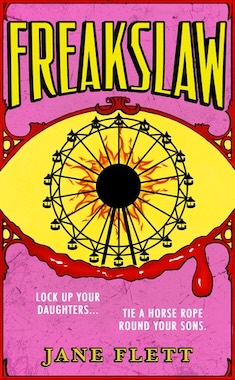
My debut novel, Freakslaw, opens with an epigraph from The Craft: “We are the weirdos, mister.” It’s what one of the teen girl witches says to the bus driver, when he tries to warn them to be careful of any peculiar types that lurking in the woods. That line has always stuck with me. In a world that’s terrified of outsiders and encourages normalcy at every turn, what does it mean to align yourself with the freaks from the outset?
Freakslaw tells the story of a traveling funfair whose inhabitants are all misfits of one kind or another, and take great joy in being so. Whenever the world rankles at their existence, they refuse to make themselves smaller.
When I wrote this book, I wanted to talk about the ways in which difference is not something to be overcome—smoothed out and shaped into a more palatable form—but itself a source of triumph and thriving. As the narrator of freakdom bible Geek Love makes clear:
“You must have wished a million times to be normal.”
“No.”
“No?”
“I’ve wished I had two heads. Or that I was invisible. I’ve wished for a fish’s tail instead of legs. I’ve wished to be more special.”
It’s November 2008 when the monster dogs arrive in Manhattan by helicopter. Biomechanically engineered by a mad Prussian surgeon, these dogs walk upright, dine with silver cutlery balanced in their prosthetic hands, and talk intelligently through mechanical voice boxes. They are deeplyuncanny, but New York has always been a city that embraces oddballs, and so the monster dogs quickly become reluctant celebrities, appearing on chat shows and hosting lavish balls. The story is told through various forms: newspaper articles, diary entries, even an opera libretto. I didn’t know I needed to read an opera written by a dog until I got my hands on this bizarre and brilliant novel, but I did, and so do you. It is perfect in every way.
The Cabinetby Un-Su Kim, translated by Sean Lin Halbert
A lizard grows like a weed in a girl’s mouth, eventually replacing her tongue. A father of five survives on a diet of glass and only glass (his favorite kind is crystal). Then there are the doppelgängers, who show up in their counterparts’ lives, causing all kinds of mayhem. Records of these peculiar humans—known as “symptomers”—are filed in a seemingly-ordinary office block in Seoul, in Cabinet 13. We learn their stories through the eyes of harried office worker Kong Deok-geun, who believes they may represent the emergence of a new species. Though Kong approaches his work with a kind of exasperated disdain, the ultimate feeling you come away with is one of utter delight at all the possibilities for strangeness in the world.
When Santiago dies at eleven years old, his mother is “not done with her son, not yet ready to hand him away.” So, acting upon the instruction of a Mexican folk tale, she cuts out a piece of his lung and nurses it until it gains sentience. Thus Monstrilio is brought to life: a furred, carnivorous lump, dragging himself around by the arm-tail, as he gradually grows into the man Santiago will never become. Despite Monstrilio’s bitey tendencies, his family—both biological and chosen—continue to accept him no matter what. This book is queer, gory, and packed with unconditional love.
Theo—a horny surfer-bro merman who loves hanging out on the rocks at Venice Beach—appears in Lucy’s life at the point where she’s almost hit rock bottom. Her boyfriend has dumped her, her dissertation is going nowhere, and the only distraction she can find is from dreadful Tinder dates proposing anal in hotel lobby bathrooms. In this weird, grubby, fantastical novel, it’s Theo’s inhumanness that sets him apart from other men and in so doing offers Lucy an opportunity to escape the anxieties of modern life. Things go increasingly off the rails, of course, but in the meantime Broder makes fucking a merman sound like so much fun.
There’s a myth about a tiger spirit called Hu Gu Po, who lives in a woman’s body and hungers to eat children’s toes. Soon after being told this story, Daughter awakes with a tiger tail of her own. In coming to terms with her new form, she has to excavate her family history, and the violence and secrets that lie therein. K-Ming Chang is also a poet and her sentences are the kind of thing you want to tattoo on your heart. A combination of Taiwanese folklore, grotesque bodily functions and queer redemption, Bestiary is like nothing else I’ve ever read.
The mother at the center of Nightbitch has given up her art career and much of her identity for the past two years to stay home and care for her child. But things are beginning to change. Her canines are growing and sharpening, and there’s a thick new patch of hair on the back of her neck—signs of the essentially feral and freakish self she’s tried to repress. Everything becomes more interesting as she increasingly gives space to her gleeful dog impulses, casting off the woman the patriarchy says she should be, and making room for her alter ego Nightbitch instead. This book is a celebration of living unapologetically—a deranged manual for subverting the pressures and expectations of motherhood, and coming back to yourself.
The quintessential freak show novel, Geek Love is the story of a traveling carnival family who go to the ultimate lengths to rescue their failing business. During her pregnancies, Crystal Lil Binewski imbibes all manner of drugs and exposes herself to radiation in an attempt to alter her children’s genes. Her resulting offspring are Arturo the Aquaboy, with his flippers for limbs; the dreamy conjoined pair, Iphy and Elly; hunchbacked albino narrator, Oly; and telekenetic Chick. Dunn’s fierce affection for her complex, multifaceted characters oozes from every page and what could, in other hands, feel exploitative and prurient becomes a love letter to uniqueness. Read it and you’ll never want to be ordinary again.
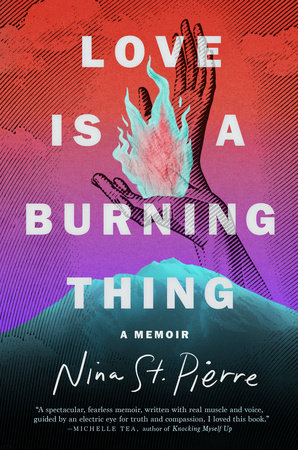
Nina St. Pierre’s debut memoir, Love Is a Burning Thing, began with a question: “Who starts two fires?”
Before St. Pierre was even born, her mother and a friend lit themselves on fire in a dual suicide attempt. Years later, St. Pierre’s mother started another fire that shook the foundation of their lives. St. Pierre grew up in California: in the tenderloin of San Francisco, in sunny San Diego, and most prominently, in rural Weed, up north where her unconventional family unit stood out in the conservative small town where everyone knew each other’s business. Throughout her childhood, St. Pierre’s mother continually chased after various forms of spiritual practice and enlightenment, as St. Pierre longed for a sense of stability that they never had. After her mother’s passing, St. Pierre began to uncover the hidden details of her past and soon realized that undiagnosed mental illness could have been the root of her mother’s struggle—that her mother’s reality was not the reality St. Pierre herself was living in.
Love Is a Burning Thing delves into issues of mental health, spirituality, self-immolation, poverty and class struggles, and more. As St. Pierre digs into her childhood, her upbringing, and her family history, this story shows how mental illness, when unchecked and unsupported, can sear through the lives of so many, not unlike a fire.
Deena ElGenaidi: My first question is very broad, but I think it’ll be a good jumping off point. So much of this book is about the relationship between mental health and spirituality. Can you talk a little bit about how the two are related?
Nina St. Pierre: Well, in this story in particular, my mom was into all these different new age, spiritual modalities. She was into Transcendental Meditation, the I AM, Christian Science, and all these sort of fringe modalities. In my experience, and in the communities that I lived in, those beliefs were taken as truths. And then at some point, probably around ages 11, 12, I started to feel like this reality I was being told about was not matching the reality that my friends and I were living in. But it wasn’t until after my mom’s death that I was really able to look back at that time through a mental health lens.
The more I learned, the more I saw that both mental illness—particularly mental illnesses that have states of psychosis or delusion—and New Age spirituality are alternate states. They’re fringe states. In my mom’s case, and in the communities that I was a part of, often New Age language and concepts functioned to fail at addressing mental health issues because they’re trying to explain something that’s outside of consensus reality. They’re trying to explain an unreal state.
DE: Were there moments during your childhood when you had an inkling that your mom was suffering from some kind of mental illness?
NSP: The first time that I really sensed a schism between the way that she perceived reality and what I was experiencing was when I was 12 years old living in the Alpenrose Motel, and she told me that she was a “walk-in.” The way she described that to me was that before she was born, her soul had made a contract with another soul that when her initial soul had learned all the lessons it was supposed to learn, this new soul would come in and use the body to learn its lessons. That was kind of a psychedelic thing to hear at 12 years old.
DE: You were young at that time, so you probably didn’t have the language or forewithal to realize that something was not right, or to put your finger on it.
NSP: Yeah, but at that moment—and I think for a long time, I didn’t realize this—my body was telling me something was wrong. Even some of the anxiety that I carried as an adult I can trace back to moments where I felt, physically in my body, like something is off—you know, when your hair stands on end, or you just feel uneasy. That was happening. But because I had been brought up in a world where things like reincarnation or astral travel, or all these metaphysical concepts and terms were taken as truth, then what my mother was telling me didn’t ring as impossible. It was like, well, I’ve heard weirder shit. This is just reality, as it’s been explained to me. But at that moment, I had a distinct physical reaction. There was something almost eerie, but it would take me 20 years from that point to realize it.
DE: Even the way you wrote that scene was very eerie. And what you’re describing in your body feels the way it felt reading the scene. But these different belief systems and spiritualities are so prevalent in so many different ways, whether it’s religion, astrology, wellness culture, and even things like Q Anon—which is not typically what you would describe as spirituality, but it is a sort of belief system. Do you feel like the normalization of those belief systems could also work to mask signs of mental illness for some people? And in what ways?
NSP: That’s interesting, because the sort of slippery slope between believing in angels and believing there’s a super ring of pedophiles seems like, wait, how did we get from A to Z? But the unifying factor is this belief that something larger than us is controlling us. And that’s a broad umbrella. You know, religion, spirituality, even things like government—it’s this idea that there’s some bigger, even paternalistic force out there that has an agenda, whether that agenda is benign or sinister.
In my experience, these beliefs can be a way of abdicating responsibility for the systems that we, as human beings, have created here. It’s almost impossible to talk about this stuff without talking about political systems—race, class, gender. So to answer your question, yes. I think that anything that’s taken to an extreme like wellness culture, Q Anon, and all these New Age beliefs can be used to mask symptoms of mental illness. If you’re experiencing especially extreme states of mental illness, which are limited to delusional thinking, or say psychotic states, which is more what I’m focused on in this book, then you’re experiencing a state that does not align with what everyone else is taking as reality, or with what other people are experiencing—consensus reality.
Anything that’s taken to an extreme like wellness culture, Q Anon, and all these New Age beliefs can be used to mask symptoms of mental illness.
If we had more of an open discussion around mental illness, or ways to track those symptoms, or places to go and say, “Hey, you’re feeling XYZ, you can reach out and there’s no stigma behind it, there’s no danger behind that,” then maybe there would be a clearer channel to this magical thinking. Maybe there would be more of a systemic checks and balance around it. But because it’s a free for all, I think people are looking for belief systems or justifications for what they’re experiencing, basically.
DE: I also want to talk a little bit about the idea of social class in your book. Obviously, spirituality, wellness culture, etc., exist across all social classes. In your book, both of your parents are very spiritual, and they both get into Transcendental Meditation. But your parents also exist in very different worlds. Your dad and his family are more stable, have more traditional values, and they have money—more money than your mom at least. What do you see as the relationship between wellness and spirituality and social class? And do you think those belief systems manifest differently based on how much money or stability that you have?
NSP: Yeah, there’s so much struggle involved in daily life for those living below the poverty line. So I think there’s an even greater drive towards believing that this is all for a reason, believing that your suffering matters, that there’s some greater force orchestrating it, and there’s things you just can’t know. Taken to the extreme, that can manifest in a sort of martyrdom, in a literal sense. The daily slog of being poor can wear you down, so if we can believe there’s a reason for the suffering that’s not just capitalism, we can find relief or some sense of bliss in communing with these spiritual ideas or figures, which makes life manageable, if not beautiful.
With my dad, his parents were the ones who really had money, but the place I would go visit him in Texas was middle to upper middle class. It was not ostentatious. It was very simple, but it was comfortable. And in some ways I see that while my mom’s belief system gave her reason and relief, I almost think that my dad’s belief system offered protection from having to engage with the world.
It’s so interesting because there’s a way in which both these belief systems in my particular story—in the poor and more wealthy versions—were ways of avoiding addressing social problems head on. For my father, even though he was concerned with the human condition and the state of the world, he maintained a very protected, structured life in which he did his practices, and that was that. He felt and believed this is his contribution to world peace. And not only in larger systems, but even in our direct family unit. I felt like there was a way in which his spiritual practices and beliefs created a barrier between us. It made it harder for him to see and confront concrete problems because he thought, “Well, there’s a larger meaning, and don’t get into the muck of life.” And I live in the muck.
DE: I think a lot of religious people might be like that too, where if you have a problem, their answer might be, “Everything happens for a reason. God is testing you, God knows what’s best.”
NSP: Yeah, if you just meditate, if you just pray. I guess the commonality between people with more and less money in my story is that their belief system offers them a certain remove from the problems of life because everything is in the hands of a greater being.
So I would say what my parents shared was an immaterial orientation. They were oriented towards the divine. They didn’t talk about heaven so much, it was more just that we need to be oriented toward enlightenment, or this other more divine place. So it made it hard for me in different ways. Life with my dad was more comfortable and more ordered. The basics were taken care of. Life with my mom—sometimes we were very broke—life was more chaotic. But in both settings, it was hard for me to put problems on the table. It was hard for me to say in a concrete way, this is a problem.
DE: You mentioned chaos and order just now, and those ideas come up a lot in the book. You describe growing up in a very chaotic environment. And as a result, you tried your best to maintain order, even in small ways where you just tried to keep things neat and organized. And then you have the fires in your life that are happening in the background, which are just pure chaos. You can’t control fire, but you managed to somehow contain it in this book. What was it like writing this and trying to compress the fire and chaos into a cohesive story?
NSP: I think that’s an interesting word to use, compression. I feel the final form of this book was a years-long act of expansion and compression. It had to happen over and over again. It almost felt like there were certain portals in the story I had to open and go down, like a rabbit hole. I had to go through the chaos of the story in the creation of the book. The whole thing was very meta.
If this was a fire, here we go—bringing oxygen to this story started to grow it.
At some point, when I’d been writing the book for so long, the book started to become about the impossibility of writing the book. It was a really intense process, and to compress all that, I think I had to focus less on exactly what happened or connecting all the dots in my mind and get to a place in which I was presenting an emotional imprint of what happened. Initially, the book didn’t even have chapters. It was just all these chaotic sections. And then working with my editor, I put it into chapters. And we started thinking about how to bring the fire to life more than just talking about it. I wanted the smoke itself to be representational in some way. And we had this idea about marking it in four parts—the four parts of a fire’s lifecycle. Structurally, it helps to think about the book as a fire.
DE: We spoke recently, and you mentioned that writing this story is what made you a writer. If you didn’t feel like you needed to tell this and tell it well, you might have had a completely different life. So first, why was it so important to tell this story and share it with the world? You could have just uncovered it for yourself, but you wanted to write it in a book. And then at what moment, in the process of telling this story, did you realize, oh, I’m a writer, and now I’m going to build my life around writing?
NSP: Initially, I was writing this story to understand what had happened. It really began with a question: Who starts two fires? Like, who literally does that? And then as I began to do some very cursory research into schizophrenia, I began to think my mom was experiencing schizo affective disorder, or states of schizophrenic psychosis. So once I determined there was some mental illness going on, I started asking myself, how did I not know? Initially, I was writing to make sense of everything for myself.
I wrote for one year, and it just came out of me. And then when I read it, I realized how dissociated I had been from the whole experience, because it was like reading a novel. It was like reading someone else’s story. It was kind of shocking to read. I just thought, “Whoa, where was I in all of this?” At first, yes, I just wrote it all for myself to understand, but then the further removed from me the story got, the more important it seemed for people beyond just me.
I started to share little pieces with a writing group that I had at the time in Portland, Oregon, and they were very affected by certain things. But it wasn’t an ego thing. I wanted to tell this story because it felt really powerful and startling. And then I started taking some writing courses. I took a class with Cheryl Strayed very early on, and I submitted a scene and told her, I’m taking this class because I need to understand whether this is a story. Is this a journal entry, and I just need to go to therapy? Or is this a story that needs to be in the world? She said, “Probably both.” So I went to therapy, and I kept writing.
The more that I wrote, the more momentum the book got, until at some point, I felt like it took over. The feelings that I got from reading some of this stuff back, even to myself, and then showing it to other people and having them acknowledge and see what had been so secret for so long brought oxygen to the story. If this was a fire, here we go—bringing oxygen to this story started to grow it.
As it grew, I felt the power of it more and more. Having people acknowledge and witness what had happened was so life affirming for me that I thought, “Oh, what if other people need this?” This is a very specific story, so it’s hard to imagine someone has this exact story, but there must be so many other people that are carrying deeply confusing family experiences that they’re ashamed of, or protective of, or, in particular, people that are that are sitting at the convergence of some unreality in which mental illness and mysticism are coming together in confusing ways. Maybe their whole lives, they’ve been asking what’s true? What’s not true? If this is life affirming for me, maybe there are other people that need this.
It’s so cliche, but people always say write the book that you need to read. If I would have read a book like this when I was still very confused, I might not have been driving drunk down mountain roads for years. There was a way in which at my most destructive, I was trying to say, “look at this, see this,” but I didn’t have the language. It was so deep and buried. So yeah, I think bringing it to light really helped me so much, and if there are other people for whom this story might resonate, then this is so much bigger than me. And honestly, if this was just about me telling my story, or even becoming a writer, or having a career, it wouldn’t have sustained me this long. I would have done something else. Because I’ve made no money. It’s been a grind and a grind and a grind, and I’m grateful to be here, but it’s not the glory days. There were many points in which I felt despair, and I wanted to give up, and I was so fucking sick of thinking and talking about this, that if it wasn’t for some larger purpose, if it was just for me, I would have clocked out long ago.
Due to lack of furniture, my mother’s bedroom is the center of operations. The TV is always on unless I turn it off. The fire alarm beeps for new batteries every few minutes, but we’ve gotten good at ignoring it for the most part. The blankets are psychedelic shades of pink with a gold, glittering crust flowing down like lava lamp wax. Electric candles and pink champagne overlay decorate the dresser— my mother’s interior design for Valentine’s Day. The remote control is buried somewhere in the sheets. Around the TV are receipts, prescriptions, and old mail. The Blu-ray player has been broken for two years, but mom hasn’t gotten around to replacing it. A dusty calendar lays behind the dresser with a quote from Monty Williams. “Everything you want is on the other side of hard.”
Shoes and boxes are crammed under the bed. The hamper leans to the side with clothes that can either be clean or dirty. Remnants of burnt incense seep through each vent around the house. The house is cluttered, but never filthy. Filth is what attracts vermin. My mother taught me that early in life. Sometimes when mom finds extra energy floating around, she cleans the living room, bathroom, and her bedroom.
At least once or twice a week the place smells like weed from the downstairs neighbors after they come in from work. Pitbulls from the house next door bark throughout the day from their backyard, though rarely does anyone answer them. It’s the same house where there was a driveby shooting last summer. When the sun is out, grandmas and aunties gather for gossip while kids play on the lawn and sidewalk. A few cars blast music so loud the bass vibrates through the streets up to our windows. Men in hoodies and baggy jeans hang around the corner store up the street. Early in the morning, a crackhead shows up to beg for money in front of Delta Sonic’s car wash. There’s a drug den behind my mother’s house right next to the Christian Methodist Episcopal Church’s parking lot. It’s safe in mom’s apartment, it’s clean in her bed, where no one usually sees me besides her. I sleep in her room, often ignorant of what’s happening in the street until after I’m gone. I visit only once or twice a year due to being short on time and money.
But then my grandmother, Nana, sends a message in the family group text asking us to keep my mother in prayer because she’s in the ER. She lists parts of my mom’s body that are under attack, places that dissect themselves before me as I read the message. Liver, thyroid, brain. Typically, my mother and I correspond every other day, usually sending goofy memes. When there are cracks I don’t know how to mend, I break down and tell her how I really am. Sometimes she speaks through the therapy she’s in, suggesting I forgive or learn from the breakup, isolation, my writing. Other times she speaks from a distance as if forgetting the toll a woman’s twenties takes on the body and mind. There is judgment when I come too close to making the same mistakes she once did, a mirror too ugly to look back into. In absence of kinder words, or the community I can’t seem to build, she texts me the solitary line: Finish your book. I ask every few weeks how she is doing. Her health, work, diet, friends. Her men. Her response never changes. Fine. Same old, same old.
When there are cracks I don’t know how to mend, I break down and tell her how I really am.
After Nana messages our family, I go about my day. Exercise, church, request for my social circle to keep my mother in prayer. I sporadically reread the family texts, waiting for updates. Since I can’t force her body to be okay, I push my own to do what it can. If I don’t force myself to move in a normal way, I’ll do what comes naturally: wait in the dark, let the nightmare of ‘what ifs’ skin me alive.
In October 2020, my mother attempts suicide. The pandemic further infects her twenty-year old wounds. Depression, isolation, pushing people away, poverty. She’s never been good with money, or paying bills on time. She spends thousands on a car that keeps breaking down over the last year. She loses 75 lbs going to the gym for group fitness classes and training for a marathon, but once the shutdown happens, her support is limited. The pandemic takes away the applause, hugs, and smiles that keep her going and make her think her life’s brightening. She’s left at home with her demons, the biggest being depression. Amongst all of this, it also takes her two years to find stable housing.
She tells me I saved her without knowing it that summer. In August, I unknowingly talked to her for two hours on the first day that she decided to end her life. “I planned it all out, but you just wouldn’t let me go.” She tells me this after she wakes up from a coma in October. She OD’s on pills and is discovered by her landlord who called an ambulance.
“It’s a miracle she’s alive with the amount of medication she took,” the overnight nurse tells Nana.
She drives three hours from Albany to Rochester, searching for my mother, who has no ID and is admitted to the general hospital as a Jane Doe. When Nana locates her daughter, it’s discovered that she has no health insurance. Not because she can’t afford it, but because she never got around to getting it. Both my grandmother and mother are nurses. It never occurred to me that someone working in healthcare wouldn’t have such protections. Nana stays with my mother for eight months while she recovers and figures out what her new normal is.
I think about moments when my mother dies a little in front of me. When mom finds out she has to leave her home of the last decade, or when we sit on the bus after she’s been sued for a car accident the other driver caused. I suggest outlets at her old church and at the YMCA where she can search for housing, and encourage her to use the police report written in her favor in court for the car insurance company. She’s overwhelmed and I don’t hear any future in her voice. I feel bad that all I have to offer are words, and yet as I watch her spiral in despair, too dizzy for answers, I realize my words are the most she has. In moments like this, my mother is unpredictable, wounded and bleeding on me. Sometimes I see the weapons formed against her; other times I only see the carnage. So many of her wounds are mine, and yet so much of her mind is still a stranger. But this time, eighteen months after that October, it is her body that’s the traitor, not her mind.
In moments like this, my mother is unpredictable, wounded and bleeding on me.
Within a few days of Nana’s message, I apply for emergency funding for a plane ticket to return home. My mom stabilizes within that time and only answers a few of my questions. When did this start? What’s causing it? Why didn’t you tell me? What can I do? Her answers are fragmented and incomplete, as they always are. Whether information gets lost through text or avoidance, I don’t know. What I do know is that I have to see her in order to get clear, tangible answers.
A week later in May, mom picks me up from the airport. After her suicide attempt, she cares more about touch and closeness. Side hugs are no longer enough, though that has been most of our relationship. If I touched her outside of hello and goodbye, she’d become suspicious. Now, if my chest doesn’t press into hers, she doesn’t consider it a real hug, and I have to embrace her until I get it right.
When I sit down in the car and cross my legs, mom gasps at the sight of my calves. “When’s the last time you shaved?”
“I don’t know. A few weeks or months ago.”
She runs her hand along my calf as if inspecting for dust on a coffee table. “It’s giving Wolverine vibes. Have you gone on strike or something?”
I laugh. “I haven’t had time to perform for the patriarchy in a while. I have writing deadlines. Bathing is productive enough.”
In dealing with my own depression, basic hygiene tasks—bathing, brushing my teeth, doing the dishes—are a struggle to keep up with. So many mornings I am already heavy when I wake up. There are phases of trying to jump start my day and mindset with exercise, forcing myself to go outside after sitting on the couch all day watching cooking videos. Being in the presence of others usually compels me to clean myself and my house. That and experiences with skin and vaginal issues force me to deal with hygiene. It doesn’t matter that shame is often my motivation if it gets the job done.
Mom gives me her updates—appointments, meds, the duration, etc. “I only found out about my health issues shortly before you did. I went into the ER because I was getting terrible migraines. I couldn’t sleep at all that day because it felt like there was a vice grip around my head.”
For years I suggested putting a timer on the TV or using a soundscape machine when she sleeps. And to avoid looking at her phone when going in and out of consciousness. Sometimes melatonin and other meds work, other times they don’t. The doctor says one of her antidepressants is attacking her liver and that she needs to lose weight.
For every answer, I have another question, about the causes and time frame, another area of her body that’s known pain.
When I get to her teeth, she stops me. “I don’t want to talk about all the ways I’m falling apart. Can we just spend time together?”
She’ll be fine if the subject dissolves here and now, but I’ll be as broken up as her if I don’t know everything I need to know in order to put her back together. Mom has a habit of staying away from truths that threaten her peace, even if she has to pay for it later. But haven’t we put things off too long as it is?
She puts in a Chipotle order for us and we run into the grocery store to get a few snacks for the week. I notice how rushed she is while we’re in the store.
“You struggle to bathe. I struggle to go grocery shopping,” she says.
Though we both deal with depression, baths are a therapeutic ritual for women in my family. Christmas is just an exchange of candles, bath bombs, essential oils, and Epsom salts for the year. Cooking is my therapeutic ritual.
Though we both deal with depression, baths are a therapeutic ritual for women in my family.
Mom has never been domestic. My childhood consisted mainly of TV dinners or whatever could be thrown together from the fridge or cupboards. The only consistent cleaning that happened was the bathtub.
When we arrive at her apartment, it’s cluttered with clothes on unused furniture and shoeboxes under her bed. When I go to the guest bedroom, I can’t close the door because of the sneakers flooding the floor. In an effort not to get overwhelmed, I focus on creating a clear path to walk through.
“Have you thought of retiring your worn shoes and donating the salvageable ones?” I ask.
“I just need to get a few more totes to organize them,” mom reasons, “I already got rid of stuff before I moved here.”
“It looks like you’ve bought back what you gave away.”
“Now why would you come here of all places saying things that make sense?” she jokes.
“I didn’t realize I was speaking to Alice in Wonderland.”
I’ve gained weight over the last month from lack of activity and eating out. There are several writing deadlines coming up that I’ve avoided until the last two weeks. The first several days of my visit, I’m glued to the dining room seat trying to outline and write, massaging language in some areas and trying to just get the story down in others. I go to 2-3 gym classes a week with mom, but other than that I don’t move, except to places I think my focus will sharpen such as the library, a park, places without wifi so I can stay off social media.
Mom brings home fast food for breakfast and dinner, usually sandwiches and some form of potato. My stomach expands and sits in my lap. I’m constipated; I forget to drink water. I ask my mom once daily when we’ll go grocery shopping. She answers, then it never happens. But I notice she makes pit stops to the store after getting off work to pick up an item or two, lemons and limes, chips, trail mix. Periodically I see her lying in bed staring up at the wall, phone in hand, the NBA playoffs on the TV.
“What’s wrong?” I ask.
She looks down at her toes. “I’m just disappointed in myself for regaining this weight.”
So am I, I think of my own body. I’m not obese and can still hide my gut under my clothes, but I see the way this has played out over time for most of my family. The gradual weight gain over the years, food treated like a lover in their loneliest moments, then the struggle to go upstairs or take a fifteen-minute walk, and the joint pain, more than just the aches of aging. Many of them sleep with CPAP machines. The choices they want to make get further away. By the weekend, I have asked my mom five times about going to the store.
“After the playoffs,” she says, rolling her eyes.
“What time is that?” I ask.
“Six.”
When it’s time, she reluctantly rolls out of bed. After twenty minutes in the store, she asks if I’m almost done. She leans on the cart lethargically, her eyes vacant. It’s my first time seeing her like this. We aren’t wandering aimlessly and I am the one gathering food. If she can go to the gym, why is the store so overbearing? I ask if it’s the people and she shrugs. “All I know is I’m ready to go.”
The clutter of the apartment is heavy and so are the mice it hides. One night as I watch TV in her room, I hear squeaking coming from her closet. At first, I think it’s just the creaks of an old house or my mind playing tricks, but then a brown lump skitters out the door. Laying on mom’s bed I shift over to peek in her closet. There are a few droppings and shreds of her shoeboxes I haven’t seen before. I write to her on Facebook messenger.
The clutter of the apartment is heavy and so are the mice it hides.
Mom: Oh yea I forgot to tell you about them.
Me: Why don’t you tell your landlord so he can get an exterminator?
Mom: Because I already know he’s gonna tell me to clean the house.
Me: Can we at least get some traps tomorrow?
Mom: Sure. But there are already some around the house. Just sleep in my bed.
I look around the apartment and see a trap under the kitchen sink and one shoved in the crevice of the door. I put it outside her room and make sure all the zippers on my suitcase are closed. Later that morning I wake up to my mother using a snow shovel to scoop a trapped mouse into a trash bag. For the next several days I remind her of the traps, to no avail.
Mom: Just throw something at the wall. That usually scares them away.
Me: Aren’t mice your biggest fear?
Mom: No, it’s rats.
Me: I just need you to know this isn’t normal.
Mom: You don’t think other people get mice?
Since I’m already stressed about my writing deadlines and weight gain, I try to accept the things I can’t change around her apartment. The essay I’m working on has gone up to ten thousand words and still isn’t finished. I also start a short story and finish the first scene, but as I look online, I see breaking news. A mass shooting has taken place at a Tops grocery store in Buffalo, where most of my family lives. My phone keeps lighting up from the family chat with questions of who checked in with who, who has confirmed their safety, and who has yet to. Eventually the perpetrator’s picture is released along with his motives. He targeted black people. Eighteen years old and already so filled with hate.
It happens on Jefferson Avenue, a street that I and many of my family members have traveled down. It scares me to see violence closer than I ever have before, in a place where people I love reside. To be in suspense about who is safe. How the very errands I beg my mother to run outside the house have become dangerous. The next time we go to Wegmans, my gut clenches as white men pass us by. What parts of their minds are hidden by their faces? Which are rejoicing or waiting for the next chance to hunt us? I feel ridiculous and ignorant for my fear, but can’t make it go away. All I can think about is which exits are closest, if mom and I will be close enough to grab each other and run. Are we enough to protect each other?
I try so hard to lose myself in my writing, the one thing I think I have control over, but find even that can’t consume me. I keep losing track of words and ideas between racing thoughts of the violence that happened, wondering if the stories I’m trying to tell matter if my safety doesn’t. I no longer find the words, I’ve run out of them, and don’t know how to make them pretty in the face of so much ugliness. Eventually I admit defeat, missing three deadlines in a row. There’s no guilt, just fatigue and relief, relief that I am okay with failing, with a break, with being defined by other parts of myself outside of writing. It’s okay to just exist for a while.
For the next few days I am a vegetable, drowning out thoughts with Disney movies. I get back to exercise, books, and walks. Lose a few pounds. My skin clears a bit. I avoid conversations that are the equivalent of doom scrolling. Yes, I hear updates on the shooting, but I can’t allow myself to remain close to the subject for too long, otherwise, I lose the will to get up, engage in conversation, or go anywhere at all. Since the goal of my trip is to see my mother and to enjoy as much of it as I can, I go back to planning things for us to do. It’s been years since we went to the Strong Museum of Play and the butterfly exhibit.
I hear updates on the shooting, but I can’t allow myself to remain close to the subject for too long.
After walking for fifteen minutes to the museum my mom is already fatigued. We sit in different sections of the museum, watching kids run around, observing new sections they’ve added over the years, The Berenstain Bears, Mystery Alley, the sci-fi/fantasy room, and superheroes’ corner. “I’ll need to eat soon,” she tells me. When we first visited the butterflies over a decade ago, I was jittery, jumping at the flash of any wing or color that brushed past. So I go in to prove that I’ve mellowed out over the years and can handle an insect landing on my shoulder.
We watch the quail nest near the stone bridge, try to find the chameleon crawling in its tree, and the toucan resting in its perch. It’s nice to have a moment of color and peace as mom and I identify the different butterflies by their patterns. She’s comforted, and gradually begins to chat, sharing news about my older brother and her health.
When we leave the museum, she tells me her doctor called. “He said there’s inflammation of my liver.”
We’re silent as we pass a happy, young family on their way into the museum before she tells me it’s not due to alcoholism. I believe her and yet I remember the vodka that her landlord found by her body along with empty pill bottles, how Nana got rid of the alcohol around the apartment when she arrived back in October 2020. Mom still has vodka in her closet. I’m grateful it’s full and collecting dust, but I also wonder why it’s there in the first place. I think about the meds mom had abused over the years. Justover the counterones, she rationalizes. Her nickname was Pharmacy Queen, which was funny until she overdosed. Pills were like background noise that I never really paid attention to.
On several occasions mom speaks jokingly of her death. “Don’t go through any trouble for me. When I’m ready to go, we’ll have a goodbye barbeque, then I’ll load up on my meds and once it’s over, you can bury me in the backyard.” Though it is dark and unfair of her to say, it’s funny she thinks there’ll be a backyard to bury her in since she’s never owned a house. But now that she’s tried to put some of her plan into action, I wonder if her body is making her pay for it. If the meds that were meant to free her, are slowly doing what she’d hoped would be quick—killing her.
I ask if her current medication is the problem, but she doesn’t know and neither does her doctor. What is the point of expertise when there is never enough information? The wait is never over and there is no sure way to save a loved one. Both the answers and questions fail me when I need them most. Mom seems less interested in the results and I don’t have the willpower to ask why.
Once upon a time, I thought being a nurse meant being nurturing, responsible, and patient. As a child, I think these traits come naturally to women, that they can see as much into the dying as they can the living because they sense need all the same. Essentially, I thought that nurses made better mothers. But my mom shows me that warmth isn’t necessary for efficiency, and many days the latter isn’t even sustainable. Being a nurse isn’t synonymous with eliminating threats or creating safe domains. Sometimes it’s just the job that presents itself, vast enough to fall into and get lost in. Like motherhood. They are people who can add to pain as much as they can take it away. Maybe there are dreams of witnessing and caring for life, but it is never enough to build a new mind and body for my mother.
I thought that nurses made better mothers. But my mom shows me that warmth isn’t necessary for efficiency.
I sleep in her bed the rest of my visit, usually waking to see her on the other side of me, lightly snoring, a documentary on baby animals playing in the background. Every time I watch her sleep, I see myself in her: The years we spend apart as much as our years together, a part of me that I don’t want to lose hope in. We both still have futures with many directions to turn. I try to convince myself that fear is a choice, that our bodies are safe outside of our bed, our home, our dreams. There’s no point in letting white terrorists, the neighborhood, or health scares control me when I have no control over them. Still, it’s hard to get up and go about my day, for reasons that are as heavy in me as they are in the world. Isn’t that how depression works?
Each morning I pray for her to be the nurse or mother she’s never been to herself, or to me. That she’ll tell me everything so we can prepare for life, because death is unacceptable. I tell God what he already knows. I don’t have the community or energy to help fill the void that her loss would bring. Death would leave me somewhere between want and need, stuck and incomplete. Left with bits of her shrapnel in me. The responsible thing for her to do is wait, to grant more moments for me to be mad at her and heal, for me to become an adult with a steady income, married, and finish the book she says she won’t read, even though I know she will. She needs to wait until I have a life that will hold me when she’s gone.
I go back to sleep to the sound of her breathing. The mice are quiet in the morning. Daylight is the only thing that subdues them. I wonder if they sense she needs rest. Other mornings I get up and try to clean somewhere around the house, waiting to feel safe enough for words and sentences and stories to return to my head. The last day of my trip, mom tells me to wake her to say goodbye before I go to the airport. The playoffs are still going on in the background. I watch the game from the doorway, waiting longer than I should to wake her, wondering if she ever dreams of memories for us to make, like I do, ones where we’re soft and protected at the same time.
A train is a perfect setting for a story, with its confined space, its forward momentum, its promise of change and adventure. Whether thundering along the Californian coast, spending days staring out at Russian forests and tundra, or blinking as the Japanese countryside whips past too quickly to take in, I’ve been lucky enough to have travelled on trains through some incredible landscapes, but some of my most vivid memories of these journeys are of the people I met, and the odd intimacy that this enclosed world creates.
It is perhaps this enclosed world that has drawn so many writers to make use of trains in their novels. On a train we are at once moving but also somehow suspended in time and space. The carriages become their own community; the normal rhythms and rules of life break down.
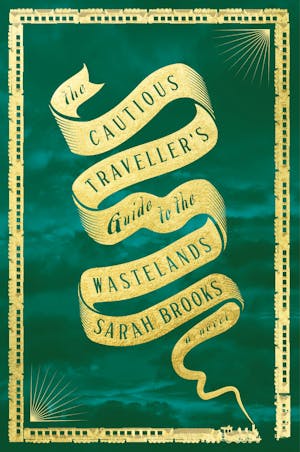
My debut novel The Cautious Traveller’s Guide to the Wastelands is set on a fantastical version of the Trans-Siberian Express, crossing a dangerous landscape that threatens the body and unsettles the mind. The powerful Trans-Siberia Company boasts that the armoured train is the only safe means of passage, but the passengers and crew begin to realise that its walls may not be as strong as the Company promises, and as the author of an infamous travel guide warns, there may be a high price to pay for undertaking the journey.
The novel was inspired partly by a memorable journey on the real Trans-Siberian Express, but also by a love of train travel that has been fed by fiction—of peril, romance, and crime on the rails. There are of course the classic train novels of Agatha Christie and others, but I’ve gone for the contemporary here. Putting together this list, I’ve chosen a mixture of genres, including crime, fantasy, historical fiction, and travel writing. But what they all have in common is a sense of adventure, and an exploration of the sometimes contradictory promises of escape and of connection that the railway offers.
Outlandish creatures and gigantic structures have always been a key element in Miéville’s novels, and Iron Council — ‘the perpetual train’ — is no exception. The story is set in the imagined world of Bas-lag, and moves back and forth through time, from the beginnings of train as it sets out to map the land and wipe out its inhabitants to make way for the rails, to the rebellion of the rail workers, and the attempts by a corrupt parliament and militia to destroy such a dangerous symbol of revolution. The ever moving, ever growing train provides great opportunities not only to explore the weird and wonderful landscapes of Bas-Lag, but also the febrile onboard world, with its renegades and ‘Remade’.
The ‘World of Wonders’ is a luxury steam train which is home to a travelling circus. Lena, the daughter of the troupe’s illusionist, uses a wheelchair after contracting polio as a child, and feels isolated from the bright, physical world of the circus. When a Jewish orphan, Alexandre, is discovered on board, Lena finally begins to find friendship — and something more — but her growing happiness is threatened by the outbreak of war. The novel paints a glorious picture of the circus train, but doesn’t shy away from the darkness closing in around it, leaving the reader to confront the changing meanings of the train in 1940s Europe. But it is at its core a hopeful story, and the rails carry its protagonists into a brighter future.
The first in the Adventures on Trains middle-grade series, this introduces train-mad Harrison Beck and his travel-writer uncle, and sends them on a journey aboard a famous steam train around the coast of Scotland. But in the tradition of classic tales of suspense, some priceless jewellery is stolen, not all the passengers are what they seem, and Harrison has to make sure the real culprit is found before they reach the end of their journey. In the novel, Harrison is a budding artist, and his sketches of the train and passengers provide lively illustrations for the story and even clues to help solve the mystery. Though it’s aimed a younger audience, this is very much a book for anyone who’s longed for a classic train adventure.
Working beside the rails as the Trans-Siberian Express thunders past, Olga Pushkin, Railway Engineer (Third Class) is knocked unconscious by a body falling from the train. The resourceful Olga, surrounded by some less than admirable men, investigates the mystery, whilst dreaming of achieving literary fame when she finally writes her magnum opus Find Your Rail Self: 100 Lessons from the Trans-Siberian Railway. Whilst much of the action here takes place off the train, the railway is central to the story and to Olga’s life, providing a powerful symbol of escape and opportunity in contrast to her stifling, inward-looking small town. There’s also an excellent hedgehog, called Dmitri.
It’s the 1960s and Louise and Henri are travelling by train across Europe. Louise has stolen a bag of money; the men Henri work for want it back. The story moves back and forth between the present moment on the train, travelling between Belgrade and Istanbul, and both characters’ pasts. It has a cinematic feel, bringing together the uneasy tension of a Hitchcock film with the woozy, romantic wordlessness of Wong Kar-wai, and upending genre expectations. The world of the 1960s train journey is beautifully evoked, but most of all the novel captures that odd feeling that travel can bring — the sense of being unmoored, estranged from your own life. It brims with fleeting, vivid encounters.
Bullet Train by Kōtarō Isaka, translated by Sam Malissa
Five assassins, a psychopathic school boy, a suitcase of money, and a very fast train. Bullet Train begins with Kimura boarding the shinkansen in Tokyo with the aim of taking revenge on the schoolboy who harmed his young son, but it soon becomes clear that Kimura is just one of a number of killers on board, including Nanao, “the unluckiest assassin in the world,” and Tangerine and Lemon (who is fond of quoting from Thomas and Friends, which he uses as a sort of self-help guide to the world). Part of the enjoyment of the novel comes with working out the connections between the killers and who they might (or might not) be working for. It also plays gleefully with its enclosed setting, and if you’ve ever wondered how you might hide a suitcase of money on a train, how to move between carriages undetected, or how not to draw attention to yourself whilst having a vicious fight at your seat, this is the novel for you.
Yes, I know — another Miéville, but it was impossible to choose between Iron Council and this, a novel aimed at younger readers, and perhaps the most “Train” any book could possibly be. The surface of this world is covered by rails, with the earth beneath them home to dangerous creatures. Sham ap Soorap finds work on the Medes, a mole-hunter train whose captain is obsessed with hunting a legendary great white mole, whilst on another train, two young salvagers are being pursued both by pirates and by a corrupt navy. There is great fun to be had here with the world and language of the trains, and even the novel’s use of the ampersand in place of ‘and’ turns out to have a link to the nature of the rails. The ending might either delight or infuriate you, but there’s no doubting that Miéville is entirely committed to his concept, and the adventure rattles along with a mad, rail-obsessed, energy.
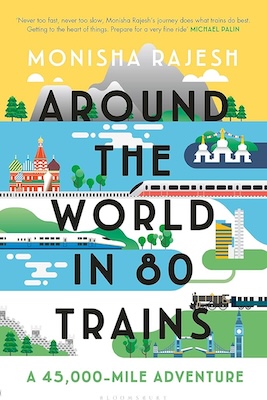
And finally, after all the mayhem and murder, I want to finish this list with a non-fiction account of an epic globe-spanning journey. Monisha Rajesh takes her backpack and her fiancé Jem and sets off from London on a journey that will stretch for seven months and 45,000 miles, through Europe, Asia, North America and back again. The eighty trains they travel on vary wildly in comfort and indeed safety, but they also offer a kaleidoscope of very human encounters, and a thoughtful and personal commentary on a contemporary world of vastly different lives and experiences. The book doesn’t look away from the challenges and dangers of the journey, but it also made this armchair traveller yearn for the sound of the rails again.
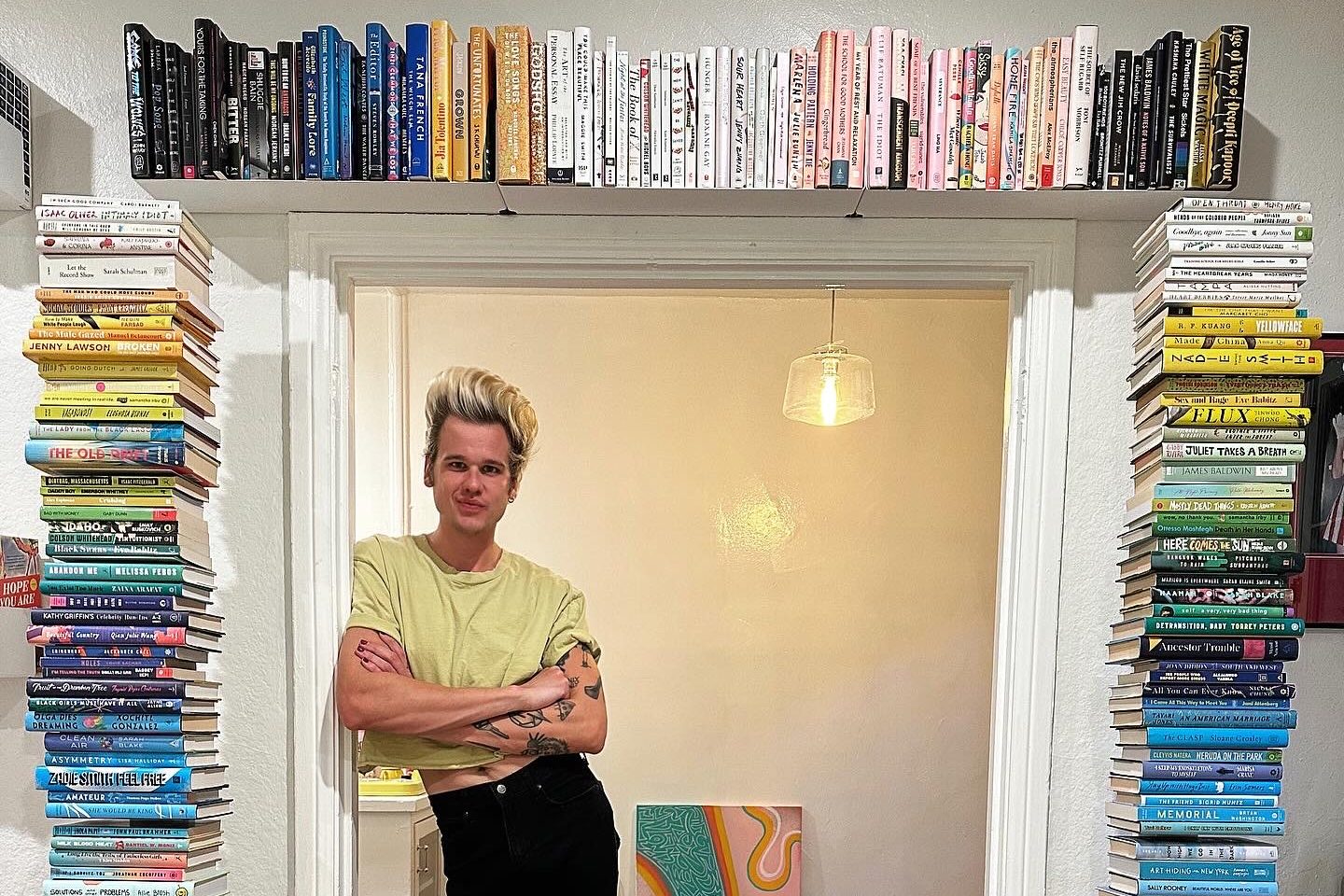
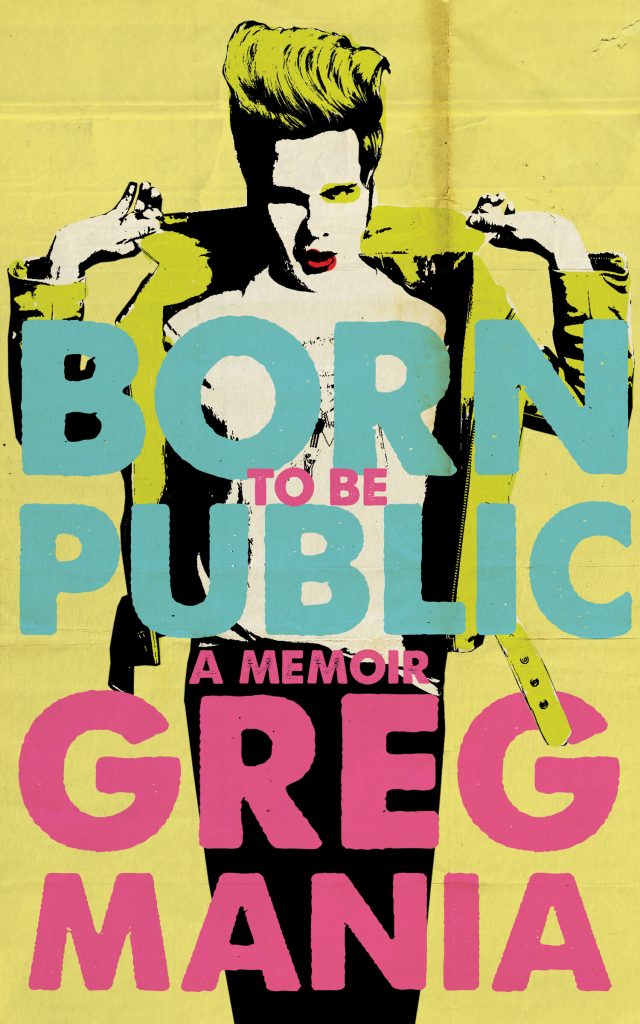
I found Greg Mania through the magic of the algorithm somewhere deep in quarantine, and the feeling I had was that I was late to the party. You could say I was right given their long list of bylines, but you could also say he curated that feeling via brilliant and relentless marketing tactics. Born to Be Public, released by Clash Books in 2020, is his hilarious tale of the heart-wrenching hours that befall a theatrical and closeted kid before he discovers the full scale magic that awaits him on the other side of the bridges and tunnels.
I first met Mania at Nonfiction for No Reason, the literary event series I started in March 2023. Afraid to say hello to this sleeper legend, I finally passed them on the way out, exclaiming, “I love your coffee table!,” an iridescent plastic wonder I’d seen in the tour of his NYC space in Apartment Therapy. “Oh, thank you so much!,” he said, reaching to touch my shoulder, and the warmth was a gorgeous surprise.
Less than a year later, they’d moved to Los Angeles, where I grew up, and I asked him to join the LA edition of Nonfiction for No Reason, which would be at my last family home before I left the city. His piece about searching for home anywhere he could find it had me crying in my old living room. This was the beginning of a dear friendship, and my fascination with Mania’s skillful dance between persona and person, critically acclaimed writer and jokester and extremely sincere human. In a moment of writerly existential crisis, I asked him to chat about how he made all of his beautiful selves. That conversation became this interview over Zoom.
Katie Lee Ellison: While reading your book, I kept wondering: How is it that these incredible opportunities and circumstances keep happening to him? The impression I got was that you wanted it all and you just kept chasing your dreams, a cliche, but seems true in your case. I wonder how much you had that in mind while you were deep in those pursuits, and if you were dogged about your desires as a writer and comedian.
Greg Mania: Born to Be Public is about growing up closeted in Central Jersey, then coming of age as a young adult on the Lower East Side. By the late 2000s, I was hungry to carve a space for myself. I’ve always been very flamboyant and theatrical. Still, I couldn’t find my groove on stage even though I loved performing. In 2009 on the Lower East Side, artists, singers, songwriters, dancers, all these different performers around me were bona fide stars, even if no one above 14th Street had heard of them. I found an artist, Lady Starlight, on MySpace who did this kind of hybrid rock and roll, heavy metal burlesque performance art. Watching her, I thought, maybe I don’t have to just do musicals like Annie. I can still perform in another capacity. Maybe I can figure out how to incorporate more of myself. All I wanted was to find out who I was. What was this insatiable hunger that I felt and how could I bring it to the surface?
Then, I came across this young woman running in the same circles as me by the name of Lady Gaga. I heard some of her music, and thought, “Oh, she’s gonna be a big star.” I was sort of taken under the wings of these performers in a very similar way to Gaga. From them, I learned how to create an image, and how to burn that image into people’s brains, especially when you’re constantly told, “No, you can’t do that, you can’t do this.” They instilled this rebellious spirit in me, so by the time I realized I wanted to become a writer, I had that attitude and realized that people would gravitate towards it. So I got my education as an NYC downtown personality. Starting with my last name, which is Mania (Mahn-ya), but my friends didn’t know it was my real last name and called me Mania (Main-ia). So that’s who I was to them. It’s one way I explored the art of persona and started to test where the overlap was between Gregory, who grew up in Jersey, and Greg Mania, an active participant in the NYC nightlife community. There’s this person that I can embody, who puts their insecurities aside, all the years of bullying aside, and can feel like a superstar, even though no one knows who I am. It’s a healthy dose of delusion. The way you walk, the way you talk, eventually people start to pay attention. And that’s what I learned from my friends in New York.
My goal was to be published in The New Yorker, in “Shouts and Murmurs,” to have a humor piece there, and that’s the only thing I saw. I had my horse blinders on. I was reading those pieces every day, then reaching out to the writers whose voices are similar to my own to get their advice. They didn’t know me; I didn’t know them. I was just emailing them, but more times than not I would get really lovely responses, and I actually became lifelong friends with two of those writers. Within a few years, my stubbornness paid off, and I got my first piece published in The New Yorker.
It’s a mixture of stubbornness, delusion, and the third ingredient is something different. For so many years, I was very hungry, and in my twenties selling my book was the only thing I cared about. As I get older, creating art to share with my friends and community is the impetus for me now.
KLE: What you said about insatiable hunger and the ways that it’s changed: I’m curious if you can talk more about how and why it shifted?
GM: The texture of that hunger and how I apply it specifically has changed. I realized I wanted my voice, my words on the page to be an extension of me, and vice versa, so when you read my work, you hear Greg Mania with the tall hair and you can pinpoint my voice. It was almost a narcissistic drive, but now I feel a responsibility to my community, the literary community, the media community, to drive us forward, especially as our landscape is in perpetual upheaval.
We have to move as a unit, and let that disrupt the powers that be.
It’s more important than ever to galvanize everyone and use the appetite that I have. I feel like I’m 19 again, or 22 being told, “No, you can’t do this. No, the market’s not good right now. No, this is too hard of a sell. Essays are a crowded category.” Or this. Or that. I don’t care about any of it. I know that my appetite needs to be fed by art and sharing my words and hearing my friends’ words, like we did at your reading. It was a moment to get together and listen, to be together. We have to move as a unit, and let that disrupt the powers that be. Let’s grow from the cracks, so we can flourish and let our roots eventually uplift the concrete that has tried to suppress us for so long.
When I say that appetite is still with me, it still very much is. If I have a goal in sight, I can’t stop thinking about it.
The trick is that I don’t have that clear picture of where my work is going to go, whom it is going to reach, after it leaves my hands. The only clear image I have is what I want to say, what story I want to tell. I’ve always had that. But I also feel like it’s too big to consider what impact I’m going to have, or whom I’m gonna reach: it’s assuming too much. I think that goes beyond the power of the writer. Once you let your work out into the world, whether it’s a zine or The New York Times, it’s not fully yours anymore.
I think what’s important, for me, is letting all these different facets of my identity shift and change, come and go, without any self-imposed sway. What I mean is, I don’t want to hide from the parts of myself that I know are there, the things that make me complex, maybe even contradict another part of me. I don’t want to bury these things anymore; I want to feel them, no matter how uncomfortable they make me. I refuse to hate myself. I’ve spent so many years hating myself, going down self-destructive paths left and right. If not to love, I’ve learned to accept those complicated, sometimes dark, parts of me. If I make them visible, others who may have been or currently are in similar relationships with themselves may see something reflected back at them. Sometimes feeling seen and understood is more powerful than any sentence crafted with surgical precision.
I think for folks who are asking, Who’s my work for? I would say looking inward is the only way you can find out who the right audience is. Ask yourself, What do I want to do? What satiates me creatively? What gets me excited? If you’re excited, someone else is going to be, too. That’s the best lesson I’ve ever learned. I thought, “Who the fuck am I to write a memoir? I’m not a celebrity, no one knows about me.” But if you care about your story, someone else will care about it, too. It can be 10 people. It can be 1,000. As long as you are writing from a place of unbridled selfhood and something that you’re passionate about, then you will create a space for yourself. You have to listen to what you wanna do. Let the work pull you.
I think we are always trying to be in the driver’s seat—in control, right?—and something that I’ve learned in the last few years is to let yourself be in the passenger seat for once. Let your gut and ideas steer, and see where they take you.
KLE: What you read at my old house was so lovely and perfect for the event because it was about searching for a home within yourself and the people you love. This feels very central to who you are as a writer and as a person, this search to find your people.
GM: We’re not supposed to ever arrive at a destination of self. We’re always meant to be growing. Just when we think we have ourselves figured out—I think I’m plagiarizing myself—we go and change again. We’re not supposed to ever stop and say, “This is who I am,” because in five years we’ll probably be different. It’s a good thing. I used to be like, Oh, my God, if I wrote Born to Be Public now, it’d be a completely different book. Of course it would be! In many ways, I’m a completely different person. I’m writing a completely different book now. I stopped thinking about all the ways I would rewrite my first book because the author who wrote it, wrote the book he wanted to, that he needed, at that particular time in his life. If you look back on your work and sort of cringe, that means you’re growing. If you don’t look back and want to rewrite, that’s not so great because there’s no trajectory. The destination is perpetual change, an endless search.
KLE: What is your relationship with fantasy and persona? How much does that get you through day to day, how much does it get you through writing projects?
We’re not supposed to ever arrive at a destination of self. We’re always meant to be growing.
GM: I’ve started drafting an essay, and I think it’s called “Reborn to Be Public,” or “Born to Be Private,” something like that. The whole point of Born to Be Public was that I wrote it as both Greg Mania (Main-ia), the nightlife persona, and as Greg Mania (Mahn-ya), the student, and then, the writer. I’ve always existed in duality, because for a while I was a student by day, go-go dancer by night, and always thought I had to operate as one or the other. Never in unison. Through writing this book, that duality became totality. I’m still Greg Mania. Wild, brazen, over-the-top. But I’m also Gregory. A son. A brother. Your friend.
In terms of fantasy and persona, I feel like I’m coming back to my roots. I’m being more honest with myself and becoming more confident. Greg Mania used to be a way for me to contend with self-doubt. Humor is still how I metabolize everything in my life. But I’m really grappling with the concept of home, how to find it. What is home in terms of people and community and places? I think I was very jaded before, and I don’t want to stay that way. I want to be a light. Yes, I can joke about depression, but ultimately I don’t want to run from this tender person that I have recently discovered. Yes, I have that grit and my leather jacket, but I’m also a very soft person, which I used to think of as a weakness. But now, I realize, it’s what makes me powerful. That unvarnished honesty is more freeing than having that sort of fuck-you and fuck-everything attitude that I used as an armor for so long.
I know that I can bring so much love and softness to the people that I care about. Being tender is punk. So I’m growing up and bringing the parts that have formed the foundation of me. I’m renovating a new home over that old foundation.
KLE: I’ve been really curious about how you bridge gaps between a kind of polarity I’ve noticed in the art world as a whole. There’s what I’ll call the critical literary realm, in which Art is G-d and the canon comes before all else, and the communal literary realm, in which work is done to hold up other writers and other people. I see you uniquely positioning yourself in both camps, able to play to a room of high level critique and really belong within a collective. I’m curious if you even believe this dichotomy exists and if so, if you’re intentionally bridging that gap and playing to both sides.
GM: That’s a really fucking great question. I think, on the whole, it’s a spectrum. I do believe there are polarities, but there may be another sort of anchor or nucleus that is your intention, your motivation as an artist.
I have played both camps. In New York, I knew what it-parties to go to; I knew where the photographers were; I’d go intentionally to be photographed and seen because I wanted people to memorize the tall hair, the tall guy, the blonde. That was a way for me to get those performance kicks I was looking for. I wouldn’t even go to the campus deli without a look, and it was fun and fabulous and theater and camp, but I wasn’t always comfortable. It was fun as a 20-something straight from New Jersey who just wanted to be noticed, but it was finite. Sometimes I wanted to just be, and I couldn’t. Ultimately, it didn’t feed me. I wasn’t nourished by it. Now, it’s about visibility, but it’s been lifted from the self to the collective, and that makes me a stronger writer, a better person, a better friend, a better lover. It feeds into every part of my life. Whether it’s sexy or not, that’s in the eye of the beholder to tell us, but I think when you’re going home from some literary salon with a coterie of names upon names and there’s photography and cocktails, versus going to a reading at a bar where your homies are at and you can catch up eating curly fries and talk through your writing woes, you’re gonna be more sated than the other event.
When it comes to bridging those two for me, I am someone that’s very precious with their senses and I’m not going to put anything out that is half-cooked. Some people may think it’s half-cooked, but for me it’s important that I’m sure it’s ready to be taken out of the oven. And some people like their cookies a little extra crispy, some people like it gooey, I like them a little bit in between. So it might not be everyone’s cookie, and that’s out of my control.
I think we have artists for whom everything is for the art, everything needs to be pristine and needs to have a veneer. I don’t think it’s possible to avoid that as a writer. We can be our most unvarnished selves, but the art is still going to impart a message, and that message is always going to have a discrepancy with the true self. To bring it back to persona, you are always dispatching a version of yourself to your readers that you have carefully crafted, regardless of genre, setting up a stage that is based on fact, but your props, your set, your characters are meant to be entertaining. Whether or not you are in it for the prestige, the awards or if I just really want to make my peers laugh. If you are writing no matter what you’re going to care about the quality of it, because you want to do your best job. But once it goes out into the world, I think that is when you fall into those categories. So I think it’s an exchange of how your work is received, and that transmits back to you and can force you to pivot or change direction.
KLE: What’s beautiful to see is that you’re able to put fear and discomfort aside for the sake of this big, growing life.
Being tender is punk.
GM: Fear has dictated my entire life since I was a kid struggling with really intense obsessive-compulsive disorder. My irrational fears of tornadoes and death had me by the throat for so long that I was scared to leave home to go to school. I went to college still apprehensive to be away from home, even though I was only one state away. All this fear, I just got sick of it. This is therapy-speak and so corny, but a self-help book, Feel the Fear and Do it Anyway, really changed the way I thought about fear. I thought, “You know what? I’m just gonna feel it. Yes, I’m scared. I’m uncomfortable. But I’m gonna do this thing that makes me uncomfortable. I’m gonna say this thing that might make me uncomfortable anyway, because I don’t want to live under this looming shadow.” Even two years ago, if you told me I would move across the country from all that I’ve known, I would have thought you were talking about someone else. I was scared. This is the farthest I’ve ever been from my family, but I had to do it. If I didn’t, I would have regretted it for the rest of my life, and I can’t take that chance. Even if I flop out here, then I’ve tried. These feelings of discomfort and fear are so uncomfortable. But those feelings are amplified by a hundred if you try to bury them. Instead of casting them aside, I am learning to coexist with them and finding a sustainable way of operating alongside them.
As for balancing the critical and business aspects of being a writer with community-driven ambitions, I lead by leaning on the relationships I’ve fostered, and vice versa. We share resources, opportunities, contacts, jobs and gigs we think another might be a good fit for, and more. More important than that, writing is a very solitary job, and we spend most of it in our own heads, which can get dicey up in there! We lift each other up, which is the only way we can navigate this tough business without completely losing it.
KLE: Can you describe your genius Blitzkrieg marketing campaign for your book? It’s such a wonder and an incredible model to follow because who gets press can be so deeply biased: who gets access to bigger platforms.
GM: The marketing campaign for Born to Be Public operated on complete and utter delusion. My publisher, CLASH Books, was a much-smaller press at the time. There wasn’t an in-house publicist. No marketing budget. We had to do most of it ourselves. I had saved up enough to hire an independent publicist, who was wonderful. But the M.O. was the same from the get-go: We were going to act like this was a lead, Big 5 title. I had already established relationships with a number of editors, authors, and other folks in the media world by virtue of my freelance work. That one editor who passed on a piece a few years ago, but who encouraged me to send along future work? They ran an excerpt in The New Yorker. That person with whom my friend connected me at that one mixer a few years ago? They put my book in a highly anticipated list. I went to school with the assistant books editor at this huge magazine, and sent her a galley. Boom, we’re in Oprah Daily. Shoot for the fucking moon. The worst thing that can happen is you get a no, or no response at all. You might as well go big; you don’t have anything to lose.
Also, platform doesn’t necessarily equate to book sales. We need to dispel this notion entirely. Remember when White House staffers were getting fired left and right during the previous administration, and there was one publisher in particular making it rain book deals on them? Girl, these folks got six-figure book deals for a book that no one asked for or cared about. And if they did hit The New York Times bestseller list it’s because—and I need to be careful here—it was because they allegedly bought the thousands of copies they needed to make the list, allegedly through one of their LLCs or some fakakta foundation they run, but then their book just disappeared into the void. Now, I’m not going to name names like Meghan McCain, but c’mon. Millions of dollars spent on a book that no one gives a fuck about when there are so many emerging voices; that’s millions of dollars that could be going to writers with unique points of view, stories that are destined to be told.
I understand that publishing is a business. And yes, there are bestselling books at imprints that single-handedly keep the lights on. But both of these things can be true at the same time. The media landscape is in complete disarray—layoffs, mergers, dissolutions. It’s scary, for everyone. But I also think this instability is going to foster a very necessary paradigm-shift, which I hope will be community-driven. I have faith in the work we are doing as a community. And I’m not talking about the huge commercial names you see when you walk into a Barnes & Noble. I’m talking about the writers recommended as staff picks at your local independent bookstore. Those are the people I hope spearhead that shift.
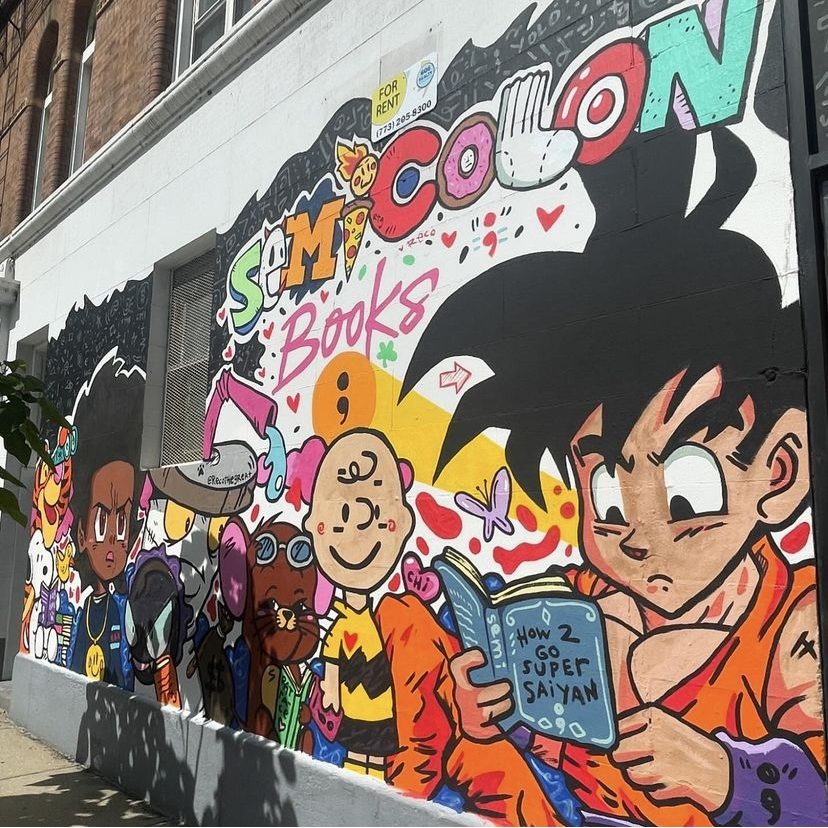
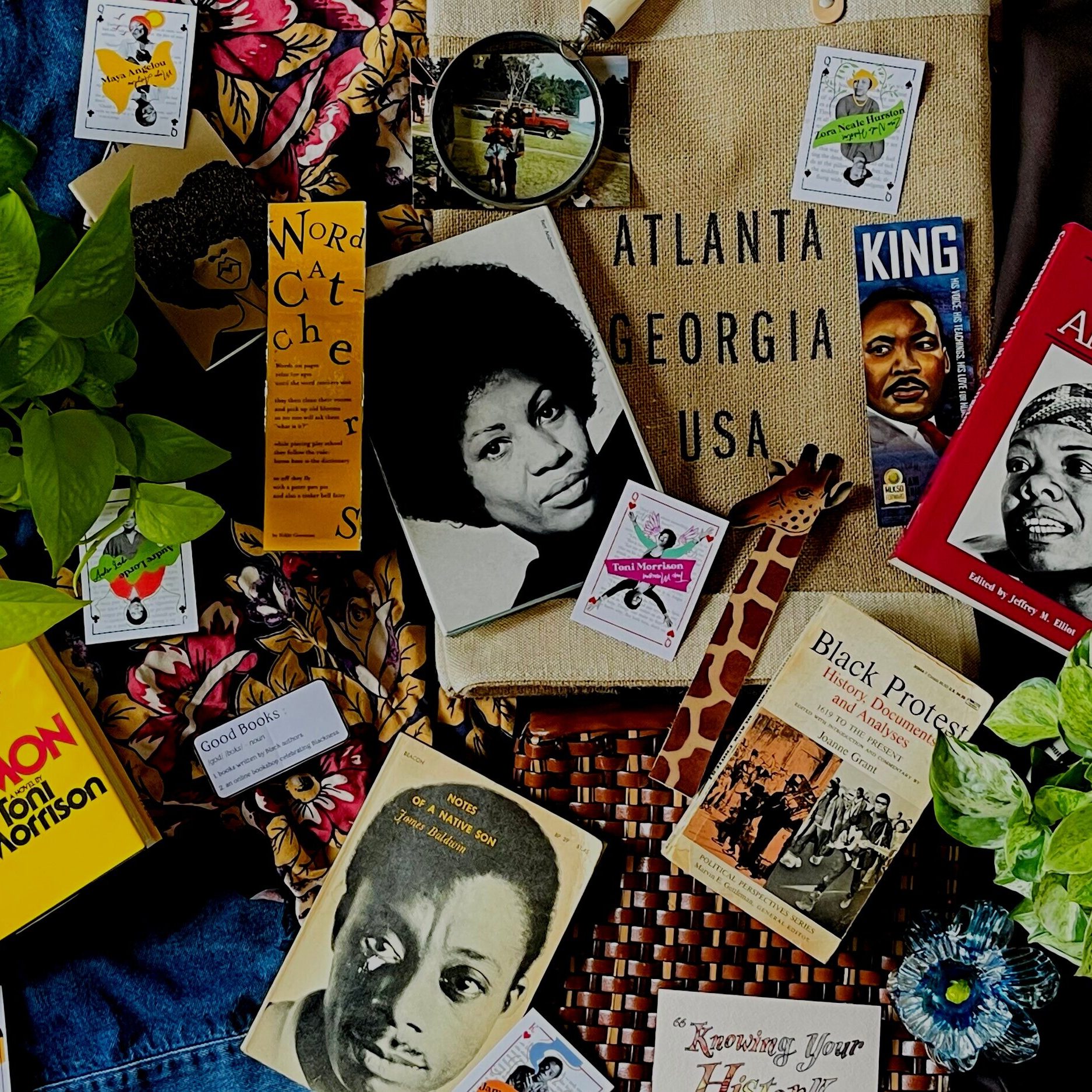
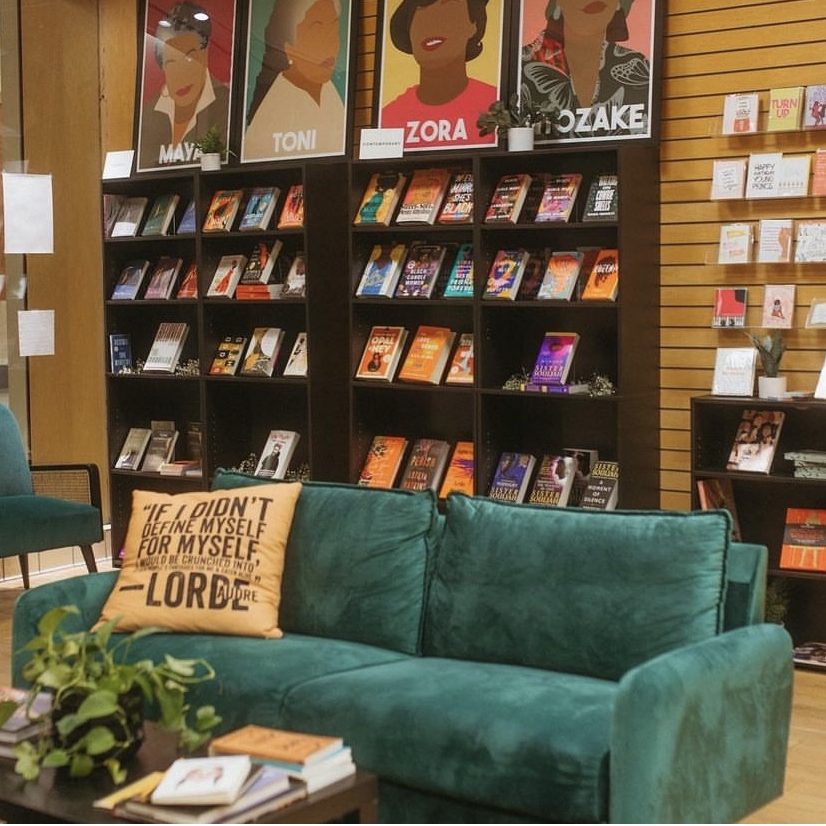
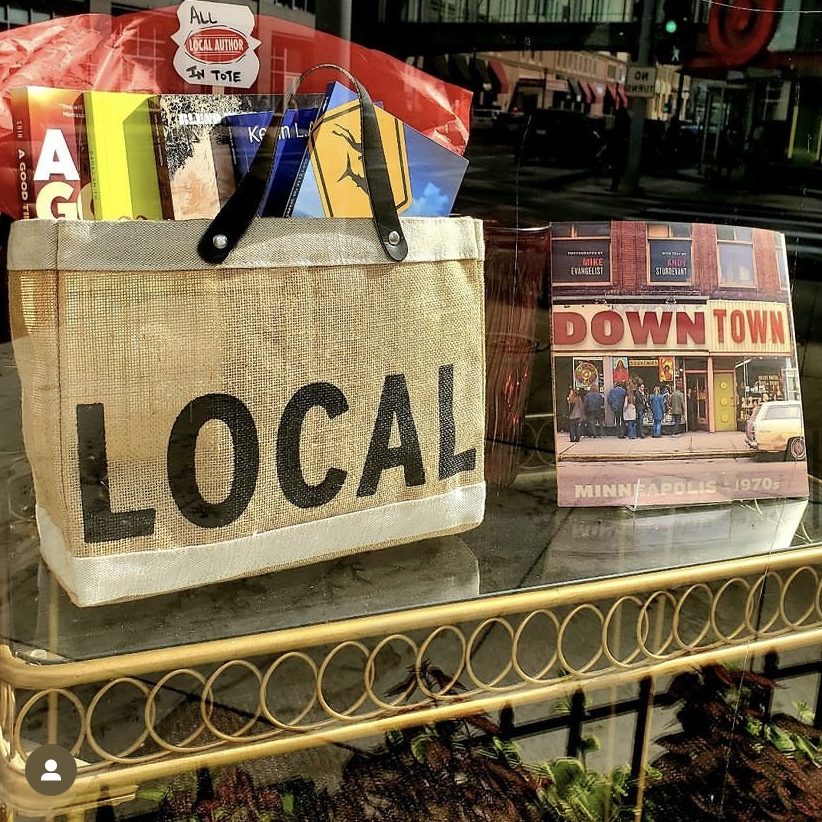
Bookstores are often literary safe havens for readers and places to build community through author readings, book signings, book clubs, or perhaps just bumping into a stranger in a niche genre section and exchanging numbers (a girl can dream!). From hybrid bookstore/coffee shops to bookstores that double as presses, we’ve curated a list of fourteen Black-owned bookstores across the United States.
Bestselling YA author Leah Johnson founded Loudmouth Books after a wave of anti-LGBTQ legislation in Indiana as a way for the community to preserve access to “lifesaving and life-affirming books.” The store carries literature by Black, LGBTQ+, and other marginalized writers, as well as books that have been banned or challenged in the U.S.
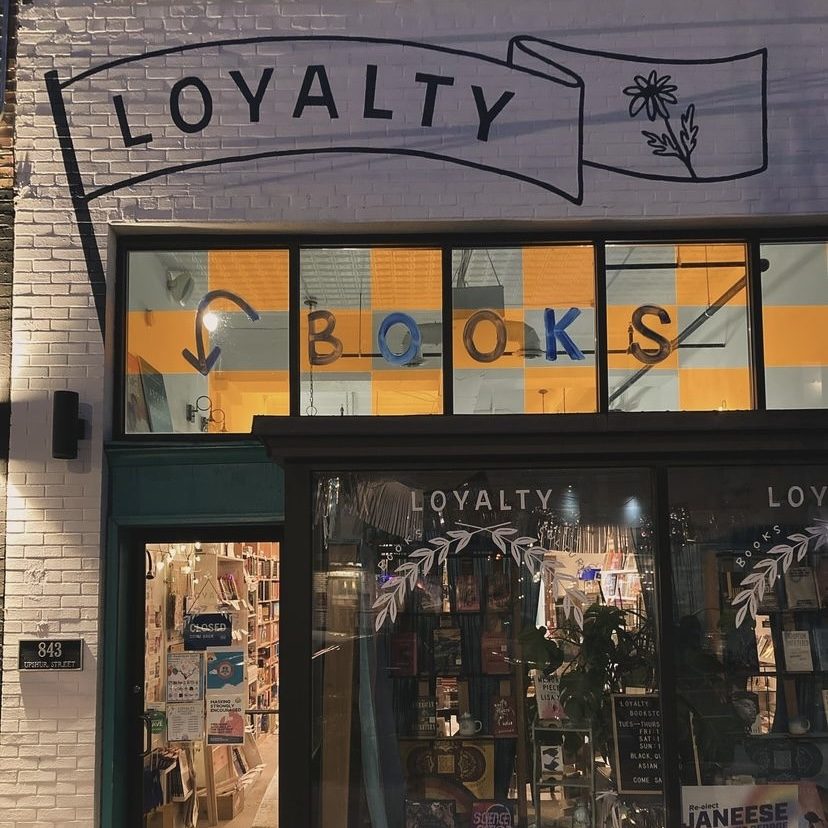
Founded by queer bookseller Hannah Oliver Depp, Loyalty Bookstore focuses on creating an inclusive environment that centers Black, POC, and queer voices in literature. In 2023, Christine Bollow, an Asian, queer, and disabled long-time employee was announced as the new co-owner. With genres categorized from Black Love to Caribbean Lit to Antiracist reads, Loyalty is active in celebrating diverse and intersectional identities in both the literature they sell and the community they build.
Located in Germantown, a historically Black neighborhood in Philadelphia, Uncle Bobbie’s is a space for “cool people. Dope books. Great coffee.” Founded by Marc Lamont Hill in 2017, they host free events such as workshops, author talks, and weekly readings for children. The warm and inviting space also doubles as a cafe with plenty of tables, chairs, and comfy couches, the perfect spot to grab a latte with a slice of sweet potato pie while you read a book.
Onikah Asamoa-Caesar’s bookstore “is a love letter to her younger self, a safe space for Black & Brown folks, an intersection and [cumulation] of her experiences as a Black woman in the United States of America.” Situated in Greenwood, a historical neighborhood in Tulsa, Fulton Street centers the narratives of people of color and marginalized communities, and their mission is to increase representation and intergenerational literacy. Their sleek industrial space has tall open ceilings, framed by a wall of windows, and a coffee bar with chairs scattered around the room. Be sure to try their cruffin and stop by for book launches, reading hours, spoken word events, and the occasional book fair.
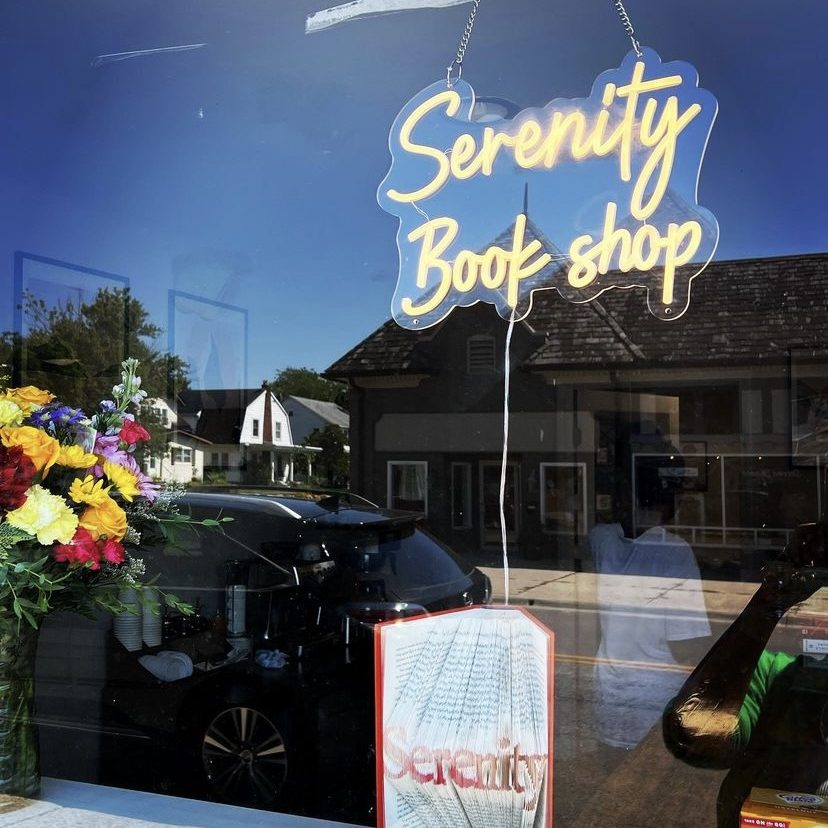
Shanna Tiggs envisioned Serenity Book Shop as a place of care, where those on any path or journey may find respite. The bookstore has a small kitchen and bar, offering food, coffee, tea, and wine, and a stage where they host live music and readings. If you’re looking for a place to read, the store has couches and chairs as well as bistro tables on the sidewalk. If you’re in the market for crystals, candles, sage, a small plant, a new mug, a journal, or, perhaps, a book, you’ll find what you need in this one-stop shop.
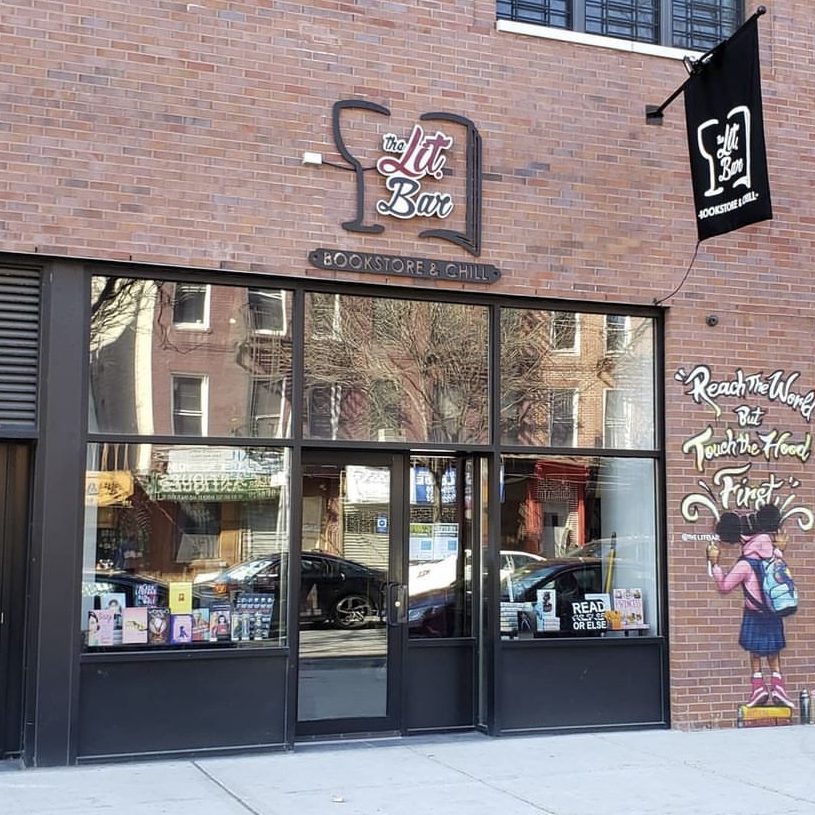
Founded by Noëlle Santos, an African American and Puerto Rican activist and Bronx native, The Lit. Bar is the only bookstore in this borough of New York City. With the bookstore tripling as a wine bar and community center, they welcome literary and community gatherings, and offer a full wine menu and bar snacks. It’s a beautiful space with crystal chandeliers, red velvet couches, and marble tables, anchored by a mural of Black girl holding a book. From categories like “Dear White People,” “Hip-Hop Is Poetry Too,” and “Bronx Tales,” stop by to support this bookstore and sip some red while you’re at it.
In this shrine to James Baldwin, you’ll find a mural of the author painted on books and coffee drinks named after his works. The bookstore cafe highlights the work of Black and Brown writers and artists and is dedicated to expanding literacy, developing economic equity, fostering intellectual growth, and using books for social justice reform and to end mass incarceration. They have a seasonal book festival, a book club where they meet and discuss the works of BIPOC authors, and a podcast studio. On top of that, you definitely won’t want to miss their celebration of James Baldwin’s 100th birthday on August 2nd.
Founded by DL Mullen, Semicolon is the only bookstore in Chicago owned by a Black woman. As a bookstore/art gallery hybrid, visitors are invited to enjoy both the visual and literary arts. The space itself is an art piece, with a large mural painted by street artist, Ahmad Lee, an art gallery space that will rotate to feature local artists, and hand-picked books arranged with their covers facing out. Books are categorized by association, rather than genre, so instead of looking for “fiction” or “poetry,” you might want to try looking under “Wait, What?!? Page Turners with Just a Tinge of Weirdness” for your next read.
Good Books is an online and pop-up store, run by mother-daughter duo, Katherine and Katie. They offer vintage versions of beloved collections, such as Baldwin’s If Beale Street Could Talk or Angela Davis’ If They Come In The Morning, as well as new books by mail.
Asha Grant’s priority is highlighting literature by and about Black women—especially queer and trans Black women. Looking to add some literature to your “Black Feminist Toolkit” or learn more about “The Black Femme Body and Pleasure Politic”? Look no further. The Salt Eaters Bookshop’s got you covered.
Sistah Scifi is primarily an online store that centers literature written by Black and Indigenous women that falls into categories of magical realism, science fiction, horror, speculative fiction, and even voodoo. Created by Isis Asare, it’s the first Black-owned bookstore that focuses on science fiction and fantasy in the U.S. They also have book vending machines in Seattle and California. Check out their website for virtual and in-person events if you’re looking for community amongst other Black science fiction lovers or are interested in Afro-futurism literature (or merch!).
Nyshell Lawrence started Socialight Society to celebrate Black authors and artists, centered on the merging of her favorite ‘f‘ words: faith and feminism. This indie bookstore caters to the representation of Black women, not only in the literature they sell and promote, but in the community they build. On top of being a bookstore, Socialight Society hosts regular events, they offer various creative consultations and “pick my brain” sessions, they promote other local Black-owned businesses and organizations, host a monthly book club, and offer the store as an event space. They even have the option of booking a private after-hours shopping experience, where you can shop alone or with a group of friends, so if you’re in Lansing and are looking for a one of a kind book shopping experience, secure your spot online before stopping in for exclusive access to the store.
Mary Taris created Strive to center Black narratives and bring the joy of Black literature back to Minneapolis. The company doubles as a press, and “aims to inspire community collaboration through publishing stories to heal, teach, learn, and earn, while building an ecosystem that embodies a rich Black culture and heritage.” The Strive Bookstore, based in downtown Minneapolis, allows visitors to shop for books, attend workshops, and even host their own events. If you find yourself interested in collaboration, self-publishing, or just finding your next read, check out Strive Bookstore.
Loving Room: Books & Salon is an independent, queer woman-owned bookstore, reading room, and salon in Seattle, Washington. Kristina Clark opened Loving Room as a space “for our collective Black ancestral healing + transformation through Black literature + African Diasporic decolonial aesthetics.” Filled with artwork and textiles from Africa, the store includes a selection of new and used literature from Black American authors, as well as African, Caribbean, and Diaspora writers. Loving Room is community-oriented, offering events for readers of all ages, such as writing clubs, book clubs, poetry soirées, and film screenings.
The late Chuck Kinder once told me, “Fiction should be a fist.” Meaning fiction is a medium suited to emotional honesty, the place to have adult conversations. To engage with the world in all its complexities, and, often, its ugliness.
For me, this has meant writing characters who either confront oppression, assist in oppression, or make the choice to ignore and thus abet oppression. To separate their emotional lives from the political is to ignore the reality of human existence. Our world isn’t burning someone is setting the world on fire, and, whatever their flaws, the protagonists in my new collection, Weird Black Girls, are politically engaged people.
Poetry is where I’ve often turned to for confrontational writing from marginalized voices. Thanks to its brevity, poetry is, in many ways, the genre best suited for critiquing the status quo. However metaphorical the poet, they only have so much space to get their point across. The poets on this list use art as both archive and argument: an archive for those who cannot broadcast their viewpoint through textbooks and news outlets; an argument for those who cannot force their will with guns.
Seven years after publication, Danez Smith’s breakout collection remains an essential ode to queer existence, as well as polemic against white supremacy. Largely writing in response to the racist lynchings that have become a defining part of 21st century America, the poet not only confronts police murder, but commits the ultimate rebellion of celebrating their own life. Filled with poems expressing fear regarding their HIV diagnosis, Smith remains proudly queer, neither forgetting nor forgiving the system that allowed the plague to flourish. What stands out to me after all this time is the humanity in this collection. “I tried to love you,” Smith tells white people in “dear white america,” even as the inclusion of “you’re dead, america” reminds the reader that hate rules in this country. And yet, for all Smith’s rage and weariness, there remains, at the core of the book, that most forbidden love in the American conscience—the deep, joyful, unflinching love for black people.
Kohnjehr Woman by Ana-Maurine Lara
In this narrative-driven collection, a woman from the Caribbean is sold to an antebellum plantation. For the crime of poisoning her master, her tongue has been cut out. That doesn’t stop the conjure woman from wreaking havoc on the tyrants who run the place, nor from expressing her thoughts in beautiful poetry written in patois. As the other slaves come to know the woman called Shee, her thoughts meld more and more with their perspectives, painting a picture of black folks joining in community. An underrated gem about the black holocaust.
“We are time machines of water and flesh patterned for destruction, if we do not release the trauma.” Veteran poet CAConrad’s 2017 collection is a response to unspeakable pain: the murder of their boyfriend in a horrific hate crime. Grief and survival drive these poems, but never so much that Conrad forgets anger. In nonfiction sections interspersed throughout the book, Conrad documents their personal rebellions against animal imprisonment, the military-industrial complex, homophobia, and Christian extremism. Conrad is equally antagonistic towards form, shaping their poems like knives to cut anyone who’d dare harm an innocent person, or, from another lens, like bodies standing proudly upright. A ferocious work of queer rage.
“Through it all, the strawberries have never stopped growing.” A frank account of the violence visited upon Palestinian people, these poems are filled with shrapnel, F16 roar, twisted bodies, and funerals. Hand-in-hand with these visions of state terror are deftly crafted lines celebrating the land of Palestine down to the tiniest plants that dwell there. There’s even a strain of deadpan humor running through the book. A defiant statement from a talented poet.
Much of this collection is in response to President Obama’s 2009 apology to Native Americans for the genocide and oppression they experienced: an apology that Obama, rather than publicly declare, had read in private to a handful of tribal leaders. An Oglala Sioux poet, Long Soldier uses language to interrogate the role that language plays in genocide. She bluntly translates government doublespeak. (“One should read, the Dakota people starved.”) She turns the word whereas with its implication of resolution into an anaphoric indictment. She carves up official documents into erasure poems and Mad Libs and fragments; angles those documents into hills the reader must climb to stand above bureaucratic white noise, or, in other cases, descend right back into the violence. Long Soldier’s writing, filled with disdain for those who whitewash genocide, is as captivating as it is relentless.
In the forward by M.H. Halal, they pose the hard question about speaking to oppression: “How do I write this without mentioning the obvious oppressor? An oppressor who deserves no more space in our minds, in our imaginations.” To honor the experience of being Palestinian, George Abraham speaks and speaks. Of all books on this list, this one is the densest. Words cover the page like black rivers, poetry and prose, odes to everything Palestinians have lost written in a multitude of poetic forms. Abraham gives genocide no respite, speaking directly to murder and rape committed against his people. This is also a queer work. The homophobia Abraham experiences is countered with sensitivity towards the reasons toxic masculinity has spread among his family and peers. To discuss the lyricism in these ambidextrous poems would be nowhere near as effective as encouraging you to read them. This is poetry against annihilation.
The word intersectionality gets used in reference to the commonalities between different groups. Asghar writes of the intersectionality within her own identity. Much of the book addresses atrocities committed during the Partition of India. From there Asghar addresses the immigrant experience, post-9/11 islamophobia, and the anxieties of being a brown person during this surge in white nationalism. While her subject matter is heavy, her approach is playful. There is joy in the way she crafts poems as crossword puzzles, film treatments, bingo cards, and floor plans; breaking form to express the disjointedness in being othered. Speaking back to oppression is just one motif in this slim yet sprawling collection, loaded with imagery and deep empathy.
“What about civility? Respect for the people one loves? Discretion, for god’s sake?” asks Lucy Douglas “C.Z.” Guest, the enigmatic socialite and fashion icon played by Chloë Sevigny in Ryan Murphy’s latest installation of the Feud series, Capote vs. the Swans. Across from her sits the American novelist and screenwriter Truman Capote (Tom Hollander), author of several works, many of which have been heralded as literary classics like the novella Breakfast at Tiffany’sand the true crime novel In Cold Blood.
Seated at a table at La Côte Basque, an Upper West Side restaurant in Manhattan known as the go-to for the who’s who of New York’s high society, Capote attempts to repair the rift that has ruffled the feathers of his “swans”—a name affectionately bestowed by him upon a group of wealthy and elegant socialites like Barbara “Babe” Paley (Naomi Watts), Nancy “Slim” Keith (Diane Lane), Lee Radziwill (Calista Flockhart), and Guest—after an excerpt from his unpublished novel, Answered Prayers, has run in Esquire. The chapter, “La Côte Basque, 1965,” divulged the real-life secrets of these women with whom he’s formed close-knit relationships. Though fictionalized, it wasn’t hard to identify which character portrayed which swan, and what dirty laundry belonged to whom. Infidelity was exposed, accusations of murder were made, and that was enough to shun Capote—for the rest of his life—from the community he centered himself and his writing around.
When he tries to restore his friendship with his swans, starting with C.Z., he tells her, “It’s just a book.” He doesn’t seem to understand the magnitude of upset that has led to, not just his ostracism, but his ultimate professional and personal downfall—especially after one of the swans, Ann Woodward (Demi Moore), takes her life ahead of the excerpt’s publication in Esquire. She is shattered after word gets back to her that Capote has been going around telling everyone that she shot her late husband—fodder soon to be printed in text for public consumption—and death, to her, was the only viable response. When Capote maintains that his observations are merely a conduit for his storytelling, C.Z. snaps at him, “What about civility? Respect for the people one loves? Discretion, for god’s sake? Reciprocity! What about reciprocity?” (It’s worth noting and asking what kind of reciprocity, considering the stark imbalance of power that separates Capote from his elite entourage.)
This is not a unique angle when you boil it down to a writer and who is manifested in their work and how. Fictionalized or not, the perennial questions remain: Whose story is it to tell? What are the moral guidelines, if any? How far is too far? Does quality come before doing no harm? These questions will continue being asked for as long as stories will continue to be told.
I expected to hear from those I’d written about, but for the most part, I wasn’t anticipating any upset or confrontation.
When I published my memoir, Born to Be Public, in 2020, I expected to hear from those I’d written about, but for the most part, I wasn’t anticipating any upset or confrontation. Unless you’re the friend who all of your friends come to for recon on a dude they met on Bumble and are able to pull up said dude’s tax returns from the last three years along with his academic transcripts and the name of his second-grade teacher’s acupuncturist, you probably can’t identify the rude and condescending writer I crossed paths with at a networking event in one chapter or the semi-famous artist I talk shit about in another. The only person I was nervous to hear from—if I heard from him at all—was one particular ex, Roy, about whom I’d written a whole chapter, the longest in the book.
One morning, on the train to my day job in South Slope, Brooklyn, my phone buzzed in my tote. I put down the book I was reading and pulled it from my bag, feeling my heart skip a beat when I saw the number that had texted me. Even though I had broken off contact with him and deleted his number years ago, it remained locked in my memory. I opened up Roy’s text: just a screenshot, confirming his purchase of my book from my publisher’s website. I had just revealed the cover the day before, along with a link to pre-order my book. I stared at my screen, not knowing what to say, for several moments.
“Hey, that’s really sweet of you,” I typed. “I really appreciate it.” I hit send. I felt knots forming in my stomach, intensifying their grip every minute I waited for a response. My phone buzzed again: “I’m so proud of you,” he wrote back, followed by the smiling face with a tear emoji. Dots. More typing. “I can’t wait to read it,” read his latest response.
In some ways, this was a relief. I would not have to spend years after the publication of my book wondering if he had read it or not: the moment had just arrived in my literal lap. I knew I could not write, let alone publish, this book without telling my side of our story. Our relationship was the catalyst for the author that had emerged from the seemingly never-ending crescendo that was my excessively turbulent twenties. And, even though I had not initiated contact with him in years, I still deeply cared for him. Most certainly enough to give him the courtesy of a heads-up.
“So, there’s something I should tell you,” I started typing. “I wrote about us. I hope you can understand why.”
I was telling a story that few people knew, and even fewer had witnessed.
“I figured as much,” he writes back. “Why else do you think I pre-ordered it?” I let out a laugh; I knew him and his sense of humor well enough to know that this last part was a joke. Some of the tension that had taken hold of me dissolved. Yet, I knew I would remain anxious until he read it. I was telling a story that few people knew, and even fewer had witnessed, about the exceptionally volatile relationship that had almost destroyed us both. Through a series of painfully both public and private incidents, it had become unequivocally clear to me that Roy was struggling with severe mental illness, which, by virtue of being left untreated, spelled doom for us. I couldn’t not write about us without his demons, which threatened to consume us both. They were, in some ways, my demons, too. But also: it was not my place—or my job, for that matter—to diagnose him.
Anytime I write about someone, whether directly or tangentially, I make sure to give extra care to not just what I share (or don’t), but how. In my book, I wrote about how, when I described the increasingly toxic dynamic of our relationship to my therapist at the time, she said, based on what I had told her, it seemed, to her, that he might have borderline personality disorder. Syntax was especially crucial here: I did not ascribe his behavior and patterns to a mental disorder. That was neither my place, nor my skill set. However, by talking to a mental health professional, a hunch was named, without using any declarative language, which made it possible to provide the context necessary to successfully convey the complex, oftentimes painful, facets of our relationship affected by suspected mental illness.
“I made sure to protect you,” I replied. “I changed your name and didn’t share anything that wasn’t mine to share.”
“I’m not worried,” he wrote back. “I was actually hoping you would write about us. No matter what you wrote, I know you did it right.”
A few years later, we met up at a bar in Brooklyn. Roy had just moved back to New York from Denver, and had asked me if I wanted to get together and catch up over drinks. It had been eight years since we had last seen each other, and, despite how nervous it made me, I said yes; I felt ready for whatever conversations—both inevitable and unforeseen—would come from the night.
After a long, tearful embrace outside the bar, we made our way in and perched ourselves on two stools. No sooner had we ordered our first round did he pull a pen and a copy of my book from his backpack. He lovingly demanded that I sign his book.
“So, you don’t hate me?” I asked, half joking.
He laughed. He told me he could never hate me; in fact, he thanked me. “I needed to read that,” he said, after taking a swig of his gin and soda. “What hurt me most is how painful it was for you. I never would have known that unless you had written about it, and I’m glad you did. Now I know how much I actually need to apologize for, and even then, I don’t think it would be enough.”
The funny thing, though, is that him saying that was enough—perfectly, exactly enough. It would take a few more messy, tearful nights to fully go through everything that had happened between us, but eventually, we worked through it and came out as friends in the end. And not only did he read my book—twice!—he bought several copies for multiple people, even selling books to friends and strangers alike, joking that he was the villain in the book. In fact, last year at a reading I did, we slipped in a copy of my book that he signed as well—under both his real and fictional name—in a stack that was later stocked at a local bookstore in Brooklyn.
But this wasn’t the only unexpected outcome from publishing my book.
Every sentence must carry momentum towards what the writer is writing towards.
After my Born to Be Public came out, an old friend of mine from college reached out, asking me why I hadn’t written about them—us—in my book, implicitly wanting to know whether our friendship had meant anything to me. Of course, it did, and it still does. I had written about them in several earlier drafts of the book, but those sections were ultimately cut because they did little to serve the narrative trajectory of the book. I tried to explain this—how, no matter how much we may love a certain chunk or chapter we’ve written in a work-in-progress, none of them are safe until the final draft. Every sentence must carry momentum towards what the writer is writing towards. I tried to explain that this was a craft-based decision—but their disappointment remained and we haven’t spoken since.
It was the first time something that I didn’t write had upset someone. Like the age-old adage suggests, you can’t please everyone. Some will praise, some will argue, rebuke, or worse (take it out on you on Goodreads). But when it comes to an emotional response, the only common denominator is the truth, which is not singular. There is never just one truth, just like there’s never just one story. It is everyone’s story to tell. I will tell my story of Roy one way, and should he choose, he will tell it another.
“I don’t want love; I want forgiveness,” Truman says at the start of the Feud finale. Some may argue this was an overdrawn feud compounded by gilded pettiness; others may see it in black and white: Capote crossed a line that never should have been crossed. No matter where you stand on the matter, standing anywhere implies there is a line—and sometimes, that line gets crossed.
In some ways, this is how I feel when I write about people whom I suspect will take exception to the way I’ve written about them. Someone will inevitably get upset—even if they’re not in the text all, as I’ve come to learn. Depending on my relationship to the subject of my writing, I may ask permission—or I may not. If I’m writing about someone close to me, like my best friend, boyfriend, or a family member, I will, more times than not, ask them how they feel about what they’ve read. Other times, I don’t ask for permission at all. No matter the case, I hope for forgiveness, if not understanding.
I don’t believe in the ownership of stories. Our involvement in—or absence from—an occurrence does not grant exclusivity to how we choose to metabolize it, whether on or off the page. Capote was, at best, ancillary to the happenings he wrote about and published in Esquire. He wasn’t part of what he’d written about in the way that I was with Roy; he was a witness. He was an important part of these people’s lives—they opened up to him, trusted him— but he was never more than a bystander. He observed and layered his accounts into prose that spoke truth to power long before that expression solidified itself into our lexicon. In Episode 5, James Baldwin (Chris Chalk) spends a day dining and drinking with Capote, explaining what made him gravitate towards Answered Prayers. How class, race, and sexuality influence and inform the way the swans move through the world. In this scenario, he argued, it was good for society at large to see The Haves portrayed in this way, to reveal the dark underbelly of rot buoying the upper class. Witnessing something makes it the writer’s, every bit as much as reading what is written makes that writing the reader’s. A writer’s job is to experience something, either directly or indirectly, and then write about it.
I would argue, however, that the line is not a line at all. Whatever is possible to cross is not linear at all.
The only thing we can agree on is: There is a line; what we never will agree on: Where that line is. Some are careful not to cross it; others get off by moving the line and then pole-vaulting over it. I would argue, however, that the line is not a line at all. Whatever is possible to cross is not linear at all. I see it as more of a snaking thread, and the path it’s on isn’t fixed either.
Depending on who you ask, I cross lines. Or I don’t cross them enough. I’m not straddling something with no form to accommodate falling on both sides. I’m only navigating a path, guided by what is true to me, occupying the side that feels right to me at that particular moment my lived experiences fit into. My only constant in a sea of variables: I will never put my art before the welfare of those whom I love and deeply care for, even if they hurt me. Even if my words hurt them. I can’t control how my words are received once they leave my hands.
What I can control is how I tell a story. How, as a memoirist, I metabolize my life on the page. I am intentional: I care less about telling the truth and more about being truthful. There are, after all, things in my book that were true at one point that are not true today. So, while I aim to write with clarity and conviction, I really write to keep things alive, so my words, like me, have a chance to grow and change, too.
You may or may not realize it, but the 1990s weren’t just a few years ago, not even just twenty years ago. Though the style has been resurrected of late by younger generations eager to grift the gritty grunge and combat boots of the final decade of the 20th century, and the same slip dresses and crop tops I wore in my high school years are all the rage on, we are now thirty years removed from 1995.
Soak that in for a quick second if you will. The number of years millennials are from our most formative years are numbered enough to have earned a safe driver’s discount.
For those of you as stricken by me by the very thought, take consolation in the fact that we aren’t alone—there are others, especially elder millennials and late Generation Xers breaching the over 40 threshold, who are weeping alongside us—creaky knees, backaches, colonoscopy appointments and all.
Rife with so much yesteryear reminiscence that you’ll be back to wearing low-rise jeans, butterfly clips, and burning CDs using pirated music sites in no time, my debut memoir collection, A Product of Genetics (and Day Drinking), is guaranteed to send you straight into a memory spiral. If you ever bought a box of cereal based solely on the prize promised inside, yearned to be a Full House sibling, or explored hundreds of miles on a bike barefoot and unsupervised, this collection of essays is right up your alley.
The books below are a compilation of funny essay collections written by millennial women that will have you laughing and soaking in the nostalgia of days gone by. The authors of these books have voices that show that quirk is in and that stumbling on the way is the norm. These are the titles you might not have known that you needed (but most certainly do).
For anyone who wants to relive the horror of a Furby come alive in a darkened room (you do, I promise), this taste of growing up in the 1990s is the perfect dip into shared memories and the author’s tales of surviving being messy and trying to figure out who she is. In this fantastic collection of stories, readers can expect to laugh, cry, and commiserate—sometimes all at once.
If you aren’t already in love with this author, prepare yourself because you’re about to be all in. In this 2020 tome, West examines all our favorite movies with her inane ability to tell it like it is. Amusingly enough, West says all the things we’ve all been thinking for years, but in a better, funnier, more biting way that makes us wish we had actually said it first. In her examination of the hallmarks of cinema, she begs us to ask ourselves: Do these box office hits and cult classics still hold water? Did they deserve the hype in the first place? What in the actual hell? And should we be proud to admit that they’re our favorites or watch them in absolute zipper-mouth private never to be spoken of?
If there’s anyone who gets what it’s like to just not get it, it’s Sophia Benoit as described in this book of funny essays. Plan to laugh, cry, and feel confused, certain, uncertain, and wholly understood by the book’s end. This collection is such a chef’s kiss embodiment of what growing up in the 1990s was like for so many of our generation. It rides the waves of crappy dates, guilty pleasures, so much self-doubt that our brains runneth over, and a human experience so comfortingly familiar that you suspect that you and the author are meant to be forever besties.
More than anything, this one made me feel seen and realize that not feeling normal, not always understanding myself, not knowing how to human is, in fact, standard. The author celebrates the fact that from the beginning we are all just a bunch of mostly aimless weirdos. We start out weird and just eventually evolve and age into a different kind of weird. If you don’t get some comfort from that, we are not the same kind of person.
There’s a reason that this book was an instant New York Times Bestseller, it deserved to be. Dripping with all things deliciously pop culture and growing up as a millennial, Kennedy takes her essay collection to a new level with her hilarious take on being a woman, her lived experiences, and what our culture and time in space means. Each story in the book drives you to want more and read onward just to revel in the fact that it’s so damned nice to commiserate with someone who is still very much in their figuring-it-out era.
Experiences so awkward that just peeking into them is a bit mortifying, hot takes that make you feel like all that crap swirling around in your head isn’t as crazy as you suspect, and chapter after chapter with Irby’s trademark wit and humor go a long way in this recent release. If any book of hers will snag new readers, this is it. She talks about her love for Dave Matthews, run-ins with anaphylaxis, and moments of bare-bones honesty that sometimes just hit you in the face.
In this 2021 collection by the iconic comedian who is truly making things happen on and off the page, Robinson’s conversational tone and nothing-off-limits banter make you feel like you’re riding shotgun in your bestie’s car on the way to the store to buy the makings for margaritas. Whether she’s bemoaning the woes of dating or shelling out advice like a big sister, she keeps her essays funny, light, and pop culture-infused enough to always make a reader flip forward for just one more story before moving on.
DON’T MISS OUT
Sign up for our newsletter to get submission announcements and stay on top of our best work.
YOUR INBOX IS LIT
Enjoy strange, diverting work from The Commuter on Mondays, absorbing fiction from Recommended Reading on Wednesdays, and a roundup of our best work of the week on Fridays. Personalize your subscription preferences here.