This summer, find comfort in the power of chosen family and friendship, laugh at the absurdities of the patriarchy, and weep at a story of heartbreak and redemption. Themes often present in literature—and in life—like the search for belonging and reconciliation, the fight against oppression, healing from trauma, and grieving the past and lost loves are everywhere this season.
Here are 15 small press books for your summer reading list:
In this story centered on the split of Hispaniola that divided Haiti and the Dominican Republic, two friends are cleaved and torn apart. Sisi and Gertie have a special closeness as girls, until a formerly obscured family connection takes them away from each other. A political upheaval ripples through the Haitian government under the dictatorship of Francois Duvalier, forcing them to leave their homes. Sisi flees to France, and Gertie is married off to a man from a wealthy Dominican family. Yet, despite their class differences and different paths, they reconnect in the US. This is a story of two girls who become women and must address a turbulent past that neither chose, but both have agency in reconciling. In Village Weavers, there are formidable political actors and influential families, but nothing is as strong as the bond of a best friend.
In this dystopian novel world which runs parallel to the contemporary United States, Riley—a grammar professor—is noticed by the new military regime, unfortunately for him. Riley flees. As an academic and word-nerd, Riley is not, on the surface, suited to living in the forest among sympathizing anarchists; but in this space, Riley finds community. The Sentence is both a reference to Riley’s presumed death sentence under the regime, and to the structure of Baker’s novel: it is single sentence, diagramed, with offshoots to tell of paths taken and those not, fears realized, bullets dodged. Billed as a graphic novel, The Sentence is more a work of linguistic precision with a visual element. Baker goes beyond an exercise in experimentation to deliver an impactful narrative that successfully pushes the limits of form.
A woman takes up a flirtation with a dermatologist treating her for genital warts; women scan and swipe the dating aps looking for sex or relationships, but also because it’s part of the zeitgeist; roommates find they have more emotional intimacy with one another than would ever be possible with their dates. How to Get Along Without Me is a thoroughly modern post-Obama-era, post-pandemic collection of loosely linked short-stories that does not just cut open the souls of millennials living in the 2020s, but rather filets it for display as if for an Instagram story. Axelrod captures what it is like to live in New York City, working jobs in public service and publishing, dating people who don’t want to commit, and reckoning with mortality of family. An absorbing and engaging collection that’s unmissable.
A mother and her son are afflicted by lycanthropy from which he recovers but she does not, a daughter gives her dementia-stricken mother a therapy doll that is eventually dismembered, and a sister stages a desperate intervention with her brother while trying to manage her career in deceased pet portraiture. In this collection, Shannon Robinson juxtaposes the mundane with the fantastical, the heartfelt with the heartbreaking, and ties the dozen stories together with a deep sense of longing. Most of the people in her stories are actually trying to be better friends, siblings, coworkers, spouses; and many of these same people are experts at failing. Robinson writes with such stunning emotional clarity and attention to our inner lives that her stories, even in harsh situations, take on a tender quality.
The Queen of Steeplechase follows Bella as she comes of age in an Italian-American household with an overbearing father who abuses his authority and a mother bed-ridden with depression. When Bella becomes pregnant at 15, her baby is taken by nuns and she sets off on a journey to find her son. This raucous tale takes readers to Coney Island for a strip-tease and into the homes of Depression-era wiseguys. The characters are outcasts who have been judged and deemed unworthy by society. But Bella refuses to be cast aside, instead she finds her chosen family—and at every turn, she cooks with a spiritual dedication. Yet, she finally has to face a conundrum that not even her famous meatballs can fix. The Queen of Steeplechase Park is a novel that puts its faith in people believing in themselves, and the result is a joyful read.
A young woman who can’t swim is tossed into a lake during a girl’s trip, a teacher is beat down and has to teach “The So-So Gatsby” yet again, and a woman finds an origami lily in her mailbox as she grieves her husband so deeply that his name is only blank space on paper—he is so gone, he has not even a name. While Madera’s prose has a technical quality to it in the sense that each sentence feels highly considered, it is not at the expense of evocative feelings and rich characterization. Nervosities explores the boundaries of the short story in a way that nods to intellectualism but cares more about the heart. Unique and surprising.
In this collection of stories eponymous with the 1993 album from Liz Phair, middle-aged women form a Riot Grrrl cult worshiping punk feminism and Sirens of the Greek mythology, a living display of women from different points in history are on exhibit at a museum, and an app that comes with an implant and purports to help people live their best lives is actually a coercive force for toxic beauty standards. Lillard harnesses female rage, technological anxiety, and fears about dystopian futures to deliver a breathtaking book where characters reclaim their power, reject algorithms, and run towards freedom.
Part family story and part music history, the thread that runs through this memoir is Álvarez’s unwavering interest in how place impacts us. Whether the places we live, the places we left, the places we come from, and the places we might visit or places that might hold a key to unlock a door to yet another place; his exploration of how geography is more than lines on a map is potent and gripping. Through meeting with accordion makers, players, and traveling with and learning an accordion of his own, he gets closer to his own origin story, which includes an accordion-playing grandfather with a mysterious past. Álvarez seems to write with no agenda other than understanding. This memoir emerges as a thoughtful and empathetic answer to questions about where we come from—and how it’s shaped us.
Charles Jensen braids essays intersecting his experiences growing up gay with intelligent analysis of iconic movies. Splice of Life examines how popular culture becomes deeply imbued in our understanding of ourselves and our relationship to the world, especially in the 1990s and early 2000s. Here, the movie Mean Girls intersects with the British feminist film critic Laura Mulvey, and the Swiss linguist Ferdinand de Saussure collides with Fatal Attraction. Midwestern Jensen becomes the unlikely prom king, and goes off to college—and has his own on-screen experiences, in a commercial and for Jeopardy. Yet, at its core, Splice of Life, is not about film nor public intellectuals: it is the story of Jensen becoming a man.
In this collection, young women search for connection at bars and with their roommates, a Gujarati adolescent in America cannot forgive her mother for an embarrassing linguistic mix up, a girl writes love letters to her 7th grade teacher, and a child drinks only orange juice until her body is razor thin. How to Make Your Mother Cry is a study in growing up. Trying to make it in New York, or just trying to make it through the day, Shah’s characters negotiate the diaspora and immigrant parents, but the center of the book is the feeling of longing. There is an auto-fiction element and more than a nod to feminist texts, but ultimately these stories shine brightly and stand on their own—just as the heroines of each story are trying to do.
In this memoir about trauma and reckoning, Alex DiFrancesco uses tarot, Italian witchcraft, Catholic saints, Buddhism, and sobriety to free themselves from a cycle of self-destructive behavior that is the result of complex PTSD, sexual assault, and constant exposure to transphobia. As much as readers ache for DiFrancesco in the depth of addiction or in scary situations, there is a clear transformation taking place in the book. The reader is called to witness DiFrancesco’s very public confrontation and legal battle against a man who raped them—but the book transcends this act of violence. Breaking the Curse is ultimately a story of healing, and it is both a gift and a guide to anyone searching to reclaim their own power.
This flash memoir is a retrospective on the author’s life, beginning in 1945 when she was three and proceeding through 2023 when she is nearing eighty, and the sections begin to zoom through months, which feels similar to how the past often seems to unfold slowly and the present whizzes by. With acerbic wit, Giles keenly captures the absurdity of our expectations of one another, of the patterns we repeat—three of her very serious relationships are with spendthrifts, for example—and the paths we choose to travel over and over again. In Giles’ case, that road is the Golden Gate Bridge, as she crosses the San Francisco Bay and the country. Writers will find her descriptions of floundering in manuscript pages relatable, but Giles offers a stubborn charm to any reader of thoughtful essays.
Charles Lamosway has been carrying a secret for over two decades: he, a white man, is the biological father of Elizabeth, a Penobscot Reservation member. Her home, just across the river, is visible from his porch. Charles himself was raised on the Reservation side of the river by his white mother and his Native stepfather. Now, with his mother slipping into dementia and his stepfather lost in a tragic hunting accident, he longs to tell Elizabeth the truth about her origins. More than anything, he is trying to hold on to what is left of his family, and the split between on- and off- reservation is like two halves of Charles’ broken heart. Fire Exit is a tender and riveting novel of what it means to belong.
An young Iranian student in America must decide if coming out as a lesbian to her father is worth it; a teen finds a connection to her grandmother who was a decorated swimmer before the post-revolutionary restrictions banned women from nearly all aspects of public life; two American sisters visit Tehran and laugh at their interactions with the morality police while their mother is wrecked with fear. These stories, set in Iran and the United States, are a tribute to women defiantly fighting against the patriarchy and gendered oppression. Zan explores the nuance of the cultural divide as Iranian immigrants or the children of immigrants lose (or never quite learn) Farsi; and, while many of the stories are specific to the overthrow of the Shah and installment of Ayatollah Komeni in 1979, all are still resonant to today’s society.
Joseph was a war-time journalist with an adventurous life that earned him the moniker of “Fearless.” Yet, for all of his accolades, his personal life is in turmoil: his mother is in the grips of dementia, and his pregnant wife died in an accident. In search of closure and healing, he travels to Cambodia, the country where his father was murdered. There, through a connection with an old friend, he encounters Song, a woman who has her own gut-wrenching circumstances. Things turn dangerous quickly, and Joseph begins to understand how much distance the camera lens had put between him and the reality of tragic events, and the novel finds him swept into a world of sex trafficking, arms dealers, and globe-trotting criminals. Between This World and The Next is a page-turning literary thriller that you won’t be able to put down.
I dreamt I was baking an apple pie and in the dream
I woke up and you said: Your dreams are so good I can
smell them.

They shot some _____ last night. No one knows how
many _____ died. We are saddened by this senseless loss
of _____.

When I speak to you sincerely, it may seem like I’m
talking about mercy. But everyone knows that in
Chicago “dying” is not the same as “dying.”

What does capitalism have to sell you that you haven’t
already sold to yourself? (sic!)

I was thinking about the old cliché: the one where the
starving man peels off his skin and eats himself then
gets indigestion because he ate so fast and didn’t drink
enough water.

Whiny journalists always asking questions like: How
many people died here yesterday? How many corpses did
they burn?

Revolution or brunch? Not as simple as it sounds

They say it’s okay to enjoy things when the world is
exploding. I’m not so sure I believe them.

The police state-austerity-surveillance-machines
stopped spying on themselves when they realized the
only step left was to report their own bodies to the
censors.

And the bureaucrats sing: We are in the future now! We
are in the future now!

I don’t really care for any of the years, decades, or
centuries. I don’t like states, countries, or nations.
And I’m not a fan of time, religion, justice, culture,
literary movements, schools of painting or philosophy,
“the commons,” “the archives,” semantics, rhetoric,
politics, the ego, the id, the public self, the private self,
oratory, syntax, or grammar, among other things.

The history of this road is 		Massacre A then
Massacre B expansion peace treaty truth reconciliation
resurrection Massacre C then Massacre D rhetorical
guilt legal challenges truth reconciliation hypocrisy
Massacre E then Massacre F. Period.

You can have an inspiring “studio session” in Emily
Dickinson’s bedroom in Amherst for $300 for one
hour, or $500 for two hours. Or two people can rent it
out for $400 for one hour, or $600 for two hours. Food
and drink must be left outside the room. The door will
remain open. Staff will be present at all times.

At Sophie’s Choice: Custom Gifts and More in Niagara
Falls, you can buy a maternity shirt that says “Expecting
our first lil’ Pumpkin.” At Sophie’s Choice Shop, an
online retailer servicing Serbia, Montenegro, Croatia,
Bosnia, and Herzegovina, you can buy makeup and
fake eyelashes. At Boutique Le Choix de Sophie in Alma,
Quebec, you can buy “everything for your wardrobe
from head to toe.” At Sophie’s Choice Clothing, an online
second-hand shop from the uk, you can buy tunics,
strappy dresses, and fashionable outfits for the office.

When he said I was “asleep at the wheel” what I
thought he meant was that I was “sleeping on the side
of the road” which I thought of as “dying on the side of
the road” or even just “sleeping on the side of death.”
Best Practices #1013
She pulls out her passport and the agent says your country no longer exists
We tread lightly over the broken bones so we won’t cause them to explode or decay
He wants to know the name of this atrocity so he can classify it among the previous ones
We dig deeper into our faces to find the acceptable calculations that might alter the course of history (is it too soon to embellish the dead?)
Time passes Nothing changes The hours become worse and worse
There is a militarized frontier in your face and you cover it with the sixty-four digit code that all the miners are searching for
We can’t advance until we know the name of this period of infinite gestation
They need to build a system whose death leads to the most efficient form of regeneration
We rebuild the means of production and when we run out of resources we call the toll-free hotline and ask for a resumption of the oppressive policies that have destroyed us for so many centuries
I’m so tired I could sleep on a barbed wire fence is not a sentence you want to say in certain contexts
I’m sorry you think my body reminds you of a South American vortex whose name you can’t pronounce
If the city would explode a bit more politely then we might be able to attract the sorts of entrepreneurs who can finance the futurity of our misery
I mean what is the first thing you think of when you encounter the spiritual transgression of your body in a tunnel between the absence of time and the hypercirculation of capital?
There’s a name for this experience but I’m not allowed to mention it
The child barking in the tree signals to his neighbors that the tourists are coming with their guns again
The game ends when they recolonize the natives and force them to speak to the wrong god in the wrong language
The new hemisphere appears on the horizon no one is there to authenticate it
What nation-state controls the sun and the moon? Which hedge fund owns this sea?
We are in the future now but time keeps glitching and the earth keeps quaking backward
You’ve said this before this kidney does not have an owner
When the war ends they will refine and perfect all that they learned by accident
The most effective ways of reducing the population will become best practices taught at schools throughout the nation
The system requires the authentication of the sacred body that will never appear
The disappeared body is sanctified and soon the tourists will pay to see a non-fungible replication of it
The rehumanization of the population repeats itself first as parody then as encryption
Did you hear the one about the metaphor that was a metaphor for a metaphor that exists outside thought and language?
He wanted to kill some time but instead he killed some villagers
Tough break
In the future with proper guidance he’ll surely make better decisions
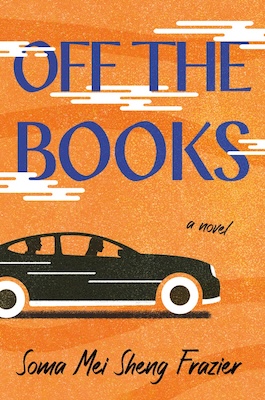
In Off the Books, Soma Mei Sheng Frazier draws readers into a classic road trip novel and then surprises us with a geopolitical twist. Protagonist Měi, an Ivy League dropout, drives a taxi off the books and is transporting her new client Henry across the country. Henry is handsome, witty, and oddly solicitous about an enormous suitcase he keeps beside him. Halfway to New York, Měi discovers the contents of the suitcase and its connection to China’s genocide of the Uyghur. Alongside readers, she learns about reeducation camps and cultural erasure.
With her life potentially in danger and her feelings for Henry careening between anger and attraction, Měi ruminates over her own family mystery. The trauma that has stalled her ambitions has also alienated her from her mother. As she drives through the American heartland, she discovers what she cares about and what she will do to protect those who matter.
Off the Books is a gorgeous, ambitious novel. It’s the sort of book that makes you long to speak to other readers, and particularly to the writer. Over a series of emails and Google Docs, Frazier and I conversed about the dangers of writing this novel, the secret she embeds in all her large projects, and how being a parent has made her a better writer.
Sari Fordham: Off the Books directly takes on China’s genocide of the Uyghurs, a tragedy I was aware of, but hadn’t previously encountered in literary spaces. What motivated you to write on this topic?
Soma Mei Sheng Frazier: My mom grew up in China before she was naturalized (a thought-provoking word) in the States. Yet she didn’t know much about the Uyghurs. And if most Americans are even less familiar, no wonder. I mean, China is our number one trade partner. Someday, despite their aging population and all our defensive parries, they’re likely to gain regional hegemony and become a superpower. So, even as pundits rail against atrocities in Palestine, Israel, Ukraine, we don’t exactly put China on blast. All the things that keep us relatively quiet about this genocide (greed, fear and a false sense of distance from the Uyghurs’ problems) are what drove me to write about it.
SF: Your novel also touches upon China’s backlash against authors who criticize their government: did this make you nervous as you wrote?
All the things that keep us relatively quiet about the Uyghur genocide (greed, fear and a false sense of distance) are what drove me to write about it.
SMSF: Hellz yeah. The FBI has deemed China’s authoritarian government a grave threat to our democratic values. And have you heard of Uyghur writer Perhat Tursun? His poems are famous in China. He went to college on a government scholarship, studying Chinese translations of Western literature. He’s certainly no radical extremist. In fact, conservative Muslim Uyghurs have fiercely denounced his secular writing. But his latest novel, The Backstreets: A Novel from Xinjiang, unveils racialized social disparities. I would’ve loved to connect with him about it, maybe bring my kid to Beijing and head west to interview him. Except, he and his Uyghur translator have been “disappeared.” Poof. Muted like a side conversation at a webinar. He’ll be in prison until 2034.
American writers who criticize the Chinese government have also been hacked, threatened and harassed—especially if they’ve got a mainstream Chinese following. I’d love to see my books translated, and it’s sobering to think a larger readership might make me a target. Nowadays, I’m no longer planning to bring my son to China.
SF: As Měi learns about reeducation camps in China, she is also grappling with America’s racism. She has a reoccurring memory of being called “chink” as a child and then later witnessing a racially motivated sexual assault. Can you talk about the underlying connections you make between what’s happening in China and the structural racism embedded within the United States?
SMSF: Racism is something we still discuss openly in the States—attempts to censor classroom conversations notwithstanding. What a gift, right? Because in order to address systemic injustice, we’ve first got to acknowledge it, which is simply not allowed in China and many other countries. Měi’s beloved grandfather is the first to acknowledge her race. Before she gets called “chink” at school, he prepares her, teasing her about being an Oriental cracker mix “like they sell at Trader Joe’s.”
While Měi lacks white privilege, these direct experiences grant her the privilege of sight. Once structural racism is pointed out, she’s able to see it. Like African Americans, China’s Uyghur population has been exploited for its labor and culture, surveilled and policed, while excluded from certain rights, privileges and jobs—creating socioeconomic disparity. The faces of the oppressed may differ from region to region, era to era—but the face of racism is always the same: an all-too-familiar sneer of derision that allows us to do horrific things to one another. That Black guy on the corner isn’t a person. He’s a risk that must be policed. Those Uyghurs with their beards and strange names aren’t people. They’re a threat to be contained.
SF: While your novel tackles serious subject matter, it’s also quite funny. One of my favorite details is that Měi creates these earnest Fact Sheets for the obscure towns they’re driving through. How did you choose which towns and trivia to feature?
SMSF: Every town in the book is a stop my kid and I made when we drove cross-country from California to settle in the Syracuse region. And the trivia is pulled from the sights we saw, the signs and brochures we read. Like, I’ve got a vivid memory of Adrian jumping out of the car at a rest stop in Utah, sprinting toward a salt flat, mistaking it for snow. Now that we live in New York, where snow gets delivered to our doorstep on the regular, he is no longer fascinated.
SF: Měi’s road trip begins and ends in the San Francisco Bay Area. Why this setting?
SMSF: I’m a New Yorker now. But Oakland, California, is another place I consider home, despite the way it slips its skin every few years–emerging bright and shiny, but still itself, its underlying form unshed. I spent three decades in the East Bay, met my partner on an Oakland sidewalk and gave birth to our kid in an Oakland hospital. When I drive down a Bay Area street, I know what it used to be called, which buildings once stood there or whether there were no buildings. Just an empty lot in a falling-down chain link fence. So I wrote from that familiarity.
In order to address systemic injustice, we’ve first got to acknowledge it, which is simply not allowed in China and many other countries.
I also wanted Měi to be worldly enough to grasp the basics of clashing cultures, oppression and militarization. Want yetsom beyaynetu for lunch? The Bay Area’s got you. Want chilaquiles? Bibimbap? Ravioli? Ribeye? It’s all just down the block. All the foods, made by all the people. A beautiful thing. But Oakland is also where the 1882 Chinese Exclusion Act was first tested. And the Oakland Police Department now has military equipment. Did you know the OPD recently proposed deploying lethal, armed robots that can kill remotely?
SF: No! And I read the news pretty obsessively.
SMSF: Yup. But a city kid like Měi can still be sheltered, living utterly unaware of her neighbors’ struggles. We all can, right? Especially when we’re talking global neighbors. So, while the Bay Area forged Měi, it took leaving to open her eyes to what was going on outside her little, self-absorbed bubble.
SF: I loved Měi’s pot-smoking grandfather Lāoyé who knew his American history and delivered lessons to Měi “organically. Sneakily.” He has the best lines in the book. What was it like writing Lāoyé?
SMSF: In every novel, I cheat. I add a character who says the things I’m thinking. And Lāoyé’s swag is based on my 109-year-old grandma.
SF: Well, now I need to read the whole novel again. Speaking of great characters, Henry is fantastic. He’s complex, yes, but he’s also a sexy Asian American guy, and the possibility of romance, I think, catches Měi off guard and gives the entire novel an undercurrent of electricity. You write chemistry so well, and it made me want to know what you’re reading. What are some of your favorite novels that include romance?
SMSF: Ooh, I love love. But lately, I’ve had no time to read about it. Not in novels, at least. Instead, I’ve been reading Chaun Ballard’s poetry (some of which is incredibly romantic) and rereading short stories like Lauren Groff’s “Brawler,” Ken Liu’s “The Paper Menagerie” and Jamil Jan Kochai’s “Playing Metal Gear Solid V: The Phantom Pain,” which are more about familial love.
Can I confess something? New York winters lend themselves to binge-watching, and Henry’s character may have been inspired by onscreen hotties including Steven Yun, Simu Liu, Cora Lu Tran and, um, the possibly eponymous Henry Golding.
SF: I’m learning about these New York winters and welcome all survival tools. Onscreen hotties! Noted. This past winter, I read a lot of travel novels because they helped me imagine the sun, and what I observed is that the best summer books also included depth. Off the Books is a road trip novel, but it’s also about motherhood. Měi’s friend becomes a mother young, Měi discovers her own maternal instincts, and Měi learns more about her own mother’s choices. Did this thread on motherhood surprise you? How have your own experiences as mother and daughter informed your writing?
SMSF: It did surprise me. (How’d you know? Wait, are you a psychic? Will this conversation run me $1.99 for the first minute and $4.99 for every minute thereafter?) In fact, parenthood itself was a shocker. I have a loving but challenging relationship with my own mom, and my dad hurt me physically. So, while both parents encouraged my literary growth, growing into a parent “like them” was initially unappealing. Dogs are better than kids anyway, I figured. Plus,they’ve got fur! Thankfully, my son was born with a fuzzy back I could pet, and though he soon shed his fur, I think he’s aight. In all seriousness, he makes me care enough about this world to write. Being his mom is the thing that opens my eyes each morning and whispers in my ear at night, as I fall to my knees to give thanks, Do better. Write better. Be better.
Italy is a place that has ignited literary inspiration in foreigners for thousands of years. Since the time of Homer, who set big portions of The Odysseyin what is today Calabria and Sicily, the narrative of the expatriate wandering through the landscape-, art-, and food-rich Italian countryside has developed into a classic form.
These expats’ adventures are romantic, or educational, or problematic—or all three, like in the case of Odysseus. The premise is so irresistible it pops up on every genre shelf, with its own gusto particolare (that is, special flavor). Fantasists, horror specialists, romance writers, memoirists, crime and true crime writers have all joined the ranks of the Poet in this regard, and—wisely—almost all of them use the opportunity to plump their stories up with plenty of drool-inducing food writing.
I devour all these books, but I admit to a special penchant for the even more specific American in Italy sub-genre. With the rich two-sided history of Italian-American immigration, we Americans often have even more to win—or lose—from an Italian escapade, and the result is storytelling magic. Here are a few of my favorite books about Americans in Italy.
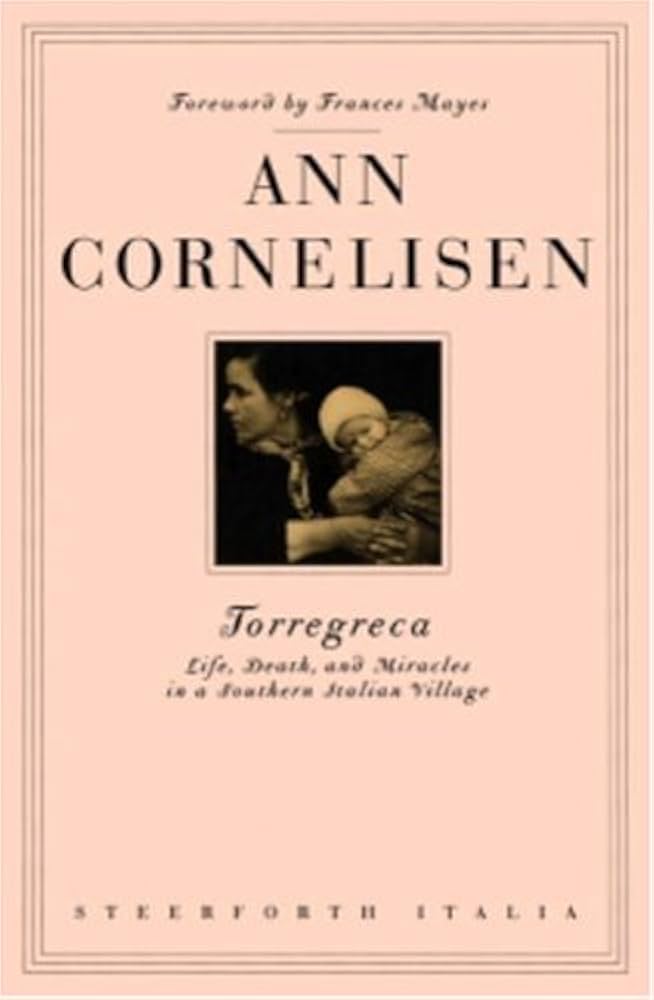
Torregreca: Life, Death, and Miracles in a Southern Italian Village by Ann Cornelisen
Ann Cornelisen made a career out of writing memoirs—four of them, as well as two novels—covering the 1950s and 1960s, when she lived in various parts of southern Italy working for the British charity Save the Children. Really, though, Cornelisen’s “memoirs” are in fact poetic and searing depictions of a Italy itself. I read and reread her books to experience the atmosphere of the impoverished Italian south as my immigrant grandparents would have known it. Torregreca: Life, Death, and Miracles in a Southern Italian Village, her 1969 debut, is a great starting place.
New York Times journalist Helene Stapinski’s Murder in Materafuses two genres, memoir and true crime, in a way that offers readers both the intense personal connection of a memoir and also the revelatory shock of cracking a cold case investigation. Stapinski heads to Basilicata to get to the bottom of the rumors about her great-grandmother Vita, a supposed “loose woman” and “murderess.” The truth that what Stapinski uncovers may change what you know about your own family’s immigrant forebears.
If you’re looking for a more uplifting memoir, Tembi Locke’s From Scratch: A Memoir of Love, Sicily, and Finding Home is just the ticket, although it will break your heart before it heals it. Locke chronicles her move to her late husband’s native Sicily after his untimely passing from cancer. Come to this one for the celebration of life and for the romance, stay for the food.
Now to move into fiction, where there is truly something for fans of every genre. I am, by day, a crime fiction editor, so I speak with some (perhaps dubious) professional authority when I say Patricia Highsmith’s The Talented Mr. Ripley is one of the greatest crime novels of all time. The book, which follows con artist and serial killer Tom Ripley through Italy on a devious journey of identity appropriation, is one of the great pillars of the antihero fiction genre.
If your preferred genre is horror, allow me to point you toward Danielle Trussoni’s The Ancestor, the story of an Italian-American woman who learns she has inherited a noble title in a remote village in the western Alps. When she arrives at her ancestors’ castle, she realizes it contains a monstrous secret…
Ernest Hemingway’s A Farewell to Arms must be included on this list, whether you love or hate Hemingway. A Farewell to Arms, the story of an American soldier fighting in the Italian Army,is one of a short list of books that depicts World War I on the Italian front—a brutal and watershed moment in history. Hemingway was critically injured while serving as an ambulance driver on the Italian front, and his first-hand experience lends the text a realism that got it banned in Italy until 1948.
One of my favorite novels of the last decade is Katy Simpson Smith’s The Everlasting, a novel set in one neighborhood in Rome over four different epochs over two thousand years. One of these threads is a modern American microbiologist on a research stay in the Eternal City. Smith’s poetry and research come together into a singular Roman reading experience.
Robert Hellenga’s The Sixteen Pleasures isabout an American book conservator who goes to Florence after the historic flood of 1966 to help rescue flood-damaged books from a medieval convent library. The discovery of a volume of 14th-century erotica throws the book-collecting world—and the nuns—into a tizzy. Bibliophiles and Italophiles alike will delight.
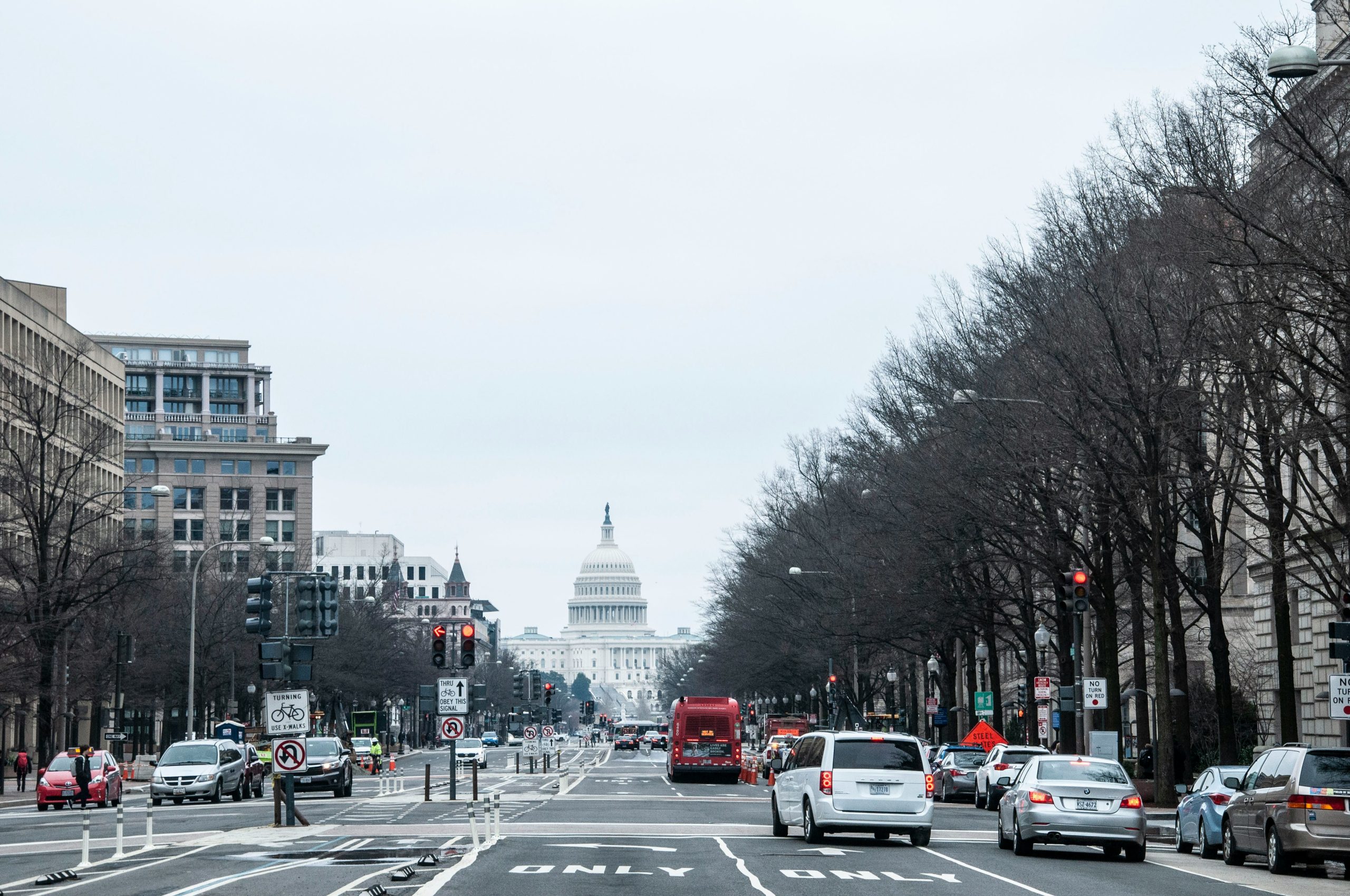
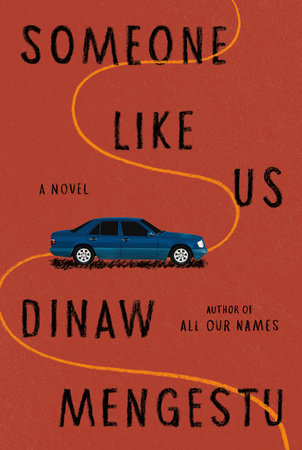
Dinaw Mengestu’s novel Someone Like Usis about grief, about attempting to comprehend loss because of exile, because of physical and emotional distances that often fracture our ability to truly understand our loved ones. The novel’s narrator, lovingly called Mamush by his family, returns home to Washington D.C. and finds that a beloved father-figure, Samuel, has passed away. The story spans a total of three days. And the chapters alternate between showing us Mamush’s journey from Paris, where he lives with his wife and son, to Washington D.C, and the aftermath of the news of Samuel’s passing.
In conversation, Dinaw tells me his relationship to writing is full of surprises, and one of the joys, particularly with writing this book, was the sense of discovery, the very fact that he didn’t always know what’s going to happen. Interestingly, my experience as a reader was marked by a similar sense of wonder, awe, and often, heartbreak as the narrative seamlessly moves through past and present and Mamush tries to uncover who Samuel really was, and what his mother’s life was like, before she moved to the DC suburbs. In Mamush’s yearning to understand the two most important people in his life is an attempt to understand himself, and his place in America.
A freelance journalist and the author of three novels, all of which were named New York Times Notable Books, Mengestu is also a 2012 McArthur Fellow, and has received many other honors, including Lannan Literary Fellowship for Fiction, and a National Book Foundation 5 Under 35 Prize. Over Zoom, we talked about the fear attached to being a minority, deception as an immigrant’s tool for survival, who gets access to stories and the authority to tell them, and more.
Bareerah Ghani: A significant throughline of the novel is paranoia that’s quite specific to being an immigrant. We see the narrator’s mother and Samuel at various points instruct him not to trust anyone who isn’t Ethiopian. To what extent do you think this distrust, particularly in Americans, is a product of a system that has failed its minorities?
Dinaw Mengestu: Oh, I think it’s inextricable from that. They all come into contact with institutions of power in different ways. And those experiences sort of engender some of that anxiety and sense of mistrust. So there’s that sense of how these institutions as a whole are not looking out for you, and in fact, in some cases might sort of be actively hostile towards you. Some of that is about the kind of overt racial based hostility towards immigration that certainly preceded the Trump-era, but that obviously became explicit during those four years. It became magnified and became policy. It’s literally policy that we can now discriminate against immigrants, and particularly immigrant communities. So there’s that. And then there’s also a quieter, sort of unnamed space, where anxiety comes from that understanding of being a minority and vulnerable. But you can’t necessarily locate it. It’s one thing when you could say, Okay, don’t trust the judges, or don’t trust the immigration officers, or the police, or the teachers in a particular school because they might look at you in a certain way. Because those things can be named, so the anxiety has a place to be housed. But then there’s the other anxiety which can seem like paranoia because you don’t know where to locate it but you know it’s there.
It’s literally policy that we can now discriminate against immigrants, and particularly immigrant communities.
There’s that Dick Gregory joke: just because you’re paranoid doesn’t mean somebody isn’t watching you. You sense something isn’t right. And you understand that you’re vulnerable in particular ways, even if you can’t always name it. And so, as a result, that paranoia, that fear becomes diffuse. It permeates, sort of embeds itself in all the ordinary facets of your life. So if you’re going to go to the store, you’re like, Okay, who’s around me? And you walk and move through the world in a slightly different way, because you don’t necessarily trust its environment and your surroundings. Because you feel, of course, alien and outside.
BG: With Samuel though some of it, sometimes, felt like it was also coming from a place of not knowing what’s real and what’s unreal because of his addiction. I’m curious if that was something that was playing in your head while you were creating that character.
DM: Yeah, it does come from there. But these things are all kind of interwoven. It’s not exactly causal, say, the paranoia comes just from the addiction, or the addiction isn’t because of the paranoia. Samuel’s own life before he came, and choices that he made prior to coming to America certainly impact that as well. But I do think that the paranoia’s roots are fundamentally deeper than any substance abuse issues that he has. Those magnify the paranoia, and push it to the foreground. But his greater understanding that there are things he just feels anxious or afraid about comes much more from all the small contacts that he’s had with American life, from that initial job interview to every time he’s being pulled over to just the way he understands that his vulnerability can be toyed with by institutional forces. Certainly, the substances put it on a louder scale, it becomes a way to almost sort of dramatize that anxiety and those fears but they would have been there anyway.
BG: There’s this line that Samuel says, it goes something along the lines of how you need to lie to succeed. And the novel really explores this idea that the stories we tell about ourselves shape our sense of self and how we’re perceived by others. Lying and pretending often come up a lot. I’m curious about your thoughts on deception as an integral tool for survival, especially for immigrants.
DM: Yeah, there’s a part of that, like, you need to be careful what you reveal, and sometimes, it might be better to invent a narrative than to give somebody else too much access to you. The narrator’s girlfriend at the time tells him, you have to make this up because people will try to extract your narrative to try to do something with it. And so, to some degree, that sense of deception becomes a protective tool. You keep those private parts, private. Because there’s only so much that can be understood, and you also worry about even the ability to have those experiences translated to somebody else. And then, that’s when you begin to become the Other. When somebody begins to use language as a distancing mechanism, where they expect, or sort of want you to perform a type of narrative. And so, rather than giving them a true one, you offer them what can be considered a deceptive one, a fraudulent one, in some cases.
Alongside that though, there’s also, as you said, something about the stories that we tell, which can oftentimes become sort of a portrait of who we are. Throughout the novel, there’s a lot of wrestling over which stories are told and how they’re told. The characters are constantly concerned with their representation in the world. There’s the other side of it too, where other characters are like, Be careful which stories you tell because those aren’t the totality of our experiences in America, like, tell the story of me and my BMW because that’s also equally true but then they also critique the very narrative that’s being told in a certain way, which is also a very real experience of challenge and struggle inside America. To wonder about how that story is not only told, but also how it’s going to be received on the other end of it—I wanted some of those questions to infect the narrative. Not only in terms of which stories are told, but also how they’re told, into what aim, into what intent? And to make the character telling the story implicated in that process—he invents, narrates and kind of constructs his own false identities. Because that false identity lets him live a version of himself that he didn’t get to live, a version that seems more authentically American while the one he actually experienced would be an almost inauthentic American reality—the authentic American reality wants a type of performance of goodness and meritocracy, while the reality of those things is quite suspect, sometimes.
BG: This reminds me of that moment when the narrator is speaking with a professor who is being reductive and the narrator says, “I wanted to tell him…I didn’t live in the world of happy and unhappy childhoods…We worked. We did what we had to do and never considered other options.” How do you contend with this reality where the immigrants’ lived reality is reduced to stereotypes, often in academic circles, despite the explicit discourse on diversity and discrimination?
The authentic American reality wants a type of performance of goodness and meritocracy, while the reality of those things is quite suspect.
DM: I think, to some degree, you try to figure out how to turn the attention back towards the person asking the question, and try thinking about how the person asking the question, to some degree, dictates the response. There’s a set of expectations that are already brought to the table before any answers are given about what your experiences are, what they may look like, and once that happens, the story to some degree is asked to perform in a certain way. Questions such as why are you here, what brought you here, ignore the very fundamental fact that I’m here now. And really, the core problem is, What do I want now? And what am I going to do next? And that’s the question that oftentimes isn’t asked, or considered, because it requires a different set of relationships with the person asking the question. So with the character, that professor, some of it was to try to figure out how to actually highlight not what the narrator says—because he never actually gives an answer, because he doesn’t know or he’s trying not to perform the way the professor is expecting him to. This is somebody who’s intelligent, who has a whole ontology for how stories are constructed, and who’s thought very deeply about it, but nonetheless is still blind to certain fundamental facts, and so he expects this person’s narrative to follow a set of ideas that he’s already constructed, that are reinforced by the fact that he has an intellectual discourse.
The intellectual discourse in academic circles is the very thing that actually, to some degree, reaffirms the goodness of its intent because it’s surrounded by critical discourse. So how can I put that problem into the space of the narrative? How can the very challenge of trying to answer these questions be brought in if somebody is approaching it with this framework in mind. It’s not even that the question is wrong, but the entire apparatus around the question is problematic to begin with.
BG: In your experiences as a journalist and as an author, have there been moments where you’ve come head on with this idea of, let me challenge this entire framework?
DM: One of the books that had a big influence on this was Susan Sontag’s Regarding the Pain of Others. Her and other writers that I was thinking about were trying to position these narrative problems as something that begin, not with the story that’s being told, but with the person who’s receiving this story. There’s always a gaze on the other side of these narratives or these images that’s going to impact, or sort of demand how these things are performed. And they try to begin from thinking about how that perspective is implicated in the process from the very first time. And then, how does that get explained, or sort of compounded by a recognition of fundamental power differences that can exist, especially when we think of narrative as a commodity. So it’s not just about one person asking a question or hearing a story, but, in fact, a larger culture in society. What are the ways in which we implicate those people, we implicate that perspective in the telling, as much as possible?
In this novel, I wanted the narrator himself to be implicated because he also comes from these places of privilege and authority that are different from those of his parents. And that also couldn’t be taken for granted. His relationship to these stories, his access to them needed to be a problem because they’re not his experience and the limitations of his ability to tell that story needed to be engaged with, and by extension, my limitations, of course, are part of that. These are lives of people I’m very close to, that I’ve experienced, but they’re not mine. I believe deeply in fiction and the ability to narrate from beyond our experiences, but I also think that rather than just asserting the authority and autonomy of the writer, which I fully agree to, it’s interesting to think, well, we can imagine whatever we want but how do we do that ethically? How do we actually bring our act of imagining, not just as something that we get to do, but as part of the narrative approach?
BG: The larger question, then, is really about what stories can we really tell, which stories are ours to tell, even if they are technically ours. Even as people from communities who are experiencing these things, we have some authority, but not completely. And I see that in your narrator, especially in that part where he’s trying to excavate his mother’s past and Samuel’s past, and then he comes across obstacles, and it’s not obvious to the reader, but it is sort of there, the question that you can’t have access to these things.
DM: Yeah, very much. And yet, at the same time he does have to eventually kind of imagine his way into it. In order to do that though, at least for this book and this character, certainly with my relationship to it, there was a necessity to understand and respect those limitations. If it’s like, Oh, I’m gonna imagine my way into it because imagining is always somehow authentic, I think that’s a problem. If you’re like, Oh, I respect the fact that this is an experience beyond my own, it’s easy to step away and say, Well, I’m not gonna write about it. So that’s one possibility. The other possibility is to say, well, here’s a barrier, a difference in experiences and lived realities. And because I’m an author, I’m going to just imagine my way through, in which case, there is no barrier, because you’ve just given yourself the authority to do whatever you want. I was more interested in thinking, Okay, here’s a barrier, that barrier’s real, and it speaks to something fundamentally critical about the value of our experiences and the fact that I can’t be inside of your experiences. Yet, I still want to get closer to understanding you. So what do I get to make that respects that divide, but doesn’t just try to leap over it? It’s like I’m trying to open a door through it.
BG: In the last few pages we get this conversation between the narrator and Samuel. I’m curious if in those scenes you were trying to play with this idea of not making that leap in imagination, but maneuvering and trying to imagine a reality, a narrative, that was an attempt to understand rather than just take that leap and create something that the narrator could have claimed as his own.
We can imagine whatever we want, but how do we do that ethically?
DM: Yeah, I like that phrase—it’s an attempt to get to something and to somebody. There’s a wonderful phrase from Sontag that I think of all the time. She’s talking about the ability to describe conflict and war, and the problem of trying to take a story and use it to magnify it, or claim any kind of authority over those experiences. She uses Goya as an example—he made a series of paintings around this conflict and in every case, it was the idea that something like this happened. And to some degree, that’s the best you can do—you say something like this happened, something like that happened, and you gesture toward it in different ways, while at the same time acknowledging that there is no one totalizing experience that could ever fully encapsulate that reality. And that’s not a loss, though. That’s what the imagination offers—these other ways of understanding Samuel’s story.
So when that moment happened in the novel, I knew something wasn’t right. I was enjoying the moment because it’s such a wonderful thing that they’re together. But I knew it wasn’t real in a certain way, and then when I was able to gesture back towards this object that he had written, it was a way to get at that idea that here is something that’s real, that he made, that we don’t ever get to really see. We get glimpses of it, but that thing is made in conversation with what the narrator says. So it’s like, you’ve got these things, you’re not imagining out of nothing. But that’s not enough—those are only fragments of those stories. So how do you actually create an architecture or a narrative that attaches to those things, while at the same time, recognizes that it’s still just an invention?
BG: So there’s this part where Samuel tells our narrator that there’s no mental illness in Ethiopia. There are no drug addicts or alcoholics, and instead, the narrative is framed as one involving a loss of faith or culture. And that really struck me because I’m Pakistani and, in my culture too, narratives are morphed, and gossip and word of mouth has so much weight. Amidst this, how do we get to the truth?
DM: Thinking about the way narratives work inside of our communities, especially in the diaspora, I think there’s a kind of protection that happens. When we say these things don’t happen in Ethiopia, we’re more likely to say that when we’re outside of Ethiopia. Because you’re protecting those cultural spaces, and the memory of those spaces because of the distance, and also because I think there’s a deep understanding that the value of the culture itself is under threat once it’s away from home, in migration, and once it’s in the Western context where other values begin to sort of dominate.
One of the flip sides of this though is sometimes you actually have the ability to name things that you couldn’t have named back home—a different type of vocabulary becomes possible. So Samuel’s able to make that joke partly because he understands that now, in this context, these things can actually exist. Because in Ethiopia they always needed to be masked. And obviously, that changes because cultures and societies aren’t static but there’s a type of recognition that becomes possible with migration. There’s language that becomes available.
It had been ten days of sleepless nights punctuated by nightmares, ten days of television news crews in the front yard, ten days of headlines like 11-Year-Old Girl Still Missing in Cave and How Long Can She Survive? No Luck on First Expedition to Find Lost Girl, ten days of fast food for dinner (if there was dinner) after her parents’ long hours at Forrester’s Caverns, overseeing the rescue team. But now, after an additional three days of staring at her sister through plexiglass in quarantine at that dismal Phoenix hospital, Max was home—not home exactly, but back at their vacation rental in Quicksilver Springs—and Holly was looking forward to things going back to normal.
The first dinner after she was back they had spaghetti with meatballs and a kale salad. Holly watched, nibbling a piece of kale, as Max spooled one generous helping of noodles after another around her fork, shoving each into her mouth. When she was done with the pasta, she grabbed a handful of meatballs from the serving dish and took a bite before laying the obliterated mound on her plate and slurping the sauce off her fingers. Marinara bloodied her chin. It was all Holly could do not to gag.
“So hungry!” exclaimed their mother. “That’s good!”
“Well, there wasn’t much to eat down in the cave, was there, Maxie?” said their dad.
Max shook her head. Before the rescue team had found her and been able to lower food down, Max had survived—for eight days—on the four Kind bars in her fanny pack.
There was something weird about Max’s face, thought Holly. Something off. Max had always been the pretty one, while adults used words like “unconventional” to describe Holly. But now Max’s eyes, once a crystal green, were dulled and bloodshot. Her shimmering golden hair had lost its sheen and hung limply around her face, which was sharper now, more angular. She twitched at every fork clank, sniffling and shifting in her chair.
“Can you turn off the lights?” Max asked.
“Of course, sweetie!” crooned their mother. They spent the rest of the meal in darkness.
After dinner, Holly FaceTimed with her best friend, Justine, back home in LA, as she did every night. In the middle of their conversation, Max walked into Holly’s room without even knocking.
“Get out of here!” Holly screamed. Their parents might have been letting Max do whatever the heck she wanted, but Holly sure wasn’t. Max started to say something but stopped when Holly glared at her. She retreated and left the room, thank God.
“Did she drink her own pee?” Justine asked. “That’s what you have to do, you know.”
Justine was always asking the grossest questions.
“No, disgusting,” said Holly. “There was an underground stream.”
“You know you are going to be the coolest eighth grader. Marie Jackson was asking me all these questions about you.” Marie Jackson was the daughter of a famous actor, and one of the most popular girls at La Brea Middle School. Justine and Holly hated Marie.
The conversation shifted, as it often did, to Justine’s crush on Sean, who was in her summer performing arts day camp. Sean was late for rehearsal today. Sean had skateboarded by Justine at the park and nodded at her. Sean had liked one of Justine’s posts. Who cares? Holly wanted to scream at her friend. But she never did. Through her earbuds, Holly heard a clatter coming from outside her room. Still holding her phone, she tiptoed down the hallway to the dark kitchen. In the dim glow of the digital clock on the microwave she could just make out Max’s slight silhouette at the counter.
“I’ve got to go,” she whispered to Justine. “Talk tomorrow.”
She flipped on the light. Max jerked her head up and bared her teeth. She was grasping a metal serving spoon, poised to eat cereal and milk from a large mixing bowl. It looked like she’d dumped the entire box in there. “Turn it off!” Max hissed.
Holly did as she was told. “What the heck are you doing?” she whispered.
“I was hungry,” said Max, between slurps of cereal.
Holly lingered for a moment. Something was up with Max, she could tell.
“What are you looking at?”
“Nothing, freak,” said Holly.
Back in her room, she listened to the spoon clinking against the metal and wondered what had happened to her little sister.
Those ten days that Max was gone had been scary and boring at the same time. That was what Holly had felt in the Forrester’s Caverns State Park ranger station: fear and boredom. Boredom while waiting for her parents to finish meeting with the park manager so that she could go in and talk to him. Fear while staring at the puffy, watery look on her mother’s face in the manager’s office. Holly sat down in the folding chair next to her dazed father, the metal cold on the backs of her thighs. Two police officers stood behind the park manager, a heavyset man who introduced himself as Ranger Garcia.
“I’d like you to tell the officers here exactly what happened.” He spoke to her in an artificially high, soft voice, enunciating each word, like someone talking to a small child.
One officer held a pen and notepad, expectantly.
She looked to her mother, who avoided eye contact. Her mother had said very little to Holly since the incident.
“Go ahead and tell them what you told us, Hols,” said her father.
So she did: that they’d been hanging back behind the tour group. Holly had been minding her own business, and when she turned to check on her sister, Max was gone. She’d called out to her, even shined her headlamp into the shadows beyond the dim green in-ground lighting that illuminated the stalagmites surrounding the walkway. When Max didn’t answer, Holly immediately ran to tell her mother. While she talked, the officer scribbled furiously.
Garcia looked as if he believed her, but it was hard to know for certain. He slid a laminated map of Forrester’s Caverns across the desk. “Can you show me where you were when you last saw your sister?”
The map reminded her of a diagram of the digestive system. She traced her finger through the cave entrance and into the caverns, all with dumb names. The Candelabra Room was where she’d last seen Max, but if she told them that, then her parents would know that she’d waited until the Hall of Echoes to say anything. She pointed to the Forrester Passage, which came right before the Hall of Echoes, and handed the map back to Ranger Garcia.
“Thank you,” he said. “I’m sure this isn’t easy for any of you, but I want you all to know that my guys have made Max their priority. They will find her.”
Her mother began to cry again. Then it was time to go.
In the car, after they’d picked up Burger King for dinner—a rarity for the family—her mother turned around to face Holly for what felt like the first time since Max’s disappearance.
“This is your fault, you know,” she said. “You should have been watching your sister.”
“Lisa,” her father said, weakly. “Don’t.”
Her mother sighed and turned back around in her seat. The greasy fug of the fast food made Holly queasy as the saguaros whipped by on either side of them. Was Max beneath them at that moment, in some far-flung underground passage? She hoped the jacket her mother had forced Max into was keeping her warm in the cave’s chill.
Back at the vacation rental, Holly lay flat on her bed and stared at the ceiling. She could hear her mother in Max’s room, sobbing. It wasn’t until the next day that she realized her parents had left dinner in the car.
The morning after Max came home, their mom made pancakes for the girls, but only Holly was awake to eat them. She sat at the table, gloomily sopping up syrup as her parents traded glances in a coded language that Holly was sick of trying to read. When Holly asked what was going on, her dad said that the two of them should go on a hike before it got too hot and give her mom and sister some space. Holly tried to protest, but it was futile.
They drove to an “easy” trail along a wash. Holly huffed along, sweating beneath the stupid hat her father forced her to wear. They were each carrying a gallon of water in addition to their water bottles, “just in case.” Her backpack straps dug into her shoulders.
She was so sick of the desert. “You’ll like the Southwest,” their father had told her and Max, when he’d informed them that their family vacation this year would be to Quicksilver Springs, Arizona, two hours outside Phoenix in the middle of nowhere. “It looks a lot like that computer game you’re obsessed with.” He meant Colony, which was set on a desert planet. As it turned out, it was better on the screen than in person. Sure, she was into the giant rocks, and Max had found a tarantula in the yard one night. But the extreme heat was dizzying, and after a few days, she missed walking around the Third Street Promenade with Justine, eating churros and checking out boys. And then, of course, the cave incident had happened.
“Dad,” she said, “when are we going home?”
“Soon,” said her father. “The doctors want to make sure your sister is okay to travel.”
“Can I go home?”
He stared at her. There was a stripe of white on his nose where he hadn’t rubbed in sunscreen all the way. “Out of the question,” he said.
“I can stay with Justine,” Holly said.
“No,” said her father. “Believe it or not, your sister needs you right now.”
Holly doubted that. She’d felt something unexpected after Max had disappeared: the relief that came with being sisterless. People felt sorry for her, and she liked it. She liked not having Max there to steal her clothes; she liked not having her interrupt her FaceTime calls with Justine; she liked not having to call shotgun when one of her parents drove her somewhere. Max had it so freaking easy. People cooed over her all the time about how pretty she was, how “darling.” It was nice for Holly, with her lanky limbs and oily skin, to be the center of attention for once. But whenever this notion crept into her head, she pushed it away. It was evil, she knew, and she felt awful for even thinking it in the first place.
She’d felt something unexpected after Max had disappeared: the relief that came with being sisterless.
The terrain became rocky, the trail narrowed, and soon they were scrambling single file over boulders. Holly stormed ahead of her father, determined to get this death march over with. She was about to climb over a particularly large rock when her father yanked her wrist away. “Look out!” he cried.
Nestled in the handhold that Holly was about to grab on to was a scorpion, its shiny black tail curled to attack.
“I could have gotten stung and died,” shrieked Holly. “Can we please go back to the house?”
The dazed expression that he’d had the whole time Max was gone flashed across her father’s face. “All right,” he said robotically.
Later Holly came downstairs to find Max on the couch, watching TV, which was against the rules. The shades in the living room were pulled down. “How come Max gets to watch TV before dinner?” she asked their father.
“Why don’t you go help your mother?”
Holly groaned and walked into the kitchen.
“Oh good,” her mother said, hand in a chicken, “you’re here. I’m making a roast chicken for your sister, and the rest of us are going to have grilled cheese and broccoli. How does that sound?”
Holly despised broccoli, which her mother knew, but she wasn’t about to get into it with her. “You’re making an entire roast chicken for Max?”
Her mother washed her hands and dried them on a dish towel. “It’s what she specifically requested, and the man at the grocery store gave it to me for free. How cool is that?”
Holly didn’t say anything. She massaged her shoulder, sore from walking with the water bottles that morning.
“She’s not going to eat the whole thing. Stop giving me that look.” She picked up a bag of onions from the counter and handed it to Holly. “I need two of those, sliced. Then you can get started on the herbs.”
Holly sighed and began her work. The dull knife slipped each time she tried to cut through a bulb. Her eyes teared up.
“There’s a news crew coming tomorrow to interview us as a family,” her mother said, churning a pepper mill over the chicken. “I bought you a new dress. It’s on your bed.”
Normally Holly would have been thrilled at the prospect of being on TV. But the idea of spending another day in this miserable house made her want to retch. Plus she was sure that whatever her mom had gotten her was butt-ugly. “Can’t I just wear normal clothes?”
“Where did I put those giblets?” her mom said to no one, and wandered out of the kitchen. Typical. Leave me to do the work while you go off and dote on Max, thought Holly, wiping her nose on her sleeve. A scream came from the dining room. She dropped the knife and ran toward the sound. At the dining room table, their mother was trying to wrestle the bowl of chicken innards away from Max. Their father watched, helpless.
“Sweetheart,” shrieked their mother, “you cannot eat those raw!” Max didn’t loosen her grip on the bowl. “Charles,” she said, “do something.”
Their father crouched beside Max. “Give that back to your mother, please,” he said.
“But I want to eat it.”
“Maxine, that will give you a very bad tummy ache.” He reached his arm down to pull the bowl away. Max let out a snarl and gnashed her teeth at his wrist. Their father jerked his arm away just in time.
In a flash she’d shoved the glistening mess into her mouth and swallowed.
“Max!” their mother cried out.
“Oh my God, that’s so gross!” said Holly. Max flashed her a bloody-toothed grimace.
Their parents looked at each other, mouths agape. “Come on, Max,” said their mother. “We’re going back to the hospital.”
“Lisa,” said their dad, “let’s not catastrophize.”
“I don’t want to hear it,” their mother spat. “After everything—”
Holly tensed, anticipating a fight. Thankfully, their father held up his hands in surrender. “Fine,” he said. “Go ahead.” She slung her purse over her shoulder and grabbed Max by the wrist. “I’ll call you,” she said, slamming the door.
Holly and her father stared at the bowl that had held the glossy innards. Then her father picked it up with a frustrated sigh and dropped it into the kitchen sink. Holly found a paper towel and wiped the droplets of chicken liquid from the tabletop.
When Holly had first pulled her mother aside to tell her that Max was missing, her mother had told her the cave was no place for goofing off. They’d paid good money for this tour. She demanded that Holly go get her sister and tell her that since the girls had been so horrible all day, fighting over Holly’s silly sweatshirt, and now this, there would be no ice cream, no souvenirs from the gift shop on the way out.
“Mom,” Holly said in a trembling whisper, “I’m serious.”
Something wild lit her mother’s eyes. She called out Max’s name, running deeper into the cave. The tour guide stopped her lecture on cave geology and followed her mother, lips pressed to her walkie-talkie, shouting code. Her father went next, chasing after their bouncing head lamp beams. Holly stayed put, the confused voices of the tour group around her echoing off the walls.
No one knew how Max had gotten so far away from the group. She was found all those days later a dozen miles from where she’d run off, in a part of the cave that was closed even to park staff. The hypothesis was that she’d floated down the underground stream. It was a miracle she had survived.
How was what Holly wanted to know. But her parents had warned her not to ask Max questions about the cave, that she’d tell them in her own time. Holly had read up on Forrester’s Caverns during those days alone in the vacation rental. She knew about how the cave had been discovered by uranium miners, that the bats that lived there were called trogloxenes because they left the cave to feed, that cave fish had no eyes and were called troglobites since they lived only in the cave and never left. There were weirder things about the cave, too—conspiracy theories. UFO sightings near Mount Vista. A two-headed rabbit skeleton found at the entrance. Rumors of a thirty-foot-long snake seen slithering through the Hall of Echoes.
The websites that made these claims looked like they’d been built in the nineties, filled with capital letters and long-winded screeds. Most of them focused on creatures called mudmen: humans who’d gotten lost in the underground maze and become mutants who lived on raw flesh. It was the uranium-tinged water that was responsible for the mutation, apparently.
It was nonsense, Holly knew, but what if it wasn’t? Then what?
Though it was well after 9:00 PM by the time their mom shuttled Max back from the hospital, they gathered around the table to eat as a family because their dad had gone ahead and prepared dinner. Their mother recounted what the doctor had said. It turned out that raw chicken was only dangerous if it had salmonella, which, the doctor said, would have manifested symptoms by the time they arrived at the ER. “You gave us quite a scare,” she said to Max. The shadows on her face were intensified in the candlelight—a compromise, since Max had thrown a tantrum when Holly switched on the overhead light in the dining room. Across the table, Max was slowly breaking down the chicken with her hands, shoving the flesh into her mouth.
“Why are you letting her do that?” Holly said. It was truly disgusting, and Holly couldn’t believe that her parents weren’t saying anything.
“Holly,” said her dad, “just eat your dinner, okay?”
She pushed a mushy broccoli tree around on her plate. Her father should never be in charge of cooking. “I’m done,” she said before bringing her half-empty plate into the kitchen and letting it clatter loudly on the tile countertop.
Her father called from the dining room, demanding that she come back and help clean up.
“Make Max do it,” she yelled. She slammed the door to her room. She was astounded by the BS she had to put up with from her parents.
Holly eyed the Walmart bag on the bed that held her new dress. She took one look inside: pink. Why did her mother do this to her? She knew pink was Holly’s absolute least favorite color; Holly had told her a thousand times. She threw the dress to the side of the room and flung herself onto her bed, where she started up Colony on her laptop and wandered around the planet killing everyone she saw and picking up their supplies until her mother knocked on the door and told her lights out.
A yowl from the front yard woke her. She pulled aside the curtains and peeked out the window. The house didn’t have a yard, really—it was just a fenced-in patch of desert. The moon made the sand glow a dull gray. A rabbit darted by, followed by a dark blur. A coyote? The blur stopped. It was Max. She had the struggling rabbit in her hands. She lifted it to her face and tore into its skin with her teeth. Max looked up for a moment, seeming to sense Holly, but then returned to whatever it was she was doing to the animal. Holly lay back down in bed. There was no way she could have seen what she saw. She was dreaming, or something. She drifted into uneasy sleep.
In those days that fogged together after Max went missing, Holly’s parents would leave at dawn to meet with the rescue workers at the caverns. Holly cobbled together meals from pantry items left behind by previous renters: mushy beef stew out of a can, Triscuits and salsa, Cup Noodles, its Styrofoam container faded and yellowing. She spent hours on Colony, chatting with strangers, slaying demons. It felt good to be anonymous, to have nothing to worry about except where to find ammo. When her parents came home for the night, her mother would retreat to her room for the evening, leaving Holly and her dad to eat their burgers and fries alone, the crinkle of wrappers and the gentle pop of peeled-back condiment plastic the only conversation they could manage.
Ranger Garcia told them that keeping attention on the rescue meant resources for the rescuers, and resources for the rescuers meant they would find Max sooner. Her parents agreed to let the press photograph them as a family. They stood in front of the vacation rental in the scalding late-afternoon sunlight as reporters took their picture, her parents’ expressions stoic. A gold cross pendant glinted on her mother’s neck. She had let Holly put on lipstick and mascara, and Holly had even snuck on some foundation, hot and waxy on her face. Her mother’s hand clutched Holly’s shoulder, the first contact she’d had with her in days. Holly tried to focus on Mount Vista in the distance to keep from breaking down as the cameras clicked and flashed around her. Finally, her father wordlessly led the three of them inside, where they all disappeared into their rooms.
The photos had run in several major newspapers. Max’s plight had now turned viral, and Holly soon began to get messages from friends back home, from people at school who she hadn’t even realized knew who she was, asking how she was doing and sending prayer hand and heart emojis. They used hashtags on social: #SaveMax. #ForrestersCaverns. #CaveRescue.
Strangers were using those hashtags, too. There were theories. Holly pored over these. People had exhaustively analyzed the maps, posting their findings on YouTube, speculating where Max could be. Some said she’d run away from abusive parents. Some said the whole thing was a hoax, that her family had created a stunt for attention. Others assumed Max was dead, citing statistics for missing children. Holly clicked through videos and message boards. None seemed to offer anything resembling an answer.
By the time the news crew came, the house had lost the musty scent of dust mixed with putrefying garbage. Now it smelled like the coffee her mother had brewed. She’d woken Holly at dawn and tasked her with a sizable list of chores: getting rid of the containers of rotting flowers; taking out trash from the overflowing wastebaskets; washing dried tea bags and hardened black coffee silt out of mugs; disposing of the fast-food wrappers that littered the living room.
Sadie Jones, the reporter, was younger than Holly had expected her to be. She had straight black hair and flawless makeup. She’d be asking them questions, she said, and they could stop if things got too intense. There was a warmth in her voice that made Holly want to tell Sadie everything. A crew member turned on a light. Max hissed at him, but if he noticed, he pretended not to.
Holly wriggled in the stiff new pink dress between her mother and sister on the sofa. Because rousing Max had been an ordeal, Holly had not had the chance to tell her about her strange dream. Their mother had managed to wrestle Max into an equally itchy-looking purple dress and braid her hair just in time for the news crew. Still, the gray circles under her eyes made her look like one of the dwarf ghouls in Colony.
“Can you talk about the moment you realized Maxine was gone?” Sadie asked their mom, who had done a less-than-perfect job with her own makeup. There were streaks of poorly applied concealer under her eyes, and a dusting of mascara on her lower eyelids. She felt a pang of embarrassment on her mother’s behalf as she began to tell the story—the same one Holly had told to Ranger Garcia.
The dress became stifling, then. She imagined herself interrupting their mom, telling everything to Sadie: the fight, what she’d said to Max to make her run off. How she’d waited nearly twenty minutes before telling their parents about Max’s disappearance, because she hadn’t actually believed that Max was gone. Instead, she tugged on a loose piece of fuchsia thread in the hem of her skirt until their mother nudged her to stop.
Sadie’s eyes were glistening now. “How in the world did you get through the agony of not knowing where your daughter was?”
“Prayer,” their mother answered, to Holly’s surprise. Holly hadn’t seen their mother pray once and couldn’t remember the last time they’d gone to church. The reporter nodded, smiling warmly, and turned to Max. “And Maxine, that must have been very scary down there in that cave. What did you do to keep your spirits up?”
Holly could feel Max fidgeting. She smelled like sweat and moldy towels.
Holly doubted their mother had been able to coax Max into the shower this morning.
Then Max let out a long, whistling shriek—something between a cat in heat and a bird of prey. The same noise, Holly realized, that had woken her the night before.
For the briefest moment, Sadie dropped her reportorial professionalism, her mouth frozen in a shocked O, hand to her chest. Max stood and sauntered out of the room.
“Did you get that?” Sadie asked the cameraman.
“Maxie, honey?” called their mother, and followed after Max. “I’m sorry,” their father said to Sadie. “She’s probably tired.
Maybe we can reschedule?”
At lunch, Holly’s parents announced that the family was finally—finally!—going home. They would fly out of Phoenix Friday afternoon—the day after tomorrow!—and be in Los Angeles by dinner. Holly ran around the house singing goodbyes to random objects. “Goodbye, ugly painting,” she said to the portrait of the neon-green cactus above the television. “Goodbye, stupid sombrero,” she said to the hat hanging on the wall by the front door. “Goodbye, tacky house!” Her parents looked on with mild amusement. She was being a ham, as her mother would say. So what. For the first time in her life, Holly couldn’t wait to go back to school.
Holly ran around the house singing goodbyes to random objects.
“Chill,” said her mother. “Your sister’s taking a nap.”
“I. Don’t. Care,” she sang.
She FaceTimed Justine, but Justine wasn’t picking up. She scrolled through Justine’s social media: video after video of her on the beach in the red-and-white polka-dotted two-piece she’d bought with her allowance money, the one with the push-up bra that her mother had forbidden her to wear until she was in high school. Marie Jackson was in some of the videos, as was an older boy with patches of stubble dotting his chin and upper lip. This, Holly gathered, was Marie’s older brother. At least now Holly wouldn’t have to hear about Sean Levinson all the time.
Holly played Colony until her eyes grew itchy. Her parents hadn’t even bothered to check to make sure she was in bed. It was well past midnight when she shut her laptop and gazed out the window, half expecting to see Max outside. There was nothing but the desert, of course. But she thought she saw—no. It was probably just a plant, a man-sized cactus, far too big to be Max, in the moonlight. She walked down the hall and poked her head into Max’s room.
The mildewed odor that she’d smelled on Max earlier was tinged with a metallic stench. In the thin strip of light coming through the curtains, Max’s bed looked empty. Holly stepped inside and switched on the bedside lamp, flinching as her toe grazed something wet. On the floor was a bloody animal carcass—a rabbit, from what she could make out. She clamped her palm over her mouth to keep from screaming and turned to run out of the room. Standing in the doorway was Max. In her hand was another dead rabbit. She dropped it and ran to Holly, wrapping her arms around her waist, crying.
“Dude,” said Holly. “What is going on?”
Her sister spoke. “They want me to come with them. Tomorrow night. They’ve been sending watchers to make sure I do it. Or they’ll take me. Or I’ll—” At this, Max broke down, sobbing. Holly held her quivering body.
“Or you’ll what?”
“The sun kills us,” Max managed to choke out.
The cave must have been so scary for Max, who was, as their mother said, fragile. Now she was imagining things and acting out. Had she read the conspiracy theories online?
“No, no,” said Holly, stroking her sister’s greasy hair.
Then Max told Holly about what had happened to her down in the cave. How she’d tripped and slid down some shale, and when she realized she couldn’t climb back to the walkway had searched the tunnel for another way up. It was there that a group of creatures had found her shivering and wrapped her in furs, fed her dried fish and rabbit. At first, she was frightened, but as the days went on, she’d grown to love it down there in the dark with the mutants. She had a knack for hunting. She’d also been drinking contaminated water from the stream, which meant that her evolution had begun, they told her; she was becoming one of them. Once it was complete, she wouldn’t be able to survive in the human world. But then one of the rescue workers had found her and she’d been forced to come home.
Holly was truly impressed with her sister’s imagination. “This BS might work with Mom and Dad, but it’s not working with me,” she said, but as she looked around the room, littered with tufts of fur, she didn’t know what to believe.
Max pushed her away. “I liked it down there, with them,” she said. “I liked it better in the cave than in this stupid, boring house with you and Mom and Dad.”
“You ungrateful brat,” spat Holly, feeling unusually defensive of their parents. “You have no idea what we went through while you were down there.”
“You told me you wanted me to disappear,” said Max. “So that’s what I’m doing. And now I have to eat.” She pushed past Holly out the door.
Max’s words stung. She’d kept that from the park manager, from her parents: the fight. The sisters had been bickering all day because Max had stolen Holly’s yellow hoodie and spilled ketchup on it and Holly had snapped in the cave, calling Max a weirdo loser freak. “Get lost,” she’d commanded, her words echoing off the cave’s cold walls. “Just go away. Disappear!” Then Max had run.
Now, Holly swept up the tufts of rabbit hair and wiped the puddles of blood from the hardwood floor with a paper towel. She changed the red-spattered sheets, stuffing them into the closet. Doing everything she could not to throw up, she shoved the rabbit carcasses into a trash bag and took it out to the bins by the garage.
When she finally slept, she dreamed she was playing Colony, shooting grimacing elves that, on closer inspection, were Maxes. She woke with a wet face. She’d been crying in her sleep. She just wanted to be home where things were normal, but she was starting to think that normal wasn’t an option anymore.
The next day, Holly spent most of the time on her phone, scrolling mindlessly, lingering on Justine and Marie’s beach adventures. The rest of the time she spent checking on Max, making sure she was still there. Her sister, as usual, was asleep. Her parents kept asking Holly what was wrong, wasn’t she excited about leaving? She wasn’t, not anymore, not after the incident with her sister last night, not after she’d lost her best friend to vapid, rich Marie, but she said yes anyway.
Again, her parents let Max choose what she wanted for their candlelit dinner. She asked for In-N-Out and devoured three Double-Double burgers, Animal Style and two orders of fries. This time, her parents didn’t praise her appetite.
Max’s skin was pale and shiny, almost translucent, like the grilled onions she’d picked out of her burgers and placed in a greasy pile on her plate. Holly could see the veins in her temples pulse as she chewed her food. A shadow of fine black hair had appeared on the backs of her hands. Her yellowed nails seemed to have grown talon-like overnight.
Holly’s mother was making the pouty face she made when one of the girls was sick.
“When we get home, we’re taking you to Dr. Singh. This could be a thyroid condition.”
Max only grunted.
Holly couldn’t bring herself to eat.
“What’s going on, Hols?” said her father. “Is it a boy?” It was weird to have her parents notice her for once.
Holly shook her head.
Max glared at her.
“This time tomorrow night, we’ll all be sitting around our dining room table at home,” said her father. The joyful glow on his face made Holly furious. She wanted to scream at both of her parents, tell them that it was too late, that Max was lost already.
“No we won’t,” she said instead, doing her best to keep her voice from trembling. She felt a sharp kick under the table from Max’s sneaker.
“I don’t know where all this is coming from.” Her mother stabbed at her salad with her fork.
Holly tore a fry into smaller and smaller pieces. “Never mind,” she said.
After dinner, her father insisted that all four of them drive up to Mount Vista for one last desert sunset. It was a short walk to the peak. They watched in silence as the sky turned blazing orange over the valley. While her parents took pictures, Holly felt her sister’s hand grab her own, her long nails lightly scratching Holly’s palm. It was ice-cold. “I don’t have a choice,” whispered Max. “It’s not your fault.”
Holly said nothing. What was there to say? She pulled her hand away.
She tried to stay awake that night to listen for Max, but eventually she sank into sleep until the clank of the gate woke her up. Holly pulled her curtains aside. The sky was cloudless and the stars were dazzling. If she missed anything about the desert, she would miss them.
Max was at the yard’s edge. Next to her was a man, or something man-shaped. It wore no clothes. Its face was ghostly pale in the moonlight, its body caked in dirt. Where its eyes should have been there were black slits, narrow and gill-like. It put a hand on Max’s shoulder.
Now, now was the moment when there was still time to do something, screamed a voice inside her. She pulled on her hiking boots and stumbled down the stairs. If her parents heard her, so what. Once out the front door, she called to Max, who turned around long enough for Holly to see that there was something different about her eyes. Her bloodless skin shone silver. Then she and the mudman took off toward the mountains at an inhuman speed.
Holly ran after them, lungs straining, faster than she’d ever run in gym class, summoning every last bit of strength in her body. Coarse brush whipped her legs, but she surged ahead, Max’s stringy hair always just out of reach. She ran like she should have run back in the caverns, the first time Max had disappeared.
Her foot hit a rock or a branch or something, and Holly went flying. For the briefest moment she thought her speed had launched her airborne, and she was headed straight for the stars. But then she felt the sting of the gravelly sand as she landed hard on her palms and knee, the sticky warm blood leaking from her wounds. She tried to stand, but the pain was too much.
“Max!” she called again, as the two forms bounded away like graceful nocturnal animals, becoming smaller and smaller in the moonlight.
All around her was the cacophony of the desert at night: a din of whistles and chirps and cries of distant creatures. She gazed off toward the mountains, trying to catch a final glimpse of her little sister. There was nothing but miles of sand and boulders and shrubs. She’d lost her. Max was gone.
Once upon a time there was a castle. A prince. A girl.
Once upon a time, a story starts. A fairytale starts. But all fairytales don’t start that way. All fairytales don’t have happy endings either. Not even the originals, especially not the originals.
And those original versions, they were brutal, strange, twisty little things. Cautionary more than inspiring, so it’s really no surprise that the fairytale would find its way into horror. Or, that horror would find its way back to fairytales. Sometimes as retellings but other times, the familiar bedtime stories are turned (back) into something more sinister.
Midnight Rooms, my debut Gothic novel, makes use of the metaphor of the fairytale throughout as Orabella finds herself inside of the terrifying and enchanting world of Korringhill Manor. In writing this book I wanted readers to hold two ideas in their mind: That something can be wonderful, magical, and still deeply, deeply horrific.
Here are some books that take the ideal fairytales and drag them straight into horror.
The Bloody Chamber features popular fairytales retold through a feminist lens. This book was published in 1979 so there are aspects of it that did not age well. Our feelings on feminism are much different now, 40+ years later but this is still a stunning short story collection that has gone on to inspire many writers. These pages contain takes on “Bluebeard” and “Beauty and The Beast” that put new twists on the classics. All of the stories are written with lush language that puts the often hinted at blood and intimacies laid bare. Carter doesn’t create horror in these stories, she lets the original shadow of them seep through in her telling, stripping away the Disneyfication that we’ve grown so used to, leaving behind a beautiful, grim creation.
Fairytales have a certain cadence to them, a rhythm, you don’t have to hear “once upon a time” to know that you’re in Once Upon a Time. Kulski uses that rhythm beautifully in Fairest Flesh. This is a story about Countess Erszebet Bathory. who isn’t a fairy tale but Kulski braids this story with “Snow White” to make something new. The story takes place in Hungry during the 16th century and follows a young girl as she becomes a witch. The writing is lyrical, beautiful and well used to drag you into a story that feels familiar but never safe. The acts in this book are horrifying, a nod to the vicious history and the mythology made of it. Kulski never shies away from the violence and never loses the hold on prose leaving an uncomfortable and beautiful experience in reading.
“The Crane Wife” was one of my favorite stories growing up. It was my first introduction to Japanese folklore and the story of love and sacrifice stayed with me. The Crane Husband is not an exact retelling. It plays with the original folklore, only borrowing bits of it to weave a tale of abuse. The protagonist is not the wife or the crane but a 15 year old girl trapped in the house where this traumatic dynamic exists. The Crane Husband gender swaps the crane from a woman to a man and dives into the allegory of abuse. This book takes the concept of the fable and stretches it to examine the role of trauma in complex family dynamics.
The story of a mother trying desperately to save her son doesn’t sound like a fairy tale but The Book Eaters echoes the pace and rhythm of one throughout the horror and sorrow as we follow Devon on her quest to get her son the medicine he needs to stop him from becoming something terrible. Devon herself is not a human, she comes from a vampire like species that dine on books. Her child though is something a bit different. The reader is dragged back and forth from a haunted past to a hunted present and is still, somehow, completely enchanted with this world.
Brom is a renowned artist and also a novelist. His novel, The Child Thief, is a dark retelling of Peter Pan that splits time between the modern world and a twisted Neverland where an endless war wages. Nick, a child with an unstable family life from New York City, is pulled into this world by the amoral Peter and must survive the horrors to have a chance of any future. This is a brutal story that never lets up on the absolute terror that a fairyland can be and how vulnerable it is to be a child alone in the world.
Set in Chicago, Forgotten Sisters follows two sisters as they cling to their family home filled with ghosts and memories. Outside, the river they live along is connected to a series of disappearances. As the story progresses, more and more secrets are unearthed. Pelayo weaves a story of family and history with the fairy tale of “The Little Mermaid.” Like the rest of Pelayo’s work, the book confronts crime and real world violence, the very things that many fairytales attempt to warn listeners against.
Tanith Lee is a master known for her prose and deep, dark storytelling abilities. No stranger to dark fantasy that plunged straight into horror, she had a massive body of work to choose from. But since this opened with a short story collection I thought it would be nice to close the list out the same way. The works in this collection were all published around the early ‘80s and share a lot of similarities with The Bloody Chamber. They are all fairytale retellings, sometimes reimagined in drastically different time periods and settings from the original. But none of that really matters once the stories get rolling because unlike Carter who let the horror of fairytales shine on its own, Lee set out to make them far more violent and bloody.
Czechoslovakian track star Zdeněk Koubek’s tenure as an athlete included, among other accolades, a gold medal and world-record time in the 800-meter dash at the 1934 Women’s World Games. But Koubek’s rise from European fame to global fame came after he publicly announced in 1935 that he was transitioning to live life as a man, and would subsequently compete in men’s sports. Around the same time, a celebrated British field athlete, Mark Weston, also assigned female at birth, announced that he also was now living as a man and retiring from sport for good. Koubek and Weston’s stories were reported in newspapers worldwide and, for the most part, in turn were celebrated by a supportive public who seemed openminded to a vast spectrum of gender and identity.
In The Other Olympians: Fascism, Queerness, and the Making of Modern Sports, journalist Michael Waters tells the true stories of Weston, Koubek, and other trans and intersex athletes with nuance and care. Through rigorous archival work, a compelling narrative structure that foregrounds the people behind policy, and with a keen sense for the ways history has echoed into our present day, Waters illuminates the way that Koubek and Weston’s stories were weaponized by the International Olympic Committee (IOC) to fuel a moral panic around gender that prompted invasive, discriminatory policies and soon began to shape the future of sport as we know it.
In our current landscape, one in which trans athletes are under attack, the U.S. is in the lead-up to an important election, and the 2024 Olympic Games are underway, The Other Olympians feels eerily prescient and deeply important. I had the opportunity to speak with Michael Waters on the phone about what history can teach us about living in the present, the importance of archives, the rise in gender surveillance, and more.
Jacqueline Alnes: Can you talk about how track and field as a lens enabled you to write with such depth and nuance about fascism, queerness, gender, racism, and more?
Michael Waters: I am a queer historian. I followed queer history into the sports world. I got obsessed with the stories of Zdeněk Koubek and Mark Weston who are these two athletes who played women’s sports and each separately in 1935 and 1936 transitioned gender and began living as men. To have such visible examples of any notable person, an athlete, in that era, transitioning gender, it surprised me even as a researcher of queer history. Seeing the public’s reaction to that and the sense of curiosity about them and these possibilities of male and female, I was intrigued by how prominent these two were and then how they were forgotten.
When I started to uncover more, it all became wrapped up in track and field. Because of the nature of track and field and the accessibility, a lot more athletes could do it, across class and race backgrounds especially. That wasn’t the angle I went in expecting. This sport, for an array of reasons, has become a central vector. You see both the potential of what sports could have been if we had gone down a different road and you can also see the origins of a lot of surveillance apparatuses around gender and a lot of these anxieties around women’s sports in general. When you look at someone like Caster Semenya, you can see how these policies trickle down today.
JA: I thought about Caster Semenya, who was forced to undergo sex testing after her victory in the 2009 World Championships and whose right to race the 800 was taken away from her by new legislation issued by the IAAF, while reading your book, because you highlight, among many other things, the way that gender policing can serve as a cover for racial discrimination. Could you talk more about the intersections of racism, sexism, and classism that coalesced in the creation of these discriminatory policies?
MW: I don’t think it was inevitable that we had to go down this road of gender surveillance in the first place. When you look at the public reaction to these athletes who were transitioning, it’s not a one-to-one to today—one of the athletes was retired, one was going to transition to men’s sports—but there was this real sense of interest from the public in seeing categories of male and female being more permeable. You saw in sports magazines and major newspapers there would be these op-eds saying that everyone is a bit of a balance of male and female and usually one overtakes the other, but sometimes not. There was this idea that these categories are not so entrenched. I think there could have been a world in which we didn’t get to this point. Even when those first policies were passed in the 1930s, there was plenty of critique of them from within the sports world; it wasn’t inevitable that we would just be doing this same thing for 90 years. When you look at this long history, what you see is this failure of a lot of sports officials to think about the spectrum of the body and gender that we all exist on and to also prioritize the humanity of athletes.
What officials have done is construct their own definition of femaleness and push anyone out who doesn’t belong on these very arbitrary points, while making it seem like it’s a really objective thing that they are doing. Through history, you see that the way that male and female have been defined by sports bodies has changed from really cruel strip tests, like physical examinations, to chromosomal tests, to this grab-bag of different tests depending on the federations. Throughout sports history, this has been white sports officials, mostly men. At least in the early history, anyone who threatened this idea of upper class, white, European femininity was scrutinized and in some cases not allowed to participate in the women’s category. The women athletes who have been targeted and accused of not fitting these categories of womanhood have been disproportionately women of color and working-class white women.
JA: Weston, after transitioning, retired from sport while Koubek expressed a desire to compete in the men’s category, as aligned with his identity. Their stories were used by IAAF officials as evidence of “fraud” in women’s sports even though neither Koubek or Weston expressed a desire to compete in women’s sports post-transition. You write, “Sex testing, from the start, was never about an actual threat to women’s sports. It was always about the perception of a threat.” Could you talk more about that?
MW: If one could move between these different categories, sports officials at the time worried it would threaten the categories themselves. Instead of trying to reconceive of these male and female categories, see them as permeable, and see them as being imperfect, it became about restriction. It’s that perception of a threat that you’re referring to.
These policies were passed before there was even a real idea of who officials were trying to go after. You see that even in the way these policies were worded. In 1936, when the Track and Field officials created this policy, they didn’t spell out ‘these are the women who are allowed to compete in this category’ and ‘these are the women who are not.’ They just said anyone who drew questions of a physical nature would be physically examined and their status would be decided. It left open the door to disqualifying a lot of different kinds of people and different kinds of women because they didn’t know who they were trying to weed out. It was a panic that came before any real concrete idea of what it even stood for. I think that’s why we’ve seen it change so much and be used against so many different kinds of athletes in the intervening decades. It’s obtuse, almost intentionally.
JA: I watched Nikki Hiltz, a trans runner, win the Olympic Trials 1500m last night, and thought about a quote they gave to the NY Times:
“Right now, competing in the women’s category still feels OK for me and my gender and where I’m at with that journey. But the second it doesn’t…I’m going to choose the relationship with myself before my relationship with track and field.”
This reminded me of Koubek and Weston’s psychological distress as they privately wrestled with their gender identities and their desire to compete in a sport they loved. What might it look like to truly allow for a full spectrum of gender identity? What could sport be?
Officials have constructed their own definition of femaleness and pushed [people out based on] these very arbitrary points, while making it seem objective.
MW: From a historical vantage point, what struck me while doing this research was that there were several different Olympic sports that were originally conceived of as mixed-gender sports. Officials instituted male-female binaries after women won those sports. In the early 1900s, figure skating was a mixed sport and this woman, Madge Syers, won silver. She was the first woman to medal highly in this competition. As a result, figure skating decided to split into male and female categories. More recently, at the Olympics in the skeet shooting category, a woman won and set a new world record, and the governing body first stopped allowing women to compete and eventually split it into male and female categories.
I mention those stories just because I think I’m not the best person to come up with the path forward, but I think it’s easy to have amnesia about the past and assume that male and female categories have always been as rigid as they are today. When you look at the history, you see that there was a lot more possibility. The history itself is more complicated than we tend to remember from our present vantage point.
JA: The perspective of what has been helps to clarify the present. You mention that history didn’t have to turn out the way it did. Something that struck me in your book was learning about sexology in the early 1900s in Germany.
MW: It’s easy to forget now, but the 1920s and 1930s, in a lot of major cities, was this moment of queer potential. In Germany, you had Magnus Hirschfeld, this sexologist who had this clinic especially serving people who would probably identify as trans today. He gave them medical care, IDs so they could live under their own gender, name changes, etc. You had this center of health and research in Berlin, but then when you look globally, there were all sorts of queer communities popping up. There’s this great book called Gay New Yorkfocusing on how there were incredibly visible queer communities in New York City in the 1920s. There were drag shows in Harlem attended by non-queer people. Even if you weren’t in a major city, you were probably reading newspapers that talked about these strange things that were happening around what we would now call gender. The local newspapers would be filled with stories about people who moved between these different categories or in some cases got their name changed after transitioning. These stories would sometimes be written as scandalous curiosities but it was in the ether that these categories of male and female were not as fixed as we might think. There were these early attempts at explaining queerness to a public.
One of my favorite discoveries while researching this book was Sexology, which is a kind of pseudoscientific, tabloid-y, science magazine from the 1930s that talked about sex, sexuality, gender, for a wide public. Its idea was to make academic literature more accessible to regular people. Some of the stuff it published I don’t think would have appeared in any academic journal because it just seemed made up, but what you see in a lot of the articles they write is a real attempt to wrestle with queerness in these different ways. They would have articles about whether to be a bisexual, whether gay people can live happy lives, and new innovations in medical gender transition surgeries. Even more interesting than the articles themselves was this Q&A section in Sexology where readers could write in with their private questions about their bodies or their sex life, so you get tons of questions about masturbation, for instance, that people didn’t have space for in the 1930s, but then you also got a lot of questions about queerness and about people who were attracted to the same sex or people who were interested in living as a gender other than the one they had been assigned at birth. In the 1930s you see this real questioning and public engagement with these queer ideas and queer identities and communities.
I think it’s easy now to assume that queer history is this linear story and like there’s this turning point at Stonewall and that maybe there’s this forward path of progress, but when you look at the early 20th century, there was potential for something else that got lost.
JA: When the Nazi Party took over, there was a rise in surveillance. People who were not perceived to fit a very narrow identity, a “normative, white, non-Jewish heterosexuality,” as you write, experienced real threats of violence. How did the political climate shape queer possibilities during this time?
I think it’s easy to have amnesia about the past and assume that male and female categories have always been as rigid as they are today.
MW: There’s all of this queer stuff happening in the press, in the public, in the sports world, in the early 1930s, and I think it’s probably not a coincidence that a lot of that starts to disappear in Europe because of this rise in fascism. We even see that with Koubek himself. He went from being this very visible person who had transitioned gender in 1936 to essentially disappearing off the map by the end of the 1930s. We are limited in our archival knowledge about him, but I imagine there is some intentionality there, which is that he’s from the Czech Republic, and by the end of the 1930s the Nazis had taken over the Czech Republic. Koubek was able to get a driver’s license that identified him as a man and he married a woman in 1940. He was white, he was not Jewish, he was able to pass. I think you see a lot of this really visible queerness go underground for the sake of survival by the end of the ‘30s and it would take a few decades for that to come back.
JA: In terms of thinking about the way history unfolded, I kept being drawn to thinking about Avery Brundage’s role in the Olympics and in the creation of harmful policy. As you write, Brundage was an American IOC member who seems to have willfully ignored the rampant discrimination and violence carried out by the Nazi Party. He supported German IOC members despite their ties to the Nazi regime, chose to believe propaganda ensuring that Jewish athletes would be included in the games, and held his own desire for power above all else. What can we learn from studying a person like this?
MW: He is one of the most influential IOC officials of the modern Olympics. He became president of the IOC and was one of the longest serving presidents. He continued the same ideology up until the end. He is an important figure even beyond the contours of this book. A reason I became so interested in him and telling his story is because I think a lot of bureaucracy of different kinds, including sports bureaucracy, are intentionally boring and intentionally faceless. I don’t think most people can name current members of the IOC, for instance. What was striking to me about this story is the policies that were passed were the result not of a bureaucracy composed of people who had really deep, intellectual, humanistic discussions about gender in order to make policy. In the 1930s it was policy crafted by very specific individuals who had their very specific biases, most of whom were not just white men, but white men who came from the European aristocratic class or who had very successful businesses who could afford to travel the world for these types of memberships. Many of them, like you said, had sympathy for fascism and for the Nazis. Brundage was not the only member of the IOC who was writing about the Nazis in this era.
By disentangling who is a part of these bureaucracies and who is creating these policies that are carried out, we can actually see why different policy is so flawed. You can extend that out to our era too in different ways. When you look at who is serving in these organizations and what they care about and who they care about, you do see a lot more bias in the process and it does make more sense why a policy could be so exclusionary, and so out of step with where we should be heading. Bureaucracies are a product of people.
JA: You wrote Brundage so well. It seems like he never really examined his own power or his own beliefs.
In the 1930s you see this real questioning and public engagement with these queer ideas and queer identities and communities.
MW: Brundage feels so well-drawn because he has one of the most extensive personal archives I’ve ever seen. There are hundreds and hundreds of boxes filled with correspondence from throughout his career. I quote a lot in the book that doesn’t make him look very good at all, but it’s interesting that, up until the end, he thought that somehow it would make him look good? The fact that he saved that material and didn’t destroy it makes this history possible.
I don’t know how much we would see that today, an influential sports official who was so clearly wrong about a lot of things, saying, perhaps delusionally, I’m going to keep all of this stuff for historians. The trend now is to burn it.
JA: What’s something that you’ll take away from engaging with this subject matter for so long?
MW: How important a lot of lower-brow magazines like Sexology really are in understanding queer history. There wasn’t a queer media landscape in the 1920s and 1930s. If you look at the NY Times archives, there are lots of traces of queerness, but not as much richness as when you look at the tabloid magazines. Where queer people did get covered in a lot of depth were these magazines already considered to be a little low-brow. When you get more creative about the sources that you look at, you see a lot more history. I think it’s telling what we decide to save. What kinds of publications we deem worthy to save informs a lot about whose history we can end up telling decades later.
I occupy a corner of the internet where I’m largely secluded from a cis audience’s reaction to I Saw the TV Glow, the second feature from director Jane Schoenbrun. Instead, I see trans people dunk on fellow viewers who — with varying degrees of innocence — are unable to put their finger on the film’s central narrative. They wax on about fandom or a generalized call to action, pushing viewers to live their lives to the fullest, in whatever way that may mean for any given person. The cultural clash between how trans and cis viewers are receiving the film mimics the film’s central friendship and the characters’ respective relationships to the glow of their thick 90s television sets: comprehension hinges on the ability to see transition as a possibility. I Saw the TV Glow is about both transness and obsession. It explores where one starts and the other ends, how one can lead to the other, and how one can stamp out the other like a work boot over a small, rising flame.
I Saw the TV Glow follows the life of Owen, a biracial boy who grows up and grows old in the American suburbs, charting his relationship with his favorite television show, The Pink Opaque, and the coinciding friendship he develops with an older girl, Maddie, who first showed it to him. The show is the metaphorical egg inside the movie’s nest: two girls, who together make up “the Pink Opaque,” use their shared psychic connection to fight monsters of the week and the big, bad, Mr. Melancholy, who seeks to subdue them and the world they occupy in “the Midnight Realm.”
From the moment he first sees a commercial for The Pink Opaque, there is a gravitational attraction between Owen and the show and, by extension, between Owen and Maddie, as they seek comfort from the safest source available in the sprawling suburb of sameness where they spend their youth. On a Saturday night in the fall of seventh grade, after being dropped off for a fabricated sleepover, Owen walks through backyards, pink sleeping bag under arm, until he arrives at Maddie’s door to watch the show. He knows nothing of it beyond his inherent need to watch. Whether or not he enjoys it upon viewing is beside the point: he has already decided to love it because he needs it. The Pink Opaque — which Owen’s parents won’t allow him to watch because it’s a “girl show” that airs after his strict bedtime — represents one small stretch beyond the jurisdiction of the forces keeping him in a world too small for him.
The first time I saw I Saw the TV Glow in theaters, seated between my friend and boyfriend — both of whom I met on Grindr over the course of three genders — I instantly recognized Owen’s commitment to consumption based simply on the idea of what could be: an instinct he’s yet to understand, but one he’s compelled to follow. Soft and quiet tears rolled down my cheeks, my breath steady and my mind rapt, watching what felt like an archive of my own experiences projected onto a huge screen on the Upper West Side. I floated out of the theater in an afterglow reminiscent of LSD or a really good yoga class: pleased, grateful, and a little like a zealot. Much like Owen after his first viewing of The Pink Opaque, I didn’t have complete comprehension of the experience I just had, but I knew there was something tangled inside that would serve me moving forward.
I can, with relative ease, chronicle my life in obsessive units from five years old to taking my first estrogen pill. I would set my eyes on something — a movie trailer, a song, a drug, a person — and decide to love it. Even if it turned out to be shit, I would ride it until the wheels fell off. I Saw the TV Glow is the kind of movie I would have been obsessed with pre-transition. I would’ve fallen asleep to it every night in college, and, should I still be awake when it ended, I would have restarted it. Rinse and repeat until it lulled me to sleep, stealing away the thoughts of the day and the anxieties of the night, replacing them with sights and sounds, dialogue and details. I couldn’t be as empty as I felt, filled with these things.
From the moment they meet, Maddie paces ahead of Owen in every sense, from her budding sense of self to her knowledge and perspective on the show to her ability to take decisive action. Dispassionately, she leaves breadcrumbs, illuminating a path forward for him. Though they don’t watch the show together anymore, each week Maddie leaves Owen recorded VHS tapes of The Pink Opaque with a note in the school’s dark room. They don’t reunite in person again until two years and many tapes later, when they return to her basement one Saturday night to finally watch another episode together. He stares blankly into the TV as she stares intensely, brimming with emotion. Where the show breaks Maddie open, it numbs Owen.
Objects of pre-transition obsession can function as emblems of hope, a glow at the end of an endless tunnelof bedtimes, curfews, and unchosen rules to live by. But obsession functions on a system of diminishing returns. Hyperfixations lose appeal through repeated exposure, slowly becoming a stand-in for the pleasures of the past. The Pink Opaque becomes less and less powerful for Owen over time, as his once porous mind solidifies over decades of shame and internalized value judgments. The thing that once afforded him a sense of being alive no longer works, like an inhaler with a limited number of puffs.
Objects of pre-transition obsession can function as emblems of hope, a glow at the end of an endless tunnel
It’s common knowledge among transsexual artists whose work I have followed that coping mechanisms are built to fail. Last month, in an unpublished excerpt from my interview with horror writer Gretchen Felker-Martin, we spoke about living through the media we consume, in reference to I Saw the TV Glow. She asserted, “Painfully, that is not enough. You cannot sustain yourself on a diet of the hidden fantasy in childhood. It’s a lot harder to have a life than a fantasy.” Similarly, Torrey Peters (who is thanked in the credits of I Saw the TV Glow) wrote in 2021’s Detransition, Baby, “The awful part [of early transition] was watching what therapy called ‘your coping mechanisms’ flame out.”
For Owen and Maddie, they literally flame out, leaving behind two sets of burning televisions: Maddie leaves hers out on her lawn after she runs away, while Owen thrusts his head through the glass of his after the show’s finale. They are, respectively, a symbol of her breaking free, and a monument to obsession worn well beyond its expiration, his rejection of possibility and a commitment to surviving on a nostalgia drip he doesn’t understand.
Shoenbrun captures the dark truth that whether you transition or not, the methods you use to keep yourself distracted or satiated will eventually fail you, leaving you as alone, scared, and discontent as before you discovered them. The film is a nightmare of grand proportions and boring days, shifting between quiet, reserved moments of loneliness and crescendos of emotional acuity that are hard to watch for reasons that feel innate rather than obvious.
From the time I was old enough to consume media and, later (but not that much later) consume alcohol and then drugs, a constant replay of consumptive habits kept a cloud of static separating myself from the world around me — and unbeknownst to me, from the world within me. During my first year of graduate school, reflecting on two decades of obsession through a cloud of dank smoke, I began to understand the circus of afflicted women whose stories had filled me as something beyond simple (albeit, exquisite) taste. During a recent sleepover, a friend characterized this type of woman I’d always been drawn to as one who holds herself under the surface of her own bath water. The summer after my first year of graduate school, as I stood in my parents’ pool reading with the sun on my back and a blunt in my hand, a different friend sent me a text proposing that the extended joy of finishing a book could never stand up to the immediate joy of hitting my blunt. And for the first time, I decided to attempt a tolerance break, not because I felt like I should, but because I wanted to.
The Midnight Realm is a place each of us can occupy under particular circumstances. Like a warm bath, it wraps inhabitants in comfort and familiarity, encouraging them to wallow in its basic pleasures, keeping our truer, more grandiose desires dormant. In its waters, our eyes stay glued to what’s immediately before us, obscuring the horizon of time in the distance, where there is light beyond the glow on a television screen or the cherry of a joint. Our comforting obsessions can hold us over until we have the opportunity for something greater. But if they become that something greater in and of themselves, they have the ability to hold us under the water until the bubbles stop.
Whether you transition or not, the methods you use to keep yourself distracted will eventually fail you
After smoking weed all day for the better part of my twenties, I watched Spirited Away for the first time during my tolerance break, on a couch in my hometown with a friend I’d met on Grindr two years before. My obsessions had consisted of movies, TV shows, drugs, and at one point, this boy. Since I stopped smoking, it felt like all of those walls had fallen. In their absence, a watershed of tears fell every day. Not necessarily tears of sadness, but tears of overwhelming feeling where there was once nothing.
As my friend fell asleep next to me, Chihiro took off into the sky, flying on Haku’s back. In the sky, a memory resurfaces in her mind of a river she fell into that carried her back to shore. “I think that was you, and your real name is Kohaku River!” she says. Haku’s dragon scales break off and spread into the air like confetti. He takes his human form once he remembers his name for the first time since becoming lost in the spirit world. The tears came, and I ran the idea repeatedly in my head for days to come in the month before starting estrogen. How lost one must be to forget something as central to the self as their own name. Realizing you’re trans feels a lot like that. Like a lost memory, found. Something so obvious finally coming into focus. Something gone that is now, all of a sudden, there. And once you look at it, it becomes undeniable.
Once Maddie has come to terms with her own transness, her relationship to The Pink Opaque is ruptured. The chasm of transition is difficult to cross, and looking back, nothing — even your favorite TV show — is the same. In the decade after high school, Maddie returns to save Owen from the complacency of the TV’s glow, but Owen maintains, “This isn’t the Midnight Realm, it’s just the suburbs.” In all of his rewatches, he can’t see The Pink Opaque for what it is: a metaphor for the un-life he leads and the beginning of the knowledge required to get beyond it.
In writing this essay, part of me expected to become obsessed with I Saw the TV Glow. I thought I would watch it every day for a week, and then this essay would pour out of me, filled with details and observations only a seasoned, transsexual obsessive could offer. That was far from true. What actually happened was that on my third watch, I cried for what felt like hours. That rush of tears articulated what I had felt when I first saw I Saw the TV Glow in theaters: it’s about living in a place I’m terrified of returning to. I talk about it constantly in therapy: slipping back into a life where sitting alone at home in the glow of the TV feels warmer than being in the company of my friends and family. Where if you cut me open, static seeps out instead of blood. Where I am not me, I am these things of other peoples’ creation.
Realizing you’re trans feels a lot like a lost memory, found.
“You’re gonna love the Midnight Realm. It’s such a wonderful, wonderful prison,” says Mr. Melancholy, as the screen shows a snow globe containing seventh-grade Owen that first time he looked into the pink glow of the television: a seed being planted into hostile ground, where it will remain forever the same, pleased to have its desires played back on a loop.
For another twenty years after Maddie returns to save him, Owen remains underground, having forgotten he is dying. The Pink Opaque appears corny to him now, a puff of his inhaler no longer brings the relief it once did, leaving him wheezing through life working at an arcade. When he finally breaks, screaming in the center of a child’s birthday party, everyone around him pauses in an unreaction. His pain, his life — the two of which can no longer be separated — exist on a parallel plane to those around him. A solution cannot be found in the material world, only the internal one.
On the floor of the bathroom, Owen cuts his chest open with a box cutter. He stands up in the mirror and pulls his ribs apart to let the glowing static out. Relief washes over his face. It can be heard in his breath. It is everything. What’s next matters less than the fact he looked in the first place. What he saw and what he chooses to do with it is a different (horror) story to tell, one that happens far beyond the glow of a television set. What matters is that there is still time.
Novels-in-stories contain their own specific joys. One is the sense of partnership they can foster between the reader and the book. In the “off-camera” time between story-chapters, the reader gets to fill in what transpires. As a writer, it takes trust to leave that space—a kind of trust the reader can feel. In writing my book, I knew that I didn’t have to drop into every wedding, job change, and birth—it was the smaller, more idiosyncratic moments I was interested in. Those unwritten gaps can also create a feeling of on-goingness. It isn’t a coincidence that two of the most popular examples of the genre, both Jennifer Egan’s A Visit from the Goon Squadand Elizabeth Strout’s Olive Kitteridge, have sequels. The reader knows the characters’ lives are happening between the pages, so can imagine them continuing to do so after the book ends. Conversely, novels-in-stories also deliver the satisfaction of multiple endings. For me, the best part of writing my book was working toward the magic of a perfect ending sixteen times rather than just one.
My book, Choose This Now, follows best friends Val-and-Tal across nearly twenty years as they navigate friendship, art, and motherhood, as well as the intersections between them. It is a quiet, introspective book, so when readers began to compare it to the virtuosic A Visit from the Goon Squad, I suspected they weren’t referring to my Pulitzer-Prize-quality writing so much as our books shared form. Although my approach to this hybrid genre is very different from Egan’s, the comparison persists because the label “novel-in-stories” is so rarely used. Even A Visit from the Goon Squad, as classic an example of a novel-in-stories as I can imagine—each story-chapter stands on its own, but, read in order, builds to a larger arc—is emblazoned with the word novel on its cover. Ditto Olive Kitteridge. It seems defensive, as if publishers think readers won’t take a book seriously unless it is unequivocally a novel.
Listed here are ten books that read as novels-in-stories, no matter how they’ve been marketed. Rather than drawing a line around them to separate them from novels or story collections, I hope to share that they are both/and—books that embrace the in-between.
Unlike many novels-in-stories that use the form to bounce between several protagonists, Martin Pousson’s book centers a single character. Boo, though, contains multitudes. Queer and Cajun, growing up in the Louisiana Bayou, he is book smart and earnest, often incapable of playing it cool, but also a fierce friend, able to unleash his voice at just the moment it is most powerful. The book gives us the multifaceted, often painful history of the world into which Boo is born and follows him from early childhood through young adulthood. As he grows, Boo learns too much too soon at the hands of older boys and men. There is a hunted, haunted terror to parts of the book where the predators come in the shape of golden boys next door and a teacher named Mr. Hedgehog, but there is also friendship, community, and connection. A poet as well as a fiction writer, Pousson’s prose ranges from raw to rhapsodic, as evidenced by the bold, beautiful rhyme that ends the book’s eponymous short story: “Under his cloak, we lay together, and no one could tell the black sheep from the white or the field of stars from the dome of night.” While each story is complete and lyrically stunning on its own, together, the atmosphere of the bayou builds to a rich context and the reader’s knowledge of Boo’s past makes each subsequent moment that much more resonant.
Morgan Talty’s Night of the Living Rez takes place on the Penobscot Indian Island Reservation in Maine and alternates between two time frames, one in which its protagonist is a young adult, Dee, and one in which he is a child, David. In the first story, “Burn,” Dee is skulking away from an attempt to buy pot when he hears moaning coming from a frozen swamp. He spots his friend, Fellis, emerging from a stupor to find his long hair embedded in the ice. An unforgettable image, it is both slapstick and tragic. Dee and Fellis spiral through addiction, lack of opportunity, and generational trauma, getting into scrapes and dreaming up schemes. Do some of their troubles stem from David unwittingly unearthing a curse in the second story? The final chapter further complicates the book’s fragmented chronology, crystallizing an episode that casts both backward across the book and forward across David’s life, to utterly harrowing, yet narratively satisfying, effect. Night of the Living Rez can be devastating, but it is also propelled by humor, exceptional dialogue, and quick, witty writing.
Ananda Lima’s wildly inventive novel-in-stories breaks all the rules. It starts twice. It mixes genres. It is about a writer. A writer whose relationship with the Devil is almost…healthy? There are cross-outs, Zoom calls, and ghosts. Some stories are structured so tightly a writing workshop wouldn’t have a single bone to pick with them, while the story “Idle Hands” is comprised entirely of writing workshop feedback letters, each more hilarious, but also backhanded, catty, and/or racist, than the last. The story “Antropófaga” features a machine vending snack-sized Americans. The story “Hasselblad: Triptych” reboots three times, as if seen through a prism. How do these incongruent styles and structures fit together to form a cohesive novel? They don’t, and through that marvelous tension and variation, they do.
Each story-chapter in How High We Go in the Dark illuminates a different facet of a new world created when climate change unleashes a plague from the Siberian permafrost. A particularly heart-breaking story is set at a euthanasia amusement park where parents bring their little ones—because this pandemic hits children the hardest—for one last beautiful day. In another story, a pig engineered to donate his organs to sick kids becomes too human: verbal, curious, compassionate. These and many other of the book’s premises could be salacious or even silly in the wrong hands, but Nagamatsu’s are the right hands. The book may be science fiction (although, is it? Nagamatsu started it in 2008, but readers today have been through both COVID and the hottest year on record…), but he keeps human emotion and relationships at its heart. Whether the stories are about starships, shapeshifting aliens, or a service that liquifies bodies and transforms them into ice sculptures, they are really about death, grief, and love.
The ten stories in Jean Chen Ho’s Fiona and Jane are about those namesake characters, but the most important word in the book’s title isn’t the names—it is their connector. Fiona and Jane are best friends from the moment eight-year-old Fiona moves to California from Taiwan. While it is more surface-level similarities, like the convenience of Jane already speaking Fiona’s language, that draw them together at first, their friendship quickly becomes the real thing. The two of them are a unit. That is, until they’re not. When Fiona moves away after college, each young woman struggles without her other half, filling in the blank before or after the “and” with all the wrong people. Jane says of Fiona, “I still thought of her as my best friend, though more and more she was becoming a story to me, one whose plot I couldn’t make sense of because either I was missing information or maybe I’d forgotten something from before—something important—and it was too late to ask about it now, because it would mean admitting I hadn’t been paying attentions.” Presence and absence are themes in this book not only regarding the central duo, but also their relationships with their parents and a series of partners and friends for each of them. Never straying far from what Fiona and Jane mean to each other, Ho is still able to draw fully realized secondary characters, too.
Structurally, Fiona and Jane falls closer to the novel side of the novel-in-stories spectrum. It isn’t that a reader coming to the separate stories would necessarily know something was missing, but when the Fiona stories come together with the Jane stories, they all feel more complete.
Ms. Hempel Chronicles begins with a few stories firmly situating seventh grade English teacher Ms. Hempel within her school, cementing her identity and self-conception in relation to her noisy, sweet students. So, the next few stories shock the reader just as they would shock her kids: wait, Ms. Hempel exists outside of school? She has sex? And a fiancé? No way—Ms. Hempel was once a child herself? The book then returns to her life within the walls of her school, the small changes there that destabilize her, how she succeeds and fails, sees herself or doesn’t in the lives of the other teachers, and searches for her place in the social order just like her preteens do. The final story in the book skips ahead years, but it fills in a lot of blanks for the reader, and for Ms. Hempel herself. The book is brimming with hilarious and true depictions of teaching: “The eighth graders were banished to their homerooms. As they exited the auditorium, banging into everything they touched…” as well as the insecurities that come with it: “Amnesiac…It was a condition that sometimes afflicted her. She would turn her back to the class; she would forget everything. What is a noun? Who were the Pilgrims? And, more troubling, What was I saying? Or: How did I get here?” By the end of the book, the reader knows all of this about Ms. Hempel and much more.
Disappearing Earth opens with the kidnapping of two little girls and then builds a world around their absence. Each story that follows takes on the life of a person in the girls’ community, Kamchatka, a remote Russian peninsula near Alaska. Organized by month, the book progresses across the year after the girls’ disappearance. The mystery and tragedy around that one crime is the book’s inciting incident and impetus, but the story-chapters reveal so much more than who dunnit, their scope both broad and deep. Phillips’s writing shapeshifts convincingly, bringing the reader into the world of a student dance troupe, the resigned grief of a second-time widow, or the shock of a middle-aged woman discovering the ways her body could betray her. Disappearing Earth also delves into the racial and ethnic complexities of the region—an indigenous girl is also missing, her kidnapping receiving considerably less attention than the white girls’. The structure of the book makes so much possible, like the slow accumulation of clues accessible to the reader but not necessarily the characters and a fascinating portrait of a place and its people.
New to Liberty by DeMisty Bellinger complicates the idea of what a novel-in-stories can be. If there is a traditional form that novels-in-stories follow, it isn’t what Bellinger does here, which she describes as a “novel in thirds.” Each section is set in a different decade—1966, then 1947, then 1933—and centers a different woman in rural Liberty, Kansas. Bellinger is deft at constructing unforgettable scenes, like the visceral discomfort of 1966’s Sissily, a young Black woman, having to share a bed with her white lover’s unwelcoming mother, the confusing mix of feelings 1947’s Nella experiences when a handsome white man in a Victorian wicker wheelchair whispers a compliment in her ear, or 1933’s Greta and her brother wiping dirt from the wrinkles on their mother’s face and scooping mud from the crevices of her body after she is caught in a brutal dust storm. Each of these sections is compelling and propulsive on its own, but the end of the book pulls them all together.
When Light Skin Gone to Waste opens, Dr. Philip Arrington is driving north from New York City toward a new life for him and his second wife, Velma, in the almost-entirely-white small town of Monroe, New York. The ten stories in the book move mostly between Phil, Velma, and their young daughter Maddie, with a few other voices brought in, like Maddie’s cousin and the family housekeeper. A major theme in the book is how parents’ choices affect their children, which the reader sees through the lasting damage done to the characters by the generations who came before them. The book’s heart is with Maddie, the only Black girl in her school and town—a deeply intentional choice by her parents—who longs for her cousin’s life in the parallel world of a mostly Black Long Island community, the cruelty of her classmates’ and neighbors’ racism not stifling, limiting, and terrifying her every day.
The episodic form of Light Skin Gone to Waste is key to the book’s power. When Maddie suffers a trauma on a family trip, it is essential that the reader knows exactly what happened while her parents only should know. Likewise, it would be easy for the reader to hate Philip and Velma if we only got their perspective on each other or Maddie’s on her parents. Because the reader has an intimacy with each of them, though, Johnson leaves the opportunity open to feeling empathy for these characters, even when they might not deserve it.
DON’T MISS OUT
Sign up for our newsletter to get submission announcements and stay on top of our best work.
YOUR INBOX IS LIT
Enjoy absorbing fiction from Recommended Reading on Mondays, strange, diverting work from The Commuter on Wednesdays, and a roundup of our best work of the week on Fridays. Personalize your subscription preferences here.