Novels with multiple points of view aren’t telling one story, but many. They appreciate an important life principle: anybody can be a hero given the right opportunity. Even when focused on the same event, each recollection is different, tinted by each person’s experience and knowledge. These perspectives might corroborate or contradict, add another dimension, form a more complete story, or even alter the meaning of an event. There’s a delicious thrill in deciding who’s telling the real version—or if such a version exists at all.
When I started working on my Shakespeare-inspired mystery Hollow Bones, I wanted to tell Isabella’s story in a contemporary setting, but after finishing that draft, it felt incomplete. It took me months to finally realize that this wasn’t just Isabella’s story. This was a tale of three women and how their lives are changed by one fire.
These seven novels below all feature multiple women with their own versions of events. They cover a wide range of genres, from historical fiction to psychological suspense. One might even be called prose poetry. They are all generous, though, in the way they elevate their characters, including the quiet ones who might be easily forgotten in real life. In these books, each thread adds an important element to the page, complicating what we think we know, to eventually become a tapestry that holds the entire story together.
In 1845, explorer Sir John Franklin attempted to chart the Northwest Passage, but he and his ship were lost. In response, his wife Lady Jane Franklin funded several expeditions in hopes of bringing her husband home. In Macallister’s vivid imagination, one of those expeditions is composed of twelve exceptional women. Unfortunately, they don’t all return, and their leader Virginia Reeve is put on trial for murder. What happened out there on the ice? All twelve women share parts of the story, which creates both an entertaining and moving account of their tragic adventure.
I appreciate retellings that go beyond the source material, probing new questions and exploring new possibilities. Appiah-Kubi does this well, offering sharp cultural insights with a light touch. In The Bennet Women, we meet EJ, a residential advisor for an all-girls dorm, although residents are fined a quarter if they call themselves “girls” instead of “women.” Her chapters alternate with (mostly) ones from Jamie, a transgender woman who’s transitioned and ready to indulge in some normal activities like shopping with her mom and dating somebody cute. She gets her wish in both regards, but of course, this wouldn’t be a retelling of Pride and Prejudice without some obstacles to those happily ever afters.
This is the fifth book in the Dublin Murder Squad series, and it almost seems as if French was challenging herself to do something different. Rather than a single detective’s perspective on events, this book has dual timelines, one the current police investigation and the other a year in the past. That year follows four friends at a posh boarding school. Their seemingly unshakeable bond is challenged when a boy at a nearby school is murdered. The book has all the elements of a straight-forward mystery: crime, investigation, and solution. But it deliberately goes beyond the case to offer a nuanced look at growing up. What changes us as we hurtle toward adulthood?
This novel, composed of short vignettes, also uses dual timelines: one in the real world and one in a girl’s dream world. In Madeleine’s mind, she joins a circus, travels to Paris, and falls in love with a man given to excessive flatulence. Back in reality, Madeleine’s mother is at first pleased by the good luck that seems to accompany her daughter’s comatose state. Eventually, though, she mistreats her unconscious charge the way she mistreated her when awake. This book is bewildering, bewitching, and quietly devastating, especially as the two worlds start to overlap. If you like strange, dark, lyric tall tales, this one’s for you.
According to the Goodreads reviews, I’m not the first reader to be surprised by the actual erotica in this book despite the obvious title clue. Nikki, a daughter of Indian immigrants, signs up to teach English at a Sikh temple in London, but her students, a group of Punjabi widows, do not care for the course materials aimed at children. Instead, they start to write their own racy works, which are woven into the narrative. While perhaps not a traditional multiple POV novel, the women’s stories add a unique touch to an already impressive genre-bending book.
The title of this novel refers to a slang phrase in American Sign Language popular amongst the teens at River Valley School for the Deaf. It means “seriously” and can be delivered in a range of tones from sarcastic to, well, serious. It’s a perfect title for a story that has the same range, encompassing both teenage crushes and destructive anarchy. While the novel has more than two perspectives, the ones I remember the most are Charlie, the new girl at school who struggles to fit in for a number of reasons, and the school’s headmistress February. Charlie’s eager to learn better ASL and make friends while February’s determined to keep the school funded and her students out of trouble. Neither character has an easy path, but Novíc has such a light, believable writing style that even the violence feels inevitable rather than tragic.
Akhtar is one of the most original voices in crime fiction writing today. I love that you can open one of her books and have absolutely no clue what’s going to happen. While reading her debut #fashionvictim, I found myself rooting for a serial killer. With Kismet, I was wholly #teamravens. Yes, the ravens get their own chapters, carefully keeping track of who treats them with kindness and who treats them with disdain. In the book, Ronnie Khan relocates to Sedona hoping to reinvent herself, but she soon learns that might be more dangerous than she anticipated. The novel flits between perspectives, favoring Ronnie’s voice but sometimes offering a bird’s-eye view from the killer and other times a bird’s-eye-view from, well, the birds.
When most folks hear the word “archive,” they picture a dusty library folder…but when scholars use the word, sometimes they mean it in a different sense. For them, “the Black Archive” certainly refers to the papers and documents that track lives and deeds. But scholars, or at least new generations of scholars and writers, also see it as something messier and more imaginary. You don’t necessarily go to a library and pull up a call number for a file with this kind of archive. Instead, you ask impossible questions: How do we remember, much less reckon with, ugly truths that entire civilizations tried to bury? How do we find stories that aren’t in census data or the letters of rich folks? Where is the archive of the diminished, the despised, the dispossessed?
Fortunately, we live in a marvelous time for solving historical mysteries. Thanks to tireless digging and creative approaches (often using digital tools such as the new databases of scanned newspapers but also using the words of poets when historians alone reach for facts and language), we have a cluster of books that model new ways to see not just Black history but also American history, with all of its beauty and cruelty, afresh.
The Black Archive is having a moment now, and here are 7 books to intrigue, confound and enlighten you—all with stunning stories of courage and love.
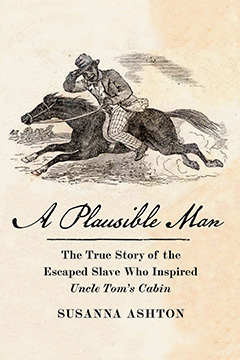
Some two decades ago, The Bondswoman’s Narrative became one of the remarkable and strange best sellers of the 21st century. Written by Hannah Crafts in the 1850s, this handwritten manuscript was identified by Henry Louis Gates, Jr. as the first known novel written by an African American woman. With its strange gothic horror melded with suspense, and sometimes sentimentalized and sometimes brutally matter-of-fact depictions of the pain, sexual violence, and resilience its heroine used to reveal her captors’ lies and to survive bondage in the antebellum south, The Bondswoman’s Tale was a major contribution to the annals of American literature. And yet, it also posed a literary mystery that hit the headlines: Who was Hannah Crafts? Was she Black? White? How had she escaped? Was this book a fraud? What was her real story?
Thanks to indomitable detective work married to incisive and generous literary analysis, Hecimovich has brought to life a story that simply couldn’t have existed without decades of determination, expert sleuthing, and some luck. As his book reveals, her true name was Hannah Bond, an enslaved Black woman from North Carolina who escaped disguised as a man and fled to a farm in upstate New York. While in hiding, she wrote A Bondswoman’s Tale, which, although a work of fiction, was filled with clues about who she was and what her own actual experiences had been.
First off, props to such a compelling title. The Crafts’ story is well known to scholars, but Woo’s fresh retelling of their tale is riveting. Step by step, she tracks how Ellen and William Craft, an enslaved couple in Georgia whose union was not recognized by any court of law at that time, maneuvered one of the most audacious escapes imaginable. Light-skinned Ellen disguised herself as a genteel white man in poor health, traveling North for treatment with his dark-skinned slave—her husband, William, in disguise as her captive. Hiding in plain sight, the couple braved inquisitive hotel guests and pushy railway passengers. Ellen even put her arm in a sling to justify avoiding hotel desk registries—as she was illiterate and would have been found out when presented with a pen.
Once north in New England, the Crafts’ troubles were not over: they had to evade recapture and make their way to Canada, and eventually, now facing international celebrity status, they found an uneasy sanctuary in England. The Crafts’ ambitions were often at odds with the aims of the Anti-Slavery organizations and white patrons they were surrounded by. And sometimes, their wishes were not in concert with those of their activist friends, such as fellow fugitive William Wells Brown, who sought to keep them in the public eye even when they were hoping to settle down more quietly. But the couple held onto each other, and in an astonishing twist rarely seen in such life stories, they boldly chose to return to Georgia some years after the Civil War. Woo lets their story unfold in their own words at times, drawing from their memoirs and interviews. But she also builds out their story in the broader context and conversations around fugitivity and freedom. Taut and tense, Master Slave Husband Wife is a story of flipping gender, race, and power politics upside-down in the pursuit of freedom fueled by love.
News flash: George Washington not only held people in bondage, but he and his wife were mad about it. They found managing enslaved people tiresome, although well worthwhile. Hence, it should have been no surprise to anyone that they bitterly complained about, chased, harassed, and did their best to terrorize Ona Judge, a brave and resourceful woman who walked out their door one day never to return.
In this gem of a book from 2017, Erica Armstrong Dunbar traces how Ona Judge foiled the plans of the Washingtons, who used all their connections and political heft to recapture her.
During that stretch of time when Philadelphia was the capital (1790—1800), the Washingtons lived there with eight enslaved people to wait on them. This was all very comfortable for the Washingtons, but local Pennsylvania laws meant that after six months, those slaves were supposed to be freed. After all, this wasn’t the slave state of nearby Virginia. The Washingtons tried to circumvent these laws by sending their enslaved servants in a regular rotation back to Virginia just before the six-month mark. Ona Judge, learning that she was due to be sent back to Mount Vernon, had other ideas. The ensuing hunt that Dunbar sketches out for us is suspenseful and undergirded by a deep terror—Judge’s very survival was at stake. At stake, too, as the author shows us, is our own willingness to reckon with the myths and truths of the founding fathers. Any romantic notions of George Washington will be shook.
A sack? A book about a bag? What can we learn from looking at a particular object, in this case, a small cotton bag filled with tokens of love for 9-year-old Ashley, a child about to be sold away from her family? According to the embroidered message sewn onto the bag a generation later, the sack contained only a tattered dress, three “handfuls” of pecans, and a braid of Ashley’s mother’s hair. But it carried far more than that—it was, in the words of the mother, “To be filled with my love always.” With imaginative archival work that goes far beyond letters, documents, or even genealogy, Miles builds out a tender and loving world of mothers and daughters with these simplest of objects.
Where other writers might be confounded or frozen when confronting the unknown, Miles admits that she is never able to precisely able to identify Ashley and her mother, but doesn’t let that stand in her way of seeking broader truths. Paperwork files aren’t the only place for stories. Examining every word in the embroidered message, Miles finds legacies of survival in textiles, in seeds, and in hair that connect traditions and longing. There is so much urgency in this work—it calls us to see things that have been discarded for what they are and what they can be.
From the title of this winner of the Pulitzer Prize in History, you’d think you’re going to read a powerful story about reparations of some sort. And for sure, that’s what it is. But be ready: it lands in places you won’t see coming. Henrietta Wood was born enslaved but in 1848, in Ohio, she was legally freed and thought her days of bondage were over. In 1853, after a few brief sweet years of freedom, though, she was kidnapped by a Sheriff named Zubulon Ward, dragged over the border into Kentucky, and sold back into bondage. She wasn’t free again until after the Civil War. This kind of tale could have been buried forever and no one would have remembered her particular tragedy. But Wood wasn’t going to let this injustice go by. She didn’t forget, and she didn’t forgive. With a sharp eye for detail and a rich historical framing that highlights the compassion and dignity of the remarkable woman at the core of the story, McDaniel tells how Wood went on to sue Ward for damages and won not only a moral victory but also a substantial financial one and one which was to set the stage and standard of restitution thereafter. That standard has rarely been upheld, but thanks to McDaniel’s resurrection of the story, we can see how reparations, no matter how meager meant something powerful to the survivors.
Oooooh kay. As you can tell from the harrowing title, there is nothing subtle here. John Swanson Jacobs escaped enslavement in the American South. He was then determined to use his freedom to wage war against the avarice of the American system and its supporters—especially the 600,000 enslavers. But he wasn’t going to be dull about it! He would take everything down with a righteous fury that wouldn’t be mediated, filtered or softened by a white abolitionist editor, as was often the case for life writing by survivors of bondage. As he wrote: “My father taught me to hate slavery: but forgot to teach me how to conceal my hatred.”
In Jacob’s memoir, which is accompanied by a biography by Jonathan D. S. Schroeder, who unearthed the original version from an 1855 newspaper, Jacobs decides to go for broke. His writing is wry, unforgiving, and full of fury. It’s hard to take your eyes off the page. While this is certainly the story of his life in captivity and his later escape, it chronicles, too, the racism and cruel disdain he often encountered in the North. He takes time out of his own riveting experiences (carrying pistols to use against “fleshmongers” or bounty hunters, for example) to rail against the hypocrisy of the founding political documents of the United States. To Jacobs, the American Constitution, which enshrined slavery, was “that devil in sheepskin.”
Jacobs told his story from afar—from Australia, in fact—and perhaps that’s why he could be so brutally candid. Back when he was enslaved, he had accompanied his enslaver to the northern states. Rather than return south, Jacobs fled to stay North on his own, free terms. After a few years, he became a mariner. His voyages took him around the globe, and during a stint in Australia in the mid-1850s, he published his life experiences in a newspaper. A softer and much-truncated version of his memoir came out in book form a few years later. This full and uncensored version from the newspaper, though, newly brought to our attention in this edition by Schroeder, of what slavery was and what it meant to Jacobs was essentially lost on the other side of the globe until now.
Jacobs’ raging tale of survival and resilience would be wild enough. Yet the work has another stunning twist: John Swanson Jacobs was the brother of Harriet Jacobs, a woman who had herself escaped intolerable suffering at the hands of the Wheeler family with an almost incomprehensible strategy: she hid in an attic crawlspace for seven years. Yes. You read that correctly. Harriet, too, eventually escaped from enslavement and from that attic by making it North. She went on to write what is probably the most influential account of enslavement from a woman’s perspective, Incidents in the Life of a Slave Girl.
John and Harriet were a powerful pair of siblings, with a shared gift for bold storytelling and uncompromising courage. How wild is it to see a story of bondage and freedom from both a brother and sister who vowed never to let their suffering be forgotten? Instead, with these astounding memoirs, they lay waste to a system that had tried to crush them. Teamwork.
There’s so much to be said and has already been said about The 1619 Project that it’s hard to remember that beyond the drama and the conversations about banning it from schools or libraries, it is something to simply read and reckon with. Although originating as a special issue and multimedia project for the New York Times Magazine, designed to mark the first arrival of enslaved people to North America, the book compilation is stranger and provocative in its very structure—the breadth of its goals are more readily apparent in book form. The 1619 Project is a tremendous expansion of the original endeavor, but it isn’t just longer and broader in its considerations of topics, approaches and responses to some of the backlashes it has received. It’s more interesting than that. Controversies over the arguments put forth by the project have rarely looked at the art (written and visual) that the team offers up as a gloss to explicate the sometimes spotty history that was designed to occlude Black people from hindsight.
Hannah-Jones and her team have created a new origin story for the country by showcasing factual history, to be sure, but this volume is richly framed with the work of poets and artists. Some of the facts of American history leave you speechless. It may only be the artists who can fill in the gaps of a history designed to silence and suppress.
The 17 essays are themselves consistent in arguing with dogged and punchy care about how slavery has been and continues to be at the core of what defines the United States. Indeed, some of the most powerful essays are often the ones you don’t see coming…there is Kevin Kruse on “Traffic,” for instance, or Anthea Butler on “Church,” wielding as much insight as the more predictably polemical essays such as that of Ibram X. Kendi on “Progress,” Jamelle Bouie on “Politics,” or Martha S. Jones on “Citizenship.” But this volume is worth checking out for more than just its formal conversations. Cognizant of the restraints of the essay form, the project includes the work of poets and fiction writers that intersperse each essay and reminds us that archival documents are a legacy of limitations. It takes Clint Smith, Claudia Rankine, Sonia Sanchez, Rita Dove, Darryl Pinckney, and Jesmyn Ward, among many other artists, to respond to the archival truths in their most stark and human terms.
After an essay on “Capitalism” by Matthew Desmond, an interspersed page in the middle of the book, for example, posts a paragraph about the 1816 attack by US troops on a British military site in Florida, Fort Mose, known as the “Negro Fort,” a stronghold of free Black people and fugitives from slavery. The attack, which led to the conquest of Florida, meant that the region could no longer be a destination for those heading South seeking freedom from bondage. These unlucky freedom seekers could be claimed, again, as property. The poem that immediately follows, however, Fort Mose by Tyehimba, Jess, walks us through this history anew and limns notions of property and capital that the essay can only gesture towards: “They fought only/ for America to let them be/ marooned-left alone-/in their own unchained,/singing,/worthy,/blood
After an essay by Leslie and Michelle Alexander on “Fear” and an interspersed page noting that the famed free Black mathematician and scientist Benjamin Banneker wrote to Thomas Jefferson pointing out how the institution of slavery contradicted the fine points trumped in the Declaration of Independence, is a poem, “Other Persons” by Reginald Dwayne Betts. Betts incorporates the language of the constitution, particularly the 3/5ths clause that famously counted enslaved Black and native people as only 3/5ths of a white person in terms of apportioned political representation. As the poet rephrased it: “Slavery, another word for slavery, is a fraction.”
With creative responses to each essay and wry or poignant black-and-white photographs to launch each unit, The 1619 Project reminds us to reach further and with the courage to new kinds of documents and methodologies to find buried truths.
That’s not to say that the 17 essays aren’t profoundly grounded in accepted and vetted historical facts. They are. And it’s not to suggest that they aren’t accessible—they were shaped for a general readership and are kind and generous in how they reach out to readers to bring them along some difficult terrain. Nonetheless, by weaving art and scholarship, this compilation offers us new paths to reckon with truths and move forward in informed and impassioned power. As much as the historical work and public facing journalism lays it out for readers, the art within The 1619 Project suggests that it just might take our poets to model the tools we need to understand what has led us here and where we all have to go.
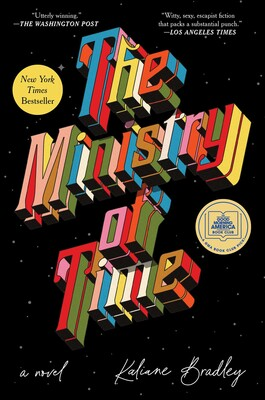
Time travel is hard to wrap your head around, especially when distracted by a total hottie from nearly 200 years ago. Movies like Groundhog Day, or even Palm Springs, try to smooth over the ethical questions of sleeping with a time traveler with movie magic; books like Time Traveler’s Wife do their best to ignore them entirely. The Ministry of Time however doesn’t back away from these questions, instead it plunges readers head first into the murky waters of consent, workplace romance, and hot time travelers.
Commander Graham Gore was a real person who went on a real Arctic voyage, but this book is about a fictional Gore who gets scooped up by time-cops who bring him to our modern day and assign him a buddy aka “The Bridge”, our unnamed narrator. Spoilers ahead but the budding romance between these two gets thorny quickly, and the ethical questions at hand aren’t lost on our characters. Can a man like Gore satisfy a modern woman? Can our protagonist put her James Bond dreams aside enough to have a meaningful relationship with someone she’s assigned to protect? To make matters more complicated, we also have Arthur from 1916 and Margaret from 1665—one of which is also hot, and the other seems to be crushing on Gore!
I reached out to author Kaliane Bradley to discuss the ethics of both time traveling and relationships in The Ministry of Time:
Bri Kane: How did you make that decision to have a real person be your time traveler?
Kaliane Bradley: So I suppose what happened is that I never intended for this to be a book, it was really just written to entertain some friends. I decided to start writing this because I got very into polar exploration and the Franklin Expedition to the Arctic to find the Northwest Passage. I became very fixated on this minor character Graham Gore, but because there’s so little information about this man, quite a lot of the character in the book is completely fictional.
BK:One thing I thought was really interesting is it seems like you very purposely avoided a true love triangle. I wanted to talk to you about the main relationships and how you decided to balance who kisses and who doesn’t.
KB: So I suppose the central relationship was always between “The Bridge” and Graham Gore. As I was developing the story, I became very interested in the idea that these two are operatives for their respective governments and the ways that they have tried to conform to the idealized version of a British operative. Gore revealed that he’s had relationships with men but we don’t know to what extent they’ve been emotional or whether they were just situational. And “The Bridge” is clearly not aware of her attraction to Maggie. Because they are both so determined to be the correct kind of operative, they very much funnel all their desires into the straight relationship. By contrast, Margaret and Arthur have absolutely no interest in this kind of thing, they both want to experience joy and they want to thrive, they don’t just want to survive.
BK: Yeah, they all have interests beyond just who are they going to start kissing, they have things that they want to explore that are not related to love. I was really interested in how you decided to include characters that a modern reader would label as bisexual, even though that’s not the language they used to explain those experiences.
KB: Partly it was just spending so much time thinking about these men on the Franklin expedition. One of the things that repeatedly came up for me was the fact that I was very interested in what was functionally a British colonial project; so how to square being very deeply obsessed with something that I think is objectively bad. I wanted the reader to be seduced by the idea of the romance. I also just didn’t imagine anyone as straight, if you see what I mean. None of them came to me as straight people.
BK: It’s really interesting that as you were developing these characters you never envisioned them as straight people—that makes a lot of sense to me. I wanted to ask you, if you think a man like Gore, who is about as old school as you can get, would be good at sex given our modern definitions of a good time?
KB: I mean, I definitely wrote him as being good at it. I felt for Gore in particular what was important to me was that he retained a sense of curiosity; I wanted someone who explores. He’s curious, he’s willing to learn, he’s willing to be open. The way he approaches sex, I hope, is similar to the way that he approaches adapting to the 21st century: with curiosity, with empathy. That first sex scene is very much about his anxiety of connecting and getting it right and being a good officer, which he’s obsessed with. Even as their relationship develops, he’s very anxious about the level at which he’s connecting, and whether or not he’s connecting in a way that feels empathetic, romantic and fitting to her desires.
BK: So I need to ask you—if you were our protagonist, and you have this gorgeous Gore standing in front of you, do you think you would act on those feelings?
Margaret and Arthur both want to experience joy and to thrive, they don’t just want to survive.
KB: If it was me personally, I think I would have been much more suspicious about this project. The narrator obviously is a little bit suspicious, but she’s so interested in this idea of gaining control of a situation and the idea of the power structure, I would like to think I would be a little bit more suspicious of complying with power. When you comply with power structures, you are also giving up a certain amount of agency. It is kind of deranged of her actually to do this but she was so enjoyable to write because she is someone who you’re supposed to kind of recoil from but be seduced by. Seduced by the rom-com, the fish out of water, the burgeoning romance, and I quite liked the way that I pulled that off.Because she’s in a position where she is exploiting, she has power over him, she is the officer in charge—it is a slightly dubious decision. The fact that he is attracted to her and wants to be with her does not stop it from being a dubious decision.
BK: Yeah, there are thorns to navigate even if they choose to navigate them together. It’s interesting to hear you talk about this as a rom-com because it is in so many ways, but it is not in so many other ways.
KB: I didn’t want them to end up together, because I thought that would slightly defy the point of the journey that the Bridge has gone on. And then at the time she is writing this text that is a kind of document to herself to saying, these are the mistakes you’ve made.. It turns out when they do end up together, they are both fucking miserable.The only way I could see that story ending is with them having to be apart and having to decide for themselves what they want to do next.
BK: Now, that seems like the answer to my next question: What future can two people from different points in time even have together? There’s the happily ever after achievements: they got married, they had a kid, everything’s fine, right?
KB: I like the idea that the term ‘rom-com’ is a sort of red herring. I like the idea that you’re seduced, as a reader, by the idea of the rom-com and that like “The Bridge” you don’t notice the kind of creeping darkness in the background.
BK: Absolutely. Okay, so once and for all: How can you ever truly have an ethical sexual relationship with a time traveler?
I like the idea that you’re seduced, as a reader, by the idea of the rom-com and you don’t notice the kind of creeping darkness in the background.
KB: That is an interesting question. When I was developing this book into The Ministry of Time, the thing that I became very, very interested in was the parallel between these time travelers who are functionally refugees from history and the idea of refugees from other countries. So they’re all brought to 21st-century Britain, they can’t ever go home, they have to become good British citizens, they have to assimilate. I’m not sure I could say it’s impossible, because I also think it’s possible for someone who has come from a vulnerable situation, such as being a refugee, to have ethical, full, and joyous relationships with British citizens. If you’ve traveled through time or traveled across space, I don’t think that precludes the possibility of an equal, empathetic, mutually fulfilling relationship.
BK: So if you were given the opportunity to walk through this time travel machine, would you look for a lover on the other side?
KB: I guess it depends on what I’m doing walking through the machine, right? Because if you want to walk through and never come back, that’s your life now and I would like to imagine it would be a life that included friendship, romance, and challenges and all sorts of things. I mean, if I was just hopping back in time to find some fun… Tinder exists, but also I’m engaged!
Him: Jess, elder millennial from Los Angeles. Me: millennial, born in San Diego, raised in Maryland, three years on Testosterone.
Jess takes me on our first date on Valentine’s Day, to a vegan Thai restaurant. We’ve been in love for a year and we can finally be together. He’s starting to come down with the flu but pretending he isn’t so we can hold hands and share soy chicken skewers with peanut sauce.
We’ve only named our feelings as obstacles, our falling in love a problem in the context of his “open just for sex” marriage, an extremely common arrangement on the gay male hookup apps that generally works until it doesn’t. But now we have permission from his husband to love each other—permission that will soon be revoked—but we don’t know that yet and we’re far too happy now for any worry to feel real.
I love Jess for his groundedness, his carefulness, the way he expands his comfort zone little by little instead of diving in deep like I’m prone to do. He’s lived his whole life as a gay man in the many versions of Los Angeles, the son of a construction worker in East LA, and now a studio executive. In this space, his space, it would never occur to him to worry.
He finds just the right time to stand, walk over to my side of the table, hold my face in his hands and whisper that he loves me.
Winston-Salem, North Carolina.
Him: Tom, young baby boomer from Tennessee, lived his whole life in the American South. Me: lost in the blue of his eyes.
Krankie’s has the best vegan hot honey chicken biscuit I’ve ever had, so he’s promised to take me every day of my visit. A biscuit is a difficult task for vegan butter, but the flaky crust and spicy sweetness, washed down with deep chocolatey coffee on a cute patio with a new lover, is simply perfect.
I interrupt our breakfast for a trip to the restroom. A peck on the cheek had never alarmed a man back when I was a girlfriend, but I’ve learned new scripts from gay men. Tom’s silver hair and classic Tennessee twang remind me that he grew up in a different time and place than me. As I leave the table, I kiss him on the cheek. His body tenses suddenly, his softness turned to stone by my touch.
I think maybe I’ve imagined it.
His body teaches me what he has learned over a lifetime.
Birmingham, Alabama.
Her: my mother, baby boomer, born and raised in southern California, now living in Maryland. Me: traveling every weekend for the next seven weeks.
Jess is accompanying me to a film festival in Birmingham, the trans film I made with friends in Texas making rounds in the South I hadn’t expected. I call my mom during my commute and tell her about my upcoming trips.
His body tenses suddenly, his softness turned to stone by my touch.
“Are you ever worried about traveling in places like that?”
I tell her I feel safe traveling as trans now, because I have the privilege of passing. Passing always happens as something / to someone, but in the general milieu of crowds I have no issues. I slip past like any other guy, the other men in the restroom just assuming I’m taking a shit. But Jess accompanying me does make this trip feel a little different: the safety I feel as a passing trans person doesn’t extend to my intimate relationships with other men.
“Be careful,” she says. “They don’t have to know you’re a couple.”
Sometimes hiding is the only survival skill we know to teach each other.
I tell her that the South has surprised me, that my trips with this little trans movie to North Carolina, Mississippi, and now Birmingham have brought me into community with other queer people at every festival, gays who are living resistance to a dominant red culture, communities of color and queers on the frontlines, and when we write off a region we leave them behind. In Birmingham we find a Black-owned vegan restaurant, a panel on climate justice, rainbow signs saying “All Are Welcome Here” at the gift shop we pop into for a souvenir.
Still, when Jess decides to come with me, I rebook our Airbnb to a place where we won’t have to interact with the host.
Maybe I’m being unfair to the woman we would have stayed with, whose only trait listed on her profile is “boy mom.” For all I know, she’s queer herself.
And for all I know, she isn’t.
Berkeley, California.
Him: a disembodied hand. Me: reasonably settled on the gay hookup apps, curious what offline might look like.
I’ve been chatting with a guy whose profile name is CJ, but neither of us have a place to host so he suggests we meet at a bathhouse. He’s in San Mateo, which I get scoffed at more than once for referring to as the Bay Area, and I’m crashing on my friend’s floor in the Castro. I’ve never been to a bathhouse, and when I ask if it’s trans-friendly he admits he can’t really know the answer to that as a cis guy, but the Steamworks in Berkeley has a monthly all genders night. He sweetly calls ahead to make sure they will accept trans men any other day of the month.
My glasses fog immediately inside, but even without them I can feel eyes on me as he gives me a tour, his Oklahoma upbringing clear in his graciousness toward me even in this hypersexual space. The blurry figures of passersby never come into enough focus for me to clock any facial expressions, leaving me to wonder whether anyone reacts to my transness.
The apps might minimize each of us into a few explicit details, but their blessing is the power to make transness part of the billboard I project to any man who looks at me online. Disclosure politics don’t come into play when my screenname is “subbyftm” with a book emoji, and the app has a feature where I can filter for men who’ve indicated their interest in trans people on their profile. Real life has no such filter, and my transness is less obvious to others by the day.
We pass men with soft towels wrapped around their waists, a row of open showers, a hot tub that sits below several screens showing hard-core pornography, and, for reasons of gay male culture that I’m just beginning to understand, a weightlifting area.
There’s a long section of the bathhouse I can only describe as glory hole cubbies. I get in one and my new friend offers his thickness through the nicely cut-out opening in the cubby wall. A stranger’s hand gently swats at me through another opening, this space’s code for invitation.
Real life has no such filter, and my transness is less obvious to others by the day.
Am I comfortable interacting sexually with a man who doesn’t know I’m trans? I feel a sense of unease, unclear on whether I’m uncomfortable in myself at not being known by a sexual partner, or worried about what someone would do after finding out they had interacted with a trans person unknowingly. (Maybe nothing; maybe something.)
I don’t know how I’m being perceived in this moment–which is an odd concern, because the entire purpose of a gloryhole is not to perceive each other, except as givers and receivers of sexual favors. Still, this space is explicitly for men, and my presence in here implies that I am a man, at least by my own definition and the definition of the guy at the front desk who took my entry fee, but I am the one who will have to deal with the consequences if this stranger has a different definition.
In the moment, I decide that I don’t owe the potential recipient of a glory hole blowjob any disclosures, but it’s also not what I feel like doing when I’m already quite occupied with the cock I came here with. I ignore the hand and it politely goes away, the etiquette of the space exactly as my host described.
In the steam room we listen to comically loud slurping sounds, until a burly daddy gets up from his knees and claps hands with whomever he was pleasuring in a manly show of camaraderie and approval. We fill the new silence chatting about the best hiking in San Francisco, our noses filled with eucalyptus and mint, the swiping hand forgotten.
Somewhere in Arkansas.
Him: Jess, recently separated from his husband, still kind, open, rarely one to complain. Me: Moving cross-country with cats, strung out from the process, a complainer.
I’m leaving Los Angeles for a nine-month residency in New Jersey, and Jess is helping me move. My massive cat has shit himself in the backseat so we pull over at a gas station and try to clean him up next to the pumps.
I am still new to the phenomenon of being two men in love outside the city of Los Angeles, and this place has been chosen only for its proximity to the patch of highway where the smell first reached our nostrils.
Jess told me once he hasn’t experienced much homophobia. I don’t know anything about growing up in a Mexican family in Pacoima, and I don’t know anything about working at a studio full of people older, whiter, and straighter than me, but I wonder if quieter marks were left on him, even as he got to know every square foot of gay space in his sprawling hometown. He is sheltered in his own way: I wish I could learn this sense of ease from him, but I know it grew a long way from this pit stop, where a few pickup trucks idle around us in the twilight as cicadas sing in the surrounding woods.
Jess balls up a handful of stained paper towels after we declare my little beast dry enough, and kisses me before heading to throw them away.
It’s almost night and I don’t know who else is here at this gas station somewhere in the middle of Arkansas, and so my whole body tenses unconsciously, offering hardness in response.
Maybe he wonders if he imagined it.
The mountains outside Winston-Salem, North Carolina.
Him: Tom, sweet and tall and warm. Me: locating the part of my heart that can connect without sarcasm.
I wish I could learn this sense of ease from him.
After the promised breakfast at Krankie’s he takes me on a driving tour of the fall colors. We talk quietly and cautiously about our dead lovers, my fiance who dropped dead of a heart attack seven years ago, and his partner of eight years who died in the ‘90s. I stop myself from asking if it was AIDS, envision the start of their love in late-eighties Tennessee, find out later his car slipped on black ice in the night, robbed him from everyone he loved.
We stop every now and then to look out into valleys and take photos on our iPhones. I want a picture together. I like seeing photos of myself with emotionally intimate partners after a couple years of sticking to the gay hookup apps where I’m unlikely to learn their last names.
At one vista a woman offers to take photos of us, and he stands several feet away from me. The photos are strange, the two of us with our hands in our pockets, smiling in front of the rolling mountains, what we are doing there together completely opaque from the photographs, a cross-generational male outing of some chaste and distant kind.
This I know I haven’t imagined.
Black Rock City, Nevada.
Him: staring. Me: my first time at Burning Man, biking through dusty pathways.
I assume being shirtless outs me, but it turns out most people can’t identify mastectomy scars. I make a little copper necklace at a tent and a man expresses shock that I am trans even as my scars sit freely on my chest.
I pass so much now that people still easily call me “he” when I am completely nude, the revelation of my cunt just articulating the type of “he” they assume me to be.
Only one time do I catch someone staring at my scars. I feel his eyes on me from across the path. I keep purposefully not catching his eye, feeling his fixation on me, not sure what he wants, debating whether I should just bike away and find my friends later.
Finally I can’t help it and I look over at him.
His top surgery scars poke out from underneath his vest.
“Hey!” he calls to me. “You going to the transmasc meetup on Thursday?”
Sequoia National Forest, California.
Him: bright white farmer’s tan even in the nighttime. Me: driving into the rural vastness.
Jess is assisting me on a shoot in Bakersfield so we can see each other while I’m in residence in Jersey. The hot spring is an hour out of town, but we wrap early and neither of us has ever been to a hot spring so we eat avocado rolls while driving to make it out before sunset. The subject of our tiny documentary shoot, a genderqueer dancer with bright pink hair and matching beard, said some people think night is the best time for hot springs anyway. They encouraged the nudist approach to the springs.
The winding road hugs a rushing river and Jess has never seen a river like this in real life. He’s from one of the biggest cities in the country but he’s traveled very little, our trek cross-country to Jersey doubling the number of states he’d set foot in.
It’s the Sunday of Labor Day weekend, which we realize a bit too late as the springs are overcrowded. There are two “tubs,” one in its own little area and the other right on the riverside. Usually there are more, but everyone says water levels are high this year.
We wait by the river, giving the family in the tub a bit of distance and privacy. When we see them getting out, another group is coming down with loud music blaring. We rush to get in, trusting the darkness to cover us as we fling off our shorts and hop into the warm, starlit water.
We settle in, Jess’ arm around me, looking out over the river.
They encouraged the nudist approach to the springs.
“Hey. Can I give y’all some advice?”
We turn to find the father, a tattooed and heavily sunburned white man with thin brown hair down to his shoulders.
“I see what you’re doing. I get it. And I support it. Every chance I get, I support you guys. But this isn’t cool. There’s kids here, man. You have to give some warning. Jumping in naked? Come on, man. I could be pissed off about it. And I am, a bit. It’s kind of a bad reflection on your community, don’t you think?”
I freeze. Too aware of our nakedness, the clarity of the water. Jess deescalates.
“That’s fair. We thought it was dark enough, but that’s fair.”
“I mean, don’t you think it reflects poorly, on your whole thing? Like I said, I support you, man.”
“Yeah. We understand.”
Finally he leaves, satisfied that his advice has been heard.
We turn back to each other in his wake. I think he was mad about two men with their arms around each other. Jess thinks he was mad about the nudity. “Would he have come over to us if we were wearing swim trunks?” Jess asks.
“Would he have come over to us if we were a straight couple jumping in naked?”
We have no way of answering these questions.
Sitting in this river, naked with my love, deep in the woods of a red part of California, it’s hard for me to feel safe.
Music blares from the group behind us, battling the sounds of the rushing river.
We sit, and try to breathe, and try to attune.
Los Angeles, California.
Him: Gen X gym rat. Me: moving soon to New Jersey, proving you can still cry all the time on Testosterone.
I want the muscle bear I’ve been fucking for over a year without learning his job, last name, or interests (other than going to the gym) to aggressively pound me one more time before I move to Jersey, but neither of us can host. I call the local bathhouse to see if the space that is safe for his overt sexuality will let me through the door.
“This is a men’s club.”
“Right, so I live as male, everyone assumes I’m a man, but my driver’s license says female, so I’m just checking that won’t be an issue.”
“Hold, please.”
I had thought my Berkeley-Oklahoma boy was just being cautious.
A new, more hostile voice answers the phone.
“This is a men’s club.”
I explain again.
“It needs to say male on your driver’s license.”
“So, just so you know, that’s a pretty problematic policy for trans people – “
“Get your license changed, you can come in.”
“Getting your license changed is a difficult process, what’s the harm in – “
“We can’t let women in.”
“I’m not a woman.”
“We have to define it somehow. How would you define it?”
We argue and I fall back on how I look like a man, how everyone I meet sees me as a man – which is truly, deeply, not how I would define it, but it’s the argument I find when I’m unexpectedly cornered.
My interlocutor is getting more upset, more angry at me, and so eventually I hang up the phone mid-sentence.
The muscle bear fucks me in the back alley of the leather bar by my house, even though it’s early evening so we’re too visible for his comfort. We have onlookers and one of them finds me on the apps the next day, says we put on a good show. I send him back a kissy face emoji.
Atlanta, Georgia.
Her: TSA agent who clearly doesn’t enjoy her 4am shift. Me: used to this shit, hoping to catch up quickly to Jess.
She looks skeptically at my ID, back at me, back at my ID.
The muscle bear fucks me in the back alley of the leather bar by my house.
“Do you have another form of ID?”
I say no, and she goes to find her supervisor.
I often find myself wishing for a code, and airports in the South are the closest I’ve gotten to one. While I’ve sailed without issue through the airports of Austin, Philadelphia, Baltimore, Newark, Albuquerque, Los Angeles, Burbank, Minneapolis, LaGuardia, and San Francisco with my supposedly-contradictory beard and the little F on my license, I’ve been stopped twice in Charlotte, and now for a second time in Atlanta.
Our experiences traveling in the actual city of Atlanta have been joyous, loud, and queer. Our first trip was for a queer film festival with an afterparty at the Eagle, a sea of naked leathermen unleashed behind the strip mall facade. Our second trip was to support one of Jess’ other partners as he grieved the loss of his adoptive queer mom, her memorial filled with two hundred queers whose lives she’d uplifted and touched. Yesterday we walked through Grant Park hand in hand and received the hand signal for “love” from a mom with a stroller, and a “good morning, fellas” from a couple of guys I hadn’t clocked as gay until that last word left their lips.
But this morning we’re not in the joyful queer parts of the city of Atlanta: we’re at the end of the hour-long security line, and the agent is telling me to step aside and wait for her supervisor to come inspect my license, and I’m left to stand there and wonder why I’m being escalated to a supervisor at this airport for a second time in three months. She gives me a halfhearted instruction to wait, but hangs onto my ID.
“I’m transgender,” I tell the agent, hoping this will speed up her process.
“Yeah, I figured, I just didn’t want to…” She trails off. It feels like she wanted to say “embarrass you.” She tells me the issue is that I don’t look like my photo, but this photo has satisfied plenty of agents before her. It was taken eighteen months into starting T, and my round face and button nose are exactly the same as they always have been. Somehow I think the issue is less about the photo, and more about her perceived discrepancy between my beard and that pesky little F.
Jess hovers near me as I wait by her station. The agent sees him and rolls her eyes. “I didn’t tell you to stand there,” she says to him. “Go on through.” He just points at me and she leaves us alone.
My gratitude for Jess’ quiet presence is more than I can say.
Her supervisor finally arrives. The last time an agent called over her supervisor (which was also at the Atlanta airport), he just told her that was me and I went right through. I hope that this man will bring the end of this ordeal and I can get started taking my large electronics out of my bag, but instead he pulls me out of line.
“Do you have any other form of ID?” he asks again, my license still in his hand. I say no again.
I ask him, “Do cis men who grow beards have to change their license photo?”
“I do, yeah,” he responds, and flashes me his beardless ID badge despite his long (and impressive) patch of silver. I don’t think he understands my question: he looks more different from his photo than I do.
My mind races to the potential of my missed flight, the minutes ticking down to boarding, as he asks me for the third time whether I have any other form of ID. He finally believes me that I don’t. He says he can take me through personally with an extra layer of screening, which apparently means agents will individually search all my items after they go through the scanner.
Jess and I watch, constantly checking the time to our flight, as an agent carefully wipes everything in my bag with a tiny cloth to check for residue of explosives: the lining of my shoes, the little stuffed rainbow chicken we bought from a local queer vendor, my tarot cards, my travel vibrator. I wonder how the presence of a beard and a little F have warranted this level of threat detection.
I wonder how the presence of a beard and a little F have warranted this level of threat detection.
I carry with me a months’ supply of Testosterone. Jess is helping me navigate my healthcare while I’m on my residency in New Jersey, and he’s handed it off to me in this city between our cheap-airline-sized personal items. The agent wipes it with her tiny cloth, almost puts it back in my bag, and then pauses to check with her supervisor. My heart races, imagining that not only could I miss my flight, but I could lose access to the thing that has somehow, for reasons I don’t quite understand, made my body a place I can call home.
This supervisor gives her an easy thumbs up and my heartbeat settles.
Jess and I make it to the gate, and he sees me off as I head back to Jersey and he returns to Los Angeles. Tears hit my cheeks as I turn away from him, standing behind me, seeing me off.
Brooklyn, New York.
Him: Jess, making friends with the space right outside his comfort zone. Me: comfortable, exhilarated.
Jess is singularly great at finding events, vegan restaurants, secret dives and famed attractions. He finds a transmasc sex party at a dungeon in New York City two weeks after I move to Jersey. The event description proclaims it as a party celebrating trans men in a historically gay male space.
I love public nudity and I love group sex.
In the past, my only barrier to full enjoyment of these things has been wondering about perceptions of my transness: whether people know, whether people care, whether I care whether they care, whether they will force me to care.
Here I am free of those concerns.
This party is half cis men, half mascs with their tits bursting through leather suspenders, fat hairy men with spread-open pussies, T4T foursomes and me in my red lace panties.
Jess pushes himself by wearing nothing but his jockstrap, exudes a confidence that he doesn’t quite feel yet from his gorgeous, soft body.
This is a space for exactly, precisely, us.
We fuck, and go back to our hotel, and fuck more.
We wake up and explore Brooklyn, hand in hand.
We fall a little more in love.
Winston-Salem, North Carolina.
Him: Tom, letting us back into his meticulously designed apartment. Me: full of delicious pizza, wondering if North Carolina is perhaps a secret vegan haven.
We return from the mountains to his apartment and fall into each other’s arms, enjoying easy intimacy, kissing and cuddling and rarely separating our hands.
We had found one empty vista where we took a selfie with his arm around me in front of the plunging valley.
Now his body can relax again, now that we are safely in the quiet of his home.
His queerness can often be named, but it’s better expressed in privacy.
A night of softness connects us again, reprieves us from the world outside.
Sequoia National Forest, California.
Him: Jess says he could stay in this hot spring forever. Me: starting to be unhinged by the blaring music, still rattled from the sunburnt father.
We get out of the warm tub, choosing to admire the stars from dry but quiet land.
As we pass by the other spring we realize the people in it are about to get out. They leave. The group with the music follows shortly after.
It’s just me and Jess, a hike down the hill from the parking lot, the sounds of the river our only soundtrack, and the warm silty water beckoning us.
Still my body worries that someone will show up, that they could hurt us in this isolated and wild place and no one would ever know to find them.
I don’t know if that worry is real. But it lives in my body, criss-crossed in the space below my ribs, twitching just behind my ear.
I wish sometimes that my safety was mathematical. I wish a receipt of how a stranger was perceiving me, plus knowledge of my region, plus proximity of a gay male lover could equal a clear guideline for behavior that would keep me safe. I can’t eliminate risk, and I can’t even calculate it, but I know the cost of missing moments with my love because I am afraid.
Jess and I strip our clothes and slide into the warmth of the spring. His arms wrap around me and the dust in the water settles between our bodies.
I wish sometimes that my safety was mathematical.
We look up at the firmament of stars, the most stars I’ve ever seen, filling every inch of the sky, this vast sphere holding us.
I breathe into him, and I release what I can’t know, and I let him hold me beneath the blanket of the universe. There are no footsteps so for now, at least for now, there is no reason to worry.
I melt into him, and we melt into the springs, and we become creatures of the forest, and the stars shine down on us.
Brazil has never lacked great literature. But for a long time, it seemed that only the classic Brazilian writers were being published and read in English. You may have heard their names: Machado de Assis, Jorge Amado, Clarice Lispector, Mário de Andrade, Hilda Hist. These are all phenomenal writers, but the vast majority of Brazilian writers, alive and at work today in Brazil and abroad, have not had their books translated into English, and until as recently as the last few years, they hadn’t been shortlisted for or won any major literary awards outside of the Lusophone sphere.
Luckily, that’s changing. Thanks mostly to the relentless advocacy of BIPOC writers and translators over the last decade, Brazilian literature has finally (albeit slowly) started to achieve new heights, with recent books by Brazilian writers winning the National Book Award, being shortlisted for the International Booker Prize, and making several prestigious “best-of” lists, a recognition that is long overdue. What’s also exciting is seeing books by contemporary Black Brazilian writers, queer Brazilian writers, and writers from parts of Brazil that are not as regularly represented even inside Brazil, making the headlines. Here are seven books showcasing the richness of contemporary Brazilian literature.
Starting with the most formally unusual of the seven books on this list. Ananda Lima’s aptly titled debut collection Craft: Stories I Wrote for the Devil is a masterclass in, well, craft; a work of fiction that engages deeply and seriously with literature, film, photography, politics, life and death, all the while not taking itself too seriously. On the contrary: it’s a book that seems to laugh at itself, happy to follow its own dreamy logic. Threading between different countries and worlds, an immigrant writer, inspired by her one-time lover, the Devil, sets out to write an account of her life in the United States. In nine linked stories, she illuminates the mundane aspects of reality–New York City rats, dying plants, subway rides, dirt, workshop critique–as well as the profound, like the threat of deportation, a deadly virus, and the emotional distance from family superimposed upon the geographical one. From its unexpected structure to the philosophical questions it raises, from language that sparkles to settings, even the metaphysical ones (especially the metaphysical ones) that are textured and scented, to characters so flawed and human they expand our perception of humanity, there’s so much joy in Craft.
For its small size, this stunning literary debut packs a punch. In a little under 130 pages, we follow a young Brazilian college student in Vermont as she builds a new life abroad, and the attempts, mostly mediated by screens, she and her mother make to keep their strong bond unblemished despite their physical distance. Dantas Lobato’s ingenuity resides in crafting a story that at first seems quiet and slow through her meticulous use of white space, uninterested in adhering to conventional plot expectations, but that under the surface commits instead to an accumulation of movement and feeling that feels far truer to this fragmented mother-and-daughter relationship than any grandiose narrative could. Over hours-long Skype calls, mother and daughter share the shape of their lives on opposite sides of the American Hemisphere: the change of seasons, what they ate for dinner, the dramatic plot of Brazilian soap operas, what clothes to bring on an international trip. The result is a tapestry of distance and intimacy, with all the closeness and discomfort that such a relationship entails. This is the immigrant novel at its tenderest. Dantas Lobato, lauded literary translator and a 2023 National Book Award winner, is working on her own translation of Blue Light Hour to Portuguese, something Lusophone readers can look forward to.
How many times have we heard the story, which makes it all the more infuriating: a Black man is cruelly murdered at the hands of the police? But we haven’t always read the story this way, certainly not in contemporary Brazilian literature. In blocks of raw and moving prose by Jeferson Tenório, in a translation by Bruna Dantas Lobato that renders the text intimate and ebullient, we follow Pedro, a young architecture student, on his quest to reimagine the life of his dead father Henrique in the aftermath of his brutal killing in Porto Alegre, Brazil. This is an honest, unromanticized account of a beloved and complicated character and his struggles in his personal relationships, his difficulty to reach his public school students and to connect with his son, even his failed attempts to read Dostoyevsky on the bus or wear a black jacket in public, all of which trace back to the racism that pervades every aspect of Black life in Brazil. One of my favorite aspects of this novel is Pedro’s decision not to flinch away from his father’s shortcomings: through’s Pedro’s eulogy, Henrique is able to transcend his status of faceless victim to that of an agent of his own life, tragically cut short, but beautiful and full of music to the last heartbeat. The translator’s note, where Dantas Lobato discusses some of her aesthetic and semantic choices behind her translation, is also an accomplishment.
Crooked Plowby Itamar Vieira Jr., translated by Johnny Lorenz
This acclaimed novel is the winner of the Jabuti Award, the Oceanus Prize for best international novel, and a finalist for the 2024 International Booker Prize (a first for a Brazilian novelist). Set in the remote Bahia countryside, one of the poorest parts of the Brazilian Northeast, Crooked Plow follows sisters Bibiana and Belonísia after the childhood accident that changes their lives for good, forcing them to a bond that is both corporeal and mythical. Using the sisters’ brutal encounter with their grandmother’s knife as a symbol for the silence and violence that will echo throughout the story, Vieira chronicles the trials and indignities of the community of impoverished farmers the sisters were born into, the majority the descendants of slaves who spend their lives working the land, but have no legal rights to own it. With sharp penmanship and backed by decades of scrupulous research, and in a precise and self-assured translation by Lorenz, Vieira documents the farmers’ plight at the hands of white landowners who abuse, deny, and dispose of them as they see fit, and the perilous consequences for those who try to change their procurement. I so admired this novel’s interest in both magical and social realism, its poetic cadence which has the pull of a trance, and how even the novel’s structure is rich with religious imagery, incorporating stories and characters from the African Diaspora mysticism.
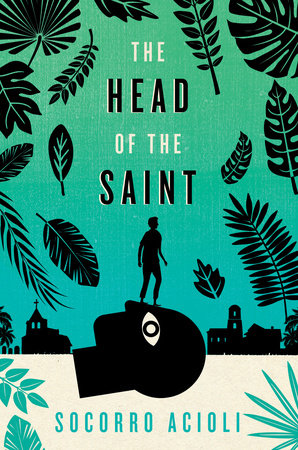
This novel’s synopsis piqued Gabriel García Márquez’ interest so much that he invited Acioli to join his writing workshop in Cuba in 2006, where she wrote the initial seeds of what would eventually grow to be one of the most immersive works of magical realism to be published in Brazil. A young man, down on his luck and on a mission to honor his dead mother’s final wishes, starts living inside the giant hollow head of a saint in a run-down town in the Northeast of Brazil. Right away, he realizes he’s able to hear the townswomen’s prayers when inside the saint’s head, and after scheming with another young man and eventually helping some of these women sort out their love lives, his situation and that of the town transform drastically. These pages are immersed in such an interesting version of Brazil, swept in religiosity and folklore, with peculiar landscape and fauna, rich in vivid imagery and symbolism, and a refreshing regional vernacular that elevates the reading experience. The author of more than twenty books, this is Acioli’s only translation to English so far, but here’s hoping her second novel, which came out in 2023, reaches Anglophone readers soon.
Burnham’s second novel, set on Nantucket Island, tells the story of sisters Elise and Sophie over the course of an arduous summer. A few weeks after Elise’s college graduation, she learns that her mother, an undocumented Brazilian immigrant, has been deported to Brazil. With no other family to turn to, Elise and Sophie must support themselves in a corner of the United States where prices are high and resources for the poor and undocumented are few. They are helped by Elise’s affluent college friend, whose support, benign as it might be, also comes with a cost. Down in Brazil, Elise’s mother is eager to be reunited with her daughters and must reckon with a country that no longer feels like home. Written with crystalline prose and from a place of deep empathy, Wait upends common conceptions of Nantucket as an exclusive, wealthy enclave, and reveals that, even on a charming island thirty miles out to sea, working class people must push up against the unjust forces of inequality and discrimination.
Brazilian writer Stênio Gardel won the 2023 National Book Award in translated literature for this debut novel, the first time a Brazilian author has reached such heights. Raimundo is a 71-year-old illiterate gay man whose queerness was violently suppressed by his parents when he was young, and he decides to sign up for literacy classes late in life so he can finally read the letter his lover, Cícero, had sent him fifty years before. As Raimundo’s grasp on the words increase, memories pour out of him: his moments with Cícero, his years spent doing manual labor and having hidden sexual encounters with men, his own fits of brutality and rage, powered by his decades-long internalized homophobia, and his friend’s suggestion that he learns how to read, which brings about a personal revolution. With vigorous prose and a fragmented, nonlinear narrative, The Words that Remain is a tender book that touches upon themes of closeness and courage, violence and redemption, a heartbreaking novel about queer love and survival.
This summer, find comfort in the power of chosen family and friendship, laugh at the absurdities of the patriarchy, and weep at a story of heartbreak and redemption. Themes often present in literature—and in life—like the search for belonging and reconciliation, the fight against oppression, healing from trauma, and grieving the past and lost loves are everywhere this season.
Here are 15 small press books for your summer reading list:
In this story centered on the split of Hispaniola that divided Haiti and the Dominican Republic, two friends are cleaved and torn apart. Sisi and Gertie have a special closeness as girls, until a formerly obscured family connection takes them away from each other. A political upheaval ripples through the Haitian government under the dictatorship of Francois Duvalier, forcing them to leave their homes. Sisi flees to France, and Gertie is married off to a man from a wealthy Dominican family. Yet, despite their class differences and different paths, they reconnect in the US. This is a story of two girls who become women and must address a turbulent past that neither chose, but both have agency in reconciling. In Village Weavers, there are formidable political actors and influential families, but nothing is as strong as the bond of a best friend.
In this dystopian novel world which runs parallel to the contemporary United States, Riley—a grammar professor—is noticed by the new military regime, unfortunately for him. Riley flees. As an academic and word-nerd, Riley is not, on the surface, suited to living in the forest among sympathizing anarchists; but in this space, Riley finds community. The Sentence is both a reference to Riley’s presumed death sentence under the regime, and to the structure of Baker’s novel: it is single sentence, diagramed, with offshoots to tell of paths taken and those not, fears realized, bullets dodged. Billed as a graphic novel, The Sentence is more a work of linguistic precision with a visual element. Baker goes beyond an exercise in experimentation to deliver an impactful narrative that successfully pushes the limits of form.
A woman takes up a flirtation with a dermatologist treating her for genital warts; women scan and swipe the dating aps looking for sex or relationships, but also because it’s part of the zeitgeist; roommates find they have more emotional intimacy with one another than would ever be possible with their dates. How to Get Along Without Me is a thoroughly modern post-Obama-era, post-pandemic collection of loosely linked short-stories that does not just cut open the souls of millennials living in the 2020s, but rather filets it for display as if for an Instagram story. Axelrod captures what it is like to live in New York City, working jobs in public service and publishing, dating people who don’t want to commit, and reckoning with mortality of family. An absorbing and engaging collection that’s unmissable.
A mother and her son are afflicted by lycanthropy from which he recovers but she does not, a daughter gives her dementia-stricken mother a therapy doll that is eventually dismembered, and a sister stages a desperate intervention with her brother while trying to manage her career in deceased pet portraiture. In this collection, Shannon Robinson juxtaposes the mundane with the fantastical, the heartfelt with the heartbreaking, and ties the dozen stories together with a deep sense of longing. Most of the people in her stories are actually trying to be better friends, siblings, coworkers, spouses; and many of these same people are experts at failing. Robinson writes with such stunning emotional clarity and attention to our inner lives that her stories, even in harsh situations, take on a tender quality.
The Queen of Steeplechase follows Bella as she comes of age in an Italian-American household with an overbearing father who abuses his authority and a mother bed-ridden with depression. When Bella becomes pregnant at 15, her baby is taken by nuns and she sets off on a journey to find her son. This raucous tale takes readers to Coney Island for a strip-tease and into the homes of Depression-era wiseguys. The characters are outcasts who have been judged and deemed unworthy by society. But Bella refuses to be cast aside, instead she finds her chosen family—and at every turn, she cooks with a spiritual dedication. Yet, she finally has to face a conundrum that not even her famous meatballs can fix. The Queen of Steeplechase Park is a novel that puts its faith in people believing in themselves, and the result is a joyful read.
A young woman who can’t swim is tossed into a lake during a girl’s trip, a teacher is beat down and has to teach “The So-So Gatsby” yet again, and a woman finds an origami lily in her mailbox as she grieves her husband so deeply that his name is only blank space on paper—he is so gone, he has not even a name. While Madera’s prose has a technical quality to it in the sense that each sentence feels highly considered, it is not at the expense of evocative feelings and rich characterization. Nervosities explores the boundaries of the short story in a way that nods to intellectualism but cares more about the heart. Unique and surprising.
In this collection of stories eponymous with the 1993 album from Liz Phair, middle-aged women form a Riot Grrrl cult worshiping punk feminism and Sirens of the Greek mythology, a living display of women from different points in history are on exhibit at a museum, and an app that comes with an implant and purports to help people live their best lives is actually a coercive force for toxic beauty standards. Lillard harnesses female rage, technological anxiety, and fears about dystopian futures to deliver a breathtaking book where characters reclaim their power, reject algorithms, and run towards freedom.
Part family story and part music history, the thread that runs through this memoir is Álvarez’s unwavering interest in how place impacts us. Whether the places we live, the places we left, the places we come from, and the places we might visit or places that might hold a key to unlock a door to yet another place; his exploration of how geography is more than lines on a map is potent and gripping. Through meeting with accordion makers, players, and traveling with and learning an accordion of his own, he gets closer to his own origin story, which includes an accordion-playing grandfather with a mysterious past. Álvarez seems to write with no agenda other than understanding. This memoir emerges as a thoughtful and empathetic answer to questions about where we come from—and how it’s shaped us.
Charles Jensen braids essays intersecting his experiences growing up gay with intelligent analysis of iconic movies. Splice of Life examines how popular culture becomes deeply imbued in our understanding of ourselves and our relationship to the world, especially in the 1990s and early 2000s. Here, the movie Mean Girls intersects with the British feminist film critic Laura Mulvey, and the Swiss linguist Ferdinand de Saussure collides with Fatal Attraction. Midwestern Jensen becomes the unlikely prom king, and goes off to college—and has his own on-screen experiences, in a commercial and for Jeopardy. Yet, at its core, Splice of Life, is not about film nor public intellectuals: it is the story of Jensen becoming a man.
In this collection, young women search for connection at bars and with their roommates, a Gujarati adolescent in America cannot forgive her mother for an embarrassing linguistic mix up, a girl writes love letters to her 7th grade teacher, and a child drinks only orange juice until her body is razor thin. How to Make Your Mother Cry is a study in growing up. Trying to make it in New York, or just trying to make it through the day, Shah’s characters negotiate the diaspora and immigrant parents, but the center of the book is the feeling of longing. There is an auto-fiction element and more than a nod to feminist texts, but ultimately these stories shine brightly and stand on their own—just as the heroines of each story are trying to do.
In this memoir about trauma and reckoning, Alex DiFrancesco uses tarot, Italian witchcraft, Catholic saints, Buddhism, and sobriety to free themselves from a cycle of self-destructive behavior that is the result of complex PTSD, sexual assault, and constant exposure to transphobia. As much as readers ache for DiFrancesco in the depth of addiction or in scary situations, there is a clear transformation taking place in the book. The reader is called to witness DiFrancesco’s very public confrontation and legal battle against a man who raped them—but the book transcends this act of violence. Breaking the Curse is ultimately a story of healing, and it is both a gift and a guide to anyone searching to reclaim their own power.
This flash memoir is a retrospective on the author’s life, beginning in 1945 when she was three and proceeding through 2023 when she is nearing eighty, and the sections begin to zoom through months, which feels similar to how the past often seems to unfold slowly and the present whizzes by. With acerbic wit, Giles keenly captures the absurdity of our expectations of one another, of the patterns we repeat—three of her very serious relationships are with spendthrifts, for example—and the paths we choose to travel over and over again. In Giles’ case, that road is the Golden Gate Bridge, as she crosses the San Francisco Bay and the country. Writers will find her descriptions of floundering in manuscript pages relatable, but Giles offers a stubborn charm to any reader of thoughtful essays.
Charles Lamosway has been carrying a secret for over two decades: he, a white man, is the biological father of Elizabeth, a Penobscot Reservation member. Her home, just across the river, is visible from his porch. Charles himself was raised on the Reservation side of the river by his white mother and his Native stepfather. Now, with his mother slipping into dementia and his stepfather lost in a tragic hunting accident, he longs to tell Elizabeth the truth about her origins. More than anything, he is trying to hold on to what is left of his family, and the split between on- and off- reservation is like two halves of Charles’ broken heart. Fire Exit is a tender and riveting novel of what it means to belong.
An young Iranian student in America must decide if coming out as a lesbian to her father is worth it; a teen finds a connection to her grandmother who was a decorated swimmer before the post-revolutionary restrictions banned women from nearly all aspects of public life; two American sisters visit Tehran and laugh at their interactions with the morality police while their mother is wrecked with fear. These stories, set in Iran and the United States, are a tribute to women defiantly fighting against the patriarchy and gendered oppression. Zan explores the nuance of the cultural divide as Iranian immigrants or the children of immigrants lose (or never quite learn) Farsi; and, while many of the stories are specific to the overthrow of the Shah and installment of Ayatollah Komeni in 1979, all are still resonant to today’s society.
Joseph was a war-time journalist with an adventurous life that earned him the moniker of “Fearless.” Yet, for all of his accolades, his personal life is in turmoil: his mother is in the grips of dementia, and his pregnant wife died in an accident. In search of closure and healing, he travels to Cambodia, the country where his father was murdered. There, through a connection with an old friend, he encounters Song, a woman who has her own gut-wrenching circumstances. Things turn dangerous quickly, and Joseph begins to understand how much distance the camera lens had put between him and the reality of tragic events, and the novel finds him swept into a world of sex trafficking, arms dealers, and globe-trotting criminals. Between This World and The Next is a page-turning literary thriller that you won’t be able to put down.
I dreamt I was baking an apple pie and in the dream
I woke up and you said: Your dreams are so good I can
smell them.

They shot some _____ last night. No one knows how
many _____ died. We are saddened by this senseless loss
of _____.

When I speak to you sincerely, it may seem like I’m
talking about mercy. But everyone knows that in
Chicago “dying” is not the same as “dying.”

What does capitalism have to sell you that you haven’t
already sold to yourself? (sic!)

I was thinking about the old cliché: the one where the
starving man peels off his skin and eats himself then
gets indigestion because he ate so fast and didn’t drink
enough water.

Whiny journalists always asking questions like: How
many people died here yesterday? How many corpses did
they burn?

Revolution or brunch? Not as simple as it sounds

They say it’s okay to enjoy things when the world is
exploding. I’m not so sure I believe them.

The police state-austerity-surveillance-machines
stopped spying on themselves when they realized the
only step left was to report their own bodies to the
censors.

And the bureaucrats sing: We are in the future now! We
are in the future now!

I don’t really care for any of the years, decades, or
centuries. I don’t like states, countries, or nations.
And I’m not a fan of time, religion, justice, culture,
literary movements, schools of painting or philosophy,
“the commons,” “the archives,” semantics, rhetoric,
politics, the ego, the id, the public self, the private self,
oratory, syntax, or grammar, among other things.

The history of this road is 		Massacre A then
Massacre B expansion peace treaty truth reconciliation
resurrection Massacre C then Massacre D rhetorical
guilt legal challenges truth reconciliation hypocrisy
Massacre E then Massacre F. Period.

You can have an inspiring “studio session” in Emily
Dickinson’s bedroom in Amherst for $300 for one
hour, or $500 for two hours. Or two people can rent it
out for $400 for one hour, or $600 for two hours. Food
and drink must be left outside the room. The door will
remain open. Staff will be present at all times.

At Sophie’s Choice: Custom Gifts and More in Niagara
Falls, you can buy a maternity shirt that says “Expecting
our first lil’ Pumpkin.” At Sophie’s Choice Shop, an
online retailer servicing Serbia, Montenegro, Croatia,
Bosnia, and Herzegovina, you can buy makeup and
fake eyelashes. At Boutique Le Choix de Sophie in Alma,
Quebec, you can buy “everything for your wardrobe
from head to toe.” At Sophie’s Choice Clothing, an online
second-hand shop from the uk, you can buy tunics,
strappy dresses, and fashionable outfits for the office.

When he said I was “asleep at the wheel” what I
thought he meant was that I was “sleeping on the side
of the road” which I thought of as “dying on the side of
the road” or even just “sleeping on the side of death.”
Best Practices #1013
She pulls out her passport and the agent says your country no longer exists
We tread lightly over the broken bones so we won’t cause them to explode or decay
He wants to know the name of this atrocity so he can classify it among the previous ones
We dig deeper into our faces to find the acceptable calculations that might alter the course of history (is it too soon to embellish the dead?)
Time passes Nothing changes The hours become worse and worse
There is a militarized frontier in your face and you cover it with the sixty-four digit code that all the miners are searching for
We can’t advance until we know the name of this period of infinite gestation
They need to build a system whose death leads to the most efficient form of regeneration
We rebuild the means of production and when we run out of resources we call the toll-free hotline and ask for a resumption of the oppressive policies that have destroyed us for so many centuries
I’m so tired I could sleep on a barbed wire fence is not a sentence you want to say in certain contexts
I’m sorry you think my body reminds you of a South American vortex whose name you can’t pronounce
If the city would explode a bit more politely then we might be able to attract the sorts of entrepreneurs who can finance the futurity of our misery
I mean what is the first thing you think of when you encounter the spiritual transgression of your body in a tunnel between the absence of time and the hypercirculation of capital?
There’s a name for this experience but I’m not allowed to mention it
The child barking in the tree signals to his neighbors that the tourists are coming with their guns again
The game ends when they recolonize the natives and force them to speak to the wrong god in the wrong language
The new hemisphere appears on the horizon no one is there to authenticate it
What nation-state controls the sun and the moon? Which hedge fund owns this sea?
We are in the future now but time keeps glitching and the earth keeps quaking backward
You’ve said this before this kidney does not have an owner
When the war ends they will refine and perfect all that they learned by accident
The most effective ways of reducing the population will become best practices taught at schools throughout the nation
The system requires the authentication of the sacred body that will never appear
The disappeared body is sanctified and soon the tourists will pay to see a non-fungible replication of it
The rehumanization of the population repeats itself first as parody then as encryption
Did you hear the one about the metaphor that was a metaphor for a metaphor that exists outside thought and language?
He wanted to kill some time but instead he killed some villagers
Tough break
In the future with proper guidance he’ll surely make better decisions
In Off the Books, Soma Mei Sheng Frazier draws readers into a classic road trip novel and then surprises us with a geopolitical twist. Protagonist Měi, an Ivy League dropout, drives a taxi off the books and is transporting her new client Henry across the country. Henry is handsome, witty, and oddly solicitous about an enormous suitcase he keeps beside him. Halfway to New York, Měi discovers the contents of the suitcase and its connection to China’s genocide of the Uyghur. Alongside readers, she learns about reeducation camps and cultural erasure.
With her life potentially in danger and her feelings for Henry careening between anger and attraction, Měi ruminates over her own family mystery. The trauma that has stalled her ambitions has also alienated her from her mother. As she drives through the American heartland, she discovers what she cares about and what she will do to protect those who matter.
Off the Books is a gorgeous, ambitious novel. It’s the sort of book that makes you long to speak to other readers, and particularly to the writer. Over a series of emails and Google Docs, Frazier and I conversed about the dangers of writing this novel, the secret she embeds in all her large projects, and how being a parent has made her a better writer.
Sari Fordham: Off the Books directly takes on China’s genocide of the Uyghurs, a tragedy I was aware of, but hadn’t previously encountered in literary spaces. What motivated you to write on this topic?
Soma Mei Sheng Frazier: My mom grew up in China before she was naturalized (a thought-provoking word) in the States. Yet she didn’t know much about the Uyghurs. And if most Americans are even less familiar, no wonder. I mean, China is our number one trade partner. Someday, despite their aging population and all our defensive parries, they’re likely to gain regional hegemony and become a superpower. So, even as pundits rail against atrocities in Palestine, Israel, Ukraine, we don’t exactly put China on blast. All the things that keep us relatively quiet about this genocide (greed, fear and a false sense of distance from the Uyghurs’ problems) are what drove me to write about it.
SF: Your novel also touches upon China’s backlash against authors who criticize their government: did this make you nervous as you wrote?
All the things that keep us relatively quiet about the Uyghur genocide (greed, fear and a false sense of distance) are what drove me to write about it.
SMSF: Hellz yeah. The FBI has deemed China’s authoritarian government a grave threat to our democratic values. And have you heard of Uyghur writer Perhat Tursun? His poems are famous in China. He went to college on a government scholarship, studying Chinese translations of Western literature. He’s certainly no radical extremist. In fact, conservative Muslim Uyghurs have fiercely denounced his secular writing. But his latest novel, The Backstreets: A Novel from Xinjiang, unveils racialized social disparities. I would’ve loved to connect with him about it, maybe bring my kid to Beijing and head west to interview him. Except, he and his Uyghur translator have been “disappeared.” Poof. Muted like a side conversation at a webinar. He’ll be in prison until 2034.
American writers who criticize the Chinese government have also been hacked, threatened and harassed—especially if they’ve got a mainstream Chinese following. I’d love to see my books translated, and it’s sobering to think a larger readership might make me a target. Nowadays, I’m no longer planning to bring my son to China.
SF: As Měi learns about reeducation camps in China, she is also grappling with America’s racism. She has a reoccurring memory of being called “chink” as a child and then later witnessing a racially motivated sexual assault. Can you talk about the underlying connections you make between what’s happening in China and the structural racism embedded within the United States?
SMSF: Racism is something we still discuss openly in the States—attempts to censor classroom conversations notwithstanding. What a gift, right? Because in order to address systemic injustice, we’ve first got to acknowledge it, which is simply not allowed in China and many other countries. Měi’s beloved grandfather is the first to acknowledge her race. Before she gets called “chink” at school, he prepares her, teasing her about being an Oriental cracker mix “like they sell at Trader Joe’s.”
While Měi lacks white privilege, these direct experiences grant her the privilege of sight. Once structural racism is pointed out, she’s able to see it. Like African Americans, China’s Uyghur population has been exploited for its labor and culture, surveilled and policed, while excluded from certain rights, privileges and jobs—creating socioeconomic disparity. The faces of the oppressed may differ from region to region, era to era—but the face of racism is always the same: an all-too-familiar sneer of derision that allows us to do horrific things to one another. That Black guy on the corner isn’t a person. He’s a risk that must be policed. Those Uyghurs with their beards and strange names aren’t people. They’re a threat to be contained.
SF: While your novel tackles serious subject matter, it’s also quite funny. One of my favorite details is that Měi creates these earnest Fact Sheets for the obscure towns they’re driving through. How did you choose which towns and trivia to feature?
SMSF: Every town in the book is a stop my kid and I made when we drove cross-country from California to settle in the Syracuse region. And the trivia is pulled from the sights we saw, the signs and brochures we read. Like, I’ve got a vivid memory of Adrian jumping out of the car at a rest stop in Utah, sprinting toward a salt flat, mistaking it for snow. Now that we live in New York, where snow gets delivered to our doorstep on the regular, he is no longer fascinated.
SF: Měi’s road trip begins and ends in the San Francisco Bay Area. Why this setting?
SMSF: I’m a New Yorker now. But Oakland, California, is another place I consider home, despite the way it slips its skin every few years–emerging bright and shiny, but still itself, its underlying form unshed. I spent three decades in the East Bay, met my partner on an Oakland sidewalk and gave birth to our kid in an Oakland hospital. When I drive down a Bay Area street, I know what it used to be called, which buildings once stood there or whether there were no buildings. Just an empty lot in a falling-down chain link fence. So I wrote from that familiarity.
In order to address systemic injustice, we’ve first got to acknowledge it, which is simply not allowed in China and many other countries.
I also wanted Měi to be worldly enough to grasp the basics of clashing cultures, oppression and militarization. Want yetsom beyaynetu for lunch? The Bay Area’s got you. Want chilaquiles? Bibimbap? Ravioli? Ribeye? It’s all just down the block. All the foods, made by all the people. A beautiful thing. But Oakland is also where the 1882 Chinese Exclusion Act was first tested. And the Oakland Police Department now has military equipment. Did you know the OPD recently proposed deploying lethal, armed robots that can kill remotely?
SF: No! And I read the news pretty obsessively.
SMSF: Yup. But a city kid like Měi can still be sheltered, living utterly unaware of her neighbors’ struggles. We all can, right? Especially when we’re talking global neighbors. So, while the Bay Area forged Měi, it took leaving to open her eyes to what was going on outside her little, self-absorbed bubble.
SF: I loved Měi’s pot-smoking grandfather Lāoyé who knew his American history and delivered lessons to Měi “organically. Sneakily.” He has the best lines in the book. What was it like writing Lāoyé?
SMSF: In every novel, I cheat. I add a character who says the things I’m thinking. And Lāoyé’s swag is based on my 109-year-old grandma.
SF: Well, now I need to read the whole novel again. Speaking of great characters, Henry is fantastic. He’s complex, yes, but he’s also a sexy Asian American guy, and the possibility of romance, I think, catches Měi off guard and gives the entire novel an undercurrent of electricity. You write chemistry so well, and it made me want to know what you’re reading. What are some of your favorite novels that include romance?
SMSF: Ooh, I love love. But lately, I’ve had no time to read about it. Not in novels, at least. Instead, I’ve been reading Chaun Ballard’s poetry (some of which is incredibly romantic) and rereading short stories like Lauren Groff’s “Brawler,” Ken Liu’s “The Paper Menagerie” and Jamil Jan Kochai’s “Playing Metal Gear Solid V: The Phantom Pain,” which are more about familial love.
Can I confess something? New York winters lend themselves to binge-watching, and Henry’s character may have been inspired by onscreen hotties including Steven Yun, Simu Liu, Cora Lu Tran and, um, the possibly eponymous Henry Golding.
SF: I’m learning about these New York winters and welcome all survival tools. Onscreen hotties! Noted. This past winter, I read a lot of travel novels because they helped me imagine the sun, and what I observed is that the best summer books also included depth. Off the Books is a road trip novel, but it’s also about motherhood. Měi’s friend becomes a mother young, Měi discovers her own maternal instincts, and Měi learns more about her own mother’s choices. Did this thread on motherhood surprise you? How have your own experiences as mother and daughter informed your writing?
SMSF: It did surprise me. (How’d you know? Wait, are you a psychic? Will this conversation run me $1.99 for the first minute and $4.99 for every minute thereafter?) In fact, parenthood itself was a shocker. I have a loving but challenging relationship with my own mom, and my dad hurt me physically. So, while both parents encouraged my literary growth, growing into a parent “like them” was initially unappealing. Dogs are better than kids anyway, I figured. Plus,they’ve got fur! Thankfully, my son was born with a fuzzy back I could pet, and though he soon shed his fur, I think he’s aight. In all seriousness, he makes me care enough about this world to write. Being his mom is the thing that opens my eyes each morning and whispers in my ear at night, as I fall to my knees to give thanks, Do better. Write better. Be better.
Italy is a place that has ignited literary inspiration in foreigners for thousands of years. Since the time of Homer, who set big portions of The Odysseyin what is today Calabria and Sicily, the narrative of the expatriate wandering through the landscape-, art-, and food-rich Italian countryside has developed into a classic form.
These expats’ adventures are romantic, or educational, or problematic—or all three, like in the case of Odysseus. The premise is so irresistible it pops up on every genre shelf, with its own gusto particolare (that is, special flavor). Fantasists, horror specialists, romance writers, memoirists, crime and true crime writers have all joined the ranks of the Poet in this regard, and—wisely—almost all of them use the opportunity to plump their stories up with plenty of drool-inducing food writing.
I devour all these books, but I admit to a special penchant for the even more specific American in Italy sub-genre. With the rich two-sided history of Italian-American immigration, we Americans often have even more to win—or lose—from an Italian escapade, and the result is storytelling magic. Here are a few of my favorite books about Americans in Italy.
Torregreca: Life, Death, and Miracles in a Southern Italian Village by Ann Cornelisen
Ann Cornelisen made a career out of writing memoirs—four of them, as well as two novels—covering the 1950s and 1960s, when she lived in various parts of southern Italy working for the British charity Save the Children. Really, though, Cornelisen’s “memoirs” are in fact poetic and searing depictions of a Italy itself. I read and reread her books to experience the atmosphere of the impoverished Italian south as my immigrant grandparents would have known it. Torregreca: Life, Death, and Miracles in a Southern Italian Village, her 1969 debut, is a great starting place.
New York Times journalist Helene Stapinski’s Murder in Materafuses two genres, memoir and true crime, in a way that offers readers both the intense personal connection of a memoir and also the revelatory shock of cracking a cold case investigation. Stapinski heads to Basilicata to get to the bottom of the rumors about her great-grandmother Vita, a supposed “loose woman” and “murderess.” The truth that what Stapinski uncovers may change what you know about your own family’s immigrant forebears.
If you’re looking for a more uplifting memoir, Tembi Locke’s From Scratch: A Memoir of Love, Sicily, and Finding Home is just the ticket, although it will break your heart before it heals it. Locke chronicles her move to her late husband’s native Sicily after his untimely passing from cancer. Come to this one for the celebration of life and for the romance, stay for the food.
Now to move into fiction, where there is truly something for fans of every genre. I am, by day, a crime fiction editor, so I speak with some (perhaps dubious) professional authority when I say Patricia Highsmith’s The Talented Mr. Ripley is one of the greatest crime novels of all time. The book, which follows con artist and serial killer Tom Ripley through Italy on a devious journey of identity appropriation, is one of the great pillars of the antihero fiction genre.
If your preferred genre is horror, allow me to point you toward Danielle Trussoni’s The Ancestor, the story of an Italian-American woman who learns she has inherited a noble title in a remote village in the western Alps. When she arrives at her ancestors’ castle, she realizes it contains a monstrous secret…
Ernest Hemingway’s A Farewell to Arms must be included on this list, whether you love or hate Hemingway. A Farewell to Arms, the story of an American soldier fighting in the Italian Army,is one of a short list of books that depicts World War I on the Italian front—a brutal and watershed moment in history. Hemingway was critically injured while serving as an ambulance driver on the Italian front, and his first-hand experience lends the text a realism that got it banned in Italy until 1948.
One of my favorite novels of the last decade is Katy Simpson Smith’s The Everlasting, a novel set in one neighborhood in Rome over four different epochs over two thousand years. One of these threads is a modern American microbiologist on a research stay in the Eternal City. Smith’s poetry and research come together into a singular Roman reading experience.
Robert Hellenga’s The Sixteen Pleasures isabout an American book conservator who goes to Florence after the historic flood of 1966 to help rescue flood-damaged books from a medieval convent library. The discovery of a volume of 14th-century erotica throws the book-collecting world—and the nuns—into a tizzy. Bibliophiles and Italophiles alike will delight.
Dinaw Mengestu’s novel Someone Like Usis about grief, about attempting to comprehend loss because of exile, because of physical and emotional distances that often fracture our ability to truly understand our loved ones. The novel’s narrator, lovingly called Mamush by his family, returns home to Washington D.C. and finds that a beloved father-figure, Samuel, has passed away. The story spans a total of three days. And the chapters alternate between showing us Mamush’s journey from Paris, where he lives with his wife and son, to Washington D.C, and the aftermath of the news of Samuel’s passing.
In conversation, Dinaw tells me his relationship to writing is full of surprises, and one of the joys, particularly with writing this book, was the sense of discovery, the very fact that he didn’t always know what’s going to happen. Interestingly, my experience as a reader was marked by a similar sense of wonder, awe, and often, heartbreak as the narrative seamlessly moves through past and present and Mamush tries to uncover who Samuel really was, and what his mother’s life was like, before she moved to the DC suburbs. In Mamush’s yearning to understand the two most important people in his life is an attempt to understand himself, and his place in America.
A freelance journalist and the author of three novels, all of which were named New York Times Notable Books, Mengestu is also a 2012 McArthur Fellow, and has received many other honors, including Lannan Literary Fellowship for Fiction, and a National Book Foundation 5 Under 35 Prize. Over Zoom, we talked about the fear attached to being a minority, deception as an immigrant’s tool for survival, who gets access to stories and the authority to tell them, and more.
Bareerah Ghani: A significant throughline of the novel is paranoia that’s quite specific to being an immigrant. We see the narrator’s mother and Samuel at various points instruct him not to trust anyone who isn’t Ethiopian. To what extent do you think this distrust, particularly in Americans, is a product of a system that has failed its minorities?
Dinaw Mengestu: Oh, I think it’s inextricable from that. They all come into contact with institutions of power in different ways. And those experiences sort of engender some of that anxiety and sense of mistrust. So there’s that sense of how these institutions as a whole are not looking out for you, and in fact, in some cases might sort of be actively hostile towards you. Some of that is about the kind of overt racial based hostility towards immigration that certainly preceded the Trump-era, but that obviously became explicit during those four years. It became magnified and became policy. It’s literally policy that we can now discriminate against immigrants, and particularly immigrant communities. So there’s that. And then there’s also a quieter, sort of unnamed space, where anxiety comes from that understanding of being a minority and vulnerable. But you can’t necessarily locate it. It’s one thing when you could say, Okay, don’t trust the judges, or don’t trust the immigration officers, or the police, or the teachers in a particular school because they might look at you in a certain way. Because those things can be named, so the anxiety has a place to be housed. But then there’s the other anxiety which can seem like paranoia because you don’t know where to locate it but you know it’s there.
It’s literally policy that we can now discriminate against immigrants, and particularly immigrant communities.
There’s that Dick Gregory joke: just because you’re paranoid doesn’t mean somebody isn’t watching you. You sense something isn’t right. And you understand that you’re vulnerable in particular ways, even if you can’t always name it. And so, as a result, that paranoia, that fear becomes diffuse. It permeates, sort of embeds itself in all the ordinary facets of your life. So if you’re going to go to the store, you’re like, Okay, who’s around me? And you walk and move through the world in a slightly different way, because you don’t necessarily trust its environment and your surroundings. Because you feel, of course, alien and outside.
BG: With Samuel though some of it, sometimes, felt like it was also coming from a place of not knowing what’s real and what’s unreal because of his addiction. I’m curious if that was something that was playing in your head while you were creating that character.
DM: Yeah, it does come from there. But these things are all kind of interwoven. It’s not exactly causal, say, the paranoia comes just from the addiction, or the addiction isn’t because of the paranoia. Samuel’s own life before he came, and choices that he made prior to coming to America certainly impact that as well. But I do think that the paranoia’s roots are fundamentally deeper than any substance abuse issues that he has. Those magnify the paranoia, and push it to the foreground. But his greater understanding that there are things he just feels anxious or afraid about comes much more from all the small contacts that he’s had with American life, from that initial job interview to every time he’s being pulled over to just the way he understands that his vulnerability can be toyed with by institutional forces. Certainly, the substances put it on a louder scale, it becomes a way to almost sort of dramatize that anxiety and those fears but they would have been there anyway.
BG: There’s this line that Samuel says, it goes something along the lines of how you need to lie to succeed. And the novel really explores this idea that the stories we tell about ourselves shape our sense of self and how we’re perceived by others. Lying and pretending often come up a lot. I’m curious about your thoughts on deception as an integral tool for survival, especially for immigrants.
DM: Yeah, there’s a part of that, like, you need to be careful what you reveal, and sometimes, it might be better to invent a narrative than to give somebody else too much access to you. The narrator’s girlfriend at the time tells him, you have to make this up because people will try to extract your narrative to try to do something with it. And so, to some degree, that sense of deception becomes a protective tool. You keep those private parts, private. Because there’s only so much that can be understood, and you also worry about even the ability to have those experiences translated to somebody else. And then, that’s when you begin to become the Other. When somebody begins to use language as a distancing mechanism, where they expect, or sort of want you to perform a type of narrative. And so, rather than giving them a true one, you offer them what can be considered a deceptive one, a fraudulent one, in some cases.
Alongside that though, there’s also, as you said, something about the stories that we tell, which can oftentimes become sort of a portrait of who we are. Throughout the novel, there’s a lot of wrestling over which stories are told and how they’re told. The characters are constantly concerned with their representation in the world. There’s the other side of it too, where other characters are like, Be careful which stories you tell because those aren’t the totality of our experiences in America, like, tell the story of me and my BMW because that’s also equally true but then they also critique the very narrative that’s being told in a certain way, which is also a very real experience of challenge and struggle inside America. To wonder about how that story is not only told, but also how it’s going to be received on the other end of it—I wanted some of those questions to infect the narrative. Not only in terms of which stories are told, but also how they’re told, into what aim, into what intent? And to make the character telling the story implicated in that process—he invents, narrates and kind of constructs his own false identities. Because that false identity lets him live a version of himself that he didn’t get to live, a version that seems more authentically American while the one he actually experienced would be an almost inauthentic American reality—the authentic American reality wants a type of performance of goodness and meritocracy, while the reality of those things is quite suspect, sometimes.
BG: This reminds me of that moment when the narrator is speaking with a professor who is being reductive and the narrator says, “I wanted to tell him…I didn’t live in the world of happy and unhappy childhoods…We worked. We did what we had to do and never considered other options.” How do you contend with this reality where the immigrants’ lived reality is reduced to stereotypes, often in academic circles, despite the explicit discourse on diversity and discrimination?
The authentic American reality wants a type of performance of goodness and meritocracy, while the reality of those things is quite suspect.
DM: I think, to some degree, you try to figure out how to turn the attention back towards the person asking the question, and try thinking about how the person asking the question, to some degree, dictates the response. There’s a set of expectations that are already brought to the table before any answers are given about what your experiences are, what they may look like, and once that happens, the story to some degree is asked to perform in a certain way. Questions such as why are you here, what brought you here, ignore the very fundamental fact that I’m here now. And really, the core problem is, What do I want now? And what am I going to do next? And that’s the question that oftentimes isn’t asked, or considered, because it requires a different set of relationships with the person asking the question. So with the character, that professor, some of it was to try to figure out how to actually highlight not what the narrator says—because he never actually gives an answer, because he doesn’t know or he’s trying not to perform the way the professor is expecting him to. This is somebody who’s intelligent, who has a whole ontology for how stories are constructed, and who’s thought very deeply about it, but nonetheless is still blind to certain fundamental facts, and so he expects this person’s narrative to follow a set of ideas that he’s already constructed, that are reinforced by the fact that he has an intellectual discourse.
The intellectual discourse in academic circles is the very thing that actually, to some degree, reaffirms the goodness of its intent because it’s surrounded by critical discourse. So how can I put that problem into the space of the narrative? How can the very challenge of trying to answer these questions be brought in if somebody is approaching it with this framework in mind. It’s not even that the question is wrong, but the entire apparatus around the question is problematic to begin with.
BG: In your experiences as a journalist and as an author, have there been moments where you’ve come head on with this idea of, let me challenge this entire framework?
DM: One of the books that had a big influence on this was Susan Sontag’s Regarding the Pain of Others. Her and other writers that I was thinking about were trying to position these narrative problems as something that begin, not with the story that’s being told, but with the person who’s receiving this story. There’s always a gaze on the other side of these narratives or these images that’s going to impact, or sort of demand how these things are performed. And they try to begin from thinking about how that perspective is implicated in the process from the very first time. And then, how does that get explained, or sort of compounded by a recognition of fundamental power differences that can exist, especially when we think of narrative as a commodity. So it’s not just about one person asking a question or hearing a story, but, in fact, a larger culture in society. What are the ways in which we implicate those people, we implicate that perspective in the telling, as much as possible?
In this novel, I wanted the narrator himself to be implicated because he also comes from these places of privilege and authority that are different from those of his parents. And that also couldn’t be taken for granted. His relationship to these stories, his access to them needed to be a problem because they’re not his experience and the limitations of his ability to tell that story needed to be engaged with, and by extension, my limitations, of course, are part of that. These are lives of people I’m very close to, that I’ve experienced, but they’re not mine. I believe deeply in fiction and the ability to narrate from beyond our experiences, but I also think that rather than just asserting the authority and autonomy of the writer, which I fully agree to, it’s interesting to think, well, we can imagine whatever we want but how do we do that ethically? How do we actually bring our act of imagining, not just as something that we get to do, but as part of the narrative approach?
BG: The larger question, then, is really about what stories can we really tell, which stories are ours to tell, even if they are technically ours. Even as people from communities who are experiencing these things, we have some authority, but not completely. And I see that in your narrator, especially in that part where he’s trying to excavate his mother’s past and Samuel’s past, and then he comes across obstacles, and it’s not obvious to the reader, but it is sort of there, the question that you can’t have access to these things.
DM: Yeah, very much. And yet, at the same time he does have to eventually kind of imagine his way into it. In order to do that though, at least for this book and this character, certainly with my relationship to it, there was a necessity to understand and respect those limitations. If it’s like, Oh, I’m gonna imagine my way into it because imagining is always somehow authentic, I think that’s a problem. If you’re like, Oh, I respect the fact that this is an experience beyond my own, it’s easy to step away and say, Well, I’m not gonna write about it. So that’s one possibility. The other possibility is to say, well, here’s a barrier, a difference in experiences and lived realities. And because I’m an author, I’m going to just imagine my way through, in which case, there is no barrier, because you’ve just given yourself the authority to do whatever you want. I was more interested in thinking, Okay, here’s a barrier, that barrier’s real, and it speaks to something fundamentally critical about the value of our experiences and the fact that I can’t be inside of your experiences. Yet, I still want to get closer to understanding you. So what do I get to make that respects that divide, but doesn’t just try to leap over it? It’s like I’m trying to open a door through it.
BG: In the last few pages we get this conversation between the narrator and Samuel. I’m curious if in those scenes you were trying to play with this idea of not making that leap in imagination, but maneuvering and trying to imagine a reality, a narrative, that was an attempt to understand rather than just take that leap and create something that the narrator could have claimed as his own.
We can imagine whatever we want, but how do we do that ethically?
DM: Yeah, I like that phrase—it’s an attempt to get to something and to somebody. There’s a wonderful phrase from Sontag that I think of all the time. She’s talking about the ability to describe conflict and war, and the problem of trying to take a story and use it to magnify it, or claim any kind of authority over those experiences. She uses Goya as an example—he made a series of paintings around this conflict and in every case, it was the idea that something like this happened. And to some degree, that’s the best you can do—you say something like this happened, something like that happened, and you gesture toward it in different ways, while at the same time acknowledging that there is no one totalizing experience that could ever fully encapsulate that reality. And that’s not a loss, though. That’s what the imagination offers—these other ways of understanding Samuel’s story.
So when that moment happened in the novel, I knew something wasn’t right. I was enjoying the moment because it’s such a wonderful thing that they’re together. But I knew it wasn’t real in a certain way, and then when I was able to gesture back towards this object that he had written, it was a way to get at that idea that here is something that’s real, that he made, that we don’t ever get to really see. We get glimpses of it, but that thing is made in conversation with what the narrator says. So it’s like, you’ve got these things, you’re not imagining out of nothing. But that’s not enough—those are only fragments of those stories. So how do you actually create an architecture or a narrative that attaches to those things, while at the same time, recognizes that it’s still just an invention?
BG: So there’s this part where Samuel tells our narrator that there’s no mental illness in Ethiopia. There are no drug addicts or alcoholics, and instead, the narrative is framed as one involving a loss of faith or culture. And that really struck me because I’m Pakistani and, in my culture too, narratives are morphed, and gossip and word of mouth has so much weight. Amidst this, how do we get to the truth?
DM: Thinking about the way narratives work inside of our communities, especially in the diaspora, I think there’s a kind of protection that happens. When we say these things don’t happen in Ethiopia, we’re more likely to say that when we’re outside of Ethiopia. Because you’re protecting those cultural spaces, and the memory of those spaces because of the distance, and also because I think there’s a deep understanding that the value of the culture itself is under threat once it’s away from home, in migration, and once it’s in the Western context where other values begin to sort of dominate.
One of the flip sides of this though is sometimes you actually have the ability to name things that you couldn’t have named back home—a different type of vocabulary becomes possible. So Samuel’s able to make that joke partly because he understands that now, in this context, these things can actually exist. Because in Ethiopia they always needed to be masked. And obviously, that changes because cultures and societies aren’t static but there’s a type of recognition that becomes possible with migration. There’s language that becomes available.
DON’T MISS OUT
Sign up for our newsletter to get submission announcements and stay on top of our best work.
YOUR INBOX IS LIT
Enjoy absorbing fiction from Recommended Reading on Mondays, strange, diverting work from The Commuter on Wednesdays, and a roundup of our best work of the week on Fridays. Personalize your subscription preferences here.