In “Devout,” Anna Gazmarian Reconciles a Bipolar Diagnosis With Her Evangelical Faith

When Anna Gazmarian was diagnosed with bipolar disorder while still in college, she expected to be supported by her church community.

Instead of finding support during a dramatic life change, she discovered that many in the church viewed her illness as an affliction of the spirit rather than an actual medical condition. Gazmarian spent the next ten years seeking treatment and compassion within the evangelical community to mixed results, an ordeal she documents in her acclaimed memoir Devout: A Memoir of Doubt.

Gazmarian and I discussed misogyny in the evangelical church, religious trauma, and how both the literary community and the evangelical church can better support mental health.


Deirdre Sugiuchi: After a breakup with your college boyfriend, you are told by a pastor that you are viewed as a spiritual stumbling block in your ex’s relationship with God, and are pushed out of your church. Can you discuss this mindset, of viewing women as being stumbling blocks to men, which may be unfamiliar to secular readers? How do you think that attitude impacted your mental health?

Anna Gazmarian: The idea that women are seductresses and stumbling blocks to God goes back to the Garden of Eden when Eve gives Adam the apple. I’ve listened to many Christians use this story to show how women are temptresses who lead men to stumble and fall away from God. This interpretation fails to account for Adam’s decision to listen to Eve and make his own decisions. From an early age, I thought that it was my job to keep men from sinning. I dressed a certain way and set boundaries because I feared leading men astray. I mean, I refused kissing for several months because I wanted to keep them from desiring just my body.

I thought that it was my job to keep men from sinning. I dressed a certain way and set boundaries because I feared leading men astray.

This continues to impact me. If I find a guy staring at me or complimenting me, I flinch or revert back to my evangelical mindset—even if rationally it doesn’t make sense. It took me until after college to regularly make eye contact with any man because I worried what he thought of me while looking at me, if I was causing him to sin. I followed my modest high school dress code through college because I did not want attention. All of this changed after I had my daughter. I spent so much time thinking what I wanted for her that I did not have. So, shortly after she was born, I embraced crop tops. I wear them proudly without giving a fuck about who looks at me. It makes me feel good. It’s taken years for me to embrace what I love to wear and what is comfortable for me while separating how it might be perceived by men. It’s an endless cycle of distancing myself from the male gaze, which is something every woman eventually grapples with.

All of the conversations were about protecting men from lust and sin but at the expense of women. This is an extension of purity culture where maintaining virginity is seen as the most important thing to do. From an early age, I did repress my sexuality because I was told that was not a part of myself that I could explore until marriage. I was taught not to want sex or desire anything physical but once I got married, it was totally okay. But that did not happen to me. I got married and suddenly felt extremely guilty about my body and sexuality. I had been programmed to do whatever my husband wanted and could not separate that from my own desires.

DS: When you are in religious counseling, you are encouraged to take incidences from the Bible and apply them to your life. What are the pitfalls of this practice, particularly in regards to mental health?

AG: I find it very dangerous how many in the Christian counseling community rely on the bible as a salve for mental conditions. The counselor that I saw never actually mentioned the possibility of me having a mental illness. It is easy to take verses out of context and turn them into a way that serves the purpose you are driving at. This is how many have justified homophobia and slavery. Many therapists would give me verses about joy as comfort to me. But this is the last thing that I needed to hear from a religious person when contemplating my own death. On top of being morbidly depressed, I was overwhelmed with anxiety, guilt, and shame that none of my efforts like prayer led to my symptoms alleviating. I viewed my diagnosis as my own fault and at times, that is still something that I struggle with.

DS: Later, a counselor alludes to your suffering from religious trauma. Can you discuss what this is and how it impacted your life?

AG: This was a therapist who had a theological background in a more progressive seminary than the places I knew about growing up. Spiritual trauma means different things to people but for me it’s about religious institutions being used in a toxic way to manipulate and control individuals in the name of God. For me, certain events did occur that were traumatizing but it was the overall exposure of a rigid and strict environment that sought to take away my personal autonomy in the name of God that stuck with me. Recently, I was diagnosed with Complex Post-Traumatic Stress Disorder because of my experiences with religious trauma.

It impacts me in all sorts of ways. There are still days where ideas that my illness or bad things that happen are because I sinned or don’t have enough faith. Even though I can rationally believe this isn’t true, those old thought patterns often show up. Purity culture impacts the way I relate to my body and sexuality. It’s taking to unlearn how not to be completely detached from myself and not seeing my very self as something that is bad or needs to be hidden.

It is very complicated still identifying as a Christian and struggling to read scripture, participate in church, and pray because of how it’s been previously used. It’s taken many years for me to see God as safe versus a part of my life that I need to approach with fear. I’m still grappling with a lot of guilt and shame. Flannery O’Connor has a quote about the South being Christ-haunted. I definitely feel that both in living where I am but also in my faith journey. It’s frustrating that I can’t participate in faith communities the way that I’ve previously had and felt belonging in. However, finding people outside of the church and building a community has been a reclamation.

DS: You wrote this book while completing your MFA. Did you feel like your cohort understood evangelical culture?

I thought if I strived enough spiritually, that I would get healed. But that’s not the case. Science and faith are not enemies.

AG: It’s funny, because going into my MFA program, I had no intention of writing about my upbringing. If anything, I had so much shame and embarrassment around it. No one in my MFA understood directly, I actually tend to gravitate towards people who live opposite lives as me. But, having them love me in spite of my upbringing, to see how they identified with parts of my story in spite of our differences meant the world to me. I decided to write about my faith journey because I realized I could write it in such a way that people without my upbringing could understand. It’s very important to me to write about my experiences in a way that people outside my world can understand and gain a deeper empathy for those deemed closed minded and problematic. Underlying my story, there’s the desire to belong, the constant striving, anxiety, and inability to accept the uncertainty of life. That’s something anyone can relate to. My two closest friends from the program are a universalist Catholic and ex-Buddhist. They’ve read every draft.

DS: You have a mental health break while at your low-residency MFA, but are saved from spiraling due to the intervention of a friend. Can you discuss how you were helped, and outline best practices for workshops, based on what you learned in your experience?

AG: I see a problem in general with institutions having limited resources to offer long-term mental health resources. I think that any MFA program needs to have therapists available, especially when so many workshops involve traumatic memories coming up. That was the hardest part for me. I would sit in these lectures and so many parts of my spiritual trauma would come up. I had no idea what was going on because things were resurfacing and real time. For a few nights I called public safety to check on me to make sure I didn’t do anything. I called a suicide hotline but hung up on them because I didn’t need strangers telling me that my life mattered. I figured if they knew me they wouldn’t say that.
I also think that workshops need to be more trauma informed. Professors need to be trained to better handle material that is distressing for the writer and ways to navigate discussion. I also think it’s important that MFA programs reassess their culture. I’ve heard from many and witnessed how partying is encouraged and part of the culture. There’s so much still assumed about writers having to be emotionally unhealthy people. I seek to prove that you can be healthy and a good writer.

DS: What do you wish that people in the faith or out understood about mental health?

AG: I wish that we could move away from the idea that faith is about making life more manageable, pain free, happier, and certain. If we changed the way that we confront and grapple with pain, I think that we could make more space for the impacts of mental illness and better love people. I don’t think that can happen until we change the way we view scripture and be willing to accept the painful parts of being human instead of trying to pray it away. Most of my life has involved seeing religious people use religion as a weapon against suffering. But that for me is completely counter to who I believe God is and what I think the church is supposed to be. The reality is that Jesus spent his time with everyone condemned by religious people. I believe that included the mentally ill. He did not dwell with those deemed righteous, he spent his ministry with those seen as untouchable.

[We should see] suffering as part of what makes us human and not something to avoid or a sign of weakness or little faith.

I’m grateful for my depression in a way because it has enabled me to interact with the bible in a different way. Scripture shows the value in accepting where people are at. The reality is that people throughout scripture, including Jesus and those deemed most faithful by God, showed many signs of mental illness. I have a tattoo of an olive branch commemorating the Garden of Gethsemane where Jesus sweated blood and pleaded with God. There’s something really rich and healing for me to live a life of faith that believes that both sorrow and joy can coexist. Even when my sorrow is overwhelming and I see no way through, there’s a comfort in now believing that I am not being condemned for how I feel. I wish that more Christians spent more time reading laments where people throughout scripture plead and question God without often coming to conclusions.

If we saw suffering as part of what makes us human and not something to avoid or a sign of weakness or little faith, that would change how we approach mental illness. I’ve also met several counselors who see mental illness as a spiritual affliction. This was one of the most harmful parts for me. I thought if I strived enough spiritually, that I would get healed. But that’s not the case. Science and faith are not enemies.

DS: I see your book as being one of many that is calling for change in the evangelical church. What kind of conversations do you hope your book will spark within or without the church?

AG: When I wrote this book, it was really important to me that it was written in such a way that people who practice faith and those who don’t could identify with. It was important for me particularly with the opening chapters to encapsulate a depiction of the impact of religious trauma and how it impacted my mental health. Churches need to take religious trauma seriously and take steps to be more trauma informed in how they approach language and biblical interpretations. I utilized the bible throughout the book because I wanted to show how trauma lingers and how these stories have shaped me. I hope that those who grew up similarly can relate. So many religious people have asked me, why can’t you move on from being hurt by churches? Why does this still haunt you? Because that’s what trauma does and we need to be mindful of that in how we approach practicing faith. I want this book to make people discuss the role of leadership in religious spaces, how they are not designed to be intermediaries between us and God.

I hope anyone who reads this will cause them to think about ways to love people well and serve those who are in pain. This book honors the importance of community and I hope it gives people courage to seek after that because I wouldn’t have made it this far without that in my life. I think due to Trump and many other intolerant measures by religious groups, it’s easy to dismiss religion altogether as destructive and damaging. I wanted to depict that pain, to create conversations where people can share their wounds with one another and heal. Most of my favorite memoirs about religion end with denunciation. I wanted to create space for those who struggle and continue to stay in spite of the pain. I also wanted to show and cause people to become open that it is possible to live a life of faith that leads to growth instead of fear.


Black Americans Are Collectively Assumed To Be Socially and Politically Liberal

Black Feminism For Beyonce, Megan, and Me by Jennifer Stewart

When Beyoncé released her self-titled album in 2013, I realized I might be a feminist. “Flawless,” was a self-affirming, feminist anthem complete with a recording of Chimamanda Ngozi Adichie reading from her seminal work We Should All Be Feminists. I was so enamored that I almost ran a red light while listening to it on my way to work in downtown Houston. Hearing themes of empowerment, agency, and autonomy from a black woman shifted something inside me at the tender age of 29. A few years later, Megan Thee Stallion’s “Big Ol’ Freak” audibly rocked my world, causing me to re-examine my experience of sexual pleasure. I’ve remained buckled in for the ride as Megan broadens her lyrical exploration, rapping about pleasure, grief, mental health, body image, and more. It is not hyperbole to say that these two Houstonians have shaped me into the woman I insist on being, as I believe they have for many black women raised in socially conservative society.

Like Beyoncé and Megan, I was born and raised in Houston. I was not born into black feminism, though my upbringing wasn’t too far off. I was directed to speak up at all times, to make my physical presence known, and, much to my chagrin, to “go outside and cut the grass.” Almost everything about the way my mom was reared, and then the way she reared me, was towards becoming the strongest, most independent, best version of myself. White people and men were never named as forces to be feared or motivated by. There was no wink wink at foregoing fun activities like swimming or running in order to preserve my hair style or avoid making my brown skin darker under the sun. If there was any mention of things to do and not to do for the sake of being more attractive to men, I didn’t hear it at home. Yet, neither I, nor Beyoncé, nor Megan Thee Stallion, were shielded from the gendered expectations of the society we were raised in.

Black Americans are collectively assumed to be socially and politically liberal.

Black Americans are collectively assumed to be socially and politically liberal. The 2016 election season was the beginning of America reckoning with this faulty assumption when a surprising 12 percent of black voters voted for a law and order candidate who made a judicial beeline to overturn Roe v. Wade. In 2024, this candidate said black voters can relate to his 19 criminal indictments because they too have been discriminated against. Some polls project 20 percent of black voters will vote for this candidate. A black American might vote democratic straight down the ballot, but this same voter may also also agree with the Southern Baptist Convention, that churches are not to be led by women, nor inclusive of queer people. They may also be against reproductive rights. The Pew Research Center reports that almost one in three black survey respondents believes abortion is illegal in all or most cases. In an unfortunate blend of patriarchy, respectability, and religion birthed during Reconstruction—when black people were determined to get a well-deserved (to say the least) slice of the American dream— social conservatism deeply embedded itself within black culture. My older sister is a great example. She is a Gen Xer who exclusively votes democrat while using styrofoam plates, believing that sex is for husbands and wives, and referring to unruly women as “females.”  

Socially conservative black democrats are proud and protective of their blackness, fighting against racist ills like income inequality, voter suppression, and police brutality. These socially conservative black democrats also abhor what they see as moral deviance that holds black people back from achieving the black American dream, most saliently demonstrated in their own discrimination against queer and sexually free people. Late one uneventful Friday night, I pressed pause on my millionth RENAISSANCE listen while my socially conservative sister offered an abundance of opinions about Beyoncé, Megan Thee Stallion, and feminism.

“Megan Thee Stallion is very very very raw,” she said. “But she’s also very young.” She was trying to be as generous as possible, as if youth must contribute to the way Megan—an adult woman with agency—presents herself sexually. My sister dove into a story about a recent house party with her college friends. Though we are ten years apart, I know the virginal status of each of these women, because it’s how my sister has categorized them over the years. Who “sleeps around” and who doesn’t. Who “waited on God” and who didn’t. A mix of sexual statuses were present at this party. 

Megan’s “Captain Hook” video was projected on the big screen, as a background vibe. Initially, my sister’s friends were hype about the video since it opens with Megan sitting at the head of a table in a recording studio, in charge and calling the shots. My sister has her own home, a master’s degree, and a decades-long career in IT that she’s proud to have earned on her own. I love my sister and admire her many accomplishments. Watching Megan count her stacks of bills, my sister positioned herself as the voice of reason. “I know women are trying to say ‘we don’t need you [men],’ and all this stuff,” she said. “But the truth is that we do need men, yes we do.” For black women like my sister, perhaps independence is less about defying gendered expectations and more about the pursuit of a black American dream, which is rooted in respectability and white supremacist patriarchal standards. 

Even in girlhood, black conservatism is already on the lookout for any sign of sexual impurity.

Wikipedia’s Black Conservatism page only mentions the words “woman” and “women” once. And yet, so much of black conservatism concerns itself with black women and how they ought to be. Margo Jefferson lists the ways Negro girls ought to be in Negroland, her stunning look into black classism. In addition to straight hair and narrow noses, Jefferson writes that respectable girls should avoid having “Obtrusive behinds that refuse to slip quietly into sheath dresses, subside and stay put.” Even in girlhood, black conservatism is already on the lookout for any sign of sexual impurity, and seems to lay the blame on women’s bodies, rather than men and their behaviors. 

It’s hard to untangle my sister’s anger about sexuality and her distrust of feminism. For her and most socially conservative women, everything is rooted in sexual sin. When she thinks of feminism, she arrives here: “The message sent to men is that all women need from men is sex.” She continued talking about a flurry of tangential issues such as abortion rights (“I just can’t get with it”) and gay rights (“the homosexuals”). This person has voted for democrats all of her life, and yet she is a socially conservative woman. 

Socially conservative women have had much to say throughout Beyoncé’s career. The video for “Déja Vu” is celebrated now, but when it was released in 2006, some black women found it problematic. Some fans were so put off by the video—which features Beyoncé running around barefoot in what might be a coastal corn field because she’s so obsessed with Jay Z—that they signed a petition to reshoot the video. I was a senior in college. As though it were yesterday, I remember black women’s second-hand embarrassment. But like the fans who signed the petition, it wasn’t just the dizzying performance that gave them pause. It wasn’t even the worshiping-like, crazed devotion she displayed for Jay Z. “I do not like that video,” I remember a church member saying. “Beyoncé has lost her mind, gyrating all over the place!” Their disgust is rooted in the fact that Beyonceé is wild in the video. She isn’t meek and mild, as the bible calls a good woman to be. Her scenes with Jay Z also suggest an excitement about performing oral sex, which is certainly not what good conservative Black women do.

For most of my adolescence, I scratched my head trying to figure out exactly why—according to the Bible and late night Christian teenage talk shows—we couldn’t have sex outside of marriage. This “will I/won’t I” was at the front of my internal morality line. An obsession, even. A constant measuring of girls perceived as rule followers (Tia and Tamera) and girls perceived as rule benders (Moesha). I always knew I was a blend of both, but there was no space for a non-binary stance as a girl who came of age in the 90s in a socially conservative environment. Now, I see the pop culture black girl offerings of the 90s through a different lens. From Tia and Tamera, to Moesha, Zaria, Laura Winslow, Lisa Turtle and beyond, pop culture finally created black girl characters who could think about having sex without the burden of religiosity or trauma. In hindsight, this seems quietly radical, a necessary step towards a sex positive society. For most of us, sex still stalled at “will I or won’t  I,” rarely going so far as to ask about the larger experience—what sex might actually feel like.

I decided to have sex the summer before graduating college.

After a string of unrequited love rejections and one attempt to be born again (again) at a Lubbock County church, I decided to have sex the summer before graduating college. From the first time I learned about sex, it seemed like a thing that men took from well-behaved women, or that fast, untrustworthy women allowed to be done to them. That doctrine crossed racial, class, and political party lines for my entire life, and I’d grown weary of the premarital sex boogeyman.

During my inaugural romp, I laid there rolling my eyes. This was so forbidden?! Brian, my coworker at the Gap who drove a really cool old Volvo and sang The Killers songs with me on late night drives for beer outside the Lubbock city limits, was going to town, yet all I could think about were the magazines I was going to read at Barnes & Noble later that day. And this felt so deeply correct. By having sex that actually did nothing for me, I felt like I was doing it right. And for Brian and the partners that followed, all raised on a sexual education curriculum of porn, late night HBO, and dirty chat rooms on Napster, boys jabbing my genitals like a jackhammer probably thought they were doing it right too.

One partner used to get upset when my body wasn’t ready to receive him. I was dry as the desert we were having sex in. He didn’t ask“what can I do to get you in the mood?” but rather “why can’t I [the man] make this work?” All of it, even in troubleshooting, was in service to him. If I happened to gain any real sense of pleasure, if any realness resided in my award-winning fake orgasm vocals, it was just a nice add-on. 

All of this changed when Megan Thee Stallion entered my life after my divorce. My socially conservative world avoided talking about sexual pleasure. It seemed that God prioritized two things: male pleasure and childbirth. The woman’s pleasure was never a consideration, and women responded with humor by positioning sex as a sort of relationship tax. From white housewives to black girls from around the way, sex became a way to get what we wanted out of men, whether it be jewelry or a designer bag, or a new kitchen appliance. Sexual pleasure was demoted to a happy, infrequent, surprise. 

But not for Megan Thee Stallion. Her entire catalog turns dysfunctional beliefs about women and sex on their heads. From “Big Ol’ Freak” to “Cash $hit” to “WAP” to the aptly named “Eat It,” Megan centers the universe around her pleasure. In “Girls in the Hood,” Megan raps, “You’ll never catch me calling these niggas Daddy/I ain’t lyin bout my nut just to make a nigga happy.” She is uninterested in placating a man’s ego. She is uninterested in giving a man ownership over her sexual experience. Orgasm-less sex isn’t an option for her. A black woman from Houston who also has broad shoulders and thick thighs and brown skin prioritized her pleasure and it continues to re-mold me with every listen. 

I was toiling over my own suspicion that he thought my black womanness was beautiful but also a burden.

I’d just come out of a situationship that left me feeling red hot with inferiority when I heard “Not Nice” from Traumazine for the first time. I was toiling over my own suspicion that he thought my black womanness was beautiful but also a burden when the lyrics I guess my skin not light enough, my dialect not white enough/Or maybe I’m just not shaped the way that make these niggas givе a fuck shot a bolt of lightning straight through my growing sense of shame, as if to say, “Girl, stand up.” Within seconds, these lyrics reflect the most comprehensive take on what it means to be a black feminist. We stand firm in our blackness and womanness, knowing that doubt and impenetrable confidence are nextdoor neighbors. Pitchfork was taken by the same lyrics, stating that these lyrics are “…shining a light on the rampant misogynoir she endured these past couple of years. Meg’s known for her celebrating her body in visuals and lyrics, but in this context, it becomes a call-out to those who enjoy her sexualized image but refuse to acknowledge her personhood. She continues this thread through multiple mentions of embracing her natural hair and Blackness: ‘I’m Black, Biggie-Biggie Black … my Afro my Powerpuff.’

In a 2020 Pitchfork article examining Megan Thee Stallion’s feminist stance within the entertainment industry, writer Rawiya Kameir considers Angela Davis’s view on the role of black feminist entertainers. “Per Davis, these blues performers modeled a new archetype of Black woman: sexy, independent, cleverly seeking avenues to interrupt male dominance.” That was true of Gertrude “Ma” Rainey’s time, and it remains true today. Both Megan Thee Stallion and Beyoncé are disruptors in a world that runs on misogyny and misogynoir. 

Though capital F feminism evaded me in my formative years, I’d thought about gender equality since I was a young girl. Nothing made me silently seeth quite like sitting at the dinner table watching the food go cold because no one could eat until “the man of the house” (my dad) fixed his food first. Gratefully, my mom seldom uttered the words “man of the house,” but it was absolutely implied. I also thought about gender inequality in the home while I was stuck doing chores late on a Saturday night like a southern Cinderella while my felonious brother was out on the town doing God knows what. I’d thought about the power imbalance for most of my life. It’s actually more accurate to admit that Beyoncé’s entire catalog was chipping away at that, the final chip discarded with her self-titled album. I wouldn’t go so far as to say that Beyoncé’s album was the catalyst for my marriage’s eventual demise, but it certainly provided a great soundtrack as it crumbled. I couldn’t stop hearing Chimamanda’s voice in my head, “‘You should aim to be successful/ But not too successful/ Otherwise you will threaten the man.’” Each of her words were little mirrors and rearview mirrors, forcing me to see my true reflection in the past and present.

The tech industry was not kind to me, so most nights after work, I didn’t feel like sitting down to a big dinner.

Encumbered by his own inability to keep a steady job (despite graduating second in our civil engineering class), my ex-husband started obsessing about gender roles in our two person household within months of our courtroom wedding. “It wouldn’t hurt you to do a load of dishes,” he’d say after I got home from a day full of condescending interactions in my male-dominated industry. “It wouldn’t hurt either of us if we get to the dishes tomorrow,” I’d say with my wobbly tip toes up to feminism. The tech industry was not kind to me, so most nights after work, I didn’t feel like sitting down to a big dinner. I was just too exhausted to commit to a whole plate of food. “We’re supposed to eat a meal together,” he’d say. I knew this was code for “where’s my food.” 

My shoulders shrugged at his burgeoning discontent. He had plenty to say—about women, millennials (we’re born just hours apart, so this was particularly hilarious to me), and millennial women— and how we’re all turning into raging feminists. I didn’t care about what I was called, and for a long time, I thought I wouldn’t have to. I thought our Bonnie and Clyde-type relationship shielded us from such conventional ways of being. “You’re just such a feminist now,” he said one day. “Feminist? Dude, I just want us to balance the housework. It’s not that deep,” I responded, reclining into our sofa with a magazine, unbothered by whatever dishes were in the sink.

I was in college when Destiny’s Child released “Cater 2 U,” a polarizing bop about submitting to [deserving, allegedly] men. Surveying my growing list of failed attempts at love, I consumed the song like a kid forced to eat brussel sprouts and shifted my focus to readying myself for the right boy to come along. I worked out religiously, read a tolerable amount of Cosmo, and kept my afro moisturized. But I drew the line at Food Network. My last roommate cooked Food Network casseroles before class so that her boyfriend—a boy who probably wasn’t enrolled in school and most certainly was not contributing to our rent—would have something to eat while she was gone. I was so disgusted with this unearned and quite literal catering that I blogged about it. I’d think of them years later when I was married and could not understand why my ex-husband could see us as professional equals (we were both civil engineers), but expected me to make casseroles, clean the house, and care for him. I theoretically rejected these warped versions of domestic servitude disguised as partnership, and I actively rejected it while married. My ex-husband’s patriarchal expectations collided with my feminist realizations. My worldview body rolled from “Cater 2 U” to “Flawless” and there was no turning back.

Beyoncé’s self-titled album is almost 10 years old, and in that time, I have not turned back. The only things I abstain from are condescending men and bad sex, all while maintaining my relationship with God. I thank God for my spiritual, emotional, and bodily freedom. I also thank Him for orgasms that require none of my UCB improv training. I’m assuming the “Captain Hook” video was on mute because I doubt my sister supports the my-pleasure-first principles that Megan raps, “I love niggas with conversation/That find the clit with no navigation/Mandatory that I get the head/But no guarantees on the penetration.” Though I’m willing to bet that she—unlike music critics and Beyoncé’s own fans— probably appreciates Beyoncé’s “Jolene” cover on COWBOY CARTER. Defending men against lascivious women is something she can get behind. 

I wouldn’t trade the freedom I feel in myself for the world, but I also would not sell it as easy.

I wouldn’t trade the freedom I feel in myself for the world, but I also would not sell it as easy. Putting my freedom and autonomy first in a world that remains solidly bent towards patriarchy means I have had to consider the possibility of living life without another partner. This possibility was only compounded as I watched men—most of them black, in my social media feeds—slander and mock Megan Thee Stallion for being shot by Tory Lanez. If the Lanez situation was the foundation of the high profile misogynoir Megan indured, Nicki Minaj’s transphobic diss track (and her rabid fans attempting to desecrate Megan’s mother’s grave) is the rickety house built upon it. As black women, the fight for our own humanity feels most cruel when we’re fighting to be seen within our own community.

Before I have time to dwell in the sadness of that, “CHURCH GIRL,” a joyous track from Beyoncé’s RENAISSANCE, comes to mind. Not only is it a celebration of blackness, but  “CHURCH GIRL” embodies the lifelong quest to define black feminism for ourselves in the most sincere, sometimes beautiful, sometimes messy kind of way, despite the pressures of a culture that is sometimes wrapped up in social conservatism. As Beyoncé says, “I’m warning everybody, soon as I get in this party/I’m gon’ let go of this body, I’m gonna love on me/Nobody can judge me but me, I was born free.” Two Texas hotties helped me grow into an awareness of my own freedom. With every subsequent album and single release, Beyoncé and Megan Thee Stallion provide an influential soundtrack to my life as a free, feminist black Texas woman.

7 Books From University Presses You Should Be Reading

There’s a common misconception that university presses only publish academic work–monographs or detailed studies of a single specialized subject or other discipline-specific scholarly books. However, university presses, while housed in universities, also publish a broad range of award-winning books for general audiences, including memoirs, essay collections, novels, short story collections, poetry collections, and hybrid, mixed-genre works.

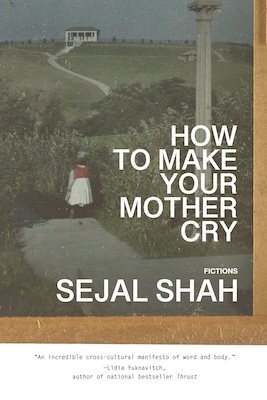
Even so, this category of creative work published by university presses is huge; I should start out by saying that. I have so many books by university presses that I just love on my bookshelves—both by friends and by strangers. So, this is a wildly incomplete list. To narrow the wide category that is university press books, I decided to choose books that were already on my bookshelves—books I had already read and loved, which I wanted to recommend to others. I also chose books that in some way connected to themes in my story collection, How to Make Your Mother Cry: fictions, which is being published by West Virginia University Press. Though my book is a story collection, I also think of it as genre queer: How to Make Your Mother Cry also contains poems, letters, photographs, drawings, and other ephemera. In my reading list, I looked at books across genre (story collections, poetry collections, essay collections, memoirs, and memoir-in-essays) that grapple with identity, that consider the relationships and journeys of women and girls, and books that explore how we live with loss as well as come to terms with what and who is home. 

The Secret Lives of Church Ladies: Stories by Deesha Philyaw

Deesha Philyaw’s blockbuster 2020 story collection, The Secret Lives of Church Ladies, was a finalist for the National Book Award, and demonstrates that university presses are publishing some of the most exciting and innovative work out there. This West Virginia University Press title delves into the lives of Black women and girls and crackles with wit and energy. The nine stories in Philyaw’s collection feature characters who are figuring out who they want to be in the world, caught between the church’s strictures and their own desires. Two favorite stories of mine are the opening story, “Eula,” about a close and complicated friendship between two women and the poignant epistolary story, “Dear Sister.” 

Meet Behind Mars: Stories by Renee Simms

Meet Behind Mars is an eclectic mix of realist, fabulist, and satirical storytelling illustrating a surprising wit and generous sensibility. In these eleven stories published by Wayne State University Press in 2018, Renee Simms writes a range of characters and highlights character quirks, the relationships between parents and children, the specificity of places, and the kinds of things people say to writers, all with a deft hand. The opening story, “High Country,” sets the tone and many moments of understated humor such as when the protagonist “makes a fuzzy mental note: Tom’s Natural Deodorant does not work in the desert.” Later in the same story, literary characters come to life in a magical realist twist that stands out against some of the title story’s protagonist’s more mundane moves and travel.

Feeding the Ghosts: Poems by Rahul Mehta

There is an appealing plainspokenness and humility in Rahul Mehta’s 2024 poetry collection, Feeding the Ghosts—what seems to me to be a desire to communicate more than obfuscate or keep a distance from the reader, which some contemporary poetry does. Mehta’s first two books are prose and his voice in these poems blends a sensitivity to language’s music as well as a novelist’s fluency with narrative. The combination of these gifts creates a series of gorgeous still lifes that also tell moving stories. In these poems, I sense a camaraderie with some of my stories in that the narrators of both are Gujarati, sometimes in places at some distance from major metropolitan areas. Published by the University Press of Kentucky, these soulful poems are full of flowers and trees, love and fear, moments of quiet resilience and aching heartbreak, and I left them feeling open-hearted and tender toward my own ghosts and those of others. 

The Clearing: Poems by Philip White

The spare, beautiful poems that make up The Clearing are a sustained and quiet meditation on love, loss, and memory. White has written about the deaths of his parents and his first wife and about how one goes on with life after such pain. Published by Texas Tech University Press in 2007, the poems in The Clearing read as timeless in their questioning, urgent in their address. Certainly, there is the quality of elegy and mourning in The Clearing. However, The Clearing explores not only loss, but how we keep living and even find joy in the living that remains. 

Another Appalachia: Coming Up Queer and Indian in a Mountain Place by Neema Avashia

Another Appalachia: Coming Up Queer and Indian in a Mountain Place (2022) is a loving exploration of how a place shapes a person. Neema Avashia examines her identity as a West Virginian Appalachian through essays about food, religion, sports, family, neighbors, social media, gun culture, and more. This collection, published by West Virginia University Press, contains more traditional narrative essays as well as artfully crafted lyric essays. The titles of these essays give a hint of the author’s sensibility with “The Hindu Hillbilly Spice Company: Indolachian Flavors Blend,” “City Mouse/Country Mouse,” and “Nine Forms of the Goddesses.” The acknowledgments in this wonderful book are titled, “Thanks, Y’all.” Avashia mixes nostalgia and humor, sweetness and poignancy, personal reflection and universal questions about home.

I Would Meet You Anywhere: A Memoir by Susan Kiyo Ito

Susan Kiyo Ito’s 2023 memoir, I Would Meet You Anywhere, a finalist for the National Book Critics Circle Award, is a wise, poignant, journey about home, self, and identity stemming from Ito’s search for her birth parents. However, Ito’s book becomes more than just a search: it is a moving memoir about the meaning of family and the desire to own and tell one’s story. Published by The Ohio State University Press, I Would Meet You Anywhere evokes the magnetic pull of a mystery and once you start reading, contains an appealing page turner quality along with being beautifully written, the combination of which was very satisfying to this reader.

The Sum of Trifles by Julia Ridley Smith 

What do we do with the things we inherit? Julia Ridley Smith’s 2021 memoir-in-essays, The Sum of Trifles, grapples with this question as the narrator approaches and must deal with her antique dealer parents’ belongings after their deaths. Published by the University of Georgia Press, Smith’s book is a thoughtful, elegiac look at material culture, love, and grief—at how we live in and with the objects that can deliver to us both the heaviness of the past and the solace of lives well-lived. Smith’s book is a moving inquiry about what we decide to keep and what we let go.

Taxonomy Can’t Classify My Fruiting Body

Self-Portrait as Resurrection Fern

we wonder / what saved us? what for?
—H.D.


When I came to myself again,
I thought yes, this time, yes,
and stretched on the moss

in the forest I’d known for seven
adolescences. Lichens, leaves,
and limbs glistened beneath me,

and I no longer resembled
a cluster of dust, something swept
from a far desert. In the thick of it,

there was no difference between
dormancy and death, no way out
til I found what I needed. Call it

nourishment, or care—the feeling
of being looked after. It is here,
despite, or because of, so much loss.

Lifeblood
is a drop of atmosphere,
small as a spore, colossal

as the ancient oak I clutch—
reaching for immortality,
finding it in the rain.


Slime Mold Exceptionalism

After Lucy Jones’s essay “Creatures that Don’t Conform”

7 Graphic Memoirs by Asian American Writers

Graphic storytelling is a medium that can capture the intricacies of identity and belonging in a way that prose can’t through the use of color, shading, and linework to denote different moods, time periods, and perspectives. 

My book, Advocate, utilizes these techniques to represent the different parts of my identity: the son of Korean immigrants, but also as an artist, an environmental justice lawyer, and a nonprofit worker working with diverse communities. Through Advocate, I wanted to create a persuasive narrative not just for readers, but for my own family, who had always struggled to understand my nonprofit career. Comics allowed me to juxtapose the conflicts within my family and my own ongoing work. Looking back on the wide range of artistic styles in my favorite graphic memoirs also inspired me to explore different visual storytelling techniques. As a self-taught artist working directly on paper, I selected and purchased each color of my Copic markers very carefully, thinking through how color shades denoted the time and mood for different periods of my life (shades of red to symbolize my youth and early passions, purple to symbolize a period of transition and learning). In later pages, these colors mix and meld on the page as I reflect on my past or use flashbacks as a narrative technique. After exploring so many different colors and eras, I’m happy to have settled in a calmer state of mind today, which is reflected in the shades of blue in my final chapter.

My book follows in a rich history of Asian American illustrators and authors, each telling and drawing stories of their family history in their own distinct style. Below are 7 graphic memoirs by Asian American authors that explore coming of age, familial legacy, and inheritance. 

Dragon Hoops by Gene Luen Yang

Acclaimed graphic novelist Yang was a teacher at Bishop O’Dowd High School in Oakland and his latest book dramatizes the basketball team’s journey to the California state championship. With expressive linework by Yang and understated color work by Lark Pien, the book shines a spotlight on the players and coaches, their dreams, struggles, and hopes, while weaving in anecdotes about the history of basketball. A compelling read. 

Messy Roots by Laura Gao

Laura Gao started posting her comics about Wuhan, her home city in China, on Twitter during the pandemic where it became viral. Messy Roots is a love letter to her Wuhanese roots and an exploration of cultural and gender identity, queerness, and combating racism while challenging anti-Asian racism that was at its peak during the early days of the pandemic. The memoir follows her childhood in China to her family’s immigration to Texas, college life, and her eventual move as an adult to California. A thoughtful and illuminating meditation on coming into yourself. 

Continental Drifter by Kathy MacLeod 

With precisely considered panel layout and illustrations, this graphic memoir recounts the tumultuousness of adolescence over the course of a single year. With a Thai mother and American father, MacLeod grew up between Bangkok and Maine, while never quite entirely fitting in either country. Amid scenes of pastoral beauty in New England, MacLeod is constantly reminded of her biracial identity by the callousness (and occasional kindness) of others at her summer camp. A touching story of finding belonging and self-acceptance. 

Family Style: Memories of an American from Vietnam by Thien Pham

Pham’s graphic memoir is told through food and begins with a traumatic pirate attack as their family escapes Vietnam  and progresses to Pham’s early memories of being in a refugee camp in Thailand, and then finally settling in San Jose. Every chapter in the book is named after a dish that represents a pivotal moment in Pham’s journey: “Rice and Fish” is the meal of his childhood on the boat and the refugee camp while “Steak and Potatoes” encapsulates his time in America, while “Strawberries” follows his family’s as laborers on a berry farm. In the final chapter, Pham pursues citizenship, a culmination of his family’s struggles and sacrifice to make it to America for a better life. 

Feeding Ghosts by Tessa Hulls

A story about the reverberations of trauma, Feeding Ghosts pierces family mythology with an in-depth look at three generations of women. Tessa Hulls’ Chinese grandmother Sun Yi, a journalist, escaped from Shanghai to British-ruled Hong Kong with her mixed-race daughter, Rose, after facing persecution from the community party. Hulls’ mother is the product of an affair with a Swiss diplomat, her existence unacknowledged and recognized despite Sun Yi’s desperate entreaties to the Swiss embassy to recognize her paternity and afford her daughter the privileges of legitimacy. In Hong Kong, Sun Yi pens a bestselling memoir that brings her acclaim, respect, and financial security, but the years of struggle manifests in a breakdown. Rose spends her weekdays in an elite British boarding school and the weekends visiting her mother in a psychiatrist ward, before she eventually moves to California for college. Rose’s life-long responsibility as a caregiver leaves her riddled with anxiety, a mercurial figure to Hulls who spends most of her life estranged with her mother.  Tessa Hulls conveys the nonlinear process of healing through the book’s black inks and panels that bleed across the page, allowing for stark and sprawling graphic storytelling that  is a tender and vulnerable exploration of matrilineal legacy. 

Almost American Girl by Robin Ha

Seoul-born Robin Ha’s memoir follows a major turning point in her life: an unexpected move to the United States as a teenager after her mother decides to get married to a man in Huntsville, Alabama. The book charts Ha’s grapple with culture shock, her relationship with her mother, racially motivated bullying in school, and her adjustment to life with an American stepfamily. A contrast to Ha’s narrative is the inclusion of her mother’s perspective on immigration and their struggles. Soft and subdued coloring is used for the majority of the work, with recollections of Korea in sepia tones. 

The Best We Could Do by Thi Bui

Spanning the present day and the past, Bui’s memoir traces her family’s escape after the fall of South Việt Nam in the 1970s, their stint in a refugee camp in Malaysia, and their lives in California. A chronicle of family history and the fall of a country, Bui shows how recollections of shared historical events differ amongst family members, and each memory malleable and shaped by the person’s identity and life experiences. A thoughtful  mediation on war, displacement, and parental sacrifice. 

Anna Dorn Thinks Patricia Highsmith Would Love Lana Del Rey

Anna Dorn is an author who I will automatically read anything she writes, no matter what it’s about. I love her sense of humor, and how her novels are always such delicious fun. If you find yourself in a reading slump (we all get them!) and need a book to remind you how entertaining reading can be, Anna Dorn’s got you covered. 

Her latest novel, Perfume & Pain, features Astrid Dahl, a lesbian novelist who has recently been canceled for a comment she made at a book event that was caught on video and went viral. She’s struggling to write—so much so she rejoins a Zoom group she co-founded, though it’s no longer called Lez Brat Pack, and is now led by a man. That’s where she meets Ivy, an attractive woman who piques her interest. Meanwhile, she can’t stand her new neighbor Penelope. And then there’s Kat Gold, a celebrity producer who wants to work with her. All this pressure has Astrid going back to a cocktail of substances she calls the Patricia Highsmith—something her agent has implored her to stop using because it’s been responsible for her most destructive behavior. 

Perfume & Pain is a smart, hilarious romp about a woman trying to break up with her bad coping mechanisms. It’s sexy and full of Anna Dorn’s trademark wit, dealing with cancel culture, industry pressures, and millennial lesbian dating. It’s such a pleasure to read, breezy without being brainless, that I tore through it quickly, dying to know what happened to Astrid and the mess she was making of her life. 

Anna and I spoke about her last novel, Exalted, so it was fun to connect again and discuss Perfume & Pain. 


Rachel León: Based on the premise I didn’t expect any mention of astrology in this novel, so I was delighted to get a few of the characters’ sun signs. But we never learn Penelope’s. I’m dying to know if you made an off-page decision about her sign. 

Anna Dorn: I wasn’t expecting astrology in the novel either! I vowed after I published Exalted that I’d never mention my characters’ astrological signs again. And I wrote an entire novel where I didn’t. But then I ended up shelving that novel. And then I wrote a new novel, in which I mentioned the main characters’ signs on like… the first page. I kept trying to change it, but it just worked with their toxic flirtation. I purposely did not include Penelope’s sign because Astrid is trying to stop making snap judgments based on mostly arbitrary criteria, just as I am! I did make an off-page decision about her sign but I’m not going to reveal it! Hopefully, this answer is elusive in an enticing way and not annoying. 

RL: I actually liked how it was never revealed because Astrid is trying to break up with astrology, so to speak, and so I love that she never asks. And also that the astro-talk dwindles. It’s almost like a marker of her evolution—how much or little she’s thinking about astrology. 

AD: Yes! Exalted was supposed to exorcise my interest in astrology. Astrid wrote her astrology novel for the same reason. Everything I write is an exorcism. Astrid is performing her own little exorcisms. 

RL: Astrid is such a fascinating character. Her voice is strong, she’s a force. Can you talk about how she developed? 

The spark for this novel was a woman turning 35 and realizing that that her bad behavior that was once cute—partying, provocation—was just kind of pathetic now.

AD: I started with Astrid’s voice, her neuroses mostly. The spark for this novel was a woman turning 35 and realizing that her previous coping mechanisms weren’t working anymore, that her bad behavior that was once cute—partying, provocation—was just kind of pathetic now. So that was the initial impetus. And everything else, the “plot” if you will, came after. 

RL: Perhaps the most destructive of that bad behavior is a cocktail of substances she calls “the Patricia Highsmith,” which is something else she’s trying to break up with. 

AD: This is true. I originally called it “The Magic Cocktail,” but an early reader suggested giving it a name like “The Judy Garland.” And I knew it had to be Patricia, who was on a similar cocktail herself. Minus the weed. 

RL: The cocktail sounds both magical and terrifying. How’d you come up with the combo and its effects? 

AD: “The Patricia Highsmith” is made up of alcohol, amphetamines, sativa, and nicotine. A classic speedball with a Californian twist. And who knows how I came up with it… 

RL: So back to that original spark, what was it about that premise about a woman turning 35 and realizing her old coping mechanisms weren’t working anymore that interested you?

AD: Well, it was happening to me LOL. I’m not that original. I’m trying to write less about myself. I’m going to stop after this book, I swear. 

RL: But why?? Your books are so much fun and art imitates life and all that! Don’t all writers draw from their life in some way? 

AD: Maybe they do! I don’t see myself as particularly interesting. I see writing as a performance and myself as a vessel. I have a lot of people and voices inside of me and I’m not sure which are authentic and which are plucked from things I’ve heard or read, but I’m drawing from all of them when I write. So I guess I don’t really see it as writing about myself. When I say I want to stop writing about myself, I suppose I mean I want to stop writing about people with similar biographical details who will inevitably be compared to me. But the process will remain the same. Does this make any sense? I guess what I’m saying is I’m writing in third person now. 

RL: It does. I’ve seen how quick readers can jump to assuming a protagonist is just like the writer. I’m assuming you’ve dealt with those incorrect assumptions in the past. Making Astrid a novelist seems like a way to lean in on that, maybe even push against it. 

AD: I can’t fault people for assuming I’m my characters because I do the exact same thing when I read. I’m like oh, [insert X writer] wrote about cheating on her husband with a cocktail waitress, I can’t believe [X writer] did that!!! It’s human nature and it’s fun. When I write fictional characters with nearly identical biographical details to me I assume the risk (to borrow legal speak) that people will think they’re me. Ultimately I just feel so incredibly lucky that people even want to publish and read my work—I’m in no position to complain about any aspect of it! I’m living the dream, baby!

RL: Astrid is living the dream too. She’s sold the rights to one of her novels and has a production meeting with a high profile celebrity producer. Kat Gold is such a great character. Did you have tons of fun writing Kat Gold?

Pretty much every artist I respect has been canceled. Anyone who takes risks will be canceled at some point.

AD: OMG I love Kat Gold. Thank you for asking about her. I have to give my agent Sarah Phair credit here. We were revising the manuscript and she had the idea of Astrid working with a celebrity’s production company. We talked about making the celebrity sort of like EmRata in the sense of being conventionally hot and fairly banal but fancying herself an intellectual. I had COVID at the time, and I do my best writing with a light fever. So I wrote all of the Kat Gold scenes while feverish slash on Dayquil slash Nyquil. I was cracking myself up. I think I wrote like 8,000 words in a day. I don’t typically keep track of these things but I just noticed because I wondered if I was having some kind of hypo-manic episode. 

RL: Since we’re talking about fun characters, what about Ivy? 

AD: The love interests in the book, Ivy and Penelope, came out of that spark I mentioned earlier. Astrid realizes just before the book starts that she needs to make a lifestyle change. Ivy represents staying on the destructive path. And Penelope represents growing toward something more mature and sustainable. So Astrid is sort of revolted by Penelope in the beginning because she doesn’t want to change. And Ivy is tantalizing due to the inertia of her bad habits. But as Astrid evolves, she…well, I don’t want to give too much away!

RL: Sorry to bring in astrology again, but we’re both mutable signs, which are supposed to be better at change. I think that’s true for me. Is it for you? 

AD: Okay, yes, I am a mutable sign but change is NOT easy for me. I guess changing my mind is easy especially if a hot woman is trying to convince me. Maybe that makes me mutable. I’m always down to be convinced by a well-reasoned or even poorly-reasoned but entertaining argument, especially by someone who is funny and attractive. I think Astrid is similar. Her opinions flip on a dime. Changing one’s habits is harder. I struggle with it, Astrid struggles with it, doesn’t everyone? 

RL: For sure. Changing habits really comes down to her own willpower. Which is tricky. Slippery. 

AD: I think Astrid changes in part due to her crush on Penelope. Libido is a great impetus for change. I guess that’s sort of a thesis of this book. Millennial culture is all: I’m going to date myself, I have to love myself before I love anyone else!! But I don’t subscribe to any of that and neither does this book. Lana Del Rey has this line: Fuck me to death, love me until I love myself. That’s the philosophy of this book, I think. Love can change the way you see yourself. You don’t have to do it alone and you shouldn’t. In fact, I don’t really think we’re capable of changing on our own. 

RL: I want to talk about Lana Del Rey now but probably can’t work it into the book…so instead: Speaking of saying something provocative—Astrid makes an offhand comment that leads to her getting canceled. Curious about your thoughts on cancel culture.

AD: Oh, God, how much time do you have? Well, we can circle back to Lana Del Rey, who’s been canceled many times only to be redeemed over and over. Pretty much every artist I respect has been canceled. Anyone who takes risks will be canceled at some point. In the future, everyone will be canceled for 15 minutes. Did I put that line in the book? I can’t remember. I should have if I didn’t. 

RL: Do you think Patricia Highsmith would be a Lana Del Rey fan if she was alive today? Or better yet, what do you think she’d be reading/ watching?

AD: I think Patricia Highsmith would love Born To Die, the cinematic glamor and macabre lyrics. I think she’d love Gillian Flynn, probably Sharp Objects more than Gone Girl. She’d LOVE Ottessa Moshfegh—especially Eileen, the book and the movie. I want to go out on a limb and say I think she’d like Sam Levinson’s The Idol. She’d love Todd Haynes’ adaptation of Carol, obvi. She’d love Sharon Horgan’s Bad Sisters. Emma Cline’s The Guest would be her shit. She’d fucking LOVE Tampa by Alissa Nutting. I like to think we have similar taste.

7 Novels Set on the Internet

I used to think there was nothing more embarrassing than to write about the internet. It wasn’t literary, I thought, and to give it a place in my fiction would be to admit not only how much time I spent online, but how much this time meant to me. Besides, who was I to write about the internet when I didn’t even have a Twitter following? The fact that I spent my last waking moments every night scrolling and needed the bright light of my screen to wake up every morning seemed irrelevant.

Throughout my twenties I struggled with a horrible novel set in the early 2000s. Though I’d been alive during this time, the era felt prehistoric. My prose was labored and all attempts at historical accuracy were lifted from web articles like “10 things that happened in 2003.” It was only when I moved the basic structure of the novel up twenty some years to a dystopian-ish near future that it came alive and began to take shape as Mood Swings, my debut out this spring. A key component of that modern world? A heavy dose of the internet. 

Set in a world where all animals have been eradicated by a tech billionaire, one of the central tensions in Mood Swings is between the corporeal and online worlds. I’ll be the first to admit that by 2024 this isn’t exactly a groundbreaking trope, so I was conscious that to explore these themes in my work would require a nuanced approach. From activist Twitter to cancel culture, conspiracy message boards, YouTube comments sections, and social media stalking weirdos from high school, the internet of Mood Swings is both dull and scandalizing, earnest and apathetic, frivolous and threatening. 

Here are some of my favorite books that model how dynamically the internet can be depicted on the page: 

So Sad Today by Melissa Broder

This collection of personal essays was born out of Broder’s once anonymous twitter feed. So Sad Today explores anxiety, sex, love, and medication with humor and vulnerability. The essay, “Love Like You Are Trying to Fill an Insatiable Spiritual Hole with Another Person Who Will Suffocate in There,” illustrates how online intimacy can mutate once our bodies get involved IRL. It features extended excerpts of Broder’s (very raunchy) text conversations with a young man she becomes involved with when she and her husband experiment with an open marriage. We might be tempted to read this kind of communication as inherently shallow, but the way Broder contextualizes this speech proves it is anything but. Plus, the essay’s conclusion is forever burned into my brain: 

“Dating is sad. Online dating is sad. Attending holidays and weddings alone is sad. Marriage, too, is sad. But love, lust, infatuation – for a few moments, I was not sad.”

Y/N by Esther Yi

A young woman sees K-pop superstar Moon in concert and falls under his spell. From livestreams to fan fiction sites, there is no better place for her obsession to breed than on the internet. Yi’s unnamed narrator quickly reorients her life in service of this contemporary worship and embarks on a bizarre journey from Berlin to Seoul. What makes this book really stand out is how Yi contrasts her outlandish subject matter with precise and cerebral prose, elevating what an “internet novel” can and should be. 

literally show me a healthy person by Darcie Wilder

Darcie Wilder’s bold and strange novel feels a little bit like reading a diary and doom scrolling at the same time. Told through fragments that range from a few words to a few pages, Wilder’s narrator is deceptively blasé and shockingly devastating as she recounts quotidian observations, embarrassing sexual exploits, and the death of her mother. 

Any Man by Amber Tamblyn

A truly bizarre specimen of a novel, this book feels like diving head first into the Jezebel comments section. Tamblyn’s blend of poetry, prose, tweets, and DMs follows a female serial rapist on the prowl for her next male victim. As police investigate and the media sensationalizes the crimes, the novel forges a nuanced and provocative exploration of rape culture. 

what purpose did i serve in your life by Marie Calloway

A collection of first person stories, nudes, Facebook chats, and hate mail, this book feels like holding the internet in your hands. What purpose did i serve in your life centers primarily on Calloway’s interactions with men in various cities across the US and UK. Some are friends she knows from the internet, some are sex work clients and one is a well known editor with a live-in girlfriend. She writes with a detached but unflinching realism that’s hard to look away from. The cover itself, an 8×10 portrait of the author, makes you feel like Calloway is staring you down. It’s the kind of book that’ll make you miss your stop on the subway – that is if you’re brave enough to read it in public. 

I Am Here by Ashley Opheim

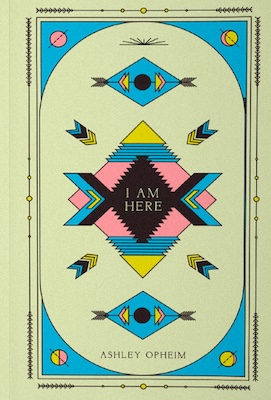
The world of Opheim’s debut collection is populated with online quizzes, “pokes” on Facebook, Kombucha brand identities, Dijon mustard, and making out. “What if a group of experimental, full funded scientists took an immense interest in your aura and decided to try and understand it?” she writes in “Aura Pixels.” “What if they took some peyote to heighten their energetic experience and then published their findings on a website that is somehow everyone’s homepage?” A singular ode to the sheer miracle that is being alive, I Am Here is driven by the great invisible forces that shape our existence: love, peace, desire, and wifi.

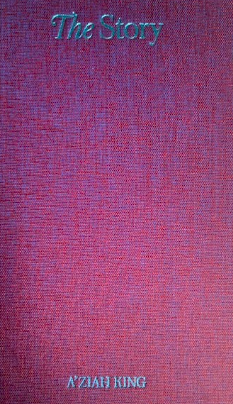
#thestory by Aziah “Zola” King

May we all remember where we were when we first read the Zola Twitter story. Our narrator meets “this white bitch at hooters” who invites her on a trip to Florida where they can earn big money on the nightclub scene. What ensues is an impeccably paced madcap quest that was eventually made into a 2020 film written by Jeremy O. Harris. It’s truly incredible how much characterization and suspense Zola’s able to build through a series of tweets, which should serve as a lesson for us all to both embrace and transcend whatever form we’ve chosen to tell our stories.

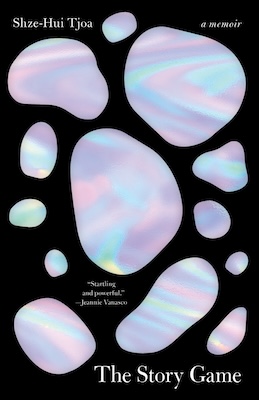
Shze-Hui Tjoa Is a Detective Seeking Clues to Her Own Life

Shze-Hui Tjoa’s The Story Game is an unflinching investigation into herself—represented in the text as ‘Hui’—and her lost memories from a dark place called ‘Room’ during her years as a piano prodigy in Singapore. A script-like dialogue between Hui and her sister Nin in Room structures the book from the start: the reader is swiftly inducted into another, deeper space within the page as the game’s silent witness, surfacing periodically for Hui’s fractured stories of adulthood that function as a trail to the pain of her childhood. The stories narrate stilted nights in a kink club, a faith-breaking visit to a holy land, the complications of trying to love through self-loathing and more—all written with a formidable balance of candour and restraint that mimics, in prose, the effects of complex post-traumatic stress disorder (C-PTSD) on what she can remember.

This memoir challenges its own meta-narrative that a person knows, and can tell, their own story best with its breathlessly inventive form of prompted, iterative honesty. Eventually countered by her sister’s gentle yet firm refusal to play their game, Hui’s stories spiral upwards towards truth—towards an integration of the somatic and the cerebral; the factual and felt. At the point where the memoir’s edge touches Tjoa’s lived reality, the contained meditations on grief, mental health, identity and family fuse into bright, earned clarity.

I spoke with Shze-Hui over Zoom and email at the start of 2024. Our conversation spanned the way The Story Game has been influenced by Singaporean particularities, how a writing career has affirmed her capacity for extremes in control, and the aching—yet fortifying—process of growing beyond yourself. 


Claire Chee: Being ‘smart’ comes up throughout the book, especially in how you describe managing to hide your deep trauma behind cleverness and achievement for a shockingly long time. What role do you think your schooling had to play in this exaltation of academic intelligence? 

Shze-Hui Tjoa: A huge role. When I was growing up in Singapore, there was a standardized, nationwide exam that sorted all children into three education pathways at age nine: “gifted,” “express,” and “normal.” Imagine what this rigid pigeonholing did to everyone’s self-worth! Especially when the adults around us were constantly warning that the stream we ended up in would determine the rest of our lives.

I tested into the “gifted” stream—which, in hindsight, I think had more to do with my knack for intuiting others’ needs and desires, than with any sort of book-smarts. But for decades afterwards, I walked around with a kind of desperation to present myself as an “intellectual.” I only read books that were dense with theory; tried to use big words; went to academic lectures that I mostly ended up daydreaming through. In other words, this label of “smart” that had been imposed on me—it became a self-image that I clung to in the absence of a unique personality, or a sense of self. And for a long time, it prevented me from attempting any sort of real personal growth—because to improve at something, you have to first be willing to admit that you don’t know everything. You have to be able to honestly reckon with your own limitations, so as to transcend them. I couldn’t for a long time without experiencing significant self-hatred.

CC: A vestige of that can still be seen in the book’s first story, “The Island Paradise,” which your sister deems intellectual, but dishonest. Could you share more about how the content of this book’s stories evolved with your own growth? What did you have yet to learn about yourself when you began writing?

Detective novels have a promise of omniscient knowledge built into them—there’s always someone, somewhere who holds all the answers.

SHT: I agree—“The Island Paradise” is a record of who I was then, back when I relied on “smartness.” These days, I feel a lot of sorrow and compassion for that younger version of me. She was really suffering —yearning to evolve, to become something, anything other than what she was at the time. And yet she believed that she was fully-formed and right about everything.

The biggest thing that I learned from writing this book is to let go of the need to present as perfect all the time. Expecting constant perfection is the direct enemy of growth and change. Nowadays, I feel like I am much more comfortable embodying “The Fool”—you know, like the Tarot card? I know we don’t typically associate published authors with this archetype! But The Story Game represents my journey of growth towards the freedom to make mistakes, vacillate, and explore. The freedom to connect meaningfully with others, too—because by the end of The Story Game, my in-text avatar has realized that the only way to learn what she doesn’t know is to step outside of her own head to talk to other people. She realizes that embracing her weaknesses gives her a real reason to need others and let them in.

CC: The Story Game asked me, as a reader, to respect its parameters in giving an answer that was different to the one I sought. I’ll admit I was fairly preoccupied with knowing exactly what happened during your childhood years, only to realize by the end that I wasn’t entitled to it. Could you share a little bit about how you decided what to disclose and withhold about those events?

SHT: It’s funny you should say that because, actually, I don’t feel like I withheld anything at all. I told readers as much as I could about what had happened to me—which is to say, as much as I could truthfully remember at the time of writing.

With the dissociative version of complex-PTSD—which is what I developed as a child musician—trauma often manifests as avoidance, with the mind fleeing elsewhere while bad experiences happen, and refusing to store them as sensorially rich information. So although I had a kind of semantic memory of those childhood years “playing the piano,” I didn’t know what those words actually felt like, if that makes sense. I could not have concretely described what I had actually experienced each day as an embodied self, sitting on the piano stool.

Basically, a lot of The Story Game is about trying to deduce what might have happened to me, in the years when my mind was absent. Like a detective, I had to examine my adult body’s attitudes towards food, sex, illness, and pain as clues from the past. I shared those findings as fully as I could, in the book.

During the last stage of writing—when I was creating the dialogue between me and my sister—I relentlessly read Agatha Christie detective novels, and also watched the entire TV adaption of her Poirot books. I had entered the murky territory of “unknown unknowns” at this point: I had no idea if the dialogue would go anywhere at all, or manage to wrap up in a satisfying narrative. Detective novels have a promise of omniscient knowledge built into them—there’s always someone, somewhere who holds all the answers. I suspect I needed to replenish this feeling of security in my own psyche—to believe that someone, somewhere also knew where my own project was going.

CC: Your relationships with Nin (your sister) and Thomas (your husband) are both fractured by inverse needs for control. With Nin, you claw back agency by dominating every narrative you share. With Thomas, you want to relinquish control to the point of having him intuit a toothache you’re having—when he fails to do so, you draw a knife. Has writing about these ruptures recalibrated the concept of control for you? 

SHT: It hasn’t. I still have the same ability and desire to control the other—or otherwise be controlled by them. I actually think that’s part of what makes me suited to being an author, since writing engages in these two extremes: the pleasurable coercion of another person via text, while also letting them control the fate of your career as a reader who’s entitled to judge your work.

My in-text avatar realized that the only way to learn what she doesn’t know is to step outside of her own head to talk to other people.

The difference in having written this book is that nowadays, I’m able to name what I’m doing, whenever I’m engaging in complete domination or submission with other people. This self-awareness has given me much more agency over how and when I exercise the dynamic in my life. In the past, I didn’t know how to stop, which made it feel unbearable and inescapable. But now I understand that control is a game I can play, and also stop playing, at will. I can engage in it temporarily for strategic purposes: to influence others or myself to take brave risks, work together for a common good, or create beautiful things. 

You know that Mary Oliver poem? “Someone I loved once gave me a box full of darkness / It took me years to understand that this too, was a gift.” That’s how I feel about the concept of control in my life now.

CC: Singapore adopts a paternalistic approach to governance that, compounded with common Asian dynamics of filial piety, has produced a general cultural aversion to questioning one’s elders. In the book, you have to reckon with how your parents—who you assert are good people—could hurt you so terribly. What are your feelings today towards dynamics that foreground both fear and love?

SHT: Thank you for picking up on this! I would say that this duality sits at the heart of The Story Game: that love always means making yourself vulnerable to the possibility of hurting another person, and being hurt by them yourself. I think this applies across all forms of close relationships: between parents and children, siblings, romantic partners, even friends. That’s what makes emotional intimacy so rewarding in the first place, right? That we are willing to take this risk with another person, day after day, in order to experience a season of closeness with them?

It’s true—in the culture where you and I grew up, there is definitely a deep-rooted belief that being a “good child” means never confronting this duality. Many of us in Southeast Asia are taught that if we truly respect our elders, then we must deny the parts of ourselves that remember all the ways they made us feel small and angry and afraid as children. But what kind of love is this—that wilfully denies the fullness of what we can remember about another person? To me, a love that does not truthfully reckon with the ways in which our parents’ imperfections shaped us growing up is a love based on myth—without real people at its center.

In parts of The Story Game, I explicitly name the ways in which my parents hurt me as a child to achieve their own ambitions. One of the most difficult sentences to write in the whole book was the one you reference: “[my] parents are good, kind, and loving people.” It took me over four years of personal reflection to get to the point where I was able to put those words down on a page, and really stand by them. But I had to reach a place where I could both hate my parents’ actions towards me, and also love them as people—in order to eventually extend that same complicated grace towards myself, as someone who has also wounded others.

CC: One of The Story Game’s defining themes is an ouroboros of flawed authority and how it perpetuates hurt; your parents, the eco-hostel owners, and even yourself to your sister, Nin. How has your relationship with authority shifted or solidified since you wrote the book?

SHT: What I’ve learned as a memorist is: the more democratically my sense of self can exist out there in the world, among the general public, the less I have to worry that any one powerful entity can control it, minimize it, or otherwise eradicate my personhood. Nowadays, I see the “product” of this book as a form of immunity against the power of authority. In particular, I suspect that the Singapore government’s desire to gain international prestige through my writing career means that they’re willing to give me more freedom to speak out, compared to others back home. This has enabled me to talk back on some political issues that I care about—for instance, the ways that they’ve been punishing citizens’ self-expression about Palestine recently. The process of championing my book loudly, and being proud of its readership has made me feel less afraid in general. The collective keeps me safe. People are my protection.

CC: The Story Game spans Indonesia, Singapore, London, and the unspecified Baltic region of one of its essays, the ‘Good Green Place’ so I have to ask—where are you currently based? And are you working on anything new?

SHT: In Edinburgh! I relocated from London at the start of the year, to work on my second memoir. It’s very early days so I can’t be sure yet but I suspect that it revolves around the politics of empire and motherhood. Something about the physical configuration of this city is helping my body to find the specific voice that it needs; to channel its feelings.

Alive She Was Mythic, Dead She Is Larger Than Life

An excerpt from Bright and Tender Dark by Joanna Pearson

From LoveandLegacy.com:

Karlie Richards (July 13, 1980–January 8, 2000)

Margaret Karla “Karlie” Richards of Sycamore Grove, NC, darling daughter, sister, and friend, went to meet her Heavenly Father in the early hours of January 8, 2000, after a brief but extraordinary life during which she was most cherished and loved . . .


From Reddit.com/r/karlierichardshauntings:

[wandatwothree]: Karlie was mythic from the start; her death only secured that status. I was also a member of UNC’s class of 2002. I didn’t really know her, but we were in the same freshman art history class. Karlie was the sort of person you couldn’t help but notice: xylophone laughter, hair like spun gold, a way of gliding across the lecture hall. There was a seriousness to her whole demeanor that I’d never seen before—that I definitely didn’t see in any of the other students. She was regal. We were all kids compared to her. She sat close to the front, so the light from the back of the projector cast her in this orb of illuminated dust, and you could tell she was taking in every word the professor said. Her face was always very attentive when she wasn’t speaking. She was someone you wondered about, who inspired curiosity while she was alive. But after she died, she morphed into legend. People kept saying they were seeing her ghost everywhere, but that’s what happens when you can’t stop talking about someone, then drink too many two-for-one rail drinks and spook yourself . . . That’s a recipe for a ghost right there. But that’s not Karlie.

[prettyprettyliars]: I started my first year in Chapel Hill the fall after she was murdered, so the tragedy was fresh on everyone’s minds. There were these new security call button stations all over campus and self-defense classes at the gym, and they encouraged everybody, especially the girls, to sign up. The RAs were required to lead sessions on personal safety. Maybe they were actually trying to accomplish something, but we thought it was all a big show, a way for the members of the administration to make themselves feel better.

Everyone believed that the kid they’d charged with Karlie’s murder hadn’t done it. We knew the real killer was still on the loose. Three of my friends were assaulted at frat parties within the first two months of school, so, you know, some things never change. The bad guys were still out there, business as usual.

Anyway, that’s when we started seeing her. Karlie. It wasn’t long after the night my friend Sarah had come home crying from Sig Ep that we noticed this girl down at the basketball court at Hinton James. We spotted her from our dorm window, way below us. She’d show up at night. Never talked to anyone. We’d watch her, walking back and forth from basket to basket, her face too far away to make out clearly. We went down to try and catch her a few times, but she’d always vanish. Finally, we managed to get a good look, and I swear to God, it was Karlie. Exactly as she appeared in all the photos. Karlie herself. Just staring right back at us.

[devilmaycare432]: I arrived at UNC a couple years after Karlie was killed, and there was a rumor that if you went over to the apartment complex where she was murdered, you could summon her. The owner of the complex still had her unit blocked off. No one wanted to live there, but people did want to sneak down there late at night, with beer or a joint or whatever. People kept breaking in, and the owners kept boarding the place back up. I went with a bunch of people once during my junior year, even though it seemed like a big joke at the time. Like going to a haunted house. We were all drunk and acting stupid, and it was a while before we realized our friend Tara had wandered away. When she came back, something was off. You know when people say it looks like someone has seen a ghost? That was Tara. She wouldn’t speak for the rest of the evening. Everybody felt bad about it. She never did talk about whatever it was that happened to her that night. Then the worst part was about ten years after we all graduated, Tara was murdered by a jealous ex. All of us who’d been there, those of us who were still in touch—it freaked us out. I now believe she saw Karlie there that night, and that Karlie had been trying to warn her.

[vyper9]: Lots of people saw Karlie after she died. Lots—me included. She was really haunting the place. Haunting it vigorously, appearing for all sorts of people—or so they claimed. Mainly down at those crappy student apartments where she died, but other places, too. Davis Library. McCorkle Place. By the highrise South Campus dorms. Behind the Forest Theatre. People swore they saw her darting into a convenience store close to campus for a pack of gum, or sitting on the patio at Carrburritos, idling outside various Franklin Street bars—Linda’s, He’s Not Here, Top of the Hill . . . Classic spots, the Chapel Hill circuit. Karlie was everywhere, like any enthusiastic undergrad might be. Only she was dead.

Yet she lingered. Can’t say I blame her. I’d haunt the shit out of people, too, if I got murdered and the wrong person went to prison and my true killer went free, and everyone, everyone, everyone was talking about it but getting the story all wrong. I’d be pissed. I’d want to correct the record. Isn’t that how ghosts are made?


From The Daily Tar Heel:

January 9, 2000

Chapel Hill, NC—Chapel Hill police are seeking any information regarding a young woman found slain inside her off-campus apartment on January 8. The body of UNC undergraduate student nineteen-year-old Margaret Karla “Karlie” Richards was discovered in the early-morning hours by a friend after she failed to respond to phone calls the previous evening.

“Right now, we’re looking into all possibilities,” Police Chief Hank Askins said. “While we don’t have any reason to believe there’s an active threat to the community, we’re encouraging community members to be mindful of their surroundings and take reasonable precautions.”

The exact cause of Richards’s death has not been disclosed, but police are investigating the case as a homicide.

Greta Longley, a UNC senior who also lives in the off-campus Trailview Crest apartment complex at 253 Arendale Road, says this event has rattled the community.

“It’s horrible,” she said. “She was this vivacious, active presence on campus. Stu like this just doesn’t happen here.”

Another resident of the complex, who wished for anonymity, reported hearing people coming and going at Ms. Richards’s apartment late into the evening of January 7 and into the early-morning hours of January 8.

“I didn’t make too much of it at first,” he said. “I mean, college students keep late hours, you know? But at one point I got up to go to the bathroom and heard arguing. I saw a guy standing right outside Karlie’s apartment. Big glasses. A limp when he walked. Kind of—well, he looked confused and upset.”

Another nearby resident who expressed the desire for anonymity out of concern for safety also attested to the fact of at least one late-night visitor at Karlie’s apartment.

“I heard someone drive up,” the witness stated. “But I couldn’t make out the car. It definitely pulled in right by her place, though. And then there was a man shouting. It was too dark to see his face, but he was waiting there, right outside Karlie’s apartment. He gave me the creeps. Everything was quiet after that.”

This witness is also fully cooperating with police.

The UNC spring semester is set to start on Wednesday, January 12. According to acting Chancellor Bill Sterling, the semester will begin as scheduled, but with a “heavy pall cast over our community.”

“Karlie was a wonderful spirit and a dynamic intellect, according to all who knew her,” Chancellor Sterling said. “She was a beloved member of our university family who exemplified the Carolina way.”

Sterling also announced a campus-wide remembrance and candlelight vigil in the Pit at 5:00 P.M. on January 13. This tragedy will also accelerate plans for additional safety measures and trainings on campus, university officials said.

At this time, Chapel Hill police are looking for an individual of interest in connection with the Richards case, a male seen by witnesses near her apartment shortly before the estimated time of her death. No suspect has been named at this time. Chapel Hill Police have posted an anonymous tip line. Anyone with information related to the case may call 919-555-0198.


2019

Joy finds her professor at the bar. It is the one near campus that he frequented back in his teaching days. She had seen him there many times, flanked by eager graduate students and seniors from his honors seminar, hands awhirl as he spoke, basking in the glow of all that attention. She never went. She’d never been invited, but she walked past many times, crunching through the leaves and stealing jealous glances through the window.

She is no one, she reminds herself—even with those long, bourbon-soaked talks during his office hours, the way he’d touched the back of her neck just so, a feeling like the Paraclete summoned. Joy was no one to him. It was all subtext without text.

“Joy,” she supplies.

Now, her professor sits in a booth alone.

He sees her standing outside and waves. It feels like he’s been waiting for her to appear, like the whole thing had been prearranged, predetermined. Joy pushes open the door and walks up to him, watching his inscrutable smile. There is always part of him, she feels, that is gently amused and laughing at her. She finds she already wants to leave.

“I know you,” he says. “You’re . . .”

“Joy!” He repeats her name like he means it.

He looks so old, so changed from what she remembers that she almost can’t bear it. She still feels the same inside, like an earnest college girl, but she wonders if he thinks the same seeing her. She is middle-aged; he is an old man.

“What are the odds? Sit, Joy, sit!”

His smile hurts her. He seems to be recalling an oft-told joke, grateful, like she reminds him of a time he loved and has almost forgotten.

“It’s good to see you,” he says. He’s already beckoning to the waitress and ordering her a drink—bourbon, like old times. She doesn’t have the heart to tell him that it is something she only pretended to like, for his sake.

She sits down in the booth across from him and looks directly into his face. Words do not come to her. The unopened letter from her past, from Karlie, rests in her bag.

“You could say ‘It’s good to see you, too,’” her professor says, and his voice is jovial, but Joy can see the mildest irritation in his gestures, in the way he picks up his glass quickly and drinks.

“I read something and thought of you,” she says, telling him about the article she saw, about the I Kissed Dating Goodbye guy, the tawdry sadness of it, how it prompted her to think of Karlie and her Bible studies, of him and his academic work. She mentions her own divorce, making light of it, easy-breezy, like a fun-time girl. He laughs in his familiar way again, as if Joy is unbearably precocious, but then his laughter sputters to a cough.

She never quite liked his laughter, Joy realizes—the smugness of it. Her anger toward him is finally coalescing after all the years of uncertainty, and she can feel it burbling up now, like the need to retch.

It was all subtext without text.

“Karlie,” she says quietly. “Why? Why did it have to be her?”

A look passes over his face quickly, darkening it, but he remains impassive. Carefully, he folds up his napkin into triangles, then takes another sip of his drink. There is music playing, an old B-52’s song from another era that might as well have been an age of buggies and oil lamps—they are insulated by the music, the clatter of silverware, the voices of other customers. Joy feels alone with him, in a strange bubble of privacy. Roam if you want to . . . Finally, he speaks.

“People are complicated, Joy,” he says slowly. With one knobby finger, he traces the circumference of his glass, then holds it up to the dying light from the window, as if inspecting for impurities. “Karlie was very complicated. I think you may never have fully appreciated that.”

“She was my friend.”

“No doubt of that. I like to think she was mine as well.” He sighs very deeply. The B-52’s are playing and playing—without wings, without wheels— with a Möbius strip–like endlessness, and the dusky bar seems to be the maw of some sick carnival ride. “It was a tragedy,” her professor says softly, in the special, fatherly voice he used when she was riled. She’s always hated this voice, which indeed reminds her of her own father— sunken-eyed and silent, his uncut hair fanned out against his pillow pitifully, like the halo of a failed saint.

“You killed her,” Joy says quietly. “Karlie. My roommate. It was your fault. She was so good before she met you. You ruined her.”

At this, he laughs, but his eyes have turned hard, bleak.

“Joy,” her professor says slowly, dabbing at his lips with the folded napkin. His hands are liver-spotted now, with none of the power she recalls. “I know you’re under a great deal of stress. With your divorce. I’m going to ignore what you just said. You’re beside yourself.”

But she cannot stop herself. All those old days are rushing back to her.

After Joy had introduced them, toward the very end of their freshmen year, Karlie had agreed to participate in Professor Hendrix’s studies. They began to meet regularly.

He’s interviewing me for his research, Karlie had told Joy. We talk about the historicity of the Gospel, modern evangelical movements, that kind of thing, you know . . . He’s so smart, and her eyes shot heavenward, but Joy could see the way a blush rose up her neck, the extra care she put into her appearance before they met. And Joy saw the tiny bruise on Karlie’s neck, a devil’s kiss. She began dallying in the hallways outside Professor Hendrix’s office, trying to catch glimpses of them together, trying to comprehend exactly what was going on—but she knew. Of course Joy knew. She idled near the departmental building, waiting to see them exit together, watching as a casual familiarity grew ever so subtly over time between them, his arm on Karlie’s shoulder, Karlie wearing his sweater as it got colder.

When Joy stopped showing up to her professor’s office hours and he said nothing, that was the end of it for her. She continued to attend class the rest of the semester but turned taciturn, reluctant, careful to do only the bare minimum. Professor Hendrix never sought her out or asked why. It was like whatever they’d once shared was simply a figment of Joy’s imagination.

“It was your fault,” Joy repeats, although she’s hardly sure why she’s saying it. Karlie made her own choices. There is another man in jail, evidence tying him to the scene. Open and shut. This man across from her, her former professor, had an alibi. What’s more, he’s pitiable now, impotent, a king dethroned. Maybe there’s a way she still longs for him to see her, an approving gaze she still might earn. Maybe she is simply cruel.

Yet she places the letter from Karlie on the table for him to see, like it’s proof.

He shakes his head and puts his hands into the sparse hair at his temples, pressing as if to stop an ache in his head.

“You were jealous,” he whispers. “You wanted me to cross that line with you.”

“No.”

“You hated her.”

Joy thinks of all those days she waited outside his office, listening to voices inside—his, Karlie’s. She’d laugh softly, he’d murmur something, she’d laugh again, but soon there were other sounds. Joy stood by the door listening, a terrible heat spreading over her.

The truth is that Joy’s professor never so much as kissed her, although his every gesture seemed to promise it: fingers on her shoulders, her back, sending shivers down her neck. His breath behind her ears, at the nape of her neck. The barometric pressure between them thick, ominous. Promises, signals, implications, leaving her like an arrow pulled back on a bow but never released into flight.

“I never hated her,” Joy says, which is true. She’d loved her Karlie. But she’d also envied her, for the way she lived in the world with a sense of ownership, for the way she took things.

He shakes his head again, like it’s all very sad to him. He takes another drink. She sees he is still in possession of his most notable attributes, superciliousness and composure.

“Poor lost preacher’s kid with her poor sick-in-the-head daddy.”

She stands to leave, her bag knocking over her bourbon and spilling it onto Karlie’s letter. Giving a little gasp, she tries to rescue the letter, but it’s already wet. She plucks it from the puddle of liquor.

“I’m praying for you,” he says mockingly.

She scoffs. There’s bourbon dripping from Karlie’s letter onto the toes of her boots.

“God, I hate you.”

She means it in every possible way.

He doesn’t answer her. He says nothing when she leaves. 


Outside the bar, Joy stands on the corner, catching her breath. Her teeth chatter. It’s grown colder now, but not nearly as cold as she feels, and it is already dark although barely past five P.M. In late November, the weather in North Carolina is alternately balmy, then unexpectedly cool. Some students pass by still wearing shorts, whereas others have broken out their jackets. A little shudder passes through her that has nothing to do with the temperature. She presses a cocktail napkin she’s grabbed against the damp part of the letter.

She and Karlie were close only during that first semester of freshman year. By sophomore year, they lived apart, and Joy rarely saw her. She’d stopped speaking to Professor Hendrix entirely by then, although for reasons that were inexplicable to her, Joy took two more of his classes.

She’d stopped speaking to Professor Hendrix entirely by then, although for reasons that were inexplicable to her, Joy took two more of his classes.

With Karlie, she remained pleasantly aloof. They bumped into each other now and then before Karlie died, but they never again spoke of Professor Hendrix. He left for his new job the semester after Karlie’s death, and Joy moved to an off-campus apartment with Sari and some of the others she’d met in her women’s studies seminar. It was a relief not to be seeking some grander plane of being. She felt at ease with her new friends, slump-shouldered former high school nerds made good, vigorous people who invested themselves in things like the college radio station or environmental action campaigns or slam poetry. Once, not long after graduation, Joy had looked up Professor Hendrix at his new college and emailed him. He’d never responded.

Joy tries to shake off the thought of him—a mean old man. Pathetic. She walks away from the bar, ignoring the clusters of laughing students who block the sidewalk. Professor Hendrix does not rush out to try to stop her or apologize. Joy doesn’t turn around to look, but she knows he is seated peacefully in his booth, finishing his drink in neat sips, untroubled by their encounter.

Her husband’s lawyer has sent another threatening email to Joy, trying to get her to sign a bunch of papers, accede to his demands. She hasn’t yet. He’s riled the defiant part of her. She won’t go down without a fight.

Instead of walking back to where she parked, Joy heads in the opposite direction, entering a part of town close to campus where there are million-dollar houses and streets shaded by stately trees. Her hands are still shaking, so she stuffs them into her pockets. The boots she’s wearing are a half-size too small and pinch her toes. She walks anyway.

She is walking to her husband’s house—the new house he shares with the woman who will be his new wife, her replacement. When Joy gets there, she stands at the foot of the drive so she can see into the glowing windows of their kitchen.

There are silhouettes moving: her husband, her sons, the new woman with the baby inside her. Joy can see them as shapes, like figures in a shadow play. Maybe if she looks long enough, she will really see. She watches them readying dinner and wipes her cheek in the dark.

Karlie’s letter is in her pocket, half ruined. There’s not enough light to read, but Joy pulls the letter out anyway. She opens the envelope and turns on her phone’s flashlight:

December 1999

Dear Joy,

Thank you for introducing me to Prof. H., and I’m sorry—I know in becoming close to him I took something from you. But whatever it was you thought he offered—approval and safety, maybe, or wisdom—it’s a false promise. He’s nothing special—really, he’s worse than nothing special. He’s petty, flawed, vain. I’m not just saying that to make you feel better. It’s over between us, anyway, whatever was going on between us in the first place. I’m sorry.

I know you’ve been following me. I’ve seen you on campus. I saw you duck into the stairwell when we were leaving Howell Hall. And I saw you that day outside his office, pretending to look at the bulletin board. Another time at the coffee shop, I pretended not to notice you. I didn’t want to embarrass you. I don’t blame you. I know it hurt you, seeing us together. But a part of me likes to think I protected you from something. Maybe I’m justifying myself, but . . . you’re better off. Trust me. Now, someone’s started driving over to my apartment. At first, I thought it was Prof. H. But then I remembered you, following me on campus. And I finally saw the car. Is that you who keeps showing up at my apartment? Driving the “BMW”? I hear it pull up, watch its cyclops eye crawling slowly up my wall . . . I won’t hold it against you, but could you please stop? Maybe it’s not you in the BMW. But it’s someone.

I wish I could learn to pray again. There I was, lying on the living room floor of my apartment, thinking that, trying to find the words that used to come so easily to me, and I saw one of my signs! (You know! Remember when you said everything’s a Magic Eye image to me?) It’d been there all along, and I’d noticed it before, but I saw it differently this time. I’d been thinking of you, how even though we still talk on occasion, vent to one another, nothing’s ever been quite the same since back when we were roommates . . .

I love you, goose. Merry Christmas!

Karlie 

Joy blinks, and blinks again, then folds the letter back into its envelope. A precious, perishable thing, filled with Karlie’s characteristic arbitrary overuse of emphasis, all her exclamation marks and underlining. She’d understood how Joy had felt the whole time. And yet Karlie was wrong. Joy had never been following her, had never come to her apartment. She’d been following only him. Her professor, on campus. She hadn’t had a car during college, much less a BMW. A sick, strange sadness uncurls in Joy’s stomach.

A door of the house opens, and out comes someone into the dark. Joy hears the clunk of a trash can being pushed toward the curb. She clicks off the light on her phone quickly and holds her breath, motionless.

The wheels of the trash can rumble closer and closer, then stop. There, in the dimness, Joy sees her, swimming into focus, a shadowy woman-shape with the unmistakable swell of pregnancy. Her eyes seem feline, reflecting ambient light from the other houses.

“You,” the woman says, her voice like a knife. “You again. You’re trespassing. I could call the cops.”

She moves closer to Joy, her belly a taunt.

“You’ve got to stop doing this,” she says. “You’ve got to leave us alone.”

Joy hears the door of the house open again, and someone steps out.

“Maggie?”

That’s the woman’s name. It is her husband’s voice saying it. Joy can see his outline, backlit on the porch, peering into the darkness.

“You all right?”

Joy grips Karlie’s letter tight in her fist, but she lets the rest of herself slump to the cool cement. She lies on her back, looking up into the starless sky. Then she lets all that feeling course through her. Unlike Karlie, she knows how to do it right. She saw her father so many times. She watched it happen, an ungovernable force, a wordless thing, like being possessed by something—God, perhaps, or a lesser demon.

“Jesus, John. There’s something wrong with her. She’s . . . Are you okay?”

“Joy?”

She hears the stricken sound of her husband’s voice, his feet pounding down the path—her husband, running to her aid.

Her arms seize and jerk like she’s been shot through with electricity. She lets her head fall back, her mouth foam. Her arms stiffen and jerk from their sockets. Her tongue has gone rigid in her mouth. Joy lets them scream at it, at her display—this new woman and her husband, the two of them hovering over her like abiding angels—but this time, it truly feels real. Like getting struck by lightning. Or holiness. Submitting once and for all.

A Queer Libertine’s Heartbreak in Seoul

Ery Shin’s Spring on the Peninsula encompasses two winters of grieving: Kai, a white-collar worker in contemporary South Korea, struggles to process his breakup. We follow Kai’s inner musings, from his various sexual conquests to solo mountain pilgrimages. But alongside heartbreak, Shin’s debut novel explores the aesthetics of fatigue; the novel depicts generations of Koreans marked by burnout and political turmoil. As one character says, “Give me indefatigability or give me nothing.

Dipping in and out of different perspectives, Shin crafts a chorus of voices of what it is like to live in today’s South Korea: a nation that skyrocketed towards modernity, one based in deep historical trauma and extreme inequity. I was struck by how fluidly the novel covered a range of social issues—class, gender, queerness, expats, generational divide, forced military service, U.S. military aid, the education system, and more—while also being so playful and experimental in form. Shin’s prose feels timeless, evoking a certain type of nostalgia.

With its emphasis on the dream-like and the symbolic, Spring on the Peninsula intentionally leaves certain things a mystery; I came away with a new appreciation for the book—and a desire to reread—after I had the chance to chat with Shin. We talked over the phone about the repetitive nature of heartbreak, how she blended Korean idioms within English, and serendipity.


Jaeyeon Yoo: What is this novel about, for you?

Ery Shin: It started off as a breakup book, which I think everyone can relate to. It almost immediately started to transform into something more—as a metaphor for various generations, a metaphor for the nation itself: its political history, its turmoil and heartbreaks. So, it started working on several different levels, even though it started off with just the main character and his memories.

JY: I did sense the political as an omnipresent backdrop, lurking and seeping through everything with potential consequences. Could you expand on the role of the political in the novel?

ES: In terms of the political conditions, South Korea has been through so much. It’s a relatively new democracy; it only became a democracy in 1987. It’s not a long time; it’s not a short time either. But I think Koreans, and the rest of the world, forget that. [I wanted to] digest the legacy of that as we move forward, instead of just violently pretending everything before the 1980s never happened. It’s always lurking under there, the repressed unconscious. Of course, it’s not just South Korea. Even if you look at Germany and France, they didn’t become democracies until the last century or two. It’s not that they’ve been democracies for forever, since always. But especially in South Korea, I think there’s been this real push to gloss everything over and make the outer surface take over the whole package. There’s constant judgment to prove oneself again and again. But by whose standards and for whom? It’s OK to slow down. We don’t have to rush forward and put on such a show for everyone, including ourselves.

JY: Yes, there’s really a national culture based around efficiency and speed. How did you try to address what you just talked about in the novel?

ES: For starters, it’s not a lot of action. It’s not rushing; it takes its time to go through all of Kai’s moods and the moods of the people around him. The novel quite literally enacts the slowness that we’re talking about right now. A lot of it is introspection, pauses, silences, quiet time with yourself. And there’s no clear resolution or closure at the end. Simply on the level of plot and action, that slowness and sense of leisure is there.

JY: For me, the book captured the circuitous, never-ending and then re-surfacing, the incessant nature of heartbreak. I’m curious about the element of repetition in the novel; how did you want to explore heartbreak?

ES: First, there’s just the obsessive thought patterns when you’re missing or yearning for someone. Repeating has a lot of magical, incantation effects. It’s soothing to repeat, especially if you’re repeating mantras to not despair or to forget somebody. Conversely, it’s also a way to keep their memory alive, if you don’t want to lose someone’s memory. In the novel, it’s not just heartbreak over the ex—whoever this person may have been in Kai’s life—but all the other exes in his life. There’s mourning over his aging process, mourning over his aging parents. There’s a lot of grief and anxiety about several different things that he feels is slipping away from him. Repetition is also the way that we talk. We repeat ourselves constantly; conversations emerge elliptically, in spurts. They don’t run smoothly or linearly. So, I think writing repetitively is the most realistic way. Paradoxically enough, it feels less artificial than writing very smoothly.

JY: I can relate, when I think about my memories of heartbreak. I also appreciated how you framed the “ex” as a stand-in for the many other things to grieve in his life. The “ex” becomes more like the “X” factor in algebra, a shorthand that can stand for anything and everything. And speaking of shorthand, I noticed how most of the characters in the novel go by one syllable names, versus the more typical two syllable names in Korean.

ES: There’s a lot of symbolic potential I think that can be read there. I don’t want to give too much away here but suffice to say that there was definitely some thought put into it, so readers can have fun. I personally had a lot of fun thinking about all the different possible meanings of the names and playing with them. What could be their last names? Are we already going by their last names? If we’re just going by first names, what does that mean—especially with charged names like “Jung” [roughly translating to “bond, affection, and/or love” in Korean] or “Han”?

JY: I wanted to chat about your depiction of queer life in Seoul. I particularly appreciated how queerness wasn’t a target of family conflict in this novel, but an almost accepted given. What was behind the decision to make Kai into a queer libertine?

ES: I’ve been working with Marquis de Sade for a while, so there’s going to be some connections with that French tradition. But besides the French and Continental tradition, this is—paradoxically enough—kind of in the life of the “every man” figure in South Korea. An increasingly growing number of women and salaried men do go to hostess salons; they do play, they do have fun. Much of Kai’s behavior is actually not that remarkable, save for the gender of the people that he spends time with sometimes. In that sense, is he really a libertine—or is he just an average millennial, a millennial with a taste for nightlife? For me, it was important to just show queerness in this incredibly mundane, unremarkable way. I think that is as much of a political statement as other narratives that more explicitly and overtly address coming out stories.

JY: I agree. I remember interviewing translator Anton Hur, and he said something about how there have always been queer people in Korea; queerness is not a new invention, it has been a part of Korean everyday reality for a while. I want to go back to what you said about being a millennial, because I thought the book really captured the struggles of being a millennial in Seoul; could you talk more about your decision to focus on this generation?

Repeating has magical, incantation effects. It’s soothing, especially if you’re repeating mantras to not despair or to forget somebody.

ES: Absolutely the millennial generation, but the book also encompasses some of Generation X and also the Gen Z people who are just leaving college right now and going into the workforce in 2018. Around 30% quit their jobs after one year. Burnout is happening to almost everybody, coupled with all the stress about unemployment. And then, especially for women, they are just being paid less and treated poorly while at work, when they’re educated to expect more and to expect to be treated with full human rights. So there’s burnout going through all generations, younger generations and older generations, too. There’s a lot of tiredness and fatigue. South Korea didn’t get where it was in a day; it happened because people worked themselves to death. There’s definitely a reckoning that comes with that. At the cost of what, this bright, beautiful facade with all of these fixings and these trappings—at what expense, at what sacrifice, and was it worth it?

[Historically], there was the political turmoil of when the country transitioned to a full democracy, not just to name but also in function. Then, right after that when things seemed to be going along swell, in the late 1990s, the IMF crisis struck. There were so many suicides, so much stress. Money disappeared, mounds and mounds of money, entire fortunes, entire family savings just disappeared overnight. Can you imagine it? South Koreans aren’t getting a break at all. First the dictatorships, then trying to recover from the IMF. It really doesn’t seem like there has been a smooth period, until actually right now. But then, of course, beneath moments of “smoothness” and “tranquility” are always student protests, demonstrations, unease and employment stress, and the threat from the North. North Korea is always in our news, and we’re so used to it. It’s not really an immediate threat, but it’s always this burner in the background.

JY: Yes, and even within these supposedly peaceful times, there’s so much governmental neglect that goes on. Even last year, there was the Itaewon stampede, before that the Sewol ferry sinking, then before that the Samsung department store collapse—the list goes on. There are always these massive skeletons in the closet.

ES: And egregious acts of nepotism. In terms of political corruption and extreme class inequities, there’s a lot of work that needs to be done in South Korea. I only say this because South Korea claims to be an incredibly advanced nation. But if we’re going to put the mirror there, of what it markets itself as versus what it actually is, there are a lot of harsh realities that South Korea has to recognize, stomach, and try to deal with. I did also want to include commentary [in the novel] about the Korean military and what goes on there, such as sexual violence but also just violence and hazing. The military, like so many other places, is a place that needs to be more publicized, especially because same sex acts and couples and relationships are still not sanctioned within the military.

JY: I know you’ve published a scholarly monograph on Gertrude Stein’s work. I was struck by some resonances of Spring on the Peninsula with Stein’s writing qualities you highlighted there: cinematic repetition and brutal eroticism, for example. Was Stein an influence at all for this novel? I’d love to hear more about some of your creative influences.

Burnout is happening to almost everybody, coupled with all the stress about unemployment. And especially for women.

ES: Stein showed me that you really can stretch the rules or break them as far as you can. I think it was David Antin who said this, that modernism is simply just testing the formal parameters of any medium. Stein took that to the max for me. You don’t have to have any story, you don’t even have to have grammatical sentences. You can have basically gibberish, yet still keep people invested. That gave me huge freedom. It takes the pressure off; there’s really no template that you have to follow.

In terms of other influences, I do like Han Kang’s style, the way she talks about women’s inner lives, death, and human bodies as plants or other inanimate objects. Of course, Flaubert, Tolstoy, Saramago, Yi Sang. Yi Sang has a very particular bittersweet sadness that I find very interesting, very moving in his work. Then there is a lot of Korean literature they teach children in school. Everyday literature—I’m missing all the short stories, the 대중가요 [popular tunes]. There’s a lot of succinct elegance there. But these things aren’t really known. I’m just about to send my publisher a musical soundtrack to accompany the novel, which is going to come out in a blog post. It might be interesting for people who want to see what music the characters had in mind, as they’re partying and living their lives, or trying to go to sleep.

JY: I’m curious about the role of language and translation; there’s not much Korean, but we do get a mention that a text has been translated into English.

ES: I originally wrote it in English but, all throughout, I wasn’t trying to standardize the English. Because I’m fluent in Korean, I was bringing in Korean sayings, whatever that saying would be; I would put Korean idioms in naturally and nested them into my English. Some would say it sounds like slang or idiomatic. It’s a fusion or hybrid language that way. It’s deliberately meant to be strange and idiosyncratic because of this pastiche of influences. The way that people talk about “cat on a hot tin roof,” sayings that people say in English that only American people know. There’ll be little phrases or lines passed off nonchalantly here and there, where it’s really not an English saying or a saying in American culture—it’s Korean.

The only section that was originally written in Korean and then translated is a letter that [a character] sends. Funnily enough, even though that letter was translated into English from the Korean, I was very satisfied to see that the quality of the language sounded pretty similar to the rest of the book. So, then I succeeded: I made the language strange and exciting.

JY: I’ll have to reread the novel and keep an eye out! And perhaps it was because of this experiment with English that you just talked about, but Spring on the Peninsula did feel oddly very rooted in this present moment of burnout—“roughly now,” as the book’s blurb says—but also somehow timeless. How did you think of the novel’s timeline?

ES: I was thinking about movies where you don’t really seem like you’re in any particular time. It seems strangely vintage, but also very present. For instance, the horror movie, It Follows, is supposed to be “now” but there are also technologies and backgrounds and TV sets that seem like they’re from the ’70s or ’80s. I deliberately wanted the strange mixing and matching of times to be the historical backdrop of the novel. I wanted it to feel, like you said, very present and very current and very today, but also timeless—especially because we’re talking about Korean history and the Korean people as a whole. And because so much of the novel also seems dreamlike or exclusively takes plays in dream.

JY: What appeals to you about the daydream and the surreal?

ES: I think the old sayings are true: so many of our hearts’ desires, so much of what we really want are revealed in dreams. It’ll come to us night in and night out, week in and week out. You can know what your real self is through dreams and, at the same time, you can take that too seriously. This becomes a kind of puzzle, to figure out which dreams can help us find our inner pilgrimages. To find out more of who we are and where we really want to go with our lives, especially if you are one of the generations that are trying to find your future in an uncertain Seoul and uncertain South Korea. And then, on the flip side, there are dreams that are dangerous dreams and are best left not indulged. Doors not to open, to be led astray into this black hole.

JY: It’s tricky to tell the difference! Did this focus on dreams also lead to the future section, which felt like a reverie?

There are a lot of harsh realities that South Korea has to recognize, stomach, and try to deal with.

ES: I wanted the apocalyptic visions or that revelatory kind of energies to really culminate. If we’re talking about the past and the present, how can we not talk about the future? So, letting time run its natural course.

JY: That last future section was surprising for me, especially how we were introduced to a new character.

ES: There’s a serendipity. There are people that we don’t think we’re affecting, of just lightly rubbing elbows with their shoulders within life. But sadness and also joy can sift from one person to the next, spread across time and space.

JY: This reminds me of Past Lives, which I just watched on the airplane back from Seoul—especially its focus on “inyeon,” the way we touch and intersect with others’ lives.

ES: I think it’s also comforting in a way, especially in a book like mine that pushes deeper into the more anti-social aspects of our psyche and existence. This is a comforting counterbalance. We may think we don’t matter but, of course, every action has a consequence; every cause has an effect. So in a sense, we do always matter. Not necessarily for good, but it can be good, hopefully. And change will happen. I’m more patient about change. It doesn’t have to happen overnight, but it’s getting pushed forward.

JY: What are current developments that you’ve seen in South Korea that have given you hope? Or at least a small moment of change pushing forward?

ES: Actually, the declining birth rate gave me hope. What other drastic way, fastest way to protest? Women are simply saying that enough is enough: I’m not going to have kids without the support, the infrastructure, the equity at work that I need. People aren’t being passive and taking things lying down. There’s life.