I Left A Man I Love To Pursue A Truer Life

AM I A LESBIAN? by Rachael Marie Walker

Well, well, well. Look at you, @teen-w00lf, back again. You’ve taken this quiz sixteen times. How many times can quiz creator @leavebritneyalone696969 tell you what you are? What are you so afraid of? 

It’s up to you if you want to continue. Remember: These quizzes are just for entertainment. 

Q: Do you ever buy clothes from the men’s section?

I want my body to be something it can’t be. I want it to be slim, rail-thin. I want the spindly body in so much lesbian media. It isn’t. I force myself into men’s clothing that fits me all wrong, that reminds me, you are not meant for this. I can put together femme outfits, in skirts and tank tops, in clothes that show my cleavage, the curve of my ass. This is what I am supposed to look like, a girl-shape. My body feels like it is something outside of me. 

I go to Babeland to buy a strap-on. Next to the dildos is a section of packers, limp and harmless, and I have an immediate urge to buy one, wear tight jeans, make myself into someone between genders, impossible to discern, with all my girl-body and an idea of a penis packed tight in men’s jeans.  

Your body, teen-w00lf, is the way you move through time, through sex, through queerness. What do you think it means that you feel so alienated from it? What body do you expect to have? Why do you blame this body? 

Q: Have you ever had really short hair?

This is the body I will be living in,
my teens, my twenties, my thirties, my forties,
until my body moves to menopause.

My mom takes me to her hairstylist when I am eleven. This is a big deal, she tells me. She’s a great hairstylist. Up to this point, my mom cut my hair, scissors in the kitchen, straight across, straight bangs. She realizes that I am beginning to care about the way I look. I am an early bloomer, slouching in math class to hide the breasts that grew too soon, yanking at the hems of my skirts to hide a body I didn’t ask for, didn’t particularly want. I tower over everyone else in my class. I come from a tall family. My dad is so happy that I am a Tall Girl, for now, for now, for now, and he thinks I will still have another growth spurt. Instead, I get my period when I am still in elementary school, and no one tells me to expect it. This is the body I will be living in, my teens, my twenties, my thirties, my forties, until my body moves to menopause. I tell the hairstylist I want a bob, short, to my chin. I have what I don’t know yet is cystic acne, painful and rageful, that scars and blemishes my face. I don’t like how much of my face is visible when the hairstylist shows me the final cut. Even as I start hormonal birth control at twenty-two to assuage my cystic acne, even as I get older and my body and face become an adult’s, I am afraid to cut my hair again. I wear it like a mane. I wear it like a shield. For so much of my life, until I start Lexapro and Lamictal, I want to disappear. 

I am twenty-six. I cut my own hair, kneeling in my bathroom in front of the full-length mirror. 

This feels right, doesn’t it? Your body is not a fixed object. It is as mutable as you are. 

Is sexuality mutable or fixed? How can my body show this in-between-ness? I want to be something fixed. I want to hold on to something, whatever that might be. Can my queerness be this, rise up in me as fierce as a religion? 

Gender is part of this question. My body is feminine, soft, curved. 

Sometimes I wish I were a man. No—not quite—something outside of it all. Neither man nor woman, something in-between and bigger and more nebulous and mine. 

This question will take time to unspool, to learn that gender is a question that asks itself again and again. I walk through the world and I am “yes, girl”-ed and “hot girl”-ed and “yes ma’am”-ed and none of these are right and none of these are wrong and none of them are mine. My gender can be more than how I move through the world; a way of relating to the self. Nonbinary-ness allows for that flexibility, that movement. It takes time to get here. 

What are you leaving behind? Who are you leaving behind? 

Q: What have your friendships with other girls looked like?

My first best friend is a hockey player who has a GameCube in her basement. My parents are about to split up and I spend most weekends here, playing Mario Kart and Donkey Kong two-player games. She and I both have younger siblings and talk, with disdain, about being oldest sisters. Her mother picks both of us up from school on Wednesdays, and we share bags of grapes, pluck the fruit into our sweaty palms, burst them between our teeth. The two of us go ice skating for her eighth birthday. I slip, fall, and someone else skates over the side of my pinkie finger. I will always carry this scar. On field trips, the two of us curl together in the summer-sticky fake-leather school bus seats, reading from the same book. I read faster than she does, and when she reaches the end of a page, she says, turn, turn, turn. We go to different middle schools. She is an athlete, makes friends easily, and I am writing bad poems on the inside of my history notebooks, talk only over emails we send each other on family computers. I send her long messages about the boy I’ve decided to have a crush on. She responds, have all your brains fallen out? 


I’ve decided on a boy to have a crush on and talk about him obsessively.

In my first middle school, I develop a tight, desperate friendship with four girls in my English class. We sit together at lunch and talk about what we’re not eating, how many calories are in bananas and apples. I have already learned this language of thinness, but here, I can speak it fluently, hear it repeated back to me. They teach me how to do makeup in the bathroom before class. I blink and smudge black eyeliner all over my face. They give me clothes that no longer fit them and barely fit me, squeezed over new breasts, and I feel like I am showing a body that hasn’t become mine yet. I go over to their houses for sleepovers and spread out my dad’s camping sleeping bag, feeling distinctly out of place. We talk about all the food we’re not eating, do each others’ makeup, play dress up, talk about the boys we like. I’ve decided on a boy to have a crush on and talk about him obsessively. My mother gets remarried; we move from the mountains to the suburbs. My friends grow older, find boyfriends. I am invited to their birthday parties, then I’m not. 


I have a hard time finding footing in high school. My best friend is a Christian girl whose Facebook profile reads proud Jesus Freak <3 and hate-the-sin-love-the-sinner-s me when I come out. Another friend who plays the piccolo in marching band with me says she also thinks girls are pretty sometimes, shrugs, when I come out. One friend is out, queer and nonbinary, and we understand each other without question, playing ping-pong in their basement, volleying the ball back and forth, not talking about all the pain we’re carrying. I have other friends, but they are moments, they are just conversations between lockers, talking during science class, exchanging notes in world history, talking about our AP tests. I make friends easily, but have a hard time letting people in: door open, but kept at an arm’s length. These are years of sloppily undressing and redressing in bathrooms, in bedrooms at 2pm, in the backseats of cars, in church rec rooms, next to riverbeds. I don’t realize you’re supposed to like the people you sleep with until much later, so as a teenager, I offer up my body to anyone who says they think I’m pretty. 

Q: What TV shows or movies have you watched obsessively? 

16 years old, watching Buffy the Vampire Slayer in bed. I fall asleep with the lights on, laptop humming, sweaty from what I haven’t realized yet is desire, what I excuse as only the Virginia heat panting through screened windows. 

Rewatches of But I’m a Cheerleader, in dorm rooms and curled up on twin-sized beds, no shoes, in pajamas our mothers sent in care packages from suburban houses in other corners of Virginia, in Alabama, in Louisiana; trying on the stereotypes of a lesbian life because it’s the only blueprint we have. Smoking Marlboro reds, wearing used Docs, torn flannels. Each of us comes home with tattoos, simple line drawings, ears and noses pierced up and down cartilage. We come back together at the end of weeks of homework. Only one of us has a TV, and all of us, queer eighteen-year-olds, Tinker dorm, first floor, A Hall, congregate, lay our heads on each other. 

I spend afternoons at home alone, my siblings at after school care, my dad at work, my mom at work. I guess the PIN he uses to lock channels (it’s my birth year, the year he became a father), and watch Tila Tequila’s Shot At Love, which is where I learn the word “bisexual,” and, a soda I stole from my dad’s Costco stash in the basement in hand – this is before he stops drinking soda, before he starts running eight miles a day, before he sticks to a diet of chicken caesar salads and yogurt – I realize, holy shit, I’m not the only one who ever feels like this. 

This is when you first came to this quiz, isn’t it? The family computer in the living room, you, the only one home, before you learn what Incognito Mode is? Well, we can tell you that you like girls. That much seems obvious. But, here’s the catch: the difference between lesbian and bisexual? That’s all you to figure out, teen-w00lf. Come on. You’ve always been like this. 

Why does this still feel so wrong? Forbidden? Like I’m stepping into someone else’s clothes? 

Q: Do you feel confused about your sexual orientation?

How can this already difficult to define thing also encapsulate gender, which is fluid, too?

Am I a lesbian? Am I bisexual? Am I dealing with comphet? Why do I care so much about a box to fit myself in? Doesn’t that completely miss the point of sexual fluidity? What if I don’t want to be fluid? What if I want to be just one thing? How do I have the language for something as hard to define as sexuality? How can this already difficult to define thing also encapsulate gender, which is fluid, too? Why am I so uncomfortable with fluidity? Am I desperate for male attention? Do I want to be looked at and noticed so badly because of some trauma? Do I have daddy issues even though I have a loving, attentive father? Are step-daddy issues the same thing? Have I ever actually enjoyed straight sex? Have I ever even been present in straight sex? Do I remember having sex from the first person or third person? Does it mean anything that I remember having straight sex only in the third person? What does it mean that I’ve gotten through sex many, many times by imagining their body as someone else’s? What am I giving up by calling myself a lesbian? What am I afraid to lose? A life I don’t want anyway?

What would I gain? 

Q: Have you ever kissed a woman? Have you liked it? Is this a gain, the pleasure of a body? Has it been a pleasure? 

I left a man I loved to pursue a truer life, a lesbian life.

Kisses in dive bars, kisses on dares, kisses high in the back of nightclubs, kisses while dancing in lesbian bars, kisses immediately pulled back and said, wait, I’m straight, don’t tell my boyfriend, kisses good, kisses bad, kisses sloppy, kisses longing. First kiss with a girl: I am twelve, the summer between seventh and eighth grade, and I am about to move schools. My braces are off, teeth newly slick, and one of my friends wants to practice kissing and practice queerness all at once. We sit together in her attic, fans humming, watching a VHS of The Nightmare Before Christmas, and she tells me that I am the boy, to kiss her. Pecks on the lips, quick, a toe dipped into queerness. I am sweaty palms and greasy bangs and bras that squeeze and full of desire that aches on my tongue, somewhere in my stomach. Kisses in high school, girls who think they might be queer and know I’m a safe bet, that I can be an on-ramp, easy, eager to please. Kisses behind the gym, at the back of the bus after marching band competitions, in practice rooms, in bathrooms, in the unused showers of the locker rooms. Kisses quick, light pecks; kisses long, slippery; kisses that yearn; kisses that beg. In college, I call myself a kiss-slut, work the kissing booth at the drag king show, fifty cents for a kiss on the cheek, a dollar for a kiss on the lips, and I wear bright red lipstick that stains. At the end of the night, a sweaty room full of queer women who carry my kiss-print. At parties, I throw up my hands, drunk, and shout that I want someone to kiss me. Someone always does, femmes in pink and feathers, butches with undercuts and jean jackets. My straight friends are embarrassed by this at brunch the next morning, say I’m developing a reputation, but if my reputation is kissing happily, freely, I want it. I go to the lesbian bar down the street from my apartment, single for the first time, and kiss everyone I dance with. I’m drunk on strawberry dykeiris and loop my fingers in the pockets of a butch I ask to fuck me in the bathroom. The average person spends two weeks of their life kissing. I want so much more, kisses constant, kisses nonstop. I love when a kiss blossoms into a want. 

You have a reputation, then, for kissing women, don’t you? Okay, fine. Proof of your queerness. What’s the point of trying to prove this? 

I want someone to tell me that I am making the right choice. I want someone to tell me I am labeling myself correctly, that if I do, no one will be able to hurt me again. Does excluding cis men protect me, keep me safe? 

What if you’re still just bisexual at the end of this? What if you get hurt in a lesbian relationship, anyway? What are the stakes here? 

I left a man I loved to pursue a truer life, a lesbian life. Was this the wrong choice? Here I am again, looking for proof. Tell me I was right to do this. Tell me I was right. Tell me. Tell me. 

Q: Do you have fantasies or dreams of having sex with a cis man?

I have been in relationships with a few men, but only fantasized about one. 

It would have been kinder, teen-w00lf, to say no, when men asked you back to their apartments, asked you out on dates to share pizzas and bottles of wine. Why do you struggle so much with saying no? 

Do I want to call myself a lesbian because it is a no without having to say “no,” in all its intents and implications? 

I am twenty and living in Paris. I haven’t had much experience being attracted to men, so because I am, for the first time, I don’t know how to contain myself. He invites me to a threesome. He invites me to do a line off his dick and blow him. I am too scared to say yes and do neither. He comes from money and buys me all the drugs I want, and oh, I want. His French is terrible. We go on a date, kind of, where we both do coke in the bathroom and smoke cigarettes on the patio. He buys an expensive bottle of Bordeaux that we share. We are both so addled with substances, and when we go to the symphony together, I am still trying to be a classical musician, I coke-fast talk about my favorite composers and he tells me about his father, the pressure of growing up rich, while  I think to myself that I grew up in the mountains in a house with bats in the attic and a one-bedroom apartment and a house with my stepfather where I was never never alone and whatever part of me that’s not spiraling into substances thinks something like, jesus, we have lived very different lives, but when we both get into the metro it’s crowded and our bodies are pressed together and god I can smell his cologne his soap and he lives in an apartment in Stalingrad and I live in an apartment way out in Porte de Champerret and oh I want to go home with him and he’s got an eighth of weed to share he says but I say no because I’m coming down and feel fucking awful and go home past midnight and walk up the empty rue Guillaume Tell unlock my door kick off my heels and masturbate unsuccessfully lying down in the shower. I never have sex with him. I follow him on Instagram. He becomes a model, marries another model. When I see his posts, I think, well, lesson learned, take the opportunity to be a slut when it presents itself. 

Proof, then, in heterosexuality. I can’t be a lesbian if I feel like this for a man, just desire, nothing else clouding judgment. 

Right?

Do you think that’s lesbian behavior? 

Q: When have you lied during straight sex? What scares you about lesbian sex? 

I imagine a woman sitting on my face, pressing my tongue into her. I imagine running my hands over breasts, taking a nipple in my mouth, another between my fingers, rolled like a stack of quarters. In all sorts of settings: my sunny studio, a bedroom in a shared house dark from blackout curtains, in the lesbian bar bathroom, in tents in national parks. Want, heavy. In my dreams, I have a penis. 

It’s easy to be a receptacle for straight men;
what am I supposed to do,
when someone wants all of me?

Can I tell you a secret? Can I trust you? It scares me, the idea of being bad at sex. It’s easy to be a receptacle for straight men; what am I supposed to do, when someone wants all of me? 

Think: what are your kinks telling you? 

I want to be fucked by a group of women, the center of pleasure. Easy: I want attention. This is all I’ve ever wanted. I was a child smiling for the camera in every home video. I talk to strangers, I make friends everywhere I go. I want to be paid attention to. I want to feel real. 

Here’s what scares me: what if these fantasies are only good as fantasies? What if my sexuality is only good in the abstract, and if I admit it, if I know it, if it becomes concrete and real, what if I am wrong? 

You want everyone to like you, so much, you want everyone to like you. This isn’t a lesbian thing. This is a you thing. 

I want to perform my sexuality in front of a group of people, the exhibition, the voyeured. I want to take my clothes off. I want to go to the sex club on Femme Dominion night, stand on stage in tall, heeled boots, sweating off thick winged eyeliner. Tell me that my body is pleasure, even to look at it is something inviting, that it has worth. I want someone to fuck me in front of an audience, or do it myself. Pay attention to me, please. Tell me I’m beautiful and wantable. Tell me I am worth attention. Tell me I am worth being heard. 

No, teen-w00lf. It’s more than being liked. You just, simply, want what every person wants, to be loved, to be seen. 

Q: Imagine a hot femme is flirting with you. What is your reaction? 

I go to the lesbian bar after the DJ starts, dance close to the front, drink strawberry dykeiris, flirt with absolutely everyone. When people dance with me, stand close, make eye contact, tell me their names, I flirt back, smile soft, curve my body toward theirs. I am electric and hungry. 

I know you, teen-w00lf. I know you’re scared of wanting this. How much easier would it be to negate this, erase this? How much easier would it be to push away femme flirtation, to slip into heterosexuality? You could do it. You know you could. It would be so easy. Wanting never goes away, but you are an expert at restriction. 

She is as beautiful and longed-for as springtime. I can’t tell her this, it’s too honest.

The artist I’m dating leaves me compliments, buys us lunch, comes with me to art installations and poetry readings, meets me when we both have connections coming back to Seattle through O’Hare, share green smoothies while sitting on the airport tile floor. She stretches out with me on my couch, my cat curled between us, plays Stardew Valley with me. She tells me about queer Appalachian ceramics and I tell her about my opinions on Red Dead Redemption II. She is as beautiful and longed-for as springtime. I can’t tell her this, it’s too honest. The words get all caught up in my throat before I can spit them out. I am only good at flirting and fucking. 

She will leave you, you know this. What will you do when femmes disappoint you, too? What will you do when you can’t blame your loneliness on anything other than your own flaws and faults? 

Q: Have you ever fallen in love? With whom? 

a boy, a saxophonist | a girl, an ice skater | a girl, a fellow tumblr blogger | a woman, the communist next door |a nonbinary person, the poet with a david bowie tattoo across the hall | a woman, the environmental science major in philosophy of art | a woman, the poet I drive home from workshop | the poet, again, when we are in the same city | my longest lover, a man, with rough, tender hands 

Did you really love all these people? Or was the only person you really loved the lover you left? Isn’t it proof that you’re not a lesbian at all, that you loved this man so much, that you still worry you made the wrong choice in leaving? 

Q: Have you had lesbian sex?

bedrooms // bathrooms // under blankets in basements // dorm hall showers // dorm hall tubs // library bathrooms // bedrooms with a lizard in a cage looking on // bedrooms where one of us bleeds on the comforter // strap-ons from the sex toy store down the street // $120 vibrators // pierced nipples // what do you like? let me tell you exactly what I like // I’ll do you, then we can have a water break, and you can do me (repeat, repeat, repeat, repeat) // do you like this? is this good for you? // sex where I come six times in a night, I tell my friends, and they say that can’t be healthy (they are straight-girl jealous, I say to my lover) // can I take this off? can we cuddle for a little bit? I have to pee first. // 

Q: Have you had straight sex?

in bedrooms, unwashed twin sized sheets // backseats of cars // mall family bathrooms // dorm rooms // nightclubs // sex where we simultaneously orgasm // sex where I don’t finish at all // sex where I fake an orgasm just to get him away from me // sweat // come on my toes // come on my tits // come on my ass // please don’t come on my face (comes on my face anyway, I have to wash it out of my hair and eyelashes) // keep your glasses on, keep your skirt on, keep your dress on, keep your heels on //

My het friends talk about their body counts. One goes down the list of names she keeps in her notes app; another friend asks, how many of them did you have real sex with? 

I interject, hey, wait a second, what do you mean by “real sex?”  

You know. P-in-V. 

That’s like, one kind of sex. There are lots of kinds of sex. 

Come on. You know what we mean.   

They’re telling you exactly how they see you, teen-w00lf. This is exactly how they’ve seen you since you dated your first queer college partner, asking how two people with vaginas even have sex, and you were walking back to your dorm room, just barely eighteen, and thinking – if that’s the only sex you can think of, shit, you sure are missing out. 

I have the capacity to love men, love women, people who are both and neither. But, as I undressed for a shower, age 25, sharing an apartment with a man I loved, a realization as clear and bright as lightning: I really thought I’d be living my life with a woman. 

I can imagine full, bright, happy lives without loving men. I cannot imagine a life where I do not love women. 

Result: You are a lesbian. 

The score indicates a high probability that you are homosexual. If needed, you could consult with a relevant sex specialist for further clarification. But you’re not going to do that, are you? No one can clarify this for you but you. How ‘bout that, teen-w00lf, Probably a homosexual. 

You’ll be back in a year and a half or so. It’s okay, you know, to just be. To just be a lesbian. To just be queer. This is the life you’re building for yourself, isn’t it? You know leavebritneyalone696969 isn’t the arbiter of queerness. It’s just you. 

You left your lover because it was the right thing to do. Being a lesbian can be the reason, if that’s easier. It’s more complicated than that, of course it is, of course all of it is, but this is a life you get to build on purpose. Lovers come and go. It comes down to you, all you, just you. 

Just me. Here in front of my computer, I am a lesbian, I am a lesbian. A life building community in book clubs, at the lesbian bar, through lovers and friends. A lesbian life at supper clubs, sharing writing. A lesbian life gardening. A lesbian life with fulfilling, intimate sex. Imagining a life. There is freedom in this imaging. Queer love, too, the love of friends, the love of partners, moves in prisms.

9 Short Story Collections About Women’s Bodies

Short stories can do things novels cannot because they’re short. They’re limber and can dart in and out of close-fitting places. They can be weird and daring in ways that novels cannot always sustain. Joy Williams writes in, “8 Essential Attributes of the Short Story (and one way it differs from a novel), “A novel wants to befriend you, a short story almost never.” Between the pages I’m not looking for another friend; I’m seeking an experience of bewitchment. To be possessed by language in full-bodied immersion.

Full-bodied, because… emotion. Emotions as experienced physically in the body. In a woman’s body. My body. As in Dar Williams’ song, “When I was a Boy” I was a kid that you would like/Just a small boy on her bike, until a week after I turned 13, when I got off my bike and discovered a rust-colored stain on the seat announcing that I’d “become a woman.” Fuck! I thought. I was not pleased or proud or relieved or excited to get my first period. To the contrary. What I had outrun until that afternoon had finally caught up to me. 

How did I come to terms with growing a woman’s body? I did what I do when faced with something I don’t understand: I read into it, and then I wrote into it; and through this, I found my material. Women’s bodies are all over my collection, Half-Lives—performing, misbehaving, seducing, challenging. All the stories feature women as protagonists. In one, a woman lists her vagina on Airbnb. She uploads her listing, fields inquiries, accepts her first guests… all the while musing on what it means to have a vagina—everything from the makeup marketed to it to the staff it requires. A deeply problematic renter appears, and what she does about it causes the welcome end of the hot dry summer. Another story is a contemporary retelling of “Sleeping Beauty” where Beauty is a yoga instructor in a coma (you’ll just have to read the story). In the title story, a middle school teacher chaperones a trip to a nuclear power plant secretly carrying inside her the unformed body of her identical twin.

To be a woman in the world today is to have a body that is appraised, despised, endangered, and idealized. Medicalized and misdiagnosed, restricted and performed, colonized and commodified. Gendered, dominated, threatened, shamed and all the while, lived.

Here then, are some recommendations of short story collections that complicate the conversation about women’s bodies. 

Her Body and Other Parties by Carmen Maria Machado 

No list of story collections about women’s bodies would be complete without Machado’s dazzling, multi-prizewinning Her Body and Other Parties. Flowing between horror, fantasy and satire, these eight stories examine women’s bodies and psyches in contemporary society. In “The Husband Stitch” a wife’s head is held in place by the green ribbon around her neck; in “Mothers” a protagonist contends with her abusive lover Bad and their alleged daughter. There are ghosts of murdered women, doppelgangers and rapes. Women who slowly lose their bodies are sewn into the dresses sold at a fashionable boutique, and a fat old body lives as a specter in the house of the woman who surgically reduced it. Machado puts women’s bodies front and center tackling deeply rooted issues of sex, trauma, autonomy, and power. 

The Long Swim by Terese Svoboda

In Svoboda’s latest collection of stories, women’s bodies, especially mothers, upend everything. From the female fetus directing the mother in “Mexican Honeymoon,” to the daughter rubbing lipstick over Mom’s lips at the morgue in “Decorum Stinks.” In between, there are all the missing bodies of women who have disappeared in “The Haight” during its hippy heyday, the bodies of orphans gyrating inside a vending machine trying to attract adopters in “The Orphan Shop,” the nipple fiercely repossessed in “The Last Night,” the abused body of the nude woman seeking sanctuary in “London Boy,” what’s leftover of the woman’s body in “Loose Lion,” the naked woman appearing to convince Mom that it’s her lover visiting in “Rex Rhymes with It,” and the title story of the mothers who applaud the turtles who don’t show up to lay their eggs. 

Some Of Them Will Carry Me by Giada Scodellaro

The Black women in Scodellaro’s collection of 35 brilliantly condensed stories experience dislocation in sensual detail. In “A Triangle” as water rises to her thighs in a surreal rainstorm, a woman watches another through a fourth-floor window after following her home because of her hair: “It was the curl of it on her neck and on her forehead, the way it looked like a question mark, circuitous and pleading.” In “The Ethics of Piracy” a woman walks naked through the Holland Tunnel. The stories, some as short as only a paragraph, are cinematic, absurdist and enigmatic, and one emerges from them grateful for the opportunity to enter this author’s hypnogogic world. 

Craft: Stories I Wrote for the Devil by Ananda Lima

In Lima’s debut story collection, a woman sleeps with the Devil at a party in her 20s and is visited by him over the years as she ages and lives her life as a writer. The experience is formative but unrepeatable as her body is completely overcome, and she is lost to lust if their skin ever touches. In the stories Lima writes, women’s bodies are central: an immigrant, reflecting on how her body remakes itself through cell renewal, realizes her whole body has become American; a woman ingests her own body (a miniature version dispensed from a sinister vending machine); another imagines her adult body comforting the memory of herself as a child, running her fingers through her hair. Even the writer within the book is not immune to the embodiment of her own creations as when she attempts to inhabit a ghost she’s writing and experiences her own body losing its shape.

Dragon Palace by Hiromi Kawakami, translated by Ted Goosen

Kawakami is one of Japan’s most popular contemporary fiction writers, and in her latest collection, translated by Ted Goosen, she explores transfigurations and cohabitations in eight otherworldly stories. Bodies in Dragon Palace are regularly freed of the conventions of their forms, and people, animals and spirits come and go with the ease of folk tales. In “Fox’s Den,” a romance between a female caregiver and an elderly man who is sometimes a very small fox, she remarks that her naked body is nothing like those of the women in his pornographic magazines and his response is, “Both are necessary.” Older women parade around naked, a goddess controls her followers with sex, a woman is handed from husband to husband until she can return at last to the sea, and in the titular story a great-grandmother returns in the body of a shrunken teenager that the narrator tosses across the room like a doll.

Double-Check for Sleeping Children by Kirstin Allio 

The twenty formally inventive, poetically charged stories in Double-Check for Sleeping Children record the consciousness and embodiment of women. In “Ambush,” a former dancer finds herself in unfamiliar territory, middle-aged maiden-prey. In “Naiad,” a mother stares up at a lurid, suggestive stain in the cracks in the ceiling above the bed as her young daughter confesses with seething hostility that she’s lost her virginity. In “Stand of the Tide” a woman crouches outside her own bathroom window to watch her sister-in-law bathe. At the end, the narrator says, “I reversed course, backed carefully away from the window of my own house, letting my sister-in-law’s body be.” 

Every Drop Is A Man’s Nightmare by Megan Kamalei Kakimoto 

Megan Kamalei Kakimoto’s debut collection uses magical realism to center the lives of contemporary Hawaiian women of color in a landscape rich with cultural wisdom and haunted by colonization. In Every Drop Is a Man’s Nightmare, sexuality intertwines with mythology, and generational memory speaks to identity. A woman’s fears around her pregnant body are set into motion from a long-ago encounter with a wild pig; a widow sees her deceased lover in a giant flower, a 12-year-old grapples with her first period while learning about precolonial Hawaiian history, a mother of six finds a Menehune (mythical forest-creature) in her clothes dryer, a woman visits a salon where pubic hair is waxed and then paid for by a “trait exchange.” Kakimoto’s collection is rich, wrenching, and visceral.

Women! In! Peril! by Jessie Ren Marshall

Marshall, a playwright, makes her prose debut in Women! In! Peril! a collection of twelve stories that slide slyly between realism and surrealism. In one story a woman must contend with her wife’s mysteriously pregnant body, another is told from the perspective of Annie, a determined sex bot, and yet another illustrates the racialization of an Asian American girl. These stories are darkly funny explorations of queerness, parenting, sex, race, gender, divorce and the state of humanity.

Good Women by Halle Hill 

Hill’s debut collection explores the private lives of 16 Black women living in Appalachia and the Deep South. The women in these stories are shown in their multitudes—hungering, escaping, observing, and making sense of their lives. In darkly funny stories women wrestle with weight and pregnancy, as well as parents, police, and evangelism. Hill pairs sex scenes with the frustrations and disappointments and violences that make them all too true. These are stories of Black women’s bodies and interiors seen and witnessed.

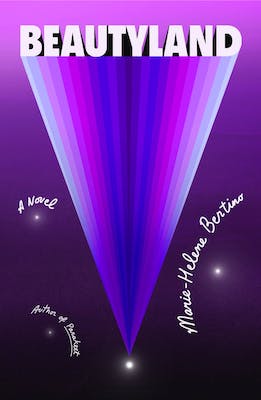
In “Beautyland,” An Italian American Extraterrestrial in Philly is Humanity’s Sharpest Scribe

“When you say ‘departure,’ what does that mean?” Marie-Helene Bertino asks me. 

This question launches our conversation about her new novel, Beautyland. Given that the story opens with spaceship Voyager 1 leaving planet earth, it makes sense that the author is attentive to the semantics of “departure.” I’d used the word as I referenced Bertino’s previous works, specifically the novels Parakeet and 2 A.M. at the Cat’s Pajamas. The dustings of magic, the uncanny, and the absurd in these works came from the fanciful imaginations of human characters. Beautyland follows the life of Adina, an alien. Adina is born to her mother Térèse as Voyager 1 fires its jets, and this simultaneity is significant. Voyager 1 carried the golden record, a gold-plated copper disk containing sounds and images selected to portray the diversity of life and culture on Earth to any being who found it. Similarly, while Adina presents as human, it’s her duty to observe human behavior and report back to extraterrestrial beings. “In a way,” says Bertino, “Voyager 1 became Adina’s sibling.” 

Adina’s reports are filed via a fax machine she and her mother find discarded on their street in Northeast Philadelphia. This pocket of Northeast Philadelphia; Adina’s mother, a single parent and a steely Italian-American; Adina’s eventual rise to literary fame and public controversy: These aren’t standard ingredients for a work of speculative fiction, the genre term Bertino uses to describe this work. The thing is, Bertino has always had a knack for cracking blunt reality to reveal its wonderous strangeness, for capturing the possibility of resolution and joy beyond hardship. 

About halfway through the novel, Adina writes in a fax to her superiors:

“There’s a reason it’s called alien-ated. Because I’m an alien, I am alone.… When you’re alone, you are in the right place to watch sadness approach like storm clouds over an open field. You can sit in your chair and get ready for it…. When it passes and you can drink coffee again you even miss it because it has been loyal to you like a boyfriend.”

Genre and categorization don’t really have a place in the context of a work like Beautyland, which might be part of the reason it was Dakota Johnson’s first choice for her new and vanguard book club, Tea Time. To paraphrase one of Adina’s faxes, Beautyland is a beautyland that magnifies Bertino’s philosophical acuity, her lyrical charm, and her syntactical skill. Over the course of a conversation that ranged from writing alienation to turning towards fear, I realized that rather than a departure for Bertino, Beautyland is an author’s homecoming.


Lucie Shelly: The premise of Beautyland is a remarkable: A bildungswoman narrative of an alien in Northeast Philadelphia who sends fax reports about human behavior. Can you talk about the origin of your idea for the novel? How did you start thinking about Beautyland?

Marie-Helene Bertino: The story originated many years ago, 2010, 2011, when I wrote the short story that Beautyland is based on for my first collection, which was called Sometimes You Break Their Hearts, Sometimes They Break Yours. It was about an unnamed woman who believed that she was an alien taking notes on human beings. It was first person, it was very voice-y, and it was very short. 

The reason I wrote that story is because I’ve always had a hard time understanding why people do what they do. I’ve always had a really hard time understanding casual cruelty and indifference, the rituals of human life. I grew up Roman Catholic, and the rituals and beliefs in Roman Catholicism always confounded me. That story came about because, eventually, I began keeping notes on human beings. 

I put them into a folder, these little things that I’ve just never been able to understand. And that folder grew and grew. Even after that original short story was published, I was like, I wonder if I could write a novel from this. That idea thrilled me because it was from the deepest chamber of my heart, and it was the most fun I could think of having. To do it, I had to think of the character who would be writing these notes. But this is closest to my own life that I’ve ever written. And I think that was kind of necessary because Adina’s voice is so singular and so specific. I don’t think I could have given her to a totally fictional person.

I feel, especially in this moment, very on the inside of the experience. For this book, specifically, I feel less and more aware of how it’s coming across. And maybe that just means that it’s more connected to my actual veins and blood.

LS: I think writing alienation requires almost conflicting mindsets. On the one hand, an author must preserve that sense of distance and disconnection in order to capture it. On the other, you have to connect deeply with the protagonist, the heart, that you’re portraying. In a recent conversation, the screenwriter Andrew Haigh (All of Us Strangers) suggested that a sense of alienation is actually necessary to being a writer. How do you resolve the work of writing alienation with the state of it?

MHB: For me, being at a distance has always been necessary for writing. But it was the cause, not the effect: I was already at a distance, and then I realized that distance was necessary. I keep thinking of this quote, that used to mean a lot to me from Archimedes, the philosopher. He says, “Give me a long enough lever and enough distance, and I can move the world.”

He meant it literally. But what I got from it was that you had to be at a distance to be able to evoke true emotional movement. And I think a writer does. At least for me, that’s the way it has always been.

LS: As we’re talking about alienation, we’re also talking about the compulsion to observe others. I came across this idea from Einstein that “experience without observation is at best conjecture.” And when we read an alienated character, we the reader are observing them. I wonder if that’s another task of a writer, to kind of validate atomized experiences—perhaps even the life of the reader—by observing and writing them. 

MHB: One thing I will say is that you can absolutely never know if anyone will be interested in what you write, let alone moved by it. You don’t know whether it will emotionally resonate for anyone. This question of, how do you offer up an experience or offer up a piece of work and attract readers? has powered a lot of academic classes, a lot of marketing meetings, a lot of book club discussions, I’m sure. 

I have never been led by or engaged with that idea, I think because of the nature of my work. That said, one of the questions I was thinking about when I was writing Beautyland was, if you triple down on the song that only you can sing, if you get as specific as you can get, could it be more universal?

Adina takes her name from a friend I lost in 2017. Adina Talve-Goodman was one of my dearest friends and she died when she was 31 from cancer.

For example, I’ve always been very hesitant to write about being Italian American, and to write about Northeast Philadelphia, all for the same reason: Because they’re not the terrain of “high literature”. I think some of that has to do with the Italian American in the American imagination and the popular renderings of Italian Americans. But a lot of it has to do with my own fear. When I realized that fear was a driving force, I decided I had to turn towards the fear and get as specific as I could about everything. I allowed Adina to be Italian American. I made her friend Toni Italian American. A friend of mine read the first draft I did where the characters were Italian. I’d written, “Be Italian,” at the top. She said, “So, this is what it’s about.” And I said, “I’m just working through something.”

LS: When talking drafts, I love hearing what writers choose to leave in, take out, and add. I feel like this novel’s kernel was captured in a very early line, a sentence Adina faxes to her superiors: “I am an Adina.” How did you refine what needed to be “explained” about Adina and her nature, and what needed to be left out?

MHB: I don’t leave a lot out. I write from short to long, I think it’s because I spent my first 25 years trying to be a poet. The first draft of Beautyland was practically a haiku. Then it was, like, 50 pages. I was changing the person from first to third, it was growing little by little. I thought I was proceeding apace, like everyone else does, but apparently most people write, write, write and cull later.

But you’re hitting on a really important aspect of speculative fiction—how much do you explain, and when? I had to carefully place where and when she was activated, and when she was able to know for herself what she was there to do. I decided to plant the first point in a moment of domestic violence because of what I’ve always wanted to say about trauma—about the way we’re formed in some of our worst moments. Those moments can open up understandings that hopefully make us better humans. 

I only ever had to know as much as Adina would know, at any given time, and I wasn’t trying to hold anything back from the reader. Toward the second half of the novel, her superiors go silent and that is devastating for her. That’s when the subjective nature of her reality becomes an undeniable question. Like, is she really here to report on human beings? Are the superiors real? Are these messages real? Her faith in them was tested just like anything you believe in without seeing is tested, like religion. Or vocation, or love for a partner. Belief in marriage, belief in friendship. Ultimately, I just stuck with her. 

LS: You spoke about wanting to foreground Italian Americans in Northeast Philadelphia, a milieu that hasn’t frequently appeared in literary fiction. In a way, you were establishing new precedents. How did you approach writing the queer characters and narratives from this background and setting?

I’ve been so lucky because I have toiled in obscurity, and that obscurity has protected me.

MHB: It was massively important to me to have three queer characters at the helm of this book: Adina, Toni, and Dominic. Not only to reflect the world where I grew up but also to reflect my own experience. I identify as bisexual, and Adina is still figuring herself out in many ways. She’s leading a life that is not conventional. She, Toni, and Dominic are leading queer lifestyles but that word probably would not have come into the general parlance until the end of her life. Growing up, like me, she would have heard the word “gay,” and that would have been something she would have been encouraged to keep hidden. Adina’s authentic self, the fact that she is an extraterrestrial, that’s a reflection of the kind of lifestyle where you have to keep a giant part of yourself hidden. When Adina reveals her authentic self—three times in the novel—I very much wrote those scenes with the understanding that they were scenes of coming out to people she loved. And when Toni comes out to Adina, she says, “I knew but I didn’t know that I knew.” It just wasn’t a big deal between friends. Like the way Dominic comes out to Adina [reads]:

Adina asks if he’s dating anyone in New York and he tells her no one special. A boy he liked in his Life Drawing class turned out to be too in love with drugs. This is Dominic coming out to her. He says a boy in his class loves drugs and Adina says, “That’s too bad.”

This is the way a lot of my guy friends came out to me. I knew the moment for what it was, and that they were asking me to hold that for them—but not to broadcast it in a way that would make life any harder for them. So, it was important for me to have Dominic hold so many of the personalities and experiences of men in my life. 

LS: We started this conversation on the idea of departure, but that says nothing of how deeply personal this work is for you. It’s a story about Adina’s pursuit of self-understanding, and I wonder if it’s also an answer to the question, how can I be true to myself as a writer?

MHB: Absolutely. I’ve been so lucky because I have toiled in obscurity, and that obscurity has protected me. I had the space to be as strange as I wanted, and that’s all I ever really wanted.

I tell my students, the role of the first book is essentially to prove to yourself that you can write a book. After that, you will never have to prove to yourself that you can write a book again. And that’s an enormous weight off. That’s an enormous relief. And because that anxiety is off, I’ve been able to settle in and go easy on myself in in important ways. I understand that writing is so much broader than the actual act.

 I’m 46 and I’m so grateful that this is my fourth book, and that people seem to be relating to Adina. It feels like a gift. Adina takes her name from a friend I lost in 2017, Adina Talve-Goodman. Adina was one of my dearest friends and she died when she was 31 from cancer. So, it means so much to me if readers find that this book resonates with them. I’ve experienced some pretty intense loss that has utterly prioritized an understanding: The only thing that matters is the connection we have with each other.

Your Body Is a System of Caves

Naufragios

Does anything really 
begin. The house, clinking
window frame in the last 
of canyon wind. Does 
anything begin. 

*

The day a room becomes a field. 
The day a field fills with water. 
The day you fall through yourself— 

this is how you say it— and how to respond to responses— 

I’m sorry you capsized inside your body.
That must’ve been terrible— 

*

Your left hand starts 
swelling nightly. The body 
now filled with unfamiliar and inflammatory substance.

You scratch until 
skin scabs at three 
lined-up points. 

Orion’s belt. Pinpoint self. 
You’re comforted by the symmetry 
of your smallest wounds, how 

you can keep scratching them open 
and have a little composition 
to keep you company. 

This is only the surface of 
the skin. Under moon, 

the season’s first monsoon 
sequences the sky. Flash of rose. 
Then begin the drenchings:

	pain salvage sink caveat absence–
they open and plunge into the depths of your body, 
that system of caves. 

*

It was so fast for you. How 
did you catch your breath— 

one after another you lost the people you loved as if they occupied 
a single vessel and entered 
the destructive radius of a storm. 

Now nothing holds its water. 
Nor its salt. Nor such heart. 
Nothing has weight but everything 
is an aspect of an unmovable weight. 

*

There are parts of the ocean no natural 
sunlight penetrates. In the basin 

of grief you receive a dream where you try to distract the dead with inane conversation, holding them but not long enough for them to realize they aren’t meant to be anymore.

In the basin of grief these dreams 
are the hanging light of an anglerfish. 

Behind the contained, luminous target: 
		A waking trap, and teeth. 

*

You gather the memory-shatterings, the regret 
you caught wandering your interior, the flakes 
of scab that fill your selfsame 

shipwrecked body. There are days you are the only 
person who remembers there was ever ocean 

in this desert, where the dampening
of fossils under rain becomes the only reminder 
that everything lost was once alive.

Gray crests over a hill. Clouds in 
thinning sheets, mountains black. 

You become a field. Then
the air above the field. 
Integration of wound and dark. 

And one stone dislodges from 
its burial sands.


Sonnet to Sleep Paralysis

            after John Keats 
 
It began for us, hushed, that year. You and I insisted 
on seeing each other then sat slack with the unsayable. 
Retreat to separate apartments, mirror our way across 
rooms, night birds singing as the world folded itself 
and stained us like two halves of a Rorschach. When 
we woke we were not butterflies, not people. Only  
the center of a cleaving. Mine was an old woman in 
the corner: Bisabuela, I was sure. Would she leave me 
alone, please, out of love? Knitting dread, yours against 
your chest, a saddled demon barreling black. This is the 
language our minds create when we hold everything 
back. Identical vaults. You need each other, the 
phantom says. Que no se les olvide, says Bisabuela 
through the transparency of her head.


Birdsongs

	Entonces, desde la torre más alta de la ausencia 
	su canto resonó en la opacidad de lo ocultado 
	en la extensión silenciosa
	llena de oquedades movedizas como las palabras que escribo. 

	— Alejandra Pizarnik, “Poema para el padre” 


You were born with song in your mouth, a mastery of birds. Inevitable migratory life. Arrive at the day you told me stories of your migration and the terrible thing is I already forget, the fabric stretched and broken. A luxury high rise across from the Habana Libre. Contracts with Lufthansa airlines. Your father at the national bank with Che, your father’s miniature Minolta camera, your father, you.

We found letters between the two of you, written when you were brackets on either side of water. Elaborate puns woven into language. The father organizes the escape, cannot tell his son the details. The son, when he becomes a father, can only relay half-details while sitting in an art gallery with his daughter. 

Your father. You. My father. 

The gallery sells a spherical ceramic jar and a bird-shaped pipe holder and cans of beer. I forget the details. I remember I remember and I don’t. Only the jar because we took it home, only the bird because we chose to leave it behind. I remember thinking the gallery was a beginning, that in the parting between branches you would start to speak until everything spilled out, a whole history unbraided. We would be whole. 

If I rip open the bird, what happens. We recognize it’s a pipe holder. We do nothing, elegantly. I hold the day when I cannot hold the detail. I am past and present tense when they resist clear delineation, there and here, sells and sold. I’m walking you back to the car you parked illegally. I rip the ticket off the windshield before you notice. The need for something to stay so perfect a twelve-dollar intrusion isn’t allowed. Beginnings we don’t know are denouement.

*

We make imaginary plans for Havana. Dream of meeting Leonardo Padura on a terrace somewhere. At home you point out the architecture of Havana schools in a Padura TV adaptation and show me walkthrough videos of the city on Youtube. Mauve balconies, juts of houses into the street, then someone turns a corner you remember. You pause, the image blurs. You say, this is where I walked with my dad.

*

Pipe tobacco, one of your smells. In my dreams I kiss your aftershave cheek and am I still the child who worried about your smoking after anti-smoking day at school or am I the adult who cradled the plastic bin of your pipe collection after you died and ran a thumb over the concavity of ash that still held something of you? 

I know that you are you and sometimes you aren’t. Sometimes you are the father, the son, the migrant, the archetype. I am walking a thin line of smoke. Parts of you so within me that I feel them radiating in my chest. Parts of you so far from me that I can only conceptualize them as a half-understood, half-literary history.

* 

Daily isolations. You didn’t always understand our need to be not-alone. Family would go out for dinner, you’d head back early to be with the dog. How I had to drag you to that gallery. How talk of Cuba felt far because it was hard enough to get you to walk past the school grounds across the street. To remove you from your sphere of context. Retreat, retreat to where there is quiet and books and the story of a house.

*

My friend from Havana says all Cubans have this quality, como un sass, un humor, tu sabes. I ask if I have it. He laughs. He, at least, thinks I’m enough. 

My understanding of an entire country came from a single person: you were Cuba to me. Watching the show, you’d say, that’s it exactly, that’s how everyone talks in Havana. That rhythm constituted a new language, like puns on typewritten paper. 

I am you, sometimes you are you. This is all I know of collective identity.

*

First daughter, blue cap, impatient to exist. You were astonished by her smallness, held her in two hands the way you would hold and funnel birdseed. Curved detail of your head in hers. 

Second daughter, I was almost born in the car. You could not have kept calm for that. When anything rose in you, terror, anger, panic, you would arrive at the same pitch, yelling at nurses, at the front desk, your tight command of language unraveling, those branches parting. 

These are the partings that lead to spillage. An ink-dark fountain breaks, its water non-potable, something can’t remain in the brain, can’t remain in the mouth. Claws its way up the throat. The baby bird eats what emerges. 

Third daughter shared your bird obsession. The two of you would stand outside in sunlight dappled by lilacs, pushing suet blocks behind little green rejas.

*

You would yell, we would leave. Distortion of tears. You would yell, we’d yell back, escalation until the space between us became electrical fire. You yelled. We were quiet.

*

But always we returned to each other, our collie between us in the backyard or laying his head on our feet in the kitchen. Arguments as unintended journeys: you’d travel into yourself, into your hurts, and in a vein of quiet you traveled back out. When you did, we were there to accept whatever book you placed in our hands.

*

You and I once translated a poem together. You were proud of an invention: yawning pits for extensión silenciosa. It referred to grief carved out, an emptiness left behind by a father who died too soon. You said the poem reminded you of your dad. One day it would remind me of you.

The father in the poem could never sing the song he was meant to, a song too symphonic for the containment of a life. Your father. You. 

The song arrived to us braided from figures of speech. In the leftover story-pits, song. The song doesn’t fit inside of a life but fits in the skull of a sparrow, sitting on a shelf in the gallery on our perfect day. A breakable thing, lacking its body, is still capable of sound. The slightness of air, threading through the gaps. 

I Don’t Have To Choose Between Writing About Myself And Writing About The World

I was balancing a plate of honeydew in the green room of a book festival when I walked by a white man bemoaning the state of the publishing industry. The man wore a suit, and he spoke to a white woman; both of them looked to be in their 40s. As the man speared a clump of melon, he explained his frustration that editors kept buying memoirs. At this point, as a memoir-y writer, I had no choice but to sit down at the nearest table. To hear something like this, amidst casual eavesdropping, was like finding $20 on the sidewalk. I sipped my coffee, took out my phone, and pretended to gaze at the screen.

Why are memoirs still being published, the man asked. It was beyond him. It fed a nonsense cycle. Why do people keep reading them? Worse of all: Why are they being written at all? He leaned back, smug, as if he had just landed a well-placed punch against Big Memoir. The woman nodded politely, burrowing into her yogurt with a silver spoon. People are publishing them too young, continued the man. They are publishing too many. He paused, throat puffed with conviction: There’s no reason for that, unless you’re an admiral or something. He stabbed a strawberry. Eyes on the city skyline, he shook his head.

At that moment, the open tab on my phone was the Rachel Cusk profile of Nobel-prize winning memoirist Annie Ernaux. “Her art bears no relation to a privileging of personal experience,” writes Cusk. “What Annie Ernaux understood was that as a female child of the regional laboring classes, her self was her only authentic possession in this world, and thus the sole basis for the legitimacy of her art.” I was thinking about how the life we live determines our perceived authority around what we can write about, or rather, what we are allowed to be experts on, which is to say published experts on. 

I became convinced that every ghost who haunted my writing desk would, one day, appear in human form.

When I heard his line about the admiral, I stopped looking at my phone. I became very fixated on carving the melon from the rind. I needed a knife in my palm. I needed to separate that which was sweet from that which would lodge in my throat. 

I am not going to tell you who this author was. Not out of any sense of protection, but because I realize I was not meeting him as an individual. I was meeting him as the vessel of a voice that had, until that moment, been only in my head. His was the voice that tripped me when I sat down to type, that hissed at me whenever someone (usually a man) asked “So you’re a journalist?” and I said “Well, not exactly,” then went on to explain, his face pinched into a pitying smile, that my nonfiction reliably included myself, too. When I heard this man at the festival, I became convinced that every ghost who haunted my writing desk would, one day, appear in human form. That they might be friendly in the elevator. That when I dropped my fork, they’d hand me another. 

I stayed silent that morning on the roof. I did not, if you can believe it, ask the man about his favorite memoirs by admirals. And yet I have spent the months since talking to him. Thinking about what I might have said: about how witnessing a memoirist’s vulnerability on the page makes space for interrogating our own, or about the political imperative of a writing that swivels between self and world, not as a means of dwelling on the self, but as a mode of almost diluting it, contextualizing it, tracing its wires back to their environmental, sociopolitical, and cultural roots. I would guess this book festival man saw himself as an objective observer of our world. 

The first-person writing that I love refutes—critically—this myth of neutral narrator.

A few months later, I was traveling for the book in a different corner of the United States when, on a morning jog, I came across a historic waterfront sign about “naval stories.” I immediately thought of admirals. And then I thought of my belly.

When I say I am omnivorous, I mean I am hungry to read and write about everything.

To think of the belly-button is to think of navel-gazing, which is to think of the charges brought against those of us who write about ourselves, a kind of writing allegedly so myopically focused on the self that it does not see the world beyond it. Ted Kooser defines a poet as someone who stands before a window, controlling the strength of the sun outside, but the metaphor extends to creative nonfiction as well: Your silhouette can fade when you make the world outside brighter, just as your reflection can sharpen when that world darkens. Every time I sit down to write, I find myself in front of this window, fiddling with the lights. Who, or what, do I want the reader to see most clearly? 

It is true that a first-person author turns their own narrative presence up or down, but I have come to resent the idea that I must choose between seeing my navel or seeing the world. When I say I am omnivorous, I mean I am hungry to read and write about everything. I do not want to pick between writing about another subject—as my training in academia and journalism taught me—and writing about myself. I look at the world to understand my life even as I mine my experiences to learn about the larger world. 

Writing is the act of making one’s thoughts visible to other people. My pencil scrawlings are, very literally, the bridge between my interior and exterior world. Writing is an art form that lends itself, then, to complicating—to detonating—the binaries between self and other; inner thought and outer action.

Let us think literally about the alleged insult of “navel-gazing.” Imagine writing about your belly-button, a puckered lint-specked innie that nobody else, ostensibly, should care about. Then consider how looking at one’s belly button is not only to consider the bridge to one’s mother, but the body’s first interaction with civic infrastructure. 

We live in a world of interconnection, but we exist in a society that often tries to silo us into our factions.

I look at my navel and see the brown brick hospital whose windows overlooked the soccer fields where I later got kicked in the shin. I see my mother in the operating room, gritting her teeth, while Supreme Court Justice Clarence Thomas is on trial for sexual harassment on the corner TV. I see the silhouette of her doctor, dulled to the choreography of conjuring life, discussing an upcoming fishing trip from behind a sheet as he cuts my mother’s belly open and pulls me out. I look at my navel and I see the hanging question mark of whether I, one day, will try to carry a child into this world, too. 

Can you see that each navel has a different story? That to tell a navel story is to tell a story of labor, not just of your own mother’s, but of a system around you? Can you see how this story might be as important as a story about the life of a naval admiral?

To imagine that writing about oneself is not also writing about these larger systemic inheritances is utterly wrong. The writer’s job is to make visible the structures which might otherwise be unseen. We live in a world of interconnection, but we exist in a society that often tries to silo us into our factions, our nations, our species, our careers. To make us forget, for example, that the money our government spends on war is money they don’t spend on education. It is the writers’ imperative to illuminate the linkages between us, and to the histories we all carry. Not as a mode of teaching the reader facts, but as a way of helping them see their own body in union with the world. 

I write to make interconnection visible. There is a selfishness to my method. It keeps the world oiled with wonder. When I think about grief, now, I think about how scattered human ashes are changing the soil chemistry atop some mountains, and then about how the griefs that I carry have changed my chemistry too. Or take the seedlings of northern oak trees, so quick to grow back, ecologists now think, because they evolved when elephants trampled them. We are not so far from extinct prehistoric creatures as we would think. To imagine these elephants when I now walk through the woods is to restore a glaze of awe to an act that can, on my worst days, feel like dragging a skeleton through a burning planet. 

As a young journalist, I was taught that experts held authority. I would approach stories with a to-do list of ‘expert archetypes’ in my mind. When I was working on my first book, Wolfish: Wolf, Self, and the Stories We Tell About Fear, I would slot interviews in with the environmental conservationist, the rancher, the biologist. What I found, of course, is that ranchers are not just experts on their cows being predated on, they are experts on the habitat they steward, and where wolves like to walk. Just as I could talk to ranchers about cows, I could talk to them about the changing grasslands, or their experiences walking alone in the forest and being afraid. We each wear more hats of knowledge than are immediately visible. Considering my own first-person authority has trained me to think about other people’s authority in more capacious, generous ways too.  

I had a similar revelation when talking to my agent about what sources I could look to as I wrote about how fear shaped a prey animal’s body. You too are an animal, she told me one day over the phone. You have the authority to write about what happened in your own body, you don’t just have to quote biologists. At that point, I was hesitating to put my own experiences with fear—with symbolic wolves—into the text. I felt my own experiences with fear were unexceptional. I did not want to subject the reader to my navel. 

That was when I remembered a scene I had written years earlier, about something that happened on a college dance floor. This might not be necessary to include, a professor had written in the margins. It’s a fairly standard assault. At the time, I blushed. How embarrassing. I had presented something mundane as worthy of space. Only later did the comment lodge inside me, catalyzing the simple truth that writing about a “standard assault” is to write about a world that decides what sorts of assaults are standard. 

How embarrassing. I had presented something mundane as worthy of space.

To accept the phrase “fairly standard assault” is to normalize both violation and violence. In college, in Sociology 101, I was taught that the job of the sociologist is to “make the familiar strange.” In many ways this is my goal as a writer too. I include mentions of my own life not because I think it is superlative, but because it is familiar. I want to challenge that which I—and which the reader—think they know. 

Today, when I see a new memoir hit the bestseller chart, I think of the man at the book festival. I imagine him rolling his eyes, shaking his head. And then, because he is a passing character and not the narrator in my head, I tell him to hush. I look at the world—I look away.

9 Books that Center Deaf and Hard of Hearing Characters 

Growing up with a pair of hearing aids, it never occurred to me that deafness was an experience. Mostly it was a problem that I was taught to hide. When I started meeting other deaf people my own age, and learning British Sign Language, I began to see deafness from a new perspective. Books, when I found ones by deaf authors or with deaf characters, became an important resource and source of joy. 

My debut novel, A Sign of Her Own, explores one woman’s personal discovery of deafness. Set in late 19th-century Boston and London, Ellen Lark, who is deafened by scarlet fever, becomes a pupil of Alexander Graham Bell and studies his technique called Visible Speech. When Bell’s attention turns towards the telephone, Ellen finds herself drawn to a deaf man, Frank McKinney. As their friendship deepens, and Bell’s views on sign language become clear, Ellen is left with a decision that calls into question everything she has been taught. 

Many books helped me understand deaf people’s experiences at this turning point in history. Some were historical texts and studies which provided insights into the attitudes of the time, as well as deaf people’s own experiences and opinions. But I also turned to contemporary fiction, poetry and memoir. Written by (mostly) Deaf and Hard of Hearing authors, these works explore themes that are universal, through the lens of deafness: Language, how it fails and unites us, and loneliness, the ways in which we find community and connection, and silence, that manifests in many forms. From a graphic memoir to these nine books showed me just how varied the Deaf experience can be. 

El Deafo by Cece Bell 

This classic graphic memoir should be read by everyone of all ages. Cece Bell  depicts what it feels like to grow up deaf in the mainstream education system as she grapples with the emotional consequences of being different from one’s peers. The book offers insights into the common assumptions that people make about deafness, and provides young deaf readers a rare chance to see themselves represented in fiction.

True Biz by Sara Novic

On the rare occasions that a deaf character features in fiction, they are often isolated figures, stranded in hearing society. In True Biz, Novic gives us the diversity of Deaf experience through a variety of characters who come together at a school for deaf students which is being threatened with closure. Novic paints an engaging, tender and passionate picture of contemporary Deaf culture, illuminating a range of issues that affect deaf people today, while paying homage to the school’s central role in Deaf history.

Chattering by Louise Stern

As a native sign language user, Stern is interested in the way language inhabits our bodies, and the physicality of communication, silence and sound. The characters in these short stories seek new experiences, traveling between Deaf and Hearing worlds and navigating their passage with a mixture of signing, lipreading, and pen and paper. The stories are deftly written moments of insight and revelation in which Stern skillfully flips the perspective on hearing people’s attitudes to deafness. 

Hearing Maud by Jessica White

A work of creative nonfiction by Australian writer Jessica White, this book combines the author’s personal experience of deafness with the story of Maud Praed, the deaf daughter of Rosa Praed, a Australian novelist living in London in the 19th century. White writes with heartbreaking precision about Maud’s life as the only deaf child in the family and her eventual commitment to an asylum. Equally fascinating is how White charts her own journey through the landscape of deafness, giving readers a global story of deaf history that crosses continents. 

The Perseverance by Raymond Antrobus

This poetry collection opened my eyes to the creative possibilities of writing about Deaf experience. Antrobus writes about growing up deaf, Deaf history, his Jamaican British inheritance and his relationship with his father. What connects the poems is their exploration of the linguistic and acoustic edges of deafness, as Antrobus recounts being made to speak and hear, stumbling through English grammar, making translations in sign language, and the relationship a deaf person has with sound and noise. Antrobus also takes on Deaf history and representation in the last two centuries, addressing works by Charles Dickens and Ted Hughes, and showing how the “space of deafness” has been shaped and controlled by hearing narratives.

Deaf Republic by Ilya Kaminsky

At the end of Ilya Kaminksy’s poetry collection, he writes: “The deaf don’t believe in silence,” he writes, “silence is the invention of the hearing.” Set in an unnamed occupied territory, Kaminsky’s vignette-like poems unfold the lives of the town’s residents after they choose to become deaf in response to the killing of a deaf boy. Using silence  as protest and resistance, the townspeople create their own sign language to communicate. The result is an imaginative act which asks us to consider how we construct our ideas of silence and deafness, and for what purposes.

Sounds Like Home by Mary Herring Wright

First published in 1999, this memoir by Black Deaf author Mary Herring Wright has been reissued in a new edition. It gives a vivid account of Wright’s experiences in a school for deaf and blind Black students in North Carolina in the 1930s. Providing a fascinating insight into residential school life for deaf people at the time of segregation, Wright movingly portrays her girlhood and coming-of-age, and her bonds with her Hearing family and deaf friends as she alternates between family and school life.  

A Mighty Change: An Anthology of Deaf American Writing edited by Christopher Krentz

In this anthology of deaf American writing from the mid-19th century, Krentz brings together texts that reflect the opinions and experiences of deaf people at the time. Although largely focused on well-known figures in American Deaf history, these accounts are interesting in mapping out the emergence of Deaf culture that preceded the era of oralism. They also provide an insight into how deaf people used writing to demonstrate their capabilities, and to connect with the wider Deaf community. 

Deafening by Frances Itani

This novel by Canadian author Itani, published over twenty years ago, was inspired by her deaf grandmother. Deafening was the first time I’d encountered a deaf main character in fiction. Quiet and compelling, this is the story of Grania O’Neill, a young deaf girl from a family of Irish immigrants. The novel portrays her encounters with language and love as the story moves from a boarding school for deaf children to the frontiers of World War I. Through Grania’s growing relationships with her grandmother and friends, and finally with a hearing man, Itani illuminates the myriad ways in which language fails us and connects us.

9 Fun Murder Mysteries You Should be Reading

Putting the words “fun” and “murder” next to each other in a conversation is a great way to give off the impression that you are gleefully maladjusted. But I’d wager if you tried it (the conversation starter, not the murder)—go ahead, show up at a party and say, “Isn’t murder fun?”—people would know just what you’re trying to say. You aren’t referring to your dark alter-ego as a serial killer (we hope), but to this long-enduring concept of the fictional murder-as-puzzle. The quirky detectives, the red herrings, the tropes of “it was the butler all along!” all under the shine of not taking itself too seriously while managing to be fiendishly clever. Books that aren’t trying to change your life, but are trying to outsmart you. Stories that champion wit, often giving a good dose of heart, and if you’re lucky, even sneak in some revelations that get you right in the feels. 

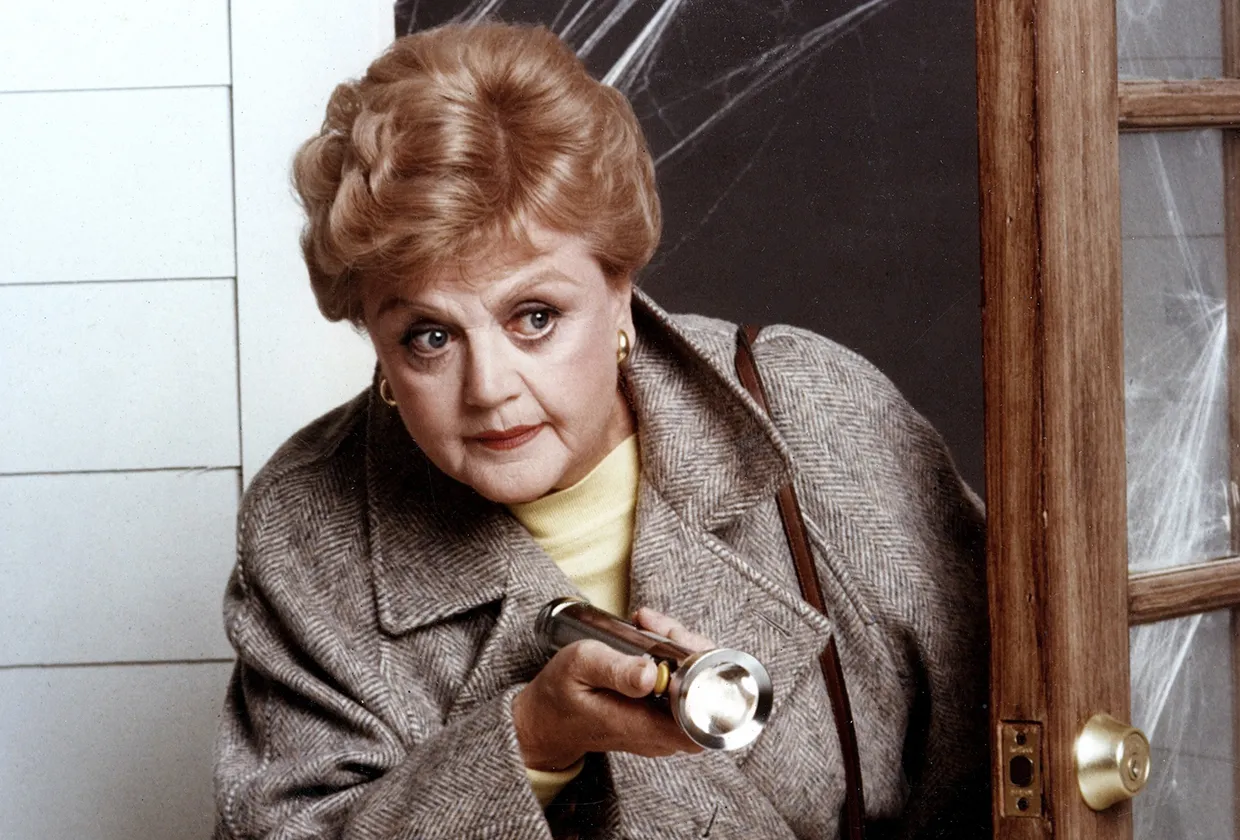
It’s not unfair to ask why such a thing exists. Why take a concept like murder—this horrific act of ending someone’s life for reasons that are usually riddled with selfishness—and put a light-hearted spin on it? I can only offer my take on it all, but my love of the genre is founded on the fact that in our imperfect world of unfairness and injustice, these stories present us a reality in which clues are trackable, ticking clocks not unbeatable, and comeuppances always dealt. You may need to shift your understanding of what’s plausible in order to roll with the plot lines of a lot of fun murder mysteries, but once you realize you’re in the hands of authors who probably grew up watching Murder She Wrote, you can sit back and accept that there are in fact times when the serious concept of murder is not taken too seriously. As one of the characters in my upcoming book, How to Solve Your Own Murder, says, “If TV has taught us anything, it’s that the murder rate in small towns is disproportionately high.”

And if you think that every permutation of whodunnit has been done to death (I make no apologies for puns), you are painfully mistaken. Here are nine books that range from humorous hijinks to slightly darker but creatively clever approaches to murder mysteries. 

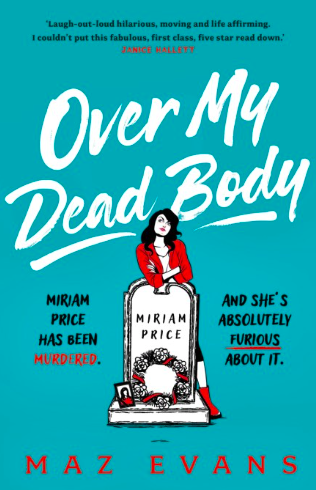
Over My Dead Body by Maz Evans

When Dr. Miriam Price wakes up from a supposed drinking binge to find her own dead body on the floor of her flat, she finds herself stuck in “limbo” unless she can prove hers wasn’t a death by misadventure. Miriam is sure she’s been murdered, but her memories on the incident are murky, so she’s got to piece together the last few weeks of her rather messy life to try to find the culprit, or face being stuck in limbo for eternity. The trouble is, with her rather prickly personality and long list of enemies, she’s got a lot of avenues to investigate and not a lot of time to do it in. Adding insult to injury is the fact that while she can move amongst her friends and family, only one person can see her—it’s a clever bit of afterlife world-building on Evans’ part, that only the dying can see the dead. So Miriam is stuck trying to solve her murder with the one person she’s been feuding with for months—her elderly neighbor Winnie. The wit is electric in this one, and the unlikely crime solving duo of Winnie and Miriam is equal parts hilarious and heartwarming. A great one for a highly original take on the classic whodunnit, this book is cozy crime meets The Good Place, in the best way. 

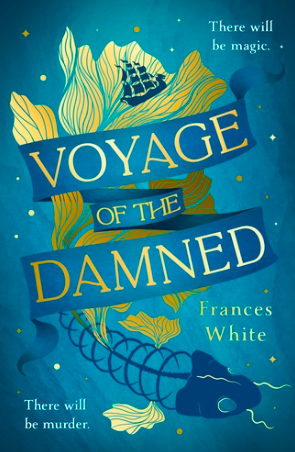
Voyage of the Damned by Frances White

A murder mystery on a sea voyage, with a rich fantasy setting and an unforgettably snarky narrator. Ganymedes Piscero has a secret — he’s the heir to one of the twelve provinces of Concordia, a role that should have come with an inherited magical ability called a Blessing. Each of the heirs to the twelve provinces have one, but Ganymedes has come up short and shows no signs of inheriting his. When he’s forced to pretend he’s got a Blessing while on board a 12-day voyage with the other heirs, Ganymedes hatches a plan to be the biggest problem he can so that he can get kicked out of his role and go live his life in bliss, far from the politics of the realm. But when one of the heirs turns up murdered, Ganymedes finds himself at the centre of a plot that might just take down the whole empire. Suspects abound, including a host of people who all have reason to hate one another — and who all have magic that they like to keep secret. Adding an extra pinch to the heart is Ganymedes’ former lover Ravi, a man who seems to have changed overnight into someone Ganymedes doesn’t recognize. Wonderfully paced, with a fantastic pairing of a snarky disaster of a man and a small girl with a malicious streak, this is murder mystery like you’ve never seen before. 

Malice by Keigo Higashino 

This one sits in the “fun” category not because of coziness or humor, but because it’s one of the cleverest murder mysteries I’ve ever read. It takes the whodunnit and turns it on its head, and sinks the reader deep into the whydunnit, with twists upon twists all built on a set of events that you think can’t be flipped any further. It starts with the murder of bestselling novelist Kunihiko Hidaka, who is discovered in a classic locked-room scenario. Detective Kaga investigates, and discovers that Hidaka’s best friend Nonoguchi, who is also a writer, is someone from Kaga’s own past. The case becomes a tangled story of past and present, while Kaga and Nonoguichi wrestle artfully with who has control of the narrative. Keigo Higashino is the author of the bestselling thriller The Devotion of Suspect X, and Malice will provide surprises for even the most seasoned sleuth. 

The Three Dahlias by Katy Watson

Dahlia Lively was a famous fictional detective in the 1930s, and has become such a national treasure that she’s been portrayed in television and film over the decades three separate times. When the three actresses who have played Dahlia are invited to a murder mystery convention at the home of Dahlia’s late author, everything is not what it seems. There’s Rosalind, the original Dahlia; Caro, the seasoned TV Dahlia; and Posy, the newcomer—each with their own motivations for being there, and their own secrets. When a murder occurs mid-banquet, the three Dahlias must team up to solve the crime, in an effort to save their careers—and possibly their lives. Set in a stately home with its own poison garden, miniatures of murder scenes, and a host of suspicious family members and fans mixing together, this is a wonderfully fresh take on the traditional cozy crime set-up. 

Miss Austen Investigates by Jessica Bull

Twenty-year-old Jane Austen is attending a ball, and underneath the glittering conversation and society manners is a layer of secret liaisons, cunning lies, and most importantly, murder. When the body of a milliner of Jane’s acquaintance is found on the premises, Jane’s clever mind is activated. But when her brother Georgy is accused, she’s convinced of his innocence and is determined to clear him. Georgy has learning difficulties—a historically accurate fact that Bull has clearly taken great care with—and thus becomes the unfortunate scapegoat to a killer willing to do whatever it takes to remain undiscovered. Rich with historical details, Georgian atmosphere, and a winning cast of Austens, this was like a trip back in time and a conversation with Jane Austen all in one. 

Belladonna by Adalyn Grace

Nineteen-year-old Signa has a peculiar talent—she can consume Belladonna berries, and not only survive, but she’ll be visited by Death himself. He’s a mysterious and compelling force in her life, but since Singa seems to inhabit the murky space between life and death, it’s unsurprising that her guardians all tend to meet untimely ends. When Signa goes to stay with her only remaining relatives, the wealthy and strange Hawthorns, she finds herself investigating the death of its matriarch, along with the mysterious illness of the daughter of the house. She forms strange alliances and makes startling discoveries, but it’s her alliance with Death himself that makes her the perfect person to uncover what’s really happening at Thorn Grove. A slightly gothic fantasy, this book preserves the golden age crime novel feel on top of some very creative world building, with a heady romance in the mix. 

Finlay Donovan is Killing It by Elle Cosimano

Finlay Donovan is a struggling writer and single mom, who meets up with her agent at a Panera and to discuss her newest crime novel. The problem? She’s mistaken for a contract killer when the woman at the next table overhears the plot of her book—and she’s slipped a note with a mouth-watering amount of money promised if she kills a nasty husband. Finlay might not be a killer, but she’s a curious writer, and when she decides to do a little spying on her target, she ends up over her head when he actually turns up dead. She’s desperate to root out the killer before it all comes back on her, all while trying to make a deadline, deal with a horrible ex of her own, and juggle her young kids. It’s a fresh and funny take on the genre, with some truly clever twists. 

The Antique Hunter’s Guide to Murder by C. L. Miller 

Twenty years ago, Freya Lockwood was an antiques expert, world traveler, and all around adventurous woman. But something happened in Cairo that changed the course of her life, and caused her to turn her back on the antiques world, and fall out with her mentor Arthur. When Freya learns that Arthur died suddenly under mysterious circumstances, she reluctantly returns to the small village she grew up in to help her beloved Aunt Carole through the loss. But Carole and Freya quickly realize that Arthur was involved with something dangerous, and has left clues that only Freya has the knowledge to decode. Soon Freya’s past comes to back to haunt her, and she and Carole are drawn into an antiques enthusiast’s weekend that could hold all the clues to Arthur’s murder, or could be a terrible trap. Carole and Freya make such an entertaining duo, and the book is rich with description and details of real antiques.

The High Rise Mystery by Sharna Jackson

I am unapologetically putting an upper middle grade mystery in the mix, because not only do I think that adults have so much to gain in reading children’s books for fun (looking at problems through a child’s lens can give such great perspective), but this book in particular hits all the beats of the fun murder mystery, in perfect balance. 

Nik and Norva are sisters who live in The Tri—a triangle of high-rise buildings in central London. When they find their neighbor Hugo dead in the apartment’s dumpster, the two girls bravely put together an investigation of their own in order to clear the police’s main suspect—their father. It’s a brilliant mix of hijinks, genuine puzzles, social commentary, and family love. And if you think that just because it’s a kid’s book you’ll easily guess the ending, I’m here to tell you you’re wrong. 

“Worry” is the Novel of the Online Generation

The biting cultural commentary that emanates from the pages of Alexandra Tanner’s debut novel Worry is like the too-bright light of a smartphone screen at night, pulling you closer and keeping you absorbed late into the night.

One year following a secret suicide attempt that only Jules, our narrator, knows about, her sister Poppy moves in with her in New York City, a temporary arrangement that slowly transforms into an uneasy, long-term situation that forces both sisters to examine their separate malaise. Poppy, riddled with hives and titular worry, tries to move forward with her life (in part by adopting a three-legged dog named Amy Klobuchar). And Jules, in an attempt to escape the bleakness of her days—characterized by unfulfilling content writing jobs, the end of a long term relationship, an increasing sense of loneliness, and a sense of angst about the death of real art— loses herself to the internet, where she pores over posts made by anti-vaxxers, influencers, and internet mommies. 

With wit and brilliant insight, Tanner explores the nuances particular to sisterhood, set against a landscape riddled by capitalism and consumption. I had the chance to talk with Tanner via Zoom about social media’s terrible pull, the allure of the illusion of choice in a world that so often feels out of control, and the ways siblinghood can serve as a reflection of our truest selves. 


Jacqueline Alnes: A few years ago I read your essay, “My Mommies and Me,” about a collection of Mormon mommies you started following during the pandemic. I remember feeling like, is she in my brain?

Alexandra Tanner: I love that. 

JA: Can we just start by talking about your internet mommies? Actually, I mean Jules’s internet mommies because this is fiction. 

AT: I was thinking this morning about how it’s like a chicken-egg thing. I knew I wanted to write about all the insane shit I was looking at on the internet, and I didn’t know how to do it. Do I write a nonfiction experimental book that’s me scrolling through the internet every day? Do I write a novel? I had this idea for siblings living together and I was getting deeper and deeper into the mommies in 2019, early 2020, and just being a victim of the algorithm where it shows you ten beautiful children lined up in order, wearing matching pajamas, and two months later it’s like “Look at this holocaust denial shit.” I understand how people who are on the internet looking for that in a non-ironic way or non-voyeuristic way are caught up in that, because it’s completely compelling. It’s hard for me to even articulate what I love about them. It’s like an alternate universe.

JA: It feels riddled with holes.

The internet set up to feel like you can win, like you’re finally going to hit on the prize.

AT: I remember writing that essay and wondering, what’s my way in? Is it just that I’m different from them? And that’s not even it. It’s a part of it, but it’s so much more wrapped up, for Jules, specifically, she has mommy issues, she has internet issues, she’s not getting what she wants from her mother, she’s not getting what she wants from the internet, so I think her experience of them is different than my experience, which is just consume, consume, consume. I think she thinks there’s some end point where they are going to help her arrive at some end point about herself. They’re… maybe not. 

JA: I like the part where she intellectualizes her interest in the internet mommies at one point by saying she is “interested in how femininity is coded and recoded on image-centric platforms like Instagram.” I always think, when I’m scrolling, that I’m going to discover something, and that someday I’m going to understand why I spend hours doing this, but I don’t. Why do you think we obsess over lives of strangers in this way?

AT: I have so many thoughts. I think it’s the gamification of the internet. It’s set up to feel like the Skinner box where the pigeon pushes the button and they get a treat. It’s set up to feel like you can win, like you’re finally going to hit on the prize and something’s going to be bestowed upon you, whether it’s attention or free stuff or an understanding. 

I think a lot about stalking strangers on the internet versus looking at people you went to high school with and the people you know, you’re like, I can still get inside their head, I know why they’re posting like this. With a stranger, it’s more wrapping yourself in someone else’s consciousness and seeing what that feels like, and transporting yourself a little bit. 

JA: I’m starting to feel like this is therapy. Alex, please diagnose me. 

AT: Please help me with my internet recovery.

JA: Can we talk about evangelism? There’s so much here I don’t even know where to start. People selling products, religion, conspiracy theories, and a mom who becomes an evangelist in her own way. What draws you in about evangelism or what did you learn from interacting with these different forms?

AT: I want to say that evangelist consciousness is so counter to Judaism’s consciousness, which is inheriting something and having your own private relationship with it versus getting everyone on board and getting into people’s brains and saving them. The religious saving is one aspect, but MLMs and innocent moms getting pulled into pyramid schemes and into debt and home foreclosure, like that LulaRoe documentary, is another. The evangelism of the MLM is that it can save you from the drudgery of work, and the drudgery of parenting and being trapped in this hamster wheel life. You can make your own choices, you can make your own money, you don’t have to rely on anyone, you don’t have to rely on a corporation. That’s been really interesting to me as I’ve looked at religion and these specific kinds of consumerism. There’s a promise of salvation from something.

JA: It almost reminds me of how you were talking about social media. It must be this hit of adrenaline you get if you’re in an MLM, where you get a feeling of “I did something” or “I sold something” even though parts of it aren’t really real. You get constant affirmation.

The evangelism of the MLM is that it can save you from the drudgery of work, of parenting and being trapped in this hamster wheel life.

AT: Absolutely. If I have a great tweet today, I’m saved from paying attention to work; I can pay attention to likes. If the right people like it, someone’s going to reach out to me with a book deal or a brand partnership. Something greater is coming.

JA: What is meaningful is often so boring. What is meaningful in life is often not the Instagram story. It’s the work of figuring out yourself or your faith or your community. I feel like so much about the world we live in is veering toward quick hits. There’s this theme of people making fear-based decisions in the book instead of coming from a place of hope for what might be different.

AT: Jules is definitely motivated by fear. I think she’s completely stuck because of how afraid of everything she is. I think Poppy is a little more about trying to make a beautiful life, even though that’s vulnerable. Jules is like, why try? What are you going to get? It’s all about the moment and if you think too far beyond the moment or try to chart a life for yourself beyond “what can I look at that’s going to piss me off online today,” it’s scary.

JA: Both these characters are in their twenties, in New York City. It feels like it might be a good time, but they are so bleak about things. It made me think a lot about our current landscape. I teach a lot of 18 to 20 year olds and I feel like there’s something that’s happened the past few years where it seems like they are more realistic about life than I might have been at that age. What do you think contributes to this bleakness?

AT: I think it’s everything. Political apathy, climate apathy, the structures that are in place that are making people feel bad and forcing them online or to stay in their apartment or go about their lives. I’m hesitant to talk about millennial vs. Gen Z, but there was this sense of being a kid in 1999 and being like, “The future is here! It’s possible! Everyone has unlimited capital and potential!” The swiftness with which that came crashing down and the long reticence to accept that none of that was ever true, it was only true for a moment, was so many people’s formative moment. I think people are starting to realize that there is so much structural misery and inequity and devastation in the world that it is prompting us to focus on our own little capsules of happiness, moment to moment. It’s selfish, but I think we live in a selfish world.

JA: The system makes us want to be selfish sometimes, and makes us believe that the only way to survive is to be out for ourselves. There’s very little that incentivizes us to be in community. 

AT: It de-incentivizes it. If you care, you’re a sucker. There are all these memes about your non-profit boss. If you sacrifice certain aspects of your life because you believe in a mission you’re, I don’t know, you’re a pancake. 

JA: Did you learn anything for yourself about the gulf that exists between screen life and real life from writing this novel?

AT: I mean, yeah. Once I realized I was going to center this book around social media, particularly ultra-right-wing conspiracy theorists (horrible parts of the internet that no one should look at), I threw myself into it 100% and gave so much of myself to it during the drafting of the book. While I was selling the book and revising the book, I still had my foot in the door there. Once I was done feeling like I’ve had to pay attention to this stuff, I’ve been meditating and trying to be more conscious about the time I spend on the internet and the things I look at. 

There is so much structural misery and inequity and devastation in the world that it is prompting us to focus on our own little capsules of happiness.

The things I see online aren’t just a game, it can affect me, it can make you a worse person, not even a worse person morally, but the internet promises that it can show you how to be the best version of yourself—drink a gallon of water every day and take your vitamins and lift weights Monday, Wednesday, and Friday, and take long walks—it gives you this plan that’s not attainable because it’s just content. Even the good parts of the internet that are wellness TikTok—go on a cleanse, you can reclaim your body—that’s not real. None of it’s real. The only thing that’s real is being in the present with yourself. Writing this let me get in the mud of being addicted to the internet, look at where I was, and then lift myself back out of it. 

JA: For me, it always has preyed—I mean, I guess it can’t say, “It preyed on me,” because it’s the internet

AT: It preys on you! TikTok tried to show me a video of a snake eating a little baby mouse last week. It preys on you. 

JA: It feels like when you’re at your most desperate or unsatisfied, which, going back to where we are in the world, where a lot of people are feeling that way, the internet offers the illusion of something better. 

AT: Yeah.

JA: I don’t have a sister, but reading this, I felt like I did because these sisters are so mean to each other but also cannot be without each other. 

The internet promises that it can show you how to be the best version of yourself. It gives you this plan that’s not attainable because it’s just content.

AT: Siblinghood is just having another you, but it’s not you. You have the same psyche in a lot of ways. You grew up in the same house, in the same environment, learning the same things, having the same worldview pressed upon you, which is all very obvious, but once you go out in the world a little bit, have an adulthood, and then come back together, it’s interesting. I think it’s part of what’s unique about their situation in this book, is that these sisters are living together after they haven’t been for a while. They are confronting their shadow selves, Jungian shadow selves, and also trying to assert their differences from one another, while also mirroring one another, because that’s what you do when you’re a sibling. I loved thinking about starting from the kernel of my relationship with my sibling, who I did live with for a short period of time, and saying, what if that never ended? What if it was longer? What if it was more pressurized? I’m fascinated by how siblings know exactly what to do to help one another, hurt one another. They can say one thing that can snap you out of the worst mood you’ve ever been in, or they can throw you into psychological trauma. 

In a lot of ways, if you have a certain kind of sibling relationship, there are moments where you have no boundary. Even with a partner, you maintain a boundary of “I have to be nice to this person” but with a sibling you don’t really have that. 

JA: It almost feels like the siblings are oppositional to the internet. It seems like it’s uncomfortable for them to have to confront their real selves. When they live on the internet, they don’t really have to think about who they are or what they are doing, but the person sitting next to each of them is a direct reflection of who they really are. 

AT: I want to write that down for myself. The fakest thing in the world and the realest thing in the world.

JA: What do you hope readers take away from this novel? 

AT: That’s hard, because I think I wrote this book so much to press up against the idea of lesson learning. I wanted it to add up thematically and to that amazing revelation that you had, I want things like that to come out, but I don’t know if there’s a takeaway. Have you seen A Series Man, the movie? 

JA: No.

AT: It just ends. Bad thing after bad thing and then confirmation that the worst thing is bound to happen. I didn’t quite want it to be that. I wanted it to be about how it’s up to you to look at what your life adds up to and what it means, and make something of the randomness, if you can—but you might not be able to. 

My Great-Grandmother Knew Our Indigenous Songs had the Power to Heal Our World

In 2006, I watched my great-grandmother address a sold-out crowd at Seattle’s Benaroya Hall. She climbed the wooden steps of the stage, her small frame draped in her wool shawl, and I watched as her father’s painted drum was handed to a percussionist in the orchestra. My great-grandmother, my namesake, turned and addressed the audience. She spoke about the First People of this land. She talked about a need for healing. “People,” she said, her heart breaking for a wounded world, “have lost their way.”

Her father’s drum sounded. The first powerful beat reverberated like thunder.

14 years later, my mom sits at her desk, a mosaic of script pages laid out around her. She’s studying the opening scenes, the interviews, and the movements of the music. She’s finalizing what will become the documentary of my great-grandmother’s symphony. She looks up from her tiles and tells me, “This must happen now. People need to hear this music again.” The footage for the documentary has sat unused, dormant for all these years. Until now.

That spring, at the height of the COVID-19 pandemic, police officers murdered George Floyd in the streets of Minneapolis. Protests erupted around the country, and cop cars burned in the streets of Seattle.

My great-grandmother was 83 years old when she commissioned The Healing Heart of the First People of This Land. She had been troubled by the world. Back then, in 2001, the news was all about George V. Bush’s war on terror. She saw beyond the fear. She saw a country divided, the wars across the ocean and the violent injustices in her own streets. She saw that the people had lost their way. She believed so deeply in our people’s stories, the teachings inherent in them. She knew that no one would listen to an old Indian woman, that she would have to reach them another way. Somehow, she arrived at what she called highbrow music: symphonies. This came as a shock to us. My great-grandmother hadn’t grown up with this kind of stuff. She loved square dancing and Elvis. But she believed this was the way, that if all people could experience our beliefs through song, the music could heal the wound. She needed something that everyone could hear. She called a famous composer. “I need you to write a symphony,” she demanded, “and to perform it at Benaroya Hall.”

The composer turned her down.

She knew that no one would listen to an old Indian woman, that she would have to reach them another way.

But weeks after the call, he couldn’t get this 83-year-old Indian woman’s voice out of his head. He called her back and together they collaborated on a symphony, the first to be based on Coast Salish spirit songs with lyrics in Lushootseed, the traditional language.

In our longhouse ceremonies, songs hold a spiritual power. There are certain songs for prayer, for healing. My great-grandmother had a cassette tape with recordings of two spirit songs: one belonged to a beloved cousin, and the other was Chief Seattle’s thunder spirit song. She entrusted the tape to the composer with instructions to listen to but not share them. She wanted the songs to guide him as he wrote the symphony. She hoped that the healing power of these spirit songs would take shape in the symphony and that when people heard it, they might be touched by that power. She was hoping for medicine, for a world that could change.

On a hot summer day in 2020 I stood thronged in protest, in collective grief and anger. We yelled, we chanted, we demanded justice. I raised my cardboard sign that read in bold letters indigenous solidarity with Black Lives Matter . But it didn’t feel like enough, would never feel like enough. Weeks went by. Weeks of flash-bangs and tear gas. Weeks of protesters being arrested and assaulted, until finally the people took over the precinct. With the police gone, the organizers secured six Seattle city blocks, declaring it the Capitol Hill Autonomous Zone. There were medical tents and tables of free books on political education. People brought crates of food to share, while others held demonstrations. My partner and I walked the streets of a free Seattle, watching films being projected onto buildings, seeing murals painted over boarded-up windows. There were large plastic bottles of hand sanitizer duct-taped to telephone poles.

It seemed as though the people had created a utopia. Until it didn’t. We turned a corner to find the park in the center of the autonomous zone in full-blown festival mode. Kids in droves wielded glow sticks. It looked like Coachella. It looked like Burning Man. People were drunk, waving selfie sticks instead of placards, wearing angel wings and carrying Hula-Hoops. Is this what change looked like?

But in the middle of the intersection, we found a gathering of Coast Salish people. I watched as men laid out large cedar boughs in a circle. Then women entered carrying burning bundles. The cedar smoke wafted over the crowd, the tents, the abandoned precinct. They were sharing their medicine.

Would I feel safe again? Would the world feel safe again?

When the first speaker approached, he asked that any and all Coast Salish and Indigenous people come forward to the edge of the circle. He asked that the white people step back for us. I looked at my partner, who looked at me, then gently let go of my hand. A young woman stepped away from her girlfriend and together we both stepped forward, away from our white partners.

“Before we begin here today,” the man with the mic yelled, “I want to honor our elder Vi taqʷšəblu Hilbert. It’s important we remember her, here on her land, for the work she did for the Coast Salish people.” The man spoke in Lushootseed and in English. He introduced a group of Coast Salish singers. They made a half-moon around the burning cedar and hit their drums hard. I closed my eyes and saw my great-grandmother as she stood on stage at Benaroya Hall fourteen years earlier. I saw the painted drum, heard its heartbeat as it boomed like thunder, as it called out for change. I hadn’t heard my great-grandmother’s name, her Skagit name, the name we shared, spoken in a very long time.

The symphony had been her last project; she passed away before the documentary could be made. But right up until the end she went to gatherings, to speaking events, events like this. I had seen her small and frail but still so powerful when she spoke. I thought of her here today in this crowd and shuddered at the imagined worry. Even amid the threat of this pandemic, she would have been here. I let the drums wash over me as I cried, transporting me to the smoke-filled longhouse, my great-grandmother’s hand on my shoulder as we listened.

Throughout this pandemic I return to the books my great-grandmother made, the ones that house our language and our stories. Some days I spend crying, curled in the crook of my partner’s lap as the cats and dog wander the house, charged with an animal anxiety. Some days I make salmon and black coffee, simply to fill the house with the familiar aroma of my great-grandmother’s kitchen. All these white women on Pinterest are baking loaves of sourdough, and I am trying to time travel.

We climb out onto the roof of my house and watch the sky change. The world has stopped, but it feels even more frozen on the reservation. I have good days and bad days. We make a game out of our once-a-month grocery shopping. We call it the Hunger Games. We call it the Soft Apocalypse as we wait in line outside the Trader Joe’s, masks on and six feet apart from everyone but each other. We dress up at night, light all the candles in the house, eat the fanciest meal we can muster, and drink wine like expats in Paris.

We spend the summer locked inside, only able to be outdoors for 15 minutes at a time. Beyond that it’s too dangerous, as the smoke from the wildfires ignites my asthma. I boil pots of cedar and rosemary to help me breathe. And still people are dying in record numbers. We are losing our elders and I try to find my breath. I look for a mountain I can no longer see, its peak enveloped in smoke. A thick blanket of haze conceals the islands I know are out there dotting the waters beyond the shore.

There is a belief in my Coast Salish culture that songs have the power to heal, that they can be medicine.

On election night my partner and I sit barefoot on the floor, nervously checking our phones. We scroll. We put them down, then anxiously pick them up again. We do this until I can’t take it anymore. “How is this even an option?” I hold up my screen showing the very close count. I am afraid as a Coast Salish woman, a female-bodied person, a queer person. I am afraid for the people still being murdered by police, for the elders still threatened by the pandemic. I am afraid for how many times I might have to endure another aggression from a person who refuses to wear a mask but still clings to their MAGA hat like it was a prayer. Would I feel safe again? Would the world feel safe again? My partner picks up his guitar and strums the opening chords of one of my favorite Ramones songs. I join in off-key and giggling. By the time we reach the chorus we are hysterical, barely able to get the lines out. We make it through the song only to roar with laughter and begin again. There is a power in the repetition. We let the song transport us. In her own home on election night, my mom is not scrolling the news. She is pressing play, pause, and rewind, busy transcribing interviews, busy sorting through the raw footage of that day at Benaroya Hall. Again and again, her grandmother illuminates the screen, paused in smile, in speech. Occasionally the music floats through, the symphony inspired by a Coast Salish spirit song. In the interviews my great-grandmother talks about her anxiety for the world, her rising concern, but there is something confident in her smile, some glimmer of hope when she speaks about the power of song.

“People have lost their way,” she says. “They need to be reminded to take care of one another.”

There is a belief in my Coast Salish culture that songs have the power to heal, that they can be medicine. My great-grandmother wanted to share that knowledge, she wanted to remind people to have compassion, she wanted to change things. I don’t know anything about symphonies or orchestras. I don’t know any spirit songs. But as we sing out loud until two in the morning on election night, we are no longer checking our phones. We are not thinking about the president or the pandemic. We are laughing, lost in the music, lost in trying to get it right, lost in a brief moment of hope. We are singing, we are dancing.

We are trying to heal.


Excerpted from Thunder Songs: Essays. Copyright © 2024, Sasha taqwšəblu LaPointe. Reproduced by permission of Catapult. All rights reserved.

Money Can’t Take the Shame Out of Living

“The Inheritance” by Rachel Ephraim

When I was seven, my mother asked me to steal a Baby Ruth from CVS. I told her I didn’t want to, but she said I should give it a try just to see how the whole thing felt. 

“But I don’t like chocolate,” I explained. 

“That’s not the point,” she said. The point was that I was young, and when you are young, she said, you can’t get in much trouble if you’re well-dressed and white and female. Besides, I was a good height for the candy counter. And the Nestle corporation was depriving whole nations of children from clean drinking water. Wouldn’t it be nice to stick it to them? It didn’t matter we had more money than we knew how to spend. Man had invented money to perpetuate the primal urge to watch others suffer. She promised: it wasn’t about the money.

In the end, I took the candy but only got as far as the door before giving a loud confession. My mother acted surprised and put on a show of disciplining me. In the car on the way home she said, “You’re a trust-worthy girl, Sarah,” and I got the sense that the whole event was a bigger experiment than she’d let on. It had been a test and one I’d passed, although it would take years to understand how and why.


The autumn I turned thirty-seven, I was walking to work when I saw her: a baby that could have been mine, but wasn’t. She was strapped to the chest of my ex-boyfriend Dave, who held a coffee in one hand, a bottle of milk in the other. 

“Sarah?” he said, disoriented. Even though we both still lived in the same college town where we’d met as undergrads, we hadn’t spoken in years. Keene was like that; you could avoid a person if you gave the effort some attention. While Dave had grown up in New England, I had other motives for sticking around. Moving from a Fifth Ave. penthouse to a dorm room in New Hampshire had provided a false and humble bearing I’d never managed to leave. 

“Mr. David Cooper,” I said, tipping an imaginary hat.

When Dave proposed, I’d meant to say yes but signed up for a half-marathon instead. We’d both agreed that meant something. Truth be told, it wasn’t that I couldn’t imagine a life with Dave—I’d loved Dave—but a deep and inexplicable panic had set in that could not be brushed aside. 

Up close, the baby looked to be around eighteen-months and had blonde hair that stood on end. It was October, still warm enough that her missing sock wasn’t cause for alarm. More problematic was that the bare foot made me want to run a pointer finger across her sole. I’d read somewhere that stimulating an infant’s feet impacts development, and I yearned to prune a few neural connections the way one might impulsively remove lint from a stranger’s fleece. Meaning I wanted to make a difference, even if it was small. Especially if it was small.

Dave had grown a handlebar mustache and looked like a playful villain. I asked about his life in a general way. Was he still working as an electrician? He put on a British accent. “Vera wins the bread these days.” 

Vera. Stylish and empathetic Vera. She was an impossible-to-hate public defender who I hated. He’d only met Vera because she’d once been my friend. Long ago, I’d confided in her that I wasn’t so sure I was the marrying type, and she encouraged my hesitation. Give yourself time, she’d said. No one needs to figure out everything all at once.  

“I’m just a no-pay Mary Poppins,Dave continued. Still British. Dave had been the kind of boyfriend who could make me laugh by stating uncomfortable truths in odd voices. When he ditched the accent to bring up my mother, to say he’d read about her death in the paper, I grabbed at his daughter’s foot and she startled. As the baby cried, I admitted Mom’s death wasn’t the best thing that ever happened to me, and Dave’s face twisted with familiar pity.

“Hey, you and Vera should come by the house,” I said. It wasn’t the first time I’d acted impulsively in an effort to find stable ground. A month earlier, I’d slept with the vet tech after euthanizing my cat; a month before that, cut my hair after denting the car. But as soon as the words left my mouth, I regretted the invitation. 

Bottle now in his pocket, Dave stood with pinched fingers below his nose. After spreading his thumb and forefinger in opposite directions across the slick black hairs of his mustache, he said, “Do you mean that?” 

I should have taken the opportunity to loop back and admit it wasn’t a good idea—not while I was still grieving my mother, maybe not ever—but instead I invented a small dinner party. I wanted to prove that even though I lived alone, I wasn’t lonely. “It would be great if you guys could make it,” I said and then relayed a few false details.

“We’ll be there,” Dave said. “Vera has been—well, I know for a fact she’d love to see you.”

When we said goodbye, Dave waved with his daughter’s chubby, balled-up fist. She’d settled and was looking at me the way I imagine an animal gazes upon a terminal patient. That was the word that arrived: patient.


Walking into work, I was mentally sorting through my options to retract the invitation when my phone pinged. Vera. 

“You don’t know what this means,” she wrote. “There have been so many times I’ve wanted to reach out.” 

I’d recently taken a temp job writing obits for the local paper. I didn’t need the cash but a way to distract myself from who I might become now that my mother was dead. The office was small. Five desks in eight hundred square feet and a back table for the printer. There were three street-facing windows, a kitchenette, and one peace lily plant someone had named John Lennon.

Ping! “I can make a salad. Or a dessert. Just let me know what’s best.”  

I took off my coat and hung it on the back of my chair. From across the room, my boss Trixie—a broad-shouldered woman in her fifties—pointed at the clock. Before her life as a managing editor, Trixie had been a competitive swimmer. In both roles, she cared only for the minute-hand. Because of my run-in with Dave, I was late, and Trixie did not look kindly on an employee using company time for leisure. An extravagance a small paper like ours can’t afford, she said when people took long lunches or tried to schedule an appointment during work hours. I threw my keys onto the desk’s surface, turned on my computer, and gave Trixie an apologetic smile. 

Ping! “Do you still like Sour Patch Kids smothered in peanut butter?” 

Vera followed this last note with a laugh-cry emoji, as if we texted all the time, as if she hadn’t married and then procreated with my ex. I shoved the phone in my pocket without answering. What was she saying? That she remembered my childish behaviors? That it wouldn’t surprise her if I was still full of bad taste and unconventional tricks? 

I’d show her.

It should be noted that my mother married four times. Her first marriage was to my father, who left before I could speak. Next came Phil. Phil was the one with the money. He was classically old, and Mom, twenty-five, still had her looks. “Sweet as sugar,” she’d say grabbing Phil’s wrinkled face with long red nails. Phil was seventy-five when they married, eighty-five when he died. “The devotion that lasted a decade,” Mom said at the funeral and never changed her tune. Their love was real, she claimed, and she wasn’t going to waste her breath convincing people otherwise. 

“It’s true, the spirit doesn’t care about age,” she once said when I challenged her on the subject. She’d caught me, a young teen, sneaking out the window to meet a twenty-six-year-old pizza delivery boy promising a free pie if I sat shotgun on his route. I didn’t care about the pizza as much as I’d felt charmed by the idea that my presence could warrant gifts. Phil had been dead two years, but Mom still dressed in black. She stood in my doorway, a shadow of a mother. “But the pizza boy? Really?” 

I called Mom a snake, a swindler, and a hypocrite, which she took in stride, but when I used the word I’d heard kids at school toss around—gold digger—she asked if I knew how squirrel tasted. By then, I’d memorized the story: she’d spent a childhood eating squirrel hearts, squirrel livers, and squirrel kidneys. “And I liked it!” she’d finish emphatically, as if this were the real horror. The implication was Mom had done for me what her own mother could not; she’d taken the shame out of living.

Only she hadn’t.    

Over the years, there were plenty of ways in which Mom and I stumbled into the embarrassments of our pleasures. After Phil came Andrew, a loser. Then Drake, another loser. Each took Mom for nearly two mil, which truth be told, hardly made a dent in what Phil left us. 

And me? I acted in ways only the emotionally poor behave, meaning I took attention, any attention, at whatever cost. To which you might say, Hey, Sarah, didn’t you leave a very good and pretty funny man named Dave who gave you plenty of attention? and I still wouldn’t be able to tell you why.

As I settled into my desk, Dave’s baby stayed on my mind. The fact appeared in a wave of morning nausea: Dave’s child only existed because of a choice I’d made. If I hadn’t left the relationship, Dave would be glued to my genetic material, ipso facto, he’d never have matched the other half of his daughter’s DNA with Vera’s. In this way, I felt a motherly tug to that wide-eyed one-socked baby. In my refusal of her father, I’d birthed the possibility of Dave’s baby, no? 

This got me thinking: how many other kids had my poor decisions breathed into this world? 

All morning, I sat with my computer screen angled toward the wall and perused Facebook. The idea was to get a look at the kids of the men I’d left behind. As I scrolled through their photos—this one chubby, this one in soccer gear—I felt a rush of deep love swell beneath my breastbone. Cosmically speaking, I’d played a part in their here-ness. Maybe I wasn’t just a woman nearing forty. Maybe I was a much bigger force than I could ever imagine. The whole event got my bowels moving, and I entered the office’s bathroom. 

It must be said: there are some people who have a clear and easy relationship to their body. If they are thirsty, they take a drink; if they are cold, they tend to their warming; if the urge to take a shit arrives and they are, say, at the grocery store, they pull their cart to some out-of-the-way aisle and locate the restroom. I am not one of those people. In college, I waited days until I could walk the half-mile to the campus library where I relieved myself in the very private, single occupancy, double-lock fourth-floor bathroom. Somewhere along the way, Mom had taught me how to sever what a body wants from what a body does. Even still, I used public bathrooms strictly for urination, but after looking at all those kids, my stomach was in knots. I was sitting in one stall of the two-stall bathroom, thinking vaguely of Dave’s baby but also of Mom and Mom’s money, when the bathroom door opened. 

Hearing the sounds of heels on linoleum, I panicked. At first, I tried all the standard tricks. I gave a distracting and unnecessary flush. I coughed. I made a noisy production of pulling toilet paper from the roll while shuffling my feet. Maybe, if I finished quickly, I could leave before putting a face to those heels. It felt unfathomable that in the near future I’d have to stand around the microwave while a burrito warmed and a co-worker—who had put ears to the sounds of my sphincter, a nose to the aroma of my lower intestines—asked what I was having for lunch. 

Soon enough, I was at the sink going through the quick motions of hand washing when my high-heeled companion let out a thunderous fart followed by an audible sigh. The water of the sink was still running, so my presence did not elude her. She had already trumped my bathroom production, and from the sounds of it, she was just getting started. The bravado and gall of her doings not only impressed but moved me, emotionally speaking. I decided right then and there: I wouldn’t cancel the dinner party with Dave and Vera, I would arrange one. I could be brave. There were fears, very real fears, I could overcome. 

I squatted and craned my neck to look into that small window of open space beneath the stall. I wanted to catch a glimpse of the heels, which turned out to be two-inch faux-leather pumps in bubble-gum pink. 

“Just bring yourselves,” I texted Vera. “This will be fun!”

It was my belief at the time I had ownership of very little in this world. Seeing Dave’s baby had challenged this belief, but when I got back to my desk, the browser still on a photo of Chuck Moorehead’s kids in store-bought Halloween costumes, I felt my motherly heart deflate. These children, with their curly red hair and expertly applied face paint, were so clearly not mine

And yet, hearing that gaseous woosh then plunk, plunk, plunk had made one thing obvious: we were singular creatures with closed systems of intake and output and that was OK. It could be normal, natural even, to be alone. What did I have to prove to Dave and Vera other than this? I imagined them leaving my home, bellies full, saying to one another, You know, Sarah’s got a good life. She’s got her independence, her comfort, her freedom. 

It was soon revealed that the heels belonged to Georgia, the newspaper’s one-woman ad sales team. Georgia was in her early thirties and had thick blonde hair which she wore in a high ponytail. The ponytail, alongside a mild case of rosacea, gave her the look of an alpine skier. When co-workers talked about getting together after work, it was never Georgia who spearheaded the effort. She was the sort of woman who knew you had a cat or a sick aunt and asked after them in a quick moment of care. 

It wasn’t so much that I wanted to sleep with Georgia, but I wanted to learn her ways.

I needed to hand in my edits, but I’d become distracted. As Georgia returned to her desk, I watched her the way I’d watched men in bars. I was curious to know more. I admit it crossed my mind that Georgia, a bit of an office bore, might be a phenomenal lover. It wasn’t so much that I wanted to sleep with Georgia, but I wanted to learn her ways. How to get comfortable in a body? How to put one’s needs into the foreground? She was just the kind of person who’d impress dinner guests with her soft demeanor and core of unwavering confidence. To have a friend like this, I thought, would speak well of me. 

Sitting at my desk watching Georgia make a phone call, my thoughts spiraled. Georgia had knocked loose in me a desire to greet vulnerability with abandon. When Trixie passed my desk to give me my next assignment, I stood up and saluted her like a soldier. 

“On it, Ma’am,” I said. I was full of energy and resolve. 

“Settle down,” she huffed. “A woman’s died for Christ’s sake.”  


In an effort to befriend Georgia, I began bringing small treats into the office each day. I discovered that Georgia liked sweets, like salt-water taffy and peppermint candies, and that she’d chat a little longer than usual if I brought my offerings straight to her desk. I made up excuses—an aunt who’d traveled to the Cape, a niece raising funds for a dance team—but soon my co-workers had expectations. 

“You know what I haven’t had in a while?” Trixie said one afternoon.

“What’s that?” I asked. 

“Blondies,” she said, which set me on a course of baking that Georgia especially liked. It seemed that eating was another way in which Georgia was unabashed with her wants and needs. She didn’t hesitate to open her mouth wide or give moans of pleasure as crumbs fell across her keyboard. And yet, the buttery cakes, muffins, and cornbreads upset Georgia, gastricly speaking. Nearly every day she bee-lined it to the restroom shortly after she ate, a small sweat blooming across her forehead.

I’d already set the date with Vera and Dave when I got up the courage to follow Georgia into the bathroom one afternoon. I was planning on saying how much I admired her, how I’d noticed her being absolutely herself and what a gift that was, but Georgia was already in the far stall. What began as a guttural grunting turned into a splashing, a spitting. I could see through the long sliver by the door’s hinges that Georgia was on her knees.

At first I felt terrible. Had my baking skills failed her? Had I purchased old eggs? Rancid oils? Suddenly I understood: Georgia, who hadn’t gained a pound—Georgia, who always ran to the bathroom after an indulgencehad a secret.

I wanted to meet Georgia in her pain, which is to say, I stuck around. I reapplied my lipstick while imagining Georgia’s fingers at the back of her throat, pointer and middle finger fitting naturally, if not a little snuggly, in her soft, wet mouth. How did it all work? Did she wiggle them until she felt the mound of tissue that made up her tonsils? As she heaved, I thought back on Georgia’s first bathroom performance. Maybe I’d gotten it wrong; maybe Georgia wasn’t at ease with herself in the way I’d assumed. Maybe she was loaded with laxatives, and bruised histories, and survival plans.  

When Georgia emerged from the stall we stood next to each other at the sink. As we washed our hands while facing the same wide mirror, Georgia had what looked like tears in her eyes. I felt desperate to know: how did it feel to relieve such an enormous pressure? 

“I’m sorry you had to hear that,” she said. “I think there’s a bug going around.” 

“My friend Paul just had a nasty virus,” I said. “Wonder if it’s the same thing.” There was no Paul, no virus, but it comforted me to comfort Georgia. I wanted to say other things—things that would let her know that if she wanted me as a confidant, she could have me—but instead I followed up with, “I’m having a small dinner party next week. Any chance you’d want to come?”

Georgia did not immediately answer. She dried her hands with a paper towel then tightened her ponytail. “Ok,” she finally declared. “I think I could use something like that.”


With Georgia on the roster, I needed a guest or two more to round out the evening, but who? I wanted the vibe to be casual yet intimate, playful yet mature. Over the course of the next week, I invited my Pilates instructor (busy), the cute barista at the corner cafe (engaged and wary), and my therapist, who I tried to entice with the idea of treating the party as a session of sorts—a live tableau of my confusing and disintegrated life. You could show up for just an hour! I’d said, and when she gave a dour look, I amended the offer. Fifty minutes? She declined, encouraging me to pause for a moment to ask myself what I was trying to accomplish with these shenanigans. 

Back at work, Trixie called me over to her desk, where she waved the pages I’d turned in earlier that morning. 

“Is this really it?” she asked. “This is your best effort?” Trixie had assigned me not an obituary, but a profile. Let’s see what you can do with some more space, she’d said. A plumber had won a thousand dollars in an art competition with a piece titled, “Plunge this,” a self-portrait of his mouth wide open. I’d rushed the interview, and the piece was padded with bland descriptions of shapes and color in place of character and insight. But also, we were a free paper that ended up on the tables of elementary school art rooms. 

I’d used Mom’s death to explain sloppy work and missed deadlines before and tried this tactic again. 

“You know my mother died when I was sixteen,” Trixie said, and then confided that despite what others promised, losing a mother was not a loss time heals. “But it’s a loss you’ll have to manage,” she said, meaning shape up or ship out. Meaning caring for small and banal stuff, like plumbers-turned-artists, could have an effect on the emotional landscape of a life. It was the first real piece of advice that made sense.

In a last-ditch effort, I invited Trixie to the party, and as it turned out, she was going to be in my neighborhood that evening and agreed to stop by. 

“Take another shot,” she said, handing me back the profile. “See what happens when you care.” 

That evening, I wandered the grocery store with questions on my tongue. Had Mom enjoyed offal as a girl because it was genuinely good? Or had she enjoyed it because she was starving? Maybe it was good because she was starving. Another answer: she’d forced herself to eat those tiny organs—spongey, bitter—until she believed they were a delicacy, a privilege. And weren’t they? And weren’t they not? 


I spent the morning tidying, the afternoon cooking, the order of which I only rethought as Dave and Vera arrived, the house now sticky with effort. I still lived in the same modest two-bedroom in the lackluster neighborhood I’d chosen in my twenties, the same house where Dave had asked, Will you ever be ready for something new? 

“It smells amazing in here,” Vera said as she and Dave walked through the door. Vera looked good, much softer since I saw her last. But even with a round face and full backside, Vera hardly looked satisfied. A deeper, more subtle change had taken place, and the shift acted on me with a kind of primal intensity—something felt rather than understood. Were the muscles of her face doing new things? Had the cadence of her voice altered slightly? 

“You’re the one who smells amazing,” I said after giving a quick hug. “What’s that perfume you’re wearing?” 

“It’s called une shower,” she laughed, “which is as much of a beauty routine as I can manage these days.” 

She took off her coat, revealing the yellow cotton dress she’d bought on a road trip we’d taken through Maine one summer. That weekend, I’d marveled how Vera could find something in a grungy thrift store and turn it into the kind of outfit you’d see on the streets of Paris. But now the dress, ill-fitting and wrinkled, looked like a nightgown one wore for comfort alone.    

“No baby?” I said to Dave, putting my hands to hips in a playful posture of severe interrogation. I was feeling hyper, not right, and began baby-talking. “Where’s my little munchkin? Where’s that chunky little darling of a meatball?” 

“She’s with my sister.” Dave took off his jacket, received Vera’s, and put them both in the coat closet that once housed his ski equipment. “If you can believe it, it’s our first night alone since Olive was born.”

“We’re not alone,” Vera said to Dave, and then to me, “Work is insane. Being a mother is insane.” 

A bit too loudly, Dave put on the voice of a sportscaster: “Mom and Dad’s big night out!” At this, he grabbed Vera’s hand to make a quick joke; hands raised, Dave gave a cheer of mock-celebration. Their “big night out” was so lame it was funny. I could tell Vera was worried that Dave’s behavior could be the pinprick to the balloon that was our reunion. With a false laugh, I tried to convince everyone, myself included, that their parental titles and entwined hands could not upset me. 

“The ol’ place looks good,” Dave said, now walking an odd gait around the living room like some white-gloved inspector. He ran a finger over my bookshelf, a finger over the mantle. A shiver, from the base of my neck down the length of my back, betrayed my efforts to act nonchalant. I could tell myself many things—anything really—but my body whispered the truth; I was feeling things, electric things, in Dave’s presence. 

“It’s like nothing’s changed,” Vera said, warming herself by the fire. She wasn’t wrong. I still had the same thrift-store furniture I’d made Dave strap to his car’s roof. The woman at the register had said, Your wife has a good eye, to which Dave framed his face as if he were the steal. Why thank you, he’d said, and she’d laughed. Oh, we’re not married, I stated, and on the ride home Dave wanted to know why I’d felt compelled to correct her, a stranger. And lie? I asked. For what reason?     

“The others should be arriving soon,” I said. “Although it looks like the party will be smaller than planned. Penelope’s dog swallowed some chocolate this afternoon. She and Martha are at the vet.”

“Oh that’s too bad,” Vera said. “I was hoping to see Pen and meet this hot wife of hers.”

Throughout our twenties, the three of us had done everything together, but Penelope had been my friend first. Penelope, whose father had remarried the babysitter, didn’t think twice about her allegiance when Dave and Vera began dating. In fact, sometimes she took her anger at the whole situation too far, and I had to remind Penelope that sure, Vera was dead to us now, but she wasn’t really “a conniving bitch who cared only for herself.” I hadn’t told Penelope about running into Dave or about the dinner party. She didn’t even have a dog. 

“Let’s have a drink,” I said, waving us toward the kitchen where I’d laid out a tray of charcuterie. It made no sense why a whole chicken, sitting in a baking dish on the stovetop, should embarrass me, but I quickly shoved the bird—exposed, raw—into the oven before glancing at a cheat-sheet I’d hidden in a drawer. (High heat for ten minutes, then down a hundred degrees.) Twenty minutes per pound, I chanted to myself while pulling a corkscrew from the drawer. Twenty per pound. Twenty per pound. The fact of the matter was, I’d never been a great cook. Growing up we’d had a personal chef, and after Mom died, I lost my appetite for many things, food included. When I ran into Dave, I’d been eating the same thing for months: oatmeal, PB&J, spaghetti smothered in butter.

“What a thing,” Dave said, “to be back here.”

Vera put her hand to her heart. “Feels like we’re twenty.”  

I opened a bottle of Cabernet Sauvignon, more specifically, a ’75 Lafite Rothschild. I’d also inherited Mom’s wine collection, over five hundred bottles worth around three million, a portion of which I kept boxed in my guest room. In the months since Mom passed, I’d drunk only one bottle by myself, a 2016 Chateau d’Yquem Sauternes blend to wash down a box of Kraft Mac & Cheese, after which I promised myself to find a buyer for the collection. Only I hadn’t yet. 

With familiar ease, Dave went to the cabinet where I kept the wine glasses. Another pinprick, this one felt by me on Vera’s behalf. Dave knew every square inch of this home and hadn’t forgotten. I looked at Vera, and she looked at me. As we tried to find the familiarity in each other’s faces, I imagined a scenario in which I gifted a good portion of Mom’s money to Dave and Vera’s baby. I could be a rich auntie, a third and important piece in the child’s life. But Vera looked back with an expression I’d never seen before. Her big brown eyes—usually receptive and curious—had turned toward some private conversation that wasn’t going well.

“Being young sure is something,” I said. “We were nearly teenagers when we all met.” 


The three of us were clinking our glasses when Trixie arrived, buzzed on the heels of a holiday party just down the street. I’d never seen her in anything but work clothes, a rotating ensemble of slacks and blazers, but tonight she wore a festive silver dress with sequins the size of compact mirrors.  

“Cool outfit,” I lied, but the dress made me dizzy. I could see a hundred versions of myself, each more warped than the next. 

“Is this it?” Trixie asked out the side of her mouth. “Is this the party?” 

Before I could answer, Georgia knocked at the door. She’d come from her father’s house in Jaffrey, and he’d demanded she meet his new horse, stabled twenty minutes further north. 

“I’m sorry I’m late,” she said, handing over a box of chocolates. We hugged—a first—and I could smell the barn in Georgia’s hair, the sweet and warm aroma of hay caught in the fibers of her sweater. But wrapped in my embrace, Georgia grew rigid. 

She hadn’t confided in me, and yet, I knew her secret. A new tension had emerged—between what I’d learned and what I could express—and as I released Georgia from my grip, I found myself overwhelmed by indecision. Should I encourage our blooming friendship by looping my arm through hers while giving a house tour? Or was it wise to hide my enthusiasm until we could fully trust one another? 

“Make yourself at home,” I said, pointing toward the living room where Dave and Vera had settled. “I’ll grab some more wine glasses.” 

I dashed into the kitchen. In my moment alone, I tried to take a slow, deep breath but was finding it difficult to quiet myself. What had I done? What was I doing? I had assembled this random group to prove what? That I was anchored to Keene, to my life, in some significant way? That the past could not continue its haunting? Whatever my intentions, an energy was blooming inside me, not entirely pleasant. 

When I returned to the living room, Trixie and Georgia flanked the fireplace in club chairs. Dave and Vera sat in the loveseat, which left me Mom’s rattan lounger. It was the only thing she’d kept from her own mother, claiming, while it wasn’t pretty, it could cradle a spine just so. She wasn’t wrong. Even Penelope, who suffered a bad back, came over sometimes just to get twenty minutes in the old thing. I eased into Mom’s chair taking in the warmth of the fire. 

“I’m so glad you could all make it,” I announced. Could I lean into the evening? See what small pleasures might be waiting? “Hope everyone came hungry.”

“I have to admit, I didn’t realize this was a dinner party,” Trixie said, her mouth downturned in cartoon-mistake. “I may have already eaten—” 

“I didn’t realize Sarah could cook!” Vera said with too much punch. Dave shot her a warning look, and she raced to explain. “I just mean, I saw this girl microwave more ramen than should be medically allowed.”

Georgia gave a polite laugh—not too hearty as to indicate she’d join Vera in a tear-down, if that’s where this was headed, but just enough to smooth things over for the rest of us. As Trixie sipped her wine, her dress caught and tossed the fire’s amber glow. Parts of my home, isolated and distorted, began shifting in those large sequins. 

“We were in college,” I said. “Vera was the abnormal one, eating broccoli and beans every morning.” My voice came out terser than planned. 

“I was only playing—” Vera said. Her face had reddened. “I didn’t mean to—”

The mood of the evening was proving itself as unreliable as Trixie’s dress. Georgia wasn’t touching the charcuterie, and Dave and Vera, back in my orbit, appeared worried.  

“People change,” I said, restoring good-nature to my voice while throwing my hands in the air.

“The only true thing,” Trixie agreed, and continued to make her way through the Lafite Rothschild. “I’m no wino, but this tastes important,” she said, and then gave an appreciative sigh that emptied and filled her chest. Swimmer’s lungs. As the dress collapsed and heaved, a disco show appeared on the ceiling. Maybe it was the wine, but if I squinted, it could look like we were under water.   

“The bottle was a gift,” I half-lied, and Dave and I caught each other’s eyes to have a private chat. This was something we used to do at other people’s parties when we needed to relay non-verbal messages. In this shared look Dave said, Can’t fool me. With kind eyes, I retorted, It’s nice to be remembered. 

When I first moved to Keene, I’d decided not to tell anyone I came from money. Not even Vera. Only Dave, years into our relationship, knew the financials of my upbringing after celebrating Christmas with my mother in New York. Back in New Hampshire, when he asked why I hid this part of myself, I said it was an uncomfortable fact, that the money wasn’t even really ours, that my mother had changed some very core part of herself to get it. 

At the time, Dave said I was overthinking it, that the people who loved me would embrace my full story. But money changes things, I said, to which he replied, You’re right. Knowing our kids will be rich, I’m never eating cereal again. He’d been joking, but also, it was the first time he’d mentioned our non-existent, future kids. The money, and Dave’s new knowledge of the money, had materialized a life we’d never discussed. 

The money, and Dave’s new knowledge of the money, had materialized a life we’d never discussed.

Vera’s darting glances interrupted the silent conversation I was having with her husband. Could she tell that Dave and I still had access to our shared history, a history which hadn’t included her? As I scanned Vera’s face—older, slightly unfamiliar—I wondered about our fates. Who had put their hands in which pots? And which claims had lost their value? 


We were nearly done with the Lafite Rothschild when Vera turned to Georgia and asked, “So how do you know Sarah?” 

“The simple answer is work,” Georgia started, “but when you’re around someone day after day, you begin to know them the way animals know each other.”

“How do you mean?” asked Dave. 

“Through proximity. Through habitual experience.”

It was great to hear Georgia talk this way. She was making it seem like our friendship had philosophical undertones, which when I thought about it, it probably did. I decided to take the opportunity to announce Georgia’s merits.

“You’ve never met such a hard worker,” I said. “And like such a nice person. So nice. So many people complain about their co-workers, but we’re just a little family, aren’t we gals?” I was exaggerating, sure, but it felt good to parade my new life in front of Dave and Vera. 

When Georgia politely agreed, Yes, we were very lucky to have each other, to have nice jobs, Vera’s face tightened. Vera—who’d always been easy-going—now looked like a kid who’d just been told not every child gets invited to every birthday party. Is this what I’d wanted? To witness Vera feeling the flame of jealousy? I checked my watch. We still had fifteen minutes before I could take the chicken out, then ten more for the meat to rest. To kill time, I brought out another bottle, this time an ’89 Chateau Petrus Pomerol. When Trixie tasted it, her eyes all but bulged out of her head. She grabbed the bottle and ran her hands over the label. Then she took out her phone and Googled the vineyard.

“I knew this was good,” she said, “but this is beyond.”

“Is it?” I asked, my voice light.   

Is it? This is a five-thousand-dollar bottle of wine!” she said. 

I was about to make up some elaborate excuse when Vera stepped in. “Sarah’s mother married an oil man,” she said. “Grew up as rich as a Kennedy, but you’d never guess, right?” 

The comment came out sounding like a pointed attack. It was a tone that claimed Dave (See, we tell each other everything), while simultaneously scolding me (See, I know you spent our friendship lying). And yet, as soon as she’d finished speaking, her eyes admitted regret. She wasn’t really at the helm. She’d been overtaken by marriage and motherhood and was now lost inside herself and waiting for rescue. Could someone who knew her, could I, help her back into the driver’s seat of her own life? Despite all Dave had done for her, I guess this was a job he hadn’t managed. Even though I felt compelled to support her, I resisted the urge. This—Dave, motherhood, the distance between us—was what she’d wanted. She’d chosen it.   

Dave and I locked eyes again, but this time my message wasn’t warm banter. He’d betrayed me. He’d told Vera the one thing I’d shared with him and him alone, something he promised never to reveal, not to anyone. 

“My father is an oil man too,” Georgia said. “Works at a gas station when he’s not riding horses.” Georgia hadn’t meant to be funny, but Trixie laughed. If Georgia perceived the surmounting tension, she hid it well. To collect myself, I went back into the kitchen, where I found smoke escaping from the oven’s seams. I turned off the heat, turned on the exhaust, and inspected our dinner. I’d forgotten to reduce the temperature and had cooked the bird at high-heat for too long. My mistake had charred the skin beyond repair. 

This is how Dave found me, near tears with my face at the oven’s open mouth. 

“Look,” he said. “Vera’s going through a really hard time. She hasn’t been acting like herself.” 

I looked at him with wide eyes. Like, Really dude? Like, Don’t you see we have a bit of a situation on our hands? But Dave—for all his good humor and funny voices—also possessed the ability to ignore other people’s concerns if they weren’t his own. I remembered this now. 

I raced to get the mitt, pulled the chicken from the oven, then opened all the windows. The room became cold. I felt my muscles, already tight with panic, constrict further, but also, the sounds of a winter night—of cars driving through slushy roads—reminded me that outside these walls, there was a world that had nothing to do with me. 

“Vera hasn’t admitted this to anyone,” Dave said, “But ever since the baby, she’s been struggling. I’ve been so worried, but then this dinner tonight. It’s the first thing in so long. She was excited to see you again. We were both so happy—” 

I grabbed a knife to poke beneath the chicken’s skin; I wanted to know how far the damage reached. What could be saved? What would I toss? I was about to put my hands into the carcass—to start pulling out pieces of dry chicken to rehydrate in a soup or chicken saladwhen Dave’s phone rang. It was his sister. Baby Olive had developed a fever so high and so quick that a febrile seizure had occurred. I could hear Amy’s shaky voice on the other end. “I’m at the hospital now. The fever’s under control, but they want to monitor her. It’s not the kind of thing that causes damage. They promised there’s no damage.” 

Now Dave was the one looking wide-eyed. I could tell he’d been holding a lot, too much, and that this new and heavy piece was making his spiritual muscles shake.

“We’ll be right there,” Dave said. He hung up the phone, but stood frozen. He closed his eyes tight, and when he opened them, he looked at me straight-faced. It felt like the most familiar thing to take his hands into mine.  

“I shouldn’t have left,” he said, and for a moment, I thought I was inside a different conversation. “She was sleepier than normal when we dropped her off, but we all thought it was just another growth spurt. I should have stayed home. I shouldn’t have—” 

“No one did anything wrong,” I said. “Just a little scare. No permanent harm, right?” I looked at the scorched chicken. “Not missing much here anyway.”     


When Vera told me that she and Dave had developed feelings for each other, that over the eight months since Dave and I had dated, they’d kept in touch while slowly their friendship morphed, I was standing in my bedroom half-naked. Vera had dropped by to help me get ready for a date, and I was between dresses. When she asked for my blessing, I wanted to call her a bad friend, a desperate woman, a person with no ideas of her own. 

“What if I say no?” I said instead. 

Vera looked at me with a confidence I had rarely seen in her before. “I’m not asking for permission. I’m only hoping, with time, you’ll see a way forward for us.”

I raced to cover myself with an oversized sweatshirt then made my way toward the bed where I shoved my bare legs beneath the duvet. 

“When I look at his face, I see my whole life.” Vera kneeled then at the bed’s edge, her face hopeful like a child saying prayers. “Sarah, talk to me.” 

I then said a lot of things I’ve tried to since forget, accusations and name calling and general hysterics, but here we were again, the two of us still waiting for the consequences of our decisions to reveal themselves. I had a five-pound burnt chicken; she had a fevered baby. Were we really all that different?  

Dave and Vera raced to collect their jackets while apologizing for their sudden departure. Trixie gave a quick and encouraging story about a baby she once knew who’d had a febrile seizure and now attended Tufts. When Vera gave me a hug, she held on for a moment to whisper in my ear. “Being together again was so nice,” she said, and then pulling back, “Maybe you’ll come by the house sometime?” 

Here was the Vera I remembered, the Vera always securing the next plan while the present plan was still underway. Which was something that used to make me feel really great. As if she couldn’t get enough of me. As if she had a real and desperate need for my company. 

“Maybe,” I said.   

It was hard to tell if my face was flush from the wine, the oven’s heat, or the anger that flashed through me when Vera shared my best-kept secret. At any rate, my cheeks were aflame as I watched them leave. Closing the door, I wondered what would become of us.

“Who’s up for take-out?” I asked Georgia and Trixie. The smell of smoke lingered in the air. Georgia was quick to say her stomach was acting up again. In fact, it was getting rather late, she said, and we all agreed, like it or not, we had work in the morning. 

“And I believe you’ve got some writing to do,” Trixie said. 

I smiled, knowing I wouldn’t be coming into work tomorrow, or ever. I wasn’t trying to be a journalist, and if I could have small and banal interests that fed my spirit, they remained unknown to me. As Trixie put on her coat, relief cloaked my own body. The sequins, with their playful, dirty magic, were gone, and all that energy, which had been raging inside me like some trapped animal, quieted. I was worn, and in my weariness, I missed my mother. 

“It was nice to gather,” Trixie said. “Nice to meet your friends.” 

“The country can be a lonely place,” Georgia said. “Thanks for the invite.” And then she put her cheek next to mine and kissed the air the way one kisses a distant relative. If Georgia and I were going to be friends, we weren’t friends yet. Perhaps we’d hang out again and come to rely on one another, but maybe we’d enjoy forgetting the other more than any intimacy. 

 I apologized again for the food mishap, which truth be told, I didn’t even feel bad about. It’s funny the things you can convince yourself are important until they fail miserably.  


The day before Dave met my mother, we went to the zoo. We strolled from cage to cage while Dave gave each animal a voice and a problem. I’d felt too shy to chime in and play along, although in my head I assigned the ring-tailed lemurs dead end jobs for low pay. We ate hot dogs and cotton candy and said some really kind things to each other on a bench in the shade. Even though it was a nice zoo, it was a zoo. By mid-afternoon, the metal fencing and plexiglass wore on me.

“Doesn’t seem natural,” I said to Dave.   

“Captive breeding is an important conservation effort,” Dave said while tapping a sign that argued as much. 

I wondered about this. Did animals birthed inside a zoo have any chance of returning to the wild? Could they survive the life that should have been theirs? It was thoughts like these that could tank my system for days, weeks, months. Dave noticed my deflation, which I dismissed as a brewing fever.

When we saw my mother the next day, Dave told her about a mountain lion we’d seen walking the same worn circle. I could tell Dave was starting to really love me, and the world was doing that thing it sometimes did; it was receding, and I could feel the space between myself and everything. My mother had served a squash soup, which I left untouched.

“It’s your favorite,” she said, but it wasn’t true. I had never liked it, not once, and I sat without appetite as Dave asked my mother a series of questions about what I was like as a child. And then I listened to her describe someone I’d never met.


Soon after Mom died, I thought often of that blond tread of dirt, lonely and worn. I looped back on the image so often in those early days that in an attempt to ease my mind, I actually called the zoo. I wanted to find out if the mountain lion was still walking that same circle, but the person on the other end of the line said they’d never housed a big cat, or if they had, it was gone now. 

“Gone where though?” I asked.

“Like I said,” a listless voice drawled. “Not here.”   

Override takes many forms. I would come to see that long after I’d stopped working at the paper and sat eating salted pistachios at the lake’s edge. Truth, my truth, would come upon me there in a sudden breeze one June. The blossoms of wild blackberries and sweet grass, baked in early summer sun, would release an aroma so pungent and joyful that I’d wish my mother alive again. As the lake’s surface rippled, I’d have the thought: if only I could show her what I’ve learned.

But standing in my doorway, waving goodbye to Trixie and Georgia, I thought only about my inheritance. The word still felt loose and sick, like something that should have been fully-formed was instead puddled by confusion, loneliness, and grief. The secret was out; I had more than I knew what to do with, but what could I claim as my own? What kind of difference could I make? What did I want from this life of mine?  

I could start a fund for underprivileged kids, I thought. I could buy raw land to protect through conservation easements. I could turn the cash into gold, bury it in someone’s lawn, and then draw a treasure map to be placed in a neighboring mailbox. Now that would cause some chaos. But really: no matter what I did, the money would flow through me. It didn’t have to be complicated. In fact, it could be easy. I could give myself the things I desired and allow the rest to run right through.