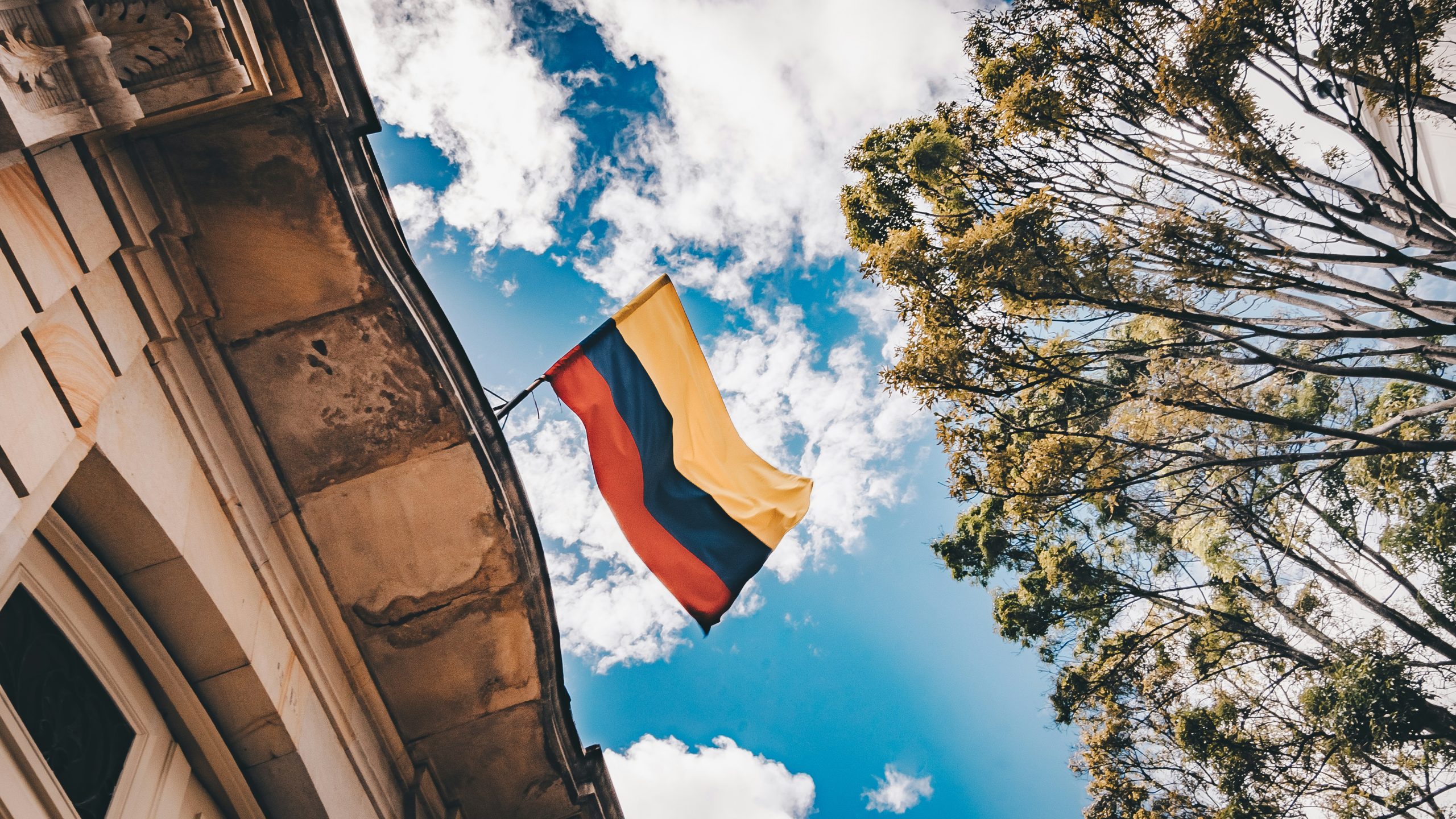
When people think about Colombia, there’s one thing that comes to mind: The memory of the dark, violent past starring Pablo Escobar and drug cartels. Talking to Colombians, it doesn’t take long until they tell you how exhausted they are by this memory, and how they wish people would know more about the country and its beauty, such as its impressive biodiversity, rich artistic and literary tradition, delicious coffee, or even the kindness of its people.
When I set out to write The Waves Take You Home, my first novel, I knew I wanted my book to be set in Barranquilla, where I’m from, on the Caribbean coast of Colombia, and for it to record landscapes that were familiar to me, as well as the cadence of the language, the particulars of my Caribbean culture and the rhythm of the days. I wanted others to see what I saw, not only the violence or the superficial beauty, but all the complexity of our culture, its people, and what it means to live in a place that is not often seen.
These eight fiction books provide a rich tapestry of Colombian lives, identities, and the weight of a complicated collective memory that still haunts us today. These books offer a glimpse into the multiple realities, the grittiness, and the beauty of the Colombian experience, which is more complicated and beautiful than we could ever imagine. Immerse yourself in these books that will open a window into an intimate portrait of the lives, struggles, diversity of cultures, and dreams for the future of Colombian people.
“Buenos días, mi reina.” “Good morning, my queen,” is the first line of Fiebre Tropical by Julián Delgado Lopera, a perfect introduction to this explosive and vibrant novel that narrates the tale of Francisca, a teenage girl who recently immigrated to the United States from Bogotá, Colombia, with her Mamá and Abuela.
Written unapologetically in Spanglish and set in Miami, the novel delves into Francisca’s journey of self-discovery, acceptance, immigration, religion, queerness, and what society expects of her. Lopera’s debut is an undeniably funny, unique, and unforgettable coming-of-age story that explores the difficulties of growing up between two worlds.
When I was growing up in Colombia, my parents didn’t speak much about the early ’90s and how their lives were affected by this period of violence and social unrest. Reading Fruit of the Drunken Tree reveals this tumultuous period of Colombian history told in stunning and honest prose. Ingrid Rojas Contreras captures the conflict in the ’90s in Colombia, seen through the eyes of Chula and Petrona, two girls from different social classes in a profoundly classist country. Chula is a young girl from a moderately privileged family in Bogotá, and Petrona is a teen from a neighborhood affected by the Guerrilla and poverty.
As Petrona starts working at Chula’s house, the two girls’ lives become intertwined. Contreras’ immersive prose expertly weaves a portrait of friendship, class, how violence impacts the lives of ordinary people and who gets to escape. Contreras crafts a book about resilience, history, violence, and the weight of memory.
The Bitch by Pilar Quintana, translated by Lisa Dillman
The Bitch by Pilar Quintana is a heartrending portrait of loneliness and womanhood set in the Pacific Coast of Colombia, a place that, in the author’s own words, is forgotten by the state. Damaris, a mature woman with multiple disappointments in life, adopts a dog and calls it “Chirli,” using the name she would have used for the daughter she never had. This intense and moving relationship tells a story about motherhood, infertility, abuse, and survival.
The Bitch is a challenging, relentless, honest, and gorgeously told story about life’s hardships on Colombia’s Pacific coast.
Oye by Melissa Mogollon is a unique coming-of-age story told as a series of phone calls and conversations between Luciana and her older sister, Mari. Coming out in May 2024, this buzzy debut is already causing conversations amongst early readers on the unique style, prompting readers to reflect on their family dynamics and perhaps even call their sister. One of the year’s most anticipated novels by a dazzling new voice, this book is a funny and heartfelt exploration of growing up, resilience, sisterhood, and finding your path.
The novel opens when Gregorio Pasos’ world is turned upside down: his parents are divorcing, his sister is battling addiction, and his uncle is dealing with what is likely the last months of his life. This novel shows the relationship between Gregorio and his family, their past, and the last days with his beloved uncle.
Told with generosity, honesty, tenderness, and hope, Restrepo Montoya crafts a tale of finding one’s path while reconciling with our family memories but being careful not to leave our history behind.
Infinite Country is an urgent novel about the complexities of immigration and how it can upend a family’s destiny. Told in different voices, this slim but powerful novel will stay with you long after you finish it.
The novel follows the Rivera family. At the center of the narrative is Talia, a woman who ends up in a correctional facility due to her attempt to re-enter the United States. As she awaits deportation, she reflects on her family’s story. Told in multiple voices and with beautiful prose, this novel examines the experiences of different family members in Colombia and the United States.
Engel doesn’t shy away from telling the challenges that immigrants face and the resilience that keeps this family together. This novel will have you thinking about immigration policy, borders, and the meaning of family and home.
Salt Crystals by Cristina Bendek, translated by Robin Myers
Cristina Bendek is the first award winner of the Elsa Mújica prize, a novel for women debut novelists in Colombia. This tale, set on the Island of San Andrés, tells the story of Victoria, a woman who returns to the island after living in Mexico for a while.
A picture from her great-great-grandparents and an encounter with an elderly raizal woman set her on a quest to learn more about her origins. What she finds with the help of the community not only connects her to an unknown story about the island but also to a rich history of resistance.
A vibrant, sensory, and honest debut novel, Salt Crystals shines from its gorgeous prose and portrait of an often overlooked place in Colombia.
Fish Soup by Margarita García Robayo, translated by Charlotte Coombe
If I could summarize this short story collection in three words, I’d say subversive, funny, and biting. Fish Soup is a gorgeous collection that tells different realities of strong-willed women in Colombia. “Waiting for a Hurricane” tells the story of a girl wanting to escape her life and country, no matter the cost to herself and those around her. “Sexual Education”explores the journey of students in a Catholic school trying to wrestle with the lessons of abstinence taught at their school. “Worse Things” is a snapshot of the thematic motif of escaping disintegrating families and taboos.
Told with humor and honesty, this book explores false starts, dead ends and the power of desire. An unforgettable short story collection that deserves a place on everyone’s bookshelf!
Percival Everett’s new novel James is described as a reimagining of Adventures of Huckleberry Finn from the point of view of the enslaved Jim. On some level, that assessment could be true—Everett does borrow the outline of the plot. But it is the characters, not the plot, that truly make up a narrative, showing us what it’s like to exist in their world. So in my reading, I see little traces of Twain’s Jim in Everett’s.
Jim (or James, as we come to call him) is a force to reckon with even if it is something he’s not aware of at the time when he decides to run because he refuses to be sold to a man in New Orleans. On Jackson Island, while hiding out and thinking about how to reunite with his wife and daughter, Jim bumps into Huckleberry Finn who, in line with Twain’s plot, has faked his own death. The two seek shelter in a cave where Jim gets bitten by a rattlesnake and in a feverish delirium, is visited by Voltaire—yep, that French philosopher. This is one of the many scenes where Everett’s irony shines as Jim argues about slavery and race with old white philosophers, poking holes at their hollow claims for equality. Jim, we learn, is intelligent and witty. He reads. He writes. He maneuvers language, speaking only in a dialect around white people. As we follow him and Huck sailing on the Mississippi, encountering racist con men like the Duke and the King, and some not-so-obviously-racist ones like Daniel Emmett, we realize that Jim can learn to harness anger that has been building for years, that he can (and does) take control of his life.
Percival Everett needs no introduction. His work is wide-ranging—notable titles include The Trees (finalist for the Booker Prize and the PEN/Jean Stein Book Award), and Erasure which was most recently adapted into the film American Fiction, starring Jeffrey Wright. In conversation, Everett’s speech, like his prose, is measured, thoughtful. We spoke over Zoom about deconstructing freedom, anger as a tool to reclaim agency, justice being asymmetrical for the marginalized and more.
Bareerah Ghani: Language is a complex throughline of the novel. In an early scene, Jim offers children a lesson on how to speak in coded “slave” language, which is essentially “correct incorrect grammar.” He says, “White folks expect us to sound a certain way.” This got me thinking about how I’ve encountered people who are surprised that I speak good English despite being raised in Pakistan, and suddenly speaking well in English gives me an authority to take up space that I couldn’t otherwise. What are your thoughts on “incorrect/broken” English being associated with inferiority and even illiteracy?
Percival Everett: Well, increasingly, at least in the United States—and I see it also in Britain—correct grammatical usage is not all that common anymore. Bad English is practiced throughout journalism in the U.S. I can’t count the number of times I’ve heard sportscasters lack any concept of a past participle. So there’s that. But language has always been, you know, a dynamic and fluid creature. It’s always changing, not only meanings, but usage and not only slang, but common usage. So it’s hard to simply specify something as good English. That said, accents and poor grammatical construction are frequently used to designate inferiority. And it sort of causes people to forget that there is a distinction to be made between stupidity and ignorance. There are people who don’t have the privilege to learn correct grammar who are geniuses, whereas there are many people who use English perfectly and they’re idiots. So none of it is a clear marker but language has always been used by the oppressors to isolate the oppressed.
BG: There’s been a lot of talk about this novel being a reimagined Huckleberry Finn and I can see that in terms of the plot. But the protagonist, Jim—he’s your own character. A man seeking freedom. I love Jim, I love his voice. And a critical component to his journey toward reclaiming agency is Jim embracing his anger. I am curious about your thoughts on anger as a luxury for the marginalized but a necessity for resistance?
PE: Anger is necessary with the caveat that that anger is controlled. There’s a difference between rage and outrage. To go into the fight with only rage negates strategy. The outrage can persist and needs to persist. One of the failings of American culture is that its outrage only lasts ten days at any given time and then it disappears into other news stories. So yes, the anger is necessary but what’s also necessary is an understanding that the anger is justified—not acting out of anger, but understanding that the anger should be there. And those are slightly different things.
BG: Absolutely. What about in the instance where it is justified, but the mainstream narrative does not justify it?
PE: Well, it is justified for those who feel it. My point is that anger is never unjustified but it requires some second order thought to act outside the anger in order to address it.
BG: So I’ve been thinking about liberation these days, given everything that’s happening in the world. And your novel got me thinking about freedom in more complex ways. So for example, Judge Thatcher is free in a physical sense. But mentally and morally he’s held captive to social doctrine that perpetuates slavery. He can’t think for himself, or allow his moral conscience to guide him. And then speaking about contemporary day, where we have our social media hashtags and like you said, American culture does not allow a movement for justice to last beyond the ten days. There is a lot of performative activism happening. I’m wondering how you deconstruct freedom and agency.
PE: Well, I think the notion of confinement perhaps should be expanded. Using Judge Thatcher as an example, you stated quite nicely, he is actually in his own way, enslaved in his thinking. It’s not an excuse for the character at all and it might even be convenient for someone in that position. But he is certainly, because of his culture, trapped in this world and that’s really what Huck is facing. As a young person he’s trying to navigate through this wilderness and emerge from what has confined the adults around him. Slavery enslaves more than just the slaves. It punishes the slaves but it still exists as a cultural phenomenon that has consequences on everyone.
BG: And what about modern times? Do you think we’re free?
There are people who don’t have the privilege to learn correct grammar who are geniuses, whereas there are many people who use English perfectly and they’re idiots.
PE: No, not really as you ask it. Perhaps in that Orwellian sense we’re less free every day if one views freedom as not being observed. On the other hand, there’s so many of us that anonymity, it’s kind of a chimera, you know. We’re not anonymous. But we are. There’s so many of us that we just fade into each other. But our own private worlds are our own, but they’re not private. If there are fewer of us that might be even more terrifying than it is. But being humans, and the whole idea of commiseration is, if you can show people that other people are suffering from the same thing, for some reason they suffer less—it makes no sense at all, but that is exactly how America has managed to address and also subvert complaints of the oppressed in the culture. Look! It’s not only happening to you. It’s happening to this group over here, too. And that takes power away instead of adding power to a problem.
BG: That’s so well-articulated. Thank you. You know, now that we’re talking about the mirage of freedom and also, justice, I want to talk about this particularly striking, and heartbreaking moment in the novel where Jim says, “I hated the world that wouldn’t let me apply justice without the certain retaliation of injustice.” This resonated with me because I’ve faced my fair share of racism and Islamophobia, and I’ve met all of that with an acute sense of how I can’t retaliate. I can’t push back because there will be consequences. And I know, currently given what’s happening in the world, a lot of people are facing backlash for standing up for things that they should really be standing up for. How do you contend with justice being asymmetrical for the marginalized and do you think humanity has the capacity or equality?
PE: I think a lot of us want to be fair but it only takes one person to not be, in a way. It comes back to that, the Rousseau-Hobbes idea, Are we basically good or basically bad?
Personally, I think it’s a trap to think about reducing our understanding of humanity as any kind of basic wants and desires and needs. It’s a good question. You know, if you look at human history it doesn’t appear that there’s been any movement collectively toward equality at any time. There’s often been some language about it. When the Greeks talked about equality, it wasn’t for everyone. They weren’t talking about women. They weren’t talking about slaves. They weren’t talking about native peoples. So what does equality mean? Maybe that’s the way humans have always talked about equality. Now, when people talk about equality, they’re not talking about people who have non-traditional gender ideas or feelings. So I don’t know what equality means. I guess the first thing that has to be defined in any discussion is what we means. Once that’s clear, then I guess you can have a conversation about whether things are equal or just more equal for some than for others.
BG: So I suppose you’re saying that it’s been the case for humanity and probably will continue to be?
PE: Well, I hope that doesn’t continue to be the case. But all evidence points that way, and the rhetoric of so many people within this culture. It also feels as if we’ve taken steps backward. And I don’t know if that’s historically what we have done as a race of animals, move forward and then fall back over and over again.
BG: It’s an unfortunate situation.
PE: But always, the first casualty is language—that is always what’s attacked first. The language is taken away from from people
BG: I was fascinated by the way you’ve brought in Daniel Emmett as a character. Your novel gave me the opportunity to learn more about Minstrels and blackface performance. Then I started thinking about clips I’ve recently seen circulating of comedians Dave Chappelle and Katt Williams calling out Hollywood for making Black actors wear dresses in the name of comedy, claiming this to be part of a larger agenda to emasculate the Black male identity. How do you contend with mainstream depictions of the Black identity and in what ways has that impacted the way you’ve approached your writing?
In a way those microaggressions become little badges of honor, for we people of color. They’re like little signs at the edge of a minefield that tell us our mines may be necessary.
PE: Well, when I was a kid, and I would look for literature, so often the only books I could find with Black characters were set in the Antebellum South, or the inner city, neither of which were my experience in the world. And so I wasn’t represented in popular culture, as far as I can see, certainly not in movies and television. What is so strange is that even now, just maybe several months ago, staying up late, I noticed that there was an old Abbott and Costello movie about Abbott and Costello in Africa, and they’re showing wide-eyed Black Africans afraid of ghosts and things like that. But it never occurred to anyone that maybe they shouldn’t continue to show that. Likewise, continued airings of other movies with those depictions, and things like The Three Stooges which have those kinds of racist depictions of Westerns, that depict native people in the same light. But in a way those microaggressions become little badges of honor, for we people of color. They’re like little signs at the edge of a minefield that tell us our mines may be necessary. And so the culture figures out that the depictions are wrong and should go away.
BG: Would you say you’ve always been thinking about this as you’ve approached your work?
PE: Well, how can I not? Whether I’m thinking about it or not, it’s a part of my make up. It’s just how I have to address the world and see it all the time. We could be having a very nice day, and we go into an antique mall, and I turn the corner, and there’s a pyramid stack of really offensive Aunt Jemima jugs, made from the syrup bottles and no one sees anything wrong with it. And it’s the lack of a perception of that irony that really is more affecting than the presence of the jars.
BG: You talk about it in one of your other interviews that irony is a huge feature of how you see the world. I’m wondering if you can talk a little bit about that and how you’ve come to have an affinity with it as a tool to address complex issues in fiction.
PE: I think almost all writers of color, all the people who create art while oppressed experience and survive the world because of irony. It’s not unique to me certainly, it’s just how we have to move forward. If we were completely earnest about everything, we would never see tomorrow. Why would we bother?
He took in air. Compared to Manhattan’s concrete sentries, Averman’s island was a state of nature. Or, relatively: They’d landed on a fresh tarmac carved out of the jungle and skirted by a comically long hangar. To the left, rows of idling Jeeps. Above, a sky the size of a sky. And all around, an atmosphere rehabilitated with newborn oxygen.
This felt right. Nobody here would know his circumstances, not fully. He’d sent Averman the barest outline of V’s disappearance. There would be perfunctory inquiries, a show of bereavement—To lose one’s wife! So suddenly! And not just any wife, but Victoria Stevens!—and then Guy would be given room to fully embrace his denial. He’d carouse and collapse; they’d look the other way.
The Quorum: a punctuation to his misspent life. He would enact a prohibition against self-awareness, against awareness of any kind. Guy would exist simply. And then, after public revelations forfeited the simple existence, he would exit simply as well.
He waited on the airstairs as the pilot collected his bags. He inhaled again, as deeply as his phlegmatic respiration allowed, stopping at the wet rattle in the lower throat.
A simple existence required discipline. To live without thought was challenging enough; add rigorous self-sabotage and you court failure. But he’d been firsthand witness to the continual challenging of the limits of human capacity. V said it was a matter of wherewithal. And while he lacked her brains and brio, he could imitate her unyielding will.
Oh. A glandular swell under the jaw. He turned and voided onto the black airstrip. It was improbably milky and—good news—free of blood.
A rude moue from the pilot. Uncalled for, really. Guy was so obviously a wreck, so obviously freshly upended, one would think a little sympathy was in order. The pilot had that exsanguinated Gaelic look; maybe a proverb from the old country? But no. He just bent forward to check if the vomitus had spotted the plane. Guy returned to the cabin, gargled vodka from the galley, spit, realized he still could still taste yesterday, and took a quick, bracing pull.
The pilot waited near the cabin door. “I’m to return Monday at sixteen hundred hours, sir?”
“Let’s take things one hour at a time.”
The pilot stifled a look and returned to the cockpit. Guy filled his hip flask and tried the stairs again, with good results. Someone had already loaded his luggage in one of the Jeeps. Two sun-kissed youths approached, both clad in teal jumpsuits—Averman Teal, which he’d paid Pantone an undisclosed sum to invent. The boy and girl radiated possibility.
“Mr. Stevens, Arthur Averman welcomes you to the Quorum,” they said in unison.
“Mr. Sarvananthan,” Guy corrected.
“Of course,” the girl said. “Allow us to escort you to your vehicle.”
A quiet frenzy of staff, security, and ground crew conferred in the hangar. There had been a miscommunication, it seemed, or possibly several. The bodyguards kept pointing to rows of cots in the corner. And near the Jeeps, a naked Bennett Benatti, waving hello and performing light stretches. Guy waved back and, for some reason, gave a thumbs-up. A trio of Averman’s staff waited on the luxury automotive heir, holding a white towel, a garment bag, and black espadrilles. Benatti finished his routine and dressed as Guy approached.
“I expected your lovely wife,” Benatti said.
“Indisposed. You’re stuck with me,” Guy replied.
Benatti left his shirt half-buttoned to display his tattoos of Old Masters facsimiles from the family collection. Probably the only heir at the Quorum, Guy thought. Most were incredibly conservative, loathe to donate a penny more than what was expedient taxwise. Whereas one-percenter transgression was Benatti’s raison d’être.
He opened a gold cigarette case. Guy motioned for a smoke.
“Not stuck with you,” Benatti said. “All due respect, your wife is super boring. Work, work, work. You I like. We will cavort? Maybe ‘solve global problems.’”
“I don’t want to think about any problems,” Guy said. He took a slow drag. Like licking the books of God’s library. “My goal is ruinous intake.”
The glowing youths directed them to a pedestal with a tray of amuse-bouche, explaining the clear liquid was Averman’s concoction for “post-flight refreshment with infusions to stimulate focus.” Guy passed; Benatti drank two.
Guy pointed his head toward the huddle of personnel. “More frantic than I expected.”
“Everyone’s arriving now,” Benatti said. “Arthur wanted to stagger us, but we come when we come, no?”
Benatti put on a white linen blazer, then slid a leather driving glove onto his right hand. Guy likened the affectation to men who got a single earring when they hit fifty.
He couldn’t recall the last time he’d driven. His license expired ages ago.
Jeeps arrived as others departed, carrying Quorumites one by one to the main compound. The drivers, much like the rest of the jumpsuited employees, seemed culled from the lacrosse fields of the Ivy League.
The girl gestured toward another pedestal, with markers and sheets of paper. She explained they were to write a one-word reply to the sentence Humanity is ____. Guy’s honest answer wouldn’t do. He went with afflicted; Benatti drew an exclamation point.
“Excellent,” she said. “Now Mr. Averman would like you to peel the sticker and wear your response on your chest. This ritual will—”
“Forgive me,” Benatti interrupted. “But we do not wear stickers.”
The girl retained her smile and directed them to their Jeeps. Benatti tossed his cigarette and Guy did the same.
“Let’s ride together,” Benatti said. “I’ll take front.”
Guy climbed in while the driver radioed to someone at the compound. The legroom was lacking, which would normally annoy him, but the nicotine bloom kept his spirits up.
They careened down a red-dirt path barely wider than the vehicle and flanked by squat palm trees. Robust jungle left only a column of sky; Guy saw the next wave of circling Quorumites, awaiting permission to land. How big was this gathering? A hundred? Two hundred?
Benatti was talking about his new girlfriend and angling his phone toward Guy. Intimate selfies from what’s-her-name, The Voice winner whose repertoire consisted solely of the last couplet of “The Star-Spangled Banner.” Lifelong bachelors liked to share these updates with Guy, as if seeking approval.
When did he and V last fuck? A month ago? Now it would be their last fuck, as in never again. She might have warned him. One final romp, with their repertoire of gags and friendly edging. V disarmed utterly during sex (or he believed she did), her grunting chromatic and unselfconscious. He knew the spots: visit the clavicle, avoid the hip bone, hum down the perineum. She would tap his shoulder to advance to the next position and, almost without fail, orgasm with three large shudders. Their circuit lacked variety but never rose to the level of complaint.
Which didn’t mean much now. Their plateau was, in fact, a slow decline—easy to mistake when your schedules so rarely overlapped. With her work, travel, and general single-mindedness, what might be an evening’s conversation for others took them weeks.
“Do you smell that?” Benatti asked. “Lavender. That can’t be natural here.”
“Mosquito repellent,” the driver said. “Mr. Averman dusted half the island.”
Guy noticed stitched letters across the shoulders of Benatti’s jacket, also in white: “Mistakes Will Be Made.” The new slogan for a Rome-based periodical he’d recently purchased. Guy coveted the sartorial subtitle.
He moved to inspect himself in the driver’s rearview. Must be presentable, up to a point. Guy’s hair, teeth, and skin still advertised his access to the best products and methods. Nothing could be done about the eyes. The past twenty-four hours had accelerated the discoloration, as if he’d smeared camouflage around them.
The past twenty-four hours. Christ.
The Cucinelli polo couldn’t do anything about the paunch, but it artfully hid the love handles which continually flummoxed his personal trainer. They were something of a birthright: Sarvananthan men, though blessed with good hair and high metabolism, could neither figuratively or literally outrun the soft middle of middle age.
His body was aging faster now. It knew the money was gone and the jig was up. They said fame arrested one’s maturity at whatever age the person broke through; with sudden fortune it was one age’s that became cast in amber. He had looked fifty since the First Flush. No longer. He rolled his head on the swivel of his neck. Today he would age a lifetime.
“Are you ready to do the most good? Are you ready to finalize your legacy?”
Are you ready to do the most good? Are you ready to finalize your legacy?
Averman’s voice—from where? The questions repeated with the same inflection.
“Speakers, hidden in the brush,” Benatti said. “He does the same thing at his companies.”
The driver made a joke in Italian to Benatti, possibly about soccer, and they were soon debating something of grave importance in Turin. Guy concentrated on not sweating out the booze.
The Quorum was a fitting last fête—he’d met Averman at his first one. A fundraiser for the Central Park Conservancy. Back then Averman was like an avuncular mentor, despite their proximity in age. V had setup the Foundation and told Guy his job, more or less, was to solo navigate the circuit. Be a face. Charm, smile. Learn the unwritten rules.
Guy had thought the Curtis Institute’s black-ties would be adequate training for the gala crowd, but he was quickly at sea. How did one stand at these things? Was he just supposed to walk up to random people and introduce himself? Then a tanned and toned arm interlocked with his, an arm belonging to a magnificently coiffed Australian beaming with naked gusto. Guy later learned Averman fed this state through adrenaline-spiked family outings with a cadre of X Games athletes; he’d just completed two weeks in a self-made sloop up the Amazon. Averman had a vague and modest idea of himself as a legendary figure—common enough among Guy’s new cohort—reinforced by the man’s inability to simply be. The world was a sleeping bear he couldn’t resist poking.
Averman’s attitude immediately calmed Guy’s nerves. As did the zoological tour Averman launched into, pointing to a redhead in a white caftan gesticulating wildly inside a circle also in white caftans. “That’s Petra Bax, libertarian blowhard extraordinaire. Who knows why God gave her money. Like a baby with a handgun.” Though Averman hadn’t lived in Sydney for decades, his voice retained the wide accent of the antipodes. “And never go to one of her ‘summits.’ People quoting the Federalist Papers and talking about century rides on their trail bikes.” He nodded toward a lounge filled with people in aggressively experimental clothing. “The young heirs. They’re intellectually lazy, humorless, and indiscreet.” He winced; Guy silently hypothesized an extramarital misstep. “High statistical likelihood of squandering the family fortune and whiling away their dotage in the pool houses of distant cousins.”
Averman never picked up on Guy’s intellectual laziness, which surprised him. Guy thought it fairly apparent. He never saw the benefit of growing as a person and long suspected its alleged correlation with success—a skepticism reinforced by V’s rise and the First Flush. The only real shift in his beliefs was the inevitable one, that their largesse was preternatural, which happened to match everyone else’s outlook in their rarefied orbit. He acknowledged that sure, the people who would correct him on this matter were incentivized not to by his ability to disperse capital their way. Stipulated. But his conviction held: he had become the person he was always meant to be.
Until.
“Are you ready … ?” Another Averman recording Dopplered by.
Guy unconsciously checked his phone and startled at the waterfall of Jeremy’s messages. His brain would not allow itself to cohere the letters into words and the words into meaning. He pocketed the phone, then unpocketed it. Thought of V’s cold dispatch.
He should send a final text. Something curt and wounding. She’d expect some transliterated sobbing, a witching-hour accusation or two. His thumb absently tapped the screen while he considered the spectrum of replies. Every one of them expected and ineffectual. He checked the screen; his thumb had typed a string of Fs, Gs, Hs. He cleared them out. There was nothing to write.
He cocked his arm to throw the phone, then stopped and tapped out a message to the Foundation staff. Why not.
You should all find new jobs. By Monday, if possible. No time to explain. Be good, G. S.
He hit send and flicked the phone into the deep green. The driver noticed and didn’t react. What a professional. Auspicious for the days ahead. Alive, Guy felt alive.
They passed a faux-weathered sign welcoming them to ARTHUR’S FOLLY. To Guy’s knowledge the name had never stuck, even after Averman commissioned a Netflix travel series on the island. It sounded more befitting a pontoon than a Xanadu—you shouldn’t be cheeky with your private Eden. They slowed behind a line of idling vehicles. After ten seconds Benatti exited the Jeep.
“We must be around the corner,” he said. “Let them sort this out.”
Guy nodded at the driver and followed suit. Benatti’s instincts were shared by the other Quorumites: every Jeep was similarly empty, save for luggage and Styrofoam coolers. They walked the bend and the road widened to a circular drive with a blue-tiled fountain, chatting Quorumites, and their host, perhaps fifteen feet up in a shining scissor lift. Guy recognized about half the crowd. Mostly American, maybe a dozen women.
Averman bullhorned in their direction. “And now we have Mr. Guy Sarvananthan and Mr. Bennet Benatti! Welcome, gentlemen!” He wore the same outfit as his staff, and from this distance his head appeared monochromatic: the deep tan on his wide face matched the sun-bleached gold of his shoulder-length hair.
“Il duce! Come stai?” Benatti exclaimed, saluting.
Averman made a sarcastic gesture somewhere between “hang loose” and “rock ’n’ roll.” He swung the megaphone toward employees creating a shaky tower of Globe-Trotters and Rimowas. “The luggage should already be in their assigned suites. This accumulation is displeasing. How we begin is how we proceed!”
Benatti and Guy walked to the fountain and away from the chaos. The other arrivals milled around a registration setup, backslapping and catching up; Guy spotted Roark. Just beyond, marble stairs led to a whitewashed high-ceilinged structure with teak trim. When the island appeared through the jet window, after Guy had awoken from a nap blissfully free from nightmare or spousal apparition, he catalogued the sandy beaches, dense jungle, tiered steppes, and the craggy black swoop of a dormant peak. It all conformed to the default mental image of a private island, razed and rewilded into a capstone idyll, albeit with fewer buildings than Guy would have thought. He’d also expected the busy design of Averman’s hotels, with their dessert-bar maximalism that, to Guy at least, tended to curdle into architectural temporizing. This was quiet. Austere. Averman wanted them clean and focused.
“Gentlemen, we begin.” Roark joined them at the fountain in a white linen three-piece.
They all nodded. Benatti distributed cigarettes.
Guy gestured at the crowd and found he was listing to the right. “Roark. What’s your over-under on Averman pulling this off?”
“If he does,” Roark said, “it’ll be the first major contribution from the Aussies since Hewitt took Wimbledon.” He turned serious. “I’m sorry about Victoria, Guy.”
Guy held his inhalation, pictured the smoke filling his respiratory tract. How did Roark know? What did he know? Ah—Averman. He must have updated their mutuals sotto voce.
“She … she would have wanted me to be here.”
“Not one to cry over spilled milk?” Roark asked.
“Or flipped kayaks.”
Roark whispered into Benatti’s ear. The Italian stared at Guy, then past him, then at him again. Averman boomed that the swordfish needed icing.
“She is there,” Benatti ventured, “and you are here. Hence the ruinous intake.”
“Hence,” Guy said. He remembered his flask and took a nip.
“Yes, well.” Benatti pursed his lips and exhaled, then motioned them to follow him. They skirted the scissor lift and the luggage tower—the same height, Guy noticed, but Argo-like, refreshed with new pieces—and walked onto the lawn between the main building and the jungle to the left. Low-slung residences in Santorini white extended down the plateau, where sinewy palms emphasized the blank sea beyond. Averman’s staff buzzed around and between the buildings like atoms. Or like electrons inside an atom. Whichever was scientifically accurate. Guy nipped again.
“Do you fellows notice anything about our accommodations?” Benatti asked.
Roark nodded. “Those two are new construction, built for the Quorum. And the suites are ground level so nobody can claim a better view.”
“Ever the egalitarian,” Guy said.
Benatti sniffed, as if Guy had passed gas. He pointed to the farthest residence. “Ah, but they only look the same. I have it on good authority those rooms come with new Totos—the ones with the, what do you call it, stool analysis.”
The staff cast dark glances at Benatti’s smoking; he didn’t notice or didn’t let on that he did. “And some rooms have authenticated Noguchi lamps. The others are repros.”
Roark attempted a hierarchy of the amenities—all agreed on the primacy of the deluxe shitter—and pointed to a staff dormitory camouflaged by thick flora. Guy felt an initial scrim of anxiety fall from his person. This was why he’d come: the lingua franca, the high judgment, and the presumption of never pleasing anyone else.
They returned to the circular drive, where about forty Quorumites were milling about. Averman was now delivering orders at an auctioneer’s pace, his usual bonhomie usurped by impatience. There were schedules to amend. Late arrivals to process. A flat tire “two clicks south.” Guy remembered the New Yorker profile where Averman celebrated his sixty-fifth birthday by paying the Navy SEALs to take him on practice exercises. (“Best broken arm yet.”)
Roark turned to Benatti. “Guy and I are coming from New York. You?”
“Punta del Este,” he replied. “I am celebrating the conclusion of the merger. In fact—”
Benatti darted to a crate of coolers on wheeled metal racks and began flipping open their lids. There had been a long-running family struggle at Editto S.p.A.—something about bringing Benatti’s empire in line with his cousins’ regional telecoms—and an acquisition by Daimler would guarantee sinecures for everyone’s eventual great-grandchildren.
As much as Benatti livened up a room, Guy never envied him. When you’re born with that much you’ve already used all the good luck you’ll ever receive. What’s more, short of curing blindness, you’d never best your ancestors’ achievements; Guy had seen this dawning realization lead to crack-ups in more than a few dynastic layabouts.
Benatti returned with a bottle of champagne and shot the cork toward Averman, whiffing by a yard, then dabbed a bit of foam behind his ears.
“In bocca al lupo,” he said. “May those German pricks fund my Lake Como expansion.” He held up a wet index finger; Roark and Guy declined.
“No! Absolutely not!” Averman barked at an arriving group. “Zone of trust. This was made explicit.” He hit a button and the lift accordioned down.
Three people climbed out of a Jeep while a fourth passenger remained seated. Roark said they were the MIT kids, a trio of postdocs whose breakthroughs were on par with John Bogle’s invention of the index fund. They could be triplets: matching curly black hair, roughly the same height, olive skin, wearing white T-shirts and bands of smart bracelets.
One of them called up to Averman. “He’s integral to our algorithm testing. He’ll stay in our suite the entire time.”
Averman handed his megaphone to an employee and hurdled the crossbar. “Zone of trust,” he repeated. “I must insist.” He opened his arm to signal the other Quorumites and walked over. “Our accord is strong yet fragile, built from years of groundwork and the cooperation of the greatest minds in the world.”
While keeping his eyes on the MIT kids Averman reached into the car and reattached the passenger’s seat belt. “I don’t know your plus-one. Nor do I care to. Get rid of them.”
The passenger radiated discomfort while the MIT kids conferred. They nodded and the Jeep drove off.
Averman clapped his hands. “Okay! Sign in with Jessica and get situated. Drinks on the veranda in seventy-eight minutes.”
Benatti threw his cigarette in the fountain. “If you’ll excuse me, I’m going to talk to Arthur about one of those Totos.”
After he left, Roark lowered his voice. “What have you heard about a secret conclave?” He stared straight ahead, as if they were being watched.
“Secret how?” Guy asked.
“A Quorum within a Quorum. Where the real action is.”
The insecurity of these guys. “Well, Roark,” he said, with sugar in his voice, “I wouldn’t know anything about that. And if I did …”
“Joke all you want. Some of us are here on business.”
“Pitching your Governors Island project during the discussion on female genital mutilation?”
“Don’t be naïve,” he snapped. “Any man who leaves here without new partnerships should kill himself and spare his board the shame.”
“I have other priorities,” Guy said. “And your conclave idea is probably just a rumor.”
The crowd at check-in dissipated, so they walked to the table near the marble stairs. Averman’s executive assistant Jessica mapped directions to their suites (“Ooh, you both got good ones”) and reminded them of the cocktail reception. Roark waddled off to take a phone call.
Guy patted his flask and remembered his plans. “Jessica, I wonder where one may procure cocaine and amphetamines for the weekend.”
She tapped at her tablet, all crisp demeanor and general precision. “All set, Mr. Sarvananthan. It will be delivered to your suite by dinner.”
“Oh, and a quick shave. Send someone down before drinks. And a pack of Camel Reds.”
“I’m afraid the Quorum is smoke-free, Mr. Sarvananthan. But we’ll have a barber sent right away.”
“Thank you.”
He was directed to his residence. The suites ran down one side; on the other, a column of large picture windows. In his room he found a handwritten note next to his bags: Let’s save the fucking world!!!
Heavy fricatives came from the walls: grey noise, V’s favorite. They must have programmed it for her arrival. He found a control panel and muted it.
The suite was a soothing mix of tightly threaded rattan and off-white suede, with an overly curated bar. He’d need to send for more; man couldn’t survive on gin alone. Or die on gin alone. Next to the stoppered Watenshi and an ice bucket sat a green juice in a chilled highball glass. Delivered seconds before his arrival.
Man couldn’t survive on gin alone. Or die on gin alone.
He unpacked his polos and linen trousers, keeping two inches of space between the hangers, and lined the horse-bit loafers near the door. He tossed his sleeping mask on the bedside table, next to an issue of Celeste, the glossy magazine Averman published for his wife, about his wife. What started as a one-off anniversary present had grown into a puckish take on AmEx’s Centurion, with stockists in London high streets and collaborations with designers of cruelty-free resort wear.
He unzipped the padded ski bag and pulled out the sword. It was smart to bring it. A comfort blanket and, if things went truly awry, handy for parrying threats. Back in New York he’d thought about brandishing it at the Quorum—an eccentric’s open carry. Now he saw that wouldn’t do. Best to keep it a secret.
He stowed the dulled heirloom and assessed the bar cart, sampled the juice. Nutrients surfed his veins and brightened his being. Clarity encroached from the periphery. Oh, no. He poured a big boy gin, knocked it back, and checked the bathroom. The usual buttons on the toilet—rosewater bidet, heated seat—but no stool analysis. A subpar Toto.
The patio looked out to lawn and sea. Various staff ran by transporting lobster crates, pillows, croquet sets. They were uniformly young and athletic and about as racially diverse as Guy expected. Not a Desi in sight, but otherwise like a Ralph Lauren ad conscripted into hospitality.
It was too quiet. He searched for Brahms on the wall console. Op. 118 felt appropriate. He thought of an anecdote Roark had once told him, how MLK would call Mahalia Jackson at all hours and request his favorite hymns.
Glenn Gould’s version of op. 118. That would do.
Guy was a year out of Curtis when Gould died. Faculty and local alumni held an improvised memorial at someone’s house in Chestnut Hill. He immediately regretted attending. The eulogies were stilted, overreaching. A musical studies professor said if the Russians attacked, he’d take the maestro’s Brahms LP into the bunker. A soused oboist hinted Gould had faked his death. Another argued the pendulum would swing back: restraint would be in vogue again. Professors who’d caught a performance transmuted their past annoyances—Gould’s posture, Gould’s clothing, Gould’s humming—into the fundament of secular sainthood.
Guy hadn’t seen the next generational talent at the conservatory, but there were plenty of virtuosos. He could recognize it instantly, whatever the instrument or style, a recognition below consciousness which consciousness fought to articulate. That level of talent was a true gift, a richness that could be enjoyed dumbly—that is, enjoyed without any knowledge of its innovations or method, and with inexhaustible obsession. One of the other composers possessed this talent. A sickly boy from the Gold Coast whose name Guy could no longer recall; he did remember—could, in fact, not forget—the spinal purr of the boy’s chamber piece. Like discovering a new language one could not yet speak but intuitively felt reached heretofore impossible levels of articulation.
It took time for Guy to discern the limitations of his own talent. Composing short pieces for orchestra masked some of it. Here was the pinnacle of aesthetic experience: twenty-seven world-class musicians articulating a sound comprised of discrete, bounding fluidities. Nothing compared to the simultaneity of its breadth and depth. Whereas the song cycles he composed practically shouted their deficiencies. One could not hide oneself behind piano and voice.
Naturally he was fond of those years; naturally that was inevitable. Though he admitted to a level of naïveté, Guy was clear-eyed enough at the time to avoid self-delusion. By his last year at Curtis he understood that he’d peaked young and at modest elevation. He would never become one of the handful of composers with a career. In the years following graduation he stuck around and found contentment—or something just below it—in his rotation of piano students (respectful, college-bound tyros); an on-and-off affair with Gretchen Baumer, assistant concert master for the Philadelphia Orchestra; and, when he could afford it, pilgrimages to the festivals at Lucerne, Salzburg, and the rest.
A staff member ran by his patio, halted, waved at Guy, and walked toward him. She stopped again, rethought her approach, and dashed around the corner. Thirty seconds later he heard a knock.
“Mr., um, Sar-van-than?” she asked, and flipped through a portfolio stuffed with leather pouches.
“Sarvananthan. I’m him.”
“Here you are, sir.” She handed him a pouch and ran off.
He laid out the vials and glassines on the bed. Best to save the coke for nightfall. He swallowed two blue pills and made another drink. Turned the volume up and browsed the inlaid bookshelves. Patrick O’Brian adventures, photography books, World War II histories, Delvaulx’s Nautical Works, and, prominently faced-out, Averman’s bestsellers. His debut had been adapted into a Korean soap called Big Man Big Heart, according to the cover. Guy inspected the back copy. Apparently the charismatic titan of industry had first dictated the memoir’s outline into a voice recorder atop Everest. Did people really believe that? Guy reshelved it and came to the most recent publication, a glossy hardcover titled No Man Is an Island, But It’s Fun to Own One. V once said it had caused a minor dustup for its erasure of the triangular trade.
Her own business memoir was quickly negotiated and long delayed. They used to laugh about it: the woman who hated looking back, forced to synthesize her past. He once asked if they’d Ubered from their City Hall wedding to the Ace Hotel in NoMad—this was before the First Flush—or if they’d taken the subway. Her reply: “The past consumes too much bandwidth.”
V, invading his thoughts once more. A neuroscientist once told him memory wasn’t interested in its conception. When you recall a moment, you’re not getting the original, some preserved flash with all its particularities. It’s merely the most recent iteration, changing in the present through the act of recollection. Moreover, it’s all incredibly fallible, open to present feeling and influence. Better to think of an individual memory as an ever-evolving concept.
In the coming hours and days his brain would likely disinter long-buried memories, mulishly forcing himself to encounter himself. He was a man in free fall; it made sense. But if the memories were colored by his free fall, perhaps this absolved him from interrogating them for a point—or worse, a lesson. Treat them as random images lobbed by a desperate subconscious into … processing? Was that the goal? That meant change. Improvement. He had no intention of either.
Hell, there may even be some fun in it. If his brain insisted on fighting the disequilibrium to spotlight All That Has Come Before, or All That Might Have Been, perhaps his free fall might reconfigure the memories into new and unrecognizable shapes. Perhaps his disequilibrium might even befriend his brain; alcohol was a social lubricant, after all, as were the pharmacological sweeteners on his bed.
He slapped his face and washed his hands. Curled his toes into the jute rug. Paged through a coffee-table book about the island, where an architect extolled “nature as nature intended.” This apparently required a godlike swipe of the vegetation and the planting of seven cypresses outside Averman’s quarters, symbolizing his chief revenue streams.
A foldout map confirmed Guy’s impression from the jet. The island resembled a puzzle piece, with circular bays and rounded peninsulas. The grassy steppe of his residence also contained the sprawling central hub, athletic facilities, three outdoor pools, and a bocce court. Other delights included gardens and greenhouses; a fruit tree with varieties of pear, apple, orange, peach, banana, and kumquats grafted into an efficient cornucopia; and all that jungle, with paths and cairns for forest bathers. Foxglove too. Even a man-made ecosystem needed its poisons.
The north sported a novel bit of geographical cosmetology. A monolithic and imported sliver of limestone leaned against the grey cliff face, having been sheared off the Olana estate in upstate New York. A sidebar noted its sentimental value: the site of Averman’s proposal to Celeste, back when they were young and, after the implosion of his first hotel development, briefly destitute.
Another knock on the door, and soon Guy was recumbent on the patio under a teal apron while a staff member scrutinized his cheeks and neck.
“Full shave, sir?”
“No, just this hanger on, above the lip.” Guy pointed with his drink and sploshed some gin onto his face.
The unflappable barber toweled him off. “Very good.”
The barber still went through the motions, laying out his razors and creams. He spritzed Guy’s face and produced a hot towel from a small Styrofoam box. Head back, with a partial view of the sky, Guy took in the familiar scent of the barber’s deodorant. What was it? Something with anise—Old Spice. His father’s aspirational purchase from the local Target during the three-day stretch between arrival in the United States and a fatal heart attack, which occurred mid-interview for a position in the catalog department of Sears & Roebuck. It was sudden but not unexpected, a common morbidity among Sarvananthans, and the cruelty of its timing, in Guy’s mind, was eventually laundered through an emergent Midwesterner’s optimism: at least his father didn’t die the week before. No, he’d collapsed on America’s doorstep, a grand achievement after years of maddening bureaucracy, dead-end calls to various embassies, rejected bribes, unexplained deferrals … and then that catalyzing stroke of luck, arriving not by the connections of a sterling military career, but through his wife.
Guy’s mother, who only ever wanted to practice law, was forbidden to do so by her father, who demanded she choose between teaching and nursing. She went for the former, and this skillset finally unlocked America, whose mid-1970s shortage of preschool and kindergarten teachers partially informed a larger immigration quota of subcontinentals. She co-ran a robust Montessori in St. Louis Park, the middle-class Jewish enclave outside Minneapolis, and they lived in nearby Richfield. If the location was undesirable—his father balked at the stories of tundra conditions—she reminded him their other option was Toronto, farther north.
Guy and his mother took to wearing his father’s deodorant in memoriam and out of pragmatism. When it ran out they silently agreed to keep the red tube in its rightful place on the bottom shelf of the medicine cabinet.
His mother mostly referenced the death in monetary terms—the high cost of funerary services in this alleged land of opportunity—and in the redistribution of household duties. Guy later understood she grieved privately, taking long drives while carpeting the driver’s-side floor mat with soaked Kleenexes, or with a tight group of aunties who ran a catering business out of one of their kitchens, cooking banana-leaf-wrapped lamprais for the birthdays and graduations of the Twin Cities’ Sri Lankan population. His mother specialized in love cakes and would refill a water glass with Diet Coke as she worked and complained about the “one step forward two steps back” shuffle of her new life.
When he pressed the issue one night over Hamburger Helper, she replied his father had simply used his lifetime allotment of heartbeats—fifty-eight years’ worth—as she would too someday, and if they were going to thrive in America they shouldn’t waste one minute crying over misfortune. His father was in heaven, boring God with talk of the untapped potential of the national cricket team, and that—she enunciated decisively, with a mouth full of ground beef—was that.
Guy found his school work comically easy compared to the Colombo regimen—they didn’t even enforce corporal punishment! But he had difficulty making friends, and the Minnesota winter conspired against his social life. Take the simple act of entering school. The second he crossed the threshold his glasses fogged up, blinding him no matter whether he wiped them clean, removed them, or waited for the condensation to dissipate. Thus he was cursed to hesitate inside every entrance, making pinched expressions and hoping nobody was nodding hello or—however improbably—motioning for a high-five.
Then there was his general inability to walk on the icy sidewalks, a skill his fellow students seemed to perfect at birth, like Inuit children flensing seal meat. (He believed Eskimos lived in northern Minnesota for an embarrassingly long time.) He was prone to overcorrecting, bending forward at the waist and throwing his center of gravity about, a shameful ballet that both attracted and repelled attention. Finally, there were the painful effects of winter on his cock. This was most acute whenever he came in from the cold and had to urinate. Something about the outdoors stimulated his bladder, and he would fumble with numb fingers through layers of clothing, praying he wouldn’t piss his pants, unbuttoning the fly of his Lee’s and releasing the torrent with a still-frozen, shrunken cock that stung sharply until it accustomed to room temp. The generalized effects of the routine surely contributed to his difficulty losing his virginity to one of the comely Scandinavian or Teutonic girls.
Though if he were honest, the cold cock wasn’t nearly so detrimental as his reputation of an asocial weirdo, established by a rather public dropping of his water glass in the lunch line—he had it in his hand, wondered what it would be like to drop it, and simply dropped it. Everyone disregarded this as accidental, until he repeated the action three more times. A counselor recommended “healthy outlets” for his confusion and anger but wouldn’t give specifics. He heard tales of classmates’ acts of rebellion: stealing street signs, doing whatever the burners did behind the Southtown Mall. Guy never received an invitation.
Which isn’t to say it was a lonely adolescence. The Sarvananthans were welcomed by their neighbors, mostly 3M retirees with extreme fealty to the sportscasters of WCCO— mentions of KFAN were met with silence. He spent many nights at the Knutsons, playing their modest collection of sheet music on a workaday upright. The Germans, of course, but also Copland and Gershwin. He credited Shelly Knutson for alerting him to his talents. Not enough musicianship for conservatory—she was realistic, for which he was grateful—but the improvisations showed promise. Perhaps composition? This comported nicely with young Guy’s self-image as a budding anti-capitalist, born of misplaced rage at Sears & Roebuck. Much later he would learn of the bankruptcy of the original “everything store” and feel intense bodily elation without understanding quite why, time being what it was—what it is—and really, who among us is that in touch with their childhood selves?
Though “self” was imprecise. From what baseline might he measure his changing self against? He perverted himself through memory, and he couldn’t stand outside himself to glean the knowledge of this perversion—or at least, glean perspective on the size of the perversion. There was no record to consult. He’d never been a diarist, and he didn’t have any lifelong friends.
All the better. He was freed from the obligation of consistence, absolved for all near-term hypocrisy and selfishness. To cherry-pick oneself: what bliss!
The barber applied a cold towel to his face and asked about the nose hair. Would he like a touch-up? Guy declined. Let them be wild.
He thanked the barber, sat up, and managed the slight dizziness. A white leviathan appeared in the water. He asked the barber if he was seeing what he was seeing.
The barber rolled up his equipment. “We’re not allowed to comment on it, sir.”
The object resolved into a passing megayacht with ungainly mods pimpling its decks. A glass dome covered the stern, with trees inside and what looked like sand dunes. A small figure arced up one on an ATV, held in midair, and disappeared down the backside.
Petra Bax. Crashing the Quorum.
Guy stood and fell backward, saved from knocking his head on the concrete by the barber’s quick reflexes. Excellent: the pills had kicked in.
As a young child, I’d wake in my bed, certain I was somewhere I didn’t belong, crying desperately to go home. And so, my relationship with the uncanny began.
In Sigmund Freud’s 1919 essay “The Uncanny,” the basic definition of the term is, in-of-itself, a contradiction. For the uncanny, Freud uses the word unheimlich, from his native German,which translates to not of the home. This definition suggest that uncanny events must involve the unknown or unfamiliar, but as the essay continuesFreud explains that the uncanny can also be an experience where something heimlich, of the home, becomes unheimlich when private or concealed information is revealed. In the uncanny, the familiar and the strange overlap.
As an adult, I’ve come to understand that many of the uncanny experiences of my childhood were the result of a secret revealed when I was too young to understand it. My father was a small-time weed dealer, tending to his crop and clients after his children were put to bed. The strange voices in the hallway, the ring of a spoon against the rim of a coffee cup chiming through the dark, the footsteps in the attic that bowed the ceiling above my bed: these experiences were all real. The isolating uncertainty I felt as a child seeking answers, only to be dismissed, contributed to the uncanny nature of these events. The revelations that shift an object, space, experience, or person from familiar to strange can be based on something concealed by others, or, something a person has concealed from themselves. In my case, the majority of my early uncanny experiences were a combination of the two.
But there remains a handful of events that I cannot explain, and these uncanny experiences have deeply shaped my interests as a writer. At work on my most recent book Hatch, a collection of interlinked prose poems about an artificial womb and an apocalyptic future, I was haunted by an image from my childhood. In a clearing, in the pine woods, far back from any road, there was an abandoned farmhouse. It was almost entirely intact, and on a bench in one of the bedrooms, someone had laid out a green dress and a pair of low-heeled leather shoes. Someone had laid these objects out like they were about to put them on, and then…
For years, I wondered what had happened to the family who left the farmhouse behind. What had become of the woman who meant to wear the green dress? Though I’ve never written their story, the farmhouse, the green dress, the low-heeled leather shoes, the unknown woman and her unknown fate, all feel a part of everything I write. Stories have always been the closest I can come to understanding what I cannot.
Just as I’m invested in the complexities of the uncanny in my own writing, I find it thrilling to encounter in the work of other authors. The nature of the uncanny is highly subjective, informed by what haunts each of us most. Below are eight uncanny books that hold space in my heart and quicken its beat, even as they chill it.
“We were once a happy city; we were once happy girls.” But with the arrival of Marina, the survivor of a car crash that killed her parents, life at the orphanage is changed. The girls, who narrate Barba’s darkly dreamy novella as a collective we, have only their shared experiences of the world, including a set of rules they have invented and agreed upon. Marina’s arrival serves as a violet disruption of the we. To the orphans, who were previously absent an awareness of their own fragility, Marina’s scarred body introduces mortality and the possibility of serious injury and death. She becomes an unsettling object of fascination and repulsion. Like a virus, Marina sickens the body of the collective. A ritualistic nightly game, where each girl takes a turn as an object for the others’ pleasure, only quickens the spread. An I among the we, Marina leaves the orphans with a sinister, forked choice: assimilation or purgation.
Disquiet by Julia Leigh
The return of the exile, disrupting the status quo established in their absence, is a familiar plot, which Leigh injects with adrenaline by pairing one return with another, creating mirroring events that are striking both for their similarity and difference. In Disquiet, the day that Olivia, the daughter who ran away years before, returns to the family chateau, bruised, with a broken arm and two secret children, is also the day that her brother and his wife are returning from the hospital with their first child. Olivia’s arrival, with a young boy and girl trailing behind, is a shock. It’s doubled then darkened with the news that the expected grandchild is stillborn. As an act of compassion, the parents have been permitted to bring their infant home—a chance to say goodbye. The chateau’s grand entry is full of balloons to celebrate a homecoming, but uninvited company has crashed the party, and the birthday girl, baby Alice, was born dead. What follows is an eerie unraveling of family secrets and loyalties that decay decades of carefully maintained control.
Published 15 years ago, White is for Witching is a novel boiling with the ghosts of empire and war. Tragically, over a decade later, it has not lost any degree of its political or humanitarian urgency. By setting the book in Dover, whose famous white cliff coastline has been at threat of invasion since the 10th century, and is the location of a contemporary immigration removal center, Oyeyemi is able to shine a spotlight on British nationalism and xenophobia. Here, in Dover, during a slew of violent attacks against immigrants, a mentally and physically fragile girl, Miranda Silver, walks into the night never to return. But is that really what happened? White is for Witching is chronologically disruptive, beginning in the present and shifting between various times in the past. The novel starts with Miranda’s disappearance as described by three of the primary narrators: her protective and possessive twin brother Eliot, Ore, Marinda’s first romantic interest, the clear-eyed daughter of a Nigerian immigrant, adopted by white British parents, and finally the sinister, sentient Silver home at 29 Barton Road. Yes, the house is alive. 29 Barton Road is also viciously racist, enjoys supernatural powers of compulsion, and has a domineering sense of ownership over generations of Silver women. Where is Miranda Silver? Is Miranda alive? To answer these questions, you’ll have to read White is for Witching for yourself.
The Holeby Hiroko Oyamada, translated by David Boyd
With her husband’s job transfer, Asa leaves the city and her unsatisfying job behind for a new life in a small town. Conveniently, her in-laws own a house, neighboring theirs, that the couple can move into rent-free. What a windfall! Except, Asa has no memory of this house, despite previously visiting her in-laws. This is one of many holes in Oyamada’s uncanny novella. An unsettling slow burn, The Hole opens with Asa experiencing a series of vague discomforts best kept to herself lest she seem ungrateful. The move. The new home. The transition from underpaid temporary worker to housewife. The constant proximity of her helpful, professionally successful mother-in-law. The stagnancy of a long, hot summer. As Asa’s isolation increases so do the peculiarities around her. The song of the cicadas grows impossibly louder. Children’s laughter cuts through the hot air, but Asa cannot see any children. One day, she falls into a hole that seems perfectly designed to trap her. Freed by a passing neighbor, Asa discovers the land is full of holes. Like a deranged game of Whac-A-Mole, children’s heads rise and disappear. A strange, fanged creature, who dens in an empty well, appears. With the discovery of physical holes, Asa discovers more and more holes in her memory. A transformation, terrifying for its banality is underway.
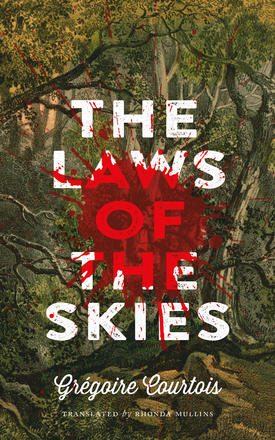
The portrayal of children as vessels of innocence is shattered in The Law of the Skies. A dozen six-year-olds and three adult chaperons tumble off a bus into the woods for a short camping trip. None of them will survive. While the vast majority of violence inflicted by children is the product of ignorant exploration with no harm intended, there are those chilling few who take a true pleasure in causing damage. Enzo, the murderous boy hunting his classmates across Courtois’s nauseating novella is one of those. To make a little girl cry, Enzo smashes a snail. Later he will wield a rock against his teacher. An unrelentingly violent parable, The Law of the Skies sets good against evil in an unforgiving natural world. When Enzo dispatches adult authority, his classmates are left to fight or flee. Like Lord of the Flies, The Law of the Skies demands readers consider the conflict of appearance versus reality, the necessity of rules and order, and the innate nature of evil. Despite knowing from the first page that there are no survivors, the narrative propels forward with a hope that innocence will be rescued and order restored. In denying this longed for conclusion, The Law of the Skies is a destabilizing exploration of our relationship to violence.
Fever Dream by Samanta Schweblin, translated by Megan McDowell
“They’re like worms. … Like worms, all over,” a boy murmurs on the opening page of Samanta Schweblin’s Fever Dream. Writhing with tension, this slim novellais structured as an ongoing conversation between two characters. The first is Amanda, who lies blinded in a hospital bed with no understanding of how she came to be there. The second is David, an unsettling young boy guiding Amanda toward a critical memory she has temporarily lost. Schweblin’s quick-paced, dialogue-driven structure creates a sense of defamiliarization for the reader. Entering into Fever Dream everything is strange. Gradually, Amanda recalls that she is staying at a vacation home in the countryside with her daughter, Nina. Here, a neighbor, Carla, befriends Amanda and shares a bizarre story. Carla’s little boy, David, has no soul. Once, he was a perfectly normal child, but now Carla says he is a “monster.” Believing that her neighbor must be unstable, Amanda dismisses the story. Hints at its truth are woven into her experiences in the country, but Amanda fails to see them until the situation is dire. Earlier in Fever Dream, the phrase “rescue distance,” representing how far Amanda can be from Nina while still able to protect her, is introduced like a blaring klaxon. As much as it is an uncanny work, Fever Dream is about motherhood, and the desperate, even deranged lengths a parent will go to protect her child from the visible and hidden dangers of the world.
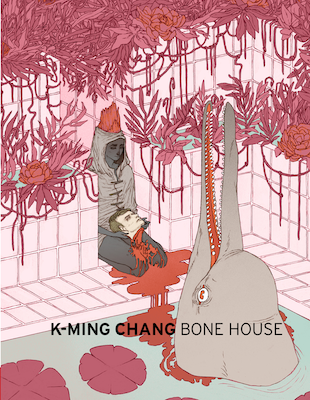
An object as fine and eerie as a dollhouse miniature, K-Ming Chang’s micro-chapbook Bone House is a queer, Taiwanese American retelling of Wuthering Heights. Chang is a writer who pairs the beautiful and the grotesque in a way where each compliments the other. Bone House is rich with imagery that is simultaneously alluring and repelling. A girl is hung by her long, thick hair. Bones arrange themselves to send messages from the dead. The boundaries between what is natural and what is supernatural are porous and Chang’s characters accept what they encounter with little questioning.
After moving into a butcher’s living, meat-hook studded mansion, the story’s unnamed narrator discovers the complex and destructive love story of Millet, a foundling, and Cathy, the lover who ultimately rejects her. As Cathy’s insistent ghost performs acrobatics above the narrator’s bed, demanding to be seen, they develop their own attraction to Millet. How does a person leave a toxic relationship when their lover returns as a ghost to haunt the house they once shared? This is Millet’s challenge: to free herself (and Cathy) from a cycle of desire and violence where love and consumption intertwined. Cleanse it with fire. Burn, baby, burn.
“You should worry about your own madness instead of mine.” These are the words that Tara, a woman diagnosed with dementia, hurls at her adult daughter, Antara. As her mother’s health diminishes, Antara takes her in, ostensibly, to care for her. But, the two women share decades of resentment for one another. When Antara was a baby, Tara, a dissatisfied Indian housewife, all but abandoned her daughter to pursue a relationship with an exploitive guru. Later, Tara will bring a young and powerless Antara to the ashram where she is neglected and subjected to casual abuse from her mother and the guru’s ecstatic followers. In a reversal of roles, an adult Antara finds herself positioned to care for the mother who failed to care for her. What is a child’s obligation to such a parent? Where Burnt Sugar slides into the territory of the uncanny is in how Antara faces this question. Simply put, she wants revenge. Despite Antara’s insistence that she needs her mother out of her life, her actions indicate an obsession with the woman. As long-held secrets are revealed, Antara becomes mother to a little girl of her own. The tension in Burnt Sugar crackles as each of the women is forced to see the other in a new light.
Is an identity crisis just par for the course as human beings? Does it happen to everybody? I wondered this to myself as a friend told me that her brother-in-law had decided, in his late thirties, to hit the pause button on his life. He was going to Bali for two months, she said, to “find himself.” This was shocking not in the least because he had a family he would be leaving behind in order to go off and conduct this search, but also, because he wasn’t entirely clear about whether he would be coming back. A search for self on a paradise island free of responsibility. Only in a man’s world, I thought, enviously. A woman would never go about it like that.
I didn’t set out to write a story about a woman in search of herself. My original intention was to generate some acting work. If I could write a great play (or even just an okay one, I acquiesced, whenever I had writers block), produce it and perform it myself, then the “right” (whatever that means) people would see it, which would lead to more scripts—ones I hadn’t had to write myself—flooding my way. Then, I’d be in. I’d be a busy actor having no choice but to turn down parts and I would never have to write anything ever again.
My novel, Dominoes, is a love story. But not that kind of love story. The protagonist, Layla McKinnon, has been living a life she’s relatively happy with. She has her routine, her job, her family, her best friend and, where we meet her in life, she has just met The One. She’s had little impetus to scratch below the surface of things, even despite her insecurities about her mixed-race heritage. But all that changes when she is presented with evidence by her best friend that The One may be a descendant of her enslaved ancestors’ owners. Layla is forced to interrogate the life she’s been living and the one she thought she wanted to build. To ask herself if she truly knows who she is, what she stands for and if she or anything about it need to change.
This is a reading list about women who, at any one time, have had their doubts about who they are and who they present themselves to the world as. In these stories, they are piecing together the puzzle of their own identities. For them, the importance of this notion waxes and wanes, it is not necessarily their primary preoccupation, but bubbles to the surface in varying degrees. The question of their own essence and what it means in a fast-paced world where it feels like everyone else is so sure of themselves and what they stand for, may not always be the point of these stories but it is certainly an essential by-product. To someone not in that questioning, contemplative place themselves, it may well be missed. For me, however, they became the parts of these books which spoke the loudest. Read these books for their keenly observed female protagonists’ exploration of the world around them—through language, location, love, politics, and friendship—and for the ways in which the lives they are leading or the new ones they are seeking out, speak to their essence. And as for my friend’s brother-in-law, he came back in the end. But, just as with the characters in these novels, finding yourself back where you started doesn’t make it all for nought. It’s in the journeying that we find our essence, not necessarily at the destination.
Two mixed-race best friends who meet as youngsters at dance class, find themselves on divergent paths as one (the unnamed narrator) watches the other—Tracey—achieve their shared childhood dream becoming a dancer. Through her teens, twenties and thirties, we see the narrator going through the motions: university, first job, short lived love affairs, the allure of orbiting a celebrity when she lands a job as assistant to a pop star the girls idolized growing up. She watches on as Tracey’s career fizzles out, replaced by the challenges of motherhood on the same council estate they were raised on. Smith’s thought-provoking insights on race, trauma, aging and the choices we make in life and where they lead us subtly force the reader to consider these things in relation to themselves at every turn. On reading the last page, I thrust the book into the hands of the nearest person in my vicinity telling them to read it. I defy you not to do the same thing.
While technically a play, this extended monologue for one performer reads like a novella you’ll whip through in one sitting. Jazmin is “the only Black in the village.” Not only does she not want to end up a target for her best friend’s bigot of a boyfriend, she doesn’t want to become a teenage pregnancy statistic. She wants to get out. So, when her beloved Gran secretly signs her up to audition at a London drama school, her chance to break free of her small town and achieve her dream of becoming an actress looks to be within her grasp. There’s just one thing stopping her: herself. Examining her life, friendship, hopes and experiences, Jazmin is determined to make a decision and commit to a destiny of her own making and we’re rooting for her all the way, willing her to bravely take ownership and step out into the big wide world. Poetic and lyrical, every line buzzes with the unmistakeable energy of a writer penning something they simply have no choice but to speak aloud.
Emira is trying to figure her life out as a Black, twenty-something woman with her whole life thing stretched out before her for the taking. When she is approached by a security guard at a store who accuses her of kidnapping her young charge because the toddler is white and the two of them together simply doesn’t compute (at least not to the prejudiced), a chain of events is set off which force Emira to question not only who she is but who should be given a say on her life. Her employer? Her boyfriend? Or better still, someone without a white savior complex. The plot makes for a thought-provoking discourse on a multitude of issues. It is a meaty coming-of-age story which have you begging Emira to finally take all that she knows to be true about the world and herself and to use that knowledge to seize autonomy over her own life once and for all.
Anisha, a London based Bollywood film translator, has romantic ideals about language. She dreams of having the linguistic aptitude to offer up new translations of Russian tomes of scholarly significance. Though coupled up, her lukewarm feelings towards her boyfriend, Adam, come second place to her friendships with Naima and her beloved cat. But when Adam, a fellow linguist, reveals that he can introduce her to a top secret school which promises fluency in any language in the space of just 10 days, Anisha is plunged into an addictive, morally dubious community which challenges both hers and our notions of earning the right to certain abilities, appropriation and colonialism in a completing unexpected, completely brilliant way. It is all the more thrilling and thought-provoking to have this one read to you, so opt for the audiobook if you’re that way inclined and you’ll devour the whole thing in mere hours.
There’s a lot to be said for the slimline novel, and this one, with its meticulously crafted prose should be your first port of call if you’re seeking to learn more about the continued effect of colonialism on the modern world and, in particular on the lives of people of color. A nameless Black woman who seems to have it all — the cushy career, the big bonuses, a serious relationship with man from an old-money white family — tells us through a sequence of vignettes why a life blighted by racism at every turn is not much of a life at all. In fact, it is impossible not to feel her utter exhaustion at simply having to exist in such a world. The poignancy with which she reflects on her experiences and the conclusions she draws on her future given all that she has already suffered, makes the choice she is faced with about her health all the more hard hitting and, sadly, justifiable. A breathless, read in one-sitting corker of a debut.
Purpose and identity are often inextricably linked to place for many women. We feel this in almost every line of Phoebe Walker’s debut. Infused with her characteristic poetic imagery and keenly observant eye for the world around her, she gives us yet another unnamed narrator (a theme worthy of a reading list of its own!) who has left London on the coat tails of her corporate boyfriend and his new job. Being a freelance writer, she has the freedom to work from anywhere, and the Netherlands, she reasons, is as good a place as any. But the promise of expat life, with its shiny, social media-ready exterior and the feeling of excitement in the first days and weeks, quickly fades. What our protagonist is left with is creeping isolation, loneliness and a lack of purpose. When she reluctantly befriends an untrustworthy fellow expat who has been shunned by everyone else who knows her out there, the narrator’s reflections on just how and exactly where to go about building a life for oneself in a big world, becomes all the more intriguing and absorbing.
Edie’s life is all kinds of messy. A frustrated artist moonlighting as an assistant at a publishing house, until she is eventually fired for sending inappropriate emails, she ends up becoming a live in nanny-cum-sister figure to her married lover’s adopted Black daughter, Akila. On the face of it, this crazy living arrangement is something Edie should be running a mile from, but the whole thing—approved of and encouraged by the wife of said lover—serves as a unique setting for Edie to fully examine her life. Thought-provoking and at times, uncomfortable, you will spend the book rooting for Edie to learn about herself while simultaneously teaching Akila what it means to be a young, Black woman in a world of prejudice and privilege, not to mention luxuriating over Leilani’s lust(er)-worthy writing. Lines like: “In other words, all of it, even the love, is a violence” reverberate in your mind long after you put the book down.
Alvina Chamberland’s debut novel, Love the World or Get Killed Trying, is an explosive work of autofiction that combines playful and poetic prose, zingy social commentary, and razor-sharp gallows humor. The novel is structured as a stream-of-consciousness travelogue where we journey around Europe with the novel’s protagonist, an opinionated trans woman coming up to her thirtieth birthday. In the wilderness of Iceland and along the busy boulevards of Paris, we witness our protagonist probing questions of philosophy, society, sexuality, and love—while also dealing with the dangerous blend of discrimination and desire that informs straight men’s treatment of trans women.
Love the World or Get Killed Trying is a glorious, soul-shaking, vibrant manifesto of a novel. As its title suggests, it is a voice-driven testimony about how hard it can be to remain soft, while living in a world where trans people’s rights and autonomy are increasingly under political threat.
Over a combination of email and Google Docs, Chamberland and I spoke about a range of topics including: the importance of breaking rules and bending genres, transmisogyny as a heightened version of misogyny against cis women, the uses of humor as a tool of survival and transcendence, and the manifold problems that result when straight men are unable to fully face, name and own their desires for trans women.
Shze-Hui Tjoa: What made you start writing this novel?
Alvina Chamberland: I started mainly for two reasons. First: to survive. Ever since I was 19 and first fell madly in love, I’ve needed writing to not be driven out of my mind, and to try to make myself and my experiences of the world understood. It’s an escape route from death-spiraling anxiety, through giving the darkness form I create a moment where it can’t take over my life.
Second: because I haven’t read many other books like this, and I need it to be out there in the world, a novel written by a trans woman that dares to be literary and poetic and abstract and realist and non-linear and dreamy. A novel which politically confronts straight men’s behavior towards us and demands change, and personally exposes both the universal and specific experiences that have shaped my life—my hope is that this vulnerability can connect and build bridges between people with very different structural positions.
ST: There’s so much humor in Love the World or Get Killed Trying! I especially love your protagonist’s quips about place as she travels – I laughed out loud to read her description of Iceland’s “Scandinavian Design temples dedicated to the fear of inflicting stains and the feeling of being dead inside.” What roles do humor and observation play in your writing?
AC: Oh my god, so many! First of all, trans girls need a wicked sense of humor in order to survive all the extremes and hypocrisies this world throws at us. In turn all these experiences make us so clever, sharp and witty in our observations. I can break down and build up social structures with my trans woman friends in ways I can’t with anyone else. This of course translates into how I write—or all the dark experiences portrayed in this novel, the humor goes even darker.
Writing is an escape route from death-spiraling anxiety, through giving the darkness form I create a moment where it can’t take over my life.
One of my favorite terms in the world is “gallows humor,” but in order to inhabit that term, one must spend a lot of time in the gallows. I think I can say I have, and although I am dead serious and want to make a reader cry a hundred times, I also want to make her laugh nearly as much. It’s through this combination one can transcend the role of a one-sided victim without foregoing honesty, or denying the pain and tragedy and injustice of far too many things in our world.
ST: One of Love the World’s big themes is around “spotlighting straight men’s frequent and secret attraction to trans women.” And of course, the opening epigraph cites several statistics about the commercial popularity of transgender porn, explaining how “Transgender porn has presumably become the largest, most popular genre of porn among heterosexual men.”
Could you say more about why you chose to write a book that spotlights this subject? I’m also curious about the differences between being desired and fetishized, which is one of the related themes your novel touches upon.
AC: I suppose the simplest way to describe the difference between being desired and fetishized would be: is a guy interested in me predominantly because I’m a trans woman or predominantly because I’m Alvina? The latter brings us closer to desire, as it allows me to be an individual. Of course, other factors also play in, like if the guy is keeping me secret, if he sees me as viable for a long-term relationship or just a fling/one time thing, if the desire’s solely sexual, about my body, or if it’s also about my personality etc. Unfortunately, not more than 1-2% of the rows of straight men who want to have sex with me live up to all these criteria, and straight men really have to start grappling with their hypocrisy, objectification and cognitive dissonance towards trans women. One rarely sees “feminist men’s groups” addressing these topics, rather they can often be the most silent and intimidated by trans women of all straight men —too busy pretending to “tolerate” us to ever date us. Like, my experience is that white middle class liberal northern European men may be the most transphobic in the world.
The whole issue of straight men’s desire is of course extremely relevant to me as it encircles my, and most straight trans girls’, lives. I mean the reason trans women, especially trans women of color, are the group within the LGBTQI+ umbrella facing the most murders and extreme violence, isn’t that straight men harbor more hatred towards us, but rather that they harbor hatred towards themselves for desiring us. And yet, any and every trans girl knows just how common and normcore this desire actually is. In our current society it wouldn’t be safe for many of us to do so, but if trans women one day collectively decided to out every man who seeks us out, a full-blown revolution would ensue by nightfall. There’s just so many of them and they’re almost completely invisible.
ST:I love that phrase—“a revolution by nightfall.” What kind of revolution are you thinking of, what do you hope it will dismantle or change?
Trans girls need a wicked sense of humor in order to survive all the extremes and hypocrisies this world throws at us.
AC: Allow me to get a bit abstract here as I’m talking about something that goes beyond our imaginations of liberation for minorities/subgroups. It’s about straight men finally being placed in a position of vulnerability, outside of their comfort zone, getting into contact with our very queer life experiences and thus not staying in the heteronormative echo chamber most of them have lived their entire lives within. This carries with it so much potential for collective freedom and liberation and a radical shift of fragile masculinity, thus far built on hiding, shame, and obsession with other men’s approval.
What may not be as revolutionary—but would cause an important shift in many trans women’s lives—is creating an understanding of what transitioning really means in a physical sense, beyond identity. Of course if someone looks like society’s definition of a man, yet identifies as a woman, most straight men won’t find her attractive. But if a woman lives up to the beauty standards for women, she’ll be desired by most straight men, whether or not she is trans. For us to be held to the same beauty standards as all women isn’t revolutionary, but it’ll at least mean we won’t have to look perfect in order for a guy to even consider a date with us in daylight. The goal however is to eradicate these cisnormative patriarchal beauty standards altogether…
ST: Your novel is so incisive about how transmisogyny is a heightened version of regular misogyny. And as a fellow writer, I’m curious how (or if) you think this dynamic plays out in the careers and public reception of trans writers.
AC: To begin with, most well-known trans women authors and intellectuals are lesbians. That has a lot to do with the messy extra trauma and hyperfemininity straight trans girls often endure and express, which has us deemed less competent. For similar reasons trans men may be deemed even more competent than lesbian trans women by institutional powers. Us straight trans women are generally granted visibility as models, actresses, or sex workers—the desire for us is hidden like gay desire was in the 1950s, and we are largely limited to a few select occupations like cis women were in the 50s. And if we’re very beautiful, we get reduced to that beauty and accused of “pandering to the male gaze.” At the same time cisnormative society defines a successful and respectable transition as one which leads to beauty and passing. It’s a double bind, damned if you, damned if you don’t.
I notice that this doesn’t happen to normatively attractive trans men, who reap rewards in a more linear fashion. The more I’ve started passing, the more I’ve noticed that queers and feminists expect me to be a bit stupid and conservative, until I prove them otherwise. Meanwhile, straight men are now the ones who seem the most eager to give me compliments for both my beauty and my intellect. Yet, before I became beautiful in a cis passing way, they completely ignored me and my work. So, I guess beauty is the prerequisite for them to pay me any attention at all, and I still deem it unlikely that they’ll be lining up to buy my book…
ST: There are many fantasies of romance woven through Love the World. The protagonist develops all these imaginary relationships in her head—withCristiano Ronaldo, or the ballet dancer Vaslav Nijinsky. But also, she’s in a kind of imaginary relationship with us—her readers—as she’s always breaking the fourth wall to talk to us directly. Was writing this book about finding connections, for you?
AC: Since writing is such a solitary process, I think the real answer would be that the deepest connection I am seeking is one with myself. My hope is, however, that all this intense digging—all this openness and vulnerability and honesty—will make others feel connected to me as well. But that’s up to them to decide. I have no control over where the text goes, though I wish I could put it in the hands of more straight men, who perhaps are the ones who need to read it the most.
If trans women one day collectively decided to out every man who seeks us out, a full-blown revolution would ensue by nightfall.
Most of all though, I don’t really have a target audience. I hope what I’ve written is heartbreakingly human enough and good enough as literature to traverse beyond static identity borders. And not because I’ve compromised and watered down my reality to make it more palatable—quite the contrary, real bridges are built through being adamantly real, getting humanized by showing just how human you are.
I don’t want cis people to read this and be like “I’m a good ally, I read a novel by a trans woman, and it has nothing to do with me.” And neither do I want trans women to read and only feel empowered (although perhaps that too), but rather seen and understood in all the complexities we’re forced to live through. Or not—because in the end this is a novel, and I can only represent my own voice in it, and that voice may resonate with some and not with others. Its resonance may indeed occur in the most unexpected directions, which is the beauty of it.
ST: I keep coming back to this line near the end of the novel, which has stayed with me over all the months since I first read it: “Cool, composed, self-assured, professional—all characteristics we try to attain in order to better become machines. I don’t possess these qualities, and I have quit trying.”
Love the World makes such intentional room for “too muchness”, instead of eliding it like other novels do. I’m curious what you feel it brings to the reading experience—or to the reader—when a writer doesn’t shy away from showing the contradictions, messiness, or complexities of their “behind the scenes” world… because I feel like Love the World does this with such style and flair, and in a one-of-a-kind way compared to other books I’ve read.
AC: I feel literature can capture the complexity, battles, and contradictions going on in our inner monologues to a deeper extent than more visually focused art forms. It’s difficult to make a film that only showcases what is going on inside a person, but it’s much easier to write a book based on that foundation. I find this especially important in today’s social media world where Twitter allows 240 characters, Insta-success comes from establishing a simple and consistent brand, and activists are seen as the most radical and worthy of visibility if they present themselves as 100 percent certain. The thing is though, most of us are neither simple nor consistent nor completely sure, which doesn’t mean we are total messes who can’t articulate any opinions… But honesty lies somewhere in-between and in this novel I’ve tried to enter various questions with that broad embrace. Indeed, I guess you could say I approach politics more as questions than answers…
Standing in line at the H-E-B checkout, I’m mindlessly deleting emails when a photo of a naked, pornographically hot beefcake stretched out on a massage table illuminates my screen. I recoil and quickly pull the front of my jacket around the phone, worried I’ll scandalize a wayward shopper, or worse, traumatize some passing youth. I tap the bookmark button, then quickly swipe to another screen and wait for my turn to clumsily scan my groceries.
Once I’m settled in my car among frozen pizzas, off-season blueberries, and kitty litter, I reopen the email to check the sender, worried some porn site has laid hands on my address. I’m relieved to discover it’s a promotion for an erotic massage workshop, distributed to a mailing list for Austin Naked Yoga. I’d signed up a year ago when I overheard a couple of Daddies talking about the group while I was sunbathing nude in the gay section of Hippie Hollow, Austin’s nudist “beach” (really a limestone cliff on Lake Travis). Now, safely in the cocoon of my Corolla, I grin as I read the copy below the beefcake photo:
Join Bo, experienced leader and gifted giver of bodywork, as you give and receive touch, experience relaxation, eroticism, sensuality, brotherhood, and a very intense release.
Oh, I think. Well then.
I read on.
Every participant will receive massage for one hour and give massage for one hour. Bo will empower attendees by reviewing full body, Swedish, and deep tissue massage techniques, glute and outer anal massage techniques, and genital massage techniques. Erections will occur and are most welcome. Participants may choose to release their erotic energy during the session or take it with them.
My oh my. My cheeks feel warm and I know I’m blushing. Coincidentally, after almost a year of delay, I had attended my first gay naked yoga class about three weeks before. I’d been keen to participate after hearing about it that day at Hippie Hollow, but I’d been too nervous to go alone and only mustered the gumption when a friend asked me to accompany him. Safety in numbers.
But naked yoga is one thing, an erotic massage workshop is something else entirely. Still, I’m curious, and when I get home I decide to ask my boyfriend, Brandon, if he has any interest in going as my massage partner. I’m anticipating a “no,” but I’m not sure where it’ll fall between “abso-fucking-lutely not” and “maybe at some point in the abstract future.”
I get a firm “No, thank you.”
“Fair enough,” I say, a little bummed and a little relieved. We’ve been in an open relationship for a couple years, so I could still go on my own, but his “no” makes it easy not to venture outside my comfort zone. The class, I think, might have been too big for my (absent) breeches.
The next week I go to yoga class again with my friend Evan. It’s my second or third class, and it’s as liberating and exciting as I’d imagined, a yogi exhibitionist fantasia. I still feel shy during the initial strip-down, still find myself giggling during Happy Baby and smiling as I push up my glasses (the only thing I’m wearing) during Downward Dog. After class, I’m standing around chit-chatting and flirting, still naked, when a skinny older guy I’d noticed eyeing me during class comes up to me.
“I’m Bo,” says the man standing stark before me. “I’m doing this massage workshop on Saturday.”
I mutter an introduction, looking over at Evan, struggling to maintain eye contact with Bo. For a moment I think he’s going to ask me to be his partner, and I start rehearsing excuses in my head, simultaneously feeling guilty that an excuse is my knee-jerk response. But then it clicks, and I realize I’m talking to the “gifted giver” himself.
“How open minded are you?” Bo asks.
The question feels like a challenge and an affront. I’m here, aren’t I? I want to say. I’m fun!
But Bo’s question is delivered with a softness and compassion that lower my defenses.
“I’d say moderately,” I answer. “But it depends on what you’re getting at.”
He smiles. “My model for the Erotic Massage Workshop just canceled. So, I need a substitute.” He’s speaking pragmatically, simply, hurriedly. “Would you have any interest in filling in? I’ll just massage you for both sessions, demonstrate the techniques on you, and the rest of the time just give you a massage.” He pauses briefly. “And I’ll pay you a hundred dollars.”
I notice he’s speaking in the future tense, rather than future subjunctive, as though I’ve already agreed, as though this is a foregone conclusion. I feel myself blush and demurely wrap one foot around my calf. Our nudity makes the conversation feel rawer, the nerves of my skin exposed to the warm musky air of the yoga studio. Evan, who’s been standing nearby and has clearly overheard the solicitation, walks away, smirking, to check out some other booties.
“Oh,” I say to Bo. “Interesting.” I pause. “I need to think about it. Can I get back to you?”
Bo and I exchange numbers. I tell him I’ll let him know one way or another the next day. I need to ask my boyfriend about the prospect, sleep on it, jerk off on it.
When I get home, I tell Brandon about the proposition and ask for his opinion. I suppose I’m partially asking if he’s okay with me getting felt up by a massage instructor, but since that’s clearly within the bounds of our open relationship agreement, I’m more interested in his reaction to the element of financial exchange. To me stripping down for money.
“Go for it,” he says, chuckling. “You’re having a whole hippie-dippie nudist woo-woo moment. It seems like you’d have fun.”
“For the record,” I say, “I don’t think it’s a moment. I am a hippie-dippie nudist. A free spirit. A liberated queen!” I toss my imaginary locks.
“Sure,” he says.
Brandon doesn’t say it, but I know he’s thinking about a story I’d shared with him before. A story about another massage, when I was seventeen, at a chain called Massage Envy.
Back then, no one would have described me as a hippie-dippie nudist. I was not a free spirit, did not possess even a scant trace of whimsy. I was a type-A, overworked, under-slept, five-AP-class-taking little shit. All I thought about was college applications, which extracurriculars would help craft the most compelling narrative for my future success, and competitive gymnastics.
I was tragically repressed. No one at my high school was out, and I had only recently begun to even allow myself to consider that I was gay, to allow myself to explore those feelings, in my mind and on the internet. I’d probably known somewhere deep down for years, but it wasn’t until my senior year of high school that I dared voice my personal “persuasion”—a rhetorical dodge because even uttering the word “sexuality” made me uncomfortable.
After a physical therapist recommended a massage for my gymnastics-injured spine, I called the local chain in town, Massage Envy. I was already suspicious of the place, especially the questionably sensual name, which evoked both sin and the puritanical value system in which sin exists. The local paper for our geriatric beachside town had recently run a series about another massage business, Crystal Spa, which had been shut down on multiple charges of prostitution.
On the phone, after I spent too long justifying why I was getting a massage, the receptionist replied: “Wonderful. Now let’s get you scheduled with one of our licensed clinical massage therapists. Would you prefer a male or female therapist?”
My stomach seized up. “What?” I whispered.
She repeated the question.
I looked around to make sure my bedroom door was closed and listened for my father in the hallway. We had been on precarious terms since I’d come out to him a few months earlier, and, after a few outbursts, had settled into a hostile silence. I imagined how my father would feel about the idea of a man kneading his son’s warm nude body. (It wasn’t hard to imagine, because some not-so-small part of me still disapproved, too.) But with a barely healed lumbar injury, my back was killing me. I needed someone strong to knead my knotted muscles. Plus, I was curious.
I imagined how my father would feel about the idea of a man kneading his son’s warm nude body.
“Male, please,” I said softly.
On the day of my appointment, I pulled into a parking space at the opposite end of the shopping center from Massage Envy’s gaudy purple sign. Inside, a marble reception desk shimmered with a golden sheen that matched the receptionist’s spray tan. She checked me in and swiped my debit card, “just for incidentals.” I wondered if incidentals were what had gotten Crystal Spa in trouble. Then I heard footsteps, which materialized into a tall, dark-haired man with a thick mustache and thicker Slavic accent. He extended a hand.
“Hello, I’m Alex,” he said gruffly, giving my hand a firm shake. My dad had made me watch the Terminator movies at least five times each, and I imagined Alex as Arnold’s replacement in the next installment. “Please follow me.”
Alex led me to Room 6 and ushered me inside. It was dimly lit, which I knew was supposed to be relaxing, but instead made me worry about the possible hygiene concerns brighter light might reveal. Alex pulled out a clipboard from under his muscular arm and began asking for my medical history: what brought me in, where it hurt. The procedure of it comforted me. Despite the flouncy decor, the appointment had at least the façade of a medical encounter.
When I told him I had a gymnastics injury, his eyes lit up. “Romania has some of the best gymnasts in the world,” he said, beaming with national pride.
I smiled in agreement, relieved to find common ground. Then Alex pressed the center button on a silver iPod mini and the room filled with the sound of rain and a sitar. He pulled back the purple sheet on the massage table.
“Undress,” he said, directing me to leave my clothes and belongings in the chair and get face down under the sheet.
“Undress, as in . . . ?” I asked, eyes averted.
“Completely,” he answered; he’d clearly made the clarification many times before.
As the door clicked closed behind him, my heart fluttered like it was supposed to on the first date I’d never had. Uneasy, I stripped out of my tee and below-the-knee Volcom shorts (I was still performing straightness), then whisked off my plaid boxers and shimmied under the sheets.
I shifted uncomfortably until I heard a knock on the door, followed by Alex’s voice. I lifted my head to grunt an affirmation, then settled into the lavender-scented face hole. I could feel myself trembling and tried to force my body still. Alex folded back the sheet, exposing my back down to my last vertebra.
I heard the spatter of massage oil. I heard him rub his hands together vigorously. As soon as he made contact, I felt my body jerk away.
“Just try to relax,” Alex soothed.
I was fully shaking now, teeth chattering. It took me a few long minutes of Alex’s tentative, preliminary pats on my back before I settled down. I breathed through my panic like I’d practiced in therapy.
I’d never felt a man’s hands against my skin like this. The warmth and pressure as he glided his hands from my neck down to my lumbar spine. Coaches had prodded at me to correct my form, laid on top of me to press me deeper into the splits. Physical therapists had probed my nerves and joints. But this was new. With each measured stroke of Alex’s hands, I felt a muscle relax, an insecurity fade away. I was a touch-starved teen, and this was delicious.
“How’s the pressure?” Alex asked, interrupting my bliss, now ten or so minutes into the massage.
“Good, good,” I muttered, but the disruption allowed an outside reality to creep in. The sound of his voice was quickly succeeded by thoughts of my father. I imagined that he would writhe in disgust if any man tried to lather oil on his back. I felt a stab of shame, a flash of anger, then a momentary pity.
I directed my thoughts back to my body on the massage table, my face smushed into the head cradle. Alex had just ventured a bit south of the sheet. No complaints, it felt lovely, just a little surprise. Glutes are muscles, too, I told myself. Still, the butt-touching made me feel like I was doing something bad, and it pulled me out of the experience of the warm sheets, the warm hands. No, this wasn’t anything bad, I corrected myself. There was nothing even sexual about this—this was a massage to relieve back pain. A medical procedure.
Okay, I asked myself, then why do you have a raging boner?
I felt myself swell under my abdomen, a throb with my heartbeat. Briefly, I panicked that Alex might be about to finish with my back and ask me to flip over, revealing a teepee erect on the table. But fortunately, he moved from my glutes up to my shoulders, where the nerves were less touchy, and then walked to the other end of the table.
He began to massage my calves. Then, gradually, the circular motions inched up my leg, past my knee, and into the uncharted territory of my inner thigh. I felt a little chill as Alex pushed the sheet to one side, and tucked it under my leg so that it covered any embargoed goods. Oh, no. I shimmied to adjust myself, to brace against these new sensations. I felt myself pressing into the massage table to the motion of the massage. No, no. I urged the carnal forces to retreat as he continued to massage my hamstrings. I tried to think about SAT questions, and college applications, and the tumbling pass I was training on floor. Anything else. No, not now. And then Alex’s hand lingered on my inner thigh a femtosecond too long, and I stifled a moan. I felt the gooey warmth beneath me, gluing the sheets to my abdomen.
The wave of shame crashed over me immediately. I felt my skin go hot and knew I must be bright red.
I briefly considered telling Alex I needed to end the massage now, but I clung to the hope that he hadn’t noticed. I wasn’t sure if he’d realized what had happened. But he must have smelled the teen angst, right? He must have felt my body shudder and contract? I hoped not. I didn’t know. I’ll never know.
I wanted to fuse with the table, to become inanimate. When Alex instructed me to slide down and turn while he tented the sheet over me, I rotated onto my back, feeling the wet stick of cum beneath me, the physical manifestation of my shame.
For the rest of our time, I laid there, hardly able to notice the massage. I hated myself. Hated my body for betraying me. Hated how I hadn’t been able to will my body to stop, how I’d lost control.
I felt, too, like something had been taken from me. I’d never even kissed a boy. And now a man had made me cum. That was supposed to be something special. That was supposed to mean something.
After the massage, Alex stepped out and I pulled my clothes on quickly. I was confused. I’d never felt anything so incredible, and never so powerfully hated myself, within the same hour. I wanted to disappear.
Thirteen years and hundreds of hours of therapy later, as I’m considering whether to model for the Erotic Massage Workshop, I’m thinking about Massage Envy. I’m thinking of bildungsromans and rites of passage and even something like kismet.
When I tell Brandon I think I’m going to do it, place myself in a vulnerable position in front of eager eyes, he replies, “You’re not just doing it for the money, right?”
“No, no,” I assure him.
“Or the story?”
“Definitely not just that,” I say. “It sounds fun!” What a liberating and absurd experience! I pause, then ask, worriedly, “But does taking the money mean I’m, like, legally, a sex worker?”
As soon as the words come out, I feel ashamed. Intellectually, I believe sex work is real work, and that the puritanical legal framework in America is unjust and stupid. Yet here I am, concerned that I’m about to cross a legal line I don’t think should exist in the first place. Worrying it’s unseemly for me to dabble in sex work when I have the privilege of not needing the money. Wondering if this even “counts.”
I shake the thoughts from my head, and text Bo to tell him I’m game.
On the day of the workshop, at the designated time, I check into the fitness studio, the same place where naked yoga is held. Bo is at the front.
“How are you feeling?” he asks.
“Pretty nervous,” I say. “Excited, but nervous.”
He leads me over to the table, muttering comforting things I struggle to pay attention to. Most of the men are already there, standing naked around their massage tables. Then Bo leaves the room to continue checking guys in, and I’m left standing beside a massage table at the center of a semicircle of massage tables, dozens of eyes furtively glancing my way. I’m not sure whether I should undress now or right before the workshop begins, so I split the difference, wait a few minutes, and then undress. While I strip out of my clothes, I avoid direct eye contact with anyone, looking around but not looking anywhere, never letting my gaze linger too long. I take a seat on the table, grateful that the wall of the studio is mirrored, so I can peruse the scene without needing to engage real eyes.
In my peripheral vision, I register that an emaciated old man, butt naked, is walking toward me. Before I can react, he puts one hand on my thigh and reaches out to shake my hand with the other. I mutter some dismissive pleasantries and remove his hand, shifting away from him. He walks away, then right back, this time grabbing my inner thigh and rubbing his semi-erect dick on my leg. I push him away and wave him off. “That’s enough of that, thank you,” I say, sliding off the table I’m sitting on, making it a barrier between us. I immediately beat myself up for my too-polite tone. Still, as he walks away for the second time, his deflated ass makes me sad, and I worry I’ve hurt his feelings, done something wrong.
It feels like a comeuppance for my prior thoughts about doing this as a fun new adventure, about flirting with sex work.
The start of this workshop does not bode well for the remaining two hours. It feels like a comeuppance for my prior thoughts about doing this as a fun new adventure, about flirting with sex work. I want to bail, but I don’t want to ruin things for Bo. I walk to the front corner of the studio where I’ve left my things and futz with my phone, take a few breaths, then excuse myself to splash water on my face in the bathroom. I tell myself I’ve gotten this far, I have to finish.
When the class is set to begin, Bo directs everyone to their tables, and then pulls me aside. “Minor problem,” he says, and my stomach clenches. “We’ve had a no-show, and an odd number doesn’t really work for a massage clinic.” After a moment of looking around and presumably thinking up a plan, Bo guides me over to a sexy-cute bear cub with dark hair bleached on the ends, the right amount of fur, and a big bubble butt. Bo tells me to choose between two options: Either he can massage me for an hour while Hot Cub serves as a “floater” massaging other workshop attendees, and then massage Hot Cub for an hour while I serve as the floater, or both he and Hot Cub can massage me for an hour, and then Hot Cub and I can switch. The “four hands” option.
I almost take the opportunity to dip out completely. The no-show gives me an out, and a big part of me wants to take it—Hot Cub is game to participate as the model, so I wouldn’t be ruining the class.
But I want to see this through. I let Bo choose. We go with the four-hands option.
“Welcome to the Erotic Massage Workshop,” Bo says, then launches into his spiel about how we’re going to learn five techniques for outer anal massage and nineteen for penile stimulation. Bo introduces me and Hot Cub to the class. I wave awkwardly.
I’m the model for the first hour, so I climb onto the table as Bo says that we’ll be starting face down. I’m nervous, but the nerves are keeping me soft, which is probably good for now, while we’re learning the outer anal massage techniques. I’ll need to save up for demo-ing the dick massage later. Hot Cub is absentmindedly massaging my legs, my back, my ass while Bo demonstrates the techniques for the class.
As I settle face down, I’m feeling really good. I love massage, love the feel of the oil. After that time with Alex, massage became an important part of my wellness regimen, after a few years’ delay. This is gonna be good, I think, starting to enjoy myself. I think about how beautifully poetic, how full circle this is, a symbolic bookend to the shame I felt with Alex. A redemption. A reclaiming.
Then Bo’s voice snaps me out of my reverie.
“One way to get access to the area is to pull a knee up like this,” he says, moving my leg into a frog position, his forearm caressing my crack and hole. “Or, if it’s more comfortable, hands and knees. Mark, can you . . . ?” he asks.
“Yep!” I say, too chipper, as I climb into tabletop position. I squeeze my eyes shut and focus on my breathing. This is moving really fast. Now I’m worried I’m supposed to be hard, but I’m not yet, because I’m worried I’m supposed to be. We’ve quickly sailed past my comfort zone. We’re in the zone of what I wish I was comfortable with. What I’m intellectually comfortable with, but still feel myself having a visceral, clenching reaction against. I push through. What is there to be ashamed of, even? I ask myself. But shame refuses to oblige logic.
“You okay?” Bo whispers to me.
“Yep,” I say again.
“You’ll also notice this position gives you full access to the penis,” Bo tells the class. The medical term feels out of place, but I don’t have time to dwell on it. He grabs my dick. “We’ll cover those techniques in more detail when we flip over.”
After reviewing the outer anal massage techniques again, Bo sets the class to practice. This first half hour will be face-down, the second face-up, on our backs, and then we’ll switch giver-receiver positions and repeat. The instructor and Hot Cub set to work on me.
I’m more relaxed now, without all eyes on me. I settle back face down, which is more comfortable, and feel one of them spread my legs to the edges of the table for better access.
Ten minutes go by, and it feels great.
And then it feels . . . too great.
I’m worried I’m getting too close. Four-handed massage, it turns out, is a game-changer. We’re only fifteen or twenty minutes in, and I have to model for the dick techniques after this. I prop myself up on my elbow and lean over my shoulder. “Hold off,” I say, “too much, slow down.”
They do for a few minutes, but after a brief reprieve they’re back, one working on my ass, the other on my dick, which is tucked down in the gap between my legs where it’s getting too much attention.
No, no, I think. Not again.
I call over my shoulder again to slow down.
But they don’t hear me, or don’t want to stop.
I do my best to will myself calm, to diffuse the sexual energy into the rest of my body, and for a few seconds, it’s working. And then it isn’t. The cosmic balance is too perfect. I start to prop myself up again and say, “Hold on, hold on. I’m gonna . . . ” and then I finish into someone’s hand. As I come, someone, I’m not sure who, continues to pump me. I shove my face into the pillow in front of me.
“Oh,” Bo says.
“I’m sorry,” I say. “Oops. I’m so sorry.”
“That’s okay,” he says. “That’s fine. Just a little change of plan.”
Hot Cub leans down and whispers, damp breath in my ear, “That was hot. Really fucking hot.”
I chuckle, and I appreciate him, but I’m still spiraling. Mostly, I’m worried about the logistics. In about ten minutes I’m supposed to flip over, but I don’t think I’ll be able recharge in time. A darker thought creeps in, too: Was it bad they’d made me come, despite my protest? Despite the fact that it felt great, that I was riding a flood of endorphins? Should I have had a safe word? They didn’t hear me, I tell myself, I wasn’t clear. And regardless, I’d known what I was getting into.
I feel a carryover of the Massage Envy shame. Some censorious moralism that I haven’t successfully battered out of myself. I’d just been jerked off by two pairs of capable hands, and still I wasn’t able to remain present. Much of the time, face down, I’d just been comparing the experience to Massage Envy. Why was I stuck spending time in retrospection when, of all times, I should have been most in the moment?
As I towel off, I worry that others in the class noticed. Meanwhile, Bo has worked out the logistics and swoops in to save me. He proposes that Hot Cub demo the next portion, face up, and then I’ll do the face-up session during the second half. Thank god.
For the next hour, I learn nineteen massage techniques and apply them to Hot Cub. As I glide my oiled hands over his body, the coarse hair of his legs, I look around the room, this sanctuary of touch. Sweaty bodies, focused on one another, some contorted in ecstasy, some blissfully still. This workshop is a marvel. Helping men become more comfortable in their bodies, teaching us, repressed and liberated alike, to find pleasure for pleasure’s sake, something so beyond my worldview at seventeen.
In the past thirteen years, I realize I’ve come really fucking far. I’m still fighting a lot of the shame I was fighting at seventeen, but I don’t feel the same self-loathing I did back then. Not once during this workshop had my father’s judgment interrupted my thoughts—and there was only a transient visit from the ghost of shame past. I could see now that much of the hatred I had felt radiating from my father was really my own insecurity, reflecting back at me. Sure, I was still probably a little too sensitive (both physically and emotionally) to serve as an effective model for this type of thing on the regular. But I’d been brave. I’d gotten through this new, nerve-racking experience, and I felt better for it. More open.
“It looks like you’re enjoying yourself,” Bo says as I reach for the massage oil.
And I am. Throughout the rest of Hot Cub’s massage, I smile the whole time (and only tremble slightly).
When the workshop ends, relaxed and invigorated, slicked in sweat, I’ll put my clothes on. Bo will slip me a Benjamin folded into a tiny square, a funny detail I’ll ascribe to either discretion or a lack of pocket space. I’ll head out to my car, still smiling—flushed, alive—and I’ll text Brandon a picture of me holding my hundred-dollar bill.
But for right now, I’m recharged, and it’s my turn for the face-up portion of the demonstration. Maybe I’ll even let myself enjoy it.
Before Geraldine DeRuiter first went viral in 2018 for her essay, “I Made the Pizza Cinnamon Rolls from Mario Batali’s Sexual Misconduct Apology Letter,” she felt well-known food publications never wanted her work. And then, she made the cinnamon rolls. From that moment on, DeRuiter was thrust into the culinary spotlight. She won a James Beard Award, published her first book, and continued to write essays on her popular blog, The Everywhereist.
Then, at the end of 2021, she went viral again. This time for her scathing but truly hilarious review of her experience at the Michelin-starred Italian restaurant, Bros. What came next was another wave of attention on DeRuiter and her work. Perhaps most notably, this included a rebuttal profile piece of the restaurant’s owner and head chef courtesy of the New York Times’ Rome bureau chief. To say she felt her credibility was questioned would be an understatement.
In her second book, If You Can’t Take the Heat: Tales of Food, Feminism, and Fury, DeRuiter explores what it means not only to be a woman writing about food, but also what it means in the larger context of being a woman who must make daily decisions about the role food plays in our lives. From making it, eating it (or not eating it, as is much of the messaging women receive), working in it, and examining our heritage, family, and life choices through food—DeRuiter shares her stories with great candor, while providing important historical and academic research throughout.
I had a wide-ranging discussion over the phone with DeRuiter about the history of “ladies’ menus,” who is allowed to be successful in the food world, and her last great meal.
Kelly Hoover Greenway: The cover of your book is this beautifully manicured hand smashing what I’m assuming is a cinnamon roll. It’s quite funny, but also such a strong visualization of what’s to come inside. How did you land on that?
Geraldine DeRuiter: I had it pretty clear in my head that I wanted cinnamon rolls, but there was a lot of discussion about whether or not that would be too literal, and I understand that. It is such a big association that people have with my work, so it was a question of, do we lean into that or do we try to deviate from that a little bit? We explored a couple other concepts. There was an earlier iteration of the cover that was of an eggplant.
KHG: Oh, that’s funny. The eggplant signifying the emoji used for a penis…
GD: Yeah, that one was tough because it was funny, but I did not want the focus of this book to be about “the patriarchy” itself, right? The eggplant would have communicated that in this ridiculous way. It’s not about the eggplant. It’s really about what we as women experience. So I said less eggplant, more cinnamon roll.
KHG: Like a lot of people, I first became familiar with your work when your Mario Batali cinnamon roll apology letter essay went viral in 2018. In the book, you talk about the backlash from that, and I have to tell you, reading it made me never want to go viral. The flip side is that you won a James Beard Award for that essay. And, I imagine it didn’t hurt in the selling of this book. Can you talk a little bit about the extremes of how that one essay impacted you?
GD: Oh, absolutely. I think that a lot of the nature of going viral as a writer is a double edged sword, right? You write something you want to do really well, it does really well, a bunch of people see your work, and your career usually has a little bit of a boon from it. And also… you get vitriol, hate, death threats, and a backlash of people telling you that your work is garbage. That is baked into the system. And so what happened with the Batali piece was exactly that.
I think I wrote that blog post in about 45 minutes because it was just pure rage coming out of my fingers; I just sat down and it all came out. Obviously, I did not expect it to do what it did. It started to pick up and then it was just like wildfire. Martha Stewart is retweeting it and Pete Wells from the New York Times is retweeting it. It got picked up by Eater and all of these outlets that historically didn’t publish my work. And then I got, just a stream of insults. My Twitter account got hacked. I got death threats.
KHG: You end that chapter by saying that after not checking Facebook messages for a while, you logged on to see a threat from a man you didn’t know. Underneath the threat, he’d typed out your home address; it’s chilling to read. I can’t help but then ask, how do you feel about wading back into those waters with this book?
GD: Scholarly detachment makes it easier to talk about things, in that if you are writing about something in the context of a book and if you are using academic citation to talk about what this means in the greater scheme of feminism and food writing, it does make it somewhat easier to talk about your own experiences because it gives you a bit of distance from it.
That being said, oh my god that was a horrible experience to write about all of this again! At the same time, I think it’s really important, and I realize how much of this experience is unfortunately, so universal. The overton window has just gotten moved way too far over into thinking that we are allowed to be treated like crap on the internet and no one thinks it’s a big deal, and that is horrible. That is horrible. So, I wanted to talk about that. There was no way I was not gonna talk about it. Even if it sucked, there was no way. So, what do you do? You try and you try and get a little distance, you try and properly cite your sources. You take a couple deep breaths, and maybe take a break. When I was writing that chapter, I was in Oaxaca. So I was like, all right, let’s go to a couple of art galleries and maybe get some tacos. And then I went back to it.
KHG: You’ve mentioned not wanting to center the patriarchy, but you do take the patriarchy on in quite a lot of your work.
GD: I don’t know if I take it on so much as complain about it.
KHG: Well, there aren’t a lot of people who talk about how the patriarchy fits into the food world. How have you seen the patriarchy’s influence be the most destructive in that space?
Men are allowed to be great chefs and women can merely be great cooks, and that has existed for forever.
GD: I think one of the ways in which it is so destructive is who is allowed to be successful in the food world. If you look across the industry, what you see is the people who are allowed to succeed are white men almost across the board. There are women in the industry as well, but how they are framed and how we look at them is different. Men are allowed to be great chefs and women can merely be great cooks, and that has existed for forever. And that kind of ties into this idea of when you do work within the home, it is devalued. The vast majority of cooking that happens within the home is done by women. The vast majority of meal prep, of grocery shopping, and of cleaning up afterwards—that is almost universally done by women. There are exceptions, but the majority of James Beard winners, Michelin star holders, head chefs, and executive chefs are all all men.
KHG: That’s what we call the math not mathing.
GD: Right? And somebody might say, well, it’s a pipeline issue. First of all, that’s still a problem, right? Then we need to address the pipeline. We need to address why we’re only letting guys into the pipeline. But it’s actually not true because more women are graduating culinary school than men. So what is so toxic about this industry that is pushing women out? What is so toxic about it that it isn’t letting women and non-binary people succeed? There is a lot of toxicity that is baked in, and it also just seems to inherently reinforce a lot of shitty gender stereotypes and a lot of really harmful constructs that are bad for both men and women.
KHG: You created this book as a memoir in essays, and I have been told that genre is quite hard to sell. Was it always a memoir in essays? And, what was the process of selling it?
GD: It was always a memoir in essays, but I feel like the original concept that I had was perhaps not as ambitious as the book is now. I think now the book is better and speaks to broader issues and more important issues, which really speaks to my editor, Aubrey Martinson’s, work on this.
It did not take me long to write the proposal; I wrote it in a few days. Part of that was because I had such a clear idea for what the book was going to be. We offered the book to my old publisher, and they made an offer we were not thrilled with. So we walked away. We shopped the book around and there were multiple publishers interested, and it went to auction. I do believe that part of the reason there was so much interest—and this is the difficulty and the brutal honesty of it—is because there had been such virality around the [Batali and Bros’] pieces.
And so that virality was directly related to me being able to sell these books because I said, look, here’s what the New York Times said about my piece. The Corriere della Sera called me the heir to David Foster Wallace. Is that true? I don’t think so. Did that help me sell this book? Hell yeah, it did. It also helped that Twitter was still a thing at the time, and I had nearly 140,000 Twitter followers. So if you look at all of that, it makes it easier to sell a book that is perhaps in a genre that is a little bit more difficult.
So it went to auction, and I got a six figure deal which was pretty phenomenal.
KHG: That’s incredible! One chapter I want to ask you about is, “Paying the Price.” It really captures all three buckets of food, feminism, and at least for me when I was reading it, fury.
GD: That story explores the concept of “ladies’ menus,” which historically have been menus that don’t have prices on them. And these have existed because back in the day, restaurants were gathering places for men. If a woman did go to a restaurant, she would go in the company of a man who was escorting her. And so it was expected that she wouldn’t pay. If you think about this, women have only been allowed to have credit cards since 1974, it puts things in perspective.
What is so toxic about this industry that is pushing women out?
And so I write about going out to eat and receiving these menus without prices when I’m with my husband. And what it also means to go out to eat on a date. If you are a woman and you’re going out on a date with a man, what that expectation is and how there can be a feeling, not justly, but there is a feeling and perhaps expectation that this is transactional—that if you allow someone to buy you dinner, you see them as a potential romantic partner and that certain things are to be exchanged and that is not something that we should be expected to do, but it becomes a horrible sort of prevailing societal mentality that we get caught up in. And what I compare it to is asking someone, “Well, why did you go up to his hotel room? Why were you walking down that alley? Well, if you didn’t want him to think that you were this, that, or the other, why did you let him buy you dinner? So it kind of falls into that pattern.
KHG: Am I remembering correctly that a server at a restaurant where you did receive one of those menus said that women don’t want to think about money?
GD: That’s precisely what happened. We were at a restaurant in the north of Italy and we were with our friends, Ollie and Nicole. Nicole and I got menus that didn’t have prices. And we were so confused. If you’re looking at a menu that has no prices, your brain kind of glitches out. One of the main purposes of a menu is to inform you of how much things cost. And so, my husband, Rand, and Ollie were saying the prices are quite reasonable and Nicole and I had no idea what they were talking about. We finally started to put it together and the maître d’ comes over and says that women don’t like to think about money. Nicole and I said it is very important that we think about money. That is something that I advise every human to do. Not because I think money is great, but because I think income equality is great.
KHG: It’s amazing the larger context of conversations that take place with relation to food and dining.
GD: Absolutely. Someone asked me, “Is there a reason why you picked food? It’s a great vehicle to talk about feminism.” And I was like, food is a great vehicle to talk about everything!
KHG: Before I let you go, I do have one more question. I feel like you’re always in search of a decent meal to eat.
GD: This is accurate.
KHG: So what was the last great meal you had?
GD: I don’t know if this counts, but I just flew back from my aunt’s memorial yesterday. My husband, Rand, had flown back the day before. He came to pick me up from the airport and when he opened the trunk to put my suitcase in, it was filled with groceries so he could make me dinner. He started listing all the different things he could make me, and even though he makes me dinner almost every night, I knew that he was exhausted too. It was such a beautiful and loving act.
He ended up making pan roasted steelhead and he got the skin super crispy, which is so good. He served it with roasted asparagus and smashed garlic fingerling potatoes. I was looking at the plate and it was just so beautiful. It was 10 out of 10, five stars, no notes.
KHG: One of my favorite quotes in the food space is by Virginia Woolf. She said, “One cannot think well, love well, or sleep well if one has not dined well.” When you were telling me that story, that’s what I thought of. Thank you for sharing that.
of your covid test then take two subways
to work. You turn your time card, take
your mask off to drink tea. You take
attendance and teach The Poet X.
You teach The Joy Luck Club. You cross
your fingers for each student dancing in the hall.
You learn new names. You memorize new pronouns.
You wonder if your cancer will return.
You taught some of these kids on Zoom.
You saw their faces then. They sat
in folding chairs in front of bunk beds.
Now they’re wearing masks.
Your eyes look at their eyes.
Your life is recognizable, unrecognizable.
You grade four papers, then another four,
press two for Cantonese translation,
update your Google slides. You stand outside
in chilly columns as they sweep your school
for bombs, holding only folders to your chest.
All clear. You walk the six flights
back to class. You give your students extra points
if they don’t check their cell phones
when they finish workshopping their drafts.
You walk between the groups and say “Good job
just spacing out!” and mean it. They laugh.
Nobody knows which lockdown drills are real.
You take two subways home and pick
your own kids up from after school -
your living, vibrant kids. Your son sits on the floor
to play with beads. Your daughter hates being alone.
Your wife is on the F train now and has a cough.
Your life is recognizable, unrecognizable.
You do not know if it will ever be
better or worse than this.
Nina is Wonderful!
I prop my phone against the ketchup
so we can all see Nana’s face, her short hair
white in Key West sun, my two kids at the table,
the baby buckled in, the big kid reaching
jammy hands out towards my screen.
Between their shrieking, Nana tells me
her friend Janet used to say “Nina is wonderful!”
each time her toddler daughter Nina spilled juice,
sassed back, or sat her dressed-up self down in the bath,
new party shoes and all. I think of this sometimes
when Mia grits her teeth and mumbles “Never”
when I ask her to put on her socks. Mia,
four years old in a track suit jumping couch to couch
while Leo licks crayons beside her.
Nina is wonderful, now thirty-plus in Denver
doing something with philanthropy,
and Mia is wonderful, and Leo, too,
though he won’t wear his coat. And surely my wife
and I are wonderful as we haul two full car seats
and a stroller through the airport
several times a year, caravanning up the terminal
towards the loving arms of grandparents,
and what could be more wonderful than that?
Oh Mother Goddess, oh Nana and Abuela,
oh lifelong friends like Janet, oh women
who’ve schlepped any children anywhere,
please help me to survive these years
of ear drops and sippy cups,
this age of so much wonder.
Electric Literature is pleased to reveal the cover for the poetry collection Ominous Music Intensifying by Alexandra Teague, which will be published by Persea Books on October 1, 2024. Preorder the book here.
In poems that swirl together traditional American patriotic music with current horrors—from gun violence to climate change—and in which Yeats’ famous apocalyptic figure of the Rough Beast takes a painting class, wears a spacesuit, and listens to public service announcements, Ominous Music Intensifying takes on the too-muchness of contemporary, apocalypse-prone America with its own hard-hitting music, dark humor, and the occasional fiddle duel. Teague expands her subject matter here to include chronic pain, generational poverty, and questions of safety—bodily and psychological—as she writes letters to Mitch McConnell about UFOs (and everything else), reckons with sexism and dental trauma, torture devices and sad clown paintings and the pandemic, asking “What kind of safety, breaking apart to make us?”
Here is the cover, designed by Dinah Fried of Small Stuff Design, artwork by Andrea Kowch.
Author Alexandra Teague: For months after I first ran into this Andrea Kowch painting, I couldn’t get it off my mind. While the women and crows weren’t directly characters in my poems, they existed in the poems’ same emotional landscape: ominous, askew, maximalist Americana—with maybe fiddling or off-key patriotic songs drifting in the window from the desolate gold fields. The painting asks us to reconsider what is beastly, what’s domestic, what’s safe, what’s homey. It’s a fairytale-real landscape into which the Rough Beast could slouch, as he does into my poems, moving from Yeats’ famous “The Second Coming” into contemporary scenes of gun violence and pandemics and climate change. A landscape that suggests both strange humor and danger; order and incongruity; allegory and real apocalypse. I’m so grateful we’ve been able to use Kowch’s “The Visitors” to invite readers into the kitchen (please grab a thrift store chair and don’t mind the hyena) for some poems and pie.
Designer Dinah Fried: From a design perspective, our primary goal was to allow the haunting and evocative painting (“The Visitors” by Andrea Kowch) to express the tone of the cover, and not let our design decisions distract or compete with it. In that spirit, the stark white cover and unadorned black typography are meant to be a quiet counterpoint to the visual and emotional richness of the image with its bleak landscape; piercing stares; voracious animals; chaotic tabletop; flaming red hair; and glistening, ripe berries. We chose the typeface Eagle Bold—originally designed by Morris Fuller Benton in 1933 for FDR’s National Recovery Administration (part of the New Deal)—as it felt as if it might have existed in the same time and space as these three windblown bakers.
DON’T MISS OUT
Sign up for our newsletter to get submission announcements and stay on top of our best work.
YOUR INBOX IS LIT
Enjoy strange, diverting work from The Commuter on Mondays, absorbing fiction from Recommended Reading on Wednesdays, and a roundup of our best work of the week on Fridays. Personalize your subscription preferences here.