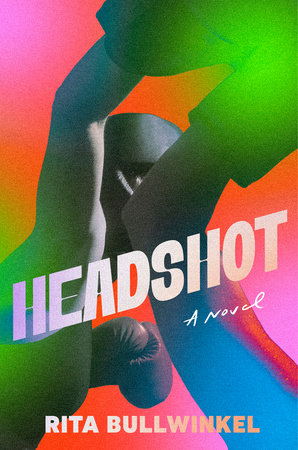
Rita Bullwinkel’s debut novel Headshot takes place in the confines of a boxing ring in Reno, Nevada, over two days of championship matches to determine the winner of the 12th Annual Women’s 18 & Under Daughters of America Cup.
Her protagonists, eight teenage girls, fight each other in a series of face-offs for the title “Best in the World”—a distinction that promises each of them varied but uniformly glorious escapes, ends, or transformations, and means nothing much to anyone else.
The book animates the fantasies and realities of both competitive sport and adolescence in swift, muscular prose. Over the course of each fight, a window opens into the desire and delusion that motivates these girls to fight, and through it we glimpse as well the radical uses of the female body, whether it’s being looked at, measured, trained, or landing a series of punches.
I spoke with Bullwinkel at her home in San Francisco about the worldbuilding common to writing a novel and competitive sport, the strange intimacies of physical games, and the boxing narratives she’s bored by.
Olivia Parkes: A boxing tournament for teen girls felt like such a tight format for drawing out the psychology of girlhood: it’s a pressure cooker for perfectionism and obsession, a study in how the body is seen and used, as well as what it’s capable of. On the other hand it’s a jarring place to see those themes play out: boxing is a simulation of killing, a sport where you learn how to hit someone in the face and receive that same hit in return. In the early pages one of the fighters seems both obsessed with physical beauty and longs for a black eye. How did you land on this context for the novel?
Rita Bullwinkel: I grew up playing a lot of competitive youth sports. I ended up competing in the Junior Olympics eight times and was the co-captain of a top 20 ranked division one water polo team. From a really young age, eight or nine, I would travel to these weekend tournaments filled with dozens and dozens of other young women.
The space of the tournament is one that I’m intimately familiar with. At the same time, it’s a bizarre, almost like science-fiction-like space, where the constraints of the world are incredibly finite and also intensely claustrophobic. In remembering that space, I was interested in the world building that had to happen, in both my own life, and also the lives of the girls I was competing against, to make a world that felt so heightened and so high stakes, when in reality it had no weight or importance in the culture at large.
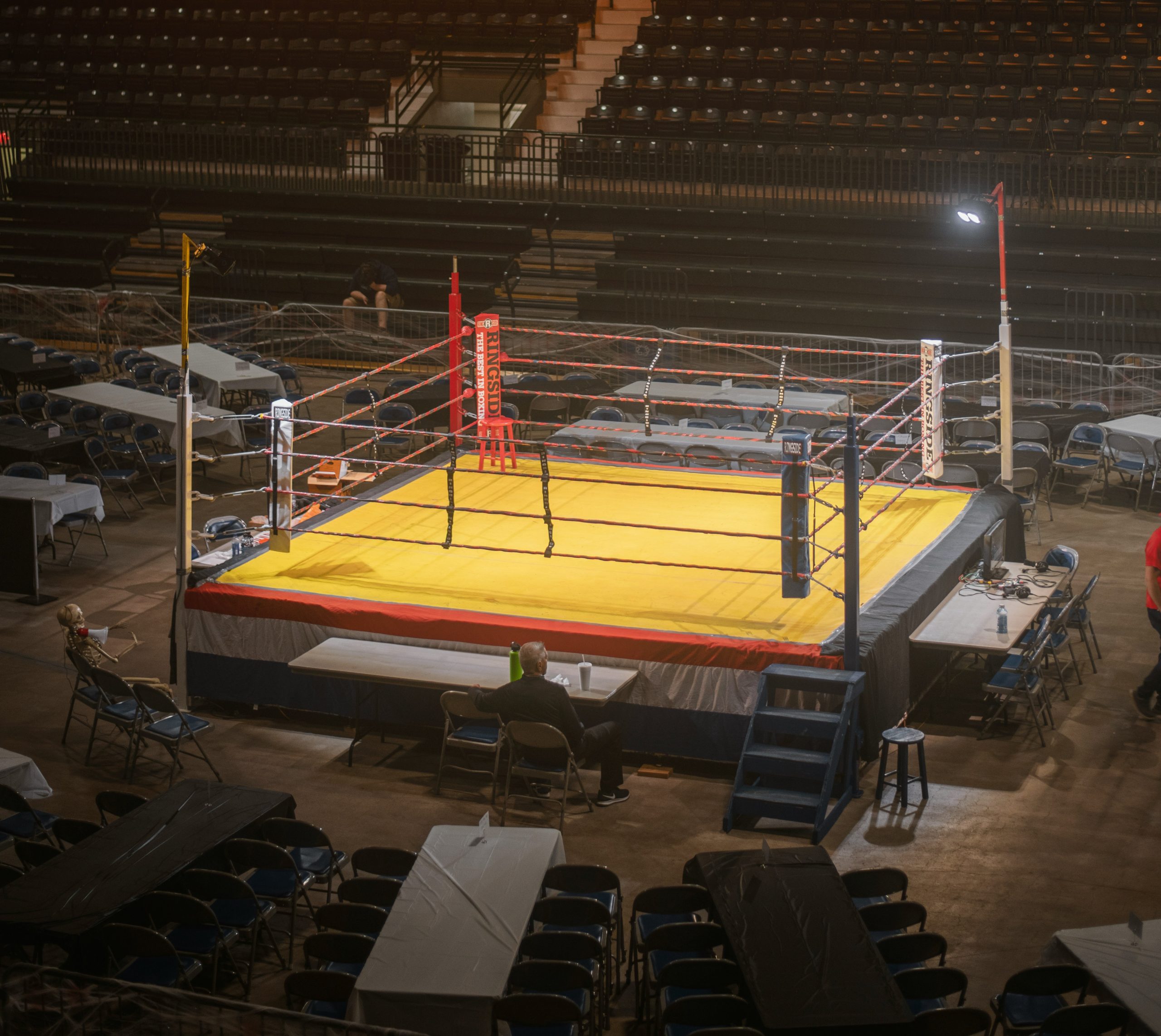
I was interested in setting the book in a boxing ring in particular because of the inherent theater of the sport. So much about a boxing match feels like a play, from the lighting to the dialogue between fighters, which is nonverbal. I was interested in the boxing match as an archetypal piece of theater and also an archetypal American piece of theater. For better or worse there are tons of particularly American boxing narratives that we all carry around, and it’s something that I, as a viewer and reader, bring a lot of narrative baggage to.
OP: I think we’re quite used to seeing boxing as a spectacle, a form of entertainment that has a thrilling effect on its audience. But the fighting in the book doesn’t work that way. The audience is for the most part listless and inattentive. It’s made up of the coaches and judges and the one or two family members who accompanied each fighter to Reno. The fights here are unimportant to anyone but the girls themselves. How were you thinking about that tension, between the absolute passion of the girls and the inattention of their tiny audience?
So much about a boxing match feels like a play, from the lighting to the dialogue between fighters.
RB: So much about writing reminds me of being a young female competitive youth athlete. I’m struck by how, in order to make any work of art, you have to build up a world in which it has meaning before the thing can come into fruition. And that same kind of building up of meaning is how I remember the space of the tournament. In order to come to a match, in order to come to compete in something, you have to build the narrative in your mind that it’s the most important thing you’ll ever do. I’m interested in that dichotomy, of being forced to build a world for yourself that is so disparate from the world that society sees around you.
OP: The story is told with a kind of God’s eye narrative voice that animates the competitors’ pasts, as well as their futures, while they summon the emotion and imagination that is required to win.I was struck by the fact that in almost all of their futures, this particular event, which is so central to them now as a focus of meaning and desire, is either forgotten by or irrelevant to their future selves. They can’t remember who they fought, why they wanted it so badly, whether it mattered.
RB: I think that part of the book is about the really bizarre and strange way that the playing of a game can effect a collective memory. The narrative refers to a lot of games beyond boxing. There are hand clapping games, which never have a winner. There are pool games, like throwing rings in a pool. I think that when you play a game with someone, it does a really weird thing in shaping a shared memory. If you encounter someone who you played a game with, a game that had some kind of import, there’s a shared physicality that exists somewhere, even if it doesn’t exist at the front of the mind.
OP: I was interested in the fact that the fight that’s so vital to the teenager is irrelevant to the woman they become. It seemed to me somehow very poignantly adolescent, to place so much meaning on a single idea or event, believing that it will have a totalizing transformative effect. That particular type of desire seemed like a key into the identity formation of teenagers.
RB: It is. It is very adolescent. And yet it still feels relatable to me as an adult. I feel like I’m no less prone to delusion now than I was when I was 15. Part of my interest in having all the protagonists be adolescent women is that I can’t think of a group of people where the gap between the way that group of people see themselves and how the world sees them is so vast. I’m conscious of the fact that when I was 15, 16,17, the gap between how I understood myself and how the world understood me was enormous.
OP: What was that gap?
In order to come to compete in something, you have to build the narrative in your mind that it’s the most important thing you’ll ever do.
RB: So much about being a young woman is defined by how well you can embody who you are. I think you could argue that the image of a young female is perhaps the most charged visual image ever. I mean, it’s very, very loud. I think about it in terms of how difficult it is to photograph a young woman, because the image of women in general is so charged. I even see it in author headshots, or portrait photography. That it’s very difficult to arrive at a visual depiction of a woman that has power and character. And as a teenage girl you’re receiving all of these messages that the only way you’re going to successfully exist in this world is by understanding the way you look physically. It’s a bizarre thing to become acquainted with, and there’s something dissociative about figuring out how you’re going to do it. What strategies you’re going to use. And then in the case of young female athletes, you’re also using your body for this totally other thing.
OP: One of the main ways the girl fighters in the book train is by watching videos of themselves. They also have to buy completely into the psychology of winning. In order for that to happen someone has to lose, and in the case of boxing that means physically beating them—with your fists. What made you want to get so close to that desire?
RB: I think there’s something comforting in binary the situation sports provide. It’s lack of nuance, right? In a game there must be a winner. Nothing else in life functions that way.
I think specifically for young people, to whom everything about the adult world is opaque and strange, it can be a deep relief to enter a contract with clear rules of engagement, where you’re agreeing to that lack of nuance. It feels easy and seductive. I think that most of the young woman in the tournament are more interested in the narrative of themselves as a champion than they are in their triumph over another. They have to create these narratives of conflict in order to do the insane thing they’re doing with their bodies. But the eight main characters in the book, who are competing against one another, are ultimately comrades. I think there is an intense level of respect that comes with agreeing to play a sport with someone. To engage in or play a sport with someone is to agree that you’re equals in some way, which is one of the reasons, of course, why co-ed sports are so contentious. Because people don’t want to agree that the match is right, that it’s equal.
OP: There’s also almost no dialogue in the book. The girls are involved in these deeply intimate encounters, but they never actually speak to each other. At some point you say that language has no place in the gym, that what you’re dealing with here is “the language of animals.” How did that absence of speech challenge or enable you to draw out the relationship between the fighters?
RB: I think it allowed for me to depict a different kind of intimacy, which is the unique physical intimacy of sport. I was thinking recently about how within our society there are so few social contracts you can enter where it’s acceptable to touch someone else. There’s the romantic encounter. There are services like getting your hair done, or getting a massage. And then there’s physical sport. That’s it.
It was really important to me that the book did not read in a Freudian way or reflect the idea that these young women boxers are acting out some type of masculine sexual energy that they’re unable to perform in other parts of their lives. I think they’re doing something much more interesting than that. That they’re engaging in a form of agreed physical intimacy that’s actually much more complex than acting out some type of sexual desire.
OP: The book turns its attention softly, but repeatedly, to the economics of the world of teen female boxing. There’s not a lot of money in the sport, and what there is of it circulates almost entirely between these exhausted-seeming men: the coaches, the referees, the judges, and the gym owners. Why was it important to you to bring that into the book?
RB: I have these really vivid memories of the cost of sports league memberships, and the cost to compete in tournaments. I remember seeing those numbers and being 14, with no source of my own income, and having to ask my parents for the money to do it. It was, for me, very expensive, but in hindsight everything was very low budget, because they were tournaments for 14-year-old girls. And it was, in fact, the case that all the people collecting the money, all the places where it was changing hands, were pretty much all exhausted adult men.
As a teenage girl you’re receiving these messages that the only way you’re going to successfully exist in this world is by understanding the way you look physically.
I think that my generation is one of the first to grow up with the full actuality of Title IV. Looking back on it, I think a lot of the reasons why youth women’s athletics, or soccer leagues for five and unders for women exist is because colleges suddenly had to provide sports scholarships at the equal monetary rate for women as they were for men. All of a sudden this need for youth camps and youth training facilities and youth tournaments for women came into existence.
In my experience growing up, I also had almost exclusively male coaches because women in my mother’s generation never played sports, so they didn’t know how to coach.
In writing the book, I wanted to decenter the coaches. I thought of them as a kind of décor. One of the classic sports narratives that I really abhor and had no interest in creating was this “diamond in the rough narrative,” which I think is particularly prevalent in boxing. Where an experienced male coach says to a young woman or a young fighter, you don’t know the talent you have, but I’m going to unlock it for you.
OP: Million Dollar Baby.
RB: It’s present even in the way people tell the narrative of Serena and Venus, where their father is the person that could tell they had talent and was responsible for cultivating it. It’s always a father or a coach, and it’s just boring.
OP: It’s perfect, because the coaches in your book are not invisible—the book draws attention to their presence again and again, in a soft way. But they’re irrelevant. They’re not a specter of terrible masculinity and they’re also not figures the girls really look up to.
You’ve mentioned a couple of different sports or female narratives that you’re consciously working against. It made me wonder how you were thinking about competition and perfectionism in femininity. We learn that Artemis, one of the first fighters, sizes up other women physically everywhere. And along with this kind of implicit knowledge of who’s “prettier” is this kind of obsessive perfectionism around training.
Unlike the boxing match, life is not a game. There are no winners and no losers, just people with different, infinite repositories of love and joy and pain.
RB: It’s true that very early on the book makes it clear that Artemis is physically comparing herself and her physical attractiveness to the other girls she’s boxing against. She also compares herself to her sisters. But I think of that as the narrative that she needed to build for herself in order to do this delusional, insane thing. Overall I thought of all eight of the young women more as comrades than as adversaries. I was also thinking about the narrator as a kind of Greek chorus of young female athletes, a voice that encompasses all the young female athletes that have come before them, and all those that will come in the future. That was part of my interest in going into both past and future. The perfectionism in the book is in some sense just either what’s required to do this thing or a byproduct of it. I think that to train like that you have to be incredibly obsessive.
OP: For almost all of the girls, boxing offers some form of control, whether it’s control over the body, because you train it, or control over another body, which becomes a kind of object. The book says at one point that you can’t train for a sport unless you believe you have control over your own destiny; the point of training is to change the outcome of the future. What interested you in that desire?
RB: I don’t think I was consciously writing about control. I think it’s certainly part of the appeal and seduction that this specific type of encounter with someone offers. It’s part of what drives people to do physical sport. I don’t know if I’ve ever had such close control in my life over anything as I had over my body in a very specific period of time. Which has gone now! But it’s a very subtle thing. I would imagine it’s what drives people to become dancers. This idea that you can so closely control a bodily movement. It’s a very specific type of intoxicant.
OP: It also sits well with this sense of them being teenagers. It makes a kind of sense to me that this particular form of control is intensely desirable at that point in time. At that age, they’re in control of very little.
RB: Exactly. There’s the feeling that if they can get this one thing down, then they’ll be able to sort everything out. But that’s not true, of course. Winning or losing won’t help them either way. And unlike the boxing match, life is not a game. In life there are no winners and no losers, just people with different, infinite repositories of love and joy and pain.
I was excited when I RSVP’d. It would be a lovely way to end the tour, I thought, maybe even comforting— a balm for the months of nightly performances, all the new faces. I secretly love weddings despite the bitter hopelessness loudly knocking on the door to my temperamental heart. I get to dress up, there’s tons of wine, the social atmosphere is easy because everybody at least wants to be in a good mood, and, aided by said wine, I’ll be goddamned if witnessing the weight and depth of commitment and certainty of love doesn’t make me cry a little bit, every time. Either because it’s the stuff of Lisa Frank unicorns and Pixar fairy tales, or because (in spite of and in spite of and in spite of), I believe it for myself, for everybody. Maybe I’m a sucker.
The plan was to connect in Dallas from Arizona and land at LaGuardia (that would be the worst part), pick up a rental car at the airport, and have a chill drive to Hudson, New York, land of millennial weddings and trendy second homes, about two hours away.
But, as too many people had already hinted, the plan was far too ambitious—I’d started feeling sick two cities ago, and I was generally broken down, unraveling in airports. Whatever. I’d started taking mood stabilizers before my tour and was invigorated by the promise of such an extraordinary idea, a stabile mood.
I’m always excited when I RSVP.
Another problem with the plan is that it was 2017, which meant that for the past two years, anytime I drove alone at night, anytime I saw blue lights in the rearview, anytime I drove alone on a highway at the mercy of unfamiliar landscapes, and actually, every three days in between—brushing my teeth, or taking my meds, or seeing a bumper sticker about my life mattering, or seeing a commercial about mental health mattering, or if my mind wandered to any future beyond tomorrow—I thought of Sandra Bland.
On the Dallas flight I could not get water. Twice, I asked the Dolly Parton–blond flight attendant and after making eye contact, she legitimately looked away. After the third time, a young mom in the aisle seat had mercy enough to be a White Savior and go to the back to get me one of those little half bottles.
I secretly love weddings despite the bitter hopelessness loudly knocking on the door to my temperamental heart.
From Arizona to Dallas, my requests were ignored to my face—my requests for the one inalienable requirement for being an alive person. I was too tired to feel slighted and invisible, again, in transit, helplessly gawking at the rampant preferential treatment around me, the data and disappointment. And when I was on the ground, what I did every day was perform. I cried in the Dallas terminal bathroom after a white woman bumped me as she passed and didn’t apologize.
LaGuardia was LaGuardia—I heard someone once describe it, perfectly and hilariously, as akin to a hallway. My plane is hours late and I arrive at the rental car place at almost midnight, tired enough to get a bottle of Coke from the vending machine, and there’s a whole drama in there— a full and properly inconvenient breakdown, everything covered from fear of lifelong loneliness and aloneness, the heaviness of expectation, the self-punishment, never admitting I’m tired, punking out. I had created the mess I was in, and worse, I had created the kind of life that could reap this kind of mess. I even called my parents for an extra serving of I-told-you-so.
When I finally get my rental car, which is decades younger than mine and too “smart” for me, I seem to circle the same two blocks of Queens in the pitch-dark before pulling over and crying again. It’s pitiful. I hate myself for it. I can’t get the Bluetooth thing to work, I get obsessed with trying to make the Bluetooth thing work, I don’t know where I’m going, I don’t think my lights are on, this car is not on my side. I wonder if I should or can or will fold on the wedding. I realistically do not know how to use this car, it is the middle of the night, how shitty is it to cancel right before a wedding? They’d probably already ordered my food, right?
I don’t want to fail just because I’m alone. I say a bunch of mean things to myself until I decide to go back to the plan.
I already knew the stakes of Driving While Black, how important it was to be faultless, and how that probably wouldn’t matter in the end.
Finally on the dark road heading upstate from Queens, empty but for a few semi-trucks, I was scared, hesitating even as I sped up. The whole day was bullying me to give up. Into giving up on myself. I didn’t want to prove myself right.
It was starting to look like wilderness, which is to say I started to think about Sandra Bland. As I drove I worried: If I were to slip up handling the unfamiliar vehicle and its screens and buttons. If I started frantically and idiotically crying again. If I got tired and drove too slow. If I tried to keep up with other cars and went too fast. If I were to pull over. If I were to be pulled over. If the cop happened to be a white man from the wilderness. No witnesses, one subtle movement in the deep dark, and just what am I doing out here driving this road at this time of night? Why was I alone, where was I going, why are my eyes so red? If they claimed I killed myself, it would be believable, everyone knows I have suicidal thoughts.
Anything could happen. Anybody could say anything happened.
After her death in 2015, Sandra Bland visited my thoughts daily; now I’m down to just once a week. I google her name, irrationally hoping the cause of death will have a different word after its colon. It’s not just that she was around my age, it’s how the death ruling is so effective and final. It’s her smile, and how the word suicide shut her up for good. How she was starting a new job the next week. How she acknowledged her mental illness. The video she posted, eloquent and passionate and proudly Black, condemning police brutality. She was pulled over for a broken taillight (ain’t it always that?), and after that, “hanged herself” in a cell at the empty jail.
I already knew the stakes of Driving While Black, how they fluctuated county line to county line (that part we’d known since Till), how important it was to be faultless, and how that probably wouldn’t matter in the end. When I see someone’s on my tail and I’m already doing close to eighty, I just think, that person must not be Black.
Every Black person has a victim who hits hardest. Whose death at the hands of the police changes everything.
Risk. Our particularly heightened sense of doom produces in us a skill for continually and quickly evaluating risk. An additional region of the brain is devoted to this analysis, gathering sensory information in order to be one step ahead. Two or three if you can make it. Otherwise, hide. You never know what they can get away with in the dark.
Every Black person has a victim who hits hardest. Whose death at the hands of the police changes everything—about how and how often you step off the front porch, how you interpret every gaze at the grocery store, whether or not and whom you date, the list of ambitions you hope to accomplish before it’s your turn.
Back at the rental car office, I admit defeat and return the keys. That night, instead of staying with friends, I sleep at a hotel in Flushing that’s also an all-night karaoke bar.
I’m what you call a “high-functioning” depressive. Which is a fancy way of saying I can “pass” as someone not having a nervous breakdown, even when I am, that my depressive episodes seem, for other people, to come “out of nowhere.” Being a Black woman is another way to say I can “pass” for someone unneeding and undeserving of help. A high-functioning single Black woman: redundantly no one’s concern.
The next morning it’s back to the suitcases, all the effort, no witnesses.
I feel the thing people love the most about witnessing messy moments is the ability to look someone in the eye and see the humanity behind them. It’s the recognition; When someone screws up, it can sometimes make us feel like we don’t have to be so perfect either; that our humanness goes beyond social media aesthetics.
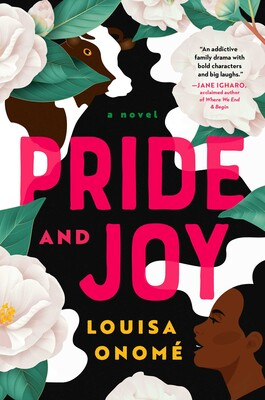
In Pride and Joy, I spent a lot of time trying to craft the perfect Joy—the protagonist of the book—but at every turn, Joy’s neurosis and constant need to prove her worth to her family was like sweet sabotage. Joy Okafor Bianchi spends months trying to plan the perfect birthday party for her Mom’s 70th, only for the festivities to be upstaged in the most surprising, ludicrous way. With the majority of her family already gathered at a rental home north of Toronto, it seems like the perfect recipe for perfect disaster, and her ability (or lack thereof) to navigate it all will be tested on the holiest of days in the Christian calendar: Good Friday.
Pride and Joy isn’t just Joy’s story; it’s a story of family and faith, and all the imperfection that comes with it. Through writing this book, I’ve learned to lean into imperfection and have been guided along by some other amazing writers and their female African protagonists. Here are 7 of my favorite contemporary works featuring imperfectly perfect African women:
Maame is Maddie, a young British-Ghanaian woman in London, who is finally learning to get her wings. Parentified her entire life, she takes her duties as primary caretaker for her ill father very seriously. But when her mother returns from Ghana, Maddie moves out on her own and has a series of firsts on the path to learning who she is. Maame is charming, moving, and real, and Maddie’s fumbles are as triumphant as her victories.
“Where is your husband?” is an oft-heard phrase by many African women from the ages of 25 and up, so Yinka is timeless right off the bat. Yinka, a successful woman living in London, decides to battle the pressures of singledom by trying to find a date for her cousin’s upcoming wedding. The problem is that Yinka starts to feel as if she must change certain things about herself to find what she’s looking for, when in fact maybe the thing she’s looking for has been herself all along.
What could be messier than a woman coming from a strict Nigerian family falling in love with someone who isn’t Nigerian? What about if said woman made a promise to her deceased father to maintain her culture through marriage? Ties That Tether follows exactly that premise with Azere, a successful businesswoman, whose one night stand with handsome, tall—and white—Rafael turns her entire world upside down. In this contemporary romance, Azere has to choose between following her heart or seemingly disappointing her family.
As the title alludes, this thriller is the definition of “imperfect protagonist”. Set in Lagos, Nigeria, it follows two sisters: Korede, a nurse, and her younger sister Ayoola, who just can’t seem to stop killing her boyfriends. Korede is often tasked with helping Ayoola get rid of the body, the act of which constantly tests the sibling relationship. Though Korede is very fond of her younger sister, she worries that one day her sister will get caught and she will really have to reckon with the lengths she’s willing to go to to protect her.
How You Grow Wings follows the story of two sisters in Nigeria: Cheta, who is bold and fiery, and Zam, who is timid and doesn’t aspire to rock the boat. Both sisters navigate colorism, favoritism, classism, and cycles of abuse through the ups and downs of their life. Once Zam is invited to stay with wealthy relatives and Cheta leaves home to escape the pressures and pain of living with her mother, the two girls’ lives diverge until they’re forced to come back together again.
Kiki Banjo, the protagonist of Honey & Spice, gets embroiled in the messiest of conflicts at Whitewell University: publicly kissing—and then fake dating—the proclaimed “Wasteman of Whitewell” Malakai Korede, putting her personal and professional brand in jeopardy. Honey & Spice is funny and classic. Not only is Kiki faced with confronting her own preconceived notions about herself and about love, but her friends and listeners of her campus podcast “Brown Sugar” are also shown reckoning with their presumptions in very public ways.
The Three of Us follows a married couple and their forever third-wheel, Temi, over the course of one day. Temi drops by, as always, to see her friend, simply called ‘the wife’, but today isn’t like other days. The wife has something she’d like to share with Temi, that despite the seeming perfection of her life (nice house, affectionate husband), she would like to have a baby of her own. For better or worse, this transforms Temi, and readers will quickly get to see just how uncomfortably tight this throuple is.
After Leo left, I had trouble keeping track of myself.
I had just moved into a new apartment, and I felt like I was existing in an endless twilight. I would drift off for a nap in the living room, only to find myself standing in the kitchen, washing a dish I didn’t remember using. Or I would leave a cut of meat to defrost in my shining, empty refrigerator and forget it was there for days, until the sour smell of old blood dripping into the crisper reached my nose. I lay on my couch and watched car headlights and long shadows chase one another across my ceiling as the hours went by, listening to Billie Holiday and sipping whiskey. Leo had loved Billie Holiday, owned every album she’d ever made on vinyl. I wondered where all those records were now, if they were collecting dust in storage somewhere, or if they were still nestled in the built-in bookshelves in our old apartment.
The money from my divorce settlement would last me for a while, but not forever, and although I knew this, had tallied up the remaining numbers in my accounts to determine how long I’d be able to go without seeking new employment, I couldn’t bring myself to begin the process of starting afresh. Despite the genericness of my name, Amy Hwang, even the most negligent recruiter or hiring manager could find out everything they needed to know about my connections to Gnoss and its founder with even a cursory Google search.
I stared into the abyss of my past accomplishments, listed row by row on a CV that I had once been so pleased about, so proud of compiling, like a house I had laid brick by brick. Now I felt as though I was staring out through the bars of a locked window in that same house, imprisoned by the vestiges of a life that would never be mine again.
I ignored all incoming calls, except for Lila’s. Lila and I were roommates throughout most of college, and though we were never very close, we had remained in each other’s lives long after our relationships with our other friends had faded. We were different enough that we never felt threatened by each other’s news or achievements. We were barely a year out of college when she showed up to one of our infrequent drink dates with a diamond on her finger and photos on her phone of a clean-cut, handsome man with family money and a history of successful investments. Her husband bought her a boutique, where she sold designer clothing for children in soft colors like oatmeal, blush, and buttercup. In other words, Lila had a lot of time on her hands, and she prided herself on knowing just how to use that time. She knew the perfect place for everything, from sunrise yoga to natural wines, and she often posted about all her experiences on the internet. She was a member of Yelp Elite, a superuser whose enthusiastic or negative review of a restaurant, riddled with exclamation points and emojis and cross-posted to her Instagram, could be significant for a new business.
So when Lila told me about a spa she knew of and offered me her upcoming reservation there, I thought, Why not? Leo used to say that I never knew when to take a break, that this was one of the things we had in common, and it’s true—I always felt guilty whenever we took vacations away from the company, and I have never been a person who enjoys relaxation rituals. But I had also thought I was not the kind of woman who would find herself newly divorced at the age of thirty-six, blocking all unknown numbers and deleting all of her social-media profiles to avoid reporters’ insistent and aggressive messages, and ordering everything online so she wouldn’t run into anyone she knew on the street. So many unprecedented things had already happened to me; I figured, what was one more?
“The location alone is so worth it,” Lila said. “It’s far away from everything, and there’s hardly even phone service out there. It’s the perfect place to rest and recharge.”
Lila was the first person I called when the news about Gnoss came out—the accusations of falsified lab results, the lawsuits. She flew out to New York City from LA and rubbed my back while I sat numbly in our living room, the room I had so proudly and lovingly decorated. “It’s not your fault, Amy,” she kept repeating soothingly. “You didn’t know.”
The drive to the spa would take me about four hours, so I left the city hours before sunrise, when the traffic was sparse and the sky was still dark. I stopped for coffee and gas at a station along the thruway. I considered keeping my sunglasses on when I entered the convenience store, but decided that I would probably not be recognized up here. The clerk barely looked up from her phone to give me my change, and I relaxed, the coins warm in the palm of my hand. Leo never carried cash, so I was always the one who had to bring it in case we went to a place that didn’t take cards. He hated bothering with currency, but I liked having money in my hands, the rustle of green bills and the weight of metal coins in my wallet. We used to joke that it was the immigrant in me, even though I was technically the child of immigrants.
When I got back into the car, the presence was there, in the passenger seat. It must have crept in sometime during the drive up, or while I was in the gas station. I could practically taste it behind my teeth. It watched me as I took the first few scalding sips of gas-station coffee, made no better by the addition of slightly sour milk. My head began to ache, the way it usually did around the presence.
There was no use in trying to avoid it. “Hello, old friend,” I said. It did not respond. It never did, no matter how many times I addressed it or implored.
I tried to settle my nerves by fiddling with the radio and landed on a country station. I turned it up, a familiar electricity rushing through me when I realized it was a song I had loved once, long before I’d ever met Leo. I sang along to the radio, and we continued up the thruway without stopping along the way. The radio continued playing ancient hit after ancient hit as I rolled the windows down, letting the wind whip my hair into a greasy frenzy. I caught my reflection in the rearview mirror and noted idly to myself that I was starting to go gray, lines of iron interrupting the long coils of black.
The sun rose yellow outside. I wondered what kinds of treatments the spa would offer. Despite the events of the last few months, I finally began to look forward to my stay. I managed to mostly forget that the presence was there, though I continued to feel its magnetic pull.
The air grew sharper and the trees grew taller and darker as we wended our way farther north, especially once I’d turned off the main thruway. We passed through small, sleepy towns with names like Cheshire and Hancock, towns that seemed like they hadn’t changed at all in the last few decades. American flags and festive scarecrows beckoned from every porch. Soon it would be autumn, time for leaf-peeping and apple-picking. Leo and I had gone apple-picking once, not long after we’d gotten married, on a rare weekend when neither of us had to work. I was twenty-eight then, determined to live up to the role of younger, vivacious wife that I was aware had been assigned to me. We wore coordinating plaid flannel shirts and posed dutifully for photos next to the trees we picked our apples from, though more often than not we decided to go for the fruit that was already on the ground. When we got home, we found that almost all of the apples were filled with worms.
The houses grew taller and narrower when we entered Vermont. Picturesque views of peaked roofs, church steeples, and treetops began to appear outside the car. The sound of the radio grew fuzzy, and the voices faded in and out behind waves of static. I turned it off and listened to the quiet and the hiss of my tires on the tarmac as I navigated the sloped roads. I could feel the presence pulling at the edges of my consciousness again. My headache sharpened.
Leo had been my lab supervisor at Columbia when I was a PhD student. At first, I didn’t notice him much beyond the functional role he played in the lab, fixated as I was then on getting ahead, ignoring the statistics about how hard it was for women to succeed in the sciences. I am going to be the exception to every rule, I told myself. I would graduate well within the expected time frame of seven years. I would author several papers, all of which would be published in reputable journals. I would find a tenured teaching job at a prestigious university.
Leo was much taller than he seemed when he was sitting down, with narrow shoulders and a shock of thick graying hair. He had a loud, braying laugh that was both disconcerting and disarming, the kind of laugh that turned heads and flattered its recipient into thinking they’d said something notably witty. He gave everyone nicknames, including me, calling me “Aimless,” which was his way of making a joke, because I was anything but that. Though I have never been a naturally gifted or brilliant student, I have always prided myself on my diligence and my ability to focus for long periods of time.
I was not popular in our lab, given that I seldom joined the team for after-work drinks or weekend Frisbee games. But the work (we were studying immune-system responses in mice experiencing environmental stressors) was enthralling. Once, on a slower day when I had gotten particularly in the zone, Leo had to shake me to alert me that the fire alarm was going off. We were the only ones in the lab that day. I was preparing to give one of the mice an injection of the serum we were testing them with, when I was startled by the weight of a hand on my shoulder.
“Amy! Didn’t you hear the alarm?” Leo loomed above me, looking concerned and, for some reason, a little angry. I stammered out an apology, put the syringe and the quivering mouse away, and shuffled outside with him. It was just a routine fire inspection, and afterward Leo found me in the lab and apologized for startling me. “I’ve never seen someone with the ability to focus the way you can. It’s a little scary,” he said.
“Thank you?” I said.
“I mean that in a good way, mostly,” he said. It wasn’t until he’d walked back to his station that I realized he’d called me Amy, instead of Aimless.
A few years later, when Leo left the university to start Gnoss and asked me to join him, telling me he’d make me the head of one of its most important projects, Lila urged me to go for it. “But my degree,” I said weakly. She pointed out how miserable academia made me, all my years of toiling away in the lab, applying for grants I didn’t get and struggling to get my name on papers that I had coauthored with the (mostly) white men I worked with. And it was true that my heart was no longer in my work, my project having stalled for years while I remained unable to obtain the results I needed to finish. The confidence and certainty that had once fueled me, given me the kind of laser focus other people had to take drugs to obtain, was in tatters, a ragged white flag where there had once been a victory banner.
She counseled me through signing the onboarding papers and the NDA, and, once I was hired, instructed me on how to respond in a flirtatious but still-professional way to Leo’s increasingly frequent and informal emails asking for status updates about my project. When he finally asked me out, she told me what to wear, how to wear it, and why I should wait to have sex with him until our third date.
It was 11:30 a.m. by the time I reached the hidden lane that supposedly led to the spa. I almost missed the gate and had to reverse the car back to it. Welcome to Dripping Pines Spa and Sanatorium, read a small hand-painted sign. Sanatorium? I blinked, and then the letters rearranged themselves to form Sanctuary. I was tired from the drive, wired from the coffee, I thought. I prepared myself to step outside of the car, to punch in the code that Lila had given me, but the gate slid open without any prompting. I guided the car in through the narrow opening and down the well-paved driveway, which was bordered by trees and white stones. It led to a small lot, where I parked. Mine was the only car there, besides a blue Honda Civic that I assumed must belong to the proprietor. “You’ll love Ruth,” Lila had said of her. “Make sure you request the hot-stone massage. It did wonders for my lower back.”
I walked inside, where a fountain burbled in an atrium. The presence followed me, as unnervingly patient as always. An unseen diffuser emitted puffs of orange fragrance into the air. “Hello?” I called. Low tones and chants played softly in the background.
“You’re early,” said the woman behind the desk. I had expected a willowy white blonde wearing prayer beads and a caftan, but this woman wore a blazer over a turtleneck, and she was tan, with silvery hair cut into a neat bob, and she was Asian. I had not expected to see another Asian person this far up north. She stared at me over her rimless glasses for a beat too long, and I was wondering if she was thinking the same thing. “I can’t let you in with that,” she said, finally.
I felt chills rush up to the surface of my skin. No one else I’d ever met before could see the presence. I felt it pulse silently beside me.
No one else I’d ever met before could see the presence.
“Please,” I said. To my surprise, my eyes filled with tears. I must have been very tired from the drive. “I came all this way. I’ll pay extra.”
The woman studied me. “Sit down,” she said, gesturing toward a rattan stool. I sat and wiped my eyes. She disappeared down a hallway and reemerged with a cup of hot tea. I let it steam my face.
“It’s been with you for quite some time,” she said. “I can’t remove it for you, but it can be contained.”
I nodded, momentarily blind from the steam. My entire body felt sore. All I wanted was to rest, to lie down, to let the fatigue of the last few months overtake me. I took a sip of the tea. It tasted like ginger and tree bark.
“You’ll have to keep this on during your time here,” she said. She slipped a wooden cuff around my right wrist. It was made of a plain, polished dark wood. “That should help somewhat,” she said. “Rowan is good for protection. I’ll show you to your room now.”
“Thank you,” I said to her back as I followed her down the halls. She did not reply or turn around. Behind me, I felt the presence trailing me, a discreet distance away.
Leo had started Gnoss to address the problem of memories that no longer needed to be retained.“The brain is simply a hard drive,” he was always saying. “We do periodic data dumps on our personal devices to keep them running smoothly, so why not our minds? Why can’t we simply upload the memories we no longer need?” His model was simple—monthly memory data-collection scans, which could be performed at any Gnoss facility. After anywhere from five to ten scan sessions (depending on the number of memories a client had developed over the course of their lifetime), Gnoss would build the client a mind map, called a Chartis, of their own memories that they could then manipulate, categorize, and organize, choosing which memories to retain and which to upload to their own personal, private memory clouds. According to Leo, uploading traumatic, difficult, or simply unnecessary memories would alleviate day-to-day stress levels, improve relationships with others, and combat trauma-induced insomnia and other psychosomatic disorders, thereby allowing clients to take back control of their lives. And though reversing the process was more difficult than undergoing it, it was doable, in case the user wanted to recover any of the memories that they had previously uploaded.
I became part of a new initiative that was testing Gnoss’ latest innovation, Neolaia. Unlike the original Chartis process, which could take up to eight months depending on the number of scans that were deemed necessary, Neolaia was a shortcut—a flat metal disk the size of a dime that, when adhered to the skin, could absorb enough data overnight to create a simple mind map that the user could access via the Gnoss app. With Neolaia, Chartis creation now took only a matter of hours, and even though the resulting mind map wasn’t as complex or sophisticated as the map developed by the usual Gnoss scans, now almost anyone with a Wi-Fi connection could take advantage of the technology to organize and optimize their memories, up to a point. It also meant, thanks to the lower production costs of the device, that we could now offer Gnoss’ services at a significantly lower price point, and eventually phase out the original Chartis process.
Leo’s hope was that Gnoss’ treatments would also, over time, lead to decreases in more inscrutable psychiatric disorders, such as Alzheimer’s and dementia. He had lost his father to Alzheimer’s when the man was only fifty-five, a fact that I knew haunted him, especially as his own age crept upward. My mother had also had the disease, which was part of the reason we had connected in the first place, and why he had hired me. “You have a personal connection to this,” he told me over our first lunch meeting. “I need top-notch people, but also people who get it. People whose actual lives have been destroyed by this.” He spoke of Alzheimer’s sometimes as though it were a human foe, an archenemy in need of vanquishing.
When I was in high school, my mother began roaming around the neighborhood on her own, sometimes without shoes, and often without a clear explanation for what she had been doing or looking for. She was fine in the mornings—calm, sweet-tempered even—but as night fell she would become angry with me, sometimes accusing me of lying to her over trivial things, like where I’d put the salt. Her condition rapidly worsened when I was in college. With my father at work, she was left largely alone during the day. I didn’t tell any of my friends, even Lila, about it, about how my father had to lock my mother in their bedroom at night, or how she would forget his face and scream when he approached her. It was easier to bear that way. I continued to go to class and excel in my studies, but between the hours of midnight and 7:00 a.m., I was completely unable to sleep. If I did fall asleep, which I seldom did, I usually woke up an hour or so later and lay awake, paralyzed by anxiety, until the morning light streamed through my curtains.
My mother finally died when I was in my twenties, and afterward, my father and I, who had never been very close, drifted further apart. He moved back to Korea, and our messages to each other grew increasingly infrequent, until they took on the tone of communications between polite, apologetic acquaintances. He remarried when I was twenty-five. “I’m sorry not to have told you sooner. I know you were probably busy with work,” he said when he wrote with the news. He sent me photos of my half-sisters sometimes, two little girls who looked nothing like me.
Not long after I joined Gnoss, I began the Chartis process myself. I decided to upload those core memories of my mother and her decline to my cloud, so that, while I could remember the basic facts and chronology of what had happened to her, I was no longer troubled by the sense memories that had plagued me before, like the stale smell of her nursing facility; the way her terrified and rageful eyes followed me around the room whenever I came to visit; or the exact tone and timbre of her voice when she confused me with someone else and accused me of stealing from her. I filed each of the memories away, labeled them, and then thought no more of them.
Afterward, I slept soundly for the first time in years. My skin cleared and my digestion improved, as did my overall sense of well-being. I took deeper breaths, became more generous with myself and my colleagues and friends. I no longer felt racked by guilt and grief. Gone were my sleepless nights, the nightmares, the grinding of teeth that made my dentist warn me that I’d be left with nothing but a mouthful of dust by the age of fifty if I didn’t change my lifestyle.
It was then that the presence first arrived. I woke one night to find it sitting on my bed, regarding me quietly. I’ve been working too hard, I told myself, I’m seeing things. But the next morning it was still there. And though it sometimes went away for a while, it always came back, no matter where I went or what was going on in my life. Leo never saw it, and I never pointed it out to him, afraid of what might happen, of whether he would look at me as if I were crazy. Besides, I told myself, if I don’t pay attention to it, it might just leave on its own.
But as time went on, the presence grew stronger and more insistent, especially whenever I asked it to leave. I wondered if it felt it was owed something for its years of loyalty. Sometimes, it tugged at my attention like a recalcitrant dog at its leash, distracted me, made my head throb.
I tried to find out if it was an as yet unknown side effect of the Chartis process. But Gnoss had reached unicorn status three months before I joined, and demand was high across all market sectors, including among seemingly “normal” individuals, many of them high-functioning and quite successful. According to their introductory questionnaires, the typical Gnoss client hadn’t experienced more than the average number of Adverse Life Experiences (or ALEs), but simply wanted to “optimize” their cognitive and memory skills by data dumping the memories they no longer needed.
Our testimonials were overwhelmingly positive. Even users with the most challenging types of ALEs—abuse and assault victims; addicts; war veterans; the recently bereaved—all of them found reprieve from the memories of their traumatic experiences via the Chartis process, and not one of them, even those who had experienced the few negative side effects like occasional nausea or sleepiness, ever reported being followed around by a shadowy presence that no one else could see.
My room at Dripping Pines was small and plainly furnished, with one bed and a desk and chair, but it was well kept and tidy. I hung the few clothes I had brought with me in the closet and sat down on the narrow bed to stare out the window, at the murmuration of green and sunlight outside. It was warm outside, but early September in the mountains of New England meant that the temperature would dip below fifty degrees in the evening. I studied the informational brochure that the woman had left behind. “Spa hours are ten a.m. to five p.m. every day,” she had said. “Lunch and dinner are served at twelve p.m. and six p.m. No bathing after hours, no exceptions.”
The spa setup was simple. There was a sauna, made of teak, into which steam was piped, and two pools in a large, tiled room. The first pool was heated and smelled of eucalyptus and rosemary. The second was kept cold and filled with salt water. Additional services, like massages or private soaking baths, were also available upon request. My room was stocked with fluffy white towels, a plush bathrobe, a pair of slippers, and a pair of rubber flip-flops. I was surprised by the simplicity of it all, as it did not seem like the kind of place Lila would rave about—her tastes were generally more refined—but I could tell that everything, including the bed linens, was of the highest quality.
I kept the bracelet on at all times, even bringing it into the shower with me, and I felt the presence at a remove, as though it were not allowed to come within a certain distance of me when I was wearing it.
Over the next few days, I rarely saw the woman at the front desk, and it wasn’t until my third day there that I realized I didn’t even know her name, if she was the Ruth that Lila had told me about. Nor had she asked for mine, not even to check what name the reservation was under.
The waters softened my skin and hair. I felt relaxed and clearheaded in a way I had not been in quite some time. At lunch, I took my simple meal of porridge, vegetables, and a boiled egg, which was always prepared in advance and left for me on a tray in the large dining area, outside. The spa was indeed a sanctuary, and some areas of the grounds were marked as being off-limits to guests because certain migratory birds liked to nest there. I knew nothing about birds, but I felt my heart lift when I began to recognize their bands and markings, and the sounds they made when they called to one another.
Lila had been right about the lack of phone service. I had just enough in the parking lot to send a text, but not enough to call anyone. At first, I considered asking the woman at the front desk if there was at least a Wi-Fi network I could connect to, but as the days went by, I found the absence of the internet from my life a welcome change. It was a relief not to feel the need to check in with the world, not to tense up every time a name or a call flashed across my screen that could be someone asking me how I was doing, or a reporter seeking a quote.
At night, I slept soundly, so soundly that I was even starting to remember my dreams. I used to have the most vivid dreams when I was younger, so vivid that I would sometimes wake up laughing or crying, or to the sound of my own voice carrying on a conversation or arguing with a dream person. After the Chartis process, my dreams had become harder and harder to remember. I had started trying to track them in a journal, after a brief fit of attempting to learn about dream analysis and interpretation, though I rarely remembered anything significant enough to write down.
But at the spa, I found myself falling asleep earlier and earlier each night, satisfied by the simple but hearty food and worn out from another day of bathing and sweating and walking up and down the gently sloping hills of the spa’s grounds. And I dreamt about fantastical situations, in colors so bright that when I woke up, I found myself wondering if I was still sleeping and had passed into another dream, because the real world seemed almost unrecognizable for the first few seconds.
On my third night at the spa, I dreamt that I lived in a house that stood on two scaly legs, like a dinosaur. Inside, my bed was lofted, an airy nest under which I cooked and washed and ate. There, I found a cat, curled up in a corner. She was a beauty, with dark-gray fur and bright-blue eyes. She purred at me and swished her long tail. When I returned from fetching her a bowl of milk, she was gone. In her place was a small orange kitten, with tiny, tufted ears like a bobcat’s. He let me trail my fingers over his fur and pet him, rubbing him under the chin and behind his ears. He curled himself around my ankles like a sentient ribbon and followed me as I tidied up, underneath the great lofted bed. When I turned around, he had vanished, and there was instead a large white cat with a round, squashed face, whose flat yellow eyes regarded me with dull disdain. Hello there, I said, and I offered him my hand to sniff. Instead, he unhinged his jaw and encaged my hand in his cavernous mouth. I could feel his small but pointed teeth digging into my flesh. I wondered if I would lose a finger. I had to pry his jaws off my wrist, as though he were an alligator and not a cat.
In the morning, my whole body was tense and sore, as though I really had been wrestling with a cat. I decided to book a massage. I needed to feel human fingers prodding and digging into my flesh, to rearrange and pummel my body.
I showed up at the front desk at the appointed time, to find the woman who had greeted me on the first day there. “Our usual masseuse is out of town,” she said. “I’ll be taking care of you.” She began walking down a corridor to the left of the entrance that I hadn’t noticed before. She inquired after my health, asking me how I had been sleeping lately.
“Very well, though I keep having the strangest dreams. And today I woke up feeling as though I’d been walking for miles.”
“Many of our clients report the same thing during their first few nights here. Our spa is quite haunted, you know.” She said this very casually, as though she were telling me about some inclement weather we were due to experience later that week. “You didn’t happen to dream about cats, did you?”
I almost stopped in my tracks. “I did, as a matter of fact.”
“They belonged to the previous owner,” she said. “They show up in my dreams, too. They died in the fire.”
“There was a fire?” I asked. Lila had said nothing about this in her descriptions of the spa. I stared at the woman’s taut back as she continued walking down the hallway. She didn’t respond.
The massage room was dimly lit; the shades were drawn. A diffuser in the corner piped out lavender-scented clouds, which made me feel drowsy. She handed me a plush white towel and a yellow robe. “You’ll need to take off the bracelet, too,” she said.
“I’ll give you a few minutes to get settled.”
The door closed, and I undressed, slipping out of my clothes, and settled myself on the massage table. I hesitated before removing the bracelet, and when I did, I could feel, with a disorienting whoosh, the presence slide into the room with me, its familiar heaviness making it a bit harder than usual to breathe.
“So it’s still with you,” she said when she returned.
I felt cold pinpricks run up and down my exposed spine. “How is it that you can see it?” I asked. “No one else has ever been able to.”
The lights dimmed further, and the scents of ginger and jasmine filled the air. She was dripping oil onto her palms. “Perhaps they weren’t looking closely enough,” she said.
Her hands were strong, her fingers supple. She began with my head, massaging my scalp, before moving down my neck to rub the tendons and cords there. As her hands traveled across my shoulder blades and down my back, a deep well of feeling began to open up inside me. The heat emanating from her hands felt almost unbearable. I felt as though I would start to shake or cry. I took a deep breath and waited for the well to close back up.
Gnoss went public the same year that Neolaia became available in the North American, European, and Asian markets. Leo was ecstatic. For once, he seemed happy with what he had accomplished, instead of brooding on what could have gone better or what was next. And although it wasn’t like I hadn’t been expecting our lives to change, it still took me by surprise, the influx of wealth and exposure Gnoss’ success brought us. We moved into a new apartment, bought vacation homes, pieds-à-terre. Leo, never one for flash, or so I’d thought, got a few luxury cars. We went for joyrides together in them, the wind streaming in through the open roof as we held hands and blasted his favorites—the Talking Heads, the Pixies, the Doors. By then, I knew all the words to the songs he’d grown up listening to and I hadn’t.
He appeared regularly on the covers of magazines and the front pages of national newspapers, and I was interviewed for women’s glossies and talk shows. I was given a stylist, for public appearances. I found the attention uncomfortable at first, but I grew used to it, and to all the attendant perks and benefits.
Privately, I tried not to think about what the larger implications of Gnoss’ developments might be, what could happen to a society in which memories were no longer something you inevitably had to live with until they faded away or were replaced by others. I ignored the usual doomsayers, the op-eds and forecasters who warned of dire times, of loosening moral standards and the potential for dictators, predators, and abusers to take advantage of the tech to further subjugate their victims or inoculate them from the consequences of what had been done to them. We’re helping people, I thought. I told myself that Leo was a visionary, that Gnoss was, in fact, changing the world in a way that so many tech and biotech companies promised to but never could.
‘Extraordinary people aren’t bound by ordinary rules,’ Leo liked to say.
“Extraordinary people aren’t bound by ordinary rules,” Leo liked to say.I never asked if he thought I was extraordinary, because I didn’t think I had to. After all, he had asked me, of all of us at Columbia, to go with him. With Leo, I never had to worry that he would think less of me for putting my work and ambitions ahead of other matters. Unlike other men I’d dated in the past, he didn’t balk at my insistence that I didn’t want children and never would, as he felt similarly. Gnoss, what he was building there—that was our baby, our shared vision.
When the news about the Chartis process and its drawbacks started breaking, I tuned out, refusing to look at the reports and even ignoring company emails, worded in polite, smooth tones, about what was going on, and reminding employees that they were bound by company policy to avoid speaking to the media. But it was hard to avoid the stories, the footage, the countless interviews. One woman, a childhood cult victim who had used Neolaia to dispense with her most difficult memories of the abuse she had suffered during her family’s time in the sect, was interviewed in a nightly news segment. She could barely string together her sentences, and had to be reminded several times of who she was. Her face was blurred out, for privacy, and the network referred to her as Cynthia.
“What would you say,” the host said, leaning forward sympathetically in his chair and narrowing his eyes, “is the most debilitating side effect?”
Cynthia began to cry. “I can’t remember anything. Anything at all.” The camera panned away from the blur of her face over to the host, who pursed his lips and reached across the space between them to hold her hand.
“You’re somewhere far away,” the woman said.
“I’m sorry,” I said.
“I’m going to ask you to turn over now,” she said. I obeyed. I closed my eyes as her hands traveled down my legs, handling my calf muscles with strength and tenderness. I realized, with a small shudder of sadness, that I couldn’t remember the last time I’d been touched.
“So how long has it been with you?” she asked. It took me a moment to understand what she meant by “it.” I tried to tamp down my awareness of the presence. I could feel it—not in the room with us, but on the outer margins of my consciousness—watching and waiting.
“About five years,” I said.
“And have you ever seen anyone about it?” she asked.
“To be honest, it’s not something I felt I could ever explain to anyone,” I said.
“Maybe you should have tried,” she said. I felt annoyed at the cool remove in her tone, the impression she gave that it was somehow my fault that I had been dogged by the presence for so long.
We didn’t speak for the rest of the session. My breath slowed again as I relaxed back into the massage. I felt like I was floating above my own body, watching it be handled and squeezed and kneaded like dough. The rope of tension that banded my muscles loosened, as though she were undoing its knots.
As a child, I was plagued by indigestion, and my mother would often massage my hands, pinching what she told me were pressure points that would help with the sharp, stabbing pains in my stomach. When I complained that it hurt, she would shush me. “Pain isn’t always bad,” she said. “It’s there because it wants to tell us something.”
What we didn’t think to take into account: Neolaia was perhaps making the Chartis process too easy.
It wasn’t immediately apparent that something was wrong, in our initial trials. Some of our subjects did experience side effects like mild disorientation and vertigo—nothing to be alarmed about. I took notes, ran trial after trial, wrote up reports.
“We have full confidence in Neolaia’s potential to further the overall goals of Gnoss’ mission,” I wrote in my final report. “Chartis production time has been significantly decreased throughout our trials, and while data integrity is always a concern when it comes to scalable tech, our main objectives, to increase accessibility and intelligibility, have been achieved. We have no reason to believe that further beta tests are needed at this time, and are excited to recommend Neolaia production be ramped up to full capacity.”
What I didn’t tell Leo was that the first time I’d received access to my own Chartis, I was immediately hooked by the simplicity and beauty of it. I tried, somewhat successfully, to ignore the urge to continue purging my memories, to discard everything I no longer needed. I also ignored reports from my own team about how some of our subjects experienced a significant downturn in their mental and emotional well-being in the months after undergoing the Chartis process via Neolaia. I told them that their data were insubstantial and that they had better run the numbers again to come up with better ones.
“Are you sure?” Leo asked me later at home.
“Are you doubting my results?” I said. He’d assured me early on in our relationship that I’d have complete freedom in my lab and my clinical trials, that he’d never take advantage of our personal connection to weigh in on my professional findings.
“Never,” he said, leaning in to kiss me. We were grilling vegetables and plant-based burgers. It was late summer. I was slicing lemons and making salad dressing. “I just want to make sure we’re ready. This is a turning point for Gnoss. For us.”
“I know that,” I said. “And I’m telling you that Neolaia is good to go. The sooner we can roll it out the better, right?”
“Look at you,” he said, amused. “Usually, you’re the one telling me to slow things down, to check all the data twice.”
“Maybe you’re rubbing off on me,” I said. I had been heading up our efforts around Neolaia for nearly three years at that point, and I was eager for it to debut on the markets, to make my mark as more than just the wife of Gnoss’ founder. I knew what my peers thought of me, that I had only gotten to my position—my own credentials and years of experience had no bearing, of course—because I had been sleeping with the boss. And there it was again, that surging sense of certainty and drive, as slippery and silver as a fresh fish, almost as though it had never left me. I felt the urge to make something of myself, to prove people wrong, to achieve something again.
They say you’ll never go broke underestimating people’s intelligence. The same goes for their willingness to avoid feeling discomfort. When memories are the medium through which we experience most of our emotions and relive our highest and lowest moments, it makes sense that, after a while, it would become addictive to edit, delete, and manipulate them over and over again, in search of a clean slate. A place beyond pain.
Early user complaints about Neolaia were smoothed over easily enough. Minor kinks, I told myself and my team. But when a news story broke about how a prominent senator in Illinois who had lost her teenage son in a drunk-driving incident years earlier was found wandering the cornfields of her hometown, weeping and clutching his school uniform—that was the beginning of the end. The senator had been a Neolaia user, and had, in her determination to keep her grief from derailing her career, uploaded too many memories in one go. An emergency redownload of her memories was planned, but it was too late—so many of her memories had been threaded through with thoughts of her son that it became impossible to detangle them from the ones she needed in order to function normally. She ended up in a nursing home, unable to articulate her sorrow or remember her own name.
After the hearings and the consumer lawsuits, it was ruled that some users’ adverse reactions to Neolaia were not due to faults with the technology, which worked as promised. Leo was allowed to stay on as CEO. The company pivoted. In the end, it was me and the rest of the high-level Neolaia team leads who took the fall. And, still, I knew I was lucky that the only fallout I really experienced, at the end of it all, was in legal fees and the dissolution of my marriage and my career.
After the massage, I felt wrung out, loose, like a newly washed garment. I thanked the woman and wobbled to my feet, wrapped myself in the complimentary robe. I imagined I would go back to my room, pass out for another night of sleep. Instead, she offered me a joint.
“Smoking after a massage is the best,” she said. “It goes through the body as clean as a knife.”
It turned out she was right. We sat outside, watching the last of the sunlight fade from the purple-edged mountains, and passed the joint between us. The air was thick with the smell of chamomile and weed. My limbs felt pleasantly heavy.
“It’s good to remember how big the world is,” the woman said. She seemed younger like this, with her glasses pushed up onto her hair and her eyes half closed in relaxation.
“How long have you been doing this?” I said.
“This?”
“Massage therapy. Running this place.”
She smiled. “Too long to remember,” she said. “I used to be like you. I had big plans, once. Now my days have a slower rhythm.”
“But you don’t know anything about me,” I said, bristling slightly.
“Don’t have to,” she said. “Everyone who comes here is running away from something. The body reveals everything, if you know how to listen to it.”
Birds called to one another as twilight fell. I wondered what story my body told. What secrets and hidden sorrows it still contained, despite my best attempts to erase them from my mind. How arrogant and foolish I had been, to think that I could outrun myself. As if on cue, my head twanged again as the presence hovered nearby.
“You’ve forgotten who you are,” the woman said. I felt my breath catch. “That’s what it wants. It’s just trying to remind you. That’s all.”
“What about you?” I asked.
“What about me?”
“You said everyone who comes here is running away from something.”
She took one last drag of the joint. The sweet-acrid smell of weed hung in the air. The setting sun illuminated her face, turning her golden.
“It’s better to hold on to some things,” she said enigmatically. “Besides, I’m not running anymore.”
That night, the cats appeared to me again in my dreams. They wound themselves all around me, nuzzling my chest and face. The dark-gray cat sat on my chest, while the orange cat, which was now an adult, butted his head against mine. The white cat watched us impassively, switching his tail from side to side. Tongues of red flame licked the walls, but there was no heat. I passed one hand through the fire and watched as it came out unscathed. “Do you see this?” I asked the cats, marveling. They yawned, bored.
When I woke, the presence was sitting at the foot of my bed, just like it used to. I had forgotten to put the wooden bracelet on after my massage. “I’m sorry,” I said. “I’m sorry I left you behind.” It watched me, silently insistent. It seemed to need me to bear witness to it, acknowledge its shape and heft. I reached for it, and my hands passed through its dark, transparent membrane. I knew then what I had to do.
“Leaving already?” the woman said when I emerged from my room with my bags the next morning. “Most people tend to want to extend their reservations here.”
“I should be getting back,” I said. “I’ve been away for long enough.”
“I hope you find what you’re looking for,” she said. She touched my arm, lightly. “There’s space for you here, whenever you want to come back.”
“Thank you,” I said. I handed her the wooden bracelet, which she accepted with a slight nod.
She came outside to watch me leave. I waved before I pulled out of the parking lot, and she raised one hand in reply. When she turned to go back inside, I thought I could see three tails—orange, white, and gray—floating behind her in the doorway.
The ride back seemed to pass much faster than the way up had. I didn’t play the radio, just rolled the windows down and let the wind sing in my ears. The narrow, winding roads soon widened into highways, and my car was joined by others, all heading south. Beside me, the presence waited, as silent and faithful as an old dog. Whenever I began to feel afraid of what lay ahead, I allowed its weight on my mind to soothe me, to bring me back to the road and the feeling of my hands around the steering wheel, guiding us home.
After Leo left me, I deleted the bulk of our later memories together. I didn’t want to be reminded of what exactly we’d said to each other, how much we’d hurt each other. I didn’t want to remember the look of anger and recrimination on his face as he accused me of sabotaging his work, of hurting the company. I didn’t want to think about how he’d instructed his lawyers and Gnoss’ PR team to craft a carefully worded statement implying that the user issues lay with Neolaia and, more specifically, with me and my failures, my negligence. I held on to just enough about those days to stay abreast of the details, to protect myself. But his facial expressions, the last things he ever said to me—the shards of memory that had caused me the most pain—I removed those exact particulars from my mind, so that when I considered those last few weeks and months, it felt like I was wandering around a half-built, abandoned house, with gaping holes where there should be scaffolding, or reading a letter sent during wartime, with several words and passages redacted by a censor’s heavy black lines.
I didn’t know if I was ready to bring it all back, to inhabit once more the dark rooms and passageways of my memories and all they held. But it was time to stop stepping around them.
When I arrived at my building, it felt as though I’d been away for months, rather than just under a week. I hesitated before fitting my key into the lock, certain that I had the wrong unit, that I had confused the one above or below mine with my own. I was still unused to this apartment, and had almost, on the way back, turned my car toward the home that Leo and I once shared, out of pure instinct.
But upon entering the apartment, I felt at ease. There were my books, my things, the few items of furniture I’d managed to purchase in recent months, including the bed where I slept alone each night. The presence followed me as I shut the door and locked it. It settled throughout my apartment like a fine layer of dust, and I realized that I hadn’t had a headache at all on the ride down.
My phone buzzed with a message from Lila. “So how was the trip? How are you feeling?” I ignored it.
I sat down at my scarred wooden desk and opened the right drawer, the one that always got stuck. The presence watched me as I felt around inside until I found what I was looking for—a dime-sized metal disk. It warmed at my touch. I placed it on my left wrist, waiting for the familiar pressure on my skin, the low hum that meant it was booting up.
I opened my computer to the Neolaia app and found the folder containing all of my data files. There it all was, in color-coded and alphabetized order—every memory I’d ever flinched away from, that I’d deemed too heavy to carry with me. I highlighted all of them and found the menu options I needed.
ARE YOU SURE YOU WANT TO REDOWNLOAD? A message asked me in flashing red letters.
I clicked YES and closed my eyes. The disk grew warmer and began whirring softly.
The process of writing, when it’s going well, feels like psychic channeling. You start typing and who knows what’s going to pour out or where it’s coming from? I’ve always felt a little psychic, a little witch— writing things that end up coming true, sensing the truth of a situation before I consciously understand it. I remember talking to a friend who also considered herself psychic and also came from an immigrant family with a lot of trauma and she was telling me how she thought being psychic was a survival strategy —you learned to be hyper-attuned to the shifts in the people around you and predict the future, usually so you could get out of its way.
In my new novel, Mother Doll, a medium channels the ghost of a Russian revolutionary to her great-granddaughter. As research, I took psychic meditation and mediumship classes. I was in Boston at the time, helping take care of my grandfather, visiting him in the hospital and bringing my tape recorder, because he wanted to dictate his memoirs to me from his death bed. I’d sit there for hours while he talked and his eyes flitted around the room, seeing things already that I couldn’t see. I’d come home and take the class as an escape. The teacher billowed around on screen, playing the harmonium, guiding the group in breathing and meditation exercises where I’d wander around in the shapeless spaces of my mind.
But then, after my grandfather died, this abstract desire to connect to the other side became too concrete. The evening after he died, I sat in my grandfather’s office and zoomed into the class, and when the teacher said she’d made contact with an older man who was saying “something about his socks,” I felt desperate to believe that this message was meant for me. I had just fixed his hospital socks! And, simultaneously, I did not think it was him at all. Everyone in the zoom room was raising their hand, sure the message was from their own sock wearing grandpa and I felt disgusted with my own desire and gullibility. Maybe because my feelings around psychics and connecting with “the other side” are so ambivalent, that’s why I love reading books about it, and here are eight great ones.
This book is in my canon, the reason I became a writer. It wasn’t published until after Bulgakov’s death, because its biting social satire couldn’t get past the Soviet censors. The writer in the book is channeling the story of Pontius Pilate, which is confirmed by Satan and his entourage when they descend on Moscow and wreak havoc, trolling the literary elite. Satan, In the opening scene, psychically predicts the death of the man in charge of Massolit, saying mysteriously that “Annushka has already spilled the sunflower oil.”
The narrator in this novel is… figuring it out. She’d spent her whole life as her sister’s other half, being dragged along on wild, drug-fueled nights, some of which turned scary. After her sister disappears, she tries to get her life together and gets a job working as a secretary at an ER. One day she’s visited by Sasha, a Jewish psychic from Moldova, and a whole world opens up to her. For Sasha, becoming a psychic was a form of resilience and “an extension of her queerness,” and she uses her psychic abilities to help the narrator connect with her inherited trauma—“My suffering was historic… my sister’s disappearance was the latest iteration of a trauma imprinted in my bones… when we gave parts of ourselves to men who saw us as disposable, when we stuck things in our noses and throats and beneath our tongues, it was because, in 1950s Leningrad, our great-grandfather was shot in the street.” And then they have hot sex in a bathtub in an empty Moldovan apartment.
An orphan named Ruth is raised in a group home with Nat by a religious fanatic wannabe cult leader. The two orphans are inseparable and join up with a grifter when he sees their act channeling the dead to get out of their group home. It seems ambiguous, at first this speaking to the dead—is it real or is it just a show, giving desperate people what they want to hear. No spoilers, but the way this book connects motherhood with channeling the dead is brilliant.
Two women meet at a party and connect intensely, talking into the night. Jin Han, a photographer in a stalled-out marriage, tells Lidija Jung, an injured ballerina, a secret she hasn’t shared with anyone else: a family curse, like ancestral trauma, has been passed down to her. The book is narrated in chapters that alternate from the point of view of a generations-old kisaeng (a Korean courtesan) channeled from the other side through a shaman.
In this beautiful memoir, Contreras writes about her family’s psychic gift. Her grandfather was a healer with an ability to talk with the dead, and so was her mother. After Contreras suffers a head injury and then amnesia, and this triggers her access to “the secrets” as well. These abilities are considered by some in the family a gift, by others a curse. Contreras connects her family story to the larger historical forces of violence and colonialism.
In the title essay from this collection, Swanson writes about going to Lily Dale, New York, a town of spiritualists, with his brother who developed a psychic ability following a traumatic head injury. Their skeptical Midwestern family began to see the strange phenomenon that at first they worried were a sign of psychosis from his brother’s brain bleed, but which could not be explained away — flickering lights, green orbs of light. His brother had a gift connecting him to the dead which was in equal parts terrifying and healing.
At an elite school for psychics, a student and her teacher begin a psychic battle. This novel focuses on toxic friendships, psychic attacks, the complicated relationships between mothers and daughters and the ambiguous spaces in between sanity and delusion.
Alison, a psychic, and Colette, her personal assistant, travel around the suburbs of London doing readings and channeling the dead. When they settle down in the suburbs, things gets dark. Alison’s contact with the dead has been scarier than she has let on.
Leslie Jamison’s new memoir Splinters follows the aftermath of divorce and the awakening of motherhood, but it explores desire more than it does any kind of death. Jamison wants to make meaning, to connect, to love, to feel, to mother, to write, and to revise her life endlessly. There are losses and grief along the way, and the entanglements of marriage and motherhood are certainly recurring ghosts that haunt the narrator’s selfhood, as it spreads and ruptures.
The crystalline prose, absurdist humor, and everyday imagism that populate Splinters, however, continually draw us back to the memories and choices that make up a life, in all its messy, irresolvable variation and uncertainty. It’s not a book “about” divorce or motherhood, in other words, but about how we love and want, harm and repair, become and come undone, know and never can, endlessly.
Jamison is, of course, well-established as a master of nonfiction. The Recovering is an epic treatment of addiction and healing; The Empathy Exams and Make it Scream, Make it Burn are each instant-classic essay collections. In Splinters, Jamison turns her equally practiced narrative eye on herself in her first memoir.
We corresponded about avoiding the binaries of motherhood, writing into shame, and how writing Splinters transformed her.
Amanda Montei: We seem to be having a moment with respect to literary and cultural representations of marriage and divorce, two subjects haunted by moralism. Men, monogamy, romance—all of these spin on an axis in the book, but ultimately, you write about resisting “the delusion of a pure feeling, or a love unpolluted by damage.” Is there something unique about nonfiction, or memoir specifically, that offers the opportunity to write away from such delusions? Your previous nonfiction draws heavily on personal experience, but this book is your first memoir. Did you always know this was the right approach to these subjects, or did you ever consider weaving research and criticism into this book?
Leslie Jamison: I’m grateful to you for this phrasing, haunted by moralism, because it gives me a new way to think about the role of ghosts in the book. From early on, I understood Splinters to be a book about haunting: being haunted by memories of my own marriage when it was full of love and promise, being haunted by the specter of another life in which my daughter was growing up in an unbroken family. (I often think that repeated words function as a psychic X-ray of a book, and in early drafts of Splinters I found the words “ghost” and “haunt” kept showing up over and over again.) But I think there’s a sense in which Splinters is also haunted by certain strains of moralism, too—certainly the notion of moral failure that can attach to divorce, but also the ways that parents, mothers especially, are expected to express their love by their children through various kinds of sacrifice. The book is reckoning with these ethical inheritances, and though there is certainly a vast and fascinating trove of cultural artifacts and histories I could have invoked in this reckoning—the unruly canon of divorce literature, the endlessly interesting (and moralized) history of divorce in America—I can say that this book announced its form and its scope to me quite early.
Splinters is so fully and deeply a book about wanting things, even as it also very much a book about caregiving and gratitude.
From the very beginning, I knew its form—these splinters of prose—and I knew its range: it wanted to stay close to my life, and my body; it wanted to get as deep into consciousness as it could. I wanted it to feel intensely distilled, intensely pressurized, utterly undiluted. When I turned toward cultural history—for example, writing a bit more about the women staying in Reno divorce hotels in the 1920s—the text felt allergic to these inquiries; they felt like grafts that didn’t quite take, like I was turning away from the heat and the pulse.
AM:I found your descriptions of the tedium and rapture of motherhood incredibly delightful—you’re able to capture the absurdity of motherhood and the strain, the many ways in which a mother’s identity is cleaved and confounded, without simply representing the relationship with the baby as a drag. Were there any specific maternal tropes you wanted to avoid while writing this book, or did you enter the process of writing about motherhood in some other way?
LJ: I truly loved your writing about motherhood in Touched Outas well, especially in this particular way: thinking rigorously about the ways many things can be true at once about intimacy and bodily closeness. More than anything, I wanted to avoid the binary I felt looming in so many representations of motherhood: either glorifying it at the expense of representing its hardship, or else somehow articulating this hardship in a way that seemed to efface or exclude its delight, profundity, and wonder.
With parenting, perhaps because it feels so intense, it can sometimes feel like you are compromising the force of a feeling by letting in another feeling as well, especially one that feels perpendicular. I wanted to let all the feelings in, which felt simply like paying attention to the ways they were already there.
There’s a moment in the book where I’m trying to tell my ex-husband about a day spent with my infant daughter at the Botanic Gardens, and realizing that the sense of wonder I’m trying to articulate somehow means that the exhaustion of the day is getting lost—but also really wanting to resist the idea that in order to make the labor visible, I have to narrate the whole thing as an impossible hassle. Why can’t it be wondrous and labor at once? That’s one of the milk-drenched battle cries of the book.
AM:Yes, I loved that moment in the book so much, and I felt that milk-drenched battle cry! Speaking of, desire is central to this book as well—the desire to be an attentive and present mother, but also the hunger for a sexual life, a creative life, a pleasurable life, and for a lover who will care for the mother. A mother who desires anything beyond motherhood is still, I think, quite radical (even though, of course mothers want!). I wonder if you felt the danger and subversiveness of such honesty as you wrote—or perhaps the necessity of it?
LJ: A lover who will care for the mother! Yes, please. Splinters is so fully and deeply a book about wanting things, even as it also very much a book about caregiving (offering others the things they need and want) and a book about gratitude (feeling grateful for many things I hadn’t even known I wanted.) Even as we live in the shadow of a certain hollow Reagan-era 80s feminism of women “wanting it all” and even “having it all,” I think there is still—as you say—all kinds of shame attached to maternal desire. Shouldn’t the mother be more worried about what other people want? She certainly shouldn’t want things that get in the way of satisfying the wants and needs of others.
The act of mothering my daughter has given me this incredible proximity to consciousness in formation.
Writing into that shame—or the cultural script that makes us feel susceptible to that shame—was absolutely one of the projects of Splinters, especially as I feel acutely aware that my ability to follow multiple veins of desire—wanting to be a mother, and an artist, and a teacher—is absolutely predicated on kinds of material stability not available to so many other mothers. To put it crudely: financial stability makes it possible not only to act on wanting many things but perhaps, even deeper down, to explicitly admit these desires, to grant them room in the psyche.
While there is difficulty in reconciling these identities— mother, lover, thinker, writer—the book also explores the creative transformation provided by motherhood. Can you share a bit about how mothering has altered your creative and intellectual practice, your perception of the world, your writing, or your sense of attention?
I think this is absolutely another trope of motherhood that I was interested in writing against: the narrative of motherhood and art as necessarily or unequivocally competing gods, always undermining each other in the finite economies of time and attention. There’s a way in which the mother-artist is always pitted against herself, insofar as the two identities on either side of that hyphen are often understood as locked in competition. Feed one wolf and the other starves. And I think it’s important to acknowledge the ways this is true: time and attention are finite economies. No one can clone herself (not yet at least) in order to simultaneously embark on an intricate crafts project with the kid and finish her novel at once. The ability to even try to do both things is often mostly dependent on being able to pay for childcare. All those constraints are real and shouldn’t be sugar-coated away.
But at the same time, there are ways in which motherhood has been transformative and deeply generative for my life as an artist, too—not just because I write about being a mother, but because being a mother has sharpened my curiosity, expanded the range of my investments, and pressurized my relationship to time. The last of these is the most pragmatic. Now that I have a daughter, and her wellbeing is the core of my days, the logistical non-negotiable, there’s a sense of stolen urgency that feels like a heat source underneath the hours of my days—time always feels like I’m moving toward the edge of a cliff, the cliff of running out of time, and that makes me work differently, more feral and focused and ferocious about the time I have.
As for investment and curiosity, here we go: the act of mothering my daughter has given me this incredible proximity to consciousness in formation. I mean, I truly believe that consciousness is always in formation—we are always changing, we are always dying and becoming—but a kid is learning what clouds are. She is learning that the heart of a whale is as big as a van. She is learning her own capacities for cruelty and compassion. She is learning what it means to have a second gummy bear and give it up. There’s so much to observe, so much to notice, so much to learn from what my daughter is thinking and imagining. (She is six now, and just recently made up an imaginary game she calls, “I think I’m right but I’m not actually right.” The very existence of this game seems like something I could think about for the rest of my life.) So there’s a way that she is teaching me, and asking me to pay attention, in ways that feel new and always renewing.
AM: I want to ask a question that is the inverse of the what do the men in your life think about this book, what will the baby think question. Here’s what I have: What did writing this book offer you? You write in one section about the importance of understanding what painful or complicated experiences do for us. Has writing this book opened up any other new perspectives for you on craft, creativity, work, identity, caregiving, or love, perspectives that perhaps you didn’t have access to when you began writing this book?
LJ: Writing Splinters has transformed me in so many powerful ways. Here are a few: It’s changed the way I think about memory—sharpened my sense of a certain give and take, where we go back into memory asking it to illuminate certain ideas we have about ourselves and our lives, and maybe it does that work, but it also ambushes us with bits of awareness or challenge we weren’t expecting. It’s given me a clearer sense of friendship and teaching as places where I wanted to direct my care and my love after my marriage unraveled. It’s given me a way to articulate and keep safe the love that existed in my marriage, by writing it down, and a way to hold the care I still feel for my ex-husband, by writing into the arc of witnessing him more fully as a loving and devoted father. More than anything, it’s given me a powerful framework and conviction for this gut-level knowledge I’ve always had, but didn’t always have language for—that I’m truly a student of my daughter; not in a saccharine or easy sense but in a profound and ongoing sense. I learn so much from her ways of being in the world, and from the work and joy of being her mother.
AM:This book is composed in fragments, but there’s a steady thrum of plot throughout the book as well. One discussion I often have with writing students who want to work in fragments is the necessity of creating some sort of backbone, or establishing some architecture, to sustain the work and pull the reader through the text. Can you share a bit about your process putting the three acts of this book together? What do you tell your students who work in this style about the possibilities or risks of creating a fragmented narrative?
LJ: I couldn’t agree more about the necessary thrum, and the crucial role of architecture in a fragmented work—not necessarily “holding together” the fragments, and certainly not arranging them into something linear, but giving a reader a sense of momentum and purpose. In Splinters, whose title refers to the form of the book (these narrative shards) as well as its content (memories lodged beneath the skin), I wanted to offer the reader two different kinds of momentum to move them through these whittled, glinting daggers of prose: There’s the narrative plotline of what happens—I have a baby, I leave my marriage, I build another kind of life in the aftermath—and then the emotional plotline of reckoning with central core questions: How do I hold joy and grief at once? How do I let my love for my daughter course through my days without feeling that the pain of my marriage ending should somehow negate it? How do I move between various roles (mother, lover teacher, ex-wife, daughter) without feeling split apart, or contradictory? I wanted these questions to feel like intellectual and emotional engines inviting or propelling a reader forward through the prose.
If plot is a way to ask a reader to come with you on a journey, then I think questions can also function as a different flavor of invitation: Come with me, as I try to reckon with this question, or learn how to live inside of it. Questions can also be a way to help readers find a place for themselves and their own lives in the text, even if they don’t share the particular experiences that it narrates. Even if someone has never had a kid, been married, been divorced, they have probably struggled—in some era of their living—with the question of living through pain and happiness at once, figuring out how to hold both. Asking that question in the text is a way of saying: If you’ve ever wrestled with this question, this book is for you.
If you search the internet for “books about bipolar disorder,” the overwhelming majority of titles that appear are guaranteed to be self-help books to guide you (or your loved ones) through what is seen as a scary, unpredictable illness. It’s no wonder that manic-depressive symptoms have long been used as a dramatic plot device, or that most literature around bipolar disorder is dedicated to “fixing” or overcoming it. But what if there were more creative and engaging ways to capture the beautiful electricity of our brains?
When I introduce my debut novel Never Been Better as a bipolar comedy, I’m often met with a healthy dose of skepticism. But hear me out—a year after their discharge from a psych ward, two former floormates embark on a whirlwind destination wedding (with their rapidly unravelling third wheel determined to ruin it). It’s about how we are so accustomed to a certain type of happy ending when it comes to love and recovery that sometimes we can sabotage our growth in the process—and give wedding speeches that absolutely no one asked for. Being able to laugh at the mistakes I’ve made when screaming manic or puddle-state depressed has been key to my own recovery, and I think that writing a book that chaotically hovers in the grey area between sick and well is actually more representative of how living with chronic illness feels.
Even though I do own a shelf of bipolar workbooks (mostly instructive gifts from family members), I’ve put together a list of reads that write bipolar differently—whether they’re genre-bending, subverting narrative expectations, or just hilariously relatable for anyone living with mental illness. It’s hard to capture the landscape of a disorder that touches the depths of human emotion in both directions, but these books do it in a way that pushes the artistic boundaries of recovery stories as we know them.
When I was diagnosed with bipolar disorder at 17, my psychiatrist recommended that I read An Unquiet Mind, an unusual, landmark memoir that documents manic-depression from Jamison’s dual perspective as a leading medical authority on the illness and someone living firsthand with its volatile symptoms. While the story of her immense success in the field offered early hope that my diagnosis could be more than just a limitation, what stuck with me the most was how lack of insight—a hallmark of mania—could impact even the most educated and experienced of patients. It helped me trust my loved ones a little more and forgive myself for missing early signs of illness.
It was years later when I discovered her memoir’s predecessor, Touched With Fire, which explores the relationship between art and madness by tracking the creative work, diaries and family trees of artists such as Woolf, Hemmingway, Shelley and Van Gogh. She argues that artists in particular have been associated with madness, and the tension between their changing moods offered creative significance to their work. One of the questions I get asked most often as an openly mad writer is whether my medication and strict wellness routines limit my creativity—and that’s when I tend to think about the detailed charts Jamison includes, marked by depressions, dangerous impulsivity, and suicides. No matter how alluring my manic creativity may feel, I always write by the rule that it’s nearly impossible to finish anything—brilliant or not—if you can’t take care of yourself while doing it.
As the only book about bipolar disorder that my doctors deemed “light enough” to read in the psych ward, Matthew Quick’s breakthrough mental health dramedy will always hold a special place in my heart. The Silver Linings Playbook is driven by the endearing (if slightly unreliable) narration of Pat Peoples, a former teacher recently discharged from a Baltimore psychiatric hospital who is attempting to get his life back together and end “apart time” from his estranged wife. His rather zealous self-improvement routine lands him in close proximity with Tiffany Webster, a recent widow who follows Pat on his runs and offers to deliver contraband letters to his wife in exchange for his partnership in a dance competition. The zany humor of this novel – which includes riotous Eagles tailgate parties and numerous outbursts triggered by the smooth jazz of Kenny G. – offers a compelling balance to the seriousness of Pat’s plight. It’s a book that doesn’t pull any punches when exploring the impacts of mental illness, but delivers a feel-good ending that offers hope for readers who may be stumbling through their own recoveries.
I have read the opening chapter of Heart Berries more times than I can count. An experimental memoir that tracks Mailhot’s movement from the Seabird Island Indian Reservation in British Columbia to the pressure of creative writing school to a hospitalization for bipolar II disorder and PTSD that pushed her to become a “woman wielding narrative,” her prose grips you from the very start. The New York Times called this book a sledgehammer, but it’s much more precise than that. The skillful and introspective fragmentation of a difficult narrative captures what is so hard to explain coming out of the psych ward – that memory and imagination can play tricks on us, and often what we need to survive our pasts is to find new ways to narrate our futures.
By pairing bold illustrations of a mind on edge with comedic and clear-eyed commentary (plus a philosophical crisis over the nature of creativity), Ellen Forney’s Marbles is the perfect graphic memoir for mad artists. Driven by the fear of losing her creative spark while on medication for bipolar I, Forney trashes her treatment routine before finding herself losing her grip on life instead. She turns to the histories of temperamental artists—and the work of scholars like Jamison—to figure out if taking care of herself means choosing to be less creative. While illustrating her highs and lows, Forney pushes back against the romanticization of artistic madness with wit and wisdom while acknowledging the many roads we can take to creative fulfillment.
This New York Times bestselling memoir-in-essays follows Bassey Ikpi, a Nigerian American slam poet, as she digs through the roots of her eventual hospitalization for bipolar disorder II. What I love about this collection is that it refuses a singular understanding of her story—Ikpi brings together the influences of culture, family, failed relationships and artistic ambition to highlight the many ways she has lived through her illness. One standout chapter titled “What If Feels Like” is some of the most vivid and accurate writing around mania that I have ever seen—I remember reading sections to my partner out loud in the dead of the night and feeling so much resonance in her avalanche words. It is a vulnerable, brave and kaleidoscopic collection that is such a creative departure from the scaffolding of most recovery narratives—it’s a true testament to Ikpi’s power as both a writer and an advocate.
Juliet the Maniac is an ambitious, piercing and often darkly funny book that leans heavily into autofiction and offers unflinching intertextual glimpses into a manic-depressive life. At fourteen, Juliet is a successful honors student gunning for an Ivy League acceptance, trying to swallow the feeling that something is mutating inside of her. After spiraling into self-harm, drug use and attempted suicide, Juliet is sent to a controversial therapeutic boarding school called Redwood Trails to recover from what is diagnosed as rapid cycling bipolar disorder. The relationships that Juliet develops at Redwood are alternately affirming and self-destructive, but what seems constant is a system that repeatedly fails the young people it is entrusted with. This would have been a difficult book to read as a teen just entering mental health care, but years later, I can’t help but appreciate its candor. The scattering of mementos from the author’s life throughout the narrative—such as Escoria’s hospital bracelet, a get-well card, newspaper clippings on Redwood and letters to a future Juliet—help frame a frightening story within the gentle wisdom of her later self, one that has seen the other side and decided to stay.
This breakout collection of essays begins with Wang discovering she has been misdiagnosed with bipolar disorder, and has actually been experiencing schizoaffective disorder, bipolar type—placing her inside “the wilds of schizophrenias,” which comes with increased stigma and surveillance. While schizoaffective disorder and bipolar disorder are different illnesses, I’ve included Wang’s work on this list due to her insightful descriptions of what she calls sensory distortions (also known as hallucinations), which occur for some bipolar people experiencing mood episodes. Many of my favorite essays within The Collected Schizophrenias pull apart the idea of credibility—in particular, “High-Functioning” and “Yale Will Not Save You” explore Wang’s strategic habit of offering “signifiers of worth,” such as her education, wedding ring, and strict treatment plan, while feeling doubly aware of her vulnerability. People living with hallucinations are often hyper-visible in public spaces, and Wang’s candid reflections on using her glamorous appearance and credentials as armor offer a complex interrogation of the invisible hierarchies of mental illness that society is organized around.
Rx opens with the classic conundrum of a mad artist taking a stable corporate advertising job just to obtain health benefits (haven’t we all been there?). But when Rachel Lindsay is offered a high-profile account that requires her to sell the psychiatric medications she’s secretly been taking for years, she swerves into mania and finds herself hospitalized against her will. Lindsay’s graphic memoir—started during the very hospitalization she recounts—is hands-down the funniest and most relatable depiction of bipolar disorder I have come across, including a hysterical full page depiction of the psych ward entitled “Club Meds.” But as she tries to put her life back together, Lindsay writes, “If only I had known, during my darkest days in the ward, that the hospitalization would lead me to exactly the life I felt so viciously denied.” Bipolar folks have a long history of trying to fit themselves into unforgiving boxes for other people’s comfort. Lindsay’s story is a moving and much-needed reminder that sometimes we need to carve our own paths outside the ordinary to be able to survive.
“Did you hear about Ralph Yarl?” I ask George, my 17-year-old Black son on Tuesday night, five days after a white man in Missouri shot the 16-year-old Black child in the head and chest for knocking on his door; three days after a man in another state shot at a car that’d pulled into his driveway to turn around—20 year olds lost on their way to a party, and no cell service in those woods—killing the woman in the passenger seat; two days after a white student on my husband’s campus called in a shooter threat and my son and I had spent some of Sunday and Monday worrying—not for the life of his dad, whom we knew was unharmed, but for what it might be like to feel safe in this world again; the same day two cheerleaders in Texas were shot for mistakenly opening a car door in the dark, thinking it was their car. What has happened in this country that shooting at strangers has become our answer? What triggers our fears so deeply? Or is it that we’ve always been this scared and now just everyone has a gun?
George nods, keeps his eyes on Football Manager, sighs softly like his father might, sounding older than he is, and at a distance. I think he wishes he believed that if he knocked on the wrong door, sent to collect his younger siblings, this couldn’t happen to him. I think he wishes it were as simple as this world being so sad. He makes that sound, like he’s sighing from far away, and is it my job to bring him closer to this fear, or to let him stay distant?
“I tried to start watching a new show with George tonight, but he just played Football Manager on the couch next to me,” I’d texted my husband Ngoni an hour earlier. My second son and I, living alone most of the time these days, have been bonding over TV shows and Martin Scorsese films.
I’m taking this too far, his eyes tell me.
“Sometimes just being in the same room is enough for George,” Ngoni reminded me. Sometimes George and I consume content together so it can be discussed and dissected and understood. Sometimes we just sit on the couch together—parallel play, they called it when we were talking about two year olds. I can still do that. I can always do that.
“Do you remember the night I told you about the shooting at the Sandy Hook school?” I ask next. He’d been just one year older than those children, too.
“Nope,” he says, looking up from Football Manager with annoyance. I’m taking this too far, his eyes tell me. I stop talking and scroll through my phone and realize my second son doesn’t remember an America where the school children weren’t being killed by guns. I stop talking and scroll through my phone and wonder what Ralph Yarl’s brothers thought about when he never arrived to collect them.
“I’m kind of heavy from the news this week,” I text Julius, my first son, in New York on Wednesday after we’ve had an exchange about his day at school and he’s asked how I am.
“Can I call?” he texts. Would the answer ever—ever—be no?
“I can’t imagine an America without racism,” I tell him when I pick up, “but I can imagine one without guns.” I don’t add that my imagination paints a giant magnet in the sky sucking up all our weapons, finite metal objects to be collected and destroyed. “And even still with racism, that would be better.”
“That would be better,” Julius agrees. “But every time something like this happens, I think we’re stretching and stretching and it just means the breaking point is coming sooner.” He’s talking about his favorite topic: when the nation states fail and news media is revealed to be the façade he’s long known it to be, and we rebuild society from the bottom. He really believes this day is coming. It’s his only hope in this world and who am I to say he’s wrong? Do I want him to be wrong?
“It’s not only race,” I tell George on the couch. “A young white woman was killed when the car she was riding in drove into the wrong driveway and the owner of the house came out shooting.” Why do I feel compelled to tell him this? Do I tell him this so he doesn’t feel like he’s the only target?
A detail I keep back: as the bird flies, this one happened around the corner. I want these things to only happen far from us. I want to pretend the Trump signs we drive by on our way to my mother’s house, the mall, the train station aren’t indications that this could happen to us. White mama, Black boy, side by side in a little orange car. If it breaks down? If we get lost and turn around in the wrong driveway? If I have an aneurysm and George runs for help? Knocks on the wrong door?
“I think this is all about covid,” Ngoni will say over FaceTime on Wednesday night. “Two years of lockdown made everyone so much more paranoid.”
As a child I worried my mother had been in a car accident each time she was late to pick me up.
“I think this is all about guns,” I will say. My phone will be propped on my bedside table while I fold laundry. He will be ironing his shirt for the next day. In this new life of jobs at different colleges, we talk every night on FaceTime, but we sometimes don’t look at each other’s faces. “Fine to be paranoid, but if everyone didn’t have a gun, would Ralph Yarl just have been threatened with a baseball bat, plenty of time to outrun the old man? Would that girl Julius’s age still be alive?”
As a child I worried my mother had been in a car accident each time she was late to pick me up, that she’d drop a cigarette on the floor in her sleep and the house would burn down, that the airplane she was traveling in would fall out of the sky. The children today, their fears. I can’t begin to catalog them, or how much more likely they are to happen.
“Sometimes I think I just want to write my book, that that’s the contribution I should make,” Julius tells me through my AirPods. I want him to think exactly that thing and not any other thing. “But other times I think I have different skills. Maybe I could make a difference, ignite the next phase. But do you know three of the original BLM leaders died under mysterious circumstances?” He talks for a time, sources confusing and maybe exclusive to TikTok—which he would shame me for not trusting—asking: what if he became a leader of the movement and was killed by the CIA?
“It won’t be the CIA,” Ngoni will tell me over FaceTime in a few hours. I won’t ask who it will be. “But I’m glad he’s asking these questions. It means he’s not among the apathetic of his generation.” I can’t hear you I can’t hear you I can’t hear you. Just let my sons live their lives in peace, let them find joy and meaning, and later, so so much later, let them die of old age. This is my only wish.
I won’t move for fear of breaking the connection.
“Do you ever feel scared driving around in this town?” I ask George just one more question on the couch. I know he’s tiring of this, of me. But then I feel something else beyond his silent shaking head. A sweaty foot still in its sock pressing against the crook of my elbow. Casually. Like maybe my elbow is in the way but he’s not worried, we can share this space. Sometimes it’s enough to just be in the same room. Now I won’t move for fear of breaking the connection. I sit slightly sideways also, so casual and maybe not on purpose, but my body maintains the pressure against his body, so his body knows that his mother is here on the couch next to him, always. I scroll through my phone like I care what it says.
Would he tell me if he were afraid?
I am so scared I will lose my sons to this world.
“Before Sertraline, I used to think about all this stuff so much more,” Julius tells me through AirPods, “and I feel guilty about that. Like the medicine is just the same propaganda as everything else, a happy pill we take to keep us quiet.”
Ngoni will tell me over FaceTime in a few hours that propaganda isn’t the word he means and I’ll mutter something about our son being 20 and thinking it is the word he means and that isn’t the point, really. The point is that Julius might be considering going off his antidepressants because he thinks that might help him save the world, and these concentric circles frighten me on different levels I don’t have the words to express. They have something to do with me never wanting my sons to carry a gun and how the revolution he’s discussing won’t be peaceful; they have something to do with me worrying that grandiose thinking is a thing my first son has in common with my father, and does that mean it’s a sign of schizophrenia?
“I need to do the dishes,” I say after George’s sweaty foot slides away and he readjusts himself to sit with the laptop on his lap and Football Manager (his team is winning!) running his emotions. But I come right back into the living room because I suddenly very badly need to apologize for scaring him so late at night (it’s 8:20) and bringing him into this broken land in the first place and asking him to try to survive here when the world he experiences is a world I will never experience or understand and who was I to think our children would inherit a better one? But he’s not in the living room anymore, he’s downstairs now, standing outside the basement door, thinking—maybe—that I don’t know what he does out there. Or thinking—more likely—that I do. That I get it. Smoke wafts up my windows.
I spend so much time fighting the anxiety, sometimes I forget that its job is to cover the fear.
“Let’s look at this structurally,” my therapist will say over Zoom on Friday morning, and I’ll wonder what she could mean. “All three of your men are in danger in this country, and your sons are both exhibiting signs of fear. Julius, for lack of a better word, through paranoia—” and I’ll wince. I will know she does not mean paranoia and I will know that she does. And I know that just because you’re paranoid doesn’t mean they’re not after you, and I know that paranoia is the first word in one of my father’s diagnoses and I know that in addition to being afraid, so very afraid, that I will lose my children to this country, I am also afraid I will lose them to my father’s disease. But I breathe and I listen. “And George by numbing out.” And this I can hear.
I spend so much time fighting the anxiety, sometimes I forget that its job is to cover the fear. I forget how to tease it apart from the fear and sit with these things separately. “Anxiety is a constant, obnoxious force,” my therapist will say, and I’ll think about a child from grammar school, always buzzing in my ear when I was trying to learn science. “But fear, like grief, will come and go, and the trick is to learn to sit with it, and to breathe.”
I’ll recognize that it does come and go, the fear, and I’ll think about how I learned to put my fears in a box as a child. (Brick houses don’t burn down, stop worrying. But then the brick house across the street burned down.)And that fear closed away opens the door to anxiety.
“I am feeling some of the awfulness of the world after this week in the news,” I text my mother when she asks me how I am on Thursday morning.
“The news this week is awful,” she responds. “I am only happy the stupid old man didn’t manage to kill Ralph Yarl.”
“Me too, that kid is a wonder,” I type across state lines to my mother, not asking if she knows he ran away after being shot twice, that he knocked on three doors before someone helped him. Not asking if she knows what his brothers were thinking when he never came to collect them. “The girl in Hebron, NY, tho. The cheerleaders in TX. When did we become such paranoid people? Ngoni says covid. I say: when they gave every American a gun.”
“Or when we decided it was okay to own other people,” my mom types back faster than is typical for her poor eyesight and arthritic thumbs. “Always knowing deep down it was wrong and indefensible.”
And then she adds in a text bubble all its own: “Hence guns.”
My mother. How many 83-year-old white women in this country would throw down slavery as the cause of it all in one simple text, making her daughter feel so much less alone?
I asked if he’s scared to live in that world. I am so scared to live in that world.
“Up to pee and this thought occurs to me,” I will type to Julius—who I know leaves his phone on silent—at 3:23 am on Thursday, on what will become my first sleepless night in a long time. “You might have thought about all this stuff more pre Sertraline, but you weren’t able to do anything about it bc of being too depressed to act/move/do. What if Sertraline allows you just enough freedom from that to be the very thing that gives you the ability to do something about it all?”
At 9:04, before he’ll even have seen the first text, I’ll be just out of the shower and will text him a Spotify link to Mos Def’s “UMI Says,” and hope he gets the message. It’s a song I sent George some months ago, too, after a similar conversation justifying antidepressants. Who can shine their light on this world without them?
One fall night last year, George and I drove through the backwoods of Massachusetts on our way home from a soccer game, and he spoke about beauty in nature and the end of the world.
“I know I’ll live to see a world without trees,” he said, looking at the trees all around. I strained not to see them, to imagine not being able to see them. “I need to paint all this before it’s too late, so we can remember.”
I’d recently hung one of his paintings on the wall, a landscape based on the view of trees and grass and sky from our back stoop, but all purples and reds and dark blues. That it is recognizable as our backyard speaks to his talent. That it represents how he sees this world speaks to his mind.
“I’ve been thinking about life after society has crumbled,” he said, and I asked if he’s scared to live in that world. I am so scared to live in that world.
“No,” he said quietly. Confidently.
“Because you feel equipped for it?”
“Humans adapt,” he said. “We always have.”
We were quiet for a moment, though I was certain it was my job to say something next. Instead, he continued: “I’ve been thinking about what it’s my responsibility to fix, since I was born into this moment.”
Overwhelmed with all there is to fix, I sighed and put my hand on the back of his neck, thankful he was born into this moment. That he’ll find what to fix in it.
Tonight George will have his friends over for homemade pizza—he and Ngoni built a wood-burning oven during the first covid summer, and he dried it out for the season last night; inaugural pizzas for him and his girl. He’ll blend his homemade tomato sauce, mix the dough in my KitchenAid, shred the cheese all over the counter. His friends in this small New England town are all white and they won’t talk much about Ralph Yarl. They’ll giggle and share stories about college visits they made during April break and smoke some weed and eat some pizza. And Ngoni will come home while they’re out there, pulling into the driveway like he does every second Friday night, like it’s home. I’ll pull the casserole out of the oven and wipe my hands on my apron and put on lipstick when I hear his car (just kidding; I’ll be wearing sweatpants and flip flops and dinner will be takeout; he’ll be tired and grouchy from a long day and a long drive and barely kiss me hello) and I’ll watch him walk up the stairs with his suitcase, like he’s checking into a hotel. Tomorrow, George will go to work at the restaurant where he’ll impress the rest of the staff with his maturity and cooking skills as he does every Saturday, and Ngoni and I will take down the corn house he built a few years ago to keep the squirrels out, which collapsed under two feet of March snow. The sun will shine, or it’ll be cloudy. The dog will chase the ball I throw for him. Or he’ll lie in the grass and watch for deer. George will come home from work smelling like bacon. Or—.
The condition of being cut off—geographically, emotionally, or both—provides fertile ground for fiction. Isolation can be a pressure cooker for conflict and mystery. It can occasion reminiscence and reflection. It can lead to unlikely intimacy. And it can furnish the ideal lab conditions for thought experiments.
My debut novel, The Other Valley, takes place in a small town in the wilderness. It’s so isolated, in fact, that it’s the only town in the world. But that doesn’t mean it doesn’t have neighbors. The exact same town repeats itself in a chain of adjacent valleys—valleys that are staggered in time. To the east, the town is twenty years ahead in the future; to the west, it’s twenty years in the past. Secretive visits to neighboring valleys are permitted only in rare circumstances. If, for example, you can prove that your grief is unusually severe, you can petition to hike over the mountains and furtively view your lost loved ones in a town where they’re still alive.
The book’s heroine, Odile, starts out lonely and deathly shy. When we meet her as a teenager, she’s so solitary she hardly speaks. Then she accidentally recognizes two grieving visitors to her valley and realizes what it means: one of her classmates is about to die, and she knows who. Sworn to keep her foreknowledge a secret, Odile befriends the boy and begins falling in love, drawing her into a dilemma that could alter the arc of her life.
The eight novels on this list all hinge on types of solitude: spatial dislocation, confinement, aching loneliness, even a few speculative snow-globe worlds. Each book, too, makes a point of showing the haunting beauty that can accompany isolation. Sometimes the meaning of things reverberates most loudly when the walls have closed in.
The kidnapping of two sisters sets off this locked-room mystery. The room in question: the vast Kamchatka peninsula in Russia, a former Soviet military zone that is still unreachable by road. The girls’ disappearance haunts the novel like a subharmonic frequency, rumbling in the background of various women’s lives as they grapple with the threat of sexual violence and the racist double standards that treat some victims as mattering more than others. Phillips is attracted to Pacific Rim locales—her upcoming Bear takes place in Washington’s San Juan Islands—and Disappearing Earth is an unforgettable evocation of a world on the edge of the world.
On a remote northern reserve, an Anishinaabe community is preparing for winter when the power goes out. All communication ceases from the south; supply trucks don’t come. What follows is a portrait of the apocalypse as a small town, and a quietly moving tale of resilience and self-sufficiency. Alongside the anxiety of dwindling resources and the inherent tensions of collective action, the pace of life grows pleasantly slow, and conversation replaces entertainment. But when white survivalists arrive demanding access to the reserve, the novel shifts into two simultaneous gears: a realistic thriller, and an icy parable of colonial insatiability.
Paradise Rot by Jenny Hval, translated by Marjam Idriss
In Paradise Rot, the writer and musician Jenny Hval gives a hallucinatory reinterpretation of Eden as a site of erotic symbiosis. Jo, a Norwegian exchange student, can’t find a room to rent in her new English university town—except in a derelict brewery occupied by a mysterious woman named Carall. Once they begin an affair, the world outside the brewery seems to disappear: “No town, no view, no lights and no islands.” In their isolation Jo and Carrall merge together, and the romantic dissolution of selfhood is depicted as rot. Memories ooze between minds; veins sprout like stems from one and grow into the other. Desire is realized as mutual decomposition in a gross, gorgeous return to the garden.
Never Let Me Go is about memory, lies, and hope. Another theme, emblazoned in its title, is loneliness. Kathy is an itinerant “carer” whose adult life is a slow blur of passing fields, motorway pit stops, and hospital visits. As her own ominous transition into a hospital grows near, she reflects on her childhood at a secluded school called Hailsham, before her friends were distributed around England for a purpose long kept secret from them. Ishiguro’s novel is a tender look at the transience of human connection. It’s also a masterpiece of worldbuilding-by-elision that blends golden nostalgia with growing horror.
A boy named Tristan and his mother Rachel live alone and impoverished in an island cabin in northern Canada. Rachel says the cabin is theirs; neighbors on the mainland consider them squatters. When the cabin is destroyed to make way for a resort development, a delirious Rachel wanders into the cold and dies of exposure: “All was white around her, no matter what colour it was. Coated with snow wind-burnt to ice, the black trees reflected the sun so intensely they shone like mirrors.” An orphaned Tristan fends for himself in the one place he can get room and board—the new resort that has replaced his home. Ruddock’s poetic coming-of-age tale achieves an uncommon balance: gem-sharp prose in an enigmatic atmosphere.
In an afterword to the 20-year edition of his debut, Warner recalls the first time he admitted to someone that he was trying to write a novel: “It’s about,” he said, “the loneliest girl in the world.” In its opening scene, 21-year-old Morvern Callar discovers that her eccentric boyfriend has “cut His throat with the knife”—and instead of reporting his death, Morvern stays silent. With outward composure and a curt inner monologue, she carries (and then exploits) her secret wherever she goes, from her claustrophobic port town in the Scottish Highlands to the glittering Spanish coast. A macabre marvel that is equally harrowing and droll.
Grove’s narrator intended to share an extended stay in Italy with her husband. When he passes away, she travels to the tiny village alone. The result is a natural almanac of grief, remembrance, and renewal. Kinsky has translated Thoreau, and her subtitle “a field novel” is fitting: the book traces a seasonal trajectory and dwells on elemental sensations like the shifting colors of cloud-light, the noises of the marketplace, and the scent of burning olive branches. Despite ready comparisons to Sebald due to its elegiac tone and peripatetic narrator, Grove is warmer and more lyrical, less impersonal and digressive, more fiercely in love with the living.
On the unnamed island where this novel takes place, things are draining from the world. One day ribbons are disappeared; another day, perfume. With the definitions of the words already growing hazy in people’s minds, the forbidden items are destroyed in bonfires, and the Memory Police scour the island for any remnants that might serve as reminders. Ogawa’s spare surrealism creates a fable-like environment in which everyday artifacts become beautiful, baffling talismans of an inaccessible history. The vanishings vibrate like one half of a metaphor (for totalitarianism, or species loss, or dementia, or simply time), but the ominous narrative is too elusive and free of explanation to be heavy-handed: it’s an equation that refuses to resolve.
DEAR ________ : I WANT TO BE A BETTER FRIEND, I’M SORRY
You put your hand on my neck and
whisper that if you were here you would
sew me a telephone. But youare here, I say, and then you walk
to the door. I follow your shadow past
my mother’s gun-filled aquarium and
meet you on the porch where we watch a
slow wreck occur on the highway. The colliding
metal makes a severity of noises and we stand
admitting our own heroic transgressions
without ever discussing who let the neighbor’s
kid unbury the body. When it’s finally
dark enough to move in poor focus, you
saddle my shoulders with soldered toy
soldiers and ride me to the crash site so one of us
can flirt with the medical examiner about unsanitary
stock market projections. Nobody has enough
loose rope or batteries but the signs we’ve
made hold firm under the weight of your aging
chest. Lost in the panic we are ravenous
trumpets, mouths swelling like boxcars
to blow hard scissors and oil.
DON’T MISS OUT
Sign up for our newsletter to get submission announcements and stay on top of our best work.
YOUR INBOX IS LIT
Enjoy strange, diverting work from The Commuter on Mondays, absorbing fiction from Recommended Reading on Wednesdays, and a roundup of our best work of the week on Fridays. Personalize your subscription preferences here.