I’m Afraid I’m Going To Lose My Boys To This Country

The News This Week by Julia McKenzie Munemo

“Did you hear about Ralph Yarl?” I ask George, my 17-year-old Black son on Tuesday night, five days after a white man in Missouri shot the 16-year-old Black child in the head and chest for knocking on his door; three days after a man in another state shot at a car that’d pulled into his driveway to turn around—20 year olds lost on their way to a party, and no cell service in those woods—killing the woman in the passenger seat; two days after a white student on my husband’s campus called in a shooter threat and my son and I had spent some of Sunday and Monday worrying—not for the life of his dad, whom we knew was unharmed, but for what it might be like to feel safe in this world again; the same day two cheerleaders in Texas were shot for mistakenly opening a car door in the dark, thinking it was their car. What has happened in this country that shooting at strangers has become our answer? What triggers our fears so deeply? Or is it that we’ve always been this scared and now just everyone has a gun?

George nods, keeps his eyes on Football Manager, sighs softly like his father might, sounding older than he is, and at a distance. I think he wishes he believed that if he knocked on the wrong door, sent to collect his younger siblings, this couldn’t happen to him. I think he wishes it were as simple as this world being so sad. He makes that sound, like he’s sighing from far away, and is it my job to bring him closer to this fear, or to let him stay distant?


“I tried to start watching a new show with George tonight, but he just played Football Manager on the couch next to me,” I’d texted my husband Ngoni an hour earlier. My second son and I, living alone most of the time these days, have been bonding over TV shows and Martin Scorsese films. 

I’m taking this too far, his eyes tell me.

“Sometimes just being in the same room is enough for George,” Ngoni reminded me. Sometimes George and I consume content together so it can be discussed and dissected and understood. Sometimes we just sit on the couch together—parallel play, they called it when we were talking about two year olds. I can still do that. I can always do that. 

“Do you remember the night I told you about the shooting at the Sandy Hook school?” I ask next. He’d been just one year older than those children, too. 

“Nope,” he says, looking up from Football Manager with annoyance. I’m taking this too far, his eyes tell me. I stop talking and scroll through my phone and realize my second son doesn’t remember an America where the school children weren’t being killed by guns. I stop talking and scroll through my phone and wonder what Ralph Yarl’s brothers thought about when he never arrived to collect them. 


“I’m kind of heavy from the news this week,” I text Julius, my first son, in New York on Wednesday after we’ve had an exchange about his day at school and he’s asked how I am. 

“Can I call?” he texts. Would the answer ever—ever—be no? 

“I can’t imagine an America without racism,” I tell him when I pick up, “but I can imagine one without guns.” I don’t add that my imagination paints a giant magnet in the sky sucking up all our weapons, finite metal objects to be collected and destroyed. “And even still with racism, that would be better.”

“That would be better,” Julius agrees. “But every time something like this happens, I think we’re stretching and stretching and it just means the breaking point is coming sooner.” He’s talking about his favorite topic: when the nation states fail and news media is revealed to be the façade he’s long known it to be, and we rebuild society from the bottom. He really believes this day is coming. It’s his only hope in this world and who am I to say he’s wrong? Do I want him to be wrong?


“It’s not only race,” I tell George on the couch. “A young white woman was killed when the car she was riding in drove into the wrong driveway and the owner of the house came out shooting.” Why do I feel compelled to tell him this? Do I tell him this so he doesn’t feel like he’s the only target?  

A detail I keep back: as the bird flies, this one happened around the corner. I want these things to only happen far from us. I want to pretend the Trump signs we drive by on our way to my mother’s house, the mall, the train station aren’t indications that this could happen to us. White mama, Black boy, side by side in a little orange car. If it breaks down? If we get lost and turn around in the wrong driveway? If I have an aneurysm and George runs for help? Knocks on the wrong door? 


“I think this is all about covid,” Ngoni will say over FaceTime on Wednesday night. “Two years of lockdown made everyone so much more paranoid.”

As a child I worried my mother had been in a car accident
each time she was late to pick me up.

“I think this is all about guns,” I will say. My phone will be propped on my bedside table while I fold laundry. He will be ironing his shirt for the next day. In this new life of jobs at different colleges, we talk every night on FaceTime, but we sometimes don’t look at each other’s faces. “Fine to be paranoid, but if everyone didn’t have a gun, would Ralph Yarl just have been threatened with a baseball bat, plenty of time to outrun the old man? Would that girl Julius’s age still be alive?”

As a child I worried my mother had been in a car accident each time she was late to pick me up, that she’d drop a cigarette on the floor in her sleep and the house would burn down, that the airplane she was traveling in would fall out of the sky. The children today, their fears. I can’t begin to catalog them, or how much more likely they are to happen. 


“Sometimes I think I just want to write my book, that that’s the contribution I should make,” Julius tells me through my AirPods. I want him to think exactly that thing and not any other thing. “But other times I think I have different skills. Maybe I could make a difference, ignite the next phase. But do you know three of the original BLM leaders died under mysterious circumstances?” He talks for a time, sources confusing and maybe exclusive to TikTok—which he would shame me for not trusting—asking: what if he became a leader of the movement and was killed by the CIA? 

“It won’t be the CIA,” Ngoni will tell me over FaceTime in a few hours. I won’t ask who it will be. “But I’m glad he’s asking these questions. It means he’s not among the apathetic of his generation.” I can’t hear you I can’t hear you I can’t hear you. Just let my sons live their lives in peace, let them find joy and meaning, and later, so so much later, let them die of old age. This is my only wish. 


I won’t move for fear of breaking the connection.

“Do you ever feel scared driving around in this town?” I ask George just one more question on the couch. I know he’s tiring of this, of me. But then I feel something else beyond his silent shaking head. A sweaty foot still in its sock pressing against the crook of my elbow. Casually. Like maybe my elbow is in the way but he’s not worried, we can share this space. Sometimes it’s enough to just be in the same room. Now I won’t move for fear of breaking the connection. I sit slightly sideways also, so casual and maybe not on purpose, but my body maintains the pressure against his body, so his body knows that his mother is here on the couch next to him, always. I scroll through my phone like I care what it says. 

Would he tell me if he were afraid?


I am so scared I will lose my sons to this world. 


“Before Sertraline, I used to think about all this stuff so much more,” Julius tells me through AirPods, “and I feel guilty about that. Like the medicine is just the same propaganda as everything else, a happy pill we take to keep us quiet.” 

Ngoni will tell me over FaceTime in a few hours that propaganda isn’t the word he means and I’ll mutter something about our son being 20 and thinking it is the word he means and that isn’t the point, really. The point is that Julius might be considering going off his antidepressants because he thinks that might help him save the world, and these concentric circles frighten me on different levels I don’t have the words to express. They have something to do with me never wanting my sons to carry a gun and how the revolution he’s discussing won’t be peaceful; they have something to do with me worrying that grandiose thinking is a thing my first son has in common with my father, and does that mean it’s a sign of schizophrenia?


“I need to do the dishes,” I say after George’s sweaty foot slides away and he readjusts himself to sit with the laptop on his lap and Football Manager (his team is winning!) running his emotions. But I come right back into the living room because I suddenly very badly need to apologize for scaring him so late at night (it’s 8:20) and bringing him into this broken land in the first place and asking him to try to survive here when the world he experiences is a world I will never experience or understand and who was I to think our children would inherit a better one? But he’s not in the living room anymore, he’s downstairs now, standing outside the basement door, thinking—maybe—that I don’t know what he does out there. Or thinking—more likely—that I do. That I get it. Smoke wafts up my windows. 


I spend so much time fighting the anxiety,
sometimes I forget that its job is to cover the fear.

“Let’s look at this structurally,” my therapist will say over Zoom on Friday morning, and I’ll wonder what she could mean. “All three of your men are in danger in this country, and your sons are both exhibiting signs of fear. Julius, for lack of a better word, through paranoia—” and I’ll wince. I will know she does not mean paranoia and I will know that she does. And I know that just because you’re paranoid doesn’t mean they’re not after you, and I know that paranoia is the first word in one of my father’s diagnoses and I know that in addition to being afraid, so very afraid, that I will lose my children to this country, I am also afraid I will lose them to my father’s disease. But I breathe and I listen. “And George by numbing out.” And this I can hear. 


I spend so much time fighting the anxiety, sometimes I forget that its job is to cover the fear. I forget how to tease it apart from the fear and sit with these things separately. “Anxiety is a constant, obnoxious force,” my therapist will say, and I’ll think about a child from grammar school, always buzzing in my ear when I was trying to learn science. “But fear, like grief, will come and go, and the trick is to learn to sit with it, and to breathe.” 

I’ll recognize that it does come and go, the fear, and I’ll think about how I learned to put my fears in a box as a child. (Brick houses don’t burn down, stop worrying. But then the brick house across the street burned down.) And that fear closed away opens the door to anxiety. 


“I am feeling some of the awfulness of the world after this week in the news,” I text my mother when she asks me how I am on Thursday morning. 

“The news this week is awful,” she responds. “I am only happy the stupid old man didn’t manage to kill Ralph Yarl.”

“Me too, that kid is a wonder,” I type across state lines to my mother, not asking if she knows he ran away after being shot twice, that he knocked on three doors before someone helped him. Not asking if she knows what his brothers were thinking when he never came to collect them. “The girl in Hebron, NY, tho. The cheerleaders in TX. When did we become such paranoid people? Ngoni says covid. I say: when they gave every American a gun.”

“Or when we decided it was okay to own other people,” my mom types back faster than is typical for her poor eyesight and arthritic thumbs. “Always knowing deep down it was wrong and indefensible.”

And then she adds in a text bubble all its own: “Hence guns.”

My mother. How many 83-year-old white women in this country would throw down slavery as the cause of it all in one simple text, making her daughter feel so much less alone?


I asked if he’s scared to live in that world.
I am so scared to live in that world. 

“Up to pee and this thought occurs to me,” I will type to Julius—who I know leaves his phone on silent—at 3:23 am on Thursday, on what will become my first sleepless night in a long time. “You might have thought about all this stuff more pre Sertraline, but you weren’t able to do anything about it bc of being too depressed to act/move/do. What if Sertraline allows you just enough freedom from that to be the very thing that gives you the ability to do something about it all?”

At 9:04, before he’ll even have seen the first text, I’ll be just out of the shower and will text him a Spotify link to Mos Def’s “UMI Says,” and hope he gets the message. It’s a song I sent George some months ago, too, after a similar conversation justifying antidepressants. Who can shine their light on this world without them?


One fall night last year, George and I drove through the backwoods of Massachusetts on our way home from a soccer game, and he spoke about beauty in nature and the end of the world. 

“I know I’ll live to see a world without trees,” he said, looking at the trees all around. I strained not to see them, to imagine not being able to see them. “I need to paint all this before it’s too late, so we can remember.” 

I’d recently hung one of his paintings on the wall, a landscape based on the view of trees and grass and sky from our back stoop, but all purples and reds and dark blues. That it is recognizable as our backyard speaks to his talent. That it represents how he sees this world speaks to his mind. 

“I’ve been thinking about life after society has crumbled,” he said, and I asked if he’s scared to live in that world. I am so scared to live in that world. 

“No,” he said quietly. Confidently. 

“Because you feel equipped for it?” 

“Humans adapt,” he said. “We always have.”

We were quiet for a moment, though I was certain it was my job to say something next. Instead, he continued: “I’ve been thinking about what it’s my responsibility to fix, since I was born into this moment.” 

Overwhelmed with all there is to fix, I sighed and put my hand on the back of his neck, thankful he was born into this moment. That he’ll find what to fix in it.  


Tonight George will have his friends over for homemade pizza—he and Ngoni built a wood-burning oven during the first covid summer, and he dried it out for the season last night; inaugural pizzas for him and his girl. He’ll blend his homemade tomato sauce, mix the dough in my KitchenAid, shred the cheese all over the counter. His friends in this small New England town are all white and they won’t talk much about Ralph Yarl. They’ll giggle and share stories about college visits they made during April break and smoke some weed and eat some pizza. And Ngoni will come home while they’re out there, pulling into the driveway like he does every second Friday night, like it’s home. I’ll pull the casserole out of the oven and wipe my hands on my apron and put on lipstick when I hear his car (just kidding; I’ll be wearing sweatpants and flip flops and dinner will be takeout; he’ll be tired and grouchy from a long day and a long drive and barely kiss me hello) and I’ll watch him walk up the stairs with his suitcase, like he’s checking into a hotel. Tomorrow, George will go to work at the restaurant where he’ll impress the rest of the staff with his maturity and cooking skills as he does every Saturday, and Ngoni and I will take down the corn house he built a few years ago to keep the squirrels out, which collapsed under two feet of March snow. The sun will shine, or it’ll be cloudy. The dog will chase the ball I throw for him. Or he’ll lie in the grass and watch for deer. George will come home from work smelling like bacon. Or—. 

We’ll breathe.

8 Novels from Across the World About Isolation

The condition of being cut off—geographically, emotionally, or both—provides fertile ground for fiction. Isolation can be a pressure cooker for conflict and mystery. It can occasion reminiscence and reflection. It can lead to unlikely intimacy. And it can furnish the ideal lab conditions for thought experiments.

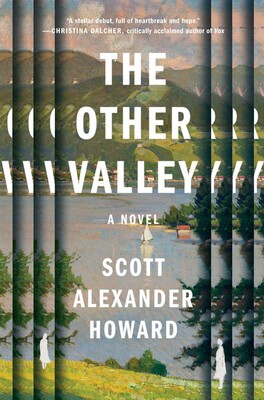
My debut novel, The Other Valley, takes place in a small town in the wilderness. It’s so isolated, in fact, that it’s the only town in the world. But that doesn’t mean it doesn’t have neighbors. The exact same town repeats itself in a chain of adjacent valleys—valleys that are staggered in time. To the east, the town is twenty years ahead in the future; to the west, it’s twenty years in the past. Secretive visits to neighboring valleys are permitted only in rare circumstances. If, for example, you can prove that your grief is unusually severe, you can petition to hike over the mountains and furtively view your lost loved ones in a town where they’re still alive.

The book’s heroine, Odile, starts out lonely and deathly shy. When we meet her as a teenager, she’s so solitary she hardly speaks. Then she accidentally recognizes two grieving visitors to her valley and realizes what it means: one of her classmates is about to die, and she knows who. Sworn to keep her foreknowledge a secret, Odile befriends the boy and begins falling in love, drawing her into a dilemma that could alter the arc of her life.

The eight novels on this list all hinge on types of solitude: spatial dislocation, confinement, aching loneliness, even a few speculative snow-globe worlds. Each book, too, makes a point of showing the haunting beauty that can accompany isolation. Sometimes the meaning of things reverberates most loudly when the walls have closed in.

Disappearing Earth by Julia Phillips

The kidnapping of two sisters sets off this locked-room mystery. The room in question: the vast Kamchatka peninsula in Russia, a former Soviet military zone that is still unreachable by road. The girls’ disappearance haunts the novel like a subharmonic frequency, rumbling in the background of various women’s lives as they grapple with the threat of sexual violence and the racist double standards that treat some victims as mattering more than others. Phillips is attracted to Pacific Rim locales—her upcoming Bear takes place in Washington’s San Juan Islands—and Disappearing Earth is an unforgettable evocation of a world on the edge of the world.   

Moon of the Crusted Snow by Waubgeshig Rice

On a remote northern reserve, an Anishinaabe community is preparing for winter when the power goes out. All communication ceases from the south; supply trucks don’t come. What follows is a portrait of the apocalypse as a small town, and a quietly moving tale of resilience and self-sufficiency. Alongside the anxiety of dwindling resources and the inherent tensions of collective action, the pace of life grows pleasantly slow, and conversation replaces entertainment. But when white survivalists arrive demanding access to the reserve, the novel shifts into two simultaneous gears: a realistic thriller, and an icy parable of colonial insatiability. 

Paradise Rot by Jenny Hval, translated by Marjam Idriss

In Paradise Rot, the writer and musician Jenny Hval gives a hallucinatory reinterpretation of Eden as a site of erotic symbiosis. Jo, a Norwegian exchange student, can’t find a room to rent in her new English university town—except in a derelict brewery occupied by a mysterious woman named Carall. Once they begin an affair, the world outside the brewery seems to disappear: “No town, no view, no lights and no islands.” In their isolation Jo and Carrall merge together, and the romantic dissolution of selfhood is depicted as rot. Memories ooze between minds; veins sprout like stems from one and grow into the other. Desire is realized as mutual decomposition in a gross, gorgeous return to the garden.

Never Let Me Go by Kazuo Ishiguro

Never Let Me Go is about memory, lies, and hope. Another theme, emblazoned in its title, is loneliness. Kathy is an itinerant “carer” whose adult life is a slow blur of passing fields, motorway pit stops, and hospital visits. As her own ominous transition into a hospital grows near, she reflects on her childhood at a secluded school called Hailsham, before her friends were distributed around England for a purpose long kept secret from them. Ishiguro’s novel is a tender look at the transience of human connection. It’s also a masterpiece of worldbuilding-by-elision that blends golden nostalgia with growing horror.

Shot-Blue by Jesse Ruddock

A boy named Tristan and his mother Rachel live alone and impoverished in an island cabin in northern Canada. Rachel says the cabin is theirs; neighbors on the mainland consider them squatters. When the cabin is destroyed to make way for a resort development, a delirious Rachel wanders into the cold and dies of exposure: “All was white around her, no matter what colour it was. Coated with snow wind-burnt to ice, the black trees reflected the sun so intensely they shone like mirrors.” An orphaned Tristan fends for himself in the one place he can get room and board—the new resort that has replaced his home. Ruddock’s poetic coming-of-age tale achieves an uncommon balance: gem-sharp prose in an enigmatic atmosphere.

Morvern Callar by Alan Warner

In an afterword to the 20-year edition of his debut, Warner recalls the first time he admitted to someone that he was trying to write a novel: “It’s about,” he said, “the loneliest girl in the world.” In its opening scene, 21-year-old Morvern Callar discovers that her eccentric boyfriend has “cut His throat with the knife”—and instead of reporting his death, Morvern stays silent. With outward composure and a curt inner monologue, she carries (and then exploits) her secret wherever she goes, from her claustrophobic port town in the Scottish Highlands to the glittering Spanish coast. A macabre marvel that is equally harrowing and droll.

Grove: A Field Novel by Esther Kinsky, translated by Caroline Schmidt

Grove’s narrator intended to share an extended stay in Italy with her husband. When he passes away, she travels to the tiny village alone. The result is a natural almanac of grief, remembrance, and renewal. Kinsky has translated Thoreau, and her subtitle “a field novel” is fitting: the book traces a seasonal trajectory and dwells on elemental sensations like the shifting colors of cloud-light, the noises of the marketplace, and the scent of burning olive branches. Despite ready comparisons to Sebald due to its elegiac tone and peripatetic narrator, Grove is warmer and more lyrical, less impersonal and digressive, more fiercely in love with the living.

The Memory Police by Yōko Ogawa, translated by Stephen Snyder

On the unnamed island where this novel takes place, things are draining from the world. One day ribbons are disappeared; another day, perfume. With the definitions of the words already growing hazy in people’s minds, the forbidden items are destroyed in bonfires, and the Memory Police scour the island for any remnants that might serve as reminders. Ogawa’s spare surrealism creates a fable-like environment in which everyday artifacts become beautiful, baffling talismans of an inaccessible history. The vanishings vibrate like one half of a metaphor (for totalitarianism, or species loss, or dementia, or simply time), but the ominous narrative is too elusive and free of explanation to be heavy-handed: it’s an equation that refuses to resolve. 

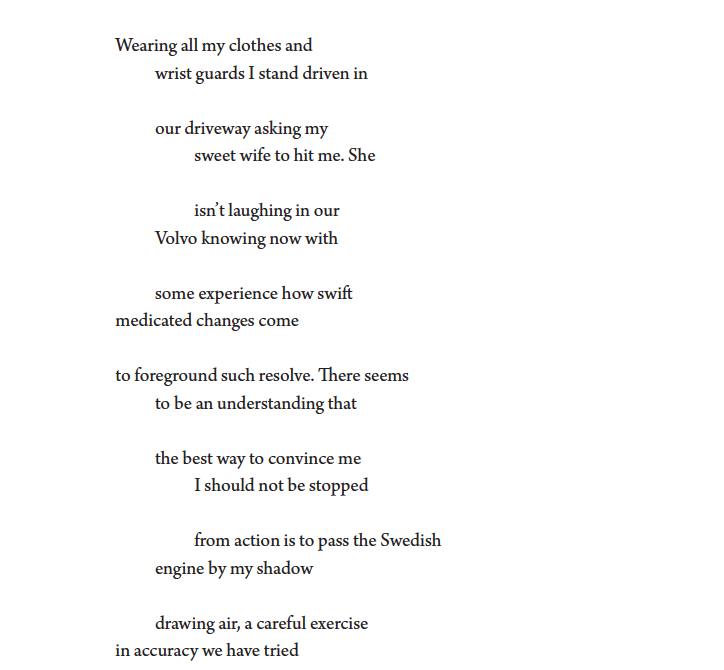
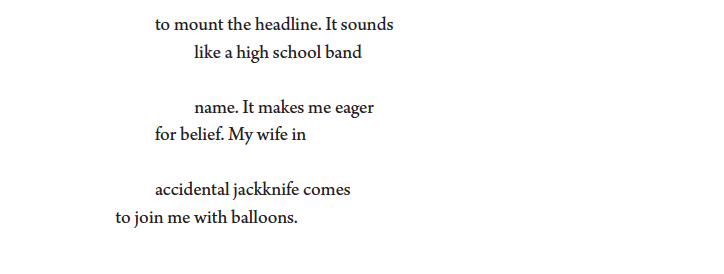
Darling, Please Flatten Me With the Volvo

A Contagious Age

DEAR ________ : I WANT TO BE A BETTER FRIEND, I’M SORRY

You put your hand on my neck and
whisper that if you were here you would

sew me a telephone. But you
are here, I say, and then you walk

to the door. I follow your shadow past
my mother’s gun-filled aquarium and

meet you on the porch where we watch a
slow wreck occur on the highway. The colliding

metal makes a severity of noises and we stand
admitting our own heroic transgressions

without ever discussing who let the neighbor’s
kid unbury the body. When it’s finally

dark enough to move in poor focus, you
saddle my shoulders with soldered toy

soldiers and ride me to the crash site so one of us
can flirt with the medical examiner about unsanitary

stock market projections. Nobody has enough
loose rope or batteries but the signs we’ve

made hold firm under the weight of your aging
chest. Lost in the panic we are ravenous

trumpets, mouths swelling like boxcars
to blow hard scissors and oil.


I Loved “Barbie” and “Poor Things” but Neither Film Is a Feminist Masterpiece

I’ll give you a plot and you tell me which 2023 film I’m referring to: A wide-eyed waif who lives in a technicolor world gains sentience and leaves on an existential odyssey that exposes her to the inequalities of a modern society.

If you answered Poor Things, you’re right. If you answered Barbie, you’re also right.

Both films have been applauded as expert examples of empowering parables about the adversities of being a woman. However, their critiques of capitalism and patriarchy —packaged in delicious pastels and tightly wrapped with a coquettish bow, and delivered with a cutesy wink—are ultimately shallow. Hailing either film as a feminist triumph would be like saying “WAP” solved misogyny in hip-hop or that Lean In eliminated systemic sexism. 

I couldn’t help but lament the misguided nature of calling either film a ‘feminist masterpiece.’

Don’t get me wrong, I loved both movies. Mark Ruffalo gave one of his best performances as the delightfully louthe Duncan Wedderburn in Poor Things, while Barbie perfected the cotton candy landscape of my dreams. But despite the enchantment of watching them on the big screen, I couldn’t help but lament the misguided nature of calling either film a “feminist masterpiece.”

In Poor Things, a sexy and pregnant Bella Baxter (Emma Stone) is revived from a suicide attempt by a maimed surgeon (Willem Dafoe), who transplants her baby’s brain into her skull to revive her, essentially rendering her both mother and child. 

Let’s dissect that: A man neglects an unconscious woman’s bodily autonomy by cutting her open and further violates her by sticking her unborn child’s brain in her head. And he’s supposed to be one of the sympathetic ones! There’s also the fact that for most of the film, she calls him God. 

The film starts in black and white and transforms into opulent vibrancy with Bella’s first orgasm. There are interesting threads to pull on: How would a woman without shame, a hedonist who follows pleasure and indulgence—eating pasteis de nata until she pukes orange sludge, rubbing her clitoris at the breakfast table—perform in polite society? How does shame get instilled throughout our upbringings and reinforced via social disdain? In what I consider one of the film’s biggest missed opportunities, Poor Things avoids delving into these provocations, instead focusing on the transformation of her obsession with sex from pure pleasure to labor.

Barbie exults: The world would be a utopia if women were in charge!

During one extended vignette, Bella works at a brothel in what is supposed to be a celebration of her cavalier attitude toward sex and a symbol of her increasing agency. It’s the oldest profession, why shouldn’t she engage in the simple demand/supply of it all? “We are our own means of production!” Bella shouts at Duncan, in what is supposed to be an empowered cry of agency. However, the film shies away from actually analyzing the circumstances that often force women into sex work, as well as the dangers that often befall women in the industry; her foray at the brothel is depicted as without consequence, frivolous, played for shock value alongside the repeated gag of Bella’s bored face during a male client’s furious humping. 

Barbie is the sanitized sibling of the often-crude Poor Things, and suffers from a similar depthlessness. While behind-the-scenes female involvement incorporated more interiority (Poor Things was written and directed by men, based on a book by a man), Barbie is at its core a feature-length commercial proselytizing Barbie’s official slogan: You can be anything! But what this hackneyed message airbrushes is the lack of agency millions of women face due to inequitable social systems. The women who don’t have the privilege of choice.

Instead, Barbie exults: The world would be a utopia if women were in charge! Yes, capitalism is bad, but not if we had more female millionaires! The system isn’t broken but only cracked around the edges; gender equality is the caulk to seal the world back together. 

Of Sheryl Sandberg’s Lean In, the prolific cultural critic bell hooks wrote: “It is as though Sandberg believes a subculture of powerful elite women will emerge in the workplace, powerful enough to silence male dominators. Her optimism is so affably intense, it encourages readers to bypass the difficulties involved in challenging and changing patriarchy so that a just moral and ethical foundation for gender equality would become the norm.” hooks may as well have been talking about Barbie

I want films that paint the whole messy mural of feminine spectra.

Much like Barbie, Bella is treated as a doll—an object to be played with and rendered silent. When the impolitely candid Bella makes a scene at dinner with her displeasure for the food and her desire to sock a crying baby at a neighboring table (honestly, relatable!), Duncan pushes her against a wall: “You will rejoin the table and will confine yourself to the following three phrases: ‘how marvelous,’ ‘delighted,’ and ‘how do they get the pastry so crisp?’” Once Barbie’s Ken learns of patriarchy in the Real World, he returns to Barbieland, evicts Barbie, and transforms her Dreamhouse to a preposterously hyperbolic bachelor pad known as the “Mojo Dojo Casa House.” Men in these films are so cartoonishly villainous that the best ones are seen in a compassionate light simply because they are not as bad as the others. Ramy Yousseff’s character—God’s protege and Bella’s betrothed—is a “good guy” simply because he does not condemn Bella’s sex work. The standards we have for men are so low!

Both films portray patriarchy as simple, straightforward—all wolf whistles and ass groping—as if the daily fear of men that women live with in the real world is not insidious, textured, and often times subtle. Although not without its flaws, the 2020 film Promising Young Woman deftly shows how sometimes the most dangerous men are the self-proclaimed “nice guys” who own koozies embroidered with feminist slogans. Or “Cat Person,” the viral New Yorker short story turned film, which catalogs the dark psyche of a man who does not get what he feels entitled to. 

Poor Things is supercilious yet silly, cramming in a bunch of sociopolitical topics without dedicated dissection. The frivolity makes the 2.5 hour run-time feel like a slap in the face. As Bella becomes progressively progressive, she donates to the poor, attends socialist meetings, and blithely comments on the fragility of hysterical men. All this evolution gets undermined when the film ends with her sipping a cocktail with her queer lover while commanding a zombie Bella 2.0 to fetch more drinks in her cloistered, opulent mansion. 

Similarly, Barbie ends with the titular character’s voluntary transformation into a real girl. The evil Mattel executives agree to produce a “regular Barbie,” a doll that eschews beauty standards because the concept will make the company boatloads of money. Barbie apologizes to Ken, men are included in Barbieland, and everyone kumbayas that cooperation is the antidote to an unjust society. 

That both films end with the enlightened dolls recreating and upholding the same systems that they spend the entire plots undermining is a convenient absolution. Are Mattel executives forgiven for the damage they’ve caused through endless endorsements of unrealistic beauty standards because it cheekily pokes fun at itself through the film’s depiction and recognition of their boardroom sausage fest? Does the male gaze in Poor Things get a pass because the woman in question is a libertine exhibitionist, unashamed and unabashed? These happy, Hollywood endings promote the feeling of victory without asking who the true winners are. 

While I thoroughly enjoyed both movies and would happily consume their cotton candy fluff again, upholding either as the zenith of feminist commentary disallows a future where truly nuanced films don’t get their due credit. For all of its preoccupation on Bella’s vagina, not once do we hear of her ability for menstruation or motherhood; there’s a singular shot where she lingers on the cesarean scar that birthed her but that introspection is not deepened beyond the discovery of her origin. And despite Barbieland’s representation of plus-sized, Black, Brown, Asian and disabled women, it is important to remember that diversity (especially when most of them are silent and perfunctory) does not equal inclusion. I want a Poor Things where Bella discovers the horrors and joys of menstruation for the first time! I want a Barbie where two Barbies kiss! Namely, I want films that paint the whole messy mural of feminine spectra. To settle for anything less would be a disservice to whichever plastic dream—or real—world we exist in.

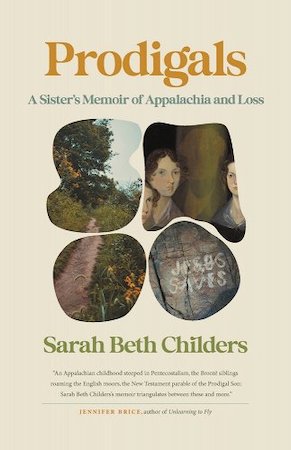
“Prodigals” is a Uniquely Appalachian Story of Mental Illness, Loss, and Grief

In the Biblical parable of the prodigal son, a son asks his father for an early inheritance, leaves home, and quickly spends it all on “riotous living.” Destitute, the son resolves to return home, where he figures he might beg his father for a job. Instead, much to his surprise, the prodigal son is met with joy and abundance. “Let us celebrate with a feast,” the son’s father says, “because this son of mine was dead and has come to life again.” 

For Sarah Beth Childers, author of memoir-in-essays, Prodigals: A Sister’s Memoir of Appalachia and Loss, this parable wasn’t as much a lesson as it was a reflection of her reality; her brother, Joshua, who died by suicide at the age of twenty-two, was, in life, the embodiment of a prodigal son. The symptoms of Joshua’s severe mental illness meant that he often left home, leaving his family to wonder when—or if—he would return, and what state of mind he might be in when he did. 

In Prodigals, Childers captures an angle of the prodigal son story that is undertold: what it is like to be the one waiting for a return. As Joshua grows older and begins to make decisions for himself about his well being, Childers raises important points about agency when seeking or refusing medical intervention and about the ways that historic beliefs about mental illness have seeped shame into the present. She writes movingly about the difficulties of obtaining meaningful and compassionate care for mental health in the U.S., a thread complicated by her family’s generations-long tenure in Appalachia, a place where distrust in modern medicine runs deep. 

Childers and I talked by Zoom about writing out of stereotypes, intersections between faith and healing, and what it looks like to seek closure for an impossible grief. 


Jacqueline Alnes: You write about how you don’t want to feed harmful stereotypes about Appalachia but that you also felt pulled to tell your story of your upbringing there, which, in some ways, does intersect with those stereotypes. What was navigating that tension like? 

Sarah Beth Childers: That tension was everywhere. I had to have the freedom to tell my story, so I had to just say out loud that I have a fear it reinforces stereotypes but also know that there are ways it doesn’t fit. I talked a few days ago to a writer named Kami Ahrens who edited The Foxfire Book of Appalachian Women. She wrote about trying to move past the stereotype of “poor, white, and stubborn,” and I was like, well, that’s me and my family. I had to think about what is Appalachian that you would think of my family, like that desire to leave twinned with the desire to stay. And then I had to think about things that are inevitably Appalachian in a sad way, like not having access to medical care because we were in the middle of nowhere, a resistance to medical care because of historical trauma around medicine and also not having access to it, and intense religious faith. 

Human beings themselves, though, defy stereotypes. My mom was a fundamentalist but also a feminist —she’s absolutely for women’s rights and for women’s role in the church and marriages. If you were just to think of a stereotype of a fundamentalist, intense, Christian mother, that would not be what you think. There are some little things that were me pushing back against stereotypes. Both of my parents had college degrees, we were lower-middle class but we were hyper-aware of class stratification. 

JA: Appalachia feels like a difficult place to write about because there is such a charged expectation around it, it seems.

Every day was a prodigal son day; it was like he left us and would come back and we never knew how fully he would come back.

SBC: It is. I have a student, who’s a really great student, who’s now in a PhD program, and she’s an Appalachian writer who grew up queer, and upper-middle class with professor parents and someone on her thesis committee was like “add more broken down cars and dirt and bring in the stereotypes” and she just had this look on her face, like that would be fake. It would be like someone from Michigan trying to write about it. There is this expectation, and this Appalachian aesthetic, which I remember learning about through photography. It’s the landscape in the background and a zoomed in emphasis on dirt, which I realize I totally do. It’s an Appalachian way of looking, which is interesting. 

JA: You were raised attending a fundamentalist Christian school. In ways, this upbringing seems like it meant you felt isolated at times, but in that isolation you drew near to your siblings. And clearly, from the beautiful way you interpret the story of the prodigal son—as a metaphor for your own relationship with your brother, in the riotous joy that you think the son must have felt at timesreligion might have also offered a way for you to narrativize really complex relationships.  How did the story of the prodigal son help you to reckon with loss? 

SBC: I went to church with my mother-in-law and the pastor was preaching about the prodigal son and I took it personally, as if he was talking about my brother. It felt too close to home. My mom had always talked about Joshua as the prodigal son and that’s literally the way my family coped. It seems like it’s a metaphor, but it really isn’t. “My brother has gone to the feet of the Father” was said in a literal way. The metaphor was thinking about the prodigal son at home and thinking about riotous living in different ways, both with “riotous” as in terrible and as in happy. That definitely helped me cope and helped me process.

The elder son in the parable ends in this very grumpy, unsettled way, I adore that. There are so many Bible stories or parables that end this way, like Jonah, sitting on a hill, raging at God and being grumpy about this dead plant. I love how angry people often are. It’s not this joy feeling at the end of stories. You don’t know, for example, if the prodigal son’s older brother is ever going to talk to his father again or his brother; it seems like he might just leave. It helped capture the grumpiness I felt in my grief and the very collective grieving I felt with my family, but also this isolation in that I was grieving in a slightly different way. 

A thing that was also helpful was looking at mental illness portrayed in the Bible, like the demon possession. Of course, it is literal demon possession in the Bible, but the way they describe the people sounds so much like severe mental health disorders. It was interesting to read medieval accounts of mental illness and how they were treated as demon possessions, probably because of how it was portrayed in the Bible, and then thinking about these stereotypes around invisible disabilities. Every day was a prodigal son day when my brother was having trouble; it was like he left us and would come back, leave us and come back, and we never knew how fully he would come back. Having that cultural language to map that onto was really helpful. 

JA: When I think about the story of the prodigal son, I so often only really consider the titular character. But, in your essays, you ask us to think more closely about who is left behind waiting for the son to return, and what it looks like to be among those hoping for the son’s safe return. When your brother was young, you wanted to be there to fill his every need, but as you got older you realized you had to separate yourself in some ways, while still wanting to care for him.

To me, there are things that feel like higher forms of grief.

SBC: That was really painful. I would have moments where I would try to step in and fix things for him before realizing it wasn’t possible. When Joshua was in college, he had this roommate who stole from him, so Joshua called me and told me how awful it was. I told him I’d call the RA, because changing rooms is something that happens all the time. We can fix this. But he was like, Sarah Beth, I think he’s starting to like me. I realized that sometimes there’s nothing you can do, especially when people are growing up and getting their own agency. There were cultural forces that he couldn’t do anything about but there were things he did choose. Like he was living in Huntington and decided to smoke weed instead of talking to people about his mental health. I mean, he was a kid; you can’t blame him for it—I don’t blame him for it. There’s a grief of people growing up, like your little sibling who you’ve infantilized becoming a complex human being, and realizing there are problems you can’t fix.

JA: Mental health and the stigma around receiving help can be fraught in any situation, in any place, and in any family, but you write so movingly about how your home in Appalachia, in particular, meant that options felt limited. Would you mind sharing a little bit of your perception of how place—and the history of place—intersects with beliefs about healing?

SBC: In a shorter term way, I was thinking about how, like probably every family, the generations of mine tend to repeat what happened. My great grandmother was given up for adoption at three years old and taken as a farmhand. She had to make biscuits for farmers at three years old. It’s difficult for me to think about that life for her. My Granny, even though they had left that situation, felt from a very young age that she had to take care of herself, so she got married at thirteen to get out of the house. My Granny had paranoid schizophrenia. The way that ended up being best to cope with her was to give her space. She didn’t want to take medicine and the only option was to institutionalize her, which was not going to be a good situation. My mom fought to keep her out of there and take care of her at home. My mom had to be a committee for her so she could get signed up for disability and get to take her ex-husband’s retirement money so she could live comfortably in this little house. What was most comfortable for everyone was for her to live alone in a little house; she would have been miserable around other people. She needed her routine—waking up at 4am, reading romance novels, making clothes for us, and smoking her cigarettes. She just needed groceries brought to her and her bills paid. There was that. We grew up with this grandmother who might, when we showed up, literally push us out the door or scream at us, or greet us really warmly. She was so funny—funny in a way that nobody else was funny. She would talk about anything and she had whiskey and a gun. She would have us watch a dirty movie to learn about life. If she was happy, every line was a joke. We had seen how mental illness could be coped with: hide it, give the person space, and hope it will get better.

With Joshua, especially because of the stigma, for my mom, it was a lot of these things: hoping if he got closer to God it would go away, and thinking, what if he outgrows this and gets better? Obviously it did not get better. We had so many fears: What if he goes to prison? What if he kills someone? Him going to the Father was better than that, in some ways. No one was happy he died by suicide, but it was such a hard situation that there were worse alternatives, almost.

JA: It’s a story that highlights the impossibility of being mentally ill in this country. It’s so difficult to find a space where someone would want to go live and be and be treated. The lack of care in Appalachia and the way you highlight the heightened rates of suicide in Appalachia in your book, mental illness or not, was really sobering to read. 

SBC: Something that was healing to realize is how pervasive it is in the culture and almost how inevitable almost that he would die that way, especially with the particular illness he had, where the suicide rate is so high. And then, being in Appalachia where the suicide rate is even higher, it just felt like, what else could have occurred? Is there a point in feeling guilt or figuring this out? I feel like part of my book was figuring out that there is truly no one to blame—certainly not him, certainly not my family. It’s just so hard. It feels like it’s so much bigger than us. Hundreds of years of culture contributed. 

JA: With grief, so often you want this idea of ending or closure that never comes. In the Prodigal Son parable, there is this sense of jubilance when he returns and everyone is whole, for at least a little while. Reading your story, it seems like you’ve arrived in a different place than you were years ago, but there’s not a real sense of closure, which makes sense. What advice would you offer to people searching for that closure or seeking to understand who they are now?

SBC: In terms of suicide, specifically, it is definitely about letting go of the guilt, which is a hard part of the process. There are these immediate things, right after you lose the person unexpectedly, especially someone who chose to leave you, that happen, like a movie would come out or a song would come out and I would be like, if only he had known about this coming, would he have stayed for a week? Fortunately, your brain quits doing that, because it’s so exhausting. 

Talking to other people and seeing that you can make it past it is meaningful. There was this kid who only knew Joshua a little bit, but his brother had died in a horrible car wreck five years before that and he came to the funeral just basically to say, look at me, I am alive. It was such a gift, and I remember thinking that. My sister had seen him years later, randomly, through a window while walking to school, and he was dancing while cooking. She realized: he’s okay. 

To me, there are things that feel like higher forms of grief: you can lose much more of your family, there are wars, and there are worse things that can happen to you. For my parents, losing a child is worse. I hate to rank grief. I think about in War and Peace when Pierre thinks about having painful shoes when he was rich was almost as bad as the real things happening to him now, just because of how much he changed as a person. You can never judge people on what they’re going through and how bad it is for him.

JA: The grief you were in prompted you to seek care for yourself, where you accepted medication while still holding onto your faith. 

We had seen how mental illness could be coped with: hide it, give it space, and hope it will get better.

SBC: I had this very specific kind of depression when my brother died. It was severe. It wasn’t the first time I experienced it. I talked about, in my first book, being in love with this man on the internet, which happens to a humiliating number of people. It was such a source of shame. I had written him these long emails and broken myself over him, but had never met him. He only lived fifteen minutes away and I remember reading Sense and Sensibility and reading about how Willoughby is always hiding in shop windows, trying to get away from Marianne. I thought he must have been doing that to me. I had a severe bout of mental health issues at that time, and had I taken Prozac or something I probably would have bounced back from it faster. Like I did when my brother died, I got super thin, lashed out at people, and hurt my relationships with people. I had this particular trauma-induced depression, where it’s not something I cope with on a daily basis, but a bout of it was induced. When my brother died, it triggered it. The shock of it drains all of your serotonin, and learning about the science behind grief helped me. I really had to build my stores back up with the medication. I did think at the time, maybe if my brother had tried medication, maybe it would have helped something. And I thought: I have to try. I want to live. I couldn’t live and I want to live. I developed the tools to deal with my own grief-induced depression and now I know there are things I have to do personally to survive, and I know that I will. 

JA: What did you take from writing this book or what do you hope others take from reading it? 

SBC: In books about suicide, I find that there’s often a little blame-iness, which I think comes from a similar feeling to what I had at first, which was that I had to figure this out. There is no one factor. It’s so much bigger than that. You have to go back to history, to place. Was healthcare available? Would they have been stigmatized if they said they needed care? You have to go back to deep that blaming yourself and other people is not useful. Experiencing the freedom of that is something I hope people can take away.

7 Books Written as Letters to Family Members

When I began writing my unborn son a letter in 2018, a book was the furthest thing from my mind. I wasn’t trying to unpack the countless ways in which the words “all men are created equal” have failed us in this country. Instead, I was thinking that I would write a letter, something that I had not done in some years. Not an email or a collection of social media posts, but an honest to goodness old-fashioned letter, the kind I used to enjoy writing and dreamed of receiving, but never did, when I was a kid. 

I had planned to tell him that I was re-reading Dostoevsky’s Notes from Underground and savoring Ellison’s Invisible Man for the first time. I had planned to tell him about my students, and New Jersey, and most of all, how much I missed his sister, his mama, and him, even though he wasn’t born yet. But then I began to worry the racism and hate I was encountering daily would consume me, figuratively and literally, and the writing took on a life of its own, fueled by the worry and fear of a forty-something Mexican American becoming a father for the first time. 

Suddenly, I was calculating time differently. How old would I be when he could speak? When he began to shave? When he graduated high school? College? When he became a parent himself? Where Are You From became my attempt to give my child all the guidance I could on how to use his imagination to survive all the wretched ways that America has devised to deprive him of life, liberty, and the pursuit of happiness. 

Letters to a Young Muslim by Omar Saif Ghobash

The titles of some of the probing letters Ghobash writes to his two sons speak to the courage of this book: “What is True Islam?,” “The Gray Area,” “The Challenge of Freedom,” “The Muslim Individual.” The wisdom of this book is matched only by its tenderness. Ghobash puts on full display his skills as a diplomat to show that celebrating our shared humanity begins with the individual who centers not fear but love, not anger but kindness. 

I’ve Been Meaning to Tell You by David Chariandy

Chariandy’s letter to his daughter opens by recounting a moment of bigotry he experienced in his native Canada when she was three years old. A decade later, he examines that moment in light of the wave of bigotry and hate stoked by newly elected U.S. president Donald Trump. This book is a powerful meditation on the ways in which the effects of slavery and immigration ripple forward through history when they go unexamined. 

Breathe by Imani Perry

In this letter to her sons, Imani Perry assembles a team of luminaries (Morrison, Emerson, DuBois, et al.) to support her thoughts on the power of resilience and how to cultivate it in our children. Rather than allow our youth to become victims of generational trauma, Perry’s letter encourages them to tap into the generational endurance found in their traditions. 

Between the World and Me by Ta-Nehisi Coates

The engine that drives Coates’s letter to his teenage son is interrogation, in particular how does one live with, and within, a black body that has been treated as disposable since the founding of America. Coates offers no answers to the questions he poses; rather, he places his bets on the value of knowing what is at stake when we lull ourselves into believing the American Dream was ever meant for us. 

Dear Ijeawele, or A Feminist Manifesto in Fifteen Suggestions by Chimamanda Adichie

When a friend asked Adichie for advice on how to raise her new daughter as a feminist, the book Dear Ijeawele was born. Gender equality is the bedrock of this book that sees the moment of birth as the crucial point of intervention when the shackles that have kept girls and women from realizing their full potential can begin to be undone. This is a wise and fierce book that urges us to celebrate difference and independence. 

Heavy by Kiese Laymon

This is the sole letter on the list written to a parent by their child and not the other way around. And what a letter it is. Heavy is an urgent and powerful meditation on love, and the ways in which American racism works to convince us that we are not worthy of loving ourselves or of being loved by others. It is a testament to the healing power of love and forgiveness. 

The Fire Next Time by James Baldwin

This book is the primogenitor, the forebear, the OG, the Elder in the room with a capital E. Had writers penned letters to their family members before The Fire Next Time tore through the bestseller lists in 1963? Of course, but I couldn’t name any off the top of my head. In these two letters, Baldwin took a scalpel to American racism and laid its insides bare for all to see. The edge of his scalpel was not honed on the sharpening stone of hate, but rather love. The decades have not diminished the courage and power of this book. 

A Young Widow Rewrites the Conventional Narrative of Grief

Amy Lin’s debut memoir, Here After, is a taut, poetic, and intimate exploration of heartbreaking loss, devasting grief, and its unfathomable aftermath. In potent, swift, and artful prose, she details the love, and loss, of her husband, Kurtis, a vibrant human and skillful architect, who died suddenly, and without distinguishable cause, while running a virtual half-marathon.

Craftily moving between depictions before and after the soul-shattering tragedy—celebratory wedding reception vodka-waters to a necessary, life-saving stent—Lin lays bare the beauty of their relationship and the emotional and physical toll of her grief.     

At the beginning of 2024, Amy Lin and I caught up over Zoom and discussed the present tense of grief, the inadequacy of language, the gift of both seeing and been seen. 


Jared Jackson: Though the structure of the memoir is nonlinear, the entire book is written in the present tense. Why did you make this decision? Did it have anything to do with the way you experienced grief?

Amy Lin: The thing about grief, for me, certainly, was that when I entered into it, I fell out of time. Which is to say, the ways in which we tend to quantify established time—past, present, future—completely eroded for me. And my life as it had been, my life with Kurtis, it felt as real, if not more real, than my life after he died. 

That’s what grief does, it completely deflates these realms. I, temporally, was completely lost, and the memories of our life, the memories of who I was—a wife, married, the choices that I had made—none of them brought me to my present. Even when I was burying Kurtis, right? I truly was like, no, I am a wife. But I wasn’t married and I wasn’t a wife—not anymore—and it’s really disorienting when what is no longer feels more real than what is present. Biologically, what the brain can’t process is that what is real neurologically is not actually real anymore. So, for me, everything in grief is present tense.

JJ: Can we stay there for second? You mentioned the biological aspect, and there are moments in the book I referred to in my notes as the “science of grief.” For example, you search the term “young windows” and read a report that lists mortality rates—cardiac arrests, cancer, suicide—of widows compared to those still married. In fact, soon after Kurtis’ death, you ended up in the hospital with life-threatening blood clots. To me, typically, grief is talked about as an emotional state, not a physical response. Was learning these facts helpful—to have an explanation for what you were feeling not just emotionally, but physically? 

AL: I will say until I was in acute grief, I thought of grief as an emotional state. But in Calgary, where I live, we have the Bob Glasgow Grief Centre, which is the only provincially and publicly funded grief counseling center in all of Canada. And so, I was really lucky because I live here and started it within a month of Kurtis dying. 

It’s really disorienting when what is no longer feels more real than what is present… for me, everything in grief is present tense.

The first session was just an hour with a slideshow where the grief counselor talked about was the ways in which grief affects the body. She said grief completely shutters the prefrontal cortex, which is the part of the brain that does communication and memory and scheduling and emotional regulation. The blood is being poured from that part of your brain into the base of your brain, which deals with fight or flight, with survival, and with “am I going to stay alive?” That whole part of your brain, the front, at a blood level, has gone dark. She said I was in clinical shock. 

JJ: Actual clinical shock?

AL: Yeah, and she also explained neurologically, your brain has not caught up to your reality. She explained that when we meet somebody, we code neural pathways in our mind. We have a neural pathway for ourselves, the person we think ourselves to be. And then the brain codes a “you” that is separate from the “you” that is real. Let’s call that second “you,” Kurtis. But then as you continue to live with that, the brain starts to encode a third entity. Which is the “you” in combination with Kurtis, the “we.” She said, obviously, Kurtis has died, but the neural pathways that you have for him are still being used. And the brain is not just trying to cope with permanently shutting down the neural pathways connected to the “you” that is Kurtis. It’s dealing with the entanglement of the two yous, the “we,” and the brain has no idea how to shut that down because the real you” isn’t dead. And because the brain is trying to shut it down, a lot of people have a feeling of “I’m dying.” And she said that’s actually true biologically, because the brain is trying to kill the neurological you.

Also, how much capital the brain is using biologically is massive. She said that’s why grief, biologically, is actual work, and extremely tiring. This is what creates the “widow effect.” It’s not that you’re cursed. It’s that you’ve been exposed to intense levels of stress hormones over such a long time that you are more vulnerable to disease, more vulnerable generally. With your prefrontal cortex down, you tend to take more risks. And so that’s what creates this trackable data about people who are widowed, especially young, who tend to have health problems, or accidents happen to them, because they really take more risks. Like, this is how you get hit by a car, because you’re not actually evaluating, “Oh, is that car traveling too fast? I’m going to dash across the street.”

After I understood what was happening in my body, when something would happen, or I’d feel a certain way, I was able to know I wasn’t crazy, this was my brain working. So, I had that, and I felt lucky. But also, we’re failing people in that they don’t have access to this information. Where is this in the health curriculum?

JJ: You clearly, at least now, have a way to speak about grief. And I wanted to talk about the language of grief. Do you think grief has its own language? Is our language around grief limited? 

AL: I do. And I think, yes, our language around grief is limited. One way is by this desire to make people feel better. Culturally, I think, humanly, we do not want to see our fellow people in pain. We want to make them feel better. And this is where I think, with most people, because of their good intentions, the language that they use is always forced towards healing, towards “cheer up,” towards the “bright and shiny.” The language we have for grief is about either distracting people from it, or helping them feel better generally. And while that comes from a really human and understandable place, grief studies show it’s harmful to people who are grieving because grief is chronic pain. It doesn’t go away. 

The North American narrative of resilience puts a griever in a place where there’s no space for them, and nobody feels strong or resilient.

Saying to someone, “I’m going to distract you from the fact that your husband died,” is kind of like saying, “I’m going to ask you to hold your breath.” And then asking, “Don’t you feel better?” And you’re like, no, that’s actually really hard for me. Because something that is essential and omnipresent in my life, you’re now asking me to forego. And it becomes really harmful for people who are grieving to have to perform that they’re not sad. Or to perform that you’ve made them feel better. But it’s also hard to educate gently, especially when you just want to say, “If you want to help me, please just sit with me in my sadness.”

And then the second part where I see us limiting language around grief comes from, I think, a North American narrative of resilience, the bootstraps mentality, the “you’re so strong.” I think people see it as kind of cheerleading, truthfully. But again, it really just puts a griever in a place where there’s no space for them, and nobody feels strong or resilient. They feel afraid. That’s how they feel, and I think we linguistically really harm people.

JJ: I want to switch tones because I want readers to know the book isn’t all sad. There are beautiful and tender snapshots that depict the love you and Kurtis shared while he was alive. Moments where I found myself both laughing and simply admiring the wonder of your relationship. And you write that Kurtis once said that you think “sadness has a kind of beauty.” So, my question: Did you also experience moments of joy in the remembering, in particular the good? And if not joy, something else? In a book that centers grief, how did you approach infusing the book with these moments? 

AL: I love this question. The real answer is that I did not experience joy writing this book. I found it extremely painful to live in. I didn’t come to this book to write about grief. I realized that it was a way of processing grief, but I didn’t intend to do that. But you grieve with the thing that you have, and the thing that I have is writing. Something beautiful about writing is that it creates a legacy, even if that legacy is small. Even if that book is read by very few people. It’s still its own kind of legacy. And this was a legacy I could offer Kurtis—to write who he was or who I knew him to be. And so, I came to it to write about him and to write about our life. 

I am extremely private, a lot of the inner texture of our love and of our life was private. But I wanted to open the doors that I had kept closed when we were together. We shared something that was so rare and so beautiful to me that I fiercely protected it in the world when he was alive. And then when he died, I wanted to connect people to the person and the love that he shared and who he was. And writing it felt like one of the things I could do for him. I think the strange thing for me, and is probably, neurologically, entwined with the idea of Kurtis, is that I can do this ghostly math of how Kurtis would feel in certain situations. I knew him so well that I knew how he felt when I wrote those sections you mention.

So, while I did not experience joy, Kurtis was somebody who led with joy, and who led with levity. And so, the reason that those sections, I think, flare brightly in the text, is because I’m writing from the piece of myself that loved him. Because I’m not bright like that. I’m quite serious and pretty anxious, you know? But Kurtis had his own sun, his own gravitational pull. And when I wrote in that mode, I really tapped into that. And that is what I tried to bring to the page. That’s where the moments of the joy in the book come from. The lens of that was him. 

JJ: Speaking of writing, on your first date with Kurtis, you introduced yourself as a substitute teacher. Later, after discovering and reading your blog posts, Kurtis basically says that introduction was wrong, and calls you a writer, says you are a writer, which you hesitate to accept. A lot of writers get asked the question, “When did you first call yourself a writer?” But not many get asked what it’s like for someone, especially someone they love, to call them a writer first, to see it in them and claim it for them, even before they claim it themselves. Can you tell me what that felt like—to be identified as a writer by Kurtis—especially now that you have a book? 

AL: I think maybe one of the greatest things that we can do for the people we love is to endeavor to see them. And I don’t mean see the best parts of them or the parts of them that we would like to highlight or the parts of them that we would like to encourage in them. I mean, to actually see who they are in the fullness of the person that they are. And when you see something in someone that is so core to who they are, and you see it before them—and also before that person is able to accept it themselves—that’s one of the greatest things, to live in the abundance of somebody’s sight like that.

Kurtis loved me in that way. Loved me enough to see immediately that I was a writer and say that to me. Our first date was very long, six hours. And later, when he found those blog posts, he said, “You were charming and open and engaging on the date, but you were not like this. You were not open like this. I met you on these pages in a way I didn’t meet you in person.” He certainly saw something in me and that remains, probably, the most radical reality of my life. That Kurtis saw me and, in doing so, excavated a knowledge about something that I am before I did, and then held it to the day that he died. 

JJ: That’s beautiful. You also write fiction, and there’s a scene in the memoir where you describe publishing you first short story in a journal and imagine how Kurtis would have celebrated were he still alive. If you believe in the After, how do you imagine he’s celebrating the publication of your debut book? 

AL: I think what’s so amazing is even if you don’t believe in an After, which truthfully, I’m not sure that I do, what do I believe in is Kurtis. There is this beautiful thing about our loved ones, and our ancestors, whoever that is for us, and it’s that they show us “the way.” And often the way is into a more tender or expansive way of living, which is certainly true for me of Kurtis. He showed me the way into a more light-filled, joyous way of living. He really was a man who loved living. And it’s crazy to me that he got so little time to do it. And so, despite my ambivalence about the After, I, because I knew Kurtis for as long as I did, can so fully feel that if there is one, then he’s going crazy in it. When I turned 30, he filled his car so full of balloons he got into a car accident because he couldn’t see out of it. So, if there’s an After, and there’s finite space he could fill, then it’s filled. And I know that that would be true, if it can be true. And if it is true, then Kurtis will show me the way.

A Culinary Visit to the Belly of the Country

“King of All Hogs” by J.G. Lynas

We’d been driving for two days, unsure where we were in this land of grass and hard dirt, the world made liminal by the blur of the road, by the pleasant haze of our cigarettes. Inside the car, with me and Mark and a dash full of snacks, all was fusty, dusty, happy, and warm. We slept by the roadside, pissed where we pleased, honked the horn into the moonless night. Mark had heard about Guthrie Farm from his forum friends, strangers with names like Doggerel and Scumboy and Less, who were big on enthusiasm but light on geography. We were in what could only be described as a county, somewhere north of where we’d previously been. When other cars passed us, they drew their windows up despite the heat.

It was getting on for evening when we found the place, and the whitewash farmhouse glowed like candlewax. The barn to its side was thin and unpleasant, hardly bigger than a school bus.

“How many hogs could you fit in there?” I said to Mark. He never said pig, talked only in hog, in swine, in cutter and pork. He looked pleased with me, handed me the tobacco pouch like it was a bag of jellybeans.

“Not too many. That’s what makes them so special.”

“Artisanal,” I said.

“Oh yeah.”

“Artisanal hogs.”

The Guthries didn’t have a car in their driveway, only the skeleton of a quadbike, a few cannibalized engine blocks, layers of tarp weighed down by stones. There wasn’t any wind this far north, or possibly west—nothing stirred. No lights on in the house either, but I wasn’t worried—things had a way of working out for Mark, and he and I were fast becoming one and the same. I had even started walking on my tippy toes like he did, prancing like a gazelle around the car when we needed to stretch our legs. It was his idea to come out here, and then it was our idea together, and then we didn’t care whose idea it was, were both just happy to be doing something cool together. We were on the road. We were free and happy. We ate burgers for breakfast and instant noodles for dinner. We had sex in a roadside bathroom and bruised ourselves on the cistern doing something funky with our legs. Outside, someone knocked, occasionally cleared their throat.

Mark honked the horn and flashed the beams.

“Emissaries at the gates!” he said out of the window. I leaned over him and turned the indicators on, then the hazards.

“Yeah!” I said.

“Yeah!” he said.

We got out of the car, leaving the engine running and the lights streaming in through the Guthries’ curtains. Mark knocked twice, perfunctorily, and we made out like teenagers while we waited.

“Do you think they’re home?”

“Oh, they’re home,” said Mark. “Where else could they be?”

A light came on in the hallway. We nudged each other, held our breath, waited for something else to happen.

“Oh, they’re home alright.”

After another five minutes, the door opened, and Tom Guthrie appeared before us, old and smelling of dish soap. The corner of his beard was stained yellow from some mean tobacco.

“A pleasure,” said Mark, doing a little bow.

“You’re with them,” said Tom, looking at his feet. “From those message boards?”

From what little we could see through the hallway, the house wore its age well, the wallpaper peeling in tasteful strips. A lamp to Tom’s left was dented and tarnished in a way that indie coffee chains would die for. Mark stepped forward and shook Tom’s hand, pulling it up from where it hung limply at his waist.

“You’re an absolute celebrity there,” said Mark. “This is wild! Like meeting Sting or Cash!”

“Like meeting Bowie,” I said.

“Yes! Exactly! The Bowie of Swine.”

“David Bowie’s dead,” said Tom Guthrie, as if he still wasn’t quite over it. “This isn’t a good time. We weren’t expecting visitors.”

“It’s a great time,” said Mark.

“It’s our birthday, you see,” said Tom.

“Happy birthday!”

“My wife and I, it’s our birthday. It’s our day, you see.”

“Then you’ll let us cook for you,” said Mark, who still hadn’t let go of Tom’s hand, its veins standing out in milky blues. “You’ll prepare us a range of cuts, and we’ll have a slap-up meal and celebrate together.”

He led Tom into his own home, an arm around his shoulder, pulling his shoes off and leaving them by the sill. I followed at a distance, shutting the door to the loamy dark outside, the tin-can clatter of insects. I placed my shoes next to Mark’s.

The house was one story, every room branching off from the central hallway with the kitchen at its terminus. The light was buttercup warm, the bulbs the kind they don’t let you buy anymore, running so hot they scorched the ceiling. Everything smelled like cooked dust, like a radiator turned on for the first time in years. Little side tables had pictures of a younger Tom and his wife—swimming by a creek, standing in front of the house, holding a freshly dressed deer by its antlers—always posed the same, their hands barely touching. A phone rang from the living room, but nobody went to answer it.

We seated ourselves around the breakfast table. Outside, a security light came on that hadn’t when we arrived.

“Are you going to keep your car running out there?” said Tom, but Mark just waved his hand in a way I knew well, which made me smile into my hands.

“How about a coffee? A cup of joe for the birthday boy! Will Mrs. Guthrie want one too?”

“She’s resting. She doesn’t drink coffee,” said Tom, looking at me for perhaps the first time. His eyes were remarkably clear, those of a man much younger and in control. “Who are you?”

“I’m Mark Swain. It’s such a pleasure.”

“Is that a joke? Like a play on words?”

“No,” said Mark, placing down three black coffees. Tom pushed his away a few inches, pinching his nose. “You have no idea how long I’ve been waiting to meet you. The guys on the board just can’t stop talking about your meat.”

“How much did they tell you?”

“Not much. Just that you’re the man, you know? You’re the guy.”

“And who’s this? Mrs Swain?” said Tom, waving a hand not so much at me as at my aura, the general idea of me.

“I’m with Mark,” I said.

“She’s with me,” said Mark, planting a fat kiss on my forehead, his stubble like the stroke of a doormat. “So, how about some food? Anything in the fridge?”

He opened it up, but there was only a furry slab of butter, a receipt for an air fryer.

“We don’t keep much in,” said Tom. Mark and I looked at him for a long moment as he rapped his knuckles on the table.

“Hm,” said Mark.

“So,” I said.

‘I . . . can get some cuts from the barn?” said Tom.

“That would be best,” said Mark. “That would be just great, Mr. Guthrie.”

“It’s our birthday, is all. My wife and I.”

“And we’re just thrilled to be spending it with you. Babe, aren’t we just so psyched to be here for Mr. and Mrs. Guthrie’s birthday?”

“Thrilled!” I said.

Tom Guthrie closed his eyes, crossed himself, and made for the back door.

“Please don’t touch anything,” he said before leaving.

Mark settled into a chair with a worn pattern of butterflies, rolled us each a cigarette and smiled.

“Is he going to slaughter one? Just for us?” I said.

Mark waved his hand again, blew smoke up into the busted alarm, as if daring it to sound.

“He doesn’t seem happy to see us.”

“Trust me, he’s just fine,” said Mark. “The guys on the forum said it would be like this. This is pretty normal. It’s kosher.”

“Well,” I said.

“Well,” he said, springing up and dragging me along. We walked through the house, following grooves in the carpet from Tom’s slippers. Mark touched a phone book, a porcelain dog with no eyes. I took one of the picture frames and turned it facedown, without having any idea why. The living room looked as you’d expect it to, only with a distinctly modern flatscreen TV in the corner, swept clean of dust. They had a bookshelf, but the titles didn’t stick in the mind, their browning covers forcing the eye away—A Walk in the . . . Songs for Rainy . . . Keeping Up With . . . This and That. A daguerreotype on the wall showed an old man standing in front of the freshly painted barn. He could have been Tom’s father, maybe the wife’s—he was a father to someone, that was for sure. He oozed dad.

“He can’t sell much. With the barn so small.”

“He doesn’t sell the meat,” said Mark. “That’s not how it works here.”

“Did they say on the forum how they found this place?”

Mark took me in his arms and kissed me four times, like a bird pecking seed.

“Good things have a way of being found,” he said.

Good things have a way of being found, he said.

Outside, something sounded. A long squeal, pitching higher and higher until we couldn’t hear it anymore, somewhere between animal and shearing metal. The buckling of damp wood, faintly spongy. Mark held me tight and looked me in the eyes—he was waiting for me to ask a question, but then it felt like the time for questions had passed without my noticing.

Tom Guthrie entered the living room with a tray wrapped in cling film, the meat glistening beneath like polished marble. He held it at arm’s length, waiting for Mark to take it.

“Oh,” said Mark, stepping closer and sniffing deeply, prodding it through the film. “Still warm.”

“Can you take it? I need to check on my wife. It’s her birthday, after all,” said Tom.

“Babe, take this to the kitchen, would you? There’s something in the car I need to get. You’re going to love it, Mr. Guthrie. You’re going to go just wild for what I have to show you!”

Tom passed me the plate, only letting go when he was sure I had a good grip on it.

I sat with it a while in the kitchen, trying to admire its color, to tell the difference between this and the other cuts of pork Mark had shown me. I lifted the cling film, but all I could smell was the blood, a light tang of manure. There was movement behind the Guthries’ bedroom door, a scratching and a fidgeting. Somebody sighed, cleared their throat, sighed again. My coffee was already cold, though it was fresh only minutes ago. Mark honked the horn outside, revved the engine a few times.

Tom stepped into the hallway, opening the door just wide enough to squeeze through before shutting it again. He saw me in his kitchen and jumped.

“You’re still here,” he said.

“Sure am!”

He took the cups and tipped them into the sink, rinsing the basin with cold water until it ran clear.

“Is your wife okay? Will she be joining us?”

“She needs her rest. Things have been hard. The weather, maybe.”

“It’s been a hot one,” I said, and he looked at me suspiciously, as if I might be pulling his leg.

“It’s crazy that you share the same birthday. What are the odds? The curveballs life throws at us.” I had a feeling that my birthday must be coming up in the next few weeks, but I couldn’t quite recall.

“They’ve been coming here for years, people like Mark,” he said, looking out of the window, at the barn hunched in shadow. “Before the forum was a forum. I want you to know that, so you can measure your options. They’ve been coming for a long time, to the farm.”

“It must get lonely out here, you two on your own. You must enjoy the company when it comes.”

“I just needed you to know.”

He looked as if he might be about to cry, but instead he burped, a hint of acid on his breath. Mark returned to the kitchen holding four party hats.

“I’ve had these in the car for years!” he said, placing one on my head, then Tom’s, then his own. “What are the chances? Like it was fate, Mr. Guthrie! Now it’s a real celebration. I’ve even got one for Mrs. Guthrie here.”

He set the fourth on an empty chair, as if she might spring from it at any moment, like a rabbit from a top hat. In the living room, the phone rang again.

“Are you going to answer that?” I said, but the two of them started unpacking the meat into different groups instead—loin, hock, tongue, and back. Together we set up the grill, an old George Foreman, and heated a pan for the bacon.

“Do you cure it yourself?” said Mark.

“I’m not sure,” said Tom, scratching the elastic band at his chin, an ugly red mark already forming. “I’d need to check that.”

“There’s no oil,” I said, opening cupboards to inspect the dust and crumbs, the occasional yellowed receipt. “No salt and pepper even.”

“Oh, baby,” said Mark, taking me in his arms and kissing me the tender way, the rare and slow way, the little-too-drunk-for-sex way. “We don’t need any of that. We’ve got everything we need right here, with you and me and these folks here on their birthday. My God, isn’t she just great, Mr. Guthrie? Isn’t she the best you’ve ever seen?”

“You seem like a nice girl,” said Tom. “Truly. I wish you would leave.”

“Mr. Guthrie,” said Mark. “We are so blessed to be here. We are so thankful. We wouldn’t dream of leaving, what with dinner half-cooked and with it being such a special day for you both. Please, just enjoy yourself!”

“That’s right,” I said.

“Exactly,” said Mark.

The room filled with the smell of cooking meat—earthy, bloody, lovely, lovely. The loin, hock, and tongue sizzled on the grill, spitting fat onto the splashboard. The bacon gave off just enough moisture to cook itself in the pan, going an even red and brown with no char, no fuss at all. My vegetarian days, when I was with Stig or possibly Andrew, seemed like a thing of the distant past. Even before then, I never much liked pork, could have lived quite happily without it. But being with Mark was like being stripped of all my ragged years, like damn brand-new skin.

Tom pretended to fall asleep in his chair, but his eyes shot open every now and then, checking our progress.

“Okay, time to plate up,” said Mark. “‘Mr. Guthrie, would you go and get your wife for us so we can sing Happy Birthday?”

“She’s resting. The weather.”

Mark smacked the spatula onto the skillet with a big old clang. There was that look in his eyes I didn’t so much like, the one I saw him sometimes give to strangers when he thought my back was turned.

“Mr. Guthrie, I’m tired of all this naysaying. You both need to keep your strength up. My forum friends said that Mrs. Guthrie always joined them for dinner. It’s important for her to be here, with us, and for things to be fair and balanced.”

“They lied to you,” said Tom, energized by Mark’s look rather than cowed into silence. He looked for a moment like the man in the daguerreotype, made of stronger stuff.

“Forum friends don’t lie! We don’t lie, do we, babe?”

“They don’t lie,” I said. “They made a pact. It’s part of the rules.”

“That’s right. Now come on, Mr. Guthrie, we’ve gone through all this effort. We’ve got all this food right here that we made just for you, and frankly I’m yet to hear a word of ‘thank you, Mark,’ ‘you didn’t have to, Mark.’ Go and get her. I insist.”

While we portioned everything up, Tom went into the bedroom. We could see his feet beneath the door, unmoving.

“Can you believe that? The thing he said about lying?” said Mark, playing with his knife and fork. “Can you imagine Doggerel ever telling a lie? Or Blisstime?”

“Let’s not let it ruin our day,” I said, pinching the gristle between his index and thumb.

“You’re right,” he said. “God, you’re always so right. You always know the right thing to say. I’m a lucky guy. I’m such a lucky man.”

“Mark,” I said, and all sorts of words about the way he made me feel tried to force their way up, in all kinds of ways, like a scream. A question came out instead. “Is it my birthday soon?”

“It’s whenever you want it to be,” said Mark, and he stroked my inner thigh.

When Tom returned, he’d sweated whatever strength he’d mustered out into his shirt.

“I’m sorry, Mr. Swain,” he said. “She’s just not well enough. She sends her apologies.”

Mark got up from the table and embraced Tom, breathing deep into his neck and making man-hug noises, the noises men make when they hug.

“Tom, I forgive you unconditionally. My lady here showed me the error of my ways, and I feel just awful for snapping at you like that. On your birthday, no less! I think we’ll all feel so much better after we’ve eaten something.”

“I don’t want any trouble.”

“We’re not in the business of causing trouble, Tom. That’s not what we’re about.”

They talked for a moment about the forum, but it slid away from me like those book covers, left me bored and a little antsy—where we go . . . star-falling . . . no greater . . . passively drowning. I had a prodigious sense that the words were simply not for me. Once, when we started dating, I asked Mark what the forum was about.

“We really like a good ham,” he said, and that was good enough for me, good enough for a long, long time.

Instead of listening, I watched the barn as a band of moonlight stretched over it, revealing its gnarls and twists, its patchwork charm.

Instead of listening, I watched the barn as a band of moonlight stretched over it, revealing its gnarls and twists, its patchwork charm. It looked like it had been there forever, as natural as the shrub grass and dumb gray rocks beside it, shedding its skin every century or so to keep with the fashion, its business its own. There was something marvelous in that, in something so entirely untouched.

They were seated at the table again, party hats on, each with their plate of unseasoned, sizzling meat. Mark took our hands, closing his eyes and breathing long.

“In this, the King bears his bloody snout,” he said. “In this, our covenant is known.”

We paused, unsure when to break the chain of our hands.

“Okay,” said Tom.

“Good job, babe,” I said.

“Dig in!” said Mark.

And Tom did, with little fanfare, cutting his meat into cubes and ingesting them like a machine—five chews on the left, five on the right, swallow, repeat. I waited for Mark, who kept his mouth open, edging the bite closer and then back like foreplay.

“Are you ready?” he said but didn’t wait for an answer. He took a bite of the loin, sinking back in his chair. I opted for the hock, because it is important to keep your own inner life, separate from those you love, no matter how dearly you love them. Stig told me that, or possibly Andrew. It was dry, a little overcooked, I thought. It tasted brown, which wasn’t necessarily a bad thing. It wasn’t necessarily anything.

“Oh wow,” said Mark. “Oh, babe, wow.”

“I know, right?” I said, and I did kind of know, in the sense that it was pork, and I was eating it, and if Mark thought it was good, then it truly had to be. He brought the mouthful out onto his tongue, gray and fibrous from all the chewing, as if to let it breathe with him. I did the same, and it did maybe taste a little better when I sucked it back in.

“This is next level,” said Mark, gripping Mr. Guthrie by the shoulder. “Thank you, brother.”

“Please don’t call me that.”

“Thank you, Tom.”

We moved on to the tongue, which I had never tried before, and which went down with only a touch of gagging. It had the consistency of leather, but hadn’t the pioneers eaten their leather boots when they were starving out on the plains? And didn’t only some of them go insane and kill their brothers and/or wives?

“Holy shit,” said Mark. “Excuse my language, Tom, but holy and holier shit!”

Next, the bacon, its rind of fat as thick as an orange peel. No matter how much I chewed, it found the gaps between my teeth, managed to keep itself whole.

“Oh man, oh man,” said Mark. “Babe, are you feeling this?”

“I’m feeling it!” I said, taking his greasy mitt in mine. I closed my eyes, felt the warmth between our palms like one continuous rope of fat, unbothered by teeth. I could feel in that touch a future unburdened, in which this was the best meal I’d ever had, in which we sat on the hood of Mark’s car, remembering this table, this touch, our hands down each other’s pants as we ate a pack of thin-slice ham we picked up at the service station. When I tried the loin, I could feel what it would one day be to me, and the future was almost the present, was the past.

“From this does convergence bloom,” said Tom.

“What’s that, Mr. Guthrie?”

“I said would anyone like a drink of water?” He threw his empty plate into the sink.

All our plates were empty, actually, though it seemed we’d hardly begun.

“Nothing for us!” said Mark. “I don’t want anything else in my system. I just want to let that settle a while. Honestly, Tom, I could eat that every day and never get bored.”

Tom’s back tensed, bringing his neck low into his shoulders—I got the sense that this was his usual posture, that he had been putting on a good show for us all this time. He smothered what could have been a sob, or another burp.

“Now, Tom,” said Mark, taking our plates and waving his hand at me as if to say, no bother, though I hadn’t moved to stop him. “I think it’s time for us to see where the magic happens.”

“I really don’t think that’s necessary,” said Tom.

“It sure is! It’s very important to see how your food is made. Don’t I always say that, babe?”

“They all do. It’s like their motto,” I said, really wishing I could have that glass of water.

“It’s not pleasant in there, not after . . . you know,” said Tom. “I don’t think Mrs. Swain would appreciate having to see that.”

“She can wait outside. Right, Mrs. Swain?” said Mark, winking at me.

“Whatever works best for you,” I said. It didn’t seem right to disagree, and besides, I quite liked the ring of it. It sounded like something you might find at a county fair—Mrs. Swain’s Homely Marmalade. Mrs. Swain’s Famous Homely Pecan Pies.

Together, half-dragging Tom Guthrie between us, we exited through the back door towards the barn. The security light didn’t come on, leaving us sinking occasionally into puddles of muck or tripping over machinery. The barn stood out by its absence, by the black lack of starlight it cut away. Before we reached its closed double doors, Mark took me to one side.

“Babe, I just want to check you aren’t feeling excluded,” he said. He sniffed my hair, and though I hadn’t washed it in a while, I knew that I liked his funk and he liked mine, that it was more of a collective, convergent funk from all our time on the road.

“No! You’re so sweet for asking, though. I’m fine just hanging out.”

“You don’t mind?”

“I really, truly don’t,” I said, and it was wonderful not to lie, to mean it unconditionally. We kissed in the dark and knew just where to place our lips.

“You know, we should do something like this for our birthday,” he said. “It’ll be in just a couple of weeks, won’t it?”

“Something like that,” I said.

“I know I’ve said it before, but what are the chances? Us being born on the same day? The world sure does throw some curveballs, that’s the truth. Okay, Tom,” said Mark, strolling back over to the barn, “show time!”

They each took a door and heaved. From the side, my view was blocked; I could only see the light glancing off them after Tom flicked a switch. He looked so frail. If his photo was taken at that moment, I’m not sure a camera would even pick him up. He was more like a smudge, one of those tricks of the light that people used to call ghosts, which they now call imperfections, which is somehow so much worse. Mark had never looked more handsome.

“Jesus,” he said, trying to hide his smile and keep an air of measured awe.

“So now you see,” said Tom.

“It’s so much more than I ever imagined.”

“It’s a lot to take in.”

“She’s beautiful, Tom. She’s a marvel.”

“I do the best I can.”

“You could have something so much larger, there could be so much more. I know a guy, lots of guys, actually, who could help. It’d be no bother.”

“I’m not interested,” Tom said.

“And if you let her out, let her go free range?”

“That’s not an option.”

“So it’s just her.”

“She’s all we need.”

“And how long does it take?”

“For what?”

“For it to grow back.”

“Not long. Not long at all.”

Deeper in the barn, something made the same high pitching note as before. In the distance, a dog yelped, though there were no houses for miles.

“Can I approach her?”

“Can I stop you?”

Mark laughed, and Tom showed maybe the barest hint of a smile. They walked together into the barn, and something shifted, weight settling into the walls, the note of that cry a ringing in my ears, just beyond perception. I sat looking at the light streaming out, shadows moving hugely, obscurely.

The phone was ringing again.

I returned through the kitchen, our plates stacked in the sink, the air pleasantly greasy. Past the Guthries’ bedroom, past the turned-down picture frame. In the living room, the daguerreotype glowered, and I reached for the telephone.

“Hello? Grace?” said a voice.

“No. Are you looking for Mrs. Guthrie?”

“What? Jesus, Grace, is that you?”

“I think you might have the wrong number.”

“Hello? Just stay on the line and tell me where you are. We can sort this all out. Is Grace there? Or maybe Helen?”

The line hummed a moment, something rustling on the other end.

“Helen, are you there?”

“Who is this?” I said.

“It’s Carol. Carol . . . Flank.” The voice was a woman’s, faintly southern.

“Carol Flank?”

“Or Garstang. Helen Garstang. Grace, just listen to me. There’s some kind of group. Some grouping.”

“Look, I don’t think I can help you. My name is Mrs. Swain,’ I said, placing a hand over my mouth to stifle a laugh. “I’m here on a visit. My husband and his friend are outside, in the barn.”

“Helen! Helen, who is in the barn?”

“Mark. Mark and Mr. Guthrie.”

“Is Carol in the barn? Oh God, is that what happens when they—”

The line went dead. I looked around the room for pictures of daughters in overalls and white smocks, but couldn’t see a trace, just the old man, just the Guthries with their hands almost touching. I twirled around the room, touching things as I pleased.

Back in the kitchen, Mrs. Guthrie’s plate remained on the counter, the food still hot enough to give off steam. The security light came on, washing away the shadows pouring from the barn door. There could be anyone in there, or no one.

“Did the phone ring?” said Tom from the back door, giving me a start.

“Yes. Wrong number.”

He nodded, unconvinced.

“Do you judge me? For what I’ve done?” he said, reaching down beside me to pick something up.

“What? No! I think you’re just great. And Mark really likes you.”

He looked at me like I was a hand grenade.

“You should consider it,” he said, and made his way back out to the barn, taking the fourth party hat with him.

I took the plate of meat to the bedroom, knocked, and waited the amount of time they wait in movies before opening (which is to say, not as long as I should have). The light was on in the room, the bed empty and unmade. No wind came through the open window, the curtains unmoving. Just broiling heat. Nobody home. I put the plate down on the bedside table and climbed into the bed, pulling a thin sheet around my thighs. With the heat, with the smell of cooked hog, I felt that the future was just around the corner, waiting to shed its skin. I think I dozed a while until I heard the back door open, heard Mark speaking low and excited. I wondered how long it would be before he found me, tucked up in this stranger’s bed, but I wasn’t worried. He was talking about the weather, about how unseasonably cold it had been, and I felt the truth of that in my bones, creeping in through the window.

8 Novels About Young Women Searching for Identity and Purpose Through Work

According to CEO and psychologist Jessica Pryce-Jones, people spend 90,000 hours of their lifetimes at their jobs. Whatever form that profession takes, it’s inevitable that it will coincide with significant individual change. Work forces people to confront obstacles like office politics, autocratic managers, flaky colleagues, and productivity quotas, the tackling of which teaches them about who they are. Women must also confront persistent gendered challenges around how they are permitted to behave and what they are allowed to achieve in the workplace. These lessons invariably overflow into other areas of their life. This creates fertile ground for a hybrid genre of storytelling, what I would like to call the woman coming-of-age work narrative.

Lily Michaels, the protagonist of my debut novel Ellipses, is a member of this cohort. A 32-year-old magazine writer, she is watching her dream print career slowly succumb to the rise of social media. She is at a standstill, too, in her long-term relationship with her girlfriend, Alison. Lily also grapples with all the attendant pressures of early thirties womanhood, marriage, children, corporate advancement, and must decide whether they are things that fit her idea of success. When she meets a powerful beauty executive, Billie Aston, and enters into an increasingly toxic and consuming mentorship with her, Lily reckons with the meaning of true agency, at the office and in the rest of her life. 

The eight books, below, also feature women protagonists coming-of-age through and against the backdrop of their work. Their professions range from nannying to pizza delivery to technological app development. The unifying force is the inevitable shift that will come after many hours spent on the job.

All this Could be Different by Sarah Thankam Mathews

Sneha, the protagonist of Mathews’s novel, moves to Milwaukee for a corporate consulting job. She is fresh out of college. America is enveloped in a recession. Her parents have returned to India. Sneha is exploring her queer identity for the first time in the local dating pool. At first her traditional gig seems to provide her with the kind of cushy stability of which many a recent graduate might dream. That security proves a mirage as a mix of work troubles, housing insecurity, romantic turmoil, and family secrets threaten Sneha’s burgeoning adulthood. Interrogating the promise of a capitalist American Dream, this novel explores the role of community and human connection vs. individualistic success in personal happiness.

Win Me Something by Kyle Lucia Wu

Like Sneha, Willa in Win Me Something is a twenty-something woman testing the waters of adulthood. Willa works for and eventually moves in with the Adriens, a wealthy white Tribeca family, as a nanny to their young daughter, Bijou. Biracial Chinese American and the daughter of divorced parents, Willa feels on the periphery of society, more generally, and of her parents’ lives, more specifically. Willa’s employment with the Adriens and her enmeshment in their household rhythms prompts her to reflect on her own upbringing—and the sense of alienation that lingers into her grown up life.

Such a Fun Age by Kiley Reid

Reid’s novel also features a protagonist employed as a nanny. In her mid-twenties, Emira is the caretaker of Briar, the daughter of a wealthy white family in Philadelphia. One evening, Emira, who is Black, is accused of kidnapping Briar while out with her at a grocery store. In her guilt, Briar’s blogger mother, Alix, tries to befriend Emira. Their employment relationship becomes further complicated when Emira begins dating Kelley, a white former classmate of Alix’s who stirs up uncomfortable history. As we watch Emira navigate the dueling white savior overtures of Alix and Kelley, we also see her envy of close friends, who are making strides in their careers while Emira feels left behind.  

Pizza Girl by Jean Kyoung Frazier

Jane, the narrator of Pizza Girl, isn’t so much left behind as she is conflicted over what she wants. Unhappily pregnant and 18 years old, Jane works as a pizza delivery person in Los Angeles, a gig that gives her passing windows into customers’ lives. She lives at home with her Korean mother and white boyfriend, Billy. At night, she sneaks into the shed of her deceased alcoholic father and drinks beers. One day at work, a woman named Jenny requests a pepperoni pizza with pickles for her unhappy son. The encounter with Jenny sparks an obsession in Jane, one fueled by more deliveries and by Jane’s loneliness. Frazier’s novel juxtaposes the fleeting, peripatetic nature of food delivery with the impending permanence of a young woman about to become a parent.

Land of Milk and Honey by C Pam Zhang

Food is a backdrop, a character, and a mechanism for change in Zhang’s novel set in an unspecified, dystopianesque near future. The world is blanketed in smog pollution that has decimated global food supplies and species. A young Chinese American chef accepts a mysterious offer to cook and live at a secretive community in the Italian Alps, where her rich employer has funded a research endeavor that grows extinct plants and animals. As she immerses herself in a long-lost realm of culinary delights like strawberries, butter, and veal and as she becomes entangled with the employer’s fierce biracial Korean daughter, the young chef’s latent ambition and bodily appetites awaken. 

Writers & Lovers by Lily King

Casey, the narrator of Writers & Lovers, juggles ambition, too, alongside grief, romance, and financial precarity in this portrait of an artist. A thirty-something aspiring writer, Casey is trying to finish a novel between shifts at a fine-dining server gig, all while reeling from the recent loss of her mother and the pervasive anxiety that won’t leave her alone. At her restaurant job, Casey navigates hierarchical office politics and harassment. She waits on one of her two love interests there, too, the older widower Oscar who is with his two young sons. Where many of her friends have long since given up on publishing for more stable work, Casey persists with the grueling balancing act of service work and writing in her pursuit of creative success.

Big Swiss by Jen Beagin

Set in Hudson, New York, Big Swiss follows Greta, a 45-year-old who works as a transcriptionist for a local sex therapist, a job that gives her access to the most intimate secrets of her town’s residents. Through her transcribing, she falls for Flavia, a younger, married gynecologist who has never had an orgasm and who was also the victim of a violent crime years ago. When Greta recognizes Flavia’s voice IRL one day in town, she introduces herself with a false identity. She and Flavia begin a torrid affair. The vulnerability and candor of the patients in Greta’s transcripts contrasts with the fraught deception in her relationship with Flavia—and with Greta’s reluctance to confront the effects of her mother’s death by suicide on her adult mindset.

Happy for You by Claire Stanford

Connection, alienation, and ambivalence are at the heart of Happy for You. Evelyn, the book’s narrator, is a philosophy PhD student who takes a break from toiling on her dissertation to work for a tech company creating an app that delivers happiness. Part of a research team, Evelyn is asked to help quantify this joyful emotion. In her personal life, she is struggling with decisions  about marriage to and motherhood with her white boyfriend, Jamie. Her biracial background and the childhood loss of her mother contribute further to her sense of dislocation. Evelyn’s work underscores just how nuanced and complicated the achievement of genuine happiness can be.

8 New Literary Magazines that Advocate for Diversity and Inclusion 

Now more than ever, literary magazines by and for artists are prioritizing community and spotlighting the work of LGBTQIA+ writers and writers of color. I’m a lesbian writer whose identity is the crux of my work, but for many years I was told in writing workshops that queer love stories aren’t “believable, “realistic,” or even sympathetic. As a result, I’m constantly seeking literary magazines that champion work by those with marginalized identities. I’m a Staff Editor at HerStry, an online literary magazine for non-binary and women-identified writers. Last year, I was a Prose Editor at the Lumiere Review, an online literary magazine that published JUSTICE, an initiative for BIPOC “to fight against all ‘-isms’ & ‘-phobias.’” 

With the banning of books throughout the U.S. by LGBTQIA+ and Black authors, and with the publishing industry remaining mostly and stagnantly white, it’s critical to support new and forthcoming literary magazines that focus on inclusion and diversity. Below are eight such magazines, all founded within the last five years.

Marías at Sampaguitas

Marías at Sampaguitas is a literary magazine established in 2019 by Editor-in-Chief Keana Aguila Labra, Co-Founder of Sampaguita Press, an independent “micropress” publishing zines and chapbooks by BIPOC and LGBTQIA+ writers. Meaning “girls and flowers” in Tagalog, Marías at Sampaguitas strives to create a “safe literary and linguistic space” for BIPOC. “Beyond the Sea,” a moving story by Nathalie De Los Santos from its second issue, conveys the complexity of the Filipino experience with the story of a young boy named Vidal who flies to New York with his parents for the first time—experiencing the awe of the city and its skyscrapers, as well as the immediate discrimination his family faces—and returns as an exchange student years later. The piece, like the magazine, offers reflections on the loss of identity and culture, and the importance of connection. 

The Soul In Space

Described as a “hub for education and wellness,” The Soul In Space offers outreach to Black and Indigenous communities through workshops, a wellness program, and a literary magazine. Created in 2019 by CEO Sen Kathleen—writer, yoga instructor, and reiki practitioner—the magazine explores “conversations surrounding Decolonization, Black Liberation, and Indigenous Sovereignty” and was created to cultivate community and carve out space for Black and Indigenous writers. In “How to Backslide,” a poem from issue three, Samantha Williams writes, “You had to relearn it but / you got a whole riot inside you. / Labored it and had it slapped out of you. / The myth entered and left you meek. / How to replace what is stolen?”

beestung

An imprint of Sundress Publications, beestung is a quarterly online “micro-magazine” established in 2019 by Editor-in-Chief Sarah Clark that centers non-binary, genderqueer, and two-spirit writers. Clark is also the Editor-in-Chief and Poetry Editor at ANMLY, the Editor-in-Chief at ALOCASIA, and a Board Member and Assistant Editor at Sundress Publications. Stirring ruminations on androgyny, a writer mourning their late grandparent and uncovering his true gender identity after death, and the personification of unbridled rage encapsulate beestung’s fourteenth issue. 

​​Queerlings

Established in 2020, Queerlings is a U.K.-based biannual online magazine of fiction, poetry, and nonfiction that aims to “uplift the LGBTQIA+ community and explore the depths of the queer experience.” Founder and Editor-in-Chief Scott Aaron Tait also founded Powders Press, an online literary journal of queer short fiction and poetry focusing on sexuality, gender, and working-class identity. In an editorial letter from its seventh issue, Queerlings recognizes the need to celebrate queerness and foster community in the midst of targeted violence and a lack of legislation protecting trans and non-binary individuals’ right to receive gender-affirming care. In the poem “Self-Portrait as a Queer Slasher,” Stephen S. Mills writes, “as in we bend truths into truth telling truths about this America / as in queer sex doesn’t end / with knife through chest (sorry Kevin Bacon) / but rather an eruption of queer joy.” 

Fahmidan Journal

Both a bimonthly journal and publishing company, Fahmidan Publishing & Co. was founded in 2020 by Editor-in-Chief A.R. Arthur (Review Editor at Full House Literary and Poetry Editor at Chestnut Review) and Ranna Kisswani. Fahmidan Journal—Farsi for “to understand”—publishes writing by women and writers of color. Pieces that seek out magic, observe the fallout of TikTok, reflect on white mediocrity in the corporate world, and convey the overwhelming nausea of grief can be found in its pages.

just femme & dandy

A biannual arts and literary magazine about queer fashion and aesthetics, just femme & dandy was established in 2021 by Co-Editor-in-Chief Addie Tsai, who was emboldened to create the magazine after publishing a folio on queer fashion in 2019 for ANMLY. Centering survival, the fourth issue includes a photo shoot highlighting mobility devices, nonfiction on the liberation of gender-affirming haircuts, and poetry rejoicing in “the altar of Black femininity.” Embracing the importance of queer identity within the context of queer fashion, just femme & dandy works to support the LGBTQIA+ community, “who have long since coded ourselves with how we adorn and dress our bodies when it has been dangerous to identify solely with words.”

khōréō

Established in 2021 by Editor-in-Chief Aleksandra Hill, an MFA candidate in fiction at the New School, khōréō is a quarterly speculative writing magazine that examines the act of migration: something “voluntary or forced” and resulting in the “recalibration of self-identity.” With this theme in mind, khōréō specifically centers immigrant and diaspora writers. In “Bride of the Gulf,” a fiction piece in issue 2.4 by Danai Christopoulou, a barista named Niki meets a man with golden hair at a Greek cafe who looks eerily similar to her missing brother. That night, she sinks into the sea and emerges as a siren goddess desperate to find him again. In the heartwarming reunion between the goddess and her brother, Alexander the Great, her memories flood back to her. The re-assuming of identity built on the necessity of connection is evident throughout this magazine. 

the t4t project

The newest of the online magazines featured here and published in December 2022, the t4t project, is a zine created by and for trans artists and writers of color. Described in a letter from its inaugural issue as “part offering, part love letter for our kindred,” the zine is a means for the creators to directly uplift their community through impassioned art, unconditional love, and unwavering support. The poem “Amphibious” describes being born of water and the pride of descending from raindrops and clouds, but seeking something new and transformative by breaking through the water’s surface. Kobe Taylor Natachu writes, “I wish for mobility beyond the confines of water beginning to recede / I know the world of water can no longer support my budding self as / Metamorphosis has begun.” Like the zine suggests, this poem is both a love letter to one’s lineage—the home built by community—an ode to the freedom of transformation.