Domestic thrillers hinge, frequently, on a romantic relationship gone wrong. Anger, obsession, lust. But the dark bonds between siblings can be just as compelling—the rot at the core of a seemingly perfect family, the myriad ways we can be in the dark about those who share our blood. Five of my six novels feature main characters with a sibling. In four of those stories, the relationships are fraught, sometimes beyond repair. Consequently, you might imagine me as a writer with a charged sibling dynamic of my own, working out my neuroses on the page. You wouldn’t be right—but you wouldn’t be entirely off-base.
Since childhood, I’ve been drawn to sibling stories because I don’t have one of my own. No brothers or sisters, no cousins close in age. As an only child, I didn’t especially long for a sibling of my own. (What I wanted was a dog, a miniature collie to be exact.) But I was fascinated by siblings out in the wild—children who did not receive their parents’ sole focus, who had a playmate living in their home, sharing their toys, sharing their experiences. I spent a lot of time imagining what that life must be like, captivated by the lure of the unknown.
As a writer of thrillers, murder mysteries, and domestic suspense, I’ve never adhered too closely to the old dictum write what you know. Write what scares you, write your obsessions—these dares have always had more pull.
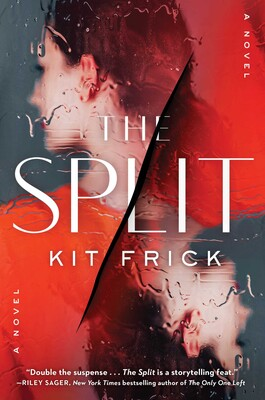
My latest domestic suspense novel, The Split, explores the strained dynamic between Jane Connor—the older sister, responsible, practical, unfulfilled—and Esme Connor-Lloyd—four years younger, flighty, creative, and maddeningly aloof. When Esme informs Jane she’s left her high society husband and needs a place to stay, Jane’s response splits her life into two realities: one in which Esme comes to live with Jane in their childhood home, forcing the sisters to reckon with the darkness in their past and the distance between them now, and the other in which Esme vanishes into the night, leaving Jane tortured by regret.
Whatever draws us to sibling stories—our own experiences or our lack thereof—I am far from alone in my obsession. The subcategory of thrillers and domestic suspense novels featuring complicated sibling relationships is thriving. Here are nine contemporary thrillers featuring three sets of twins, three fires, three pairs of estranged sisters, and the myriad sticky, sometimes deadly, bonds between siblings.
When Ava receives the news her twin Zelda is dead—burned alive after dropping a lit cigarette in the family barn, her body unrecognizable and officially unidentifiable—she is pulled back to her Finger Lakes hometown from Paris and into a clever literary scavenger hunt arranged by her sister, ostensibly from beyond the grave. Zelda is witty, wild, a lover of mind games, and so as Ava follows the trail of cryptic, sometimes twisted clues laid out for her, she has to wonder if her sister’s death is as is seems—or if her disappearance has been staged to teach Ava a lesson in family loyalty.
In this twisty twin sister mystery, we meet Alice Monroe, a seventeen-year-old inmate at a mental facility on Savage Isle, Oregon. Alice has been committed, and charged with manslaughter, but her twin sister Cellie set the fire that left Alice with second degree burns and killed Alice’s boyfriend Jason. The doctor at the mental ward says he believes Alice about what happened that night, but he doesn’t seem entirely trusting. Probably because years ago, Alice took the fall for another fire her sister set, and ever since they’ve been stuck with the label “the pyromaniac twins.” When Alice hears rumors that Cellie has been caught, and is being held elsewhere at Savage Isle, she resolves to find her reckless sister and seek her revenge for Jason’s life.
Amy is the baby of the Lee family—shy, sheltered, and too young to remember the hard years when her parents were new immigrants to New York, faced with the difficult decision to send their older daughter, Sylvie, to live with relatives in the Netherlands until they could save up enough to raise both sisters at home. Now, Sylvie is missing—vanished on a trip to Amsterdam to visit her dying grandmother one last time. Sylvie—the beautiful sister, the smart sister, the overachiever—suddenly gone. When Amy begins asking questions about her sister’s last weeks in Amsterdam, what she finds is a mystery. She told friends she was flying home to New York. She quit her job and told no one. Alarm growing, Amy flies to Amsterdam to retrace her sister’s footsteps, searching for Sylvie—and the truth.
Josie’s twin sister Lanie saw Warren Cave pull the trigger on the gun that killed their father. Warren was tried, convicted, and for years, the case has been closed. But now, a new podcast claiming the case isn’t as open and shut as Josie and her family have long believed turns Josie’s world on its head. Then her estranged mother’s sudden death pulls Josie back to her Midwestern hometown—and to the family she chose to leave behind, the family she’s lied about to her boyfriend in New York. There’s darkness in Josie and Lanie’s history, and with Reconsidered: The Chuck Buhrman Murder stirring up the past, that darkness isn’t going to stay buried.
When Lena learns that her younger sister Desiree has been found dead—on a playground near Lena’s home in the Bronx, ostensibly from an overdose—the two women have been estranged for two years, in part due to Desiree’s drug use. But Lena never thought the silence between them would last forever, and now that Desiree is gone, what the cops are saying about her death doesn’t add up. Lena sets out to find answers to two questions—why was her sister coming to see her after so long apart, and how did she actually die?—and her investigation unlocks a landslide of hard questions and dark secrets about race, family, celebrity, media, class.
In another twisty tale of estranged sisters, the murder of Chloe Taylor’s husband Adam brings her messy older sister Nicky—Adam’s first wife and mother of Chloe’s stepson Ethan—back into her life. (Any questions about why these sisters have drifted apart?) The murder is originally attributed to a home invasion at Adam and Chloe’s luxe Hamptons house, but soon sixteen-year-old Ethan becomes a suspect, breeding doubt among the Taylors and forcing the sisters to come face to face with the darkness in their family’s past.
When Hannah’s father produces a final group of presents from beneath the Christmas tree, DNA testing kits for the entire family, no one will own up to leaving the gifts, all tagged from Santa. It’s clear to Hannah that something is amiss, but the holiday ends without incident, and the tests are largely forgotten. Several months later, Hannah, her husband, her brother Mako and his wife, and her best friend and her new boyfriend all gather at a luxurious cabin in the remote Georgia woods for a weekend curated by Hannah’s brother, complete with a private chef, a hot tub, and loads of pot and wine. Mako is prone to excess, enjoys flaunting his generosity, but is that all this weekend is about? It doesn’t take long for the idyllic getaway to turn dark—a missing guest, a creepy host, a terrible storm, an accident—and soon the darkness in Hannah’s family begins to bubble to the surface.
In this campy, Lagos-set thriller, the relationship between sisters Ayoola and Korede is anything but simple: one is a femme fatale, a woman with a trail of bodies behind her. The other is calm, collected, and practical, disposing of the dead and mopping up blood. Korede never wanted to be her sister’s protector, her after-the-crime fixer, but when she finds herself at the house of her sister’s most recent dead boyfriend—Femi, Ayoola can’t remember his last name—bleaching the bathroom tiles and wrapping his body in bedsheets, she has to admit that this is the person she has become to her sister. When Korede’s longtime work crush, Tade, sets his sights not on Korede, but on her sister, Korede is forced to take a long, hard look at the killer Ayoola has become and how Korede has been enabling her.
Complicit by Stephanie Kuehn
The last time seventeen-year-old Jamie saw his older sister Cate was the night before her sentencing. Two years in juvie for burning down their neighbor’s horse barn. It wasn’t the first instance of her out of control behavior, just the one that landed her behind bars. The siblings both survived a difficult childhood and the traumatic death of their mother, which left them both scarred. Jamie got help. Therapy, meds. Cate didn’t. Now, Cate is nineteen and she’s been released early from juvie. Before she was sent away, Cate made a lot of enemies in Danville. Made a lot of people nervous. She has no reason to come back—except she has. For Jamie. Cate says she knows the truth about their past. Cate is going to make sure Jamie listens.
Aotearoa New Zealand’s literary scene has always punched above its weight, with our Pacific nation producing luminaries like Katherine Mansfield, Keri Hulme, Maurice Gee, Janet Frame, and Witi Ihimaera—not to mention the queen of crime fiction, Ngaio Marsh. Reading fiction set in New Zealand, you can’t help but get a sense of the fortitude and curiosity engendered by such a wild and isolated place.
Of course, there’s so much more to the modern Aotearoa literary scene than this handful of classic figures. In this list, we’ll explore ten essential picks from the rich and diverse range of New Zealand literary releases to give you a taste of contemporary life in the southern hemisphere. From experimental fiction to police procedurals, from the windswept forests of Korowai to the humid streets of Tāmaki Makaurau, every one of these books will transport you.
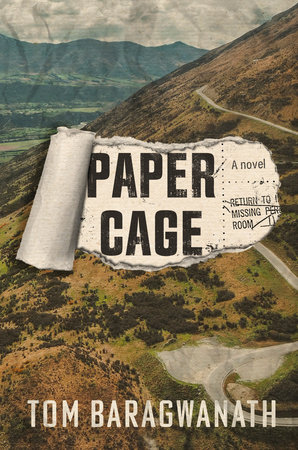
Trust me—I speak from experience. Writing my debut novel Paper Cagewas a balm for my own sense of homesickness for Aotearoa. I wrotePaper Cageduring the COVID-19 lockdown in Paris, when enduring thirty-six hours in a plane simply wasn’t an option. In Paper Cage, I wanted to capture the sense of isolation and collective surveillance that comes with small-town life, and a story about missing children and deceptive friendships felt like a good place to start. I can only hope my book lets you see Aotearoa through the eyes of my protagonist, Lorraine Henry, from the impossible size and colour of the sunsets to the plentiful range of roast meats in the main street takeaway joints.
In this cracking debut novel, Rebecca K. Reilly lets us look over the shoulders of siblings Greta and Valdin as they navigate the intricacies and disappointments of relationships, work, and family in their twenties. Written with a shrewd eye and a ruthless sense of humour, Reilly has barbs for everyone, including pretty much the entire city of Auckland. On a personal note, I was banned from reading this book at bedtime because of my excessive giggling.
Baby No-Eyes by Patricia Grace
In this haunting story, we follow Tawera, a young Māori boy who speaks to his ghost-sister, the titular Baby No-Eyes. With her characteristic inventive narration and immersive style, Patricia Grace weaves a story of grief, longing, and the enduring impact of secrets. Both heartbreaking and uplifting, this is a book that lingers long in the mind.
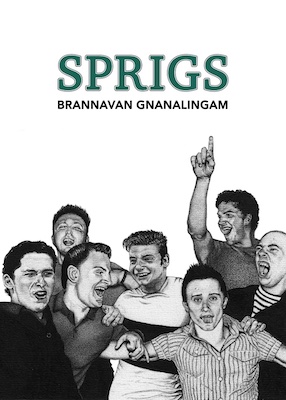
Sprigs by Brannavan Gnanalingam
In this punchy novel, Wellington author Brannavan Gnanalingam offers a witty and lacerating examination of bloke culture by taking aim at our holy grail: schoolboy rugby. Equal parts confronting and humorous, Gnanalingam deftly examines the ways privilege and class underpin and brace the tacit misogyny of young men. This is a brave and unflinching book that peers wide-eyed into plenty of uncomfortable places.
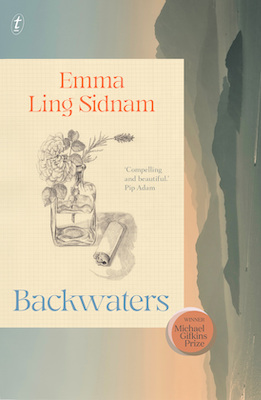
Backwaters by Emma Ling Sidnam
Winner of the 2022 Michael Gifkins Prize, Backwaters is a tender and contemplative memoir about a young Asian New Zealander’s search for identity and meaning. Here, we follow protagonist Laura as she unearths and situates her great-great grandfather’s story of arrival and adjustment to New Zealand in the early 20th century, giving her a mirror for her own sense of place in contemporary Aotearoa.
A ripping thriller from Booker winner Eleanor Catton about an anarcho-environmentalist collective caught up in a billionaire’s mad scheme to build a doomsday bunker in the remote South Island. This book transcends the trappings of crime fiction to offer juicy and quietly realistic portrayals of friendship and group dynamics—punctuated, of course, by a sketch of one of the most chilling techno-psychopaths ever to be committed to the page.
Ngaio Marsh Award winner for best debut novel in 2023, Better the Blood introduces Māori detective Hana Westerman in an excellent navigation of post-colonial social structures told through an investigation of Aotearoa’s first serial killer. A fascinating play on the procedural format with a propulsive plot and plenty of historical substance.
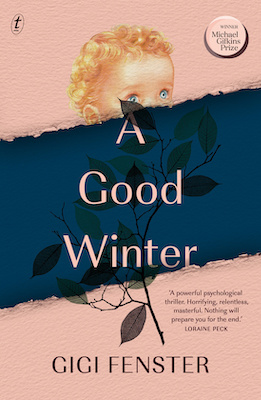
A Good Winter by Gigi Fenster
Winner of the 2021 Michael Gifkins prize, A Good Winter is a dark and compelling portrait of friendship becoming obsession. Unreliable first-person narration through the eyes of Olga keeps us guessing as to what’s really going on as she befriends her neighbour Lara and embeds herself deeper and deeper into her life. Features an ending every bit as shattering as it is inevitable.
The less you know about this book going in, the better. At first glance, The New Animals is a knowledgeable exploration of the fashion scene in Auckland in the early 1990s, with plenty of tension and interpersonal drama to keep things ticking along—until the home stretch, where you encounter one of the most confronting and destabilising codas to any novel you’ll ever read. A novel that truly redefines the possibilities of the form.
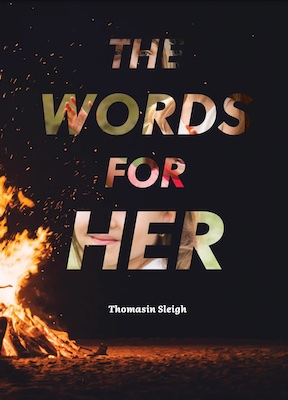
The Words for Her by Thomasin Sleigh
In the latest book by novelist and art writer Thomasin Sleigh, people start inexplicably disappearing from photographs. Combine this Charlie Brooker-esque premise with a tightly-woven domestic drama based in small-town Whakatāne, and you have a crackling exploration of memory and identity in an age when self-regard has become our succour.
To finish this list, we’ve got a good old-fashioned whodunnit from celebrated crime writer Fiona Sussman. In this novel about the darker side of small-town life, Sussman weaves a tight and compelling story of friendship strained by illness and infidelity, and the double lives many of us try—and fail—to juggle. A roaring success of a crime novel.
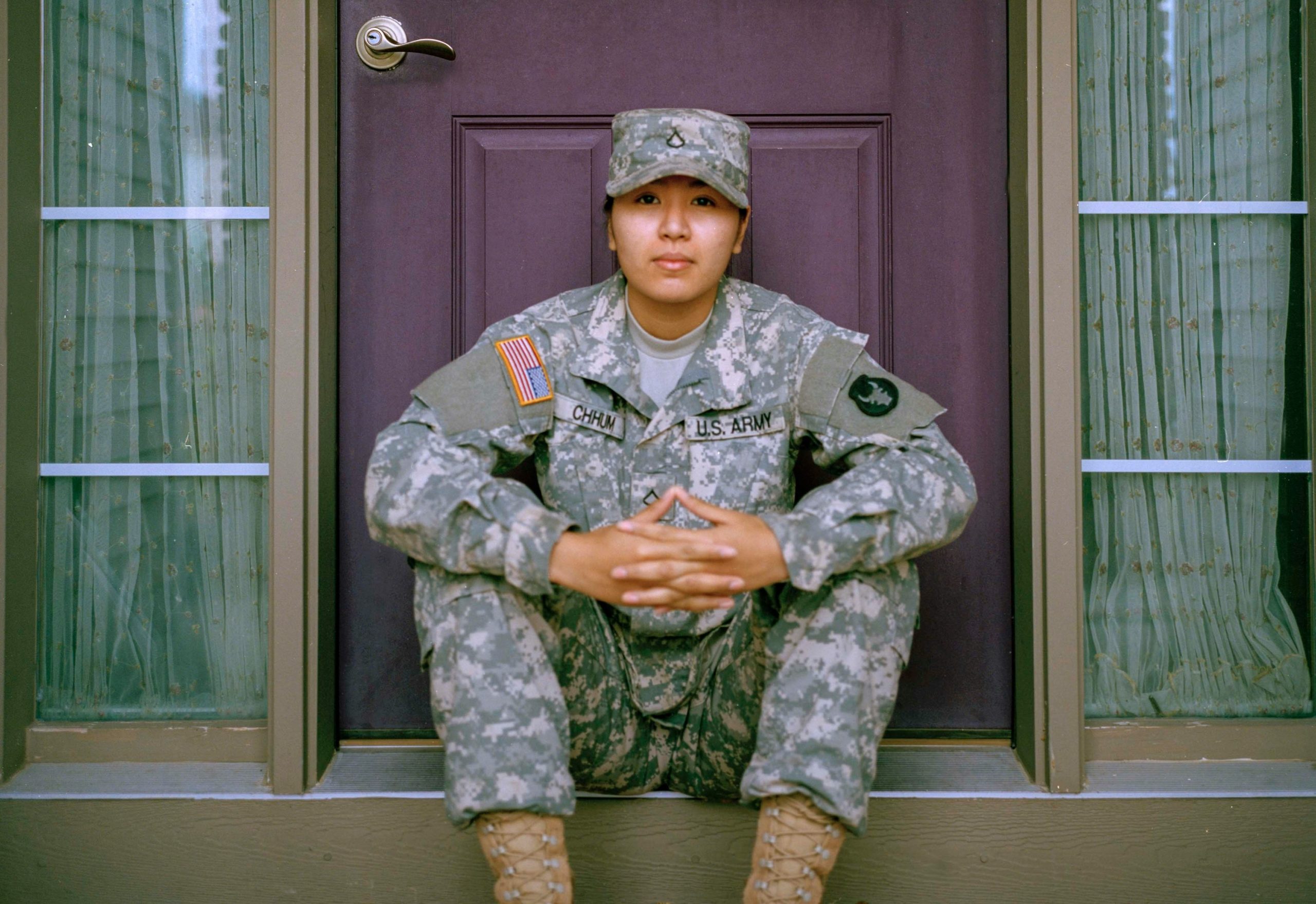
The titular story in Jillian Danback-McGhan’s short story collection Midwatch opens with two depictions of Ashleigh via two photos used by the media while she is on trial for a crime committed in the Navy. The photo from boot camp shows a “typical smiling white girl, blonde hair slicked back in a tight bun.” The other photo is of a “bleached-blonde sweetheart smiling in a camouflage-print bikini without much fabric to it,” who is giving the “camera this sort of come-hither look, legs parted, a Remington Sendero in one hand, a deer carcass in another. Big buck, too. Ten points or more.”
What at first looks like a dichotomy in terms of representation of women in the military morphs into manifold representations of women we didn’t even know existed because, among Danback-McGhan many achievements in this collection, a significant one is revealing the varying roles of women in relation to the military.
Throughout the stories in Midwatch, we meet women like Kali, who before the Navy has inclinations toward violence that have to remain submerged. Women like Vera whose PTSD closes in on her, surrounding her at every turn. Or Dessa, whose whole life is a performance, including while at war.
Over email, we spoke about how Danback-McGhan’s stories widen the scope of military literature, not only by showcasing women, but by showing us how women participate in war, the origins of their violence, and the hauntings that pursue them.
Ivelisse Rodriguez: You attended the US Naval Academy and served as Surface Warfare Officer in the Navy. What brought you to writing?
Jillian Danback-McGhan: Frustration, mainly! I had always wanted to be a writer, but early in my writing pursuits, I received and internalized some pretty terrible advice, mainly that skill as a writer depended solely on natural genius. I decided to study literature instead, first as an undergrad, then in graduate school. Still, I couldn’t stifle the impulse to create. I would draft stories on the backs of scrap paper, mostly old bills and term papers. Many of the stories in Midwatch first appeared as anecdotes I scribbled in the margins of the notebooks I carried with me during my at-sea tours and deployments.
IR: I love this image of you compulsively scribbling away, while not really believing it would amount to anything.
JDM: In my mind, I was young, a woman, not directly involved in combat—who would want to read what I had to say?
IR: What changed your mind?
JDM: Following my at-sea tours (onboard the guided-missile destroyer, USS Farragut, for four years, where I completed two operational deployments), I was offered the opportunity to return to the Naval Academy and teach in the English Department. Fortuitously, my rotation coincided with the publication of some early works of fiction and poetry portraying the War on Terror in Afghanistan and Iraq, which are exceptional works of literature and important contributions to the war-literature canon. As I read these works, I couldn’t help but grow frustrated with their lack of depictions of women servicemembers. Moreover, it bothered me how hard I had to search to find some of the exceptional works of literature written by women during this time. I realized the stories I wanted to read already existed in fragments hiding within my old notebooks. If I wanted to see more writing about women in the military, I had to create it myself.
Being in the company of literature scholars and writers reoriented my thinking around what the practice of writing demanded. My colleagues helped me understand the craft of writing is less dependent on natural talent than, to paraphrase William Kentridge, a commitment to the image. I had a subject, and I had plenty of commitment, so natural genius be damned, I was going to write!
IR: How did you prepare to write/be a writer?
JDM: I wanted to pursue an MFA once I left the Navy, but life had other plans, so I made a point to participate in as many writing workshops, conferences, and writers’ groups as I could. Fortunately, many organizations generously sponsor workshops for veterans, and I regularly attended those hosted by Words After War, Community Building Art Works, Voices from War, the Veterans Writing Project, and Warrior Writers. Working with you during the Short Story Intensive at The Writer’s Center proved to be a turning point in my work. You provided such invaluable instruction and insight, and the stories in Midwatch finally started to take shape. That course helped me see beyond the conceits of what military fiction should be. I learned to listen to the story itself and consider how it wanted to be told, something I only uncovered by evaluating and ritualizing my own writing process. Annoyingly, my process is equal parts military discipline and creative spontaneity; once I stopped seeing these two approaches as oppositional, I gained more confidence in my work.
IR: You mentioned becoming well-versed in war literature while teaching English. What does your book add to that body of work?
JDM: In many ways, Midwatch deliberately surfaces (forgive the word choice) and expands upon themes appearing in literature written about women in the military. Women servicemembers commonly find themselves occupying a sort of liminal space: they outperform their male peers and conform to the same institutional standards, yet are still othered; they are beneficiaries of policies brought about by feminists, yet practitioners of the same militarism feminism rejects; they are considered aggressors by adversaries, yet are preyed upon by their own colleagues.
Unsurprisingly, the women in Midwatch are conflicted and messy, characters searching for a sense of completeness in a world demanding their fragmentation. I didn’t hold back from creating deeply flawed characters. Too often, women in military literature are aligned to the extremes of super-heroism or victimhood. I wanted to create characters with nuance who make mistakes and terrible decisions, who are kind of terrible at times, but are trying their best despite being trapped in this double-bind. For this reason, I tried to craft each story in a way which makes the reader feel implicit in each character’s decisions. The characters can’t escape their choices, so the reader can’t, either.
If I wanted to see more writing about women in the military, I had to create it myself.
Midwatch also acknowledges the tradition of women war writers while noting there is a long way to go for equal recognition, both in life and in literature. Women have fought in and written about every war involving the United States, though historically they have rarely been recognized for it. For example, Aphra Behn wrote one of the first texts about war in colonial America. Later, Deborah Sampson, the Revolutionary War heroine who fought for the Continental Army for three years while disguised as a man, wrote an autobiography of her experience. Women played important roles as soldiers, journalists, and medical professionals in every war thereafter. Even some of the best-known American writers, such as Emily Dickinson and Edith Wharton, wrote literature which can be considered part of the war literature canon but are commonly excluded from it.
All of that is to say—women’s contributions to writing about warfare and the military experience isn’t new. Still, works of fiction by women writers remain woefully underrepresented in military literature, something I intentionally call out in the collection’s introduction.
IR: That is a fascinating history about women writing about warfare.
I want to go back to what you said about women in the military being perceived as aggressors while still being preyed upon by their colleagues. This idea comes through in your stories. There is an assumption of power that is associated with military members. Of course, that is not true as there are hierarchies. But I am intrigued by how there is this space that is (falsely) imbued with power, so one would think that all members would have access to that power. And, sometimes, your female characters do. But they are also subject to sexual assault, coercion, harassment, and undermining. For women in the military, power seems to be given and taken. Can you discuss the psychic consequences of this on your characters? How do the characters in your book negotiate this?
JDM: The objective of warfare is to impose one’s will on the enemy, which places violence at the root of the military’s very existence. It is dressed up in formal uniforms and restrained by rules of engagement, but that Clausewitz-esque primordial violence is always present.
What interests me as a writer is how, when constraints of discipline and oversight are eroded by misogyny or apathy or poor leadership, that imposition of power turns inward. These are the environments in which sexual harassment and assault and other forms of abuse occur. Women are left to wonder whether a word or an insinuation will turn physical. Midwatch explores what happens when women operate in these extreme environments. They risk being labeled as an alarmist if they speak up and risk their safety if they don’t. It puts them in a constant state of alert. In “Dearest,” for example, Vera becomes increasingly paranoid from being constantly on alert.
But women are also practitioners of state-sanctioned violence. They know how to impose power over an adversary, which raises important questions about the authorized use of violence when a threat comes from within. These characters interpret violence as the only language a potential threat will understand and willingly employ it, notably Midshipman Connor in “Trou”; Kira in “The Patron Saint of Cruise Missiles”; and the narrator in “Midwatch.”
IR: It seems like some of your female characters are also trying to outrun this violence. For example, Kali in your story “Dead Baby Jokes,” has multiple selves that she thinks she needs to firmly keep separated. She’s trying to constantly keep in check the violent impulses in her.
JDM: Violence does that to a person, doesn’t it? Dissociation is a trauma response which has allowed humans to survive, yet it can often be the driving force behind why people inflict similar traumas on themselves and others. It is far easier to say, “Yes I did that, but it wasn’t really me” than it is to accept blame. In Kali’s case, societal expectations amplify this willing separation of selves; she is conflicted by wanting to engage in both destruction and creation, by seeking violence for causes she views as just, yet she realizes her inability to openly exist in a world which looks at women’s aggression as monstrous. So, she engages in a willing fragmentation of self to keep her impulses distinct.
Women servicemembers occupy a liminal space: they outperform their male peers and conform to the same institutional standards, yet are still othered.
Sentiments of moral injury or exposure violence can compound this response even further, like it does for Sam in “The Curator of Obscenities.” As a character, Sam is the complete inverse of Kali, yet their emotional responses create similar fragmentation. Kali believes the convergence of her separate selves is dangerous to others when she really fears exposure. Sam rationalizes his emotional compartmentalization to keep his girlfriend from worrying when he really attempts to protect himself from the emotional consequences of the horrors he’s witnessed.
IR: The women in your book also inhabit different spheres of power. In the story “Hail and Farewell,” for example, the mother and daughter find power by throwing dinner parties and via their relationships to men in high-level positions in the military. Can you discuss how some of your characters create their own spheres of power?
JDM: What I find fascinating from a character perspective is what happens when people are excluded from more directive forms of power. In “Hail and Farewell,” which you mentioned, Sara and her mother create gathering spaces designed to influence their husbands’ social standing and advance their careers. This creates a highly gendered parallel hierarchy among the other wardroom wives. In “Midwatch,” Ashleigh’s relationship with her division officer affords her preferential treatment, which she protects to the point of coercion. Unsurprisingly, these characters exploit their power because they’ve essentially replicated the same predatory dynamics from which they are excluded.
IR: In a similar fashion, in some of your stories, the idea of “pretty privilege” does not hold the cachet it holds in the civilian world. Can you discuss how some of your female characters have to re-train themselves to enter the world of the military, especially when it comes to beauty standards?
JDM: To be a woman in the military is to be observed. This is true for the entire military, certainly, but even more so for women. They are a minority in all branches of service. They comprise a minority of most military units, so they tend to stick out, even more so if you are, say, a senior woman whom younger women look up to for guidance, or a trailblazer whom others scrutinize for signs of failure or triumph. It can feel like a constant performance, a perpetual attempt to put on the best possible show for an (occasionally hostile) audience. Dessa, a character from my story “Comeback” who is a former child actor, feels this most acutely. The environment almost necessitates a performance of gender, the intent to appear masculine enough to be taken seriously. Pretty only complicates matters. Beauty can be seen as a threat to a woman’s physical safety or a source of nasty rumors. In “Dearest,” Vera recounts her experience of being stalked, which is essentially a violent mutation of observation: her stalker tells Vera she’s “the prettiest lieutenant I’ve ever seen,” a compliment which distorts responsibility for the act. In the title story, “Midwatch,” a young sailor isn’t taken seriously when she reports unwarranted attention from her division officer because she is unattractive.
Perceptions around beauty can also lead to uncomfortable dynamics between military spouses, for example, who are concerned about their husbands deploying and working in proximity with an attractive woman, like many of the wardroom wives do in “Hail and Farewell.”
Too often, women in military literature are aligned to the extremes of super-heroism or victimhood.
It is a no-win situation, too, as unattractiveness can manifest as a source of criticism. In “Trou,” the main character, Sofia, reflects on the sexists slurs she’s encountered in her life and notes “whatever adjective inevitably precedes it” typically involves some commentary on a woman’s appearance or weight. Really, the military gaze is unrelenting for women.
Naturally, much of the discussion surrounding the military gaze pertains to its outward direction—drone surveillance, for example. I don’t mean to minimize the implications of this phenomenon through my discussion of its inward application. Rather, it is worth mentioning how the military’s practices inevitably get turned inward. Case in point—“Dead Baby Jokes” deliberately begins with Kali surveilling a potentially hostile vessel, but the story ends with Kali looking back at herself. One ignores this reality to their own detriment, as the characters in Midwatch learn.
IR: In the military, there tends to be a class division between those who are enlisted and those who are officers, especially officers who attended military academies. There is a strong presence of enlisted characters in your stories. Can you discuss these class divisions and how they inform some of your characters?
JDM: The intent for the two-tier system of officers and enlisted is to distinguish those who bear the “burden of authority” (officers) from those who act as subject matter experts in a type of journeyman model (enlisted). Like all systems, the idea doesn’t always match its execution.
Comparisons between the military and Regency-era social dynamics appearing in Jane Austen’s novels may not be immediately obvious, but I’ve found they’re often the best way to describe the imposed class divisions between officers and enlisted. Many Naval traditions were inherited from 18th century British Naval customs. To this day, officers and enlisted sailors live and eat in separate spaces. Enlisted sailors are selected for Mess Duty, where they serve officers their meals in the wardroom. Family members are considered an extension of the service member—prospective Commanding Officers’ spouses are required to attend a course on proper military etiquette and are expected to host social gatherings. Different support groups exist for officer and enlisted spouses, though many units have attempted to unify these in recent years.
Women have fought in and written about every war involving the United States, though historically they have rarely been recognized for it.
Honestly, the realities of the Navy make my job as a writer far too easy at times.
As you can imagine, these antiquated practices can problematically amplify social dynamics. In “Midwatch,” enlisted sailors fail to report an officer’s abusive conduct because they don’t think anyone would take the claim seriously. A Chief Petty Officer is unable to control a vindictive officer in “Dead Baby Jokes,” while enlisted members of a boarding team make immature jokes as subtle forms of rebellion. In “The Patron Saint of Cruise Missiles,” a Chief half-jokingly states her accolades aren’t publicized because she’s “not a college-educated white woman.” And a woman’s allegations of harassment against a more senior officer are questioned in “Dearest” because they could “ruin a man’s career.”
IR: Knowing all that you know now, like Midshipman Connor in “Trou” who wonders “why try” if the navy is full of “assholes,” what advice would you tell your younger self?
JDM: This was such a tricky scene to write—I had to fight the urge to tell my former self what she wanted to hear. Though, like all twenty-somethings, I wonder if I’d listen… That said, my advice would probably be: Find your advocates and don’t be afraid to ask for help. Speak up for others when you can. You won’t change every situation, but no attempt is ever in vain. Don’t compare yourself to others or let others’ expectations dictate your own decisions. You’re going to make mistakes and will never have all the answers, so don’t be afraid to ask questions. And try to have a little fun along the way. The work of the Navy is serious, but you don’t have to take yourself too seriously.
Electric Literature is pleased to reveal the cover for the essay collection We’re Alone by Edwidge Danticat, which will be published by Graywolf Press on Sep. 3, 2024. Preorder the book here.
Tracing a loose arc from Edwidge Danticat’s childhood to the COVID-19 pandemic and recent events in Haiti, the essays gathered in We’re Alone include personal narrative, reportage, and tributes to mentors and heroes such as Toni Morrison, Paule Marshall, Gabriel García Márquez, and James Baldwin that explore several abiding themes: environmental catastrophe, the traumas of colonialism, motherhood, and the complexities of resilience. From hurricanes to political violence, from her days as a new student at a Brooklyn elementary school knowing little English to her account of a shooting hoax at a Miami mall, Danticat has an extraordinary ability to move from the personal to the global and back again. Throughout, literature and art prove to be her reliable companions and guides in both tragedies and triumphs. Danticat is an irresistible presence on the page: full of heart, outrage, humor, clear thinking, and moral questioning, while reminding us of the possibilities of community. And so “we’re alone” is both a fearsome admission and an intimate invitation—we’re alone now, we can talk. We’re Alone is a book that asks us to think through some of the world’s intractable problems while deepening our understanding of one of the most significant novelists at work today.
Here is the cover, designed by Jeenee Lee, photograph by Widline Cadet.
Author Edwidge Danticat: “In 2021, I wrote a short essay about a series of photographs by the Haitian photographer Widline Cadet. Usually, when I write about photographs, I paste them to the wall across from my desk so that I’m always looking at them, even as I am working on other things. After the essay was published, Widline’s pictures remained on my office wall for a long time, especially the cover photograph ‘Seremoni Disparisyon #1 (Ritual [Dis]Appearance #1)’ (2019).
As I was working on this book, reworking some older essays and writing some new ones, I kept looking at this picture, hoping it might be the book’s cover one day. There is a lot of water in the book, from the Middle Passage to Miami hurricane flooding to a sea barge that carried toxic waste from Philadelphia all over the world and then dumped part of its dangerous cargo on a beach in Gonaïves, Haiti, in 1988. I couldn’t think of a better image for the cover of this book. The title of the collection is captured so well by this cover. The plurality of we, of course, negates aloneness. We might be alone, but at least we’re alone together. The photographs within the photograph are also a great reminder that even in our aloneness, there might be a few items, including some treasured amulets and, if we’re incredibly fortunate, other memory-evoking items, such as books and photographs, to keep us company.”
Designer Jeenee Lee: “The author chose an image by Widline Cadet that perfectly aligned with her book: a woman standing in still water, looking at pictures of youth, on a gray day. There is mystery, contemplation, and stories to be told. Alone, yet not alone. The visual artist Cadet is originally from Haiti, currently living in Los Angeles. My goal was to make the cover design reflective and minimal. The title is large and fills the sky, instead of being small and isolated. Even when you are by yourself, you carry your ancestors and your history with you, always.”
I knew where I was going but not how to get there, so I made several wrong turns on my way to the Castle Apartments. When I finally arrived, I got out of the car and had to shield my eyes from the sun. It was cold in the way that only a winter morning in the desert can be: an emptiness where you expect warmth. My presence on that otherwise empty street felt conspicuous. I was searching for a part of Tucson’s past, but to any observer I was just a loiterer casing the building. The Castle Apartments really do look like a castle, at least in the most reductive sense: battlements, turrets, towers, its name emblazoned in the curly script you might see at a Renaissance Faire. A shadowy form appeared in the window of a second-story unit. I watched them watch me walk across the road for a moment before they abruptly shuttered their blinds.
It was my first time home for Christmas in the two years since the pandemic had upended everything. I’d spent the early months confined to my Seattle home, but with my mind caught up in thinking about the other place I call home. Daily Zoom calls between my mom in Tucson and her eight close-knit siblings made them, in some ways, closer than ever. My aunts and uncles occasionally let me join these calls and I used the chance to record group oral history sessions, with me posing questions about our family’s past and them bickering over whose version of a memory was most correct. I loved listening to their stories, always have, but my historian brain also grew curious about the things that lay just beyond the periphery of their collective memory. How, I wondered, did our Tucson origins map against the city’s settler history? After months of research and writing in isolation, I was eager to find — and to sit with —the places I had spent so long thinking about. The Castle Apartments were first on my list, a landmark representing not only a forgotten moment in time, but also my own ancestral complicity in the too long history of Indigenous dispossession and genocide.
There was no water or sewage system, and residents relied on charity for everything from food to medical care.
Despite its royal airs, Castle Apartments is a remnant of tuberculosis — an ignoble disease that profoundly shaped the city’s history more than a century ago. This building was called the Whitwell Hospital and Sanitorium when it opened in 1906, and advertised itself as “a delightful home for those desiring rest and quiet.” It promised modern and fireproof living quarters, complete with steam heat and electrical light. Tuberculosis patients, initially, were not allowed. But it was only a matter of time. The building sat on the easternmost edge of a sprawling Tent City — or Tentville — which hordes of indigent tuberculosis patients had come to call home. In 1911, the hospital re-opened as the Tucson-Arizona Sanitarium and became the city’s first private facility dedicated to tuberculosis care and treatment. While convalescents inside the Sanitarium dined on gourmet meals, grown men and women, too sick to work, somnambulated in threadbare bathrobes and stockinged feet in the “canvas slum” just beyond the castle walls. Rustic structures of canvas and wood stretched as far as the eye could see. There was no water or sewage system, and residents relied on charity for everything from food to medical care. At night, the unlit streets fell into darkness and the sound of hacking coughs filled the air. In 1913, the Arizona Daily Star described Tent City as a place “where Armageddon goes on in continuous performance.” As one young resident later recalled: “It was truly a place of lost souls and lingering death. Sometimes life was too much to bear and a victim would end it. He was soon replaced by others who hoped for a cure in the dry air and bright sun of Arizona.”
Tuberculosis was not a new disease, but it was a particular menace and the leading cause of death through much of America’s pubescent nationhood. As the US expanded its imperial reach, nearly imploded in Civil War, abolished slavery, became the world’s “city upon a hill,” welcomed some immigrants and excluded many others, wrote Indigenous displacement into law, christened the era of Jim Crow, and traced skeletal rail lines across vast expanses of stolen land… tuberculosis was, body by body by body, quietly curbing the growth of the nation.
But while the body count grew, tuberculosis also helped fuel westward expansion. Those charged with guessing how to heal that wasting disease blamed the “impure atmospheres” found in East Coast urban spaces for incubating illness. In the absence of a cure, pseudoscience — and capitalistic enterprise — thrived.Doctors and business moguls joined forces in luring convalescents to plunder Tucson’s “treasures of health.”
An 1897 publication, Tucson as a Sanitarium: The Healthseeker’s Meca [sic] and the Invalid’s Paradise assured its readers that the Tucson “atmosphere is singularly clear tonic and dry.” Dr. A. W. Olcott, the vice president of the Arizona Medical Association in 1904, bolstered these claims, writing that Tucson winters “render pleasant an out-of-door life the entire year, and permit those suffering from lung and bronchial diseases daily exercise and life in the open air.” Another ad enticed East-coasters with verse: “Children of the Sun Live Here / Brown, sturdy, rosy-cheeked / growing into robust vigorous youths / Tucson’s children flourish like flowers.” None of the ads mentioned that this health-seeker haven was being built atop Tohono O’odham land, atop Yoeme land. That while Tucson signified a chance at survival to some, its original inhabitants were being forced into ever-dwindling reservations bordering its city limits.
Yet some alchemy of hope and desperation drove waves of migrants to seek the sunshine cure. To pack up their lives in Philadelphia, in Boston, in New York and to make new homes in “the land where winter never comes.” At the dawn of the 20th century, the Arizona Medical Association estimated that 70 percent of the state’s residents were infected with tuberculosis. These health-seeking migrants and their kin helped swell the territorial numbers to a size that warranted statehood, which was granted on Valentine’s Day, 1914.
On the surface, my decision to search for the Castle Apartments that morning was a random one. It was an anchor site, an address I could plug into my phone’s navigation system since nothing remained of the Tent City I was actually looking for. But now the Castle Apartments have become so much more to me — a monument to a part of the city’s past that had otherwise been largely forgotten, and a marker of how my own family’s history came to unfold in that place.
The doctors said this was his one shot at survival. The doctors said the sunshine would cure him.
I too am a descendent of lungers. Tuberculosis did not afflict any of my immediate ancestors, but they followed in the well-worn path of those who were. My uncle Bill, the oldest of my mom’s nine siblings, suffered severe asthma and chronic coughing fits as a child. He caught polio while visiting his grandparents in Yonkers one summer and his respiratory system couldn’t handle the stress. He was rushed to a hospital in August 1950, where the doctors said he needed to move to the desert. The doctors said this was his one shot at survival. The doctors said the sunshine would cure him.
Nine-year-old Bill was sent to board with a family in Tucson, a tenuous connection made by way of St. Ambrose Catholic Church. His parents and siblings stayed behind in Park Ridge, Illinois, packing up their lives and preparing for a permanent move Out West. During the long months away from his family, Bill was miserable. In a tear-stained letter to his mother he told her how “very, very lonesome” he was, and implored her to send one of his siblings to keep him company, and also a hat. He ended the note: “I cried while writing this letter. I am probably crying now too.”
When I look at a picture of Bill shortly after he arrived in Tucson, he’s not the bronzed or strapping youth that the city’s climate gurus promised could be raised there. He’s frail and his pants, clearly many sizes too big, are cinched in waves of fabric under his belt. He’s holding a football near a patch of dry grass in front of his foster family’s home. Trying, at least, to emulate the kind of All American Boy he was supposed to be. I also see in that photo the roots of my own settler story in this place.
Even after I arrived at my destination on that cold desert morning, I had to stare at Google Maps for a long time before I could grasp the vastness of the Tent City that once scrawled itself across the landscape around the Castle Apartments. I recited the boundary roads over and over, until it started to sound like a badly written poem:
Bordered on the north by East Lee Street,
On the south by East Speedway,
On the east by North Park Avenue,
On the west by North Stone Avenue.
It was about four square miles in a part of Tucson that was mostly desert scrub back then. Creosote. Cholla. Micah. Dust. More than a mile by foot to downtown. “A long way when one walked with only one lung,” observed a Tent City resident. But this boundary I was having so much trouble imagining wasn’t really a fixed one anyway. Tent City was amoebic in its growth: sprawling, haphazard, uncontained. If you were sick and poor and needed a place to slowly die, you came here and made a home on whatever patch of land you could find. And what’s a boundary anyway? A line drawn in the sand? Even a body that seems so fixed and firm is really just another porous vessel, susceptible to most of the things we wish to keep out: to pain, to parasite. To unspeakably worse.
My therapist likes to remind me that sometimes we don’t know our boundaries until they’ve been crossed. The same could be said, I suppose, for Tent City. Its ambiguous boundaries became most clear when disease spilled out over them. When an influx of health-seeking vets arrived after WWI, then secretary of Tucson’s Chamber of Commerce, Orville McPherson, noted with disdain: “You couldn’t walk down Stone Avenue in those days without passing someone with a terrible cough… it was dangerous because tuberculosis is contagious, but most of all it was pathetic.”
These experiments mostly involved collapsing or removing key parts of the patient’s body.
Tent City was bounded by time in a way that it wasn’t bounded by physical barriers. It appeared suddenly at the turn of the 19th century as the city’s tuberculosis population swelled. But soon those tents were replaced by roads and structures with less permeable borders. Sanitoriums meant to contain and cure the disease had sprouted up across the growing city and more were on their way: the Hotel Rest Sanatorium, Pima County Wing, Elks Hospital, St. Mary’s Round Hospital, Mercy Hospital, Oshrin, St. Luke’s, Hillcrest, Anson Sisters, San Xavier, South Pacific Hospital, a veterans’ hospital for all those unwell vets, and The House at Pooh Corners, “a boarding and convalescent home for children who spend the winters in Tucson.” Inside those walls, patients were subjected to ghastly sounding procedures: thoracoplasties, lung resections, lobectomies, pneumonectomies, nodulectomies, phrenic nerve crushes. These experiments mostly involved collapsing or removing key parts of the patient’s body, and those who were subjected to them were the lucky ones.
Tucson doctors and commerce enthusiasts continued to actively entice health-seekers through the 1950s and beyond, but hostilities grew hot when the wrong sort arrived. Poor, Black, Mexican, and Indigenous people who suffered from the disease were often blamed for their own illness, their humanity reduced to some insulting epithet: consumptive, indigent, lunger, shut-in, tubercular, case. According to the classist and racist logics of the time, they were innately unclean and prone to poor health, to have somehow orchestrated the unsanitary conditions in whatever underserved part of the city they had been crowded into. They were treated as nothing more than their disease. No longer a person, just a problem to solve.
Man-Building in the Sunshine Climate, a 1920s promotional booklet published by The Sunshine-Climate Club, devoted more than half its pages to assuring its target audience of worried white mothers that Indians could still be found in Arizona, but only the good ones — the “peaceable,” the “picturesque,” and the “primitive” ones. These fantasy Indians were rendered as two-dimensional cardboard cutouts whose crafts might add some color to a modern ranch style home, but whose “treacherous” ways were a thing of the distant past.
In reality, Indigenous people in Arizona were bearing the brunt of the health-seekers’ migration. The Phoenix Indian School — the state’s only off-reservation boarding school — just a few hours up Interstate 10, had been partially recrafted into a sanitorium to contend with the growing number of tuberculosis cases among Native youth. And in 1925, Indigenous inhabitants of Arizona were 17 times more likely to die of the disease than the general population.
Still, few in power gave any thought to how the influx of sick settlers might impact the people that had been there for generations before them. Worse yet, the doctor charged with treating tuberculosis in Southern Arizona in the middle of the 20th century, blamed Indigenous peoples for their inability to heal: “Our main problem with the Indians was not tuberculosis,” said Dr. Harold Kosanke, “because we had drugs in those days — but it was alcoholism and depression and disgust. They had no incentive to accomplish anything [including] getting well because they don’t work.”
Let’s sit with the irony of these violent words for a moment: while white settlers with tuberculosis were actively recruited to come to Arizona to heal, bringing disease and dispossession with them, members of the state’s 22 federally recognized tribes were blamed for their own illness and any challenge they faced in healing from it. Though it’s impossible to imagine that the eugenicist doctor who started calling tuberculosis “the white plague” in 1861 understood the barbed double entendre he’d created, its meaning lands heavily on me now.
For their part, Indigenous convalescents in mid-century Tucson were doing all they could to heal. Live-in patients at the Oshrin, a private hospital dedicated primarily to the treatment of Native tuberculosis patients, came from across the state in hopes that a respite in sunny Tucson would do them well. A 1965 roster lists patients from 13 Native Nations from across the state: Navajo, San Carlos Apache, White Mountain Apache, Yavapai Apache, Chemehuevi, Cocopah, Hopi, Mojave, Hualapai, Paiute, Papago and Pima (now Tohono O’odham and Akimel O’odham, respectively), and Yavapai.
This patient-produced monthly newsletter is thick with reports on patients past and present.
Their collective desire to heal is visible on the pages of Smoke Signals. This patient-produced monthly newsletter is thick with reports on patients past and present, with descriptions of cultural practices and kinship networks, with class offerings: typing, guitar, beading; with comics, drawings, jokes, word games, and reprints of Reader’s Digest-type syndicated columns. Patients also used those pages to urge each other to follow the healing protocols prescribed by the doctors, to resist the urge to leave and return home before they were fully well: “Don’t go now, keep fighting, and before you realize it, you will be walking out the front door with the good wishes of your doctor,” wrote a Navajo patient named Clinton Tsosie in 1965. And just like the Tucson promoters who lured East Coast consumptives to town, patients wrote out their desires in verse. Like this 1958 poem, “Navajo Goes Home,” by a patient named Emet Hopson:
Whitemans doctor says I need medicine,
The nurses give me streptomycin,
To help chase the T.B. germs away,
Maybe short, here, will be my stay.
I can help, with sleep, food and rest,
All very good, here, in “Wild West.”
With this fine Arizona weather,
Soon I will feel much better;
Fit and fine as a guitar’s tone,
When Mr. “Pillman” sends me home.
A Kodachrome photo album at the Arizona Historical Society features Oshrin patients of all ages carrying out their bathrobed lives as convalescents: Christmas celebrations, craft fairs, costumes, playing in rock and roll bands. A pocket-sized portrait of a young woman with freshly curled black hair is signed on the back with a message to her sweetie, reminding him “by good luck, I’m yours.” Together with Smoke Signals, these images show things that are too often glossed over when non-Native historians write about Indigenous history: signs of mutual aid, of laughter, of play, of melancholy, of deep concern for themselves and their communities, of love. I don’t mean to romanticize any of this. Like boarding schools, the Oshrin signified family separation, a disruption of traditional practices, a removal from homelands and sacred sites. But despite all this, Indigenous joy and Indigenous survival were happening too.
By the time my family joined Bill in Tucson in 1950, the city’s tuberculosis heyday was beginning to wane but the myth of the climate cure lived on. Bill’s parents, my grandparents, brought five more children with them and had four more after that. My grandparents “man-built” their ten children in that Arizona sunshine: Billy, Betsy, Dean, Nancy, Peter, Kathy, Ellen, Patti, Michael, Barbara. Tent City was by then the Feldman’s Neighborhood where neat rows of single-family houses belied little of the chaos and suffering that was there before. My family made their home about three miles north of what was once Tent City, and they passed over those grounds in their daily commute from home to jobs and classes at the University of Arizona. Decades later, I would walk, drive, bike, and run over that same ground long before I came to know anything of the history that unfolded there. I must have passed the Castle Apartments hundreds of times before it became the locus of memory that it is for me now.
My family wasn’t wealthy, but they were educated and they had gained some small-town political clout by way of New York’s notorious Tammany Hall. Irish Catholics who, in just a few generations of being in America, had leaned into their invented whiteness, stepped onto the social ladder, and climbed. They were the kinds of white or white-enough immigrants Tucson wanted to attract. They were also generous, affectionate, funny, and social justice-oriented people. My grandparents were lifelong leftists who participated in Tucson’s culture of radical hospitality, often welcoming passing activists and their children’s friends into their crowded home for a warm meal and a place to sleep. Their guests included the famous Catholic anarchist Ammon Hennessey and their saintly friend, Dorothy Day. When my grandmother Eileen died in 1990, a staff writer for the Tucson Citizen wrote that she was “a pioneer in efforts to feed the hungry and shelter the homeless in Tucson.”
We were the good whites, or at least that’s what I’ve always wanted to believe.
My heart swells with love and pride when I read this. We were the good whites, or at least that’s what I’ve always wanted to believe. But the binaries of good and bad don’t work so neatly when you’re a settler on occupied lands. When your health, your survival, your very being exists alongside so much suffering. Before, when I thought about disease and colonization, my mind would turn to smallpox blankets, to the sexual violence that spread venereal disease, to the livestock carrying virulent strains of illness that Indigenous peoples had no acquired resistance to. To things that were very distant from me and my closest ancestors.
I’ve spent the better part of the past decade researching and writing about settler colonialism, but it’s only now that I’ve had the courage to use those same words to grapple with my own family’s legacy. To look squarely at our settler entanglements and the harm they have done. It’s always been too much, too tender, too many feelings to potentially hurt. Too challenging to ask: What kinds of settler violence tether us to this place we call home? And harder yet to ask: What do we do about it? I still have more questions than answers, but what I do know is this: until we all quit trying to contort ourselves out of acknowledging our complicity in the ongoing creation of the settler state, there is no real healing to be had for any of us.
In grade school, the Five C’s of Arizona state history — Copper, Cattle, Cotton, Citrus, and Climate —were drilled into our impressionable brains. We blithely recited those sturdy pillars of words and came to know them as the foundation of our state history. But it turns out there were other, more important, C’s — like colonialism, capitalism, cancer, class hierarchy, and carceral states — that were never mentioned. And there were so many other letters we never quite got to, like “B” for Border Walls, “I” for Insatiable Growth, “N” for No Water, “V” for Valley Fever… I could go on. Arizona was not the paradise that the titans of wellness wanted us all to believe it to be. In fact, in 1981, the year I was born, Dr. John Erben debunked the sunshine cure altogether, calling it an “absolute myth.” “Arizona is not a climate,” he said, “but a philosophy.”
Now, late-stage Alzheimer’s has turned Bill’s mind soft and fluid. He sometimes remembers our names, but they’re like sparks untethered from any other reality. His brain is losing its ability to fire messages to his muscles. His throat can’t quite seem to swallow right, and his legs don’t always know how to move his body forward.
When I interviewed Bill on Zoom early on in the pandemic, he was a barely there shadow of the uncle I once knew. His laugh was thin and tinny, and there was a blankness where intelligent mischief once danced in his eyes. His wife, Kathy, and his eldest sister, Betsy, were on the call to help provide some scaffolding upon which he could pin his jumbled memories. I read him passages of things he wrote to his mother. He hardly remembered the polio, his time alone in Tucson, that tear-stained letter. He said he’d never heard of the Castle Apartments. He’s close to death now, and the sadness of it chokes me into silence.
I don’t want to be on the page, because part of me doesn’t want to be here at all.
As much as I’ve wanted to capture Bill’s story, I’ve resisted telling my own. Over multiple rounds of revisions, friends and mentors have urged me to write myself into this essay. I’ve refused (Who needs another white woman’s navel gazing anyway?), then complied, then erased myself again in subsequent drafts. As an academic I’ve been trained to hide behind the shield of my supposed objectivity and I’ve grown fond of the safety that such anonymity affords. Or maybe it’s the impulse I have as a white settler to erase my existence because of all the inherent harm that it conveys. I don’t have a death wish and I’m not a proponent of suicide, so I take relative comfort in my own literary erasure instead. I don’t want to be on the page, because part of me doesn’t want to be here at all.But I am here, and pretending otherwise isn’t going to undo the inherent harm of my settler presence.
There’s no ready-made map to help me get to what I’m looking for next: a way to tabulate the debts we owe, to acknowledge — and atone for — our complicity. But that’s not entirely true either. The pathways are there if you know to look. The Sogorea Te’ Land Trust, a Bay Area urban Indigenous women-led organization, dedicates itself to the practice of rematriation, to the returning of Indigenous lands to Indigenous peoples. They urge lost settlers like me to “consider your place in the lineage of this theft and how you might contribute to its healing, how you might reimagine your relationship to the land you are on.” They offer resources, readings, conversation guides, questions for reflection, land return success stories, an invitation to contact them for more information. But what more could we want, we’ve already taken so much. And I don’t even have to look across our own invented state lines to find answers. In Arizona, too, there are Indigenous-led movements for Land Rematriation, Seed Rematriation, Water Rematriation. These movements emerge from deep wells of lived experience, from Indigenous intellectual brilliance, from practices that predate us settlers by eons. Even just their names serve as valuable sign posts, and they all point to the same core demand: give it back.
So what’s stopping us? I’ve been timid about pushing these ideas into family conversations because I’m well aware of how self-righteous and sanctimonious I can be, how influenced I am by the zeitgeist of the very online left. It’s trendy, I know, to signal #landback sentiments, to offer up Native land acknowledgements at the start of every gathering, to liberally sprinkle toothless “decolonizations” into all we do. I don’t want to give anyone the impression that I think I have all the answers. I don’t. And when I talk to my family about all the bad things our whiteness has done to Native peoples and to this place we call home, it’s not news to them. They feel terrible about it. “It makes me sick,” says my mom, and I know exactly what she means. It’s a rotting feeling that I carry at the pit of my stomach too, sunk deeper by the sense of helplessness that usually comes with it. We do guilt well, but I’ve come to realize there is a sort of comfort in dwelling in that space too. I want us all to be dislodged from there, to be unsettled. To fight against the collective amnesia that settler memory likes to sow, and to take seriously the responsibility of repair. I worry that my family and other settlers like us will see this as a call out. It is, but it’s an invitation too.
As I drove away from the Castle Apartments, I passed by squat brick homes and dried out lawns filled with Christmas decorations looking sun-bleached and deflated as they readied for their season of disuse. The quiet normalcy of the neighborhood felt jarring in its casual disregard for all the history that had once happened there, and the urgency of what needs to be done next. But I could finally see it: the Tent City stretched across the horizon, convalescents lounging in that ceaseless sun, the living desert that was there before all that. I softened my gaze just enough to let the past bleed into the present, ever so briefly, but I’d like to think I saw a little of the future there too — a future where Indigenous peoples’ wellness matters as much to us as our own.
I’m going to admit something to all y’all: the best thing that has ever happened to me—becoming a mother—is also the absolute worst. When my daughter was born, I was unprepared for the overwhelming scope of motherhood, the endless fulfilling of needs, the simultaneous busy-ness and boredom, the crushing psychic pressure of being responsible for a new human being, and the stretch-marks that blessed my ever-expanding heart. I resented her and I adored her. My precious girl.
Undoubtedly, mother-daughter relationships are as varied in the Lone Star state as anywhere else on the planet, but in my experience, Texas moms are tough. Maybe because we have to be; a recent survey ranked Texas as one of the worst states for women in terms of economy and well-being, which is certainly nothing new.
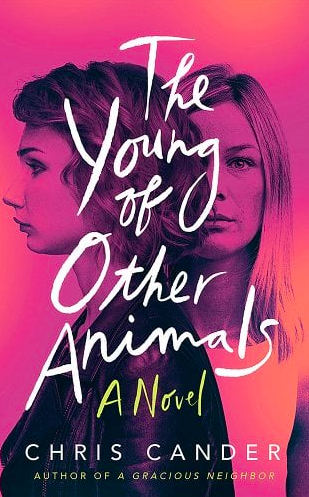
Texas mothers—like the land itself—can be flinty and intense, tempestuous and severe, even as we protect, nurture, and defend our babies. I’m fascinated by the varied ways the women in my life have approached motherhood, and how rarely they match the idealized depictions we grew up with on TV. Perhaps that’s why I prefer to write—and read—about strong women and their complicated, imperfect familial relationships. My latest, The Young of Other Animals, tells the story of Mayree and her daughter, Paula, whose tense proximity has grown more fraught following the death of Mayree’s husband. When Paula narrowly survives a violent assault, the two confront the shared traumas of their pasts, and attempt to save the relationship they hadn’t realized they’d lost.
Here are seven books about mothers and daughters in Texas that illuminate how we’re more likely to be one person’s shot of whiskey than everybody’s cup of tea.
This 1975 novel set in Houston is full of crisp prose and fascinatingly flawed characters. The story is centered on Aurora Greenway, an acerbic, eccentric Houstonian widow navigating life and a complicated relationship with her imminently practical daughter, Emma. For those readers who need their characters to be likable, this one—like most of the books on this list—might not be for you. Aurora is indeed often unlikeable, but at least she isn’t uninteresting. She is the sun of her own solar system, around which other characters—her daughter, her housekeeper, her string of male suitors—orbit. But it is her daughter who understands her the best, which seems to contrast the way Aurora feels about Emma, until at the most crucial moment, it doesn’t.
This light-hearted Bildungsroman tackles some heavy themes: inhabiting a human body that a mother is compelled to criticize, wanting to love and be loved, and living unabashedly alongside profound insecurities. Willowdean is a plus-sized, 16-year-old, Dolly Parton-loving Texan living with her former beauty queen mother who calls her, not insignificantly, Dumplin’. This is a positive coming-of-self story that taps right into one of Dolly’s famous quotes: “Find out who you are. And do it on purpose.”
For good reason, Parson’s debut short story collection was longlisted for both the National Book Award and the Story Prize. Primarily set in a semi-rural working-class Texas, these stories are full of sharp, empathetic observations about the gritty and mundane lives of ordinary people in various states of desire and deprivation, longing and loneliness. All twelve are masterful, but my favorite is “The Soft No.” Told from the perspective of a tween-age daughter, it’s a concise and stunning examination of the titular broken-down, soft-no mom, whose depression has trapped them both in a life filled with uncertainty. “Spirits up,” the narrator says, “she lets us dig through her purse and order a while pizza for everyone…Downswing is different: Mom unshowered in dark lipstick and baggy underwear, whimpering in the kitchen, stepping all over the groceries she ordered but won’t put away.”
Set against the backdrop of the American Civil War, this historical fiction is absolutely spellbinding. It tells the fictionalized story of the real Cathy Williams, a former slave and the only woman to ever serve with the legendary Buffalo Soldiers. Though she was born into servitude in America, her maternal grandmother had been an African warrior queen, and, in her words, “my mama never let me forget it.” When Cathy is taken from her plantation—and her mother—by Philip Sheridan of the Union Army and recruited to work as a cook’s assistant, she recalls what her mother told her: that she was never a slave but a captive whose warrior blood destined her escape from the enemy. To survive, Cathy poses as a man, becoming an outspoken, hardworking, unbreakable soldier posted at Fort Davis in West Texas. Although Cathy and her mother are separated for most of the book, I was compelled by the strength Cathy draws from her maternal heritage and her unwavering determination to someday be reunited with her mother.
“Where my panties at?” So begins the unforgettable journey of 16-year-old orphan Billy Beede, five months pregnant by a coffin salesman in 1960s Ector County, Texas. When Billy finds out her baby’s father is married, she heads west to visit her mother, Willa Mae’s coffin, and dig up the jewelry Willa Mae’s lesbian lover, Dill, claims to have buried her with. (Coincidentally, Dill—like Cathy in Daughter of a Daughter of a Queen, also presents as a man, which makes me think about the lengths women will go in order to survive misogynistic circumstances.) Billy claims to have no feelings for her “liar and cheat” of a mother, but as she finds herself replicating Willa Mae’s con-artist tricks, she realizes she’s likely to end up exactly like her. Parks, who won a Pulitzer Prize for her play Topdog/Underdog, is one of the most innovative storytellers I’ve read.
Fans of abduction thrillers will love Gentry’s story about a teenage girl who goes missing, only to reappear on the family doorstep eight years later. Anna, who wasn’t particularly emotive with her daughter before Julie’s kidnapping, struggles to connect with the woman who claims to be her missing child. She says, “You look at your daughter and it all comes back, every microsecond when you felt that twin surge of shame and fear, but this time it’s outside of you, happening to a body that feels like yours but doesn’t belong to you, so there’s no way to protect it.” This twisty tale, set in Houston, ventures into disquieting the territory of female inexperience and yearning, violence and family volatility.
This memoir is an absolute treasure: structured like a novel with a poet’s turn of phrase, and just enough embellishment to make a reader wonder if the title is a double entendre. I laughed out loud throughout this book, probably more than I should have. Karr’s cutting, gutting story, set in hot, gritty east Texas in the early 1960s, deals mostly with her middle childhood and her relationship with her undependable, substance-addicted parents. Much of her early life was spent trying to safeguard her mother, Charlie, from herself—and from the author and her sister. More than once, Charlie attempted some f’ed-up violence against Mary and her sister Lecia. Mary forgave her again and again, but this poignant reflection stuck with me: “Those other grown-ups were scared. Not only of my parents but of me. My wildness scared them. Plus, they guessed that I’d moved through houses darker than theirs. All my life I’d wanted to belong to their families, to draw my lunch bag from the simple light and order of their defrosted refrigerators.” Though Karr is sober now, I can’t help but want to pour us a couple of martinis and open up about life and trials as a woman growing up in the Lone Star state.
teach me how to girl

my fingers pale against your stomach
your boyfriend’s bike     jolts us toward
al-anṣariyyah mountains     in the distance
house lights flicker     like christmas
you find an old roof
you kiss a boy     and i watch
a stolen cousin     a lesson brewing

running beyond the borders
     of cannot

to live through the night i lie
to my father    to your father
we went on a joywalk    just the two of us

and we let loose

on a dry afternoon
marjuuha swings our girlbodies
you   show me how   to touch
forget the boys   the men
your fingers smell of oranges

zest against the grate
skin the rind
skin the pith
let me eat it
Every Lunar New Year, Chinese astrology welcomes a new animal into our lives, representing a new year, a new character, a new set of opportunities and challenges for art, writing, and life.
This year Lunar New Year is February 10, ringing in the Year of the Wood Dragon.
While the other eleven animals of the Chinese Zodiac are real creatures, the Dragon alone is extraordinary, a creature of the imagination, unbound from reality. An idea in its purest form, the Dragon can represent, be, and do almost anything.
Dreams loom large under the Dragon, and our visions for “what might be” take hold of us. Our imagined worlds become more vital, more urgent perhaps even than reality. Art takes on a life of its own that can energize or overwhelm.
Wood too, is an artist’s element. The first of the five Chinese elements, Wood represents new beginnings, a child’s mind. It is receptivity, curiosity, and an inexorable thrust towards being. When united with the Dragon it represents propulsive force, endless possibility, an explosive spring after a long winter. With the Wood Dragon our lives may seem to rush ahead of us, our minds not catching up until the Wood Snake arrives next year to contemplate how far we’ve come.
Here is a look into the kind of fortune the Dragon might portend for writers of every zodiac.
This year is a deluge of possibilities. Even as countless projects demand your attention, it is important to slow down and appreciate the little things. Indulge journal entries, pet projects, scenes that make you smile, and little treats.
With both the North Triangle and your Canopy Star (or Arts Star) coming into focus for you this year, you are at the height of your artistic powers. Dream big, and then split those dreams into concrete, manageable steps. It’s a year to move mountains, but the biggest gains start small.
This is a year diligence pays off. The ideas that have been percolating inside you are ready to come to fruition. All it takes is showing up each day. Consider setting a timer for the work you want to get done. Start small and manageable. The first fifteen minutes are the hardest, so start there. Once you complete them you may find yourself ready to tackle more.
When you find your stride don’t be afraid to take risks with your work. Make bold choices, take big swings, shoot for the moon. Cut scenes, upend storylines, push to publish. If you miss you can always pick yourself back up and keep on running.
Wood is the Tiger’s native element, particularly the bold variety expressed this year. When things are going well you will feel unstoppable, eager to make everything perfect. But being too inflexible can make minor setbacks feel like earth-shaking disasters.
It is okay for things to go wrong. When a problem feels unsolvable, consider this may be because the problem is bound to something central to your project. What may seem at first like a problem may actually be an extension of what makes your work unique. Perfection is an illusion, but texture gives you something to say.
As the year of the Water Rabbit ends and your Age Star passes, you are entering a new stage in your life. As we enter the Rabbit’s native element, it is a good time to clear out the old and make way for the new. A sense of curiosity and play is a good guide. What excites you? What do you want to learn, about a character, project, or genre? Follow those you trust. Teachers, friends, favorite authors, favorite books.
The Dragon and Rabbit are often said to clash, as the Rabbit’s tender heart is upset by the Dragon’s bluster. When you feel the world’s edges fit uneven against your own, pay attention to the discomfort. What does it say about the world, or about yourself? There is catharsis and genius alike in naming the little frictions that others overlook.
When a Zodiac reaches their own year, they are said to meet their Age Star again, and enter a new phase of their lives. It is a time of delicate transition, and yet Dragons have little desire to be delicate. Something big is on the horizon. Perhaps you are chasing a new idea, starting a new project, or are about to make a major breakthrough. Consolidate your gains as you make them. Back up your work and then make dramatic cuts and revisions without fear.
The Dragon is also their own Canopy Star. This year it may become easy to lose yourself in your work. Ride the momentum when it feels right, but don’t forget to check in with yourself. Do you need a rest? Food? Water? A friend? The body feeds the mind, and you’d be surprised how some inspiration strikes only when away from your desk.
A Wood year feeds the Snake’s hidden Fire element, and a curious mind can feed your passions. Take stock of all you have achieved. What in your life and process do you really value? Chasing a distant goal can be exciting, but it is how you live from day to day where sustainable happiness lies.
Decide what parts of your process make you feel whole and live by them. Is it working a specific amount, in a specific way, or in a certain location? Is it about an act of play, or justice, or discovery, or expression? How can you feed that which speaks to you? You cannot guarantee your destination, but you can make sure you approve of the journey.
High highs and low lows are the year’s theme. Don’t kick yourself for exhaustion, burnout, or slowing down. Writer’s block is not failure, it is process. Set clear boundaries between work and rest. Perhaps you only write before five pm, or never write on weekends. Setting these restrictions enshrines a time where you can be away from the desk without guilt, and incentivizes making the most of work hours when they arrive.
Don’t be afraid to have fun, waste time, see friends, watch a movie. Cultivating life away from the desk is necessary for life at the desk to be sustainable.
This year you may feel pressure from the people around you. Perhaps they are flourishing, achieving great things, and making you feel doubtful about your own decisions. Or perhaps they are struggling, and leaning on you for support. Remember that your first obligation is to yourself. Take stock of what relationships bring you joy, and which ones make you unhappy. You can decide what you feed, and what you let fall away.
People also make good inspiration if you pay attention. What little joys, little difficulties surround them. What makes these interactions potent? Unique? Universal? These nuances give writing the bite of the real.
As the Monkey and Dragon make two points of the Northern Triad, the Water element is potent for you this year. You may find yourself prepared to let things go. What paragraphs, scenes, character can you cut? Like pruning apples, cutting some lines will let those that remain grow sweeter. When in doubt cut, that way you can see what you miss.
The Northern Triad is also associated with the mind and the hidden. Take this time to trust your subconscious. Let your writing get weird, follow impulses, explore “vibes,” magical realism, scenes or symbols that feel right even if you couldn’t at first explain why. You might surprise yourself.
As the Rooster leaves behind a troublesome Rabbit year, they come into their own in the year of the Dragon.
When paired with the Dragon, the Rooster becomes the Phoenix, symbolic of royalty, femininity, and the sky. With the Dragon’s support the Rooster also creates an abundance of the Metal element. Fourth of the five Chinese elements, Metal is symbolic of division, definitions, boundaries, and management. You can chase this energy with attention to concept and detail. Do line edits. Do revision. Ask yourself, what is this scene, this chapter, this project, really about? You don’t have to answer right away – you might not know until a first draft is done, and maybe not even then. But If you can find the central question of your work, a second draft can be honed with a sharper cutting intent.
The Dragon and Dog stand on opposite ends of the Zodiac wheel in fierce opposition. The Dog is humble while the Dragon is grandiose. The Dog defends boundaries while the Dragon ignores them. In a Dragon year, the Dog’s interests in keeping the world comfortable, secure, and known will come under fire. Your writing may turn messy, spill over its boundaries, or go to raucous, uncomfortable places. Vulnerability and shame may be sources of worry.
Opposition years are a challenge by nature, but they are not inherently bad. Opposing animals have the most to gain if reconciled, representing a full spectrum of experience. If you can allow yourself to write work that embarrasses you, you free yourself from self-imposed shackles. Lean into it, and you might be surprised how many possibilities you did not allow yourself.
You’ve worked hard to arrive where you are today. Let that knowledge carry you forwards, that you’ve earned this, that you have achieved something. You may feel new ambitions stirring this year, desires for accolades or success that didn’t move you before. Hunger in moderation can be good. It is a thrill that can feed passion. Just don’t get so caught up in your goals you lose touch with the work itself and why it is meaningful to you.
If you feel yourself giving in to pressure or despair, take some time to unplug. Forget about the world, and remember what is for you. Write only for yourself. The world will still be there when you get back.
Cultural alienation is the feeling of being disconnected or estranged from one’s own culture or the culture in which one lives. While these stories traverse continents and cultures painting vivid portraits of characters grappling with displacement, loss, and the yearning to belong, each is a testament to the resilience of the human spirit. From navigating societal pressures to confronting historical wounds, generational trauma, or their own identity, these characters defy obstacles and forge their own paths to connection, self-discovery and acceptance.
In my novel The Things We Didn’t Know, I portray the journey of Andrea, a young girl from Puerto Rico who moves to the United States. Andrea struggles to reconcile expectations coming from the diverse circles that shape our lives, ranging from school to the dynamics of a traditional Hispanic family living in the midst of an American community. Andrea walks an emotional tightrope—never feeling quite rooted, always adapting to ever-shifting social landscapes. These conflicts are not confined solely to the realm of cultural disparities. They resonate universally with anyone grappling with the displacement that requires us to form multiple layers of identity.
Here are 8 distinct voices explore cultural alienation and the search for belonging:
Chimamanda Ngozi Adichie’s Americanah is a compelling odyssey portraying the experience of Ifemelu, a Nigerian woman who migrates to the United States in pursuit of education and opportunities. Through her blogging, she addresses pressing issues such as cultural appropriation and the new set of racial dynamics she confronts. But when she returns to Nigeria, Ifemelu feels Americanized and questions her Nigerian identity. As Ifemelu navigates her own sense of self, Adichie offers a striking commentary on the struggles faced by immigrants, the complex nature of personal identity and the evolving landscape of race in today’s interconnected world.
Adichie explores the psychological and emotional burdens that come with alienation while confronting the persistent challenges posed by social expectations. Adichie’s narrative invites readers to reflect on the burden imposed by migration on the individual. This story is a testament to the quest for belonging in more than one place.
Between the lines of the romantic plot outlining T.J. Alexander’s Second Chances in New Port Stephen lies an exploration of overcoming alienation. Eli, a trans man returning to his hometown after a career downturn, faces double-sided estrangement. Not only does he grapple with the societal pressures and internalized doubts surrounding his identity, but he confronts the ghosts of his past in a family that still sees him through the lens of childhood photos lining the walls. This constant reminder of his pre-transition self leaves him feeling invisible.
When Eli runs into his high school sweetheart, Nick, now divorced and with a child, a new bond develops. While Nick grapples with his own societal expectations as an Asian man in a predominantly white community, the couple explore their shared history and a love that bridges the isolation caused by racism and transphobia. This story is a celebration of the power of human connection in the face of alienation. Eli and Nick’s journey leaves you with a renewed sense of hope and the belief that second chances, both personal and romantic, can lead to a brighter tomorrow.
Armando Lucas Correa’s The Night Travelers weaves together the intricate lives of its characters across time and continents, exploring the theme of overcoming generational alienation. The narrative unfolds with Ally’s clandestine interracial romance with Marcus in 1931 Berlin, amid the looming dangers of Nazi ideology. As Ally protects Lilith, her biracial daughter, the novel transforms the fear imposed by a hostile, racist society into a heartfelt narrative of motherhood and survival.
Decades later in Havana, Cuba, Lilith, who escaped Germany as the daughter of a Jewish couple, grapples with the loss of her mother and the shadows of her German heritage. This portrayal of her now even more complex identity accentuates the persistent challenges of alienation. The novel’s trajectory unfolds further when her daughter Nadine reveals a web of familial secrets in New York. Nadine’s journey becomes an example of breaking free from generational trauma and offers a glimmer of hope for future generations through education and self-identification.
In Edwidge Danticat’s Claire of the Sea Light, the delicate balance of beauty and heartache unfolds through the narrative of a seven-year-old girl, Claire Limyè Lanmè, who is aware that her father is trying to give her away. The story explores the alienation experienced by Claire until her disappearance, as her father seeks a better life for his daughter, after his wife’s death.
Danticat’s prose paints a beautiful shimmering coastal setting in Haiti in contrast to the vast distances that separate individuals within a community, capturing both the beauty of the landscape and the profound loneliness that can exist, even in a close-knit community. The novel portrays alienation as both an individual and collective reality and emphasizes the characters’ shared sense of being adrift in search of belonging in a country devastated by poverty and loss.
Reyna Grande’s memoir The Distance Between Us explores what happens when familial bonds are strained by physical and emotional distances. Against the backdrop of the Mexican American border, the narrative reveals the consequences of separation on Grande and her siblings after their parents’ migration to the United States. In Grande’s story, the estranging force of physical distance reduces the essence of familial ties to immeasurable alienation, yearning for connection, acceptance, and understanding amidst adversity. Cultural and linguistic disparities and a relentless struggle for belonging contribute to a heartbreaking sense of isolation throughout the narrative. Grande’s attempts to bridge the emotional chasm within her family becomes a central focus and a testament to the resilience of the human spirit. This memoir stands as a moving portrait of the hardships endured by immigrant families that explores separation, belonging, and the negative impact of distance on the human experience.
Xochitl Gonzalez’s Olga Dies Dreaming weaves a narrative that delves into the complexities of defining identity and belonging, family, and the liberation of Puerto Rico from colonialism with Olga Acevedo as its central figure. As Olga maneuvers the duality of her Puerto Rican heritage amidst the setting of New York City, she confronts the weight of familial and societal expectations.
Her mother Blanca, a radical who abandoned Olga and her brother Prieto to liberate Puerto Rico, only communicates through letters. Meanwhile, Prieto struggles to reconcile his homosexuality and political aspirations with the expectations of his family and community. When both Olga and Prieto reconsider their mother’s stance about Puerto Rico’s relationship with the United States, they examine their own identity and acknowledge a sense of belonging in the New York Puerto Rican community, dismantling the walls of alienation.
The novel transcends family drama as a social commentary exposing the hidden burdens of shame behind the lack of self-acceptance and the pervasive inequalities within American society. It stands as a testament to the resilience found in discovering one’s voice, breaking free from societal expectations, and embracing the beauty of living one’s unique identity and life.
Okwiri Oduor’s novel Things They Lost is a genre-defying journey that blends magical realism, family history, and the coming-of-age experience. Set in the fictional African town of Mapeli, the story follows twelve-year-old Ayosa as she unravels the haunting threads of her family’s legacy while she longs for her mother Nabumbo, who comes and goes leaving Ayosa alone in a generational home and extreme poverty.
The narrative intertwines beauty and generational trauma when, in her loneliness, Ayosa experiences memories of her ancestors, some of which are unbearably tortuous. Entrapped and lonely, Ayosa’s ability to communicate with spirits living in her attic becomes a bridge to understanding the profound influence of the past on her present. Through her experience we witness strong ancestral connections, female bonds, tortures, disappearances, and massacres that reveal a generational history of oppression and loss. The inclusion of magical realist elements portraying Ayosa’s ability makes this a compelling tale of self-discovery, finding one’s voice and offers the reader an unforgettable portrait of generational trauma.
On Earth We’re Briefly Gorgeous by Ocean Vuong delves into the layers of identity resulting after war trauma, and the Vietnamese immigrant experience. Little Dog, the resilient protagonist from Saigon, confronts bullying and rejection in the United States while navigating a life of poverty and the enduring impact the Vietnam War has on his family’s mental well-being. His tenacity to overcome obstacles and gain a positive sense of self radiates through the story. When his family is unable to communicate with the community around them, he takes on the role of family translator forging a connection between both cultures and generations. From then on, his decision to communicate through writing serves as an instrument for self-discovery, leading him to become the first in his family to break societal expectations and attend college, thereby disrupting their cycle of hardship.
Vuong’s poetic narrative interlaces the transformative power of love, underscoring the significance of being acknowledged and accepted. A pivotal moment in Little Dog’s life occurs during his coming out to his mother, where he not only asserts ownership over his life but embarks on a profound exploration of self. The novel portrays an unwavering spirit to persevere while keeping in mind the beauty and brevity of the human experience.
Of all the lies contemporary society runs on, the fiction of the meritocracy may be the most insidious and inescapable. Even those cynical about its promises have no choice but to place their trust in its precepts. If you’re born with the odds stacked against you—whether because of your class, race, gender, or place of origin—what can you do but hope that with enough studying, hard work, networking, and sheer optimism you’ll one day achieve deliverance? And what do you do when you realize the most may not be enough? What new story must you tell yourself then?
My debut novel, Ways and Means, centers on a lower-middle-class finance student who becomes embroiled in a nefarious scheme after he fails to land his dream job in investment banking, and as I was writing it I took inspiration from novels that take a skeptical view of our meritocratic fantasies. In each of these books, characters invariably come to one of two crushing realizations: 1) no matter what they do, they’ll never achieve the success they dreamed of, or 2) even if they do, it won’t bring them the happiness they expected. How these characters respond to that realization varies: some find alternate sources of sustenance and faith, others meet ruin, others simply truck on. But what unites these novels—and what makes them surprising—is that they manage to forge from this disappointment works of startling beauty.
Kapoor’s 2023 novel is billed as an Indian version of TheGodfather, and it offers much to support that comparison: corrupt clans and cronies, indomitable fathers and wayward sons, gruesome bloodshed. But the most trenchant of the novel’s multiple interwoven narratives is that of Ajay, an impoverished young man who becomes the chief servant to the scion of a wealthy crime family. Ajay is rewarded for his reliability and attentiveness with money and access to glamour he never dreamed of. But he soon discovers that the quality that makes him an ideal servant—his loyalty—also makes him an ideal candidate for another role: the fall guy for a wealthier person’s crime.
The End of Eddyby Édouard Louis, translated by Michael Lucey
Those who most ferociously latch on to the promises of the meritocracy are often those most desperate to leave home. That’s the case for the hero of Louis’s autobiographical debut novel, a queer coming-of-age novel set in rural France. Alienated from his community, with its traditional gender roles and idolatry of masculinity, the protagonist, Eddy, works to distinguish himself intellectually in hopes of fleeing to a more welcoming place. And though Eddy succeeds, Louis takes care to illustrate one of the crueler ironies of meritocratic salvation: no matter how far Eddy goes, he’ll never shake off his perverse longing for home, and no matter how much he might have earned his place in a new milieu, he’ll never feel entirely at home there either.
Smith’s novel follows four characters from a lower-middle-class neighborhood in northwest London as they make their way, romantically and professionally, through early adulthood. But it’s the character of Keisha (later she’ll go by Natalie) who occupies the largest portion of the story, inspires Smith’s most daring formal experiments, and illustrates most clearly the crushing alienations of meritocratic yearning. Trained as a lawyer, Natalie builds a life centered on following rules, impressing teachers and colleagues, and adhering to the rigid path of upward mobility: she believes, as Smith puts it, “life was a problem that could be solved by means of professionalization.” But the hollowness of this life eventually eats away at Natalie, driving her to seek out meaning and satisfaction in an increasingly desperate manner.
Millie, the protagonist of Halle Butler’s second novel, is an office temp in Chicago languishing just outside what in corporate America passes for the promised land: permanent, salaried employment. Her resentment—toward her circumstances, toward her colleagues, toward herself—fuels much of the novel’s lacerating inner monologue and telegraphs the hopelessness that even intelligent, capable people feel in our increasingly precarious economy. As Jia Tolentino wrote of the book’s narrator in the New Yorker: “Despite Millie’s acknowledgment that she might strive all her life without ever being happy or doing anything meaningful, striving nonetheless provides the entire grammar of her life.”
At the beginning of Rahman’s 2014 novel the unnamed narrator finds his old university friend, Zafar, in a shocking state. Zafar, once a banker and human rights lawyer, is now emaciated, bedraggled, and apparently broke. From there the book proceeds to tell the story of Zafar’s stunning rise—from poverty in rural Bangladesh to Oxbridge to Wall Street—and even more stunning fall. That story is one of enchantment followed by growing resentment and finally rage: at the ethical horrors of geopolitics and high finance, at the intransigency of a class and racial hierarchy that will never fully accommodate those perceived as outsiders, at the inability of intelligence and success to compensate for the traumas of early deprivation. “Childhood poverty,” Zafar says, “looms over one’s whole life.”
Buying into the promises of the meritocracy also means, for many, taking on a lot of debt. One such indentured dreamer is Jonathan Abernathy, the protagonist of McGhee’s debut novel. In hopes of paying off his staggering loans, Abernathy accepts a job auditing the dreams of American workers and scrubbing the ones liable to produce feelings—anxiety, sadness, longing—that will make them less productive. In this way Abernathy finds himself abetting the very capitalist system that has ground him down. McGhee’s book points to a brutal irony of our contemporary work culture: alleviating our own burdens often entails burdening those who, in another world, might be our class comrades-in-arms.
John Grisham’s 1991 novel may be the classic tale of meritocratic striving. It follows Mitch McDeere, a freshly graduated law student from inauspicious circumstances, as he joins a law firm in Memphis and slowly uncovers its dark secrets. Grisham lavishes attention on the glamorous perks of McDeere’s job to underscore a larger point: the people who lack a safety net, who desire success most desperately, are often the people who find it hardest to challenge wrongdoings in the institutions to which they’ve attached themselves. That McDeere does challenge them—and that he pilfers a vengeful fortune in the process—is part of what makes him an enduring hero.
DON’T MISS OUT
Sign up for our newsletter to get submission announcements and stay on top of our best work.
YOUR INBOX IS LIT
Enjoy strange, diverting work from The Commuter on Mondays, absorbing fiction from Recommended Reading on Wednesdays, and a roundup of our best work of the week on Fridays. Personalize your subscription preferences here.