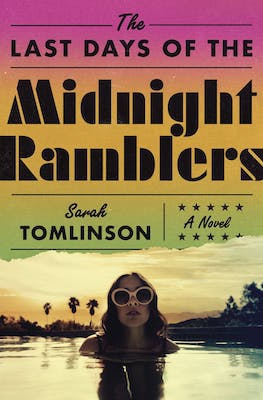
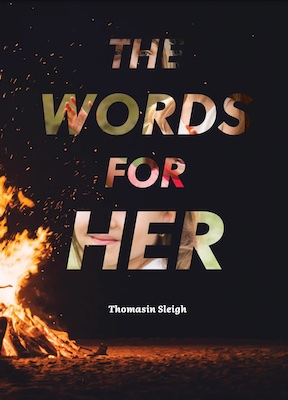
When I was ghostwriting full-time, I produced twenty books in fourteen years. Thanks to a suggestion from my literary agent, I realized a ghostwriter might make a great heroine—they’re under tremendous pressure, often while adjacent to the fame machine—so Mari Hawthorn, the ghostwriter at the center of my debut novel The Last Days of The Midnight Ramblerswas born. Mari is a cash-strapped ghost who lands a gig writing for Anke Berben, legendary model and style icon most famous for her romances with three members of classic rock band the Midnight Ramblers—not to mention, Anke might have had a role in the death of the band’s founder, who was her husband at the time. Mari is hellbent on getting to the bottom of the rock and roll mystery, for the book and for Anke, without getting pulled in too deep herself.
Because I find ghostwriters so intriguing, I compiled this reading list full of ghosts. In it, I discuss what I believe these characters can teach us, not just about the nature of celebrity, authenticity, legacy, and representation, but also, about the subtle power dynamics that go into all relationships—professional and personal.
The seven books gathered here all use the lens of authorship in deft and moving ways that not only gave me a fresh perspective on my own writing, but also complicated my world view, as most successful novels do. Although these works vary in style, tone, and intention, they all share an interest in how who tells a story impacts the veracity of that tale.
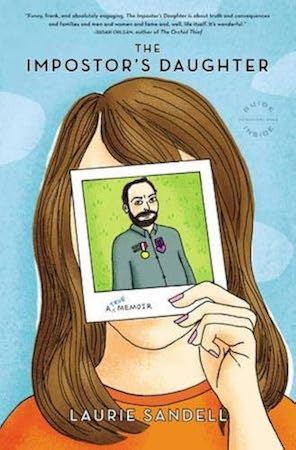
In this graphic memoir, Laurie Sandell describes in troubling but hilarious detail the exciting (and destabilizing) experience of being raised by a narcissistic liar. Her ability to stay close to her dad and make him feel emotionally safe prepped her to excel as a celebrity journalist in the era when women’s magazines ran in-depth and (at least theoretically) intimate profiles of female stars. But while she was scaling impressive career heights, such as a high-cache interview with Ashley Judd, Sandell was unraveling personally. She was crippled by anxiety and self-doubt, which she self-medicated until she needed rehab. While she wasn’t specifically working as a ghostwriter, I was galvanized by the courage and clear-sightedness of her ruminations. A fascinating and deeply moving coming of age story that will resonate with anyone interested in reconsidering our ideas of persona and celebrity.
For me, the thrillers that are especially delicious delve into relationships between women, particularly those that involve matters of intimacy, power, success, and identity. This book delivers a smart, insider look at the publishing world, as experienced by Florence, an editorial assistant and aspiring writer whose deep ambition lands her a plum gig working for the cultishly adored writer Maud Dixon. While Maud is widely admired, she is a pseudonymous recluse, so the job gives Florence unique insider access. While it doesn’t feature a ghostwriter, per se, it does offer plenty of observations on fame and success—who deserves it and why—and to what lengths people might go to maintain it once they’ve arrived. It also looks at what it means to author a story, and to receive credit for it, and how much either ultimately matters to the writer behind it. Overlapping somewhat with the wonderfully dishy and dark Yellowface, although without its meditations on racial appropriation and representation, this book also revels in the inherent drama of a young writer pushed to the brink of morality and sanity by her jealousy and aspirations.
In Verity, Lowen, is rescued from financial oblivion by ghostwriting for a comatose, bestselling novelist who is married to a muscular hottie who behaves chivalrously toward her in the opening scene. When she is tasked with finishing a contracted series while living in his remote home with his injured writer wife and their child, the descriptions of trying to coexist in a client’s household by observing as much as possible without being obtrusive captures a tricky aspect of some ghostwriting assignments. And when Lowen discovers the wife’s secret autobiography filled with terrible confessions just as she begins to fall for the hot husband, the tension mounts with delicious intensity. The book is propulsive and gave me naughty feelings similar to when I snuck home the V.C. Andrews novels that got passed around in elementary school. I read this book during the fraught weeks when my agent had my debut novel out on submission to editors, and it kept my mind and imagination occupied during a tense time when I was finding it hard to do almost anything else.
This book includes neither a ghostwriter nor a character hiding her identity, but I found myself thinking about the story a great deal as I chewed on what the other titles on this list had in common: questions of selfhood, authenticity, story ownership. The heroine Eva is a hilarious and compelling character, even as she struggles with generational trauma, debilitating migraines, raising a precocious pre-teen daughter on her own, shining as a member of Brooklyn’s Black Literati, and blowing the deadline for the latest book in her supernatural erotica series. When a man from her past, Shane, a notoriously gifted and troubled writer, surprises her with a public reunion at a book appearance, the events of the seven days they spent together as teenagers reemerge. The book’s dual timelines are deftly controlled and build equal drama and suspense. Ultimately, as with many of the ghostwriter characters, Eva must make peace with her whole self, which she has hidden behind the persona of her series’ character and her own persona as a writer. At once deep, and a total page turner, this is one of those books you wish you hadn’t read, so you could go back and discover it for the first time.
Allie, the ghostwriter at the heart of Heidi Pitlor’s witty social satire Impersonation is undergoing an awkward personal transition, along with the rest of the country. It’s late 2016 and she and her fellow citizens are adjusting to the new president and what it means to them personally and as Americans. She is a midlevel ghostwriter who has penned eleven books, supporting herself and her son, who she is raising alone. While she has felt a bit squeamish about how she has helped her past clients publish a slightly improved version of their truth, she’s never had her morality tested before. Her world is exploded by two back-to-back projects, the first a TV mega-star stud, who gets brought down in the lead up to the #MeToo movement and the second a feminist influencer, turned Senate candidate, who hires Allie to write a memoir about raising her son to be a feminist ally. Pitlor deftly uses Allie’s own vulnerabilities as a mom on the precipice of financial chaos to help the reader sympathize with her sometimes-questionable choices and to spotlight why women and other disenfranchised members of society would need a politician to take up their causes. Always keenly observed, this book manages to keep its sense of humor, even amid very dark days.
Trust is an intricately constructed, gorgeously written examination of the relationship between a ghostwriter and a turn of the century captain of industry. It uses the elegant-yet-claustrophobic prose of its opening two books-within-a-book to capture the writing of that period and the challenges of being a ghostwriter tasked with a client whose desire to improve the narrative of his life isn’t quite as inconspicuous as he might believe. The book includes many astute lines about human relationships, especially the power dynamics between men and women and ghostwriter and client. It is also wise about ambition—financial, social, and creative—and in particular, the dance a ghostwriter must sometimes do between who their clients actually are and who they wish they were. Ultimately, through its elegant nested-doll construction, Trust manages to get at something deeper about the redemptive power of having control over our own stories, The book’s milieu and characters are very different from anything I have ever lived in my professional life. And yet, it felt true to me, not just about ghostwriting, but about why we seek out the stories of those who have shaped culture, and how we should always remember to examine what narratives they’re putting forth, for whose benefit, and why.
In one sense, books are books are books. From another perspective, there is so much distance between the celebrity memoirs I’ve penned, and the romance novels ghosted by the heroine of this book that I almost felt like I was learning about a different career. For starters, I have only ghostwritten one novel, which in my experience, is harder and more work than ghosting memoirs, which are mostly based on detailed conversations about your clients’ lives. Also, while I always care deeply about my clients and want to do my best for them—not to mention readers—it can be helpful that it’s not my story, as it gives me a bit of distance and perspective that can make the writing and narrative stronger. However, for Florence, the ghost in The Dead Romantics, recent heartbreak means she no longer believes in love, so she keeps writing hilarious scenes where her star-crossed lovers have something like a “meet ugly,” rather than a “meet cute.” What fabulous narrative pressure for her to face. And the character is superbly likeable—funny and down-to-earth with a secret talent that I didn’t see coming and won’t give away. When she must return to her childhood home, in a quaint but modern Southern town, the world building is surprising and delightful. Plus, it’s amusing how her family members keep trying to get her to admit she’s ghosting for Nora Ephron or Stephanie Meyers. And if you’re a Regency period nerd like me, you’ve gotta love Romantic banter about whether the “Shelley” in question would be Mary or Percy Bysshe. For anyone curious about ghostwriting (especially fiction) or interested in complex (but smoking hot) coming of age stories set against a background of family drama.
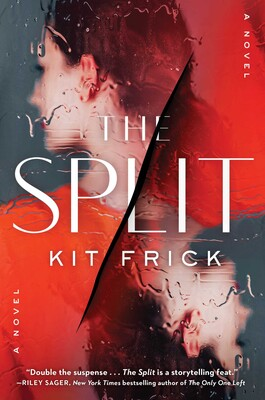
Every year, on the third weekend in October, there’s a vigil for Caroline. Every year, they use the same easel to prop up the same poster-size photograph of her, the one taken for our sorority composite the fall she disappeared. Shiny curls gleam golden atop tan shoulders, blue eyes sparkle, a careful blend of pink cream blush and highlighter paints her cheeks rosy. Her smile is open-mouthed as though she were caught mid-laugh, and it’s weird to think we’ll never hear her full-throated chuckle again. I get kind of choked up just thinking about it.
Every year, they surround Caroline’s photo with fragrant wreaths of white roses and hand out tall, slender white candles. Our faces streaked with mascara-black tears, we cup our hands around the lighted candles to protect the flames and make tortured comparisons to Caroline’s metaphorical light, extinguished far too soon. Honestly, it’s all a little much.
Every year, they pass a microphone around the crowd, encouraging those of us who knew and loved Caroline to share stories about her. Every year, the same people say the same things—Caroline was beautiful, Caroline was smart, she was kind, she loved animals—and every year, we avoid saying the same things—Caroline was petty, she could be cruel, she stole homework and earrings and boyfriends.
Every year, we stand in a clump of Kappa sisters. Every year, there are fewer of us who actually knew Caroline and more who only know of her. Everyone knows of Caroline these days. She would have freaking loved it.
Every year, people trade theories about what happened to her. She’s being held in a basement, someone says. Just like those women in Ohio.
I don’t think so, someone else says. I think she’s buried in the cornfields outside of town.
Oh, I think she’s on the farms all right, someone else says. But you know those pigs? I heard—
Jesus, someone else interrupts. Don’t say that. Don’t even think that. That’s disgusting and not true anyway.
Besides, someone else says, everyone knows what really happened is that Ian Rogers roofied her drink at that party. But Ian’s an idiot and used too much, and she choked on her own vomit and died. Such a shame.
Every year, Amber bristles when Ian is mentioned. Of course she does—he was her boyfriend, might be still if not for Caroline. Back at the first vigil, when Caroline had been missing for a year and the investigation was still active, Amber attacked some know-it-all townie for calling Ian a murderer. I mean, really just went after her—hair-pulling and nails to the face and all that. I think the lady ended up with stitches. I know she called Amber rabid and was set to press charges until she realized who Amber was.
One of the roommates.
That’s what they call us, you know, the three of us who were living with Caroline the semester she vanished. The roommates. Every year, we face the inevitable stares, the whispered accusations. There are the roommates. You know they lost track of her at frat party. Do you think they feel guilty?
Fuck yes, we feel guilty. That’s why, every year, I hide behind dark sunglasses and Amber clutches mala beads and chants a mantra she picked up from some yoga class. It’s why, every year, Sarah fills her water bottle with vodka and ends up wasted. Every year, I hold Sarah’s meticulously curled and sprayed hair back while she retches and cries that next year, next year will be different. Next year, we’ll tell the truth.
We never do.
We never take that awful microphone and tell the assembled crowd that on that long ago October night the three of us grabbed Caroline. We never tell them that we intercepted her leaving Ian’s room, that we put one of Amber’s floral pillowcases over her head and threw her in the trunk of my car. We never tell them that we cranked up the music to cover the sounds of her screaming, or that we drove past the city limits and then released her, spinning her around to disorient her before speeding away, laughing. We never tell them that it was just a prank. Just something to knock Caroline down a notch, something to remind her that she couldn’t just take what—or who—she wanted all the time. Not without consequences.
So yeah, we feel guilty. But not for the reasons they think, not because we didn’t walk her home or because we let her fall prey to some creep armed with a vial of horse tranquilizer. We feel guilty because we left her alone in the dark, miles from home.
Or that’s why Amber and Sarah feel guilty, at least.
I feel guilty for another reason.
Because I went back. After the three of us had returned to the party, giggling about how furious Caroline must be, and after Amber had assumed her rightful place upon Ian’s lap and Sarah had lost her top in a game of strip poker, I climbed back in the car and drove to where we left her. It’s a cold night, I thought. We should have taken that bitch’s sweater.
But we hadn’t, and so she was still wearing that knee-length black cardigan, wrapping it tightly around herself as she unsteadily made her way along the road. She was still a mile outside of town, still a mile before there were any streetlights or store lights or lights of any kind. Between the near pitch-dark of the country and that goddamn black sweater, she was practically invisible. Totally invisible once you factored in the three cups of trashcan punch I’d consumed.
I drove back to the party with Caroline in the trunk. What else was I supposed to do? I couldn’t just leave her there. People would wonder how a sorority girl in faux leather pants got hit by a car so far outside of town, would wonder why exactly she was strolling along a desolate country road in the middle of the night. And then they would remember the pledge we had pulled the same prank on last year, the stupid one who had walked for two miles in the wrong direction before flagging down the first car she saw and ratting us all out. They would know it was us, that it was our fault somehow, and Caroline would win one final time. I couldn’t let that happen.
This year at the vigil, a new Kappa, some apple-cheeked nineteen-year-old wearing too much lipstick, leans close to me and says, You know, I’ve always wondered if anyone checked the frat’s dumpster after that party. I mean, there could have been evidence or something like that in there, right?
I lower my sunglasses. Hmm, I say. Yeah. Something like that.
Ah yes. Literature. The vehicle through which we may explore faraway lives we would have otherwise never imagined. From my little, rugged armchair, I can witness forbidden love in the 18th century. Peek into a bustling kitchen in New York City. Discover the dramatic betrayal that fractured the hottest band of the ’70s.
But sometimes, I just want to read about someone going through the same shit as me.
Nothing cures a pain quite like finding yourself reflected in a piece of literature. Doesn’t matter if you’re falling into a relationship or out of one. Below is a book for every relationship status:
Of all the romantic relationships, the most traditionally celebrated and arguably the most historically problematic is marriage. Nevertheless, Ayọ̀bámi Adébáyọ̀’s Stay with Me dives headfirst into that can of worms with Yejide and Akin, a monogamous Nigerian couple who become at odds when Akin, pressured by society and family to father a child, brings home a second wife, Funmi. Devastated, Yejide decides the only way to take Akin back is to have his child, even though years of fertility consults have failed them. Though Yejide is eventually successful, the costs might be too much for her to bear.
How to describe the relationship between Greta Work and Big Swiss? I believe it is best encapsulated by the scene in which Big Swiss and Greta lie on their bed, idly chatting, after a session of near-clinical fingering. It’s an affair, its companionship, it’s—a privacy violation? See, Big Swiss is seeing a sex therapist due to the fact that she is unable to climax, while Greta is (secretly) the transcriptionist that works for Big Swiss’s therapist. Greta knows everything about Big Swiss. Big Swiss doesn’t even know Greta’s real name. It’s all very messed up, and yet, somehow, very sweet.
Not all triangles are created equal. There are certainly healthy, congruent triangles, as well as triangles burgeoning into a square. In the case of R.O. Kwon’s The Incendiaries, the triangle can be best approximated as a wispy isosceles growing taller by the minute. For our protagonists, we have Will Kendall and Phoebe Lin, a young couple who meet their first month at the prestigious Edwards University. While Will attempts to leave his evangelical past behind, Phoebe, guilt ridden by her mother’s recent death, seeks comfort in the charismatic John Leal, a former student and the leader of Jejah, an extremist religious cult. Though Will can feel Phoebe slipping away, everything comes to a head when Jejah bombs several buildings, resulting in five deaths. Phoebe disappears. As Will sinks further into his obsession with finding Phoebe, Phoebe and the mysterious John Leal seem to slip further away. Not a love triangle in the traditional, Edward-Jacob sense, but certainly a triangle built on obsession and want.
Online dating is an odd thing. On one hand, you might meet the love of your life. On the other, you might wind up dead in a ditch, or at least short a couple thousand dollars. Kate Folk’s short story collection Out There features two stories set in a world where dating apps are threatened by “blots,” AKA unnaturally handsome artificial men designed by Russian hackers to steal information from unsuspecting women. In the titular story, a young woman attempts to field these blots, while in another story, a woman develops a genuine connection with a blot. In between these two stories are other tales of unsettling, modern relationships, including that between a man and a house, that feel resonant with our time.
I’m going through a break up and working on myself
Do you believe in life after love? Maggie, a self-described Surprisingly Young Divorcée™, attempts to restart her life after her 608 day long marriage to her now ex-husband. It’s… going okay? Maybe? For the most part, she spends her days trying out new hobbies with her other divorcee friends, waking up on the floor, and self-sabotaging her way through new relationships. Equal parts hilarious and Gazing Into The Void, Really Good Actually captures the despairing humor of post-relationship life.
Set in modern-day Japan, Convenience Store Woman follows a woman in her late 30s. Keiko has never understood the conventions of societal norms, or how to act like a “normal person”. But within the fluorescent confines of Smile Mart, she finds order and purpose, a place that makes sense in a world that doesn’t, with the rules neatly laid out line-by-line in a manual. But to her family and peers, she’s a failure for being “still single” and working a “dead-end job.” Keiko doesn’t want or need a husband or a career, but the pressure to conform becomes too overwhelming and she resorts to a fake relationship. Sure he doesn’t leave the room, pay the bills, or do any of the chores, but her family is finally happy that she’s normal. Even though normal includes cohabitating with a misogynist too lazy to even take a shower. It’s strange, Keiko observes, “It appears that if a man and a woman are alone in an apartment together, people’s imaginations run wild and they’re satisfied regardless of the reality.” This weird little novella is for anyone who has ever being shamed for being single, or felt the weight of society telling them that their obligation and their worth depends on getting a job, getting married, and having kids.
Though Our Wives Under the Sea does not depict a long-distance relationship in the literal sense, it does capture the uncertainty of one. The novel begins with marine biologist Leah’s return from a harrowing deep sea expedition, the circumstances of which are not clear to Leah’s wife, Miri. What Miri does know is that Leah is now different. Once a happy, even boring couple, Leah and Miri now live on separate planes, their lives divided by whatever it was Leah witnessed in the deep. Haunting yet tender, Our Wives Under the Sea is about two people changed by their time apart.
There are relationships that fall easily into categories, then there are relationships so clusterfucked it is best not to give it a name at all. In Akwaeke Emezi’s You Made a Fool of Death with Your Beauty, Feyi Adekola is finally ready to venture back out into the dating world after the tragic death of her husband. First, there is Milan, pretty and simple—an easy start, if you will, and then there is Nasir, who falls in love with not only Feyi, but also her artwork. As Nasir helps Feyi’s art career develop, Feyi finds herself falling in love with the one person who should be off limits: Nasir’s widowed father, Alim. A true heroine romance, though without the bowtie ending, You Made a Fool of Death with Your Beauty asks the age old question of what we are willing to give up for love.
Here’s another triangle, but of a different kind. Marissa Higgins’ A Good Happy Girl follows a young attorney named Helen who hooks up with married couple Katrina and Catherine in order to distract herself from her past traumas. What begins as a simple hook-up soon becomes a turbulent, emotional investment as Katrina and Catherine slowly unearth her past.
Quasimodo. Nick Carraway. Luke Skywalker. Phoebe and Joey. Love ‘em or hate ‘em, the third wheels are always there. Is there a third wheel in your relationship? No? Are you the third wheel? Set over the course of a day, The Three of Us by Ore Agbaje-Williams, centers on the longstanding feud between a woman’s husband and her best friend, which comes to a head one afternoon when the best friend comes over for wine and gossip. A comedy told in three parts, The Three of Us examines love and self-narrative between Kim K references and cigarettes.
Though I’m more of a contemporary fiction fan, I can’t resist a Brontë romance. In The Tenant of Wildfell Hall, the beautiful and mysterious Helen Graham moves into town, sparking the intrigue of one Gilbert Markham. Helen is not alone, instead accompanied by her young son. Though Gilbert and Helen quickly strike up a friendship, town gossip has Gilbert doubting Helen’s intentions. Who is she really, and where did she come from? A classic though perhaps lesser known Brontë novel.
“Love is a fire,” Joan Crawford warns us, “but whether it is going to warm your hearth or burn down your house, you can never tell.”
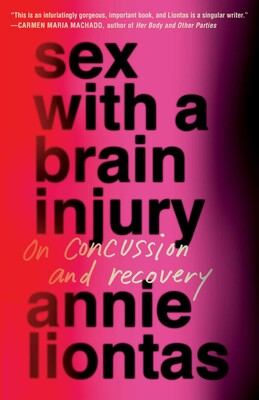
The most dangerous thing we can do—both on the page and in our daily lives—is to take a hard look at how we love, who we give ourselves to, who we are afraid to let in, and why. Any inquiry into the function of love is inherently destabilizing, not only because these relationships are often home, but because they are just as likely essential to our conceptualized self. Writers, take deep dives into the past, but most stay quiet about the present. No one wants to write about their spouse, partner, beloved/s: no one wants to jeopardize what they’ve got. In my memoir Sex with a Brain Injury, I examine my marriage after my wife and I have become strangers to one another, our future together unknown. I interviewed S about the bleakest time in our decades’ long relationship, and we gazed together at what remains. Then I handed S the interview transcript and a black Sharpie and told her she could cross out anything she didn’t want to appear in print. She crossed almost nothing out.
“Love is the whole thing,” says Rumi. “We are only pieces.”
So is love worth it? How do you know? Why do you stay? Is it about need? Sex? Is it February and the edges between you and winter have blurred, and what you want most is to come home to someone who can warm you? Are you simply repeating the patterns you were taught, unable to imagine a freer way of being?
Or maybe she really is your soulmate.
The seven writers below write honestly and openly about intimacy, desire, queerness, loneliness, annihilating marriages, enduring and contradictory love, and, of course, soulmates. Whatever your status, these books might make you feel a little less lonely.
Relationship Status: It’s Over But Only One of Us Knows It
The Bride is about to get married to a man who has “familiar, stale bones.” Then her dead grandmother shows up in the form of a parakeet (remarking on how asses like theirs never leave, not even in the afterlife) and starts making demands. “No one can imagine an ambivalent bride,” writes Bertino, at which point, much like the grandmother, she quickly begins to dismantle sacred ideas like marriage, tradition, patriarchy. The Bride says, “Have you ever missed someone so much that the missing gains form, becomes an extra thing welded to you, like a cumbersome limb you must carry?” When she asks this, she is not at all thinking about the groom. Bertino pushes us to consider, If we give ourselves fully to others, what does that leave us with? And how can we more fully give of ourselves? This is an unapologetic surrealist novel, darkly comic, wickedly sharp and full of heart. Wisdom in love, Bertino reminds us, is hard earned, unearthed, precious—like a diamond.
This epic love story, which spans from Portugal to the United States (and includes a cameo by Abraham Lincoln) is the antidote to gray skies and winter, and might make falling in love possible again. The novel follows John Alves, the son of a Presbyterian martyr, and Mary Freitas, who is thought to be the illegitimate daughter of royalty. Distance, family, religious differences, gambling, gossip, deceit, mean girls, magic berries. The world tries to keep the lovers apart, but John and Mary find one another time and time again—and then John is summoned to the war between the North and South. Vaz’s writing is as exquisite as warm pastel de nata, those Portuguese egg custards her characters are fed from infancy. The novel is reminiscent of Love in the Time of Cholera in its warmth and mystery, and its belief in epic love—which Vaz, herself, knows a thing or two about. In Above the Salt, Vaz makes the poet’s argument that love is inevitable, sublime and enduring.
The Days of Afrekete opens with a dinner party—mushroom tarts, characters no one would actually want to have to sit next to, a smiling hostess who isn’t feeling especially generous. In the narrative present, Liselle is married to a white lawyer and politician who is being indicted for corruption; at any moment, the FBI might arrive and break up the party. At its heart, Solomon’s novel—inspired by Mrs. Dalloway, Sula, and Audre Lorde’s Zami—follows the searing, tempestuous affair between Liselle and Selena, two young Black women who grew up in Philadelphia. Theirs is a complicated love, a buried love, but one that refuses to be forgotten. And yet Liselle tries very hard to forget (so hard, in fact, that we wonder if Liselle is the one who got away—from herself). The Days of Afrekete is a novel that celebrates queer blackness while interrogating the necessity/cost of choosing security and comfort over selfhood. Solomon is mischievous, sly at dialogue, the friend you go to for tea. A novel as sexy as it is heartbreaking.
This award-winning story collection is about queer desire and what gets in the way. Rainbow Rainbow is written from the perspective of outliers, lusty teens, hot breath, engendered embodiment, surviving the homophobic ’90s. It is fleshy, quaking, at times as startling as a sudden wave of attraction. In “Pink Knives,” a nonbinary narrator about to get top surgery begins an open-relationship affair during Covid and allows a stranger to remove their binder, something they denied their girlfriend. In “Ooh, the Suburbs,” Heidi pushes her friend to meet up with an older woman to play out her own complicated impulses. A group of friends flash cars from an overpass, someone secretly masturbates in class. In step with these nonbinary and trans characters, the reader senses there is always potential threat and implied trauma. Conklin, incisive and watchful, resists the convenient cultural narratives that flatten or homogenize the queer experience, and still celebrates queer joy.
I once asked Conklin, if Rainbow Rainbow were a bar, what would the vibe be?
They replied, “Funny and a little unhinged and fun. People dressed in strange bright outfits, kind of joking and laughing. But then in the corner someone would be silently crying.”
Halfway through Rien na va Plus, Karapanou writes, “Every time I want to write, I want to write love stories. But as soon as I pick up the pen I’m overcome by horror.” This is a genre-bending love story about marriage and narrative unreliability, told from two points of view: the self in darkness and the self in light. A man and woman marry, but it ends badly, in cruelty and infidelity. There are strange allegations, sharp words, troubling silences. The wife, Louisa—if that is even her name—tells her version of events in the first half of the book, relaying how controlling and devious her husband Alkiviadis is. Then she tells the story again, giving us an entirely different Alkiviadis, an entirely different her. The falsehoods mean Louisa gets to protect a small part of her freedom, even as she is bound to another. Karapanou, born in Athens in 1946 to the daughter of Greek novelist Margarita Liberak, saw herself as writing outside of national boundaries. Her first novel Kassandra and the Wolf was published during the Greek dictatorship between 1967 and 1974. Even—especially—when Karapanou is writing about intimacy, she is writing about escape, evasion, willingness, culpability. She has been compared to Marguerite Duras, Ingeborg Bachmann, Mary Gaitskill. The Greek novelist Amanda Michalopoulou says of Karapanou, If she had been American, everyone would know her.
Whenever I return to this perfect novel, I read it as a love letter.
Nell and Sula, two Black girls growing up in Bottom, Ohio, are best friends; as adults, they become estranged when Sula sleeps with Nell’s husband. But this story is not about men, it is about Black women’s desire and the intimacy possible when women refuse to be restrained by heteropatriarchy. Toni Morrison, in talking about her second novel, insists that “Female freedom always means sexual freedom…the only possible triumph is that of the imagination.” Nell, who comes from a quiet, confining home, ultimately rejects prescribed roles of matrimony and family; Sula, who is raised by a one-legged woman who it’s rumored let a train sever her leg to collect on insurance, won’t prescribe to Bottom’s rules about sex—but when she goes looking for love she realizes that she’s not going to find it in men. Sula, told to get married and have a baby, replies, “I don’t want to make somebody else. I want to make myself.”
Morrison’s language is sensual, smoldering—erotic for all of the possibility that exists between two Black women who refuse to play by unfair rules. The friendship between the two women is marked by “unspeakable restlessness and agitation,” with scenes of intimacy as provocative as an Alice Munro story. This is a novel that understands that Black queerness is about living authentically at the margins, on one’s own terms.
Sexy, dark, funny—everything you could want. No other poetry collection is as hot to the touch as Human Dark with Sugar. Shaughnessy’s celebrated second collection is addressed to the beloved. Restless, demanding attention, toying, longing, (“Oh, to be ready for it, unfucked, ever-fucked”), refusing to ask if you’ll stay but hoping you’ll still be here in the morning.
“To play without shame. To be a woman
who feels only the pleasure of being used
and who reanimates the user’s
anguished release in a land
for the future to relish, to buy
new tights for, to parade in fishboats.”
Titles like “I’ll go anywhere to Leave You But Come with Me,” “Replaceable Until You’re Not,” and “I’m Perfect at Feelings” tell us everything we need to know. And then, there’s “One Love Story, Eight Takes.”
“To see you again,” asks Shaughnessy—“isn’t love revision?”
Not very long ago, a description of our current moment would have read like a dystopian premise: a planet afflicted with deadly weather events, with rising oceans and global migration crises, with animal species rapidly going extinct, all while a rabid conservative movement flourishes worldwide, distorting facts and profiting off our downfall. Perhaps that is why, in these eight new dystopian novels (all published since last year), the dystopian setting is more or less our own—just nudged into a near future where our current perils have escalated, where the threats we already face can be seen and felt more clearly. This kind of near-future climate fiction (often called “cli-fi” for short) doesn’t read like much of traditional science fiction, with its vast conjectures about humanity’s future. Instead, the settings are based on solid science of where our planet is headed in the next few decades, allowing the writers to explore the human condition in this new and frightening world—a world becoming more familiar to us every year.
My upcoming novel, Plastic, takes place in the same future-present terrain. It is a world ravaged by climate change, beset with floods and hurricanes and wildfires, and also recovering from a recent nuclear war. Instead of human beings, however, this world is filled with plastic figurines, doll-like people with hinges and hollow bodies, polymer skin that leaks toxins in the brutal heat. Erin, the main character, is a reclusive figurine in her twenties, living under a fake last name so that no one will associate her with her older sister, Fiona, a famous ecoterrorist who vanished after bombing her college dorm. For Fiona, the stakes of climate change justify violent action, but Erin abhors violence and sees no hope for the world down that path. At the start of the novel, Erin feels little reason to hope in the future, but this will change when she falls in love with a blind figurine named Jacob, whom she must learn to trust with the traumas of her past.
Hope is a major theme for the novels on this list, a core value that their characters need in order to endure and fight the climate crisis, but difficult to maintain in the face of so many challenges. In some of these novels, a naive or misplaced hope leads the characters to undermine their best intentions; in others, hope is a north star that leads to epochal, world-saving change. Though a few of the titles feature activist groups that are cultic or self-deluded, the books never altogether abandon a hope in collective action, a belief that people working together can make a difference in the crisis. This “difference” might not be an immediate rescue of the planet, but rather preserving enough hope to keep on fighting for the future.
Set in a near-future Florida, this vivid, intimate novel shows several decades in the life of Wanda Lowe, a woman born while a disastrous hurricane bears down on her state. In the years that follow Wanda’s birth, Florida will be largely abandoned and then finally “closed” as a state, “as if it were a rundown theme park with a roller coaster that was no longer safe to ride.” Wanda, however, will remain in Florida, along with her friend and teacher Phyllis, finding ways to survive amid the beauty and danger of a landscape returning to wilderness. A book that shows our deep bonds to nature even in the midst of climate disaster, the novel centers its optimism in Wanda’s enduring links to her environment, which—as the title suggests—remain radiant and luminescent despite the crumbling of human infrastructures.
Stephen Markley spent ten years writing this kaleidoscopic novel, which approaches the climate crisis from a vast array of perspectives, ranging from scientists to ecoterrorists to everyday citizens watching their world collapse. At almost 900 pages, the book also provides an in-depth look at the science and politics behind the crisis, taking the reader on a journey of three decades, from 2013 into the 2040s. Many books on this list look at climate change through the lens of a single person or community, but The Deluge provides a wide-angle view of our current moment and the catastrophes on the horizon, even including future newspaper articles and government reports. Despite the global scope of the book, Markley also gives in-depth portraits of his large cast of characters (a highlight is the impassioned ecoactivist Kate Morris), investing us in their personal lives even as the waters flood in and the old world is swept away. Though Markley doesn’t shy away from the horrors of the crisis—just the opposite, in fact—the novel finds meaning and hope in the fight itself, the struggle to save civilization as it teeters on the brink.
This new novel by the brilliant C. Pam Zhang (author of the Booker-nominated How Much of These Hills Is Gold) tells the story of a talented chef in the near future, a world not only afflicted with climate change but also a planet-wide smog released by agricultural experiments. The chef (never named in the novel) flees her dystopian surroundings for a job at a utopia of sorts: a lush, privileged research facility in the Italian Alps, run by a wealthy capitalist and his geneticist daughter, Aida. Together he and Aida have created a secret biobank, a space to let nature flourish and research a new, sustainable future for the human species. This opulent setting seduces the chef, who is awakened to the pleasures of her body, allowed to bring her culinary dreams to life, and swept into a love affair with Aida. But as secrets in the compound begin to surface, as she cooks for the hypocritical rich, her new pleasures and privilege start to feel hollow, and she is drawn into deeper moral complications. With striking prose and sharply wrought characters, the novel asks crucial, complex questions in the midst of the climate crisis: What is the space for pleasure and the body as the world collapses around us? In what ways can we lose ourselves in the fight to save our planet?
Unlike other books on this list, which are set in the midst of the climate crisis, this novel begins sixteen years after “Day Zero,” the day the Earth’s carbon emissions reached zero. Though the climate crisis wreaked havoc on the world, a more hopeful civilization has emerged in its place, built on mutual aid and the outlawing of private corporations. The main character, Emi, is the teenage daughter of two heroes from “The Great Transition,” the name given to the epic struggle that saved their world in the last generation. Emi lives in a sunnier world than her parents at her age, but she still feels lonely and isolated, in part because her mother, Kristina, will not relax her vigilance and fears a backslide to the past. When Kristina goes missing after the assassination of a group of “climate criminals,” Emi and her father, Larch, head out on a search to find her, which in turn becomes a search to uncover Kristina’s secrets. The novel alternates between past and present, showing the struggles of the Transition and the difficult work of building a sustainable world in the aftermath.
The latest from National Book Award-winner Julia Glass, this sprawling novel is set in a small town on the coast of Massachusetts (the titular Vigil Harbor), an upper-class refuge from the turbulent America of the 2030s. Though the sea levels are rising, Vigil Harbor is built on a high headland that will let it survive centuries longer than many coastal communities. But there is trouble in this paradise, and the privileged residents will not be able to keep the outside world from intruding, whether through eco-terrorism, the arrival of mysterious strangers, or the piercing anxieties of their historical moment. With nine narrators and an intricate plot that includes dissolving marriages, long-hidden secrets, and a tsunami that threatens the Northeast, this ambitious novel takes a deeply human approach to the climate crisis, showing the hope, regret, and uncertainty of people living through unprecedented times.
A novel of linked short stories, How High We Go in the Dark is a powerful meditation on death, using climate disaster as a backdrop to contemplate loss on a global scale. In the melting ice of Siberia, scientists discover a Neanderthal corpse that contains a lethal virus, soon dubbed the “Arctic Plague.” The Plague, which attacks human organs, transforms life across the entire planet, causing mass death in every nation. (If this sounds like a very timely premise, it’s worth noting that many of these stories were written and published long before Covid.) Each story shows this death-stricken world through a different setting, and often with a surreal or hyperreal premise: an amusement park for terminally ill children, with a euthanizing roller coaster ride; robot pets that speak in the voices of lost loved ones; a pig, raised to donate his organs, who becomes sentient and learns to talk; an artist who makes ice sculptures from liquified remains. Though bleak at times, the novel finds hope in the deep love and connection possible in the experience of grief. Its vivid strangeness matches the strangeness of our own historical moment, when the planet itself is rapidly changing around us.
At seventeen, Willa Marks is abruptly orphaned when her survivalist parents commit suicide together. Uprooted from her home, she spends the next five years in a near-future Boston, rife with the escalating problems of climate change. Willa builds a life for herself in Boston—a cafe job; a relationship with an older Harvard professor, Sylvia Gill; a commitment to ecological causes, in part through her involvement with a “Freegans” group—but she abandons all this when, after a fight with Sylvia, she finds a guidebook that tells her about Camp Hope, a utopian compound on the Bahamian island of Eleutheria. Camp Hope, run by the charismatic leader Roy Adams, claims it is devoted to fighting climate change, to “living the solution,” but the reality Willa finds there is far more complex, the atmosphere cult-like. The situation complicates further when Roy disappears after a storm hits the island. Despite the dire realities around her, Willa continues to strive for her ideals, even when she’s let down by the flawed human beings who embody them.
This hilarious (yet dark) satire takes a wildly original approach to the climate crisis, using a fantasy premise to address the all-too-real threat of global warming. As with many cli-fi novels, the book is set in the near future, but this time the protagonist is Sir Kay, an immortal Knight of the Round Table. Whenever the “realm” is in great peril, Sir Kay is brought back from the dead; he has fought to defeat both Napoleon and Hitler. But now he faces his most baffling adversary: the ecological collapse of Britain and the greed and political impasse that fuel the catastrophe. Not only must he go against a corrupt system, but also a resurrected King Arthur planning to “Make Britain Great Again.” With the help of Mariam, a young activist, Sir Kay must fight a different kind of battle for the future—though he still might need Excalibur to triumph. Despite the playful premise, the novel looks with serious gravity at the climate crisis, and gestures toward a hopeful future through the power of collective action.
Dr. Amina Gautier’s short story collection, The Best That You Can Do, refuses to be fixed in place, dancing across shores and between decades as a luminous chorus of speakers breaks into singular voices that carry readers from New England to Puerto Rico, Chicago and beyond, searching for answers to questions of race, identity, and belonging.
The stories are compact and muscular, arranged like music, and brimming with voices that shift and quake on the page, coalescing into a group of child siblings, dissolving into family members scattered across diaspora, and colliding with each other at academic conferences and hotel elevators. Gautier breaks the collection into five sections spanning a range of themes, each story populated by characters that are hungry for connection, safety, comfort, and a sense of home.
Dr. Gautier’s publicist suggested we meet at Ann Sather, a popular Chicago eatery that I recognized from its appearance in the collection. After warmly encouraging me to order the cinnamon buns, Dr. Gautier spoke to me about writing her fourth short story collection, binge writing, and looking back at the white gaze.
Stephen Patrick Bell: Do you not feel that the city makes a demand of you to just be less of a person so that you can fit in the subway cars, walk down the streets?
Amina Gautier: I feel like everyone is being less of a person and it has very little to do with cities. I feel like I’ve been writing about that for four books and it has become more and more necessary. People are not talking to each other or looking at each other. They’re just talking past each other or waiting for someone to say something so they can jump in with their soundbite. It means I’ll always have a job. I tell people all the time, as long as people continue to not listen to each other and be insensitive, fiction writers will never go out of business. It would be great if we did go out of business because people stopped doing that. But you know, there’s always going to be material. People always ask “where do you get your stories”…
SPB: The first section, Quarter Rican, feels especially grounded in New York. The characters travel to Puerto Rico but even those scenes felt like they were tethered to the city. Seeing the characters move between spaces that play on different aspects of their identity and watching them search for clues or indicators in popular culture that might help them define themselves, I wonder if identity was a central theme you sought to address when starting this project.
I tell people all the time, as long as people continue to not listen to each other and be insensitive, fiction writers will never go out of business.
AG: With the second collection, Now, We Will Be Happy, I have a lot of Puerto Rican and Afro Puerto Rican characters. So, I’ve been writing around that for some time. But on a larger scale, you’re writing around the tension, or the complexities of defining yourself when other people are defining it differently— the way those definitions are not just based on birth. Emotions can help you. Emotions can direct you to one sort of identity or push you away from another one. So, in the collection, it’s not just, “were you born in Puerto Rico” or “were you born in New York,” but it’s more, “what was your relationship with those Spanish-speaking parents?” There’s not just, “oh, did you speak Spanish in the house?” You can learn Spanish in the house and have a very tense relationship with one of your parents and say,“okay, now I don’t like that.” It’s not just what you learn in school or where you are, but there’s a sort of psychological or emotional weight to how you define yourself, who you want to model yourself after, or who you want to avoid. The collection starts in Brooklyn, but it’s circles around, and it ends back up in that same neighborhood, with explorations in the middle.
SPB: Do you think about a specific audience when you’re writing your stories? I think a lot about the little white man on your shoulder whispering “this isn’t relatable.” I was curious if that’s something that enters your work at this point in your career.
AG: I wouldn’t say that I deliberately go out of my way to create an insider space, I’ve always been interested in and concerned with pushing back on assumptions. Some of the first stories that I was exposed to by white writers like John Cheever’s The Swimmer. All these stories that he’s taking the train back and forth from New York to Connecticut, you’ve got this New England experience that people are referring to—sailing and boats and things like that. And there are no footnotes. You open up the Norton Anthology.
When I was in college, I opened up the Norton Anthology and looked up James Baldwin, Sonny’s Blues, I found footnotes explaining what certain things were in the ’50s. You know, since he’s Black, these things have to be explained. And there are no footnotes in Faulkner’s Barn Burning and no footnotes in Cheever, right? There’s just an assumption that you know their world, and it doesn’t have to be explained. I thought, “Okay, then I’m going to presume that my reader knows my world. And if you don’t know it, and you feel like you’re on the outside looking in, then it just sucks to be you.”
But, I do also have a reader in mind when I’m not thinking about inside and outside spaces. I do presume that my reader is literate, and well-read and has a historical knowledge of literature. So there are plenty of inside references and allusions to other literary works for that reader by so like you mentioned, Breathe, so there’s a little references to Hamlet.
SPB: How does all that influence your process?
AG: I wouldn’t say I have a strange process because it’s mine, but it’s not for everybody. I talk to other writers and hear their processes and I’m like, yeah, that would never work for me. I’ve meet so many people who have a page limit, they’ll get up early and if they get this number of pages in a day, they’re good, or they’ll have a time limit, get up early and do two hours. And I’m realizing, first of all, I can’t stop once I start. And secondly, who is trying to get up early? I don’t even know why we’re doing that.
SPB: I blame everything on capitalism.
AG: The term I apply to myself is binge writing. I like to write for as long as I can. It’s unlikely that I will write on a day that I have other appointments, because the chances are high that I’ll miss them.
SPB: One of the shifts I felt as I moved through the book dealt with racial and ethnic identity. In the Black Lives Matter section the characters are firmly grounded in and centered on their Blackness and brownness. And like, it’s not just their Blackness, it’s the terror of being Black/Brown in America, which is a separate thing. That contrasted nicely with the characters in the first section, who might appear most of white America as ostensibly Black despite their connections to cultures that don’t neatly fit within their idea of Blackness. For me, identity is often a tool that people use to kind of figure out how they’re going to deal with a person, but it’s not necessarily something that a person uses to relate to themself. There’s a fun tension your characters are exploring, when Blackness is something that you could move in and out of, versus something in which they’re firmly situated.
How did you navigate the differences between the constructions of racial identity in the U.S. as opposed to other cultures?
Black people are not only the object of the gaze… we are looking back.
AG: One thing that’s interesting to me, or that I play with in my work, is just constantly reminding people that Black people are not only the object of the gaze, that we are looking back. [There’s an assumption] that Blackness is fixed, it’s finite, and everybody else gets to move around and do a bunch of different things. I play with that, pushing back, showing the ways in which people can swim in and out of different aspects of their identity. Can you pass not necessarily for white? In the story, Elevator, she passes for Latino just to try to get away from the bad guys. I’m examining ways in which we can exercise and adopt that flexibility for safety, for strategic reasons.
SPB: I feel like lit world social media can take on a Stepford quality. It is wild how some writers are just online. It is very cool to be able to connect with your favorite writers and just say, “I liked your book.” But an element of it feels unsettling and dangerous, because it does make the world feel very, very uniform. And it kind of makes a new writer feel like “I have to be writing this way for people to see me.” I don’t take any of it too seriously, but I do see other people who I respect and whose opinions I value saying things like, “well, you know, the market says that you have to be writing this kind of thing right now” or “you can’t sell a short story collection.”
AG: Do you know how many times people have told me that?
SPB: Look at Deesha Philyaw—The Secret Lives of Church Ladies, her little impossible to sell short story collection from a small university press is such a celebrated text.
AG: Or look at me. The Best You Can Do, that’s number four. So they say you can’t sell a short story collection. I don’t know any other African American woman with four [short story collections].
SPB: And the PEN/Malamud award.
AG: I was really happy about Edwidge [Danticat] winning. So, now that there’s another Black person with a PEN/Malamud because I’m the first Black woman to win it. Woman. Edward Jones won it first and I guess I should say received it because you don’t apply for it. They just give it to you. When I received it in 2018, I was the first African American woman, first Black woman. And Edwidge just received it in December. So now there are two of us.
But the point of that was not to brag on me, but to say, when people give you all that “advice,” fuck them —yeah, that’s an F bomb I meant—because, they want you to be unique and the same at the same time. Like, “Oh, we love this book, because it’s so unique” and then it’s like, “But whose work is it like so we can sell it”
SPB:ne of the themes I noticed was that the women in these stories are often paired with men who are not worthy of their attention.
AG: One of the things that I’m playing with, or just sort of interested in, is the way culture infantilizes men, and investing in this sort of infantilization. I see all these commercials, and they’re just annoying. The guys are just bumbling. You know, they’re like, “where’s my shirt?” Is that what you really think that these intelligent men who go to work and somehow come home and cannot function. It makes me really angry. But it seems like this cultural moment that people are participating in. I hear women complain about having to do everything, but in a way that makes it sound like they like it: “Oh, my husband can’t do anything without me.”
I don’t know what it means, but specifically when I’m thinking about Black hetero-relationships, wondering what the connection is when we acknowledge the level of violence and scrutiny that Black men are unfairly subjected to, and then we ask what the solution is, and instead of challenging whatever external forces there are that are applying those pressures and those tensions, we just make things easier for them socially. Is that actually helpful?
SPB: that’s a good question to ask, and I wish I had an answer
AG: That’s what I’m playing with in the stories, because I’m still thinking of people in my generation, dating Gen X guys, or thinking of Chris Rock’s stand-up specials and things like that. But what does it mean when we start telling women that they should be grateful for that? What does it mean when tell women and women of color, that they should just be glad that somebody is interested in them? In the story, “Why Not?,” there’s all this sort of censure about a woman wanting more than just one basic date turning into a relationship. That’s what I’m seeing.
SPB: “Why Not?” made me very anxious when the main character’s desires and ambitions beyond settling were met with a Greek chorus of unsupportive voices. it felt like there’s this social contract in place where if you show a man attention, of any kind, even if you’re just being polite, then you now owe him an entire relationship. That is more trouble than its worth. That any man would feel entitled to that relationship based on a cursory courtesy feels deeply weird. Like, we should be allowed to be friends with each other, or at least decent human beings to each other without it becoming a contract for marriage or a long term relationship.
AG: Yeah, and how much does that false social contract have to do with our current moment of social anxiety and social isolation? These past 10 or 15 years of wanting to meet people online and have all the work done before you actually go out. You had a period where people are like, “Oh my gosh, it’s dangerous. You should never be anybody online.” And now it’s, “this is the thing to do.” And people are like, meeting online and telling people all their business and their whole life story before they decided to actually meet and go out. I thought that was what a first date was for.
All the kids in our year had started selling their souls to each other at the beginning of seventh grade. Terrible arrangements transpired. In September, Matt Cywinski sold his soul to Brian Counter for a pack of cigarettes, because he’d scored a date with eighth grader Laura Blosser and thought smoking would make him look mature. During their thirty-minute date at Klode Park, according to what became public knowledge, Matt smoked eight cigarettes in a row and puked on his bike handlebars as he rode home. Now, Brian could make Matt do his homework, carry his books, or steal Snicker’s bars from the Piggly Wiggly check-out on his behalf.
My friend Kirk owned Emily Gonzalez’s and Phil Baker’s souls. He’d gotten them both in exchange for giving them rides home from track practice on the pegs of his BMX bike. Whenever Kirk wanted something for lunch other than what his mom packed him, he located Emily and Phil in the cafeteria and picked through their lunches like a vulture. And rumor had it that Jason Robinson owned Missy Graeber’s soul and now forced her to go on long dates with him at the Birnamwood Cemetery, where they ambled between headstones and did Who Knows What.
As long as someone had your soul, they owned you and you had to do whatever they said. The arrangement continued until the soul’s new owner decided to return it, which hadn’t yet happened at Birnamwood Middle School.
By Halloween, people were more careful about selling their souls. I still had mine and I didn’t own anybody else’s. Truthfully, I was hoping that someday soon there would be a grand reset in which everyone’s souls would go back to their original keepers, like a debt forgiveness program. Every Sunday I attended services with my parents at Hartbrook, the Evangelical church in Birnamwood, where the pastor sometimes used this language of “debt forgiveness” to talk about what Jesus did when he died for our sins. Jesus paid a blood ransom, the pastor told us, in order to release us all from the cosmic debt that we acquired upon being born. To have one’s existential debt forgiven—to have our innate, sinful nature erased—was the greatest gift anyone could receive.
“Imagine,” the pastor had said, holding his hands to his heart. “Your soul is ensnared in the cage of sin. What would it take to be redeemed?”
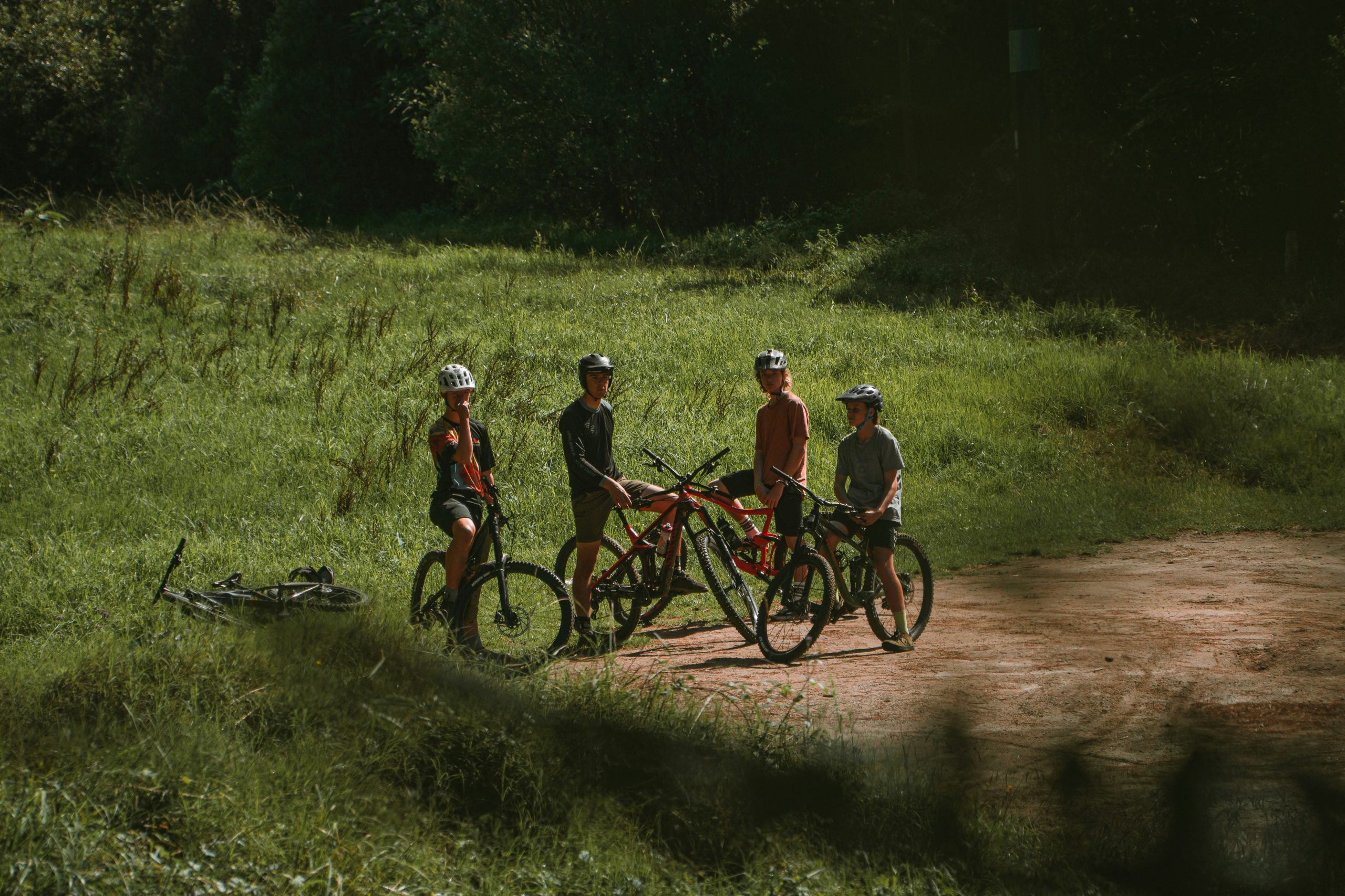
That October, my friends and I biked to the Birnamwood Halloween Carnival, which our school district held every year on the high school soccer field. There were four of us boys that night: me, dressed in a cheap werewolf mask and a black sweatshirt, next to broad-shouldered, tight-lipped Kirk Dawson, who dressed as the Hulk every year in green face paint and Styrofoam hands. My best friend Andrew dressed as the WWE celebrity the Undertaker, while Buzz had taped tin-foil daggers to his knuckles to look like Freddie Kreuger. When we left for the night, Buzz had been dressed as the Undertaker and Andrew as Freddie Kreuger, but Buzz decided he wanted to switch costumes with Andrew. And since Andrew had sold Buzz his soul two weeks ago, he had to do it, even though he had spent hours in his mom’s basement making the aluminum foil claws.
The carnival was alive that night with string lights, laughter, crackly music over the loudspeaker. Little kids zig-zagged between people in foldable canvas lawn chairs, wearing crowns and witches’ hats. Banners of sponsoring businesses festooned the perimeter: the Birnamwood hunting club, Mike Parson’s hardware store, the tax man, the HVAC business that Mike Teare ran with his twin sons. In small white tents around the field, there was a horseshoe toss underway, apple bobbing, a loosely supervised jack-o-lantern carving station with flimsy Walmart knives whose blades snapped under pressure.
Across the field, we spotted our seventh-grade math teacher, Mr. Genley, dressed like Frankenstein. Styrofoam screws sprouted from his head, and chalky green paint covered his face and hands. Other than that, Kirk said, he looked about the same: same fucked-up loafers, same baggy pants held up by a cracked leather belt. He was given to rambling about the intuitive poetry and universal language of math, during which his glassy, blue eyes lit up with feeling.
Before biking to the carnival that night, we had decided to play a prank on Mr. Genley, for failing both Buzz and Kirk. Kirk found his little brother, Mikey Dawson, and pointed out our teacher across the field.
“Mikey,” Buzz said slowly, kneeling beside him. “You’re gonna give that guy the scare of his life.” Mikey was like a small, raging fire hose. He had ADHD, Kirk had warned us, and wouldn’t lock into the importance of his mission unless we explained it clearly and repeatedly.
“What do I do!” little Mikey said, his hands vibrating as if bewitched. “Just tell me what to do and I’ll do it!”
Maybe it traced back to this business of selling souls, but our pranking had a blood-driven urgency that year; we wanted to embarrass someone worse than we’d ever done before. On the bike ride to the carnival, Buzz kept swerving fast in front of Andrew and spitting on the ground. Kirk, usually quiet, loosed bone-chilling screams for no reason. Hot, electrical tethers crackled between us.
We positioned ourselves at the perimeter of the carnival, trying to gain a distance from which we could see everything: all the teachers and parents surveilling from their canvas chairs, all the unruly kids darting between tents. We watched Mr. Genley fiddle with his Styrofoam screws. He was gangly, fresh out of teacher’s college, younger than any of our other teachers. He wore a tiny steel cross around his neck that surprised me the first time I saw it.
“Follow him around,” Kirk said to his brother, pointing at Mr. Genley, who was standing with two English teachers, Ms. Burkemper and Mrs. Knight. As they spoke, Ms. Burkemper, who was in her late-twenties and wore pencil skirts, kept squeezing Mr. Genley’s shoulder in a way that made Buzz pretend to gag.
“When he goes into the school to use the bathroom, follow him,” Andrew said to Mikey.
“Bathroom,” Mikey said. “Sure.”
“But don’t let him notice you,” I said.
Buzz was seething. He scraped his Freddie Kreuger claws against the chain-link fence until one of them tore loose from his knuckle.
“These are pieces of shit,” he said, waving the loose claw in his hand.
“Then don’t wear them,” Andrew said.
Buzz swiped the claws lightly against Andrew’s cheek.
We set Mikey loose and he ran breakneck across the grass like a cooped-up dog. That night, Mikey had come to the carnival dressed in a pale blue button-up, a black shoulder-bag, and a silver wig.
“What’s Mikey supposed to be?” I asked Kirk.
“He’s Brad,” he said. “Our mailman. Mikey wants to be a mailman someday.”
Beside me, I saw Buzz freeze and turn quickly toward us.
“I see Cameron,” he said. “Let’s go.”
The four of us ducked our heads and took a sharp left, toward the pumpkin carving station. Cameron Quade was one of the only kids in our grade who was as tall as Buzz, but he was more popular. There was nothing strange about Cameron, whereas Buzz used to have a stutter and his brow jutted prominently from his forehead, begetting his childhood nickname, the Caveman. Worse yet, Buzz had sold Cameron his soul that year in exchange for a half-eighth of stemmy weed, back in September, long before anyone knew how serious this business of selling souls was—how some people would never let you forget it, how they could leverage their ownership to exploit and humiliate you. Buzz had been paying for it ever since.
At the pumpkin carving station, we stood in the corner of the tent, angling ourselves to hide from Cameron. There seemed to be no adult supervision in this tent, I noticed, just kids and teenagers at long fold-out tables, wielding knives and scooping cold, seedy pumpkin guts with their bare hands. To my right, a kid half my size scraped his knifepoint against the plastic table, carving the word ASS into the plastic. Straightaway, I saw Buzz slip a carving knife into his pocket.
“What’s that for?” I asked him.
“What’s what for?” he said, and gave me his shoulder.
To my left, Kirk picked up a knife and stabbed a pumpkin several times, as if searching for its organs. I looked across the field toward Mr. Genley, who stood with Ms. Burkemper by the apple bobbing station, fiddling with the screws in his head. A tremor of light caught my eye; it was the momentary gleam of Mikey’s silver wig, flashing in the dark beyond the horseshoe toss.
Andrew came to stand beside me.
“I hate this fucking costume,” he muttered, tugging at the black undershirt he wore beneath a leather, knee-length jacket. “Buzz told me this coat is actually his mom’s.” He rifled through the pockets. “There are used tissues in here.”
“It’s just for tonight,” I said.
“Easy for you to say,” Andrew said.
We went on watching the field. What I didn’t say to Andrew was that he should have been more careful. The situation was his own fault. Next to Buzz and Kirk, Andrew and I looked like scrawny geeks in glasses. For kids like us, it was best to fade into the background, to keep our souls well-kept beneath layers of protection. By the time I was in seventh grade, I had already learned that any difference—like Andrew’s fishbowl glasses, or my crooked front teeth—made us vulnerable.
After a few minutes, Andrew nudged me.
“He’s going,” he said to me. “Look.”
Mr. Genley was walking toward the Birnamwood High School south entrance. A dark feeling boiled in my stomach. We both watched Mikey zigzag in the shadows behind him, crouched low to the ground, his mailman’s wig winking with light. After Mr. Genley disappeared into the school, Mikey paused at the door, then slipped inside behind him.
Toward the beginning of that school year, Mr. Genley had decided to keep a secret for me, but none of my friends knew about it.
Andrew and I were always doing weird things when Buzz and Kirk weren’t around: we ate slugs, drew hearts on our faces in mud. We got naked and burned each other’s stomachs with lit matches. We pretended to kill ourselves and laid for hours on the floor of Andrew’s basement, waiting for the other one to stand up first. We did things that, for whatever reason, Buzz and Kirk couldn’t know about.
Just a few months ago, Andrew and I had been sneaking around in the woods at the edge of the Dollar Tree parking lot, which sat at the southern border of Birnamwood. We found a pile of molding pallets half sunken in the wet earth, in the middle of which was a smooth-faced mannequin someone had drawn nipples on. It was Andrew’s idea to tie the mannequin to the stack of pallets and burn it in a Viking funeral, which he’d heard about on the History channel. We named the mannequin Erik the Red after the founder of Greenland, who was supposedly a bloodthirsty warrior, and conspired to burn him in the woods with a rusty Swiss army knife and a jar of pennies, to show that he was evil and rich.
It was August. Just a few weeks until school. I went rummaging in my family’s garage to look for lighter fluid.
There was nothing unusual about that day except the heat, which was reaching its thick, humid summer peak. Sweat beaded my temples while I rummaged through boxes of automotive fluid, half-empty bags of soil, and limp soccer balls. I turned to a closed box of dumbbells that my dad kept under his weight bench. In its lid, I found a sleeve with a few simple exercise diagrams and a small collection of four magazines, all filled with the same kinds of photographs.
I opened the first magazine: Leathermen. With each page, more heat rose to my neck and face. I was sweating so much that my fingers dampened the pages. It was a Saturday and Dad was home, and I kept remembering that he could walk through the garage door at any second. But I paged through each magazine slowly and meticulously, lingering on certain images: naked men chained to bedposts, men in leather collars and vests, their penises purplish and spidery with veins.
One image caught my eye and I stopped. It was a photograph of two men, one kneeling before the other. The standing man held a metal chain attached to a collar around the kneeling man’s neck. His leather boot was poised against the other’s chest, like he was about to kick him. The collared man stared at him with a soft, asking expression.
With great care, I tore this page out of the magazine as cleanly as I could. I folded the image up in my pocket, packed up the box, and left the garage.
This was how I came to have a secret entirely my own.
This was how I came to have a secret entirely my own. Over the next few weeks, I kept returning to the garage, lifting the box of dumbbells, carefully tearing pages from Leathermen. By the time school started, I had a collection of eight or nine magazine pages in a shoebox under my bed, already softening from so much folding and unfolding. I tucked a few of them into the backs of my school folders and kept another folded at the bottom of my locker, so I could sneak glances while getting books in between classes. It wasn’t enough to keep them under my bed; I needed to see the photos in public, surrounded by people who could catch me.
On the subject of my dad, I didn’t linger. I figured he was like me—he was drawn to the pictures, but it didn’t have to mean anything. It was just a secret part of him that even his friends wouldn’t understand.
On a day toward the end of September, when I was the last one out of Mr. Genley’s math class, I accidentally dropped my math folder and spilled the contents, so that the pictures—there were three of them in my folder that day—fanned out across the floor like a centerfold. They couldn’t have been more visible than if I had laid them out on the floor, one by one, for Mr. Genley to see.
Mr. Genley hurried around his desk to help me.
“No,” I said, so loud it was almost a shout. But he was around his desk. He was already crouching down, gathering my pictures in his hands.
“Austin,” he said as he looked down. “Where did you get these?”
“Nowhere,” I said, reaching for them. “I don’t know.”
Mr. Genley looked at the pictures again, then handed them back to me.
“You can’t bring these to school,” he said, his voice high and strained. “You can’t bring these here.”
I took the pictures back, stuffed them into my backpack, and hurried out the door, cheeks burning. For days, I waited for consequence, so certain I was that Mr. Genley would tell someone: the principal, a guidance counselor, or my parents. But days passed. I walked in and out of math class, avoiding eye contact with Mr. Genley. And nothing happened.
After a few weeks of keeping the photos under my bed, the heat wore off from my cheeks. I started bringing the photos to school again. And for Mr. Genley, I reserved a strange, indefinite fondness, as if he had saved my life in a dream.
A minute or so after Mikey disappeared behind Mr. Genley into the high school, the fire alarm went off. The sound was loud enough to halt conversations across the carnival: a screeching, rhythmic noise, like a thousand high-pitched cicadas singing in rhythm.
“He did it,” Kirk said, a stripe of pride in his voice.
“Perfect,” Buzz said, tapping his remaining claws against a metal tent pole. “Genley’s about to get it.”
After a few moments, we saw Mikey sprint out of the school and dart sideways into a dark patch of field. Only a few seconds later, the alarm stopped, and out came Mr. Genley, his clothes soaked from the sprinklers.
To our surprise, he had a sheepish grin on his face. Ms. Burkemper ran up to him and gripped his arm with concern. Mike Teare, a big man around town, strode up to Mr. Genley, removed his own canvas jacket, and wrapped it around Mr. Genley’s shoulders.
“What the hell is this,” Buzz said, tapping his claws faster against the pole. “Mikey was supposed to lock him in the bathroom.” He looked at Kirk. “Did we not explain that to him?”
Kirk shrugged.
“At least he pulled the alarm,” I said.
“That’s not good enough.” Buzz gestured toward Mr. Genley. A woman from the apple bobbing tent was approaching him, reaching out with hot cider in a Styrofoam cup. “Now he’s getting treated like a hero. He was supposed to suffer.”
“Hey, Caveman!” a voice behind us called.
We all turned. There was Cameron Quade, dressed in a Brett Favre jersey with black glare strips on his cheeks. On either side of him were Jason Bartle and Mark Leverenz, both dressed as Men in Black in suits and sunglasses, which made them look like Cameron’s bodyguards.
“Go get me some cider,” Cameron said to Buzz.
Buzz stared at him for a moment.
“Are you deaf?” Cameron said. He pointed toward the bobbing tent. “Go.”
Buzz turned on his heel and headed toward the tent. The three of us watched him march away.
“This is bad,” Andrew said, tugging at the sleeves of his leather jacket. “He’s gonna take it out on me.”
“You shouldn’t have sold him your soul,” Kirk said. “You see him all the time.”
“Yeah,” Andrew said, his voice cracking. He looked at Kirk. “But what am I supposed to do about it now?”
Just then, I saw Mikey darting toward us from the corner of my eye, still crouching low to the dark ground. He ran up to us, panting.
“I did it,” he said.
“Idiot,” Kirk said. “You were supposed to lock him in there.”
“In where?”
“The bathroom.”
“I was?”
I looked back at Mr. Genley. He was huddled in Mike Teare’s coat, surrounded by other teachers, eating a caramel apple and laughing. To my right, I saw Buzz head back across the field with a cup of cider and deliver it to Cameron Quade, just a few meters away from us. Buzz stood there before Cameron while he tasted it, as if waiting to see if he might need another. Then Cameron waved his hand, letting Buzz know he was satisfied.
I took off my werewolf mask and stuffed it into the front of my sweatshirt. I felt cold and jittery, like something awful was about to happen. From the north end of the field, near where Mr. Genley was, we watched Ms. Burkemper climb onto a metal folding chair, wobbling a little in her heeled boots, holding a handheld loudspeaker. She turned it on, eliciting a little static.
“Attention,” she said, broadcasting across the field. “Attention! We’re going to announce the winners of the costume contest.”
Buzz came and stood beside me. I could feel his energy, his unsettled rage, beaming from his chest and worming into mine.
“In third place, we have Susie Weatherby, dressed as Dolly Parton! All right, Susie!” Ten-year-old Susie emerged from the crowd in a jean jacket, straining beneath a mountainous blonde wig that was almost as tall as she was. Ms. Burkemper crouched to pin a small green ribbon on her jacket.
“And in second place,” Ms. Burkemper said, standing back up on the chair. “We have Ed Genley, dressed as wet Frankenstein!”
A warm, collective laugh rippled across the field. Ms. Burkemper turned to Mr. Genley at her left and handed him a yellow ribbon. Beside me, Buzz shuddered and looked to us.
“This is bullshit,” he said. “Let’s go.”
He turned away from the festivities and walked southward, toward the dark end of the field where we’d chained our bikes to a fence. Kirk turned around and followed him. I met Andrew’s eyes in the dark, as if we were sounding each other for alarm. But we both turned around at the same time and hurried to catch up to Buzz and Kirk, so tethered were we to each other.
“And in first place,” we heard Ms. Burkemper say as we walked away. “We have Jason Robinson! Who is dressed quite elaborately as a headless man . . . .”
For stretches, Buzz biked so fast that the rest of struggled to keep up with him. He stopped pedaling every so often and coasted, looking around wildly as if for something to burn. He led us off Birnamwood’s small Main Street and down Orchard Street, a sparse residential road that unraveled into dirt after a hundred yards. There was an abandoned dairy farm on the lefthand side, with a moldering tie stall barn and an orchard where Andrew and I sometimes picked apples in the fall.
Buzz rode fast into the grass. He jumped off his bike and let it fall to the ground. Kirk, Andrew, and I followed him, set our bikes down, and stood aside while Buzz paced and kicked dirt with the toe of his shoe. All his Freddie Kreuger claws were bent, hanging sideways off his knuckles.
“Cameron’s the worst,” I said.
Buzz looked at me. “I don’t care about him,” he said. “That contest was fucking rigged.”
“Yeah,” Kirk said. “Genley’s costume was busted.”
Andrew was standing a pace behind us, arms folded tight across his chest. “I’m cold,” he said. “What are we doing out here?”
“We’re plotting our next move against Genley,” Buzz said.
I looked at him, surprised.
“You want to do something else?” I said.
“Yeah,” he said, snapping his eyes toward me. “We have to get him.” He kicked the ground again. “I heard he’s a perv. Jason said he fucks little boys.”
There was a long silence. Buzz kicked the dirt again, his face worked into a scowl, like he was thinking so hard it was hurting him.
“Can’t it wait?” Andrew said. “It’s cold out here.”
Buzz stopped pacing and looked square at Andrew. “It’s like you can’t handle anything.” He started to pace again, then stopped and looked back at Andrew. “Get on the ground and roll around,” he said.
Andrew got down and rolled around on the orchard grass. When he stood back up, mud caked the back of his leather jacket and Buzz was laughing.
“No,” he said. “Stay down. Get on all fours and bark like a dog.”
Andrew got down on all fours and barked like a dog.
“Wait, Austin,” Buzz said, looking at me. “Give him your wolf mask. That’ll make it more real.”
“No,” I said. “I didn’t sell my soul to you.”
“Who has your soul?” he said.
“No one.”
“Fuck you. What can I buy it for?”
“Nothing,” I said, holding my hands against my heart like my soul was floating in there, fragile as an underwater flower. “It’s important to me.”
“Fuck you,” he said again.
Then his head snapped toward Andrew, as if he had an idea.
“Andrew,” he said. “Didn’t you say you saw Mr. Genley going into his house?”
“Can I stand up now?” he said.
“Yeah,” Buzz said. “Didn’t you say that?”
Andrew stood up and folded his arms tight across his chest again. In the dim moonlight, I thought I saw his eyes glassed over with tears. “Yeah,” he said.
“Where was it?”
Andrew brushed dirt from his hair. “End of Mineral Point Road.”
“Let’s go,” Buzz said.
He ran back to his bike, picked it up, and kicked off hard into the grass. I tried to meet Andrew’s eyes in the dark, but he wouldn’t look at me. He mounted his bike and started after Buzz, Kirk and I a few paces behind.
“Hey,” I called ahead. “Why do you want to go to his house?”
Buzz didn’t answer. He biked fast into the darkness, lit by the reflecting discs he’d clamped in his wheel spokes. The rest of us biked after him, struggling to keep up. I wondered what Kirk and Andrew were thinking, but I couldn’t see their faces in the dark.
Mineral Point Road was fifteen minutes away, south of the dairy farm. We had to climb a hill to get there, which worked us all into a chilling sweat. Andrew’s teeth chattered; the leather jacket had a steep V-neck, so that even when Andrew buttoned it, cold wind must have poured down the front of his shirt.
At the end of Mineral Point, we slowed and dismounted. Two houses sat at the end of the road, facing one another. Buzz looked back at Andrew, waiting.
Andrew gestured to the house on our right. It was a little blue-gray cabin with a screened-in porch and a shed off to the left. We’d heard rumors that Genley lived in a trash heap, but the house was neat, painted a crisp light blue. Gardens wreathed the front porch and crept around both sides of the house. They looked meticulously kept, full of late-blooming purple and yellow flowers. In the moonlight, I glimpsed the yellowish, glowing skin of squash. Genley knew how to feed himself, I thought. He’d staked a wooden birdfeeder, shaped like a miniature version of his own house, into the grass.
“This place is small,” Buzz said, assessing the place. “I knew he would live in some stupid, small house.”
We followed Buzz’s lead, leaning our bikes in a pile beyond the rounded end of the road, buried in shadow. We walked up to the house, Buzz and Kirk boldly stepping close to the windows, while Andrew and I hung back.
“What do you think he wants to do?” I whispered to Andrew.
“I don’t know.” He pulled his coat tight around him. “I want to go home.”
Buzz and Kirk headed toward the cabin and peered in the window, shading their eyes with their hands. They looked at each other, circled the house once, and headed back to us.
“Did you see anything?” I said.
“Curtains are closed,” Buzz said.
Then Buzz started toward the small shed, the rest of us following closely behind. Buzz shone his bike light on the shed door, which was held shut by a small combination padlock that had been left open.
“Easy,” Buzz said, and slipped the padlock from its hinge. He dropped it in the grass.
“You’re going in?” I said.
“No,” he said. “Andrew is.”
I looked at Andrew’s face in the dark and found it pale, tortured.
I looked at Andrew’s face in the dark and found it pale, tortured. His teeth were still chattering, his hands deep in the pockets of the leather jacket that wasn’t even his. It occurred to me then that while Andrew, having given up his soul, was forced to stay, I could leave if I wanted to. Nobody could blame me. I could bike the long road home by myself, I could escape any further violation. I didn’t even have to watch.
Buzz opened the shed door and gestured toward Andrew, as if to say, After you. Andrew took Buzz’s bike light and raked it across the room, illuminating boxes of tools and cans of house paint with drippings on their edges, wrenches hanging by nails from a corkboard on the wall. When his light reached the right corner, Andrew lingered on a stack of canvases facing away from us.
“What are those?” Buzz said.
We watched Andrew step inside the shed, approach the canvases, and pull one away from the wall and shine his light down on its face.
“No way,” Andrew said.
The three of us stepped forward, suddenly curious. We angled beside Andrew to see the canvases. The first was a painting of Genley himself: a patchy depiction of his naked torso and head, bearing his distinctive glasses and patchy beard. Andrew flipped to the next, which showed a yellow prairie, then another of a tiny dog. He tore past these until we found a painting of two naked men locked in a tight embrace, tense and intimate, cheeks pressed together.
“I fucking knew it,” Kirk muttered in my ear.
Andrew paused on another, which showed a naked man—presumably Jacob—wrestling an angel, befit with white wings and an orb of pink radiance wreathing his head. In Genley’s painting, Jacob and the angel stared at each other with intensity and attention, their faces just inches apart.
“Here,” Buzz said. He reached into his pocket and produced the carving knife I’d seen him steal from the carnival tent. He handed it to Andrew. “Tear them up.”
Andrew took the knife and looked at it.
“It won’t take long,” Kirk said. “He deserves it.”
“Get ‘em, Andrew,” Buzz said.
I didn’t say anything.
Under the glare of Buzz’s bike light, we watched Andrew take the paintings from the wall and lay them out on the shed floor. Andrew raised the blade to the face of Genley’s self-portrait and dragged it across the canvas, riving it in half. He went on to a painting of a wheatfield under boiling clouds. And then another. My stomach turned.
Andrew turned and handed me the knife.
“You do it,” he said. His pace looked pale as a moon in the darkness of the shed.
I took the flimsy knife in my hand. Andrew stepped back. All three of them were now watching me. The sweat I’d worked up from our bike ride seemed to chill me from the inside, but my face burned and my stomach hurt. I circled the paintings on the floor, half of them already destroyed, trying to buy time.
“What are you doing?” Buzz said. “Quit stalling.”
I knelt beside the paintings. The concrete floor of Genley’s shed felt cold through my jeans. I could feel Buzz’s eyes on me, watching the movements of my wrist, the curve of my spine, how my eyes tracked across Genley’s paintings. Everything I did, he would notice and remember. The longer I knelt there, the more he would see of me, and the more likely he was to see something I didn’t mean to give away.
I sank the knifepoint into a painting of two figures, an angel and a man, grappling with each other. I carved the painting into pieces: wings into tattered rags, interlocked hands into severed fingers.
Afterward, we biked home almost in silence. Buzz was giddy for a little while, ecstatic over what he hailed as our greatest prank. It was the most extreme feat we’d ever orchestrated. He predicted that we would talk about it for years to come. And most importantly, Buzz said, it had happened to Genley, a creep who really deserved it. Genley, who didn’t belong in our town. Genley, who wore a cross around his neck but harbored a perverted private life in which he painted naked men.
After a few minutes, we all quieted down and rode home in silence. I put my werewolf mask back on and panted as I biked, my breath thick and hot against my own face.
Before the end of the year, my wish came true: we all received debt forgiveness.
Without discussion, everyone in our grade spontaneously moved on from this business of selling souls. There was no announcement, no grand gesture, no town hall meeting where everyone collectively decided to return each other’s souls for the betterment of civilization; everyone just forgot. Or the arrangements had grown so complicated that kids started to feel that it wasn’t worthwhile to keep track. And in that way, even though the problem was fixed, something unresolved lingered in the air. A weird tension endured in our grade that even our teachers noticed, transpiring in vicious fights among the boys and cattiness among the girls. Buzz got suspended for fighting Cameron Quade. Andrew slowly separated from our group and started eating lunch with the band kids.
I’d torn up my magazine pictures the morning after we rode home from Genley’s house, stricken with new certainty that no place was entirely safe, that every zone could be infiltrated, and that the consequences of someone finding the pictures were as dire as death.
On the last day of school before summer, Mr. Genley had us share our summer plans with the class. I laid my head on my desk while kids talked about vacations in the Wisconsin Dells, Christian summer camps in Eagle River. When everyone had finished, Mr. Genley gave a short speech about what a pleasure it had been to teach us, what promise we had, and how he would be cheering us on as we entered the eighth grade. After the bell rang, I lingered as I put my books away and zipped up my backpack.
“Good luck, Austin,” Genley said as I walked past his desk. He smiled at me with the same warm, crinkled expression he sometimes adopted while teaching, as if he’d worked all his life toward the goal of teaching math class at Birnamwood Middle School, and had finally arrived at his lucky star.
I looked back at Genley and scowled. Suddenly, my insides were twisted up with something that resembled anger. My face burned. I wanted to tell him that I’d been dreaming of his angels, the images of them intertwined in each other’s arms. Those pictures haunted me in a way that felt like a curse. I couldn’t stop thinking of their faces. Fingers gripping fistfuls of hair. Eyes rapt with attention. How they stared into each other’s eyes as if searching for something that would save their souls: freedom, instruction, mercy.
Domestic thrillers hinge, frequently, on a romantic relationship gone wrong. Anger, obsession, lust. But the dark bonds between siblings can be just as compelling—the rot at the core of a seemingly perfect family, the myriad ways we can be in the dark about those who share our blood. Five of my six novels feature main characters with a sibling. In four of those stories, the relationships are fraught, sometimes beyond repair. Consequently, you might imagine me as a writer with a charged sibling dynamic of my own, working out my neuroses on the page. You wouldn’t be right—but you wouldn’t be entirely off-base.
Since childhood, I’ve been drawn to sibling stories because I don’t have one of my own. No brothers or sisters, no cousins close in age. As an only child, I didn’t especially long for a sibling of my own. (What I wanted was a dog, a miniature collie to be exact.) But I was fascinated by siblings out in the wild—children who did not receive their parents’ sole focus, who had a playmate living in their home, sharing their toys, sharing their experiences. I spent a lot of time imagining what that life must be like, captivated by the lure of the unknown.
As a writer of thrillers, murder mysteries, and domestic suspense, I’ve never adhered too closely to the old dictum write what you know. Write what scares you, write your obsessions—these dares have always had more pull.
My latest domestic suspense novel, The Split, explores the strained dynamic between Jane Connor—the older sister, responsible, practical, unfulfilled—and Esme Connor-Lloyd—four years younger, flighty, creative, and maddeningly aloof. When Esme informs Jane she’s left her high society husband and needs a place to stay, Jane’s response splits her life into two realities: one in which Esme comes to live with Jane in their childhood home, forcing the sisters to reckon with the darkness in their past and the distance between them now, and the other in which Esme vanishes into the night, leaving Jane tortured by regret.
Whatever draws us to sibling stories—our own experiences or our lack thereof—I am far from alone in my obsession. The subcategory of thrillers and domestic suspense novels featuring complicated sibling relationships is thriving. Here are nine contemporary thrillers featuring three sets of twins, three fires, three pairs of estranged sisters, and the myriad sticky, sometimes deadly, bonds between siblings.
When Ava receives the news her twin Zelda is dead—burned alive after dropping a lit cigarette in the family barn, her body unrecognizable and officially unidentifiable—she is pulled back to her Finger Lakes hometown from Paris and into a clever literary scavenger hunt arranged by her sister, ostensibly from beyond the grave. Zelda is witty, wild, a lover of mind games, and so as Ava follows the trail of cryptic, sometimes twisted clues laid out for her, she has to wonder if her sister’s death is as is seems—or if her disappearance has been staged to teach Ava a lesson in family loyalty.
In this twisty twin sister mystery, we meet Alice Monroe, a seventeen-year-old inmate at a mental facility on Savage Isle, Oregon. Alice has been committed, and charged with manslaughter, but her twin sister Cellie set the fire that left Alice with second degree burns and killed Alice’s boyfriend Jason. The doctor at the mental ward says he believes Alice about what happened that night, but he doesn’t seem entirely trusting. Probably because years ago, Alice took the fall for another fire her sister set, and ever since they’ve been stuck with the label “the pyromaniac twins.” When Alice hears rumors that Cellie has been caught, and is being held elsewhere at Savage Isle, she resolves to find her reckless sister and seek her revenge for Jason’s life.
Amy is the baby of the Lee family—shy, sheltered, and too young to remember the hard years when her parents were new immigrants to New York, faced with the difficult decision to send their older daughter, Sylvie, to live with relatives in the Netherlands until they could save up enough to raise both sisters at home. Now, Sylvie is missing—vanished on a trip to Amsterdam to visit her dying grandmother one last time. Sylvie—the beautiful sister, the smart sister, the overachiever—suddenly gone. When Amy begins asking questions about her sister’s last weeks in Amsterdam, what she finds is a mystery. She told friends she was flying home to New York. She quit her job and told no one. Alarm growing, Amy flies to Amsterdam to retrace her sister’s footsteps, searching for Sylvie—and the truth.
Josie’s twin sister Lanie saw Warren Cave pull the trigger on the gun that killed their father. Warren was tried, convicted, and for years, the case has been closed. But now, a new podcast claiming the case isn’t as open and shut as Josie and her family have long believed turns Josie’s world on its head. Then her estranged mother’s sudden death pulls Josie back to her Midwestern hometown—and to the family she chose to leave behind, the family she’s lied about to her boyfriend in New York. There’s darkness in Josie and Lanie’s history, and with Reconsidered: The Chuck Buhrman Murder stirring up the past, that darkness isn’t going to stay buried.
When Lena learns that her younger sister Desiree has been found dead—on a playground near Lena’s home in the Bronx, ostensibly from an overdose—the two women have been estranged for two years, in part due to Desiree’s drug use. But Lena never thought the silence between them would last forever, and now that Desiree is gone, what the cops are saying about her death doesn’t add up. Lena sets out to find answers to two questions—why was her sister coming to see her after so long apart, and how did she actually die?—and her investigation unlocks a landslide of hard questions and dark secrets about race, family, celebrity, media, class.
In another twisty tale of estranged sisters, the murder of Chloe Taylor’s husband Adam brings her messy older sister Nicky—Adam’s first wife and mother of Chloe’s stepson Ethan—back into her life. (Any questions about why these sisters have drifted apart?) The murder is originally attributed to a home invasion at Adam and Chloe’s luxe Hamptons house, but soon sixteen-year-old Ethan becomes a suspect, breeding doubt among the Taylors and forcing the sisters to come face to face with the darkness in their family’s past.
When Hannah’s father produces a final group of presents from beneath the Christmas tree, DNA testing kits for the entire family, no one will own up to leaving the gifts, all tagged from Santa. It’s clear to Hannah that something is amiss, but the holiday ends without incident, and the tests are largely forgotten. Several months later, Hannah, her husband, her brother Mako and his wife, and her best friend and her new boyfriend all gather at a luxurious cabin in the remote Georgia woods for a weekend curated by Hannah’s brother, complete with a private chef, a hot tub, and loads of pot and wine. Mako is prone to excess, enjoys flaunting his generosity, but is that all this weekend is about? It doesn’t take long for the idyllic getaway to turn dark—a missing guest, a creepy host, a terrible storm, an accident—and soon the darkness in Hannah’s family begins to bubble to the surface.
In this campy, Lagos-set thriller, the relationship between sisters Ayoola and Korede is anything but simple: one is a femme fatale, a woman with a trail of bodies behind her. The other is calm, collected, and practical, disposing of the dead and mopping up blood. Korede never wanted to be her sister’s protector, her after-the-crime fixer, but when she finds herself at the house of her sister’s most recent dead boyfriend—Femi, Ayoola can’t remember his last name—bleaching the bathroom tiles and wrapping his body in bedsheets, she has to admit that this is the person she has become to her sister. When Korede’s longtime work crush, Tade, sets his sights not on Korede, but on her sister, Korede is forced to take a long, hard look at the killer Ayoola has become and how Korede has been enabling her.
Complicit by Stephanie Kuehn
The last time seventeen-year-old Jamie saw his older sister Cate was the night before her sentencing. Two years in juvie for burning down their neighbor’s horse barn. It wasn’t the first instance of her out of control behavior, just the one that landed her behind bars. The siblings both survived a difficult childhood and the traumatic death of their mother, which left them both scarred. Jamie got help. Therapy, meds. Cate didn’t. Now, Cate is nineteen and she’s been released early from juvie. Before she was sent away, Cate made a lot of enemies in Danville. Made a lot of people nervous. She has no reason to come back—except she has. For Jamie. Cate says she knows the truth about their past. Cate is going to make sure Jamie listens.
Aotearoa New Zealand’s literary scene has always punched above its weight, with our Pacific nation producing luminaries like Katherine Mansfield, Keri Hulme, Maurice Gee, Janet Frame, and Witi Ihimaera—not to mention the queen of crime fiction, Ngaio Marsh. Reading fiction set in New Zealand, you can’t help but get a sense of the fortitude and curiosity engendered by such a wild and isolated place.
Of course, there’s so much more to the modern Aotearoa literary scene than this handful of classic figures. In this list, we’ll explore ten essential picks from the rich and diverse range of New Zealand literary releases to give you a taste of contemporary life in the southern hemisphere. From experimental fiction to police procedurals, from the windswept forests of Korowai to the humid streets of Tāmaki Makaurau, every one of these books will transport you.
Trust me—I speak from experience. Writing my debut novel Paper Cagewas a balm for my own sense of homesickness for Aotearoa. I wrotePaper Cageduring the COVID-19 lockdown in Paris, when enduring thirty-six hours in a plane simply wasn’t an option. In Paper Cage, I wanted to capture the sense of isolation and collective surveillance that comes with small-town life, and a story about missing children and deceptive friendships felt like a good place to start. I can only hope my book lets you see Aotearoa through the eyes of my protagonist, Lorraine Henry, from the impossible size and colour of the sunsets to the plentiful range of roast meats in the main street takeaway joints.
In this cracking debut novel, Rebecca K. Reilly lets us look over the shoulders of siblings Greta and Valdin as they navigate the intricacies and disappointments of relationships, work, and family in their twenties. Written with a shrewd eye and a ruthless sense of humour, Reilly has barbs for everyone, including pretty much the entire city of Auckland. On a personal note, I was banned from reading this book at bedtime because of my excessive giggling.
Baby No-Eyes by Patricia Grace
In this haunting story, we follow Tawera, a young Māori boy who speaks to his ghost-sister, the titular Baby No-Eyes. With her characteristic inventive narration and immersive style, Patricia Grace weaves a story of grief, longing, and the enduring impact of secrets. Both heartbreaking and uplifting, this is a book that lingers long in the mind.
Sprigs by Brannavan Gnanalingam
In this punchy novel, Wellington author Brannavan Gnanalingam offers a witty and lacerating examination of bloke culture by taking aim at our holy grail: schoolboy rugby. Equal parts confronting and humorous, Gnanalingam deftly examines the ways privilege and class underpin and brace the tacit misogyny of young men. This is a brave and unflinching book that peers wide-eyed into plenty of uncomfortable places.
Backwaters by Emma Ling Sidnam
Winner of the 2022 Michael Gifkins Prize, Backwaters is a tender and contemplative memoir about a young Asian New Zealander’s search for identity and meaning. Here, we follow protagonist Laura as she unearths and situates her great-great grandfather’s story of arrival and adjustment to New Zealand in the early 20th century, giving her a mirror for her own sense of place in contemporary Aotearoa.
A ripping thriller from Booker winner Eleanor Catton about an anarcho-environmentalist collective caught up in a billionaire’s mad scheme to build a doomsday bunker in the remote South Island. This book transcends the trappings of crime fiction to offer juicy and quietly realistic portrayals of friendship and group dynamics—punctuated, of course, by a sketch of one of the most chilling techno-psychopaths ever to be committed to the page.
Ngaio Marsh Award winner for best debut novel in 2023, Better the Blood introduces Māori detective Hana Westerman in an excellent navigation of post-colonial social structures told through an investigation of Aotearoa’s first serial killer. A fascinating play on the procedural format with a propulsive plot and plenty of historical substance.
A Good Winter by Gigi Fenster
Winner of the 2021 Michael Gifkins prize, A Good Winter is a dark and compelling portrait of friendship becoming obsession. Unreliable first-person narration through the eyes of Olga keeps us guessing as to what’s really going on as she befriends her neighbour Lara and embeds herself deeper and deeper into her life. Features an ending every bit as shattering as it is inevitable.
The less you know about this book going in, the better. At first glance, The New Animals is a knowledgeable exploration of the fashion scene in Auckland in the early 1990s, with plenty of tension and interpersonal drama to keep things ticking along—until the home stretch, where you encounter one of the most confronting and destabilising codas to any novel you’ll ever read. A novel that truly redefines the possibilities of the form.
The Words for Her by Thomasin Sleigh
In the latest book by novelist and art writer Thomasin Sleigh, people start inexplicably disappearing from photographs. Combine this Charlie Brooker-esque premise with a tightly-woven domestic drama based in small-town Whakatāne, and you have a crackling exploration of memory and identity in an age when self-regard has become our succour.
To finish this list, we’ve got a good old-fashioned whodunnit from celebrated crime writer Fiona Sussman. In this novel about the darker side of small-town life, Sussman weaves a tight and compelling story of friendship strained by illness and infidelity, and the double lives many of us try—and fail—to juggle. A roaring success of a crime novel.
The titular story in Jillian Danback-McGhan’s short story collection Midwatch opens with two depictions of Ashleigh via two photos used by the media while she is on trial for a crime committed in the Navy. The photo from boot camp shows a “typical smiling white girl, blonde hair slicked back in a tight bun.” The other photo is of a “bleached-blonde sweetheart smiling in a camouflage-print bikini without much fabric to it,” who is giving the “camera this sort of come-hither look, legs parted, a Remington Sendero in one hand, a deer carcass in another. Big buck, too. Ten points or more.”
What at first looks like a dichotomy in terms of representation of women in the military morphs into manifold representations of women we didn’t even know existed because, among Danback-McGhan many achievements in this collection, a significant one is revealing the varying roles of women in relation to the military.
Throughout the stories in Midwatch, we meet women like Kali, who before the Navy has inclinations toward violence that have to remain submerged. Women like Vera whose PTSD closes in on her, surrounding her at every turn. Or Dessa, whose whole life is a performance, including while at war.
Over email, we spoke about how Danback-McGhan’s stories widen the scope of military literature, not only by showcasing women, but by showing us how women participate in war, the origins of their violence, and the hauntings that pursue them.
Ivelisse Rodriguez: You attended the US Naval Academy and served as Surface Warfare Officer in the Navy. What brought you to writing?
Jillian Danback-McGhan: Frustration, mainly! I had always wanted to be a writer, but early in my writing pursuits, I received and internalized some pretty terrible advice, mainly that skill as a writer depended solely on natural genius. I decided to study literature instead, first as an undergrad, then in graduate school. Still, I couldn’t stifle the impulse to create. I would draft stories on the backs of scrap paper, mostly old bills and term papers. Many of the stories in Midwatch first appeared as anecdotes I scribbled in the margins of the notebooks I carried with me during my at-sea tours and deployments.
IR: I love this image of you compulsively scribbling away, while not really believing it would amount to anything.
JDM: In my mind, I was young, a woman, not directly involved in combat—who would want to read what I had to say?
IR: What changed your mind?
JDM: Following my at-sea tours (onboard the guided-missile destroyer, USS Farragut, for four years, where I completed two operational deployments), I was offered the opportunity to return to the Naval Academy and teach in the English Department. Fortuitously, my rotation coincided with the publication of some early works of fiction and poetry portraying the War on Terror in Afghanistan and Iraq, which are exceptional works of literature and important contributions to the war-literature canon. As I read these works, I couldn’t help but grow frustrated with their lack of depictions of women servicemembers. Moreover, it bothered me how hard I had to search to find some of the exceptional works of literature written by women during this time. I realized the stories I wanted to read already existed in fragments hiding within my old notebooks. If I wanted to see more writing about women in the military, I had to create it myself.
Being in the company of literature scholars and writers reoriented my thinking around what the practice of writing demanded. My colleagues helped me understand the craft of writing is less dependent on natural talent than, to paraphrase William Kentridge, a commitment to the image. I had a subject, and I had plenty of commitment, so natural genius be damned, I was going to write!
IR: How did you prepare to write/be a writer?
JDM: I wanted to pursue an MFA once I left the Navy, but life had other plans, so I made a point to participate in as many writing workshops, conferences, and writers’ groups as I could. Fortunately, many organizations generously sponsor workshops for veterans, and I regularly attended those hosted by Words After War, Community Building Art Works, Voices from War, the Veterans Writing Project, and Warrior Writers. Working with you during the Short Story Intensive at The Writer’s Center proved to be a turning point in my work. You provided such invaluable instruction and insight, and the stories in Midwatch finally started to take shape. That course helped me see beyond the conceits of what military fiction should be. I learned to listen to the story itself and consider how it wanted to be told, something I only uncovered by evaluating and ritualizing my own writing process. Annoyingly, my process is equal parts military discipline and creative spontaneity; once I stopped seeing these two approaches as oppositional, I gained more confidence in my work.
IR: You mentioned becoming well-versed in war literature while teaching English. What does your book add to that body of work?
JDM: In many ways, Midwatch deliberately surfaces (forgive the word choice) and expands upon themes appearing in literature written about women in the military. Women servicemembers commonly find themselves occupying a sort of liminal space: they outperform their male peers and conform to the same institutional standards, yet are still othered; they are beneficiaries of policies brought about by feminists, yet practitioners of the same militarism feminism rejects; they are considered aggressors by adversaries, yet are preyed upon by their own colleagues.
Unsurprisingly, the women in Midwatch are conflicted and messy, characters searching for a sense of completeness in a world demanding their fragmentation. I didn’t hold back from creating deeply flawed characters. Too often, women in military literature are aligned to the extremes of super-heroism or victimhood. I wanted to create characters with nuance who make mistakes and terrible decisions, who are kind of terrible at times, but are trying their best despite being trapped in this double-bind. For this reason, I tried to craft each story in a way which makes the reader feel implicit in each character’s decisions. The characters can’t escape their choices, so the reader can’t, either.
If I wanted to see more writing about women in the military, I had to create it myself.
Midwatch also acknowledges the tradition of women war writers while noting there is a long way to go for equal recognition, both in life and in literature. Women have fought in and written about every war involving the United States, though historically they have rarely been recognized for it. For example, Aphra Behn wrote one of the first texts about war in colonial America. Later, Deborah Sampson, the Revolutionary War heroine who fought for the Continental Army for three years while disguised as a man, wrote an autobiography of her experience. Women played important roles as soldiers, journalists, and medical professionals in every war thereafter. Even some of the best-known American writers, such as Emily Dickinson and Edith Wharton, wrote literature which can be considered part of the war literature canon but are commonly excluded from it.
All of that is to say—women’s contributions to writing about warfare and the military experience isn’t new. Still, works of fiction by women writers remain woefully underrepresented in military literature, something I intentionally call out in the collection’s introduction.
IR: That is a fascinating history about women writing about warfare.
I want to go back to what you said about women in the military being perceived as aggressors while still being preyed upon by their colleagues. This idea comes through in your stories. There is an assumption of power that is associated with military members. Of course, that is not true as there are hierarchies. But I am intrigued by how there is this space that is (falsely) imbued with power, so one would think that all members would have access to that power. And, sometimes, your female characters do. But they are also subject to sexual assault, coercion, harassment, and undermining. For women in the military, power seems to be given and taken. Can you discuss the psychic consequences of this on your characters? How do the characters in your book negotiate this?
JDM: The objective of warfare is to impose one’s will on the enemy, which places violence at the root of the military’s very existence. It is dressed up in formal uniforms and restrained by rules of engagement, but that Clausewitz-esque primordial violence is always present.
What interests me as a writer is how, when constraints of discipline and oversight are eroded by misogyny or apathy or poor leadership, that imposition of power turns inward. These are the environments in which sexual harassment and assault and other forms of abuse occur. Women are left to wonder whether a word or an insinuation will turn physical. Midwatch explores what happens when women operate in these extreme environments. They risk being labeled as an alarmist if they speak up and risk their safety if they don’t. It puts them in a constant state of alert. In “Dearest,” for example, Vera becomes increasingly paranoid from being constantly on alert.
But women are also practitioners of state-sanctioned violence. They know how to impose power over an adversary, which raises important questions about the authorized use of violence when a threat comes from within. These characters interpret violence as the only language a potential threat will understand and willingly employ it, notably Midshipman Connor in “Trou”; Kira in “The Patron Saint of Cruise Missiles”; and the narrator in “Midwatch.”
IR: It seems like some of your female characters are also trying to outrun this violence. For example, Kali in your story “Dead Baby Jokes,” has multiple selves that she thinks she needs to firmly keep separated. She’s trying to constantly keep in check the violent impulses in her.
JDM: Violence does that to a person, doesn’t it? Dissociation is a trauma response which has allowed humans to survive, yet it can often be the driving force behind why people inflict similar traumas on themselves and others. It is far easier to say, “Yes I did that, but it wasn’t really me” than it is to accept blame. In Kali’s case, societal expectations amplify this willing separation of selves; she is conflicted by wanting to engage in both destruction and creation, by seeking violence for causes she views as just, yet she realizes her inability to openly exist in a world which looks at women’s aggression as monstrous. So, she engages in a willing fragmentation of self to keep her impulses distinct.
Women servicemembers occupy a liminal space: they outperform their male peers and conform to the same institutional standards, yet are still othered.
Sentiments of moral injury or exposure violence can compound this response even further, like it does for Sam in “The Curator of Obscenities.” As a character, Sam is the complete inverse of Kali, yet their emotional responses create similar fragmentation. Kali believes the convergence of her separate selves is dangerous to others when she really fears exposure. Sam rationalizes his emotional compartmentalization to keep his girlfriend from worrying when he really attempts to protect himself from the emotional consequences of the horrors he’s witnessed.
IR: The women in your book also inhabit different spheres of power. In the story “Hail and Farewell,” for example, the mother and daughter find power by throwing dinner parties and via their relationships to men in high-level positions in the military. Can you discuss how some of your characters create their own spheres of power?
JDM: What I find fascinating from a character perspective is what happens when people are excluded from more directive forms of power. In “Hail and Farewell,” which you mentioned, Sara and her mother create gathering spaces designed to influence their husbands’ social standing and advance their careers. This creates a highly gendered parallel hierarchy among the other wardroom wives. In “Midwatch,” Ashleigh’s relationship with her division officer affords her preferential treatment, which she protects to the point of coercion. Unsurprisingly, these characters exploit their power because they’ve essentially replicated the same predatory dynamics from which they are excluded.
IR: In a similar fashion, in some of your stories, the idea of “pretty privilege” does not hold the cachet it holds in the civilian world. Can you discuss how some of your female characters have to re-train themselves to enter the world of the military, especially when it comes to beauty standards?
JDM: To be a woman in the military is to be observed. This is true for the entire military, certainly, but even more so for women. They are a minority in all branches of service. They comprise a minority of most military units, so they tend to stick out, even more so if you are, say, a senior woman whom younger women look up to for guidance, or a trailblazer whom others scrutinize for signs of failure or triumph. It can feel like a constant performance, a perpetual attempt to put on the best possible show for an (occasionally hostile) audience. Dessa, a character from my story “Comeback” who is a former child actor, feels this most acutely. The environment almost necessitates a performance of gender, the intent to appear masculine enough to be taken seriously. Pretty only complicates matters. Beauty can be seen as a threat to a woman’s physical safety or a source of nasty rumors. In “Dearest,” Vera recounts her experience of being stalked, which is essentially a violent mutation of observation: her stalker tells Vera she’s “the prettiest lieutenant I’ve ever seen,” a compliment which distorts responsibility for the act. In the title story, “Midwatch,” a young sailor isn’t taken seriously when she reports unwarranted attention from her division officer because she is unattractive.
Perceptions around beauty can also lead to uncomfortable dynamics between military spouses, for example, who are concerned about their husbands deploying and working in proximity with an attractive woman, like many of the wardroom wives do in “Hail and Farewell.”
Too often, women in military literature are aligned to the extremes of super-heroism or victimhood.
It is a no-win situation, too, as unattractiveness can manifest as a source of criticism. In “Trou,” the main character, Sofia, reflects on the sexists slurs she’s encountered in her life and notes “whatever adjective inevitably precedes it” typically involves some commentary on a woman’s appearance or weight. Really, the military gaze is unrelenting for women.
Naturally, much of the discussion surrounding the military gaze pertains to its outward direction—drone surveillance, for example. I don’t mean to minimize the implications of this phenomenon through my discussion of its inward application. Rather, it is worth mentioning how the military’s practices inevitably get turned inward. Case in point—“Dead Baby Jokes” deliberately begins with Kali surveilling a potentially hostile vessel, but the story ends with Kali looking back at herself. One ignores this reality to their own detriment, as the characters in Midwatch learn.
IR: In the military, there tends to be a class division between those who are enlisted and those who are officers, especially officers who attended military academies. There is a strong presence of enlisted characters in your stories. Can you discuss these class divisions and how they inform some of your characters?
JDM: The intent for the two-tier system of officers and enlisted is to distinguish those who bear the “burden of authority” (officers) from those who act as subject matter experts in a type of journeyman model (enlisted). Like all systems, the idea doesn’t always match its execution.
Comparisons between the military and Regency-era social dynamics appearing in Jane Austen’s novels may not be immediately obvious, but I’ve found they’re often the best way to describe the imposed class divisions between officers and enlisted. Many Naval traditions were inherited from 18th century British Naval customs. To this day, officers and enlisted sailors live and eat in separate spaces. Enlisted sailors are selected for Mess Duty, where they serve officers their meals in the wardroom. Family members are considered an extension of the service member—prospective Commanding Officers’ spouses are required to attend a course on proper military etiquette and are expected to host social gatherings. Different support groups exist for officer and enlisted spouses, though many units have attempted to unify these in recent years.
Women have fought in and written about every war involving the United States, though historically they have rarely been recognized for it.
Honestly, the realities of the Navy make my job as a writer far too easy at times.
As you can imagine, these antiquated practices can problematically amplify social dynamics. In “Midwatch,” enlisted sailors fail to report an officer’s abusive conduct because they don’t think anyone would take the claim seriously. A Chief Petty Officer is unable to control a vindictive officer in “Dead Baby Jokes,” while enlisted members of a boarding team make immature jokes as subtle forms of rebellion. In “The Patron Saint of Cruise Missiles,” a Chief half-jokingly states her accolades aren’t publicized because she’s “not a college-educated white woman.” And a woman’s allegations of harassment against a more senior officer are questioned in “Dearest” because they could “ruin a man’s career.”
IR: Knowing all that you know now, like Midshipman Connor in “Trou” who wonders “why try” if the navy is full of “assholes,” what advice would you tell your younger self?
JDM: This was such a tricky scene to write—I had to fight the urge to tell my former self what she wanted to hear. Though, like all twenty-somethings, I wonder if I’d listen… That said, my advice would probably be: Find your advocates and don’t be afraid to ask for help. Speak up for others when you can. You won’t change every situation, but no attempt is ever in vain. Don’t compare yourself to others or let others’ expectations dictate your own decisions. You’re going to make mistakes and will never have all the answers, so don’t be afraid to ask questions. And try to have a little fun along the way. The work of the Navy is serious, but you don’t have to take yourself too seriously.
DON’T MISS OUT
Sign up for our newsletter to get submission announcements and stay on top of our best work.
YOUR INBOX IS LIT
Enjoy strange, diverting work from The Commuter on Mondays, absorbing fiction from Recommended Reading on Wednesdays, and a roundup of our best work of the week on Fridays. Personalize your subscription preferences here.