Across her three books, Donna Hemans’ characters range from Jamaica to America and back again, often in the same story; the men and women who populate her novels, taking children with them or leaving them behind, are immigrants simply trying to make a better life. But there’s always a cost, and many make mistakes along the way.
In River Woman, her first novel, a mother leaves her child behind when she moves to New York; when she returns to Jamaica years later, she doesn’t know whether to trust her own daughter, accused of drowning her own child by jealous villagers. In Hemans’ next book, Tea by the Sea, a father steals away with his infant on some notion that he’s giving the young mother a second chance, instead of leaving her desperate and longing even fifteen years later.
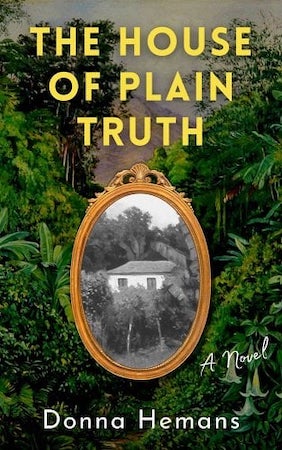
In The House of Plain Truth, Hemans goes back into family history even further. Pearline, its protagonist, leaves New York to retire to Jamaica, both to care for her ailing father and, finally, to return home. Instead, she discovers she needs to go as far back as Cuba, where long-lost siblings may still be living, to unearth family secrets she hadn’t known existed in the first place.
In this way, Hemans, in her third novel, deepens her investigations into the roots of the Jamaican immigrant story—or actually, given the similarities in the immigrant experience among any group not already wealthy, the immigrant story.
Pearline’s father, Rupert, was desperate to make a better life for himself and his family when he moved them to Cuba in 1917. Instead, he returns to Jamaica penniless, and is forced to leave half their children behind.
The book also clarifies a theme that lies beneath all her stories. The House of Plain Truth demonstrates most boldly how blatant capitalism is to blame for the troubles her characters grapple with and sometimes—too often—aren’t able to overcome.
I talked to Hemans about how the personal and political intertwines in fiction in our Zoom interview about this third novel, The House of Plain Truth.
Carole Burns: A key part of this novel comes from your own family history: two of your grandparents moved to Cuba at around the same time Pearline’s father, Rupert, does the same. What made you want to write this novel, and retell your grandparents’ story in some way?
Donna Hemans: On my father’s side of the family, my grandparents both went to Cuba in 1919 to work. They didn’t know each other at that point, but they met and got married there and had several of their children in Cuba before coming back to Jamaica in 1931. As a child, I just knew that they had gone to Cuba. I didn’t know any of the details, any of the history, what their experiences were like. My grandmother died when I was 16 and my grandfather when I was about 19 or 20—at an age when I wasn’t ready to ask the kinds of questions that I would ask now as an adult, and as a writer. And so I wanted to try to understand their experiences and their story.
CB: One of the tragedies in this novel is that the main character Pearline’s parents are forced to leave half their children behind in Cuba because they don’t have the money for everyone to return. Did something like that happen to your family?
DH: No, but there’s a second part of the story: I had also heard that one of my grandmother’s brothers went to Cuba, and never came back to Jamaica. And so I was thinking about what that felt like, just completely losing touch with a family member and especially a sibling without knowing whether they were alive or dead or what their circumstances were. So I wanted to put those two things together and try to build a story around those two ideas.
CB: And then you intensified the story by changing the circumstances from a brother left behind, to three children.
DG: And I needed to figure out why my character wanted to go back to find her siblings. That really was the driving force of the story.
CB: This is your third novel. Why do you suppose you are telling this story now?
DH: Well, I started this story in 2006 or 2007. Throughout the years, I was just trying to find the right way to tell the story. As I started researching and looking at what the experience of Jamaican migrants in Cuba was like, I was really surprised, I had not learned any of that in school. I began to see that people were shipped back, some of them to countries they didn’t originate from. People who were invited in to come and work were then made to feel they were unwanted and they were sent back home. And then the story became clearer. One, why my grandparents left. And also, what could possibly have happened to my grandmother’s brother. He could have gotten caught up in so many things. It’s possible he was killed early on. I don’t know.
CB: It’s a vastly complicated history, of which I was also unaware – some 100,000 Jamaicans migrated to Cuba in the decade starting 1914, and they’re really at the mercy of capitalistic forces. It makes your story completely relevant to today.
DH: Exactly. The funny thing about it is that I had set this book aside and come back to it so many times, but when I picked it up again it was around 2016, right after the election.
CB: After Trump won.
DH: Yes. And this anti-immigrant rhetoric was coming up. What was very clear to me was that every argument being made around 2016 about immigrants and the jobs that they were stealing, certain language being used about the immigrants and the countries that they come from—it was exactly the same as I was seeing in the research from 100 years before. There was nothing any different, nothing original about the arguments that you’re hearing today. It really brings home the point that there are certain groups of people who are always, always trying to find a home in the world. They are moving from one place to another to try to find that place where they belong. And so that’s what I really wanted to hone in on in this story.
CB: That comes across powerfully. And it feels to me that fiction often can tell that story in a much more human way than nonfiction does.
DH: Absolutely. I think the best books are the books that talk about politics or social issues without talking about them—the ones that don’t hit you over the head with it, that undermine the story. You have to do it through the characters.
CB: At the same time, though, I thought that you did editorialize in certain sections of the story — but quite effectively. So, for example, you have Rupert, Pearline’s father, remembering his younger self leaving for Cuba in 1917: “The young man he describes doesn’t understand American economic imperialism, the vast ways in which the United States expands its territories, or how American companies come to dominate the sugar cane estates to the northern coast of Oriente Province. But he knows the companies are advertising for labor, black men from Jamaica and Haiti and Barbados and the small Antillean islands who can cut cane. What Rupert knows is simple. There is work and money.” It’s masterful.
There are certain groups of people who are always, always trying to find a home in the world.
DH: There are things that I knew that Rupert would not have known and even Pearline herself would not have known. And I needed to find a way to say that kind of stuff and to hint at it without it coming directly from them. Though I don’t think of it as editorializing.
CB: It’s providing context.
DH: Right.
CB: Can I ask you about the title? It comes from the name of the Jamaican house that Pauline is hoping to save in Spanish, La Casa de la Pura Verdad. Obviously, she’s trying to uncover the pure truth. But I kept kind of wondering, is there such a thing as plain truth?
DH: I hope so.
CB: Yet the truth is complicated. So what did you mean by “plain truth”?
DH: The unvarnished truth. In probably all of my books so far is this question of, What is truth? There are multiple perspectives to any story, but at the heart of each, there is some kernel of truth. And there is a certain truth at the heart of this story that the children don’t know, that Pearline doesn’t know, and that Rupert just absolutely doesn’t or didn’t want anybody to know. The children grew up with this idea that when they came back to Jamaica, their parents bought this land and built this house.
CB: The House of Plain Truth.
In probably all of my books so far is this question of, What is truth?
DH: Yes. Whereas there is a completely different side to the story. What Pearline has to do is to uncover what is the actual truth of her family’s history in Jamaica. And then, what do you preserve of your history and your heritage? Do you preserve what is the true story? Are you preserving the story that makes you as a family look better or sound better? Do you know? What are the stories that we tell ourselves? And do we always tell the truth, the true story? Or do we tell the stories that will make us look good to our friends and our family? So that’s a part of what I wanted to do here, was get at what do we tell and what do we show. What do we keep to ourselves? And are we really, indeed, telling the truth?
CB: I suppose an important reason Rupert hid the “plain truth” of that family story for so long had to do with his pride. His pride is a really interesting element to the novel. Almost a fatal flaw in a way.
DH: Somewhere in the book, either Pauline or one of her siblings says he was a hard man. And I think that that kind of sums up exactly what he was. He was trying to do his best for his family, but there is doing your best, and then there is taking a stance that doesn’t help everybody else and refusing to budge from that. He’s stubborn. Yet at the very end, he makes the decision to reach out to his children left in Cuba—to find them. That suggests that there was some regret there all along.
CB: Though Rupert dies in the first chapter…
DH: Yeah, I would like to write a book where nobody dies. I haven’t quite gotten there yet.
CB:Yes! And yet the book is infused with him. Rupert haunts the book—both literally, as a guppie, but also through his history. It’s a very sneaky third person. It’s limited to Pearline’s point of view, but you have her imagine Rupert’s memories. We get a lot more of his story than she could technically know.
DH: That was a tricky part. In the initial draft the story was told partly from his perspective after he was dead. Whereas in this version in just Pearline’s point of view, I still wanted to tell a lot of that back story, Pearline was three years old when they left Cuba. This felt like the easiest way to do it, where it was both in and through this haunting where her father is just simply not going to rest until she does what he wants her to do. To her, it’s like she is reliving his experience because her father is so present in her life. And what she knows she has to do is also present in her mind.
CB: Did you look to any particular authors or books as inspiration for that?
DH: Beloved is the closest. That’s one of the things that Toni Morrison did, where the ghost of a child is present throughout the entire book.
CB: That fabulous first line: “124 was spiteful.”
DH: You’re reading Beloved and it’s like this child is living with this family and in this family. You don’t make any distinction between the fact that she is a ghost and the real people.
CB: Can you talk about other influences?
DH: The biggest influence on my career in general is Zora Neale Hurston. As an undergrad, I took an independent study class and a professor had me read Their Eyes Were Watching God. One of the things that I pulled from that book was the way in which she described community and the way she used dialect. Growing up in Jamaica, we were always encouraged not to talk in dialect. You grew up with the sense that, if you used dialect, you were not speaking proper English—it’s tied up with class and education. But here I was reading this book where the dialect just sounded so familiar to me—I felt like I was home. It was a different country, a different place, but it just felt like home. I loved what she had done in that book, the way she had built the community, explained a community. And I hadn’t really been thinking about being a fiction writer, but then, that’s what I wanted to do.
CB: The dialect in your book is terrific. It gives us the characters, it gives us the flavor of the place. And the language itself — the phrases unfamiliar to my ear, but how specifically and imaginatively they capture the world.
DH: One of the things that I keep trying to do when I refer to places in Jamaica is to build that sense of community in the way Hurston does. The places I write about are either the community I grew up in, or communities around that community. In this book, Mount Pleasant, where the House of Plain Truth is located, is maybe four or five miles away from where I grew up. So I keep coming back to that home, to that sense of this community and place that that I knew.
CB: This is your third novel set at least partly in Jamaica. Do you think you’ll ever write a book that isn’t somehow about Jamaica, even if it’s not set there?
One of the things I want to do is write about either the people who were left behind, or the people who returned home.
DH: I don’t know. I’ve thought about that. Some years ago I read that it’s easier to write about a place after you have left it.
CB: A la James Joyce.
DH: I think if I write a story that is set primarily outside of Jamaica, then it probably means that I have left that place. I have tried and every book comes back to Jamaica.
CB: I live in the U.K., but I can’t imagine not setting a novel in America.
DH: Also,so many of the novels from a certain period of time about the Caribbean were about the Caribbean immigrant in another country. One of the things I want to do is write about either the people who were left behind, or the people who returned home. And so with this particular book, I have written about the aspect of returning home. And my first book really was about the child who was left behind. I want to tell a different story, not just talk about immigration from the perspective of the new immigrant in the new country. Who are the people who are left behind? What happens when you return to a country? Can you really go back home?
CB: I also find Rupert and his family are haunted by what you describe as a “legacy of failure.” The family, Pearline especially, is trying to overcome that. And yet I feel frustrated for them, too — it wasn’t Rupert’s fault that he failed, but the fault of the capitalistic system.
DH: I think it’s just a part of the immigrant story. When you go off somewhere to a new country or a new place, you are you’re expected to do well and you’re expected to come back and lift up the next generation. And so Rupert was looking at the men who went to Panama and came back to Jamaica with gold and silk shirts. And he came back to Jamaica from Cuba with not even enough money to book their passage back home and to take all the children. So it wasn’t his fault at all. But it really marked him and he carried with him throughout his entire life this sense of failure. How do they see you back home? Have you achieved something? Have you taken this opportunity and done something with it or have you come to America and failed? I think even today for many immigrants, that’s what it really is about.
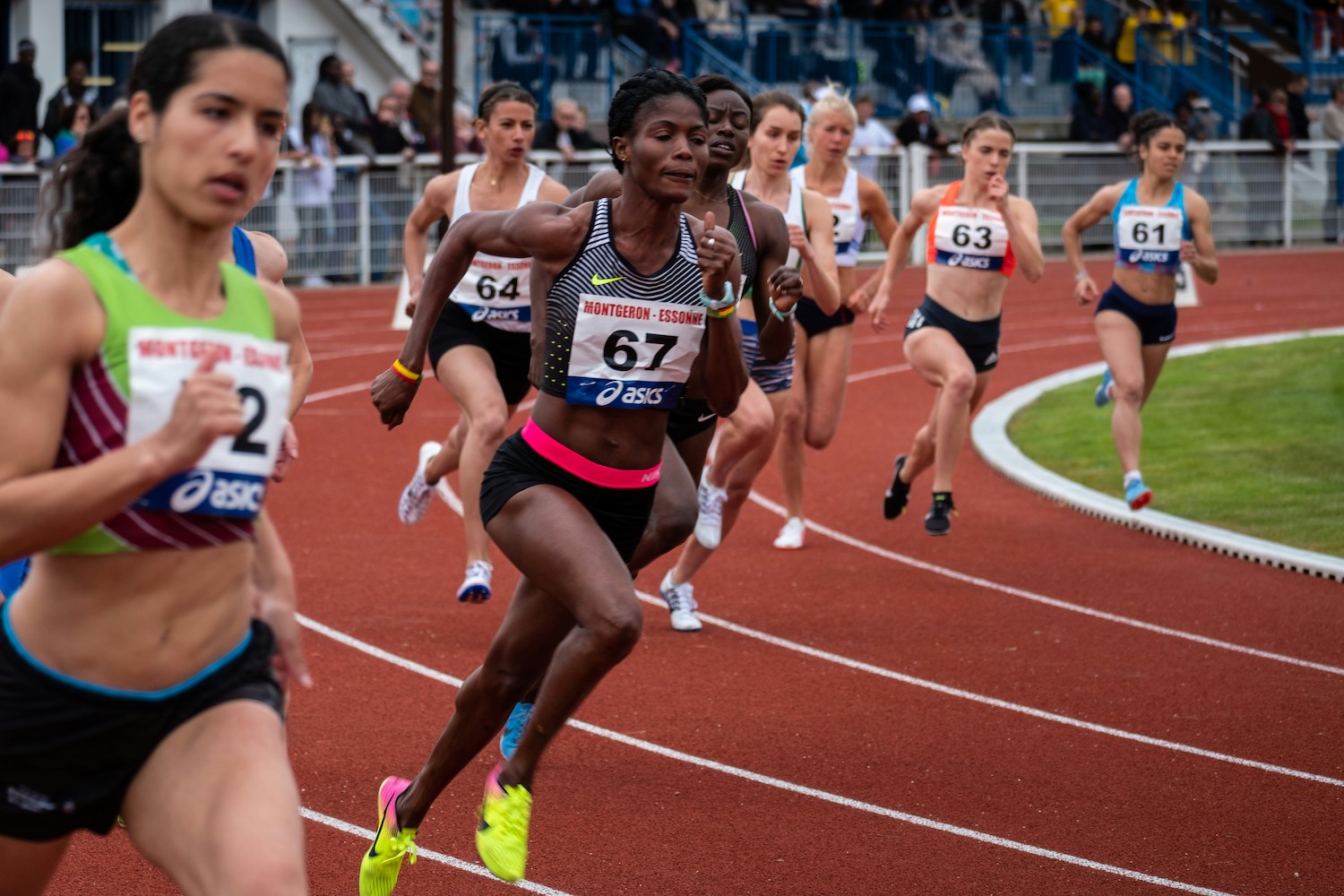
I was a reader in a family of runners. With pre-teen grumbles, I reluctantly participated in summer track leagues, always bringing up the rear, always slowing things down, until one day under the blazing Tennessee sun I got my legs moving and earned my first ribbon. My dad puffed me up saying, “You were so fast out there, you could have been a Tigerbelle.”
In my family, the Tigerbelles were legends. Being compared to the elite team made me feel like a winner, even with my 3rd-place yellow ribbon. In that moment, I was a Tigerbelle and I was invincible! There is power in knowing who came before us, whose shoulders we stand on, and how what they did makes our lives better. A seed had been planted, and the Tigerbelles book eventually grew.
The Tigerbelles: Olympic Legends of Tennessee State is the origin story of the team that dominated women’s track for nearly 40 years. Follow each woman as she earns her way to the team and discovers the depths of what she is capable of. Together the Tigerbelles battle Jim Crow laws, racism, poverty, and sexism, and prove to the world that women can run.
Sports stories are the ultimate vehicle for inspiration. By following the athlete’s journey through early morning practices, and powering through the doubts of others, we race with them to the moment when the hours, days, months, and years of dedication pay off with glory. Track programs for girls flourished in the ’80s and ’90s, and women everywhere laced up their sneakers never realizing that the Tigerbelles blazed the trail first. Women’s sports stories do exist, but they are harder to find. Women and girls deserve to see themselves reflected in stories that give them the overwhelming conviction that yes, they can accomplish triumphs in their own lives.
Here are 7 books that will make you laugh, cry, raise your arms high to celebrate hard-earned victories, and make you believe that overcoming the odds is possible. These books look back to the women who dared to defy expectations, and forward to the signs that leveling the playing field in sports and in life is an attainable goal.
The draw of our bodies to movement is often inspired by nature, and this evocative collection of profiles illustrates how profoundly the historical leaders of our country from all races were affected by access, or the lack of, to outdoor spaces and argues why that same access is so critical today. Miles writes, “By thinking and acting outside, these girls who matured into women bent the future of the country toward freedom—for the enslaved, for the colonized, the dispossessed, the sequestered, the suppressed, and the subjugated.”
Track and Basketball were both considered sports that were “for the boys” but New York Timesbestselling author Andrew Maraniss spins a narrative of how wrong that assumption was. Telling the story of Pat Head, Nancy Lieberman, Ann Meyers, and Lusia Harris, this team of underdogs gathered from small colleges throughout the country started US Olympic Basketball for women in 1976, then went on to legendary careers. Coach Billie Moore told her team to “Win this game, and it will change women’s sports in this country for the next twenty-five years.” The only thing she got wrong was the length of time that legacy would last. Over forty-five years and counting later, the WNBA is still charging forward.
Soccer is the dominant sport the world over, but in rural South Africa, women were boxed out of the action. “Mama Beka” pushed against these norms and started a women’s soccer league that is known as the Soccer Grannies. The Grannies became celebrated internationally proving that there is no age limitation to following your dreams and moving your body. Told by soccer-playing mom, Jean Duffy, this story drives home the impact of sports on every level in all parts of the world.
Abandoned as a child with severe physical challenges developed by radiation exposure from Chernobyl, Oksana Masters spent the first seven years of her life traumatized in a Ukrainian orphanage before being adopted by Gay Masters, an American professor. The two spent years in hospitals with corrective surgeries and treatment before Oksana turned her steel determination to survive into fuel to become America’s most decorated Winter Paralympian, medaling in four sports, powered in no small part by her mother’s love.
Shut out of the locker rooms, young Wellesley grad and Sports Illustrated reporter Melissa Ludtke was constantly missing the quotes that she needed to get the story. Locker Room Talk is the gripping first-hand report of how she took on Major League Baseball and with a ruling by Judge Constance Baker Motley, the nation’s first Black woman on the federal bench, changed the future of sports journalism for women.
Lauren Fleshman grew up with sports, and was an elite runner sponsored by Nike before she shook up the industry, determined to create positive change in the world that she knew so well. Exposing the contradiction of empowerment and exploitation in women’s athletics through her personal experience, Fleshman offers a “rallying cry for reform of a sports landscape that is failing young female athletes.”
Billie Jean King famously fought the Battle of the Sexes in 1973. It was a battle that women had been fighting and continue to fight to this day. Macaela MacKenzie gives that fight the much-needed power of information, leaving no more room for excuses. Interviews with Billie Jean King, Allyson Felix, and Megan Rapinoe illuminate the reality of the sports industry for women. “For every dollar that the NBA’s highest-paid player brings home, the WNBA’s highest-paid player earns just half a cent.” MacKenzie’s sharp journalistic eye draws the necessary parallels between sports and society and proves that women are equal to their male counterparts in skill and the ability to generate revenue, and it’s the industry itself that is leaving billions of dollars in unearned potential on the table.
I’m gliding on my back atop a paddleboard, up the silent creek that swindles away from the Chesapeake Bay, becoming smaller, muddier, filled with creatures I can’t see but hear rustling in the marsh grass, slinking into the water with trepidatious splunks. Herons fly overhead, their great necks curved in a protective S, as if they are aware of the dangers of this world. I curl further into myself, the fear rising up from my gut until I turn with shaky arms to head back into open water.
We’ve rented a house with friends for my upcoming fiftieth birthday, arriving a few weeks after receiving the news that my triple-negative breast cancer has traveled out of my chest and into my fearful gut. My tan baseball cap is really a wig with two blonde braids to cover my baldness from my latest chemotherapy. It is still the pandemic, although nearing the end, and my friend, Linda, bemoans that we did not take advantage of the isolation before now.
The house is immaculate, strong and large, yet welcoming, and sits in a cove embraced by the creek at its wider end. At the opposite end, fields littered with bright dandelions and red, spent shotgun shells stretch all the way to the one road that runs through the countryside, which we drive at dusk searching for foxes and deer. Pete, Linda’s husband, says, “I swear that was a mink that ran into the underbrush.” Near the water’s edge, tucked within our cove, is a small beach and a tree so wide and picturesque, even an adult—maybe especially an adult—would want to climb and rest in its branches.
We play cornhole on the lawn. My oldest son comes up from college. My teenage daughter searches through drawers to scavenge for books. My youngest son, Elliott, is still young enough to wrestle with my friend’s son, who is his same age, on the giant floating mat we unroll and push out on the creek. We make fires in the pit outside and under the mantle inside. We light candles and eat Smith Island Cake that my friend ordered from a local baker. We ooh and ahh over its ten thin layers, chocolate cake and cream cheese icing dusted with cocoa powder. Linda battles my cancer recurrence with birthday decoration bling. “Not a day over fabulous” is strung over the bay window in the kitchen, framing the lawn and the water and the birds. There are matching T-shirts, tie-dyed in red, orange, and yellow. We blaze like the sun that circles my name on the front of the shirts; when we walk through waterfront restaurants, a grizzled local asks, “Who or what is Kim?” We use napkins with quotes like, “I have mixed drinks about feelings.” For once, I am not the only one who takes photos. Linda instructs Pete, “Take a picture of Kim with her pink wig . . . with her cake . . . with her son.” There are gifts. My husband, Wen, gives me an emerald on a silver chain. He writes “I love you more than words” on a napkin with my morning coffee, a favorite song lyric from our college years. They fill the space with vases of tulips, a nod to my wedding bouquet. We laugh a lot. Sometimes I think of the pain my absence will cause these people who love me and tears catch my breath. They rub my back. I am worried for each of my children, but I am still in the thick of mothering Elliott. I remind him daily to brush his teeth. I remind him daily he is loved.
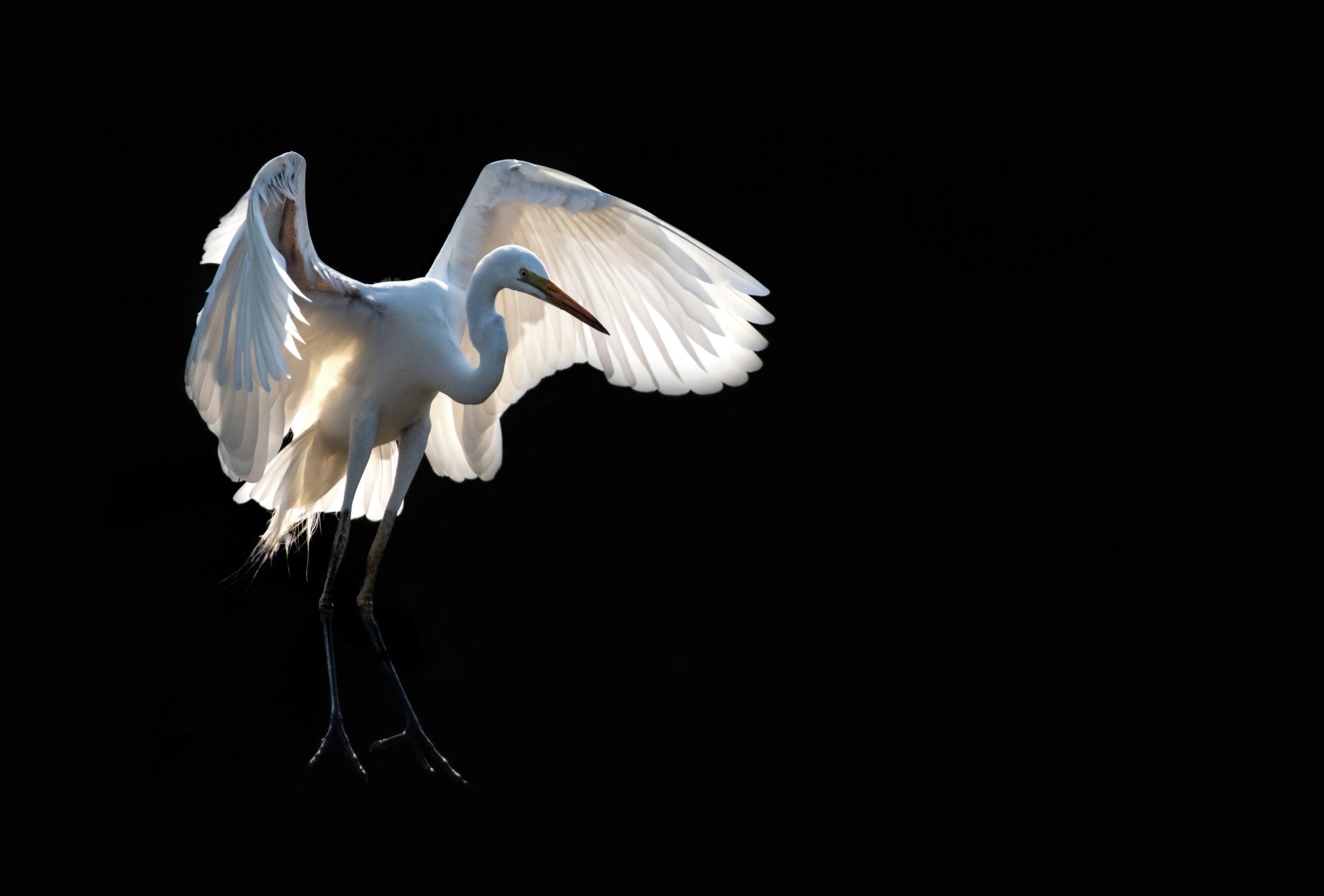
At the end of April, it is the height of the great blue heron hatching season. A group of them is called a siege. They sweep over us and land atop the thin trees where they lay between two and six pale blue eggs. They nest in colonies called rookeries during breeding months. The parents take turns standing still at the water’s edge, waiting to spear fish with their deft bills. It takes about sixty days for the young to fledge, their strengthening wings growing to a span that can support them. Give them another month and they will have left the nest.
Elliott has grown a lot during the pandemic. In virtual school, he has had no one to compare his gains against, other than me. He asks, what seems like hourly, to stand back-to-back, measuring his growth against my stagnancy, waiting for the moment when he will officially surpass me. He is on the cusp of manhood, but he isn’t scared of the virus sweeping the world. When his face shows fear, he is always looking at me. In the middle of television shows, he asks, “Mama, are you okay?” I am not okay. I am afraid of my absorption into the great blue. I try to balance honesty with his need for security. We binge a lot of shows, locked inside our home. We start out with wholesome orphans on farms but end up on a string of violent dystopian thrillers. Both categories revolve around teenagers with dead mothers. I understand it strengthens the plot—the stakes are higher if there are no adults to protect them—but it does nothing to decrease the worried glances my son is sending my way. The characters are not worried about their mothers. They are trying to survive. Elliott studies my face, reading my body with something innate, passed down from one generation to the next. Is his knowledge of my decline ruining his tender ability to love? When we finish watching a season, I can’t help wondering if I will be here to watch the next season with him.
I am not okay. I am afraid of my absorption into the great blue.
April in Onancock, the idyllic Chesapeake town we half chose so we could make jokes about the name, is not our two families’ first trip together. Linda owns a timeshare on North Carolina’s Outer Banks, where we’ve spent several summers. We play board games and shop for knickknack creatures made out of sea glass, broken pieces worn down to beautiful. Our favorite tradition at the beach is ghost crab roulette. We wait for darkness to descend, grab small shovels and a plastic bucket, then head over the boardwalk to the day’s disheveled sand, where we squeal and clutch one another following the halo of flashlights. One brave soul scoops up the pale, almost translucent ghost crabs that dominate the beach after sunset. Our boys take turns daring each other to hold the bucket. When Elliott is not holding the bucket, he runs back to me and asks, “You okay, Mama?” On the boardwalk deck, we gather with the jittering bucket. Linda shouts, “Is everyone ready? One, two, three!” The winner is whoever is last to climb onto the bench seats, whoever can tolerate crabs skittering across toes the longest. I never win. I scream and jump before the bucket even gets tipped.
During the last trip to the Outer Banks, I could barely make it to the beach, my lower back was hurting so badly. I didn’t know if it was simply pain from a soft mattress or the cancer’s spread. We had recently discovered my recurrence and were waiting for one of the top cancer hospitals to find room for me on their schedule. Later, my pain would be so great that I’d require morphine for an MRI at the emergency room, but until then, Linda was helping me hobble over the evening dunes when the call finally came. We embraced and cried, shouting hooray to the setting sun before heading back inside to our sons, fear and relief surging like the ocean as the ghost crabs scuttled back into their dens.
In Onancock, the only crabs are on our plates. We paddle in kayaks from the front yard to the town restaurant on the wharf for fresh fish and crab cakes. Another afternoon, I venture out alone on my paddleboard through the gentle town canal, silently sliding past neighbors who greet each other over lawns with have-you-heards and did-you-knows. It is like being inside a tranquil television show. I would like to be a part of this world. With each stroke, from my hand grip through my core, I am both joyful and acutely aware of my body’s fragile ability to navigate these waters. How much effort it takes, how easily it will be spent.
Heron calls are coarse, a wild dog barking, frog croaking, the throaty rasps of a jungle cat. They are not songbirds. Some species of birds, like the zebra finch and fairy-wren, are not only excellent singers, but sing to their babies before they even hatch. In fact, the superb fairy-wren slips a specific note into her song while brooding that serves as a security code her chicks sing back to her to ensure they are fed. The unique note varies per fairy-wren family, like a last name. The cuckoo bird will hide her own eggs in the wren’s nest to evade the obligation of feeding her young; the special note tells the mother wren which hatchlings are her own. It’s the secret key for identifying which ones to care for—which ones to love.
In the mornings at Onacock, I take my coffee outside, where I write bad haikus about cancer and crabs. A quick storm comes up and we rush to stow the rented kayaks and oars before they can blow away. We are at the age when mothers start to fade. I have several friends who are wrestling with a parent’s decline. I want to be compassionate, but all I can think is, “If it’s this hard for you at fifty, then how the hell is my 14-year-old gonna handle it?”
At the beginning of my recurrence, before the news of my stage four diagnosis, I have a lumbar puncture to see if the disease has penetrated my spine. Wen travels every week for work so Linda is my official driver. She feeds me spoonfuls of scrambled eggs from the hospital tray, because I am supposed to lay flat and still, but she keeps dropping them on my face. We are too loud for the curtained recovery area and I declare, “I’m gonna be the first person paralyzed from laughing so hard.” The nurse asks us to behave with a wink. Despite our laughter, I am frightened. During a panic moment, I grip Linda’s arm and implore her, “You have to make sure my kids are okay if I die.” I make her promise. She swears, “Your children are like my own.” But still, I can’t stifle my anxiety: Have I taught Elliott a song note that only fits my heart? I want to shout how unfair it all is but instead I am grasping at her arm. I am whispering to you, dear reader, for someone to hold him when I cannot.
Have I taught Elliott a song note that only fits my heart?
The doctor who withdrew my spinal fluid brings me coffee in recovery. Although close to retirement, he is still full of wonder. Before the procedure, he asks if he can pray with me and holds my hand. He points to the x-ray of my spinal column and notes how it looks like little owl faces stacked one on top of the other. He explains the linings of the spine, pia mater and dura mater, Latin for fragile mother and strong mother. Afterward, he holds up a vial of my spinal fluid and it is clear as a spring day.
It is the spring of Elliott’s fourteenth year. It’s been eight weeks since the oncologist told me I only had a handful of months to a few years to live. When we sat the kids down at the kitchen table, my daughter asked questions. My oldest son said everything would be alright. Elliott sat silent, tears running down his cheeks. When I asked him if he had any questions, he gave a slight shake of his head like a heron hovering on the water’s edge, frozen, waiting to pierce the truth.
There is a hammock strung between the trees on the great lawn of the Onancock house, overlooking the water. Solo on the hammock I am stiff, limbs akimbo. When my son climbs in beside me, the counterweight balances, makes us soften and lean into each other, his perfect cheek beside mine. It is beautiful and he is beautiful and I want to stay with him forever. I don’t want to be the reason he hurts. I can’t stop my tears. He asks, “Mama, why are you crying?” I say, “I just think life is so beautiful. I love my life so much. I love you so much and I want to be here to share it with you.” It is a perfect horrible moment, staring up through the branches at the blue sky with his sweet warmth tucked in beside me, and he is too young for it and I am too young for it and yet this moment is here with us. I’m teaching my son that love is loss.
The great blue heron’s lifespan is fifteen years. They grow to a height of four feet with a wingspan of six to seven. Despite their size, their hollow bones mean they only weigh five or six pounds. How do they not get blown away? In Greek mythology, the mystical halcyon bird, our modern kingfisher, comes from the story of Alcyone and Ceyx. Alcyone’s grief turns her into a bird, so she can fly across the ocean to her drowned lover, Ceyx. She builds a floating nest to brood each winter on seas held calm by her father, Aeolus, God of the wind. How enviable to have the ability to calm the waters for your loved ones.
It is hard dying of cancer. It is harder living with the knowledge of it. When do I become beautifully weathered like sea glass? My second port’s tubing runs taut under the skin of my neck, like I am permanently angry. I describe myself with the qualifier “used to be” before adjectives like fit and pretty. I have already lost my breasts. My hair grows back white as an egret. The new immunotherapy trial I start, to curb my recurrence, attacks my thyroid. I add synthetic thyroid pills to my morning routine. It attacks my pancreas. I pop pig digestive enzymes when I eat. I bond with other women through the stage four breast cancer social media group. They die. I snap at my family, whoever is in the house. Sometimes I think of my childhood dog, Ginger, a fifteen-year-old cocker spaniel that wandered off one day and didn’t come back. How my father said, “Sometimes old dogs go off to die alone.” I drive to a park and stare at the trees through the windshield. I wonder how sinking into the woods might feel. I do an internet search on how long it takes for hypothermia to kill you. I think of my children. I go home.
I make our house a shrine before I am even gone. I hang photos of our family on beaches. I surround my bed with mementos of our time together. A “50 years loved” cake topper from Onancock glitters on my nightstand, reminding me I am lucky. People tell me that I must always be grateful. It’s been three years since the start of the pandemic and masks are mostly gone. Today, if your loved one is dying, you can be there to say goodbye.
Now Elliott is sixteen, but he is still my baby. The only one of my children who’s never awkward blowing me an air kiss and saying, “I love you more.” My snuggler. The one I’ve always said will make a great husband one day. He got his driver’s license this week. Nine months ago, when I took him to the DMV for his learner’s permit test, there was another boy standing at the counter. He held a bag of donuts. He told the woman behind the plexiglass, “I failed, again. This is my second time. How long do I have to wait to retake it?”
Elliott joked with a hint of nerves in his voice, “What if I don’t pass?”
When he finished, I paid and signed the paperwork. I took a photo of him with the temporary paper license by the DMV door. On the drive home we passed the other boy walking dejectedly along the busy road with his paper bag.
“I bet he bought those donuts to celebrate, thinking he would pass his driver’s test. I bet he thought he’d be driving home. I feel bad for him,” I said.
“I feel bad for him, too.”
“Well, maybe this will make him study harder and do better next time.”
A few miles went by.
Then Elliott replied, “You know the saddest part isn’t that he didn’t pass or that he’s walking now. The saddest part is that he didn’t have anyone there with him.”
When Elliott gets into the Jeep for his first solo drive, he shoos us back inside off the front porch and Wen and I sneak photos from the window. He’s drifting out of the driveway, away from the house we moved into when I was pregnant with him, and the yard is overgrown because it is too much for us to keep up with, and although we are not nestled in an idyllic cove, I feel akin to the heron sitting atop the great tree in her stick nest. I imagine that relief washes through her heart as she watches her fledgling soar away, into the great blue, where my mother’s call is ringing. I’m sorry. I love you. Are you okay? Will you be okay? Please be okay.
In its way, this essay is my love song to Elliott, but it’s coming out coarse, inadequate, sounding like anything but a love song. May he still recognize the call. May he find his way home even when I’m long gone.
I am waiting on another call to schedule a biopsy on a new spot that’s “concerning for metastasis.” It sounds like it’s in the same spot as my earlier back pain and I wonder if cancer has been lurking there all along.
There’s a cardinal trapped in our garage. It must have flown in when my husband was grilling the night before and now it doesn’t know how to get out. I leave the garage door open, wanting it to have a chance. I check for messages in my patient portal. I insert the foam breast prosthesis into my mastectomy bra and pull it on to go pick up prescriptions from the pharmacy. When I return, the cardinal is gone, and I close the door behind me.
Kiley Reid’s sophomore novel, Come and Get It,centers around the fictional Belgrade dormitory at the University of Arkansas. Millie comes back to be a resident’s advisor for a group of transfer and scholarship students, including the problematic suite of Tyler, Peyton, and Kennedy.
Kennedy, who transferred from Iowa after a traumatic incident, seeks the friendship and attention of Tyler and Peyton. Meanwhile, Agatha, a visiting professor, secretly observes the girls’ relationships and how they spend their money after striking up a relationship with Millie. All this leads to a series of pranks, revenge, and the breakdown of stability in the fragile atmosphere of college life.
Come and Get It is an exploration of how our culture of consumption controls us and leads to the ways that people inevitably abuse power and money. I spoke with Reid about Arkansas, dorm culture, and race.
Olivia Cheng: First, can we talk about Arkansas and the university culture perpetuating big schools in the South? How did you decide on this setting for the book?
Kiley Reid: I lived in Fayetteville, Arkansas for exactly a year from August 2016 to August 2017. I went there after a big round of rejections from MFA programs, and the plan was to just spend no money and write and try and apply to grad programs again, see what happens. It was one of those things where if this time doesn’t work, I’m done with writing.
So Fayetteville is definitely one of my favorite cities. It’s pretty walkable, it’s beautiful, it’s really hilly, it has really true seasons. It has that effect that a lot of big state schools have where it’s kind of this bubble amidst a big rural area in the South. For better and for worse, I think. And I definitely didn’t know when I was there that I wanted to write about Fayetteville, but later, I really was interested in exploring the type of strange snobbery and freedom that people have when they go to certain cities and say, “This place doesn’t count. I can do whatever I want here and this can be my experimental place, but when I go back home to wherever I’m from, that’s real but this is fake.” I thought that fake-place-ness was really interesting to write about. That’s what drew me there.
OC: Did that happen often in Fayetteville?
KR: I don’t think so. I didn’t talk to anyone. I worked at a coffee shop and wrote for a magazine, but I don’t think that I dove into relationships that deeply. But it was something that I was reading about often when I was thinking about what to write about.
OC: Did the setting come first or the characters or together? I mean, Kennedy was literally a baton twirler at Iowa. How was this book conceived?
With all my characters, I don’t want it to be this binary of they’re good or bad.
KR: I knew that I wanted to write about young people and money. I came upon this book called Paying for the Party, How Colleges Maintain Inequality. It’s written by two sociologists, and one of them works here [at the University of Michigan]. I haven’t met her yet, but I’m going to try! It’s a book about these two sociologists who do five-year long interview studies at a midwestern university, and they interview young women in dorms about money and their trajectories and their paths. They follow them from freshman year to beyond. They all start out in the same freshmen haze and end up in varied circumstances. So I liked the book a lot, and learned a lot about how careers are advanced just by knowing certain people and how they’re held back by different circumstances that I hadn’t considered before. More than anything, I really liked the premise of very academic women interviewing young women in a dorm about their lives. So that’s where the book was born.
Of course, you’re also writing a novel, and things filter in as the years ago on.
OC: Interesting that it came out of this sociology book. Now that we’re on the topic of money, because that’s so clearly a central theme of this book—who gets it, who keeps it, how people spend it. Did you do any on-the-ground research?
KR: I did a ton. With this book, much more than my first, I had the time and finances to actually hold interviews and things. That was a precursor to the plot as well, after I read Paying with the Party. I was still living in Iowa and I interviewed maybe ten students about their experience with money and the language they have around money and how they get it and what they think about it. I continued those interviews and did about thirty to forty interviews during the first two years. I also had a research assistant this time around, and it was great to be able to say, “Hey, can you give me the salaries of RAs at ten Southern schools? Can you give me last names from these origins?” and she was wonderful. So I worked with her for two years. A lot of the research was honestly just listening to people talking about their lives and I was really fortunate to have people who were willing to share with you.
OC: I noticed that the two epigraphs for this book are about Walmart. Can you tell me a little more about that decision?
KR: Yes! So Arkansas is the state founder of Walmart. Walmart started by Sam Walton in Bentonville, which is about 45 minutes away from Fayetteville. The Walton Family definitely has a stamp on the state and it almost feels like a sticker on the bottom of everything. You see the Walton name everywhere from museums to schools to theater. The Walton name is definitely very, very pervasive.
When I was doing research, I researched a lot about Walmart and I came upon Lucy Biederman’s book of poetry which is amazing. I kept it next to my bed for a very long time, and that quote really spoke to it. And Sam Walton too was a huge game-changer for Arkansas and how they see capital and what their stores look like, really for everything. This book is in many ways about buying things, and so I wanted to start it off with the king of buying things in Arkansas: Sam Walton.
OC: That definitely makes sense. Millie’s main goal is to buy a house which feels quintessentially American.
KR: Yeah, she sees buying a house and having a job in a corporation as a marker of adulthood and success and she’s very into attaining the trappings of having made it.
OC: Also prevalent in this book is the topic of race. Why did you choose to have Millie and Peyton be the two central Black characters, and what impact did it have that Peyton didn’t seem to connect with Mille in any way, but was friends with Tyler?
I love stories about bad decisions that shouldn’t put you in jail but are still not wonderful decision for you to make.
KR: Peyton and Millie… I was very excited to put them in a room together. Millie has this moment where she realizes her and Peyton are very similar, but still opposites. She realizes Peyton is much more financially stable, she’s not very friendly or warm in any way. Peyton is close to her parents in a way that’s different from the way Millie is close to hers. But Millie also identifies her as the one other Black person on her floor. Millie sees her and says, oh this person kind of needs a bit of help socially, and then she very quickly feels guilty for having felt this way. She wrestles with wanting to help her and fix her in a way, but also Peyton’s not really asking for this help. Millie is also looking for accompaniment and she thinks oh, maybe the other Black girl on the floor will be something, and Peyton’s like, Absolutely not, I want nothing to do with you.
I had a friend read the book and she said, I knew a Peyton, I’ve definitely gone to school with a Peyton, and her parents would drive four hours and surprise her for lunch and then they would leave. So hopefully Peyton to recognizable to other people of someone who isn’t super warm, is a bit odd, is not, I wouldn’t say mean, but you feel like she’s mad at you all the time. I had a roommate like that. I definitely knew people like that, and I was excited to include someone like that. I also think when Black people identify other Black people and want something from them that they’re not willing to give, that’s interesting. I was excited to write about it.
OC: Peyton was fascinating for someone who wasn’t on the page that often.
KR: With all my characters, I don’t want it to be like this binary of they’re good or bad or anything like that. In some pages, she’s really charming and in others, she’s super rude.
OC: Peyton didn’t seem to care that she was the only Black undergraduate on that floor. There are implicit undertones of class within that.
KR: Peyton’s financial status, in some ways, protect her as the only Black student in the room. At the same time, she has a Black mother who is very invested in her making other high-class Black connections, but that doesn’t mean she’s always willing to do those things. But I definitely believe that Peyton’s financial situation and her upbringing causes her to think about race much differently than someone like Millie.
OC: In the suite, Tyler is such a critical character, because all the other characters have this visceral attraction to her. Even in moments of crisis, she’s so clear on who she likes and doesn’t. Do you think Tyler is let off the hook at the end? And do you think she deserves to be?
KR: I try to make my novels as close to real life as possible. I talk to my undergrads about this a lot too. I want a book to feel resolved, but that doesn’t mean the characters resolve things within themselves. Some people are mean for their whole lives and they keep on doing that and keep on failing with their attitudes. Tyler is not from a super rich family, her father’s in jail and she has challenges from that, she surprises Agatha and Millie sometimes with some of her beliefs and how she sees policy and healthcare and things like that. Do I think that Tyler is let off at the end? No. I hope that none of my characters are let off easily at the end. It doesn’t always feel complete to some readers when characters don’t learn things about themselves. But some of my characters do and some of them say no, I was right the entire time, and Tyler might be one of those.
OC: Let’s talk about Agatha and murky power relationships. What was it like to write the perspective of somebody who is toeing the lines of ethics as both a writer and professor? Both of which you also are.
KR: With Agatha, I definitely relied on a lot of the information I got from certain interviewees. I interviewed journalists and professors and sociologists and just listened to a lot of podcasts with people who had the same career trajectory that she did. I love stories about bad decisions that shouldn’t put you in jail but are still not wonderful decision for you to make. And Agatha definitely makes some of those. I was interested in having a character who has a fuck-it mentality after a breakup. Millie’s relationship to money was save, save, save, Agatha’s was spend, spend, spend, and Kennedy was someone who thought that she had no relationship to money, even though who she was deeply related to consumption. And so Agatha was definitely the spend-it-all spoke of that triangle.
OC: There is something about secrets coming into real life with the shared walls of the dorm in Come and Get It and with Alix’s secret being revealed in Such A Fun Age.
KR: There is a different tone here, for sure, but I do hope to do something different every time. I was trying different things with sentences and structure and tone with this one. But I think you can tell that I definitely have the same interests like dialogue, money, embarrassment, women, cringe. In this one, I was super interested in careerism from a different lens, adulthood in a different sense.
Back at his place, he showed me pictures of his ex-girlfriend, and I talked to him about Lars. Back home, I just lay in my room alone and masturbated, content with my mediocrity. Bad metaphor, humans as machines. Bah. Bakery in Berlin. Basically it’s a crazy year, that’s what Claire said, this is going to be a crazy year. Be a pro, Lemons said. Be a woman. Be an individual, he suggested. Be bald-faced and strange. Be calm. Be cautious with your money. Be clean and attractive. Be comfortable and assured and confident in your work life. Be creative, is what Pavel thinks people are told, and what is expected of a person, now more than ever. Be direct about the things you need that are reasonable requests, and apart from that, just enjoy him and your time together. Be impeccable with your word. Be miserable about the world. Be optimistic, for you know how steady application always gets you somewhere. Be patient and hold on to your vision and integrity. Be peaceful, do little, find the one good thing, the one solace in the moment. Be thoughtful and wise. Be very quiet, very humble, very grateful. Be worse than you were when you were younger, and allow that to be a fact, that people around you will interact with less than common grace and decency, they will interrupt and disappoint one another, and they will not always behave as you would want—in that good way. Because another person is not a tool for your own self-development. Because as Claire was saying the other night, one’s thoughts are always changing. Because beauty is a word reserved for art, and I’m not sure to what degree to consider this new book art. Because by the time I reach the computer to write, I’ve so exhausted my mind that the only thing I have the energy for is answering emails. Because for so long I’ve wondered if I’m not heartless to always be breaking up with men, or thinking about breaking up, but what if it’s something else—what if it’s a neurotic need to repeat the insecure feeling of things coming to an end? Because I am in debt and don’t know how I’m going to live. Because I am not writing. Because I am sad. Because I am with a man. Because I couldn’t leave, I tried to find the dinner party interesting, but I was unable to find anything interesting about Lemons’s new girlfriend. Because I had love until this weekend, I didn’t think money was important. Because I had sex with Lars. Because I have zero dollars. Because I will probably ruin my life. Because I would get bored. Because I would leave. Because it is a pattern, and the pattern is: be with me, desire Laurel; be with Laurel, desire me. Because it would be better to write one really good story, like Frankenstein or something, just once, it doesn’t have to be more than once, just come up with a really good story, probably a tragedy. Because it’s emotion that makes something compelling, and I don’t know to what extent to consider this new book emotional. Because it’s the whole truth. Because Lars seems not neurotic, I feel like the things I do that might wound another man would drop off him. Because one is always falling in high heels, falling forwards. Because that’s the sort of woman he wants, and that’s not me. Because the money isn’t here for nail polish, or lipsticks, so now that you have nail polish, now that you have lipsticks, now that you have this green skirt about which Pavel said, keep it on, then proceeded to fuck you in, stop spending money on such junk. Because the standards here are so low, my standards have also become low. Because there is no God to ask forgiveness from if we trespass religious laws, we must ask for forgiveness from each other for trespassing or failing to honor human laws. Been thinking about authenticity, and about how we have been done a great disservice by being taught that what we are to be authentic to is our feelings, as opposed to our values. Before falling asleep, I was thinking about my fundamental insecurity in the world, and I wondered if it was possible for me to feel safe even for one minute. Before I boarded the plane, they made us sit for a long time in the suffocatingly hot bus. Before speaking to Rosa, I was reading a Leonard Cohen interview, and he said that the longer he lived, the more he understood that he was not in charge. Being a lazy wanderer with no mission is definitely an option. Being back in Toronto brought close the truth of how I felt being onstage with the band those two weeks, which was: very bad. Being high for the first time on tour, I saw how amazing it all was, how remarkable and new, and how interesting all these people I was traveling with were. Being onstage in front of a crowd that is screaming for you and applauding your name—this is not an experience I feel I need. Besides, there is nothing wrong with writing books that come out of an inner security, peace, watching, reflection. Best not to get too rosy-eyed about each other, so that when I return to him, we aren’t disappointed. Best not to live too emotionally in the future—it hardly ever comes to pass. Better to be on the outside, where you have always been, all your life, even in school, nothing changes. Better to look outward than inward. Blow jobs and tenderness. Books that fall in between the cracks of all aspects of the human endeavor. Books that would express this new philosophy, this somehow post-capitalist philosophy, or whatever it would be that could say, in the worldly sense, be a loser, and not with the religious faith that you will be rewarded for it later. Both of them were in important relationships, then they had a passionate affair, and now they’re suddenly together. Both those meetings, though good for my books and my work, did not feel good for my soul or for my moral progress in the world. Bought a good spray for getting out stains because my overcoat had gotten stained with wine the night before, then I hung around on Adam Phillips’s tidy London street and bought some hair elastics and arrived at his house a bit early. Bought a lot of clothes, make-up, spent a lot of money. Bought tea. Bought white shoes. Brunch with friends this weekend? Brunch with Lemons and Ida. Build a life together, step by step. Building a fireplace and being cozy. But after getting out of the car tonight, I realized that actually, with writing, I have something far more valuable than money. But also, there is no Platonic world. But any change is really hard and a real risk because it means not controlling the outcome; it means you don’t know where you’re going to end up, so if you’re at all determined to get somewhere—to some fixed spot in the future—it’s hard to let yourself change. But as I was saying this, I was realizing that my feeling about it was changing, and I saw that there was something fascinating about living only one life, and in some ways there is a great privilege in getting to live only one life and not having to live any others. But I had some good pierogis anyway. But I just wanted to mark down that I am happy. But I mostly don’t feel like I can spend much time with Pavel anymore, for he irritates me on a very deep level. But love can endure. But love is not enough. But love without compatibility is a constant pain. But my task is not to love him, but simply to love—to be a person who loves—so to love him as part of an overall loving, not at the exclusion of everyone else, with blinders on, focused only on him, but rather focused on the entire universe, for the universe is my first relationship, the fundamental one; then beyond that, to love all of creation, which includes the man I am with. But of course it was a joke. But the essential thing is to remain persevering in order not to deviate from the right path. But then I left and bought myself a round of cheese from the grocery store, and a Minute Maid and a bottle of water and some bread from the bakery—it was delicious—and I was so hungry that I drank the juice as soon as I got outside and I immediately felt better; but before, sitting in the restaurant when the woman wouldn’t take my order and kept laying out knives, I had never been so irritable. But then I started to cry because I didn’t want to start things up with him again. But this morning I am not worried about it, I do not care. Buy food with Mom. Buying skin cream. By staying here, my world closes in. By the end, people around you will be dying off, and they will be thinking about their own deaths and the deaths of their partners so entirely that they won’t have time to notice what you have accomplished, or how you managed to live such a faultless life, they’re just going to be thinking about how their wife is dying, or how their husband has died, or about how there’s nobody in the world who will love them as much or understand them so well, while you will be sitting here all alone with your great pride over the life you have crafted, and the work you have made, and everything you did to make yourself so perfect and good. By which I mean, not having children, being with the wrong man, having no love in the end, and being sort of penniless and maybe ignored.
In the U.S., immigrant and citizen migrant farm laborers work behind the scenes every day to ensure the planting, harvest, and shipment of the food and other agricultural products we rely on. Their work is an essential part of our daily lives—breakfast, lunch, and dinner—but their voices don’t usually get a seat at our tables.
We had the great honor of co-editing a portfolio of writing and art from twenty-seven contributors with roots in the farmworker community. It was recently published in print and online in The Common magazine, and a celebration with farmworker readers was held at Skylight Books in Los Angeles. Almost all the contributors are debut and emerging authors, many of whom worked the fields as young children, or to pay their way through college, or to send money to families back home. They shared their lives with us, and, in many cases, shared hard truths, secrets kept for many years.
We learned so much reading their work, and all the incredible work that came in through our call for submissions. But our portfolio was only possible because of the earlier work of other immigrant voices, creating a long tradition of powerful farmworker literature. In this tradition, there is so much more to read, to learn from, and to consider. What sort of lives are the workers who plant and pick and package our food able to live, in a country that does not always welcome them, even after several generations of work?
This list of books, assembled with our personal reading and suggestions from our farmworker contributors, showcases the richness and range of the farmworker experience. The struggle of it—the physical and mental strain, the mistreatment and low pay and food insecurity—but also the beauty of it: the pride of quick, skilled hands, the radiance of an early morning sunrise in the fields, the fierce love and resiliency of a close-knit family.
Like the portfolio, this list is only a glimpse into the wider farmworker community, which is too deep and diverse to capture in a few stories. We hope our portfolio, and these new and classic titles, will start important conversations not just at the dinner table, but at all tables.
This story collection from Graywolf Press won the 2023 Joyce Carol Oates Prize. Before its author, Manuel Muñoz, was named a 2023 MacArthur “Genius” Fellow, he spent time working in the fields, from second to sixth grade. Consequences is his third story collection, focused on Mexican and Mexican American farmworkers in California’s Central Valley in the 1980s. His rich, nuanced characters run the gamut—parents and children, women and men, gay and straight, U.S. citizens and undocumented immigrants—and show the full complexity of life in and out of the fields. (To hear Muñoz say this much better himself, read this interview in The Common with his mentor and longtime friend Helena María Viramontes, who also appears on this list.)
Cornell professor Helena María Viramontes grew up in East LA, working summers in the fields of Fresno with her family—work they had done for generations. Under the Feet of Jesus centers on Estrella, a teenager who picks crops with her family. The novel beautifully evokes the physicality and sensations and settings of farmwork, but also teems with other life: Estrella falls in love with a young farmworker, and must fight back to protect him against the exploitative system they are all part of.
García was born in a migrant farm labor camp owned by the California Packing Corporation, in the San Joaquin Valley. This vibrant and visceral collection of poems is her debut, and won the American Book Award in 2001. With exquisite sensory details, García tells the stories of many different lives and characters—men and women, sometimes struggling, often sassy, and always complex, breathing, alive.
In 1948, a plane crashed in California, killing 32 people. 28 of them were Mexican field workers being deported after immigration raids, but only the white crew members were identified by name in the news. Tim Z. Hernandez spent years researching and reconstructing the incident, and the lives of those farmworkers. Finally, in 2018, All They Will Call You names and explores the individual lives and losses that were only a number for seventy years.
This story collection for young adults, published by Grove Atlantic in 2021, is set in the 1970s, in the farmworker camps and towns of Watsonville, California—first made famous by author John Steinbeck, and also where author Jaime Cortez grew up. Gordo, a misfit first in camp and then in town, made fun of for his weight and for his deficient masculinity in a hypermasculine community, narrates most of the collection. The stories follow Gordo as he begins, slowly, to understand more about the world and people around him, and about himself.
Bulosan’s celebrated semi-autobiographical 1946 novel was revived by Penguin Classics in 2022. Set in the 1930s, it follows a young boy from his childhood in the rural Philippines under U.S. imperialism to a life as a migrant worker in the fields and orchards of California and the Pacific Northwest. In close first-person narration, the novel wrestles with the paradox of the migrant farmworker’s experience: alienated and criminalized in the U.S., but still drawn to the promise of the American dream, despite all its shortcomings.
This in-depth 2012 history of farmworkers, racism, and resistance in Southern California covers the early development of the agricultural system that exploits immigrant workers, and the eventual strikes and unions that emerged to fight back against that system. Most interesting is the exploration of moments when farmworkers from different racial and ethnic backgrounds banded together to create more powerful unions that could look after the rights of all workers, not just their own.
This 1996 autobiographical novel, geared toward younger audiences, is actually twelve intertwining stories that chronicle Santa Clara University professor Francisco Jiménez’s childhood, starting from the moment he illegally crosses the border with his family at four years old, in 1947. They follow their “circuit,” moving to a new labor camp for each crop—picking cotton, topping carrots, harvesting strawberries—and then repeat the cycle, as their family grows from four to ten, and endures each hardship together.
Rivera’s 1971 novel is made up of a short stories and vignettes that play with the idea of memory and fragmentation. The English translation by Evangelina Vigil-Piñón came out in 2015, ten years after a film adaptation by the same name. Rivera follows a community of Mexican migrant farmworkers in South Texas in the forties and fifties, dealing with racist, cruel, and inhumane treatment in the fields, in school, and in town. The novel is a classic in the farmworking community, because it dared to speak about things that were never spoken aloud, or shared with outsiders.
The Plum Plum Pickers by Raymond Barrio
Barrio’s 1969 novel is set in the fictional town of Drawbridge, in Santa Clara County, California, where the Western Grande fruit plantation exploits its immigrant workers. It’s a place that highlights the irony of abundance: a farm with so much wealth and food, but nothing but scarcity and struggle for its workers. Barrio chronicles the complicated moment when farmworkers must decide if unionizing to fight back is worth risking the wages that feed their families.
From 1994 to 2007, Beat poet Janine Pommy Vega led writing workshops at migrant farmworker camps in upstate New York, sponsored by the Geneseo Migrant Center. With editors Sylvia Kelly, Bob Holman, and Marjorie Tesser, she gathered their poems for publication in this 2007 volume from YBK Publishers. It’s hard to find these days, but worth the search; Mexican and Central American migrant farmworkers reflect on their long hours and hard labor, the comforts of their families, the complications of home and border crossings and being on the move. Poems are presented in both Spanish and English, thanks to Vega’s translations.
Every five weeks or so, I look over at her and whine, “I think I wanna go on T.” Usually, we’re in the car; I’m driving. Sometimes we’re walking out of the grocery store. Occasionally she finds me in the bathroom, stuck in front of the sink, squinting at my chin.
A year ago, this announcement would make her tense up: her shoulders might have jumped half an inch toward her ears and the trace of blue in her neck would spasm like a fish quivering under a thin sheet of ice. Then I had top surgery. After ferrying me across Brooklyn, across Manhattan, to and from New Jersey—before the surgeon even had a chance to remove the thin plastic tubes hanging out of my chest—she’d found that her desire for me, for my body, had coalesced. A dense swirl of light at the center of a newborn solar system. “Not that I didn’t find you attractive before,” she says. “It’s just now…”
I get it, I say.
And yet.
She’s heard this complaint half a dozen times. We rehearse the same lines, the same call-and-response:
HER: What do you want out of T?
ME: My voice is so high-pitched.
HER: You can train it lower.
ME: It would be nice to fill out. To get stronger.
HER: Do you want the facial hair?
ME: I already have facial hair. I already have to shave.
HER: Do you want to pass?
ME: I don’t know.
HER: Do you want the face-shape stuff?
ME: No.
HER: Do you want the skin stuff?
ME: No.
She knows what to expect: a few days of wallowing before I admit that no, I’m good. Early male-pattern baldness runs in my family. There’s a thin spot blossoming on the back of my brother’s head, and he’s only 25. I’m too vain to lose my hair.
We always just call it T. A secret weapon. An old friend’s nickname. The callsign of some vintage, West Side Story gangbanger. A mere ingredient. One more thing to pick up at the store.
Is it possible to get addicted to masculinity?
Before I had surgery, we talked extensively about our fears. These were primarily logistic. But occasionally the conversation drifted. Dot dot dot hung in the air, palpable as rain. I had convinced a whole succession of psychologists that my discomfort was real and persistent. Even when my last psychologist, a gentle man badly scarred by acne, who by all rights should have been gay but wasn’t, reassured me that it was alright to have doubts; that anxiety about the procedure or the outcome was normal and admitting it wouldn’t disqualify me; even then I was resolute.
I’m not concerned about regret, I said. But to her, I added, What if it’s not enough?
What if I do this and I still feel unfinished? What if I need more and more…
Is it possible to get addicted to masculinity?
By “masculinity,” I mean a mode of expression, a movement that adheres to the surface of the body.
Unfortunately, past a certain point, to affect the surface of the body—its form, its contours—you have to operate from the inside out. You have to take the subcutaneous approach.
Jack Halberstram published Female Masculinityin 1998, when I was four years old. At the time, Jack could still assert, in the course of introducing his book, “I was a masculine girl, and I am a masculine woman.” I read Jack’s work like an instruction manual tossed out the back of a fast-moving boat. I’m bobbing around in the wake, watching Jack speed into the horizon. I know that, at some point, in some shape or form, I’ll almost certainly have to swim out to meet him there.
Because of its reliance on notions of authenticity and the real, the category of butch realness is situated on the sometimes vague boundary between transgender and butch definition. The realness of the butch masculinity can easily tip, in other words, into the desire for a more sustained realness in a recognizeably male body.
— Jack Halberstam, Female Masculinity
In a strange way, it has become harder to be butch.
This, despite the slew of statewide protections that have come into effect over the last twenty years; despite a seismic shift in public opinion; despite a record number of young people identifying as LGBTQ+; despite Obergefell v. Hodges; despite Bostock v. Clayton County; despite new rules requiring many insurers to cover gender-affirming healthcare; despite the proliferation of pronouns in email signatures; despite Target’s gender-neutral children’s clothing line.
In a strange way, it has become harder to be butch.
When I say harder, I don’t mean more dangerous. I don’t mean that life as a butch person has become tougher. With the relative paucity of beatings and arrests, my personal experience of gender nonconformity (compared to, say, Leslie Feinberg’s) has been pretty mundane. Rather, at some point over the last few years, it became more challenging to be recognizeably butch. And butchness, like all modes of gender expression, must be apparent and legible in order to be meaningful when moving around in the world. Butchness, like all forms of female masculinities, is a relative counterproduction of gender. And when it becomes easier to modify or mask the way we look (boobs, beards, height, hips), it means that, for those who can’t or don’t want to medically transition, the butch “lifestyle” is reduced to something like dress-up. A game of pretend.
Then again, maybe I just never had the butch swagger. Maybe I simply couldn’t carry it off.
Jack Halberstam would be the first to retort that masculinity doesn’t have to be naturalized in the body to be made apparent. The biological is not the arbiter of realness (as in drag realness—a measure of authenticity which is anything but, which is assumed, donned, applied). Halberstam, for instance, trawled drag king competitions to study how masculinity could be outdone through parody and imitation. But other examples of “denaturalized identification” were popping up elsewhere. They were busting out of late-night subcultures. They were appearing in kids’ films. Take, says Halberstam, the 1995 movie Babe. The one about the pig.
“There was a time,” a deep voice intones, “not so long ago, when pigs were afforded no respect, except by other pigs. They lived their whole lives in a cruel and sunless world.”
I wish I had a voice like that.
Babe is narrated from a kinder future. A more enlightened future, one in which pigs are no longer confined to spotlit patches of straw in a Benthamite industrial farming warehouse. A version of the future that has never come to pass.
For what it’s worth, I don’t eat pork. This probably makes my viewing experience a little bit easier. It means I can focus on the fact that Babe is obviously, clearly, a butch-trans allegory instead of rethinking my dinner plans.
TITLE CARD: “The Way Things Are”
(Babe)
I am reading this film on the surface. I am not inspired by its unconscious processes. I will not claim that the film is “symptomatic” of the repressive cultural impulses which police non-normative sexualities and genders. I am asserting that the film is what it is, and what it is is gay and trans.
In the darkened barn, Fly, a Border Collie, inspects the newcomer.
FLY: What is your name?
PIGLET: I don’t know.
FLY: Well, what did your mother call you to tell you apart from your brothers and sisters?
PIGLET: My mother called us all the same.
FLY: And what was that, dear?
PIGLET: She—she called us all ‘Babe.’
I waited until almost the last possible moment to tell my mom I was having surgery. She said, “Oh.” I added that I wouldn’t be coming back to California for the holidays. “Oh,” she said again.
The sage Clydesdale watches the piglet snuffling in the straw.
“I want my mom,” Babe sobs.
“Perhaps we shouldn’t, uh, talk too much about, uh, family,” says the horse.
I am asserting that the film is what it is, and what it is is gay and trans.
Here are the broad strokes of the film. Babe, the titular pig, a small orphaned runt, is won by quiet and eccentric Farmer Hoggett at a county fair. He’s soon adopted by Fly, a sheepdog, and her litter of puppies. Babe has no notion that pigs are “for” eating. He has no idea that the helium-voiced Mrs. Hoggett is eagerly fattening him up for Christmas dinner. Babe is too busy getting to know the other animals on the farm—including Ferdinand, a duck who is trying to out-rooster the rooster, and a kindly flock of sheep. The sheep live in terror of the sheepdogs tasked with herding and guarding them. These “wolves,” as the sheep call them, are cruel and haughty and won’t hesitate to bite. Whereas the sheep, Fly explains, are “definitely stupid.” Just like pigs.
Babe is keen to imitate Fly, but he has no natural aptitude for herding à la dog. He’s too gentle, too sweet. The sheep, however, like Babe. He’s courteous and good-natured and they’re happy to do whatever he asks. When watchful Farmer Hoggett begins to suspect that the pig has an uncanny knack with the sheep, and an uncommon bond with the sheepdogs, he enters Babe into the national trials—but not before a jealous housecat informs Babe of a pig’s true “purpose” on the farm:
CAT: The truth is that pigs don’t have a purpose. Just like ducks don’t have a purpose. Oh, alright, for your own sake, I’ll tell you. Why do the bosses keep ducks? To eat them. So why do the bosses keep a pig? The fact is that animals that don’t seem to have a purpose really do have a purpose. Bosses have to eat.
Babe runs away. He’s found the next day, wet and shivering. Hoggett nurses Babe back to health, and he goes on to win the herding competition. Presumably, he has earned himself a permanent place on the farm. Babe “the sheep-pig” will be allowed to live.
And oh, isn’t it just too nice that a film that invokes transness culminates in a sporting event? And that a key delay would hinge on Babe’s contested eligibility? After all, “What’ll we have next year, eh? A laughing hyena doing show-jumping I suppose.”
Babe does not ask to be called a sheepdog. He asks to be allowed to perform sheepdog. At the same time, Babe’s attempt to actually do sheepdog is hilarious to everyone—humans, dogs, and sheep alike:
MAA: Young’un! Stop this nonsense. What’s got into you all a’sudden? I just got finished telling what a nice young pig you be.
BABE: Maa, I was just trying to be a sheepdog.
MAA: Hah! ‘Nuff wolves in the world already without a nice lad like you turnin’ nasty. Ya haven’t got it in ya, youn’un.
Babe does not ask to be called a sheepdog. He asks to be allowed to perform sheepdog.
Babe can do the dogs’ jobs, but not like a dog would. In Halberstam’s words, Babe does “‘dog’ with a difference.” In this sense, “dog” isn’t just a role, but an activity, a posture. Dog is a process, a mode. Sheepdog is an end, a vocation; dog is one—but not the only—means.
“I can do boy, I’ve got the teenage boy thing down,” I say to her. “I just don’t think I can be a man.”
“Yeah, well,” she says doubtfully, “You’re not.”
Babe is supposed to be a funny movie.
A straight, cis audience understands the film to be hilarious because the central conceit is so outlandish. (“If it’s not a duck that thinks it’s a rooster, it’s a pig that thinks it’s a dog!”) A trans audience is not so sure. A trans gaze can’t help but linger on the cross-stitched adage framed in the shack where Farmer Hoggett processes the unfortunate animals slated for slaughter: “What you eat today walks and talks tomorrow.”
A trans viewer knows that any boundary, whether social or biological, isn’t ever as impassable as it might seem.
Early in the film, a “terrible crime” is committed. The crime is trespass. Terrified of being replaced by Mrs. Hoggett’s new alarm clock, Ferdinand the duck cons Babe into infiltrating the farmhouse to steal the “mechanical rooster.” Together, pig and duck enter a forbidden zone, the domestic heart of the farm.
Species distinctions are enforced at the entrance to the farmhouse by humans, dogs, and cats alike. What butch hasn’t been there with Babe, standing confusedly outside the doggie door, the bathroom, or the changing room stall, waiting for permission to join the others inside?
“Respecting the rules,” Rex says, means adhering to the farm hierarchy, the distinctions and divisions between companion animals, working or laboring animals, and livestock. It means accepting, for instance, Babe’s intended fate furnishing the Christmas table, or the “natural” consequences of a duck’s limited use-value. Upsetting these divisions results in the destruction of the Hoggetts’ sitting room—including the dollhouse Farmer Hoggett has been meticulously assembling. Babe and Ferdinand’s “crime” not only brings anarchy indoors, but also trashes the domestic ideal made manifest in Hoggett’s model home.
There’s restorative, liberatory potential in a scene like this. Queers bash back! The trouble is what follows. The other shoe always drops; the social mandate is violently re-established. Rex decrees:
Being a duck, [Ferdinand] must behave like a duck. None of this crowing nonsense. He must accept what he is and be thankful for it. That goes for all of us.
Babe and Farmer Hoggett are brought together at a charity booth at the local fair when Hoggett is asked to guess the pig’s weight. Their partnership begins with an act of observation and estimation. Hoggett is, essentially, asked to “read” the pig. Nervous, the little piglet begins to pee. As the camera pans down to show a splash of urine landing between Hoggett’s leather brogues, the farmer quickly revises his guess. “Sixteen pounds, five…two ounces.” Hoggett is minutely attentive to Babe’s embodiment. At no point, from that moment on, will he forget that Babe is a pig. (“That’ll do, Pig,” is his favorite refrain.) But Hoggett’s attention isn’t just precise. It’s also flexible, responding to an unexpected change in Babe’s body weight. Hoggett wins Babe because he is able to describe Babe exactly as he is at that moment in time.
Hoggett wins Babe because he is able to describe Babe exactly as he is at that moment in time.
The first few days after my surgery, I was still too drugged up and sore to do much on my own. A scopolamine patch caused my pupils to dilate so widely I couldn’t read; I could barely see. My love took everything in hand. She sat me down, every two hours, to empty the red fluid collecting in the drains. The hospital had sent me home with a little plastic measuring cup. She’d hold it up to inspect the units printed on the side, and carefully note the volume. Everything, those first few days, was incremental: standing, eating, bleeding. She was patient and exact. She’d make a fist to expel the air out of the rubber bulb at the end of each drain before replacing the stopper. The bulbs squealed when she did that. I watched her, eyes hopelessly wide.
As the herding trials approach, Hoggett faces an ethical dilemma: choosing a name for the pig. Hoggett, a Kantian through and through, is disinclined to lie under any circumstance. Luckily, the entry form for the National Grand Challenge sheepherding trial only asks for the NAME OF ENTRY.
NARRATOR: He had been worried, for he was a truthful man, that the heading might say “NAME OF DOG,” and then whatever he put would be a lie. But as it happened, luck, for the moment, was running with him.
Hoggett’s name-of-entry for Babe, “PIG,” follows the one-syllable naming convention of working sheepdogs. It publicly commits him to a reinterpretation of Babe’s role on the farm, and to a deconstruction of the significance of the species labels “dog” and “pig.” Like a teacher using a student’s stated pronouns, or a parent adopting their kid’s chosen name, this comes with its own risks. Now, it’s not just Hoggett’s wife who finds him odd or deluded—everyone can see that Hoggett is actively subverting “The Way Things Are.”
48 young pigs played the role of “Babe.”
For visual consistency, each pig had to be 18 inches tall. Because pigs grow so quickly, this meant filming could only take place when the pigs were 16 to 18 weeks old. Six Large White Yorkshire pigs were bred every three weeks to meet the production team’s needs.
Babe, the pig, is a composite—they are properly plural.
Although all the pigs that appear on-screen are female, the film never specifies Babe’s gender.
Sometimes it is not a question of what the visible hides but how it is that we have failed to see certain things on its surface.
—Anne Cheng, “Skins, Tattoos, and Susceptibility”
Forget the popular narrative that the trans experience is one of confinement and interiority, of “being trapped in the wrong body” like a freak matryoshka. Transness is superficial in the sense that it plays out in a hall of mirrors. Transition is the process of modifying one’s reflection. And yet, transness and trans narratives present a paradox when it comes to surface reading, the critical practice of apprehending “what is there” instead of excavating, unearthing, or querying what is not.
I said I would read Babe on the surface. I said I would affirm the obvious, the evident. On the one hand, surface reading asks us to accept gender as we see it expressed—and to acknowledge transness where we encounter incongruity. But it’s easily corruptible. After all, when a transphobic reader clocks a person visibly assigned female at birth wearing “men’s” clothes and adopting a “male” affect, what they see is an unsuccessful act of subterfuge. Surface reading erases anyone who passes and fails everyone who relishes the in-between.
Transition is the process of modifying one’s reflection.
Babe’s “species dysphoria” is plain. The butch-trans dynamic of the film is overt, unhidden; it leaps out to a trans viewer, to a fellow sheep-pig. I walk around Farmer Hoggett’s yard. I stop and peer inside the farmhouse door. But, if surface reading asks us to accept the literal meaning of a text, then it also means missing genders and sexualities that have been historically defined by subtlety and discretion, symbols and codes.
Does no one know how to read me anymore? Is everyone so unsatisfied with the way things seem that I have to double, triple down on masculinity in order to be legible?
I’ve spent years cultivating, performing ambiguity. Is that what I stand to lose if I go on T?
Does Babe ever get tired of doing sheepdog, and, to simplify things, decide they just want to be a dog?
We are rewatching Hitchcock’s Suspicion. We are an hour and twenty five minutes into the film. Dinner is in progress. Johnnie (Cary Grant) and Lina (Joan Fontaine) are visiting Isobel, a local crime novelist, in her country home. They have been joined by Isobel’s brother, a tweedy pathologist—and a woman in a black tailored suit.
You can tell it’s tailored when the camera lingers on her as Isobel describes how a piano could be rigged as a murder weapon. The shoulders slope neatly; there’s no gape behind the collar, which is pinned into place behind a sharp black tie. She has parted her hair down the center and twisted it back into a low, unobtrusive bun. The waves slicked around her forehead gleam with Brilliantine.
She barely says anything at all, although she does call Johnnie, “My dear chap.” Isobel, casually, affectionately, calls her, “Phil.”
We have a few pet names for one another. Because I gave her some homemade bread on our first date, I was entered into her contacts as “Brioche Boy.” When she texts me, her name still shows up as “Aileen from Lex.”
But mostly, we just call each other “Babe.”
In 1998, the same year Jack Halberstam published Female Masculinity, an international bunch of film aficionados got together on Google Groups to discuss the possibility of a lesbian couple in Suspicion.
Kari S., from Turku, Finland, writes:
I think I’ve found something in Suspicion that I hadn’t noticed before.
Am I saying something about a film, or something about myself?
The dinner scene at Isobel’s (the mystery writer) house raised some questions.
There are five people in that scene: Grant, Fontaine, Isobel, a man who is identified as her chemist brother (who Grant tries to pump information concerning no-trace-leaving-poisons from)
AND a woman wearing a men’s suit, complete with a tie. She is not identified at all.
She takes part in the conversation and fills the wine glasses [sic] so one kind of gets the impression that she’s the man in the house…
I wonder if anyone else has noticed this.
Poor Kari S. is quickly shot down. A Dutch man named Michel writes back:
Lots of heterosexual women wear suits. Lots of homosexual women do notwear suits.
Lots of heterosexual women take part in conversations and pour wine. Lots of homosexual women do not take part in conversations and do not pour wine.
Lots of heterosexual women act as if they are the ‘man’ in the house.
Lots of homosexual women do not act as if they are the ‘man’ in the house.
Are you telling us something about that film or about yourself?
Am I saying something about a film, or something about myself?
In the 1940s, queer women, especially prototypical butches, wore signet rings on their pinky fingers to signal to their interest in other women. Patricia Highsmith wore one. The ring invites an alternative reading of the wearer by those in-the-know. It is subtle, but it is there, worn outside the body, the signifier of a discrete but not-so-secret code. The ring is a confirmation of what otherwise might only be intimated or suggested. You were right the whole time, says the ring.
I take a screenshot of the dinner scene, and blow it across my laptop like this is an episode of NCIS.
Phil tips the wine out of the carafe. Everything is black and white. The wine is a ribbon as dark as Phil’s suit. There.
A ring winks brightly on the pinky finger of her right hand.
Some things, whispers the body, are exactly as they seem.
Note: The author of this essay has since gone on T. It feels amazing.
In January 2020, Bookshop.org was created as an online retail alternative to Amazon. Since then, the platform has raised more than $29 million for local bookstores. The books we feature on the site link directly to Bookshop, with 10% of the profit from each sale going to support our mission as a literary nonprofit.
In celebration of Bookshop’s 4th anniversary, we’ve decided to look back at the 10 most purchased books on our website. The books that our readers bought are a diverse mix, spanning countries such as Chile, India, and Ireland and genres including graphic novels, political histories, and short story collections. Despite their wide-ranging forms, dates of publication, and countries of origin, these books are linked by their eclectic nature: many are considered forgotten, rediscovered, or modern classics, and nearly all are formally inventive and experimental. There’s something for all of EL’s readers here, from the gothic horror of Shirley Jackson and Carmen Maria Machado, the thought-provoking histories of India’s 1947 partition and the Black Panther Party, and postmodern novels that pay tribute to Latin American surrealism and magical realism. Whichever our readers chose, EL is proud to play a key role in introducing them to a vast range of new authors and new stories.
Here are the 10 most purchased books on Electric Literature, starting from the most popular:
Is it a surprise that the book our readers loved the most is We Have Always Lived in the Castle? After all, Shirley Jackson’s haunting final novel is widely considered to be her masterpiece and if we know anything about our readers, it’s that you guys love weird, subversive stories about women rebelling against society in their own messed-up ways.
The novel follows 18-year-old Mary Katherine “Merricat” Blackwood, who lives on an isolated estate with her older sister Constance and ailing uncle. A tragedy that resulted in the deaths of the rest of the Blackwood family six years earlier has isolated the surviving members from the rest of the village, who believe that Constance is responsible. When the sisters’ estranged cousin Charles arrives and threatens to destroy the family’s fragile existence, Merricat is driven to new extremes.
Read an essay about how Shirley Jackson predicted America’s fetishization of the murderess here.
Widely considered a lost American classic, Sleepless Nights experiments with form by collaging fiction, memoir, essays, and letters to form a moving meditation on womanhood in the 20th century. After leaving her home in Kentucky, the narrator arrives at a bohemian hotel in New York City to discover a new life filled with friends, parties, and love affairs. Hardwick’s luminous prose paints unforgettable portraits of the people she encountered over her long life and literary career in this groundbreaking autobiographical novel.
The first of Bolaño’s novels to be published in English, By Night in Chile is narrated by the ailing and elderly Father Urrutia over the course of a single evening. A feverish, hallucinatory monologue narrated by the failed priest, this short narrative touches on wide-ranging topics including the Catholic Church, falconry, and Chile’s political history. Famously, the entire book is written without paragraphs or line breaks, except for the final sentence. Here are more brilliant short novels you can read in a sitting.
Cormac McCarthy’s third novel is set in Sevier County, Tennessee in the 1960s and tells of the story of the violent outcast and serial killer Lester Ballard, who the narrator describes as “a child of God much like yourself perhaps.” The controversial book established McCarthy’s interest in representing human experience through isolation, violence and moral degradation. McCarthy also experiments with the absence of literary conventions such as quotation marks and alternates between descriptive, poetic, and colloquial narrative styles.
Carmen Maria Machado’s celebrated short story collection won the 2017 Shirley Jackson Award and was a finalist for the National Book Award for Fiction, receiving rave reviews from readers and critics. These eight inventive short stories blend psychological horror, science fiction, and queer theory to explore depictions of gender relations, female monstrosity, and desire. Drawing upon diverse sources such as folklore and urban legends, Her Body and Other Parties is a thrilling collection poised to become a modern classic that expands the boundaries of the horror genre.
In this essay, Jane Dykema writes about “The Husband Stitch,” the first story in Her Body and Other Parties, and how it brings up big questions about who we believe and why.
One of Ireland’s best-loved novelists, Flann O’Brien’s five novels are collected here in a tribute to his off-kilter humor and intertextual satirizing of Irish life and literature. At Swim-Two-Birds, The Third Policeman, The Poor Mouth, The Hard Life, and The Dalkey Archive all combine hilarious fantasy and a riotous cast of recognizable characters from Gaelic legend. A key figure in modernist and postmodernist literature in the vein of James Joyce and one of the country’s best-loved 20th-century literary talents, O’Brien’s influential works are introduced here to a new audience.
The partition of India into two countries, India and Pakistan, in 1947 caused the displacement of over 12 million people and one of the greatest political and social upheavals in history. Yet over 75 years later, little is still known about the human impact of the event. Through a series of interviews conducted over ten years and a close examination of primary sources such as diaries, letters and parliamentary documents, Urvashi Butalia investigates the the stories of how people on the margins of society—women, children, and the lower castes—were affected by the violence of partition and brings their hidden narratives to light.
For more books about The Partition, check out this reading list by Anjali Enjeti.
This vibrant and groundbreaking illustrated history of the Black Panther Party explores the organization’s foundation in Oakland, California in 1966, its social impact through educational and healthcare programs designed to uplift the Black community, and its ongoing clashes with police brutality and the FBI. The book’s graphic retellings of major events and illustrated profiles of key figures capture the story of the party’s major leaders and political evolution, as well as its enduring cultural and political legacy in the civil rights movement and American society.
Read an interview with the author and the illustration of the book here.
In Rivka Galchen’s debut novel, Dr. Leo Liebenstein becomes convinced that his wife has disappeared and been replaced by a double, so he sets off on a quest to find her with the help of his psychiatric patient Harvey, who believes he is a secret agent who can control the weather. This obsessive journey takes them from New York to Patagonia to investigate the Royal Society of Meteorology and the mysterious Dr. Tzvi Gal-Chen, among other unexplained phenomena. At once a love story, psychological thriller, and portrait of psychiatric disintegration, Atmospheric Disturbances investigates the mysteries at the heart of human relationships.
This astonishing debut novel pays tribute to the magical realism of Latin American literature by weaving together a cast of characters including a monk, a gang of carnation pickers, and a woman made out of paper. After his wife leaves him, Federico de la Fe and his daughter Little Merced must start a new life together in California among a community of flower pickers. While Little Merced becomes dangerously addicted to limes, Federico becomes engaged in an even more sinister battle against the planet Saturn. The book is famous for its experimental form featuring columns of text running perpendicular across the page, blackouts, and a name that is literally cut out of the novel.
Mirna caught Piss Pants hanging around her car when she returned from the superstore. His pants were soaked as usual, but it was hard to tell if the stains were old or from a more recent incident. For as long as Mirna had been living out of her car in the parking lot of the abandoned Spring River Shopping Center, Piss Pants had been sneaking over to wave at Mirna’s baby. The baby wailed at the strange man. Mirna marched towards him, gripping the plastic bags filled with diapers, potato chips, and buy-two-get-one-free sodas. The purchase had eaten up most of whatever money she had left. Piss Pants made kissy faces through the window and put his lips against the glass. She hollered, and he ignored her. He mumbled some nonsense to the baby, who cried louder. Mirna shouted and ran at him, dropping some of her bags. Piss Pants scurried off to the abandoned shoe store he called home, and the baby continued to cry for hours after.
Several others had set up camp in the shopping center, living either out of their cars or one of the empty shops. They wandered the parking lot looking for change, food, and cigarette butts. Mirna had given them all nicknames based on their worst features. Piss Pants, Shit Pants, Toothless, Lazy Eye. She watched them amble between the stores as she ate chips and drank soda from the removable cup holder she used as a mug. The baby looked up at her from the old diaper box that Mirna had repurposed as a bassinet. He began to cry again. She jingled her keys for him and said “It’s okay” over and over in a baby voice until he piped down.
That night, Mirna woke to Shit Pants and Toothless knocking on the car roof. They pulled on the door handles and spit on the windows. Thick ropes of mucus ran down the glass. Mirna hit the lock button over and over, hoping the sound would scare them. “Let us in, baby,” they begged. Mirna told them to get fucked. “We’re cold and it’s raining,” Shit Pants said. It was neither cold nor raining. They banged their fists on the hood. Mirna continued to curse at them. The baby began to cry. “Wah, wah, wah,” the men said. Mirna waved her tire iron at them. Shit Pants exposed himself and, when he got tired of tugging on his limp penis, peed on her front bumper. Toothless pushed on the car, rocking it back and forth. She turned on the engine, and Shit Pants kicked her passenger-side headlight out. She put the car in drive and peeled out of the parking lot, leaving both men on the ground.
She pulled over after a few miles and fed the baby while she ate potato chips. Crumbs rained down on the baby’s head. When he finished, he nestled against her chest. She did not want to name him yet because she felt that she didn’t really know him, and how could she give a little stranger a name he’d carry forever? He was much smaller than any baby she’d held before. His eyes drooped so low they were nearly parallel with his nostrils, and the space between his nose and mouth was completely smooth. When he cried, he felt like a vibrating cell phone. He’d gained some weight in the two weeks they’d lived at the shopping center but not much.
The baby lay in his box in the backseat as Mirna drove down the coast. She could not return home with the baby. They’d know just from his face that she had tried more than once to drink him away. All she could do was drive. She took caffeine pills instead of pulling over to sleep because there would be a new Shit Pants and Toothless waiting for her in every parking lot.
Mirna followed the parkway south and passed through several shore towns in the throes of late summer. In the distance was the purple and green glow cast by Ferris wheel lights. Every few miles, she turned on the light and cooed at the baby to make sure he was still alive. She had a quarter tank left, and twenty dollars on the pre-paid debit card in her purse. She had another ten in cash from pan handling the day before. She didn’t want to think about gas and money, so she didn’t. When tolls came up, she just drove through the express lanes, and the digital sign screamed TOLL UNPAID in red letters. The exit signs counted down. Exit 10, Exit 9. What happened after Exit 0? Would the car fall into the ocean? Would they have to doggy paddle all the way to Delaware?
The car ran out of gas somewhere near Atlantic City. She put a rag in the window and walked south, carrying the baby in his box and a duffel bag of their things. Cars rushed past them. The draft they threw off nearly knocked Mirna over. She made it two miles before a tractor trailer pulled over in front of her. The truck driver jogged towards her. He shouted something, but she couldn’t hear him.
“Jesus Christ, girl, you’re lucky I was paying attention,” he said. “You’re going to end up in someone’s windshield.” The baby, who’d slept through the entire walk, began to cry once the man came near. The driver peeked into the box. Mirna pulled the blanket over the baby’s face. “Is that a—just get in the truck.” Mirna’s shoes were starting to come apart and her ankles were on fire. The baby’s box grew heavier in her arms. She followed the driver.
She and the baby rode in the sleeper cab. He had so much hair already and still smelled a bit like blood. She needed to do a better job for him. She wanted him to remember the warmth of her body, her smile, the scent of her hair. Mirna remembered her own mother as screaming, crying, or breaking dishes, then apologizing the whole next day for her behavior. She hadn’t been feeling herself, she’d say. She’d had, had a long week.
The truck driver kept asking her questions. What was her name? Where was she from? Where was she going? She told him to keep heading where he was heading.
“I just dropped off a shipment of shellfish to one of the casinos,” he said. “You should’ve seen all the oysters. I had a damn ocean-load.”
The truck driver was a long man. The headrest of the driver’s seat came up to the base of his neck. It was hard to tell if he was trying to grow a beard or had just forgotten to shave. He must’ve been in his thirties. When he wasn’t talking, he squirmed in his seat or ground his teeth. The baby cried, and Mirna rocked him. She didn’t need to hide his face anymore. The truck driver wasn’t smart enough to figure out what it meant.
He talked on. “You know, you wouldn’t believe how far some food travels. When I long-haul, I take stuff that already rode a boat over from China and drive it from California to New York City. I’ve met heads of lettuce that’ve seen more of the world than me. I’m Mike, by the way.”
“Mirna.”
“And what about the little ‘un?”
“He doesn’t have a name yet.”
“No name,” Mike said. “Can’t go through life with no name. Why not just name him after his dad?”
Mirna cut him off before he could continue. “I don’t know the father.” Mirna did know the baby’s father. Explaining the whole thing felt like too much. No, he wasn’t actually her cousin. He was the son of a family friend, so she called him her cousin. Everyone at the bonfire was drunk, and she’d snuck off to the woods with him. Every girl back home had gone into the woods with a boy at some point, and that hadn’t been her first time either. She had read online that an abortion was seven hundred dollars, and there was no way in hell she or anyone she knew had that kind of money lying around. That’s why she’d tried to drink him away. That’s all there was to it.
“Hm, well he wouldn’t be the first kid to not know his dad,” Mike said. “My dad—”
“Can you take me up to Hamilton?” Mirna asked. “I got an aunt there. Might take the train to New York.”
Mike agreed to take her but continued his story about his father marrying Mike’s first-grade teacher. Mirna looked into the baby’s face and tried to think of a name. His face revealed nothing but her past misdoings. The baby could be left at an orphanage, and Mirna could just go home, but there were no orphanages anymore, no nuns bringing foundlings in off the front step. And if there were, when the baby grew up, he would only have to look in the mirror to know that even before he was born, he hadn’t been loved. If she held onto him, she could at least tell him that once she’d had him, she never gave him up.
Mike spoke of his father, how he only used to see him twice a year and would be made to sleep on the couch, where in the early morning he would awake to the sound of his father and stepmother having sex. After they hit 42 North, he burned himself out on memories of his father and stayed quiet. Mike changed lanes often, and when he shifted gears, the truck let out a deep sigh like an old man being turned over in bed.
“There’s no aunt, is there?” he asked finally.
“How’d you figure?” Mirna said.
“Just a hunch. If you need somewhere to stay, I have a finished basement with a pull-out couch. I can’t let a young mother wander the streets. Just ‘til you figure out what you’re doing.” He described the layout of the basement to her in excruciating detail. How they could move furniture around to make things more comfortable. How the basement was always cold no matter what, and his theories as to why. “I’ve got space heaters though. No crib, obviously. That box will have to do.”
The truck came to a stop, and Mirna woke up with her head against the window. The baby squirmed in his box. Across the street was a brick apartment complex. Two dozen doors decorated its face.
“I’ve gotta see a friend real quick,” Mike said.
“You’re just gonna leave me in here?” Mirna said.
“Well, I’d invite you in for a drink, but Dave’s place isn’t the best for babies.”
Mirna rocked the baby just so she’d have something to do while she waited. She’d had a friend, Ann, who got pregnant their sophomore year, and Mirna had helped plan the shower and buy the baby toys. But once the kid was born, Mirna stopped seeing Ann because it was always such a hassle. She would either bring the little noise machine along or complain about how he’d kept her up all night. Then she’d be stuck staring at tired, rundown Ann and thinking about how her whole life was over at sixteen.
Mirna made sure the baby was lying on his back in the box. He wriggled and flexed his hands. He still didn’t have the strength to grip her finger. She hopped out of the truck and went after Mike. In the apartment, the only light sources were a cloudy fish tank and TV with a laptop plugged into it. Next to the kitchen was a pool table and cues where a dining room table belonged. Mike sat on a couch with two other guys who looked much younger than him. They watched a pirated movie that played on both the TV and the laptop. The two men, one of whom must’ve been Dave, stared at her through glassy eyes.
“What about—” Mike said.
“I just fed him,” she said, “and he can’t go anywhere.”
Dave led Mirna to the fridge. They had to squeeze between the pool table and the wall to get there. She took two wine coolers from the fridge’s deli meat drawer. “One for the road,” she said, but Dave gave no response.
She sat next to Mike on the couch, and he started up again. His tongue flicked every idea in his head out into the world. “I’m still thinking about how that kid has no name,” he said. “I mean it ain’t right.”
“I’m going to name him Baby,” she said.
Mike laughed. “What about when he’s forty-five?”
“Well, when he’s like four, I’ll change his name to Boy. At eighteen, he can be Man.”
“My grandfather had a dog he just called Dog,” Mike said. “What if you named him Dog?” Only he thought this was funny.
They talked a little longer and drank a little more. Mike didn’t take over the conversation this time. Mirna felt like she’d been granted a great permission. She told him about her parents and how they drank all day, and how even when they split up, they still argued on the phone weekly.
“Hey, hey, don’t cry,” Mike said. “Drinks getting you down. You need a little pick-me-up.”
They did a couple of bumps off a bread knife, and Mirna felt like she was strapped to a towline being pulled by a pack of wild dogs. Dave had fallen asleep on the couch. The third man threw chips at Dave’s open mouth. Mike got Mirna another wine cooler and kept ranting about how he didn’t know what his next move was and that he couldn’t spend his whole life driving; at one point he referred to the highway as his mistress. When he grew upset talking about having to give away his dog because he was barely home, Mirna decided she’d play some music on the small wireless speaker she found atop the fridge, but Mike just shouted over it. Mirna grabbed a pool cue and demanded Mike teach her to play, and he said he didn’t feel like it, so she mocked him until he taught her how to shoot. He guided her from behind because he was incapable of being subtle. They played one game, and he let her win, but she didn’t care because she still won, which meant she must have learned something, right?
Baby was fussing in his box when they got back to the truck. They picked up formula from an all-night pharmacy and drove to Mike’s place. “I’m sorry I was gone,” Mirna said to her son, “but I have a name for you now, Baby.”
Mike lived in a row home a few blocks from the Delaware River. Down the river, on the opposite bank, there was evidence of the Philadelphia skyline. Mike’s town was made up of row homes and corner storefronts with current lottery jackpots hanging in the windows. In the kitchen, Mike fed Baby from one of the bottles in Mirna’s bag. He rocked the child as he ate. Baby fell asleep nestled against Mike’s chest. Mirna watched them from the living room.
“All my half-siblings are a lot younger than me,” he said. “I learned how to do this stuff pretty early on.”
He found a bigger box for Baby and more blankets. He went into his coat closet and retrieved a small teddy bear, which he placed in the box. Mirna snatched it from him. Her cousin had a baby that had rolled over in the night and suffocated on a plush frog. Once she got Baby to stop squirming, she joined Mike in the living room. They drank a six pack together and watched some late-night movie. Mike kept turning away from the TV to look her up and down.
“You should sleep in my room tonight,” he said. “I’ll take the couch. Wouldn’t be much of a gentleman if I didn’t offer. Go ahead. Upstairs on the left.”
Mirna changed her clothes and threw out her blood-specked underwear. She wiped Baby clean with a damp piece of toilet paper. Little bits of it stuck to his face. Touching him was nerve-racking. He was like a fragile lamp that had already been broken once before. He sneezed and Mirna wiped the snot off him with a hand towel and then hung it back up.
He was like a fragile lamp that had already been broken once before.
Mike’s room was a hodge-podge of furniture he must’ve been given or had found in the trash. The dresser and one nightstand matched, but the other nightstand was a TV tray table covered in soda cans and cell phone chargers. Mirna slept on her side with Baby’s box on the floor next to her. She let her arm dangle from the mattress and stroked Baby’s chest. Beneath his sternum it felt as if something was dying to break out of him.
Mike woke her up when he climbed into bed next to her. “Can’t sleep on that couch after driving all day,” he said. “Don’t worry. You won’t even know I’m here.”
Mirna wiggled to the edge of the mattress. Throughout the night, Mike got up several times to spit in the bathroom sink and pee. Baby cried, and Mike mumbled for her to shut the kid up. Other than that, he and Baby slept through the whole night while Mirna lay awake listening to the dissonant music of their breathing.
Mike’s Wi-Fi password was a dozen numbers and letters stickered to the back of his router in the living room. It took Mirna several tries to type it into her phone. She searched her name and the word “missing.” A Mirna Rockford had been missing in Richmond, Virginia twelve years ago, but that was it. None of Mirna’s family or friends had posted anywhere that she hadn’t come home for over two weeks. Once you were eighteen, no one cared where you went. In her town, disappearing meant you had run off with a boy and would come back home in a year with a baby in your arms and your belongings in trash bags.
Mirna looked over at Baby, still lying in his box, and her duffel bag filled with the few things she owned. Mike snored away upstairs. In the daylight, it was hard to ignore the mess. Plastic bags and padded envelopes were thrown in the corners of every room. Dust and hair collected against the baseboards. There seemed to be crumbs everywhere, as if a farmer had come through and sown them all throughout the house.
There were two smaller bedrooms. One was filled with boxes of clothes and papers. The other just had a folding table against one wall and an old laptop charging on the floor. Mirna changed Baby’s diaper on the folding table. She did her best not to look at his face, and even considered getting a paper towel to cover it. Mike had yet to say anything about how Baby looked, but he’d only handled him in the dark.
Baby’s breathing was strange. It was shallow at times, and then he would fight to gulp down big breaths. Maybe he just hadn’t figured out how to do it yet. It was only his sixteenth day on Earth after all. Or maybe his inside was just as twisted up as his outside.
Mirna watched TV with Baby’s box next to her. She was uneasy about taking him out of it, as if all he needed to be safe from the world was a little cardboard. He cried; she held him, fed him, changed him again. She changed but didn’t use the shower. There was no telling when Mike would pop up.
He woke in the afternoon, left without saying a word, and returned with a half dozen grocery bags. He put the food away and sat next to her and Baby on the couch. Mirna hugged him. It had seemed like something she should do until she did it. He studied Baby.
“Is that normal?” Mike asked. “His face, should it be like that? It looks like he’s having a rough time breathing.”
“It’ll straighten out,” Mirna said. “Newborns have squishy faces. Sometimes they need to settle.”
“Like dough.”
“Like what?”
“Oh, never mind.”
In the nights that followed, Mirna and Baby moved to the couch. No matter what Mike had promised beforehand, he would appear at the foot of the bed every night, complaining of his back and slide in next to her. In the mornings Mike played some kind of football game on an ancient video game console that was caked in dust. It buzzed, whirred, and would eject the disc at random. Mirna fed and changed Baby while she watched Mike curse at the game. When Baby didn’t need to be fed or changed, she felt like she was just waiting for him to need her again.
At night, they ate frozen entrees that Mike put in the oven and often forgot about until he smelled them burning. No one called Mirna looking for her. Someone she used to work with at the dollar store texted her what’s Jameel’s brother’s name? followed by sorry, wrong number. Mirna let her phone die.
After almost a week, Mirna returned to Mike’s bed where Mike tried to spoon her. She told him to get the fuck off, and he rolled over, pretending he had been asleep when he’d grabbed her. The next morning, he took up a weeklong haul. He left her with a pack of diapers and several cans of formula. “You should start figuring out what your next move is,” Mike said before leaving. “When I get back, you’re gonna need money if you want to stay longer.”
Mirna gave him her ten dollars in cash, and he left with it in his pocket.
The first few days alone with Baby were fine. It was just like when Mike was there, minus the distorted, crackling soundtrack of his old video games. She couldn’t figure out how to use the oven, so she only ate pretzels and crackers. Baby’s breathing grew worse. A little wheeze would come from his box, followed by coughing, and then he’d start to cry. “Shhh, little boy,” Mirna would say. “You’re too handsome to cry.” If he died, she didn’t know what she would do with him, but she guessed it didn’t really matter. She and Mike were the only ones who knew Baby existed.
She used Mike’s laptop to check her card balance. She had sixteen dollars and forty-eight cents left. A bus ticket home was twenty-two. She looked around Mike’s house for spare change. She found a handful of ones and walked to a station two miles away, carrying Baby’s box in front of her. The prices on the website were outdated, and twenty dollars would only get her halfway home.
Instead, Mirna took a local line to a nearby fertility clinic she’d found online. They had to transfer twice and walk the last thirty minutes. It was Tuesday, and it was raining. Mike would be back on Monday. If she could get rid of Baby, maybe he’d let her stay for free a bit longer. She could get a job and save up money to move to New York City. She could live in Queens. She could get stuck in traffic in the tunnel, or Mike could take her with him to far-off places like Arizona. They could drop off okra, whatever that was, to restaurants all over America.
Mirna waited in the clinic parking lot for a couple to show. Every now and then a nurse came out to smoke or have an argument on the phone, and Mirna would duck behind a dumpster.
A couple didn’t arrive until noon. Mirna approached them, holding Baby. “Excuse me,” she said. The couple kept their heads down and went inside. So did the couple after them. An hour passed until another came.
“Excuse me,” she said. The husband was much older than his wife, who seemed to be pulling him through the parking lot like a child out on errands with his mother. The husband made eye contact with her.
“Gerald,” said his wife, pulling him along by the sleeve.
“Are you guys trying to have a kid?” she asked Gerald and not his wife.
“Well, we came to—”
“I have a boy here,” Mirna said holding out the box. “He’s got a breathing problem. I can’t afford to take care of him. I’m sure they’re charging you a lot in there. Just give me like two hundred dollars, and you can have him. You won’t ever see me again.”
“Do you need help?” the wife asked while Gerald pulled a crumpled five-dollar bill from his pocket.
“You seem like nice people,” Mirna said. “I think you’d all be very happy together. You don’t even have to pay me.”
“My friend volunteers at a shelter in Lawnside,” the wife said. “I can call someone. They can help you and your little boy.”
Mirna was paralyzed by the wife’s offer. To Mirna, a shelter meant an auditorium filled with beds of snoring, handsy men. It meant a social worker carrying Baby off to a foster home. It meant her and Baby being passed around from one underfunded program to another until there was nothing left of them but bones and hair.
The wife got in the car and made a phone call. She spoke, waited, then spoke some more while looking at Mirna.
“I’m sorry,” Mirna said. “It’s been a hard few days. I’m going to miss my bus.”
She ran. Baby cried as he bounced in his box. They hid in an empty retention pond and rested in the mud. Baby’s crying attacked Mirna’s ears. She covered his mouth with her hand and let him suckle her finger. “Hush-a-bye, don’t you cry,” she sang until he fell back asleep. When she grew tired of hiding, she closed the flaps of Baby’s box to protect him from the rain and walked back to the bus stop. After all the bus fare, she had nine dollars and some change left.
Mike’s basement was just as cluttered as the upstairs. Power tools with frayed electric cords decorated the floor. In a corner sat a pile of potting soil and concrete mix bags. There was an attempt at a home gym shoved off to one corner. Mirna beat the dust and dead bugs from the cot’s mattress. She changed Baby on the tool bench before lying down with him. Mirna didn’t leave the basement for the next two days except to fetch crackers and soda. She doted over Baby, hoping to make up for nearly giving him away to strangers. She did not raise her voice when he kept her up all night. She let him lay on her chest and not a single minute went by without her kissing the top of his head. Against her lips, his faint hairs felt like dandelion puffs.
Producing mucus seemed to be Baby’s only activity. He didn’t react to Mirna’s singing or baby talk anymore. In one of the many boxes in the basement, she found a bulb syringe and used it to drain his nose. The next two days were spent keeping Baby’s sinuses clear and watching the ankles of passersby through the basement windows. She plugged her phone in, turned it on, and waited for texts, missed calls, or voicemails to come in. The only messages were coupon code texts from stores and robocall voicemails warning her that her car’s extended warranty had expired. Her thumb hovered over the contact for “Home.” If her mother answered, she would have to shout, “This is Mirna, your daughter” because otherwise her mother would say, “Mirna who?” She’d probably huff and ask, “Do I have to come get you?” Mirna’s older sisters had run away from home all the time as teenagers. She and her mother would go to the bus station to pick up either Sara or Masha; they would always be wearing some guy’s sweatshirt. If her mother did come get her, she would do nothing but scream at the child the second he became even a mild inconvenience. She’d spit vodka-soaked threats until Mirna and Baby would be forced to run off again.
Baby started to wheeze. Mirna burped him and rocked him. He spat up a glob of mucus on her shoulder, but the wheezing persisted. He could only breathe easily if he was held upright and bounced on Mirna’s knee.
The day before Mike returned, Mirna wandered the neighborhood in search of somewhere to work. She filled out an application for a pizza place that also sold loose cigarettes and phone cards. Afterwards, she filled out another application at an all-night pharmacy. By the register was a rack of small stuffed animals. Baby had nothing of his own. Even Mirna and her sisters had had toys. Somewhere in her mother’s rowhome, Mirna’s childhood companion, Poofy Pig, was still stashed away. She bought a stuffed cardinal for Baby for five dollars and tried not to think of the single digit balance on her card.
In Mike’s basement, Mirna dangled the stuffed cardinal over Baby’s box. “Say hi to Mr. Cuddly Bird,” she said over and over, shaking the toy. Baby mostly looked through the bird. Mirna made chirping noises and danced the toy along the rim of the box until Baby gave her a reaction. Eventually he stretched his mouth into a shape that she told herself was a smile.
Mike returned on Friday, and the floorboards groaned beneath his weight. Mirna listened to him move from room to room in search of her. To look busy, she started changing Baby’s diaper, even though it was empty.
“What are you, a vampire?” Mike said, flicking on the basement light.
Mirna focused on Baby’s empty diaper. She hoped he would not ask her if she had a job or a plan.
Mike stood close. “I thought about you a lot while I was driving,” he said. His breath smelled of chewing gum and cheeseburgers. He wrapped his arms around her from behind and pawed at her hips and thighs. Baby winced, and Mirna hoped he would cry. He couldn’t seem to muster up the energy. Mike put his hand in Mirna’s pants pocket. She pried herself free.
“I have to put him down for a nap,” she said, and Mike retreated upstairs.
Every board and brick belonged to him, and she had spent enough time there that now she belonged to him too.
Even when he was gone, Mirna could feel Mike against her back. He had imprinted himself on the threads of her shirt. His scent was stuck in her nose. She changed and used the bulb syringe on herself. There was no getting rid of him. The entire house was covered in years of Mike particles. Every board and brick belonged to him, and she had spent enough time there that now she belonged to him too.
Mirna rocked Baby inside his box. She kept a dishrag on her shoulder for when he began to wheeze. It seemed like he’d never run out of mucus, like there was some oil drill in him, digging up endless yellow snot. At night, slants of moon light fell through the basement windows. Two men argued about money outside. Mirna dreamed of using Mike’s tools to tunnel into the neighbor’s basement; if she didn’t like that one, she’d dig to the next one, and the next one after that, until she dug into the side of the Delaware River and all of its murk cascaded over her and flooded every house in town.
Baby continued to wheeze and howl. Mike came back downstairs. She braced herself for his cheeseburger breath and wandering hands, but he just stood at the bottom of the stairs. “What the hell’s that sound?” He looked into Baby’s box. “There’s something wrong with him. You should take him to the ER. I think his face might be stuck like that.”
“He’s fine,” Mirna said.
“Listen, Tuesday I’m leaving on another long haul, then I’m picking up another shipment there and bringing that up to Canada, then I got another job lined up in Texas. Might pick up another shipment there. I don’t know yet.”
“Okay,” Mirna said.
“I don’t think you understand. I can’t be gone for almost two months and have a runaway and her baby in my house. You guys gotta get outta here, preferably tomorrow.”
“I just applied for a job at the pizza place.”
“Just go home. I’ll give you bus money. Shit, I’ll even drive you back myself. I was trying to do something nice, but this is too much.”
“I could work at the pizza place during the day and get a job somewhere else at night.”
“How old are you even?”
“I’ll be nineteen in two months.”
“Jesus Christ. You know if home’s bad, they got shelters and group homes and stuff like that. Look at this place. It ain’t in any shape for you two.”
“The road is my mistress,” Mirna said under her breath.
“His name is Baby. He lives in a box, for Christ sake,” Mike said. “Tomorrow, I’m taking you home.” He stomped upstairs.
Mirna rolled around on the bed for a bit. Baby began to wheeze and hack again. “Just shut up,” Mirna said. She found a spot on the basement floor to sit and cry, but she couldn’t throw a proper fit with Baby there. She remembered the month after the HVAC repairman had dumped Mirna’s mother, how she’d spent several nights crawling on the floor and wailing after drinking a bottle of peach schnapps. Sara and Masha would try to get her to go to bed or drink some coffee, while a ten-year-old Mirna called her mother a gross slut.
Mirna had spent so much of her life hanging out, drinking and watching her mother drink. She did not know where cities and states were, how money was made, why babies cried, or how you made them stop. Baby cooed, and Mirna played with his toes. “Is this a little piggy?” She wished she was smart. She wished she knew how to do things.
When Mirna came out of the basement, Mike was sprawled out on the couch playing a shooter game. Everything on the screen consisted of sharp polygons. The console struggled to keep the disc spinning, and the game froze for a moment. Mike ignored her.
“I want to give him away,” she said.
“You can’t stay,” he said without looking away from the TV. “Motherfucker!” he yelled at the game.
“I don’t know what I’m doing. I named him Baby, and he lives in a box.”
Mike still refused to turn towards her. She thought about throwing her shoe at the TV. “I wanna leave him in a nice neighborhood. Something is really wrong with him. Something I don’t know how to fix. He’ll die in foster care.”
“Don’t do that for me,” Mike said.
“It ain’t for you, and it ain’t for me either.”
“We can go tomorrow night,” Mike said. “I’m too tired to do anything else today. You know, this is the first thing you’ve done since you got here that’s made any sense.” He patted the seat next to him, and she sat there, watching him play his game.
On their last day together, Mirna tried to find something to leave Baby in. If it was cold or raining, the box wouldn’t be enough. She thought about putting tin foil over the top, but there wasn’t much she could do about keeping the sides from turning soggy. Mike had refused to give her money for a car seat with a cover.
She found an old pet carrier in the basement. She soaked one of her shirts with soap and hot water and scrubbed out the carrier before lining the inside with bath towels. To test it, she put Baby inside with a blanket and checked on him every minute. With her face in the door of the carrier, she tried to tell him a story, but she couldn’t come up with names for the characters or made-up places, so she settled for humming “Mary Had a Little Lamb.”
That night Mike took her to a neighborhood about an hour north. He said a lot of New York City commuters lived there: editors-at-large, Wall Street guys, startup bros. It was the first time she’d seen Mike’s actual car, a beat-up sedan with a trash bag and plastic wrap where the rear passenger window should’ve been. Mike wouldn’t let her sit in the passenger seat and made her sit in the back with Baby. “He’s gonna be alone all night,” Mike said. The floor of the car was filled with old fast food bags that had grown stiff with grease. Mirna stepped on a paper cup and felt soda seep into her shoes. The whole ride, Mike’s makeshift window billowed.
They pulled into a subdivision of large brick-front homes with long driveways. One had a fountain in the front yard lit up by landscaping lights. Mike stopped in front of one of the first houses they passed.
“Not here,” Mirna said. The house was nice, and the family probably was too, but she knew to always turn down the first boy to ask you to dance. She had Mike drive all through the development. Streets with French-sounding names branched off the main road every hundred feet or so. An assortment of luxury SUVs were parked in every driveway. Over the fences, Mirna could see inground pools and gazebos. She never thought this many people with that much money could exist in one place.
“Here,” she finally said.
The house wasn’t the biggest or the nicest on the block. The grass was higher than the other lawns, and the white siding was turning green. The owners seemed to have a little less—or maybe just cared a little less—than everyone else in the neighborhood. They didn’t need everything to be perfect. Mirna thought maybe they would be okay with Baby’s face. She put Baby in the pet carrier with his blankets.
“Be quick,” Mike said. “These neighborhoods, everyone is suspicious of a car like this.”
Mirna followed the sidewalk to the front door. She opened the ceiling hatch of the carrier to make sure Baby was okay, then set him down on the welcome mat. She stroked his face and chest as she cleaned his nose one last time with the bulb syringe. He grabbed onto her finger and gummed it. Soon he would have teeth. In some years’ time, those teeth would fall out and be replaced. The front bottom teeth would most likely come in crooked, just as Mirna’s and her sisters’ had. She left the stuffed cardinal in a freezer bag atop the pet carrier.
She took her time walking back to Mike’s car, despite his waving at her to hurry up. She waited to hear a cry from Baby, one last request to have his nose cleaned or see her face hovering above him. She waited and waited, but he didn’t make a sound.
Mike opened the passenger door for her. He looked her up and down before she got in. “You get a call from that pizza place you can pay half the electric bill,” he said. “There’s some furniture in the attic. We can dust it off and get the basement a bit spruced up.”
Mirna stopped listening to him and his plans. They passed the exit for Mirna’s hometown. Mike clicked his jaw and ground his teeth. “You know,” he kept saying but would lose his train of thought.
When they got home, Mike called Dave, who came over with a case of beer. Mirna started to head towards the basement, but Mike begged her to have just one beer with them. Take her mind off things. She sipped on a lukewarm can while Mike and Dave played the football video game. They hooted at one another and spilled beer all over the coffee table. Dave pulled out a wireless speaker and started playing music. The speaker was blown, and the song playing sounded less like music and more like mechanical malfunction. Mike took Mirna by her hands and pulled her from her seat.
“Dance,” Dave hollered, so she danced with Mike for just a moment.
Then Mike sat down and said, “Come on, show us your moves.”
Mirna wiggled a little for them.
“Turn around show us what you got,” Dave said.
She spun around for them once, hoping they would now leave her alone, but Mike put a ten-dollar bill in her pocket and smacked her butt. The two men laughed and pretended to throw invisible money at her. Mike pulled her onto his lap and kept trying to kiss her.
Mirna fought him off and retreated to the basement. Baby’s box was still in her bed. It was damp with pee and speckled with diaper powder. She slept next to it and traced her fingers from corner to corner. Out of habit, she woke up every now and then to clean Baby’s nose but went back to sleep when she remembered the box was empty.
In the morning, Mike broke down Baby’s box and tossed it in the recycling while Mirna was in the shower. On Friday he left as planned, and on Saturday the pizza place left her a message to schedule an interview.
She didn’t hear from Mike until he got to Michigan. He called to give her a list of chores. “I’ll talk to you when I get to Kansas City,” he said. “Bye, babe.”
That week, she took Mike’s recycling out four days early.
Around 15 years ago my friend Erik interrupted me while I was talking about my workday to say, “Stop being boring.” He was always a bit brash and maybe my feelings were a little hurt, but it became lore, a story I told about him. With time and distance, I can see that he was right. I have historically conceived of myself as my job. For years I was a property manager, and after work I would talk about tenants and owners and vendors, describing phone calls and apartments in detail to friends over drinks. Then I was a graduate student and spoke mostly to other graduate students. Now I’m a professor and struggling to shape who I am both in work and outside of it. Work seeps into other parts of my life, takes up space mentally and emotionally.
It’s this push and pull that formed the essential idea of The Cleaner. The book follows a woman who makes her job her entire life. She draws all happiness and meaning from her work, which causes her to overinflate the importance of her job. You might say she oversteps, but she wouldn’t say this, because of course she sees her domain as expansive. If your job spills over into every moment of your life, it makes perfect sense to intervene in everyone else’s lives to help them do better. While none of her supposed coworkers see her because she works at night, she believes she pulls the strings and if they just saw her, truly saw her, they too would know how important and meaningful her work actually is.
What follows are eight books that explore invisible women and their labor.
Mickey Hayward is overlooked and poorly treated in her job at Wave, a media company in New York. But she still dreams of writing something that will matter. She believes she might find meaning in her work, that she might be seen and appreciated, or at least she does until she finds out she’s being replaced. After she’s let go, Mickey uploads a letter to twitter, decrying the racism and sexism that was in abundance at her workplace but unfortunately her letter is quietly received. In turn, she seems to give up on being respected or valued by this in-crowd and flees to her hometown to stay at her grandparents’ house. Her letter resurfaces during a media scandal, which provides her with a platform to speak and be truly heard, but she must grapple with what it is she wants to say, and how she wants her life to look.
Grief is so often quiet or hidden away, but in this novel, we see how powerful a mother’s grief can be. After her son Santiago dies, his mother Magos “wants to learn one last secret from her son. What part of a person’s body is inextricably themselves?” So Magos takes a piece of her dead son’s lung, leaves her husband, returns to Mexico with her mother, and begins to grow Monstrilio from this bit of lung. As this new monstrous iteration of her son matures, she keeps him hidden, not letting anyone else know about the fruits of her labor. In a novel where readers might ultimately focus on the character Monstrilio (and for good cause—I find him exhilarating) it is his mother’s desperation, labor, and secrecy that drew me in. What can one woman do when she’s not being watched? What horrific power might she unleash?
Damani is a ride-share driver who isn’t exactly treated or seen as a person by the people she provides services to. Between mourning her father, who died working at his fast-food job, and caring for her mother, Damini cannot participate in the protests going on in the city that are ostensibly for people like herself. She can only view them at a slight remove as she does the necessary work of keeping herself alive. This novel hinges on Damani’s new relationship with Jolene, a white woman who has considerably more money and privilege than Damani. Damini has her doubts about Jolene but on the surface, Jolene appears to be an ally, seems to understand where Damani is coming from. As the novel unfolds both Damani and readers will wonder not only if Jolene really sees Damani but if they’re even looking at the same world. This anti-capitalist novel examines classism and racism and how people of privilege fail to see those they purport to “save.”
Jade Nguyen visits her estranged father in Vietnam and pretends to be a member of a traditionally happy family, one which doesn’t truly exist in this case. She can’t allow her father to see who she really is because she needs money from him in order to pay for college. So, her visit is a performance. But it turns out, the house is full of ghosts, and she cannot convince her sister or father that anything strange is happening. Readers will raptly follow her as she works to prove the house is a danger to them all. Tran writes painful moments of familial difficulty, where Jade’s father clearly doesn’t understand or want to understand her. There’s a increasing awareness that no matter what Jade does, it won’t be enough to make a difference. This atmospheric novel gives voice to characters who are deeply real and flawed.
In a kind of wonderous fluke, Holly stumbles into a job at Paradise, one of the town’s oldest cinemas. At first, she sweeps and cleans toilets, all while being ignored by her coworkers, a seemingly impenetrable clique who even live together. She wants desperately to be seen and to belong among the group of poorly paid workers. Just as the customers of the cinema don’t appreciate or see the humanity of the workers, the cinema’s workers also see the customers as a means to an end, necessary for their true home, Paradise, to exist. Holly bides her time and keeps her head down, doing the work as it’s prescribed until she can become a true part of Paradise. But once she’s fully integrated into the cinema and its coterie of workers, will Paradise be sustainable? Under capitalism, is it possible to draw meaning from even the most magical of workplaces where rooms may appear and disappear at random?
Diary of a Void follows Ms. Shibata who starts a new job to escape the sexual harassment of her old job, only to find that as the sole female employee, everyone expects her to complete the company’s most menial tasks. In a move to avoid these assignments, she tells everyone that she is pregnant. After they make allowances, including permitting her to leave work at five each day, she explains, “What seemed of greatest concern to my bosses, rather than when I would clock out, was the question of the coffee. Who would make it? Who was going to deal with the cups? Where was the milk? They asked me to type up step-by-step instructions.”
These men rely on the women in their lives, even those on the periphery, to do the kind of essential labor that shapes their days, their weeks. With her newfound freedom Ms. Shibata is able to live a fuller life including both hobbies and relaxation. This satire brilliantly displays how a woman only becomes worthy of personhood and humanity once she is serving as a vessel for life. How many women have I known who finally discovered life-changing diagnoses once these issues were linked to their fertility? Why is this the moment when women begin to exist? Yagi’s novel is a thrill and delight.
The Woman in the Wall by Patrice Kindl
In this novel, the protagonist is quite literally invisible. Unless she stands the right way and has the proper light, her family can’t even see her. She has to give a little wave or a shout to get their attention. Teachers and classmates can’t see her, so it makes sense that she should stay at home. And she loves this—she makes herself small and reconstructs parts of her house so she can slip along behind walls and reside in closed off rooms. Readers will delight in watching her secret life, which she spends caring for those around her. All the while she watches the lives of her family, as well as friends of her sisters who come and go, and all the activities that make up a life where one is seen.
The Wall features the last surviving human on earth, or it might as well, because she certainly feels alone. With her cow, bull calf, cat, dog, and a series of kittens, she undertakes the labor of keeping them and herself alive. It’s work that no other human sees or appreciates. She’s responsible for herself and frequently wonders at how well made she is for this kind of work. Perhaps it’s what she was meant for. In these harsh moments of fantasy, it’s easy to understand what it might mean to a woman in the 1960’s, or now, to do things in her own way and own time with no one to oversee or threaten her. Still, it’s lonely work and the book is full of quiet and perfectly rendered heartbreak.
DON’T MISS OUT
Sign up for our newsletter to get submission announcements and stay on top of our best work.
YOUR INBOX IS LIT
Enjoy strange, diverting work from The Commuter on Mondays, absorbing fiction from Recommended Reading on Wednesdays, and a roundup of our best work of the week on Fridays. Personalize your subscription preferences here.