His Drunk Excuses Only Last the Night

An excerpt from Ordinary Human Failings by Megan Nolan

While Carmel was falling in love with Derek O’Toole, Richie was twenty-one and ready to begin his life. Somehow three years had passed since he had left school and to his surprise nobody had made him do anything since the day he walked out of his final exam. He hadn’t made a plan because he wanted to take the summer off to have a good time. When the summer ended he felt no more inclination to do anything than he had before it, so he allowed himself another year to decide on the next move. 

In the interim he signed on to the dole and worked cash-in-hand in a few pubs around town when they needed someone for busy periods, and rented a box room in Ballybeg on an informal basis from the older brother of a girl he was seeing. After the girl broke up with him the brother threw him out, sick of his prodigious vomiting and foul-smelling 3 a.m. meals left hardening on the counter, leaving the single box of possessions on the front door step. Following this inconvenience he took the same approach to accommodation as he took to working, taking it up whenever it surfaced but not seeking it with any urgency. In between situations there was always Mayor’s Walk, which was tolerable so long as he used it only for sleep and stayed out of his father’s way as much as possible. 

He didn’t know why he had expected an intervention, except that it seemed most everyone else he went to school with had one. Either they had made up their minds to study or train or become an apprentice or their parents had proposed a certain kind of job, in some cases even arranged the interview for them. A few moved far away which was a definitive enough action on its own without also needing a career. The ones who couldn’t find anything and went on the dole like him were making plans to try Dublin and London. 

It was so tense in Mayor’s Walk in the final few years of school that all his focus was on the day he could leave and not be under anyone’s control any more, he had never seen beyond that. Nor had anyone broached the subject with him. After a substantial amount of time had passed, Rose would occasionally ask if he had any plans when he called in to the house. She always asked while making the tea or cooking, said it casually as though it was nothing to her either way. 

The casualness was not unpleasant, or intended to convey indifference, but because of a natural gulf—an awkward absence of natural authority—that existed between she and Richie because they were not related by blood. This gulf varied in its depth over the years, sometimes feeling hardly present at all, but as he had reached his late teenage years it had shifted into a permanent state of significance, separating the two of them. This estrangement was prodded at and worsened by his father, who would call attention to it at any opportunity. If Rose gave some passing bit of advice, John would reflexively say, What would you know, you’re not his mother, and both Rose and Richie would be embarrassed into silence.

So Rose had not guided him as she surely would Carmel when she graduated. And his father had never brought the subject up except to remind him that when school ended he would be expected to pay rent if he stayed in the house. 

His father had, to be fair, assumed a general, blanket stance of apathy toward employment as a concept, ever since he had been forcibly removed from the workforce by a catastrophic injury suffered in the factory before Richie was born. One arm had been crushed to near uselessness, and a network of damaged nerves caused him tolerable but constant discomfort. Perhaps it was because of this he could not bring himself to feign enthusiasm for Richie beginning his years as an employable man. Perhaps he liked to know that his son was of as little material value as he felt himself to be. 

The year elapsed and still nothing happened to suggest a course of action. He was surprised that no event had had occurred to shape the future, but not unduly alarmed. 

He had always drank with the resourceful enthusiasm of someone afraid it would be taken away at any moment, and he began to realize that was exactly what he had expected to happen—that a plan or circumstance would announce itself in his life to make the way he drank impossible. 

He felt a sense of indignance when he began to notice slight physical signs of his abuse—around his nostrils threaded veins were becoming apparent, and the skin around his eyelids was often swollen and a livid corpse-like purple. 

How was this possible, when he was only twenty? 

His stomach, too, was suffering inordinately for what seemed to him only usual behavior. He shifted restlessly in his bed, the feeling of trapped air migrating around his guts and sometimes suddenly changing tack so that it felt as though it had settled dangerously in his chest. 

He wondered could you have a heart attack from constipation and diarrhea, the tension creeping over his heart and around the back of his shoulders, a jagged and precarious net of pain which worsened with every breath he took, so that he could only take small shallow ones which did not move his body at all and he felt that he might lose consciousness. 

It did sound worrying, he knew that, but he struggled to feel worried. He was with people every night of the week who drank the same way he did, what made him so different that he was going to die of it? When there was nobody obvious to hand, he walked down to the new clubhouse the bikers had started in a shed off Paddy Brown’s Road, calling themselves the Freewheelers. Of course he did not think yet about the fact that the rotation of people alternated through his own evenings which remained the same, their once-a-week sprees fitting in seamlessly to his full-time pursuit.

But still. Not to worry. Something would make itself known, he assumed, and he would make the most of the leisure now, seeing his friends as much as he liked, long hilarious nights around kitchen tables, the burst of euphoria that came with true, painful laughter was so extreme and powerful that it felt obviously to be the real point of life.

One afternoon in town when he was walking around with a bottle of Lucozade waiting for one of the lads to finish work and meet him, he passed a little store front being renovated in the Apple Market and asked the fellow painting the sign what was coming in.

An Italian restaurant, he said looking pleased. The man who bought it is moving down from Dublin, but he’s from Rome originally he told me.

Richie felt a rare stir of decisiveness and desire and asked if he knew were they looking for staff.

I’d say they must be, come back on Saturday when I’m finishing up and I’ll write down his phone number for you.

He thanked the fellow and walked on feeling warm, wonderful, the glow of volition inside him and rendering the evening ahead rich and meaningful. 


Richie had his first shift at Mario’s three weeks later, the day before the grand opening.

Who’s Mario? he asked Bella, the daughter of the owner who was explaining the menu and feeding the new staff little samples in dinky paper cups then demanding they give her three adjectives to describe what they tasted. 

Mario is nobody, she sighed, My father thought people would like that name better than any of ours. He’s been called Phil his whole life, which doesn’t exactly sing with Italian glamour. 

Why not Bella’s? Richie asked her, this harried, pretty woman in her thirties not wearing a ring.

She laughed. Let’s just say I wasn’t the favored child until very recently, when I was the only one who would move down here to do this, she gestured around at the dangling fairy lights and fake plants they had just festooned the low ceiling with.  

Do your brothers and sisters not have any interest in restaurants?

No. My sister is married and has young children to look after and my brothers are interested in having a lot of money and people knowing who they are. Maybe they would have wanted it if it was in Dublin or London or Rome but not down here, she said, and he felt mildly cut. 

He didn’t like when people spoke about Waterford as though it wasn’t a real place. It made his lack of momentum feel darker than it usually did. She noticed him turn away and end his curiosity and touched him lightly on his shoulder.

I don’t mean to offend you. I like it just fine here. I think it suits me, and he smiled back at her, wanting to make her like it even more than she did, wanting for things to be a success and her to become the golden child of the family. 

The waiters were all given white shirts and waistcoats and green aprons to wear because that was the usual get-up in Italy and he felt pleasure trying it on that evening. He had a room let for eight weeks in Merchant’s Quay and he thought after that he would have enough wages saved to find somewhere more settled, longer-term. 

The menu was deliberately crowd-pleasing, almost everyone ordered pizzas and spaghetti bolognese and lasagne, but there was a slightly more challenging special every day which Richie enjoyed hearing about from Bella and tasting. He repeated with fondness her enthusiastic advocation for each one even to families who expressed their forceful disinterest toward him as he spoke, the ravioli filled with squash puree and walnut sauce, the squid and roasted red peppers, the gnocchi made with spinach and goat’s cheese. 

Bella had a friend of hers come and help her paint a big mural on one wall of a bountiful table full of food and wine, surrounded by laughing friends touching glasses. Bella wasn’t as good a painter as her friend but Richie could see it was meaningful to her to be a part of it, and he enjoyed seeing the small sliver of tongue poking out of her mouth while she concentrated. 

After the first week, having survived his first minor disasters, he began to feel that he was good at what he was doing and that it made sense of him as a person somehow. Bella appreciated him. One evening she came into the kitchen white-faced and said she had accidentally served meat to a man who claimed he was a lifelong vegetarian who had never endured the passing of flesh over his lips before.

Which one? asked Richie, immediately suspicious. She described him, Kevin, a pretentious and pretty boy Richie had gone to school with whose current passion was cultivating an air of long-haired mysticism. He scoffed. Tell him I saw him with his face in a bag of sausage and chips every Saturday night for five years, he told her. 

She didn’t, but the knowledge made her laugh, and calmed her down. 

Every night was like the beginning of a new play in which he held a peripheral but crucial role.

He was at ease moving around, fluid and intuitive. It was because it felt like a performance, he thought. Every night was like the beginning of a new play in which he held a peripheral but crucial role. There was something extremely soothing in the way he was simultaneously on show and necessarily discreet. It was a situation which addressed the discomfort of his life to this point, the dread of ever being a burden on others and the dread of nobody ever paying attention to him. His fear of other people receded in this specificity, where he had a role to fulfill and information to impart and receive and because he was playing a role he was able to respect himself more than he did at other times, straightening his back and making eye contact and smiling boldly.


Six weeks in, on a Friday evening after service ended he drank three large glasses of leftover wine with Bella and Luke, the nicest chef. He was a gregarious Frenchman who made up for being from the wrong romantic European country with the extravagant smacking sounds of enjoyment he made as he cooked, and a general enthusiasm for bringing new food to this place he had moved to for love and where he had been routinely appalled ever since by the sullenly ugly, limp meals on offer. The three of them gossiped about the other two waiting staff, Deirdre and Thomas, teenagers whom they suspected of recently beginning an affair. 

Deirdre is always smiling now, have you noticed that? asked Bella, and it’s ever since we had the night out and the two of them went off together at the end of it.

Maybe she’s just smiling because she loves pasta so much, said Richie, and they laughed and he was pleased. 

You love pasta so much, said Luke fondly, reaching over and pinching his cheek, you’re getting nice and fat now.

Hey! said Richie, but he had always enjoyed being teased with obvious affection and he didn’t mind it at all.

No, man, it’s a good thing, said Luke. You looked bad when you first started. Not joking, I asked her if she was sure you were going to keep turning up. But you’re doing so great. My best waiter, no mistakes.

Bella smiled at the two of them dopily, her low tolerance for alcohol sated by her share of the now-empty bottle.

I’m tired. Can you open up in the morning, Rich? Remember we have a birthday lunch booking at midday so get here by half-nine to set up, please. I’ll be here at eleven, and she slid the second set of keys over to him. 

When Richie left it was only a little after midnight, and he was exultant in the fine weather and the warmth of his new friendships. He walked down onto the quay and felt his body to be stronger and more useful than before, and a dreamy liquidity beginning in his limbs from what he had drank. It was so lovely to be able to drink only a little bit, he thought. Working at the restaurant had been good for him in that way. He was busy trying to get it right and be present for Bella and the rest of them and hadn’t seen much of his usual crowd, hadn’t drank in that way for a few weeks now. This didn’t feel like a sacrifice because he had a drink with the restaurant staff most nights. 

These evenings tended to end with one or more of them yawning compellingly, reminding the rest that they were gathered together because they had worked hard for a long time and that they would do so again tomorrow. There was drunkenness, but not the sort which caused physical intrusions the like of which had troubled him before he started to work there. All of this he reflected upon on his languid stroll, glad and surprised that something so significant could change without any enormous will or effort on his part. He had been right, perhaps, that it hadn’t been himself but only his circumstances which needed shifting. He was so pleased, in fact, so proud of the departure from his old way of being, that it occurred to him he could go and see the usual crowd right that moment, and have some more to drink with them. 

He was, as it happened, passing the building where his friend Gary Clancy lived and had hosted drinking sessions every Friday night for the past year, and he stopped and stood outside of the door. He thought for a moment, doing a quick calculation and figured if he got to sleep by three he would be absolutely fine to get to the restaurant for half-nine. Young man, full of health, life, light. He could do anything, do it all.

He was buzzed upstairs and received with a rousing round of whooping and shouts of Here he is, the man himself!, a welcome phrase which had always struck Richie as almost unbearably cheering, that feeling of everyone being happy to see you, telling you the night had been lacking something before your arrival. Sitting around the kitchen table were Clancy and four other fellows he knew to varying degrees, boys he had been to school with, and one older man whom he knew only to see. The man was exotically named Lucien though he was a lifelong local and suspected of giving himself the title. He was also, Richie recalled vaguely, suspected of being gay because he lived alone with two cats and put care into his appearance. This suspicion was overlooked or forgiven though because the appearance he took care with was one of great ferocity, safety pins stuck into all manner of surfaces, and hair spiked into enormous threatening towers. In Camden maybe Lucien would have been nothing remarkable but here the dedication to an image as singular and unusual as this was regarded with a twisted respect. To stand out was so abhorrent and insane that someone who did it fully on purpose was accepted as a mad genius. Richie, who had always despaired of his every variance, could see that it almost didn’t matter what you were—so long as you swore yourself to it with total arrogant pride there was little anyone could do to use it against you. 

Two yellow-blonde girls he didn’t know sat on an armchair, spilling limbs over each other and whispering privately, almost primly despite the bottles of sticky cider they were huddled round and the fags with dangling long ash in their hands, occasionally hooting with laughter. One of them looked up at him when he scraped out a chair to join the table, he nodded hello and in response she crossed her eyes very quickly and fully before returning to her conversation, which made him smile. He apologized for not having brought anything to drink.

Not at all, Richie boy, admonished Clancy, and drew out a new bottle of vodka and a two-liter of red lemonade, You probably left this here another time, anyway. Drink up. Where have you been the last while, we missed you. 

He enjoyed hearing this, of course he did. He told them about the new job and that he’d been busy settling in, but he’d missed them too. He said this bashfully, but he liked that they were saying these things to each other, it made his being there alright. These were his friends. He tipped his cup toward the other lads and said, Nice to meet you, to Lucien, who winked his approval back as Richie downed his drink in one. They all cheered and a spark of celebration entered the room. Mark—a nice introspective guy who had been derisively nicknamed Dark Mark in school because of his thoughtfulness which sometimes appeared to be moodiness but really wasn’t, not in any bad way—Mark was having a baby with the girl he’d been with since third year in school. He had just found out a week before. They cheers-ed to that again, and Clancy asked him, How does that feel, are you shitting it?

Gary, said one of the girls sharply, so that Richie assumed she was Gary’s girlfriend and did not appreciate the implication that lifelong commitments were something to be avoided. 

No, it’s grand, said Mark. It is scary, like, yeah, but I think it will be good craic. I’m one of four and I always thought I’d want the same as that, none of us were ever alone for five minutes but in a nice way, you know, feeling part of the gang.

And Richie thought no, he did not know, couldn’t imagine a feeling like that. He drank again, draining the second cup, feeling it burn into his chest cavity and the bubble of levity and pleasure travel further into his brain.

I’m proud of you Mark, I think you’ll be a smashing dad, said Lucien quietly. He stood up and put on a record, something loud and indecipherable and modern-sounding, exciting.

I don’t know, said Paul, one of the other lads from their year. Wasn’t it Mark who rang Mr Hutchinson that time and told him his son was dead? 

There was a moment of quiet while they sorted through the past to clarify the memory and once they had they began to laugh, really, really laugh, until it felt like coming up on drugs and there was no way to escape it. Oh, oh, they cried, wiping tears from their eyes and throwing their heads back, shaking themselves to try and recover.

They had been eleven and it was April Fool’s Day. Their teacher Mr Hutchinson was a friend of one of their fathers, and it was decided for the prank that year they would get his phone number from the father’s address book and call him. Mark was the calmest of them and one of the funniest, so he was chosen, and they pooled their coins at the phone box and dialed the number. It was only as Mr Hutchinson answered that Mark realized they hadn’t actually planned for what to say if he answered, there was no script to follow. Desperately grasping in his mind for anything to fix on, he recalled that Mr Hutchinson had an adult son in Dublin.

Hello? Hello? said Mr Hutchinson.

Hello, sir, said Mark in a gruff disguise voice, and all the rest of them listening instantly dissolved into silent giggles, Mr Hutchinson?

Yes that’s me.

Mr Hutchinson . . . . Panic setting in now, needing to do something, make a big splash, impress everyone, Mr Hutchinson, I’m very sorry to tell you this but your son is dead. Up in Dublin. Your son died.

There was silence on the other end of the phone and surrounding him amongst the gawping faces of his friends. Then he heard a gasp down the line, and weak murmuring sound.

Oh, no, oh, Danny, no, no, please, no.

Mark’s eyes widened and he said in his ordinary voice, No, no, don’t worry Mr Hutchinson, it’s only an April Fool, don’t worry at all, please don’t worry, and slammed the phone down.

He spun round to look at the others, begging them with his eyes to tell him it was going to be okay and he was alright. Richie had his hand over his mouth and was shaking his head side to side involuntarily, trying to go back in time. There was a general sense of appalled shock. Then Paul and another boy had let out a few shrill sniggers, and then the whole lot of them had collapsed with hysterical disbelieving laughter, even Richie. He remembered how it had come flying out of him, out of the depths of his chest like a cough would, hacking and unstoppable. They laughed and laughed at the disgraceful absurdity of it, at how amazingly far Mark had overshot. They knew that it was a dreadful thing, and that they would soon pay for how bad it was, but for the moment they banged and thumped the phone box in their perverse glee, and it was a beautiful thing as well as an ugly one.

They laughed the same way now, ten years later and most of the same lads sitting around that kitchen table. When Richie met the eyes of another of them he started all over again. They reached out blindly for one another’s arms to squeeze for emphasis, and the physical sensation of happiness was so immense that Richie could hardly believe he had almost not come here tonight.


Near 4 a.m. there was an awareness that the drink would be gone before long, Clancy shaking the near-empty bottle as he poured from it.

We’re almost out, boys and girls, he said with a sigh. The room was dense with smoke and good feeling. Richie, could you get a bottle of something from the restaurant do you think?

Richie, vibrantly red in the face already, flushed further and exhaled in a conciliatory way. Ahh, he said, Ahh, I don’t think so. They take the stock all the time.

Clancy put his hand on his heart in a swooning gesture of offence. Of course they do, I’m not suggesting we rob the place, who do you take me for? We’ll get it back to them later today, I’m good for it. It might not be too often we’re all together like this, Mark about to reproduce and all.

It’s only because of this uncivilized country, said Lucien languidly, reclining on the armchair with one of the sleeping girls curled around his shoulders like an enormous drunk cat. When I was in Paris we went out to get bread when the bakeries opened at dawn and bought wine to drink while we queued for it. Only in Ireland do the government treat its people as too incompetent to decide what to do with their bodies.

Richie nodded forcefully despite thinking to himself that this was surely not a quite accurate summary of world politics. 

All the same he had to admit that eating a lot of bread and drinking wine sounded an extremely appealing concept in this moment. Maybe there would be bread handy to take at Mario’s as well as wine. The inside of his chest felt hollow and acrid and he wanted to push something soft down his esophagus. He thought also of how good it would feel to have a whole bottle of cool white wine before him. Like vodka, white wine had a quality of bottomless enjoyment. Not only did he have infinite tolerance for consuming them, they also had the capacity to endlessly promise good cheer. So long as there was more of them there was more pleasure to be had. This promise was not exactly a false one. It was true that whatever way they interacted with his brain he could feel no worry or sadness so long as they kept him company. Enough beer made him full and grumpy and red wine made him fall asleep, but there had never so far in his life been a time when he had tired willingly of drinking vodka or white wine, stopping only because he couldn’t get any more.

Before long they had persuaded him that it wasn’t such a big production as he was making it, and they would have the bottles replaced by the end of the day. He did notice that they were bottles plural now rather than singular but this was to be expected. One bottle between them would be gone in a few minutes, if he was going to go all the way there he may as well pick up a few. They were good for it, they weren’t mean lads. For the most part they weren’t short of a few quid. He was only doing this because they couldn’t get it anywhere else. 

I’ll come with you, said Lucien, standing and stretching. I need the walk.

A brief absurd flare of alarm as Richie thought of the rumors of him being gay or otherwise odd, then he scolded himself for being judgmental. The streets were empty but strewn with recently abandoned junk food which made him feel a moment of worry as he understood that the things they were doing had ended for the rest of the city.

The night is young, said Lucien, catching his eye and wriggling his brows enigmatically. He was quite handsome beneath the ghostly make-up, a strong big nose and a mouth which stretched so wide it made Richie think of the tragedy and comedy theatre masks. 

Is it still night? Richie asked, and began doing the latest and what would turn out to be final set of calculations: If we get back by five I’ll stop drinking at seven and have a shower and then I’ll be fine to get back in to open up. He had stopped kidding himself about sleep now. 

There’s no special rule that says it has to be dark when you have a drink, or light when you start work.

Who cares? said Lucien, You decide. All of the things you believe are fixed are just a matter of words. Call them something different and they change. It’s night if we want it to be, because whatever it is, it’s our own to spend. My old man used to obsess over the hours between 8 and 10 p.m., none of us or even my mam were allowed to talk to him then because he said it was the only part of his life that belonged to him. For years I had that too, I believed there was something special and sacred about night-time. And then I grew up a bit, got to see a few things, and I realized it was all a con and a trick to keep people like him in their place. In reality it can be night-time whenever you like—those things we like about night-time, we can have them whenever we like if we just decide to have them. There’s no special rule that says it has to be dark when you have a drink, or light when you start work. Good morning, goodnight, happy Christmas—who cares? Live how you want to, when you want to. That’s the trick.

He had linked Richie’s arm loosely as he spoke which made him feel nervous and luxurious with novelty. They arrived to the restaurant, Lucien singing Christmas songs beneath his breath, light irresistible mania. Richie opened the door and led them toward the storeroom where he picked up two bottles of white wine, feeling relieved by their slender familiar weight. Lucien was picking up more, turning something out of a bag and filling it with red wine.

I don’t think we should take that much, Richie said, mildly.

Relax, kid. It’s only because I don’t drink white wine, said Lucien and shrugged at the perfect and irrefutable logic he had employed. 

Richie would not in the future remember a full narrative trajectory from this time onward, only moments and images and the feeling of time dipping in and out haphazardly. When he tried to recall the anxiety he must surely have felt, there was nothing, only smooth absence. For a while, later, this was the focus of his agony: that he couldn’t recall feeling even slightly bothered about what would in a matter of hours fill him with a degree and quantity of shame which he had never withstood before. The mystery of his missing anxiety plagued him in the aftermath, as though there was some moment of transition he could identify if he looked long enough, between the unfeeling person and the feeling one which followed. How could it be, he thought frantically, how could it be that the same situation hours apart could affect him with such wild difference?

But it was true, and there was no mystery to solve. There was no key moment, no switch flipped. He was not repressing a memory of secret panic which he had hidden from Lucien. Lucien had not threatened him with violence, or even with dislike. It was only that the time had come where feelings had ceased and mere sensation remained, and even sensation only at a remove, tickling some phantom limb. He had stood there while Lucien loaded up, and then wandered into the fridge and then the freezer for some reason, wanting something to eat, putting things on the ground, forgetting about them, rifling. One image he retained was of Lucien absurdly leaving the walk-in fridge with a large salami under each arm. 

Then it was Lucien with two laden clanking bags of wine on the ground before him, but going back for one more he had seen in the fridge because, he said, it was already open so it would go to waste anyway if they didn’t have it. Out in the dining room as Richie groped for, dropped, and tried to find the keys, Lucien had stood before the mural which Bella and her friends had painted and laughed at it. He said something mildly disparaging, Richie remembered, though he did not remember exactly what—was it that it was bourgeois? Or boring? Or simply bad, badly rendered? The words were lost but he did remember Lucien uncorking the open bottle of red and pouring it into his hands and flicking it and throwing it at the mural, making some joke, Richie laughing at it, there being a feeling of harmless hyperactive fun. He could just about see the image of the mural with splatters of red wine splayed across it. 

There was then an image of being back at Clancy’s kitchen table and drawing deeply on the bottle of white wine, which was not even cool as it had been in his thirsty imagination, ash everywhere, the burn in his lungs combined with the acid of the wine deeply satisfying. The girls had gone, he thought. Lucien was putting on more exciting music and was dancing, strutting around the room. Still a feeling of fun, of fuck-what-may-come. There was little concrete after that. Hanging over a toilet, almost-clear vomit. Reaching over and running the shower at full blast to mask the noise. Once he had got it all out, having a ridiculous thought that if they heard the shower run, they would wonder why he hadn’t had a shower. Putting his head under the shower to wet it and make sense of the fact the shower was running. Once he had done that, taking a tube of toothpaste and squirting it into his mouth, putting his mouth to the tap and mixing the two. Collapsing down beside the bath, brain blood pulsing. That for a few minutes and then running the cold tap and shoving his face beneath it. Roaring into the drain to clear his throat. Slapping his face with more water. Going back to the table feeling he had got one over on everyone there, as though they’d never have known what he was doing. Sensation of being annoying, sensation of being pushed into a corner, people laughing. And then nothing until the next day.


In the moment before waking his body was already laden with expansive dread, knowing more than he did. The top part of his chest was so heavy and dense with fright and sorrow that he felt sure he would scream. His pulse thumped disturbingly, erratically, and he put his hand to his throat to touch it, push it back inside of himself. There were too many bad things to think of and he told himself to be calm and slow but it was no use and he sat up on the couch where he lay and put his head in his hands and cried for a few moments. There were two bodies on the other side of the room but they were still and he didn’t wake them with his noises.

He needed to know what time it was but he also badly did not want to know. He would have chosen to remain in his brief suspension if it held any comfort at all or the possibility of returning to oblivious sleep but there was no way to move but forward now, the ignorance as excruciating as the truth would be. He turned on the radio to a low volume and waited until he heard what time it was, just after midday. Some of the worst of the alarm had left his body as soon as he knew how bad it was and that nothing could now be salvaged. The lunch party would be arriving, he thought. He hoped that when Bella had come in it had not been so bad that she would have to close for the whole day. He thought of her having to clean up after him. He thought about how much money it might be that he now owed to her. At least the others would help with that. They weren’t the worst, it wasn’t their fault. It was him. He was the one with the key, the one with that responsibility. She hadn’t given a key to Lucien, had she, only to him. He cringed to think of Lucien and their conversation, their chummy familiarity in the dead night. He wondered about the parts he didn’t remember. 

He rubbed his thumb under his eyes and over his cheeks which he felt to be hot and with the small raised bumps beneath the surface which sometimes came. He knew there was no choice but to go there to the restaurant before he sobered up completely and lost his nerve and would hide from it forever. There were the keys to return and he would have to do that or else she would be frightened he would come back again that night and would need to get the locks changed. The idea of himself as a person to be frightened of was so wrong and obscene, and yet he had to credit it. He could imagine how she would feel after this, because it was how he felt too. He had never felt scared of himself before, that he was a suspect person who couldn’t be predicted. He had been sick in the gardens of his friends’ parents’ houses, and kissed girls he had wished he hadn’t, he had been embarrassed plenty, but he had never experienced this depth of shame and total bewilderment at his own actions. He couldn’t think about that now. 

Around the corner from Mario’s he hesitated, and took the keys out of his pocket to hold them in his hand like a white flag, so that when she saw him she would know he wasn’t there to make any further trouble. Outside he winced at the window and shaded his eyes, lingering back in the gutter so as not to cause a scene. Elaine and Thomas were near the front by the pizza oven, the two teenage romantics he had been laughing about with Bella not that long ago. They stared at him, not with disgust exactly but with frank and indiscreet interest. Is that what sort of person you are?, their expressions seemed to say. Is that what people can be like?

Luke the chef crossed past them and came out of the door, shutting it firmly behind him.

You get out of here now, man, he told Richie.

No I know, I came because I still had the keys. Is Bella here, can you send her out so I can tell her how sorry I am? And that I’ll pay her for everything? He looked into the window again and saw that there were customers sitting down which gave him a small sense of relief, and he thought he saw Bella’s figure moving in the back. 

She won’t want to see you. I’ll take the keys and I’ll make up the bill and make sure you get it. You spoiled a lot of produce too, so it will be a big bill.

Yes, said Richie, almost enjoying the feeling of endless self-loathing reverberating in his chest, glad to have some concrete unpayable debt to focus it on. 

Why did you do that? Was it worth it for some party? We had something good between us here and you totally fucked it. There’s no point in begging her for your job by the way, I’ll quit before I let you work here again.

No, no, of course not. No, it wasn’t worth it, and, no, I wouldn’t ask for it back. I understand what I’ve done.

Do you? You really hurt her. This isn’t like some corporation where it doesn’t matter and what you do doesn’t affect anyone. It’s her family, and she decided to trust you. To them, it will be like she did this, like she lost the money.

I’ll pay the money back, said Richie.

Yeah, yeah, a quid a week for a hundred years? With what will you pay it back? How? He sneered, I’ll tell you something now, and it will be the last thing I ever say to you. You want to knock this on the head right now. Today. You don’t want to get into habits. You don’t want to be the old guys you see with piss dried into their pants sitting at the bar every day of their lives who people don’t want to sit near. You’re not cut out for it. Some people are, they can handle it and they can stop when they like to. I can tell by the look of you, you don’t have the energy to live and to keep behaving like this. It will be one or the other, and you don’t have too long to decide which it will be. You’re weak. Weak, weak, weak.

As he repeated this he touched Richie’s shoulder in a way that indicated solace, but then he turned back around and left him alone and that was as far as the comfort would extend, an appeal for Richie to see how weak he really was.

7 Books About the Triumphs and Tragedies of Mountain Climbing

Before I immersed myself in the world of Mt. Everest’s climbers by writing a novel about them, Dixon, Descending, I was full of more judgment than understanding. When I asked friends their thoughts on what could compel someone to climb the world’s highest peak, we often came to the same conclusion: ego. It was a holier-than-thou kind of judgment, one too often echoed on blogs—“Who does this?”—or in newspapers—“Are mountain climbers selfish?” (New York Times, Opinion, April 27, 2019). 

Perhaps we dismiss mountaineering’s dangers the way I always dismiss the danger of being eaten by a shark: I don’t swim. I particularly don’t swim in the ocean. That’s how I avoid being eaten by a shark. That’s how I avoid taking seriously the idea of being eaten by a shark. But I’ll never know what it is to rise on a wave, knowing my own graceful strokes can return me safely to shore. I’ll always be a bystander. Once, I stood at the edge of the Atlantic Ocean with a guy who said that when he looked out at the dark sea at night all he saw was death. I knew it would be our last date. Because the ocean’s unknowable vastness filled me with such awe.

I’ve come to feel that way about mountains. Rather, I’ve come to open myself to the enigma of mountain climbing. The idea terrified me, I’ll admit, and I found myself initially viewing the subject the way my long-ago date did: as a tale of the dying. In fact, mountain climbers face the thin veil between life and death. But how many of us live so fully as to skirt that edge? Mountain climbers do it willingly. Not because they want to die, I’ve been told, but because they are alive. 

Through books and movies, we gain a close-up view of mountaineering in all its elation and harrowing detail without actually risking death. The best of these books delve into the “why” questions to give us more nuanced accounts of the triumphs and tragedies that so often go hand in hand in the mountains and in the lives of climbers. 

Mountains of the Mind: The History of a Fascination by Robert MacFarlane

Mountains of the Mind: The History of a Fascination dives right into the “why” of climbing. Macfarlane excavates society’s attraction to mountains while telling both the historical story of the mountains’ pull and his own personal story of climbing. How, he posits, can the “the beauty and strangeness” of mountains supercede their dangers? 

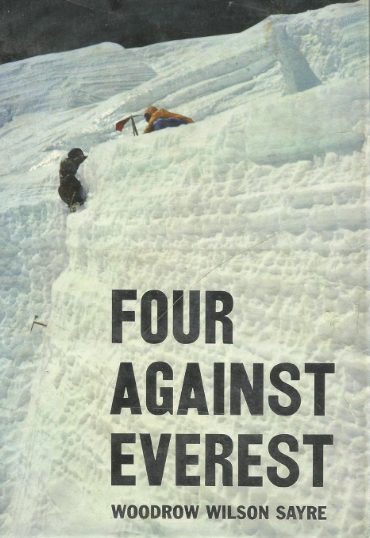
Four Against Everest by Woodrow Wilson Sayre

Woodrow Wilson Sayre, the grandson of President Woodrow Wilson, wrote of his near-fatal 1962 journey on Mt. Everest in Four Against Everest. Sayre said afterwards that he made the trip to show that mountain climbing could be achieved without high-priced expeditions and that success depends only on one’s own abilities, not on social standing or family reputation. Readers will decide whether his journey—during which he faced hunger, abandonment by porters, and a fall into a crevasse—proves his point.

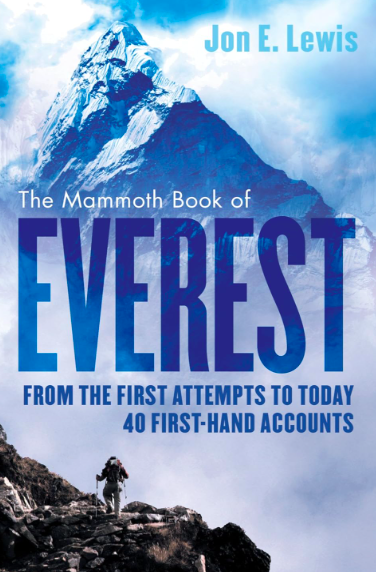
The Mammoth Book of Eyewitness Everest edited by Jon E. Lewis

The Mammoth Book of Eyewitness Everest offers a compelling compendium of climbers’ detailed and often intimate stories, starting with a 1913 account of the first notions that Everest could be climbed, through the 1996 discovery of the remains of George Mallory, who had been lost in the first recognized summit attempt in 1924. Along the way, climbers from the 1960s, ’70s, and ’80s relate their experiences on the mountain.

Fragile Edge: A Personal Portrait of Loss on Everest by Maria Coffey

In Fragile Edge: A Personal Portrait of Loss on Everest, Maria Coffey shares her perspective as the partner of mountaineer Joe Tasker. From her, we learn what it’s like to be left behind each time a partner leaves on a journey from which he may not return. Even when he does return, he is often changed by the mountain, left brooding and restless. When Joe’s dream of climbing Everest turns deadly, Maria must seek the path forward from regret and grief.

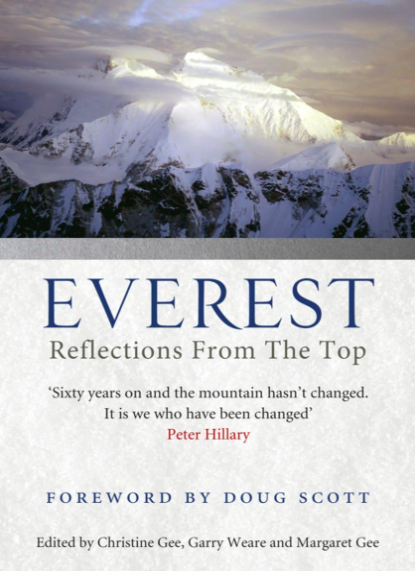
Everest: Reflections from the Top edited by Christine Gee, Garry Weare, and Margaret Gee

Everest: Reflections from the Top, a compilation of stories created to mark the 50th anniversary of Sir Edmund Hillary and Tenzing Norgay’s successful first summit of Everest, offers short but highly personal accounts by climbers. They note their motivations, triumphs, and moments of reckoning—Skip Horner writes, “We suffer alone up there.” This slim book more than any other contributed to my understanding of the “why” of Everest. Climber Doug Scott tells us that “by the time we were above Camp VI, Dougal Haston and I had climbed beyond ego… for a time, I was lifted up above my usual state, being more aware of all and everything.”

Life and Death on Mt. Everest: Sherpas and Himalayan Mountaineering by Sherry B. Ortner

An integral part of the climbing experience for Western climbers involves their relationships with the Sherpas. In Life and Death on Mt. Everest: Sherpas and Himalayan Mountaineering, anthropologist Sherry B. Ortner lays bare the conundrums presented by Western dependence on Sherpa support in climbing Everest, and on the difficult choices facing the Sherpas who work for them. For instance, many Sherpas believe the mountain to be sacred and the very idea of climbing it violates their beliefs, yet they can earn nearly a year’s wages from one expedition. Are Sherpas ultimately exploited, or is the economic benefit to Sherpa families worth the risk? Can either Westerners or Sherpas fully “cross the cultural divide to form a mutually beneficial working relationship?”

Denali’s Howl by Andy Hall

Finally, you can find illumination about the drive to climb mountains and the dilemmas caused for those who must rescue them in a story much closer to home. Andy Hall’s Denali’s Howl is a page-turner with a unique perspective. It follows a 1969 expedition to North America’s highest peak: Denali to locals, Mt. McKinley to much of the country. The writer was the five-year-old son of the head of the park service charged with overseeing the climb as well as the search and rescue mission that ensued. Hall manages to give us fact and perspective without outright judgment. Still, he doesn’t shy away from entertaining questions about the responsibilities of the climbers as well as what can or should be done if they are in need of rescue.

9 Novels to Read if You Loved “Saltburn”

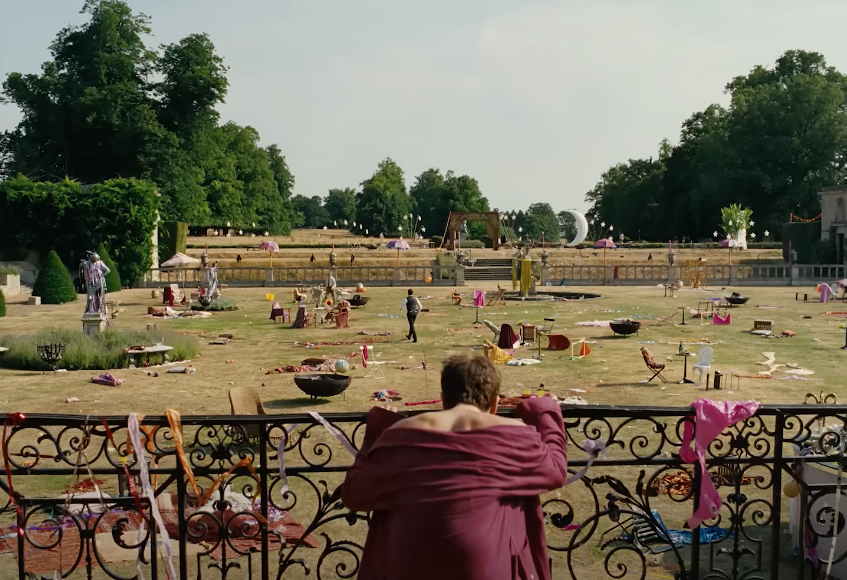
In Saltburn, the backdrops are as mesmerizing and as essential to the plot as the delicate portrayal of the central relationship between Oliver and Felix. The settings are both tight and enclosed, the campus and the country house. These are my favorite settings for novels—discrete locations with groups defined by their relationship to the space: Benefactor, son, heir, student, guest, imposter. In Saltburn, Oliver’s relationship to the house and to the inhabitants keeps shifting as he stays longer. 

Saltburn is overtly in conversation with amazing books that feature similarly shifting relationships and refined settings, including Evelyn Waugh’s Brideshead Revisited, Ian McEwan’s Atonement, Patricia Highsmith’s The Talented Mr. Ripley. The referential nods in the movie are subtle or satisfying—the dinner table scene, the fountains, the teddy bear in the long gallery with “dead rellies.” 

But these books below offer a reading experience similar to watching Saltburn: brief glimpses into an obsessive relationship, lush scenes of rich people behaving terribly, and stress as the claustrophobic tension increases over time. These novels explore lengths outsiders will go to survive in worlds of wealth and excess, capture intense and immediate connections forged in desire, and tease out precarious power dynamics that threaten ruin with one misstep, one unfortunate shift. 

The Guest by Emma Cline

Alex is staying with the much older Simon at his summer house for weeks before she makes a mistake that lands her a trip to the train station and a one-way ticket back to New York City, where she’s facing eviction. She is determined to stay until Simon’s Labor Day party, where Alex is convinced they will reconcile, and somehow she does. Alex passes as a member of a group of friends renting a house, slips into a country club, and more to grift her way through the wealthy Long Island community. This grift, however, is trying, and makes for propulsive reading.

Necessary People by Anna Pitoniak 

As college students, Stella and Violet’s different backgrounds were easier to ignore. Violet received a scholarship; Stella’s family name and wealth helped secure her spot, as they would anywhere. But after graduation, when they both move to New York City, Stella remains impulsive and untouchable, while Violet focuses on working hard and climbing the ladder at her news station job. Violet is ambitious and frustrated with Stella’s easy success, particularly her transition on camera. Their friendship suffers as Violet’s resentment mounts, and with this imbalance, she and Stella struggle to remain friends. This book, like Saltburn, begins as a story of an obsessive friendship—before taking a dark turn.

Sirens & Muses by Antonia Angress

In this novel, Louisa Arceneaux is a scholarship student at the prestigious Wrynn College of Art rooming with Karina Piontek, the daughter of famous art collectors. After a tentative start, Louisa and Karina’s connection deepens through friendship, artwork, and sexual attraction. Then, after an elaborate hoax forces them out of school, Louisa and Karina’s relationship falters and threatens to end completely in the New York City art world. If the nostalgia-filled soundtrack and wardrobe of Saltburn’s mid-aughts setting appealed to you, then this is a must. Angress captures the early 2010s on the elite campus, complete with an ill-conceived Occupy Wall Street protest.

Henry, Henry by Allen Bratton

Hal Lancaster is heir to 1,000 acres, a private estate, and a title. But he is adrift in London in his early twenties, conflicted about his privilege and his family. Hal’s friends, lovers, and nights out highlight both the access and excess of the upper-classLondon homes and country estates, endless connections to other rich or famous people, and even Hal’s ability to remain in one of the most expensive cities in the world without direction or cash. When his father insists Hal return home for his latest wedding, the lavish celebrations, like the London parties, ring hollow for Hal. Until Hal winds up in the hospital after a shooting incident, which sparks a consuming romance that prompts Hal to consider the root of his discomfort about his privilege and his distance from his family.

Social Creature by Tara Isabella Burton

Louise has three jobs and a rent-stabilized studio she can barely afford when she meets Lavinia. Although the two become fast friends, the relationship is unbalanced. Lavinia is wealthy and flighty, and Louise can’t resist this entry into a world of excess and privilege and parties. As their relationship intensifies, Louise becomes more entwined in Lavinia’s life and loses track of her own friends, family, and jobs. Burton imbues the novel with a low, persistent threat of violence and ruin throughout that is very similar to the dark undertones of the movie.

Tripping Arcadia by Kit Mayquist

After Lena drops out of med school and moves back to her family’s home outside of Boston, she gets a job assisting a wealthy family’s private doctor. Her job mainly involves working out of the family’s Back Bay home and caring for their adult son, Jonathan, but soon Lena begins working the family’s trippy, drug-fueled parties in their mansion in Western Massachusetts home called Arrow’s Edge. These parties, which rival the lush debauchery of Saltburn’s, present Lena with the opportunity to get closer to Audrey, the family’s mysterious and impulsive daughter. They also make Lena reconsider the motives of her employers, suspicious of the physician, and question her role in all of it. 

Virtue by Hermoine Hoby 

After graduating from Oxford, Luca moves to New York City for a prestigious position at a famous literary magazine that resembles a fictionalized version of The Paris Review. Through the magazine, Luca strikes up an unexpected friendship with a much older couple, Paula and Jason, an artist and a filmmaker. After dinners and days together in New York, Paula and Jason invite Luca to their family’s second home in Maine for the summer. In Maine, Luca becomes further enmeshed in the couple’s complicated relationship until the arrangement comes to a head. This isn’t a thriller, like many of the others on the list. But desire is at the root of the novel, and the allure of Paula, Jason, and their world threatens to upend the life Luca is just beginning to create for himself.

Good Rich People by Eliza Jane Brazier

This thriller follows Lyla, her husband Graham, and his mother Margo, who live in mansions next door to each other in the Hollywood hills. This obscenely rich family indulges in ruining the lives of the tenants, as well as lots and lots of Moet. After she causes the game to end in disaster with the last one, Lyla is up. She is tasked with ruining Demi, the latest renter. But Demi, it turns out, isn’t easily manipulated. As the game evolves—or, maybe, devolves—Lyla and Demi scheme and strive to come out on top. 

Other People’s Clothes by Calla Henkel

After her best friend from home is murdered, art student Zoe Beech studies abroad in Berlin for an escape and a fresh start. Zoe lives with Hailey, another art student at her school who comes from a well-off family and is determined to find commercial success with her art. When Hailey finds a sublet of a famous thriller writer’s apartment, it seems like it’s too good to be true—or it’s a sign that the term abroad will be the transformative experience for their art and their lives that they’re hoping for. Determined to have an experience worth commemorating, Zoe and Hailey host decadent parties, skip classes, and break the apartment rules. But soon it’s unclear whether the author has really left Berlin, and whether she has really left Zoe and Hailey in the apartment alone. The novel unravels slowly and then all at once, leaving you ready to start over again and follow all the signs you might have missed. 

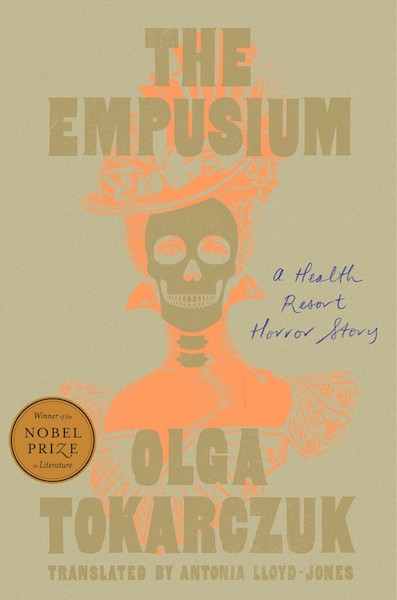
Exclusive Cover Reveal of “The Empusium” by Nobel Prize Winner Olga Tokarczuk

Electric Literature is pleased to reveal the cover for the novel The Empusium by Olga Tokarczuk, translated by Antonia Lloyd-Jones, which will be published by Riverhead on Sep 24, 2024. Preorder the book here.

The newest masterwork from the Nobel Prize winner takes place in a sanitarium on the eve of World War I, probing the horrors that lie beneath our most hallowed ideas.

In September 1913, Mieczysław, a student suffering from tuberculosis, arrives at Wilhelm Opitz’s Guesthouse for Gentlemen, a health resort in  what is now western Poland. Every day, its residents gather in the dining room to imbibe the hallucinogenic local liqueur, to obsess over money and status, and to discuss the great issues of the day: Will there be war? Monarchy or democracy? Do devils exist? Are women inherently inferior? Meanwhile, disturbing things are beginning to happen in the guesthouse and its surroundings. As stories of shocking events in the surrounding highlands reach the men, a sense of dread builds. Someone—or something—seems to be watching them and attempting to infiltrate their world. Little does Mieczysław realize, as he attempts to unravel both the truths within himself and the mystery of the sinister forces beyond, that they have already chosen their next target.

A century after the publication of The Magic Mountain, Tokarczuk revisits Thomas Mann territory and lays claim to it, blending horror story, comedy, folklore, and feminist parable with brilliant storytelling.


Here is the cover, designed by Lauren Peters-Collaer.

Author Olga Tokarczuk: “My story is clad in the conventions of horror while taking the culture of misogyny to task. But I hope my readers will enjoy its humor, and will have fun getting to the bottom a certain mystery. And that at least once they’ll feel shivers down their spines.”

Designer Lauren Peters-Collaer: “The Empusium is full of incredibly rich imagery, so a great deal of the design process in this case involved pulling images from the text and then combining, juxtaposing, and being inspired by them in a way that might speak to the book and its genre-bending nature. This cover hopes to be both macabre and humorous, and hints at ‘the horrors that lie beneath.’”

Translator Antonia Lloyd-Jones: “Translating this book was a delight—an exotic setting, an intriguing płot, some bizarrely compelling characters, magic mushrooms, mystery, danger and death, all described in exquisite style.”

A Brooklynite Returns to Jamaica to Solve a Long-Hidden Family Mystery

Across her three books, Donna Hemans’ characters range from Jamaica to America and back again, often in the same story; the men and women who populate her novels, taking children with them or leaving them behind, are immigrants simply trying to make a better life. But there’s always a cost, and many make mistakes along the way.

In River Woman, her first novel, a mother leaves her child behind when she moves to New York; when she returns to Jamaica years later, she doesn’t know whether to trust her own daughter, accused of drowning her own child by jealous villagers. In Hemans’ next book, Tea by the Sea, a father steals away with his infant on some notion that he’s giving the young mother a second chance, instead of leaving her desperate and longing even fifteen years later. 

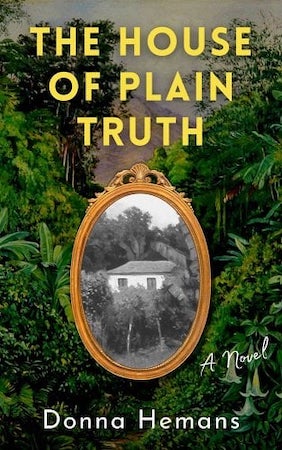
In The House of Plain Truth, Hemans goes back into family history even further. Pearline, its protagonist, leaves New York to retire to Jamaica, both to care for her ailing father and, finally, to return home. Instead, she discovers she needs to go as far back as Cuba, where long-lost siblings may still be living, to unearth family secrets she hadn’t known existed in the first place.

In this way, Hemans, in her third novel, deepens her investigations into the roots of the Jamaican immigrant story—or actually, given the similarities in the immigrant experience among any group not already wealthy, the immigrant story.

Pearline’s father, Rupert, was desperate to make a better life for himself and his family when he moved them to Cuba in 1917. Instead, he returns to Jamaica penniless, and is forced to leave half their children behind. 

The book also clarifies a theme that lies beneath all her stories. The House of Plain Truth demonstrates most boldly how blatant capitalism is to blame for the troubles her characters grapple with and sometimes—too often—aren’t able to overcome. 

I talked to Hemans about how the personal and political intertwines in fiction in our Zoom interview about this third novel, The House of Plain Truth.


Carole Burns: A key part of this novel comes from your own family history: two of your grandparents moved to Cuba at around the same time Pearline’s father, Rupert, does the same. What made you want to write this novel, and retell your grandparents’ story in some way? 

Donna Hemans: On my father’s side of the family, my grandparents both went to Cuba in 1919 to work. They didn’t know each other at that point, but they met and got married there and had several of their children in Cuba before coming back to Jamaica in 1931. As a child, I just knew that they had gone to Cuba. I didn’t know any of the details, any of the history, what their experiences were like. My grandmother died when I was 16 and my grandfather when I was about 19 or 20—at an age when I wasn’t ready to ask the kinds of questions that I would ask now as an adult, and as a writer. And so I wanted to try to understand their experiences and their story. 

CB: One of the tragedies in this novel is that the main character Pearline’s parents are forced to leave half their children behind in Cuba because they don’t have the money for everyone to return. Did something like that happen to your family? 

DH: No, but there’s a second part of the story: I had also heard that one of my grandmother’s brothers went to Cuba, and never came back to Jamaica. And so I was thinking about what that felt like, just completely losing touch with a family member and especially a sibling without knowing whether they were alive or dead or what their circumstances were. So I wanted to put those two things together and try to build a story around those two ideas.

CB: And then you intensified the story by changing the circumstances from a brother left behind, to three children. 

DG: And I needed to figure out why my character wanted to go back to find her siblings. That really was the driving force of the story.

CB: This is your third novel. Why do you suppose you are telling this story now? 

DH: Well, I started this story in 2006 or 2007. Throughout the years, I was just trying to find the right way to tell the story. As I started researching and looking at what the experience of Jamaican migrants in Cuba was like, I was really surprised, I had not learned any of that in school. I began to see that people were shipped back, some of them to countries they didn’t originate from. People who were invited in to come and work were then made to feel they were unwanted and they were sent back home. And then the story became clearer. One, why my grandparents left. And also, what could possibly have happened to my grandmother’s brother. He could have gotten caught up in so many things. It’s possible he was killed early on. I don’t know. 

CB: It’s a vastly complicated history, of which I was also unaware – some 100,000 Jamaicans migrated to Cuba in the decade starting 1914, and they’re really at the mercy of capitalistic forces. It makes your story completely relevant to today. 

DH: Exactly. The funny thing about it is that I had set this book aside and come back to it so many times, but when I picked it up again it was around 2016, right after the election.

CB: After Trump won.

DH: Yes. And this anti-immigrant rhetoric was coming up. What was very clear to me was that every argument being made around 2016 about immigrants and the jobs that they were stealing, certain language being used about the immigrants and the countries that they come from—it was exactly the same as I was seeing in the research from 100 years before. There was nothing any different, nothing original about the arguments that you’re hearing today. It really brings home the point that there are certain groups of people who are always, always trying to find a home in the world. They are moving from one place to another to try to find that place where they belong. And so that’s what I really wanted to hone in on in this story. 

CB: That comes across powerfully. And it feels to me that fiction often can tell that story in a much more human way than nonfiction does. 

DH: Absolutely. I think the best books are the books that talk about politics or social issues without talking about them—the ones that don’t hit you over the head with it, that undermine the story. You have to do it through the characters. 

CB: At the same time, though, I thought that you did editorialize in certain sections of the story — but quite effectively. So, for example, you have Rupert, Pearline’s father, remembering his younger self leaving for Cuba in 1917: “The young man he describes doesn’t understand American economic imperialism, the vast ways in which the United States expands its territories, or how American companies come to dominate the sugar cane estates to the northern coast of Oriente Province. But he knows the companies are advertising for labor, black men from Jamaica and Haiti and Barbados and the small Antillean islands who can cut cane. What Rupert knows is simple. There is work and money.” It’s masterful. 

There are certain groups of people who are always, always trying to find a home in the world.

DH: There are things that I knew that Rupert would not have known and even Pearline herself would not have known. And I needed to find a way to say that kind of stuff and to hint at it without it coming directly from them. Though I don’t think of it as editorializing. 

CB: It’s providing context. 

DH: Right. 

CB: Can I ask you about the title? It comes from the name of the Jamaican house that Pauline is hoping to save in Spanish, La Casa de la Pura Verdad. Obviously, she’s trying to uncover the pure truth. But I kept kind of wondering, is there such a thing as plain truth? 

DH: I hope so. 

CB: Yet the truth is complicated. So what did you mean by “plain truth”? 

DH: The unvarnished truth. In probably all of my books so far is this question of, What is truth? There are multiple perspectives to any story, but at the heart of each, there is some kernel of truth. And there is a certain truth at the heart of this story that the children don’t know, that Pearline doesn’t know, and that Rupert just absolutely doesn’t or didn’t want anybody to know. The children grew up with this idea that when they came back to Jamaica, their parents bought this land and built this house. 

CB: The House of Plain Truth.

In probably all of my books so far is this question of, What is truth?

DH: Yes. Whereas there is a completely different side to the story. What Pearline has to do is to uncover what is the actual truth of her family’s history in Jamaica. And then, what do you preserve of your history and your heritage? Do you preserve what is the true story? Are you preserving the story that makes you as a family look better or sound better? Do you know? What are the stories that we tell ourselves? And do we always tell the truth, the true story? Or do we tell the stories that will make us look good to our friends and our family? So that’s a part of what I wanted to do here, was get at what do we tell and what do we show. What do we keep to ourselves? And are we really, indeed, telling the truth? 

CB: I suppose an important reason Rupert hid the “plain truth” of that family story for so long had to do with his pride. His pride is a really interesting element to the novel. Almost a fatal flaw in a way. 

DH: Somewhere in the book, either Pauline or one of her siblings says he was a hard man. And I think that that kind of sums up exactly what he was. He was trying to do his best for his family, but there is doing your best, and then there is taking a stance that doesn’t help everybody else and refusing to budge from that. He’s stubborn. Yet at the very end, he makes the decision to reach out to his children left in Cuba—to find them. That suggests that there was some regret there all along. 

CB: Though Rupert dies in the first chapter… 

DH: Yeah, I would like to write a book where nobody dies. I haven’t quite gotten there yet. 

CB: Yes!  And yet the book is infused with him. Rupert haunts the book—both literally, as a guppie, but also through his history. It’s a very sneaky third person. It’s limited to Pearline’s point of view, but you have her imagine Rupert’s memories.  We get a lot more of his story than she could technically know. 

DH: That was a tricky part. In the initial draft the story was told partly from his perspective after he was dead. Whereas in this version in just Pearline’s point of view, I still wanted to tell a lot of that back story, Pearline was three years old when they left Cuba. This felt like the easiest way to do it, where it was both in and through this haunting where her father is just simply not going to rest until she does what he wants her to do. To her, it’s like she is reliving his experience because her father is so present in her life. And what she knows she has to do is also present in her mind. 

CB: Did you look to any particular authors or books as inspiration for that? 

DH: Beloved is the closest. That’s one of the things that Toni Morrison did, where the ghost of a child is present throughout the entire book. 

CB: That fabulous first line: “124 was spiteful.”

DH: You’re reading Beloved and it’s like this child is living with this family and in this family. You don’t make any distinction between the fact that she is a ghost and the real people.

CB: Can you talk about other influences? 

DH: The biggest influence on my career in general is Zora Neale Hurston. As an undergrad, I took an independent study class and a professor had me read Their Eyes Were Watching God. One of the things that I pulled from that book was the way in which she described community and the way she used dialect. Growing up in Jamaica, we were always encouraged not to talk in dialect. You grew up with the sense that, if you used dialect, you were not speaking proper English—it’s tied up with class and education. But here I was reading this book where the dialect just sounded so familiar to me—I felt like I was home. It was a different country, a different place, but it just felt like home. I loved what she had done in that book, the way she had built the community, explained a community. And I hadn’t really been thinking about being a fiction writer, but then, that’s what I wanted to do. 

CB: The dialect in your book is terrific. It gives us the characters, it gives us the flavor of the place. And the language itself — the phrases unfamiliar to my ear, but how specifically and imaginatively they capture the world. 

DH: One of the things that I keep trying to do when I refer to places in Jamaica is to build that sense of community in the way Hurston does. The places I write about are either the community I grew up in, or communities around that community. In this book, Mount Pleasant, where the House of Plain Truth is located, is maybe four or five miles away from where I grew up. So I keep coming back to that home, to that sense of this community and place that that I knew. 

CB: This is your third novel set at least partly in Jamaica. Do you think you’ll ever write a book that isn’t somehow about Jamaica, even if it’s not set there? 

One of the things I want to do is write about either the people who were left behind, or the people who returned home.

DH:  I don’t know. I’ve thought about that. Some years ago I read that it’s easier to write about a place after you have left it. 

CB: A la James Joyce. 

DH: I think if I write a story that is set primarily outside of Jamaica, then it probably means that I have left that place. I have tried and every book comes back to Jamaica. 

CB: I live in the U.K., but I can’t imagine not setting a novel in America. 

DH: Also, so many of the novels from a certain period of time about the Caribbean were about the Caribbean immigrant in another country. One of the things I want to do is write about either the people who were left behind, or the people who returned home. And so with this particular book, I have written about the aspect of returning home. And my first book really was about the child who was left behind. I want to tell a different story, not just talk about immigration from the perspective of the new immigrant in the new country. Who are the people who are left behind? What happens when you return to a country? Can you really go back home? 

CB: I also find Rupert and his family are haunted by what you describe as a “legacy of failure.” The family, Pearline especially, is trying to overcome that. And yet I feel frustrated for them, too — it wasn’t Rupert’s fault that he failed, but the fault of the capitalistic system.

DH: I think it’s just a part of the immigrant story. When you go off somewhere to a new country or a new place, you are you’re expected to do well and you’re expected to come back and lift up the next generation. And so Rupert was looking at the men who went to Panama and came back to Jamaica with gold and silk shirts. And he came back to Jamaica from Cuba with not even enough money to book their passage back home and to take all the children. So it wasn’t his fault at all. But it really marked him and he carried with him throughout his entire life this sense of failure. How do they see you back home? Have you achieved something? Have you taken this opportunity and done something with it or have you come to America and failed? I think even today for many immigrants, that’s what it really is about.

7 Inspiring Books About Women in Sports Who Defied Expectations

I was a reader in a family of runners. With pre-teen grumbles, I reluctantly participated in summer track leagues, always bringing up the rear, always slowing things down, until one day under the blazing Tennessee sun I got my legs moving and earned my first ribbon. My dad puffed me up saying, “You were so fast out there, you could have been a Tigerbelle.”

In my family, the Tigerbelles were legends. Being compared to the elite team made me feel like a winner, even with my 3rd-place yellow ribbon. In that moment, I was a Tigerbelle and I was invincible! There is power in knowing who came before us, whose shoulders we stand on, and how what they did makes our lives better. A seed had been planted, and the Tigerbelles book eventually grew.

The Tigerbelles: Olympic Legends of Tennessee State is the origin story of the team that dominated women’s track for nearly 40 years. Follow each woman as she earns her way to the team and discovers the depths of what she is capable of. Together the Tigerbelles battle Jim Crow laws, racism, poverty, and sexism, and prove to the world that women can run. 

Sports stories are the ultimate vehicle for inspiration. By following the athlete’s journey through early morning practices, and powering through the doubts of others, we race with them to the moment when the hours, days, months, and years of dedication pay off with glory. Track programs for girls flourished in the ’80s and ’90s, and women everywhere laced up their sneakers never realizing that the Tigerbelles blazed the trail first. Women’s sports stories do exist, but they are harder to find. Women and girls deserve to see themselves reflected in stories that give them the overwhelming conviction that yes, they can accomplish triumphs in their own lives.  

Here are 7 books that will make you laugh, cry, raise your arms high to celebrate hard-earned victories, and make you believe that overcoming the odds is possible. These books look back to the women who dared to defy expectations, and forward to the signs that leveling the playing field in sports and in life is an attainable goal.

Wild Girls: How the Outdoors Shaped the Women that Challenged a Nation by Tiya Miles

The draw of our bodies to movement is often inspired by nature, and this evocative collection of profiles illustrates how profoundly the historical leaders of our country from all races were affected by access, or the lack of, to outdoor spaces and argues why that same access is so critical today. Miles writes, “By thinking and acting outside, these girls who matured into women bent the future of the country toward freedom—for the enslaved, for the colonized, the dispossessed, the sequestered, the suppressed, and the subjugated.”

Inaugural Ballers: The True Story of the First US Olympic Women’s Basketball Team by Andrew Maraniss

Track and Basketball were both considered sports that were “for the boys” but New York Times bestselling author Andrew Maraniss spins a narrative of how wrong that assumption was. Telling the story of Pat Head, Nancy Lieberman, Ann Meyers, and Lusia Harris, this team of underdogs gathered from small colleges throughout the country started US Olympic Basketball for women in 1976, then went on to legendary careers. Coach Billie Moore told her team to “Win this game, and it will change women’s sports in this country for the next twenty-five years.” The only thing she got wrong was the length of time that legacy would last. Over forty-five years and counting later, the WNBA is still charging forward.

Soccer Grannies: The South African Women Who Inspire the World by Jean Duffy

Soccer is the dominant sport the world over, but in rural South Africa, women were boxed out of the action. “Mama Beka” pushed against these norms and started a women’s soccer league that is known as the Soccer Grannies. The Grannies became celebrated internationally proving that there is no age limitation to following your dreams and moving your body. Told by soccer-playing mom, Jean Duffy, this story drives home the impact of sports on every level in all parts of the world.

The Hard Parts: A Memoir of Courage and Triumph by Oksana Masters and Cassidy Randall

Abandoned as a child with severe physical challenges developed by radiation exposure from Chernobyl, Oksana Masters spent the first seven years of her life traumatized in a Ukrainian orphanage before being adopted by Gay Masters, an American professor. The two spent years in hospitals with corrective surgeries and treatment before Oksana turned her steel determination to survive into fuel to become America’s most decorated Winter Paralympian, medaling in four sports, powered in no small part by her mother’s love.

Locker Room Talk: A Woman’s Struggle to Get Inside by Melissa Ludtke

Shut out of the locker rooms, young Wellesley grad and Sports Illustrated reporter Melissa Ludtke was constantly missing the quotes that she needed to get the story. Locker Room Talk is the gripping first-hand report of how she took on Major League Baseball and with a ruling by Judge Constance Baker Motley, the nation’s first Black woman on the federal bench, changed the future of sports journalism for women. 

Good For a Girl: A Woman Running in a Man’s World by Lauren Fleshman

Lauren Fleshman grew up with sports, and was an elite runner sponsored by Nike before she shook up the industry, determined to create positive change in the world that she knew so well. Exposing the contradiction of empowerment and exploitation in women’s athletics through her personal experience, Fleshman offers a “rallying cry for reform of a sports landscape that is failing young female athletes.”

Money, Power, Respect: How Women in Sports are Shaping the Future of Feminism by Macaela MacKenzie

Billie Jean King famously fought the Battle of the Sexes in 1973. It was a battle that women had been fighting and continue to fight to this day. Macaela MacKenzie gives that fight the much-needed power of information, leaving no more room for excuses. Interviews with Billie Jean King, Allyson Felix, and Megan Rapinoe illuminate the reality of the sports industry for women. “For every dollar that the NBA’s highest-paid player brings home, the WNBA’s highest-paid player earns just half a cent.” MacKenzie’s sharp journalistic eye draws the necessary parallels between sports and society and proves that women are equal to their male counterparts in skill and the ability to generate revenue, and it’s the industry itself that is leaving billions of dollars in unearned potential on the table.

This Essay Is My Heart’s Song

The Great Blue by Kim Drew Wright

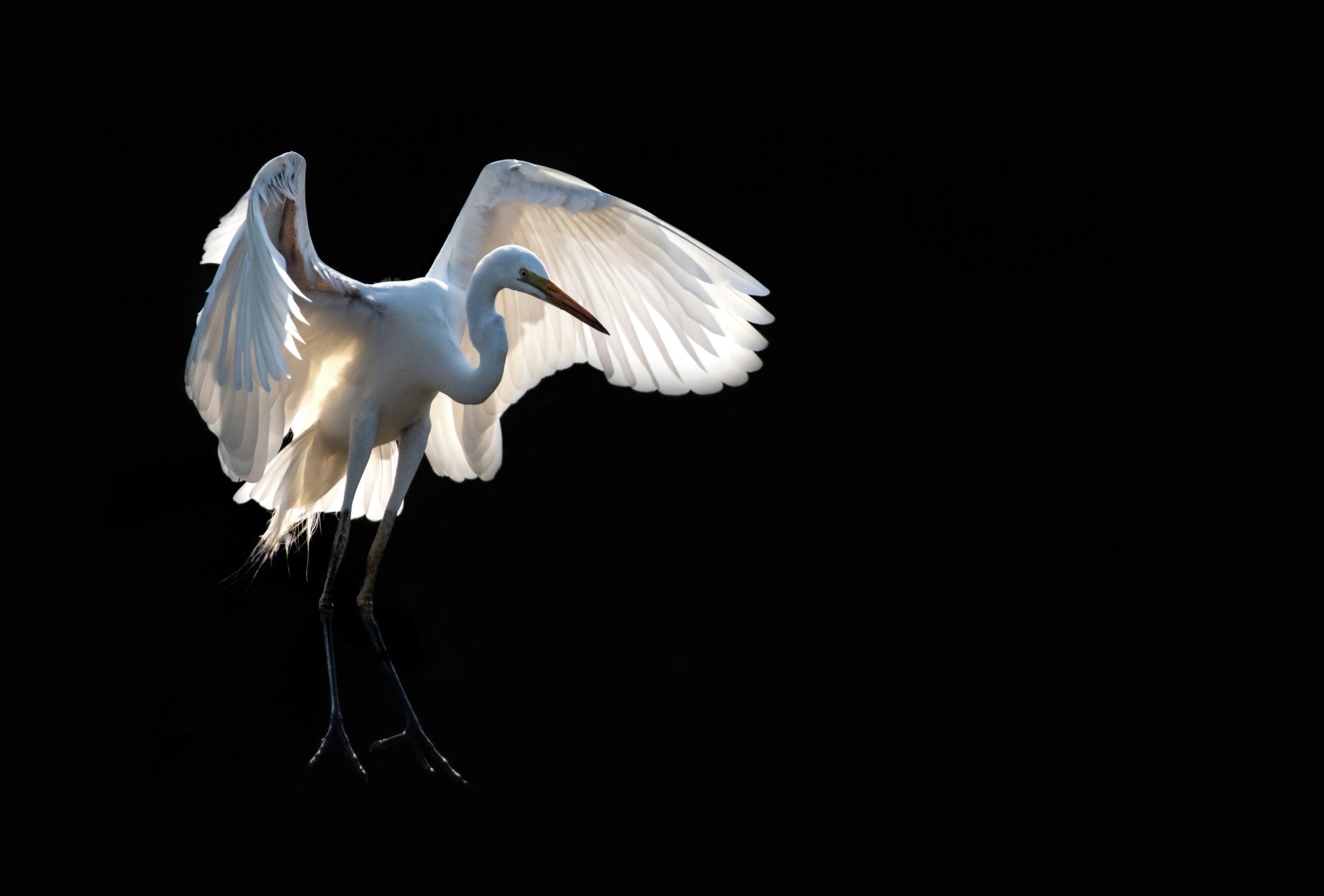
I’m gliding on my back atop a paddleboard, up the silent creek that swindles away from the Chesapeake Bay, becoming smaller, muddier, filled with creatures I can’t see but hear rustling in the marsh grass, slinking into the water with trepidatious splunks. Herons fly overhead, their great necks curved in a protective S, as if they are aware of the dangers of this world. I curl further into myself, the fear rising up from my gut until I turn with shaky arms to head back into open water.

We’ve rented a house with friends for my upcoming fiftieth birthday, arriving a few weeks after receiving the news that my triple-negative breast cancer has traveled out of my chest and into my fearful gut. My tan baseball cap is really a wig with two blonde braids to cover my baldness from my latest chemotherapy. It is still the pandemic, although nearing the end, and my friend, Linda, bemoans that we did not take advantage of the isolation before now. 

The house is immaculate, strong and large, yet welcoming, and sits in a cove embraced by the creek at its wider end. At the opposite end, fields littered with bright dandelions and red, spent shotgun shells stretch all the way to the one road that runs through the countryside, which we drive at dusk searching for foxes and deer. Pete, Linda’s husband, says, “I swear that was a mink that ran into the underbrush.” Near the water’s edge, tucked within our cove, is a small beach and a tree so wide and picturesque, even an adult—maybe especially an adult—would want to climb and rest in its branches. 

We play cornhole on the lawn. My oldest son comes up from college. My teenage daughter searches through drawers to scavenge for books. My youngest son, Elliott, is still young enough to wrestle with my friend’s son, who is his same age, on the giant floating mat we unroll and push out on the creek. We make fires in the pit outside and under the mantle inside. We light candles and eat Smith Island Cake that my friend ordered from a local baker. We ooh and ahh over its ten thin layers, chocolate cake and cream cheese icing dusted with cocoa powder. Linda battles my cancer recurrence with birthday decoration bling. “Not a day over fabulous” is strung over the bay window in the kitchen, framing the lawn and the water and the birds. There are matching T-shirts, tie-dyed in red, orange, and yellow. We blaze like the sun that circles my name on the front of the shirts; when we walk through waterfront restaurants, a grizzled local asks, “Who or what is Kim?” We use napkins with quotes like, “I have mixed drinks about feelings.” For once, I am not the only one who takes photos. Linda instructs Pete, “Take a picture of Kim with her pink wig . . . with her cake . . . with her son.” There are gifts. My husband, Wen, gives me an emerald on a silver chain. He writes “I love you more than words” on a napkin with my morning coffee, a favorite song lyric from our college years. They fill the space with vases of tulips, a nod to my wedding bouquet. We laugh a lot. Sometimes I think of the pain my absence will cause these people who love me and tears catch my breath. They rub my back. I am worried for each of my children, but I am still in the thick of mothering Elliott. I remind him daily to brush his teeth. I remind him daily he is loved.


At the end of April, it is the height of the great blue heron hatching season. A group of them is called a siege. They sweep over us and land atop the thin trees where they lay between two and six pale blue eggs. They nest in colonies called rookeries during breeding months. The parents take turns standing still at the water’s edge, waiting to spear fish with their deft bills. It takes about sixty days for the young to fledge, their strengthening wings growing to a span that can support them. Give them another month and they will have left the nest.


Elliott has grown a lot during the pandemic. In virtual school, he has had no one to compare his gains against, other than me. He asks, what seems like hourly, to stand back-to-back, measuring his growth against my stagnancy, waiting for the moment when he will officially surpass me. He is on the cusp of manhood, but he isn’t scared of the virus sweeping the world. When his face shows fear, he is always looking at me. In the middle of television shows, he asks, “Mama, are you okay?” I am not okay. I am afraid of my absorption into the great blue. I try to balance honesty with his need for security. We binge a lot of shows, locked inside our home. We start out with wholesome orphans on farms but end up on a string of violent dystopian thrillers. Both categories revolve around teenagers with dead mothers. I understand it strengthens the plot—the stakes are higher if there are no adults to protect them—but it does nothing to decrease the worried glances my son is sending my way. The characters are not worried about their mothers. They are trying to survive. Elliott studies my face, reading my body with something innate, passed down from one generation to the next. Is his knowledge of my decline ruining his tender ability to love? When we finish watching a season, I can’t help wondering if I will be here to watch the next season with him. 


I am not okay. I am afraid of my absorption into the great blue.

April in Onancock, the idyllic Chesapeake town we half chose so we could make jokes about the name, is not our two families’ first trip together. Linda owns a timeshare on North Carolina’s Outer Banks, where we’ve spent several summers. We play board games and shop for knickknack creatures made out of sea glass, broken pieces worn down to beautiful. Our favorite tradition at the beach is ghost crab roulette. We wait for darkness to descend, grab small shovels and a plastic bucket, then head over the boardwalk to the day’s disheveled sand, where we squeal and clutch one another following the halo of flashlights. One brave soul scoops up the pale, almost translucent ghost crabs that dominate the beach after sunset. Our boys take turns daring each other to hold the bucket. When Elliott is not holding the bucket, he runs back to me and asks, “You okay, Mama?” On the boardwalk deck, we gather with the jittering bucket. Linda shouts, “Is everyone ready? One, two, three!” The winner is whoever is last to climb onto the bench seats, whoever can tolerate crabs skittering across toes the longest. I never win. I scream and jump before the bucket even gets tipped. 

During the last trip to the Outer Banks, I could barely make it to the beach, my lower back was hurting so badly. I didn’t know if it was simply pain from a soft mattress or the cancer’s spread. We had recently discovered my recurrence and were waiting for one of the top cancer hospitals to find room for me on their schedule. Later, my pain would be so great that I’d require morphine for an MRI at the emergency room, but until then, Linda was helping me hobble over the evening dunes when the call finally came. We embraced and cried, shouting hooray to the setting sun before heading back inside to our sons, fear and relief surging like the ocean as the ghost crabs scuttled back into their dens.

In Onancock, the only crabs are on our plates. We paddle in kayaks from the front yard to the town restaurant on the wharf for fresh fish and crab cakes. Another afternoon, I venture out alone on my paddleboard through the gentle town canal, silently sliding past neighbors who greet each other over lawns with have-you-heards and did-you-knows. It is like being inside a tranquil television show. I would like to be a part of this world. With each stroke, from my hand grip through my core, I am both joyful and acutely aware of my body’s fragile ability to navigate these waters. How much effort it takes, how easily it will be spent.


Heron calls are coarse, a wild dog barking, frog croaking, the throaty rasps of a jungle cat. They are not songbirds. Some species of birds, like the zebra finch and fairy-wren, are not only excellent singers, but sing to their babies before they even hatch. In fact, the superb fairy-wren slips a specific note into her song while brooding that serves as a security code her chicks sing back to her to ensure they are fed. The unique note varies per fairy-wren family, like a last name. The cuckoo bird will hide her own eggs in the wren’s nest to evade the obligation of feeding her young; the special note tells the mother wren which hatchlings are her own. It’s the secret key for identifying which ones to care for—which ones to love. 


In the mornings at Onacock, I take my coffee outside, where I write bad haikus about cancer and crabs. A quick storm comes up and we rush to stow the rented kayaks and oars before they can blow away. We are at the age when mothers start to fade. I have several friends who are wrestling with a parent’s decline. I want to be compassionate, but all I can think is, “If it’s this hard for you at fifty, then how the hell is my 14-year-old gonna handle it?” 

At the beginning of my recurrence, before the news of my stage four diagnosis, I have a lumbar puncture to see if the disease has penetrated my spine. Wen travels every week for work so Linda is my official driver. She feeds me spoonfuls of scrambled eggs from the hospital tray, because I am supposed to lay flat and still, but she keeps dropping them on my face. We are too loud for the curtained recovery area and I declare, “I’m gonna be the first person paralyzed from laughing so hard.” The nurse asks us to behave with a wink. Despite our laughter, I am frightened. During a panic moment, I grip Linda’s arm and implore her, “You have to make sure my kids are okay if I die.” I make her promise. She swears, “Your children are like my own.” But still, I can’t stifle my anxiety: Have I taught Elliott a song note that only fits my heart? I want to shout how unfair it all is but instead I am grasping at her arm. I am whispering to you, dear reader, for someone to hold him when I cannot.

Have I taught Elliott a song note that only fits my heart?

The doctor who withdrew my spinal fluid brings me coffee in recovery. Although close to retirement, he is still full of wonder. Before the procedure, he asks if he can pray with me and holds my hand. He points to the x-ray of my spinal column and notes how it looks like little owl faces stacked one on top of the other. He explains the linings of the spine, pia mater and dura mater, Latin for fragile mother and strong mother. Afterward, he holds up a vial of my spinal fluid and it is clear as a spring day. 


It is the spring of Elliott’s fourteenth year. It’s been eight weeks since the oncologist told me I only had a handful of months to a few years to live. When we sat the kids down at the kitchen table, my daughter asked questions. My oldest son said everything would be alright. Elliott sat silent, tears running down his cheeks. When I asked him if he had any questions, he gave a slight shake of his head like a heron hovering on the water’s edge, frozen, waiting to pierce the truth. 

There is a hammock strung between the trees on the great lawn of the Onancock house, overlooking the water. Solo on the hammock I am stiff, limbs akimbo. When my son climbs in beside me, the counterweight balances, makes us soften and lean into each other, his perfect cheek beside mine. It is beautiful and he is beautiful and I want to stay with him forever. I don’t want to be the reason he hurts. I can’t stop my tears. He asks, “Mama, why are you crying?” I say, “I just think life is so beautiful. I love my life so much. I love you so much and I want to be here to share it with you.” It is a perfect horrible moment, staring up through the branches at the blue sky with his sweet warmth tucked in beside me, and he is too young for it and I am too young for it and yet this moment is here with us. I’m teaching my son that love is loss.


The great blue heron’s lifespan is fifteen years. They grow to a height of four feet with a wingspan of six to seven. Despite their size, their hollow bones mean they only weigh five or six pounds. How do they not get blown away? In Greek mythology, the mystical halcyon bird, our modern kingfisher, comes from the story of Alcyone and Ceyx. Alcyone’s grief turns her into a bird, so she can fly across the ocean to her drowned lover, Ceyx. She builds a floating nest to brood each winter on seas held calm by her father, Aeolus, God of the wind. How enviable to have the ability to calm the waters for your loved ones. 


It is hard dying of cancer. It is harder living with the knowledge of it. When do I become beautifully weathered like sea glass? My second port’s tubing runs taut under the skin of my neck, like I am permanently angry. I describe myself with the qualifier “used to be” before adjectives like fit and pretty. I have already lost my breasts. My hair grows back white as an egret. The new immunotherapy trial I start, to curb my recurrence, attacks my thyroid. I add synthetic thyroid pills to my morning routine. It attacks my pancreas. I pop pig digestive enzymes when I eat. I bond with other women through the stage four breast cancer social media group. They die. I snap at my family, whoever is in the house. Sometimes I think of my childhood dog, Ginger, a fifteen-year-old cocker spaniel that wandered off one day and didn’t come back. How my father said, “Sometimes old dogs go off to die alone.” I drive to a park and stare at the trees through the windshield. I wonder how sinking into the woods might feel. I do an internet search on how long it takes for hypothermia to kill you. I think of my children. I go home.

I make our house a shrine before I am even gone. I hang photos of our family on beaches. I surround my bed with mementos of our time together. A “50 years loved” cake topper from Onancock glitters on my nightstand, reminding me I am lucky. People tell me that I must always be grateful. It’s been three years since the start of the pandemic and masks are mostly gone. Today, if your loved one is dying, you can be there to say goodbye. 

Now Elliott is sixteen, but he is still my baby. The only one of my children who’s never awkward blowing me an air kiss and saying, “I love you more.” My snuggler. The one I’ve always said will make a great husband one day. He got his driver’s license this week. Nine months ago, when I took him to the DMV for his learner’s permit test, there was another boy standing at the counter. He held a bag of donuts. He told the woman behind the plexiglass, “I failed, again. This is my second time. How long do I have to wait to retake it?”

Elliott joked with a hint of nerves in his voice, “What if I don’t pass?”

When he finished, I paid and signed the paperwork. I took a photo of him with the temporary paper license by the DMV door. On the drive home we passed the other boy walking dejectedly along the busy road with his paper bag.

“I bet he bought those donuts to celebrate, thinking he would pass his driver’s test. I bet he thought he’d be driving home. I feel bad for him,” I said.

“I feel bad for him, too.”

“Well, maybe this will make him study harder and do better next time.”

A few miles went by.

Then Elliott replied, “You know the saddest part isn’t that he didn’t pass or that he’s walking now. The saddest part is that he didn’t have anyone there with him.”

When Elliott gets into the Jeep for his first solo drive, he shoos us back inside off the front porch and Wen and I sneak photos from the window. He’s drifting out of the driveway, away from the house we moved into when I was pregnant with him, and the yard is overgrown because it is too much for us to keep up with, and although we are not nestled in an idyllic cove, I feel akin to the heron sitting atop the great tree in her stick nest. I imagine that relief washes through her heart as she watches her fledgling soar away, into the great blue, where my mother’s call is ringing. I’m sorry. I love you. Are you okay? Will you be okay? Please be okay.

In its way, this essay is my love song to Elliott, but it’s coming out coarse, inadequate, sounding like anything but a love song. May he still recognize the call. May he find his way home even when I’m long gone.


I am waiting on another call to schedule a biopsy on a new spot that’s “concerning for metastasis.” It sounds like it’s in the same spot as my earlier back pain and I wonder if cancer has been lurking there all along.

There’s a cardinal trapped in our garage. It must have flown in when my husband was grilling the night before and now it doesn’t know how to get out. I leave the garage door open, wanting it to have a chance. I check for messages in my patient portal. I insert the foam breast prosthesis into my mastectomy bra and pull it on to go pick up prescriptions from the pharmacy. When I return, the cardinal is gone, and I close the door behind me.

When Dorm Life Spirals Out of Control

Kiley Reid’s sophomore novel, Come and Get It, centers around the fictional Belgrade dormitory at the University of Arkansas. Millie comes back to be a resident’s advisor for a group of transfer and scholarship students, including the problematic suite of Tyler, Peyton, and Kennedy.

Kennedy, who transferred from Iowa after a traumatic incident, seeks the friendship and attention of Tyler and Peyton. Meanwhile, Agatha, a visiting professor, secretly observes the girls’ relationships and how they spend their money after striking up a relationship with Millie. All this leads to a series of pranks, revenge, and the breakdown of stability in the fragile atmosphere of college life. 

Come and Get It is an exploration of how our culture of consumption controls us and leads to the ways that people inevitably abuse power and money. I spoke with Reid about Arkansas, dorm culture, and race.


Olivia Cheng: First, can we talk about Arkansas and the university culture perpetuating big schools in the South? How did you decide on this setting for the book?

Kiley Reid: I lived in Fayetteville, Arkansas for exactly a year from August 2016 to August 2017. I went there after a big round of rejections from MFA programs, and the plan was to just spend no money and write and try and apply to grad programs again, see what happens. It was one of those things where if this time doesn’t work, I’m done with writing.

So Fayetteville is definitely one of my favorite cities. It’s pretty walkable, it’s beautiful, it’s really hilly, it has really true seasons. It has that effect that a lot of big state schools have where it’s kind of this bubble amidst a big rural area in the South. For better and for worse, I think. And I definitely didn’t know when I was there that I wanted to write about Fayetteville, but later, I really was interested in exploring the type of strange snobbery and freedom that people have when they go to certain cities and say, “This place doesn’t count. I can do whatever I want here and this can be my experimental place, but when I go back home to wherever I’m from, that’s real but this is fake.” I thought that fake-place-ness was really interesting to write about. That’s what drew me there.

OC: Did that happen often in Fayetteville?

KR: I don’t think so. I didn’t talk to anyone. I worked at a coffee shop and wrote for a magazine, but I don’t think that I dove into relationships that deeply. But it was something that I was reading about often when I was thinking about what to write about.

OC: Did the setting come first or the characters or together? I mean, Kennedy was literally a baton twirler at Iowa. How was this book conceived?

With all my characters, I don’t want it to be this binary of they’re good or bad.

KR: I knew that I wanted to write about young people and money. I came upon this book called Paying for the Party, How Colleges Maintain Inequality. It’s written by two sociologists, and one of them works here [at the University of Michigan]. I haven’t met her yet, but I’m going to try! It’s a book about these two sociologists who do five-year long interview studies at a midwestern university, and they interview young women in dorms about money and their trajectories and their paths. They follow them from freshman year to beyond. They all start out in the same freshmen haze and end up in varied circumstances. So I liked the book a lot, and learned a lot about how careers are advanced just by knowing certain people and how they’re held back by different circumstances that I hadn’t considered before. More than anything, I really liked the premise of very academic women interviewing young women in a dorm about their lives. So that’s where the book was born.

Of course, you’re also writing a novel, and things filter in as the years ago on.

OC: Interesting that it came out of this sociology book. Now that we’re on the topic of money, because that’s so clearly a central theme of this book—who gets it, who keeps it, how people spend it. Did you do any on-the-ground research?

KR: I did a ton. With this book, much more than my first, I had the time and finances to actually hold interviews and things. That was a precursor to the plot as well, after I read Paying with the Party. I was still living in Iowa and I interviewed maybe ten students about their experience with money and the language they have around money and how they get it and what they think about it. I continued those interviews and did about thirty to forty interviews during the first two years. I also had a research assistant this time around, and it was great to be able to say, “Hey, can you give me the salaries of RAs at ten Southern schools? Can you give me last names from these origins?” and she was wonderful. So I worked with her for two years. A lot of the research was honestly just listening to people talking about their lives and I was really fortunate to have people who were willing to share with you.

OC: I noticed that the two epigraphs for this book are about Walmart. Can you tell me a little more about that decision?

KR: Yes! So Arkansas is the state founder of Walmart. Walmart started by Sam Walton in Bentonville, which is about 45 minutes away from Fayetteville. The Walton Family definitely has a stamp on the state and it almost feels like a sticker on the bottom of everything. You see the Walton name everywhere from museums to schools to theater. The Walton name is definitely very, very pervasive.

When I was doing research, I researched a lot about Walmart and I came upon Lucy Biederman’s book of poetry which is amazing. I kept it next to my bed for a very long time, and that quote really spoke to it. And Sam Walton too was a huge game-changer for Arkansas and how they see capital and what their stores look like, really for everything. This book is in many ways about buying things, and so I wanted to start it off with the king of buying things in Arkansas: Sam Walton.

OC: That definitely makes sense. Millie’s main goal is to buy a house which feels quintessentially American.

KR: Yeah, she sees buying a house and having a job in a corporation as a marker of adulthood and success and she’s very into attaining the trappings of having made it.

OC: Also prevalent in this book is the topic of race. Why did you choose to have Millie and Peyton be the two central Black characters, and what impact did it have that Peyton didn’t seem to connect with Mille in any way, but was friends with Tyler?

I love stories about bad decisions that shouldn’t put you in jail but are still not wonderful decision for you to make.

KR: Peyton and Millie… I was very excited to put them in a room together. Millie has this moment where she realizes her and Peyton are very similar, but still opposites. She realizes Peyton is much more financially stable, she’s not very friendly or warm in any way. Peyton is close to her parents in a way that’s different from the way Millie is close to hers. But Millie also identifies her as the one other Black person on her floor. Millie sees her and says, oh this person kind of needs a bit of help socially, and then she very quickly feels guilty for having felt this way. She wrestles with wanting to help her and fix her in a way, but also Peyton’s not really asking for this help. Millie is also looking for accompaniment and she thinks oh, maybe the other Black girl on the floor will be something, and Peyton’s like, Absolutely not, I want nothing to do with you.

I had a friend read the book and she said, I knew a Peyton, I’ve definitely gone to school with a Peyton, and her parents would drive four hours and surprise her for lunch and then they would leave. So hopefully Peyton to recognizable to other people of someone who isn’t super warm, is a bit odd, is not, I wouldn’t say mean, but you feel like she’s mad at you all the time. I had a roommate like that. I definitely knew people like that, and I was excited to include someone like that. I also think when Black people identify other Black people and want something from them that they’re not willing to give, that’s interesting. I was excited to write about it.

OC: Peyton was fascinating for someone who wasn’t on the page that often.

KR: With all my characters, I don’t want it to be like this binary of they’re good or bad or anything like that. In some pages, she’s really charming and in others, she’s super rude.

OC: Peyton didn’t seem to care that she was the only Black undergraduate on that floor. There are implicit undertones of class within that.

KR: Peyton’s financial status, in some ways, protect her as the only Black student in the room. At the same time, she has a Black mother who is very invested in her making other high-class Black connections, but that doesn’t mean she’s always willing to do those things. But I definitely believe that Peyton’s financial situation and her upbringing causes her to think about race much differently than someone like Millie.

OC: In the suite, Tyler is such a critical character, because all the other characters have this visceral attraction to her. Even in moments of crisis, she’s so clear on who she likes and doesn’t. Do you think Tyler is let off the hook at the end? And do you think she deserves to be?

KR: I try to make my novels as close to real life as possible. I talk to my undergrads about this a lot too. I want a book to feel resolved, but that doesn’t mean the characters resolve things within themselves. Some people are mean for their whole lives and they keep on doing that and keep on failing with their attitudes. Tyler is not from a super rich family, her father’s in jail and she has challenges from that, she surprises Agatha and Millie sometimes with some of her beliefs and how she sees policy and healthcare and things like that. Do I think that Tyler is let off at the end? No. I hope that none of my characters are let off easily at the end. It doesn’t always feel complete to some readers when characters don’t learn things about themselves. But some of my characters do and some of them say no, I was right the entire time, and Tyler might be one of those.

OC: Let’s talk about Agatha and murky power relationships. What was it like to write the perspective of somebody who is toeing the lines of ethics as both a writer and professor? Both of which you also are.

KR: With Agatha, I definitely relied on a lot of the information I got from certain interviewees. I interviewed journalists and professors and sociologists and just listened to a lot of podcasts with people who had the same career trajectory that she did. I love stories about bad decisions that shouldn’t put you in jail but are still not wonderful decision for you to make. And Agatha definitely makes some of those. I was interested in having a character who has a fuck-it mentality after a breakup. Millie’s relationship to money was save, save, save, Agatha’s was spend, spend, spend, and Kennedy was someone who thought that she had no relationship to money, even though who she was deeply related to consumption. And so Agatha was definitely the spend-it-all spoke of that triangle.

OC: There is something about secrets coming into real life with the shared walls of the dorm in Come and Get It and with Alix’s secret being revealed in Such A Fun Age.

KR: There is a different tone here, for sure, but I do hope to do something different every time. I was trying different things with sentences and structure and tone with this one. But I think you can tell that I definitely have the same interests like dialogue, money, embarrassment, women, cringe. In this one, I was super interested in careerism from a different lens, adulthood in a different sense.

Be a Woman, Be Yourself, Be Miserable

B

Back at his place, he showed me pictures of his ex-girlfriend, and I talked to him about Lars. Back home, I just lay in my room alone and masturbated, content with my mediocrity. Bad metaphor, humans as machines. Bah. Bakery in Berlin. Basically it’s a crazy year, that’s what Claire said, this is going to be a crazy year. Be a pro, Lemons said. Be a woman. Be an individual, he suggested. Be bald-faced and strange. Be calm. Be cautious with your money. Be clean and attractive. Be comfortable and assured and confident in your work life. Be creative, is what Pavel thinks people are told, and what is expected of a person, now more than ever. Be direct about the things you need that are reasonable requests, and apart from that, just enjoy him and your time together. Be impeccable with your word. Be miserable about the world. Be optimistic, for you know how steady application always gets you somewhere. Be patient and hold on to your vision and integrity. Be peaceful, do little, find the one good thing, the one solace in the moment. Be thoughtful and wise. Be very quiet, very humble, very grateful. Be worse than you were when you were younger, and allow that to be a fact, that people around you will interact with less than common grace and decency, they will interrupt and disappoint one another, and they will not always behave as you would want—in that good way. Because another person is not a tool for your own self-development. Because as Claire was saying the other night, one’s thoughts are always changing. Because beauty is a word reserved for art, and I’m not sure to what degree to consider this new book art. Because by the time I reach the computer to write, I’ve so exhausted my mind that the only thing I have the energy for is answering emails. Because for so long I’ve wondered if I’m not heartless to always be breaking up with men, or thinking about breaking up, but what if it’s something else—what if it’s a neurotic need to repeat the insecure feeling of things coming to an end? Because I am in debt and don’t know how I’m going to live. Because I am not writing. Because I am sad. Because I am with a man. Because I couldn’t leave, I tried to find the dinner party interesting, but I was unable to find anything interesting about Lemons’s new girlfriend. Because I had love until this weekend, I didn’t think money was important. Because I had sex with Lars. Because I have zero dollars. Because I will probably ruin my life. Because I would get bored. Because I would leave. Because it is a pattern, and the pattern is: be with me, desire Laurel; be with Laurel, desire me. Because it would be better to write one really good story, like Frankenstein or something, just once, it doesn’t have to be more than once, just come up with a really good story, probably a tragedy. Because it’s emotion that makes something compelling, and I don’t know to what extent to consider this new book emotional. Because it’s the whole truth. Because Lars seems not neurotic, I feel like the things I do that might wound another man would drop off him. Because one is always falling in high heels, falling forwards. Because that’s the sort of woman he wants, and that’s not me. Because the money isn’t here for nail polish, or lipsticks, so now that you have nail polish, now that you have lipsticks, now that you have this green skirt about which Pavel said, keep it on, then proceeded to fuck you in, stop spending money on such junk. Because the standards here are so low, my standards have also become low. Because there is no God to ask forgiveness from if we trespass religious laws, we must ask for forgiveness from each other for trespassing or failing to honor human laws. Been thinking about authenticity, and about how we have been done a great disservice by being taught that what we are to be authentic to is our feelings, as opposed to our values. Before falling asleep, I was thinking about my fundamental insecurity in the world, and I wondered if it was possible for me to feel safe even for one minute. Before I boarded the plane, they made us sit for a long time in the suffocatingly hot bus. Before speaking to Rosa, I was reading a Leonard Cohen interview, and he said that the longer he lived, the more he understood that he was not in charge. Being a lazy wanderer with no mission is definitely an option. Being back in Toronto brought close the truth of how I felt being onstage with the band those two weeks, which was: very bad. Being high for the first time on tour, I saw how amazing it all was, how remarkable and new, and how interesting all these people I was traveling with were. Being onstage in front of a crowd that is screaming for you and applauding your name—this is not an experience I feel I need. Besides, there is nothing wrong with writing books that come out of an inner security, peace, watching, reflection. Best not to get too rosy-eyed about each other, so that when I return to him, we aren’t disappointed. Best not to live too emotionally in the future—it hardly ever comes to pass. Better to be on the outside, where you have always been, all your life, even in school, nothing changes. Better to look outward than inward. Blow jobs and tenderness. Books that fall in between the cracks of all aspects of the human endeavor. Books that would express this new philosophy, this somehow post-capitalist philosophy, or whatever it would be that could say, in the worldly sense, be a loser, and not with the religious faith that you will be rewarded for it later. Both of them were in important relationships, then they had a passionate affair, and now they’re suddenly together. Both those meetings, though good for my books and my work, did not feel good for my soul or for my moral progress in the world. Bought a good spray for getting out stains because my overcoat had gotten stained with wine the night before, then I hung around on Adam Phillips’s tidy London street and bought some hair elastics and arrived at his house a bit early. Bought a lot of clothes, make-up, spent a lot of money. Bought tea. Bought white shoes. Brunch with friends this weekend? Brunch with Lemons and Ida. Build a life together, step by step. Building a fireplace and being cozy. But after getting out of the car tonight, I realized that actually, with writing, I have something far more valuable than money. But also, there is no Platonic world. But any change is really hard and a real risk because it means not controlling the outcome; it means you don’t know where you’re going to end up, so if you’re at all determined to get somewhere—to some fixed spot in the future—it’s hard to let yourself change. But as I was saying this, I was realizing that my feeling about it was changing, and I saw that there was something fascinating about living only one life, and in some ways there is a great privilege in getting to live only one life and not having to live any others. But I had some good pierogis anyway. But I just wanted to mark down that I am happy. But I mostly don’t feel like I can spend much time with Pavel anymore, for he irritates me on a very deep level. But love can endure. But love is not enough. But love without compatibility is a constant pain. But my task is not to love him, but simply to love—to be a person who loves—so to love him as part of an overall loving, not at the exclusion of everyone else, with blinders on, focused only on him, but rather focused on the entire universe, for the universe is my first relationship, the fundamental one; then beyond that, to love all of creation, which includes the man I am with. But of course it was a joke. But the essential thing is to remain persevering in order not to deviate from the right path. But then I left and bought myself a round of cheese from the grocery store, and a Minute Maid and a bottle of water and some bread from the bakery—it was delicious—and I was so hungry that I drank the juice as soon as I got outside and I immediately felt better; but before, sitting in the restaurant when the woman wouldn’t take my order and kept laying out knives, I had never been so irritable. But then I started to cry because I didn’t want to start things up with him again. But this morning I am not worried about it, I do not care. Buy food with Mom. Buying skin cream. By staying here, my world closes in. By the end, people around you will be dying off, and they will be thinking about their own deaths and the deaths of their partners so entirely that they won’t have time to notice what you have accomplished, or how you managed to live such a faultless life, they’re just going to be thinking about how their wife is dying, or how their husband has died, or about how there’s nobody in the world who will love them as much or understand them so well, while you will be sitting here all alone with your great pride over the life you have crafted, and the work you have made, and everything you did to make yourself so perfect and good. By which I mean, not having children, being with the wrong man, having no love in the end, and being sort of penniless and maybe ignored.

11 Books About Seasonal and Migrant Farmworkers in America

In the U.S., immigrant and citizen migrant farm laborers work behind the scenes every day to ensure the planting, harvest, and shipment of the food and other agricultural products we rely on. Their work is an essential part of our daily lives—breakfast, lunch, and dinner—but their voices don’t usually get a seat at our tables. 

We had the great honor of co-editing a portfolio of writing and art from twenty-seven contributors with roots in the farmworker community. It was recently published in print and online in The Common magazine, and a celebration with farmworker readers was held at Skylight Books in Los Angeles. Almost all the contributors are debut and emerging authors, many of whom worked the fields as young children, or to pay their way through college, or to send money to families back home. They shared their lives with us, and, in many cases, shared hard truths, secrets kept for many years. 

We learned so much reading their work, and all the incredible work that came in through our call for submissions. But our portfolio was only possible because of the earlier work of other immigrant voices, creating a long tradition of powerful farmworker literature. In this tradition, there is so much more to read, to learn from, and to consider. What sort of lives are the workers who plant and pick and package our food able to live, in a country that does not always welcome them, even after several generations of work?

This list of books, assembled with our personal reading and suggestions from our farmworker contributors, showcases the richness and range of the farmworker experience. The struggle of it—the physical and mental strain, the mistreatment and low pay and food insecurity—but also the beauty of it: the pride of quick, skilled hands, the radiance of an early morning sunrise in the fields, the fierce love and resiliency of a close-knit family. 

Like the portfolio, this list is only a glimpse into the wider farmworker community, which is too deep and diverse to capture in a few stories. We hope our portfolio, and these new and classic titles, will start important conversations not just at the dinner table, but at all tables.

The Consequences by Manuel Muñoz

This story collection from Graywolf Press won the 2023 Joyce Carol Oates Prize. Before its author, Manuel Muñoz, was named a 2023 MacArthur “Genius” Fellow, he spent time working in the fields, from second to sixth grade. Consequences is his third story collection, focused on Mexican and Mexican American farmworkers in California’s Central Valley in the 1980s. His rich, nuanced characters run the gamut—parents and children, women and men, gay and straight, U.S. citizens and undocumented immigrants—and show the full complexity of life in and out of the fields. (To hear Muñoz say this much better himself, read this interview in The Common with his mentor and longtime friend Helena María Viramontes, who also appears on this list.)

Under the Feet of Jesus by Helena María Viramontes

Cornell professor Helena María Viramontes grew up in East LA, working summers in the fields of Fresno with her family—work they had done for generations. Under the Feet of Jesus centers on Estrella, a teenager who picks crops with her family. The novel beautifully evokes the physicality and sensations and settings of farmwork, but also teems with other life: Estrella falls in love with a young farmworker, and must fight back to protect him against the exploitative system they are all part of.

When Living Was a Labor Camp by Diana García

García was born in a migrant farm labor camp owned by the California Packing Corporation, in the San Joaquin Valley. This vibrant and visceral collection of poems is her debut, and won the American Book Award in 2001. With exquisite sensory details, García tells the stories of many different lives and characters—men and women, sometimes struggling, often sassy, and always complex, breathing, alive. 

All They Will Call You by Tim Z. Hernandez

In 1948, a plane crashed in California, killing 32 people. 28 of them were Mexican field workers being deported after immigration raids, but only the white crew members were identified by name in the news. Tim Z. Hernandez spent years researching and reconstructing the incident, and the lives of those farmworkers. Finally, in 2018, All They Will Call You names and explores the individual lives and losses that were only a number for seventy years.

Gordo by Jaime Cortez

This story collection for young adults, published by Grove Atlantic in 2021, is set in the 1970s, in the farmworker camps and towns of Watsonville, California—first made famous by author John Steinbeck, and also where author Jaime Cortez grew up. Gordo, a misfit first in camp and then in town, made fun of for his weight and for his deficient masculinity in a hypermasculine community, narrates most of the collection. The stories follow Gordo as he begins, slowly, to understand more about the world and people around him, and about himself.  

America is in the Heart by Carlos Bulosan

Bulosan’s celebrated semi-autobiographical 1946 novel was revived by Penguin Classics in 2022. Set in the 1930s, it follows a young boy from his childhood in the rural Philippines under U.S. imperialism to a life as a migrant worker in the fields and orchards of California and the Pacific Northwest. In close first-person narration, the novel wrestles with the paradox of the migrant farmworker’s experience: alienated and criminalized in the U.S., but still drawn to the promise of the American dream, despite all its shortcomings.

Curious Unions: Mexican American Workers and Resistance in Oxnard, California, 1898–1961 by Frank P. Barajas

This in-depth 2012 history of farmworkers, racism, and resistance in Southern California covers the early development of the agricultural system that exploits immigrant workers, and the eventual strikes and unions that emerged to fight back against that system. Most interesting is the exploration of moments when farmworkers from different racial and ethnic backgrounds banded together to create more powerful unions that could look after the rights of all workers, not just their own.

The Circuit: Stories from the Life of a Migrant Child by Francisco Jiménez

This 1996 autobiographical novel, geared toward younger audiences, is actually twelve intertwining stories that chronicle Santa Clara University professor Francisco Jiménez’s childhood, starting from the moment he illegally crosses the border with his family at four years old, in 1947. They follow their “circuit,” moving to a new labor camp for each crop—picking cotton, topping carrots, harvesting strawberries—and then repeat the cycle, as their family grows from four to ten, and endures each hardship together. 

…y no se lo tragó la tierra / …And the Earth Did Not Devour Him by Tomás Rivera, translated by Evangelina Vigil-Piñón

Rivera’s 1971 novel is made up of a short stories and vignettes that play with the idea of memory and fragmentation. The English translation by Evangelina Vigil-Piñón came out in 2015, ten years after a film adaptation by the same name. Rivera follows a community of Mexican migrant farmworkers in South Texas in the forties and fifties, dealing with racist, cruel, and inhumane treatment in the fields, in school, and in town. The novel is a classic in the farmworking community, because it dared to speak about things that were never spoken aloud, or shared with outsiders.

The Plum Plum Pickers by Raymond Barrio

Barrio’s 1969 novel is set in the fictional town of Drawbridge, in Santa Clara County, California, where the Western Grande fruit plantation exploits its immigrant workers. It’s a place that highlights the irony of abundance: a farm with so much wealth and food, but nothing but scarcity and struggle for its workers. Barrio chronicles the complicated moment when farmworkers must decide if unionizing to fight back is worth risking the wages that feed their families.   

Estamos Aquí: Poems by Migrant Farmworkers edited by Sylvia Kelly, Bob Holman, and Marjorie Tesser, translated by Janine Pommy Vega

From 1994 to 2007, Beat poet Janine Pommy Vega led writing workshops at migrant farmworker camps in upstate New York, sponsored by the Geneseo Migrant Center. With editors Sylvia Kelly, Bob Holman, and Marjorie Tesser, she gathered their poems for publication in this 2007 volume from YBK Publishers. It’s hard to find these days, but worth the search; Mexican and Central American migrant farmworkers reflect on their long hours and hard labor, the comforts of their families, the complications of home and border crossings and being on the move. Poems are presented in both Spanish and English, thanks to Vega’s translations.