9 Literary Mysteries With a Big Winter Mood

Winter in the northeast follows a predictable pattern. The season is rushed in the beginning, with snow-frosted holiday advertising out in full force before we even need to grab for the pair of gloves stuck in our coat pockets. Then, by February, the shine of the new year has worn off, and the novelty of plodding through sludge or scraping the ice from your car or, worse, layering as many chunky sweaters and blankets as you can to weather the cold inside has long since faded. This stretch is the hardest. This is when time feels suspended, and I feel like I’m never going to be warm again. It’s during this that my favorite read is a book with big winter energy.

I have a certain type of book that epitomizes a winter read to me. A dense but approachable text that promises not only to challenge me, but to last for a while. A quiet but urgent literary mystery that makes me want to read carefully and pick the book up again and again. A slow, steady pace with a historical timeline that begs to be read closely over long afternoon stretches, with time and attention, when the only thing to do is stay inside.

The settings of these books are primarily inside, too, but they’re still escapist. Big, drafty houses. Warm, dusty libraries. The action of the novels happens here, in these indoor settings, with university archives or local historical records or personal art collections. The protagonists who piece together revelations or unearth new artifacts are graduate students distracted by personal upheaval, historians nearing an unsatisfying retirement, disenfranchised writers concerned for their family’s wellbeing. They are deep thinkers with astute attention to detail as well as personal blind spots that unravel throughout the course of the novel. 

The books below fit this category perfectly, and many of them follow an academic calendar. After beginning in fall, they ease into thick, knit sweaters and snow packed into place underfoot. Not every book follows this calendar, and not every one features an academic protagonist tracking down a discovery. But every novel includes a library or an archive where action takes place, literary mysteries that drive the story, and searching for a hidden truth with lots and lots of close reading. Perfect fodder for slow, satisfying winter reading to last you through the final stretch before spring. 

Possession by A.S. Byatt

Novelist and literary critic A.S. Byatt died last year, and if you haven’t read her Booker-winning Possession yet, now is the time. In the novel, Roland Michell is an American scholar unhappy with his position researching the fictional Victorian poet Randolph Henry Ash and unsure whether he will commit to his girlfriend, his academic career, and his life in London. When he finds a stray document in the archive that suggests a relationship between the subject of his research and another fictional Victorian poet Christabel LaMotte, he steals it from the London Library. Roland approaches Dr. Maud Bailey, an expert on LaMotte, and together they search libraries, texts, archives, and even closed-up rooms in a cold, drafty old country house to get to the bottom of the literary mystery. Even better, they fall in love while doing so. 

Landscapes by Christine Lai

Christine Lai’s recent debut Landscapes is a beautiful exploration of art, memory, and preservation against the backdrop of ecological disaster in the near future. Told primarily in first-person journal entries, the novel follows art historian and archivist Penelope as she catalogs the collection of art, books, and ephemera at Morningside, the great English country house where her partner Aiden grew up and where she has lived and worked since graduate school. The house will be sold in April, and just before the property changes hands, Aiden’s brother Julian will return for one last visit, his first in decades after leaving abruptly after a violent altercation with Penelope. Penelope’s journal entries begin in September and continue through spring, as she spends the winter working through the contents of the library, hosting climate refugees in the halls of the great house, and bracing herself to face Julian after all these years. 

The Weight of Ink by Rachel Kadish

Like Possession, this novel begins with a fictional discovery. In her final year before retirement, historian Helen Watt receives a call from a former student who found seventeenth-century documents in his home. The documents include household accounts as well as correspondence of a rabbi who lived in the house, written by the rabbi’s scribe, a young woman named Ester. Helen, who is ill, begrudgingly enlists the support of American graduate student Aaron Levy. Together, Helen and Aaron work quickly to translate the documents, search for the identity of the scribe, and uncover connections to prominent historical figures before Helen’s retirement—and before the documents become available to other, more prominent scholars. In the novel’s 1660s storyline, the stakes are even higher, particularly with the plague looming. While the stakes are high, the pacing is measured and Kadish’s writing is beautiful, dense with detailed descriptions. Including plenty of cold winter drafts and thick knit sweaters.

The Last Confessions of Sylvia P. by Lee Kravetz

The Last Confessions of Sylvia P. is structured like Michael Cunningham’s Day, with a similar blurring of fact and fiction. In the novel, Estee is a curator for the small, Boston-based St. Ambrose Auction House. While cataloging the contents of an estate, she discovers a handwritten draft of Sylvia Plath’s The Bell Jar and embarks on the process of verifying its authenticity ahead of a sale. The other two threads take place during Plath’s life: Dr. Ruth Barnhouse is a psychiatrist who treats Plath while she is institutionalized, and Boston Rhoades, based on Anne Sexton, is a competitive classmate in Robert Lowell’s famed poetry seminar. Throughout the novel, as Estee spends months focused on the newly discovered handwritten notebook, it becomes clear how these storylines, and these women, connect. 

Unsheltered by Barbara Kingsolver

In Unsheltered, Willia Knox and her family move into an old home that has fallen into disrepair. The house lacks a foundation and threatens to fall over, according to a local, and the stability of the Knox family is similarly tenuous. Willa has recently lost her job when her magazine folded, and her husband Iano has a one-year appointment that may not be renewed at the local college, after the university where he taught for his career abruptly closed. Their adrift daughter Tig moves back in with them, and so does their son, Zeke, after his wife dies by suicide. Zeke brings his newborn baby with him The final member of their household is Iano’s father, who is ill. The novel follows Willa as she tries to save the house, keep her family together during this time of upheaval, and searches the local archive and more for a historical connection to Mary Treat, an accomplished an undervalued scientist who collaborated with Charles Darwin. The novel includes a 19th century storyline that explores Treat’s work and her life, particularly this correspondence. The scientist is a real historical figure, but the cold, drafty house where the Knox family lives for this transformative year, is fictional. 

Cities of Women by Kathleen B. Jones

This is another thick book with two timelines. In the first, modern-day narrative, history professor Verity Frazier is feeling unsettled and unmotivated when she finds a clue that the illustrator of Christine de Pizan’s illuminated manuscript is a woman named Anastasia, and she heads to London during her sabbatical to prove this theory. The second timeline, my favorite, follows Anastasia’s journey in the 14th century—who she is, how she began illustrating, and how she became connected with Christine de Pizan. 

Babel by R.F. Kuang

Unlike any of the others on the list, this book is fantasy. But the magical elements of R.F. Kuang’s Babel exist so seamlessly in a real historical world that it fits the same winter mood: close, slow reading, cozy atmosphere, and an archive-driven literary mystery. The novel takes place in an alternative 19th-century England, where the nation’s global power is backed by magic, which is derived from capturing the meaning of words that is inevitably lost in translation between languages. Because of this, Oxford houses the Royal Institute of Translation, which is nicknamed Babel. Our main character, an orphan from Canton, assumes the name Robin Swift when he is adopted by professor Richard Lovell as a boy. Lovell quickly begins tutoring the boy in Latin, Greek, and more to prepare him for Oxford and Babel. The book follows Robin through this preparation, his entry to Babel, and as he and the other translators realize the value of their work—and begin to question their contribution to Britain’s colonial power.

People of the Book by Geraldine Brooks

Many of the books on this list blend fact and fiction, but Geraldine Brooks’s People of the Book is explicitly inspired by true events. In the more recent storyline, in 1996, famed rare book expert Hanna Heath is invited by the UN to analyze the Sarajevo Haggadah, a real document that is one of the earliest illustrated Jewish documents. In its fragile binding, she finds tiny preserved objects, including a piece of an insect wing, stain from wine, and crystals of salt, which she uses to explore the book’s creation and its use since. The other timelines provide a background to the ancient text’s past, bringing the reader through Hanna’s discoveries in a wonderfully atmospheric read.

The Luminaries by Eleanor Catton

This one doesn’t exactly include a library, but the literary mystery does include unearthed ephemera and ultimately hinge on a document. Eleanor Catton’s The Luminaries takes place during the gold rush in 1860s New Zealand and reads like a Victorian novel. In 1866, Walter Moody arrives in Hokitika from Edinburgh intent on making a fortune. His first night, he overhears a meeting of twelve local men. A complicated, convoluted, mystery unfolds. The novel demands close reading over long, uninterrupted stretches of time—and, in some cases, goads you into playing the role of researcher, grabbing a pen and paper to keep track of information or to sketch out the zodiac reference, if you’re so inclined . Even more than other wonderful books on this list, The Luminaries has a slow, steady pace that builds into a propulsive literary mystery.

Building a Writing Community On and Off the Internet

Starting back in 2018, Jami Attenberg brought together writers on social media as a means of accountability. The philosophy of #1000wordsofsummer was to develop a daily writing practice of 1000 words because small increments seem doable and quickly accrue. Over 33,000 writers subscribe to her motivational newsletter connected to the hashtag. In her new book, 1000 Words: A Writer’s Guide to Staying Creative, Focused, and Productive All Year Round, Attenberg takes her highly successful #1000wordsofsummer to a new phrase as an anthology.

In this book version, she includes her words, the “letters” from other well-known writers, as well as occasional “notes” that include suggestions displayed on an image of a spiral notebook page. There is a progression based on seasons, but the anthology is also what I think of as a writing table book, something to leave on your desk so that you can flip it open to find a burst of inspiration. 

Because 1000 Words includes Attenberg’s thoughts as well as the words of other successful authors from Alexander Chee to Mira Jacob and Elizabeth McCracken, it creates a sense of community—we’re all in this together trying to figure it out. Attenberg’s approach isn’t focused on prompts but instead employs a much more conversational style, discussing issues that her readers will confront as writers. Not only does she provide helpful insights, but she herself is a model to follow. Attenberg is a highly productive writer who has published six novels, a short story collection, essays, as well as a memoir, so who better to motivate other writers? In addition to the release of this book, her next novel, A Reason to See You Again, will be published later in the year.

Jami Attenberg and I recently spoke on Zoom about writing motivation, social media, and bringing people together.


Abby Manzella: I’ve been watching #1000wordsofsummer grow since I signed up in 2019, and I’m continually impressed with what you’ve been able to build both through social media and now with this book. For me, it was fun to read the book from start to finish to see the connections you were making between ideas, but there were points where I had to stop reading to write because what you were sharing was getting me to jot down ideas that wouldn’t wait. I know that the project began as some self-motivation and accountability, but what kept you going after it served that initial purpose for you?

Jami Attenberg: The first year everybody got so excited by it and really responded to it. Sometimes we just create jobs for ourselves. Sometimes we’re like, that is a thing that I could do—not a paid job, because that’s not what this is about—but it’s something where we can contribute and communicate and connect with people. It called on all the skills that I had, which is to reach out to people, be positive online, and access other people’s skills, too.

AM: Do you think that skill comes more from your article writing?

Sometimes we just create jobs for ourselves, something where we can contribute and communicate and connect with people.

JA: I’m thinking more about the community aspect of it. I have this background where I worked as a producer for online projects. When I started out, it was like everyone else was the creative person and I managed them, managed their schedule, until I realized that I wanted to be my own creative person. I think there is something about me that has that capability of helping people make their art. That’s part of it, and I’ve been online; I’ve had a blog off and on, since the late ’90s, so talking to people online is something I feel comfortable with. 

AM: Since we’re living through an upheaval with social media, are you now thinking about engaging in those spaces differently?

JA: I’m finding that newsletters are actually an ok place to be. It was funny because it really started on Twitter—and a little bit on Instagram—but mainly on Twitter where the hashtag started. It was easier to find each other [then]. Everybody was still on it. Now people have gone to different places, but in terms of the literary world, it was a place. You’d have your morning coffee, get together, and chitchat, and then people would go about their day. Maybe they’d check in here or there. So, for me tweeting in the morning one day it sounded like a good idea, everyone chimed in. Now I feel like you can’t find people anymore. 

When I send out the newsletter people read it. It used to be that I had to post it on Twitter and then people would know about it and things could go viral in that way. I don’t want to say I don’t need other forms of social media because I’ll take whatever I can get; I have a book coming out. [Still, the newsletter] is pretty consistently read. I mean it’s not 100% read, but it’s like 50% or 60%. That’s a lot for almost 35,000 people signed up for it—consistently every week. Is that a brag? 

AM: No, it’s great. It makes me smile.

JA: It’s really nice.

AM: I was wondering at what point you figured out that 1000 Words was a book project? When did you decide you had to take it beyond the social media space and put it all together?

JA: It was a year ago summer, after I finished that round of #1000wordsofsummer, which would have been year five, and it felt big. We raised all this money for charity, and you could see the people on the Slack were doing it all times of day, meaning all over the world there was somebody who was writing and posting their word count. You could see people showing up, which was really cool, and I was like, is it a book? And then I thought, if it is a book, I need to figure it out now rather than later because if I write this book, I know I will have to keep doing #1000wordsofsummer for a while, so I was like, well let me think about it.

I want to create something that invites people in as opposed to keeping people out.

What happened was that I took all of the letters that had ever been written, I put them in by contributing authors, and I put them in a document. I needed to just read them all to see if something came out of this. I felt this surge of energy from it—not to be hippy dippy about it—but for real. Oh shit, there’s a lot going on here. All of these people have written books. All of these people have been through it, and they’re all telling me I can do it, and also they’re telling me that sometimes it’s hard to do it, and also that sometimes they feel like they can’t do it, but they have faith. There’s this incredible wave of energy that came off it, and I was like, man, I need to put these all in one place because it’s different reading them online than it would be reading it from cover to cover. But I thought, still, is it a book? I don’t want this to just be an anthology of these letters because I don’t think that’s enough. I felt like my voice needed to be a part of it, too. 

Those letters told me how to write the book because they weren’t all about the season of summer being wildly generative, because I could see all the struggles they had or different parts of their processes, and I knew what my different parts were too. Then I just thought it’s like all the seasons, and once that framework came into play, I was like, I think this would be a book. This would be worth my time; it would be worth the time of the people who would read it. You don’t want to just write something because you can. You want to write something because it really serves a purpose; it’s going to help people. 

AM: I think it’s interesting that you started with other people’s words instead of starting with the stuff that you had written first—that their words were the thing that made the project make sense to you. 

JA: Because I know how repetitive I am. I know what these letters are. Some weeks I’m like this feels fresh and brand new. Sometimes I’m hitting the same note again. I’m writing about revision again. I’m writing about how do you find the strength to finish a book again. But people reading it give it a different context. I could write about how to fine-tune and edit something and you could read it right now, but you’re just at the beginning of your project and it means absolutely nothing to you. Then, a year later, you’re revising and I write the same kind of thing and you’re like, it means something to me now. Anyway, I realized I had more to say about those other [aspects of the writing process].

AM: The blending of your thoughts with the other writers works well. The one letter that’s in my head right now is the piece by Kiese Laymon where he really took that call of the letter approach very seriously, so you feel both the publicness but also the intimacy that’s in that space. 

The other thing that piece reminded me of was the strange question of when to acknowledge COVID on the page. What are your thoughts on this issue because, while so much of the initial writing overlapped with COVID, it will now be in an anthology that will hopefully last long after this moment?

JA: I think we want to honor that because it’s like a time capsule. There were plenty that I didn’t include, but the ones that I did were really potent and still really make me think about it. The real point is that this dynamic of something bad happening in the world isn’t going away. There are always these dramatic dynamics that are impacting our attention spans, our souls, our lives, and our schedules. Figuring out where to put all that and manage all of that and still have the time and headspace for writing is why I thought it was important to include that part of the conversation. There’s always a reason not to write, unfortunately.

AM: As someone who happily has spent time in New York and now in Missouri, I was wondering about your transplanting to New Orleans from New York and how that has related to your creativity. How has that changed you?

JA: I’m glad I had my time in New York, too. I’m probably going to write about it. I don’t think I’ve talked about it in an interview yet. I don’t think I would have started this [project] in New York. I think I had to move to New Orleans to start something like this. I think that my relationship with the idea of community intensified when I moved to New Orleans, and I had a little bit more time on my hands, and life is easier here than it is in a big city like that, and so I kind of evolved into the person who could create this thing.  There’s something about this city being so much about community that opened me more up to it, but that said, I used to have a reading series in New York on the roof of my house. As Emily Flake said to me, that was the beginning of #1000wordsofsummer, you just didn’t really know it yet. 

I’ve always enjoyed bringing people together and watching what will happen. I really enjoy that dynamic. Writing is so cool, and writers are weirdos; they’re wonderful and they’re my people. It’s just very fun to make things happen. I talked to someone today who started a book during #1000wordsofsummer, and he just sold it. It was really validating for me. People who I don’t even know thank me in the acknowledgements of their books, which is totally wild. It’s so cool. 

AM: To conclude, what is the future of 1000 Words? One of the things I’m seeing from your tour schedule is your plan for write-alongs. Do you have anything to say about what that’s going to look like for the future? 

JA: One of the reasons why I started doing the newsletter year-round was because I felt like I had all this information that I wanted to share, and I’d seen so much good stuff come out of #1000wordsofsummer that I felt like I wanted to give it to people for free. Because I don’t have an MFA, there was a time when I felt like [the literary world] was only accessible to those people. The goal is to create events that are accessible to people where they can feel comfortable. 

I think the write-alongs are going to be me talking really briefly about the project, a writing prompt, and then maybe us all hanging out together. I don’t know, but I feel really positive about it. It can be whatever makes sense. It can helpful. It has to be accessible. I want to create something that invites people in as opposed to keeping people out. 

AM: Whatever it becomes, I look forward to see it, and I know that such interactive space is what people are certainly craving.

JA: My greatest wish for this book is that it will sell for a long time, and it will be meaningful for people. It doesn’t have to be a bestseller; I just want people to love it and get something out of it. That’s the most you can hope for. 

I’m excited for people to read it. It’s a simple motivational book. It has a lot of smart people and that’s what’s exciting for me.

Exclusive Cover Reveal of “The Goodbye Process” by Mary Jones

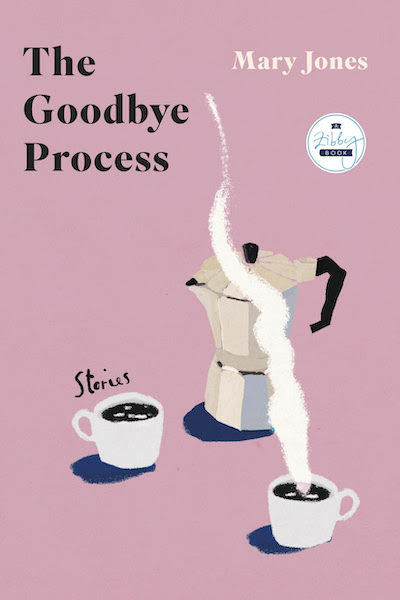
Electric Literature is pleased to reveal the cover for the short story collection The Goodbye Processby Mary Jones, which will be published by Zibby Books on July 30th, 2024. Preorder the book here.


In this stunning debut short story collection, Mary Jones uses her distinctive voice to examine the painful and occasionally surreal ways we say goodbye. The stories—which range from poignant, to darkly funny, to unsettling—will push you out of your comfort zone and ignite intense emotions surrounding love and loss. A woman camps out on the porch of an ex-lover who has barricaded himself inside the house; a preteen girl caught shoplifting finds herself in grave danger; a man hires a professional mourner to ensure his wife’s funeral is a success. Time and again, Jones’s characters find themselves facing the ends of things: relationships, health, innocence, life as they know it. The stories gathered in this collection are arresting, original, and beautifully rendered. The Goodbye Process packs a punch, just the way grief does—knocking us off our feet.


Here is the cover, designed by Anna Morrison.

Author Mary Jones: “I was hoping the cover would be minimalistic and beautiful, with a hint of quirkiness. I think this cover perfectly embodies those things, and more. I love the clean design, and the color palette which feels both sophisticated and playful. I like that the cover image is not explicit, but is open for interpretation, and everyone I’ve shown it to has had something different to say about it. To me it suggests that a conversation is happening, and maybe one person—the person with the colder cup—has been talking for a while, opening up. In all of the stories in the collection characters are at various stages of letting go of things—relationships, health, life as they know it. I feel like with this colder cup, and with the upward spiraling steam, Anna captures the feeling here that something is being released, let go of.”

Designer Anna Morrison: “Working on a collection of short stories can sometimes be a challenge, especially when trying to encapsulate a feeling that encompasses a range of different narratives. However, Mary Jones’s collection, The Goodbye Process, has a strong, overarching theme of loss and grief, with some humor intertwined in the writing. I also wanted to convey a sense of intimacy on the cover but with an unspoken loneliness, too. There are a lot of different perspectives in this collection, but I felt like the steaming cups of coffee could be the background to many difficult (or happy) conversations.”

I Brought My Kids On Tour For A Book About Motherhood

People told me not to write about mom rage. (Consider the internet trolls! Consider your children!) They cautioned me not to publish under my real name. (It will follow you for the rest of your life!) When my book published, they said I should definitely not bring my kids on book tour. (It’s your moment to be an author!)

This advice came from other mom writers. I paid close attention, weighed these warnings in my hands. Was I being given sacred protection? Or was I a wayward mother being gently policed, shepherded back into the claustrophobic box of “good mother”? I understood I’d strayed. A “good mother” doesn’t write about the way her palms sting from slamming them on the kitchen countertop. This is not a story mothers publicly claim. It’s a story we whisper. I’ve never been good at being quiet, or subtle, so, of course I wrote the book. I used my name. And despite the high probability of it blowing up in my face, I took my two elementary-aged kids across the country for an 8-day book tour. 

I knew my kids would be tired from the time-zone change, disregulated from the dissolution of routine, and that they’d likely rip loud farts at my events then cackle with delight. Even with my husband doing most of the parenting, the week would be exhausting at best. Still. This book is a career highlight! I wanted to celebrate it with my family. I fantasized that the tour would be a key experience my 6- and 10-year-old would remember. Totally worth missing school for, I said to myself as I sat in the principal’s office filling out the extensive number of forms for kids missing more than five consecutive days. 

I’ve wanted to be an author for as long as I’ve wanted to be a mother, which is to say, forever. I didn’t anticipate that the two identities would end up in competition with each other. I stopped writing for years because the creative labor of mothering took every piece of me. Once I was able to write again, I found I did my best work away from the children. I tried writing in my bedroom, but their presence permeated the locked door. I left the house and wrote at coffee shops, but only ever had a couple of hours before mom-life beckoned. I crossed bridges and counties to attend artist residencies, needing to transform out of my mother-self to be my best author-self. For years I mothered and wrote like this—separately.

It’s been a decade since I began splitting myself into parts. Writing a book about mothering was a way to put myself back together. I thought bringing my kids on tour could be the next level of integration. I was ready—eager—for my children to see me as other than mother, as more than the Maker of Meals, the Bedtime Routine Warden, the Afterschool Pick-up Driver. I know I will always be a big somebody to my children, the way that all parents loom large and take up space in their children’s psyches (for better or worse), but I wanted my children to see me as a big somebody in the world. I wanted them to see how someone so ordinary—the person who smears peanut butter and honey just right on their rice cakes (only Quaker brand, plain, and lightly salted!)—can also be the person on the stage in front of a roomful of strangers. I wanted to be a model, so that they might see that their own ideas are worth cultivating and amplifying. That they too deserve an audience and a microphone. That they don’t need anybody else’s permission to step outside the box of social acceptability, to choose a wayward path, to take up space, to be humongous.

I’ve wanted to be an author for as long as I’ve wanted to be a mother, which is to say, forever.

As our family book tour approached and I prepared for my readings, I came up against a new challenge—the content of my book. My children know what my book is about. We’d had age-appropriate conversations about mom rage. My son, the 10-year-old, once ticked off a list that went, “Racism, sexism, mom rage,” which told me he had a general understanding that mom rage is a societal issue steeped in oppression and power dynamics. But it’s one thing for my kids to experience me losing my temper. It’s another for them to listen to me describe my fury and to hear themselves referred to as “rage recipient,” and then to do it again the next night, all in front of an audience. How could I be true to my craft—a good author—reading and discussing honestly the terrifying rage I write about, and also be a good mother, protecting my children from unnecessary harm?

On the plane, my children happily inhabited screenland while I scoured my book for sections that ticked all the boxes: appropriate to read in front of the kids, 7 minutes or less, engaging for an audience. By the time we landed, I’d dog-eared every engaging, child-friendly page in that book. There weren’t many. But there were enough.


The morning of my first reading, I sit with my kids at breakfast and tell them what they can expect that night. I explain that I’ll have a “conversation partner.” We’ll talk about the book itself and also about my experience of writing the book, and at some point I’ll read a section or two, and then take questions from the audience. 

“I want to ask a question,” my son pipes up. 

“Sure,” I smile, hiding the heat of my flaring anxiety. I have a flash fantasy of him standing up in the crowd and asking, Why do you yell at us? (a legitimate question, but a tender conversation I’d prefer to have with him privately—not in front of an audience). “Do you want to tell me your question now so I can be prepared and do a very good job answering it?” 

He thinks then says, “I want to ask, ‘Have you always wanted to be a writer?’” 

I was embodying the idea that a person can have mom rage and still be a good mom.

I nod and look away, blinking back impending tears. This child. He disarms me. He isn’t concerned with the content of my book. He is curious about his mother—the author. I may feel fragmented, but he sees the whole of me. 

“Yeah, okay, great. You can just raise your hand when it’s audience question time. I’ll call on you,” I say with a grin.

That night at the bookstore, I do one of my “child-safe” readings about my complexities slipping away once I became a mother. I read that even my name disappears with everyone everywhere (at the gym, the playground, the pediatrician’s office) suddenly calling me “Mom.” My son is in the front row. When I finish reading, his hand is first in the air, arm straight, eyes set. I gesture towards him, ready for his rehearsed question. 

“Why do you think everyone was calling you Mom?” he asks. 

Surprised, I pause. The answer is complicated, and the section I just read basically answered it. Seventy people hold their breath waiting for my response. I buy time. “That’s a really good question,” I say slowly. The audience lets out a collective exhale with a small, knowing laugh. Then I answer his question as best I can. He nods. Energetically the audience nods too. 

A few nights later, I sit in front of a crowd of mostly strangers. Someone asks about the different trends in mothering that have occurred over time. I explain that when I was a child in the early 1980s, the reigning trend was “custodial mothering,” which was a more low-key, hands-off kind of parenting than today’s “intensive mothering” era. I share, “My parents were involved in my life, but my mother wasn’t cutting my peanut and jelly sandwiches into heart shapes with a cookie cutter.” My 6-year-old daughter, who’s been drawing in a coloring book on the floor at her dad’s feet until this moment, shoots up with a whoosh and pierces the air with her slender arm. 

“Yeah?” I say smiling at her.

“You cut my sandwiches into heart shapes with a cookie cutter!” The whole room laughs. My daughter recognized the way I mother her, and she unwittingly called me out! 

“Yes, I do cut your sandwiches into hearts,” I say to her, then turn to the audience as my daughter returns to the floor with a proud plop. “As mothers, we don’t necessarily agree with the ideas behind intensive mothering, yet we’ve internalized the expectations as ideal, then find ourselves pureeing baby food from scratch, freezing it into ice cube trays, laundering and air-drying every cloth diaper, and cutting our kids’ sandwiches into hearts with a cookie cutter!” I laugh and look at my daughter. She beams. I look out at the audience, which is 98% mothers. They beam too.

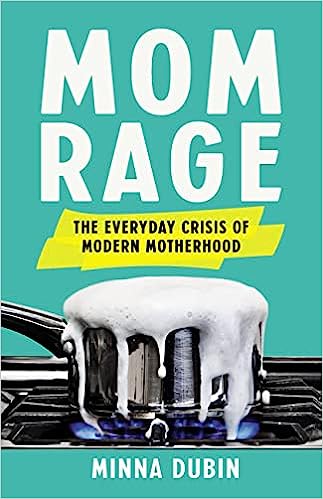
In Mom Rage I write, “Motherhood is so public, and everyone has an opinion.” Yet somehow, I hadn’t considered that bringing my kids on tour would result in the public display of my mothering. My children’s presence ended up transforming my events into live enactments of some of the main arguments of my book. By interacting with my kids in loving ways I was embodying the idea that a person can have mom rage and still be a good mom, a message that everyone in those audiences and every mother who rages needs to hear, especially in a culture that views angry mothers as moral failures. And by reading from my book and discussing mom rage in front of an audience that included in my children, I was demonstrating how we can drag mom rage out of its shame corner by talking about it with our friends, our partners, and even—with care and nuance—our children.

I suppose by bringing my family on tour, I set us up to be…judged, yes, but also witnessed—by the audiences but also by each other. I witnessed my husband laden with bags of books, art supplies, candy, and other child-appeasing items, doing everything he had to do to keep the kids happy so I could completely inhabit my author self. As a mother, it was the exact support I needed. In those moments when my children refused their social mandate to sit quietly, when my daughter jumped up with excitement and my son ditched his rehearsed question for the one that bubbled up inside his good heart, they were celebrating with me, showing me that they wanted to be part of the conversation with their author mother. They raised their hands to be witnessed for their own brilliant, bold selves. They too want to be humongous. They were telling me they already are. 

The Fight for Freedom Starts With How We Treat Ourselves and Others

In Freedom House, KB Brookins uses language to imagine Black liberty in personal, political, and public spheres. Through inventive forms, such as a CV and a poem written after playing Lil Nas X’s “MONTERO (Call Me By Your Name)” thirty times, Brookins’ expansive poetry collection expresses a longing for messy and unconstrained selfhood.

They are potent calls both inward and outward, weaving between the many textures of pleasure and rage. Brookins cruises through a range of registers, speaking directly and lyrically about harm and resistance. Everything is fair game: Will Smith’s slapping of Chris Rock, revelations about being read as male, an imagined Black future with comfort, care, and ease. 

This book is a container for the multitudinous sides of a complex voice, bringing the reader into a home where a Black trans poet’s self, along with their legacies and visions of the future, is able to unfurl. 


Joss Lake: What are the essential components of building a “freedom house” in your work and in the world?

 KB Brookins: A lot of the poems are about my personal journeys with things like masculinity. And transitioning is really important to me to be like an invisible trans person right now, because nationwide we’re a lot of places. 44 out of 50 states have at least one piece of legislation that they’re totally advanced this year that is anti-trans in nature. So it’s a lot of misinformation, a lot of people being fearful of what they don’t actually understand. I talk a lot about my personal experience as a Black trans person living in Texas, living in the United States, North America in general, and being trans, and what that feels like right now and how because we live in such a place that really discourages people from being who they are.

So it starts personal: Who are you and how much of you is influenced by what you’ve been told versus who you actually are? And then I think it’s interpersonal, like how we treat each other. You have to [think about that] before you can say “abolish the police”, for example. You actually have to be practicing that principle in your everyday life, like how you treat yourself and also how you treat others. And how do you get through things like conflict; how do you show up in romantic or physical encounters. Those are questions that I was thinking through and writing through in the book. 

And then, of course, there are the circumstances in which we live in on a national and global scale that are unnatural. It is unnatural for the climate to be changing at the rate that it is changing. And whether you live or die every day comes down to your race. It’s very unnatural for people to be so invested in things that at the end of the day don’t bother anybody, like someone being trans, like someone being queer. And it’s also just unnatural to have police and militant people who carry guns around. And it’s unnatural to have the law dictate things like putting the Ten Commandments up on every school in a state, which is an actual piece of legislation that’s trying to be passed in my state. I want to talk about these things very clearly, and I find poetry to be the best medium in which I can talk about them. Because poetry makes space for audaciousness and makes space for exploring things, maybe, in a way like you and me are talking right now. So I’m using things like metaphor, I’m using things like simile, I’m using things like repetition in rhyme and even form, ripping off the form of the curriculum vitae or ripping off the form of a legal document in order to have a conversation with a reader.

JL: A really beautiful aspect of this book is that we can move through these different layers and it doesn’t feel like anything is left out. I’m curious about how you went about organizing this vast container. How did you decide on the architecture?

How much of you is influenced by what you’ve been told versus who you actually are?

KB: Let’s say, a bedroom space in which you’re having more sensitive things that you may not have in an open space, like a kitchen. You walk into someone’s house and then they’ll say like, oh, you got to take your shoes off. Or like, here’s the chandelier and here’s how the kitchen is. I was using that section as an orienting space, introducing some of the themes that will be constant throughout the book. I was thinking of bedroom spaces not necessarily where the more internal dialogue poems happen, but maybe more of those [dialogues] are in the kitchen. A lot of intense intergenerational conversations happen at the kitchen table in my family. So I was really thinking: how do those rooms function in a house and how can I display that through the poems that are in those sections?

JL: I was struck how, in another interview, you were naming the trees in your neighborhood and talking about how you commune with them. How did you come to sort of know the names of the trees and plants around you? I’ve been thinking about how we’ve lost touch with our surroundings.  

KB: If I was to make my KB school, it would definitely be a class there in which you just learn about your local environment. People think that being vegan will save the world, right? But I think actually eating local, would eliminate a lot of the carbon footprint. And most people live in a place in which they can forage in their local area. It’s really important to be in tune with what is happening around you naturewise. We owe it to the things that live that are not just human, to care for and be in communion with those things. Growing up there’s an element of nature where I think a lot about: time and who has the actual time to be outside versus who doesn’t. When I was growing up, when people would be so “pro-nature,” they would always be white, right? So I would just be like, “That’s some white shit.” And then I realize—as I grow up and learn more about the environment and about the history of environmental racism—this is very ingrained in non-white folks, that nature is not for us. 

There never was a time when I was growing up where at a certain time in the year my family didn’t go and take pecans from a pecan tree. And we always had these big bags of pecans that we picked from a specific area. And also my family went to this big family reunion every year in Waco, Texas, and I saw all these different kinds of trees and the elders that lived in that area knew what those trees were.I was always given little bits of nature. 

Then I got older and people have their section of gays, right? The “artsy gays”, the “theatre gays,” and when I moved to Austin, somehow, I got enveloped into the “nature gays.” My fiancé used to be an environmental educator and one way I got oriented here was walking around the neighborhood and her being able to name every tree. I learned a lot about my local landscape from her and other people who are invested in keeping that knowledge alive. 

JL: Are there ways that you help yourself refocus on your intended audience and away from an oppressive white gaze, or is that naturally happening for you?

 KB: In the late 2010s, all of a sudden, people were paying attention to writers of color. And the things that people were gravitating towards were always about Black abjection or like some person of color talking about their trauma and the trauma of their experience of being whatever race it was that they were. And it was just interesting because the assumed audience would always be white people that didn’t understand where they were coming from. And I wonder where that impulse came from. I found myself, once I started taking myself more seriously as a writer, when I started getting critiques, it’d be like, “I don’t understand it. So you should change it.” What is this assumption that like I could be reading Walt Whitman and you love him and you don’t want him to explain things, but you want me to explain things. We’re reading Robert Frost and John Ashbery, which are not easy reads. Robert Frost is like “Great monolithic knees.” And you’re like, “I can work with that.” That doesn’t make sense. You’re cool with that and you’re cool with figuring that out in class, but you’re not cool with me, making a reference to my hometown that people who I’m actually writing this for will understand? And people don’t have to be from my hometown to understand some of these things because Google is free, right? If you really want to know, you could just Google it. And that’s what I do when I come across texts that I don’t understand,  I just Google it, right? So or use context, close textual contextual observations. We learn that in close reading, right? But there’s an expectation in which writers of color just hand-hold and write for people that are not themselves and that aren’t in their communities.

JL: Can you talk more about this impulse to include so many different textures and layers of existence. We experience this  sense of self in such a vast and almost  encyclopedic way. Can you talk about the impulse to pull everything into your work?

KB: If I’m going to address a subject matter so large and also so mulled over as freedom, I have to bring in everything, right? And if I’m going to take it from a three-pronged lens of personal, interpersonal, systemic, I have to bring in all of the things that that might include. I’m talking about race. I’m also talking about gender and sexuality, because that’s my existence, right? We can’t really escape our context. Even if I was to write like a sci-fi book, those things would still come in. And then also talking about disability and trying to develop a speaker, I’m like, okay, is it autobiographical? Is it not? That’s kind of up to you to decide, right? It had to be like a book with a very large view. And then also, that’s just how my mind works and how these large concepts like racism work—it’s permeated within the books we pick up and don’t pick up. They get made and don’t get made. And in the environment that we see or don’t see and the interactions that we can and can’t have.

There’s an expectation in which writers of color just hand-hold and write for people that are not themselves and that aren’t in their communities.

It made sense to riff off of forms. When approaching things like a CV, I’m like, “Well, what if we were really honest about what that experience at that one random nonprofit that we worked at was. What if we were more serious about and honest about what it means to be  a worker or a laborer in today’s late stage capitalism and also, what are those hidden labors?” At the end of the day, our work is emotional labor and the labor of “I just found out that someone that looks exactly like me, died in another place due to police violence. And I’m still clocked in and I still have to be clocked in.” Those large things that feel small in the moment that we have to put up with in order to continue on. Because we live in such a place where you have to prove your housing or you have to earn things like water and all of the things that we actually need to live, we have to work for and like. If I want to talk about that, why wouldn’t I literally just put it in a CV, right? Mission accomplished. 

JL: You write in “T Shot # 4,” “I want the black boy in need to be a river you can’t name even if you send sounds underwater.” Can you talk about the freedom that that can be found in illegibility or if you have a different way of relating to that particular line? 

 KB: I didn’t feel tapped into what a Black boy or Black man’s experience might be until I started transitioning. For Black men and for people who are perceived as Black men like me, there is this hyper visibility. There is a large history of a weird relationship with wanting to emulate whatever that we’ve learned through colonialism. And then there’s also this hyper visibility of everyone [outside of your community] seeing you either as a fetish or a threat. 

This is the conversation on TikTok and Twitter where people are stealing from Black culture and not citing Black people, but making money based off of things like AAVE,  Black food that started in African and Black American traditions and, slang. It’s “Twitter” slang now or “Internet” slang. But no, it’s specifically AAVE and you just took it, right? And then when it really comes down to it, you know, that white rapper or that white lady singing like Drake rap lyrics doesn’t actually want the experience of Blackness. Because the experience of Blackness comes with a lot of negativity due to other people’s perceptions due to hyper visibility. I find freedom in the idea of not feeling like you’ve got to be hyperexposed all the time and having a sense of self for Black men and Black people, which is not so corroded with other people’s ideas of who you are and not so accessible for other people to steal and pathologize. That’s happened a lot. 

Science has a very fraught relationship with Black people and we see that still negatively impacting the way Black people maneuver the health care system and other spaces. At the end of the day, Black men die at very early ages compared to pretty much every other demographic in the U.S. I was thinking about how the perception of me changing has led to some very interesting scenarios, mostly where I think that me not being completely happy, completely chipper is seen as me being aggressive. And I want to aspire in this poem to feel like you can be something that you don’t have to explain or display. 

You Look Like a Skoo and You Smell Like One, Too

Skoo

Once upon a time, I had a terrible marriage. We couldn’t stop fighting. We fought all night. We fought so loudly the neighbors complained. We threw things and called each other “prick” and “cunt.”

Of course it was a very lonely time. The shame was unbearable and black and continuous. We agonized constantly about how to stop it, and the life we could have if we could just get along. But anything we tried would start a fight. Then we’d be screaming like children, throwing things, terrified, in the filthy kitchen that never got cleaned—when you fight like that, there isn’t time for cleaning. Everything’s dirty like your life.

At the tail end of one of these fights, in the little hours, both of us exhausted and sick on adrenalin, fuck you, it’s you who, cunt, prick, idiot—I suddenly saw how absurd it was and said: “Well, you’re a skoo! And whatever you say, you’ll never be anything but a dirty skoo!”—skoo being a word I’d made up on the spot.

My husband got the joke and rolled with it, saying, “Well, you’re a ca! You’re a low-down ca, and that’s all you’ll ever be! A ca!”

We went on for a little while—you skoos are all, you’re like every other ca—both laughing, grateful, all rancor gone. We even believed we’d turned a corner. We’d had an insight that could stop the fights, and we just had to cling to that knowledge.

In the months that followed, we elaborated skoo and ca into a game. The skoo, we decided, was a weasel-like creature. We imagined a whole folk culture of skoos, where skoos told tales of a trickster figure called the Mandrake Skoo. The ca, meanwhile, was a monotheistic bird that worshipped the Great Ca on the mountain. I called my husband “Skoo.” He called me “Ca.” They were the nicknames we used when we were alone, which no one else was supposed to know.

Most of all, we made their cries to each other. The skoo’s cry was, “Skoo!” delivered with a honking plaintiveness. We skooed to each other as if across a distance, a cold swamp in which a skoo could be imagined to be stranded in a rowboat slowly taking on water. He skooed and I skooed back. We also ca-ed, which was higher in pitch, and had a falling note. One might imagine a ca to be plaintively crying from a mangrove tree in that same swamp, where she’s woken alone, confused, bird-brained, and can’t grasp where her mate has gone. My husband would skoo from the other room. I would ca back. Or we would skoo back and forth. Skoo! Ca! Skoo! Ca! It was amazing how it made us feel better; like singing.

But if we spoke in English, we would fight.

We broke up at last and became good friends. We never fought again, as if a spell had been broken. But we also never said “skoo” or “ca.” His name still came up as “Skoo” on my phone, but I never called him “Skoo.” We had other lovers and eventually spouses. That particular closeness had to come to an end.

Then it felt as if “skoo” was a magic that grew more potent with not being used. Our friendship was sacred and powerful because of it. Our friendship was not like anything else.

Here’s another story to explain what I mean. A few days after 9/11, my friend Michael was dancing in a gay club when the power went out. From one second to the next, the room went black. The music cut out and the only sounds were stumbling and muttering and nervous laughter. Soon even these died away. Michael couldn’t stop waiting for the bomb to hit. He had the irrational feeling that the world outside was gone.

Then out of the void, a frail voice sang: “Is this the real life? Is this just fantasy? Caught in a landslide . . . no escape from reality . . . .”

Another voice joined in, and another. Everyone there knew “Bohemian Rhapsody;” soon the whole club was singing along. They sang the song through to its end. Then they filed out together into the night, gently bumping into each other and laughing, and found the city still there, its lights still shining, as if their song had conjured it back.

We reach to each other across the abyss. We try. We skoo. We call across the abyss.

So, essentially, this is a happy life. The worst things happen, but we stand by each other. At bottom, humanity is good, not bad. The ca flies out to the skoo in its rowboat and the two of them paddle together to shore. There are other voices singing in the dark.

My skoo husband died a few years ago. The last time I saw him, we were in a restaurant, and he said to me, “Looking back on our lives, what regrets do we have?” and then he told me his regrets.

He didn’t tell me his heart had gone into tachycardia. He just picked at the terrible pasta dish the restaurant served him, for which they will burn in hell, then went home and told his wife he needed to go to the hospital.

They put him on a ventilator immediately. He never spoke or ate again.

His regrets were not having children and having stayed in academia. I had already known these regrets, of course, because we’d known each other such a long time. I don’t remember what my regrets were. My main regret now is not saving his life, though there isn’t any way I could have saved his life. Still it’s hard not to have this regret.

I’ve recently been in the part of town where this happened, so I went on a pilgrimage to the place and looked at the subway station where I watched him go down the stairs alone.

I can’t believe you can’t save people. I can’t believe you ever hate or harm them. I don’t know how it could really have happened. I want to say it’s not true.

How to Write a Query Letter 

When submitting to an agent or editor, you will need a query letter. The purpose of a query letter is to briefly introduce yourself and your work to the editor or agent, with the hope they’ll be intrigued enough to want to read more. 

Here is a rather typical method I’ve used. Most query letters contain three or four paragraphs, and you’ll want to keep it to no more than a page, single spaced. [Please note: I’ve inserted additional comments in brackets.] 

First Paragraph 

There are one of two ways to approach the first paragraph. You can keep it simple by stating the name of your work, the genre, and why you are querying this particular agent or editor. For example, here is what I used for How to Survive Death and Other Inconveniences

Dear _, [and be sure to include the name of a specific editor or agent, spelled correctly] 

Thank you for taking the time to talk with me about How to Survive Death and Other Inconveniences at the recent AWP conference. My hope is that you’ll find it to be a good fit for the University of Nebraska Press’s American Lives Series. 

Or if you don’t have a personal connection with an agent or editor, you can simply begin by saying, “I am querying you because_.” [Study the website of each editor or agent. Determine what you think they’re looking for and include that here. In other words, do they seem interested in books on the same topic as yours?] 

Other opening paragraphs can have more of what’s called a “hook,” or what I call a “seduction.” Here is one I found on the Agent Query website for the nonfiction book Into Thin Air: A Personal Account of the Mt. Everest Disaster by Jon Krakauer. 

On assignment for Outside Magazine to report on the growing commercialization of the mountain, Krakauer, an accomplished climber, went to the Himalayas as a client of Rob Hall, the most respected high-altitude guide in the world, and barely made it back alive from the deadliest season in the history of Everest. 

I could have used more of a hook or a seduction for How to Survive Death and Other Inconveniences by saying something like “Don’t want to die? Read this book!” And I might have used some thing like that if I’d queried an agent since New York publishing is more “into” eye-catching taglines than university presses. Which is to say you need to tailor your query to the audience—the agent, editor, or publisher—you’re contacting. 


Second Paragraph 

The second paragraph of your query letter is a mini-synopsis of the book and should be under two hundred words. In it you want to introduce yourself as narrator (that is, not the “real” you but the “you” on the page) and address the major conflict or the nature of the narrator’s journey. You can also include the types of obstacles standing in the way of a successfully completed quest. 

Here is the mini-synopsis I wrote for How to Survive Death and Other Inconveniences

In this book of thematically linked essays, the narrator explores the taboo subject of death. While several pieces use gallows humor as a way to deflect, Silverman also directly confronts her fears of the ultimate unknown. Her fear stems in part from a sexual assault she hid for years. This experience attests to a fact many women know all too well, that death and sex are intimately tied—not in some philosophical way but in everyday life. As this baby boomer grows, from childhood to adulthood, she explores other origins surrounding her fear of death—as well as her goal of surviving it. Her quest is, by turns, realistic and fantastical, worldly and other-worldly. The odyssey begins with the narrator dubbing herself “Miss Route 17,” while cruising New Jersey’s industrial-strength landscape. Along the way, she survives everything from a piano teacher who stifles her natural talent to a faux heart attack to various maladies that afflict us as we age. Her more internal journey to live forever finds the narrator hoarding memories as well as archaic words, which she uses as talismans against the darkness, overcoming and transforming death through language, memory, and metaphor. 

You will be able to find many other examples on the web. See, for example, the Agent Query website.

Third Paragraph 

The third paragraph focuses on your biographical information. Keep it short and related only to your writing credentials, such as journals in which you’ve published, awards you’ve won, where you received a degree, with whom you studied, and such. Here you can also mention any expertise in the area in which you’re writing, if appropriate. 

Fourth Paragraph 

In the final paragraph, thank the agent or editor for their time and consideration. If, on their website, they’ve asked, say, to include the first ten pages of your manuscript, mention that you’ve done so. Some agents or editors also want to see an attached proposal. Be sure to read all the guidelines carefully. Some are even very specific about what you should include in the “subject” line of the email. 

That’s it. Submit. You can’t get published if you don’t try.


Excerpted from Acetylene Torch Songs. Copyright © 2024, Sue William Silverman. Reproduced by permission of The University of Nebraska Press. All rights reserved.

Annie Liontas on “Sex With a Brain Injury”

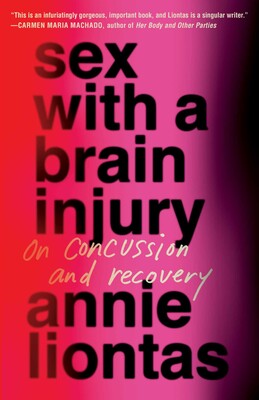
The new memoir in essays Sex With a Brain Injury from Annie Liontas, author of the novel Let Me Explain You, is a highly formally and thematically risky work of nonfiction exploring traumatic brain injury (TBI), queerness, addiction, mass incarceration, and chronic illness. Weaving “history, philosophy, and personal accounts to interrogate and expand representations of mental health, ability, and disability—particularly in relation to women and the LGBT community,” Liontas accomplishes a stunning feat of imagination, empathy, play, witness and reportage.

Though named after Liontas’ widely praised essay of the same name, the memoir never falls into the easy groove of being a book centered around a single successful idea, and resists plot summary. Using interviews with their wife, an innovative collaboration with a previously incarcerated writer, research, reportage, erasure/redaction, and song lyrics, it’s the kind of book that, when one is done, you turn over in your hands asking, how did they do that? 

Though Liontas and I are friends and neighbors in West Philadelphia, we crafted this interview together in a digital format, which allowed for a pleasant and plaintive evolution of ideas, for me to respond to Liontas’ periodic parenthetical apologies—“brain a little slow”—with explanation points and my own updates that I, in a place of grief after just losing my father, was inspired to listen—playing it loud in my office as we typed back and forth to each other—to the absolute banger that is Bruce Springsteen’s “Dancing in the Dark.”  


Emma Copley Eisenberg: Annie, you are a novelist and now you are an essayist too. What is an essay to you?

Annie Liontas: I’m thinking about Alexander Chee’s quote, “A story is something you want to run away with, an essay is something you can’t run away from.” I love your question, because we don’t really know what an essay is—is it an argument, is it about perspective, is it about making meaning through reflection—but Chee’s assertion really gets at something for me. I wasn’t consciously building a collection or memoir-in-essays when I first started, but I pretty quickly realized that this work had to be nonfiction. All of the stories we have of head injury are fiction (even when they’re not), because we don’t have the cultural framework to talk about them the way we do addiction or smoking. 

We’ve known since the Egyptians and Greeks what head injury does to the body and person, but we forget what we’ve learned, or we suppress the knowledge through powerful entities like the NFL—and that means the culture hasn’t yet had the chance to masticate and process the knowledge, or change public policy. I felt that I needed to keep asking these questions, and turning the thing on all of its faces to do it any justice. I also hold onto what Annie Dillard says about how an essay is a moral exercise that involves engagement in the unknown, that it can be about civilization but at the end of the day, what matters in this is you.  

ECE: I am always telling my students the formal choices you make in an essay will inevitably be connected to what the essay is about. I also went to a talk where Rebecca Makkai said that in every project she’s done, she’s never solved a major problem by writing around it, only by bringing it to the center. How did you think about the problem of writing about head injury/TBI in the ways it “makes things fiction” or destabilizes things? 

All of the stories we have of head injury are fiction (even when they’re not), because we don’t have the cultural framework to talk about them.

AL: I would have done the book—and, by extension, the millions of “walking wounded,” as survivors of TBI are called—a great disservice if I had not confronted the bodily experience of injury. The condition is really one of erasure, because it’s not a visible condition, and therefore often dismissed or disbelieved by our highest medical and legal institutions. Paul Lisicky calls it getting blood onto the page, and each time I sat down to a new chapter, I asked myself: what is happening to a body in pain? How can I more precisely capture the physical? How can I, even when I’m writing about anger and Henry VIII or Abraham Lincoln and depression or Lady Gaga, or whatever, honor what people are going through and have been going through invisibly, and sometimes for years. So I think it was mostly a gut check about being honest, and direct, and grounding the abstract and the intellectual in the felt experience.

ECE: That makes a deep kind of sense that you were trying (and succeeding) to render the bodily and physical experience because there is something absent or erased at the very core of what you’re trying to say. That does make me think of the erasure essays—there’s three I believe—in which you interview your wife, as well as some of the other craft risks you take in the book—post it chapters, super short chapters, a co-written essay, research and reporting. Were these craft choices a part of your vision or responses to problems/impasses you hit with more traditional forms of narrative? Were there other craft things you tried that you ultimately discarded?

AL: Those erasure essays were a huge risk! I had to be like: “Babe, can I interview you about the worst period of our lives and then let strangers read it?” Lol. In actuality, S and I had a series of recorded conversations, and then I gave her the transcript and a sharpie and said, cross out what you don’t want published. It was an opportunity to extend conversations we were having in our private life and marriage, but also a way to honor and recognize that, while the multiple concussions was an experience I was isolated inside of, I wasn’t the only one being impacted. She was—is—too.  I thought of all the partners and family members and best friends out there similarly suffering silently, and knew that I had to get outside of my own voice and experience. And traditional form didn’t allow for that. I had to invite other voices in. So, yes, while it wasn’t my initial vision, these craft choices are seeking to offer dynamic responses to a set of fairly unanswerable questions. As you note, I do have a collaborative essay in here, one that started as a profile, and I include other testimonies as well–people I’ve met with head injuries, for instance. The work had to expand to ensure they were all heard.

ECE: I loved “Professor X,” the collaborative essay about head injury and legal reform and the implications head injuries have as predictors for future incarceration. You said this began as a profile, can you tell us more about how this essay came to be and what it was like to write collaboratively?

The condition is one of erasure, because it’s not a visible condition, and therefore often dismissed or disbelieved by our medical and legal institutions.

AL: Thanks for asking—this piece is perhaps the most important to me because of the stakes and what it’s trying to do, and the impact it seeks to make in the world. When I was researching discrepancies in the criminal justice system and our treatment of incarcerated people with TBI, I was stunned to learn that people who are in prison are seven times more likely to get a head injury before they ever step inside a cell. You imagine that number will be high, but seven times? It’s a reminder that we incarcerate sickness, as my co-author Marchell Taylor often says. I reached out to Dr. Kim Gorgens, who is doing incredible research about TBI and the prison system—her current staggering data suggests that 97% of repeat female offenders had a head injury in the last year—and Kim connected me to Marchell, a Denver businessman and former inmate-turned-advocate. I thought I was going to write this very distanced, researched profile on Marchell, but we very quickly got close. We became friends, and the process became far more organic than simple interview. We spent hours on Zoom, during which he shared his story through oration, and then I’d work the thing into written text, and we’d go back and forth. It took many months, lots of chats and texts, and eventually some kind of barrier between us fell and we were seeing each other in our suffering. Marchell’s gift is empathy, and connecting with people, and so even though I really wanted this to be about him, he pushed me to engage more deeply, and we decided this had to be a collaboration.  

ECE: That’s so beautiful and speaks to your skill as an interviewer, a curious person excited to look outwards and render what’s going on in the wider landscape of TBI as well as look inward and interrogate what’s going on in on the level of the interior, the personal. One of the essays that especially stayed with me was “Dancing in the Dark,” about your mother and her queerness and her addiction. On the surface this one isn’t as explicitly connected to the theme of TBI and invisible injury, how do you see this one fitting within the broader things you care about in this book?

AL: “Dancing in the Dark,” at its heart, is about me grappling after forty years with my mother’s addiction and queerness. She was an immigrant who was conscripted into an arranged marriage, and while I always had sympathy for her, I think I reacted the way that many children of addicts do, which is to resist the experience and even the narrative—to say, That’s not me.  What I understood—as a queer person dealing with a chronic condition and post-concussive syndrome—was how invisible her suffering had been. I had to reckon with that, and admit my own culpability in being willfully blind. Then I learned that scientists are discovering addiction and head trauma look similar in the brain. That is, damage is damage. I was floored by this. Suddenly, my mother’s experience and my own were not very far apart, and I had to ask myself what it must have been like for her to suffer unseen.  

ECE: You write, “Never marry a writer, they live two truths at once, both the story they tell and its revision.” There’s a lot in this book about lies, doubt, duplicity, and storytelling. I was lucky enough to be on a panel with you last year at AWP called “Hide and Seek.” There is a sense of duplicity and hiding and seeking in this book in the best way. Why was it so important to you to write explicitly about lies and doubt?

Art, even when you’re broken, can make you feel whole.

AL: A couple of the pieces interrogate the relationship between our public and private selves, and how we must navigate those selves in a capitalist country that demands our full and complete participation: that is, we must at all times create an illusion of wellness and vigor, even when we aren’t well, even when it’s impossible to get out of bed. I had been taught those values, too, as an immigrant from Greece. My father was a welder, my parents were illiterate grape farmers, and no matter what was going on at home—the family, the body—you had to get up and work and produce. I think this was also the kind of erasure I was resisting with essays like “Doubt, My Love,” the fiction of the perceived self that is in service of others even when it comes at great cost. We occupy those false selves even in our most intimate relationships—marriage, for instance—because the borders bleed, and after years of training it can become almost impossible to locate the authentic self. Then one day you wake up and think, Why doesn’t anybody see me?

Most people going through TBI, especially women and people of color, are not believed. Outside of the NFL and sports, we have a very limited lexicon and almost no mental image of what “concussion” means. For instance, girls who play soccer are twice as likely as boys to get head injuries, yet we rarely discuss that. The female body is more vulnerable to concussion, and to post-concussive disorder, but we don’t talk about that, either. Instead, the medical profession and culture seem to trace this back to hysteria, calling it psychosomatic, and dismissing peoples’ actual experiences.

ECE: There’s also a great deal about other kinds of art and creativity other than writing in this collection. We get Bruce Springsteen, we get dancing (a lot of dancing!!), we get your wife the architect, we get riding a bike and a list of song titles. Is there a way in which this book is about art as an enterprise or about how brain injury impacts being a maker and receiver of good art?

AL: Yes a lot of dancing!  Where I’m from, we call it “Church”! I’m drawn to all kinds of art, as I think most artists are, so even if this weren’t about brain injury, it would have been hard to keep art out of these pages, and how it gives us our humanity.  But perhaps the inclusion of the Springsteen lyrics and these other artifacts serves as a tool to further capture the experience of injury and dislocation. On my worst days, I couldn’t listen to music, or exercise, or watch TV, or read. But on the ok days, even when I knew tomorrow was probably going to suck, I could listen to “Dancing in the Dark” and take a walk and feel like some part of me was still alive. Art, even when you’re broken, can make you feel whole.

Humans Are the Most Alien Creatures

An excerpt from Beautyland by Marie-Helene Bertino

In the beginning there is Adina and her Earth mother. Adina (in utero), listening to the advancing yeses of her mother’s heart and her mother in the labor room, vitals plunging. Binary stars. Adina, swaying in zero gravity. Térèse, fastened to the operating table. The monitor above the bed reports on their connected hearts: beating heart, heart, beating heart, beating. Térèse’s blood pressure plummets as Adina advances through the birth canal; she has almost reached Earth. At this moment, Voyager 1 spacecraft launches in Florida, containing a phonograph record of sounds intended to explain human life to intelligent extraterrestrials.

It is September 1977 and Americans are obsessed with Star Wars, a civil war movie set in space. Bounding to the stage after hearing her name, a Price Is Right contestant loses her tube top and reveals herself to a shocked Burbank audience. In the labor room of Northeast Philadelphia Regional, no one notices Térèse’s plummeting blood pressure. Something lighter and more conscious detaches and slips beneath the body on the table, underneath the floor and sediment, landing in a corridor of waist-deep water. Behind her, unembodied darkness. Far in front, over an expanse of churning waves, a certain, cherishing light. Térèse wants the light more than she wants health, more than she wants this baby’s father to become a shape that can hold a family. She forces one leg through the water then the other, trying to paddle herself like a vessel.


The contents of Voyager 1’s record were chosen by Carl Sagan, a polarizing astronomer who wears natty turtleneck-blazer combos and has been denied Harvard tenure for being too Hollywood. Carl and his team have assembled over a hundred images depicting what they decided were typical Earth scenes: a woman holding groceries, an insect on a leaf. The sounds include Chuck Berry’s “Johnny B. Goode,” the sorrowful cries of humpback whales, and recordings of the brain waves of Carl’s third wife. Footsteps, heartbeats, and laughter. Destination-less, Voyager 1 will travel 1.6 light-years: farther than any human-made object. At a press conference Carl says that launching this bottle into the cosmic ocean is intended to tell “the human story.”


The astronomers hoped to include the Beatles’ “Here Comes the Sun,” but Columbia Records asked for too much money. It’s hard to make human beings believe in things.

Also not included is 1977’s top hit “Barracuda,” though every story hummed that year over the upholstered dividers of United States of America or yelled between cars pinned atop Auto World pistons or delivered through the eldritch mists of Beautyland’s perfume section is told over the twinned guitars of the two-sister band from Chicago. It plays on the radio in the nurses’ station at Northeast Regional. A speck of Panasonic rustle between songs.


The current is too strong; Térèse makes no progress. The light remains distant. She cries out. The fright of a huge suck pulls Adina through to big white. Térèse regains consciousness under unfriendly lamps, baby on her naked chest. The baby is too small. Her skin and eyes appear lightly coated in egg. She is placed under a phototherapy lamp. Lit blue-green by the mothering light, yearning toward its heat, she appears other than human. Plant or marine life, maybe. An orchid or otter. A shrimp.


Adina: noble

Giorno: day


Térèse watches through the nursery window as her new daughter fails to reach the light.

Adina will hear this story several times in her life and in her imagination Térèse will wear a strapless red corset and capelet like Ann Wilson on the cover of Little Queen, only Sicilian, and with roller skates, humid late-season wind blowing through the doors. Her hair will glisten darkly with Moroccan oil, too coarse to relent to the popular feathering style.

She is too tired to realize that pursuing him is following the promise of a dead star.

In reality, Térèse has been arranged into a wheelchair by the nurses, feeling retracted to Earth by an unkind thread. The collar of her hospital gown falls beneath her collarbone. Her baby unrolls a tiny fist and she thinks of her unchained friends, Adina’s father among them, on their way to the club. She is too tired to realize that pursuing him is following the promise of a dead star. The nurses chat about the Price Is Right contestant. Did it on purpose, one says. The first part of Térèse’s life is over. He will never again beg to hold her perfect nipple in his mouth. She will never again be wild Térèse dancing on the lit floor at Bob and Barbara’s. Her parents will not support her. She is this tiny baby’s mother, mother, mother. The she in Adina’s head.

In Adina’s imagination, her mother will gaze through the nursery window, electric guitar chevroning behind her. In reality, Térèse is perforated by exhaustion, parentless, barely returned from death’s corridor. Even the hospital gown refuses to help; its foolish smile exposes half a perfect breast.


But the womb is Adina’s second lost home. The first has already tumbled three hundred thousand years away. A planet in the approximate vicinity of the bright star Vega, in the northern constellation of Lyra. Intelligent extraterrestrials have sent their own probe in a form and to a location no academic—not even Carl Sagan—could anticipate.

It is an interstellar crisscross applesauce. Two celestially significant events occurring simultaneously: The departure of Voyager 1 and the arrival of Adina Giorno, early and yellowed like old newspaper. If like a newspaper Voyager intends to bring the news, this baby is meant to collect it, though no one knows that yet, including her. Even as the spacecraft breaches the troposphere, the delicate probe stretches her fist toward a heat lamp in the pediatric ward of Northeast Regional, having just been born—or landed—depending on perspective, premature. Wriggling, yearning, recovering in heat, full head of thick black hair, at the moment she is still mostly salt and feeling.


This family, trying, lives across from Auto World in Northeast Philadelphia. Their apartment comprises the bottom floor of a two-unit brick building attached to another brick building, attached to another brick building, and so on, et cetera-ing down the highway. These are starter row homes. This is a starter family. The complex’s lawn, newly mowed, emits a pleasant fecund smell to the cars speeding by and to Adina’s father, where he crouches, glaring at a screwdriver. If he keeps his city job they’ll move to the suburbs where within years he will not rent but own an unattached house. They’ll have a yard that’s only theirs, a grill, a tree, and enough space for each family member to do things alone. There is no solo activity in the row home across from Auto World. Being a father is alien to this man but he’s trying. Today, he will use metal to add wood to wood and produce a swing, the way a man plus a woman and baby makes a family.

Each row home is designed like a cadaver lying flat on a table: at the prow of the apartment is an abbreviated entryway that normally holds Adina’s kicked-off boots and her mother’s neatly arranged work pumps, hallway like a throat leading to the open kitchen, the torso a family room big enough to hold a couch and a half-moon table covered in the open faces of their books, a fart of a bathroom, two small back bedrooms. Wood paneling. Everything possible painted beige. In front of Auto World a flying man twists and gyrates, making Adina and her mother giggle as they pull into their driveway.

Four-year-old Adina wakes from a nap and moves through the apartment, surprised to find the family room empty. Where are they? She believes she is the nucleus of every interaction and while she sleeps her parents pray for her to wake. She is still inactivated. She is still upturned to the sun. She cannot stop thinking about the bunnies she saw on the lawn the previous day under a bush, heads pressed together in a soft shamrock.

She believes she is the nucleus of every interaction and while she sleeps her parents pray for her to wake.

There are no cookies in the jar and the fridge is filled with off-limits bottles. Kid math: if her mother is rustling in her bedroom then her father must be in the backyard. There is still as much chance Adina will go to her father as her mother. She pauses. The home itself—every crock on the shelf, every bill—seems to pause.

The swing wins. Adina longs to sit weightless on a piece of oak fastened to rope. The vehicle of upward thrust. There is no reason to have a swing. This makes the swing an anomaly because in addition to its intended purpose every object in the apartment must also function in two or three other ways. Everything repurposed, everything salvaged. Even she, the child, was meant to fulfill several things at once: to be silent, useful, hardworking, a credit to her father.

That morning, her mother pulled a fax machine from a neighbor’s trash and, holding it aloft like a prized marlin, engaged in conversation with herself. “Why would anyone throw this out? Probably because they want the latest model. But it could clearly be a planter!” (Anything about to be trashed was first tried as a planter.) “It even comes with paper!” (She unearthed the roll from the trash, brandishing it in front of herself and Adina.) “I’ll bet it works. Paper! People are crazy.” (People were always crazy.)

Her father said it was ugly and no one he knew had one in their home and it should stay in “the child’s” room.

“Fine,” her mother said in her not-fine voice and carried the fax machine to Adina’s room where it claimed most of her bureau’s top. Except for the paper tray, city-pigeon gray, the machine was the color of the orthopedic shoes the employees wore at her mother’s job. A slim phone posed beside a bank of flat buttons with scripted numbers that glowed when her mother plugged it in. Portals to the business world.

Adina’s mother slid a sheet of paper into the tray. “Who should we fax?”

Adina didn’t know any phone numbers except her own. Her mother dialed: 215-999-1212. The machine whirred to life, trembled pleasantly as it pulled the paper through itself, went silent.

“What happens now?” Adina heard her father in the backyard, readying his tools. The woosh of cars on the street. A clicking sound from a private place inside the machine. A sheet of paper launched from an internal chamber Adina and her mother had not anticipated. An error message: no answer.

Adina’s mother’s eyes were wide. “Incredible.”


It is impossible to be unhappy on a swing. Even at four, Adina knows this. She wants it to be finished so she can be as happy as she needs to be. She wants her father to swing her until she is high enough to reach the porch’s tin ceiling.

“Is it finished, Daddy?”

But some immeasurable slanted expression over breakfast has dug a divot into him. Her mother thinks he’s weak or unable to build a swing. She thinks she’d be better off alone. He is. He is. She would be. Even though the plates are his, the table his, the yard, the everything is provided by him. The nail’s failure to find purchase in the flaccid wood has dug that divot even farther. Now this brown berry kid wants to check his progress? Is he finished. Thank you, how about.

Her father’s neck bulges with veins in an unmatchable shade of red. He pushes Adina out of his space. Maybe he forgets the five concrete steps leading to the shared yard when he pushes her again. The concrete and the trimmed grass offer little to cushion her brief fall. Falls.

In the kitchen her mother lifts a glass of water to her mouth. She drinks eight a day, soundlessly, one after the other. She hears a neighbor call her name and hurries to the backyard where Adina is a quiet lump on the pavement.

How long does Adina stay outside the realm of human voices? Seconds? A century? She wakes to her mother shaking her, screaming go back inside to a constellation of worried neighbors. Earth to Adina. Come in, Adina. Adina reboots. Some things return immediately and some take time. A tin taste sours her mouth. Her mother’s steel grip on her shoulders, helping her stand. Her father’s gaze locked on the abandoned tools on the ground. Adina is activated.


That night, Adina “wakes” in a room designed to appear as a classroom. The English alphabet borders the walls. An aquarium with blinking blue fish and a shelf filled with globes. The scene is stitched from what she has seen from classrooms on television and the visit she made to the grade school she will attend the following year. They are using human objects so she will understand.

Her superiors are an area near the front of the class that shimmers and evokes the sense of the singular plural. Multi- souled, multi-personed Shimmering Area. The closest human word for how they communicate is intuiting. They intuit toward Adina and she receives the message. This is her native tongue. It makes sense that she dreams in it and that using it fills her with ease. She intuits the Shimmering Area is both a location and a doorway.

The lights dim. An ivory screen descends from the top of the chalkboard and fills with projected images. A switchboard operator pulls a line from a connection. Two housewives talk on the phone. A formally dressed man ducks into a telephone booth to make an emergency call. Adina consults the Shimmering Area for whatever is next.

A familiar object flashes onto the screen, the fax machine her mother pulled from the trash. A disembodied hand feeds a sheet of paper with nondescript handwriting into it and presses the large green key. The paper churns through the mechanism. As it emerges on the other side, the machine and paper glow. Joyful sparks beam out.


Adina wakes in her Earth bedroom, nostrils filled with the tang of cleaning supplies. She lazes in and out of sleep, considering a space near the door where morning light has collected into the shape of a ship. Seeing the fax machine on her bureau, she remembers the images from her dream.

She writes on a sheet of paper:

I am an Adina.

After thinking about it, adds:

Yesterday I saw bunnies on the grass.

She feeds her note into the machine and presses the green button. The paper jolts through the tumbler with a robotic scanning sound.

It is so early even the boulevard is silent. Her mother is asleep in her bedroom and Adina is awake in her own, hovering next to an office machine, unsure what to hope for. After a moment, a red light she hadn’t noticed activates. Incoming fax! A sheet of paper squeaks through the tumblers.

DESCRIBE BUNNIES.