Temim Fruchter on Writing a Queer Jewish Novel Based on Folklore

Temim Fruchter’s debut novel centers around a young woman, Shiva, seeking answers about her family’s past after the death of her father. Told in revolving perspectives, between women in Shiva’s family and a mysterious, omniscient narrator, the book explores the interior lives of women, mother-daughter relationships, and how much destiny plays into our lives.
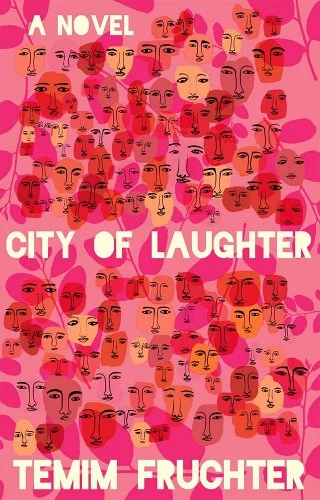
After Shiva enrolls in a graduate degree in Jewish folklore, she uses her research to go to Ropshitz, a village in Poland where her family came from. There, she hopes to learn more about the generations of women before her and uncover secrets about who her mysterious and enigmatic grandmother really was. City of Laughter investigates the constellations of family and folklore, and pushes the boundary on the form of storytelling itself.

I spoke with Temim in person about all the elements of her sprawling multigenerational debut novel.


Olivia Cheng: So much of this novel is about mothers and daughters, Mira and Hannah and Shiva, and female desire. Where did this story originate from and were these always the themes you were interested in?

Temim Fruchter: I played in a band for a number of years, and we went on tour and we went to Warsaw, which I immediately fell in love with. I knew that my great grandmother was from this place called Ropshitz and that it was not too far from Warsaw. We had a van so we drove there. And I stood there and it was like the trope is you go to the place your ancestors are from and you’re supposed to feel something. And so on one hand, I really did. There’s no more town there in the same way there’s no more Jewish village there, but I definitely felt this very charged presence. Or am I just projecting that and making that up, and I’m just standing on some ground? And I was like, maybe it’s sort of both. Maybe it’s like if I insist there’s something here then there’s something here. And so I just started to really think about that. What does it mean to go back to a place that you’re sort of from? And what does it mean when what you find there is kind of inconclusive? So that was one thing.

The other thing is that my grandmother on my mother’s side was a very private, interesting, curious woman. I loved her, I was close with her, but I didn’t always know her very well. And there are these pictures of her from when she was young, and she looked just stunning. She looked like this starlet with these beautiful lips and a leopard-print shrug or something. It wasn’t until later in my life when I was out as queer and often presenting and expressing as a femme gender identity that I started to be like, wow, she kind of reminds me of myself. Or like this sort of aesthetic and way of moving through the world. This femme mischief that I aspire to. Which isn’t to say that I suddenly decided my grandmother is queer. That’s not the point at all. But what I started thinking about was even if she had been or even if any of my ancestors had been, it’s very likely I would never know. Because so many queer ancestries are kept secret and are erased, and we don’t necessarily know of them. And so I think that this book was my way into reaching back into that unknowability of my queer ancestry and my own Jewish ancestry and just experimenting and playing.

OC: Let’s talk about the messenger because they’re basically an omniscient POV. Can you tell me more about your choice to include them in certain critical sections, like when Shiva is about to go to Poland?

TF: When I started getting deeper into writing this book that was about Jewish folklore, I started to think of the novel itself as a folktale. Like a sort of massive, sprawling folktale. Often in a folktale, there’s a storyteller. There’s someone who carries the story and I already mentioned that I was thinking about this imaginary box of letters, so everything kept coming back to this idea of a courier, a messenger. Funnily enough, and I don’t know why, but I’ve had a lifelong fixation with the archangel Gabriel who is also known as the messenger. And also for no reason I can explain, I’ve always thought of the angel Gabriel as nonbinary. I don’t know why. This is why I’m a fiction writer, because maybe I’m making it up.

So I started to play with this idea of a nonbinary messenger whose role is to carry the story, but also kind of make some mischief, but also make meaningful interventions, and carry something from generation to generation that refuses to be tamped down. And so I began to include that character and realized that I want to tell this story almost as though there’s this omniscience that you don’t see, but periodically, I wanted to bring the messenger into view. And especially when I got interested in The Dybbuk and the writer of the play The Dybbuk, S Ansky, who also appears in the book. I didn’t even know that there was a character in that story called the messenger, who also signals that there is something otherworldly going on. It felt really fitting that this messenger character really signaled that even though a lot of what happens in this book is really grounded in “reality,” I wanted to signal the books’ insistence that there is something a little outside of the world we know, especially in a folktale and especially in this story.

OC: With this omniscient POV, there’s this ever-present sense of destiny. How much did your personal worldview about coincidences and destiny come into the major themes of this book?

TF: One way I’ve been thinking about coincidence in this book is that I wanted this story to be a space where if you think it might mean something, it probably means something. Where theorems of wonder get proven true. Where synchronicities are real. I remember reading an interview between Alexander Chee and Jordy Rosenberg, and it was about queer fiction. I remember Alexander Chee talking about coincidence and how sometimes things seem too wild to be true and that coincidence in fiction is often considered to be in poor taste. But queerness is also considered sometimes to be in poor taste. I don’t want to misrepresent it, but I remember reading this piece and thinking “This is it, exactly.” It’s sort of gauche to write things that work out just so perfectly and are synchronous.

But I love both a queer and a folkloric space where it’s not necessarily that everything is predetermined, but it’s that there are all of these opportunities to connect to a story that brings a lot of things together. And I think that’s what is so rich about so much of contemporary storytelling and folklore that things come together in these beautiful and surprising ways and that’s what’s so moving about so many of the books I love. It’s not like a gotcha, everything’s connected. But it’s like everything is pretty connected and so I wanted to lean into that feeling. And I believe that some things are messy and don’t align and don’t work out and aren’t meant to be and don’t happen for a reason. But I also believe that synchronicities are everywhere and echoes are everywhere and that for me at least, a worldview that encompasses queer possibility or the sort of Jewish mystic outlook I was raised with. Those things feel more possible to play with especially in fiction.

OC: How much do you think this sense of destiny is associated with Jewish folklore?

Generation from generation and we make babies and things go a certain way. I wanted this to be a certain overcorrection to that.

TF: A lot! The short answer is a lot. I think the thing about folklore is that like fairytales, things are flatter in a folktale. There are archetypes and journeys that end in certain places and things that you know happen from the start. But the story is so engaging that you’re thinking how is this going to happen or one of two things is going to happen: the bad thing or the good thing. But I grew up quite religious in an Orthodox Jewish household. I still consider myself a religious person. I think a lot of the magic in this book and from this worldview comes from that. Just the sense that there’s plenty out there that humans either can’t see or just kind of can’t fully see and there are bigger forces at work. In that sense, I think both the storytelling tradition of Jewish folklore and also the Torah, the sort of stories I grew up hearing, where a literal God would move things around and say, “This is what’s going to happen.” That’s not what’s happening in this book, but it gave me permission to be a little over-the-top with that stuff. I’m going to arrange things so that even though these characters are trying to run from something, they’re going to ultimately going to be drawn back to it. What happens when you have agency, but you’re still drawn to something so strongly? I wanted both of those things in there.

OC: The prologue read like a folktale.

TF: One of my favorite parts of the book. It was really fun to write in the messenger’s voice and write in this archaic, wise, slightly wily character who’s carrying cargo across time and space. It really was enjoyable to use a prologue and epilogue, which is archaic, or maybe not archaic, maybe older-fashioned elements of telling a story. I was playing with that tradition or not even playing with it, leaning into it. If this novel is a folktale, we need the storyteller to come on stage and introduce themselves and exit. We need the contemporary story to be held in the much broader, expansive frame of this generational story that’s being told. And if there’s a prologue, I have to have an epilogue.

OC: Given that there are so many different elements of this book, what did research for this look like? How did you get started?

TF: I am a really bad and disorganized researcher, so I will start by saying that. I always knew this book was going to be rooted in Jewish folklore, but S Ansky actually didn’t come up until much later as I was working with the character of Shiva. And she was so curious about where she came from and why she felt the way she did. And it was really kind of meta, because I knew about The Dybbuk and I even know a little about S Ansky’s ethnographic study, but most of what I knew was this thing I had been fixated on a long time, which was that he wrote all of these questions that were very leading and that he never got to actually administer the questionnaire, because of World War I. So all these questions just tell a story. They exist out there. I have the translated version of them and they’re just questions. And then I started reading more about him and he was this really interesting, restless, shapeshifting, political person. Some people even posited that he might have been queer. I got really excited by him, so I was like, I’m going to follow this guy and my character is going to follow this guy.

I think we will see more and more Jewish art that emphasizes diasporic community, solidarity with Palestine, and mutual aid.

Research-wise, it was in some ways not a deeply researched book, honestly. For example, the Jewish shtetl of Ropshitz, there’s really not very much that I can find about it. So a lot of the stories that I’m writing about Ropshitz while they’re rooted in some oral accounts I’ve read about and from people who lived there in translation, a lot of it is imaginary. I wanted to be very careful, because when you’re making things up about a place that your ancestors are from and that has been destroyed, you don’t want to be callous about that, but I also wanted to lean into this tradition of laughter that I felt came from there and bring it to life in my own imagination. That part comes less from research and more from just trying to sit with what I felt like I had learned about that place from stories and from just knowing my great grandmother for the time that I did.

Definitely did a good bit of research about Warsaw. I spent time in Warsaw, but not very much. A total of a month and a half there, so I did some research about being in Warsaw, you know, using Google Earth to walk the streets there and talk to people I know who lived there. And of course S Ansky was a big point of research for me. Other than that, I think part of why I call this book a speculative queer history of my family is a lot of these questions that I was asking couldn’t be answered by research. And the questions were more interested in what story I could tell from the bare facts that I knew and what leaps I could take from there.

OC: Who were you rebelling against?

TF: One of the fundamental parts of this book is that I wanted to play with the idea of queer determinism, or not quite determinism, but there is something that refuses to die. Squish it down or tamp it down, but this queer impulse keeps coming up generation after generation. And it’s not that I believe there should be some type of queer determinism, but we live in a world where there is heteronormative determinism of a kind. Generation from generation and we make babies and things go a certain way. I wanted this to be a certain overcorrection to that. Try as you may to escape it, we’re all queer.

OC: What are you excited for in Jewish and/or queer media?

TF: There’s so much already. It’s a golden era of queer television and queer storytelling and I’m extremely excited by that. Not to sound like a weird old person. It’s like we’ve seen the final invasion, but then we see something new and exciting. I’m moved by the growing movement of anti-Zionist Jews and I’m moved by Jewish art that is diasporic in nature. I think we will see more and more Jewish art that emphasizes diasporic community and solidarity with Palestine and just mutual aid.

Venita Blackburn Thinks You Should Turn Your Troubles Into Stories

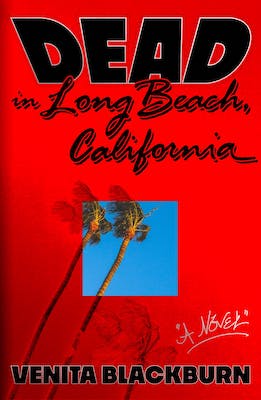
When I heard Venita Blackburn had a novel coming out, my desire to read it was palpable, a hunger. Her work is distinctive—it’s sharp, smart, and imaginative, often pushing voice and form—and her debut novel, Dead in Long Beach, California, is no exception. 

The novel follows Coral, a lonely author of a dystopian novel who discovers her brother’s body after he dies by suicide. Aside from the EMTs who clear Jay’s body, Coral is the only person who knows of his death. She takes his unlocked cell phone and begins responding to his texts as if she is Jay, as if he’s still alive. None of these correspondences carry as much weight as the ones to his daughter, Coral’s niece. Told in first-person plural and set over the course of a grief-stricken week as Coral attends a comic convention and attempts to date, the novel has an eerie, otherworldly quality from the very first sentence: “We are responsible for telling this story, mostly because Coral cannot.” 

As Coral slips from reality, her dystopian novel, “Wildfire,” swirls to life, amid her attempts to keep Jay alive to those who don’t yet know he’s dead. Dead in Long Beach, California examines trauma, desire, grief, hunger, loss, and our society at large in an inventive, form-shifting novel that truly no one but the singular Venita Blackburn could’ve written. 

I had the pleasure of talking to Venita Blackburn about voice, hunger, humor, and more.  


Rachel León: The premise of this novel is compelling, and like all your work, the voice is distinct and strong. This particular voice has an enigmatic quality. I don’t want to discuss who exactly is narrating because not knowing right away makes for an alluring reading experience, but I’m curious which came first—the premise or the voice? 

Venita Blackburn: Definitely the voice came first. I usually don’t write anything without having the sound of the narrator established. The most interesting parts of stories for me aren’t necessarily plot oriented. I’m most moved by characters and relationships. No character is real enough to me to put in motion until they sound real. They have to have a speech pattern, a rhythm that matches their personality and psychoses perhaps. It’s fun.

RL: You’re such a master of voice that I suppose that first question was too obvious. It’s one of the things I love about your work. Plus you often play with form, which you do here with “Wildfire. But I’d argue it’s used differently than most novels within novels… At what point did “Wildfire” come in? 

VB: I had the essence of the main story ready, but I did find it difficult to write much of it, so I spent a lot of the early drafting period working on the story within the story. I also wrote a lot of it during the pandemic in long stretches of isolation where I wanted to be far away from the realities of that time, so writing the “Wildfire” sections gave me that escape. I also rewatched a lot of Star Trek during that period for the same reason. Going into distant speculative sci-fi fantasy worlds offers the illusion of safety from modern troubles and makes every trauma a little more manageable because the future promises reprieve, right? Of course good sci-fi acts as a reflection of humanity and parallels most modern concerns and bad habits at the core. Eventually, I had to cut a lot of the material I wrote for the “Wildfire” sections because they were not what the real story and situation were about. I don’t have a hard time cutting, but those sections were comforting to me for a while, dreaming in a land via a lesbian assassin with a solid fashion sensibility. I couldn’t fantasize forever and had to face the hard part of the book.

RL: That blending of fantasy and facing hard reality hits at the core of the novel. I think most of us can slip into fantasy pretty easily, but Coral is the perfect character for this story. 

VB: Coral does not handle the situation well at all. What would the ideal reaction to that kind of horror be? I don’t know. I do know that every reaction is legitimate, and eventually we have to be accountable for those actions. The story though is not about healing or excellent coping skills at all. The story happens in the space between the event and acceptance, that point where our emotions, our sense of reality loses all clarity. I wanted to put images and meaning to that space of grief.

RL: I think the way the novel also explores hunger and desire somehow makes that space of grief more profound. Do you think the two are related—hunger and grief? 

VB: Absolutely. On a literal level there are probably psychological studies to confirm this link, but it is definitely something I’ve observed and experienced. Hunger is something I wanted to put language around. Coral has a real struggle to feed herself sometimes in hilarious ways, but that is a reality of grief that we’ve understood forever; it is an ancient reality that the body will not always take care of itself well under the pressure of catastrophic loss. The need to be fed will be there though, and manifests in awkward ways for Coral from standing in an alley eating cheap tacos or failing to order pizza in an almost cruel but funny way.

RL: And that brings us to the humor. While the novel does deal with catastrophic loss, that’s balanced nicely with humorous moments like what you mentioned, as well as funny insights. Was the humor always there or did it come in later? 

Going into distant fantasy worlds offers the illusion of safety from modern troubles and makes trauma a little more manageable because the future promises reprieve, right?

VB: The humor was probably always there because of my natural instincts. So much of life is absurd but we take it seriously, and that is the ultimate formula for ridiculousness. During the early drafts though I wasn’t always laughing. When writing some of the harder scenes and material where I really had to remember what it was like in my own body when experiencing the shock of grief I had no awareness of the humor taking place. During the later reads and assessment stages did I see some really wild things happening. I thought I must be insane or this is just hilarious or both. I’m fine with that too. I’ve also read some pieces to different audiences at this point and found that the audience laughs at times I didn’t think were funny, but my delivery is also part of the experience. It has been a ride going from a private idea of the story to its public presentation. 

RL: Can you tell me more about that ride?

VB: Well, this book is the first one I’ve ever written on contract where I sold it as an idea instead of a completed project, which I did for the first two story collections. So, I had expectations I’ve never had before and a commitment to a single story that I’ve never had to have before. I usually write whatever is troubling me and I either finish it or I don’t and I publish it or I don’t. This time I had to follow through with the concept and I had a lot of eyes and minds waiting on the other side. The editing process was great and super easy. I’ve been lucky to have such a solid relationship with my editor Jackson Howard. He’s young and brilliant. A lot of the emotional “ride” has been with myself in the process, self-imposed pressure. I don’t know if I’ll ever do another book under these circumstances where the manuscript doesn’t exist before I sell it. Who knows.

RL: So did this novel originate with something troubling you?

Every story I write originates with something troubling me, and I encourage everyone short on content to do the same.

VB: Every story I write originates with something troubling me, and I encourage everyone short on content to do the same. I won’t attempt to put anything on a page unless it is material that is sacred to me, nags at my heart and brain for any number of reasons. I like to say that all stories are grief stories these days. They’re also love stories too. Having experienced significant personal loss at various states of my life, I was able to tap into those experiences to understand the emotional core of the novel, that nameless shaking place of trauma, the sudden emptying out of expectations and possibilities. The novel started with the sense of grief and loss of possibilities that I’ve had with family and circumstances then cascaded out into wider observations of our civilization.

RL: I loved those wider observations of our civilization. Like the part about human evolution and the commodification of Later, and how that both came from More and had to be filled by it. This kind of commentary adds a fascinating layer to the exploration of loss. Grief can make our world feel so small, but these wider observations offer a backdrop, or context, to the physical space we’re in as we’re grieving. Was that your intent as the novel cascaded out? Or was it one of those happy accidents that come from following the novel where it wants to go?

VB: I didn’t always know what kinds of concepts I would use from moment to moment while writing, but I knew the voice and the psyche of the novel needed to look far away from the current moment of crisis. That was in a way an act of self-preservation for the character because the crisis was unbearable if it existed alone in a bubble of time, but as one bead on a long chain of events no given tragedy seems so daunting. That’s how my mind works at least. That sense of organization is anxiety reducing though I can imagine for some it could be overwhelming and have the opposite effect. It was important for me to allow the voice, which was acting as a filter for Coral’s own mind, to travel to places where we have everything figured out, where we can quantify our madness, greed, vanity, curiosity, devotion and all the rest then neatly put them away into files. That way the worst sudden explosion of horror seems like less of a catastrophe. Even though we have to get close and feel our pain eventually, I wanted to acknowledge how for a moment that we can lean back, way back. From far away our nightmares can be funny or pretty or almost nothing at all.  

We All Want to Live in the Golden Girls House—Don’t We?

After my father died, my older sister and I stayed with my mother for a while. I couldn’t stop thinking of Grey Gardens, minus the fabulous headscarves; Big and Little Edie Beale kept winding their way through my head. It was a cruel comparison—as a trio of single women, I could have easily renamed us the House of Strong Minded, Powerful Women, as that is what we have always been, with or without my father. Unfortunately, it was too easy to think of all the negative images of women aging alone first: the jilted Miss Havisham in Great Expectations, exacting revenge on men through her adopted daughter; Sunset Boulevard’s demented Norma Desmond, waiting for her closeup with movie directors who’d long forgotten her; Marge Simpson’s vengeful, chain-smoking older twin sisters. Without the presence of a man, an aging woman grows irrelevant, absurd, batty. Our culture allows for few other narratives.

In trying to think of more positive portrayals, only one immediately comes to mind for me: the 80s sitcom The Golden Girls, about four older single women—Blanche, Rose, Dorothy and her mother Sophia—who live together in Miami following their husbands’ deaths, or, in Dorothy’s case, after her divorce. Ever since it first aired in 1985, The Golden Girls has been telling aging single women what the rest of the world never has: that our lives are just as interesting and worthwhile without a man in the picture, that as women we’re capable of providing as much if not  more comfort and assistance to each other in our golden years than a partner ever could. When the first episode aired, Estelle Getty, who played Sophia, told the New York Times she hoped the show would kill “the notion [that] the world is Noah’s Ark and no woman is worth the powder to blow her to hell with unless she’s attached to a man.”

My friend Janis would allay her fears of being alone with the argument that it would all be fine because she and another good friend of hers would “just live in The Golden Girls house together.” The concept of a house filled with one’s closest friends who live together and take care of each other in their senior years is an enduring source of comfort for her—as it has been for many women who worry they will end up spending this time in solitude. There is something inherently soothing about the show, particularly when confronted with a stressful, uncertain future; a friend recently told  of The Onion’s famous front page after 9-11, showing a TV schedule with The Golden Girls on endless loop.

In a Huffington Post article last year entitled “My Friends And I Are Going To Live In A ‘Golden Girls’-Style Situation After We Retire,” the millennial writer Ashley Brooks talked of setting out initial plans for a Golden Girls-style house with her female friends later in life. “Why couldn’t we use Blanche, Rose, Dorothy and Sophia as a model to plot our own post-midlife sorority setup?,” the author asked. Among her friends, she had already picked out who would be the Blanche and who would be the Dorothy.

The idea of a Golden Girls house is not just appealing to longtime single women or divorcés, but anybody who fears not being able to meet this unrealistic expectation of lifetime partnership or afford living on their own in their last years. Given the average life expectancy today and the rising cost of nursing homes and long-term healthcare, living alone in our last years is a luxury few of us will be able to afford; financial magazines from Forbes to Kiplinger’s have billed Golden Girls-style houses as a more affordable, less lonely option into retirement.

There is something inherently soothing about the show, particularly when confronted with a stressful, uncertain future.

While I do have several issues with the show itself—namely its reliance on racist, sexist, homophobic and transphobic humor that cannot be dismissed with the old “it’s a product of its times” excuse—I admit that as a single and childless woman in my mid 40’s, I have considered a Golden Girls house as a viable solution to my own questions about who will care for me and keep me company in my final years, in the absence of a child or partner.

I discussed the concept of a Golden Girls house the other day with an older friend of mine. “I mean, it sounds like a dream, doesn’t it? Who doesn’t want to hang out with their friends and eat cheesecake for the rest of their lives?”

“You know,” she said, “the only thing about The Golden Girls…”

“—is that they were all white wealthy women?” I finished.

“… is that they were all healthy.”


In the last months of my father’s life, my mother converted the basement floor of our house into a mini hospice, hiring round the clock, in-home care to assist her and ensure there would always be someone by his side at all times. The one who stayed with us up until the end was a no-nonsense older nurse who interfered with our lives upstairs as little as possible, took direction without complaint, and worked tirelessly. At the time she was taking care of my father I would have offered her anything, and now I’m ashamed to say I don’t remember what country she was from or what her name was—I had to ask my mother later. Agnes watched over my father night and day, changing his diapers and feeding him until he drew his last breath. I was in the living room when she ordered me downstairs that day, the one and only time she ever raised her voice.

“What? What is it?” I asked.

“Just go down,” she commanded.

On the basement floor where we had set my father’s bed up, my mother was already there, with her arms around my father. He had died just moments before. I began screaming as I clutched at my mother. My knees collapsed a little. My mother’s arms left my father’s body to wrap themselves around me.

Agnes watched over my father night and day, changing his diapers and feeding him until he drew his last breath.

“What is this? What is this?” the nurse asked. I sensed that she wanted me to be stronger for my mother, pull it together—after all, she was the one who cared for him day in and day out, who had fed him for weeks on end. She was the one who watched him take his last breath while I was upstairs. All I had to do was drop by once a day to visit with him for an hour or so before escaping upstairs to watch TV.

We had to dress and change my father before he could be picked up by the funeral parlor, and as the nurse heaved my father’s body to the right and the left, rubbing him down with a warm, damp cloth, I tried to assist as much as I could. Mostly I just stood there, afraid to touch my father’s body, to know what it was like now. I had attended funerals before, but never experienced the death of someone so close to me. Onscreen, people just trickle out of hospital rooms after their loved one passes, and it’s assumed some faceless hospital staff or hospice care worker takes care of the rest, whatever “the rest” entails. Agnes set about it as if she had done it a million times before, lifting up my father’s legs gently but firmly to wash him, removing his shorts and putting on new ones. I am no longer convinced there is any dignity in death; the horror lies in the witnessing of this loss. And yet, Agnes had enough dignity to make up for what I lacked, and for what my father’s death had erased.

As I lifted my father’s arm to help Agnes dress my father, I couldn’t believe that it was his anymore; it was flesh hanging off bones, light as a bird’s wing. Were these the arms that once held me back from running into the street? I was surprised by how strong he was back then, wrapping his arms around me, a vise from which I couldn’t escape. I put on his socks now, lifting each cold foot to stretch fresh cotton knit over his heels.


The story of The Golden Girls, to paraphrase Joan Didion, is a story I tell myself in order to live. It works until I think of my father’s last days, the anguish of his death and the days that led up to his passing.

There was a reason the Girls were all relatively healthy until the last season when Rose goes into cardiac arrest: They weren’t that old. I always assumed that they were in their 60s, except for Sophia, who I pegged for early 80s, but when the show began, Blanche, Dorothy and Rose were only in their 50s, tiptoeing toward but not quite having reached their golden years. In Season 2, Episode 8, “The End of the Curse,” Blanche experiences menopause for the first time.

What is never shown and only hinted at in The Golden Girls are the later years, when the women become fully bed-ridden and incapacitated, when they can’t feed or bathe themselves or go to the bathroom without assistance. Rose goes into cardiac arrest near the end of the last season and undergoes triple bypass, but she makes a lightning fast recovery in time for Dorothy’s wedding. It wouldn’t make for much of a sitcom if the characters were gravely ill—although death is still present enough, roaming their lanai like the unnamed fifth roommate. The Girls discuss their fear of death and aging, donate kidneys to siblings, mourn ex-husbands and friends who passed, and encounter terminally-ill friends who wish to end their lives early.

It works until I think of my father’s last days, the anguish of his death and the days that led up to his passing.

It’s interesting that in all the articles I have read pushing Golden Girls retirement homes, no one ever talks about the “Sophia’s Choice” episode from Season 4. I had forgotten about it, until a recent rewatching. After Sophia rescues her friend Lillian, who suffers from dementia, from a poorly equipped nursing home, she takes her back to the house to live with her and Blanche, Rose and Dorothy. The Girls don’t make it two days with Lillian.

“I just cannot believe Lillian has only been here for 24 hours,” says an exhausted Rose, as they all slump over the kitchen table.

“I cannot believe Mom thought she could handle her alone,” adds Dorothy. “I mean, it’s almost too much for the four of us.”

Agreeing that they can no longer take care of Lillian, Rose finds Lillian a nicer nursing home and Blanche pays for the next few years of Lillian’s bills with a bonus check from work that she had set aside for a breast enhancement. Prompted by the experience with Lillian and fears of their own experiences to come, they decide to make a pact to “always take care of each other, no matter what.”

If you could fast-forward to the next decade or two of The Golden Girls, I wonder if it would show these women diligently taking care of each other in their incontinent years, when some of them may as well need 24-hour care like Lillian—or if it would show the at-home nurse in the corner, wiping cheesecake crumbs off their faces or on hands and knees, cleaning the toilet? Imagine the curtain pulling back to reveal the immigrant caregiver at the nursing home, doing what some of us can’t or don’t want to do round-the-clock, lest it disrupt the responsibilities and lives we already have.

Imagine the curtain pulling back to reveal the immigrant caregiver at the nursing home.

Which brings us to another aspect of the show: I am far from the first person to watch The Golden Girls and wonder where all the brown people evaporated to, considering this show is supposed to take place in Miami, a city that even back in 1980 boasted well over twice as many Hispanic people as white folk. What are the implications when we write the immigrant worker out of the storyline, both on screen and in our own lives? I loved the 2022 movie Triangle of Sadness not just for the easy schadenfreude of watching spoiled rich people come undone, but for that shot of the hull of the cruise ship, where they housed the Filipino cruise workers in a modern-day version of Downtown Abbey. As a Filipino-American, I always thought I was more sensitive to the unseen immigrant labor from poorer countries like the Philippines that keeps Western countries afloat. However, in my own life, I had failed with Agnes.

In the end, it was really she and my mother who did most of the caring; we were fortunate enough to be able to afford long-term health care insurance for my father, so my mother could get someone in to help. Otherwise, I would have needed to step in far more than I did. Would I be able to care for good friends better than I had my own father? And is this something that one gets better at with age and more death?

I want to believe that my girlfriends and I would take care of each other until we died, but I have also seen the distancing of friends when they have partners and children—this is their new unit, their main focus, and time with friends must be fit in between their child and household duties. I have seen it in myself when I get a boyfriend and see my friends less than I did before, clearing the weekend for days with my new love, prioritizing my time with him. I have started to question if a Golden Girls house is the ultimate goal or just a backup plan for when our partners fall short or die off first—and if it’s the latter, how strong this ideal is when so many of us have spent the bulk of our lives prioritizing traditional family units or “significant others” above all else.


Over twenty years ago, I suffered from a severe depression that rendered me unable to care for or watch over myself. My father didn’t drag me home, where he knew I feared I would backtrack. Instead, he closed up his practice and flew to New York, where I was living, to care for me. My greatest shame is that I do not think I did a tenth as much for him when he was diagnosed with Alzheimer’s seven years later, or in the ten years of suffering he would endure following this diagnosis, as his mind and body slowly shut down from dementia and then cancer. I think about this now when I call my mother from London, where I currently live, and she asks me how long I plan on staying there and when am I coming home, and I tell her that this is where I live now, this is my home. I have wanted to live abroad since I was a kid and have spent the last thirteen years taking on a variety of jobs that would lead to a long-term visa, and yet when I say to my mother “London is my home now”, it sounds trivial and silly, like I’m an 18-year-old college kid extending their study abroad too long instead of a 47-year-old woman who has been planning this for over a decade. 

I wonder if it would sound more acceptable if I had a husband with a job and children who were in school here.

I wonder if it would sound more acceptable if I had a husband with a job and children who were in school here, all of whom could never possibly be as easily uprooted as a single, childless middle-aged woman. To my mother, it probably wouldn’t; she would then just wonder why her grandchildren had to live all the way in London instead of closer to her. And yet sometimes I can’t help but think that it does—if not to her, then to others, to society, to me, even. I think of my trips to the Philippines, a country which is still very much a collectivist vs individualist society, and where cousins of mine grew up in multi-generational family compounds in Quezon City with kids, grandparents and parents looking in on each other every day. I think of all the nuclear-family Filipino homes I’ve been to in America, with room for Mom, Dad, a few kids, and always an extra room for Lola. I think of all this as my mom and I talk to each other on our iPhones from our single-occupancy homes, over 4,000 miles and an ocean apart.  

How much of our lives and our independence are we willing to sacrifice to care and comfort those closest to us? Where do we draw the line, and what does that say about us?

If I needed to fly back and give immediate care to my mother or sisters I would, and yet how quickly, sometimes without realizing it at first, one can slide into thinking of oneself in the role assigned: the selfish single woman who chose not to have children and who clearly hasn’t put anyone but herself first, versus a selfless mother who already has shown how giving she is with her children and just needs to extend this innate generosity to others in the family. (This scenario is also untrue: statistically, unmarried adults are more likely than married to provide most of the care to a parent.)

For most of us, it will not be merely a question of how selfless we are but how much money we make and how much care we can afford. Our country may be one of the richest in the world, but we have not set ourselves up to provide nearly enough public funds to help care for the number of aging baby boomers that will require nursing or in-home care—a 75% increase from previous generations.

There is no talk of what to do when the Golden Girls can no longer fund Lillian’s nursing home, but you can squeeze the entire long-term care crisis into that gap. The beauty of a 30-minute sitcom like The Golden Girls is that topics like these can be touched upon and eased with humor, just in time for commercials. We are not given such reprieve in real life. The show did its strongest work not in proffering the concept of a Golden Girls house but in providing a brief window into questions about the human limitations that we cannot always answer but must ask ourselves anyway. It was far from a perfect show, but in some of its grossest omissions is where some of the most important questions lie. 


At the end of the Sophia’s Choice episode, the Girls decide to assuage their fears that they’ll end up like Lillian, with nobody they can rely on to take care of them or keep them company in their final years. They decide they will all go together to the nursing home if they have to.  It’s a reassuring thought—until Rose asks, “But what happens when only one of us is left?”

There is no talk of what to do when the Golden Girls can no longer fund Lillian’s nursing home.

For a few seconds, there is nothing but silence. The silence will eventually be disrupted by a snappy one liner from Sophia, but for just a brief moment, the human fear of death and dying is allowed to assume the frame. It crowds out the set’s pastel couches and wigs, extinguishes the comebacks about menopause and ensuing laugh tracks. There is no cut to commercial.

I am back in my parent’s house, walking downstairs to see my father one last time. The house is still. Light filters up from the room below, guiding my way down.

I do not feel comforted. I am not supposed to be. 

Writing an Illness Story that Rejects the Inspirational Healing Narrative

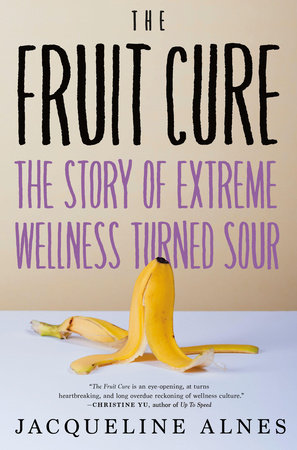
“When you are in the throes of illness,” Jacqueline Alnes writes in her debut The Fruit Cure: The Story of Extreme Wellness Turned Sour, “there is something comforting about distilling the world into dichotomies: sick or well, bad or good, off-limits or completely nutritious. When so much seems unknowable about the very body you live in, it feels nice to stand on a firm platform made from rights rather than wrongs, even if the very platform itself is a false reality.” As a Division I collegiate runner, Alnes began experiencing mysterious and devastating neurological symptoms that remained unexplained by medical doctors for years. Amidst the frustration of living without a clear diagnosis and treatment path, and the grief of a troubling departure from her team and sport, Alnes found refuge in an online community that proselytized an extreme diet—consisting only of fruit—as a cure for most anything. 

One-part memoir, one-part narrative nonfiction, one-part historical investigation, The Fruit Cure takes readers on a journey through the sometimes-sinister past—and controversial present—of extreme wellness communities on the Internet. With the deft of an investigative journalist, the nuance of a historical and cultural critic, and the craft of a memoirist, Alnes subjects herself to the same rigor of inquiry as the wellness gurus and devout followers she researches, asking difficult questions about responsibility, narrative, and power. Resisting a convenient slide into the very dichotomies of good and bad, ill and healed, that she unearths in these spaces, the result is a read that is empathic and tender, at times darkly humorous, and ultimately deeply inhabitable for anyone who has lived in a body and grappled with the impossibility of its control.

Jacqueline Alnes, an assistant professor of English at West Chester University, whose work has been published in The New York Times and Guernica, joined me on Zoom to discuss the moralization of food, parasocial relationships, ableism, running, and the challenge—and freedom—of writing an illness narrative that rejects inherited myths about healing and cures.


Alexandra Middleton: You write openly in The Fruit Cure about the challenge of reliving memories of your neurological illness when memory itself was elusive. What was it like for you to revisit these memories through writing this book? 

Jacqueline Alnes: Feeling like I could write about this was an interesting conversation I had with myself. I don’t have a memory of it like you would traditionally a memory. For the sake of my own self-preservation, I tried to pretend a lot of it didn’t happen. Which is part of the crux of the book: if you do that, you harm yourself because you haven’t addressed the thing that actually hurts you. Writing was a step of owning the story, saying, “Yes, this did happen to me,” then asking “What does that mean about how I feel about myself? About my body? About the way I feel I can let other people care or not care for me?” The book is an act of vulnerability, saying, “Here’s the story I haven’t told to myself for so many years.” It’s been sometimes difficult, sometimes joyful, sometimes terrifying. 

AM: A chapter in the book shares the same title as your Ph.D. dissertation, which engaged literature on illness narratives, disability studies, and women in pain: Well Developed Female in No Acute Distress. How did your PhD research inform what ultimately became The Fruit Cure?

The publishing industry has valued narratives where the person is an inspiration at the end. I resisted that and thought, how could I write a narrative about not being fully healed?

JA: Part of it was a resistance to illness narratives. Not all of them; I don’t want to say something click-baity like “she hates illness narratives!” But many felt like the person was okay on the other side. I remember reading and feeling, “Wait. Am I not okay then? Have I just not been able to get over it?” Because it had been ten years since I was seriously ill and I still hadn’t fully left the ghost of that illness behind. The publishing industry, historically or culturally, has valued narratives where the person is an inspiration at the end. I resisted that and thought, how could I write a narrative about not being fully healed or on the other side with your feet firmly planted in able-bodiedness again? Can you still find joy and meaning, and acknowledge a sadness or grief or a ghost in your life? That was a narrative I wanted to read, and that I hope I wrote. Some of the scholarship I read during my PhD made it in because I couldn’t have written The Fruit Cure without thinking about the way we all are harmed by narratives given to us about what it means to have disability and what it means to be able-bodied. 

AM: Definitely. I think many people will identify with your story about the frustrations and grief of falling through diagnostic cracks in a healthcare system that’s not always equipped to address complex illness, not always patient-centered, not always oriented to lived experience. You deliver a critique of vigilante self-care and unregulated alternative treatments under the banner of wellness that step in to fill these gaps. And yet there’s also a sense of meaning, validation, and agency people seem to locate in these alternative spaces that’s not entirely recuperable in the traditional medical system. Can you elaborate on the rift between wider systemic issues in U.S. healthcare and the allure of wellness culture?

JA: You hit on what honestly was one of the hardest things to write about in the book. I in no way want to say either is good or bad. Thinking about how many people are failed on a regular basis by U.S. health care systems, it feels totally valid that someone would click on a link to fast for 30 days to cure their diabetes, which I react viscerally to on surface level. But on a human desperation, I want to feel well and these systems are failing me, charging me thousands of dollars a month for very little care, level? 100% get it.

Writing into it, I was trying to advocate for people to know their bodies best. Alternative healing sometimes offers that sense of agency where if you know your body well and someone else is saying, “Yes, I believe you,” there’s real power to that. There is power in the narratives you have about your own body and the narratives someone else can give you about your body. If you’re being told you’re a puzzle or a mystery, or that your pain is not real or valid, that affects you. My main critique is of people who don’t realize their own influence and power in those spaces. And when people are being harmed and speaking up, there is an alarming lack of self-reflection in some people, when you have the well-being of another person in your hands. 

AM: Yeah, absolutely. And it happens in both those worlds, too. 

JA: Right. That’s what’s hard. I totally get why people wouldn’t believe in Big Pharma. I mean, it’s, horrendous. “We’re making profit from your illness.” I also see the lack of trust of, “take this weird powder and you’ll heal everything.” Both ends are so fraught with potential missteps or ways you could be influenced in a harmful direction that doesn’t help you heal yourself. 

AM: And perhaps accumulates other things to heal along the way. In the absence of a clear path of medical treatment, you took your healing into your own hands through two means primarily: food and running. I want to focus first on food. The connections you drew between the high-carb raw vegan movement and religious ideologies fascinated me. What makes food such a compelling battleground for moral reckoning, personally and collectively?

There is power in the narratives you have about your own body and the narratives someone else can give you about your body.

JA: On a personal level, it came from a desire to want to be good. I no longer had external measures of grades, miles splits. I felt like if I ate these foods, I would be like they told me on the internet: a clean, bike-riding, beautiful acne-free person. In some ways they just condensed all the world’s rhetoric and gave it to me. We hear it all the time: this yogurt is “not sinful” or this is a “guilt-free” snack, or in a workout class someone’s telling you summer is coming. We’ve moved a bit past that, but I think it’s just coded differently so we don’t hear things we know were problematic in the early 2000s. My focus is on women, because a lot of the people I interviewed and who participated in the fruit diet were younger women searching for the “perfect body” and I think there’s something in that in terms of what spaces people feel like they can control. Food is available to all of us as a form of exercising control and partitioning what we do or don’t do, sometimes in harmful ways. 

AM: The historical dimensions of your research really contextualized “how did we get here?” especially as you address the whiteness of the vegan influencing world and the racist, white supremacist origins of thinness, implicitly embedded in ideals of able-bodiedness. Did anything surprise you when you delved into this history? 

JA: So much surprised me and wasn’t all so surprising at the same time. Sabrina String’s book, Fearing the Black Body, really helped me in thinking about racism and whiteness. She wrote about Lady Mary Wortley, and the idea that white women wanted to be thin to separate themselves from black women at the time. It was horrifying to read and to see the ways that framing was echoed in the following texts. I remember reading the Arnold Ehret section about how women could be more Madonna-like if they lost their periods just eating fruit. That was something he celebrated. Now we would frame that as disordered eating, amenorrhea, we need to get you restored and back to health. And he viewed it as being even more pure and holy. Those didn’t just become abstract moral concepts; they had direct impacts, again, mostly on women’s bodies. He’s not talking about men abstaining to the point of gauntness; he’s saying this is what women should do. That became fascinating in a really horrifying way, thinking about how long women especially had been hearing these messages about keeping yourself pure, not only sexually, but also religiously, morally. 

AM: I want to talk to you about influencers. I’m thinking about the double entendre of the word “follower,” in context of the relationship you point out between religiosity, morality, and extreme online food communities. Can you say more about the intersection of parasocial relationships, authority, and health in an age where so many of us are seeking answers online?

JA: There are beautiful things about social media. We get insights into each other’s lives; it’s a form of intimacy and comes from a place of curiosity. But there’s a dark side to it too. Once there’s a setup of “this is what I do, and you should also do it,” that person has a responsibility to know their rhetoric has a direct impact on another’s health, physical or mental, or perceived relationship with food. When does that responsibility begin and when does it end? Is there a way to be an influencer responsibly online, around food? As the dieticians I interviewed said, it’s not very sexy or clickbait to say “Everybody’s different, we have to figure it out with you.” It’s way more fun and engaging to say, “I have the answer. Come on, let’s go.” Our social media platforms privilege our attention to wanting easy answers rather than puzzling out all the different factors that make us who we are and make us eat as we do.

AM: You reached out to Freelee and Durianrider, the influencers behind the fruitarian community you followed, for an interview, which never materialized. So you drew upon their public profiles and content in the book, making clear you weren’t mistaking these mediations for intimacy or interiority. If you could ask them one question, what would it be?

I felt like if I ate these foods, I would be like they told me on the internet: a clean, bike-riding, beautiful acne-free person.

JA: I want to know how they really feel about fruit. I have this hunch that they really, truly, did believe in fruit when they first started this diet. Are they still seeking these ideals of purity, even though they’ve changed the name of the game? Do they feel like social media has kept them beholden to these figures they’ve created for themselves online? Does it matter in the end that I don’t know who you are? In our age of social media, who you are online is a part of you. And that persona is what you’re choosing to give to me as a viewer. What am I to do with that? I guess that was ten questions for them. I hope I treated them with empathy and care because as people, I do care about them and want their perspectives and nuance to be heard. 

AM: You write about the seduction—but ultimate emptiness and sometimes danger—of dichotomies such as “good and bad” and “sick and well.” Do you think of healing and cure as existing in dichotomies of any sort? What does living outside those dichotomies look like for you today? 

JA: Some of the stuntedness of my healing came from the perception that you were either sick or you were well. I did not believe there was a gray area. Culturally, ideas of cures as a quick fix can be so harmful for that reason. It’s why we reach for them. Someone asked me recently, what ended up being the cure for you? And I said, mess, the greatest mess. Therapy and nutrition and seeing doctors who started listening to me and sitting with my own discomfort and thinking about the narratives about disability I had believed and undoing them and figuring out what stories about my body were mine, and which had come from other people, and what that meant. I love now thinking about healing and cures as nuanced, as spectrums, as being in the gray. That’s been the most honest way to find hope in my body again. 

AM: That feels so real, hopeful, palpable. Expecting ourselves to remain in one state feels so overwhelming to uphold. But if healing can be a state of flux, a state that includes what maybe we wouldn’t consider “fully healed”? That sounds so much more possible. 

JA: That’s so true.

AM: I’m curious how running figures into the matrix of healing in The Fruit Cure. There’s clearly so much passion and self-expression; running is this life force channeling through you, a reason to heal. And yet I noticed parallels with how you wrote about fruit: devotion, salvation, hunger, obsession, self-discipline. Many of us who run have some relationship with that paradox, I certainly do. Can you discuss this paradox and the evolution of your relationship with running? 

JA: A lot of messaging I received as a young runner, and I blame the system all my coaches came up in rather than any one coach, was “the less you acknowledge your body, the better.” From a formative age, I tied this dismissal of body with accomplishment in sport. When I got sick, my first instinct was to ignore my symptoms and try to keep running because that’s what my coach told me to do. My second impulse after I quit the team was to be angry at my body that I could run, which turned to: how can I punish myself through this thing I used to love? 

Our social media platforms privilege wanting easy answers rather than puzzling out all the different factors that make us who we are.

I didn’t reckon with the ways I was using running as a weapon and as a salve until my PhD years, almost a decade after I’d first been sick. I was chasing this version of myself I thought existed: the girl who was the inspirational end to an illness narrative. She was the fastest, strongest, never had a symptom, ignored pain. I wanted to be her so badly because I thought she did exist out there. It took finally realizing I was chasing this illusion of myself to realize I could give her up and just live in my own body and explore what that meant. I’m not going to say it was easy, but I have come to a place where if I’m not having fun, I don’t do it. I still compete, I have fun chasing goals because that’s an impulse we all share as distance runners: to keep testing your own limits. But I do it now from a safe loved place rather than from a place of fear or shame or wanting something I don’t have. 

AM: I love how the resolution of the illness narrative melds with this archetype of the invincible runner, to link back to how we began. You’ve defined your own, Jacqueline-runner now, that is a rejection of that narrative, and maybe because of that finds joy in the sport. That’s powerful for runners to read, because for many of us, if you’re in this sport long enough, it either will consume you at some point or you’ll have to reckon with these parts of yourself that are searching for something. 

JA: Right? That joy allowed me to be in community again. I run with people four times a week now. I care about them and they care about me. That has been really healing in terms of my experiences on the team, this heartbreak I hadn’t been able to address. 

AM: Reading The Fruit Cure I thought how much of a resource this book would have been for a college age Jacqueline, but also college age Allie. And for anyone living with complex illness or without a diagnosis, in the throes of complicated relationship with food, disordered eating, exercise, control, and/or under the influence of the Internet. To any of these readers: what do you hope this book will offer? 

JA: I used to feel so lonely with those feelings. But looking at history made me realize, no. There was a woman in South Africa in the 1960s, Essie Honiball, feeling the same way, due to similar cultural forces I am facing that are now just on Instagram, rather than in some pamphlet or from some pseudoscience doctor in a back room of a house. It made me feel if I understand narratives perpetuated for centuries, from biblical times, about epilepsy or neurological issues or bodies being out of control, then I can start to ask, which ones do I want to accept and which ones do I want to reject? That is true form of power. Rather than reaching for illusions of power through: “How thin can I be? How fast can I run? What kind of foods am I eating?” My hope is that people realize they’re genuinely not alone. All of us in some way are impacted by these things, even if we’re not chronically ill, even if we don’t have disordered relationships with food. We’re all shaped by the stories told to us. 

Not All of His Problems Are a Performance

An excerpt from Martyr! by Kaveh Akbar

Cyrus Shams
Keady University, 2015

Maybe it was that Cyrus had done the wrong drugs in the right order, or the right drugs in the wrong order, but when God finally spoke back to him after twenty-seven years of silence, what Cyrus wanted more than anything else was a do-over. Clarification. Lying on his mattress that smelled like piss and Febreze, in his bedroom that smelled like piss and Febreze, Cyrus stared up at the room’s single light bulb, willing it to blink again, willing God to confirm that the bulb’s flicker had been a divine action and not just the old apartment’s trashy wiring.

“Flash it on and off,” Cyrus had been thinking, not for the first time in his life. “Just a little wink and I’ll sell all my shit and buy a camel. I’ll start over.” All his shit at that moment amounted to a pile of soiled laundry and a stack of books borrowed from various libraries and never returned, poetry and biographies, To the Lighthouse, My Uncle Napoleon. Never mind all that, though: Cyrus meant it. Why should the Prophet Muhammad get a whole visit from an archangel? Why should Saul get to see the literal light of heaven on the road to Damascus? Of course it would be easy to establish bedrock faith after such clear-cut revelation. How was it fair to celebrate those guys for faith that wasn’t faith at all, that was just obedience to what they plainly observed to be true? And what sense did it make to punish the rest of humanity who had never been privy to such explicit revelation? To make everyone else lurch from crisis to crisis, desperately alone?

But then it happened for Cyrus too, right there in that ratty Indiana bedroom. He asked God to reveal Himself, Herself, Themself, Itself, whatever. He asked with all the earnestness at his disposal, which was troves. If every relationship was a series of advances and retreats, Cyrus was almost never the retreat-er, sharing everything important about himself at a word, a smile, with a shrug as if to say, “Those’re just facts. Why should I be ashamed?”

He’d lain there on the bare mattress on the hardwood floor letting his cigarette ash on his bare stomach like some sulky prince, thinking, “Turn the lights on and off lord and I’ll buy a donkey, I promise I’ll buy a camel and ride him to Medina, to Gethsemane, wherever, just flash the lights and I’ll figure it out, I promise.” He was thinking this and then it—something—happened. The light bulb flickered, or maybe it got brighter, like a camera’s flash going off across the street, just a fraction of a fraction of a second like that, and then it was back to normal, just a regular yellow bulb.

Cyrus tried to recount the drugs he’d done that day. The standard bouquet of booze, weed, cigarettes, Klonopin, Adderall, Neurontin variously throughout the day. He had a couple Percocets left but he’d been saving them for later that evening. None of what he’d taken was exotic, nothing that would make him out and out hallucinate. He felt pretty sober in fact, relative to his baseline.

He wondered if it had maybe been the sheer weight of his wanting, or his watching, that strained his eyes till they saw what they’d wanted to see. He wondered if maybe that was how God worked now in the new world. Tired of interventionist pyrotechnics like burning bushes and locust plagues, maybe God now worked through the tired eyes of drunk Iranians in the American Midwest, through CVS handles of bourbon and little pink pills with G 31 written on their side. Cyrus took a pull from the giant plastic Old Crow bottle. The whiskey did, for him, what a bedside table did for normal people—it was always at the head of his mattress, holding what was essential to him in place. It lifted him daily from the same sleep it eventually set him into.

Lying there reflecting on the possible miracle he’d just experienced, Cyrus asked God to do it again. Confirmation, like typing your password in twice to a web browser. Surely if the all-knowing creator of the universe had wanted to reveal themselves to Cyrus, there’d be no ambiguity. Cyrus stared at the ceiling light, which in the fog of his cigarette smoke looked like a watery moon, and waited for it to happen again. But it didn’t. Whatever sliver of a flicker he had or hadn’t perceived didn’t come back. And so, lying there in the stuffy haze of relative sobriety—itself a kind of high—amidst the underwear and cans and dried piss and empty orange pill bottles and half-read books held open against the hardwood, breaking their spines to face away—Cyrus had a decision to make.


Two Years Later
Monday
Keady University, 6 Feb, 2017

“I would die for you,” Cyrus said alone to his reflection in the little hospital mirror. He wasn’t sure he meant it, but it felt good to say. For weeks, he had been playing at dying. Not in the Plath “I have done it again, one year in every ten” way. Cyrus was working as a medical actor at the Keady University Hospital. Twenty dollars an hour, fifteen hours a week, Cyrus pretended to be “of those who perish.” He liked how the Quran put it that way, not “until you die” but “until you are of those who perish.” Like an arrival into a new community, one that had been eagerly waiting for you. Cyrus would step into the fourth-floor hospital office and a secretary would hand him a notecard with a fake patient’s name and identity on it beside a little cartoon face on the 0–10 pain scale where 0 was a smiling “No hurt at all” face, 4 was a straight-faced “Hurts a little more,” and 10 was a sobbing “Hurts worst” face, a gruesome cartoon with an upside-down U for a mouth. Cyrus felt he’d found his calling.

Some days he was the one dying. Others, he was their family. That night Cyrus would be Sally Gutierrez, mother of three, and the face would be a 6, “Hurts even more.” That’s all the information he had before an anxious medical student in an ill-fitting white coat shuffled in and told Cyrus/Sally his daughter had been in a car accident, that the team had done all they could do but couldn’t save her. Cyrus dialed his reaction up to a 6, just on the cusp of tears. He asked the medical student if he could see his daughter. He cursed, at one point screamed a little. When Cyrus left that evening, he grabbed a chocolate granola bar from the little wicker basket on the secretary’s table.

The med students were often overeager to console him, like daytime talk-show hosts. Or they’d be repelled by the artifice of the situation and barely engage. They’d offer platitudes from a list they’d been made to memorize, tried to refer Cyrus to the hospital’s counseling services. Eventually they would leave the exam room, and Cyrus would be left to evaluate their compassion by filling out a photocopied score sheet. A little camera on a tripod recorded each exchange for review.

Sometimes the medical student would ask Cyrus if he wanted to donate his beloved’s organs. This was one of the conversations the school was training them for. The students’ job was to persuade him. Cyrus was Buck Stapleton, assistant coach of the varsity football team, devout Catholic. Staid, a 2 on the pain scale: “Hurts a little bit.” The little cartoon face still smiling even, though barely. His wife was in a coma, her brain showed no signs of activity. “She can still help people,” the student said, awkwardly placing his hand on Cyrus’s shoulder. “She can still save people’s lives.”

For Cyrus, the different characters were half the fun. He was Daisy VanBogaert, a diabetic accountant whose below-knee amputation had come too late. For her, they’d asked him to wear a hospital gown. He was a German immigrant, Franz Links, engineer, with terminal emphysema. He was Jenna Washington, and his Alzheimer’s was accelerating unexpectedly quickly. An 8. “Hurts a whole lot.”

The doctor who interviewed Cyrus for the job, an older white woman with severe lips and leaden eyes, told him she liked hiring people like him. When he raised an eyebrow, she quickly explained: “Non-actors, I mean. Actors tend to get a little”—she spun her hands in tight circles—”Marlon Brando about it. They can’t help making it about themselves.”

Cyrus had tried to get his roommate Zee in on the gig, but Zee’d blown off the interview. Zbigniew Ramadan Novak, Polish Egyptian—Zee for short. He said he’d slept through his alarm, but Cyrus suspected he was freaked out. Zee’s discomfort with the job kept coming up. A month later, as Cyrus was leaving for the hospital, Zee watched him getting ready and shook his head.

“What?” asked Cyrus.

Nothing.

“What?” Cyrus asked again, more pointedly.

Zee made a little face, then said, “It just doesn’t seem healthy, Cyrus.”

“What doesn’t?” Cyrus asked.

Zee made the face again.

“The hospital gig?”

Zee nodded, then said: “I mean, your brain doesn’t know the difference between acting and living. After all the shit you’ve been through? It can’t be like . . . good for you. In your brain stem.”

“Twenty dollars an hour is pretty good for me,” Cyrus said, grinning, “in my brain stem.”

That money felt like a lot. Cyrus thought about how, when he’d been drinking, he’d sell his plasma for that much, twenty dollars a trip, his dehydrated hangover blood taking hours to sludge out like milkshake through a thin straw. Cyrus would watch people arrive, get hooked up, and leave the facility in the time it took him to give a single draw.

“And I’m sure eventually it’ll be good for my writing too,” Cyrus added. “What’s that thing about living the poems I’m not writing yet?”

Cyrus was a good poet when he wrote, but he rarely actually wrote.

Cyrus was a good poet when he wrote, but he rarely actually wrote. Before getting sober, Cyrus didn’t write so much as he drank about writing, describing booze as essential to his process, “nearly sacramental”—he really said it like that—in the way it “opened his mind to the hidden voice” beneath the mundane “argle-bargle of the every-day.” Of course, when he drank, he rarely did anything else but drink. “First you take a drink, then the drink takes a drink, then the drink takes you!” Cyrus would announce proudly to a room, to a bar, forgetting from whom he’d lifted the line.

In sobriety, he endured long periods of writer’s block, or more accurately, writer’s ambivalence. Writer’s antipathy. What made it almost worse was how much Zee encouraged Cyrus whenever he did write something; Zee’d fawn over his roommate’s new drafts, praising every line break and slant rhyme, stopping just short of hanging them up on the apartment refrigerator.

“‘Living the poems you’re not writing?’” Zee scoffed. “C’mon, you’re better than that.”

“I’m really not,” Cyrus said, sharply, before stepping out the apartment door.


When Cyrus pulled into the hospital parking lot, he was still pissed off. Everything didn’t have to be as complex as Zee constantly made it, Cyrus thought. Sometimes, life was just what happened. What accumulated. That was one of the vague axioms from his drinking days to which Cyrus still clung, even in sobriety. It wasn’t fair that just because he was sober, everyone expected him to exhaustively interrogate his every decision. This job or that job, this life or that. Not drinking was Herculean enough on its own. He should’ve been afforded more grace, not less. The long scar on his left foot—from an accident years before—pounded with pain.

Cyrus signed into the hospital and walked through the halls, past two nursing mothers sitting side by side in a waiting room, past a line of empty gurneys with messy bedding, and into the elevator. When he got to the fourth-floor office, the receptionist had him sign in again and gave him his card for the afternoon. Sandra Kaufmann. High school math teacher. Educated, no children. Widowed. Six on the pain scale. Cyrus sat in the waiting room, glancing at the camera, the “Understanding Skin Cancer” chart on the wall with gruesome pictures of Atypical Moles, Precancerous Growths. The ABCs of melanoma: Asymmetry, Borders, Color Change, Diameter, and Evolution. Cyrus imagined Sandra’s hair crimson red, the color of the “Diameter” mole on the poster.

After a minute, a young medical student walked into the room alone, looked at Cyrus, then at the camera. She was a little younger than him, wore her auburn hair behind her head in a neat bun. Her impeccable posture gave her a boarding-school air, New England royalty. Cyrus reflexively hated her. That Yankee patrician veneer. He imagined she got perfect SATs, went to an Ivy League school, only to be disappointed by Keady as her medical school placement instead of Yale or Columbia. He imagined her having joyless, clinical sex with the chiseled son of her father’s business partner, imagined them at a fancy candlelit restaurant dourly picking at a shared veal piccata, both ignoring the table bread. Unaccountable contempt covered him, pitiless. Cyrus hated how noisily she opened the door, sullying the stillness he’d been enjoying. She looked at the camera again, then introduced herself:

“Hello, Miss Kaufmann. My name is Dr. Monfort.”

“Mrs. Kaufmann,” Cyrus corrected.

The medical student glanced quickly at the camera.

“Erm, excuse me?”

“Mr. Kaufmann may be dead, but I am still his wife,” said Cyrus, pointing to a pretend wedding ring on his left hand.

“I, I’m sorry, ma’am. I was just—”

“It’s no problem, dear.”

Dr. Monfort set down her clipboard and leaned her hand against the sink she’d been standing near, as if resetting. Then, she spoke: “Mrs. Kaufmann, I’m afraid the scans have revealed a large mass in your brain. Several large masses, clumped together. Unfortunately, they’re attached to sensitive tissue controlling breathing and cardiopulmonary function, and we can’t safely operate without risking severe damage to those systems. Chemotherapy and radiation may be options, but due to the location and maturation of the masses, these treatments would likely be palliative. Our oncologist will be able to tell you more.”

“Palliative?” Cyrus asked. The students were supposed to avoid jargon and euphemism. Not “going to a better place.” Saying the word “dying” as often as possible was recommended, as it eliminated confusion, helped hasten the patient through denial.

“Uhm, yes. For pain relief. To make you comfortable while you get your affairs in order.”

Get your affairs in order. She was doing terribly. Cyrus hated her.

“I’m sorry, Doctor—what was it? Milton? Are you telling me I’m dying?” Cyrus half-smiled as he said the one word she’d yet to speak out loud. She winced, and Cyrus relished her wincing.

“Ah, yes, Miss Kaufmann, ah, I’m so sorry.” Her voice sounded the way wild rabbits look, just on the cusp of tearing off out of sight.

Mrs. Kaufmann.”

“Oh right, of course, I’m so sorry.” She checked her clipboard. “It’s just, my paper here says ‘Miss Kaufmann.’”

“Doctor, are you trying to tell me I don’t know my own name?”

The medical student glanced desperately back at the camera.


A year and a half ago in early recovery, Cyrus told his AA sponsor Gabe that he believed himself to be a fundamentally bad person. Selfish, self-seeking. Cruel, even. A drunk horse thief who stops drinking is just a sober horse thief, Cyrus’d said, feeling proud to have thought it. He’d use versions of that line later in two different poems.

“But you’re not a bad person trying to get good. You’re a sick person trying to get well,” Gabe responded.

Cyrus sat with the thought.

Gabe went on, “There’s no difference to the outside world between a good guy and a bad guy behaving like a good guy. In fact, I think God loves that second guy a little more.”

“Good-person drag,” Cyrus thought out loud. That’s what they called it after that.


“Of course not, Mrs. Kaufmann, I’m absolutely not trying to argue,” the medical student stammered. “The paper must have misprinted your name. I’m so sorry. Is there anyone you’d like us to call?”

“Who would I have you call?” Cyrus asked. “My principal? I’m all alone.”

Dr. Monfort looked clammy. The red light on the camera was blinking on and off, like a firefly mocking their proceedings.

“We have some great counselors here at Keady,” she said. “Nationally ranked—”

“Have you ever had a patient who wanted to die?” Cyrus interrupted.

The medical student stared at him, saying nothing, pure disdain radiating from her person, barely bridled fury. Cyrus thought she might actually hit him.

“Or maybe not wanted to die,” Cyrus continued, “but who just wanted their suffering to end?”

“Well, like I said, we offer a wide range of palliative options,” she hissed, staring at Cyrus, Cyrus-Cyrus, beneath Mrs. Kaufmann, willing him toward compliance.

He ignored her.

“The last time I thought I wanted to die, I got a fifth of Everclear, ninety-five percent alcohol, and sat in my bathtub drinking it from the bottle, pouring out a bit on my head. One pull for me, one for my hair. The aim was to finish the bottle that way and then light myself on fire. Theatrical, no?”

Dr. Monfort said nothing. Cyrus went on,

“But when I’d finished maybe just a quarter of the bottle, I realized suddenly I didn’t want to burn everyone else in the apartment complex.”

Booze worked that way sometimes, clarifying—briefly—what his mind couldn’t.

This was true. That little flicker of lucidity, light, like sun glinting off a snake in the grass. It happened a few months before Cyrus had gotten sober, and it wasn’t until he was already good and drunk that he even remembered the existence of other people, and the fact that fire spreads, that if he lit himself on fire in a first-floor apartment bathtub, everyone else’s apartments would likely catch fire too. Booze worked that way sometimes, clarifying—briefly—what his mind couldn’t. It was like sitting in the optometrist’s office, booze flashing its different lenses in front of your face and sometimes, for a second, it’d be the right prescription, the one that allowed you to catch a glimpse of the world as it was, beyond your grief, beyond your doom. That was the clarity alcohol, and nothing else, gave. Seeing life as everyone else did, as a place that could accommodate you. But of course a second later it’d zoom past clarity through a flurry of increasingly opaque lenses until all you were able to see would be the dark of your own skull.

“Can you believe that?” Cyrus went on. “I needed to be drunk to even consider that a fire that consumed me in a bathtub wouldn’t just go out on its own.”

“Mrs. Kaufmann . . . ,” the medical student said. She was wringing her hands, one of the “physical distress behaviors” Cyrus was supposed to note in his evaluation.

“I remember actually sitting there in the bathtub, doing the calculus of it. Like, do I even care if I take other people with me? These strangers. I had to work out whether or not they mattered to me.

How fucked up is that?”

“Mrs. Kaufmann, if you are struggling with thoughts of suicide, we have resources . . . .”

“Oh c’mon, just talk to me. You want to be a doctor? I’m sitting in front of you, talking. I ended up walking myself outside the apartment complex, wet with the alcohol, though not too wet, it evaporated quickly I think, I remember being surprised at how wet I wasn’t. There was a little grassy patch between our building and the one next to us, a picnic bench with one of those built-in charcoal grills. I remember thinking that was funny, lighting myself on fire next to a grill. I brought out the Everclear and the lighter, I remember—this is bizarre—it was a Chicago Bears lighter. I have no idea where it came from. And I sat there at the bench feeling, despite the Everclear in and on me, I remember sitting there feeling, not happy exactly but simple, maybe? Like a jellyfish just floating along. Someone said alcohol reduces the ‘fatal intensity’ of living. Maybe it was that.”

Outside the clouds had grown fat and dark with rain, the whole sky a wounded animal in some last frantic rage. The hospital room had a tiny little window high on the wall, probably placed there so people from the street couldn’t look in. The medical student didn’t move.

“Do you have this organ here?” Cyrus asked her, pointing at the base of his throat. “A doom organ that just pulses all the time? Pulses dread, every day, obstinately? Like it thinks there’s a panther behind the curtain ready to maul you, but there’s no panther and it turns out there’s no curtain either? That’s what I wanted to stop.”

“What did you do?” the medical student asked, finally. Something in her seemed to have relaxed a little, conceded to the moment’s current.

“I went back inside my apartment.” Cyrus shrugged. “I wanted to stop hurting. Being burned alive felt suddenly like it’d hurt a lot.”

Dr. Monfort smiled, gave a tiny nod.

Cyrus continued: “I took a shower and passed out. I remained. But so did the dread. I thought getting sober would help, that came later. Recovery. And it did, in its way. Certainly it made me less a burden to the people around me, created less dread in them. But it’s still in me, that doom organ.” He pointed again at his neck. “It’s in my throat, throbbing all day every day. And recovery, friends, art—that shit just numbs it for a second. What’s that word you used?”

“Palliative?”

“Right, palliative, yeah. All that stuff is palliative. It stills the suffering, but it doesn’t send it away.”

The medical student paused for a moment, then took a seat on the chair across from Cyrus. She was tinted with black-blue rays from the window as if marked by some celestial spotlight. She said, very deliberately, “You know, Mrs. Kaufmann, it’s entirely possible, common even, to have psychological co-morbidities. It sounds like you’ve been getting help for addiction issues, which is great. But you may also have another diagnosis alongside it that’s going untreated, an anxiety disorder or major depression or something else. It could be useful for you to seek help for those as well.” She smiled a little, then added, “It’s not too late, even with the tumors.” It was her way of inviting Cyrus back into the performance, and he obliged. He felt suddenly flush with embarrassment.

Cyrus behaved agreeably through the rest of the act. When they finished a few minutes later and the medical student left the exam room, he wrote her a quick but glowing report before rushing out of the hospital in a flurry of shame.

9 Literary Mysteries With a Big Winter Mood

Winter in the northeast follows a predictable pattern. The season is rushed in the beginning, with snow-frosted holiday advertising out in full force before we even need to grab for the pair of gloves stuck in our coat pockets. Then, by February, the shine of the new year has worn off, and the novelty of plodding through sludge or scraping the ice from your car or, worse, layering as many chunky sweaters and blankets as you can to weather the cold inside has long since faded. This stretch is the hardest. This is when time feels suspended, and I feel like I’m never going to be warm again. It’s during this that my favorite read is a book with big winter energy.

I have a certain type of book that epitomizes a winter read to me. A dense but approachable text that promises not only to challenge me, but to last for a while. A quiet but urgent literary mystery that makes me want to read carefully and pick the book up again and again. A slow, steady pace with a historical timeline that begs to be read closely over long afternoon stretches, with time and attention, when the only thing to do is stay inside.

The settings of these books are primarily inside, too, but they’re still escapist. Big, drafty houses. Warm, dusty libraries. The action of the novels happens here, in these indoor settings, with university archives or local historical records or personal art collections. The protagonists who piece together revelations or unearth new artifacts are graduate students distracted by personal upheaval, historians nearing an unsatisfying retirement, disenfranchised writers concerned for their family’s wellbeing. They are deep thinkers with astute attention to detail as well as personal blind spots that unravel throughout the course of the novel. 

The books below fit this category perfectly, and many of them follow an academic calendar. After beginning in fall, they ease into thick, knit sweaters and snow packed into place underfoot. Not every book follows this calendar, and not every one features an academic protagonist tracking down a discovery. But every novel includes a library or an archive where action takes place, literary mysteries that drive the story, and searching for a hidden truth with lots and lots of close reading. Perfect fodder for slow, satisfying winter reading to last you through the final stretch before spring. 

Possession by A.S. Byatt

Novelist and literary critic A.S. Byatt died last year, and if you haven’t read her Booker-winning Possession yet, now is the time. In the novel, Roland Michell is an American scholar unhappy with his position researching the fictional Victorian poet Randolph Henry Ash and unsure whether he will commit to his girlfriend, his academic career, and his life in London. When he finds a stray document in the archive that suggests a relationship between the subject of his research and another fictional Victorian poet Christabel LaMotte, he steals it from the London Library. Roland approaches Dr. Maud Bailey, an expert on LaMotte, and together they search libraries, texts, archives, and even closed-up rooms in a cold, drafty old country house to get to the bottom of the literary mystery. Even better, they fall in love while doing so. 

Landscapes by Christine Lai

Christine Lai’s recent debut Landscapes is a beautiful exploration of art, memory, and preservation against the backdrop of ecological disaster in the near future. Told primarily in first-person journal entries, the novel follows art historian and archivist Penelope as she catalogs the collection of art, books, and ephemera at Morningside, the great English country house where her partner Aiden grew up and where she has lived and worked since graduate school. The house will be sold in April, and just before the property changes hands, Aiden’s brother Julian will return for one last visit, his first in decades after leaving abruptly after a violent altercation with Penelope. Penelope’s journal entries begin in September and continue through spring, as she spends the winter working through the contents of the library, hosting climate refugees in the halls of the great house, and bracing herself to face Julian after all these years. 

The Weight of Ink by Rachel Kadish

Like Possession, this novel begins with a fictional discovery. In her final year before retirement, historian Helen Watt receives a call from a former student who found seventeenth-century documents in his home. The documents include household accounts as well as correspondence of a rabbi who lived in the house, written by the rabbi’s scribe, a young woman named Ester. Helen, who is ill, begrudgingly enlists the support of American graduate student Aaron Levy. Together, Helen and Aaron work quickly to translate the documents, search for the identity of the scribe, and uncover connections to prominent historical figures before Helen’s retirement—and before the documents become available to other, more prominent scholars. In the novel’s 1660s storyline, the stakes are even higher, particularly with the plague looming. While the stakes are high, the pacing is measured and Kadish’s writing is beautiful, dense with detailed descriptions. Including plenty of cold winter drafts and thick knit sweaters.

The Last Confessions of Sylvia P. by Lee Kravetz

The Last Confessions of Sylvia P. is structured like Michael Cunningham’s Day, with a similar blurring of fact and fiction. In the novel, Estee is a curator for the small, Boston-based St. Ambrose Auction House. While cataloging the contents of an estate, she discovers a handwritten draft of Sylvia Plath’s The Bell Jar and embarks on the process of verifying its authenticity ahead of a sale. The other two threads take place during Plath’s life: Dr. Ruth Barnhouse is a psychiatrist who treats Plath while she is institutionalized, and Boston Rhoades, based on Anne Sexton, is a competitive classmate in Robert Lowell’s famed poetry seminar. Throughout the novel, as Estee spends months focused on the newly discovered handwritten notebook, it becomes clear how these storylines, and these women, connect. 

Unsheltered by Barbara Kingsolver

In Unsheltered, Willia Knox and her family move into an old home that has fallen into disrepair. The house lacks a foundation and threatens to fall over, according to a local, and the stability of the Knox family is similarly tenuous. Willa has recently lost her job when her magazine folded, and her husband Iano has a one-year appointment that may not be renewed at the local college, after the university where he taught for his career abruptly closed. Their adrift daughter Tig moves back in with them, and so does their son, Zeke, after his wife dies by suicide. Zeke brings his newborn baby with him The final member of their household is Iano’s father, who is ill. The novel follows Willa as she tries to save the house, keep her family together during this time of upheaval, and searches the local archive and more for a historical connection to Mary Treat, an accomplished an undervalued scientist who collaborated with Charles Darwin. The novel includes a 19th century storyline that explores Treat’s work and her life, particularly this correspondence. The scientist is a real historical figure, but the cold, drafty house where the Knox family lives for this transformative year, is fictional. 

Cities of Women by Kathleen B. Jones

This is another thick book with two timelines. In the first, modern-day narrative, history professor Verity Frazier is feeling unsettled and unmotivated when she finds a clue that the illustrator of Christine de Pizan’s illuminated manuscript is a woman named Anastasia, and she heads to London during her sabbatical to prove this theory. The second timeline, my favorite, follows Anastasia’s journey in the 14th century—who she is, how she began illustrating, and how she became connected with Christine de Pizan. 

Babel by R.F. Kuang

Unlike any of the others on the list, this book is fantasy. But the magical elements of R.F. Kuang’s Babel exist so seamlessly in a real historical world that it fits the same winter mood: close, slow reading, cozy atmosphere, and an archive-driven literary mystery. The novel takes place in an alternative 19th-century England, where the nation’s global power is backed by magic, which is derived from capturing the meaning of words that is inevitably lost in translation between languages. Because of this, Oxford houses the Royal Institute of Translation, which is nicknamed Babel. Our main character, an orphan from Canton, assumes the name Robin Swift when he is adopted by professor Richard Lovell as a boy. Lovell quickly begins tutoring the boy in Latin, Greek, and more to prepare him for Oxford and Babel. The book follows Robin through this preparation, his entry to Babel, and as he and the other translators realize the value of their work—and begin to question their contribution to Britain’s colonial power.

People of the Book by Geraldine Brooks

Many of the books on this list blend fact and fiction, but Geraldine Brooks’s People of the Book is explicitly inspired by true events. In the more recent storyline, in 1996, famed rare book expert Hanna Heath is invited by the UN to analyze the Sarajevo Haggadah, a real document that is one of the earliest illustrated Jewish documents. In its fragile binding, she finds tiny preserved objects, including a piece of an insect wing, stain from wine, and crystals of salt, which she uses to explore the book’s creation and its use since. The other timelines provide a background to the ancient text’s past, bringing the reader through Hanna’s discoveries in a wonderfully atmospheric read.

The Luminaries by Eleanor Catton

This one doesn’t exactly include a library, but the literary mystery does include unearthed ephemera and ultimately hinge on a document. Eleanor Catton’s The Luminaries takes place during the gold rush in 1860s New Zealand and reads like a Victorian novel. In 1866, Walter Moody arrives in Hokitika from Edinburgh intent on making a fortune. His first night, he overhears a meeting of twelve local men. A complicated, convoluted, mystery unfolds. The novel demands close reading over long, uninterrupted stretches of time—and, in some cases, goads you into playing the role of researcher, grabbing a pen and paper to keep track of information or to sketch out the zodiac reference, if you’re so inclined . Even more than other wonderful books on this list, The Luminaries has a slow, steady pace that builds into a propulsive literary mystery.

Building a Writing Community On and Off the Internet

Starting back in 2018, Jami Attenberg brought together writers on social media as a means of accountability. The philosophy of #1000wordsofsummer was to develop a daily writing practice of 1000 words because small increments seem doable and quickly accrue. Over 33,000 writers subscribe to her motivational newsletter connected to the hashtag. In her new book, 1000 Words: A Writer’s Guide to Staying Creative, Focused, and Productive All Year Round, Attenberg takes her highly successful #1000wordsofsummer to a new phrase as an anthology.

In this book version, she includes her words, the “letters” from other well-known writers, as well as occasional “notes” that include suggestions displayed on an image of a spiral notebook page. There is a progression based on seasons, but the anthology is also what I think of as a writing table book, something to leave on your desk so that you can flip it open to find a burst of inspiration. 

Because 1000 Words includes Attenberg’s thoughts as well as the words of other successful authors from Alexander Chee to Mira Jacob and Elizabeth McCracken, it creates a sense of community—we’re all in this together trying to figure it out. Attenberg’s approach isn’t focused on prompts but instead employs a much more conversational style, discussing issues that her readers will confront as writers. Not only does she provide helpful insights, but she herself is a model to follow. Attenberg is a highly productive writer who has published six novels, a short story collection, essays, as well as a memoir, so who better to motivate other writers? In addition to the release of this book, her next novel, A Reason to See You Again, will be published later in the year.

Jami Attenberg and I recently spoke on Zoom about writing motivation, social media, and bringing people together.


Abby Manzella: I’ve been watching #1000wordsofsummer grow since I signed up in 2019, and I’m continually impressed with what you’ve been able to build both through social media and now with this book. For me, it was fun to read the book from start to finish to see the connections you were making between ideas, but there were points where I had to stop reading to write because what you were sharing was getting me to jot down ideas that wouldn’t wait. I know that the project began as some self-motivation and accountability, but what kept you going after it served that initial purpose for you?

Jami Attenberg: The first year everybody got so excited by it and really responded to it. Sometimes we just create jobs for ourselves. Sometimes we’re like, that is a thing that I could do—not a paid job, because that’s not what this is about—but it’s something where we can contribute and communicate and connect with people. It called on all the skills that I had, which is to reach out to people, be positive online, and access other people’s skills, too.

AM: Do you think that skill comes more from your article writing?

Sometimes we just create jobs for ourselves, something where we can contribute and communicate and connect with people.

JA: I’m thinking more about the community aspect of it. I have this background where I worked as a producer for online projects. When I started out, it was like everyone else was the creative person and I managed them, managed their schedule, until I realized that I wanted to be my own creative person. I think there is something about me that has that capability of helping people make their art. That’s part of it, and I’ve been online; I’ve had a blog off and on, since the late ’90s, so talking to people online is something I feel comfortable with. 

AM: Since we’re living through an upheaval with social media, are you now thinking about engaging in those spaces differently?

JA: I’m finding that newsletters are actually an ok place to be. It was funny because it really started on Twitter—and a little bit on Instagram—but mainly on Twitter where the hashtag started. It was easier to find each other [then]. Everybody was still on it. Now people have gone to different places, but in terms of the literary world, it was a place. You’d have your morning coffee, get together, and chitchat, and then people would go about their day. Maybe they’d check in here or there. So, for me tweeting in the morning one day it sounded like a good idea, everyone chimed in. Now I feel like you can’t find people anymore. 

When I send out the newsletter people read it. It used to be that I had to post it on Twitter and then people would know about it and things could go viral in that way. I don’t want to say I don’t need other forms of social media because I’ll take whatever I can get; I have a book coming out. [Still, the newsletter] is pretty consistently read. I mean it’s not 100% read, but it’s like 50% or 60%. That’s a lot for almost 35,000 people signed up for it—consistently every week. Is that a brag? 

AM: No, it’s great. It makes me smile.

JA: It’s really nice.

AM: I was wondering at what point you figured out that 1000 Words was a book project? When did you decide you had to take it beyond the social media space and put it all together?

JA: It was a year ago summer, after I finished that round of #1000wordsofsummer, which would have been year five, and it felt big. We raised all this money for charity, and you could see the people on the Slack were doing it all times of day, meaning all over the world there was somebody who was writing and posting their word count. You could see people showing up, which was really cool, and I was like, is it a book? And then I thought, if it is a book, I need to figure it out now rather than later because if I write this book, I know I will have to keep doing #1000wordsofsummer for a while, so I was like, well let me think about it.

I want to create something that invites people in as opposed to keeping people out.

What happened was that I took all of the letters that had ever been written, I put them in by contributing authors, and I put them in a document. I needed to just read them all to see if something came out of this. I felt this surge of energy from it—not to be hippy dippy about it—but for real. Oh shit, there’s a lot going on here. All of these people have written books. All of these people have been through it, and they’re all telling me I can do it, and also they’re telling me that sometimes it’s hard to do it, and also that sometimes they feel like they can’t do it, but they have faith. There’s this incredible wave of energy that came off it, and I was like, man, I need to put these all in one place because it’s different reading them online than it would be reading it from cover to cover. But I thought, still, is it a book? I don’t want this to just be an anthology of these letters because I don’t think that’s enough. I felt like my voice needed to be a part of it, too. 

Those letters told me how to write the book because they weren’t all about the season of summer being wildly generative, because I could see all the struggles they had or different parts of their processes, and I knew what my different parts were too. Then I just thought it’s like all the seasons, and once that framework came into play, I was like, I think this would be a book. This would be worth my time; it would be worth the time of the people who would read it. You don’t want to just write something because you can. You want to write something because it really serves a purpose; it’s going to help people. 

AM: I think it’s interesting that you started with other people’s words instead of starting with the stuff that you had written first—that their words were the thing that made the project make sense to you. 

JA: Because I know how repetitive I am. I know what these letters are. Some weeks I’m like this feels fresh and brand new. Sometimes I’m hitting the same note again. I’m writing about revision again. I’m writing about how do you find the strength to finish a book again. But people reading it give it a different context. I could write about how to fine-tune and edit something and you could read it right now, but you’re just at the beginning of your project and it means absolutely nothing to you. Then, a year later, you’re revising and I write the same kind of thing and you’re like, it means something to me now. Anyway, I realized I had more to say about those other [aspects of the writing process].

AM: The blending of your thoughts with the other writers works well. The one letter that’s in my head right now is the piece by Kiese Laymon where he really took that call of the letter approach very seriously, so you feel both the publicness but also the intimacy that’s in that space. 

The other thing that piece reminded me of was the strange question of when to acknowledge COVID on the page. What are your thoughts on this issue because, while so much of the initial writing overlapped with COVID, it will now be in an anthology that will hopefully last long after this moment?

JA: I think we want to honor that because it’s like a time capsule. There were plenty that I didn’t include, but the ones that I did were really potent and still really make me think about it. The real point is that this dynamic of something bad happening in the world isn’t going away. There are always these dramatic dynamics that are impacting our attention spans, our souls, our lives, and our schedules. Figuring out where to put all that and manage all of that and still have the time and headspace for writing is why I thought it was important to include that part of the conversation. There’s always a reason not to write, unfortunately.

AM: As someone who happily has spent time in New York and now in Missouri, I was wondering about your transplanting to New Orleans from New York and how that has related to your creativity. How has that changed you?

JA: I’m glad I had my time in New York, too. I’m probably going to write about it. I don’t think I’ve talked about it in an interview yet. I don’t think I would have started this [project] in New York. I think I had to move to New Orleans to start something like this. I think that my relationship with the idea of community intensified when I moved to New Orleans, and I had a little bit more time on my hands, and life is easier here than it is in a big city like that, and so I kind of evolved into the person who could create this thing.  There’s something about this city being so much about community that opened me more up to it, but that said, I used to have a reading series in New York on the roof of my house. As Emily Flake said to me, that was the beginning of #1000wordsofsummer, you just didn’t really know it yet. 

I’ve always enjoyed bringing people together and watching what will happen. I really enjoy that dynamic. Writing is so cool, and writers are weirdos; they’re wonderful and they’re my people. It’s just very fun to make things happen. I talked to someone today who started a book during #1000wordsofsummer, and he just sold it. It was really validating for me. People who I don’t even know thank me in the acknowledgements of their books, which is totally wild. It’s so cool. 

AM: To conclude, what is the future of 1000 Words? One of the things I’m seeing from your tour schedule is your plan for write-alongs. Do you have anything to say about what that’s going to look like for the future? 

JA: One of the reasons why I started doing the newsletter year-round was because I felt like I had all this information that I wanted to share, and I’d seen so much good stuff come out of #1000wordsofsummer that I felt like I wanted to give it to people for free. Because I don’t have an MFA, there was a time when I felt like [the literary world] was only accessible to those people. The goal is to create events that are accessible to people where they can feel comfortable. 

I think the write-alongs are going to be me talking really briefly about the project, a writing prompt, and then maybe us all hanging out together. I don’t know, but I feel really positive about it. It can be whatever makes sense. It can helpful. It has to be accessible. I want to create something that invites people in as opposed to keeping people out. 

AM: Whatever it becomes, I look forward to see it, and I know that such interactive space is what people are certainly craving.

JA: My greatest wish for this book is that it will sell for a long time, and it will be meaningful for people. It doesn’t have to be a bestseller; I just want people to love it and get something out of it. That’s the most you can hope for. 

I’m excited for people to read it. It’s a simple motivational book. It has a lot of smart people and that’s what’s exciting for me.

Exclusive Cover Reveal of “The Goodbye Process” by Mary Jones

Electric Literature is pleased to reveal the cover for the short story collection The Goodbye Processby Mary Jones, which will be published by Zibby Books on July 30th, 2024. Preorder the book here.


In this stunning debut short story collection, Mary Jones uses her distinctive voice to examine the painful and occasionally surreal ways we say goodbye. The stories—which range from poignant, to darkly funny, to unsettling—will push you out of your comfort zone and ignite intense emotions surrounding love and loss. A woman camps out on the porch of an ex-lover who has barricaded himself inside the house; a preteen girl caught shoplifting finds herself in grave danger; a man hires a professional mourner to ensure his wife’s funeral is a success. Time and again, Jones’s characters find themselves facing the ends of things: relationships, health, innocence, life as they know it. The stories gathered in this collection are arresting, original, and beautifully rendered. The Goodbye Process packs a punch, just the way grief does—knocking us off our feet.


Here is the cover, designed by Anna Morrison.

Author Mary Jones: “I was hoping the cover would be minimalistic and beautiful, with a hint of quirkiness. I think this cover perfectly embodies those things, and more. I love the clean design, and the color palette which feels both sophisticated and playful. I like that the cover image is not explicit, but is open for interpretation, and everyone I’ve shown it to has had something different to say about it. To me it suggests that a conversation is happening, and maybe one person—the person with the colder cup—has been talking for a while, opening up. In all of the stories in the collection characters are at various stages of letting go of things—relationships, health, life as they know it. I feel like with this colder cup, and with the upward spiraling steam, Anna captures the feeling here that something is being released, let go of.”

Designer Anna Morrison: “Working on a collection of short stories can sometimes be a challenge, especially when trying to encapsulate a feeling that encompasses a range of different narratives. However, Mary Jones’s collection, The Goodbye Process, has a strong, overarching theme of loss and grief, with some humor intertwined in the writing. I also wanted to convey a sense of intimacy on the cover but with an unspoken loneliness, too. There are a lot of different perspectives in this collection, but I felt like the steaming cups of coffee could be the background to many difficult (or happy) conversations.”

I Brought My Kids On Tour For A Book About Motherhood

People told me not to write about mom rage. (Consider the internet trolls! Consider your children!) They cautioned me not to publish under my real name. (It will follow you for the rest of your life!) When my book published, they said I should definitely not bring my kids on book tour. (It’s your moment to be an author!)

This advice came from other mom writers. I paid close attention, weighed these warnings in my hands. Was I being given sacred protection? Or was I a wayward mother being gently policed, shepherded back into the claustrophobic box of “good mother”? I understood I’d strayed. A “good mother” doesn’t write about the way her palms sting from slamming them on the kitchen countertop. This is not a story mothers publicly claim. It’s a story we whisper. I’ve never been good at being quiet, or subtle, so, of course I wrote the book. I used my name. And despite the high probability of it blowing up in my face, I took my two elementary-aged kids across the country for an 8-day book tour. 

I knew my kids would be tired from the time-zone change, disregulated from the dissolution of routine, and that they’d likely rip loud farts at my events then cackle with delight. Even with my husband doing most of the parenting, the week would be exhausting at best. Still. This book is a career highlight! I wanted to celebrate it with my family. I fantasized that the tour would be a key experience my 6- and 10-year-old would remember. Totally worth missing school for, I said to myself as I sat in the principal’s office filling out the extensive number of forms for kids missing more than five consecutive days. 

I’ve wanted to be an author for as long as I’ve wanted to be a mother, which is to say, forever. I didn’t anticipate that the two identities would end up in competition with each other. I stopped writing for years because the creative labor of mothering took every piece of me. Once I was able to write again, I found I did my best work away from the children. I tried writing in my bedroom, but their presence permeated the locked door. I left the house and wrote at coffee shops, but only ever had a couple of hours before mom-life beckoned. I crossed bridges and counties to attend artist residencies, needing to transform out of my mother-self to be my best author-self. For years I mothered and wrote like this—separately.

It’s been a decade since I began splitting myself into parts. Writing a book about mothering was a way to put myself back together. I thought bringing my kids on tour could be the next level of integration. I was ready—eager—for my children to see me as other than mother, as more than the Maker of Meals, the Bedtime Routine Warden, the Afterschool Pick-up Driver. I know I will always be a big somebody to my children, the way that all parents loom large and take up space in their children’s psyches (for better or worse), but I wanted my children to see me as a big somebody in the world. I wanted them to see how someone so ordinary—the person who smears peanut butter and honey just right on their rice cakes (only Quaker brand, plain, and lightly salted!)—can also be the person on the stage in front of a roomful of strangers. I wanted to be a model, so that they might see that their own ideas are worth cultivating and amplifying. That they too deserve an audience and a microphone. That they don’t need anybody else’s permission to step outside the box of social acceptability, to choose a wayward path, to take up space, to be humongous.

I’ve wanted to be an author for as long as I’ve wanted to be a mother, which is to say, forever.

As our family book tour approached and I prepared for my readings, I came up against a new challenge—the content of my book. My children know what my book is about. We’d had age-appropriate conversations about mom rage. My son, the 10-year-old, once ticked off a list that went, “Racism, sexism, mom rage,” which told me he had a general understanding that mom rage is a societal issue steeped in oppression and power dynamics. But it’s one thing for my kids to experience me losing my temper. It’s another for them to listen to me describe my fury and to hear themselves referred to as “rage recipient,” and then to do it again the next night, all in front of an audience. How could I be true to my craft—a good author—reading and discussing honestly the terrifying rage I write about, and also be a good mother, protecting my children from unnecessary harm?

On the plane, my children happily inhabited screenland while I scoured my book for sections that ticked all the boxes: appropriate to read in front of the kids, 7 minutes or less, engaging for an audience. By the time we landed, I’d dog-eared every engaging, child-friendly page in that book. There weren’t many. But there were enough.


The morning of my first reading, I sit with my kids at breakfast and tell them what they can expect that night. I explain that I’ll have a “conversation partner.” We’ll talk about the book itself and also about my experience of writing the book, and at some point I’ll read a section or two, and then take questions from the audience. 

“I want to ask a question,” my son pipes up. 

“Sure,” I smile, hiding the heat of my flaring anxiety. I have a flash fantasy of him standing up in the crowd and asking, Why do you yell at us? (a legitimate question, but a tender conversation I’d prefer to have with him privately—not in front of an audience). “Do you want to tell me your question now so I can be prepared and do a very good job answering it?” 

He thinks then says, “I want to ask, ‘Have you always wanted to be a writer?’” 

I was embodying the idea that a person can have mom rage and still be a good mom.

I nod and look away, blinking back impending tears. This child. He disarms me. He isn’t concerned with the content of my book. He is curious about his mother—the author. I may feel fragmented, but he sees the whole of me. 

“Yeah, okay, great. You can just raise your hand when it’s audience question time. I’ll call on you,” I say with a grin.

That night at the bookstore, I do one of my “child-safe” readings about my complexities slipping away once I became a mother. I read that even my name disappears with everyone everywhere (at the gym, the playground, the pediatrician’s office) suddenly calling me “Mom.” My son is in the front row. When I finish reading, his hand is first in the air, arm straight, eyes set. I gesture towards him, ready for his rehearsed question. 

“Why do you think everyone was calling you Mom?” he asks. 

Surprised, I pause. The answer is complicated, and the section I just read basically answered it. Seventy people hold their breath waiting for my response. I buy time. “That’s a really good question,” I say slowly. The audience lets out a collective exhale with a small, knowing laugh. Then I answer his question as best I can. He nods. Energetically the audience nods too. 

A few nights later, I sit in front of a crowd of mostly strangers. Someone asks about the different trends in mothering that have occurred over time. I explain that when I was a child in the early 1980s, the reigning trend was “custodial mothering,” which was a more low-key, hands-off kind of parenting than today’s “intensive mothering” era. I share, “My parents were involved in my life, but my mother wasn’t cutting my peanut and jelly sandwiches into heart shapes with a cookie cutter.” My 6-year-old daughter, who’s been drawing in a coloring book on the floor at her dad’s feet until this moment, shoots up with a whoosh and pierces the air with her slender arm. 

“Yeah?” I say smiling at her.

“You cut my sandwiches into heart shapes with a cookie cutter!” The whole room laughs. My daughter recognized the way I mother her, and she unwittingly called me out! 

“Yes, I do cut your sandwiches into hearts,” I say to her, then turn to the audience as my daughter returns to the floor with a proud plop. “As mothers, we don’t necessarily agree with the ideas behind intensive mothering, yet we’ve internalized the expectations as ideal, then find ourselves pureeing baby food from scratch, freezing it into ice cube trays, laundering and air-drying every cloth diaper, and cutting our kids’ sandwiches into hearts with a cookie cutter!” I laugh and look at my daughter. She beams. I look out at the audience, which is 98% mothers. They beam too.

In Mom Rage I write, “Motherhood is so public, and everyone has an opinion.” Yet somehow, I hadn’t considered that bringing my kids on tour would result in the public display of my mothering. My children’s presence ended up transforming my events into live enactments of some of the main arguments of my book. By interacting with my kids in loving ways I was embodying the idea that a person can have mom rage and still be a good mom, a message that everyone in those audiences and every mother who rages needs to hear, especially in a culture that views angry mothers as moral failures. And by reading from my book and discussing mom rage in front of an audience that included in my children, I was demonstrating how we can drag mom rage out of its shame corner by talking about it with our friends, our partners, and even—with care and nuance—our children.

I suppose by bringing my family on tour, I set us up to be…judged, yes, but also witnessed—by the audiences but also by each other. I witnessed my husband laden with bags of books, art supplies, candy, and other child-appeasing items, doing everything he had to do to keep the kids happy so I could completely inhabit my author self. As a mother, it was the exact support I needed. In those moments when my children refused their social mandate to sit quietly, when my daughter jumped up with excitement and my son ditched his rehearsed question for the one that bubbled up inside his good heart, they were celebrating with me, showing me that they wanted to be part of the conversation with their author mother. They raised their hands to be witnessed for their own brilliant, bold selves. They too want to be humongous. They were telling me they already are. 

The Fight for Freedom Starts With How We Treat Ourselves and Others

In Freedom House, KB Brookins uses language to imagine Black liberty in personal, political, and public spheres. Through inventive forms, such as a CV and a poem written after playing Lil Nas X’s “MONTERO (Call Me By Your Name)” thirty times, Brookins’ expansive poetry collection expresses a longing for messy and unconstrained selfhood.

They are potent calls both inward and outward, weaving between the many textures of pleasure and rage. Brookins cruises through a range of registers, speaking directly and lyrically about harm and resistance. Everything is fair game: Will Smith’s slapping of Chris Rock, revelations about being read as male, an imagined Black future with comfort, care, and ease. 

This book is a container for the multitudinous sides of a complex voice, bringing the reader into a home where a Black trans poet’s self, along with their legacies and visions of the future, is able to unfurl. 


Joss Lake: What are the essential components of building a “freedom house” in your work and in the world?

 KB Brookins: A lot of the poems are about my personal journeys with things like masculinity. And transitioning is really important to me to be like an invisible trans person right now, because nationwide we’re a lot of places. 44 out of 50 states have at least one piece of legislation that they’re totally advanced this year that is anti-trans in nature. So it’s a lot of misinformation, a lot of people being fearful of what they don’t actually understand. I talk a lot about my personal experience as a Black trans person living in Texas, living in the United States, North America in general, and being trans, and what that feels like right now and how because we live in such a place that really discourages people from being who they are.

So it starts personal: Who are you and how much of you is influenced by what you’ve been told versus who you actually are? And then I think it’s interpersonal, like how we treat each other. You have to [think about that] before you can say “abolish the police”, for example. You actually have to be practicing that principle in your everyday life, like how you treat yourself and also how you treat others. And how do you get through things like conflict; how do you show up in romantic or physical encounters. Those are questions that I was thinking through and writing through in the book. 

And then, of course, there are the circumstances in which we live in on a national and global scale that are unnatural. It is unnatural for the climate to be changing at the rate that it is changing. And whether you live or die every day comes down to your race. It’s very unnatural for people to be so invested in things that at the end of the day don’t bother anybody, like someone being trans, like someone being queer. And it’s also just unnatural to have police and militant people who carry guns around. And it’s unnatural to have the law dictate things like putting the Ten Commandments up on every school in a state, which is an actual piece of legislation that’s trying to be passed in my state. I want to talk about these things very clearly, and I find poetry to be the best medium in which I can talk about them. Because poetry makes space for audaciousness and makes space for exploring things, maybe, in a way like you and me are talking right now. So I’m using things like metaphor, I’m using things like simile, I’m using things like repetition in rhyme and even form, ripping off the form of the curriculum vitae or ripping off the form of a legal document in order to have a conversation with a reader.

JL: A really beautiful aspect of this book is that we can move through these different layers and it doesn’t feel like anything is left out. I’m curious about how you went about organizing this vast container. How did you decide on the architecture?

How much of you is influenced by what you’ve been told versus who you actually are?

KB: Let’s say, a bedroom space in which you’re having more sensitive things that you may not have in an open space, like a kitchen. You walk into someone’s house and then they’ll say like, oh, you got to take your shoes off. Or like, here’s the chandelier and here’s how the kitchen is. I was using that section as an orienting space, introducing some of the themes that will be constant throughout the book. I was thinking of bedroom spaces not necessarily where the more internal dialogue poems happen, but maybe more of those [dialogues] are in the kitchen. A lot of intense intergenerational conversations happen at the kitchen table in my family. So I was really thinking: how do those rooms function in a house and how can I display that through the poems that are in those sections?

JL: I was struck how, in another interview, you were naming the trees in your neighborhood and talking about how you commune with them. How did you come to sort of know the names of the trees and plants around you? I’ve been thinking about how we’ve lost touch with our surroundings.  

KB: If I was to make my KB school, it would definitely be a class there in which you just learn about your local environment. People think that being vegan will save the world, right? But I think actually eating local, would eliminate a lot of the carbon footprint. And most people live in a place in which they can forage in their local area. It’s really important to be in tune with what is happening around you naturewise. We owe it to the things that live that are not just human, to care for and be in communion with those things. Growing up there’s an element of nature where I think a lot about: time and who has the actual time to be outside versus who doesn’t. When I was growing up, when people would be so “pro-nature,” they would always be white, right? So I would just be like, “That’s some white shit.” And then I realize—as I grow up and learn more about the environment and about the history of environmental racism—this is very ingrained in non-white folks, that nature is not for us. 

There never was a time when I was growing up where at a certain time in the year my family didn’t go and take pecans from a pecan tree. And we always had these big bags of pecans that we picked from a specific area. And also my family went to this big family reunion every year in Waco, Texas, and I saw all these different kinds of trees and the elders that lived in that area knew what those trees were.I was always given little bits of nature. 

Then I got older and people have their section of gays, right? The “artsy gays”, the “theatre gays,” and when I moved to Austin, somehow, I got enveloped into the “nature gays.” My fiancé used to be an environmental educator and one way I got oriented here was walking around the neighborhood and her being able to name every tree. I learned a lot about my local landscape from her and other people who are invested in keeping that knowledge alive. 

JL: Are there ways that you help yourself refocus on your intended audience and away from an oppressive white gaze, or is that naturally happening for you?

 KB: In the late 2010s, all of a sudden, people were paying attention to writers of color. And the things that people were gravitating towards were always about Black abjection or like some person of color talking about their trauma and the trauma of their experience of being whatever race it was that they were. And it was just interesting because the assumed audience would always be white people that didn’t understand where they were coming from. And I wonder where that impulse came from. I found myself, once I started taking myself more seriously as a writer, when I started getting critiques, it’d be like, “I don’t understand it. So you should change it.” What is this assumption that like I could be reading Walt Whitman and you love him and you don’t want him to explain things, but you want me to explain things. We’re reading Robert Frost and John Ashbery, which are not easy reads. Robert Frost is like “Great monolithic knees.” And you’re like, “I can work with that.” That doesn’t make sense. You’re cool with that and you’re cool with figuring that out in class, but you’re not cool with me, making a reference to my hometown that people who I’m actually writing this for will understand? And people don’t have to be from my hometown to understand some of these things because Google is free, right? If you really want to know, you could just Google it. And that’s what I do when I come across texts that I don’t understand,  I just Google it, right? So or use context, close textual contextual observations. We learn that in close reading, right? But there’s an expectation in which writers of color just hand-hold and write for people that are not themselves and that aren’t in their communities.

JL: Can you talk more about this impulse to include so many different textures and layers of existence. We experience this  sense of self in such a vast and almost  encyclopedic way. Can you talk about the impulse to pull everything into your work?

KB: If I’m going to address a subject matter so large and also so mulled over as freedom, I have to bring in everything, right? And if I’m going to take it from a three-pronged lens of personal, interpersonal, systemic, I have to bring in all of the things that that might include. I’m talking about race. I’m also talking about gender and sexuality, because that’s my existence, right? We can’t really escape our context. Even if I was to write like a sci-fi book, those things would still come in. And then also talking about disability and trying to develop a speaker, I’m like, okay, is it autobiographical? Is it not? That’s kind of up to you to decide, right? It had to be like a book with a very large view. And then also, that’s just how my mind works and how these large concepts like racism work—it’s permeated within the books we pick up and don’t pick up. They get made and don’t get made. And in the environment that we see or don’t see and the interactions that we can and can’t have.

There’s an expectation in which writers of color just hand-hold and write for people that are not themselves and that aren’t in their communities.

It made sense to riff off of forms. When approaching things like a CV, I’m like, “Well, what if we were really honest about what that experience at that one random nonprofit that we worked at was. What if we were more serious about and honest about what it means to be  a worker or a laborer in today’s late stage capitalism and also, what are those hidden labors?” At the end of the day, our work is emotional labor and the labor of “I just found out that someone that looks exactly like me, died in another place due to police violence. And I’m still clocked in and I still have to be clocked in.” Those large things that feel small in the moment that we have to put up with in order to continue on. Because we live in such a place where you have to prove your housing or you have to earn things like water and all of the things that we actually need to live, we have to work for and like. If I want to talk about that, why wouldn’t I literally just put it in a CV, right? Mission accomplished. 

JL: You write in “T Shot # 4,” “I want the black boy in need to be a river you can’t name even if you send sounds underwater.” Can you talk about the freedom that that can be found in illegibility or if you have a different way of relating to that particular line? 

 KB: I didn’t feel tapped into what a Black boy or Black man’s experience might be until I started transitioning. For Black men and for people who are perceived as Black men like me, there is this hyper visibility. There is a large history of a weird relationship with wanting to emulate whatever that we’ve learned through colonialism. And then there’s also this hyper visibility of everyone [outside of your community] seeing you either as a fetish or a threat. 

This is the conversation on TikTok and Twitter where people are stealing from Black culture and not citing Black people, but making money based off of things like AAVE,  Black food that started in African and Black American traditions and, slang. It’s “Twitter” slang now or “Internet” slang. But no, it’s specifically AAVE and you just took it, right? And then when it really comes down to it, you know, that white rapper or that white lady singing like Drake rap lyrics doesn’t actually want the experience of Blackness. Because the experience of Blackness comes with a lot of negativity due to other people’s perceptions due to hyper visibility. I find freedom in the idea of not feeling like you’ve got to be hyperexposed all the time and having a sense of self for Black men and Black people, which is not so corroded with other people’s ideas of who you are and not so accessible for other people to steal and pathologize. That’s happened a lot. 

Science has a very fraught relationship with Black people and we see that still negatively impacting the way Black people maneuver the health care system and other spaces. At the end of the day, Black men die at very early ages compared to pretty much every other demographic in the U.S. I was thinking about how the perception of me changing has led to some very interesting scenarios, mostly where I think that me not being completely happy, completely chipper is seen as me being aggressive. And I want to aspire in this poem to feel like you can be something that you don’t have to explain or display.