Once upon a time, I had a terrible marriage. We couldn’t stop fighting. We fought all night. We fought so loudly the neighbors complained. We threw things and called each other “prick” and “cunt.”
Of course it was a very lonely time. The shame was unbearable and black and continuous. We agonized constantly about how to stop it, and the life we could have if we could just get along. But anything we tried would start a fight. Then we’d be screaming like children, throwing things, terrified, in the filthy kitchen that never got cleaned—when you fight like that, there isn’t time for cleaning. Everything’s dirty like your life.
At the tail end of one of these fights, in the little hours, both of us exhausted and sick on adrenalin, fuck you, it’s you who, cunt, prick, idiot—I suddenly saw how absurd it was and said: “Well, you’re a skoo! And whatever you say, you’ll never be anything but a dirty skoo!”—skoo being a word I’d made up on the spot.
My husband got the joke and rolled with it, saying, “Well, you’re a ca! You’re a low-down ca, and that’s all you’ll ever be! A ca!”
We went on for a little while—you skoos are all, you’re like every other ca—both laughing, grateful, all rancor gone. We even believed we’d turned a corner. We’d had an insight that could stop the fights, and we just had to cling to that knowledge.
In the months that followed, we elaborated skoo and ca into a game. The skoo, we decided, was a weasel-like creature. We imagined a whole folk culture of skoos, where skoos told tales of a trickster figure called the Mandrake Skoo. The ca, meanwhile, was a monotheistic bird that worshipped the Great Ca on the mountain. I called my husband “Skoo.” He called me “Ca.” They were the nicknames we used when we were alone, which no one else was supposed to know.
Most of all, we made their cries to each other. The skoo’s cry was, “Skoo!” delivered with a honking plaintiveness. We skooed to each other as if across a distance, a cold swamp in which a skoo could be imagined to be stranded in a rowboat slowly taking on water. He skooed and I skooed back. We also ca-ed, which was higher in pitch, and had a falling note. One might imagine a ca to be plaintively crying from a mangrove tree in that same swamp, where she’s woken alone, confused, bird-brained, and can’t grasp where her mate has gone. My husband would skoo from the other room. I would ca back. Or we would skoo back and forth. Skoo! Ca! Skoo! Ca! It was amazing how it made us feel better; like singing.
But if we spoke in English, we would fight.
We broke up at last and became good friends. We never fought again, as if a spell had been broken. But we also never said “skoo” or “ca.” His name still came up as “Skoo” on my phone, but I never called him “Skoo.” We had other lovers and eventually spouses. That particular closeness had to come to an end.
Then it felt as if “skoo” was a magic that grew more potent with not being used. Our friendship was sacred and powerful because of it. Our friendship was not like anything else.
Here’s another story to explain what I mean. A few days after 9/11, my friend Michael was dancing in a gay club when the power went out. From one second to the next, the room went black. The music cut out and the only sounds were stumbling and muttering and nervous laughter. Soon even these died away. Michael couldn’t stop waiting for the bomb to hit. He had the irrational feeling that the world outside was gone.
Then out of the void, a frail voice sang: “Is this the real life? Is this just fantasy? Caught in a landslide . . . no escape from reality . . . .”
Another voice joined in, and another. Everyone there knew “Bohemian Rhapsody;” soon the whole club was singing along. They sang the song through to its end. Then they filed out together into the night, gently bumping into each other and laughing, and found the city still there, its lights still shining, as if their song had conjured it back.
We reach to each other across the abyss. We try. We skoo. We call across the abyss.
So, essentially, this is a happy life. The worst things happen, but we stand by each other. At bottom, humanity is good, not bad. The ca flies out to the skoo in its rowboat and the two of them paddle together to shore. There are other voices singing in the dark.
My skoo husband died a few years ago. The last time I saw him, we were in a restaurant, and he said to me, “Looking back on our lives, what regrets do we have?” and then he told me his regrets.
He didn’t tell me his heart had gone into tachycardia. He just picked at the terrible pasta dish the restaurant served him, for which they will burn in hell, then went home and told his wife he needed to go to the hospital.
They put him on a ventilator immediately. He never spoke or ate again.
His regrets were not having children and having stayed in academia. I had already known these regrets, of course, because we’d known each other such a long time. I don’t remember what my regrets were. My main regret now is not saving his life, though there isn’t any way I could have saved his life. Still it’s hard not to have this regret.
I’ve recently been in the part of town where this happened, so I went on a pilgrimage to the place and looked at the subway station where I watched him go down the stairs alone.
I can’t believe you can’t save people. I can’t believe you ever hate or harm them. I don’t know how it could really have happened. I want to say it’s not true.
When submitting to an agent or editor, you will need a query letter. The purpose of a query letter is to briefly introduce yourself and your work to the editor or agent, with the hope they’ll be intrigued enough to want to read more.
Here is a rather typical method I’ve used. Most query letters contain three or four paragraphs, and you’ll want to keep it to no more than a page, single spaced. [Please note: I’ve inserted additional comments in brackets.]
First Paragraph
There are one of two ways to approach the first paragraph. You can keep it simple by stating the name of your work, the genre, and why you are querying this particular agent or editor. For example, here is what I used for How to Survive Death and Other Inconveniences.
Dear _, [and be sure to include the name of a specific editor or agent, spelled correctly]
Thank you for taking the time to talk with me about How to Survive Death and Other Inconveniences at the recent AWP conference. My hope is that you’ll find it to be a good fit for the University of Nebraska Press’s American Lives Series.
Or if you don’t have a personal connection with an agent or editor, you can simply begin by saying, “I am querying you because_.” [Study the website of each editor or agent. Determine what you think they’re looking for and include that here. In other words, do they seem interested in books on the same topic as yours?]
Other opening paragraphs can have more of what’s called a “hook,” or what I call a “seduction.” Here is one I found on the Agent Query website for the nonfiction book Into Thin Air: A Personal Account of the Mt. Everest Disasterby Jon Krakauer.
On assignment for Outside Magazine to report on the growing commercialization of the mountain, Krakauer, an accomplished climber, went to the Himalayas as a client of Rob Hall, the most respected high-altitude guide in the world, and barely made it back alive from the deadliest season in the history of Everest.
I could have used more of a hook or a seduction for How to Survive Death and Other Inconveniences by saying something like “Don’t want to die? Read this book!” And I might have used some thing like that if I’d queried an agent since New York publishing is more “into” eye-catching taglines than university presses. Which is to say you need to tailor your query to the audience—the agent, editor, or publisher—you’re contacting.
Second Paragraph
The second paragraph of your query letter is a mini-synopsis of the book and should be under two hundred words. In it you want to introduce yourself as narrator (that is, not the “real” you but the “you” on the page) and address the major conflict or the nature of the narrator’s journey. You can also include the types of obstacles standing in the way of a successfully completed quest.
Here is the mini-synopsis I wrote for How to Survive Death and Other Inconveniences.
In this book of thematically linked essays, the narrator explores the taboo subject of death. While several pieces use gallows humor as a way to deflect, Silverman also directly confronts her fears of the ultimate unknown. Her fear stems in part from a sexual assault she hid for years. This experience attests to a fact many women know all too well, that death and sex are intimately tied—not in some philosophical way but in everyday life. As this baby boomer grows, from childhood to adulthood, she explores other origins surrounding her fear of death—as well as her goal of surviving it. Her quest is, by turns, realistic and fantastical, worldly and other-worldly. The odyssey begins with the narrator dubbing herself “Miss Route 17,” while cruising New Jersey’s industrial-strength landscape. Along the way, she survives everything from a piano teacher who stifles her natural talent to a faux heart attack to various maladies that afflict us as we age. Her more internal journey to live forever finds the narrator hoarding memories as well as archaic words, which she uses as talismans against the darkness, overcoming and transforming death through language, memory, and metaphor.
You will be able to find many other examples on the web. See, for example, the Agent Query website.
Third Paragraph
The third paragraph focuses on your biographical information. Keep it short and related only to your writing credentials, such as journals in which you’ve published, awards you’ve won, where you received a degree, with whom you studied, and such. Here you can also mention any expertise in the area in which you’re writing, if appropriate.
Fourth Paragraph
In the final paragraph, thank the agent or editor for their time and consideration. If, on their website, they’ve asked, say, to include the first ten pages of your manuscript, mention that you’ve done so. Some agents or editors also want to see an attached proposal. Be sure to read all the guidelines carefully. Some are even very specific about what you should include in the “subject” line of the email.
That’s it. Submit. You can’t get published if you don’t try.
The new memoir in essays Sex With a Brain Injury from Annie Liontas, author of the novel Let Me Explain You, is a highly formally and thematically risky work of nonfiction exploring traumatic brain injury (TBI), queerness, addiction, mass incarceration, and chronic illness. Weaving “history, philosophy, and personal accounts to interrogate and expand representations of mental health, ability, and disability—particularly in relation to women and the LGBT community,” Liontas accomplishes a stunning feat of imagination, empathy, play, witness and reportage.
Though named after Liontas’ widely praised essay of the same name, the memoir never falls into the easy groove of being a book centered around a single successful idea, and resists plot summary. Using interviews with their wife, an innovative collaboration with a previously incarcerated writer, research, reportage, erasure/redaction, and song lyrics, it’s the kind of book that, when one is done, you turn over in your hands asking, how did they do that?
Though Liontas and I are friends and neighbors in West Philadelphia, we crafted this interview together in a digital format, which allowed for a pleasant and plaintive evolution of ideas, for me to respond to Liontas’ periodic parenthetical apologies—“brain a little slow”—with explanation points and my own updates that I, in a place of grief after just losing my father, was inspired to listen—playing it loud in my office as we typed back and forth to each other—to the absolute banger that is Bruce Springsteen’s “Dancing in the Dark.”
Emma Copley Eisenberg: Annie, you are a novelist and now you are an essayist too. What is an essay to you?
Annie Liontas: I’m thinking about Alexander Chee’s quote, “A story is something you want to run away with, an essay is something you can’t run away from.” I love your question, because we don’t really know what an essay is—is it an argument, is it about perspective, is it about making meaning through reflection—but Chee’s assertion really gets at something for me. I wasn’t consciously building a collection or memoir-in-essays when I first started, but I pretty quickly realized that this work had to be nonfiction. All of the stories we have of head injury are fiction (even when they’re not), because we don’t have the cultural framework to talk about them the way we do addiction or smoking.
We’ve known since the Egyptians and Greeks what head injury does to the body and person, but we forget what we’ve learned, or we suppress the knowledge through powerful entities like the NFL—and that means the culture hasn’t yet had the chance to masticate and process the knowledge, or change public policy. I felt that I needed to keep asking these questions, and turning the thing on all of its faces to do it any justice. I also hold onto what Annie Dillard says about how an essay is a moral exercise that involves engagement in the unknown, that it can be about civilization but at the end of the day, what matters in this is you.
ECE: I am always telling my students the formal choices you make in an essay will inevitably be connected to what the essay is about. I also went to a talk where Rebecca Makkai said that in every project she’s done, she’s never solved a major problem by writing around it, only by bringing it to the center. How did you think about the problem of writing about head injury/TBI in the ways it “makes things fiction” or destabilizes things?
All of the stories we have of head injury are fiction (even when they’re not), because we don’t have the cultural framework to talk about them.
AL: I would have done the book—and, by extension, the millions of “walking wounded,” as survivors of TBI are called—a great disservice if I had not confronted the bodily experience of injury. The condition is really one of erasure, because it’s not a visible condition, and therefore often dismissed or disbelieved by our highest medical and legal institutions. Paul Lisicky calls it getting blood onto the page, and each time I sat down to a new chapter, I asked myself: what is happening to a body in pain? How can I more precisely capture the physical? How can I, even when I’m writing about anger and Henry VIII or Abraham Lincoln and depression or Lady Gaga, or whatever, honor what people are going through and have been going through invisibly, and sometimes for years. So I think it was mostly a gut check about being honest, and direct, and grounding the abstract and the intellectual in the felt experience.
ECE: That makes a deep kind of sense that you were trying (and succeeding) to render the bodily and physical experience because there is something absent or erased at the very core of what you’re trying to say. That does make me think of the erasure essays—there’s three I believe—in which you interview your wife, as well as some of the other craft risks you take in the book—post it chapters, super short chapters, a co-written essay, research and reporting. Were these craft choices a part of your vision or responses to problems/impasses you hit with more traditional forms of narrative? Were there other craft things you tried that you ultimately discarded?
AL: Those erasure essays were a huge risk! I had to be like: “Babe, can I interview you about the worst period of our lives and then let strangers read it?” Lol. In actuality, S and I had a series of recorded conversations, and then I gave her the transcript and a sharpie and said, cross out what you don’t want published. It was an opportunity to extend conversations we were having in our private life and marriage, but also a way to honor and recognize that, while the multiple concussions was an experience I was isolated inside of, I wasn’t the only one being impacted. She was—is—too. I thought of all the partners and family members and best friends out there similarly suffering silently, and knew that I had to get outside of my own voice and experience. And traditional form didn’t allow for that. I had to invite other voices in. So, yes, while it wasn’t my initial vision, these craft choices are seeking to offer dynamic responses to a set of fairly unanswerable questions. As you note, I do have a collaborative essay in here, one that started as a profile, and I include other testimonies as well–people I’ve met with head injuries, for instance. The work had to expand to ensure they were all heard.
ECE: I loved “Professor X,” the collaborative essay about head injury and legal reform and the implications head injuries have as predictors for future incarceration. You said this began as a profile, can you tell us more about how this essay came to be and what it was like to write collaboratively?
The condition is one of erasure, because it’s not a visible condition, and therefore often dismissed or disbelieved by our medical and legal institutions.
AL: Thanks for asking—this piece is perhaps the most important to me because of the stakes and what it’s trying to do, and the impact it seeks to make in the world. When I was researching discrepancies in the criminal justice system and our treatment of incarcerated people with TBI, I was stunned to learn that people who are in prison are seven times more likely to get a head injury before they ever step inside a cell. You imagine that number will be high, but seven times? It’s a reminder that we incarcerate sickness, as my co-author Marchell Taylor often says. I reached out to Dr. Kim Gorgens, who is doing incredible research about TBI and the prison system—her current staggering data suggests that 97% of repeat female offenders had a head injury in the last year—and Kim connected me to Marchell, a Denver businessman and former inmate-turned-advocate. I thought I was going to write this very distanced, researched profile on Marchell, but we very quickly got close. We became friends, and the process became far more organic than simple interview. We spent hours on Zoom, during which he shared his story through oration, and then I’d work the thing into written text, and we’d go back and forth. It took many months, lots of chats and texts, and eventually some kind of barrier between us fell and we were seeing each other in our suffering. Marchell’s gift is empathy, and connecting with people, and so even though I really wanted this to be about him, he pushed me to engage more deeply, and we decided this had to be a collaboration.
ECE: That’s so beautiful and speaks to your skill as an interviewer, a curious person excited to look outwards and render what’s going on in the wider landscape of TBI as well as look inward and interrogate what’s going on in on the level of the interior, the personal. One of the essays that especially stayed with me was “Dancing in the Dark,” about your mother and her queerness and her addiction. On the surface this one isn’t as explicitly connected to the theme of TBI and invisible injury, how do you see this one fitting within the broader things you care about in this book?
AL: “Dancing in the Dark,” at its heart, is about me grappling after forty years with my mother’s addiction and queerness. She was an immigrant who was conscripted into an arranged marriage, and while I always had sympathy for her, I think I reacted the way that many children of addicts do, which is to resist the experience and even the narrative—to say, That’s not me. What I understood—as a queer person dealing with a chronic condition and post-concussive syndrome—was how invisible her suffering had been. I had to reckon with that, and admit my own culpability in being willfully blind. Then I learned that scientists are discovering addiction and head trauma look similar in the brain. That is, damage is damage. I was floored by this. Suddenly, my mother’s experience and my own were not very far apart, and I had to ask myself what it must have been like for her to suffer unseen.
ECE: You write, “Never marry a writer, they live two truths at once, both the story they tell and its revision.” There’s a lot in this book about lies, doubt, duplicity, and storytelling. I was lucky enough to be on a panel with you last year at AWP called “Hide and Seek.” There is a sense of duplicity and hiding and seeking in this book in the best way. Why was it so important to you to write explicitly about lies and doubt?
Art, even when you’re broken, can make you feel whole.
AL: A couple of the pieces interrogate the relationship between our public and private selves, and how we must navigate those selves in a capitalist country that demands our full and complete participation: that is, we must at all times create an illusion of wellness and vigor, even when we aren’t well, even when it’s impossible to get out of bed. I had been taught those values, too, as an immigrant from Greece. My father was a welder, my parents were illiterate grape farmers, and no matter what was going on at home—the family, the body—you had to get up and work and produce. I think this was also the kind of erasure I was resisting with essays like “Doubt, My Love,” the fiction of the perceived self that is in service of others even when it comes at great cost. We occupy those false selves even in our most intimate relationships—marriage, for instance—because the borders bleed, and after years of training it can become almost impossible to locate the authentic self. Then one day you wake up and think, Why doesn’t anybody see me?
Most people going through TBI, especially women and people of color, are not believed. Outside of the NFL and sports, we have a very limited lexicon and almost no mental image of what “concussion” means. For instance, girls who play soccer are twice as likely as boys to get head injuries, yet we rarely discuss that. The female body is more vulnerable to concussion, and to post-concussive disorder, but we don’t talk about that, either. Instead, the medical profession and culture seem to trace this back to hysteria, calling it psychosomatic, and dismissing peoples’ actual experiences.
ECE: There’s also a great deal about other kinds of art and creativity other than writing in this collection. We get Bruce Springsteen, we get dancing (a lot of dancing!!), we get your wife the architect, we get riding a bike and a list of song titles. Is there a way in which this book is about art as an enterprise or about how brain injury impacts being a maker and receiver of good art?
AL: Yes a lot of dancing! Where I’m from, we call it “Church”! I’m drawn to all kinds of art, as I think most artists are, so even if this weren’t about brain injury, it would have been hard to keep art out of these pages, and how it gives us our humanity. But perhaps the inclusion of the Springsteen lyrics and these other artifacts serves as a tool to further capture the experience of injury and dislocation. On my worst days, I couldn’t listen to music, or exercise, or watch TV, or read. But on the ok days, even when I knew tomorrow was probably going to suck, I could listen to “Dancing in the Dark” and take a walk and feel like some part of me was still alive. Art, even when you’re broken, can make you feel whole.
An excerpt from Beautyland by Marie-Helene Bertino
In the beginning there is Adina and her Earth mother. Adina (in utero), listening to the advancing yeses of her mother’s heart and her mother in the labor room, vitals plunging. Binary stars. Adina, swaying in zero gravity. Térèse, fastened to the operating table. The monitor above the bed reports on their connected hearts: beating heart, heart, beating heart, beating. Térèse’s blood pressure plummets as Adina advances through the birth canal; she has almost reached Earth. At this moment, Voyager 1 spacecraft launches in Florida, containing a phonograph record of sounds intended to explain human life to intelligent extraterrestrials.
It is September 1977 and Americans are obsessed with Star Wars, a civil war movie set in space. Bounding to the stage after hearing her name, a Price Is Right contestant loses her tube top and reveals herself to a shocked Burbank audience. In the labor room of Northeast Philadelphia Regional, no one notices Térèse’s plummeting blood pressure. Something lighter and more conscious detaches and slips beneath the body on the table, underneath the floor and sediment, landing in a corridor of waist-deep water. Behind her, unembodied darkness. Far in front, over an expanse of churning waves, a certain, cherishing light. Térèse wants the light more than she wants health, more than she wants this baby’s father to become a shape that can hold a family. She forces one leg through the water then the other, trying to paddle herself like a vessel.
The contents of Voyager 1’s record were chosen by Carl Sagan, a polarizing astronomer who wears natty turtleneck-blazer combos and has been denied Harvard tenure for being too Hollywood. Carl and his team have assembled over a hundred images depicting what they decided were typical Earth scenes: a woman holding groceries, an insect on a leaf. The sounds include Chuck Berry’s “Johnny B. Goode,” the sorrowful cries of humpback whales, and recordings of the brain waves of Carl’s third wife. Footsteps, heartbeats, and laughter. Destination-less, Voyager 1 will travel 1.6 light-years: farther than any human-made object. At a press conference Carl says that launching this bottle into the cosmic ocean is intended to tell “the human story.”
The astronomers hoped to include the Beatles’ “Here Comes the Sun,” but Columbia Records asked for too much money. It’s hard to make human beings believe in things.
Also not included is 1977’s top hit “Barracuda,” though every story hummed that year over the upholstered dividers of United States of America or yelled between cars pinned atop Auto World pistons or delivered through the eldritch mists of Beautyland’s perfume section is told over the twinned guitars of the two-sister band from Chicago. It plays on the radio in the nurses’ station at Northeast Regional. A speck of Panasonic rustle between songs.
The current is too strong; Térèse makes no progress. The light remains distant. She cries out. The fright of a huge suck pulls Adina through to big white. Térèse regains consciousness under unfriendly lamps, baby on her naked chest. The baby is too small. Her skin and eyes appear lightly coated in egg. She is placed under a phototherapy lamp. Lit blue-green by the mothering light, yearning toward its heat, she appears other than human. Plant or marine life, maybe. An orchid or otter. A shrimp.
Adina: noble
Giorno: day
Térèse watches through the nursery window as her new daughter fails to reach the light.
Adina will hear this story several times in her life and in her imagination Térèse will wear a strapless red corset and capelet like Ann Wilson on the cover of Little Queen, only Sicilian, and with roller skates, humid late-season wind blowing through the doors. Her hair will glisten darkly with Moroccan oil, too coarse to relent to the popular feathering style.
She is too tired to realize that pursuing him is following the promise of a dead star.
In reality, Térèse has been arranged into a wheelchair by the nurses, feeling retracted to Earth by an unkind thread. The collar of her hospital gown falls beneath her collarbone. Her baby unrolls a tiny fist and she thinks of her unchained friends, Adina’s father among them, on their way to the club. She is too tired to realize that pursuing him is following the promise of a dead star. The nurses chat about the Price Is Right contestant. Did it on purpose, one says. The first part of Térèse’s life is over. He will never again beg to hold her perfect nipple in his mouth. She will never again be wild Térèse dancing on the lit floor at Bob and Barbara’s. Her parents will not support her. She is this tiny baby’s mother, mother, mother. The she in Adina’s head.
In Adina’s imagination, her mother will gaze through the nursery window, electric guitar chevroning behind her. In reality, Térèse is perforated by exhaustion, parentless, barely returned from death’s corridor. Even the hospital gown refuses to help; its foolish smile exposes half a perfect breast.
But the womb is Adina’s second lost home. The first has already tumbled three hundred thousand years away. A planet in the approximate vicinity of the bright star Vega, in the northern constellation of Lyra. Intelligent extraterrestrials have sent their own probe in a form and to a location no academic—not even Carl Sagan—could anticipate.
It is an interstellar crisscross applesauce. Two celestially significant events occurring simultaneously: The departure of Voyager 1 and the arrival of Adina Giorno, early and yellowed like old newspaper. If like a newspaper Voyager intends to bring the news, this baby is meant to collect it, though no one knows that yet, including her. Even as the spacecraft breaches the troposphere, the delicate probe stretches her fist toward a heat lamp in the pediatric ward of Northeast Regional, having just been born—or landed—depending on perspective, premature. Wriggling, yearning, recovering in heat, full head of thick black hair, at the moment she is still mostly salt and feeling.
This family, trying, lives across from Auto World in Northeast Philadelphia. Their apartment comprises the bottom floor of a two-unit brick building attached to another brick building, attached to another brick building, and so on, et cetera-ing down the highway. These are starter row homes. This is a starter family. The complex’s lawn, newly mowed, emits a pleasant fecund smell to the cars speeding by and to Adina’s father, where he crouches, glaring at a screwdriver. If he keeps his city job they’ll move to the suburbs where within years he will not rent but own an unattached house. They’ll have a yard that’s only theirs, a grill, a tree, and enough space for each family member to do things alone. There is no solo activity in the row home across from Auto World. Being a father is alien to this man but he’s trying. Today, he will use metal to add wood to wood and produce a swing, the way a man plus a woman and baby makes a family.
Each row home is designed like a cadaver lying flat on a table: at the prow of the apartment is an abbreviated entryway that normally holds Adina’s kicked-off boots and her mother’s neatly arranged work pumps, hallway like a throat leading to the open kitchen, the torso a family room big enough to hold a couch and a half-moon table covered in the open faces of their books, a fart of a bathroom, two small back bedrooms. Wood paneling. Everything possible painted beige. In front of Auto World a flying man twists and gyrates, making Adina and her mother giggle as they pull into their driveway.
Four-year-old Adina wakes from a nap and moves through the apartment, surprised to find the family room empty. Where are they? She believes she is the nucleus of every interaction and while she sleeps her parents pray for her to wake. She is still inactivated. She is still upturned to the sun. She cannot stop thinking about the bunnies she saw on the lawn the previous day under a bush, heads pressed together in a soft shamrock.
She believes she is the nucleus of every interaction and while she sleeps her parents pray for her to wake.
There are no cookies in the jar and the fridge is filled with off-limits bottles. Kid math: if her mother is rustling in her bedroom then her father must be in the backyard. There is still as much chance Adina will go to her father as her mother. She pauses. The home itself—every crock on the shelf, every bill—seems to pause.
The swing wins. Adina longs to sit weightless on a piece of oak fastened to rope. The vehicle of upward thrust. There is no reason to have a swing. This makes the swing an anomaly because in addition to its intended purpose every object in the apartment must also function in two or three other ways. Everything repurposed, everything salvaged. Even she, the child, was meant to fulfill several things at once: to be silent, useful, hardworking, a credit to her father.
That morning, her mother pulled a fax machine from a neighbor’s trash and, holding it aloft like a prized marlin, engaged in conversation with herself. “Why would anyone throw this out? Probably because they want the latest model. But it could clearly be a planter!” (Anything about to be trashed was first tried as a planter.) “It even comes with paper!” (She unearthed the roll from the trash, brandishing it in front of herself and Adina.) “I’ll bet it works. Paper! People are crazy.” (People were always crazy.)
Her father said it was ugly and no one he knew had one in their home and it should stay in “the child’s” room.
“Fine,” her mother said in her not-fine voice and carried the fax machine to Adina’s room where it claimed most of her bureau’s top. Except for the paper tray, city-pigeon gray, the machine was the color of the orthopedic shoes the employees wore at her mother’s job. A slim phone posed beside a bank of flat buttons with scripted numbers that glowed when her mother plugged it in. Portals to the business world.
Adina’s mother slid a sheet of paper into the tray. “Who should we fax?”
Adina didn’t know any phone numbers except her own. Her mother dialed: 215-999-1212. The machine whirred to life, trembled pleasantly as it pulled the paper through itself, went silent.
“What happens now?” Adina heard her father in the backyard, readying his tools. The woosh of cars on the street. A clicking sound from a private place inside the machine. A sheet of paper launched from an internal chamber Adina and her mother had not anticipated. An error message: no answer.
Adina’s mother’s eyes were wide. “Incredible.”
It is impossible to be unhappy on a swing. Even at four, Adina knows this. She wants it to be finished so she can be as happy as she needs to be. She wants her father to swing her until she is high enough to reach the porch’s tin ceiling.
“Is it finished, Daddy?”
But some immeasurable slanted expression over breakfast has dug a divot into him. Her mother thinks he’s weak or unable to build a swing. She thinks she’d be better off alone. He is. He is. She would be. Even though the plates are his, the table his, the yard, the everything is provided by him. The nail’s failure to find purchase in the flaccid wood has dug that divot even farther. Now this brown berry kid wants to check his progress? Is he finished. Thank you, how about.
Her father’s neck bulges with veins in an unmatchable shade of red. He pushes Adina out of his space. Maybe he forgets the five concrete steps leading to the shared yard when he pushes her again. The concrete and the trimmed grass offer little to cushion her brief fall. Falls.
In the kitchen her mother lifts a glass of water to her mouth. She drinks eight a day, soundlessly, one after the other. She hears a neighbor call her name and hurries to the backyard where Adina is a quiet lump on the pavement.
How long does Adina stay outside the realm of human voices? Seconds? A century? She wakes to her mother shaking her, screaming go back inside to a constellation of worried neighbors. Earth to Adina. Come in, Adina. Adina reboots. Some things return immediately and some take time. A tin taste sours her mouth. Her mother’s steel grip on her shoulders, helping her stand. Her father’s gaze locked on the abandoned tools on the ground. Adina is activated.
That night, Adina “wakes” in a room designed to appear as a classroom. The English alphabet borders the walls. An aquarium with blinking blue fish and a shelf filled with globes. The scene is stitched from what she has seen from classrooms on television and the visit she made to the grade school she will attend the following year. They are using human objects so she will understand.
Her superiors are an area near the front of the class that shimmers and evokes the sense of the singular plural. Multi- souled, multi-personed Shimmering Area. The closest human word for how they communicate is intuiting. They intuit toward Adina and she receives the message. This is her native tongue. It makes sense that she dreams in it and that using it fills her with ease. She intuits the Shimmering Area is both a location and a doorway.
The lights dim. An ivory screen descends from the top of the chalkboard and fills with projected images. A switchboard operator pulls a line from a connection. Two housewives talk on the phone. A formally dressed man ducks into a telephone booth to make an emergency call. Adina consults the Shimmering Area for whatever is next.
A familiar object flashes onto the screen, the fax machine her mother pulled from the trash. A disembodied hand feeds a sheet of paper with nondescript handwriting into it and presses the large green key. The paper churns through the mechanism. As it emerges on the other side, the machine and paper glow. Joyful sparks beam out.
Adina wakes in her Earth bedroom, nostrils filled with the tang of cleaning supplies. She lazes in and out of sleep, considering a space near the door where morning light has collected into the shape of a ship. Seeing the fax machine on her bureau, she remembers the images from her dream.
She writes on a sheet of paper:
I am an Adina.
After thinking about it, adds:
Yesterday I saw bunnies on the grass.
She feeds her note into the machine and presses the green button. The paper jolts through the tumbler with a robotic scanning sound.
It is so early even the boulevard is silent. Her mother is asleep in her bedroom and Adina is awake in her own, hovering next to an office machine, unsure what to hope for. After a moment, a red light she hadn’t noticed activates. Incoming fax! A sheet of paper squeaks through the tumblers.
Solstice has come and gone, but in addition to the returning of the light, we can also herald another excellent small press publishing season. What I love about these titles is the richness of imagination and inquiry, leading to inventive plots in fiction and deep emotional honesty in non-fiction. There is such a striking contrast between how these amazing authors approach narrative, but what they all have in common is a true attention to craft and a dedication to the story.
Food is an anchor in this coming of age story which explores Tawney’s relationship with his family from childhood to adulthood. Interspersed with the recipes that were staples of growing up with Indian, Puerto Rican, and Italian heritages, the memoir always comes back to the kitchen. Even when teenage Raj is trying to be cool and throws a party so his band can perform, his mother and grandmother cook food from their respective cultures—and the party-goers love it, even though Raj was worried. Later, he bonds with an elderly woman over her grocery-store purchased rainbow cookies. When he actually finds some success as a musician, he’s sent off on tour with Arroz Negro. On the first date with the woman who becomes his wife, they have Korean hot pot, a food Raj has never before tried. This is a book that shows food as emotional, cultural, and sometimes just caloric sustenance—but always centers what it means to share these experiences with the people who make us who we are.
When a chapter of his forthcoming novel is excerpted in a popular Cairo-based magazine, what for many writers is a nice piece of pre-publication publicity becomes a nightmare for Ahmed Naji. After a trial with a dubiously reasoned verdict, Naji is sent to prison for “offending public morality” and eventually serves 10 months of a 2 year sentence in an Egyptian prison. Even against the backdrop of corrupt politics and the chilling consequences for artistic expression, this memoir focuses mostly on connection: the relationships he builds on the cellblock, the support he receives from family and friends, and his own continued engagement with his writing. While Cairo’s Tora prison is a dangerous and dirty place that retains the social hierarchies of the outside world, the inmates also care for one another. The light touch Naji takes with his narrative—he jokes, he earnestly recounts his dreams—buttresses the power of his account rather than diminishes it. He is, along with everyone else, trying to survive. A beautifully written account that also serves as a deep reminder of the importance of a free press.
In Caliban, a small town in the Catskills, worlds collide. Claire and her husband Sebastian are Manhattan transplants, April and her children are locals, and pregnant Anna is a member of a strict religious order that supports themselves through carpentry and running café. The women see themselves as very different from one another, but they are linked by circumstance, by geography, and by the ways that every person in a small town is only one degree of separation from another. It is the local, April, who forms an uneasy alliance with Anna, after she is shunned; and it is April who finds a kind of tentative truce with Claire, who has purchased her family home after April can no longer afford it. Throughout the novel, there is class anxiety, tension around race and religion, but it ultimately is a novel about women trying to find their way. With Upcountry, Chin-Sun Lee establishes herself as a writer to watch.
In this incredible collection of essays, Kim McLarin details everything from earning her motorcycle license at age fifty, to getting a gun permit as violent white nationalism escalates. In many scenarios, she is the only Black person in the room. She also writes of her divorce, of the passing of her dog, and the rejection of travel as a luxury—positing that it is a necessity for people, whether going across town or across the world. Deftly, she both in no uncertain terms underscores how the fight for racial justice is imperative and writes compellingly about hosting dinner parties. The title is after the seminal Lucille Clifton poem won’t you celebrate with me and the book is laced with the legacy of other influential Black writers, in particular Baldwin. The real power of Everyday Something Has Tried to Kill Me And Has Failed is the concise clarity of McLarin’s voice. She is a writer who knows not just what she wants to say, but exactly how and why to say it. Every single page of this book is necessary and should be required reading.
In this collection of a dozen stories, ekphrastic flash fiction is interspersed with longer narratives where the characters find themselves in eerie and unnerving situations. A private detective takes a case that leads him to a nearly abandoned seaside hotel where he and the subject of in investigation are the only guests, but never physically see one another; a locavore tries to kill his chickens humanely, but instead engages in cruelty; a man loans his phone to a woman he does not know, only to receive a series of increasingly alarming messages from an unknown number. There is a deep current of paranoia in these stories, and it’s often like a rip tide. In Other Minds, things usually start off with reasonable calm, until an unseen—or unforeseen—event pulls a character under. Richly imagined and skillfully executed.
In this mixed-media, multi-genre work, the author’s compelling and austere photographs are interspersed with deeply emotionally prose and verse. In a work that does not have a clear categorization, there is a clear thread that runs through it: the world is a hard and sometimes unforgiving place, full of addiction and poverty and violence, despite some moments of mercy. A young man of color confronts his racist step-father, another man is razzed by his friends for living in a shelter. A boy who is young enough to have a He-Man action figure is taken to a sex worker’s house by his biological father. What Halsey captures in a starkly effective way, through both the images and the writing, is the sometimes tiny space between being almost okay and everything falling apart, and the deeply complicated ways that blood and found family love one another. A stunningly original book that defies genre.
Braddock Avenue Books: Heading North by Holly M. Wendt
Viktor Myrnikov wants nothing more than to play in the National Hockey League. In his native Russia, he’s skating at the top of his game—and he’s falling in love. Yet, in a sport that both in the novel and in real life has no openly gay players, Viktor knows that if anyone finds out about him and Nikolai, it could threaten more than just their ice time. When a catastrophic plane crash kills the entire team that Viktor has just been traded from, Nikolai is among the dead, and Viktor is devastated and guilt ridden: he should have been on that plane. Later, playing in San Francisco, a world of LGBTQ acceptance is illuminated for Viktor, and he can’t share it with Nikolai. He also can’t escape Nikolai’s family, who are powerful in the ecosystem of hockey. Viktor has long accepted himself, but will his teammates and the league do the same? A thoughtful debut with a complex and satisfying plot.
This collection of short essays form a strong narrative arc of the reckoning Sheila Squillante has with the loss of her father, a divorce, an ill child. However, while there are challenging experiences and a full spectrum of grief, it is largely a reclamation. In an essay that stands out for braiding many of the themes of the book together, Mother-Out-Law, she tells of visiting her former-mother in law with her new husband, the anxiety about her ex-husband being at the Thanksgiving table, and to top it all off Squillante is newly pregnant and her ex publicly demonstrates he’s found Jesus in an unusual way. Food is central—whether that is exploring what it means to claim the title of “foodie”, giving up dairy for medical reasons, trying new flavors, cooking as care—and offers a tangible, sensory grounding in a collection that often explores unreconciled feelings. All Things Edible is as clear-eyed as it is poetic and impressionistic.
A collection of linked stories, Dressing the Saints tells of the Cuban exile diaspora living in Florida. In many of the stories, the characters are well beyond middle age. The plots are refreshing in the exploration of not only the history of counter-revolutionary Cubans, but also the vibrant lives of women in assisted living, the sex appeal of both long marriages or relationships that come later in life, and the way in which aging and all of the loss—and wisdom—that may come with it can either open up the heart or clamp it down tight. As families handle past traumas and recent ones, and as social norms change, the characters in Dressing the Saints embody the complexity of what it means to exist in a changing world. Asendorf gorgeously offers a lament for what is lost, and a hope for what is to come.
The speaker of Nonfiction—a novel—is a writer who watches her daughter slip into addiction. She and her husband work to navigate the complicated terrain of wanting to help their only child, but also not enable her. None of the characters have names, but names aren’t needed: readers already know the disapproving mother, the old flame who is heady in one moment and non-committal in the next, the husband who can’t take it anymore, the daughter who is bent on destroying herself, and the woman who is trying to tie all of the threads of her life together. There are no answers in Nonfiction. The situations are bleak at best and the outcomes inevitably disastrous. Yet in this beautifully written book, Myserson speaks to the most unspeakable pains, addressing terrifying grief and deep regret. A masterful novel.
Ryan and Jason are best friends and dedicated BMX bikers. As high schoolers, they spend hours hand digging complicated tracks and building jumps, and they are both skilled enough riders to start getting some attention outside of their small Connecticut town. Yet, as high school ends, they find themselves on different paths—and trying to navigate their friendship. Written like non-fiction, with journal entries and photographs, The Dirt in Our Skin is a novel about young men figuring out what it means to love, and how to express it. There are intense parties and sexual dynamics in the BMX scene, and both Ryan and Jason have to figure out their relationship to the culture of the sport they love, and understand their relationship to one another. This voice-driven novel lands big leaps and twisting curves with the same skill and execution of the riders Ryan and Jason admire.
West Virginia University Press: Roxy and Coco by Terese Svoboda
Roxy and Coco are sisters and harpies—mythical bird-women who appear in both Greek and Roman mythology—living in contemporary America and working for Child Protective Services. Over centuries, even though they can still fly at supersonic speeds, they’ve learned to blend in with humans. In their exceptionally long lives, both have become dedicated to guarding children. Yet, when Roxy becomes enamored with their new supervisor at the agency, Coco is suspicious. At the same time, Interpol is investigating Coco for a series of murders that have one strange thing in common: predators of children who seem to have fallen to their deaths from great heights, even when there is no structure nearby. Roxy and Coco is trademark Svoboda, where outsiders are the stars. As action-packed as the novel is, at the core is the deep love for a sibling, and in this case the love has grown for a millennium. A dazzling story that is compulsively readable and deeply relatable.
Aislinn Givens has worked hard to get on the partner track at a NYC law firm. Her husband, Liam, has his own lucrative job in finance. On the surface, Aislinn and Liam are a classic Manhattan power couple. Yet, when Liam accepts a position in Singapore—without consulting Aislinn—the first of many fissures surface. Their union started from an affair, so Aislinn knows her husband can be deceptive, just as she can be. Yet, when they move to Southeast Asia, the cracks widen. Aislinn becomes obsessed with a British colonial-era painter who lived in Singapore nearly a century earlier, and with the shopkeeper who has sold her some of the paintings. Though she does not know it, the painter has lived a parallel life to Aislinn’s, and though many decades separate them, the grip of powerful men has not loosened. The Last Bird of Paradise asks what we will sacrifice for power, for money, and, most importantly, for love.
In a not-so-distant future, Celine, Yochanna, and Paul are an unlikely trio. Celine is the last umbrella maker in a world so ravaged by climate change that rain is a manufactured luxury enjoyed only by the upper class; Yochanna is an office worker saddled with such debilitating student debt she is forced to steal; and Paul is an ex-convict who was sentenced for a brutal crime and now runs flower shop as a front. Yet, what the three have in common is living under the regime of the ultra-rich, with no visible future. When Celine is ensnared in a murder plot, Paul and Yochanna are her allies. They make their way through a constantly surveilled, crumbling, and chemically poisoned New York City, only to have another dangerous encounter in the underworld. C. R. Foster’s The Rain Artist is strikingly written and artfully imagined with characters who are beautifully flawed. There is no other book this season that makes speculative horror feel so close to our everyday lives. Unforgettable.
Santa Fe Writers Project: Horse Show by Jess Bowers
The voices of carnival barkers, old time radio, early Hollywood, and 1970s-era television meet literary fiction in this equine-inspired collection from debut author Jess Bowers. An old mare drowns in a homemade country swimming pool, a young one dies on a film set when a director does not have enough imagination to get his shot without catapulting her into a reservoir. A woman rides a mechanical horse, a poet says goodbye to his saddle mule. Each story is punctuated by vivid imagery and a unique voice, and in the final story, an abandoned gelding is a harbinger of doom for a young couple’s marriage. Horse Show has a sweeping, cinematic quality to it, and a thematic cohesion that tightly ties the stories together. A distinctive accomplishment.
Electric Literature is pleased to reveal the cover for the poetry collection […] by Fady Joudah, which will be published by Milkweed Editions in March 2024. Preorder the book here.
Fady Joudah’s powerful sixth collection of poems opens with, “I am unfinished business,” articulating the ongoing pathos of the Palestinian people. A rendering of Joudah’s survivance, […] speaks to Palestine’s daily and historic erasure and insists on presence inside and outside the ancestral land. Responding to the unspeakable in real time, Joudah offers multiple ways of seeing the world through a Palestinian lens—a world filled with ordinary desires, no matter how grand or tragic the details may be—and asks their reader to be changed by them. The sequences are meditations on a carousel: the past returns as the future is foretold. But “Repetition won’t guarantee wisdom,” Joudah writes, demanding that we resuscitate language “before [our] wisdom is an echo.” These poems of urgency and care sing powerfully through a combination of intimate clarity and great dilations of scale, sending the reader on heartrending spins through echelons of time. […] is a wonder. Joudah reminds us “Wonder belongs to all.”
Here is the cover, designed by Mary Austin Speaker.
Author Fady Joudah: “I wrote the bulk of this collection between October and Decemeber of 2023. I could not imagine a title for the book or for most of its poems in a time of extermination. The text of the poems already says enough. The text also betrays a necessary silence. And yet the silence in the book is the silence that the reader, listener, recipient should practice. In some moments I share this silence with them, and they with me. In many moments, however, the silence is solely their task. The ellipsis in brackets highlight the space in which a Palestinian speaks and others listen. The cover speaks to this silence as well as the survivance of Palestinians.”
Designer Mary Austin Speaker: “I worked closely with Fady on all aspects of […], and as we considered several busier cover designs, we began to see that this book required a minimalist cover in order for the pictographic title to be the focal point. This book is very much about silence— the majority of the poems in the book are titled, simply, “[…],” and we wanted a cover that offered that silence in a very direct, highly visible way.
I designed the package to carry the colors of the Palestinian flag when it’s viewed in full, and added a cloth texture not only to summon the flag but also to signify the interweaving of lives the book illustrates: what appears to be separate is actually woven of the same cloth. The front cover uses only green and black, while the back cover is a red field featuring a single poem. It was Fady’s idea to bisect the cover with two colors, which I agreed lent itself to the very idea of division that this book seeks to subvert with complexity, trouble, history, names, art—all the things that get subsumed by silence—represented here by the ellipsis in brackets as well as Fady’s name in both English and Arabic. The black field offers a space for grief, while the green field below represents land that remains alive despite besiegement. We made the decision to represent Fady’s name in both the English and Arabic letterforms in order not only to render Fady’s presence as Arab and as Palestinian American immediately legible to an American audience, but also to push the boundaries of book cover conventions—Arabic script is beautiful and illustrative, but of what? Printing the author’s name in Arabic invites us to try harder to overcome our gaps in understanding. It’s a start.”
For those of us who love literary fiction, we have the written word and we have the narrated audiobook. But what about fiction that bridges the gap between?
As a writer, I’m often thinking about new ways to tell stories. I’m also a podcaster, so I include audio in my thoughts. And as I considered a new project, I wanted to create something I’d found to be rare: literary fiction that only works in audio form.
My resulting show,Wyrd Woman, is one of just a few audio dramas in this niche. There are many excellent fiction podcasts out there, modern radio dramas that are often based in the genres of mystery, science fiction and more. But it takes a bit of work to find fiction podcasts that bring the lyrical writing, the conceptual nuance, and the complexity and satisfaction of literary fiction into audio drama form.
Wyrd Woman only works as an audio drama. The limited series features an isolated woman recording her dreams of strangers, women across time who become increasingly persistent and desperate through sound. Over nine nights, each woman—old, broken, unnatural, mad, and ugly—becomes a stronger voice and presence through audio production and sound design. And as these women come together, connecting across time and space as worlds die, reality becomes fantasy, past and future meld, and fate binds and beckons.
These seven podcasts also use audio and sound to create stories that are rich, compelling, utterly disquieting, and thoroughly enjoyable. Just like literary novels, these shows use different formats and structures, question the lines between reality and fiction, and push us to think and engage. Some are one-person shows, like mine. Some are slightly bigger. Some use full casts and extensive production. All can be your new favorite stories.
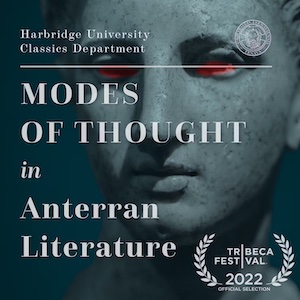
A renowned professor leads a class exploring the culture of a newly-discovered ancient civilization. The only issue: there is no proof of the discovery, or the civilization itself. Has the professor, who disappeared for some time before teaching this class, broken with reality? Or is there really a lost civilization with a rich literary history known only by a few? The show is structured as recordings of each lecture, with occasional interjections from confused or suspicious students and grad assistants. Each episode dives deep into a particular aspect of Anterran literature, with a slowly-advancing plot behind the story. Listeners get deeply erudite lectures on this world, so complete that we stop caring if Anterra is real— because what is real? This feels like a wild literary novel to which you must just submit.
It starts relatively simple. Ana, a home health nurse, is taking care of a 90-year-old woman in an old, isolated house. She calls the woman’s granddaughter, Mabel, to ask about some letters Ana has found. But Mabel doesn’t answer. Even as Ana keeps calling. Even as Ana leaves longer and longer messages, describing strange happenings and discoveries in and around the house. Even as Ana becomes increasingly desperate, and increasingly detached from the world. For the first few episodes, we think we’re witnessing an isolated woman’s descent. But then—we finally hear from Mabel. And things get so much weirder and darker. The show is thoughtful and beautiful, painting the picture of a gothic, fantastical place that may be very real. The use of music and sound is crucial to the story, with each installment ratcheting up the goosebumps and dread.
This is brilliant, ferociously funny satire that’s just bonkers. The show purports to be the online news engine for the Beef and Dairy Network in the UK. In each episode the host talks to a supposed expert in the field, with an interview that goes delightfully off the rails. One episode features a cow wrangler on film sets that contends all major acting is actually done by cows; another includes a former child actress from yoghurt commercials who claims trauma from standing in butter too long; another is a recurring character of a slaughterhouse owner who believes safety guidelines are rubbish, because his employees learn their safety lessons by losing fingers and hands. Each episode skewers the corporate culture behind food, along with the painfully cheerful marketing rah-rah energy demanded by companies today. I don’t know if the creator is vegan like me, but it feels right to say he is.
A woman wakes one morning to find her wife gone, along with all her neighbors. The light and the air feels different. The power starts blinking in and out. She’s cut off from the world, if it still exists. And soon even the sun starts to disappear. She records her experience, and her changes—because as much as she fears for and misses her wife, her anger grows. Why did her wife keep so many secrets? Why did she work such long hours at her research lab? What exactly did she do? And who are the voices and shadows that start to people the narrator’s world? Beyond the fearful concept, the show really drills down into relationships—how we cede ourselves, how we diminish one another. It’s an exploration of our needs for companionship, for safety, for light.
Carpenter and Faulkner are two apostles of an outlawed religion, one that offers sacrifices to their river god. In this world, there are accepted religions and gods—those of commerce, of coffee, of the electric company. And there is illegal worship—those deep rural gods of the poor, displaced by rising waters and religious wars, gods of dirt and land and water. The two apostles are traveling their river to suss out other devotees, and to look for miracles. In their journey they find other dangerous gods (and their even more dangerous acolytes), an investigator looking into illegal deaths for rural religions, and a refugee fleeing her corporate job, which just sacrificed non-performers to their new deity. The episodes are structured with lyrical narration and violent dialogue, with different characters taking the lead. It’s a remarkably dark, rich, fascinating and weird story with exceptional writing and acting. Note: there are many intense elements of horror.
Gloria opened her dream restaurant in Phoenix just before the pandemic. That restaurant failed. So one day she answers an ad for a job at a diner called Midnight Burger. Except this diner is just visiting Phoenix —at the end of the shift, it will travel again, across time, across dimensions, across space.
Gloria joins a bizarre team at the diner, including a couple of old-timey pastors on a radio, a former smuggler who can always MacGuyer a problem’s solution, a physicist who just wants to drink and write in her booth, and a guy named Caspar who’s just… there? And each time they stop, there’s something weird going on, and someone who probably needs help. Trust me—that description barely covers the surface of this show. It is wild, with a fantastic concept, lines that make me cry from laughing, and amazingly deep philosophical and empathetic discussions of humanity. Over their three seasons and 50 episodes so far, the writers create wonderfully rich story lines, hilarious villains (like a space species of capitalists called the Teds), and characters that have me beyond invested.
All of these shows are hard to describe, but this one may be the hardest. Nic is the host of a podcast, a docudrama called Tanis. He is exploring a concept (or place? or person?) called Tanis—chasing it through the historical circles and myths of Alastair Crowley, the pages of a science fiction magazine and a never-published manuscript, the buried classifieds of Craigslist, the hoarded cassette recordings of numbers stations, the conspiracies around the deaths of Eliot Smith and Kurt Cobain, and so much more. Along the way, Nic relies increasingly on a secretive deep web expert named Meercatnip, and a growing list of people who alternately encourage and warn him from his quest. We want to believe in conspiracy and mystery, Nic says, especially in this age of instant info that masquerades as the answers to everything. Tanis, he believes, may be the ultimate and only remaining internet mystery.
Each episode nails the format of a investigative series, one which threatens to fall apart under the weight of all the threads being pulled. Nic himself plays a version of a reporter and enthusiast who may be in over his head. But just as he says—we are fascinated by mystery, and may not really care how everything fits together. The search is all.
In the six years since I began writing the Unfinished Business column here at Electric Literature, I’ve explored the incomplete works of fifteen authors, but these have, until now, always been novels lost decades ago—some over a century gone. That gulf of time tends to soften the loss of the author themselves. While I might find it sad that F. Scott Fitzgerald died at the age of 44, the fact that his fatal heart attack occurred well before I was born tends to take some of the sting out of it.
But this is not the case with writer Anthony Veasna So, who died in December of 2020, from an accidental drug overdose when he was only 28 years old. Here, the sting is never far off.
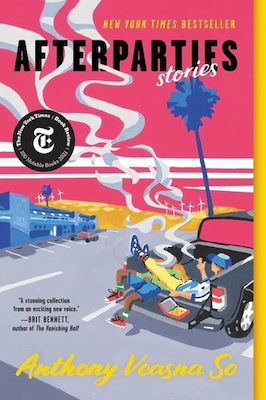
So passed nine months before his first book, Afterparties, would be published. That book would go on to win the NBCC John Leonard Prize for a debut novel and the Ferro Grumley Award for LGBTQ fiction and receive wide acclaim from critics and readers around the world. While some of the stories inside Afterparties had been published previously, such as “Three Women of Chuck’s Donuts” and “Superking Son Scores Again,” most readers were already encountering So’s incredible voice for the first time after he was already gone.
This is especially jarring because So’s writing is so particularly alive, so boisterously funny, so sparklingly real, and so sharply contemporaneous—there’s nothing that feels posthumous about his work. It insists that So is very much here, and very much alive. Only when you come to the end of the last story in Afterparties is it crushing to realize there will be no more.
Except, there is more—at least a little.
This month, Ecco Books is publishing a second book of So’s, Songs on Endless Repeat, a collection of his essays and “outtakes.”
I’d be remiss if I didn’t begin by saying that the essays are their own delight: So’s pop cultural criticism of Crazy Rich Asians and Queer Eye for the Straight Guy come together with deeper, personal memoir pieces about his father’s life as a landlord and the loss of a dear friend to suicide. According to editor Helen Atsma at Ecco books, it had always been So’s goal to publish a book of essays, and his eye had been on doing so after he finished his novel.
His novel, you say?
Indeed, the “outtakes” mentioned earlier are not fragments or drafts of other short stories, but actually eight linked pieces of So’s unfinished novel, Straight Thru Cambotown.
So’s writing is so particularly alive, so boisterously funny, so sparklingly real.
In the foreword, author Jonathan Dee, who served as So’s advisor at Syracuse University’s MFA program, writes beautifully about what it was like to work with So on some of these pieces of Cambotown, which formed the writer’s graduate thesis, submitted only about nine months before his death.
In emails to Dee, So described the book he envisioned as being stylistically and structurally inspired by “Helen Dewitt’s The Last Samurai, Gabriel Garcia Márquez’s One Hundred Years of Solitude, and John Kennedy Toole’s A Confederacy of Dunces.” He wrote that these three were the books he kept coming back to for inspiration as he wrote.
As Dee explains, this high bar that he “cheerfully set for himself” was typical of So. He wonders if, at the time So emailed with this ambitious plan, a single word of the novel had even been written.
But then So wrote—with all the “deceptively casual, humor-cloaked command” that Dee and others at Syracuse had come to admire. As Dee notes, the pieces of the novel that we have are incomplete but never rough. So was a “perfectionist about his writing—not in the self-paralyzing way some writers can be, but just made restless by the idea that something good could almost always be made better.” Knowing that the pieces in Songs on Endless Repeat would have likely undergone extensive revisions still, it is only more remarkable how strong they are.
Dee mentioned that it contains parts of the novel there that he’d never seen before, seemingly newly penned since their work on his thesis had concluded.
In the eight pieces of Straight Thru Cambotown that are included in the collection, readers will get some sense of how So intended to triangulate between DeWitt, Márquez, and Toole, and how the novel would continue the project he began in his short stories, to as one reviewer put it in the LA Times, “immortalize Cambodian California.”
This is a worthy goal, a “hole” that So intended to fill, according to Dee. But So’s work, and Cambotown in particular,doesn’t feel like an act of preservation so much as an invitation (at times a demand) to immerse yourself in the world he loved. If that immortalizes it, in the process, then so much the better.
In an opening section, “We Are All the Same Here, Us Cambos” So writes in a lush first-person plural, present tense. “Just look around and listen to the talk. Him, her, them. Those fools over there blasting Tupac like they actually get it, because in a way, beneath the yellow-brown-light-dark surface of their skin, they do.”
So’s work, and Cambotown in particular,doesn’t feel like an act of preservation so much as an invitation.
Verbally, So soars around Cambotown, hovering over the Mings and Bas and Mais and Pous and Gongs, “Heineken for the humble; Hennesey for the ballers.” He wants to distinguish them from other Asian cultures “two thousand miles away from Cambodia” (look at a map, he urges) even as he outlines what lumps all “Cambos” together: “In Cambotown, we are all the same—same stories, same history. Or lack thereof.” The awful bonds of displacement, and of having descended from the survivors of the genocidal Khmer Rouge regime, are for his generation, badly tangled up with the false promises of the American Dream. He concludes, “That’s why we’ll never leave this place—not truly. […] We’re with you, have always been so. Let’s be messed up Cambos together.”
So addresses the audience in other places in the other fragments of Cambotown, but more rarely, making way for highly specific third-person portraiture of his characters. We settle into the year 2014, a decade after a financial crisis that lingers on in this corner of the world. So introduces a central cast of characters, described in So’s obituary as “three Khmer-American cousins—a pansexual rapper, a comedian philosopher and a hotheaded illustrator.”
These cousins are bound together in their grief over the death of their aunt, Peou. In a fragment named “Peou and her Kmouys,”So describes the legendary Peou, a mathematical prodigy whose skills, others imagined, would have made her a great businesswoman, or possibly a winning contestant on The Price is Right. Her sudden death in a fatal car crash rocks the community and brings her “kmouys” together.
The “comedian-philosopher” is a nephew named Darren, who picks up the next section, set three days after Peou’s crash. At Peou’s funeral he shrewdly observes the art on the walls, the silly minutiae of the ceremony. “There’s a joke in this,” he thinks to himself, as he takes it all in.
Darren’s brother Vinny is “the first Cambo rapper to break into the hip-hop scene.” (One of Vinny’s songs, “Sachkrok Thom” is a rap ballad to Asian dicks, capable of curing all the world’s ills—if only the world would stop marginalizing them.) He is irreverent and headstrong, a fine contrast to the cerebral Danny, and the two read like twin sides of the same coin, perhaps of So himself, whose work never stops ricocheting between those qualities.
The third kmouy is niece Molly, who writes Peou’s eulogy while lamenting her own ongoing forced sabbatical back in Cambotown. After having once escaped to NYU and a Gallatin School bachelor’s degree in “Illustrating the Political Self” that “totally kicked her ass,” she got laid off from the non-profit where she’d worked and sent home saddled with $200k in student loans. Molly is wearier, angrier (justifiably) and sees things a bit more clearly than Darren or Vinny do—a third side of So’s personality that readers will find underlying the essays in the same collection.
The two read like twin sides of the same coin, perhaps of So himself, whose work never stops ricocheting between those qualities.
Later sections, like “The Roses” take us back into Peou’s life, and others go forward to Peou’s funeral and the weeks beyond. Between the eight sections we only get about 130 pages of Cambotown, but it feels like much more. (When I compare it to something like Fitzgerald’s The Love of the Last Tycoon, which was cut off around a similar length, Cambotown feels both technically stronger and far fuller.)
So’s characters crackle with life, humor, pathos, fury, and desperate dreams. Their struggles are generational, historical, local—epic and personal. What we get in 130 pages is so much more than simply track being laid for what never was written. These chapters are full and satisfying, a whole world unto themselves rather than any kind of mere roadmap.
Still, it cannot be denied that it comes to an end that is painfully premature, with incredible potential energy that is still not yet kineticized.
Because So guides our imagination so skillfully towards the future, when the past catches up to us at the end of the final fragment, that loss crashes over us like a tidal wave—maybe not so unlike the way it crashes onto his characters, and onto everyone in Cambotown. It resonates deeply that Peou’s own funeral, and absence, is at the center of this novel, and that the incompleteness it brings cuts through the lives of Daniel, Vincent, and Molly.
You want there to be more, because you want to know that they’ll be OK—what else can you say about the experience of reading a truly great novel but that?
So’s literary agent, Rob McQuilkin recalled how Mark Krotov described the day he first met Anthony at the offices of n+1, where he “came in off the street” and immediately projected the warmth and irreverence found in his fiction. Krotov placed his story “Superking Son Scores Again” at the magazine, a bombastic tale of tough Cambo boys who work out their aggressions through harrowing games of badminton. With an intensely sincere absurdity, the story charmed McQuilkin as much as Anthony himself, and they began working together on the collection of stories that would soon become Afterparties.
It sold to Ecco Books as part of a two-book deal, “heavily tilted” towards the still emerging Straight Thru Cambotown. “At that point Anthony had maybe fifty pages of it written,” McQuilkin recalled. “A couple of chapters and a memo with his intentions for the rest.” The story collection came together rapidly and was, he recalled, a very “light lift” editorially speaking, meaning that the work was already very polished as it went to Ecco.
So’s editor, Helen Atsma, confirmed that very little work had to be done on Afterparties beyond settling on the best ordering of the pieces in it. And yet, So’s instincts as a “hefty reviser” were not settled. Even the story “Three Women of Chuck’s Donuts,” which had already been through extensive editing before publication in the New Yorker, seemed to So in need of another look. Dee recalled how hard So had worked on the piece even before that. “I can’t tell you how many versions of ‘Three Women of Chuck’s Donuts’ I read,” but also that So was never “the type of student who would email something and then email again six hours later with a different version of it.” If So was feeling anxious, Dee said, it was only because of his correct perception “that the stakes were now higher.”
Atsma remembers him as “one of those writers for whom the finished line is hard to accept,” but feels that So’s perfectionism was evidence of how deeply he “loved tinkering at the word level.”
But as the publication process went on, McQuilkin said, Anthony had frantic periods, driven by his own perfectionism, trying to make big changes even as the book headed into production. Anthony was having a hard time during the early months of COVID. Even as his own star was rising rapidly, he was mourning the recent suicide of a dear friend and classmate at Syracuse. The essay So wrote about his friend, originally titled “Songs on Endless Repeat” was later published at n+1 again as “Baby, Yeah” (the name of the Pavement song that he and his friend listened to over and over) and that piece now concludes the collection.
So’s plan, McQuilkin explained, was to get back to work on Cambotown in the new year, once Afterparties was finally set. After So’s overdose that December, McQuilkin said that it took him a long time to finally sit down and go through the work that So had left behind before he passed. There was, understandably, the obstacle of his own grief over the loss of So, but also the significant challenge of dealing with these partial materials all alone.
“Usually there’s this dialogue with the writer,” McQuilkin explained, “instead of me just talking to myself.”
He found significant, new pieces of Cambotown in the papers, along with So’s notes and other writings, enough to begin working on a sampling of the parts that felt the most polished. He estimates that he and Atsma were able to use about two-thirds of what So left behind to form the eight sections now in Songs On Endless Repeat. These were “not remotely ready, in a finished sense,” he felt, but set amongst the essays So had written, there was new “value in the refractions between them” that came out.
“We wanted to touch as little as we could,” Atsma said. Though it was a “minimal edit” she said that she “never felt the weight more,” in knowing the importance of sharing his final work with readers. “It didn’t feel lesser than to me,” she recalled, “If they had, we would never have published them.”
Storytelling persists because our time alive is always too short.
In the end, McQuilkin thinks that the 130 pages of Cambotown might represent about a quarter to a third of the ambitious plans So had for the novel, and, of course, there’s no telling how much of these sections would have endured to the final manuscript, especially as So’s keen, perfectionist eye went through them in future drafts.
How do we face trauma with humor? This is one of the subjects that kmouy Darren says he wants to write his philosophical treatise on. Cambodians love to laugh, he points out to Vinny, as they mill about at Peou’s funeral. Sometimes that’s a reaction to the absurd horrors of the world and of history, but sometimes it’s just for the love of laughing. Vinny, characteristically, cracks a joke back, accusing his brother of selling out, his over-academic analysis is just about “following the money.”
There are themes, in So’s work, McQuilkin said, of reincarnation, and of all the repetitions in all the minutiae of every human life. Storytelling persists because our time alive is always too short, whether it ends after twenty-eight years or a hundred. What we make, and leave behind, at least can always be started over, read again, played on loop.
In the foreword to Songs on Endless Repeat, Jonathan Dee encourages us not to think of So as just another “promising young writer” as these, to be honest, are “never in short supply.”
If So saw a hole in the world that he intended to fill with his words, then his death inarguably leaves too much of that hole still open. But through the writing collected in this second book, So inched his Californian Cambodian characters not just closer to some kind of immortality, but into the world itself. All of this, carried along in So’s unforgettable voice, leaves us all much fuller than we were before.
Amy Jo Burns’ second novel, Mercury, is a heartfelt portrait of a working-class family set in an unsuspecting industrial town in Pennsylvania in the 1990s that follows the lives of the Josephs—Mick, Elise, Baylor, Waylon, and Shay—and the light in their darkness, Marley West.
The novel opens with Marley, the wife every man wants, coaching her son’s little league team, while her husband, Waylon, hides beneath the bleachers for reasons yet unknown. The story then thrusts readers back in time, to the fateful day when Marley and her mother, Ruth, rode into town one summer afternoon and changed everything.
While the jagged edges of Marley initially seem like they might not fit into the small town of Mercury, the orbit of the Joseph family is strong enough to pull her in anyway. It soon becomes clear just how much the family was needing her when nearly every Joseph member is impacted by Marley’s sudden arrival. Spanning nine equally heart-warming and heart-breaking years, Marley and the family endure love and loss, desire and betrayal, secrets and celebrations as they try to navigate the unique demands of a family business and a working-class life.
While the story revolves around a murder mystery, after a shocking discovery is made in a local church attic, the pulse of the novel stays with the Joseph family itself. The town of Mercury, based on a real town by the same name, also acts as its own character throughout the novel. Having grown up in a similar once-industrial town in western Pennslyvania, like Burns herself, I was excited to connect and discuss her latest work.
I spoke with Amy Jo Burns over Zoom to discuss working-class family dynamics, the real cost of a family business, what legacy means for women, being the author of your own story, making peace with the past, and much more.
Sam Dilling: Mercury takes place in a small working-class industrial town in Pennsylvania and centers a dynamic family of roofers—the Joseph family. Where did the idea for this book come from and what was the experience of writing it like?
Amy Jo Burns: I come from a roofing family—my dad, my brother, my uncles, my dad’s best friend, my grandfather. I learned how to tell stories from them. They are fantastic storytellers. They’re so funny. They have a real sense of timing and surprise and how to land a punch line.
In terms of what inspired me, I had been working on a separate project for a long, long time and I had to put it aside. I really love to write about my hometown. I don’t know if you feel that way. I find it endlessly inspiring, beautiful, problematic, romantic, and haunting. All of it. So I sat down and I did a writing exercise. It was from this memory I had of being nine years old at the Little League baseball field. There was a man smoking a cigarette behind the bleachers. He said to my mom, “Please don’t tell my wife.” I always remember that. I thought it would be fun to freewrite who that person might be and what led them back there. It was interesting because as soon as I started writing, it all just tumbled out. I said he’s a roofer. He’s got this wife he really loves, but he’s not sure she loves him back anymore. Why would that be?
SD: The family orbits around the business—like it has its own center of gravity. And at times, the lines between the family and the business blur. The business acts as a proxy for the love the family shows each other. And that might sound bad—but that’s just the way of life. When you’re from a working-class family, the dynamics of work or the family business are going to influence the family itself.
AJB: It’s one of those things where I’ve left, but I don’t think that part left me. It’s a double-edged sword for me. When I think about my family, or my dad in particular, running the business like he did—never really taking vacations or days off. I see somebody who is so passionate about what he does. And so artistic, and so dedicated. I find that to be extremely beautiful that he put his unique mark on everything he did. I think that’s something my brother, my sister, and I all do in our own ways. I’m really thankful for that. I feel like that’s become an important part of who I am. But the other side of it is I don’t really know how to take breaks. I’m not very good at that at all. I hope that’s changing. When you own your own business—it’s not a job, it’s who you are. It’s kind of how I feel about being a writer. It’s why I always feel weird when I tell people it’s my job. It feels like it’s more than that and also less than that.
SD: One thing I appreciate, having also come from a working-class family and background, is the spotlight you put on the women in the story. What was important for you to showcase about these women?
AJB: Before I started writing the book, I was thinking a lot about blue-collar women. In my experience, many women who might be considered “blue collar” are women who are entrepreneurs just like their husbands. The difference is they don’t get titles, they don’t get paychecks. That’s the mindset of these women that I grew up with. They don’t even realize how hard it is because they don’t have an expectation that there could be another reality. They are the bookkeeper and they are watching the children and they’re cleaning the house and they’re cooking. These women really make the impossible possible. At least that’s what I witnessed growing up in my mom and my aunts. They don’t complain.
I wanted to show what it looks like when a woman jumps into that with two feet. I also wanted to show what it might be like when a woman says no to that, which is what Elise did. She said no to the business side, but was very entrenched in the family. These women— Ruth, Marley, Elise, Jade—they’re all in a situation where they don’t have that many choices. They’re each taking a different path. It’s not that one is better than the other, but everybody is trying to make their way. I wanted them to still have a real journey and have real pride in what they do. I wanted to talk about the women I know. Women really make it happen.
SD: When talking about family and business, the idea of legacy comes to mind. The Joseph family business very much becomes the legacy for the men in the story, and we get to see how each son feels about this being their legacy, but what about for the women? How do we define a woman’s legacy?
AJB: I think it comes through the paths they are creating for their own children. That was big for Ruth, who is the single mother. She wanted to create a world for her daughter that didn’t have so many stop signs wherever she went. I think for Marley, when she becomes a mother, she wants to teach her son how to be a good life partner. She wants to teach her daughter that she can take chances. I think that’s one piece of what legacy means is they try to give their kids some options they didn’t have.
I also think there’s something about having a legacy of when you say enough is enough. Sometimes that might end up meaning something becomes invisible. For a lot of these women, much of what they do is invisible anyway. All of these women get to a point where they say no. There’s something really powerful about a woman who says yes, and yes, and yes, and then says, “Enough is enough.” Those are quiet moments that don’t get told at Thanksgiving or Christmas. I honestly think family survival depends on that—when [women] say enough is enough. It’s kind of the opposite of the way we think of legacy, but I think it’s very powerful.
SD: Seeing that on the page is almost revolutionary considering the roles women have had to take on, and fit themselves into, for the sake of family.
There’s a cascading cost that comes through generations when a woman doesn’t have a choice.
AJB: One thing that was important to me was I didn’t want to make these women into cautionary tales because I feel like so often, when we are looking for a lesson, the woman becomes collateral damage. I think there is some balance between saying the right “no” at the right time and finding a voice. There’s a cascading cost that comes through generations when a woman doesn’t have a choice. It’s not just the women that it punishes. It punishes the men, too. There’s real value in a woman being able to tell her story—especially to her life partner, her spouse, her kids, and to herself. I think that’s something Marley is trying to do. She’s trying to be the author of her own story in a way that allows other people in, but she’s still the head of it. That’s something I think Elise was never able to allow herself to do. The more a woman is able to share what her life has been is a very powerful thing for the rest of the family to grapple with.
SD: Putting that into practice is a whole different beast. There is a reason so many women aren’t afforded that freedom to carve out their own place or their own story. There are so many systems in place that keep a woman stuck right where she is—that make it difficult for her to rise above her situation. Like in Mercury, when we see a young woman get pregnant and suddenly have fewer options for her own life and future.
AJB: There’s a cost that comes with leaning in. If you’re going to be an entrepreneur, and you’re going to have a career, you either gotta have a best friend or mother-in-law to help you. Or you’re gonna have to pay somebody because time and energy are finite. As much as we want to say [women] are superhuman, they’re not. We’re human. And that’s a good thing.
I am somebody that tries to do it all and then I fail at it. Anytime somebody asks me what it’s like to have this life, the first thing I say is, “Let me tell you everything that I’m not doing.” I am not cooking super creative meals, I am not scrubbing the baseboards of my house, I am not signing up to be a classroom mom. Even as I’m saying this to you, that guilt is streaking down my face. There’s something that’s ingrained in us that says we should be able to do it all. I really don’t think anyone can. I think there’s always something that pays a price. Sometimes it’s our bodies, our relationships. Maybe it is the state of my bathroom right now.
I think, at least for writers, we have to hold and guard that humanity with everything we have. And sometimes that means saying, “I’m really tired, and there’s Paw Patrol, kids.” I do think there’s something about the women that I watched growing up that didn’t expect any different because they had just never seen it. I grew up thinking, “Oh my goodness, these people are superhuman.” What you see and what the reality is are two different things.
SD: It’s interesting because men never seem to feel the need to qualify the things they’re not doing, or the things they’re not doing well. But for women, it’s like we owe the world an explanation for why we can’t magically do it all.
AJB: I would hate to have an interaction with somebody and have them leave feeling they’re missing something important because I just don’t think that’s true. You know, I’m an Enneagram Four. I don’t know if you’re into that. Fours feel like they’ve been born missing some key part of what it means to be okay in life. You’re kind of walking around looking for it. So it’s important to me, if somebody’s like, “Well, how do you do it?” I like to qualify and say, “Whatever you think I’m doing, I’m probably not.” But you’re right, men don’t do that. Men say, “Oh, yeah, I did it.”
SD: It brings me back to that idea of legacy, and even more than that, strength. How does strength look different for men and women?
AJB: When I was writing, I did think about that concept a lot. Especially since roofing is such a stereotypically macho thing to do. You have to be physically strong to be able to do this job. It’s very demanding, it’s dangerous. I think the flip side is that a lot of these characters who are very physically strong are emotionally fragile. I think that is a very authentic and very interesting paradox that exists in a lot of places.
When you’re in it, you can’t see all the pressure that you’re under.
One of the reasons I wrote the youngest brother, Shay, the way I did is that, to me, he is the picture of strength. He is somebody who doesn’t want to fit in this mold and he’s trying to be honest about it. He offers up a perspective that says, “If you do not have a sense of integrity in yourself, then what are we even doing?” He’s really wrestling with: what does it mean to be somebody who is strong? I think where he lands is it means that sometimes you’re weak. And that’s important. It’s important to let people know that you’re not perfect. He represents somebody who doesn’t fit all of these preconceived notions of what it might mean to be a roofer’s son. And yet, he is the beating heart of the book.
SD: We get a glimpse of Marley’s life two years into the future. But let’s say Marley looks back at her life 20 years from now. What does she think?
AJB: I think she is going to be glad she fought the battles that she fought. I think she’s going to look back and see that all those times where she said “no,” or she drew a line in the sand, or she left, she will see all the fruit that came from that hard choice.
Again, it’s not perfect. She apologizes for the mistakes and the things that she maybe got wrong, but there was something really healthy and life-giving in making those hard calls. I hope she feels proud of what she’s built in her business and her expertise.
There’s something really nice about being older and looking back. You can have compassion on your younger self that you didn’t have for yourself at the time.
SD: Do you look back on your own life and feel the same?
AJB: I do. I think sometimes when you’re in it, you can’t see all the pressure that you’re under. You only feel it. Then when you get older, and you look back, you think, “Oh my goodness, look at everything that young person was dealing with.” And they’re doing it. So, absolutely. You give up expecting yourself to be perfect which is a real gift.
DON’T MISS OUT
Sign up for our newsletter to get submission announcements and stay on top of our best work.
YOUR INBOX IS LIT
Enjoy strange, diverting work from The Commuter on Mondays, absorbing fiction from Recommended Reading on Wednesdays, and a roundup of our best work of the week on Fridays. Personalize your subscription preferences here.








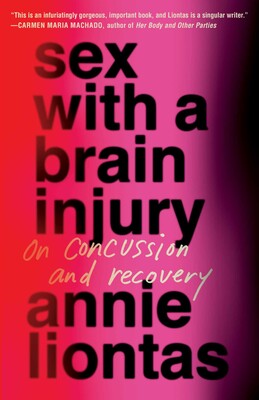


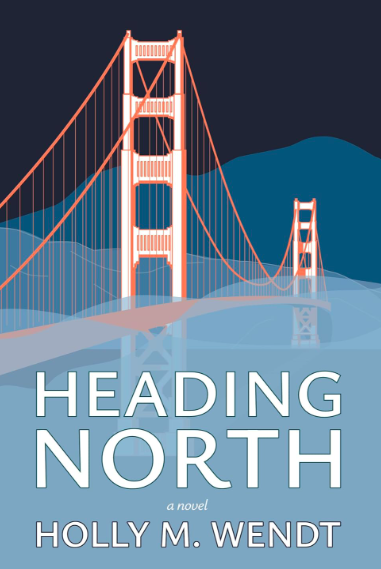
![Exclusive Cover Reveal of […] by Fady Joudah](https://electricliterature.com/wp-content/uploads/2024/01/9781639551286_FC-2.jpg)