I find the idea of starting something new thrilling. I have learned to embrace the fear that comes along with it. Every time I sit down to begin a project, I always think about those people who go to Coney Island on New Year’s Day—the members of the Polar Bear Club—for a swim. In the chilly sunshine, they rip off their clothes and run into the water. How do they find the courage? I’m sure they don’t think about it too much. You just have to go for it. Don’t psych yourself out. It’s going to sting no matter what—but you’ll feel great afterwards.
When I start a book from scratch, not one page is typed. There are just a few ideas kicking around in my head, some handwritten notes. Usually there’s this sort of vaguely plump feeling in my brain whenever I think about the characters, where they are, mixed with this hazy notion of their conflicts, external and internal both. I think: How the hell am I going to do this again? Go from zero to hundreds of pages.
But I’ve learned to transform the nerves into enthusiasm for the most part. My approach is: “I get to write a novel” versus “I have to write a novel.” And I think about what I desire. What kind of stories I want to tell, what voices I want to give life to in the world.
You may be starting a new project, too. Now might be a good time ask yourself why you want to write it, and what kind of writer you want to be.
You just have to go for it. Don’t psych yourself out. It’s going to sting no matter what—but you’ll feel great afterwards.
And there may be some of you who are trying to finish long-term projects. Dusting off drafts that have been sitting in drawers or trying to push through to the end of something you’ve been toiling on for years. This book can feel heavy in your mind. There are all kinds of feelings already attached to this work from your personal history. You may be thinking to yourself: Why haven’t I finished this already?
Don’t talk yourself out of it. Ask yourself instead: why do I want to finish it?
Whatever happened before this moment is irrelevant. We tear off our clothes and race down the sand to the icy cold water. We embrace the sting. To show ourselves we can. We start anew on our work, together. We just have to try.
I believe in you. You can do this. Now let’s begin.
What Do the Words Do for You?
The words do so many different things for people. If your writing is for comfort, let it comfort you. If your writing is for process, let it be for process. If your writing is to change your life or even the world, let that change roll. If your words are a war cry, for the love of God, please howl.
I know what the words do for me: for an hour or two, when I write, it’s a place I can go to feel safe. It has always worked that way, ever since I was a child. The safety of a sentence. The sensation when I push and play with the words is the purest I will ever feel. The calm space of my mind. I curl up in it. I love when sentences nudge up against each other, when I notice a word out of place and then put it in its correct spot. I can nearly hear a click when I slot it into place. I love making a sentence more powerful, more dramatic or moving or sad, and I love when I make a sentence quiet enough that I can almost hear the sound of my own breath. More than anything, I love when a sentence makes me laugh.
Now might be a good time ask yourself why you want to write it, and what kind of writer you want to be.
The words light up on the page, showing me what to do, where they want to go. They have always been my best friends in the world. All I need is for a few of them to show up. To soothe me.
Yes, yes, it is different for everyone—but we are all still here together. I can only speak of my particular intimacy and hope to connect with you. That’s what writing is: our particular intimacies. I offer up the idea of the safety of a sentence for you right now, the possibility of a place to put yourself, to put your heart. A place to rest for a while from these feverish days.
Today, before you begin your writing, ask yourself: what do the words do for you?
Make a Choice
We often wonder how to know if we’re making the right choice creatively when there are so many possibilities. I understand fear. I understand caution. But at some point, we must shake off the indecision and just move forward with our work. Choose your project. Choose your sentences. Choose your ideas. Choose your ending. It’s your trip and no one else’s.
If you want something, do what it takes to get it. If you decide not to pursue a path, accept your choices.
If your biggest dream was to write for television, you wouldn’t say things like, “I should really write a television pilot.” Instead you would say, “I am writing a television pilot,” and you would get up an hour earlier every day to work and you would lock yourself in your house on the weekends, also to work, and you would read those television writing books and you would buy that impossible software program and you would join a writing group or make friends with someone else who wanted to write for television and you would swap scripts and give each other feedback and go out and get drunk one night and toast each other for being brilliant (and maybe there would be some sort of awkward sexual chemistry between you but that’s your business and not mine) and then you would try and find an agent and then who knows what happens next? But this would be you in fact doing enough to try and achieve this goal.
But what if you don’t do it? Are you the kind of person who lives your life mired in regrets or are you the kind of person who makes your decisions and moves on with them? Can you see the fact that you are not doing these things as choices you are making, to make room for the things you can and want to do? The people doing all the things you want to be doing, for the most part, no one is doing the work for them, no one is handing it to them on a plate.
Certainly, some of them have generational wealth or connections or are over-achievers, but most of them are worker bees like the rest of us, buzzing about the giant hive of creativity. We cannot envy them for trying. We should look to them as role models, instead.
If you want something, do what it takes to get it. If you decide not to pursue a path, accept your choices.
Valuing Your Creativity
It’s important to value your creative self and what it can give you. I don’t think you can be your best without that. We love our friends, we love our family, our partners, too: there is a system of mutual support there. We need these relationships to be healthy and whole. But to feel fulfilled we also need our relationship to be healthy with our creative self. We do this by paying attention to the conscious choices we make to benefit our ideas and artistic output, and what we gain from producing our work. We won’t be as happy as we could be without engaging with that side of ourselves.
Your creative self is comprised of your brain, your heart, and your time. To protect your creativity, you must tend to them all.
I am always excited about witnessing how the creative mind works, both in myself and in my peers. How it solves problems even when we aren’t even necessarily thinking about them. And how it operates beyond our conscious control to give us what we need. It is intimate, the relationship we have with our creative self. It is purely for us and no one else.
Your creative self is comprised of your brain, your heart, and your time. To protect your creativity, you must tend to them all.
The creative self looks out for us—if we look out for it. If we do our work, invest our time in ourselves and our art and our imagination, keep our mind clear for stretches of time just to rest it, balance ourselves between blankness and stimulation, get enough sleep, read, write, think. If we honor that thing that provides us with so much, it just might help us out one day. After the rain stops, it shows up. Quietly slips a solution to a plot problem into your head, for example, and cracks open the narrative of your book. Makes us feel good and sunny and proud and able to communicate with the world.
Are you caring for yourself, the deep, intimate creative self? Are you giving it the nurturing it deserves? The goal is to always be getting closer to the creative self.
Respecting your creativity is respecting yourself.
When Pan Ruliang was studying, he had a bad habit: the pencil in his hand would not stay still—right there in the margins of his book, it was always sketching a little person. He’d never studied drawing and it didn’t interest him much, but the moment his pencil touched paper, a line would start bending around, all on its own, drawing a face in side-view profile. Always the same face, always facing left. He’d been drawing that profile since he was little, it was so familiar it flowed. He could draw it with his eyes closed, or draw it with his left—in which case there’d be one difference only: the profile drawn with the right hand was rounder and smoother, the one drawn with the left more jaggedy, the points sharper, the hollows deeper—a picture of the same person looking thin, after a serious illness of some sort.
No hair, no eyebrows, no eyes, just a line running from the top of the forehead to the underside of the jaw, a simple line really, but you could tell it wasn’t a Chinese—the nose pushed out a bit too much. Ruliang, like the good young man that he was, loved his country, but the people of his country didn’t impress him overmuch. All of the Westerners that he knew were movie stars, or the sparkling, debonair mo-te-er who graced cigarette or soap advertisements; the Chinese that he knew were his father, his mother, and his brothers and sisters. His father was not a bad man, and he was out all day long working at his business; Ruliang saw him so seldom, it couldn’t amount to actual repugnance. But his father, after dinner, would sit in the living room, drinking on his own, with a side of fried peanuts, and then his face would turn all red and shiny and oily, just like a typical small-shop boss. His father did run a shop that made and sold pickles and fermented sauces, and in that sense had to count as a shop boss; but still . . . seeing as the man was his father, he ought be an exception to that type.
It wasn’t the drinking—Ruliang had no problem with that. Someone who’s been dealt a great blow, be it in love or at work, can stumble into a liquor-lined bar, groping walls as he goes, then climb onto a stool and hoarsely call out: “Whiskey, hold the soda.” Bracing his head in his hands, he can fall into a daze, one lock of hair falling forward, dolefully, into eyes that stare straight ahead, unblinking, totally empty . . . all of that makes good sense and merits sympathy. Drinking too much isn’t good, of course, but when it’s done like that, it has to count as a classy kind of degeneracy.
His father, on the other hand, had this miserable way of pouring rice wine out of the tin can in which he’d warmed it and into a teacup with a broken-off handle, and then, sitting with Ruliang’s mother while she ran the day’s accounts, he’d drink his wine while they chattered, he going on about his things, she about hers, neither of them heeding the other. And if he noticed the kids hankering for something to eat, sometimes he’d dole out a few peanuts each.
His mother, as was usual in such a case, had no education and was a piteous woman who, crushed by the oppression of old social norms, had sacrificed her entire life’s happiness; and she loved her son dearly but had no way of understanding him; the only thing she knew how to do was cook for him, urge him to eat more, then sadly see him off at the door, where her thin, wispy white hair was ruffled by a bleak breeze.
Annoyingly enough, Ruliang’s mother’s hair was not white, at least not yet, and if she did get a white hair or two, she plucked it out. And you never saw her crying when she was frustrated; instead, you saw her turning on the children till they were the ones crying. Then, in her spare time, she’d listen to Shaoxing folk opera or clack away at mahjong.
Ruliang’s two older sisters, like him, were in college. They wore face powder and rouge and were not particularly good looking yet refused to accept the obvious. Ruliang rejected any woman of his sisters’ sort.
But it was his younger brothers and sisters who were the most annoying: all those dirty, useless, clueless, utterly childish children. It was their existence that made his parents and older sisters go on lumping him with them, forgetting that he’d already grown up; that, for him, was the most hurtful, distressing part.
He never opened his mouth at home. He was a sole, solitary observer, looking at them with cold eyes, and his eyes, owing to the immensity of his contempt and indifference, turned light blue: it was the greenish blue of a little stone, or of someone’s shadow, early in the morning, on frosty ground.
But nobody noticed. His disapproval did not cause a moment’s discomfort to anyone. He was not a very consequential person.
Ruliang spent almost no time at home. When his classes were over, he went to a language school to study German, partly because he was studying medicine, for which German would be helpful, but also to avoid having dinner with his family—night school classes ran from seven to eight-thirty. Today, for instance, it wasn’t yet six-thirty, and already he was in the student lounge, sitting close to the charcoal brazier and looking over his homework.
A handful of magazines and newspapers were strewn across a long countertop in the lounge, and on the other side, hidden by a newspaper, sat someone who surely was not a student—reading a newspaper in German had to be beyond the level of even the most advanced students. The red nail polish on the fingers holding the paper was cracked and splotchy. It must be the woman typist who worked in the school director’s office, he decided. The woman put the paper down, turned the page, folded it over, and leaned over the countertop to read it. A thick spill of curly yellow hair hung down; her coat, made of light wool in a narrow plaid, had a green pocket-handkerchief that went nicely with her green blouse.
A shadow fell across the newspaper, cast by her own upper body. Furrowing her eyebrows, she turned sideways to get better light. When she turned her face away, Ruliang felt a shock of surprise: she had the exact same profile he’d been sketching here, there, everywhere, ever since he was little, the only profile he knew how to draw—it was unmistakable, that line running from the top of the forehead to the underside of the jaw. No wonder he’d thought that the Russian woman he’d seen when he was registering for class looked somehow familiar. It had never occurred to him that the face he’d been drawing belonged to a woman—and a beautiful woman no less. The line that ran from the top edge of her upper lip to the base of her nose was a bit too short—a sign, people said, that a person wouldn’t live long. The winsome charm of a woman destined not to live long wasn’t something Ruliang had ever mused over, but he could feel right away how the brevity of that line suffused her face with childlike beauty. Her hair was not exuberantly yellow; sunbeams would be needed, probably, to make it the genuinely golden blonde of Mother Mary. But it was that very vagueness of her hair, at the temples and in the eyebrows, that made her profile stand out so clearly. A marvelous feeling of joy rose up high in his heart: it was as if he’d created, with his own hands, this entire person. She was his; whether or not he liked her couldn’t even be a question for him, because she was part of himself. It was as if he could just walk over and say, “Oh, it’s you! You are mine, didn’t you know?” Then gently pluck her head off and press it into his book.
She seemed to have noticed the dazed way he was looking at her. Ruliang hurriedly dropped his gaze and looked at his book. The upper margins of those pages, everywhere filled, on the left and on the right, with a face drawn in profile: he couldn’t let her see that, or surely she’d think it was her face he’d been drawing! Ruliang grabbed a pencil and started scribbling, urgently, over the faces, but the scritch-scratch he was making only drew her attention. She leaned over, took a good look, and smiled. “That looks right, it really does look like me.”
Ruliang mumbled something indistinct and the pencil in his hand went on storming across the page, scribbling and scribbling till a good half of it was blackened out.
She reached over and pulled the book towards her with a smile. “Let me have a look. I wouldn’t have known how I look from the side if I hadn’t had some photos taken the other day and one was a profile pose. That’s why I could see right away that it’s a sketch of me. It’s a nice sketch, but why aren’t the eyes and mouth drawn in?”
Ruliang couldn’t figure out how to tell her he couldn’t draw eyes and mouth, couldn’t draw anything except this one side-view profile. When she looked at him and saw how embarrassed he was, she thought it was because he wasn’t used to speaking English and couldn’t formulate a response. To keep things going, she changed the question: “It’s really cold today—did you come by bicycle?”
Ruliang nodded. “Yes. It will be even colder tonight, after class ends.”
“That’s right. Doesn’t sound fun at all. Who is your teacher here?”
“Schmidt.”
“Is he a good teacher?”
Ruliang nodded again.
“But,” he said, “the class is too slow and I get bored.”
“Yes, but he doesn’t have much choice. The students are at different levels, and some can’t keep up.”
“That’s the trouble with group classes. It’s not as good as having a private tutor.”
Using one hand to prop up her head, she leafed through his book in a causal manner. “How much have you covered already?” She turned back to the first page and read his name aloud: “Pan Ruliang . . . my name is Cynthia Rubashov.” She picked up a pen to write it for him in a blank space somewhere, but there weren’t any left: each and every page of the book was filled up with faces drawn in profile—her profile. Ruliang, staring, was in a fix: he couldn’t just grab the book from her and yet his whole face had turned bright red and his cheeks were burning. Cynthia was blushing too—like a pink-winged moth resting on a lampshade, the faintest, most fleeting hue of rosiness touched her cheeks; she closed the book quickly, with a pretended show of nonchalance, and found a place on the cover where she could write out her name for him.
“Have you lived in Shanghai your whole life?” Ruliang asked.
“I lived in Harbin when I was little. I used to speak Chinese but now I’ve forgotten it all.”
“That’s a pity!”
“I’d like to start learning again, from the beginning. If you’d be willing to teach me, we could do a language exchange and I’ll teach you German.”
“I’d love that!”
The bell rang right then for the start of class. Ruliang stood up and reached for his book; Cynthia pushed down on it and slid it towards him. “How’s this?” she said with a smile. “If you’re free tomorrow at noon, we can try having class together. You can find me at Yih Tung Trading Company in Ssu-shêng Tower, on the ninth floor. That’s where I work during the day. No one’s there at lunchtime.”
Ruliang nodded and repeated, “Ssu-shêng Tower, Yih Tong Trading Company. I’ll be there.”
Then they parted. Ruliang couldn’t sleep that night, not till very late. This Cynthia . . . she had misunderstood, she thought he’d quietly fallen in love with her and was secretly drawing her face in his book, her face only, over and over again. She thought he’d fallen in love with her and yet she was, in a very obvious way, giving him a chance like this. Why was that? Could it be that she . . . .
She was a capable girl, worked in a trading company by day, then part time at a night school—but still she was, at most, his older sisters’ age? And yet she was utterly unlike them. A well-behaved girl, as everyone knows, should stay away from a person whom she is sure likes her, unless she plans to marry him. That’s how things are in China, and in other countries too. But . . . doesn’t everyone like spending time with someone who likes them? How could she be expected to spend time only with those who did not like her? And maybe, for Cynthia, there wasn’t anything more to it than that. He’d better not misunderstand; that’s what she’d already done. Best to avoid heaping even more misunderstanding onto this situation.
But was it really a misunderstanding?
Maybe he did love her but hadn’t even glimpsed that possibility. She’d seen it before he had—women, they say, are more intuitive. The whole thing was rather strange—he’d never been one to believe in foreordained encounters but really, this whole thing was quite strange . . . .
The next day, Ruliang put on his best Western suit then felt a bit of a fool, getting so smartly dressed to go see her; at the last moment, purposely sloppy and nonchalant, he threw on an old faded scarf.
As he headed to school in the early morning, all the little trees’ wintertime leaves seemed to have crystal-gelled into golden beads. He pedaled facing the sun, with his book bag swinging from the handlebar; strapped to the rear rack was a bare bone, T-shaped and chemically preserved. It had, at some point in the past, been the leg of a person—a leg that had once pedaled a bicycle, perhaps. Ruliang, facing the sun, pedaled on, and all around his warm body, the wintry wind blew. The sun that shines on the living doesn’t reach the bodies of the dead.
The sun that shines on the living doesn’t reach the bodies of the dead.
He grabbed hold of a tramcar that was speeding past and spun alongside it, almost flying. He could see, through the window of the tram, two women inside sitting face-to-face, chattering on about something, heads nodding after each sentence or so, their black eyelashes glazed white by the sunlight. Face-to-face they sat, wrapped up in some fascinating story they shared, and their lashes in the sunlight were blinking and white. The sun that shines on the living doesn’t reach the bodies of the dead.
Ruliang had a belly full of bubbling-hot breakfast and a heart full of happiness. He’d often felt it before—this happiness that had no particular reason—but today he thought: it must be because of Cynthia.
From somewhere off in an empty field came the sound of a dog’s loud, repeated barking. From a school, the ringing of bells. The bell sounds were golden, floating aloft in a linked chain, a small, fine line drifting along in the clear sky. In just one lock of Cynthia’s yellow hair, up there, each curling tendril was a little bell. Cynthia, adorable Cynthia.
He skipped the last of his morning classes and raced home to change his scarf instead, the bright white, brand new one now deemed, through dint of much deliberation, the better fit.
On his way he passed, in the middle of some open, unmanaged land, a newly built Western-style house, quite fancy; much to his surprise, this radio too was playing Shaoxing folk opera. Flowing through the curtains of coral-pink lace, a broad, bland voice belted out “Eighteen Pull-Drawers.” The last gasp of a dying culture! Here in these gloriously elegant surroundings the woman of the house was exactly like his own mother. Ruliang did not want a woman who was like his mother. Cynthia, at the very least, was from a world entirely unlike that one. Ruliang put her in the same category as everything clean and lovely, like college scholarships, like football matches, like German-made bicycles, like the New Literature.
Although Ruliang’s studies were in the medical division, he was a lover of literature. He felt sure that if he weren’t so busy, and he drank more coffee, he could write poignant, powerful things. His total faith in coffee was inspired not by its aroma, but by that complexly constructed, scientific silver pot with a crystalline glass lid. In much the same way, it was the constantly bright, brand-new gleam of doctors’ medical devices, when taken out, one by one, from their leather cases—all that ice-cold metal in intricate little shapes that could do anything–that inspired at least half of his devotion to medical science. Most awe-inspiring of all was the electrotherapy machine—its exquisite, toothed gears spun tirelessly, making a spark-lit jazz tune that was crisp, clear, uplifting. Modern science was the only indisputably good thing in an otherwise defective world. Once a person had become a doctor and put on that clean white coat, a father who ate fried peanuts with his rice wine, a mother who liked Shaoxing folk opera, and snobby older sisters in tacky face powder—none of them could have a hold on him.
Ruliang’s sights were set on that future. And now a Cynthia was added to that future. Reaching his dream would require, he knew full well, a great deal of hard work over a long period of time. A medical degree took seven years and he still had far to go: getting into a relationship with a Russian girl while still in the midst of his studies—it didn’t make any kind of good sense, no matter how you looked at it.
He cycled past yet another fancy house where Shaoxing opera was spinning out from the radio, that wide, flat, quavering voice in which nothing could be bright as day or dark as night; it was like a room in broad daylight, with a lamp turned on—confounding, buzzy, not natural.
The Shaoxing opera damsel was singing “The more I pore over it, the more upset I fee-eel!” The beats were steady, entirely predictable. It suddenly struck Ruliang that the world of Shaoxing opera audiences is a steady, predictable world—and he himself was not steady at all.
His mind was a-whirl. When he got to Ssu-shêng Tower on the Bund, he was still fidgety, worried now about a different thing. If he arrived too early and any of her officemates were still there, wouldn’t that be embarrassing? But if all of them had left already, that would be embarrassing too. He loitered about for quite awhile, then finally took the elevator up. When he pushed the door open, there was Cynthia sitting alone at a desk by the window. He was caught off guard—she seemed different from the person he remembered, though it couldn’t count as a memory per se, since it’d only been one day since they’d met. Still, over this short while, he’d been thinking about her intensely and at great length, an over-thinking through which he’d lost touch with reality.
The person he saw now was an ordinary, somewhat pretty young woman whose hair was indeed yellow, but with layers of light and dark yellow and, at the roots, an oily chestnut color. Apparently she’d just finished a quick lunch; when she saw him coming, she crumpled the wrapping into a wad and tossed it in the waste basket. While talking to him, she kept dabbing at the corner of her mouth with a handkerchief, unsure about any breadcrumbs that might’ve gotten stuck in her lipstick. She dabbed carefully to avoid smearing lipstick over the edges of her lips. Her feet, hidden under the desk, were clad only in flesh-colored stockings; for the sake of comfort, she’d kicked off her high-heeled shoes. From where Ruliang sat, on the opposite side of the desk, his own feet kept hitting either her feet or the empty shoes; it was as if she’d grown an extra pair of feet.
He got annoyed, then quickly blamed himself for that: why this resentment towards her? Because she took her shoes off in front of people? Working all day at the typewriter, her feet must get numb from all that sitting, one could hardly blame her for relaxing a bit. She was an actual human being, a person made of flesh and blood, not some phantasmic dream he’d invented: there was a heartbeat in the rose-purple sweater she was wearing—he could see that heartbeat, and feel his own heart beating too.
He decided that from now on he wouldn’t talk to her in English. His pronunciation wasn’t good enough! He didn’t want to give her a bad impression. Once he’d become fluent in German and she in Chinese, they’d be able to talk freely. Right now, all he had at his disposal were phrases from the textbook: “Are horses more expensive than cows? Sheep are more useful than dogs. New things look better than old things. Mice are very small. Flies are even smaller. Birds and flies can fly. Birds are faster than people. Light is faster than anything. There is nothing faster than light. The sun is hotter than anything. There is nothing hotter than the sun. December is the coldest month.” All these solid, unshakeable maxims so sadly lacking in subtlety, wholly inadequate for conveying his meaning.
Will it be sunny tomorrow? Perhaps it will be sunny. Will it be rainy this evening? Perhaps it will be rainy.
They all sounded old, these conversation textbook writers, each and every one of them solemnly droning along.
Do you smoke cigarettes? Not a lot. Do you drink alcohol? Not every day. Don’t you like to play cards? No. I hate gambling. Do you like to go hunting? Yes, I love getting exercise. Read. Read a textbook. Don’t read fiction. See. See a newspaper. Don’t see a play. Listen. Listen to instructions. Don’t listen to rumors.
All day long, and for all he was worth, Ruliang turned these phrases around, back and forth, this way and that, and the lamentable thing was that they couldn’t be made to imply even the barest hint of tenderness. Cynthia, however, was not constrained, the way he was, by textbook talk. Even though her Chinese wasn’t very good, she’d get the general gist and, with no fear of embarrassment, just let her mouth do the talking. If she ran out of things to talk about, she’d tell him about her family. Her mother was a widow who’d remarried, and Rubashov was her stepfather’s name. She had a younger sister named Lydia. Her stepfather worked in a trading company too; his salary wasn’t enough to support the family, so things were hard for them. Cynthia’s vocabulary was limited, her grammar clumsy and bold; this regularly made the things she said a harsh, utterly unvarnished reality.
One day, she started talking about her sister: “Lydia is very worry.”
“Why?” Ruliang asked.
“Because get marry.”
Ruliang was shocked. “Lydia is married already?”
“No, because no boyfriend. In Shanghai, not many good Russian man. British, American, also not have many. And all gone now. German can only get marry with German.”
Ruliang fell silent. After awhile, he finally said, “But Lydia is still young. She doesn’t need to worry.”
Cynthia, with a very slight shrug of her shoulders, said, “Is right. She still young.”
Ruliang was getting some understanding of Cynthia now. It was something he’d rather not be doing, really, because once he did understand her, he wouldn’t be able to go on dreaming.
Sometimes, when they still had time left after class, he’d invite her out for lunch. Dining together in a restaurant was not a big deal, the most anxious moment coming when it was time to pay the bill, because he wasn’t sure how much tip he should leave. Sometimes he bought a box of snacks and brought it to class: she’d spread her book flat and use it as a plate, and after the candy bits and walnut pieces had gotten scattered across the whole desk, she’d close her book with the crumbs still in it, not minding in the least. He didn’t like those sloppy manners of hers, but he forced himself to turn a blind eye to all that. He picked out only what was most poetic about her to notice, and to savor mentally. He knew that what he was in love with wasn’t Cynthia. He was in love with being in love.
He looked up “love” and “marry” in the German dictionary, and secretly taught himself to say, “Cynthia, I love you. Will you marry me?” He never said it aloud to her, but those two sentences were always on the tip of his tongue. If, for a single moment, his attention wavered, he wouldn’t be able to keep those fatal words from slipping out—fatal because, as was perfectly clear to him, it was his own fate at stake. A hasty, rushed marriage could easily ruin his whole life. But…just thinking about it was very exciting. If she heard those words, then no matter how she answered, she too would feel how exciting it was. If she accepted, he’d be provoking, for sure, an enormous uproar in his family; it’d be world-shaking even though he’d never counted for anything before.
Spring came. Even the textbook said: “Spring is the prettiest season in the year.”
One evening, as dusk fell, rain came drizzling down so he didn’t ride his bicycle home from school; he took a tram instead. While on the tram he once again leafed through that German language textbook he carried with him everywhere. It said:
I get up every day at five o’clock. Then I get dressed and wash my face. After I wash my face, I take a walk. After I walk, I eat breakfast. Then I read the newspaper. Then I work. At four o’clock in the afternoon, I stop work and go to exercise. Every day, at around six o’clock, I take a shower. Then, at seven o’clock, I eat dinner. In the evening, I visit friends. At ten o’clock at the latest, I go to bed. I get a good rest so I can work hard the next day.
An entirely standard kind of day. Getting dressed and washing one’s face—that was for the sake of good form at a personal level. Reading the newspaper, absorbing governmental directives and crusades—that was for the sake of fulfilling one’s responsibility to the country. Work—that was for the sake of fulfilling one’s responsibility to family. Visiting friends—that was an “extracurricular activity,” worth a few points as well. Eating, taking walks, exercising, sleeping—all for the sake of maintaining efficiency in one’s work. Showering—that looked to be extraneous. Maybe, for those who had wives, showering was for the wife’s sake?
This schedule could appear to be theoretical, but the truth was that the vast majority of those who’d formed a family and built a career, even though they couldn’t match that pattern exactly, didn’t fall too far out of step with it. And this, Ruliang knew full well, was the root of his criticism of his father: it was because his old dad didn’t care much about good form and good taste. A son had the right to find fault, when his father was like that and, from higher up, so did the man’s wife; and, above that, society.
The textbooks put it this way: “Why are you so slow? Why are you rushing around? You were told to go, why didn’t you go? You were told to come, why didn’t you come right away? Why are you hitting people? Why are you scolding people? Why won’t you listen to me? Why won’t you do things the way we do them? What’s the reason why you do not follow rules? What’s the reason why you do not behave properly?”
After that, the textbooks gave submissive pleas: “I’d like to go out for two hours, would that be okay? I’d like to go home early today, would that be okay?”
And then the sorrowful, self-admonishing lines: “No matter what, don’t let yourself get reckless. No matter what, don’t expect to get everything you want.”
Ruliang put his hand down on the book and, the moment he looked up at the fine rain outside the tram window, saw a movie billboard advertisement that proclaimed in huge lettering: “The Soul of Freedom.”
He fell into a long trance. The tram ran along, shaking and rattling, all the way from Mohawk Road to Avenue Road. There were two willow trees on Avenue Road, their remaining leaves now golden beads, crystal-gelled. Dampness stretched along one great swathe of gray wall. The rain had stopped. The evening sky streamed up and away, into the expanse. Young people’s skies are boundless, young people’s hearts fly away to far-off places. But in the end, human beings are timid. The world is so big, they need to find something in which to get tangled up.
It’s only the young who are free. As people get older they slip, inch by inch, into the swamp of habitual life. Refusing to marry, refusing to have kids, avoiding a fixed way of life: that won’t work either. People who live all alone have their own kind of swamp.
As people get older they slip, inch by inch, into the swamp of habitual life.
It’s only the young who are free. Once they start learning about the world and the rarity of their freedom first dawns on them, they can’t keep it in their grasp. It’s the very preciousness of freedom that makes it seem to burn in one’s hands—a person who has freedom goes around knocking his head on the ground, submissively, to others, begging them to take it from him.
It was the first time Ruliang had seen this far into things. He swore off, immediately, the idea he’d had of asking Cynthia to marry him. He wanted to go on being young for a few years yet.
He couldn’t go on studying German with her, it was too dangerous. He prepared a little speech to explain things to her. That day at noon, he went to her office as usual. When he opened the door, she was at that moment on her way out, hat on head, purse in arm, nearly running straight into his chest. She gasped and put a hand to her mouth. “What a memory I have! I meant to phone you and say not to come today, but I’m so mixed-up I forgot! I have to do some shopping during my lunch break so we’ll have to skip class today.”
Ruliang went out to the street with her. In a nearby dress shop, she looked at nightwear, morning gowns, and slippers, and asked about the prices. There was a three-tiered wedding cake in the display window of a coffee shop, with a price tag of 1500 yuan. She stopped and looked, bit her fingernails awhile, then kept going. After they’d covered a little more distance, she said to him, with a smile, “I’m getting married, you know.”
Ruliang could only stare at her, unable to speak.
“You should say ‘Congratulations to you,’” Cynthia smiled.
Ruliang could only stare at her—was it relief that he felt? or just shock?
“Glückwunsch zur Hochzeit,” Cynthia smiled. “It’s right there in the textbook, have you forgotten?”
“Glückwunsch zur Hochzeit,” Ruliang said, smiling weakly.
“I’m quitting my job at the trading company and at the night school. We’ll have to put our studies aside for now, and later on—”
“Oh, of course,” he said quickly. “We can see about that later on.”
“Anyway, you have my phone number.”
“That’s for your mother’s place. Where will you two live after you’re married?”
“He’ll move into my family’s place.” Cynthia spoke very quickly. “Just for now. It’s hard to find housing these days.”
Ruliang nodded in agreement. They were walking past a shop whose display window had been painted over in green, almost to the top. Cynthia was looking straight ahead, and that profile that he knew so well was cast into sharp relief by that theatrical backdrop of green; it seemed that her face was a little red, but it wasn’t the glow of happiness.
“Tell me, won’t you,” Ruliang said, “what kind of person he is.”
Cynthia’s large, pale eyes could not conceal a small edge of worry. Her reply came with something self-defensive, alert: “He works at a police station in the Ministry of Industry. We’ve been together since we were little.”
“Is he Russian?”
Cynthia nodded.
“He must be good-looking,” Ruliang said with a smile.
“Very,” Cynthia said with a small smile. “You’ll see him at the wedding. You have to come.”
It did seem like the most natural thing in the world—a young, good-looking Russian, a junior-rank policeman, someone she’d known since childhood. But Ruliang knew for a certainty that if something better had come along, she would not be marrying this man. Ruliang was himself sufficiently the fool, what with this falling in love just for the sake of falling in love. Could it be that the woman he’d loved was making a more irreparable mistake—getting married just for the sake of getting married?
A long while passed without an invitation arriving, and he thought she must have forgotten to send him one. But then it did come—for a date in late June. Why had they delayed all this while? Was it finances, or was she struggling with her decision?
He decided he’d go to her wedding feast and drink himself into stumbling stupor. It never occurred to him he’d have no chance to drink at all.
The pointed top of the Russian church dome, seen through the blurry mist of drizzling rain, was like a pale green garlic bulb in a glass jar, steeped in white vinegar. There weren’t many people in the church, but still it was full of rainy-day shoe-leather stink. The priest had thrown on a vestment made of satin that was heavy and gold-brocaded, like a tablecloth; his hair flowed down over his shoulders, long and profuse, intertwining with his gold-yellow beard, and the sweat poured out, making the damp hair stick, in layer after layer, to his face and scalp. He was a big, tall, handsome Russian man, but his face was red and bloated from drinking too much. He was a lover of drink, spoiled by women in bed—and at this moment so close to dozing that his eyes were barely open.
The choirmaster who stood next to the priest had the same look and attire although he was a smaller, shorter man. He had a big voice, though, and led the choral response with such force that his forehead was clenched and the sweat streamed down from a head stripped bald by heat.
An altar boy slipped out silently from behind the altar, bearing a platter. He was a dark, pockmarked Chinese, wearing a black cassock over white hemp-cloth pants, scuffing along in shoes worn without socks. He too had long hair, oily dark and draping down, half-curtaining his cheeks, like a ghost—not the kind of ghost in Tales of the Supernatural from Liaozhai Studio, but the kind in a pauper’s barely interred corpse, with pale grubs wriggling in and out.
After he’d brought the two wine goblets, the boy next brought out two wedding crowns. The crowns were borne aloft, as custom required, several inches above the heads of the bride and groom, by two tall men who’d been chosen from family and friends. There in the shadowy dimness of the odorous church sanctuary, the priest kept on reciting the litany, the choir kept on singing. The groom looked uneasy. He was an impetuous, yellow-haired young man, and while he did have a classically shaped straight nose, he didn’t look like someone with much promise. He’d thrown on an old white suit, faded and fairly ordinary, but the bride was in a magnificent white satin formal. One of the two old women sitting next to Ruliang said the bride’s dress was rented, the other was sure it was borrowed; huddled together, they argued it out for what seemed like hours.
Ruliang had to admire Cynthia—and by extension, had to admire women everywhere. Cynthia was the only beautiful person in that entire wedding ceremony. She seemed determined to make for herself something beautiful to remember. Holding in both hands a white candle, she bowed her head piously, the upper part of her face in shadow cast by the veil, the lower part in light cast by the candle: in the flickering of that shadow and light, a pale smile could be seen, just barely. She had made for herself the air that a bride should have, all that mystery and solemnity, even though the priest was sloppy and listless, even though the altar boy was unbelievably dirty, even though the groom was on edge, and even though the dress was rented or borrowed. This was her day, and she had to make something memorable out of it, something to reminisce about when she’d grown old. Ruliang’s heart ached and his eyes misted over.
When the ceremony was over, everyone rushed forward and, one after another, exchanged kisses with the groom and the bride; then they were gone. A tea was to be held at the home, for a small group of relatives only. Ruliang hung back, far in the back, lost in a trance. He could not kiss her, couldn’t just shake hands either—he was afraid he’d start crying. He slipped out on his own, quietly.
Two months later, Cynthia phoned him to ask if he’d help her find a little work teaching English, German, or Russian, or maybe typing, because she was getting bored from staying at home. He knew she needed money.
A little while later, he had a classmate who wanted a tutor in English so he called back to tell her, but she’d fallen ill, and it was serious.
He hesitated a day and a night, then decided to risk the forwardness of a visit to her place, just this once—knowing full well that a stranger wouldn’t be allowed into her bedroom, but feeling he had to make this attempt, had to do something. As it happened, the only other person home that day was her sister Lydia, a free-wheeling, romantic girl, pressed from the same mold, it seemed, but the dough this time was a little too yeasty; she was bulgy and billowy, not trim and tidy like her older sister. Lydia led him right into Cynthia’s room.
“Typhoid fever,” she said. “The doctor said, yesterday, she’s made it through the critical phase. It was a close call.”
At the head of her bed, on a little chest of drawers, was a photo of her with her husband. They were facing the camera, so the picture didn’t show his straight, classically shaped nose. The room smelled like Russian people. From where she lay on the pillow, Cynthia looked over at him, eyes dim and lethargic, barely open. A filmy indifference coated her gaze as she looked out at the world, turning her light blue eyes colorless. She closed her eyes and turned her head away. Her jaw and neck were extremely thin, like a jujube after it’s been sucked clean, with only a skim of fruit flesh still on the pit. But the line of that profile was still there, it had scarcely changed at all, the same line that he’d drawn till it flowed, all in one stroke, from the top of the brow to under the jaw.
After that, Ruliang no longer made sketches of little people in the margins of his books. His books now were always perfectly clean.
The FamilyMart on the corner of Yingchun Road and Changliu Road, right across from my middle school in Shanghai, was no larger than 25 square feet, but had all the necessities swarms of middle-schoolers needed to self-soothe after marathon test prep: fish balls on skewers bathing in a perpetually bubbling brown broth, mini Taiwanese sausages roasting under a heat lamp, plastic-wrapped onigiri bursting with mayo and pork floss. Though no one dared to test this during peak student hours, I knew the market sold alcohol to minors: my mom had been sending me on beer runs since I was nine or ten, and no clerk batted an eye.
My novel, River East, River West, is in part a social portrait of restless and suffocated youth in Shanghai. I’ve long been fascinated by the effect of place on adolescence, how a locale’s social and environmental factors exerts an influence on how young people behave or misbehave, how landscape informs crevices of society young people burrow into or the barriers they break out from. In Shanghai, this meant FamilyMarts and dark KTV rooms where teens could drink and frolic, all-night cybercafés and gargantuan malls, city parks teeming with feral cats, residential housing towers dense as concrete forests where supervising adults were too often absent, busy making money in distant cities.
This is a reading list about young people growing up too fast, too hard, too weird, too tenderly because they live in places where the setting is a driving force for complicated youths. Let these books take you around the globe, from working class towns of volcanic northern Tenerife to squatter apartments in Beijing, from a desolate eastern French town corroded by alcohol to the rooftops and cafés of Mexico City, from 1990s Burundi to the tundra of the Canadian arctic. In these stories of fevered hopes and bleak pessimism, absentee parents, epidemics of violence, the anonymity of buzzing metropolises, the wilderness remote towns, the suffocating provincialism, and racial and class tensions are all vivid setting traits to contribute to a kaleidoscopic collection of youth in flux—spanning continents, but all authentic portraits of hyper-particular settings.
Burundi: Small Country by Gaël Faye, translated by Sarah Ardizzone
“To live somewhere,” Faye writes, “is to melt carnally into the topography of a place.” In the musician’s debut novel, we meet 10 year-old Gaby, a French-Rwandan boy living in 1990s Bujumbura, Burundi, in a bougainvillea-filled cul-de-sac of the Kinanira neighborhood. He attends the French school, steals and gorges on the neighbor’s mangoes with his band of mostly mixed-race friends, picnics by the glittering lake with his family. Due to inflation, everyone in Bujumbura is a millionaire; democratic elections are on the horizon, neighborhood bars called cabarets brim with colorful opinions and artisanal liquor.
Gaby’s innocent childhood cracks open when his Rwandan mother and French father split up—on their last outing as a family, following a muddy forest trek and a visit to the palm oil factory where his father supervises a colonial enterprise, Gaby notes that the palm oil came to spoil the happiness of his childhood, mixing into the dissolution of his parents’ marriage. In neighboring Rwanda, ethnic tensions are coming to a boiling point, and Gaby’s visit to Kigali with his mother for an uncle’s wedding is full of chilling precursors of the genocide to come. Soon, the unthinkable happens, and Gaby’s once innocent band of boys—who’d smoked cigarettes at his 11th birthday party by a crocodile carcass, who’d picked idle fights over small neighborhood squabbles—are buying grenades off the black market and arming to guard the neighborhood as violence spills across the border. Years later, the cul-de-sac once teeming with great trees is now bare, barricaded with tall walled compounds and barbed wires. But the cabaret— the ubiquitous neighborhood bars where obscurity reigns and tongue are set loose, where the real country, this “small country where everyone knows everyone,”—still stands, and Gaby returns to see if he can still find memories of home and the ghosts who haunt him.
Spain: Dogs of Summer by Andrea Abreu, translated from the Spanish by Julia Sanches
This novel’s original Spanish title is Panza de Burro, or “donkey’s belly,” a Canarian description of the low-lying cloud cover clinging to the volcanic landscape of northern Tenerife. The ten-year-old narrator and her best friend Idora live in a working class town where many of the adults’ livelihoods are tied to the resort economy of the island’s south. For the girls, the sea is a three hour walk away. They spend much of their languid, suffocating summer failing to get to it, settling instead for a made-believe “canal beach” with concrete slabs and a trickle of water littered with ubiquitous pine needles.
The town’s roads are steep (“a vertical neighborhood on a vertical mountain”), the houses multicolored and half finished, the minimarket a distributor of junk food and mean gossip. The narrator resents the holiday residences her mother needs to clean, from which she feels separated by “a barrier of clear clingfilm.” The girls eat and purge and gorge on berries and pears that make them shit endlessly, they grind their bodies on everything, including each other, they roam in the heat and volcanic haze. The clouds are always low, hovering right above their heads, their oppression a pressure cooker, presaging the boiling point towards which the novel is gathering force.
It is summer in Logar province, and an America-raised teen called Marwand is visiting his family’s village in rural eastern Afghanistan. This is a land of orchards and streams and mulberry trees, of curving roads leading to mazes of interconnected compounds, of courtyards covered with flower petals carried by the wind, of laborers and fields, of US army operations in the surrounding black mountains, “so that those of us down in the river valleys only ever heard the softest hum of gunfire, the gentlest tremble of stone.”
Kochai’s novel unfolds against this backdrop of “Ts” and “psychopathic white boys” and “robots in the sky” in 2005 Afghanistan, but the militarized elements make way for the centerpieces of familial lore, sumptuous feasts, and rowdy shenanigans as the children adventure around this landscape, searching for the escaped and much pestered family dog Budabash. In between, the cousins and friends succumb to mystery illnesses, crash weddings by hiding in burqas, and tell each other countless nesting doll-like stories.
By turns surrealist, absurdist, and deeply heartbreaking, the novel portrays a social landscape of intimate ties and bullet-ridden memories–including a tragedy that marks an eternal wound on the family’s beating heart. This secret is unveiled as layers of tales-within-tales rich with oral tradition are peeled back, culminating to a reveal so poetic and striking that it makes for a landmark chapter in contemporary American literature for its linguistic statement.
To the delight of his cult followers (of which I am proudly one), Bolaño’s metaverse of poets coming-of-age in Mexico City appear in this early novel in his oeuvre as familiar echoes, doppelgangers, and kaleidoscopic fragments. Here, we loosely follow Jan and Remo, variants or alter egos of Arturo and Ulises of The Savage Detectives, perhaps, as they roam through 1980s Mexico City, surviving on milk and avocados, dwelling in rooftop tenement rooms, taking part time jobs at newspapers, writing rabid fan letters to writers they admire.
Reading the book can feel like tracing a map of the city: Bolaño writes of “the ghosts that appear behind trees and on cracked sidewalks in the old neighborhoods of Mexico City,” “the dens of San Juan de Letrán, the neighborhoods around Garibaldi where we sold Virgin of Guadalupe lamps on the installment plan, the chop shops of Peralvillo, the dusty rooms of Romero Rubio, the shady photography studios of Avenida Misterios, the hole-in-the-wall eateries behind Tepeyac that we reached by motorcycle as the sun was beginning to rise over the neighborhood…”
The literary youth in the novel drift in and out of the periphery of workshops, talks, magazines, interviews, they harbor crushes and zip around by motorcycle, they hunt for dusty science fiction tomes in foreign language libraries, they question the dark sides of the “artsy parties” taking over the city, they hallucinate of basilica as monsters, they love with unbridled idealism. The book is capped off by the standalone “Mexican Manifesto,” one of Bolaño’s most brilliant short stories (in my humble opinion), which centers entirely on the ecosystem of lust and exploitation inside a Mexico City bathhouse, and is in itself a masterclass in using place as a driving engine in fiction.
1970s, Nunavut, a small town of twelve hundred (human) souls in the Canadian high Arctic. It is a world of freeze and thaw, of sea ice and spring release ripe with smells of the life entrapped, fierce winds and 24-hour sunlight (“The sun is shining brightly overhead. The sun always brings life and mischief, serenity and visions. It’s two o’clock in the morning and I’ve shrugged off my curfew”).
Interspersed with poems and illustrations, this debut novel by Inuk throat singer Tanya Tagaq juxtaposes the narrator’s sensorial connection with her social and natural environment and ordinary teen preoccupations with the dark underbelly of sexual and substance abuse the town’s children witness and experience. There are butane highs, homes shaking with country music and parties best avoided, the creak of a door opening onto a dark room, unwanted touching, entering, rape. Nearby is the Arctic Ocean, and when it’s frozen over our narrator takes walks on the water. Her adolescent years follow rhythms of cold and thaws, of ever-present darkness and ever-present light; she goes to residential school, is kicked out, she takes up a job at the local grocery store. She grows breasts and kisses the butcher, she harbors crushes on Best Boy, but those are not who enter her in violation. She tells of classes she abhors and creatures she rides in spiritual communion. There are famines, storms, bodies growing within a body and born into the Northern Lights as the narrator navigates pregnancy. Tagaq, a Nunavut native, offers a tale imbued with both the most harrowing darkness and the most poetic ode to the destructive and magical forces in the human soul and the natural world.
When Dunhuang gets out of jail, serving a stint for selling fake IDs, he is greeted by a classic Beijing sandstorm. The sky is “a blur of yellow dust behind which the sun glowed,” a “sandpaper sky.” This effect of dull sepia suffuses the novel’s landscape of city hustling, where livelihoods are often on the brink, but does nothing to diminish the novel’s frantic energy. Dunhuang has nowhere to sleep, so we follow him along Beijing’s Ring Roads and various fake good markets—Book City, Electronics City, the university gates where counterfeit masters and doctorates are for sale. He takes up with Xiaorong, a young woman selling fake DVDs with a penchant for arthouse films, and finds shelter for some time. When her boyfriend returns, Dunhuang takes the porno films she’s unwilling to sell and makes enough of a slim profit to rent first a bunk, then a concrete shack with a scholar tree in a dirt yard as his personal urinal.
Undercover police lurk everywhere, everyone is scamming everyone, and when Dunhuang’s new bike is instantly stolen, he takes up running across the city to make DVD deliveries. In between, he gets drunk on cheap beer and hot pot, he fights his buddies and steals their love interests—but at the end of the day, when someone needs a bailout from jail, Dunhuang is here to borrow money and help his friends. Xu captures the frenetic energy of early 2000s Beijing and the fortune-seekers occupying its lower ranks with touching compassion and rattling optimism—the protagonists are survivors fighting for each day in the big city, offering each other glimmers of mercy in what’s often been characterized as a merciless city. A breathless, profoundly engaging portrait of the hustling outsiders of China’s capital, this novel has been called a landmark of the “jing piao” or “drifting in Beijing” genre—an artful anthropological portrait easily read in one sitting.
A lake, a heatwave, a town in France’s Great East region where teenagers Anthony and his cousin are chasing any stimulation that comes their way. At home, the adults are getting hammered at yet another ordinary apéro. The river valley, one close to the Luxembourg border, has drifted into a post-industrial torpor as its mines and factories become ruin; in the teens’ city, an enormous furnace that was once the city’s beating heart has become a monument of rust.
Mathieu, who grew up in this eastern region, writes of lake water “dense as oil,” of beaches called The Dump or the American Beach, where a local variant of mythologized, evil “rednecks” live. Back home, fathers broken by years of driving forklifts are getting angry and drunk over flavored apéricube cheese, railing against the nearby housing projects and the immigrants moving in—“families grew that way, on great slabs of anger over depths of accumulated pain that, lubricated by pastis, could suddenly erupt in the middle of a party.” Racial tensions and frustrated masculinity brew towards menace as the teens steal canoes and Yamaha bikes, or any modes of transport they can get their hands on to move through the desperate valley and seek a shot with the girls they lust after.
Over the course of four summers leaping along the 1990s, Mathieu’s tale follows new feuds and old rancors, long-harbored crushes and dissipating dreams amidst adolescent ennui and rage that curdles into resignation: the characters are constantly confronting their inability to escape their hometown and their affection and ultimate ease here—a sense of unshakable belonging in their forsaken valley.
As the bombs continue to fall in Gaza and violence tears through the West Bank, the areas of historic Palestine that are occupied by Israel, it is easy to get lost in the complicated geopolitical histories, statistics, and competing media narratives.
That is part of why journalist Nathan Thrall, whose earlier work with the International Crisis Group led him to write deeply researched articles on Israel-Palestine, zoomed in not just on a few characters, but one particular man: Abed Salama. In Thrall’s new book, A Day in the Life of Abed Salama, he paints a picture of the modern West Bank, divided by both political and concrete walls. Salama’s son was the victim of a catastrophic 2012 school bus crash that left some fifty kindergartners engulfed in flames as desperate onlookers pleaded for Israeli emergency services to rescue the children.
Thrall weaves together the story of several lives, each broken up by physical and social lines, and living in the shadow of tragedy and Israel’s military occupation. Thrall also faced his own challenges as he began his book tour, where he faced event cancellations, as many voices critical of Israel experienced as the war began.
I talked with Thrall about life on the other side of the wall, what this tragedy represents for Palestinians, and how this book’s story illuminates larger themes of Palestinian displacement, fragmentation, and mourning.
Shane Burley: Tell me who Abed Salma is, where you encountered this story, and why you wanted to write this book?
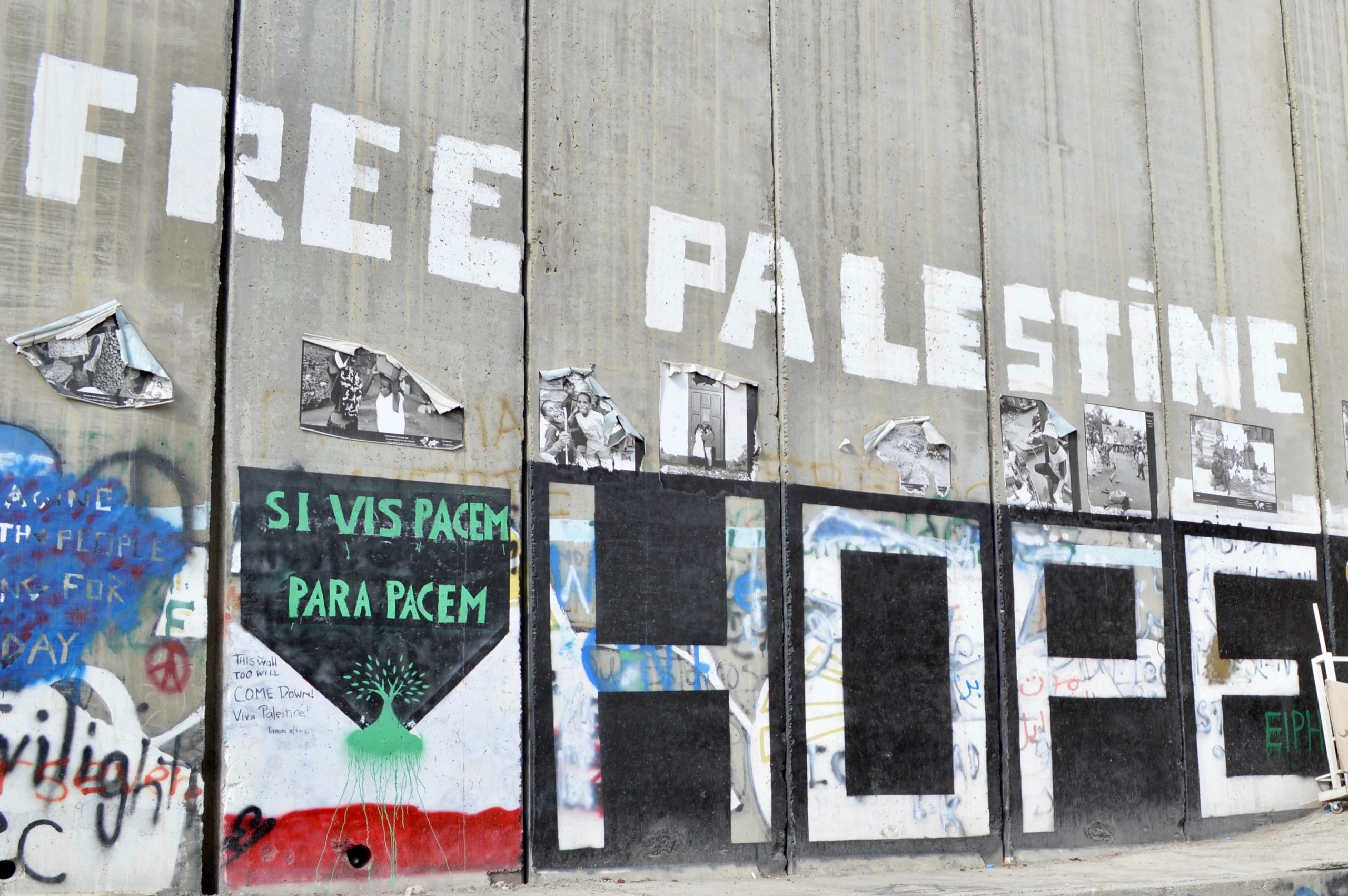
Nathan Thrall: Before there was the story of Abed Salama, there was the story of this accident. I live two miles from the walled enclave where the students who were on the school bus lived. In my daily life, I would pass by this walled ghetto without paying it any mind. After the accident, though, I couldn’t stop thinking of the parents and children and teachers involved. Most of them are residents of Jerusalem, people who share this same city with me but live a radically different existence. A separate and unequal existence. They live on the other side of a 26-foot-tall concrete wall and face the worst consequences of an Israeli policy of deliberate neglect. The Palestinian Authority is not allowed to come into the area in which they live, and Israel basically doesn’t go in except as a policing force. The accident was the embodiment of this policy of utter neglect of more than one hundred thousand people.
I tried to find anyone I could who was connected to the accident. Emergency service providers, doctors, social workers, parents, teachers. A family friend told me that she was distantly related to one of the parents of the kids on the bus, and that turned out to be Abed. I drove through the checkpoint, passed to the other side of the wall, and found myself in Abed’s home. He told me his story, not just about the twenty-four hours of his life where he was searching for his son, but also his personal and family history, the story of his activism in the First Intifada, of his first love, of his arrest and torture. And I realized that, through Abed, I could tell the story of Israel-Palestine.
SB: When I was reading the book, I kept thinking about this 1952 book about the Warsaw Ghetto called The Wall. That book describes the escalating trauma of living in the ghetto, but amongst the dozens of intimate character portraits there is one character the narrative all centers on: the wall that surrounds the ghetto. And I felt like in A Day in the Life of Abed Salama, the partition wall that separates the occupied West Bank from Israel is a sort of character in this story. What role does this wall play in people’s lives in the West Bank, and how is it a part of this particular story?
NT: I’m really glad to hear you say that because the wall is its own section of the book. It’s really the only section of the book that’s not centered on a particular person affected by the tragedy. That section goes into the story of an IDF Colonel, Dany Tirza, who was the wall’s chief architect. The wall had to be a central character in this story because it dictated so much of what happened on that day. It determines so much of these people’s lives. They’re surrounded entirely by walls. They have, on three sides, a 26 foot tall, concrete wall and on a fourth side a different kind of wall that runs through a segregated road, Route 4370, famously known as the “apartheid road.”
The enclosure of what is today around 130,000 people in the town of Anata and the Shu’afat refugee camp is the central element in their lives, separating them from their schools and health care providers and higher paying jobs in Jerusalem. The wall meant that parents who wanted to send their kids to the Jerusalem schools on the other side of it had to weigh whether it was worth the risk of their children passing through a checkpoint every morning and afternoon and being confronted by Israeli security forces. Many parents didn’t want to take that risk and chose instead to put their children in a West Bank school, a private school, to avoid Israeli soldiers.
So the wall was important to me, not only in describing how these people live, but also why they’re circumscribed and why the wall was routed in the way that it was. The architect of the wall describes exactly the logic of how he routed it in Jerusalem and around Anata, explaining why he chose not to follow the Jerusalem municipal boundary and instead created an enclave that straddles the Jerusalem municipality. The overriding principle was to remove as many Palestinians as possible from the heart of the city, while relinquishing as little land as possible. That has driven so much of the policy of the state of Israel for decades.
SB: As you write in the Epilogue, part of how this became a story in Israel was a reporter covering the really callous social media comments that some Israeli kids made about the attack. Their ambivalence, while certainly shocking, also seems to have some relationship to the infrastructural unwillingness by Israel to provide any substantial support to Palestinians in the territories. How do those cultural attitudes relate to the structural decisions Israel is making with regard to Palestinians in the West Bank?
NT: The main relationship between the hatred and racism shown by those Israeli youth and the structural barriers that led to tragedy unfolding in the way that it did is that it is a lot easier to dehumanize people with whom you don’t interact. The reality of Israel-Palestine, of Jerusalem, of the settlements abutting Palestinian towns in the West Bank, is one of segregation. That geographic, political, and social reality of segregation is what all the characters in the book had to navigate on the day of this awful tragedy.
The wall had to be a central character in this story because it dictated so much of what happened on that day. It determines so much of these people’s lives.
One of the central elements of the book is that it’s not as though any of these Israelis as individuals actually desired that a bus full of kindergarteners continue to burn while Israeli fire trucks took more than thirty minutes to arrive. Some of the teens who wrote jubilant posts on Facebook did desire that, but the emergency service responders did not. Yet the entire system in which they operate is designed in such a way that the very, very late and inadequate response to this crash was entirely predictable.
SB: Mourning is an important part of the book, and so central to both Palestinian and Israeli lives that this may be one of the elements most shared by all the characters in the book. So, for example, we focus heavily on the way that mourning mobilized the Palestinian communities after the crash, but also meet a Haredi organization dedicated to ensuring mourning rituals are able to be observed. What role does mourning play in Palestine, and what political role does it play?
NT: The act of mourning is different depending on whether you consider the deceased to have been a victim of occupation. If there is a victim of occupation who is killed you are not supposed to, for example, do the traditional ritual of cleaning the body and other standard burial rights; instead you bury them in their clothes. So the whole act of mourning, just from the very first step of determining whether this person is a martyr, a victim of occupation or not, is of course, very political.
The father in the book, Abed Salama, when his son died, one of the things he deeply regretted was not being able to hold his son and say goodbye to him. If they had gone by the declaration of the Palestinian Authority that all of the kids who were killed were martyrs, then Abed and the other parents shouldn’t have done any of the traditional rituals even if they could. In this particular case, Abed couldn’t have because his son was too badly burned.
SB: Your book was released just days before the Hamas attack and subsequently experienced the cancellation of many of your book events and talks, with one particularly notable example when the London police preemptively shut down a planned talk hosted by the How To Academy over alleged “security concerns.” You are obviously not the only one, there has been a massive wave of repression of critical voices in the weeks after the Hamas attack. How did the cancellations affect your promotional efforts for the book, and what has the tenor been like for critical voices since the war began? Do you think it’s becoming increasingly difficult to voice perspectives like yours? And do you think there has been a difference between how critical Jewish and Palestinian voices have been treated in this regard?
NT: The October 7th attacks and the Gaza war had a polarizing effect: on one hand, in mainstream spaces it became much more difficult to have discussions about Palestinian life under occupation; on the other, among younger people and the left more generally there has never been greater support for Palestinian rights. Gatekeepers at some large, mainstream institutions have succeeded in quashing pro-Palestinian speech. At universities, Palestinian freedom of expression has been greatly curtailed and Palestine student groups have even been banned.
It will also be up to people around the world to make clear to their governments that they do not support the continuation of ethnonational domination.
In the cultural sphere, book talks, film screenings, award ceremonies, and musical performances relating to Palestine have been canceled, including about a fourth of the events I had planned in the U.S. (and the main event I had in London, which was shut down by the U.K. police). This has affected Palestinians most severely, but the target is broader—speech that is sympathetic to Palestinians, no matter the identity of the speaker. As a prerequisite to giving a book talk at the University of Arkansas, I was told that I had to sign a pledge that I would not boycott Israel or the settlements. One could boycott virtually anything in the world—the fossil fuel industry or China or Saudi Arabia or the Republican Party—but not Israel or the settlements. I refused to sign, and the talk hasn’t happened. What many people don’t realize is that these sorts of infringements on freedom of expression were in place long before October 7th. It’s just that they have gained steam since.
SB: You and I are talking at a time when no ceasefire is in place, nearly 20,000 Palestinians have been killed, the Israeli right is entrenched and a voluntary end to the Occupation feels as far as ever. As someone who lives there and is deeply invested in the future for the people of the region, are you optimistic about that future? And what kinds of actions for those in the U.S. are most helpful?
NT: As shocking as it may be to hear this, I believe that there is a better chance of ending this system of oppression today than there was on October 6th. The reason for that is very simple. This is a contest between two grossly unequal parties. One is Israel, a nuclear armed regional power with the backing of the strongest state in the world. And the other is a party that is politically divided, militarily weak, barely holds any territory, and even what it ostensibly holds is still controlled by Israel. It really has no ability to impose the kinds of costs that would be necessary to overturn the system. The problem has been that the stronger party has not had a strong enough incentive to change the system.
For the first time in many years, ordinary Israelis find themselves with a strong incentive to change the system that was in place prior to October 7. Change could come if the Israeli public is convinced that the price that they are paying for endless occupation is too high and that something else ought to replace it. Whether there will be a realistic or credible or decent proposal for changing it, we have to wait and see. But there definitely is a desire to change the system that seemed impermeable to change just two and a half months ago.
It will also be up to people around the world, and particularly in the U.S., to make clear to their governments that they do not support the continuation of more than half a century of ethnonational domination, that they do not support the collective punishment of two million people in Gaza. Ordinary Americans can increase the pressure on the Biden administration to demand a ceasefire right now. If Biden feels he is paying too high a price domestically and internationally for his support of Israel’s mass killing of civilians in Gaza, he can be convinced to demand a ceasefire. The difference between a ceasefire today and a ceasefire several weeks from now could be the saving of thousands of innocent lives.
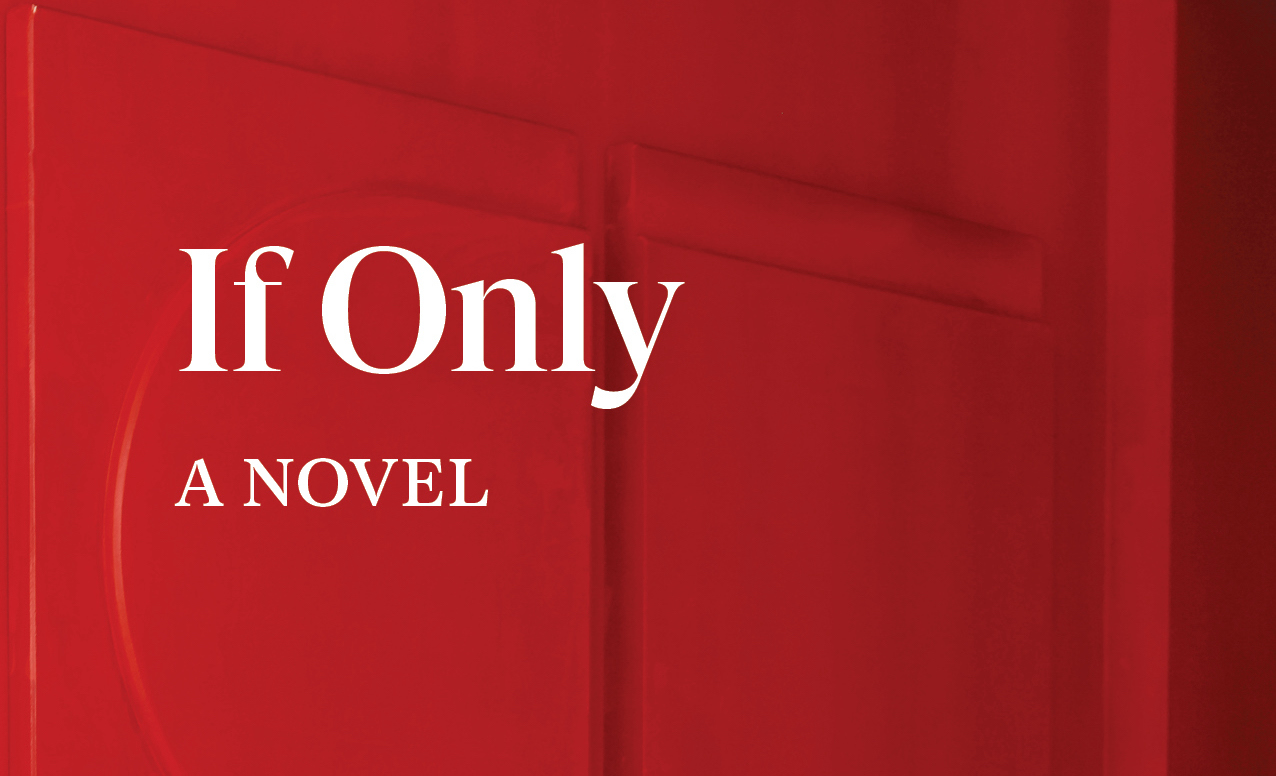
Electric Literature is pleased to reveal the cover for the novel If Onlyby Vigdis Hjorth, which will be published by Verso Books on September 3, 2024. Preorder the book here.
“A relatively young woman, aged thirty. She married in her early twenties, had two children. It is winter. January and minus 14°C, white, frosty mist around the parked car, around the spruces, the mailbox on its post, but higher up the sky is blue, clear, the sun has come back. She has written in her diary that she is waiting for the heartbreak that will turn her into her true self. She has an impending sense of doom or possibly her own death.”
So opens Vigids Hjorth’s ground-breaking novel from 2001, which melds the yearning, doomed potency of Annie Ernaux’s A Simple Passion with the scale and force of Anna Karenina. It asks, can passion be mistaken for love? And proceeds to document the destruction a decade defined by such a misconstruction can yield on a life.
Here is the cover, art by Anja Niemi.
Editor Cian McCourt: “We used the Norwegian neo-romantic painter Harald Sohlberg for the cover for Will and Testament, which did a grand job representing the gravitas of that novel (and the painting helpfully featured a cabin). But with the next Hjorth novel we published, Long Live the Post Horn!, I wanted something that captured the very contemporary, very relatable angst in her fiction, as well as hinting at the humour in her writing, which often goes unremarked on. I’d loved Anja Niemi’s work for a long while, and when the penny dropped that she was Norwegian (and a fan of Vigdis, as it turns out), she was the clear choice. And I’m delighted we can return to her for If Only. This new cover gets right at the heart of how a love affair, when played out in its most ardent, obsessive key, can unmoor you from your sense of self. I think it speaks to the awful ambivalence true passion begets.”
Author Vigdis Hjorth: “I like it immediately. I like it intensely. I like that it’s so red. I like that it is not naturalistic, that it is artificial. I like that the woman’s face is realistic in its expression, the horror at the sight of what may be her own future self.”
The design team: “We were thrilled to be able to feature the stunning work of Norwegian artist Anja Niemi on the cover. Like Hjorth’s brilliant novel, Niemi’s ‘The Socialite’ implores the viewer to investigate her relationship—not to her self—but to her selves.”
Since having my daughter at the height of COVID fear in May 2020, I have learned the best way to scream in your car. Windows up, no matter how hot it is. Maybe you think about what it would be like if you accidentally left your baby in the car this hot. Maybe it’s good you feel too hot. Maybe you deserve it. No music. Shut off NPR, silence reports of death tolls or an active shooter or the election or a new hot restaurant or air pollution. If you can, wait until no one is walking past, though you might not be able to wait. The scream will be loud and painful; the car amplifies the sound in a way that scares you—the first time.
Cover your ears.
My entire life, I’ve prided myself on never being an angry person. My parents rarely yelled at me, and I rarely yell at anyone. I’ve never been in a physical fight. In my dreams, I sometimes try to scream at someone, but I can’t. I try to hit someone, and my arm hits soft like a child’s, or my fist dissolves into smoke. In these dreams, I’m angry about my weakness. When I’m awake, I’m not. The symbolism is, of course, obvious.
If I read enough, fixed everything, controlled it all, she would be okay.
But six months after my daughter was born, something changed. I’d been up all night, every night, Googling every terrifying thing that could happen to our precious, perfect baby. I’d fallen in love, and was obsessed with the many possible ways I could lose her. If I read enough, fixed everything, controlled it all, she would be okay. A false, impossible hope, I knew—but I didn’t care that my worry was beyond logic. Sometimes, in the middle of an article on the Mayo Clinic’s website, I’d realize I’d read it before—many times before. None of it helped, and yet I kept on. Was the swaddle too tight, was her room too cold, was she wearing too many layers? Was her cough okay? Was this rash ok? Was that other weird sound okay? Was she eating enough? Was I playing enough? Was I playing too much?? COVID anxiety multiplied my new-parent anxiety. At the start of the pandemic, the rhetoric for parents of young children was that they could and maybe would die from COVID. Public spaces (which I avoided as much as I could) were almost intolerable. Someone coughing made my adrenaline jump like I’d seen a bear. Even on walks with my daughter in the stroller, anytime another person passed, I worried about the air we breathed. I suffocated. Later, that rhetoric about COVID changed, but my body has never quite forgotten it.
One night, changing the laundry over for the hundredth time, my fist connected to a basket of laundry. I found myself throwing it across the room. I write “Found myself” because my body felt like the time I’d accidentally grabbed an electric fence—my chest pained and buzzed and my arms became locked and tough, tingling all the way down into my fingertips. I wanted to make a loud sound, wanted to keep myself from disappearing, fury without a target (the laundry, sure, but not just the laundry). Another night I went to my car and screamed. The sound was so loud it pierced my own ears like a needle; the bear was back and it was me. I couldn’t remember ever screaming like that. And once, after putting my daughter down for bed, she was asleep, but my ankle cracked and she woke. I got her back to sleep, and then I closed the door a little too loud and she woke. I tried to get her back to sleep again and failed. I couldn’t shut my brain off until she was asleep and I needed her to sleep and she needed to sleep and I set her down in bed just a little too hard and left the room. Over and over, I slapped my face.
My anger had at last forced me to look at it. I wasn’t even sure what I was raging about. It was never rage at my daughter. I loved her so deeply even something as small as the precise sound of her tiny teeth crunching an apple made me ecstatic. I try, every so often, to write about my love for my daughter, but I always fail. Instead I build a garden around it; I cannot get to the heart of it with language. I worried I could not stop the world from taking the best person I knew, that they would never know her either. I don’t even like writing those sentences. We’d planned for and wanted this child. I had a supportive and devoted spouse who loved being a father. We had every privilege imaginable—whiteness, steady money, family support, maternity and paternity leave, health care, a safe home. I had no right to feel rage. It was me, I thought. My fears were wrong and had broken me somehow. I was determined to figure out why. I was determined to fix myself. Didn’t my daughter deserve a happy mom who didn’t need to go scream in her car? I watched the way my daughter felt my moods, the way I felt sunshine, wind, rain. I watched her begin to imitate my walk, the inflection in my voice. If I was a mirror, I didn’t want her seeing her reflection in such a broken one.
Even if the rage was new to me, it was not new to parenting.
I went to therapy, of course, and I turned to books. I don’t know if there are actually more books about mothering being published now, or if, like playgrounds, I am simply more aware of them because I am one. I thought my rage was new, that I was a violent monster, but the books I read taught me that monsters are everywhere. Even if the rage was new to me, it was not new to parenting. Talking about it, publicly, is new.
I read Rachel Yoder’s 2021 excellent, darkly funny novel Nightbitchfirst. In the novel, a new mother’s rage becomes so great she turns into a kind of werewolf. And, eventually, she likes it. The sentences are long, looping, delicious. The main character does not have a name. She is just “the mother,” or later, “Nightbitch.” I felt like I was reading the inside of my own mind—if I allowed it to truly do what it wanted, pure instinct, feral. (Of course, what mother can allow this? Even now, here I am hiding in a parenthetical.) I devoured the book, read pages without realizing I had read pages, the way I hadn’t read since I was a child reading Harry Potter. Yoder captures the precise monotony of having a young child, but more than that, helped me discover something about my anger: it was not new for me. Here, Yoder’s narrator describes her first real rage:
“Her child’s screams fanned a flame of rage that flickered in her chest.
“That single, white-hot light at the center of the darkness of herself—that was the point of origin from which she birthed something new, from which all women do.
“You light a fire early in your girlhood. You stoke it and tend it. You protect it at all costs. You don’t let it rage into a mountain of light, because that’s not becoming of a girl. You keep it secret. You let it burn…
“Her anger, her bitterness, her coldness in that darkest part of the night surprised even her. She wanted to think she had become another person altogether the night before, but she knew the horrible truth, that Nightbitch had always been there, not even that far below the surface.”
I recognized the flame. I thought about when my younger sister sat in my room pushing every button the way only siblings know how to do. I picked her up and threw her bodily from my room. And later, the many touches from men I didn’t want. I knew I couldn’t get angry, or lose control. Before I ever nurtured a child, I nurtured anger. Now, I am the thing to be feared. Yes, I thought, reading Nightbitch: I am an animal. I am only now failing to hide it.
I turned to Minna Dubin’s 2023 nonfiction Mom Rage: The Everyday Crisis of Modern Motherhoodto think about why. Mom Rage is a vulnerable, deeply researched work that locates mom rage by describing a “basement” of systemic issues that can underpin moments of rage, wearing on mothers long before an angry outburst. Dubin describes many of these issues as different versions of a lack of “mothercare”—a capitalist system that punishes women for leaving the workforce to do care work; a racist and ableist healthcare system that does only the barest of medical minimums for mothers; a governmental uninvestment in providing universal, quality childcare; the dominance of the nuclear family that erodes the “village”; a pervasive, social-media influenced belief in what mothers “should” do and look like, which demands mothers subdue their anger. At the same time, there is little incentive to fix these problems—why would we? The entire system is balanced upon mothers providing free childcare at home. As Dubin writes, if mothers blame themselves for their anger, and society blames them too, then the larger society needs to take no responsibility. The problem of mom rage is mothers’ own problem to fix.
After that, rage is physical: the nervous system responding to constant stimuli of small children, lowered coping ability from sleep deprivation, and the high stakes, for giving a shit about what you’re doing. In her book Touched Out: Motherhood, Misogyny, Consent, and Control, Amanda Montei locates motherhood’s trajectory through a lifetime in the body, and through touch. Dubin also writes, “Mom rage lives in the body.”
Rage seems inevitable—the standards are high, the hours are long, the demands immense. Of course we rage. Dubin also shares her own moments of rage, and the subsequent shame. I saw myself there, too—the electric limbs, the Nightbitch—but I knew how other mothers would react. I saw them on Goodreads, on Instagram, in the New Yorker’s review of the book: how could a mother act this way? It makes sense—mothering and caregiving are burdened by many of the same difficulties no matter who you are, but the web of experience is so unique it’s impossible to fully see yourself in other mothers. There were many other mothers who saw their rage in the book, too, many still who felt this rage unfathomable. They did not think Of course we rage. They thought, as I feared my daughter did: How could you?
Mothering and caregiving are burdened by many of the same difficulties no matter who you are.
Even with all these books, we are still circling the question of what to do with this rage. In the New Yorker’s review of Mom Rage, Merve Emre writes about Dubin, “She sensed that her reactions were excessive, but she made no real effort to understand. Understanding was not the point of her essay. The point was to unleash the primal scream of a mother who had regressed—spectacularly, obscenely—into a tantrumming child, not unlike the three-year-old who had spurred her rage in the first place.” When I raged, I threw things. I screamed. But inside, I felt older than ever. I did not feel like a child. The review is steeped in the kind of misogyny, infantilizing, and judgment that mothers and caregivers rage against. The review was clear: even in 2023, this is bad, monstrous, not allowed.
When I told a male friend about my anger—peripherally, for I chose not to share the whole truth—I told him how hard I worked to not yell at my daughter. He laughed. “I yell at my kids all the time,” he said, shrugging. I didn’t ask him if he feels shame about it. He doesn’t seem to, and I’m pretty sure I know the answer: no shame in yelling for many fathers.
Mom Rage was a candle held out—yes, thank god, it isn’t just me. But there was still too much of myself in the dark. I still didn’t yell at my daughter, or at my husband. After reading Mom Rage and the New Yorker review, I understood—there was no appropriate place for me to feel rage. Like Nightbitch, I feared I was bad at the core. I was not able to let myself be feral. I was not allowed to be angry. I was a bad mother if I was angry. With nowhere else to go, I turned my rage inward. I raged at myself.
When my husband tried to help and understand me, I would often tell him I was a bad mom.
In my post-rage, post self-harm shame, when my husband tried to help and understand me, I would often tell him I was a bad mom, a terrible mom. “Please get her a better mom,” I told him. “Send me away.” I said it as a way to punish myself further. The next two books I read played on that ultimate fear—that your child would be taken away from you. One of the mothers sharing their rage stories with Dubin for her Mom Rage interviews hesitated after Dubin’s question. She wanted to make sure Dubin was not going to take her child away. Early in my pregnancy, I’d listened to a story about a woman experiencing postpartum psychosis who was separated from her child in the earliest, most tender days. I didn’t think this was me, maybe, probably not, but the thought was there—what if?
Next I read Jessamine Chan’s 2022The School for Good Mothers, a novel about a dystopian system for the punishment and “retraining” of mothers who have been, subjectively, bad. If they do not pass the tests at the end of their retraining, the mother (and a few fathers) have their custody revoked. I read it like it was true crime. When Frida, the main character, sees a therapist who makes her list her fears, the list is so large and random that it reveals nothing useful. Yes, I thought. And despite those fears, Frida makes the mistake of leaving her daughter alone for a few hours anyway. Agents from the school then install cameras in Frida’s home to monitor her behavior. She wonders how a mother separated from her child should behave, sit, eat. How often she should cry, rage. Social workers interview her, asking her a barrage of questions:
“Frida’s motives. Her mental health. Whether she understands a parent’s fundamental responsibilities. Her concept of safety. Her standards of cleanliness. The social worker asked about Harriet’s diet. Frida’s refrigerator contained takeout boxes, some sweet potatoes, one package of celery, two apples, some peanut butter, some string cheese, some condiments. Only a day’s worth of milk. The cupboards were nearly empty. Why wasn’t she paying attention to Harriet’s nutrition?”
I recognized this voice, this surveillance over the thousands of decisions I made every day, how every decision seemed poised to shape my child forever, and mold me in the shape of “good mother” or “bad mother.” Yes, I heard the other mothers on Instagram, in the moms group, what Dubin calls a “cultural mandate to be hypervigilant” (39). But for me, that surveillance was internal. That questioner was myself. My fear and anxiety came from constantly surveilling myself against a standard built from a lifetime of absorbing the mothers around me, the mothers in pop culture, all of it. My own mother tells me, “You’ve always been a mommy, always taking care of other kids.” But I don’t remember this. I wonder if this is fiction, made to make me feel better.
I understood my rage as a response to my powerlessness.
On some days, I thought the way Frida thinks about herself: that she’s not as bad as “those bad mothers” in the news, the ones who set their houses on fire, or leave their children on subway platforms, or strap their children into car seats then drive into a lake. While I read the scene where Frida’s daughter Harriet is taken from her arms, separated, likely forever, I cried enough for strangers to glance at me. My heart was in the story, but I was reading The School for Good Mothers on a beach in Mexico, celebrating my sister’s bachelorette party, thousands of miles away from my own daughter. I ordered another mimosa. I dried my tears. On my worst days, I thought: Maybe I am just as bad. If there was a real School, I belonged there. Not for retraining, but for punishment.
But there is no School. The world, as it is, trains and punishes mothers.
This is a love story—if you can believe it. After all that obsessive reading, all that punishment—I fell in love. I read Yael Goldstein-Love’s 2023 novel The Possibilities. In this novel, Hannah has an eight-month-old son, and she remembers two births: one, where he survived because she insisted on a C-section, and one where he did not. The intrusive thought of his tiny, lifeless arm stays in her mind, sticky in a way that makes her feel like she did actually see it happen, even with her living, breathing son right in front of her. She describes these moments as a “car-swerve feeling”:
“Like when you have a near-miss on the road and seconds, minutes, maybe even hours later you’re still waiting to feel relieved not to have died in a fiery crash…Not because you aren’t grateful to have escaped. And not because you aren’t certain that you did, in fact, avoid becoming roadkill—you haven’t lost your mind. But, rather, because you feel in a deep, primal, hard-to-describe way that the crash came too close to occurring. Because it didn’t seem a simple yes or no in those car-swerve moments, did it? A simple it didn’t happen or it did? Instead it seemed, in those moments, that the way things could have gone had some lingering reality, some awful stickiness that clung now to the moments carrying you away from when you might have crashed but didn’t.”
Goldstein-Love captures the exact way my anxiety felt—the idea of a near miss. That even if something hadn’t actually happened to my daughter, that something else was bound to. And then, I understood my rage as a response to my powerlessness. My rage was a response to the avalanche of worry that you cannot help but absorb as a parent. As Goldstein-Love writes, after a while, I cannot take “The agonizing need to keep this someone safe, a need as bodily and insistent as hunger, thirst. But impossible to satisfy because, deep down, you knew that you were powerless: against accidents, disease, an active shooter. Against your baby disappearing from his crib without a trace. Surely every parent felt this. It was too much, the hugeness of what we’d opened ourselves up to. A child was too much to have at stake” (131). No matter how perfectly I loved my daughter, I could not protect her. This infuriated me.
Because she saved him once, by insisting on a C-section, she wants to trust her fears, rather than push them away as irrational. Hannah feels like the only thing separating them from a different reality, a worse reality where her son died, is her. Her instincts had saved him; how could she ignore that twinge of worry? Many, many times I’d thought about bringing my daughter to the hospital, then thought irrational. Until the moment she had an allergic reaction severe enough to prescribe an epi-pen. That time, I knew to go to the hospital without hesitation. How could I talk myself out of fear, when it had protected my daughter when she needed it?
And then the character Hannah’s son starts disappearing. At first, just from Hannah’s view, and then from the world at large—Hannah’s therapist and her ex-husband also start to forget her son. Soon, Hannah discovers that her visions of her son’s death are not “just” hormonal, are not postpartum anxiety, but instead are real, happening to their child in a parallel reality. Both she and her estranged mother have the ability to see “the possibilities.” They have the ability to jump between them and protect their children in multiple realities. Hannah ultimately chooses to stay in her own reality, and to protect her child in the reality she knows, but that doesn’t make the other possibilities less real, or less powerful.
So much of my life and my mothering has been denying my anxiety, denying my anger. Irrational; you worry too much; you can’t control it, so don’t worry about it; overactive imagination; mommy brain; just the hormones. Like Frida in The School for Good Mothers, my fears are boundless, but unlike Frida, they are not random. My fears aren’t of kidnappers, really, or Red Dye #40. They are of the things that can happen to children no matter what, even inside my own care. I fell in love with The Possibilities because, instead of telling myself my rage and anxiety were worthless, I now felt my worries did have power. My worry could bend time, reshape reality; my love could traverse a universe. My fears still arrive, urgent like Hannah’s, a feeling that there is something that I can fix, and that I must do it, “[l]ike a muscle memory of the mind” (101). But instead of shoving them away as irrational, I honor them. As if there is a reality in which they really could happen. That reality is this reality. Then, the rage goes away.
This doesn’t erase the very real dangers for women, caregivers, and children. This doesn’t erase the lack of mothercare in the United States. This doesn’t erase the paradox of having children: you spend your life trying to keep them safe and alive, and you will always fail. It’s telling that I found the most solace in a work of fiction, in a world that doesn’t exist. I always felt like I was missing a mother’s instinct. But perhaps this is my version of it. While I hope for and work toward the possibility for a world with fewer fears, and better care of children and caregivers, right now I honor my worries. For now, I will feel powerful in imagining all the possibilities.
Maybe a novelist’s real medium isn’t so much words, but the idea of memory itself. Every choice we make—voice, POV, backstory, moments buried as nothing or shouted as epiphany—is a matter of genre and taste. But it all comes from how we, or our characters, experience or recollect existence. Given how primal and important the idea of memory is to the novel’s architecture, it’s not surprising that authors often confront its opposite—memory loss.
My last novelLittle Threats, leaned on memory as a thematic device and I didn’t quite grasp the importance of that to me at the time. Fiction is like that. When the subject ended up in my new novel, Sleeping With Friends, I was finally able to write about my own mother’s coma, but through the novel’s character, Mia. She’s a Connecticut housewife who may or may not have had an accident.
There are countless moving stories of memory loss. It’s a universal possibility, either through illness, or aging. But the books I’ve collected here do something different. For example: a drug that can curate memories and allow you to experience someone else’s. Someone hiring out a whole cast to act out and recreate what might be his only memory. An amnesiac detective trying to solve his own tormented past.
All these novels begin with the idea that memory loss could be something more than the act of forgetting. Each of these books take a risk, and offer something original, strange, and fantastic.
If, like me, you were browsing bookstores every weekend in the late-aughts, no doubt you spotted this book featured it in your local Staff Picks section—and for good reason. Remainder may be equal parts fever dream and intellectual exercise, but there’s more to it than that.
A man is severely injured in a mysterious accident and receives an enormous sum in legal compensation. He has no idea what to do with it. He winds up having a moment of déjà vu, what could be a dream, or maybe an actual memory, and decides to entirely recreate it—right down to the cracks in the wall and the smell of liver frying in a pan down the hall. But this involves buying an apartment building, and hiring actors to live there, practicing for this one significant scene. There’s intense foreboding as he descends further into his obsession: trying to recreate something that may or may not have ever been real. (And yes, McCarthy’s novel came out before the film Synecdoche, New York.)
This dystopian novel, which was Butler’s last, is really about the dividing line between one life and another. Shori is recovering from injuries in a cave and doesn’t know anything about herself. She turns out to appear like a ten-year-old though she is much older. She immediately instinctively hunts and eats an animal, but ordinary things, like rain, need to be remembered. “I was recognizing things now, at least by category—bushes, rocks, mud….”
Social constructs are at first unknown—since Shori has no memory—even as she wanders naked through a burned-out town where she wonders if she had in fact lived before. It’s this confusion at the world around her that fascinates me. And of course, Butler being Butler, she then builds everything back up so that we see it with fresh eyes.
A photographer named Lucien finds himself at the Center, a California rehab where patients are given an experimental drug called Memoroxin (or Mem). It was developed for use among dementia suffers but is also the hip recreational drug of Hollywood because of its addictive voyeurism and ability to curate memories. It’s very Don DeLillo–esque—a very risky esque to try—but Westgate pulls off what could be a high-concept trick, making her own authentic comment on how we live and process in the moment, and after.
Originally published in 1994 but translated and named a best book of 2020 during the pandemic, TheMemory Police’s easiest comparison is Nineteen Eighty-Four. Yet it sings with more poetry than Orwell’s plainspeak. As objects and concepts seem to disappear, only some of an island’s residents are able to remember them. “Transparent things, fragrant things . . . fluttery ones, bright ones . . . wonderful things you can’t possibly imagine,” the character’s mother tells him, showing him things she has hidden away that everyone else has forgotten. Ogawa tackles an impossible idea so skillfully, he makes us want to believe it.
With delicate prose, Emma Healey is able to keep us grounded while also achieving a dreamlike effect. The mystery here is very meta: Maud, a woman living with Alzheimer’s, is trying to solve a missing persons case—her best friend who’s suddenly not at home, as well as her own sister who vanished 70 years ago. What is real, and what is imagined? What has been forgotten? And what does it mean when our concerns are dismissed by others?
Gripping from the first word, Tana French has become known as a mystery maven for a reason. In this first book of her Dublin Murder Squad series, we begin by being taken into the narrator’s confidence about what he cannot trust of memory. We’re then launched into a precise police-report style recounting of a crime from 1984 of missing children in the woods near Knocknaree. It turns out our detective, Rob Ryan, is actually one of the victims—the one left alive. Trauma has taken his memories of that event. Rob now works as an investigator, so this is a double-case narrative. A 12-year-old girl has gone missing from the same woods, and he has to solve it—while also combing through his own traumatic past.
Amnesia through music… New Zealander author Anna Smaill is onto more than just a terrifying earworm here. In a fictional, primitive London, there’s an instrument called the Carillon—which enforces tinnitus, brainwashing its listeners until they can no longer remember. This happens ritually twice daily. Simon has traveled in from the country after his mother’s death, and befriends Lucien—the two teenagers roaming the city. Simon is on a mission to find out the meaning of what his mother told him on her deathbed.
Adjacentland by Rabindranath Maharaj
Adjacentland is an ahead-of-its-time novel which steers into eerie territory with its focus on creativity and AI. Our narrator awakes in a compound, where he comes to believe that he was once a comic book writer who warned that the reliance on artificial intelligence would make the imagination obsolete and subversive. As he searches for sketches, notes, and clues he may have left for himself before his memory loss, both he and the reader learn of Adjacentland, a primitive land of misfits and outsiders. It is only in Adjacentland that the imagination has survived. “Today is a new day but yesterday was the same day,” reads one of his foretelling sketches.
I loved you, and when you left, you left a Space. And I fell in love with that Space. Not right away, I mean, but over time. At first I hated the Space. It was just always there! But then I somehow got used to the Space. Then I started to appreciate it, and then I missed it when it was gone.
Before I knew it, the Space and I had become friends. I started really enjoying hanging out with the Space; I liked talking to it, and listening to it too—to its opinions, hopes, doubts and worst fears. This might sound strange, but the Space and I even sort of had our own secret language.
One night, the Space and I ran into some old friends of mine, David and Iris—I don’t think you know them—walking out of the movie theater. “David!” I said. “Iris!” I hugged them both. “I want you to meet someone.” I gestured to the Space. “This is the Space.”
David and Iris looked at me, and then at each other, and then at the Space.
“And this,” I said to the Space, “is David and Iris.”
The Space smiled.
“I’m sorry,” said Iris. “What?”
“Iris,” said David.
“This is the Space,” I said.
The Space waved.
We went our separate ways, but a few hours later I texted David: So what did you think?
Of the movie? he responded. Yeah good.
No of the Space! I wrote. We’re just friends now but I think there might be a real connection here?
And I was right about that. The following week, the Space and I went for a walk behind the college when it started to downpour. I took the Space’s hand and we ran for cover under a nearby tree, where I stopped abruptly against the trunk and the Space sort of stumbled into me. Before I knew it, the Space was looking into my eyes and I was looking into the Space’s eyes. Then the Space put its arms around me and kissed me, and I kissed back.
The weeks that followed might have been the best weeks of my life. Some nights the Space and I went on proper dates—skating hand-in-hand at the university ice rink; hiking up Mt. Geryk—and other nights we just spent hours on my couch talking to each other and kissing. It really didn’t matter what we did as long as we were together. One night that summer, I told the Space I was falling in love with it, and the Space said it loved me too. That was our first night together; I fell asleep in the Space’s warm embrace.
Soon the Space and I were basically living together; it kept its own place, but it was at my apartment all the time. We got used to each other’s daily rhythms and habits; we ate our meals together, exercised together, watched TV or read together every night. I grew accustomed to falling asleep next to the Space, and waking up to find the Space still there beside me.
Admittedly, sometimes the Space would get quiet—distant. At times I felt like the Space was right there with me, focused and present, but at others it seemed vacant and removed. In those moments, as strange as it sounds, I almost felt lonely—despite the presence of the Space.
One night that fall, the Space and I were watching a science fiction movie when my phone rang. It was you. I was taken aback; I hadn’t talked to you in months. “Hold on a second, will you?” I said to the Space, and I took the phone into the other room.
You asked if we could meet and talk. “Yeah, sure we can,” I said. “But I should tell you that I’m seeing someone.”
“Oh,” you said. “You are?”
“Do you remember the Space that you left when we broke up?”
“The—what?”
“There was a Space—a really significant one,” I said. “And while we didn’t get along at first, we eventually became friends, and—”
“You and—who now?”
“But the relationship, you know, evolved,” I said. “And now things with the Space are going really well.”
“Oh-kay,” you said. “Well, I—OK.”
“But listen—how are you?” I said. “Is everything OK?”
“Yeah,” you said. “I’m fine.”
“Good—I’m really glad to hear that,” I said. “It’s really nice to talk to you,” I added, because it was. I’d missed you—maybe even more than I’d realized.
When I got off the phone, though, the Space sat me down and said it needed some time apart. I was flabbergasted. “I don’t understand,” I told it. “I thought things were going great.”
But the Space said it needed space. I asked the Space how long it had felt this way, but the Space wouldn’t elaborate; it just sat there silently, an empty expression on its face.
“We’ve built a life together,” I told the Space.
The Space didn’t even reply.
“How can you not have anything to say to that?” I said.
The Space left my place that very night. I was so bereft I couldn’t sleep. I called you early the next morning and you came right over to console me. “I just miss the Space so much,” I sobbed into your shoulder.
“I know,” you said.
“I honestly don’t know how I’m going to live without it.”
“I know it seems impossible,” you told me. “But tomorrow, you’re going to realize that you don’t need the Space as much as you thought. And there’ll be less of the Space in your mind the day after that, and the day after that. Until one day you realize you’ve forgotten the Space completely.”
I nodded as if I understood, but inside I knew I’d never get over the Space. I vowed right then and there to keep its memory close, and to hold a place for the Space in my heart.
Celina Baljeet Basra’s debut novel, Happy, at once fulfills and tragically subverts the promise of its title. Happy Singh Soni, the titular protagonist, struggles to hold on to his optimism and imagination while laboring under appalling conditions as an undocumented migrant worker in Europe.
Young, upbeat Happy—an ebullient admirer of new wave French cinema from rural Punjab—goes to Europe in pursuit of riches that are artistic as well as material: he hopes to become an actor in European cinema (he is compared in looks to Sami Frey, the actor in Bande à part, Jean Luc-Godard’s 1964 film, who makes constant reappearances in the novel). Accordingly, Happy saves his wages as an amusement park worker, and pays mysterious “coordinators” to travel to Europe. Once in Europe, however, he is placed in a series of menial, low-paying jobs, in the futile attempt to repay immense debts to the “coordinators”—initially as a restaurant worker in Rome, and then as a laborer on a radish farm—even as his cinematic dream recedes out of reach.
Throughout the novel, Happy’s life attests to the sundering and coming together of nations—from the Partition of India in 1947 (during which his parents had to flee from newly created Pakistan to India) to the current migration crisis and the far-right reactions across Europe and the U.S. Yet the novel’s ambitious form—fragmented into many voices, which nevertheless knit together into a kaleidoscopic view of consciousness—at once records and seeks to mend the sundering it describes.
Celina Basra brings to the novel the intense care and attention to arrangement that has characterised her work as an art curator. Based in Berlin, she has worked with Berlin Biennale, Academy of the Arts Berlin, Arts Night London, and Nature Morte Delhi, among other institutions, and is a co-founder of the curatorial collective The Department of Love, which explores love as a mode of resistance and collaboration, and which has held exhibitions in China and the U.K.
I spoke with Celina Basra on Zoom about fragmented forms and narratives, the complicated and ambiguous trajectories of 21st-century immigration and labor, and recognizing the inner lives of marginalized characters as well as inanimate objects.
Pritika Pradhan: Happy, the name of the novel’s titular protagonist, is loaded with significance—at once indicative of his upbeat nature and at the core of the novel’s tragic irony, where he struggles to maintain his cheerful narration amid terrible events. Could you tell us what inspired you to choose this name, and how did it influence your envisioning of the novel’s narrative and protagonist?
Celina Baljeet Basra: There is this dissonance and this allusion to humankind’s eternal search for happiness and Paradise, which becomes more pronounced if it involves emigrating. But at the same time, it is not an uncommon nickname and abbreviation for Harpreet, in my extended family, or at least in Punjab. So Happy is a name I was familiar with, and I realized that there’s something there to work with. This is how the character came to me. While the character is entirely fictional, the underlying facts and experiences are very real. And it evolved organically from there: the name played a role in building the character in his world.
PP: The form of the novel is fascinating, consisting of segments narrated from different points of view. Could you please tell us more about your choice of this specific, fragmented form for this novel?
CBB: The basic story had been percolating for a long time before I could finally sit down and move beyond, as Happy called them, the hopeful beginnings that I had stored away in my old hard drive over many years. When I found the voice of Happy, it was through the prologue—the cover letter, or letter of application—which he writes to an employee in Italy, while working on a farm. From then on, the structure of the novel, with its many different fragments, its short chapters, its different voices, and its polyphonic nature, sort of came together and it really then poured and was written fast and furious. It was the only way I knew how to write the novel.
After struggling for some time to find this voice, I also grappled with the question of how to write this story, which is not my own. There are touching points in my family history maybe, and of course a lot of research and interest over many years. But still, this was the way I knew how to write it, because I feel some stories—especially those of flight or migration—can best be told in a scattered way. To me, at least, the idea of a novel that is written in one sitting, with a big chunk of time, and in a linear way—that’s not how I feel about the novel. When you have to take care of people—your kid or your family—or when you have to work other jobs, life is not linear. It is a bit like opening Happy’s bag of documents and stories, half-written and unfinished, and of objects that were close to him, the objects he touched that formed his life and that he used to build his world.
PP: In the segment “The Accidental Library,” Happy describes a miscellaneous and indiscriminate collection of objects: “The Library doesn’t hierarchize, nor does it discriminate.” While reading this novel, I felt this anti-hierarchical vision is realized in the proliferation of voices in the novel, which ranges from the titular protagonist to a necklace from Mohenjo-daro, or a pigment from a Pietà. What is the significance of giving voice to persons, animals as well as inanimate objects?
CBB: What I found interesting in relation to Happy’s obsession with the films of Jean-Luc Godard, or the stuff he finds in The Accidental Library, is how accidental these obsessions are when you were a teenager. The time when I first sort of thought of this novel [was in terms of] books falling in your lap. For me, it was like the process of going to my German grandmother’s attic, where there was a big box of Françoise Sagan’s work. So I read all of Sagan—Bonjour Tristesse and so on, but without really a deep understanding. I was only thinking, Oh, this is a cool character. I want to be like her. But Happy couldn’t have been moredifferent from this cool French girl. So I wentback to that time of building imaginaries or ideas of what is desirable, and how accidental these influences can be if you don’t have everything at your fingertips—all the museums and the libraries.
I am an art historian, and I did work, and still do work in the art world. Right now [in the Talking Objects Lab] I am part of a team that works on the idea of the retribution of colonial objects from former colonial contexts, and with African philosophy and artistic interventions that engage with the idea of what to do with these objects that should be given back, [and] how and when and why––the decolonization of memory and knowledge. As a curator, I work with objects and space, amongst others, and this also played into the novel.
PP: So much of Happy’s world is composed of imaginary voices only he can hear: the seductive, and slippery voice of “Europe,” the outsiders of Bande à Part whom he hopes to follow. What role does the imagination play in his story? How does Happy’s imagination inspire him to identify with Europe initially, and support him through his ordeals there?
CBB:The border or the difference between imaginary and real becomes increasingly blurred as the novel continues. And definitely it is always a question with Happy, whether what he hears is reliable, or does he occasionally tell himself those stories and lies in order to cope? I think that’s definitely a thing for him.
Being born and raised in Europe, living in Europe, I often thought about the idea of Europe and what is it really? Following events like Brexit, we have the idea of Europe as something that wants to close off against whatever comes from outside, as is happening in the Mediterranean Sea. And I also read about Europe in literature and plays, as well as mythological paintings, such as of the abduction of Europe. A lot of the Europe chapters had to be cut in the end, because it was too much. And Europe is important in the novel, and I envisioned her as an HR manager for Europe in a way. I was playing around with a bureaucracy, and how opaque and discriminatory it can be when you want to move, but do not have a passport that enables you to do so. The experience of trying to get a visa differs wildly, depending on your passport, and is impossible in some cases—which is why other paths are being taken. So there is this humorous aspect, and a dark aspect to Europe.
At the same time, Europe has aspects that are quite human. Sometimes you can feel that Europe is quite insecure—she isn’t really sure of what her image is, or what her role is anymore. She can’t really change the rules like Happy expects her to and is really quite powerless in the end. She is, as you say, this slippery, seductive voice of Europe, who urges Happy to sign the agreement. For me, Europe in the novel is an imaginary character, who is quite vivid, although she might not really exist. However, I would also encourage other readings, if the readers are pleased to do so, such as reading Europe as a real character.
PP: Happy’s only romantic relationships are also lived in the imagination – an unexpressed desire for his male friend and nemesis, Kiran, and later for his fellow farm worker, Zhivago. Could you comment more on this unspoken yet haunting same-sex desire?
We all know that some ideas, desires, and romances that are entirely imaginary can be so intense—especially when you’re young or lonely.
CBB: It was clear to me from the beginning that Happy’s feeling of being different might be rooted in his sexuality, which needs to be repressed for obvious personal and political reasons related to the context he grows up in at that time. And that [repression] becomes so automatic that he doesn’t even question it anymore. He outsources it into his imagination, instead of sort of thinking of it as something that can be acted upon, that could be real, that could be fulfilled. And we all know that some ideas, desires, and romances that are entirely imaginary can be so intense—sometimes even more intense than the real ones, especially when you’re young or someone who is very lonely or does not have a lot of touching points with the real world, where he can do real things and act in a way that other people find impressive. Instead, he has to be impressive in his own little world. And so [the imagined relationship with] Kiran, is this classic case of wanting to be with someone with certain aspects that you find dangerous or you are the total opposite of, and someone you want to be like but could never be.
With Zhivago, I think that idea is much more real and actually beautiful, but it’s still not reciprocated. Happy is also at that point setting out to realize his dream [of being an actor in European cinema], only to be increasingly disappointed on encountering this big reality check, where things are very different from what he imagined them to be. He doesn’t even open that door [with Zhivago]. However, it doesn’t mean that there isn’t a lot [happening]. There is this eroticism or desire that is expressed through other routes he finds, such as through voices from objects like the bag of flour. And not everything is spoken about; there might be even things that I’m not aware of. Even in a diary, there are things you won’t write down. As a child and a teenager, I tried to tell a good story, but I couldn’t even write about it because there were things happening that were very dark. So you try to tell a story to yourself in a way that you can process. And I think that’s what Happy does a lot of the time. At the same time, there is an increasing divide between reality and imagination, as the novel proceeds.
PP: Once in Italy, Happy is mysteriously but irrevocably affected by powerful, unnamed forces: moved from one job to another, and put down when he tries to agitate for better conditions. What is the reason for keeping these forces unnamed? What do they reveal about the world Happy inhabits?
CBB:When Happy enters Italy, he is moved around like an object and he doesn’t know the faces of the people who are moving him around. And that’s what it is. If you are in that situation, where you are migrating to Europe—not by the books, but without the documents, then you use travel agents who then are linked to other travel agents who then are linked to agents or smugglers, whatever you might call it, because they have many different names. If you research this, you will find a million different ways to do this [migrate], and a million different stories. Some may be half-legal, others entirely illegal, so a lot of power structures come in. If you look into the food industry, or the vegetable farming industry in Italy, or southern Europe, a lot of these migration trajectories end up pointing to the mafia. When I was researching [the novel], talking to activists and researchers, particularly in Italy, I realized that they had to be very careful due to personal security reasons.
That’s why it’s so hard to really uncover all the threads. And it’s impossible if you are Happy, if you don’t have a lot of resources and power on your side. If you are in that situation, this is how it feels—you really don’t know [who is moving you around]. There is this entity, this big, unnamed global corportation. I played around with the idea of bureaucracy and HR, so the [movers] are called the “coordinators.” For me, this was a kind of twist because in addition to being a curator, I often worked in situations where I was a project coordinator for cultural events—project coordinators can be many things in many different contexts. So I applied that idea to this context [of migration], because in the end it’s coordination. There is this basic bureaucracy involved, no matter how violent the external context might be.
PP: Some of the novel’s most heartening (and ultimately heartbreaking) scenes ensure from Happy’s relationships with fellow workers and migrants from different countries – the servers at the restaurant where he works, and his fellow radish pickers at the farm. Could you tell us more about the solidarity and togetherness among the migrant workers in the novel across national and ethnic lines, which co-exists with their intense loneliness and enforced isolation due to their immigration and class status?
CBB: I had this question in my mind [about] how certain areas and lines of work are entirely in some nationalities’ hands, and others not at all. In the U.K., who picks your strawberries? Who picks the asparagus in Germany? And then there are Malinese orange pickers in the south of Italy. So you look into it, and then you find that you have these communities that are also sometimes quite apart from each other. At the radish farm, it becomes apparent that the Sikh workers do some work and the Eastern European workers do other work, and then there’s talk of what happens with the Malinese in the south. Zhivago links these worlds because he is moving around, or has moved around quite a bit, but none of the others do or can.
First we idealize the place we want to move to. But then sometimes it doesn’t turn out as great, so you idealize the place you’ve left.
So for me, the novel was always about imagining what if? Because of course these relationships do exist, but they’re so private and so unique to each context that I just wanted to imagine: what would it feel like if Happy strikes up a friendship with a Polish and a Tibetan dishwasher in the Roman restaurant? The back of a restaurant kitchen is stressful, of course, as a working environment, and can be so ultimately unfriendly and hard to endure for any workforce, which is portrayed in popular series like The Bear. But for Happy it’s a little utopia. He will get this moment where he has friends, and becomes popular and strikes up relationships. And we know he practices his Italian because once you work with other workers from other nationalities, you will practice their language, which is quite fun to do. This is just to imagine what are the relationships like, what is the talk at the back of the back door, who shares a cigarette with whom?
I have traveled to Italy often, and have been interested in places affected by tourism and migration. I’ve always been interested in people who work in providing other people’s pleasure. Once you have worked in a service position or industry yourself, you realize that you could just as well be an umbrella—some guests or customers don’t really see you. So it’s more important what your colleagues mean to you, and how that can empower you. Happy always tries to strike up relationships, always tries to connect to people, to please people and entertain them. And that to me was a way to make the picture of the world richer.
PP: It is significant that the voices of Happy’s family in India (in particular his mother Gul and sister Ambika) continue even after Happy has left for Italy. How does the inclusion of the homeland and family change the depiction of immigration in the novel?
CBB: To me, this continuity was quite important, to let them speak and let us hear their voices making his absence felt. The family unitis scattered now. But it is also important to show that life at home goes on—it’s not an unmoving ideal. First we idealize the place we want to move to, even if it’s just moving to another town to study or find a new job. But then sometimes it doesn’t turn out as great, so you idealize the place you’ve left, and say, wow, that’s actually how we need to return. And then it becomes this idea where, okay, I will go abroad and I’ll make my luck and find prosperity, and then I’ll return. But then it’s not the same place that I left. You might not be able to return in that way because you’re not the same, the people you’ve left are not the same. And you can never recreate the past, because you might then in retrospect realize, oh, that was happiness. You might think, I will go back to that tree, that house, that meal, and then happiness will come. And it might, but it will always be fleeting because things are moving. To me, that was important in the depiction of places like India, which to so many people growing up here in Germany is this far off place of another imagination. A lot of people will just tell you their India story when you meet them and always the same clichés, you know? So it was important to just and try and attempt to make it complex. It is a place Happy has to leave, in order to try to realize himself. But it isn’t a place that’s entirely bleak. Though there are no prospects for him to evolve in that place in that village, there’s love.
This idea of a mother—Gul, and also [Happy’s sister] Ambika, who is also a mother—is very close to my heart. Shortly after the novel found a publisher, I gave birth to my first daughter. Then in the editing process, which was wonderful and intense and necessary for this very scattered book, a lot of these ideas [about motherhood] found their way in, and made the novel richer. We have the voices of Ambika and Gul in particular, but also the father, Babu, and Fatehpal [Happy’s elder brother] who emigrated as well, but is living his own life and is not very close to Happy, because he left when Happy was still young. They’re all scattered around now, and that’s something that I felt I could identify with. In my own family, everyone is never in one place, but there are always many. So I’m fond of these voices and how they evolve, allowing a space for absences and grief, but also hope and love.
I am not immune to the appeal of true crime. I’ve read In Cold Blood, Helter Skelter, andI’ll Be Gone in the Dark. I’ve listened to The Staircase, Serial, and Dr. Death. I have watched The Jinx, Making a Murder, and Unsolved Mysteries. In fact, because I am a novelist, I have thought a lot about the way these narratives work. The ones I’ve listed all share a few elements: colorful characters, evocative settings, heroes and villains. But most importantly, they are molded. What do I mean by this? Like memoir, they are of life but they do not necessarily resemble life. They are shaped, aesthetic objects.
Memoirs, unlike, say, biographies, do not plod along at the pace of daily life. Their authors distill events, excising superfluous details and controlling the flow of information to create structure. True crime works in a similar way, except that its authors are mining the lived experience of others for material. (Notable exceptions are beautiful true crime memoirs like The Fact of a BodyorMemorial Drive.)
True crime—in its modern iteration anyway—is entertainment predicated on the suffering of others. Despite its name, it is interested in story over truth. It cannot afford to get bogged down in messiness, frustration, and randomness. Fine. Fair enough. I enjoy a tight and twisty narrative as much as the next person. But what are the implications of this kind of storytelling on the survivors of these events? On their communities? On the allocation of material resources (police, media attention, money)? What are the implications for those who consume violence and fear?
My novel, Rabbit Hole, follows a young woman named Teddy whose long-missing sister, Angie, has developed a true crime “fandom.” After their father, who was suspected—on the internet—of involvement in Angie’s disappearance dies by suicide, Teddy starts to engage in the online communities obsessed with her family. Even as Teddy fears the menacing internet rubberneckers who see her as a character in their conspiracy theories, she can’t resist their seductive pull.
The seven novels in this list are interested in various “dark sides” of true crime. Some of them offer correctives to famous true crime narratives, while others investigate the effect of the public’s attention on families, journalists, and victims themselves.
When Dee McBride goes missing in Milwaukee during the “Dahmer summer” of 1991, her disappearance is largely ignored. Media and police resources are instead devoted to obsessing over the details the man Richards refers to only as “the serial killer.” The Comfort of Monsters is a pitch-black book about familial loss, grief, and lurid public interest in grizzly tragedies. Richards explores the way that families and even entire communities can become victimized by tabloid interest in sensational crimes. If you love true crime, you may actually hate this book. The brilliance of Richards’s novel is her refusal to allow the narrative to mimic the fake and tidy structure of a true crime story. Instead, it hems closely to real life and honestly depicts the festering wounds that come with not knowing.
In a small coastal town, a sixteen-year-old girl is immolated by three of her classmates. Ten years later, the definitive account of the event is penned by a journalist who has spoken to everyone involved and heavily researched the crime. Still a critical question remains: how much of the story is true? Eliza Clark, more than anyone on this list, is explicitly interested in the impulses that drive true crime consumption and the ethics of the genre.
When Claire’s sister Alison goes missing on a Caribbean vacation and turns up dead in a nearby cay, two resort employees are arrested. They are quickly released, but by then the story has already exploded into a tabloid obsession that will haunt Claire for years to come. When she runs into one of the accused men years later, as an adult, Claire must reckon with the unsolved questions at the heart of her sister’s case and the way the crime (and its surrounding hoopla) affected so many others. Schaitkin riffs on a Natalee Holloway-esque disappearance in this novel, which interrogates true crime’s perennial interest in missing white women and the implications that such interest can have on multiple communities.
This book is one of my favorite reads of the last few years. A wildly inventive, formally playful look at the fallout from a high school sexual assault, True Story is interested in the role of memory and the way a single, monolithic story can become the dominant narrative around a crime. Alex, the victim at the center of the story, must ultimately defend herself not only against her possible assailants (and the community that rallied to protect the young athletes) but against her friend, Haley, an aspiring filmmaker keen on flattening and commodifying her story.
We’ve all heard of men with multiple families, but what about a woman leading such a double life? For true crime blogger Cassie Bowman, the story of Lore Rivera—and the dramatic way her marriages ended in the arrest of one husband for the murder of another—is too good to pass up. But as Bowman digs into Rivera’s life, often at the expense of her own personal relationships, she uncovers a story more complex and more human than she bargained for.
The title of Jessica Knoll’s latest comes from something a judge said to Ted Bundy during a sentencing: “you’re a bright young man.” In this novel, Knoll seeks to correct the true crime narrative that has warped Ted Bundy, transforming him from an arrogant, not-actually-all-that-bright murderer into a mythical, larger-than-life charisma machine. By focusing on the sorority sisters who would become Bundy’s final victims, Knoll offers a corrective and perhaps a new focus for avid true crime fans: the bright young women who suffered at Bundy’s hands.
I’m showing off a little by including this book, since I was lucky enough to read an advanced copy. It doesn’t come out until April, but you can pre-order it now, and you should. The title comes from the late journalist Gwen Ifill, who is quoted in the epigraph: “I call it missing white woman search syndrome. If there is a missing white woman, you’re going to cover that every day.” Garrett cleverly explores this phenomenon in a book that is itself a twisty page-turner. When Bree wakes up on the final day of a romantic getaway to discover a dead woman in the foyer of the Airbnb her boyfriend rented, she knows she is in trouble. Add that to the fact that her boyfriend is nowhere to be found, and the dead woman is a Gabby Petito-type—someone the entire internet has been looking for. A tense, smart thriller that captures the madness of social media and addresses the intersection of true crime and race.
DON’T MISS OUT
Sign up for our newsletter to get submission announcements and stay on top of our best work.
YOUR INBOX IS LIT
Enjoy strange, diverting work from The Commuter on Mondays, absorbing fiction from Recommended Reading on Wednesdays, and a roundup of our best work of the week on Fridays. Personalize your subscription preferences here.