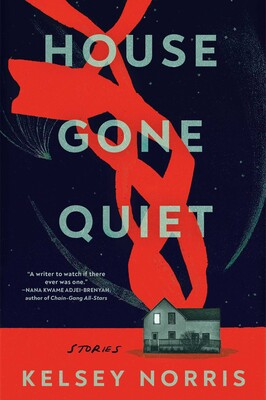
In talking about my debut story collection, House Gone Quiet, with friends and family, I’ve often found myself pitching the merits of the short story form itself. Due to habit or book marketing or a lack of exposure, it’s simply the case that most fiction readers who enter a bookstore are typically on the lookout for a novel (You can trust me on this one, as a former bookseller myself). And don’t get me wrong—I love novels! But there are times when only a story collection can scratch the particular reading itch I’m experiencing.
I love short fiction for its tight prose and its economy of detail. There are also risks—be it with voice or form, premise or genre—that seem more digestible to encounter in short fiction than they might be stretched out over the course of a 400-page novel. But it’s also the case that I didn’t read many short stories until the college courses when I began to study and write them. So, in pitching not only my collection, but also the idea of why one might choose a story collection in general over the more familiar novel form, I’ve turned to another common form of media to make the argument—that is, television shows versus movies.
You know how you’re not always in the mood for a film’s long, drawn-out story? Or, you’re short on time, or attention span? Or how, before you fall asleep, you’re looking for the sense of closure that comes from a 30-minute episode of your current show? These are also the perfect reasons to pick up a short story collection, especially for those new to the genre of short fiction.
To get you started, or to help you find your next favorite collection, here are 7 story collections—both backlist picks and new releases—to pick up if you’re a fan of a TV show with a similar theme or premise.
Beloved by readers, writers, and booksellers alike, Machado’s collection helped to pave the way for genre-bending fiction. And while Black Mirror has proved to be the most apt metaphorical comparison for my own collection—which includes stories linked by theme rather than by location or character—it’s also a fitting one for Machado’s. From a fairytale-esque story of a bride whose only request of her husband is that he not remove the green ribbon tied around her neck to another featuring a protagonist navigating new love amidst an epidemic of women turning incorporeal and ghostly, the stories in Her Body and Other Parties are linked by want and hunger, violence and darkness.
Is this show-collection pairing set in the same place? No. Is it about the same group of people? Also no. But what FX’s Reservation Dogs and Kakimoto’s debut story collection do have in common is a vivid sense of culture and heritage, which often influence the day-to-day lives of those living within them. Every Drop Is a Man’s Nightmare follows Native Hawaiian and Japanese women as they not only learn and navigate within their cultural parameters, but also grapple with outsiders’ interpretations of them. The opening story charts a list of rules and superstitions, including “Don’t whistle at night! You know what happens if the Night Marchers hear you?”. Another story follows a Hawaiian writer who pens the ancestral manuscript she feels she’s expected to, and meets the consequences that unravel from this choice.
Alcott’s debut story collection features tight yet expansive writing, as well as themes that echo Phoebe Waller-Bridge’s television series—chiefly women behaving badly as they navigate sexual desire, relationships, and their own happiness. In one story, a collective voice recounts a woman’s summer spent alone at a remote house and the transgressions she commits there. Another finds a woman standing before a museum’s portrait of her late mother in a compromising sexual scenario. Like Fleabag, a favorite of mine, Emergency will be a work I circle back to in order to rediscover the kernels I might’ve missed the first time through.
Jordan Peele has recently curated an anthology of Black horror that’s sure to delight fans of his other spooky but troublingly plausible media ventures. This collection includes stellar writers with devoted followings like N.K. Jemisin, Lesley Nneka Arimah, Rebecca Roanhorse, and Nnedi Okorafor.
It’s not such a stretch to say that if you enjoy the series written by Alissa Nutting, you might enjoy the story collection that predicated it as well as the novel the show is based on. The show version of Made for Love explores the conflict between modern advances and human connection, which you’ll also find in George Saunders’s Tenth of December. The story “Escape from Spiderhead” follows a protagonist whose emotions are experimented upon and controlled by a ruthless pharmaceutical company. The collection also features such sci-fi conceits as immigrant-women-turned-decor by a brain-altering surgery and, in another story, a drug that increases chivalry to disastrous results, all deployed with Saunders’ characteristic generosity towards human resilience and compassion.
If you love the surrealism of FX’s Atlanta, especially as it relates to stories snatched from real-life headlines or Black history, you’ll find a similar adeptness in Adjei-Brenyah’s Friday Black. The opening story follows a code-switching protagonist reeling from the news of a white man acquitted of wrongdoing after murdering five black youths with a chainsaw. My favorite story in the collection, “Zimmer Land” is set in a theme park where visitors are allowed to exercise their racial prejudices in preconstructed scenarios. The stories are smart and stylistically adept, all while interrogating what it means to be Black in America.
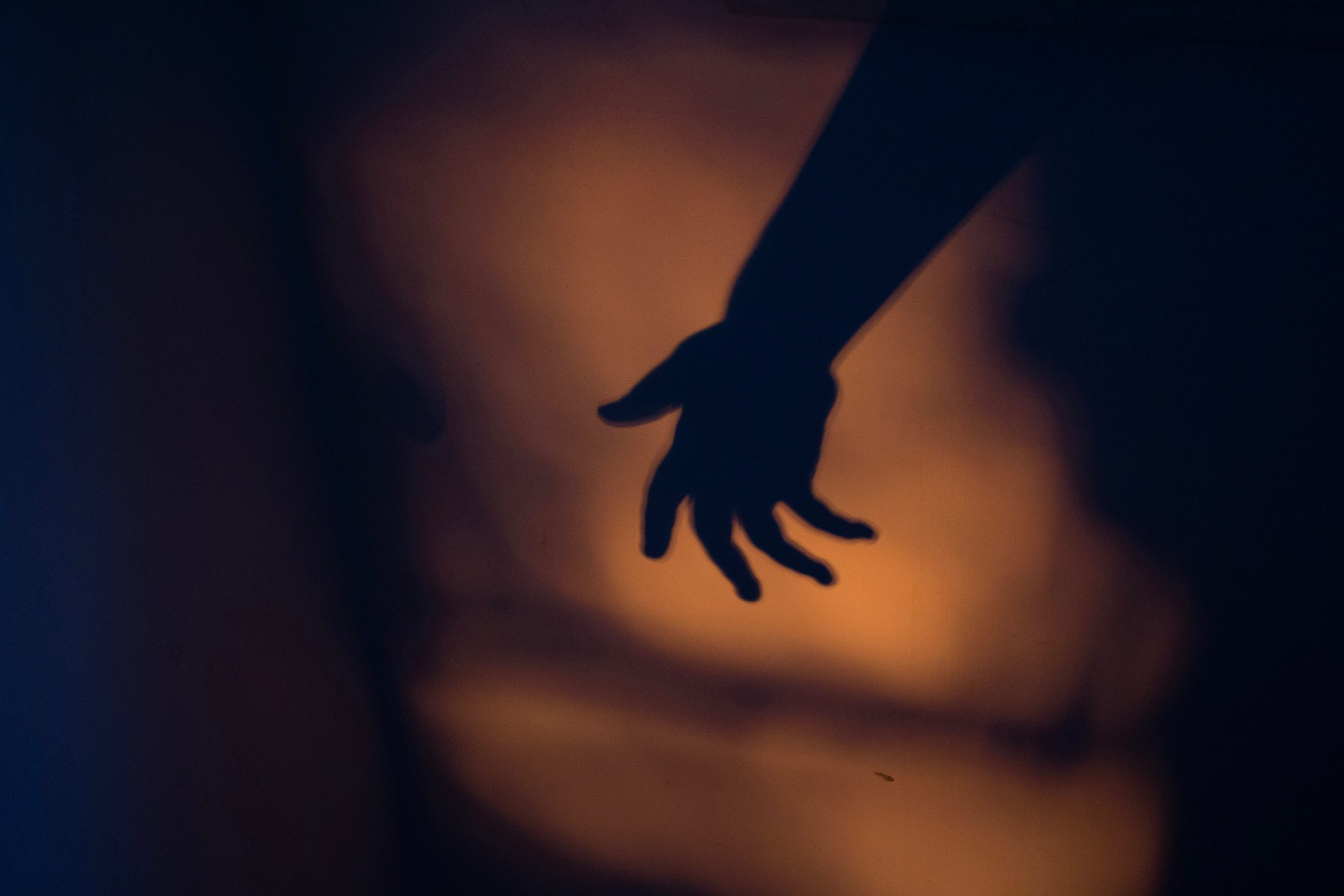
I was a child of the 1960s. Three network stations or fresh air; take your pick. No pocket computers for entertainment in dark-age suburbia. We read our comic books ragged and played catch with Dad in the backyard. He created shadow puppets on the wall to amuse us before bed. Elephants, giraffes, and foxes. The classics. He also made some animals I didn’t recognize. His hands twisted to form these mysterious entities, which he called Mimis. Dad frequently traveled abroad. Said he’d learned of the Mimis at a conference in Australia. His double-jointed performances wowed me and my older brother, Greg. Mom hadn’t seemed as impressed.
Then I discovered photography.
Mom and Dad gave me a camera. Partly because they were supportive of their children’s aspirations; partly because I bugged them relentlessly. At six years old, I already understood my life’s purpose.
Landscapes bore me, although I enjoy celestial photography—high-resolution photos of planets, hanging in partial silhouette; blazing white fingertips emerging from a black pool. People aren’t interesting either, unless I catch them in candid moments to reveal a glimmer of their hidden selves. Wild animals became my favorite subjects. Of all the variety of animals, I love predators. Dad approved. He said, Men revile predators because they shed blood. What an unfair prejudice. Suppose garden vegetables possessed feelings. Suppose a carrot squealed when bitten in two . . . Well, a groundhog would go right on chomping, wouldn’t he?
If anybody knew the answer to such a question, it’d be my old man. His oddball personality might be why Mom took a shine to him. Or she appreciated his potential as a captain of industry. What I do know is, he was the kind of guy nobody ever saw coming.
My name is Randall Xerxes Vance. Friends tease me about my signature—RX and a swooping, offset V. Dad used to say, Ha-ha, son. You’re a prescription for trouble! As a pro wilderness photographer, I’m accustomed to lying or sitting motionless for hours at a stretch. Despite this, I’m a tad jumpy. You could say my fight or flight reflex is highly tuned. While on assignment for a popular magazine, a technician—infamous for his pranks—snuck up, tapped my shoulder, and yelled, Boo! I swung instinctively. Wild, flailing. Good enough to knock him on his ass into a ditch.
Colleagues were nonplussed at my overreaction. Me too. That incident proved the beginning of a rough, emotional ride: insomnia; nightmares when I could sleep; and panic attacks. It felt like a crack had opened in my psyche. Generalized anxiety gradually worked its claws under my armor and skinned me to raw nerves. I committed to a leave of absence, pledging to conduct an inventory of possible antecedents. Soul searching pairs seductively with large quantities of liquor.
A soon-to-be-ex-girlfriend offered to help. She opined that I suffered from deep-rooted childhood trauma. I insisted that my childhood was actually fine. My parents had provided for me and my brother, supported our endeavors, and paid for our education; the whole deal.
There’s always something if you dig, she said. Subsequent to a bunch more poking and prodding, one possible link between my youth and current troubles came to mind. I told her about a game called Tiptoe Dad taught me. A variation of ambush tag wherein you crept behind your victim and tapped him or her on the shoulder or goosed them, or whatever. Pretty much the same as my work colleague had done. Belying its simple premise, there were rules, which Dad adhered to with solemnity. The victim must be awake and unimpaired. The sneaker was required to assume a certain posture—poised on the balls of his or her feet, arms raised and fingers pressed into a blade or spread in an exaggerated manner. The other details and prescriptions are hazy.
As far as odd family traditions go, this seemed fairly innocuous. Dad’s attitude was what made it weird.
Tiptoe went back as far as I could recall, but my formal introduction occurred at age six. Greg and I were watching a nature documentary. Dad wandered in late, still dressed from a shift at the office and wearing that coldly affable expression he put on along with his hat and coat. The documentary shifted to the hunting habits of predatory insects. Dad sat between us on the couch. He stared intently at the images of mantises, voracious Venezuelan centipedes, and wasps. During the segment on trapdoor spiders, he smiled and pinched my shoulder. Dad was fast for an awkward, middle-aged dude. I didn’t even see his arm move. People say sneaky as a snake, sly as a fox, but spiders are the best hunters. Patient and swift. I didn’t give it a second thought.
One day, soon after, he stepped out of a doorway, grabbed me, and started tickling. Then he snatched me into the air and turned my small body in his very large hands. He pretended to bite my neck, arms, and belly. Which part shall I devour first?Eeny, meeny, miny moe! I screamed hysterical laughter. He explained that tickling and the reaction to tickling were rooted in primitive fight or flight responses to mortal danger.
Tiptoe became our frequent contest, and one he’d already inflicted on Greg and Mom. The results seldom amounted to more than the requisite tap, except for the time when Dad popped up from a leaf pile and pinched me so hard it left a welt. You bet I tried to return the favor—on countless occasions, in fact—and failed. I even wore camo paint and dressed in black down to my socks, creeping closer, ever closer, only for him to whip his head around at the last second and look me in the eye with a tinge of disappointment. Heard you coming from the other end of the house, son. Are you thinking like a man or a spider? Like a fox or a mantis? Keep trying.
Another time, I walked into a room and caught him playing the game with Mom as victim. Dad gave me a sidelong wink as he reached out, tiptoeing closer and closer. Their silhouettes flickered on the wall. The shadows of his arms kept elongating; his shadow fingers ended in shadow claws. The optical illusion made me dizzy and sick to my stomach. He kissed her neck. She startled and mildly cussed him. Then they laughed, and once more he was a ham-fisted doofus, innocently pushing his glasses up the bridge of his nose.
As with many aspects of childhood, Tiptoe fell to the wayside for reasons that escaped me until the job incident brought it crashing home again. Unburdening to my lady friend didn’t help either of us as much as we hoped. She acknowledged that the whole backstory was definitely fucked up and soon found other places to be. Probably had a lot to do with my drinking, increasingly moody behavior, and the fact that I nearly flew out of my skin whenever she walked into the room.
The worst part? This apparent mental breakdown coincided with my mother’s health tribulations. A double whammy. After her stroke, Mom’s physical health gradually went downhill. She’d sold the house and moved into a comfy suite at the retirement village where Grandma resided years before.
The role of a calm, dutiful son made for an awkward fit, yet there wasn’t much choice, considering I was the last close family who remained in touch. Steeling my resolve, I shaved, slapped on cologne to disguise any lingering reek of booze, and drove down from Albany twice a week to hit a diner in Port Ewing. Same one we’d visited since the 1960s. For her, a cheeseburger and a cup of tea. I’d order a sandwich and black coffee and watch her pick at the burger. Our conversations were sparse affairs—long silences peppered with acerbic repartee.
She let me read to her at bedtime. Usually, a few snippets from Poe or his literary cousins. I’ve gotten morbid, she’d say. Give me some of that Amontillado, hey? Or, A bit of M.R. James, if you please. Her defining characteristics were intellectual curiosity and a prickly demeanor. She didn’t suffer fools—not in her prime, nor in her twilight. Ever shrewd and guarded, ever close-mouthed regarding her interior universe. Her disposition discouraged “remember-whens” and utterly repelled more probing inquiries into secrets.
Nonetheless, one evening I stopped in the middle of James’ The Ash Tree and shut the book. “Did Aunt Vikki really have the gift?”
Next to Mom and Dad, Aunt Vikki represented a major authority figure of my childhood. She might not have gone to college like my parents, but she wasn’t without her particular abilities. She performed what skeptics (my mother) dismissed as parlor tricks. Stage magician staples like naming cards in someone’s hand, or locating lost keys or wallets. Under rare circumstances, she performed hypnotic regression and “communed” with friendly spirits. Her specialty? Astral projection allowed her to occasionally divine the general circumstances of missing persons. Whether they were alive or dead and their immediate surroundings, albeit not their precise location. Notwithstanding Dad’s benign agnosticism and Mom’s blatant contempt, I assumed there was something to it—the police had allegedly enlisted Vikki’s services on two or three occasions. Nobody ever explained where she acquired her abilities. Mom and Dad brushed aside such questions and I dared not ask Aunt Vikki directly given her impatience with children.
“I haven’t thought of that in ages.” Mom lay in the narrow bed, covers pulled to her neck. A reading lamp reflected against the pillow and illuminated the shadow of her skull. “Bolt from the blue, isn’t it?”
“I got to thinking of her the other day. Her magic act. The last time we visited Lake Terror . . . .”
“You’re asking whether she was a fraud.”
“Nothing so harsh,” I said. “The opposite, in fact. Her affinity for predictions seemed uncanny.”
“Of course it seemed uncanny. You were a kid.”
“Greg thought so.”
“Let’s not bring your brother into this.”
“Okay.”
She eyed me with a glimmer of suspicion, faintly aware that my true interest lay elsewhere; that I was feinting. “To be fair, Vikki sincerely believed in her connection to another world. None of us took it seriously. God, we humored the hell out of that woman.”
“She disliked Dad.”
“Hated John utterly.” Her flat, unhesitating answer surprised me.
“Was it jealousy? Loneliness can have an effect . . . .”
“Jealousy? C’mon. She lost interest in men after Theo kicked.” Theo had been Aunt Vikki’s husband; he’d died on the job for Con Edison.
I decided not to mention the fact that she’d twice remarried since. Mom would just wave them aside as marriages of convenience. “And Dad’s feelings toward her?”
“Doubtful he gave her a second thought whenever she wasn’t right in front of his nose. An odd duck, your father. Warm and fuzzy outside, cold tapioca on the inside.”
“Damn, Mom.”
“Some girls like tapioca. What’s with the twenty questions? You have something to say, spill it.”
Should I confess my recent nightmares? Terrible visions of long-buried childhood experiences? Or that Dad, an odd duck indeed, starred in these recollections and his innocuous, albeit unnerving, Tiptoe game assumed a sinister prominence that led to my current emotional turmoil? I wished to share with Mom; we’d finally gotten closer as the rest of our family fell by the wayside. Still, I faltered, true motives unspoken. She’d likely scoff at my foolishness in that acerbic manner of hers and ruin our fragile bond.
She craned her neck. “You haven’t seen him around?”
“Who?” Caught off guard again, I stupidly concluded, despite evidence to the contrary, that her thoughts were fogged with rapid onset dementia. Even more stupidly, I blurted, “Mom, uh, you know Dad’s dead. Right?”
“Yeah, dummy,” she said. “I meant Greg.”
“The guy you don’t want to talk about?” Neither of us had seen my brother in a while. Absence doesn’t always make the heart grow fonder.
“Smart-ass.” But she smiled faintly.
In the wee hours, alone in my studio apartment, I woke from a lucid nightmare. Blurry, forgotten childhood images coalesced with horrible clarity. Aunt Vikki suffering what we politely termed an episode; the still image of a missing woman on the six o’clock news; my father, polishing his glasses and smiling cryptically. Behind him, a sun-dappled lake, a stand of thick trees, and a lost trail that wound into the Catskills . . . or Purgatory. There were other, more disturbing recollections that clamored for attention, whirling in a black mass on the periphery. Gray, gangling hands; a gray, cadaverous face . . . .
I poured a glass of whiskey and dug into a shoebox of loose photos; mainly snapshots documenting our happiest moments as a family. I searched those smiling faces for signs of trauma, a hint of anguish to corroborate my tainted memories. Trouble is, old, weathered pictures are ambiguous. You can’t always tell what’s hiding behind the patina. Nothing, or the worst thing imaginable.
Whatever the truth might be, this is what I recall about our last summer vacation to the deep Catskills:
During the late 1960s, Dad worked at an IBM plant in Kingston, New York. Mom wrote colorful, acerbic essays documenting life in the Mid-Hudson Valley; sold them to regional papers, mainly, and sometimes slick publications such as The New Yorker and the SaturdayEvening Post. We had it made. House in the suburbs, two cars, and an enormous color TV. I cruised the neighborhood on a Schwinn ten-speed with the camera slung around my neck. My older brother, Greg, ran cross-country for our school. Dad let him borrow the second car, a Buick, to squire his girlfriend into town on date night.
The Vance clan’s holy trinity: Christmas; IBM Family Day; and the annual summer getaway at a cabin on Lake Terron. For us kids, the IBM Family Day carnival was an afternoon of games, Ferris wheel rides, running and screaming at the top of our lungs, and loads of deep-fried goodies. The next morning, Dad would load us into his Plymouth Suburban and undertake the long drive through the mountains. Our lakeside getaway tradition kicked off when I was a tyke—in that golden era, city folks retreated to the Catskills to escape the heat. Many camped at resorts along the so-called Borscht Belt. Dad and his office buddies, Fred Mercer and Leo Schrader, decided to skip the whole resort scene. Instead, they went in together on the aforementioned piece of lakefront property and built a trio of vacation cabins. The investment cost the men a pretty penny. However, nearby Harpy Peak was a popular winter destination. Ski bums were eager to rent the cabins during the holidays and that helped Dad and his friends recoup their expenses.
But let’s stick to summer. Dreadful hot, humid summer that sent us to Lake Terron and its relative coolness. Me, Greg, Mom, Dad, Aunt Vikki, and Odin, our dog; supplies in back, a canoe strapped up top. Exhausted from Family Day, Greg and I usually slept for most of the trip. Probably a feature of Dad’s vacation-management strategy. Then he merely had to contend with Mom’s chain-smoking and Aunt Vikki bitching about it. Unlike Mom and Dad, she didn’t do much of anything. After her husband was electrocuted while repairing a downed power line, she collected a tidy insurance settlement and moved from the city into our Esopus home. Supposedly a temporary arrangement on account of her nervous condition. Her nerves never did improve—nor did anyone else’s, for that matter.
We made our final pilgrimage the year before Armstrong left bootprints on the Moon. Greg and I were seventeen and twelve, respectively. Our good boy Odin sat between us. He’d outgrown his puppy ways and somehow gotten long in the tooth. Dad turned onto the lonely dirt track that wound a mile through heavy forest and arrived at the lake near sunset. The Mercers and Schraders were already in residence: a whole mob of obstreperous children and gamely suffering adults collected on a sward that fronted the cabins. Adults had gotten a head start on boilermakers and martinis. Grill smoke wafted toward the beach. Smooth and cool as a mirror, the lake reflected the reddening sky like a portal to a parallel universe.
Smooth and cool as a mirror, the lake reflected the reddening sky like a portal to a parallel universe.
Lake Terron—or Lake Terror, as we affectionally called it—gleamed at the edge of bona fide wilderness. Why Lake Terror? Some joker had altered the N on the road sign into an R with spray-paint and it just stuck. Nights were pitch black five paces beyond the porch. The dark was full of insect noises and the coughs of deer lurching around in the brush.
Our cabin had pretty rough accommodations—plank siding and long, shotgun shack floor plan with a washroom, master bedroom, and a loft. Electricity and basic plumbing, but no phone or television. We lugged in books, cards, and board games to fashion a semblance of civilized entertainment. On a forest ranger’s advice, Dad always propped a twelve-gauge shotgun by the door. Black bears roamed the woods and were attracted to the scents of barbecue and trash. And children! Mom would say. The barbecue set the underlying tone; friendly hijinks and raucous laughter always prevailed those first few hours. Revived from our torpor, kids gorged on hotdogs and cola while parents lounged, grateful for the cool air and peaceful surroundings—except for the mosquitos. Everybody complained about them. Men understood shop talk was taboo. Those who slipped up received a warning glare from his better half. Nor did anyone remark upon news trickling in via the radio, especially concerning the Vietnam War; a subject that caused mothers everywhere to clutch teenaged sons to their bosoms. “Camp Terror” brooked none of that doomy guff. For two weeks, the outside world would remain at arm’s length.
Mr. Schrader struck a bonfire as the moon beamed over Harpy Peak. Once the dried cedar burned to coals, on came the bags of marshmallows and a sharpened stick for each kid’s grubby mitt. I recall snatches of conversation. The men discussed the Apollo program, inevitably philosophizing on the state of civilization and how far we’d advanced since the Wright brothers climbed onto the stage.
“We take it for granted,” Mr. Mercer said.
“What’s that?” Mr. Schrader waved a marshmallow flaming at the end of his stick.
“Comfort, safety. You flip a switch, there’s light. Turn a key, a motor starts.”
“Electricity affords us the illusion of self-sufficiency.”
“Gunpowder and penicillin imbue us with a sense of invincibility. Perpetual light has banished our natural dread of the dark. We’re apes carrying brands of fire.”
“Okay, gents. Since we’re on the subject of apes. We primates share a common ancestor. Which means we share a staggering amount of history. You start dwelling on eons, you have to consider the implications of certain facts.”
Mr. Mercer shook his head as he lit a cigarette. “I can only guess where this is going.”
“Simulation of human features and mannerisms will lead the field into eerie precincts,” Dad said.
“Uh-oh,” Mr. Schrader said. “This sounds suspiciously close to opshay alk-tay.”
“Thank goodness we’re perfecting mechanical arms to handle rivet guns, not androids. Doesn’t get more mundane.”
“Mark it in the book. Heck, the Japanese are already there.”
“Whatever you say, John.”
“Researchers built a robot prototype—a baby with a lifelike face. Focus groups recoiled in disgust. Researchers came back with artificial features. Focus groups oohed and ahhed. Corporate bankrolled the project. We’ll hear plenty in a year or two.”
“Humans are genetically encoded to fear things that look almost like us, but aren’t us.”
“Ever ask yourself why?”
“No, can’t say I’ve dedicated much thought to the subject,” Mr. Mercer said. “So, why are we allegedly fearful of, er, imitations?”
“For the same reason a deer or a fowl will spook if it gets wind of a decoy. Even an animal comprehends that a lure means nothing good.” Dad had mentioned this periodically. Tonight, he didn’t seem to speak to either of his colleagues. He looked directly at me.
“Shop talk!” Mom said with the tone of a referee declaring a foul.
Mrs. Schrader and Mrs. Mercer interrupted their own conversation to boo the men.
“Whoops, sorry!” Mr. Mercer gestured placatingly. “Anyway, how about those Jets?”
Later, somebody suggested we have a game. No takers for charades or trivia. Finally, Mrs. Mercer requested a demonstration of Aunt Vikki’s fabled skills. Close magic, prestidigitation, clairvoyance, or whatever she called it. My aunt demurred. However, the boisterous assembly would brook no refusal and badgered her until she relented.
That mystical evening, performing for a rapt audience against a wilderness backdrop, she was on her game. Seated lotus on a blanket near the fire, she affected trancelike concentration. Speaking in a monotone, she specified the exact change in Mr. Schrader’s pocket, the contents of Mrs. Mercer’s clutch, and the fact that one of the Mercer kids had stolen his sister’s diary. This proved to be the warmup routine.
Mr. Mercer said, “John says you’ve worked with the law to find missing persons.”
“Found a couple.” Her cheeks were flushed, her tone defiant. “Their bodies, at any rate.”
“That plane that went down in the Adirondacks. Can you get a psychic bead on it?”
Aunt Vikki again coyly declined until a chorus of pleas “convinced” her to give it a shot. She swayed in place, hands clasped. “Dirt. Rocks. Running water. Scattered voices. Many miles apart.”
“Guess that makes sense,” Mr. Mercer said to Mr. Schrader. “Wreck is definitely spread across the hills.”
Mrs. Schrader said under her breath to Dad, “Eh, what’s the point? She could say anything she pleases. We’ve no way to prove her claim.” He shooshed her with a familiar pat on the hip. Everybody was ostensibly devout in those days. Mrs. Schrader frequently volunteered at her church and I suspect Aunt Vikki’s occult shenanigans, innocent as they might’ve been, troubled her. The boozing and flirtation less so.
The eldest Mercer girl, Katie, asked if she could divine details of an IBM housewife named Denise Vinson who’d disappeared near Saugerties that spring. Nobody present knew her husband; he was among the faceless legions of electricians who kept the plant humming. He and his wife had probably attended a company buffet or some such. The case made the papers.
“Denise Vinson. Denise Vinson . . . .” Aunt Vikki slipped into her “trance.” Moments dragged on and an almost electric tension built; the hair-raising sensation of an approaching thunderstorm. The adults ceased bantering. Pine branches creaked; an owl hooted. A breeze freshened off the lake, causing water to lap against the dock. Greg and I felt it. His ubiquitous smirk faded, replaced by an expression of dawning wonderment. Then Aunt Vikki went rigid and shrieked. Her cry echoed off the lake and caused birds to dislodge from their roosts in the surrounding trees. Her arms extended, fingers and thumbs together, wrists bent downward. She rocked violently, cupped hands stabbing the air in exaggerated thrusts. Her eyes filled with blood. My thoughts weren’t exactly coherent, but her posture and mannerisms reminded me of a mantis lashing at its prey. Reminded me of something else, too.
Her tongue distended as she babbled like a Charismatic. She covered her face and doubled over. Nobody said anything until she straightened to regard us.
“Geez, Vikki!” Mr. Mercer nodded toward his pop-eyed children.
“I mean, geez Louise!”
“What’s the fuss?” She glanced around, dazed.
Mom, in a display of rare concern, asked what she’d seen. Aunt Vikki shrugged and said she’d glimpsed the inside of her eyelids. Why was everybody carrying on? Dad lurked to one side of the barbecue pit. His glasses were brimmed with the soft glow of the coals. I couldn’t decipher his expression.
Mood dampened, the families said their goodnights and drifted off to bed. Mom, tight on highballs, compared Aunt Vikki’s alleged powers of clairvoyance to those of the famous Edgar Cayce. This clash occurred in the wee hours after the others retired to their cabins. Awakened by raised voices, I hid in shadows atop the stairs to the loft, eavesdropping like it was my job.
“Cayce was as full of shit as a Christmas goose.” Aunt Vikki’s simmering antipathy boiled over. “Con man. Charlatan. Huckster.” Her eyes were bloodshot and stained from burst capillaries. Though she doggedly claimed not to recall the episode earlier that evening, its lingering effects were evident.
“Vikki,” Dad said in the placating tone he deployed against disgruntled subordinates. “Barbara didn’t mean any harm. Right, honey?”
“Sure, I did . . . not.” From my vantage I saw Mom perched near the cold hearth, glass in hand. The drunker she got, the cattier she got. She drank plenty at Lake Terror.
Aunt Vikki loomed in her beehive-do and platform shoes. “Don’t ever speak of me and that . . . that fraud in the same breath. Cayce’s dead and good riddance to him. I’m the real McCoy.”
“Is that a fact? Then, let’s skip the rest of this campout and head for Vegas.” Mom tried to hide her sardonic smile with the glass.
“Ladies, it’s late,” Dad said. “I sure hope our conversation isn’t keeping the small fry awake.” His not-so-subtle cue to skedaddle back to my cot left me pondering who was the psychic—Aunt Vikki or Dad? Maybe he can see in the dark was my last conscious thought. It made me giggle, albeit nervously.
Greg jumped me and Billy Mercer as we walked along the trail behind the cabins. Billy and I were closest in age. Alas, we had next to nothing in common and didn’t prefer one another’s company. Those were the breaks, as the youth used to say. The path forked at a spring before winding ever deeper into the woods. To our left, the path climbed a steep hill through a notch in a stand of shaggy black pine. Mom, the poet among us, referred to it as the Black Gap. Our parents forbade us to drink from the spring, citing mosquito larvae. Predictably, we disregarded their command and slurped double handfuls of cool water at the first opportunity. As I drank, Greg crept upon me like an Apache.
He clamped my neck in a grip born of neighborhood lawn-mowing to earn extra bucks for gas and date-night burgers. “Boo!” He’d simultaneously smacked Billy on the back of his head. The boy yelped and tripped over his own feet trying to flee. Thus, round one of Tiptoe went to my insufferably smirking brother. Ever merciless in that oh-so-special cruelty the eldest impose upon their weaker siblings, I nonetheless detected a sharper, savage inflection to his demeanor of late. I zipped a rock past his ear from a safe distance—not that one could ever be sure—and beat a hasty retreat into the woods. Greg flipped us the bird and kept going without a backward glance.
The reason this incident is notable? Billy Mercer complained to the adults. Dad pulled me aside for an account, which I grudgingly provided—nobody respects a tattletale. Dad’s smirk was even nastier than Greg’s. Head on a swivel, if you want to keep it, kiddo. He put his arm around my brother’s shoulders and they shared a laugh. Three days in, and those two spent much of it together, hiking the forest and floating around the lake. The stab of jealousy hurt worse than Greg squeezing my neck.
Near bedtime, we set up tents in the backyard, a few feet past the badminton net and horseshoe pit. The plan was for the boys to sleep under the stars (and among the swarming mosquitos). Mrs. Schrader protested weakly that maybe this was risky, what with the bears. Mr. Schrader and Mr. Mercer promised to take watches on the porch.
Odin stayed with me; that would be the best alarm in the world. No critter would get within a hundred yards without that dog raising holy hell. And thus it went: Odin, Billy Mercer, a Schrader boy, and me in one tent, and the rest of them in the other. We chatted for a bit. Chitchat waned; I tucked into my sleeping bag, poring over an issue of Mad Magazine by flashlight until I got sleepy.
I woke to utter darkness. Odin panted near my face, growling softly. I lay at the entrance. Groggy and unsure of whether the dog had scented a deer or a bear, I instinctively clicked on my trusty flashlight, opened the flap, and shone it into the trees—ready to yell if I spotted danger. Nothing to corroborate Odin’s anxious grumbles. Scruffy grass, bushes, and the shapeless mass of the forest. He eventually settled. I slept and dreamed two vivid dreams. The first was of Aunt Vikki spotlighted against a void. Her eyes bulged as she rocked and gesticulated, muttering. Dream logic prevailing, I understood her garbled words: Eeny! Meany! Miny! Moe!
In the second, I floated; a disembodied spirit gazing down. Barely revealed by a glimmer of porch light, Dad crawled from under a bush and lay on his side next to the tent. He reached through the flap. His arm moved, stroking. These dreams were forgotten by breakfast. The incident only returned to me many years later; a nightmare within a nightmare.
Over blueberry pancakes, Dad casually asked whether I’d care to go fishing. At an age where a kid selfishly treasured an appointment on his father’s calendar, I filled a canteen and slung my trusty Nikon F around my neck and hustled after him to the dock. Unlike the starter camera I’d long outgrown, the Nikon was expensive and I treated it with proper reverence. Film rolls were costly as well. Manual labor, supplemented by a generous allowance and a bit of wheedling, paid the freight. Mom, a stalwart supporter of the arts, chipped in extra.
She encouraged me to submit my work to newspaper and magazine contests, in vain. Back then, the hobby was strictly personal. I wasn’t inclined to share my vision with the world just yet, although I secretly dreamed big dreams—namely, riding the savannah with the crew of Mutual of Omaha’s Wild Kingdom.
The sun hadn’t cleared the trees as we pushed away from the dock. Dad paddled. I faced him, clicking shots of the receding cabins and birds rising and falling from the lake and into the sky. He set aside his paddle and the canoe kept on gliding across the dark water.
“This is where we’re gonna fish?” I said.
“No fishing today.” After a pause, he said, “I’m more a fisher of men.”
“I don’t get it.”
“Time to begin reflecting on what kind of man you are.”
“Dad, I’m twelve.” I inherited my smart-Alec lip from Mom.
“That’s why I don’t expect you to decide today. Merely think on it.” He could see I wasn’t quite getting it. “Ever since you showed an interest in photography, I had a hunch . . . . ” He cupped his hands and blew into the notch between his thumbs. Took him a couple of tries to perfect an eerie, fluting whistle that rebounded off the lake and nearby hills. He lowered his hands and looked at me. “I planned to wait until next year to have this conversation. Aunt Vikki’s . . . outburst has me thinking sooner is better. Sorry if she frightened you.”
“Why did she fly off the handle? Are her eyes okay?” I hoped to sound unflappable.
“Her eyes are fine. It’s my fault. The Vinson woman was too close to home. Anyhow, your aunt is staying with us because she can’t live alone. She’s fragile. Emotionally.”
“Vikki’s crazy?”
“No. Well, maybe. She’s different and she needs her family.”
“She and Mom hate each other.”
“They fight. That doesn’t mean they hate each other. Do you hate your brother? Wait, don’t answer that.” He dipped his paddle into the water. “What’s my job at the plant?”
“You build—”
“Design.”
“You design robots.”
“I’m a mechanical engineer specializing in robotic devices and systems. It’s not quite as dramatic as it sounds. How do you suppose I landed that position?”
“Well, you went to school—”
“No, son. I majored in sociology. Any expertise I have in engineering I’ve learned on the fly or by studying at night.”
“Oh.” Confused by the turn in our conversation, I fiddled with my camera.
“Want to know the truth?”
“Okay.” I feared with all the power of my child’s imagination that he would reveal that his real name was Vladimir, a deep cover mole sent by the Russians. It’s difficult to properly emphasize the underlying paranoia wrought by the Cold War on our collective national psyche. My brother and I spied on our neighbors, profiling them as possible Red agents. We’d frequently convinced ourselves that half the neighborhood was sending clandestine reports to a numbers station.
“I bullshitted the hiring committee,” Dad said. He seldom cursed around Mom; more so Greg. Now I’d entered his hallowed circle of confidence. “That’s how I acquired my position. If you understand what makes people tick, you can always get what you want. Oops, here we are.” Silt scraped the hull as he nosed the canoe onto the shore. We disembarked and walked through some bushes to a path that circled the entire lake. I knew this since our families made the entire circuit at least once per vacation.
Dad yawned, twisting his torso around with a contortionist’s knack. He doubled his left hand against his forearm; then the right. His joints popped. This wasn’t the same as my brother cracking his knuckles, which he often did to annoy me. No, it sounded more like a butcher snapping the bones of a chicken carcass. He sighed in evident relief. “Son, I can’t tell you what a living bitch it is to maintain acceptable posture every damned minute of the day. Speaking of wanting things. You want great pictures of predators, right?” I agreed, sure, that was the idea. He hunched so our heads were closer. “Prey animals are easy to stalk. They’re prey. They exist to be hunted and eaten. Predators are tougher. I can teach you. I’ve been working with your brother for years. Getting him ready for the jungle.”
“The jungle?” I said, hearing and reacting to the latter part of his statement while ignoring the former. “You mean Vietnam?” There was a curse word. “But he promised Mom—”
“Greg’s going to volunteer for the Marines. Don’t worry. He’s a natural. He’s like me.” He stopped and laid his hand on my shoulder. Heavy and full of suppressed power. “I can count on your discretion not to tell your mother. Can’t I?”
Sons and fathers have differences. Nonetheless, I’d always felt safe around mine. Sure, he was awkward and socially off-putting. Sure, he ran hot and cold. Sure, he made lame jokes and could be painfully distant. People joke that engineers are socially maladjusted; there’s some truth to that cliché. Foibles notwithstanding, I didn’t doubt his love or intentions. Yet, in that moment, I became hyper aware of the size of his hand—of him, in general—and the chirping birds, and that we were alone here in the trees on the opposite shore of the lake. Awareness of his physical grotesqueness hit me in a wave of revulsion. From my child’s unvarnished perspective, his features transcended mere homeliness. Since he’d stretched, his stance and expression had altered. Spade-faced and gangling, toothy and hunched, yet tall and deceptively agile. A carnivore had slipped on Dad’s sporting goods department ensemble and lured me into the woods. Let’s go to Grandma’s house!
Awareness of his physical grotesqueness hit me in a wave of revulsion.
Such a witless, childish fantasy. The spit dried in my mouth anyhow. Desperate to change the subject, perhaps to show deference the way a wolf pup does to an alpha, I said, “I didn’t mean to call Aunt Vikki crazy.”
Dad blinked behind those enormous, horn-rimmed glasses. “It would be a mistake to classify aberrant psychology as proof of disorder.”
He registered my blank expression. “Charles Addams said—”
“Who’s that?”
“A cartoonist. He said, ‘What is normal for the spider is chaos for the fly.’ He was correct. The world is divided between spiders and flies.” He studied me intently, searching for something, then shook himself and straightened. His hand dropped away from my shoulder. Such a large hand, such a long arm. “C’mon. Let’s stroll a bit. If we’re quiet, we might surprise a woodland critter.”
We strolled.
Contrary to his stated intention of moving quietly to surprise our quarry, Dad initiated a nonstop monologue. He got onto the subject of physical comedy and acting. “Boris Karloff is a master,” he said. “And Lon Chaney Jr. The werewolf guy?”
“Yeah, Dad.” I’d recovered a bit after that moment of irrational panic. The world felt right again under my feet.
“Chaney’s facility with physiognomic transformation? Truly remarkable. Unparalleled, considering his disadvantages. Faking—it’s difficult.” One aspect I learned to appreciate about my old man’s character was the fact he didn’t dumb down his language. Granted, he’d speak slower depending upon the audience. However, he used big words if big words were appropriate. My desk-side dictionary and thesaurus were dog-eared as all get-out.
While he blathered, I managed a few good shots including a Cooper’s hawk perched on a high branch, observing our progress. The hawk leaped, disappearing over the canopy. When I lowered the camera, Dad was gone too. I did what you might expect—called for him and dithered, figuring he’d poke his head around a tree and laugh at my consternation. Instead, the sun climbed. Patches of cool shade thickened; the lake surface dimmed and brightened with opaline hardness. Yelling occasionally, I trudged back toward where we’d beached the canoe.
He caught me as I rounded a bend in the path. A hand and ropy arm extended so very far from the wall of brush. A hooked nail scraped my forehead. Look, son! See? Instead of pausing to peer into the undergrowth, I ran. Full tilt, camera strap whipping around my neck and a miracle I didn’t lose that beloved camera before I crashed through the bushes onto the beach.
Dad sat on a driftwood log, serenely studying the lake. “Hey, kiddo. There you are.” He explained his intention to play a harmless joke. “You perceive your surroundings in a different light if a guardian isn’t present. Every boy should feel that small burst of adrenaline under controlled circumstances. Head on a swivel, right, son?”
I realized I’d merely bumped into a low-hanging branch and completely freaked. By the time we paddled home, my wild, unreasoning terror had dissipated. It’s all or nothing with kids—dying of plague, or fit as a fiddle; bounce back from a nasty fall, or busted legs; rub some dirt on it and walk it off, or a wheelchair. Similar deal with our emotions as well. Dad wasn’t a monster, merely a weirdo. Aunt Vikki’s crazed behavior had set my teeth on edge. The perfect storm. My thoughts shied from outré concerns to dwell upon on Dad’s casual mention that Greg planned on going to war and how we’d best keep on the QT. Not the kind of secret I wanted to hide from Mom, but I wasn’t a squealer.
He remained quiet until we were gliding alongside the dock. He said, “Randy, I was wrong to test you. I’m sorry. Won’t happen again. Scout’s honor.”
It didn’t.
Toward the end of our stay, the whole lot of us trooped forth to conduct our annual peregrination around the entire lake. We packed picnic baskets and assembled at the Black Gap. Except for Dad, who’d gone ahead to prepare the site where we’d camp for lunch. Another barbecue, in fact. Mr. Mercer brought along a fancy camera (a Canon!) to record the vacation action. He and I had a bonding moment as “serious” photographers. Mr. Schrader, Dad, and a couple of the kids toted flimsy cheap-o tourist models. Such amateurs! Mr. Mercer arranged us with the pines for a backdrop. Everybody posed according to height. He yelled directions, got what he wanted, and joined the group while I snapped a few—first with his camera, then my own. I lagged behind as they scrambled uphill along the path.
We trekked to the campsite. Hot, thirsty, and ready for our roasted chicken. Dad awaited us, although not by much. None of the other adults said anything. However, I recall Mom’s vexation with the fact he hadn’t even gotten a fire going in the pit. She pulled him aside and asked what happened. Why was he so mussed and unkempt? Why so damned sweaty?
He blinked, pushed his glasses up, and shrugged. “I tried a shortcut. Got lost.”
“Lost, huh?” She combed pine needles out of his hair. “Likely story.”
That winter, drunken ski bums accidentally burned down the Schrader cabin. Oh, the plan was to rebuild in the spring and carry on. Alas, one thing led to another—kids shipping off to college, the Mercers divorcing, etcetera—and we never returned. The men sold off the property for a tidy profit. That was that for our Lake Terror era. Greg skipped college and enlisted with the United States Marine Corps in ’69. Mom locked herself in her study and cried for a week. That shook me—she wasn’t a weeper by any means. My brother sent postcards every month or so over the course of his two tours. Well, except for a long, dark stretch near the end when he ceased all communication. The military wouldn’t tell us anything. Judging by her peevishness and the fact she seldom slept, I suspect Mom walked the ragged edge.
One day, Greg called and said he’d be home soon. Could Dad pick him up at the airport? He departed an obstreperous child and returned a quieter, thoughtful man. The war injured the psyches of many soldiers. It definitely affected him. Greg kibitzed about shore leave and the antics of his rogue’s gallery of comrades. Conversely, he deflected intimate questions that drilled too close to where his honest emotions lay buried. Dumb kids being dumb kids, I asked if he killed anyone. He smiled and drummed his fingers on the table, one then another. That smile harked to his teenaged cruelness, now carefully submerged. More artful, more refined, more mature. He said, The neat thing about Tiptoe? It’s humane. Curbs the ol’ urges. Ordinarily, it’s enough to catch and release. Ordinarily. You get me, kid? We didn’t speak often after he moved to the Midwest. He latched on with a trucking company. The next to the last time I saw him was at Dad’s funeral in 1985. Dad’s ticker had blown while raking leaves. Dead on his way to the ground, same as his own father and older brother. Greg lurked on the fringes at the reception. He slipped away before I could corner him. Nobody else noticed that he’d come and gone.
Aunt Vikki? She joined a weird church. Her erratic behavior deteriorated throughout the 1970s, leading to a stint in an institution. She made a comeback in the ’80s, got on the ground floor of the whole psychic hotline craze. Made a killing telling people what they wanted to hear. Remarried to a disgraced avant garde filmmaker. Bought a mansion in Florida where she currently runs a New Age commune of international repute. Every Christmas, she drops a couple grand on my photography to jazz up her compound. I can’t imagine how poster photos of wolves disemboweling caribou go over with the rubes seeking enlightenment. Got to admit, watching those recruitment videos shot by her latest husband, my work looks damned slick.
And full circle at last. My coworker startled me; nightmares ensued; and creepy-crawly memories surfaced. Cue my formerly happy existence falling apart. Two AM routinely found me wide awake, scrutinizing my sweaty reflection in the bathroom mirror. I tugged the bags beneath my eyes, exposing the veiny whites. Drew down until it hurt. Just more of the same. What did I expect? That my face was a mask and I peered through slits? That I was my father’s son, through and through? If he were more or less than a man, what did that make me?
On my next visit, I decided to level with Mom as I tucked her into bed.
“We need to talk about Dad.” I hesitated. Was it even ethical to tell her the truth, here at the end of her days? Hey, Ma, I believe Pop was involved in the disappearances of several—god knows the number— people back in the sixties. I forged ahead. “This will sound crazy. He wasn’t . . . normal.”
“Well, duh,” she said. We sat that there for a while, on opposite sides of a gulf that widened by the second.
“Wait. Were you aware?”
“Of what?”
Hell of a question. “There was another side to Dad. Dark. Real dark, I’m afraid.”
“Ah. What did you know, ma’am, and when did you know it?”
“Yeah, basically.”
“Bank robbers don’t always tell their wives they rob banks.”
“The wives suspect.”
“Damned straight. Suspicion isn’t proof. That’s the beauty of the arrangement. We lasted until he died. There’s beauty in that too, these days.” Mom’s voice had weakened as she spoke. She beckoned me to lean in and I did. “We were on our honeymoon at a lodge. Around dawn, wrapped in a quilt on the deck. A fox light-footed into the yard. I whispered to your father about the awesomeness of mother nature, or wow, a fox! He smiled. Not his quirky smile, the cold one. He said, An animal’s expression won’t change, even as it’s eating prey alive. May sound strange, but that’s when I knew we fit perfectly.”
“Jesus, Mom.” I shivered. Dad and his pearls of wisdom, his icy little apothegms. Respected, admired, revered. But replaceable. A phrase he said in response to anyone who inquired after his job security at IBM. He’d also uttered a similar quote when admonishing Greg or me in connection to juvenile hijinks. Loved, but replaceable, boys. Loved, but replaceable.
“He never would’ve hurt you.” She closed her eyes and snuggled deeper into her blankets. Her next words were muffled. I’m not sure I heard them right. “At least, not by choice.”
Mom died. A handful of journalist colleagues and nurses showed up to pay their respects. Greg waited until the rest had gone and I was in the midst of wiping my tears to step from behind a decrepit obelisk, grip my shoulder, and whisper, “Boo!” He didn’t appear especially well. Gray and gaunt, raw around the nose and mouth. Strong, though, and seething with febrile energy. He resembled the hell out of Dad when Dad was around that age and not long prior to his coronary. Greg even wore a set of oversized glasses, although I got a funny feeling they were purely camouflage.
We relocated to a tavern. He paid for a pitcher, of which he guzzled the majority. Half a lifetime had passed since our last beer. I wondered what was on his mind. The funeral? Vietnam? That decade-old string of missing persons in Ohio near his last known town of residence?
“Don’t fret, little brother.” Predators have a talent for sniffing weakness. He’d sussed out that I’d gone through a few things recently, Mom’s death being the latest addition to the calculus of woe. “Dad told you—you’re not the same as us.” He wiped his lips and tried on a peaceable smile. “They gave me the good genes. Although, I do surely wish I had your eye. Mom also had the eye.” The second pitcher came and he waxed maudlin. “Look, apologies for being such a jerk to you when we were kids.”
“Forgotten,” I said.
“I’ve always controlled my worse impulses by inflicting petty discomfort. Like chewing a stick of gum when I want a cigarette so bad my teeth ache. I needle people. Associates, friends, loved ones. Whomever. Their unease feeds me well enough to keep the real craving at bay. Until it doesn’t.” He removed a photo from his wallet and pushed it across the table. Mom and Dad in our old yard. The sun was in Dad’s glasses. Hard to know what to make of a man’s smile when you can’t see his eyes. I pushed it back. He waved me off. “Hang onto that.”
“It’s yours.”
“Nah, I don’t need a memento. You’re the archivist. The sentimental one.”
“Fine. Thanks.” I slipped the photo into my coat pocket.
He stared at a waitress as she cleared a booth across the aisle. From a distance his expression might’ve passed for friendly. “My motel isn’t far,” he said. “Give me a ride? Or if you’re busy, I could ask her.” How could I refuse my own brother? Well, I would’ve loved to.
His motel occupied a lonely corner on a dark street near the freeway. He invited me into his cave-like room. I declined, said it had been great, etcetera. I almost escaped clean. He caught my wrist. Up close, he smelled of beer, coppery musk, and a hint of moldering earth.
“I think back to my classmates in high school and the military,” Greg said. “The drug addicts, the cons, and divorcees. A shitload of kids who grew up and moved as far from home as humanly possible. Why? Because their families were the worst thing that ever happened to them. It hit me.”
“What hit you?”
“On the whole, Mom and Dad were pretty great parents.”
“Surprising to hear you put it that way, Greg. We haven’t shared many family dinners since we were kids.”
“Take my absence as an expression of love. Consider also, I might have been around more than you noticed.” He squeezed.
As I mentioned, despite his cadaverous appearance, he was strong. And by that, I mean bone-crushing strong. My arm may as well have been clamped in the jaws of a grizzly. I wasn’t going anywhere unless he permitted it. “They were good people,” I said through my teeth.
“Adios, bud.”
Surely it was a relief when he slackened his grip and released me. I trudged down the stairs, across the lot, and had my car keys in hand when the flesh on my neck prickled. I spun, and there was Greg, twenty or so feet behind me, soundlessly tiptoeing along, knees to chest, elbows even with the top of his head, hands splayed wide. He closed most of the gap in a single, exaggerated stride. Then he froze and watched my face with the same intensity as he’d observed the waitress.
“Well done,” he said. “Maybe you learned something, bumbling around in the woods.” He turned and walked toward the lights of the motel. I waited until he’d climbed the stairs to jump into my car and floor it out of there.
A long trip home. You bet I glanced into my rearview the entire drive.
In the wee desolate hours, short on sleep due to a brain that refused to switch off, I killed the last of the bourbon while sorting ancient photographs. A mindless occupation that felt akin to picking at a scab or working on a jigsaw. No real mental agility involved other than mechanically rotating pieces until something locked into place. Among the many loose pictures I’d stashed for posterity were some shot on that last day at Lake Terror in ’68. The sequence began with our three families (minus Dad, who’d gone ahead) assembled at the Black Gap and waving; then a few more of everybody proceeding single-file away and up the trail.
I spread these photos on the coffee table and stared for a long, long while. I only spotted the slightly fuzzy, unfocused extra figure because of my keen vision . . . and possibly a dreadful instinct honed by escalating paranoia. Once I saw Dad, there were no take-backsies, as we used to say. Dad hung in the branches; a huge, distorted figure hidden in the background of a puzzle. Bloated and lanky, jaw unslung. Inhumanly proportioned, but unmistakably my father. His gaze fixed upon the camera as his left arm dangled and dangled, gray-black fingers plucking the hair of the kids as they hiked obliviously through the notch between the shaggy pines. His lips squirmed.
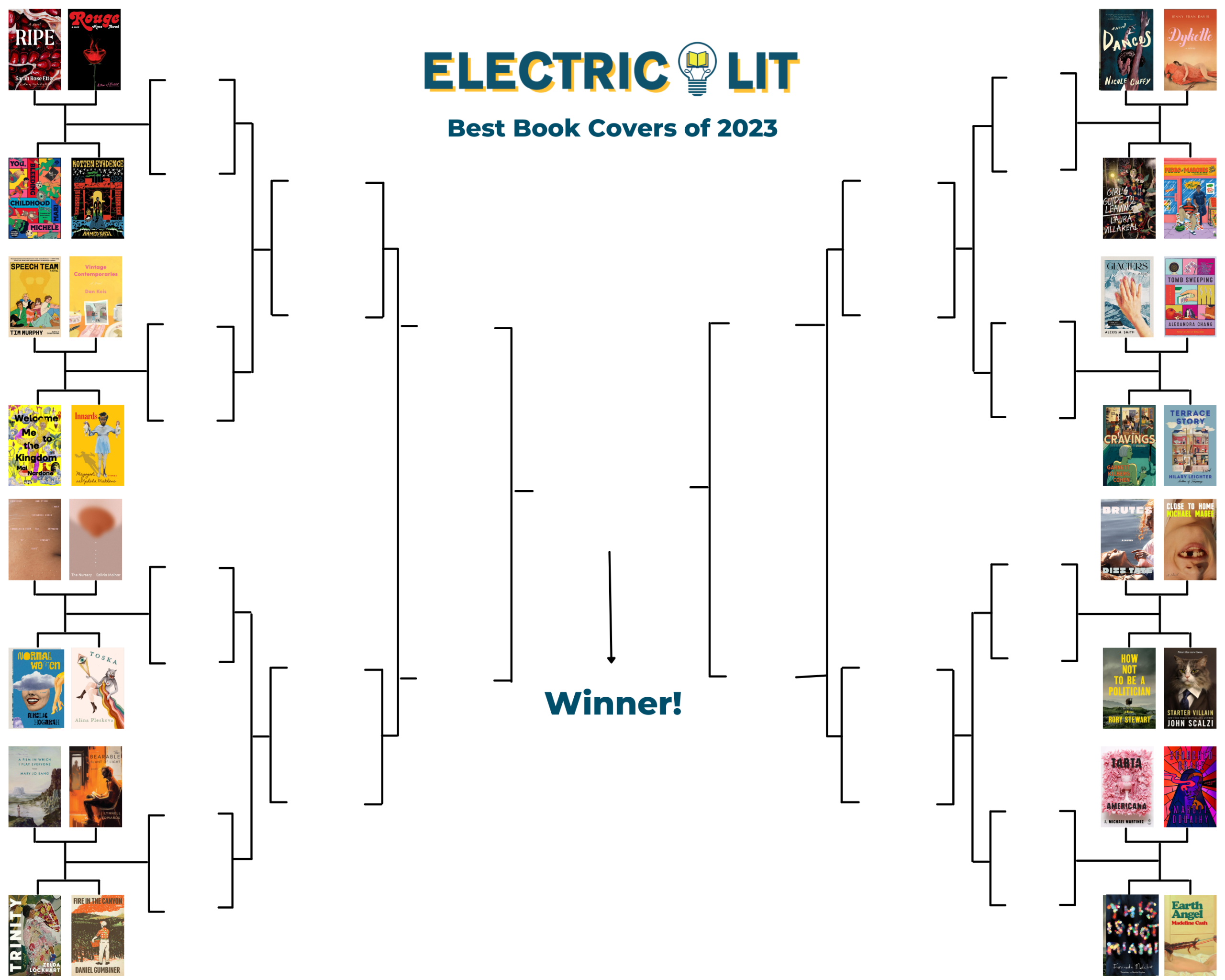
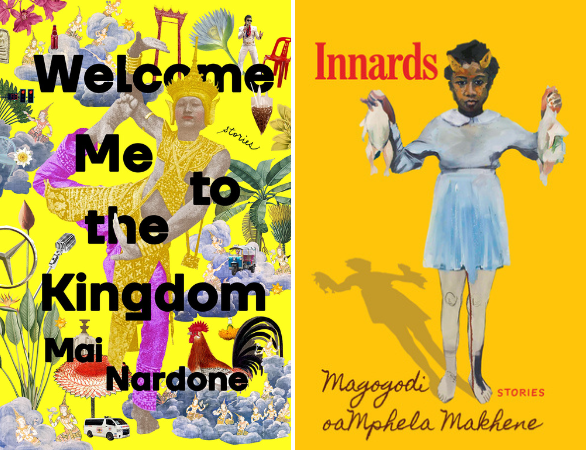
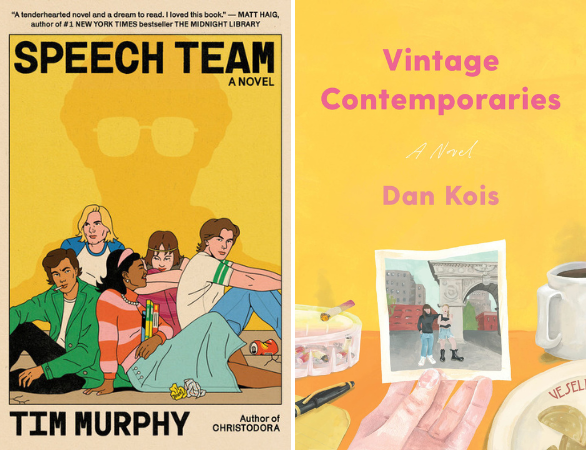
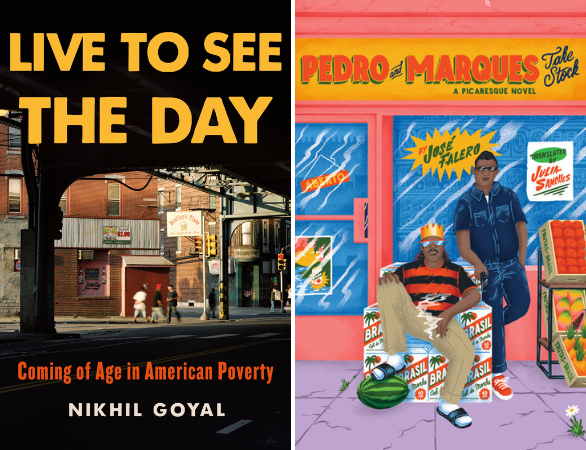
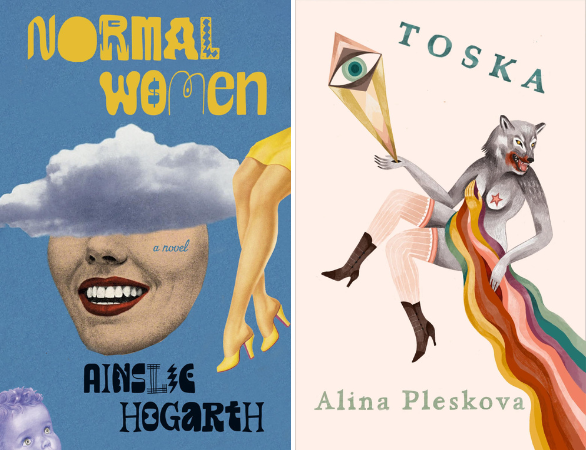
It’s the festive season, which means our fourth annual book cover tournament begins today! We had a tough job winnowing the hundreds of thousands of book covers published this year to the best 32 designs, so we need your help to crown a winner via an interactive poll on our Twitter and Instagram stories starting now. Get into the festive spirit by downloading the full bracket and fill out your predictions for the tournament.
Click to enlarge
The bracket features 16 pairs for the first round. Vote for your favorites on our Twitter and Instagram stories throughout the week, with round two on Tuesday, quarterfinals Wednesday, semifinals Thursday, and the final face-off Friday.
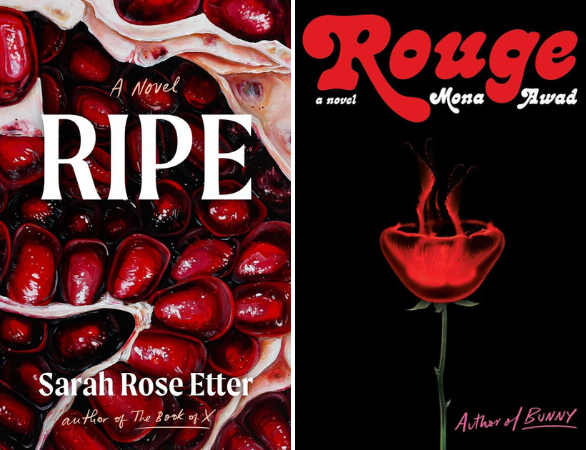
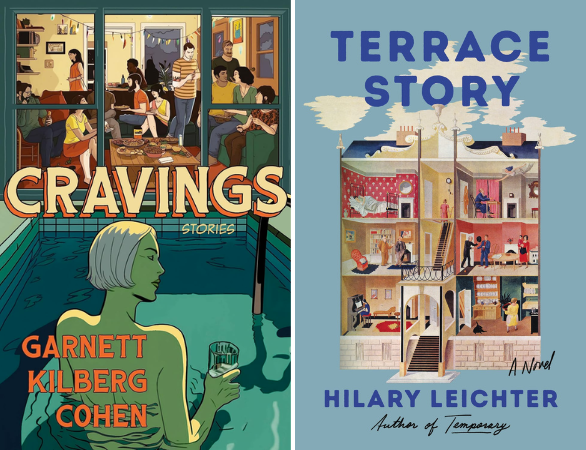
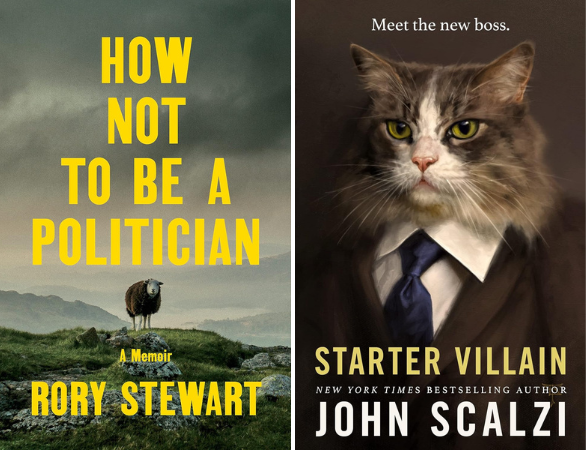
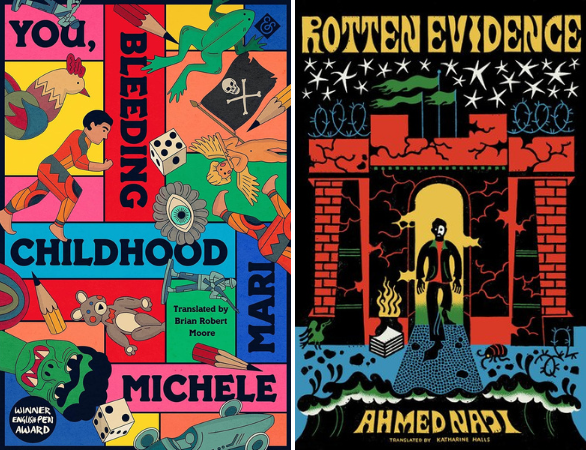
Here are the best book covers of 2023:
Left: Illustration by Angela Faustina, design by Natalia Olbinski Heringa Right: Design by Oliver Munday
From classics like The Godfather and Jaws to modern marvels like The Notebook, Game of Thrones, and Crazy Rich Asians, many of history’s greatest films and TV shows began as novels. A well-written book provides the ultimate Hollywood source material, with complex characters and an engrossing plot that, when read, already plays like a movie in your head.
Here are some much-anticipated book-to-screen adaptations slated for 2024.
When Maya tunes into her toddler’s nanny cam, she sees her 2-year-old playing with her husband. There’s just one problem: her husband was murdered just weeks earlier. Following the successful 2020 adaptation of another Coben bestseller, The Stranger, this thriller premieres as a Netflix mini series January 21.
Janice Y. K. Lee’s atmospheric novel follows three transplanted women living in Hong Kong who form a tight bond amidst personal turmoil. Amazon is adapting Lee’s novel into a six-part series, simply titled Expats, starring Nicole Kidman, Sarayu Blue, and Ji-young Yoo. The first episode premieres January 26.
Romance novelist Colleen Hoover has a long list of bestsellers under her belt, and 2016’s It Ends With Us is perhaps her most well-known. Based on the relationship between Hoover’s parents, the book deals with generational domestic violence as a woman navigates her marriage while coming to terms with her childhood. Justin Baldoni (you might recognize him from Jane the Virgin) is directing, producing, and starring in the film adaptation alongside Blake Lively, Jenny Slate, and Brandon Sklenar. Find it in theaters February 9.
Denis Villeneuve’s Dune premiered to critical acclaim and took home six Academy Awards—a huge accomplishment for any film, but especially one that juggles the vast worlds, complex lore, and cult following of Frank Herbert’s 1965 science fiction epic. More than two years after the first film, Dune: Part Two comes to theaters March 1 with an all-star cast including Timothée Chalamet, Rebecca Ferguson, Zendaya, Florence Pugh, and Austin Butler.
The Three-Body Problem begins during China’s Cultural Revolution, with a top-secret military project called Red Coast. The objective is simple: to contact extraterrestrial life. But the project has unexpected and long-lasting ramifications spanning generations, worlds, and realities. 3 Body Problem, as Netflix is styling the show, streams March 21.
When her car breaks down in a dark forest, Mina finds herself trapped in a bunker, surrounded by strangers and under siege by mysterious creatures. The Watchers is a crawl-out-of-your-skin supernatural tale, and horror fans have good reason to be excited about the upcoming adaptation—the film is the directorial debut of Ishana Night Shyamalan (daughter of thriller legend M. Night Shyamalan) and stars Georgina Campbell (from Barbarian fame). It’s scheduled for a June 7 release.
When a Black woman’s body is found in a lake in 1960s Baltimore, she barely makes headlines. This motivates Maddie, a housewife-turned-newspaper reporter, to dig into the woman’s life and uncover what happened to her. A mini series based on the mystery is coming to Apple TV with Natalie Portman and Moses Ingram leading the project.
Before Idina Menzel belted “Defying Gravity” and Kristin Chenoweth bopped along to “Popular,” Gregory Maguire’s fantasy novel revealed the Wicked Witch of the West isn’t as one-dimensional as she may have appeared in The Wizard of Oz. The Wicked book is much darker than the Broadway play and navigates themes of ostracization, propaganda, terrorism. The long-awaited film is set to premiere in November, with Cynthia Erivo and Ariana Grande as Elphaba and Glinda, respectively.
Winner of the 2016 Pulitzer Prize for Fiction, Viet Thanh Nguyen’s The Sympathizer follows a communist spy from North Vietnam who, after implanting himself in the South Vietnam army, joins other refugees in California in the Vietnam War. Part historical drama, part spy thriller, A24 is adapting the book into an HBO mini series starring Hoa Xuande, with Sandrah Oh and Robert Downey Jr. Park Chan-wook (creator of acclaimed films Oldboy, The Handmaiden, and Thirst), is directing.
In the wake of the Russian Revolution, nobleman Count Alexander Rostov is placed under house arrest at a hotel in central Moscow. The novel spans years as Rostov befriends staff, guests, and a one-eyed cat while living out his sentence within the hotel’s walls. A Showtime TV series based on the novel is expected in December, with Ewan McGregor playing Rostov.
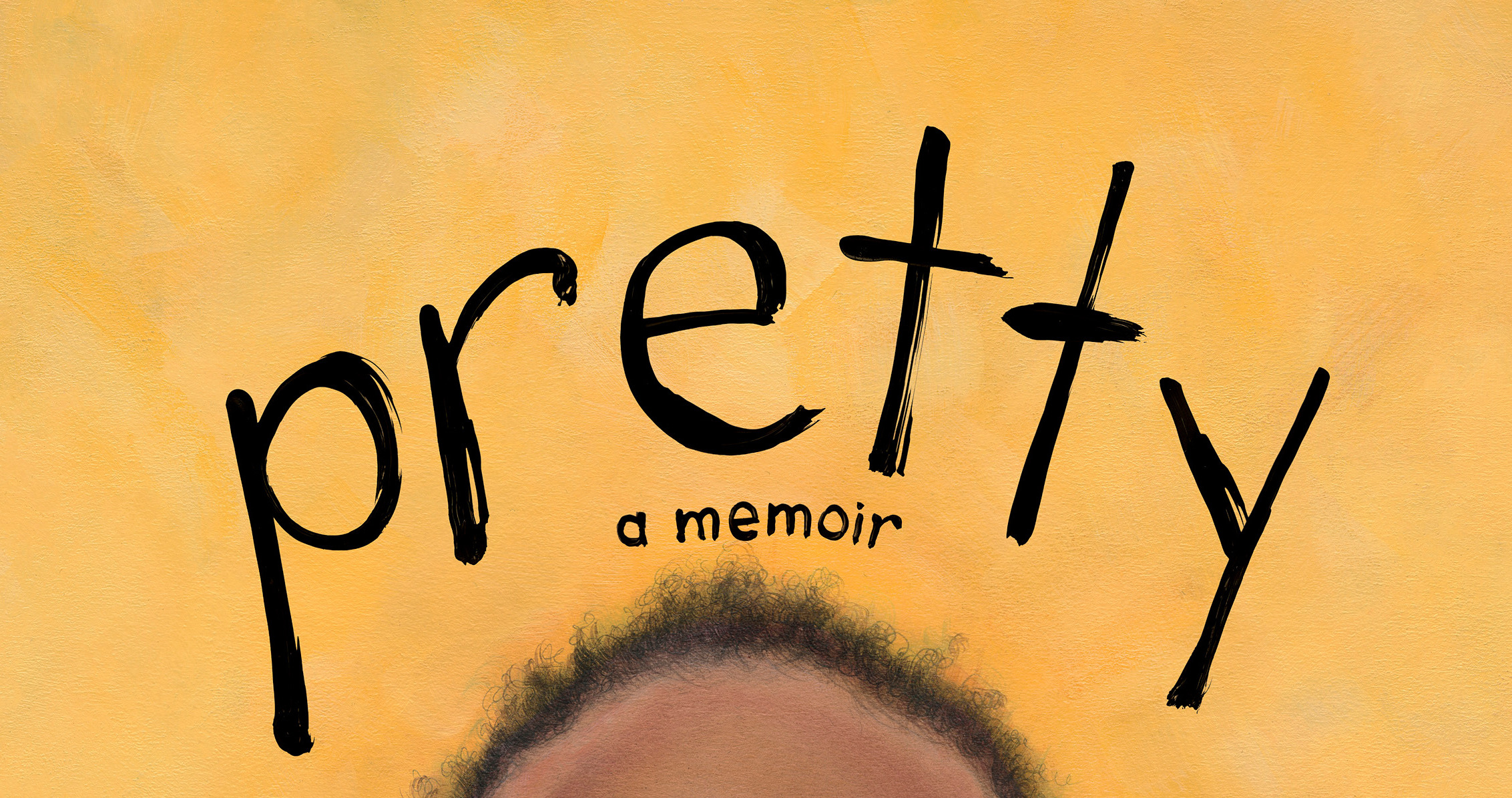
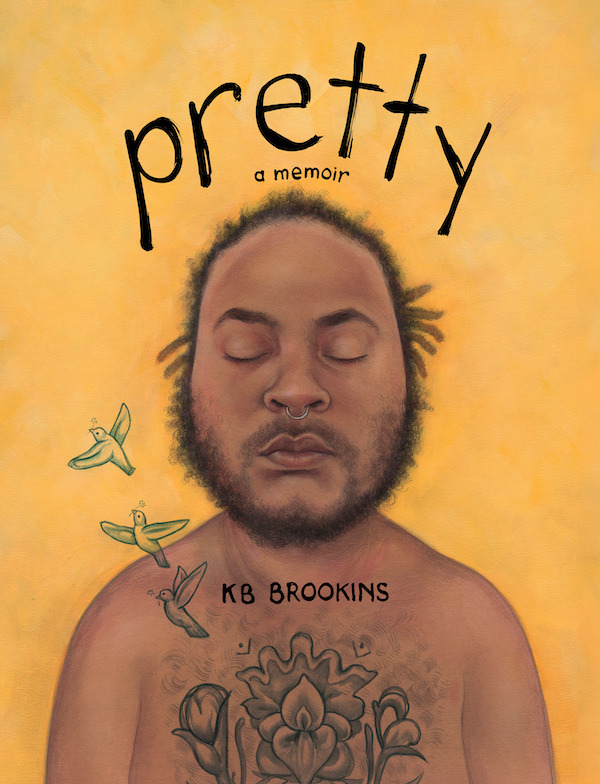
Electric Literature is pleased to reveal the cover for the memoir Pretty by KB Brookins, which will be published by Alfred A. Knopf on May 28, 2024. Preorder the book here.
By a prize-winning, young Black trans writer of outsized talent, a fierce and disciplined memoir about queerness, masculinity, and race.
Even as it shines light on the beauty and toxicity of Black masculinity from a transgender perspective—the tropes, the presumptions—Prettyis as much a powerful and tender love letter as it is a call for change.
“I should be able to define myself, but I am not. Not by any governmental or cultural body,” KB Brookins writes. “Every day, I negotiate the space between who I am, how I’m perceived, and what I need to unlearn. People have assumed things about me, and I can’t change that. Every day, I am assumed to be a Black American man, though my ID says ‘female,’ and my heart says neither of the sort. What does it mean—to be a girl-turned-man when you’re something else entirely?”
Informed by Brookins’s personal experiences growing up in Texas, those of other Black transgender masculine people, Black queer studies, and cultural criticism, Pretty is concerned with the marginalization suffered by a unique American constituency—whose condition is a world apart from that of cisgender, non-Black, and non-masculine people. Here is a memoir (a bildungsroman of sorts) about coming to terms with instantly and always being perceived as “other.”
Here is the cover, designed by Chip Kidd, artwork by Anita Kunz.
Author KB Brookins: “This book is unlike any other project I’ve attempted, so I wanted to make a necessary departure from my first two books’ covers (How To Identify Yourself With a Wound and Freedom House). When developing cover ideas, I thought to myself ‘how has birthing this book felt?’, and I kept thinking about breath, stillness, and balance—all things required to get to emotional clarity and own/reflect on the past. I also thought about how nerve-wracking it is to not hide behind a ‘character’ that isn’t me, and how sweaty I get when out in the Texas sun. Yellow as a background kept calling to me. I also thought about this book being my most vulnerable thing, and thought there was nothing more vulnerable to me than having a version of myself—with my skin showing—on the cover. So I took some pictures and sent those (along with summations of three ideas) to Chip and Anita, who knocked it out of the park. After some necessary input from Erroll McDonald (my editor), the idea that stuck is the one that felt most true and in alignment with the feeling that I hope the book evokes in readers—calm that has come from a Black, trans, beautifully chaotic lifetime of searching for peace. I feel so honored to have this brave book coming into the world with Knopf, and hope that readers feel as moved by the book’s design and words as I do.”
Designer Chip Kidd: “The author basically art-directed this cover, which really helped. Once I read KB’s brief on what they were looking for, Anita instantly came to mind. Her lovely sensibility and skill was perfect for this astonishing, brave book. I just stayed out of her way and let her do the magic.”
Painter Anita Kunz: “I love painting portraits of extraordinary people and I was thrilled when Chip Kidd gave me this assignment. I read nothing but great reviews about KB Brookins and really feel that they are doing meaningful and important work. My main aim was to paint them in a beautiful and sensitive way, but I also wanted to add a tiny element of magic, so I added the tattoo bird which appears to come to life.”
I am a memoirist, a writer who juices the moments and characters in my life as a way to make sense of it all.
This proves challenging, however, when I consider that I have very few memories from before I turned twelve. There’s a deep blackness in that part of my hippocampus, where the brain stores memory. I often imagine that place within my mind like a never-ending storage unit filled with innumerable servers or cabinets, each accounting for various moments in my life. In the way way back, if you can reach that place, you’ll find just a single floppy disc where those first twelve years should be.
I don’t remember the first concert I attended, which was part of Britney Spears’ “Dream Within A Dream” tour. I was ten.
The little I know is based on an amalgamation of Britney’s tour schedule, a few disposable camera pictures my parents took that night, and bits and pieces of memory my mom and dad have passed on over the years. I was entirely in love with Britney, and I emulated her in my style and artistic choices, so my dad took me to the concert as a birthday gift. My mom thought Britney was “trashy” and not the best role model. She didn’t like that Britney made me want to get a belly button ring so badly that I began wearing my magnetized earrings from Claire’s on my abdomen. (I wasn’t allowed to get my ears pierced until I was fifteen, so a navel piercing was absolutely out of the question.)
But even though she made her stance clear—rolling her eyes at the way I covered the floral wallpaper she’d selected for my bedroom with posters of Britney, The Backstreet Boys, Spice Girls, and N’SYNC—she took me shopping at dELiA*s ahead of the concert. I chose silver pleather bell bottoms, which hugged at my non-existent child hips, and paired them with a pink crop top with a sweetheart cut around my non-existent breasts.I can tell from a pre-concert photo that I’d stuffed my training bra with toilet paper. My top reveals a stretch of skin I smeared with silky, scented body glitter before adding a magnetic butterfly “belly ring.” A recent Disney Cruise had left my hair cornrowed in pink and white beads, a style I chose because I wanted to look like Lizzie McGuire. I kept them for over a month, carefully wrapping my head in a silk scarf each night so they’d last for the concert. I completed my outfit with a pair of metallic light-up Heelys, a choice that left me clutching the railing as I descended our stairs for the concert. Years later, when recounting this scene, my dad will say, ““you lit up like a strip club on Bourbon Street.” But on that day, they didn’t make me change, even after my dad snickered to my mom, “She looks like a baby hooker.” I wonder, Do I remember this or have I been told this story? Memory and memoir writing is tricky in this way.
I can tell from a pre-concert photo that I’d stuffed my training bra with toilet paper.
Once, while digging around the internet, I uncovered research about childhood amnesia that determined the average age of earliest childhood memories is between three and four. It’s a funny fact to consider as a writer, a memoirist even, that I don’t remember what currently amounts to a third of my life. My parents found it strange and frustrating when I would tell them I didn’t remember major trips we took, ones I’d begged to go on, trips to Egypt, Italy, and Spain. I also don’t remember standing on the stadium folding chair next to my dad and screaming along to “…Baby One More Time,” but he does. I don’t remember his shock at Britney’s costume during “Toxic,” a nude rhinestone bodysuit intended to make it look like she was naked and covered in diamonds. I don’t remember the headlines of my teens, decrying Britney as “crazy” and an “unfit mother” after she shaved her head and began partying with Lindsay Lohan and Paris Hilton. I don’t remember her numerous public trips to various rehab and mental health institutions. I don’t remember when I first learned about her conservatorship. I was in the midst of my own inner and external turmoils and too close, unbeknownst to me at the time, to what Britney was going through to find any type of comfort in our shared existence.
I didn’t fully realize the impact Britney Spears’s life and career has had on my life until I began reading The Woman in Me, her debut memoir. The front flap recounts Britney’s June 2021 court testimony and notes that the “impact of sharing her voice—her truth—was undeniable, and it changed the course of her life and the lives of countless others.”
The writer Anne Lamott, whose first book was written for her father, who coincidentally had the same type of brain cancer my father survived, says inBird by Bird, her love letter to the writing process, “You own everything that happened to you. Tell your stories. If people wanted you to write warmly about them, they should have behaved better.”
My father and his little sister grew up in Hammond, Louisiana, just thirty minutes south of Britney’s hometown, Kentwood, which sits on the border of Mississippi and Louisiana. My dad’s mother, Theresa, lived in the same house my dad was raised in until I was in my teens. I grew up playing in my granny’s rose garden and running wild in the same woods Britney recounts in the first few pages of her book. Our fathers were raised by abusive alcoholic men who hurt their wives and pushed their sons to measure up to their expectation of what a “man” should be. Britney’s paternal grandfather, June, was a local basketball star. My grandfather, Archie, was the quarterback and captain of LSU’s football team. They weren’t far apart in age, my grandfather slightly older than Britney’s. I wonder if they might have known each other. Those parts of Louisiana and the sporting community were small back then, and in many ways, still are.
Our fathers were raised by abusive alcoholic men who hurt their wives.
I was nine when Britney Spears released her debut single “…Baby One More Time” at sixteen. The accompanying music video portrays bored school-girl Britney, and her classmates dancing in the halls, outside, and in the gymnasium after the bell rings. I began ballet when I was three and added tap and modern to my list of after-school activities when I was eight. All I wanted was to sing and dance and to be seen as perfect, a feeling Britney also describes in The Woman in Me.
One of the many ways I found calm in the chaos of my childhood, alongside reading and writing in my diary, was through putting on performances for my parents and their friends. It wasn’t uncommon for my mom and dad, who had me in their forties, to bring me out to dinner as a source of entertainment and, to keep me from sleeping on or under the table, ask me to sing. Everything felt frosted over in those moments, as if I’d been transported to a different and more deliciously colorful world like Clara in The Nutcracker. I’d belt out songs that were wiser than my years, like “Summertime” by Ella Fitzgerald and Louis Armstrong, or “Landslide” by Fleetwood Mac. My thirst for stardom—or a path that would take me far beyond Louisiana—led me to compete and win the Miss Pre-Teen Baton Rouge and Miss Pre-Teen Louisiana beauty pageants. I auditioned for American Idol, preparing two songs—Mariah Carey’s “Hero” and Roberta Flack’s version of “Killing Me Softly”—for the Idol open call auditions at the New Orleans Superdome, just a year before it filled with Hurricane Katrina refugees. My mom came with me and let me miss a whole day of school. I was definitely one of the younger people in the crowd of hopefuls, and while I didn’t get as far as Britney did when she competed on Star Search, a similar televised competition, I did make the first four cuts at only ten years old. I continued spending all my free time in voice lessons and dance classes, auditioning for local and regional theater productions, and immersing myself in the fantasy of a life in Hollywood or on Broadway. It was this thirst for creative expression that would later translate into a need to detail everything on the page.
The writer Dani Shapiro, a favorite of mine, opines in Still Writing: The Perils and Pleasures of a Creative Life that our stories “choose” us. For memoirists who are grappling with what to share or omit, Shapiro—who has also struggled with these details—says, “If we don’t tell them in order to spare others, we are somehow diminished.”
I think of a woman like Britney Spears, who has been supporting her family since she was a teenager and, in doing so, has lived to “spare” others. And I think of myself and the childhood I lost on a soccer field somewhere in uptown New Orleans when I was eleven—just a few months after I saw Britney in concert—as my dad fell down in the bleachers and began shaking so hard that we could hear him clanging against the metal out on the grassy pitch. Doctors swiftly identified the cause of his seizures as an incurable brain tumor, a glioblastoma, and gave him three to six months to live. One of the few memories I know is mine is my mom grabbing me by my small, bony shoulders in the hospital, tears transforming her face, and telling me I needed to be strong for her. Sometimes, I think of how I spared her by doing just that and, in turn, allowed myself and my mental health to be diminished.
I think of myself and the childhood I lost on a soccer field somewhere in uptown New Orleans when I was eleven.
Shapiro goes on about how the memoirist is perceived as “exposing” themselves. But writing in this way would be akin to leaving your diary open for all to read—very different from memoir. She recalls an exchange between Frank McCourt, the author of Angela’s Ashes, and a woman he’d just met. The woman told McCourt she felt as if she knew everything about him. “Oh, darlin’,” he said, “it’s just a book.”
The Woman in Me is just a book, a mechanism that, unlike an open diary, allows the reader to connect with Britney, and as Shapiro would say, “With others. With the world around you. With yourself.”
I felt this connection in myriad ways while reading The Woman in Me, especially as a child who was also subject to generational trauma. While my father doesn’t struggle with alcoholism like Jamie Spears, his father did, and that disease left its marks on the whole family. My grandfather’s drunken rages—physical and verbal abuse predominantly directed at my dad and grandmother—trained his son to be emotionally closed off. It was often impossible, still is, for anyone to penetrate my father’s porcupine-thick skin. When I experienced significant bullying as a kid, he couldn’t understand or empathize with my pains because his were always greater. As an adult, I know it’s an exercise in futility to tell him if I’m sad because, for him, it doesn’t compute. He tells me to “turn on” my happiness, as he was forced to do.
More than anything, The Woman in Me encompasses Britney’s palpable loneliness throughout her entire life. It’s an isolation I recognize. I feel it when I recall the long trips my parents took without me. In our kitchen, we had a calendar with velcro stretched across each day of the week. As days passed, I would take the small photo of me and move it one place closer to the date they’d return, affixed with a photo of my parents. There were years where my letters to Santa asked for them to stay home more.
I felt a bleaker loneliness when I was twenty-four and my mother died, which caused my only-child existence to deepen and bleed into the experience of feeling partially orphaned. The gap widened between my father and me, and his need for me to be more of a wife or parent to him than a daughter grew when he was diagnosed with vascular dementia. My mother had hoped and so did I, even, that her death would create a bridge for us to meet on. Instead it left a crater that sunk everything we might have shared. Two weeks after she died, a few days after her funeral, he left me in our home, the place she died in—her personal effects everywhere as if she would pull in the driveway at any moment—and he went on a vacation with friends – ones I’d grown up knowing – to Taos, New Mexico. These plans materialized a day before he left and I was told I was not invited. That weekend Hurricane Harvey blew through the city. When I later told him how his leaving at the precipice of my grief had hurt, he reminded me I was an adult and free to do as I pleased, as was he. These are the scenes I replay when reading Britney’s experience of her conservatorship. How impossible it was for her to get her family to treat her as their equal, with compassion, especially at the heartache she felt at being separated from her sons. My dad has never controlled me in that way, but he made it clear that we were not a team, that I was alone in my grief and should seek support elsewhere.
My dad has never controlled me in that way, but he made it clear that we were not a team.
From early ages, Britney and I turned inward, focusing on fantasies of fame and escaping our families. It was an attempt to control things that felt more within our grasp than our dads and moms. We threw ourselves into dancing, singing, and various auditions that would get us as far away from Louisiana as talent would take us. But there was another pull, the suburbia and church groups of my teenage years creating a fork within me, a divide of disparate dreams that Britney also describes experiencing. Part of me wanted desperately to leave, to eschew all that I was raised around, which my mother—as a fifth-generation New Orleanian—boldly encouraged. The other half of me wanted to fit in with my peers, to go to LSU—my grandfather and several family member’s alma mater—and marry my college sweetheart. We’d have a car filled with kids before I turned thirty. I felt I could be happy in this version of my life and that things could, in many ways, be easier, softer, gentler, and more simple.
I was diagnosed with a generalized anxiety disorder as a child. This mostly manifested in fears that my parents wouldn’t come home from whatever dinner party or event they might be at that night, that something bad would happen when they went to the opera—as it happens to Bruce Wayne’s parents. I was afraid of plane crashes that could take them from me. Panicked to the point of being unable to sleep until we were all under the same roof, and even then, each creak in the floorboards of our old house–all caused by the expansion of moisture in the swampy ground our foundation sat on–kept me up with Home Alone style fears of home invasions.
I overthought most situations and experienced a lot of social anxiety, which I’m told is common among only children. Where my parents were gregarious individuals who loved large social gatherings, I felt more comfortable alone in my room with a book or in the staid routine of daily dance classes and voice lessons. Britney expresses a lot of this, which surprised me because it’s hard to picture your favorite pop star as awkward or socially anxious. We both rarely knew how to articulate these anxieties and instead stayed silent or would isolate ourselves to cope. Few close to us, especially our family, seemed to understand these “quirks” in our personalities. But unlike Britney, I was somewhat lucky that sometimes my mom did. When she was in her late teens until her mid-thirties, she struggled, quite openly, with anxiety and depression. Similarly to Britney’s paternal grandmother, Jean Spears, my mother was briefly hospitalized and placed on lithium. While I’ve never been told whether my mom attempted suicide, I know she often thought about it because she told me she did. I know that when she lived in Paris, from her early twenties until she was thirty-eight, she would wait for the metro, look down on the tracks, and meditate on how fast and easy it would be to throw herself onto them and leave her body.
I stopped taking medication, I stopped seeing my therapist, and I moved to London, England, for my first love.
In my early twenties, I began experiencing panic attacks. I wasn’t sure what was causing them other than stress. I was studying creative writing at The New School, while juggling several internships. Finances were tight. From time to time, my mom would tell me they might not be able to pay for the next semester, and then my dad would spend what amounted to my tuition on a piece of art, and my mother would threaten to leave him. Rinse and repeat, so I started seeing a therapist and taking anti-anxiety medication. Everything seemed to level out when I was twenty-three. I stopped taking medication, I stopped seeing my therapist, and I moved to London, England, for my first love—a British boy—work and to get my Masters in English literature. But then my mom was diagnosed with cancer, the same type of ovarian cancer Britney’s beloved Aunt Sandra died from, only six months after I moved. Unlike my father, my mother was not a medical miracle. She lost her life quickly over the course of a short and brutal year. Moving home to New Orleans when she died was my attempt to make sense of it all. In The Woman In Me Britney tells of a wild and creative period of her life, shortly following her divorce from Kevin Federline (and before the conservatorship). During this time, she released Blackout, which she feels is her best and most artistically diverse album. She was twenty-five, which is the same age I was when I left New Orleans to spend the year traveling, visiting France, Italy, Monaco, China, South Korea, Indonesia, Vietnam, and Mongolia. Attempting to heal, I wrote about loss and scattered my mother’s ashes. When I moved back to New York, I threw myself into work at a small publishing house and tried to let my nine-to-five job, friends, turbulent relationship, and life itself cover the pain and grief I felt for the home and family I lost when my mom died.
But that’s not possible, Britney shows the reader, when her family diminishes the pain she feels during her divorce from Federline. Kevin refuses to let her see their young children, and the paparazzi’s relentless attacks and constant presence in her life bring her to a breaking point–which results in her infamously shaving her head, entering rehab and, eventually, the conservatorship.
I know that breaking point well.
I reached it at thirty years old, only five years after my mom died. What I didn’t shed in hair, I shed in weight, losing over thirty pounds in three months. The relationship I’d been in for over a year ended suddenly, and I was heartbroken, but had recently begun a new job with a sizable role and salary increase, and moved out of the house I shared with friends and into my own space. All within the same month. I was trying to stay above the muck of it all, but my sadness suffocated me in my two-hundred-and-fifty square foot Brooklyn apartment. I had moments where I looked at pills that were supposed to ease my depression and anxiety and wondered if taking all of them at once would give me a more permanent sense of relief. After I quit my job, I would lie in my shower for hours, sometimes fully clothed in pajamas I’d worn for days, and I’d put my dad on speakerphone. I tried to get him to comfort me like I hoped a father would. I’d tell him I was scared by how hopeless I felt, and he would tell me to “decide to be happy.”
Like it was that easy.
I spent almost ninety days at a mental health institute designed to treat my developing Xanax addiction.
I was placed under a psychiatric hold after I collapsed on my way to work and couldn’t tell the doctors the last meal I remembered eating. My friends and family were shocked at how swiftlyI plummeted from my place of relative stability. Some didn’t know how to respond and distanced themselves from me, others told me I wasn’t present enough to be their friend, my godmother—my mom’s best friend—stopped responding to the texts I sent asking for advice and blocked me on Facebook. Eventually, my mother’s sisters intervened, presenting me with a host of websites for rehab programs, refusing to let me come home for Christmas until I got “help”, and so I spent almost ninety days at a mental health institute designed to treat my developing Xanax addiction, continuing depressive episode, and the malnourishment it caused.
While I’m able to acknowledge, a year later, how this time in my life shaped me for the better, and feel grateful for the remarkable people I met along the way by seeking residential treatment, there are many ways I felt hurt and infantilized. I felt like a criminal when I’d come back inside the house I lived in with five other young women and men, and was forced to do a “contraband dance,” which consisted of jumping around and shaking our shoes out to prove we weren’t smuggling anything unapproved back inside. Or how I had to count aloud or hum when I went to the bathroom or showered, the door cracked wide open, to confirm I wasn’t hurting myself. I still pause before I open a drawer in my kitchen and remember a time when all drawers and doors were locked to me. I know this was designed for safety, but the damage caused from being woken with a flashlight in my face every thirty minutes while I slept left its mark. I rarely sleep more than an hour through the night without waking, expecting to hear whispers and shoes coming into my room and approaching my bed. When Britney recounts her own stay at a similar inpatient program, she articulated a feeling I often share: “I’m probably the least fearful woman alive at this point, but it doesn’t make me feel strong; it makes me feel sad. I shouldn’t be this strong. These months made me too tough.”
As a graduate student, the subject of my final project, a narrative essay, was my mother. It was the first piece of writing of mine that wasn’t about twenty-something romantic love and the hopeless pursuit of it. When I began writing, she’d recently been diagnosed with cancer, and I decided not to tell her about the subject of my essay until it was finished. The piece explored the etymology and history of tulips, her favorite flower, while weaving in the story—as I knew it—of my mother’s life. Comparing her to the flower and the flower to her. It was a love letter and a testament to the beautiful, hearty, colorful woman I knew her to be. I dedicated the project to both of my parents, and mailed them a copy once I’d submitted it for my professors to review.
A few weeks later I received a short text from my mom.
“Very nice what you wrote about me, but hurt your dad’s feelings by leaving him out. Write something kind about him, too?”
I remember feeling like she’d taken something I’d done purely out of love and admiration and turned it into a weapon.
I was furious at and hurt by her response. I remember feeling like she’d taken something I’d done purely out of love and admiration and turned it into a weapon for them both to use against me. Both my mom and dad told our family about the essay, but not that I’d graduated at the top of my class or received glowing remarks on this project from my professors, that I’d been cruel to my father in omitting him from a story about my mother’s life – a time in her life before she knew him. After that, I decided not to write about my parents – my family – while they were living. When my mother died and I began writing about her, the loss and the way it changed the structure of our family, it was hard to omit my father but I wasn’t sure how to write about him without fearing his response. That fear of repercussions that could – likely, in my mind, would – stem from my words about my inner world was so strong that after I completed my masters degree, I left the dome of literature and my pursuit of a life somewhere in those margins and began working at tech startups. It would be almost six years before I would write outside of my diary again.
Much has been said about the backlash experienced by both Britney and the public figures she lived her private life with, namely Justin Timberlake and the entire Spears family. On Justin, she’s both matter-of-fact and generous in her retelling of that time of her life and first significant—and wildly public—romantic relationship. They were very young, and while she would have had Justin’s child because she was so deeply in love with him and craved a quieter existence where she could create the family she hadn’t grown up with, he wasn’t in the wrong for feeling like he wasn’t ready to become a father. From Britney’s adult vantage point, it’s easy to spot the perpetrators of wrongdoing—their managers, who were more concerned about damaging her reputation as a virginal pop idol than they were about getting her access to safe healthcare when they decided to terminate the pregnancy in a hotel room. Reading this, I felt less anger for Timberlake—who tried to comfort Britney the only way his immature and self-absorbed pop-star brain knew how to, through song and strumming his guitar—than I did for her management, who had the power and greater maturity to know they should have gotten Britney to a doctor. I don’t think that Britney should have omitted these details from her memoir to spare others.
From my pre-teen years until I became a woman approaching thirty, I felt safest when I hid myself and disassociated deep within a book from the uncomfortable realities of my life. My thoughts and feelings were rarely shared outside of the confines of one of my journals or the Notes app in my phone.
Britney echoes a similar reluctance to be fully present with those closest to her. She describes how frequently she’d take to the woods surrounding her house and hide.
“For years that was my thing — to hide.”
We learn as children playing hide-and-seek that staying hidden is one of the ways we remain safe.
Following her breakup with Justin, Britney briefly lives in Cher’s old NoHo four-story apartment, which she rarely leaves. “I fell off the face of the earth.” She writes. “I ate takeout for every meal. And this will probably sound strange, but I was content staying home. I felt safe.”
Towards the end of the book, Britney describes the process of writing all she’s shared with us, laying out the truth of her life on the page for the very first time, as an incredibly freeing and emotional experience—but one that took a long time and a lot of work to feel ready to tell.
I write because, as a friend once told me after I shared an anecdote from my youth, I had “no choice but to become a writer.” But I do wonder, as Britney does in the second-to-last page of her book, if my family and those who closed themselves to me during the hardest moments of my life, will find and read this essay of mine, and what they’ll think.
My thoughts and feelings were rarely shared outside of the confines of one of my journals.
As Joan Didion notes in “Why I Write,” included in her 2021 essay collection, Let Me Tell You What I Mean, “Let me tell you one thing about why writers write: had I known the answer to any of these questions, I would never have needed to write a novel.”
When I told my cousin I was working on a piece about Britney’s memoir, I joked that it was also about how Britney Spears and I are the same person. “You have a lot in common with each other,” he said with a straight face. I laughed, and he doubled down, telling me that the only thing that separated me from Britney Spears was, “y’know, her being a multi-millionaire pop star” and the fact that she’s been institutionalized by her family several times. And I’ve only had that happen to me once. I feel lucky that my worries over who reads this essay and feels hurt or angry with me is small, pales in comparison to the reach of The Woman in Me — which sold 1.1 million copies in its first week. I feel lucky that I don’t need to worry much over whether or not what I’ve written will further alienate me from my father, who, even if he does read this, would likely forget the next day. I feel lucky that the private anecdotes I’ve shared won’t jeopardize someone’s career. I feel lucky that I probably don’t need to worry that thousands of people will have opinions about what I have and haven’t already shared here or in my future memoirs. And for this reason, among others, I feel lucky that while I am, as of this year, a “Hollywood girl” living in Los Angeles, this isn’t a song or a story about a girl named Lucky or Britney Spears. This is my story, a writer in my early thirties who, unlike my pre-teen self, feels lucky, fortunate, and grateful to have not gotten further on American Idol, lucky to have parents who wouldn’t move to New York or L.A. so I could be a child star, lucky to be rhythmically challenged in jazz and tap dance – lucky to have traveled a similar yet very different road than that of Britney Jean Spears.
As a Palestinian in diaspora, nothing builds my connection to the land more than literature. It is not just the scenes detailed by our great poets that makes the ground feel realer under my feet, but the gravitational pull towards each other that gives me belief in that liberated homeland. In my work as a critic, I’ve often played it safe; devoted my time to works I loved or could situate as a positive contribution to the culture, shying away from being public in my negative critiques. As I read and re-read Ghassan Kanafani’s On Zionist Literature, I am reminded that this work is, in fact, a matter of life-or-death; literatures can set the stage for the attempted annihilation of a people, and it is our responsibility to point to it. How often have I chosen a slow death in service of comfort? The truth is, I have never been able to look around a room and not see the genocidal escalation to come—if the vitriolic disregard for human life, for Palestinian life, did not permeate through to our most mundane of activities, over 18,000 Palestinians would not have been killed in the past 67 days, over 1.5 million would not be displaced from Gaza.
The truth is I have never been able to look around a room and not see the genocidal escalation to come.
—Summer Farah
As Gaza’s poets are assassinated, as the libraries are destroyed, as Palestinians across historic Palestine (and all over the world) are arrested for dissent, as writers face censorship globally for speaking the truth of the genocide that is occurring, we must consider: if literature is your corner, what will you do to rid it of these violences?
I myself struggle to find utility in the work I am capable of, in the face of genocide. Do I believe my writing is capable of changing anyone but myself? Reader, admittedly, I don’t; and so, I must learn new capacities. I have been lucky enough to cultivate a global community of Palestinian writers and allies whose work I do believe in, though.
In this roundtable conversation conducted over email, I corresponded with Palestinian writers Samah Fadil, Priscilla Wathington, and Rasha Abdulhadi about the role of poetry in genocide, countering Zionist propaganda, and mobilizing our art into tangible action.
In the few weeks since I sent these questions to my peers, there have been countless devastations: high-profile kidnappings and deaths, destructions of hospitals and historic sites, and nothing to recover the thousands and thousands of Palestinians still under the rubble.
Summer Farah: Since we’re all poets, I wanted to start with poetry. I’m drawn to this definition offered by Solmaz Sharif at a talk hosted by Washington University in St Louis: “Poetry is not an exercise in aesthetic pleasure. It is an opportunity to name, diagnose, and draw attention to actual violences that are occurring.” In an interview with Raja Shehadah at BOMB, Mahmoud Darwish said “[The Israeli Communist party] introduced me to the notion that poetry can be an instrument of change. I took this very seriously until I arrived at my own conclusion that poetry changes nothing… The only person it changes is the poet himself.“
So, I want to ask: what is the role of poetry in genocide?
Samah Fadil: This question reminds me of the call to action Rasha Abdulhadi sent to me and urged other writers to use: “Whatever sand you can throw on the gears of genocide, do it now.” Poetry is sand that can be thrown on the gears of genocide, so I agree with Solmaz—the aesthetic pleasure comes second. But, one must remember that sand is made up of trillions of particles of eroding rock. Poetry is sand but sand is not only poetry… Poetry is a tool that can be wielded by anyone—for good or bad, status or self, self or salve. In my experience, I can’t say that my poetry has changed anyone but myself, but when I think of all of the poets that have inspired me to reach for my pen, and who continue to do so, I’d like to think that in some way, we are all continuously changing with each other’s words.
The answer above was written before the recent targeted assassination of beloved Gazan poet Dr. Refaat Alareer, and feels especially haunting now. I wish more people knew of him and his work before he was martyred. I wish people knew the poets who are still breathing as much as they knew the ones who are not. But to go back to the question, what is the role of poetry in genocide? After seeing the literal hundreds of people around the world who translated Refaat’s poem “If I must die”, it’s a reminder to me that in our hundreds, in our millions, we are all Palestinian. My last interaction with Refaat was him asking me to send him a clearer image of my poem “lucid”. I was so incredibly honored he asked. I did, and I hope he got to read my words. I hope he enjoyed them. He is someone who held poetry very, very dear to his heart and someone who taught its revolutionary potential to his students. My role as a poet is to honor that legacy.
Writing can be propaganda, counter-propaganda, or distraction. It can be healing, or harm, or escape.
—Rasha Abdulhadi
Rasha Abdulhadi: Writing can be propaganda, counterpropaganda, or distraction. It can be healing, or harm, or escape. These trinities are no more guaranteed to be comprehensive than a good/bad binary. I think Solmaz Sharif is right, that poetry offers us some particular “opportunities” and that we can use those opportunities to make invitations to readers, to editors, to other writers, to censors, to enemies, to the audiences of those who have declared themselves our enemies. I have certainly experienced poetry that changes the self, and some work I do write for this still-very-valuable purpose.
I think of the effects of writing in concentric circles: it certainly affects the writer first (and if it means nothing to me, why would I bother?), but I am also aware of it affecting any who read it, including slush readers who reject it. I cherish those rejections, and I certainly do send work that I wish for that sometimes-antagonistic first reader to encounter, even when I am certain work will be rejected from a venue in which I might never wish to be published except for the purposes of implicating them by association with Palestinians. I embrace that the expectation for poetry to be nice or mean nothing and change nothing may enable us to say and publish and distribute work that would be considered more volatile in other formats or venues.
Priscilla Wathington: If you are a poet of conscience in this moment of genocide, this question must come up. Poetry is not a life-saving surgery. No matter how much we may repeat the metaphor, poetry is not water. It cannot write the bombs out of the sky. It cannot put back together the bodies of a loved one, or build a safe place for even a mouse to sleep in Gaza. But this is not to say that poetry or words in general are useless in a time of genocide. If words had no power to influence people’s feelings about the bombing of hospitals or the military detention of children, then Israeli forces would not be arresting poets and other writers. And more broadly, if books did not have the capacity to shift attitudes and open up new ways of seeing the world, then there would not be so many banned books. As much as poetry cannot be a replacement for other forms of action, such as calling our Congressional members here in the U.S., it can and should be an extension of our overall decolonial belief practices and commitments.
Summer Farah: For the past two months—and 75 years, and more—we’ve been subjected to Zionist propaganda that ranges from the most vile, racist tropes towards absurd logical fallacies. I’ve really learned that propaganda does not have to be good, it just has to be there.
As writers, how do we counter the efficiency of imperial propaganda? It seems so much more difficult to undo than to plant.
SF: I don’t know that I ever sit down and ask myself, “How can I, as a writer, counter the empire”. I live it in my daily life, and it comes through in my writing because it’s also part of who I am. The most inspiring thing I do is be authentic to myself. I never planned to write so much about Palestine and how fucking trapped I feel living in the imperial core, but it’s what’s been consistently coming out of me. When I put pen to paper and speak that truth, it’s the best way for me to counter whatever hasbara talking points are being spewed out that day. I use my words and my natural ability for storytelling, one I think that’s been gifted to me by my ancestors, as a way to counter the propaganda. Of course some people will just hate you no matter what. That’s not who I focus on. And honestly, I feel like their propaganda is getting weaker by the second.
PW: I agree with you both so much. We have to keep writing our truths, and our most brilliant, wild imaginings, in our own terms. As far as possible, we should not let any repressive systems set the terms for what our art or our lives can contain.
Summer Farah: Rasha and Samah, the bios you’ve used in your recent publications ask for a call to action: “[The poet] is calling on you, dear reader, to join [them] in refusing and resisting the genocide of the Palestinian people…” Samah, you take this moment to connect Palestinian struggle with others globally. I’m thinking, too, of Priscilla, in a recent interview with NPR, you complemented your explanation of the “permit regime” with a poem, as a way in for the listener.
How best can we mobilize our art into action? How best can we use our writing to build with others?
RA: Every point of contact is an organizing opportunity and a chance to inoculate against genocidal propaganda. I am unembarrassed. I will organize with customer service reps. My email signature is currently:
“If you and/or any of the folks you work with (or beyond) have a chance to listen to a podcast I was on Monday October 16th, that would mean a lot. I am making a steady practice of warmly inviting everyone I interact with to become more skillful in keeping Palestinians alive, here and in Palestine. Please share & discuss widely. A transcript & show notes with additional links is up now as well.”
I reply to every rejection to say thank you, and make sure they see that link. Many people have surprised me by replying with an acceptance of the invitation! Any place I’m invited must let Palestine in, whatever the reason they’ve invited me: Long Covid, disability justice, fiber arts/knitting/crochet, southern arts groups, grant makers. I will invite them to care and become more skillful in that care. I don’t argue, but there are many who might be ready to do something or know something, who might already suspect what they understand and could do, and will take a leap if that validation is reflected back to them by even one person: that their instincts toward life are correct, that their readiness to act and connect are welcomed.
If words had no power to influence people’s feelings… then Israeli forces would not be arresting poets and other writers.
—Priscilla Wathington
SF: I talk nice. For real though, I’m pretty good at simplifying complicated shit the average person might not know about, and keeping it conversational. No ill-will towards the Norman Finklesteins and the Noam Chomskys of the world, but I can connect with the average person on a way more personal and personable level than these older, white, sometimes well-meaning-but-sometimes-also-long-winded-academics. Talking nice is an art and will lead people to seek out your words in other forms. In my case, people hear me and end up seeking out my writing. So many people have come up to me in person or online and told me that I was able to get something to “click” in them when they heard me speak on a subject they didn’t know much about before. And my writing is extremely varied, if I do say so myself. I’ve written news articles, poetry, personal essays, viral tweets, whatever, about Palestine, and people from all types of organizations or institutions or just on their own have reached out to me because of it. So really it’s me who seeks to build with others through my writing, by inviting them in with my words, if that makes sense.
PW: I suppose there is an almost unlimited way that I could answer the question about how we might mobilize our art into action. One way might be to use your poem as a fundraiser, as Aria Aber, Noor Hindi, and others have been doing. Another way might be to have things inside the text that point the readers out of it again. Instead of trying to hold the reader inside the poem’s world, you could try to send them outside the poem to go and engage with histories or ongoing atrocities. Another way might be to try and surprise a reader into recognizing you after they had decided not to. Or, maybe you want to engage speculatively in an impossible future, and give yourself that space to imagine everything as it could be. What’s important is the intentions, I think, and for the work to come out of a place of real investment, so that it shows up in the world with that rootedness in care and in a set of broader commitments.
Summer Farah: Cultural institutions, as well as other writers, often use the line of “Well, what can I do?” when pressured on their silence. Generously, I see an issue where so many believe they are expected to lead. Ungenerously, why would we want that from non-Palestinians? So: what are we asking for from both our colleagues and the institutions built on our creative labor? What minimum expectations for existing in these artistic spaces together are not being met, other than joining PACBI [Palestinian Campaign for the Academic and Cultural Boycott of Israel]?
RA: Read, quote, teach, share the words of living Palestinians. Withdraw from places that benefit from or take a studied and calculated indifference to our spectacular annihilation. Do what Palestinians ask you to; stop trying to be clever or develop your own opinions about something you have spent no time studying, something you have no material stake in. If you have a material stake in Palestinian freedom: by all means speak and act clearly from that, broadcast that clarity wide and loud and elaborate it deeply. Believe in the meaning of your own life without thinking you must be a genius to matter—this is an imperial lie, a patriarchal lie, a capitalist lie, an ableist lie, a white supremacist lie, and only those who wish to support those violences benefit from you believing you have no power. Vajra Chandrasekera’s recent blog post—a second book announcement, of all unlikely places to find sincerity—is a must read on this topic, with searing clarity on the role of writers publishing and announcing their own work in the context of multiple ongoing genocides.
SF: Literally could not have said it better than Rasha. Every single word, amplified times ten.
PW: For me, the minimum line is always rooted in human rights. If an institution can’t affirm that we are all deserving of clean water, food, and dignity, and cannot condemn the indiscriminate bombing of civilians and civilian infrastructure, then what “cultural” role do they have? Culture is a celebration of people. It depends on people. What is a love of culture without a love of people?
I find myself constantly re-assessing the parts of myself I feel are “allowed” in literary spaces. I see writers—established or otherwise—struggling with this compartmentalization, constantly falling for prestige. I appreciate when people are honest about these temptations. Does anyone have thoughts, guidance, offerings on the trappings of compartmentalization? Of this journey away from prestige?
SF: Compartmentalization is a big big trap. I tried to do it for so long as a young, wide-eyed Black Palestinian J-School student in a sea of white peers and professors. Whenever “the Middle East” came up, “isn’t that whole place a little iffy?” was the level of nuance I was working with. I tapped out early on, and I also stopped mentioning I was Palestinian because it always brought unsolicited questions and comments from said white peers. But this was a disservice to myself.
I tried to keep the charade going when I entered a formal 9-5 newsroom-type job that quite literally ended up breaking me, both physically and mentally, especially when I had to work on content I did not approve of. Not going to lie, I was pushed out of these institutions by my own body. It rejected the shit after 5 years of laborious paper pushing and pathetic pizza parties. I had to find a way to make myself whole again. What you see now, the fact that you even know who I am, that you’ve read my words and even see me as a writer and poet… that is the direct result of me abandoning the idea of careerism within institutions and focusing on bringing together all the facets of me I was always told would never fit together. And not for nothing, but 90% of the literary orgs I once clamored to be a part of or published in have been totally silent during the genocide on Palestinians, so my respect for them has plummeted. The news orgs I once applied to be a part of but was met with radio silence all those years ago now ask me to go on their shows. They can keep asking, because I realize that they were never worth my time, care or energy. They want a mouthpiece, and they won’t find one here.
RA: Empire, capitalism, ableism, meritocracy, anti-Blackness, settler colonialism, cisheterosexism, more… all of these coercive “norms” come with their own recruitments and organizing projects, their own orientations and trainings. And their own incentives. There are many rewards for being digestible, a tasty morsel, another commodity for well-established markets. We should never underestimate the capacity of such systems to recycle even our best attributes or hardest held hurts into reasons for us to reinvest ourselves and everyone we love into the mouths of the death machines. This is what is means to be one of “the good ones,” to be “chosen.” I laugh when folks tell me they’re surprised I haven’t been “accepted” for one or another kind of opportunity, funding, or publishing or “nominated” for this or that award. Believe me, I am not at all surprised!
Poetry is sand that can be thrown on the gears of genocide.
—Samah Fadil
Summer, you’ve reminded me before of Zaina Alsous’s line: “I don’t know what they thought I was capable of; / I wish I was more capable of it” from “Violence” inA Theory of Birds. I wish for every one of us to become “more capable of it.”
Look, I don’t blame people for being confused about how to make a meaningful life—or what a meaningful life could even look like—much less how to understand their own power in this heavily weighted context where so much is set against us and kept from us. I don’t even necessarily fault folks for following the advice to “take the money and run” if that’s the option they have to survive. All of these institutions owe us reparations, but with blood money, the amount of money is never anywhere equal to the volume of blood. It’s very important, if you take the money: to Run, to Resist becoming a poster child or firewall for institutions that would elevate and save a few and reject so many others. I encourage us to be wary of survivals that depend on so much suffering, on extraction from others who are just as precarious as we are or even worse off. I would rather we keep our focus on making life with each other than appealing to the village gods of well-endowed institutions for ascension to the heavens that have been build with our bones.
PW: There’s a lot in that question so I will focus on the end of it, around prestige. There’s a tension in this question because people who are oppressed and marginalized are typically most in need of those high-prestige opportunities and funding in their immediate lives. And there is also a justice in seeing people who have typically been excluded getting those big opportunities. So, I just want to name that. And at the same time, we have to really be careful about what an opportunity is asking us to be faithful to.
So I want to answer from both directions by saying we have got to keep building alternative platforms and opportunities that uplift marginalized folks. We need to sustain and take care of the spaces for us that already do exist. And at the same time, if we accept a high-prestige prize or opportunity, we have to do our best to move responsibly within that type of space, to try to leave it better and wider than we found it.
Summer Farah: Who are writers based in Palestine we should be looking to?
I treasure the work that Lena Khalaf Tuffaha and Fady Joudah do translating Palestinian poets in their series at the Baffler, Poems from Palestine. Unconventional, maybe, but I’ll offer the Martyrs of Gaza Twitter account, documenting the life of each Palestinian killed by Israel.
PW: I’ve got to start with Mosab Abu Toha, who has been arrested and bombed and has barely made it out of Gaza, to Egypt. He shouldn’t have to choose between life and his homeland. His recently published poem, “Obit,” is so stunning and haunting, and I hope it gives Americans pause, because it is our tax dollars that paid for the shrapnel and the bullets described in that poem. Recently, I have been reading Asmaa Azaizeh, who is both a poet and a journalist. She is based in Haifa, which I want to highlight because some 20% of Israel’s current population is actually Palestinian. Some of her poems have been translated into English, including by the phenomenal Lena Khalaf Tuffaha, so I encourage folks to look up her work. She is quite an acrobatic writer—I admire her leaps! And I bring up her craft because I want to point to her deftness and artistry. I want to keep insisting that Palestinian life deserves the chance to be as abundant and gorgeous as it wants to be.
RA: Anyone who is still alive. Anyone we can keep alive. Anyone reposted by other Palestinians. I’m so heartsick over how endangered our folks are and how hungry empire is to make us or them into superhumans, supercriminals, tragic heroes, museum exhibits, cover models, or numbers in unmarked graves. Catch me on another day and maybe I can answer this question more “strategically.” Today, my heart is in the rubble.
About the Writers
Samah Serour Fadil is calling on you, dear reader, to join her in refusing and resisting the genocide of the Palestinian people, the Sudanese people, the Congolese people, the Sahrawi people, the people of Tigray, and all oppressed peoples all over the world. Wherever you are, whatever sand you can throw on the gears of genocide, do it now. We can refuse with every breath, with every action. Resist. Resist. Resist.
Rasha Abdulhadi is calling on you—yes you, even as you read this—to renew your commitment to refusing and resisting genocide everywhere you find it. May your commitment to Palestinian liberation deepen your commitment to your own. May your exhaustion deepen your resolve and make you immovable. May we all be drawn irresistibly closer to refusals that are as spectacular as the violence waged against our peoples.
Priscilla Wathington is asking you to resist the lie that you are too helpless, or too busy, or too small to do anything. Take your small hand and your small voice and add it to this symphony against the genocide taking place in Gaza; and speak up not only about Gaza but also Congo, Sudan, your own backyard, and everywhere that humanity is at risk.
When I wake up, Kai has a hump jutting out of his back. Except, when I wipe the sleep from my face, I see the hump is a McDonald’s restaurant about the size of a backpack. He’s bent over in the snail position, naked except for a pair of boxers, inspecting himself in the mirror door, his face creased with concentration.
I love McDonald’s. I love it so much, in fact, I use it as an emotional measuring stick. For example, I do this thing where I say I’d rather have McDonald’s than X, where X is a variable, which stands for someone or something unpleasant. Usually, the X is also someone or something of considerable importance. Last night, the X was Kai.
He got home two hours late from the video game night with his friends and, to top it off, he forgot it was his turn to pick up dinner.
“We were stuck on the final boss,” he said. “The guys get weird when I bail.”
Recently he’s been pulling these stunts a lot. So I threw the TV remote across the room and stormed off to fill my wine glass in the kitchen. There, propped against the counter, I fed him my favorite line, implied a McRib and order for French fries would offer more emotional fulfillment than him.
“Anybody in there?” he asks, neck craned at the building in the mirror.
I slump off the mattress and crawl over beside him. My fingernail taps one of the tiny glass windows. Inside, there are booths, ivory plants, a pair of soda fountains, trash cans with plastic trays stacked on top, a counter, and overhead menus.
“I didn’t mean what I said last night. About the McDonald’s and McRib. I didn’t think my wish would come true.”
“What are you talking about?” Kai asks. “What wish? I got out of bed and this growth was coming out of my back, but I think it’s starting to look like a building.”
“Do you want me to call for help?” I ask. “This seems serious.”
“Saw is in the garage. We can cut it off.”
Of course, in this instance, “we” means “you,” as in me.
“Let me move you to the backyard,” I say, grabbing his foot. “Weather’s beautiful this afternoon.” I drag him outside into the grass. He grunts and wheezes, but he doesn’t protest.
Despite my apprehension, Kai seems unperturbed by me playing surgeon. I pour beer in a glass and set it beside his arms. I’ve brought out some of his favorite comics, so he can distract himself while I work. He wiggles his arms and tells me not to worry.
He smells like cheeseburgers and dollar-menu apple pies; much better than the cologne he wears. He’s radiating familiar warmth, which reminds me of what it feels like inside a busy kitchen. Unlike his usual aroma, it’s comforting.
I nurse him some beer and torture the jagged blade across the building’s base. Metal grinds against brick and he yelps like an injured dog. My breathing grows labored. This goes on for twenty minutes and I don’t make a scratch.
“Coming along great,” I lie.
He’s started to stretch like he’s a bear skin rug with a coffee table in the center, except the coffee table is a McDonald’s. Little ceiling lights have illuminated the restaurant’s interior and I see uniformed employees at the registers. Their faces are too small to discern, but they wave like they want me to open the door.
Kai grunts my name and tips over the beer glass. He looks up to meet my face, but his head has gone pancake flat like it’s sinking into the lawn.
“I’m almost out of beer,” he says.
I want to say I love you, but the lie pushes beyond the bounds of my comfort zone.
So I grab him another beer. While he dozes, I prop his head atop his favorite comic book. “I’m sorry I wished for the McDonald’s,” I say, and as I say it, I wonder if it’s true.
Back inside the house, I call up my old work friend, Vanessa. She has an interest in manifestation, intention setting, wishes. She’s not full-blown new age, but she does tarot and astrology readings. She claims she manifested an ex’s orgasm from five hundred miles away. One time, when money was tight, she purchased a jacket containing a stack of one-hundred-dollar bills in the pocket, a wish she’d been making for weeks.
“Is it possible to manifest a person into something else by accident,” I ask. “Kai’s had a bad morning.”
Unfortunately, my question prompts an interrogation. Vanessa doesn’t believe in accidental manifestation. She volunteers to lend me some books from her library, let me do some independent research if I’d rather not go into detail, but without specifics, she can’t share insight.
“I think my boyfriend is turning into a McDonald’s,” I say.
“Oh, I used to date a man like that. He went through an Arby’s phase. Couldn’t get him to eat anything else. Doubt it involves a wish or intention. Give it a month, and if he doesn’t change up his diet, consider an intervention. A lot of guys are resistant to therapy, but if he’s depressed, maybe you can talk him into group therapy. Remember to visualize him as the best version of himself, and when you visualize, express gratitude. Gratitude’s important.”
“Thanks, I’ll give it a shot.”
When I hang up, I try to visualize Kai, the wish, and taking back the wish, but I never ate breakfast, and lunch time has passed. My stomach gurgles and I visualize a McDonald’s quarter-pounder haloed by a golden glow. Each time I attempt to picture my boyfriend, the image sharpens, and the light intensifies.
Is it normal to get hungry during a crisis?
I Google the question, but I refresh the search page before the results can populate, because I don’t want to know the answer.
By the time I return to the backyard, the McDonald’s is as big as a shed. Kai’s feet stick out from the bottom, like the building fell on him, like he’s the dead witch in The Wizard of Oz. There’s a flowerbed, containing his favorite comic nestled inside some petunias, at the part of the building where his head used to rest. His limbs must’ve sunken into the gravel parking lot or fed into the grass medians around the perimeter. The Golden M sign grows out of the spot where his left hand had been placed and, beside it, the glass of beer I poured for him sits untouched.
I sniff around the restaurant’s dumpster, the hedges, and black-top oil slicks, searching for the scent of him, a clue he was here and I didn’t make it up, but the whole yard smells of grease and grilled meat, salty French fries. It smells like McDonald’s. I cup my hands around my mouth and call his name, ask him to let me know if he’s okay, though I don’t anticipate a response and, after an hour, my voice grows weak.
It takes a long time of sitting there brooding on the gravel to accept my situation. It takes me longer to stand and work up the nerve to pass through the glass doors. Sundown, and Kai is the same size as any McDonald’s across America.
“It’s the smell,” I say to the cashier, when she asks what brought me here this evening. She looks like Kai. All the employees look like Kai, or watered-down clones of Kai. Or I miss him. Or I love McDonald’s and he has become McDonald’s, so in a way I have come to love him and my memories of him too.
“Are there any other customers?” I ask.
“No, but there will be other customers.”
“But what if I don’t want to share?”
“Then don’t. This is your McDonald’s.”
I don’t know if there’s any grief to eat my way out of, because right now, for the first time in a while, I feel content. I order a McRib, the extra-large fries I’ve been craving all day, a large fountain soda, and two of the dollar-menu apple pies. The restaurant is open twenty-four hours. It has reliable wifi, immaculate bathrooms. It will keep me fed and see to my needs regardless of circumstances. I wish I could speak to Kai over the intercom, hear his voice, but I take it back, because I know I’m better off longing after the possibility, letting it linger like an echo in my mind while I dine in the peace of a corner booth, feet kicked up on the table. I slurp through my straw, nibble on my pie, yawn like I have nowhere to go.
I figure this is good a place as any to stay the night.
As an immigrant, I initially binged Norwegian literature to learn more of the language and the culture of my new home, but it soon felt more like an escapist pastime. Racism clouded most of my off-the-page interactions until I forged relationships with BIPOC Norwegians who empathized and shared their strategies.
In my novella Sita in Exile, set in the contemporary Norwegian Arctic, the protagonist’s preferred escape route isn’t fiction, but Hindu mythology. Sita, a newlywed desi copywriter from the Chicago suburbs, has followed in her mother’s footsteps in a way neither of them would have expected: just as her then-newlywed mother accompanied her husband from India to the United States decades ago, Sita’s married her boyfriend of not-quite-a-year and followed him to a small Norwegian town where the pandemic hasn’t quite frozen the economy. As Sita struggles to keep her grip on her relationship and on reality itself, she is buoyed by the women of color in her life: Bhoomija, a fellow American desi trying to make it as an artist in New York, and Mona, a second-generation Norwegian balancing the demands of parenthood with her goal of becoming a competitive surfer.
Sita in Exile is shaped by the Norwegian classics—like Ibsen’s Peer Gynt, with its own protagonist-in-exile—but also heavily influenced by the work of other BIPOC Norwegian novelists. Approximately 10% of the country is of Indigenous or minority background, and while BIPOC Norwegian writing is plentiful, English translations can be hard to come by. Here are 10 of my favorite BIPOC Norwegian novels with English translations, or, at a minimum, with translated English excerpts:
Pakkis by Khalid Hussain, translated by Ingeborg Kongslien and Claudia Berguson
Sajjad, a Pakistani Norwegian teenager, struggles to create and live by his own value system while navigating the clash between his religious immigrant parents’ dreams and social pressure to prioritize football, parties, and the white gaze. Pakkis, first published in 1986, when Hussain was himself a teenager, was the first Norwegian-language novel by a non-white author, and this spare, earnest coming of age story is now considered a modern classic.
Sami novelists have been publishing since before Norway’s independence in 1905. In this coming-of-age story, Lina, a 15-year-old girl struggling with dyslexia in the Norwegian far north, only manages to get through school by nursing crushes on student council president Ailu and soccer star Larin. But when she’s with Zlatan, an older man who lives in the forest and fosters her talent for traditional Sami art, life itself seems not only bearable but real. Vars’ debut Katja, translated into Norwegian from Northern Sami in 1988, is considered canon. Katja evokes the visceral sorrows of its eponymous protagonist’s boarding school experience and post-graduation navigation of non-Sami society. Lina’s story in The Most Beautiful Dawn is less bleak but no less effervescent.
Mogos drew upon his own experiences of asylum center life in northern Norway for his debut novel. As the government struggles to determine whether he is Ethiopian or Eritrean, an unnamed protagonist lives in a suspended state. He whiles away the hours either in banter with his friends or in arguments with the refugees from other regions, punctuating an existence that feels increasingly meaningless with all the trappings of masculinity and an uncertain future. As in Mogos’ most recent novel, the Eritrea-set Amid the Chaos, the young men in Mottak (the Norwegian word for reception, as in Reception Center) luxuriate in their discussion, making it both easy and impossible to ignore the surrounding despair.
Black Sky, Black Sea by Izzet Celasin, translated by Charlotte Barslund
When Oak, a naïve aspiring poet, joins protests in 1970s Taksim Square, he meets Zuhal, a committed revolutionary whose magnetism almost sways him from his pacifism. Although Oak attempts to live an apolitical life, thoughts of Zuhal’s glittering ideology—and glittering eyes—refuse to slip away. As Oak continues down his own more pedestrian path in Turkey’s politically turbulent 1980s, he is always cognizant of the alternate path of armed resistance and the allure it can have. Celasin, a political refugee who came to Norway from Turkey in the late 1980s, deftly weaves domestic scenes with dramatic moments.
After his father yells about the destruction of the reindeer’s traditional grazing fields because of the construction of a new dirtbike path, teenage Lemme and his sister Sánne take Lemme’s dirtbike and disappear. As their parents search for them, the siblings have transformed into reindeer, and they will have to look to the natural world and the old stories for guidance.
Atuonuo is proud of her mother, who lives on her own terms rather than by the rules the village elders would impose on a widow. When the charismatic Kevi proposes, Atuonuo is besotted, but hesitant to tie herself to a man so young. Kevi’s turn to aggression is quick, harsh, and lyrically wrought, and she must accept help from both her mother and the village elders to survive the beastly onslaught. Kire, who immigrated to Norway from India as an adult, is known for her translations from both Norwegian and the North-East Indian language Tenydie, as well as for her own English-language poetry and prose infused with the folklore of Nagaland.
After a tragic loss, Johnny follows his wife, Kari, from the United States back to her native Norway. Centered on Johnny’s grief, his dislocation, and his relationship with his daughter Marita, the prose of this novel echoes the language of grief as it cracks and compels. Chilean Norwegian author Carmona-Alvarez’s background as a musician is clear here and in the novel’s sequel, Bergen Youth Theatre, which follows Marita into her adolescence.
The Yellow Book by Zeshan Shakar, translated by Kari Dickson
The entire Oslo Trilogy is worth reading (here’s an excerpt from the hilarious first book, Our Street, translated by David M. Smith), but its second volume, The Yellow Book, makes full use of the indefatigable warmth of Shakar’s prose.
Norwegian Pakistani Mani has made it… kind of. His top-notch degree hasn’t netted him an international consultancy job that would reassure his anxious father or his girlfriend, Meena. Instead, he finds himself settling into a government job at the Ministry of Education. It provides the possibility of belonging to something ambitious, positive, and—put in the diplomatic jargon of his new life—mainstream, if he can just maintain his focus. Shakar’s light touch brings levity to a novel about a young, brown man living in Oslo during the 2011 terrorist attacks.
Emily Foreverby Maria Navarro Skaranger, translated by Martin Aitken
Navarro Skaranger’s debut novel All Foreigners Keep Their Curtains Closed delved into the life of a teenage girl in a predominantly ethnic minority suburb of Oslo. The 2020 film adaptation is currently available to stream on Netflix.
Her latest book Emily Forever presents its young, pregnant, working-class protagonist through a kaleidoscope. The sharpness of the details describing Emily’s changing life are softly satirical—chosen, it feels, to match those that would delight a newspaper reporter penning their first expose about multiculturalism—and her dulled responses leave her something of an enigma. A quietly rebellious novel that sees Emily through the lens of others, the 19-year-old expectant mother refuses to grasp for something to make meaning of her life, stubbornly defying societal expectations.
The Thinnai by Ari Gautier, translated by Blake Smith
In a working-class neighborhood of Pondicherry, Gilbert, an old Frenchman, settles himself on a local’s thinnai (veranda) and spins a tale about a mysterious diamond his family has been guarding for generations. Is Gilbert merely a loquacious holdover from Pondicherry’s days as a French outpost, or does he have a new con in mind? This is a picaresque written originally in French; Gautier is an Indo-Malagasy writer who immigrated to Norway as an adult and grew up amongst the communists, the missionaries, and the market stall women he paints so vibrantly in the novel.
The WGA had been on strike for months, with SAG-AFTRA joining the picket line fray just days earlier, when Bethenny Frankel, former star of Real Housewives of New York City, took to Instagram to say her piece: reality TV stars needed a union. It wasn’t fair that networks aired reruns of their shows for years or could use their faces in promotional materials for forever, all without paying the people who owned those faces one cent in residuals.
Soon, Bethenny upped the ante: She was suing The Real Housewives’s network, Bravo, and parent company, NBC, in a class-action suit alleging “depraved mistreatment” of reality TV participants. “[T]he sordid and dark underbelly of NBC’s widely consumed reality TV universe has remained under wraps for far too long,” Bethenny’s attorneys wrote. “Please be advised that the day of reckoning has arrived.”
The news grabbed my attention immediately. Regardless of Bethenny’s motives—which were quickly questioned in my social media feeds—if somebody wants to start a union and blast the executives who messed with my WGA friends, I’m here for it. But I was also interested for selfish reasons. I was working on a reality TV project myself, one centering Bethenny’s television alma mater, The Real Housewives.
Put another way, I’m 34 years old, which means The Real Housewives has been on television for half my life.
I’ve been re-watching old seasons of the franchise, trying to understand what this show—often treated as a trashy guilty pleasure—means for the more feminist, equitable society I want to live in. This undertaking involves dissecting women in 11 different cities over 17 years because, yes, that’s how big Bravo’s franchise is. Put another way, I’m 34 years old, which means The Real Housewives has been on television for half my life.
Re-watching old episodes, the overlap in our lifespans couldn’t be more obvious. It didn’t feel like viewing a show; it felt like reliving my life, remembering the world that raised us both.
Over the last 17 years, The Real Housewives and I made ourselves small, viciously slut shamed, and un-ironically Girlbossed; we mourned past pains and wore pussy hats so we could be #WomenSupportingWomen, but we also lost sight of what support should look like and who deserved supporting. We made paltry attempts at intersectional feminism that ended in backlash, costing us allies—and rights. Throughout all this, society’s expectations and definitions of women kept changing—continue changing—but one truth remains: We might often categorize The Real Housewives as frivolous pop culture, but it has always reflected how the world exists for real women. Two things can be true.
Then came Bethenny with her call for a union, safer workplaces, and management accountability, all things I want for women everywhere in that more equitable world I dream of. When Bethenny introduced those ideas as Real Housewives demands, I wanted her to succeed because I want women to succeed, and I see The Real Housewives and regular women’s fates linked.
So yes, I’m paying attention to Bethenny Frankel. I don’t want her call for change to go the way of our dream for a female president, of a lasting MeToo movement, of a woman’s right to define themselves and control their bodies—all things we thought we’d achieve in the last 17 years, only to come up short.
Speaking of those years, how did everything go so wrong? If my Real Housewives re-watch has taught me anything, it’s that the answer was always there. We just needed to pay more attention to what we were watching.
The Real Housewives debuted following five Orange County women in 2006 when I was 16 years old. It was a time when fashionable meant wearing skin-tight, low-rise jeans, pants so traumatically unflattering, we invented an insult for how they deformed our bodies—the muffin top—and everyone publicly counted the days until the Olsen twins, Lindsay Lohan, and other starlets turned 18 and could all be legally slept with.
It meant wearing suggestive clothes and a don’t-take-me-too-seriously demeanor.
Our ideas about what it meant to be a woman were so small that when Bravo announced its new show following five “glamorous… sexy, sophisticated” housewives, viewers knew exactly what that meant: Straight, skinny, white, cis women. Itdidn’t yet mean screaming, partying, or throwing wine, stereotypes with which the show would later become synonymous. It meant wearing suggestive clothes and a don’t-take-me-too-seriously demeanor, all while performing the labor of the homemaker archetype with an easy, agreeable smile. Those first season Orange County housewivesnailed this formula—except Jo.
Jo is a 24-year-old engaged to an older, wealthy man named Slade. And Jo, it should be said, is not white; she’s Peruvian-American, though we can likely thank ABC’s fictional Desperate Housewives for The Real Housewives’s decision to cast one token Latinx woman.
When we meet Jo, she’s acing the acceptable type of womanhood. Low-rise jeans look great on her. She’s recently quit her job, intending to stay home, to be Slade’s perfect housewife. The problem? She hates cleaning! She’s bored! In the 1960s, women were prescribed valium for this. In 2006, we put them on TV and watched their relationships implode.
Slade wants Jo to be happy caring for his house, picking up his dry cleaning, and parenting the kids from his first marriage. But Jo wants to go out! Jo wants to work! Jo does not want to clean! So, they fight. Slade laments Jo’s disinterest in becoming that housewife he’s always wanted, and she criesbecause she loves this creep. She wishes she was more like the woman he dreams of, too.
Enter Kimberly, Jo’s housewife fairy godmother. Kimberly, like Jo, used to work, until it was time to quit her job to raise babies. Kimberly, also like Jo, struggled with this identity shift at first. But then, Kimberly found new hobbies: Day drinking at country clubs, getting a boob job, buying lingerie.
The worst part of this regressive Cinderella story is realizing Kimberly seems genuinely happy. She’s not only accepted the narrow parameters of womanhood in 2006—she’s embraced them, just like my friends and I embraced low-rise jeans. We never considered changing our pants or the roles society thrust upon us. We shrunk our bodies to fit the jeans, and we shrunk the women to make them ideal wives.
The Real Housewives scored one of its first water-cooler moments in 2009, courtesy of the first season of The Real Housewives of New Jersey. This cast had no token Latinx woman—only skinny white ladies with dark skin via spray tan. Needless to say, our ideas about how to be a woman were still very straight, very white, and very small. And maybe it was because I was getting older, but it felt like the punishments for acting out had gotten steeper. Which brings me to a popular late-aughts punishment: Slut shaming.
Laurel’s face crumpled as she realized what everyone really thought of her.
Exhibit A: Laurel. My senior year of high school, my class voted Laurel “biggest mouth,” because once in English class she made a list of all the guys she’d hooked up with, and “class whore” wasn’t allowed. When an oblivious teacher announced, “This year’s biggest mouth is… Laurel,” during Senior Awards Night, Laurel’s face crumpled as she realized what everyone really thought of her. I thought she was going to cry. Girls who were her friends—some of whom had voted for her—tried to comfort her, while boys who’d gladly accepted blowjobs before also voting for her snickered.
Exhibit B: Danielle. Danielle isNew Jersey’s single wife who likes wearing skimpy clothes and sharing that she’s been engaged 19 times. She does not fit the mold of what a proper housewife, née woman, should be.
The rumors begin: most involve her sex life—specifically that she sleeps with married men, something the other housewives frequently repeat without much proof. During the season, the women also find a book andpolice records that seem to very much prove Danielle was arrested in the ’80s for kidnapping and extortion, and for troubling involvement with the Columbian drug cartel. But why shame a woman in 2009 for her cartel-kidnapper connections when you could nail her for a real crime, like enjoying sex? In the season finale, Danielle and married housewifeTeresa have a fight that ends with Teresa flipping a table and calling Danielle “prostitution whore,” a moment still seen as one of series’s most iconic of all time.
No one chastises Teresa for making a scene at dinner—never mind for weaponizing sexuality, shaming sex workers, or confusing cheating rumors with sex work. Those latter infractions were the era’s social norms. But calling attention to oneself, making a scene, that could get a woman in trouble. At 18, when the show first aired, I attributed Teresa’s lack of punishment to the fact that she, unlike Danielle (and Laurel) had a husband—a man—who vouched for her behavior. In fact, he called it “sexy.” I thought loud female behavior didn’t matter if guys still wanted to sleep with you and support you.
But that teenage explanation was a shallow understanding of a deeper truth: Teresa didn’t flip the table because she was angry about how the world controlled or shamed women. She flipped it to put a woman who didn’t conform to traditional expectations in her place. (Which was also why Laurel’s friends voted for her, even if they didn’t know that themselves.) Any woman who stands up for a world that holds women down always will find allies to protect her. It’s the ones making moves against that world who end up out of luck.
With the 2010s came changes for women. Not systemic changes. But we did make several superficial changes. And we certainly called it progress. Actually, we called the changes Leaning In, and from leaning in, a new female archetype was born: The Girlboss.
TheReal Housewives’s viewers Leaned In by embracing louder, Teresa-esque wives who weren’t afraid to start fights, throw drinks, or even launch a prosthetic leg. We didn’t care if these women had a man’s permission—as long as they were mostly still white, conventionally attractive, and managing the houses and kids (labor that continuously went unacknowledged). And these new, louder housewives Leaned In, too: They capitalized on fame from the show and started businesses. The women sold everything from clothing to cannoli, sex toys to hair care, butt workouts to booze. They were women; hear them roar—then buy one of their products.
Outside of Real Housewives-land, I was a college student, then a recently graduated twentysomething who embraced this Lean In-Girlboss mantle in full. It’s embarrassing now to admit, but I did. After years of being told to stay small and quiet, of understanding men should dictate when loud female behavior was OK, this new attitude felt good—or, as my friends and I suddenly loved to say: Empowering. And since we couldn’t put our names on products like the housewives,we Girlbossed by focusing on different things, like pants. First, we killed muffin tops by moving our jeans’ waistlines higher. Then we ditched jeans altogether for something infinitely more comfortable: Leggings. When the world told us leggings aren’t pants, we insisted they were. We channeled Orange County housewifeTamra, who in 2014 became a GIF after screaming, “THAT’S MY OPINION!” perfectly encapsulating the regrettable Girlboss attitude that having an opinion is the only requirement necessary to share it.
Plenty of people at the time knew these Lean In-Girlboss ideas were garbage.
Plenty of people at the time knew these Lean In-Girlboss ideas were garbage, particularly queer and trans writers and writers of color. They called it faux feminism. Rich people feminism. White people feminism. Because the opportunity for conventionally attractive, mostly white housewives on TV to make money isn’t a landmark moment for labor or gender equality; it’s capitalism with beauty gatekeeping thrown in. And what oppressive systems were we dismantling, exactly, by replacing skin-tight jeans with…skinnier, tighter leggings? (Leggings that, in 2013, Lululemon founder Chip Wilson proclaimed “just don’t work” for all bodies.) Critics dubbed the era’s pathetic attempts at feminism as society paying lip service to progress while making none at all. And they were exactly right, except for one thing: Not enough people who needed to hear this criticism—and yes, I’m talking about white women—were calling themselves feminists, anyway.
Most were in a period of I’m not feminist, but… a line I distinctly remember telling my college roommate in 2012 after one of our school’s star athletes allegedly sexually assaulted a female student and received little punishment. Not even Sophia Amoruso, the largely forgotten white woman who coined the term Girlboss, considered herself a feminist, telling Elle Magazine in 2014, “I don’t really like to use that word.”
But the deeper into the 2010s we went, the more many women’s relationship to the word changed. Maybe it was because one in five women were sexually assaulted in college—a new stat for the public in 2014, even though it seemed obvious to me and so many others who’d attended college in the 2010s. Maybe it was because of Beyoncé. Isn’t everything good that happens, on some level, related to Beyoncé? Or maybe it was because the more times society leaves you saying, I’m not a feminist, but…, the more opportunities you have to ask yourself, But why not? Which is to say: The 2010’s embrace of feminism—particularly for white women—took time. But once we arrived, the Girlboss’s rebrand from superficial symbol of vaguely empowered white woman in leggings to superficial symbol of a white feminist was swift.
And there’s no doubt she was a superficial symbol, because if this new Feminist Girlboss had any substance to her, then we would have addressed the important critiques about how class and race and wealth and other factors create uneven pains and obstacles for women.
But she didn’t. So we didn’t.
Worse, by the time masses of white women did start considering these critiques, we were approaching November of 2016, the moment we thought we had a fool-proof plan to solve them. As New York housewife Carole put it: “This is a historic election [because] … we showed the world that Americans will not tolerate division, exclusion, fear-mongering, sexist, and racist rhetoric.” Carole is reading from a pre-written speech, of course, one she never delivers. But it’s a speech that echoes what my fellow Girlbosses and I had been so sure was true: We were going to solve gender inequity by making a thin, blonde, white lady the first female president of the United States.
The 9th season of The Real Housewives of Atlanta filmed the summer before the 2016 election but aired mostly in its aftermath, premiering just two days before the election where the lady president did not save us.
The idea that America was cruel enough to elect him forced me to do some long-overdue white feminist Girlboss reflecting.
I was a 27-year-old who stayed up crying until 2 a.m. on election night, desperate to hear officials had found another 70,000 Democratic ballots in Michigan, Wisconsin, and Pennsylvania. I wasn’t so surprised the country couldn’t elect her, butthe idea that America was cruel enough to elect him forced me to do some long-overdue white feminist Girlboss reflecting.
“Don’t blame me,” Atlanta housewife Kenya quips about our new president at one point. She’s joking, but not, because, Black women aren’t the reason we failed to make the thin, blonde, white lady president. As for white women, that’s another story, but this Atlanta season features an all-Black cast. (Atlanta is, in fact, the only cityto feature anyBlack Housewivesfor the first decade the show is on television, apart from one woman on one season of the since-forgotten Real Housewives of D.C.) Still, the Atlanta wiveshad their own reflecting to do.
Phaedra sets the self-improvement tone early by making peace with Kenya—a woman she’d nicknamed Kenya Moore Whore two seasons prior—and declaring, “As women, it cannot be acceptable to call each other hos and bitches and prostitutes… We have to make a conscious effort to change.”Then the message explodes in her face at the end of the season.
But first, Shereé and Bob. We spend much of this season rooting for Shereé to get back with her ex, Bob, only to later learn that Bob previously abused her. This comes to light when Bob jokes(!) on a group vacation that maybe he “didn’t choke [Shereé] hard enough” years ago. In a confessional interview, Shereé says she didn’t want to cry because that would give a man power while ruining everyone else’s day. I know Shereé thinks she’s being the strong, feminist woman we were all supposed to be now, but in practice, that Strong WomanTM is just another way we teach all women to stay small and quiet, now under the guise of having power—and for Black women, this trope comes with bigger consequences.
Meanwhile, Porsha and Kandi are fighting. It starts when Kandi says Porsha hooked up with one of her exes, and escalates all season until Porsha says she heard Kandi wanted to drug and sleep with her. Which, yes, would constitute rape. Porsha accuses Kandi of wanting to rape her. Kandi vehemently denies it, while Porsha stands her ground, saying her source is sure. Then at the end of the season, Porsha’s source admits she made up that rape rumor after all. That source? One Miss Phaedra Parks: The woman who told us to make a conscious effort to be better.
Watching the women digest this news, I felt like I did on election night: Unprepared for how cruel we could be. It’s in that moment, though, that Phaedra’s message feels more necessary than ever. It is time for us to commit to changing.
The world had hurt us. Men had hurt us, women had hurt us, and we had hurt other people, other women. But we couldn’t go on like this. Something had to change.
Still, it’s hard to be better when you’re so angry: At the man who hurt you, the woman who lied about you, the people who voted for that new president (not to mention the ones who didn’t vote). I was 27 years old and had spent a lifetime trying to be the “right” kind of woman. Just when I thought I’d figured out how to be an empowered, feminist Girlboss, the country elected a man credibly accused of rape to become its next president. So yeah, I was angry. Every woman who’d been hurt by a patriarchal society was angry. Finally, we were ready to put our anger into action.
Support women. This was the decided way forward. Not Black lives matter, or trans women are women. Just, support women. #WomenSupportingWomen. Sure, some of us thought these other mantras were implied by our support women cheers, though if we’d looked at who was chanting with us, we might have known better. Alternatively, we could have watched The Real Housewives of New York City, noticed that a show taking place in one of the most diverse cities in the country included just one woman of color in 10 seasons, and no one who wasn’t straight, so maybe we needed to be more explicit about inclusion when trying to solve the problems of women. But we didn’t notice. We were busy being women supporting women.
In 2017, as I entered my late twenties, we marched in pussy hats, took down Harvey Weinstein, and shared our stories of MeToo, a movement I’d say maybe half of us knew was started by Tarana Burke, a Black woman, years earlier. We combined that work with more emotionally symbolic victories, like buying t-shirts proclaiming “The future is female,” “Nevertheless, she persisted,” and “Girls just want to have fun-damental rights.” The Merriam-Webster Dictionary made “feminism” its 2017 word of the year. Imagine, a word I’d personally shunned five years earlier now the word of the year.
At that moment, I thought we were going to do it. We were going to make life materially better for women. The winds of change were on our side.
We didn’t notice. We were busy being women supporting women.
In reality, everyone seemed to be on our side—a clear sign that our side had problems. “Support women,” after all, didn’t draw distinctions over what support looked like or who deserved supporting. So while Ithought we were going to listen to the problems of women we’d long ignored and try to do something to fix them, not everyone agreed, including some women of the 10th season of The Real Housewives of New York City.
The season aired in 2018—a peak year for proclaiming support of women—which is probably why Ramona and future union matriarch Bethenny both race to accuse one another of not living up to the standard. It begins when Bethenny calls Ramona to tell her she’s being mean to other women (specifically, she’s being mean to Bethenny). But Ramona beats Bethenny to the punch, screaming from a New York City sidewalk, “You don’t support other women!” Ramona’s reasoning has nothing to do with Bethenny becoming rich off of her brand SkinnyGirl, a name that doesn’t at all support women. Instead, Ramona drops this bomb because Bethenny made fun of Ramona, gossiped about Carole, and wasn’t happy when fellow housewife Dorinda gifted her a human-sized nutcracker for Christmas.
At the risk of stating the obvious, one rich white lady’s right to be thanked for gifting another rich white lady a toy nutcracker is not what feminists meant when we said support women. None of the behavior Ramona mentions is because it doesn’t contribute to the systemic unfairness we wanted to stop—though, here’s a behavior that does: Voting for the accused rapist to be president, which Ramona almost certainly did.
No housewife mentions voting records when Ramona yells at Bethenny. Neither do viewers. Viewers turn the moment into a GIF and buy t-shirts with Ramona screaming “You don’t support other women!” Then in September of 2018, a few months after this fight and one week before my twenty-ninth birthday, we watch Dr. Christine Blasey Ford tell the world Brett Kavanaugh sexually assaulted her—receiving support Anita Hill could’ve only dreamed of. We are emotionally shattered when it doesn’t matter.
Toppling powerful predators is hard; it can’t happen every day.
Clearly, the support women mantra had been co-opted by bad actors—by Ramona and others. (A predictable outcome given white women’s aforementioned 2016 voting record.) But those of us who wanted systemic change needed to accept that our problems ran deeper. As 2018 became 2019, the marches and takedowns of men like Harvey Weinstein slowed. That’s not our fault—toppling powerful predators is hard; it can’t happen every day. But we could wear spunky feminist t-shirts whenever we wanted, and increasingly, it seemed like that was the only goal we consistently worked toward. It was as if we’d decided feminism was easy, gender equality one “This pussy grabs back,” t-shirt away.
But feminism isn’t something you wear or even proclaim. Feminism is paid maternity and paternity leave. Feminism is recognizing housekeeping and childcare as work. Feminism is a world that respects, protects, and grants the same opportunities to everyone, regardless of race, sexuality, and gender identity—and making that abundantly clear in the work you do. Feminism is work—massive work—that involves reconstructing our political and social systems. Pretending it’s easy won’t keep alleged sexual predators out of the White House or off the Supreme Court. It just put a shirt quoting AOC in my dresser. And ones quoting Ramona in the drawers of others.
There is only one way to make the world better for women: You have to make the world better foreveryone. You have to care as much about violence against Black men and trans women as you do about violence against young white women—and recognize the latter is a lot less common. By 2020, society seemed ready to do that. Having failed in every other attempt at world-betterment, we finally understood the need for intersectional feminism, considering how class and race and wealth and other factors impact a woman’s experience in the world. (So, yes, broad swaths of women “discovered” in their early thirties the ideas queer and trans writers and writers of color had raised during the Girlboss era of my early twenties—ideas that weren’t new then, either.)
Our move toward intersectional feminism succeeded on one metric: We transformed the idea of a woman on The Real Housewives.Admittedly, we made little progress in queer inclusivity—17 years in, there’s two openly LGBTQIA+ housewives, despite legions of queer fans. The franchise has, however, made a serious commitment to casting non-white women on the show, including Garcelle, the first Black housewife on The Real Housewives of Beverly Hills. The problems came when the white women needed to be as serious in their commitment to the new wives.
The 11th season of The Real Housewives of Beverly Hills aired in 2021 and opened with Garcelle telling Kyle, a white housewife, why it matters that Kyle accused Garcelle of not donating to her charity after pledging to do so. “I don’t think you realize the effect it has on me as a Black woman,” Garcelle says. “There are stereotypes that people think we don’t pay for our rent, that we don’t tip.” Kyle later recounts this conversation to Sutton, another white housewife, and Crystal, Beverly Hills’s first Asian-American housewife. Crystal begins articulating the pain of experiencing racist stereotypes, until Sutton interjects to say this isn’t a race thing; everybody deals with stereotypes. And with that, the cracks in a white woman’s allyship come into view.
“Are you one of those people that [doesn’t] see color?” Crystal responds. “Tell me you’re that girl. [The one who says] I don’t see color.” Cue the dramatic music added in post-production. Cue Sutton tearfully declaring, “I really don’t see color. I don’t see race.”
“Race exists,” Crystal responds. “I’m proud of my race.” But Sutton and Kyle don’t hear her. “The word ‘racist,’ to me is like a virus, worse than COVID… To even get into this upsets me,” Sutton declares, to Kyle’s agreement. The women are defensive now, seeming more afraid of being labeled a racist than of engaging in racist behavior. Like too many white women before them, they want to correct the problem until it turns out they might be part of it.
Life was better before we had to think about how to be fairer to everyone.
Maybe The Real Housewives isn’t the best medium for informed discussions on race. “I feel like most people watch these shows for the escapism and to laugh at it? The race stuff is depressing and stressful,” one Reddit user wrote, echoing posts I’ve seen online. But inside these comments is more than a request for a venue change; it’s Sutton and Kyle’s desire to not have the conversation at all. And inside that refusal is an admission that intersectional feminism is too much work, that life was better before we had to think about how to be fairer to everyone.
But it’s no coincidence that the fall of Roe and disintegration of reproductive freedom coincides with the removal of accurate Black history from classrooms and the eraser of queer and trans rights across the country. When you don’t care about advancing all people forward, you put others’ rights and lives in jeopardy.
That was where my Real Housewives re-watch ended until Bethenny gave it an epilogue. By moving to create a union for The Real Housewives, she gave those women—yes, those rich, straight, and cis, but slightly less white women—a chance to win. Public support for labor unions, after all, is high. The popularity of the WAG and SAG-AFTRA strikes, both of which secured labor-rights wins, are testament to that. And if as The Real Housewives go, so go women; if as the rights of women go, so go the rights of every overlooked and underprotected person, then we should all want a Real Housewives union win. Yet every day, I’m more convinced it will turn out like all those other things we failed to achieve for the last 17 years.
Vanity Fair recently published an article about The Real Housewives’s behind-the-scenes. It contains some damning details, including #WomenSupportingWomen bad actor Ramona using racial slurs. But the most memorable moment to me came from Eboni, New York City’s first Black housewife. According to the article, “Presented with the idea that she might participate in Frankel’s organizing, [Eboni] said, ‘Fuck Bethenny Frankel. You think I’m going to let some white girl speak for me with my experience with a multibillion-dollar corporation?’” I’m not exactly trying to call out Bethenny’s intersectionality here, though the quote is telling. It also shows how much work is left to make life better. I’m still convinced The Real Housewives reflects how we treat actual women, but I understand that connection isn’t random: What society accepts from its least-respected pop culture is alwaysa barometer for how we treat the least-respected people. To the extent The Real Housewives has let us down with its representations and treatment of women, and, frankly, anyone, it’s because society has let us down, too. I want to believe the world can be better. So I’ll keep watching and looking for answers. I’ll keep hoping one day that it will be.
DON’T MISS OUT
Sign up for our newsletter to get submission announcements and stay on top of our best work.
YOUR INBOX IS LIT
Enjoy strange, diverting work from The Commuter on Mondays, absorbing fiction from Recommended Reading on Wednesdays, and a roundup of our best work of the week on Fridays. Personalize your subscription preferences here.