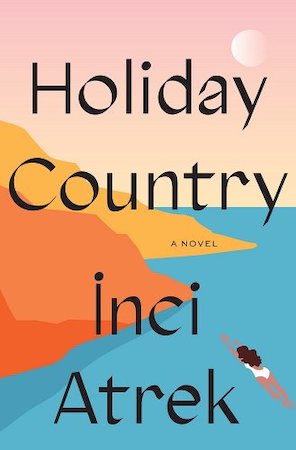
Eskor David Johnson’s Pay As You Go is set in an imagined city, Polis, one that takes elements from New York to Chicago to London and magnifies them to grandiose size. Traversing Polis is an intrepid hero of sorts, Slide, whose rare mix of panache, naivety, earnestness, and humor makes him a mesmerizing act to follow through this urban jungle as he searches for a place to live.
Johnson has written a necessary antidote to what is more common of the debuts of young, contemporary writers: books so steeped in solipsism that it is as though man can, in fact, be an island. This is of course not the case. There’s always community to come up against for the good and bad. Witnessing this in full force is one of the great pleasures of Pay As You Go.
I corresponded with Johnson over email, curious about what the novel and its author had to say about notions of home and movement, the genesis of a fictional city, and what fables can teach us of our contemporary life.
DK Nnuro:Labeling the book “a fable” instead of “a novel” is a bold choice for many reasons. I have two questions on this front. The first one is very simple: what is your definition of a fable?
Eskor David Johnson: I’ll have to revert to those elementary school lessons when you first learn about them. To me, a fable is a universal-leaning story that is very consciously a stand-in for a greater range of narratives. Fables operate closer to the level of symbolism, with characters that can be archetypes and a plot in which many people can see parallels and lessons for their own lives.
DKN: Interesting. Do you remember your first fable? The one you first fell in love with?
EDJ: First would be hard to say but the one that comes to mind quickest is that of the fox and the bone. He’s walking along with a juicy one between his teeth when suddenly he sees another fox holding an even bigger one, and in an attempt to get it he drops the one he’s holding and it floats away in what turns out to be a river. He had been looking at his reflection in the water. There’s something of that in the novel.
DKN: Polis, the fictional city your main character Slide finds himself navigating successfully and unsuccessfully, is exquisitely imagined. I wanted to liken it to a known major metropolis… wait, it just hit me: is “Polis” taken from the word “metropolis”? Did I miss that in the novel?
EDJ: Ha! Perhaps you did! If it makes you feel better “metropolis” is more of a descendant of the term rather than an ancestor. I was in fact thinking of the word for the Greek city-state, polis, which was their defining unit of civilization, as opposed to the more modern notion of a country. A city-state is both city and country tied into one, and the dominant means by which the people of the time would have seen themselves. Those from Athens were Athenian, from Sparta Spartans. That they all spoke Greek was a matter of geography, they might have argued.
So too with the novel’s Polis, which functions as a world onto its own.
DKN: Yes, yes, exactly what I was thinking. Greek city-states and all. Ha! But in all seriousness, the depths of your imagination…mind blowing! The fact that you conceived of an entire map of Polis. Let’s talk about that!
EDJ: The map has to its credit three of the great artists I know in my life. First was a poet, Diamond Sharpe, whom I long ago sent some pages from an old version of the novel to read, and who commented that she couldn’t tell where things were in relation to each other, and suspected I didn’t either, so suggested I map them out. I made a rough, terrible sketch, which still survives in a notebook today, and that became the basis for the layout. Second was a painter, Dougan Khim, who lived in Chicago while I was in Iowa. During one of my visits to him we spent the day walking through Chicago’s sweeping streets and theorizing as to what exactly a city was, its requirements. We would have sounded quite silly to passersby, but the conversation was instrumental in shaping the detailing of Polis’ neighborhoods. And finally there was the actual map maker, Sarah Diamond, whose handiwork appears at the opening of the book. She was the one to actually take all those sketches and notes and theories and turn it into the beautiful image we have today. When she first showed me what she had done I was flabbergasted. Her talent is immense.
DKN: I think most people would want to say that Polis is a fictional New York City, and there’s enough there for that argument. Why create a fictional city? Why not situate Slide in, say, New York?
EDJ: The problem with picking a real place—and in a long ago brainstorming of the novel it was in fact New York—is all the rules and obligations that come with it. Where stores are located. Accurate street names. A preexistent history you’re better off knowing well before vigilant readers come knocking on your door with a list of corrections. Then there is the similarly well-tread ground of all the great New York novels and having to take into account what has or hasn’t been done in those as well. I ventured 3-5 pages down that path and put the whole thing aside for years. There will be more New York novels—someone is writing one as we speak—but it was not where I felt my strengths were at their best.
Having your own city allows for the rules to be your own. Some of these are technical in nature: I had to figure out a system for the naming of the streets, as well as what kind of people lived in what neighborhood. But the real rules were the intangible ones. The logic by which spontaneous crowds so often form, the sometimes hysterical dialogue, the underlying sense of lawlessness, the tendency of certain characters to monologue. These may not feel like a necessary off-shoot of a fictional city, but they did for mine. What the story gets to say by being set in Polis is “This is a world in which these things happen.”
DKN: Yes! And things happen because there are people, as there should be in a big city. So reading this rightly peopled novel made me think of how much contemporary big city novels—yes, contemporary New York novels—are woefully unpeopled. They are so narrowly focused, as if the big city would ever accommodate these characters’ high degrees of solipsism. But we live in a time where, more and more, we are being encouraged to focus on ourselves and to limit our communities to a chosen few. I worry about this sometimes because perhaps there is something to be learned from communities who might disturb our peace. Slide’s peace, by the way, is so often disturbed.
EDJ: Absolutely. And I happen to hold the view that a city should be where you go in order to have your peace disturbed.
Fables operate closer to the level of symbolism, with characters that can be archetypes and a plot in which many people can see parallels and lessons for their own lives.
New York in particular has undergone a shift that I am hardly the first to put my finger on. It’s very possible to have a more quaint, sanitized experience here than many imagine, provided you have the money. A lot of people find a handful of friends, a rotation of similar neighborhoods and restaurants, and those will constitute the main ingredients of their experience. They’re not entirely to blame. The economics of the city have made it unforgiving for the conditions for enlivening randomness—cheap housing, a healthy population of artists, political engagement—to thrive. I often joke that I missed my era here, and should have been alive and in my 20s for the New York City of the 1970s.
So it’s made its way into fiction, so much of which can feel like staid domestic dramas, despite the many other kinds of drama available in the city. To be sure, many of these are good. But many not. It’s a shame, since there is so much to be gained from trying again and again to capture a metropolis on the page, no matter how incompletely. The truth is that for as much as I’d like to flatter myself about the inventiveness of Polis, thousands more (and more unimaginable) things happen in New York every single day. It’s good exercise for the soul, and for empathy, to try fitting it all into a few hundred pages.
In many regards I admire Slide for his ability to be disturbed, and to incorporate such disturbances into the fabric of his life. He could have simply said no to many of the situations in which he finds himself and ends up complaining about. It’s his willingness to be open that defines him, a heightened version of a quality I hope to cultivate in myself. Though admittedly if I gave into disturbances as often as he does, I would not get a lot of writing done.
DKN: Fair enough. Still, what are your thoughts on allowing our peace to be sometimes disturbed by certain communities?
EDJ: I believe that the ongoing project that is democracy is in some sense centered on this. Democracy asks that you imagine yourself into the place of others and recognize in that imagining both the beautiful differences and essential similarities that place us on even terms. It is why cities are naturally more democratic places, given that its citizens have to more often take into account the lives of others dissimilar to their own. Currently I live in Harlem and I joke that Black people here treat the sidewalk like it’s their living room: there’s always someone on the phone yelling all their private business for everyone to hear. That’s other lives rubbing up against yours. That’s texture.
Those who live in cities can be quite self-satisfied in interpreting this open-mindedness as a sign of greater moral value, but it doesn’t necessarily have to do with them. Some are the same people who would otherwise keep to themselves and not go out of their ways to meet anyone different were they to live in the suburbs. It’s the city, our agreed circumstance, that does the work of disturbing our communities, which would otherwise homogenize if left on their own. I do give people credit for moving here in the first place. The trick is to keep moving, keep being engaged, even when you’re already physically present.
DKN: We are both recent immigrants to the US. This thing about texture, a. About other lives rubbing up against yours;. K keeping moving, keeping being engaged. What might recent immigrants be able to teach other Americans about these things?
EDJ: I sometimes worry for writers who are only of one place, none more so than American ones, who have a kind of glorious insularity. My favorites are the writers who learn other languages, travel the globe, move from one place to another, and return to their page with these incongruous notions of the world vying within them, and so try making sense of it all.
For me, the novel is what I am trying to say in response to the question of what home means to me.
Yet the thing about American hegemony is that no matter where else you may be growing up in the world, you are also growing up in America, whether you realize it or not. In the West especially. I found that when I came here for good at age 17, I already knew and understood so much of the culture simply from TV and fascination. So almost by default I had two worlds, and two ways of seeing the world, to access. The interplay between those plays out in my fiction not so much on the level of plot, but on that of language. I have remained stubbornly Trinidadian in my outlook on things.
So if there is a lesson we have to impart I think it’s mainly that simple one of the importance of variation. America can be a good part of a balanced diet. It’s not the entire meal.
DKN: That takes me to a few of my curiosities about what the book suggests about finding “home” or making “home.” But first, I’m interested in how you define “home”? Can you share with us your own journey towards “home”?
EDJ: Another quick anecdote about Dougan, by way of vamping. He really is a phenomenal painter, and at one of his shows he was asked by someone what he was trying to say in making one of the pieces on display. Not knowing what to do, and in a truly genuine sense (he has not a snide instinct in him), he had to point to the painting and reply that that was what he was trying to say. In some sense, for me, the novel is what I am trying to say in response to the question of what home means to me. That said, I will still attempt a more succinct response.
It’s the first and most consistent question the book asks, I think, from that early moment that Slide complains of his first apartment that he can’t quite hear his heart while in it. That notion of being able to hear yourself and of finding a space where your better instincts more often win out against your worst ones, has been essential to what I consider home. For me it’s been somewhere I know I can consistently write, see my friends and family often, make feel beautiful, be inspired to cook and exercise, go for walks, and have animals—those of my own or that I mind for friends. Sunlight and wood floorings definitely help, let me not pretend. But home is where you hear your heart. Sometimes the oldest answers are the best.
DKN:Are you able to hear your heart wherever it is you are laying your head these days?
Electric Literature is pleased to reveal the cover for the novel Catalina by Karla Cornejo Villavicencio, which will be published by One World on June 18th 2024. Preorder the book here.
A year in the life of the unforgettable Catalina Ituralde, a wickedly wry and heartbreakingly vulnerable student at an elite college, forced to navigate an opaque past, an uncertain future, tragedies on two continents, and the tantalizing possibilities of love and freedom.
When Catalina is admitted to Harvard, it feels like the fulfilment of destiny: a miracle child escapes death in Latin America, moves to Queens to be raised by her undocumented grandparents, and becomes one of the chosen. But nothing is simple for Catalina, least of all her own complicated, contradictory, ruthlessly probing mind. Now a senior, she faces graduation to a world that has no place for the undocumented; her sense of doom intensifies her curiosities and desires. She infiltrates the school’s elite subcultures—internships and literary journals, posh parties and secret societies—which she observes with the eye of an anthropologist and an interloper’s skepticism: she is both fascinated and repulsed. Craving a great romance, Catalina finds herself drawn to a fellow student, an actual budding anthropologist eager to teach her about the Latin American world she was born into but never knew, even as her life back in Queens begins to unravel. And every day, the clock ticks closer to the abyss of life after graduation. Can she save her family? Can she save herself? What does it mean to be saved? Brash and daring, part campus novel, part hagiography, part pop song, Catalina is unlike any coming-of-age novel you’ve ever read—and Catalina, bright and tragic, circled by a nimbus of chaotic energy, driven by a wild heart, is a character you will never forget.
Here is the cover, designed by Grace Han.
Author Karla Cornejo Villavicencio: “I love this cover because it feels timeless and serious and that pairs nicely with the novel which makes a point to be unserious. It also reminds me of the design of old F. Scott Fitzgerald book covers which is terrific because I love him and hope to replace him soon.
The eye represents looking and being looked at, looking at yourself being looked at, the gaze, the tension between being an object and being a subject, desire and longing. Many of the non-fiction pieces I’ve written in the past few years have been accompanied by an unrelated picture of a sad, young brown child with large dark eyes just looking sad. It’s a different child each time and I never know who they are, that’s just the art that accompanies my essays. So I thought, what if the little brown girl in the corner of all the photos of war and such, what if she grew up to write a book that showed she was looking the entire time? Looking, and remembering everything. Remembering names.”
Designer Grace Han: “I was ecstatic to be given the opportunity to create a visual introduction to Karla Cornejo Villavicencio’s work. As a child of immigrants, I saw myself in Catalina—in her desperation to distance herself from family and in her desire for self discovery. I wanted the cover to give us a sense of hope in addition to giving us an intimate peek into Catalina’s life as she attempts to find her place in between worlds. I hope this cover captures the poignancy and profoundness of Catalina.“
Public fascination with con artists, scams, and heists has been on the rise, with stories of Anna Delvey, Rachel Dolezal, Caroline Calloway, and Elizabeth Holmes splashing across magazine covers in the last decade. Alongside it, my thirsty interest in literary scandals has grown, watered by “Bad Art Friend,” a mysterious manuscript thief, the pathological lies of an editor cum author, and the invented auteur JT LeRoy. Surely there must be fiction in this vein, I thought. We live in a literary soup of cultural appropriation, ghost writers, plagiarism, fabricated memoirs, artificial intelligence, autofiction, and nebulous influence. Who doesn’t love a juicy story about pretending to be someone you’re not in order to make art? So began my fiendish fascination with novels that dive into questions about authorship, who owns a story, what parts of life we can acceptably use to write and which are unethical (or at the very least, gauche). If there are a glut of real-life examples of scammers, surely there must be fictional tales of authorship hoaxes.
The ones I found tend to keep pace with thrillers, though the crimes were less gory, more fixated on the ever-hungry ego, and pleasurably literary. Often, these books portray adults who can’t do their own homework, pushed to the brink by their desire to succeed while their peers burst up as stars, they desperately steal the work of others. These books are less about “real talent” and more about vanity and ego that fuel people to be known as artists, rather than make great art.
Even the books in this list whose villains aren’t stealing source material (or whole manuscripts) offer an exploration of authenticity and how to deal with inevitable periods of diminished inspiration. Inherent in this plot, is a sense of mystery about where a work originates and how one can prove who owns material. Some of these take up the dangers of cult personalities and the treacherousness of fame. Others lambast broken systems (publishing, the artworld) and how creative merit fails to correspond to financial or critical success. Underneath them all sits the question: Who are you and where do you get your ideas?
At any given reading, it seems the most common question is “Where did you get the idea for this?” John Boyne’s main character Maurice Swift is obsessed with this too, because, simply put: he is a good writer with no good ideas. After a chance encounter with famed author and Holocaust survivor Erich Ackermann, he panders to the older gay man and preys upon his loneliness, becoming an assistant of sorts, traveling with him on book tour. Over the course of the tour, he teases out a story that Erich has never shared about his time during World War II, which Maurice uses to write his first novel. As the rest of this elegantly plotted novel unfolds, we watch as Maurice continues to find new and atrocious ways to grift stories for his novels.
Jacob Finch Bonner had a respectable start to his publishing career but has been struggling to write a second book for far too long. When a student of his comes along that is painfully arrogant but has a brilliant idea for a book, Bonner is jealous. The plot is undeniably juicy, and it seems only a matter of time that he will be eclipsed by a student, washed up and forgotten about. But the book never comes out and Bonner eventually discovers his student died. He decides to use the plot for his own next book (chapters of Bonner’s book are interwoven with the story so readers slowly come to see what exactly this atomic plot is). This thrilling read gets even more propulsive when someone who knows Bonner stole the story starts hunting him down to pay penance.
This recent release is a fast-paced and pulpy book that follows two grad school peers, June Hayward and Athena Liu, and the ways their careers diverge drastically. While Athena has become a bestseller, June’s books have never caught the attention of the media. When June witnesses Athena’s death (in a ridiculously campy scene involving choking on a pancake), she decides to steal Athena’s latest manuscript about Chinese laborers in World War I. After Athena’s death, June edits the book, and through a series of incredible maneuvers by her publishers is transformed from a white author to a racially ambiguous one rebranded as Juniper Song. Unsurprisingly, June, or Juniper is haunted by fact that someone might figure out her secret. And indeed, they do.
Where many of these books characters are spurred by jealousy, envy, or creative blocks as their inciting incident, Siri Hustvedt’s main character Harriet (or Harry) Burden is an artist with agency who, after a career of being underrecognized, asks three male artists to exhibit her work as their own. They are her masks, there to prove the misogyny of the art world, rather than gain her fame or recognition. Of course, things don’t go as planned, but this book is a miraculous look at the power of a name, and interpretation of meaning in an era of identity politics. The book points a finger at the failures of the male-dominated artworld to truly embody gender equity.
Distinctly resonant with the dynamic of Lila and Lenu in Elena Ferrante’s Neopolitan novels, Agnes and Fabienne are two friends growing up in poverty in rural France. Fabienne loves to test the limits of her power over those around. her. She conscripts Agnes into a new game, asking her to be her scribe for a series of stories about the grim realities of their day-to-day. To complete the hoax, they use the town’s postmaster as a smokescreen to edit the book and send it to a publisher. When it becomes wildly successful, Agnes is listed as the author and is catapulted to fame, receiving all the privileges that follow, including a scholarship to a British boarding school. In many ways this is more about friendship than authorship, the tender pliability of teenage influence, and how complicated it can be to play along when we don’t understand the consequences or our desires.
The plots of these books are often vampiristic: here Caleb sucks the story off his old friend Avi and spins it into a novel that has incredible commercial potential. Caleb is caught quickly though when his agent sends it out to publishers and Avi, now an editor, forces him to strike a deal: Caleb can keep the seven figure contract money but Avi will be listed as the author. Caleb, much like Maurice and Jacob, is plagued by the beast of ambition, as he receives no acclaim when the book becomes a hit.
Okay, okay, this isn’t a novel, but if you want to read about just how one of these hoaxes came to be, look no further than Savannah Knoop’s memoir about how they became the face of JT LeRoy. JT gained acclaim writing autobiographical novels about their experience as a gay child prostitute, with a meteoric rise to fame placing them neatly into social circles of the rich and famous. The thing is, JT LeRoy was a fabrication of Laura Albert, who had asked her sibling-in-law Savannah Knoop to make appearances as JT. Knoop wades into the wobbly identity shift of dressing up as a boy dressing as a girl, and what they learned from playing the part of someone else.
In a year packed with noteworthy novels, it can be hard to remember that big, important, vital ideas sometimes come in small packages. Many of the year’s best collections represent a return to form for some of the greatest writers of our time, and while the stories may be brief, their impact is felt long after they’ve been read. In these pages you’ll find heartbreak and longing, estrangement, fear, desire, and political upheaval, told in the forms of myth, folktales, and yes, everyday realism. All of these collections, from widely varied vantage points, get at the heart of what it means to be alive, and what it means to be human.
Here are Electric Literature’s top four short story collections, followed by additional favorites listed below.
Tomb Sweeping phenomenally unravels the heartaches, deferred dreams, and desires in a range of characters living across Asia and the US. Within these fifteen stories, you’ll find mediums, disoriented housesitters, doppelgängers, unsatisfied marketing directors, unfulfilled housewives, immigrant families, heartbroken college grads, expecting parents, and unexpected twists. All the while, Alexandra Chang consistently maintains an incisive pulse on the grief that invades these communities and what gets inherited in families beyond DNA. As Chang mentioned in her EL interview with Annie Liontas, the characters in these stories each endure sharp growing pains, along with transformation, but not necessarily one in which they become better beings: “If anything, connection with others helps them find themselves and their place in the world, but most of these connections are temporary, too. That’s how I see the world and experience life myself… Transition seems constant, ideal even.” Sample a taste of this brilliant collection by reading “Phenotype,” published in Recommended Reading earlier this year.
Kelly Link is a master of illusion, threading reality and surreality together to create stories where nothing is quite as it seems, and the stories in White Cat, Black Dog are no exception.In this delightfully strange collection, each story stems from a different fairy tale, pulling inspiration from the Brothers Grimm, Norwegian folklore, seventeenth-century French lore, and more. Link’s reinvention of these tales are not only unique, imaginative, and contemporary (think Hansel and Gretel as androids, Snow White as a housesitter avoiding his dissertation), but also deeply human. These once-flat characters of fairy tale land are given new layers of psychological depth: they desire, they love, they betray. Their emotions are painfully recognizable, even as the stories themselves are bizarre (in the best way) and wholly unpredictable. In classic Link style, they’re also often funny: as Link says in her EL interview with Chelsea Davis, “Humor and horror are both doors into story for me—and inside a story, they’re paths to understanding or rearranging situations.” The result is a collection of stories that are witty, startling, and emotionally real, each story taking us somewhere that at first feels familiar, only to pull back the veil and show us that we are, in fact, in territory entirely new.
Wednesday’s Child is full of stories that only Yiyun Li could write: moving and deeply introspective work that reaches great depths of human emotion without ever becoming overly sentimental. These stories center around characters reckoning with loss and grief: a woman creates a spreadsheet of everyone she knows who has died while she grieves the death of her son, a woman confides a haunting story about her past to a man whose wife recently passed away, and in “Such Common Life,” a three-part novella excerpted in Recommended Reading, a retired entomologist and her caretaker reflect on the lives of imaginary friends. This collection is full of tender, quietly heartbreaking stories written with the compassionate, observant eye that Li always brings to her prose.
In the ten stories that make up Witness, all set in New York City, you’ll encounter as broad of a range of characters as you’ll find within the city itself: children, adults of all kinds (UPS workers, grandparents, volunteers at an animal rescue), and even ghosts. In each of these stories, Jamel Brinkley explores what it means to bear witness, asking the weight that comes with truly perceiving one another. With sharp, beautiful, probing prose, this collection plumbs the depths of human connections. And by drawing us into the world of these characters, Brinkley turns each of us into a witness in our own right.
Electric Lit’s Other Favorite Short Story Collections:
Moving across centuries and continents with a focus on the Korean diaspora, Paul Yoon masterfully explores the shared history, displacement, alienation, and the lasting effects of war within The Hive and the Honey. Throughout seven stories, Yoon’s lean and cutting prose dissects truth and inheritance, interweaves haunting tales with mundane lives, and reveals far-flung characters searching for home, such as when a samurai journeys with an orphan in 17th century Japan, a contemporary couple grappling with their heritage manages a small shop in London, and a Korean settlement in Far East Russia is plagued by its past. Recommended Reading published the beautifully wrenching title story from the collection in September.
Written originally in Italian, the nine stories in Jhumpa Lahiri’s latest collection each revolve around a central protagonist: Rome. And while the city may now be a second home to Lahiri, many of the incisive narratives focus on the stinging feelings of discrimination, estrangement, and exile that persists for these characters, many of which are immigrants or outsiders. In beautifully moving prose with acute observations and reflections, Lahiri paints a mosaic (or a fresco, if you will) of dazzling yet pain-ridden lives from the multifold perspectives of a caretaker’s daughter, a tempted husband, two alienated women, and the many migrants and refugees in Rome.
Megan Kamalei Kakimoto builds a contemporary portrait of an ever-changing Hawaii in this debut collection—excavating gender, race, sexuality, and the very act of storytelling. As Molly Antopol wrote in her introduction to the story “Madwomen” (published by Recommended Reading in August), “the legends that permeate Kakimoto’s Hawaii play innovatively with received notions of genre, seamlessly braiding magical realism and ancestral myths into her convincingly realistic character-driven narratives.” Within these eleven stories, Kakimoto’s female protagonists face issues such as the chaotic anxiety of motherhood, the chance to trade a personality trait for a free Brazilian wax, displacement by drills of U.S. military bombing in Kauai, and much, much more.
In vivid and musical prose, A Small Sacrifice for an Enormous Happiness explores the complex realities of desire, culture clash, parenthood, faith, and legacy through lively characters in Brooklyn, Kolkata, upstate New York, and beyond. In one story, set in the 1980s, a closeted gay man longs for a child from his lover’s wife. In another, an Indian woman grapples with how to sustain her identity alongside her new Jewish fiancé’s family traditions. All in all, the fifteen stories in Chakrabarti’s collection are a testament to the ways families form, change, and move forward. Read “Prodigal Son” from the collection, published in Recommended Reading.
The three stories in Claire Keegan’s latest collection each profoundly dissect relationships, interpersonal communications, and misconnections. The sharp observations and memories of Keegan’s characters reach back into the inheritance and perpetuation of misogyny as well as the objectification of women, but is done so masterfully, naturally, and imaginatively that you may not even realize that these ideas drive the stories until the second read. So Late in the Day is a powerful and necessary collection for not only this day and age, but any.
In thirteen interconnected short stories set in and across New York, Alejandro Varela uses pithy prose and sharp commentary to explore racism, sexuality, and gentrification on a personal and political level. While mainly focusing on one central couple, the stories revolve around the anxieties present beneath everyday interactions and the biases held by characters they encounter as well as themselves. These stories are full of insight, humor, and surprise—as in “An Other Man” where Gus and Eduardo make their marriage open while inside a multiverse and, in another story, Eduardo tracks the love-hate relationship between him and his therapist. In an EL interview, Varela discusses their work, class anxiety, and the multiplicity of queerness and transness in fiction.
In this urgent and timely collection, Allegra Hyde conveys the confusing, often terrifying, act of existing today through protagonists who are mystified by love, their own identity, and seeking perpetual purpose in a collapsing world. The characters in The Last Catastrophe are plagued by loneliness, cynicism, and wonder. A husband leaves and then his wife’s skin turns the color of Gatorade, while another woman needs “a little extra attention as she face[s] her own impending obsolescence,” and an émigré searches for his lost love across the surgically supplanted faces of strangers. As Hyde discussed in her EL interview with Annie Liontas, writing this collection was a way of distorting grief, refracting it through objects and ideas: “It’s processing extinction in a playful, sometimes humorous way.”
Cleo Qian’s debut collection is enthralling, surprising, and obsessed with loneliness as much as it is with the tenuous ways we connect with one another today. In her EL reading list about alienated women, Qian writes of her collection: “The young women who weave in and out through my stories lurk watchfully: looking for allies, connection, a meeting of minds that will make them, finally, safe and seen. They are millennials, Internet surfers, queer and questioning, immigrants, the children of immigrants. They wander alone through perilous, defamiliarized urban landscapes.” The sparkling, restless characters in Let’s Go Let’s Go Let’s Go question convention, expectation, listen fondly to the stories of elders, and change their fates all to make unforgettable memories and choices, lingering in readers’ minds long after they’re over.
Emotional and psychological richness fill the pages of Tessa Hadley’s After the Funeral and Other Stories. The twelve stories in this collection take the small, real moments of life and make them expansive, meaningful, and startling. In this collection, Hadley’s mastery of drawing out the complexities and dynamics at play in relationships is on full display, making the interior lives of each of her characters intoxicating to read.
The eighteen stories in “Disruption” exemplify what Steven Millhauser does best: spinning strange, provocative tales out of suburban lives. One town struggles with the challenges of having both average-height inhabitants and their two-inch tall neighbors. Another installs a guillotine. A caller is strangely affected by an automated customer service line. Each of these stories take American suburbia and unsettles (or, you might say, disrupts) it, stretching out into the absurd to create something unique, unsettling, and delightful to read.
Evil Flowers by Gunnhild Øyehaug, translated by Kari Dickson
Gunhild Øyehaug’s “Evil Flowers” is dazzling, energetic, and a constant surprise. The stories in this collection are bizarre and playful, pushing against the boundaries of everyday life to create tales that are as absurd as they are clever. Read “A Visit to Monk’s House” from the collection in Recommended Reading, which takes a woman reading a review on Trip Advisor and turns it into something addicting, expansive, and wholly unique.
Halle Hill’s debut collection is a darkly humorous exploration into the lives of Black women in Appalachia and the South. The vivid, deeply human characters who embody each of these twelve stories fly off the page and are utterly unforgettable. Hill’s observant eye brings an intoxicating liveliness to her protagonists and their settings as we follow them from Weight Watchers to the emergency room to a 22-hour long Greyhound bus ride with a sugar daddy. Good Women delves into contemporary Black womanhood with humor, empathy, and beautiful prose.
Holler, Child is a profound, haunting collection that follows Black men and women in West Texas. In these eleven complex and probing stories, LaToya Watkins explores the things that make us human: love, guilt, betrayal, forgiveness. The tragedies that haunt the pages of this collection are rendered beautifully and with great care; they are the kind a reader will carry with them forever.
The stories in Kenan Orhan’s dazzling debut, I Am My Country, are each set in or around Turkey, the author’s ancestral homeland, while anchored by acts of rebellion and finding the meaning of identity amidst political upheaval. Orhan’s characters—ranging from a woman, who uses her magical attic to house Istanbul’s discarded and forbidden musicians, to a teenager in Soma who dreams of escaping his predetermined future in a small mining town, to a muezzin who spies on a Turkish baker and her adulterous husband while the city floods with apocalyptic rain—invite readers to interpret for themselves what reality means and how to combat it when history isn’t on your side. Learn more about the collection by reading EL’s interview with Orhan, published in June of this year.
Women in their early twenties drive Kate Doyle’s debut collection, I Meant It Once. The characters in this collection navigate the world of early adulthood with honesty and wit, seeking to find themselves and break from the expectations placed upon them. With humor and sharp prose, Doyle explores the dynamics at play in these transformative years as relationships with family, friends, romantic partners, and even oneself shift, fall away, or take shape for the first time. To get a taste of Doyle’s style, check out “Moments Earlier,” which is included in the collection and was first published in Recommended Reading in 2020.
This is Salvaged is a collection full of intimacy. The characters in these stories all seek connection in an often alienated world, from an experimental artist trying to recreate Noah’s Arc to teenagers operating a phone sex line to a woman at the onset of perimenopause seeking a friend in a new town. Vauhini Vara balances the emotions and relationships at play in these stories with depth, humor, and mastery. Read “The Hormone Hypothesis” from the collection, which was featured in Recommended Reading.
Our street is the kind resplendent with trees that escort your car along its morning commute, their eager branches bending over the road. Old Victorian mansions are chopped into infinitesimal apartments very much like our own—a big red brick thing that was once a nursing home, though the only suggestions of its past are showers that slip right into the floor and the eerie shrouded feeling that comes with walking its halls. My favorite part of the neighborhood, however, is the science museum that sits down the street.
Brutalistically gray and unassuming, the science museum watches over its surrounding homes and greets my partner and I on our daily walks. This is why I notice immediately when the sign shows up, overnight. Small and vague, planted right by the entrance. All I can make out are the words “Orchid Show.” There are no dates listed, so I’m not sure if it happened already, if it’s happening now, or if it’s happening in the near future. But it has an attractive air of mystery that pulls at me—freshly out of graduate school and trying to figure this life thing out, trying to find something to care about. I’m desperate for, as cliche and literal it is, a sign. For the universe to come around and smack me in the face with something important, worthy. And this cipher, flimsy on a white board and metal legs, has a luring specificity.
Upon returning to our apartment, my partner, Jonny, looks up the information. “Orchid Show, Rochester” is the only search term we can think of to return the result we want. What comes up are various orchid societies, one from the Genesee Region of New York and one encompassing the entire country: the American Orchid Society. It turns out this year marks the latter’s 47th annual show, complete with lecture talks, orchid sales, and living art pieces created and cared for by members of the local chapter. In essence, it’s a carnival for the flower’s most dedicated followers.
The show’s last day is Sunday, and Jonny goes with me under the pretense that we’ll only stay if it’s free. Who are we—two broke, recent graduates—to spend any amount of money on something so silly? We pull open the heavy glass doors.
“Okay, we’ll just look around,” I tell him. Internally, I’m cursing myself for not knowing about this event earlier, thinking I could have pitched coverage of it to my local newspaper. Already, in my head, I know I can’t turn away. Already, I’m experiencing each moment through the lens of how it would work in a story.
There are more people smushed into the tiny welcome room than I expected. And on the far side, there’s a row of meticulously styled orchid arrangements, all assembled by members of the local society. One is built of a hollow rod of bamboo with an oval cut out in the middle through which water and pussy willows build up and over the smooth edge. Another is impossibly delicate, the mere whisper of an orchid cradled in the black circular vase’s arch. “That one looks like your purse,” Jonny tells me. If the entrance fee means more of this, I’m inclined to pay it.
In 1998, Susan Orlean published The Orchid Thief, her tour-de-force journalistic memoir (though I don’t think she’d ever refer to it as such) following the orchid obsession that was tearing through Florida, leading more than one individual to the brink of criminality. Orlean centers the story on John Laroche, a man possessed by an indescribable desire to capture and appropriate the ghost orchid, Polyrrhiza lindenii. He is driven by greed, but also a lilting intelligence. A man who claims to know everything, and, to some degree, just might. He is quick to obsess, and even quicker to slash his stash once the passion is gone; by the time Orlean encounters him, he’s already abandoned similar fascinations with turtles and ice-age fossils.
At the start of the memoir, Orlean has left her home in New York for Florida, unsure if Laroche will even agree to speak with her. The project was triggered by a newspaper article she stumbled upon, but really, she’s chasing an impulse, letting the story build around her. The article outlined Laroche’s trouble: how he, and a group of Indigenous Seminole people, were arrested for attempted poaching of ghost orchids in the Fakahatchee, a protected Florida state park. Members of the Seminole Tribe were let off with a warning, having successfully argued their right to the land. Laroche was not.
Much like Orlean, I’ve always been drawn to passionate people.
Much like Orlean, I’ve always been drawn to passionate people. It’s in my nature to wonder how those with obsessive interests find themselves at the point of no return. Like Orlean, I’m perpetually curious, scanning constantly for meaning. Like the collectors, I’m hunting for fulfillment, convinced it’s right across the road, if only I’m tenacious enough to claim it.
The first exhibit we see in the science museum is a photograph display titled “Orchids That Don’t Bloom for Shows,” which features images taken throughout the year by one individual on their cell phone. Certain photos bear a ribbon already. What they’re marking, I don’t yet know. Just steps from us, the real orchids are putting on a show, blue and red and white ribbons pinned along their terracotta chests. These flowers are scored on tangible things, like color and strength and petal shape.
The main event is down the hall, inside a miniature auditorium. Up on the stage, two women work diligently to repot purchased orchids behind a rickety plastic folding table. On the floor, sneakers squeak against the freshly waxed wood. There are at least four vendors here, their bodies encased by an array of plants at varying levels of growth. Around them, a jungle erupts, countless displays of orchids, from impossibly small flowers that snake up curving stems to individual beasts the size of my hand. They are pink and red and yellow and purple and orange and white. Some look like spiders with spindly petals, others look murderous with great big chins to catch bugs. Small black plaques identify their Latin names and astonishing price tags. At one show, Orlean discovered a display containing nearly forty thousand dollars’ worth of orchids.
Around them, a jungle erupts, countless displays of orchids, from impossibly small flowers that snake up curving stems to individual beasts the size of my hand.
A man near the entrance to the auditorium wears a U.S. Navy lanyard and says he’s been collecting since the 60s. His first job as a teenager involved moving giant pots of orchids, the kind of terracotta behemoths that line the front walks of impressive mansions. “It’s a lifetime obsession,” he tells me.
Another collector wears a chambray shirt embroidered with a pink orchid above the chest pocket. He sells orchids that smell like chocolate and raspberries and I overhear him telling a woman, “It’s my therapy. Something that keeps me occupied, where I’m always learning.”
In the middle of the room, a man dressed in all black dissociates in front of his life’s work. I rouse him from another dimension by asking how he got started. “I saw my first orchid in a Buffalo store window 35 years ago,” he says. “I had never seen one before but I was transfixed.” His display is heavy with blue first-place ribbons.
Orlean asks a collector what it is about orchids that “seduced humans so completely that they were compelled to steal them and workshop them and try to breed new and specific kinds of them and then be willing to wait nearly a decade for one of them to flower?” Orlean doesn’t describe how the collector formulated his response. If he faltered, if he felt attacked by the intensity of her observational interest. But she does tell us what he responded: “Mystery, beauty, unknowability, I suppose. Besides, I think the real reason is that life has no meaning. I mean, no obvious meaning.”
As writers, all we do is search for and make meaning from the mundane. We are sensitive to overheard conversations, to the passing of coffee from employee to customer. Moments that fester and form inside us until, one day, they burst forth demanding to be made into something new. We craft, constantly. It’s an obsession, all this meaning-making. A sort of high that we are constantly chasing. Just like Laroche, I suspect we are also hoping that some form of success (money or meaning or, ideally, both) waits at the other end.
Writers risk falling into the habit of living for a story, rather than writing in congruence to living.
It’s easy—for me, at least—to slip into a mindset of ransacking, rather than excavating. Like Laroche breaking into Fakahatchee because his obsession was powerful enough to support a belief that he was entitled to disrupt the natural order, writers risk falling into the habit of living for a story, rather than writing in congruence to living. I’ve already begun to recognize this pattern in myself. Where my decision-making process for attending an event, confronting old friends—really anything—has been reduced to asking myself: “Would I be able to write about this?” Often, it feels like lying. Like falsifying the impulse behind memoir and art. My end goal has switched from gaining a deeper understanding of myself and the world around me to calculating how much I can produce, publish, craft.
In The Orchid Thief, Orlean never sees a ghost orchid in person. In a traditional story, in a story built on the author’s meticulous plan to craft the perfect plot, seeing it would be the crescendo moment. Where everything that’s been building over hundreds of pages finally explodes in relief. The moment she comes face-to-face with the fragility of beauty, the cause for so much treachery and loss and obsession.
But Orlean’s book is not a novel. When she attends her final orchid show, a sort of peace washes over her as she realizes the ghost orchid won’t be there: “It was a relief to have no hope because then I had no fear; looking for something you want is a comfort in the clutter of the universe, but knowing you don’t have to look means you can’t be disappointed.”
What if I just walked away, as Orlean does at the end of The Orchid Thief, without the perfect ending?
What would happen if I stopped searching for the story in every turn signal, every stranger passing on the street, every minute shiver of the trees? What if I stopped fabricating intention and metaphor where there is neither? What if a sign outside the local science museum was just a sign, promoting an event, without outsized metaphorical significance? What if I just walked away, as Orlean does at the end of The Orchid Thief, without the perfect ending?
My first essays were purer. I didn’t know what they were going to become as I wrote them: the decaying deer carcass I found in the woods; the extra pigmentation that made itself at home on my face; my need for validation that morphed into inappropriate bonds with English teachers. I lived my experiences as they happened, and only later twisted them into something charged. Those stories feel more real and palpable than anything I’ve since forced into existence. They have heart and complexity, overlapping themes and invisible threads that I later wrangled apart and put back together again. That doesn’t happen when you decide what a story will become before it happens.
At the Orchid Show, I bump into an older woman holding a clipboard. She’s two heads shorter than me. I ask if she has a booth and she tells me no, she doesn’t. “I’m a society member,” she says. “I do the judging.”
I ask her what she thinks it is about orchids that attract so many people, that make her job necessary in the first place.
“They’re a special flower,” she says.
To her, it’s that simple.
She tells me that some of the vendors have green houses where they force orchids to stay in bloom all year in order to bring them to shows like this. In nature, an orchid blooms for six to ten weeks. But first place ribbons guarantee revenue and, like most obsessions, disruption of the natural order is the price.
Like most obsessions, disruption of the natural order is the price.
Orchid pollination is a delicate dance, she explains, because some flowers have the ability to self-pollinate—if they get impatient, if their environment isn’t exactly perfect, they don’t wait around for moths or butterflies or birds to deliver that elusive pollen.
As the woman speaks, my first thought is that this kind of efficiency might be a good thing. Less work for everyone involved, a self-reliance that keeps the species going. It’s impressive that beauty can be made authentically, without force or artifice.
But, of course, it’s not that easy.
Self-pollinated orchids, the woman tells me, only bloom for a single day.
On New Year’s Day, I got an email from an old writer friend announcing plans to end her life. Her life was already ending. This expedited ending-of-life had been approved by a medical professional. She was electing to die with dignity. Her death was scheduled for the following day. Like a hair appointment or a visit to the dentist.
It wasn’t an email directly to me. I subscribe to her newsletter.
Farewell, the subject line read. That was her voice. Grand and direct. There was no beating around the bush. Happy New Year! the email began and then: I’m planning to end my life.
After I closed the email, I tried to stop thinking about her, but that night, on the eve of when I knew she was going to die, I couldn’t sleep. I googled her name, read every article that appeared on my screen. Read all the hits that weren’t actually about her. The ones with her name crossed out that the algorithm insisted were relevant. Maybe it knew something I didn’t.
I read about all the diseases I was probably suffering from that had nothing to do with her (or the disease that was killing her), I read about all the new diet trends that would shed my hips of love handles (I hadn’t seen her since she got sick, but in her last photo she was rail thin), I read about a minor celebrity cheating on another minor celebrity and then them reconciling and then them breaking up and then them getting back together again (she loved the thrill of gossip)—I read everything in the hopes of catching a glimpse of my soon-to-be dead old writer friend.
A week later, I got an email from a literary magazine announcing the death of its co-founder. I did not know its co-founder. I just subscribed to the newsletter.
I read the announcement from the literary magazine as if it were the announcement of the death of my old writer friend because after she died, I didn’t receive such an email. Because she was not here to write one. Or to send one. Though she could’ve scheduled one. Which is a thought I’ve had more than once since her death. Why didn’t she do that? That would’ve felt so like her. Not so fast, it might’ve read. I’m still here.
After the newsletter announcing the death of the literary magazine co-founder, my inbox was flooded.
I am so sorry to hear this. May you and yours find comfort. Keep him close to your heart.
I didn’t email anyone when my old writer friend died because it felt like I didn’t know her well enough. We met at a writing residency in Wyoming in 2016. We watched the presidential election together: I baked cookies, she bought liquor. We only inhabited the same space for a handful of weeks. So, how can I justify the vacuum suck of losing her?
The day after the election, we sat at a kitchen table and talked about our bodies. About who they belonged to. About culpability. I remember us disagreeing. The strangeness of feeling so connected to each other and then realizing, suddenly, that we may not actually know each other.
I cannot keep the literary magazine co-founder close to my heart because I did not know him at all.
Life is eternal! Your memories are the tap that keeps him living!
I think my old writer friend would’ve liked the idea of tapping a memory, like a keg or a maple tree.
Peace and love! (The sender included emojis of a peace sign and a yellow heart.)
I don’t think my old writer friend liked emojis. I’m not sure of this, but I just get a sense. She was whimsical, and danced wildly before she got sick, and very often swam naked, but I think emojis might’ve been beneath her.
After the residency, we wrote each other breathless emails. She was fond of exclamation points and caps lock. She didn’t need emojis to let you know how she felt.
Hah! You crack me up! YES, I miss you too! GET OVER IT! Enjoy the super-moon tonight! We won’t see it here. Too cloudy . . . Boo!
It was cloudy here last night too, but now the moon is beautiful.
Send me your essay about the election!!!
Please stay in touch often. What else am I forgetting?
Hello Everyone! (This was the first sender who acknowledged they were emailing multiple people.)
I am sending my deepest sympathies and wish peace and warm memories for everyone whose lives he touched . . . .
The co-founder of the literary magazine did not touch my life, but my old writer friend who just ended her own life via death with dignity did. She is the person who told me to: Go for it with my now-spouse. We were hiking through the rolling grasslands of Wyoming at sunset. I don’t remember the words she used, but I remember her insistence. That night, I booked a plane ticket.
In her Farewell email, she said that she “had a feeling she’d be returning to haunt a number of people in a good way.” I’m certain I wouldn’t even make the longlist of hundreds or thousands of people who meant something to her, but a part of me wonders if that email chain might just be a hello from her.
Not a hello for me.
Maybe someone who loved her—who she loved—is also on that mailing list.
I don’t deserve a hello because in that essay about the election, I mentioned a conversation she and I had. After it was published, she wrote me an email with the subject line: good job—all lowercase—then said the essay was lovely and impassioned, even if I made her sound kind of prim. I apologized once and then twice and then we exchanged email after email. The last one from her read: I felt a bit betrayed. That said, I love you anyway!, then she signed off: Xoc.
And I never stopped feeling guilty.
I didn’t invent anything for the essay. I wrote it as I remembered it. But that’s the thing about memory. What it means to me is not what it means to her. And she’s gone now, so I’ll never know which version is true.
If she were still here, she would probably say: GET OVER IT. But the thing is, I can’t.
In Wyoming, we were supposed to watch the first woman become president, but instead, we didn’t. My old writer friend was supposed to live into her 90s, but instead, she didn’t.
In the interest of not getting emails from everyone on this list (which is huge), I suggest going forward we refrain from replying all about this news.
Be blessed and please unsubscribe me from your mailing list.
My condolences. Unsubscribe! Thanks.
Please do not email me.
Stop replying all. If it has a double arrow don’t press it.
I also don’t want to be part of this list anymore. While waiting for you to delete me, I will declare all your emails as spam. So, act FAST! Warmly . . . .
This woman is grieving. Do you have no heart? This could’ve been a space for healing and instead you’re bringing nothing but negativity.
Please unsubscribe me these emails are becoming very stressful to read.
AGREED. Please take me off this chain. I have a newborn at home and I really don’t need my inbox filling up with emails about death.
I do not like death. Please unsubscribe me.
On the first day of the new year, I thought about responding to my old writer friend’s Farewell email. The email that announced that the next day she was dying. I didn’t want to burden her with an email on the last day of her life. But she’d written to me. Well not to me, but to her subscribers, and I wanted to say something. But I didn’t know what.
Maybe I wanted to say: You didn’t have to forgive me.
Maybe I wanted to say: I didn’t deserve you.
Maybe I wanted to say: I will do better next time.
In her 1993 poem, “won’t you celebrate with me,” author and educator, Lucille Clifton, invites us to wonder at the life she has created:
“… i had no model
born in babylon
both nonwhite and woman
what did i see to be except myself?
i made it up.”
As a Black woman existing at the intersections of these marginalized identities (“both nonwhite and woman”), Clifton finds herself rendered invisible in the mainstream and—consequently—creates herself in the process. 30 years onwards, Black women writers continue to take on the mantle of rendering themselves visible across genres and constructing models for future generations to see themselves in.
This has been especially true in the case of personal narratives, from memoir to essay collections. Starting with Harriet Jacobs’Incidents in the Life of a Slave Girl published in 1861 as a foundational abolitionist text, through to Angela Davis: An Autobiographyreleased only a few years after the acquittal of the Black Panther leader and prominent feminist, Black women have narrated their stories and transformed the personal into the political with radical results.
In our own personal narratives, we shrug off duty and expectations, the needs of others become secondary to our primary, as we catalog our hurts and our hopes. We become the hero, not saving anyone else but ourselves. To borrow a phrase from the late bell hooks, we move from the margin to the center.
The following contemporary memoirs and personal essay collections released in the past ten years exemplify this growing urgency by Black women to tell our side of the story. Their words illuminate the realities of the world and the impact of racist and sexist systems of powers on the lives of the most disenfranchised. These works are affecting, funny, haunting, inspiring and all urgently salient. They are additions to the records and the archives, insisting and reminding us that our voices always matter.
Within a four-year time span, two-time National Book Award winner Jesmyn Ward saw the deaths of five Black men in her life, including that of her brother. She chronicles their lives, alongside her own, of growing up in Mississippi and the history of racial violence that surrounds around them. “Hopefully, I’ll understand why my brother died while I live,” Ward writes, ”and why I’ve been saddled with this rotten fucking story.” Her journey of reflection is one of grief, anger, and guilt, all buoyed ultimately by the love that comes through of her family and the home that raised her.
Writing about her upbringing in a wealthy, professional Black community of Chicago in the 1950s, critic Margo Jefferson reflects on the intersections of race, gender, class, and color within her community, poetically delving into the nuances of Black life. The Pulitzer Prize winner manages a tight balancing act, honestly approaching the privileges and prejudices of her childhood family and friends, whilst remaining steadfast in her knowledge and understanding that Blackness—regardless of status or hue—is still ultimately Black. “We’re considered upper-class Negroes and upper-middle-class Americans,” her mother tells her, “But most people would like to consider us Just More Negroes.”
Though comedy writing—much like comedy itself—continues to be a boy’s club, Samantha Irby fuses sarcasm, self-deprecation, and toilet humor into musings and anecdotes about her life in the Midwest. Whether she is writing about The Bachelorette or mental health or falling in love, her singular voice is sure to bring you to tears of laughter or sadness, if not both at the same time. In an especially funny take on her pain she asks, “Do Black girls even get to be depressed?” and hordes of us nod in synchronized recognition.
Author, cultural critic, and professor Roxane Gay has never shied away from the story of the violent sexual assault that took place as a child, but the story extends from that experience to explore additional themes around the (her) body. Using examples from her own lived experiences, she challenges assumptions and conventional thinking about health and wellness, taking to task all the unacknowledged fatphobia we pervasively encourage in our society. Gay’s memoir is sometimes difficult to read, but necessarily so, particularly the parts where she works through her own demons and leaves us no choice but to confront ours too. “I buried the girl I had been… and perhaps I am writing my way back to her, trying to tell her everything she needs to hear.”
In a series of wide-ranging essays, the university professor and MacArthur Genius covers beauty standards, Black maternal mortality, and the election of Barack Obama, told through personal stories, academic scholarship, and cultural criticism. Thick is intentional in centering herself and the experiences of Black women and girls—a revolutionary and counter cultural endeavor given how “[the] personal essay [has] become the way that black women writers claim legitimacy in a public discourse that defines itself, in part, by how well it excludes Black women.” McMillan Cottom refuses to be shut out.
“Remembering is a chair that is hard to sit still in,” writes Sarah M. Broom in her National Book Award-winning debut work. The title comes from the name of her childhood home in New Orleans where she grew up with her large, loving, and complicated extended family. She moves away for college and continues to move further away from the yellow house, until the tragedy of Hurricane Katrina forces her to reckon with her home and all the historical and political context of where she came from. She looks at race, class, and inequality from a humanistic lens, using her story and the stories of her loved ones to reveal the harder truths about the country and how far left there is for us to go.
For years, former Poet Laureate and Pulitzer Prize winner ran away from the defining tragedy of her childhood—the murder of her mother by her ex-husband when Tretheway was a teenager. “All those years I thought that I had been running away from my past I had, in fact, been working my way steadily back to it,” and her memoir is her way of unpacking that journey back, beginning with her mother’s death and studying all around it. As Tretheway looks at her own life, from growing up biracial around the time of Loving v. Virginia to finding her way to becoming a writer, she is tenderly attentive to the memory of her mother and grappling with the situation of her death, taking us along the often dark journey with her.
Much like its author, Just Us is a text that defies categorization. The poet, playwright, and essayist utilizes poems, footnotes, essays, photographs, quotes, scripts, tweets and Facebook statuses to explore and indict American racism. Rankine’s writing is grounded in her own experiences, using everything from dinner party conversations with other academics and faculty members to moments between her and her White husband in couples therapy, resulting in a text that is personal, vulnerable, and filled with beauty. Rankine asks, “How does one combat the racism of a culture?” Just Us answers.
Former editor of the iconic hip-hop and R&B publication VIBE Magazine, Danyel Smith’s memoir doubles as a music history on Black women musicians. Smith chronicles her life growing up in Oakland and her journalistic path, looking to icons like Aretha Franklin, Donna Summer and Stephanie Mills as inspiration as to who she could be, and pays them their due through her own story. “I want Black women who create music to be known and understood, as I want to be known and understood,” Danyel writes, demanding that we pay attention to them and her too.
Ordinary Notes can be understood best as meditations—on Blackness, on life, on the human condition—penned deftly and poignantly by the woman described in the New York Times as “shaping a generation of Black thought.” Professor Sharpe intimately walks us through her life, from the museums she walks, to the songs she listens to, to the family histories she unearths, and in the final section, she dedicates pages considering the books she describes as “giving me a place to land in difficult times.” To Sharpe, they show “Black worlds of making and possibility.” Ordinary Notes does the same.
Among the exceptional writing brought to us in 2023, poetry has seen a renewed and necessary visibility. Whether you’ve listened to the soaring rallying cry from the picket line, or the way these collections have been a voice for the voiceless, one thing is clear: this has been a year of fierce and fearless poetry, existing on the frontlines of heightened social and political turmoil. Quite simply, the poets of today have shown up, and shown out, and we may never be the same.
Gabrielle Bates’s dazzling debut collection Judas Goat interrogates the complex intimacy of human relationships within the moody and forbidding landscape of the Deep South. These poems grapple with the coexistence of beauty and violence, the stifling societal demands placed upon motherhood and womanhood, and the intoxicating danger and power of religion. Spectral figures and domesticated animals yearning for the wild emerge from the darkness to haunt the collection, while Bates’s scintillating lyricism makes it a thrilling and unforgettable read. Read Bates’s reading list about seven acts of betrayal in literature.
This conceptual collection investigates the multiplicity of meanings and associations surrounding the pig as a metaphor for masculinity, police violence, desire, queer identity, agriculture, and religion, positioning it within both personal and global histories of power. Sam Sax crafts a collection of arresting poems whose subjects range from drag queens to pig farming, forcing the reader to confront their own preconceived expectations of the pig’s symbolic meaning. These nuanced portraits of the pig’s many cultural associations offer a startling glimpse into human nature. Read two poems from the collection here.
The Kingdom of Surfaces is a piercing exploration of how Chinese aesthetics were co-opted by Western culture during Chinamania and the nineteenth-century Aesthetic movement. Sally Wen Mao investigates the provenance of objects including porcelain, silk and pearls to open conversations about the history of Chinese women’s labor, the violence waged by the American empire, and anti-Asian discrimination during the COVID-19 pandemic. By examining the scope of Chinese art history, Mao raises important questions about the enduring nature of beauty, colonization, and legacies of violence. Read an interview with Mao about the collection.
Fixer takes as its subject the detritus of late-capitalist American life, from robots to temp jobs to conspiracy theories. The central poetic sequence explores the death of the poet’s estranged father and its lasting impact on his sons in a moving rumination on familial connection. This searing, darkly humorous collection investigates the nature of labor and asks what it means to build lasting homes and relationships. Read three poems from Kunz here.
I Do Everything I’m Told is narrated by a restless speaker on a solo journey around the world as she engages in unexpected encounters with strangers and speculates on the nature of sexuality and desire. The speaker maps her own erotic geography while traveling through Shanghai, Brooklyn, Los Angeles, Lisbon, Palermo, Philadelphia and Paris. These poems dislocate space and time to navigate a landscape of complex and ambiguous intimacies populated by a wide-ranging cast of characters from both the speaker’s imagination and reality.
I Done Clicked My Heels Three Times adapts the cult classic The Wiz to spin a moving coming-of-age narrative about a Black woman’s journey out of the South Side of Chicago. Although the plot trajectory remains the same, the fantastical setting is replaced by the more familiar landscapes of a Wendy’s drive-thru, a Beyoncé video, and the speaker’s grandmother’s house. Along the way, the speaker must confront her relationship to her gender, race, sexuality and family history through an innovative sequence of sestinas, sonnets and erasures that reimagine the concept of home.
Clint Smith’s new collection navigates the precarious and shifting landscape of fatherhood by exploring the ways our lives are shaped by both family history and the greater scope of the past. Meditating on the challenges of raising a family in a tumultuous era and rediscovering the world anew through his children’s eyes, Above Ground questions how joy and despair can coexist at once. Smith’s poems bring the reader on an evolving journey through his children’s early life as they learn to navigate the complicated and ever-changing world around us.
Promises of Gold grapples with the broken promises of the American dream to investigate types of love ranging from self love to brotherly and romantic to familial and cultural. Inspired by his experiences as a second-generation Mexican immigrant, Olivarez reminds us that “love is abundant” all around us. Reckoning with the legacy of colonialism on the lives of the Mexican diaspora, the collection is also a humorous, empathetic exploration of interpersonal relationships that is paired with a Spanish translation by poet David Ruano González. Read an interview with Olivarez.
Trace Evidence is a searing examination of the complexities of mixed-raced identity, queerness and the historical legacies of anti-Blackness. With vibrant lyricism and touching empathy, these poems narrate the impact of a violent colonial past on ordinary life through language that meditates on the nature of home, belonging and fate. Shanahan urges the need for intimacy and connection to ensure the survival of humanity while reckoning with the outside forces placed upon one’s identity. Read an interview with Shanahan here.
In this innovative collection of sonnets divided into three sections—“The Implacable West,” “Landscape with Work, Rest, and Silence,” and “Dwelling Music”—The Diaspora Sonnets explores the poet’s Filipino immigrant family’s resilience and search for belonging. After their relocation to the United States, their migration continued as they continually moved across the country in search of work, a vast terrain this collection deftly navigates. Oliver de la Paz breaks and reconstructs the traditional form of the sonnet throughout the collection to give voice to the Filipino diaspora’s search for the security of home and a sense of belonging.
Celebrated poet Mahogany L. Browne returns with this bold, unflinching celebration of Black womanhood across generations. Exploring generational trauma, the eagerness of girlhood, and the strength of inheritance, Chrome Valley is a necessary beacon of hope during troubling times.
LAMBDA Literary Award winner Eileen Myles’s new collection shines a light on snippets of everyday life we thoroughly missed at the height of the pandemic. Read an interview with Myles on writing about the Internet and the need for collectivity of voices in poetry and language.
Like the title suggests, this debut is a story-in-verse, consisting of couplets about love, queerness, and self-discovery. With this twist on an iconic rhyme scheme, Millner shows the transformative power of new love.
A rich glimpse into life and memory, this posthumous collection is both questioning and resolute as it traverses the difficult landscape of illness, and eventually, mortality. Read All Souls and be reminded of your life in the here and now.
National Book Award winner Terrance Hayes’s seventh poetry collection is clever, experimental, and energetic as it explores being a Black artist, influential Black icons across history, and the trauma of the murder of George Floyd. This collection is published concurrently with Hayes’s Watch Your Language.
Wilson returns to Ancient Greece with a new translation of Homer’s epic poem on the Trojan War. The first woman to translate The Odyssey in English, Wilson revamps The Iliad for the modern day.
MacArthur “Genius Grant” recipient Ben Lerner’s new collection is fifteen years in the making. Encapsulating fatherhood and family, the pandemic, and making sense of uncertainty, The Lights concerns itself with the tenuous world of today. Read a profile on Lerner and his novel Leaving Atocha Station.
In the face of a global climate crisis, can you delay the inevitable? Pulitzer Prize winner Jorie Graham’s new collection is both a call to action and an existential glance at the potential fate of the world.
An icon of science fiction and fantasy writing for her Earthsea series, Ursula K. Le Guin’s poetry is collected for the first time in this 40-poem volume. Read this essay on Le Guin and navigating womanhood under patriarchy.
An unflinching interrogation of anti-Asian hate written in the midst of the pandemic. Finalist for the National Book Award for Poetry Monica Youn’s collection scrutinizes forming Asian-American identity outside of the Western gaze.
Well-balanced partnerships of equal and mutual commitment among two parties, exchange positions of control with a seesaw’s regularity. One lifts as one descends, the other plops foreseeably downward, the process is repeated. To watch this tradeoff is like being a parent yawning at the playground perimeter.
How much more eye-catching, variable, and turbulent is a three-way exchange, in which allegiances and arrangements of power fluctuate dynamically—and not in a predictable pattern of ascent-descent, but kaleidoscopically, in all directions. Today, someone is the favored beloved, tomorrow the other is elected. Readers’ fixation on these rotating tensions speak to our deepest fears of abandonment and our zest for carnage.
Why a triangle necessarily? Why stop there? Three insiders is a suitable number and more than enough. Trying to follow a quartet becomes like watching people move around an airport: Complicated in bad ways, erratic and baffling. See Patrick Marber’s angsty Closer, an old-fashioned drama perpetuating the myth that love-is-suffering in a spectacular hurt-and-be-hurt pileup of affairs. As Goldilocks demonstrated, three participants is just right.
Is a love triangle necessarily unstable? Is it possible for all three participants to be on equal footing in a love triangle? Is someone always on the outs?
In my own personal life, I know a trio of very peaceable males who are engaged in a trilationship. While they claim that, despite the apparent nonconformity, the arrangement is in fact very conventional, and equally favorable for all involved—they have pointed out that there is still progress to be made in terms of mundane, material support for groupings of this sort. Even a king-size bed is small for three, and one partner often sleeps elsewhere.
One of my favorite contemporary explorations of the love triangle is Alfonso Cuarón’s 2001 film Y Tu Mamá También, a love story of self-discovery and burgeoning sexual freedom between two 17-year-old boys and an older woman, combined with the emerging liberties of a newly democratic Mexico. The sexual constellations between the trio shifts very naturally throughout the film to mean something different within any single scene: influence, transgression, and ultimately a scene of such honest connection that it implodes the relationship.
This shifting, prismatic rotation of allegiances is what attracts us readers to the love triangle again and again, and what makes writers continue to devise them. My debut novel, Alice Sadie Celine, is the story of a woman of immoderate appetites who falls in love with her daughter’s best friend. I wanted to show women in this way: hungry and curious. The triangle forces the three women to meet each other—and themselves—head-on, as mother and daughter, lovers, and friends in a way that a two-way thoroughfare simply wouldn’t permit.
Here are eight of the most inventive literary explorations of the love triangle. They are mostly novels, with one memoir in the mix.
The story of brilliant young anthropologists—a trio of social, cultural, and intellectual sophisticates—doing fieldwork on location in New Guinea. This novel is inspired by the life of the vanguard anthropologist Margaret Mead, who famously emphasized cultural relativism, rejecting biological determinism in favor of cultural determinism, especially highlighting the social environment. When the young Mead stand-in and her husband commit to an ill-fated collaboration, a frenzied love affair blossoms under the foul stink of prewar ethnographical anthropology and colonialist fixations on possession and control.
In the wake of a paralyzing grief exacerbated by a yoke-like guilt, a young woman is caught between her painless, unostentatious college boyfriend and an extremist cult leader who begins to stand for belief itself. This slender novel explores the expediency of a youthful naïveté when carefully considered beliefs butt up against unexpected passions and asks what it means to truly commit: to politics, religion, or love.
Bodies pile up in this historical reframing of a group of HIV-positive counterrevolutionaries who design a challenge to Fidel Castro’s horrific human rights abuses against a regime that targeted LGBTQ+ Cubans and Cubans with AIDS. Not the least of these bodily dissociations is a lover who becomes a brother—and subsequently, the brother of that brother. A portrait of a nation collapsing under the weight of oppression, the novel depicts Cuba in the post-Soviet 1990s. The Spanish language herein goes untranslated, further disorientation for the English-language reader. The narrative rushes with a fatalistic and cascading force between past and present. The torrents of revolution play out as terrorism and espionage roil. Food and sex provide rare respite from self-destruction, a love born of grief, and the shattered idealism that accompanies the dissolution of Socialist dreams.
A novella of infidelity and insanity—or what happens when Gitte, Grete, and Gert fatefully intersect. Told in lacerating prose, this novel is drawn from the life of the author (best known for her memoir in three volumes, the Copenhagen Trilogy) and explores the nature and meaning of literary success. The narrator is witness to a triangle between the couple’s housekeeper Gitte and his prior lover Grete, who died by suicide. It is no accident that these names point toward and ultimately away from one another. The reader feels as driven to madness as the narrator is. This broth of delusions is offset by the glaringly tangible actuality of the psychiatric hospital setting in which the narrator is stationed.
If readers love an unstable triangle, how about one in which one participant may not even exist? In this fragmentary novel of female loss of identity under male dominance, an abstracted love triangle plays out, without the narrator ever convincing the reader of the participants’ definite existence. Who is Malina? The purpose of the novel seems to be that one can hold onto nothing, rendering even our own humanity simply allegorical.
This London-based love triangle features newlyweds, and two pairs of friends, one old and one new; and uses revolving points of view to question the nature of purported veracity in any storytelling. Cruelty runs as an undercurrent beneath the characters’ quotidian concerns. A retelling of the film Jules et Jim, unusual for the fact that, like a swirling eddy, the characters are pulled into a love triangle not just once, but twice, as well as out of celluloid and into a postmodern context.
This alternate history, set in a 1982 in which the UK lost the Falklands War to Argentina, raises questions of human blunder and of machine consciousness. When Charlie Friend blows his inheritance on a new A.I. robot companion named Adam, the “ambulant laptop” begins to assert its own demands and withdrawals until the couple find it impossible to break free. The difficult situation results in a push and pull that threatens to topple the couple’s domestic, and romantic equilibrium. Can a machine love? Perhaps more lingering: can we love a machine? Stakes heighten when a child enters the mix.
A memoir of a young heroine attempting the impossible task of competing for her father’s affections against a legend of exquisite literary renown. Ada Calhoun’s father, the great Peter Schjeldahl, attempted to write a novel of his hero, Frank O’Hara, and Calhoun picks up the mantle, attempting to complete it. In one sense, the Calhoun’s memoir reads like a question to be solved, as Calhoun inadvertently unravels a sense of her father, a parent who sought emotional distance in order to safeguard his creative efforts, as she reconstructs the life of the great poet. In another, a story of knotted affections between three creators. Whichever way you frame it, this memoir illuminates three artists’ pledges and obligations to work, artistry, and family; and complicates the ways in which we venerate our heroes.
It had begun at dawn as they got off the plane, sparse plashes on the runway. By the time the coach deposited them at the Marhaba Aparthotel it was a slanted, dancing deluge. For three days they had been lying on their narrow beds, eating crisps and reading the guidebooks they should have read before the holiday was booked. From time to time they went to the balcony to examine the sky for a break in the clouds. Therese did not feel entitled to complain. Noreen had wanted to go to the Canary Islands, which according to Sky News were enjoying lows of 21 degrees Celsius. The same forecast assured them that the band of low pressure hanging over the northern tip of Africa would move off late on Tuesday. Their last night.
Therese had wanted to go somewhere exotic. To wander through a bazaar crammed with pyramids of heady spices, to drink amber‑hued mint tea from a gold‑painted glass. She had wanted to eat rich meats with her fingers while belly dancers and snake charmers whirled around her. She had wanted to go to Morocco or Egypt, but in her haste to get away had got mixed up. They were in Tunisia, not in a Berber village or by a Phoenician ruin, but in a purpose‑built concrete resort arranged around a new marina, as neat and airless as an architect’s model. Government‑controlled souvenir shops and blocky, modern cafés lined a promenade edged with palm trees still so tender they coiled in on themselves in the gales. To be fair, the Mediterranean was just a few yards away. They had seen it once, when a wave broke across the seawall and sent turbid water frothing over their shoes.
The waiter brought their cappuccinos. Noreen took out her phone and began scrolling through her messages. Therese left hers in her bag, so she wouldn’t be tempted to check again whether Donal had replied. She recognized the couple beside them from the flight. They were sitting in silence, their chairs turned to face the sea, shuffling coins around on their table. They flagged down the waiter and paid him. As he counted the money, the woman said, Every time you turn there’s one with a hand out. Young local men sat in clusters, smoking cigarettes and drinking shots of coffee. Some were with Dutch or German women who spoke English with heavy accents and traced smiley faces in the condensation on their beer glasses. There was clearly a want in them. What were they like, flirting with nineteen‑year‑olds they were old enough to have reared? And what could a boy like that see in a menopausal woman with bad highlights and a parched cleavage?
Noreen put her phone down and took a sip of her coffee.
Jesus, she said.
What’s wrong?
Mammy’s giving out about the Meals on Wheels. Says she won’t see a proper dinner till I’m back. The bowels will be trína chéile for the next fortnight. How are your lot?
Grand, said Therese. A stream of messages had come from Donal the previous evening. Enjoy, you deserve it. We miss you so much. He’d sent a video of a labradoodle playing the Moonlight Sonata on a baby grand, which was most unlike him. He’d even used emojis. Maybe he really was sorry. Therese sent him a curt inquiry about the school run, to which he still hadn’t replied. She kept her emojis to herself.
We need to find something to do later, said Noreen.
Will we have a look through the brochures?
I’ve looked already. All those places are outside, she said. It’s bucketing. And I’m choosing today. If there’s nothing else shaking I’m going on the piss.
The previous day, Therese had suggested they go to the market in the next town. They took a taxi to the medina and wandered through a network of gloomy alleyways.
They passed crates of small round turnips and radishes the size of tennis balls, bunches of mint and dill and savory. Butchers were selling merguez and chunks of sinewy goat from kiosks that didn’t have refrigeration. They saw no ceramics or leather goods or carpets, just tables laden with enamel saucepans and plastic utensils. When they emerged half an hour later, empty‑handed, their taxi driver was still there.
He’d better not charge us for waiting, said Noreen.
The man let out a sigh and started the meter. The resort is very new, very nice. Why do you go to old dirty places?
We want to go where the locals go, said Therese.
Local people do not have a choice.
Well? Noreen was saying. Do I get to choose or what?
Yeah, said Therese. You can choose.
They paid the bill and zipped themselves back into their damp fleeces. On the way out of the café, Noreen picked up a flyer and pushed it into her bag. They bent into the rain and ran back to the hotel.
In the room, they draped their wet things over a radiator. Noreen sat on her bed and took out the flyer. She read it front and back and handed it to Therese.
This might be nice, she said. On one side there was a photograph of a young woman draped from neck to knee in the whitest towel, slim legs slanted stiffly to one side, skin glistening. Her kohled eyes were looking up at the camera.
She was in a steamy room decorated with tiles in shades of turquoise and azure and gold. The price list for the Milk and Honey Hammam was on the other side. It’s not cheap, but there’s nothing to spend money on here, said Noreen. All I’ve bought is duty‑free.
It’s not the money. We should go on a trip. Maybe over toward Tunis.
I, said Noreen, wouldn’t be into that.
Can you not go to the spa by yourself?
I don’t want to go by myself! And you said I could choose.
It was Therese who had booked the wrong resort in the wrong country in the wrong season, after all. Oh, for God’s sake, she said. I’ll go if you come on a trip with me in the morning.
You’re on. She went down to the desk to book the total luxe package.
Therese took out her phone. Nothing. She didn’t want to talk to Donal, yet was annoyed by his silence. What was he at? Sending her cute videos and blushing emojis, then ignoring her.
Noreen came back and clapped her hands. They would be collected from the lobby at a quarter to three. She got two glasses from the bathroom and shook a bottle of rum at Therese, who prepared to explain again that drinking was a bad combination with the meds, that alcohol was a strong indicator for her strain of cancer. But she was tired of explaining, of denying herself. Feck it, she said. It’s not much fun being good all the time.
Noreen let out a whoop that was too big for the room. She poured two drinks, putting so little Coke in her own it looked like ginger ale. She shook salted almonds into a bowl and they brought their glasses out to the covered balcony. The storm billowed across the street below. Taxis, their lights blurred, deposited and collected holidaymakers, pulling off slowly and turning left in the direction of the promenade. Therese looked at Noreen. Grim, she said.
It’s not too bad.
You’re just being nice.
It’s great to get away.
Up to a point.
Noreen took their glasses inside to refill them. Maybe it wasn’t so bad. Better than looking at Donal for the week.
If we’re going to Tunis we might as well go the whole way. Beyond Carthage, said Therese.
I don’t even know where I am now. I thought we were going to Lanzarote.
It was an ancient city. The ruins are well preserved, and they’re a few miles after Tunis. Beyond them there’s a lovely village.
Therese got the guidebook and showed her a double‑page photograph. Whitewashed houses were built into a hillside so steep they seemed to overhang each other. Doors and windows and ironwork had been painted in shades of blue, and carpets of bougainvillea crept over walls and terraces. Blond tourists sat on sun‑bleached patios and looked out over the shimmering Bay of Tunis. Sidi Bou Said, she said.
It’s hard to believe it’s the same country, said Noreen.
A sudden gust caught some rain and threw it across the balcony. They went indoors.
Reception called to say their car had arrived. They weren’t ready. Therese didn’t have time to brush her teeth and her mouth was waxy from eating nuts. On the way down, Noreen answered everything Therese said with a loose laugh. When the lift doors opened, the few people who were sitting around the foyer were looking in their direction, Noreen’s guffaws clearly audible from a couple of floors away. A tall, slim man in jeans and a suit jacket was waiting by the desk. He said his name was Giuseppe. He brought them outside to his car, a model of Fiat Therese had never seen before. Noreen sat in the front beside him.
Loving the motor, she said.
Giuseppe put a plastic card in a slot and the dashboard lit up.
Buongiorno, said a deep electronic male voice.
Buongiorno yourself, said Noreen and slapped her thigh. Her movements had become expansive and inaccurate, and she knocked her elbow against the back of Giuseppe’s hand. The gold Rolex watch on his wrist was loose and made a tinny jangle.
Are you French, Giuseppe?
Italiano.
Very nice, said Noreen. Therese bit the inside of her cheeks to keep a laugh in. Noreen looked at her in the rearview mirror and stuck her tongue out.
Giuseppe braked hard when he needed to slow and took corners in third gear. When they got out, Therese put her hands on the roof of the car to steady herself. The flyer had shown a traditional bathhouse; they were outside the annex to an office block, a flat‑roofed concrete building with a row of high windows. Inside, they were greeted by a young woman wearing a white tunic and trousers, like a nurse’s uniform. She was heavily made up, her hair covered by a scarf. She led them into a changing room, gave them baskets for their belongings. She handed each of them a towel and a piece of turquoise tissue paper. Noreen unfolded hers. It was a pair of disposable knickers. She held them up in front of Therese’s face and tugged the elastic on the waistband in and out.
Ah here, said Therese.
They undressed with care, folding each garment as it was removed, placing it in the basket. The paper rustled beneath their towels as they wriggled into the surgical pants. Just as they were ready, Giuseppe came into the room. Therese looked around the walls and ceiling; he had come in so promptly she wondered had he been watching them on a monitor. She and Noreen stood side by side, their feet in white cotton slippers. Giuseppe stepped forward and tugged their towels away. It reminded Therese of a trick she had seen on TV when she was a child, involving a tablecloth and stacks of clattery china. Giuseppe looked at Therese’s body for a second longer than was polite. His removal of the towel was so flamboyant he would lose face by giving it back to her. Noreen crossed her arms over her breasts. They squashed out above and below, blue veined and creamy like Stilton.
Giuseppe looked at Therese’s body for a second longer than was polite.
He brought them into a steam‑filled room with wooden benches around the walls. Rain dashed the windows. Condensation ran down beige tiles. It was like the changing rooms in the public pool at home.
Relax, said Giuseppe, an instruction that filled Therese with anxiety. He left the room.
At first they sat facing each other, Noreen giving the floor a stellar smile. At least you’re thin, she said, without looking up. Then she stood. I’ll come over beside you, she said.
Therese’s moisturizer was trickling down her face and into her mouth. She could taste chemicals and salt. Noreen’s face was deeply flushed, her eyes pink streaked. It’s a bit mad, she said.
Just a bit.
Probably normal for here, though.
Therese didn’t think it was normal at all. Most of the local women covered their hair, wore long sleeves with loose trousers or ankle‑length skirts. She doubted many of them came to the Milk and Honey to be stripped nearly naked by Giuseppe. Noreen leaned back and closed her eyes, lids flickering like a child feigning sleep. Therese looked down at herself. Her right aureole was beginning to dimple, the nipple hardening. Sweat was coursing steadily now, over her throat, down along her sternum, collecting under her breasts. After months spent trying to keep them dry, they felt slimy and dank.
Giuseppe came back with fresh towels. Therese wound hers around herself. Noreen pushed her chin forward and puffed out a jet of rummy breath. She draped her towel over her arm and winked at Therese as they followed him into the next room. He took their towels again and ushered them under the showerheads that ran along one wall. The tepid water was bracing after the hot steam. A man came in, shorter and older than Giuseppe. He was barefoot and holding a tin bucket. He went at whatever was in it with a brush, eyes lowered. Giuseppe said something to him in Arabic. The man knelt beside Noreen. He flicked a clot of mud at her thigh and spread it outward, up and down, back and forth, until her haunch was covered.
Therese had an urge to flee but could only watch and wait. The man finished with Noreen and began to work on her. The mud was cold at first, then tight, the skin on her thighs and hips constricting as it dried. Her arms then, the brush skimming along the length of them and back. He twirled two fingers and she turned to face the wall. Long strokes now, the cloy of wet earth at the nape of her neck, in the elastic of the ludicrous turquoise knickers. Therese didn’t feel drunk anymore, just full of dread. She wanted to take the brush, smear herself in mud, cover her scars. Another twirl of his fingers and she could bear it no more.
No, she said. Thank you.
At first, when the tubes and drains had been removed, after the ragged blackened whorls had been shaved away, Therese had thought it looked pretty good. Clothed, her breasts looked better than ever; the left one had always been slightly bigger than the right and now they were the same size. She had refused a silicone implant. Even tooth whitening seemed unnatural to her, and she couldn’t bear the idea of a pouch of chemicals under her skin. The flesh to make a new breast had been taken from her abdomen, leaving a flat stomach and a pink groove that smiled from hip to hip. The reconstruction was a patchwork of flesh in different shades and textures, some run through with silvery stretch marks, some tanned, all tacked on to the milky shreds of what the surgeons left behind.
Noreen’s mud had dried to the dun‑gray of a wallowing mammal. It cracked when she bent an arm to scratch herself. The man ran the shower and hunched under the water with her, scrubbing at her with a loofah, limb by limb, torso back then front, brown droplets flaying his white clothes. When he was done, Noreen stood freshly pink and smiling.
It was Therese’s turn. Her scars grew bleary in the steam and splashing mud. Since the surgery she had thought about her skin differently, as though it was a fine veneer that mustn’t be scraped or tarnished. Now it felt raw, new. The man’s work was done. He bowed and backed away.
In the next room, an attempt had been made to temper the spartan buffness with candles and a diffuser that was panting sandalwood. Oud music was playing low in the background. Noreen claimed a massage table.
That sounds like sean-nós, she said. It’s shite.
Therese lay down. In private, she could face her body, her scars. Exposed like this she had to take on the reactions of other people, had to absorb their discomfort, their revulsion. She had only managed to attend counseling twice, as the weekly trip to Dublin wasn’t feasible. There was a support group in town, but she couldn’t bear the thought of sharing her feelings with friends of friends, women she knew to see. The breast nurse in the hospital had given her a booklet that she read until she had learned it by heart, ticking off the phases as they passed. Her cancer became old news. She hadn’t needed further treatment. She was still here.
Noreen shifted onto her side.
Are you all right, hun?
Fabulous.
Giuseppe came back in his shirtsleeves. He took off his cuff links; they were showy like his watch. Therese wondered at a boy his age in such a get‑ up, the impression he was crafting. He raised his arm and poured oil from a height as if he was partaking in a sacrament. Therese looked at the ceiling. She tried not to think about the slaps his hands made as he pummeled at the mounds and troughs of Noreen Foley’s body. She tried not to look but turned her head in time to see him clamp his palms over Noreen’s breasts and move them in a circular motion, more erotic than therapeutic.
It was a glorified brothel, with a clientele of desperate women. Giuseppe dressed as he did to appeal to golf widows from northern Europe, to women who found themselves single at an age when being alone made them feel ridiculous. He probably wasn’t even Italian. She and Noreen fitted right in.
Therese lay on her front with her face in the hole, her real breast flattened out and tingling at the graze of the towel, the new one a sturdy knot of flesh that felt nothing. He began at her tailbone and kneaded his way up to her shoulders. He hesitated then rolled her onto her back. The corner of her mouth was twitching.
Donal couldn’t stand to touch it. Once she had taken his finger and pressed it to the skin between the seams. He had forced a smile but pulled away when she placed it where the nipple used to be. Afterward he treated her to the full gamut of his foreplay repertoire, including a foray down below, which she didn’t even like. She doubted Donal much liked it either; he had stayed at the clean end when she was giving birth to the children.
A hard kaa sound then a slow inhalation came from the next table. Noreen had fallen asleep. Giuseppe held the almond‑scented oil above Therese’s scars, red lines like Biro marks, above the scraps of skin that held her heart in, some ribbed with silver, some tanned, all cut from her. She nodded.
Back in the hotel, Therese decided against a full shower, wanting to leave the oil on her body. She washed her hair over the bathroom basin. When she came out, Noreen was waiting with a drink. Therese took a sip. Her stomach heaved. Since the surgery, she had only been drunk once, on the night of the pink champagne. Noreen held her glass up.
Here’s to getting away. And to Geppetto and his wandering hands.
Giuseppe. And I can’t believe you just put me through that.
You loved it.
Feck off.
Thanks for coming with me. I go on holiday by myself no bother, but it’s nice not having to.
In the past Therese had pitied Noreen, the diet she started every Monday, the framed inspirational quotes she hung on her walls. Now she saw she had no right. Being alone wasn’t the worst thing. It’s great Donal doesn’t mind you going off by yourself, said Noreen.
Makes no odds to him. It’s during term time.
Dishy Donal.
He hadn’t put “dishy” in his profile. Cultured. Sensitive. Discreet. The three words her husband used to describe himself. To make other women want to fuck him.
They changed clothes and put on makeup. They took a taxi around the corner to a restaurant. It was quiet with warm lighting. Therese took the wine list from the waiter. She chose the most expensive white; she was in the habit now of wasting money, flaunting the silliness at Donal. He could hardly object.
She had discovered his purchase by accident. She rarely looked at their bank account. They didn’t have a big mortgage, and their salaries, after a slashing at the start of the downturn, had stabilized. There was even a little to spare, so neatly had they been living. Donal persuaded Therese to buy a new car. She wondered now if guilt had made him want to spoil her. Or perhaps it was a diversionary tactic, that she might not notice his five‑hundred‑euro transaction if other new payments were going out. But he had entered one extra digit on the car payment plan and the first installment had bounced. Therese saw the other payment and contacted Visa to report an error. The boy at the end of the phone asked her to hold while he checked. When he came back on he was tactful. Later, when she clicked on the site and found Donal’s profile, she replayed the conversation in her head and heard amusement in the boy’s voice. How stupid she must have sounded. There must be some mistake. No one from this house would be on a site like that.
Plates of food were carried past them to a table of local men, plump globe artichokes with a little pot of something on the side that smelled lemony, astringent. It wasn’t on the menu. The waiter recommended some traditional dishes. They both ordered a briq, a pouch of papery pastry filled with crab and egg. Noreen babbled ceaselessly, managing to finish her starter before Therese began hers, and drink most of the wine. Their couscous royale arrived. It was served in green and yellow pottery bowls, with a darkly spicy red paste on the side and a jug of broth. Noreen shook the empty bottle at the waiter. They were the only people in the room who were drinking alcohol. He brought two fresh glasses with the wine and asked who would like to taste.
Lob it in there, boss. We’ll soon tell you if there’s something wrong with it, said Noreen.
He was trying to be professional, but Noreen was pushing the clean glasses back at him. He poured wine from the new bottle into their greasy glasses and left it in the cooler. Noreen took a long drink. Jesus! she said so loudly the waiter rushed across the room.
Madame?
Mademoiselle. It’s rank.
I am so sorry. This is why I like to make the proper service.
Serv‑eece? she said. It has nothing to do with the serveece that you’re selling gone‑off wine.
I will bring another bottle.
Don’t bother, said Noreen. I’m sickened now.
The other diners had stopped talking. There was no need to speak to him like that, Therese hissed across the table at her. It was like dealing with a child. Not that Therese’s daughters would ever be so rude. Not in front of her, at any rate. Maybe they behaved badly when she wasn’t looking, like their father.
They paid the bill and hailed a taxi on the street. Noreen said they were going clubbing. End of. Therese could not even imagine what that might mean in Tunisia on a wet Tuesday in March. In the hotel foyer, they followed signs for Pepe’s Nite Club along a corridor. The place was huge and empty. The barman clapped his hands together.
What would the beautiful ladies like to drink tonight?
Therese asked for a Coke.
You’d be better off with something clean. Like vodka, said Noreen.
He gave them the cocktail list. It was full of misspelled sexual innuendo. Therese began to panic that Noreen would order her a drink with a pornographic name and leave her to claim it from the barman, so she went to a table and sat down. Noreen danced across the floor to her.
Therese began to panic that Noreen would order her a drink with a pornographic name and leave her to claim it from the barman.
This is a gas, isn’t it? she said.
The DJ left his box. He walked toward them, one hip swinging wide as he moved, as though one leg was shorter than the other.
Do you mind if I join you? he said.
Therese minded very much.
Feel free, said Noreen. She took off her cardigan, revealing a floral maxi dress. A necklace with her name on it was partly buried in her clothes, a gold NO flashing in the disco lights. Everything else about her said yes.
The barman brought a tray of drinks. Sex on the Beach for two, he said. His name was Kamal.
Noreen prattled away gamely. The weather was a nightmare, but you’d see worse at home. The local food was delicious, but the wine! The hammam was so relaxing. The men looked at each other.
We’re going on a trip tomorrow, said Noreen.
Oh? said Kamal.
To Carthage. And Sidi Bou Said.
The DJ said his name was Joe. The barman called him Youssef. He was twenty‑two. The lighting made him look older, defining his nose, shading his temple and jawline. He told Therese he had green eyes. She didn’t know where to look.
The cocktail was so sweet her teeth were tingling. Joe offered her a cigarette. She put one in her mouth and Noreen screaked. You shouldn’t be smoking.
No one should be smoking.
You really shouldn’t, said Noreen. Therese had cancer last year. She did great with the surgery. She had one of them off. No chemo, though. Very lucky.
Stop, said Therese. Joe sparked a lighter under the cigarette. The smoke tasted revolting.
Me and Therese used to work together, said Noreen. I had to take leave of absence to look after my mother. Daddy died last year. We had an annus horribilis. She pronounced it anus.
You fucking eejit, Therese said softly. Noreen began to laugh.
Joe went back to the DJ box. He put on a slow song. Noreen roared “unbreak my heart” when the chorus started. Kamal went back to the bar and sloshed the contents of the ice bucket into the sink.
I’d say that pair are looking for the bonk, said Noreen as the song faded out.
They couldn’t wait to get away from us.
Fuck them. C’mere, are you glad we did that today?
Not really. I wasn’t expecting to have to show the world my mutilation.
It was only me. And the wee man with the bucket. And I’m sure Geppetto has seen worse.
Thanks.
Seen it all, I mean.
Noreen lifted her glass to her lips. Some of the drink didn’t make it and dripped from her chin. She wiped the back of her hand across her mouth, leaving her cheek and knuckles glistering with lip gloss. I was so looking forward to this holiday, she said.
Me too, said Therese. It wasn’t true. She had come to annoy Donal. She had begun withholding from him, denying him, in the hope it would make him feel as wretched as she did. Pathetic, really. There wasn’t much point in withholding yourself from someone who didn’t want you. The afternoon had been bizarre. A scrawny youth dressed like an eighties Roger Moore had touched her new breast, groped it and rubbed it because she had paid him to. He had scarcely drizzled oil over her when she became tearful. The skin was numb and monstrous beneath his fingers. I’m afraid of hurting you, Donal had said to her. She hadn’t been able to tell him that there was no sensation. It was dead, like a hide. In the months that followed they grew shy with each other. She thought it would pass. Then the car payment bounced.
When he came home from work that night, she was waiting at the kitchen table. She had drunk the best part of a bottle of pink champagne, a get‑well present. Later she regretted her choice of drink. Whiskey or brandy would have given the proceedings some gravitas. The confrontation was exhilarating. She had found herself online too, she told him. Oh yes. She had gone online to find out why. Cosmopolitan told her it was meaningless, that loads of middle‑aged men watched porn and preferred sex with strangers. As she was reading, ads for sex toys and vibrators had flashed at her. And you know what? She might buy some, because it wasn’t up to much, in fairness, that side of it, when she had to squash him in because he was a bit wishy‑washy in that department. It was intoxicating, getting to say anything and everything she had ever wanted to say. And there was so much, wasn’t there, that you could say to someone who had given up their right to fight back? Someone who stood in front of you full of a shame you could hardly bear to behold, because you were full of shame yourself.
She had tried to calm down. In fairness, she said, she didn’t blame him. It must be so dreary being married to her at the best of times. And now, with her Frankenstein boob and sensible clothes. To be honest, she wouldn’t mind being ridden sideways by someone new, a young fella with a langer you could hang a coat on. But in fairness, in fucking fairness, she would be actually embarrassed to put herself out there. As for the words he used to describe himself. Ha! Cultured. Sensitive! Discreet? Such a laugh, she said. Only she didn’t feel like laughing because she didn’t think anything would ever be the same again, and even though he had only set up the account, and there was no activity on it, and she could see he had tried to close it, it was too late. He had wanted to go elsewhere and now he could fuck away off elsewhere and into the spare room, where he still slept.
Noreen finished her drink and crossed the empty dance floor in the direction of the toilets. Therese followed her. She was in a cubicle, the door jammed open by her backside. Therese held her hair out of her face until she had finished retching.
I’m fucking twisted.
Therese leaned over her and pressed the flusher. Come on. We haven’t far to go.
When they came out Joe was gone. Kamal jiggled a bunch of keys until they were through the door. Noreen reeled between the walls on the way to the room. At the sight of her bed, she hurtled onto it in her clothes. Therese covered her with a bedspread and left a glass of water on the locker beside her.
There was a rap at the door. Joe was in the corridor, wearing a leather jacket.
I didn’t say good night, he said. His eyes were green, all right.
After he left Therese went out on the balcony. It had stopped raining. The flooding on the asphalt had begun to drop and the wind was down. She sat for a long time and watched the deserted street, night fading to dawn. There was a text from Donal. The kids had got hold of his phone and sent those daft messages. Her poor girls. They had taken to coming into her bed in the mornings, asking why their father was in the other room. If there was anything more shameful than getting a knee ‑trembler off a young fella in a hotel corridor, it was the idea of her daughters trying to make things right.
She was showered and ready by eight. She read the train timetable once more, memorizing where to change for the other line that would bring them along the coast.
She shook Noreen’s shoulder. Shift yourself, she said. Our train’s at eight forty.
Noreen heaved onto her side. I’m in rag order. And I’ve enough of looking at ruins living with the mother.
Therese threw a sachet of Alka‑Seltzer at her. What’ll you do for the day?
I might go back to the hammam. See what the story is with that Geppetto fella.
Therese walked to the station. It was dull, but there was warmth in the sky that seemed to promise sunshine. She sat by a window, relieved to be in transit, rattling away from the resort. She changed at Tunis, taking a path through a dilapidated part of town and boarding a train at another station. Noreen would have hated it. After a few stops, apartment blocks and auto‑repair stores thinned to show glimpses of scrub‑covered dirt, flashes of sea. The carriage was full, a party of French students taking up the rest of the seats. When the train arrived at Carthage she let them get off ahead of her. She waited until they had joined the queues and walked to where she had a clear view of the pale green sea. The seam of cloud had begun to break up. Weak sunlight slanted across the stone. The ruins were laid out in front of her, pooled with rainwater that glittered like crystals of salt.
DON’T MISS OUT
Sign up for our newsletter to get submission announcements and stay on top of our best work.
YOUR INBOX IS LIT
Enjoy strange, diverting work from The Commuter on Mondays, absorbing fiction from Recommended Reading on Wednesdays, and a roundup of our best work of the week on Fridays. Personalize your subscription preferences here.