Even years after the fact, I am still too embarrassed to admit the identity of my first love. But I will tell you this: I wanted him to be my father, my son, my best friend, my brother. I knew his blood type, his birthmarks. What he was doing that summer on a yacht in Italy. When I am in love, he is my everything. He’s the only thing left on my TikTok fyp. He’s the reason my wallet is empty. At night, before I slip into unconsciousness, he is the last clear image in my head.
He doesn’t know I exist.
What captivates me about parasocial relationships (defined broadly as a one sided relationship, usually between an audience member and a media figure) is its reliance on distance. The intensity and want bellies on the contrast of intimacy and separation. You can spend all night watching YouTube videos of your favorite actor, influencer, etc. but, for the most part, you will never touch them. Half the love is in the longing, the desire.
When contact does occur, things get complicated.
Below are nine novels featuring parasocial relationships.
A Korean American copywriter in Berlin finds herself on a surrealist journey after a magical night at a K-pop concert, during which she witnesses the ethereal moves of star dancer Moon. Since the fated concert, she hasn’t been able to get Moon off her mind. She watches livestreams of “the boys,” attends fan get-togethers that resemble religious gatherings, and writes the titular Y/N fanfiction, which intersperses the text. When Moon abruptly retires at the height of his career, our narrator books a plane to South Korea, wandering the streets for any hint of Moon. What she wants from him, she’s not even sure herself. Y/N is simultaneously a love letter to self-insert fanfiction and a delirious, philosophical romp through the annals of the modern day entertainment industry.
Idol, Burning by Rin Usami, translated by Asa Yoneda
There are many sides to pop-culture fandom. If Y/N floats among the surreal and cerebral, Idol,Burning dives headfirst into the toxic. The novel stars high school junior Akari, an awkward, anxious teenager with an online alter ego as a Masake Ueno (member of J-pop group Maza Maza) superfan. She runs a popular online blog devoted to Masake Ueno, documents his every word in a binder, and spends all her work money on exclusive band merch. Her world is turned upside down when Masake is suddenly accused of assaulting a female fan. Desperate to make sense of her shifted landscape, Akari falls down a rabbit hole of evidence, proofs, and rumors. All too relevant, Idol,Burning digs through the aftermath of yet another celebrity downfall to unearth the trembling fans in its wake.
Remy and Alicia do not have much going for them. A pair of millennial restaurant workers trying to survive in New York City, the unhappy couple share little in common save for their obsession with Jen, a former coworker of Remy’s turned globe-trotting social media influencer. Jen is trendy, Jen is glamorous, and the couple spend their days roleplaying sexual fantasies involving Jen, who is none the wiser. When the couple accidently bump into Jen at an Apple store, they are invited on a surfing trip to Montauk, along with Jen’s wealthy boyfriend and their elite social circle. What starts as an awkward weekend of biting remarks and trauma dumping escalates into an outright horror show, as the lines fragment between fantasy and reality.
As perhaps expected of a Stephen King novel, Misery delves into the more violent, deluded potentials of parasocial relationships. Starring Paul Sheldon, a best-selling romance novelist, Misery kicks off with Paul crashing his car while drunk driving to LA. He is saved by Annie Wilkes, a former nurse who is also Paul’s biggest fan. Rather than take him to the hospital, Annie takes Paul back to her home, where she holds him hostage and demands to read his unreleased work. In the ensuing months, Paul writes to satisfy Annie’s whims and is punished when he fails to appease her.
Eleanor Oliphant lives a sound and structured life: throughout the week, she works a drab but stable nine-to-five; during the weekend, she splurges on pizza and vodka. She doesn’t wear high heels. No one comes over to her apartment. Though she’s had a troubled past—a childhood accident left her with a scarred face, and college reminds her of nothing but her abusive ex—she’s perfectly fine. Sure, she may be hoarding painkillers and becoming increasingly obsessed with a local musician who has no idea she exists, but she’s fiiine. Only when Raymond, the strange guy from IT, walks into her life, does Eleanor consider that she may not be as okay as she thought.
Set in Seoul, Korea, If I had Your Face follows a group of young women as they navigate a landscape of increasingly impossible beauty standards. There’s Kyuri, the beauty who entertains businessmen at a room salon. Sujin, her roommate, hopes to save up enough for plastic surgery to look just like Kyuri. In another apartment, Miho, an artist, finds herself in a troubling relationship with a wealthy heir, while her roommate, Ara, obsesses over her favorite K-pop idol. There is also Wonna, a woman living below them, who has no idea how she’ll afford the pregnancy she is planning for. All together, the women paint a harsh but necessary picture of modern day Seoul.
Big Swiss is tall, blonde headed, and possesses pale blue eyes of the “cult leader variety”—or so Greta imagines. Thing is, Greta has never actually met Big Swiss. No, Big Swiss is a client of Om, the sex therapist Greta transcribes for from her bee-infested farmhouse in Hudson, New York. Her infatuation would be perfectly contained if not for the fact that, in Hudson, everyone knows everyone. It isn’t long before Greta hears a familiar voice at a dog park. What ensues is a clusterfuck of infidelity, fake identities, sex, and trauma. While many of us have come to think of parasocial relationships as residing in the realm of celebrity culture, Big Swiss reminds us that parasocial relationships can exist on a smaller, personal scale, with equally absurd effects.
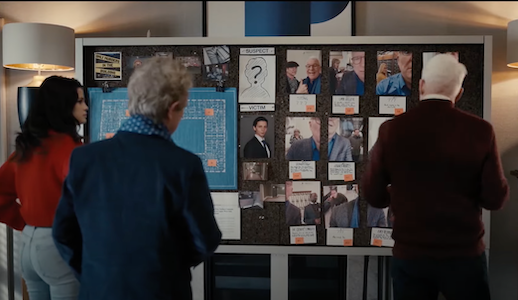
Summarizing the relationships in Sheena Patel’s I’m a Fan may require a corkboard, as well as some yarn and pins. There’s the unnamed narrator, a woman of color who is involved with a white, married artist simply known as “the man I want to be with.” The artist is also seeing a number of other women on the side, including “the woman I am obsessed with,” whom the narrator has never met, but is—as the name implies—obsessed with and stalks via Instagram. There is also the narrator’s unfortunate boyfriend, whom she admits to mistreating. Cutting and original, Sheena Patel’s I’m a Fan critiques our obsessions with wealth and prestige via a poet’s precise prose.
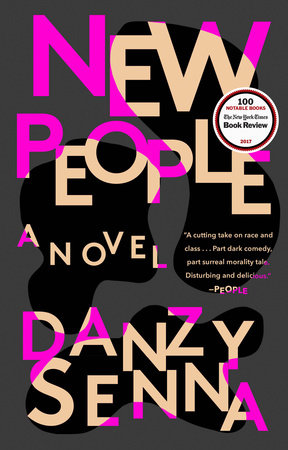
Set in 1990s Brooklyn, New People follows Maria and Khalil, a soon-to-be-married biracial couple selected to star in a documentary on “new people.” Though their skin is the “same shade of beige,” Khalil is much more at ease with his identity, while Maria struggles to come to terms with hers. The couple are also at odds with their marriage—Khalil is devoted to Maria, but Maria feels lukewarm about Khalil at best. The novel takes a turn when Maria, obsessive in nature, becomes infatuated with a Black poet she’s never personally met. With what little time she’s not spending on her Jamestown Massacre dissertation, Maria is finding new, questionable ways to get closer to the poet. For a novel preoccupied with watching others, New People is nonetheless about finding oneself.
In one of Electric Lit’s most-read essays of the year, “Black Women Are Being Erased From Book Publishing,” Jennifer Baker examines the publishing industry in the wake of the Black Lives Matter movement in 2020. She holds the publishing industry accountable for appointing high-profile Black women to powerful positions, only to see many of those same women depart those positions within a year or two. She also reveals the pain of her own dismissal from Amistad Books in 2022, when she was told her position as a senior editor had been eliminated.
Editors work behind the scenes, but their impact is enduring, and widely felt. Editors influence who gets published, and how their work is ushered into the world. In her essay, Baker writes about having done that work, and feeling erased from the record. The impact of Black women in publishing, she argues, is slowly being rendered invisible. She asks a key question: “If you don’t exist, how can you even begin to tell your own story?”
By now you know that Electric Literature is committed to publishing writers who tell stories that need to be told. Whether by soliciting work from emerging and underrepresented authors, working with a writer on in-depth, developmental edits, or creating new opportunities for authors to submit work, everything we do is geared toward supporting writers by providing a home for their most vital stories.
At Electric Literature, helping writers tell their stories is our story. We take immense pride in guiding our writers through the editorial process, compensating them, and presenting their work to millions of readers, online, for free.
But publishing Electric Literature isn’t free; supporting writers isn’t free. Please consider making a donation to support Electric Literature, so we can keep telling the stories that most need to be told.
Denne Michele Norris Editor-in-chief of Electric Literature
Here are the most popular posts of the year by category, starting with the most read:
These warm and fuzzy whodunnits are perfect for fans of Midsomer Murders and Only Murders in the Building.
“Some might think of cozy mysteries as edgeless and old-fashioned, but that’s only the case if you want it to be. To my mind, the genre feels like a metaphorical warm blanket around the shoulders. Though the detective will be out to solve a murder, there’s usually (but not always) less gore on the page, and while I’ve used the word “detective,” a cozy crime is most often solved by an enterprising member of the public.”
Not all authors are as prolific as Stephen King or Joyce Carol Oates. This list is proof that it can take decades for even the most acclaimed writers to produce their next work:
“The last few months have been an exciting time in the world of publishing, not only for the litany of debut novel and short story collection releases, but also for the publication of two long gestating, highly anticipated projects by Cormac McCarthy and Katherine Dunn.”
Improving your writing doesn’t have to be a daunting task.
“Whether you are an aspiring writer, a Pulitzer-Prize winning memoirist, or a curious reader, these books on craft will change you and the way you think about the world—as well as literature—within the complex confines of beauty and truth.”
“Showtime’s Yellowjackets was the unlikely sleeper hit of 2021 with its dark, off-kilter narrative and female characters who are messy, deeply flawed (and sometimes just downright sinister)… The second season of Yellowjackets was even darker than the first.”
These contemporary works of fiction weave in fairy tales to subvert what we take for granted as normal:
“Imagine the dark forest set on a planet mostly destroyed by climate change, the magic mirror in a story of race and identity, or that enchanted sleep in a tale about the unrelenting passage of time. Suddenly, these age-old fairy-tale objects are speaking to us about our real world, showing us how very odd it all is.”
Claire Hodgdon writes about Apple TV’s Shrinking and the reality of being raised by a grieving single father:
“I have watched countless movies and shows that include a dead mother. Shrinking, though, is about the single dad that is left when a mom dies. It is about the parent who is still there, not the one who is gone. The trying-but-failing Jimmy is sometimes so recognizable to me I can’t watch. Jimmy wants to be a good dad more than he acts like one. He fumbles, and he betrays, and he is selfish, and—he tries.”
George Harrison went from chief villain to unlikely hero in Kavita Das’s story of how Indian music came to the West.
“Why had George undertaken this grand endeavor of a cross-cultural tour, the likes of which had never been attempted before, putting his own musical reputation and resources at stake, if not to promote Indian music and musicians and to demonstrate the power of musical collaboration?”
Rebecca Woodward’s parents raised her as a Jehovah’s Witness. Decades later as an adult, she sees parallels between her escape from the religion and Prince Harry’s separation from the royal family.
“Like life in the royal family, Witness life was full of ever-shifting rules that often made little sense, but obedience to the men God had chosen to lead his organization was mandatory. In Spare, Harry is often as mystified by the arbitrary rules that dictated his life as I had been. Obedience, it seemed, was the only point for both of us.”
Jennifer Baker, a former acquisitions editor, saw her experience working at a Big 4 publishing house reflected in The Other Black Girl. The novel written by Zakiya Dalila-Harris tells a tried and true story of the challenges faced by Black professionals in the book world.
“Exclusion begins with erasure. Because if you don’t exist, how can you even attempt to tell your own story?… Being the only, or one of the few, is an unenviable position no matter the situation or occupation.”
For Benjamin Schaefer, embracing disappointment is healthier than resenting another writer for their achievements.
“It’s discouraging to see the thing we want, to be so close to it we can almost touch it, and then to be told it isn’t for us, not yet, maybe never. It resonates in the body…
How do we feel disappointment without avoiding it or offloading it onto someone else? Without giving in to the story about how we’ve once again overestimated ourselves or the value of our work? Without perceiving disappointment—and, by extension, desire—as a threat to our well-being?”
Lucy McKeon talks to Emmanuel Iduma about his memoir I Am Still with You and his return to Nigeria in search of the uncle he never knew.
“It was clear to me while I wrote the book that the real failure of imagination would be to avoid a reckoning with the histories that led, in part, to the protests. My sense is that political reckonings are cyclic in nature—an event sparks a reaction, a reaction leads to a flashpoint, again and again.”
Summer Farah talks to J. Robert Lennon and Carmen Maria Machado about how Critical Hits: Writers Playing Video Games came together.
“We were curious what people would have to say about how games fit creatively in writers’ lives. How do video games fit into a creative practice—or, do they?”
Chelsea Davis asks Kelly Link why we’re drawn to folk tales and how superstitions shape stories.
“The patterns of fairy tales are so recognizable that introducing even the smallest piece of those patterns—’once upon a time,’ for example—means the language of the story that follows becomes charged. Readers will pay closer attention to the appearance of animals (talking or not), or colors, or, say, repetitions of three.”
In this roundtable discussion moderated by Summer Farah, Samah Fadil, Priscilla Wathington, and Rasha Abdulhadi talk about countering Zionist propaganda and mobilizing art into action.
“Literature can set the stage for the attempted annihilation of a people, and it is our responsibility to point to it. How often have I chosen a slow death in service of comfort? The truth is, I have never been able to look around a room and not see the genocidal escalation to come—if the vitriolic disregard for human life, for Palestinian life, did not permeate through to our most mundane of activities, over 18,000 Palestinians would not have been killed in the past 67 days, over 1.5 million would not be displaced from Gaza.”
—Summer Farah
The Misfits
(Articles That Didn’t Fit Into Any Other Categories)
Looking to get away to a quiet space to focus on your writing without any distractions? In this newly updated article, Monica Macansantos recommends free or affordable 20 residency programs across America.
“I was a young MFA student when I attended my first artists’ residency at the Kimmel Harding Nelson Center for the Arts. I had heard of these places nestled in the woods or in small-town America where writers and artists were provided with a private bedroom and studio space, as well as meals or a meal allowance, with the only expectation that they spent the majority of their time working on their art.”
Claudia Guthrie has the deets on the literary adaptations that we can’t wait to watch in the new year.
“From classics like The Godfather and Jaws to modern marvels like Game of Thrones and Crazy Rich Asians, many of history’s greatest films and TV shows began as novels. A well-written book provides the ultimate Hollywood source material, with complex characters and an engrossing plot that, when read, already plays like a movie in your head.”
Laura Schmitt writes about the book podcasts you should be listening to.
“Whether you’re a die-hard bibliophile in search of your next read, a writer seeking some inspiration for your work-in-progress, or simply someone who enjoys the soothing cadence of spoken words, there’s a literary podcast for you.”
Samantha Paige Rosen recommends newsletters that offer the best of craft andpublishing advice,writing prompts, pitch calls,and encouragement andcommiseration about the writing life.
“Email newsletters can offer emotional support, tips and exercises for improving craft, and resources for getting published that might otherwise be inaccessible, especially to writers beginning their careers.”
Bradley Sides shares his top contenders for the most prestigious award of American literature. Spoiler alert: he was right! Well… half right, since there were two winners this year for Pulitzer Prize for Fiction.
“No matter how difficult it might be to figure out the year’s winner ahead of time, it’s still fun. It’s a way to reflect back on the literary year that was—and to uncover those works of fiction that might’ve been missed when they were released.
In shaping my predictions, previous awards, critical acclaim, general buzz, and a little bit of plain intuition are the top factors that I focus on.”
Novelist R.O. Kwon’s annual list of the most anticipated books by women of color is a perennial favorite of Electric Literature readers:
“Finding these books has become, in the last seven years, less difficult, and I continue to hope that American letters will become so inclusive this effort will become obsolete. But we’re still far from that point. I’ll keep hoping.”
Novelist Michelle Hart highlights the new and forthcoming queer books of each season:
“This is what queer art specifically does: it shows us that we have always been here and we always will be. Queer stories, like the ones listed below, do more than shine light on the shadows. They are the light in the shadows. They are living documents of our lives.”
From summer to fall, fiction writer Wendy J. Fox recommends literary gems by indie publishing houses that should be on every reader’s TBR:
“What’s thrilling about the books coming out from small presses is the breadth of range—there are intentional and accidental murders, family drama and polycules, medical calamity, geopolitics, and a whole lot of finding one’s way through it all. It’s a marvelous time to be a reader.”
Each season, Laura Schmitt—a former bookseller at The Bookshop in Nashville—asks independent booksellers across America about the books they love:
“What lead titles live up to their hype? Who are the debut authors you won’t want to miss? Which literary novel will speak to your very specific brand of autumn ennui? There’s a lot to consider when it comes, but luckily indie booksellers have read like mad and are here to provide some guidance via their thoughtful and thorough recommendations.”
Irish American editor Lucie Shelly brings her literary expertise across the pond with her recommendation of the best new novels from Ireland:
“With the blue-eyed boy Paul Mescal as an avatar of young Irish men, global audiences have come to see unflattering GAA shorts and emotional suppression as attractive. Mescal’s breakthrough was of course in the Rooney Toons, and who knows, maybe that show was the start of the most recent wave of Irish prominence in pop culture. But when it comes to literature, Ireland has always been a powerhouse.”
Electric Literature is pleased to reveal the cover of Housemates, the highly-anticipated debut novel by Emma Copley Eisenberg, which will be published by Hogarth on May 28th, 2024. You can pre-order your copyhere.
When Bernie answers Leah’s ad for a new housemate in Philadelphia, the two find themselves caught in an intense and unique friendship—for which art and artmaking are cornerstones. Bernie, a photographer, and Leah, a writer, share a drive to capture the world around them.
When Bernie’s former photography professor—the renowned, yet drenched in scandal Daniel Dunn, dies—leaving her an inheritance, Leah accompanies Bernie on the road trip through America’s heartland, rural Pennsylvania, where they attempt to document the country through words and photographs.
As Bernie and Leah chase everything—their own ideas, dreams, and answers to their questions—they come into contact and conversation with people from every corner of life. Along the way, they begin to reach for the limits of their capabilities, both romantically and artistically.
“As a queer designer, it was so exciting to work with a queer author dedicated to an authentic portrayal of queer life,” says Buckley. “I enjoyed making something that felt true to my experiences, and those of the characters in Housemates.”
Eisenberg agrees, noting that the cover feels like a love letter celebrating queerness, artmaking, and the book’s West Philadelphia setting. “I was hoping for a cover that conjured a feeling of being both close and far at the same time, home and away at the same time, together and alone at the same time, and this cover simply NAILS that twoness. The novel is about falling in romantic love and art love with your housemate (queer chaos!), about figuring out how to relate to the artists that came before you, and how to live in hyper close proximity to other people, so I love the way that the bright colors and graphic shape suggest the openness of the road while the blue houses suggest the joyful claustrophobia of the Philly neighborhood where the book is set.”
At a private Quaker high school in New York City, one year post-9/11, Fay and Nell have grown so close that they narrate their lives in unison, as F&N. F&N do everything together: they sip their matching caramel Frappuccinos; IM late into the night despite seeing one another all day at school and hanging out after; audition for shared roles in theater productions; speculate on peers’ queerness; and write secret fan fiction (or Faunfic, as they term it in their shared language) about a pair of boys at their school, Theo and Christopher, the nature of whose relationship remains an intriguing mystery to them. As F&N attempt to unspool what kind of intimacy exists between Theo and Christopher, they also do the same between themselves, and eventually are forced to confront how much—or how little—they know about one another.
Alternating between chapters narrated by F&N as a unit during their high school years and separate chapters from Fay and Nell fifteen years later, James Frankie Thomas’s debut novel Idlewild focuses not only on the way a seemingly inseparable pair has the potential to fracture, but also who we become by reflecting on our past selves and the friendships that shape us.
I spoke with Thomas via Zoom about uncategorizable relationships, being a theater kid, and perceptions versus reality.
Jacqueline Alnes: I love how your novel perfectly captures so many feelings that seem specific to high school: the angst, the sometimes clumsy but earnest attempts to navigate identity, the fierce attachments that seem like they’ll never come to an end. What intrigues you about this age?
James Frankie Thomas: It’s interesting that you use the word ‘angst.’ It reminds me that one of the trade reviews of my book invoked the word ‘hormones’ when talking about my book. Obviously, as a transexual, I have a charged relationship to the word ‘hormones’ but I do feel like hormones and angst go together as go-to cliches we reach for when we talk about how teenagers experience feelings. One thing I really worked at when I was inhabiting the minds of my teen characters was I really wanted to take their emotions seriously because I don’t actually think I believe that the emotions we experience as teens are less real or less justified than the emotions we experience as adults. I say this today, when I will inject myself with hormones, which will affect my perceived reality and feelings, but I guess that’s why I’ve been thinking about the relationship between adolescence, hormones, and intensity of feeling more frequently.
I wish I could cite this, but I saw a really interesting argument on Twitter responding to someone saying that the TV show Euphoria should be set in college instead of high school. Someone responded that you could never have a show like Euphoria set in college because the very nature of high school is that you are thrown together with a lot of other random people your age for eight hours a day, every day. You can’t get away from them, you are inevitably going to have conflicts with them, and you have to see them every day in spite of your conflicts. Of course factions are going to form. You’re going to have social hierarchies, drama, sexual intrigue. That is what makes high school such a rich premise for fiction and why we all have such intense memories from high school. We were thrown together with peers at a very unformed time in our lives so maybe our impulse control isn’t the best, maybe we’re not the best versions of ourselves that we’re going to be yet, but we just have to show up every single day and see these people and live our lives surrounded by each other. In this way, high school is just the dialed up version of the rest of your life.
JA: Fay and Nell are so attached that they almost become one entity, and refer to themselves as such: F&N. What did writing this book reveal to you about intimacy in friendships?
JFT: Intimacy in friendships really is the prime subject of this novel, but I didn’t consciously know this for a long time. I’m most interested in relationships that don’t fall into easily identifiable categories. When I look at the book now, every single relationship is one that cannot be neatly defined. Obviously you have Fay and Nell, or F&N, who are not a couple, but they’re also not-not a couple. You have that mirrored in Theo and Christopher—like who knows what their deal is. You have the intense, magnetic draw between Fay and Theo, but it would not be accurate to say that there’s sexual or romantic tension between them. I mean, there kind of is, but neither of them is thinking of it that way, and that’s not the solution to what’s going on between the two of them.
I think the only question that I find interesting enough to sustain for an entire novel is: What is the deal with the relationship between these two people? I think I’m exploring that in many, many different directions. I just love uncategorizable relationships.
JA: There is so much challenge wrestling with identity at that age and also in adulthood, maybe just all the time being like: Who am I? What am I? What is this relationship? What am I doing? How much of that comes from the language we have or don’t have to talk about relationships?
JFT: It’s interesting you bring that up. Again, to bring up the trade reviews, the word ‘identity’ comes up a lot and even the phrase ‘wrestling with identity.’ Maybe you could push back on this, but I actually feel like my characters do not spend that much time wrestling with their identity. That might be something that readers project onto the book because they recognize that there is identity happening here, especially with the character Fay. I don’t think Fay actually spends that much time on the page wrestling with identity. She wrestles with a lot of things, like physically wrestling for a lot of the book. I wonder if, when we say these teen characters are wrestling with identity, what we are actually saying is that we have more vocabulary for identity now and this lack, as you put it, this lack of labels and categories for identities is so apparent on the page. Maybe that’s what’s actually happening, is this lack of wrestling because there’s just not enough words to grapple with.
JA: Maybe ‘wrestling’ is too violent of a word. I’m thinking of the scene where Fay says, “I left the Meetinghouse Loft, or rather my body did, a body from which I found myself vertiginously untethered.” She’s very self-assured and knows herself in so many ways, but the moments of violence in the book are the only ones where it seems like she is in her body, experiencing herself fully.
JFT: I always try really hard to be in my characters’ bodies and experience what my characters are experiencing. With Fay it’s a little tricky because I think I, as the author, am more in her body than she is.
JA: This book made me think so much about growth and how much pressure we put on people to navigate life stages in a uniform way. I tell my students all the time how wild I think it is that people are expected to pick a college when they’re seventeen and know then what they want to major in or “be.” Nell views college with hope for who she might be where Fay struggles to see a future for herself. Do you think these pressures to make choices at certain points in our life make organic growth difficult in that it’s difficult to veer from what’s seen as the norm?
JFT: This is such a great point you bring up, and there are different levels to my answer. On the most surface level, I cannot possibly agree with you more—it’s so unconscionably stupid that we expect seventeen-year-olds to commit to a life path. It actually took me several drafts to decide on a life path for Fay and Nell. I think I changed Nell’s college major like seven times. It’s so random, it’s so arbitrary. On one level, when Fay is unable to visualize a future for herself, she’s partly just very rationally reacting to the insanity of that.
The novel is about projections, and projecting onto people what you want to see in them or what you want to feel in yourself.
That was not precisely autobiographical for me because I was constantly fantasizing about my future but I, like Fay, was resistant to the college application process. One thing I took from myself when I was writing this storyline for Fay is the way I thought about my future was just a different side of the coin: I was purely fantasizing. There was no realistic planning. I thought a lot about being a celebrity, being interviewed, being on Broadway. These are not actual career plans. You could take steps to make this happen. You could go to acting school but I didn’t want to go to acting school. I didn’t even want to go to auditions. I just wanted these things to happen to me; I still do. Fay does not have this fantasy life to distract her from the fact that she has trouble envisioning a future for herself but I think what we have in common is not actually being in the moment, not wanting to exist right now as a person going to school, surrounded by peers, making day to day decisions about the kind of person you want to be and becoming the kind of person that you’re growing up into. Fay and I were both highly resistant to the path that life had put us on.
I don’t think this is necessarily a trans thing, because I’m sure there are many trans people out there who were very excited to go to college and very excited to choose a major. Lest I overgeneralize here, all I can say is that’s how I reacted to the idea of going to college at the age of seventeen and it’s how Fay reacts too. I do highly recommend going to college in your late twenties, which is what I did. It’s so much better to go to college when you have experienced the workforce and you can just experience the pleasure of being asked to read all day. I appreciated every second of it.
JA: Can we talk about the theater aspect of this novel? I’m not a theater kid, but something that I found interesting is the way these characters read their characters and have a grasp of who they are. They say: this is what I’m bringing to the character, this is what I’m doing. I wonder if you could talk a little bit about the relationship between this ability to perform and this ability also to feel at home in yourself.
JFT: I’m amazed you’re not a theater person because that’s such a well-observed observation. A passage early on that I’ve always been kind of proud of is when the cast is having their first read-through of Othello and before they do the read-through, the drama teacher has the leads go around and describe their characters. I don’t make a big deal of it, but if you look at what all of the characters are saying, they are actually describing themselves. I don’t even know if I did this intentionally, but when it’s Fay’s turn, she says that the main thing about Iago is that he’s a gay man but he’s not allowed to be one.
One thing I love about high school theater is it’s so rare that high schoolers are allowed to express a big emotion in front of everybody. I fell in love with high school theater when I was in the ninth grade and I was not in the fall play, I was only an audience member. I went to the high school production of The Winter’s Tale. The boy playing King Leontes, when he finds out his wife wasn’t cheating on him and he had her executed for no reason, just broke down crying, like tears streaming down his face. A boy crying, in front of everybody, in front of teachers, classmates, everybody, just letting loose on stage. It’s possible he was not actually giving a good performance, he might have been hamming it up too much, but it was incredible for ninth grade me to see. And also, all the other cast members behind him were crying too. I found out later that a lot of them were doing the Burt’s Bees trick. It just rocked my world to see my classmates crying in front of everybody. I went back and saw the play again the next night.
When you’re in high school, the most impressive thing is that bravery, that emotional courage to just show your deep feelings. When you are an adult and acting professionally, that’s not the most important thing about being an actor, and I think when we see bad actors as adults is that they are hamming it up too much or showing too many feelings, rather than realistically showing how a character might try to hold back their feelings. But in high school, that doesn’t matter. It’s about having the courage to put it all out there.
JA: When you were talking about uncategorizable relationships, I couldn’t help but think of friendship breakups, and how I don’t think we talk enough about what happens at the end of things when it’s not a romantic relationship. I wondered what you learned from writing the end of this friendship, like this grieving of a person who’s still very much alive, still out there living their life, but without you.
JFT: I can’t remember when he said this, but I think it was my friend Danny Lavery who said once that it’s become almost a platitude that we never talk about friend breakups. People are always saying, “We never talk about friend breakups, we have no books about them, we have no vocabulary to talk about them.” And he said, is it possible that we’ve said this so much that it’s no longer true? Can we talk about friend breakups without saying we never talk about friend breakups?
JA: True.
JFT: That said, it is still very interesting to me. I’ve actually been hearing a lot from readers who reach out to me and say that this book made them think about their best friend from high school. It surprised me, because I didn’t set out to depict what I thought was a universal type of relationship. I thought that Fay and Nell were an unusual enough relationship that I could spend a whole novel exploring them. I guess it is more common than I thought, especially for queer people, to have one intense friendship during adolescence that eventually falls apart or ends in a weird way. I did sort of get at something that doesn’t get talked about very much.
The very nature of high school is that you are thrown together with random people for eight hours a day. You can’t get away from them, and you have to see them every day in spite of your conflicts.
I want to quote a friend of mine who also said she was reminded of a former, intense friendship while reading my book. She said she was reminded how, just like Fay and Nell, she and her friend were just in constant communication, all day long, that she wonders now what did we talk about? They were talking on the phone, IMing, seeing each other at school, and she wonders: What were we even doing? We didn’t have memes to text to each other or links to send to each other. What in the world could we have found to occupy all those hours of talk?
This is the interesting thing that she said, which is: I think we were just using each other as a kind of repository for whatever random thought came into our head. We would dislodge random thoughts by telling them to each other. In retrospect, this was a very selfish form of intimacy because we weren’t really hearing each other, we were just using each other as a sounding board. She said, I think this is why the friendship didn’t last, because once the circumstances changed and once things got difficult or there was conflict between us, there was actually no intimacy to draw on. We had been talking at each other for several years, and we didn’t truly know each other. We didn’t have a deep emotional understanding of each other. I love that my friend observed that, because I think it’s one of the takeaways of Idlewild, it’s something that both Fay and Nell are grappling with at the end: Did we ever really know each other?
JA: Something that’s been coming up throughout our conversation is what we impose on something rather than what’s actually there. I don’t know if it’s the age of the characters or that it’s this heightened era, but I think there’s something where you get to bring a part of yourself to this friendship, the same way that these characters see past each other.
JFT: I actually love that you say that. The novel is about projections, and projecting onto people what you want to see in them or what you want to feel in yourself and I never do resolve the question of how much we know about them is a projection and how much is real.
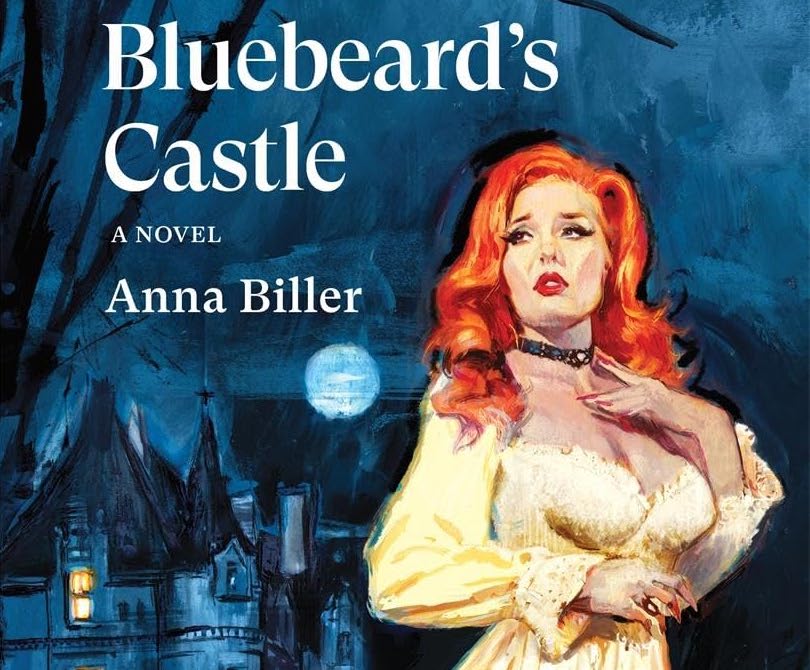
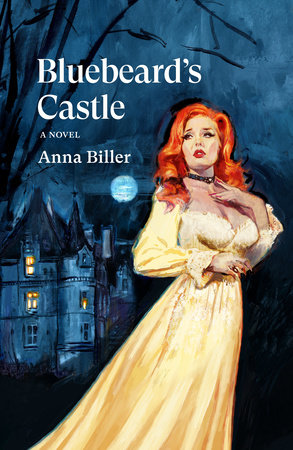
“There are rules for contemporary literature, and I’m breaking a lot of them for a lot of people,” filmmaker Anna Biller told me by phone. Her debut novel, Bluebeard’s Castle, rejects the minimalism that recent fiction sometimes conflates with seriousness: nowhere, here, will you find the anesthetized protagonist, the dead-end job, the lukewarm relationships, or the “cool first person” tone used of late to capture the alienation of the modern subject. Instead, Biller’s book embraces excess from cover to literal cover. Its heroine Judith’s feelings are almost as enormous as the gowns she wears to breakfast and the English castle she buys on a whim with her hunky but probably evil lover. Costume balls are thrown. Daggers are wielded. And just look at that cover!
In reviving the delicious manias of 18th-century Gothic novels and 1960s dime-store romances, Bluebeard’s Castle pays homage to genres that were often (and often pejoratively) associated with female readerships in their day. Indeed, the pleasures and perils of womanhood have always been the twin obsessions of Biller’s oeuvre. As a filmmaker, she painstakingly recreates the dreamy costumes, sets, and cinematography of bygone eras, from ‘60s Hollywood (The Love Witch) to the sexploitation movies and mags of the ‘70s (Viva). The result is a gorgeous, distinctly female gaze—but one unafraid to depict the mainstays of women’s suffering, from objectification to assault.
Even against that backdrop, Bluebeard’s Castle is Biller’s darkest work to date. Her reimagination of the French fairytale follows modern-day mystery author Judith as she falls hard for Gavin, a member of the peerage who promises her the world. But once they marry, Gavin’s charms sour, his worsening acts of cruelty seeming to channel the femicidal history of the medieval estate they call home. As Judith begins to fear for her sanity—and her life—Bluebeard’s Castle indicts a society that dares to call itself modern while violence against women remains routine.
Chelsea Davis: The Bluebeard legend is hundreds of years old. I was curious what attracted you to using it as the blueprint for a novel set in the present.
Anna Biller: It was actually a tragedy that happened to somebody that I know who got involved with a very, very bad man. And her life ended.
I was thinking about all the research on how many women are killed by their partners today—it’s such a high number. There was a story last year about a couple that went hiking. The woman went missing and they did this big search for her. When they combed the woods for her body, they found four more bodies that they weren’t even looking for. Their killers were all their boyfriends and husbands.
Growing up, I was always really interested in fairytales, and in the connection between the Bluebeard fairytale and the modern serial killer thriller. The Bluebeard stories were originally from the point of view of the woman, and it was only maybe in the ‘60s that it shifted, especially in movies. Suddenly, the point of view is all from that of the killer—especially in the Giallo films, like those of Mario Bava, and then in Hollywood films. It became very, very sadistic, and that’s still what we have: it’s the slasher, or the thriller. They say these movies are feminist, because there’s one woman who survived at the end, but in those older movies, you didn’t have to see a bunch of your friends be brutally murdered. I don’t think that’s a happy ending.
So that’s all in the book.
CD: What you’re saying is that femicide is still the status quo, not the exception. We’d like to think of extreme violence against women as being a thing of the past, but it’s not.
AB: That’s partly why I wanted to set my book in the modern age: I don’t want people to think “Oh, this is how it was in the 1950s or the ‘40s.” That lets us off the hook.
People also think of feminine women as dated, of femininity as being out of fashion. But I see more and more young women who really want to doll themselves up. They’re not doing it for a man; usually they’re doing it for fun with their friends, or to make themselves feel good. It’s in pop culture, it’s in music video culture, it’s on TikTok, but it’s still not in recent movies or books.
CD: I wanted to ask you about feminine fantasy more broadly. You’re so committed to a traditionally feminine aesthetic in your films, and now also in this novel: the lavish clothing, the sweet food, the hunky man. And each of these pleasures is actually really fun to read about. But they also end up having a dark side—the sugar crash after the desserts, or the man who ends up being, you know, completely evil. Do you think that women’s fantasy is doomed to endanger us?
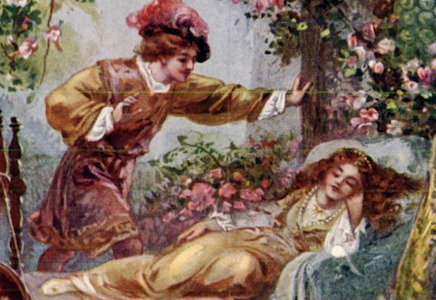
AB: No, I don’t think it’s always doomed to endanger us. But do I think the Gothic is about women being entombed within a castle that’s owned by a man, under his rules and regulations. So, the Gothic is about being imprisoned within patriarchy, and about the woman either making peace with that, or escaping it. That’s why those old-style novel covers are so evocative—the kind of cover that I copied with my book jacket, which shows the woman fleeing from the castle. It already tells the whole story, that cover: she’s fleeing from this wealth, this security, this pleasure, this dark fantasy that’s exciting. The man means pleasure, but he also means control. Are you willing to play the role of the little perfect doll to a man, and have all the money, have all the pleasure—but also be under his control? Or do you want independence, which could also mean poverty and loneliness?
Jane Eyre is a perfect example of that. Jane can go back to the castle in the end and be with Rochester because he’s maimed and blind, and therefore, they’re equal. He doesn’t have power over her because he has to depend on her to be his eyes. But if he weren’t maimed and blind, well, she couldn’t stay there with him because he’d continue to dominate her.
CD: Like he does to Bertha.
The Gothic is about being imprisoned within patriarchy, and about the woman either making peace with that, or escaping it.
AB: Exactly. And that’s why Wide Sargasso Sea was so breathtaking for me. What that novel does is also what I was interested in doing: talking about the wife before the last wife. In the original Bluebeard fairy tale, the main character does survive. But what about the other wives, the wives that were forgotten?
CD: You have a line like that in Bluebeard’s Castle: “[Judith] always thought about characters you weren’t supposed to think about: the girls and women who are murdered in slasher films, rather than the final girl.”
AB: I like to do this obnoxious thing where I directly put my theories and ideas in the text. I know that irritates people, but that’s one reason I made Judith a writer. So she could be someone who thinks analytically like I do.
That’s also part of why Bluebeard’s Castle has so much intertextuality, so many references to other Gothic novels and films. When I’m writing screenplays, too, I’m always thinking, “What does this have to do with other works?”
CD: Do you think that having written a novel now will change how you approach writing screenplays and directing?
AB:Bluebeard’s Castle started as a screenplay. I was trying to get it made as a movie, but couldn’t get it made before the pandemic. So now the movie, if it gets made, is going to really feel like it was adapted from a novel. And if I have time, I would love to actually write a little novella of the screenplay that I’m going to make into a movie now [The Face of Horror], which is in pre-production. Charlie Chaplin wrote novels for his later movies, like Limelight. I think it’s a really good practice, because it gets you to know your characters better. And then it’s more like a memory that you lived, and you can just take the best fragments of it for the movie.
For instance, dialogue always has to be really short when you write a screenplay, because the audience gets bored and they don’t like long scenes. But with a novel, the actors can read the novel and know the rest of the dialogue because they read the book. And that informs the performance. The screenplay didn’t have a ghost either.
CD: Why did you decide to add a ghost to the novel?
In the original Bluebeard fairy tale, the main character does survive. But what about the other wives, the wives that were forgotten?
AB: I was trying to make the novel as Gothic as possible, and I was reading a hilarious article in the Guardian about what makes books Gothic. There was this whole checklist: you have to have a decrepit castle in the middle of nowhere, and this is how the villain has to be, and there has to be a ghost or monster.
CD: I do think the Gothic lends itself to the checklist approach in a way that not every genre does.
AB: Oh, definitely. The very first Gothic novel, Castle of Otranto, was already a pastiche of medieval romances, very tongue-in-cheek. And with a pastiche genre, it’s like, “Okay, I’m going to take these elements from this genre, elements from the past that already seem really quaint and outdated, and then redo them for a new audience and just have a lot of fun.”
CD: The Gothic is often about working through our relationship with the past, that backwards glance.
AB: Yes, like, “Ooh, look at how things were a couple hundred years ago—it’s so spooky because it’s the past; the castles were darker, and people were more cruel.” Now, we don’t really have the Gothic anymore as a genre; instead, we have horror and we have romance.
CD: And the Gothic, because of its melodrama, did give us access to something that the “literary fiction” as a genre or prestige category doesn’t always, which is heightened emotion, and taboo subjects.
AB: Yeah, well, maybe they’re actually closer to the fairytale and the folktale in that sense, right? Because the fairytale and folktale are all about repeating these motifs that have become like memes in the culture. Things like the Bluebeard story were invented way before [Charles] Perrault—they were old wives’ tales, they were told by the fire, and then Grimm and Perrault just wrote them down. So I think that the Gothic’s a little bit like that—this group of cliches and stereotypes that can be new each time it’s told by a different person. I work that way in my films too: I’m always trying to reference other movies and other eras of filmmaking. It’s like telling a story that’s also about all the other times it’s been told. I read a really fascinating book calledWhy Fairytales Stick by Jack Zipes, and it was about how certain stories get retold over hundreds or thousands of years because they’ve got something in them that is important for people to remember or understand.
CD: Some of the social dynamics that were happening then, hundreds of years ago, are still happening now, to some extent. Children are still in danger. Women are still in danger.
AB: People are still dealing with death and neglect and abuse and rape.
CD: Does your book have a pedagogical goal, in that sense?
I hope that my book shows people how to have empathy for somebody in [an abusive] situation.
AB: A few years ago, when a woman was raped, everybody said it was her fault. And now we don’t think that anymore. We’ve actually changed our consciousness as a culture to realize she wasn’t “asking for it.” But we still have the same attitude towards victims of domestic violence: “She was asking for it. If she was smarter, she would have gotten out.” We think that there’s something incredibly wrong with them that they would have stayed with someone abusive. So, I hope that my book shows people how to have empathy for somebody in that situation.
But also, in terms of victims themselves, two women have already told me that they left their abusive partners after reading my book. One woman had been with her husband for fifteen years, and the other had been with her partner for five years. They both told me the same thing: “I realized I wasn’t safe.” One of the women had a child and two cats that she’s very protective of. And she said that what made her realize she had to leave was that she wasn’t just putting herself in danger, she was putting her cats and her child in danger.
CD: Right, there’s specifically a part in the novel where Gavin becomes a threat to Judith’s cat, Romeo.
AB: You keep excusing [an abusive partner]; you keep taking him back. And I guess these two readers saw themselves in Judith, and they realized, “Okay, I’m doing this, too, and that’s not what I want to be doing anymore.” You also realize that a man like that isn’t going to change, that he’s never going to be how you want him to be.
And I think when the book switches into Gavin’s point of view is when it gets really, really scary. That’s the one part of the book that doesn’t read like a Bronte or like a Gothic—it reads like a contemporary thriller. I did that on purpose, made the language much more direct and plain and contemporary. It’s not the highly feminine writing style of the rest of the book; it’s authoritative, it’s the mainstream style that we accept as normal and fine. But that’s also the really appalling chapter, right? So I wanted to contrast that chapter with the rest of this book so that it seems as obscene as it is.
CD: I thought it was interesting that in the novel-within-a-novel that Judith is writing about Bluebeard, her protagonist gets a different ending from the one that Judith does.
AB: When I was finishing Judith’s story, I found it too bleak. I didn’t want to end it with her tragedy, but instead with her triumph. It was too unrealistic and clichéd, in my view, to give Judith herself a happy ending, considering all that comes before, so I gave the happy ending to her heroine. It’s the ending I wanted, and the ending the reader wants. It also frames the book within a fairy tale, shows us that Judith was well aware of the situation she was in, and it immortalizes Judith by ending with her writing.
I was a young MFA student when I attended my first artists’ residency at the Kimmel Harding Nelson Center for the Arts. I had heard of these places nestled in the woods or in small-town America where writers and artists were provided with a private bedroom and studio space, as well as meals or a meal allowance, with the only expectation that they spent the majority of their time working on their art.
What I didn’t expect to learn at this residency program was that I could utilize the peace and uninterrupted time offered by a residency to turn inwards and engage in the necessary struggles I had previously avoided in my writing. In my studio overlooking an empty ball field and cobblestoned streets, I was truly alone, with no one else to help me facilitate the actualization of these thoughts and characters I was harboring within myself. Or perhaps I wasn’t exactly alone: At this residency program, I shared the company of other writers, visual artists, and composers with whom I had stimulating and supportive conversations whenever we had the chance. In their company, I was less afraid of being alone with my art, and when the opportunity came to share our work with each other, I felt valued and affirmed in this lonely path I had chosen to pursue.
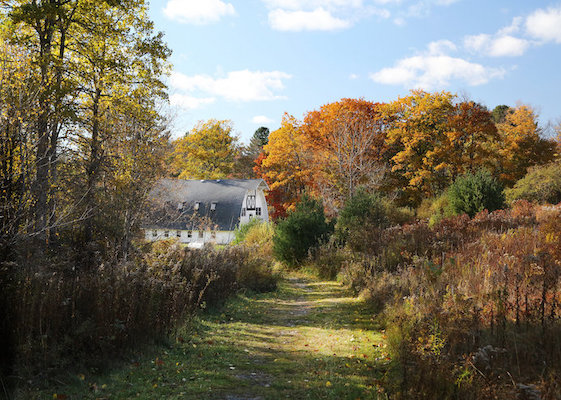
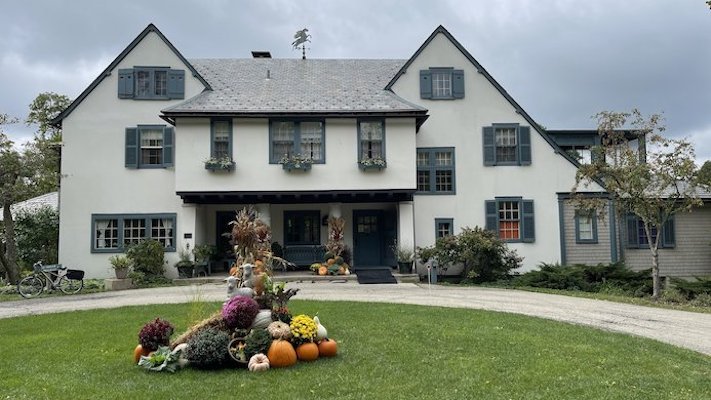
Although all residencies are alike in offering the gift of uninterrupted time, each residency is also different in the experiences they offer. Some residencies are located on large estates with numerous walking trails that allow the mind to breathe, while other residencies are situated in small, quiet towns, offering peace and quiet to accepted artists while providing opportunities to interact with the larger community. Many residencies provide their artists with chef-prepared meals, giving residents the chance to forge connections over shared dinners, while some residencies provide meal stipends or leave residents to take care of their own meals, offering residents the opportunity to gather when they choose. Some residencies are designed to be safe havens for women-identifying writers, while other residencies provide a mixing of genders and disciplines. For many of these residencies, there is no cost to attend, while others ask for a minimum daily contribution, depending on one’s ability to pay, or else a one-off fee. All of the residency programs I have included in this list invite applications from international artists and writers, and my experiences at the residencies I’ve attended so far, as a writer from outside the United States, have always been welcoming and supportive. Below are 20 residencies in America, described in their own words, all of which offer unique experiences designed to enrich and sustain.
Editor’s note: This article was originally published in 2022, and updated for 2024.
The Djerassi Resident Artists Program was founded by Dr. Carl Djerassi, Stanford Professor of Chemistry, playwright, passionate patron of the arts, and often referred to as “the father of the pill,” to honor his late daughter Pamela Djerassi, a poet and painter. Located an hour south of San Francisco and 45 minutes west of Palo Alto and Silicon Valley, Djerassi’s 583-acre ranch rises to the crest of the Santa Cruz Mountains, with views west to the Pacific. Originally home to the Salson tribe of the Ohlone Indians, the land was home to logging operations and working cattle ranches well into the 20th century. Residencies are awarded competitively, at no cost, to national and international artists in the disciplines of choreography, literature, music composition, visual arts, media arts, and science. There are six residency sessions each year: five are 4 weeks long and one is 5 weeks long, which also includes Open House/Open Studios. One session is devoted to the intersection of art and science. No shortened or partial residencies are offered. The Program chef prepares communal dinners Monday through Friday, and provisions both kitchens. Residents prepare their own breakfasts, lunches, and weekend dinners using ingredients supplied by the Program.
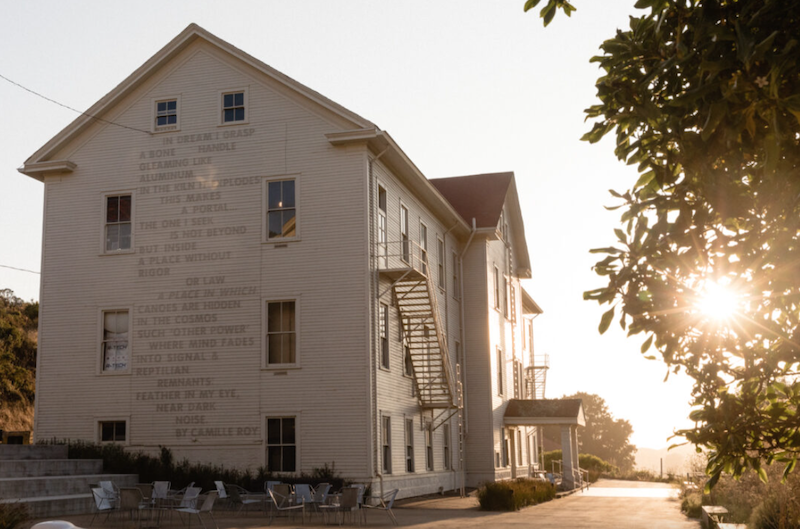
Located on the Pacific Coast with thousands of windswept acres of hills, cliffs, coves, and beaches just north of San Francisco—in the Golden Gate National Recreation Area, the Headlands Center for the Arts nurtures creativity across all disciplines, from the visual arts to performance, music, writing, and film and video, both independently and through collaboration. The Artist in Residence (AIR) program awards fully sponsored residencies to approximately 50 local, national, and international artists each year. Residencies of four to ten weeks include studio space, chef-prepared meals, housing, travel and living expenses. Artists selected for this program are at all career stages and work in all media, including drawing, painting, sculpture, photography, film, video, new media, installation, fiction and nonfiction writing, poetry, dance, music, interdisciplinary, social practice, arts professions, and architecture. Artist studios, offices, and public spaces are located in two four-story former army barracks: voluminous structures with big windows; tin ceilings; oak balustrades; maple floors; and yard after yard of history, character, and possibility.
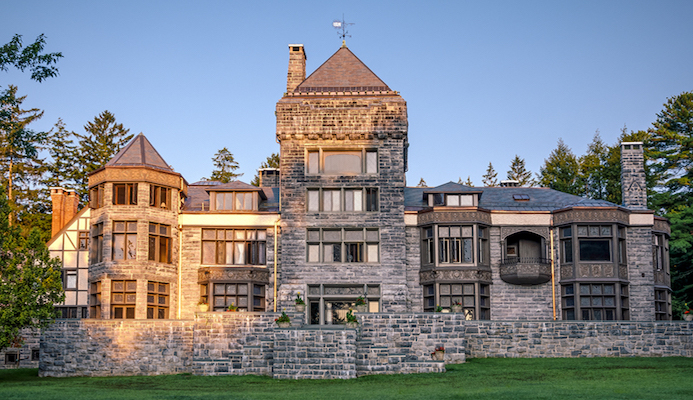
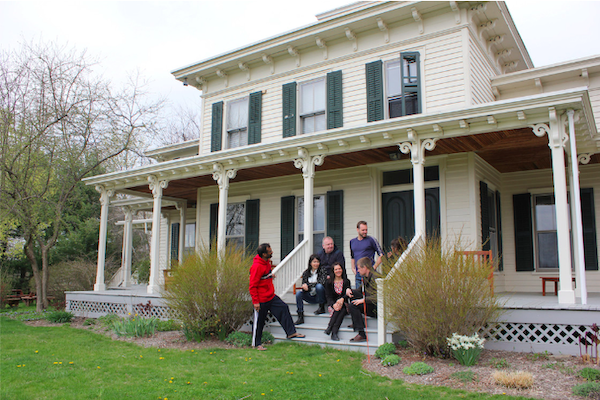
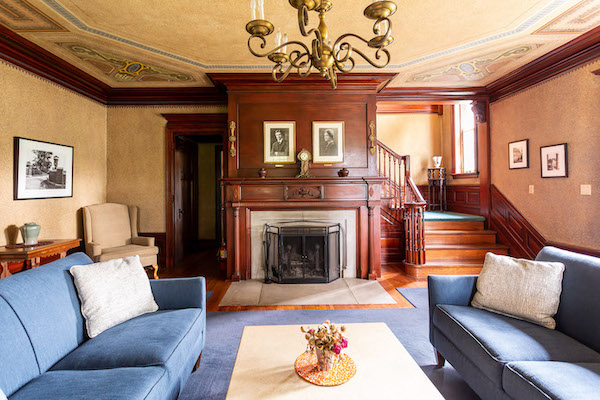
Located on a 400-acre estate in Saratoga Springs in upstate New York, Yaddo is one of the oldest artists’ residency programs in the United States, offering housing in a beautiful Queen Anne revival mansion, studio space, and meals. Artists in residence hail from all nations and backgrounds, and include choreographers, filmmakers, writers, musical composers, painters, performance artists, photographers, printmakers, sculptors, and video artists. Residencies are free and can last from two weeks to two months; access grants are also available to help offset the costs of attending a residency. There are two application deadlines per year, though artists may only apply once every other calendar year.
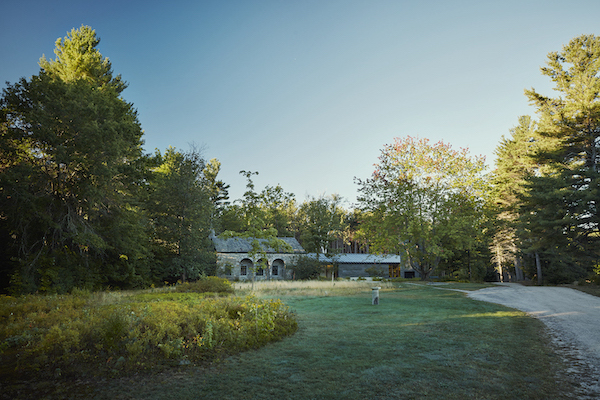
Boasting prominent alumni such as James Baldwin, Audre Lorde, and Leonard Bernstein, MacDowell hosts artists from all over the world in Peterborough, New Hampshire, with studios scattered across a 450-acre property. There is no wi-fi in the studios (a huge plus for those who truly prefer to get away from the world while at residency programs) and all meals are provided, including lunches delivered to one’s cabin in a basket and dinners taken communally. There is no fee to attend and need-based travel grants and stipends are available. Applicants may only submit one application in a two-year period, and their next application season opens on January 1st.
Set within a 450-acre nature preserve, this residency program in East Haddam, Connecticut features miles of well-tended walking trails encircling ponds, wetlands, and a pristine river, while winding through a second-generation forest. For invited artists, walking these trails can be a healing and inspiring experience, and I-Park prides itself on being an open-air laboratory where artists are invited to leave site-responsive art installations on the land. All residencies are fully-funded and are four weeks in duration, and residents in groups of 6-7 arrive and depart at the same time to foster a deeply shared experience. Artists are housed in a renovated 1840s farmhouse and are provided with a separate private studio, meals, and chef-prepared communal dinners five evenings a week. Small travel grants are also available for international artists. Their application season usually opens at the end of the year.
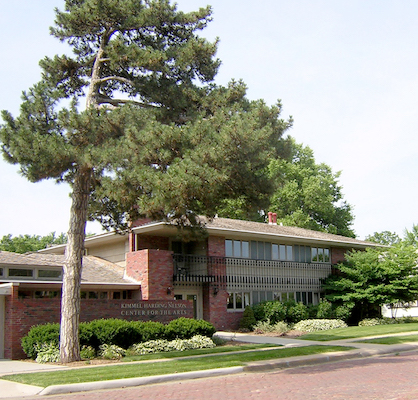
Located in Nebraska City, a small and charming midwestern town which will make you feel like you’ve stepped back in time, the Kimmel Harding Nelson Center for the Arts hosts writers, visual artists, composers, and interdisciplinary artists in an airy 1969 Prairie style house. There is no cost to attend, and resident artists are provided with a private bedroom/bath and individual studio, while sharing a kitchen and living space with one other resident (composers get their own efficiency apartment located under the composition studio). A weekly food stipend is provided, as well as free trips to the grocery and complimentary transportation to and from the airport for those flying in via Omaha. Residency length varies between two weeks and two months. Artists and writers from Nebraska are particularly encouraged to apply.
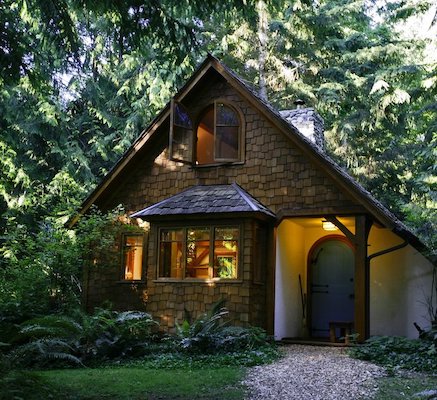
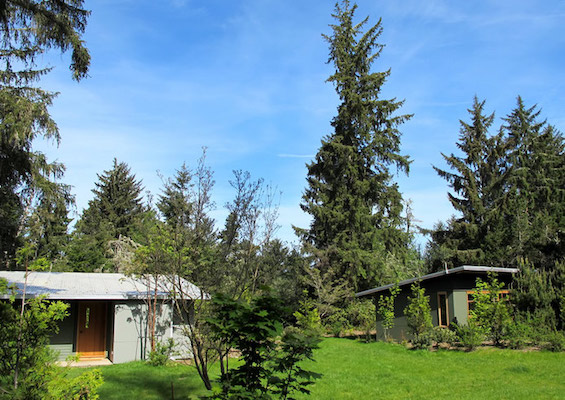
Situated on 48-acres of forest and meadow facing Puget Sound, with a view of Mount Rainier, this residency program on Whidbey Island in Washington State was founded with the express purpose of providing women-identifying writers with the time and space to write and care for themselves. Residencies are fully subsidized and are two to four weeks in duration, and fellows are housed individually in six handcrafted cottages scattered across the property while enjoying phenomenal chef-prepared meals. Take note that there is no wi-fi in the cottages, though internet access is available in a small computer center on the grounds, as well as in the farmhouse where the residency library and dining room are located.
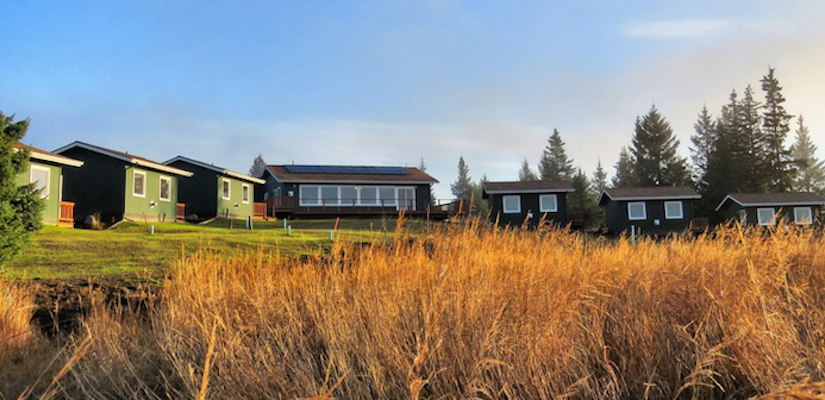
This exciting new residency program in Homer, Alaska, offering breathtaking views of Cook Inlet and the Aleutian Mountain Range, is the second residency program after Hedgebrook to provide women-identifying writers from around the world with the time and space they need to create new work. Residents are provided with living quarters and studio space in their own individual cabins, as well as all meals. Residencies are fully funded and limited travel grants are available, including the Snowgoose Travel Fund for international fellows. Indigenous and Alaskan writers are particularly encouraged to apply.
Located on the historic estate of Edna St. Vincent Millay in Austerlitz, New York, Millay Arts offers fully-funded month-long residencies for multidisciplinary artists from April through November, as well as unsubsidized Steepletop Residencies for those who wish to forego the blind jury process, and unsubsidized Wintertide Rustic Retreats that are self-directed. The Core Residency, which is fully funded, features a cohort of 6-7 multidisciplinary artists and includes a private bedroom and studio, shared living spaces, chef-prepared communal dinners, and groceries. The Steepletop Residency features similar amenities for a fee of $3000, while those availing of the Wintertide Rustic Retreat are responsible for their groceries and food. Applications for the Core Residency are accepted twice a year and include a $45 application fee, while applications for unsubsidized residencies are accepted on a rolling basis. A number of fellowships to defray the costs of attending Millay Arts are also available to select fellows.
Cost: $100 non-refundable deposit for Core Residency, $3000 for Steepletop Residency, Varying Fees for Wintertide Rustic Retreat–check website for more details
Application Fee: $45
Deadline: March 1 and October 1 for Core Residency, Rolling Deadline for Steepletop Residency and Wintertide Rustic Retreat
Situated on 16 acres in coastal southwest Washington State, Willapa Bay AIR offers month-long, self-directed residencies to emerging and established artists, writers, scholars, singer/songwriters, and musical composers. The Residency provides lodging, meals, and workspace, at no cost, to six residents each month from April 1 through October 28 of the year. Applications are welcome from all over the globe and are accepted once a year, usually in the summer. There is a $30 fee to apply.
Presenting contemporary art over its 120-acre Sculpture and Architecture Park in Columbia County, NY, Art Omi offers residency programs for international artists, writers, translators, dancers, musicians and architects. Guided by the principle that artistic expression transcends economic, political, and cultural boundaries, Art Omi invites a unique and varied mix of artists, writers, musicians and dancers from all over the world to create a diverse, positive working community. There is no cost to attend, and accepted artists are provided with catered meals, lodgings, and studio space. Writers can opt for 2 to 4 week stays, while residency lengths vary for artists of other disciplines. There is currently no fee to apply.
Located 45 minutes southeast of Minneapolis and Saint Paul, the Anderson Center is one of the largest residency programs of its kind in the Upper Midwest, offering residencies of two to four weeks’ duration from May through October each year to artists, writers, musicians, and performers. The Anderson Center campus consists of 350 acres of the historic Tower View Estate featuring a large sculpture garden, while its original buildings are listed on the National Register of Historic Places. The campus is also adjacent to the Cannon Valley Bike Trail, a 20-mile biking and walking trail that runs from Cannon Falls to Red Wing. In addition to its regular residency program, the Anderson Center also offers monthlong residencies to small groups of Deaf artists; month-long residency-fellowships to a cohort of early-career artists from Minnesota or one of the five boroughs of New York City (which includes a stipend & travel honorarium); one month-long residency-fellowship for a public artist, cultural producer, or social practitioner living and working within the state of Minnesota; as well as artist exchange programs with the city of Salzburg, Austria, and with Red Wing’s Sister City, Quzhou, China. Once accepted, fellows are asked to make a substantive contribution to the community while in residence, which may include a visit to a school, senior center, civic organization, adult and juvenile detention center, or other arts institutions in Red Wing and its nearby rural communities. There is no cost to attend this residency, which includes housing in the beautiful and historic Tower View residence, studio space, chef-prepared meals, groceries, and transportation to and from the Minneapolis-Saint Paul Airport. Applications are currently open and require a $30 fee.
Situated on the former country estate of architect Howard Van Doren Shaw in Lake Forest, Illinois, just 30 miles north of Chicago, Ragdale hosts creative professionals of all types from all over the world. The residencies it offers fall into three types: Residency Awards of 18 or 25 days in length, with a fee that is income-based and calculated on a sliding scale; Fellowship Awards of 18 or 25 days in length, in which fees are waived and fellows receive a stipend of $500 or more; and Themed Residency Awards, for groups of up to 16 people awarded per year, in which fees are income-based and calculated on a sliding scale. There are 13 artists-in-residence per session, all of whom are offered private housing, private live-work space, and all meals including chef-prepared communal dinners Monday-Friday.
Cost: Income-based fee for Artist Residents, free for Artist Fellows
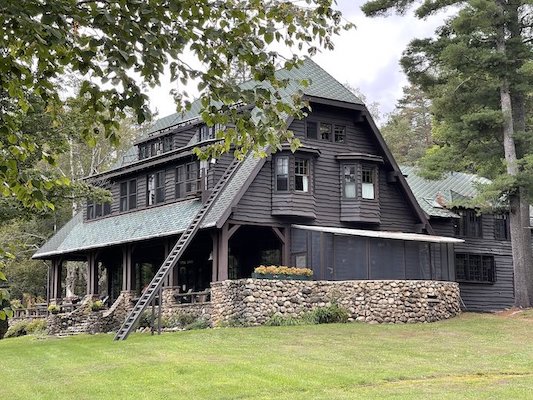
Located in a turn-of-the-century Adirondack lodge on a 1,600 acre estate in Blue Mountain Lake, New York, the Blue Mountain Center was founded in 1982 to provide support for writers, artists, and activists. Month-long residency sessions are offered in the summer and early fall, and are open to creative and non-fiction writers, activists, and artists of all disciplines—including composers, filmmakers, and visual artists. There is no cost to attend, and accepted artists are provided with private bedrooms, studio space, and all meals. There is also a Resident Support Fund available to provide financial assistance to BMC applicants who require additional resources to participate in BMC’s Residency program and meet criteria specified by donors.
Blue Mountain Center is located within the Adirondack Park, the largest state park in the continental United States, and residents have access to over twenty miles of beautiful hiking trails. Four canoes and a rowboat are available for guest use, as well as a tennis court. Take note that cell phones are not allowed and there is no wi-fi on campus, though there is a phone booth and internet center available 24 hours a day.
Situated in Point Reyes Station, California, an hour north of San Francisco, the Mesa Refuge welcomes established and emerging writers, journalists, and other creatives who “address the pressing issues of our time” in their work. The Mesa Refuge prioritizes projects focusing on “ideas on the edge” of the following areas: nature, economic equity, and social justice. There is no fee to attend this residency, though donations are encouraged, and residents are responsible for their own travel, transportation, and food. Residencies are typically two weeks in duration, and residents are provided with a room, access to the residency library and kitchen, and some meals.
Located in the historic downtown of Corsicana, Texas, just fifty miles south of Dallas, Corsicana Artist and Writer Residency hosts visual artists and writers in a collection of historic structures built on the largesse of two oil booms in the 1890s and 1920s. These preserved, light-filled buildings provide beautiful and inviting sites for artistic production. Residencies are typically two months in duration and take place in the Winter, Spring and Fall. Apart from a one-time, non-refundable $200 administration fee, there is no cost to attend this residency, which includes private accommodations and studio space, as well as shared kitchen and living spaces. Travel, meal and research expenses are not covered, though complimentary transportation to and from the nearest airports (Dallas’ Love Field and DFW International) can be arranged. Residents are also expected to participate in an Open Studio, Presentation (for visual artists), and a 40-minute high school workshop.
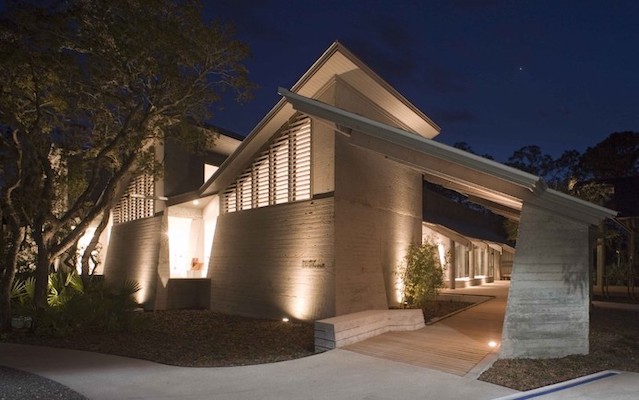
Located in New Smyrna Beach, Florida, the Atlantic Center for the Arts is unique in offering mentoring artist-in-residence programs, in which Mentoring Artists are coupled with Associate Artists for three-week periods. Each three-week residency program brings together three Mentoring Artists from different disciplines, each of whom determine the requirements and basic structure of their residency. Through an online application process, Mentors may select up to eight Associate Artists to participate in the three-week program. The essence of the program is to provide a collegial environment for artists of all disciplines where they can engage in meaningful interaction and stimulating discussions, while pursuing individual or group projects. Full scholarships are offered to all accepted artists, covering all residency fees, room, and board. Associate artists are provided with private accommodations, three meals a day during the weekday (for weekend meals, transportation to the market is arranged twice a week and kitchen facilities are available 24/7), and studio space which is communal and shared. The award-winning Leeper Studio Complex provides residents with resources such as a painting studio, sculpture studio, digital media studio, dance studio, music/recording studio, writers’ studio, black box theatre and library.
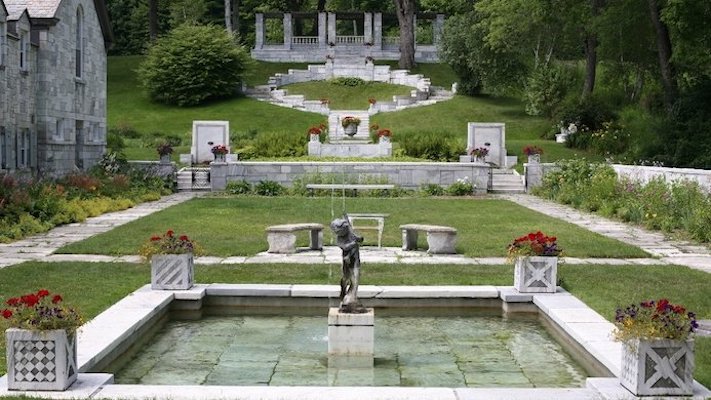
Situated on an organic farm in Dorset, Vermont, the Marble House Project is a multi-disciplinary artist residency program that fosters collaboration & the exchange of ideas by providing an environment for artists across disciplines to live and work side by side. Each residency session is three weeks in duration, and gathers a carefully curated group of artists working in diverse fields. There is no cost to attend this residency, which includes a private bedroom in the historic, eight-bedroom Manley-Lefevre house, food, studio space and artist support. This residency program is unique in pairing residents three or four times over the course of their stay to prepare a meal using ingredients sourced from the residency’s organic garden. Residents are also invited to help with planting, harvesting, and maintenance of the garden, or at least to spend some time inside the garden outside their studio practice. At the end of each session, artists are invited to present their work.
One 17-day session per residency season is set aside for Family-Friendly Residencies, in which accepted artists can bring their spouse/partner and children. Artists and children attend for free, while partners/spouses of artists attend for a $300 fee. A Culinary Arts Residency was also recently launched, which runs concurrently with the artist residency—MHP offers a small stipend related to this residency, and covers all costs. Collaborative Winter Residencies for groups of up to 12 run for ten days, and a group fee of $5000 covers food, housing and studio support.
Cost: Refundable $100 deposit for individuals; $200 fee for family friendly residents; $5,000 for group residency for up to eight artists
Situated on a 20,000-acre ranch in northeast Wyoming at the foothills of the Bighorn Mountains, Ucross provides space and time, at no cost, to artists from all disciplines, including literature, visual arts, music, choreography, film, performance, and multidisciplinary art. Residencies range from two weeks to six weeks in length. At any one time, there are up to ten individuals in residence. Ucross provides each artist with living accommodations, meals, studio space, and uninterrupted time so that the artists can focus on their creative process. Lunch and dinners are prepared Monday to Friday by a professional chef with ample provisions on hand for breakfasts and weekends. Lunches are delivered to individual studios; group dinners take place at 6 p.m. Ucross also operates an Art Gallery, open to the public at no charge, featuring work by past residents, contemporary artists of the West, and thematic exhibitions. Fellowships for Native American visual artists and writers are also available; these fellowships come with a stipend and an opportunity to present work publicly. There are two residency sessions per year, and except for Native American Fellowships, there is a $40 fee to apply.
Located in Monson, Maine, the last town before the 100-mile wilderness on the Appalachian Trail, Monson Arts provides two-week and four-week residencies for established and emerging artists and writers. There are typically five artists and five writers in a cohort, and all residents are invited to immerse themselves in small town life at the edge of Maine’s North Woods and focus intensely on their work within a creative and inspiring environment. All residents receive, without cost, a private studio, private bedroom in shared housing, all meals, and $1,000 stipend ($500 for 2-week programs). The Abbott Watts Residency for Photography offers access to the photography studio and darkroom of Todd Watts in nearby Blanchard, adjacent to the former home of Berenice Abbott. Applications for a residency at Monson Arts are open to anyone working in the visual arts, writing, and related fields (i.e. audio, video, photography). Open calls for residency applications currently take place three times throughout the year with deadlines on January 15, June 15, and September 15.
Cost: Free
Application Fee: $25
Deadline: January 15, June 15, September 15, annually
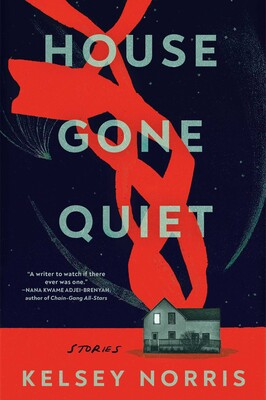
In talking about my debut story collection, House Gone Quiet, with friends and family, I’ve often found myself pitching the merits of the short story form itself. Due to habit or book marketing or a lack of exposure, it’s simply the case that most fiction readers who enter a bookstore are typically on the lookout for a novel (You can trust me on this one, as a former bookseller myself). And don’t get me wrong—I love novels! But there are times when only a story collection can scratch the particular reading itch I’m experiencing.
I love short fiction for its tight prose and its economy of detail. There are also risks—be it with voice or form, premise or genre—that seem more digestible to encounter in short fiction than they might be stretched out over the course of a 400-page novel. But it’s also the case that I didn’t read many short stories until the college courses when I began to study and write them. So, in pitching not only my collection, but also the idea of why one might choose a story collection in general over the more familiar novel form, I’ve turned to another common form of media to make the argument—that is, television shows versus movies.
You know how you’re not always in the mood for a film’s long, drawn-out story? Or, you’re short on time, or attention span? Or how, before you fall asleep, you’re looking for the sense of closure that comes from a 30-minute episode of your current show? These are also the perfect reasons to pick up a short story collection, especially for those new to the genre of short fiction.
To get you started, or to help you find your next favorite collection, here are 7 story collections—both backlist picks and new releases—to pick up if you’re a fan of a TV show with a similar theme or premise.
Beloved by readers, writers, and booksellers alike, Machado’s collection helped to pave the way for genre-bending fiction. And while Black Mirror has proved to be the most apt metaphorical comparison for my own collection—which includes stories linked by theme rather than by location or character—it’s also a fitting one for Machado’s. From a fairytale-esque story of a bride whose only request of her husband is that he not remove the green ribbon tied around her neck to another featuring a protagonist navigating new love amidst an epidemic of women turning incorporeal and ghostly, the stories in Her Body and Other Parties are linked by want and hunger, violence and darkness.
Is this show-collection pairing set in the same place? No. Is it about the same group of people? Also no. But what FX’s Reservation Dogs and Kakimoto’s debut story collection do have in common is a vivid sense of culture and heritage, which often influence the day-to-day lives of those living within them. Every Drop Is a Man’s Nightmare follows Native Hawaiian and Japanese women as they not only learn and navigate within their cultural parameters, but also grapple with outsiders’ interpretations of them. The opening story charts a list of rules and superstitions, including “Don’t whistle at night! You know what happens if the Night Marchers hear you?”. Another story follows a Hawaiian writer who pens the ancestral manuscript she feels she’s expected to, and meets the consequences that unravel from this choice.
Alcott’s debut story collection features tight yet expansive writing, as well as themes that echo Phoebe Waller-Bridge’s television series—chiefly women behaving badly as they navigate sexual desire, relationships, and their own happiness. In one story, a collective voice recounts a woman’s summer spent alone at a remote house and the transgressions she commits there. Another finds a woman standing before a museum’s portrait of her late mother in a compromising sexual scenario. Like Fleabag, a favorite of mine, Emergency will be a work I circle back to in order to rediscover the kernels I might’ve missed the first time through.
Jordan Peele has recently curated an anthology of Black horror that’s sure to delight fans of his other spooky but troublingly plausible media ventures. This collection includes stellar writers with devoted followings like N.K. Jemisin, Lesley Nneka Arimah, Rebecca Roanhorse, and Nnedi Okorafor.
It’s not such a stretch to say that if you enjoy the series written by Alissa Nutting, you might enjoy the story collection that predicated it as well as the novel the show is based on. The show version of Made for Love explores the conflict between modern advances and human connection, which you’ll also find in George Saunders’s Tenth of December. The story “Escape from Spiderhead” follows a protagonist whose emotions are experimented upon and controlled by a ruthless pharmaceutical company. The collection also features such sci-fi conceits as immigrant-women-turned-decor by a brain-altering surgery and, in another story, a drug that increases chivalry to disastrous results, all deployed with Saunders’ characteristic generosity towards human resilience and compassion.
If you love the surrealism of FX’s Atlanta, especially as it relates to stories snatched from real-life headlines or Black history, you’ll find a similar adeptness in Adjei-Brenyah’s Friday Black. The opening story follows a code-switching protagonist reeling from the news of a white man acquitted of wrongdoing after murdering five black youths with a chainsaw. My favorite story in the collection, “Zimmer Land” is set in a theme park where visitors are allowed to exercise their racial prejudices in preconstructed scenarios. The stories are smart and stylistically adept, all while interrogating what it means to be Black in America.
I was a child of the 1960s. Three network stations or fresh air; take your pick. No pocket computers for entertainment in dark-age suburbia. We read our comic books ragged and played catch with Dad in the backyard. He created shadow puppets on the wall to amuse us before bed. Elephants, giraffes, and foxes. The classics. He also made some animals I didn’t recognize. His hands twisted to form these mysterious entities, which he called Mimis. Dad frequently traveled abroad. Said he’d learned of the Mimis at a conference in Australia. His double-jointed performances wowed me and my older brother, Greg. Mom hadn’t seemed as impressed.
Then I discovered photography.
Mom and Dad gave me a camera. Partly because they were supportive of their children’s aspirations; partly because I bugged them relentlessly. At six years old, I already understood my life’s purpose.
Landscapes bore me, although I enjoy celestial photography—high-resolution photos of planets, hanging in partial silhouette; blazing white fingertips emerging from a black pool. People aren’t interesting either, unless I catch them in candid moments to reveal a glimmer of their hidden selves. Wild animals became my favorite subjects. Of all the variety of animals, I love predators. Dad approved. He said, Men revile predators because they shed blood. What an unfair prejudice. Suppose garden vegetables possessed feelings. Suppose a carrot squealed when bitten in two . . . Well, a groundhog would go right on chomping, wouldn’t he?
If anybody knew the answer to such a question, it’d be my old man. His oddball personality might be why Mom took a shine to him. Or she appreciated his potential as a captain of industry. What I do know is, he was the kind of guy nobody ever saw coming.
My name is Randall Xerxes Vance. Friends tease me about my signature—RX and a swooping, offset V. Dad used to say, Ha-ha, son. You’re a prescription for trouble! As a pro wilderness photographer, I’m accustomed to lying or sitting motionless for hours at a stretch. Despite this, I’m a tad jumpy. You could say my fight or flight reflex is highly tuned. While on assignment for a popular magazine, a technician—infamous for his pranks—snuck up, tapped my shoulder, and yelled, Boo! I swung instinctively. Wild, flailing. Good enough to knock him on his ass into a ditch.
Colleagues were nonplussed at my overreaction. Me too. That incident proved the beginning of a rough, emotional ride: insomnia; nightmares when I could sleep; and panic attacks. It felt like a crack had opened in my psyche. Generalized anxiety gradually worked its claws under my armor and skinned me to raw nerves. I committed to a leave of absence, pledging to conduct an inventory of possible antecedents. Soul searching pairs seductively with large quantities of liquor.
A soon-to-be-ex-girlfriend offered to help. She opined that I suffered from deep-rooted childhood trauma. I insisted that my childhood was actually fine. My parents had provided for me and my brother, supported our endeavors, and paid for our education; the whole deal.
There’s always something if you dig, she said. Subsequent to a bunch more poking and prodding, one possible link between my youth and current troubles came to mind. I told her about a game called Tiptoe Dad taught me. A variation of ambush tag wherein you crept behind your victim and tapped him or her on the shoulder or goosed them, or whatever. Pretty much the same as my work colleague had done. Belying its simple premise, there were rules, which Dad adhered to with solemnity. The victim must be awake and unimpaired. The sneaker was required to assume a certain posture—poised on the balls of his or her feet, arms raised and fingers pressed into a blade or spread in an exaggerated manner. The other details and prescriptions are hazy.
As far as odd family traditions go, this seemed fairly innocuous. Dad’s attitude was what made it weird.
Tiptoe went back as far as I could recall, but my formal introduction occurred at age six. Greg and I were watching a nature documentary. Dad wandered in late, still dressed from a shift at the office and wearing that coldly affable expression he put on along with his hat and coat. The documentary shifted to the hunting habits of predatory insects. Dad sat between us on the couch. He stared intently at the images of mantises, voracious Venezuelan centipedes, and wasps. During the segment on trapdoor spiders, he smiled and pinched my shoulder. Dad was fast for an awkward, middle-aged dude. I didn’t even see his arm move. People say sneaky as a snake, sly as a fox, but spiders are the best hunters. Patient and swift. I didn’t give it a second thought.
One day, soon after, he stepped out of a doorway, grabbed me, and started tickling. Then he snatched me into the air and turned my small body in his very large hands. He pretended to bite my neck, arms, and belly. Which part shall I devour first?Eeny, meeny, miny moe! I screamed hysterical laughter. He explained that tickling and the reaction to tickling were rooted in primitive fight or flight responses to mortal danger.
Tiptoe became our frequent contest, and one he’d already inflicted on Greg and Mom. The results seldom amounted to more than the requisite tap, except for the time when Dad popped up from a leaf pile and pinched me so hard it left a welt. You bet I tried to return the favor—on countless occasions, in fact—and failed. I even wore camo paint and dressed in black down to my socks, creeping closer, ever closer, only for him to whip his head around at the last second and look me in the eye with a tinge of disappointment. Heard you coming from the other end of the house, son. Are you thinking like a man or a spider? Like a fox or a mantis? Keep trying.
Another time, I walked into a room and caught him playing the game with Mom as victim. Dad gave me a sidelong wink as he reached out, tiptoeing closer and closer. Their silhouettes flickered on the wall. The shadows of his arms kept elongating; his shadow fingers ended in shadow claws. The optical illusion made me dizzy and sick to my stomach. He kissed her neck. She startled and mildly cussed him. Then they laughed, and once more he was a ham-fisted doofus, innocently pushing his glasses up the bridge of his nose.
As with many aspects of childhood, Tiptoe fell to the wayside for reasons that escaped me until the job incident brought it crashing home again. Unburdening to my lady friend didn’t help either of us as much as we hoped. She acknowledged that the whole backstory was definitely fucked up and soon found other places to be. Probably had a lot to do with my drinking, increasingly moody behavior, and the fact that I nearly flew out of my skin whenever she walked into the room.
The worst part? This apparent mental breakdown coincided with my mother’s health tribulations. A double whammy. After her stroke, Mom’s physical health gradually went downhill. She’d sold the house and moved into a comfy suite at the retirement village where Grandma resided years before.
The role of a calm, dutiful son made for an awkward fit, yet there wasn’t much choice, considering I was the last close family who remained in touch. Steeling my resolve, I shaved, slapped on cologne to disguise any lingering reek of booze, and drove down from Albany twice a week to hit a diner in Port Ewing. Same one we’d visited since the 1960s. For her, a cheeseburger and a cup of tea. I’d order a sandwich and black coffee and watch her pick at the burger. Our conversations were sparse affairs—long silences peppered with acerbic repartee.
She let me read to her at bedtime. Usually, a few snippets from Poe or his literary cousins. I’ve gotten morbid, she’d say. Give me some of that Amontillado, hey? Or, A bit of M.R. James, if you please. Her defining characteristics were intellectual curiosity and a prickly demeanor. She didn’t suffer fools—not in her prime, nor in her twilight. Ever shrewd and guarded, ever close-mouthed regarding her interior universe. Her disposition discouraged “remember-whens” and utterly repelled more probing inquiries into secrets.
Nonetheless, one evening I stopped in the middle of James’ The Ash Tree and shut the book. “Did Aunt Vikki really have the gift?”
Next to Mom and Dad, Aunt Vikki represented a major authority figure of my childhood. She might not have gone to college like my parents, but she wasn’t without her particular abilities. She performed what skeptics (my mother) dismissed as parlor tricks. Stage magician staples like naming cards in someone’s hand, or locating lost keys or wallets. Under rare circumstances, she performed hypnotic regression and “communed” with friendly spirits. Her specialty? Astral projection allowed her to occasionally divine the general circumstances of missing persons. Whether they were alive or dead and their immediate surroundings, albeit not their precise location. Notwithstanding Dad’s benign agnosticism and Mom’s blatant contempt, I assumed there was something to it—the police had allegedly enlisted Vikki’s services on two or three occasions. Nobody ever explained where she acquired her abilities. Mom and Dad brushed aside such questions and I dared not ask Aunt Vikki directly given her impatience with children.
“I haven’t thought of that in ages.” Mom lay in the narrow bed, covers pulled to her neck. A reading lamp reflected against the pillow and illuminated the shadow of her skull. “Bolt from the blue, isn’t it?”
“I got to thinking of her the other day. Her magic act. The last time we visited Lake Terror . . . .”
“You’re asking whether she was a fraud.”
“Nothing so harsh,” I said. “The opposite, in fact. Her affinity for predictions seemed uncanny.”
“Of course it seemed uncanny. You were a kid.”
“Greg thought so.”
“Let’s not bring your brother into this.”
“Okay.”
She eyed me with a glimmer of suspicion, faintly aware that my true interest lay elsewhere; that I was feinting. “To be fair, Vikki sincerely believed in her connection to another world. None of us took it seriously. God, we humored the hell out of that woman.”
“She disliked Dad.”
“Hated John utterly.” Her flat, unhesitating answer surprised me.
“Was it jealousy? Loneliness can have an effect . . . .”
“Jealousy? C’mon. She lost interest in men after Theo kicked.” Theo had been Aunt Vikki’s husband; he’d died on the job for Con Edison.
I decided not to mention the fact that she’d twice remarried since. Mom would just wave them aside as marriages of convenience. “And Dad’s feelings toward her?”
“Doubtful he gave her a second thought whenever she wasn’t right in front of his nose. An odd duck, your father. Warm and fuzzy outside, cold tapioca on the inside.”
“Damn, Mom.”
“Some girls like tapioca. What’s with the twenty questions? You have something to say, spill it.”
Should I confess my recent nightmares? Terrible visions of long-buried childhood experiences? Or that Dad, an odd duck indeed, starred in these recollections and his innocuous, albeit unnerving, Tiptoe game assumed a sinister prominence that led to my current emotional turmoil? I wished to share with Mom; we’d finally gotten closer as the rest of our family fell by the wayside. Still, I faltered, true motives unspoken. She’d likely scoff at my foolishness in that acerbic manner of hers and ruin our fragile bond.
She craned her neck. “You haven’t seen him around?”
“Who?” Caught off guard again, I stupidly concluded, despite evidence to the contrary, that her thoughts were fogged with rapid onset dementia. Even more stupidly, I blurted, “Mom, uh, you know Dad’s dead. Right?”
“Yeah, dummy,” she said. “I meant Greg.”
“The guy you don’t want to talk about?” Neither of us had seen my brother in a while. Absence doesn’t always make the heart grow fonder.
“Smart-ass.” But she smiled faintly.
In the wee hours, alone in my studio apartment, I woke from a lucid nightmare. Blurry, forgotten childhood images coalesced with horrible clarity. Aunt Vikki suffering what we politely termed an episode; the still image of a missing woman on the six o’clock news; my father, polishing his glasses and smiling cryptically. Behind him, a sun-dappled lake, a stand of thick trees, and a lost trail that wound into the Catskills . . . or Purgatory. There were other, more disturbing recollections that clamored for attention, whirling in a black mass on the periphery. Gray, gangling hands; a gray, cadaverous face . . . .
I poured a glass of whiskey and dug into a shoebox of loose photos; mainly snapshots documenting our happiest moments as a family. I searched those smiling faces for signs of trauma, a hint of anguish to corroborate my tainted memories. Trouble is, old, weathered pictures are ambiguous. You can’t always tell what’s hiding behind the patina. Nothing, or the worst thing imaginable.
Whatever the truth might be, this is what I recall about our last summer vacation to the deep Catskills:
During the late 1960s, Dad worked at an IBM plant in Kingston, New York. Mom wrote colorful, acerbic essays documenting life in the Mid-Hudson Valley; sold them to regional papers, mainly, and sometimes slick publications such as The New Yorker and the SaturdayEvening Post. We had it made. House in the suburbs, two cars, and an enormous color TV. I cruised the neighborhood on a Schwinn ten-speed with the camera slung around my neck. My older brother, Greg, ran cross-country for our school. Dad let him borrow the second car, a Buick, to squire his girlfriend into town on date night.
The Vance clan’s holy trinity: Christmas; IBM Family Day; and the annual summer getaway at a cabin on Lake Terron. For us kids, the IBM Family Day carnival was an afternoon of games, Ferris wheel rides, running and screaming at the top of our lungs, and loads of deep-fried goodies. The next morning, Dad would load us into his Plymouth Suburban and undertake the long drive through the mountains. Our lakeside getaway tradition kicked off when I was a tyke—in that golden era, city folks retreated to the Catskills to escape the heat. Many camped at resorts along the so-called Borscht Belt. Dad and his office buddies, Fred Mercer and Leo Schrader, decided to skip the whole resort scene. Instead, they went in together on the aforementioned piece of lakefront property and built a trio of vacation cabins. The investment cost the men a pretty penny. However, nearby Harpy Peak was a popular winter destination. Ski bums were eager to rent the cabins during the holidays and that helped Dad and his friends recoup their expenses.
But let’s stick to summer. Dreadful hot, humid summer that sent us to Lake Terron and its relative coolness. Me, Greg, Mom, Dad, Aunt Vikki, and Odin, our dog; supplies in back, a canoe strapped up top. Exhausted from Family Day, Greg and I usually slept for most of the trip. Probably a feature of Dad’s vacation-management strategy. Then he merely had to contend with Mom’s chain-smoking and Aunt Vikki bitching about it. Unlike Mom and Dad, she didn’t do much of anything. After her husband was electrocuted while repairing a downed power line, she collected a tidy insurance settlement and moved from the city into our Esopus home. Supposedly a temporary arrangement on account of her nervous condition. Her nerves never did improve—nor did anyone else’s, for that matter.
We made our final pilgrimage the year before Armstrong left bootprints on the Moon. Greg and I were seventeen and twelve, respectively. Our good boy Odin sat between us. He’d outgrown his puppy ways and somehow gotten long in the tooth. Dad turned onto the lonely dirt track that wound a mile through heavy forest and arrived at the lake near sunset. The Mercers and Schraders were already in residence: a whole mob of obstreperous children and gamely suffering adults collected on a sward that fronted the cabins. Adults had gotten a head start on boilermakers and martinis. Grill smoke wafted toward the beach. Smooth and cool as a mirror, the lake reflected the reddening sky like a portal to a parallel universe.
Smooth and cool as a mirror, the lake reflected the reddening sky like a portal to a parallel universe.
Lake Terron—or Lake Terror, as we affectionally called it—gleamed at the edge of bona fide wilderness. Why Lake Terror? Some joker had altered the N on the road sign into an R with spray-paint and it just stuck. Nights were pitch black five paces beyond the porch. The dark was full of insect noises and the coughs of deer lurching around in the brush.
Our cabin had pretty rough accommodations—plank siding and long, shotgun shack floor plan with a washroom, master bedroom, and a loft. Electricity and basic plumbing, but no phone or television. We lugged in books, cards, and board games to fashion a semblance of civilized entertainment. On a forest ranger’s advice, Dad always propped a twelve-gauge shotgun by the door. Black bears roamed the woods and were attracted to the scents of barbecue and trash. And children! Mom would say. The barbecue set the underlying tone; friendly hijinks and raucous laughter always prevailed those first few hours. Revived from our torpor, kids gorged on hotdogs and cola while parents lounged, grateful for the cool air and peaceful surroundings—except for the mosquitos. Everybody complained about them. Men understood shop talk was taboo. Those who slipped up received a warning glare from his better half. Nor did anyone remark upon news trickling in via the radio, especially concerning the Vietnam War; a subject that caused mothers everywhere to clutch teenaged sons to their bosoms. “Camp Terror” brooked none of that doomy guff. For two weeks, the outside world would remain at arm’s length.
Mr. Schrader struck a bonfire as the moon beamed over Harpy Peak. Once the dried cedar burned to coals, on came the bags of marshmallows and a sharpened stick for each kid’s grubby mitt. I recall snatches of conversation. The men discussed the Apollo program, inevitably philosophizing on the state of civilization and how far we’d advanced since the Wright brothers climbed onto the stage.
“We take it for granted,” Mr. Mercer said.
“What’s that?” Mr. Schrader waved a marshmallow flaming at the end of his stick.
“Comfort, safety. You flip a switch, there’s light. Turn a key, a motor starts.”
“Electricity affords us the illusion of self-sufficiency.”
“Gunpowder and penicillin imbue us with a sense of invincibility. Perpetual light has banished our natural dread of the dark. We’re apes carrying brands of fire.”
“Okay, gents. Since we’re on the subject of apes. We primates share a common ancestor. Which means we share a staggering amount of history. You start dwelling on eons, you have to consider the implications of certain facts.”
Mr. Mercer shook his head as he lit a cigarette. “I can only guess where this is going.”
“Simulation of human features and mannerisms will lead the field into eerie precincts,” Dad said.
“Uh-oh,” Mr. Schrader said. “This sounds suspiciously close to opshay alk-tay.”
“Thank goodness we’re perfecting mechanical arms to handle rivet guns, not androids. Doesn’t get more mundane.”
“Mark it in the book. Heck, the Japanese are already there.”
“Whatever you say, John.”
“Researchers built a robot prototype—a baby with a lifelike face. Focus groups recoiled in disgust. Researchers came back with artificial features. Focus groups oohed and ahhed. Corporate bankrolled the project. We’ll hear plenty in a year or two.”
“Humans are genetically encoded to fear things that look almost like us, but aren’t us.”
“Ever ask yourself why?”
“No, can’t say I’ve dedicated much thought to the subject,” Mr. Mercer said. “So, why are we allegedly fearful of, er, imitations?”
“For the same reason a deer or a fowl will spook if it gets wind of a decoy. Even an animal comprehends that a lure means nothing good.” Dad had mentioned this periodically. Tonight, he didn’t seem to speak to either of his colleagues. He looked directly at me.
“Shop talk!” Mom said with the tone of a referee declaring a foul.
Mrs. Schrader and Mrs. Mercer interrupted their own conversation to boo the men.
“Whoops, sorry!” Mr. Mercer gestured placatingly. “Anyway, how about those Jets?”
Later, somebody suggested we have a game. No takers for charades or trivia. Finally, Mrs. Mercer requested a demonstration of Aunt Vikki’s fabled skills. Close magic, prestidigitation, clairvoyance, or whatever she called it. My aunt demurred. However, the boisterous assembly would brook no refusal and badgered her until she relented.
That mystical evening, performing for a rapt audience against a wilderness backdrop, she was on her game. Seated lotus on a blanket near the fire, she affected trancelike concentration. Speaking in a monotone, she specified the exact change in Mr. Schrader’s pocket, the contents of Mrs. Mercer’s clutch, and the fact that one of the Mercer kids had stolen his sister’s diary. This proved to be the warmup routine.
Mr. Mercer said, “John says you’ve worked with the law to find missing persons.”
“Found a couple.” Her cheeks were flushed, her tone defiant. “Their bodies, at any rate.”
“That plane that went down in the Adirondacks. Can you get a psychic bead on it?”
Aunt Vikki again coyly declined until a chorus of pleas “convinced” her to give it a shot. She swayed in place, hands clasped. “Dirt. Rocks. Running water. Scattered voices. Many miles apart.”
“Guess that makes sense,” Mr. Mercer said to Mr. Schrader. “Wreck is definitely spread across the hills.”
Mrs. Schrader said under her breath to Dad, “Eh, what’s the point? She could say anything she pleases. We’ve no way to prove her claim.” He shooshed her with a familiar pat on the hip. Everybody was ostensibly devout in those days. Mrs. Schrader frequently volunteered at her church and I suspect Aunt Vikki’s occult shenanigans, innocent as they might’ve been, troubled her. The boozing and flirtation less so.
The eldest Mercer girl, Katie, asked if she could divine details of an IBM housewife named Denise Vinson who’d disappeared near Saugerties that spring. Nobody present knew her husband; he was among the faceless legions of electricians who kept the plant humming. He and his wife had probably attended a company buffet or some such. The case made the papers.
“Denise Vinson. Denise Vinson . . . .” Aunt Vikki slipped into her “trance.” Moments dragged on and an almost electric tension built; the hair-raising sensation of an approaching thunderstorm. The adults ceased bantering. Pine branches creaked; an owl hooted. A breeze freshened off the lake, causing water to lap against the dock. Greg and I felt it. His ubiquitous smirk faded, replaced by an expression of dawning wonderment. Then Aunt Vikki went rigid and shrieked. Her cry echoed off the lake and caused birds to dislodge from their roosts in the surrounding trees. Her arms extended, fingers and thumbs together, wrists bent downward. She rocked violently, cupped hands stabbing the air in exaggerated thrusts. Her eyes filled with blood. My thoughts weren’t exactly coherent, but her posture and mannerisms reminded me of a mantis lashing at its prey. Reminded me of something else, too.
Her tongue distended as she babbled like a Charismatic. She covered her face and doubled over. Nobody said anything until she straightened to regard us.
“Geez, Vikki!” Mr. Mercer nodded toward his pop-eyed children.
“I mean, geez Louise!”
“What’s the fuss?” She glanced around, dazed.
Mom, in a display of rare concern, asked what she’d seen. Aunt Vikki shrugged and said she’d glimpsed the inside of her eyelids. Why was everybody carrying on? Dad lurked to one side of the barbecue pit. His glasses were brimmed with the soft glow of the coals. I couldn’t decipher his expression.
Mood dampened, the families said their goodnights and drifted off to bed. Mom, tight on highballs, compared Aunt Vikki’s alleged powers of clairvoyance to those of the famous Edgar Cayce. This clash occurred in the wee hours after the others retired to their cabins. Awakened by raised voices, I hid in shadows atop the stairs to the loft, eavesdropping like it was my job.
“Cayce was as full of shit as a Christmas goose.” Aunt Vikki’s simmering antipathy boiled over. “Con man. Charlatan. Huckster.” Her eyes were bloodshot and stained from burst capillaries. Though she doggedly claimed not to recall the episode earlier that evening, its lingering effects were evident.
“Vikki,” Dad said in the placating tone he deployed against disgruntled subordinates. “Barbara didn’t mean any harm. Right, honey?”
“Sure, I did . . . not.” From my vantage I saw Mom perched near the cold hearth, glass in hand. The drunker she got, the cattier she got. She drank plenty at Lake Terror.
Aunt Vikki loomed in her beehive-do and platform shoes. “Don’t ever speak of me and that . . . that fraud in the same breath. Cayce’s dead and good riddance to him. I’m the real McCoy.”
“Is that a fact? Then, let’s skip the rest of this campout and head for Vegas.” Mom tried to hide her sardonic smile with the glass.
“Ladies, it’s late,” Dad said. “I sure hope our conversation isn’t keeping the small fry awake.” His not-so-subtle cue to skedaddle back to my cot left me pondering who was the psychic—Aunt Vikki or Dad? Maybe he can see in the dark was my last conscious thought. It made me giggle, albeit nervously.
Greg jumped me and Billy Mercer as we walked along the trail behind the cabins. Billy and I were closest in age. Alas, we had next to nothing in common and didn’t prefer one another’s company. Those were the breaks, as the youth used to say. The path forked at a spring before winding ever deeper into the woods. To our left, the path climbed a steep hill through a notch in a stand of shaggy black pine. Mom, the poet among us, referred to it as the Black Gap. Our parents forbade us to drink from the spring, citing mosquito larvae. Predictably, we disregarded their command and slurped double handfuls of cool water at the first opportunity. As I drank, Greg crept upon me like an Apache.
He clamped my neck in a grip born of neighborhood lawn-mowing to earn extra bucks for gas and date-night burgers. “Boo!” He’d simultaneously smacked Billy on the back of his head. The boy yelped and tripped over his own feet trying to flee. Thus, round one of Tiptoe went to my insufferably smirking brother. Ever merciless in that oh-so-special cruelty the eldest impose upon their weaker siblings, I nonetheless detected a sharper, savage inflection to his demeanor of late. I zipped a rock past his ear from a safe distance—not that one could ever be sure—and beat a hasty retreat into the woods. Greg flipped us the bird and kept going without a backward glance.
The reason this incident is notable? Billy Mercer complained to the adults. Dad pulled me aside for an account, which I grudgingly provided—nobody respects a tattletale. Dad’s smirk was even nastier than Greg’s. Head on a swivel, if you want to keep it, kiddo. He put his arm around my brother’s shoulders and they shared a laugh. Three days in, and those two spent much of it together, hiking the forest and floating around the lake. The stab of jealousy hurt worse than Greg squeezing my neck.
Near bedtime, we set up tents in the backyard, a few feet past the badminton net and horseshoe pit. The plan was for the boys to sleep under the stars (and among the swarming mosquitos). Mrs. Schrader protested weakly that maybe this was risky, what with the bears. Mr. Schrader and Mr. Mercer promised to take watches on the porch.
Odin stayed with me; that would be the best alarm in the world. No critter would get within a hundred yards without that dog raising holy hell. And thus it went: Odin, Billy Mercer, a Schrader boy, and me in one tent, and the rest of them in the other. We chatted for a bit. Chitchat waned; I tucked into my sleeping bag, poring over an issue of Mad Magazine by flashlight until I got sleepy.
I woke to utter darkness. Odin panted near my face, growling softly. I lay at the entrance. Groggy and unsure of whether the dog had scented a deer or a bear, I instinctively clicked on my trusty flashlight, opened the flap, and shone it into the trees—ready to yell if I spotted danger. Nothing to corroborate Odin’s anxious grumbles. Scruffy grass, bushes, and the shapeless mass of the forest. He eventually settled. I slept and dreamed two vivid dreams. The first was of Aunt Vikki spotlighted against a void. Her eyes bulged as she rocked and gesticulated, muttering. Dream logic prevailing, I understood her garbled words: Eeny! Meany! Miny! Moe!
In the second, I floated; a disembodied spirit gazing down. Barely revealed by a glimmer of porch light, Dad crawled from under a bush and lay on his side next to the tent. He reached through the flap. His arm moved, stroking. These dreams were forgotten by breakfast. The incident only returned to me many years later; a nightmare within a nightmare.
Over blueberry pancakes, Dad casually asked whether I’d care to go fishing. At an age where a kid selfishly treasured an appointment on his father’s calendar, I filled a canteen and slung my trusty Nikon F around my neck and hustled after him to the dock. Unlike the starter camera I’d long outgrown, the Nikon was expensive and I treated it with proper reverence. Film rolls were costly as well. Manual labor, supplemented by a generous allowance and a bit of wheedling, paid the freight. Mom, a stalwart supporter of the arts, chipped in extra.
She encouraged me to submit my work to newspaper and magazine contests, in vain. Back then, the hobby was strictly personal. I wasn’t inclined to share my vision with the world just yet, although I secretly dreamed big dreams—namely, riding the savannah with the crew of Mutual of Omaha’s Wild Kingdom.
The sun hadn’t cleared the trees as we pushed away from the dock. Dad paddled. I faced him, clicking shots of the receding cabins and birds rising and falling from the lake and into the sky. He set aside his paddle and the canoe kept on gliding across the dark water.
“This is where we’re gonna fish?” I said.
“No fishing today.” After a pause, he said, “I’m more a fisher of men.”
“I don’t get it.”
“Time to begin reflecting on what kind of man you are.”
“Dad, I’m twelve.” I inherited my smart-Alec lip from Mom.
“That’s why I don’t expect you to decide today. Merely think on it.” He could see I wasn’t quite getting it. “Ever since you showed an interest in photography, I had a hunch . . . . ” He cupped his hands and blew into the notch between his thumbs. Took him a couple of tries to perfect an eerie, fluting whistle that rebounded off the lake and nearby hills. He lowered his hands and looked at me. “I planned to wait until next year to have this conversation. Aunt Vikki’s . . . outburst has me thinking sooner is better. Sorry if she frightened you.”
“Why did she fly off the handle? Are her eyes okay?” I hoped to sound unflappable.
“Her eyes are fine. It’s my fault. The Vinson woman was too close to home. Anyhow, your aunt is staying with us because she can’t live alone. She’s fragile. Emotionally.”
“Vikki’s crazy?”
“No. Well, maybe. She’s different and she needs her family.”
“She and Mom hate each other.”
“They fight. That doesn’t mean they hate each other. Do you hate your brother? Wait, don’t answer that.” He dipped his paddle into the water. “What’s my job at the plant?”
“You build—”
“Design.”
“You design robots.”
“I’m a mechanical engineer specializing in robotic devices and systems. It’s not quite as dramatic as it sounds. How do you suppose I landed that position?”
“Well, you went to school—”
“No, son. I majored in sociology. Any expertise I have in engineering I’ve learned on the fly or by studying at night.”
“Oh.” Confused by the turn in our conversation, I fiddled with my camera.
“Want to know the truth?”
“Okay.” I feared with all the power of my child’s imagination that he would reveal that his real name was Vladimir, a deep cover mole sent by the Russians. It’s difficult to properly emphasize the underlying paranoia wrought by the Cold War on our collective national psyche. My brother and I spied on our neighbors, profiling them as possible Red agents. We’d frequently convinced ourselves that half the neighborhood was sending clandestine reports to a numbers station.
“I bullshitted the hiring committee,” Dad said. He seldom cursed around Mom; more so Greg. Now I’d entered his hallowed circle of confidence. “That’s how I acquired my position. If you understand what makes people tick, you can always get what you want. Oops, here we are.” Silt scraped the hull as he nosed the canoe onto the shore. We disembarked and walked through some bushes to a path that circled the entire lake. I knew this since our families made the entire circuit at least once per vacation.
Dad yawned, twisting his torso around with a contortionist’s knack. He doubled his left hand against his forearm; then the right. His joints popped. This wasn’t the same as my brother cracking his knuckles, which he often did to annoy me. No, it sounded more like a butcher snapping the bones of a chicken carcass. He sighed in evident relief. “Son, I can’t tell you what a living bitch it is to maintain acceptable posture every damned minute of the day. Speaking of wanting things. You want great pictures of predators, right?” I agreed, sure, that was the idea. He hunched so our heads were closer. “Prey animals are easy to stalk. They’re prey. They exist to be hunted and eaten. Predators are tougher. I can teach you. I’ve been working with your brother for years. Getting him ready for the jungle.”
“The jungle?” I said, hearing and reacting to the latter part of his statement while ignoring the former. “You mean Vietnam?” There was a curse word. “But he promised Mom—”
“Greg’s going to volunteer for the Marines. Don’t worry. He’s a natural. He’s like me.” He stopped and laid his hand on my shoulder. Heavy and full of suppressed power. “I can count on your discretion not to tell your mother. Can’t I?”
Sons and fathers have differences. Nonetheless, I’d always felt safe around mine. Sure, he was awkward and socially off-putting. Sure, he ran hot and cold. Sure, he made lame jokes and could be painfully distant. People joke that engineers are socially maladjusted; there’s some truth to that cliché. Foibles notwithstanding, I didn’t doubt his love or intentions. Yet, in that moment, I became hyper aware of the size of his hand—of him, in general—and the chirping birds, and that we were alone here in the trees on the opposite shore of the lake. Awareness of his physical grotesqueness hit me in a wave of revulsion. From my child’s unvarnished perspective, his features transcended mere homeliness. Since he’d stretched, his stance and expression had altered. Spade-faced and gangling, toothy and hunched, yet tall and deceptively agile. A carnivore had slipped on Dad’s sporting goods department ensemble and lured me into the woods. Let’s go to Grandma’s house!
Awareness of his physical grotesqueness hit me in a wave of revulsion.
Such a witless, childish fantasy. The spit dried in my mouth anyhow. Desperate to change the subject, perhaps to show deference the way a wolf pup does to an alpha, I said, “I didn’t mean to call Aunt Vikki crazy.”
Dad blinked behind those enormous, horn-rimmed glasses. “It would be a mistake to classify aberrant psychology as proof of disorder.”
He registered my blank expression. “Charles Addams said—”
“Who’s that?”
“A cartoonist. He said, ‘What is normal for the spider is chaos for the fly.’ He was correct. The world is divided between spiders and flies.” He studied me intently, searching for something, then shook himself and straightened. His hand dropped away from my shoulder. Such a large hand, such a long arm. “C’mon. Let’s stroll a bit. If we’re quiet, we might surprise a woodland critter.”
We strolled.
Contrary to his stated intention of moving quietly to surprise our quarry, Dad initiated a nonstop monologue. He got onto the subject of physical comedy and acting. “Boris Karloff is a master,” he said. “And Lon Chaney Jr. The werewolf guy?”
“Yeah, Dad.” I’d recovered a bit after that moment of irrational panic. The world felt right again under my feet.
“Chaney’s facility with physiognomic transformation? Truly remarkable. Unparalleled, considering his disadvantages. Faking—it’s difficult.” One aspect I learned to appreciate about my old man’s character was the fact he didn’t dumb down his language. Granted, he’d speak slower depending upon the audience. However, he used big words if big words were appropriate. My desk-side dictionary and thesaurus were dog-eared as all get-out.
While he blathered, I managed a few good shots including a Cooper’s hawk perched on a high branch, observing our progress. The hawk leaped, disappearing over the canopy. When I lowered the camera, Dad was gone too. I did what you might expect—called for him and dithered, figuring he’d poke his head around a tree and laugh at my consternation. Instead, the sun climbed. Patches of cool shade thickened; the lake surface dimmed and brightened with opaline hardness. Yelling occasionally, I trudged back toward where we’d beached the canoe.
He caught me as I rounded a bend in the path. A hand and ropy arm extended so very far from the wall of brush. A hooked nail scraped my forehead. Look, son! See? Instead of pausing to peer into the undergrowth, I ran. Full tilt, camera strap whipping around my neck and a miracle I didn’t lose that beloved camera before I crashed through the bushes onto the beach.
Dad sat on a driftwood log, serenely studying the lake. “Hey, kiddo. There you are.” He explained his intention to play a harmless joke. “You perceive your surroundings in a different light if a guardian isn’t present. Every boy should feel that small burst of adrenaline under controlled circumstances. Head on a swivel, right, son?”
I realized I’d merely bumped into a low-hanging branch and completely freaked. By the time we paddled home, my wild, unreasoning terror had dissipated. It’s all or nothing with kids—dying of plague, or fit as a fiddle; bounce back from a nasty fall, or busted legs; rub some dirt on it and walk it off, or a wheelchair. Similar deal with our emotions as well. Dad wasn’t a monster, merely a weirdo. Aunt Vikki’s crazed behavior had set my teeth on edge. The perfect storm. My thoughts shied from outré concerns to dwell upon on Dad’s casual mention that Greg planned on going to war and how we’d best keep on the QT. Not the kind of secret I wanted to hide from Mom, but I wasn’t a squealer.
He remained quiet until we were gliding alongside the dock. He said, “Randy, I was wrong to test you. I’m sorry. Won’t happen again. Scout’s honor.”
It didn’t.
Toward the end of our stay, the whole lot of us trooped forth to conduct our annual peregrination around the entire lake. We packed picnic baskets and assembled at the Black Gap. Except for Dad, who’d gone ahead to prepare the site where we’d camp for lunch. Another barbecue, in fact. Mr. Mercer brought along a fancy camera (a Canon!) to record the vacation action. He and I had a bonding moment as “serious” photographers. Mr. Schrader, Dad, and a couple of the kids toted flimsy cheap-o tourist models. Such amateurs! Mr. Mercer arranged us with the pines for a backdrop. Everybody posed according to height. He yelled directions, got what he wanted, and joined the group while I snapped a few—first with his camera, then my own. I lagged behind as they scrambled uphill along the path.
We trekked to the campsite. Hot, thirsty, and ready for our roasted chicken. Dad awaited us, although not by much. None of the other adults said anything. However, I recall Mom’s vexation with the fact he hadn’t even gotten a fire going in the pit. She pulled him aside and asked what happened. Why was he so mussed and unkempt? Why so damned sweaty?
He blinked, pushed his glasses up, and shrugged. “I tried a shortcut. Got lost.”
“Lost, huh?” She combed pine needles out of his hair. “Likely story.”
That winter, drunken ski bums accidentally burned down the Schrader cabin. Oh, the plan was to rebuild in the spring and carry on. Alas, one thing led to another—kids shipping off to college, the Mercers divorcing, etcetera—and we never returned. The men sold off the property for a tidy profit. That was that for our Lake Terror era. Greg skipped college and enlisted with the United States Marine Corps in ’69. Mom locked herself in her study and cried for a week. That shook me—she wasn’t a weeper by any means. My brother sent postcards every month or so over the course of his two tours. Well, except for a long, dark stretch near the end when he ceased all communication. The military wouldn’t tell us anything. Judging by her peevishness and the fact she seldom slept, I suspect Mom walked the ragged edge.
One day, Greg called and said he’d be home soon. Could Dad pick him up at the airport? He departed an obstreperous child and returned a quieter, thoughtful man. The war injured the psyches of many soldiers. It definitely affected him. Greg kibitzed about shore leave and the antics of his rogue’s gallery of comrades. Conversely, he deflected intimate questions that drilled too close to where his honest emotions lay buried. Dumb kids being dumb kids, I asked if he killed anyone. He smiled and drummed his fingers on the table, one then another. That smile harked to his teenaged cruelness, now carefully submerged. More artful, more refined, more mature. He said, The neat thing about Tiptoe? It’s humane. Curbs the ol’ urges. Ordinarily, it’s enough to catch and release. Ordinarily. You get me, kid? We didn’t speak often after he moved to the Midwest. He latched on with a trucking company. The next to the last time I saw him was at Dad’s funeral in 1985. Dad’s ticker had blown while raking leaves. Dead on his way to the ground, same as his own father and older brother. Greg lurked on the fringes at the reception. He slipped away before I could corner him. Nobody else noticed that he’d come and gone.
Aunt Vikki? She joined a weird church. Her erratic behavior deteriorated throughout the 1970s, leading to a stint in an institution. She made a comeback in the ’80s, got on the ground floor of the whole psychic hotline craze. Made a killing telling people what they wanted to hear. Remarried to a disgraced avant garde filmmaker. Bought a mansion in Florida where she currently runs a New Age commune of international repute. Every Christmas, she drops a couple grand on my photography to jazz up her compound. I can’t imagine how poster photos of wolves disemboweling caribou go over with the rubes seeking enlightenment. Got to admit, watching those recruitment videos shot by her latest husband, my work looks damned slick.
And full circle at last. My coworker startled me; nightmares ensued; and creepy-crawly memories surfaced. Cue my formerly happy existence falling apart. Two AM routinely found me wide awake, scrutinizing my sweaty reflection in the bathroom mirror. I tugged the bags beneath my eyes, exposing the veiny whites. Drew down until it hurt. Just more of the same. What did I expect? That my face was a mask and I peered through slits? That I was my father’s son, through and through? If he were more or less than a man, what did that make me?
On my next visit, I decided to level with Mom as I tucked her into bed.
“We need to talk about Dad.” I hesitated. Was it even ethical to tell her the truth, here at the end of her days? Hey, Ma, I believe Pop was involved in the disappearances of several—god knows the number— people back in the sixties. I forged ahead. “This will sound crazy. He wasn’t . . . normal.”
“Well, duh,” she said. We sat that there for a while, on opposite sides of a gulf that widened by the second.
“Wait. Were you aware?”
“Of what?”
Hell of a question. “There was another side to Dad. Dark. Real dark, I’m afraid.”
“Ah. What did you know, ma’am, and when did you know it?”
“Yeah, basically.”
“Bank robbers don’t always tell their wives they rob banks.”
“The wives suspect.”
“Damned straight. Suspicion isn’t proof. That’s the beauty of the arrangement. We lasted until he died. There’s beauty in that too, these days.” Mom’s voice had weakened as she spoke. She beckoned me to lean in and I did. “We were on our honeymoon at a lodge. Around dawn, wrapped in a quilt on the deck. A fox light-footed into the yard. I whispered to your father about the awesomeness of mother nature, or wow, a fox! He smiled. Not his quirky smile, the cold one. He said, An animal’s expression won’t change, even as it’s eating prey alive. May sound strange, but that’s when I knew we fit perfectly.”
“Jesus, Mom.” I shivered. Dad and his pearls of wisdom, his icy little apothegms. Respected, admired, revered. But replaceable. A phrase he said in response to anyone who inquired after his job security at IBM. He’d also uttered a similar quote when admonishing Greg or me in connection to juvenile hijinks. Loved, but replaceable, boys. Loved, but replaceable.
“He never would’ve hurt you.” She closed her eyes and snuggled deeper into her blankets. Her next words were muffled. I’m not sure I heard them right. “At least, not by choice.”
Mom died. A handful of journalist colleagues and nurses showed up to pay their respects. Greg waited until the rest had gone and I was in the midst of wiping my tears to step from behind a decrepit obelisk, grip my shoulder, and whisper, “Boo!” He didn’t appear especially well. Gray and gaunt, raw around the nose and mouth. Strong, though, and seething with febrile energy. He resembled the hell out of Dad when Dad was around that age and not long prior to his coronary. Greg even wore a set of oversized glasses, although I got a funny feeling they were purely camouflage.
We relocated to a tavern. He paid for a pitcher, of which he guzzled the majority. Half a lifetime had passed since our last beer. I wondered what was on his mind. The funeral? Vietnam? That decade-old string of missing persons in Ohio near his last known town of residence?
“Don’t fret, little brother.” Predators have a talent for sniffing weakness. He’d sussed out that I’d gone through a few things recently, Mom’s death being the latest addition to the calculus of woe. “Dad told you—you’re not the same as us.” He wiped his lips and tried on a peaceable smile. “They gave me the good genes. Although, I do surely wish I had your eye. Mom also had the eye.” The second pitcher came and he waxed maudlin. “Look, apologies for being such a jerk to you when we were kids.”
“Forgotten,” I said.
“I’ve always controlled my worse impulses by inflicting petty discomfort. Like chewing a stick of gum when I want a cigarette so bad my teeth ache. I needle people. Associates, friends, loved ones. Whomever. Their unease feeds me well enough to keep the real craving at bay. Until it doesn’t.” He removed a photo from his wallet and pushed it across the table. Mom and Dad in our old yard. The sun was in Dad’s glasses. Hard to know what to make of a man’s smile when you can’t see his eyes. I pushed it back. He waved me off. “Hang onto that.”
“It’s yours.”
“Nah, I don’t need a memento. You’re the archivist. The sentimental one.”
“Fine. Thanks.” I slipped the photo into my coat pocket.
He stared at a waitress as she cleared a booth across the aisle. From a distance his expression might’ve passed for friendly. “My motel isn’t far,” he said. “Give me a ride? Or if you’re busy, I could ask her.” How could I refuse my own brother? Well, I would’ve loved to.
His motel occupied a lonely corner on a dark street near the freeway. He invited me into his cave-like room. I declined, said it had been great, etcetera. I almost escaped clean. He caught my wrist. Up close, he smelled of beer, coppery musk, and a hint of moldering earth.
“I think back to my classmates in high school and the military,” Greg said. “The drug addicts, the cons, and divorcees. A shitload of kids who grew up and moved as far from home as humanly possible. Why? Because their families were the worst thing that ever happened to them. It hit me.”
“What hit you?”
“On the whole, Mom and Dad were pretty great parents.”
“Surprising to hear you put it that way, Greg. We haven’t shared many family dinners since we were kids.”
“Take my absence as an expression of love. Consider also, I might have been around more than you noticed.” He squeezed.
As I mentioned, despite his cadaverous appearance, he was strong. And by that, I mean bone-crushing strong. My arm may as well have been clamped in the jaws of a grizzly. I wasn’t going anywhere unless he permitted it. “They were good people,” I said through my teeth.
“Adios, bud.”
Surely it was a relief when he slackened his grip and released me. I trudged down the stairs, across the lot, and had my car keys in hand when the flesh on my neck prickled. I spun, and there was Greg, twenty or so feet behind me, soundlessly tiptoeing along, knees to chest, elbows even with the top of his head, hands splayed wide. He closed most of the gap in a single, exaggerated stride. Then he froze and watched my face with the same intensity as he’d observed the waitress.
“Well done,” he said. “Maybe you learned something, bumbling around in the woods.” He turned and walked toward the lights of the motel. I waited until he’d climbed the stairs to jump into my car and floor it out of there.
A long trip home. You bet I glanced into my rearview the entire drive.
In the wee desolate hours, short on sleep due to a brain that refused to switch off, I killed the last of the bourbon while sorting ancient photographs. A mindless occupation that felt akin to picking at a scab or working on a jigsaw. No real mental agility involved other than mechanically rotating pieces until something locked into place. Among the many loose pictures I’d stashed for posterity were some shot on that last day at Lake Terror in ’68. The sequence began with our three families (minus Dad, who’d gone ahead) assembled at the Black Gap and waving; then a few more of everybody proceeding single-file away and up the trail.
I spread these photos on the coffee table and stared for a long, long while. I only spotted the slightly fuzzy, unfocused extra figure because of my keen vision . . . and possibly a dreadful instinct honed by escalating paranoia. Once I saw Dad, there were no take-backsies, as we used to say. Dad hung in the branches; a huge, distorted figure hidden in the background of a puzzle. Bloated and lanky, jaw unslung. Inhumanly proportioned, but unmistakably my father. His gaze fixed upon the camera as his left arm dangled and dangled, gray-black fingers plucking the hair of the kids as they hiked obliviously through the notch between the shaggy pines. His lips squirmed.
It’s the festive season, which means our fourth annual book cover tournament begins today! We had a tough job winnowing the hundreds of thousands of book covers published this year to the best 32 designs, so we need your help to crown a winner via an interactive poll on our Twitter and Instagram stories starting now. Get into the festive spirit by downloading the full bracket and fill out your predictions for the tournament.
Click to enlarge
The bracket features 16 pairs for the first round. Vote for your favorites on our Twitter and Instagram stories throughout the week, with round two on Tuesday, quarterfinals Wednesday, semifinals Thursday, and the final face-off Friday.
Here are the best book covers of 2023:
Left: Illustration by Angela Faustina, design by Natalia Olbinski Heringa Right: Design by Oliver Munday
Sign up for our newsletter to get submission announcements and stay on top of our best work.
YOUR INBOX IS LIT
Enjoy absorbing fiction from Recommended Reading on Mondays, strange, diverting work from The Commuter on Wednesdays, and a roundup of our best work of the week on Fridays. Personalize your subscription preferences here.