If You Were Dead, You’d Be Obsessed with Death Too

“Extinction” by Azareen Van der Vliet Oloomi

On a balmy summer day in 2019, at the tender age of twenty-five, I left Los Angeles, that angel-less city of angels, with the intention never to look back. As the plane traveled at five-hundred and seventy-five miles per hour towards Barcelona, I muttered a quick prayer of thanks to the New Migrant Voices Fund for footing the bill in acknowledgement of my courageous literary sensibilities. In my mind’s eye, I was already disembarking, finding my earth legs, using them to cut across the glittery airport mall to the rickety train that would take me to Girona, my destination, a medieval city tucked in the shadows of the Pyrenees on the outskirts of Barça.

A year prior to moving, I’d become friends with a certain Beatriz E, a wealthy, frail woman from Madrid who was fifty years my senior and who spoke perfect English. We met at a virtual Death Café. Even though we were stuck behind our respectable Skype screens doing what people do at death cafés, eating lavishly decorated pastries and drinking fine teas while discussing death, the chemistry between us was so undeniable that it shut down the room. I admired her skeletal freckled hands and the dusty tomes that bulged out of her walls, each a brick of old words that could land a definitive blow to her head (she didn’t seem to care), and most of all her strange dinnerware: high-fired porcelain with a glossy eggshell finish and scalloped edges, decorated with illustrated insects—spruce beetle, grasshoppers, white satin moth. I said all of this out loud. I told her that I admired the way she lifted the pistachio marzipan petit-four with her bony thumb and index finger, sliding it into her mouth as if each finger were an arthropod leg she could use for walking. At this, the other attendees lifted their cheap discolored mugs to their mouths and disappeared.

After that, we met weekly on Skype. We learned everything we were meant to learn about each other. She lived in the center of Madrid in the same penthouse she’d lived in as a child. I’d never known such stability, such continuity. Was it stifling? I asked. No, she said, and threw her head back to laugh, exposing the rugged pink roof of her mouth. I gawked in delight. By our second date, we discovered a mutual obsession with the 1918 pandemic, a subject to which I’d flocked like a moth to a light. Perhaps it’s absurd to employ such a maxim, a moth to a light, since what I was attracted to was death, the eternal darkness where it seemed to me back then (when I was still alive) that one might finally get some rest. Now that I am dead, I know better. I can see more clearly. Alas.

The deeper my living-self delved into the subject of the 1918 pandemic, the more I came to believe that plague literature, literature produced in times of unfathomable collective crisis, was especially effective at exposing society’s corrupted exoskeleton, at revealing who was on the front lines of this war we call life; at revealing who was being sacrificed by whom and at what price, to what end, etc. I shared all of this with Beatriz. She was impressed by my line of inquiry. She told me that Spain, having remained neutral during the ravishing of the Great War, was the only source of reliable reporting when it came to the 1918 tragedy. She told me that I should begin my investigation with the greatest Spanish plague writer of that time: Josep Pla. A Catalan born and bred in the province of Girona. It was decided. I would start with Pla and work my way backward from there toward Bocaccio.

A writer is best read in their environment (this is as clear to me in death as it was in life). The plane landed and off I went, pursuing my literary hunch. The first few weeks in Girona were blissful. I saw the labyrinthian Medieval city through Pla’s eyes. I walked along the arcades. I drank café con leche four times a day. I killed many an Estrella beer in the sunny plazas that the narrow cobblestone streets deposited me into—out of the shadows and into the light! I ate more minis than I could count—miniature sandwiches on offer in between breakfast and lunch. Those shiny brown buns with a leaf of lettuce peeking out and a thin slice of prosciutto draped over the wrinkly greenery had my name written all over them. I bought a 1980’s rusted VW camper van. I drove it to the beach and into the hills surrounding Girona. I watched the vermillion sky settle over the lichen covered terracotta roofs every evening. I loved the river and all the bridges that crossed it. I loved the rude muscular sound of Catalan. And my roommate, a certain girl named Paz (an ironic name for a chaotic character!) minded her own business at first. She knew to leave me alone. But things went south as they always do.

Now that I am dead (actually dead!) and looking back on my life from an incorporeal dimension, an ethereal space of nothingness where there is in fact no rest for the weary (and no minis), I can see that I was possessed by a feverish obsession. That I kept asking myself the same inconsequential question: what does it mean to write when the world is on the cusp of vanishing? A miserable line of inquiry, really. Why exactly this obsession had taken hold of me, I had no idea. It hadn’t even occurred to me to take a step back and evaluate my state of mind (my mental health as the living like to say). I can see now, with the punitive retrospective gaze death abundantly provides, that my obsession had everything to do with living on the margins of society, alongside those who live in the kingdom of the sick.

My family suffered from a variety of chronic illnesses. Severe nerve pain, debilitating muscle loss, chronic fatigue, insomnia, skin prone to bruising, stubborn bleeds from minor cuts, fits of rage, bald patches, sore and blistery feet. They blamed all of their symptoms on the wars and revolutions we witnessed from afar in various parts of the Middle East: Iraq, Iran, Afghanistan. They experienced the wars as a symbolic annihilation, the coming of their second death. Who could blame them? They were born, lived, and breathed under the shadow of war in that same triumvirate of nations and when they got out it all started again, but this time they were paying taxes that helped fund the wars.

I was born in America. In that city bereft of angels. An unexpected late child. My siblings had twenty years on me. I was ignorant of the deep roots of their grief and they, in turn, resented me for being “healthy,” a clueless American citizen. Naturalized by birth. Truth be told, they were cruel to me. Aunts, uncles, siblings, parents. The whole lot. It’s awkward, being the sole healthy member of a cursed family. On good days, I was convinced I had simply been misplaced. That I didn’t belong with them, these imposters claiming to be related to me. On bad days, I wished I too was ill, so that I wouldn’t have to endure the bitter sting of the guilt they administered daily. They constantly threatened: “Keep acting like life is on your side and you will get the evil eye!” I spent my youth standing in perplexity before them, confronted with the looming possibility that reality as I had come to know it would vanish. That they would all die and that would be it. What, then, would become of little old me?

That’s when I met Beatriz. My savior. My heroine. My end-all be-all. Not even my death changes that. Sign of a true friendship.

In Girona, Beatriz and I took things to the next level. We began to communicate in a more old-fashioned manner: snail mail. We scribbled crooked lines impatiently in a thick black ink that often smudged, so that half of our messages were indecipherable. This archaic practice strengthened our love for each other. Our sentiments doubled and quadrupled. We became irreversibly bonded by our mutual interest in periods of mass illness and by our shared sense of foreboding that the pandemic of yore was on the cusp of making a comeback, or to be more precise, that it had always been there, lingering beneath the surface, waiting to force us into a state of reckoning. We studied the past as a means of facing the future.

Sometimes Beatriz sent me newspaper cut-outs of darkly robed men in beaked masks carrying a stretcher across a lone hill; warehouses converted into hospitals lined with rows of flimsy metal beds separated by white curtains; women in long skirts and gloves being fumigated as they stepped off trams, a muddy pool at their feet reflecting their sorry figures. Sometimes we jokingly called one another the tower of Pisa, eagerly leaning into our own demise. It’s no secret that we could count our combined friends on one hand. We had each been abandoned by family and former friends to rot in our limited view of reality, our supposed pessimism, our backward glance. But now we had each other. There was a secretive conspiratorial charge to our friendship, an electric attraction that I often compared to what I imagined it felt like for one UFO chaser to encounter another. Beatriz and I no longer had to keep quiet about what we each sensed would soon happen again: everyone on lockdown, forbidden from gathering, cafes and bars boarded up, masks, the stagnant stale air of a shut-down life. Sometimes we scribbled the death count of the various waves of the pandemic on the back of random postcards we purchased at the tobacco stand. I always picked the loveliest postcards. Ones that highlighted Girona’s architectural gems: the winding green river lined on both sides with peach, olive, and lilac-colored houses; the severe looking gray stone arcades of the old quarter; a view of a limpid blue sky with pink streaks and huge puffy clouds captured from the top of the Cathedral stairs.

We had each been abandoned by family and former friends to rot in our limited view of reality, our supposed pessimism, our backward glance.

I scribbled a line from Susan Sontag on the back of the first postcard I sent Beatriz from Girona: “Illness,” I wrote, “is the night side of life, a more onerous citizenship. Everyone who is born holds dual citizenship, in the kingdom of the well and in the kingdom of the sick. Although we all prefer to use only the good passport, sooner or later each of us is obliged, at least for a spell, to identify ourselves as citizens of that other place.” I added that I had been surrounded by family who only had citizenship in the kingdom of the sick, people who couldn’t even get a temporary visa to the land of health and that I had inherited the opposite problem; I couldn’t get a visa to their kingdom either.

Thus, I wrote, we lived under one roof while engaged in a cold war, unable to recognize each other. I confessed that they had been remorseless toward me, manipulative to the extreme and that I had bent sideways and backwards, twisting my body into knots trying to help them, only to have insults hurled at me when I failed to relieve them of their individual maladies. Did they think I was the reincarnation of Mother Teresa? With that question I concluded my note to her. Beatriz wrote back immediately. A simple line penned with a cold hand: “You are depressed. You were a dual citizen all along, but you didn’t know it. You are the orphan child of war.”

It’s only now (in the limpid light of death) that I can see she was right. The wars in Iraq and Afghanistan, the constant threat of war against Iran . . . it all pained me too much to admit. I had gone numb. And besides, I was only twenty-five. A novice. A newborn. My mouth still smelled of milk, as we like to say back home. Death can be very clarifying. It can help place blame where blame is due. I blame my family’s extreme emotional reactivity, their fragility, for my stoic behavior. My true character—tender, wounded, anxious, sensitive to the pain of others—was hidden, tucked away. It has only emerged now that I am dead. There’s no escaping vulnerability on the other side of life. That’s death’s lesson. It’s a nose-in-the-mud kind of place where you must take a long hard look at your sorry ass. Denial, dissociation, detachment—not a thing here. It’s like a therapy session that won’t end.

Back to the inimitable Josep Pla. He was born in Palafrugell, a small coastal town with square white houses and flat roads set back from the ocean. A sleepy town where children are taught to make clay pottery and straw hats and baskets. As a young man, he had gone to school in Girona, the regional seat of power. Later, he attended law school in Barcelona. But he dropped out during the pandemic and returned to Palafrugell, where, in his own words, he gave in to the diabolical mania of writing. He was twenty-one at the time. No sooner had Beatriz introduced me to his work than I started to believe I needed to live his life, to walk in his shoes. I was convinced this exercise in usurping his life, or allowing his ghost to usurp mine, would bring me some depth of understanding, a key that would unlock for me the strange destiny of my life. I was determined to experience his existence, to discover through his work the answers to my question regarding the relationship between collective crisis and writing. From Girona, I could easily drive to Barcelona, or go north to Palafrugell with my beat-up van. I could literally walk the streets he walked, order neat whiskeys at the same bars, buy my anchovies from the same stands. I could order drink after drink. Piss in the alley. Though I would have to squat because I am a woman. It wouldn’t have been enough to read his work in America, pontificate from afar. No. I wanted my life to mirror his to truly understand what it means to produce literature when the world is being annihilated, when people are dying on masse.

Now that I am examining these facts from a distance, from the bardo, so to speak, Beatriz’s comment seems self-evident: I was depressed. Lost. Disoriented. An imposter. A fraud. I had pretended to be healthy, making recognition between myself and my family impossible. No wonder they loathed me. But what’s the point of knowing this now, when it’s too late?


As I said, in Girona I lived with Paz (a Chilean expat) in a dilapidated house in the hills. She was a complete character. She had flawless brown skin, the most perfect pair of breasts, legs long and sturdy as tree trunks. She often admired herself in the mirror. I would walk into the bathroom (she never closed the door when she peed) to find her sitting naked on the edge of the tub and staring at herself in the full body mirror she had hung on the wall. Sometimes, she’d nostalgically say, “I used to be even prettier. You should have seen me when I was young!” She was forty, but she didn’t look a day over twenty-five, while I, actually twenty-five, looked like a child, an infant, a little chubby cheeked toddler. A nerd obsessed with words on paper. “You’re still gorgeous,” I’d say to lift her spirits, though I wasn’t lying. I thought she was perfect.

But she was odd and that oddness diminished her beauty. She spent most of her mornings sobbing furiously into her pillow, then she would emerge from her room tight lipped, looking defiant, triumphant even, and take a shower (with the door open) so all of the steam would crawl out and settle on the windows, and then she would return to her room and spend the rest of the day chanting mantras and lighting incense before putting on a short dress and heading out in the evening to prowl for men. There was a regular. Marco. An Italian. A skinny, hairy man with big brown eyes and a dimpled smile. And when he came around she seemed elated, high as a kite. I would hear her orgasm at night, at dawn, at midday. Clockwork. And then he’d be gone, out of rotation for a week or two. We didn’t exactly hang out, Paz and I. But we were kind to one another. Civil.

Until one day, while I was conducting my research, scrolling on my computer through digital archives of newspapers from the fall of 1918 and reading Josep Pla’s diary, she burst in and said loudly: “That’s it, I’m taking you contact dancing. It’s terrifying the way you’re always in your head!” I stared at her, astonished. She went on. Her teeth were exposed, her pupils dilated, her eyebrows raised in tension, two tightropes I couldn’t help but imagine Marco walking clumsily across, the hands he had gotten her off with the night before flailing in the air as he tried to grip the air for balance. “I can’t live like this!” she exclaimed. Her tone was more severe now, anxious and breathless. “With you next door,” she sighed while stomping across my room to the wall where I’d pinned my favorite quotations. She squinted in preparation to read out loud from them. “With you,” she repeated, “writing these bizarre things on the wall, like what’s this,” she said in a demeaning tone, her finger squashing the words as though they were gnats, “illnesses solipsistic grip, and what kind of question is this, what does it mean to speak illness?” Then she turned to me and said, “What do you mean, what does it mean?”

“What?” I asked, confused. She was on a roll.

“Or this, here,” she said, pointing her index finger at the latest note I had made from a book by Gay Becker, and which I planned to share with Beatriz in my next letter. “Order,” she read aloud, “begins with the body . . . our understanding of ourselves and the world begins with our reliance on the orderly functioning of our bodies. We carry our histories with us into the present through our bodies. The past is ‘sedimented’ in the body; that is, it is embodied.” To think of how much clearer my ex-life has become since I’ve shed my body! Alas. I could tell the quote had had an effect on her because her posture relaxed. “Akhh,” she finally said, “all this talk about the body and I haven’t heard you have sex once! No one has touched your body since you’ve lived here.”

“It’s only been four months,” I barked back.

“Whatever,” she said, “all I know is that this pent-up diseased energy is seeping through the walls and making me ill.” I wanted to ask her how she thought her constant weeping made me feel, not to mention her chanting; its incessant vibration was so loud I may as well have been living in the center of a beehive. But there was no time for a rebuttal. She’d put the key to the van into the palm of my hand and said, “We’re gonna be late, let’s go!” It was an order. And I obeyed.

The contact dance class took place in a simple rectangular room with low ceilings and laminated floors. There were fans sitting in all four corners, blowing the muggy air around. The stench of body odor kept slapping me in the face. The other attendees were all wearing loose linen pants and white T-shirts. Marco was there too. He licked his upper lip as soon as he saw Paz walk in. She floated over to him. There was an undeniable magnetic force drawing them into one another’s arms. They rubbed their pelvises against one another and sucked on each other’s mouths while I stood there, arms awkwardly dangling at my sides, forgotten. A second later, the instructor walked in. She was dressed like everybody else, only her shirt was peony pink and her hair was braided to the side, and she smelled like a jasmine bush. She pressed a button on the boombox and atmospheric lounge music filled the room. She bent her knees and let her shoulders hang loosely, her arms dangling limply from their sockets. She rolled her head around and her braid whipped from side to side. “Mimic me,” she ordered in Catalan, and we did.

When the instructor felt we had come sufficiently unhinged, she said “now dance off one another; rub, roll, move! Other people’s skin is a surface you can use to gain momentum in life! Balance off one another, lift one another up!” I was down with the second part, but the part about using other people’s skin put my nerves on edge and I was ready to balk when suddenly Paz and Marco, who had been growing off one another like the branches of a sun-kissed tree, appeared at my side and pressed their bodies against mine. I felt Marco’s head in the curve of my neck and Paz was crawling between my legs, pressing her hind parts into my vagina. I won’t lie. It felt good. Like a spontaneous whole-body massage delivered with excellent pressure by an inexperienced hand. I gave in and rolled around with them for a while. I raised my arms and let them nibble on my armpits. I went down on all fours so Paz could do a cartwheel on my back and land on Marco’s ass.

But after a while I grew bored and aware that were the night to carry on, from class to vermouths sipped on the riverfront to the sound of that delicate medieval music that always comes up from the ancient stones of Girona at dusk, the moon gliding across the dark river, flirtatiously following its curves, we’d end up in bed together, groping and mauling at one another like animals, and then I’d be faced with the pressure to join them every time Marco walked through our crooked door. So, I left. I don’t even think they noticed.

I drove the van to the sea. It puttered and wheezed the whole way up the winding coast. I thought the engine would give out on me, but it didn’t. I turned on a dirt road that led to a small cove hardly anyone knew about. I watched with delight as the headlights glided over the blond sand, the foamy lip of the waves, the puckered rocks of the cove that extended like two embracing arms into the water. I love nothing more than being faced with the ocean at night. That heaving purple beast with silver moonlit scales! What could be more beautiful, I wondered, over and over again as I parked under a lone marine pine and went to sleep to the sound of the waves.

When I woke up, the world was soaked in a lavender light. I sat on the beach—thirsty, hot—and thought about the limits to which this project of mine could be carried. What, I thought, will be the end result of all of this thinking about illness and writing? Or about writing while being witness to the rapid death and disappearance of one’s loved ones, neighbors, strangers, grocers, schoolteachers, nurses, bartenders, bus drivers, friends? Had the pandemic arrived on the heels of the Great War as punishment for our ancestor’s dreams of murder? Was there a sickness at the center of humankind that was incurable, devastating, selfish? Was the compulsion to live freely, to do as one wishes regardless of the needs and wellbeing of others, a uniquely human illness? What about the fish in the sea? And the reptiles in the bushes? And the apes we had mimicked while dancing? How did we compare to them?

All was silent. In that silence, I thought of my family. I hadn’t spoken to them since I’d arrived to Girona. What were they doing? I wondered if they were all still occupying their positions, lying catatonic in different corners of our house, our borrowed home, while watching on the television screen as missiles fired across a black sky in Iraq, one golden flashing sparkling necklace of death hovering above that distant horizon for ten seconds, or maybe fifteen, before crumbling a home or a school or a hospital onto the heads of innocent civilians. What was my role in all of this? Where was my place in the universe? I had no idea. I still have no idea even though I am, technically speaking, on the other side of things. I walked up to the sea and waded in the waves. I bent over and washed my face. I saw my reflection on that salinated surface. It was the face of a depressed person. A wounded face. I had not yet found my place in the grand orchestra of the world. I hadn’t found the note that would tune me back up and put me on good terms with my life. No. The good life was out of reach.

Had the pandemic arrived on the heels of the Great War as punishment for our ancestor’s dreams of murder?

To my relief Marco and Paz were nowhere in sight when I returned to the house. I made myself a pot of coffee and grabbed a roll of bread and some butter from the fridge, sat on the couch and kicked my feet up. I was running out of money. I hadn’t budgeted at all. I’d spent too much on the van. I’d eaten too many minis. Drank too much. I hadn’t told Paz that I didn’t have enough to pay rent next month. Once I run out of money, I thought, I can sleep in the van. It will be my home, a roof over my head. I could feel that day approaching.

The next day I received a reply from Beatriz. It was the gravest letter I had received from her thus far. It read: “I have gone through life without referring to or speaking about my body, in a kind of dissociative trance. When we are in pain, we can no longer deny our constant condition of mortality.  In other words, disease forces us to address the body, to speak it. Yet, rendering legible the subjective experience of disease—the business of speaking illness—is a challenging one. I am not up for the task. I have decided to give up the fight. I have been ill for some time now and I feel with each passing day more exhausted, less capable of surviving this slow descent to my grave. I have decided to speed the process up, to take matters into my own hands. Who will deny me that freedom? The freedom to end this life I’ve bared and conducted to its limits? I have had very few real choices in my life. Our friendship is the best among those. Do not make the same mistakes I’ve made. I was taught as a young woman to be ashamed of myself. To enter into all of my relationships as a person whose role it is to service the needs of others, to anticipate them even. Now, my husband, is gone. He is no longer looming over me with that huge voice of his, those hands of his that seemed to me larger than the paws of a bear. And I am ready to rest. This decision, final, will be my own even if it is the only big, bold decision I ever made for myself. I will wait for you to arrive so that I can give you my papers. We should meet IRL as they say. What a strange world we are living in—in real life—who came up with that? Hurry, I am losing my grip.”

I stood in the middle of my room in a frozen rictus. Beatriz, my only true friend. My friend of the dark night of the soul. How could I have not known that she was ill? That she had attended the death café to discuss her own looming death, that I’d appeared and derailed her. I remembered telling her that her fingers were like the legs of an insect and felt ashamed of myself. I turned bright red. I felt hot. I wanted to crawl out of my skin. I stared out the windows at the distant hills covered in soft grass, at the hay bales rolled into perfect circles, left to rest in the fields that skirted those hills. I took in the big blue sky. The sun was shining brightly. I had the impression that Girona was lifting off into the heavens, hovering above the earth, shaking itself loose from its hold. Oh, how eternally painful life is on earth and, yet, how utterly pleasurable it can be. Death is more monotone, less extreme; at least it has that going for it.

On an impulse, I packed my belongings, I cleared the walls, my desk, my small collection of shoes. I left a note for Paz on the fridge. “Goodbye and thank you for taking me out the other night!” There was nothing else left to say. I got in my van and headed toward Beatriz’s house in Madrid. 

I drove all day, stopping only to let the van cool off. I was terrified of arriving too late, of finding Beatriz immobile, lifeless. At night, I slept in fits and starts in a parking lot adjacent to the highway. I felt like a runaway, a prisoner who had broken loose. I drove down the highway for two days, at thirty, cars overtaking me on both sides, the engine strained by the soaring midday temperatures, the forbidding Spanish heat. I had the impression while driving that everyone’s lives were progressing while mine, like the lives of the writers whose days had been stalled abruptly by the pandemic almost a century ago, was coming to yet another halt. Now I can see that I was experiencing a premonition. Intuiting my own demise. Death has a way of illuminating the truth. And the truth was that when I’d thought I was lifting myself up by leaving life as I’d known it behind, I had only regressed further into darkness. I was only digging my grave. I’d ended up alone, in an unreliable rusty VW van from the 80’s on the other side of the Atlantic, chasing the papers of a friend—my only friend—who was on the cusp of taking her own life. What a terrible joke. Unrefined. Brute. A rude indelicate joke of cosmic proportions.

I finally arrived at Beatriz’s apartment. I stood at the gates of the complex, dehydrated, the sound of the tires rolling against the tarmac still echoing in my ears. I stared at the top floor of the building, flooded with dread. I kept searching the windows. I feared I would see her body hanging from a rope tied to the exposed beams in her ceiling. She had given me virtual tours of her penthouse. If that’s the route she’d chosen to go, those beams would have been the way to do it. But the sun was too bright and the windows reflected only a few fat clouds drifting lazily across the sky, grazing its wild blue surface. Perhaps, I thought, she’d waited for me after all. But I had my reservations: It had taken me too long to get to Madrid; she had already sounded simultaneously desperate and decided in her message, which had likely taken days to make its way over to me in the first place; what would she stand to gain from a face-to-face encounter with me, her devoted pen pal of death? I was at war with myself. Enter the gates, ride the elevator up to her penthouse, find her dead, call the police. That was one scenario. Turn back, return to the sea, live under a marine pine in the van. That was the alternative scenario. There wasn’t a third option. I didn’t even have enough money to buy a return ticket to America. I could teach English to Russians. I’d seen ads by Russian ex-pats searching for English tutors for their children all over Girona. What could be so terrible about teaching English to Russian children while their parents lounged by their infinity pools overlooking the sea, their shiny blond hair parted down the middle, their scalps burning, their whole bodies glistening with the waters of the world? No, I thought, no. I’d rather clean toilets for a living.

I walked through the gates. I went up the elevator. It jerked up to the top floor and spat me out violently. Beatriz’s door was cracked open. I poked my head in. “Hello?” I called out, “Hello?” I heard my own voice ricochet off the walls. I opened the door further and stepped in. The walls looked wet, like they had been sweating. I felt my heart galloping like a spooked horse in my chest: thud-thud, thud-thud, thud-thud. I knew then that she was dead. That she had done herself in. It was only a matter of finding her body, of going through the rooms. I began my search. The first three bedrooms were bereft even of furniture. I walked down a narrow long corridor to the back of the apartment and opened a pair of French doors that lead to her library. I saw her before I walked in: she was lying on a wicker day bed, her pale white arm hanging limply off the side of the mattress, her lifeless hand curled on the floor. I felt calm then. All the blood that had been assaulting my heart retreated back into my limbs. I walked up to her. She looked so peaceful. Her round, plump face, her gray eyes, her thin wide mouth, her chestnut-colored lashes . . . all still, motionless. I closed her eyes and let my hand rest on her face for a minute. I said the prayers for the dead I had been taught by my mother. May your soul rest eternally, I said. May you never be asked to return to this earth. I was saying those words again now, but for myself. I was begging for rest.

She had left her papers—her research on the 1918 plague—for me in a stack at the foot of the day bed. I retrieved the papers, then pulled up a chair and sat next to her. There was a post-it stuck to the top of the stack. It read: “To my only true friend. Did you know that Roberto Bolaño had retreated to Girona to write too? He was a fugitive, like you. I exchanged many a letter with him. What is left of those letters is in this stack I’ve left for you.” I had not known. Yet another thing I did not know about Beatriz. And no one had bothered to tell me that RB too had lived in that walled-in stony city that is always covered in a veil of mist. I would have felt so much less solitary living there had I known that he had lived there alone, too, in exile. But alas. He was dead now, too. And now so am I. All three of us are. Me, Beatriz, Bolaño. To think that we haven’t seen each other once in the Bardo. All those empty promises of reunion. No, you just get the one life, the one go. I held Beatriz’s note in my hand and stared at it. That’s when it happened. That’s when I began to disappear. When my turn was up. When I began to turn to ash along with her papers. To become words.

At first, I didn’t understand what was happening. I just noticed something terrible begin to take shape, something horrifying: a rash was working its way up my arms, there were blisters forming in the folds of my fingers. I looked out the window. The sky was blood red; it looked as though it had been set on fire, ready to sear the world. It’s my fate, I thought, catching up with me; the toxic waste of those wars that so consumed my family were blowing my way now too. A cross-generational inheritance. I sat there, calmly, silently, a little confused. I couldn’t have moved if I had wanted to. I felt heat curling up my legs. I felt the world melting in slow motion. I saw myself being swallowed whole. My heart was clamping shut. I was so young and yet so old. I saw myself fuse with her papers. Become as ethereal as language. The show, I thought to myself, quietly, is almost over. My prayers are being answered. I said to myself: you just have to hang in there for one more second, one more minute, another hour, maybe two.

7 Books About Falling into Debt

We live in a moment where debt invokes the crushing weight of student loans, medical bills, mortgages, and all the other unsustainable systems that scaffold our world. These debts hang over us, invisible, exerting pressure and power over our lives, yet even in contemporary literature, with few exceptions, many fiction writers tend to overlook the subject of debt. This is why when I began writing A Haunting in Hialeah Gardens, I wanted Hugo’s debt to be abrasively visible—an entity that would fall into bed with him, caress him, poke him mid-conversation. 

Early in drafting my novel, I revisited novels of the 19th century—a time when debt was a popular subject. Many writers, like Charles Dickens, underscore the perils of falling into debt; in their time, they sought to reform debt collection practices. What 19th-century fiction shows us is that if you overextend your finances, you’ll ruin your life, unless you can be saved or forgiven by a creditor. What comes through is a treatment of debt that squarely situates the debtor in a position where if they don’t work hard enough, invest smart enough, or come into good fortune, they are cast aside as other. 

We see this sort of framework realized on the national stage. When student loan forgiveness comes up, what we often hear from those in the opposition is that borrowers should have made better choices. When folks discuss the challenges that a younger generation is having in affording a mortgage (due to debt-income ratios), the younger generation is accused of being lazy, difficult to work with, and irresponsible (too many visits to the café, or too many orders of avocado toast, or not enough hard work). The result, almost always, is that the debtor comes to experience regret or shame.

What I want to believe, however, is that we can expand the way we think about debt. The capacity to owe something to someone or something is a gift—the first step in nurturing a family, a community, a sustainable planet. The joy in writing A Haunting in Hialeah Gardens was exploring this idea: how Hugo’s desire to be free from his monetary debts conflict with his emotional attachment to what his debt represents. There are times when Hugo isn’t even sure he wants forgiveness; he wonders, does his creditor really have the power to forgive him?

Here’s a list of seven contemporary and somewhat contemporary stories, highly recommended, that complicate what it means to live having fallen into debt, each of which my novel is in conversation with.


Mean Spirit by Linda Hogan

Mean Spirit is a work of historical fiction set in the early 1920s when the displaced Osage Nation found oil beneath their new land. Overnight, a people accustomed to living sustainably and in communion with the land became millionaires, and this new kind of wealth brought many problems from within their community and outside. Told as a murder mystery, Mean Spirit follows Stace Red Hawk, a government official summoned to investigate the murder of Grace Blanket, a very wealthy Osage Indian survived by her daughter, Nola. Through Stace, we see that the surrounding colonizers, previously concerned with exploiting land, have shifted their attention to exploiting the Osage people by infantilizing them, murdering them, and marrying them. As the Osage people fall into debt, they must quickly become savvy in money management, at the same time that they realize they must find a path back to their roots—a powerful book, full of magic, that shows how debt was weaponized by the colonizers.

The Rock Eaters by Brenda Peynado

Brenda Peynado’s debut short story collection is such a powerful look of immigration, power, and resistance across sixteen stories that span a multitude of sub-genres, from literary realism to science fiction and magical realism. These stories explore what we owe to our histories and to one another. The story “We Work in Miraculous Cages,” most explicitly contends with debt. It follows a young woman saddled with student loans and credit card debt, consigned to a life working multiple jobs (at a hair salon and a veterinary clinic) as she navigates a relationship and tries to make a path toward being free from her financial obligations—a heartbreaking look into the way our debts can arrest us in an economic system masquerading as a community, while, simultaneously, making us all foreign to one another.

How Not to Drown in a Glass of Water by Angie Cruz

Set during the sub-prime mortgage crises, How Not to Drown in a Glass of Water is a novel that follows Cara as she sits through a series of interviews with an unemployment office—a requirement so that she can continue to receive unemployment checks. Through Cara, we hear stories about a larger community that is struggling to make a life, whether they’re priced out of home buying or pressured into taking on whatever job arises to simply make ends meet. In the process, we learn about Cara’s early life in the Dominican Republic, her complex familial history, and we catch glimpses of her love for the community in Washington Heights—a community that is at-risk of being replaced by a younger, wealthier, whiter population. Beautifully rendered, this novel presents working-class challenges while offering hope.

The Magic of Blood by Dagoberto Gilb

The Magic of Blood is a collection of working-class short stories set in the Southwest, with a razor-sharp focus on debt, labor, and power. The opening story, “Look on the Bright Side,” tells the story of a tenant who takes his landlord to court when the rent is raised beyond the legal limit, and though he wins the case, he ultimately gets evicted anyway. Many stories in the collection follow this theme, with protagonists that sometimes seek justice by resisting the systems that they live under, yet they are still crushed in the end. What The Magic of Blood shows is how characters negotiate their relationships and identities, while facing down the pressures of the labor market and working to affirm their lives.

Super Sad True Love Story by Gary Shteyngart

In this hilarious satire, Gary Shteyngart offers a dystopic portrait of the United States in the “zero hour” of their economy, as Chinese ships enter New York Harbor to collect on US debts. Framed by an unlikely love story, we follow Lenny Abramov, 39-years old, a man nostalgic for simpler times—like when books were bound and made of paper. We also follow his partner Eunice Park, 24-years old—a young woman consumed by technology. They gravitate to one another for companionship and security; however, in a society brimming with security, surveillance, and creditors, they struggle to really connect and build a life together. This is a smart book that takes the logic of US dependency on technology and credit to its final conclusions.

Never Let Me Go by Kazuo Ishiguro

As Kathy H. faces down her own mortality, she recalls her life in Hailsham, a school for cloned children, who as adults will be expected to donate their organs to the people who commissioned their existence. What starts out as a novel veering toward resistance and rebellion, becomes a story about finding dignity in settling one’s debts and coming to terms with the cost. This novel raises many ethical questions about the ways that money and power can create hierarchies that privilege some forms of life over others. 

The Neverending Story by Michael Ende, translated by Ralph Manheim

Thanks to the film, most people are familiar with The Neverending Story’s opening act, which culminates with Bastian giving the Childlike Empress a new name and stopping The Nothing. In the often overlooked second act, Bastian finds himself in a world that is a blank slate, and he is given the task of remaking the world by wishing it into existence. The catch, however, is that every time he makes a wish, it costs him a part of his memory. As Bastian brings the world of fantasy back to life, he forgets his friends, his family, and he loses his sense of self. Even when he recognizes the dangers of over-wishing, he cannot help but continue to spend his memories. Overextended in a currency of wish-making, Bastian loses his humanity and falls into anger, rashness, and a hunger for power. Bastian’s debt to the AURYN (wish maker) becomes unpayable until Bastian’s friends help. Michael Ende’s sophisticated play on narrative holds, at its center, a lesson about what we lose when we forget (or can’t see) what we owe our loved ones.

In “Terrace Story,” a Closet Turns into Outdoor Space, But With a Cost

Reading Terrace Story is finding yourself delighted to be in the fairytale, even when you know the witch is coming for you. Charming and devastating in equal measure, this slim trickster novel asks questions of loneliness, enduring connection, and the multiplicity of self. Hilary Leichter, author of Temporary, plays with genre and form in this second book, leaping from a cramped city apartment, to stories of kings and queens and hermits, to “the tip of a [space] hub that keeps the suburbs in orbit.” Chapters feel like tessellations and plot arises as thought experiment, asking, How do we make space for one another?  

In this novel, a house is too big and then too small. A cup doubles in size, and then a street, and then a national park. Two estranged sisters are kept apart by two worlds. People do the same verb over and over again until the end of time. Death is a fog over everything:  a woman loses her family even though they’re only feet apart; a man wins his own death, fair and square. Parents “look absurd but also amazing.” An astronomer gives marital advice (“Beyond this, nothing.”). And Stephanie, one of the novel’s main characters, and certainly the one who takes over most of its pages, creates new space just by thinking about it. The strange ability starts in infancy, but it takes on darker, more sinister shades after she loses her sister. 

Stephanie, “forever out of step with the whole world,” finds herself often alone, friendless and abandoned by her parents. Her magic, like Rumpelstiltskin’s, is one that takes even as it gives—and all is taken, not just from those who receive, but from the giver, too. Witnessing how the gift can become a curse, not just for Stephanie but for those close to her, one recalls Kierkegaard’s yawning abyss. Yet, there is so much joy in Leichter’s pages—and beauty, which settles in the chest, “transitioning from something seen to something felt.” We’re reminded that, whatever has befallen us, we can start over. The human experience, Leichter contends, is a weird, warped, malleable one—and often we are what is being remade. 


Annie Liontas: Why do we need the trickster novel? What does it tell us about who we are and where we’re going?

Hilary Leichter: Trickster novels are the opposite of narrative manipulation, because the worst feeling—the thing I hate the most when I’m reading—is I can feel the emotions being pulled out of me. Paradoxically, the dishonesty of being a trickster on the page actually has a kind of truth to it that I’m interested in. The additional layers of misdirection and play perhaps call attention to the misdirection inherent in any narrative, even the ones that claim a kind of unimpeachable veracity.

What I’m most interested in is the kind of active engagement that allows a book not only to become a book that I’ve read, but an event in my life that I’ve experienced. For me, that’s only possible when the book requires something of me, and that’s risky because a lot of people read so nothing is required of them. But I want something to be required of me, I want to be an active participant in the text. With a trickster novel, you’re moving through a world that is closing and opening itself to you at various intervals. There are things there that can’t be seen until the end. There are things that can’t be experienced until the middle. And hopefully it’s something that expands in scope on a second reading. That feels honest, the way a text changes as we approach it again and again.

AL: How are time and grief tricksters?

HL: Time is one of my obsessions in writing. I teach a class on time travel and the uses of time in fiction at Columbia. It’s something that was constantly on my mind when I was writing my first book to a lesser extent, but Terrace Story for sure. Time is the unsung tool of the fiction toolbox. It’s this intersection where a reader, a writer, and a character can meet. It’s about the time that it takes you to read something versus the time that it takes a character to experience something versus the time that it takes me to write that thing. It’s this point of connection that is fascinating to me. And in writing about a terrace that appears and disappears, about space that appears and disappears, it felt only natural that time should collapse and expand, too.

Time is the unsung tool of the fiction toolbox.

Grief made its way into the novel without my permission. The book started as a short story I wrote in 2017, and it was published in 2020—and by then the world had changed profoundly. The story became something else. There was a communal grief that we were all experiencing, and then there was personal grief, too. I was thinking about people I had lost, and not just lost due to death but lost in the way that you lose people over time—that particular kind of pain of losing someone without them being gone.

AL: We follow two couples, Annie and Edward and Lydia and George, witnessing the forces that bring them together and pull them apart—sometimes, forever. Yet we sense that love in Terrace Story is enduring, even timeless. Is love to be trusted? Is it the only thing to be trusted?

HL: I don’t know that love is the only thing that can be trusted, but it’s something that’s worth sticking around to explore. It’s something worth finding out about. Love can be incredibly painful, and it’s not always worth it if the way we measure worth is by how much love we have in the end. The characters are wrestling with that conundrum—”I know I could lose everything, but I still want to feel this way.” And that’s beautiful to me, especially at a time when I think so many of us are thinking about what it means to continue existing in the world in this period that feels like a steep decline—what it means to continue loving, to continue bringing life into this world, and to continue choosing that way of living.

AL: Do you think it’s worth it for Annie?

HL: I do. You know, there’s this moment where she’s having a conversation with someone toward the end of the book at a time in the near or maybe not so near future, when there’s not much left of the world. There’s a system in place to preserve information and to preserve knowledge and to preserve experiences, and Annie asks this person, “Well, are you collecting information or are you collecting love?” And she goes on to say that there can be love even when someone is alone. Annie is someone who is very much alone for much of the book, but I think she still believes that love is not necessarily dependent on the presence of others. It’s something that can exist beyond life. And grief is an expression of that.

AL: We learn that Stephanie, who is at the heart of this novel, can create new space. This uncanny ability, however, cannot save her from a lifetime of grief. After she loses her sister, we see that this ability to make space out of nothing only brings distance between herself and others. How do both the reader and Stephanie grapple with this isolation and pain?

The world feels like an equation that doesn’t add up sometimes.

HL: The problem of space was a huge question for me in writing this book, because it’s about a couple living in an apartment with limited space, and then suddenly one day they have more of it. But then it became a question of, How do you experience space as a reader? How do you feel something is large or something is cramped when you’re reading a book. How do you feel empty or full? And so space was not only a physical problem, but an emotional one too—the idea of feeling vastness or looking at the night sky and feeling a sense of wonder, which can leave you feeling full or feeling claustrophobic. I was looking at how these emotions overlap with the physical constraints around the characters, but I was also thinking about how the reader would be able to feel the world getting bigger or smaller in the book. That was important to me. I didn’t want to use visual tricks like having the text run around the edge of the page because, while that’s really fun and I enjoy when books do that, I don’t think that’s how we experience space. I don’t think that makes you feel the depth or the limitlessness of something.  

I also had questions about how we actually make room for other people in our lives. You hear people use the expression making space or holding space for someone else. What does that actually mean? Does that bring you closer to other people or does it add more distance between us? Stephanie, she’s catastrophically alone. She has this ability to make the world bigger and it leaves her world smaller. I’m curious about those contradictions, all of the ways in which there’s such disgusting abundance in the world that we live in, and such incredible need. The world feels like an equation that doesn’t add up sometimes. And it certainly doesn’t add up for Stephanie.

AL: Still, there is something powerful about making space, especially in a world where women aren’t supposed to take up any let alone claim it. How are you thinking about that as an act of power for Stephanie?

HL: Other women in the book find ways to claim space or take up space or even steal space or make room for the people around them—but Stephanie can do a little bit more. She can go beyond the limits of what people normally can do. So there is a political weight to it. I wanted to write an anti-superhero story for her. What if you could do something extraordinary that could potentially make the world different and even better, and it left you completely misunderstood?  

Do you think she’s powerful? 

AL: I really do. I think the loss and isolation are proof of that.

HL: There’s a kind of “extraordinary skill-set” narrative that we’re all familiar with, but I love the idea of a “special power” just being a part of a character’s daily life and their world. Not all of us can make an imaginary terrace appear, but we can do things that no one else can see, and they remain unseen oftentimes forever. There are no Avengers that knock on the door asking you to join because of the incredible roast chicken that you make. But that’s fascinating to me, the small, extraordinary things that people are capable of that get lost when they’re gone.

AL: Characters like Annie and Lydia are plagued by self-doubt because they can’t trust their own senses. Stephanie hides what others, if they’re looking, can plainly see. How do perception and reality function in this novel?

HL: Perception is the thing that makes the world feel bigger or smaller, and it became clear to me that the main way to make the novel contract and expand was through shifts in perspective. I was trying to blur the lines between what’s real and what’s imagined and what’s inferred and what we accept as reality. I think my work gets pegged as surreal or fabulist, but I think of myself as a realist writer. Our understanding of reality and the largeness of that understanding is the thing that allows people to be believed. There’s this great Julio Cortázar quote that suggests a version of reality that is “more expansive, more elastic, one where everything fits.” That’s how I approached the world of this book. It’s not that it’s surreal, it’s just that the world is bigger than we have agreed on it being.

AL: What would you make space for, if you could?

HL: More books! More bookshelves! More art! More time! Space and time go hand in hand, and I think making space is often making time for other people and for yourself.

8 Dinner Parties in Literature Gone Wrong

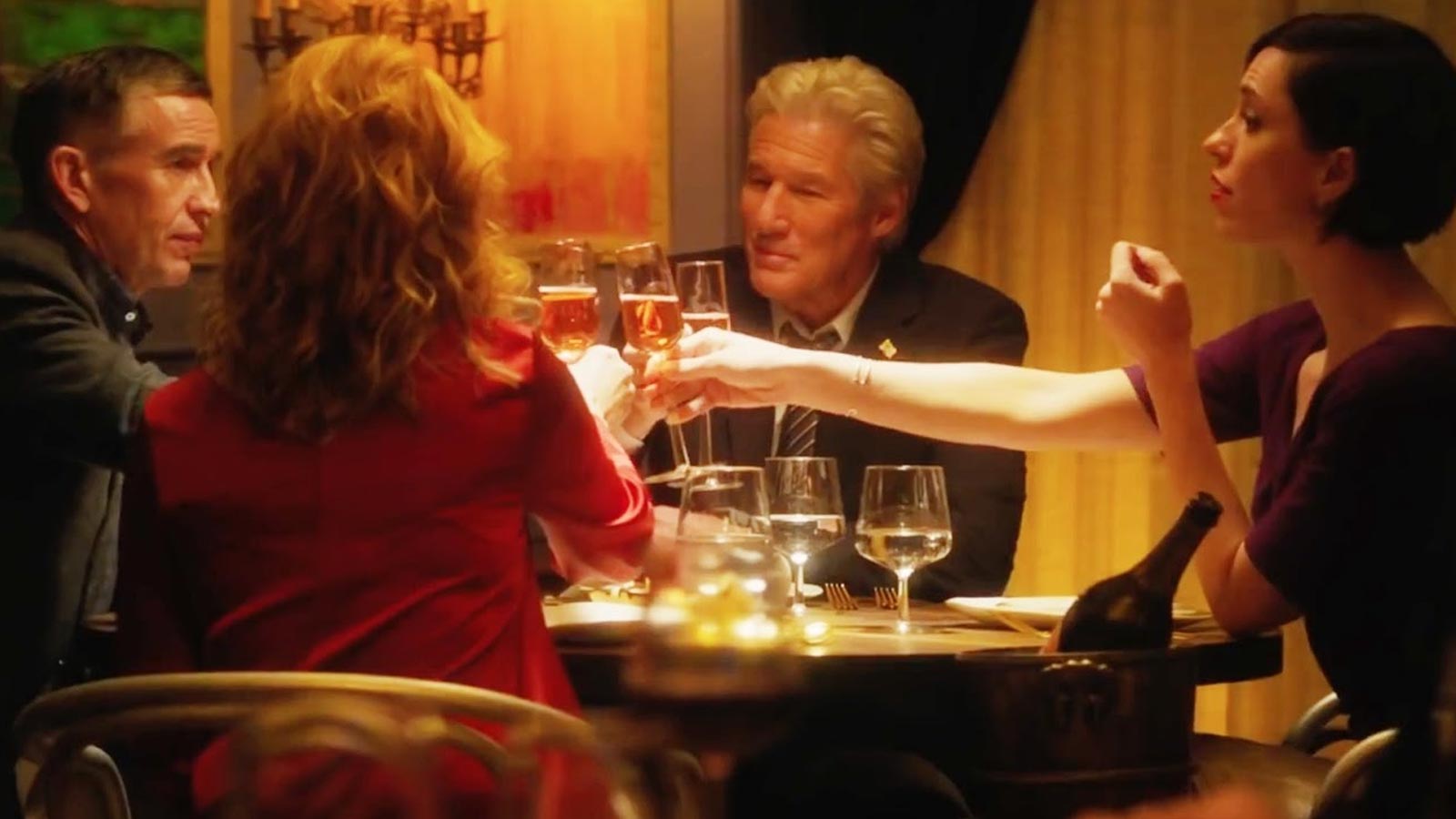
There’s something inherently charged and dramatic about a dinner party—various individuals, couples, or families coming together to share a meal, perhaps several courses over several hours, with everyone trapped in their seats. No escape, interruption, or distraction. Just the food, and each other’s company. 

In real life, the drama of these dinner parties is often confined to a mouthy uncle, or a political debate that morphs into a shouting match after too much wine’s been served. In fiction, though, the possible dramas and dangers of a dinner party are almost limitless—the tight, intimate space of contrasting characters with conflicting motivations a perfect setting for writers to enact their very worst. A fictional dinner might be capable of upending a character’s life over the course of just a few pages, for instance. Or the dinner food or invitees themselves could be treacherous. Or, as in my novel, a dinner party could be the very inconvenient situation a character finds herself in on the brink of the apocalypse.

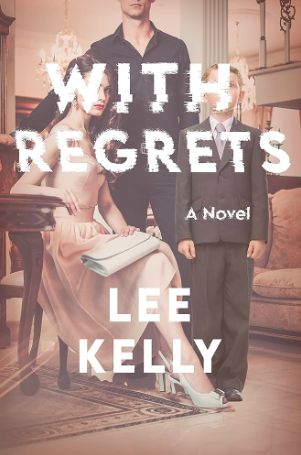
My latest genre-blending suspense novel, With Regrets, chronicles an evening when various friends and frenemies gather, sans kids, for a dinner party at their lifestyle-influencer neighbor’s house, and a world-altering, apocalyptic event occurs during the first course. Trapped inside their host’s home, the group is forced to launch into survival mode, grabbing supplies to take shelter in the wine cellar. But everyone has very different opinions about the best plan to get home to their children… and some of the secrets the guests are keeping may prove just as dangerous as the threats outside.

Here are eight of my favorite recent novels featuring a dangerous dinner, with the term “danger” encompassing quite a variety of threats and menacing situations.

Behind Closed Doors by B.A. Paris

Jack and Grace are the envy of their dinner guests: he’s handsome, successful, and charming; she’s graceful, doting, and a wonder in the kitchen. Little do these dinner guests know, though, that the elaborate three-course meal Grace has prepared is a malicious test designed by Jack, a secret sociopath—and if the beef wellington is undercooked or the souffles overdone, there will be hell to pay. 

The Couple Next Door by Shari Lapena

New parents Anne and Marco can’t find a sitter for their baby, and so they leave their sleeping little one with a monitor and pop by their next-door neighbors’ house for a quick dinner. Anne can’t shake the nagging sense that something is wrong, though, and when she finally pulls Marco away to check on their child, they discover every parent’s worst nightmare: the baby has been stolen. 

Real Life by Brandon Taylor

Protagonist Wallace, a gay, Black, introverted biochemistry graduate student, is pondering leaving his predominately White Midwestern university given the many indignities he’s endured inside his lab and on campus. Wallace’s limits are further tested when he’s invited to a campus dinner party. The danger, here, is overt when one of the other guests makes racist, incendiary remarks to Wallace during the meal. But there are also the more subtle, pervasive dangers of the institutional system in which Wallace is enmeshed, a system that consistently suppresses and permits these types of comments and conversations. 

The Dinner Guests by Kiersten Modglin

This novel reimagines a dinner party as a malicious escape room, and I was here for every moment of this inventive premise. A quaint neighborhood’s enigmatic new residents invite a group of longtime friends over for dinner. As soon as the drinks are served, though, the guests realize they’re in for a lot more than dinner. What follows is a calculated game seemingly designed for psychological torture: friendships are tested, secrets are revealed, and as the game advances, it becomes clear that not all the invitees might make it out alive.

Here and Now and Then by Mike Chen

The dinners featured in this mind-bending, heart-wrenching sci-fi novel dangerously defy the laws of time and space itself. Kin Stewart, a time-traveling agent from 2142, has been secretly marooned in the 1990s. Kin’s given up on being rescued, and has started a new life; he’s now an IT expert with a teenage daughter. When Kin’s rescue team arrives eighteen years too late, Kin becomes torn between two different timelines and realities—hosting dinner parties with his wife in 2142 while simultaneously trying to preserve his relationship with his daughter across the centuries. His attempts threaten to corrupt the entire time-space continuum, and potentially destroy history itself.  

The Southern Book Club’s Guide to Slaying Vampires by Grady Hendrix

What better way to warmly welcome a new neighbor than inviting him over for dinner? thinks Patricia Campbell, the Southern homemaker protagonist of Grady Hendrix’s unique novel. Unfortunately for Patricia, this neighbor turns out to be a vampire. This genre-blending story takes place in a South Carolina town over the course of the late 1980s and 1990s, and features a women’s book club who ultimately face off with evil incarnate to protect their families and community (and yes, it’s every bit as fun as it sounds).

A Botanist’s Guide to Parties and Poisons by Kate Khavari

This page-turning historical fantasy series begins with a university dinner where poison is served. By whom? That’s for Saffron Everleigh to figure out. As a new research assistant at University College London, Saffron is determined to make her way in the field of botany, but systemic misogyny and accusations of nepotism have kept her from getting ahead. When a dinner guest ingests an unknown toxin and her mentor becomes the prime suspect, Saffron works to uncover the true perpetrator. 

A Head Full of Ghosts by Paul Tremblay

Tremblay’s horror novel chronicles the dynamics of a New England family that begins to unravel when eldest daughter, Marjorie, starts exhibiting signs of demonic possession. Though is Marjorie the victim of a diabolic hold . . . or is she suffering from acute schizophrenia? Things still aren’t clear when the family sits down to dinner in one of the most unsettling scenes I’ve ever read, a harrowing sequence where, regardless of the truth, Marjorie proves to be an unequivocal danger to herself and her family.

In Defense of Sophie Turner, It’s Nearly Impossible to Be a “Good Mother”

My daughter was ten months old when I abandoned her for the first time, for five days. I went to an academic conference to present on a prestigious panel. I wobbled up to a podium in long-neglected heels, my breasts aching against my navy, polka-dot dress. I tried to blink away the hundreds of faces you rarely see at academic talks and willed my breastmilk to stay put, to not stain the straining fabric, to not bloom in blotches and betray me as not professional, not serious, not someone who deserved to be there.

I wrote my paper for the panel mostly in the very early morning, after my daughter’s 4am feeding, when she latched onto me like a hungry animal after a long stretch of sleep. I’d stay up after lying her gently back in bed, so gently the process took about ten minutes, and sit on a faux black leather Ikea couch to try and finish my dissertation. I was still teaching in the evenings and weekends when my partner was home from his full-time job and able to watch our daughter. I pumped milk at 8pm in a dirty locker room at the City University of New York’s technical college, City Tech, and collapsed into co-sleep upon returning home.

I, myself, am also a bad mother: I work, and I dare to enjoy it.

I was tired, but this was a career-making panel—the Shakespeare Association of America’s Next Generation Plenary, featuring work by the next generation of Shakespeare scholars. A committee selected papers via blind review out of almost one hundred. The first time I attended this panel, years earlier, I knew I could do it. And I did, but as my voice shook and I willed my breasts not to leak, my body reminded me I was not supposed to be away from my daughter.

The talk went well. After, I cried while pumping in my hotel room. The woman I shared it with—a colleague with no children—walked in on me. I still remember her face, a mixture of pity and disgust.


I was at my parents’ house, sitting across from my mother, when I first heard the news that Joe Jonas had filed for divorce from Sophie Turner. My mother announced it, looking up from her phone, and we all gasped—long-time Jonas Brothers fans. Joe used to be my favorite. Nick, my little sister’s, Kevin, my mom’s. I went to one of their concerts years ago and haven’t felt that kind of electricity since. The uncontainable, desirous screams of thousands of young girls rung in my ears for days after.

I looked up the headlines for myself, in utter disbelief. TMZ broke the story, reporting that the couple was headed for divorce and that, for months, they had been experiencing “serious problems” in their marriage. As for why, sources told TMZ that Jonas had been caring for the couple’s daughters “pretty much all the time” over the past three months. Subsequent articles claimed that part of the reason for the divorce was that Turner “likes to party” while Jonas “likes to stay at home.” The source also claimed divorce was a “last resort” for Jonas. 

Rage spread through my body as I realized the insinuation behind these articles. I’ve become an expert in bad mothers over the past few years, designing and teaching a college course on the topic. I, myself, am also a bad mother: I work, and I dare to enjoy it; I leave my child with her father for extended amounts of time. Like Edna in Kate Chopin’s The Awakening, I tend to my daughter in an “uneven, impulsive way”—struggling to play with her, to look up from my phone when she calls for me. 

When reading the headlines about Turner, I thought about how “partying” signals, in part, unbridled sexuality—and how maternal sexuality has long been demonized in narratives from William Shakespeare’s Hamlet to Kristen Arnett’s With TeethI thought about how, in 2022, Turner told Elle UK, “I miss England so much… for my mental health, I have to be around my friends and family… I’m slowly dragging my husband back,” and how Euripides’ Medea, a foreigner, is betrayed and banished by her husband. I thought about all the artist-mothers, from Edna in Chopin’s The Awakening to the mother in Rachel Yoder’s Nightbitch, to Mia in Celeste Ng’s Little Fires Everywhere, that have struggled to marry their desire to create art with the intensive mothering our patriarchal society demands. 

‘Turner was trying to make up for her lost youth partying,’ my mother said.

Generations of bad mothers have taught me that, no matter what Turner may or may not have been caught doing on a Ring camera, the dictates of motherhood are painful—violent, even—to bear. Sophie Turner has privileges many mothers cannot even imagine and yet even she cannot escape these narratives, cannot measure up to what patriarchy deems a good, successful mother. As a rich, white woman, she certainly had the opportunity to be seen as a good mother (unlike, Black mothers, for example, who, too often, do not even have the luxury of being presumed good mothers, and who must contend with a whole set of different myths). That Turner did not make use of her endless resources to fully devote herself to her daughters makes her even more villainous in the public eye. 

The weight of these expectations, to erase oneself and sacrifice everything for your children, is crushing.

As the titular character sometimes thinks in Nightbitch, “I imagine abandoning my family, abandoning this entire life.” “It’s all on me,” she laments—“every part of it.”


Later, in a group text with me and my sister, my mother reiterated the headlines: Turner was too young to get married, she said. Turner was trying to make up for her lost youth partying, she said. I’m glad the girls are with Joe’s people, she said. In my opinion, she said, mothers shouldn’t be away from their children for more than five days—if they’re under five.

I felt like I’d been slapped. Surely, my mother remembered all of my trips to conferences, all of my invited talks, that one month I traveled twice and my partner sat me down and told me it was really hard on my daughter, really hard on the family.

“Are you saying I’m a bad mother?” I asked her.

“Were you ever away from her for more than five days?” she responded.

About to type back, I remember how my mother had to put me in daycare when I was six weeks old. It’s where I became attached to my baby blanket, the transitional object I fell asleep with until I was twenty-six years old. One time, a worker at my daycare told my mother I was walking along the other cribs, holding onto the bars, stealing blankets from the other babies. One time, they told her nonchalantly that I cried all day.

My mother was always there for us when we needed her. My daughter won’t experience this, and it pains me. 

As the story goes, my mother quit her job before she’d have to go back after my sister was born. My father didn’t know how they were going to make it. My mother promised she would use cloth diapers, figure it out. She did figure it out, and proceeded to stay home with her four children, as she wanted, while my father’s career flourished, supporting him along the way. She was always home to bring us something to school we forgot, to drive us to band practice, theater, other appointments. She was always there for us when we needed her. 

My daughter won’t experience this, me being on call all hours of the day, and it pains me. 

Perhaps this is why I nastily said to my mother, “as your daughters know, some of us can’t up and quit their jobs when they want to.” My sister, a lawyer, and I are both the breadwinners of our families.

“Do you think I wasn’t scared to death?” she responded, then swiftly said, “This is just a fight about celebrity gossip. I’m done.”


A few days after the news of Turner and Jonas’s divorce broke, Jonas was spotted out to breakfast with the couple’s children. “Joe Jonas is spending time with his girls,” People reported. A convenient sighting, to say the least. At Dodger Stadium in Los Angeles, Jonas addressed the crowd before singing “Hesitate,” a song he wrote inspired by his love for Turner: “It’s been a crazy week. I just want to say, if you don’t hear it from these lips, don’t believe it. Okay?”

As the news continued to roll in, I read that Jonas pressured Turner to attend events postpartum, one source saying he “forced” her while she was struggling after giving birth. Sources report she didn’t want to leave her home, didn’t want to be photographed at events, but, still, she attended them with him. At another, that Jonas attended alone, he “complained” that Sophie was MIA, “felt she needed to get out more.”

In the most recent development, Turner has sued Jonas, demanding their children return to England—the filing said he was withholding their passports and that Turner learned of the divorce through the media. 

My sister sent me a video of Joe Jonas celebrating his birthday on tour, posted about a month before he filed for divorce. “It’s all about me today. It’s all about me,” he tells the crowd.

As People reports, Sophie Turner is also back at work. In images captured since news of the divorce broke, the edges of her body and face are angular, her eyes narrowed, her lips curled up in a pained, almost smile. In one image, her back—covered in a white-web, a temporary tattoo—faces the camera. She clasps her phone in one hand, facing a forest, her right leg lifted as if to step forward.

It’s a vision that reminds me of Edna in The Awakening swimming out to sea, trying to escape. Unlike Edna, though, I hope Turner turns around and swims back. I hope she feels an iota of freedom being away, being free to create art—and that she relishes it. But I know she is also in pain, even if it is only because the narratives that working mothers are bad mothers live in our own heads as much as they reside in headlines. I hope she’s surrounded by family and friends that will tell her she deserves it all, even if all doesn’t feel quite like what we were promised. I hope her daughters grow up knowing they can be anything, because they watched their mother do it—claim herself, her time, in the face of everything.

I know that there is so much distance between Turner and I, but I feel close to her. I feel a need to protect her. I want to hold her hand and hug her and cry with her and tell her that I get it, that she has it so much worse than I do, that she is subject to a million women who feel they have a right to judge her, to argue that her daughters deserve better. 

I want to go out with her and dance as if we never became subject to the scrutiny that accompanies motherhood.


“I think you have doubts within yourself that make you defend Sophie,” my mother texted me, towards the end of our fight. She’s right. Still, there has been an explosion of feminist coverage pushing back on the insinuations in the media’s coverage of this divorce, that Turner is a bad mother. I hope she sees these pieces; they certainly have helped me.

I want to go out with her and dance as if we never became subject to the scrutiny that accompanies motherhood.

I’m writing this piece at 4AM as my daughter sleeps. Many mornings when I get up early to work, however, she gets up with me. I give her an iPad and she watches videos where parents play with their children as I type away and try to block out the sounds of better, more involved parents than I. My partner usually comes downstairs after waking up a bit later and raises his eyebrows, “How long has she been up?” I usually give him a withering glance. This is our routine.

Last night, as my daughter’s eyes grew heavy, I put my phone on the lowest brightness and typed some of this piece, with one hand, into my notes app. Her skull pressed against me, I felt her breathing grow slower against my side, the fuzz from her unicorn lovey tickling my cheek. I raised my arm painfully, slowly, and lifted myself up, ready to go downstairs and type on my computer. Her eyes popped open—“Mommy?” she said, looking at me with betrayal.

“I’m here baby.” I responded, thinking about the dance so many of us do, daily, in order to have it all.

7 Classic Novels About Zimbabwe 

Zimbabwe is a former settler colony and, as such, contains multiples. This is why I have always felt compelled to write about this “small place” that I call home. When I started writing my first novel, The Theory of Flight, in 2007, it was very obvious that Zimbabwe, so full of promise in the 1990s, had become a failed postcolonial experiment and that many writers were eager to examine what that failure meant for contemporary Zimbabweans: NoViolet Bulawayo’s We Need New Names; Brian Chikwava’s Harare North; Valerie Tagwira’s The Uncertainty of Hope. To me what was happening in Zimbabwe in the 2000s seemed both new and uncannily familiar and so I decided to explore the ways in which the past bleeds into the present.

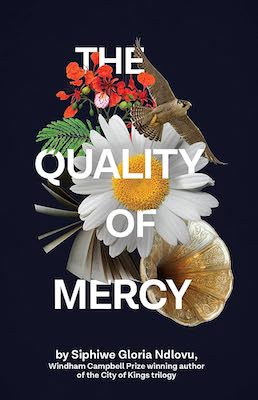
By the time The Theory of Flight was published in 2018 it had become clear to me that all that I wanted to say about my country and its long-contested histories could not be confined in one novel and so the idea for the City of Kings Trilogy was born. The three novels that make up the trilogy—The Theory of Flight, The History of Man, and The Quality of Mercy—focus on the country’s transition from a settler colony to an independent postcolony in order to examine how our understandings and experiences of race, gender, ethnicity and nation are both shaped by, and in turn shape, particular historical moments.  

In the five years that I have been working on the trilogy there has been an explosion of Zimbabwean Literature: NoViolet Bulawayo’s Glory; Tsitsi Dangarembga’s This Mournable Body; John Eppel’s A Colonial Boy; Petina Gappah’s Out of Darkness, Shining Light; Fatima Kara’s The Train House on Lobengula Street; Violette Kee-Tui’s Mulberry Dreams; Sue Nyathi’s An Angel’s Demise; Bryony Rheam’s This September Sun; Novuyo Rosa Tshuma’s House of Stone. What I find fascinating about Zimbabwe’s current literary moment is that most of these novels, written from a refreshing diversity of perspectives, are dealing with the ever-present legacies of the country’s colonial past on our received identities and lived experiences. 

I see the country’s contemporary literature continuing a conversation that was begun by these 7 classic Zimbabwean (and Rhodesian) novels: 

The Grass is Singing by Doris Lessing

The colonial narrative wrote white women as the epitome of purity, put them on a pedestal and then instructed them to be silently happy with their privileged position. All seemed well until Doris Lessing’s Mary Turner entered the narrative and disturbed and disrupted it.  

At first Mary is as she should be: she believes that whites are superior, industrious and gifted and that blacks are inferior, lazy and talentless. But then her husband proves to be an ineffective farmer—could it be that he is lazy, talentless…dare she think it…inferior? Compounding the matter is a black farm laborer named Moses who seems to experience himself as a being with industry, intelligence and agency. 

But if Moses has these qualities what does she, Mary—the silent partner in the colonial enterprise—have? Through Mary, Lessing shows that the position of the white woman within the colonial narrative may not be as privileged as purported.

Waiting for the Rain by Charles Mungoshi

At the center of Charles Mungoshi’s novel is the kind of black man that Mary Turner cannot bring herself to comprehend. Lucifer, the protagonist, is a being with industry, intelligence and agency. He uses these qualities to upwardly maneuver his way from his rural and humble beginnings to a mission school and then on to an unnamed destination overseas. 

Although there is cause for celebration because Lucifer is broadening his horizons, there is also occasion to lament because his departure will create a loss (within himself, his family, his community, his country). Written in 1975, Mungoshi’s novel anticipates the type of migration that will become prevalent in 21st century Zimbabwe.  

Lucifer (as his name suggests) is a character that Mungoshi treats with ambivalence because the hybridity created by his colonization and migration may end up completely severing him from himself, his family, his community and his country. In one of the most tragically beautiful endings to a novel, Mungoshi writes, “Lucifer leans back and tries to look at his country through the eye of an impartial tourist.” 

The House of Hunger by Dambudzo Marechera

Dambudzo Marechera’s novella begins the same way that Charles Mungoshi’s novel ends—with a determined departure. “I got my things and left,” the narrator informs the reader before taking them on a journey through the decrepit, squalid and violent township that the narrator lives in and through the narrator’s painful memories of a people and a country always in turmoil. 

The constant, frenetic forward motion of the narrative seems freeing…until you realize that the narrator has never left the house of hunger. 

Written on the eve of Zimbabwe gaining its independence, the novella serves as a cautionary tale—settler colonialism, with its many forms of violence has created an alienated people, people who cannot relate or empathize with each other because the various dichotomies of the colonial narrative have always pitted them against each other. If real work is not done to address this legacy, the postcolony will continue to alienate and violate its people and there will be no escape from the house of hunger. Needless to say the novella continues to be a touchstone for many Zimbabweans and writers. 

Nervous Conditions by Tsitsi Dangarembga

Departures anticipate an arrival and in 1988, Tsitsi Dangarembga made her grand entrance into the world of Zimbabwean literature with one of the most powerful and salient opening lines to a novel: “I was not sorry when my brother died.” All of a sudden, here was a voice that had not been heard before, forcing us to listen. This voice was unapologetic about the space it was clearing and the place that it was occupying.  

Lessing’s Mary, Mungoshi’s Lucifer and Marechera’s unnamed narrator all had to contend with and contest the limited space and place that the colonial narrative afforded them. But at least they had a space and place. Tambudzai, Dangarembga’s determined  heroine, has no such fortune. She is a young black girl who is expected (by colonialism, capitalism, and patriarchy) to silently and unobtrusively make her way towards black womanhood.

Luckily, Tambudzai refuses to go gently and Zimbabwean women and Zimbabwean writers have been forever enriched since. After Nervous Conditions, Tambudzai has gone on to hold a mirror up to postcolonial Zimbabweans in Dangarembga’s The Book of Not and This Mournable Body. The image reflected back to us is not pretty and makes us uncomfortable, which is as it should be. Tambudzai is not sorry. 

Harvest of Thorns by Shimmer Chinodya

Having achieved independence after a protracted war, nationalists encouraged  postcolonial Zimbabweans to think that their freedom had come at the hands of valiant victors—the children of the soil—who had fought only for the rightest of reasons: the liberation of the Zimbabwean people. 

As well-intentioned as this nationalist narrative seemed to be, its real intention was to erase and silence other experiences of the war years. Shimmer Chinodya decided to voice this silence and make visible this erasure by telling the story of Benjamin who, although seduced by the child-of-the-soil rhetoric of the guerrillas, actually fought the  war because he had committed a crime and wanted to escape incarceration. His reasons were, therefore, far from altruistic. 

Benjamin is not the valiant victor of the nationalists’ narrative. His selfish reasons for joining the war add a shade of gray to a postcolonial narrative that was, in the 1980s, fast becoming black and white. This may seem like a small feat, but speaking truth to power is never a small feat and Lessing rightfully called Harvest of Thorns “a brave book”. 

Mukiwa: A White Boy in Africa by Peter Godwin

If in the postcolonial nationalist narrative valiant victors could only be former guerrillas, then what did that make the soldiers they had fought against? How were white Rhodesians supposed to understand themselves in Zimbabwe? Could they only be Rhodesians or was there room for them to become Zimbabweans? 

In his memoir Godwin deals with this crisis of identity that has as much to do with the  postcolonial nationalist narrative as it has to do with how the colonial Rhodesian way of life was built on the continued exploitation of African land and the continued oppression  of African people. Godwin was raised in a country whose injustices, violence, and inequalities were fortified by the laws of the land—laws that made him both privileged  and complicit. 

As he comes of age, Godwin is increasingly conflicted about his relationship to his  country and his place in it, especially as the arrival of independence only leads to the continuation of coloniality in a different guise. 

Butterfly Burning by Yvonne Vera

I will end this list the way I began it by looking at the colonial narrative’s construction of race and gender. Phephelaphi, Yvonne Vera’s heroine in this novel, which is set in 1948, is not, according to the colonial narrative, supposed to be on a pedestal. As a black woman in a city where her labor is not required by colonial capitalism she is not supposed to be seen or to exist, and, if she is made visible, it should be clear that she is a dangerous and diseased threat. And yet when Phephelaphi first meets Fumbatha, he sees only her beauty, health and vitality and puts her on a pedestal.

But this narrative that has turned Fumbatha into a laborer and turned Phephelaphi into a potential threat cannot contain their happiness, especially when she starts  thinking of herself as a being with intelligence, agency and industry and takes steps  towards becoming a nurse. Fumbatha, the laborer, wants in Phephelaphi someone who will provide him with the comforts of home. When he learns of her ambitions he uses the somewhat privileged, even if limited, position that patriarchy and capitalism afford him to punish her for her ambitions. 

Trapped by the limited colonial constructions of race and gender, Phephelaphi has to create her own type of emancipation.

The Coolest Bookshelves from Our Contest

Here at Electric Lit, we’re suckers for a good bookshelf. Any kind of bookshelf! Alphabetized shelves, color-coded shelves, shelves that were once organized but have since devolved into a chaotic pile with no rhyme or reason to where anything is placed. Even book stacks can be shelves if you’re determined enough. There’s no wrong way to organize your books (except bookshelves with the spine facing in. That one’s objectively wrong). If there’s anything the entries into our #ShowYourShelf contest showed us, it’s that all shelves—organized or random, tidy or haphazard—are perfect in our eyes. We loved seeing your shelves, and wish you all so many books that these beauties turn into an unmanageable mess that ultimately grows into a second bookshelf (and a third, and a fourth, and a fifth, and…)

Below are some of our favorite entries into the competition.

We kicked off the contest with this photo from books editor Jo Lou, who is clearly team color-coded shelves. Look at this rainbow bookcase! This one deserves to be lingering on bookstagram for years to come as aspirational shelf inspo.

And she wasn’t the only vote for color-coded shelves. @Jennyshoe submitted color-coded shelves with colorful decorations to match.

Commuter editor Kelly Luce’s woodland aesthetic featuring a historic stone mill and window view full of trees is the epitome of CottageCore.

We kick off our book stacks submissions with our editor-in-chief, Denne Michelle Norris whose TV space has the feel of an altar devoted to literature.

We love an organized chaos, like these books piled (very neatly, we should say!) on top of contributing writer Laura Schmitt’s shelf.

And we can’t help but include one more submission from Jo Lou, featuring our all-time favorite fluffy employee, Billy, all dressed up in a matching bookish bandana (Thanks, Riverhead, for the swag).

For Sam Hopkins, the best cat perch is a book stack!

Ten Speed publicist Felix Cruz’s vibrant shelves are painted in cobalt blue with a red trim as an homage to Frida Kahlo’s Casa Azul.

We stan a giant bookcase, especially one bursting at the seams like this one from Debutiful’s Adam Vitcavage (which happens to be one of four)! We’re also into this combination of vertical AND horizontal shelving—like a hybrid bookstack-bookshelf!

Executive director Halimah Marcus has a similarly giant bookcase, though this one’s a little more organized (no offense, Adam—we love the mess!).

This shelf from publicist Kathy Daneman is proof that books and plants make the perfect pairing.

A spiky spiral moment from Dawn Poon.

Floor space = more room for books, as shown by @mikelindgren51

Writer Rebecca Turkewitz’s spooky bookshelf, full of horror novels, gothic fiction, and ghost stories, matches the haunting energy of her short story collection Here in the Night. And we’re obsessed with the miniature bookshop, tucked in the corner, casting a warm glow.

We love the personalization on Jenn Baker’s bookshelf, including the face-out of her book, Forgive Me Not! Also, do we glimpse a photo booth pic from last year’s Masquerade of the Red Death peeking out too? 👀

Sofia Åmark is giving us cosy hygge vibes. And we spy a very cool Lord of the Ring poster.

Novelist Anara Guard’s shelfie has the charm of an old library.

Father’s Gone and So Is His Arm

Worrying About Father’s Arm

How will we solve the problem of how Father sleeps on his right arm? He is not comfortable, his arm is under him, it hurts him as it presses into his ribs, and it is hurt by the weight of his body pressing down on it. He tells us this, with a gentle smile, as though to say it is not important, and not our problem.

Father died many years ago. But the problem is still there on my mind, unresolved, even though Father no longer tries to sleep comfortably and in fact no longer has an arm.


Wise Old Men

In our society, old men are not considered to be wise, but, rather, eccentric, opinionated, sloppy, foolish, stubborn, weak, confused, etc. This old man in front of me in line, that old man over there trying to open the door, what a bother, get out of our way, with your slow shuffling feet and your hesitation and your uncertainty, we say. Can’t you get all the way across the street before the light changes? In another society, it is different. He is an old man, they say, ask him.


The Stages of Womanhood

It was in the midst of these days when I was struggling to complete the—what would it be?—seventh, no, sixth stage of my growth as a woman, being a year late already with that, according to the (ineffective) anthroposophic doctor I had consulted about my persistent ear infections, when I was awoken yet again during a particularly restless night of being awoken, first, by my child, then by a mosquito, then by my child again, then by the tickling in my ears, then by my child again—when I was awoken yet again, this time by the high-pitched wail of an air-raid siren that I mistook at first for a malfunctioning fan in one window and then a fan in another, going around turning off and unplugging the fans one by one, then finally making my way downstairs and out the back door to stand in the yard looking up until the sound of the siren died abruptly, the wail descending. Of course I thought of war, since our country was in conflict yet again with another country. I thought maybe the mosquito that had been bothering me would live longer than I would. I thought of calling the local police station. I wondered if my husband had heard the siren through his ear plugs. He was sleeping downstairs so that he would not be bothered by me, since I was sleeping so badly these days, or by the child, who was waking so often. The doctor had told me that the next stage, the last stage of womanhood in which a woman is reproductive, was very important creatively. The stage that came after that was very different—also wonderful, she said, but very different. But I had not yet completed this stage, which was supposed to be a growth into full womanhood. As far as I could see, I was exactly the same this year as I had been last year and the year before.

8 Novels Using Television As a Plot Device

Writing about pop culture and current technology is always a gamble, pitting critique of the present against longevity, a story that will still feel relevant after we’re gone. But for novelists (present company included) who were exposed to the Real World before the, um, real world, reality TV is hardly a trend. We’ve grown up seeing ordinary people use the medium to solve myriad problems–or create them. And who among us hasn’t considered how we’d fare on Survivor, or snarkily judged a dish we’ve only watched being prepared? The past year has seen a notable wave of books that incorporate television—and particularly reality TV—into their premises, though examinations of the medium go back farther than you might expect. 

In my novel, The Invisible World, Eve and Ryan Hawthorne suspect their house is haunted, and they reach out to a reality show first. It’s the mid-aughts, the height of paranormal TV fever, and among the glut of shows they end up on one of the more middling options, Searching for… the Invisible World, a late addition to the mix. Perhaps too late—it’s on the verge of cancellation. But Eve and Ryan aren’t looking for renown, only answers. For Eve, who has been experiencing paranormal events her whole life while never fully trusting her perceptions, a little confirmation would go a long way.

Unfortunately for Eve, the TV crew brings with it a confrontation with oneself, as Eve and Ryan are forced to consider how they’ll look to an audience, how the footage of the haunting in their home will stack up against the uncapturable feeling of being in the home. It’s rare for anyone to get a fully objective perspective on their own life, and one of my conjectures is that seeing ourselves on TV can offer a bit of that perspective. But TV is made by folks with their own agendas, and as the following list of books shows, confronting one’s image head-on may not offer solace, but rather create new, previously unconsidered problems. Below, eight novels about characters who are on TV, want to be on TV, or use television to in some way figure themselves out.

Episode Thirteen by Craig DiLouie

While plenty of other novels incorporate found footage, trial transcripts, etc., alongside narration, DiLouie cranks it up to 11—Episode Thirteen is all found footage/found documents: the lost tapes and journals of the crew of Fade to Black, a paranormal investigative show. Fade to Black’s crew is scrappy, and in need of some new stories as they embark on an investigation of Foundation House, a building used in the 1970s by researchers to conduct experiments in the paranormal, metaphysical, and hallucinogenic. The house has never been fully investigated, and it’s on the verge of being torn down. As the team spends more time inside, extending their shoot and the number of episodes they need to air their footage, their findings loop back to the crew themselves in seemingly impossible ways. A found-footage novel in 2023 ought to be self-aware of genre tropes, and one character confirms to the audience that the urge to document, even as their situation grows ever more frightening, persists.

Chain-Gang All-Stars by Nana Kwame Adjei-Brenyah

A highly anticipated release of 2023, Adjei-Brenyah’s novel takes place in a near-future in which the most popular form of entertainment is “hard action-sports”: literal death-matches between incarcerated individuals who trade in the remainders of their sentences for the chance at freedom, purchased in Blood Points accumulated by killing one another in gladiator-style battles. Participants, known as Links, team up in Chains named after prisons to fight Chains from other prisons. The matches themselves are ticketed events, only viewed live. But the Links spend days marching between Battlegrounds, trips that are livestreamed via small, floating drone-like cameras/microphones, so that conversations, meals, even baths are captured and viewed by millions. The novel is layered with chapters from the perspectives not only of Links but also those of viewers, protestors who believe that action-sports are inhumane, and board members who oversee the regulations of matches. The narration is sprinkled throughout by footnotes that provide facts and statistics on the prison system, reminding readers of the very real human costs of entertainment.

Patricia Wants to Cuddle by Samantha Allen

In Allen’s lively satire, the final four contestants in The Catch, a Bachelor parody, travel to a remote island in the Pacific Northwest for the final eliminations and, hopefully, a union. The novel shifts between perspectives: Amanda, the influencer; Vanessa, set up by the show to be the villain; Lilah-Mae, the Christian girl; and Renee, the final Black contestant who is told, on the ferry ride to Otters Island, that the producers are essentially keeping her on for the optics. Renee is exploring her sexuality, and as far as the Catch himself (a social media investor who has made a yellow tracksuit his entire personality) goes, she’s over him. Meanwhile Casey, The Catch‘s producer, is working to maintain drama between the girls, and she doesn’t have to work too hard. Otters Island has secrets, and the book moves from satire to horror as the contestants and crew are forced to confront something far worse than Instagram vitriol. Everyone has their own reasons for being on the show, whether in pursuit of followers or a corsage, but the book ultimately asks if the most important things in life are the ones that are seen not by millions, but by hardly anyone at all.

What Happened to Ruthy Ramirez by Claire Jiménez

Jiménez’s novel also shifts perspectives, between the mother and two daughters in a Puerto Rican family living in present-day Staten Island, more than ten years after the middle daughter, Ruthy, has gone missing. Ruthy was thirteen the day she didn’t come home from school, and despite the family’s tireless efforts to locate her, seems to be gone for good… until her younger sister sees her on a reality show. Whereas in some of the other books on this list, characters grapple with their own identities through the lens of TV, in What Happened… the family of Ruthy has to reconcile the image of the girl they knew with that of “Ruby” on Catfight—a trashy, sinister take on the Real World in which young women live together, perform together, and are encouraged to fight each other physically, with the loser getting booted out of the house. Jimenez’s novel addresses poverty, misogyny, and the ways that people of color bend themselves backwards for acceptance in white society, all while keeping the family at the center of her story.

The Continuous Katherine Mortenhoe by D. G. Compton

Perhaps one of the earliest examples of a fictional character appearing on reality TV, D. G. Compton’s 1974 novel (reissued by New York Review Books Classics) centers around a woman living in a future in which no one dies from old age. When Katherine is diagnosed with a terminal brain condition brought about from “information overload,” she is approached to appear on Human Destiny, a show that broadcasts, in nearly real-time, the final days of anyone who is going to die. Katherine turns them away, but the network is unfazed. A new technology, tiny cameras implanted inside eyes, allows a network employee named Roddie to surreptitiously follow Katherine around during her final weeks of life, watching her, filming her, sending footage back to be cut into twenty-four minute chunks to be broadcast. The book shifts between perspectives as Katherine’s symptoms set in and Human Destiny rolls into action. The novel anticipates not just the public’s hunger for witnessing people at their worst, but an omnipresent technology ready to share, with millions, the suffering of others. Nevertheless, the sci-fi elements are a background to the very real relationships between characters, and feels fresh fifty years after publication.

One’s Company by Ashley Hutson

Less about reality TV than one of the many ways television seeps into our consciousness, Hutson’s novel is about Bonnie Lincoln, who wins the lottery and with her winnings constructs a meticulously detailed recreation of the set of Three’s Company in a remote, mountainous area. Her set can turn over with the show’s seasons and she fills it with as many period-appropriate clothes, furniture, and accessories to decorate it as she can find. Bonnie then assumes all the roles on the show, one at a time, including building owners the Ropers. Coming out of a difficult childhood and recent trauma, Bonnie wants to be left alone in her fantasy, but all the money in the world cannot protect her from other people and her own past. Hutson’s novel is reminiscent of Tom McCarthy’s Remainder and recommended for anyone who falls asleep to The Office and wonders what it would be like to really live inside a show—be warned, it may not be as comforting as planned.

The Throwback Special by Chris Bachelder

While Hutson’s narrator recreates the entirety of a series on her private campus, Bachelder’s 2016 novel centers on a group of men who meticulously reenact just one play from Monday Night Football in 1985: when the Washington Redskins’ Joe Theismann catastrophically collided with the New York Giants’ Lawrence Taylor and Harry Carson, fracturing his tibia and fibula. In The Throwback Special, twenty-two men meet up every year at a motel to bond, then hold a lottery to see which man will play which role on a local school’s football field the following day. Bachelder’s book addresses masculinity, race, middle age, and is engrossing even for folks such as myself who are uninterested in football, as the build-up intensifies to a moment that lasts just a few seconds, but represents something different and powerful to each man on the field.

The Guild of Saint Cooper by Shya Scanlon

Scanlon’s novel, out of all the titles on this list, probably has the least to do with actual TV, as the characters in the book watch very little. In an apocalyptic Seattle emptied out by the destructive effects of climate change, Blake has stayed behind to take care of his mother, who has a terminal cancer diagnosis. While his neighbors take anything useful or worth trading and clear out, Blake explores a city populated by an angry Indigenous population and a sort of cult formed around a man named Russell. Russell wants Blake to rewrite the history of Seattle, in a way that will give its survivors hope, with Twin Peaks’s Special Agent Dale Cooper as its central figure. Cooper functions as a symbol for the Guild, his “memory and passion and wonder” values they can cohere around. As Scanlon’s metafictional novel reboots itself mid-stream, Dale Cooper moves from a symbol to a very real person, edging ever closer to Blake and his loved ones as they await disaster.

The 15 Must-Read Small Press Books of Fall

As we move into the fall reading season, deeply imagined short stories and inventive linked essays are having a moment alongside novels. What’s thrilling about the books coming out from small presses is the breadth of range—there are intentional and accidental murders, family drama and polycules, medical calamity, geopolitics, and a whole lot of finding one’s way through it all. It’s a marvelous time to be a reader.

Ways to Disappear by Victoria Lancelotta (Fiction Collective 2)

Ways to Disappear is the rare short story collection that reads with the same weight of a novel while concurrently leaning into the short form. The characters are illuminated and linked through careful description, and tethered together with a desire for connection and for solace. A woman tells her mother-in-law she is leaving his son, and finds unexpected support; a teenage couple is committed to their young love until the hardness of the world undoes them; a sister waits for her brother to die. Each story revolves around a critical moment, which adds up to a compelling collection—Lancelotta has her finger on the pulse of how life consumes us, from moments large to small. A compulsively readable and emotionally affecting book.  

Dearborn by Ghassan Zeineddine (Tin House)

Equal parts love letter and lament to Dearborn’s Lebanese diaspora, this collection of short stories chronicles everything from terrifying post-911 ICE raids to a father and son stuffing money into frozen chicken carcasses to avoid the IRS. One story follows a collective of husbands and wives as they size up a mustached and very well-endowed Speedo-clad new patron of their local athletic club; the women are titillated and the men are jealous, but they’re all transported to the 1970s when they were young and living in the village of Sofar. In another, a married woman who is conflicted about her neighbor’s new marriage offers refuge to the abused bride. In this portrait of Arab America, Zeineddine’s scenes are sometimes deadly serious and in other moments, laugh-out-loud funny. Through masterful dialogue and careful characterization, the stories in Dearborn stand in excellence.

Good Women by Halle Hill (Hub City Press)

Across a dozen stories, Good Women explores the lives of twelve Black women in the Appalachian South. A wife knows her husband is angry and disappointed that she is not pregnant yet, but she hasn’t stopped taking her birth control in secret. A sister tries to help her brother connect with the married man he is seeing; the brutality that follows only brings them closer. A preacher’s daughter finds her father’s stash of pornographic magazines and evidence of an affair after his passing, and in these revelations, discovers something about herself. Good Women surfaces the power of blood and chosen family, the consequence of place, and the sheer power of women acting for themselves in a society that defines them in relationship to men and whiteness. A talented writer to watch.

Landscapes by Christine Lai (Two Dollar Radio)

Penelope lives in a vast and crumbling family estate in England. For twenty years, she has worked as an archivist, eventually partnering with one of the estate’s owners. They live a quiet life, and Penelope continues to catalog the holdings of the property, even though it is scheduled for demolition. As the climate crisis escalates, the trees and gardens have died around her, and the razing of the estate—her partner and his brother’s childhood home—has triggered a visit from the brother, who sexually assaulted her two decades earlier. Landscapes is deftly textured with journal entries, narrative, art history and criticism. What emerges is a hypnotic novel that meditates on loss and violence. A gorgeous and accomplished debut.

When My Ghost Sings by Tara Sidhoo Fraser (Arsenal Pulp Press)

After the author of the beautifully layered memoir When My Ghost Sings has a stroke at the young age of 32, she creates a persona for the person she was before her brain betrayed her. Tara’s present ego and her before-ego, who she names Ghost, often battle one another: Tara in the now, trying to thread her frayed memory, and Ghost in the prior time, sure in her own grasp of history. What emerges is a split image of two women who are both right, and both wrong concurrently. As Tara excavates her bodily trauma and reconciles her two egos, her romantic partner is navigating a transition of their own as they begin gender affirming hormone treatment. When My Ghost Sings is detailed, introspective, and reads with a narrative force that asks soul-searching questions about who we are, who we were, and who we could be.

All Water Has Perfect Memory by Nada Samih-Rotondo (Jaded Ibis Press)

In this memoir-in-essays, Samih-Rotondo juxtaposes her own story with the stories of her matriarchs against the backdrop of forced migration. Just as her grandmother had to flee Palestine during the 1948 Arab-Israeli war, Samih-Rotondo, her mother, and her siblings escaped Kuwait as Iraq invaded in 1990. Her parents have divorced and her father stays behind. At just six years old, young Nada is in Rhode Island, and already beginning to see the expectations placed on women, and especially Muslim women. Yet, for as much family history that she knows, there are also secrets. As she grows up in 1990s America, she learns her mother has an estranged son from a first marriage in Saudi Arabia; by the time Samih-Rotondo has a one-year-old of her own, she discovers her grandmother was also forced to give up a son. All Water Has Perfect Memory touches on war, ancestral homes, and the fierce connections between mothers and daughters, but mostly it touches the heart.

Sleep Tight Satellite by Carol Guess (Tupelo Press)

A woman finds someone living in a secret room in their apartment building, a neighbor’s chocolate chip cookies cross-contaminated with peanuts causes a death, a wife announces divorce to her husband via a sticky note. Set in the Pacific Northwest, this collection of stories has some linkage through characters who work at the same company, overlap in polycules, or have mutual friends, but the strongest connection in the stories is in the theme of chosen family. Sleep Tight Satellite is also an entry into post-pandemic literature, with many of the stories capturing the terror, and sometimes the hilarity, of lockdown life. Guess beautifully executes on the tension between surveillance culture—which includes camming and Zoom—and the human desire for wanting to be not just seen, but known. Guess shows her depth as a writer, in stories that are topically, structurally, and linguistically innovative without losing sight of emotional impact, and fans of her work will note that she’s never been better. A truly stunning collection.

Unexpected Weather Events by Erin Pringle (AWST Press)

In these nuanced stories, often told from a child’s perspective, death is right around the corner and is just as predictable as wintertime snow. Six years after their father’s suicide, a trio of brothers go get milk while their mother is on a date and find a valentine for the oldest boy in the grocery store; a wife and husband reunite after his terminal cancer diagnosis; the ghost of a long gone sister appears to purchase a chair from her living sister; war breaks out over the Illinois cornfields. What Unexpected Weather Events speaks to as a collection is the fragile hold we all have on the scaffolding that props up our lives. Despite the often bleak premises, moments of hope and even joy manage to shine through. Though Pringle’s characters do not always find transcendence, her storytelling does.

Yesteryear by Stephen G. Eoannou (Santa Fe Writers Project)

During the 1930s Depression, radio writer Francis “Fran” Striker has too many mouths to feed on a meager salary, but at least he’s still employed. As the final notice bills pile up on his desk—and his wife’s parents move in with them after losing their home—Fran knows he needs to make more money. Yet, after being robbed and assaulted after a visit to a speakeasy, he can’t get anything down on the page, which is the only way he knows how to get paid. Yesteryear is a wild ride told in the style of radio dramas of the era: Fran is cursed by a madam, the gangsters keep tommy guns stowed in trombone cases, diamond rings are stolen. A gravedigger, bowling pin setter, and prize fighter are pivotal characters. Still, it is Fran, the real-life creator of the Lone Ranger series, that steals the show. Eoannou gives readers a novel that is just as dramatic as it is fun.

Deliver Me by Elle Nash (Unnamed Press)

In the Missouri Ozarks, Daisy lives with her boyfriend who is an insect breeder—and fetishist—while she works at a chicken processing facility, snipping through dead bird after dead bird with a pair of pneumatic scissors. Though she has left the Pentecostal church, she has not been able to leave behind the feelings of judgment; her religious mother isn’t helping. After a series of heart-aching miscarriages, none of which she received appropriate physical or emotional care for, Daisy is pregnant again. She
needs this baby to validate her body, her relationship with her boyfriend, and to get a different kind of attention from her mother. Yet, when her old friend Sloane reappears in her life, the very tenuous threads that hold Daisy’s life together start ripping apart at the seams. With her trademark psychological complexity and unflinching centering of the human body in all its grotesqueness, Deliver Me is Elle Nash at the height of her powers. Riveting from beginning to end.

What Makes You Think You’re Supposed to Feel Better: Stories by Jody Hobbs Hesler (Cornerstone Press)

In these 17 stories set in Virginia lies a sinister undercurrent. A girl at a grown-up party narrowly misses a kidnapping, a toddler nearly drowns in a hotel pool, an insular neighborhood witnesses a murder. Yet, What Makes You Think You’re Supposed To Feel Better also strikes a tender note as the characters work through their heartbreaks and repair their relationships. One misguided man purchases a life-sized M&M statue thinking it will be the perfect gift. There is tension in the collection; it is never clear when the plots will turn toward something better or worse, but Hobbs Hesler ties the stories together with a sense of longing—for stability, for comfort, for lives that could have been. Written with compassion and rich detail, this is a memorable debut.

The River, The Town by Farah Ali (Dnzac Books)

The River is a rural area in Pakistan that struggles daily with water access in the face of climate disaster. When Badaal leaves his family for The Town, he opens a wound in a family accustomed to loss. Told from different voices over a 30 year period, this family saga coalesces under the theme of hunger—for food, for love, for connection—and freedom, from bad relationships, grief, family strife. As his parents’ marriage crumbles, Badaal marries a much older woman and moves to The City. He quickly becomes estranged from his mother, who is trying to process her own lifelong trauma around the deaths of her siblings and her daughters—and now she faces losing Badaal. The River, The Town is a novel that exists in the intersection between intergenerational trauma and climate change, with The Town and The City as twin tributaries. A complicated and rewarding novel.

Tandem by Andy Mozina (Tortoise Books)

Mike Kovacs, an economics professor, has one too many beers. Instead of just going home to his quiet Kalamazoo neighborhood, he takes a long drive—and hits a tandem bike, instantly killing both of the riders. Protected by his own idea of privilege and in a haze of justification about what he deserves (not prison, in his estimation), Mike cleans up the murder scene and doesn’t turn himself in. Even as he recognizes one of the victims as his neighbor Claire’s daughter, he refuses to come clean, choosing instead to forge a relationship with Claire, whose marriage is buckling under the weight of grief for a lost child. Mike is a uniquely terrible person, but under Andy Mozina’s sure hand as a novelist, even a very unlikeable character becomes compelling. This book forces readers to ask: what would you do?

Ndima Ndima by Tsitsi Mapepa (Catalyst Press)

Set mostly in Harare, the capital city of Zimbabwe, Ndima Ndima follows the stories of the four Taha sisters and their mother through the 1990s. The youngest sister, Nyeredzi, has a strong bond with her mother, Zuva, who left her family, two decades earlier, to fight in the civil war, and returned to find she had been betrayed by her fiancé and her siblings. Instead of acting in anger from the violence she has witnessed, Zuva raises her girls—and especially Nyeredzi—with a sense of righteousness and to know their own power. When Nyeredzi sees her brother-in-law touching a woman who is not his wife, she speaks up. When Nyeredzi sees her cousins disrespecting the dwelling of a powerful spirit, she speaks up. In telling stories of the bonds between mothers and daughters, from the playful to the profound, Mapepa delivers a novel with profound emotional resonance.

The Children of this Madness by Gemini Wahhaj (7.13 Books)

Once part of a family of five, Beena and her father are the only survivors. A bombing in Bangladesh kills Beena’s mother and middle brother; her youngest brother died as a child years earlier after a car accident when the family was living in Iraq. As Beena completes her studies in literature in Houston, she mourns for the loss of so much of her family and worries over her stubborn, aging father. In the wake of the violence that has left Beena motherless, she marries—in part because she cares for the man, but also to avoid being set up with a Bengali businessman who works for a corporation that profits from war-time conflict. As the 2003 invasion of Iraq escalates, Beena struggles to balance caring for her father, her grief, her new marriage, while wondering where she fits into it all. Told in dual perspectives from Beena and her father over decades, The Children of the Madness captures the destabilizing impact that geopolitical forces have on actual people. Against a backdrop of loss, migration, and an exploration about what it means to find happiness, Wahhaj’s novel is unforgettable.