On a Thursday morning in August I’m at the gym, listening to the audiobook of Shane McCrae’s Pulling the Chariot of the Sun: A Memoir of a Kidnapping. The audiobook is narrated by the author himself, so when I check my email between sets and see the email from Shane, his voice fills my head in a kind of cross-modal stereo: Can I call you Sebastian? I hope so. Thank you for reaching out—I would be honored and happy to participate in this interview . . . The remainder of the email is what I now recognize as pure Shane: cordial, friendly, warm, expansive, and—from the first breath—revisionary in spirit. Tinkering. Perfecting. He informs me of the changes he has already made to the hardcover edition of the book in question—New and Collected Hell: A Poem—specifically in the section titled “I squeezed through,” in the 12th and 13th stanzas. He sends the new wording.
I love this impulse in Shane—the impulse not to let his verse rest. New and Collected Hell weaves a narrative by collecting and revising “hell poems” that appeared in previous collections—The Gilded Auction Block, The World Is Wild and Sad, and Cain Named the Animal—alongside entirely new material. We see glimpses of hell, purgatory, and heaven throughout Shane’s collections, but this is the first of his books to feature, exclusively, a narrative journey through the afterlife. The result is rich and strange. An unnamed narrator dies and descends to hell, guided by a saucy, robotic bird named Law. It is hard to get a handhold in this hell. But the poem rewards work. Which is to say, it rewards the reader’s own boomerang impulse, the spirit of circling back and reading again. Each time you return to Shane’s poem, it reads anew. It transforms like Law—now a bird, now a gleaming molten-metal Terminator. The tortures are real. The violence visceral. And yet for the reader willing to undergo the full journey, the redemption is real. The love. The ascent.
Here we are discussing hell, Shane’s new book, his approach to writing, and the Love that moves the sun and other stars.
Sebastian J. Langdell: New and Collected Hell: A Poem is partly composed of shorter “hell works” from your previous collections. Did you always have a sense that you’d spend more time with these texts, bring them together, expand upon them?
Shane McCrae: Not at all. I wish I had been a bit more intentional when I started what would eventually become New and Collected Hell, but instead I wrote the first poem (at the time I thought of it as an independent poem, but now I think of it as a section of the epic), “Intake Interview,” without any notion that I might write further poems featuring the same characters. But I did notice, as I was writing it, that “Intake Interview” was more narrative than most of the poems I had written before. In retrospect, I can recognize the ways in which it was suggesting the epic before I was aware of the epic.
SJL: You have “purgatory” and “heaven” pieces in previous collections, too. Are there plans for a potential trilogy—New and Collected Purgatory and New and Collected Heaven?
SM: The purgatory and heaven pieces are actually components of an early attempt to make a trilogy, but now I think New and Collected Hell ought to be considered a standalone poem. I am, however, trying to write a new purgatory poem. The poem feels stalled at the moment, and I find myself considerably more interested in lyric poems—I want to explore the possibilities of a more severe strictness with regard to meter and rhyme than I have heretofore practiced.
SJL: We get a Virgilian guide in your robot bird, Law, who functions as something of an embittered and explosive employee of hell. How did Law enter the pages for you? Where did it come from and why did it feel right for this version of hell?
The present feels like a moment in which a reconsideration of the afterlife, hell in particular, might be called for.
SM: Law appeared just as it does in “intake interview.” I ought to have known then it was a Virgil-ish (much diminished, of course) guide, but the thought didn’t cross my mind. One must, I think, maintain a high degree of unknowing—not a problem for me—if one wants to be a poet, even as one attempts to be as perceptive as one can be. And, to be perfectly honest, I’ve never even thought about whether Law felt right for the hell I wrote—Law just kept talking, so I kept writing.
SJL: I’d like to talk about the process of reinventing the afterlife—especially hell—for our present day, and specifically in America. What, for you, is the urgency, the import, the necessity here?
SM: Certainly, the present moment feels like a moment in which a reconsideration of the afterlife, hell in particular, might be called for, though not necessarily a reconsideration done by me. I would like to say the poem rose out of a sensitivity to the needs of the particular moment—after all, Trump is in the poem, and is the only recognizable contemporary figure in the poem—but, as with most poems, New and Collected Hell arose out of my inchoate desire to write it, and its desire to be. Indeed, I started writing it a few years before Trump started running (and Trump is, to a large extent, the present American moment, at least, he is why one can’t breathe in America). All that said, one does sense a cultural collapse. But because I’m old, I find it difficult to determine how much of that sensation is colored by my own, personal feeling that the world I knew is vanishing, a feeling one often has as one’s generation is displaced from the center of things.
SJL: You mentioned that Law kept talking, so you kept writing; and you mentioned the poem’s own “desire to be.” To what degree does writing feel like receiving to you?
I suppose I like to write God—or God’s actions—so that God’s personal concern for individuals is apparent.
SM: Writing feels more like negotiating than receiving to me—though, of course, one could negotiate as one receives. Because I write in traditional forms, when I establish the formal parameters of a poem I’m writing, I give the poem the tools to resist both my whims and my thoughtful intentions with regard to its composition. The poem becomes a being with a will, and the writing of the poem becomes an effort to balance, even as I discover them, my desires for the poem with its desires for itself—a strictly iambic pentameter sonnet will refuse the dactylic heptameter line I wish to add to it. The negotiation tends to be foremost in my mind while I’m writing; whatever receiving I might perceive under different circumstances, I don’t perceive.
SJL: How important is Dante as a literary interlocutor, for you? The publisher site for New and Collected Hell says this book “takes up and turns on its head the mantle of Dante in this contemporary vision of Hell.” Can you discuss what you see yourself inheriting, grappling with, and/or positioning yourself against, when it comes to Dante?
SM: Dante is difficult for me to think about—at least partly because I find his persona in the Commedia a bit unpleasant. But he has been central to my poetry almost since I started writing it. I couldn’t say why—I’m not even sure I like the Commedia, though I’ve read it any number of times. Does one like air? One likes breathing it (when one bothers to think about breathing it). Dante’s attempt to make sense of the world via making sense of God’s action in the world seems to me the right effort. And I suppose he is so often on my mind because I would like him to be an exemplar for me, though I don’t have a fraction of his skill and vision.
SJL: God often feels far away in Dante, like a high stained-glass window. But somehow he’s present here, in New and Collected Hell. I’m thinking of the way he (not Beatrice) is the inciting/inviting force behind the narrator’s tour. I think of the “love / I couldn’t see” that reconstitutes him after he’s torn apart, too. The idea of the blessed dead being joined to “a great hunger in the sky.” How did that sense of the divine as a solicitous, curious, and healing force come into play?
SM: I’ve been thinking hard—as hard as I could sustain—about God for decades, and I’ve not yet developed much of a notion of what God might be like, except that I think God is like, and is, Jesus. So, as with pretty much everything else in New and Collected Hell, when I wrote the parts having to do with God, I felt I was inventing, and I felt my inventions probably didn’t correspond to reality. I do not hope for God to be any ways other than the ways God is, but I suppose I like to write God—or God’s actions—so that God’s personal concern for individuals is apparent. I do think God loves each of us, but also that God loves the universe through each of us, and God loves me through you, and you through me, just as God loves me on my own terms, and you on your own terms. All of us human beings encounter God’s love for us in each other, and even in the landscapes we inhabit. When the protagonist perceives love, though that love is disembodied, that is the love he’s perceiving.
In May of 2020, two months into the COVID-19 shutdown in the United States, I woke up one morning and realized I was completely, utterly, undeniably exhausted. It was a level of fatigue I had not yet encountered at that point in my life, and it surprised me. Unlike most people I knew, the COVID shutdown had not required a significant reorganization of my life. I was extremely lucky in that way. The year prior, I had left my full-time job as a mindfulness teacher after having received a substantial grant from a literary arts organization to support the completion of a novel. I was in my third year of working on that novel, and I had managed to stretch the grant money much further than should have been possible by augmenting my income with a handful of freelance editorial gigs, group workshops, and coaching clients. I had also defrayed the costs of permanent residence for nearly two years via fellowships to writing residency programs, short-term rentals, and crashing at the homes of friends and family while they were away—a house in the foothills of Tucson, Arizona; a lake house in Danbury, Connecticut; a condo on the beach in Siesta Key.
At the time of the shutdown, I was housesitting for my parents in my hometown in upstate New York while they were marooned in Florida, unable to travel home safely, so my housing situation, like my financial situation, was comparatively secure by the time the pandemic was in full swing. Even the stay-at-home order had left me relatively unaffected. I am by nature predisposed to a solitary life, and my life very much reflected that predisposition in those years. I had no partner, no children. I was, for all intents and purposes, unencumbered. Responsible only for myself and my tiny dog.
The biggest disruption to my daily routine was that I could no longer attend twelve-step recovery meetings in person. Thankfully, the recovery community rallied in the immediate wake of the shutdown. Within days, twelve-step meetings across the country, all over the world, had moved online with impressive speed. Suddenly, I could attend meetings any time of day, any day of the week. I often say that recovery never felt as democratic as it did in those early pandemic days.
This is all to say that my life during the COVID shutdown looked remarkably similar to the life I had grown accustomed to before it.
So why was I so exhausted? I wondered.
The answer came to me one afternoon during my daily walk, a habit I had established in January of that year to help mitigate the sedentary posture of writing at the computer all day, and one I had carried over into the pandemic. It was so helpful just to get out of the house, to move my body, to be out in the world and among nature. Later, my friend JoAnn would tell me that due to the near-complete cessation of road and air traffic during the shutdown, birds no longer had to pitch their songs in a higher and more rigorous register as they strained to be heard by their mates. I don’t know if that’s true, but I believe it. During my walks, the birdsong sounded lower and fuller. More relaxed, more melodious. I stopped to observe the Northern flickers that had returned with the spring weather. I watched the cowbirds roost in other birds’ nests. And during the rich slowness of one of those afternoon walks, the cause of my exhaustion became apparent. Unlike the birds, I had not relaxed. Even in the quiet solitude of the shutdown, I had continued to overfunction.
And, I realized, I had been overfunctioning for years.
I was first introduced to the concepts of overfunctioning and underfunctioning through the work of clinical psychologist Harriet Lerner and her book The Dance of Anger: A Woman’s Guide to Changing the Patterns of Intimate Relationships. Like family systems therapist Murray Bowen, from whom Lerner adopted the terms, Lerner uses overfunctioning and underfunctioning to describe the division of emotional labor and relationship responsibilities within families of origin and intimate partnerships. That said, it’s been helpful for me to remember that overfunctioning and underfunctioning are at their core stress responses. That is, they are attempts to regulate the uncomfortable physiological reaction that arises in the body during anxiety-producing situations.
Even in the quiet solitude of the shutdown, I had continued to overfunction.
Simply put, in moments of high stress, overfunctioners compensate: They do more, work harder, and take on additional responsibilities. Underfunctioners decompensate: They do less, disengage, and yield responsibilities to others. Socially, both overfunctioning and underfunctioning have their advantages and disadvantages. Overfunctioners receive a good deal of praise for being ambitious, hardworking, and born leaders, while at the same time they are criticized as controlling, domineering, and micromanaging. Underfunctioners are praised as flexible, easygoing, and laid-back, while they are simultaneously criticized for being lazy, procrastinating, indecisive, and avoidant.
Hello. My name is Benjamin, and I am an overfunctioner.
And, if I’m being completely honest, there is a part of me—the egoic part—that has enjoyed the benefits of overfunctioning. I am a fairly achievement-oriented person, and in that regard overfunctioning has served me well, socially and professionally. But regardless of their respective advantages and disadvantages, the important thing to remember is that both of these stress responses are maladaptive. They are maladaptive because they are unsustainable. Both overfunctioning and underfunctioning keep us stuck in a state of perpetual nervous-system arousal, which leads us to the precipice of exhaustion and eventually to complete nervous-system collapse. Overfunctioners burn out from taking on more responsibilities than they can reasonably handle themselves, while underfunctioners experience a kind of emotional and behavioral paralysis as they continue to fail to attend to responsibilities successfully, which in turn only increases their anxiety.
The unexpected byproduct of the COVID shutdown was that, at least within my own sphere of influence and personal experience, the world had slowed down. The world had slowed down, but I had not. The contrast between the two had thrown the latter into stark relief. Once I saw what I was doing, I could not unsee it, and I knew that if I did not address the root cause of my exhaustion, the root cause of my exhaustion was going to address me.
I was going to have to stop overfunctioning.
I was going to have to practice intentional rest.
When I work with students, coaching clients, and sponsees around their tendencies to overfunction or underfunction, I ask them to write down a list of everything they think they can reasonably accomplish in one day. (I emphasize the word reasonably.) Then I tell them, “If you identify as an overfunctioner, take the number of items on your list and cut it in half. And if you identify as an underfunctioner, take the number of items on your list andcut it in half.” I deliver these instructions as if they were a joke: the punchline is that the instructions are exactly the same. I do this to demonstrate specifically to underfunctioners how thoroughly they have been conditioned to believe they should be able to do more than they actually can as the result of a lot of cultural expectations. When underfunctioners realize I’m not going to suggest they increase the number of items on their list, they typically respond with visible relief.
With these instructions in mind, I decided to follow my own advice.
I returned home from my afternoon walk that day, opened my computer, and pulled up the daily to-do list I write every Sunday for the upcoming week. I started using this to-do list twelve years ago when I was applying to graduate school because it helped me stay organized throughout the process, and it has helped me stay organized ever since. But in all likelihood, it has also contributed to my inclination to overfunction. There is never a shortage of things to do, and I can accomplish a lot in a day. But when I looked at my to-do list in May of 2020, I was horrified by what I saw. Even during the shutdown, when I was barely leaving the house, I had still written down eight to ten things to do each day—and I was actually doing them. This is what overfunctioning looks like.
No wonder I was exhausted.
So I moved the cursor over my list and began cutting that list in half.
I am sure it will surprise no one when I say I am not a person for whom rest comes naturally. As an overfunctioner, rest has never been high on my list of priorities, which is why I qualify my pursuit of rest as both intentional and a practice. For me, developing an intentional resting practice began with implementing the tool I called “The Four Things.” The premise was simple: For the next thirty days, I would limit myself to four daily tasks and once I had met my quota of four things that day, the remainder of the day I would commit to rest. Why four things? Because that is the number I arrived at when I cut my to-do list in half. For an underfunctioner, this number may be lower. For another overfunctioner, it may be higher. But if someone’s number is higher than five things, I usually recommend they reevaluate their understanding of the word reasonably.
When I made my list of “Four Things,” I did not include in that number my morning practice, the hour I devote every morning to passive and active reflection: fifteen minutes of seated meditation and forty-five minutes of journaling. Morning practice is foundational to my spiritual health and therefore is a nonnegotiable. I will prioritize it over everything else. If I have a 6:30 AM flight, I will wake up at 4:00 AM just to do it. On the rare occasion that I am unable to attend to morning practice, I feel it. I am a less patient and compassionate person out in the world. I become that asshole in the grocery aisle.
Even during the shutdown, when I was barely leaving the house, I had still written down eight to ten things to do each day.
So my “Four Things” did not include morning practice—but it included everything else. It included writing; it included attending a twelve-step meeting; it included any labor-for-money; and it included exercise (my daily walk or yoga or a workout). On any given day, I did three of these four things, which meant I could really only do one additional thing each day. One thing. Not the five or six additional things I had grown accustomed to doing. This felt extreme, but so did my exhaustion. It became clear that if I was going to make space in my life to rest by limiting myself to “The Four Things,” I was going to need to become unsparing in my commitment to my values.
I have come to believe that value-aligned living is at the heart of all recovery work. This process has required me to identify the values that are most important to me and to learn to live my life in agreement with them. This is how I define integrity. And the great thing about value-aligned living is that my values cannot be determined by anyone or anything outside of myself. My values are specific to me, and only I can define them. And while I did the majority of my own values work in the early years of my sobriety through the twelve steps and a modality of secular mindfulness practice known as acceptance and commitment therapy (ACT), the values exercise I most frequently recommend to others comes from qualitative researcher Brené Brown’s book Dare to Lead: Brave Work. Tough Conversation. Whole Hearts.
In Dare to Lead, Brown provides a list of a hundred or so values and asks readers to narrow the list down to the two values that are most important to them. Brown suggests this approach for two reasons: “First, I see it the same way that I see Jim Collins’s mandate ‘If you have more than three priorities, you have no priorities.’ At some point, if everything on the list is important, then nothing is truly a driver for you. It’s just a gauzy list of feel-good words. Second, I’ve taken more than ten thousand people through this work, and when people are willing to stay with the process long enough to whittle their big list down to two, they always come to the same conclusion that I did with my values process: My two core values are where all of the ‘second tiered’ circled values are tested.”
Identifying our values is a key part of value-aligned living because, as Brown points out, “We can’t live into values that we can’t name.” But if narrowing down the list to two core values proves too difficult or overwhelming for people, the other values exercise I regularly suggest is a weekly inventory. Every day for one week, I ask people to write a bullet-point list of everything they’ve done each day, from the time they wake up until they go to bed. Then, at the end of the week, I ask them to review the inventory and ask themselves what their daily activities have in common.
Like Brown’s approach, the benefits of a weekly inventory are twofold. First, a weekly inventory reveals where we are currently allotting what I have referred to as our two most valuable resources: our time and attention. In other words, a weekly inventory demonstrates the values we are already (and often unconsciously) prioritizing. Second, at the very least, a weekly inventory has the potential to expose what I call “integrity breaches”—places in our lives where our actions, behaviors, and priorities are not in alignment with our values—especially if we discover that the things we devote the majority of our time and attention to are, in fact, not the things that are most important to us. Upon reviewing the inventory, we might say to ourselves, “I still don’t know what my core values are, but whatever they are, they are not this.” In my experience, identifying our values is as much a process of elimination as anything else
When I look at my life, I can see that the majority of my time and attention goes to my spiritual development and my creative work.
My own core values are spirituality and creativity. When I look at my life, I can see that the majority of my time and attention goes to my spiritual development and my creative work. Prioritizing these values is how I have cultivated a sense of purpose and meaning, and because I make a habit of prioritizing them, I am able to show up fully and presently in every other area of my life, including my relationships with other people. So as I pared my to-do list down to “The Four Things,” I prioritized the items that were in service of those values, and wherever possible, I deprioritized everything else.
Every time I describe “The Four Things,” people invariably ask me the same two questions. Most recently, it was my friend, the writer Cat Powell, who asked me: “How do you know if something counts as a thing?” I wish I had a better answer to this question, some universal standard, but the truth is I don’t. Instead, I offer people the criteria I use, which is the criteria I’ve found most helpful: “If it goes on my to-do list, it counts as a thing.”
Which is to say: If it’s scheduled.
For example, if I decide to swing by the bank to deposit money at the ATM on my way to do something else, that doesn’t count as a thing because it’s something I could do anytime that is convenient. But if I have to go into the bank—or worse, call customer service—to speak with someone about my account, that counts as a thing. Similarly, habitual daily tasks like brushing my teeth, showering, and eating meals don’t count, but if I’ve scheduled time to meal prep for the week, that does. Cleaning the house counts as a thing. Laundry counts as a thing. Going out to dinner or a movie with friends, as pleasurable as it may be, counts as a thing. So does a scheduled phone date. Doctor and therapy appointments count. So does an appointment to get a haircut or a massage. The task itself is not what matters. Nor does it matter how much time and attention the task will require. If I write something down on my to-do list, I have committed to completing that task on that day, and it counts as one of my four things.
The other question I’m most frequently asked, usually by parents and primary caregivers and people with high-demanding careers, is whether their familial and work responsibilities count toward “The Four Things.” As someone without children or a traditional work situation, I always want to honor this question with the respect and consideration it deserves—and yet my answer remains firm: Yes. For many people, their commitments to their families and their careers will be in service to their core values, but regardless of whether or not that is the case, these commitments will most certainly limit the amount of time and attention they have available to allocate elsewhere.
For this reason, it is imperative to keep in mind that “The Four Things” is not a tool to help us attend to everything we deem worthy of our time and attention. And it certainly isn’t a tool to help us attend to everything we want or think we need to get done, or what other people want or think we need to get done, or what society tells us we should want or need to get done. “The Four Things” is a tool to help us make space in our lives to rest. If we are going to do this, we will have to get honest about the limitations of our capacity. Pretending those limitations do not exist is how many of us exhausted ourselves in the first place. Following through on this admission—which requires us to acknowledge and honor our limitations—is what makes intentional rest such a difficult and, I would argue, countercultural practice.
When I first embarked on this intentional resting practice, I thought (perhaps foolishly) that after a week or two, I would emerge from my exhaustion feeling, if not fully rested, at least significantly more so. And certainly after thirty days of resting, I expected my exhaustion would be cured. Spoiler alert: This was not my experience at all. In fact, shortly after I commenced resting in earnest, I found I felt more exhausted than I previously had. What I know now is that this phenomenon was not specific to me and was actually a fairly predictable physiological response as my parasympathetic nervous system began to regulate my biochemistry.
In Burnout: The Secret to Unlocking the Stress Cycle, Amelia and Emily Nagoski explain the effects of exhaustion on the body and the biochemical changes that occur when we first begin to experience adequate rest. They write, “When we’re sleep deprived, our bodies try to compensate by activating the stress response—doses of adrenaline and cortisol to help us survive the temporary stressor of too little sleep—which masks the fatigue and impairment . . . The counterintuitive result is that when we eventually sleep, the stress response reduces, so when we’re actually better rested, we may feel less rested. Adrenaline is no longer masking our fatigue.”
I engaged in this intentional resting practice for a total of nine months, and it took about three months just for me to begin to feel well-rested.
Though the research the Nagoski sisters cite specifically addresses sleep deprivation and the importance of adequate sleep, the same physiological changes occur when we practice active rest, and it didn’t take long for me to determine that my plan to rest for thirty days would not be enough. Ultimately, I engaged in this intentional resting practice for a total of nine months, and it took about three months just for me to begin to feel well-rested, and another six months for my nervous system to fully regulate. During that time I could almost feel my nervous system slowly unwinding incrementally each day. I liken the experience to trying to open a fist you’ve been clenching for too long. The muscles in the hand don’t immediately relax. Instead, they loosen by a measure of degrees until at last the hand opens freely.
Once I had recovered from the initial wave of intensified exhaustion, I was surprised to discover exactly how resistant I was to rest. Because, as it turns out, resting is uncomfortable. By 2020, I had done enough embodiment work that I had learned how to sit with the uncomfortable physiological experience that accompanies difficult emotions, but as an overfunctioner and someone with a history of trauma, my nervous system had grown accustomed to operating at a certain level of hypervigilance. This meant that, neurobiologically, resting felt almost unsafe. Most days, I met my quota of four things sometime in the late afternoon, and I began preparing dinner around 4:30 PM simply because I didn’t know what else to do. Then, having eaten by five, I regarded the evening hours with something like terror. Suddenly I had all this time, and I didn’t know how to fill it without doing more. In fact, my nervous system was practically shouting: You must do more. Surely, I could draft a response to that email I hadn’t gotten to earlier in the day. Surely, I could submit a short story to that literary journal or update my resume for that teaching application. But no, I had committed to “The Four Things.” I had committed to intentional rest. It was at this juncture that I had to admit to myself I really didn’t know how to rest at all. What I knew was distraction. What I knew was “shadow rest.”
I define shadow rest as any form of “rest” that is not actually restful. In my experience, the most common forms of shadow rest are media, social media, and online devices. Sitting down at the end of the day to watch an episode of television, or better yet, a movie—something with a clearly defined beginning and end—may function as a form of rest as long as I am present and engaged with whatever I’m watching. But staying up until 2:00 AM binging an entire Netflix series is not rest. Neither is losing three hours passively scrolling on my phone.
My thinking about smartphones and social media as forms of shadow rest has largely been informed by Catherine Price’s book How to Break Up with Your Phone: The 30-Day Plan to Take Back Your Life, specifically Price’s research demonstrating the similarities between the algorithms that run social media and smartphones and those that are used for slot machines. Like slot machines, social media and smartphones have been designed to trigger the release of dopamine in the brain through the use of intermittent reinforcements in the form of notifications, likes, and comments. But in addition to dopamine, social media and smartphones also trigger the release of the stress hormones cortisol and adrenaline, which encourages a state of nervous-system agitation and hypervigilance in human beings. These neurobiological responses are what have changed our relationship with these platforms and devices from a form of social interaction to one of compulsive engagement.
I had mostly cleaned up my social-media and phone hygiene by the end of 2018, two years into the first Trump presidency, after having read Price’s book. By then I had learned enough about the human nervous system to know that our brains were not designed to accommodate the near-constant exposure to a twenty-four-hour news cycle and the endless scroll of social media where daily we were bombarded with some new political scandal, ethics violation, or humanitarian crisis—which is to say nothing of the stress that comes from living under an administration perpetrating these things. But during the shutdown, when my face-to-face human interactions had been greatly curtailed, I found myself slipping into my old habits of shadow rest. I told myself I just needed to check out for an hour. I told myself I just needed to connect. Then two or four or six hours later, I’d find myself more amped up than when I had logged on.
So as part of my commitment to intentional rest, I began reimplementing Catherine Price’s suggestions. I turned off pop-up notifications and removed all social media apps from my phone, including email and dating apps. If I wanted to log on to Twitter or check my email, I could access them through my phone’s web browser or my computer, but when I finished, I made myself log out of my accounts. I also turned off my phone when I wasn’t actively using it, and at night I charged it in my office. My phone was not allowed near my bedroom any time after 11:00 PM.
I turned off pop-up notifications and removed all social media apps from my phone, including email and dating apps.
These measures did not prevent me from engaging with social media and my phone altogether, but they did present obstacles to accessing them easily and provided a momentary pause in which I had to consciously choose to use them, rather than engage with them compulsively. I would be lying on the sofa, reading a novel, and three pages in, I would watch as my hand reached for my phone, seemingly without my permission. Then, when I picked up my phone, I was met with a dark screen because I had turned my phone off. Thanks to that interruption in what had become a compulsive habit, I could ask myself, “Do I really need to look up which Fleetwood Mac album Stevie Nicks’s song ‘Gypsy’ appeared on or how many people died from COVID today right this minute?”
The answer was always, No, I did not.
My brain had simply been rewired for distraction.
And distraction is not rest.
If limiting my daily activities to “The Four Things” and disengaging with my favored forms of shadow rest helped me define what didn’t constitute as rest, I still had not defined what did. Ironically, the definition I found most useful in determining the parameters of rest was actually not a definition of rest at all. Instead, it came from Stuart Brown, the founder of the National Institute for Play, and his definition of play. Brown defines play as “time spent without purpose,” and the benefit of repurposing Brown’s definition of play for rest was the implication that rest was both active (time spent) and a means to its own end (without purpose). For an overfunctioner, this concept was something of a paradox. What was the purpose of doing anything if not to accomplish something else? The purpose was rest. That said, learning what Brown’s definition looked like in practice required some experimentation.
Reading, I discovered, could be restful, but only if I was reading for pleasure. If I was reading for novel research, that wasn’t rest. That was work. And if I was persisting through a book I didn’t care for but felt compelled to finish simply because I had started it, that wasn’t rest either. Reading for rest had to be enjoyable and a means to its own end. Likewise, a second, long, leisurely walk in the evening could count as rest, but only if I had included an earlier walk or another form of exercise in my four things for the day, because though rest is absolutely an act of self-care, not all acts of self-care are restful.
And so I began painting. I had not painted since the early years of my sobriety, and I was pleasantly surprised by how restful it felt. I am by no means a visual artist, and because I know this about myself, I had no expectations of producing anything of value. I simply delighted in the process, which made painting a restful experience. I also listened to music. I recovered my record player from the basement and began listening to albums on vinyl, which prevented me from repeating a song or skipping ahead. Many evenings during the pandemic, I sat on my sofa and looked out the window as I listened to Mother Earth’s album Bring Me Home all the way through: first one side, then the other. And finally, I danced. After dinner, I would put in my AirPods and dance around my kitchen to the Wild Strawberries or Sarah McLachlan. You might think a person cannot dance to Sarah McLachlan, but as a gay man who grew up in the nineties, let me tell you: A person absolutely can.
Painting, music, and dance. These became my rituals of rest.
Three months into my commitment to rest, I finally felt like I was getting the hang of it. My exhaustion was still present, but it had improved. This improvement, however, coincided with the loosening of COVID restrictions in my home state, and with the looser restrictions came renewed pressures to reengage socially that summer. Committing to rest in isolation was one thing, but now I had to carry this practice into my relationships, which required me to address my tendency to overcommit myself to others, as well as my tendency to people-please, both of which are common pitfalls for overfunctioners and underfunctioners alike.
I’ve learned that saying yes and secretly hating people for it is not generosity.
I sometimes joke that as a society we would be much less eager to cop to the behaviors we call “people-pleasing” if we called “people-pleasing” what it actually is: manipulation. The truth is, my inclination to people-please has very little to do with my desire to please other people and much more to do with my desire to control their perception of me. This is one of the tradeoffs of value-aligned living. Getting clear on my values and maintaining firm but healthy boundaries around them is not always comfortable or easy. It means telling the truth when a lie would be more convenient. It means saying no and allowing other people to experience their disappointment, because I’ve learned that saying yes and secretly hating people for it is not generosity. The tradeoff is that I can sleep at night, both figuratively and literally. So as my family members and friends and colleagues began to reengage that summer, I said no, and I said it frequently.
I said no to invitations to socially-distanced barbecues and bonfires and coffee dates at outdoor cafes. I said no to more lucrative work opportunities. I said no when someone called to ask for a favor, or advice, or just to chat. I changed the outgoing voicemail message on my phone to inform people that I would be resting for the remainder of August and would be slow to respond, but if they left me a message, I would get back to them after the first of September. If it was an emergency, or something that required my immediate attention, I told people they could text or email me and I would do my best to get back to them within twenty-four hours. For the next six months, I re-recorded this message on the first of every month and changed the dates for another month out. It amazed me how few people left me voicemails when they knew I would not be immediately available to them, and how few situations (and by few, I mean none) people considered urgent.
I was grateful to the people in my life who respected my decision to prioritize rest, who trusted that my no was not personal to them. And I understood when some people expressed frustration with my decision, but I did not feel compelled to explain or justify my boundaries to them. I simply knew I wouldn’t be of use to anyone—to other people or myself—if I tried to power through my exhaustion in order to satisfy them or control their perception of me. What’s more, I discovered that as I said no to other people, not once did I have to say no to my values, and I was able to live with that because my values were enough.
By the end of my nine-month commitment to intentional rest, what I learned about rest could probably be boiled down to one thing: Rest is really fucking hard. But for me, the hardest part of this practice was that it forced me to confront my motivations for resting in the first place. This confrontation is something Tricia Hersey, a rest activist whose work centers on Black liberation, womanism, and anticapitalism, discusses at length in Rest Is Resistance: A Manifesto. Throughout Rest Is Resistance, Hersey frequently reminds her readers, “Our drive and obsession to always be in a state of ‘productivity’ leads us to the path of exhaustion, guilt, and shame. We falsely believe we are not doing enough and that we must always be guiding our lives toward more labor. The distinction that must be repeated as many times as necessary is this: We are not resting to be productive. We are resting simply because it is our divine right to do so.”
We are not resting to be productive.
But the truth is, I was.
Looking back, I could see that my primary motivation for resting was the exact reason Hersey warns against: I was resting now so that I could be more productive later. Which is to say, I was resting because I thought rest would help me resume overfunctioning. And the reason I was overfunctioning to begin with was simple: I was overfunctioning out of fear. I was afraid if I stopped overfunctioning, I would fail to achieve the success I hoped to achieve as a writer. I was afraid I wouldn’t get what I wanted, or that I would lose what I had. I was afraid if I didn’t do it all, no one else would do it, and it wouldn’t get done. And I was afraid of disappointing other people because I was afraid of what other people thought about me.
I was resting because I thought rest would help me resume overfunctioning.
This was an unpalatable truth, and one that was particularly difficult for me to swallow because at that point in my recovery I had learned that fear is the number one motivator of integrity breaches. Fear is the number one motivator of integrity breaches because my fear and my values are nearly always at cross-purposes.
While I was writing this essay, I stumbled across a photograph from my time at an artist residency in Amherst, Virginia, in the spring of 2018. The photograph depicted my writing desk below a sun-filled window. Attached to the window ledge above my computer I had posted a series of pink sticky notes on which I’d written a number of mantras I’ve found useful to keep in mind while writing: mostly reminders to stay in the process and out of the result. But the last sticky note I read brought me up short. On it, I had written: Be afraid of NOT getting your writing done.
Seven years later, five years after I had learned to practice intentional rest, I experienced a kind of cognitive vertigo from encountering this younger version of myself—this younger writer—who would have written such a thing. I wanted to tell him, “Oh, sweetheart, you do not need your fear to write.” But at that juncture of my life I had already adopted the false belief that I needed my fear to guide my life toward more labor. What I didn’t realize at the time was that doing so would eventually require me to trade off on my values.
This is the part of the story I glossed over. When I said I woke up one morning in May of 2020 and realized I was completely, utterly, undeniably exhausted, my exhaustion was undeniable because it had begun to impede my ability to show up for my values. I was so tired I couldn’t listen during meetings. I was so tired I slept through phone calls with sponsees. And when I opened the Word doc to work on my novel, I was so tired I couldn’t concentrate on the words on the screen. My exhaustion, fueled by my fear, had become a barrier to the things that were most important to me, regardless of how much exhausting myself had helped me achieve. Had that not been the case, I don’t know that I would have ever addressed my exhaustion or my proclivity for overfunctioning.
The appeals of fear are seductive. This is true for most people, I think, but certainly for creatives operating in a world in which our personal, social, artistic, and professional lives increasingly overlap. Steeped in a culture of industry devoted to the hustle and the grind, a culture that would prefer that people function more like machines than human beings, it is easy to mistake our self-worth for our level of productivity. We begin to think we are only as good as what (and how much) we do, as what (and how much) we manufacture for ourselves, as what (and how much) recognition we receive. Within that paradigm it is natural to deem our fear “useful”: the powerful and profound engine that keeps the machine running.
But there is a cost to that kind of living.
It is a cost I am no longer willing to expend.
In the end, I had to learn to practice intentional rest because rest is necessary to my physical, emotional, and psychological well-being, and because, as Hersey suggests, I am worthy of rest because I am a human being. But I also had to learn to practice intentional rest because rest supports my ability to invest in the life I want to live: a life that is aligned with my values.
There’s a specific vertigo to reflecting on the past year at the tail end of December. It’s an annual feeling, but 2025 is the first year that brings the phrase “free fall” to mind. I won’t count all the large upheavals everyone knows about nor enumerate the small private ones that each of us has. Instead, I want to reflect on our bounty, on the cornucopia of thoughtful, provocative, funny, morose, angry, dark, erudite, and compassionate articles that have populated EL’s digital pages. In a year of chaos, we’ve had a bumper crop of powerful writing that runs the gamut from Peter Orner’s diving into the craft of writing his marvelous, latest novel (with yours truly) to our most popular essay of the year, Susannah Nevison’s incisive dissection of Baywatch and the ableist tropes that continue to haunt our culture. Perhaps I’m not the only one haunted by thoughts of “free fall”—our most popular reading list is of pre-apocalypse novels.
I also find myself taking a moment, and ask that everyone take a moment with me, to reflect on the tragic passing of EL’s deputy editor Jo Lou. For over eight years, she cultivated a style of book coverage that built bonds of mutual love and respect for the craft of writing and publishing, bonds that continue to run through our community today. Jo was a bright spot in the publishing world, a person who made time to support writers on and off the page, who mentored countless interns, talked to students, and embodied what it means to be a literary citizen. She is greatly missed. It’s fitting that Jo’s Literary Crossword for Book People, her playful ode to all the people who build their lives around their love of books, is one of EL’s most popular articles this year. Take a moment to play it and remember Jo with us.
For all its hardship, 2025 is a year that’s shown me the value of coming together. In these late December days, I’m thinking of family, of friends, of the stories that we’ve told each other this year, and the ones we will tell each other next year. Judging by the outpouring of support EL has received this year, you all feel it too. We need community, we need to applaud ourselves for what we’ve accomplished, and we need to gather energy for what’s to come. There’s no better way to take stock and celebrate the life that we’ve lived these 365 days than to sink into EL’s best articles of the year. I mean it. Enjoy. I look forward to all the stories we’ll be telling together in the new year.
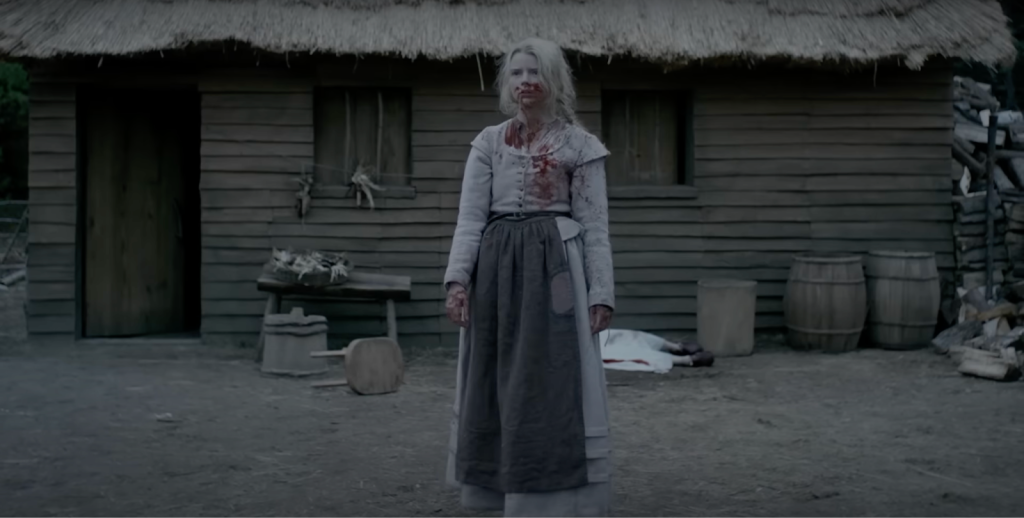
In this pithy interview, Lindsay Merbaum goes deep into the lore of Vampires at Sea, described by Chelsea G. Summers as a “smutty, funny, quirky” novella. Merbaum and Summers discuss the terrifying nature of cruise ships and the process of developing a fresh take on the queer vampire. Read this piece to prepare for the impending vampire renaissance.
According to A.D. Lauren-Abunassar, Marissa Davis’ End of Empire serves as a guidebook across physical and metaphorical spaces. Davis utilizes her poetry to take readers “between the spiritual and the domestic, the doomed and the daring, the earth and the ether.” Lauren-Abunassar and Davis discuss the possibility of new beginnings in this interview that will inspire poets to write toward change.
Willem Marx sits down with Peter Orner in this in-depth interview to discuss The Gossip Columnist’s Daughter, Orner’s newest novel. Orner reflects on his sprawling career while offering valuable perspectives and advice on writing. Find Orner’s 2013 story, “At the Fairmont” in Recommended Reading.
Laura van den Berg, Katya Apekina, Gabriella Burnham, Emma Copley Eisenberg, Julia Phillips, and Priyanka Mattoo talk about their lives as writers in this jam-packed roundtable discussion. Reflecting on the experiences of publishing their most recent books, the authors touch on money, writing during quarantine, and the mechanisms of storytelling.
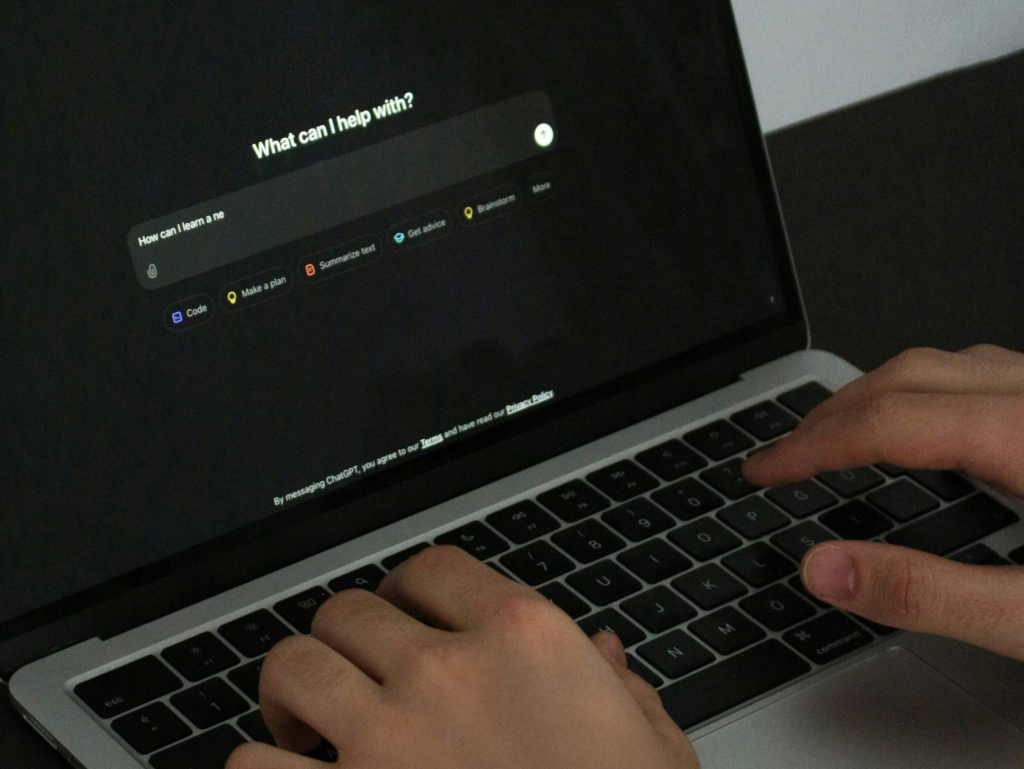
In this terrifyingly relevant interview, Vauhini Vara discusses the Internet, tensions surrounding Artificial Intelligence, and questions regarding authorship. Vara delves into the process of writing Searches, her “book-length work of inventive nonfiction” that leads readers into and through the depths of technology. This interview is a must-read for those with questions about the ethics of ChatGPT and writing in today’s world.
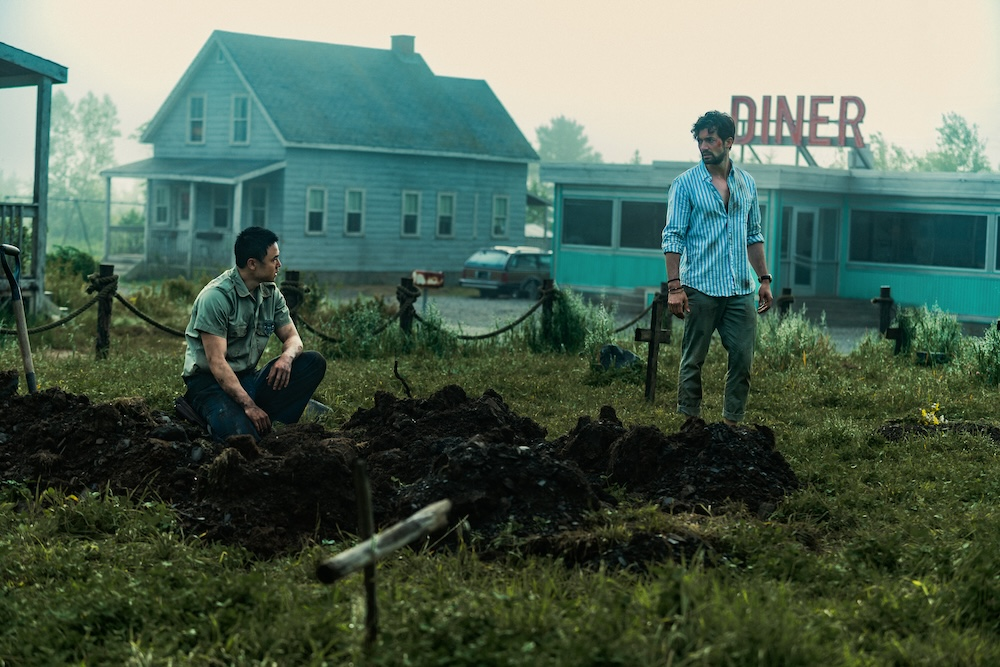
While there’s a bounty of post-apocalyptic fiction, fewer books contend with worlds on the eve of collapse. As Circular Motion author Alex Foster writes, “What do we make of the dread, doom, and occasional excitement of living in anticipation of catastrophe?” These eight novels get to the root of that question.
It’s easy to forget that many horror tropes are rooted in a history of misogyny and colonial violence. House of Monstrous Womenauthor Daphne Fama doesn’t shy away from this truth; instead, she points us in the direction of folklore-inspired books that unsettle without obscuring, that chill us by revealing the reality that resides behind mythology.
“This book has no plot” is a well-worn critique of experimental literature, and Absence author Issa Quincy has had enough of it. Quincy aptly assesses that this critique disregards the potential of unconventional storytelling, and points us to 7 innovative books that illustrate its merit.
For many readers, nothing is more immediate than setting. It pulls you in, reflects character, and often poses the very problem a novel sets out to resolve. These 8 books–recommended by The Memory Ward author Jon Bassoff–use the small town as their stage, wandering through abandoned buildings and down streets marked “do not enter.”
There’s something fundamentally unsettling about winter…and it’s not just that the sun sets at 4 PM. These 10 novels–set in the dead of winter–expose the true horrors lurking on dark and snowy January nights.
In this essay, Susannah Nevison revisits a difficult day during her pregnancy—when she was “pregnant, swollen, and tired”—and turns to an episode of Baywatch as a distraction. The episode features Pamela Anderson and a fellow lifeguard sensually welding a beach-ready wheelchair. For Nevison, who is disabled, the scene prompts a meditation on mobility, visibility, and desire, interwoven with her own experiences navigating beaches and other public spaces. The essay critiques feel-good gestures that stand in for structural change, contrasting lived realities of access with the show’s glossy, often misguided vision of accessibility. As Nevison observes, “access to the beach doesn’t fix ableism.”
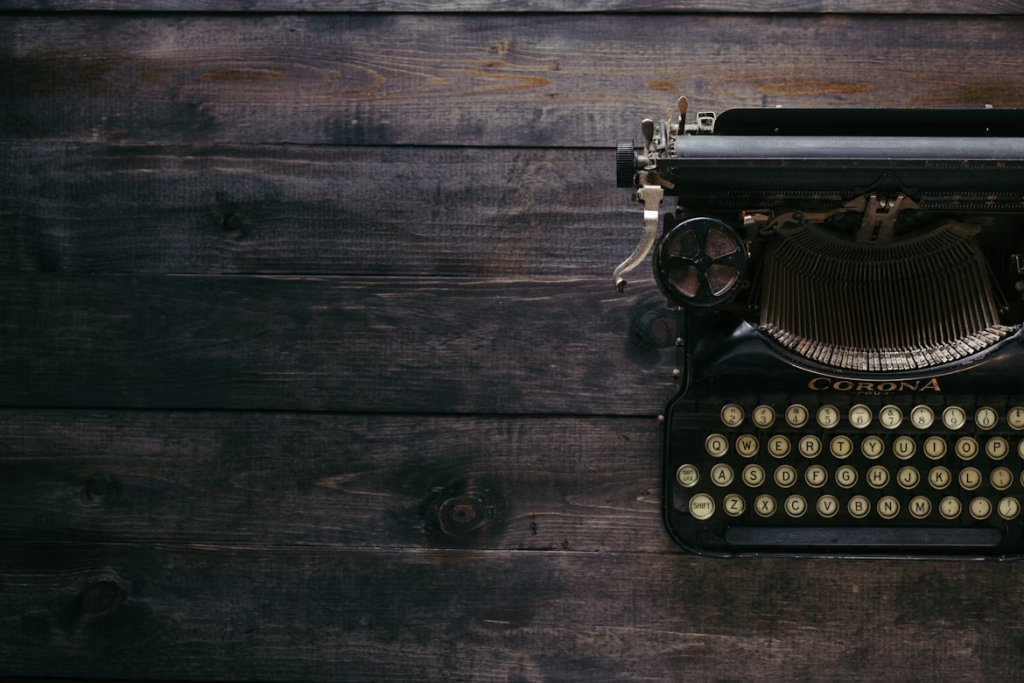
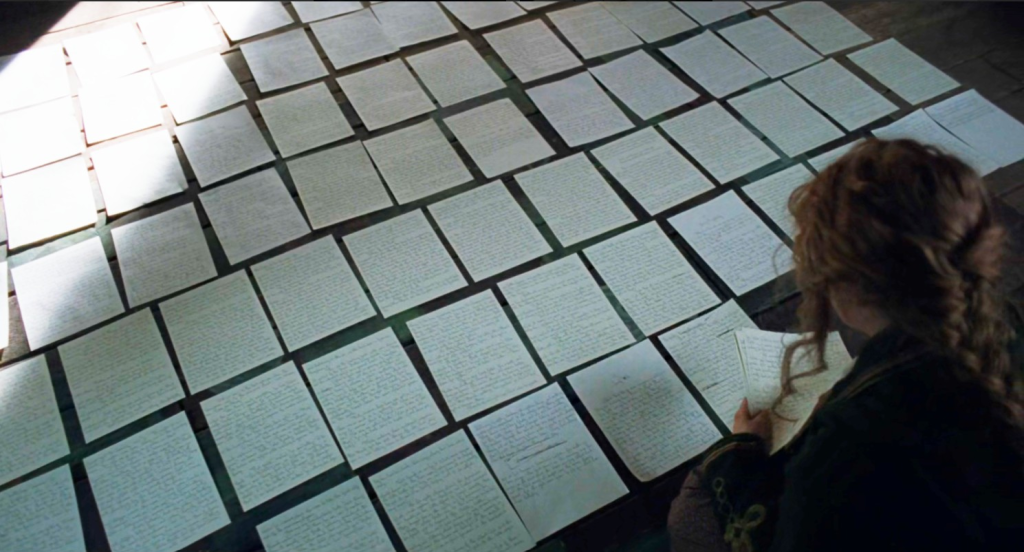
Deb Werrlein experiments with writing an essay entirely by hand for the first time in decades, prompted by a growing unease about how technology and AI writing tools are reshaping not only how we write, but how we think. Tracing the evolution of her writing life from pencils and typewriters to word processing and large language models, Werrlein questions what may be lost as speed and convenience accelerate the writing process. Writing, she suggests, is inseparable from discovery, asking, “If writing is a process of discovery and learning, then what discoveries did I lose by speeding up the process?” Werrlein makes a case for slowness as a means of preserving depth, creativity, and human agency in an increasingly automated world.
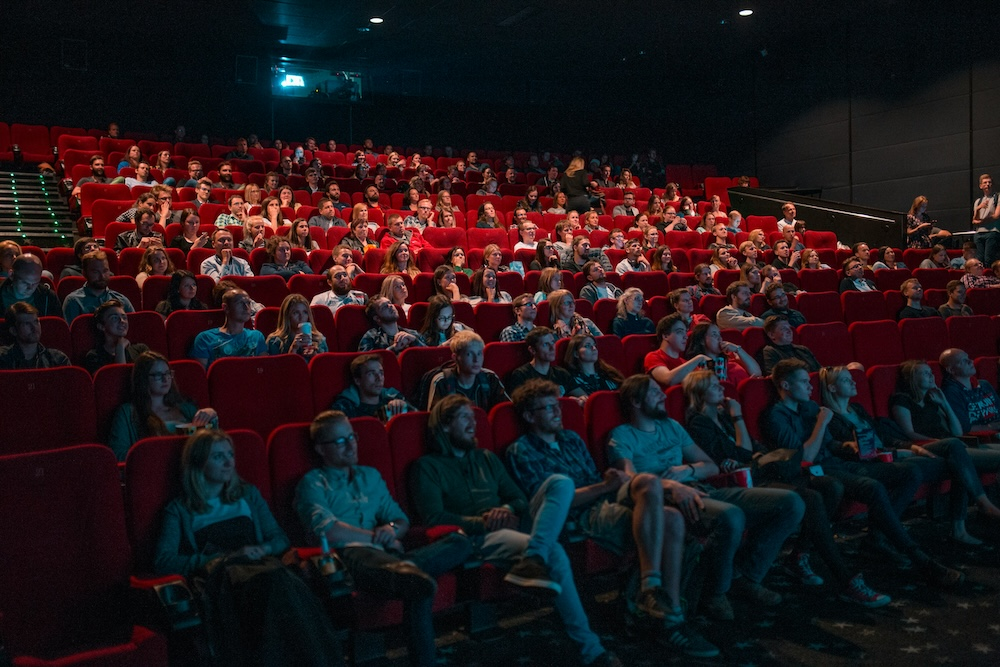
Mia Risher examines the rapid rise of independent reading series as a response to widespread social disconnection among twenty- and thirty-somethings in a post-pandemic world. She argues that social anxiety has made it harder to form and sustain friendships, and that literary readings have emerged as structured, low-stakes spaces for in-person connection. At their core, Risher notes, these gatherings may offer what many people are missing: “Everyone needs an excuse to gather, a structured place to connect to both new and familiar faces offline.”
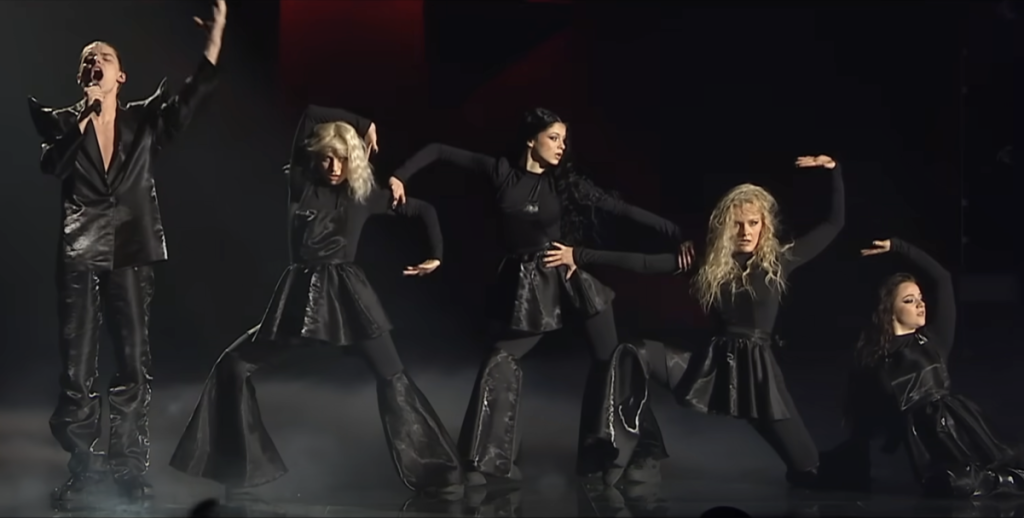
The essay opens with Vesna Jaksic Lowe staying up past her bedtime to watch the Eurovision Song Contest in 1989 Yugoslavia. She remembers the elation of watching the Yugoslav band, Riva, claim first place, unaware that Yugoslavia itself would soon vanish, and that her family would be forced to leave amid political violence. In the essay, Eurovision becomes a lens through which Lowe examines identity, borders, and belonging, revealing how cultural moments can endure even as countries disappear. “Eurovision is a snapshot of my childhood before my life became diasporic,” Lowe writes.
Benjamin Schaefer traces his early years as an emerging writer through MFA rejections, agent near-misses, and the uneasy realization that he was no longer writing as much as he was managing the business of writing. What begins as a confession—“I’m worried that I’m not worried”—unfolds into a reflection on rejection, ambition, and the quiet danger of treating external validation as a creative necessity. Drawing on advice from mentors and lessons from recovery, the essay reframes rejection as an industry condition rather than a measure of artistic worth. As the Schaefer succinctly writes, “rejection had nothing to do with writing and everything to do with the business of writing.”
Once again, adaptations were prevalent in Hollywood during 2025. Frankenstein, starring Jacob Elordi, Mia Goth, and Oscar Isaac came out just in time for Halloween–resulting in substantial social media buzz. Films like The Amateur boasted subtle, compelling performances from Rami Malek, Rachel Brosnahan, and Caitríona Balfe. Readers can look forward to the release of Klara and the Sun–which has been postponed until 2026.
As predicted by R.O. Kwon, 2025 was a wonderful year for gorgeous books written by women of color. Readers who missed this list when it was first published should glance through it now to find their next read. This is a valuable resource for readers who seek out the literary perspectives of women of color.
Spanning the globe, this list of novels in translation consists of riveting narratives that touch on themes of love, brutality, loneliness, connection, and fear. Each of these books are wholly unique and inventive; they depict personal and community upheaval, tell stories through supernatural entities, and meditate on self-discovery and reinvention. Brought to you by Linnea Gradin, English-speaking readers will fall in love with these much-loved titles.
At the beginning of this year, Electric Literature published a booklist of anticipated queer books by Michelle Hart. The article was written in the immediate aftermath of the 2024 presidential election and the list centered queer stories meant to point readers toward stories of agency, care, and survival. Over the past year, these books have done exactly that, offering ways to think, feel, and imagine forward in times of uncertainty.
The world is vast, and it is a gift to be able to read novels translated from languages we do not understand. This list, written by Linnea Gradin, anticipated many of the most exciting translated books of the year and remains an essential guide to the breadth of international writing in 2025.
The Misfits
(Articles That Didn’t Fit Into Any Other Categories)
In this essay, literary agent Kate McKean draws on nearly two decades in publishing to explain why getting a novel published is so difficult—and why so many manuscripts fail to stand out. Surveying the tropes that flood agents’ inboxes, she urges writers to think less about trends or self-expression and more about what genuinely engages a reader. As she puts it plainly, “At the end of the day, the reader is always going to ask, what’s in it for me?”
Making predictions is one of the most exciting parts of awards season, and it’s all the more satisfying when those predictions come true. For Bradley Sides, relying on “previous awards, critics’ thoughts, buzz, and good old Bradley Sides intuition” paid off in 2025…and this list exists to commemorate his prescience.
It’s true that books and reading are serious things, but at Electric Literature we love a game, and a good time! This crossword, conceived of, and written by EL’s former deputy editor Jo Lou, is perhaps among the best crossword puzzles ever because it’s entirely devoted to books and authors. You’ll find some cheeky literary references and if you can get all the answers, you’ll have some major bragging rights—at least within bookish circles.
Have you ever picked up a book, gotten about 20 pages in and wondered…what kind of book is this really? Earlier this year, Electric Lit published the ultimate guide to determining the vibe of your book…and the results are in. Through painstaking analysis of cover art, font, symbolism, and by answering the age old question: are the monsters figurative or sporting a 6-pack? this handy guide is sure to put your uncertainty to rest.
Rejection is a hallmark of any writer’s life. But did you ever stop to think about the person on the other end of that rejection? As these letters show, too many people are asking their editors why did you reject this? Instead of how are youdoing. This EL humor piece is your sign to check in on that editor who rejected your manuscript…they might need reassurance even more than you do.
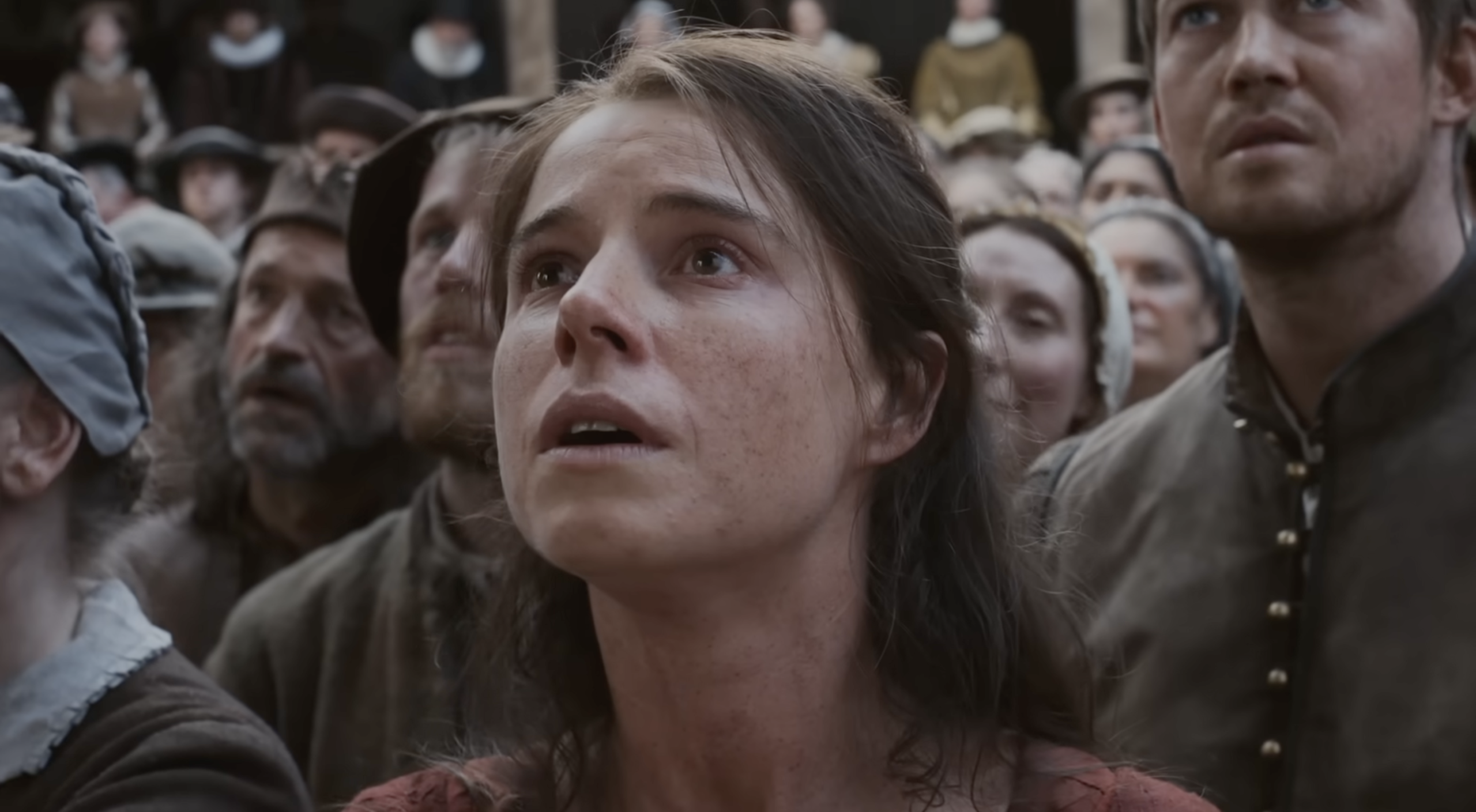
About two-thirds into Hamnet, the film adaptation of Maggie O’Farrell’s novel of the same name, there is a scene in which Agnes (William Shakespeare’s wife, and mother to the titular character) is witnessed expressing an unimaginable amount of pain. All fidgeting and commotion on both sides of the screen halts. We watch the veins on Agnes’s throat constrict, see her face contort in utter devastation, and witness her wailing die into a sound that tells us: This is the moment that truly breaks her. From that moment on, sniffles from harried hearts punctuate the rest of the film, even into the credits. Speaking personally, my tears willed themselves free with ease—I was useless to try and stop them. Such is the experience of encountering Maggie O’Farrell’s Hamnet. Both the novel and its recent film adaptation follow the story of William Shakespeare’s son, who—as O’Farrell fabulates in her fictional telling of his life and death—inspired the writing of one of Shakespeare’s most famous plays.
The trickiness of adapting such an emotionally complex novel comes in knowing how, exactly, to communicate the internalities of its characters. The family members in Hamnet move through unutterable bouts of heartache, grief, frustration, and even hope—the cross-sections of which are difficult to capture in the written word, let alone in visual language. But as the many tissues used at my local AMC theater would suggest, O’Farrell and her co-writer, the Academy Award-winning director Chloé Zhao, tactfully rose to the occasion.
I had the chance to speak with O’Farrell over Zoom about the experience of translating her heartbreaking narrative from the page to the screen. We discussed speculative storytelling, the novelist’s unique relationship with the truth, a writer’s role on a film set, and how fictional narratives will always help us through our lives.
Jalen Giovanni Jones: What always interested me about Hamnet was that it used a great deal of speculative storytelling to narrate the gaps between the real life Hamnet and Shakespeare’s famous play Hamlet. I was wondering what first sparked your interest in taking a speculative route to tell this story.
Maggie O’Farrell: It really goes back to the play. I loved the play when I first read it when I was 16. It really got under my skin in a way that his previous plays hadn’t done. I just loved Hamlet. He felt like a kind of relative. He appeals to a certain type of teenager—ones who maybe just wear too much black and too much eyeliner. That was definitely me.
My teacher mentioned in passing one day that Shakespeare had a son who’d been called Hamnet, and he died at age 11, and then Shakespeare had gone on four years or so later to write the play Hamlet. The links between these two names and the obvious, very, very, very close similarity really fascinated me, and I couldn’t stop wondering why. Why would it be that he had given the name of his dead son to a play, and a prince, and a ghost? What did he mean in doing that? That can’t have been a coincidence. It can’t have been a casual act of just reusing the name. It must have meant something. I went on to university and studied literature, and I was amazed that it was never part of the conversation about Shakespeare, that actually nobody knew or really cared what his children had been called, or the effect that his domestic life in Stratford had on him. Obviously I know the main story happened in London—that’s where he put on his plays, and probably wrote most of them—but it always seemed to me that there was an interesting story to be told in this gap. All works of scholarship and biography focused on his career, which I can understand, but they really glide over his children and his wife, which I think has been a mistake.
We’re always going to need stories to help us through our lives, and to explain us to ourselves.
JGJ: I too was that teenager—secretly, I quoted Hamlet in my high school yearbook. How did you go about researching this story that pulls a lot from real life people, but also fictionalizes a great deal as well?
MO: I found as much as I possibly could about the real people, because I think you have to do that. If you choose to write a novel about people who were real, even if they’ve been dead for 400, 500 years, you have to really respect that and do all you can to find out whatever you can about them. I had a rule for myself, that even if I found out something that didn’t really fit with the story I wanted to tell, I still couldn’t ignore it. I couldn’t pretend I hadn’t read that book. I went to the houses, and that was really important to me. It seems so extraordinary that with Shakespeare, there’s quite a lot we still don’t know. Even despite the works of these brilliant scholars and literary detectives dedicated to studying him, there’s still quite a lot of gaps in his story. But at the same time, you can buy a ticket and walk into the house where he was born, and you can stand in the room where he ate all his dinners, and you can go upstairs and find the bedroom he shared with his brothers. It’s so extraordinary that they still exist.
JGJ: Hamnet was originally published in 2020—a much different context than the one that we’re in today. What place do you think speculative storytelling has in today’s world, where the narrative of Hamnet lives in such a different context?
MO: The world and writing, and the way we think about them both is changing all the time. But I don’t think human brains change that much. We’re always going to need stories to help us through our lives, and to explain us to ourselves.
JGJ: I’d love to know about that process from getting Hamnet from the page to the screen. I know you worked a great deal with Chloé Zhao, co-writing the screenplay adaptation together. Can you tell me a bit about how that writing process went, and how it looked different from your usual process when writing for a novel? I imagine the latter is much more solitary compared to writing a screenplay, as filmmaking is an inherently collaborative artform.
MO: Absolutely. That collaboration was something about the process that really appealed to me. The life of a novelist is very solitary, and I like that. But it does mean that you spend two or three years talking to basically two imaginary friends in your studio. I really enjoy that, but the idea of collaborating on a project was really appealing. Chloé obviously brought a huge amount of cinematic experience to the collaboration, and Chloé and I have very different but very compatible skills when it comes to screenwriting. She had a very clear idea, right from the start, of the structure of the film that she wanted to make out of the novel. She knew which threads of the novel she wanted to take, and which we should discard. The first challenge for us was cutting down—the novel is quite long; it’s 360 pages, and we had to bring that down to a 90-page screenplay. An awful lot had to go. Chloé had a very clear idea about which beats of the novel would work for a film. I was able to come in and say, “If we remove this thread, then several scenes later we don’t understand the motivations of this character.” In that way, we worked quite well together.
You take the novel, and you reduce it down to a 90-page screenplay. And then you have to trust the director, and the cinematographer, and the actors, to build it up again
Chloé’s also quite a verbal person. The collaboration happened a lot over voice notes. Chloé leaves amazing voice notes. Sometimes I would wake up in Scotland and my phone would give out 12, 13 notification noises from Chloé. Some of them were 20 seconds, and the longest ever was 58 minutes! She’s someone who verbalizes to work out how she feels about something, sort of extemporizing, whereas I’m the opposite. I have to have a pen and paper in order to work out how I feel about something. We have quite compatible skills in that way.
JGJ: How was your experience writing for this inherently visual medium? Did you find yourself writing the story of Hamnet differently in order to accommodate for that?
MO: Yes, writing for a screenplay versus writing for fiction uses very different muscles and also different parts of your head. One of the things I learned very early on is that I would write a scene, and I would realize that for my scene setting I would have this long description about the details, like what the lighting should be. And then I’d realize I have to forget my novel skills. I’d look at Chloé’s writing, and it would just say INT. STREET, and BAM go right into the dialog. I needed to hone some new skills here.
I think of the process in the shape of an hourglass. You take this large structure, the novel, and you reduce it right down to the bare bones of a 90-page screenplay. And then you have to trust the director, and the cinematographer, and the actors, to build it up again into this other new entity—to put all the detail and nuance and emotion back into it that you had to necessarily take out to write the screenplay.
JGJ: You really have to trust the people you’re working with. Did you ever picture this story turning into a visual medium before Chloé brought it to you?
MO: You don’t really think about it when you’re writing a novel, you’re just concentrating on the novel. The film rights sold quite early on, but what usually happens in that scenario is that somebody buys a film, writes it, and then sometimes it goes through to a script, and you never really hear much again about it. But I was really happy when I heard that Chloé was interested in making Hamnet into a film, because I knew that she was not the kind of director to package the story down into a kind of conventional costume drama, which I never wanted it to be.
JGJ: How did you go about deciding what to include or exclude from this adaptation? Specifically, what influenced your decision to make the film more linear, as opposed to including more flashbacks, which were pretty prominent in the novel version?
MO: The first half of the novel does jump about in time quite a bit, and I think that’s fine. On the page, you can ask your reader to follow you, if you give them enough footholds. But on screen that can be very jarring. And the idea that you have to age your actors, and then un-age them, and you’ve got to give your audience a signifier that shows that a character is the same person over time. It’s not that kind of film, and it shouldn’t be—I think that’s just too confusing. We had to unravel the chronology.
Chloé had a very clear idea about where she wanted to start the film. The book starts with Hamnet the day that Hamlet and Judith get ill, and in the film, it would be too jarring to move back and forth. So we needed to start with William and Agnes meeting. Another one of the challenges of adaptation was capturing the novel’s interiority. In order to make that into a screenplay, you have to make what’s interior, exterior. You’ve got to help your audience understand what’s happening, and who these people are, and what they’re going through internally. In the last scene, the novel just goes to the globe, and Agnes is watching the play and recognizing her son. She’s going through all these emotions, but they’re all inside her, and the reader is privy to what’s going on inside her head. For the screenplay adaptation we simply brought in her brother, so they could have conversation between them. That was a very easy way to solve that dilemma.
You never quite know how life has changed you until you can look back and realize it.
I always knew that Chloé is very talented—in her previous films, particularly The Rider and Nomadland, she’s brilliant at helping the viewer understand what this person is feeling by externalizing their thoughts and feelings into the landscape or their environment. In The Rider, you get Brady standing in the prairie. In Nomadland you get Francis McDormand staring at these incredible landscapes that she’s driving through. You know what they’re feeling, because of a kind of “objective correlative.” Chloé is brilliant at doing that, and I knew that she’d be able to do that beautifully with Hamnet. So you get Agnes standing in the forest, this wild place with the wind rushing through it.
JGJ: What role did you play once the writing process was done? Did you go on set or act as a consultant, or anything of that sort?
MO: Yes, I was on set in different locations, as much as I could be. A lot of Chloé’s films have been improvised. In this film too, there was a lot that she was changing as she went along, as she felt her instincts driving her. Sometimes she would suddenly say to me, “I think we need to say this. We need to say that. Can you write it so that it sounds like it’s from the 16th century?” I remember waking up very early one morning in Wales, we were filming, and she’d left a message saying, “If he was going to give his father a present, what would it be?”
Chloé likes to work quite instinctively in some ways. Sometimes the script might say one thing, and she might decide a couple of days before that actually, it needs to be something else. She likes to respond to her own instincts, but also the instincts of her actors. I think she gives them the space and respect to see where the story is pulling them.
JGJ: I’m curious to know what insights you gained from this more collaborative working and writing process. How might that influence your writing and projects moving forward?
MO: Sometimes you don’t really know how it’s influenced you until you start doing something else. It’s hard to make a list of it somehow, but I think all experiences change you. It’s a kind of a cumulative effect, like a glacier coming through a landscape and gathering up all these stones. You never quite know how life has changed you until you can look back and realize it. So we’ll find out, I guess.
Electric Literature is pleased to reveal the cover ofA Holy Dreadby R. A. Villanueva, which will be published on February 17th, 2026 by Alice James Books.You can pre-order your copy here.
Inspired by the poet’s identities as an educator, a son, and a Filipino American, A Holy Dread emerges out of questions, hopes, and unshakeable fears about the world we have created and the world our children will inherit.
Villanueva’s sophomore collection grapples with mortality, fatherhood, grief, and every-day life in the Anthropocene with formal balance and restraint. Intense, tight lyrics mirror the speaker’s reality: equal wonderment and worry, tenderness and calamity, beauty and sorrow.
These unrelenting poems—part prayer, part pleading—traverse the complexities of peril, faith, and fear with precision and bravery. The poems in A Holy Dread search for joy and hold it dear, even as things fall apart around us.
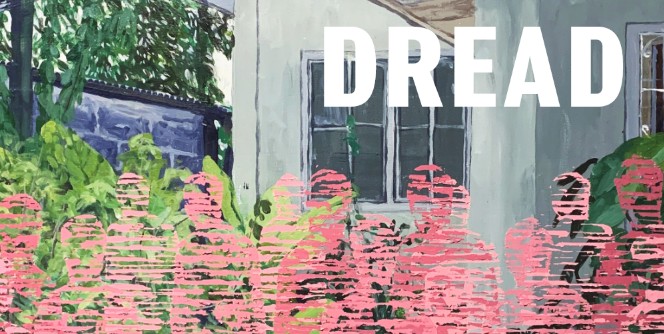
Here is the cover, designed by Tiani Kennedy with cover art by Carzen Arpa Esprela:
R. A. Villanueva: There’s about a decade between my first book, Reliquaria, and A Holy Dread. In that time, I’ve continued a creative practice that’s sustained me through the attendant bewilderments and blessings of keeping alive: year after year, I carry a small, lined journal of notes and ephemera, quotes and sketches with me everywhere; in myriad ways, those commonplace books couple with the digital bookmarks I keep, and an ever-mutating folder synced to my devices named “Catalysts, &c.” where I drop paintings, PDFs, screenshots of group chats, scans of photographs, and more. The combination of those materials is charged with meaning, strangeness, brilliance, surprise.
The consistency and devotion to this wildly personal curatorial work has been a comfort for me—a way to remix the beautiful volatility of the world’s texts with my own fixations, my anxieties, and my ongoing desire to gather close and see anew.
So when the moment came to pair words with visuals, to turn toward cover designs, I found myself digging through drawers and shelves, searching for those books and their rhymes with with A Holy Dread. I eventually stacked them on the couch next to me, flipping through my doodles and lists, memories of gallery visits, lesson plans and lecture notes, diagrams and drafts.
I knew that I wanted the artwork to feature a Filipino painter. I wanted, too, for the image itself to call back to what I’ve been reckoning with across the body of my writing: the sacred and the mortal, the elegy and the praise song, the pressures of language and tradition, grief and gratitude.
With neon pink-fearlessness and heart, Carzen Arpa Esprela’s Full House (Ikot-ikot Po) brings dimension to all those hopes and hauntings. I was immediately drawn to the ghostly figures, their radiance and transcendence, their physicality and intimacy. They’re gathered on the front lawn, a family floating together and framed by luminous, all-caps, sans-serif type. I’m so thankful for the interplay of the title with the art—and how everything pulses with this affirmation from Sandra Cisneros: “We do this because the world we live in is a house on fire and the people we love are burning.”
Tiani Kennedy: Designing the cover for A Holy Dread was an iterative and collaborative process. The artwork selected for the collection is visually rich; it’s full of movement, color, and layered symbolism. As a result, its complexity made it both inspiring and challenging to integrate clear, impactful typography. I explored several directions to understand how the image interacted with type and to align with the poet’s specific vision. As we refined concepts, we returned to an early idea with a clearer sense of what resonated. The final cover features bold, white typography that frames the haunting central imagery, ensuring legibility without sacrificing the artwork’s intensity. The result is a design that feels intentional and attuned to the emotional world of the poems.
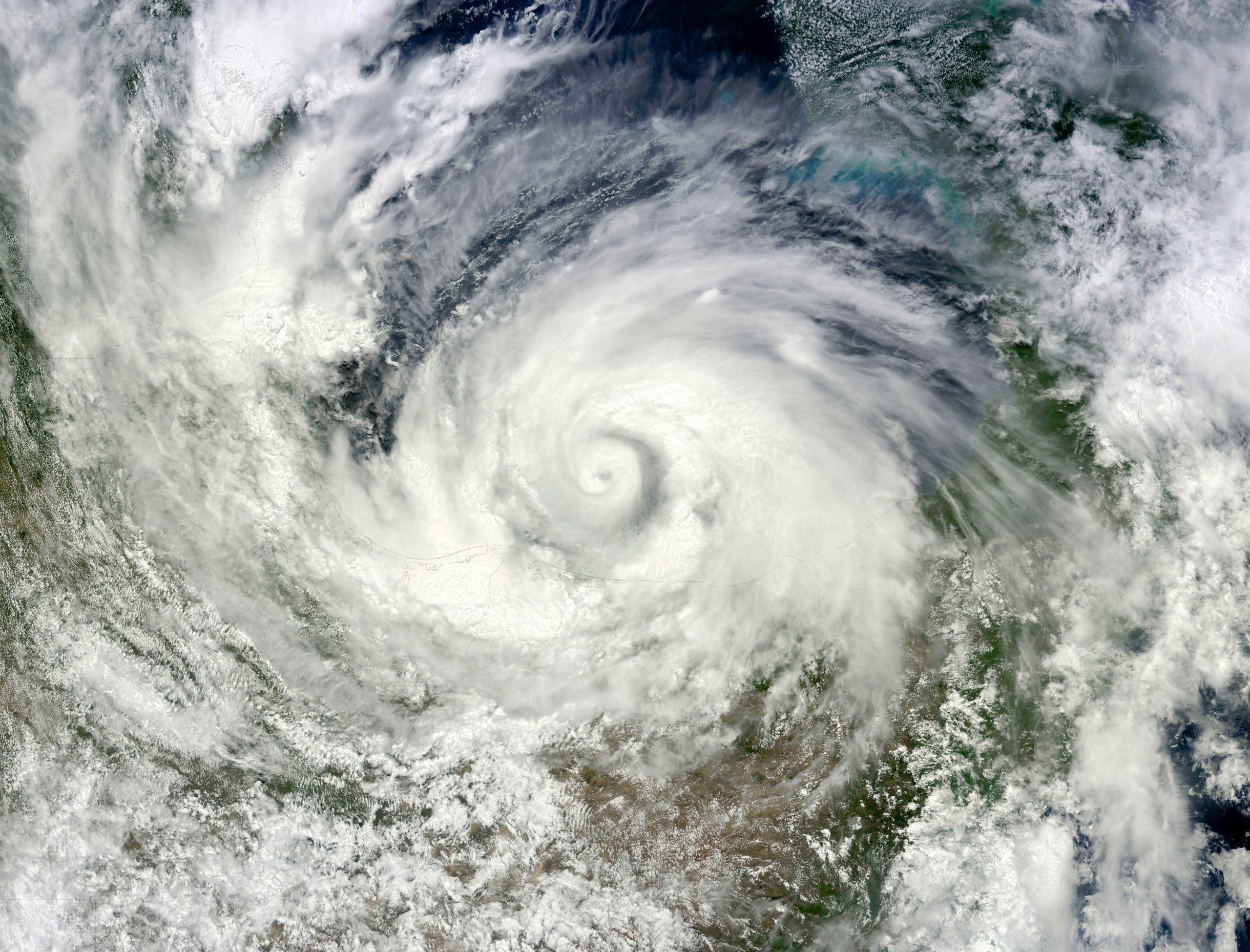
Over the dark Gulf, Hurricane Ida spins towards the coast of South Louisiana.
It is August 29, 2021, and she has spent all night sucking up warm, moist air. She has rapidly intensified into a Cat 4 monster. It is Sunday morning, it is the anniversary of Hurricane Katrina, it is six hours until landfall. Everyone evacuating has already evacuated. If you haven’t left by now, it is simply too late to leave.
I am driving through my neighborhood in New Orleans, turning off of Music Street. The roads are empty. My roommate is in Michigan, my neighbors on every side have packed up and fled, most of my friends are already sitting in twelve hours of traffic, trying to get to Austin, bickering with one another and sick of fumes. I’ve stayed because, by my arithmetic, I’m more likely to be useful than in need of rescue: Our street rarely floods and I have a truck that mostly works. I’d leave if the evacuation order was mandatory, but the mayor has now waited too long to make that call.
I turn up the dial of the radio. A local official is telling communities down around Jean Lafitte to get out, that they are expecting ten to twelve feet of storm surge to sweep through and over the communities not protected by the Army Corps’ federal levee system.
“The storm surge we are anticipating will be unsurvivable.”She says it twice. “Unsurvivable.”
A common symptom of floods, of storms, of catastrophe crashing down is disaster heart.A ravenous, immediate hunger for closeness.
But that hunger drives us down bolder and more human paths. The hunger is loneliness made useful. Though to admit to loneliness can be a little humiliating, it is loneliness that has me eating candy bars at the refugee camp in Tulkarm. It is loneliness that has me awake at 3am in Kyiv, listening to the rap-rap-rap of defense forces. Loneliness that drives me again and again over the flooded roads of South Louisiana.
If you are reading this with a hungry heart, if you jerk and slide towards horror in the blue light of a silent television screen playing impossible news—it is no surprise. You might be experiencing it too.
On the day of the storm, everyone gets to decide where to ride it out, like disaster companionship musical chairs.
My friend Cassi, a dreamy willow of a woman, who rescues baby crows and seduces the local trumpet players, chooses my house to hunker down. She brings her two cats. It is four hours to landfall, and Ida is spinning towards the oil and gas town of Port Fourchon.
A common symptom of floods, of storms, of catastrophe crashing down is disaster heart.
Here on Music Street, the ground is littered with needles, the little orange safety caps of syringes. The condemned flophouse kitty-corner to us used a long metal key to turn their water back on and sometimes they give themselves hasty rag baths on the sidewalk. Everyone calls it The Lips House because in their erratic and colorful stabs at home decor they have affixed a large Rolling Stones lips installation above the front door. Three hours to landfall. I know their names and they know mine and I know their stories; Gary, the primary dealer, has half a face of tattoos, and he amputated his dog’s legs himself in the kitchen because he used to be a vet, or at least he went to veterinary school for a year. Two hours to landfall. Raydell and Cornell usually sleep on the abandoned porches across the street: Cornell sleeps on the porch of the house he grew up in, decades ago, before his dogs died in Katrina and gunshots left him with a colostomy bag. Throughout the summer, I’ve made them sandwiches and taken them to the DMV to get their IDs—tiny basic gestures the government should, by rights, be providing. In six months, they’ll both have housing again, thanks to hard-fought HUD vouchers. In two years, Cornell will be dead, having ODed alone in the apartment he finally moved into. Dead of being alone. But now it is August 2021, and everyone is still alive. One hour until Ida makes landfall.
In my house I’ve stocked the following:
An axe to chop through the roof in case of flooding.
A kayak to float the streets for rescue.
A large and foldable knife in case of men.
As Ida approaches the coast, she pushes the ocean before her. She dumps a foot and a half of rain across the Gulf. After dark, storm surge overtops the levee in multiple parishes and six feet of water sweeps into the little towns outside the federal levee protection system, into Jean Lafitte and Oakville and White Ditch. Ida picks up ton upon ton of floton—a local term for shallow-rooted marsh vegetation that I have never found in any dictionary—and drops it across Lafitte, leaving a mess that will take months to clean up. Boats in the canals of Terrebonne Parish splinter and sink.
Ida crashes into Port Fourchon and her winds reach 150mph, driving inland storm surge fifteen feet high. She pushes the Mississippi into reverse, rolls train cars off their tracks and whole trailers off their foundation, leaving them upside down. In Houma, she rips roofs into the air, drops them across the street, snaps telephone poles at their base for miles up and down the bayou.
In my living room in New Orleans, as the rain goes sideways and the light drains out of the sky, I pace from the front door to the kitchen and back, too nervous to sit down or stop drinking.
“Do you want to play cards or something?” asks Cassi, lounging on the couch and turning her blue spotlight eyes out the door. For now, we’re keeping it wide open, to watch the lashing rain through the screen.
“I can’t concentrate,” I tell her. “But maybe we can listen to music.”
Cassi puts Chopin on my record player and we try to dance like ballerinas, lifting our legs in clumsy plies. We are drunk. Down the street, though I don’t know it yet, the winds are pulling down a brick wall and smashing the side mirror off my truck.
An hour later, Cassi and I see a Lips House neighbor trying to push his van out of a rapidly flooding ditch. We rush outside into the shrieking rain and heave, the metal slick from the downpour, water licking our calves. One, two, three; we heave it free.
“Thank you!” he screams over the sound of the wind. “Jesus Christ, thanks!” And we sprint back inside, howling with something like joy.
After darkness falls completely, somewhere on the rim of the Mississippi River, Ida pulls her next great trick: She rips the screeching, shrieking metal of an entire 475-foot high electrical tower down and hurls it into the thrashing water, snarls the transmission lines and throws them down there too. When transformer boxes blow, one after another after another in great blazing pops, their light is a faint, dull green, like the distant spell of a witch.
Around 8pm, every light left across Orleans Parish blinks off at once.
The internet goes. Then the phone signal goes, too.
And with that, something impossibly rare has happened to us: We are alone.
The post-Ida blackout happens to coincide with me writing a novel about an electrical grid failure amidst a heat wave. So I already knew about our grid’s fragility—I’d talked to experts who used phrases like “matter of time” and “held together by prayers.” And I knew heat was climate change’s biggest killer. But in the days after Ida, I learn quickly that I didn’t understand heat yet. Not really.
In the United States, the counties most likely to experience dangerous “wet bulb” conditions are clustered in southern Texas and Louisiana. Wet bulb is a way of measuring both temperature and humidity, and how it really feels to be outside, soaked in sweat. When it’s really humid, scary humid, sweat stops evaporating from your skin. It stops doing its cooling work. Phoenix’s blazing sun and burning sidewalks may claim heat notoriety, may leave horrific second-degree burns, but it is these Louisiana nights—when humidity never slacks, when the air is wet wool, when sweat only pools, when there is simply no relief—that pose the quiet danger.
“Heat is sneaky,” an expert told me once. When you’re in danger, you don’t always realize you’re in danger. All night your heart hammers, its muscles pushing blood to the surface of your skin, seeking coolness. The body begs. The heart exhausts itself.
But before all that, before the heat, before the death, before the blackness of unlit nights—what nobody tells you is that the morning following a major hurricane, the world is green, green, green.
The terrible winds have spent all night pulling down leaves, whole branches, ripping entire living trees to the ground, and so for a few hours—before the cleanup begins, before the oak even realizes it’s dead—every street, every sidewalk is covered in bright green life. It is stunning. The winds have blown off the humidity for once, and the sun is out, and it’s the most beautiful, breezy, perfect day we’ve felt in months.
For hours, Cassi and I bike around town, checking on the homes of absent friends: You’re okay, we tell each other; you’re okay.
Debris and stray roofing nails turn our tires flat, and then we’re on foot. Everyone who stayed is outside, on the street. The restaurants empty their walk-in fridges, feeding everybody before the food goes bad. Cassi and I devour plates of eggs and bacon and gulp down Bloody Marys on a sidewalk near the French Quarter. Everything is free.
“You’re okay,” we say, a little tipsy now, until we reach Cassi’s home and see how the trees have shattered across her courtyard, crushed cars. We have to climb over them to reach her front door. You’re okay, I say, touching her back as she keels over.
“Is there anything you need?” we ask each other, ask everyone we run into. We change a flat tire. We take water bottles out of the dark freezer, quickly as we can, and roll them on our necks, hand them around, give some to Raydell and Cornell.
In the evening, we sit on our friend Nick’s porch and watch as the tough neighborhood women lovingly dubbed The Lesbian Mafia set up a table with pots of gumbo and jasmine rice and feed every single person who shows up and asks.
And with that, something impossibly rare has happened to us: We are alone.
A neighborhood woman joins the line for gumbo, speaking closely and cheerfully to a younger, dark-haired woman holding a child’s hand. “Es como un guiso,” the neighbor says to the mother. The mother and child just arrived here from Honduras six days ago. It is their first hurricane. It is their first gumbo. The neighbor just met her this morning and has taken on translation duties. She makes the kid laugh. The Lesbian Mafia heaps food into her bowl. The mother tastes it, nods in approval, adds hot sauce. There is no electricity. Everything is still free.
The end of the world makes you want to find somebody. Every end of the world—even the small apocalypses—drive us into one another’s arms.
Former UN peacekeeper Heidi Postlewait spoke of the “emergency sex” colleagues had with one another amidst the horrors in Somalia and Haiti.
During the earliest, murmuring days of COVID, before we knew what was really happening, I stood in the middle of my street on a humid evening with cicadas screaming and licked my friend’s face, drew my tongue from chin to forehead.
Fear makes us touch-hungry. If there’s any blessing hidden in the apocalypse, it is that it cracks us open.
One by one, we leave Nick’s porch and the gumbo table. Cassi goes to her ex-lover’s house. Since it’s the end of the world we all breathe a little sigh of relief; if the world has ended, then nobody cares who anybody else is having sex with. Make your mistakes deliciously. Though I have no arms to be driven into. There’s simply nobody in town that I want, no container around to pour my desire into; my hunger has no place to go.
But there are others who consider wielding a startling violence to meet their every appetite. Which means, that night, a man follows me home.
No one else is around. And without streetlights, it is dark, completely dark in a brand new way. I’m wearing a headlamp as I bike home on a patched tube. A white van turns the corner behind me. Then it stops when I stop in front of my house.
I climb off my bike and lean it against the stoop, knees bent, heart pounding from heat and the slow itch of fear. The man, young, white, grips the steering wheel and stares out the window at me. He is tense, silent, considering, about to lurch. There are no lights, and there are no people, and there are no emergency services, even if I could call.
I’ve stupidly left my knife inside.
“What?” I snarl at the man, suddenly aggressive for no reason I can name. “WHAT?”
It will be unsurvivable. Unsurvivable.
I think it’s the headlamp that saves me. Pointed at him, I can see his face, his hesitant but hungry expression. But he can’t see mine.
Ten long, long seconds pass. And then he slams the accelerator and speeds off.
Halfway down the block, he screams back through the window at me: “You know what, bitch!”
I do. I do know.
Raydell and Cornell have gone, but I tell the sweetheart junkies I don’t recognize on the porch across the street what happened, my heart hammering. We shake hands and they promise to keep an eye out for me because at the end of the world, it’s your neighbors, whoever they might be, who will keep you safe. I go inside and lock every deadbolt, keep my candles away from the windows. In the wall behind my bed, a family of mice chatter and sing. For hours, I lie awake. No one else is in my home, or the home next door, or across the street, or behind me. The electricity won’t be back for a week or two and it has started to pour again. To anyone on the street looking at the dark windows all around, it’s obvious I’m in here alone.
I finally reach Cassi, and she and her ex-lover and a roommate all together pick me up. Neighbors keeping each other safe. I dart through the rain and dive into their car, they bring me home, and in a house with other bodies I collapse onto a couch that isn’t mine and I sleep and sleep and sleep.
There follow days and nights of brutal, mind-warping heat, impossible sleep, bath-warm bottled water, garden hose showers in the yard. Hearts are pounding all the time. There is no time of day or night when it cools off.
Across the city, people who live alone are the ones who die—slowly at first, then faster. They die of heat in senior centers. They die of heat in apartments. They die of weak hearts and heat, of a combination of antidepressants and alcohol and brutal, brutalizing heat. Sometimes, their bodies aren’t discovered for days, until someone notices flies in the window, buzzing against the glass, tick, tick.
On the fourth day I run into Rafael, my neighbor who lives with his girlfriend in a camper across the street.
If there’s any blessing hidden in the apocalypse, it is that it cracks us open.
“We’re looking for volunteers,” he says, breathless, gesturing behind himself with his phone, “They’re evacuating everyone at the senior center. They found a body.”
The senior center is three blocks away. The EMS crews haven’t arrived yet, so instead, a dozen of us are slowly climbing up and down the flights of stairs, knocking one by one on apartment doors, checking for life. Without power, the upper floors and the dark stairwell are sweltering. Sweat pours down my neck as I pass Rafael and his girlfriend, helping an elderly woman down the stairs one excruciating step at a time. The elevators are out, the air conditioning is out, refrigerators are out. People had no way to chill their insulin or charge their nebulizers or call their grandchildren for help. The hallways are dim, the air chokingly still.
“These ones are checked,” a drenched, middle-aged man tells me, thumbing behind him. He and I walk the last corridor of the fourth floor.
“Anybody in here?” we call, knocking on the doors, one by one. We gently push inside, bracing for bodies. The smells of spoiled food drift from inside. Utter silence under our voices; no background hum of electronics. We knock, push the door open: This room’s abandoned. Heat deaths are difficult to diagnose in an autopsy. It looks like the heart simply gave up. Knock, knock: In the last room, a woman is slowly gathering her medications into a green, fake leather purse.
“Where we going?” she asks us, just above a gasp. All the windows are closed. It’s hard to imagine spending an hour in this smothering heat, never mind four days.
“Just downstairs,” we say, pointing out the window to where ambulances have now begun to arrive. We guide her by the elbow down the stairs as the paramedics walk up.
In the end, nineteen people in New Orleans die of heat in the post-Ida blackout. Most of them are elderly, and most of them are Black, and most of them are living alone.
After six days, I surrender.
I drive to Texas to meet an Alaskan crabber I’d been seeing who fled before the storm hit land. The crabber isn’t exactly who I want, but it’s the desire, the loneliness, that slowly sets me spinning down a useful path.
The crabber and I drive down to the bayous of south Louisiana to deliver aid and supplies, and we discover that there, it really is the end of the world. For Pointe aux Chien, for Dulac, for Isle de Jean Charles—this country’s first federally-recognized climate refugees, already pushed from their homes—this is a true apocalypse. Home after home after home has been blown open atop the already rapidly-dissolving land. It will take months, years, to put it back together. The wetlands that the storm ripped up will likely never come back.
It’s down there where I meet Sherri Parfait, Chief of the Biloxi-Chitimacha-Choctaw. She is a mom of three with a librarian’s glasses who tells me about their doomed future, how they’ll all have to pick up and relocate as the land erodes. Her telling of this obsesses me. Her voice pricks at me for weeks, as does the strange post-disaster glimpse into another world, with no money and no cop cars, with every neighbor sharing food and ice, walking one another to safety through dark halls of heat.
When you understand loneliness as a useful form of desire, it all becomes easier to bear.
From Dulac to New Orleans I witnessed what Rebecca Solnit calls the “paradise built in hell,” the documented socio-cultural phenomenon of kindness and solidarity that takes place immediately after disasters, in those heady days and weeks when people discover that this can feed their hunger for connection, for meaning, for immediacy.
We get communal goodwill in the wake of a disaster, yes, but also on top of that, we get apocalypse pleasure. Apocalypse recklessness. And with this, many more things become possible. Yes, today storms and jackboots are at the collective door, but if the future is foreshortened, then our mental calculus of acceptable risk—physical, emotional—must also change.
The wreckage down the bayou, Chief Parfait-Dardar’s tribe—they drive me to pitch my very first reported story, which launches me into journalism, changing my life, to Kyiv and Nablus and Ramallah, driving me to stand outside the razor wire of LaSalle Immigration Detention Center, where I interview the friends and family and rabbis and lawyers who refuse to let Mahmoud Khalil be made alone.
Maybe we are better off thinking of loneliness this way: Not as a lack, but as a drive, a hunger to gather the world towards yourself. A delirious craving to suck the blood out of life. When you understand loneliness as a useful form of desire, it all becomes easier to bear. Then loneliness becomes a sort of gift.
I think by now we all know about the weather. We are, of course, facing down a true apocalypse. In the coming decades, temperatures will (further) soar, hurricanes will (further) strengthen, glaciers will crack and calve, seas will rise, and if I live to be my grandmother’s age, I will see up to three billion people pushed outside the temperature niche, living in an “uninhabitable zone,” three billion strangers stalked by conditions that are simply too hot to endure, hotter than Ida’s nights. Unsurvivable, said the radio.
Here we are at the end of the world, driven into one another’s arms. Here we are as disaster heart pushes us toward one another. We are grasping.
There are many tools and technologies to hide from that feeling now. Businesses built as escape hatches from the messiness of human grasping for connection. But please: let yourself be lonely. Let it push you out the door. Drive to Texas in the middle of the night. Walk towards the sirens. Brave the heat. Knock on the stranger’s door even though you told yourself you would under no circumstances let yourself knock on a stranger’s door again. Stand in front of the riot police shields. Loop your arm with strangers who share no language with you except the demand for protection, before the splintering glass of the bus stops, the smoke and crack of rubber bullets. Loneliness can make us better; might just save our lives, if we let it.
In the morning after Ida, we glimpsed the new world. Before our tires went flat, Cassi and I biked to the Lower Ninth Ward, where a grocery store had burned down overnight. Among the smoldering ash, we picked with strangers through the remainders, boiled candy-colored Big Shot sodas and scorched cigarette packs. Someone had already pried open the ATM, and when I reach in, I pulled out handfuls of burned $20 bills that dissolved into ash in my palm, and with a breeze, they blow away. We’ve stumbled into a world without money, or before money, operating on the logic of children, without taxes or shame, picking through an obstacle course and looking for treats. We didn’t need the burned-up cash, anyhow. Everything was free.
Recently, I lamented an obnoxiously writerly desire to my husband: I wish I had more of a window into other people’s lives.
He gave me a puzzled look. “Katie,” he said. “You’re an editor. A personal narrative editor.”
This made me laugh out loud. Of course! How obvious. I’d been too busy imagining something more literal—going inside people’s homes or something, like in a Samanta Schweblin story. It’s a desire born from a larger want: to better understand others, to connect more deeply. But this is, indeed, a privilege I already have, and one I hope to never take for granted. Through reading, editing, and publishing personal narratives, I spend each day connecting intimately with writers and their personal stories. And while I might get to do this more than most, it’s something any of us, as readers, can do. To engage with art is to be a voyeur of sorts, one who peers only into windows left intentionally open. We look with a goal of better understanding one another or ourselves or—more often than not—a bit of both. It’s through this looking that we become more expansive, and more bound to our collective humanity.
Each of the essays below, our most popular of the year, is a window into a distinctive life and moment, each unique and emotionally resonant. This year, our readers were especially drawn toward reflections on the meaning of home and the forces that shape us in youth. In “Southings,” Thomas Dai reflects on how the American South has stayed with him many years after moving away, probing the meaning and experience of being an Asian Southerner. Maggie Andersen’s “Bus Chasers” looks back on how her father guided her through her hometown of Chicago—where she still lives in the home she grew up in, now a parent herself. In “That Old House,” after moving back to the New England of her youth, Lydia C. Buchanan faces down a reality shared by many: What happens when you realize you want to own a home but may never be able to afford it? All five of these essays take on similar topics and feelings, but their authors shift the prism each time, such that they become brand new.
Take a walk back through our most-read personal narratives of 2025, where you can peer into the open window of someone else’s life, and maybe find a piece of yourself in the process.
In “M.A.S.H,” Sarah Gerard details her experiences with mistreatment at the hands of predatory men, particularly one who worked at her father’s advertising firm. The piece is punctuated by painfully clear markers of awkward tweenage years and subtly pervasive sexism. Through variations on the refrain “It was a different time” and meditations on the fickle nature of memory, Gerard’s essay stands out as a powerful testament to the lifelong impact of a cultural disregard for the wellbeing of young girls.
You might know the feeling of coming across the house: The one in the nice neighborhood you travel through on the way to your (far less charming) home, the one that calls to you; almost convinces you that home ownership couldn’t possibly be as arduous as you’ve been led to believe, the one that makes you overwhelmingly jealous of the exceedingly lucky family inhabiting it. In “That Old House,” Lydia C. Buchanan considers the impossibility of owning this perfect home, writing: “We have things our parents had—Puritan work ethics and loves of beauty—and things our parents didn’t have—graduate degrees and student loans and two-career households—but property ownership isn’t for us.” In an age of horrible housing prospects, anyone who has chased their literary dreams at the expense of financial stability will relate to Buchanan’s lament.
Mariana Serapicos takes readers on a journey through life before, during, and after her father’s battle with ALS in “When The Ocean Retreats.” Serapicos reflects on the strain of losing a parent to a debilitating disease while crafting a beautifully rendered portrait of her dad and his influence. Oscillating between a myriad of memories and places, this heartfelt essay pays close attention to the value of record-keeping and learning how to move forward after loss.
From cicada shells to blue mountains, stunning images of the South abound in “Southings.” Thomas Dai writes concisely about what it means to consider a place—including both the bad and the beautiful—your home. Excerpted from the memoir-in-essays Take My Name But Say It Slow, Dai’s considerations of the American South, immigrant identity, and the experience of being an Asian Southerner are compelling and truthful.
Fueled by the turbulence of Chicago’s busy streets and the process of adapting to adulthood, Maggie Andersen’s “The Bus Chasers” is an essay about the lessons parents teach their children through unwavering, well-intentioned guidance. Throughout the essay, Andersen references her father’s internal map of Chicago, marked by historical anecdotes, landmarks, and direct paths to the best diners. As her father’s map once guided her while she navigated bus rides and a new school, Andersen finds the same support as she enters motherhood and a new chapter of her life.
I was busy massaging the kale for my lunch salad so I didn’t have a free hand to jiggle the mouse to make the little yellow dot on my screen go green so my coworkers could see I was being productive. So I attached a third arm to my ribs on my left side. Contrary to what you might think, it didn’t start trying to jerk me off right away; it took a couple hours. I tried brushing it away with my right hand, but after a minute there it went again, stroking my thigh and fingering at my zipper. I’d always had a rule to not jerk off at work even though literally no one would know. Plus anyway my mom was in the other room folding laundry and watching her daytime talk shows—I’m living back at home temporarily—and I worried she might overhear.
So as a workaround I attached a fourth arm and instructed it to stand guard over my crotch. It got bored with its assignment quickly but found it enjoyed playing thumb war with my horny third hand and that was enough to keep them both occupied. By this point Mom had finished The Drew Barrymore Show and was talking to her mom on the phone, repeating every third word louder and with more articulation. Grandma insists on keeping her landline right next to her TV, which she always has on full volume.
My original two hands were now busy exaggerating then de-exaggerating the contrast on photos and occasionally replying with laughy face emojis to memes my coworkers shared. I was getting pretty overextended so I installed a fifth arm to wipe the sweat from my brow and a sixth to order me a venti iced coffee from Postmates. Unfortunately these two arms immediately began slapping and pinching the shit out of each other. It was almost quitting time—and I tell you, I was watching the clock close that day, imagining the smooth Black Label bourbon I was going to pull from Dad’s special store as soon as the hour hand hit five—when the sixth arm suddenly took the third arm hostage and threatened to break its thumb if the fifth arm didn’t detach itself and run along. I sighed and gave my fifth arm a little nod and it did as it was told. I followed as he scrabbled pathetically down the carpeted hallway and out the front door, which Mom had left open when she went to go water her flowers.
I never saw that fifth arm again, though every time I hear a news report about a severed arm being found in the woods, or near the wreckage of a multi-car pile-up, I wonder if it was him, that arm I never really got to know, distracted as I was when he was a part of me.
For now I was left standing on the front porch, watching Mom struggle to wrestle the kinked garden hose toward her hydrangeas with one hand while trying to keep the wind from ripping away her canary yellow sun hat with the other. Her pink Skechers kept slipping in the wet grass, mud freckling the knees of her pale capri jeans.
None of this was necessary. Didn’t she know they sold arms custom-built for gardening? Better yet, Dad could pay to have one of those automated sprinkler systems installed, the ones controllable via an app on your phone. Then Mom wouldn’t even have to set down her sangria glass.
The flick of a finger would be enough to open the heavens.
We published 50 issues in 2025—The Commuter’s eighth year of publication—including our milestone 400th. In keeping with Commuter tradition, 98% of these were selected through open submissions. We publish poetry, short prose, and graphic narrative from a range of debuting to established authors, and our full archives are always free to read.
Judging by the posts that were most popular with our readers, 2025 was a year for the literary and irreverent, as well as the horny and deeply reverent. It was a year for poignant explorations of grief and loss and love. And above all, it was a year for calling out one of the most malicious and all-powerful forces hell-bent on destroying our society: The New York Times Connections puzzle.
In this flash fiction by Pardis Parker, an unhinged New York Times word-game creator designs puzzles so diabolical that players spiral from irritation into full-blown madness, triggering the end of relationships, outbreaks of violence, and—eventually—wars that lead to the end of the world as we know it. A taste of his devious word play: “I group together the words CIRCLE, HORSESHOE, PITCHFORK, and TRIANGLE. People try to find the common link. Instruments? Games? The American west? I inform everyone that the words are all shapes of capital Greek letters.”
Andrea Jurjević offers two phenomenally sharp, delightful poems. The first, “Pussy Smoke,” exemplifies a “poetry of profanity,” even as she notes that “some of my readers find my cussing to be a motherfucking pain in the dick.” The second poem, “Summer of ’69,” is cleverly constructed and captures a beautifully disorienting longing.
Part remembrance, part elegy, part quiet testament to the memories that people leave behind, this story by J. Condra Smith was chosen by Ottessa Moshfegh as the winner of the 2025 Stella Kupferberg Memorial Short Story Prize. In it, a grandchild tends to two inheritances left by their recently passed Abuela—a community orchard and a rescued kestrel—each becoming a vessel of shared memory and lingering presence. “Maybe it’s just the way imagination gets stirred into memory,” the narrator reflects, “but I swear there was a time you could watch each tree tilting on its axis. Warming to the glow of her.”
In this piece of flash creative nonfiction by Melanie Faranello, a thirteen-year-old finds an old wedding ring, and a mother must once again face her insecurities about her husband’s first wife, who died suddenly from a heart attack. She’s forced to question her idea of love as being “singular, finite, that in each of our romantic luscious hearts, there is a space reserved for that mysterious one and only.”
This graphic narrative by Miriam Jayaratna, Amanda Lehr, and Jenny Kroik is an irreverent riff on Mary Oliver’s iconic poem “Wild Geese.” It explores the small, sometimes peculiar comforts the body yearns for, like “putting Bugles on the ends of your fingers to make cunning little claws” because, as the story notes, “you do not have to be good.”
At the end of every year, Electric Literature collects its most-read stories, essays, and articles. The intent is to highlight the work that especially resonated with readers, but—for me, at least—it’s also an opportunity to speculate about why. Last year, the most popular Recommended Reading stories inhabited liminal spaces; the emphasis was on perspective shifts, moments of transition, revised understandings of past events. This year, whether it’s my own inborn cynicism or the function of what has felt like a very long year, I think writers and readers are preoccupied with aftermath. The world isn’t changing—it’s changed. And not necessarily for the better.
In the most popular excerpt of the year, from Hannah Pittard’s autofictional novel If You Love It, Let It Kill You, the question isn’t “How do you tell the story of a relationship?” but rather “When a relationship ends, who gets to write its obituary—and how much of it has to be true?” In Kevin Wilson’s “All Stories,” which also features a writer-narrator, the plot begins after the cataclysmic event: “I’d driven my car into a tree on purpose,” the narrator tells us, “and returned to consciousness a week later with a huge scar on the right side of my face.” The story isn’t about the self-inflicted accident, it’s about the life that unfolds after it, about struggling to exist after you’ve discovered something frightening lives inside you.
“Gondola” by Etgar Keret is, superficially, lighter fare. In the opening scenes, a woman knowingly begins an affair with a man who is married—a circumstance he transparently assures her will never change. The aftermath here should be obvious—affairs cross lines and push boundaries and change lives. In Keret’s hands, however, the lines and boundaries and lives are off-kilter, and the consequences are wholly unexpected.
Aaron Gwyn’s “The Cattleman” and Samantha Xiao Cody’s “Blood Makes a Bad Dye” also take sidelong looks at a world remade. In each, the protagonist is set on a canonical trajectory. The cowboy confronts lawlessness in the classic western. The girl faces social pressures and cultural expectations in the coming-of-age tale. And yet, in both, it’s not the familiarity of the arc that keeps the reader reading. It’s the suspicion that the cowboy and the girl are not archetypes. It’s the impulse to understand how it ends.
Recommended Reading’s most popular issue of the year is an excerpt from Hannah Pittard’s candidly intimate novel If You Love It, Let It Kill You. As recommender Maggie Smith puts it, the novel is “about having joint custody of a relationship, and of the memories made in that relationship, and therefore of the story.” The excerpt follows a writer whose ex publishes a novel, “allegedly about our toddler of a marriage and his affair with my dear friend,” and the resulting impact on her present relationship and life as an academic. Beyond the specificity of detail in the novel, there’s a core of truth that extends beyond the central drama, capturing the realities of middle age and the relationships and losses we collect as we get older.
It’s no surprise that Aaron Gwyn’s striking interpolation of the Western was popular with readers this year. The story follows an Oklahoma cattle rancher in the 1970s. He’s losing money on his ranch, his wife wants to move to the city, and relations with the surrounding community are tense. To complicate matters, he finds two of his cows mutilated with surgical precision, and no obvious culprit to pin the crime on. EL’s Managing Editor, Wynter K Miller, aptly describes the appeal of Gwyn’s narrative flourish, as “it positions the reader in a familiar story with familiar archetypes—and then lets them unravel.” Utilizing paranoia and the eeriness of its rural setting, Gwyn turns a familiar narrative on its head, with a truly astonishing result.
Kevin Wilson’s “All Stories” follows a struggling undergraduate student who is socially isolated, barely getting by in school, and overwhelmed with disaffection. When he begins taking a creative writing class, fiction becomes a beacon of meaning and purpose. As Michigan Quarterly Review editor Polly Rosenwaike puts it, “The crisp prose moves our dejected guy forward in an almost buoyant way. And the story soon offers him hope—in the form of fiction and friendship.” This hope deepens the emotional resonance of our narrator’s despair, and speaks not only to the story’s success but to its resounding truth.
“Blood Makes a Bad Dye”—a stunning debut from Samantha Xiao Cody—is a coming-of-age story about identity and belonging, assimilation and desire. Cody’s protagonist is a Chinese American teen charting a new friendship with the popular, resolutely American Quinnie. The narrator’s efforts to assimilate into Quinnie’s gaggle of American teendom are complicated by her cultural roots and lack of experience, as well as by her mother’s vivid presence. EL Associate Editor Preety Sidhu writes of the narrator’s transformation as the discovery of “a desire even more powerful than emulation or seduction.” With vibrant prose and keen attention to the discomfort of adolescence, “Blood Makes a Bad Dye” captures something unexpected about identity, power, and the role that cultural upbringing plays in the stories we tell.
Etgar Keret’s “Gondola” is, on its surface, a story about an affair. However, as readers of Keret know, any supposedly simple trope extends like an iceberg beneath the surface of his prose. “Gondola” follows Dorit, who begins a relationship with the idiosyncratic Oshik, a married man paradoxically looking for a serious relationship. The story unfolds with precise awareness of a reader’s expectations, both subverting and confounding them. As recommender Aimee Bender so eloquently puts it: “A shiny Keret conceit is always in the service of the real, of plumbing the depths to reveal something true about how we relate.” In “Gondola,” the quirks and desires of the characters come to reflect the social and political circumstances that surround them, and the responsibilities that emerge with intimacy.
DON’T MISS OUT
Sign up for our newsletter to get submission announcements and stay on top of our best work.
YOUR INBOX IS LIT
Enjoy strange, diverting work from The Commuter on Mondays, absorbing fiction from Recommended Reading on Wednesdays, and a roundup of our best work of the week on Fridays. Personalize your subscription preferences here.