For thousands of years, women have been on the fringes of history and mythology. From “The Serpent Queen” Catherine De Medici, evil stepmother Kaikeyi in the Ramayana, and the seductive, church-destroying Anne Boleyn, the few women who have a place in our histories and mythologies are weak, bad, or evil. Recently though, many have started to interrogate and investigate the truth behind these stories, giving a new and modern perspective on the women we’ve been taught to hate.
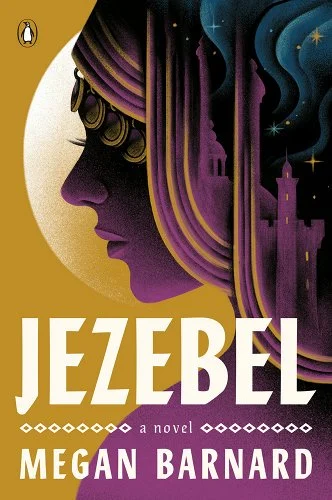
My novel, Jezebel, is a feminist reimagining of one of these ancient stories, that of the reviled and misunderstood queen, Jezebel. A real historical figure whose name for thousands of years has been used as a slur, I looked for the truth behind the story of the harlot queen. I found a woman of crackling intelligence, power, and strength who fought against ancient faiths and prophets to protect her family, her throne, her name.
And I’m certainly not the first writer who has gone looking for the voices of misunderstood women in our most famous histories and mythologies. In fact, there’s been a recent spate of brilliant novels that give these forgotten and reviled women a voice again.
Kaikeyi is a tale of another infamous queen, that of Kaikeyi from the Ramayana. This story gives Kaikeyi a voice from the moment of her birth. The only daughter of a king who has banished her mother, she grows up hearing stories of the gods and their great power. After reading an ancient text her mother loved, she finds a measure of this power herself, a magic that allows her to tug on the bonds between people to sway and manipulate them as she wishes. She uses this power and her own fierce intelligence to give power and control to the woman of her court, but the gods don’t like the destinies they give being overthrown, and so Kaikeyi must struggle and fight for her own voice, her own path.
If there’s ever been a misunderstood woman, it’s Hester Prynne from The Scarlet Letter. And while this story isn’t a direct retelling of The Scarlet Letter, it is a tale about the genesis of that story, from the point of view of Isobel Gamble, who in this novel, is the inspiration for Hester. Isobel, a married woman who has recently immigrated from Scotland to the United States, has a mysterious gift (of seeing letters as colors, A being scarlet) and falls in love with Nathaniel Hawthorne. While she and Nathaniel are mixed up together, she learns how dangerous it is to be a married woman having an affair in Salem, just a few hundred years after the witch trials that have haunted the town ever since.
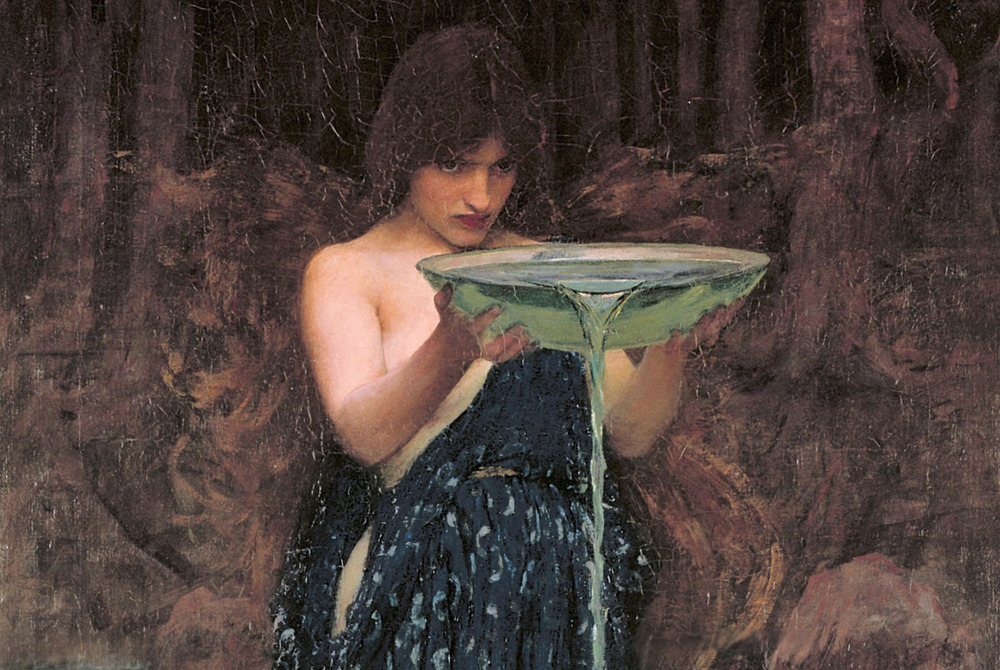
Madeline Miller gives Circe a ringing and powerful voice, in her retelling of this ancient goddess. Instead of a maniacal villain who turns men into pigs for nothing more than pleasure, in Miller’s story, Circe is a goddess with little power, banished to the island of Aeaea for daring to speak against her father, the sun god Helios. Circe learns pharmaka, a magic that gives her power equal to the other gods. This power, of course, draws the ire of gods and mortals alike, and Circe stands against them all to fight for what she loves. A stunning story about the emptiness of godhood, about the joy and horror of being a mortal, Circe turns an ancient story on its head in a resounding way.
This gorgeous and haunting story was rightfully shortlisted for The Booker Prize in 2020. Though we rarely see stories of women at war, in The Shadow King we see women front and center of Mussolini’s invasion of Ethiopia, the Second Italo-Ethiopian War. Orphaned Hirut, previously a servant, helps transform a peasant into a stand-in for the exiled king and goes to war, inspiring women around her to follow. Hirut guards the shadow king fiercely but soon becomes a prisoner and ends up tangled up with Ettore Navarre, a Jewish photographer for the Italian army. Hirut’s voice throughout the story is bold and gripping, as she fights for her country and for herself.
In this retelling of the ancient Greek story of the Trojan War, Natalie Haynes gives voices and new characterizations to the many women who were involved in the Trojan War, beginning with the muse Calliope, who is more than a little annoyed at being constantly begged for a story by Homer and decides to tell him the truth of the bloody war. We also learn about the despair of Clytemnestra after the murder of her daughter, and how she strategically plans to kill the man responsible (her husband). This story gives depth to so many voiceless women, including Penelope, whose increasingly bitter and sarcastic letters to Odysseus give the book a startling humor. This is a tender, rage-filled book that gives a voice to the misunderstood women at the heart of the Trojan War.
In The Witch’s Heart, we get a retelling of Norse mythology, a full and captivating portrait of Angrboda, a powerful and banished witch, feared by Odin, with the power to see the future. She eventually falls in love with the mysterious trickster Loki, has three children with him, and has to fight to keep them safe against their own destinies and against the will of the other gods.
I never really understood “Ma Ingalls” because in the “Little House” books she is nothing more than a distant and benign mother figure. Then I read Caroline and my whole perspective on this beloved character changed. While the story starts in a little in the big woods it doesn’t stay there, as Caroline journeys, pregnant, with two small daughters, following her husband to the prairie and the hope of a better life. In this novel, we begin to understand the backbreaking work that being a pioneer on the prairie required, not only of men, but women too, just as we learn the frightening beauty of a wolf howling outside your door. This story shows both the indignities and joys of being a woman in the 1870s and Caroline is a fierce and tender woman whose story is well worth reading.
We’ve had several excellent retellings of Medusa lately, and now we get one about her sisters, the gorgons who’ve inspired hatred and fear for centuries. In this story, we learn the truth behind Medusa but also the story of Stheno and Euryale, her sisters. A beautiful and mesmerizing novel of sisterhood, loyalty, and betrayal, this retelling moves past the tale we know and gives these reviled gorgons a voice beyond the monstrous.
In She Who Became the Sun, a queer historical fantasy about the rise of the first Ming Emperor, Parker-Chan takes readers to a brilliantly imagined 14th-century fantastical China, where a girl is given a destiny of nothing, while her brother, Zhu Chongba, is given a destiny of greatness. When her brother dies, the girl decides to take on her brother’s name and his destiny, training to become a monk, and eventually deciding to fight in the army against Mongol rule. A moving story of power and gender, and a woman who chooses to be so much more than nothing, She Who Became the Sun is a brilliant reimagining of history as we know it.
In The Palace of Flowers is based on a rare and real first-person account of Jamila, an enslaved Abyssinian woman in Iran in the 19th century, and brilliantly shows the hardships and struggle of being a woman and slave in this time. While the novel shows the reality of life at this time, it also hits on one of the most important themes in my own book; being remembered when one is a woman in a time that only values men. Jamila, realizing she won’t be remembered after she’s gone, sets about to change that in a deeply moving and beautiful account of a woman trying to find the freedom she’s always lacked.
The only non-fiction book on this list, Jess Zimmerman explores and analyzes famous female monsters, specifically from Greek mythology. Including Medusa, the Harpies, and the Furies, Zimmerman looks at these monsters and the reasons we hate them (too smart, too ugly, too much/little sexuality among others) and asks us to question our own assumptions about these misunderstood women and how we can turn traits we consider negative (ambition, hunger, ugliness) into strength.
Adrienne Brodeur’s novel Little Monstersfollows the Gardner family over the course of a summer on Cape Cod, the windswept peninsula—alternately wild and painstakingly tamed—where they have lived their entire lives. Abby Gardner is a painter on the verge of an exciting career opportunity. The tensions with her brother Ken, an aspiring politician who obsessively measures his sea-front property to track erosion, are played out via real estate. Ken technically owns Abby’s studio, which their mother left to him after she died in childbirth. The family’s patriarch, Adam, is a brilliant marine biologist living with bipolar disorder. When the novel opens, he is actively courting a manic episode because he believes it will lead to a breakthrough in his research into whale sounds.
Adrienne Brodeur demonstrated her ability to closely and compassionately observe the most complex family dynamics—even when they involve her—in her memoir Wild Game. Now she has turned that talent and attention to a family of her own invention, with captivating results.
Little Monsters is a deliciously simmering novel, with the same arch that summer brings: a slow build of excitement into a heated climax, and then cooling into an autumnal crescendo where the characters must look ahead to, and face, the next year of their lives.
I spoke to Brodeur at the Rough Draft Books Store in Kingston, New York, in front of a packed house.
Halimah Marcus: I want to start with your evolution as a writer, publishing a memoir first and then a novel. They’re both about family secrets. They’re also both set on Cape Cod. What more did you need to get out of this place, to write a whole second book set there?
Adrienne Brodeur: I feel like I could write a hundred books set on Cape Cod. I think it’s just the most provocative, beautiful landscape. It’s so rich in metaphor, but it’s also just an endlessly fascinating place to me. You have year-round people, and you have summer people, so there are issues of class. But really, in the end, the thing that I’m just so taken with is the natural beauty there. I feel a little bit like Pavlov’s dog as I go over that bridge: the brackish air, the gulls, the sounds. Every town on Cape Cod is so different. As you go out the arm, it gets more and more wild. And ultimately, there’s the fragility of the whole spit. We all know it’s not going to be here forever; it’s really just a gigantic sandbar.
HM: You’ve dealt with your own family secrets in your memoir, Wild Game. Now you get to make them up. In what ways was that liberating, and what were the unexpected challenges?
AB: The beauty of memoir is you do know the perspective it is being told from, and you know the story. It still takes a lot of skill to sculpt the narrative out of the book that is your life. I’m not saying it’s in any way easy, but it is a lot easier than fiction.
We all have trouble making decisions, and every single thing is up to you in a novel. Anything can happen. Someone can die, someone can get pregnant. It is overwhelming.
It also takes a lot longer to know your characters, because when you’re writing a memoir, you know all the characters already. With the novel, ironically, the only character who I really knew at the outset was Adam. I channeled Adam. I don’t know why a bipolar, 70-year-old crotchety man was the person who just came to me. The others were a lot harder for me. I had to write my way in, until I knew enough to be able to have a character make that offhand comment. It’s like an iceberg. You show the little tip that’s above, but you have to know everything—you have to know how they would respond in almost any situation. And for me, that didn’t really happen until I wrote about half or two thirds of the way through.
HM: Ken must have been one of the hardest characters to write, because he is a very difficult person. He embodies a lot of what we might consider toxic masculinity, in that he is so out of touch with his feelings that he acts out his hurt on other people. He’s very much an antagonist in the story, but we have to have sympathy for him. How did you approach that challenge?
AB: People react most strongly to Ken. But I actually feel incredible compassion for Ken, and maybe that’s just because I wrote him. He’s the most tortured character by far. He lost his mother at about three-and-a-half years old. Abby also lost her mother, but she was a few days old. The loss was really felt by Ken. There were stepmothers that came and went, which Ken experienced more than Abby. And because their father is unreliable at best, Ken really relied on his sister and loved her so much. So when Abby pulled away, because it was a suffocating relationship for her, he felt it deeply. Humans are like any other animal. We’re at our most aggressive when we’re wounded. He’s wounded and he cannot get out of his own way. He really wants to be another type of guy. And hopefully there’s some glimmer of hope that he might get somewhere. But time and again, you see him trying to make everything perfect, and he just can’t do it.
HM: One of the relationships that was most fascinating to me was between Abby and Jenny. Jenny is Ken’s wife, and Abby’s sister-in-law. They were also best friends in college, and are now trying to navigate this new role. How did marriage change their friendship?
AB: I didn’t know Jenny was going to have a point of view, and she’s actually the character who I feel like has the most that was left unsaid. She came in after I’d written most of a draft.
When I started writing this book, I had a question that was in the back of my head that I had to push aside in order to write: Why is this harder for women to have power, and why is it harder for women to find their voice? Why does that seem like a difficult thing? Both Abby and Jenny are trying to find their voices in different ways.
It still takes a lot of skill to sculpt the narrative out of the book that is your life.
This is too much information, but I’m going there. I have one recurring dream in my life. In this dream, I always have some really critical piece of information. Like, I want you to know that there is a fire behind you. I’m trying to let you know to get out of the house. But as soon as I open my mouth to say that, the volume goes up on the dance party that’s happening, or whatever happens, and my message of great importance can’t get out. This idea is something that informed their friendship. They’re both dealing with trying to find their voices as artists, as people, as women.
It’s a complicated friendship because their friendship came first. Then Jenny fell in love with Abby’s brother and they got married. Abby holds onto information about Ken that he’d prefer his wife not to know. Ken is wildly successful and handsome, but he was also a chubby teenager who was ridiculed and bullied. Abby is supposed to protect his past from Jenny. And Jenny was a wild child. They met in art school and she had a drug and alcohol problem—arguably still has an alcohol problem. There are these ways in which Abby is protecting both sides, which make it very hard to have an open friendship.
HM: Abby expresses herself and communicates with her family through her paintings. Over the course of the book, she is making this painting that she’s going to give to her father at his birthday party, to deliver a message. There’s a line about how her paintings reveal themselves like novels. Can you talk about how Abby relates to her art?
I don’t have an MFA. I’ve never studied creative writing. I just read a lot.
AB: When I was first conceiving of the book and I knew it was going to be about siblings, I remember having this thought that I should just go to the original sibling document, Cain and Abel, and that I’d find a lot of answers there. Well, for anyone here who’s read Cain and Abel, it’s like three sentences. There is nothing. But what I did get from that allegory, was the structure of the book. I discovered how these kids would express this rivalry: through giving gifts. The momentum of the novel moves towards this big 70th birthday, and the gifts reveal so much more about each of the characters than they do about the father.
Audience Question: How hard on yourself were you, as an editor for 20 years or fiction? When you were working on your first novel, was it easier for you because you’ve been through so many processes, or were you second guessing yourself a lot?
AB: Like every writer, sometimes you’re like, “This is genius.” Or, “I’m an idiot.” We’re all just going back and forth. I’m a slow writer. The common wisdom is you write a really crappy first draft to the end and then you go back and you edit it. But I have to have a solid scaffolding, and feel comfortable at the end of the first chapter that it can hold the next chapter and the next chapter.
I’m sure I got an incredible education as an editor because I did it for so long. I don’t have an MFA. I’ve never studied creative writing. I just read a lot. I mean, a lot, a lot, a lot. I’m also so grateful to my editors. I remember having some people really not wanting to be edited, and they let me know that they didn’t want to be edited. I’m like, “Oh yeah, help me!” Anyone who can actually make your work better seems like a great thing.
In a cold, cruel city indifferent to your fate, an acquaintance from your hometown can be a lifeline, as can the three guys you happen to bunk with. You feast on donkey burgers and rooftop views of the city. You watch your friends forced out of the city, then befriend others to take their place.
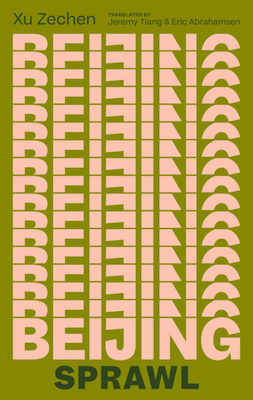
These are the days of distraction for the young men in Xu Zechen’s Beijing Sprawl. The stories are razor-sharp, exuberant, and heart-rending, conveying so much life squeezed into the characters’ cramped circumstances.
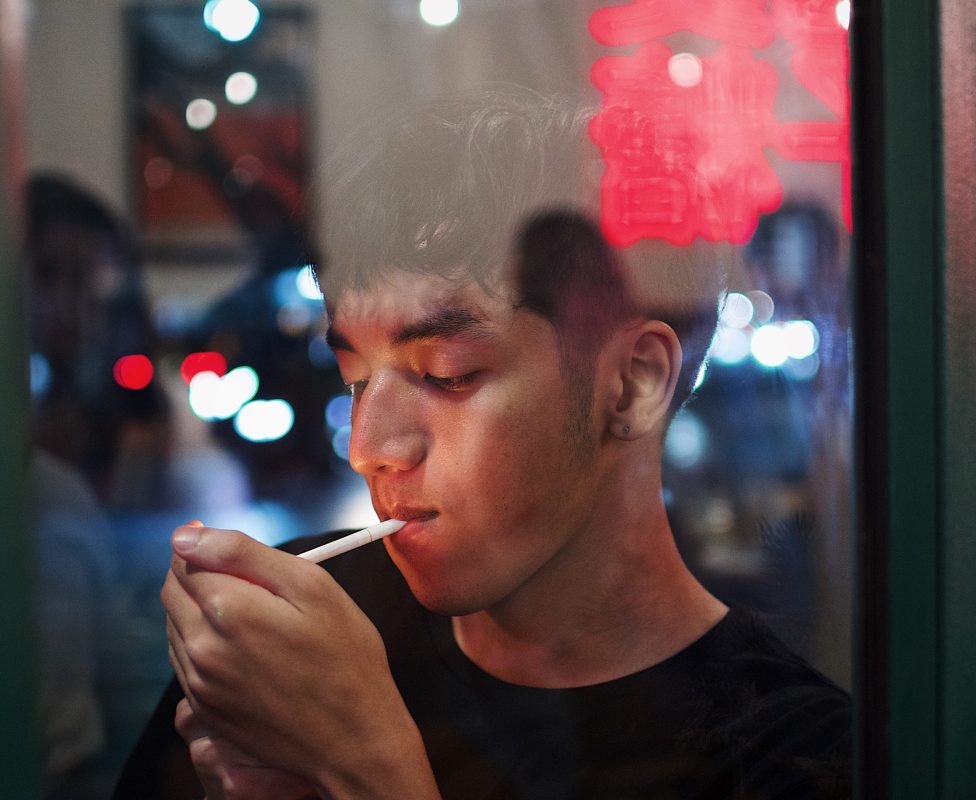
Living on the margins of Beijing, the young men dream about building cars, meeting their soulmates, forming rock bands. They come together, fall apart. Sometimes they prop up each other’s fantasies. Other times, they scheme to cheat one another out of beers or birds, perhaps taking their cue from the city about how nothing ever lasts.
I spoke to co-translators Eric Abrahamsen and Jeremy Tiang about transient but intense friendships, and being Beijing outsiders.
YZ Chin: The first-person narrator in this book is not what we usually encounter in contemporary Western fiction, where he’s not really a detached observer, like in Cusk, but he’s also not really directly influencing events. He’s something in between. Can you talk a bit more about that?
Eric Abrahamsen: I think this may come partially out of how the stories originated. Xu Zechen came to Beijing to go to school, and there were these other people who came from his hometown, people not so fortunate as him—basically people in situations similar to the characters’. He kept in touch with them over the years, and followed their stories. So there’s a sense where the author himself is an observer of these people. He didn’t live this exactly, but he was with these people. He knew them, he knew their stories. So when he comes to tell the stories I think it’s very natural to adopt a stance of being among them but also being an external observer.
YZC: I find the stories very funny but also very brutal. When you mix these two very different tones together, there’s a powerful and disconcerting effect. Did you translate a lot of slang?
Jeremy Tiang: There’s definitely the sense of a group of people who evolved their own language. I was very much following Eric’s lead, because this had to match the voice of Running Through Beijing. That has quite a slangy, zippy tone to it.
EA: I think it was not so much slang or specific vocabulary, but very much this tone of voice—ribbing, ribaldry, making fun of each other. It was really important to make it sound like this was a group of young, shiftless guys shooting the shit, basically.
YZC: I also really like how the stories paint a picture of the different ways people come to Beijing, and then leave, or have to leave Beijing. Many of the ways of leaving are tragic. There’s death, there’s serious injury…
EA: There’s giving up and going home. It’s such an emotionally important thing: going to Beijing, and then leaving Beijing again. It’s such a dramatic figure in the lives of all these people—the city, and what it represents. The possibilities it holds.
YZC: But even the ways of arriving in Beijing are so different. Muyu is sent there because his dad says “you have nothing better to do.” Seems like a relatively neutral way of going. But there are also tragic ways of arriving, like the person whose wife basically says “I’m divorcing you if you don’t go to Beijing and make something of yourself.” It’s fascinating to see how, despite arriving in different ways, whether with a lot of hope, out of despair, or seemingly neutral, they end up in the same cycles of drifting.
EA: Right. There’s something very hopeless about the whole thing. Even the people who come with big plans or big dreams, there’s something hopeless and almost passive about the gravitational force of the city. People get there and they just piao [drift] like Jeremy said. There’s a sense of being held in suspension, of floating. You’re there but you can’t get traction or footing, you’re just hovering over the city. There’s a lot of despair, I think, under the surface of the stories.
YZC: Despite that, people still come.
EA: Because there’s nothing else to do! It would be worse to not go. What a horrible situation. I think there’s a whole segment of China’s youth who just don’t have any good options. You can’t stay, you can’t go. If you go you’re not gonna have a job, but you can’t go back because that’s shameful. They’re economically and socially screwed. They don’t have any choice but to float around.
YZC: So Beijing becomes a goalpost in itself. But the goalpost moves. Like the character in “Wheels Keep Turning,” he has big dreams at first. Then it becomes: “I’m happy if I can build a car here.” Then: “I’m happy if I can keep looking at the car.” The goalpost keeps shifting further down.
Beijing is such a dramatic figure in the lives of all these people—the city, and what it represents. The possibilities it holds.
EA: Right, the dreams become more and more modest.
JT: There’s also the flip side of that. Despite the contempt that respectable society has for these people, they’re the ones who keep Beijing running. If they did all leave, the city would fall apart. There would be no one to do any of the actual work.
YZC: Is there an analogy to “domestic” migrant workers here?
EA: Internal migrants? Yeah. Though when I think of migrant workers, I think more often of laborers who have jobs and send money home. Whereas these guys are more like vagrants. They would like to have jobs and send money home, but they’re barely managing that.
JT: I don’t think it maps well onto the conception of the migrant as in the Western imagination. I’ve been using the Chinese description “jingpiao,” it means being adrift in the city, not having a place in it despite living and working there.
YZC: How did this co-translating project come about? How did it work?
EA: Because I didn’t want to do it alone. Whose idea was this collection?
JT: Well, you were translating the collection. But I had done one of the stories for Pathlight [magazine]. And one other story, I can’t remember why now. So at that point, a co-translation made the most sense. I think initially you were still going to do most of the stories, and then it evolved into more of a 50-50 situation. That was a better way to do it anyway.
YZC: This book is very much about outsiders. What is your relationship to Beijing? Do you also feel like Beijing outsiders? Was that a factor in translating these stories?
There’s a whole segment of China’s youth who just don’t have any good options… They’re economically and socially screwed. They don’t have any choice but to float around.
JT: I’ve never lived in Beijing, so in that sense whenever I am in Beijing I do feel like an outsider. I don’t know how anything works. I don’t know how to pay, so I’m the one trying to pay for things with cash, which makes you a pariah. I do see how, obviously from a relatively privileged position, how trying to get to Beijing, and trying to make it without the right hukou and connections would feel near impossible. So even though I’ve never led remotely anything like the life of the jingpiao, I get enough of a sense of it from just being there and seeing how hostile the city is. It’s like a city that actively hates its inhabitants.
EA: I lived there for 16 years, from 2001. And obviously as a foreigner I don’t fit into any of the domestic social categories. I wouldn’t call myself a jingpiao at all. I lived in the hutong, so I was sort of in the milieu Xu Zechen is writing about. His characters are selling pirated DVDs, I was buying pirated DVDs, you know? Ate the kao hong shu [roasted sweet potato] on the streets, lived in the crappy pingfang [single-story house]. It’s obviously completely different when you’re there by choice, not the life-and-death desperate grab for future that it was for these people. So it was really familiarity with the environment, the language, the speech of the Beijinger, that sort of thing. These stories felt super familiar to me. It was like: Ah, this is the city I know! What originally drove me to translate Xu Zechen was that writing, about the city that was right in front of me.
YZC: Can you explain a bit more about hutong, for those of us who might not be familiar?
EA: Geographically, historically, structurally, Beijing is just a very odd city. There’s the center of the city inside the Second Ring Road, which is the historical part of the city. That has the formerly nice, wealthy hutong neighborhoods, which are not so nice anymore. Then around that there’s a huge belt of horrible, faceless post-Communist Soviet-style apartment buildings (which are now nice apartment buildings). Farther out, there’s another belt of pingfang, crappy rundown houses that are not the historical ones. There’s a couple of little ex-villages around the city where you can find old houses, but for the most part it’s pretty dire, just recent construction that has the feeling of the hutong: small alleyways, courtyards with attached houses. Most things are single-story or two stories.
So if you are poor, your options are often either to live in the middle of the city, in some of the crappier hutong neighborhoods, or else way out in the pingfangs, where you’re far enough away that you can afford it.
The people in these stories are mostly living in the suburbs around the city. The nice thing about these neighborhoods is that they are very human-scaled. Whether you’re in the nice old neighborhoods in the middle of the city or on the outside, everything is one or two stories, there’s a lot of open horizontal space. Weird and terribly inefficient use of space. Right in the center of a massive international capital, there’s a lot of open space and short buildings. But if you live there, it actually feels very neighborhood-y. There’s just a small number of people. You know those people. You’re walking around, doing your business in full view of everybody else. It’s really cheek by jowl, but the density’s low enough that it really feels like a neighborhood. It’s a unique thing, I think it’s very rare for a city of that size to have an area of low population density right in the middle. But it’s rapidly getting gentrified. Inside the Second Ring Road, places are getting fixed up and reclaimed by the wealthy. They’ve driven out the poor residents. That’s a recurring theme. They don’t want those people there. They’re essential to the city, as Jeremy said, but they’re unsightly. A lot of urban policy is driven by what the leaders personally see when they walk out their doors, and what they find repulsive.
YZC: Going back to what you said about the sense of community—a lot of the characters who should feel despair have a lot of fun, they feel pretty good. They prop up each other’s dreams.
EA: Yeah, at least you know other people in the same boat. And at least you can get together, get drunk and complain. There’s whole neighborhoods of people who are not native Beijingers. You’re cheek by jowl with people from Guangxi, Sichuan, you can hear all kinds of dialects in the hutongs. Everybody’s come from somewhere else.
YZC: Maybe a side question—Eric, you just spoke at length about Beijing geography, and Jeremy, you wrote an introduction for Electric Literature providing background and context. Sometimes it seems translators take on the roles of historian, anthropologist, or just all-around expert for the works that you translate. Is that a role that you take on with relish?
Despite the contempt that respectable society has for these people, they’re the ones who keep Beijing running. If they did all leave, the city would fall apart.
JT: For me it’s part of the translation process. One of the things I find necessary is ensuring that the reader of the English has the same context the reader of the Chinese would. And a reader of the Chinese text would probably already have some sense of what it means to be in the outer ring of Beijing, to be in the suburbs. Some sense of Beijing itself. So for us translating outside of that, I think we can take for granted that the English language reader has some context for Beijing, but maybe less specificity. Then I consider how much of that can be conveyed by the translation itself, how much of it needs to be in a paratext or an introduction. For me it’s not a particular methodology. I will do whatever works. I look at each situation and find the best way to make sure the information is conveyed to the reader in as unobtrusive a way as possible so they can appreciate the stories in the way the author intended.
EA: For me, this has been my whole career for ten or fifteen years, such as it is. We started this group, Paper Republic, largely in order to introduce Chinese literature to publishers. We were trying to get hired as translators. As a translator you can have a double educational role. On the one hand you want a publisher to pick up a novel and let you translate it. In order to do that, you need them to understand what the thing is. You end up going to great lengths to explain what the novel is and why it’s worth you translating it. And then over time, the Paper Republic website turned towards general introduction of Chinese literature also for readers.
Then at a certain point it seemed less necessary—there were more voices, more outlets, more sources of information. In the mid-2000s it seemed very difficult to get any of this information out there. We would talk to editors and they would be like, “We know nothing about Chinese literature at all. We know about Mao’s Little Red Book?” You felt like you were just starting from zero. And that’s not the case anymore. It’s really nice to see. I’m happy not to play that role anymore. But we were still focused on the publishing industry. I was running publishing fellowships in Beijing up until I left in 2018, where we were inviting editors from around the world to come to China and learn about Chinese literature. I’ve probably spent more time explaining Chinese literature than I have translating it. But I’ve mostly focused on publishers.
YZC: Along those lines, earlier you mentioned there’s a real sense of distaste for jingpiao. What has the reception been for this book? Do you see a difference in reception toward Xu Zechen’s work in Chinese versus English?
EA: He let slip early on that he had gotten some pushback on Running Through Beijing for depictions of the illegal underworld—pirated DVDs, and so on. Obviously it wasn’t so bad that he was censored, but I think he missed out on some literary prizes that he might have been eligible for. There was recognition that this is good and important literature. The Chinese post-Soviet point of view on the arts is that they’re supposed to represent the lives of the common people. Well, this is it! This is the lives of the common people. But also it does make Beijing look like a mess. In terms of his relationship with the authorities, I think he had a bit of a rocky period there. But I think everyone recognizes that these are important, valuable stories not previously told about the people.
JT: I think there might also be more tolerance for mess in the Western world. The Chinese perception of these stories might be that they are straight-up critiques of the way Beijing treats these people, whereas at least some of the reception in English has been that this sounds like kind of fun and adventurous, even whilst acknowledging that the characters lead obviously really hard lives, rooted deep in the inequalities of society.
Women get lonely. Men do, too, but there’s something ineffably unique about female loneliness, which is more vulnerable and open to danger than the male version. Female bodies walk through the world as moving targets, rather than as weapons. Perhaps this is why writing on the loneliness of women has a particular haunted quality to it, and on the flip side, more urgency. The search for connection (romantic, platonic, or otherwise) has, for female bodies, higher stakes.
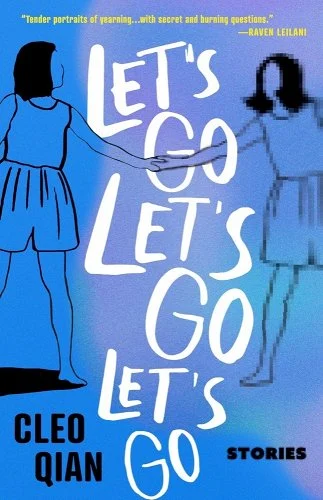
Loneliness and the search for connection are major drivers for the characters of Let’s Go Let’s Go Let’s Go, my short story collection. The young women who weave in and out through my stories lurk watchfully: looking for allies, connection, a meeting of minds that will make them, finally, safe and seen. They are millennials, Internet surfers, queer and questioning, immigrants, the children of immigrants. They wander alone through perilous, defamiliarized urban landscapes.
As I wandered my own landscapes of alienation, loneliness, and fear, the books I turned to showed me the paths of other girls who had walked similar paths. And briefly, while reading them, I did feel less alone.
Jenny Zhang’s groundbreaking short story collection, primarily following Chinese American daughters in Queens, New York, is full of vulgarity, vomit, and wit. The girls and teenagers in the stories grapple with poverty and second languages, and inheritances from parents with failed dreams. They are often shipped off to Shanghai and come home to New York again. From the first piece we are handed painful self-awareness of feeling separate from others (“While I could still improve in either language, my parents could not, they were on a road to nowhere…it was up to me to shine and that scared me because I wanted to stay behind with them, I didn’t want to go any further than they could go.”) as well as brash disdain for others who might feel the same (“She was just a desperately lonely person who needed to be part of someone else’s world.”) Not far underneath the bravado is desperation—raw and unapologetic desperation to be seen, and to not be forgotten.
This slim and poignant novel follows b and Rang, both outcasts, frequently neglected by their parents, and bullied at school. Though they find support in one another, one accidental slip-up and the fragile connection between them is broken. I loved the hallucinatory, fragmentary prose and painfully-rendered interiority, which captures the scramble, mess, and incoherence of internal pain and a fierce longing to escape. It’s a harrowing and occasionally triggering book, but the slivers of hope feel genuine. The descriptions of the sea and of water throughout this short book are beguiling and convincing. Who among us hasn’t wanted to dissolve into something greater than ourselves?
In 14 glimmering, interconnected short stories—many of which feature the same divorced female narrator—the characters are often going on trips or moving to new places. In one story, the narrator travels from soup kitchen to soup kitchen in different cities, only to find they were “simply the same thing, one after another.”
Majka is excellent at conjuring miniatures, whether describing an exhibit with a display of life-size dolls made by a mentally ill artist, or eating clams and bread from tiny stoneware bowls; and also at rendering complicated, sad feelings that gently punch you in the gut. In my favorite story of the collection, “Saint Andrews Hotel,” a slightly magical realist tale about a boy who leaves an island for the mainland only for his home island to disappear, Majka writes, “I’m happy was the next thought…The unfamiliar recognition of joy, the discomfort in it, the panic. Will it leave me? How to make it not leave me? Thinking that if he pretended it wasn’t there, it wouldn’t leave.”
It’s definitely not healthy, but the two main characters in this tight novella are certainly looking for connection. The narrator, Red (for her hair), a university student in London in 1944 during the last year of WW2, studying something that requires laboratories and dissections, falls in love with Mara, a fellow classmate and a married woman. Originally published in 1962 and reissued in 2022, it’s a rare depiction of a queer relationship, and not a great model: Their affair is volatile, torrid and damaging – Red’s jealousy and anger, coupled with the flashes of her deep-rooted insecurities and self-awareness made me wince often – and vividly brought to life with the taut, stylish writing. I’m reminded of Louise Glück’s short poem, “Elms,” which begins “All day I tried to distinguish/need from desire” and ends, “[I] have understood it will make no forms but twisted forms.”
Speaking of queer longing, Last Words from Montmartre—a classic by Taiwanese lesbian iconoclast Qiu Miaojin, and discovered after her death from suicide—almost requires no introduction. These letters, written from Paris, Taipei, and Tokyo and addressed to various characters, describe in intense emotional interiority the love, longing, and betrayals between the unnamed narrator and relationships with two other women in her life. When I first read the book, its earnest intellectualism and the intensity and seriousness with which the narrator dissects her feelings felt young to me, and yet with hindsight I recognize it is a valuable record, and has an honesty that leaves a deep and lasting impression on the reader. When we are young our feelings are that intense, and not all of us survive them.
Katie Kitamura is an expert at subtle affect and building tension under a minimalist surface: sparse sentences, spare plot. Intimacies, following a woman who moves to The Hague to work as a court interpreter during a trial for a prominent war criminal, is laden with the knowledge of separation between self and others that so often creates alienation. This includes her relationship with Aidan, a married man with whom she begins an affair that she suspects can go nowhere. This narrator, however, is more accepting of this alienation than other protagonists on this list—and it is with this clinical detachment and self-awareness of the boundaries between which we can connect to others that the murky, sometimes sinister intimacies of this novel plays out.
In a slightly more uplifting vein, this enjoyable novel by Frances Cha follows four women connected only by the coincidence of their living in the same apartment building in Seoul. There’s Kyuri, a “room salon girl” who plays escort to wealthy guests and is riddled with debt to plastic surgery; her roommate, Miho, an art student who went to college in the States and is floundering with a hyperwealthy boyfriend far out of her socioeconomic strata; a pregnant housewife, Wonna; and Ara, a mute hairdresser with hidden trauma in her past. The women (or girls) are all desperate and grappling with shame in the patriarchal, capitalist systems keeping them bound. Still, by the end of the novel, Cha pulls off a hopeful ending, with the four girls banding together in a moving moment of support and self-determination.
Hands up, Ai Yazawa hive! Nana, a Japanese manga series from the early 2000s which influenced the wardrobes of an entire generation of Asian girlies, follows two 20-year old girls both named Nana who move to Tokyo. There’s the chain-smoking, dark-haired, heavily-mascaraed, husky-voiced Nana Osaki, a vocalist for a rock band who leaves behind a tragic past to pursue her music career in Tokyo. Then there’s Nana Komatsu, femme, kitten heels-wearing, naïve and loving and wildly romantic, who moved to the city to pursue a boyfriend. After a chance encounter, the two Nanas move in together, and what results—over 21 volumes of manga, and remakes in anime and live action films—is a bittersweet story of attachment wounds and self-destruction and bad choices with men, but also the deepest love and loyalty between these two women. Every day I pray the hiatus will end and Ai Yazawa will finish it. Also, if Nana and Nana aren’t in love then I don’t know what queer longing is.
In 1975, an ingénue art student (nicknamed Reno, because guess where she’s from?) with an interest in Land Art moves to New York, where she falls in with a group of rich visual artists and embarks on art projects of her own, including racing (and ultimately crashing) a motorcycle across the Bonneville Salt Flats to trace a line. Reno is kind of an Ur-type of a Cool Art Girl, with her encyclopedic knowledge, physical bravery, and seemingly unconscious ability to attract older, successful artist men who mentor her. Her life in New York is both grubby and glamorous beyond dreams, at least for people her age today. But that doesn’t stop the desires that bring Reno to New York or the loneliness and alienation which she describes after getting there—as well as her desire for incident, for encounter—from being compelling and hyper stylishly-written to boot.
“I thought all children had imaginary friends,” Dr. Ditmus said. Ida, upon being queried a moment earlier, had admitted that she had not had one when young.
“Do you mean all American children?” Ida asked. Her Chinese name was Xiangquan, but when she arrived in America seventeen years before, she had quickly discovered that the name was nearly impossible for English speakers. She had renamed herself, and had not faced the need to explain her decision until she had begun to work for Dr. Ditmus. Did she like the fairy tale by Hans Christian Andersen, Dr. Ditmus had asked, and Ida, who had not heard of the fairy tale featuring an Ida, had replied no. Why Ida, Dr. Ditmus wanted to know, and Ida said she had only wanted a short name. There are other short names, Dr. Ditmus had pondered aloud, such as Jo or May or Ann. Ida had not been able to explain why she was not one of those other women, but she had learned since then that it was Dr. Ditmus’s scientist’s habit to ask questions until Ida admitted that she did not have an answer. These days she never acknowledged it right away; rather, she parried Dr. Ditmus’s questions with her own, and she could see that Dr. Ditmus enjoyed it as much as she did. A dead end arrived at too soon would be boring for them both.
“Not only American children. For instance, I believe Oscar Wilde wrote something featuring an imaginary friend,” Dr. Ditmus said.
Ida nodded. She had never read Wilde.
“So you’ve never had an imaginary friend?”
“No. I didn’t know you were supposed to have one,” Ida said and then added, “I had siblings.”
“Yes, I know, five. Did any of them have imaginary friends?”
“No.” You don’t know that, Ida could hear her own self-admonishing.
“How about your childhood friends? Did any one of them have imaginary friends?”
“No,” Ida said again. Though, how could she know what had been on their minds back then? She had not even known her own mind.
“You sound very certain,” Dr. Ditmus said. “They might’ve had one without telling you.”
“My friends and I shared everything.”
“Everything? Really?”
Ida knew from experience that saying “everything” was a misstep. Generalizations like that would never do for Dr. Ditmus. Ida might as well have said that all men were frogs or all women willow trees. “Did you have an imaginary friend when you were young, Dr. Ditmus?”
“Indeed I did. I had three.”
“Three! I thought you were supposed to have only one. Isn’t that the point?”
“There’s no set law regulating the number of a child’s imaginary friends,” Dr. Ditmus said. She raised her arms to allow Ida to wrap a bath towel around her torso and drape a hooded bathrobe over her. Dr. Ditmus was eighty-eight. Until three years before, she still had maintained her regular slot at the ice rink, between six thirty and seven thirty in the morning, seven days a week. The only concession she had made with the management was that she would not go onto the ice unaccompanied. She did not need a teacher or a coach—she had skated all her life—but she paid for an hour of lesson time every day. Of the three young people who had rotated for the early morning shift, Tony was her favorite. He was attuned to her body’s intentions, and skated along with one hand raised forward and the other hovering over the small of her back, never touching or giving her any uncalled-for assistance, his role that of the sepals to her blossom. The skating, however, had come to an end after she fell on the steps of the biology building on an autumn evening—the rain and the wet leaves and the fallen dusk had joined forces that day. She fractured her right hip, both knees, and her right wrist. It was about time, she could hear people who knew her agree among themselves. The fractured bones healed, but her body, which had functioned reliably until then, began to deteriorate, as though the imperfections, the malfunctions, the illnesses, having bided their time behind a starting gate, were now in full racing mode. She’d had to reduce her hours at her lab, then give it up altogether, and the two people working for her, along with the lab, were taken over by an entomologist forty years younger. It was a natural progression to the next step, a caretaker, and Dr. Ditmus had seen little point in resisting. She had a realistic view of how much she could do for herself, which parts of her life could no longer be kept private. She was lucky not to have lost the clarity of her mind—chances were, her body would fail first. She was lucky, too, to hire Ida, who had been recommended to her by Dr. Fassler’s widow and the daughters of the late Dr. Kinsey. At the tender age of sixty-three, Ida was enviably young to Dr. Ditmus.
Ida helped Dr. Ditmus settle into the high-backed armchair, then slathered lotion on her legs, pressing down firmly at a few pressure points that Dr. Ditmus had begun to know by their names: zu-san-li, fu-tu, yin-ling-quan, yang-ling-quan. In her previous life, Ida had trained as a doctor of traditional Chinese medicine, which Dr. Ditmus had thought of as no better than quackery. But one night, when Dr. Ditmus was kept awake by an upset stomach, Ida had wasted no time in finding a few acu-points on her legs, which had produced instant relief. The things one learns even after a lifelong career in science, Dr. Ditmus had marveled.
“Tell me about your three friends,” Ida said.
“Well, there was Cottage Cheese. She had two pigtails, and she was quite plain. And her best friend, Tom Thumb- Thumb, who was in love with her. They lived with me. Then there was this bad boy, Georgie Porgie, who lived in the woods. You see, we had a bit of land around our house. Twenty acres. Georgie Porgie lived in the woods behind the pond. He came over sometimes, always causing havoc. I don’t think Cottage Cheese and Tom Thumb-Thumb liked Georgie Porgie that much. They were a young couple, quite domesticated.”
“Were you in love with Georgie Porgie?”
“Of course. Why else did I have Georgie Porgie when there were already two friends living with me?”
“Did you see him every day?”
“Not every day. He came over when he felt like it. He had a life out there. We didn’t get to know much about it.”
“Was he in love with you?”
“He never said so.”
“But he was?”
“It was understood to be the case. He ignored Cottage Cheese.”
“Did he like Tom Thumb-Thumb?”
“Of course not. That boy was like an appendix to Cottage Cheese.”
“How long did your love affair with Georgie Porgie last?”
“A year, maybe? He disappeared when I started kindergarten. But Cottage Cheese and Tom Thumb-Thumb stayed for a while. They had their plates at my table, and they shared a daybed in my nursery. When we went out, they sat next to each other, and I sat on the far side of the back seat. Daddy had a big car. A Buick.”
Ida was the oldest of six siblings. They had had one brick bed, which could accommodate the six children and their parents only when they all lay in the correct orientation. Poor Edwina—for that was Dr. Ditmus’s given name, even though Ida had never heard anyone use it. She thought of the little girl Edwina, the only child in a giant house surrounded by twenty acres, a little pea rattling in daddy’s big car. All that space, enough for a platoon of imaginary friends: some loneliness comes with a price tag.
“What did Georgie Porgie eat?” Ida asked.
“I never asked him. There were plenty of berries in the woods, I suppose.”
“What about protein?” Ida was helplessly curious when it came to what people ate, but she forgave herself: no one lives on air and dew. She had been eleven when the three- year famine began, and had kept a close watch over her two youngest brothers, for fear that someone would steal them. In a famine anything could happen. A neighbor, an old man who had been the only librarian in the whole county, had once quoted to Ida from a book written around 300 BC, saying that when no food could be found, the youngest children of families were exchanged, to be cooked and eaten by strangers. No parents could bear to do that to their own, the old man had explained.
“Protein? He must get it somewhere.”
“Like where? And what did he eat? Birds’ eggs, birds, frogs, snakes?”
“Oh, I wouldn’t know. That’s the beauty of imaginary friends. You don’t have to worry about their dietary or toilet needs.”
“Maybe he caught cicadas and roasted them for supper.”
“Very amusing,” Dr. Ditmus said. She had dedicated her professional life to the research of insect hormones, especially in cicadas. The house was filled with posters and models of cicadas of every description.
Ida wanted to point out that, from her experience, cicadas, katydids, even crickets would make good sources of protein, but she reminded herself that civilization sometimes called for tamed sensitivity. A few days earlier, Ida’s daughter had told her on the phone that she had read Charlotte’s Web to the twins, and they were both sobbing by the end of the book. Ida had not heard of the story and had asked Dr. Ditmus about it. It’s a famous children’s book, Dr. Ditmus explained, about a pig who escapes being slaughtered with the help of a spider. She then added, perhaps for fear of the wrong connection Ida might make, that a spider was not an insect. I’m not as ignorant as that, Ida had wanted to protest, but let it drop. She thought, with tender incredulity, of her granddaughters weeping. That, she thought, was civilization: tears shed for a fictional spider and a fictional pig, rather than for a child who nearly got slaughtered like a pig.
Late that night, Dr. Ditmus tried to remember how the conversation about the imaginary friends had begun. What a random topic, but her conversations these days tended to be unsystematic, which proved a challenge when she, as habit dictated, went over the day in her head before bedtime. She used to take pride in the clarity of her life, built as DNA and proteins: mappable, readable, predictable, and, of course, variable enough. But these days she couldn’t even call one moment or another moment a random mutation. When things happened without a discernible logic—more often in her head than in the real physical world, which was slowly closing its door to her—there had to be a new system built on the havoc. “Havoc,” hadn’t she used that word earlier today with Ida? Dr. Ditmus couldn’t decide, but if nothing was random in science, then nothing should be in life, either. If she started somewhere—anywhere—she was bound to arrive at another place.
That woodland outlaw, Georgie Porgie—she had not thought of him for ages; indeed had never done so after he exited her life. Where had his name come from? There were no uncles or cousins named George in the family. There was Miss Georgina, whose relationship to the family had never been clear to Edwina, but Miss Georgina had departed before the arrival of Georgie Porgie. Gone where, though—to Heaven, to the graveyard, or to a relative back east?
If Georgie Porgie was not named after Miss Georgina, how had she come up with his name? Tom Thumb-Thumb was not a mystery, unless she wanted to question the repetition—wouldn’t Tom Thumb be good enough? Cottage Cheese was beyond forgivable. Dr. Ditmus could wage a feminist war against her younger self for the poor girl’s bland, shapeless name. Diminishing, truly, and yet she remembered the contempt she had held toward Cottage Cheese, that fussy girl who had a paler complexion than Edwina’s, a voice thinner and whinier, and a habit of commenting on everything Edwina had been thinking about like an adult, though the words were accompanied by a girlish giggle: “I daresay,” or, “Heavens,” or, “If you say so, Edwina.”
Oh, what a disagreeable little girl to have invited into one’s life. What an impossible little boy Tom Thumb-Thumb had been, his chubby legs not strong enough to carry him away from Cottage Cheese, that bossy bore. What an idiot Edwina must have been, to have this pair of friends—whom she didn’t even like—to sit at her table, sleep in her bedroom, and ride in daddy’s big car to town, to the county fair, and even to the doctor’s office when Edwina’s tonsils were taken out. No doubt they had both peered into her wide-open mouth and exchanged words of horror between themselves.
It surprised Dr. Ditmus that the little girl Edwina had never thought of eloping with Georgie Porgie. Not even of going off to the woods to visit him for a few hours. Always sitting around with her two friends who were enraptured with each other—her love affair with Georgie Porgie seemed to be mostly long empty afternoons of waiting for him to appear. Well, perhaps she should feel rather grateful for that. With discipline, nothing was beyond endurable, and it was discipline that had stood her in good stead: she was known for her long and stellar career.
With discipline, nothing was beyond endurable.
A girl running wild with Georgie Porgie would have had an altogether different life. There might have been a marriage or more than one marriage; children, certainly; a house full of objects, not all of them entomological. When that life wound down, she might have ended up in a nursing home. Or perhaps she would still have someone like Ida to come in, taking care of her as someone’s widow, mother, and grandmother, but not as Dr. Ditmus. She would have albums of baby pictures to share with that carer, instead of random tales of three imaginary children. Dr. Ditmus was determined not to feel nostalgic for what she had not lived through. The events in that life were negatives that never got developed. No, they were film never used, fogged by time, long past the expiration date.
One’s way of living determines one’s way of dying. If she was proud of her life lived with discipline, purpose, and principle, there was no reason to allow doubt and regret to creep in. An old body like hers might have impaired immunity to illness and decay, but an old mind like hers should be able to boast precisely the opposite.
Ida settled on the sofa next to her bed and turned on her iPad. “Change your perception of life: treat it as a game,” read the Chinese subject line of the first of her unopened emails. What kind of game: on a chess board, at a bridge table, or a tug-of-war on the spring grass? She wished she could question her husband, the sender of such an inspiring message. Ida could not imagine a game that could engage a person throughout a long life. Anyone following that new practice would have to constantly ask: What game am I playing today? She deleted the email without opening it, and scrolled down to the next. A few photos from her daughter, of the twins making cookies. A brief message from her son, not saying much, but reporting that all was well with him and hoping the same for her. And then there were six more emails from her husband—not a surprise, as he, having returned to China permanently, spent much of his retirement reading through a long list of Chinese websites. Whatever he deemed important, or interesting, or thought- provoking, he would forward to Ida; nearly all were inspirational articles, the Chinese version of Chicken Soup for the Soul, though Ida preferred to think of them as spiritual opium for the disappointed. It was no surprise that such nonsense would proliferate on the internet, but it had taken her some time to accept that her husband was susceptible to it.
Ida’s husband had been a professor in the pathology department in a medical college in China, and in 1989 was a visiting scholar at a university in Illinois. When his visa expired, he had decided to stay, and eventually was able to get Ida and the two children to join him in America. He worked on the night shift at a warehouse; she did caretaking jobs for the very young, the very old, and the very ill. They had raised children who had won scholarships and prospered in America: Lulu with her own dental clinic in Milwaukee, Hao at a finance firm in Chicago. The same old story for many immigrants, so neither Ida nor her husband took undue pride in their accomplishment. A year ago, after doing the math multiple times, he had decided to retire and settle in China. Ida could have stopped him, but decided not to. She liked to imagine him back in his hometown, Professor Tan again to his friends and acquaintances. She promised to join him when one day she was tired of working.
That day would take years to arrive. Ida remembered the teaching from her youth: any job you end up doing, love it with a summerlike passion. The ruthless optimism in that slogan was one of Ida’s few lifelong beliefs. There was something hopeful about making money through toil, though Ida never shared this conviction with anyone. In America, people talked about “work-life balance,” but Ida was lucky that she never felt the need to search for such a balance: for her, life was work.
Before bedtime Ida walked around the house and made sure that the stove and the oven were off, no faucet was dripping, and the windows and doors were all secured. She even went down to the basement, to make sure that there was no water leak or suspicious droppings on the floor—she welcomed any opportunity to keep her body mobile.
The house was dark but for a few insect-shaped night-lights. The night-lights were among the gifts Dr. Ditmus had received over the years that had remained unopened until Ida’s arrival. She had got rid of the calendars, some more than a decade old, with too-vivid photographs of insects that made them look like aliens, though Ida suspected that anything, seen at such magnification, would possess the power to unsettle. Anyone who had peered into a baby’s mouth at an inflamed tonsil could attest to that, and Ida, long before her American life, had had her share of looking at things that could have, but had not, unsettled her. Ida had been trained in traditional Chinese medicine, and between the ages of twenty-four and forty, she had worked in rural Huaiyin, where she had been the only doctor for three villages. They had called her the barefoot doctor at first, but later she had simply become the Doctor. The only specialty she was not capable of performing was major surgery, for which she would dispatch her patients to the county hospital, but she had treated third-degree burns, amputated gangrenous limbs, and performed C-sections. She had saved plenty of lives, young and old, though she suspected that they would have survived in any case, with or without her. She had lost patients, too, for which she could blame only the rural conditions. If an earthquake leveled a town, a bricklayer would not go back to the collapsed buildings to identify which brick he had improperly laid, which wall he could have made stronger.
Dr. Ditmus had let Ida plug in the night-lights anywhere she wanted, though not in the guest bedroom downstairs, which had become Dr. Ditmus’s bedroom. Ida counted the ladybugs and dragonflies and katydids. Whoever had given Dr. Ditmus the night-lights must have not known her at all. Well, at least Ida could enjoy them; her appreciation, unknown to either giver or recipient, allowed her a pleasure akin to that of sniffing a rose or honeysuckle hanging over someone else’s fence.
Unopened presents made Ida feel closer to their givers. The year before, she had paid two dollars at a garage sale for an ice-cream maker in the shape of a soccer ball. “Brand-new, in the original packaging!” the sign had advertised. She had sent it to the twins for their birthday, and her daughter had called later, saying that the ice-cream maker was good enough for the four-year-olds, but there was really no need for the money. What money, Ida wondered; it took her some ingenious questioning to establish that the ice-cream maker, though indeed brand-new, had been opened once, and a hundred-dollar bill in a small unsigned envelope was tucked inside the ball. A two-dollar investment, with a hundred-dollar return. Ida would have relished the gain if not for her imagination that the ice-cream maker had been a present from another grandmother to her grandchildren. Perhaps that woman had wondered why the thank-you note to her had mentioned only the ice-cream maker, not the generosity it enclosed.
Giving presents was like loving people: a gamble, though this would not prevent Ida from doing either. In Ida’s mind, many things in life were gambles, but she sustained herself by two reliable, relatively risk-free activities: by working as much as she can, and by using her brain regularly to keep it sharp. Before she turned in, she recited a poem to herself—it was the last thing she did every night. The poems she had memorized back in her school days now served as the perfect lubricant for that machine in her head. That night she had chosen a poem written in the Han dynasty, which ended with a couplet that had kept Ida on her mental toes all her life: If one does not strive enough when young, / one is bound to feel the sadness in his old age.
“What do you think Georgie Porgie is like these days?” Ida asked Dr. Ditmus at breakfast. They each had a bowl of egg soufflé in front of them, minimally seasoned because Dr. Ditmus had an unimaginative palate. Other than that, Dr. Ditmus was the least demanding customer when it came to food. If Ida did not insist on variety, Dr. Ditmus would eat cereal and yogurt at every meal.
“Why, you’re still thinking about him,” Dr. Ditmus said. “Have you already forgotten him?”
“No, but I’m sure he’s as old as I am. Who knows. He may be dead by now.”
“Do imaginary friends die?”
The question, Dr. Ditmus thought, should rather be: Do imaginary friends live on when their creators discard them for the real world? Cliché-minded people would perhaps see those imaginary friends, poor abandoned children, as insects frozen in amber, but Dr. Ditmus wondered if they should more aptly be compared to extinct caddis flies or dragonflies, which one could only read about in textbooks. Or might those imaginary beings simply have moved on, their origin stories irrelevant in the end? Cottage Cheese, no doubt, would end up with a detailed obituary in the local press, with grandchildren and great-grandchildren too numerous to be named, her contribution to her family and community proudly cataloged. Tom Thumb-Thumb might have grown up to be a pillar of society, or a man in clown’s makeup, riding a unicycle at every fair, known to generations of townies. What might Georgie Porgie have become? Dr. Ditmus’s imagination, unfortunately, turned foggy in his case: the passion she had once felt for him did not give her any vision. All she could say was that she had once patiently waited for the boy, whose appearance could not be willed by her love. If he lived on, other girls and women might have also suffered from his absence. “Let’s stop concerning ourselves with nonexistent beings,” Dr. Ditmus said.
“You know, I remembered one childhood friend who might’ve had her own Cottage Cheese and Tom Thumb-Thumb,” Ida said. “She gave her hands names, and let them play with each other.”
“Interesting. What were the names?”
“Big Sea and Little Thistle. Her right hand was the boy, her left hand was the girl, and she always said they were brother and sister, but between you and me”—Ida lowered her voice; she was not a habitual gossip, but had learned all the manners of a good gossip from her years of caring for people with secrets—“I always thought they were too close to be brother and sister.”
“How close were the two hands?”
Ida intertwined and twisted her fingers, and then placed them on the table like a pair of dancers with coordinated steps. “That close.”
“Your friend, how old was she when she had Big Sea and Little Thistle?”
“Ten, eleven?” Ida wasn’t entirely certain of her age when her two hands, often looking foreign to herself, had had their own lives, which, in retrospect, had felt erotic, too indecent for a child’s mind.
“It could’ve been an incestuous relationship,” Dr. Ditmus said.
“Ho-ho-ho.” Ida was glad that she had fabricated a friend to take responsibility for her own hands, which had been overly affectionate toward each other.
“Where did you get that habit?” Dr. Ditmus asked. She had noticed that Ida would laugh like a department-store Santa when she found a conversation awkward or embarrassing.
“What habit?”
“Making that fake laughing sound.”
“It sounds better than ha-ha or hee-hee, don’t you think?”
“It’s better if you don’t make any of those sounds.”
“Lol,” Ida said. “That’s what my son would say.”
Ida’s nature, too consistently sunny, made Dr. Ditmus suspicious. Things were never as they appeared to be—such was her belief, in science and in life. “Have you always been this happy person?”
Things were never as they appeared to be—such was her belief, in science and in life.
“Happy?” Ida said. “I’ve never said I’m a happy person. But if you mean positive, optimistic, cheerful, yes, I suppose I have all those qualities.”
“Were your parents positive, optimistic, cheerful people?
And your siblings and your children?”
“Are you asking, are those qualities hereditary?” Ida said.
“One supposes they are, to some extent.”
“If you ask me, they are like your imaginary friends. If you decide Georgie Porgie is there, there he is. If I decide I have optimism, there I have it.”
Dr. Ditmus studied Ida, who gazed back with an unreadable candor, then clapped once and began to clear away the breakfast dishes. “Shall we plan to take our walk a little early today? The forecast says rain at eleven o’clock.”
Dr. Ditmus consented, though with some grudge against the weather. She liked to spend a few hours after breakfast reading research papers. The morning window, which allowed her mind a clarity closer to that experienced in her younger years, was narrowing, and unread science journals had been accumulating on her desk. But she did not grumble about this to Ida. It was not anyone’s fault that the weather was not always cooperative.
Dr. Ditmus missed the skating rink, its year-round artificial reliability. She missed being not this old.
A few steps away from the garden gate, Ida supporting Dr. Ditmus with one arm, they saw a youth walking toward them, an instrument case casually thrown over his shoulder, swinging a little with his bouncy steps. He looked like a peasant or a miner striding out of those propaganda posters from her childhood, Ida thought, a shovel or a pickax carried effortlessly, a toothy smile, a healthy complexion the alluring color of a ripe peach. Dr. Ditmus, planting her cane solidly on the sidewalk, studied the face underneath the floppy hair. He smiled as though the trees, the hedges, and the suburban houses were all his audience; what unrestrained and predictable confidence radiated from his entire being, what disappointment the world would be for him one day.
The youth stopped. His greeting, with a lyrical quality, was equally dramatic. Ida thought he must be one of those actors who rehearsed his lines while walking down the street; Dr. Ditmus returned his greeting with a nod.
He introduced himself as Luke, the visiting grandnephew of some neighbors. Dr. Ditmus had not heard of the names of his relatives; Ida missed their names altogether—they rolled off Luke’s tongue too fast. He drew a pad from his pocket. He explained that he was raising money to attend a music camp, and his goal was a thousand dollars. Ida accepted the proffered pad and squinted at it. She could see a few addresses and signatures, with ten or twenty-five dollars pledged.
“How old are you, Luke?” Dr. Ditmus asked.
“Nineteen.”
“How long have you played that?” Dr. Ditmus pointed to the case, which he’d set up right next to himself, a perfect sidekick. “What is it, a cello?”
“Yes, a cello. I’ve played for years.”
For years, Dr. Ditmus thought. A kid this young should not be allowed to use that phrase.
“Would you play something for us?” Ida asked. In Dr. Ditmus’s living room there was a baby grand piano, though she no longer played.
Luke grinned and opened the case. It was empty but for a few pages of loose sheet music. “I didn’t bring the cello. I expected to walk around all day, and I didn’t want to carry it with me.”
“So that people won’t steal your cello?” Ida asked. A few weeks earlier, her daughter had told Ida that the twins’ music teacher, who was a flautist, had left her flute on the New York subway when she was visiting a friend there. A man called the contact information affixed to the case and demanded a ransom for its return. How much, Ida asked, holding her breath for a preposterous sum, and Ida’s daughter said the man had asked for two hundred dollars. The flautist agreed to meet the man, and when he handed her the case, she quickly checked to make sure the flute was inside, and then took off running at top speed. Ida broke out laughing on the phone, full of admiration for the intrepid young woman.
Luke smiled, showing all his teeth like someone in a TV commercial. “No, ma’am. I just thought my cello should be spared trudging around with me all day.”
“And saving your energy by carrying a lighter load,”
Dr. Ditmus said. “How much money have you raised so far?”
“Let’s see . . . twenty, ten, ten, twenty-five, twenty- five . . . about a hundred and twenty now.”
“All from this morning?”
“Oh, no, I was in the Pretty Brook neighborhood yesterday.”
Dr. Ditmus calculated in her head. Luke brought out a stack of notecards from a pocket inside the cello case. “For anyone who donates a hundred dollars or more, I’ll provide a card with my autograph,” he said, handing one over to the two women. Ida took it. His full name, Luke Robson- Stancer, was embossed in gold at the top, surrounded by a few birdlike musical notes, fluttering in different directions. “One day I’ll be famous,” Lukesaid. “And my autograph will be worth some money.”
“Anyone who has made the investment so far?” Dr. Ditmus asked.
“I’ve had a couple backers,” Luke said and added that he had not included their names on the donation sheet, which she was examining closely.
The backers would be his parents, most probably, or his granduncle, Dr. Ditmus thought. “It may take you some time to raise a thousand dollars,” she said. “Why don’t you get a job?”
“A job? I’m a musician. That’s my job.”
“Do you make money with your music?”
“One day I will,” Luke said. “When I’m famous—”
Dr. Ditmus cut him off. “You’re not famous yet. There’re a couple of farms near here, if your granduncle hasn’t told you. They’re always looking for some extra help around this time. If you work there for a week or two, you can easily make enough money for your camp.”
“A farm?”
“Or mow some lawns. Move some furniture. There’re plenty of odd jobs you could do for a week or two. Wouldn’t that be better than walking around . . . begging?”
“He’s a musician,” Ida whispered to Dr. Ditmus. “He needs to take care of his hands.”
Dr. Ditmus shook her head. She could see Ida was taken by Luke, and she was embarrassed on Ida’s behalf.
“You don’t understand, ma’am,” Luke said. “This isn’t begging. I’m an artist. I’m asking people to invest in the future of art.”
His smile, with its mocking indolence, annoyed Dr. Ditmus.
In her younger years she had known that smile, from someone in her chemistry lab, where too many people seemed surprised that she, among the first cohort of girls allowed to go to the Ivy League university, would not major in one of those Romance languages or art history. In her long career, she had known men for whom science served as a stage for their egos, as music did for Luke. “I’m sorry, but we’re only taking a walk. We don’t carry a purse,” she said and indicated to Ida that they should resume their walk.
“I understand,” Luke said. “Where’s your house? I can stop by when you’re back from your walk. Say, in an hour?”
“Sixty-four Myrtle Lane,” Ida replied, pointing to the white cottage with the red door, before Dr. Ditmus could stop her.
The sky was heavy with clouds. The rain would arrive as forecast. Dr. Ditmus sat down in her study. Ida was making tea in the kitchen, and Dr. Ditmus suspected that she was also looking out the window at the front gate. The invitation, issued to Luke without Dr. Ditmus’s permission, nagged her, but she reminded herself that it was a small thing. Ida was a caring person, and allowance must be given that she might err on the side of credulity. Of Ida’s past Dr. Ditmus knew little, but once, Ida had let it slip that the first time she had taken care of a patient with a terminal illness, a Dr. Knight, she had become friends with the old man in his last few months, and Dr. Knight’s daughter, also a Dr. Knight, had not approved. What happened next, Ida had not elaborated. Her employment had been terminated the moment the coroner arrived, she said; she had not been invited to the funeral.
When Ida came in with the tea, Dr. Ditmus said, “That boy may not come. It’s going to rain soon.”
“It was wise of him not to carry his cello with him.”
“I don’t think you should give him money,” Dr. Ditmus said. “However, that’s only my opinion. You don’t have to listen to me.”
Ida knew that Dr. Ditmus disapproved of Luke because he was not toiling on a farm to support his art. But did it not require courage to walk from house to house, asking strangers for money? “If he stops by, I’ll make a donation,” Ida said.
“Don’t buy his autograph.”
“Would it be a bad investment?” Ida asked. She did not know if Luke was a good musician, but what if one day her granddaughters could boast about having the autograph of the cellist who had become the next Yo-Yo Ma? Yes, our grandmother met him long before he was famous, and she knew then that he would be a big deal—Ida imagined the girls telling people the story.
“Are you thinking of become one of his, what did he call them, backers?” Dr. Ditmus asked.
“A hundred dollars,” Ida said, with an ambiguity that could mean either only a hundred dollars or can you believe that, a hundred dollars!
“If you have the money to spare, I would recommend that you give it to me and I’ll donate it to a trustworthy charity on your behalf.”
“A trustworthy charity” was for people like Dr. Ditmus and Ida, who did not treat life as a game. But what if, Ida thought, she was in the mood for a game just for the day? A gamble for a lifelong nongambler—there was no law against that, was there? “You don’t like the boy, Dr. Ditmus.”
“He reminds me of Georgie Porgie.”
“Aha! That’s why you set your heart against him!”
“It was okay to fall for a boy like that when we were young. At this age, we’d better have discretion.”
“I’m not falling for him,” Ida said. “I don’t have a habit of falling for anyone, but don’t you think it’s a pretty thing to support someone who’ll be an artist one day?”
“You don’t know if he’s lying. For all we know, he may be walking around looking for an opportunity to break into a house or two.”
“Luke? No! He’s no burglar!”
“We don’t know. In any case, if you want to support someone, support people who are truly in need.”
Ida shook her head. It was different, but she could not find the right words to explain it to Dr. Ditmus. Years ago, after she had first arrived in America, she and her husband used to go to a nearby lake every weekend to fish. It had not been recreation for either of them; rather, it had been like a weekend job for which they punched in faithfully—the fish they caught was a vital source of protein for their family. You could always tell who was fishing for food: a Mexican family who befriended Ida and her husband, and sometimes when one or the other family was not lucky enough, they would share their catches; a single mother with a young son, who sat most of the times on top of her car, playing games on a handheld device that could occupy him all afternoon; a few quiet men, tension written on their faces. And then there were those who fished because it was their preferred way to spend the weekends; often they came in boats, looking relaxed because they did not have to worry about the protein in their diet. Once a man came over to examine the bucket next to Ida’s foot: white bass, crappies, catfish, carp. Had they heard of catch and release, he asked them, and then explained the beauty of the concept, and the humanity of the practice. Kill only the carp, he told them; the other fish—catch and release!
It was a beautiful concept, Ida thought now, as money could be a hopeful thing, civilization an idea akin to a dream. It was for those things that she and her husband had worked, she loving with resolution every job she’d taken, he finding his life purposeful, though disappointing. They had raised their children so that concept of catch and release, like fresh oysters and organic berries, could find its way into their lives, so that their grandchildren could weep for fictional animals, and had enough space if they wanted imaginary friends to live with them.
Do refrain from commenting further, Dr. Ditmus reminded herself when Ida returned to the kitchen. There, she might be keeping her watch for Luke, and later she might tell Dr. Ditmus that she’d written a check for twenty-five dollars to help the young cellist. Even if Ida gave him a hundred dollars for his autograph, Dr. Ditmus thought, she should not voice any disapproval. It was time for her to return to the unread papers, where species—older than she and Ida, and much older than that boy carrying an empty cello case—presented more than enough mysteries to be understood for her remaining days.
The fictional characters in most campus novels are almost always undergraduates between the tender ages of eighteen and twenty-two. (Think of novels such as The Secret History, The Idiot, On Beauty,The Marriage Plot, A Separate Peace, The Incendiaries, Normal People, etc.) These revelatory stories, underscored by a character’s long-awaited independence mixed with terrible homesickness, retain their beauty and their reserved places in our hearts… But where are the campus novels about graduate students? These older academic scholars attain their own moments of discovery and wondrous breakthroughs and crippling finals’ weeks too, yet seem overlooked in the literary canon and sphere of bildungsromans.
After scouring syllabi, peer recommendations, and my own reading history, I’ve gathered eight stories about Master’s and PhD-seeking academics with characters pursuing advanced degrees in various fields from Biochemistry to Comparative Literature to Neuroscience to Spanish Poetry. These postgrads—who quietly haunt the same libraries, apply for the same scarce resources, and lurk around the same quad as undergrads (although are probably rolling their eyes at yet another freshman’s first tailgate)—often get forsaken, but they take the spotlight here as they tackle life’s biggest questions and find themselves over and over again. The following eight novels promise to immerse you in the esoteric bubble of graduate programs, the “dark academia” mood, and that hazy, never-ending desire for “purpose.”
Samantha Mackey, an introverted scholarship student, is pursuing an MFA degree in Creative Writing at one of New England’s most elite universities in Mona Awad’s seductively endearing second novel, Bunny. When first beginning the graduate program, Samantha mocks the circle of obnoxiously rich, twee girls who call each other “Bunny,” frequent a café only serving miniature food, dismiss her submissions in class, and supposedly hold ritualistic, exclusive off-campus workshops that sound more like a cult than extra credit. But once she gets the invitation to join the “Smut Salon,” she realizes that first impressions aren’t what they seem, and that reality may not be clearly defined for some as much as others.
On top of all that, the prose is dazzling and intoxicating enough to make you want a glass of whatever Samantha Mackey is drinking:
“I pour myself and Ava more free champagne in the far corner of the tented green, where I lean against a white Doric pillar bedecked with billowing tulle. September. Warren University. The Narrative Arts department’s annual welcome back Demitasse, because this school is too Ivy and New England to call a party a party.”
On the surface, Wallace is studying Biochemistry at a midwestern university, but truly in Real Life, the postgrad protagonist learns about the chemical compositions and DNA that binds friendship, loneliness, volatile relationships, grief, and coming into one’s own sexuality. This brilliant and evocative novel begins one Friday evening as Wallace attends a get-together with some of the students from his (predominantly white) PhD program. This is a shock to them, and possibly even to Wallace himself, as he’s usually introverted and averse to any group events. But trying to distract his mind from the failing genetic experiment he’s devoted years to, or perhaps from his father’s recent funeral in which he was absent, Wallace shows up, and a series of complications—as well as confrontations—ensues.
In Chemistry, an unnamed, ambitious, quirky narrator pursuing a PhD in Chemistry at Boston University, faces a life-changing decision when her boyfriend, Eric, proposes to her. She answers ambivalently, to Eric’s confusion and disappointment, who then considers taking a job in Ohio. Throughout this state of limbo, the narrator’s seemingly perfect life begins to fall apart. Amidst a mental breakdown, she throws beakers, quits her PhD program, begins drinking, stays out at night, and reimagines her life. Tracing back to her youth, as the only child of Chinese immigrants, the narrator realizes her upbringing hadn’t trained her to accept love as much as it trained her to look at the world with the lens of the scientific method. And throughout the rest of Chemistry, the aimless narrator crawls back to stability and just maybe learns how to finally let love in, or at the very least, which path to pursue next.
Alright, fine. Technically, this book isn’t a novel. But it is by Elif Batuman—the author who wrote The Idiot, a finalist for the Pulitzer Prize—and, besides, the narrator in The Possessed seems to maintain the voice of someone who’s been writing novels for years. If you didn’t know that it was based on Batuman’s real experiences studying Comparative Literature at Stanford University, you might even think that this Russian-adventure-filled, stuffy-and-pretentious-academic-character-filled, Tolstoy-obsessed, hilarious-and-eye-opening book couldn’t possibly be true. But the reality of it is what makes this nonfiction debut even more enthralling.
Combining academics with obsession, this novel by Susan Choi ponders what happens when a graduate student/TA falls for her enigmatic, problematic poetry professor. This is the point where most stories would end. But Choi takes it one step further in My Education as the narrator, Regina Gottlieb, finds her sexual attraction widening and encompassing the inner circle of her graduate program, eventually leading to the professor’s wife. However, it doesn’t end there. The surprises and twists of this luminous novel are delightful as much as they are seducing. And, it’s greatly impacted by the way Regina tells her story in reminiscences from a later age, once she is fifteen years older but, perhaps, still not the wiser.
Yaa Gyasi’s second novel, Transcendent Kingdom, follows a family of Ghanaian immigrants while focusing on Gifty, the narrator in her fifth year of graduate school, studying Neuroscience at the Stanford School of Medicine. Gifty specifically researches the neural patterns of reward-seeking mice with the hopes of unlocking a secret cure to both addiction and depression. After her brother, Nana, passes away from an overdose and her mother retreats to Gifty’s bed in bouts of suicidal thoughts, Gifty retreats into her studies and searches endlessly for answers. This is a novel that can be read, or it can be experienced—through spiritual and religious exploration, scientific explanation, and the overarching goal of transformation, Gyasi outdoes herself yet again with a phenomenal 264 pages of intellectual expansion.
Adam Gordon is in his mid-twenties, on a graduate fellowship in Madrid, and an “intellectual” tourist who has a passing gravitation towards Spanish poetry. It is the spring of 2004, and our narrator is most definitely not sober. Preceding the infamous bombing of the Atocha Station, Adam wanders aimlessly around the city, observing landmarks and museum paintings and women—then attending parties in which he makes “meaningless” but thoughtful remarks on the state of his generation. Adam simultaneously meanders through Madrid’s plazas, exhibitions, and bars as much as he runs through thoughts on the lack of his expected transformation derived from art.
“Although I claimed to be a poet, although my supposed talent as a writer had earned me my fellowship in Spain, I tended to find lines of poetry beautiful only when I encountered them quoted in prose, in the essays my professors had assigned in college, where the line breaks were replaced with slashes, so that what was communicated was less a particular poem than the echo of poetic possibility.”
— Leaving the Atocha Station, Ben Lerner
And then, the tragedy occurs. So, should he write a poem about it, or something with poetic possibility?
From Delhi, Kailash moves to New York City to attend graduate school, and there, learns about love and lust as much as philosophy, literature, or politics. Throughout this novel that details a sentimental education and an Indian immigrant’s experience, Kailash adjusts and confronts the mistreatment and prejudice he encounters in the US, but at the same time, tries to find his purpose in life. While pursuing an advanced degree, Kailash also pursues three women, each changing him and teaching him more about himself and the languages of desire than he thought possible. Told retrospectively, Immigrant, Montana ultimately revolves around middle-aged Kailash, who looks back on his first years of living in America to trace the evolution of how he became a writer.
“For so many years, the idea of writing has meant recognizing and even addressing a division in my life: the gap between India, the land of my birth, and the United States, where I arrived as a young adult… The two places are connected, not only by those histories that cultural organizations celebrate through endlessly dull annual gatherings but by millions of individual yearnings, all those stories of consummated or thwarted desire.”
“What might this be?” had been a question that, in the course of my thirty-five-year career as a clinical psychologist, I’d posed to clients hundreds of times. It was, in fact, the customary prompt used when administering the “Rorschach,” which is a type of personality measure that calls for asking a patient to look at ambiguous images on a set of ten “cards,” each one resembling an inkblot, and then spontaneously offer up what it looks like to them. Considered by many in the field to be useful in gaining access to the unconscious, it is typically used by clinicians as a helpful tool for working toward a diagnosis, using that set of ten cards, each one presenting an image different than the last. As such, diagnosing helps the psychologist zero in on the patient’s emotional state as it relates to past history.
Since closing my therapy practice in 2019 to build a writing career, I’d given little thought to the “Rorschach.” Until two weeks ago. I was popcorning my way through an afternoon screening of Barbie—this summer’s blockbuster hit—and began to contemplate how I would characterize the film, if asked. The question intrigued me: was it possible that a show ostensibly about the travails of a famous plastic doll created for young girls––first in Barbie Land, and then in the Real World—could be hailed as a movie about something far deeper? Something more than a live-action cartoon?
I nodded, reading her remark for a deeper level, just as any good psychologist would.
“So, what did you think?” I’d asked Ava, my perceptive thirteen-year-old niece, and movie buddy, as we’d moseyed our way home from the local AMC. Not wanting to influence her reaction, I avoided sharing that I’d pegged the story and visuals as a terrific mashup of creative and shrewd, or mentioning any scuttlebutt about the movie being either controversial or without substance. “It was great!” she replied. “Funny—with a good message about just being yourself.” I nodded, reading her remark for a deeper level, just as any good psychologist would. Barbie had resonated with Ava as a flick about identity and belonging. I wasn’t surprised: she was, after all, a young girl part of today’s cultural and physical wave of adolescence, and certainly, the film’s pitch for self-acceptance had been one of its overarching refrains.
A day or two later, however—after neighbors and friends who’d also seen the movie weighed in when I asked in a conversational tone—I had the chance to peruse several of the many “think pieces” that had surfaced online in the wake of the film: they quite often put forth the idea, in layman’s terms, that Barbie was its own kind of inkblot. An inner voice, one that had often brought me insight, now prodded me to consider this question like each of the ten cards drawn from the full Rorschach set: Hadn’t Barbie offered up a kaleidoscope of visual images—all of which illuminated many kinds of ideas—the kind only a film could offer?
Intrigued, I began to mull, in earnest, the questions Barbie posed. The varied responses I’d heard suggested that there were myriad ways of understanding the movie’s “real” message: Was Barbie, espoused bythe several women with whom I’d schmoozed, simply a full-bore treatise on feminism in disguise? One that offered a cheeky takedown on the principles and practices of male dominance? As interesting, perhaps, was my observation that while these gals seemed in agreement about what the film had really meant, they were evenly split about whether its message was one to be celebrated or eschewed—and why.
I began listening closely for which images and scenes had been critical in creating their reactions.
An activist pal who was considering a run for our local library board in order to be heard as a voice against censorship, pronounced one afternoon that Barbie’s message was a more subversive one. Instead of mere entertainment, was it instead a poke-in-the-eye polemic aimed at the Supreme Court’s recent ruling on a woman’s right to abortion? I hadn’t given a lot of thought to seeing the movie from that angle, I confessed at that point. She’d looked at me with astonishment—and then with irritation. “How did you not get that?” she’d nearly shouted. “When Barbie protested Ken’s plan to overturn the Constitution in Barbie Land? And lectures him on how intensely the Barbies worked to make the Constitution everything it was? That it couldn’t just be undone in a day?” And then the way Ken answers, ‘Both literally and figuratively—just watch me?’”
Or, was Barbie essentially “a masterstroke by Mattel” as my cousin who was a civil engineer—and who was twenty years younger than I—suggested in a text? “They managed to be irreverent and funny while (sort of) acknowledging Barbie’s shortcomings—and in the end will probably sell millions more Barbies.”
The psychologist who still lived in my head grew even more curious: with so many disparate takeaways voiced, and likely, a host of other, different interpretations yet to be heard, I began listening closely for which images and scenes had been critical in creating their reactions.
“Well, I mostly considered it as about mortality and the concept of discovering purpose in one’s life,” said Lanie, a woman I’d met only recently, over iced lattes at Starbucks one late afternoon. We were interrupted then by a woman who was a stranger at the next table; she offered a comment which was unsolicited and which, for a moment, took me in another direction: “That’s wild,” she opined. “For me, it was a total send-up of every cultural stereotype out there. And boy, was it a hoot!”
Smiling, I turned my attention back to my new friend Lanie then, and asked “What do you mean?” Shaking her head, she laughed. “Are you kidding me? All those repeated references to death and anxiety and Barbie’s ‘existential crisis?’” A moment later, however, slumped down in her seat, Lanie appeared sad. “And the old lady on the bench who Barbie declares beautiful? And the woman happily agrees?”
Like the stranger in Starbucks, I, too, had originally declared Barbie simply asa high-spirited romp.
I nodded, remembering this scene in which Barbie arrives in the Real World—and encounters, for the first time ever, a person who is old—and how touching the two characters’ exchange had been. “But did you notice how, as Barbie walks away, the woman looks down at her newspaper?” she added with a sigh. “I wanted to cry because she seemed so lonely. Like someone who realized her life was nearing its end.”
I was aware that it was neither my place nor was there enough data to make any sort of clinical observation based on such a brief “share.” Nevertheless, my long-time experience in my practice, and even my training—all this had taught me to pay attention to language, both spoken and expressed through physical cues. “So, was the movie a downer for you?” I asked as I sipped the last of my coffee through the straw. Lanie’s answer came fast. “Oh no!” she insisted, before then slowly adding, “Well, maybe.” I thought then about what I knew to be Lanie’s ongoing worry about her health, as well as her sorrow about not being able to rely on immediate family, with whom she was not on particularly good terms. Imagining that her own life circumstances had made her sad for the character and thus, unconsciously for herself, seemed hardly a clinical stretch.
It was only while driving home afterward, however, that the small voice so often present in my mind finally chimed in: So, what about you? it wanted to know. You seemed to get pretty teary-eyed during those scenes between the Real World mom and her sullen tween daughter. Like the stranger in Starbucks, I, too, had originally declared Barbie simply asa high-spirited romp, but now I saw that my conversation with Lanie had stirred something more in me. I had, in fact, actually been moved by what I recognized as the movie’s “Challenges of Motherhood” theme.
She’d sensed my need to be recognized as a different kind of mother than the one that I had had as an adolescent.
This is what spoke to me then. An image rose in my mind of a scene in the movie when the “Real World” mom reaches past the driver’s seat to hug, Sasha, her tween daughter as she drops her off at school and is quickly rebuffed. How easy it had been to identify with the sadness exhibited by Sasha’s mom as she stumbled in her efforts to connect with her girl. And easier still, to recall the many false steps I’d made with my daughter, Grace, and the real-world tango we had danced—one which required me to understand my own ability to know when to lean in and when to let go.
By sophomore year in high school, Grace had demonstrated all the attributes I’d always hoped to see. She was an independent thinker, a good friend to her peers, motivated in her studies, and committed to her violin. And not only did she have a good ear for music, she also had an equal proficiency for understanding the underbelly of what people were really saying. Yet, on the home front, a new Grace had simultaneously made herself known. Suddenly, I had an adolescent antagonist under my roof. A daughter who challenged my understanding of all she was going through at every turn.
At the time, I remembered thinking that her rebellion seemed misplaced, despite how much I prided myself on my abilities to listen to her, to interpret and respond in ways that would enrich our relationship. I’d hoped our interactions would be very different than the ones I’d experienced with my own mother, whose frequent rages, followed by long hours when she would disappear from our home, had terrified me when I was a girl. Wishfully, I’d thought that Grace and I could escape so much of this contentious behavior because I cared so deeply for her and believed I understood her so well.
Now I had compassion for the anxious mother I’d once been.
“Grace is off-the-charts smart,” Roxanne—my business partner, friend, and one of the best child and adolescent therapists with whom I’d ever worked—had said, and laughed. “Besides which, she’s a teenager, Terry! You should want her to push back in ways that are safe.” I’d known even then that Roxie was correct––but such knowledge hadn’t made it any easier to deal with my daughter’s strong emotions. Even with my friend’s counsel, I’d wrestled with my frustration.
With a gaze like a tractor beam, Grace had challenged me, focusing on my “listening” skills: surely on some level, she’d sensed my need to be recognized as a different kind of mother than the one that I had had as an adolescent. Real Mom’s monologue about it being “literally impossible to be a woman,” came back to me then, and the phrase “never be rude, never show off, never be selfish, never fall down, never fail, never show fear, never get out of line” echoed loud in my mind.
I had resolved to be a mother who paid attention to her daughter’s needs and wants. And thus, Grace’s capacity to read me was artful—just as was Sasha’s capacity to read her mother—the apt judgments of canny teenagers.
During that year when she’d turned fifteen, I didn’t see Grace’s ability to tune in to people—especially me—as a gift. I wanted a daughter who did not give me a tough time. Unconsciously, I’d been pulling for a girl who would demonstrate some of the personality traits—the better ones—that I had possessed at her age. A teenager who worked hard; who was generous and kind, at least part of the time.
So, when Grace got sassy or threatened to explode––neither of which she ever did in public––I chose to believe, despite all my experience in working with adolescents, that the problem was not with my ears, but with her mouth. I hated having to parent an insubordinate teenager. Especially one who could be so emotionally intense. I didn’t want an unhappy, edgy daughter who might oppose me at every turn—or even slide off the rails. A daughter whose temper might escalate into a rage, as had my mother’s. Or, I was dismayed to see, my own.
Not surprisingly, a rapprochement in Grace’s and my real-life dance took far longer to achieve than it did for Sasha and her mother. I reminded myself that the filmwas just a movie. Nevertheless, how surprising it was to recognize now the easy way I’d been sucked down into the characters’ fraught relationship—and in so doing, managed to project my own thoughts, feelings, and meanings onto theirs. This had shaped my perspective on the movie as a whole. I steered my Honda into the driveway, grateful that I could look back now on those years when the difficulties I had understanding Grace’s attitude had dominated so much of my life; yet now I had compassion for the anxious mother I’d once been––a mother who’d had no healthy model for knowing how to raise a girl; for knowing when to step in and when to step back.
This past Sunday, I had picked up the phone. The call was from my millennial daughter, who said without preamble: “Okay, Mom, I went to that movie this afternoon, and I told myself the whole way through, ‘For God’s sake, Grace, you just cannot cry through a movie about a stupid Barbie.’ The truth is, though, that I nearly lost it.” Beyond curious now, particularly because Grace and I had not discussed it previously, I couldn’t wait to hear what she had to say.
Hoping not to influence her reaction, I only asked, “What about it touched you?” “Oh my God, Mom,” she replied, “the whole mother-daughter thing!” Then, quietly, she explained. “That scene where Barbie asks her creator for permission to become human and Ruth tells her that she doesn’t need her permission? Well, that whole thing got to me, but especially when she tells Barbie, ‘We mothers stand still so our daughters can look back to see how far they’ve come.’”
Staying silent, I listened as Grace continued, her tone soft now: “For me, that showed such a real reverence for the sacrifices women still have to make; as providers for their daughters; from generation to generation, how strong women lift one another up. And then the cycle begins again.” Was this a reflection that called for an interpretation? Not for this old-school clinician and mother, who, as might be expected, was too busy wiping a grateful tear from her eye. How far we both had come. The Barbie filmmakers have dubbed it “a movie for everyone,” and on this point, I’m inclined to believe their assessment is correct. Like a symmetrically rendered ink splotch, there’s just enough shape for it to be whatever kind of story any one of us wants it—or, more importantly, needs it—to be. In the meantime, I’m anticipating my next opportunity to kibbitz about “stupid Barbie,” where I imagine that for starters, I’ll be asking: “So, tell me, which Barbie movie did you see?”
Sure, graphic novels and memoirs are the latest literary rage, but have you heard about graphic poetry? Many contemporary women poets are reimagining the relationship between text and image, offering new ways of representing women’s bodies, and cutting and erasing found texts like they’re slicing up the patriarchy itself. And in many ways, they are. Their graphic poems often reconstitute source texts by men, which they delight in erasing and rewriting. Each visual and textual utterance is a powerful reclamation of self, voice, body, and history.
In my introduction to the Rose Metal Press Field Guide to Graphic Literature, which I co-edited with Tom Hart, I chart a longer-than-might-be-expected history of graphic literature that is, alas, just as male-dominated as one might expect. Beginning in ancient Egypt, I suggest a literary lineage that includes medieval Japanese Emaki, Mayan codices, William Blake’s late 18th-century “illuminated printing,” and the early 20th-century concrete poems of Guillaume Apollinaire. In other words, mostly men.
Perhaps that’s why the work of these 8 graphic poets speaks to me so powerfully. They are speaking for generations of silenced women—and they are angry.
This powerful collection includes digital collages of anatomical drawings, X-rays, photos, and ultrasounds, but I especially love the vintage medicine bottles on which Ong created labels with various riffs on “instructions for use,” each cheekily labeled “Ancient Chinese Secret.”
The first poem, “The Glass Larynx,” conjures the power of voice with its opening lines, “lips part/disrupt” adjacent to an anatomical illustration of a larynx. The next poem, “Bo Kusho,” which translates to “without luck,” refers to the speaker’s grandfather’s shame at “the fact of five daughters.” On the facing page is a photo of Ong’s mother with her siblings: her mother is disguised as one of the brothers: “The terror of asymmetry. This shortage of sons.”
In 1931, English art critic Herbert Read published the first edition of The Meaning of Art, described on its jacket as “a compact survey of the world’s art.” What was notable to contemporary poet Jennifer Sperry Steinorth was that Read didn’t include a single woman artist in his survey. “P l e a s e,” says the speaker who transforms Herbert Read’s text into Her Read: “let/us!/re/fashion/the story.” Steinorth does just that by taking ink, paint, knife, and sewing needle to Read’s original text, creating a triumphant response, not only for the current generation but for all women. Over a reproduction of Salvador Dali’s Persistence of Memory, the speaker invites us to “dig deep and sing our great great/great great great great great great/great great/Grand Mothers’ blues.”
More in the spirit of play than protest, S. Jane Sloat creates poetry from prose, reconstituting the words and world of Stephen King’s Misery. Sloat finds dreamy delight in King’s suspenseful tale: “In an act of imagination/late at night./He threw back his head and/a variety of strange and poisonous flowers grew.” These lines feel like they speak to the creative process in general and to this book in particular. Each page is a poem revealed through erasure, strange word-flowers growing up from crayons, collage fragments, and loose threads that suggest a feminine hand.
Mita Mahato’s delicate cut-paper collages captivate the eye while communicating anger and grief: at the loss of her mother, at the loss of animal species, at the election of Donald Trump. Mahato’s main medium is newsprint, ephemeral and disposable by design, from which she creates elegiac poetry in surprising silhouettes. In “The Extinction Limericks” Mahato transforms the bouncy and bawdy refrain of limericks into a lament of loss: “There once was a tiger from Java.” The rest of the “limerick” is missing; only the silhouette of an extinct tiger remains. The book ends in anger and fear as a new President takes office. The red stripes of the American flag twist and turn over news photos amid hand-lettered lines of the “Star Spangled Banner”: “Oh say can you see?/Oh say can you see.”
Poetry Comics from the Book of Hours is filled with inky drawings of women’s bodies—in houses, as houses, with houses as heads, and without heads. “For my ladies,” Stone writes in an unsteady cursive, “whose beauty and sorrow are great.” In Stone’s poetry comics, lines of her own poetry now appear in speech bubbles attached to various characters, animals, and inanimate objects, disrupting the notion of a poem’s “speaker” and the fluidity of identity.
Reading Harmony Holiday’s Hollywood Forever is like watching a heady documentary of Black history while a poet stands in front of the television reciting her poems. The background and foreground texts compete with and complement one another in a transformational sensory experience. The speaker asks herself, as if she is asking someone else: “In what ways did watching your/black father beat your white mother empower you as a brown baby?” But the lines of the poem are almost indistinguishable from the text of the front page of the The Atlanta Constitution, digitally collaged in the background, with its headline article: “Dr. King Shot, Dies in Memphis; Curfew On, 4,000 Guards Called.” On the lower half of the page, where the speaker says of her birth, “I arrived as a kind of vengeance,” the words are written over the face of a smiling woman in an ad for Nadinola, a skin lightening cream. Throughout the book, violence against women is intertwined with violence against Black people in a white supremacist America where—in a notice from the Citizens’ Council of New Orleans that appears repeatedly—“Negro Music” is blamed for “undermining the morals of our white youth in America.”
In a powerful affirmation of herself as an artist and a reclamation of her roots, Naoko Fujimoto uses her own poetry as source material and takes inspiration from the Japanese tradition of Emaki (picture scrolls) to create an entirely new form of graphic poetry. Fujimoto grew up in Nagoya, Japan where she often visited the Tokugawa Art Museum to see the 11th-century picture scrolls of the Tale of Genji. As a poet living in the U.S., and she composes poetry in a combination of English and Japanese, writing toward an English version for publication. In Glyph, she translates and transforms her poems once again, choosing key lines and combining them with collage and illustrations. The larger format of the book reflects the original oversized 16” x 20” graphic poems. Fujimoto writes that her work is trans-sensory, and indeed it feels like multiple senses are experiencing her kinetic poems, like the tactile collage of a towel fragment turned into an upside-down American flag, representing a towel her grandfather was given to wipe his face after the atomic bomb was dropped in Hiroshima.
Katrina Roberts’ Likeness is an ekphrastic search for self—“Mother, daughter, beyond gen-der”—beyond language. “No/words,” begins the prologue of Likeness, which is written in the shape of a house made of words. The book’s poems are composed, not of words, but of images; the poetic “lines” are drawn not written. Many images are “after” famous works of art by men, figures whose heads are replaced with kitchen utensils, weapons, and rainbows. Speech bubbles are filled with signs, signifiers, and scribbles, suggesting the limits of language.
Nance Van Winkel’s Book of No Ledge is an erasure of the knowledge imparted by the set of encyclopedias her family purchased when she was thirteen. As she explains in her introduction, each page featured “Mr. Explainer,” providing information about such things as “The World” and “Dinosaurs.” Decades later, Van Winkel is “a much older woman” with “X-acto blades,” and Mr. Explainer begs her not to “chop away that whole paragraph about the wonderful westward expansion and put some poem in its place.” But she does it anyway, hilariously, poignantly.
I seldom promote binaries, but I think it’s safe to say that there are two types of stories at work in 2023’s astounding selection of debut short story collections: those set in far-away realities, and those grounded in our immediate world.
Travel to the Appalachians, Soweto, Port Harcourt, Bangalore and listen closely to the local dialects of the characters. Or perhaps venture to a town grown on the back of a whale, a multiversal rave, or various impending dystopias. Wherever the story takes you, watch as the absurd becomes familiar, and the mundane turns fantastical. Listen as modern anxieties bubble to the surface.
Below are the short story collections written by debut authors that you don’t want to miss:
Bangkok is a vast and viscous city in Mai Nardone’s Welcome Me to the Kingdom. Spanning decades and shifting perspectives, this collection of seventeen interconnected stories focuses on three families: an Elvis impersonator and his daughter, a group of orphaned boys grifting their way to the top, and a Thai family abandoned by an American expat. While these characters appear to have little in common, they are united by the 1997 financial crisis, the devastating aftermath of which haunts the characters for decades. Featuring Buddhist cults, skin-whitening routines, sex tourism, and the occasional cock-fight, Welcome Me to the Kingdom holds no punches in exposing the brutal city that lies beneath the glamorized “land of smiles.”
Innards. The title itself conjures to mind the grim, the grotesque, and an intense intimacy, all of which you will find in Magogodi oaMphela Makhene’s debut collection. Set in Soweto, South Africa, Innards features everyday Black South Africans navigating a society haunted by apartheid: a girl discovers a burning body; a fake freedom fighter becomes a fake PhD; a woman running high on a get-rich-quick scheme soon runs out of luck. In one instance, a story is narrated by a house. Intensely immersive in both imagery and dialect, Innards takes readers to a South Africa steeped in violence and tenderness, decay and life.
What happens when we leave home? What happens when we don’t? Ada Zhang’s debut collection, set in New York, Texas, Arizona, and China in the years following the Cultural Revolution, features a cast of characters who must confront these questions. In “Knowing,” a woman discovers an unexpected connection between her mother and math tutor. “The Subject” follows an art student grappling with new and unsettling knowledge she has learned about her grandmother. The titular “The Sorrows of Others” portrays an unconventional yet serendipitous arranged marriage. Though the characters in Zhang’s stories range in age and identity, location and history, they are united by their status as outsiders, whether that be from their neighbors, friends, or very own family.
How to describe Uranians? Think queer, multiversal, apocalyptic space opera. “Toward a Theory of Alternative Lifestyles” brings to life a world in which one may witness alternate lifetimes at a local rave. “Laguna Beach” delivers a climate-ravaged San Francisco. The titular “Uranians” is straight up set in space, featuring a cast of queer artists and scientists invited to be a part of a generation ship on a “planet B” type voyage. Five stories long, Theodore McCombs’ Uranians is an extensively researched, expertly crafted fever-dream delight.
Nine short stories set in Bangalore, India, Boomtown Girl traces the minute changes that occur as a backwater town rapidly transforms into a bustling tech hub. Tweens confront their own blooming desires and ambitions as adults struggle for footing in an ever modernizing landscape. Though each story orbits a countrywide shift in economics and culture, the focus nevertheless remains on the everyday worries and dreams conjured by the grounded cast of characters that reside on each page.
As the information age progresses, more and more stories wade into the dark waters of technological crisis. In her debut collection Let’s Go Let’s Go Let’s Go, Cleo Qian focuses particularly on the impact technology, consumer culture, and media have on the lives of Asian women. Eerie yet compassionate, the stories venture into the speculative: a 22 year old woman fends off her loneliness on fellowship by playing a dating simulator; a teenager having undergone double eyelid surgery begins seeing telling marks on other’s bodies; ex-classmates reunite on Japan’s Mount Haruna for a social experiment that results in a disappearance. Wildly imaginative yet unnervingly real, Let’s Go Let’s Go Let’s Go fronts the anxieties and lonesomeness of twenty-first century Asian women.
Feminine grief runs through the pages of poet Erin Slaughter’s debut short story collection, A Manual for How to Love Us—though, to be clear, you will find no beautifully tragic widows content to weep in the background. Instead, women consume raw meat, work at frat houses, and peddle dubious medications on the internet. They are unchecked and impulsive, pursuing their whims in the wake of great sorrows. With a poet’s lyricism, Erin Slaughter crafts a debut collection that is speculative, dark, and thoroughly feral.
The Great American Everything is a short story collection grounded in our social moment: a caregiver who charges a la carte style for their service is forced to reexamine their relationship with an elderly patient; two brothers, a soldier and a postal worker, discuss bomb threats at the post office; after his wife passes in childbirth, a man risks everything to obtain a baby. At the heart of each story is a relationship forming, burning, shifting. Scott Gloden recognizes the bizarreness of modern life and renders it tenderly and intelligently on the page.
One of the great charms of 21st century fiction is the incorporation of The Playlist. Many works now come with a glossary of songs that the author either listened to or took inspiration from for their work. In the case of A Broken People’s Playlist, each story takes its title from a particular track, whether that be from Nina Simone or U2. Along with music, the stories are united by “broken” narrators dealing with romantic or familial heartbreak—a man reflects on his wife’s miscarriage; a DJ gets back at his absent father; a dying man plans his own funeral. In the backdrop of several stories is the city of Port Harcourt, the author’s hometown, which he portrays fondly and with truth.
In the wake of large and frequently depressing headlines regarding immigration, the smaller, more personal revelations are often forgotten. Maija Mäkinen, however, sets these little stories in the spotlight. In her debut collection The Ghosts of Other Immigrants, immigrants contend with loss of family, friends, language, and comfort foods. Circling these absences are stories of love, longing, and growing up. Each story is crafted with stunning, lyrical prose that highlight the sensory experience of entering a new country.
Company is a family story. Spanning from the 1960s to the 2000s, set in Atlantic City, New York, and DC, and starring drag queens and law students alike, Company follows the lives of the Collins family, as well as the company they keep: brothers unite against a boyfriend; a woman prepares for adoption; a new university provost contends with heightened microaggressions. Secrets are kept, traumas heal and endure. A rich, multigenerational portrait of a Black family.
Set in small town Appalachia, Sidle Creek is an intimate portrait of local lives. There is Hube, a widower who lives alone and becomes obsessed with protecting a doe that visits his cabin. There’s Tiller, who glimpses the future through markings on egg shells. And, of course, there’s Luke, who progresses from running underground dog fights to organizing far more profitable brawls between his sons. This is a collection that breaks down the misconceptions of the Appalachian region, unravels its myths and secrets, and embraces the beauty and absurdities of rural life.
Mermaids, monsters, mothers. Women fill the wild, magical, and occasionally dystopian worlds of Girl Country. In the titular story, girls are farmed for live-saving colostrum, a form of breastmilk released after giving birth. In “When the Tree Grows This High,” a woman navigates first love and loss amidst the Great War. In “The Mermaid and the Pornographer”—well, a mermaid encounters a pornographer, with tragic consequences. There are no bounds to what these stories may contain, with the bizarre often arising from the seemingly mundane, but the women that populate the pages are women we recognize and are surrounded by each day.
Nights From This Galaxy by Wil Weitzel is a merciless debut on the troubled relationships between humans and nature, humans and animals, and humans and humans. Travelers keep watch over a dying lion in the Kalahari Desert. A boy is abused by his stepfather, restrained on a leash and forced to sleep outside in rural Tennessee. A woman sacrifices herself to the wolves of the Adirondacks. Guilt and shame echo through these pages, often consuming the characters with a viscous bite.
A civilization develops on the back of a whale. A town gradually climbs its way up a tower, retreating farther and farther from earth. A small community establishes a tradition of fatal leaps. These are the worlds that populate David Lawrence Morse’s fantastical new collection, The Book of Disbelieving. Even in stories set in what appears to be our own world, speculative elements thrum through the pages: a recently widowed janitor finds a highly detailed account of his day to day work life, written by his late wife; a woman receives a watch from her dying father, which stops at 3:27 AM each day. The Book of Disbelieving is a collection that travels to strange and magical worlds, yet returns again and again to societal anxieties that echo our own.
It can be daunting writing about a community rarely represented in fiction, but Aaliyah Bilal does so gracefully and with a keen eye in Temple Folk, a debut collection portraying the lives of Black Muslims. In “Due North,” a daughter set to write her late father’s eulogy is suddenly haunted by her father’s ghost. In “Who’s Down?” a man plots to obtain a cheeseburger after a bout of vegetarianism. “Candy For Hanif,” following a woman taking care of her disabled son, asks how long a charitable woman can go on doing unrecognized work. Both critical and understanding, Temple Folk is an intricate debut on community, faith, and imperfection.
Blending humor with melancholy, Ghassan Zeineddine writes a love letter to Dearborn, home to one of the largest Arab and Muslim communities in America. Whether it’s an aspiring actor evading ICE or a cross-dressing butcher, these characters are fully fleshed in their desire, fears, and contradictions. Dearborn is a brilliant work of fiction that will undoubtedly be canon in Arab American literature.
There is a long history of Ghanaians leaving home to settle elsewhere, often in other countries on the continent, and sometimes, further away. And while some leave with no intention of coming back, for many Ghanaians, the country remains home, even after they’ve acquired new citizenship.
But in Nightbloom, my new novel, we meet Akorfa who is not so keen to maintain these ties with her home country. Akorfa and Selasi are best friends who have drifted apart, with Akorfa, who comes from a middle-class family, leaving to study medicine in the United States. I explore how class plays a role in the rift between the friends, and how it complicates Akorfa’s life when she arrives in the United States. Used to being held to high standards, she’s suddenly confronted with a reality in which expectations for her are low because of the color of her skin and the backward assumptions about Ghana and Africa. Yet, she continues to believe in the American dream. Ultimately, Nightbloom is about the struggles of a young woman trying to make a life for herself in an imperfect country that isn’t always welcoming.
Below are eight books about Ghanians living abroad that show there isn’t one catch-all migrant experience.
Our Sister Killjoy by Ama Ata Aidoo
Sissie is a Ghanaian woman on a state-sponsored trip to Germany. In prose, punctuated by verse, we get to see Europe through our protagonist’s eye. Not only is Sissie not easily impressed, but she is insightful in her analysis of the Ghanaians she meets in her travels: the students who are quick to reject Africa as inferior while embracing the West and the workers who are enduring racism to eke out a meager living. In this classic of Ghanaian literature, Ama Ata Aidoo subverts the stereotype of the African migrant who is grateful to leave and happy to sit quietly in that gratitude.
In this memoir, Owusu, the daughter of an Armenian American mother and Ghanaian father, describes a life characterised by movement across borders and by personal traumas. Moving between Rome, Dar-es-Salaam, Addis Ababa, Kumasi, Kampala and London, Owusu recounts her nomadic childhood reckoning with an absent mother and a father who dies young. As an adult in New York, a family secret revealed by her stepmother shakes her very foundation as she grapples with the idea of “home” and the search for belonging.
In this true crime book, Yeebo writes about John Ackah Blay Meziah, a rags-to-riches Ghanaian swindler whose con was based on a lore: Ghana’s wealth was held in Swiss banks, siphoned away by the first president, Kwame Nkrumah. Blay Meziah persuaded thousands of people that he had the key to these accounts worth billions in gold and they too could have a slice of these riches through a rare “investment” opportunity.
This stranger-than-fiction story begins in prison where he’s already behind bars for…wait for it…committing fraud. Through sheer charisma, tenacity and a lack of fear, he manages to secure a meeting, behind bars, with head of state, Ignatuis Kutu Acheampong. Not only does Blay-Meziah talk his way into his release, but his coup de grâce is a diplomatic passport that enables him to cross borders and evade capture from the FBI for decades. British Ghanaian journalist Yepoka Yeebo recounts a thrilling and fast-paced story about one of history’s most successful cons, but at its core, her writing illuminates the culpability of the West in undermining progress in a newly independent country.
In this romantic comedy, Zainab, a Ghanaian student, moves to New York City to pursue her dreams of being an illustrator, make money, and lose her virginity: “Because what was the point of coming to this city of hot men if I wasn’t going to tangle legs sooner or later?”
What she didn’t bank on are her grandmothers following her across oceans and whispering in her ear. Did I mention her grandmothers are dead?
Ekuah is a young British-Ghanaian woman searching for “good love”, but ends up in intense, but messy situationships. Ekuah’s first romance is with the hot and cold musician Dee who ghosts her after eighteen chaotic months together and leaves her absolutely heartbroken. When Ekuah and Dee cross paths years later, Ekuah must make a choice. Set in London, Accra, and Venice, Bad Love paints a vibrant picture of a woman yearning for love and to be loved.
Nnuro’s book is about striving to migrate to the United States and the search for acceptance once there. He introduces us to Jacob and Belinda Nti, Ghanaian siblings, and Belinda’s husband, Wilder. While Belinda succeeds in going to the US, she struggles to get a green card. Meanwhile her brother has yet to make it. Nnuro’s book asks us to reflect on the idea of the successful immigrant.
Lola, a young Ghanaian woman, has a full life in Senegal: a university degree, great friends, and a job at the embassy. She leaves behind her comfortable and upwardly mobile path in Dakar for New York after falling in love with Armand, a U.S. marine and becoming pregnant. Lola’s hopes for a future of love and happiness are dashed when Armand abandons her and their newborn. She spends the next 20 years enduring and overcoming endless adversity as an undocumented single mother, staying resilient and preserving as a looming immigration court date will determine her fate of legalization or deportation.
This coming-of-age story centers Maddie, a Londoner struggling to care for her Ghanaian father, who is declining from Parkinson’s: “We grow up fast. Not by force, but because we are needed. I think sometimes we’re needed for the wrong reasons.” Forced into maturity by the weight of duty, Maddie doesn’t have the opportunity to live the frivolous, self-centered existence that is the rite-of-passage of most 25-year-olds trying to find their identity and place in the world. Until tragedy strikes and “The New Maddie” is thrust into independence: living with roommates, navigating her first romance and a new job at a publishing house. A novel firmly set in the digital age, George weaves emails, Reddit threads, and Google searches into the page to create a portrait of a young Black woman torn between her duty to her family and her desire for personal fulfillment.
DON’T MISS OUT
Sign up for our newsletter to get submission announcements and stay on top of our best work.
YOUR INBOX IS LIT
Enjoy strange, diverting work from The Commuter on Mondays, absorbing fiction from Recommended Reading on Wednesdays, and a roundup of our best work of the week on Fridays. Personalize your subscription preferences here.