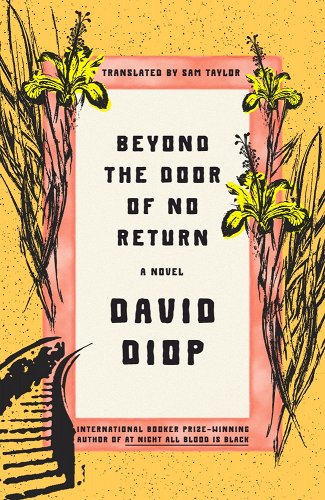
In the opening pages of David Diop’s Beyond the Door of No Return, Michel Adanson, a renowned botanist, is dying. He thinks about a bush fire he started on the banks of the Senegal River years before, and remembers the way the trees split open violently and creatures, in their attempts to flee, emitted sounds of terror. Having spent his life dedicated to the work of cataloguing the flora and fauna of Senegal on behalf of the Royal Academy of Sciences in Paris, he wonders, maybe for the first time in his career, whether the “burning trees must have screamed curses in a secret plant language, inaudible to men.”
As he dies, he reckons with what will survive him. His botany records, his collections, his drawings, the work he neglected his family for, will be washed away. Incapable of sharing his interior life with his daughter, Aglaé, even as the end of his life approaches, he hides a series of notebooks in which he reveals his journey to find a woman named Maram, who had been sold into slavery but was rumored to have escaped. When his daughter discovers them, she learns about a great love—and loss—in her father’s life, one that he kept a secret.
The novel, told from a series of different perspectives—Michel Adanson’s narration and his notebooks, Aglaé’s memory, Maram’s testimony—encourages readers to consider the power of story; reckon with discrepancies between oral histories and the written accounts of colonists that are later received as truths; and think deeply about the capacity for healing that the natural world contains, as well as the harms inflicted on the environment through colonialism. I corresponded with David Diop, who won the 2021 International Booker Prize award for his novel At Night All Blood Is Black, about these themes and more by email in an interview translated from the French by Jonathan Woollen.
Jacqueline Alnes: One of the main figures in this story, Michel Adanson, is based on a real historical figure, a Frenchman who traveled to Senegal in order to study the flora and fauna. What did you learn from examining Adanson as a historical figure?
David Diop: Michel Adanson was one of the first French scholars to travel to Senegal. He went at age 22 and was there from 1749 to 1753 with orders from his masters, the Jussieu brothers, who were members of the Royal Academy of Sciences in Paris. His intent was to pioneer the description of flora and fauna, so that he could become a member of the Academy himself later on. He never reached his goal, which was to rigorously classify the three kingdoms of life in opposition to what was set down by the Swedish scientist Linnaeus. Nor did he ever publish his Natural History of Senegal, rough sketches of which can be found today in the Museum of Natural History in Paris. Found among those sketches, as the Senegalese historian Ousmane Seydi has studied, is the first French-Wolof dictionary. Michel Adanson learned Wolof, a prevalent Senegalese language, because he had come to realize that the usual translators didn’t know how to translate the words of people, male and female, with knowledge of the Senegalese plants’ medicinal properties.
JA: In the novel, Adanson is a man obsessed with his amassed collection of specimens, so much so that he neglects his wife and child. The irony, at the end of his life, is that his encyclopedias are unfinished and unavailable to the public, and his daughter knows nearly nothing about him as a person. What intrigues you about his fervor for cataloging at the cost of so much else?
In real life, this illusion of control of our own destinies doesn’t exist.
DD: Michel Adanson’s A Voyage to Senegal was published in 1757, four years after he returned home. It’s the first volume in his endeavor to write a Natural History of Senegal. Natural history is a crucial piece of this encyclopedic dream of his to plant stakes around the world through description. Its many fields of knowledge include botany, geology, ornithology, ichthyology and conchology, astronomy, and even a form of proto-ethnology since the planet’s non-European societies are also being broached as objects of study. To name every plant, every animal, every society, is to seek mastery for Western man over nature and all its creations. The naming act is a corollary to the drive to subordinate nature to mankind: “To make oneself master and possessor of nature,” to take Descartes’s formulation, is above all to measure, to quantify, to classify.
Michel Adanson suggests that it was during his trip to Senegal that he conceived of his life’s project, of which the Natural History of Senegal was but a minor part, the project being a super-encyclopedia of life that would unite the three realms: mineral, vegetable, animal—the “Universal Orb.” The title of this mega-encyclopedia—for the sake of which Adanson attests to having described tens and tens of thousands of “existences,” to use his term—refers to the objective of circumscribing the world into a kind of totalizing circularity. It’s something that he’ll never achieve, though he tried to until the end of his life. As an old man, he’ll keep soliciting Emperor Napoleon Bonaparte to finance the volumes of his Universal Orb. On the botanical level, his highly complex method posits the combination of a whole string of plant characteristics far more plentiful than what Linnaeus had proposed. But this method claiming to form a rational thesis about the world is called upon to renew itself every time an unheard-of plant or animal, unclassifiable under the old frameworks, emerges from some corner of the Amazon, Asia, or Africa. And that’s the tragedy of Michel Adanson’s intellectual life, continuously occupied with feeding the method for his thesis, for a world that’s impossible to circumscribe. Despite insistence from academics and friends of his in the European naturalist community, who begged him to publish the vast amounts of data he already had so that the thesis could be preserved and might inspire future scholars, Michel Adanson invariably refused, claiming he hadn’t finished. Death got the better of his hemming and hawing in 1806.
I like lives like Michel Adanson’s, lives consumed, absorbed, by some great impossible project, lives emblematic of the human mind’s thirst to sort the world into dictionary entries.
JA: This type of cataloging feels inextricably linked to colonization, and we see, throughout the novel, the types of harm inflicted on people and the natural environment in the name of “exploration”; the fates of the two seem interconnected, though Adanson seems more willing to recognize that plants have been harmed over people. (At one point, he laments that the “corpses” of trees are taken “so far from their mother Africa.”) And what did this novel reveal to you about the sinister ways colonization can ripple through the lives of people, places, and environments?
DD: Michel Adanson, by the mid-1700s, is already sensitive to the disappearing ebony forests exploited by Europeans since the 1500s. Awareness of mankind’s overexploitation of nature is nothing new. It felt that in my novel, through Michel Adanson, a man of the Enlightenment, a Cartesian, I could point to the negative impact that trade in raw materials from Africa has had on the environment and on the well-being of local populations. Maram Sack isn’t just a young woman Michel Adanson falls in love with, she’s also an emblematic character representing a nature different from his own. If Adanson is seeking to puncture nature’s mysteries in order to appropriate them, Maram as a healer is seeking nature’s conciliation, its cooperation. They’re two opposed visions of the world, which meet in Michel Adanson and Maram Seck.
JA: As much as Adanson tries to name and to know, it is clear there is a level of knowingness that he is never privy to. At what point does an outsider’s curiosity become a kind of violence? And how does language—or the imposition of language—factor into that?
We’re assailed by so many compromises due to happenstance in our daily lives, and we’re always so different from what we believe ourselves to be.
DD: One of Michel Adanson’s strengths is that, unlike with Linnaeus’s system of nomenclature, he wished to preserve the names of the African plants he was indexing. His thinking was that it wasn’t appropriate to give the plants Latin names, that the desirable thing was for the world’s memory banks to open up to non-European languages. For example, he wanted the baobab to go by its Wolof name, “Gouye” and not “Adansonia digitata” like Linnaeus advised as a form of paying homage. The Senegalese style of naming plants and animals wasn’t approved by the Academy of Sciences in Paris, who criticized him accordingly. But Michel Adanson says of the Wolof language, to anyone who wishes to hear it, “that it is gentle and vibrant.”
JA: You so deftly skewer colonialism even while writing from Adanson’s perspective. What was it like writing about this subject matter from a first person point of view, from a character who seems, in so many ways, to remain unaware of the ills he is perpetuating?
DD: The novel can be a wonderful staging device for the complexity of the human soul’s motivations. So, on the one hand, in his will, Michael Adanson sets aside some gold louis so a couple of his French friends can feast at his funeral like, and I quote, “the Black wise men and philosophers of Senegal.” And on the other hand he publishes a dissertation about the Compagnie du Sénégal’s interest in furthering the slave trade on the island of Gorée. Using “I” allows me to translate that complexity without actually expressing an anachronistic value judgment on the character.
JA: As a novelist and scholar, what interests you about story? And what power do stories hold?
DD: For me, what literature can do is seize hold of history and make it its own thing. Through some kind of transversal of the emotions at play in their literary work, writers can sensitize the reader around subjects or historical periods to which they otherwise would have remained indifferent. Literature moves where history explains.
JA: There is so much in this novel about narrative and the way stories shape us. For example, Adanson, in the novel, laments at one point that it is “too late to dictate the story of his own death” and also admits, “to what extent the opinion we have of ourselves depends on where we are and to whom we are talking.” What interests you about the intersections between identity and story? And what happens when the stories we tell ourselves prevent us from recognizing the ways we are harming others?
DD: Another power that the novel has is to give meaning, direction, and coherence to the lives of fictional characters. In real life, this illusion of control of our own destinies doesn’t exist. We’re assailed by so many contradictory feelings, so many compromises due to happenstance in our daily lives, and we’re always so different from what we believe ourselves to be, so that only the retrospective accounts we’re able to make about our lives seem to give them any meaning. Michel Adanson sees that “the more he writes” about Maram’s life, “the more he becomes a writer.” In other words, he gives Maram’s life meaning by recounting it and thus prevents her from escaping him again. But at the same time, by recounting Maram he’s recounting himself as well. Michel Adanson is discovering himself just as much as his daughter Aglaé will discover him by reading his secret notebooks.
For Michel Adanson, to write is to retrieve another self he thought he’d lost, and to find himself back in Maram’s company one last time. He carries her voice inside him. He can still see her with her loving eyes, like Orpheus turning to face Eurydice right at the moment when he thinks, wrongly, that the two of them have conquered death.
JA: What do you hope readers take away from this novel? And what do you take away from it, after writing?
DD: I would like readers to find additional reasons to shed their prejudices, as perhaps Aglaé will have done by reading her father’s “secret notebooks.” The start of the novel, relating how Aglaé discovers the writing Michel Adanson intended her to find in a secret drawer, is indicative. To read this story, Aglaé needed to prove that she deserved it. If she had neglected the shoddy furnishings his father bequeathed to her and the few memories they had in common, this manuscript hidden in a writing desk would never have been read, not by her, not by us over her shoulder. There are still far too many stories, perhaps, gathering dust in drawers of history no one has had the time or curiosity to open. To overcome your prejudices, you have to want to. Wisdom isn’t given, it has to be sought.
About the Translator:
Jonathan Woollen is a French-to-English translator from North Carolina, currently living in Brooklyn and working in publishing. Previously, he ran in-store events at Politics and Prose Bookstore in Washington, DC.
I feel badly for my husband—for men in general—because they’re left out of so much of human life. It’s more common to talk about the ways in which they have it better—and God knows those abound, I’m not dismissing them—but recently I’ve been thinking about the ways in which they don’t. We all understand, more or less, how a man’s body and mind function. But I believe a man can live an entire life in this world and know nothing about the warm, vaginal smell of a women’s restroom stall after someone else has used it—how it’s repulsive yet also inspires a weird fellow feeling, a sense of intimacy. They know we tweeze our eyebrows, but they don’t realize that many of us have nipple hairs that we also tweeze out—they can grow long, it’s impressive, half a thumb’s length or more. My best friend and I used to compare our longest ones and marvel. I’ve seen clips online of these machines they’ve made that men can strap on to feel what it’s like to have terrible period cramps, but that seems crude to me, unless they make a machine that can also approximate the emotional malaise.
Years ago, when I was pregnant and living in California, some older female friends—professors at the university where I got my doctorate—explained that, after childbirth, my vagina would bleed for days. I would have to wear pads in my underwear and, when I peed, use a bottle to squirt water onto my crotch to sanitize it. Given the fragility of the postpartum crotch, I would also be given a stool softener, to make my poop come out more gently, and maybe a laxative, too. This worried me.
I was also worried—I told them—that I wouldn’t love my child. On internet forums, I’d read a lot of women’s posts about loving their child while they were still in the womb, and I felt nothing like that, I felt only a lump expanding and hardening inside me. One of the professors, Whei, my former adviser, said she didn’t love her daughter while pregnant, either, and didn’t even love her much when she first came out. She seemed like a total stranger, an alien. Whei’s love developed only as her daughter grew older—in fact, developed in proportion to her daughter’s age, such that her love for her daughter, now eleven, was greater than it had ever been.
After Anand arrived, I remembered Whei’s comments. He lost weight after being born. I was taking too long to begin lactating, and Anand didn’t seem to like the taste of the formula we tried feeding him instead. He would bawl at the sight of the bottle. On the third evening, I was sitting in a rocking chair trying, and failing again, to nurse him. I really had to use the bathroom—the stool softener, the laxative—but I didn’t want to put the baby down, and I hadn’t yet figured out I could just bring him with me to the toilet. So I stayed put and eventually realized I was pooping my pants. I called for my husband in a panic, handed him our bawling infant, and ran, bowlegged, to the toilet. That night, my husband began tearing up—“I’m scared that something’s wrong—I just love him so much!” he said. I was scared, too, but of Anand, almost as if he were someone else’s child who had been forced upon me. Feeling this way worried me, but knowing that Whei had felt a version of it, too, made me feel better.
It’s menopause that has me thinking about all of this—or rather, perimenopause. Until recently, I didn’t even know the term. I learned of it only when a couple of my friends—in Eugene, Oregon, where we’d been living—started experiencing it. None of them understood what it was at first. All three thought they were going through a midlife crisis, a breakdown of form and spirit. When they tried to go to bed at night, they’d squirm in the sheets, unable to find comfort, or else they’d fall asleep fine only to awaken feverish and filmed in sweat. It felt connected to a spiritual unsettling. One of them, Darienne, a high school teacher, confided that she was contemplating quitting and starting over as a pastor. The second, Wathana, wanted to get divorced and move to London, where she’d studied abroad in college and met her first love. The third, Clarisse, still loved her career—she was a wildlife biologist—and had no interest in physically uprooting herself. She seemed happiest of the three. But for the first time in her life, at the age of forty-six, she was experiencing baby fever. She and her wife had chosen not to have children. They had met relatively late, when most of their friends’ children were already school- age, and the prospect of starting from scratch, having to find a sperm donor or adopt, exhausted them. Now she found herself swooning into every stroller that she passed in the park, radiating want. But she knew it was probably too late.
Darienne was the one who figured out what was going on with all of them, through her gynecologist, and she told the others. They went to their own doctors, who stopped short of positive diagnoses but generally supported the shared hypothesis. The problem with perimenopause is that there’s no test to determine its onset—it’s identifiable only later on, when your periods start coming several months apart. Later, on our text thread, Clarisse sent a link to an academic article she’d come across, noting that women in their forties commit suicide more than those in any other age group, and an underappreciated culprit might be perimenopause itself. Darienne sent an exploding- head emoji, Wathana a skull. I sent four sparkle emojis; I was being sarcastic, and I also felt like it would be false of me, not being perimenopausal yet, to have as intense a reaction as the others.
But that was several years ago. Now I’m in it myself—skull emoji—or, at least, I believe I might be. It started when we moved to Iowa City. My husband had gotten a teaching position here. We both earned doctorates in cultural anthropology, but while he went into teaching, I consult on films, mostly documentaries. I had high cholesterol for the first time in my life—an established sign—and I’d been weighed down lately by an unnameable regret I’d never experienced before. Iowa City’s summers are hot, and climate change has recently made them worse. One afternoon, the three of us tried to go strolling downtown, but the heat was insufferable. Anand was about to start kindergarten. He grabbed my dress in his fist, trying to get my attention—something he does all the time, I don’t mind—and I suddenly felt as if my personal space had been completely annihilated. “Stop touching me!” I snapped.
Passersby gaped. I felt awful for being irritable. I apologized to him, but I couldn’t move on, I couldn’t stop thinking about it. It felt linked to the regret I’d been experiencing, though I couldn’t understand quite what one had to do with the other.
Perimenopause, I thought. My husband was skeptical. He thought the high cholesterol was from the habit I’d recently developed, of cooking Indian breakfast: dosa, pesarattu, upma. Previously I’d eaten fruit and yogurt. He thought I had been irritable with Anand because of the heat and because, since moving, we had been spending all our time with our son, with no preschool and no friends to call for playdates. He also pointed out that I’ve felt a similar spiritual foreclosing each time we’ve made a big change in life, I felt it when we married and again when we became parents. I said—with some irritation—that this was different. I told him about Darienne, Wathana, and Clarisse. He said their experiences had nothing to do with mine.
But I thought they did. I hate to suggest that a characteristic is the exclusive domain of one particular sex, but I believe women experience life more communally than men do. We arrive at the answers to life’s questions together. Maybe it’s because we have higher levels of oxytocin, the bonding hormone. When one woman asks another, before heading out for a walk together, “Should I wear sneakers or sandals?” the second recognizes it as a legitimate question, one meant to integrate both women’s consciousnesses in figuring out an answer. But when I ask my husband a question like this, he’ll respond, “I mean, wear sneakers if you think sneakers make more sense, and wear sandals if you want to wear sandals.” If I press him—asking, for example, “Well, what kind of shoes are you wearing?”—he’ll answer but will add that his own decision should have no bearing on mine.
I didn’t mention all of this to my husband. I’d told him about the hypothesis before. Now I said only that I missed our friends. He said he missed them, too. He hoped we would befriend some of the colleagues he’d met while interviewing—another anthropologist and her economist husband, a sociologist, a couple in the African American Studies department. He also suggested that I meet people online in those Facebook groups for newcomers or parents. Normally I would resist that—it irritated me, the thought of ordering up a friend online—but I did join, and one morning, in the parents’ group, I noticed a post from someone named Fernanda. She looked close to my age—in her forties. By then, kindergarten had begun, and I was at home alone all day, on Zoom meetings, while my husband went to campus. Fernanda had written about having recently moved with her family to Iowa City, to be closer to her sister. She hoped to find a friend with whom to check out the Colombian café that had opened near campus.
We met the next morning at the café. Fernanda wore a ribbed tank top—what we used to call a wife-beater—and had a detailed tattoo of a cross on her bicep. But she wasn’t as tough-looking as that makes her seem; she had a soft- featured face and immediately launched into chatting, her face close to mine, as if we were already friends. She said, “I’m glad we came, it’s really pretty, with the decorations, isn’t it?” Plastic greenery and flowers hung from the ceiling and sprouted from centerpieces on the tables, but it wasn’t kitschy, it was well arranged and festive.
“I didn’t know about this place,” I said.
They had just arrived from Nashville, she said—that past weekend.
“We also arrived not long ago—a month ago,” I said. “It’s different here, it’s not like the Northwest, where I’m from. There’s lots of vegetation in the Northwest.”
“Colombia, where I’m from, is like that,” she said. “It’s super-green there.”
“But the river’s good,” I said. “I’m glad there’s a river. Someone told me that if you go north, almost to Minneapolis, you can go rafting.”
“I want to try rafting!”
“Me, too!” I said—and the promise hung in the air, that maybe, if we became friends, we could go rafting together.
We ordered coffees and churros.
I asked where she was living. She wrinkled her nose, shook her head. “It’s terrible,” she said. “It’s one of those buildings that looks like this”—with her hands, she made the shape of a box. “It’s all brick. There’s a courtyard, but the grass is yellowed and flat, it doesn’t feel inviting, even Isabella—our daughter—doesn’t want to play on the playground there, she said it frightens her, though when I asked her what about it was frightening, she couldn’t explain.”
I said we were living in an apartment complex, too, and that I hated ours as well. Everyone kept their blinds down, and it gave the impression no one else lived there. “There’s a pool, though—you should bring Isabella, she can swim with Anand, they’ll have fun,” I said.
“I wish we had a pool,” she said. The problem was that her sister—who had chosen the apartment for them—had been too selective for too long. She had gone to see some apartments before this one and rejected them for various reasons—too dark, too small of a kitchen, too noisy. She selected this one, in the end, despite its flat character and sad courtyard, because they had to settle on something before school began. “We have an expression in Colombia,” she said, “that the longer you take to choose, the worse it turns out.”
‘We have an expression in Colombia,’ she said, ‘that the longer you take to choose, the worse it turns out.
She and her husband—Alejo was his name—had recently gone through a traumatic experience. Afterward, Nashville felt claustrophobic to them. They decided to each make a list of the top ten places in the world they wanted to live, and then choose the one they were both excited about. But when they showed each other their lists, none of their cities matched. In the end, they settled on Iowa City, where her sister lived, because it was a place they could both live with. They thought it would be good for Isabella to be near her cousins, who are close to her age, and Alejo could get work at the company where her sister works—they make farm equipment, and Alejo has relevant experience, having worked with cars. Fernanda doesn’t work; she worked a lot when she was younger, but now she’s a stay-at-home mom. “Americans are obsessed with being productive and earning, they believe you’re not ‘contributing’ if you’re not working, but I just want to exist. I don’t mind existing.”
I told her I needed to learn from her. I explained that I feel anxious if I’m not working—I work a lot. She asked what I do, and I told her about the documentaries—about how I might travel for a week at a time to, say, the Galápalagos or the Maldives, to help filmmakers shoot their documentaries in an accurate and sensitive way.
She laughed. “We’re not talking about the same thing, then,” she said. “I’m talking about regular work—work—like fixing cars, building farm machines, harvesting fruit, taking care of babies or old people. Work.” She said that’s what she got tired of. She wants to be happy—that’s all she’s trying to do in life, to manage to be happy—and she’s found that she feels most happy when she’s caring for her daughter, her husband, their small life together. They’re poorer because of it, but she and her husband feel it’s worth it. “That must sound so simple, I must sound so dumb,” she said.
I said it didn’t; she didn’t.
Our coffees and churros arrived. I asked if she and her sister were close. They didn’t get along during their twenties, she said, but now they’re close. I asked what happened to bring them closer. She said that, in general, they’re super-different. She has a temper—Fernanda’s sister. She’s also a lesbian and a hardcore feminist. On the spectrum of feminism, Fernanda herself is half-feminist, but her sister is really hardcore. She believes that the patriarchy forces us to shave our legs, while Fernanda believes that she shaves her legs because she feels like it. Alejo told Fernanda, when they were still dating, that he wanted a wife who would stay home with their children, and she said—because for her it was true—that she wanted the same. But when her sister sees her washing the clothes, cooking, putting Isa to bed every night, she criticizes her for not sticking up for herself. She—Fernanda—looked at me and said we don’t know each other well, she doesn’t know how I feel. I wondered, privately, whether I was a half- feminist or a hardcore one. I’d like to consider myself to be on the most feminist end of the feminism spectrum. I work—I work a lot. My husband and I spend equal time with Anand. But then, I shave my legs and don’t feel conflicted about it.
I shrugged; “I shave my legs,” I said.
“Okay, my sister would say the patriarchy made you do it,” she said. “She reads a lot, she thinks a lot—she tells me I don’t think enough. For me, I don’t want to think too much. If you think too much, you can’t exist—the world is difficult; you can’t think about that all the time, or you can’t exist.”
Fernanda and her sister grew closer—Fernanda said—when the situation happened. She said it like that—the situation happened. I said her sister must have been supportive then. She said it wasn’t quite that. Her sister experienced a loss, too, it was something they went through together, and that’s what made them close. Afterward, her sister realized that she might lose Fernanda as well. She insisted to Fernanda that she must hold on, she must live.
I thought she was waiting for me to ask what happened—she had brought it up twice by that point. But I hesitated, and Fernanda continued. She said her sister is married to a woman she’s been with for decades.
They met in Colombia at the age of nineteen. Fernanda’s sister-in-law-to-be was backpacking there and went into a bar where Fernanda’s sister was working at the time as a bartender. “Do you see all this?” Fernanda said, gesturing at her tattoos. “This is what my sister looks like—but she’s got more than me, she’s really butch. I used to admire her so much when I was a teenager—she’s one year older than me—so when she started getting tattoos, when she cut her hair short, I copied her. I didn’t understand that she was doing it because she was a lesbian.”
The eighties and nineties were a turbulent time in Colombia, she said, so, growing up there, she and her sister never met foreigners. The only one they knew was a Frenchwoman married to a Colombian man, who was a client of Fernanda’s mother, a seamstress. Fernanda’s mother had grown up in a family descended from great wealth, but they themselves weren’t rich. The maternal line had lost its wealth when Fernanda’s grandmother had fallen for someone her parents didn’t approve of. “He was a doctor, but he was Black,” she said. “I mean, I shouldn’t say ‘but,’ I don’t mean it like that, I mean that, for that time, it wasn’t common. She was white, and he was Black.” When they started having children, Fernanda’s grandfather decided that only the first child belonged to him, the rest belonged to the church—that is, he wouldn’t support any of the children after the first one. That left five of them in all, including Fernanda’s mother, who he ignored. Though her husband was a doctor, Fernanda’s grandmother had to work as well to support them, and she ended up becoming a seamstress, which was how Fernanda’s mother learned the trade.
Fernanda’s mother—the youngest of the children—wanted to go to college, but then she met Fernanda’s father. They decided she would work as a seamstress to help put him through college. He was studying environmental engineering, he wanted to work with trees. But then he became abusive. He also decided he didn’t want to work in the forest after all, he wanted—Fernanda smiled darkly—to dig for gold. He left them and moved to the forest to try to find gold, and there he met and fell in love with a seventeen-year-old girl.
When she learned of his affair, Fernanda’s mother filed for divorce, a big deal at that time. She was ostracized by the other mothers at Fernanda’s school—she was not only divorced but was Black, a double fault. “I don’t know if you’re familiar with Colombia, but it’s really racist there,” she said. “There’s racism in the US, but it’s different—in Colombia, it’s worse. Or maybe not worse, but different.”
I told her that I’d been to Colombia once—to Medellín.
“Medellín—that’s where I’m from!” she said. “What did you think of it?”
I told her the truth—that it was much more beautiful than I’d expected. I’d heard only of drugs and guns and jungles. But Medellín sits in a valley surrounded by big rolling hills covered with tropical trees and flowers. I explained that I was an anthropologist and had been in Medellín advising on a TV show about poor and working-class people around the world, in occupations that have been newly created by globalization.
“My God, an anthropologist,” she said. “You must be really intelligent—and here I am talking and talking and talking like an idiot.”
She didn’t seem like an idiot. She came across as intelligent, attuned to the subtle workings of the world, an essential but ineffable quality in my field. I wondered whether she actually believed she wasn’t intelligent.
I told her about my time in Medellín. I had been helping with a television series about off-the-beaten-path tourism, scouting for people to interview in a neighborhood called Comuna 13—a place that used to be violent but has since turned into a destination of sorts, with graffiti tours and shops selling Comuna 13 magnets. For the episode, we featured a tour guide who had been raped at gunpoint at the age of twelve. Her parents opposed abortion, so she had the child, and that child—the fact that she loved her and needed to keep her alive—saved her. She believed her daughter had been a miracle sent from God. “Next to Him, we are like mindless little frogs,” she said. From my training, I knew not to question out loud the implication that her rape had been an act of God. “It’s impossible to understand the life He has given us,” she said. “He hears us praying, and it sounds to Him like, croac, croac, croac.”
I love talking to people who believe in God. I love their perspective, it sounds like a poem to me, their religious language. I admire their willing submission to that which is most mysterious in life. I told Fernanda this.
While Fernanda’s mother struggled to pay the bills and look after her two daughters, her father lived near the gold mine with his new wife and children. He would forget Fernanda and her sister’s birthdays all the time; at Christmas, he would call and tell them, “I’ll be there soon!” and then wouldn’t show up. Fernanda spent her whole childhood waiting for him, and then, at the age of sixteen, stopped waiting. “But what were we talking about before that?” she said.
I said she’d been telling me about meeting foreigners.
“Right,” she said. The second foreigner was Helen—her sister’s wife. Helen’s visit was in the nineties, after the government decided they needed to make Colombia more inviting to foreigners—tourists, like Helen, but also businesses. Soon Americans started being sent by their companies to open up Colombian branches. Fernanda met one of the first to arrive—not long after her sister met Helen—and fell in love. He was forty-three; she was eighteen. She thought her father had been a pervert for marrying a teenager—but her sister had recently fallen in love with Helen, and Fernanda had been feeling lonesome and envious.
I asked if he spoke Spanish.
“A little, not much, but he had a translator,” she said. “We communicated through her.”
“You fell in love by communicating through a translator!” I said, interested in understanding how such a thing could happen—the logistics of it, the practicalities.
She fixed me with a worldly look—it reminded me of a look my older sister might have given me, in middle school, when explaining how romance actually functions. “I fell in love because I thought he was handsome,” she said. “This will sound racist, but he was so white—and his eyes were blue, and his hair was light blond; no one’s hair looks like that in Colombia.” He treated her super- well, too, buying her all kinds of expensive gifts; she’d never experienced anything like it. “Imagine if an alien landed on earth, and he was so special and unusual, and he chose you,” she said. “It was like that—I had my own alien.”
When he had to leave Colombia and return to the US, he proposed marriage, so that she could go with him. She asked if I’d read a certain children’s book about the mouse and the stone.
I said I hadn’t heard of it.
She seemed surprised. “Oh, you have to read it, it’s by a famous author—but now Anand is too old for those books,” she said.
In the book, she said, a mouse who lives on an island finds a big, unusual stone. He brings it to the other mice, and they decide—because he found such a special stone—to name him king of the mice. One day, the mice are going for a walk on the island, and they round a corner, and they find a beach full of stones that look exactly like the one that the first mouse found. Then the first mouse’s stone—and the first mouse himself—become ordinary again.
“You were the mouse,” I said.
“I was the mouse!” she said. “I moved to the US and looked around, and I realized my American wasn’t special—he wasn’t bad-looking, but he was average; a lot of people were pale, blue-eyed, and blond, and many of them were handsomer than him. He was a normal stone.” At first she still loved him. But over time—not only because he wasn’t special, but also because he got stressed at work and started to drink too much, first one margarita each night, then two, then three—she started to have doubts. On top of that, before they’d married, he’d said he didn’t want children, and she agreed—but now, after marriage, having reached her mid-twenties, she realized that she did want children after all, she wanted three or four. He said he would do it under duress, but they would have to give up their carefree lifestyle, and he would resent her for the rest of their married lives. That was when she decided to divorce him. A couple of years later, she met Alejo and, poof, suddenly had a whole new life.
She abruptly flung out a hand as she said this—she gestured a lot in general—and knocked her coffee over; it spilled onto the table. We cleaned it up with napkins from the dispenser. The incident broke our conversational spell. I looked at my phone—a couple of hours had passed. Fernanda asked for the check and took it; “you can pay next time,” she said, and I thanked her and agreed.
But after paying, she lingered, as if she wanted to talk more.
I asked, then, if Isabella was an only child.
She said yes, but she blanched a little as she said it, and I recognized the expression, I’d seen my mom make it when someone asked if I was her only child and she was deciding whether to explain that she’d had another daughter, who had died.
Before Isabella—Fernanda said—she and Alejo had another daughter, but she had died at only three months old, of sudden infant death syndrome. Fernanda had been the one to find her, in the morning.
Afterward, she wanted to die; she made herself stay alive only for the sake of her mother and her sister and, of course, Alejo.
“I’m Catholic,” she said, a bit self- consciously. “I know there are a lot of problems with the Catholic Church—but I grew up Catholic, and I still believe in it.”
“That must have helped you a lot when that happened—the situation,” I said.
She said it was complicated. She still believed, she said, because she had to believe. If she didn’t believe, it would be intolerable—she would have to accept that she wouldn’t see her daughter in Heaven—therefore she had to believe. I said I could understand that. I thought—but didn’t tell her—about how, because I don’t believe, I have to accept that my sister is not in Heaven, that I won’t see her again.
I told her that I understood loss, that my sister died when we were young. I said this for several reasons. First, she had been so candid, and I felt I should be as well. Second, as I mentioned, I had been reminded of my mom when she paused before telling me about her other daughter. And third, having grown up with a sister who was my guide in this life, and then having lost her, made me feel acutely the loneliness of being an only child. My entire life since, I’d been traversing the world searching for sister-shaped people to fill the space she had left. Here I was, before this relative stranger, doing it again. I didn’t say all this out loud, I only mentioned my sister’s death, but I could quickly tell, from her expression, that she didn’t feel that it was at all comparable to her loss. She was right. I added that I didn’t mean to suggest it was similar, that it was a completely different experience.
My entire life since, I’d been traversing the world searching for sister-shaped people to fill the space she had left.
And, to return to the topic at hand, I asked if Isa knows about her sister. She said yes—there are photos of her in the house, and they celebrate her birthday and visit the place where she’s buried. It’s better to talk about all this, she said, not to keep it repressed. But it’s possible to remember too much—that, too, is true. They left Nashville because they couldn’t bear all the reminders. “I don’t know if you’re like this,” she said, “but, for me, when I had her, I imagined the life she would have, I pictured her growing up and going to the aquarium, playing at the playground—”
“—and when you saw other children—”
“—no, that still happens—when I see an eight-year-old girl, I think, That’s the age she would have been. I mean that we couldn’t stay there and keep seeing those places. That’s why we came here. But I’m not sure that it’s helping. Not yet.”
“And have you thought about maybe—”
“Oh God, no, no, I can’t, I’ve thought about it—but I’m forty-five, and I’m reaching perimenopause—”
I nodded. “Me, too, and it feels like—”
“Time ran out?”
We sat in silence for a moment. Then she stood, and I did the same, and we went together out of the café and toward our cars.
“Men, in their forties, are in their prime,” I said as we walked. “It’s not fair.”
“Oh, but it’s hard for them, too,” she replied forcefully. “It’s worse for them.” I laughed. “No, really, it is,” she said. “I feel badly for them—for men.”
When their first daughter died, their female friends consoled Fernanda by allowing her to talk about her daughter—and her grief—all the time. But when Alejo went out with their male friends, they only joked and discussed sports and other superficialities, and when Alejo brought up their daughter, the others changed the subject.
She said that men experience the same feelings—woe, misery, terror—but are not allowed to share them, whereas women gain strength from sharing ourselves; it’s what allows us to keep living despite all that we suffer—knowing that we’re living it together.
“I’ll give you an example,” she said. She said her mom had little in common with Alejo’s mom—Alejo’s mother was rich and conservative, and Fernanda’s poor and open-minded—but they both were ahead of their time in adventurousness. Once, on a joint family vacation, they had all rented a boat and taken it to a secluded area near lots of small islands. Everyone had been squabbling, but the water was cool and clear, and Fernanda’s mother suggested they swim to one of the islands. The island wasn’t that close, it would be a significant swim. Fernanda’s mother-in-law agreed immediately. All the younger people—Fernanda and her husband, her sister and her wife, her sister-in-law and her husband—jumped in along with the matriarchs.
Quite quickly, Fernanda’s mother-in-law took the lead. She was really fit, despite her age and having had three bouts with cancer. In her elder years, she had become a fitness buff. She swam far ahead of the rest of them, toward the island—a small, inviting island, with palm trees—but then, suddenly, she stopped in the water and started waving her arms to get their attention. Fernanda thought she was drowning. Her mother-in-law had put her palms together and was pantomiming something. She was shouting, too, but they couldn’t hear her. Then they realized what she was saying: “Rayas, rayas, cuidado”—stingrays, stingrays, careful. They shouted back, “Okay,” gave her the thumbs-up, and continued, but before long, they understand what she had been talking about—there weren’t just a few stingrays, there was a blanket of them below, so thick you couldn’t even see past them to the sea below. “We should return, all of us,” Alejo said, and Fernanda agreed. They tried to call Fernanda’s mother-in-law back, but she said she was fine, she was going to continue on to the island, they could pick her up there in the boat.
Then, to their surprise, Fernanda’s mother said she would continue on as well. Fernanda begged her not to. It was incredibly dangerous, she said, and Alejo’s mother was more fit. But her mother turned to her with a challenging air, one of intense confidence: “I might not go to the gym, but my body has been working for my whole life—I’m as strong as anyone,” she said. Fernanda was shocked—she couldn’t respond. Her mother took off and caught up with her mother-in-law, while the rest of them turned around and went back to the boat.
“And then what happened?” I said. “Did they get stung?”
“They made it to the island, we picked them up, they were fine!” she said.
We laughed.
We had been standing in the parking lot for a while by then, neither of us making the first move to leave. I wondered aloud what her mother had been thinking at that moment that they’d all turned and gone back to the boat—watching her children and their spouses in retreat. Her mother-in-law, too—what had she been thinking? Fernanda said she wondered about that as well, and that later that night, when they were all sitting together in the hot tub outside the hotel, she asked them. Fernanda’s own guess was that, after years of caring for others—their useless husbands, their squabbling children—it felt nice for them to escape for a minute, that facing the stingrays, dangerous as they could be, was better than having to return to all that drama in the boat.
But her mother-in-law said she hadn’t thought much of anything at all. “Only—I’d gone this far already, and maybe it was dangerous, but it was also really beautiful. I didn’t want you all to get hurt, so I was glad you turned around. But I wasn’t afraid for myself. I’ve had many, many chances to die before—all that cancer—and I’ll have many, many chances to die again. I didn’t know when I’d get to travel here again, maybe never, and it’d be a shame to stop when I had gone this far.”
“That’s it, then?” I said.
“That’s it, that’s all she said about it.”
“What about your mother?”
“She said that once she saw my mother-in-law going ahead, she was inspired and thought she could do it, too—and how unexpected and beautiful an experience it had been, how blessed, how lucky it felt to be in God’s light.”
If a dystopia is a place where everyone, or at least someone, lives in abject misery and terror, then most cows, fishes, forests, and humans, right now, today, are living in completely non-imaginary dystopias. The human species’ ravenous egocentrism is the landfill on which such hells are built. The landfill, in turn, consists of dregs of a crumbling but toxic myth; that tall and ancient tale according to which Homo sapiens are the world’s born rulers with the right to consume everything that exists. In the anthropocentric attitude are the social values which enable humanity’s crimes against not-just-human life. Without a thought for the majority of Earth’s inhabitants which, because they are not human, have little to no say in their own fate, our ecocidal behaviors have made an incurable mess of Earthbound existence.
In my novel The Box, the dominant entities are neither humans nor humanoids, not even animals, but limbless, mindless, voiceless things. The human characters stumble and squabble, create and steal and love and die, because ordinary things like cabinets, packages, trains, and snowflakes are the way they are. People exist at things’ mercy, empowered by them and powerless against them. Where characters’ ability to make changes to their world, or even to perceive what is happening around them, is curtailed and overwhelmed by the weather and an unintelligible trinket-size box—such a story’s central actors are not its humans. From their various points of view, their vulnerability makes their world a hell.
The diverse narrative voices of The Box are inspired by literature in translation from around the world, including some of the books on my list. Written in Asia, Eastern Europe, and the southern Americas, some of these dystopias don’t seem especially wretched, at least at first. But in these visionary works, attempts to conquer all existence in the name of anthropocentrism—whether with wars or industries, whether capitalist or communist—must fail. Instead, worlds themselves are the agents of change and wielders of power: humans subsist at the mercy of the plants, animals, buildings, chairs, particles, weather patterns which comprise the worlds they live in and create their inner worlds. World and character become mutually porous, with the result sometimes that language spills out of familiar structures into overwhelming lists, fateful fragments and recursions.
The Taiga Syndrome by Cristina Rivera Garza, translated from Spanish by Suzanne Jill Levine and Aviva Kana
A failed detective tracks a runaway couple to the taiga, Siberia’s fabled forest. The woods seem to infect people with madness as if through some black magic or undiagnosed toxicity—or as if being hacked to pieces for industrial resources has driven the land itself insane. Children turn wolfish, feral, possessed by a compulsion to run away and keep running. So vast is the forest that there’s nowhere to which humans can escape and hope to survive. Garza’s narrative is full of gaps, fragments, broken lines; like the taiga itself, it generates more shadow than clarity. The former Soviet Union, especially the Siberian province, is a popular model for dystopias in several languages.
The Factoryby Hiroko Oyamada, translated from Japanese by David Boyd
The factory seems the opposite of dystopian: a workplace prestigious and welcoming, manufacturing popular everyday products. But to three highly qualified new hires, the place embodies a massive inside joke: seemingly intelligible, absolutely nonsensical. In fact, colleagues communicate primarily in inside jokes, so the general jollity is a perfect hell for newcomers. The newbies are given mind-numbing busywork, the obvious pointlessness of which destroys their self-esteem even as everyone around them seems content. It’s as if a city’s worth of intelligent humans is being fattened up on ennui and empty jokes. But to what purpose? Has it anything to do with the bizarre birds, reptiles, and rodents which exist only on factory premises? On what does the factory feed?
Radiant Terminus by Antoine Volodine, translated from French by Jeffrey Zuckerman
Dregs of the Second Soviet Union flee to the Siberian wilderness when a century of fighting ends in near total annihilation. Almost nothing survives the nuclear catastrophe, a result of the war and widespread over-exploitation of nuclear energy. Zombies, glowing almost-corpses, post-communist witches—leftovers of the once dominant human species—eke out a sub-existence as prisoners of feral plants and radioactive garbage. As scraps of Soviet rhetoric redden their memories, Volodine buries the characters in lists of weeds and detritus. The world’s invisible rulers are winds and airborne dreams, moods of insane nuclear cores imprisoned in abandoned reactors. Nuclear particles, ubiquitous and without mercy, determine who survives, how they suffer, even what they are.
The Besieged Cityby Clarice Lispector, translated from Portuguese by Johnny Lorenz and Benjamin Moser
The city of São Geraldo eases into the twentieth century, gradually replacing horses with automobiles and small-town sleepiness with urban bustle. Not dystopia but progress, so it seems. But as São Geraldo becomes all asphalt, noise, and scaffolding, the city molds Lucrécia into what she cannot bear to be: a cog in the machine, or rather, oil for the men who build and constitute the growing capitalist machine. As Lispector describes with characteristic obliqueness, Lucrécia understands much more than she realizes: she intuits her damnation to a life of ornamental thinghood. Trapped within the trinket that São Geraldo wants her to be is the animal she is at heart: the wild horse for whom “progress” has no place.
Baron Wenckheim returns from Argentina, fleeing debts and other difficulties, to the bleak Hungarian township of his birth, which everyone else is trying to escape. The town celebrity flees as far as the outskirts, defends his weedy shack with a shotgun. Nobody else gets any farther. Krasznahorkai’s interminable sentences flood the characters in their personal voids. Soon the Baron yearns for exile; but for one reason or another, escaping his hometown just isn’t possible. The train never comes, there’s no gasoline, the buildings and infrastructure are crumbling; everybody is oppressed by decrepitude, poverty, incompetence: accomplishing anything at all is next to impossible as the overabundant absences of things make the town a prison.
The Memory Policeby Yoko Ogawa, translated from Japanese by Stephen Snyder
Things are disappearing from the island. Birds, roses, calendars, stamps, ships, perfume. In the instant of something’s vanishing, everyone immediately forgets what it was and how it made them feel. Then they forget that they’ve forgotten. It’s as if, for example, maps never existed; as if the very idea of maps never occurred to anyone. The extinctions are deliberate: things are disappeared. Humans who forget to forget are arrested by the Memory Police. If your cat fails to unhappen when, by methods unknown, mysterious authorities decree the disappearance of “the cat” as concept, species, and memory, then someone will come for poor kitty, you needn’t worry—just as long as you forget.
City of Torment by Daniela Hodrová, translated from Czech by Véronique Firkusny and Elena Sokol
This is the Prague that no one wants to remember; the dingy Prague of poor people whose role in history is to be mowed down. It’s the Prague of living things: the swivel chair as portal to other Pragues, the tailor’s mannequin and stone angel yearning for love. It’s also the Prague that refuses to finish dying. Ghosts populate the pantry in the apartment where a woman relives her abandonment again and again. The living are trapped in spirals of déjà-vu or obsessed with the non-place between their Prague and the ghosts’. Faintly shimmering is the Prague that might have been, where events that did not happen are almost happening. Or are the Pragues of imagination and reality becoming confused?
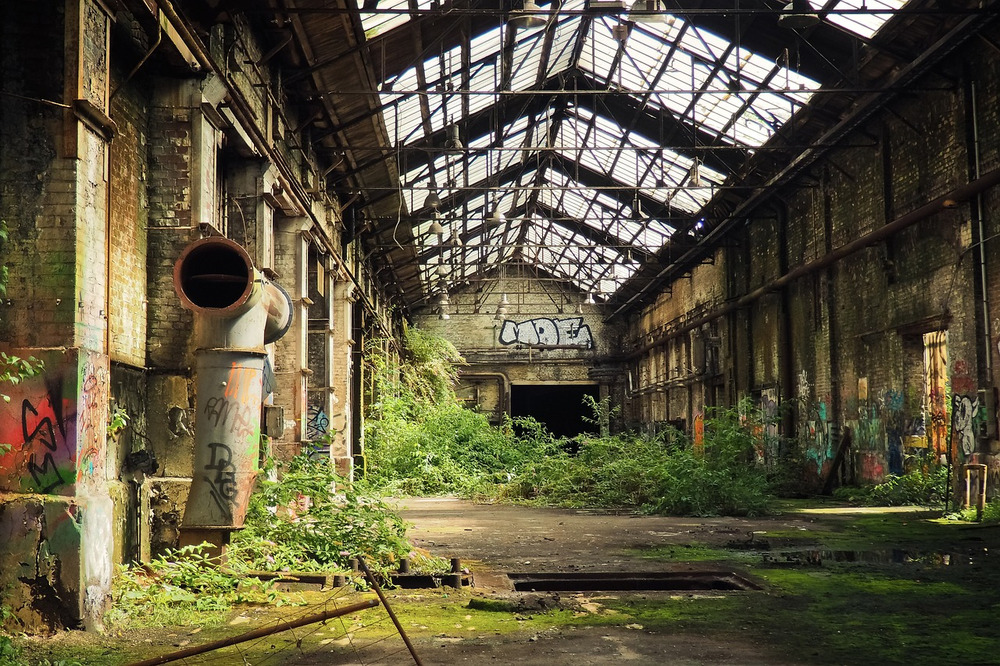
On the communist side of the Berlin Wall, a disillusioned factory worker wanders in the garbage dump which, ever expanding, has already engulfed the forest and neighboring village. Shadowy “garbagemen,” a red-faced vulturine figure in black rags, and hosts of mannequins outcast from shop windows populate the dump, voicelessly haunting one another. The longer our narrator spends in the dump, taking up a sort of residence among the junk, the more the junk infects his outlook with junk’s existential (dis)qualities. Everything in existence starts to resemble waste and wasting: East Germany thrown out of the world like so much trash; history itself is time’s cremated castoffs; storytelling, for our narrator, is but a “routine of crossing out words.”
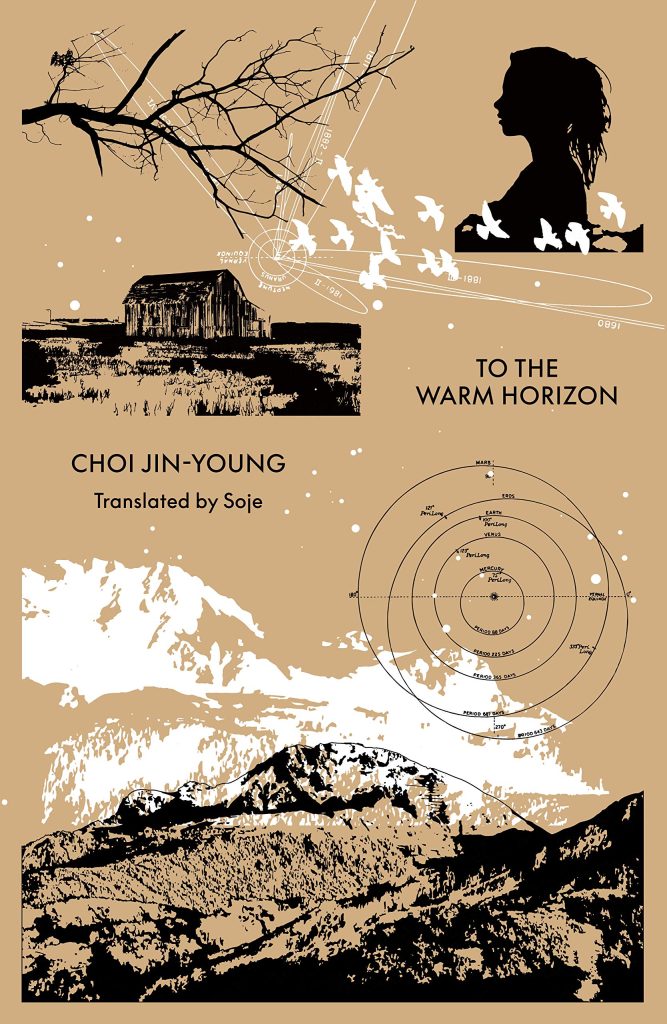
In another future haunted by the former Soviet Union, Koreans fleeing a pandemic migrate en masse into Russia via Vladivostok. The refugees are overwhelmed by the vastness of the land, the deadly cold, the monotony of the flat and treeless view, and above all the sense of hostile emptiness pervading the region. It’s internal, too, this emptiness, for the characters have lost everything; emptiness infects their very voices with terseness and bleak repetitions. The remnants of a city, which seems to be destroying and rebuilding itself at the same time, turn out to be the splitting image of the 1930s’ Soviet gulags, complete with senseless slogans extolling forced labor.
Roadside Picnic by Arkady and Boris Strugatsky, translated from Russian by Olena Bormashenko
Capitalist extractivism is in full swing in the North American city beside the Zone: a garbage dump left behind by extraterrestrials. On the aliens’ technological detritus, the city’s humans grow rich. Cars no longer need gas or electricity: simply place upon your dashboard a “spacell” or “perpetual battery.” Like living cells, spacells reproduce by division. Many things of the Zone conduct themselves as living things, even as they cannot be. Antennas, as if for televisions, grow hair and defend themselves with violence. Corpses and dismembered limbs acquire “autonomous viability.” Gravity itself seems to grab things and eat them. The Zone curses those who visit: disaster follows them everywhere (hence the city’s emigration ban), and their offspring outgrow their humanity, becoming who knows what.
What I love most about the plethora of literary podcasts on air these days is that each podcast feels like entering a niche corner within the larger literary community, and taken together, the many literary podcasts available reveal just how vibrant, intelligent, and robust the world of writers and readers really is. Lately, I’ve found myself turning to literary podcasts when I need a lift in my own writing and reading life. On top of giving my eyes a much-needed break from staring at my laptop screen, listening to smart, creative people chat about books is a failsafe strategy for re-energizing my own creative sensibilities. There is something contagious about good literary conversations, the way they inspire an itch to write, to read, and to move through the world with a deeper appreciation for the power of story, of words.
Whether you’re a die-hard bibliophile in search of your next read, a writer seeking some inspiration for your work-in-progress, or simply someone who enjoys the soothing cadence of spoken words, there’s a literary podcast for you. From thoughtful, in-depth author interviews to hilarious discussions of airport bestsellers, this roundup of twelve literary podcasts is sure to provide joyful, high-quality literary content for the next few months.
With episodes clocking in around two hours, Between the Covers is a long-form literary radio show that I recommend often to my fellow literary nerds craving deeper insight into exceptional books and their authors. Hosted by David Naimon, the conversations on Between the Covers forgo small talk and get right to the beating heart of the work and writer in question. Full of sharp observations, craft musings, and capacious questions that probe the more mysterious aspects of artistry and storytelling, this podcast is high-quality conversation from start to finish. The most recent episode featuring Major Jackson is, among many things, an intimate discussion about the past, the way Jackson’s poetry and prose has evolved over two decades, and how selfhood is inherently related to others, to lineage. “Part of the tension of being a writer,” Jackson says, “is writing within a tradition, writing in relation to a tradition, and writing against that tradition.”
Released every Wednesday, The Stacks is “your literary best friend, your virtual book club, your one-stop-shop for everything books.” Host Traci Thomas chats with a wide range of guests including writers, film stars, community leaders, and publishing professionals. Every chat is composed of two parts. Part one is a casual conversation with the guest about their current reads, what’s in their TBR pile, and happenings in the world of books and pop culture. In part two, Traci and the guest discuss The Stacks Book Club pick (September is Monsters: A Fan’s Dilemma by Claire Dederer). This podcast is so welcoming and accessible, and each episode feels like a warm, soul-nourishing coffee date with friends.
Ursa Short Fiction celebrates outstanding short stories and is perfect for listeners who love short fiction or are looking to better understand what makes a great short story great. Hosted by award-winning writers Deesha Philyaw and Dawnie Walton, this podcast is a fantastic addition to the literary podcast world for the way it champions the often commercially overlooked genre of short fiction, unpacking and celebrating the form’s power while also highlighting the work of underrepresented voices. Episodes feature a single short story, story collection, or interview with a short story writer. Philyaw and Walton are brilliant, passionate hosts who geek out about their love for short fiction in a way that is illuminating and contagious.
Meditative and perceptive, the Poetry Unbound podcast is made up of short episodes in which a single poem is read and then thoughtfully discussed, inviting listeners to delight in the beauty and power of poems. The host, poet and theologian Pádraig Ó Tuama, brings such care to each episode, his love for poetry felt in his reverential readings and rich commentary that highlights craft choices, theme, and the questions or reflections that each poem stirs up. Episodes include small breaks of calming instrumental music, which allows listeners the time to sit with the words and their own thoughts. This podcast feels like taking fifteen minutes to enter the chapel of poetry and let the loveliness of language wash over you.
Hosted by Emily Davis-Hale and Lauren Wethers, Reclaiming Jane is all about discovering new ways to interpret old texts. This biweekly podcast ushers listeners through the Jane Austen canon and offers updated lenses through which to view these widely-studied novels. Davis-Hale and Wethers have created a space where everyone and anyone can engage with the Austen canon: “If you’ve ever felt like you’re not ‘allowed’ to like Jane Austen – whether because her work is too white, too academic, or too straight – we’ve been there. And this podcast is for you.” From Sense and Sensibility to Northanger Abbey, Davis-Hale and Wethers are thoughtful and hilarious guides through the world of Austen, providing listeners with all the hot literary takes, historical context, and pop culture references you didn’t know you needed.
If you’re an avid reader looking to take your reading life to the next level, queue up Reading Glasses because this podcast filled with reading tips and tricks is exactly what you need to level up. Hosts Brea Grant and Mallory O’Meara discuss bookish problems big and small, episodes exploring topics such as how to organize your bookshelf, the best and worst reading positions, and strategies for making a respectable dent in your ever-growing TBR while also maintaining a busy schedule (and buying more books). Light, fun, and practical, Reading Glasses recognizes there’s actually a lot more to reading than just opening any ole’ book.
Hosted by celebrated novelist Marlon James and Riverhead Executive Editor Jake Morrissey, Marlon & Jake Read Dead People is easily among my favorite literary podcasts. True to its name, this podcast features Marlon and Jake candidly discussing the dead writers they love and hate, delving into important questions such as “Would The Confessions of Nat Turner have been better if Zora Neale Hurston had written it?” and “Were members of the Bloomsbury Group actually total bores?” On top of being laugh-out-loud funny, what I especially love about this podcast is that you get to listen to a writer and editor react to the same material, seeing where their opinions align and where they diverge. Marlon and Jake’s rapport is fun, dynamic, and brutally honest (they stick to dead writers for a reason!)
Returning September 19th with new episodes released every Tuesday, this podcast features LGBTQ guests who discuss the queer books that saved their lives with the authors who wrote them. Past featured authors include prominent queer writers such as Carmen Maria Machado, Alison Bechdel, Greg Louganis, and many more. It’s not often that readers get to sit down with the person that penned a book that significantly impacted them, but host J.P Der Boghossian has created a space where readers and writers can meet and talk openly about representation and the many ways queer books helped them navigate obstacles that accompany being queer. Honest and heartfelt, This Queer Book Saved My Life is a testament to the power of representation, the way seeing yourself on the page can help you feel a little less alone.
Featuring interviews with writers and artists such as J Wortham, Sarah Thankam Mathews, and Morgan Talty, Thresholds delves into transformative experiences: the crises, revelations, setbacks, and breakthroughs that served as formative moments in these artists’ careers. Host Jordan Kisner (and as of Spring 2023, temporarily Mira Jacobs) guides these free-ranging conversations with tangible curiosity and care that allows for real vulnerability about life, change, and art making in all its joys and frustrations. This podcast pulls back the veil of success to reveal the full human behind the art.
Emmy-award-winning producer and author Nikesha Elise Williams invites black writers, poets, playwrights, and storytellers of all kinds to discuss their artistic journey and help demystify the publication process. Williams is a wonderful, thoughtful host who allows each guest to bring their full story and self to the conversation, which leads to free-flowing discussion that is always deeply engaging. In a fascinating recent episode, guest Lori L. Tharps sheds light on the pros and cons of working as a ghostwriter, which results in a rich conversation about credit, ownership, and how writers are viewed (and often undervalued) by larger society. Black and Published is transparent and motivating, showing listeners there isn’t one way to be a writer.
Hosted by Adam Vitcavage, the champion of debut authors, Debutiful is a podcast where listeners can discover exciting debut authors. Each episode features a single writer and provides a deep-dive into their upcoming book as well as their writing process, inspiration, the many joys and obstacles that accompany publishing a book, and general, thought-provoking conversations about the writing life. Recent episodes have featured Tom Commita, Nicole Cuffy, and Rita Chang-Eppig. In addition to always being a fun and uplifting listen, the podcast is a fantastic way to support new voices and make sure you have tomorrow’s literary superstars on your radar.
If Books Could Kill is centered on a hilarious yet ultimately insightful premise: revisiting “the airport bestsellers that captured our hearts and ruined our minds.” You’ve likely heard of books such as Freakonomics and Atomic Habits, but have you considered exactly why they dominate bestseller lists? Hosts Michael Hobbes and Peter Shamshiri invite listeners to join them in thinking more deeply about the popular books society has embraced with open arms, acknowledging what these books get right but more often skewering their empty philosophies, missteps, and our culture’s chronic habit of celebrating books that maybe aren’t always worthy of celebration. Delightfully irreverent, this podcast will force you to re-see the self-help genre, big publishing, and societal book trends.
If ever there was a poetry collection you yearn to viscerally sink your teeth into, as if biting into a freshly ripe mango, it’s Melania Luisa Marte’s Plantains And Our Becoming. Even the cover is stunning, but it’s the poems within that unrestrainedly pulse with life, joy, rage, and love. It’s a book grown and nurtured in a lush Caribbean garden, both real and ancestral, that tracks the path of an Afro-Latina embracing her experience as a Black woman, daughter, and granddaughter, in all its complicated and wondrous beauty.
Marte, a NYC native who currently splits her time between Dallas, Texas, and her parents’ homeland, the Dominican Republic, is already a widely celebrated performance poet who has dominated slam stages across the country and whose poem “Afro-Latina” was featured on Instagram’s IG TV. Plantains And Our Becoming is the follow up to her debut collection, MELA, which came out in 2018. While Marte continues to call out the violent anti-Black racism that permeates Latinx culture, countries, and spaces, her current collection is also deeply personal and tied to the Dominican Republic. She stewards the land as her abuela did, a place where she grows the comida and medicina (oftentimes both) those of us in the Caribbean diaspora, and even on the islands themselves, have lost connection to. In both the garden and on the page, Marte brings us back into the Earth and plants her poems verdantly within us.
It was a delight to email with Marte about her new book, her love for Black women, and how poetry can embody true magic.
Angela María Spring: Felicidades, what an earth-shaking debut collection! Plantains And Our Becoming is an invitation to witness your a powerful journey, as an Afro-Latina and a daughter of immigrants; as a Black woman and mother; and also allows us into your sacred homes of NYC and the Dominican Republic. There is so much happening here, it’s astounding, we get to see a poet’s becoming and that is rare, precious thing. Can you tell us a little about the path to how these poems became a book?
Melania Luisa Marte: What a generous and thoughtful compliment! Thank you! I honestly think this collection came from one burning question that took on many different forms. I was sitting on my porch in Bonao looking out at the plantains and the mountainside. My partner and I had been farming the land for weeks and that morning the wind was flowing. The plants looked so peaceful which to me was so profound considering many of them had just been replanted, moved around on the land to make space for their siblings, and even more worrisome just days before a storm had also hit us. And yet, they were unfazed. I was like, THAT. That’s what I want to write about. That’s what I need and maybe all of us need. A reminder of “how we green things made it.” I want that. I want to be so present and certain in my survival that nothing and no one can shake me. I want to write something that reminds me, reminds us of why we need our roots, our guides, our faith. They all keep us sturdy and steady as we frolic towards our future. And so each poem I wrote was with that in mind.
Knowing that we would have to go back in time but we would get to that place where rest, joy, and love find us whole and becoming.
AMS: What did you find to be your biggest challenge focusing your work on the page, shaping it into a book, versus writing for and performing on the stage? And what did you discover is joyful about focusing on the page?
MLM: From 2016 to the present, I had been spending months back and forth between the Dominican Republic and the U.S. trying to answer many questions that would come up in my writing. Many of the poems felt like lists, archival notes, random phrases, and scribblings from family and friends. My biggest challenge was how to keep my essence while shape shifting throughout the collection and staying true to the story I wanted to tell. I definitely challenged myself more than I usually do for performance poems, but I do feel that reading my poems aloud as I wrote helped me not lose that spark that makes poetry so beautiful. I’m not sure if it’s something I can easily describe but I just know the poem is where it needs to be when I read it aloud. I know the slam poets will feel me on this. LOL.
AMS: You have a stunning blurb from Elizabeth Acevedo on your advanced reader copy and it underscores just how influential the school of Afro-Dominican diaspora poetry is with poets like Acevedo, Roberto Carlos García, Yesenia Montilla, and Jasminne Mendez. I think you all are doing some of the most important work in contemporary poetry today and I’d love to hear you speak a little on your experience being a part of such a powerful community and how it influences/has influenced your own writing.
MLM: I love poetry. If I can be known for that one thing, then I am a happy camper. I don’t take lightly how many folks have championed my work and gifted me opportunities to share my poetry and stories. And I am always super grateful for Elizabeth Acevedo, and other women writers like Yesika Salgado, Elisabet Velazquez, and my Dallas Poetry Slam mentor, Sherrie Zantea, who from jump helped me see the potential in my writing and inspired me to polish and give my best to poetry and believe in my words.
AMS: Plantains and Our Becoming has three very distinct sections, each containing their own narrative and logic, but I was particularly struck by the last section, which is truly a celebration of love in all its forms, admiration for not only a lover and for the self, for one’s own Black body, but also includes odes to so many wonderful Black women, whether they’re friends or artists or writers. But that love already begins to take full shape in the first section with the poem “Abuelita’s Garden” and I just wanted to stay there forever. It’s such a beautiful poem, full of so much earth, culture, tradition and belonging. The line “We are all becoming our best greenest thing,” echoes in the third section’s poem, “Thank You, Toni,” with the line, “For writing me back to Earth.” Can you speak a little about the importance of these women for you and why love and your writing for you are so intimately tied to the land, how this book is actually your own garden offering?
MLM: I love being a woman and I love women. It is honestly the highest honor to get to be a Black woman in this lifetime and hopefully in the next one too. It is my greatest accomplishment. I once wrote that in a post once on social media and some white man commented and said, “that’s a really low bar to set for yourself.” And I laughed. I replied, “how you gon’ hate outside the club, if you can’t even get in.” I can literally cackle for hours when I think about it because being a Black woman is so powerful that your very existence provokes people. That just drives me to make it my mission to remind women and young girls of how powerful they are. In this collection, I really wanted to pay homage to all the women in my life who remind me of how blessed and gifted I am and how important it is to “keep that thang on you,” and by “thang” I mean faith, perseverance, confidence in the evergreen garden in you. So yes, haha. We can definitely call this my own garden offering.
AMS: I think for those of us in the U.S. whose parents come from the Caribbean or Central/South America, we grow up being told by everyone around us that this country is where we are supposed to learn how to belong but see that everywhere, especially for Afro-Latinx people, that it’s not true. And Latinidad is another front for the racism/colorism of Latin America, both of which perpetrate as much anti-Blackness as the United States. But you carved out your own path and moved back to your parents’ home, the Dominican Republic. In the introduction to the book’s second part, you write so beautifully an you about what led you back to the island and I’d love to hear more about how choosing your motherland means choosing your truth.
MLM: Identity is so complex and I really just didn’t want to have any regrets or fears about my origin story. I wanted to free myself of those identity insecurities and live my life authentically. For me, because my parents loved their place of birth so much, it meant retracing the places that made us all feel our freest. And to this day, anytime my spirit is in crisis or my body is sick, I book a flight to my abuelita’s backyard in the countryside and I resurrect. I really feel like the motherland chose me, and I simply became a good servant to the truth. These poems became something so much bigger than me and my origin story. And I’m honestly still unraveling the beauty in that. It’s so profound to write something and have it grow into something so much bigger than you could have ever imagined. I come from really humble folks who like to keep their heads down and stay present in the labor of the soil. But they work hard and in turn can be very hard on themselves. My abuelita every now and then reminds me that it is also important to look up and out and have gratitude for all that our hands can do. She loves to sit and drink her coffee and stare out into her garden and hum. I want to channel her and keep humming my truth.
AMS: Plantains mean something very important and sacred to me (and mangoes, so I loved all the mangoes in this book), but it was so integral to your book that it made it into the title I’d love if you’d share with us what plantains mean to you, what they represent in your own life?
MLM: For me, plantains became something very symbolic of the survival of African descendants in the Americas and beyond. Plantains are loving, earthy, and beautiful. The Black Diaspora loves plantains and I personally believe plantains love us. Haha. I know that’s weird to say because we are literally eating them but I think we are giving them purpose and they thank us for that. I was a vegetarian from the age of eleven until I was nineteen and I refused to eat my mother’s meat dishes but one thing I would always have with my rice and beans were fried plantains. I love plantains in any form from mangú to sweet plantain; the limit does not exist. I learned so much about my family through conversations in the kitchen, and, to me, it’s so important to know our history. The kitchen has always been a space for rekindling our stories, our culture, and our spirits. I feel like plantains are so symbolic of how we survive and move forward. We channel them because they are a part of us as much as they are a part of the earth.
AMS: In “Dance With Me,” an epistolary poem to the father, you write, “Father, I wish I had chosen to be a magician but I am a poet.” This line haunts me because I believe poets are magicians and each poem a spell, words that arrow the poet’s will and energy into a form, and your book has so much powerful word magic. When on the stage, you command the energy of the crowd. But it made me wonder what your definition of magic is, because I’ve found everyone has a different definition, and if based on that definition, you might be open to the idea that your poems are magic?
MLM: I love that! I do believe poets can be magicians, and each poem can be spellcasting. In this poem, I was exploring how much of my own magic had sort of been stripped from me. How much of the magic I carry, I didn’t even know I possessed because of body politics, racism, sexism, and the policing of the black body. This poem was that vulnerable moment where you sit with how taxed your spirit can feel having to fight so many battles in countries that make it hard to love yourself. And I wanted to be honest about that. We don’t always feel as magical as we are. And sometimes we need that reminder. So thank you, for the reminder.
AMS: Who have you been reading lately that you can’t get out of your head? And who should we be reading or following?
MLM: Whenever I need a good laugh, I pick up My Sister, the Serial Killer by Oyinkan Braithwaite. Hilarious and haunting is definitely the experience I need that sort of shakes me out of whatever I am going through. I always revisit The Temple of My Familiar by Alice Walker and Song of Solomon by Toni Morrison when I need a reminder of why I write. I also have been reading lots of self-help right now and books that are honest AF about the ways society punishes Black women for existing:
Some might think of cozy mysteries as edgeless and old-fashioned, but that’s only the case if you want it to be. To my mind, the genre feels like a metaphorical warm blanket around the shoulders. Though the detective will be out to solve a murder, there’s usually (but not always) less gore on the page, and while I’ve used the word “detective,” a cozy crime is most often solved by an enterprising member of the public. With no official law enforcement experience, there’s room for the protagonist to make a few relatable mistakes on the way to justice. A lot of cozy mysteries will throw in a cute element as well—like a helpful pet, some hilarious older family members, or, a favorite trope, delicious food.
In my novel, Grave Expectations, Claire, a clairvoyant, is hired for a seance at a birthday party for an 80-year-old grandmother. With the ghost of her best friend Sophie in tow, she arrives in the English countryside and discovers that a secret has been haunting the manor. My book has a lot of swearing and very little baking, but it’s cozy because it’s comforting, familiar, and funny (I hope!).
Some of my favorite writers today are playing with form, or rooting crime in their own diaspora, creating stories that are warm and full of love (and murder). You can make cozy crime a bit meta, or supernatural, or use it to highlight stories left out of traditional historical fiction. I’ve put together this list that, I think, gives you a taste of the breadth and depth of cozy crime, and will give anyone a fun place to start in a genuinely exciting genre.
The manor house murder has become a bit of a trope, and it’s a treat when a writer finds a way to twist the formula and make it fresh again. In Watson’s case she makes it a bit meta, as three actresses all known for playing Golden Age detective Dahlia Lively all meet up for a convention weekend at the stately home of the author who created Dahlia in the first place. Lettice Davenport’s descendants are an odd lot, not to mention the fans milling about the place, so when bodies start turning up, there are any number of suspects who could’ve done it. Unique for its trio of bickering sleuths, The Three Dahlias brings the Golden Age into the 21st century.
I’m stretching the genre a bit here, but one of the joys of modern cozy crime is that it’s a broad church that welcomes many different parishioners. Set in present day Edinburgh, The Library Of The Dead mixes Zimbabwean magic with Scottish moxy, and it’s a proper good time. Ropa is a teenage school dropout earning a living as a ghost talker, carrying messages from the dead to the living. Anything in this economy, right? But when the dead start warning of children in her area being bewitched, Ropa quickly becomes entangled in a web of dark secrets. Perfect if you want your mystery mixed with the otherworldly and a little shiver up the spine.
Chow is well-known for her hit Sassy Cat Mysteries series, and the LA Night Market Mysteries further proves her prowess as a writer. In Death By Bubble Tea, Yale Yee struggles to find her place in the world. When her influencer cousin Celine visits from Hong Kong, the two must work together to turn a profit at their family’s food stall, but a customer’s untimely death threatens to ruin them. Chow’s work is infused with a warm sense of humor and a sharp eye for the human condition, especially the ways in which family can drive you up the wall.
The first in the Dublin Drag series, Death In Heels is an especially witty and catty read that brings the vibrancy of the city of Dublin to life. Fi’s best friend Robyn is making his debut as the gorgeous Mae B, but that night Fi discovers the body of another drag queen who had viciously mocked Mae B that same evening. Fi has a vested interest in proving Robyn’s innocence, but it’s easy for a citizen detective to get in over her head in the glamorous chaos of the drag scene. Death In Heels is full of memorable characters, so it’s even more upsetting when more of them start to die…
Janice Hallett is the new queen of crime gunning for the Christie crown. In her debut, The Appeal, a murder has shocked an amateur dramatics group in a small English village, casting suspicion on everyone in the group. The twist is that the story is told entirely in text files submitted as evidence — emails, text messages and even social media posts. The mystery at the core is a fiendishly well-plotted one and Hallett’s skill is that you can still feel the character and idiosyncrasies of everyone involved. She paints a picture of the small-town politics of claustrophobic country communities with hilarious accuracy. Perfect for fans of Midsomer Murders.
Truly great historical fiction provides a deeper understanding and a new insight of an era. Set in 1912, The Murder Next Door follows a pair of sapphic citizen detectives getting into trouble all over town. Empathetic Ada and her more practical-thinking “companion” Louisa end up investigating the death of their neighbor Mr. Pearce after he’s found dead in his study. His wife is the obvious suspect, but Ada isn’t so sure. The mystery isn’t just about who the culprit is, but whether actually they might have done the right thing in the end. What makes The Murder Next Door so compelling is the tender relationship between our two sleuths, balancing each other out and supporting each other at the same time. It’s like a queer, British version of Only Murders in the Building.
In this first novel in the Tita Rosie’s Kitchen series, Lila Macapal is recuperating from a truly catastrophic breakup by helping her aunt Rosie run her (unfortunately failing) restaurant. When a food critic dies, Tita Rosie is blamed, and it’s up to Lila to unravel the truth. She’s got a network of extremely funny aunties, a cute dog, and a seriously strong tenacious streak. These books don’t just have a dash of quirky humor, or a slice of romance on the side, but also a love of Filipino food and culture that just leaps off the page. And look, we’re surely all suckers for a book that includes recipes that you can cook along to.
The year I taught at the College of New Jersey, a freshman went missing. It was a large mystery—he had crashed, drunk, in a friend’s dorm room after a party, then vanished without his shoes. This was whittled down to a smaller mystery—copious amounts of blood in the trash compactor room to which the trash chutes led; weeks of searching two nearby landfills, body found a month later. But did he fall down the chute, did he climb in the compactor to retrieve something, did a game of hide-and-seek go awry, was he killed? Those mysteries remain. Joyce Carol Oates fed at that landfill to write her next short story, “Landfill,” publishing it in the New Yorker barely five months after his disappearance. The story begins at the landfill, with meticulous description of his bodily disfigurements, that body having been compacted, backtracks to invent his many college failures and humiliations as a first-generation Latino freshman, and ends with his horrific death. I swore off of her work forever.
I can’t stop thinking, now, five months after the fact, about the murder of another college freshman, December 2019. For a few weeks everyone knew her name and the same bright photograph in news stories across the country. Beloved and talented, in her first term at a storied college in a storied city.
Everyone could imagine themselves into that grief, though it remains unimaginable.
There should be a different word for the love you have for your child, and a word that erases the world if you lose them.
It was not a mystery for long, though. A thirteen-year-old boy, living in a nearby public housing development, was arrested the following week; later, his two fourteen-year-old friends, who wielded the knife, were arrested and charged as adults. How many would imagine themselves into this grief? To love a child who has done and can never undo the worst thing.
The act took place in a park wedged between Central Harlem, which twenty years ago was still half-gutted from the crack epidemic and began gentrifying in earnest only about ten years earlier, and Morningside Heights, the neighborhood of Columbia University and Barnard, several seminaries, a music school, and plenty of fresh produce. This park is built beside a cliff running north to south between the two neighborhoods, the physical manifestation of the city’s historical and evolving economic and racial divides. It is also the city’s most beautiful park, with tiers, boulder promontories, and many flights of Olmstead marble stairs. A waterfall, a grotto, flowering everything in springtime.
This park was our neighbor for thirteen years. We have since moved away, but my sharp-sweet memories of it hail from this later period of earnest gentrification when we had a child and the need for lawn equivalents. It was the park where my son spilled his first blood, forehead on rough asphalt. Parents came running with the ointment and bandages I never packed. I carried him, both of us crying, back up the cliff and north to our stoop. Little divot, still, near his hairline.
We held imprecise games of soccer on the south end after kindergarten pick up. One day, a boy—six or seven—joined us, played with gusto, gathered in for the snacks. And when we began the northward walk home, he walked with us. He was walking himself home, he said, as he always did. He said he hoped he’d see us again. We said we hoped so, too.
For years we gravitated with my son’s friend Sasha to the rocky promontories to the north where the teenagers often hung out. I brushed the most obvious glass from the boulders so they could stage plays. The plays were like dreams, intricate and unhinged. They both loved to die. They took turns dying and being brought back to life.
Sasha is alive, I thought five months ago. My son, alive. His friends Rafi and Maya and Naomi—they have all played in that park and they are all alive. Their families, alive. And I miss and love them.
The park was a known danger. The cliff that runs its length maintains the natural barrier between neighborhoods, the good air and water and schools always on high. Despite the divide, Columbia had seen in the park a potential land grab. After an outgoing president of the university urged the board of trustees in 1945 to “protect ourselves against invasion from Harlem or from the North” by buying land east and north of campus, another president successfully proposed building a large gymnasium for students and community members in the park itself.
Protests—among student and community groups—flared.
The plans designated the top floors and an entrance at the top of the cliff solely for the predominantly white Columbia affiliates and another entrance to the bottom two floors in the park for the Harlem residents. Protests—among student and community groups—flared. A man climbed into the giant shovel of an excavator, a Columbia board member was burned in effigy. Eventually, the plans and a giant crater they’d dug into the park were abandoned (which crater later became the pond and waterfall).
But by the aughts, though the longtime Harlem residents might remember, the perpetual newcomers to Morningside Heights knew only that it came with a warning: it was both beautiful and dangerous, a borderland caught between dereliction and revival. The stairs, for example, five or six flights that bridge the highlands and the low had been recently restored. But people were still wounded and died in this borderland, in robberies, drug deals, and arguments. For the seven years I taught there, I received Columbia’s neighborhood crime alerts: almost every week there was a reported robbery or assault and many of these occurred on the Morningside border or just inside this park, usually past midnight. The power of the Ivy League did not grant residents immunity beyond its spiked walls. I walked the avenue two blocks over at all times of day and night but gave the borderland a wide berth at night. In the daylight, though, I walked that beautiful park, with thrills of fear and joy tangled in me. Not at home, likely not welcome, but alert and alive.
I was rarely unaware of race and class, living as we did on the less visible northern border that separates Morningside Heights and Harlem, a border to which Columbia has since taken a wrecking ball, erecting behemoths on the land it accrued over the line. We had smudged that line minutely years before the construction, though, stumbling into a dirt-cheap apartment ahead of the curve. We were gentrifiers, for certain. But when you don’t have or make much money, when your bathroom floor is a cracked pastiche of linoleum, tile, and puddle of concrete, you might occasionally forget that you are changing the tone and the viability of the neighborhood.
Still, we lived there. And we had to understand how to be both a person and a demographic in the neighborhood. We worked at a blend of self-and-other awareness: how we are perceived in these streets, in our own building, a building sold to its residents in the 1980s for a few hundred dollars per apartment. What harm are we seeding, what harm might we shutter down? Could we imagine our way across the street (literally crossing under the elevated train to the other side of the tracks) into the ten towers of the Grant public housing: what was it like to grow up there, to parent there, to get good news, to save up for something, spiral into something, to be lonely there? Our imaginations were not always as vigilant as our bodies, though—they churned and faltered, revived and faltered again. Like that, on and on.
I come to know a place largely by walking, and a map of my long and varied routes would not include the many paths crisscrossing the fifteen acres of public housing grounds. A lacunae, it didn’t exist. Otherwise, I wore out many pairs of shoes walking everywhere, fast, with real or invented purpose. Or trying to slip through without taking up much space, an unasked for apology for my presence.
I walked at all hours. I walked and remained unscathed. Unthreatened, even.
Aside from cat callers. Aside from a stolen bike and car, and car windows in two smash-and-grabs, which we thought an acceptable urban tax. I called the police exactly once in these years. A white man I’d never seen before had plastered our stoop with porn mags and was himself spread-eagle on the steps, masturbating. He was gone by the time the cops arrived.
Rare were the occasions when all of this subtext was made text, but we could count on one: the yearly “Anti-Gentrification Fair” on our block, which closed the street to traffic and produced a rummage sale, dj, a stickball game, even a bouncy castle once. We steeped in the dissonance of enjoying the music, feeling that we “supported the cause” (which meant, materially, what?), being cash strapped (for the first years, at least), and knowing that the fair on our block was a message exactly, precisely for us. Over the years—a new Starbucks on the corner, a juice bar, kombucha on tap—it dwindled to a boombox and a few dishes for sale on a blanket. Gentrifiers never want a fight, but they win nonetheless.
It did become my home, particularly after having a child, seven years later. I was no longer a ghost consciousness floating through the neighborhood, but the chaperone of a fluffy, squishy creature who drew advice and squeezes and so many admiring comments about his blue eyes that I began to think there should be copies of The Bluest Eye available on every corner. Having a child is a test of your self-erasure, as well, because you want things on their behalf, all the things you think you can do without for yourself. And then the contest over resources begins. Rather, the contest that has been there all along becomes manifest in the shape of your child darting for one of the two available swings, the single open subway seat, one of fifteen available preschool spots, one of thousands of applications for twenty kindergarten seats.
Morningside Park kept the fixed fight over resources in focus. And, in the playground at the top of the park, it heated up one day. What we called Bear playground was completed in 2010, the year our child was born—an elaborate play space in an area of the park that previously had been left mostly to drug users and the unhoused. It’s wedged between a public middle school built on a rocky promontory that, with its caged windows and prodigious concrete, looks like a wing of Alcatraz; the Grant towers to the north, and, to the east, unceasing construction on a boutique hotel and apartment buildings, one of which made the bold move of building around and over a shabby brownstone that clearly could not be bought and demolished.
My three-year-old with his dandelion puff of hair was under a playground structure with several other children, Black and White. The details are hazy to me now, but they were hazy to me at the time, as well. I was in the perimeter of adults. In a panopticon, you can see but not necessarily hear. I saw him speaking to an African-American girl, perhaps a little younger. She had a toy and he was empty-handed. They seemed amicable. I’m pretty sure that the toy wasn’t in the ball or vehicle category, as my son had no interest in these, but in the toy weapon category—a Nerf or water gun. But a toy gun feels too outrageously symbolic, given the gun violence in the housing towers, given the death of Tamir Rice, and all of the invented weapons that have been the pretext for police and “stand your ground” shootings. But I feel certain it was because we didn’t allow gun toys (one of several confused prohibitions that are now half-intact or crumbled) and that would have made it irresistible.
A parent I knew later told me my son had asked to play with it. I assume she said no. He must have reached for it. Then someone was cursing and shouting and it took me an excessive number of beats to register that my son was the object of the shouting and that this was probably her father.
Essentially, my son was trying to take her toy and he better not get near her again.
What I had read at first as a standard toddler toy negotiation, he saw as one of a portfolio of threats against his daughter’s well-being and self-determination. My son was another blond boy acting like everything in the m*****f**king world was his.
Though I regularly railed against such boys and their adult and historical counterparts, I hadn’t seen my child as a threat. My dandelion-headed three-year-old. I felt misunderstood and ashamed and guilty, and we left as quickly as possible, shaken. Babyhood had functioned mostly as a meeting ground until then, I had thought. I was shaken because I didn’t know we were that far away from the people around us, from our neighbors. More precisely, I was shaken because I couldn’t count on everyone to pretend we weren’t so far away, to conform to the gentrifier’s interface of benign optimism. The newcomers weren’t shouting and threatening children. Weren’t threatening anyone at all. We were volunteers for neighborhood beautification, and community gardens, and programs called “Everybody Wins.” Gentrification was unaccountable, agentless—ghosts rearranging the neighborhood as the human residents slept.
But of course we were threatening his child, with the silent, steady rise in grocery bills and rents and property values and taxes, and the din of demolition and construction. Their housing, the streets, the park, now we wanted the toy from her hands?
A gentrifier walks through a high crime park radiating the fear of becoming a victim.
Gentrifiers are constitutionally unable to see themselves as violent, as perpetrators. But I would like to see how an infrared camera might capture the fear a gentrifier spreads as she walks. As I walked north to south with my baby strapped to my chest, I was not a ghost at all but a tower of fire, sending out ripples of icy blue and white: She’s here. There are more on the way, a flickering army that will take and take and never understand what they’ve taken.
Five months later and her death and the middle-schoolers’ lives are turning in my mind—the human pain radiating from Morningside Park, through bedrooms and classrooms and juvenile detention facilities, across neighborhoods, across the country. Pain that makes it impossible to keep the lights on, impossible to turn them off. Pain that stops time, even while construction grinds on. Fearing “invasion,” Columbia preemptively invaded Harlem to the north. They evicted sweat equity tenants and have now nearly completed a 7 billion dollar glass-and-metal campus, a space they promised would be welcoming to residents—no gates. You can belong if you have $17 for “avotoast” and a coffee or $115/month for a climbing gym membership. A residential building still under construction will tower over Grant Housing across the street, on the other side of the tracks. According to a 2013 watchlist, Grant is most neglected public housing project in New York. The public housing authority now needs almost 80 billion just to repair existing homes across the city.
I know at least a handful of people who knew her, I had taught students like her in the same rooms where she must have studied. In thirteen years of living across from the Grant housing projects, I know not one person who knew the three boys. So, it’s not my place to talk about her or to talk about the boys. The story would be rigged. The way their tragedies were hundreds of years in the making when they collided at the base of an ancient geological upheaval. Perhaps I can note simply that our culture takes a cliff and turns it into a self-fulfilling prophecy.
Growing up as a Javanese daughter, there was one word that was drilled deep into my head by my mother: malu, which means “shame.” I had a huge list of things that I shouldn’t do or say because they could bring shame to my parents. I still hear the word often even today, in my mother’s voice, at the back of my head. Safe to say, I learned the concept of taboo pretty early in life.
I was a good kid, but as a grown-up, I am shameless. Writing shamelessly liberates me, and I hope it might help liberating my readers too.
My novella, Birth Canal, opens with an abortion. Indonesia is a Muslim majority country, and while polygamy is legal, abortion is not. For me, there is an urgency to write about abortion not as an exceptional phenomenon, but as a daily occurrence. Just because nobody talks about it, doesn’t mean it isn’t happening. The abortion is described in minute details; the procedure, the pain, and the dangers of doing it in secrecy. In writing the book, I didn’t hold back. Female bodies, sexuality, infertility, marriage, motherhood, even suicide—these are the issues that we women have to deal in life. “Shame” is a word that very often haunts women, more than it does men.
Below are 7 Indonesian novels and short story collections that have shined a light on topics that society has deemed taboo:
A 2022 longlister for the International Booker Prize, the stories of Happy Stories, Mostly center on queer Indonesian characters. Norman Erikson Pasaribu uses science fiction and absurdism to reveal the destructiveness of heteronormativity and the pain caused by trying to conform to these societal norms. The short story collection explores contemporary Indonesian life to ask what does it mean to be mostly, almost, happy?
Published in 1998 as the first of a two-book series, Ayu Utami’s award-winning novel tells the story of four close-knit girlfriends, Shakun Tala, Yasmin, Leila, and Cok as they grapple with their womanhood and sexuality amidst the political upheaval of the New Order. Shakun Tala, a free-spirited dancer, shuns traditional norms assigned to women; Yasmin lives together with her boyfriend before marriage; Laila is in love with a married man; and Cok is deemed a “naughty girl” by society for losing her virginity as a teenager as well as for having many lovers. This novel became a pioneer in its genre, it was one of the first Indonesian works of fiction that openly talked about female sexuality from the point of view of women—highly taboo for its time.
Apple and Knife by Intan Paramaditha, translated by Stephen J. Epstein
Apple and Knife is a collection of stories in which the female characters refuse to bend topatriarchy. Intan Paramaditha weaves in elements of body horror, gore, urban legends, fairy tales, and folklore into this feminist concoction, and her women can be anything from a menstruation-blood-drinking hag, a witch, a vengeful to a murderous ghost. In a country like Indonesia where women are taught to behave, these femme fatales are certainly shameless and proud of it.
The Girl is fourteen and she has to get married. Pramoedya Ananta Toer wrote this novel as a fictionalization of his own grandmother’s life, and as a criticism of the Javanese social class system. The Girl—as she is called in the novel—is being sold to a man from the “priyayi”, or Javanese nobility, background. Because of her low socioeconomic background, she has no say to this arrangement. Banned in the ‘80s for its alleged “Marxist” ideas, the book remains timely even today on the issue of child marriage that is still happening everywhere in Indonesia but seldom talked about.
Beauty Is a Wound is a family saga spanning multiple generations, told with a dose of dark humor to ease you the readers in to Indonesia’s long bloody history. Written in the fashion of magical realism à la Gabriel Garcia Marquez, the book opens with Dewi Ayu and goes back in time to her family tree, through Dutch colonialism and Suharto’s regime, to figure out how she became undead. From incest, murder, prostitution, to Communism (a lot of Communist ghosts!), International Booker Prize longlister Eka Kurniawan presents all things taboo.
Suharto was Indonesia’s president in the ‘60s to the ‘90s. His dictatorship, the New Order, was responsible for many disappearances during his 30 plus years that he reigned in terror.Published in 2017, The Sea Speaks His Name is inspired by these events and based on a true story. In the novel, the main character Biru Laut (literally “sea blue”) and his student activist friends are captured by the government, tormented, and finally made to disappear forever, while their families are left behind searching for them and trying to make sense of what has happened. Just 25 years ago, Indonesian writers who dared to write about this would likely have “disappeared” as well.
The Question of Red is about another disappearance, caused by the same brutal regime. Amba goes to the Buru Island in the Moluccas to find out about the fate of her missing lover who is also the father of their illegitimate daughter. Bhisma is a doctor who graduated from an Eastern German university, he was captured and exiled because of his involvement with the Communist Party of Indonesia. Pamuntjak skillfully combines the epic Mahabharata with the love story of Amba and Bhisma to illuminate the bleak reality of Suharto’s war on Communism and the aftermath of his legacy to this day.
If I could go back to any time in my life, I would choose the years between my girlhood and womanhood. Just for a day. And just to appreciate what I was noticing, doing, thinking, and feeling. That was a rich time of discovery and simple joy. Equally, as I grew older, I also came to understand how young women’s experiences are dismissed. Multiplied tenfold in Black girlhood, as we come of age we are watched, never seen. Both our innocence and insightfulness are often denied.
When I began writing my short story collectionGood Women, I wanted to acknowledge those opposing thresholds and give them voice. I sought to remember these times in my life and the lives of women around me, not for the sake of biography, but for accuracy. In the clarity of that tender season, I first learned to fear and anticipate what was waiting: the dangers of beauty, dangers of men, first tastes of freedom, first tastes of self, and the painful distinctions that would soon come with adulthood: Would I stay or leave?
As Ntozake Shange said, “somebody/ anybody sing a black girl’s song.” These collections surely sing songs of young womanhood and celebrate them. They urge us to listen.
“I don’t think they understand how it is to be a girl,” notes the young narrator in “One Holy Night”, a story in Sandra Cisnero’s collection Woman Hollering Creek. She enters a relationship with a predatory older man-child she calls Boy Baby. He promises to “love her like a revolution”. When Boy Baby inevitably leaves her, she must deal with the after effects of his abuse and the cultural ostracization she faces for bearing his child. As time passes, she is stuck with poignant observations about love, relationships, family, and gender.
Cisneros’s stories shine like this across the board: luminescent, somber, and transcendent, balanced by sharp whips like; “Once you tell a man he’s pretty there’s no turning back.” The prose in this collection is unlike any other I have read, lyrical and wholly fresh. Here, the broken hearted soar and circle their loved ones with infinite hearts, moving from girls to women, and eventually becoming ancestors, continuing the boundless cycle. As one narrator writes in a letter left at a shrine to The Virgin of Guadalupe in the story “Little Miracles, Kept Promises”, “I am a snake swallowing its tail. I’m my history and my future. All my ancestors’ ancestors inside my belly. All my futures and all my pasts.”
Julie Orringer’s collection, How to Breathe Underwater, explores the power of girls and women in nine captivating stories. Through wisdom, big hearts, and poignant questions, female protagonists navigate their worlds with restraint and intelligence. Orringer’s writing delicately weaves girlhood as a time of painful awakening and keen intuition.
In the collection, Orringer skillfully portrays the struggles of her characters: a sister coping with the death of her brother’s girlfriend who drowned, a woman battling addiction while caring for a child, cousins navigating envy, competing for intelligence and beauty. In the story, “The Smoothest Way is Full of Stones”, a young woman finds her place within a religious family, alongside her cousin, as her mother recovers from a traumatic birth. God feels inescapable. “Tree frogs call in the dark, the rubber band twang of their throats sounding to me like God, God, God.” As the summer continues, the pair begin to face crucial choices. The story culminates in a liberating moment as they venture out to meet a forbidden boy they both deeply admire. “How to Breathe Underwater” captures the fragility of girlhood and womanhood with grace and insight.
I cherish books that portray Black women as complicated, misguided, and fully human. “Before You Suffocate Your Own Fool Self” by Danielle Evans delivers that and more. In Danielle Evans’ 2010 debut collection, characters grapple with defining their personal sense ethics.
Stories are filled with uniqueness, intricacy, and unflinching observation, but what truly captivates is the collection’s emotional elegance. Evans’ voice exhibits empathy with remarkable restraint, respecting her characters by portraying them with honesty. Her prose is clear yet challenges readers to confront discomfort, compelling us to sit with the conflicted minds of her characters. The book values mistakes and trusts these young women as they navigate their cruel and vibrant worlds.
Being a woman of color carries a significant cost. Within our own cultures, we face expectations of excellence, while non-POC outsiders look down on us with self-righteousness, contempt, and disgust. The constraints of gender add further complications. Despite this intersectional battle, we stand in our power with an unshakable sense of pride and self-determination. In this book, the characters, particularly Chicana women, strive to break free from societal limitations imposed by the church, the patriarchal male gaze, prejudice, and economic injustices. Viramontes writes with delicate yet unsentimental prose, portraying her characters as resilient, cautious, and observant, seeking empowerment in their minds, bodies, and sexualities.
Two dominant stories stand out: “The Long Reconciliation” follows a woman who marries far too young. She grapples with understanding her sexuality and erotic expression, “Sex is the only free pleasure we have,” but faces stifling male dominance and religious pressure. In “Birthday,” a young woman confronts the decision of having an abortion and battles feelings of fear, shame, and liberation, driven by an all-seeing, condemning God. These necessary stories in “The Moths” reflect the complexities and struggles faced by women of color, resonating with readers across generations.
Alice Walker’s In Love & Trouble presents thirteen stories that portray the complexity of Black women through pivotal moments of choice. Walker’s voice is true, evoking the impact of generations in vignettes of family ties, trauma, freedom, pleasure, fear, and disgust, often within a simple sentence. “She dreams; dragging herself across the world.” Her characters possess a prophetic quality, and their humor adds depth to their narratives. Despite its brevity, the book’s impact lingers long after the first read, with “Everyday Use” standing out as one of the greatest short stories ever written. Across the collection, the intergenerational observations are knife-sharp, and the language so piercing it will move readers to tears.
As Tiffany McDaniel opens, in her novel Betty, set in Ohio Appalachia, “A girl comes of age against the knife.” Becoming is brutal. The mystery of this transformative journey is where a poets’ touch becomes essential, helping to articulate the ineffable. While writing Good Women over six years, I turned to poetry, both for pleasure and to hone my ear. Discovering Christine Schutt’s short fiction was a gift: embodied short fiction, the poet’s way. Her collection, A Day, A Night, Another Day, Summer, carves through time with a tactile dream-like quality. The language is concise, rhythmic, and economical, never wasting a word. “Her teeth, her lips, her lip-like part.” Each story presents a unique world, dark and pulsing, where women and young women grapple with the worst of it: illness, impending death, dangerous love, abuse, and unspeakable taboos. Reading these stories reveals a seeping, feminine magic that’s alive. Something feral and angry. Something you can’t quite put your finger on.
My favorite childhood friends were weird girls who had something just a touch off about them. When my family moved from the predominantly Black, working class Mechanicsville to the Knoxville suburbs, I learned to assimilate as a child. By the time I went to high school, I had lost a sense of self and place. I was too self-preserving to rebel in the ways I wanted to, so I lived vicariously through young women who dared to buck back.
Those cool girls are exactly the ones I admire in Kimberly King Parsons’ Black Light. They are enigmatic, searching, often mean, and refreshingly authentic. I’m reminded of the story “Glow Hunter,” which follows two girls on a Texan summer escapade, exploring the electric place of female friendships between companionship and deeper desires. Mushroom trips and lengthy car rides become their means of fantasy, while themes of parental abandonment loom in the background. These strange women claim their space, as echoed in the concluding lines of “We Don’t Come Natural to it.” A narrator, battling an eating disorder, realizes she’s locked out of her apartment, while drunk, in the early morning. Desperate for someone to hear her, she sings into the call box, repeating to anyone awake and listening, “It’s me, It’s me, It’s me.”
behind the gas station the queen begins facing away from the crowd.
low cut back, floor length gown. pulses a knee to the music,
arm on hip, believable human silhouette. i should know this song.
the rest of the audience sings along, lit by a rented spot.
bride to tires and oil. centuries pass as she turns slow as a planet
with all us dying on it. the reveal, below the veil, her silicone snout,
scarred and profound. hybrid thing. elegant-bidpedal-terrifying. think
monster but make it fashion. think what monsters go into making
fashion. we gasp at the temporary godhead standing before us,
the promise of all our science inside one passable prosthetic.
in a laboratory in california scientists inject human stem cells into a pig
fetus & for four weeks it lives. miss vice, you are the perfected form
of all our darkest literatures smiling. you are the language we’ve been
looking for when we say we need a new language. darkness dragged,
bathed in light. the song ends. she sniffs. collects her tips.
Quarantine a Deux
a new app tells us whether it’s safe to breathe
i haven’t been outside in weeks

afternoons, sunbathe on the living room floor
beneath the barred windows

it’s grown sepia out there
a filter descended over the true face of the world

the little man in my phone’s purple today—wears a gas mask
recommends not riding a bicycle

i wipe ashes from my packages
my mail carrier says it’s the end of the fucking world

if anyone, he should know: neither snow nor rain nor heat
nor gloom of night

almost two and half millennia ago we split brussels,
broccoli, kale, collards, kohlrabi, all from the same wild cabbage

such imaginations humans have
it’s a miracle life existed here at all

long as it has
DON’T MISS OUT
Sign up for our newsletter to get submission announcements and stay on top of our best work.
YOUR INBOX IS LIT
Enjoy absorbing fiction from Recommended Reading on Mondays, strange, diverting work from The Commuter on Wednesdays, and a roundup of our best work of the week on Fridays. Personalize your subscription preferences here.