8 Novels With Narrators That Defy Our Expectations

Every work of fiction asks us to believe not only in the story, but also in the story’s telling. Even a seemingly unobtrusive third person point-of-view begs the question—Who is this speaker? Is she part of the story or just an observer? Why is he speaking the way he is? A translated work, too, is actually a leap of faith — we’re asked to imagine the narrator as she originally sounds in the language we can’t understand. So here’s the dilemma: Readers easily get distracted by the narrator’s voice if they don’t buy the style. But writers often want to do something fresh with the narrator’s POV, since it’s one of the few things that really sets literature apart from the rest of the creative arts.

When I was writing my debut novel Forgiving Imelda Marcos, I kept wondering how to tell the story of Lito Macaraeg. I knew I wanted him to be the narrator, since he was the fictionalized chauffeur to the late Corazon Aquino, and the only witness on her journey to meet Imelda Marcos, the flamboyant wife of the ex-Philippine dictator. But I also knew another thing: I did not want Lito to “sound” like a regular driver, especially one that would have a stereotypical Filipino accent or a presumed blue-collar vocabulary. 

I remembered loving Kazuo Ishiguro’s The Remains of the Day, in which a blue-collar worker also narrates the entire story. However, unlike my character, Stevens is a butler of an English aristocrat. Cue in the manicured lawn, chandelier and fine china—and that seemingly gives him a refined language that evades being questioned. How can I give Lito the same kind of articulateness to allow him to express himself fully? And how can I make the readers buy it?

The list below are some great examples of narrators that defy our expectations of how they “should sound” given their societal, racial or other preconceived backgrounds. My takeaway: it’s best to err on the side of giving our narrators more range rather than less, even if it might mean turning some readers off. If fiction can make a few people rethink the way they imagine someone should sound, perhaps they can also reimagine what that someone should be.

The Good Lord Bird by James McBride

The narrator of this novel is just nine years old when the story starts. To tell such a rambunctious and sardonic tale, McBride brilliantly uses a “frame” to allow us to suspend our disbelief in the narrative voice. We are told in the prologue that Little Onion was 103 years old when he related his experiences to a certain Charles D. Higgins, a congregational member, who then recorded the story in his diaries, which became the book itself. This creates the same kind of effect as a translation, because we are getting Higgins’ version of Little Onion’s narrative, and that allows for plenty of latitude and verve.

The White Tiger by Aravind Adiga

The narrator Balram Halwai writes a series of letters to the Premier of China on the official’s visit to Bangalore, opening the address with “Sir, neither you nor I speak English.” Like my novel, Halwai used to be a driver, and comes from a lower class family. We are told that he didn’t finish elementary, though he excelled while he was in school. The language is a mix of low and high registers, humor and pathos – the combination of which propels the narrative forward, even if some might question the believability of a narrator like Halwai essentially writing a book-length succession of letters in just seven days.

In these two examples, over-the-top humor can easily justify quirky narrators. At the very least, it can redirect readers away from policing “realistic narrators,” since realism is obviously not the point. Maximalist writing also achieves the same effect, as in the following novels: 

Dogeaters by Jessica Hagedorn

When I first read Dogeaters a long time ago, my immediate reaction was that the narrator perfectly captured the frenzy of what it meant to be a young Filipino in the Eighties. Rio Gonzaga is a ten-year-old precocious kid observing everything that’s happening around her. Perhaps because she comes from a rich family that has access to many forms of media entertainment, we accept her witty and original descriptions. The name of the novel, and the nicknames of many of the characters (“Pucha Gonzaga,” “Boy Boy,” “Lolita Luna,” “Baby Alacran”), also point us to the direction of the absurd, even if Filipino names really do sometimes happen to be that colorful.   

A Tiny Upward Shove by Melissa Chadburn

This fantastical novel employs an aswang, or a dark spirit, to tell us about Marina, a teenager who was brutally murdered. While aswangs come from traditional Filipino folklore and are ageless, Chadburn’s version sometimes sounds more like a vengeful Filipino-American relative who’s unafraid to cuss and reference pop culture while delving deep into history: “This man who strangled Marina was a pakshet trick who didn’t know how to be a trick — always fell in love with the wrong girl. Pure PoCo trash, drove around Vancouver in his van loaded with possibilities…” 

But what if comedy or satire isn’t the novel’s genre? Can a more subtle narrator within the realm of realism still defy our expectations? Readers do seem to wholeheartedly accept a narrator who can tell stories with precise prose, even if it might strain some disbelief. Language, after all, is one of the things we enjoy in literature.    

Housekeeping by Marilynne Robinson

Robinson has become known for her prose, which often sounds like something from early Christian texts, rather than contemporary fiction. We’ve not only come to associate that kind of language with her writing, but expect it. Housekeeping, however, was her first novel. And the narrator, Ruthie, we’re told, isn’t someone particularly educated — she’s constantly missed school with her sister, as a result of troubles at home. Though she’s already an adult when telling the story of her childhood, the narrative voice really bends to the authorial voice: “[Edmund Foster] had grown up in the Middle West, in a house dug out of the ground, with windows just at earth level and just at eye level, so that from without, the house was a mere mound, no more a human stronghold than a grave, and from within, the perfect horizontality of the world in that place foreshortened the view so severely that the horizon seemed to circumscribe the sod house and nothing more.”

The Book of Goose by Yiyun Li

Another example of a writer whose prose has become synonymous with precision and insightful observation is Li. Though she often writes in the third-person POV, in this novel, she uses the first person to really good effect: “You cannot cut an apple with an apple. You cannot cut an orange with an orange. You can, if you have a knife, cut an apple or an orange. Or slice open the underbelly of a fish. Or, if your hands are steady enough and the blade is sharp enough, sever an umbilical cord.”

Lyricism and poetry also seem to suspend our need for realistic-sounding narrators, since style can be the point rather than realism, as in the next two novels told in verse:

We the Animals by Justin Torres

This short but classic coming-of-age novel almost entirely uses the first person plural “we” as the narrative voice. Like good dialogue, the children in Torres’ book do sound like children, but their speech is already sifted for us, so that only the perfectest words make it to the page like music: “We were six snatching hands, six stomping feet; we were brothers, boys, three little kings locked in a feud for more.”   

Grief is the Thing with Feathers by Max Porter

In the aftermath of a sudden death in the family, a father and his boys deal with how to cope. As if the grief is too much to handle, the narration breaks into three voices: Dad’s, the Boys, and a strange but wonderfully imagined Crow, who visits the family as a kind of trickster-therapist. Of course, it is Crow’s voice that is so pleasantly surprising. He can pretend to speak “crow” in one sentence (“Krickle krackle, hop sniff and tackle, in with the bins, singing the hymns”) but in the next sentence sound more human (“I lost a wife once, and once is as many times a crow can lose a wife”). 

A Queer Mountain Lion Struggles With Humanity and Hunger Beneath the Hollywood Sign

Open Throat wields its language both as a salve and scalpel. The novel follows its unforgettable narrator—a queer, lonely mountain lion living under the Hollywood sign—as they struggle to survive and discover their own identity by watching the humans around them. Observing passing hikers, young lovers, and residents of the nearby encampment from the shadows, the lion comes to understand that they live in a city they believe to be known as “ellay” and that their trauma resulting from their vicious father still resonates today. But while the words the narrator learns help them feel closer to the humans that fascinate them, they also deepen the gulf between who they are and who they want to be. As the lion ruminates, “I have so much language in my brain and nowhere to put it.”

In part elegiac and deeply existential, Open Throat is also full of humor and wonder. Henry Hoke, who himself is a humor editor at The Offing in addition to his work as a co-creator of the LA-based performance series Enter>text, weaves wit into every revelation and misunderstanding the lion has on their journey into the city. The result is a playful and gutting read, powered in part by the captivating voice of what may be one of modern fiction’s most memorable narrators. 

I talked with Hoke about writing from the perspective of an animal, how language brings us together and pulls us apart, and the possible disparities between how people identify and how the world perceives them. 


Michael Welch: The narrator of Open Throat—a lonely mountain lion living under the Hollywood sign—might be one of the most memorable literary voices I’ve read this year. Since there are notably few books narrated by animals, how did you begin writing this character and their perspective? Were there any inspirations you found yourself turning to?

Henry Hoke: This was the most organic, fluid voice I’ve ever written in. Nothing about inhabiting the animal consciousness felt alien: the confusion, the longing, the ferocity all made perfect sense to me. I think the unfettered expression (no punctuation, no reprieve from the monologue) freed me to locate a feral flow. I’d read maybe one other animal-narrated book for adults, and I avoided them entirely once this idea came to me. My guiding lights were two authors I admire for their fierce, unflinching voices: Susan Steinberg and Katherine Faw (I’d recently read their outstanding novels Machine and Ultraluminous). To access that direct approach in my own practice I had to get outside of a human headspace. 

MW: This book grapples in part with the complexities of gender identity and the desire for connection. What was unlocked for you by exploring these deeply human experiences from a non-human perspective?

HH: These complexities are something I struggle with, and also find joy in, as a genderqueer person. By shifting into my mountain lion’s perspective, the absurdity and trauma of our binaries became both magnified and mutated in my mind, and the narrative bears that out, with the lion’s journey toward gender affirmation becoming central. I spent a large portion of my decade in Los Angeles home-bound by a panic disorder. My apartment was close to Griffith Park and the Franklin Hills, so these kind-of-wildernesses became destinations I’d push myself to reach in recovery. My lion’s isolation, its internal tremor (after an earthquake), its uncanny ear toward humans and their milieus, all reflect this compromised aspect of my daily life, one that kept me just outside of an evolving city scene, yearning to connect but wracked by my limitations.

MW: In addition to the attention you pay to these intimate, existential questions, the narrator finds their home consistently threatened by environmental catastrophes such as earthquakes and floods as well as human interference. In fact, it really feels like a uniquely LA novel in the way the factors of climate change and urbanization are coming together. Can you talk a bit about your experience living in LA and how you came to see this setting and its “kaleidoscopic chaos” as you describe in the acknowledgments as the right choice for this story? 

HH: During my first months in southern California, I watched the hills above me blaze like the top of a volcano, and the next morning ash rained down and blanketed my car park. It was surreal, and smacked of uninhabitable. I knew that my lion—inspired by the real-life cougar P-22, who crossed the 405 freeway and roamed human-adjacent spaces for the same span of years I lived nearby—would experience these forces of nature with even more visceral peril. The acute encroachment on nature that urbanization brings, the inequality run rampant in a city with immense resources for only the very wealthy few, would all be magnified by my cat’s attempts at sense-making. I don’t belong here and neither do they, my cat says of the hikers discussing “Scare City,” (which is how she hears “scarcity”). The concept becoming a tangible place in the animal brain. Scare City was my way to process the sprawl, the uncertainty, and the fire danger of my ongoing encounter with Los Angeles, writhing with overwhelmed people and natural extremity.

MW: Something I really enjoyed as I read is how much humor you bring to the novel, such as how the narrator calls the city “ellay” because that’s what they hear passing hikers call it. I’d love to hear about your interest in humor writing.

By shifting into my mountain lion’s perspective, the absurdity and trauma of our binaries became both magnified and mutated in my mind.

HH: I feel like I’ve always been just outside of comedy, like I’m just outside of poetry. I love both genres and devour work in both, but stay devoted to my particular flavor of hybrid prose as an author. The harsh topics I gravitate toward seem to benefit from comic relief, so I never stop myself from acknowledging the absurdity of a moment or leaning into a jokey phrase. Humor writing is my favorite style to work with as an editor, so that’s why I love co-curating Wit Tea at The Offing magazine. It keeps me not only laughing in a rough world, but also opens my mind to the myriad unique perspectives our contributors bring.

MW: While the narrator in their search to understand themselves cobbles together some of the necessary language from others, it ultimately seems to create deeper internal turmoil. What ways do you see language both drawing us closer and pulling us apart?

HH: That’s a great question. For my lion, each new word that might offer salvation or sense-making (from “therapy” to “diznee” and beyond) slowly deteriorates in the face of abject need. And with no outlet for speech or writing, everything gets trapped within my big cat and roils: I have so much language in my brain, and nowhere to put it. Most days I find myself mourning language, because I love it, of course, but I think we’re in a death spiral. Our current era sees words emerge already distorted, in the deluge of info constantly entering and leaving our neural pathways. Signifiers of trauma are flattened by overuse. A progressive phrase, a reclamation, gets immediately co-opted by the fash and vomited back in our faces. I feel defeated, futile. I miss Instagram before captions. I try to scroll with blurred vision, to let language fly past me, wash over me, to have the meanings stop a little short, remain mysterious. I’m working to block out AI. My next book’s set in 1995.

MW: One of the novel’s most tragic aspects is that even as the narrator is trying to discover their own identity, they for the most part can only do so in the context of the humans and how these humans perceive them. Can you talk more about that tension between how a person identifies and views themselves and how the world too often sees them, especially when those two don’t converge? 

HH: I don’t know anyone for whom those things line up exactly, so I think that’s a tension to which everyone can relate, and that we as a society could connect over and nurture, with affirming care, universally available. But the opposite is happening. People who are not threats to others are being perceived as threats by the state. The trans and queer community is terrorized by repulsive legislative and rhetorical assaults, oppressive and invalidating. But no person, no identity, is ever fixed. No identity is in need of fixing, only transforming. I’m in awe of the robustness of networks and communities of affirmation in the wake of governmental violence. As my lion says: if you feel alone in this world, find someone to worship you. I want us all to be goddesses.

10 Must-Read Books Set in Cairo

In a work of fiction, place is a character, but unlike mortal characters and their short lives, places are seemingly infinite. Their beginnings are recorded in history books but are distant dawns to its dwellers. We are shaped by place. We fall in love in alleyways and conspire in cafés. We plant our fruits in dark fertile earth where roots take hold, and we bury our dead deep within so that we can stand in a single place to mourn. 

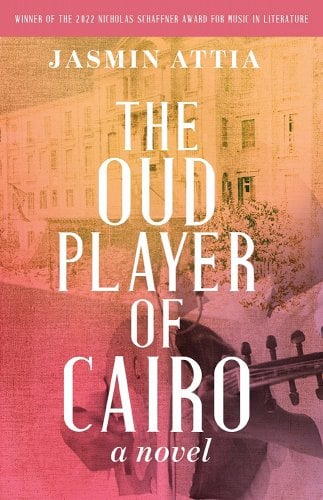
When I wrote The Oud Player of Cairo, conveying the complexity of the city, its history, its architecture, and its cultural imprint was just as important as each character’s story. As Laila, a talented singer with a stunning voice, and her oud playing father, Kamal, navigate Cairo circa 1940, they are met with challenges unique to their place and time.

Literature abounds with stories that take place in Egypt’s capital city. The novels below are set in Cairo, and each offers varied vantage points from which a reader can see the city. Together, they create a complex portrait. 

The Cairo Trilogy by Naguib Mahfouz, translated by William H. Maynard

Set in Cairo between 1917 to 1952, the Cairo Trilogy traces the evolution of a country and its people. It follows the life of a strict father who rules his family with the proverbial “iron fist,” but has a secret life of debauchery. The trilogy is often seen as a criticism of inequity between the sexes, and of an unrealistic set of ideals imposed upon women by men. Mahfouz won the Nobel Prize for a later novel, Children of Gebelawi, and is considered the godfather of modern Arabic literature. The Cairo Trilogy, among many of his novels, has been dramatized in Egyptian cinema and television. 

The Open Door by Latifa Al-Zayyat, translated by Marilyn Booth

The Open Door is considered a landmark of women’s writing in Arabic. Written in 1960 by Latifa al-Zayyat, a feminist and activist, this semi-autobiographical novel is set in Cairo in 1946 and examines the relationship between feminism and nationalism. Themes of personal freedom, agency, and sexual awakening are intertwined with nationalist ideas. The novel offers a rich depiction of a city and country at a political coming-of-age moment from a woman’s point of view. 

I Do Not Sleep by Ihsan Abdel Quddous, translated by Jonathan Smolin

Set in cosmopolitan Cairo, this novel was written by Ihsan Abdel Quddous in 1969. Quddous was shunned by the literati for many years, having been dubbed “the bedroom writer” for his liberal sex scenes and his exploration of female desire. Almost all his work—novels, short stories, and scripts—is written from a woman’s point of view. Considered lowbrow, his fiction wasn’t translated into English until 2021 when Jonathan Smolin published his translation of I Do Not Sleep. However, his work is a pillar of Egyptian literature and cinema. Also important about Quddous’s writings are the veiled political themes in the wake of the 1952 Nasser revolution. I Do Not Sleep is about a young girl who makes up a story of her stepmother’s infidelity to get rid of her. Later, when she sets her father up with a friend, she learns that the friend is only after her father’s money and already has a lover. This novel is an important read because it provides a deeper understanding of the modern Cairene women of the 1960s.

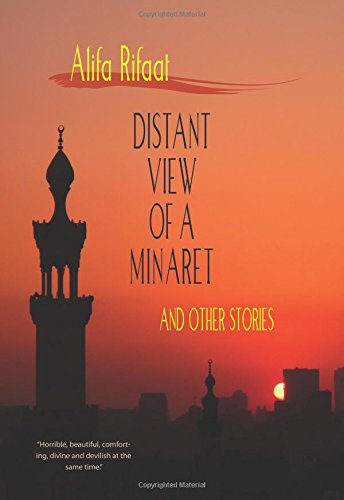
Distant View of a Minaret by Alifa Rifaat, translated by Denys Johnson-Davies

First published in Arabic is 1983, this short story collection by Alifa Rifaat is told from the point of view of a woman living in Cairo and within the constraints of an orthodox Muslim society. Unlike Quddous’s characters, Rifaat’s are not educated, cosmopolitan, or free. Instead, Rifaat offers a portrait of the sexual and emotional frustrations of the traditional Egyptian woman. Rifaat did not go to university, travel abroad, or speak English. Her work is considered uninfluenced by Western ideology and, therefore, an important piece of feminist literature written by an Arab woman for Arab women. Luckily, this collection was translated in 1987, and is now available in English. 

The Map of Love by Ahdaf Soueif

Set in Cairo over two timelines, The Map of Love by Ahdaf Soueif follows the lives of Isabel Parkman, a divorced American journalist who is falling in love with an Egyptian-American conductor in 1999, and her grandmother, Anna Winterbourne. Anna moves to Egypt from England in the early 1900s, and she is captivated by the Egyptian nationalist Sharif Pasha Al-Baroudi. Isabel is on a journey to discover the truth of her own history as she retraces the footsteps of her grandmother in Egypt a hundred years prior. The reader experiences two versions of Cairo, new and old, in this romantic and political historical. 

The Yacoubian Building by Alaa Al Aswany

The Yacoubian Building by Alaa Al Aswany is a story about a building in old Cairo that was built before the 1952 Nasser revolution. The building is a clear representation of the sweeping changes that occurred in Egypt after 1952. The novel highlights the losses and the swift shifts in power that take place within the space of a few decades. It follows the lives of the residents of the Yacoubian building as they confront social, political, religious, financial, and sexual challenges. The Yacoubian Building offers a view of Cairo unlike any before it, and it homes in on the particularly tumultuous aftermath of a monarch being ousted. This novel was dramatized in Egyptian cinema and television. 

Chronicle of a Last Summer by Yasmine El Rashidi

In her novel, Chronicle of a Last Summer, Yasmine El Rashidi tells the story of a young Egyptian woman throughout three distinct periods of her life: youth to early adulthood, her time in college as an aspiring filmmaker, and years later, after Egypt’s President Mubarak loses power during the Arab Spring and she explores her own past. The reader visits and revisits Cairo as the main character and the country come of age. 

The Girl with Braided Hair by Rasha Adly, translated by Sarah Enany

An art historian, Yasmine is restoring a painting when she realizes that a lock of hair is embedded in it. There is no record of the mysterious painting’s transfer to the museum where Yasmine works, and she is propelled on an extraordinary journey to discover the painting’s history. Rasha Adly’s The Girl with Braided Hair takes its readers on a journey through modern Cairo and Cairo in the late 1700s, at the close of the French Campaign in Egypt. Originally written in Arabic and translated into English, this novel offers a unique perspective into the lives of two different women living more than two hundred years apart. 

Cairo Circles by Doma Mahmoud

In Doma Mahmoud’s thrilling novel, Cairo Circles, the city comes to life as the reader follows six young Egyptians whose lives interconnect and collide over the course of a decade. Mahmoud explores the impact of class and privilege on society, from Zeina, the housekeeper’s daughter, to Taymour, who is wealthy but neglected by his alcoholic mother. There is also interplay and juxtaposition between Sheero, an NYU student from Cairo, and his cousin Amir, who makes his way to New York, becomes radicalized, and commits a tragic act of terrorism. This elegantly written story provides readers with an enthralling—and educational—view of modern Cairo and Cairene society. 

If an Egyptian Cannot Speak English by Noor Naga

This novel by Noor Naga offers an ultra-modern, gritty, and unflinching portrayal of an underbelly of Cairo rarely written about. An Egyptian-American graduate of Columbia University is having an identity crisis. She escapes her divorcing parents in New York and heads to Cairo to ostensibly find herself. There she is seen as “the other,” but she also benefits from the immediate high status that comes with being from America. When she meets an unemployed man from a poor village and enters into a dangerous liaison with him, Naga takes the reader on an emotional and intellectual journey. The story is told from two different points of view, and it challenges the traditional sense of hero and heroine. It is about colonialism, identity, class, sex, and politics, with Cairo as a major character.

Forget Boyfriends, I’m Reading for Cults

The age of the boyfriend has ended. Give yours away. Donate him to charity or, if he doesn’t have too much wear and tear, maybe you can sell him on The RealReal. Your girlfriend can be a boyfriend, too. If I’m making proclamations about tired conventions then I’m definitely getting rid of gender. Whoever your boyfriend is, show them to the door.

Up until now, the quest for the perfect boyfriend has driven so much of my favorite fiction, both on the page and on the screen. How long I spent chasing Mr. Darcy, grumbly old Rochester, Edward (and Jacob, to be honest), every man (and a few ladies) in Hamilton, Heathcliff, any character played by Cate Blanchett, and even John Proctor. Don’t get me started on Jordan Catalano! These characters, and the other great boyfriends of fiction, balance beauty and danger, and we will follow our protagonist through every circle of Hell to find our way into his arms.

But a number of recent novels have pointed me in a different direction. In Amina Akhtar’s Kismet, Rafael Frumkin’s Confidence, and Matthew Binder’s Pure Cosmos Club, each of the protagonists comes into close contact with a cult, and now the cult is the new toxic driver of my literary obsessions. 

After all, what is a cult if not a fuckboy persisting?

Cults, overt and implied, have always been stimulating fodder in entertainment. The change has been in me. I have a new understanding of the allure of the cult. I thought, being a thoroughly damaged queer person, that I could never join one—because I don’t trust anyone—but I’ve come to realize, through great recent fiction, that cults can account for that, too. 

Other recent novels have considered cults – Bunny by Mona Awad, Eleutheria by Allegra Hyde, Godshot by Chelsea Bieker, Samuel J. Miller’s The Blade Between, and Rainbow Rowell’s Simon Snow trilogy are a few favorites—so if you’re looking to immerse yourself in literary cultdom, this is the time. 

After all, what is a cult if not a fuckboy persisting?

Cults are sensitive topics, and for a good reason. Victims of cults aren’t simply naïve young people who were swept in by a charismatic leader. Many cults rely on psychological, physical, emotional, and sexual abuse to create complex systems that are impossible for those in the grip to escape. 

But as a literary device, it’s hard to resist the appeal of the cult. Lately, I’ve found myself reading everything through a pandemic lens. And I read everything through a queer lens, because my eyeballs are 100% gay. Cults are appealing in both the “post” pandemic sense and in the queer sense. Cults offer a community of like-minded souls, a chosen family of sorts, while also offering security. 

And who doesn’t want security? Adulthood is a scam. I’m tired of being in charge of my own life. It’s exhausting. I’m so isolated that I barely even call my closest friends because I worry that I can’t give the conversation the time it deserves. And now, as a parent, I find myself changing diapers and making chicken nuggets and wondering: if it takes a village to raise a child, then where is my village? 

The United States of America, in some ways the ultimate cult, welcomes wayfarers with the famed Emma Lazarus sonnet inscribed upon the Statue of Liberty: “Give me your tired, your poor, your huddled masses yearning to breathe free…” I am tired, I am poor, and, after years of huddling and waiting to breathe free – after so many years of consistency, bone-cracking uncertainty – I would love for someone to tell me with absolute certainty what I need to do to persist. What I need to do to transcend. What I need to do to win.

Each of these novels begins with its protagonist cut off from the central figure in their life and searching for this same security that I myself currently crave. The paths they each take towards transcendence are dark, deadly, and preposterously funny, but it’s always understandable why they’re willing to go to such lengths in order to level up.


Ronnie, the complicated lead of Amina Akhtar’s second novel, Kismet, asserts that “real, honest-to-god change [takes] work,” as soon as we meet her on the sunbaked trails of Sedona at the beginning of the novel. Through Ronnie’s experiences, we witness that insidious, slippery path that real cults like Nxivm use to lure people in. In Ronnie’s case, she decides to take “leadership courses” under the wealthy life coach Marley, who encourages her to take the reins of her own life and leave everyone and everything behind. When she does so, however, she gives Marley control rather than taking it for herself. 

Anyone who has leapt from a helicopter parent into a controlling relationship (or graduate program) will recognize Ronnie’s plight. As a self-described American-Born Confused Desi (ABCD), she is already an outsider. And when she cuts ties with the abusive aunt who raised her, she doesn’t know what to do with the freedom. White, wealthy Marley takes advantage of that, and she convinces Ronnie to follow her to Sedona, where the lifestyle will surely suit both of them.

Akhtar’s Sedona is a cult in itself, and one of the existential battles within the novel asks who and how many should have access to Sedona and all of nature’s splendor. Lives are dictated by yoga schedules, diets revolve around smoothies, and no outfit is complete without a crystal. And while this may sound satirical, Akhtar deftly resists making outright fun of the Sedona’s inhabitants (characterized by members of the Kismet Center), choosing instead to show the population through Ronnie’s eyes. As she sees it, they are privy to something that she cannot quite grasp.

In our age of extreme and instant comparison, thanks in part to the digitization of our lives (and particularly our achievements), I often feel like other people had an instruction manual that I never received. Because we so often only post about good news, it can seem as if everyone else is achieving instantaneous success while I toil away. And we see this in Ronnie, this yearning to be a part of a vague “something” that will fix everything and transform her into a real adult.

Lives are dictated by yoga schedules, diets revolve around smoothies, and no outfit is complete without a crystal.

Ronnie is also a woman of color entering into a bone-white space. Whiteness is, of course, the biggest cult of all, indoctrinating its members with a false sense of purpose and protecting all of its members. Akhtar portrays this subtly, both by imbuing many of the book’s wealthy white characters with reserves of confidence and entitlement that approach the absurd and by showing the ways that Marley treats Ronnie like an accessory (and the ways in which Marley feels justified in doing so).

There’s also an unkindness of ravens who make increasingly insistent demands, because of course there is. 

Though Marley serves as Ronnie’s entryway into this space, Akhtar brilliantly places cult atop cult, each consuming yet containing the prior like the old woman who swallowed the fly. New Age is within Sedona which is within wealth which is within whiteness. Cults all the way down.


Rafael Frumkin’s second novel, Confidence, opens with our protagonist, Ezra, in jail and trying to recreate the success of NuLife, the cult he and his partner had formed previously, on the outside. When describing Synthesis, the central tenet of the cult, Ezra’s co-conspirator says that “your self-doubt goes into remission.”

Ezra and this partner, fellow cult leader, Orson, had met years before – in a bit of kismet – when both were put in the same youth detention center. It is their relationship, rather than the cult, that drives this propulsive novel. 

Frumkin’s story follows the rise and fall of two queers who create NuLife, which vows to eliminate fear and raise self-worth,  a beautiful inversion of how queer people, or at least me, are often made to feel in society. It’s also an inversion of the grim melancholy that overtook many during the pandemic, those creeping thoughts that nothing really mattered, that we were all going to die. The fear that we don’t matter.

Out of all of these questions, the most fun one is: if a really hot guy wanted to start a cult with you, would you do it?

Of course, this is complicated by the fact that NuLife is a lie—sort of. It works on a few people, so who is to say? Ezra and Orson take on the cult of American wealth and find, of course, that this is a cult that does not easily extend offers of membership. The 1% is a club in which lifetime membership is bestowed at birth, and yet it’s always looking to reduce its number of members. Frumkin cleverly skewers the idea that you can buy your way into happiness, but he also mixes in complex questions about the nature of love, friendship, and class. 

Out of all of these questions, the most fun one is: if a really hot guy wanted to start a cult with you, would you do it? (Yes!) Especially if you throw some Robin Hood action in. Frumkin is interested in the ways that people use everything at their disposal to get ahead. For Ezra, that means being smart. For his business partner, Orson, that means being the man of everyone’s dreams. And we’ve all met this type in real life, haven’t we? The kind who feel like ASMR boyfriends who’ve come to life? 


Pure Cosmos Club, Matthew Binder’s third novel, begins with two men arriving to clear out main character Paul’s home at the behest of his ex, Janie. On his own (aside from his dog, instant icon Blanche), Paul is the perfect mark for a cult. Though mostly oblivious, Paul is skeptical, but desperation trumps skepticism.

“I’m weary of this mystical voodoo,” Paul says, “and yet I have nowhere else to go.”

Just as Kismet’s Ronnie rejects her guru-roommate’s beliefs but finds herself working in a crystal shop and feeding magic ravens, and the boys of Confidence sell lies of self-actualization as they themselves self-actualize on the back of their sales, Paul sets out to reach Pure Cosmos Club’s Ultimate Level even as he fails to understand it. 

“Life isn’t calculus,” he tells a young boy on the subway. “Not every equation makes sense.” 

One thing that Binder does across throughout his terrific oeuvre is that, through heightened language and zany hijinks, he convinces the reader that he is writing satire while he is actually holding a mirror up to real society—real behavior perpetrated by real people.

As I age and as the world becomes more terrifying, I want that assurance of heaven while I’m still here on Earth

In the same famous essay in which he told us to never use metaphors, George Orwell rails against “inflated language,” particularly cases in which a “mass of Latin words falls upon the facts like soft snow, blurring the outline and covering up all the details.” He follows that with “the great enemy of clear language is insincerity.” Binder’s heightened style brings this to mind, as the wealthy deviants in his novels constantly manipulate others and obscure their true motives with honeyed words. 

The last thing we hear from James, the guru at the center of Binder’s titular Pure Cosmos Club, he says, “It’s up to you now to create your own heaven on Earth…and I can no longer protect you.”

If anything explains my recent fascination with cults, it’s the thing James accuses Paul of letting go of. As I age and as the world becomes more terrifying, I want that assurance of heaven while I’m still here on Earth. I want protection. These literary cults are so appealing because they provide a salve to threats, both external and internal. I want to silence the voice in my head that says nothing really matters with the voice of someone who is absolutely certain of the afterlife. Preferably a heaven I can get to in five easy steps or four payments of $49.99.  And I want protection from the world. Acceptance has never been freely given to me, so why wouldn’t I have to earn it? Why shouldn’t I have to Level Up?

While Kismet finds Ronnie slowly sucked into cult-like circumstances and Confidence follows the foundation of a cult from the inside, Pure Cosmos Club finds its main character constantly knocking on the door of the cult, wondering what it is that he has to do to reach nirvana. As a survivor of an advertising career and current member of academia and the writing world, I understand what it’s like to think that doing just one more thing will mean I’ve finally made it. But, of course, the mythical meritocracy that we live in is that there is no ultimate level. There will always be someone more successful, someone happier. 


Spoiler alert! While these novels satirize cults and their surrounding behaviors, the cults also succeed. Ronnie finds the  agency and belonging that has eluded her since childhood; Ezra and Orson improbably find a way to be together; and Paul breaks out of stasis and sets forth into the wider world (and Pure Cosmos Club itself Hale-Bopps itself right off the planet). 

Who doesn’t love a good chase? While pursuing bad men used to be enough to drive my readerly tastes, men—particularly destructive men—are a dime a dozen. Give me the mystery of the cult. The potential. The community!

I have dozens of online boyfriends, and I’m kicking them all to the curb. I’m deleting Grindr. Evelyn Hugo can keep all seven of her husbands, Colleen Hoover’s toxic hotties can fuck off, and I’m finally letting go of George Clooney. Instead, I’m reading for cults. I want sun, sand, community gardens, and ancient esoterica. I want to ascend, level up, and self-actualize. I’m done caring about the color of my outfits because I want to focus on the color of my aura. We’re entering the golden age of the literary cult, and I’m diving right in.

In a Surreal San Francisco, Depression Is a Literal Black Hole

Sarah Rose Etter loves to write women with surreal maladies. The Book of X, which won the Shirley Jackson Award in 2019, follows Cassie, a girl who was born on a meat farm with a knot—an actual, physical knot—in her stomach. The knot doesn’t represent any one specific thing, but rather serves as an off-kilter lens for Cassie to interrogate her relationship to her body and her body’s relationship to the world.

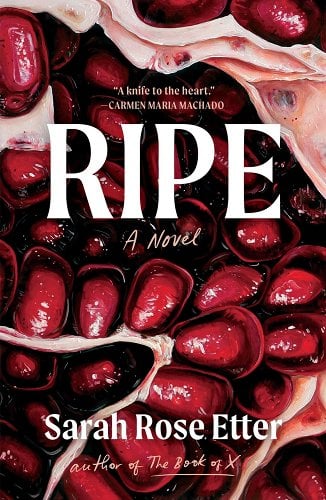
Etter’s second novel Ripe is about a young woman, also named Cassie, who has always been accompanied by a tiny, personal black hole that only she can see. The black hole doesn’t seem to be a threat in and of itself. At least, Cassie is able to live her life and show up for her fancy job at a shiny tech startup without visible interference. But it’s always there. When Cassie is able to have a moment of peace in an art gallery, or experience a connection with another person, it gets a little smaller. When she’s overwhelmed by the demands of her job, anxious about climate change, or dreading an unplanned pregnancy, the hole grows, sometimes blocking Cassie’s field of vision. 

Ripe seems to be about feeling too big and too small at the same time. The novel draws on Etter’s own time working in Silicon Valley and her own experiences of loss and depression, as well as hours of research into the science of black holes. 

In a Zoom interview, we spoke about the grief underpinning the novel, navigating systemic issues while dealing with your own mental health, and the potential to reclaim labels like “surreal.”


Shelbi Polk: Where did the story of Ripe come from?

Sarah Rose Etter: So, there are two layers. The big one is that I worked in Silicon Valley for about a year, and I would call my dad all the time and be like, “I’m seeing this crazy shit. It’s nuts here. I shouldn’t have come here.” And he would talk me down—a lot of what you see in the book is directly taken from his advice. He passed away right before we went into lockdown, but he always told me, when I was in Silicon Valley, “Write it down. You’re gonna write a novel about this, and you’re gonna make a million dollars.” After he died and we were in isolation, I didn’t really have anywhere else to go with the grief. So I thought, I’ll just write the book that he told me to write.

The Book of X, he really loved it. He would keep copies in the trunk of his car and hand them out, very proud papa. But this, I think, is more commercial and a little less crazy. And I think that’s kind of in service to him. I think he would have wanted me to write something a little more accessible, and that’s how it became what it is.

SP: I thought it was really interesting how Cassie’s father in the book loves her very deeply, he cares about her best interests, but he thinks that the money and the prestige of a Silicon Valley job are it. He truly believes working in tech is what will be best for her. I don’t know if that’s a generational divide, but it created an interesting tension—and it sounds like your dad was maybe not sold on Silicon Valley in the same way, which is great.

SRE: No, he was. I think it is generational. I think toward the end of his life, he started to realize that there was more than that. But I do think what we’re seeing right now is a direct response to being raised by a generation of parents who told us that if we get the degrees, if we get the jobs, if we do all the right things, we’ll get the house, we’ll get the life, we’ll do better than them. And although financially we might in some cases be making more than they did, it doesn’t matter because everything is still out of reach. And now, alongside that conversation, we’re also having conversations about pay equality and who actually makes money. We’re starting to revisit things like labor strikes and unions. So yeah, I think the reason this is more than a book about San Francisco, or even tech, is because the bigger issue is, if you bought into that, then this is the situation you are in: a toxic work environment without enough money.

SP: Yeah, it doesn’t have to be San Francisco—but I do think it was a perfect setting because issues like climate and class are so heightened and so obvious there. Cassie was relatable in that she acknowledges these issues, and she thinks about them enough to feel anxiety. But yet she can’t do anything about them, and she can’t find any peace either. I imagine you lived some of that?

SRE: Yeah, when I lived in San Francisco, I remember feeling very jangled, unsettled, at all times. I felt like I was living on the edge of the world and just watching the world collapse. And part of that was because I think I got there after the gold rush, just a little too late to actually get the money. And so, you have this kind of working-class person grasping at the ability to pull themselves up and just not quite getting there and a company exploiting that.

And then, in addition, there’s also the fact that these giant problems—like the insanely rapid pace in which we’ve increased the unhoused population, the climate issues—some of these things are beyond weekend volunteer work and a recurring donation. Let me tell you what most people with severe depression who aren’t making enough money are doing for the unhoused: their best. I wanted to be really realistic about how we are all operating in the world, which is at a remove from these giant systems that we don’t feel like we have any control over and which our elected officials are not trying to change.

SP: The jacket copy says Cassie is never alone because of her black hole. But reading the book, I felt like it was the exact opposite. I felt like having a black hole was the loneliest thing possible, that it was a symbol to emphasize her lack of connection. I guess it’s kind of a joke?

SRE: Yeah, it’s tongue in cheek, right? The black hole was a tricky one. That was probably what took the longest to figure out because in certain drafts it was talking to her. In certain drafts, it had a hum that had words in it. In certain drafts, it was eating all the techies because I was trying to personify something that we don’t understand. I kept thinking to myself, Sarah, you’re an idiot. Why have you tried to make a character out of this thing we can’t even explain in real life? But I also felt like I had done enough research on black holes that I could have spoken at a conference. In the basement, you know. I wouldn’t be on the main stage. But it was one of the most challenging things I’ve ever had to work through, and it looks really short and small on the page. But that is years of research. And then, we were discovering new things about black holes as I was writing the ending, so the ending kept changing. Is there a wormhole in there? Is there a portal? And so, for me, it felt nice to be able to give space to the depression I have faced my whole life, and [to acknowledge] how it never really goes away, but it does change. And the same is true of grief. Hopefully, it reads very similarly to the knot in The Book of X, which was kind of a stand-in for body issues, or anxiety, or whatever you’re carrying. The black hole is depression for Cassie. But for me, it might feel more like the way I’ve been experiencing grief, which changes shape and size.

It felt nice to be able to give space to the depression I have faced my whole life, and to acknowledge how it never really goes away.

SP: Another element that I loved was the religious imagery around the company. Cassie calls her coworkers “believers,” but I was fascinated by how well she mimics their devotion. She’s playing the game, and she’s doing it well. And it made me wonder how isolated she really was. How many others around her were doing the same thing? If she had just told the truth, would she have found allies?

SRE: My experience of San Francisco was that you could not dare to speak up because they would find out. I had a friend who—one of the girls in the book talks about this a little—signed an NDA that prohibited her from saying why she was stressed out. It was very much a place cloaked in secrecy. And if they catch, for even a second, a crack in the mask, you’re going to hear about it. Like when Cassie throws up in the bathroom, and then an hour later, she gets taken on a walk, and her boss asks if she’s sick. It would never be a direct, “Hey, I heard you throw up in the bathroom. Are you okay? I’m worried about you.” But they would know. I think the tension is actually that if she speaks, she’s done there. I think they just made it illegal to do this, but when I was there, at most tech companies, when you left, you had to sign the NDA. They would give you your final check on your last day, and they would sit there with the NDA and the check. And you didn’t really have time to go, “well, I need a lawyer to look at this.” That’s also why you see stories coming out about CEOs years later. It’s when the NDA ran out.

SP: Doing my research for this piece, I saw that you’ve spoken on surrealism as feminism before, and I would love to hear more about that.

SRE: I was at a dinner with some academic who was riding my ass about using surrealism as a term. I know that it’s a choice that comes with some tension because it’s traditionally been a word for white men, and I know a lot of women and people of color throughout time have rejected it as a label because it was created by white men. But I also think language is made to change and evolve. So, if we believe that language is allowed to shift and change, when surrealism is being used to deal with issues of gender or race politics, can’t we just take it back from the dead white guys? I can’t think of a better way to describe my work, because magical realism, that’s not what’s going on here. And then on top of that, I want to push back on the idea that we just have to hand the label over to these dead white guys. Especially when I look around me, and my peers are using it to drive home really important things that are underscoring inequality, that are underscoring body issues. So yeah, I do think we are in a place where we can redefine that word and rethink our use of it.

Hey Siri, Cure My Postpartum Depression

Dear Siri

My son says you’re listening so you might tell us
what we want. If so, I want to know
what is lost under my fingertips
besides home? And whether you understand
that I googled postpartum depression 
after the first year, & I’ve since been bombarded by ads
for crop tops, & pesticides, & sites that claim 
breastfeeding is best. What have the dandelions done
to harm anyone? And what can you do about two sides of any argument 
involving windows? Day or night, night or day. 
If breath is an argument against failure, what is love?
What is love? What is softness
when my brother is my jailor? When my brother is
my employer, & work is this toxic place 
I can’t escape in sleep. When I don’t sleep anymore. When 
my life is dependent on a man for money. What year is it? Can you remind me 
where the year went as I backslid into a ditch beside the highway
in freezing rain? I took a layoff. After I wasn’t refused
maternity leave, but it was insinuated that my job would not exist later 
if I took time off. Did you know? I saw the 6 tools to cure PPD 
& anxiety that you suggested. Of 5 tools, I am 
uncertain. But I am certain about trees.
How long they will remain after none of this
matters. My son has had a terrible year. He too
sat in a dark room. He was bullied. I’ve tried everything
to get him to come out. He likes basketball 
& bike rides. I can’t decide if the world is the reason
for unreason. Why I can’t get out of bed.
Why the body is imaginary after a baby.
Why I can’t hope. Or am I hormonal? I don’t know.
My son, too, has been hormonal. A teenager
now. The baby, a surprise. Could you not have 
let me know? Let me down. Let down your milk so I can hear
the baby cry from another room. Or did your milk fail
to come in too? I read about the baby formula
shortage on my feed. Before what befell any of us
was called an accident. I read about the accident
last night. The baby, the mother. The red barn 
lost in the field. What emerges from the shadow of another. How to see
with four sets of eyes? Or six? Do you know?
I gave birth three times. Sometimes, they all 
lived. Sometimes, I’m in the field watching the horses graze on fog
through my children’s eyes. In each revision,
the cloud around the sun re-sees itself.
Admit it. No one knows what they will have
to survive. What truth. What lie.

To See Anything Clearly is to Acknowledge the Gap Between the Object & the Eye

	It’s hard to say what I’ve asked of my life—

someone dead sings on the car radio, another half

	   -slipped hallelujah. I pull the car over. The river there is high,

is a drunken whisper in the deadened

wood. The dreaded current crashes through me. It’s not that it could happen

		     to anyone. It’s that I can’t believe anyone dies

while there is still singing. A voice scraping the night

	from its hiding place. From water, its need. I don’t understand

			      if faith takes the shape of the body I was last 

                held by, or if it is your dying that I’ve been 

small inside. I don’t understand how to endure 

        mercy, only that you were human in that fresh water, your boots too

                             heavy. I don’t understand love as you move in me

		      while I am alone here. I don’t understand how a river

can ask anything, let alone that someone wade inside it

  as though inside the night itself. I don’t understand the cry of that night

		       on my skin. As it calls you back. As it calls you back

	to water that closed your eyes. I don’t understand why water must first fall

to be whole. I don’t understand the dailiness of sorrow. This age. That my body said, yes,

    though I deny its sentences. The tiny eternities of the moth

flowers. That any choir might carry. That I might stand on these banks until

				     everywhere, even water, heaves up light.

Japanese Comics Helped Me Get Over Myself

I was a single parent when I got married on my lunch break. Taking a day off from my unruly job in foster care wasn’t feasible, plus I was pregnant and my health insurance was crap—it didn’t cover office visits or emergencies (or, ahem, birth control). So, after a quick exchange of vows at the courthouse, my new spouse went home alone and did laundry, and I went back to the office. Soon after, I scored my dream job as a school counselor—a small miracle given that I didn’t possess any of the required professional qualifications—but it didn’t last long. Before I even fully returned to work after my maternity leave, I quit because my employer said I wouldn’t be allowed to pump or nurse the day of kindergarten screenings. I went from being a single, working parent to a married stay-at-home parent in less than a year.

All of this was ages ago now, and my life is so different, it’s easy to forget the mounting frustrations that once consumed me. But reading Yamada Murasaki’s Talk to My Back forced me to remember.

The comics in Talk to My Back, serialized from 1981 to 1984 in the Japanese magazine Garo, feature a mother caring for her children and thankless husband, highlighting the aggravations of domestic life. Thirty years later, the first English edition is available from Drawn & Quarterly, translated by Eisner recipient Ryan Holmberg. To fully appreciate Murasaki’s work, you also need an understanding of its historical framework, but lucky for readers, the book includes an in-depth essay by Holmberg, which offers some cultural context, basic history of alt-manga, and an overview of Murasaki’s life (1948-2009). 

Murasaki was, quite simply, a badass. In addition to her accomplishments within manga, she was the vocalist in a folk band, wrote poetry, and ran for political office. While “she’s rarely named among the leaders of ‘women’s manga’,” Holmberg describes her pioneering role as one of the first cartoonists in Japan who dealt with “the difficulties of womanhood in a realistic, critical, and sustained way, and outside the thematic and pictorial conventions of shōjo manga and its preference for fantasy.” And yet, he notes, she’s not often mentioned in literature about gender and women’s issues within Japanese pop culture, “even in Japan, where every serious scholar and fan knows her work.”

Like many artists, Murasaki’s work was shaped by her personal life. When she was twenty-four, she married one of the members of the folk band she’d sung in as a teenager. In a 1985 interview she said, “I really had big dreams about marriage. I was raised in a household without a father, so I was super jealous of normal families. Cleaning the house, doing the laundry, washing the dishes, and so on while living in a proper house—I couldn’t think of a better life. But once you get to doing it, then you realize how unnatural it is.”

As a single parent, I had harbored my own unrealistic ideas about marriage and domestic life. I shuffled to government offices and free clinics with staff who’d mumble about “freeloaders.” Some thought I was married, others assumed I was straight, everyone writing their own narratives about me as I juggled solo parenting, waitressing, and, eventually, graduate school. Before getting pregnant I’d been pursuing a degree in art therapy but dropped out of the program to attend a school closer to my support system, where I instead studied English and reading instruction. And yet somehow, I’d landed a counseling job—more than that, by incorporating art into sessions, I was essentially working as a (woefully uncredentialed and untrained) art therapist. My decision to quit was as impulsive as marrying on my lunch break. I didn’t discuss it with my spouse or talk to HR, didn’t look into my legal rights. Why? Because I knew how to live on very little money and, like Murasaki, romanticized the normalness of days spent cleaning and caring for babies.

The unnaturalness of domestic life is explored in Talk to My Back, which Murasaki created as a single mother after her first marriage ended. We see the inherent loneliness Chiharu Yamakawa, the protagonist, feels as she cares for her husband and two daughters, irritated by the unequal division of domestic labor and responsibility in parenting. But at its core, the work centers Chiharu’s self-worth and her relationship with herself. She wrestles with questions of who she is, independent of her roles within the home. Murasaki resists easy answers, playing with visual effects to complicate how Chiharu appears—in panels we often see her without a face, or with her features only half-drawn: a shadow of herself. It’s apparent in these small details what a master of the form Murasaki was. She understood how space and omission—of both details and words—could be leveraged in art and writing. She wielded these tools with sharp accuracy, and the result is a biting commentary on domesticity. 

Holmberg explains that it was rare in Murasaki’s time for manga to dive into this domestic sphere. Talk to My Back was often described as “shufu manga,” a term that translates as “female head of household,” but that evokes images of “professional housewives.” He further clarifies that while Murasaki proudly self-identified as shufu, she “squirmed” when others labeled her as such. Holmberg also notes that at the time Talk to My Back was published, the labor demographics in Japan were quickly changing, with almost half of married women employed by the mid 1980s, and professional housewifery was “undergoing a new round of interrogation, under the pressure of radical feminist movements.” American readers—especially now, thirty years after the series debuted—may find the work anachronistic. And yet, the protagonist’s frustrations are relatable. Or, at least, I found them relatable, though it’s been nearly two decades since my life shared any similarities to Chiharu’s.

American readers—especially now, thirty years after the series debuted—may find the work anachronistic.

The collection opens with “Lonely Cinderella,” which takes place after Chiharu’s kids go to sleep. After briefly reveling in the night being hers, the mood shifts to a despondency many will find recognizable: “The TV is on, but I don’t watch it . . . I have a book open, but I don’t read it . . . Eventually I come to, and realize that I’m hardly here.” She doesn’t know what to do, then the clock chimes and the spell is broken. Time to wash dishes. The cartoon slips into the fantastical: a shadowy figure lurks behind her. The scare is interrupted by a call from her husband—he won’t be coming home after all. She hangs up the phone and makes peace with the ghostly figure, acknowledging that some days are “intolerably” lonely. The end panel is of Chiharu standing alone, embraced by a phantom partner. The image somehow manages to be both depressing and almost hopeful.

Murasaki holds space for conflicting emotions. Some comics deal with Chiharu coming to terms with her children growing older. She’s saddened by the realization that they are separate beings from her, but also bewildered; at one point, her internal monologue reads: “Sometimes, I find myself looking at my children and thinking . . . Who the hell are these kids and where the hell did they come from?!” When Chiharu talks to her husband about their kids leaving the nest, he expects her to be sad, but she notes that their daughters are growing up brave and strong—what’s sad about that? And yet, as readers, we’ve seen her anguish on exactly this topic in earlier pages, so we know she’s both sorrowful and proud. Showing only one of the emotions would come across as sentimental, even trite, but instead we see the depth and range of the complexity of parenting.

Later in the book, Chiharu gets a part-time job—a move that doesn’t shift her responsibilities within the home. Now, she works even more, but her work outside the home is remunerated. In many ways, her part-time job doesn’t dramatically alter her life; and yet, it does signal an internal change—she has something that’s hers alone. While panels continue to show her without all her facial features, the phenomenon lessens. She gets a haircut. She makes dolls and, after losing her part-time job, takes her saved earnings and rents space inside a boutique to sell the dolls. While Talk to My Back doesn’t confront the mindset that artistic endeavors don’t have value unless they generate income, it’s nice to see Chiharu get paid for her creative work, given that she’s not compensated for the other work she does.

Chiharu’s burgeoning financial independence through her creative endeavors echoes Murasaki’s own life. Murasaki stopped drawing comics after getting married, but eventually began creating them again in secret. She feared her husband would kill her and knew she couldn’t raise her children with him, but in order to leave, she needed money, which she knew comics could provide. She’d call editors from public phones, “smuggle” her artwork out of the home, and meet with editors in cafés. In 1981, she was finally able to separate from her husband. She stated in an interview, “Had my marriage gone well, I probably wouldn’t be drawing manga now, so I guess I have my husband to thank for that. Thanks for putting me through hell!”

One might expect Murasaki to have infused her work with bitterness, considering her history with her husband, but Talk to My Back doesn’t read that way. While it wrestles with the isolation of marriage and motherhood, Chiharu’s husband is arguably portrayed with complexity. He’s clueless and flawed, expecting Chiharu to make his coffee, even when she’s ill, but he also tries to surprise her for their anniversary (never mind that he messes up the date) and he cancels a “business trip” when he sees Chiharu is hurt. The work’s refusal to take a binary approach is one of its greatest strengths—one that nonetheless leaves room for criticism of the institution of marriage and the way it’s touted as a gateway to emotional satisfaction. All hail the nuclear family! Only the wife will be expected to stay monogamous, and she’ll iron her husband’s clothes and cook his meals! No gratitude required! No thank you, these pages retort. Damn the patriarchy.

The work’s refusal to take a binary approach is one of its greatest strengths.

Reading Murasaki stirred up old feelings I’d forgotten—how confining my life had been, how I’d resented and envied my spouse’s freedom, how achingly lonely I’d felt. But, thanks to Holmberg’s essay exploring Murasaki’s life and the historical relevance of Talk to My Back, I found healing in the centering of Chiharu’s quest to assert her own self-worth.

When I returned to the workforce, my resume was flagging. Degrees in English and education, but my only professional work experience was a year in foster care, followed by a few months as a school counselor, and then a big five-year employment gap. Oh, how I kicked myself for my hotheaded decision to quit, replaying my old coworker’s warning that I’d never find another job like this again. Not with my background.

She was, of course, right. Luckily, I no longer considered being a school counselor my dream job. Dreams change. We grow, sometimes outgrowing relationships. Reading Talk to My Back helped me move past my ill-considered choice to quit. Yes, I could’ve—should’ve—handled it differently, but I don’t regret standing up for myself. Yamada Murasaki’s life and work is unapologetic in its declaration of the importance of championing our worth, whether we do that by leaving a confining relationship, or quitting a dehumanizing job. Not all contemporary American readers will relate to Talk to My Back’s portrayal of the frustrations of domestic life, but probably most will recognize the inherent loneliness of not truly being seen. Perhaps the book will inspire some readers to finally draw the line and walk toward personal fulfillment. From what I’ve read about Murasaki, I imagine she’d like that.

Announcing the 2023 Shortlist for the Ursula K. Le Guin Prize for Fiction

Today, the Ursula K. Le Guin Literary Trust announces the shortlist for the second annual Ursula K. Le Guin Prize for Fiction. The recipient of the $25,000 prize will be chosen by authors William Alexander, Alexander Chee, Karen Joy Fowler, Tochi Onyebuchi, and Shruti Swamy from nine nominees selected by the Trust. Last year Khadija Abdalla Bajaber’s The House of Rust was awarded the prize in a ceremony on October 21st, 2022, Ursula K. Le Guin’s birthday.

The Prize was created to continue Le Guin’s legacy as an author who defied genre, interrogated capitalism, celebrated hope and possibility in her writing, and who encouraged artists to find intellectual and artistic freedom in their work. Theo Downes-Le Guin, the author’s son and literary executor, founded the Prize to honor his mother’s work, to shine a light on newer authors, and to offer money that will provide at least a measure of independence to writers of imaginative fiction.

Here is the shortlist for the 2023 Ursula K. Le Guin Prize for Fiction, followed by a brief interview with Theo Downes-Le Guin. Leah Schnelbach spoke with him about finding this year’s panel, finding hope in literature, and the challenges of carrying the Prize into its second year.


Wolfish by Christiane M. Andrews

In Andrews’ second novel for young readers, a shepherd’s daughter, a wolf, an apprentice oracle, and a king are drawn together by transformation and prophecy. Inspired by the story of Romulus and Remus, Wolfish is a story deeply interested in place, in the way nature can be an agent of change, and in people can connect with each other and animals—or fail to.

Arboreality by Rebecca Campbell

In looping, linked stories that travel through generations, Campbell explores the effects of climate change on one slice of British Columbia: what might happen as the planet changes, and how regular people might remake their homes by growing together and reconsidering other, gentler ways to live in a drastically reshaped world. 

Spear by Nicola Griffith

Griffith’s fresh, queer rewriting of the Percival myth is the story of a young woman who grows up deeply in touch with her homeland, and whose skills take her to the court of Artos—not to simply triumph in battle, but to find herself, and an unexpected home.

Ten Planets by Yuri Herrera, translated by Lisa Dillman

Herrera’s sly stories, elegantly translated by Lisa Dillman, are subtle and brief: a gut bacteria attains consciousness; a detective studies his clients’ noses. Surreal yet familiar, his tales offer new angles on humanity and connection. 

The Spear Cuts Through Water by Simon Jimenez

Jimenez’ structurally inventive second novel is the story of a kingdom being destroyed and—hopefully—rebuilt in a less cruel and violent form. Both epic and intimate in scope, it’s a tale told in many voices, from those of its central characters to some who appear for only a page, or a line, but still influence the world and the many stories it contains.

Brother Alive by Zain Khalid

Three adopted brothers reckon with the past of their parents and the man who adopted them in Khalid’s debut novel, which stretches across decades in a sharp critique of patriarchy, blind faith, capitalism, and more. Through it all runs the specter of Brother, an invisible fourth sibling whose presence is inextricable from the trauma that shaped the boys’ lives.

Meet Us by the Roaring Sea by Akil Kumarasamy

After her mother dies, a young woman in near-future Queens begins translating a manuscript about a group of medical students facing drought and violence. Kumarasamy alternates the translator’s life—with AI, self-driving cars, carbon credits, art, and unexpected friendships—with the manuscript, weaving together a reflective story about survival, memory, and self.

Geometries of Belonging by R.B. Lemberg

Set in the author’s vividly imagined Birdverse, these poems and stories travel through different parts of its cultures and customs, from the creation of art to the scholarly leanings of goats to the different forms love and romance can take. Whether told in letters or narrative verse, Lemberg’s stories explore power, gender, art, and acceptance.

Drinking from Graveyard Wells by Yvette Lisa Ndlovu 

In her first story collection, Ndlovu melds folklore, myth, realism, and SFF elements into a cohesive whole, telling stories that cast new light on longstanding issues, from gentrification to assimilation, stolen ideas to stolen memories. Complex histories inform her fantastical futures (and present), as her characters struggle to be seen, and to be free.


Leah Schnelbach: This is the second year of the Ursula K. Le Guin Prize for Fiction. What did you learn from your inaugural year that you’ve carried forward into this round of submissions?

Theo Downes Le Guin: The first year was a remarkably smooth and joyous experience, for a new program. We were happy with the diversity of nominators and nominated books in year one, but subsequently we made small changes to encourage the broadest possible range of nominations, for example by reaching out to booksellers to encourage more reader nominations. We also increased the size of the group that reviews nominated books, again with a view to ensuring a range of interests and backgrounds as we narrow down to the shortlist.

LS: How do you choose people to invite onto each panel? What are you looking for in a reader/judge?

TDLG: We are seeking a balance of writers from different backgrounds, at different points in their careers and with varying levels of recognition. It’s important to me that we have at least one panelist who knew Ursula well. Eventually that will no longer be possible without having repeat panelists, but we still have years of friends, former students and peers to invite. For selectors who didn’t know Ursula well or at all, we’re looking for evidence of a relationship or affinity to her work. We’re not trying to create a partisan panel, but we need selectors who can assess the shortlist against the ideas found in Ursula’s work and against her standards of excellent writing.

LS: As we live in a culture of doomscrolling and terrible news, I love the emphasis you’ve placed on hope in the nominees’ work. Could you talk a bit about finding hope in Le Guin’s work, how you defined it for the books that were nominated last year, and how it’s reflected in this year’s finalists?

TDLG: Hope is never far below the surface in Ursula’s work, though certainly she is willing to take readers through periods of despondency, hard times, even violence. Ursula didn’t speak of hope and imagination interchangeably, but I believe they overlap heavily in her work, in that we can’t effect change or make our way through hard times without both. As for identifying hope in the nominated books, I have to cop out by paraphrasing Justice Potter Stewart: I can’t define it, but I know it when I see it. The hope expressed in these books runs the gamut from very specific, almost blueprint-like to highly conceptual or emotional, from buried and to on the surface, but it’s always there.

LS: You’ve mentioned the time put into hashing out eligibility for submissions, particularly the difficulties of defining “Imaginative Fiction”. Has that become any easier in the second year? 

TDLG: We received relatively few nominations that didn’t meet the eligibility requirements, so I thank the nominators for that. And as nebulous a term as “imaginative fiction” is, I feel that nominators get what we’re after. We received a wide range from “classic” science fiction to realism with an element that might or might not be fantasy to all readers. I am delighted to see so many nominations that don’t give a whit for genre adherence. Some of these books pose some definitional challenges for us, but it is fascinating and healthy to repeatedly ask myself questions like, how much realism is too much? Because this reverses the question asked for decades whenever a fantasy element creeps into so-called literary fiction, that is, how much departure from realism is too much for a book to be taken seriously? Which in itself is a seriously silly question.

LS: Do you have a favorite work of imaginative fiction in your own reading pantheon?

TDLG: It is tricky, in my job as executor, to figure out when to draw attention to my mother’s work vs. other contemporary writers’ work, let alone pick favorites, so I tend to avoid this question. I’ll just say that I’ve been rereading Kipling. I read him differently now than I did decades ago, in the context of anti-colonialism. But talk about imaginative fiction coupled with craft! Part of his stories always exist in a dream state. And he is so generous of human frailties, aware of our non-dominant place in the natural world.

LS: In your announcement interview last year, you talked about thinking through ways to keep Ursula Le Guin’s writing in the public consciousness, especially for younger readers, and how that played into your work to keep a focus on women’s genre writing in general. I’m wondering if the process of working on the Prize for these last few years has presented any new strategies for that, or held any surprises in how that work is received by the reading public?

TDLG: Maybe the biggest surprise is how little I have to do. More than ever, I see my job as simply ensuring visibility of Ursula’s work from a variety of angles, so that readers of all ages, but especially younger readers, can find it easily. When people find their way to an Ursula book or poem that is right for them, it tends to lead to more of her work, and also to related work by other writers. I think she would be especially gratified by that last fact, that discovering her writing leads to discovery of other writers—often young, living writers—with shared interests and ideas.

LS: Were there moments that stood out for you during your first year of hosting the Prize? 

TDLG: Two moments. First, I was nervous we wouldn’t be able to convene a panel that fit my expectations for the prize. Every writer I approached to serve on the selection panel said yes with alacrity. These are busy, accomplished people, who often have to say no, even to things they’d like to do.

Second, when we convened the panel to select the winning book. I was an observer, joining the video conference just in case any questions of interpretation or eligibility arose. All I had to do was watch this group of five formidably intelligent, literate, kind people talk about books and praise my mother for a few hours. I’d like to do that every week.

LS: Last year’s award ceremony featured a fabulous reading hosted by actor Anthony Rapp. What are your plans for this year’s ceremony? 

TDLG: We’re sticking with the virtual ceremony for accessibility reasons, and also because we try to run this program very lean, putting as much funding into artist’s pockets as possible. As for the presenter, Anthony Rapp will be a tough act to follow, but we’ll do our best. Stay tuned.

LS: Finally, how can people best support the Ursula K. Le Guin Prize as it moves into its third year? 

TDLG: Nominating books and encouraging others—especially fellow readers who aren’t in the industry—to nominate, spreading the word about the shortlist and the award recipient, and above all, reading the books!

Warning: Family History May Cause Writer’s Block

At 5:15 in the morning, I tiptoe across my kitchen floor and pray it doesn’t squeak in that one spot where it always squeaks. I don’t pray often, but these are desperate times: I have a small child and forty-five minutes to write in solitary silence. With a baby monitor and a cup of coffee in front of me, I open my laptop. The cursor blinks as if to say, “Now what?”

I’m working on an essay about re-learning Cantonese, the language I grew up speaking. Of course, it’s about more than that. It’s also about the pain of losing your cultural identity. It’s about what’s lost from one generation to the next. At least, that’s what the essay would be about if I could write anything at all. When does writer’s block become an actual medical condition? Should I call my doctor if symptoms persist for more than six weeks? Stephen King says the best way to beat writer’s block is to write with the door closed—my door is wide open, and my audience, if you can call them that, doesn’t even bother to knock. I stare at the blank screen and realize I’m holding my breath and grinding my teeth as they stand in the doorway wondering what the hell I’m doing. They, my ancestors.

My mother immigrated to the United States from Hong Kong in the 1970s. If you ask her what she found most surprising when she got here, she’ll tell you it was the grocery stores. Aisles and aisles of mass-produced meat, snacks, and desserts, loaded up in buildings the size of airport terminals. It was so different from the open markets she grew up with in Hong Kong, where vegetables were laid out on rugs and ice cream was sold by the slice. Here, in the United States, she could buy a whole gallon of ice cream—enough to get a tummy ache. She’d throw the rest down the garbage disposal, another novelty my mother couldn’t believe. She has always loved to tell me things like this. Stories of life back in Hong Kong. How she and her siblings shared a tiny bedroom with another family because they had nowhere else to stay. How my great-grandmother’s home was ambushed during the Chinese Civil War. How my great-great uncle came here to build the railroads and was treated so poorly that he returned home to report, “Even if all you have is a sidewalk to sleep on in China, never go to the United States.”

. . . Do you see what I mean? It’s hard to not grind your teeth when it’s your job to tell a story, and these are the stories that came before you.

My family loved to neutralize my complaints with their own, which, of course, were always so much worse.

When I was a kid, I would pretend not to care about my mother’s stories. “You think I had it bad?” she’d say, “You should talk to grandma—now she had a tough life.” I knew I should pay attention, but when she talked, I would dig my nose deeper into whatever Baby-Sitters Club novel I was reading. I don’t know why I did that. Maybe I wanted to prove that I wasn’t impressed by her struggles because I needed mine to feel important. Who could blame me? My family loved to neutralize my complaints with their own, which, of course, were always so much worse. I’d complain about mowing the grass in the Texas heat, and my mom would say, “I used to cut grass with scissors.” I’d complain about not being allowed to shave, and she’d say, “Be grateful for your hairy legs—better than going to bed cold.” I once made the mistake of complaining to my aunt that I had to run four miles every day at soccer practice. “Kristin, just be happy you’re alive,” she said, as if death were the only alternative to junior varsity soccer.

Or maybe I didn’t listen because I was scared. The life my mother talked about in Hong Kong looked so different from the one I was planning for myself. She grew up hungry and poor; I watched Saved by the Bell and took gymnastics lessons. She worked minimum-wage jobs to put herself through night school; I was going to college someday. Her goal was to survive; mine was to find a career I loved. Even as a kid, I sensed the tension between preserving my family’s past and planning for my own future. It felt like a betrayal, and I wasn’t ready for those feelings back then. So, I pretended not to listen. My fingers hover over my laptop keys and I look up. My ancestors are still there, nodding as if they knew all of this all along.

“Ah, a writer. So you don’t like making money?” my uncle asked when I revealed my aspirations to him. We were at dim sum, and it was a family reunion of sorts. I hadn’t seen him since I was maybe . . . ten? Now, I was a teenager writing for my high school newspaper. He asked what I wanted to do with my life, so I told him. I was prepared for his response and knew not to take it personally—our family was very practical about these matters. Still, I protested. “Didn’t our family come to the United States for a reason?” I argued. “So we could have a better life? Don’t you want your kids to have the chance to choose what they want to be?” My uncle finished a mouthful of har gow and smiled. “Not really,” he said.

It’s hard for second-generation kids to tell their immigrant parents they want to be writers, actors, or illustrators. Or anything creative, really. By and large, our parents want us to become doctors and lawyers because that’s the most likely path to financial success. And you can’t really blame them. Our country treats immigrants like commodities. Even the most well-meaning policymakers argue that immigrants deserve to be here, not because they deserve a shot at survival, but because they’re good for the economy. So if your family immigrated here and you don’t earn six figures, you sort of feel like a guest who showed up to a party without bringing a bottle of wine.

It’s hard for second-generation kids to tell their immigrant parents they want to be writers, actors, or illustrators.

In a culture where people are only as valuable as their output, earning a ton of money can seem like the best way to gain respect. It’s why so many people believe that you can fight discrimination by getting rich. It’s also why children of immigrants feel isolated from their ethnic communities when they choose creative careers. If we’re not earning a ton of money, we feel like we’re letting down our ancestors. As one Big Law attorney put it in a viral TikTok video, “Yes, it’s fuck capitalism. But my family didn’t fly halfway around the world for me to be a broke bitch.”

I didn’t commit to being a broke bitch right away. After college, I took on a technical writing job at a Big Evil Corporation where I wore slacks and made lots of money. I had extravagant perks, like, you know, health insurance. But I couldn’t shake my desire to write for a living. So after a few years of living in luxury—treating my friends to dinner, going to the doctor when I felt sick—I decided to take the leap. I wanted to save up some money, quit my job, and move to California to be a freelance writer, maybe even write for television. It was a risk, but I saw myself as a “calculated risk-taker.” I told my therapist about my game plan; I created a whole spreadsheet with strict deadlines for every milestone I planned to hit. By the end of the year, I would save six months’ worth of living expenses. By the time I moved, I would have two freelance gigs secured. My therapist smiled at me the way you might smile at a puppy for stepping in its own shit. “Well, don’t forget to have fun,” she said. “Isn’t that the whole point?”

I can see my grandmother laughing in the doorway as I type this. “Who has time for fun?” she says in Cantonese. Another voice, I can’t quite see who it is, chimes in, “Somebody has to pay the bills.” An aunt, maybe. Or my mother. Maybe it’s me.

All of this might sound contradictory. If I’m such a stickler for playing it safe, why would I choose a creative career to begin with? That’s the thing about coming from an immigrant family, though. You are fearless and terrified at the same time. You feel scrappy enough to do ambitious shit, but you’re also terrified of failure. Most people are afraid of failure, but this kind of failure is different. As the child of an immigrant, you need to earn your place here, so if you’re bold enough to go down an unpredictable or unconventional career path, you sure as hell better get rich doing it.

Of course, there’s also the guilt that comes with being the offspring of survivors. “Survival” is one of those words that has evolved to mean just about anything. When my mother talks about survival, she means having enough food, having shelter—you know, not dying. For me, survival is getting through a particularly stressful day of click-clacking on my computer while I decide if I have the energy to go grocery shopping because we’re out of La Croix. “How was your day?” my husband asks. “Fine,” I tell him. “I survived.” Sure, my ancestors wanted a better life for their descendants, but is this what they had in mind? Honestly, I’m not even sure my ancestors would like me. I’ve been writing this whole time, and they’ve been sitting there with their arms crossed, shaking their heads.

As a kid, I had grand ideas about what a writer’s life looked like. It was plugging away on a typewriter in a remote cabin in the woods. Or scribbling down brilliant ideas at a retreat in southern France. As an adult, I know these are myths about writing that most of us don’t get to experience—but they’re alluring, aren’t they? For most of us, writing is jotting down notes in your car when you get a break at your day job. Or squeezing in time to write when your kid goes down for a nap. Sure, there are also those moments you wake up with a warm cup of coffee and a silent house and get to feel like Ernest Hemingway for thirty minutes before your kid starts crying or your husband wakes up and tells you how poorly he slept. Those moments are rare treats. By and large, though, the creative process is a struggle.

Maybe the more important question is: why write in the first place? I recently read that writing is a way to live forever—“little bids for immortality,” as the writer Elisa Gabbert put it. If we can find the right words to describe our thoughts, feelings, experiences, and histories, then it’s sort of like our consciousness will live on without us. The alternative, if we don’t manage to tell the stories we want to tell, is that our stories will disappear when we do. Our ancestors will die along with them. My son will look out of the car window on a road trip to Sacramento, see a train passing by, and not even know that his ancestors built those tracks. He’ll never know his grandmother shared slices of ice cream with seven other siblings. Or that his great-great-grandmother used to pluck grub worms out of her rice buckets and say, “Look at this fat bug, trying to eat all of our food.” It’s my job to tell these stories, even if he pretends not to listen.

My ancestors are harsh editors. They hover in the corner every time I sit down to write these stories. But like all good editors, maybe they just want to do the story justice, not only for the people who came before me but for the people who will come after. We are, in some ways, collaborators.

In two hundred years—maybe even fifty, maybe even now—no one will care about my little Cantonese essay. It will disappear into the infinite timeline of existence (or the internet). So why do I keep writing? Why do I sit here with the door wide open, desperately trying to tap into my creativity? I guess because, like my ancestors, I am trying to survive. And writing is the best chance I’ve got.

The Path to Self-Actualization Is Paved With Grifters and Psychics

Set in Los Angeles, All-Night Pharmacy follows a young woman who both idolizes and resents her older sister, Debbie, for involving her in drug-fueled escapades that could either, “end with you, euphoric, tanning topless on a fishing boat headed for Ensenada, or coming to in a gas station bathroom[.]” After Debbie disappears, the narrator detoxes and forges a new path as an ER secretary, which leads her into the arms of Sasha, a psychic from the former Soviet Republic of Moldova who guides the narrator on the path of queer discovery and self-hood. 

Like the three main characters in her debut novel, Ruth Madievsky is part of the Moldovan Jewish diaspora. And like many émigrés whose families have fled persecution, Ruth has a foot in two worlds. This biographical information factored into the appeal for me, having spent the past few years grilling my mother about her grandparents, Ukrainian Jews who fled pogroms and unrest around 1906, for the US. Unlike Madievsky’s family, mine chose to forget.

Inherited trauma can have outsized influence over a family’s ability to function. But sometimes we have no scapegoat for our own bad behavior. Or, we somehow rise above the hand-me-down anxiety and forge our own path. When we spoke over Zoom in March, Ruth was on the cusp of parenthood herself. As such, our discussion naturally touched on the novel’s themes: generational grief, Jewish mysticism, and ambiguous power dynamics within families, and between lovers.


Arturo Vidich: What made you want to write a book about toxic siblinghood in all its flaming glory?

Ruth Madievsky: It’s so funny—I definitely did not set out to do that. I never outline before I write, it always starts with a voice. And it had a lot to do with the books I was reading at the time where, you know, if there’s a plot, the plot couldn’t be more irrelevant. I wanted to write a voice that’s really sharp and confident and hyper specific. Specificity in other people’s writing is what really gets me, like when they can capture something about the human experience that slices you to your core because you know exactly what they mean. For me, it started with sitting down to a blank page and trying to harness this voice of someone who’s really opinionated, and the details of their life are almost a secondary concern. It’s more about how they describe it. I just love writing characters who have really bold opinions with no data behind it. And then one day I came up with that line: “Spending time with my sister, Debbie, was like buying acid off a guy you met on the bus.” That’s how a lot of it starts. I try to say something very provocative, very specific.

AV: To me, the bar the narrator and her sister frequent, Salvation, was like Plato’s Symposium. There’s a chorus of different voices you can bounce your identity off of and create new masks, new identities. Debbie appears to have mastered her own identity, but the narrator, perpetually in Debbie’s shadow, struggles to come into her own.

RM: I love that. Yeah, it’s pretty clear by the end that their sisterhood is not a match made in heaven. And then if they weren’t sisters, they’d probably fucking hate each other, or be bored by each other, or have no reason to keep in touch. But because they are bound by sisterhood, and by mutual, shared family trauma, I think that this is the best version of a relationship they could have, one that’s distant but friendly. One in which they’re not relying on each other. A non-codependent relationship where they’re not involved in each other’s decision making.

AV: Debbie says “all relationships are transactional.” I felt like there was no shame for her in anything that she did. Is she incapable of finding fault within herself?

RM: I think that she’s had it really rough. She’s taken a lot of their family dynamics harder than the narrator has, maybe because she’s older, and less naive when things were going down with her parents. For her, relationships have always been transactional. She doesn’t really have any close friends. Because they have this dynamic where Debbie’s the dominant one, for the narrator it’s like, Who are you to teach me anything about relationships? Debbie was a lot shittier in earlier drafts, and had fewer redeeming qualities. An editor who I talked to early in the process said, “Why doesn’t the narrator just cut Debbie off?” What’s keeping her attached to this really toxic person? And I think defensively I was like, Well, it’s her sister. I think, for people who have this legacy of the Holocaust over them especially, you don’t just abandon your sibling.

AV: That’s what had me reading to the last page. In the context of the novel, what does it mean that the narrator is “estranged from her own Jewish trauma?” That’s the direct quote, but then also, is Debbie also estranged? Does it affect her in the same way?

RM: That was one of the central questions that I was grappling with in the book. And one of the more controversial things when the book was on submission. Some editors felt like this book, at its heart, is just a sisterhood story, an addiction story, and anything related to intergenerational trauma—the Holocaust—that belongs somewhere else. I was really grateful to have found Alicia Kroell at Catapult who instantly understood that there wasn’t really a concise and paraphrasable thesis about the linear relationship between Jewish trauma and addiction and complicated family dynamics. But it was more about this idea that the legacy of the Holocaust and Soviet Terror is inescapable, I think, even for these people who are a few generations removed. It doesn’t just disappear. It’s part of how they grew up. It’s not something that’s spoken about. That was a thread I was interested in pulling at in the novel without hammering in some kind of unambiguous thesis about, you know, Debbie is the way she is because of “blank.”

AV: Like if you deny your own ancestry or cultural heritage, whatever you deny could still creep up on you. There’s this line that Sasha has later in the novel, in the Jewish cemetery: “They dump all this horror on you and then act affronted when it fucks you up.” To me, that speaks to Debbie’s personality. She does all these things to her sister, and then she’s like, What the fuck is wrong with you?

RM: I’ve thought about how this history affects Debbie as a victim, but it’s interesting to hear you phrase it as, well, the exact thing that people do to her, she does to other people, but doesn’t realize it.

AV: Where did this idea of a person being another person’s amulet come from?

The legacy of the Holocaust and Soviet Terror is inescapable, even for these people who are a few generations removed.

RM: I had a short story solicited for this magazine called 7×7. They paired a writer with a visual artist. I worked with Sarah Ratchye. Originally, it was that Sasha tells the narrator to spend time with this weird, artsy fartsy dude named Kenny and that he is her amulet. He had this creepy parrot who had these beady eyes that looked like they had been in someone’s mouth. The amulet idea got transposed onto Sasha because that’s the role she was playing in the narrator’s life anyway. And then you have amulets, this history of Jewish trauma and of needing something to protect yourself. For my family, superstition is a big thing, especially for my mom and kind of the maternal side of the family. It’s always a fight when there’s some large event and my mom wants me to wear a red bracelet and I don’t want to do it. When I told my grandparents I was pregnant, my grandpa immediately flipped all the glasses in his house upside down and closed the curtains, and didn’t want to talk about it anymore because he didn’t want to jinx it. 

AV: Superstition as inoculation. 

RM: Yeah. And to prepare yourself, to find out how you’ll react. I think it’s been personally helpful for me, as someone who deals with anxiety, this idea that anxiety is not intuition, that just because you have this feeling of doom that something is going to happen, you’re not onto something, necessarily. You’re just fucking anxious. And I think a lot of what superstition is is anxiety, this idea of trying to control something we can’t control. Even though I grew up with a lot of superstition around me, I find it mostly annoying. Having been through some tough times myself, superstition feels worthless to me as a way of protecting myself, like, Okay, try these things that don’t do anything. What’s the point?

AV: Right, superstition no longer holds the same power for most of us, yet people still knock on wood. 

RM: I do that, actually. But it is funny how some of them become more culturally normal. We had a crazy one in my family: if you think someone put the evil eye on you, rub a pair of dirty underwear on your face. I am absolutely not on board.

AV: One of the things I felt like your novel does really well is the binding of queerness to the uncanny and the unexplainable, through Sasha. With Sasha, the narrator has her first opportunity to be in a queer relationship. Could you talk about the decision to make the narrator bi?

A lot of what superstition is is anxiety, this idea of trying to control something we can’t control.

RM: She was bi from the start, actually, from when I first started writing the book as stories in 2014. That was something I didn’t plot out beforehand. I collapsed a lot of stuff for the novel just to make it cohere better. I describe in the novel how the narrator is at the strip club, subtly ogling all the women. Originally that scene took place in— Have you ever been to a Loehmann’s? Before they went bankrupt? They were kind of legendary for these enormous group dressing rooms with no privacy. It’s just fluorescent lights, everybody’s naked. Originally, Debbie worked at a place like that, and the narrator would keep her company in the dressing room, but really she was learning a lot about her own desires. Even though the book is partly a queer coming-of-age story, the voice was not really interested in the coming-out process or queer trauma being the main source of conflict in the book. It felt more natural for it to be an important thing about her, and certainly something she’s navigating, but not the source of all the book’s tension. 

AV: What do you think the narrator’s sense of her own queerness would have been if Sasha had never come into her life?

RM: That’s a really interesting question. The narrator already knows she’s bi before she meets Sasha, so Sasha isn’t exactly teaching her what her sexuality is, per se. What Sasha does is help the narrator learn how to exert more agency, and realize that’s something she wants. She wants a partner, wants to feel like equals. Sasha shows her that there can be happiness in her relationship, though theirs certainly has problems to it. The other relationship the narrator has before that is with Ronnie, which feels a lot more superficial. They’re not a good match, but also, the narrator is never open to them being a match in a real way.

AV: Right. Ronnie’s a futon. 

RM: [Laughs] Yes, he is a futon. She needs someone who can actually challenge her, but not with these very fraught dynamics of like, they’re the boss. When she’s in these relationships, both sexual and familial, where there’s a very clear power dynamic of someone who’s really dominant, and she just follows along—that doesn’t work. But it also doesn’t work when it’s these two really passive people, like her and Ronnie, kind of play acting at a relationship. 

AV: He’s pure, but he’s also really naive. The narrator says, “I was most attracted to him when he was telling me what to do.” Why do some of us crave being told what to do? 

Humor can be a defense mechanism to avoid doing the hard work of self-reflection, but it can also be a way into the darkness.

RM: I mean, being a person is hard. She’s navigating this relationship with a super dominant, toxic sibling. She’s navigating her own nascent queerness. She’s navigating intergenerational trauma that she doesn’t really have the words for. It’s not something that presents itself in super obvious ways in her life, because she’s several generations separated from the family that, you know, survived Soviet terror and the Holocaust. It’s easier to not take responsibility for herself or for her actions. She just allows herself to be kind of swayed by these dominant people and dominant forces.

AV: Could you talk about how you use humor to address dark material? What purpose does humor have in post-traumatic realities, and why is it so effective for survivors?

RM: Part of that is being Jewish. Jewish humor and Soviet humor are often very dark, you know? Sometimes it’s more approachable to engage with really dark shit from a slant. Humor makes it feel more survivable. I remember being at a funeral—I was newly married at the time—and this very lovely rabbi saying, afterward, when we were all cried out and sniffling, that a cemetery’s a great place to walk around and get some inspiration for baby names. Which is especially funny in a Jewish cemetery where half the names are Semyon and Hymen.

AV: As I was reading your novel, I had the idea that if we never laugh again, we do disrespect to our ancestors. Or like the real tragedy is forgetting.

RM: I think so too. Everyone in my family has a really dark sense of humor. That’s how I was raised. Russian proverbs are often very dark, very vulgar and pretty funny. So it’s just kind of my worldview. Humor can be a defense mechanism to avoid doing the hard work of self-reflection, but it can also be a way into the darkness.