My family immigrated to the U.S. from the former Soviet Union as political refugees when I was two years old. We left the only home my parents had known—the country where my great-grandfather was murdered as an enemy of the state, where my father had to join the army to “earn” one of the few medical school spots open to Jews, where my grandfather had to bribe a government official for me to be named Ruth (it wasn’t an option in the Soviet book of names). Having grown up under much more stable conditions in Los Angeles, these stories are unrelatable to me. But this legacy is a weight I carry at all times. Intergenerational trauma is, by nature, a form of collateral damage. Though I can’t distill down into a pithy thesis how this inheritance has shaped me, I know with certainty that it has. The sense that I owe my ancestors an unrepayable debt for their sacrifices, my choice of a “stable” day job as a pharmacist, my often boundaryless relationship with my family—all feel connected to what my relatives survived, and what they didn’t survive.
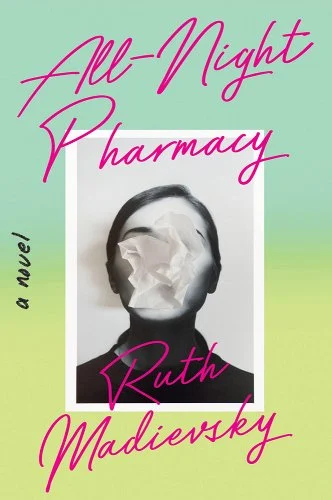
My debut novel, All-Night Pharmacy, tracks the coming-of-age of a young woman in a toxic entanglement with her larger-than-life older sister, Debbie. A wild night of taking mystery pills at their beloved dive bar turns violent, and Debbie vanishes without a trace. Our unnamed narrator, who has always defined herself in relation to Debbie, finds herself consumed with unease over what kind of person to be. That’s when she falls under the wing of an alluring Soviet Jewish refugee, Sasha, who claims to be a psychic tasked with acting as her spiritual guide. The narrator, like Sasha, is of Soviet Jewish descent, albeit several generations ago. Despite growing up in America to American-born parents, our narrator senses that the horror her ancestors experienced continues to pull the strings of her own life.
This reading list features seven books that respect the mystery and nuance of intergenerational trauma and its aftermath. Like my novel, these books reckon with family legacies atmospherically. The weight of that inheritance doesn’t hit these characters like a truck. It’s a mist that settles over them. Even when they can’t see it, it’s in the air they breathe. And lest you think these books—mine included—sound depressing as hell: I promise you’re in for a wild ride full of hot bathtub sex in a former Soviet republic, literal treasure hunts, and laugh-out-loud dark comedy.
Plunder is a wild journey into the dark heart of post-Holocaust Eastern Europe. Menachem Kaiser takes up his Holocaust-survivor grandfather’s twenty-year failed attempt to reclaim the Polish apartment complex stolen from his family by Nazis. With the help of a Polish lawyer nicknamed “The Killer” and her translator daughter, Kaiser navigates the bureaucracy of the Polish legal system and his own thorny feelings about what taking back the long-lost building would mean for its current residents. Along the way, he discovers that a Holocaust survivor relative has written a memoir with a cult following, and explores a secret network of underground Nazi tunnels with a ramshackle crew of treasure hunters, among other chaotic adventures. Kaiser’s thoughtful consideration of the allure of Nazi conspiracy theories (“World War II is psychically a lot easier when it’s about antigravity and time travel than when it’s about gas chambers and stacks of corpses.”) helped me subtly put into words how Soviet Jewish trauma shaped my narrator’s family. The memoir wraps up with a page-turning treasure hunt where family lore, true crime, and the occult collide.
The narrator of Motherhood attempts to decide through a series of experiments whether to have a child before her fertility window closes. The beautiful weirdness of Heti’s mind is on full display in this book, which feels like an invented novel form of its own. The narrator circles her complex feelings about motherhood through a self-devised occult practice, inspired by the I Ching, in which she flips three coins to answer yes-or-no questions. Her approaches to the motherhood question are innovative and hilarious: “When I was younger, thinking about whether I wanted children, I always came back to this formula: if no one had told me anything about the world, I would have invented boyfriends. I would have invented sex, friendship, art. I would not have invented child-rearing.” She considers whether having a child means honoring her own mother, and whether it could be a way to turn her mother’s “sadness into gold.” One anecdote is especially haunting: a Jewish woman attempts to track down why each generation of women in her family cooks chicken by first tying its legs together in the pot. Her mother answers, “That’s the way my mother did it,” as does her grandmother. Finally, her great-grandmother explains, “That’s the only way it would fit in my pot.” Heti concludes that this “is how childbearing feels to me: a once-necessary, now sentimental gesture.” And then she proceeds to vacillate in consistently surprising ways for another 250 pages.
My copy of The Four Humors looks like a middle-schooler’s science textbook the day before the final exam: underlined and dog-eared and sticky-noted within an inch of its life. The novel follows college student Sibel as she spends the summer in Istanbul with her grandmother and white American boyfriend (who the Turkish community seem to prefer to her—brutal!). Instead of preparing for the LSAT, Sibel spends her days avoiding her father’s grave, eating fragrant meats, and using the four humors theory of ancient medicine to treat her mysterious chronic headache. The Four Humors puts the “literary” in literary fiction, full of razor-sharp sentences like, “She picks at my mispronounced vowels like at the white flesh on a fish bone.” I nearly passed out at her description of Turkish talk shows that spew pseudoscientific diet advice and air out dirty family laundry for how uncannily similar it was to the toxic Russian talk shows I describe in my novel. “Is every immigrant culture the same??” I frantically texted several friends along with a link to the book. The Four Humors astutely and entertainingly observes the aftermath of family secrets and political violence on multiple generations of a millennial slacker’s family.
Laymon’s memoir takes the form of a letter to his mother, a gifted academic who physically abused Laymon to steel him against the more violent—perhaps fatal—assaults of life as a Black man in America. Heavy reckons with his family legacy of sexual trauma, disordered eating, and his own propensity for cruelty; Laymon doesn’t dish anything he can’t take. As a stylist, he recounts systemic and interpersonal assaults—including being abused by his babysitter and being expelled from Millsaps College for not signing out a library book—with cutting tenderness. His interrogation of self, of his family, and of America sinks in as smoothly as a freshly sharpened knife: “America seems filled with violent people who like causing people pain but hate when those people tell them that pain hurts.” I cringe when any book is described as “brave” (it’s the touch of condescension for me). But Heavy is not a book that I’d have the guts to write, and I don’t know that even twenty more years of therapy would make it so. How lucky we are that Laymon found the words for what “my body knew” but “my mouth and my mind couldn’t, or maybe wouldn’t, express.”
I laughed, I cried, I laugh-cried. This novel-in-stories follows Soviet Jewish immigrant Oksana from childhood to early adulthood as she navigates life across America with her striver parents and—here’s a term I don’t use often—her horny grandmother. One storyline in particular, which tracks her father’s path from delivering pizza as a new immigrant, to working at Goldman Sachs, to a tragic accident in the luxury car that symbolized his attainment (finally!) of the American dream, absolutely wrecked me. Kuznetsova’s dark humor is distinctly Soviet Jewish. While staring at a photograph of her grandfather “for signs that he would die soon,” Oksana “screamed…but nothing happened, nobody came, not the regular police or the secret police.” Her new American friends have hair “as black and shiny as the trash bags where Mama kept my old clothes.” Oksana, Behave! masterfully depicts the chaos of young adulthood, the diasporic loneliness of living between worlds, and the grief of wondering what could have been had you never immigrated at all.
Vuong’s debut poetry collection is a compulsively underlinable reckoning with queerness, immigration, familial trauma, and the legacy of the Vietnam war. His poems teem with arresting imagery: “the chief of police / facedown in a pool of Coca-Cola. / A palm-sized photo of his father soaking / beside his left ear.”; “apples thunder / the earth with red hooves”; “I pretend…that you’re not saying / my name & it’s not coming out / like a slaughterhouse.” Vuong’s lyrics have a shocking musicality; he lushly describes terrible violence without glorifying it. His poems can also be very funny, as when he writes, “Note to self: If Orpheus were a woman I wouldn’t be stuck down here.” These are poems of familial love and resentment and every shade of pain and passion in between. Despite Night Sky with Exit Wounds’ melancholia, it makes for charismatic and unforgettable company.
This debut poetry collection’s dedication—“For all my relations, especially my father, who walked me toward this book and will never set a living eye upon it”—gives you a sense of the lyric exploration of grief and family legacy to come. Mukomolova’s poems depict the raw sensuality and horror of young adulthood, of coming into one’s queerness, of becoming disillusioned to the world’s cruelty. The Russian folk tale of Vasilyssa the Beautiful, who battles the crone witch Baba Yaga, is a slanted window through which the speaker examines her identity as a queer, Soviet Jewish refugee living in New York. “High school wasn’t always two towers crashing,” opens a stark prose poem about the danger and ecstasy of girlhood amid a backdrop of national tragedy. I would be tempted to describe Mukomolova’s lines as a gut-punch, if they didn’t hurt so good: “Our pinhole cameras reeled us in…In the darkroom, we were the light.”
I chose my psychic for her name. Faith, or Hope—that would have been too much. But: Grace. Maybe she even heard me when I thought, Yes.
I found her, like everything else, on the internet. All you have to do is google finding missing people psychic brooklyn and the true believers float to the surface, unable to sink despite themselves. The crystal healers, the Tarot readers, the ghost whisperers and demon exorcists, the astrologers and alchemists. Grace Banks. Grace’s website was also the only example I saw that didn’t give me any middle-school project or Renaissance faire vibes, so, who knows, maybe I’d have gone with her even if she had been Seraphina the Seer.
This was right after I read about the bomoh showing up at the Kuala Lumpur airport, his self-imposed mission to exorcise the evil spirits preventing the rescuers from locating the plane. It wasn’t like I thought clacking around some coconuts would do anything for anyone, alive or dead or neither or in-between. But I also thought—I think—what the fuck do we know? Two hundred and thirty-nine people, three hundred thousand pounds of metal, the overcast silence of the sky. I said all of this in my email to Grace Banks. I was in the insomniac trough of my night, those underwater hours between one and three AM, and I said too many things.
She wrote back seven minutes later from her iPhone and asked me to come in.
The address was at the waterfront end of Greenpoint Avenue, separated from the East River by an empty lot that was nine months away from groundwork being laid for yet another sleek, cheaply built condominium. Banks Consulting occupied the second floor, above a bar and below an acupuncture studio. A shabby three-floor commercial building, local retail tenants, cusp-y Brooklyn neighborhood hobbled by lack of subway access—it could have been one of my properties. Surely this was a sign.
Grace’s office smelled of spirituality, which to me smelled like incense. Otherwise, the space less resembled a psychic’s storefront than a contemporary art gallery. Framed photographs of landscape scenes hung on exposed brick walls. The room had an open layout and no furniture, except for a coffee table and floor cushions in a corner. Grace herself, consistent with her online persona, similarly appeared committed to defying as many stereotypes about psychics as she could. There was nothing gauzy or glittery about her, no turbans or shawls or dangly jewelry, no dramatic eyeshadow or any other makeup as far as I could tell. She was dressed in black and carried an iPad. She looked like a young woman trying to channel Steve Jobs (which, given her profession, perhaps she was). Her handshake was dry, brisk and assured. I was relieved, if also a little disappointed.
When we sat down she said, “Michael, I want to be clear about how I can help and how I can’t.”
Of course she wouldn’t be able to find you. If she could, she would already have. She told me about the effort organized by the global psychic community when the plane first disappeared, practitioners across twenty-five time zones sitting down and focusing on sensing the location of the aircraft. The analogy she used was of individual users contributing the processing power of their PCs towards some big computing project, like SETI. Grace had participated, singing for two hours. (“Singing?” I asked. “Music is my medium,” she said. “Pun unintended.”) But the astral realm had been too shrouded. Too many negative vibes. Fear, said Grace, and panic—and hearing her say that stirred up some diffuse, silt-like memory of those emotions in me.
What she could do, she concluded, if I wanted, was help me get in touch with you.
“As in, telepathy?”
“We don’t like that word.”
“Why not?”
“It’s been co-opted by popular culture. I prefer the term psionic communication: one mind speaking directly to another mind.”
“So you think he’s alive?”
“I didn’t say that.”
“But if I can talk to Connor,” I said, “can’t he just tell me where he is?”
She explained that this would be a one-way setup: since you wouldn’t have a psychic to help you, you wouldn’t have the ability to respond in any meaningful way. I would be able to sense your presence—nothing more.
“And this will only work if your son is receptive enough. It’s possible that we’ll do everything we need to do on our end and he’ll still be unable to hear you. Are the two of you close?”
“No,” I said.
“Are you fine with the fact that it might not work?”
“Yes.”
“No,” she said, “you’re not.”
I was impressed. “I can handle it.”
She looked at me. I tried to think confident thoughts.
“It will take some time for you to be ready,” she said. “You’ll have to build up your psychic range. I’ll talk you through the steps of what’s involved and you can practice.”
“Okay,” I said.
“And we’ll have to do it on-site. Have you ever been to Kuala Lumpur?”
II
Exercise No. 1: Clearing your mind
Think of a room in your house the way it is. Furnished, cluttered maybe. Think of removing everything in it, restoring it to emptiness. Then remove the room itself—walls, ceiling, floor.
(Grace’s voice, fuzzy on speakerphone: “What’s left?”
“Is that a trick question?”
“I don’t ask trick questions.”
“The rest of the building, I guess.” “Keep going.”)
There are no direct flights from New York to Kuala Lumpur. I booked two economy tickets on United. When I told Grace Banks which flight and the date I had chosen she didn’t object, which I took to mean nothing too catastrophic would happen.
I checked in online and arrived at Newark two hours early like one is supposed to. While I waited for Grace I replied to work emails to try to stop myself from doing what I really wanted to do. My architect was proposing a new floor plan for 333 Franklin. The tenant at 700 Manhattan #1 wanted to extend her lease. The city had more questions about my application for a plumbing permit for 76 Meserole. I ran out of emails, stared at the time blinking away on one of the LED screens that were everywhere in the terminal, watched people leave and arrive and leave again, figured fuck it, and called your mother. I wasn’t expecting her to pick up but she did. It was just before midnight in Beijing.
I told her I was going to Malaysia, and she asked me why.
“To try to talk to Con.”
“What do you mean?”—and I could sense the fluttering, still, beneath the appalled weight of her question.
“I think I have a shot of connecting to Con’s consciousness, but I need to be in Kuala Lumpur to do that.”
I heard, within the faint static of the subpar connection, Fuck, Walter’s right, he is losing it; and then, a breath later: “Mikey . . . I really think you should try seeing someone.”
I said, “I am, actually.” This was a quarter-truth. In the past month I had been on three dates with a woman I met on Tinder, an HR manager and aspiring comedian. I wasn’t planning to go on a fourth.
“Are you? That’s great. Did you tell them about, what you’re planning to do?”
“No. We only just started going out. I don’t think I’m ready to share something like that with her yet.”
“I meant, like a therapist.”
“I guess you could say she’s kind of like a therapist.”
“The woman you’re dating? I don’t think that’s a good idea.”
“What?—no. My psychic.”
She sighed, and I heard, Whatever, you’re a grown man, or an overgrown child, one of the two, and in either case you’re not my problem anymore. The practice must have been paying off.
“When are you going?” she asked.
“I’m at the airport now. Back a week later.”
“This Wednesday is—”
“I know,” I said. “That’s why now. You thought I’d forgotten and this was just an incredible coincidence?”
“You’ve forgotten before.”
I contemplated the floor. Had the designer chosen this shade of speckled grey because it concealed dirt so well? Those are the kinds of questions I ponder now. I wanted to say that she had been the one to up and move to China when you were twelve—hadn’t California been far enough?—but I knew what her response would be. One: that was irrelevant. Two: relative proximity hadn’t helped my memory much. Jab, cross, knockout.
“I’m sorry,” she said. “There was no need to say that.”
“No,” I said. “You’re right.”
“Regardless. It doesn’t matter anymore.” She paused; I felt her attention shift. “I have to go.”
“Walter getting jealous?”
I wanted to snatch that back once I heard myself, trying too hard for a subpar joke that, it’s obvious to all, is really on me. But when your mother spoke I could tell she had barely registered what I said. “It’s Deanna. She’s been having these nightmares. Ever since.”
I knew, right then: Deanna thought her stepbrother was still alive, as well. True believer. “I’ll let you go.”
After I hung up I closed my eyes and emptied my mind, and then I looked around for Grace. The plane was taking off in a little over an hour. She hadn’t texted or called. I dialed her number and let the line ring itself out.
I was starting to let myself think that it had been a bizarre scam—except I hadn’t paid her yet—or a reality show gotcha-type situation—in which case I would be resolutely and disappointingly undramatic, just walk back out and get into a cab like I had known all along—when I heard, behind me: “Hello, Michael.”
I turned. “You’re late,” I said, striving to project admonition into my outer voice, utterly negated, no doubt, by the aura of panicked relief that even a non-psychic could see.
“I wanted to let you finish up your conversation with your ex-wife,” she said. “Also, the security line is the shortest it’s been for the last forty-five minutes. We should take advantage of that.”
She clicked off, wheeling her suitcase behind her. I followed.
During our layover in Hong Kong I asked Grace, “How did you get into the psychic business?”
We were sitting side by side staring out through the glass at the planes lined up on the runway. Behind them a low green wave of hills rolled across the steamy horizon. She sipped at her bottle of coconut water and said, “It was similar to how you got into real estate.”
“You gave up on being a shitty artist?”
She turned to look at me. “I don’t think you’re being fair to yourself.”
I shrugged, embarrassed.
“I’ve seen a few of your paintings.”
“Where?” I’ve shown in a few (small) galleries, but that was years ago. I suppose there are people out there who own my artwork, assuming they haven’t recycled it or given it away at a yard sale.
She tapped her temple. All right then.
“The Helen series,” she said. “That was your wife?”
Up until then I hadn’t mentioned your mother any more than necessary. Not how we met in Santiago de Compostela one hectic night in July, two college backpackers without the foresight to consider that showing up during the Festas do Apóstolos with no prearranged accommodation would mean wandering about on the streets of the old town until dawn, or how we got married seven months later, or how we laughed at the foolishness of the question people kept asking: were we sure? I talked about her only in terms of you. She had primary custody, and after she remarried she took you away from New York, first to San Francisco and then to Beijing, all in furtherance of her second husband’s lucrative, soul-destroying finance career. Over last year’s spring break she let you fly to Kuala Lumpur with your best friend to stay with his family. I pushed for it—I’d always thought your mother was overprotective of you, to your detriment. And then you had been late for your flight back to Beijing, gotten to the boarding gate after it closed, been rebooked on the first plane out the next morning.
I’d always thought your mother was overprotective of you, to your detriment.
“Yes,” I said.
“When was the most recent one completed?”
I frowned as if I was trying to remember. “Nine years ago?” I wondered if she knew about Helen VII, which I put away a week after I started, when your mother told me Walter had proposed—and then I wondered if my thinking about it might have alerted her.
“They move me,” said Grace. “Is that enough?”
“What do you mean?”
“For an artist. To know that their work moves someone.”
“I wouldn’t know,” I said. I nodded at the sky in front of us, above the hills, which had swelled and darkened while we had been speaking. “Looks like a thunderstorm.”
“Our flight will be fine. But the rain will be an issue in KL.”
It annoyed me how assuredly she said that. “I didn’t know your abilities extended to weather prediction.”
She smiled. She might have been about to say something in reply, but then the man at the gate counter began announcing that the flight was ready to board. She stood up, stretched. “Onwards and upwards.”
III
Exercise No. 2: Bringing the recipient into your psychic focus, Part A
You’re familiar with the two past tenses in Spanish. Start with the preterito: a specific memory of the recipient, sharp, bright, bounded. Wrap it around you so tightly that its edges dissolve, memory becomes experience, and what you remember you felt then—some glimmering of it—that’s what you feel now.
(We’re splayed out on my couch racing Mario Kart as we have been for the past three hours, hands cramping, vision haloed, shaking our heads to get rid of theme song tinnitus. That couch—it’s a Craigslist freebie, and something about the upholstery, it’s too coarse or maybe just dirty, is causing a rash to break out across your legs. You keep scratching, never saying anything, you’re that kind of kid, and it makes me furious, at the unhygienic bastard I got the couch from, and how your mother is right about what a shitty parent I am, and at you, how fragile you are, and how silent. I don’t say anything either, I’m that kind of coward. Then I realize you’ve been letting me win this whole time, staging your crashes, gauging my haplessness so you can steer one obstacle behind me.)
It was not raining when we landed in Kuala Lumpur. The sun flared down on the tarmac, so bright my eyes hurt just looking out through the cabin window. I resolved not to remark on the weather. In the arrivals hall we were set upon by a horde of men, all ages and sizes, demanding to know if we needed a ride to our hotel. I was prepared to shoulder my way through to the safety of an officially sanctioned taxi line, but Grace said to one of them, “Do you have a meter?” and when he nodded eagerly, looked at me.
“Why not,” I said.
We crawled away from the airport and onto the expressway and right into a shimmery impasse of traffic. Our driver jerked to a stop and fiddled with the radio dial. We tuned into a confection of a melody, somehow granted gravity by being sung in a language I didn’t understand. I stared at the pickup truck ahead of us and willed it to move. No dice. Men—construction workers, in long sleeves and safety vests and boots—sat along both sides of the truck’s cargo bed, under a tarpaulin rigged up like a roof, looking dusty and stoic. Everything was coming across as slightly wavy in the heat, although that could also have been an effect of jet lag and exhaustion. I hadn’t slept at all, the entire twenty-three hours. It had been my first time on a plane since what happened to you, and I kept thinking I should stay vigilant, just in case. Beside me Grace had reclined her seat as far as it would go once we reached cruising altitude, snapped on her eye mask, and peaced out for the rest of the flight.
I leaned forward. “Could you please turn up the AC?”
The driver stared at me through the rear view mirror. He was so young—I hadn’t noticed until now—and all of a sudden I knew, the absolute way that one does in every fairy tale, encountering the bird enchanted or the boy ensorcelled. What a strange, wild relief it was: you right there, watching me the way you used to, waiting for me to recognize you.
“Con,” I said, right as Grace said, “The air conditioning. Sila.”
The driver, just a Southeast Asian taxi driver once again, someone else’s son, another boy with morose eyes and bony wrists, pressed a few buttons. A labored whirring issued from the air conditioning vents, unaccompanied by any discernible change in temperature.
The song ended, and as we segued into the slightly manic patter of an ad spot, all the white light of the afternoon faded out around us. If we had been in a movie, this would be the scene where the undead armies showed up. I peered up at the sky through my window and saw that it had bruised over, purplish-yellow, as if some kind of violence had been done to it. Less than three minutes later it burst open like a cosmic wound. Now I was grateful for how slowly we were moving, as the rain thwacked against the roof and sides of the car like ammunition and the world blurred into abstract expressionism. I thought of Gorky, de Kooning, and then the men on that truck bed, less than five feet away and impossible to make out now despite the wipers frenzying back and forth across the windshield. I couldn’t imagine their makeshift roof had survived. I glanced at Grace, but she was looking out of her window.
IV
Exercise No. 3: Bringing the recipient into your psychic focus, Part B
Now, the imperfecto. Picture the recipient again, but this time unattached to any single incident or event.
(“So he’s just, kind of, floating?”
“If you picture him floating.”
I pictured a picture. A Rembrandt, maybe, the solemn curves of the face holding the light and hiding from it at the same time. Blank out the Dutch nobleman and swab you in, with your unruly hair and ironic T-shirt. Except it was too hard, imagining your face the last time I saw you, and I ended up with a Magritte instead, a cut-out of the night sky.)
I lay in bed that first night listening to the rain beat the world outside into submission.
I don’t remember doing so but I must have fallen asleep, because at some point I opened my eyes and a dull light was bleeding into the room around the edges of the black-out curtain. At first I wasn’t sure if it was still raining or if the sound of it had simply taken up residence in my skull. I staggered to the window and looked out at the topography of office buildings, low tiled roofs, construction cranes pointing scaffolded fingers into the sky, tiny lagoons of greenery within the concrete. A pair of towers in the hazy distance made me think, momentarily, of the old World Trade Center. We celebrated your second birthday shortly before it fell. For months afterwards we hid out in our apartment, terrified of the prospect of another attack, discussing endlessly if the city had become too unsafe for you. We even planned at one point to leave. Now I can see that what really terrified us was realizing that we had made you and then placed you in a world of dangers we couldn’t keep you safe from: how fucking powerless we were.
Grace had said she would let me know when we were ready to, as she put it, begin the outreach. I ordered room service and practiced my exercises. When she knocked on my door later that day, though, it was to ask if I wanted to venture out for dinner. “The rain’s letting up,” she said. “It will stop soon.”
We hustled through the drizzle to a local eatery a few blocks away. It was the sort of place that the city seemed to be pockmarked with, an open storefront with folding tables and plastic stools and wall fans pushing hot air back and forth. The other diners stared at us like we had dripped in from another galaxy. An old woman who seemed to be the only server waved us to an empty table and then immediately asked us what we were ordering.
“Is there a menu?” I asked.
She pointed at the back wall, where a signboard listed a dozen or so items, none of which I had ever heard of.
I glanced at the next table, where a woman was tearing up a large pancake and dipping it in a side dish of curry. “I’ll have that please.”
Grace was still looking at the signboard. She said, “I’ll have the number two.”
She spoke with her usual definitiveness, but when the bowl of soup was sloshed down in front of her, she stared at it like a scryer divining disaster in its livid orange depths.
I said, “We can switch if you’d like.”
She blinked up at me. “Yes,” she said. “Thank you.”
On my second beer—a bland local brand that I was only drinking for its clarifying, icy coldness—I asked, “What did you mean, it was similar to how I got into real estate?”
Grace said, as if we had been talking about this for the last ten minutes, “I had an opportunity and I took it, and then I realized I had a knack.”
It’s funny, but until then, I’d never thought of it that way. Putting my close-to-zero net worth into a foreclosed building in a blighted neighborhood, at a time when banks were collapsing and debt markets were imploding and everyone else was shitting themselves trying to get out—that had been fatalism, if anything. A senseless act in a world that no longer made sense. But then I began fixing up the property, and looking into refinancing, and bidding at more fire sales, and I understood that I’d finally found something that could consume me without making me care about it.
“What kind of opportunity?” I said. “If you don’t mind my asking.”
“My sister disappeared.”
I instinctively started to say I was sorry, then decided I shouldn’t without further context. “Did you find her?”
She nodded.
“Was she . . . all right?”
She nodded again. I took the hint. “What were you doing before?”
“Advertising.”
The rain had intensified again by the time we were ready to leave. We stood on the covered sidewalk and watched the water sheeting down, illuminated in the orange blush of the street lights. We hadn’t brought umbrellas, given Grace’s assurance that they would not be necessary.
I said, “Seems like you’re a bit off your game tonight.”
I thought I’d intended it as a joke until I heard my voice. Grace continued staring out at the rain. I couldn’t decide if I should apologize or ask her to tell me, for real, if she believed that what we came here to do was possible.
“Tomorrow,” she said. “You’ll speak to him tomorrow.”
When we got back to the hotel I took a shower and had another beer from the minibar before sitting down to swipe through all the photos of you that I had stored in my phone. Your mother sent them every quarter; I’m guessing she had the task listed on her calendar. All your questionable hairstyles. That three-month period when you stretched out, like your limbs had been lashed to wild horses pulling in four different directions. How did fathers in the pre-electronic age handle distance? Their sons and their daughters strangers to them each time they returned from their quests, their wars, their voyages and expeditions, running further and further away so they could look forward to coming home again. But I guess you became a stranger to me as well, even if I know exactly what you look like.
V
Exercise No. 4: Presenting your message
Decide what it is you want to share with the recipient.
(“It could be anything. An emotion you have. A sunset you wish they could have seen too. Smells—trickier, but not impossible. I had someone once who shared her nightmare. The point is, don’t limit yourself. Unless you want to, of course.”)
Think of a Venn diagram that consists of two elements, the recipient—
(“Because you still have the recipient in your psychic focus, right?”
“Shit. Hold on. Okay . . . okay.”)
—and the message, and both overlap perfectly: in effect, they become the same concept. And then listen.
And now tomorrow is today, and the rain has stopped, at last, and Grace and I are walking around what Wikitravel says is the old city center. Even in the shade it feels like being in an open-air steam bath. Uncovered drains run along the side of the roads, water churning brown within them. As an American landlord, everywhere I see lawsuits waiting to be filed.
Grace, incredibly, is still dressed all in black: turtleneck, jeans, and boots. Even more incredibly, she looks dry-skinned and unflushed, as if her outfit is climate-controlled. “How do you do it?” I ask.
“It’s all in the mind.”
A plaque notifies us that we’ve arrived at Merdeka Square. It’s a large rectangle of grass with a massive flagpole at one end, a fountain at the other, and fake-looking palm trees all around. The buildings around us are an odd collection of architectural styles, part historic and part fantastic. Some British colonial nostalgia, some Arabian Nights, a church teleported from an English village. Behind them, skyscrapers advertise the names of banks and Fortune 500 companies, as if someone slid in the wrong backdrop by mistake.
Grace gazes up at the Malaysian flag that hangs like a dish towel at the top of the pole. The sky is abundant with clouds, fleecy masses of them, but right then the sunlight angles through and we’re left standing in its unforgiving glare.
“Here,” she says.
I look at her, the set of steps leading up to the base of the flagpole, the young couple pushing a stroller along. The woman is wearing a lilac headscarf; the man has a camera slung around his neck. I can’t see the child. The sweat pools under my arms and on my chest, and I feel like I might suffocate.
“Close your eyes.”
It’s as if a volume dial has been spun up. I’m suddenly, vitally aware of a motorcycle ripping past, the swoosh of car traffic, a distant jackhammering, a child’s shriek. Grace’s voice, a richness to it that I haven’t heard previously. I don’t recognize what she’s singing—the words are in a language I don’t know—but I feel almost as if I should, as if this is something I’ve heard before.
I’ve done this so many times by now. Empty my mind. The noises dissolve. The ground dissolves. The heat—it recedes, marginally. Specific memory. Your face on a screen, an amateur pointillist’s rendition, Cubist in proportions because of the nonchalant angle at which you have propped up your phone. No, not this one. I don’t want this one. But I hear myself again, my voice so fucking loud, as if I’m shouting at you across a chasm and not merely hampered by a substandard internet connection, trying to explain why having you here in New York with me this summer will be complicated. June is busy, July busier. I just bought two new buildings and they’ll need a ton of work. I see you gazing up and away, at whatever you’re obviously watching on your monitor. Finally you tilt your head to look at me, and as you do the video freezes. I hear your voice several seconds before your image twitches into animation again, as if issuing from the future: “Dad, I really don’t care.”
I open my eyes. All the colors are garish: the stale green of the grass, the flesh-pink tiles beneath my feet, the warped bronze of the domes across the field. What did I say, after he said that? “All right,” or “okay,” or maybe even “That’s fine,” like he had asked permission for something. And then some BS about how we could set something up for the end of the year, and he nodded along, and it was only after we hung up that I remembered he always spent Christmas with Helen and her parents in Milwaukee.
I say, “I lost him.”
“You didn’t,” says Grace.
For an absurd moment I want to press her palm to my cheek, feel the relief of her absolution.
She’s holding my hand. Her palm is shockingly cool. For an absurd moment I want to press her palm to my cheek, feel the relief of her absolution. But she can’t give me that; she can’t give me anything. I lost my son even before he died and now I’ll never, never find him again.
She says again, so gently, “You didn’t,” and lets go right before I pull away.
VI
I rebook our return flight for this evening. When I bring my bags down to the lobby, one of the front desk receptionists approaches me. Ms. Banks has already checked out, he tells me. He sounds at once apologetic and intrigued. “She say, thank you.”
I guess one of us got a free trip to Southeast Asia out of this debacle. “She’s welcome. Could you help me call a taxi to the airport?”
“She ask me to tell you two more things first.”
I shake my head: I am done. “I have to catch a plane. Can you just call the taxi?”
“Your flight is UA78? It’s delayed. Departure time now eleven p.m.”
I don’t trust him until he brings me over to the reception counter and shows me the flight tracking information on his computer screen. “Fine,” I say. “What did she want to tell me?”
He says, “She said, you can still do what you came here to do. There’s still time.”
I settle for a mental Fuck you and hope she’s at least psychic enough to register that. “Got it,” I say. “That’s great. The taxi—”
“Also that your son didn’t mean what he said.”
Something ripples up within me, the silent aftermath of a mine detonated on the deepest ocean floor. “What?”
The man hesitates. Then he says, again, “Your son didn’t mean what he said.”
We look at each other. I would guess that he’s in his mid-forties, like me, the upward inclines of our lives starting to level off at an altitude so much lower than what we once thought it would be—but which, now that we’re here, is easy enough to accept: all the things we’ll never be, never do. He watches me with a kindness that makes me want to ask if he has children. If he can tell me what it is to be a good father; if it’s not too late.
“I call a taxi now?” he says. “It will take ten, fifteen minutes.”
“Sure,” I say. “Apparently I have plenty of time.”
The pilot has just announced that we are next in line for take-off when someone’s phone begins to ring. It’s a song, instrumental, one of those sweet, uncomplicated tunes that’s immediately familiar because it sounds almost exactly like a thousand other pop songs, the anodyne aural backdrop of a thousand retail stores. I tug the strap of my seatbelt tighter and stare out at the hallucinatory orange shadows on the runway and wait for either the phone’s owner to shut it off or someone else to tell them to do so.
The song fades out and then begins again. The cabin lights dim. I feel, rather than see, the plane begin its glide down the tarmac—and even though I know it’s impossible, I can still hear the music through the engine noise, clearer than before. The song fades again, begins again. The certainty closes around me like a fist: I have heard this song before. Twice before; three different incarnations of the same melody. It’s coincidence, or it isn’t, and maybe it doesn’t even matter. There’s only the roaring of three hundred thousand pounds of metal tilting inexorably up into an overcast sky, and the darkness behind my closed eyelids, and trying, trying to listen.
VII
Do you remember that afternoon we spent in Brooklyn Bridge Park, right before you and your mother left New York? I picked you up as usual and we walked to the park and kicked around a soccer ball and then waited in an absurdly long line to get ice cream from a kiosk. Thinking about it now, I don’t know if either of us even wanted ice cream. But there were all these other parents and their kids standing there, and it felt like if we did the same thing then we could be like them, how I imagined them to be.
The day was warm for March, tepidly sunlit, calm. There was a moistness in the air that I associated with spring. We sat down on a bench out on one of the piers and I asked you if you were all set for San Francisco.
“Yeah,” you said.
Your overt lack of enthusiasm for the move enabled me to be magnanimous. “It’ll be good,” I said. “It’ll be an adventure.”
You didn’t say anything. You were turning your cone around in your hands, inspecting where the ice cream had begun to melt, licking at it before it could drip down the sides. Your feet swung back and forth, crossed at the ankles. If I were still painting, I thought, I would paint you like this.
I heard my voice, a lilt in it almost like surprise: “I’ll miss you, Con.”
You looked up at me and said, “Then why are you always late?”
That might have been the most shocking thing you ever said to me, up until that point. Even when your mother and I did the song-and-dance for you—about how we cared about each other and loved you deeply, but we had decided it would be better if I no longer lived with the two of you—all you had said was, “Okay.” You had aligned your gaze precisely between your mother and me when you said it, letting us know you wouldn’t take sides. Your ongoing loyalty to a team that no longer existed—that, more than anything else, had undone me.
“Well,” I said, trying to remember what time I had shown up at your mother’s door, if it had been at all within the realm of the excusable, “sometimes things come up and I need to take care of them first.”
“Things like what?”
“Things to do with work.”
In fact the gallery I’d been working at as a glorified administrator had closed down—our customer base was largely comprised of bankers and fund managers looking for something colourful to hang on their walls, and in the wake of Lehman and TARP and all that, it was clear none of them would be thinking about interior design for the foreseeable future. I had three weeks left on unemployment benefits and I hadn’t yet started looking for jobs. I told myself I was still in the process of figuring out what I wanted to do next. I would have told your mother that too, had she asked.
You continued to stare at me. Not in a hostile way, but as if trying to understand why I would say something so obviously false. Then you turned back to your ice cream, which by this point had melted all over your fingers, and you said to it, like a promise, “When I grow up I’m never going to be late.” I remember thinking that when you grew up you would be so many things, do so many things, you had no idea.
There’s something strange about being from a place that no longer exists. The Soviet Union lasted nearly 70 years; it transformed regional as well as global politics, redrew myriad national borders, killed millions of its own people, seeded widespread cultural chaos and then…Poof! In 1991, it dissolved. People who lived in the Soviet Union suddenly lived in entirely independent countries, many of which freely reasserted their national identities for the first time in decades. But though the Soviet Union went away, its legacy has been complicated—it left its mark psychologically on people, on the landscape, on ethnic and national identities, on economies, on, basically, everything.
I’m from the Soviet Union, I left on the eve of its dissolution, as a child, and have led a Soviet-free life for three decades. And yet my first novel, Lost Believers, is still set there. In other words, I’m still processing. The book follows a geologist, Galina, exploring for iron ore in Soviet Siberia. Instead, she stumbles on a family of Old Believer Christians who fled persecution into the taiga decades prior. As a friendship blossoms between the two groups, it also sets off an unraveling of their respective lives and ideals.
Many, many other books have been written by people who are also processing, in one way or another, their experience of the USSR and life after it. Lately, the “after” is what interests me, whether it be a reckoning, an aftershock, the experience of living in its wreckage or something in between. This list of books is largely by authors who were born in the Soviet Union but tell stories from a post-Soviet place, temporally and geographically.
If ‘post-Soviet stuff’ is a genre you’re interested in exploring, I suggest starting with this nonfiction book. It’s a compilation of interviews that Belarusian author Svetlana Alexievich weaves into a narrative about the dissolution of the USSR and what those who lived through it make of the rubble. Each voice—from doctors, soldiers, writers and everyone in between—tells a personal story but as a chorus they intone a hopelessness, some nostalgia and the singular ordeal of having lived under the Soviet flag.
Grey Bees by Andrey Kurkov, translated by Boris Dralyuk
Sergey Sergeyich is a beekeeper living in a conflict zone in the Donbas region of Ukraine, where electricity has been off for years but shelling is relentless. When he decides to flee his home with his bees, he ends up in another conflict area, in Crimea. Along the way, he gets an education on Russian aggression, ethnic persecution and the cruelties of human nature. Russian violence in Ukraine has been a post-Soviet constant and this novel shows its effects on just a few lives.
Andrei Kaplan, an American-raised Russian immigrant, returns to his birth city of Moscow to take care of his grandmother and find himself. As he settles in, he explores a city vastly changed but still captivating, and befriends young communists and hockey players. It’s an exploration of modern Russia, with her cruelty and capitalism, told by a character and an author grappling with the hold the place has on them.
Reasons for Living is a story collection set in Russia, published soon after the collapse of the Soviet Union. The characters are largely unlikeable, the worlds can be disorienting (think Gabriel García Márquez, but darker), and the storylines are brutal, so of course it’s riveting. It’s also, sadly, the only English language writing available by this author, who was a reluctant writer and passed away in 2015.
Set in a mountaintop village in Armenia, this novel opens with 58-year old Anatolia laying in her bed preparing to die. But as death fails to come, the story opens to reveal what brought Antonia there, introduces her suitor and the remote area’s other residents. More than anything, it’s a portrait of an isolated but magical place, about the beauty of community and what it means to have hope. Written by Armenian author Narine Abgaryan, the story is delightfully out of time—though mention of past unnamed wars and famines hint at Soviet traumas—and the only truly joyful book on this list!
Oblivion by Sergei Lebedev, translated by Antonina W. Bouis
A young Russian man sets out on a journey to uncover who his guarded caretaker, who he calls Grandfather II, really was and in the process encounters the horrors of the Soviet gulag system. His discoveries leave him—and the reader—emotionally wrecked. It’s a devastating book that feels particularly poignant as the modern Russian government continues to suppress the history of the gulags.
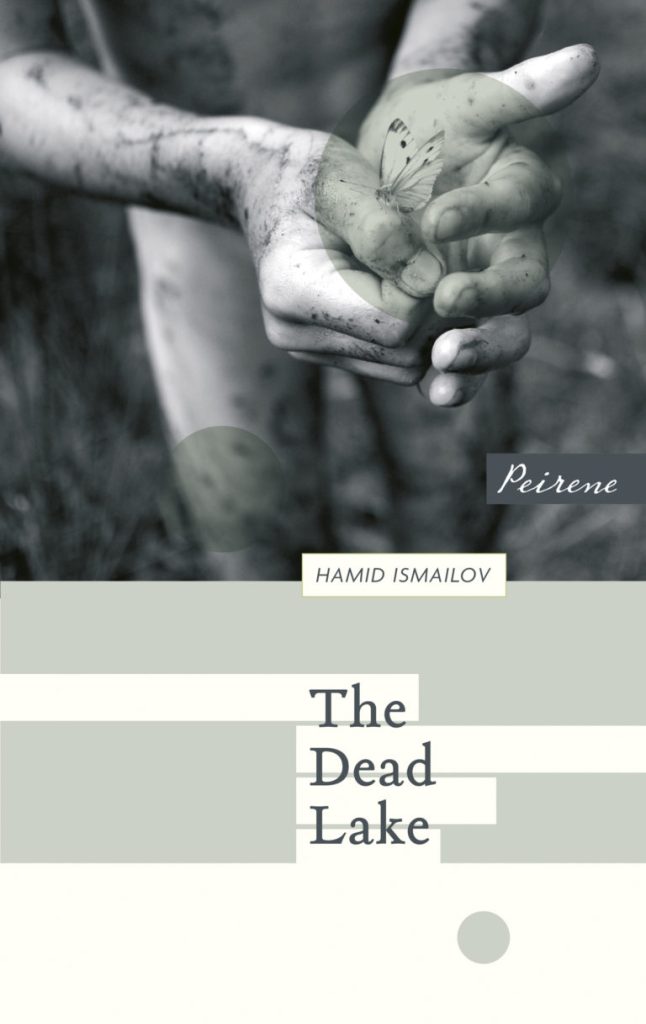
The Dead Lake by Hamid Ismailov, translated by Andrew Bromfield
Set in the steppes of northeast Kazakhstan, where the Soviet Union once tested its nuclear weapons, this novella follows a man who as a boy swam in the site’s wastewater and never grew out of his child body. It’s a poetic look at the environmental devastation left by the Soviet Union in just one of its republics. It’s written by Hamid Ismailov, an author from yet another Soviet republic, Uzbekistan, whose work was banned in the country.
The Possessed is a nonfiction book about studying the Russian classics—books written in the pre-Soviet era—with many of the essays taking place as author Elif Batuman travels in post-Soviet republics, like Russia and Uzbekistan, to report on the people who love them. Batuman is the only non-Soviet born author on this list, but her observations on the absurdities of post-Soviet life, on the people who continue to love Tolstoy, Dostoyevsky, Babel, Pushkin, and the others, on the Uzbek lexicon and watermelons, and many things in between, are funny and sharp and will make you want to read and re-read books from the region with an ear attuned to the strange history of the place.
Even data migrates now. Data migration and regular migration—all searching for a new home, hoping to remain useful but also hidden. Who brings you, reader, back home? Who do you leave home for a better life each day? Crossers left behind deserts and jungles— no sweat, even though you sweat a lot in the desert, in the jungle. Even laughing you sweat.
In my book The Border Simulator I explore the border complex as a type of hydra (there’s a hydration pun but I saved that for the book). The border mimics hydra because it’s a changeling, it morphs the second you turn your back even if the fence stays static. Mighty, morphing, purveyors of power, the border rangers survey their fleet and their fleet includes the crossers along with customs. Without crossers, they wouldn’t have much to do at the port of entry.
The Border Simulator knows the passage between Mexico/Central/South America and the United States so well, and here’s something the book also knows and uses: the language of the border to explore our lives on screens, our cultural division, the migrating of our data in the data hoard. The Border Simulator is an algorithmic story, it was chosen for me (it was art historian Sister Wendy that said “Never trust what an artist says about their work”), told through twins Primitivo and Primitiva’s attempts at crossing the real and the digital borders of our lives. My hope is to place the reader in the role of a “customs” agent, and the book challenges and gamifies our suspicions and distrust. So, my list of books about borders is a capoeira, sorry, capirotada, of poetry that crosses borders in the literal and the metaphorical because it’s getting hard to tell what’s real and what’s fake through our screens. (Sidebar: Have you heard the new Oasis AI album? Aises? It’s fine but it’s sort of the same two types of Oasis songs repeated.)
*In the voice of detective Colombo*: “One more thing”—my collaborator and translator Natasha Tiniacos has created a gorgeous version of the book in Spanish and this is included as a side by side translation so you the reader can saddle up back and forth in two languages–enjoy the ride.
Scryers of the border just now, I’m told, became cryers because they caught a glimpse of the future border but what kind of tears, we’re not sure yet. Here are seven books that will help you see the past and present of the border. The future will cost you a subscription fee and it’s these same scryers who you’ll be paying for this peak into the future. Oh look, they’re ready to tell and it seems as if the scryer’s tears flood the dry desert canals. Don’t look now, but crossers will have to traverse this river of seer’s tears.
Here are seven books about the border where you’ll discover the border is a sentient being, and it’s fed up with being a political/cultural football.
Here are seven books about the border that will make you say ahhhhhhhhhh…
Here are seven books about the border that will turn you into a talking saguaro, thirsting for justice.
Here are seven books about the border that will make you say “Who do you think you are? I am!”
Here are seven books that will tell you absolutely nothing about the border.
Here are seven books about the border that will make you want to run through the desert and drip like jungles wet with rain.
Here are seven books about the border that perfectly simulate the border:
Born on the border, Rios understands profoundly the complexities and nuances of this world, complexities that often get left out of news coverage. Here’s one of the ironies that Rios lays out so well: without the border we wouldn’t have this wonderful mix of cultures; it divides but it also brings communities together. Something else A Small Story About the Sky highlights: Border peeps come in all shapes, sizes, colors, and beliefs. We are not a monolith and we can think for ourselves. The poem The Border: A Double Sonnet captures many of the same themes I explore in The Border Simulator and I think there’s room for more!
Somehow horrific and funny at the same time, a note hit that’s hard to pull off. Borzutsky is a major influence on my work because these two disparate elements (humor + horror) are part of the border I know. El Paso/Juarez is the passage to a better life and sometimes it’s one step into tier drop after tier drop of unlucky bureaucratic hell. Despite this reality, life goes on, life finds a way and then life finds death. They shake hands and kiss; I think they’re in love. It’s pretty, pretty, pretty good.
Lost false friends are found in this Bach and forth (back!) between Spanish/English and other various forms of translation. De La Torre’s wit and smarts and playfulness is unmatched.
Neighbor is a type of border relationship but my first encounter with Neighbor is where the real El Paso Juarez border exists. I first read this book as part of poetry class at The University of Texas at El Paso and it was through the class’s lens and relationship with Juarez that all my fellow classmates (all fronterizos) viewed this wonderful book. It was impossible not to read Neighbor into our daily interactions with Juarez, our neighbor city and thus every poem unveiled itself as a poem about negotiations between a wall, whispers through a fence in the middle of the night. “Wilson, what are you up to?” Also the first book of contemporary poetry I contended with and has been an influence ever since. Also also, a perfect title.
My mentor Rosa Alcalá’s book Undocumentaries lives in the shadow of factory work. This book’s contemporary style was (and still is) exhilarating and helped me early on, figure out how my own work should sound. The book’s explorations of the factory is a beautiful metaphor for unpacking where the self begins and the factory ends. The poem from The Border Simulator “People Who Work Here Don’t Work Here” is indebted to Undocumentaries.
Zap! Bang! Repeat! There is a cycling and repetition in The Border Simulator that Rodrigo has impressed upon me. I admire Rodrigo’s outlook so much. He recently tweeted this quote from Bertolt Brecht that influences my chasing of friction in my work: “Are you in the stream of happening? Do you accept all that develops? Each possible misunderstanding is *your* responsibility. Are you too unambiguous–taking the contradiction out of things? (If so, what you say is useless. Your thing has no life)” I am constantly chasing the friction of contradiction. I want to challenge my beliefs and I want to challenge the beliefs of others. I think this is how art can move forward and continue to evolve and Explosion Rocks Springfield is a constant bubbling of new poetic forms.
The Supplicants by Elfriede Jelinek, translated by Gitta Honegger
A play by Elfriede Jelinek about migrants crossing the mediterranean that reads like poetry; lyric and language play. Here she takes on the international migrant crisis. Told through the voice of the chorus of crossers, Jelinek’s style is unmistakable: punny, dark, funny—she constantly upends our expectations of what a story should be and this work is a pile of crosser’s voices. It’s our job as readers to pick them apart. Or, you could just let the language wash over you in all its energetic glory. The Border Simulator is an homage to Jelinek; I write in her shadow.
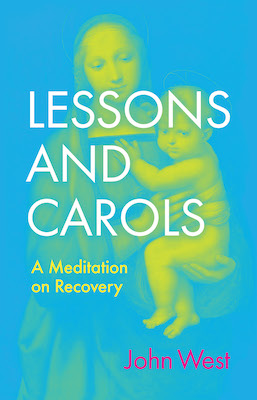
John West’s Lessons and Carols is a lyric memoir of recovery, parenting, loss, and hope, which is also periodically quite funny (ex. the first line of the first Lesson, “Caring for this baby has taught me new ways to resent.”) Hopscotching through time, the memoir shows us West’s first, early forays with alcohol as a shy, queer college student; the intense relationships and losses he experienced during his periods of active addiction and recovery; and his current-time adoption (with his partner) of an infant named Lavinia.
West works small. His intimate book is just 35,000 words, composed of fragments ranging from a single sentence to a few pages in length. Yet for all its patchwork nature, Lessons and Carols is tightly constructed. While a reader may occasionally feel unmoored in time, that very feeling is a tool West wields with intention: a visceral yet vicarious replication of the loss-of-time that accompanies the use of many substances, alcohol included, and which comes with the experience of trauma, too – and the exhaustion of being a new parent.
Full disclosure: I met West because we were working together at Bennington College’s Writing Seminars, where I currently teach nonfiction (and where both West and I were once MFA students). I learned West was a data scientist, with a background in machine learning and reporting (he currently works for the Wall Street Journal, where he is part of the team that won a 2023 Pulitzer for their reporting on capital assets).
I talked to John West about bringing the skills from one side of his writing life to bear on the other and how the logical and the lyrical come together to create Lessons and Carols.
Hugh Ryan: What does the title of your book refer to?
John West:Lessons and Carols refers to the Nine Lessons and Carols, an Anglican tradition dating back to the late 19th century. I’m going to tell a slightly apocryphal version of the story, but that’s fine, I think.
E.W. Benson (who would later go on to be the Archbishop of Canterbury)—his cathedral is under construction, and he’s concerned that his flock will go out drinking on Christmas instead of being good Christians and going to church. So, he says we’re going to do something really fun: we’re going to sing carols and read parts of the Bible. Big deal, I guess, in the late 1800s. It apparently worked, and he did it for one year and then stopped, but people loved it, and during World War I, King’s College in Cambridge brought the Nine Lessons back.
I don’t know if this is true in the E. W. Benson version, but it’s been true at every one I’ve been to: during the final, ninth lesson, everyone sings Silent Night, and you hold up candles, and the lights go off, and they say “And the light shone in the darkness, and the darkness did not overcome it,” and it’s just this very touching moment.
I’ve done a version of the Nine Lessons every year for almost 15 years now. We’re… pretty irreverent, actually. But we print out these books, and people have parts, and it’s a fun time—but we also sing Silent Night and hold up the candles.
HR: Another pillar of the book is parenthood. Did deciding to have a kid push you to write this? Make you more scared to write this? Have nothing to do with writing this? Do you hope she’ll read it one day?
This book is an effort to build community, and make something beautiful out of something that would otherwise be kind of tragic.
JW: I was writing this book—or a version of it—before we had a kid, but the whole thing changed the second I realized how ill-prepared I was (maybe how ill-prepared anybody is) to have a kid. This isn’t true for everyone, I don’t think, but, for me, I had to become a dad to become the me that I wanted to be. Like, I was Charmander, and now I’m Charizard, or whatever Charmander’s final form is. The same was true of the book. I hope she reads it someday; I hope she feels the love I wrote with.
HR: Are you from an Anglican background? Or what significance do the Lessons and Carols have for you?
JW: I wasn’t raised Anglican, I was raised Congregationalist. I was the assistant to the organist choirmaster at Plymouth Congregational Church in Minneapolis. That’s my favorite part of organized religion, probably: access to amazing music. So many of the great composers in the Western canon wrote religious music primarily, and that music is stirring and moving. That’s also my in to the Nine Lessons and Carols, the pageantry of it.
It’s this amazing thing, this amazing ritual that we’ve had for over 100 years—or depending how you count almost 150—where people come together, sing these songs and speak these words, and that is beautiful. I think, in some meaningful way, it provided hope to people. They brought it back during World War I because that was a dark time in Britain, and they needed something to bind the people together. I don’t want to compare my final year of college to World War I, but it was a pretty dark time when I did the first one of these.
In some ways, this book is an effort to build community, and make something beautiful out of something that would otherwise be kind of tragic.
HR: This book is about both religion and recovery (among other things), and I often wonder about the relationship between those two. For some people, a belief in a high power seems to be critical to their recovery, but I worry that ideas about “redemption” and “sin” can often leave people feeling inherently irredeemable. What’s your relationship between religion and recovery?
JW: I went through a real John Calvin phase, who wrote, “We cannot ardently desire God before we have begun to be completely dissatisfied with ourselves,” but, also, “as our abasement is His exaltation, so also the confession of our lowliness always has His mercy near as a remedy,” I take Calvin to mean that we lowly humans are irredeemable, but that it is precisely in that irredeemableness that we find an inhuman power that does redeem. A paradox, I suppose—I don’t know.
I’m less keen on Calvin than I used to be. I don’t really think all of human nature is inherently sinful. But I do think that it can be useful to recognize our own flaws and foibles as beyond a self’s power to fix, and then to locate new power in something bigger than us. Maybe that’s community, or maybe that’s god, I don’t think it really matters what or who it is.
The trouble, as I see it, isn’t so much with the concept of sin, or even with the idea that the human condition is rife with sin and always will be; the trouble is that society often extends mercy to only a few—and systems of power and oppression dictate those to whom grace is given. The wild thing about the Christian story is that Jesus went to the outcasts first, but we seem to forget that over and over again. I think the lesson, for me, is that we all get grace or no one does. No one is free until we’re all free.
HR: On a practical level, how did you find your ordering principle for the material that became Lessons and Carols?
JW: I wrote a bunch of stuff, like 20,000, 30,000 words, and asked, what’s here? There were really four things I was talking about: being a parent, addiction & mental health, the actual Christmas story of the Lessons and Carols, and people who died. I decided the first three [types of material] are going to be my Lessons, and the last one’s going to be the Carols. For those, I wrote a series of translations/adaptations of Catullus’ 101st poem, which is an elegy for his dead brother, and I rewrote that for each time a friend or someone I knew passed away or disappeared from alcohol or drug addiction.
As I wrote, I discovered new hurts. It showed the places where I still had healing to do.
That’s the macro structure, but then zooming into the micro: the book is fragmented, and keeping track of that was a nightmare. So, I made a spreadsheet, because I’m a data journalist, and that’s what I do. The spreadsheet had 160-odd entries in it, one for each fragment, and there are two taxonomies—like “tags” and “categories.” Each fragment can only have one category— the four “kinds” of material (parenting, Christmas, etc.). But the tags were a lot more freeform. They tracked my important motifs: birds, the moon, the act naming a thing or a baby, what I called “vice,” which was like basically any kind of drugs or alcohol. Etc.
HR: Ok, so let me see if I get this: You’ve written a couple of chapters, and you see that birds are appearing, so they become a theme. After that point, did you start worrying, ‘Oh, I have to have more birds,” or “now I’m stuck with birds and I want more freedom?”
JW: The lesson I learned was that constraint can be really valuable in fostering creativity. My constraint was operating in my palette. I defined it through that iterative process, but at some point, I was like, no, I’m cutting it off, this is what I’m working with now, and that proved generative. It made a closed world that I could inhabit more easily than if I had the sky as a limit, and could use any image I wanted.
In the end, I wanted to create art that reflected the kind of messy reality of what it means to struggle with mental health and addiction. For me, that meant this recursion, going back and back and back. And like, yes, things change, but also things are stubbornly always the same, and that was something I really wanted to capture. The past feels always present, and all of that trauma doesn’t just dissipate magically.
HR: Sometimes when I tell people I’m writing about something personal, they ask me if it’s cathartic, and for me, the answer is almost always no. Catharsis is something I have to reach before I’m able to write well about myself (I think about this essay by T Kira Madden, which so perfectly encapsulates this idea). This memoir is so much about being hurt and healing; what’s the relationship for you between writing and healing?
JW: Oh, I love that: Yes, I had to do the work separate from the writing of the book. And the things I kept cutting from it where the things I hadn’t yet therapized to death, hadn’t yet processed with my partner and friends. But, as I wrote, I will say, I discovered new hurts. So, in that way, it did help me. It showed the places where I still had healing to do.
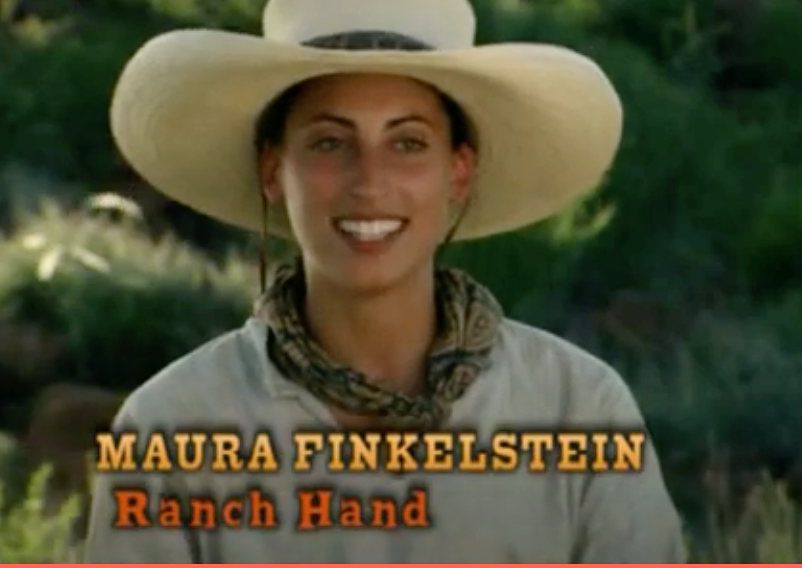
In 2005, during the dawn of reality television and before social media transformed these experiments into income-generators for future influencers, I was a participant on a PBS reality television show called Texas Ranch House. Like all reality television shows, this one had its own uniquely unhinged premise: 15 strangers (or relative-strangers—five participants comprised a real-life family) “time-traveled” to 1867 Texas, where we ran a cattle ranch for three months as though it were the 19th century. I went to Texas hoping to be a ranch hand, but instead arrived to discover that I—a queer, Jewish, feminist, horse lover—had been cast as the maid (the “girl of all work”) for a white born-again Christian-fundamentalist family, cast to own the ranch. Spoiler alert: throughout the summer, I managed to transcend rank, gender, and the conservative cast I was stuck with and ended the show as a cowboy, participating in the epic cattle drive across the West Texas desert. If the show were Survivor, I would have won.
Still, it was 2005 and my ambitions were derided. Over the course of the summer, the other participants grew to hate me and constantly chastised me for betraying the integrity of the experiment. Later, after the show aired, similar barbs were thrown at me through blogs and in the comments section of online articles. The constant refrain said I should have stayed in my lane, remained the maid, and kept my mouth shut. My “feminism” was seen as contrary to the 19th century, where women were being re-written as quiet and demure. I was 25-years-old and went on the show not to become a famous influencer, but to have an experience. As a life-long horse girl obsessed with fantasies of the Wild West, I wanted to be a cowgirl, I wanted to enter the romantic fantasy of my youth. In doing so, I was also recast as betraying the integrity of the show.
Because of this experience, I have mostly avoided the genre of reality television. It hurts too much to watch these shows, knowing what I know about their creation and production. But like so many queers, my partner and I watched The Ultimatum: Queer Love. How could we not? It seemed almost requisite, especially during Pride month. Everyone was talking about it and we wanted in on the discourse. We cringed through eight episodeswith equal parts horror, boredom, and obsession.
Real people have been flattened, stripped of nuance and context, and constructed into character.
I’m trained as a cultural anthropologist and so any deep-dive into character motivation based on social factors, community construction, and environmental impact is my bread—and vegan!—butter. While I have mostly steered clear of the social media analyses of individuals-as-character, I’ve been unable to avoid the top layer of archetypal constructions occurring online: Vanessa or Lexi or Xander as the villains; Lexi or Xander or Mal as the heroes; Tiff and Mildred as abusers; Aussie as most in need of therapy (although EVERYONE should have gone to therapy/couples counseling in place of entering into this reality television nightmare experience); Sam as the most self-aware; etc. Real people have been flattened, stripped of nuance and context, and constructed into character. I know all about it because I have lived through it.
One of the things I found most fascinating (and disturbing) about the show was how Vanessa was so easily slotted into the “villain” category, almost entirely based upon Lexi’s framing of her character. And while it’s true that Vanessa’s earlier chaotic behavior was discomforting, she also showed the most growth, while still being bullied by almost everyone on the show. Because of the group behavior—not accepting her unnecessary but very heart-felt apology, ignoring or chastising her at group gatherings, etc—the audience was encouraged to hate Vanessa as much as Lexi and Yoly did. But the thing is, we—as an audience—never truly see the “horrific” behavior Vanessa was said to exhibit. She made a few mistakes, said a few cringe-worthy and confusing things, and otherwise acted like an awkward, extroverted party girl. But—to quote Carmen Maria Machado in her excellent, hilarious, and spot-on analysis of the show on her Substack “Cup of Stars” (to which you should subscribe)—“when Vanessa let slip that she was taking the premise of a show a bit less seriously than the others, Lexi acted like Vanessa had exsanguinated a puppy. After that, it was war.”
Listen, I get it—it’s fun to hate fictionalized versions of real people on reality television—it allows us to contextualize our own behavior in contrast to what we are seeing, it allows us to feel morally superior as we workshop how we might instead react to the action we see on screen. But most discussion about this conflict focuses on individual behavior and reaction and ignores the structural pieces at play. What do the participants know? What are they being told? What are the rules of their experience and how does sloppy editing and the actions of a production team play into the constructed world we encounter as viewers?
I was slightly annoying and, at times, unself-aware, but I was never evil, manipulative, cruel, or controlling.
Over the past three years, I have written a memoir about my time on Texas Ranch House, not just exploring my own experience on the show, but also interrogating PBS’s construction of a whitewashed 19th-century history, invested in white supremacist narratives of the past. My partner, having read endless drafts of the memoir, began watching the show a few months ago. Over and over, they remarked to me “Everyone talks about how much they hate you but none of the footage shows you doing anything bad!” While I had been writing about my experience for years by this point, their comment hit me in ways I hadn’t previously considered. It’s true. I never do anything really bad, either on screen or off. Still, I was almost universally disliked, and often hated, by most of the other participants.
I admit I was guilty of being 25-years-old. I was slightly annoying and, at times, unself-aware, but I was never evil, manipulative, cruel, or controlling. Instead, I got in the way of other participants aspiring for Main Character ™ status and slowly slipped into that role myself. In order to transform me from Main Character ™ to Villain ™ the other participants accused me on camera of not taking the experiment seriously and not playing by the rules. When viewers came to the show months later, edited from three months of footage into 8 hours of television, that became their refrain, too. I was not acting like a “woman of the 19th century.” I was “allowing my 21st century sensibilities to get in the way.” This was my crime—disobeying the rules. This is how I became a Villain ™.
But those weren’t the rules, at least not the rules I was given. When I was cast on the show, I was very explicitly told only one rule—“Be your 21st century self, but with 19th century tools and technology.” This was it. I was constantly reminded that I hadn’t signed up for an acting job, I wasn’t supposed to pretend to be anyone other than who I was. It was fine if I was a “feminist,” but absolutely no tampons. I took this seriously, although I did eventually manage to get tampons, perhaps my one true crime.
However, this rule—what I would argue is a fundamental rule—was never once clarified in the footage of the show. Such an omission, I believe, is intentional. If the viewers were unaware of our rules, then our personalities could be edited into characters, especially characters that broke the social contract. I was a maid who became a cowboy. Instead of seeing this as a necessary and reasonable transformation, I was cast as an evil feminist (thank goodness I was not out as queer on the show) who refused to take the experiment seriously.
There is a reason these shows are so ubiquitous. Reality television is cheap.
The Ultimatum: Queer Love is not a good show. It’s incredibly boring, and when it’s not boring, it’s stressful and distressing. None of the “characters” are fully fleshed out human beings, no real conversations are present, no true motivations are revealed. It’s exceptionally dull. It’s badly edited. Honestly, I couldn’t wait until it was over. But the way viewers were manipulated into thinking they knew the characters was startling and disturbing. We were encouraged to make judgments but none of us knew the rules. None of us knew what the participants knew. And none of us knew what the director was asking them during the interview segments, as we only saw them talking, crying, and making accusations.
However, there’s real work being done in the watching, if you pay attention. As I watched the episodes, I urged myself to ask bigger questions about the responsibility of reality television production and how audiences are crafted as intentionally and manipulatively as participants are. In particular, viewers of The Ultimatum: Queer Love are not given insights into the rules of the world we are entering into, we are simply given the participants’ edited and manipulated versions of these rules, as related to the camera and each other after far too many alcoholic beverages. Viewers are asked to trust participants and participants are asked to trust each other. But the real players here—absent from both the footage and the Discourse ™—are the production team, who have both constructed these worlds and manipulated their realities. Why are participants held accountable for their individual behaviors and not the producers, directors, and editors in charge? What can we understand about our larger neoliberal social reality if we contextualize shows like The Ultimatum: Queer Love?
There is a reason these shows are so ubiquitous. Reality television is cheap. At least, relatively. Scripted television shows are beholden to the Screen Actors Guild (SAG), the American Labor Union that regulates what performers are paid; how much time off they receive; and other forms of protection against exploitation. Reality television participants are not protected by a union – they do not have to get paid; they do not have to have time off; they are not protected in any way. They can be given a few thousand dollars, they can be given nothing. They can be promised $1 million if they win a competition, they can be given nothing if they lose.
In 2005, when I was on Texas Ranch House, an average scripted television episode cost approximately $3-6 million to make. Now, almost 20 years later, scripted episodes can cost $30 million per episode. In contrast, an episode of reality television today costs approximately $100,000-500,000 per episode. Cheap, at least relatively.
When scripted television is in a labor or financial crisis (such as now, with writers on strike), reality television flourishes. In 2005, PBS had already made two other house shows—Colonial House (set in 17th century Maine) and Frontier House (set in 1880s Montana). These shows were inspired by BBC House shows, produced by Wall to Wall Television (who also produced the American versions). These days, reality television makes up 60% of available television content. Reality television manipulates the market. Writers are cut out of the equation, concerns over AI are non-existent. The formula is simple— find a group of participants, take away everything that makes them feel safe and in control of their world, and then watch them explode.
During my time on Texas Ranch House, I learned a lot about how both participants and audience members were manipulated by the production team. For example, once a week, each participant would be whisked away from the main set—a small ranch compound in the middle of a 9,000 acre stretch of land—and taken to a small constructed set on the edge of the property. There, we were given a break from our grueling labor. We were actually required to work as though it was the 19th century, and so I spent my days as a maid feeding and milking cows and goats, cooking three meals over an open fire, making cheese and tortillas from scratch, keeping a fire going in 100 degree heat, and lugging buckets of water back and forth from the well, to name a few tasks. Interview day was a treat. I could sit in a comfortable chair in the shade. I rested. I was offered Gatorade (which I never accepted, lest I begin to think the crew were my allies). The crew—unlike the other participants—were seemingly kind to me. They asked me how I was. They told me how great I was doing. They lavished me with praise for my work and told me how they believed I was the best person, the smartest, the most engaged. I now know a term for this—“love bombing”—but at the time, I simply understood it as manipulation.
Once they believed me to be relaxed (I was not) they turned on the cameras. Questions usually began with the Director telling me something that someone else said about me (always negative) and then asking me—on camera—to react to it. For weeks I told myself only to react to things I personally experienced. I tried so hard to commit to that goal. It was one of the hardest things I’ve ever done and I didn’t always succeed. But I tried. I’m proud of that 25-year-old version of me. She did the best she could in an absolutely impossible situation.
I don’t know the context of The Ultimatum: Queer Love but here’s why it was so hard for me in 2005:
For weeks I told myself only to react to things I personally experienced.
For three months, I was allowed absolutely no contact with anyone off the set. I couldn’t call my parents. I couldn’t see my best friend. I had no knowledge of what was going on off the ranch, in the world. I was lonelier and more isolated than I have ever been—before, or since. And none of the participants liked me. The latter was based on both intentional casting (me, cast as the maid for fundamentalist Christians who were homophobic and racist? Wanting to be a cowboy alongside a group of misogynist men? How would that not end badly?) and the manipulation of the production team, and yet they were also the people trying to turn me into their ally. As they created more and more isolation for me, they simultaneously built a world where I could—if I chose to—confide in them. They pretended to be my friends. They pretended to be on my side.
While The Ultimatum: Queer Love seems to be set in San Diego and participants appear to have contact with some friends and family (we see certain people appear on the show for advice, support, and tough love), viewers are given no information about what participants are allowed and not allowed to do. We learn nothing of their history. Where are they from? Where have they been living? Can they see their community? Are they receiving support? How social can they be outside these constructed worlds? When we see them in interview contexts, we have no idea what questions have led to their answers. When we see them in social “happy hours,” we have no idea what fictions the production crew has told them to influence their reactions to each other. We are led to believe their hatreds and resentments are based on reactions to each other but we have no idea who is pulling the strings, and how.
When I was on Texas Ranch House, one of the main goals of the experiment was for the ranch hands to round up enough cattle for the ranch to be profitable and survive another year. Every day, the men cast as cowboys rode their horses out onto the open range, searching for these elusive creatures. Somedays, they came home with five or ten or twenty cows. Most days they came home with none. On those more common days, the ranch owner would chastise the men for not working hard enough and the entire ranch community would be encouraged to stress out over whether there would be enough cattle for the cattle drive and whether the herd would turn a profit. It was only weeks into the experiment that we learned—accidentally—that the production team was in charge of the herd. Somedays, they would let a handful of cattle out of the pens situated on the edge of the ranch. Other days, no cattle would be released. The production team created the conditions of our existence but when we were frustrated with these conditions, we simply turned on each other. The audience never knew the rules of our world. We barely knew them ourselves.
The audience never knew the rules of our world. We barely knew them ourselves.
It’s tempting to dismiss both of these shows, especially The Ultimatum: Queer Love, as silly, vapid, boring entertainment. We can do that. In many ways the stakes are very low. But I also believe these shows warn us of the dangers of our current moment. Our lives are unaffordable. For those of us with creative aspirations, there are barely any jobs in academia, the arts, and publishing. The jobs that do exist barely pay us enough to survive. We live in a country with abysmal public transportation but electric cars are unaffordable for most people and the price of gasoline is staggering. Student loan payments are about to resume, and for most of us still in debt, this will be financially devastating. We are still living through a global pandemic but masking and vaccinations have become optional and PCR tests are no longer free. The list goes on—it is a hard time to live, and many of us are barely scraping by. So often we are presented with two terrible choices and then punished for making the wrong decision. Despite the overwhelming structural violence we are presented with every day (in addition to overt violence, particularly against Black, Indigenous, and trans people, but the list of violences is much longer than that), the fantasy of America still demands individual responsibility. We fight with each other instead of the System ™. We are so far from revolution.
At 25-years-old, I was too scared to suggest to the other participants of Texas Ranch House that we rise up against the crew and unite against our common oppressors, the production team pulling our strings. And anyway, I was still convinced—through stubborn determination and the naïvité of youth—that I could become the hero of my own story all on my own. And while I did rise to Main Character ™ status, I also was cast as the Villain ™ by both the other participants and future viewers. After all, these shows do not survive without conflict and the conflict of these shows cannot be structural. And while I do not believe reality television participants are tasked with teaching viewers about structural inequality, I do think we can use them as a vehicle to ask questions about how our worlds are built and enforced through these formulations. What are the rules of these worlds? How are they created and enforced? What do we know and what do we think we know about how individuals act within the confines of these structures? And how does that teach us to tear these structures down, so we can build each other up?
Why is it that, in an era of convenience and online shopping, we still go out of our way to buy our croissants and cupcakes at the mom-and-pop bakery rather than the chain supermarkets? While the custom of buying bread from the baker, meat from the butcher, and cheese from the cheesemonger is an ingrained culture in France, even ultra-pragmatic Americans fall easily for the lure of a little bakery with a pink-striped awning and a window full of toothsome treats.
When I decided to write a novel about Paris, I knew instantly that it had to be set in a bakery. Not only for my own enjoyment—because what author doesn’t want to spend a year researching and writing about baked goods—but also because boulangeries were and always will be a centerpiece of French life and culture.
My bookA Bakery in Paris follows two women in two different time periods in Montmartre who have to overcome hardship, grief, and adversity, while running their family business.
Bakeries are more than just shops in which to procure a baguette or a few macarons; they are a gathering space with friends, a place for a celebratory cake to mark a momentous occasion, an opportunity to escape for just a short while with a coffee and a bit of brioche. Here are seven charming books that explore bakery life and all its charms.
The undisputed queen of Wisconsin Foodie Lit, Amy Reichert crafts a magical tale about divorcée Astra Snow who falls in love with a baker at the annual Julemarked, the famed Milwaukee Christmas market. The problem? For Jack Clausen, it’s always December. And every month he is mysteriously transported to a new market. This one will have you reaching for the Cherry-Almond Kringle with a steaming cup of coffee.
Jada is recovering from a very public humiliation on a dating show when she moves back to San Diego. Her new job at the Sugar Blitz isn’t going well thanks to the grumpy bakery owner Donovan (did we mention he’s also a football player?). A fortuitous mixup has the two enemies joining forces to deceive the world into thinking they’re a couple. Their fake relationship to promote the bakery and rehab Jada’s PR is going smoothly but is there more to their chemistry than just pretend?
What would happen if you could actually bake the perfect man? Anna O’Brien inherits a bakery from her late grandmother, and some special gifts as well. With the secret golden sugar bequeathed to her, she creates Elijah. But will everything bake out to perfection? Best enjoyed with an extra-gingery gingerbread man and a cup of tea.
Pastry maker Olivia knows it’s time for a change after a disaster that involves a flambéed dessert and a restaurant fire. While hiding out in rural Vermont at the blissful Sugar Maple Inn, she’s offered a job When a hot local returns to care for his elderly father, she has to decide if country life is really for her. Perfect with a slice of hot apple pie à la mode.
Accomplished pastry chef Simone has always wanted to work at a cookbook publisher. She thinks she has a handle on her career until the advent of video content forces her, unwillingly, into the spotlight with very spotty results. When her relentlessly cheery editor Ray comes out as non-binary at the office and is met with some unwelcoming reactions, Simone faces a tough choice between the job she loves and the person who has come to mean a great deal to her. Enjoyed (carefully) with a flaming dish of Cherries Jubilee.
The Little Beach Street Bakery takes place in a quaint coastal English town in Cornwall. The bakery, over the course of the four-book series, goes from an abandoned shop to a thriving business where four heroines all find love and adventure. Colgan is a master of escapist writing with compelling heroines. A great series for binge reading. Best enjoyed with scones, jam, and clotted cream.
Amy loves her job at her bakery, not so much that it’s owned by conservative Christians who fire her once they realize she’s queer and kind of, not quite out of the closet. What’s a girl to do? She combines her baking experience, craft talent, and passion for Say Yes to the Dress into a side hustle: bridesmaid for hire. A touching tale of self-love and found family, perfect for fans of Red, White, and Royal Blue. Best enjoyed with a slice of delicate white wedding cake with pink rosettes.
Because I was the one to end it,
and so soon, I offered to reimburse her

what I owed. She had covered
most of the wedding, the move,

our rent. I was living on the grace
of a friend, sleeping

in his sunroom on Folsom.
Every morning I opened my account

to see how little I had left.
It wasn’t looking good

until she wrote to say we could forget it
if I would let her claim me

on her taxes. I guessed there was
a rebate for this kind of thing.

I could hear my friend knocking
around in the kitchen, making coffee,

frying eggs. I couldn’t believe
my luck. I let myself be claimed.
Good Deal
Fast light on my hands
as I peel the sticker
from an apple on the train.
Viruses, I read, are
colorless, though lab techs
will blast one with atoms
so we can see its edges.
We slow around a bend,
then gather new speed.
My lender calls to ask
if I feel good. I set my screen
to black-and-white to make
the living world more vivid.
He says to hang tight.
He assures me we can go
lower. In Springfield we swap
the electric engine for diesel,
then drag a small, dark cloud
across the Berkshires.
A stash of apples in my bag:
Galas. An Empire.
We blow through an empty
station in a mechanical wind.
A friend of mine rides
cross-country in the bellies
of emptied-out coal cars
or on a plate of steel
called a porch. He pays
for almost nothing. He’s one
of my very favorite people.
I scroll through the latest
mortgage rates, having no idea
what a good deal looks like.
My sweetheart and I have
a rented apartment the size
of half a train car,
but we have a miniature
dishwasher, so we feel
we live in luxury.
Doors
We get them from warehouses
at the edge of the city, paging through

upright stacks, slumping one
heavily against the others and breaking

out the tape measure to see, or if
it can be made right with a table saw

and a chisel. It’s mostly my thing–
K goes along, even spots the one

for the bedroom, cut-glass knob
catching light as it swings.

She knows the doors we have are fine.
They open freely, they latch closed.

She also knows I’m a maniac who can’t
be stopped. She drags out a paneled turn-

of-the-century oak with mismatched
knobs, a half-length insert of beveled

glass. We lean it against the others,
her outline distorted by the waves.
It was the kind of summer night we’d been craving all week. Easy conversation, endless beers, suburban life drifting on welcome breezes— “Marco?” “Polo!” screamed from a backyard pool, raucous laughter as someone’s bullshit was called out. Six of us sat in a hot tub: my boyfriend, his sister and brother-in-law, and their middle-aged neighbors. I was 23. My boyfriend and I had been cheating on one another since high school. The others were stable, in their thirties. We partied as the kids slept inside.
My boyfriend and I were tourists in this land of adulthood. And like a tourist, or a writer, I hoped to glean some light calamity—say, a dispute over lawn mowing—that I’d spin into fiction from a safe remove. At 23, I was primed for narrative. I was earning my M.F.A. in Fiction and captivated by the subtle, domestic oddity of stories by Raymond Carver and Ann Beattie. The kinds of stories that say, Sure, there are driveways and drinking on the patio, but something is wrong here, something is off. As writer Dan Chaon describes Carver’s fiction, it’s a kind of ghost story in which the ghost fails to appear.
As a young writer, I wanted that eeriness, or so I thought, as we bumped bare legs beneath the surface. The hot tub, bare flesh, neighbors, drinking, sleeping kids inside—all of it was ripe for story. Like a tourist—or a writer—I would capture that ghost.
My writer’s mind listened, gathering storyable details, while my human heart grieved.
So when the neighbors began talking about the funeral for their teenage daughter, held days before, my mind cleaved into two parts: sympathizing, and recording. Or, maybe it’s more like this: my writer’s mind listened, gathering storyable details, while my human heart grieved—and then, as my heart will do upon hearing about parents mourning dead children, my heart hardened so my mind could do its work.
The story I ended up writing, “When Tom and Georgia Come Over to Swim,” was about neighbors in a hot tub talking about their young, newly dead daughter, chattering about constellations when what they’re enduring is unspeakable. It was a ghost story where the ghost appeared in ballet shoes, backpacks, an autopsy report tucked in a routine stack of mail.
The story won me a program scholarship, and years later, found publication. Readers praised the story’s “authentic” details.
And of course they were, because I’d stolen them.
I celebrated my success, but inside, I clenched. I’d never told the real “Tom and Georgia” I’d mined their tragedy for fiction. What if they found out?
The story follows the perspective of Pauline, a mother struggling to comfort her grieving neighbors, whose life path once looked like her future. Georgia’s loss makes Pauline feel grotesque. She yearns for familiar conversation as the neighbors recount coroner’s findings and outfits for trips that never will be taken.
At 23, I was unmarried and about to break up with my no-count boyfriend. I wouldn’t have children or a mortgage for another decade. My short story was definitely fiction. But whenever I thought about the real neighbors suffering real loss, I felt guilty. All my Carver-esque pretensions shriveled to ghoulishness.
Then, one day, the real “Tom and Georgia” read my story.
And they sent me a letter about it.
It’s common knowledge that you should never tell secrets to writers.
Actually, you don’t need to utter a word. We’re just as content to hear your cousin gripe about your Prius, or imagine you’re the dolt who, according to our med school friend, tried weird sex stuff and ended up in traction. Several legends, including one about Raymond Carver, tell of writers competing for the same juicy, real-life tidbit.
When it comes to story—old, new, repressed, overheard, uncovered, expressed, distant, or in-progress—writers are gossips, colonizers, appropriators, vacuums, tornadoes, Great Devouring Beasts, the Borg: absorbing facts and anecdotes at diner counters, combat training, even at the deathbed of a loved one. Once we’ve gathered, we repurpose. So, maybe it’s more like writers are swallows, wasps, termites, crows: scavengers who pluck dog hair pufflets from the lawn, and dirt from ancient ruins, all to craft a kind of nest—a living, and shared, space.
It’s a nifty skill. But does it make you lose your soul?
I’ve chosen to tell you I had a brother—something I’ve not even shared with my own children, not yet.
It’s one thing to harvest your own experience for story. I love the way Ayelet Waldman puts it in her harrowing essay “Rocketship.” Waldman recounts the turning point in her pregnancy when her very loved, very wanted baby tested positive for a rare genetic condition: “And I think, ‘A person really does fall onto the ground screaming… Remember that.’… A writer stands at a distance and watches her heart break.”
Waldman studies her anguish with writerly detachment, repurposing agony into material. And who wouldn’t want distance from their own split heart? To shrink overwhelming pain into something as small as words on a page?
This is what I, and lots of writers, do. Some of my worst experiences have generated fiction: my anorexia at age 12; my ex-husband’s violence and stalking; anxieties over caretaking and alcoholism. One of my current projects is a memoir about the death of my 13-year-old brother when I was four years old.
Here’s the thing: I’m authorizing myself to write these stories for an audience, even now. I’ve chosen to tell you I had a brother—something I’ve not even shared with my own children, not yet. But you, Reader, will learn exactly what I want you to know about me, and whether I call it truth or fiction, when I want you to know it—and not a moment before.
It’s a privilege to be the swallow, the tornado, the gossip—to hold the power of selection, and selectivity.
But what about other people’s experiences that we repurpose—people who might show up at our yard sales? How do we respond when these actual people (and not our characters) realize that their bright strands of hope and hopelessness are, to us, really great material to weave through splendid nests?
It took thirty years and a gossipy headline to remind me of that letter.
The headline: a woman suspected she was, in part, the subject of a New Yorker short story that went viral. Unique details from her life, and a relationship with a boyfriend, were on the published page. The piece was presented as fiction, and yet, she recognized fragments of her truth. She was afraid to confront the story’s writer until one day, outraged, she did. And, it turned out, she was right.
‘Well what do you expect?’ they asked. ‘Stealing is what writers do!’
Alexis Nowicki’s essay about this confrontation is the kind of literary drama that makes Thursday Twitter scrolling—frankly—awesome. Nowicki reveals that in her teens, she dated a much-older man, Charles, renamed “Robert” in the New Yorker story: “So much of the central dynamic in the story rang true to me: Charles’ cryptic communication style; the way I had to work to impress him; the joke rapport we created between our cats early on.” But unlike the real Charles, “Robert” becomes creepy, mean, pathetic. This is important to know. These were real people who lived these lives, she asserts, and they were neither as anxious nor as sinister as depicted in fiction. Yet those impressions will endure. In closing her piece, Nowicki eulogizes two losses: the death of her former boyfriend, Charles, eternally fictionalized into a predator; and the loneliness of being one of the few who knew him to be otherwise.
But Nowicki’s purpose in writing about the real-life experiences that inspired another writer’s fiction is less revelatory than redemptive. In fact, this essay also does something stunning. At one point, Nowicki questions her lived experience:
“Had Charles actually been pathetic and exploitative, and I simply hadn’t understood it because I, like [the character] Margot, was young and naïve? Had he become vengeful and possessive after we broke up, but I’d just blocked it out in order to move on with my life?”
How much of this fiction is accurate about my reality? That’s an unusual question from a person whose life has been written (in part) into fiction. I’ve never seen it asked before. Instead of denial or a screed, Nowicki engages a character created from her experiences and wonders, Was the writer onto something?
She doesn’t have to do this at all, let alone in her own essay. It’s a remarkable gesture of compassion.
Back on Twitter, responses split predictably. Non-Writer Twitter seemed appalled that writers take details from actual humans, living and dead. Writer Twitter couldn’t stomach such piety, such naïveté: Well what do you expect? they asked. Stealing is what writers do! The swallow steals without permission—but swallows gonna swallow.
All valid reactions, but also, rather simplistic.
Because Nowicki hadn’t issued a prohibition against mining real lives, even her own life, for fiction. She’d simply shown one set of consequences when writers do.
Facing these consequences, for some, is a central anxiety. And to be crass, our ambivalence generates even more material. As David Sedaris writes in “Repeat After Me”:
“‘Oh come on,’ I said. ‘The story’s really funny, and, I mean, it’s not like you’re going to do anything with it.’
Your life, your privacy, your bottomless sorrow — it’s not like you’re going to do anything with it. Is this the brother I always was, or the brother I have become?”
And Toni Cade Bambara makes the inevitable laughable in “A Sort of Preface” to Gorilla, My Love:
“It does no good to write autobiographical fiction cause the minute the book hits the stand here comes your mama screamin how could you and sighin death where is thy sting and she snatches you up out your bed to grill you about what was going down back there in Brooklyn when she was working three jobs and trying to improve the quality of your life and come to find on page 49 that you were messin around with that nasty boy up the block and breaks into sobs and quite naturally your family strolls in all sleepy-eyed to catch the floor show at 5:00 A.M. but as far as your mama is concerned, it is nineteen-forty-and-something and you ain’t too grown to have your ass whipped…
So I deal in straight-up fiction myself, cause I value my family and friends, and mostly cause I lie a lot anyway.”
Imagining the aftermath of our creative decisions—our necessary swallowing of human experience—is uncomfortable. Our responses seem to range from self-inhibiting to flinching to screw-you-buddy to N/A.
For a group so trained on imagining outcomes and endings, you’d think we’d be better prepared.
In the early ‘90s, my no-count boyfriend’s sister loved my story, so she gave a copy to the real Tom and Georgia and they sent me a letter.
Already, I’d worried in all ways: I worried they might read the story—but vaguely, someday, like after I’d won the Pulitzer. I worried when they had it. I worried when I opened their letter.
But for all that worrying, I’d never asked their permission. I wouldn’t do so now.
Asking permission could have invited others to tell their story instead of the one I imagined. A dynamic could open, perhaps a collaboration. Collaboration is a lovely word, but it belies an artistic turf war: an exchange with expectations I’d honor someone else’s feelings, their need to get it right. These are timeworn concerns, calling into question how inspiration fuels process and notions of the individual, self-isolating artist.
With a story sourced from another person’s grief, the stakes are higher, sharper. I feared the worst: they’d hate me. They’d sue me. They’d call me a graverobber. They’d call me exploitative. They’d be right.
But for the writer I was in my early 20s, there was another fear I couldn’t yet articulate. I worried that by asking permission, I’d make them talk about their child’s death—something I knew, from experience, to be the hardest thing to speak, and the hardest thing to hear.
I’ve lived forever not wanting to hear, or talk, about my own deep losses, instead imagining them in fiction. I’ve stood at a distance watching my own heart break. I’m fairly good at it. I’ve mostly shut my ears for my entire life, despite the fact that my brother’s best storytellers, my parents, are still living and full of memories to share.
Just like the parents of a teenage girl riding her bike through an intersection one blinding summer evening.
With a story sourced from another person’s grief, the stakes are higher, sharper.
Just like “Tom and Georgia.”
Their letter to me is long-buried, but I wouldn’t quote it here anyway. Here’s what I will share:
The parents of a much-loved child saw their grief take shape in my story. They appreciated my care in rendering it. They were, in a small way, grateful to have their daughter’s life and death recorded. Now, there was a place where a piece of her story, and their story, would always live.
Their words read like forgiveness. Now, I see they were also a guidepost, a way forward in grief and listening. A gesture of connection, recognition, and understanding. An acknowledgment of all the ghosts we carry, even those we may not be ready, or able, to articulate.
Imagining the consequences of our choices as writers, we want to steel ourselves for battle. Prepare for lawsuits. Deflect. Hide. Champion our noble pursuits. Wave our banners. Deprecate ourselves as greedy junkmen. Apologize for our swaths.
But what if we also imagined meeting consequence with compassion? What if we acknowledged our role in someone’s pain? What if we just listened? We have those options, too.
For me, the term “mad scientist” brings to mind images of bubbling beakers filled with neon liquids; elongated, menacing silhouettes; and of course (Pinky and) the Brain. There is a long history of stories from Frankenstein and The Island of Dr. Moreau all the way to Rick and Morty where brilliance tips over into madness and we watch wide-eyed to see the damage.
Science-fiction is based in reality and there is something about the possibility of real miracles or maledictions that draws us in. Frankenstein’s monster may have seemed like more of a thought experiment at the time, but is it so difficult to imagine that there could be a genetically-engineered equivalent being cultured in some secret underground laboratory today?
Scientists are real, respected, even revered, members of our society and they hold a special power—the power to change our world, a little bit at a time. We can’t help but wonder what might happen if they go too far too fast or if they lose their way and the scientific benefits to society become distorted—the literary possibilities are infinite.
My novel, The Brill Pill, follows a research scientist throughout his career as he struggles with medical ethics, dodges his own demons, and creates a few mind-altering treatments along the way. The protagonist is an anti-hero, lost in the world of academia, arrogantly believing he is doing the right thing while digging deeper and deeper into mad scientist territory as he loses all sense of right and wrong.
There is a lesson to be learned from mad scientists in literature. Brilliance and success come with a certain amount of hubris and an unavoidable separation from reality. Individuals at the top of their fields, by definition, have little oversight. They are given free reign over their domain and yet they are still human. If mad scientists are allowed to indulge themselves unchecked, their mistakes may affect us all.
Two college roommates discover during their science research that having a near-death experience can cause some people to develop superpowers. So they decide to try it themselves. They plan to kill each other and hope against hope that they can bring each other back before it is too late. If that isn’t mad, I am not sure what is. Of course, they are successful, and the incredibly addictive story of how they become mortal enemies introduces us to a colorful cast of endearingly gray characters from the bad to the very worst.
Nature and technology collide in this mashup of mad science and magic. Two outcasts in middle school (ugh, middle school) form an unexpected friendship that will be tested time and again by the harsh realities of the world (and all of the typical dramas that come between a witch and a techie). As the planet burns around them, mistakes are made on both sides, but we root for them throughout and wonder whether, if they can just stay friends, we all might be capable of something better. This story is all kinds of dark and all kinds of hopeful, terrifyingly honest and laugh out loud funny. Anders weaves together a brilliant narrative with an amusing dose of snark and pop-culture awareness.
In this speculative tale we are introduced to one the maddest of mad scientists when he is only a kid. By building a dystopia that is unnervingly easy to imagine our world falling into, Atwood makes us wonder if he was always destined for madness or if the environment that he has grown up in has shaped his destiny. In any case, science is the weapon of choice and the consequences are bad. Devastatingly, hysterically bad. We follow our protagonist, Snowman, as he struggles to survive the aftermath of what has occurred, but is survival enough? Incredibly sharp prose carves out the story with sympathy for the characters and repulsion at what has become of them.
In this delightfully creepy and wholly engrossing novel, a scientist who works on clones discovers that her husband has stolen her research and has cloned himself a new wife using her DNA. This is mad enough on its own imho, but the more we learn about the protagonist’s research the more we begin to realize that she herself is a mad scientist as well. Her work with clones raises ethical concerns that seem to be right on the doorstep of our own world, making them all the more eerie. The novel carefully touches on a number of serious issues including marital struggles and domestic violence as well as women in science and toxic academic culture without drowning in them. The narrative maintains the hard-to-put-down plot of a mystery novel with just a touch of horror to really drive it all home.
Is falling in love with a science experiment mad? For the purposes of this listicle, yes. Lack is a physics experiment gone awry or gone a-right depending on who you ask. An emptiness on a table, Lack absorbs some items, rejects others. No one can figure out why. Everyone is obsessed with Lack. Alice is in love with Lack. Philip is in love with Alice. It’s complicated. The story is peppered with eccentric academics, extreme to the point of parody and yet ever so close to reality. Are all scientists a little a mad? Are all humans? Lethem delivers it all in the most entertaining voice that will have you laughing and loving right along with the painfully relatable Philip Engstrand.
This one is a novella, and a scary one. Dr. Jennifer Webb has created a new form of dream therapy, or rather, nightmare therapy. It’s simple. Enter a shared nightmare with one estranged friend or family member, come out with a close, unbreakable bond to that person. The shared trauma brings people closer together, digging deeper than the differences they have on the surface. Ok, it makes some logical sense however creepy it is… But what happens when the scientist enters her own nightmare scenario and someone nefarious takes over while she is under? You get an incredibly creative, darkly suspenseful, page-turner. There’s a lot more packed into this short narrative (lurking in the trapped subconscious) but the premise was enough to get me reading.
In The Candy House, we witness the mad-scientist in its latest form. The tech billionaire. Bix Bouton has brought to the world a new technology: Own Your Unconscious. It sounds great – having all your memories right at your fingertips, you’d never truly forget anything ever again. But some memories fade for a reason, others were never meant to be shared. The Candy House is particularly intriguing because it does not focus on Bix alone. Each chapter is a window into a different life that has been changed in small and large ways by his technology. It is so universal that even people who do not subscribe to it are affected in some way. Hey, that sounds familiar… This one hits a little close to home and that makes it all the more engaging.
Part historical fiction, part coming of age story, part romance, part adventure, part science-fiction, this novel has it all! And on top of all of that it adds a twist on a classic mad-scientist novel. Carlota is the infamous Doctor Moreau’s daughter and we see his mad work to create hybrid creatures through her eyes, first as a doting daughter and eventually as an intelligent, feeling young woman. As we tenderly watch Carlota find herself and her strength throughout the novel, Moreno-Garcia weaves in narratives on colonialism, racism, misogyny, and heartbreak. There is depth to all of the characters in this novel and the mad scientist takes a backseat as we focus on those that have been affected by his work.
Marina, a researcher for a pharmaceutical company, is sent from her quiet life in Minnesota to a remote village in the Amazon. She’s on a quest to uncover the mystery of a colleague who has died in the jungle and to track down her elusive former med school professor who is now in charge of the drug her company is developing. The premise is a lot! But it unwinds slowly and carefully and lets you in a little bit at a time, keeping you hooked on discovering what piece of the plot will unfold next. Scientists make up half of the cast and most of them have gone a little bit mad living in the Amazon, but the longer Marina stays, the more life there begins to make sense to her. This is a winding tale in the best sense, because you will never guess how it ends.
Observer is all about the “Primacy of the Observer.” The theory that if we don’t observe something, it doesn’t exist (and if we do, it does). Wait, what? Yeah, when you walk into a room and see a table it’s there, but before you saw it, it wasn’t there. (It’s a little more complicated than that, but for the purposes of this short paragraph that’s the gist). This is actually true of sub-atomic particles, so it isn’t quite as absurd as it sounds, assuming everything around us is just a sea of quantum foam. The part where the real mad scientist vibes kick in is when we learn that the head of the project, who is dying of cancer, wants to use this theory to create his own universe so that he can essentially live forever. Immortality chasing is a classic mad scientist and literary theme that shrewdly highlights the human condition and makes for characters and conundrums that we can easily relate to.
DON’T MISS OUT
Sign up for our newsletter to get submission announcements and stay on top of our best work.
YOUR INBOX IS LIT
Enjoy absorbing fiction from Recommended Reading on Mondays, strange, diverting work from The Commuter on Wednesdays, and a roundup of our best work of the week on Fridays. Personalize your subscription preferences here.