I am 33-years-old, just young enough that I feel like I can still reach out and touch my 20s. The early years of adulthood were full of discovery, joy, and energy (you really can drink an entire bottle of wine at dinner and then go to work the next day with nothing more than some water and an Advil!) But I also remember the startling pain of growth, the unease of trying to navigate the years as the realization sets in that life might not be at all what you expected or hoped.
Friends are a formative part of being in your 20s, together experiencing the same advent calendar of thrilling and unsettling realities. As the prospect of turning 30 darkens your doorstep, you realize that traits that might’ve been tolerable or easy to ignore in yourself and in them are starting to calcify—you begin to see the outlines of your lives in the decades to come. I have friends who realized they were alcoholics, who got married only to find themselves ill-suited for their spouse, or who began to accept that their dream job might not love them back.
In You Can’t Stay Here Forever, I was interested in plumbing the depths of friendship in your 20s—how it evolves (or doesn’t) as people find their footing in the precarious time of becoming an adult. The best friends in my book, Ellie and Mable, have been close since college and now find themselves trying to figure out how to be adults, all while comparing themselves to each other. Like many longtime friends, Ellie and Mable have fragile, thorny relationship with each other—there are equal amounts of love and loyalty as there are competition and jealousy. They’re also the greatest influences in each other’s lives, for better or worse.
While writing, my North Stars were books that recognized the power, significance, and influence of friendships in your 20s. The below books have friendships that, even if begun in childhood, remained significant in the early years of adulthood. The books remind me of my own friendships in my 20s, the ways we did right by each other, and the ways we let each other down. They remind me of racing to happy hour, finding your friend already waiting for you at the bar, and then spending the rest of the night talking about the person you hope to be. They remind me of growing up.
In this wickedly funny, electric debut, the protagonist Vivian and her best friend Jane meet in law school after Jane witnesses Vivian calling out an offensive, leering man at a party. Johnson writes deftly about the magical feeling of when you meet someone and know, in the white-hot center of your soul, that they’re going to be your friend: “Jane’s words felt like a benediction, offering an excuse, a reason, and a plan all in one, some kind of loophole against embarrassment, shame, and self-recrimination, after which [Vivian would] be forever changed.” Jane eventually drops out of law school but Vivian and Jane maintain their closeness as Vivian attempts to survive as a Black Latinx woman who is dealing with a staggeringly difficult job as a lawyer for mentally ill patients in a New York City psychiatric hospital, and an impossible family life that wants to swallow her whole. Post-Traumatic is singular, incisive, and unlike anything you’ve read before.
Ho’s book is a glittering collection of stories that follow two best friends, Fiona and Jane, from when they first meet as children after Fiona immigrates to America from Taiwan with her mother, through early adulthood when Jane is living in LA and Fiona is in Manhattan. Alternating in perspective, the stories navigate the women’s complicated relationships with their parents, their partners, each other, and themselves. As they drift in and out of each other’s lives they serve as each other’s touchstones as time reveals itself in the terrifying, marvelous way that it does during early adulthood. Most of all, there is the fierce, hard-won loyalty of two friends who see each other for who they really are.
Truth and Beauty is a memoir, and like all things written by Patchett, it is exceptional. Patchett writes about one of the most defining relationships of her life: her friendship with Lucy Grealy, whom she becomes close to after enrolling in the Iowa Writers’ Workshop. Grealy, who wrote Autobiography of a Face, is a poet and essayist whose childhood cancer led to the partial removal of her jawbone. My favorite parts of this story are when Patchett and Grealy are in their twenties, trying to figure out who they are, who they want to be. It’s been two years since I read this book and I think about it all the time.
Stay True, which was awarded the Pulitzer Prize for non-fiction, is heart-wrenching, brilliant, unforgettable. Hua Hsu writes about his unlikely friendship with Ken, whom he met as an undergraduate student at Berkeley. Hsu values obscurity, measures himself in defiance to popular culture and the mainstream. Ken is in a fraternity and once made Hsu wait with him at a mall for an Abercrombie and Fitch store to open so he could snag a jacket that was sold out everywhere else. Although Ken dies unbearably young, at twenty, Ken leaves an indelible mark on Hsu’s life—the kind made only possible by those rare friendships that shape your outlook on the world.
Stay True is a beautiful portrayal of coming of age, of a time where you were both overconfident and insecure, exploding with cynicism and hope, moving through the world under the spell that, maybe, unlike the generations before, you and your friends will figure it all out.
In The Dead Are Gods, Carson writes about her friendship with her goddess-of-a-friend Larissa, who dies unexpectedly at 32. Best friends since childhood, they spend their explosive twenties by each other’s side, two strikingly beautiful models and roommates who were maybe, perhaps, behind on rent but could go out and stun any man in London into buying them dinner and drinks. Carson’s writing is spectacular and piercing, and The Dead Are Gods is a powerful meditation on agonizing, excruciating grief, an honest portrayal of the lives that are left behind when a friend suddenly dies.
Frances Cha’s outstanding debut follows Kyuri, Miho, Ara, Wonna, and Sujin, five women living in the same apartment complex in Seoul. While each is struggling with individual dilemmas amidst crushing wealth inequality, the wreckages of their childhood—and most of all, the impossible beauty and femininity standards that are inextricably tangled with life as a modern Korean woman—their friendships with each other emerge as the greatest source of comfort and influence in their lives. If I Had Your Face asks urgent, aching questions about beauty: its price, its power, its suffering. It is also a testament to the power and importance of friendship in the early years of adulthood.
Tomorrow, and Tomorrow, and Tomorrow is about Sam and Sadie, who meet as children, become friends, fall out, and then find their way back to each other in college. They make a video game together, achieve life-changing success, and all the while their decades-long friendship is both treasured and tested. For both of them, the most influential relationship in their lives is their friendship with each other––such is the power of bonds reforged in the fire of early adulthood. As I read, I seesawed between sympathy for Sam or Sadie during the stormy seasons of their relationships, and rejoiced for them when they found equal footing. Most of all though, I was moved and inspired by Zevin’s portrayal of an authentic and transcendent friendship.
I wake early each morning, before the kids, to write and see the real city—my private Brooklyn curving in on itself, the prose poem of citywide snow removal and garbage pick-ups, geese migrating over Kings County rooftops in V-formation. The humor, the horror, the wonder. How to chronicle it all? I don’t feel like it’s actual writing unless I burn out my computer, smoke puffing from its mechanical gills, in the same liminal state of system overdrive I find myself in daily. So I sit behind my smoking MacBook Air, a woman with a story to tell.
I touch my phone to life to find endless emails, updates from the virtual life I’m trying to run parallel to my own, one in which I’m just generally sparklier. Two emails I sent myself at 3:17 AM when I couldn’t sleep: one says, “Finish the novel!” and the other simply says, “Sandwich.” No idea what that’s about. Then the third email this week from someone’s daughter’s friend’s dental hygienist’s father-in-law asking whether I can read their three thousand-page novel by tomorrow and ensure immediate publication along with a place on TheNew York Times Fiction Best Seller List. I wonder if he knows I must set an alarm each day to find time to shower, or that my books are poetic, published by small presses, and largely employed as bar napkins.
I initially stumbled into poetry as a dyslexic child who struggled with the rules of language. For once, I didn’t have to worry about my grammar and syntax being “correct.” Instead, poetry opened a literary geography of sentence fragments and dangling participles. My early linguistic challenges and consequent turn to poetry caused me to focus on innovation, and I developed an instinct to play fast and loose with the trappings of various genres, inventing new ones or, in the case of my poet’s novel years later, coming at one genre with the tools of another.
When I started working on my forthcoming novel, Filthy Creation, it was the first time I was really trying to adhere on any level to the genre known as fiction. Although I’d technically written one work of fiction before, it was really more of a poetic set of monologues. But in thinking about what it was for me to write poetry, and what it was for me to write fiction, I had to figure out what those two things were—and then what happened when I tried to do one with the gadgets of the other.
This writing journey has prompted me to ask certain questions, such as: what are the particular qualities, formal innovations, and associative leaps that a poet brings to prose? What separates, distinguishes, or defines the poet’s novel (outside of its being written by a writer who is known as a poet)—and should it even be pushed into the rigid categories inherent in any act of definition? As I worked on my novel, I couldn’t seem to make my language work in the exact way novelists typically write. Even as I learned new techniques of pacing and plotting, there stuck to my words something of the land of poetry.
Instead of the snappy odes to Freytag’s Pyramid my then-agent recommended I adopt in order to sell Filthy Creation, I started reading writers who also got abducted by their own thought processes. Kate Zambreno: “The publishing people told me that I was writing a novel, but I was unsure. What I didn’t tell them is that what I longed to write was a small book of wanderings, animals.”
The agent asked me to take out all of the poetic bits in my novel.
The agent asked me to take out all of the poetic bits in my novel. Trouble is, I always lapse into poetry despite my attempts at perfectly sterile-smelling prose that says: you can buy my book; it won’t bite; I’m a winner. But what I really want is to write a book where I glow in a strange way that seems mystical at first, but really indicates I’m about to burst into flames. And then I do.
My agent was in the sunset of his life and one day I called him to check in on the book submission process and he didn’t remember who I was. It was a great metaphor for my literary career to date. And then, after my book obviously didn’t sell with the agent, the independent press editor who did eventually take it asked me if I could go back and put in all the poetic bits that had been cut for supposed commercial consumption. If that’s not a publishing parable, I don’t know what is.
“James Joyce Dies; Wrote ‘Ulysses’” is how TheNew York Times summed up Joyce’s life in his obituary headline—because it was just that big of a deal. It certainly was to me. After setting out to write Filthy Creation,I started trying to find some epic structure I worshipped to riff on: Ulysses and then also The Odyssey? A feminist rewrite? A feminist drive-by? But then wasn’t I just being insufferably pretentious, and filtering whatever I had to say through two sets of man doors, and wasn’t it time I find my own fiction language? But how on earth do that? Especially when I’m no James Joyce.
I started to imagine the arc Filthy Creation “should” have, the realizations and consequent transformations—but then no. I decided that maybe my book needed to be about how to unbuild the arc and rebuild something else entirely, about different ways of seeing. I wanted to tell my students so concerned about literary propriety: there are other narrative shapes and possibilities. You can replace that wizened pyramid with a structure that better reflects the authentic mess that is your life; it can be built entirely out of Barbie Band-Aids, dusty books, SpongeBob figurines and chicken fingers. But, unlike Joyce, I’m no maker of epics. If anything, I suffer from the very modern disease of being a Medieval miniaturist, or poet, in a world that values only literary maximalism. If it values literature at all.
It was at this point that I picked up poet Ben Lerner’s 10:04. Lerner opens his novel with his poet-protagonist walking the High Line after eating baby octopuses. In a move that previews the cerebral fireworks to come, he considers the complexity of octopus life, and as he does, he senses an extraterrestrial consciousness, a sensibility that isn’t his alone—octopus death and life, and through it, a different way of encountering human life. He tells his literary agent this and they laugh it off. The agent wants him to convert one of his New Yorker pieces into a novel. But when she asks how he’ll do it, he says: “I’ll project myself into several futures simultaneously . . . I’ll work my way from irony to sincerity in the sinking city, a would-be Whitman of the vulnerable grid.” Reading Lerner, I realized that at least part of what the supposed “poet’s novel” does is play with notions of time and space.
I wanted to tell my students so concerned about literary propriety: there are other narrative shapes and possibilities.
Like Lerner, like me, both “would-be Whitman[s],” wannabe Whitmans, Whitman himself felt moved to alter time and space via poetic forms: “possess’d at the age of thirty-one to thirty-three, with a special desire and conviction . . . a feeling or ambition to articulate and faithfully express in literary or poetic form, and uncompromisingly, my own physical, emotional, moral, intellectual, and aesthetic Personality, in the midst of, and tallying, the momentous spirit and facts of its immediate days, and of current America.” This impulse resulted in Leaves of Grass.
Even Whitman, that writer who has become synonymous with poetry, penned two novels, and pondered writing Leaves of Grass in other genres, including fiction. He fantasized in his journal about mixing forms so that the stage directions of his imagined play could appear as poetry. His musings reflect the plight of all writers: dreaming of transcending language altogether, giving readers an experience so complete it’s not of words at all, much less limited by any one genre. Admittedly, this is an impossible dream. But I suspect the best version of the poet’s novel takes a new step along the path toward expanding the concept of genre, forging a new form altogether.
The poet Russell Lowell wrote Whitman off as “a rowdy, a New York tough, a loafer, a frequenter of low places, a friend of cab drivers!”—begging the question: how is that at all an insult? Please only call me a friend of cab drivers. But this grittiness reflected Whitman’s connection to an actual city that many highfalutin writers couldn’t really access. As Henry Miller wrote, “in the street you learn what human beings really are; otherwise, or afterwards, you invent them. What is not in the open street is false, derived, that is to say, literature.”
No matter how overcrowded and malodorous, I cherish Miller’s idea of “street” knowledge— starting with my daily commute, that morning rush of being over-caffeinated and feeling my brain start to flicker. On one particular day, a parrot on a guy’s shoulder on the F train tells me to go check myself, so it’s already a very Brooklyn experience. I stand up, winding my body around the subway pole as I attempt, with shaking hands, to write five new pages of Filthy Creation in the notes section of my iPhone. Here I am on the subway to work again, emitting poetry from my pores, shooting it out of embarrassing orifices, seeking to shape that amber liquid into something legible to my fellow straphangers, i.e., prose. The trouble is, I don’t have the faintest idea how to structure my novel. But since it came from my body, I decide to give it tendons instead of grammar. I pull out Lerner’s 10:04, which I believe can help me find my way into the fiction form as a poet.
As I am of my city, that “friend of cab drivers” Whitman was also a fanboy when it came to Brooklyn. He made no secret of his love for the borough. Here’s Whitman nailing the Brooklyn writer forever mood: “I too lived, Brooklyn of ample hills was mine, / I too walk’d the streets of Manhattan island, and bathed in the waters around it, / I too felt the curious abrupt questionings stir within me, / In the day among crowds of people sometimes they came upon me.”
I know nothing of prairies, but the urban sublime is that instant when we break out of the tunnels and are briefly sun-blinded. It’s everything. Times are bleak but at least the subway pulls out of the ground long enough for a quickie epiphany.
As we break into the light at 4th Avenue and 9th, a little girl tracing the train window with her lollipop is illuminated in a flash. How the parent in me feels I should tell her not to put it back in her mouth, as it’s now soot-covered (her own father does so), but another part of me wants to say, “Take this magic wand and write in whatever genre you please on the window, then crack it, and run away; they’ll only domesticate you.” I don’t say it, but I do grin too widely at her in a manner that must look pretty frightening because she hides behind her dad until Jay Street Metrotech.
People cleverer than I have written about that literary twist where the city turns out to be the book’s main character—and they’re not wrong. New York, you’ve been everything to me, your trains and subway tracks my only way of making sense of the world. I have sometimes even caught myself imagining my own insides according to your radical structures, especially since car metaphors are lost on me. Even my use of language feels stolen from the rhythms of its twisting, often broken, subway cars flashing through darkened uncharted lands.
New York, you’ve been everything to me, your trains and subway tracks my only way of making sense of the world.
You may have to run for the G train every time (why?! citywide prank? behavioral experiment?), but the view when you rise over the Gowanus Canal and glimpse that Statue of Liberty makes it all worth it. There’s always construction. What have they been building there all this time?! Another Gowanus Canal under the current one? Is it to have a doppelgänger? A friend? And if so—how do I visit it? What else could it be? What sort of structure involves infinite becoming? (If I ever discover what they’re making, I’ll let you know. Unless it’s condominiums.)
In the midst of all this chatter—internal and of the city—I kid you not, as I pondered Lerner as a Whitman of the vulnerable grid, there he suddenly was, with his kid. That’s the thing about living in Brooklyn. I’m reading 10:04, trying to figure out if Lerner can be the poetry ghost that haunts me long enough to help me understand my way into fiction. Then, poof, there he is, sitting across from me, as if I’ve manifested him by crushing so hard on his book. A father reading to his child on the train. I picture subways zooming through our shared brain networks, and everything that goes on there as a form of writing, or thought. It’s a pretty memorable moment for me. And is it just my imagination, or does he catch sight of 10:04 in my hand, resulting in one brief, blushing instant of recognition?
As I wrote Filthy Creation, I often found my fiction making certain poetic associative leaps that ask the reader to find some of the meaning inside themselves. But I also had the sense that I could just barely fit the body of my words inside the prose door. Which is all to say that maybe calling it a “poet’s novel” is too limiting. Maybe when poets write novels, they are creating something entirely new, which reflects a monstrous coming together, as when woman and fish make a mermaid. At the very least, this creature should really have its own fun name—Noem? Povel? Novem? Suggestions welcome.
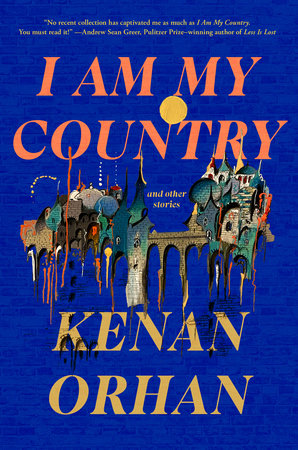
Kenan Orhan’s debut, I Am My Country, feels like much more than just a book of imaginative short stories set in and around the author’s ancestral homeland of Turkey. The powerful collection could be said to comprise a series of real “small rebellions”—enacted by its characters, prose, and the political implications of writing the book itself—which each add up and culminate into one large, literary revolution.
Orhan’s characters — ranging from a woman, who uses her magical attic to house Istanbul’s discarded and forbidden musicians, to a teenager in Soma who dreams of escaping his predetermined future in a small mining town, to a muezzin who spies on a Turkish baker and her adulterous husband while the city floods with apocalyptic rain — pleasurably (and at times hostilely) invite readers to interpret for themselves what reality means and how to combat it when history isn’t on your side.
Inspired by Italo Calvino, Jim Shephard, and Ayşe Papatya Bucak, Orhan’s fiction infuses melody, charm, and wonder effortlessly while excavating the real repercussions of an authoritarian regime. The last story, “The Birdkeeper’s Moral,” almost reads like a Gabriel García Márquez novel, complete with magical realism and a timeless decade-spanning, gut-wrenching romance, but instead of love being compared to a contagious plague, it is likened to a tragic pogrom, and instead of existing in a late 19th-century Cartagena, it belongs in Istanbul and to Turkish characters who have lost their voice and memories to a blanketed history. All in all, Orhan’s stories conjure that enchanted longing evident in García Márquez’s Spanish classic, though perhaps more aptly capture “Art in the Time of Repression” in this unique and dazzling collection.
Throughout our interview, Orhan and I spoke about how geographical landscapes affect one’s identity, the risks of writing about Turkey’s government, and the convenience of a country’s selective memory.
Kyla Walker: Could you explain your relationship to Turkey and how it has possibly evolved in the past decade?
Kenan Orhan: We grew up, me and my brothers, in a half-Turkish household. But it was my mom’s side of the family that’s Turkish, and the stay-at-home parent was my father. We knew all of our maternal relatives were Turkish, but we didn’t grow up speaking Turkish. So when we went, which was just about every summer to visit relatives, it was this kind of weird, familial and familiar place that we were still kind of kept out of a little bit. And that also was exacerbated by being tourists, but like local tourists to a place. So you’re going to the local hangouts, the local restaurants, your tour guides are locals, but you’re still hitting Kapalı Çarşı, Sultan Ahmet Camii—all these, you know, famous places. And so you get a weird tour guide relationship, but it’s always from the relationship of the personal. So my answer would be like, “This is where we got mugged the other day, and this is where has the best marzipan.”
But that coupled with having to teach ourselves Turkish later in life and taking an interest in Turkey later in life, which has made it this sort of strange and precious thing and probably a little too precious at times because over the last decade, I actually haven’t been, we stopped going after the 2013 Gezi Park protests. I was young, so I couldn’t just go. And then as I grew up, and was able to afford my own ticket, my parents and relatives there were like, “No, you’ve started writing about it, so it’s not safe.” I don’t know how true that is. But it’s been this kind of weird attempt to hold on to a part of me that has always felt unstable.
KW:I loved the Beyoğlu story, which was so magical and enchanting, but also politically relevant in terms of censorship and the limits of artistic expression that’s currently on the rise in Turkey. While I was reading the collection, something very jarring to me was seeing Erdoğan’s name in print in contemporary fiction. That’s something I don’t think I’d ever seen before. But, it makes all of the stories feel urgent and important and speaks to our generation today more than I think anything else I’ve read about Turkey. So, I’m curious, did you consider leaving Erdoğan’s name out of the stories or changing it in your fiction? And was this a tough decision to make or more of a natural one to involve the current politics of Turkey in this collection?
KO: It was kind of a gut instinct. And I don’t know if I ever considered not including his name in a lot of the current policies just because in as much as these stories are a way for me to explore and hold on to an aspect of myself, it was also a way for me to explore and get to know Turkish identity, what it is to be the country Turkey right now, what that “republic” means. And he’s been in power for 20 years, so it feels impossible to write a story about contemporary Turkey that doesn’t have him appear in some way, whether it’s his policies and he doesn’t stay named, or the AKP, his political party, it just feels impossible not to talk about it. One, because I feel like the Turkish people are generally very politically aware as a population. I won’t say the most politically aware, I’m trying to avoid generalizations, but there’s a history of rebellion and revolution and coups and all that in Turkey, and that’s for a reason. It’s a very politically minded country. And so to accurately represent that I feel like he would have to be there.
As much as these stories are a way for me to explore and hold on to an aspect of myself, it was also a way for me to explore and get to know Turkish identity.
But it’s interesting you say that you haven’t seen his name. I didn’t really think about that until just now. But yeah, for the most part, I only see his name in news stories. And part of that, I would imagine, is because Turkish writers can’t really put his name in there for fear of reprisal. And American writers probably just don’t care. Which is unfortunate. And I hope that’s what this collection can kind of do a little bit, is both bring attention to Turkey’s unique political situation, but also a little bit lampoon the rule of one man nationalist populism that’s on the rise there and in other countries like Poland and Hungary and elsewhere. But yeah, he was very much a target for me. I set out to write a couple of these stories very much because I was very upset with his policies. “Soma” being the main one. I mean, it’s a national tragedy, really, that mine explosion. And they keep happening. There was another mine explosion recently.
KW:Yeah. I wanted to ask about that too, to provide some background for readers—on May 13th, 2014, the worst mine disaster in Turkish history occurred at Eynez coal mine in Soma, causing an underground fire that lasted two days and in total killed 301 people. And most recently, in October of 2022, a mine explosion occurred again in Soma and caused 40 deaths. So obviously, these are very tragic events and are very hard to write about. It seems like a fragile line to go into these perspectives of the residents there and to share them with the world, while also being respectful, not to misrepresent the facts and the trauma of an event like that. Did you feel more liberty and flexibility in fiction to add to these narratives that we hear in the news, or did you feel constricted in some ways to talk about something so serious and personal that actually occurred?
KO: I think fiction is liberating both for the writers and the readers. But you tread a very fine line. You’re balancing essentially taking advantage of a tragedy as well, or catastrophe porn, essentially, where it feels like you’re making light of a situation in which 301 people died. And so it’s a lot of revision is what that is. And you have to find the way into the story. If you just sort of sit down and say, “I’m going to write a story about a mining disaster,” it’s not going to go well because for the most part you’re essentially doing a fictionalized account of a journalistic thing.
I think fiction is liberating both for the writers and the readers.
But when you can find the human aspect of it, when you can, in the midst of chaos, find those small moments of humanity… Anyone can relate to somebody who desires something or who is going through grief or loss or probably not quite the scale of the catastrophes, although catastrophe is global. But you can sort of find your way in generally with a peripheral character. And that’s how that works for “Soma.” The narrator is peripheral to the disaster, mostly because it felt borderline disrespectful to try and get in at Ground Zero. And I hope I did it well enough because you don’t know. You try. There’s a lot of different ways contemporary publishing tries to set up situations so that they go well, whether it’s sensitivity readers or making sure that people get to tell their own stories rather than having those stories taken out of their mouths and told by other people. I struggle with that still, as someone who’s away from Turkey, someone who’s not living those disasters, I don’t know, with 100% confidence that I have any right to tell these stories. But I also know that their not being told in the States is kind of a shame. And if no one else here is going to write them, I guess I will.
And you also have to then say, can they tell these stories in Turkey? I’m in a very privileged position. I’m away from the problems and I’m also away from them. And so I’m trying to give voice to people who can’t write.
KW:Do you feel a sense of pressure or obligation to do that? And would you say that your stories are more geared towards Turkish audiences or American?
KO: I think my stories are very much geared towards people who know something about Turkey. During the editing process, when the collection is coming together, fortunately my editor helped me with this, but I had to be significantly more aware of people who have no exposure to Turkey. But I also didn’t want to sit down and write a story about Istanbul and pass perhaps the Grand Bazaar, right? And they say, “Oh, the Grand Bazaar, which has been here since…” It’s hundreds of years old. And it’s this icon of Istanbul identity. But you don’t have to say all of this stuff. And sometimes people can just walk by things. You don’t even have to reference them all the time.
We’re learning which trains get you where, but it doesn’t really matter, especially for those of us like me who don’t live in New York City. It doesn’t mean anything.
And a problem I have right now with a lot of American fiction, especially set in New York City, is that we’re learning all about the subways in New York City, we’re learning which trains get you where, but it doesn’t really matter, especially for those of us like me who don’t live in New York City. It doesn’t mean anything. And so you’re constantly trying to figure out how much information is necessary so they have political awareness of the situation and how much information is too much to which someone who is in the know would be eye rolling. And it’s any time anybody who does stories of elsewhere or stories of something that isn’t common knowledge and you’re bringing an audience with you, hopefully. And I’ve always kind of thought of it like that, rather than having an audience in mind or trying to exclude people. I want these stories to be easy to get on board with, but not necessarily too cliche.
KW: Yeah, I agree. Do you hope for this collection to be translated into Turkish?
KO: I would be thrilled. I mean, that would be incredible. There are elections coming up and Erdoğan might be out this May, really as early as, I think, three weeks from now. But he might win or stay in power even if he doesn’t. And I think if anybody tried to translate and publish this with him in charge, it would not go well. I think they’d probably face jail time. I mean, he’s a very soft-skinned dictator. And I frequently have characters call for violence against him or express discontent. But many of these stories are very much against, if not the regime, the horrors Turkey has committed, maybe not as a country, but as its state, its rulers have committed. And that goes all the way back to the ‘50s. I have a story set during the Istanbul pogrom, which was an attempt to essentially just kill all the city’s Jews, Greeks, and Armenians. And I didn’t know about this at all. My grandmother and grandfather lived through it. Nobody talked about it. I had figured it out in 2015, 2016 maybe. And that’s a little bit on me, I’m not politically aware, but it’s not something Turks like to talk about. But that feels insincere to criticize the current government and not think about how we got here.
Neither of my girlfriends would take me to the beach. When I told Miller, they yelped into the phone like they’d broken a toe: But it’s summer! That’s what summer is for! And you live so close! Their voice cracked, on summer and summer and close. I heard them bend down and whisper to one of their chihuahuas: can you believe that? The chihuahua tippy-tapped back. Two days later, they put the dogs in daycare then drove three hours down from Binghamton.
I watched from a window while they parked their dead grandma’s Camry in front of a fire hydrant. They strolled up my porch steps already grinning, already giddy, already preparing to sell my town a boatload of invisible musical instruments. Well well well, I said, flinging open the screen. Their mustache wriggled. Picture the underside of a caterpillar, dancing.
We hugged. I laughed, too. How could I not? Miller and I are always thinking the same thing: I’m so glad you found me. It’s ridiculous that we were born on opposite coasts. It’s ridiculous that we only met three years ago at a feminist podcasting conference—I’ve never recorded a podcast in my life. We’re both skeptical of mass gatherings; I’m not really a woman anymore and Miller hasn’t been one since way back. Life is a stupid, beautiful miracle. It’s rude and homophobic that we didn’t get into any of the same grad schools and have half a mountain range between us now. We should’ve been brothers. We would’ve made great small dogs.
Hey buddy, they said. You gotta learn to fuckin drive. Their arms soft pretzeled around me and the words were warm and muffled in my shoulder. I don’t like touching my friends, Miller especially (it’s like touching one of my actual siblings; a little too close) but we hadn’t seen each other in six months.
I’m leaving! I yelled upstairs. Someone, either my girlfriend or her wife, shouted down drive safe. We were already sprinting to the car.
The trunk was crammed with a boogie board, pool noodles, two-liters of Mountain Dew, and a Teenage Mutant Ninja Turtles beach blanket. I pointed to the blanket when I popped my bag in. You are twenty-nine human years old, I said. I know, said Miller. Isn’t it great?! In the front seat, they handed me an open bag of Flamin’ Hot Cheetos. Hold these. Ambient techno shit exploded against the glass. Absolutely not, I said. I set the Cheetos down by my feet to reach for the stereo. Do not forsake our holy snack! Miller shouted, batting my hand away. I made us a playlist. They pulled out their phone and the noise evaporated. I was just waiting for you so we could start from the beginning.
I picked up the Cheetos. I am ready. See? Play me my playlist.
Good, they said. I sat obediently while they programmed the GPS, and then “Wouldn’t it Be Nice” by The Beach Boys clinked on. Brian Wilson, as we pulled away from the curb, thought it would be nice if we were older. Then we could live together in the kind of world where we belonged. Wouldn’t that be nice? I think it would. Brian Wilson, very sadly, was never a gay transsexual.
I hummed along. I liked watching Miller drive. Driving is a private act. Watching someone drive is like watching them groom their genitals. They’re vulnerable. They can’t make eye contact. You need to give them total concentration. Also, I don’t drive.
I thought about Miller pointing their car towards me that morning, winding through the Poconos, watching the fog burn off. I imagined them writing weird little poems in traffic, texting their wife good morning from a gas station, chugging vanilla draft lattes by the can. Three empties rattled in the cupholders, which I interpreted as love notes for me: I’m here. I am with you. I am ready for anything because I am extremely caffeinated.
How’s the murder? Miller asked. We sat in traffic on 76. Same same?
They’re fine, I said. They both want to quit their jobs. Miller waited, giving space for me to say more. I wanted to unload—we never got to see each other during the semesters—but it was complicated. My girlfriend had gotten obsessed with miniatures and was wasting her evenings hunting down collectible toys, mostly Funko Pops. She stalked eBay auctions at night, fell asleep in front of digital estate sales alone in our shared office. A month ago, she had, without telling me or her wife, paid a thousand dollars for a vinyl figurine of Sloth from The Goonies.
Her wife retaliated by deciding to build a kayak. She wasn’t very handy, and tried roping me in at first, getting moon-eyed while describing its unique construction. Look at the plans, she said. There are no nails, no screws anywhere. I didn’t get it. How will it stay together? I asked. With pegs and lashes, she said. We can steam the boards together in the backyard. I had no idea what that meant; I didn’t think she did, either. She took meandering field trips to various lumber yards, kept coming home with the wrong kinds of wood. After three or six or seven of these failures, she hired a handywoman, a “rent-a-dyke” whose woodshop she’d been disappearing to every night.
And we did all the right things. We ate breakfast together. Had sex. Between us we shared six Google calendars, went to therapy, hosted a bi-weekly movie night. I didn’t know what to do. Mostly I was doing a lot of laundry, waiting for them to come to bed. I moved dishes along, from the sink to the dishwasher to their homes in our cabinets. I cooked dinners with too much butter, delivered full plates to the office and labeled leftovers for the freezer. At the start of the pandemic, we’d seen footage of cruise ships floating at sea, bobbing beyond ports where they couldn’t dock. We’d held onto each other while the clips cycled over and over again on CNN. We thought lucky us, we will never be stranded like that.
I used to think of us as a constellation, as individual fires connected by unseen forces. That’s what we should call us, I’d said—the Little Dipper. Throuple and polycule were straight people words that sounded like science projects. My girlfriend’s wife suggested The Triangle (since we’re all equal). I don’t remember when one of our in-laws joked about us being a harem. We vetoed him immediately, but then someone said the thing about the group of crows. After that, everyone called us the murder.
They’re really stressed right now. I think maybe they see me and hear me talk about you and wish they could be back in grad school, too. How’s Priss?
She’s good, Miller nodded. Gets out next week. Counting the seconds ‘til we’re both on break. We’re taking the dogs camping.
Cool, I said. Miller’s wife was a stressfully hot flannel femme and decorated swimmer who taught second grade. In the past I’d wondered how much time Miller spent worrying about Priscilla waking up one day like, Oh shit, how the fuck did I end up marrying this nebbishy trans sadboy, why has god abandonedme, but then one day I just straight up asked and Miller was like, Dude I literally do not think about anything else.
You should’ve said something, I said. We could’ve waited until her school year was over, I would’ve loved to see her. Miller did not acknowledge I was lying. She’s been a bunch of times. And today’s more of an us day, they said. Two little guys, right?
Right, I said, Two little guys.But next time? A little plausible deniability would be good for us—Ocean City is big into cop shit. Like, get ready for ‘family friendly’ fun. You can’t buy alcohol. They like Nazis and baseball. They want to see good American women in bikinis.
Whatever, Miller said. I don’t care; it’s one day. I love the ocean, I’m a delight—you’re a delight—we’re gonna swim and take naps and no one’s gonna talk to me about their fucking dissertation. I didn’t even bring a book. I’m gonna get a hotdog and think about nothing. These motherfuckers—
They don’t know a thing.
Exactly.
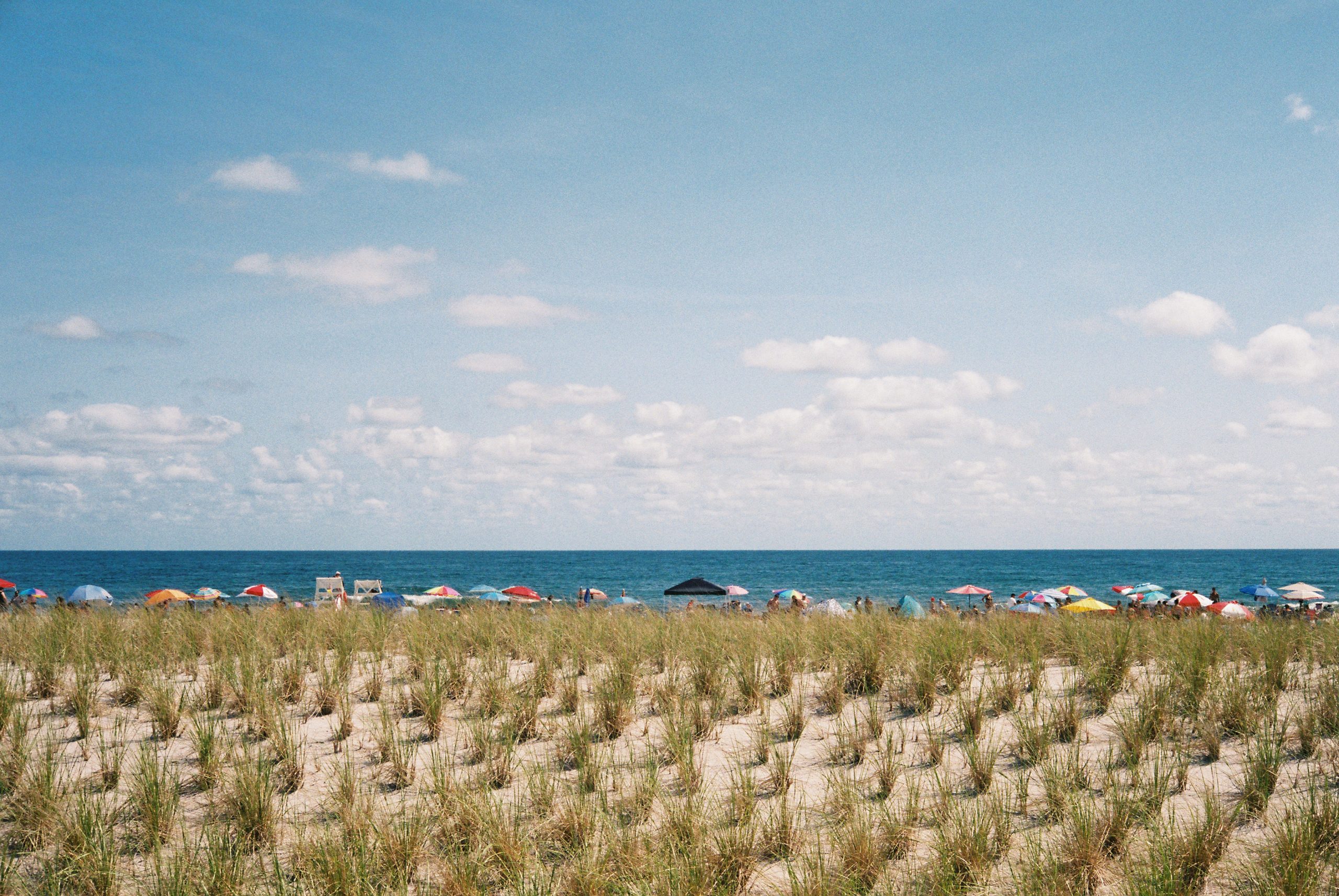
As we rolled off the Atlantic City Expressway, the sky spread out for us. Blue, blue blue; light, high and hopeful, like the sun had gone for a ride in a balloon that would never come down. The horizon was patchy with pale clouds. We rolled our windows down, and I blasted Miller’s playlist all the way down Asbury Avenue, a synthpop track about self-control that sounded vaguely Swedish and gay. The chorus was the word “self-control,” over and over.
They don’t know! I yelled over the music.
Absolutely fuckin not!! Miller yelled back.
I knew Miller would lose their mind the second they saw the boardwalk. Ocean City was fully committed to pastels. All fonts were nostalgic, every shop window ripped straight from a hazy memory of an unexamined childhood. Underfoot, each plank sat tight against the next, all solid hardwood, pressure treated and feathered with bike lines. Police officers dotted the path like candy buttons; American flags hung everywhere, as if today and every day was the Fourth of July. It had none of the scruff and grime of Atlantic City, eleven miles to the north (the beach the murder preferred when they weren’t too depressed to drive; we were the least weird things there). Signs pointed us towards sand toy shops, saltwater taffy, clean bathrooms. In the distance: the ocean, unbothered, roaring like the white noise machine outside my therapist’s office door.
What do you want to do first?! Miller asked. Their backpack bobbed behind them, bright pink and patterned with flowers, a homosexual bullseye. You want to get ice cream? Hotdogs? God, this place is amazing. Look at that Ferris wheel! They have carnival games?? Dude, you didn’t tell me! I gotta win P something. I’m—oh my god, holy shit, look, they have frozen lemonade. We have to get one, I haven’t had that si—
Let’s get a spot first, I said, pointing to an area between lifeguards. We passed families in Tommy Bahama chairs, spread out like honey on toast. Clean, blonde heads on clean blonde sand. There was no one like either of us anywhere. Trust me, I looked.
Underneath my clothes was a new, red singlet. A one-piece spandex thing, kind of like what Greco-Roman wrestlers wear, from an online-only gender-neutral swimwear brand, Captain Beefhart. It didn’t have a built-in binder but came with the next best thing: a thick double lining that smoothed breasts into something less breast-y. The algorithm had dangled it across my social media every summer for years. Instagram, I eventually admitted, knew more about my gender than I did.
It looked great, but I’d only pranced around in it safely at home. The murder adored it. Ooh, look at my little muscle man, my girlfriend whooped. She said it with the set of implied air quotes we used to refer to all genders and pronouns in our house. She was kidding but also not. It was a joke, but also it wasn’t. I writhed for my audience. That’s my Baywatch boyfriend!
Miller stripped immediately and zoomed around the blanket, pulling out sunscreens and a hat. They tucked the edges of the blanket under our shoes. I’d never seen them undressed before. They had so much chest hair. Their bathing suit was a tiny pair of black, glossy, flamboyant speedo shorts, covered in white and yellow daisies. The trunks were tiny—no bigger than the microfiber cloth I wiped my glasses with—and so tight, you could’ve shot them from the back of a classroom like a rubber band. They were stupefyingly faggy and made them look like a 70s gay porn star. Their bellybutton was an outie.
Their bathing suit was a tiny pair of black, glossy, flamboyant speedo shorts, covered in white and yellow daisies.
I didn’t know you had so many tattoos, I said, freezing with a hand on my zipper. What’s that one? I pointed to a bluish stick-and-poke blob below their collarbone. It’s supposed to be the Shade from Hollow Knight, they laughed. Prissy’s friend did it in undergrad. Hollow Knight was a video game Miller played compulsively back when they were still doing “dyke with bad posture.” They’d walked through it for me on Twitch after my prelims. The Shade looks like the shadow of the main character, the knight, but it’s an enemy. It spurts out of the knight’s body whenever you die. When you restart, your Shade is waiting there for you, ready to attack. You have to kill it before it kills you.
Here, this one’s better. They turned around and pulled down one side of their shorts. On their ass below the seam was the Shade in a solid, professional outline, now a real ghost floating in deep black, a four-inch tentacle body with glowing eyes. A nail—the knight’s signature weapon—stuck out of its back. Wow, I said, T gave you a lot of ass hair.
Shut the fuck up, they laughed, pulling their suit up. This is all me—100% homegrown, Armenian body hair, baby. When I was a girl, it was a fuckin’ nightmare. My mom tried dragging me to electrolysis when I was like, nine. My littlest sister still practically lives there.
You grow that Robin Williams chest nest yourself, too? I asked. I couldn’t help it; I pointed. You can barely see your scars! Miller slapped a pat of sunscreen on one arm. Dude, that’s not a compliment, they said.
I squinted at them, pretended the sun was in my eyes. I knew Miller was thinking about whether they wanted me to apologize, or if they should silently forgive me, or say some small thing to remind me that we weren’t the same. I stared down at my feet, unzipped my shorts and slid them off. People were looking at us, probably looking at both our chests, trying to figure out who and what we were, wondering if we were homeless or some kind of vintage cosplayers. I kept my head down.
I don’t think I want ass hair, I said, finally. I don’t want to look like the men in my family. My father and brother were bushy, like Brawny paper towel men. I folded my shirt into my backpack, away from the sand. I hoped Miller would say something.
Cute suit! they said. But T body hair isn’t genetic, you don’t know what you’ll get.
Well, they both have acne too, I said. Do you want to swim?
Acne isn’t genetic, either, said Miller. And I knew they were over it for now, at least enough to turn this into a pep talk if I wanted, but I didn’t, not really. I didn’t want anyone standing on the other side of the thing I was so fucked up about to help me, especially Miller.
And anyway, it wasn’t the right time. A teenage boy wearing an official-looking fanny pack stepped onto our blanket and asked for our beach tags.
What the fuck are beach tags? Miller asked me. The boy pointed to a sign.
Ten dollars? Miller said. Ten AMERICAN dollars?
I got it, I said. Get me a hotdog or something later. Do you take cards? I asked the kid.
There’s an ATM just up on the boardwalk, ma’am.
I blanched. I’ll be right back, I said. I sang “Barbara Ann” by the Beach Boys while I walked to the ATM and back, replacing all the lyrics with ma’am.
You can take Accutane, Miller said, after I gave the Ocean City foot soldier our money. He handed us two pink pins to stick on our bags.
Does my suit look weird? I asked.
I already said the suit is cute. It’s so cute! Do you need me to say it again? It is very cute! Let us swim.
I took their hand. The sun was white and still and achingly full. It floated directly above us, still on its hot-air ride. I know I said I don’t like touching my friends, but I wanted us to rush towards the water together, so we did. We’d never held hands before and I was surprised by how I felt, how much I felt. It was like holding my girlfriend’s wife’s nephew for the first time, getting totally overwhelmed by his infant perfection. Everything in our lives, whoopsie daisy, was such an intricate practical joke.
Miller’s grip tightened. Their nails were immaculate. I LOVE THIS! they yelled as we crashed in. Peak Miller. Sometimes I only realize I’m feeling something after I hear them say it first. I’m not actually sure how it would feel if we ever lived in the same place. It might be too much. But I love the ocean, too. Water has always been my favorite body part.
We kept holding hands. I don’t know why; it just felt good to jump up and duck down together when the waves came. Each time, Miller yelled a little louder: I LOVE THIS! I LOVE THIS! Me too, I thought. I wanted to make a joke about the ocean being our biological mother. I wanted to say I love this and I think my girlfriend and wife hate each other and I think I want top surgery, and I’m sorry, but I just watched them yell into the sea. The water was fucking freezing, and I let it tighten around my brain.
I loved my friend so much. I couldn’t even make words, I just kept holding their hand, tighter and tighter, tight enough to accurately take their pulse. I took deep breaths, trying to make my heart beat together with theirs. The waves kept hitting us, the next and the next. The rhythmic bashing—it all felt so good. Different groups of children kept coming and going, joining us and getting tired, disappearing again.
I was trying to work out a joke about bottoming for the sea when a big wave hit us out of time. We misjudged it. It was too fast and we were too close; the crest collapsed over our heads. We were thrown apart—we had to let go. I tumbled. All the way, ankles over neck over who the hell knows. The crotch of my suit filled with sand and I cut my foot on something, a shell or some rocks. I clawed for the surface, but nothing. Just nothing. I tried again. I started to get scared. Don’t panic, I thought. I searched and reached but couldn’t see; everything was murky and brown and liquid. There was nothing to hold onto. It disappeared; I disappeared. And then, a second later, I found it. The bottom. My feet planted on sand, sweet and solid, like it was the easiest thing in the world. I stood up.
When I broke the surface, I hit the air coughing and snorted out everything I’d swallowed. Saltwater burned the bones behind my face.
Miller was a few feet away, already upright, floating like a beacon. I swam over and grabbed their hand again. Then I opened my mouth and screamed in their face. They smiled, with their dripping, sandy moustache, and screamed right back.
I’ve seen an album of Miller’s old photos. At eleven they looked more like a horse than a girl, chaotically gendered and gay as fuck, a wild colt, the kind that lives on a beach and won’t let a single human get near it. If we’d grown up together, I would’ve hated them. And then what? We wouldn’t have gotten to experience the Stand By Me corndoggery we were enjoying right now. Miller and I stood there like Yellowstone’s last two wolves. When the waves came for us there in the shallows, we threw our backs against them and screamed. I screamed until my throat burned. They screamed even louder. It’s really hard to stop screaming, once you let yourself start.
The sound coming out of my mouth wasn’t joyful anymore. Miller said something. I think it was, You okay, buddy? I stopped moving. One wave hit me hard, then another. Miller gave me a good shake. Hey. HEY. Do you need to get out? They grabbed me with both hands. I think we should get you some water. I stopped screaming, and nodded. Yup, they said. Definitely water time.
They led me back up the beach and sat me down on the blanket. I collapsed next to my bag and waited to be handed the Mountain Dew. My throat was swollen and raw. My uvula felt like it was full of splinters. But instead of the hot soda, Miller pulled a pair of thawing, frozen water bottles from their backpack. I was saving these, they said, unscrewing both caps. P was like, “you cannot only bring lukewarm Mountain Dew for an entire day at the beach, that is chaos” and you know what? She was right.
God bless wives. I drank the entire bottle, then sucked at the cold air around the last strands of ice until the plastic crackled in my hand. Thank you, I said.
Thank Prissy, said Miller, taking the empty. I got worried, I’m glad you’re okay.
I’m okay.
Good.
Hey Miller?
Yeah?
Some people get really fucking ugly when they go on T, don’t they?
Dude—they snorted.
Right? I’m not making that up?
Yeah, no, I know, they said.But like—scars arebeautiful.For real. Like, I love mine. They’re hot. I worked my ass off for them. I want guys who are looking to be able to see them. I like that—
I know, I know.
No—you don’t. I love you, but you literally cannot know, not until you do it. And if anyone hears you you’re gonna get cancelled so fucking hard,I’m gonna have to pretend I don’t know you, it’sgonna be like Mariah Carey pretending she doesn’t know JLo—
No one around here has any idea what we’re talking about, I said. It’s just us.
Miller looked over their shoulder. Touché.
I mean, some people get hotter. Mostly, right? Like Elliot Page.
Hell yeah, off the charts; that’s our guy—
But like, there’s this dudeI follow on Instagram? Who started HRT over a year ago? He was so hot before, and now he looks like a werewolf, and it’s just…embarrassing?Like he’s a total mess. His beard is awful, he’s got, like, tufts. He looks like the cover of an Animorphs book.
Oh my god, they laughed. Shut the fuck up. He’s HAPPY, that is sick—
But funny?
Yes, they said. Very funny, but—
It’s just that YOU look really good, and how would—
Excuse me, a voice interrupted. A woman stood over us, a tall one with a long shadow. Standing beside her was another woman, also tall. Both wore jewelry and were tanned to a shade of raw leather. Can we talk to you for a second? Neither of them was looking at Miller.
Me? I said.
Our friend over there just wanted to ask you something.
I was confused. The women looked at me, then pointed to someone, a woman sitting under a striped umbrella twenty feet away. She was wearing a halter-top one piece with a straw hat and sunglasses. She stood up, smiled and waved. I looked at Miller for confirmation.
I’ll be right back, I said.
You absolutely will, said Miller.
Once I got up, the women walked towards their own camp fast; I was a foot shorter and had to jog beside them. None of them looked queer. You never know, though. Maybe the woman on the blanket had a nonbinary kid and clocked me and wanted to ask me where I got my bathing suit. Maybe she’d met a lesbian recently and was about to mistake me for her.
Hi, I said when we got to their blanket.
Are you okay? said the friend.
Sorry?
We just wanted to make sure you were okay, she said. We saw you fighting with that guy. He grabbed you really hard—
He shook you, said one of the other women. You looked like you were crying.
Oh, no, I said, He didn’t—
He did, said the woman on the blanket. We saw. He was screaming at you.
No, that was just—
It’s okay, said the woman on the blanket. I know. It’s like, it’s almost nothing. But it’s not okay for him to do that. If he touches you like that in public, it’s only a matter of—
No, I said. We were just—we were having fun. He was helping me.
Honey, she said. I’ve been there.
Thank you, I said. I really appreciate it. This is actually really cool. The women looked at each other. But we’re fine, I was just freaking out. Everything’s fine.
They looked ready to throw me in the trunk of their car.
They looked ready to throw me in the trunk of their car.
Can we call someone for you? one asked.
No, no, you guys are great, I said, taking a slow step backwards. Shit, shit, shit. This is really sweet of you. Please do not call anyone. That is my friend over there; we were just having a shouting contest. We were having fun, that’s all. I took another step.
I’m giving you my phone and my email, said the woman on the blanket. Don’t go anywhere. She rooted in her purse and plucked out a business card. She had fancy, shiny nails. Her card had a photo of a McMansion on it. Stacey something. A realtor. You’ve got my cell and my officeon there too, just in case. Tell him I thought you might be interested in buying locally. The other women clucked with affirmation. If you need anything. Okay, honey? An-y-thing.
Thank you, I said.
Can I give you a hug? Stacey was already standing up.
I don’t really do hugs, I said. I’m sorry. I backed off their blanket, elbowing one of the standing women in the process. She was wearing a mesh caftan; I got caught in one of the holes.
Ow! she said, grabbing herself.
Stacey’s cardboard card wilted in the sweat of my fist. Thank you again so much! I said, turning around. I’m sorry! I ran for a while in the wrong direction before realizing Miller was back the other way.
Dude, we need to move, I said when I found them. I was out of breath. Now. I grabbed my backpack and shoes. I’ll explain, but we should go. I’ll buy you a lemonade.
I did not like their vibes, said Miller, solemnly. They swooped up the blanket and beach toys over their shoulder like Huck Finn. Let’s lemonade.
So they thought I was trying to domestic violence you? they asked once we were off the beach, speed-walking past the boardwalk off-ramp that led to the parking lot.
Yeah, they wanted to call the cops. Do you think we need to go? Your car’s that way.
Wow! Miller said, puffing up.
Okay, I know you’re excited that they thought you had it in you, but I need you to focus—
I mean, they laughed. Come on. They couldn’t have looked that hard.
That got me. I stopped to laugh and catch my breath.
No way we’re leaving now, they said. They pointed to their wrist, to where they wore their imaginary watch. It’s Miller time.
From there we slowed down. We wandered through a busy part of the boardwalk flush with old-timey carnival games. I looked over my shoulder every few feet, just to make sure. The midway was a good place to disappear. It was easy to camouflage ourselves in the gauntlet of gentle grifting: pyramids of milk bottles and rows of goldfish in tiny bowls. Noise, lights, mirrored ring tosses, crane games, water gun races, kids, kettle corn.
Can we go a little further? I asked. I just want to be sure.
Definitely.
We kept wandering until Miller stopped in front of a basketball toss staffed by an old man. Older than all of our parents—the man should’ve been basking like a potted plant on a sunporch, or shuffling across a parking lot with a flock of great-grandchildren toward Old Country Buffet.
I was a shooting guard in high school, Miller said, staring at the plywood backboards.
You told me, I said. You want to do it? I’d love to see you shoot hoops.
I wondered if the old man had a family in Ocean City.
Five for five, he said. Get a ball in the hoop, win a prize. He gestured to the wall behind him; the stuffed animals were too big to fit through the doors of Miller’s car. Easy peasy.
Miller handed the man a bill and took the basketball. Bonk; a miss. They looked down at their feet and adjusted their stance. I saw them at their all-girls’ high school, shooting threes alone all afternoon. I don’t think it was easy, being a horse at an all-girls school.
Bonk; off the rim. Bonk. Whomp, off the wooden backboard, into a stuffed hippo. I still like you, I said. I patted their back.
I really want to win you something, they said.
You don’t have to do that.You really don’t. We definitely don’t have room in our bed for one of those giant animals.
Maybe let the lady have a go? the old man suggested.
Ah yes, Miller said. The . . . lady. They handed the last ball to me.
Naw, I said and shook my head. I’m terrible. I hate basketball. You can do it. You do it.
I just missed four in a row, Miller said. Take a turn. Win me something.
I stood in front of the hoop and squared up. Deep breath, I thought. You can do this. Two little guys. I closed my eyes.
Bonk.
Aww, that was pretty close, the old man said. Thought you had it. Try one more. On the house.Let’s see what you got. He handed each of us another basketball.
Get ready, Miller said. You’re taking home a ten-footgorilla.
I can’t wait, I told them. And then we took our shots.
Bonk.
Bonk.
Oh well, Miller said. We tried. That was fun.
It was, I said.
Wait, the old man called. He slowly stood up off his stool, then turned around and bent over. I like you two. You’re sweet. Good to each other. I like that. He rummaged around. Let me see . . . ah, here we go. He handed Miller a stuffed animal, a fat little dog the size of a lemon.
I love dogs! said Miller. Thank you so much! Their voice cracked, on love and thank.
You two have a good night, said the man. Take care of her.
We will, we told him.
When we drove home later (after a nap, two hot dogs, an extra-large boat of crinkle-cut fries, and a couple seconds of Miller frantically gesticulating at a random guy with top surgery scars we saw tossing a football like a Jersey Shore Ken Doll), we were too tired to sing along to the playlist. The road was quiet; we were quiet. The sky turned a darker blue; the sun would set after all.
Want to stay over? I asked. We were getting close to the city. We have plenty of room.
I want to, but I shouldn’t, Miller said. I want to see Prissy. Plus, I don’t want to leave her alone with the dogs overnight, they’re a handful. Last week one of them ate, like, a foot and a half of carpet.
Right, I said. I get it.
We kept driving. I can’t believe that guy gave you a stuffed dog, I told them. That was magic.Like, how he knew. The dog didn’t look like either of Miller’s chihuahuas, but in my head, I already was sure it meant something.
Just before we got to the city, we sped past a family of deer eating grass on the shoulder behind a metal rail. They perked their heads up in our headlights as we got close, a cluster of adults with a couple of babies; they dove back into the brush and disappeared as we passed.
Hey, I wanted to say—Miller said, when we took the exit for my neighborhood. The murder should take you to the beach sometimes. Either of them. Or both of them. It’s not that far.
I know, I said.
It’s not even an hour. That’s a thing they should want to do.
I know, I said. I know. Thanks.
There was no salt in the air when I opened the car door in front of my house. It was just a dirty city on the edge of a short night. The lamplights were chemical, and a kelpy funk tumbled out of the car with me. It was hot and staticky on the street. The sand in my crotch dug at me. I wanted a shower. I looked up at my house. None of the lights were on. Girlfriend #1 was probably in the office, staring into the blue light of her laptop. Girlfriend #2 was still out, somewhere under the rent-a-dyke’s jigsaw.
This was great, I said, reaching in Miller’s window to hug them one last time. I didn’t know when I’d see them again.
Anytime, my friend.
I know, I said. Then I turned back to my house and walked inside.
There’s something viscerally appealing about nesting dolls. The same holds true, I’d argue, for nesting narratives. Each new layer to the story can either reveal or obscure the capital-t Truth at its center. Sometimes both! As a magazine writer and editor, I’m particularly aware of the difficulties intrinsic to writing about other people’s lives. Nesting doll—or frame—narratives confront that particular anxious itch: in them, the narrators (often writers) disappear for long stretches, or reveal themselves slowly, or crumble under the weight of the stories they’re telling.
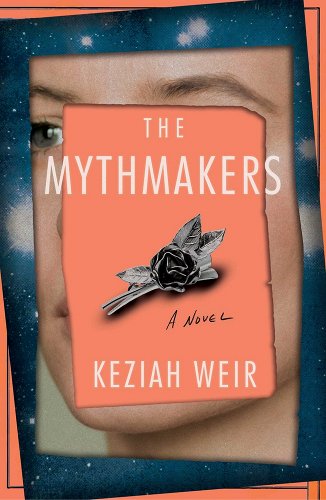
In my novel, The Mythmakers, a young journalist reads a short story by an author she met years earlier and finds signs that the story is about her. When she learns that the author has died, but that his widow lives not too far away, she abandons her life in Brooklyn to track the woman down upstate. What follows are glimpses into the lives of the couple, their families, and friends: a teenage future physicist living in Houston at the height of the space race, a mysterious therapist with a commune in the woods, a classical pianist grappling with failure.
I love reading about writers, but I also love abandoning what I know and sinking into a story about people with desires and professions that don’t resemble mine. Here are stories that have the best of both worlds—books worth swallowing whole.
On its surface, the book reads as a comic portrait of bumbling Russian professor Timofey Pnin. He does strange things to the English language, his ex-wife walks all over him, he’s the butt of his colleagues’ jokes. But from the very first page a puppetmaster lurks between the lines, and as the story progresses it becomes increasingly clear that one particular narrative thread holds the key to seeing the truth below the attractive gauze of storytelling—a subtle nesting doll in reverse.
In the wake of her husband Charlie’s disappearance, Marina Willet, a psychiatrist and our narrator, retraces his recent travels and interactions in the hope of finding answers—and maybe Charlie himself. Before his disappearance, Charlie had become obsessed with the shadowy relationship between the weird author H.P. Lovecraft and a teenage fan named Robert Barlow. The book contains so many effortless shifts in place and time, from excerpts of what’s purported to be Lovecraft’s diary; to the travails of the adult Barlow, a professor in Mexico in the same circles as Rafael Nadal and Diego Rivera; to the WWII story of a shifty character named L.C. Spinks. It’s seamless, a high-flying trapeze act. Paul was my undergraduate professor and advisor, and his writing and teaching were and continue to be hugely influential to my own work.
Theater kids at a performing arts high school fall under the thrall of their transgressive and charismatic teacher; when British exchange students and their own instructors arrive, boundaries are further blurred. It’s tricky to summarize this one without spoiling the roller coaster-drop sensation of its reveals, but suffice to say that in the following two sections, narrative flips upend various beliefs and expectations.
Following a prostate surgery that’s left him incontinent and impotent, Nathan Zuckerman, a writer posted at Athena College, becomes close with Coleman Silk, his 71-year-old neighbor who has recently been ousted from his longtime post at the college for his use of a perceived racial slur. When Coleman’s wife dies, he says it’s from the stress of the scandal and demands that Zuckerman write a book about the whole situation. He does end up writing something, but the focus falls instead on Coleman’s hidden family history, his relationship with 30-year-old Fania, a custodian at the college, and the mental turmoil of her ex-husband, a Vietnam veteran with stewing anger issues.
In three normal length letters and then the longest letter ever written, lonely Captain Robert Walton tells his sister a strange tale. While Walton was stuck in St. Petersburg waiting for ice to melt and wishing for a friend, a ragged man named Victor appeared on a dog-sled, boarded the ship, and started telling his own story. He had built a monster from the bodies of the dead, and the monster wrought death and destruction upon Victor’s loved ones (because, interestingly enough, the monster was lonely, too).
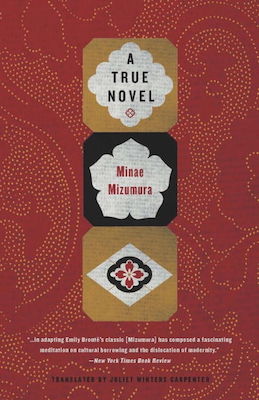
A True Novel by Minae Mizumura, translated by Juliet Winters Carpenter
Clocking in at over 800 pages, this evocative, sprawling book has some room for frames. A Japanese writer recalls her adolescence in America, when her father’s job took the family to New York for her high school years. There, the family met a mysterious, career-climbing man named Taro Azuma, who disappeared into a life of opera and penthouses. Years later the writer takes a post at Stanford and on a dark and stormy night receives a visit from a stranger, a young man with a story of his own to share—of a story told to him by a woman who’d served as Taro’s housemaid back in Japan. The book is billed as an adaptation of Wuthering Heights—Taro is the book’s Heathcliffe, his longtime, star-crossed love Yoko its Catherine—but Taro’s secretive wealth and tragic romantic heroism also evoke Jay Gatsby.
This is the only book on the list that doesn’t have a traditional first-person narrator, but it feels worth including for what it does have: a double timeline, one following 20th-century British scholars searching for clues to a presumed century-old literary affair, the other that 19th-century relationship. That second thread comprises dozens of diary excerpts, poems, and letters (by writers real and fictional); a complete 11-page short story—and the whole thing comes via an editorializing narrator intent on pointing out the magic of writing and reading, the length and limit of imagination, the pleasure of words.
Over the course of a plane delay, the unnamed narrator—an author of middling popular success waiting at JFK for his flight to Berlin—runs into a college acquaintance who invites him for drinks in the first class lounge. There, the man tells him a twisting story of his rise, following their graduation from UCLA, in the Los Angeles art world, beginning with his saving a stranger from drowning, a successful man whose life he ends up worming his way into. The book has the propulsive pull of the most delicious psychological thrillers and an ending that feels—in the best way—like being pushed off a cliff.
I came to writing at thirty—after touring the worlds of fashion editorial and luxury public relations, after doing a master’s in anthropology, after declining an offer to complete a doctorate in the field, after beginning an MFA in creative writing, only to leave after a semester. With each successive pivot, I grew not only more aware of, but also more self-conscious, of a kind of timid leave-taking in which I was fast becoming proficient, leave-taking I disguised as free will. But what quietly mounted within me was the pain of having abandoned several opportunities, the ache of a string of departures from possible lives for myself. Ultimately, deciding I didn’t need a degree to write, I tried my hand at essays while employed as an administrator in higher education. But the more I read and wrote, the more a grave fear would eventually take hold of me—that I had something to prove. That I was already behind. Or worse, out of time.
Perhaps something had awakened in me in a nonfiction workshop in 2016, when I’d written an essay about my relationship to Latin, a language I began learning at twelve and in which I majored in college. The essay chronicled my overwhelming loneliness as an adolescent, and it described how I’d clung to the dead language in order to feel both smart and superior. Although my peers commented on the essay’s beautiful sentences, they couldn’t help me see where to take the piece. And I felt close to the words I’d written because they recorded my experiment with a sophisticated style of writing. Something about that draft sounded like a voice that was just breaking to the surface. And because excelling at Latin suggested to me that I’d once seemed impressive to others, I ignored the fact that this essay was serving the original purpose that the ancient language had for me as a lonely teenager. I was, however, helpless in becoming obsessed with upholding this image of myself, lest anyone see me as a fraud.
Each draft that I revised and sent out was influenced—and in some ways hampered—by my awe of brilliant work that I came across.
In all likelihood, though, no one cared about my sense of self as much as I did.
The following year, I brought a draft of this piece to a prestigious summer workshop as one of their scholars, confident that I’d already distinguished myself from the rest of the attendees, confirmed in my suspicion that I was exceptional to the other writers I’d meet that week. In my naïveté, my fate was going to be decided around a workshop table, at an agent or editor meeting, or during an evening karaoke reception. In the years that followed, this single essay took on outsized significance in my mind. Each draft that I revised and sent out was influenced—and in some ways hampered—by my awe of brilliant work that I came across. The essay became a desperate effort to prove myself as intelligent, self-sufficient, and in control of the future I sought to secure for myself. I asked draft after draft to bear the weight of all my ambitions—or rather, my anxieties. And I expected my words to launch me coolly into the literary world, a move into the spotlight that I assumed would dispel the fear of my own shortcomings.
What my little anecdote suggests is how making art has become inextricable from showcasing to the world not just that art but also one’s identity as an artist. In a 2008 essay, Malcolm Gladwell asks why genius is so always linked to precocity—precocity being that state of having ripened quite young, before one has had a chance to live—and perhaps even toil—for years. And why does creative genius so necessarily burn bright at an early age, only to be extinguished while an artist is still young? Because the market over values the finished product as much as it mythologizes the figure of the prodigy, we in turn render invisible not just the process of learning, failing, or creating art; what’s worse, we pay too little attention to those who start late or develop their craft more slowly than the rest—what Gladwell and others call “late bloomers.” It bears noting that, in this context, this term refers to either artists who take years practicing, experimenting, making hazarded and gradual progress, or individuals who have decided to switch to art-making later in life.
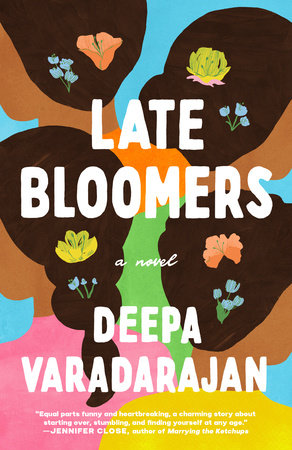
DeepaVaradarajan’s debut novel Late Bloomers expands the term’s meaning to include those who make a fresh start more than part of their way through life. Varadarajan, a graduate of Yale Law School, teaches at Georgia State University and has published legal scholarship alongside her fiction. Late Bloomers, which follows the four members of the Raman family, makes the claim that none of us is undeserving of a second act. Each character is given a chance to rediscover their resolve for living anew. Although the novel stumbles and skids in places, distracting readers with its overwritten, haphazard style, Late Bloomers finds footing in the human and very vulnerable reason some of us take longer to develop. Lying to others—but more often to ourselves—is so often what keeps us from experiencing our fullest self-actualization.
Varadarajan sets her novel within the span of a few days, offering four first-person perspectives of a family broken apart after the parents’ divorce. In a fictional Texas town, the moody patriarch Suresh finds himself living alone in the four-bedroom dream house he once shared with his wife Lata. Thrown into the deep end of online dating, he realizes how disappointing meeting women is while struggling to be a resource for his adult children, Priya and Nikesh: “It was so hard, this being alone… Death wasn’t some glimmer in the distance, assured but out of reach like the moon. It was close now—a porchlight right outside my house, casting its somber glow on my daily steps.”
His ex-wife Lata, who has spent years keeping up appearances in her marriage, has taken her first job as a librarian, and now rents an unhappy apartment from a friend as she fends off the admiration of a college professor. She asks herself, “How has your life ended up like this? Why are you fifty-seven and living in someone else’s apartment?” The sulking Priya loathes herself for sleeping with a married man, an economics professor at the same college where she teaches history, offers a tender memory of togetherness. Remembering the home where their family lived before moving into the dream house, she reminds herself “how our four toothbrushes had sat together in that [four-holed] toothbrush holder, two adult-sized and two kids’ toothbrushes, crusty with the remnants of paste, leaning into one another.” She breaks into tears at the realization that her own toothbrush will never again have another companion.
For much of the novel, these characters spend so much time apart, dwelling for entire chapters in their own minds, concealing from their family members the unfamiliar swerves their lives have taken, that Varadarajan’s decision to use four points of view works. Suresh, for his part, can’t divulge that a widowed woman and her eight-year-old son have shown up at his door without anywhere to go—no more than Lata can admit to being pursued by a romantic interest. And Priya is ashamed to tell her folks about being some man’s other woman.
Perhaps our fault as a culture is failing to notice those artists who take longer to tell themselves, first and foremost, the desires that terrify them the most.
Even more unspeakable, though, is what the tender heart of the Raman family is enduring. Priya’s complacent brother Nikesh is in a strained relationship with the partner of the law firm where he works, a woman he lives with in Brooklyn and with whom they have a newborn son. Nikesh hasn’t told his parents that he isn’t in fact married to the woman with whom he’s had a child. Through comedic scenes as well as touching memories recounted in each narrator’s voice, the Raman family’s plans to gather for Nikesh’s son’s first birthday provide the pressure that will release the lies, and for each character to confront the delusions holding them back from enjoying a deeper understanding of who they are to one another and to themselves. But each of them is desperate to reveal “the reformed me,” “the new and improved” version of themselves, so much so that they can’t help but get in their own way time and time again. Their yearning to present themselves as somehow different or better gets in the way of their accepting themselves as flawed.
In March, I saw the play Letters from Max: A Ritual, which adapts the collection of letters, poems, texts, voicemails, and conversations that playwright Sarah Ruhl shared with her former student Max Ritvo—a precocious and effervescent poet, who, as he underwent treatment for Ewing’s sarcoma, sought a language for the pain of confronting his own mortality. The play and the book from which it’s adapted both capture the unique style and sensibility of a young writer who seems fully formed from the outset of his career. The poignancy of the story lies in the fact of Ritvo’s all-too-soon extinguishing, the loss of promise that his early death effects. His struggle is not of learning how to create art but of learning, instead, how to let go of life. I left the theater thoroughly touched by Ritvo’s assurance of himself as a talented artist, one who trusted his abilities to arrange thought into language. But I also thought back to all the wonderful teachers I had in school, the ones who’d stood at the sidelines of my life, waiting patiently for me to tell them the thing I most wanted for myself. Yet I never articulated what I needed from them, my artistic ambitions never rising to the level of speech. As I walked toward the subway that spring afternoon, I realized I couldn’t fault my former mentors for having never placed a book like Andrew Holleran’s Dancer from the Dance or Alexander Chee’s Edinburgh in my hands. Perhaps our fault as a culture is failing to notice those artists who take longer to tell themselves, first and foremost, the desires that terrify them the most.
Nikesh has the honor of bearing what appears to be Varadarajan’s outlook as a late bloomer, someone he sees as, rather admirably, starting over. Reflecting on his parents’ decision to divorce at middle age, he muses, “Something brave about the two of them trying to cobble together new lives while other Indian people their age were settling into creaky lawn chairs with chilled mango juice in hand, reconciling themselves to deadened marriages and eventless retirements.” For his sister Priya, the stakes of not seeing one’s life clearly come into sharpest relief in a stirring scene at a bar, acted out with French fries. Indignant that her parents’ divorce has ruined her ability to be in a romantic relationship, she says, well on her way to drunkenness, “Your world—your basket—starts shrinking. All those possibilities, they start disappearing. Until one day, all you’ve got is one, maybe two fries, tops, left in your basket, and you can’t just throw one way, because if you do, then there’ll be no more fries left, and it’ll just be you all alone with an empty basket.” Although she’s in her mid-thirties, she tells herself it’s too late to have what she wants, and so she runs from life, from the unbearable turn life has taken in her eyes. As she gives up on herself, the ache we feel for her lies in subtext: Priya, like each of us at times, forecloses the possibility of experiencing enhanced and fuller relationships with the people she loves.
Without our responsibility to others, we may never know the next act of our lives.
But Varadarajan balances choice and chance, elucidating how our lives aren’t entirely up to us. Where Priya blames herself, Varadarajan places in Nikesh’s eyes all the empathy late bloomers are owed. Fate—or the vicissitudes of history—necessitates that we hold space for those who, in Nikesh’s mind, just want to “finally try to find a little happiness, to make up for some lost time.” “As far as I could tell,” he tells himself, “my parents had gotten a raw deal. They’d hit their twenties at precisely the wrong moment in India. A generation too early.” The unfortunate consequence, to some degree, of having sufficient opportunities to thrive living in the India that would open to the West in the 1990s was that Nikesh’s parents are now “breaking, at last, the bonds of duty and obligation and the keeping up of appearances that had served them so sorrily up until this point.” The stakes of resenting his parents, as Priya does, reveal themselves in Nikesh’s touching observation: “What would I do if, three decades from now, I discovered I’d pursued the wrong career, married the wrong woman, alienated my kid. The scary thing was: it wasn’t that hard to imagine.” Each of us needs some help, then, to see around the bends of our mind. Without our responsibility to others, we may never know the next act of our lives, might never learn to see ourselves in a changed light.
When I chose the writing life, I asked a few friends—one of whom would go on to become the editor of this magazine—for advice on getting started. But what I dared not say was that I wanted to see my name on the cover of a novel. Is this another way of saying I no longer wished to feel the crushing weight of my own purposelessness and resulting loneliness? Perhaps, although I turned to writing personal essays and criticism first, writing without a plan, my process one of trial and error, of experimentation and hiding in embarrassment. The work of putting down words always abated these awful feelings, but after a few years of attending workshops, enlisting the support of several trusted readers, and making only incremental progress, I understood how unknowing I’d once been. I shrank from this self as much as my writerly identity took hold of me like a fever. My ambitions soared the more deeply and widely I read, and, in turn, I understood the extent of my own shortfalls, which only deepened my shame.
But it’s not quite right to say that I came to writing at thirty—only that I stopped placing art-making at the periphery of my life. Creativity as a guiding ethos swung to the exact center of my personhood. I didn’t care that I conformed to Ira Glass’s observation about how artists experience themselves early in their careers: “For the first couple years you make stuff, it’s just not that good. It’s trying to be good, it has potential, but it’s not. But your taste, the thing that got you into the game, is still killer. And your taste is why your work disappoints you.” The chasm between my tastes and my skills seemed untraversable. I in turn stopped reaching out to people, stopped sharing drafts, stopped submitting work. I closed myself off. The vague hope that I might embody the fantasy of a butterfly—soaring into visibility fully formed—was receding with each year I toiled. In a sense, I was up against a nameless antagonist, the very part of me that was bent on seeing me fail.
In writing this essay, however, I’ve come across a string of buried memories. A flair for creativity had flown through me at an early age, finding a somewhat embarrassing but tender expression in dance, choir, and melodramatic poems. My amateur attachment to the arts fell away by twelve, replaced by a fixation on proving myself intelligent. Because learning Latin came easily to me, it shielded me from the fear that I might not be as smart or competent as I felt I needed to be to succeed. As long as I could muffle my artistic inclinations, the dead language safeguarded me from the terror of longing for a life dedicated to making art. And so, I raced ahead, absorbing all the facets of the abstruse subject, winning awards, and garnering praise. When, in college, other subjects challenged me, I slinked back to Latin’s familiar comforts, relinquishing countless chances to practice other skills necessary for becoming not smarter but more resilient. To have decided, then, almost a decade after graduation, that I wanted to return to a life engaged in the creative process ran me straight into myself—which is to say, my own sense of futility. Today, nothing scares me more than discovering I never had—or will never have—what it takes to write. The horror that I will humiliate myself as a writer continues to haunt and overwhelm me, causing me to fall away from the world. But this futility is both a monstrous and integral part of me. To quote Margo Jefferson, “You were always calculating—not always well—how to achieve; succeed as a symbol, and a self.”
Early in Late Bloomers, Lata shows us her pity for Jared, the forty-something manager of the library where she works. Though he slips away from work for hours for “dentist appointments,” it’s an open secret that he’s auditioning for musical theater roles. Says Lata to herself:
“I struggled to imagine him reaching any professional heights beyond his current library position. And yet, off he went, week after week, speeding out of the library door with the same urgent look on his face…and despite his best efforts, week after week, month after month, his life remained exactly the same. Completely unchanged. What made him keep trying? Blindness? Stupidity? This irrational dreaming, this clinging to the belief that it was never too late or that anything was possible—I’d never been able to decide whether it was an admirable quality in white Americans or a ridiculous one.”
In rereading this passage, I couldn’t help but think that Varadarajan has placed in Lata’s eyes the withering gaze of someone who existed on the sidelines of her own life in Georgia, watching her steal time to write her debut novel in private as she sought another kind of life for herself, one that belonged entirely to her.
The horror that I will humiliate myself as a writer continues to haunt and overwhelm me.
Jared has the privilege of illuminating the full meaning of the novel’s title. As he explains to Lata before the novel opens, “I have a soft spot for underdogs. And late bloomers. You’ve told me a lot of things about yourself, so let me tell you something about me. I didn’t come out as a gay man until I was forty. I know something about second acts in life. And I want to help you find yours.” When Lata comes upon him rehearsing in a room in the music building on campus, she is tickled to learn that he’s gotten the lead role in a performance. “He had kept trying and failing, trying and failing, until he succeeded. He was living the second act that he wanted. He hadn’t been afraid to try.” Although it’s precisely the lesson in perseverance Lata needs in order to date another man, to show up for her daughter Priya, to stop lying to herself about what she wants out of life, Jared’s determination to imagine another life for himself falls flat for me. For all his joy practicing in front of Lata, perhaps a part of me needed to see a more complicated relationship with the challenges of making art, about the many roles we play on and off stage.
Although Varadarajan’s novel is written with little attention to the finer subtleties of language, the recurring image of landscaping offers a rare strain of beauty. “Instead of letting them die,” Suresh thinks to himself, remembering how he’d tended to the plants outside their dream home, “I had nurtured them to life, made them bloom.” Though a tired trope, a well-manicured property in Varadarajan’s hands becomes a prism through which the Raman family sees itself. Suresh takes quiet pride in his dedication to seeing life emerge again out of the ground, while Priya rethinks who her father may have been all along: “I hadn’t pegged Dad for the plant-nurturing type, but damned if he didn’t have a knack for it.” Even Lata reconsiders her husband’s character as she notices the desert willows and crepe myrtles as she pulls up to the house one night: “What I had expected, of course, was a mess… But no: in the dark at least, everything looked as good as I had left it. Maybe even better.” In showing us both women’s bemusement, something shifts inside us. Insofar as each adjusts her perspective toward Suresh, not letting ourselves see another possible truth keeps us from growing, from knowing who else we can become.
This picture of a thriving garden touched me, what’s more, for in avoiding humiliation, I’ve lain in wait in an underground of my own making. Ashamed of the ways I’ve fallen short of who I’ve longed to be, I’ve hidden drafts of my work from others as much as I’ve hidden from myself. Having staked a rather premature claim on my inchoate identity as a writer, it’s fallen to me to consider shedding a particular—and particularly facile—image of myself as smart, superior, sophisticated. This was of course the very self I so wished to preserve and portray in drafts of that early essay on my relationship with Latin. For years I worried about leaving behind opportunities I was handed for accumulating skills, for gaining expertise, for advancing myself. But to have been so attached to seeing myself in a certain light, I inadvertently abandoned along the way the chance to find new eyes with which to see myself.
Gardening is a practice that requires trial and error. And it demands in the gardener the will to flourish. Although Varadarajan cannot show us a subtler portrait of a middle-aged-man tending to a garden, we nevertheless catch a glimpse of the results of his off-stage patience and dedication. For her narrative aims, new growth emerges after a season of planting and pruning, lending the reader a sort of simplistic trust in his own efforts. But artists understand time as an element inherently constitutive of their work. It requires years to train one’s eye or ear not only to apprehend the world but also to be attuned to a particular way of representing that world through dance, film, or paint. Artists aren’t looking for assurance that their perspective or treatment is correct—rather that they alone trust how they see what they’re looking at. Late Bloomers doesn’t show how seeing, or rather, learning to resee, takes time. All the same, implicit in the novel’s gardening motif is a modest message: we seldom care for ourselves with the same determination as for our plants. About the things we care most—namely, ourselves—we lie. And what in turn eludes us is the emergence of new buds within ourselves, blooms that lay dormant for years before opening to the sun.
Hours before my toddler announces daybreak with her cry, when the night shadows start to play their old tricks on my nerves and insecurity paints over my creative plans, it’s the stories of the women writers who have come before me that I crave most. I want to feel, down to the sheet-gripping tips of my fingers, that I am not alone—in my doubts, in my hopes, in my struggles.
Reading the stories of other women who share my drive to create can be the best medicine. These women almost always balanced writing with other tasks that crowd the surface of the female experience—raising babies, working day jobs, managing households, caring for sick family members, to name a few. Their lives inspire me not only because they were ultimately successful, but also because their success required the conquering of challenges along the way.
In fact, I was so hungry for these kinds of stories that I decided to tell one in my first novel. Much like Mark Twain in the United States—a fellow creator of immortal young-adult characters who expressed deep admiration for Anne of Green Gables—Lucy Maud Montgomery (who went by Maud) reached celebrity status throughout Canada and the rest of the British Empire. She was even made an officer of the Order of the British Empire in 1935. And yet, she experienced hardships that most of her readers could never have imagined. I knew immediately that hers was a story I wanted to tell. Eight years later, that story became my debut novel After Anne.
The books on this list all similarly showcase the lives of women writers. Each of these accounts moves and inspires, and can help those of us balancing creative work with life’s other commitments to feel less alone.
This biography of Pulitzer-prize-winning poet Sylvia Plath takes on the intimate and previously unfamiliar aspects of Plath’s life, from her babyhood (recounting how early she spoke her first word) through her suicide at age thirty, when her children were toddlers. In addition to being a meticulously researched biography, Clark sprinkles in thoughtful literary analysis of Plath’s poetry that will appeal to any English major. Clark’s nuanced portrayal of each person in Plath’s life—resisting the temptation to demonize or aggrandize—makes this account particularly special. And Clark’s compassion and respect for Plath shows through in each line of the book.
In this memoir, Ann Patchett paints a raw and beautiful portrait of a twenty-year friendship between two writers—Pulitzer-prize-winning novelist Patchett and Lucy Grealy, who wrote the critically acclaimed memoir Autobiography of a Face about her battles with childhood cancer and its aftermath. Patchett tells the story of the intersection between two writers’ journeys, tracing back to their time together at the Iowa Writers’ Workshop and continuing through Lucy’s death of a heroin overdose at age thirty-nine. Their friendship was close but not easy, and Patchett’s memoir is all the more powerful for telling the many sides of it.
This is a collection of eighteen short stories discovered by one of the granddaughters of Madeleine L’Engle, author of A Wrinkle in Time. Together, these stories create a poignant mosaic of L’Engle’s early life, from childhood to motherhood. Some of these stories were published during L’Engle’s lifetime, and others were only published posthumously. Some have a firm basis in real events, while others have fantasy and science fiction elements. Together, they will appeal to anyone interested in what inspired the work of one of our most fantastically imaginative authors.
Unlike the other books on the list, this one is pure fiction, by bestselling author Lily King. It tells the story of Casey Peabody, a struggling writer in her early thirties. Following Casey’s life over the course of a year, it shows her grappling with the aftermath of her mother’s sudden death, a failed relationship, and notices from debt collectors. Casey’s experiences with the male-dominated publishing industry and overcoming self-doubt will ring true for many women with creative dreams—especially those searching for their creative identity and grappling with grief or heartache at the same time.
In what the New York TimesBook Review described as “a feminist classic” of literary criticism, originally published in 1979 and recently reissued with a new introduction, Gilbert and Gubar explore how celebrated female writers from Jane Austen to Emily Dickinson conveyed their own life experiences of confinement through the characters they wrote. The book’s title comes from Jane Eyre, the novel in which a female character is famously kept locked in the attic, which is commonly understood as a metaphor for the ways in which women were historically imprisoned in the domestic realm. The recent reissuing of this classic text emphasizes just how much its messages resonate today.
This memoir of the life of National Book Award-winning author and multi-platform artist Patti Smith journeys through Smith’s life in a series of poignant vignettes. The book flows the way memory often does—through time and space, from past to present, from Greenwich Village to Mexico to Iceland. It includes not only Smith’s words but also her photographs, allowing the reader to see its subject more vividly. Smith unpacks the creative process in an intimate and introspective way that will resonate with creators of all stripes.
In this historical fiction novel, Melanie Benjamin tells the true story of the rise and fall of a female friendship in male-dominated, early twentieth-century Hollywood: the friendship between screenwriter Frances Marion and actress Mary Pickford. It follows Marion’s journey from moving to Hollywood with dreams of being an artist, to finding her calling writing stories for film, to her instant bond with Pickford, to their eventual falling out. The book will appeal to anyone interested in the challenges faced by women trying to climb the ladder of creative success while maintaining a close friendship at the same time.
Rounding out the list, this biography of Louise Fitzhugh, creator of beloved childhood character Harriet the Spy, explores Fitzhugh’s childhood in segregated Memphis, her struggles with her identity as a gay woman in the 1950s and 1960s, and her creative process and inspiration. Brody grounds her biography in careful research and insight, shedding light on the often-ignored cultural and social significance of children’s literature by delving into the hidden life of one of its creators.
They say it’s what’s on the inside the counts—except, of course, when you are a book cover, and your entire existence relies on looking pretty and being judged.
That’s right, folks. You know it, you love it. We here at Electric Lit have once again asked our lovely followers on Instagram and Twitter to vote between UK and US book covers to determine which trends are hot and which are so last year. Is the blob back with vengeance? Is photorealism still a thing? Will maximalism finally supersede minimalism? Is realism hanging on by the skin of its teeth?
We here at Electric Lit consider these all very important questions worthy of the utmost research, and we know you do too. Without further ado, here are the results:
Sarah Thankam Mathews’ debut novel follows Sneha, a young queer woman fortunate enough to land a corporate job amidst the American recession. The UK cover seems to tackle this plot more directly, with the art centered around a woman lounging in her underwear rendered in clean, modern lines. While I am a huge fan of the mixed berry palette and slight hints of voyeurism, I will admit, the whimsicality of the cover doesn’t exactly scream recession. The US cover is more about the *vibes*, depicting what appears to be a cluster of vaguely morose looking people, all doing their own thing to get through life. I can practically smell millennial sweat just looking at that picture. Round one’s a win for the US, and understandably so.
Set in Falls Landing in Florida, Brutes follows a gang of 13-year-old girls obsessing over the local preacher’s daughter, who has gone missing. This book is unhinged, girlhood nightmare fuel, and apparently both the UK and US cover artists thought photorealism was perfect for the job. On the UK side, we have a slightly blurred photo of two young girls embracing with the title slashed across in all caps. The US side opts for a subtler title layout and a clearer image of the girls in an ocean baptism to highlight the devastating Florida sun. While I love both images, the US cover certainly does inhabit a certain violence in its overexposure (think Dexter’s bright Miami murders), making it perhaps the more apt and popular design for this book.
We have two very different concepts here: while the UK cover appears painted and chooses to focus on the setting of the book—possibly the village of Serowe, where many of the collection’s stories takes place—the US cover opts to focus on characters, depicting two photo cutouts of a woman set against a blob-esque background. There’s something playful about the US cover that I quite like—possibly the fact that while the bottom cut-out looks up at the top cut-out, the top cut-out looks directly at you. The way the cut-outs are positioned as though they are communicating also evokes the title. The UK wins this round however with drawings of people and little houses with triangular roofs against in a bright yellow and red palette. Though Call and Response follows many characters, the stories are all tied to Botswana, which is very much the beating heart of this book.
It’s hard to describe Big Swiss, but essentially a sex therapist’s transcriber falls in love with a patient through listening to her sessions. Yeah. I know. Big Swiss is a novel with a lot of personality, and so it is fitting that both the covers follow suit. On the UK side, we have some vaguely suggestive dog action going on–representing, perhaps, the moment the protagonist, Greta, first hears the disembodied voice of her love interest at a dog park. On the US side, we have realism artwork of an upside down woman possibly screaming, possibly orgasming–it’s hard to say. I was really rooting for realism here–I love the drama of it, who doesn’t? But it seems the UK’s subtle, yet cheeky artwork is the winner here.
Ah, yes. The people have spoken. Sexy fruit is alive and well, and it’s not going anywhere. I am of course referring to the close shot of a peach on the UK cover, which can only be described with one of Bram Stoker’s favorite words: voluptuous. There is also something undoubtedly bold and queer about fruit covers–fitting, considering that the book follows the complicated relationship between a cis man and a trans woman who fell in love pre-transition. That is not to say the US cover holds no merit–smooth vector lines form two bodies sleeping beneath the same covers–suggestive, yes, though not nearly as much as the UK cover. It seems bold and sexy takes this round, as the majority of voters side with the UK.
Here we have what the kids call ‘same picture, different font.’ The choice of both covers to depict a rearview mirror makes sense, considering the plot follows a burnt out rideshare driver. But while the UK cover depicts a realistic pencil, possibly charcoal drawing of a woman’s eyes in the mirror, the US’s version uses smooth vector lines, as well as adds in a little burning air freshener swinging from the mirror (just a little foreshadowing, wink wink.) Though the covers are similar, the US version is undoubtedly more unhinged, and we love to see that. It seems the majority of voters also preferred chaos.
In the wake of her grief, a woman finds herself trapped in an abusive relationship and estranged from her family. Sounds familiar? The Middle Daughter is something of a modern, Nigerian retelling of Hades and Persephone, in which the lord of the dead famously abducts the goddess of spring (at least, in some versions; myths tend to get a bit iffy.) The UK cover, adorned with dense, lush flowers, helps conjure this myth to mind. The US cover, on the other hand, chooses to focus on characters, and does so with what appears to be subtle collage. It seems voters preferred the flowers this round, adding another win for the UK.
Though two very different covers, both the US and UK covers have essentially the same vibe: soft, comforting, hopeful, all of which pairs well with SmallJoys, a story about a man who develops an unexpected friendship right before he was about to end it all. The styles of the artwork have some differences though. The UK version uses, once again, those clean vector lines, while the US version looks more homemade, almost as if constructed out of tissue paper. What ultimately does it for me, and possibly for a few of our voters, is the very cute detail of the music notes standing like birds on the telephone wires–a hint at the novel’s musical references. Though both covers were great contenders, the US wins this round.
Really Good, Actually follows a twenty-nine year old divorcee whose marriage disintegrates after a mere 608 days. This story is messy in the best way possible, and the matching cover art of a woman with dripping mascara is perfect for the occasion. When it comes to artistic style, however, our voters have sided with the US’s far more dramatic realism artwork, as opposed to the UK’s vector image. I have to agree. Clean, simple vectors, though modern and trendy, don’t nearly measure up to the detailed chaos the realism cover offers.
The general layout of these two covers are quite similar, from their font to their minimalistic images. As you might be able to deduce, The Happy Couple follows a decidedly unhappy couple on their way to their wedding. The US cover tackles this plot with an illustration of two swans turning away from each other, while the UK cover goes for a subtler approach, depicting a crumpled tissue lying next to a box of tissues. From our results so far, it seems our voters tend to side with subtlety, and so the UK claims another win.
I personally like covers with people, since the illustration lends itself to a vague image of the protagonist in my mind. If not people, geography is nice too. Or–something. Something related to the book. It seems I am alone in this however, as the majority of voters have sided with the US cover, which–though it features some nice looking flowers–is very much a blob, or at least blob adjacent. I argue that nothing about this artwork actually references the story, which is about a woman’s experience dealing with racism, love, and familial duties. The UK cover, on the other hand, at least appears to depict the protagonist. I’ll admit, though. The flowers are pretty. The palette is eye-catching. And that book would look lovely on my shelf. Sigh. You win this time, blob fans.
For the covers of Yiyun Li’s haunting novel on friendship and memory, birds take center stage. On the UK edition, publishers seem to have leaned towards realism and maximalism, resulting in a busy cover with lots to see and an overall dramatic effect. The fact that so many birds are lying still, possibly dead, is also quite alarming, yet true to the tragic events that occur in this story. The US cover, on the other hand, depicts geese with a simpler, somewhat more minimalist approach, one which evokes the fine, curved strokes one might associate with Paris and the French countryside, where a few of the story’s events occur. While the covers have similar subjects and are both beautifully drawn, it seems more voters prefer the US cover’s style.
Brandon Taylor’s novel about a group of friends in Iowa City is beautifully written, so it is quite fitting that the covers are just as elegant. The US cover has a lot more going on, with broad brush strokes that flood the whole page, depicting two lovers entangled in a kiss. Up close, one might not necessarily identify the image immediately, but there’s something sexy and queer about that, which meshes perfectly with the novel’s plot. The UK cover is quite the contrast, with a largely solid white cover, interrupted by small, realistic and nearly gothic images. There is certainly an understated drama to the UK cover, as well as a touch of light academia, but it seems the US cover’s sensuous, more abstract art wound up charming more voters.
There is something lonely and timeless about the moon, which is perhaps why it makes such a great cover art subject for a book about three orphaned siblings seeking refuge in the UK following the Vietnam war. The US cover is particularly haunting, cleverly depicting the moon phases partially cut to create face silhouettes out of the negative space. It looks almost as if the faces at the top and bottom are trying to reach each other, or perhaps turn into each other. The UK cover is a bit busier, with a wood boat drifting through dark waters, the red moon appearing to sit inside the boat. My favorite detail about the UK cover would have to be the reflective quality of the dark water, suggesting the little white dots are stars in a dark sky. Perhaps these whimsical details ended up swaying more voters to the UK cover.
What is this? A tie?! Well, not only is it a tie, but it is a tie in the most chaotic way possible, with the US cover dominating on Instagram and the UK cover winning on Twitter. Our lovely social media editor even double checked, but sure enough, the count was 501 vs. 501. What are the odds! If anything, this might say more about the Instagram vs. Twitter aesthetic than overall reader preferences. On the US side, we have a maximalist, artsy cover depicting fine vases, marble busts, and gold mirrors–perfect for a book featuring New York’s upper class. The UK cover is much simpler, starring a citrus unpeeling before a faint, Manhattan skyline. In a way, it makes sense that picture-oriented Instagram would wind up choosing the busy, maximalist US cover, while Twitter, formerly known for its 140 word limit, prefers the minimalist approach.
Yes, let’s get some nonfiction up in here! Claire Dederer does not hold back in her deep dive on problematic artists, ranging from Picasso to Woody Allen, so it makes sense that both covers are equally as bold. On the US side, we have a photo image of a man in swim trunks with his head hidden by a large bull mask. I do not know how to describe his pose other than that he looks mid-mansplain. I mean, look at those hands. Tell me those aren’t mansplaining hands. On the UK side, we have clever artwork of two girls clutching their heads and screaming, either in pain or sheer euphoria. Having witnessed my fair share of boy band concerts, I’m inclined to say both. If I may add, I think these two images actually work quite well next to each other, the US cover giving a subject for the girls on the UK cover to scream at. If forced to choose just one, though, it seems the majority of voters sided with the UK cover.
The Guest follows twenty-two year old Alex who grifts her way through life after being dumped by her rich, older boyfriend Simon. Even without knowing the plot, you can probably sense there is something nefarious and voyeuristic to the story. While the UK cover offers a photo image of a glowing, aqua pool at night, the water ominously empty, the US cover depicts only a single, extended hand, the entire image saturated in blue and green. Coupled with the title, the US cover certainly paints an unsettling image, which may have ultimately swayed more voters to the US side.
How to Think Like a Woman, which spotlights the lives of 17th and 18th century female philosophers that have been forgotten by history, aptly chooses portraits of women as the star of their covers. The UK cover is a bit more abstract and shape oriented, the subject’s dark eyes appearing to stare into your very soul. The US cover goes for a realism approach and features a woman holding a book, her face swathed in white cloth, obscuring her identity entirely. There is no arguing that both covers are stunning and startling. Thematically, however, the US cover aligns better with the book, possibly giving it the nudge it needed to win.
Here we have two covers which differ in just about every way. The US cover tackles Rebecca Makkai’s mystery about a campus murder with shaky letters that appear to bleed across a red and blue background. The UK cover chooses to focus on images, with a series of rectangular snapshots that bring to mind evidence from a crime scene. It seems the images resonated with more voters, and thus the UK cover takes the penultimate round.
And, last but not least, White Cat, Black Dog. Kelly Link adopts classic fairytale stories and turns them into her own in this genre-bending short story collection. It is unsurprising, considering the title, that both covers feature animals. While the US cover opts for a cute little puppy, the UK edition depicts–uh–a slightly more unsettling pair of animals. My, are those sharp teeth! Nonetheless, while the US edition’s dog might be cuddlier, there is certainly a fairy tale vibe to the UK edition’s art, which fits perfectly with the overall theme of Kelly Link’s collection.
I don’t experience my dreams from a first-person point of view. My gaze exists only as a third-person stranger at a theater, watching it all like a film. The whole spectacle even comes with letterboxes and sometimes subtitles as well to complete the experience. After all the skin is ripped apart, all the blood is spilled; only then do things take a positive turn. A celestial and welcoming light surrounds the bloody and messy scene. There are many close-ups of the corpse. Then, I emerge victorious from the corpse of my old self. I am sculpted in a way that finally feels natural. My outsider gaze changes into my gaze, erupting out of my new body. Long live the new flesh. I see my hands reach out to the cozy light. Though I cannot see it, I know I’m smiling. In the end, I am born anew. At that point in the narrative, I always wake up from this dream, with a weak smile continuing from the dream and some tears rolling down my cheeks bringing me back to the real world. This cannot be the end, I think to myself.
A low-income district in a Middle Eastern country in the mid-2000s. It’s summer and I, a primary school student, finally get to enjoy summer break and spend the days with my cousin playing games. We’re neighbors in the same apartment building—same floor even—and we hop from one place to another the entire day. We play many types of games, but one of them is our favorite: we watch cartoons with superheroes and magical girls on the television. Then we role-play, immediately after the show is over. Our role-playing games are as formulaic as the shows we watch. Always, she is the damsel in distress; always I am the mad scientist trying to kill her. My methods are almost always absurdly grotesque, and sponsored by ACME Corporation or Doofenshmirtz Evil Inc.—at least, they are in our expanded cinematic role-playing universe.
My cousin strikes a dramatic pose under the couch’s pillows. I smirk devilishly.
“Oh my God, here’s the evil scientist again! I’m trapped by your newest trap and weapon! The Unbelievably-Heavy-Pillow-Fort-Trap 3000!”
“Hah! Think you could escape my ultimate scientific inventions? Well, think again!”
“Oh no, it’s getting worse! Not the Incredibly-Precise-Laser 6000! Are you going to kill me with that or what?!”
My cousin strikes a dramatic pose under the couch’s pillows. I smirk devilishly. I have the high ground. The laser in question is a very-2000s pencil with a small sparkly Hello Kitty toy attached to its top. The pencil is never sharpened since it’s a recurring prop for our games—far more important a purpose than summer break homework.
“I’ll do much worse than simply killing you—I’ll cut your vocal cord with my Incredibly-Precise-Laser 6000! You’ll be the next Ariel the mermaid!”
“Not my voice!”
She emerges from the pillow fort with newfound energy. We fight as if we are about to wrestle. When I pin her down, I get on top of her while also holding both hands up by her head, proudly exclaiming my next villainous goal.
“Hah! You fell for my trap; you are done for! Now I shall do something even worse for you but fun for me! I will cut your tits off clean instead! Bwa-ha-ha!”
There is a reason my cries get highly specific, and highly graphic. The cartoons we watched weren’t my only source of inspiration. Whenever I performed these lines, I mimicked the villain that I came across in a low-budget horror film that I’d watched, in secret, under cover of night.
I have always had sleeping problems ever since I was a child, so when I couldn’t sleep, I instead got up and went to our living room. I wanted to see what was airing that night, but my parents always hated me staying up late. I pretended to be a secret agent. I quietly and slowly rose from my bed, walked on tip-toes to reach the living room, and turned on the television.
My eyes went wide with excitement, my lips curled into a smile. I wanted to see the blood and more.
In Turkey, they used to exclusively air low to no-budget horror B films after midnight. The funniest part is, this went for almost every single channel available on the satellite, so basically you were zapped through them and greeted with masterpieces—Plan 9 from Outer Space or Killer Klowns from Outer Space—all on a single night. It felt as though I was walking through an open buffet of $20 budget films in one hand, and a dream in the other.
While I loved binge-watching all kinds of B films during those restless nights, I gradually realized that I most enjoyed those containing intense gore or body horror. It was extremely satisfying to see the blood splash and the organs fly out. I couldn’t put my finger on it back then, but those scenes felt familiar in their visceral visuals. My eyes went wide with excitement, my lips curled into a smile. I wanted to see the blood and more. This wasn’t like seeing something you liked on the screen, it was much more than that. So, as a result, to quench my blood thirst, I grabbed the newspaper every Sunday and religiously combed the television schedules for every channel listed. The criteria: The film must air after midnight, and it must have a weird or intense title suggesting gore or body horror. To my delight, I realized I could watch these films multiple times nearly every week, often each night since the programmers kept going for such titles—something we had in common.
Looking back on all those film nights, I can’t remember the names of those films I so eagerly awaited. However, I still remember how I felt whenever I saw some character’s guts spilling out or another’s skin peeling off, blood and everything everywhere. Even after I watched, say, The Thing, my primary memory of it was not the character arcs or story progression; it was the grotesque death scenes. Yes, those scenes felt relatable for some reason unbeknownst to me. As a result, I often found myself dreaming—or maybe nightmaring—myself into those scenes anytime I had a bad day, which was usually triggered by glancing in the mirror and seeing my body or face’s reflection. Those dreams/nightmares were all similar in their narrative. It began immediately with the death scene of the week.
I often tried to draw anatomical drawings and then cut the drawing into pieces while imagining rivers of blood gushing out from the incisions.
I kept searching for another film with a gory body horror scene just to make sure I will be able to be reborn in my dreams and feel happy and natural once again. I kept finding myself looking for that transient and dreamy feeling of realness constantly after that. Though, even though it all looks crystal clear now, I still do not understand the connection between those gore scenes and my own gender identity. There is a very simple reason for that – I simply did not have any idea about the existence of a queer side of the world yet as I was trapped in the typical binaries of life here visible to my eyes.
Being a child in a low-income and conservative family in the Middle East comes with a very common starter pack. You are pushed toward the pursuit of education and a career in either law or medicine by one’s parents. This was the case for me as well. I was the first one in the family that showed signs of “getting numbers and stuff” so my path was clear – I simply had to study medicine. I internalized that idea so fully that the evil scientist became my recurring character in my role-playing sessions with my cousin.
Soon after, I learned more about medicine, science, and everything in between as I kept breezing through primary and middle school. Seeing the diagrams of organs or skeletons always brought me joy. I often tried to draw anatomical drawings and then cut the drawing into pieces while imagining rivers of blood gushing out from the incisions. I’d found my career goal; I decided to become a surgeon. Cutting the skin and organs? Count me in! That goal quickly died and was kicked to the curb when I realized my math and science skills were no match for high school calculus and biology. I had the blues for a while, but I did have something else to fall back on, to keep me motivated. Yes, it was those cheesy yet iconic, gory B films themselves. Those unrealistic body horror moments made me feel at home every single time.
I did not have any access to anyone or anything in real life that would help me navigate what was going on within my mind and soul.
I frequented the art platform DeviantArt. I have always been into story-based cinematic video games as well as horror films, and games like Resident Evil and Silent Hill still rank among my all-time favorites. As you can guess, they predominantly have body horror and gore elements within their character designs. I would browse the fan art sites with great admiration as I would type in the names of the characters with the most grotesque designs onto that search bar and see the results pop up. Whenever I would see any new masterfully crafted artwork of a scene from the games with full gore, they got registered into my mind’s storyboarding territory, and eventually, showed up in the sequences within my dreams. My internet surfing adventure eventually spread to another crucial site – Tumblr. There, I found not only artworks but also writings of all sorts. This curious rabbit hole eventually led me into the world of queer perspectives and ideas. Among the many memes and other viral content, I noticed a common type of text entry on Tumblr. It followed along the lines of “I create gory body horror artwork and writing because duh! I am trans!” and it was at that point that my subconscious started to consider the possibility that I might be too. It still was not clear to my waking consciousness, though.
I was in high school during my Tumblr exploration stage. It was not the only thing I explored, I also realized that I was not straight. I did not have any access to anyone or anything in real life that would help me navigate what was going on within my mind and soul, so of course, I went back to my comfortable corner online. I started to actively learn about the queer community, queer identities, and more. I was finally starting to find the puzzle pieces, one by one gathering everything in a big huge bag. I felt myself reaching close, but I also could tell I was still missing that finishing touch.
Writing scripts with body horror helps me feel as if I am creating something relatable for people like me.
Surely, that obsession with my wanting to become a surgeon must be related, right? Also, pulling all-nighters constantly just to watch brutal horror films from my childhood days to now too, right? It must be, it simply must be that way.
I finally came across that one quote that gave me my eureka moment. It was from the book Something That May Shock and Discredit You written by Daniel Mallory Ortberg: “As my friend Julian puts it, only half winkingly: “God blessed me by making me transsexual for the same reason God made wheat but not bread and fruit but not wine so that humanity might share in the act of creation.” I still vividly remember the very first time I read that quote. I was speechless. I could almost hear the puzzle pieces in my brain connecting and then finally forming the big final picture.
Watching those films and reading those quotes made me realize why I kept feeling so inclined toward watching grotesque horror films even when no one around me did so, and doing that was even condemned silently by everyone else around me. It made me realize why I hated my body so much that I kept killing it off in my dreams—every single night—and why I was so obsessed with the goal of becoming a surgeon in the first place. It also made me understand why I found gory scenes in cinema comforting – it was as if looking into a mirror. I, as a queer creative in both orientation and identity, wanted to create a body of my own from scratch, a body in which I felt natural and real. Watching all these body horror and gore horror films was a passive yet highly effective way for me to concretely visualize those ideas, ideas which were further developed in my dreams. When this narrative cycle reached an ending for the night, I felt a sense of completion, and of finding my home with those films., After reading so much about the theory and watching the films, I finally realized that I could partake in that completion by simply creating my works. So now, I am a graduate student in film and television, learning both theory and practice. As I open Celtx, the screenwriting application on my computer, I realize that writing scripts with body horror helps me feel as if I am creating something relatable for people like me, while also expressing myself. In a way, I feel as if I am helping others explore their own identities. As I’m typing this now in mid-2023, I’m preparing to write my master’s thesis as well. This topic, body horror in cinema as a way of expressing transness or non-binary identities, will be my thesis theme. It feels like something of a small-scale miracle to have had this topic approved by the institute, now that the Islamist regime here won the majority in the May 2023 elections once again, trapping me in this open-air jail of an oppressive ideology for five more years.
I cannot help but wonder what else I will discover about my identity as I keep walking on the path. There is a place for people like me, there is a piece of freedom to exist and experience somewhere. While I feel like losing hope for the future, I try to motivate myself with the progress I have made so far. I know I must go on, not only for myself but any potential others who might come across my writings online someday, the same way I came across Ortberg’s writings. Just like others, I have the power to exist and experience freely, and hope there also will be an opportunity to fully go through it openly, on a different side of the world. Until that hopeful, longed-for escape, I will keep turning on the television at night and letting the seas of blood shine into my eyes.
It’s not a spoiler to say that one woman whips out a switchblade, or that another’s boozy airplane ride leads to a warrant for her arrest. Though this is a spy novel, it’s not even a spoiler to say that one woman is stalking the other—and then their roles reverse.
While novelist Helen Schulman’s new book, Lucky Dogs, has the intrigue and pace of a thriller, the novel is also a scorching meditation on sexual assault—and a retelling of a bizarre true story at the heart of the #MeToo Movement. As Schulman explained to me in a Zoom conversation, Lucky Dogs is less focused on the moment of violence than its fallout: how the stories of sexual assault survivors are repressed, and how two women can find themselves pitted against each other.
Schulman is the New York Times bestselling author of six novels and serves as the fiction chair of the Creative Writing program at The New School. From her New York City office, she chatted with me about the intertwined themes of sexism and civil war in Lucky Dogs and the toxic ideal of the “good victim.”
Evangeline Riddiford Graham: In your Author’s Note, you describe how Lucky Dogs was inspired by a news story that seemed to have “fallen out of the sky.” I’d love to hear more about that aha moment.
Helen Schulman: I grew up in the 1970s, and I drank the Kool-Aid on second-wave feminism. As I get older, I’m increasingly sad and angry that things have not changed the way I thought they would in my lifetime. So I read about #MeToo and Rose McGowan with a lot of interest.
Rose McGowan was a young actress on her own when [Hollywood producer] Harvey Weinstein raped her. She was in her early forties when she started her campaign against him in 2017. Now she has followers she calls “Rose’s army,” but back then she had no army: she was just a woman with a mouth and unfettered anger. She was brave and crazily wild in a world where, aside from the industry gossip network, nobody was talking about Harvey Weinstein’s sexual assaults.
Harvey Weinstein hired the lawyer David Boies—who went to Ehud Barak, the former prime minister of Israel—to find the right spies to ruin her. The effort of all these men to silence this one woman was astounding to me. Then I learned that [through the Israeli private intelligence agency Black Cube] Weinstein had hired a young Israeli woman to pose as a women’s rights activist and befriend McGowan and to ultimately discredit her and stop her from writing her book. I was like, Oh, wow. How could one woman do this to another? How could a woman betray another woman this way?
That was it. The story fell into my lap.
ERG: Lucky Dogs centers on the specific conflict of one woman being hired to spy on another, with the aim of discrediting her sexual assault testimony. But the scope of the novel goes way beyond these two people.
HS: I think it’s really about how women can be so tormented and abused that they turn on each other and destroy themselves, their sisterhood. A civil war between women that’s orchestrated by very powerful men.
In my book and in real life, the young woman hired to spy on Rose McGowan was originally from Bosnia and was a child during the siege of Sarajevo. Her grandparents had rescued Jewish families during the Second World War, and her grandfather had lost his life for it. So during the Bosnian War in the 1990s, this young woman and her surviving family were saved by the Israelis and brought to Israel as “Righteous Gentiles,” where she grew up to become a Black Cube agent.
While I was researching this book, I felt like our country was on the brink of a civil war. We’re locked and loaded, in terms of our lack of gun control. So I was thinking a lot about the Bosnian War and about the state of Israel. I’m Jewish; my grandmother’s brother was part of the founding movement in Israel. I have very complicated feelings about Israel: I’m against endless war, and I’m against people being subjugated, and I’m against people being so scared.
ERG: In Bosnia and Israel, two of the main settings of the book, civil war is a constant pressure on the characters and their relationships.
Rose McGowan was considered not a ‘good victim.’
HS: And the book ends in Florida—if there’s any place in this country that’s at the point of civil war, it’s Florida. I was born 15 years after the Holocaust; I lived through the 1960s, ’70s. I think this is the worst time of my lifetime in the U.S., because we’re eating each other. But to the rest of the world, we’re just crazy because we have everything that they want, and all we’re doing is messing it up. I don’t want to ever judge one person’s pain against another, but I think for people who live in war-torn countries, when they hear Americans complain about our problems, or watch us make our own problems, they’re like, You’re fucking crazy.
ERG: It seems radical to me that the stories of your two protagonists—Merry, the famous actress, and Nina, the spy—can exist alongside each other without judgment. Both women have suffered in different ways, and you feel that, as a reader. But they’re both also at times repugnant and both certainly fail to live up to what Matt, the novel’s Ronan Farrow-like journalist, refers to as a “squeaky clean” requirement we demand in witnesses of sexual assault. They also fail a perceived “likability” requirement that comes up for protagonists in fiction.
HS: This is something I’ve always run up against, because I present my characters warts and all. Both Nina and Merry do really unsavory things, but I have compassion for them. I’m not asking you to love them. I’m asking you to understand what happens to women growing up and how hard it can be.
My husband, Bruce, worked at Esquire for a while as an editor, and inherited a story about Bryan Singer, a director who has been accused many times of raping or abusing young men. This time, the writers, Alex French and Max Potter, had the goods on him—they had testimony. Bruce edited the story, and Bruce’s editor wanted to run it. Then the powers that be at Hearst killed the story, in part, they said, because these characters are too unsympathetic, they’re too unreliable. One was a sex worker, the other is a drug addict. This one grew up to do porno films. They don’t make good witnesses.
It absolutely enraged me that they killed the story. Bruce went on editing it till the writers found a new home at the Atlantic. Then there was a whole shake up at Esquire. Bruce ended up quitting, and his other two bosses were pushed out.
What stuck with me was the fact that these men weren’t “good enough” victims. Rose McGowan was considered not a “good victim.” And Merry is so not a good victim. Her lawyer says to her: You had sex with other people. You had sex with women, you had sex in movies. You take off your clothes, you walk around half naked; at this point, it’s your word against his, since you didn’t show up immediately at the police station. Merry says, You mean if I ran out of that room with his semen running down my legs and my torn panties, I could have pressed charges? And her lawyer says, Yes.
Why don’t women do that? Because they’re so scared, and they want so badly for it not to have happened. In Weinstein’s trial, the defense would say, Well, this accuser wrote Harvey all these notes later, so she must have had sex with him consensually. Some of these women had affairs with him consensually after they’d been raped by him. That’s part of the psychology of abuse that I don’t think the public understands. If those women then got into some crazy, weird affair with Weinstein—a repetition, compulsion, or trying to control the narrative, or just wanting a job—it doesn’t mean he didn’t rape them.
So yes, Merry wears short skirts and she’s vulgar and she takes drugs and she drinks and she acts out. But what for me is essential about her and what makes me love her is she’s a raging bull. No matter what you do to her, she’s going to fight back. She’s not going to lie down and die. And if fighting back damages her more, that’s because she has no impulse control. But I admire that. I admire that even if it means she does terrible things. She just can’t accept letting people step all over her and hurt her that way.
Rape and sexual assault happens in every walk of life.
ERG: She’ll use whatever tools she has to hand—
HS: Which are very few. She’s unsupported. She has one person on her side, and that’s her manager.
ERG: As a mode of witnessing war and witnessing sexual assault, why fiction?
HS: Both my grandmothers were refugees. I grew up in a bedroom with my mother’s mother. She had four siblings killed in the Holocaust, and lost everything when she came to this country. She was an educated person; she ended up being a laundry woman. My father’s mother, on the other hand, left Russia penniless, almost barefoot: they had one pair of shoes that all nine children shared. And she couldn’t read or write, but she could tell stories. Both my grandmothers told so many stories. I learned to look at the history of the world through the lens of story from them.
ERG: You mentioned the lengths that “the powers that be”—in your book and in life—will go to in order to silence a story about sexual assault. Can we talk a bit more about that?
HS: The levels of corruption are unreal. Think of all the people in Hollywood who knew what Weinstein was up to. He had a bevy of young women who would lead women to his hotel room and then disappear. These women were acting as decoys for the women he raped. Did they know? Some did, some didn’t. A very brave woman named Zelda Perkins was in her early twenties and working for Weinstein when she heard from her colleague that Weinstein had attempted to rape her. Perkins reported it and fought and fought for her friend. The women were told they didn’t have a case and ended up signing an NDA they were terrified about for more than 20 years.
How could one woman do this to another? How could a woman betray another woman this way?
At NBC in New York, they were protecting Matt Lauer. Matt Lauer had a rape button under his desk. He could press the button under his desk so that the door would lock when someone was in his office.
Rape and sexual assault happens in every walk of life. But in these cases—the Matt Lauers, the Harvey Weinsteins, the Bill Cosbys—these are mass rapists who were protected by other people because of their money and their power. Whole organizations were built around hiding their crimes.
There were plenty of rumors about Harvey Weinstein, but it wasn’t until 2017 that the truth truly came out. And I think Rose McGowan was absolutely a hero in that. The journalists Jodi Kantor and Megan Twohey at the New York Times broke the story first. They were incredible. They were such heroes at such personal cost to their lives and their families. So there are good guys, but there were so many powers working against them. Ken Auletta spent 20 years trying to break the story, and he couldn’t. It was only when Ronan Farrow was close, then Auletta gave him his files and introduced him to David Remnick, who then published Farrow in the New Yorker.
ERG: As a feminist, what was your approach to depicting rape and sexual violence in Lucky Dogs?
HS: I don’t want to ever be gratuitous about something that important, and I also don’t want it to be in any way titillating. So I wrote about it matter-of-factly, I think.
In the book, Nina’s mother is raped in front of her husband and child, in her own home, by her husband’s best friend, who is taking over their apartment. There were many similar crimes in the Bosnian war. The neighbor invades the house with a group. He’s always had a crush on his friend’s wife; besides, he likes this apartment better. Nina’s mother screams at her husband to look away. There’s nothing prurient about the scene. It’s not a sex. It’s rape: it’s violence against this woman, and it’s violence against her husband.
Then Nina’s family is forced out of their apartment. She’s just been raped. He’s just watched this. The child has just seen this. And they have to find a place to go while there’s gunfire in the streets. But that’s what happens. They had to get up, go, take what they could. You’re raped and then what? What do you do next?
That’s the question I’m interested in: How do you survive your own life?
DON’T MISS OUT
Sign up for our newsletter to get submission announcements and stay on top of our best work.
YOUR INBOX IS LIT
Enjoy strange, diverting work from The Commuter on Mondays, absorbing fiction from Recommended Reading on Wednesdays, and a roundup of our best work of the week on Fridays. Personalize your subscription preferences here.